Research Articles
Advancing Motor Imagery EEG Classification: Cutting-Edge Methodologies and Optimization Strategies for Biomedical Research
This article provides a comprehensive analysis of contemporary strategies for enhancing classification accuracy in motor imagery (MI)-based brain-computer interfaces (BCIs).
Breaking the Communication Barrier: Strategies for Maximizing Information Transfer in Non-Invasive BCI Spellers
This article provides a comprehensive analysis of strategies for optimizing the Information Transfer Rate (ITR) in non-invasive Brain-Computer Interface (BCI) spellers, a critical technology for restoring communication in patients with...
Navigating Biocompatibility in Neural Implants: From Foreign Body Response to Next-Generation Solutions
This article provides a comprehensive analysis of the critical challenge of tissue response and biocompatibility in neural implants, a primary factor limiting their long-term efficacy.
Advanced EEG Artifact Removal and Noise Filtering: A Comprehensive Guide for Biomedical Research and Drug Development
This article provides a comprehensive overview of modern electroencephalogram (EEG) artifact removal and noise filtering techniques, tailored for researchers and drug development professionals.
Strategies to Reduce Calibration Time in Non-Invasive EEG Brain-Computer Interfaces
This article provides a comprehensive review of advanced signal processing and machine learning techniques aimed at reducing the lengthy calibration times required for non-invasive EEG-based Brain-Computer Interfaces (BCIs).
Combating Signal Degradation in Chronic Neural Implants: From Biological Mechanisms to Advanced Signal Processing
This article provides a comprehensive analysis of the challenge of signal degradation in chronically implanted neural interfaces, a critical barrier to long-term stability in basic neuroscience and clinical brain-computer interface...
Personalized sEMG Decoding Models: Advancing Cross-User Neuromotor Interfaces for Clinical and Research Applications
Surface electromyography (sEMG) offers a high-bandwidth, non-invasive window into neuromuscular signals for intuitive human-computer interaction.
Endovascular Stent-Electrode Arrays: A Minimally Invasive Revolution in Neural Recording and Brain-Computer Interfaces
Endovascular stent-electrode arrays represent a paradigm shift in neural interface technology, offering a minimally invasive alternative to traditional brain-computer interfaces (BCIs) that require open brain surgery.
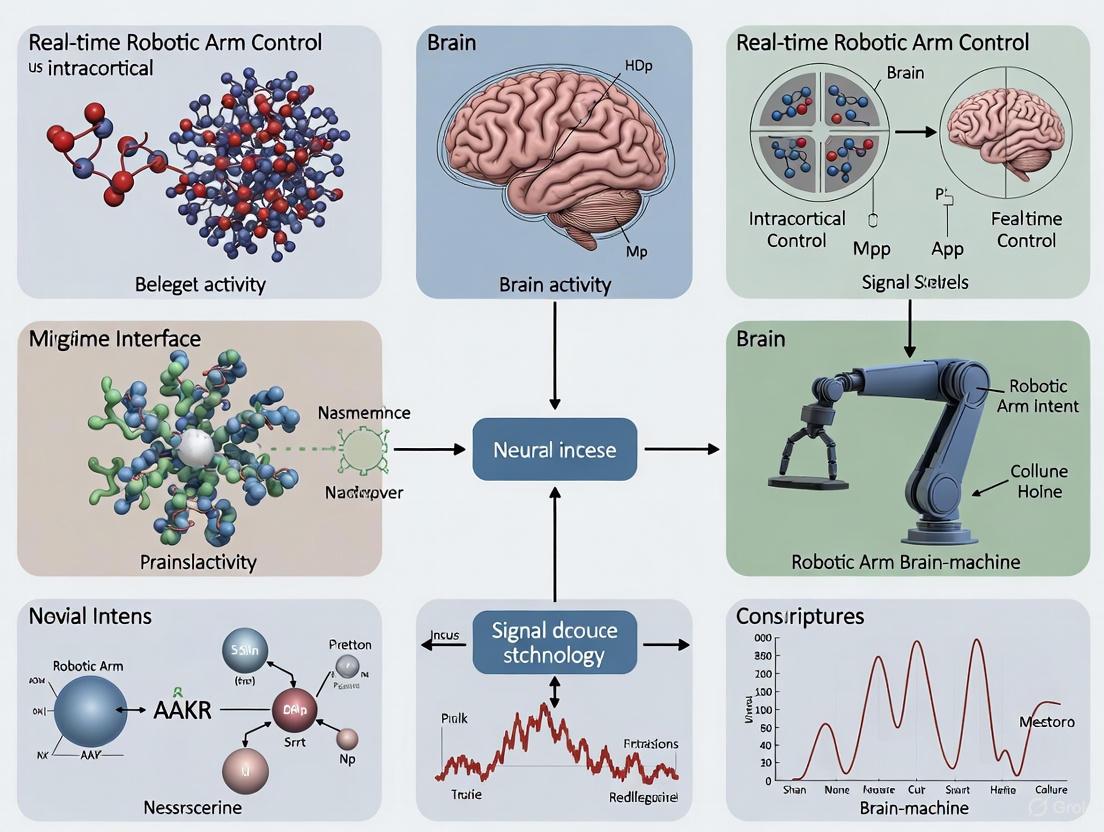
Intracortical Brain-Machine Interfaces for Real-Time Robotic Arm Control: 2025 Advances and Clinical Applications
This article comprehensively examines the current state of intracortical brain-machine interfaces (BMIs) for real-time robotic arm control, a rapidly advancing field poised to restore motor function for individuals with paralysis.
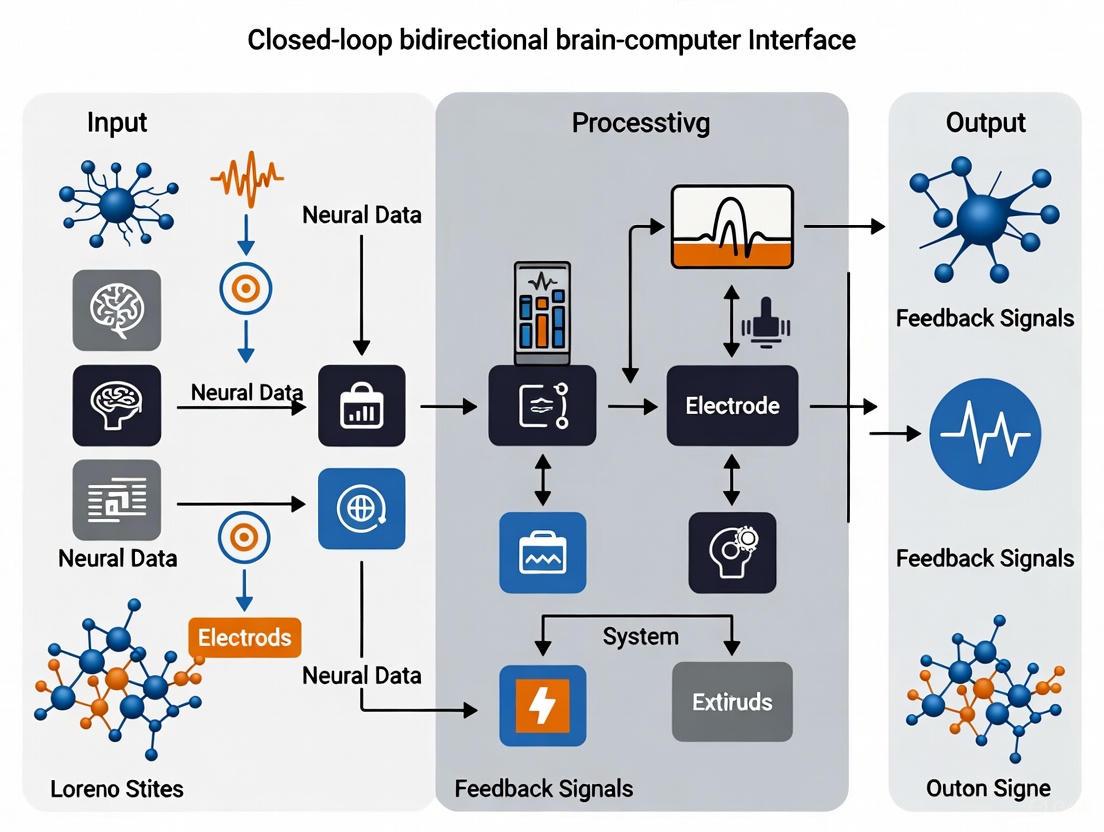
Closed-Loop Bidirectional Brain-Computer Interfaces: System Design, AI Integration, and Clinical Translation
This article provides a comprehensive analysis of closed-loop bidirectional Brain-Computer Interface (bBCI) systems, which establish a direct communication pathway between the brain and external devices by both reading neural signals...