Securing the Future of Neurotech: Strategies for Long-Term Stability and Biocompatibility in Neural Implants
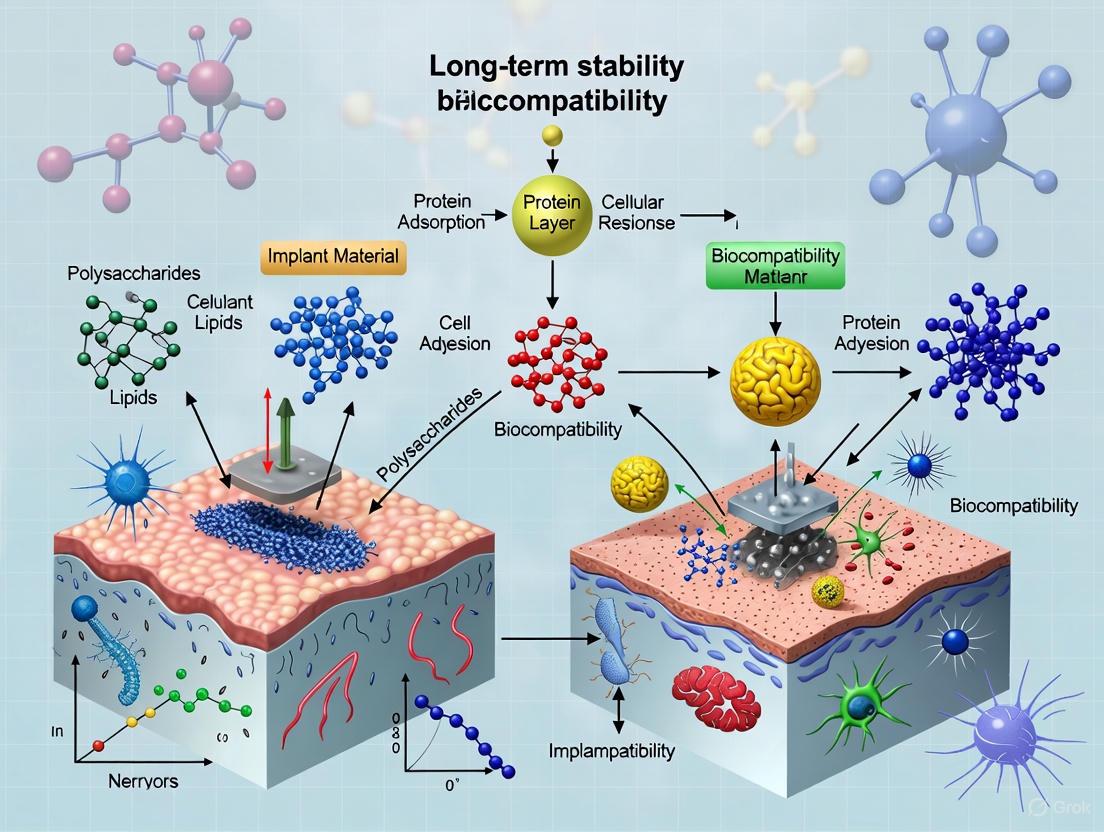
This article provides a comprehensive analysis of the primary challenges and innovative solutions for achieving long-term stability and biocompatibility in implantable neural interfaces.
Securing the Future of Neurotech: Strategies for Long-Term Stability and Biocompatibility in Neural Implants
Abstract
This article provides a comprehensive analysis of the primary challenges and innovative solutions for achieving long-term stability and biocompatibility in implantable neural interfaces. Aimed at researchers, scientists, and drug development professionals, it explores the biological mechanisms behind device failure, including foreign body response and chronic inflammation. The scope spans foundational material science, advanced methodological approaches for enhancing device-tissue integration, optimization strategies for chronic performance, and the current landscape of clinical validation. By synthesizing recent advancements in protective coatings, flexible materials, anti-inflammatory drug delivery, and rigorous testing protocols, this review serves as a critical resource for guiding the development of next-generation, clinically viable neural prostheses.
The Biological Battlefield: Understanding the Root Causes of Implant Failure
The development of advanced neural implants represents a frontier in treating neurological diseases and restoring lost neurological functions. A central challenge limiting the long-term stability and efficacy of these devices is the foreign body reaction (FBR), an inevitable immune response to implanted materials [1]. This complex inflammatory and fibrotic process can isolate the implant from its target tissue, leading to device failure and necessitating revision surgeries [1]. Within the context of neural interfaces, the FBR is particularly detrimental as it disrupts the precise electrochemical interface required for high-fidelity recording and stimulation of neural activity [2] [1]. Advances in biomaterials science are therefore critically focused on understanding and mitigating this reaction to achieve chronic device stability and biocompatibility.
The Cellular and Molecular Timeline of the Foreign Body Reaction
The foreign body reaction is a dynamic, multi-stage process initiated the moment a device is implanted. The following diagram illustrates the key cellular events and their timeline.
The FBR begins within seconds of implantation with the non-specific adsorption of blood proteins like albumin, fibrinogen, and fibronectin onto the implant surface, creating a provisional matrix [1]. This protein layer triggers a cascade of cellular events. Within minutes, neutrophils are recruited to the site; they attempt to phagocytose the material and release reactive oxygen species (ROS) and proteolytic enzymes [1]. Within days, monocytes are recruited and differentiate into macrophages, which become the central cellular mediators of the FBR [1].
When the implant is too large to be phagocytosed, macrophages undergo "frustrated phagocytosis" [1]. They flatten on the material surface, secrete degrading enzymes and pro-inflammatory cytokines (TNFα, IL-1b, IL-6), and eventually fuse to form foreign body giant cells in an attempt to degrade the structure [1]. The chronic phase of the FBR occurs over weeks to months, where chemical signals from macrophages and giant cells stimulate fibroblasts to deposit collagen, forming a dense fibrous capsule that can isolate the implant from the surrounding neural tissue, leading to device failure [2] [1].
Material Biocompatibility: A Quantitative Comparison for Neural Interfaces
The intrinsic properties of an implant material significantly influence the severity of the FBR. A recent comparative study evaluated ten polymers for neural interface applications, assessing their cytotoxicity, cell adhesion, and tissue response [2] [3]. The quantitative results from in vitro and in vivo analyses are summarized below.
Table 1: Comparative Biocompatibility of Polymer Materials for Neural Implants
| Polymer Material | Cytotoxicity | Neural Cell Adhesion | Fibroblast Adhesion | Foreign Body Reaction Severity | Suitability for Long-Term Use |
|---|---|---|---|---|---|
| Polyimide (PI) | Low | High | High | Low | Excellent [2] [3] |
| Polylactide (PLA) | Low | Moderate | Moderate | Low | Promising [2] [3] |
| Polydimethylsiloxane (PDMS) | Low | Moderate | Moderate | Low | Promising [2] [3] |
| Thermoplastic Polyurethane (TPU) | Low | Moderate | Moderate | Low | Promising [2] [3] |
| Polycaprolactone (PCL) | Low | Moderate | Low | Moderate | Potentially Usable [2] [3] |
| Polyethylene Terephthalate (PET) | Low | Low | Low | Moderate | Potentially Usable [2] [3] |
| Polypropylene (PP) | Low | Low | Low | Moderate | Potentially Usable [2] [3] |
| Polyethylene Terephthalate Glycol (PET-G) | Low | Low | Low | Moderate | Potentially Usable [2] [3] |
| Nylon 618 (NY) | Low | Low | Low | Moderate | Potentially Usable [2] [3] |
| Polyethylene Glycol Diacrylate (PEGDA) | High | Low | Low | High (Fibrosis, Giant Cells) | Unsuitable [2] [3] |
The data indicates that Polyimide (PI) demonstrates the highest overall biocompatibility, supporting strong cell adhesion for both neural cells and fibroblasts while provoking only a mild FBR [2] [3]. In contrast, PEGDA exhibited significant cytotoxic effects and provoked a strong FBR, including fibrosis and multinucleated giant cell formation, marking it as unsuitable for long-term neural implants [2] [3]. Other materials like PLA, PDMS, and TPU showed promising profiles, causing lower pathological responses and are considered viable for further development [2] [3].
Advanced Strategies for Mitigating the Foreign Body Reaction
Material and Engineering Approaches
Beyond selecting inherently biocompatible materials, research has advanced toward sophisticated engineering solutions to shield implants from the hostile biological environment. Key strategies include:
- Surface Modifications and Hybrid Encapsulation: Researchers have developed graphene-based neural interfaces encapsulated with a hybrid coating of polyimide and aluminium oxide (Al₂O₃) [4]. This combination provides flexibility while offering robust resistance to moisture, electrochemical stress, and mechanical bending, maintaining stable performance after billions of electrical pulses and hundreds of bending cycles [4].
- Soft Elastomer Encapsulation: Studies on silicon integrated circuits (ICs) for miniaturized implants have shown that coating them with soft Polydimethylsiloxane (PDMS) elastomers creates an effective body-fluid barrier [5]. Accelerated aging tests revealed that PDMS-coated regions of chips experienced only limited degradation compared to bare regions, establishing PDMS as a highly suitable encapsulant for year-long implantations [5].
The Scientist's Toolkit: Essential Research Reagents and Materials
To study the FBR and develop new mitigation strategies, researchers rely on a specific toolkit of materials, cell lines, and model organisms.
Table 2: Key Research Reagents and Models for FBR Investigation
| Reagent / Material | Type | Primary Function in FBR Research |
|---|---|---|
| PC-12 Cell Line | In vitro model | A neural cell line derived from rat pheochromocytoma used to assess neural cell adhesion, growth, and material cytotoxicity [2] [3]. |
| NRK-49F Cell Line | In vitro model | A normal rat kidney fibroblast cell line used to evaluate fibroblast adhesion and proliferation on material surfaces, key players in fibrosis [2] [3]. |
| Polyimide (PI) | Polymer | A high-performance polymer used as a neural interface substrate and insulation; serves as a benchmark for biocompatibility in comparative studies [2] [3]. |
| Polydimethylsiloxane (PDMS) | Polymer | A soft silicone elastomer used for device encapsulation to provide a flexible, moisture-resistant barrier against bodily fluids [5]. |
| Rat Model (e.g., Sprague-Dawley) | In vivo model | A standard animal model for implanting phantom scaffolds into the brain to analyze acute and chronic tissue responses, including inflammation and capsule formation [2] [3]. |
| Hybrid Polyimide-Al₂O₃ Coating | Composite Material | An encapsulation system used to protect nanoporous graphene electrodes, providing flexibility and long-term resistance to physiological environments [4]. |
Experimental Protocols for Assessing the Foreign Body Reaction
A comprehensive assessment of a material's biocompatibility and its propensity to elicit an FBR requires a multi-faceted experimental approach. The following workflow outlines a standard methodology integrating in vitro and in vivo analyses.
Detailed Methodologies
- A. Material Fabrication and Surface Characterization: Polymer scaffolds are fabricated using 3D printing techniques like thermal extrusion to ensure consistent geometry [3]. The surface morphology of these scaffolds is then characterized using Scanning Electron Microscopy (SEM) to analyze topographical features such as porosity, roughness, and polymer fiber organization, which can influence protein adsorption and cell behavior [3].
- B. In Vitro Biocompatibility Assessment: Material toxicity and compatibility are evaluated using relevant cell cultures. The neural PC-12 cell line and the fibroblast NRK-49F cell line are seeded onto the polymer scaffolds [2] [3]. Assays are performed to quantify cell adhesion, proliferation, and cytotoxicity (e.g., via MTT assay for metabolic activity). This phase identifies materials that release cytotoxic compounds or fail to support neural integration [2] [3].
- C. In Vivo Implantation and Tissue Analysis: Selected materials are sterilized and implanted as phantom scaffolds into the brain of an animal model, such as rats [2] [3]. After a chronic period, typically four weeks, the animals are sacrificed, and the implant site with surrounding tissue is harvested [2] [3]. Tissue sections are stained (e.g., with H&E for general morphology and antibodies for specific immune cells) and analyzed using microscopy to quantify the fibrous capsule thickness, density of inflammatory cells (e.g., macrophages, foreign body giant cells), and degree of gliosis [2] [1].
- D. Data Integration and Biocompatibility Scoring: Results from all phases are integrated to generate a comprehensive biocompatibility profile for each material. This includes quantitative data from in vitro assays and semi-quantitative histopathological scoring from in vivo studies, enabling a direct comparison of material performance and a final assessment of suitability for long-term neural interface applications [2] [3].
The long-term stability and biocompatibility of neural implants represent a pivotal challenge in modern neurotechnology and biomedical engineering. At the core of this challenge lies the fundamental mechanical mismatch between implanted devices and the neural tissues they interface with, quantified primarily through Young's modulus—a critical mechanical property that measures the stiffness of a material. Neural tissues, including the brain, are exceptionally soft structures with Young's moduli typically ranging from 0.1 to 10 kPa, while traditional electrode materials such as silicon (~170 GPa) and metals (tungsten, platinum) possess moduli that are six to nine orders of magnitude higher [6] [7]. This dramatic discrepancy creates a significant mechanical imbalance at the tissue-device interface.
The consequences of this mechanical mismatch are profound and directly impact the long-term viability of neural implants. When rigid implants are introduced into soft neural tissues, the body recognizes them as foreign bodies, triggering a cascade of immune responses [8] [9]. This includes acute inflammatory reactions during implantation and chronic inflammation that persists post-implantation, ultimately leading to reactive gliosis, scar tissue formation, and neuronal loss around the implant site [9] [6]. The resulting glial scar acts as an insulating layer, increasing the distance between neurons and electrode recording sites, which causes rapid signal attenuation and a sharp rise in impedance over time [9]. This biological response significantly compromises the functional performance and operational lifespan of neural interfaces, ultimately limiting their clinical translation and long-term research applications.
Quantitative Analysis of Young's Modulus Across Materials
The mechanical properties of biomaterials span an exceptionally wide range, from ultra-soft neural tissues to rigid traditional implant materials. Understanding these quantitative differences is essential for selecting appropriate materials and designing compatible neural interfaces. The table below summarizes the Young's moduli of various biological tissues and implant materials relevant to neural interface technology.
Table 1: Young's Modulus Values of Biological Tissues and Engineering Materials
| Material Category | Specific Material/Tissue | Young's Modulus | References |
|---|---|---|---|
| Neural Tissues | Brain Tissue | 1–10 kPa | [9] [6] |
| Cortical Bone | 20–40 GPa | [10] | |
| Traditional Electrode Materials | Single-Crystal Silicon | ~170 GPa | [7] |
| Platinum | ~170 GPa | [6] | |
| Tungsten | ~102 GPa | [6] | |
| Flexible Polymer Substrates | Polydimethylsiloxane (PDMS) | ~1 MPa | [7] |
| Parylene-C, Polyimide, SU-8 | 1–10 GPa | [7] | |
| Hydrogels | Alginate Hydrogels | 10 Pa – 100 kPa | [8] |
| Conductive Hydrogels | 100 Pa – 10 kPa | [8] | |
| β-Ti Alloys | Ti–15Mo–5Zr–3Al (Polycrystalline) | ~80 GPa | [10] [11] |
| Ti–15Mo–5Zr–3Al Single Crystal (〈100〉 direction) | 44.4 GPa | [10] | |
| Metastable β-Ti21S (3D-printed) | 52 GPa | [11] | |
| Conductive Polymers | PEDOT:PSS | ~3 GPa | [7] |
| Carbon Materials | Graphene | ~1 TPa | [7] |
The data reveals several important considerations for neural interface design. Traditional implant materials exhibit stiffness values that are orders of magnitude higher than neural tissues, creating significant mechanical mismatch. However, alternative material classes including flexible polymers, hydrogels, and specially engineered β-Ti alloys offer moduli much closer to biological tissues. Particularly noteworthy is the strong crystallographic elastic anisotropy observed in Ti–15Mo–5Zr–3Al single crystals, where the modulus along the 〈100〉 direction (44.4 GPa) is substantially lower than its polycrystalline form (~80 GPa) [10]. Similarly, 3D-printed metastable β-Ti21S alloy demonstrates an exceptionally low modulus of 52 GPa in the as-built state [11]. Advanced conductive polymers like PEDOT:PSS achieve both suitable mechanical properties and enhanced electrical performance, making them promising candidates for neural interfaces.
Advanced Strategies for Mitigating Mechanical Mismatch
Material-Based Approaches
Soft Conductive Materials
Significant research efforts have focused on developing materials that simultaneously achieve mechanical compliance and electrical conductivity comparable to neural tissues. Hydrogels have emerged as particularly promising candidates due to their intrinsically low Young's modulus, biocompatibility, and high water content similar to biological tissues [8]. For instance, alginate hydrogels with varying crosslinking densities demonstrate tunable viscoelastic properties with moduli ranging from 10 Pa to 100 kPa, effectively matching the mechanical properties of brain tissue [8]. These hydrogels can be enhanced with conductive components such as graphene flakes, carbon nanotubes, or conductive polymers to improve their electronic conductivity while maintaining mechanical compatibility [8].
Advanced conductive polymer systems have achieved remarkable mechanical and electrical properties. For example, polyrotaxane-based supramolecular networks incorporate a sliding motion mechanism that enables exceptional conductivity and stretchability without cracking under 100% strain [8]. Such materials can be precisely patterned using photopatterning techniques and have been successfully applied to the brainstem of mice to deliver localized electrical stimulation for precise control of muscle movements [8]. Similarly, specially formulated PEDOT:PSS conductive polymers demonstrate extraordinary electrical conductivity exceeding 4100 S·cm⁻¹ at 100% strain, maintaining functionality even at 600% strain [7].
Structural Engineering Solutions
Beyond intrinsic material properties, structural design innovations provide powerful approaches to reduce effective stiffness while maintaining electrical functionality. Geometric engineering techniques manipulate the shape and architecture of devices to achieve mechanical compliance without compromising material composition.
Table 2: Structural Engineering Strategies for Neural Interfaces
| Structural Strategy | Design Approach | Impact on Mechanical Properties | Application Examples |
|---|---|---|---|
| Ultra-thin Designs | Reducing feature size (thickness) to sub-micron scale | Dramatically reduces bending stiffness (proportional to thickness³) | Nanowire electrodes (10 μm² cross-section), ultrathin silicon membranes (2 μm) [8] [9] |
| Open Mesh Architectures | Incorporating porous, lattice-like structures | Enhances flexibility and reduces effective stiffness | Mesh electrodes for cortical surface recording [8] [9] |
| Serpentine & Filamentary Patterns | Implementing curved, winding traces | Allows stretching and deformation without material failure | NeuroRoots filamentary electrodes (7 μm wide, 1.5 μm thick) [9] |
| Shape Memory Alloys | Utilizing materials with superelasticity | Enables self-expanding structures post-implantation | 3D expandable nickel-titanium alloy microwire arrays [7] |
The bending stiffness of a material, which determines its resistance to deformation, is proportional to both Young's modulus and the moment of inertia (which depends on cross-sectional dimensions) [9]. For a rectangular cross-section, the bending stiffness is calculated as (E \times (b \times h^3)/12), where E is Young's modulus, b is width, and h is height [9]. This cubic relationship with height means that reducing thickness has a dramatic effect on flexibility. This principle has been exploited in the development of ultra-thin neural interfaces, such as nanoporous silicon membranes with thicknesses of just 2 micrometers that can wrap around the sciatic nerve without cracking [8].
Surface Modification and Biofunctionalization
Surface engineering approaches represent another critical strategy for enhancing tissue-device compatibility. These methods focus on modifying the interface between the implant and biological environment without fundamentally altering the bulk mechanical properties of the device. A prominent example involves the covalent binding of anti-inflammatory drugs to implant surfaces to modulate the local biological response [12].
Recent research has demonstrated that coating polyimide-based neural electrodes with dexamethasone—a potent anti-inflammatory drug—through chemical strategies that enable covalent binding, allows for slow, localized release over at least two months [12]. This approach targets the critical period when the immune system mounts its strongest response to implantation. Biological tests confirmed that this method reduces inflammation-related signals in immune cells while maintaining the material's biocompatibility and mechanical integrity [12]. In vivo animal studies further validated that dexamethasone-releasing implants significantly reduce immune reactions and scar tissue formation around the device [12].
Experimental Methodologies for Evaluation
Mechanical Characterization Protocols
Young's Modulus Measurement
The accurate determination of Young's modulus is fundamental to neural interface research. For metallic alloys and rigid polymers, Resonant Ultrasound Spectroscopy (RUS) combined with the Electromagnetic Acoustic Resonance (EMAR) method provides precise measurement of complete elastic-stiffness components [10]. The experimental workflow involves:
Sample Preparation: Single crystals of the material are grown using an optical floating-zone apparatus at controlled growth rates (e.g., 2.5 mm/h) under high-purity argon gas flow [10]. Composition is verified through inductively coupled plasma-optical emission spectroscopy.
Crystallographic Orientation: The orientation of the single crystal is determined using X-ray back-reflection Laue photography, with specific directions such as 〈100〉 identified for testing [10].
Elastic Constant Measurement: The RUS/EMAR system measures the resonant frequencies of the sample, from which the complete set of elastic-stiffness components is calculated [10].
Young's Modulus Calculation: The orientation dependence of Young's modulus is determined from the elastic-stiffness components using the relationship: (E = 1/S{11}), where (S{11}) is the compliance tensor component in the direction of interest [10].
For soft hydrogels and polymers, axial tensile testing or compression testing using instruments such as dynamic mechanical analysis (DMA) systems is employed. Samples are typically fabricated with standardized dimensions and subjected to controlled strain rates while measuring the resultant stress. The Young's modulus is calculated from the slope of the stress-strain curve in the linear elastic region [8].
Bending Stiffness Evaluation
Bending stiffness, a critical parameter for implantable neural probes, can be evaluated using cantilever beam bending tests. The experimental protocol involves:
Fixture Setup: One end of the sample is fixed while the other end remains free.
Force Application: A controlled force is applied to the free end, either through calibrated weights or a micro-force sensor.
Deflection Measurement: The resulting deflection is measured using optical methods (e.g., laser displacement sensors or digital image correlation).
Calculation: Bending stiffness (EI) is calculated using the formula: (\delta = FL^3/(3EI)), where (\delta) is deflection, F is applied force, and L is the length from fixture to force application point [9].
In Vivo Biocompatibility Assessment
Evaluating the biological response to neural implants requires comprehensive in vivo testing protocols. The following methodology assesses both acute and chronic tissue responses:
Implantation Procedure: Animals (typically rodents or primates) are anesthetized and placed in a stereotaxic frame. A craniotomy is performed to expose the brain region of interest. Flexible electrodes are implanted using tungsten wire guidance systems or biodegradable polymer shuttles [9]. The implantation method is customized based on electrode geometry—unified implantation for single-shank probes targeting specific depths, and distributed implantation for multiple filamentary electrodes [9].
Histological Analysis: After predetermined periods (e.g., 2, 4, 12 weeks), animals are perfused, and brain tissue is collected and sectioned. Immunohistochemical staining is performed for specific cell types:
Electrophysiological Recording: Neural signal quality is assessed chronically through continuous or periodic recording of neural activity. Key parameters include:
Impedance Spectroscopy: Electrochemical impedance is regularly measured at multiple frequencies (typically 1 Hz-100 kHz) to monitor the formation of insulating scar tissue around the electrode [9].
The Scientist's Toolkit: Essential Research Reagents and Materials
Table 3: Key Research Reagents and Materials for Neural Interface Development
| Category | Specific Material/Reagent | Function/Application | Key Characteristics |
|---|---|---|---|
| Substrate Materials | Polydimethylsiloxane (PDMS) | Flexible substrate | Young's modulus ~1 MPa, biocompatible, transparent [7] |
| Polyimide | Neural probe substrate | Young's modulus ~2-8 GPa, excellent insulation properties [7] [12] | |
| Parylene-C | Flexible substrate & encapsulation | Young's modulus ~3-5 GPa, conformal coating capability [7] | |
| Conductive Materials | PEDOT:PSS | Conductive polymer electrode | High conductivity (>3000 S·cm⁻¹), stretchable, biocompatible [7] |
| Carbon Nanotubes/Graphene | Conductive nanomaterial fillers | Enhance conductivity in hydrogels, high surface area [8] [7] | |
| Platinum/Iridium | Traditional electrode metal | High charge injection capacity, chemical stability [7] | |
| Biomaterials | Alginate Hydrogel | Soft conductive matrix | Tunable modulus (10 Pa-100 kPa), ionically conductive [8] |
| Polyrotaxane Supramolecular Networks | Stretchable conductive material | Exceptional stretchability (no crack under 100% strain) [8] | |
| β-Ti Alloys (Ti–15Mo–5Zr–3Al) | Low-modulus metallic implants | Anisotropic modulus (44.4 GPa along 〈100〉), high strength [10] | |
| Biofunctionalization | Dexamethasone | Anti-inflammatory drug coating | Reduces immune response, covalently bindable to polyimide [12] |
| Polyethylene Glycol (PEG) | Biodegradable stiffening agent | Temporary mechanical support for implantation [9] | |
| Characterization Tools | Resonant Ultrasound Spectroscopy | Elastic constant measurement | Determines complete elastic-stiffness components [10] |
The critical role of Young's modulus in tissue-device compatibility underscores a fundamental paradigm in neural interface engineering: long-term stability requires meticulous attention to mechanical properties alongside electrical and biological functionality. The persistent challenge of mechanical mismatch has driven innovation across multiple domains, from the development of novel materials with tissue-like compliance to sophisticated structural designs that circumvent inherent material limitations. The integration of soft conductive polymers, engineered hydrogels, and geometrically optimized architectures represents a significant advancement toward biocompatible neural interfaces.
Future progress in this field will likely emerge from several promising research directions. Multifunctional materials that combine optimized mechanical properties with active biological modulation—such as drug-releasing coatings—offer a comprehensive approach to address both mechanical and biological integration [12]. Additive manufacturing and 3D printing technologies enable the fabrication of complex, patient-specific implant geometries with spatially controlled mechanical properties [11]. Furthermore, the incorporation of artificial intelligence and robotic assistance in implantation procedures promises enhanced precision and reduced tissue damage during surgical placement [8] [9]. As these technologies mature, the next generation of neural interfaces will move closer to achieving the ultimate goal: seamless, stable integration with the nervous system that enables lifelong reliability for both basic neuroscience research and clinical applications.
The long-term stability and biocompatibility of neural implants are fundamentally constrained by the brain's innate immune response, a process central to neuroprosthetic research. This review details the cellular and molecular mechanisms of reactive gliosis, in which activated microglia and astrocytes form a glial scar that encapsulates implanted devices. This scar tissue acts as a physical and electrochemical barrier, significantly increasing impedance and attenuating signal fidelity over time. Within the context of chronic neural interface applications, we examine how this foreign body response compromises recording capabilities and stimulation efficacy. The article further synthesizes current quantitative data on signal degradation, explores innovative material and biological strategies to modulate glial responses, and provides detailed experimental protocols for investigating these mechanisms in vitro. By integrating findings from recent literature, this work aims to inform the development of next-generation bioelectronic implants with enhanced biocompatibility and functional longevity.
The successful clinical application of neuroprosthetic and neuromodulation devices, from deep brain stimulation (DBS) for Parkinson's disease to brain-machine interfaces (BMIs) for paralysis, is predicated on the ability to reliably record from and stimulate neurons over extended periods [13]. Despite remarkable clinical outcomes, the mechanisms underlying device failure remain incompletely understood. A significant contributing factor is the foreign body response triggered by device implantation, which culminates in the formation of a glial scar around the implant [13] [14].
Historically, neurons were viewed as the primary target cells for neural interface technologies. However, a paradigm shift has occurred with the recognition that non-neuronal glial cells—specifically astrocytes and microglia—actively determine device outcomes [13]. These cells, which outnumber neurons three-to-one in the human brain, respond to implantation injury by undergoing reactive gliosis, a process characterized by cellular activation, proliferation, and morphological changes [13] [15]. The resulting glial scar, while serving to isolate the implant and restore blood-brain barrier integrity, simultaneously forms an insulating layer that increases the distance between recording/stimulation sites and their target neurons [9]. This comprehensive review examines the coordinated roles of astrocytes and microglia in this process, details the quantitative impact on signal fidelity, and discusses emerging strategies to mitigate these effects for the development of stable, chronic neural interfaces.
Cellular and Molecular Mechanisms of Gliosis
The Sequential Foreign Body Response
The tissue response to an implanted neural electrode is a sequential, multi-phase process involving a tightly coordinated interplay between different cell types. The initial mechanical injury from device insertion severs neural processes and blood vessels, leading to neuronal damage and disruption of the blood-brain barrier (BBB) [13] [9].
- Microglial Activation: Microglia, the resident immune cells of the central nervous system (CNS), are the first responders to injury. Within hours, they transform from a ramified, "surveying" morphology to an amoeboid, activated state [16]. These activated microglia proliferate and migrate to the implant site, where they attempt to phagocytose cellular debris and foreign material [13]. During this process, they release a diverse array of pro-inflammatory cytokines, including tumor necrosis factor-alpha (TNF-α), interleukin-1α (IL-1α), IL-1β, and IL-6 [16] [17]. This cytokine surge drives nearby neurons toward excitotoxicity and neurodegeneration while simultaneously activating other glial cells [13].
- Astrocytic Reactivity: Signaling from activated microglia, in combination with blood-derived proteins that have leaked through the compromised BBB, triggers reactive astrogliosis [13]. Astrocytes typically begin their visible response approximately one week post-implantation, characterized by proliferation, cellular hypertrophy, and the upregulation of intermediate filaments like glial fibrillary acidic protein (GFAP) [13]. Over the course of four to six weeks, these reactive astrocytes form a dense, interconnected network that ensheaths the implant, creating a physical barrier that can measure tens to hundreds of micrometers in thickness [13] [16].
The following diagram illustrates this sequential cascade and the key molecular mediators involved.
The Glial Scar: A Double-Edged Sword
The glial scar is a complex structure composed of reactive astrocytes, activated microglia, fibroblasts, and extracellular matrix (ECM) components [16]. Its function is paradoxical. On one hand, it serves a critical neuroprotective role by sealing the lesion site, restoring BBB integrity, and containing the spread of inflammation to healthy tissue [15] [16]. On the other hand, for neural implants, the scar is profoundly detrimental. The dense mesh of astrocytic processes and deposited ECM proteins, particularly chondroitin sulfate proteoglycans (CSPGs), creates a formidable physical and chemical barrier around the electrode [9] [16]. This barrier increases the physical distance between the electrode surface and nearby neurons, leading to a progressive decline in the ability to record neural action potentials and an increased charge requirement for effective neural stimulation [13] [9].
Quantitative Impact on Neural Signal Fidelity
The formation of the glial scar directly translates into measurable declines in electrophysiological performance. The following table summarizes key quantitative findings from the literature on how gliosis affects signal fidelity.
Table 1: Quantitative Impacts of Gliosis on Neural Interface Performance
| Performance Metric | Impact of Gliosis | Reported Magnitude/Time Course | Primary Cause |
|---|---|---|---|
| Recording Signal Amplitude | Progressive attenuation | Significant changes observed intraday; progressive losses over weeks [13]. | Increased electrode-neuron distance; insulating properties of scar tissue [9]. |
| Impedance at Electrode-Tissue Interface | Significant increase | Sharp rise in impedance correlated with scar formation [9]. | Formation of dense, insulating cellular and ECM barrier around the electrode [9] [18]. |
| Detection of Single-Unit Activity | Decreased yield and stability | Non-stationarity in signals burdens prosthetic control; units lost over time [13]. | Signal amplitude falls below detection threshold due to increased distance and impedance [13]. |
| Stimulation Efficiency | Reduced efficacy; increased thresholds | Desensitization occurs following chronic microstimulation [13]. | Higher charge levels required to generate electric fields sufficient to reach neurons [13]. |
The mechanical mismatch between rigid implant materials (e.g., silicon, metals with Young's modulus of ~10-100 GPa) and soft brain tissue (~1-10 kPa) is a key instigator of this response [9] [19]. This mismatch causes sustained micro-motion and chronic irritation at the tissue-device interface, perpetuating the inflammatory cycle and glial scarring, thereby accelerating the decline in signal fidelity [9].
Emerging Strategies to Mitigate Gliosis and Improve Biocompatibility
Research efforts are focused on disrupting the cycle of gliosis through both passive material optimization and active biological intervention. Key strategies include:
- Mechanical Compliance: Using flexible polymer substrates (e.g., polyimide, parylene) with a significantly lower Young's modulus that better matches brain tissue reduces mechanical strain and chronic inflammation [9] [19]. Ultra-flexible electrodes such as NeuroRoots and mesh electrodes have demonstrated reduced glial scarring and improved signal stability for up to 7 weeks in animal models [9].
- Geometric Minimization: Reducing the cross-sectional area of implants to the cellular (micrometer) or subcellular (nanometer) scale minimizes acute injury during insertion and lessens chronic friction. Distributed filamentous electrodes and nanowire probes are promising examples [9].
- Surface Functionalization: Coating electrodes with bioactive molecules can passively enhance biocompatibility. Hydrogels, peptides, and anti-inflammatory drugs (e.g., dexamethasone) can be applied to modulate the local cellular environment and discourage glial attachment and activation [9] [18].
- Active Drug Delivery: Integrating controlled-release systems or conductive polymer coatings that elute anti-inflammatory factors (e.g., TGF-β, IL-34) directly from the electrode surface represents an active strategy to suppress the foreign body response and promote tissue integration [9].
Experimental Models and Methodologies
In Vitro Tri-Culture Model for Neuroinflammation
To study the complex neuron-astrocyte-microglia interactions in vitro, a serum-free primary cortical "tri-culture" model can be established from postnatal day 0 rat pups [17]. This model maintains a physiologically relevant mix of all three cell types for at least 14 days in vitro (DIV), enabling the investigation of neuroinflammatory pathways with greater accuracy than standard mono- or co-cultures.
- Culture Medium: The tri-culture medium is based on Neurobasal A, supplemented with B27, Glutamax, and critical factors for microglia survival and function: IL-34 (100 ng/mL), TGF-β (2 ng/mL), and cholesterol (1.5 μg/mL) [17].
- Experimental Challenges: This model can be challenged with various stimuli to mimic pathological conditions:
- Lipopolysaccharide (LPS): 5 μg/mL to simulate bacterial infection and pro-inflammatory activation [17].
- Mechanical Scratch: A ~200-300 μm wide scratch made with a pipette tip to model traumatic injury and observe astrocyte migration [17].
- Glutamate: Exposure to varying concentrations (e.g., 50-100 μM) to induce excitotoxicity and study neuroprotective mechanisms [17].
The workflow for establishing and challenging this model is outlined below.
The Scientist's Toolkit: Essential Research Reagents
Table 2: Key Reagents for Studying Gliosis and Neural Interface Biocompatibility
| Reagent / Material | Function in Experimental Protocol | Example Use Case |
|---|---|---|
| Lipopolysaccharide (LPS) | A potent Toll-like receptor agonist used to simulate a bacterial infection and trigger robust microglial activation and pro-inflammatory cytokine release. | Inducing a standardized neuroinflammatory state in in vitro tri-cultures or in vivo models [17]. |
| Recombinant IL-34 & TGF-β | Essential cytokine supplements for the survival and maintenance of microglia in serum-free primary culture systems. | Enabling long-term studies of microglia in complex in vitro co-culture models [17]. |
| Poly-L-Lysine (PLL) | A synthetic positively charged polymer used as a coating substrate to facilitate the adhesion of primary neural cells to cultureware. | Preparing culture dishes and multi-well plates for plating dissociated primary cortical or hippocampal cells [17]. |
| Anti-GFAP Antibody | A marker for intermediate filaments upregulated in reactive astrocytes, used for immunohistochemical identification and quantification of astrogliosis. | Labeling and assessing the degree of astrocyte activation and hypertrophy around implants in tissue sections [13] [16]. |
| Anti-Iba1 Antibody | A marker for ionized calcium-binding adapter molecule 1, expressed in microglia/macrophages, used to visualize and quantify microglial activation. | Identifying and characterizing the morphology and density of activated microglia at the tissue-device interface [16]. |
| Flexible Polymer Substrates\n(e.g., Polyimide) | Materials with low Young's modulus used as the structural backbone of neural probes to reduce mechanical mismatch with brain tissue. | Fabricating next-generation electrodes that elicit a diminished foreign body response in chronic in vivo implantation studies [9] [19]. |
The reactive gliosis and subsequent scar formation orchestrated by astrocytes and microglia constitute a major biological bottleneck for the long-term stability of neural implants. While an evolutionarily conserved defense mechanism, this response is fundamentally at odds with the goal of achieving a stable, high-fidelity interface with the nervous system. The field has moved beyond the simplistic view of glia as passive bystanders to recognize them as active determinants of device success. Future progress hinges on interdisciplinary strategies that combine mechanically compliant materials, miniaturized device geometries, and sophisticated biological modulation of the implant-tissue interface. By designing devices that are not just biologically inert but actively integrated into the neural environment, the next generation of bioelectronic medicines can achieve the chronic reliability required to restore function for a lifetime.
The long-term stability and biocompatibility of neural implants are paramount for their successful application in chronic neuroscience research and clinical brain-computer interfaces (BCIs). A significant challenge impeding their functional longevity is the host's biological response to implantation, primarily characterized by chronic inflammation and elevated oxidative stress [20] [6]. This chemical environment not directly only leads to the deterioration of recording and stimulation fidelity but also actively contributes to the physical degradation of the implant materials themselves [20] [21].
This whitepaper provides an in-depth analysis of the mechanisms through which inflammation and oxidative stress compromise neural device performance and integrity. It further details experimental methodologies for quantifying these responses and explores emerging strategies designed to mitigate these challenges, thereby enhancing the chronic stability of next-generation neural interfaces.
The Host Response: Key Biological Mechanisms
Following implantation, neural probes trigger a cascade of biological events. The initial physical trauma evolves into a sustained foreign body reaction, creating a hostile chemical microenvironment for both the surrounding neural tissue and the implanted device [20] [9].
Chronic Foreign Body Reaction and Gliosis
The core of the host response is the chronic foreign body reaction, which culminates in the formation of a glial scar around the implant [20]. This scar is predominantly composed of reactive astrocytes and activated microglia, forming a dense, cellular, and extracellular matrix barrier [20] [6].
- Key Processes:
- Microglial Activation: As the primary immune cells of the central nervous system, microglia are rapidly activated upon injury. They release pro-inflammatory cytokines, including IL-1, TNF-α, and IL-6, which perpetuate the inflammatory state and contribute to neuronal toxicity [20] [22].
- Astrocytic Reactivity: Activated astrocytes undergo hypertrophy and upregulate expression of Glial Fibrillary Acidic Protein (GFAP). They proliferate and migrate to the injury site, secreting extracellular matrix components that contribute to the physical scar barrier [20] [23].
- Blood-Brain Barrier (BBB) Disruption: Implantation often compromises the BBB, allowing serum proteins, pro-inflammatory factors, and immune cells from the periphery to infiltrate the area. This leakage exacerbates local inflammation and oxidative stress [20].
Oxidative Stress and Its Damaging Effects
The inflammatory response is intrinsically linked to oxidative stress, defined as an imbalance between the production of reactive oxygen species (ROS) and the body's ability to detoxify them [22]. The brain is particularly vulnerable due to its high metabolic rate and oxygen consumption.
- Reactive Oxygen and Nitrogen Species (ROS/RNS):
- Sources: The primary sources include dysfunctional mitochondria in damaged cells and activated immune cells like microglia [22]. Key molecules include superoxide anions, hydrogen peroxide, hydroxyl radicals, and nitric oxide (NO).
- Impact: Excessive ROS/RNS cause damage to essential biomolecules—lipids, proteins, and DNA—leading to cellular malfunction and neuronal death [22]. For instance, lipid peroxidation leads to the production of malondialdehyde (MDA), a common marker of oxidative damage [23].
- Interaction: NO can react with superoxide to form peroxynitrite, a highly reactive molecule that induces further oxidative damage and contributes to mitochondrial dysfunction, establishing a vicious cycle of degeneration [22].
The following diagram illustrates the core signaling pathways involved in this destructive cycle.
Consequences for Neural Implant Performance and Integrity
The biological response directly undermines the core metrics of a successful neural interface: signal quality and long-term structural and functional stability.
Functional Performance Degradation
The formation of the glial scar has direct electrophysiological consequences:
- Increased Electrode Impedance: The encapsulating scar tissue acts as an insulating layer, increasing the distance between the recording electrode and its target neurons. This significantly elevates interfacial impedance and attenuates signal strength [20] [6].
- Reduced Signal-to-Noise Ratio (SNR): The increased distance and electrical insulation lead to a gradual decay in the recorded signal amplitude, while noise levels may remain constant or increase, resulting in a degraded SNR and loss of single-unit activity [20].
- Neuronal Loss: The combined neurotoxicity of pro-inflammatory cytokines and oxidative free radicals leads to the death of neurons in the immediate vicinity of the probe (within ~100 µm). This directly results in the permanent loss of recordable signals [20].
Material and Device Degradation
The chemical environment is highly corrosive to common implant materials.
- Mechanical Mismatch and Micromotion: The significant difference in Young's modulus between rigid probes (e.g., silicon at ~10² GPa) and soft brain tissue (~1-10 kPa) causes persistent mechanical strain [20] [6]. This "mechanical mismatch" leads to continuous micromotion, which exacerbates tissue damage and accelerates device wear [6] [9].
- Corrosion of Metallic Components: The inflammatory and oxidative microenvironment is rich in reactive species that promote the corrosion of metallic conductors. For instance, bare tungsten and gold-plated tungsten wires have been shown to corrode in saline environments mimicking body fluids, even without electrical stimulation, a process exacerbated by the presence of oxidative species [6].
- Degradation of Silicon ICs: The body's environment is corrosive to silicon-based integrated circuits (ICs) essential for modern, miniaturized implants. Without protection, these chips can degrade, leading to device failure [5].
Table 1: Key Biomarkers of Inflammation and Oxidative Stress in Neural Interface Studies
| Biomarker | Full Name / Type | Significance in Device Degradation | Example Measurement Technique |
|---|---|---|---|
| GFAP | Glial Fibrillary Acidic Protein | Marker for reactive astrocytes and glial scar formation [20] [23]. | Immunohistochemistry, qRT-PCR [23] |
| Iba-1 | Ionized Calcium-Binding Adapter Molecule 1 | Marker for activated microglia [23]. | Immunohistochemistry, qRT-PCR [23] |
| IL-1β, IL-6, TNF-α | Pro-inflammatory Cytokines | Key signaling molecules that drive neuroinflammation and neuronal death [20] [23]. | ELISA [23] [24] |
| MDA | Malondialdehyde | A product of lipid peroxidation; a key marker of oxidative stress [23]. | Thiobarbituric Acid Reactive Substances (TBARS) Assay [23] |
| GSH | Reduced Glutathione | A major endogenous antioxidant; its depletion indicates oxidative stress [23]. | Spectrophotometry (Ellman's method) [23] |
| NO | Nitric Oxide | A reactive nitrogen species contributing to oxidative damage and mitochondrial dysfunction [22] [23]. | Spectrophotometry (Griess reagent) [23] |
Experimental Protocols for Assessment
To evaluate the extent of inflammation, oxidative stress, and device degradation, researchers employ a suite of biochemical, molecular, and material science techniques.
In Vivo Animal Model of Implantation
A standard pre-clinical model involves the stereotactic implantation of neural probes into the target brain region of rodents (e.g., rat motor cortex) [14]. After a chronic period (e.g., 4-16 weeks), brain tissue is perfused-fixed and extracted for analysis. The tissue surrounding the implant site is compared to contralateral or sham-surgery controls [14].
Protocol for Quantifying Oxidative Stress Biomarkers
The following protocol, adapted from stroke research, is highly relevant for assessing the oxidative environment around implants [23].
Tissue Homogenization:
- Ischemic hemisphere brain tissue is dissected and washed with ice-cold PBS.
- Tissue is homogenized in 0.1 M ice-cold PBS (pH 7.4).
- The homogenate is centrifuged at 10,000×g for 10 minutes at 4°C.
- The supernatant is collected and stored at -80°C for subsequent analysis.
Measurement of Malondialdehyde (MDA):
- Principle: MDA, a product of lipid peroxidation, reacts with thiobarbituric acid (TBA) to form a pink chromogen.
- Method (TBARS Assay):
- Mix 0.25 mL of tissue supernatant with 0.5 mL of 5% chilled trichloroacetic acid (TCA) and 0.5 mL of 0.67% TBA.
- Centrifuge the mixture at 4000×g for 10 minutes.
- Collect the supernatant, place it in a boiling water bath for 10 minutes, then cool.
- Measure the absorbance at 535 nm using a spectrophotometer.
- Calculate MDA concentration and express as nmol/g tissue [23].
Measurement of Reduced Glutathione (GSH):
- Principle: GSH reacts with Ellman's reagent (DTNB) to yield a yellow-colored compound.
- Method (Ellman's Method):
- Mix 0.1 mL of supernatant with 1.7 mL PBS and 0.2 mL DTNB.
- Vortex the mixture and measure absorbance at 412 nm.
- Calculate GSH content and express as nmol/mg protein [23].
Protocol for Assessing Pro-inflammatory Cytokines
- Measurement via ELISA:
- Collect supernatants from brain tissue homogenates.
- Use commercial ELISA kits for cytokines like TNF-α, IL-6, and IL-1β.
- Load samples and standards into antibody-coated microplates following the manufacturer's instructions.
- After incubation and washing steps, develop the colorimetric reaction.
- Read the absorbance at 450 nm using a microplate reader.
- Calculate cytokine concentrations from the standard curve and express as pg/mL [23] [24].
Protocol for Evaluating Material Degradation
- Accelerated Aging In Vitro:
- Principle: To test the longevity of protective coatings and chip materials, accelerated aging studies are performed.
- Method:
- Soak bare-die and polymer-coated silicon ICs in heated phosphate-buffered saline (e.g., at 87°C) while applying electrical bias (e.g., 5-10 V).
- Periodically monitor and record the electrical performance (e.g., impedance, functionality) of the chips over weeks or months.
- Use material analysis (e.g., electron microscopy) to inspect for corrosion, delamination, or other degradation signs in coated vs. uncoated regions [5].
The experimental workflow integrating these protocols is summarized below.
Mitigation Strategies and Research Reagent Solutions
The research community is developing innovative strategies to break the cycle of inflammation and oxidative stress. These focus on improving material biocompatibility, device design, and active intervention at the implant-tissue interface.
Table 2: Research Reagent Solutions for Neural Implant Studies
| Reagent / Material | Function / Application | Key Benefit / Rationale |
|---|---|---|
| Dexamethasone (covalently bound) | Potent anti-inflammatory drug released locally from the implant surface [12]. | Provides sustained, localized immunosuppression, reducing glial scar formation for at least two months [12]. |
| Polyimide | Flexible polymer substrate commonly used for implanted electrodes [9] [12]. | Lower Young's modulus reduces mechanical mismatch; can be functionalized with drugs [9] [12]. |
| PDMS (Polydimethylsiloxane) | Silicone-based elastomer used as a protective coating for silicon ICs [5]. | Forms a body-fluid barrier, protecting chips from corrosion and enhancing longevity for years-long implantation [5]. |
| Tungsten & Carbon Fiber Microwires | Used as rigid shuttles to guide flexible electrodes or as ultra-small diameter electrodes themselves [20] [9]. | Enables minimally invasive implantation; diameters as small as 7 µm reduce acute injury and promote vascular recovery [9]. |
| ELISA Kits (for IL-1β, IL-6, TNF-α) | Quantitative measurement of pro-inflammatory cytokine levels in tissue homogenates [23] [24]. | Standardized, high-sensitivity method to quantify the degree of neuroinflammation. |
| TBARS Assay Kit | Spectrophotometric measurement of malondialdehyde (MDA) [23]. | Standardized method to quantify lipid peroxidation and oxidative stress damage. |
Material and Design Innovations
- Flexible Substrates: Shifting from rigid silicon to flexible polymers like polyimide and hydrogels significantly reduces the mechanical mismatch, thereby minimizing chronic micromotion and strain on tissue [9].
- Ultra-Small Footprint Electrodes: Developing "filament-like" or nanowire electrodes with cross-sectional areas at the subcellular level (e.g., 10 µm²) dramatically reduces the initial implantation injury and subsequent immune response [9].
- Protective Coatings: Encapsulating silicon ICs with soft PDMS elastomers has been proven to form an effective barrier against body fluids, preventing corrosion and ensuring stable electrical performance over extended periods [5].
Active Biofunctionalization
- Localized Drug Delivery: Covalently binding anti-inflammatory drugs, such as dexamethasone, to the implant surface (e.g., polyimide) allows for the slow, localized release of the drug over critical periods (e.g., two months). This approach actively suppresses the immune response, reducing inflammation and scar tissue formation without systemic side effects [12].
The interplay between chronic inflammation and oxidative stress creates a chemically hostile environment that is a primary determinant of neural implant failure. This environment drives a cycle of glial scarring, neuronal loss, and material corrosion, ultimately leading to the functional degradation of the device. A comprehensive understanding of these mechanisms, coupled with robust experimental methods for their quantification, is essential for the rational design of next-generation neural interfaces. The future of stable chronic implants lies in the synergistic combination of stealth strategies—using soft, small, and biocompatible materials to minimize immune recognition—and active strategies—such as localized anti-inflammatory drug delivery—to proactively modulate the tissue response. By blurring the distinction between man-made devices and natural-born tissue, these advancements will unlock the full potential of long-term brain-computer interfaces for both fundamental neuroscience and clinical therapeutics.
Engineering for Integration: Material and Design Innovations for Chronic Implantation
The evolution of flexible substrates is a cornerstone in the pursuit of long-term stable and biocompatible neural implants. Traditional rigid implants trigger foreign body responses, leading to glial scar formation that insulates the electrode and causes signal degradation over time [9]. The field is therefore shifting toward materials that mechanically mimic brain tissue, which has a Young's modulus of approximately 1–10 kPa [9]. This transition involves a journey from first-generation flexible materials like polyimide to emerging ultra-soft elastomers that aim to be nearly "invisible" to the immune system, thereby enhancing chronic performance [9] [25].
This technical guide examines the properties, fabrication, and experimental evidence for key substrate categories, providing researchers with a framework for selecting and developing the next generation of neural interfaces.
Material Properties and Quantitative Comparison
The selection of a substrate material is a critical decision, balancing mechanical, thermal, and electrical properties with biological compatibility. The table below summarizes key quantitative data for prevalent materials in neural implant research.
Table 1: Property Comparison of Key Flexible Substrate Materials
| Property | Polyimide (PI) | Polydimethylsiloxane (PDMS) | Bromo Isobutyl–Isoprene Rubber (BIIR) | Fluorinated Elastomer (Harvard) | FR4 (Epoxy Glass) |
|---|---|---|---|---|---|
| Young's Modulus | ~2-4 GPa [26] | ~0.36-3 MPa [5] | ~10⁷-10⁸ Pa (similar to skin) [25] | "As soft as biological tissue" [27] | Rigid |
| Thermal Stability | 250–400°C [26] | ~150-200°C | Stable under processing | N/A | 130–180°C [26] |
| Dielectric Constant (1 kHz) | 3.4 [28] | ~2.7-3.0 | N/A | N/A | 4.2 (at 1 GHz) [26] |
| Tensile Strength | 231 MPa [28] | ~2-10 MPa | High physical strength [25] | Highly resilient [27] | 70 MPa [26] |
| Key Advantage | Excellent manufacturability, high temp stability | Good encapsulation, optical clarity | Medical-grade biocompatibility (ISO 10993) [25] | Compatible with nanofabrication [27] | Low cost, rigid support |
| Primary Limitation | Mechanical mismatch with tissue | Potential chronic foreign body reaction [25] | Requires vulcanization for device integration [25] | New material, long-term stability under evaluation | High stiffness causes inflammatory response [9] |
Detailed Experimental Protocols and Methodologies
Fabrication of a Polyimide-Based L-Shaped Neural Implant
A representative protocol for fabricating a flexible, L-shaped electrocorticography (ECoG) array for the M2 region of rat models is detailed below [29].
- Substrate Formation: A silicon wafer is used as a carrier. It is first cleaned with Piranha solution (Conc. H₂SO₄:H₂O₂ in a 3:1 volume ratio) for 10 minutes, followed by a dilute Hydrofluoric acid dip (Buffer HF:DI H₂O at 1:50) for 30 seconds. A polyamic acid solution is then drop-cast and spin-coated (500 RPM for 10s, 1000 RPM for 60s, 500 RPM for 5s). The film is cured on a hotplate in a two-step process: 80°C for one hour, followed by 250°C for two hours, resulting in a ~20 μm thick polyimide layer [29].
- Metallization and Patterning: A 10 nm Titanium adhesion layer is deposited via E-beam evaporation, followed by a 100 nm Gold layer. Photolithography is performed using a positive photoresist (AZ5214E) to define the electrode and interconnect patterns. The metal layers are then etched to create the final circuit, featuring five electrodes (400 μm diameter) with serpentine-shaped interconnects [29].
- Electrochemical Characterization: The impedance of the fabricated electrodes is characterized using electrochemical impedance spectroscopy (EIS). The reported average impedance for these gold electrodes is 18.315 kΩ at 1 kHz [29].
Development of an Ultra-Soft Elastomeric Organic Transistor
For applications requiring active electronics, the creation of ultra-soft transistors is essential. The following protocol describes the fabrication of a biocompatible, stretchable organic field-effect transistor (sOFET) [25].
- Material Synthesis and Vulcanization: A blend film is created using a 3:7 weight ratio of the semiconducting polymer DPPT-TT and the medical-grade elastomer BIIR. The blend is chemically crosslinked via vulcanization using sulfur (crosslinker), dipentamethylenethiuram tetrasulfide (DPTT; accelerator), and stearic acid (initiator). This process enhances elasticity while preserving the conjugated structure of the semiconductor. Fourier transform infrared spectroscopy confirms successful vulcanization by showing a reduction in C–Br peaks at 667 cm⁻¹ [25].
- Electrode Fabrication: To ensure biocompatibility and biofluid resistance, a dual-layer metallization of Silver and Gold is used. Silver provides excellent electrical contact, while gold offers a robust, corrosion-resistant outer layer [25].
- In-Vitro and In-Vivo Biocompatibility Testing: In-vitro assessment involves culturing human dermal fibroblasts and macrophages with the transistor material and evaluating cell viability, proliferation, and migration. For in-vivo testing, devices are implanted in mice for a defined period, followed by histological analysis of the implantation site to check for inflammatory responses or tissue damage. The cited study showed no adverse effects, confirming high biocompatibility [25].
Encapsulation for Long-Term Stability
Protecting silicon integrated circuits (ICs) within flexible implants is critical for longevity. An effective encapsulation protocol using PDMS is as follows [5]:
- Accelerated Aging Study: Bare silicon ICs are partially coated with a soft PDMS elastomer. The chips are subjected to an accelerated in-vitro environment by being soaked in hot salt water and electrically biased with direct currents. Their performance is monitored periodically over a year.
- Analysis: Post-study material analysis of the chips reveals degradation in the bare-die regions but only limited degradation in the PDMS-coated regions, confirming PDMS as a suitable encapsulant for year-long implantation [5].
Key Signaling Pathways and Logical Workflows
The long-term stability of a neural implant is governed by a sequence of biological responses to the implanted material. The following diagram illustrates the critical pathway from implantation to functional outcome.
Diagram 1: Immune Response Pathway and Intervention Strategies for Neural Implants.
The experimental workflow for developing and validating a new flexible neural implant integrates material science, engineering, and biology, as shown below.
Diagram 2: Workflow for Neural Implant Development and Validation.
The Scientist's Toolkit: Research Reagent Solutions
Table 2: Essential Materials and Reagents for Flexible Neural Implant Research
| Item Name | Function/Application | Key Details & Rationale |
|---|---|---|
| Poly(pyromellitic dianhydride-co-4,4′-oxydianiline) amic acid solution [29] | Polyimide substrate formation | Spin-coated and cured to form the flexible, thermally stable base film. Thickness is controlled by spin speed and cure parameters. |
| Bromo Isobutyl–Isoprene Rubber (BIIR) [25] | Medical-grade elastomer matrix | Provides a biocompatible (ISO 10993) and stretchable base for ultra-soft transistors, minimizing foreign body reaction. |
| Sulfur, DPTT, Stearic Acid [25] | Vulcanization agents for BIIR | Crosslink the BIIR elastomer to enhance its mechanical properties (elasticity, strength) for device integration. |
| DPPT-TT Semiconducting Polymer [25] | Active channel material in sOFETs | Forms a nanofiber network within the BIIR matrix, enabling stretchable semiconductor performance. |
| PDMS (Polydimethylsiloxane) [5] | Encapsulation and substrate | Used as a soft, protective coating for silicon ICs, forming a body-fluid barrier for long-term implantation. |
| Titanium & Gold Targets [29] | Electrode metallization | E-beam evaporated to create conductive traces; Ti acts as an adhesion layer, Au as the biocompatible conductor. |
| AZ5214E Photoresist [29] | Photolithographic patterning | A positive photoresist used to define micro-scale electrode and interconnect patterns on the polyimide substrate. |
| Polyethylene Glycol (PEG) [9] | Temporary stiffener for implantation | Coats a rigid shuttle (e.g., tungsten wire) to secure a flexible electrode; melts upon implantation to release the shuttle. |
Emerging Paradigms and Future Directions
The frontier of flexible substrates is moving beyond passive mechanical matching to active integration and novel implantation techniques.
- Self-Implanting Wireless Bioelectronics: Researchers at MIT have developed "circulatronics," microscopic wireless electronic devices that fuse with monocytes (immune cells) [30]. These hybrids travel through the bloodstream, cross the intact blood-brain barrier, and self-implant in target brain regions, eliminating the need for invasive surgery entirely [30].
- Embryonic Integration for Developmental Studies: Harvard bioengineers created ultra-soft fluorinated elastomer devices that can be implanted into the neural plate of tadpole embryos [27]. The device integrates seamlessly as the brain folds and develops, allowing for the recording of neural activity from single cells throughout embryonic development without impacting normal growth or behavior [27].
- Advanced Biocompatible Circuits: The development of elastomeric organic transistors (sOFETs) from materials like BIIR represents a shift toward fully biocompatible active electronics [25]. These transistors can perform signal processing at the implant site, enabling more complex and less invasive closed-loop systems for neuromodulation and monitoring.
The advancement from polyimide to ultra-soft elastomers marks a pivotal shift in neural interface technology, directly addressing the core challenge of long-term stability and biocompatibility. While polyimide remains a robust and manufacturable solution for many applications, the future lies in materials like medical-grade BIIR and fluorinated elastomers that better mimic neural tissue and actively suppress immune responses. The integration of these substrates with novel concepts—such as wireless self-implantation, embryonic integration, and fully biocompatible circuits—is forging a path toward seamless, stable, and lifelong neural interfaces that will fundamentally transform the treatment of neurological disorders and our understanding of the brain.
The development of reliable long-term encapsulation technologies is a pivotal challenge in the advancement of chronic neural implants. These protective barriers must shield miniature active electronics from the corrosive physiological environment of the body while maintaining biocompatibility and electrical functionality over implantation periods that can span years [31] [32]. The shift from traditional hermetic enclosures toward thin-film coatings and soft polymer encapsulants represents a critical evolution in implant design, driven by the need for miniaturization and mechanical compatibility with neural tissues [31] [9].
This technical guide examines the current landscape of encapsulation materials and methodologies, with particular focus on polydimethylsiloxane (PDMS) as a promising candidate for chronic neural interfaces. We evaluate the barrier properties, biostability, and functional performance of PDMS relative to other emerging encapsulation strategies, providing researchers with quantitative data and experimental frameworks to inform their material selection and testing protocols.
The Encapsulation Challenge in Neural Implants
Physiological Environment and Failure Mechanisms
Neural implants operate within an aggressively corrosive environment that presents multiple challenges for long-term encapsulation:
- Ionic penetration: Body fluids contain mobile ions (e.g., Na+, K+) that can penetrate passivation layers and reach transistor gate oxides, altering electrical characteristics and potentially causing device failure [31]
- Moisture-induced corrosion: Water infiltration facilitates corrosion of metallic interconnects and can create leakage currents between biased structures [31]
- Electrochemical degradation: Electrical bias voltages can accelerate corrosion and material degradation through electrochemical processes [32]
- Mechanical mismatch: Stiff encapsulation materials can create shear stresses against soft neural tissue, triggering chronic inflammatory responses [9]
The foreign body response to implanted devices includes acute inflammation during implantation, followed by chronic inflammation that can lead to glial scar formation. This scar tissue acts as an insulating layer around electrodes, increasing impedance and reducing signal quality over time [9].
Traditional vs. Emerging Encapsulation Approaches
Conventional implantable devices have historically relied on titanium or ceramic packaging for hermetic encapsulation. While these materials provide excellent barrier properties, they are bulky, difficult to miniaturize, and incompatible with the micro-fabrication processes used to create modern high-density neural interfaces [32].
Emerging approaches favor thin-film inorganic coatings and soft polymer encapsulants that offer mechanical compatibility with neural tissues while providing adequate protection. These materials enable miniaturized, conformal encapsulation of complex microelectromechanical system (MEMS) devices with minimal added volume or weight [32].
PDMS as a Neural Implant Encapsulant
Material Properties and Hermeticity Paradox
PDMS possesses several advantageous properties for neural interface applications:
- Proven long-term biocompatibility and biostability in physiological environments [31]
- Low Young's modulus (typically ~1-2 MPa) that creates a compliant interface with neural tissue [31] [9]
- Conformal coating capability on complex microstructures and topographies [33]
- Chemical inertness and electrical insulation properties
The fundamental paradox of PDMS encapsulation lies in its high moisture permeability. PDMS is freely permeable to water vapor, with permeation rates that saturate even centimeter-thick layers within days of fluid exposure [31]. This property renders PDMS fundamentally non-hermetic compared to metal or ceramic enclosures.
Rather than acting as a water barrier, PDMS functions by ensuring the IC operates at 100% humidity while preventing direct contact with ionic liquids and organic species in the body [31]. Successful PDMS encapsulation therefore relies on the inherent hermeticity of the IC die structure itself, with the PDMS layer providing mechanical protection and ionic filtration.
Experimental Performance and Longevity Assessment
Recent long-term studies have demonstrated the viability of PDMS encapsulation for chronic neural implants:
Table 1: PDMS Encapsulation Performance in Long-Term Studies
| Study Duration | Test Conditions | Key Findings | Reference |
|---|---|---|---|
| 12 months | Accelerated in vitro aging in PBS at 67°C with electrical biasing | PDMS-coated regions showed limited degradation compared to bare die regions; stable electrical performance maintained | [31] |
| 12 months | In vivo implantation in rat models | PDMS-coated ICs demonstrated significantly reduced material degradation compared to bare die configurations | [31] |
| 18 months | In vivo rat study with thermal epoxy-PDMS composite packaging | No bodily fluid infiltration detected; maintained healthy conditions without immune response | [33] |
Critical to PDMS performance is achieving strong interfacial adhesion between the PDMS and IC passivation layer, particularly in wire-bond regions with exposed metals. Inadequate adhesion can create paths for moisture condensation and shunt leakage [31]. Adhesion quality is influenced by PDMS formulation and the surface chemistry of the IC passivation layer, which varies based on manufacturing processes [31].
Alternative Encapsulation Materials and Strategies
Inorganic Thin-Film Barriers
Thin-film inorganic coatings provide nanometer-scale barrier protection with minimal impact on device footprint or flexibility:
Table 2: Inorganic Thin-Film Encapsulation Materials
| Material | Deposition Method | Barrier Performance | Lifetime at 37°C | Key Characteristics |
|---|---|---|---|---|
| Al₂O₃ | Atomic Layer Deposition (ALD) | Excellent moisture barrier | 2.9-9.7 years | Conformal pinhole-free coatings; often used in multilayer stacks |
| HfO₂ | ALD | High impedance stability | 11.1-16.2 years | High dielectric constant; typically combined with SiO₂ interlayers |
| SiO₂ | Thermal growth/CVD | Moderate barrier properties | ~70 years (estimated) | Excellent dielectric properties; can be stress-optimized |
| SiC | PECVD | Good biostability | Varies by process | Chemical inertness; high hardness |
| Parylene C | Chemical Vapor Deposition | Moderate barrier with thickness | >6 months demonstrated | USP Class VI biocompatibility; room-temperature deposition |
Multilayer approaches combining different inorganic materials (e.g., HfO₂/SiO₂ nanolaminates) have demonstrated enhanced barrier performance compared to single-layer films, with one study reporting a lifetime of 14.9-16.2 years at 37°C [32].
Organic Polymer Encapsulants
Various organic polymers beyond PDMS are employed in neural implant encapsulation:
- Polyimide: Offers excellent mechanical strength and thermal stability; demonstrated functional stability in intra-neural electrodes for over 6 months [34]
- Parylene C: Provides pinhole-free conformal coatings with USP Class VI biocompatibility; shown to maintain stable electrode impedance over 6-month implantation [35]
- Liquid Crystal Polymer (LCP): Exhibits exceptionally low moisture absorption (<0.04%) and can be thermally laminated for seamless encapsulation [32]
- SU-8: Epoxy-based photoresist that can be structured lithographically; provides good chemical resistance [32]
Composite and Multilayer Strategies
Hybrid approaches leverage the complementary properties of different materials:
- Polymer-metal two-step sealing: Sequential epoxy sealing followed by metal solder deposition achieved leakage rates ≤1×10⁻¹² mbar·L/s, sufficient for decades of implantation [36]
- Inorganic-organic multilayers: Alternating Al₂O₃ and parylene C layers significantly extend lifetime compared to single-material encapsulation [32]
- Thermal epoxy-parylene composites: Combined mechanical protection from epoxy with biostable parylene interface demonstrated 18-month stability in vivo [33]
Experimental Methodologies for Encapsulation Assessment
Accelerated Aging Protocols
Accelerated aging tests in saline solutions at elevated temperatures provide quantitative lifetime predictions through the Arrhenius relationship:
Experimental Workflow for Encapsulation Lifetime Assessment
The accelerating factor between test temperature (T₁) and body temperature (T₂) follows the relationship:
[ \frac{k1}{k2} = \exp\left[\frac{Ea}{R}\left(\frac{1}{T2} - \frac{1}{T_1}\right)\right] ]
where (E_a) is the activation energy, R is the gas constant, and k represents the reaction rate [32]. For conservative estimation, the "10-degree rule" states that the degradation rate doubles for every 10°C increase in temperature [32].
Key Assessment Metrics and Methodologies
Table 3: Encapsulation Performance Evaluation Methods
| Assessment Method | Measured Parameters | Failure Criteria | Applications |
|---|---|---|---|
| Leakage Current Monitoring | DC current between interdigitated electrodes under bias | Increase from pA to nA/μA range | Most sensitive indicator of moisture penetration |
| Electrochemical Impedance Spectroscopy | Impedance spectrum (typically 1 Hz-1 MHz) | Significant deviation from baseline circuit model | Detects delamination, ion penetration, material degradation |
| Functional Device Testing | Recording/stimulation performance in vivo | Signal loss or degradation | Most clinically relevant but multifactorial |
| Water Vapor Transmission Rate | Mass transfer through film samples | Exceeds threshold for device protection | Fundamental barrier property quantification |
| Interfacial Adhesion Tests | Peel strength, blister tests | Adhesion failure at critical stress | Predicts long-term delamination risk |
In Vivo Validation Models
Comprehensive encapsulation assessment requires correlation of in vitro accelerated aging with in vivo performance:
- Rodent models: Provide statistically meaningful sample sizes for histological and functional analysis over practical timeframes [31] [34]
- Functional neural interfaces: Enable evaluation of both encapsulation integrity and recording/stimulation performance [34] [35]
- Histological analysis: Quantifies foreign body response, glial scarring, and tissue integration around encapsulated implants [9] [34]
The Scientist's Toolkit: Essential Research Reagents and Materials
Table 4: Key Materials for Neural Implant Encapsulation Research
| Material/Reagent | Function | Example Products/Formulations | Application Notes |
|---|---|---|---|
| PDMS | Soft, biocompatible encapsulant | Dow Corning Sylgard 184, NuSil MED-1000 | Viscosity and curing conditions affect conformality and adhesion |
| Parylene C | Conformal chemical vapor deposition coating | Specialty Coating Systems dimer | Excellent step coverage; room-temperature process preserves sensitive electronics |
| Medical Grade Epoxy | Structural encapsulation and adhesion | EPO-TEK 302, MG Chemicals 8331S | Thermal curing enhances adhesion; room temperature curing minimizes stress |
| ALD Al₂O₃ | Thin-film moisture barrier | Beneq, Cambridge NanoTech systems | ~50 nm layers provide effective barriers; often combined with polymer overlayers |
| Polyimide | Flexible substrate and encapsulation | HD Microsystems PI-2600 series | Excellent mechanical properties; requires high-temperature curing |
| Phosphate Buffered Saline | Accelerated aging medium | Various manufacturers (e.g., Sigma-Aldrich) | Standardized ionic solution for in vitro testing; pH 7.4 |
| Interdigitated Electrode Test Structures | Encapsulation quality monitoring | Custom-designed and fabricated | Sensitive detectors of ionic penetration through leakage current |
PDMS represents a viable encapsulation solution for neural implants where mechanical compatibility and chronic biocompatibility are prioritized over absolute hermeticity. Its paradoxical combination of moisture permeability with demonstrated long-term protective function challenges conventional encapsulation paradigms, shifting focus toward ionic filtration and mechanical buffering rather than complete moisture exclusion [31].
Future encapsulation strategies will likely evolve toward multimaterial, multifunctional systems that combine the complementary properties of different materials. These may include:
- Bioactive encapsulation that actively modulates the tissue interface to mitigate foreign body response [9]
- Self-healing materials that autonomously repair minor breaches in the encapsulation barrier
- Nanostructured composites that exploit nanoscale phenomena to achieve unprecedented barrier properties while maintaining flexibility [37]
The continued refinement of encapsulation technologies remains essential for realizing the full potential of neural implants as chronic therapeutic solutions for neurological disorders and injuries.
The field of neuroprosthetics has witnessed remarkable advancements, offering potential solutions for conditions ranging from limb loss to severe neurological injuries. Neural electrode implants are crucial components that restore communication between prosthetic devices and the nervous system. However, their long-term effectiveness is fundamentally compromised by the body's natural immune response to foreign objects, known as the foreign body reaction (FBR). This response triggers inflammatory processes that ultimately lead to the formation of insulating scar tissue around the implant, which significantly impairs electrode functionality over time by increasing impedance and reducing signal quality [14] [12] [9].
The FBR is a complex biological process characterized by an initial inflammatory phase involving macrophages and leukocytes, followed by a fibrotic phase where fibroblasts form a dense collagenous capsule around the implant. This fibrotic tissue creates a physical barrier that electrically isolates the electrode from nearby neurons, leading to rapid signal attenuation and elevated stimulation thresholds [38] [9]. While systemic administration of anti-inflammatory drugs can mitigate these effects, it often leads to undesirable side effects, making localized drug delivery the preferred strategy for managing the FBR [38].
Surface functionalization of neural implants through covalent drug binding represents a sophisticated approach to this challenge. By chemically tethering therapeutic agents directly to the implant surface, researchers can achieve sustained, localized release of anti-inflammatory compounds precisely where needed, significantly extending the functional lifespan of these critical medical devices [38] [12]. This technical guide explores the methodologies, experimental evidence, and practical implementation of these advanced surface engineering strategies within the broader context of enhancing long-term stability and biocompatibility of neural interfaces.
Covalent Functionalization Strategy: A Case Study with Polyimide
The covalent attachment of dexamethasone (DEX), a potent anti-inflammatory corticosteroid, to polyimide-based neural implants exemplifies a sophisticated surface functionalization strategy. Polyimide poly (biphenyl dianhydride)-p-phenylenediamine (BPDA-PDA), often abbreviated as PI, is widely used in neural interfaces due to its high biocompatibility, chemical resistivity, low electric permeability, and minimal water uptake (less than 1%) [38]. Its inherent inertness and lack of reactive functional groups make it extremely stable, but also necessitate surface activation to enable subsequent chemical modifications [38].
Synthetic Route for Dexamethasone Functionalization
The covalent attachment of DEX to polyimide involves a multi-step synthetic strategy that creates stable ester linkages between the drug molecule and the activated polymer surface, enabling sustained release through hydrolytic cleavage over extended periods [38].
Table 1: Sequential Steps for Covalent Dexamethasone Functionalization on Polyimide
| Step | Process Name | Chemical Outcome | Key Reaction Conditions |
|---|---|---|---|
| 1 | Surface Activation | Conversion of inert polyimide to PI-CO₂H via alkaline hydrolysis | Treatment with 1-5 M KOH at 50°C for ~10 minutes [38] |
| 2 | Hydroxyl Group Introduction | Reaction with tris(hydroxymethyl) aminomethane to form PI-OH | Utilization of amino-alcohol to generate pendant hydroxyl groups [38] |
| 3 | Silane Platform Construction | Formation of 3D siloxane film (PI-Si) using triethoxysilylpropyl succinic anhydride (TESPSA) | Creation of Si─O─C and Si─O─Si covalent bonds for a biocompatible platform [38] |
| 4 | Drug Immobilization | Steglich esterification of dexamethasone to form PI-Si-DEX | Covalent bonding of DEX through its primary alcohol to succinic anhydride groups [38] |
The strategic selection of triethoxysilylpropyl succinic anhydride (TESPSA) as a coupling agent is crucial, as it provides both trialkoxy-silane units for forming stable siloxane films and succinic anhydride groups for creating ester bonds with the primary alcohol on dexamethasone. Furthermore, TESPSA coatings have demonstrated high biocompatibility, making them suitable for medical implant applications [38].
Figure 1: Experimental workflow for covalent dexamethasone functionalization on polyimide neural implants
Surface Characterization Techniques
Confirmation of successful surface functionalization at each stage requires comprehensive surface analysis. Attenuated-FTIR (ATR-FTIR) analysis provides critical evidence of chemical transformation by identifying characteristic absorption bands corresponding to newly formed functional groups [38]. Additional analytical methods employed include:
- UV-vis spectroscopy to monitor crosslinking kinetics through absorbance changes at specific wavelengths [38]
- Size Exclusion Chromatography (SEC) to determine molecular weight distributions and confirm polymer crosslinking [38]
- Dynamic Light Scattering (DLS) to measure hydrodynamic radius and polydispersity of functionalized nanostructures [39]
- Transmission Electron Microscopy (TEM) for direct visualization of nanoparticle size and morphology [39]
- Isothermal Titration Calorimetry (ITC) to quantify association constants and binding thermodynamics in complementary nucleobase systems [39]
Quantitative Performance and Efficacy Data
The covalent dexamethasone functionalization approach has demonstrated significant improvements in both in vitro and in vivo performance metrics, substantiating its potential for enhancing neural implant biocompatibility.
In Vitro and In Vivo Efficacy Metrics
Table 2: Experimental Efficacy Data for Dexamethasone-Functionalized Polyimide
| Parameter | Performance Metric | Experimental Model | Outcome |
|---|---|---|---|
| Drug Release Profile | Sustained release duration | In vitro elution study | >9 weeks (approximately 63 days) [38] |
| Inflammatory Marker Reduction | Pro-inflammatory cytokine production | Macrophage in vitro assays | Significant reduction [38] |
| Biocompatibility | Neuronal viability | Dorsal root ganglia (DRG) neurons | Maintained [38] |
| In vivo Fibrotic Response | Capsule thickness reduction | Animal implantation model | Significant decrease [38] |
| Inflammatory Cell Infiltration | Immune cell presence at implant site | Animal implantation model | Significant reduction [38] |
The sustained release period of over nine weeks is particularly significant as it covers the critical post-implantation period when the immune system mounts its strongest response [12]. This extended release profile surpasses many conventional drug delivery approaches for neural interfaces.
Comparative Performance of Functionalization Strategies
Table 3: Comparison of Surface Functionalization Strategies for Neural Implants
| Strategy | Mechanism | Advantages | Limitations |
|---|---|---|---|
| Covalent to Polyimide (PI-Si-DEX) | Ester bond hydrolysis | Extended release (9+ weeks); largest surface area coverage [38] | Multi-step chemical process required [38] |
| Conductive Polymer (PEDOT) | Electrostatic incorporation | Simpler incorporation; maintains electrical properties [38] | Limited to small active sites; lower drug capacity [38] |
| Hydrogel Scaffold | Diffusion-controlled release | High drug loading capacity; tunable properties [38] | Non-covalent loading may lead to burst release [38] |
| Bioinspired Nucleobase Interactions | Multiple hydrogen bonding | Quantitative functionalization; spatially defined properties [39] | Emerging technology; complex polymer synthesis [39] |
The covalent approach to the electrically passive polyimide substrate is particularly advantageous as this component constitutes the largest surface area of neural implants exposed to tissue, enabling more efficient and comprehensive modulation of the foreign body response compared to strategies limited to small electrode sites [38].
Experimental Protocols and Methodologies
Detailed Surface Functionalization Protocol
The covalent immobilization of dexamethasone on polyimide requires precise execution of each chemical transformation. Below is a comprehensive methodological overview:
Surface Activation via Alkaline Hydrolysis
- Prepare a 1-5 M potassium hydroxide (KOH) aqueous solution
- Immerse polyimide substrates in the solution at 50°C for approximately 10 minutes
- Rinse thoroughly with deionized water to remove residual alkali
- Validate formation of surface carboxylic acid groups (PI-CO₂H) via ATR-FTIR spectroscopy
- Note: Reaction time and KOH concentration control modification depth (approximately 210 Å under these conditions) [38]
Intermediate PI-OH Formation
- React PI-CO₂H with tris(hydroxymethyl) aminomethane in appropriate solvent
- Utilize carbodiimide chemistry (e.g., EDC/NHS) to activate carboxylic acids for amide bond formation
- Purify resulting PI-OH substrate to remove unreacted reagents
- Confirm hydroxyl group incorporation through ATR-FTIR analysis [38]
Silane Platform Construction
- Prepare a solution of triethoxysilylpropyl succinic anhydride (TESPSA) in anhydrous toluene
- Immerse PI-OH substrates in TESPSA solution under inert atmosphere
- Conduct reaction at elevated temperature (70-80°C) for 4-6 hours to form covalent Si-O-C and Si-O-Si bonds
- Wash functionalized substrates (now PI-Si) to remove physisorbed silane [38]
Dexamethasone Immobilization
- Employ Steglich esterification conditions using N,N'-dicyclohexylcarbodiimide (DCC) and 4-dimethylaminopyridine (DMAP) as catalysts
- React dexamethasone with the anhydride groups on the PI-Si platform in anhydrous dichloromethane
- Conduct reaction under nitrogen atmosphere at room temperature for 12-24 hours
- Extensively wash resulting PI-Si-DEX substrates to remove any non-covalently associated drug [38]
Analytical Validation Methods
Release Kinetics Profiling
- Utilize high-performance liquid chromatography (HPLC) with UV detection for dexamethasone quantification
- Immerse PI-Si-DEX substrates in phosphate-buffered saline (PBS) at pH 7.4 and 37°C under gentle agitation
- Collect aliquots at predetermined time points and replace with fresh buffer to maintain sink conditions
- Quantify dexamethasone concentration against standardized calibration curves
- Plot cumulative release versus time to establish release kinetics [38]
In Vitro Biocompatibility Assessment
- Culture dorsal root ganglia (DRG) neurons on functionalized substrates
- Evaluate cell viability using ISO 10993-compliant assays (e.g., MTT, Live/Dead staining)
- Quantify pro-inflammatory cytokine production (e.g., TNF-α, IL-1β) in macrophage cultures exposed to materials
- Employ immunohistochemistry to assess neuronal attachment and morphology [38]
In Vivo Efficacy Evaluation
- Implant functionalized and control substrates in appropriate animal models (e.g., rodent sciatic nerve)
- Harvest implants with surrounding tissue at multiple time points (e.g., 2, 4, 8, 12 weeks)
- Process tissue for histological analysis (hematoxylin and eosin, Masson's trichrome staining)
- Quantify fibrotic capsule thickness and inflammatory cell infiltration using image analysis software
- Assess functional performance through electrochemical impedance spectroscopy and signal recording capabilities [38]
The Scientist's Toolkit: Essential Research Reagents
Implementation of covalent surface functionalization strategies requires specific materials and reagents carefully selected for their specialized functions in the chemical modification processes.
Table 4: Essential Research Reagents for Covalent Surface Functionalization
| Reagent/Category | Specific Examples | Function in Experimental Process |
|---|---|---|
| Polymer Substrate | BPDA-PDA Polyimide [38] | Electrically inert, biocompatible base material for neural implants |
| Surface Activation Agents | Potassium hydroxide (KOH) [38] | Hydrolyzes polyimide surface to generate carboxylic acid groups |
| Coupling Agents | Triethoxysilylpropyl succinic anhydride (TESPSA) [38] | Forms 3D siloxane film with anhydride groups for drug conjugation |
| Anti-inflammatory Drug | Dexamethasone (DEX) [38] [12] | Potent corticosteroid that suppresses foreign body reaction |
| Esterification Catalysts | DCC/DMAP (Steglich conditions) [38] | Facilitates ester bond formation between drug and functionalized surface |
| Characterization Tools | ATR-FTIR, HPLC, DLS, TEM [38] [39] | Validates chemical modifications, release profiles, and nanostructure properties |
| Biocompatibility Assays | Macrophage culture models, DRG neurons [38] | Assesses inflammatory response and neuronal viability in vitro |
Covalent binding of anti-inflammatory drugs to neural implant surfaces represents a sophisticated bioengineering strategy to address the persistent challenge of foreign body reactions. The functionalization of polyimide with dexamethasone through a multi-step chemical process creates a robust platform for sustained localized drug delivery that significantly reduces inflammatory responses and fibrotic encapsulation in both in vitro and in vivo models [38] [12].
The key advantage of this approach lies in its ability to maintain therapeutic drug levels at the implant-tissue interface for extended periods (exceeding nine weeks), effectively spanning the critical postoperative period when inflammatory processes are most active [38]. By covalently tethering the therapeutic agent to the electrically passive components of neural interfaces, this strategy maximizes surface area coverage and enables more comprehensive modulation of the host response compared to approaches limited to electrode sites alone [38].
Future directions in this field will likely focus on optimizing release kinetics through advanced material design, developing combination therapies that address multiple aspects of the foreign body response, and creating spatially patterned functionalizations that target specific tissue regions. As these technologies mature, covalent drug delivery systems hold significant promise for enhancing the long-term stability and performance of neural implants, ultimately improving clinical outcomes for patients requiring neuroprosthetic devices.
The long-term stability and biocompatibility of neural implants are paramount for their successful clinical application in treating neurological disorders and enabling brain-machine interfaces. A critical determinant of this stability is the foreign body response (FBR), a chronic inflammatory reaction triggered by the implantation procedure and the continued presence of a foreign object [14]. This response often leads to glial scar formation, which insulates the electrode and causes signal attenuation or complete device failure over time [9]. The geometric design of an implant and the specific implantation technique employed are two intimately linked factors that directly influence the severity of the FBR. This whitepaper examines the core principle that minimizing the cross-sectional area of neural implants and refining implantation strategies are synergistic approaches for reducing tissue damage, mitigating chronic inflammation, and thereby enhancing the long-term performance and integration of neural devices [9].
The Biocompatibility Challenge: Foreign Body Response and Signal Degradation
The implantation of a neural device inevitably causes injury to brain tissue, initiating a complex immune cascade. This process begins with an acute inflammatory response due to mechanical mismatch and vascular damage during insertion, followed by a chronic phase where microglia and astrocytes become activated [9]. A key outcome is the formation of a glial scar around the implant, characterized by a dense layer of astrocytes and extracellular matrix components [9] [14]. This scar tissue acts as an insulating layer, increasing the impedance of the electrode and physically pushing neurons away from the recording or stimulation sites. The consequence is a progressive decline in signal quality, which can render the implant ineffective [9] [40].
Research has consistently shown that the extent of this tissue reaction is heavily influenced by the physical attributes of the implant. Larger, stiffer implants with significant cross-sectional areas cause greater displacement and strain in the compliant neural tissue (Young's modulus ~1–10 kPa), exacerbating the initial injury and the subsequent persistent inflammatory state [9] [19]. Therefore, the pursuit of geometric optimization is not merely an engineering challenge but a biological imperative to create devices that the brain can tolerate for decades.
Core Principles of Geometric Optimization
Mechanical Mismatch and Cross-Sectional Area
The fundamental goal of geometric optimization is to reduce the mechanical mismatch between the implant and the brain tissue. This is achieved by minimizing the implant's bending stiffness, which is a product of its material's Young's modulus (E) and its geometric moment of inertia (I). The formulas for bending stiffness are:
- For a circular cross-section: ( Bending\,stiffness = E \times \frac{\pi r^{4}}{4} ) [9]
- For a rectangular cross-section: ( Bending\,stiffness = E \times \frac{b h^{3}}{12} ) [9]
Where ( r ) is the radius, ( b ) is the width, and ( h ) is the height. These equations highlight that stiffness has a power-law relationship with the smallest dimensions, making the reduction of an implant's thickness or diameter the most effective way to achieve flexibility. Consequently, the cross-sectional area of implantation becomes a primary metric for predicting acute tissue injury [9].
Electrode Shape and Classification
The shape of the implant dictates the implantation method and the ultimate footprint within the brain. The following table summarizes key electrode shapes and their characteristics [9]:
Table 1: Geometric Classification and Properties of Neural Electrodes
| Electrode Shape/Type | Typical Dimensions | Key Characteristics | Impact on Biocompatibility |
|---|---|---|---|
| Rod/Filament-like | Hundreds of µm to mm (rod); Sub-µm to tens of µm (filament) [9] | Simple shape; Compatible with various guidance systems. | Larger rod-like designs cause more acute injury; finer filaments minimize scarring. |
| NeuroRoots Filaments | 7 µm wide, 1.5 µm thick [9] | Separated detection channels; ultra-fine. | Cross-sectional area at a subcellular level, matching single-cell traction. |
| Open-Sleeve Electrode | 15 µm thick, 1.2 mm wide [9] | U-shaped neck design for extra length. | Increased thickness/width raises acute injury risk; a glial sheath was observed after two weeks. |
| Nanowire Electrodes | Cross-sectional area of 10 µm² [9] | Ultra-small footprint. | Dramatically reduced acute injury and chronic inflammation. |
| Circulatronics (SWEDs) | Diameter ≤ 10 µm [30] [41] | Subcellular-sized, wireless; self-implant via circulation. | Bypasses surgical trauma; high biocompatibility and minimal immune response. |
The progression in the field is toward "invisible" implants that are so small and compliant they can passively evade immune system recognition [9]. Innovations like the "Circulatronics" approach take this to the extreme, using subcellular-sized wireless electronic devices (SWEDs) that are injected intravenously and autonomously travel to and implant in target brain regions, entirely avoiding the macroscopic damage of traditional surgery [30] [41].
Advanced Implantation Techniques and Technologies
The move toward flexible, miniaturized implants necessitates the development of novel implantation strategies, as these devices often lack the inherent rigidity to penetrate brain tissue on their own.
Guided Implantation Strategies
Unified Implantation involves using a single rigid shuttle, such as a tungsten wire, to deploy multiple electrodes or a single, larger shank simultaneously [9]. This method is well-suited for deep brain targets and ensures a coordinated spatial arrangement of recording sites. For example, a polyimide-based 128-channel open-sleeve electrode is implanted this way [9]. While effective, the trade-off is a larger initial implantation footprint.
Distributed Implantation employs multiple independent guidance systems to deploy electrodes sequentially. This allows for a reduced cross-sectional area per insertion, promoting better wound healing with minimal scarring [9]. The ultimate expression of this is the use of robotic-assisted implantation to efficiently place hundreds of ultra-fine filaments, as seen in technologies developed by Neuralink and Paradromics [9] [42]. Distributed implantation excels at expanding the detection range and capturing neural information from a broader area.
Surgical and Robotic Assistance
The precision required for implanting flexible, high-density electrode arrays has led to the adoption of specialized robotic systems. For instance, Neuralink has developed a custom neurosurgical robot to insert its flexible polymer "threads" with micron-level precision, avoiding blood vessels to minimize bleeding and inflammation [42]. In contrast, Paradromics employs an "EpiPen-like" inserter that implants its entire "cortical module" with 421 microwires in less than one second, a process designed to be rapid and compatible with existing surgical workflows [42]. The choice between these approaches represents a trade-off between ultimate precision and surgical scalability.
Quantitative Analysis of Geometrically Optimized Implants
The impact of geometric optimization on device performance and longevity can be quantified through key metrics. The following table consolidates data from various studies on advanced neural interfaces.
Table 2: Performance Metrics of Advanced Neural Interfaces
| Device / Study | Key Geometric Feature | Quantified Outcome | Recording Stability / Longevity |
|---|---|---|---|
| Flexible Single-Shank Implants [9] | Optimized cross-section | Stable recording in macaque cortex. | Up to 8 months. |
| NeuroRoots Filaments [9] | 7 µm width, distributed implantation | Reduced acute injury. | Signal recording for up to 7 weeks. |
| Long-term Utah Array Study [40] | Rigid array; analysis of signal type. | Action potential amplitude declined by 2.4% per month. | Performance maintained for multiple years using threshold crossings (multi-unit activity). |
| AI-Designed Spinal Cage [43] | Deployable thermo-metamaterial. | Achieved over 200% volume increase upon deployment. | Load-bearing capability up to 150 N demonstrated. |
| AI-Designed Tracheal Stent [43] | Deployable thermo-metamaterial. | Cross-sectional area increased by 223% upon deployment. | Maintained patency under cyclic mechanical stress. |
A critical insight from long-term studies is that while the amplitude of isolated single-unit action potentials may decline over time, the overall decoding performance for prosthetic control can remain stable for years if the system relies on threshold crossings of multi-unit activity, which is less susceptible to the subtle changes in single neurons [40].
Experimental Protocols for Validation
To evaluate the efficacy of new geometric designs and implantation methods, researchers rely on a suite of standardized experimental protocols.
Chronic In Vivo Electrophysiology
Objective: To quantify the stability and quality of neural recordings over extended periods (months to years) [40]. Methodology: Arrays are implanted in animal models (e.g., non-human primates). Neural data is recorded regularly during behavioral tasks. Key metrics include:
- Signal-to-Noise Ratio (SNR): Measured from recorded spike waveforms.
- Electrode Impedance: Tracked over time to assess encapsulation.
- Spike Amplitude: The peak-to-peak voltage (Vpp) of action potentials is measured [40].
- Decoder Performance: The accuracy of algorithms in predicting behavior from neural activity is assessed offline and online [40]. Analysis: Long-term trends are analyzed, for example, by fitting a linear regression to the monthly decline in Vpp and correlating it with decoder performance [40].
Histological Confirmation of Biocompatibility
Objective: To visually assess the tissue response and neuronal integration around the implant post-mortem. Methodology: After a predetermined period, animals are perfused, and brain tissue is sectioned for staining. Key stains target:
- Neurons (e.g., NeuN): To quantify neuronal density and distance from the electrode track.
- Astrocytes (e.g., GFAP): To visualize astrogliosis and glial scarring.
- Microglia (e.g., Iba1): To assess the activation state of microglia.
- Myelin: To identify neural filaments within neurotrophic electrodes, confirming integration [14]. Analysis: Using techniques like confocal microscopy, the thickness and density of the glial sheath and the presence of myelinated neural filaments within electrode tips are quantified [14].
The Scientist's Toolkit: Key Research Reagent Solutions
Table 3: Essential Materials and Reagents for Neural Implant R&D
| Reagent / Material | Function in Research | Example Application |
|---|---|---|
| Polyimide [9] [12] | Flexible polymer substrate for microelectrodes. | Used as the base material for flexible sleeve electrodes and surface-modified devices [9]. |
| Dexamethasone [12] | Potent anti-inflammatory drug for surface functionalization. | Covalently bound to polyimide to create a slow-release coating that suppresses the FBR for at least two months [12]. |
| Polyethylene Glycol (PEG) [9] | Biocompatible sacrificial coating. | Used as a temporary coating to fix a flexible electrode to a rigid tungsten wire shuttle during implantation; melts upon insertion to release the shuttle [9]. |
| Platinum-Iridium (PtIr) [42] | Biocompatible, conductive metal alloy for electrodes. | Used in Paradromics' Connexus BCI for its proven long-term stability and corrosion resistance in the body [42]. |
| Thermoresponsive Polymers (PLA, TPU) [43] | Base materials for 4D-printed, deployable implants. | Used in AI-designed spinal cages and stents that change shape (deploy) upon heating, enabling minimally invasive insertion [43]. |
| Organic Semiconducting Polymers (P3HT, PCPDTBT) [41] | Light-sensitive active layers in photovoltaic devices. | Form the core of subcellular-sized wireless electronic devices (SWEDs) for "Circulatronics" that are powered by near-infrared light [41]. |
Visualization of Workflows and Relationships
Optimization Framework for Sensory Encoding Neural Implants
The following diagram illustrates a generalized optimization framework, applicable to the design of advanced neural implants for sensory encoding, which involves navigating a large parameter space to achieve desired perceptual outcomes [44].
Geometric Optimization Logic for Neural Implants
This diagram outlines the logical relationship between implant geometry, implantation strategy, and their ultimate impact on the foreign body response and long-term stability.
The geometric optimization of neural implants, specifically through the minimization of cross-sectional area and the refinement of implantation techniques, is a foundational strategy for achieving long-term stability and biocompatibility. The evidence demonstrates a clear trajectory toward ultra-fine, flexible, and even wireless devices that minimize the initial tissue trauma and persistent mechanical mismatch that drive the foreign body response. The synergy of these engineering advances with sophisticated surgical robotics and bioactive coatings paves the way for a new generation of neural interfaces that can reliably function for decades, ultimately fulfilling their transformative potential in restoring neurological function and understanding the human brain.
The development of implantable neural interfaces represents one of the most promising frontiers in neuroscience and neuroengineering, offering revolutionary potential for understanding brain function, treating neurological disorders, and enabling brain-machine interfaces. However, the long-term stability and biocompatibility of these devices remain significant challenges that limit their clinical translation and chronic application [20] [45]. Conventional neural implants, typically fabricated from rigid inorganic materials such as silicon, platinum, and iridium oxide, possess mechanical properties dramatically mismatched with soft brain tissue (Young's modulus of approximately 1-10 kPa) [46] [9]. This mechanical mismatch, combined with differences in chemical structure and physical properties, triggers a cascade of biological responses known as foreign body reaction (FBR) [46].
The FBR to conventional neural probes initiates with acute inflammation during implantation and progresses to chronic inflammation characterized by persistent microglial activation, blood-brain barrier disruption, and eventual formation of a dense glial scar around the implant [20]. This scar tissue, primarily composed of reactive astrocytes and extracellular matrix proteins, forms a physical barrier that increases the distance between recording electrodes and target neurons, leading to elevated interfacial impedance, degraded signal-to-noise ratio, and ultimately failure of the device [20] [9]. Additionally, the pro-inflammatory cytokines and oxidative stress associated with chronic inflammation can directly cause neuronal death in the vicinity of the implant, further diminishing recording quality and stability over time [20].
In response to these challenges, nature-derived materials have emerged as a promising solution for creating next-generation neural interfaces with enhanced biocompatibility and long-term stability [46]. These materials, including silk fibroin (SF), extracellular matrix (ECM) proteins, and various polysaccharides, offer exceptional biocompatibility, tunable biodegradability, and mechanical properties similar to native tissues [46] [47]. Their inherent biological recognition and reduced immunogenicity make them outstanding candidates for bridging the divide between artificial devices and living neural tissues, potentially blurring "the distinction between man-made devices and natural-born organisms" [20]. This technical guide examines the properties, applications, and experimental methodologies for leveraging these nature-derived materials to advance the long-term stability and biocompatibility of neural implants.
Material Properties and Mechanisms of Action
Silk Fibroin (SF)
Silk fibroin (SF), a natural protein polymer extracted primarily from Bombyx mori cocoons, has garnered significant attention for neural interface applications due to its exceptional biocompatibility, tunable biodegradability, and remarkable mechanical strength [46] [47]. SF's unique combination of high tensile strength and mechanical flexibility allows it to withstand surgical handling while maintaining compatibility with soft neural tissues [47]. Beyond its role as a structural material, SF can encapsulate and enable the sustained release of therapeutic agents, including small molecules, drugs, and growth factors, making it particularly valuable for dual-purpose neural interfaces that provide both recording/stimulation and localized drug delivery [47].
The versatile processability of SF enables its fabrication into various forms relevant to neural interfaces, including films, hydrogels, sponges, fibers, and conduits, each with tailored properties for specific applications [47] [48]. A key advantage of SF in neural implant applications is its low immunogenicity and excellent biocompatibility, which promotes cell adhesion, proliferation, and differentiation—critical attributes for seamless integration with neural tissues [47]. The degradation profile of SF can be precisely controlled through processing parameters, crosslinking density, and blending with other materials, allowing engineers to match the degradation rate with the required functional lifetime of the implant [48].
Table 1: Key Properties of Silk Fibroin for Neural Interfaces
| Property | Characteristics | Significance for Neural Implants |
|---|---|---|
| Mechanical Properties | High tensile strength, mechanical flexibility | Withstands surgical implantation while matching neural tissue compliance |
| Biodegradability | Tunable degradation profile | Can be engineered to persist for required functional lifetime or resorb after healing |
| Processability | Can be formed into films, hydrogels, fibers, conduits | Enables fabrication of various neural interface architectures |
| Drug Delivery Capacity | Encapsulates and provides sustained release of therapeutic agents | Enables localized delivery of anti-inflammatory or neurotrophic factors |
| Biocompatibility | Low immunogenicity, supports cell adhesion and proliferation | Promotes integration with neural tissue and reduces foreign body response |
Extracellular Matrix (ECM) Proteins and Polysaccharides
Extracellular matrix components provide critical biological cues and structural support for neural cells, making them ideal candidates for enhancing neural interface biocompatibility. Key ECM-derived materials include collagen, laminin, and hyaluronic acid (HA), each offering unique advantages for neural interface applications [46]. Collagen, the most abundant protein in the ECM, promotes cell adhesion and axon guidance, facilitating the integration of neural implants with surrounding tissue [46]. Laminin, another essential ECM protein, has been shown to enhance neuronal adhesion and axon sprouting when used to coat silicon neural probe surfaces, creating a more permissive environment for neural tissue-device integration [46].
Hyaluronic acid, a glycosaminoglycan naturally present in the central nervous system ECM, exhibits remarkable biocompatibility and plays crucial roles in scar inhibition during nerve repair [47] [48]. HA's high hydrophilicity contributes to moisture retention at the tissue-device interface, preventing tissue desiccation and reducing friction-induced inflammation [47]. When integrated with SF, HA forms interpenetrating networks that enhance the stability of composite scaffolds and regulate their degradation behavior, as demonstrated in nerve conduit applications [48].
Other significant polysaccharides employed in neural interfaces include chitosan, alginate, and cellulose derivatives [46] [47]. Chitosan, derived from crustacean shells, possesses biochemical properties similar to glycosaminoglycans found in native ECM, providing an ECM-like environment that supports neural cell adhesion while reducing astrocyte adhesion—a desirable characteristic for minimizing glial scar formation [46]. Alginate, sourced from brown algae, offers exceptional hydrophilicity and has been utilized in multifunctional neural interfaces with drug release capabilities, such as dexamethasone-loaded systems for localized anti-inflammatory therapy [46].
Composite Material Systems
The integration of multiple nature-derived materials into composite systems enables the creation of neural interfaces with synergistic properties that surpass the capabilities of individual components [47] [48]. SF-polysaccharide blends, for instance, combine the mechanical robustness of SF with the enhanced bioactivity and tunable hydrophilicity of polysaccharides [47]. These composites can be engineered to exhibit specific degradation profiles, mechanical properties, and biofunctional characteristics tailored to particular neural interface applications.
Research has demonstrated that SF/HA composites maintain structural integrity significantly longer than pure SF scaffolds during enzymatic degradation, with HA acting as a skeleton against biodegradation while supporting neural cell growth and phenotype maintenance [48]. Similarly, blends of SF with chitosan or alginate have shown improved cellular interactions and flexibility compared to single-component systems [47]. The capacity to fine-tune composite properties by varying the ratios of constituent materials provides neural interface designers with a versatile toolkit for addressing specific biocompatibility challenges and application requirements.
Table 2: Nature-Derived Material Combinations and Their Applications in Neural Interfaces
| Material Combination | Key Synergistic Effects | Demonstrated Neural Interface Applications |
|---|---|---|
| Silk Fibroin/Hyaluronic Acid | Enhanced stability against biodegradation, improved hydrophilicity, oriented channel structure | Nerve conduits with sustained drug release, cortical surface interfaces [48] |
| Silk Fibroin/Chitosan | Improved cell interaction, enhanced flexibility, moisture retention | Biocompatible coatings for silicon probes, neural regeneration scaffolds [47] |
| Marine Polysaccharide Layer-by-Layer Coatings | ECM-like environment, reduced astrocyte adhesion, enhanced neuron proliferation | Nanostructured coatings for cortical electrodes [46] |
| Alginate Hydrogel with Dexamethasone | Anti-inflammatory drug release, reduced glial scar formation | Functional coatings for microelectrodes [46] |
Experimental Protocols and Methodologies
Fabrication of Silk Fibroin-Based Neural Interfaces
Protocol 1: Preparation of Aqueous Silk Fibroin Solution
- Degumming: Boil raw silk fibers (Bombyx mori) in a 0.05% (w/v) Na₂CO₃ solution for 30 minutes; repeat three times to completely remove sericin [48].
- Rinsing and Drying: Thoroughly rinse the extracted fibroin fibers with deionized water and dry at 60°C [48].
- Dissolution: Dissolve the degummed silk fibroin in 9.3 M LiBr solution at a bath ratio of 1:5 (g:mL) at 70±2°C for 2 hours with continuous stirring [48].
- Dialysis: Dialyze the solution against deionized water using a cellulose membrane (MWCO 14 kDa) for 3 days to remove LiBr salts [48].
- Concentration Adjustment: Centrifuge the resulting aqueous silk fibroin solution at 9,000 rpm for 20 minutes and adjust concentration to 4.5-6% (w/v) by gentle evaporation [48].
Protocol 2: Fabrication of Silk Fibroin/Polysaccharide Conduits with Oriented Channels
- Solution Preparation: Prepare separate aqueous solutions of silk fibroin (4.5% w/v) and hyaluronic acid (2% w/v) [48].
- Blending: Mix SF and HA solutions at predetermined weight ratios (typically 80:20 to 50:50 SF:HA) under gentle stirring [48].
- Mold Preparation: Use specially designed molds with central mandrels to create conduits with oriented multichannels [48].
- Freeze-Drying: Pour the SF/HA blend into molds and freeze at -20°C, then lyophilize for 48 hours to obtain porous scaffolds [48].
- Crosslinking: Treat conduits with carbodiimide (EDC) crosslinking agents (e.g., 10 mM EDC in 80% ethanol) for 4 hours to improve wet stability [48].
- Sterilization: Sterilize fabricated conduits with ethylene oxide or ethanol immersion before implantation [48].
Biocompatibility and Degradation Assessment
Protocol 3: In Vitro Biocompatibility Evaluation of Neural Interface Materials
- Cell Culture: Primary cortical neurons, astrocytes, or neural stem cells are cultured according to standard protocols [48].
- Material Extraction Preparation: Sterilize test materials and incubate in cell culture medium (1 cm²/mL) for 24 hours at 37°C to obtain extraction media [48].
- Cytotoxicity Assessment:
- Seed cells in 96-well plates at appropriate density (e.g., 10,000 cells/well for cortical neurons)
- After 24 hours, replace culture medium with material extraction media
- Incubate for 24-72 hours
- Assess cell viability using MTT or WST-1 assays according to manufacturer protocols [48]
- Cell Adhesion and Proliferation:
- Culture cells directly on material surfaces
- Fix and stain with appropriate markers (e.g., β-III-tubulin for neurons, GFAP for astrocytes)
- Quantify cell adhesion and morphology using fluorescence microscopy and image analysis software
- Inflammatory Response Evaluation:
- Culture microglia on material surfaces or in conditioned media
- Measure pro-inflammatory cytokine release (IL-1β, TNF-α) using ELISA kits [20]
Protocol 4: In Vitro Degradation Profiling of Nature-Derived Materials
- Sample Preparation: Prepare standardized material samples (e.g., 10×10×1 mm discs) with accurate initial weight (W₀) [48].
- Enzymatic Degradation: Incubate samples in protease XIV solution (1 U/mL in PBS, pH 7.4) at 37°C with gentle shaking [48].
- Control Incubation: Parallel samples in enzyme-free PBS under identical conditions [48].
- Monitoring:
- At predetermined time points (e.g., 1, 3, 7, 14, 21 days), remove samples (n=3-5 per time point)
- Rinse with deionized water and dry to constant weight
- Calculate weight remaining percentage: (Wₜ/W₀) × 100%
- Morphological Analysis: Examine surface and cross-sectional morphology of degraded samples using scanning electron microscopy [48].
- Mechanical Property Tracking: Periodically assess compressive/tensile modulus of wet samples during degradation process [48].
Diagram 1: Experimental workflow for nature-derived neural interfaces.
The Scientist's Toolkit: Research Reagent Solutions
Table 3: Essential Research Reagents for Nature-Derived Neural Interface Development
| Reagent/Material | Function/Purpose | Key Characteristics & Considerations |
|---|---|---|
| Bombyx mori Raw Silk Fibers | Source material for silk fibroin extraction | Mulberry vs. non-mulberry varieties differ in amino acid sequences and crystalline structure [47] |
| Hyaluronic Acid (Sodium Salt) | Polysaccharide component for composites | Molecular weight affects viscosity, degradation rate, and biological activity [48] |
| Chitosan | Polysaccharide for coatings and composites | Degree of deacetylation affects solubility, charge density, and cell interactions [46] |
| Protease XIV (from Streptomyces griseus) | Enzymatic degradation studies | Standard enzyme for in vitro degradation profiling of protein-based materials [48] |
| Carbodiimide Crosslinkers (EDC/NHS) | Biomaterial crosslinking | Zero-length crosslinker that modifies carboxyl groups without incorporating foreign spacer molecules [48] |
| Laminin | ECM protein coating for enhanced neuronal adhesion | Critical for promoting neuron attachment and axon guidance on device surfaces [46] |
| Dexamethasone | Anti-inflammatory drug for functional coatings | Potent glucocorticoid that reduces glial activation and scar formation [46] |
| Cell Viability Assays (MTT/WST-1) | Biocompatibility assessment | Colorimetric assays for quantifying metabolic activity of cells on material surfaces [48] |
Integration Strategies and Functional Outcomes
Coating Applications for Conventional Neural Probes
Nanostructured coatings based on nature-derived materials provide an effective strategy for improving the biocompatibility of conventional neural probes without requiring complete redesign of existing electrode technologies [46]. The layer-by-layer (LbL) technique has emerged as a versatile approach for creating conformal nanoscale coatings on neural probes with tunable thickness, surface roughness, and mechanical properties [46]. In pioneering work by He et al., silicon neural probe surfaces were coated with alternating layers of polyethyleneimine (PEI), gelatin, and chitosan, creating a nanostructured polymer network capable of absorbing laminin [46]. This approach significantly enhanced neuronal adhesion and axon sprouting compared to bare silicon substrates, demonstrating the potential of nature-derived coatings to create more permissive interfaces for neural integration [46].
More recently, marine polysaccharides including chitosan and ulvan (isolated from green algae) have been employed in LbL coatings, creating ECM-like environments that promote hippocampal neuron proliferation while reducing astrocyte adhesion—a dual effect particularly desirable for minimizing glial scar formation around neural implants [46]. Similarly, silk fibroin has been utilized as a biocompatible coating and stiffening agent that enhances probe penetration during implantation while improving chronic biocompatibility [46]. Rogers and colleagues demonstrated an innovative approach using silk films as supporting layers to improve the conformability of cortical neural interfaces with brain tissue, achieving excellent probe adhesion and recording performance after silk layer dissolution [46].
Structural Elements in Flexible Neural Interfaces
Beyond surface coatings, nature-derived materials are increasingly being incorporated as structural components in next-generation flexible neural interfaces. The mechanical mismatch between conventional rigid probes (Young's modulus of ~100 GPa for silicon) and soft brain tissue (~1-10 kPa) creates significant chronic inflammatory responses that degrade recording stability over time [9] [45]. Flexible neural interfaces based on nature-derived polymers address this fundamental limitation by providing mechanical properties closely matched to neural tissue [9].
Silk fibroin has been particularly valuable in this context, serving as both a flexible substrate and a biodegradable stiffener that enables precise insertion of ultra-flexible probes that would otherwise buckle during implantation [46] [9]. This approach allows engineers to decouple the implantation mechanics from the chronic interface properties, creating devices that are sufficiently rigid during insertion but become soft and compliant once positioned in the brain [9]. The degradation profile of silk-based stiffeners can be engineered to persist for the required surgical timeframe before resorbing, leaving behind a truly tissue-compliant neural interface that minimizes micromotion-induced inflammation [46].
Diagram 2: Problem-solution pathway for neural interface biocompatibility.
Drug Delivery Systems for Active Immunomodulation
A particularly powerful application of nature-derived materials in neural interfaces involves their use as platforms for localized drug delivery to actively modulate the tissue response surrounding implants [46] [9]. By encapsulating anti-inflammatory compounds, neurotrophic factors, or other therapeutic agents within silk fibroin or polysaccharide matrices, researchers have created neural interfaces that not only record or stimulate neural activity but also release bioactive molecules to suppress harmful immune responses and promote tissue integration [46].
Abidian and Martin demonstrated this concept by developing an alginate hydrogel coating containing dexamethasone (DEX)-loaded PLGA nanofibers on electrode surfaces [46]. The resulting composite system provided controlled release of the potent anti-inflammatory drug directly at the tissue-device interface, significantly reducing glial activation and scar formation [46]. Similarly, SF-based materials have been engineered to provide sustained release of various bioactive molecules, leveraging SF's exceptional drug stabilization properties and tunable release kinetics [47]. These multifunctional neural interfaces represent a significant advancement over passive biocompatibility approaches, actively manipulating the biological environment to extend functional device lifetime and improve recording stability [9].
Future Perspectives and Concluding Remarks
The integration of nature-derived materials into neural interface design represents a paradigm shift in how we approach the challenge of chronic brain-device integration. Rather than treating the biological response as an obstacle to be overcome, these materials allow us to work with the inherent healing and regulatory mechanisms of neural tissue to create more harmonious and stable interfaces. The future of this field lies in developing increasingly sophisticated composite material systems that combine the unique advantages of multiple nature-derived components while integrating advanced electronic functionality [47] [48].
Emerging trends include the development of fully bioresorbable neural interfaces that perform their function before safely degrading into nontoxic byproducts, eliminating the need for secondary explanation surgeries and reducing long-term foreign body risks [49]. Additionally, the creation of autonomously implanting systems using cell-electronics hybrids represents a revolutionary approach that could fundamentally transform how neural interfaces are deployed [41]. As these technologies mature, standardization of material sourcing, processing protocols, and characterization methods will be essential for clinical translation and regulatory approval.
In conclusion, nature-derived materials—particularly silk fibroin, ECM proteins, and polysaccharides—offer an expanding toolkit for addressing the fundamental biocompatibility challenges that have limited the long-term stability of neural implants. By leveraging the innate biological recognition, tunable mechanical properties, and multifunctionality of these materials, researchers are developing a new generation of neural interfaces that seamlessly integrate with neural tissue, actively modulate the biological environment, and maintain stable performance over clinically relevant timescales. As research in this field advances, these nature-inspired approaches promise to unlock the full potential of neural interfaces for both fundamental neuroscience and clinical applications.
Overcoming Chronic Challenges: Strategies for Enhancing Lifespan and Performance
The long-term stability and biocompatibility of neural implants are critically limited by the foreign body reaction (FBR), a complex immune response that ultimately leads to fibrotic encapsulation [50] [51]. This process involves the formation of a dense collagenous scar tissue around the implant, which electrically isolates the device from surrounding neural tissue [51] [52]. For neural interfaces, this insulation effect increases impedance, attenuates signal quality, and can ultimately lead to device failure [9] [52]. The FBR is a multi-stage process beginning with protein adsorption to the implant surface, followed by recruitment of inflammatory cells (neutrophils and monocytes), chronic activation of macrophages, and finally, the differentiation of fibroblasts into matrix-producing myofibroblasts that deposit the fibrous capsule [51] [52].
Active drug-release systems represent a promising strategy to modulate this host response by delivering anti-inflammatory agents directly to the implant-tissue interface. This localized approach aims to suppress the chronic inflammatory cascade that drives fibrosis, thereby extending the functional lifespan of neural implants [12]. This technical guide explores the application of dexamethasone-based active release systems to combat fibrotic encapsulation, providing detailed methodologies and current research findings relevant to scientists and engineers in the field of neural interface technology.
Dexamethasone as a Therapeutic Agent
Mechanism of Action
Dexamethasone (DEX), a potent synthetic glucocorticoid, exerts its anti-inflammatory and anti-fibrotic effects primarily through genomic mechanisms. It diffuses across cell membranes and binds to the glucocorticoid receptor (GR) in the cytoplasm. The activated receptor-ligand complex then translocates to the nucleus, where it modulates gene transcription by binding to Glucocorticoid Response Elements (GREs) or by interacting with other transcription factors such as NF-κB and AP-1, which are key regulators of pro-inflammatory gene expression [53]. This action leads to:
- Downregulation of pro-inflammatory cytokines (e.g., IL-1β, TNF-α) [52].
- Inhibition of macrophage activation and migration to the implant site [51].
- Suppression of fibroblast proliferation and differentiation into myofibroblasts, the key collagen-producing cells in fibrosis [51].
- Reduction in the expression of adhesion molecules and chemoattractants that sustain the FBR.
The following diagram illustrates the primary signaling pathway through which dexamethasone exerts its anti-inflammatory and anti-fibrotic effects.
Therapeutic Concentration and Dosage Considerations
Effective DEX concentration is critical, as subtherapeutic levels fail to suppress inflammation, while excessive doses can impair wound healing and cause systemic side effects [53]. Research indicates that concentrations between 10–100 nM are optimal for promoting osteogenic differentiation, while levels exceeding 1000 nM can adversely affect bone healing and cause cytotoxicity [53]. For neural interfaces, the goal is to maintain local concentrations within the therapeutic window for the critical period of the FBR, typically the first few weeks to months post-implantation [12].
Table 1: Dexamethasone Dosage Considerations for Implantable Drug-Delivery Systems
| Parameter | Target Range | Significance |
|---|---|---|
| Therapeutic Concentration | 10 - 100 nM [53] | Promotes anti-inflammatory effects and desirable cellular differentiation (e.g., osteogenesis) without cytotoxicity. |
| Toxic Concentration | > 1000 nM [53] | Can impair tissue healing and lead to adverse systemic effects. |
| Release Duration | ≥ 2 months [12] | Covers the critical period of chronic inflammation and active fibrotic encapsulation. |
| Release Kinetics | Zero-order (controlled) release [53] | Maintains a stable blood concentration, reducing side effects and improving efficacy. |
Active Drug-Release System Design and Methodologies
System Architectures and Materials
Various material systems have been engineered for the long-term controlled release of dexamethasone from neural implants. These designs focus on extending release duration and achieving optimal kinetics.
Table 2: Dexamethasone Controlled-Release System Architectures
| System Architecture | Key Materials | Release Profile & Duration | Advantages |
|---|---|---|---|
| Covalent Surface Coating | Polyimide (PI) with covalently bound DEX [12] | Slow release over at least 2 months [12] | Direct surface modification; prevents burst release; integrates with standard electrode materials. |
| Porous Microspheres in Hydrogel | DEX-loaded hexagonal mesoporous silica (HMS) + Poly(lactic-co-glycolic acid) (PLGA) microspheres in SilkMA/Sodium Alginate (SA) hydrogel [53] | Continuous release for over 4 months; Zero-order release for 48 days achieved by adjusting microsphere content [53] | Very long-term release; injectable platform; combines mechanical support with drug delivery. |
| Cell-Electronics Hybrid | Organic electronic heterostructures fused with monocytes [30] | Not fully characterized; designed for targeted, localized delivery. | Wireless, microscopic devices; biological transport system crosses blood-brain barrier. |
Key Experimental Workflow
The development and validation of an active drug-release system for neural implants follow a structured research and development pathway. The diagram below outlines the key stages from material synthesis to in vivo functional validation.
Detailed Experimental Protocols
Protocol: Covalent Binding of Dexamethasone to Polyimide Neural Electrodes
This protocol is adapted from recent research demonstrating a chemical strategy to covalently bind DEX to polyimide, a common neural electrode material, enabling slow release over at least two months [12].
- Objective: To functionalize the surface of polyimide-based neural implants with dexamethasone to reduce the FBR and improve chronic stability.
Materials:
- Polyimide neural electrodes
- Dexamethasone (DEX)
- Anhydrous solvents (e.g., Dimethylformamide - DMF)
- Coupling agents (e.g., Carbodiimide crosslinkers like EDC and NHS)
- Functionalization reagents (e.g., 3-aminopropyltriethoxysilane - APTES)
- Standard cell culture materials (for in vitro testing)
Methodology:
- Surface Activation: Clean polyimide electrodes and activate the surface via plasma treatment or chemical etching to generate reactive functional groups (e.g., carboxyl or amine groups).
- Surface Amination: If necessary, incubate the activated polyimide with APTES to introduce primary amine groups onto the surface.
- Dexamethasone Functionalization: React the activated/aminated polyimide surfaces with dexamethasone in an anhydrous solvent (e.g., DMF) in the presence of coupling agents (e.g., EDC/NHS). This reaction facilitates the formation of covalent amide or ester bonds between the DEX molecules and the polyimide surface.
- Washing and Sterilization: Thoroughly wash the coated electrodes to remove any unbound (physically adsorbed) DEX. Sterilize the final product using gamma irradiation or ethylene oxide gas.
- In Vitro Release Kinetics: Immerse the DEX-coated polyimide samples in phosphate-buffered saline (PBS) at 37°C under gentle agitation. Collect release medium at predetermined time points and use High-Performance Liquid Chromatography (HPLC) to quantify the amount of DEX released.
- In Vitro Biocompatibility: Culture immune cells (e.g., macrophages) on the coated surfaces and assess the expression of pro-inflammatory markers (e.g., TNF-α, IL-1β) via ELISA or RT-PCR, comparing against uncoated controls.
Protocol: Fabrication of DEX-Loaded Porous Microspheres for Injectable Hydrogels
This protocol details the creation of a long-term release system using porous microspheres within an injectable hydrogel, as demonstrated in a 2024 study achieving release for over four months [53].
- Objective: To fabricate porous DEX/HMS/PLGA microspheres (PDHP) and incorporate them into a dual-network hydrogel for sustained, localized drug delivery.
Materials:
- Hexagonal Mesoporous Silica (HMS)
- Poly(lactic-co-glycolic acid) (PLGA)
- Dexamethasone (DEX)
- Methacrylated Silk (SilMA)
- Sodium Alginate (SA)
- Photo-initiator (e.g., LAP)
- Calcium chloride (CaCl₂) solution
Methodology:
- HMS Drug Loading: Incubate HMS nanoparticles with a DEX solution to allow for drug adsorption into the mesopores.
- Microsphere Fabrication: Use a double emulsion solvent evaporation technique (W/O/W) to fabricate porous PLGA microspheres containing the DEX-loaded HMS.
- Hydrogel Preparation: a. Prepare a solution of SilMA and sodium alginate. b. Disperse the fabricated PDHP microspheres uniformly into the SilMA/SA solution at the desired weight percentage (e.g., 1% w/w).
- Hydrogel Cross-linking: a. Ionic Cross-linking: Expose the mixture to a CaCl₂ solution to cross-link the alginate network. b. Photo-Cross-linking: Irradiate with UV light (e.g., 365 nm) in the presence of a photo-initiator to cross-link the SilMA network, forming a robust dual-network hydrogel.
- In Vivo Osteogenic Evaluation: Implant the PDHP/SS hydrogel into a critical-sized bone defect model (e.g., in SD rats). After 8-12 weeks, analyze bone regeneration via micro-CT, histology (H&E, Masson's Trichrome), and osteogenic gene expression (ALP, BMP-2, OPN) in harvested bone tissue.
The Scientist's Toolkit: Research Reagent Solutions
Table 3: Essential Materials for Developing Dexamethasone Release Systems
| Reagent / Material | Function / Application | Specific Example |
|---|---|---|
| Polyimide (PI) | Flexible, biocompatible substrate for neural electrodes; can be chemically modified for drug binding [12]. | Covalent binding of DEX to create a slow-release coating [12]. |
| Poly(lactic-co-glycolic acid) (PLGA) | Biodegradable polymer used to form microspheres for controlled drug release; degradation rate can be tuned by the LA:GA ratio [53]. | Formation of porous DEX/HMS/PLGA microspheres (PDHP) [53]. |
| Hexagonal Mesoporous Silica (HMS) | Inorganic material with high surface area and tunable pore size for high-capacity drug loading [53]. | Acts as a primary reservoir for DEX within PLGA microspheres [53]. |
| Methacrylated Silk (SilMA) | Protein-based polymer that can be photo-cross-linked; provides mechanical strength and biocompatibility in hydrogels [53]. | Component of the dual-network (with SA) injectable hydrogel [53]. |
| Sodium Alginate (SA) | Natural polymer that undergoes ionic gelation; used to form hydrogels with good biocompatibility [53]. | Component of the dual-network (with SilMA) injectable hydrogel [53]. |
| Dexamethasone (DEX) | Potent synthetic glucocorticoid; the active pharmaceutical ingredient that suppresses inflammation and fibrosis [53] [12]. | The core therapeutic agent released from all described system architectures. |
| Carbodiimide Crosslinkers (e.g., EDC/NHS) | Catalyzes the formation of amide bonds between carboxylic acids and amines, used for covalent drug attachment [12]. | Covalent conjugation of DEX to the surface of polyimide electrodes [12]. |
Active drug-release systems employing dexamethasone represent a highly promising strategy to overcome the critical challenge of fibrotic encapsulation in neural implants. By moving beyond passive material compatibility to active immunomodulation, these systems can create a more permissive microenvironment at the neural interface. Current research demonstrates the feasibility of various approaches, from covalent surface coatings that provide release for several months to more complex porous microsphere-hydrogel composites that enable release for over four months [53] [12].
The future of this field lies in the development of "smarter" systems that can respond to the dynamic biological environment. This includes the integration of sensing capabilities and feedback-controlled release mechanisms, which would allow for on-demand drug delivery in response to specific inflammatory biomarkers. Furthermore, combining anti-inflammatory agents like DEX with other therapeutic molecules (e.g., growth factors to promote neuronal integration) in a multi-targeted approach holds great potential for achieving true bio-integration. As these technologies mature, the synergy between advanced materials science, pharmaceutical engineering, and neurobiology will be crucial for creating the next generation of robust, stable, and long-lasting neural interfaces.
The pursuit of long-term stability in neural implants represents a principal challenge in bioelectronic medicine. While research often focuses on novel materials and biocompatible designs, reliability fundamentally begins at the manufacturing stage. Manufacturing cleanliness is a pivotal yet frequently underestimated factor determining the functional longevity of active implantable medical devices (AIMDs). Contaminants introduced during assembly—including ionic residues, organic films, and particulate matter—can initiate catastrophic failure mechanisms such as delamination, electrochemical corrosion, and insulation failure [54] [55]. These failures are particularly critical for neural interfaces, where device failure can necessitate explantation and cause significant patient distress [56].
Within this context, a specialized cleaning protocol known as "Leslie's soup" has emerged as a benchmark process for ensuring substrate cleanliness during the assembly of ceramic-based neural implants. This comprehensive technical guide details the formulation, application, and quantitative efficacy of this cleaning method, positioning it within the broader framework of strategies aimed at achieving decade-long stability for neural interfaces. We present detailed experimental protocols, quantitative performance data, and practical implementation guidelines to provide researchers and manufacturing specialists with the tools necessary to enhance implant reliability through rigorous cleanliness control.
The "Leslie's Soup" Cleaning Protocol: Composition and Mechanism
"Leslie's soup" is a meticulously formulated aqueous cleaning solution designed to remove both organic and ionic contaminants from ceramic substrates without damaging delicate components. Originally developed within the aviation industry for cleaning weld joints, this method was adapted by the Implantable Devices Group (IDG) at University College London for biomedical applications and has since become a widely adopted standard in research settings for assembling reliable neural implants [54].
Formulation and Reagent Functions
The standard formulation of "Leslie's soup" consists of three primary components, each serving a specific cleaning function, as detailed in the table below.
Table 1: Composition and Function of "Leslie's Soup" Reagents
| Component | Concentration | Primary Function | Mechanism of Action |
|---|---|---|---|
| Teepol-L (Detergent) | 0.5 wt.% | Removal of organic contaminants | Surfactant action reduces surface tension, emulsifies greases and oils |
| Na₃PO₄·12H₂O (Sodium Phosphate) | 2.5 wt.% | Removal of ionic contaminants and saponification | Alkaline salt hydrolyzes organic soils; sequesters metal ions |
| Deionized (DI) Water | 97 wt.% | Solvent and rinsing agent | Dissolves and dilutes contaminants; final rinsing to remove residue |
Complete Cleaning Procedure
The full cleaning protocol is a multi-stage process that extends beyond the application of "Leslie's soup" alone to ensure comprehensive contaminant removal.
Diagram 1: "Leslie's Soup" Cleaning Workflow
The process involves four consecutive steps [54]:
- "Leslie's Soup" Immersion: Substrates are fully immersed and constantly swayed in the solution for 5 minutes to dissolve and lift contaminants.
- Isopropanol Rinse: This step effectively removes residual organic contaminants and any remaining ionic species from the initial cleaning.
- DI Water Rinse: Swaying in deionized water dilutes and removes any lingering traces of solvents or dissolved contaminants.
- Ultrasonic DI Water Bath: A final 5-minute ultrasonic treatment provides aggressive mechanical energy to dislodge any particulate matter from microscopic surface features.
Notably, the protocol is designed to clean complex geometries without mechanical brushing, simulating the cleaning of hard-to-reach areas on assembled circuit boards [54]. For grossly contaminated surfaces with tough residues like grease, an initial mechanical cleaning (e.g., gentle brushing) is recommended before this chemical process [57].
Quantitative Efficacy and Performance Validation
The effectiveness of the "Leslie's soup" protocol has been quantitatively demonstrated through rigorous surface analysis and adhesion testing, providing empirical validation for its use in high-reliability manufacturing.
Adhesion Strength Enhancement
The most significant evidence of the protocol's efficacy comes from measuring the adhesive strength of screen-printed metallization layers on ceramic substrates. The adhesion of functional metal layers is critically dependent on surface cleanliness prior to processing.
Table 2: Adhesion Strength of Screen-Printed PtAu Metallization on Al₂O₃ [54]
| Sample Condition | Adhesive Strength (MPa) | Comparison to Safety Threshold | Failure Mode |
|---|---|---|---|
| Uncleaned Substrate ("as clean as delivered") | 12.50 ± 3.83 | Below safety limit (17 MPa) | Cohesive failure at ceramic-metallization interface |
| After "Leslie's Soup" Protocol | 21.71 ± 1.85 | Exceeds safety limit (17 MPa) | Cohesive failure at ceramic-metallization interface |
The data demonstrates that the cleaning procedure increases adhesive strength by approximately 74%, pushing it well above the manufacturer's safety threshold for reliable pad adhesion [54]. This is a crucial finding, as inadequate adhesion can lead to delamination and ultimate failure of the entire implant.
Contamination-Specific Cleaning Performance
Researchers evaluated the protocol's effectiveness against specific contaminants commonly encountered during implant assembly: flux, solder residues, and grease [54]. The cleaning performance was assessed using contact angle measurements, with a lower contact angle indicating a cleaner, more hydrophilic surface.
Table 3: Cleaning Efficacy for Different Contaminants [54] [57]
| Contamination Type | Pre-Cleaning Contact Angle | Post-Cleaning Contact Angle | Cleaning Efficacy |
|---|---|---|---|
| Flux Residues | > 90° (Highly Hydrophobic) | < 10° (Highly Hydrophilic) | Complete removal without mechanical assistance |
| Solder Residues | Visible residues present | No visible residues | Effective removal |
| Grease | > 90° (Highly Hydrophobic) | < 10° (Highly Hydrophilic) | Effective, though mechanical pre-cleaning recommended for thick layers |
| "As Delivered" Ceramics | Variable, often contaminated | < 10° (Highly Hydrophilic) | Mandatory cleaning step even for new substrates |
A key finding from validation studies is that each component of the cleaning protocol is essential. When researchers omitted the "Leslie's soup" step and cleaned contaminated substrates with only isopropanol and DI water, contact angles remained high (76.1° for flux, 103.5° for grease), indicating poor cleaning. Conversely, using "Leslie's soup" alone effectively reduced contact angles below 10°, though subsequent rinsing steps remain necessary to remove ionic residues [57].
Integration with Broader Stability Strategies
Manufacturing cleanliness should not be viewed in isolation but as a foundational element within a multi-faceted approach to ensuring neural implant longevity. The cleaning protocol directly supports several other stability strategies.
The Scientist's Toolkit: Essential Reagents and Materials
Table 4: Research Reagent Solutions for Implant Cleaning and Assembly
| Reagent/Material | Function/Application | Role in Ensuring Stability |
|---|---|---|
| Teepol-L Detergent | Primary surfactant in "Leslie's soup" | Removes organic films that compromise adhesion and promote corrosion |
| Sodium Phosphate | Ionic contaminant removal in "Leslie's soup" | Eliminates ions that can migrate and cause electrical leakage or short circuits |
| High-Purity Isopropanol | Organic solvent rinse | Removes residual organic contaminants and dehydrates the surface |
| Medical-Grade Silicone | Non-hermetic encapsulation | Provides a biocompatible buffer, protects from bodily fluids, and buffers mechanical stress [54] [56] |
| Polydimethylsiloxane (PDMS) | Protective conformal coating for electronics | Forms a body-fluid barrier, shielding silicon integrated circuits from the corrosive biological environment [58] |
| Ceramic Enclosures | Hermetic packaging for electronics | Provides a long-term, impermeable barrier against moisture and ions, crucial for active components [59] |
The Pathway to Long-Term Implant Stability
The relationship between manufacturing cleanliness and other stability strategies can be visualized as an integrated framework, where foundational manufacturing practices enable the success of subsequent design and biological integration approaches.
Diagram 2: Integrated Framework for Implant Stability
As illustrated, manufacturing cleanliness enables robust device design and packaging by ensuring that hermetic seals adhere properly to uncontaminated surfaces and that encapsulating polymers form intimate bonds with substrates [54] [59]. Furthermore, a clean manufacturing process prevents the introduction of pro-inflammatory contaminants at the implantation site, thereby helping to mitigate the chronic foreign body response—a major contributor to the formation of an insulating glial scar that degrades signal quality over time [9] [55].
The "Leslie's soup" cleaning protocol represents a critical, quantitatively validated manufacturing process that directly contributes to the long-term stability of neural implants. By increasing the adhesive strength of metallization layers by 74% and ensuring the complete removal of both organic and ionic contaminants, this method addresses failure mechanisms at their origin. When integrated with other essential strategies—including hermetic ceramic packaging, protective polymer coatings like PDMS, and flexible, biocompatible electrode designs—rigorous manufacturing cleanliness forms the foundation upon which decade-long implant viability is built. For researchers and developers aiming to translate neural interfaces from the laboratory to clinical application, adopting and validating such cleaning protocols is not merely a best practice but a fundamental requirement for achieving the reliability demanded by lifelong therapeutic devices.
Mechanical micromotion represents a fundamental challenge to the long-term stability and biocompatibility of neural implants. This persistent relative movement between an implant and the surrounding brain tissue triggers chronic inflammatory responses that ultimately lead to device failure through glial scar formation and neuronal loss [9] [20]. The strategic approach to device implantation plays a critical role in modulating this biological response. This technical analysis examines two predominant implantation paradigms—unified and distributed strategies—evaluating their respective capabilities in mitigating micromotion-induced effects and enabling chronic recording stability.
The foreign body response triggered by implanted neural interfaces begins with acute inflammation during surgical insertion and evolves into a chronic phase characterized by ongoing tissue-device interaction [9]. This chronic inflammation is significantly exacerbated by mechanical mismatch between implant materials and native brain tissue, which has a remarkably low Young's modulus (approximately 1–10 kPa) [9]. When implants possess higher bending stiffness than surrounding neural tissue, microscopic movements from physiological processes such as breathing, blood flow, and general body movement create sustained mechanical irritation [20]. This mechanical mismatch activates microglia and promotes chronic blood-brain barrier disruption, leading to the release of pro-inflammatory cytokines including IL-1, TNF-α, and IL-6 [20]. Over time, this cascade results in the formation of a dense glial scar primarily composed of reactive astrocytes, which increases the distance between recording electrodes and target neurons, elevates interfacial impedance, and causes progressive signal degradation [20].
Table 1: Key Biological Responses to Mechanical Micromotion
| Biological Process | Cellular Actors | Impact on Neural Interface |
|---|---|---|
| Acute Inflammation | Immune cells, Injured tissue | Tissue damage during implantation; release of inflammatory factors [9] |
| Chronic Inflammation | Activated microglia, Astrocytes | Ongoing release of pro-inflammatory cytokines and reactive oxygen species [20] |
| Glial Scar Formation | Reactive astrocytes | Fibrous encapsulation that increases electrode-neuron distance [9] [20] |
| Neuronal Death | Neurons in implant vicinity | Loss of signal sources; reduced recording quality [20] |
Unified Implantation Strategies
Core Principles and Methodologies
Unified implantation refers to the deployment of multiple electrodes or an entire electrode array simultaneously using a single rigid guidance system. This approach coordinates the spatial arrangement of recording sites through a shared structural platform, typically employing rigid shuttles such as tungsten wires, SU-8 guides, or surgical catheters to facilitate brain tissue penetration [9]. The fundamental mechanical principle governing this strategy involves enhancing bending stiffness through geometric design, as described by the formula for rectangular cross-sections: Bending stiffness = E × (b×h³)/12, where E represents Young's modulus, b the width, and h the height [9]. By increasing this bending stiffness, unified implants maintain structural integrity during insertion into soft brain tissue.
The unified implantation workflow typically begins with rigid shuttle attachment to flexible electrodes using biodegradable coatings such as polyethylene glycol (PEG) [9]. The assembly is then guided as a single unit to the target brain region, after which the rigid shuttle is retracted upon PEG dissolution. This method enables precise spatial configuration of recording sites while minimizing surgical complexity. Single-shank electrodes employing this approach have demonstrated stable neural recording capabilities for up to eight months in non-human primate models [9]. The open-sleeve electrode design exemplifies this strategy, featuring a 15 µm thick, 1.2 mm wide polyimide-based structure with a U-shaped neck design that adds extra length specifically for deep brain detection applications [9].
Micromotion Mitigation Performance
Unified implantation strategies reduce micromotion effects through several mechanisms. The coordinated deployment maintains predetermined spatial relationships between recording sites, preventing independent movement that could cause additional tissue damage. The approach also distributes mechanical stress across a broader tissue area rather than concentrating it at discrete locations. However, this benefit comes with the trade-off of increased cross-sectional area during implantation, which creates more substantial acute injury and triggers stronger initial immune responses [9]. Research has confirmed that two weeks post-implantation, unified electrodes exhibit noticeable glial sheath formation around the implant structure [9].
Table 2: Unified Implantation Configurations and Performance
| Implantation Configuration | Structural Characteristics | Chronic Performance Data | Applications |
|---|---|---|---|
| Single-shank Electrodes | ~100 µm² cross-section; 64 channels [9] | Stable recording for 8 months [9] | Primary visual and motor cortex [9] |
| Open-sleeve Electrodes | 15 µm thick, 1.2 mm wide; U-shaped neck [9] | Glial sheath formation at 2 weeks [9] | Deep brain detection; epilepsy treatment [9] |
| Folded Multi-shank Electrodes | Doubled implantation thickness [9] | Increased detection throughput | Cortical recording |
| Catheter-guided Assembly | Coordination with surgical catheters [9] | Reduced infection risk [9] | Cortical and subcortical regions |
Distributed Implantation Strategies
Core Principles and Methodologies
Distributed implantation employs multiple independent guidance systems to deploy electrodes sequentially or as separate units, allowing individualized placement that adapts to tissue morphology. This approach dramatically reduces the cross-sectional area of individual implantable components, with filament-like electrodes reaching subcellular dimensions as small as 10 µm in width and 1.5 µm in thickness [9]. The mechanical advantage emerges from the significantly reduced bending stiffness that follows the fourth power of radius reduction in circular cross-sections (Bending stiffness = E × (πr⁴)/4) [9]. This substantial stiffness reduction enables distributed implants to move more compatibly with surrounding tissue during micromotion events.
Advanced distributed implantation systems utilize robotic-assisted technologies to improve surgical precision and efficiency [9]. The NeuroRoots system exemplifies this approach by separating all detection channels into individual filaments measuring 7 µm wide and 1.5 µm thick, which are transferred to a single-shank guiding microwire via capillary action and surface tension [9]. After implantation, the 35 µm diameter microwire is retracted without causing additional injury, enabling signal recording for up to 7 weeks [9]. Further miniaturization has yielded nanowire electrodes with cross-sectional areas reduced to 10 µm² [9], while platforms like Neuralink have advanced high-density backend integration alongside high-throughput miniaturization [9].
Micromotion Mitigation Performance
The primary mechanical advantage of distributed implantation lies in its minimal disruption to native tissue architecture. By matching single-cell traction forces, these ultra-small implants reduce mechanical mismatch at the cellular level, resulting in diminished chronic inflammatory responses [9]. The independent movement capability of individual electrodes allows better accommodation of tissue micromotion without transferring stress to adjacent recording sites. Vascular recovery studies have demonstrated that carbon fiber or tungsten microwire guidance shuttles with diameters of 7 µm permit complete vascular recovery within one month post-surgery [9], indicating significantly reduced disruption to the neurovascular unit.
The distributed approach particularly excels in capturing neural information across broader brain regions while minimizing immune activation. However, this strategy presents substantial technical challenges in backend integration, as the independent nature of electrode filaments complicates connection to centralized recording systems. Additionally, the ultra-small dimensions increase electrical impedance and present manufacturing complexities that must be addressed through advanced materials engineering and microfabrication techniques [9].
Comparative Analysis: Mechanical and Biological Outcomes
Direct Performance Comparison
The selection between unified and distributed implantation strategies involves fundamental trade-offs between spatial coverage, surgical complexity, and long-term stability. Unified implantation provides superior structural stability during insertion and enables predictable spatial arrangements of recording sites, making it particularly valuable for deep brain targets requiring precise anatomical placement. However, this approach produces more significant acute tissue damage during implantation and creates a larger foreign body footprint that triggers stronger chronic immune responses [9].
Distributed implantation significantly reduces acute tissue injury through minimal cross-sectional areas and enables adaptation to individual tissue morphology through independent placement. The reduced mechanical mismatch decreases chronic inflammation and glial scarring, potentially extending functional device lifespan. The trade-offs include increased surgical complexity, greater backend integration challenges, and potentially higher electrical impedance from ultra-small electrodes [9].
Table 3: Strategic Comparison of Unified vs. Distributed Implantation
| Parameter | Unified Implantation | Distributed Implantation |
|---|---|---|
| Implantation Cross-section | Larger (hundreds of µm to mm) [9] | Smaller (submicron to tens of µm) [9] |
| Spatial Configuration | Fixed, predetermined arrangement [9] | Adaptive, individualized placement [9] |
| Acute Tissue Damage | More significant [9] | Minimal, subcellular level [9] |
| Chronic Inflammation | Higher due to larger footprint [9] | Reduced due to mechanical compliance [9] |
| Surgical Complexity | Lower, coordinated deployment [9] | Higher, requires precision placement [9] |
| Recording Stability | Up to 8 months demonstrated [9] | Up to 7 weeks demonstrated [9] |
| Ideal Application | Deep brain targets requiring precision [9] | Broad regional mapping with minimal scarring [9] |
Mechanical Modeling and Theoretical Frameworks
Computational modeling provides valuable insights into stress distribution and micromotion effects for both implantation strategies. Finite element analysis reveals that unified implants concentrate stress at the interface between the rigid shuttle and flexible electrode during insertion, potentially causing localized tissue damage [60]. Following implantation, the larger surface area of unified constructs distributes micromotion-induced strain across a broader region, but with greater absolute displacement values due to increased stiffness.
For distributed implants, mechanical modeling demonstrates significantly reduced strain energy density during micromotion events, with stress dissipation occurring through independent movement of individual electrodes [60]. This compliant behavior minimizes persistent mechanical irritation to surrounding tissue, directly correlating with observed reductions in chronic inflammation. However, these models also predict potential issues with electrode buckling during insertion due to reduced bending stiffness, necessitating careful optimization of insertion speed and guidance systems [60].
Advanced Experimental Protocols and Methodologies
Implantation and Validation Workflow
The following experimental protocol details comprehensive assessment of implantation strategies:
Diagram 1: Experimental workflow for evaluating implantation strategies
Phase 1: Pre-implantation Preparation
- Fabricate flexible neural probes using polyimide or parylene substrates with metallization layers (e.g., gold, platinum) [9]
- For unified implantation: Attach rigid shuttle (tungsten wire or SU-8) using biodegradable polyethylene glycol (PEG) coating [9]
- For distributed implantation: Implement robotic-assisted guidance system calibration and individual electrode functionalization [9]
- Sterilize devices using ethylene oxide gas or cold sterilization techniques
Phase 2: Surgical Implantation
- Anesthetize animal and secure in stereotaxic frame
- Perform craniotomy targeting specific brain regions (e.g., motor cortex, hippocampus)
- For unified implantation: Deploy electrode array as single unit using rigid shuttle guidance [9]
- For distributed implantation: Sequentially implant individual electrodes using robotic assistance [9]
- Secure cranial connector and close surgical site
Phase 3: Chronic Assessment Timeline
- Conduct weekly electrophysiological recordings to monitor signal-to-noise ratio (SNR) and electrode impedance [61]
- At predetermined endpoints (2, 4, 8, and 12 weeks), perform perfusion fixation for histological analysis [61]
- Process brain tissue for immunohistochemical staining targeting GFAP (astrocytes), IBA1 (microglia), and NeuN (neurons) [20]
- Quantify glial scar thickness, neuronal density, and inflammatory marker expression around implant sites [20]
The Scientist's Toolkit: Essential Research Reagents
Table 4: Key Research Reagents for Neural Implant Studies
| Reagent/Category | Specific Examples | Research Application |
|---|---|---|
| Flexible Substrates | Polyimide, Parylene-C [9] | Insulating materials for electrode fabrication |
| Conductive Materials | Gold, Platinum, Iridium Oxide [61] | Electrode sites and interconnects |
| Biodegradable Coatings | Polyethylene Glycol (PEG) [9] | Temporary stiffening for implantation |
| Anti-inflammatory Agents | Dexamethasone-coated polyimide [12] | Controlled release to reduce immune response |
| Histological Markers | GFAP, IBA1, NeuN antibodies [20] | Identification of glial cells and neurons |
| Guidance Systems | Tungsten wires, SU-8 shuttles [9] | Rigid carriers for flexible electrode implantation |
Emerging Technologies and Future Directions
Advanced Materials and Biointegration Strategies
Future advances in implantation strategies focus on enhancing biointegration through material innovations and smart systems. Surface functionalization with anti-inflammatory drugs represents a promising approach, with recent research demonstrating covalent binding of dexamethasone to polyimide substrates enabling slow release over at least two months—a critical period for immune response activation [12]. This pharmacological intervention combined with optimized implantation geometry can synergistically address both biological and mechanical challenges.
Wireless microscopic bioelectronics that travel through the circulatory system and autonomously self-implant in target brain regions offer a potential paradigm shift beyond the unified-distributed dichotomy [30]. These "circulatronics" devices, approximately one-billionth the length of a grain of rice, can be integrated with living cells (e.g., monocytes) to cross the intact blood-brain barrier and provide millions of microscopic stimulation sites that conform precisely to target neuroanatomy [30]. This approach eliminates surgical insertion damage entirely while achieving unprecedented precision.
Integrated Biological Response Pathway
Diagram 2: Biological response pathway and intervention points
The strategic selection between unified and distributed implantation approaches represents a critical design consideration for achieving long-term stability in neural interfaces. Unified implantation offers practical advantages for deep brain applications requiring precise spatial configuration, while distributed implantation provides superior biocompatibility through minimal tissue disruption. Future progress will likely emerge from hybrid approaches that combine the surgical practicality of unified deployment with the biocompatibility benefits of distributed architectures, potentially integrated with bioactive surface modifications that actively modulate the immune response. As these technologies evolve, the integration of mechanical compliance, surgical practicality, and biological integration will enable neural interfaces that maintain stable performance over decades, ultimately supporting their translation to chronic human applications.
The long-term stability and biocompatibility of implantable medical devices, particularly neural implants, are paramount for their successful clinical application. These devices must function reliably for years within the corrosive environment of the human body, where they face constant exposure to moisture, ions, and reactive biological species. Accelerated aging models have emerged as crucial tools for predicting device longevity, enabling researchers to simulate years of in vivo degradation within manageable experimental timeframes. This technical guide examines current methodologies, protocols, and analytical frameworks for evaluating the long-term performance of neural implants and other biomedical devices, with particular focus on the intersection of material science and biological compatibility.
The development of miniature active neural implants represents a significant advancement in neurotechnology, offering potential treatments for conditions such as Parkinson's disease and clinical depression [58] [5]. However, moving away from traditional hermetic metal enclosures to soft polymer coatings or bare-die implementations introduces substantial reliability challenges [31]. Understanding and predicting failure mechanisms through accelerated aging is therefore essential for advancing the field and ensuring patient safety.
Accelerated Aging Methodologies
Reactive Accelerated Aging (RAA) for Polymers
Reactive Accelerated Aging (RAA) subjects materials to harsher-than-life conditions, including elevated temperatures and reactive oxygen species, to simulate extended in vivo degradation within a significantly reduced timeframe [62]. This approach has demonstrated good correlation with animal studies for neural implants, with established acceleration factors [62].
The automated RAA (aRAA) setup comprises a sample chamber containing phosphate buffered saline (PBS) solution with added hydrogen peroxide (H₂O₂) continuously heated to 67°C [62]. This temperature facilitates the breakdown of H₂O₂ into reactive oxygen species that subsequently cause sample degradation. The system continuously monitors solution temperature, pH, and H₂O₂ concentration, with automated adjustment through the addition of fresh PBS/H₂O₂ mixture during the aging process [62].
In implementation for polymer evaluation, polyacrylamide (PAM) hydrogel serves as a model stimulus-responsive material, with degradation monitored through optical microscopy (identification of mechanical damages such as cracks) and gravimetry (evaluation of swelling behavior) [62]. Research indicates that the combination of elevated temperature and hydrogen peroxide is crucial to induce polymer degradation, with neither condition alone sufficing [62]. Changes in swelling properties demonstrate the onset of polymer breakdown, evidenced by increased liquid absorption with prolonged aging.
Accelerated Lifetime Testing for Neural Implants
Conventional accelerated lifetime tests for neural implants typically involve soaking samples in heated solutions while applying electrical bias to simulate in vivo conditions. Standard practice often applies the Van't Hoff rule, which predicts that reaction rates double with every 10°C temperature increase [63]. However, recent research challenges the universal application of this principle to polymer-based neural implants.
In a study examining polyimide-encapsulated neural implants with interdigitated gold strands, samples were soaked in Ringer's solution at 37°C and 57°C with applied voltage [63]. The median lifetime changed from 363 days at 37°C to 138 days at 57°C—only a 2.65-fold difference rather than the 4-fold difference predicted by Van't Hoff [63]. This discrepancy indicates that a reaction rate constant of approximately 1.47 may be more appropriate for these materials than the traditional factor of 2 [63].
Weibull statistical analysis revealed a shift in shape parameters from 3.7 at 37°C to 2.0 at 57°C, suggesting different failure mechanisms at various temperatures and indicating stronger aging effects at lower temperatures than previously anticipated [63]. This finding has significant implications for predicting implant longevity based on accelerated testing.
Silicon IC Protection with PDMS Encapsulation
For silicon-based neural implants, polydimethylsiloxane (PDMS) has emerged as a promising encapsulation material despite its moisture permeability. Research demonstrates that PDMS-coated integrated circuits (ICs) show limited degradation compared to bare-die regions after one-year accelerated in vitro and in vivo studies [58] [5] [31].
The protective mechanism of PDMS does not rely on creating a moisture barrier—the material is freely permeable to water vapor—but rather on ensuring the IC operates at 100% humidity rather than being directly exposed to ionic liquids and organic species in the body [31]. This distinction is crucial for understanding how PDMS prolongs implant longevity without providing a hermetic seal.
In accelerated testing protocols, ICs are partially coated with PDMS, creating both bare-die and PDMS-coated regions on the same chip [31]. These are subjected to electrical biasing in phosphate-buffered saline (PBS) solution at 67°C for in vitro assessment, alongside parallel in vivo implantation studies [31]. Material analysis techniques, including time-of-flight secondary ion mass spectrometry (ToF-SIMS), enable nanometer-level examination of degradation mechanisms in both regions of the aged chips [31].
Quantitative Analysis of Aging Data
Comparative Performance of Aging Models
Table 1: Key Parameters from Neural Implant Accelerated Aging Studies
| Study Model | Acceleration Conditions | Sample Type | Key Metrics | Results |
|---|---|---|---|---|
| Reactive Accelerated Aging (RAA) [62] | 67°C with H₂O₂ in PBS | Polyacrylamide hydrogel | Swelling behavior, structural integrity | Onset of polymer breakdown evidenced by increased swelling with prolonged aging; combination of heat and H₂O₂ crucial |
| Polymer Encapsulation [63] | 57°C in Ringer's solution | Polyimide-encapsulated gold interdigitates | Time to failure, Weibull parameters | Median lifetime: 138 days at 57°C vs. 363 days at 37°C (2.65-fold difference, not 4-fold as predicted) |
| PDMS-coated ICs [31] | 67°C in PBS with electrical bias | Silicon ICs with partial PDMS coating | Electrical performance, material degradation | PDMS-coated regions showed limited degradation compared to bare-die regions despite moisture permeability |
Statistical Treatment of Aging Data
Table 2: Weibull Statistical Parameters for Neural Implant Lifetime Prediction
| Temperature Condition | Sample Size | Scale Parameter (days) | Shape Parameter | Median Lifetime (days) | Implications |
|---|---|---|---|---|---|
| 37°C [63] | 16 samples | 396 | 3.7 | 363 | Higher shape parameter indicates wear-out failures |
| 57°C [63] | 23 samples | 138 | 2.0 | 138 | Lower shape parameter suggests different failure mechanisms, possibly random |
The Weibull distribution provides a powerful statistical framework for analyzing accelerated aging data, with the shape parameter (β) offering insights into failure mechanisms. A shape parameter greater than 1 indicates wear-out failures, which increase over time, while a value of 1 suggests random failures [63]. The observed decrease in shape parameter from 3.7 at 37°C to 2.0 at 57°C indicates that elevated temperatures may alter the fundamental failure modes of polyimide-based neural implants [63].
Experimental Protocols
Reactive Accelerated Aging Setup and Procedure
Materials and Equipment:
- Automated RAA setup with sample chamber
- Temperature control system (capable of maintaining 67°C)
- pH monitoring and adjustment system
- H₂O₂ concentration monitoring
- PBS solution
- Hydrogen peroxide
- Customized 3D-printed sample holders
Procedure:
- Prepare PBS solution with added H₂O₂ at predetermined concentration
- Place test samples in customized 3D-printed holders within aging chamber
- Heat solution to 67°C while continuously monitoring temperature, pH, and H₂O₂ concentration
- Automatically adjust parameters by adding fresh PBS/H₂O₂ mixture as needed
- Remove sample groups at predetermined intervals (e.g., 24, 48, 72, 96 hours)
- Characterize removed samples using optical microscopy and gravimetry
- Continue aging remaining samples for extended timepoints
Key Considerations:
- Fabricate all samples from the same batch of precursor solution to ensure comparability
- Include control groups exposed to elevated temperature alone and H₂O₂ alone to verify that neither condition alone induces significant degradation
- For hydrogels, monitor swelling behavior as a key indicator of structural integrity changes
Neural Implant Lifetime Measurement Protocol
Materials and Equipment:
- Polyimide-based test samples with interdigitated gold strands
- Ringer's solution
- Temperature-controlled baths (37°C and 57°C)
- Voltage application and measurement system (e.g., Arduino-based monitoring)
- Sealed vials
- Conductive glue for contacts
- Epoxy for sealing
Procedure:
- Prepare samples according to standardized fabrication processes
- Contact samples with conductive glue and place in vials
- Seal vials with epoxy and fill with Ringer's solution
- Divide samples into groups for different temperature conditions
- Apply constant voltage and measure voltage across a 1kΩ resistance
- Monitor continuously with resolution of at least one measurement per second
- Define failure criteria as a specific increase in voltage indicating current leakage
- Record precise time-to-failure for each sample
- Continue experiment until all samples fail or predetermined duration elapses (e.g., 400+ days)
- Analyze results using Weibull statistics and compare with Van't Hoff predictions
Key Considerations:
- Use statistically relevant sample sizes (e.g., 16+ samples per condition)
- Ensure consistent fabrication processes to minimize sample variability
- Implement continuous monitoring to precisely identify failure times rather than periodic measurements
PDMS Coating and Evaluation Protocol for Silicon ICs
Materials and Equipment:
- Silicon ICs from selected foundries
- PDMS (polydimethylsiloxane)
- PBS solution
- Temperature-controlled bath (67°C)
- Electrical biasing equipment
- Material analysis equipment (SEM, ToF-SIMS)
Procedure:
- Select ICs from different foundries to account for process variations
- Partially coat ICs with PDMS, creating distinct bare-die and PDMS-coated regions on the same chip
- Apply PDMS with varying thicknesses from sub-micron near edges to ~800μm near wire-bonds
- Subject samples to accelerated in vitro aging in PBS at 67°C with electrical biasing
- Periodically monitor electrical performance throughout aging process
- In parallel, conduct in vivo implantation studies for correlation
- After predetermined intervals, perform material analysis using:
- Scanning Electron Microscopy (SEM) for structural examination
- Time-of-Flight Secondary Ion Mass Spectrometry (ToF-SIMS) for chemical analysis at nanometer scale
- Compare degradation mechanisms in bare-die versus PDMS-coated regions
Key Considerations:
- Include test structures such as interdigitated capacitors, NMOS transistors, and custom-designed dielectric sensors
- Evaluate interfacial adhesion between PDMS and IC material, particularly in wire-bond regions
- Assess foundry-dependent variations in passivation layer stability
Experimental Workflows and Methodologies
Reactive Accelerated Aging Workflow
Reactive Accelerated Aging Workflow
Neural Implant Lifetime Testing Methodology
Neural Implant Lifetime Testing Methodology
PDMS Coating Evaluation Logic
PDMS Coating Evaluation Logic
Research Reagent Solutions
Table 3: Essential Research Reagents for Accelerated Aging Studies
| Reagent/Material | Function in Experimental Setup | Application Context | Key Considerations |
|---|---|---|---|
| Phosphate Buffered Saline (PBS) | Simulates physiological ionic environment | All in vitro accelerated aging models | Maintains consistent pH and osmolarity |
| Hydrogen Peroxide (H₂O₂) | Source of reactive oxygen species | Reactive Accelerated Aging (RAA) | Concentration must be continuously monitored and adjusted |
| Polyacrylamide (PAM) Hydrogel | Model stimulus-responsive polymer material | Polymer degradation studies | Swelling behavior indicates structural integrity changes |
| Polydimethylsiloxane (PDMS) | Soft encapsulant for silicon ICs | Neural implant protection | Moisture-permeable but limits direct fluid contact |
| Polyimide (U-Varnish-S) | Encapsulation material for neural electrodes | Neural implant fabrication | Cured at high temperatures (up to 450°C) in vacuum |
| Ringer's Solution | Electrolyte solution mimicking body fluids | Neural implant lifetime testing | Contains multiple ions present in physiological environments |
Regulatory and Standards Framework
The biological evaluation of medical devices, including those undergoing accelerated aging, is governed by ISO 10993-1:2025, which represents a significant step in aligning biological evaluation with risk management principles of ISO 14971 [64]. The updated standard emphasizes:
- Integration of biological evaluation into a comprehensive risk management framework
- Consideration of reasonably foreseeable misuse, including use for longer than intended periods
- Detailed determination of contact duration based on multiple exposure scenarios
- Assessment of bioaccumulation potential for chemicals present in devices
These regulatory developments underscore the importance of rigorous accelerated aging methodologies that can provide reliable data for biological safety assessments. The alignment with ISO 14971 reinforces the need for statistical robustness in lifetime predictions and clear documentation of acceleration factors.
Accelerated aging models provide indispensable tools for predicting the long-term stability of neural implants and other medical devices. The methodologies outlined in this guide—reactive accelerated aging, lifetime testing with statistical analysis, and protective coating evaluation—offer comprehensive approaches to assessing device longevity within practical timeframes. Critical considerations include:
- The combination of elevated temperature and reactive oxygen species is essential for effective simulation of in vivo polymer degradation
- Traditional acceleration factors like the Van't Hoff rule may overestimate lifetimes for polyimide-based neural implants, necessiting device-specific validation
- PDMS coating provides effective protection for silicon ICs despite moisture permeability by preventing direct exposure to ionic solutions
- Weibull statistical analysis offers valuable insights into failure mechanisms and lifetime distributions
- Regulatory frameworks increasingly emphasize risk-based approaches and consideration of foreseeable misuse scenarios
As neural implant technologies continue to evolve, refined accelerated aging methodologies will play an increasingly vital role in ensuring device reliability and patient safety throughout intended service lives. The integration of material science, electrical engineering, and biological evaluation creates a multidisciplinary foundation for advancing the field of chronic neural interfaces.
From Bench to Bedside: Assessing Efficacy, Safety, and Clinical Translation
The transition from preclinical animal studies to human clinical trials represents the most critical juncture in the development of neural implant technologies. This translational pathway demands rigorous analysis of data spanning multiple biological systems, with particular emphasis on long-term stability and biocompatibility—the defining challenges in brain-computer interface (BCI) research. Even as flexible electrode technologies have demonstrated improved mechanical compatibility with neural tissues, the foreign body response and resulting signal degradation continue to limit chronic implant performance [9]. Even with advanced materials, the immune system inevitably identifies implants as foreign bodies, triggering responses that can compromise device functionality over time [14]. Even the most promising neurotechnology companies like Neuralink must navigate this complex translational landscape, moving from demonstrated success in non-human primates to their first-in-human speech implant trials scheduled for October 2025 [65]. This technical guide provides a comprehensive framework for researchers and drug development professionals seeking to bridge the preclinical-clinical divide with scientifically valid, ethically sound, and regulatory-compliant methodologies.
Quantitative Analysis: Comparative Metrics Across Species
Translating neural implant research requires careful comparison of performance and biological response metrics across different model organisms and humans. The data must be contextualized within the anatomical, physiological, and immunological differences between species.
Table 1: Chronic Recording Performance and Stability Metrics Across Species
| Metric | Rodent Models | Non-Human Primates | Human Trials (Initial) | Measurement Technique |
|---|---|---|---|---|
| Recording Longevity | Up to 8 months [9] | Up to 7 weeks (filament electrodes) [9] | Target: Long-term (e.g., decade-long neurotrophic electrodes) [14] | Chronic in vivo electrophysiology |
| Single-Unit Yield Stability | High stability in deeper cortical layers (L4–L5) [14] | Varies with electrode design and implantation | Proof-of-concept: 1st human Neuralink implant for cursor control (2024) [65] | Spike sorting & amplitude tracking |
| Signal-to-Noise Ratio (SNR) | Layer-dependent (best in L4–L5) [14] | Data used for decoder training [65] | Not publicly specified for latest trials | Electrophysiological recording |
| Typical Electrode Density | 64-128 channels (e.g., single-shank designs) [9] | High-density (e.g., Neuralink's "Threads") [65] | 96 electrode threads (Neuralink design) [65] | Histology & device specification |
Table 2: Biocompatibility and Foreign Body Response Indicators
| Parameter | Preclinical (Animal) Findings | Clinical/Translational Considerations | Assessment Method |
|---|---|---|---|
| Gliosis (Reactive Scarring) | Significant in upper cortical layers (L2/3); reduced in flexible electrodes [9] [14] | Key concern for long-term signal stability; minimized by neurotrophic design [14] | Immunohistochemistry (GFAP, Iba1) |
| Neuronal Cell Loss | Most significant in upper cortical layers (L2/3 and L4) around implants [14] | Impact on underlying tissue health and cognitive function | Machine learning-guided histology [14] |
| Chronic Immune Response | Microglia activation, cytokine release; ongoing due to mechanical mismatch [9] | Managed via passive "invisibility" and active drug release strategies [9] | Histology & cytokine profiling |
| Electrode Impedance | Rises with glial scar formation, causing signal attenuation [9] | Critical parameter for chronic in vivo performance monitoring | Electrochemical impedance spectroscopy |
| Fibrous Encapsulation | Glial cells form a compact, insulating layer around the implant [9] | Dense physical barrier increases distance to neurons, reducing signal fidelity [9] | Histological confirmation (e.g., Gearing & Kennedy study) [14] |
Key Technical Hurdles in Translation
The Biocompatibility Imperative
The fundamental challenge in neural interface translation lies in achieving long-term biocompatibility. The foreign body response occurs in stages: acute inflammation during implantation, followed by a chronic phase where persistent mechanical mismatch causes ongoing tissue damage [9]. This ultimately leads to glial scar formation—a dense layer of glial cells and extracellular matrix that insulates the electrode from nearby neurons, severely attenuating signal quality over time [9]. Research confirms that electrode placement within the cortical architecture significantly impacts this response, with deeper cortical layers (L4–L5) demonstrating higher long-term recording stability and reduced neuronal cell loss compared to upper layers [14].
Material and Mechanical Considerations
The shift from rigid to flexible electrode substrates with lower Young's modulus represents a significant advancement in reducing mechanical mismatch with brain tissue [9]. However, this creates an implantation paradox: the flexibility that benefits long-term biocompatibility hinders precise surgical insertion. This necessitates sophisticated implantation strategies using rigid shuttles, temporary stiffeners, or robotic assistance [9]. Companies like Neuralink have addressed this through bespoke surgical robots capable of inserting ultra-thin electrode threads with 25-micron accuracy, optimizing signal fidelity while minimizing acute tissue damage [65].
Methodological Framework: Experimental Protocols for Translation
Preclinical Biocompatibility Assessment
Objective: Systematically evaluate the chronic tissue response and recording stability of neural implants in animal models. Subjects: Rodent and non-human primate models, with consideration of aged populations to model older human patients [14]. Procedure:
- Implantation: Utilize robotic or guided surgical systems to implant flexible electrode arrays (e.g., polyimide-based threads, neurotrophic electrodes) targeting specific cortical layers or deep brain structures.
- Chronic Monitoring: Continuously record neural signals (spikes, local field potentials) over months to years, tracking impedance, single-unit yield, and signal-to-noise ratio.
- Histological Processing: After a predetermined endpoint, perfuse and fix the brain. Section tissue containing the implant track.
- Immunohistochemistry: Label sections for astrocytes (GFAP), microglia (Iba1), neurons (NeuN), and biomarkers of inflammation.
- Quantitative Analysis: Use machine learning-guided histological techniques to quantify neuronal density, glial scarring, and encapsulation thickness at defined distances from the implant site [14].
Functional Decoding Validation
Objective: Train and validate neural decoding algorithms on animal data, assessing their potential for human applications like speech prosthesis. Procedure:
- Data Acquisition: In non-human primates, record neural activity from motor, premotor, or speech-related areas (e.g., Broca's area homolog) during specific tasks or vocalizations.
- Label Alignment: Synchronize neural data with behavioral kinematics (e.g., arm movement) or audio output of vocalizations.
- Feature Engineering: Extract relevant neural features (spike rates, local field potential bands, wavelet coefficients).
- Model Training: Implement deep learning models (e.g., convolutional neural networks) to map neural features to intended output (e.g., cursor movement, phoneme sequences) [65].
- Performance Benchmarking: Assess decoding accuracy and latency, with targets such as >75% word accuracy on a limited vocabulary, as demonstrated in preclinical tests [65].
Clinical Trial Protocol for Speech Neuroprosthesis
Objective: Execute a first-in-human trial to evaluate the safety and efficacy of a speech BCI in patients with severe speech impairments [65]. Study Design: Non-randomized, prospective feasibility study. Participants: 10-15 participants with conditions like amyotrophic lateral sclerosis (ALS) [65]. Intervention: Surgical implantation of a high-density intracortical BCI (e.g., Neuralink's device with 96 flexible threads) targeting speech-related cortical areas. Primary Outcomes:
- Safety: Incidence of serious adverse device effects (e.g., infection, seizure, intracranial hemorrhage).
- Feasibility: Device functionality for continuous recording and wireless data transmission. Secondary Outcomes:
- Efficacy: Word recognition accuracy and information transfer rate (e.g., target: over 100 words per minute) [65].
- Usability: Participant ability to control communication software. Data Analysis: Pipeline for real-time neural decoding, converting phonemic intent to text or synthetic speech with minimal latency (<50 ms) [65].
The Scientist's Toolkit: Essential Research Reagents and Materials
Table 3: Key Research Reagent Solutions for Neural Interface Studies
| Reagent/Material | Function/Application | Technical Notes |
|---|---|---|
| Flexible Polyimide Electrodes | Substrate for neural recordings; reduces mechanical mismatch [9]. | Can be fabricated with thousands of channels; requires rigid shuttle for implantation. |
| Neurotrophic Electrodes | Encourages neural ingrowth for stable long-term recordings [14]. | Hollow design promotes tissue integration, preventing signal degradation. |
| Tungsten or Carbon Fiber Guidance Shuttles | Provides temporary stiffness for precise implantation of flexible electrodes [9]. | Diameter can be reduced to ~7μm for minimal acute injury. |
| Polyethylene Glycol (PEG) Coating | Temporary adhesive to secure electrode to guidance shuttle; melts post-implantation [9]. | Allows for retraction of the shuttle without electrode displacement. |
| Immunohistochemistry Antibodies (GFAP, Iba1, NeuN) | Labels astrocytes, microglia, and neurons for post-mortem biocompatibility analysis [14]. | Essential for quantifying glial scar and neuronal survival. |
| Custom ASIC Neural Processors | On-chip amplification and digitization of neural signals [65]. | Enables 1,024 parallel spike detections and wireless data transmission. |
Visualizing the Translational Workflow
The pathway from preclinical development to clinical application involves multiple, interconnected stages of validation and optimization. The following diagram summarizes this complex workflow, highlighting key decision points and feedback loops essential for successful translation.
Diagram 1: Preclinical to Clinical Translation Workflow
Neural Signal Decoding Pipeline
A critical component of modern BCIs, especially for complex applications like speech prostheses, is the real-time translation of neural signals into interpretable commands. The following diagram details the computational pipeline that makes this possible.
Diagram 2: Neural Signal Decoding Pipeline
The successful translation of neural implants from animal models to human trials hinges on a multidisciplinary strategy that prioritizes long-term biocompatibility and functional stability. This requires the synergistic optimization of material science, electrode design, surgical implantation techniques, and advanced computational decoding. The recent progress in flexible neural interfaces, coupled with rigorous preclinical protocols that accurately model human clinical scenarios, provides a validated roadmap for this transition. As the field advances toward more complex applications like speech restoration, maintaining a focus on the fundamental biology of the brain-device interface will be essential for achieving the durable and high-fidelity performance required for transformative clinical outcomes.
Brain-computer interfaces (BCIs) represent a transformative technology in neuroscience and neuroengineering, with the potential to restore communication, sensory, and motor functions. For researchers and drug development professionals, the long-term stability and biocompatibility of these neural implants are paramount, as they directly impact the reliability of chronic neural recordings and the viability of clinical applications. This whitepaper provides an in-depth technical analysis of three leading commercial intracortical devices: Paradromics' Connexus, Neuralink's N1 implant, and Neuropixels probes. The analysis focuses on their engineering approaches to overcoming the critical challenges of chronic biocompatibility, signal stability, and functional longevity in the harsh in vivo environment. Performance is quantitatively compared using standardized metrics where available, including the recently proposed SONIC benchmark, to offer a clear framework for device selection and evaluation in preclinical and clinical research [66].
The core design philosophy, physical architecture, and target applications of each device vary significantly, influencing their integration with neural tissue and long-term performance.
Core Design Philosophies and Target Applications
- Paradromics Connexus: Designed as a high-fidelity, medical-grade platform for chronic, fully-implantable therapeutic applications, with an initial focus on restoring speech communication [42] [67]. Its design prioritizes long-term reliability and high data-throughput for clinical use [68].
- Neuralink N1: Aims for a high-channel-count, minimally invasive implant with the dual vision of restoring motor function in patients and evolving into a consumer-facing product for human-machine symbiosis [69]. Its design incorporates flexible polymers and robotic surgery to maximize channel count while minimizing acute tissue damage [42] [69].
- Neuropixels (with Apollo Implant): Primarily a high-density research tool for acute and chronic neuroscience experiments in animal models. The recent development of the open-source "Apollo Implant" focuses on making chronic recordings reusable, adjustable, and lightweight for mice, emphasizing affordability and experimental flexibility in basic research [70].
Comparative Technical Specifications
The following table summarizes the key technical specifications of the three devices, highlighting differences in electrode count, materials, and surgical implantation.
Table 1: Technical Specifications and Design Overview
| Feature | Paradromics Connexus | Neuralink N1 | Neuropixels (1.0/2.0) |
|---|---|---|---|
| Device Type | Fully implantable, wireless BCI platform [66] | Fully implantable, wireless BCI platform [69] | Electrophysiology probe for research [70] |
| Key Application | Restoring speech communication [67] | Cursor control, robotic limbs, text entry [69] | Large-scale neural recording in animal models [70] |
| Implantation Method | EpiPen-like inserter; routine neurosurgery [42] | Proprietary neurosurgical robot [42] [69] | Chronic, recoverable implant (e.g., Apollo system) [70] |
| Form Factor | Cortical module with fine microwires [42] | Flexible polymer "threads" [42] [69] | Single, rigid shank probe [70] |
| Electrode Count | Not fully specified (hundreds of microwires) [42] | 1,024 electrodes per implant [42] | 960/1280 recording sites [70] |
| Electrode Material | Platinum-iridium microwires [42] [68] | Flexible polymer-based threads [42] | Not Specified (CMOS process) |
| Hermetic Packaging | Titanium alloy body, designed for long-term hermeticity [42] | Not explicitly detailed for long-term | Not the primary focus (recoverable) |
Performance Benchmarks and Quantitative Comparison
A critical aspect of device evaluation is objective performance benchmarking. Paradromics has introduced the SONIC (Standard for Optimizing Neural Interface Capacity) benchmark, which measures the information transfer rate (ITR) in bits per second (bps) while accounting for system latency [66].
Performance Metrics and Clinical Translation
- Information Transfer Rate (ITR): Paradromics reports preclinical benchmarks of over 200 bps with 56ms latency and over 100 bps with 11ms latency, rates that are argued to exceed the information rate of human speech [66]. In its first-in-human trial, Neuralink demonstrated data transfer on the order of 4-10 bps for communication tasks [42].
- Surgical and Clinical Status: As of late 2025, Paradromics has received FDA approval to begin a first-in-human clinical trial focused on restoring speech [71] [67]. Neuralink commenced its own pivotal human trials in late 2024, with participants with quadriplegia demonstrating cursor control and text entry [69]. Neuropixels, as a research tool, is being used with the Apollo Implant for chronic studies in mice and rats across multiple laboratories [70].
Table 2: Reported Performance and Clinical Status
| Metric | Paradromics Connexus | Neuralink N1 | Neuropixels (Research Context) |
|---|---|---|---|
| Information Transfer Rate | >200 bps (preclinical) [66] | ~4-10 bps (reported in human trials) [42] | Not Applicable (research tool) |
| System Latency | 11ms (at >100 bps) [66] | Not publicly detailed | Not Applicable |
| Recorded Neurons | Not Specified | Not Specified | Hundreds to thousands per probe [70] |
| Human Trial Status | FDA approval for first long-term trial (2025) [67] | Pivotal human trials ongoing (from late 2024) [69] | Not intended for human use |
| Key Demonstrated Application | Speech decoding (target) [67] | Cursor control, text entry [69] | Large-scale neural population recording in behaving animals [70] |
Analysis of Long-Term Stability and Biocompatibility
Long-term functional stability is the cornerstone of viable chronic neural implants. It is a multi-faceted challenge encompassing material science, device mechanics, and the biological host response.
Material and Mechanical Stability Strategies
The choice of materials and mechanical design dictates the chronic foreign body response and the device's functional longevity.
- Paradromics' Durable Material Selection: Paradromics employs platinum-iridium microwires and a hermetically sealed titanium alloy body, materials with a long history of use in chronic implants like pacemakers and deep brain stimulators [42]. This approach is selected for its proven biocompatibility and decades-long stability in the body's warm, saline environment, directly addressing the challenge of moisture ingress and material degradation [42] [68].
- Neuralink's Flexible, Compliant Approach: Neuralink utilizes ultrafine, flexible polymer threads to minimize the mechanical mismatch with soft brain tissue, thereby aiming to reduce chronic inflammation and scarring [42] [69]. A key challenge with this approach is the long-term stability of flexible polymers, which can be susceptible to moisture intrusion, delamination, or breakage over time, potentially limiting the functional lifespan [42].
- Neuropixels' Reusable, Research-Focused Design: The Apollo Implant for Neuropixels addresses stability from a research economics and practicality perspective. It is a lightweight, reusable system that allows probes to be explanted and reimplanted. Stability is demonstrated by the ability to record neural data stably for over 100 days and across multiple reimplantations [70].
Host Response and Functional Stability
The body's immune response to an implanted device, often leading to glial scarring and signal degradation, is a primary failure mode.
- The Foreign Body Response: All implants trigger a response. The goal is to minimize it. Rigid or mechanically mismatched implants can cause significant micromotions, leading to inflammation, neuronal loss, and glial scar formation that insulates electrodes and degrades signal quality [72].
- Evaluating Stability in Practice: The Apollo Implant for Neuropixels has demonstrated functional stability in research settings, with studies showing a stable number of neurons recorded across days and even after repeated implantations of the same probe [70]. This provides a benchmark for chronic recording stability in animal models. For clinical devices, long-term (multi-year) human data is not yet available, making material choices and preclinical longevity testing critical differentiators.
Experimental Protocols and Methodologies
To ensure reproducible results across the research community, understanding the standard experimental and benchmarking methodologies is crucial.
Benchmarking Neural Interface Performance: The SONIC Protocol
Paradromics' SONIC benchmark provides a standardized method to evaluate BCI performance in a task-agnostic way [66].
- Objective: To measure the true information transfer rate (ITR) between the brain and the computer, accounting for both speed (bits per second) and latency (delay).
- Protocol Workflow:
- Stimulus Presentation: Controlled sequences of sounds (e.g., five-tone sequences mapped to characters) are presented to an animal subject (e.g., a sheep) [66].
- Neural Recording: The fully implanted BCI (e.g., Connexus) records neural activity from the relevant cortical area (e.g., auditory cortex) [66].
- Decoding & Prediction: Recorded neural data is decoded in real-time to predict which sounds were presented.
- Information Calculation: The mutual information between the presented sounds and the predicted sounds is calculated, yielding the ITR in bits per second [66].
The following diagram illustrates this benchmarking workflow.
Protocol for Chronic Recovery and Re-implantation
The Apollo Implant protocol for Neuropixels enables long-term and reusable neural recording, which is vital for studying learning and other long-term processes [70].
- Objective: To achieve stable, chronic recordings in freely behaving animals while allowing for probe recovery and reuse.
- Protocol Workflow:
- Module Preparation: The implant is assembled with a "docking" module cemented to the skull and a recoverable "payload" module holding the Neuropixels probe [70].
- Chronic Implantation: The probe is implanted into the target brain region. The design allows for adjustments in angle and depth [70].
- Long-term Recording: Neural activity is recorded over weeks, tracking the same neurons across days [70].
- Recovery and Reuse: The payload module with the probe can be explanted, sterilized, and reimplanted in another subject, maintaining recording quality [70].
The workflow for this chronic recording protocol is outlined below.
The Scientist's Toolkit: Research Reagents and Materials
Successful experimentation with these platforms relies on a suite of specialized materials and reagents, each serving a critical function in ensuring device performance and biological compatibility.
Table 3: Essential Research Materials and Reagents
| Item | Function | Relevance to Device/Experiment |
|---|---|---|
| Platinum-Iridium Alloy | Biocompatible conductive electrode material for chronic stimulation and recording. | Paradromics uses this medical-grade metal for its long-term stability and reliability in the body [42]. |
| Flexible Polymer Substrates | Ultrafine, biocompatible insulation and structural material for minimally invasive electrodes. | Neuralink's electrode "threads" are made from flexible polymers to reduce tissue damage [42]. |
| Hermetic Titanium Encasing | Provides a water-tight and biologically inert seal for implanted electronics. | Used in Paradromics' Connexus module and other chronic implants (e.g., pacemakers) to protect internal components [42]. |
| CMOS Neuropixels Probe | High-density electrode array for large-scale, single-neuron resolution recording. | The core sensor component in Neuropixels systems, fabricated using complementary metal-oxide-semiconductor processes [70]. |
| Surgical Robotics System | Provides micron-level precision for inserting delicate electrode arrays while avoiding vasculature. | Neuralink employs a proprietary robotic surgeon for its thread insertion procedure [42] [69]. |
| Dental Acrylic / Cranial Cement | Forms a stable, durable head-cap to secure the implant assembly to the skull. | Critical for chronic implants in animal models, such as securing the Apollo docking module [70]. |
The comparative analysis of Paradromics Connexus, Neuralink, and Neuropixels reveals distinct technological pathways addressing the core challenges of long-term stability and biocompatibility in neural implants. Paradromics emphasizes robust, hermetically sealed materials for clinical-grade longevity and high data throughput. Neuralink prioritizes high channel count and minimal tissue trauma through flexible polymers and robotic surgery, though the long-term stability of these materials remains a key area of observation. Neuropixels, enhanced by the Apollo Implant, provides a stable, reusable, and adaptable platform for basic research, demonstrating functional longevity over hundreds of days in animal models. For researchers and clinicians, this landscape offers a choice between a high-performance clinical communication platform, a versatile motor-control interface, and a powerful, open-source research tool, each contributing uniquely to the advancement of neurotechnology and our understanding of the brain. The ongoing clinical trials for Paradromics and Neuralink will be critical in generating the human data needed to validate these different approaches to long-term stability.
The clinical translation of neural implants hinges on their long-term functional stability within the dynamic and corrosive environment of the human body. While initial proof-of-concept studies often demonstrate promising performance, sustained operation over years is necessary for viable therapeutic applications. This whitepaper provides an in-depth technical guide for researchers and scientists on evaluating three core functional outcome metrics—bandwidth, signal-to-noise ratio (SNR), and longevity—framed within the critical context of long-term stability and biocompatibility research. These metrics serve as essential indicators of device performance, tissue integration, and overall therapeutic viability for chronic neural interfaces [73] [74].
Core Metrics and Quantitative Benchmarks
The quantitative assessment of neural implants relies on specific, standardized metrics that reflect both immediate performance and chronic stability. The following table summarizes these key metrics and representative values from recent literature.
Table 1: Key Metrics for Evaluating Neural Implant Functional Outcomes
| Metric Category | Specific Metric | Representative Values/Findings | Context & Significance |
|---|---|---|---|
| Signal Quality | Signal-to-Noise Ratio (SNR) | Used to assess stability of spectral features in ECoG signals for motor imagery classification over time [73]. | Higher SNR enables more robust decoding of neural intent; stable SNR indicates healthy electrode-tissue interface. |
| Signal Bandwidth | Maximum Bandwidth | Maximum bandwidth of the recorded signal is monitored as part of long-term signal quality assessment [73]. | Reflects the fidelity and richness of the acquired neural signal; critical for high-dimensional control tasks. |
| Decoder Performance | Area Under the Receiver Operator Characteristic Curve (AUROC) | Average AUROC of 0.959 reported over months of home use for a motor imagery-based BCI [73]. | Quantifies the real-world classification performance of the BCI; high, stable AUROC indicates clinical utility. |
| Long-Termevity & Stability | Daily Usage & Functional Lifespan | Device used at home for 38 ± 24 minutes daily; stable performance demonstrated over 54 months (4.5 years) [73]. | Demonstrates practicality for activities of daily living and chronic viability outside the lab. |
| Electrode Contact Impedance | Stable long-term ECoG recordings with consistent impedance are crucial for motor control [73]. | Rising impedance often indicates fibrotic encapsulation (glial scar), which attenuates signal. | |
| Biocompatibility Outcome | Glial Scar Formation & Chronic Inflammation | Fibrous scar tissue formation increases impedance, causes signal attenuation, and can lead to electrode failure [9]. | A primary failure mode for implants; directly linked to mechanical mismatch and biocompatibility. |
Experimental Protocols for Metric Evaluation
Rigorous, standardized experimental protocols are essential for generating comparable data on neural implant performance. The following section details methodologies for both in-lab validation and long-term stability assessment.
Protocol for Assessing Long-Term BCI Performance in Home Environments
This protocol, adapted from a 5-year ECoG-BCI study, outlines the evaluation of functional outcomes in ecologically valid settings [73].
- Device Implantation & Subject: A fully implanted Activa PC+S device (Medtronic) with two four-contact ECoG leads (Resume II) is placed over the hand-arm region of the motor cortex. The subject is an individual with cervical spinal cord injury (SCI).
- Data Acquisition Schedule: Following surgical recovery, initial lab-based studies are conducted. A portable, continuous decoding system is subsequently deployed to the subject's home for unsupervised use. Data is collected systematically over a long-term period (e.g., 54 months), with a significant portion (e.g., 40 months) originating from the home or community environment.
- Signal Quality Assessment:
- SNR Calculation: The signal-to-noise ratio is periodically calculated from the recorded ECoG data to quantify the clarity of the neural signals.
- Bandwidth Analysis: The maximum usable bandwidth of the signal is determined, typically by examining the power spectral density.
- Impedance Monitoring: The electrode contact impedance is measured at regular intervals to monitor the stability of the electrode-tissue interface.
- Decoder Performance Workflow:
- Motor Imagery Task: The subject performs cued motor imagery tasks (e.g., imagining hand grasping).
- Feature Extraction: Event-related desynchronization (ERD) in specific frequency bands (e.g., beta band) is extracted as the control feature.
- Classifier Training & Validation: A decoder (e.g., a linear discriminant analysis or support vector machine) is trained to distinguish between rest and motor imagery states. Its performance is quantified using the Area Under the ROC Curve (AUROC) on held-out test data.
- Long-Term Tracking: The decoder's AUROC is tracked monthly to assess chronic performance stability.
- Functional Outcome Measure: The system's utility is measured via average daily usage time in the home environment, demonstrating real-world applicability.
Protocol for Evaluating Long-Term Biocompatibility and Signal Stability
This protocol focuses on accelerated aging and material analysis to predict and understand chronic failure modes [9] [58].
- Accelerated In Vitro Aging:
- Sample Preparation: Bare silicon integrated circuits (ICs) and ICs coated with a soft elastomer (e.g., Polydimethylsiloxane, PDMS) are prepared.
- Aging Environment: Chips are immersed in a heated saline solution (e.g., 87°C) and electrically biased with direct currents. This accelerates aging to simulate years of implantation within months.
- Periodic Electrical Testing: The electrical performance of the chips (e.g., impedance, functionality) is monitored periodically throughout the aging process.
- Post-Mortem Material Analysis:
- After the aging period or following explanation from an in vivo study, the devices are inspected.
- Microscopy: Scanning electron microscopy (SEM) is used to examine physical degradation like corrosion or delamination.
- Spectroscopy: Techniques like energy-dispersive X-ray spectroscopy (EDS) can analyze surface chemical composition changes.
- Comparison: The degradation in bare-die regions is compared to the PDMS-coated regions to evaluate the encapsulant's protective efficacy.
- In Vivo Correlation:
- The in vitro findings are correlated with data from long-term animal implantation studies, validating the accelerated testing model and providing a direct assessment of the foreign body response and chronic signal stability.
The logical workflow for these interconnected evaluations is depicted below.
Diagram 1: Experimental workflow for evaluating long-term stability of neural implants, integrating accelerated aging, in vivo validation, and functional metric analysis.
The Scientist's Toolkit: Research Reagent Solutions
Successful research into long-term neural implant stability requires a suite of specialized materials and reagents. The following table details key components and their functions.
Table 2: Essential Research Reagents and Materials for Neural Implant Stability Studies
| Category/Item | Specific Examples | Function & Rationale |
|---|---|---|
| Flexible Substrate Materials | Polyimide, Parylene-C, Polydimethylsiloxane (PDMS) | Serve as the base material for flexible electrodes. Their low Young's modulus (1 kPa - 1 MPa) reduces mechanical mismatch with brain tissue, minimizing chronic inflammation and improving long-term signal stability [9] [74]. |
| Protective Encapsulants | PDMS, Silicone Elastomers, Polyurethane, Parylene | Form a barrier against ionic body fluids, protecting underlying silicon ICs from corrosion and degradation. Critical for extending the functional lifespan of implants to several years [58]. |
| Conductive Materials/Electrodes | Platinum, Iridium Oxide, Gold, PEDOT:PSS, Liquid Metal (e.g., EGaIn) | Form the electrode sites for recording/stimulation. Low-impedance, high-charge-capacity materials like IrOx and PEDOT:PSS improve SNR. Soft conductors enhance mechanical compliance [9] [74]. |
| Implantation Shuttles | Tungsten Microwires, SU-8 Structures, Dissolvable Sacrificial Layers (e.g., PEG) | Provide temporary rigidity to flexible, minimally invasive electrodes for precise insertion into brain tissue. They are retracted or dissolved after implantation [9]. |
| Accelerated Aging Solutions | Phosphate-Buffered Saline (PBS), Saline, at elevated temperatures (e.g., 87°C) | Mimic the corrosive ionic environment of the body at an accelerated rate. Used for in vitro testing to predict long-term (years) device reliability within a feasible experimental timeframe [58]. |
| Anti-Inflammatory Drug Release Systems | Drug-eluting hydrogels, Polymer-based controlled release coatings | Actively modulate the tissue microenvironment post-implantation. Releasing anti-inflammatory agents (e.g., dexamethasone) can suppress the foreign body response and mitigate glial scar formation [9]. |
Signaling Pathways in the Brain-Implant Interface
The long-term stability of a neural implant is governed not only by its engineering but also by the complex biological signaling pathways it triggers. The foreign body response is a critical determinant of long-term functional outcomes. The diagram below illustrates the key cellular and molecular events.
Diagram 2: Signaling pathway of the chronic foreign body response to neural implants, leading to glial scar formation and signal degradation.
The initial implantation injury causes mechanical damage to blood vessels and neural tissue, leading to the disruption of the blood-brain barrier [9]. This allows blood-borne factors into the area and triggers the release of inflammatory signals (cytokines and chemokines) from damaged cells. These signals activate resident immune cells of the brain, primarily microglia, which proliferate and migrate to the injury site [9]. Activated microglia attempt to phagocytose the foreign material and release pro-inflammatory cytokines (e.g., TNF-α, IL-1β) and reactive oxygen species (ROS), exacerbating the local inflammatory environment [9]. Concurrently, astrocytes become activated, proliferate, and migrate toward the implant. They undergo a morphological change and begin secreting copious amounts of extracellular matrix (ECM) components, such as chondroitin sulfate proteoglycans [9]. Over time, the proliferating glial cells and accumulated ECM form a dense, compact cell layer around the electrode, constituting the glial scar [9] [74]. This scar tissue acts as an insulating physical barrier, increasing the distance between neurons and the recording sites. This increased separation is a primary cause of rising electrode impedance and the catastrophic attenuation of recorded neural signal amplitude, ultimately leading to device failure [9].
Ethical and Regulatory Frameworks for Clinical Trials of Implantable Neural Prostheses
The clinical translation of implantable neural prostheses represents a frontier in medical science, offering potential treatments for conditions such as paralysis, Parkinson's disease, and amyotrophic lateral sclerosis. The long-term stability and biocompatibility of these devices are not merely technical performance metrics but are foundational to their ethical and regulatory evaluation. Chronic inflammatory responses triggered by implantation can lead to electrode failure, signal attenuation, and ultimately device ineffectiveness, directly impacting the risk-benefit calculus for human subjects [9]. This guide synthesizes current ethical principles and regulatory requirements for clinical trials, positioning them within the broader research imperative to develop neural interfaces that function reliably over extended periods within the dynamic biological environment of the human brain.
Ethical Framework for iBCI Clinical Research
The ethical deployment of implantable Brain-Computer Interface (iBCI) technology requires addressing unique challenges that transcend conventional medical device trials.
Core Ethical Principles and Challenges
Ethical review must balance the transformative potential of iBCIs against significant and novel risks. Key challenges include:
- Autonomy and Consent Capacity: Many target populations (e.g., those with ALS or locked-in syndrome) may have fluctuating or impaired decision-making capacity. The informed consent process must be an ongoing dialogue, adaptable to the participant's changing condition, and may involve authorized surrogates [75].
- Privacy and Identity: iBCIs can generate data that infer emotional states, cognitive processes, and intention. This raises fundamental concerns about neuroprivacy and the potential for device functions to influence personality, mood, or agency, impacting the user's sense of self [76] [75].
- Benefit-Risk Assessment: The IRB's evaluation must consider not only surgical risks and device safety but also psychosocial risks, including privacy breaches, unwanted identity alteration, and the potential for device dependency [75].
The Role of Institutional Review Boards (IRBs)
IRBs provide independent oversight to ensure participant rights and welfare are protected. For iBCI protocols, IRBs face specific challenges:
- Expertise Scarcity: The field's novelty means few IRBs have extensive experience reviewing iBCI studies. Boards must proactively consult neurologists, neurosurgeons, bioethicists, and cybersecurity experts to conduct competent review [75].
- Long-Term Oversight: IRB review is not a single pre-trial event. Boards must provide continued oversight throughout the study's duration, reviewing any protocol modifications and monitoring long-term risks, such as chronic tissue inflammation or device degradation, which may unfold over years [75].
Cybersecurity and Data Integrity
As connected devices, iBCIs are vulnerable to cyber threats. A data breach could expose sensitive neural data, while unauthorized device access could allow malicious manipulation of stimulation parameters, causing physical or psychological harm. Robust cybersecurity measures, including encryption, secure data storage, and vulnerability management plans, are therefore an ethical and safety imperative [75].
Regulatory Pathways and Requirements
Regulatory frameworks for iBCIs are evolving, with agencies recognizing their status as high-risk (Class III) devices that require comprehensive pre-market approval [75].
United States FDA Framework
The U.S. Food and Drug Administration (FDA) regulates iBCIs primarily through the Investigational Device Exemption (IDE) and Premarket Approval (PMA) pathways.
- Investigational Device Exemption (IDE): An IDE must be secured before initiating a clinical trial. The application requires detailed information on device design, materials, manufacturing, non-clinical testing data (e.g., bench and animal studies), and the proposed clinical protocol [75]. The FDA's 2021 guidance on iBCIs for paralysis or amputation emphasizes thorough risk management and human factors engineering to ensure user safety [75].
- Premarket Approval (PMA): Following successful clinical trials, sponsors submit a PMA application. This is the most rigorous marketing application, requiring independent demonstration of the device's safety and effectiveness [75].
- Total Product Lifecycle (TPLC) Approach: The FDA encourages a TPLC perspective, particularly for AI-integrated devices. This includes Predetermined Change Control Plans (PCCPs), which allow for pre-approved, iterative algorithm updates, and the use of Real-World Evidence (RWE) for post-market surveillance [77].
Table 1: Key Elements of U.S. FDA iBCI Oversight
| Regulatory Component | Description | Significance for iBCIs |
|---|---|---|
| IDE (Investigational Device Exemption) | Permission to conduct clinical studies on an unapproved device. | Requires robust non-clinical data on safety and a scientifically valid clinical study design [75]. |
| PMA (Premarket Approval) | Marketing application for Class III devices based on demonstrated safety and effectiveness. | Mandatory for market release; requires comprehensive data from clinical investigations [75]. |
| PCCP (Predetermined Change Control Plan) | A plan outlining anticipated, validated modifications to an AI/ML model. | Facilitates safe, iterative improvement of adaptive algorithms without requiring a new submission for each change [77]. |
European Union Framework
The European regulatory landscape is characterized by a multi-layered, precautionary approach.
- Dual Certification: iBCIs must achieve conformity under both the Medical Device Regulation (MDR) and the AI Act (for devices incorporating artificial intelligence). This requires engagement with a Notified Body for assessment against both sets of requirements, creating a complex and potentially lengthy process [78] [77].
- Stringent Requirements: The MDR and AI Act impose strict demands for clinical evidence, risk management, data governance, transparency, and human oversight. Non-compliance can result in severe financial penalties [78] [77].
Table 2: Comparison of U.S. and EU Regulatory Approaches for AI-Enabled iBCIs
| Feature | U.S. (FDA) | European Union |
|---|---|---|
| Philosophy | Agile, product lifecycle oversight [78] [77] | Precautionary, risk-based tiered system [78] [77] |
| Change Management | PCCPs enable pre-approved algorithm updates [77] | Prior Notified Body approval typically required for significant changes [78] |
| Assessment Authority | Centralized FDA review [77] | Third-party Notified Bodies [78] [77] |
| Governing Regulations | FD&C Act, FDA Guidance (e.g., Cybersecurity, PCCP) [77] | MDR, IVDR, and the AI Act [78] [77] |
Innovative Regulatory Approaches
Recognizing the unique challenges of novel neurotechnologies, regulators are exploring adaptive tools.
- Regulatory Sandboxes: These are controlled environments where innovative products can be tested under a tailored, supervised regulatory regime. For iBCIs, which face technical, ethical, and economic bottlenecks, a sandbox could provide a participatory, adaptive, and iterative space for development while ensuring oversight and addressing long-term risk management [79]. This approach can foster innovation for unmet public health needs within a controlled framework.
Technical Considerations: Linking Biocompatibility to Ethics and Regulation
The long-term functional stability of a neural prosthesis is a direct function of its biocompatibility and the mitigation of the chronic foreign body response. These technical performance factors are intrinsically linked to the ethical and regulatory evaluation of a device.
Biocompatibility and the Foreign Body Response
Upon implantation, devices trigger an immune response. The acute phase involves mechanical damage during insertion, while the chronic phase is characterized by persistent microglial and astrocytic activation, leading to the formation of an insulating glial scar [9]. This scar tissue increases the distance between neurons and recording/stimulation sites, causing signal attenuation and a rise in impedance, which ultimately diminishes device performance and can lead to failure [9] [74].
Material and Design Strategies for Long-Term Stability
Research is focused on strategies to minimize the immune response and enhance integration.
- Flexible Materials: The field is shifting from rigid silicon and metals to soft, flexible polymers and elastomers with a low Young's modulus (kPa to MPa range) to better match the mechanical properties of brain tissue (~1–10 kPa). This reduces mechanical mismatch, micromotion-induced damage, and chronic inflammation [9] [74].
- Geometric Optimization: Miniaturizing the cross-sectional area of electrodes to subcellular dimensions (e.g., nanowires) minimizes acute injury during implantation and promotes better healing [9].
- Protective Encapsulation: Bare silicon integrated circuits are susceptible to degradation in the corrosive bodily environment. Coating chips with soft polymers like polydimethylsiloxane (PDMS) forms a body-fluid barrier that significantly enhances longevity, with studies showing stable electrical performance after accelerated aging equivalent to years of implantation [58].
- Surface Functionalization: Electrode surfaces can be modified with bioactive molecules to passively enhance biocompatibility or actively release anti-inflammatory drugs to modulate the local tissue environment [9].
Table 3: Research Reagent Solutions for Enhancing Neural Implant Biocompatibility
| Reagent/Material | Function | Application in Research |
|---|---|---|
| PDMS (Polydimethylsiloxane) | A soft polymer used as a protective encapsulant [58]. | Coated onto silicon ICs to form a barrier against bodily fluids, preventing degradation and extending implant longevity [58]. |
| Polyimide | A flexible polymer used as a substrate for thin-film electrodes [9]. | Enables fabrication of ultra-thin, flexible electrode shanks that reduce mechanical mismatch with brain tissue [9]. |
| Polyethylene Glycol (PEG) | A biocompatible polymer used as a temporary coating [9]. | Used to rigidify flexible electrodes for implantation or to temporarily fix a guiding shuttle (e.g., tungsten wire) to the electrode, melting upon insertion to release the shuttle [9]. |
| Anti-inflammatory Drug Payloads | Pharmacological agents for controlled release. | Integrated into electrode coatings or hydrogels to actively inhibit the local inflammatory response post-implantation, reducing glial scar formation [9]. |
Implantation Methodologies
The choice of implantation strategy is critical for minimizing acute damage and is dictated by electrode design.
- Unified Implantation: A single rigid shuttle (e.g., tungsten wire) is used to guide and implant one or multiple electrodes simultaneously. This is suitable for deep brain targets and maintains the spatial arrangement of recording sites but can cause more acute tissue injury [9].
- Distributed Implantation: Multiple electrodes are implanted sequentially or independently using very fine guidance systems (e.g., carbon fibers). This minimizes the cross-sectional area of each implantation, promoting minimal-scar healing, and allows for a broader distribution of recording sites [9].
Diagram 1: Clinical Trial Pathway for an iBCI
Integrated Experimental Protocols
This section outlines core methodologies for evaluating the long-term stability of neural implants, which are essential for generating the safety data required by regulators.
Protocol for Accelerated Aging of Implantable ICs
Objective: To evaluate the long-term electrical and material stability of silicon integrated circuits (ICs) and protective coatings under simulated physiological conditions [58].
- Chip Preparation: Use bare-die silicon ICs from commercial foundries. Partially coat a subset of chips with PDMS elastomer, creating defined "bare-die" and "PDMS-coated" regions [58].
- Accelerated In Vitro Setup:
- Prepare a solution of phosphate-buffered saline (PBS) at a pH of 7.4 to simulate body fluid.
- Soak the chips in the PBS solution maintained at an elevated temperature (e.g., 87°C) to accelerate aging processes.
- Apply electrical direct current (DC) bias to the chips to simulate in vivo electrical stimulation [58].
- Periodic Monitoring:
- At predetermined intervals (e.g., weeks or months, equivalent to years of implantation), remove samples for analysis.
- Electrical Performance: Measure impedance and recording/stimulation capabilities to ensure stable operation.
- Material Analysis: Use microscopy and spectroscopy to quantify degradation (e.g., corrosion, delamination) in bare versus PDMS-coated regions [58].
- In Vivo Validation: Correlate in vitro findings with long-term (e.g., 12-month) performance in an animal model to validate the accelerated aging model [58].
Protocol for Assessing Chronic Foreign Body Response
Objective: To histologically quantify the extent of glial scarring and chronic inflammation around an implanted neural interface.
- Animal Implantation: Implant the neural prosthesis into the target brain region of an animal model using a defined surgical protocol and implantation method (unified or distributed) [9].
- Chronic Survival and Perfusion: Allow animals to survive for a chronic period (e.g., 3-12 months). Transcardially perfuse with fixative to preserve brain tissue at the endpoint [9].
- Histological Processing: Section the brain tissue containing the implant site. Immunohistochemically stain for key biomarkers:
- Microglia/Macrophages: Label with Iba1 to identify activated immune cells.
- Astrocytes: Label with GFAP to visualize astrocytic glial scarring.
- Neurons: Label with NeuN to assess neuronal density and proximity to the implant [9].
- Quantitative Image Analysis:
- Use confocal microscopy to image the tissue-electrode interface.
- Quantify the thickness of the glial scar (GFAP+/Iba1+ layer) around the implant.
- Measure the distance from the electrode surface to the nearest viable neuron (NeuN+).
- Correlate these histological metrics with concurrent electrophysiological recordings of signal-to-noise ratio and impedance [9].
*Diagram 2: Foreign Body Response and Mitigation Strategies
The successful clinical translation of implantable neural prostheses hinges on the synergistic integration of robust ethical oversight, clear regulatory pathways, and foundational advances in device biocompatibility. Researchers must approach trial design with a holistic understanding that long-term device stability is not merely an engineering goal but a core component of participant safety and therapeutic efficacy. As the field progresses, fostering continuous dialogue between innovators, regulators, clinicians, and patient communities will be essential. Embracing adaptive regulatory tools like sandboxes and a Total Product Lifecycle approach will help navigate the complex interplay between rapid innovation and the ethical imperative to protect human subjects, ultimately paving the way for safe and effective neural prostheses that fulfill their transformative potential.
The Role of Advanced Neuroimaging (MRI) in Validating Implant Efficacy and Safety
The advancement of neural implants is intrinsically linked to the demonstration of their long-term stability and biocompatibility within the brain's environment. While electrophysiological performance and histological analysis provide critical data, they offer limited spatial information about the tissue-device interface and cannot non-invasively assess the implant's impact on the entire brain. Advanced Magnetic Resonance Imaging (MRI) has emerged as an indispensable tool, providing a non-invasive, high-resolution window into the brain to comprehensively validate both the safety profiles and functional efficacy of next-generation neural interfaces. Within the broader thesis of long-term stability research, MRI techniques allow researchers to monitor the chronic foreign body response, verify structural and functional integration, and ensure the absence of adverse events, thereby bridging the gap between accelerated laboratory tests and real-world clinical performance.
This technical guide details how advanced neuroimaging protocols are applied to evaluate neural implants, focusing on quantitative safety and efficacy metrics, specialized experimental methodologies, and the critical role of MRI-compatible material science.
MRI Safety Assessment for Neural Implants
The primary safety concerns for neural implants in MRI environments involve RF-induced heating and image artifacts, which can compromise diagnostic quality and patient safety. The underlying physics relates to the interaction of the implant's conductive materials with the electromagnetic fields in the MRI scanner, potentially leading to localized energy deposition and signal void.
Key Safety Parameters and Quantitative Metrics
Research utilizes specific, quantifiable parameters to standardize the safety assessment of implant materials. The table below summarizes the key metrics derived from both simulations and phantom experiments.
Table 1: Key Quantitative Metrics for MRI Safety Assessment of Neural Implants
| Safety Parameter | Description | Measurement Technique | Exemplary Finding |
|---|---|---|---|
| Specific Absorption Rate (SAR) | Rate of energy absorption by tissue, indicating heating risk. | Finite Element Method (FEM) Simulation [80] | ~30% SAR reduction for 3C-SiC compared to Platinum (Pt) [80] |
| Induced Heating (ΔT) | Actual temperature change near the implant. | Phantom experiments with fiber-optic thermometry in an MRI scanner [80] | Validates FEM simulation predictions. |
| Image Artifact Volume | Size of signal void or distortion caused by the implant. | Fourier-based simulation and phantom MRI scans [80] | "Little to no image artifacts" for 3C-SiC films vs. Si and Pt at 7 T [80] |
| Signal-to-Noise Ratio (SNR) | Measure of image quality and diagnostic usability. | Quantitative analysis of MRI images with and without implants [81] | Improved SNR in NHP models with PEEK implants vs. traditional acrylic [81] |
| Contrast-to-Noise Ratio (CNR) | Ability to distinguish between different tissues. | Quantitative analysis of MRI images [81] | Measurable improvement in BOLD fMRI CNR [81] |
Material Solutions for MRI Compatibility
The choice of implant material directly influences its MRI safety profile. Traditional metals like titanium and platinum are conductive and can cause significant artifacts and heating. Emerging materials focus on properties that minimize interaction with MRI fields:
- Silicon Carbide (3C-SiC): This wide-band-gap semiconductor exhibits a magnetic susceptibility closer to brain tissue than metals, and its electrical conductivity can be modulated via doping. Studies show it causes little to no image artifacts and reduces SAR, making it a promising candidate for "MRI-safe" neural interfaces [80].
- Polyetheretherketone (PEEK): A non-conductive polymer used for headposts and chambers in non-human primate (NHP) studies. When coated with hydroxyapatite to promote osseointegration, PEEK implants preserve fMRI compatibility and improve the quality of the Blood Oxygen Level Dependent (BOLD) signal compared to acrylic-based implants [81].
Validating Biocompatibility and Long-Term Stability
Beyond initial safety, MRI is critical for chronic monitoring of the tissue response to an implant, which is a direct measure of its biocompatibility and long-term stability. The chronic foreign body response—characterized by glial scarring, neuronal loss, and blood-brain barrier (BBB) disruption—is a primary failure mechanism for neural interfaces [82] [9].
Advanced MRI Techniques for Efficacy and Biocompatibility
Multimodal MRI protocols are employed to track different aspects of the brain's reaction to an implant over time.
Table 2: Advanced MRI Techniques for Assessing Implant Efficacy and Biocompatibility
| MRI Technique | Measured Parameter | Biological Correlate & Relevance to Implants |
|---|---|---|
| Structural T1-/T2-Weighted Imaging | Macroscopic morphological changes, lesion volume. | Tracks gross tissue damage, bleeding, and cavity formation around the implant track over time [83]. |
| Diffusion Tensor Imaging (DTI) | Fractional Anisotropy (FA), Mean Diffusivity (MD) - measures white matter microstructural integrity. | Assesses the integrity of axon bundles and fiber tracts; can detect demyelination and glial scarring caused by the implant or the disease being treated [83]. |
| Functional MRI (fMRI) | Blood Oxygen Level Dependent (BOLD) signal, functional connectivity. | Evaluates the implant's impact on brain network function. Can validate if stimulation normalizes pathological connectivity or if the implant itself disrupts normal function [81]. |
| Magnetic Resonance Spectroscopy (MRS) | Concentration of brain metabolites (e.g., NAA, choline, myo-inositol). | Neuronal health (NAA), inflammation/injury (Choline), glial activation (myo-inositol). Provides a chemical fingerprint of the tissue health near the implant [83]. |
The following diagram illustrates the logical relationship between an implanted device, the subsequent biological responses, and the advanced MRI techniques used to detect them.
Diagram 1: Linking biological responses to MRI techniques for assessing neural implant impact.
Experimental Protocols for MRI Validation
A robust validation protocol integrates in vitro phantom testing, in vivo animal studies, and careful material and surgical planning.
Pre-Implant Material and Phantom Testing
Before in vivo studies, the MRI characteristics of the implant material itself must be evaluated.
- Sample Preparation: Fabricate samples of the candidate implant material (e.g., 3C-SiC film, Pt control) of standardized dimensions [80].
- Phantom Setup: Embed the samples in a brain tissue-simulating phantom, such as a gel with electrical conductivity and permittivity matching human brain tissue.
- MRI Scanning & Simulation:
- Acquire scans in a high-field MRI system (e.g., 7 T for small animals).
- Use sequences including T2-weighted for artifact visualization and BOLD-sensitive sequences for functional studies.
- Perform parallel Finite Element Method (FEM) simulations to model the electromagnetic interactions and predict the SAR and temperature rise, validating these models against phantom measurements [80].
- Quantitative Analysis: Measure the artifact volume, SNR, and any temperature change to compare materials.
In Vivo Longitudinal Study Design
Long-term stability requires longitudinal studies in animal models, often non-human primates (NHPs) or rodents.
- Pre-Implantation Baseline MRI: Acquire a full multimodal dataset (T1/T2, DTI, fMRI, MRS) prior to surgery to establish a baseline for each subject [81].
- Implantation of MRI-Compatible Device: Surgically implant the device using optimized, MRI-compatible protocols. This includes using custom PEEK implants attached with ceramic screws instead of metal, and subcutaneous skin closure to minimize infection and granulation tissue [81].
- Post-Implantation Longitudinal Scanning:
- Conduct follow-up MRI sessions at regular intervals (e.g., 1 week, 1 month, 6 months, 1 year).
- Use consistent scanning parameters and subject positioning to allow for direct comparison.
- Data Analysis:
- Structural: Quantify the volume of glial scarring or lesion over time. Register post-implant images to the pre-implant baseline to identify changes.
- Functional: Analyze resting-state fMRI data to calculate changes in functional connectivity.
- Metabolic: Track changes in metabolite concentrations from MRS data in voxels near the implant.
- Correlation with Histology: After the final scan, perform perfusion and brain extraction for histological analysis (e.g., GFAP for astrocytes, IBA1 for microglia). Correlate the MRI findings with the post-mortem histology to ground-truth the imaging biomarkers [82].
The workflow for a comprehensive in vivo validation study is outlined below.
Diagram 2: Workflow for longitudinal MRI validation of neural implants.
The Scientist's Toolkit: Research Reagent Solutions
The following table details key materials and tools essential for conducting rigorous MRI-based validation of neural implants.
Table 3: Essential Research Reagents and Materials for MRI Validation Studies
| Item | Function / Application | Specific Examples / Rationale |
|---|---|---|
| MRI-Compatible Implant Materials | Core device substrate to minimize safety risks and artifacts. | 3C-SiC films: For low magnetic susceptibility and reduced SAR [80]. PEEK: For non-conductive structural supports like headposts [81]. |
| Hybrid Encapsulation | Protects implant electronics from corrosive body fluid and enhances stability. | Polyimide + ALD Al₂O₃: A hybrid encapsulation strategy validated for chronic stability over 1.5 years in accelerated aging [84]. PDMS (Polydimethylsiloxane): A soft elastomer shown to form an effective body-fluid barrier, protecting silicon ICs for year-long implantation [5]. |
| Hydroxyapatite Coating | Promotes osseointegration of cranial implants, improving stability and reducing infection. | Used to coat PEEK implants in NHP studies, leading to robust integration with the skull and no granulation tissue for over a year [81]. |
| Ceramic Screws | Secure cranial implants without introducing MRI artifacts or heating risks. | Used as an alternative to titanium screws for attaching PEEK headposts, preserving fMRI compatibility [81]. |
| Brain-Mimicking Phantom | A gel standard for in vitro testing of MRI safety (heating/artifacts). | A gel with electrical conductivity and permittivity matching human brain tissue, used for pre-implant SAR and artifact testing [80]. |
| Finite Element Modeling Software | Simulates electromagnetic interactions to predict SAR and heating pre-implant. | Used to model implant in an MRI field, allowing for iterative design improvements before fabrication and testing [80]. |
| Immunohistochemistry Antibodies | Post-mortem validation of MRI-based biomarkers of tissue response. | GFAP (astrocytes), IBA1 (microglia), NeuN (neurons). Critical for correlating chronic gliosis and neuronal loss detected by MRI [82]. |
Advanced neuroimaging, particularly multimodal MRI, has become a cornerstone in the rigorous validation of neural implant safety and efficacy. By providing non-invasive, longitudinal, and whole-brain data on the structural, functional, and metabolic consequences of implantation, MRI directly supports the central thesis of long-term stability and biocompatibility research. The quantitative metrics derived from MRI—such as artifact volume, SAR, functional connectivity, and metabolite concentrations—offer objective evidence that complements traditional electrophysiology and histology. As the field moves towards increasingly miniaturized and flexible implants constructed from novel materials like SiC and employing robust encapsulation like hybrid polyimide/Al₂O₃, the role of MRI in verifying that these technological advancements translate into safer and more stable chronic brain interfaces will only grow more critical.
Conclusion
The pursuit of long-term stable and biocompatible neural implants is converging on a multi-faceted strategy that blurs the line between man-made devices and biological tissue. Key takeaways include the critical importance of mitigating the foreign body response through a combination of soft, flexible materials, sophisticated geometric designs, and active anti-inflammatory interventions. The successful clinical translation of these technologies, as evidenced by recent FDA approvals for human trials, hinges on rigorous manufacturing standards, comprehensive preclinical testing, and thoughtful clinical trial design. Future directions will likely involve the development of 'smart' implants with closed-loop drug delivery, further miniaturization for minimal invasiveness, and the integration of biocompatible, conductive materials that seamlessly interface with the nervous system for decades. These advancements promise not only to restore lost neurological functions but also to open new frontiers in understanding and treating complex brain disorders.
References
- 1. Foreign Body Reaction to Implanted Biomaterials and Its ... [https://www.frontiersin.org/journals/bioengineering-and-biotechnology/articles/10.3389/fbioe.2021.622524/full]
- 2. Foreign Body Reaction to Neural Implants [https://pubmed.ncbi.nlm.nih.gov/41002339/]
- 3. Foreign Body Reaction to Neural Implants: A Comparative ... [https://www.mdpi.com/2079-6374/15/9/599]
- 4. Advancing Toward Long-Term Stable Graphene Neural ... [https://icn2.cat/en/news/5539-advancing-toward-long-term-stable-graphene-neural-implants-2]
- 5. Advancements in neural implant research enhance durability [https://www.sciencedaily.com/releases/2025/01/250107140908.htm]
- 6. Revolutionizing brain‒computer interfaces - PubMed Central [https://pmc.ncbi.nlm.nih.gov/articles/PMC12243264/]
- 7. Research Progress on the Flexibility of an Implantable ... [https://www.mdpi.com/2072-666X/13/3/386]
- 8. Perspectives on tissue-like bioelectronics for neural modulation [https://pmc.ncbi.nlm.nih.gov/articles/PMC10192532/]
- 9. Long-term stability strategies of deep brain flexible neural ... [https://www.nature.com/articles/s41528-025-00410-x]
- 10. Biocompatible low Young's modulus achieved by strong ... [https://www.sciencedirect.com/science/article/pii/S1751616112001555]
- 11. A 3D-Printed Ultra-Low Young's Modulus β-Ti Alloy for ... [https://pmc.ncbi.nlm.nih.gov/articles/PMC7345763/]
- 12. Novel method to improve the biocompatibility and chronic ... [https://www.news-medical.net/news/20250630/Novel-method-to-improve-the-biocompatibility-and-chronic-stability-of-neural-electrode-implants.aspx]
- 13. Glial responses to implanted electrodes in the brain - PMC [https://pmc.ncbi.nlm.nih.gov/articles/PMC6261524/]
- 14. Editorial: Biocompatibility of implanted devices, modulation ... [https://pmc.ncbi.nlm.nih.gov/articles/PMC11551927/]
- 15. Astrocytes in human central nervous system diseases [https://www.nature.com/articles/s41392-023-01628-9]
- 16. Reciprocal modulation between microglia and astrocyte in ... [https://pmc.ncbi.nlm.nih.gov/articles/PMC4079114/]
- 17. A primary neural cell culture model to study neuron, astrocyte ... [https://jneuroinflammation.biomedcentral.com/articles/10.1186/s12974-020-01819-z]
- 18. Enhancing biocompatibility of the brain-machine interface [https://www.sciencedirect.com/science/article/pii/S2452199X24003724]
- 19. Tissue Response to Neural Implants: The Use of Model ... [https://www.frontiersin.org/journals/neuroscience/articles/10.3389/fnins.2019.00689/full]
- 20. Material and design strategies for chronically-implantable ... [https://www.nature.com/articles/s41427-025-00613-8]
- 21. Bidirectional mechanisms and emerging strategies for ... [https://www.sciencedirect.com/science/article/pii/S2452199X25002427]
- 22. Oxidative stress and inflammation in the pathogenesis of ... [https://pmc.ncbi.nlm.nih.gov/articles/PMC11873663/]
- 23. Time-dependent expression of neural oxidative and ... [https://www.nature.com/articles/s41598-025-08178-w]
- 24. The impact of inflammatory and oxidative stress biomarkers ... [https://www.frontiersin.org/journals/cardiovascular-medicine/articles/10.3389/fcvm.2024.1480925/full]
- 25. A biocompatible elastomeric organic transistor for ... [https://www.nature.com/articles/s41928-025-01444-9]
- 26. Understanding the Benefits of Polyimide Flexible PCB ... [https://pcbmake.com/polyimide-flexible-pcb/]
- 27. Harvard Bioengineers Develop Soft, Flexible Neural Implants ... [https://otd.harvard.edu/news/harvard-bioengineers-develop-soft-flexible-neural-implants-to-understand-brain-development-and-behavior/]
- 28. Why Polyimide PCB Material is Best for Flex PCB [https://www.flexiblepcbboard.com/why-polyimide-pcb-material-is-best-for-flex-pcb/]
- 29. An L-shaped flexible neural implant for chronic ECoG ... [https://www.nature.com/articles/s41598-025-23049-0]
- 30. New therapeutic brain implants could defy the need for ... [https://news.mit.edu/2025/new-therapeutic-brain-implants-defy-surgery-need-1105]
- 31. On the longevity and inherent hermeticity of silicon-ICs [https://www.nature.com/articles/s41467-024-55298-4]
- 32. Emerging Encapsulation Technologies for Long-Term ... [https://pmc.ncbi.nlm.nih.gov/articles/PMC6723304/]
- 33. A Study on Biocompatible Polymer-Based Packaging of ... [https://www.mdpi.com/2072-666X/13/4/516]
- 34. Long-term usability and bio-integration of polyimide-based ... [https://www.sciencedirect.com/science/article/abs/pii/S0142961217300224]
- 35. In vitro and in vivo biostability assessment of chronically ... [https://www.sciencedirect.com/science/article/abs/pii/S0925400517308778]
- 36. A polymer-metal two step sealing concept for hermetic ... [https://pubmed.ncbi.nlm.nih.gov/25570864/]
- 37. Engineering aspects and materials for next generation ... [https://www.sciencedirect.com/science/article/pii/S1877117325001279]
- 38. Covalent Binding of Dexamethasone to Polyimide Improves ... [https://pmc.ncbi.nlm.nih.gov/articles/PMC12365622/]
- 39. Quantitative and spatially defined functionalization of ... [https://pmc.ncbi.nlm.nih.gov/articles/PMC12506782/]
- 40. Long-term stability of neural prosthetic control signals from ... [https://pmc.ncbi.nlm.nih.gov/articles/PMC3644617/]
- 41. A nonsurgical brain implant enabled through a cell ... [https://www.nature.com/articles/s41587-025-02809-3]
- 42. Neuralink implant limitations | The race to build state of ... [https://www.paradromics.com/insights/neuralink-implant]
- 43. AI-Guided Inverse Design of Implants - Pitt Neurosurgery [https://scoli.org/2025/04/30/artificial-intelligence-guided-inverse-design-of-deployable-thermo-metamaterial-implants/]
- 44. Optimization frameworks for bespoke sensory encoding in ... [https://pmc.ncbi.nlm.nih.gov/articles/PMC12094799/]
- 45. Revolutionizing brain‒computer interfaces: overcoming ... [https://jnanobiotechnology.biomedcentral.com/articles/10.1186/s12951-025-03573-x]
- 46. Progress and challenges of implantable neural interfaces ... [https://pmc.ncbi.nlm.nih.gov/articles/PMC8077843/]
- 47. Blends of Silk Waste Protein and Polysaccharides for ... [https://pmc.ncbi.nlm.nih.gov/articles/PMC11541511/]
- 48. Stability and biodegradation of silk fibroin/hyaluronic acid ... [https://www.sciencedirect.com/science/article/pii/S1359836820332728]
- 49. Fully bioresorbable hybrid opto-electronic neural implant ... [https://www.nature.com/articles/s41467-024-45803-0]
- 50. Fibrous Encapsulation - an overview | ScienceDirect Topics [https://www.sciencedirect.com/topics/engineering/fibrous-encapsulation]
- 51. Implant Fibrosis and the Underappreciated Role of Myofibroblasts in the Foreign Body Reaction - PMC [https://pmc.ncbi.nlm.nih.gov/articles/PMC8304203/]
- 52. Invasive Intraneural Interfaces: Foreign Body Reaction Issues - PMC [https://pmc.ncbi.nlm.nih.gov/articles/PMC5592213/]
- 53. Dexamethasone Long-Term Controlled Release from ... - PMC [https://pmc.ncbi.nlm.nih.gov/articles/PMC11311136/]
- 54. Reliability of Neural Implants—Effective Method for Cleaning and Surface Preparation of Ceramics - PMC [https://pmc.ncbi.nlm.nih.gov/articles/PMC7922903/]
- 55. Achieving long-term stability of thin-film electrodes for ... [https://www.sciencedirect.com/science/article/abs/pii/S1742706121003056]
- 56. Overcoming failure: improving acceptance and success of ... [https://bioelecmed.biomedcentral.com/articles/10.1186/s42234-025-00168-7]
- 57. Micromachines | Free Full-Text | Reliability of Neural Implants—Effective Method for Cleaning and Surface Preparation of Ceramics [https://www.mdpi.com/2072-666X/12/2/209/review_report]
- 58. Researchers enhance longevity of neural implants with ... [https://www.news-medical.net/news/20250107/Researchers-enhance-longevity-of-neural-implants-with-protective-coating.aspx]
- 59. A Versatile Hermetically Sealed Microelectronic Implant for ... [https://www.frontiersin.org/journals/neuroscience/articles/10.3389/fnins.2021.681021/full]
- 60. Progress in Mechanical Modeling of Implantable Flexible ... [https://www.sciencedirect.com/org/science/article/pii/S152614922400033X]
- 61. Overcoming failure: improving acceptance and success of ... [https://pmc.ncbi.nlm.nih.gov/articles/PMC11907899/]
- 62. Implementation of Reactive Accelerated Aging as an In ... [https://www.mrs.org/meetings-events/annual-meetings/archive/meeting/presentations/view/2025-mrs-spring-meeting/2025-mrs-spring-meeting-4204960]
- 63. Analysis of the Lifetime of Neural Implants Using In Vitro ... [https://pmc.ncbi.nlm.nih.gov/articles/PMC10385412/]
- 64. ISO 10993-1:2025 Updates —Top 10 Biological Evaluation ... [https://namsa.com/resources/blog/iso-10993-12025top-10-biological-evaluation-essentials-in-the-update/]
- 65. Neuralink's 2025 Speech Implant Trial - Applying AI [https://applyingai.com/2025/09/neuralinks-2025-speech-implant-trial-a-business-focused-deep-dive/]
- 66. Think Fast | Setting new standards and new records for ... [https://www.paradromics.com/blog/bci-benchmarking]
- 67. A brain implant that could rival Neuralink's enters clinical ... [https://www.nature.com/articles/d41586-025-03849-0]
- 68. How does Neuralink's technology compare? [https://www.paradromics.com/insights/neuralink-competitors]
- 69. Elon Musk's Bold Neuralink Prediction: How Brain-Computer ... [https://applyingai.com/2025/11/elon-musks-bold-neuralink-prediction-how-brain-computer-interfaces-could-outperform-all-humans/]
- 70. An adaptable, reusable, and light implant for ... - PubMed - NIH [https://pubmed.ncbi.nlm.nih.gov/39964835/]
- 71. The top BCI stories of 2025 so far [https://www.massdevice.com/top-bci-stories-2025-so-far/]
- 72. Reliability and stability of Bioelectronic Medicine: a critical and ... [https://bioelecmed.biomedcentral.com/articles/10.1186/s42234-025-00179-4]
- 73. 5-Year Follow-up of a Fully Implanted Brain-Computer ... [https://pmc.ncbi.nlm.nih.gov/articles/PMC12600028/]
- 74. Reliability and stability of Bioelectronic Medicine: a critical and ... [https://pmc.ncbi.nlm.nih.gov/articles/PMC12255127/]
- 75. Mind the gap: bridging ethical considerations and ... [https://www.frontiersin.org/journals/human-neuroscience/articles/10.3389/fnhum.2025.1633627/full]
- 76. Clinical trials for implantable neural prostheses [https://pubmed.ncbi.nlm.nih.gov/39794174/]
- 77. The FDA vs. EU AI Act: What Regulatory Teams Must Know ... [https://www.regdesk.co/blog/the-fda-vs-eu-ai-act-what-regulatory-teams-must-know-now/]
- 78. The 2025 MedTech Regulatory Divide: A Strategic Analysis ... [https://htec.com/insights/a-strategic-analysis-of-the-2025-us-eu-medtech-regulatory-divide/]
- 79. Making the case for sandboxes in implantable ... [https://www.nature.com/articles/s41467-025-65584-4]
- 80. Silicon Carbide and MRI : Towards Developing a MRI Safe Neural ... [https://pubmed.ncbi.nlm.nih.gov/33530350/]
- 81. Improved methods for MRI-compatible implants in ... [https://www.sciencedirect.com/science/article/pii/S0165027018302826]
- 82. Commonly Overlooked Factors in Biocompatibility Studies ... [https://pmc.ncbi.nlm.nih.gov/articles/PMC9951391/]
- 83. Clinical trials and advanced techniques with stem cell therapy for... MRI [https://translational-medicine.biomedcentral.com/articles/10.1186/s12967-025-07054-5]
- 84. Long-Term Stable Neural Interfaces with Nanoporous ... [https://pubmed.ncbi.nlm.nih.gov/41215614/]