Restoring Touch: Advances in Intracortical Microstimulation for Sensory Feedback in Next-Generation Prosthetics
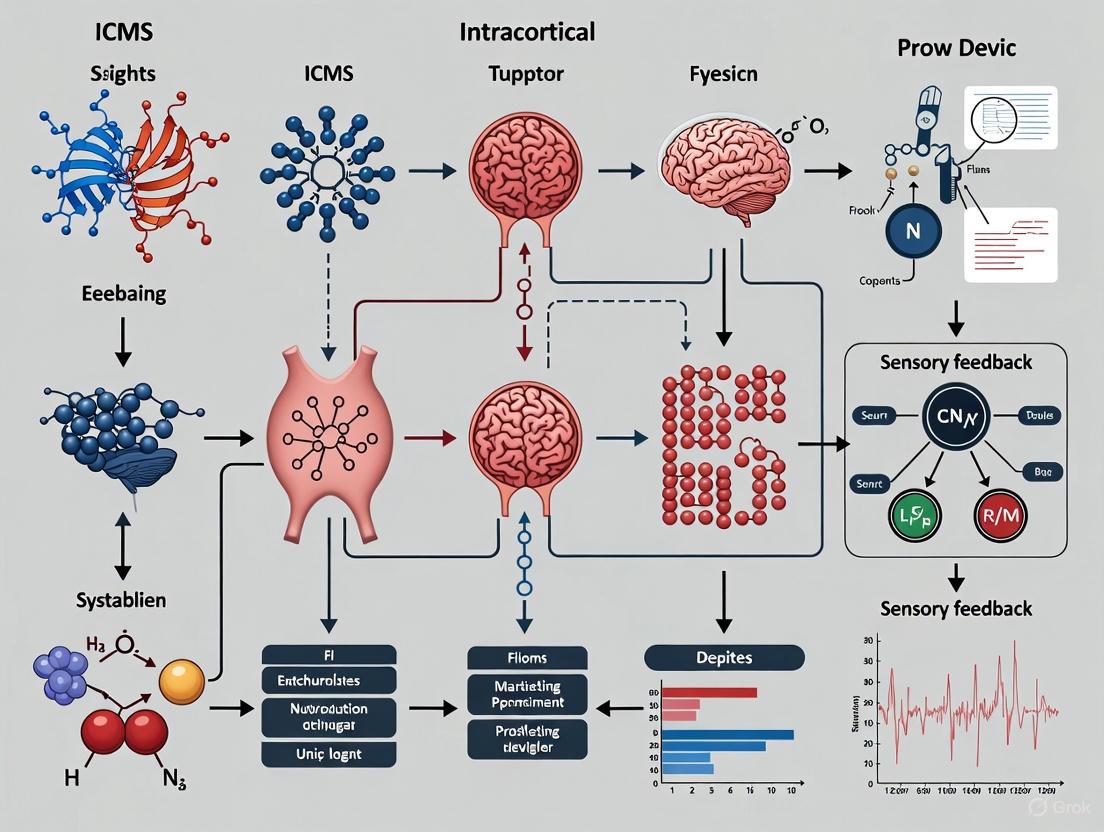
This article comprehensively reviews the application of Intracortical Microstimulation (ICMS) for providing sensory feedback in neuroprosthetics, targeting researchers and scientists in biomedical fields.
Restoring Touch: Advances in Intracortical Microstimulation for Sensory Feedback in Next-Generation Prosthetics
Abstract
This article comprehensively reviews the application of Intracortical Microstimulation (ICMS) for providing sensory feedback in neuroprosthetics, targeting researchers and scientists in biomedical fields. It explores the foundational principles of ICMS, detailing how electrical stimulation of the somatosensory cortex evokes tactile and proprioceptive percepts. The scope covers methodological advances in electrode design, stimulation protocols, and surgical planning, alongside the clinical integration of ICMS into bidirectional brain-computer interfaces. It further addresses critical challenges such as optimization of stimulation parameters, system stability, and biological responses, and validates the technology through psychophysical testing, computational modeling, and long-term clinical outcomes in human participants. The synthesis of recent breakthroughs demonstrates the potential of ICMS to restore complex, naturalistic sensations, thereby enhancing the functionality and embodiment of prosthetic limbs.
The Neural Basis of Artificial Touch: Principles and Mechanisms of ICMS
Fundamental Principles of Brain-Machine Interfaces for Sensory Restoration
Intracortical microstimulation (ICMS) has emerged as a pivotal technique in brain-machine interfaces (BMIs) for restoring sensory perception, particularly in neuroprosthetic applications. By delivering precisely controlled electrical pulses to specific regions of the somatosensory cortex, ICMS can evoke artificial tactile sensations that mimic natural touch perception. This approach enables bidirectional communication between prosthetic devices and the brain, allowing users to not only control artificial limbs through motor intention but also receive sensory feedback about object contact, texture, and force directly to their nervous system [1] [2].
Research demonstrates that ICMS activates cortical neural networks in a manner that integrates with ongoing cortical processing rather than substituting natural physiological activity [3]. This integration is crucial for creating intuitive sensory experiences that users can readily interpret and utilize for functional tasks. The fundamental principle underlying ICMS for sensory restoration involves mapping specific sensor inputs from a prosthetic device to somatotopically appropriate locations in the primary somatosensory cortex (S1), effectively creating an artificial pathway for tactile information to reach perceptual consciousness [2].
Key Principles of ICMS-Based Sensory Restoration
Somatotopic Organization and Projected Field Stability
The somatotopic organization of the somatosensory cortex provides the fundamental framework for ICMS-based sensory restoration. In this organization, adjacent areas of the body map to adjacent regions in S1, creating a systematic representation often visualized as a sensory homunculus. ICMS leverages this natural mapping by stimulating cortical regions that correspond to specific parts of the hand or limb, evoking sensations that are perceived as originating from those locations [2].
Research with human participants with spinal cord injuries has demonstrated that electrical stimulation through individual microelectrodes in area 1 of S1 produces discrete, stable projected fields (PFs) on the contralateral hand. These PFs typically consist of focal hotspots with diffuse borders and remain remarkably stable over extended periods, with studies documenting consistency over 2-7 years across multiple participants. This temporal stability is critical for clinical applications, as it reduces the need for frequent recalibration of the sensorimotor mapping [2].
Integration with Ongoing Cortical Processing
Unlike earlier views that envisioned electrical stimulation as replacing natural neural activity, contemporary research reveals that ICMS modulates cortical response to sensory stimuli by integrating with ongoing cortical processes. Studies in the auditory cortex show that ICMS differentially affects evoked (phase-locked) and induced (non-phase-locked) response components to acoustic stimuli, enhancing long-latency-induced components that mimic physiological gain increases from top-down feedback processes [3].
The phase of the local field potential at stimulation time predicts response amplitude for both natural and artificial stimulation, indicating that the brain processes ICMS-evoked signals similarly to natural sensory inputs. This integration principle enables more natural perceptual experiences and supports the development of closed-loop systems that adapt to the user's current cognitive state [3].
Parameter-Dependent Percept Qualities
ICMS-evoked sensations exhibit systematic relationships with stimulation parameters, enabling precise control over perceptual qualities:
- Location: Primarily determined by electrode position in the somatotopic map
- Intensity: Increases with both stimulation amplitude and frequency
- Quality: Can be modulated through temporal patterning and electrode combinations
Higher stimulation amplitudes generally produce more intense sensations, while frequency changes primarily affect perceived strength rather than quality. By leveraging these parametric relationships, researchers can encode information about contact force, location, and timing in neuroprosthetic systems [2].
Multi-Electrode Integration and Percept Fusion
Stimulating multiple electrodes with overlapping projected fields produces percepts that combine characteristics of their components. Rather than creating separate, distinct sensations, coordinated activation of multiple electrodes generates fused percepts that can be more focal and easier to localize than those from individual electrodes. This multi-electrode approach also expands the range of achievable intensity levels, enhancing discriminability for sensory tasks requiring force discrimination or texture identification [2].
Quantitative Characterization of ICMS Parameters
Table 1: ICMS Stimulation Parameters and Perceptual Effects
| Parameter | Typical Range | Perceptual Effect | Experimental Support |
|---|---|---|---|
| Current Amplitude | 1-100 μA | Controls perceived intensity; higher amplitudes produce stronger sensations | Human participants detected 60μA pulses with high reliability [2] |
| Pulse Frequency | 10-200 Hz | Modulates intensity perception; higher frequencies increase perceived strength | Systematic investigation in three spinal cord injury participants [2] |
| Pulse Width | 100-400 μs/phase | Affects spatial spread of activation; wider pulses may increase perceived area | Biphasic pulses (200 μs per phase) used in animal and human studies [3] [2] |
| Electrode Configuration | Mono-/bipolar | Influences current pathway and selectivity | Biphasic, cathodic-leading pulses with distant reference [3] |
| Train Duration | 0.1-5.0 s | Determines temporal duration of percept | 1-second trains used for PF characterization [2] |
Table 2: Projected Field Characteristics from Human S1 ICMS Studies
| Characteristic | Participant C1 | Participant P2 | Participant P3 | Overall Pattern |
|---|---|---|---|---|
| Total PF Area (≥33% threshold) | 12 cm² (7% of hand) | 33 cm² (20% of hand) | 30 cm² (18% of hand) | Coverage varies by individual |
| Median Individual PF Size | 2.5 cm² | Larger than C1 | Intermediate | Size varies across hand regions |
| PF Location Preference | Digit tips | Proximal pads and thumb | Both tip and pad regions | Distal PFs typically smaller |
| Temporal Stability | Stable over 2 years | Slight centroid drift over 7 years | Stable over 2 years | Generally high long-term stability |
| Exclusion Rate (no consistent PF) | 25% of electrodes | 25% of electrodes | 58% of electrodes | Varies by participant and implantation |
Experimental Protocols for ICMS Sensory Restoration
Protocol 1: Projected Field Characterization and Mapping
Purpose: To systematically map and quantify the location, extent, and stability of tactile percepts evoked by ICMS of somatosensory cortex.
Materials and Equipment:
- Intracortical microelectrode arrays implanted in Brodmann's area 1 of S1
- Programmable current-source stimulator capable of delivering biphasic pulses
- Digital hand representation system for participant reporting
- Electrode impedance monitoring system
Procedure:
- Stimulus Delivery: Deliver 1-second long ICMS pulse trains (100 Hz, 60 μA) to each electrode in a randomized sequence.
- Percept Reporting: Allow participant repeated observation of each stimulus, then draw the spatial extent of the perceived sensation on a digital hand representation.
- Data Collection: Collect multiple drawings for each electrode across sessions spanning days to years.
- PF Quantification: Compute area and centroid for each PF drawing. Create aggregate PFs by weighting each pixel by the proportion of times it was included across sessions.
- Threshold Application: Apply a 33% reporting threshold to identify core PF regions, excluding pixels reported less frequently.
- Stability Analysis: Compare centroid locations and areas across sessions using appropriate statistical tests (e.g., correlation analysis, ANOVA).
Notes: This protocol should be repeated at regular intervals (e.g., monthly) to assess long-term stability. The 60 μA intensity provides a reliable suprathreshold stimulus for most electrodes while minimizing potential tissue damage [2].
Protocol 2: Sensory Feedback Implementation for Prosthetic Control
Purpose: To establish a functional mapping between sensors on a bionic hand and ICMS-evoked tactile percepts for closed-loop prosthetic control.
Materials and Equipment:
- Brain-controlled bionic hand with multiple force sensors
- Real-time interface between bionic hand sensors and stimulator
- ICMS system implanted in hand representation of S1
- Object manipulation task set (varying size, weight, texture)
Procedure:
- Sensor-Electrode Mapping: Map each force sensor on the bionic hand to a somatotopically appropriate electrode based on PF characterization data.
- Parameter Calibration: For each sensor-electrode pair, establish a function that converts sensor output (e.g., 0-10 N) to stimulation amplitude (e.g., 0-60 μA).
- Closed-Loop Implementation: Implement real-time control where contact events automatically trigger ICMS with amplitude proportional to contact force.
- Performance Assessment: Evaluate manipulation performance using standardized metrics (success rate, completion time, grip force efficiency).
- Discrimination Testing: Assess the user's ability to discriminate object properties (hardness, texture, size) with and without ICMS feedback.
Notes: Multi-electrode stimulation strategies can enhance localization precision and intensity discrimination. Biomimetic temporal patterns may improve the naturalness of evoked sensations [2].
Research Reagent Solutions and Essential Materials
Table 3: Key Research Materials for ICMS Sensory Restoration Studies
| Item | Specification | Function/Application | Representative Examples |
|---|---|---|---|
| Microelectrode Arrays | Utah arrays, NeuroNexus probes | Neural recording and intracortical stimulation | A2x16-10mm-150-500-177 arrays [3] |
| Stimulation System | Programmable current source, biphasic capability | Delivery of charge-balanced ICMS pulses | AlphaLab SnR system (Alpha Omega) [3] |
| Bionic Hand | Multiple force sensors, real-time control | Prosthetic end-effector for functional tasks | Sensorized robotic hands with individual digit control [2] |
| Signal Processing | Real-time neural signal processing | Brain signal decoding for closed-loop control | Custom algorithms for motor intention decoding [4] |
| Neural Recording | Multi-channel acquisition system | Monitoring neural responses and network states | Broad frequency cortical potential recording (1 Hz-9 kHz) [3] |
Conceptual and Experimental Frameworks
Figure 1: Comparative pathways of natural tactile perception and ICMS-mediated artificial sensation, highlighting integration points in cortical processing.
Figure 2: Comprehensive experimental workflow for developing ICMS-based sensory feedback systems, from initial characterization to clinical translation.
The development of modern neuroprosthetics has evolved beyond restoring motor function to creating a bidirectional communication loop between the brain and artificial limbs. This loop comprises two critical processes: neural decoding, which translates recorded neural signals into motor commands for the prosthesis, and neural encoding, which delivers artificial sensory feedback through intracortical microstimulation (ICMS) of the somatosensory cortex [5] [6]. This closed-loop system is fundamental for restoring naturalistic motor control and embodiment for individuals with limb loss or paralysis. By integrating decoding and encoding technologies, researchers are creating prosthetics that not only respond to mental commands but also provide the sensation of touch and proprioception, significantly enhancing functional outcomes and user acceptance [7]. This application note details the experimental frameworks and protocols underpinning this bidirectional interface, with a specific focus on ICMS for sensory feedback.
Table 1: Performance Metrics of Bidirectional Brain-Computer Interfaces (BCIs)
| Performance Metric | Visual Feedback Only | ICMS Sensory Feedback | Experimental Context |
|---|---|---|---|
| Grasp Force Accuracy | Higher applied force error [6] | Significantly improved accuracy [6] | Force-matching task with spinal cord injury participant [6] |
| Walking Speed | Baseline (passive devices) [8] | >10% improvement [8] | Transfemoral amputees using sensory feedback prosthesis [8] |
| Mental Effort (P300 Amplitude) | Lower amplitude [8] | Increased amplitude [8] | Dual-task paradigm (walking + auditory task) [8] |
| Metabolic Cost (Oxygen Uptake) | Higher oxygen consumption [8] | Reduced consumption, more efficient gait [8] | Amputees walking with and without sensory feedback [8] |
| Phantom Limb Pain | Not applicable | >80% reduction reported [8] | Low-frequency neural stimulation via neuroprosthesis [8] |
Table 2: Intracortical Microstimulation (ICMS) Parameters for Sensory Feedback
| Parameter | Typical Range / Value | Functional Correlation | Notes / Rationale |
|---|---|---|---|
| Stimulation Frequency | 100 Hz [6] | Encodes continuous state (e.g., object contact) [6] | Commonly used for sustained sensation |
| Stimulation Amplitude | 20 - 90 μA [6] | Encodes intensity (e.g., grasp force); linearly mapped to sensor data [6] | Adjusted to perceptual threshold and comfort |
| Electrode Type | Microelectrode arrays [5] [6] | High-density interfaces for precise stimulation [5] | Implanted in area 1/3b of somatosensory cortex [6] [7] |
| Sensation Location | Hand/finger areas [6] | Topographically mapped to phantom hand [6] | Perceived on the amputated or paralyzed limb |
| Sensation Quality | Pressure, tingle, warmth, sharpness [6] | Qualities resemble natural touch [6] | Varies by electrode location and parameters |
Experimental Protocols
Protocol: Calibration of a Bidirectional BCI Decoder for Grasping
This protocol describes the training of a decoder that translates motor cortical activity into commands for a virtual or robotic gripper, a prerequisite for closed-loop ICMS studies [6].
1. Participant Setup and Preparation
- Implant microelectrode arrays in the primary motor cortex (M1) contralateral to the intended prosthetic arm. For tetraplegic participants, this is often the dominant hand area.
- Ensure neural signals are recorded using a capable neural signal processor (e.g., Neuroport Neural Signal Processor). Filter signals (0.3–7500 Hz band pass) and digitize.
- Set up a virtual reality (VR) environment (e.g., using MuJoCo physics engine) displaying a gripper and a spherical object on a screen.
2. Neural Data Acquisition during Observation and Motor Imagery
- Instruct the participant to observe the VR gripper performing grasps while simultaneously imagining themselves performing the same action.
- The VR system should cue different target force levels (e.g., "gentle," "medium," "firm") via a computer-generated voice.
- The virtual gripper autonomously closes and applies the cued force, holding each force level for a set duration (e.g., 2 s).
- Record the corresponding neural activity. Bin threshold crossings on each channel at 20 ms intervals, apply a smoothing filter (e.g., 2 s boxcar), and square-root transform the spike counts to stabilize variance [6].
3. Decoder Construction using an Encoding Model
- Use an encoding model that linearly relates the transformed neural signals
rto the grasp velocity (gv) and commanded grasp force (gf):r = b₀ + b_v * gv + b_f * gf[6] - Calculate the regression coefficients (
b₀,b_v,b_f) using a method such as an optimal linear estimator (OLE). - Invert this encoding model to create a decoding model that predicts grasp kinematics and force from real-time neural data.
Protocol: Force-Matching Task with ICMS Feedback
This protocol evaluates the functional benefit of ICMS-conveyed sensory feedback on grasp force control [6].
1. System Configuration
- Configure the BCI decoder from Protocol 3.1 for real-time control of the VR gripper.
- Select an electrode in area 1 of the somatosensory cortex that, when stimulated, evokes a tactile sensation on a specific part of the hand (e.g., the index finger).
- Map the applied grasp force from the prosthesis linearly to the amplitude of the ICMS (e.g., 0.1 force unit → 20 μA; 16 force units → 90 μA). Set a fixed stimulation frequency (e.g., 100 Hz).
2. Experimental Trial Design
- Present a series of trials where the participant must use the BCI to control the gripper and match a cued target force level.
- Implement multiple feedback conditions in a blocked or randomized design:
- Visual Feedback: The participant can see the gripper and/or a visual trace of the applied force.
- ICMS Feedback: Vision is removed or occluded, and force information is conveyed only via ICMS.
- Sham-ICMS Feedback: The blanking protocol is triggered without actual stimulation to control for data loss effects.
- Each trial begins with the gripper in an open posture. The participant uses decoded motor commands to close the gripper and apply force.
3. Data Collection and Analysis
- Success Rate: Record the percentage of trials where the participant holds the applied force within ±2 units of the target for a specified duration (e.g., 1.0 s) [6].
- Applied Force Error: Calculate the error
e(t) = T - gfa(t), whereTis the target force andgfa(t)is the applied force over time. Analyze the error at the end of the grasp phase [6]. - Compare performance metrics (success rate and force error) across the different feedback conditions using appropriate statistical tests (e.g., repeated-measures ANOVA).
Signaling Pathways and System Workflows
The Somatosensory Neuroprosthetic Pathway
This diagram illustrates the anatomical pathway for restoring sensation via ICMS, from sensor to percept.
Closed-Loop Bidirectional BCI Workflow
This diagram details the real-time information flow in a bidirectional BCI that decodes motor intent and encodes sensory feedback.
The Scientist's Toolkit: Research Reagent Solutions
Table 3: Essential Materials for ICMS Sensory Feedback Research
| Item / Reagent | Function / Application | Specific Example / Properties |
|---|---|---|
| Microelectrode Arrays | Chronic neural recording and microstimulation. High density allows for precise targeting. | Utah arrays (e.g., 96-electrode, 4x4 mm, 1.5 mm shank) [6]; Multielectrode arrays for S1 [5]. |
| Neural Signal Processor | Acquires, filters, and processes neural data in real-time for BCI control. | Neuroport Neural Signal Processor [6]. |
| ICMS Stimulator | Generates controlled, current-controlled biphasic pulses for safe cortical stimulation. | Integrated systems with real-time control and amplitude/frequency modulation [6]. |
| Virtual Reality (VR) Environment | Provides a safe, controlled setting for BCI decoder calibration and task training. | MuJoCo physics engine for simulating grippers and object interaction [6]. |
| Linear Encoding Models | Models the relationship between neural activity and motor intent for decoder creation. | r = b₀ + b_v*gv + b_f*gf (Spike rate vs. grasp velocity/force) [6]. |
| Machine Learning Decoders | Advanced neural decoding to improve the performance of BMIs beyond traditional linear methods. | Neural networks, gradient boosting, support vector machines [9]. |
The Role of the Somatosensory Cortex and Somatotopic Organization
The somatosensory cortex (S1) is fundamental to tactile perception, employing a somatotopic organization where adjacent body regions map to adjacent cortical areas [10]. This point-for-point correspondence forms a sensory "homunculus," with cortical representation size proportional to sensory receptor density and functional importance [10] [11]. In neuroprosthetics, Intracortical Microstimulation (ICMS) of S1 artificially activates these organized neural populations to evoke tactile sensations, restoring sensory feedback for amputees and individuals with sensory deficits [12] [13]. This application note details the principles and protocols for leveraging somatotopy in ICMS-based sensory restoration, providing researchers with practical experimental frameworks.
Foundational Principles of Somatotopy in S1
Somatotopic arrangement is a core organizational principle of the primary somatosensory cortex. The classic homunculus depicts a distorted human figure where body parts with high sensory acuity, like the hands and lips, occupy disproportionately large cortical areas compared to the trunk or legs [10] [11]. This organization is not static; it can be revealed endogenously during rest and is potently recruited during naturalistic vision, suggesting a foundational role in multisensory integration [14].
Modern research using high-field fMRI has identified multiple, orderly somatotopic gradients beyond S1, including in the cerebellum and throughout the dorsolateral visual system [10] [14]. These maps exhibit distinct functional specializations; for instance, the parietal cortex shows a bias for upper-limb representations critical for grasping actions, while medial regions are biased toward lower-limb and trunk representations [14]. This detailed mapping is crucial for ICMS, as it allows stimulation to be targeted to specific body part representations to evoke localized, naturalistic percepts.
Experimental Protocols for ICMS in Sensory Restoration
Protocol: Mapping Perceptual Boundaries via Behavioral Discrimination
This protocol determines the spatial resolution of discriminable ICMS-evoked sensations in rodent models [12].
- Objective: To quantify the minimum spatial separation (in cortical depth and lateral distance) required for an animal to discriminate between two distinct ICMS patterns.
- Materials:
- Single-shank or multi-shank 16-channel microelectrode arrays (MEAs)
- Biophysical computational model of the somatosensory cortex
- Behavioral setup with a two-choice nose-poking station
- Precision-controlled inserter for MEA implantation
- Procedure:
- Implantation: Implant a single-shank or four-shank MEA into the primary somatosensory cortex forelimb region (S1FL) of the test subject.
- Stimulation Pattern Definition: Define multiple ICMS patterns, each consisting of four electrode sites stimulated simultaneously. For single-shank arrays, select sites at different depths (e.g., 450-750 µm vs. 1650-1950 µm). For multi-shank arrays, select sites on different shanks.
- Behavioral Training: Train the subject in a two-alternative forced-choice task. The subject must indicate (via nose-poke) whether a delivered ICMS pattern matches a previously presented sample pattern.
- Data Collection: Systematically present pairs of patterns with varying spatial separations. Record discrimination accuracy and reaction time.
- Computational Modeling: Simulate the ICMS patterns using a biophysically realistic model. Quantify the volume of activated neurons and the overlap between activation volumes for different pattern pairs.
- Analysis: Correlate behavioral discrimination performance with the spatial separation of stimulation sites and the degree of overlap in computationally modeled neural activation volumes. This identifies the perceptual resolution limits of ICMS.
Protocol: Assessing Biomimetic Feedback in a Virtual Grasp Task
This protocol evaluates how ICMS-evoked S1 activity influences motor cortex (M1) and the performance of brain-machine interfaces (BMIs) during a functional task [13].
- Objective: To characterize task-dependent S1-to-M1 signaling and optimize ICMS feedback parameters to minimize disruption to motor decoding.
- Materials:
- Dual-array configuration: one MEA in S1 (for stimulation) and one in M1 (for recording)
- Virtual reality environment displaying a grasp-and-transport task
- Neural signal decoder for inferring motor intent from M1 activity
- Procedure:
- Baseline Recording: In a passive condition, deliver 1-second, 100-Hz ICMS pulse trains to individual S1 electrodes while recording evoked responses in M1. Identify pulse-locked (direct) and non-pulse-locked (indirect) responses.
- Somatotopic Mapping: Map the somatotopic organization of S1 by documenting the perceived location (projected field) of sensations evoked by stimulation at each electrode. Map M1 by recording activity during attempted movements of different digits.
- Active Task with Feedback: Engage the participant in a virtual grasp task. Provide ICMS feedback through S1 electrodes upon virtual object contact.
- Parameter Comparison: Test different ICMS feedback patterns, including continuous trains and biomimetic patterns that emphasize onset/offset transients (like natural touch).
- Performance Monitoring: Quantify BMI decoding performance and task success rate under different feedback regimes.
- Analysis: Compare the spatial pattern of M1 activation during S1 ICMS with the motor map derived from attempted movement. Assess how different ICMS feedback patterns affect the stability of the motor decoder and overall task performance.
Quantitative Data and Research Toolkit
Key Experimental Findings
Table 1: Spatial Discrimination Limits of ICMS in Rodent S1 [12]
| Parameter | Single-Shank MEA (Cortical Depth) | Four-Shank MEA (Lateral Separation) |
|---|---|---|
| High-Accuracy Discrimination | 90% accuracy between patterns separated by ~1200 µm | 88% accuracy between shanks separated by 375 µm |
| Low-Accuracy Discrimination | 53% accuracy between patterns separated by ~200 µm | 62% accuracy between shanks separated by 125 µm |
| Robust Discrimination Threshold | ~800 µm separation | ~250 µm separation |
| Key Finding | Discrimination limits are more constrained by cortical depth than by lateral separation across columns. |
Table 2: Properties of S1-to-M1 Signaling Evoked by ICMS in Humans [13]
| Response Property | Findings | Functional Implication |
|---|---|---|
| Prevalence of Modulation | ICMS in S1 modulated activity on a majority of recorded M1 channels. | Demonstrates robust, large-scale S1-M1 communication. |
| Response Latency | 37% of modulated channels showed pulse-locked responses with 2-6 ms latency; others showed slower, indirect effects. | Suggests both monosynaptic and polysynaptic pathways connect S1 and M1. |
| Somatotopic Specificity | S1 electrodes eliciting finger-specific percepts preferentially activated M1 neurons tuned to the same finger. | ICMS can exploit natural somatotopic alignment for functionally relevant feedback. |
| Task Dependence | The magnitude and sign (excitatory/inhibitory) of ICMS-evoked M1 responses varied between passive and active tasks. | The functional impact of ICMS is context-dependent. |
| Decoder Disruption | Continuous ICMS disrupted M1 decoder performance; biomimetic patterns minimized disruption. | Feedback strategy must be optimized for BMI integration. |
The Scientist's Toolkit: Essential Research Reagents and Materials
Table 3: Key Materials for ICMS-based Sensory Feedback Research
| Item | Specification / Example | Primary Function |
|---|---|---|
| Microelectrode Array (MEA) | Utah Array (fixed shanks), NeuroNexus A1x16/A4x4 (configurable shanks) [12] [13] | Multi-channel intracortical stimulation and recording. |
| Computational Model | Biophysically realistic model with Hodgkin-Huxley-style neurons and realistic axon morphology [15] [12]. | Predicting neural activation volumes and interpreting behavioral results. |
| Intraneural Electrode | Utah Slanted Electrode Array (USEA), Transverse Intrafascicular Multichannel Electrode (TIME) [16] [17]. | Providing peripheral nerve stimulation for sensory feedback in clinical studies. |
| Biomimetic Stimulator | Programmable stimulator capable of emulating onset/offset transients [13]. | Delivering naturalistic sensory feedback that mimics biological touch. |
| Vibrotactile/Electrotactile Actuator | Wearable tactors (vibratory, skin-stretch, electrotactile) [18] [17]. | Non-invasive sensory substitution for providing proprioceptive and tactile cues. |
Signaling Pathways and Experimental Workflows
S1 ICMS to M1 Signaling Pathway
ICMS Discrimination Experiment Workflow
The precise somatotopic organization of S1 is the bedrock upon which effective ICMS strategies for sensory restoration are built. Research confirms that ICMS can exploit this organization to evoke percepts that are localized and, to some degree, qualitatively specific [12] [13]. However, key challenges remain, including the spatial resolution of discriminable percepts and the complex, context-dependent interplay between sensory stimulation and motor command signals in M1 [12] [13].
Future research must focus on optimizing stimulation paradigms, such as biomimetic patterns that mimic natural neural activity, to enhance the quality of evoked sensations and minimize interference with motor control [13]. Furthermore, integrating ICMS with other sensory modalities, such as vision—which itself recruits somatotopic maps [14]—will be critical for developing cohesive and intuitive neuroprosthetic systems. A deep understanding of somatotopy is therefore not merely an academic exercise but a prerequisite for translating ICMS research into clinically viable sensory restoration technologies.
Intracortical microstimulation (ICMS) has emerged as a promising technique for providing artificial sensory feedback in brain-computer interfaces (BCIs) and prosthetic limbs. The evolution from evoking simple, on/off contact sensations to generating complex, information-rich tactile experiences represents a critical frontier in restorative neurotechnology. This progression mirrors a fundamental shift in approach—from early biomimetic attempts to recreate natural neural patterns toward learning-based frameworks that leverage the brain's inherent plasticity to interpret novel artificial signals [19]. This application note details the key experimental evidence, methodological protocols, and technological advancements that have driven this evolution, providing researchers with a comprehensive toolkit for ongoing development in the field.
The Foundational Shift: From Biomimicry to Learning-Based Integration
Initial research established that ICMS could provide a substitutive signal for lost sensation. Seminal work by Tabot et al. demonstrated that monkeys could learn to use an initially unfamiliar multi-channel ICMS signal, which provided continuous information about hand position relative to an unseen target, to complete accurate reaches [19].
Key Paradigm: Substitution and Augmentation of Vision
- Experimental Objective: To determine if a non-biomimetic ICMS signal could both replace and enhance visual feedback during a motor task [19].
- Protocol: Two rhesus macaques were implanted with a 96-electrode array in the primary somatosensory cortex (S1). They were trained to perform an instructed-delay center-out reaching task to invisible targets in a virtual reality environment. The "movement vector" (direction and distance from fingertip to target) was encoded by three feedback types:
- Visual (VIS): A random dot-field where motion coherence indicated signal reliability.
- ICMS-only: The movement vector was encoded via patterned microstimulation across eight electrodes.
- VIS+ICMS: A combination of the two correlated signals [19].
- ICMS Encoding Scheme:
- Direction: Encoded by the relative pulse rates across eight electrodes, each with a assigned "preferred direction" (spaced 45° apart). Pulse rate on each electrode varied with the cosine of the angle between the movement vector and the electrode's preferred direction [19].
- Distance: Encoded by a linear scaling of the pulse rates on all electrodes [19].
- Key Findings: After a learning period with coupled VIS+ICMS feedback, monkeys successfully performed the task using ICMS alone. Furthermore, they combined the artificial ICMS signal with vision to form an optimal, minimum-variance estimate of hand position, demonstrating true multisensory integration [19].
Table 1: Quantitative Performance Metrics from Primate ICMS Learning Study
| Metric | ICMS-Only Performance | Equivalent VIS Coherence |
|---|---|---|
| Target Direction Estimation (R²) | Monkey D: 0.900; Monkey F: 0.948 [19] | Comparable to 25-50% coherence [19] |
| Target Distance Estimation (R²) | Monkey F (across workspace): 0.432 - 0.473 [19] | Comparable to highest-coherence VIS feedback [19] |
Stabilizing the Signal: Perceptual Maps and Their Long-Term Reliability
A significant challenge for clinical translation is the stability of ICMS-evoked percepts over time. Recent long-term human studies have systematically quantified this, confirming that ICMS can produce a reliable sensory interface.
Protocol: Mapping Projected Fields (PFs) for Tactile Feedback
- Experimental Objective: To precisely quantify the spatial extent, distribution, and temporal stability of sensations evoked by ICMS in human participants [20].
- Participant Profile: Three individuals with chronic cervical spinal cord injury, each implanted with multiple microelectrode arrays in Brodmann's area 1 of the S1 hand representation [20].
- Stimulation and Mapping Procedure:
- Stimulation: 1-second long ICMS pulse trains (typical parameters: 100 Hz, 60 μA) were delivered to individual electrodes.
- Reporting: Participants, who had partial residual motor function, repeatedly observed the stimulus and then drew the spatial extent and location of the evoked sensation (the "Projected Field" or PF) on a digital hand map.
- Longitudinal Tracking: This mapping procedure was repeated regularly over a period of several years (2-7 years across participants) [20].
- Data Analysis: An aggregate PF for each electrode was created by weighting each pixel on the hand drawings by the proportion of times it was included over the study duration. A stability threshold was applied, excluding pixels reported in fewer than 33% of sessions for a given electrode [20].
Key Findings on Perceptual Stability
- PF Structure: PFs typically consisted of a focal "hotspot" where sensations were reliably evoked, surrounded by a diffuse border. The median PF size was 2.5 cm², with significant variation across the hand [20].
- Long-Term Stability: The centroid location of PFs remained highly stable over the entire study duration for all three participants, with no significant drift observed in two participants and only a slight, significant increase in the participant implanted the longest [20].
- Functional Implication: This long-term stability is critical for a clinical device, as it means the mapping between a force sensor on a bionic finger and its corresponding evoked sensation would not require frequent recalibration [20] [21].
Engineering Complex Sensations: From Single Electrodes to Patterned Stimulation
The most recent evolution in ICMS involves moving beyond single-electrode activation to sophisticated multi-electrode patterning to evoke complex, life-like sensations such as edges, motion, and shapes.
Protocol: Creating Motion and Edge Sensations via Patterned ICMS
- Experimental Objective: To test if overlapping PFs from multiple electrodes could be co-activated to generate coherent, moving sensations and to enable shape discrimination [20] [21].
- Participant Profile: The same three human participants with S1 arrays from the stability study [20].
- Stimulation Paradigm:
- Electrode Selection: Identification of pairs or clusters of electrodes whose individually mapped PFs overlapped on the hand map.
- Patterned Stimulation: Instead of simultaneous activation, these electrodes were activated in carefully orchestrated, sequential patterns. The timing and amplitude of the pulse trains were designed to mimic the spatiotemporal dynamics of a moving stimulus or to trace a shape across the skin [20] [21].
- Behavioral Tasks: Participants reported the quality of the sensation and performed psychophysical tasks to assess their ability to identify the direction of "motion" or to discriminate between different tactile shapes, such as letters of the alphabet traced on their fingertips [20] [21].
Key Findings on Complex Sensation Engineering
- Synthetic Motion Perception: Participants reported feeling a gentle, gliding touch moving smoothly over their skin in response to the sequentially patterned ICMS, despite the stimulus being delivered in discrete steps [21].
- Shape Discrimination: The approach allowed participants to identify complex tactile shapes, such as electrically traced letters, with accuracy above chance [20].
- Improved Functionality: In a functional task, one participant used a bionic arm coupled with this patterned ICMS feedback to successfully steady a steering wheel as it began to slip, demonstrating the utility of complex feedback for dexterous object manipulation [22] [21].
Table 2: Evolution of ICMS Capabilities and Corresponding Stimulation Protocols
| Evolved Capability | Stimulation Protocol | Key Experimental Findings |
|---|---|---|
| Sensory Substitution | Multi-channel, non-biomimetic ICMS encoding a movement vector (e.g., direction via cosine tuning) [19]. | Monkeys learned to use ICMS for reaches and integrated it with vision optimally [19]. |
| Stable, Localizable Touch | Single-electrode, parametric stimulation (e.g., 100 Hz, 60 μA) to map Projected Fields (PFs) [20]. | Human participants reported PFs that were somatotopically arranged and stable for years [20]. |
| Intensity Discrimination | Modulation of ICMS amplitude or frequency based on sensor input from a bionic hand [20]. | Most single electrodes offered an order of magnitude less discriminability than natural touch; biomimicry and multi-electrode stimulation improved this [20]. |
| Motion & Shape Perception | Spatiotemporally patterned microstimulation across multiple electrodes with overlapping PFs [20] [21]. | Participants felt smooth, moving sensations and could identify traced shapes, improving functional control [20] [21]. |
The Scientist's Toolkit: Essential Reagents and Materials
Table 3: Key Research Reagent Solutions for ICMS Sensory Feedback Research
| Item | Function / Description | Relevance in ICMS Research |
|---|---|---|
| Microelectrode Arrays | High-density, multi-electrode implants (e.g., 96-channel "Utah" arrays). | Chronic implantation in S1 and M1 cortical areas for both recording and stimulation [19] [20]. |
| Intracortical Microstimulation (ICMS) Pulse Generator | A precise system for generating biphasic current pulses with controllable amplitude, frequency, and pulse width. | The core tool for delivering controlled electrical stimuli to neural tissue to evoke percepts [19] [20]. |
| Virtual Reality (VR) Environment | A computer-simulated 3D space for presenting visual feedback and motor tasks. | Used in primate and human studies to create controlled sensorimotor tasks while isolating sensory modalities (e.g., VIS vs. ICMS) [19]. |
| Bionic Limb with Tactile Sensors | A robotic prosthetic limb (hand/arm) equipped with force, pressure, or slip sensors on its digits. | Serves as the actuator and the source of sensory data that is translated into ICMS feedback patterns [22] [21]. |
| Neural Signal Processing Software | Software suite for real-time decoding of motor intent from M1 and encoding of sensory information for S1 stimulation. | Enables closed-loop brain-computer interface control, linking intended movement to bionic limb action and sensor data to percepts [21]. |
Conceptual and Experimental Frameworks
The following diagrams illustrate the core logical and experimental workflows that underpin modern ICMS research for sensory feedback.
Conceptual Framework for ICMS-Based Sensory Restoration
Workflow for Mapping Projected Fields
The trajectory of ICMS research chronicles a rapid evolution from providing simple, substitutive contact signals to generating rich, complex, and stable tactile sensations. This has been achieved through a combination of learning-based approaches, long-term characterization of perceptual maps, and the strategic patterning of stimulation across multiple electrodes. The experimental protocols and findings detailed herein provide a robust foundation for the continued development of lifelike sensory feedback in neuroprosthetics, paving the way for devices that are not only functional but also truly integrated into the user's perceptual experience.
Intracortical microstimulation (ICMS) shows significant promise for providing sensory feedback in next-generation neuroprosthetics, enabling users to perceive sensations such as shape, texture, and motion through a bionic limb [22] [21]. However, the clinical translation of chronic ICMS-based systems is hampered by biological challenges at the electrode-tissue interface, primarily the microglial response and compromised blood-brain barrier (BBB) integrity [23] [24]. These intertwined responses to implanted microelectrodes can drive a cascade of cellular and vascular events that may impact both the stability of neurotechnology and the health of the surrounding neural tissue. This application note details the core findings and standardized experimental protocols for investigating these critical biological challenges, providing a framework for researchers in the field.
Core Quantitative Findings
The biological response to intracortical implants and microstimulation is dynamic and layered, involving rapid cellular activation and longer-term structural changes. The key quantitative findings from recent literature are summarized in the table below.
Table 1: Key Quantitative Findings on Microglial and BBB Responses to ICMS
| Biological Parameter | Experimental Finding | Significance / Correlation | Source |
|---|---|---|---|
| Microglia Process Convergence (MPC) | Observed within 15 minutes of ICMS onset; prevalence increased with higher current amplitudes. | Demonstrates a rapid, stimulus-intensity-dependent microglial reaction to neural activity induced by ICMS. [23] | |
| Vascular Dye Leakage | Significantly higher in stimulated animals; penetration increased with current amplitude. | Direct evidence of ICMS-induced BBB permeability, which is also amplitude-dependent. [23] | |
| Pericyte Calcium & Constriction | Transient increases in intracellular calcium and capillary constriction post-electrode insertion; calcium modulated by ICMS in an amplitude- and frequency-dependent manner. | Links implantation and stimulation to dysfunction of key BBB-regulating cells (pericytes). [25] | |
| ICMS Detection Threshold Stability | Most stable in cortical Layers 4 and 5; least stable in L1 and L6 over 40 weeks. | Suggests that the foreign body response (FBR) and long-term ICMS performance are layer-dependent. [26] | |
| Fine Motor Deficit | Up to 527% increase in time to complete a fine motor task in implanted rats vs. controls. | Indicates that the mere presence of a chronic implant can cause significant functional impairment. [27] | |
| Astrocytic Glial Scar Area | Peak area observed in cortical Layer 2/3. | The intensity of the astrocytic component of the FBR varies by cortical depth. [26] |
Experimental Protocols
To systematically evaluate the biological response to ICMS, standardized protocols are essential. The following sections outline detailed methodologies for key experiments.
Protocol for Assessing Acute Microglial and BBB Responses to ICMS
This protocol is designed to quantify the rapid microglial process convergence and immediate BBB permeability following ICMS, as described in Williams et al. [23].
I. Animal Preparation and Surgical Procedure
- Utilize dual-reporter transgenic mice expressing green fluorescent protein (GFP) under a microglial-specific promoter (e.g., CX3CR1) and a red fluorescent Ca²⁺ indicator (e.g., GCaMP) in neurons.
- Perform a craniotomy over the target somatosensory cortex under general anesthesia.
- Secure a cranial window to allow for chronic two-photon (2P) imaging and electrode access.
II. ICMS Application and Two-Photon Imaging
- Insert a microelectrode into the cortex through the cranial window.
- Apply ICMS using charge-balanced, biphasic pulses with a set frequency and pulse width. Systematically vary the current amplitude (e.g., from 10 to 100 µA) across sessions.
- During stimulation, acquire time-lapse 2P images to capture:
- Microglial Dynamics: Monitor the convergence of GFP-labeled microglial processes toward the electrode site.
- Neuronal Activity: Record Ca²⁺ transients in neurons using the red fluorescent indicator.
- Record the latency and prevalence of microglial process convergence.
III. BBB Integrity Assessment
- Intravenously administer a vascular dye (e.g., fluorescein-conjugated dextran) that is normally excluded by an intact BBB.
- Following ICMS sessions, acquire 2P images of the neurovasculature surrounding the electrode.
- Quantify dye leakage by measuring the fluorescence intensity in the parenchyma outside of blood vessels and normalizing it to the intravascular fluorescence intensity.
IV. Data Analysis
- Correlate the prevalence of microglial process convergence and the magnitude of dye leakage with the applied ICMS current amplitude using linear regression or ANOVA.
- Statistically compare the dye leakage in stimulated versus non-stimulated control hemispheres.
The workflow for this protocol is visualized below.
Protocol for Chronic Layer-Dependent FBR and ICMS Stability Assessment
This protocol outlines the procedure for evaluating the long-term foreign body response and its impact on ICMS efficacy across different cortical layers over several months [26].
I. Implantation and Layer Identification
- Implant a silicon microelectrode with multiple recording sites spanning all cortical layers into the somatosensory cortex of rats.
- Confirm electrode depth and layer assignment post-implantation using:
- Inverse Current Source Density (iCSD) analysis of local field potentials in response to peripheral stimulation to identify the thalamorecipient layer (e.g., Layer 4).
- Post-mortem electrolytic lesions and histological staining for neuronal markers (e.g., VGLUT2, DAPI) for precise layer demarcation.
II. Chronic Behavioral Assessment of ICMS Thresholds
- Train water-restricted rats in a conditioned avoidance task. The animal must stop licking a water spout upon detecting an ICMS stimulus to avoid a mild foot shock.
- For up to 40 weeks, regularly measure ICMS detection thresholds on each electrode channel using an adaptive staircase procedure (e.g., varying pulse amplitude).
- Assign the measured thresholds to their corresponding cortical layer based on the depth mapping from Step I.
III. Histological Processing and Quantification
- At the experimental endpoint, perfuse animals and extract brains for histology.
- Section the brain and immunostain for FBR markers:
- Microglia/Macrophages: Anti-IBA1 antibody.
- Astrocytes: Anti-Glial Fibrillary Acidic Protein (GFAP) antibody.
- Image the tissue surrounding the electrode track using confocal or fluorescent microscopy.
- Quantify the area of the glial scar (GFAP+) and the density of IBA1+ cells as a function of distance from the electrode and across cortical layers.
IV. Data Analysis
- Plot ICMS detection thresholds over time for each cortical layer. Use statistical models (e.g., repeated measures ANOVA) to test for significant changes in thresholds within and between layers over time.
- Correlate the degree of glial scarring and microglial activation with the long-term stability of ICMS thresholds in each layer.
Signaling Pathways in Microglial and BBB Response to ICMS
The cellular response to intracortical electrodes and microstimulation involves a complex cascade of events between neurons, glia, and the vasculature. The diagram below illustrates the key signaling pathways.
The Scientist's Toolkit: Research Reagent Solutions
Successful investigation of the ICMS biological interface requires a specific toolkit. The following table catalogs essential reagents and their functions.
Table 2: Key Research Reagents for Investigating Microglial and BBB Responses
| Reagent / Material | Function / Application | Specific Example / Target |
|---|---|---|
| Dual-Reporter Transgenic Mice | Enables simultaneous, real-time imaging of different cell populations in vivo. | CX3CR1-GFP mice (labels microglia); Thy1-GCaMP mice (labels neuronal Ca²⁺). [23] |
| Two-Photon Microscopy | Allows for deep-tissue, high-resolution, chronic imaging of cellular and vascular dynamics in the living brain. | In vivo time-lapse imaging of microglial process movement and dye leakage. [23] [25] |
| Silicon Multielectrode Arrays | Provides a multi-site platform for simultaneous stimulation and recording across cortical layers. | 16-channel linear arrays for layer-specific ICMS delivery and threshold measurement. [26] |
| Vascular Tracers | Assesses BBB integrity; tracers extravasate into brain tissue when the BBB is compromised. | Fluorescein or Texas Red-conjugated dextrans (e.g., 70 kDa); Evans Blue. [23] |
| Immunohistochemistry Antibodies | Labels specific cell types and proteins for post-mortem quantification of the FBR. | Anti-IBA1 (microglia), Anti-GFAP (astrocytes), Anti-NeuN (neurons). [26] |
| Conditioned Avoidance Behavioral Setup | Measures the psychophysical detection threshold of ICMS in animal models. | Apparatus with lick spout, ICMS trigger, and mild shock source. [26] |
From Lab to Clinic: Techniques and Clinical Implementation of ICMS
Electrode Array Design and Precision Implantation Strategies
Intracortical microstimulation (ICMS) of the somatosensory cortex (S1) has emerged as a powerful technique for providing artificial tactile feedback in brain-computer interfaces (BCIs) and neuroprosthetics. For individuals with spinal cord injury or amputation, restoring sensation is crucial for regaining dexterous motor control [28]. The success of this approach hinges on two fundamental pillars: the design of advanced microelectrode arrays that can interface precisely with neural tissue, and the development of sophisticated surgical implantation strategies that ensure accurate targeting of somatotopically organized cortical regions. This application note details the core principles, methodologies, and materials required for implementing ICMS-based sensory feedback, providing a structured framework for researchers and development professionals in the field of bidirectional neural interfaces.
Technology Foundations: Microelectrode Arrays
The electrode array serves as the critical hardware component for both delivering stimulation and, in bidirectional systems, recording neural signals. The choice of array technology directly impacts the spatial resolution, stability, and longevity of the ICMS interface.
Array Types and Material Considerations
Conventional Rigid Arrays: Utah electrode arrays (UEAs) are commonly used in clinical trials, featuring 96 electrodes with 1.5-mm-long shanks spaced 400 μm apart, spanning a 4 × 4-mm cortical area [29]. These arrays have demonstrated the ability to evoke tactile sensations localized to specific hand digits [28] [20]. However, the mechanical mismatch between rigid arrays and soft brain tissue can provoke a chronic foreign body response, leading to glial scarring and signal degradation over time [30] [26].
Flexible High-Density Microelectrode Arrays (FHD-MEAs): Recent advances focus on flexible substrates (e.g., polyimide, parylene-C) that offer superior biocompatibility and mechanical compliance [30] [31] [32]. These conformal electrodes enable more intimate neural integration, significantly reducing stimulation thresholds—as low as 1.5 μA (0.25 nC/phase) in some studies—while minimizing tissue injury risks [31] [32]. The reduced distance to target neurons enhances spatial precision, curbing off-target activation and allowing for higher-density electrode configurations that are essential for high-dimensional stimulation paradigms [30] [31].
Table 1: Comparison of Microelectrode Array Technologies
| Feature | Utah Array (Rigid) | Flexible High-Density Array |
|---|---|---|
| Typical Electrode Count | 96 | 32 to hundreds/thousands |
| Spatial Resolution | 400 μm spacing | Can be significantly higher (<100 μm) |
| Stimulation Threshold | Tens of μA [29] | As low as 1.5 μA [31] |
| Tissue Integration | Mechanical mismatch, chronic FBR [26] | Conformal interface, reduced FBR [30] |
| Key Advantage | Clinically established, reliable implantation | Enhanced biocompatibility, potential for high-dimensional stimulation [31] [32] |
The Scientist's Toolkit: Essential Research Reagents and Materials
Table 2: Key Materials and Reagents for ICMS Research
| Item | Function/Application | Example Details |
|---|---|---|
| Intracortical Microelectrode Array | Neural interface for stimulation/recording | Utah Array (Blackrock Microsystems) [29]; Custom flexible HD-MEAs [30] [31] |
| Constant-Current Neurostimulator | Precisely controlled stimulus delivery | CereStim R96 (Blackrock Microsystems) [29] |
| Iridium Oxide Film | Electrode coating for charge injection | Sputtered coating to enhance charge injection capacity and stability [29] |
| Functional MRI (fMRI) | Pre-surgical mapping of somatosensory hand area | Identifies digit representations for precise surgical targeting [28] [20] |
| Magnetoencephalography (MEG) | Alternative pre-surgical mapping technique | Complementary to fMRI for functional localization [28] |
| Histological Markers (e.g., Anti-NeuN, Anti-Iba1, Anti-GFAP) | Post-mortem analysis of tissue response | Quantifies neuronal health, microglial activation, and astrocytic scarring [33] [26] |
Precision Implantation and Surgical Planning
Evoking intuitive, somatotopically matched sensations requires meticulous pre-surgical planning and precise array placement within the hand representation of the postcentral gyrus (Brodmann area 1) [28] [20].
Pre-Surgical Functional Mapping
The hand area in S1 exhibits a consistent somatotopic organization, progressing from the thumb (lateral) to the little finger (medial) [28]. To reliably target these regions:
- Functional Magnetic Resonance Imaging (fMRI): Participants undergo fMRI to localize the hand area. Tactile stimulation (e.g., air puffs, brushing) of the hand digits evokes blood-oxygen-level-dependent (BOLD) signals, creating a functional map for implantation targeting [28].
- Magnetoencephalography (MEG): As a complement or alternative to fMRI, MEG can also non-invasively localize the somatosensory hand area [28].
- Clinical Considerations: This mapping remains feasible even in individuals with long-term deafferentation due to spinal cord injury, as the gross somatotopic organization is preserved [28].
Surgical Workflow and Intraoperative Guidance
A structured surgical workflow, developed through multi-site clinical trials, is critical for success [28]. The process requires a collaborative team with expertise in neurosurgery, neuroscience, engineering, and spinal cord injury medicine.
Figure 1: Surgical Implantation Workflow. A systematic, team-based approach from pre-surgical mapping to post-operative validation ensures successful electrode placement.
Stimulation Parameter Configuration and Safety
Configuring stimulation parameters is a balance between achieving effective perception and ensuring chronic safety. The stimulus charge per phase (Q) is a primary determinant of neuronal health, not charge density [33].
Quantifying Stimulation Safety and Efficacy
Prolonged ICMS can induce neuronal loss if parameters exceed safe limits. A pivotal study established that 140 hours of microstimulation at 2 nC/phase and 50 Hz induced minimal neuron loss, whereas stimulation at 8 nC/phase led to a 20–50% loss of neurons within 250 μm of the electrode sites [33]. Furthermore, the foreign body response and stability of ICMS are layer-dependent, with layers 4 and 5 exhibiting the most stable long-term thresholds and less exacerbated biological responses [26].
Table 3: Stimulation Safety and Efficacy Parameters
| Parameter | Safe / Effective Range | Notes and Dependencies |
|---|---|---|
| Charge per Phase (Q) | ≤ 2 nC/phase for minimal neuron loss [33] | Primary safety metric; more critical than charge density [33] |
| Pulse Frequency | 50–1000 Hz [29] | Higher frequencies increase perceived intensity [20] |
| Pulse Width | 50–400 μs [29] | Affects threshold current (see Chronaxie) [29] |
| Stimulation Threshold | As low as 1.5 μA (flexible arrays) [31] | Layer-dependent (lowest in L4/L5) [26] |
| Stability | Stable percepts over years possible [20] | Perceived location (Projected Field) remains stable long-term [20] |
Computational Modeling for Parameter Optimization
Computational models are invaluable for predicting neural responses and behavioral outcomes without exhaustive in vivo testing. A published model simulates the probability of neuronal activation by incorporating axonal activation dynamics, refractoriness, and the effects of pulse width [29]. This model accurately predicts behavioral detection thresholds (R² = 0.97) and reveals that amplitude discrimination with ICMS violates Weber's law, providing a theoretical framework for designing stimulation paradigms [29].
Experimental Protocol: Characterizing ICMS-Evoked Sensations
This protocol details the process for quantifying the perceptual characteristics of ICMS-evoked sensations in human participants, a critical step for validating implantation success and mapping sensors from a bionic hand.
Materials and Setup
- Participants: Individuals with chronic cervical spinal cord injury, implanted with microelectrode arrays in area 1 of S1.
- Equipment: Constant-current neurostimulator (e.g., CereStim R96) connected to the implanted array.
- Software: Custom software for controlling stimulation parameters and displaying a digital hand representation for participant reporting.
Procedure: Projected Field (PF) Mapping
- Stimulation Delivery: Deliver a 1-second long train of biphasic, cathodal-leading ICMS pulses to a single electrode. Typical initial parameters are 100 Hz frequency and 60 μA amplitude [20].
- Sensory Reporting: The participant observes the evoked sensation and draws its perceived spatial extent and location (the "Projected Field" or PF) on a digital hand diagram. The participant may also rate the intensity of the sensation.
- Parameter Variation: Systematically vary stimulation parameters (e.g., amplitude, frequency) across trials to characterize their effect on PF size, location, and intensity [20].
- Temporal Stability Assessment: Repeat steps 1-3 at regular intervals (e.g., weekly, monthly) over the chronic implantation period (months to years) to assess the long-term stability of the percepts [20].
- Data Analysis:
- PF Aggregation: For each electrode, create a composite PF map by weighting each pixel on the hand drawings by the proportion of times it was included across sessions.
- Thresholding: Apply a frequency threshold (e.g., pixels reported in ≥33% of sessions) to define a reliable "hotspot" and exclude sporadic, weak sensations [20].
- Stability Metric: Calculate the centroid of the PF for each session and track its distance from the initial PF's centroid over time.
Expected Results
- PFs are typically composed of a focal hotspot with diffuse borders and are arrayed somatotopically according to the underlying cortical map [20].
- With precise implantation, ICMS will evoke sensations localized to the first four digits of the hand [28].
- These PFs demonstrate remarkable long-term stability, with centroid locations showing no significant change over years in most participants [20].
- Stimulation of multiple electrodes with overlapping PFs can produce more focal and intense sensations, improving the functional utility of the feedback [20].
The roadmap for successful electrode array implantation and ICMS application requires an integrated approach combining conformal array design, image-guided surgical planning, and careful parameter configuration grounded in safety data. The presented protocols provide a foundation for establishing a reliable ICMS-based sensory feedback system. The future of this field lies in high-dimensional stimulation paradigms [31] [32]. Moving beyond single-electrode stimulation to coordinated, spatiotemporally patterned activation across dozens or hundreds of electrodes can evoke more complex and naturalistic sensations by better approximating the high-dimensional nature of natural neural codes. The development of flexible, high-density microelectrode arrays is a critical enabling technology for this next generation of precise synthetic neural codes in neuroprosthetics.
Presurgical Mapping with fMRI and MEG for Targeted Array Placement
Intracortical microstimulation (ICMS) of the somatosensory cortex has emerged as a promising technique for providing intuitive sensory feedback in bidirectional brain-computer interfaces (BCIs) for prosthetic limbs [28]. The success of this approach depends critically on the precise placement of microelectrode arrays in the specific regions of the somatosensory cortex that correspond to hand sensation [28] [34]. This application note details the integrated use of functional magnetic resonance imaging (fMRI) and magnetoencephalography (MEG) for presurgical mapping to guide the implantation of intracortical microelectrode arrays within the hand representation of the somatosensory cortex.
Targeting the somatosensory cortex requires sophisticated mapping approaches because the hand representation exhibits significant anatomical variability across individuals. The hand knob of the precentral gyrus, while easily identifiable, has been shown to be an insufficient landmark for surgical planning, with digit representations varying by up to 25 mm along the mediolateral axis across participants [34]. This variability exceeds the size of microelectrode arrays by more than sixfold, necessitating precise functional localization of individual digit representations through neuroimaging techniques [34].
Background and Rationale
The Role of Somatosensory Feedback in Neuroprosthetics
Somatosensory feedback is essential for dexterous motor control, enabling object manipulation without constant visual attention [21]. Individuals with tetraplegia consistently report restoration of hand and arm function as a top rehabilitative priority, driving research into BCIs that bypass spinal cord injuries [28] [34]. While motor control alone enables basic function, the absence of tactile feedback severely limits practical utility, as evidenced by the high abandonment rates of myoelectric prosthetic limbs lacking sensory feedback [20].
ICMS of the somatosensory cortex can evoke tactile sensations perceived as originating from specific locations on the hand, making it a promising approach for providing intuitive sensory feedback [28] [21]. The somatotopic organization of the somatosensory cortex, where adjacent body regions are represented in adjacent cortical areas, provides a biological foundation for spatially specific stimulation [28]. This organization persists even after deafferentation due to spinal cord injury or amputation, making it a reliable target for sensory restoration approaches [28] [34].
Comparison of fMRI and MEG for Presurgical Mapping
Both fMRI and MEG can localize digit representations in the somatosensory cortex, but they offer complementary strengths based on their different underlying signal sources and temporal characteristics.
Table 1: Comparison of fMRI and MEG Characteristics for Presurgical Mapping
| Characteristic | fMRI | MEG |
|---|---|---|
| Signal Source | Hemodynamic response (blood oxygenation level dependent) | Magnetic fields generated by neuronal electrical activity |
| Spatial Resolution | High (mm range) | Moderate (cm range with source modeling) |
| Temporal Resolution | Low (seconds) | High (milliseconds) |
| Patient Considerations | Requires tolerance of confined space; contraindicated with certain implants | Less restrictive; compatible with most implants |
| Mapping Paradigm | Block design (e.g., traveling wave) | Event-related design (e.g., attempted individual finger movements) |
| Primary Applications | Precise spatial localization of functional areas | Mapping temporal dynamics of neural processing |
| Key Strengths | Excellent spatial resolution; detailed anatomical visualization | High temporal resolution; less susceptible to movement artifacts |
Functional MRI measures brain activity indirectly through changes in blood oxygenation, providing excellent spatial resolution but limited temporal resolution [35]. For presurgical mapping of the somatosensory cortex, fMRI typically uses block designs such as the traveling wave paradigm, where participants attempt sequential finger tapping while being scanned [34]. This approach reliably activates the hand area of the somatosensory cortex, allowing identification of individual digit representations.
MEG directly measures magnetic fields generated by neuronal electrical activity, offering superior temporal resolution but more challenging spatial localization [36]. For hand mapping, MEG protocols typically involve alternating periods of attempted individual finger movements and rest while participants view representations of the desired movements [34]. Despite fundamental differences in the signals measured, studies have shown close correspondence between fMRI and MEG functional maps, with centers of gravity for digit representations varying by only 3.1-6.8 mm between modalities [34].
Experimental Protocols
fMRI Mapping Protocol
Patient Preparation and Positioning
- Screen for MRI contraindications (certain implants, claustrophobia, spinal fixation hardware that may cause warming sensations) [34]
- Secure head positioning to minimize motion artifacts
- Provide emergency squeeze ball and instruction for communication
- Ensure patient comfort to reduce movement during scanning
Paradigm Design and Implementation
The traveling wave paradigm has proven effective for mapping digit representations in individuals with spinal cord injury [34]:
- Instruction: Participants attempt to perform sequential finger tapping (thumb to little finger) at a pace of approximately 1 Hz, even if physical movement is limited due to spinal cord injury
- Block Design: 30-second activation blocks alternate with 30-second rest blocks
- Total Duration: 5-10 minutes of scanning, depending on signal quality
- Visual Cues: Provide visual prompts to guide the attempted movement sequence
Data Acquisition Parameters
- Field Strength: 3T or higher (ultra-high field 7T provides enhanced signal)
- Sequence: T2*-weighted echoplanar imaging (EPI)
- Resolution: Isotropic 1.5-2 mm voxels
- Slice Coverage: Whole brain with emphasis on sensorimotor cortex
- TR/TE: Optimized for BOLD contrast at specific field strength
Data Processing and Analysis
- Preprocessing: Motion correction, spatial smoothing, temporal filtering
- Statistical Analysis: General linear model (GLM) with convolution of task timing with hemodynamic response function
- Thresholding: Appropriate statistical threshold (e.g., p<0.05, FDR corrected) to identify significant activations
- Visualization: Overlay of functional activations on high-resolution anatomical images
MEG Mapping Protocol
Patient Preparation and Positioning
- Screen for metallic implants or dental work that may create artifacts
- Position participant in seated or supine position within the magnetically shielded room
- Apply head localization coils for continuous head position monitoring
- Ensure comfortable arm support to minimize movement during attempted finger tasks
Paradigm Design and Implementation
An event-related design is typically used for MEG mapping of digit representations [34]:
- Instruction: Participants attempt individual finger movements in response to visual cues
- Trial Structure: 2-3 second movement attempts followed by variable rest periods (2-5 seconds)
- Total Duration: 15-20 minutes of recording time
- Finger Sequencing: Random presentation of different finger movements to avoid anticipation effects
Data Acquisition Parameters
- System Configuration: Whole-head MEG system (e.g., CTF 275-channel)
- Sampling Rate: 1200 Hz or higher to capture high-frequency components
- Filter Settings: 0.1-300 Hz bandpass with appropriate notch filters for line noise
- Co-registration: Acquisition of fiducial points for integration with structural MRI
Data Processing and Source Modeling
- Preprocessing: Artifact removal (cardiac, ocular, environmental), signal space separation
- Source Modeling: Distributed source solution (e.g., dSPM) constrained to cortical surface
- Coregistration: Alignment of MEG data with participant's structural MRI
- Statistical Analysis: Contrast of activation during movement attempts versus rest periods
Integrated Surgical Planning Workflow
Diagram 1: Presurgical Mapping and Surgical Planning Workflow
The surgical planning process incorporates a structured workflow to ensure optimal array placement:
- Parallelized Analysis: Multiple research sites independently analyze functional imaging data to generate initial functional maps [34]
- Discrepancy Resolution: Team members collaborate to identify and resolve differences in functional maps through consensus meetings [34]
- Multi-disciplinary Planning: 7-8 senior researchers (neuroscientists, neurosurgeons, physiatrists) independently create array placement plans considering [34]:
- Strength of finger representations
- Border zones between digit representations for single-array access to multiple fingers
- Gyral morphology and flatness for array placement
- Location of large blood vessels (from contrast-enhanced structural MRI)
Performance Metrics and Outcomes
Quantitative Mapping Results
Table 2: Digit Representation Distances from Hand Knob Across Participants
| Participant | D1 (mm) | D2 (mm) | D3 (mm) | D4 (mm) | D5 (mm) |
|---|---|---|---|---|---|
| C1 | 19.7 | 10.3 | 5.6 | 4.1 | 1.5 |
| C2 | 16.2 | 3.2 | - | 6.2 | - |
| P2 | 22.0 | 11.8 | 6.1 | - | - |
| P3 | 15.3 | 12.3 | 10.9 | 6.2 | - |
| P4 | 19.9 | 28.1 | 15.7 | - | - |
Data represents distance in millimeters along the mediolateral axis from the hand knob to peak activity for each digit. Absent values indicate digits without significant functional maps. Note the substantial variability across participants, particularly for D1 (thumb) representation, which ranged from 15.3-22.0 mm from the hand knob [34].
Surgical Outcomes and ICMS Validation
The presurgical mapping approach has demonstrated high success rates in clinical implementation:
- Participant Coverage: Successful identification of implant locations enabling ICMS-evoked sensations localized to at least the first four digits of the hand in five participants with cervical spinal cord injury [28]
- Sensation Stability: ICMS-evoked percepts remain stable over extended periods, with projected field centroids showing no significant change over years of study [20]
- Spatial Characteristics: Projected fields typically comprise focal hotspots (median 2.5 cm²) with diffuse borders, arrayed somatotopically according to underlying receptive fields [20]
Practical Implementation Considerations
Protocol Selection Guidelines
Table 3: Decision Framework for Imaging Modality Selection
| Clinical Scenario | Recommended Modality | Rationale | Alternative Approach |
|---|---|---|---|
| Standard Eligibility | fMRI + MEG (if available) | Complementary spatial and temporal resolution | fMRI alone |
| Contraindications to MRI (certain implants, severe claustrophobia) | MEG alone | No magnetic field restrictions; less confined space | N/A |
| Spinal Fixation Hardware (potential heating concerns) | MEG alone | Avoids potential RF heating issues | N/A |
| Excessive Head Motion | MEG preferred | Less susceptible to movement artifacts | Repeat fMRI with improved stabilization |
| Time Constraints | fMRI preferred | Generally faster acquisition for comprehensive hand mapping | Targeted MEG of specific digits |
Technical Optimization Strategies
- fMRI Artifact Reduction: Implement prospective motion correction, padding for comfort, and visual feedback systems to minimize head movement [35]
- MEG Signal Quality: Use signal space separation algorithms to suppress external interference, ensure proper helmet positioning, and implement artifact removal for cardiac and ocular signals
- Cross-modal Validation: When both modalities are available, use the center of gravity agreement (typically 3-6 mm) as a quality control metric [34]
- Task Adaptation: For participants with complete sensory loss, use attempted movements or motor imagery rather than passive sensory stimulation
The Scientist's Toolkit
Essential Research Reagent Solutions
Table 4: Key Materials and Equipment for Presurgical Mapping
| Item | Specification/Model | Function | Application Notes |
|---|---|---|---|
| fMRI System | 3T or higher with echoplanar imaging capability | High-resolution functional and anatomical imaging | Ultra-high field (7T) provides enhanced BOLD contrast and spatial resolution |
| MEG System | Whole-head system (e.g., CTF 275-channel) | Detection of magnetic fields from neural activity | Provides millisecond temporal resolution for neural processing |
| Microelectrode Arrays | NeuroPort (Blackrock Neurotech) | Intracortical recording and stimulation | 2.4×4 mm arrays with multiple electrode sites for somatic sensation |
| Stimulator System | MRI-compatible intracortical microstimulation system | Precise current delivery for cortical stimulation | Custom-built systems required for compatibility with ultra-high field fMRI [37] |
| Analysis Software | FSL, SPM, FreeSurfer, MNE-Python | Processing and visualization of neuroimaging data | Pipeline implementation for automated processing and multi-modal integration |
| Neuronavigation System | Intraoperative guidance platform | Integration of presurgical maps with surgical field | Envents use of functional data for real-time surgical guidance |
Integrated presurgical mapping using fMRI and MEG provides a robust foundation for precise implantation of intracortical microelectrode arrays in the somatosensory cortex. The complementary strengths of these modalities enable researchers to account for individual neuroanatomical variability and optimize array placement for evoking somatotopically appropriate sensations through ICMS. The structured workflow encompassing multi-modal imaging, parallelized analysis, and multidisciplinary surgical planning has demonstrated efficacy across multiple clinical participants, establishing a roadmap for broader implementation of bidirectional BCIs with intuitive sensory feedback. As the field advances, these presurgical mapping techniques will continue to play a critical role in translating laboratory breakthroughs into clinically viable sensory restoration technologies.
Intracortical microstimulation (ICMS) has emerged as a pivotal technique in advanced brain-machine interfaces (BMIs), particularly for providing sensory feedback in next-generation prosthetic devices. The efficacy of ICMS in evoking perceptible sensations is fundamentally governed by the precise manipulation of its electrical parameters—amplitude, frequency, and pulse patterns. These parameters directly control the spatiotemporal patterns of neural activation, thereby influencing the quality, intensity, and nature of the elicited sensory experience. This document provides detailed application notes and experimental protocols for optimizing these stimulation parameters within the context of sensory restoration prosthetics, drawing on the latest empirical findings and theoretical frameworks. The ultimate goal is to achieve high-dimensional control of neural activity to generate synthetic neural codes that closely mimic naturalistic perceptions [32] [38].
Core Stimulation Parameters and Their Neurophysiological Effects
The fundamental parameters of ICMS determine which neurons are activated, how strongly they respond, and the temporal structure of that activation. Understanding their individual and interactive effects is crucial for designing effective stimulation protocols.
Amplitude
Stimulation amplitude, typically defined as current amplitude (µA), controls the spatial extent and magnitude of neural activation. It is directly correlated with the strength of the perceived sensation.
- Mechanism of Action: The amplitude of the stimulation current dictates the resulting electric field (E-field) strength. A stronger E-field depolarizes a larger number of neuronal membranes, recruiting neurons at increasing distances from the electrode tip [39].
- Functional Outcomes: Higher amplitudes generally lead to more intense perceptual experiences. Research in human somatosensory cortex has shown that amplitude modulation can evoke sensations of varying pressure or brightness [32]. The magnitude of neuronal responses, as measured by calcium imaging, is linearly correlated with the E-field strength and stimulation amplitude until a steady-state response is reached [39].
- Safety Considerations: Amplitude is a key factor in stimulation-induced tissue damage. The charge per phase (a product of amplitude and pulse width) must be carefully managed to stay within safety thresholds. Lowering stimulation currents is paramount for the safe implementation of high-dimensional paradigms using multiple electrodes simultaneously [32].
Frequency
Stimulation frequency (Hz) modulates the temporal dynamics of the evoked neural response and is non-linearly related to the perceived quality of the sensation.
- Mechanism of Action: Frequency influences the rate at which action potentials are elicited in responding neurons. However, the relationship is not linear; certain frequency bands can preferentially recruit specific neural circuits or induce synaptic facilitation/depression [39].
- Functional Outcomes: Frequency tuning is critical for encoding sensory properties. For instance, in somatosensation, different frequency bands can mimic the feel of various tactile stimuli, such as pressure or vibration. Neurons involved in texture perception can phase-lock to frequencies as high as 1000 Hz [32]. Studies show that stimulation frequency non-linearly modulates both the magnitude and the temporal dynamic of neuronal responses [39].
- Temporal Patterning: Beyond constant frequency, complex pulse patterns (e.g., bursting) can be used to more accurately mimic natural neural firing patterns, potentially leading to more naturalistic perceptions.
Pulse Patterns and High-Dimensional Stimulation
Moving beyond single-electrode stimulation, high-dimensional stimulation employs spatiotemporally patterned microstimulations across multiple independently controlled electrodes to generate complex neural population activity.
- Rationale: Natural neural representations are high-dimensional. Sensations like texture require dozens of dimensions to be accurately encoded in the somatosensory cortex [32]. Single-electrode ICMS produces highly synchronized, low-dimensional neural activity that is perceptually artificial.
- Effect of Multi-Electrode Stimulation: Simulations using cortical column models demonstrate that increasing the number of stimulating electrodes from one to 32 produces diverse neural responses with a dimensionality that approaches that of spontaneous activity. This approach allows for the generation of spatiotemporally distributed patterns that yield more complex and naturalistic neural responses [32].
- Spatiotemporal Integration: The temporal dynamics of a neuron's response depend on its distance to the stimulation electrode. By precisely controlling the timing of pulses across an array, it is possible to guide the temporal evolution of population activity along desired neural trajectories [39] [32].
Table 1: Summary of Key Stimulation Parameters and Their Effects
| Parameter | Neurophysiological Effect | Perceptual Correlate | Safety & Practical Considerations |
|---|---|---|---|
| Amplitude | Linearly modulates response magnitude and spatial spread of activated neurons [39]. | Intensity of sensation (e.g., pressure, brightness) [32]. | Charge per phase must be monitored to prevent tissue injury [32]. |
| Frequency | Non-linearly modulates response dynamics and temporal patterning [39]. | Quality of sensation (e.g., constant pressure vs. flutter) [32]. | High frequencies (>100 Hz) may be needed for certain tactile features [32]. |
| Pulse Patterns (Spatiotemporal) | Enables high-dimensional control of population activity, reducing artificial synchrony [32]. | Complexity and naturalism of the evoked perception (e.g., texture) [32]. | Requires flexible microelectrode arrays for stable, intimate tissue integration [32]. |
Experimental Protocols for Parameter Optimization
This section outlines detailed methodologies for characterizing and optimizing ICMS parameters in a research setting, focusing on in vivo electrophysiology and behavioral assays.
Protocol 1: Mapping Amplitude-Response Curves
Objective: To determine the relationship between stimulation amplitude and the magnitude of neural response, identifying threshold and saturation levels.
- Animal Preparation: Anesthetize or use a awake, head-fixed animal preparation (e.g., rodent or non-human primate). A chronic cranial window or microdrive array should be implanted over the target region (e.g., somatosensory cortex S1).
- Electrophysiology Setup: Insert a flexible microelectrode array into the target layer (e.g., Layer II/III). Configure the system for simultaneous intracortical microstimulation and recording, such as two-photon calcium imaging or local field potential (LFP) recordings [39].
- Stimulation Paradigm:
- Apply a train of biphasic, cathodic-first pulses at a fixed, intermediate frequency (e.g., 100 Hz) with a pulse width of 200 µs.
- Systematically vary the current amplitude across a range (e.g., 5 µA to 100 µA) in a randomized, block design.
- For each amplitude, deliver a 1-second train with an inter-trial interval of at least 10 seconds to avoid carry-over effects.
- Data Acquisition & Analysis:
- Record the neuronal population response (e.g., calcium fluorescence transients or multi-unit activity).
- Calculate the mean response magnitude (e.g., ΔF/F) for each amplitude.
- Plot the amplitude-response curve and fit a function to identify the threshold amplitude (response > 2 standard deviations above baseline), the linear range, and the amplitude at which the response saturates [39].
Protocol 2: Characterizing Frequency-Dependent Response Dynamics
Objective: To investigate how stimulation frequency alters the temporal structure and magnitude of neural activation.
- Preparation & Setup: As described in Protocol 1.
- Stimulation Paradigm:
- Set the current amplitude to a value within the linear range identified in Protocol 1.
- Apply a 1-second train of pulses while systematically varying the frequency (e.g., 10, 30, 50, 100, 200 Hz) in a randomized order.
- Maintain a sufficiently long inter-trial interval.
- Data Acquisition & Analysis:
- Record the temporal dynamics of the neural response.
- Analysis 1 (Magnitude): Calculate the peak and integrated response for each frequency.
- Analysis 2 (Dynamics): Quantify the onset latency, rise time, and decay time constant of the response. Note the presence of post-stimulation suppression, which is often amplitude-dependent and observed within ~500 µm of the electrode [39].
- The results will show a non-linear relationship between frequency and response magnitude/dynamics [39].
Protocol 3: Behavioral Assessment of Sensory Feedback in Prosthetic Models
Objective: To validate the perceptual efficacy of different stimulation parameters in a closed-loop brain-machine interface context.
- Animal Model & Training: Train an animal (e.g., a non-human primate or a rodent in an operant setting) to perform a sensory detection or discrimination task.
- BMI Integration: A robotic prosthetic limb is fitted with tactile sensors. Sensor data (e.g., grip pressure) is encoded into ICMS parameters (e.g., amplitude for pressure intensity, frequency for slip) and delivered to the relevant somatosensory area via an implanted array [38].
- Testing Paradigm:
- In a detection task, the animal must report whether an ICMS-evoked sensation was present. The stimulation amplitude is titrated to find the perceptual threshold.
- In a discrimination task, two different spatiotemporal patterns of ICMS (e.g., single-electrode vs. multi-electrode) are delivered, and the animal is rewarded for choosing the correct associated cue. This tests the ability of high-dimensional stimulation to convey more complex information [32].
- Data Analysis: Performance is measured as the percentage of correct trials for detection and discrimination. Psychometric curves are generated to compare the discriminability of different parameter sets. Studies have shown that humans can accurately identify tactile characters and edges through patterned ICMS, validating its utility for sensory feedback [38].
Table 2: Key Research Reagents and Materials for ICMS Studies
| Item | Function/Description | Example & Notes |
|---|---|---|
| Flexible Microelectrode Array (MEA) | High-density, conformal electrodes for stable, long-term neural interfacing. Reduces stimulation threshold and tissue damage [32]. | Neuropixels probes; custom flexible polyimide or SU-8 arrays. Promotes intimate tissue integration. |
| Biphasic Current Stimulator | Generates precisely controlled, charge-balanced pulses to ensure electrolytic safety and prevent tissue damage. | Tucker-Davis Technologies (TDT) IZ2 stimulator, Blackrock Microsystems CereStim C96. |
| In Vivo Imaging/Recording System | Monitors neural population activity in response to stimulation. | Two-photon microscope for calcium imaging; multichannel electrophysiology system for LFP and single-unit recording [39]. |
| Data Analysis Software | For processing neural and behavioral data, and generating stimulation patterns. | Python (with SciKit-learn, NumPy), MATLAB, NEST Simulator for network modeling [32]. |
| Robotic Prosthetic Limb | A test platform for closed-loop sensory feedback studies. | Limb equipped with tactile sensors (pressure, vibration) whose outputs are mapped to ICMS parameters [38]. |
Visualization of ICMS Workflow and Effects
The following diagrams, created using the specified color palette, illustrate the core experimental workflow and the conceptual shift to high-dimensional stimulation.
ICMS Experimental Workflow
High-Dimensional Stimulation Concept
Intracortical microstimulation (ICMS) of the somatosensory cortex can evoke artificial tactile sensations, making it a promising approach for restoring sensory feedback in prosthetic systems for individuals with spinal cord injury or limb loss. Traditional ICMS approaches often use fixed-frequency, constant-amplitude stimulation patterns that generate percepts frequently described as "tingling" or "electric" rather than natural [40]. The biomimetic approach seeks to address this limitation by designing stimulation patterns that deliberately replicate characteristic features of naturally occurring neural activity in the somatosensory cortex [41]. This paradigm shift from arbitrary coding schemes to biologically-inspired patterns has demonstrated remarkable success in creating more naturalistic and intuitive sensory experiences, potentially reducing the cognitive burden on users when interpreting artificial tactile feedback [42].
The fundamental premise of biomimetic stimulation is that the brain will more readily interpret neural activation patterns that resemble its native coding schemes. Natural tactile neural responses are characterized by specific temporal dynamics, including onset transients, adaptation profiles, and precise spatiotemporal patterning across neuronal populations [42]. By capturing these essential features in artificial stimulation, researchers have achieved significant improvements in the quality, naturalness, and functionality of evoked percepts [41] [40].
Quantitative Evidence: Biomimetic Versus Non-Biomimetic Approaches
Performance Comparison of Stimulation Encoding Schemes
Recent clinical studies have directly compared biomimetic and non-biomimetic ICMS approaches in human participants with somatosensory deficits. The table below summarizes key quantitative findings that demonstrate the advantages of biomimetic strategies.
Table 1: Comparative performance of biomimetic versus non-biomimetic ICMS encoding schemes
| Study & Approach | Naturalness Assessment | Charge Efficiency | Key Parameters | Subject Population |
|---|---|---|---|---|
| Simple Biomimetic [41] | 32% of electrodes preferred over non-biomimetic | Reduced charge requirements | Amplitude modulation on single electrodes | 3 people with cervical spinal cord injuries |
| Advanced Biomimetic [41] | 75% of electrode groups preferred over non-biomimetic | Reduced charge requirements | Co-modulated amplitudes & frequencies across 4 electrodes | 3 people with cervical spinal cord injuries |
| Model-Based Optimization [42] | Evoked responses closely approximated natural responses (within 50 μm) | Not specified | Spatiotemporal patterns across multiple electrodes | Non-human primate model |
| Self-Guided Customization [40] | Participants created object-specific sensations | Not specified | Amplitude, frequency, biomimetic factor, and drag parameters | 3 male individuals with tetraplegia |
Key Advantages of Biomimetic Approaches
The quantitative evidence reveals several consistent advantages of biomimetic stimulation strategies. First, biomimetic patterns consistently produce sensations that are perceived as more natural compared to mechanical indentation references [41]. The advanced biomimetic approach, which incorporates spatiotemporal dynamics across multiple electrodes, shows particularly strong performance with 75% of electrode groups generating more naturalistic percepts compared to non-biomimetic alternatives.
Second, biomimetic stimulation trains demonstrate superior charge efficiency, requiring less electrical charge to generate intensity-matched sensations [41]. This improved efficiency has significant practical implications for the power management and thermal characteristics of fully implantable neuroprosthetic systems.
Third, biomimetic approaches enable more intuitive sensory experiences. In studies where participants customized their own stimulation parameters to represent different objects, they could reliably create and identify object-specific sensations without visual cues, with confusion patterns reflecting the natural tactile similarity between objects [40].
Experimental Protocols for Biomimetic ICMS
Protocol 1: Biomimetic Pattern Optimization Using Computational Modeling
Table 2: Research reagents and solutions for biomimetic ICMS research
| Reagent/Solution | Function | Example Application |
|---|---|---|
| Utah Microelectrode Array | Multi-channel neural recording and stimulation | Implantation in Brodmann's areas 1/2 for somatosensory interfacing [42] |
| Genetic Algorithm | Optimization method for stimulus pattern design | Identifying optimal spatiotemporal ICMS patterns that evoke target neural responses [42] |
| Recurrent Neural Network | Learning mapping between physical stimuli and ICMS patterns | Implementing sensory encoder for neuroprosthetic devices [42] |
| Cortical Hypercolumn Model | Computational simulation of neural populations | Predicting neuronal responses to candidate stimulation patterns [42] |
| Poisson Negative-Log Likelihood Loss | Training objective function for neural prediction | Model training outperformed mean squared error by 9.6% [43] |
Objective: To identify optimal spatiotemporal patterns of ICMS that evoke naturalistic patterns of neuronal activation in the somatosensory cortex.
Workflow:
Natural Response Characterization: Record multiunit neural activity (SPIKES) from target somatosensory regions (e.g., Brodmann's area 2 for proprioception, area 1 for cutaneous input) during natural sensory experiences:
- For proprioception: Record during center-out reach tasks while tracking hand kinematics
- For touch: Record during controlled skin indentations at varying intensities and locations [42]
Computational Modeling: Implement a biophysically realistic model of a cortical hypercolumn containing multicompartment cortical neurons organized in layers. For computational efficiency, extract layer-4 neurons to create a simplified sheet model [42].
Pattern Optimization: Use a genetic algorithm to design spatiotemporal ICMS patterns (STIM) that evoke simulated responses (EVOKED) matching the measured natural responses (SPIKES). The optimization objective is to minimize the difference between EVOKED and SPIKES [42].
Encoder Development: Train a recurrent neural network to learn the mapping function between physical stimulus parameters (PHYS) and the optimized biomimetic ICMS patterns (STIM). This creates a sensory encoder for implementation in neuroprosthetic systems [42].
Validation: Test the generalization capability of the encoder on untrained limb movements or skin indentations. Compare performance against existing linear and nonlinear mapping approaches [42].
Figure 1: Workflow for computational optimization of biomimetic ICMS patterns
Protocol 2: Psychophysical Evaluation of Biomimetic Sensations
Objective: To assess the perceptual quality and discriminability of biomimetic ICMS patterns in human participants.
Workflow:
Participant Setup: Interface with implanted microelectrode arrays in Brodmann's area 1 of the somatosensory cortex. For participants with tetraplegia, use residual hand function to control a tablet interface for parameter adjustment [40].
Parameter Space Definition: Define the adjustable stimulation parameters:
- Amplitude (current level)
- Frequency (pulse rate)
- Biomimetic factor (transient emphasis mimicking natural onset/offset responses)
- Drag parameter (temporal overlap for sequential electrode stimulation) [40]
Blinded Exploration: Implement a blinded interface where participants control stimulation parameters without knowledge of specific parameter identities. Randomly assign parameters to control axes to prevent bias [40].
Object-Sensation Mapping: Present virtual objects spanning diverse tactile dimensions (compliance, temperature, texture). Participants adjust parameters to create appropriate sensations for each object while providing satisfaction ratings [40].
Perceptual Discrimination Testing: Implement a "replay task" where created stimulation patterns are delivered without visual context. Participants identify the corresponding object from the evoked sensation alone. Assess classification accuracy and confusion patterns between objects [40].
Stability Assessment: Test discriminability of selected sensations across different days to evaluate perceptual consistency over time [40].
Figure 2: Psychophysical evaluation protocol for biomimetic ICMS
Advanced Biomimetic Encoding Strategies
Spatiotemporal Dynamics
Advanced biomimetic approaches move beyond single-electrode modulation to incorporate coordinated patterns across multiple electrodes. This strategy captures the spatial dynamics of natural cortical activation, where tactile experiences are represented by distributed population activity rather than isolated neuronal responses. Research demonstrates that co-modulating stimulation amplitudes and frequencies across four electrodes significantly enhanced naturalness compared to single-electrode approaches (75% versus 32% preference over non-biomimetic stimulation) [41].
The "drag" parameter represents an innovative spatiotemporal biomimetic feature that simulates the experience of moving across an object surface. By controlling the temporal overlap between sequential electrode activation, this parameter creates diffuse transitions between adjacent skin locations, more closely mimicking the spreading activation patterns observed during natural tactile exploration [40].
Temporal Patterning
Natural tactile neural responses are characterized by distinctive temporal patterns, with prominent onset and offset transients and relatively sustained activity during maintained contact. Biomimetic stimulation incorporates these dynamics through several mechanisms:
The "biomimetic factor" parameter specifically controls the emphasis on onset/offset transients, replicating the phasic components of natural neuronal responses to tactile events [40].
Amplitude-modulated pulse trains create time-varying patterns that more closely resemble natural firing rate dynamics compared to constant-frequency stimulation [41].
Frequency co-modulation across electrodes establishes temporal relationships between different spatial locations, capturing the coordinated timing patterns observed in natural population coding [41].
Implementation Considerations for Neuroprosthetic Systems
Integration with Motor Control Systems
Effective biomimetic sensory feedback must be tightly integrated with motor control systems in bidirectional brain-computer interfaces. The temporal alignment between self-generated motor commands and resulting sensory feedback is crucial for creating the perception of agency and natural limb control. Implementation requires careful synchronization between motor decoding algorithms and sensory encoding pipelines to maintain natural timing relationships [42].
Adaptive Stimulation Strategies
Natural sensory experiences are context-dependent and influenced by behavioral state, attention, and expectation. Next-generation biomimetic systems may incorporate adaptive stimulation strategies that modulate pattern generation based on behavioral context signals, such as locomotion state or pupil dilation (as implemented in visual cortex foundation models) [43]. This context-awareness could further enhance the naturalism and functional utility of artificial sensory feedback.
Biomimetic stimulation represents a paradigm shift in sensory neuroprosthetics, moving from arbitrary encoding schemes to biologically-inspired patterns that deliberately mimic natural neural activity. The experimental protocols and evidence presented demonstrate that this approach produces more naturalistic percepts, improved charge efficiency, and more intuitive sensory experiences compared to traditional non-biomimetic approaches. As computational modeling capabilities advance and our understanding of natural neural coding deepens, biomimetic strategies are poised to dramatically enhance the functionality and user acceptance of next-generation neuroprosthetic systems.
Application Notes
The integration of Intracortical Microstimulation (ICMS) with robotic prosthetics represents a paradigm shift in neuroprosthetics, moving from open-loop to closed-loop brain-computer interfaces (BCIs) that restore both motor control and somatosensory feedback. This integration is critical for developing prosthetics that feel like a natural extension of the user's body, thereby improving functional outcomes and reducing device abandonment [38] [21].
Key Quantitative Performance Metrics of ICMS-Enabled Prosthetics
| Performance Metric | Performance with Visual Feedback Only | Performance with ICMS Feedback | Citation |
|---|---|---|---|
| Grasp Force Control Accuracy | Higher applied force error | Significantly lower applied force error | [6] |
| Gesture Recognition Accuracy (Machine Learning) | 87% (Standard ML methods) | Up to 98.4% (Advanced neural networks) | [38] |
| Classification Accuracy (Able-bodied) | ~60% baseline (myoelectric signals) | >82.7% (with internal sensors) | [38] |
| Classification Accuracy (Amputees) | ~40% baseline (myoelectric signals) | >77.8% (with internal sensors) | [38] |
| Sensation Location Coverage | N/A | Covers 7-30% of palmar hand area (12-30 cm²) | [20] |
| Sensation Stability | N/A | Stable percepts over several years | [20] [44] |
Stability and Localization of ICMS-Evoked Sensations: A foundational requirement for clinical translation is the stability of artificially evoked sensations. Research demonstrates that ICMS-evoked projected fields (PFs) are somatotopically organized and remain stable over several years. These PFs typically consist of a focal hotspot with diffuse borders, with a median size of 2.5 cm² (5th-95th percentile: 0.3-11.3 cm²) [20]. This long-term stability means that the mapping between sensors on a bionic hand and corresponding electrodes in the somatosensory cortex does not require frequent recalibration, making the system more practical for everyday use [44].
Enhancing Dexterity through Sensory Feedback: The functional impact of ICMS feedback is profound. In force-matching tasks, ICMS feedback significantly improves the accuracy of applied grasp force compared to relying on visual feedback alone [6]. Furthermore, the ability to convey not just contact but also shape and motion is emerging. By stimulating overlapping clusters of electrodes in sequential patterns, researchers can evoke the perception of edges and motion gliding across the skin. This allows participants to identify traced alphanumeric characters and respond to objects slipping from their grasp, marking a significant leap toward rich, naturalistic tactile feedback [21].
Current Limitations and Challenges: Despite rapid advances, clinical adoption faces hurdles. ICMS is an invasive technique requiring surgical implantation of microelectrode arrays, which carries inherent risks and limits widespread use [38]. The sensory richness, while improved, still falls short of natural skin, and many users cannot perceive limb position without visual cues (proprioception) [38]. Higher costs, uncertain long-term durability of implants, and ethical considerations further constrain accessibility, particularly in resource-limited settings [38].
Experimental Protocols
Participant Screening and Surgical Implantation
Objective: To select eligible participants and implant microelectrode arrays in the relevant motor and somatosensory cortices for a bidirectional BCI.
Inclusion Criteria:
- Adults with chronic, cervical spinal cord injury (SCI) or upper limb amputation.
- For SCI participants, classification as ASIA B (sensory incomplete) or similar, with sufficient residual motor function for task compliance [6] [20].
- Medically stable and able to provide informed consent.
Surgical Procedure:
- Pre-operative Mapping: Functional magnetic resonance imaging (fMRI) or magnetoencephalography is used to identify the hand and arm representations in the primary motor cortex (M1) and Brodmann's area 1 of the primary somatosensory cortex (S1) [20].
- Array Implantation: Under an Investigational Device Exemption (IDE) from the FDA, multiple microelectrode arrays are surgically implanted.
- Motor Cortex: Two 88-electrode arrays (e.g., 4mm x 4mm, 1.5mm shank length) are implanted in the hand area of the left M1.
- Somatosensory Cortex: Two 32-electrode arrays (e.g., 2.4mm x 4mm, 1.5mm shank length) are implanted in the hand area of the left S1 [6].
- Post-operative Care: Standard surgical recovery and monitoring for complications.
Characterization of ICMS-Evoked Sensations
Objective: To map the location, quality, and intensity of percepts evoked by stimulating each electrode in S1.
Procedure:
- Stimulation: Deliver 1-second long ICMS pulse trains (e.g., 100 Hz, 40-100 μA) to a single S1 electrode [20].
- Participant Reporting: The participant draws the spatial extent and location of the evoked sensation (the Projected Field, or PF) on a digital hand map. They also report the perceptual quality (e.g., pressure, tingle, warmth) and intensity on a subjective scale [20].
- Data Collection: This process is repeated for all electrodes and across multiple sessions (spanning years) to assess stability.
- Analysis: Aggregate PF maps are created for each electrode. The centroid and area of each PF are computed. Electrodes with unreliable PFs (e.g., reported in <33% of sessions) are excluded from feedback mapping [20].
BCI Decoder Calibration for Grasp Control
Objective: To train a linear decoder that translates neural activity from M1 into commands for a robotic gripper.
Procedure (Grasp Observation Task):
- Setup: The participant observes a virtual gripper in a simulated environment. A computer voice cues one of three force targets: "gentle," "medium," or "firm" (e.g., 4, 8, 12 arbitrary units) [6].
- Task: The virtual gripper closes and applies the cued force. The participant observes this action while actively imagining performing the same movement, generating motor intent signals.
- Neural Recording: Threshold crossings on M1 channels are recorded, binned at 20 ms, smoothed, and square-root transformed [6].
- Decoder Construction: An indirect Optimal Linear Estimator (OLE) is derived using an encoding model that linearly relates neural spike rates (
r) to grasp velocity (gv) and grasp force (gf):r = b0 + bv * gv + bf * gf[6]. The regression coefficients (bv,bf) are calculated for each channel.
Bidirectional BCI Testing with ICMS Feedback
Objective: To evaluate the functional benefit of ICMS feedback during a virtual force-matching task.
Procedure:
- Experimental Conditions: The participant performs the task under several feedback conditions in a blocked or randomized design:
- Condition 1 (VR): Visual feedback of the gripper and object only.
- Condition 2 (VR + Force Trace): Visual feedback plus a real-time trace of the decoded and applied force.
- Condition 3 (ICMS): ICMS feedback only (no visual feedback).
- Condition 4 (Sham-ICMS): Sham stimulation to control for data blanking artifacts [6].
- ICMS Feedback Mapping: During object contact, ICMS is delivered to a single S1 electrode at 100 Hz. The stimulation amplitude is linearly mapped from the applied grasp force (e.g., 0.1 au → 20 μA; 16 au → 90 μA). The amplitude is updated every 20 ms [6].
- Task: The participant uses the BCI decoder to control the virtual gripper, reach the cued force target, and hold it.
- Performance Metrics:
Advanced Protocol: Conveying Shape and Motion
Objective: To evoke complex tactile percepts, such as edges and motion, using spatiotemporal patterns of ICMS.
Procedure:
- Electrode Selection: Identify pairs or clusters of S1 electrodes with overlapping PFs on the desired path (e.g., along the index finger) [21].
- Pattern Generation: Design stimulation patterns that sequentially activate these electrodes with short, overlapping pulse trains to create a wave of activation across the sensory map.
- Psychophysical Testing:
- Shape Identification: Trace letters on the participant's virtual fingertip using the spatiotemporal pattern. Record the participant's ability to identify the characters [21].
- Slip Detection: In a robotic arm task, use the motion pattern to signal a rotating steering wheel. Measure the participant's reaction time and success in stabilizing the object [21].
Research Reagent Solutions and Essential Materials
Key Materials and Equipment for ICMS-Prosthetics Research
| Item Name / Category | Specification / Example | Function in the Protocol |
|---|---|---|
| Microelectrode Arrays | 88-electrode array (4x4mm, 1.5mm shanks, Blackrock Microsystems) | Implanted in motor cortex to record neural signals for decoding movement intent. |
| Microelectrode Arrays | 32-electrode array (2.4x4mm, 1.5mm shanks, Blackrock Microsystems) | Implanted in somatosensory cortex to deliver electrical microstimulation (ICMS). |
| Neural Signal Processor | Neuroport Neural Signal Processor (Blackrock Microsystems) | Hardware system for amplifying, filtering, and digitizing neural signals from implanted arrays. |
| ICMS Stimulator | Integrated system (e.g., within Neuroport) | Generates precisely timed and amplitude-controlled electrical pulses for sensory feedback. |
| Robotic / Virtual Gripper | MuJoCo physics engine (Roboti LLC) | Provides a virtual reality environment for BCI decoder calibration and testing. |
| Bidirectional BCI Decoder Software | Custom linear decoder (e.g., Optimal Linear Estimator) | Translates recorded neural activity from M1 into real-time velocity and force commands for the prosthetic. |
| Tactile Sensors | Force sensors on prosthetic fingertips | Measure contact force on the bionic hand; output is used to modulate ICMS parameters. |
Workflow and Signaling Pathway Diagrams
Bidirectional BCI Control and Feedback Loop
Bidirectional BCI Control and Feedback Loop
ICMS Feedback Mapping and Experimental Setup
ICMS Feedback Mapping and Experimental Setup
Refining Artificial Sensation: Overcoming Challenges and Optimizing Performance
Navigating the Multidimensional Parameter Space for Bespoke Sensations
Intracortical microstimulation (ICMS) represents a powerful tool for providing sensory feedback in next-generation neural prosthetics. A significant challenge in the field is the vast, multidimensional parameter space that influences the evoked sensory percept's location, quality, and intensity. This Application Note provides a structured framework and detailed protocols for efficiently navigating this space to create bespoke, stable tactile sensations, a core requirement for dexterous bionic limb control.
Key Parameters and Their Quantitative Effects
The sensation evoked by ICMS is a function of several interdependent electrical and spatial parameters. Understanding their individual and combined effects is the first step toward systematic customization.
Table 1: Key ICMS Parameters and Their Impact on Evoked Sensations
| Parameter | Typical Range | Primary Influence on Sensation | Key Quantitative Findings |
|---|---|---|---|
| Stimulation Frequency | 10 - 100+ Hz [45] [46] | Percept intensity; Temporal quality | At 100 Hz, neural activity decreases over time for all waveforms, but decreases more for waveforms that result in increasing activity at 10 Hz [45]. |
| Current Amplitude | Up to 60 μA (Human) [46] | Percept intensity; Spatial extent | Higher amplitudes give rise to more intense touch sensations and can increase the spatial extent of the Projected Field (PF) [46]. |
| Waveform Polarity & Asymmetry | Cathodal-/Anodal-first; Various asymmetry indices [45] | Selectivity for neural populations (soma vs. axons); Stability of activation | The stability of 72% of activated neurons and the preferential activation of 20–90% of neurons depended on waveform asymmetry. This population-specific activation is frequency-dependent [45]. |
| Electrode Location | Somatotopically appropriate areas of S1 [46] | Percept location (Projected Field) | PFs are somatotopically arrayed and can be stable over several years. Their centroids show no significant change over time in some participants [46]. |
| Multi-Electrode Stimulation | 2+ electrodes with overlapping PFs [46] | Percept locality and intensity | Stimulating multiple electrodes with overlapping PFs creates a more focal and intense percept, improving localization and conferring a wider range of discriminable intensities [46]. |
Table 2: Impact of Waveform Asymmetry on Neural Population Activity at Different Frequencies [45]
| Asymmetry Index | Leading Phase / Return Phase | Effect at 10 Hz | Effect at 100 Hz |
|---|---|---|---|
| -1/2 | 200 μs / 400 μs | Neural activity tends to increase over time for some waveforms. | Neural activity decreases over time, with a more pronounced decrease for waveforms that showed increasing activity at 10 Hz. |
| 0 (Symmetric) | 200 μs / 200 μs | Activity remains at the same level throughout stimulation for other waveforms. | Activity decreases over time. |
| 4 | 1000 μs / 200 μs | Neural activity tends to increase over time for some waveforms. | Neural activity decreases over time, with a more pronounced decrease for waveforms that showed increasing activity at 10 Hz. |
| 7 | 1600 μs / 200 μs | Neural activity tends to increase over time for some waveforms. | Neural activity decreases over time, with a more pronounced decrease for waveforms that showed increasing activity at 10 Hz. |
Experimental Protocols
Protocol 1: Characterizing Projected Fields (PFs) for Sensory Mapping
Objective: To define the location, spatial extent, and stability of the tactile percept (Projected Field) evoked by stimulation through each electrode in an array [46].
Materials: Intracortical microelectrode array implanted in Brodmann’s area 1 of the somatosensory cortex; Neurostimulation system (e.g., Tucker-Davis Technologies RZ6D with IZ2 stimulator); Digital hand representation software.
Methodology:
- Stimulation Delivery: Deliver a 1-second long ICMS pulse train (e.g., 100 Hz, 60 μA) through a single electrode. Use a charge-balanced, biphasic waveform. A minimum 5-minute inter-trial interval is recommended to avoid adaptation [45].
- Percept Reporting: The participant, allowed repeated observation of the evoked sensation, draws the spatial extent of the PF on a digital representation of their hand.
- Data Collection & Aggregation: Repeat steps 1 and 2 regularly over multiple sessions (from months to years). For each electrode, create an aggregate PF by weighting each pixel on the hand drawings by the proportion of times it was included across all sessions.
- Thresholding and Analysis: To define a stable, salient PF core, remove pixels reported on fewer than 33% of sessions for each electrode. Calculate the centroid and area of the thresholded PF. Monitor the distance of this centroid from the initial session's PF over time to quantify stability [46].
Protocol 2: Autonomous Optimization of Stimulation Parameters Using Bayesian Optimization
Objective: To efficiently identify the optimal combination of multiple stimulation parameters (e.g., electrode selection, frequency, amplitude) that elicits a desired sensory response, without exhaustive manual testing [47] [48].
Materials: Implanted microelectrode array; Neurostimulation system; Real-time data acquisition system for response measurement (e.g., EMG, kinematic tracker, or participant's intensity rating); Computing platform running GP-BO algorithm.
Methodology:
- Define Optimization Problem: Specify the input space (parameters to optimize, e.g., which electrode to use) and the scalar output to maximize (e.g., amplitude of EMG response in a target muscle, or participant's reported intensity on a scale) [47] [48].
- Algorithm Initialization: Initialize the Gaussian Process (GP) model. If no prior knowledge exists, use a uniform mean function and select the first parameter combination randomly. If prior data is available (e.g., from previous sessions), use it to create an informed initial mean function [48].
- Iterative Query Loop: a. Stimulation & Measurement: The algorithm selects a parameter combination (a "query"). Deliver the corresponding ICMS and measure the response. b. Model Update: Provide the (parameter, response) data pair to the GP model. The model updates its prediction of the response mean and uncertainty for all parameter combinations. c. Next Query Selection: The acquisition function (e.g., Upper Confidence Bound) uses the updated model to select the next most informative parameter combination to test, balancing exploration of uncertain regions with exploitation of known high-performing areas [47] [48].
- Termination: Continue the iterative loop until a performance plateau is reached or a maximum number of queries is completed. The parameter combination with the highest predicted mean is the optimized solution.
Bayesian Optimization Workflow
The Scientist's Toolkit: Essential Research Reagents and Materials
Table 3: Key Reagents and Materials for ICMS Research
| Item | Function/Application | Specifications/Examples |
|---|---|---|
| Microelectrode Arrays | Chronic implantation for stimulation and recording. | Michigan-style arrays (e.g., 16-site single-shank, 100 μm intersite spacing) [45]; Utah arrays. |
| Neurostimulation System | Precise delivery of ICMS waveforms. | Systems with programmable current sources (e.g., Tucker-Davis Technologies RZ6D with IZ2 stimulator) [45] [48]. |
| Calcium Indicators | Visualization of spatiotemporal neural population activity in response to ICMS. | GCaMP6s (e.g., in Thy1-GCaMP6s transgenic mice) [45]. |
| In Vivo Imaging Systems | Monitoring neural activity at cellular or mesoscale resolution. | Two-photon microscopy (cellular resolution); Mesoscale epifluorescence microscopy (wider field of view) [45]. |
| Electromyography (EMG) System | Quantifying motor output or muscle responses evoked by stimulation. | EMG amplifiers and recording systems for real-time feedback [47] [48]. |
| Gaussian-Process Bayesian Optimization (GP-BO) Algorithm | Autonomous, efficient optimization of high-dimensional stimulation parameters. | Custom implementation using Matérn kernel and Upper Confidence Bound acquisition function [47] [48]. |
The deliberate navigation of ICMS parameter space is no longer a purely empirical exercise. By leveraging detailed sensory mapping and advanced machine learning algorithms like GP-BO, researchers can now systematically engineer percepts with desired qualities. The integration of these structured protocols and tools accelerates the development of intelligent neuroprosthetics capable of delivering rich, stable, and informative sensory feedback, ultimately restoring a more natural sense of touch for users.
Intracortical microstimulation (ICMS) has emerged as a powerful technique for restoring sensory feedback in neuroprosthetics. By delivering precisely controlled electrical pulses to the somatosensory cortex, ICMS can evoke tactile sensations that allow users of brain-controlled bionic hands to "feel" objects and interactions. However, a fundamental challenge remains: how to identify optimal stimulation parameters that evoke naturalistic, informative, and stable percepts across diverse users. The parameter space encompassing pulse amplitude, width, frequency, temporal pattern, and spatial location is exponentially large, making brute-force exploration impractical [49]. This application note details three structured optimization frameworks—Explicit, Physiological, and Self-Optimized—developed to efficiently navigate this complexity, enabling the restoration of nuanced sensory experiences such as pressure, texture, and even the perception of edges and motion [38] [21].
Core Optimization Frameworks & Experimental Protocols
The following section outlines the operational principles, experimental workflows, and key applications for the three primary optimization frameworks in ICMS research. The conceptual relationship between these frameworks is illustrated below.
Explicit Optimization Framework
This framework leverages direct, subjective reports from participants to guide an algorithmic search for optimal stimulation parameters [49].
- Principle: Perceptual responses from the user are used as the input for an algorithmic optimizer, which systematically adjusts ICMS parameters to achieve a desired sensory outcome [49].
- Workflow:
- Stimulation: A set of ICMS parameters is delivered to the somatosensory cortex.
- Perceptual Reporting: The participant provides a perceptual report. This can be quantitative, such as rating perceived intensity on a scale, or qualitative, such as drawing the perceived location (Projected Field, PF) of the sensation on a hand map [20].
- Algorithmic Analysis: The perceptual data is fed into an optimization algorithm (e.g., Bayesian Optimization). The algorithm models the relationship between parameters and perception to intelligently select the next parameter set to test [50].
- Iteration: Steps 1-3 repeat until perception converges to the target (e.g., maximal localization accuracy) or a performance plateau is reached.
- Key Applications:
Physiological Optimization Framework
This framework uses objective physiological signals from the nervous system as a proxy for subjective perception, creating a closed-loop system that does not require constant conscious feedback [49].
- Principle: Electrophysiological signals recorded from the brain or peripheral nerves in response to ICMS are used as the input for an algorithmic optimizer [49].
- Workflow:
- Stimulation: A set of ICMS parameters is delivered.
- Physiological Recording: The neural response to stimulation is recorded. This can include signals like:
- Electrocorticography (ECoG) or Electroencephalography (EEG), measuring cortical population activity.
- Electroneurography (ENG), measuring signals in peripheral nerves [49].
- Biomimetic Comparison: The recorded physiological response is compared to a "target" response pattern, often one that mimics the natural neural activity evoked by actual touch or proprioception [42].
- Algorithmic Optimization: An algorithm adjusts the ICMS parameters to minimize the difference between the evoked response and the target biomimetic response.
- Key Applications:
- Developing sensory encoders that translate sensor data from a bionic limb into ICMS patterns that evoke naturalistic patterns of neural activity [42].
- Fine-tuning stimulation in real-time based on the state of the neural network.
Self-Optimized Framework
In this approach, the human subject themselves acts as the optimizer, leveraging their innate perceptual judgment to directly adjust stimulation parameters to their preference [49].
- Principle: The participant is given control over certain stimulation parameters and actively adjusts them based on their perceptual experience to achieve a subjectively defined "best" sensation [49].
- Workflow:
- Stimulation & Sensation: The participant receives ICMS and experiences a tactile percept.
- Active Adjustment: The participant manually adjusts one or more parameters (e.g., using a dial to change amplitude) while reporting the qualitative or functional outcome.
- Subjective Evaluation: The participant identifies the set of parameters that feels most natural, is most useful for a task, or is simply preferred.
- Validation: The selected parameters can be validated through functional tasks, such as manipulating objects with a prosthetic hand without visual feedback.
- Key Applications:
- Personalizing sensory feedback to individual user preference, accommodating the subjective nature of perception ("qualia") [49].
- Rapid, in-the-moment calibration of a neuroprosthetic system by the end-user.
The Scientist's Toolkit: Research Reagent Solutions
The table below catalogs essential materials and tools used in modern ICMS research for sensory restoration.
| Item Name | Type/Model Example | Function in Research |
|---|---|---|
| Utah Electrode Array (UEA) | Blackrock Microsystems UEA [29] [20] | Multichannel microelectrode array surgically implanted in somatosensory cortex for delivering ICMS and recording neural signals. |
| 96-Channel Neurostimulator | CereStim R96 (Blackrock Microsystems) [29] | Provides independent, constant-current control for each electrode channel in an array, enabling complex spatiotemporal stimulation patterns. |
| Biomimetic Encoding Model | Custom computational models [42] | Translates sensor data from a prosthetic limb into ICMS patterns that mimic the natural neural firing patterns of the biological somatosensory system. |
| Bayesian Optimization Algorithm | Gaussian-Process Bayesian Optimization (GP-BO) [50] | Efficiently explores high-dimensional parameter spaces to find optimal stimulation settings with fewer trials compared to brute-force search. |
| Psychophysical Testing Platform | Custom software with digital hand map [20] | Allows participants to report the location, intensity, and quality of ICMS-evoked sensations for quantitative analysis and mapping. |
Quantitative Data & Performance Metrics
The efficacy of ICMS and its optimization is quantified through key behavioral and psychophysical metrics, as summarized in the table below.
| Metric | Typical Value/Result | Significance & Context |
|---|---|---|
| PF Stability (Centroid Distance) | No significant change over 2-7 years (r = -0.03 to 0.12, n.s.) for most participants [20] | Demonstrates long-term reliability of electrode-specific percepts, reducing the need for frequent device recalibration. Critical for user trust. |
| Projected Field (PF) Size | Median: 2.5 cm² (5-95th percentiles: 0.3-11.3 cm²) [20] | Quantifies the spatial extent of a single electrode's evoked sensation. Smaller, more focal PFs are generally associated with better discrimination. |
| Gesture Recognition Accuracy | Up to 98.4% (Artificial Neural Networks) [38] | Measures the performance of machine learning models in classifying movement intent from neural or myoelectric signals, which can be enhanced by sensory feedback. |
| Classification Accuracy Improvement | +22.6% (Able-bodied) to +37.1% (Amputees) with sensory feedback [38] | Shows the significant boost in classifying user intent when myoelectric signals are integrated with internal sensor feedback from a prosthesis. |
| Intensity Discrimination | Improved via biomimetic temporal patterns [20] | Indicates that stimulation patterns which mimic natural neural activity improve the user's ability to distinguish different levels of pressure or force. |
Advanced Experimental Protocol: Creating the Sensation of Motion
The following diagram and protocol detail the method for generating coherent motion percepts, a key advancement enabled by explicit optimization frameworks.
Detailed Protocol:
- Projected Field Mapping: For each available electrode, deliver a baseline ICMS pulse train (e.g., 100 Hz, 1 sec, 60 μA). Have the participant repeatedly draw the spatial extent and location of the evoked sensation on a digital hand model over multiple sessions. Calculate a consensus PF for each electrode, identifying a focal "hotspot" [20].
- Cluster Identification: Analyze the PFs to identify groups (clusters) of electrodes whose PFs exhibit significant spatial overlap on a specific region of the hand, such as the index fingertip [21].
- Pattern Design: For a target cluster, design a stimulation sequence where electrodes are activated not simultaneously, but in a carefully timed, sequential order. The pattern is designed to "trace" a path across the overlapping PFs. The timing between successive activations is a key parameter optimized to create perceptual fusion [21].
- Stimulation & Reporting: Deliver the spatiotemporal pattern via the intracortical microstimulation system. The participant will typically report a single, continuous sensation of a gentle touch gliding or moving across their skin, rather than a series of discrete taps. This demonstrates the brain's ability to integrate discrete inputs into a coherent percept [21] [51].
- Functional Validation: Test the functional utility of the motion percept in a behavioral task. For example, participants can use this feedback to better stabilize a slipping steering wheel controlled by a bionic hand, demonstrating the transformative potential of optimized ICMS for real-world function [21] [51].
Enhancing Spatial Resolution and Discriminability Through Multi-Electrode Stimulation
Intracortical microstimulation (ICMS) of the somatosensory cortex represents a promising method for providing sensory feedback in neuroprosthetic systems. While single-electrode ICMS can elicit discriminable tactile sensations, the delivery of multiple independent streams of sensory information—necessary for conveying functionally relevant feedback about contact location and pressure—requires simultaneous stimulation across multiple electrodes. However, expanding the number of independent channels presents significant challenges, as the repetition, order, and timing of stimulation on nearby electrodes can modify the resulting sensations [52]. This application note synthesizes recent research to detail how multi-electrode ICMS strategies can enhance the spatial resolution and discriminability of evoked percepts, thereby improving prosthetic control and utility. We provide structured quantitative data, detailed experimental protocols, and essential methodological tools to facilitate the implementation of these approaches in sensory restoration research.
Performance Comparison: Single vs. Multi-Electrode ICMS
The efficacy of sensory feedback depends on the stability, localizability, and intensity of evoked percepts. The following tables summarize key quantitative findings comparing single and multi-electrode approaches.
Table 1: Characteristics of Projected Fields (PFs) Evoked by Single-Electrode ICMS in Human Somatosensory Cortex
| Parameter | Participant C1 | Participant P2 | Participant P3 | Notes |
|---|---|---|---|---|
| Total PF Area (Above 33% Threshold) | 12 cm² | 33 cm² | 30 cm² | Palmar surface ~165 cm² [20] |
| Percentage of Hand Coverage | 7% | 20% | 18% | [20] |
| Median Individual PF Area | \~2.5 cm² (Aggregate across participants) | 5th-95th percentiles: 0.3 - 11.3 cm² [20] | ||
| PF Temporal Stability | Stable over 2-7 years | Slight centroid drift over longest period (7 yrs) | Stable over 2-7 years | Centroid distance analysis [20] |
Table 2: Performance Advantages of Multi-Electrode ICMS
| Performance Metric | Single-Electrode ICMS | Multi-Electrode ICMS | Experimental Basis |
|---|---|---|---|
| Sensation Localizability | Often weak and difficult to localize [20] | More focal and easier to localize [20] | Overlapping PFs from multiple electrodes produce a summed, more localized percept [20]. |
| Sensation Intensity | Limited range; often peri-threshold [52] [20] | More intense and salient [20] | Simultaneous stimulation on multiple electrodes with overlapping PFs. |
| Intensity Discriminability | Most electrodes produced a range an order of magnitude less discriminable than natural touch [20] | Wider range of intensities, conferring more discrete steps [20] | Biomimicry and multi-electrode summation improve discrimination [20]. |
| Functional Discriminability | Challenging, especially with 3+ electrodes; accuracy sometimes at chance [52] | Enables more precise use of a bionic hand [20] | Patterned multichannel stimulation derived from tactile sensors [52] [20]. |
Detailed Experimental Protocols
Protocol 1: Mapping Projected Fields and Assessing Stability
Objective: To characterize the location, spatial extent, and long-term stability of tactile percepts (Projected Fields, or PFs) evoked by single-electrode ICMS in the somatosensory cortex.
Materials: Intracortical microelectrode arrays implanted in the hand representation of Brodmann's area 1; a current-controlled stimulator; a digital representation of the human hand for reporting.
Methodology:
- Stimulation Parameters: Deliver a 1-second train of biphasic, cathodal-leading pulses to a single electrode. A standard pulse is 100 Hz, 60 µA, with a pulse duration of 0.2 ms/phase [52] [20].
- Psychophysical Reporting: After observing the evoked sensation, the participant draws the perceived spatial extent (PF) on a digital hand diagram. This process is repeated multiple times per electrode to establish consistency.
- Data Analysis:
- PF Aggregation: For each electrode, create an aggregate PF map by weighting each pixel on the hand drawing by the proportion of times it was included across all sessions.
- Thresholding: Apply a 33% frequency threshold to distinguish the reliable core of the PF from a less consistent diffuse border [20].
- Stability Metric: Calculate the centroid (center of mass) of each PF from each session. Monitor the distance between the centroid of the initial PF and the centroids of PFs from subsequent sessions over months to years [20].
Protocol 2: Evaluating Multi-Electrode Discriminability
Objective: To assess a subject's ability to discriminate between ICMS stimuli delivered on different electrodes or via patterned multi-channel stimulation.
Materials: Microelectrodes spaced 1-8 mm apart within somatosensory cortex; a multi-channel stimulator capable of synchronous output.
Methodology:
- Behavioral Task: Employ a change-detection or 2-alternative forced choice (2AFC) task. The subject must report whether two sequentially presented stimuli are the same ("Match") or different ("Change") [52] [53].
- Stimulation Paradigms:
- Single-Electrode Discrimination: On "Change" trials, shift the site of stimulation between two or three different electrodes [52].
- Patterned Multi-Channel Stimulation: Derive stimulation patterns from a tactile sensor (e.g., a BioTac sensor moved across a textured surface). Encode this sensor data into synchronous stimulation trains delivered across multiple electrodes [52].
- Data Analysis: Calculate discrimination accuracy for each paradigm. Performance is typically highest for two-electrode discrimination and becomes more challenging as the number of electrodes increases to three [52].
Protocol 3: Closed-Loop Activity-Dependent Stimulation (ADS)
Objective: To modulate neuronal firing patterns and functional connectivity using a closed-loop system where neural activity triggers ICMS at a distant site.
Materials: Extracellular recording and stimulation systems; anesthetized or behaving animal preparation; interconnected cortical regions (e.g., Rostral Forelimb Area (RFA) and Somatosensory Cortex (S1)).
Methodology:
- System Setup: Implant recording electrodes in one region (e.g., RFA) and stimulation electrodes in a connected region (e.g., S1 forelimb or barrel field) [54].
- Stimulation Trigger: Configure the system to detect action potentials (spikes) from a single neuron or population in the recording site.
- Closed-Loop Delivery:
- Outcome Measures: Record evoked activity in the trigger region (RFA). ADS typically produces a more reliable and progressive increase in stimulus-related activity and enhanced network coupling compared to random stimulation [54].
The Scientist's Toolkit: Essential Research Reagents & Materials
Table 3: Key Materials and Equipment for Multi-Electrode ICMS Research
| Item | Function/Description | Example Use Case |
|---|---|---|
| Multielectrode Arrays | High-density grids of electrodes for simultaneous recording/stimulation from multiple cortical sites. | Implanted in somatosensory cortex to evoke and map projected fields [20] [55]. |
| Multichannel Integrated Circuit (e.g., Stimchip) | ASIC with independent channels for complex, low-artifact spatio-temporal stimulation patterns [55]. | Enables precise, multi-channel stimulation with minimal artifact, allowing recording on stimulating electrodes [55]. |
| Current-Controlled Stimulator | Delivers precise biphasic electrical pulses to neural tissue. | Used for both single and multi-channel ICMS protocols to evoke tactile sensations [52] [20]. |
| Tactile Sensor (e.g., BioTac) | Multimodal sensor that measures contact force, vibration, and temperature. | Provides real-world tactile data encoded into multi-channel ICMS patterns for prosthetic feedback [52]. |
| Polyvinyl Alcohol (PVA)-Borax Gel Electrolyte | A gel electrolyte that prevents leakage and simplifies device structure. | Serves as the electrolyte in viologen-based electrochromic devices for visualizing stimulation states [56]. |
| Viologen Electrochromic Materials (e.g., DHV, p-CV) | Organic materials that change color reversibly upon electrical stimulation. | Used in research to visually model and display multi-state, color-changing patterns driven by electrical inputs [56]. |
Conceptual Workflow and Signaling Pathways
The following diagram illustrates the core workflow for implementing a multi-electrode ICMS strategy, from sensory input to the evoked percept.
Figure 1: Workflow for Multi-Electrode ICMS. The process begins with sensory input, which is encoded into a complex stimulation pattern. This pattern is delivered synchronously via a multi-electrode array, activating a targeted population of neurons. The overlapping "projected fields" from these electrodes are integrated in the cortex, resulting in a more focal, intense, and discriminable tactile percept [52] [20].
The strategic use of multi-electrode ICMS moves beyond the limitations of single-channel approaches, enabling the creation of more complex, intuitive, and functionally relevant sensory feedback for neuroprosthetics. By leveraging overlapping projected fields, complex spatio-temporal patterns, and closed-loop paradigms, researchers can significantly enhance the spatial resolution and discriminability of artificial sensations. The protocols, data, and tools detailed herein provide a foundation for advancing the development of sophisticated brain-machine interfaces that restore a naturalistic sense of touch.
Achieving Perceptual Stability and Long-Term Reliability of Evoked Sensations
Within the field of neuroprosthetics, intracortical microstimulation (ICMS) of the somatosensory cortex (S1) presents a promising approach for restoring tactile feedback in brain-controlled bionic hands [38] [2]. A paramount challenge for the clinical translation of this technology is achieving perceptual stability—the consistent evocation of tactile sensations in specific locations and with reliable intensities over extended periods. Sensations evoked by ICMS, known as projected fields (PFs), must be stable to serve as a trustworthy sensory channel for dexterous object manipulation [2]. This document details the application notes and experimental protocols essential for investigating and ensuring the long-term reliability of ICMS-evoked sensations, providing a framework for researchers and development professionals.
Quantitative Data on ICMS Stability
Recent clinical and pre-clinical studies provide quantitative evidence on the spatial and temporal stability of ICMS-evoked percepts.
Table 1: Long-Term Spatial Stability of Projected Fields (PFs) in Human Participants
| Metric | Participant C1 | Participant P2 | Participant P3 | Notes |
|---|---|---|---|---|
| Study Duration | 2 years | 7 years | 2 years | Based on 9-48 surveys per participant [2] |
| Centroid Distance Stability | No significant change (r = -0.03, P = 0.99) | Slight significant increase (r = 0.23, P < 0.01) | No significant change (r = 0.12, P = 0.34) | Distance from initial PF centroid [2] |
| Total PF Area (above 33% threshold) | 12 cm² (7% of hand) | 33 cm² (20% of hand) | 30 cm² (18% of hand) | Palmar surface area ~165 cm² [2] |
| Median Individual PF Size | 2.5 cm² (5–95th percentiles: 0.3–11.3 cm²) | Varied across participants and electrode locations [2] | ||
| PF Structure | Focal hotspot with diffuse borders, stable over years | Aggregate PFs weighted by reporting frequency [2] |
Table 2: Layer-Dependent Stability of ICMS Detection Thresholds in Animal Models
| Cortical Layer | Initial Sensitivity (nC⋅Phase⁻¹) | Long-Term Stability (Up to 40 WPI) | Foreign Body Response (FBR) |
|---|---|---|---|
| L1 | 12.91 ± 6.09 | Highest threshold increase (+134% by WPI 40) | Peaked biological response [57] |
| L4 | 6.49 ± 3.47 | Stable period after initial decrease | Less exacerbated FBR [57] |
| L5 | 6.37 ± 3.93 | Most stable performance | Less exacerbated FBR [57] |
| L6 | 10.68 ± 6.66 | Significant threshold increase (+96% by WPI 40) | N/A [57] |
| Overall Trend | Thresholds decreased until ~7 WPI | FAC peaked at 2 months (0.90), declined to 0.54 at 8 months | FBR intensity associated with threshold instability [57] |
Experimental Protocols
Protocol 1: Mapping Projected Field (PF) Location and Stability
Objective: To quantitatively characterize the location, spatial extent, and long-term stability of tactile percepts evoked by ICMS.
Materials: Intracortical microelectrode arrays implanted in Brodmann’s area 1 of S1; a digital representation of the human hand; stimulation and data recording systems [2].
Procedure:
- Stimulation Delivery: Deliver a 1-second long ICMS pulse train (e.g., 100 Hz, 60 μA) through a single electrode [2].
- Sensory Reporting: Allow the participant repeated observation of the evoked sensation. The participant then draws the spatial extent (PF) of the sensation onto a digital hand map.
- Data Collection & Aggregation: Repeat this procedure regularly (e.g., weekly or monthly) over the course of the study. For each electrode, create an aggregate PF map by weighting each pixel on the hand by the proportion of times it was included across all sessions [2].
- Thresholding and Analysis: Apply a consistency threshold (e.g., retain pixels reported in ≥33% of sessions) to define a stable core PF. Calculate the PF centroid and area for each session. Monitor the distance of session-specific centroids from the initial PF centroid to quantify spatial drift over time [2].
Protocol 2: Determining Detection Thresholds and Intensity Discrimination
Objective: To measure the minimum current required to evoke a percept (detection threshold) and the ability to discriminate between different stimulation intensities.
Materials: Implanted microelectrodes; a behavioral setup for conditioned avoidance or psychophysical testing [57].
Procedure (Conditioned Avoidance in Animal Models):
- Behavioral Training: Train a water-deprived subject to perform a task, such as stopping licking from a spout upon detecting an ICMS stimulus (a "hit") [57].
- Threshold Tracking: For a randomly selected electrode, deliver ICMS with varying amplitudes while keeping other parameters constant. Use an adaptive psychophysical procedure (e.g., method of limits or staircase) to determine the detection threshold—the current amplitude at which the subject detects the stimulus with a predefined accuracy [57].
- Longitudinal Monitoring: Conduct threshold measurements at regular intervals (e.g., twice per week initially) for the duration of the implant. Track the fraction of active channels and threshold changes as a function of time and cortical depth [57].
- Intensity Discrimination (Human Participants): Use a forced-choice paradigm where participants report which of two successive stimuli feels more intense. Systematically vary the amplitude or frequency of the stimuli to establish the just-noticeable difference (JND) and the dynamic range of perceived intensities [2].
Protocol 3: Integrating Qualitative and Quantitative Sensory Assessment (QQST)
Objective: To capture a comprehensive picture of sensory perception by combining quantitative thresholds with qualitative participant descriptions.
Materials: Standardized QST equipment; a predefined codebook of sensory terminology [58].
Procedure:
- Standard QST: Perform quantitative sensory testing, measuring detection and pain thresholds for various stimuli (mechanical, thermal) [58].
- Qualitative Elicitation: During the QST procedure, use open-ended and directed questions to encourage the participant to describe the quality, intensity, and any unique characteristics of the evoked sensations in their own words [58].
- Data Integration and Coding: Systematically analyze and categorize the qualitative reports using a standardized codebook. This codebook should clearly distinguish between phenomena such as allodynia (pain due to a non-painful stimulus), paresthesia (abnormal, non-painful sensation), and hyperalgesia (increased pain from a normally painful stimulus) [58].
- Correlation: Correlate qualitative reports with quantitative measurements to identify subtle sensory abnormalities that might be missed by a purely quantitative approach [58].
The Scientist's Toolkit: Essential Research Reagents and Materials
Table 3: Key Materials for ICMS Sensory Feedback Research
| Item | Function / Application |
|---|---|
| Microelectrode Arrays | Chronic implantation in S1 for delivering focal electrical stimulation; arrays with sites spanning cortical layers are used to study depth-dependent effects [2] [57]. |
| Intracortical Microstimulation (ICMS) System | Precisely generates charge-balanced, controlled current pulses with programmable amplitude, frequency, and pulse width to evoke percepts [2]. |
| Biomimetic Stimulation Protocols | Temporal patterns of ICMS designed to mimic naturally evoked neural activity; can improve the quality and discriminability of sensations [2]. |
| Quantitative Sensory Testing (QST) Suite | Standardized tools for applying and quantifying responses to mechanical and thermal stimuli; provides a baseline and control for ICMS-evoked sensations [58]. |
| Qualitative and Quantitative Sensory Testing (QQST) Codebook | A standardized classification system for coding and analyzing qualitative descriptions of sensory percepts, preventing terminology overlap [58]. |
| Foreign Body Response (FBR) Histology Markers | Antibodies for labeling astrocytes (GFAP) and microglia/macrophages (Iba1) to quantify glial scar formation and inflammatory response around implants [57]. |
Signaling Pathways and Experimental Workflows
ICMS Sensation Stability Workflow
Factors Influencing ICMS Stability
Addressing Subjectivity in Perception and Individual Variability
The following tables summarize key quantitative findings from recent studies on machine learning for gesture recognition and the integration of sensory signals in prosthetic control. This data is critical for benchmarking system performance and understanding variability.
Table 1: Performance of Machine Learning Models in Prosthetic Gesture Recognition
| Model/Method | Reported Accuracy | Study Participants | Key Context |
|---|---|---|---|
| Artificial Neural Networks | Up to 98.4% [38] | Not Specified | Advanced method for gesture classification [38] |
| K-nearest neighbors, Linear Discriminant Analysis, Support Vector Machine | Above 87% [38] | Not Specified | Other gesture recognition techniques [38] |
| Myoelectric Signals + Internal Sensors | >82.7% (able-bodied); >77.8% (amputees) [38] | Able-bodied individuals & amputees | Integration improved classification accuracy by 22.6% in able-bodied individuals and 37.1% in amputees [38] |
Table 2: Subjective and Objective Metrics for Sensory Feedback
| Metric Category | Specific Measure | Quantitative Finding | Relation to Variability |
|---|---|---|---|
| Functional Performance | Character Identification | Participants could accurately identify tactile characters via ICMS [38]. | Demonstrates basic feasibility of transmitting interpretable sensory information. |
| System Reliability | Response Consistency | Artificial control systems demonstrated consistent and reliable responses [38]. | Reduces performance variability stemming from system unpredictability. |
Experimental Protocols for Assessing Perception
Detailed methodologies are essential for ensuring the reproducibility of studies investigating perceptual responses to ICMS, particularly those addressing individual variability.
Protocol 1: Psychophysical Characterization of ICMS-Evoked Sensations
1. Objective: To quantitatively map the perceptual thresholds, intensity scaling, and quality of sensations evoked by ICMS across individual users.
2. Materials:
- Intracortical microelectrode array implanted in the somatosensory cortex.
- Programmable ICMS pulse generator.
- Biocompatible data acquisition system for neuronal signals.
- Subject response interface (e.g., button box, touchscreen).
- Visual occlusion screen to prevent visual bias.
3. Procedure:
- Participant Screening & Consent: Obtain informed consent. The study should follow ethical guidelines for artificial intelligence reporting and Brain-Computer Interface research [38].
- Threshold Determination: Using a forced-choice staircase procedure, determine the minimum stimulation current (amplitude/pulse width) required for the participant to reliably detect a stimulus. Present trials with and without stimulation, asking the participant to indicate if they felt anything.
- Intensity Scaling: At supra-threshold levels, administer stimuli of varying intensities. Ask the participant to rate the perceived intensity on a numerical scale (e.g., 1-10). Fit a psychometric function to the data to model the relationship between stimulus parameters and perceived strength.
- Quality Description: For a set of standardized stimulus parameters, ask the participant to describe the qualitative nature of the sensation (e.g., "tap," "tingle," "pressure," "vibration") and its perceived location on the phantom limb. Use a predefined lexicon to minimize descriptive variability.
- Data Analysis: Calculate mean and variance for detection thresholds and intensity ratings. Use cluster analysis for qualitative descriptors to identify common perceptual themes. Correlate neural recording signatures pre-stimulation with perceptual reports.
Protocol 2: Closed-Loop Performance with Adaptive ICMS
1. Objective: To evaluate how sensory feedback calibrated to an individual's perceptual profile affects real-time prosthetic control performance.
2. Materials:
- BMI-controlled robotic prosthesis.
- Real-time ICMS system integrated with prosthetic joint sensors (e.g., torque, finger position).
- Standardized functional task set (e.g., Clinical DEKA Arm, Box and Blocks Test).
3. Procedure:
- Baseline Profiling: Conduct Protocol 1 to establish the user's unique perceptual map.
- System Calibration: Program the ICMS system to map specific prosthetic sensor data (e.g., grip force) to stimulation parameters that produce percepts of defined intensity and quality for that user.
- Task Performance:
- Block 1 (No Feedback): Participant performs grasping tasks with vision occluded.
- Block 2 (Standard Feedback): Participant performs tasks with a standardized, non-individualized ICMS feedback map.
- Block 3 (Adaptive Feedback): Participant performs tasks with the individualized, calibrated ICMS feedback.
- Data Analysis: Compare success rates, time to completion, and grip force precision across the three blocks. Use ANOVA to test for significant effects of feedback condition on performance metrics.
Visualization of Experimental Workflow and Data
Adhering to principles of statistical visualization ensures that figures communicate the experimental design and data clearly [59]. The following diagrams use the specified color palette to illustrate key workflows and relationships.
Diagram 1: ICMS Psychophysical Testing Workflow
Diagram 2: Data Analysis for Individual Variability
Research Reagent Solutions
The following table details essential materials and tools for conducting ICMS sensory feedback research.
Table 3: Key Research Reagents and Materials
| Item Name | Function/Application | Specification Notes |
|---|---|---|
| Intracortical Microelectrode Array | Records neural signals and delivers microstimulation to the somatosensory cortex. | High-density arrays (e.g., Utah array) are common. Material biocompatibility (e.g., silicon, iridium oxide) is critical for long-term stability [38]. |
| Programmable ICMS Pulse Generator | Generates precise, controlled electrical pulses for sensory stimulation. | Must allow independent control of pulse amplitude, width, frequency, and train duration. Requires isolation circuitry for safety [38]. |
| Brain-Machine Interface (BMI) Software Platform | Decodes motor intent and coordinates proprioceptive feedback via ICMS in a closed loop. | Should support real-time signal processing, machine learning models for decoding, and integration with prosthetic limb controllers [38]. |
| Myoelectric Signal Sensor | Measures muscle electrical activity for enhanced gesture classification. | Used in conjunction with internal prosthetic sensors to improve pattern recognition accuracy for amputees [38]. |
| Robotic Prosthetic Limb | Acts as the effector for motor commands and the source of tactile and kinematic data. | Requires integrated sensors for touch, grip force, and joint angle to provide data for sensory feedback translation [38]. |
Proving Efficacy: Preclinical and Clinical Validation of ICMS-Evoked Sensations
Within the field of neuroprosthetics, Intracortical Microstimulation (ICMS) of the somatosensory cortex has emerged as a premier method for providing artificial sensory feedback to restore the sense of touch. A critical step in validating these approaches is the psychophysical quantification of the evoked sensations, known as projected fields (PFs), and their perceived intensity. This document details application notes and standardized protocols for the rigorous psychophysical validation of ICMS-evoked percepts, providing a framework for researchers to quantify these essential parameters.
Quantifying Projected Fields (PFs)
The location, stability, and spatial extent of evoked sensations are fundamental for conveying information about contact location on a prosthetic limb.
Key Quantitative Findings on PF Characteristics
Recent long-term studies with human participants have systematically characterized the properties of PFs, as summarized in Table 1.
Table 1: Characteristics of ICMS-Evoked Projected Fields (PFs)
| Parameter | Findings | Implications for Prosthetics |
|---|---|---|
| Spatial Extent | Median area of 2.5 cm² (5th-95th percentile: 0.3 - 11.3 cm²) [20]. Composed of a focal hotspot with diffuse borders [20]. | Smaller PFs enable more precise object localization. |
| Temporal Stability | Centroid locations remain stable over several years [20] [21]. An electrode evoking a thumb sensation on day one typically does so on day 1,000 [21]. | Enables reliable, long-term sensor-to-electrode mapping without frequent recalibration. |
| Multi-Electrode Stimulation | Stimulating overlapping electrode pairs produces a stronger, more focal percept than single electrodes [21]. | Improves salience and localizability of tactile feedback for functional tasks. |
| Somatotopic Arrangement | PF locations match the underlying receptive field organization of the implanted cortical area [20]. | Allows for intuitive mapping of hand sensors to somatotopically appropriate cortical sites. |
Protocol: Mapping Projected Field Location and Stability
Objective: To delineate the spatial extent and consistency of tactile percepts evoked by ICMS.
Materials:
- Intracortical microelectrode arrays (e.g., Blackrock Neurotech) implanted in Brodmann's Area 1 [20].
- Neurostimulation system (e.g., Cerestim R96) [60].
- Standardized digital hand diagram for participant reporting.
Procedure:
- Stimulation Parameters: Deliver a 1-second train of biphasic, cathodic-first pulses. A standard stimulus is 100 Hz, 60 μA [20].
- Participant Reporting: Following each stimulus, the participant draws the perceived spatial extent of the sensation directly onto a digital hand diagram. They are allowed repeated observation to refine their report [20].
- Data Collection: Repeat this process for every electrode across multiple sessions, spanning days to years.
- Data Analysis:
- Aggregate PF Map: For each electrode, create a composite map by weighting each pixel on the hand diagram by the proportion of sessions it was included [20].
- Thresholding: Apply a consistency threshold (e.g., include only pixels reported in ≥33% of surveys) to isolate the reliable core of the PF from the diffuse borders [20].
- Stability Metric: Calculate the centroid (center of mass) of each thresholded PF from each session. Track the distance of these centroids from the initial session's centroid over time [20].
Quantifying Percept Intensity
The perceived intensity of an ICMS-evoked sensation must be measurable and controllable to convey information about contact force.
Key Quantitative Findings on Percept Intensity
The relationship between stimulation parameters and perceived intensity, along with the ability of users to discriminate intensity, has been quantified through various psychophysical paradigms, as shown in Table 2.
Table 2: Psychophysical Measures of Percept Intensity and Discrimination
| Psychophysical Paradigm | Key Findings | Implications |
|---|---|---|
| Amplitude Discrimination | Just Noticeable Difference (JND) exists for pulse amplitude. On many electrodes, the second of two sequential stimuli is perceived as more intense (time-order error) [61] [53]. | Informs the design of feedback encoding schemes to account for perceptual biases in sequential stimulation. |
| Magnitude Estimation | The intensity of a successive stimulus is perceived as more intense compared to single stimulus trials, indicating an enhancement effect [61]. | Suggests stimulus history alters perception, impacting continuous feedback during object manipulation. |
| Biomimetic Stimulation | Adjusting the temporal structure of ICMS to mimic natural neural responses improves intensity discrimination performance [20]. | Fidelity of ICMS-evoked sensation can be improved by aligning stimulation patterns with naturalistic activity. |
Protocol: Amplitude Discrimination and Point of Subjective Equality (PSE)
Objective: To determine the smallest detectable change in stimulus amplitude (JND) and to identify potential perceptual biases.
Materials:
- As above, with precise control over stimulation pulse amplitude.
Procedure:
- Task Design: Implement a 2-Alternative Forced Choice (2AFC) paradigm. Participants receive two sequential ICMS trains (e.g., 1s duration, 1s inter-stimulus interval) and report which stimulus felt more intense [61] [53].
- Stimuli: On each trial, present a standard stimulus (e.g., 60 μA) and a comparison stimulus (e.g., ranging from 40-80 μA). Counterbalance the order of standard and comparison stimuli [61].
- Data Analysis:
- Psychometric Function: For each electrode and stimulus order condition, plot the proportion of trials where the comparison is chosen as more intense against its amplitude. Fit a sigmoid function to the data [61].
- JND Calculation: Calculate the difference in amplitude between the 75% correct point on the psychometric function and the Point of Subjective Equality (PSE) [61].
- PSE Calculation: The amplitude at which the psychometric function crosses 0.5 (i.e., comparison and standard are perceived as equally intense). A shift in PSE based on stimulus order reveals a time-order error [61] [53].
The Scientist's Toolkit: Essential Research Reagents & Materials
Table 3: Key Materials for ICMS Psychophysics Research
| Item | Function/Description | Example/Reference |
|---|---|---|
| Microelectrode Array | Chronic implant for recording and stimulation. Sputtered iridium oxide film (SIROF) tips are often used for stimulation. | Blackrock Neurotech Utah Array [60] [21]. |
| Neurostimulator | A system to deliver controlled, charge-balanced current pulses. | Cerestim R96 [60]. |
| Data Acquisition System | For recording neural signals and monitoring impedance. | NeuroPort System [60]. |
| Virtual Reality Environment | For presenting sensory cues and controlling behavioral tasks in a simulated world. | Used in non-human primate studies of sensory integration [19]. |
| Computational Models | Biophysically-based models to predict the spatial spread and neural targets of ICMS. | Used to reconcile theories of ICMS spatial effects [15]. |
Experimental Workflow and Signaling Pathways
The following diagram illustrates the integrated workflow for conducting ICMS psychophysical validation, from experimental setup to data analysis.
Figure 1: Workflow for ICMS Psychophysical Validation. This diagram outlines the key stages in validating ICMS-evoked sensations, from initial setup through the separate protocols for mapping projected fields and quantifying percept intensity, culminating in integrated data analysis.
The signaling pathway of ICMS, from the electrical pulse to the evoked percept, involves specific neural mechanisms, as visualized below.
Figure 2: ICMS Signaling Pathway. The dominant mechanism of ICMS involves low-threshold activation of passing axons, leading to antidromic propagation back to the cell bodies. This results in somatic activation within a distributed volume of tissue, which is interpreted by the brain as a tactile percept with a specific location and intensity [15].
Intracortical microstimulation (ICMS) of the somatosensory cortex via microelectrode arrays (MEAs) can evoke cutaneous and proprioceptive sensations, which is a cornerstone for developing closed-loop brain-machine interfaces and neuroprosthetics for individuals with spinal cord injuries or amputations [62]. Achieving stable, long-term sensory restoration requires rigorous pre-clinical validation. Animal models, particularly rodents, are a preferred model due to their availability, affordability, and ease of handling, facilitating the investigation of ICMS-evoked perception thresholds and the development of new engineering strategies [63] [62]. This application note details the primary behavioral paradigms for assessing sensory discrimination in freely moving rodents, providing validated protocols for the research community.
Key Behavioral Paradigms and Quantitative Comparisons
The following table summarizes the core behavioral paradigms used to evaluate sensory discrimination in rodent models, highlighting their application in ICMS research.
Table 1: Comparison of Behavioral Paradigms for Assessing Sensory Discrimination in Rodents
| Paradigm Name | Core Principle | Sensory Modality | Key Measured Outcomes | Typical Training Duration | Advantages |
|---|---|---|---|---|---|
| Go/No-Go Aperture Discrimination [64] | Freely moving mice discriminate aperture widths with whiskers to receive food reward or avoid punishment. | Tactile (Whisker) | Discriminability index (d'), success rate, lick rates, learning speed [64]. | ~471 trials to expert-level performance (d'=1.65) [64]. | Ethologically relevant; compatible with high-resolution electrophysiology and calcium imaging in freely moving animals [64]. |
| Go/No-Go Nose-Poke for ICMS [62] | Freely moving rats nose-poke following a suprathreshold ICMS pulse train to receive a food reward. | Somatosensory (ICMS) | Perception thresholds (via staircase method), accuracy, precision [62]. | Protocol defined by proficiency metrics (e.g., ~95% accuracy) [62]. | Uses positive food reinforcement, avoiding fluid deprivation; highly accurate for estimating ICMS-evoked perception thresholds [62]. |
| Active/Passive Avoidance Conditioning [62] | Rodents learn to perform or avoid an action (e.g., moving to a different chamber) upon receiving ICMS to avoid an aversive stimulus. | Somatosensory (ICMS) | Detection thresholds, accuracy. | Up to 33 weeks for threshold detection [62]. | Effective for long-term threshold detection. |
Detailed Experimental Protocols
Protocol: Go/No-Go Whisker-Dependent Aperture Discrimination in Freely Moving Mice
This protocol evaluates natural tactile discrimination capabilities, which can inform the encoding of biomimetic ICMS patterns [64].
1. Materials and Pre-training:
- Apparatus: A linear track with motorized apertures of varying widths (e.g., 25-45 mm), lick ports (LPs) for reward delivery, punishment speakers, and infrared (IR) beam sensors for tracking [64].
- Animals: Adult male mice.
- Pre-training: House animals under a reversed light/dark cycle. Control food intake to maintain body weight at 85-90% of free-feeding weight to increase motivation. Perform handling and LP training in the home cage for several days [64].
2. Habituation:
- Place the mouse on the linear track with both apertures open (go-state).
- The mouse learns to alternate between the two LPs to collect liquid rewards (e.g., condensed milk).
- Criterion: Complete four sessions with at least fifty lick trials [64].
3. Initial Rule Learning:
- Assign one aperture width as "go" (reward) and a second as "no-go" (punishment).
- Trial Start: Triggered when the mouse crosses an outer IR beam.
- Behavioral Logic:
- Hit (Go + Lick): Reward delivery.
- Miss (Go + No Lick): No outcome.
- False Alarm (No-go + Lick): Punishment (e.g., white noise, 120 dB).
- Correct Rejection (No-go + No Lick): No outcome [64].
- Data Acquisition: Use a system like Syntalos to control the setup, record from IR beams and LPs, and acquire high-speed video for whisker tracking [64].
- Criterion: Expert-level performance, defined by a discriminability index (d') of 1.65 [64].
4. Advanced Training Stages (Optional):
- Neutral Stage: Introduce a third, neutral aperture of intermediate width to test finer discrimination.
- Rule Reversal: Reverse the reward/punishment contingencies of the initial apertures to assess behavioral flexibility [64].
The workflow for this paradigm is outlined below.
Protocol: Go/No-Go Nose-Poke for ICMS-Evoked Sensory Perception Thresholds in Rats
This protocol is specifically designed for the psychophysical detection of ICMS-evoked percepts, critical for developing sensory feedback in prosthetics [62].
1. Materials and Surgical Preparation:
- Animals: Male Sprague-Dawley rats, single-housed under a reverse 12-h day/night cycle.
- Food Deprivation: Food is restricted to 90% of free-feeding weight four consecutive days per week to motivate performance. Use dustless reward pellets (e.g., Bio-Serv) during sessions and provide supplemental feed afterward [62].
- MEA Implantation: Implant a multi-shank MEA (e.g., Pt/Ir) into the forelimb area of the left primary somatosensory cortex (S1FL) under sterile conditions and approved IACUC protocols [62].
2. Behavioral Training:
- Apparatus: An operant conditioning chamber with a nose-poke port.
- Suprathreshold Training:
- The rat is placed in the chamber.
- A conditioned stimulus (suprathreshold ICMS pulse train or auditory tone) is delivered.
- The rat must nose-poke within a designated time window upon perceiving the stimulus.
- Correct Response: Sugar pellet reward.
- Incorrect Response (False Alarm): Mild air puff punishment [62].
- Criterion: Proficiency defined by accuracy, precision, and other performance metrics (e.g., ~95% accuracy) [62].
3. Perception Threshold Detection:
- Staircase Method: After proficiency is achieved, vary the ICMS amplitude using a modified staircase method.
- Threshold Estimation: Use non-linear regression on the recorded responses to estimate the perception threshold for each electrode [62].
The following diagram illustrates the core decision logic of this behavioral task.
The Scientist's Toolkit: Research Reagent Solutions
Table 2: Essential Materials for ICMS Sensory Discrimination Studies
| Item | Specification / Example | Function in Research |
|---|---|---|
| Microelectrode Array (MEA) | Multi-shank Pt/Ir MEA (e.g., from Microprobes for Life Science) with 12 microwires, polyamide insulation [62]. | Implanted in S1FL to deliver electrical microstimulation and evoke artificial sensory percepts. |
| Behavioral Chamber | Operant conditioning chamber with nose-poke port, reward dispenser, and air puff delivery system [62]. | Controlled environment for performing go/no-go behavioral tasks and delivering stimuli/rewards. |
| Data Acquisition System | Syntalos software or equivalent; High-speed cameras [64]. | Controls experimental hardware, records behavioral events, and acquires neural/imaging data. |
| Positive Reinforcement | Dustless reward pellets (e.g., F0021, Bio-Serv) [62]. | Provides positive reinforcement during food-restriction-based behavioral tasks. |
| Punishment Stimulus | White noise generator (up to 120 dB) or mild air puff apparatus [64] [62]. | Provides negative feedback for incorrect responses in avoidance-based learning paradigms. |
| Tracking Software | DeepLabCut for markerless pose estimation [64]. | Analyzes high-speed video to extract whisker angles, head movements, and other behavioral kinematics. |
Long-Term Stability of Evoked Percepts in Human Participants Over Years
Application Note
This document provides a detailed summary of the long-term stability of percepts evoked by Intracortical Microstimulation (ICMS) of the somatosensory cortex for sensory feedback in neuroprosthetics. The data and protocols herein are framed within a broader thesis on developing clinically viable brain-computer interfaces (BCIs) for sensory restoration.
Intracortical microstimulation (ICMS) of the somatosensory cortex (S1) shows significant promise for providing sensory feedback in neuroprosthetic devices. For individuals with spinal cord injury (SCI) or limb loss, restoring a sense of touch is crucial for dexterous manipulation and embodying a prosthetic limb. A critical, yet poorly understood, aspect of this technology is the long-term stability of the evoked tactile percepts. This application note synthesizes recent clinical evidence demonstrating that ICMS can evoke tactile sensations that remain stable in their location and quality over periods of up to a decade in human participants. The stability of these "projected fields" (PFs)—the locations on the hand where sensations are felt—is a cornerstone for creating reliable and intuitive neuroprosthetic systems that do not require frequent recalibration. Furthermore, emerging research indicates that the cortical depth of stimulation and the use of novel electrode materials are key factors influencing this long-term stability [26] [46] [65].
Key Quantitative Findings on Long-Term Stability
Data from multiple chronic human studies reveal consistent patterns of percept stability, as summarized in the table below.
Table 1: Long-Term Stability Metrics of ICMS-Evoked Percepts in Human Studies
| Metric | Reported Findings | Timeframe | Source |
|---|---|---|---|
| Functional Electrode Retention | 62% ± 15% of electrodes remained functional; 55% after 10 years in one participant. | Up to 10 years | [66] |
| Detection Threshold Increase | Slow increase of ~3.5 μA per year. | Up to 10 years | [66] |
| Projected Field (PF) Centroid Stability | No significant change in centroid location for 2 of 3 participants; slight but significant increase in centroid distance for the third (longest-implanted). | 2 to 7 years | [46] |
| Sensation Quality & Projected Field Coverage | Both quality and projected field coverage of evoked sensations were consistent over time. | Up to 10 years | [66] |
| Safety Profile (Pulses Delivered) | Over 168 million ICMS pulses delivered across a combined 24 implant years without serious adverse events. | Up to 10 years | [66] |
Underlying Factors Influencing Stability
Research indicates that stability is not uniform and can be influenced by several factors:
- Cortical Layer Dependence: Animal studies demonstrate that the long-term stability of ICMS detection thresholds is layer-dependent. Thresholds in middle cortical layers (L4 and L5) remain the most stable, while those in superficial (L1) and deep (L6) layers exhibit more consistent increases over time. This is associated with a reduced foreign body response in the middle layers [26].
- Electrode Technology: The advent of ultraflexible electrodes, such as stim-nanoelectronic threads (StimNETs), has shown remarkable chronic stability in animal models. These electrodes integrate seamlessly with neural tissue, evoking stable behavioral responses for over 8 months at very low charge injections (0.25 nC/phase) and inducing no significant neuronal degeneration or glial scarring [65].
- Sensation Characteristics: ICMS-evoked percepts are typically composed of a focal "hotspot" with diffuse borders. The size of individual PFs varies, with a median area of 2.5 cm², and they are arranged somatotopically according to the underlying cortical receptive fields [46].
Experimental Protocols
This section outlines detailed methodologies for key experiments cited in this note, providing a reproducible framework for assessing the long-term stability of ICMS-evoked percepts.
Protocol 1: Chronic Assessment of Projected Field Stability in Human Participants
Objective: To quantitatively track the location, size, and stability of tactile percepts (Projected Fields) evoked by ICMS over multiple years in human participants with chronically implanted microelectrode arrays [46].
Materials:
- Participants with cervical spinal cord injury implanted with microelectrode arrays in the hand representation of Brodmann's Area 1 (S1).
- A neurostimulation system capable of delivering controlled current pulses.
- A digital tablet with a hand representation software.
Procedure:
- Stimulation Parameters: For PF mapping, deliver a 1-second long train of biphasic, cathodic-leading, charge-balanced pulses. A standard parameter set is 100 Hz frequency and 60 μA amplitude.
- Participant Task:
- Present the stimulus to the participant.
- Allow the participant to observe the evoked sensation repeatedly.
- Instruct the participant to draw the spatial extent and location of the sensation they feel directly onto a digital representation of their own hand on the tablet.
- Data Collection: Repeat this process for every electrode on the array that evokes a sensation.
- Longitudinal Tracking: Conduct these mapping sessions at regular intervals (e.g., every few months) over the duration of the implant, which can span years.
- Data Analysis:
- For each electrode, aggregate all hand drawings over time.
- Compute an aggregate PF by weighting each pixel on the hand by the proportion of sessions it was included.
- Apply a threshold (e.g., 33% frequency) to define a stable "core" PF, excluding pixels reported infrequently.
- Calculate the centroid (center of mass) of the PF for each session.
- Track the movement of the centroid over time to quantify locational stability.
Diagram 1: PF stability assessment workflow
Protocol 2: Determining Psychophysical Detection Thresholds
Objective: To measure the minimum stimulation current required for a participant to reliably detect an ICMS-evoked sensation, and to track how this threshold changes over time [66] [26].
Materials:
- Behavioral setup for a conditioned avoidance task (for animal models) or a psychophysical detection task (e.g., two-alternative forced choice for humans).
- Computer-controlled stimulator.
Procedure:
- Stimulation Parameters: Use a fixed train duration, frequency, and pulse shape. The amplitude is the variable parameter.
- Behavioral Paradigm (Conditioned Avoidance in Rodents):
- A water-restricted animal is trained to lick from a waterspout.
- An ICMS stimulus is presented during a licing epoch.
- If the animal stops licking upon stimulus presentation (a "hit"), it avoids a mild foot shock. Failure to stop is a "miss" and results in a shock.
- "Safe" trials with no stimulation are interspersed to control for licking behavior.
- Threshold Calculation (Adaptation Protocol): Use an adaptive staircase procedure (e.g., up-down method) to adjust the stimulation amplitude based on the animal's performance. The detection threshold is defined as the amplitude corresponding to a specific performance level (e.g., 50% correct).
- Longitudinal Tracking: Obtain thresholds from multiple electrodes across different cortical layers at scheduled post-implantation time points (e.g., weekly or monthly).
- Data Analysis: Model threshold changes as a function of time and cortical depth to assess long-term stability and layer dependency [26].
Diagram 2: Detection threshold tracking logic
The Scientist's Toolkit: Essential Research Reagents & Materials
Table 2: Key Materials and Reagents for Chronic ICMS Stability Research
| Item | Function/Description | Example from Literature |
|---|---|---|
| Microelectrode Arrays | Chronically implanted devices for stimulation and recording. High-density arrays allow for somatotopic mapping. | Blackrock NeuroPort Arrays; Utah Arrays with sputtered iridium oxide film (SIROF) for high charge injection [66] [67]. |
| Ultraflexible Electrodes | Thin, flexible electrodes designed to minimize mechanical mismatch with brain tissue, reducing the foreign body response and improving chronic stability. | Stim-nanoelectronic threads (StimNETs) [65]. |
| Neurostimulation System | A precise current-source system for delivering biphasic, charge-balanced pulses with programmable parameters (amplitude, frequency, duration). | Built-in systems from commercial providers (e.g., Alpha Omega SnR system) [3]. |
| Behavioral Setup | Apparatus to quantitatively measure perception and learning, crucial for obtaining detection thresholds. | Conditioned avoidance lickometer for rodents [26]; Two-alternative forced choice setup for humans. |
| Histological Markers | Antibodies for post-mortem analysis of tissue health and foreign body response around implants. | Antibodies for reactive astrocytes (GFAP), microglia (Iba1), and neurons (NeuN) [26]. |
Computational Modeling of Neuronal Activation and Overlap
Within the field of neuroprosthetics, intracortical microstimulation (ICMS) has emerged as a powerful technique for restoring sensory perception to individuals with paralysis or amputation by bypassing damaged neural pathways and directly activating somatosensory cortex [29] [28]. A significant challenge in this domain is controlling the patterns of neuronal activation to evoke intuitive and naturalistic sensations, rather than unnatural paresthesia. The core of this challenge lies in understanding and managing neuronal activation and overlap—the spatial and temporal interplay of neurons directly and indirectly recruited by electrical stimulation [68]. Uncontrolled activation can lead to broad, overlapping populations of active neurons, which is believed to contribute to the unnatural quality of evoked sensations. Computational modeling provides an indispensable tool for dissecting these complex neural responses, enabling researchers to predict the effects of stimulation parameters and design optimized protocols for high-fidelity sensory feedback in prosthetic devices [29] [42]. This Application Note details the quantitative foundations, experimental protocols, and practical toolkits for modeling ICMS-evoked neuronal activity.
Quantitative Foundations of ICMS Modeling
Computational models of ICMS aim to summarize the relationship between stimulation parameters and the resulting neural population activity. The following parameters are foundational to these models.
Table 1: Core Stimulation Parameters and Their Biological Correlates
| Parameter | Symbol | Unit | Biological Correlate & Modeling Impact |
|---|---|---|---|
| Pulse Amplitude | I(_c) | μA | Current driving neuronal depolarization; primary factor in determining the spatial extent of direct activation [29] [68]. |
| Pulse Width | PW | μs | Duration of current pulse; influences activation threshold and allows for strength-duration trade-offs (see Chronaxie) [29]. |
| Frequency | f | Hz | Rate of pulse delivery; modulates the temporal firing patterns of recruited neurons and perceptual intensity [29]. |
| Threshold Current | I(_{th50}) | μA | Current at which a neuron fires with 50% probability; defines baseline excitability [29]. |
| Chronaxie | C | μs | A measure of neural excitability; the pulse width at which the activation threshold is twice the rheobase current [29]. |
| Relative Spread | s | - | The coefficient of variation of the threshold current; models the probabilistic nature of neuronal firing [29]. |
The response of a neuron to a pulse train is not simply the sum of its responses to individual pulses. Refractoriness and other history-dependent effects must be incorporated. The firing probability of a neuron can be modeled as a function of the stimulating current and its dynamic threshold [29]:
Where (G) is a gain parameter and (\sigma) is the standard deviation of the threshold current. After a spike, the threshold current increases dramatically and then decays exponentially, modeling the absolute and relative refractory periods [29]:
Here, (t{abs}) is the absolute refractory period, (\gamma) reflects the spike-triggered conductance change, and (\tau{ref}) is the decay time constant.
Table 2: Model Performance in Predicting Behavioral Sensitivity
| Model Feature / Outcome | Performance Metric | Significance |
|---|---|---|
| Overall Behavioral Prediction | R² = 0.97 across wide stimulation conditions [29] | Model accurately predicts animal detection/discrimination performance, generalizing to novel pulse trains. |
| Amplitude Discrimination | Predicts violation of Weber's law [29] | Provides theoretical basis for non-linear perception of ICMS intensity changes. |
| Biomimetic Stimulation Design | Evokes neural activity closely approximating natural responses [42] | Enables design of intuitive sensory feedback requiring less user learning. |
| Spatial Activation Profile | Predicts sparse pyramidal activation several mm away from electrode [68] | Explains potential for unnatural sensations due to large-scale, non-focal activation. |
Experimental Protocols for Model Validation
Protocol: In Vivo ICMS Detection & Discrimination Task
Objective: To collect behavioral data on the detectability and discriminability of ICMS pulse trains for fitting and validating computational model parameters [29].
- Animal Preparation: Implant a Utah Electrode Array (UEA) in the hand representation of primary somatosensory cortex (S1; Area 1 or 2) of a non-human primate (e.g., Rhesus macaque). Use arrays with 96 electrodes, 1.5-mm shanks, and 400 μm spacing [29].
- Behavioral Task Design:
- Employ a 2-alternative forced-choice (2AFC) paradigm.
- For detection tasks, deliver ICMS in one of two sequential intervals; the animal indicates which interval contained the stimulus.
- For discrimination tasks, deliver two different ICMS pulse trains sequentially; the animal indicates which was stronger or more intense [29].
- Stimulation Parameter Variation:
- Systematically vary pulse amplitude, pulse width (50-400 μs), frequency (50-1000 Hz), and train duration (2-1000 ms) across blocks of trials.
- Use symmetric, biphasic pulses (cathodal phase leading) with an interphase interval of 53 μs [29].
- Data Collection: Record the animal's choice and reaction time on each trial. Combine data from multiple electrodes and animals to create a robust dataset for model fitting [29].
Protocol: Model-Based Optimization of Spatiotemporal ICMS Patterns
Objective: To design spatiotemporal patterns of ICMS that evoke naturalistic patterns of neuronal activity, mimicking responses to natural touch or proprioception [42].
- Record Natural Responses: Perform in vivo recordings of multiunit activity from S1 (e.g., Area 2 for proprioception, Area 1 for touch) during natural sensory inputs (e.g., a center-out reach task or calibrated skin indentation). This recorded activity is the target
SPIKESpattern [42]. - Implement Cortical Model: Use a computational model of a cortical hypercolumn or a simplified sheet of layer-4 neurons. This model should incorporate multicompartment neurons with realistic morphologies and synaptic properties [42].
- Optimize Stimulation Pattern: Employ a genetic algorithm (or Powell's conjugate direction method for simpler models) to search for the spatiotemporal pattern of ICMS (
STIM) that, when applied to the model, produces an evoked activity pattern (EVOKED) that best matches the targetSPIKESpattern [42] [69]. - Train a Sensory Encoder: Using the optimized
STIMpatterns and their corresponding physical stimuli (PHYS), train a recurrent neural network (RNN) to learn the mapping fromPHYS(e.g., hand position, contact force) toSTIM. This RNN serves as the sensory encoder for a neuroprosthetic device [42].
Protocol: Presurgical Functional Mapping for Targeted Array Implantation
Objective: To reliably identify the hand area of S1 in human participants for precise implantation of microelectrode arrays, ensuring ICMS evokes sensations localized to the hand [28].
- Participant Screening: Enroll individuals with cervical spinal cord injury or amputation. Assess residual sensory function in the hand using filament tests (e.g., Semmes-Weinstein monofilaments) [28].
- Functional Imaging: Conduct functional MRI (fMRI) and/or magnetoencephalography (MEG) while applying vibrotactile stimulation to individual digits of the hand. This identifies the somatotopic organization of S1 [28].
- Surgical Planning: Coregister functional activation maps with structural MRI. A multidisciplinary team (neurosurgery, neuroscience, engineering) uses these maps to plan the precise location for UEA implantation in the post-central gyrus, targeting the digit representations [28].
- Intraoperative Verification: During surgery, use anatomical landmarks and, if feasible, neurophysiological recording to confirm the target location before array implantation [28].
The following workflow diagram integrates these key experimental and modeling approaches.
The Scientist's Toolkit
Table 3: Essential Research Reagents and Materials
| Item | Function & Application | Specification Notes |
|---|---|---|
| Utah Electrode Array (UEA) | Primary interface for ICMS delivery and neural recording in S1. | 96 electrodes, 1.5 mm length, 400 μm spacing, sputtered iridium oxide film (SIROF) tips; impedance 10-80 kΩ [29] [28]. |
| Constant-Current Neurostimulator | Precisely delivers biphasic ICMS pulse trains. | Multi-channel system (e.g., CereStim R96) capable of independent control of amplitude, pulse width, and frequency on each channel [29]. |
| Computational Model | Simulates neuronal population responses to ICMS for prediction and design. | Incorporates probabilistic firing, refractoriness, and strength-duration relationships [29]; or detailed multi-compartment neuron models for biomimetic optimization [42]. |
| Recurrent Neural Network (RNN) | Implements the sensory encoder that maps limb state/sensor data to optimal ICMS patterns. | Trained on model-derived data to generalize the PHYS-to-STIM mapping for a neuroprosthesis [42]. |
| Functional MRI (fMRI) | Non-invasive presurgical mapping of somatotopic hand area in S1. | Critical for identifying precise implantation target in humans to ensure evoked sensations are localized to the hand [28]. |
Computational modeling of neuronal activation and overlap is not merely a theoretical exercise but a critical component in the iterative design of next-generation sensory neuroprostheses. By leveraging the quantitative frameworks, validated protocols, and specialized tools outlined in this document, researchers can progress from simply evoking crude sensations to engineering intuitive and naturalistic perceptual experiences. This progression is fundamental to enhancing the functional utility and user embodiment of prosthetic limbs, ultimately improving the quality of life for individuals with sensory impairment.
Intracortical microstimulation (ICMS) of the somatosensory cortex (S1) is a key technology for providing tactile feedback in brain-controlled bionic hands. This sensory feedback is not merely about evoking sensations; it is fundamentally required for restoring dexterous motor function. Without tactile and proprioceptive signals, prosthetic users cannot perform fine motor tasks, often abandon their devices, and struggle with routine object manipulation [38] [20]. ICMS directly interfaces with the neural circuitry of touch, aiming to close the sensorimotor loop. This application note details how ICMS-evoked sensations lead to measurable improvements in motor performance and outlines the experimental protocols for quantifying these functional outcomes.
The Link Between Artificial Sensation and Motor Performance
The primary motor (M1) and somatosensory (S1) cortices are densely interconnected, forming a critical circuit for sensorimotor integration. Evidence from human clinical trials shows that ICMS delivered to S1 evokes complex, task-dependent responses in M1 [13]. This communication occurs via two primary pathways:
- Direct (Monosynaptic) Activation: A subset of M1 neurons responds to S1 stimulation at short, fixed latencies (2–6 ms), consistent with direct monosynaptic connections [13].
- Indirect (Polysynaptic) Activation: Most ICMS-evoked activity in M1 is modulated through more complex, indirect pathways, which can be either excitatory or inhibitory. The sign and magnitude of this modulation are highly context-dependent, varying based on the behavioral task the participant is performing [13].
This sensorimotor signaling means that artificial touch is not processed in isolation but is integrated into the motor control system. However, this integration can also be disruptive; non-biomimetic ICMS can interfere with the decoding of motor intent from M1. Strategies that use biomimetic stimulation patterns, which mimic the natural timing of tactile signals, have been shown to minimize this disruption while effectively conveying feedback [13].
Table 1: Key Findings on ICMS-Evoked Sensorimotor Integration
| Observation | Implication for Motor Performance | Citation |
|---|---|---|
| S1 ICMS activates M1 neurons monosynaptically (2-6 ms latency). | Demonstrates a direct neuroanatomical pathway for sensorimotor integration. | [13] |
| Most M1 responses to S1 ICMS are indirect and task-dependent. | The functional impact of feedback depends on the behavioral context. | [13] |
| Biomimetic ICMS minimizes disruption to motor decoders. | Enables stable, concurrent motor control and sensory feedback. | [13] |
| Spatially patterned S1 ICMS activates somatotopically matched M1 areas. | Allows for intuitive, finger-specific feedback during object manipulation. | [13] |
Quantifying Functional Motor Outcomes
The ultimate test of ICMS-based sensory feedback is its ability to improve performance on concrete behavioral tasks. Research has moved beyond simply evoking sensations to demonstrating tangible benefits in motor control.
Stable, Localizable Sensations for Reliable Control
For feedback to be useful, the sensations it evokes must be stable over time and accurately localizable to specific parts of the hand. Long-term studies with human participants have shown that ICMS-evoked Perceptual Fields (PFs) are highly stable, with consistent locations reported over several years [20]. This stability allows users to build a reliable mental model of the prosthetic limb. Furthermore, while single-electrode stimulation often produces sensations with a diffuse border, stimulating multiple electrodes with overlapping PFs can create more focal and intense sensations, which are significantly easier for participants to localize [20]. This precision is crucial for tasks like identifying where an object is contacting the hand.
Improved Performance in Object Manipulation Tasks
The functional value of this feedback is clear in real-world tasks:
- Grasp Stability: Participants using a brain-controlled bionic arm equipped with ICMS feedback could successfully steady a slipping steering wheel. The tactile feedback provided critical information about the slip, enabling a compensatory motor response [21].
- Object Discrimination: By delivering patterned ICMS to trace shapes on the sensory cortex, researchers enabled participants to identify letters of the alphabet with their fingertips [21]. This demonstrates the potential for conveying complex spatial information.
- Force Discrimination: While single-electrode intensity discrimination is often poorer than natural touch, using multi-electrode stimulation and biomimetic stimulus patterns can expand the range of perceivable intensities. This allows users to better gauge and control grasping force [20].
Table 2: Summary of Functional Improvements with ICMS Feedback
| Functional Task | Experimental Result | Significance for Prosthetic Use | Citation |
|---|---|---|---|
| Object Stabilization | Corrected a slipping steering wheel using feedback. | Prevents dropping objects, enables interaction with dynamic tools. | [21] |
| Shape Identification | Identified alphanumeric characters traced via ICMS. | Provides high-fidelity spatial information for object recognition. | [21] |
| Grasp Force Control | Improved discrimination of pressure levels using biomimetic/multi-electrode stimuli. | Allows for handling fragile objects without breakage. | [20] |
| Everyday Tasks | Performance of tasks like grabbing a cup and feeling textures. | Enhances independence and utility of the prosthetic limb in daily life. | [38] |
Experimental Protocols for Assessing Motor Performance
This section provides a detailed methodology for evaluating the functional benefits of ICMS in a research setting, focusing on a object manipulation task.
Protocol: Object Manipulation with Slip Correction
Objective: To quantify the ability of a participant using a brain-controlled prosthetic limb to use ICMS feedback to prevent an object from slipping.
Materials:
- Brain-computer interface (BCI) system with motor decoding from M1.
- Robotic prosthetic hand equipped with torque/slip sensors.
- Intracortical microstimulation system connected to arrays in S1.
- Test object (e.g., a steering wheel or cylindrical object) mounted on a low-torque servo motor.
Procedure:
- Setup and Mapping: Map force sensors on the prosthetic fingertips to somatotopically corresponding electrodes in S1. Calibrate the ICMS amplitude to scale with the measured grip force.
- Task Initiation: The participant uses the BCI to command the prosthetic hand to grasp the test object and lift it. A baseline level of ICMS corresponding to the grip force is delivered.
- Induced Slip: At a random time interval, the servo motor applies a small, gradual torque to the object, simulating a slip.
- Feedback and Response: The slip triggers an increase in the signal from the hand's sensors, which is translated into an increase in ICMS amplitude (or a change in frequency) at the relevant S1 electrodes. The participant perceives this as an increase in pressure or a specific "slip" sensation.
- Measurement: The participant must increase their imagined grip force (decoded by the BCI from M1) in response to the feedback to counteract the slip. The trial is successful if the object is stabilized.
- Data Collection: Over multiple trials, record the success rate, reaction time (from slip onset to corrective motor command), and grip force profile.
Analysis: Compare performance metrics (success rate, reaction time) between blocks of trials with ICMS feedback enabled versus disabled (vision-only control). Statistical analysis (e.g., paired t-test) can confirm the significance of ICMS in improving performance.
Signaling Pathways and Experimental Workflow
The following diagram illustrates the closed-loop sensorimotor pathway that is engaged during a functional task like the slip-correction protocol.
Figure 1: Closed-Loop Sensorimotor Integration Pathway. This diagram outlines the flow of information from a sensory event on the prosthetic limb to a corrective motor command, mediated by ICMS of S1 and its subsequent effects on M1.
The Scientist's Toolkit: Essential Research Reagents and Materials
Table 3: Key Materials for ICMS Motor Performance Research
| Item | Function/Description | Example/Note |
|---|---|---|
| Utah Electrode Array (UEA) | Chronic intracortical recording and stimulation. Multi-electrode array for implantation in S1 and M1. | Blackrock Microsystems; 1.5 mm length, SIROF-coated tips recommended [70]. |
| CereStim R96 Stimulator | Clinical-grade device for delivering precise ICMS pulse trains. | Configurable for amplitude, frequency, pulse duration; monopolar configuration [70]. |
| Robotic Prosthetic Limb | Actuated end-effector for participants to control via BCI. | Must be equipped with force/torque and/or slip sensors on the fingertips. |
| Biomimetic Stimulation Software | Algorithm to convert sensor data into physiologically plausible ICMS patterns. | Emphasizes transients (onset/offset) and reduces sustained stimulation to mimic natural touch [13]. |
| Motion Capture System | High-precision tracking of limb kinematics during movement. | Vicon system; used to quantify movement end points and stability [71]. |
| Electromyography (EMG) System | Record muscle activity to analyze synergies and evoked responses. | Used in conjunction with kinematics to understand motor output [71]. |
Conclusion
Intracortical microstimulation has firmly established itself as a transformative technology for restoring sensory feedback in neuroprosthetics. Research has progressed from evoking simple touch to generating stable, complex, and naturalistic sensations of shape, motion, and texture. Key advances include the development of sophisticated biomimetic stimulation strategies, rigorous presurgical planning for precise somatotopic alignment, and the demonstration of long-term perceptual stability in clinical populations. The successful integration of multi-electrode stimulation has been pivotal, producing more focal and intense percepts that significantly enhance functional control. Future directions must focus on refining electrode biocompatibility to mitigate microglial responses, developing fully implantable and wireless systems, and creating adaptive, closed-loop algorithms that automatically optimize stimulation in real-time. The convergence of these efforts promises a new era of neuroprosthetics where artificial limbs are not only controlled by thought but are also felt as a natural part of the user's body, dramatically improving independence and quality of life.
References
- 1. Brain–computer interfaces: the innovative key to unlocking ... [https://pmc.ncbi.nlm.nih.gov/articles/PMC11392146/]
- 2. Evoking stable and precise tactile sensations via multi-electrode... [https://www.nature.com/articles/s41551-024-01299-z?error=cookies_not_supported&code=32ec5594-9ddc-436e-9ae8-667434da0c9e]
- 3. Modulates Cortical Induced Responses... Intracortical Microstimulation [https://pmc.ncbi.nlm.nih.gov/articles/PMC6596080/]
- 4. Brain-Computer Interfaces for Stroke Motor Rehabilitation [https://www.mdpi.com/2306-5354/12/8/820]
- 5. Review of Brain-Machine Interfaces Used in Neural ... [https://pmc.ncbi.nlm.nih.gov/articles/PMC4904116/]
- 6. Intracortical Microstimulation Feedback Improves Grasp ... [https://pmc.ncbi.nlm.nih.gov/articles/PMC7717497/]
- 7. Clinical Applications and Future Translation of Somatosensory ... [https://pmc.ncbi.nlm.nih.gov/articles/PMC11450537/]
- 8. Sensory feedback prosthesis increase cognitive resources ... [https://mbraintrain.com/sensory-feedback-prosthetics-reduces-mental-effort/]
- 9. Machine Learning for Neural Decoding - PMC - PubMed Central [https://pmc.ncbi.nlm.nih.gov/articles/PMC7470933/]
- 10. Somatotopic arrangement [https://en.wikipedia.org/wiki/Somatotopic_arrangement]
- 11. Somatotopic Organization - (Anatomy and Physiology I) [https://fiveable.me/key-terms/anatomy-physiology/somatotopic-organization]
- 12. Investigating the spatial limits of somatotopic and depth- ... [https://www.frontiersin.org/journals/neuroscience/articles/10.3389/fnins.2025.1602996/full]
- 13. Microstimulation of human somatosensory cortex evokes ... [https://www.nature.com/articles/s41467-023-43140-2]
- 14. Vicarious body maps bridge vision and touch in the human ... [https://www.nature.com/articles/s41586-025-09796-0]
- 15. Quantifying the Spatial Effects of Intracortical Microstimulation [https://pmc.ncbi.nlm.nih.gov/articles/PMC8816873/]
- 16. Motor Control and Sensory Feedback Enhance Prosthesis ... [https://www.frontiersin.org/journals/human-neuroscience/articles/10.3389/fnhum.2018.00352/full]
- 17. A worldwide research overview of Artificial Proprioception in ... [https://journals.plos.org/digitalhealth/article?id=10.1371/journal.pdig.0000809]
- 18. Haptic Feedback Systems for Lower-Limb Prosthetic ... [https://pmc.ncbi.nlm.nih.gov/articles/PMC12467846/]
- 19. A learning–based approach to artificial sensory feedback ... [https://pmc.ncbi.nlm.nih.gov/articles/PMC4282864/]
- 20. Evoking stable and precise tactile sensations via multi- ... [https://www.nature.com/articles/s41551-024-01299-z]
- 21. Fine-tuned brain-computer interface makes prosthetic ... [https://www.uchicagomedicine.org/forefront/biological-sciences-articles/2025/january/bionic-hand-sensation]
- 22. Creating an artificial sense of touch [https://www.nih.gov/news-events/nih-research-matters/creating-artificial-sense-touch]
- 23. Intracortical microstimulation induces rapid microglia ... [https://pubmed.ncbi.nlm.nih.gov/41016350/]
- 24. Brain Tissue Responses to Neural Implants Impact Signal ... [https://pmc.ncbi.nlm.nih.gov/articles/PMC4304489/]
- 25. Dynamic changes in the structure and function of brain ... [https://www.sciencedirect.com/science/article/pii/S0142961224004988]
- 26. The Long-Term Stability of Intracortical Microstimulation ... [https://www.frontiersin.org/journals/neuroscience/articles/10.3389/fnins.2022.908858/full]
- 27. Microelectrode implantation in motor cortex causes fine ... [https://www.nature.com/articles/s41598-017-15623-y]
- 28. A Roadmap for Implanting Electrode Arrays to Evoke ... [https://pmc.ncbi.nlm.nih.gov/articles/PMC11669040/]
- 29. A computational model that predicts behavioral sensitivity to ... [https://pmc.ncbi.nlm.nih.gov/articles/PMC5920685/]
- 30. Advances in flexible high-density microelectrode arrays for ... [https://www.sciencedirect.com/science/article/pii/S0956566325009790]
- 31. Towards Precise Synthetic Neural Codes: High-dimensional ... [https://pmc.ncbi.nlm.nih.gov/articles/PMC12290909/]
- 32. Towards precise synthetic neural codes: high-dimensional ... [https://www.nature.com/articles/s41528-025-00447-y]
- 33. Configuring intracortical microelectrode arrays and ... [https://www.sciencedirect.com/science/article/pii/S1935861X21006318]
- 34. A roadmap for implanting microelectrode arrays to evoke ... [https://pmc.ncbi.nlm.nih.gov/articles/PMC11071570/]
- 35. Challenges and techniques for presurgical brain mapping ... [https://www.sciencedirect.com/science/article/pii/S2213158217303133]
- 36. Comparing-fMRI-and-MEG-in-the-study-of-language-processing [https://aesnet.org/abstractslisting/comparing-fmri-and-meg-in-the-study-of-language-processing]
- 37. An intra-neural microstimulation system for ultra-high field ... [https://pmc.ncbi.nlm.nih.gov/articles/PMC5594527/]
- 38. enhancing motor control with sensory feedback mechanism [https://pmc.ncbi.nlm.nih.gov/articles/PMC12577859/]
- 39. and frequency-dependent activation of layer II/III neurons ... [https://www.sciencedirect.com/science/article/pii/S2589004223022174]
- 40. Conveying tactile object characteristics through customized ... [https://www.nature.com/articles/s41467-025-58616-6]
- 41. Biomimetic stimulation patterns drive natural artificial touch ... [https://pubmed.ncbi.nlm.nih.gov/40106898/]
- 42. A Comprehensive Model-Based Framework for Optimal ... [https://pmc.ncbi.nlm.nih.gov/articles/PMC8559728/]
- 43. Foundation model of neural activity predicts response to ... [https://www.nature.com/articles/s41586-025-08829-y]
- 44. Making prosthetic limbs feel more real with brain-computer ... [https://news.uchicago.edu/story/making-prosthetic-limbs-feel-more-real-brain-computer-interfaces]
- 45. pulse waveform and frequency recruits... Intracortical microstimulation [https://pmc.ncbi.nlm.nih.gov/articles/PMC9171725/]
- 46. Evoking stable and precise tactile sensations via multi-electrode... [https://www.nature.com/articles/s41551-024-01299-z?error=cookies_not_supported&code=d085279e-0d69-4234-a2d2-d0b9d7190978]
- 47. Autonomous optimization of neuroprosthetic stimulation ... [https://pmc.ncbi.nlm.nih.gov/articles/PMC10140617/]
- 48. Gaussian-process-based Bayesian optimization for ... [https://pmc.ncbi.nlm.nih.gov/articles/PMC10876592/]
- 49. Optimization frameworks for bespoke sensory encoding in ... [https://pmc.ncbi.nlm.nih.gov/articles/PMC12094799/]
- 50. Autonomous optimization of neuroprosthetic stimulation ... [https://www.sciencedirect.com/science/article/pii/S2666379123001180]
- 51. Fine-tuned brain-computer interface makes prosthetic limbs ... [https://neurograd.uchicago.edu/news-events/fine-tuned-brain-computer-interface-makes-prosthetic-limbs-feel-more-real]
- 52. Discriminability of Single and Multichannel Intracortical ... [https://pmc.ncbi.nlm.nih.gov/articles/PMC5133427/]
- 53. Intracortical microstimulation of human somatosensory ... [https://www.sciencedirect.com/science/article/pii/S1935861X24001724]
- 54. Differential Effects of Open- and Closed-Loop Intracortical ... [https://pmc.ncbi.nlm.nih.gov/articles/PMC7197073/]
- 55. Properties and application of a multichannel integrated circuit ... [https://pmc.ncbi.nlm.nih.gov/articles/PMC3551622/]
- 56. Color palettes-like multicolor electrochromic displays [https://www.sciencedirect.com/science/article/abs/pii/S2352940724000659]
- 57. The Long-Term Stability of Intracortical Microstimulation and ... [https://pmc.ncbi.nlm.nih.gov/articles/PMC9234554/]
- 58. integrating qualitative analysis into quantitative sensory ... [https://pmc.ncbi.nlm.nih.gov/articles/PMC10938582/]
- 59. 15 Visualization – Experimentology [https://experimentology.io/015-viz.html]
- 60. Intracortical Somatosensory Stimulation to Elicit Fingertip ... [https://pmc.ncbi.nlm.nih.gov/articles/PMC8865889/]
- 61. Intracortical microstimulation of human somatosensory ... [https://pmc.ncbi.nlm.nih.gov/articles/PMC11071569/]
- 62. Behavioral paradigm for the evaluation of stimulation ... [https://www.frontiersin.org/journals/neuroscience/articles/10.3389/fnins.2023.1202258/full]
- 63. Behavioral Paradigm for the Evaluation of Stimulation ... [https://pubmed.ncbi.nlm.nih.gov/37205577/]
- 64. A tactile discrimination task to study neuronal dynamics in ... [https://www.nature.com/articles/s41467-025-61792-0]
- 65. Low-threshold, high-resolution, chronically stable ... [https://www.sciencedirect.com/science/article/pii/S221112472300565X]
- 66. Intracortical microstimulation in humans: a decade of safety ... [https://pubmed.ncbi.nlm.nih.gov/40832410/]
- 67. The functional consequences of chronic, physiologically ... [https://pmc.ncbi.nlm.nih.gov/articles/PMC7709570/]
- 68. Computational modeling of direct neuronal recruitment ... [https://pubmed.ncbi.nlm.nih.gov/24280531/]
- 69. Optimization of Stimulation Parameters for Targeted Activation ... [https://pmc.ncbi.nlm.nih.gov/articles/PMC8340624/]
- 70. The effects of chronic intracortical microstimulation on neural ... [https://pmc.ncbi.nlm.nih.gov/articles/PMC8129590/]
- 71. Effective intracortical microstimulation parameters applied to ... [https://pmc.ncbi.nlm.nih.gov/articles/PMC3763095/]