Optimizing Neural Population Dynamics: A Comprehensive Workflow for Computational Neuroscience and Drug Development
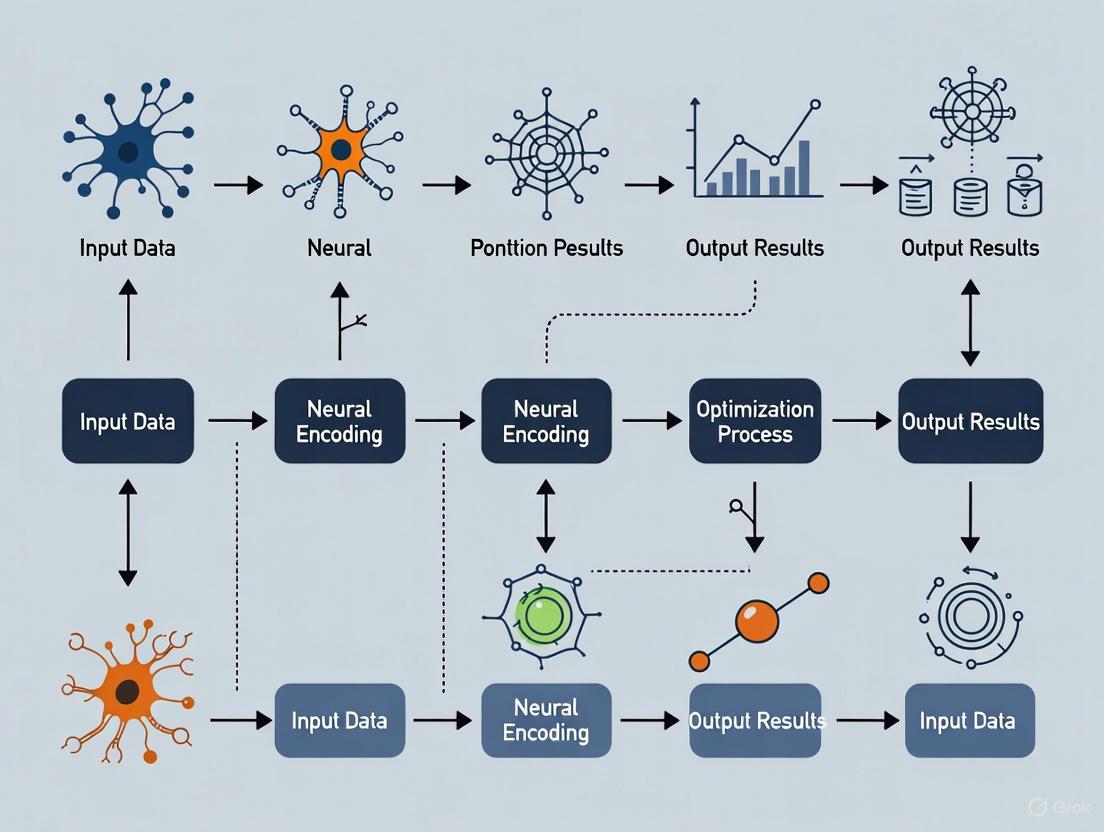
This article provides a comprehensive guide to Neural Population Dynamics Optimization Algorithms (NPDOAs), a class of computational methods at the intersection of neuroscience and machine learning.
Optimizing Neural Population Dynamics: A Comprehensive Workflow for Computational Neuroscience and Drug Development
Abstract
This article provides a comprehensive guide to Neural Population Dynamics Optimization Algorithms (NPDOAs), a class of computational methods at the intersection of neuroscience and machine learning. Aimed at researchers, scientists, and drug development professionals, it details the workflow from foundational concepts to advanced applications. We explore the theoretical basis of neural manifolds and dynamical systems, present state-of-the-art methodologies like MARBLE and LangevinFlow, and address critical troubleshooting and optimization challenges such as hyperparameter tuning and computational bottlenecks. The guide concludes with rigorous validation frameworks and comparative analyses against established benchmarks, highlighting the transformative potential of NPDOAs for modeling brain function, accelerating therapeutic discovery, and developing personalized medicine approaches for neurological disorders.
Theoretical Foundations of Neural Population Dynamics
Theoretical Foundation
Neural manifolds are low-dimensional, geometric structures that describe the patterns of activity within high-dimensional neural populations. The core principle is that complex brain dynamics, which underlie cognitive functions and behavior, are constrained to flow along a simplified, low-dimensional subspace within the vast state space of all possible neural activity patterns [1] [2] [3]. This organization allows the brain to perform computations efficiently.
The emergence of these low-dimensional structures is theorized to result from mechanisms such as time-scale separation and averaging [1]. In this framework, fast, oscillatory neuronal activity averages out over time, allowing slower, task-related dynamics to dominate the system's trajectory. This process effectively collapses the high-dimensional system onto a slower, invariant manifold that captures the essential computational states [1]. Furthermore, the separation of neural processes into orthogonal dimensions within a manifold explains how the same population of neurons can encode different variables (e.g., movement preparation vs. execution) without interference [3].
Experimental Protocols and Methodologies
Protocol: Uncovering Low-Dimensional Manifolds from EEG Data in Clinical Stroke Research
This protocol outlines the methodology for identifying stable low-dimensional neural dynamics in stroke patients during a motor imagery task, adapted from a recent Brain-Computer Interface (BCI) study [4].
- Aim: To assess the restoration of neural population dynamics following BCI training for stroke rehabilitation.
- Experimental Setup:
- Participants: Chronic stroke patients. A public dataset of acute stroke patients can also be used for validation.
- Task: Patients perform motor imagery (MI) tasks (e.g., imagining hand movement) before and after a regimen of BCI training.
- Recording: Whole-brain EEG recordings are acquired during the task.
- Procedure:
- Data Acquisition: Record EEG signals from patients during MI tasks pre- and post-BCI training.
- Source Localization: Project the sensor-level EEG signals into the brain's voxel space using a source localization algorithm (e.g., eLORETA). This step simulates the neural population activity within specific Regions of Interest (ROIs).
- Dimensionality Reduction: Apply a dimensionality reduction technique (such as Laplacian Eigenmaps or PCA) to the source-localized neural activity to extract the low-dimensional neural manifold.
- Analysis: Compare the features of the low-dimensional manifolds (e.g., trajectory structure, occupied dimensions) before and after BCI training to quantify restoration of neural dynamics. Correlate manifold features with behavioral outcomes and specific frequency bands (e.g., theta oscillations).
- Key Outputs: Low-dimensional neural manifolds; quantitative metrics of manifold stability and restoration; correlation between theta-band power and manifold features.
Protocol: A Universal Workflow for Creating and Validating Detailed Neuronal Models
This protocol describes a generalized, automated workflow for creating robust, detailed electrical models of neurons, which can serve as building blocks for simulating larger neural populations and their dynamics [5].
- Aim: To generate detailed single-neuron models that accurately reproduce experimentally observed electrophysiological behaviors and show high generalizability.
- Experimental Setup:
- Inputs: 3D morphological reconstructions of neurons (e.g., in SWC or Neurolucida format) and electrophysiological recordings (e.g., in NWB or Igor format).
- Procedure:
- Feature Extraction: From the electrophysiological data, extract features that define the neuron's electrical behavior (e.g., spike timing, threshold, adaptation).
- Model Optimization: Use an evolutionary algorithm to optimize the parameters of the neuronal model (ionic conductances, channel distributions) to match the extracted experimental features. The model integrates the neuron's morphology and a set of ionic mechanisms.
- Model Validation: Test the optimized model against additional, novel stimulus patterns not used during the optimization process to validate its robustness.
- Generalization Assessment: Assess the model's generalizability by applying it to a population of similar morphologies to ensure it performs reliably across variations.
- Key Outputs: Validated and generalized single-neuron models (e.g., in NeuroML or Neuron HOC format); a 5-fold improvement in generalizability compared to canonical models [5].
Data Analysis and Workflow Visualization
Dimensionality Reduction Techniques for Manifold Extraction
The following table summarizes standard techniques used to uncover low-dimensional manifolds from high-dimensional neural data.
Table 1: Dimensionality Reduction Techniques for Neural Manifold Extraction
| Technique | Type | Key Principle | Typical Use Case in Neuroscience |
|---|---|---|---|
| Principal Component Analysis (PCA) [1] [2] | Linear | Finds orthogonal axes that capture maximum variance in the data. | Initial data exploration; denoising; as a preprocessing step for non-linear methods. |
| Laplacian Eigenmaps (LEM) [1] | Non-Linear | Preserves local geometric relationships and captures the global flow structure of dynamics. | Uncovering the underlying continuous manifold from neural trajectories; visualizing transitions between attractor states [1]. |
| t-SNE [1] | Non-Linear | Emphasizes the visualization of local data structure by preserving pairwise similarities. | Creating intuitive 2D/3D visualizations of neural states from high-dimensional data. |
| UMAP [1] | Non-Linear | Balances the preservation of local and global data structure. | Similar to t-SNE, often with faster runtimes and better global structure preservation. |
| CEBRA [3] | Non-Linear (Hybrid) | Uses contrastive learning to identify compact representations that relate neural activity to behavior. | Creating latent spaces where neural dynamics and behavioral variables are jointly embedded. |
Core Analytical Workflow
The diagram below illustrates the logical flow from raw neural data to the interpretation of low-dimensional neural manifolds, integrating the protocols and techniques described above.
The Scientist's Toolkit: Research Reagents & Essential Materials
Table 2: Essential Tools for Neural Manifold and Dynamics Research
| Item / Reagent | Function / Explanation |
|---|---|
| High-Density Neural Recorders (e.g., Neuropixels, EEG) | Enables simultaneous recording from hundreds to thousands of neurons or brain-wide signals, providing the high-dimensional data required for population analyses [2] [4]. |
| Source Localization Software (e.g., eLORETA) | Projects signals from sensor space (e.g., EEG) to source space, allowing estimation of activity within specific brain regions for subsequent manifold analysis [4]. |
| Dimensionality Reduction Libraries (e.g., scikit-learn, UMAP) | Software implementations of algorithms like PCA, LEM, and UMAP used to project high-dimensional data into a low-dimensional manifold [1]. |
| Neural Simulation Environments (e.g., Neuron, Arbor) | Platforms for building and simulating detailed computational models of neurons and networks, as used in the universal workflow for model creation [5]. |
| Model Optimization Tools (e.g., BluePyOpt) | Tools that use evolutionary algorithms or other methods to fit model parameters to experimental data, a key step in creating generalizable models [5]. |
| Behavioral Task Control Software (e.g., BCI2000, PyGame) | Presents stimuli and records behavioral outputs, generating the task-related variables that are correlated with neural manifold dynamics [4] [3]. |
Theoretical Foundations
Dynamical systems theory provides a mathematical framework for describing the evolution of systems over time. In the context of neural population dynamics, these concepts are essential for understanding how neural circuits process information and converge on optimal states for decision-making and computation.
Dynamical Flows represent the trajectory of a system's state through phase space, defined by differential or difference equations that specify how system variables change over time [6]. In neural systems, these flows describe the temporal evolution of neural population activities, guiding the system toward stable states representing perceptual decisions or motor outputs [7].
Fixed Points occur where the dynamical flow reaches equilibrium (dx/dt = 0). These points represent stable states where a system will remain indefinitely without perturbation [6]. In neural population models, fixed points correspond to attractor states associated with categorical decisions or memory representations [7]. The stability of these points determines whether the system remains in a particular state or transitions to alternatives.
Attractors are sets of states toward which a system tends to evolve, representing the long-term behavior of dynamical systems [6]. Attractors can take various forms:
- Point Attractors: Single stable equilibrium points [8]
- Limit Cycles: Periodic, oscillatory states [6]
- Strange Attractors: Complex, fractal-structured sets with chaotic dynamics [6]
In neural systems, attractors enable stable representation of categorical information despite noisy inputs, with neural trajectories flowing toward defined regions in state space [7].
Application in Neural Population Dynamics Optimization
The Neural Population Dynamics Optimization Algorithm (NPDOA) implements these dynamical concepts through three core strategies that balance exploration and exploitation in optimization tasks [9].
Attractor Trending Strategy
This strategy drives neural populations toward optimal decisions by leveraging fixed-point dynamics, ensuring exploitation capability. The neural state evolves toward attractors representing high-quality solutions in the optimization landscape, analogous to how biological neural networks converge to perceptual decisions [9] [7].
Coupling Disturbance Strategy
This mechanism introduces controlled perturbations that deviate neural populations from attractors through coupling with other neural populations, improving exploration ability. This prevents premature convergence to local optima by leveraging repeller dynamics that push the system away from suboptimal fixed points [9].
Information Projection Strategy
This approach controls communication between neural populations, enabling transition from exploration to exploitation by regulating the impact of attractor trending and coupling disturbance on neural states [9]. This mirrors how top-down signals modulate neural dynamics in biological systems to prioritize different information streams [7].
Table 1: Core Strategies in Neural Population Dynamics Optimization Algorithm
| Strategy | Dynamical Concept | Function in Optimization | Biological Correspondence |
|---|---|---|---|
| Attractor Trending | Fixed Point Dynamics | Exploitation: Drives convergence to optimal solutions | Neural population convergence to categorical representations [7] |
| Coupling Disturbance | Repeller Dynamics | Exploration: Prevents premature convergence to local optima | Neural variability enhancing behavioral exploration |
| Information Projection | Flow Control | Balance Regulation: Controls exploration-exploitation transition | Top-down modulation of neural processing [7] |
Quantitative Framework
The dynamical properties of neural systems can be quantified through several key metrics that inform optimization performance:
Table 2: Quantitative Metrics for Neural Population Dynamics
| Metric | Definition | Measurement Approach | Optimization Significance |
|---|---|---|---|
| Convergence Rate | Speed at which system approaches attractor | Lyapunov exponent analysis [6] | Determines optimization speed and efficiency |
| Basin of Attraction Size | Region in phase space leading to an attractor [8] | Phase space analysis | Defines robustness to initial conditions and noise |
| Mutual Information | Information between stimulus and neural response [10] | Information-theoretic analysis | Quantifies coding efficiency and solution quality |
| Tuning Strength | Modulation depth of neural response | Reverse-correlation analysis [10] | Reflects discrimination capacity between solutions |
Experimental Protocols
Protocol: Attractor Dynamics Mapping in Neural Populations
Purpose: To characterize fixed points and attractor landscapes in neural population activities during decision-making tasks.
Materials:
- Multielectrode array system for population recording
- Visual stimulation setup (for sensory paradigms)
- Computational framework for dynamical systems analysis (e.g., Mozaik) [11]
Procedure:
- Stimulus Presentation: Implement rapid serial visual presentation (RSVP) of oriented gratings with periodic changes in stimulus features (orientation, luminance, contrast) [10]
- Neural Recording: Record extracellular activity from neural population (e.g., V1) during stimulus presentation with sufficient temporal resolution (≤ 1ms)
- State Space Reconstruction: Embed neural population activity in lower-dimensional state space using dimensionality reduction techniques (PCA, t-SNE)
- Flow Field Estimation: Calculate instantaneous population activity vectors to map dynamical flows
- Fixed Point Identification: Locate regions where flow magnitude approaches zero using numerical root-finding algorithms
- Stability Analysis: Compute Jacobian matrices at fixed points to determine stability (eigenvalue analysis)
- Basin Boundary Mapping: Identify separatrices between attraction basins through phase space sampling
Analysis:
- Quantify convergence times to different attractors
- Measure attractor strength through local flow field divergence
- Compute mutual information between stimulus features and neural states [10]
Protocol: NPDOA Implementation for Drug Discovery Optimization
Purpose: To apply neural population dynamics optimization to molecular design and virtual screening in pharmaceutical development.
Materials:
- Chemical compound libraries (e.g., ZINC, ChEMBL)
- Molecular descriptor calculation software
- High-performance computing infrastructure
- NPDOA implementation framework [9]
Procedure:
- Problem Formulation:
- Define optimization objective (e.g., binding affinity, ADMET properties)
- Encode molecular structures as neural population states (neurons represent molecular features)
- Set fitness function based on quantitative structure-activity relationships (QSAR)
Algorithm Configuration:
- Initialize multiple neural populations with random states
- Set parameters for attractor trending, coupling disturbance, and information projection [9]
- Define termination criteria (fitness threshold, maximum iterations)
Optimization Execution:
- Iterate through attractor trending phase to exploit promising regions
- Apply coupling disturbance to escape local optima
- Regulate balance using information projection based on convergence metrics
- Record trajectory of best solution across iterations
Validation:
- Select top candidates from final population
- Conduct molecular docking simulations
- Perform experimental validation through high-throughput screening
Analysis:
- Compare convergence performance against traditional optimization algorithms
- Quantify diversity of solution population throughout optimization
- Analyze exploration-exploitation balance through state space coverage metrics
Visualization Schematics
Neural Population Dynamics Optimization Workflow
Dynamical Flows and Fixed Points in State Space
Research Reagent Solutions
Table 3: Essential Research Materials for Neural Dynamics Experiments
| Reagent/Resource | Function/Purpose | Example Applications | Key Specifications |
|---|---|---|---|
| Multielectrode Array Systems | Simultaneous recording from neuronal populations | Mapping population dynamics during decision tasks [10] | High channel count (>64), suitable temporal resolution (<1ms) |
| Mozaik Workflow Platform | Integrated simulation environment for spiking networks [11] | Testing computational models of attractor dynamics | PyNN compatibility, Neo data structure support |
| BluePyOpt Optimization Toolbox | Parameter optimization for neuronal models [5] | Tuning model parameters to match experimental data | Evolutionary algorithm implementation, feature extraction |
| Neural Simulation Environments (NEURON, NEST) | Large-scale network simulation | Implementing attractor network models [11] | Parallel computing support, multi-compartment neurons |
| Information Theory Toolkits | Quantifying neural coding efficiency [10] | Measuring mutual information in population codes | Spike train analysis, bias correction methods |
The Role of Optimization in Modeling Neural Computations
Optimization algorithms serve as the computational engine for training models that decipher how neural populations perform computations. In the context of neural population dynamics—which describes how the coordinated activity of groups of neurons evolves over time to drive perception, cognition, and action—optimization provides the essential mechanisms for fitting models to high-dimensional neural data and extracting meaningful computational principles [2]. The convergence of sophisticated optimization techniques with large-scale neural recordings has enabled a new generation of models that move beyond describing single neurons to capturing the collective dynamics of entire neural circuits [12] [13]. This application note outlines key optimization algorithms, presents structured experimental protocols, and provides practical tools for researchers investigating how neural populations implement computations through dynamics.
Optimization Algorithms in Neural Computation
Fundamental Optimization Algorithms
Optimization algorithms minimize loss functions by adjusting model parameters (weights and biases) through iterative updates. The choice of optimizer significantly impacts a model's ability to capture the temporal dependencies and low-dimensional manifold structure characteristic of neural population dynamics [14] [15].
Table 1: Comparison of Optimization Algorithms for Neural Dynamics Modeling
| Optimizer | Key Mechanism | Advantages | Disadvantages | Neural Dynamics Applications |
|---|---|---|---|---|
| Stochastic Gradient Descent (SGD) | Updates parameters using gradient from random data subset | Simple, easy to implement, less memory | Slow convergence, requires careful learning rate tuning | Baseline method for recurrent neural network training [14] |
| SGD with Momentum | Accumulates gradient from previous steps to accelerate convergence | Reduces oscillations, faster convergence | Introduces additional hyperparameter (β) | Modeling dynamics with smooth temporal trajectories [14] |
| Adam | Combines momentum with adaptive learning rates for each parameter | Fast convergence, handles noisy gradients | Memory intensive, more hyperparameters | Training complex dynamical systems on large-scale neural recordings [14] [16] |
| RMSProp | Adapts learning rate based on moving average of squared gradients | Prevents rapid decay of learning rates | Computationally expensive | Modeling neural dynamics with sparse coding patterns [14] |
Advanced Optimization Frameworks for Neural Dynamics
Recent methodological advances have introduced specialized optimization frameworks tailored to the unique challenges of neural population modeling:
MARBLE (MAnifold Representation Basis LEarning): Uses geometric deep learning to decompose neural dynamics into local flow fields on low-dimensional manifolds, employing unsupervised optimization to map these fields into a common latent space [16]. This approach explicitly leverages the manifold hypothesis of neural computation during optimization.
CroP-LDM (Cross-population Prioritized Linear Dynamical Modeling): Implements a prioritized learning objective that specifically optimizes for cross-population dynamics, preventing them from being confounded by within-population dynamics [17]. This is particularly valuable for multi-region neural recordings.
BLEND (Behavior-guided Neural Population Dynamics Modeling): Employs privileged knowledge distillation where a teacher model trained on both neural activity and behavior distills its knowledge to a student model that uses only neural activity [18]. This optimization strategy allows models to benefit from behavioral data even when such data is unavailable at inference time.
Experimental Protocols for Neural Dynamics Optimization
Protocol 1: Fitting Dynamical Systems Models to Neural Population Data
Objective: To fit a dynamical system model ( \frac{dx}{dt} = f(x(t), u(t)) ) that describes how neural population state ( x ) evolves over time under external inputs ( u(t) ) [2].
Materials and Reagents:
- Multi-electrode arrays (e.g., Neuropixel probes) for large-scale neural recordings [12]
- Computational framework for dynamical systems modeling (e.g., Python with PyTorch/TensorFlow)
- Dimensionality reduction tools (PCA, FA) for initial processing of high-dimensional neural data [19]
Procedure:
- Neural Data Preprocessing:
- Bin spike counts into 10-50ms time windows to construct population activity vectors [2]
- Apply smoothing filters to reduce noise while preserving temporal structure
- Z-score normalize firing rates across neurons and trials
Model Architecture Selection:
- Choose Recurrent Neural Networks (RNNs) as flexible parameterizations of the unknown function ( f ) [2]
- Initialize network weights using schemes appropriate for RNNs (e.g., orthogonal initialization)
- Determine appropriate state dimensionality based on neural population size and task complexity
Optimization Configuration:
- Select Adam optimizer with initial learning rate of 0.001-0.01 for balanced convergence speed and stability [14]
- Define loss function as mean squared error between predicted and actual neural activity
- Implement gradient clipping (max norm: 1.0) to prevent exploding gradients in RNNs
Training and Validation:
- Split data into training (70%), validation (15%), and test (15%) sets preserving trial structure
- Implement early stopping based on validation loss with patience of 20-50 epochs
- Monitor both reconstruction accuracy and dynamical systems properties (e.g., fixed points, stability)
Troubleshooting:
- If model fails to capture temporal dependencies, increase hidden state dimensionality or incorporate explicit delays
- For unstable training, reduce learning rate or increase gradient clipping threshold
- If model overfits, introduce dropout or L2 regularization to loss function
Protocol 2: Identifying Latent Dynamics Using Regression Subspace Optimization
Objective: To extract temporal structures of neural modulations by task parameters in a regression subspace, linking rate-coding and dynamical systems perspectives [19].
Materials and Reagents:
- Task design with controlled parameters (continuous or categorical)
- Single-unit recording equipment with precise temporal alignment to task events
- Statistical computing environment (MATLAB, R, or Python with statsmodels)
Procedure:
- Neural Response Characterization:
- Align neural activity to relevant task events (e.g., stimulus onset, movement initiation)
- Compute trial-averaged firing rates for each task condition
- For each neuron and time point, fit regression model: ( \text{rate} = β0 + β1\cdot\text{param}1 + ... + βk\cdot\text{param}_k )
Regression Subspace Construction:
- Construct regression matrix ( B(t) ) containing all regression coefficients across time and neurons [19]
- Apply Principal Component Analysis (PCA) to ( B(t) ) to identify dominant patterns of task-related modulation
- Project neural activity into the regression subspace to visualize modulation dynamics
Dynamics Analysis:
- Plot trajectories of neural population activity in the regression subspace
- Identify fixed points, limit cycles, or other dynamical features
- Relate trajectory geometry to behavioral outcomes or task parameters
Validation:
- Compare extracted dynamics across different neural populations
- Test generalization to held-out task conditions
- Verify that dynamics reflect known neurobiological constraints
Troubleshooting:
- If regression models show poor fit, check for non-linear relationships between task parameters and neural activity
- If subspace dimensionality remains high, consider demixed PCA or targeted dimensionality reduction
- For noisy trajectories, increase trial counts or apply smoothing before regression
Table 2: Research Reagent Solutions for Neural Dynamics Optimization
| Reagent/Tool | Function | Example Applications | Implementation Considerations |
|---|---|---|---|
| Linear Dynamical Systems | Models neural dynamics as linear state transitions | Cross-population dynamics (CroP-LDM), initial data exploration [17] | Limited capacity for nonlinear dynamics; mathematically tractable |
| Recurrent Neural Networks | Flexible parameterization of nonlinear neural dynamics | MARBLE, LFADS, full neural population modeling [2] [16] | Requires careful regularization; optimization challenges |
| Factor Analysis | Identifies latent factors underlying correlated neural variability | Dimensionality reduction before dynamical modeling [12] | Determines intrinsic dimensionality of neural recordings |
| Geometric Deep Learning | Leverages manifold structure in optimization | MARBLE's local flow field analysis [16] | Computationally intensive; requires specialized architectures |
| Privileged Knowledge Distillation | Transfers knowledge from privileged (behavior) to regular (neural) features | BLEND framework for behavior-guided optimization [18] | Enables use of behavioral data without requiring it at inference |
Workflow Visualization
Neural Dynamics Optimization Workflow: This diagram illustrates the comprehensive pipeline from neural data acquisition to computational interpretation, highlighting the role of optimization algorithms at each stage.
Computational Framework of Neural Dynamics: This diagram illustrates the relationship between neural population states, their underlying dynamics, and the optimization processes used to model them, highlighting the low-dimensional latent structure.
Application Notes
Optimizing for Behavioral State-Dependent Dynamics
Behavioral states such as locomotion significantly alter neural population dynamics. During locomotion, mouse visual cortex exhibits shifts from transient to sustained response modes, facilitating rapid emergence of stimulus tuning [12]. When optimizing models of these state-dependent dynamics:
- Incorporate behavioral state as an explicit input to dynamical systems models
- Use separate initialization schemes or learning rates for state-dependent parameters
- Employ behavior-guided distillation frameworks like BLEND when behavioral data is partially available [18]
- Validate that optimized models capture both the temporal dynamics and correlation structure changes observed across behavioral states
Cross-Population Dynamics Optimization
When modeling interactions between multiple neural populations (e.g., different brain regions), specialized optimization approaches are required:
- Implement CroP-LDM's prioritized learning objective to specifically optimize cross-population predictive accuracy [17]
- Use separate loss terms for within-population and cross-population dynamics
- Employ causal filtering during optimization to ensure temporal interpretability of cross-region influences
- Regularize models to prevent overfitting to dominant within-population dynamics that may mask cross-population interactions
Interpretable Dynamics Through Regularized Optimization
To extract scientifically meaningful dynamics from neural population models:
- Incorporate manifold consistency constraints into the loss function to ensure discovered dynamics respect low-dimensional structure [16]
- Use targeted regularization to encourage dynamical features (fixed points, limit cycles) that have clear computational interpretations
- Optimize for both reconstruction accuracy and dynamical interpretability metrics
- Validate that optimized models generate trajectories consistent with trial-to-trial variability observed in experimental data
Optimization algorithms provide the fundamental machinery for building computational bridges between neural activity measurements and theoretical principles of neural computation. The specialized frameworks and protocols outlined here enable researchers to move beyond descriptive accounts of neural activity to mechanistic models of how neural populations implement computations through dynamics. As neural recording technologies continue to scale, the development of increasingly sophisticated optimization approaches will be essential for uncovering the universal computational principles governing neural population dynamics across brain regions, behavioral states, and species.
Linking Population Dynamics to Cognitive Functions and Behavior
A fundamental shift is occurring in neuroscience: the population doctrine is drawing level with the single-neuron doctrine that has long dominated the field [20]. This doctrine posits that the fundamental computational unit of the brain is the population of neurons, not the individual neuron [21]. Representations in the brain are encoded as patterns of activity of large populations of highly interconnected neurons, a science also known as parallel distributed processing (PDP) [22]. This approach achieves neurological verisimilitude and has successfully accounted for a vast spectrum of cognitive phenomena in healthy individuals and impairments resulting from neurological conditions [22]. Understanding the dynamics of these neural populations is crucial for linking brain activity to cognitive functions and behavior, and provides a framework for developing optimization algorithms in computational neuroscience.
Core Theoretical Concepts
The population-level approach to neurophysiology is built upon several foundational concepts that provide a spatial and dynamic perspective on neural computation.
Foundational Principles
- State Spaces: The canonical analysis for population neurophysiology is the neural state space [20]. Instead of plotting the firing rate of a single neuron over time, the state space is a coordinate system where each axis represents the activity of one neuron. At any moment, the population's activity is a single point (a vector) in this high-dimensional space, and over time, it forms a trajectory [20].
- Manifolds: The full set of possible neural states occupied during a behavior often forms a low-dimensional, non-linear surface embedded within the high-dimensional state space. This structure is known as a manifold [20] [21]. The geometry of this manifold constrains the neural dynamics and is thought to reflect the underlying computational structure of the task.
- Dynamics: Neural dynamics refer to how the population's state evolves over time, forming trajectories through the state space [20] [21]. These trajectories are not random; they are governed by rules that can be modeled mathematically. The speed, direction, and stability of these trajectories are thought to correspond to cognitive processes like evidence accumulation, decision-making, and motor planning.
Implications for Cognitive Function and Dysfunction
The properties of population-encoding networks provide an orderly explanation for numerous brain functions and dysfunctions [22]. Knowledge is represented in the strength of the connections between neurons, and learning consists of alterations of these connection strengths. In a semantic network, for example, knowledge is organized in an energy landscape with attractor basins [22]. A central "centroid" might represent the most typical mammal, with sub-basins for specific animals like dogs or cats. The depth of these basins is determined by factors like the frequency of experience and the age of acquisition. With network damage, as in semantic dementia, these basins become shallower, leading to errors where atypical exemplars are lost and responses settle into more typical or superordinate categories, a phenomenon accurately simulated by PDP models [22].
Table 1: Core Concepts of Neural Population Doctrine
| Concept | Description | Functional Significance |
|---|---|---|
| State Space | A coordinate system where each axis represents a neuron's activity. The population's activity is a point in this space [20]. | Provides a spatial view of population activity, enabling analysis of patterns and distances between states. |
| Manifold | A low-dimensional surface within the state space that contains the neural trajectories for a specific behavior or computation [20] [21]. | Reflects the underlying computational structure and constraints of a task. |
| Neural Dynamics | The time-evolution of the population state, forming trajectories through the state space or manifold [20] [21]. | Correlates with cognitive processes like decision-making and motor planning. |
| Attractor Dynamics | The tendency of a network to settle into stable, preferred states (attractors) from a range of similar input patterns [22]. | Supports content-addressable memory, pattern completion, and stable categorical perception. |
Experimental Protocols & Methodologies
To translate population-level theory into empirical findings, specific experimental and analytical methodologies are required.
Protocol 1: Investigating Cognitive Representations using Population State Analysis
This protocol outlines the steps for analyzing how a cognitive variable (e.g., a memorized stimulus) is represented in a neural population.
- Neural Data Acquisition: Simultaneously record the activity of N neurons (e.g., via neuropixels, tetrodes, or calcium imaging) from a relevant brain region (e.g., prefrontal cortex) while an animal performs a cognitive task (e.g., a delayed match-to-sample task).
- Data Preprocessing: Bin the spike counts of all N neurons into successive time bins (e.g., 50-200ms) to create a series of population activity vectors:
A(t) = [a1(t), a2(t), ..., aN(t)]. - Dimensionality Reduction: Apply a dimensionality reduction technique (e.g., Principal Component Analysis - PCA) to the collection of population vectors. This projects the high-dimensional data into a lower-dimensional (e.g., 2D or 3D) state space defined by the main axes of variance (the principal components) for visualization and analysis.
- State Space Visualization: Plot the neural trajectories in the low-dimensional state space. Color-code the trajectories or points based on the cognitive condition (e.g., the identity of the memorized stimulus).
- Distance Analysis: Calculate the distance (e.g., Euclidean or Mahalanobis distance) between neural states corresponding to different conditions. For instance, measure the average distance between population vectors for different remembered stimuli during the delay period [20].
- Relate Distance to Behavior: Correlate the neural distance measures with behavioral performance (e.g., accuracy or reaction time) to establish a functional link between population representation and cognition.
Protocol 2: A PINN Framework for Modeling Neural and Behavioral Dynamics
Physics-Informed Neural Networks (PINNs) offer a powerful tool for modeling the dynamics of neural populations or the behaviors they drive, blending data-driven learning with physical (or biological) constraints [23]. This protocol is adapted from recent work on applying PINNs to ordinary differential equation (ODE) systems.
Problem Formulation:
- Forward Problem: Given a system of ODEs representing neural or behavioral dynamics (e.g., a Wilson-Cowan model for neural populations or a mosquito population model for disease vector behavior), and initial/boundary conditions, solve for the system states.
- Inverse Problem: Given sparse observational data of the system states, infer the unknown parameters of the ODEs.
Network Architecture and Training:
- Inputs: The independent variable(s), typically time
t. - Outputs: The system state variables
U(t)(e.g., firing rates of different neural populations or counts of different organism life stages). - Loss Function Construction:
- Data Loss (
L_data): Mean squared error (MSE) between network predictions and observed data. - Physics Loss (
L_physics): MSE of the ODE residuals, calculated by substituting the network's predictions into the governing ODEs. - Total Loss:
L_total = ω_data * L_data + ω_physics * L_physics.
- Data Loss (
- Customized Training Techniques:
- Normalization: Apply Min-Max scaling to all inputs, outputs, and the ODEs themselves to address multi-scale issues [23].
- Loss Re-weighting: Implement an adaptive algorithm to balance the weights (
ω_data,ω_physics) during training to prevent one loss term from dominating [23]. - Causal Training: Train the network sequentially on expanding time domains to respect temporal causality and improve convergence [23].
- Inputs: The independent variable(s), typically time
Visualization of Workflows and Signaling Pathways
The following diagrams, generated with Graphviz, illustrate the core logical relationships and experimental workflows described in these protocols.
Neural Population Analysis Workflow
PINN Architecture for Dynamical Systems
The Scientist's Toolkit: Research Reagent Solutions
This section details key computational tools and conceptual frameworks essential for research in neural population dynamics.
Table 2: Essential Research Tools for Neural Population Dynamics
| Research Tool | Category | Function & Application |
|---|---|---|
| Dimensionality Reduction (PCA, t-SNE, UMAP) | Analytical Software | Projects high-dimensional neural data into a low-dimensional state space for visualizing manifolds and neural trajectories [20]. |
| Physics-Informed Neural Networks (PINNs) | Computational Model | A multi-task learning framework that integrates observational data with the constraints of governing differential equations to solve forward and inverse problems in dynamics [23]. |
| High-Density Neural Probes (e.g., Neuropixels) | Hardware | Enables simultaneous recording of hundreds to thousands of neurons, providing the necessary data density for population-level analysis [20]. |
| State Space Vector | Conceptual Framework | The mathematical representation of population activity at a single time point; its direction and magnitude can predict stimulus identity and behavioral outcomes, respectively [20]. |
| FAIR Data Management Plan | Data Protocol | A set of principles (Findable, Accessible, Interoperable, Reusable) that guides research data management, ensuring data can be effectively shared and reused by the community [24]. |
Data Presentation and Analysis
Quantitative analysis is central to the population doctrine. The following table summarizes key metrics and their cognitive correlates.
Table 3: Quantitative Metrics in Population Analysis and Their Cognitive Correlates
| Metric | Definition | Cognitive/Behavioral Correlation |
|---|---|---|
| State Vector Magnitude | The norm (e.g., L2-norm) of the population activity vector. Essentially the total activity across the population [20]. | Predicts how well a stimulus will be remembered; may reflect attentional engagement or cognitive effort [20]. |
| Inter-state Distance | The Euclidean or Mahalanobis distance between two population states in the high- or low-dimensional space [20]. | Quantifies the dissimilarity of neural representations (e.g., of two different concepts or decisions). Larger distances may correlate with easier discrimination. |
| Trajectory Speed | The rate of change of the population state over time (derivative of the state vector). | May correspond to the speed of cognitive processing, such as the rate of evidence accumulation in a decision-making task. |
| Choice Probability | The ability to decode an animal's upcoming choice from the population activity prior to the behavior. | A direct link between population dynamics and behavioral output, crucial for validating computational models. |
Neural population dynamics describe the time evolution of patterned activity across groups of neurons, which is fundamental to brain functions like motor control, decision-making, and working memory [25]. The core concept is that neural computations emerge from these collective dynamics, shaped by underlying network connectivity [25]. Research in this field seeks to identify the principles governing these dynamics and leverage them for algorithmic optimization, such as in the novel Neural Population Dynamics Optimization Algorithm (NPDOA), a brain-inspired meta-heuristic that simulates interconnected neural populations during cognition and decision-making [9].
A significant challenge in the field is defining what constitutes a neural population. Definitions often rely on arbitrary boundaries of measurement technology or physical cartography, rather than dynamical boundaries based on functional independence or computational unity [26]. This review synthesizes the current research landscape, highlighting key computational frameworks, empirical findings, and methodological challenges, with a focus on implications for optimization algorithm development.
Current Research Landscape
Brain-Inspired Optimization Algorithms
The NPDOA represents a direct translation of neural dynamic principles into a meta-heuristic optimization framework. It incorporates three novel strategies inspired by brain neuroscience:
- Attractor Trending Strategy: Drives neural populations towards optimal decisions, ensuring exploitation capability.
- Coupling Disturbance Strategy: Deviates neural populations from attractors via coupling, improving exploration ability.
- Information Projection Strategy: Controls communication between neural populations, enabling a transition from exploration to exploitation [9].
Systematic experiments on benchmark and practical problems have verified NPDOA's effectiveness, demonstrating distinct benefits for addressing single-objective optimization problems [9].
Advanced Analysis and Modeling Techniques
Recent methodological advances have significantly improved the ability to infer and model latent neural dynamics.
- MARBLE (MAnifold Representation Basis LEarning): This geometric deep learning method decomposes neural dynamics into local flow fields over neural manifolds and maps them into a common latent space. It provides an unsupervised, interpretable representation that can discover consistent dynamics across different networks and animals without requiring behavioral supervision [16].
- Low-Rank Linear Dynamical Models: These models effectively capture the low-dimensional structure prevalent in neural population activity. Their low-rank parameterization (e.g.,
A_s = D_{A_s} + U_{A_s}V_{A_s}^⊤) separates diagonal components (accounting for neuron-specific properties) from low-rank components (capturing population-wide interactions), enabling efficient estimation of causal interactions from photostimulation data [27]. - Active Learning for System Identification: Novel active learning procedures have been developed to design optimal photostimulation patterns for efficiently identifying neural population dynamics. This approach can yield up to a two-fold reduction in the data required to achieve a given predictive power by targeting the low-dimensional structure of the dynamics [27].
- Cross-Population Prioritized Linear Dynamical Modeling (CroP-LDM): This method prioritizes learning dynamics shared across different neural populations (e.g., from different brain regions) over within-population dynamics. This ensures that the extracted cross-population dynamics are not confounded by local dynamics and provides a more interpretable model of interactions [17].
- Behavior-Guided Modeling (BLEND): This framework uses privileged knowledge distillation to train a model on both neural activity and behavior during training. The distilled student model can then infer behavior using only neural activity as input, enhancing neural dynamics modeling without requiring specialized architectures [28].
- Task-Driven Neural Network Models: These models use performance on a computational task (e.g., predicting limb position) as an optimization objective to generate neural representations. The resulting task-optimized internal representations have been shown to successfully predict neural dynamics in proprioceptive areas, generalizing from synthetic data to real neural activity [29].
- Scalable Computational Tools: Frameworks like AutoLFADS (using Population Based Training for hyperparameter optimization) and its subsequent implementations via KubeFlow and Ray provide scalable solutions for the computationally intensive process of extracting latent dynamics from large-scale neural recordings [30].
Table 1: Key Computational Frameworks in Neural Population Dynamics
| Framework Name | Core Methodology | Primary Application | Key Advantage |
|---|---|---|---|
| NPDOA [9] | Brain-inspired meta-heuristic with attractor, coupling, and projection strategies. | Solving complex single-objective optimization problems. | Balances exploration and exploitation using neural principles. |
| MARBLE [16] | Geometric deep learning on neural manifolds. | Unsupervised, interpretable representation of dynamics across systems. | Discovers consistent latent representations without behavioral labels. |
| CroP-LDM [17] | Prioritized linear dynamical systems. | Modeling cross-regional neural interactions. | Isolates shared cross-population dynamics from within-population dynamics. |
| BLEND [28] | Privileged knowledge distillation from behavior. | Behavior-guided neural dynamics modeling. | Improves behavioral decoding and identity prediction without paired data at inference. |
| Active LDS [27] | Active learning for low-rank regression. | Efficient system identification via optimal photostimulation. | Reduces amount of experimental data required for model fitting. |
| AutoLFADS [30] | Deep learning (LFADS) with hyperparameter tuning. | Extracting latent dynamics from neural population data. | Scalable, automated hyperparameter optimization for diverse datasets. |
Empirical Findings on Dynamical Constraints and Representations
Empirical studies have provided critical insights into the nature and constraints of neural dynamics, which are highly relevant for developing robust algorithms.
- Dynamical Constraints are Robust: A seminal study using a brain-computer interface (BCI) challenged monkeys to volitionally alter or time-reverse the natural time courses of neural population activity in motor cortex. Animals were unable to violate these natural neural trajectories, suggesting that the underlying network connectivity imposes strong constraints on the possible paths of neural activity [25].
- Working Memory Involves Reformatted Representations: Research on human working memory using fMRI has revealed that neural representations are both stable and dynamic. Surprisingly, dynamics were stronger in early visual cortex than in higher-level frontoparietal areas. The neural code for a memory target in V1 transformed over the delay period, spreading from the target location towards the fovea, effectively reformatting the memory into a representation more proximal to the forthcoming guided behavior [31].
- Low-Dimensionality of Dynamics: Neural population activity consistently resides in a low-dimensional subspace, a finding that is leveraged by most modern modeling approaches to improve estimation and prediction [27].
Table 2: Key Empirical Findings on Neural Population Dynamics
| Neural System | Key Finding | Implication for Algorithms |
|---|---|---|
| Motor Cortex (B/C Interface) [25] | Neural trajectories are difficult to violate or time-reverse volitionally. | Optimization landscapes may have inherent, constrained pathways; exploration must work within these dynamics. |
| Working Memory (Human fMRI) [31] | Coexisting stable and dynamic codes; dynamics reformat information for behavior. | Algorithms may need parallel processes for stable memory maintenance and dynamic transformation of solutions. |
| Premotor/Motor Cortex (Cross-regional) [17] | Interactions from premotor to motor cortex are dominant, quantifiable via prioritized dynamics. | Modeling hierarchical interactions in multi-population systems requires methods that prioritize directional influence. |
| Proprioception (CN & S1) [29] | Task-driven models predicting limb state best predict neural activity. | Defining a relevant computational objective (task) is crucial for generating accurate models of neural coding. |
Key Challenges and Future Directions
Despite significant progress, the field of neural population dynamics faces several interconnected challenges that represent opportunities for future research, particularly in the context of optimization algorithm development.
- Defining Functional Neural Populations: A fundamental challenge is moving beyond arbitrary or physically defined neural populations towards a definition based on dynamical or functional independence. A population should be defined as a group of neurons whose dynamics are strongly constrained by internal interactions but only weakly influenced by external connections [26]. Developing and applying methods to identify such dynamical boundaries remains an open problem.
- Balancing Exploration and Exploitation: The NPDOA explicitly addresses this balance through its three strategies [9]. However, empirically demonstrating that neural circuits achieve an optimal balance, and understanding how that balance is modulated by task demands or brain state, is an ongoing area of inquiry with direct implications for adaptive meta-heuristics.
- Integrating Cross-Population Interactions: As evidenced by the development of CroP-LDM, a major challenge is accurately modeling interactions between distinct neural populations without having the shared dynamics confounded by stronger within-population dynamics [17]. This is crucial for understanding brain-wide computation.
- Linking Dynamics to Behavior: While methods like BLEND [28] and task-driven modeling [29] make strides in connecting neural dynamics to behavior, establishing a complete, causal link from specific dynamical features to the generation of specific behaviors is still a central goal in neuroscience.
- Modeling with Limited Data: The high dimensionality of neural data and the complexity of models necessitate large datasets. Active learning approaches [27] and efficient low-rank models are promising solutions, but developing methods that are robust and accurate with limited sampling is a persistent challenge.
Experimental Protocols
Protocol: Validating Neural Dynamics Constraints via BCI
This protocol is based on the experiments described in [25] that tested the robustness of neural trajectories.
Objective: To determine if the natural time courses of neural population activity in motor cortex can be volitionally altered. Materials and Reagents:
- Non-human primate (e.g., Rhesus monkey) implanted with a multi-electrode array in primary motor cortex.
- Real-time neural signal processing system.
- Brain-Computer Interface (BCI) setup for providing visual feedback of neural activity.
- Gaussian Process Factor Analysis (GPFA) algorithm for dimensionality reduction.
Procedure:
- Neural Recording and Decoding: Record spiking activity from ~90 neural units. Use causal GPFA to project the high-dimensional activity into a 10-dimensional (10D) latent state in real-time.
- Establish Baseline Mapping: Define an initial BCI mapping (
MoveIntprojection) that translates the 10D latent state to a 2D cursor position. This mapping should be intuitive for the animal to use for cursor control. - Identify Natural Trajectories: Have the animal perform a two-target center-out task. Observe and record the neural trajectories in the 10D latent space for movements between target pairs.
- Find Structured Projections: Identify a 2D projection of the 10D state (e.g., a
SepMaxprojection) where the neural trajectories for opposing movements (A-to-B vs. B-to-A) are distinct and exhibit directional curvature. - Alter Visual Feedback: Change the BCI feedback to the animal from the
MoveIntprojection to theSepMaxprojection. The animal now sees a curved trajectory for straight-line cursor movements. - Challenge with Path Control: Directly challenge the animal to follow a prescribed, unnatural path in the
SepMaxprojection (e.g., a time-reversed version of its natural trajectory) to acquire a target. - Data Analysis: Compare the attempted neural trajectories during the challenge phase to the natural trajectories. Quantify the deviation and the animal's success rate in following the prescribed path.
Interpretation: A failure to substantially alter the neural trajectory from its natural path, despite strong incentive, provides evidence that the neural dynamics are constrained by the underlying network.
Protocol: Active Learning of Dynamics via Photostimulation
This protocol is based on [27] for efficiently identifying neural population dynamics.
Objective: To actively select informative photostimulation patterns for estimating a low-rank linear dynamical system model of neural population activity. Materials and Reagents:
- Mouse expressing optogenetic actuators (e.g., Channelrhodopsin-2) in excitatory neurons in motor cortex.
- Two-photon microscope for simultaneous calcium imaging of a neural population (500-700 neurons).
- Two-photon holographic photostimulation system for precise targeting of groups of 10-20 neurons.
- Computational pipeline for fitting low-rank autoregressive models.
Procedure:
- Initial Data Collection: Perform an initial set of photostimulation trials targeting random groups of neurons. Record the calcium responses of the entire imaged population.
- Model Initialization: Fit an initial low-rank autoregressive (AR) model to the recorded data. This model will have the form:
x_{t+1} = Σ_{s=0}^{k-1} (A_s x_{t-s} + B_s u_{t-s}) + vwhereA_sandB_sare diagonal plus low-rank matrices. - Active Stimulus Selection: Using the current model estimate, compute which photostimulation pattern (i.e., which group of neurons to stimulate) is expected to maximally reduce the uncertainty in the model parameters (e.g., which minimizes the predicted error variance).
- Iterative Data Collection and Update: a. Apply the selected photostimulation pattern and record the neural response. b. Update the low-rank AR model with the new data. c. Repeat steps 3 and 4 for a set number of trials or until model performance converges.
- Comparison to Passive Learning: Compare the predictive accuracy of the model trained with active stimulus selection against a model trained using the same number of randomly selected photostimulation patterns.
Interpretation: The active learning approach should achieve a higher model accuracy with fewer trials, demonstrating a more efficient identification of the causal neural dynamics.
The Scientist's Toolkit: Research Reagent Solutions
Table 3: Essential Materials and Tools for Neural Population Dynamics Research
| Item | Function/Brief Explanation | Example Use Case |
|---|---|---|
| Two-photon Holographic Optogenetics [27] | Precise simultaneous photostimulation of specified groups of individual neurons while measuring activity. | Causally probing network connectivity and testing dynamical models. |
| Multi-electrode Arrays [25] | Chronic, high-yield recording of spiking activity from dozens to hundreds of neurons. | Tracking neural trajectories with high temporal resolution for BCI studies. |
| Low-Rank Autoregressive Models [27] | A class of models that parsimoniously capture the low-dimensional dynamics of neural populations. | Simulating neural dynamics and predicting responses to perturbation. |
| Latent Factor Analysis via Dynamical Systems (LFADS/AutoLFADS) [30] | A deep learning method for inferring latent dynamics from noisy, high-dimensional neural data. | Denoising neural recordings and extracting underlying dynamical states. |
| Gaussian Process Factor Analysis (GPFA) [25] | A dimensionality reduction technique for extracting smooth, low-dimensional latent trajectories from neural data. | Visualizing neural trajectories in a low-dimensional state space for BCI control. |
| Task-Driven Neural Networks [29] | Models whose internal representations are optimized to perform specific computational tasks. | Generating and testing hypotheses about the computational goals of neural circuits. |
Workflow and Conceptual Diagrams
NPDOA Algorithm Workflow
Diagram Title: NPDOA's Three Core Strategies for Optimization
Dynamical Constraints Experimental Paradigm
Diagram Title: Testing the Robustness of Neural Trajectories with BCI
Core Algorithms and Practical Implementation
MARBLE (MAnifold Representation Basis LEarning) is a representation learning method that leverages geometric deep learning to infer interpretable and consistent latent representations from neural population dynamics. The core premise of MARBLE is that neural dynamics evolve on low-dimensional manifolds, and by decomposing these on-manifold dynamics into local flow fields, it can map them into a common latent space in a fully unsupervised manner [16] [32]. This approach addresses a fundamental challenge in neuroscience: inferring latent dynamical processes from neural data and interpreting their relevance to computational tasks, even when neural states are embedded differently across recording sessions, individuals, or artificial neural networks [16]. MARBLE provides a powerful similarity metric to compare cognitive computations across different systems without requiring behavioral supervision, enabling researchers to discover global latent structures that parametrize high-dimensional neural dynamics during processes such as gain modulation, decision-making, and changes in internal state [16] [32].
Unlike traditional dimensionality reduction methods such as PCA or UMAP that treat neural activations as static point clouds, or supervised approaches like CEBRA that require behavioral labels, MARBLE utilizes the temporal information of neural dynamics and the manifold structure to learn representations without alignment constraints [32]. This unsupervised capability is particularly valuable for scientific discovery where behavioral labels may introduce unintended correspondences or may not be available. The framework has demonstrated state-of-the-art within- and across-animal decoding accuracy when applied to experimental single-neuron recordings from primates and rodents, as well as to recurrent neural networks performing cognitive tasks [16].
Theoretical Foundation and Algorithmic Principles
Core Mathematical Concepts
MARBLE is grounded in differential geometry and dynamical systems theory. It represents neural population activity during a task as a set of d-dimensional time series {x(t; c)} under various experimental conditions c. Rather than analyzing individual trajectories, MARBLE treats the ensemble of trials under condition c as a vector field Fc = (f1(c), ..., fn(c)) anchored to a point cloud Xc = (x1(c), ..., xn(c)) representing all sampled neural states [16] [32]. The framework assumes these states lie on a smooth, low-dimensional manifold embedded in the high-dimensional neural state space.
The algorithm approximates this unknown manifold using a proximity graph constructed from Xc. This graph provides the structure to define tangent spaces around each neural state and establish notions of smoothness and parallel transport between nearby vectors [16]. This construction enables MARBLE to define a learnable vector diffusion process that denoises the flow field while preserving its fixed point structure, which is crucial for maintaining the dynamical properties of the original system [16].
Key Computational Steps
MARBLE implements several innovative computational steps to transform raw neural data into interpretable latent representations:
Local Flow Field (LFF) Extraction: For each neural state i, MARBLE extracts a local flow field defined as the vector field within a graph distance p from i. This LFF encodes the local dynamical context, providing information about short-term dynamical effects of perturbations [16]. The parameter p determines the scale of local approximation and can be considered the order of the function that locally approximates the vector field.
Geometric Feature Encoding: MARBLE employs a specialized geometric deep learning architecture with three components: (1) p gradient filter layers that compute the best p-th order approximation of the LFF around each point; (2) inner product features with learnable linear transformations that ensure invariance to different embeddings of neural states; and (3) a multilayer perceptron that outputs the final latent vector zi [16].
Unsupervised Contrastive Learning: The model is trained using an unsupervised contrastive objective that leverages the continuity of LFFs over the manifold. Adjacent LFFs are typically more similar than non-adjacent ones, providing a natural self-supervision signal without requiring external labels [16].
Table 1: Key Hyperparameters in the MARBLE Framework
| Hyperparameter | Description | Typical Settings |
|---|---|---|
| Proximity Graph Parameter (p) | Order of local approximation for LFFs | Varied based on dataset (see Supplementary Table 3 in [16]) |
| Latent Space Dimension (E) | Dimensionality of output latent vectors | Optimized for specific applications |
| Gradient Filter Layers | Number of layers for LFF approximation | Corresponds to p value |
| Training Epochs | Number of training iterations | Until convergence (default settings typically sufficient) |
Experimental Protocols and Implementation
Data Preparation and Preprocessing
Successful application of MARBLE requires careful data preparation. The input to MARBLE consists of neural firing rates organized as trials under different experimental conditions. For single-neuron recordings, spike times should be converted to continuous firing rates using appropriate smoothing kernels. The data structure should maintain the relationship between trials, conditions, and temporal sequences [16] [32]. While MARBLE is designed to handle the inherent noise in neural recordings, standard preprocessing steps such as normalization and outlier removal may be applied as needed. The method does not require explicit behavioral labels, but user-defined labels of experimental conditions under which trials are dynamically consistent can be provided to permit local feature extraction [16].
Step-by-Step Implementation Protocol
Data Loading and Structure: Load neural data structured as trials × time × neurons. Organize trials by experimental conditions. MARBLE assumes trials within the same condition c are dynamically consistent.
Manifold Graph Construction:
- Construct a proximity graph from the point cloud Xc of all neural states across trials.
- This graph approximates the underlying neural manifold and enables definition of local neighborhoods for LFF extraction.
- The graph construction method (e.g., k-nearest neighbors or ε-ball) and parameters should be chosen based on data density and structure.
Local Flow Field Computation:
- For each neural state i in the point cloud, compute the local flow field within a graph distance p.
- The LFF captures the local dynamical context around each point, encoding short-term temporal evolution.
Network Configuration and Training:
- Configure the geometric deep learning architecture with p gradient filter layers.
- Set up inner product features with learnable transformations to ensure embedding invariance.
- Train the network using the unsupervised contrastive learning objective that preserves LFF continuity.
- Most hyperparameters can be kept at default values, with only a few requiring tuning as summarized in Supplementary Table 3 of the original publication [16].
Latent Representation Extraction:
- Pass all neural states through the trained network to obtain latent representations Zc = (z1(c), ..., zn(c)).
- These latent vectors form an empirical distribution Pc representing the flow field under condition c.
Cross-Condition Comparison:
- Map multiple flow fields (different conditions within or across systems) simultaneously.
- Compute distances between latent representations using optimal transport distance d(Pc, Pc′) to quantify dynamical overlap [16].
MARBLE Computational Workflow
Validation and Benchmarking Protocol
To validate MARBLE implementations and compare performance against alternative methods, follow this benchmarking protocol:
Dataset Selection: Use standardized datasets including:
- Simulated nonlinear dynamical systems with known ground truth
- Recordings from primate premotor cortex during reaching tasks
- Hippocampal recordings from rodents during spatial navigation
- Activity from recurrent neural networks trained on cognitive tasks
Comparison Methods: Compare against current representation learning approaches including:
- Linear methods: PCA, targeted dimensionality reduction (TDR)
- Nonlinear manifold learning: t-SNE, UMAP
- Dynamical systems methods: LFADS
- Supervised representation learning: CEBRA
Evaluation Metrics:
- Within-animal decoding accuracy for behavioral variables
- Across-animal decoding consistency
- Interpretability of latent representations in terms of global system variables
- Robustness to sparse sampling and representational drift
Table 2: Performance Benchmarking of MARBLE Against Alternative Methods
| Method | Within-Animal Decoding Accuracy | Across-Animal Consistency | Interpretability | Supervision Required |
|---|---|---|---|---|
| MARBLE | State-of-the-art | State-of-the-art | High - directly parametrizes neural dynamics | Unsupervised |
| CEBRA | High | Moderate to High | Moderate | Supervised or self-supervised |
| LFADS | Moderate | Low to Moderate | Moderate | Requires alignment |
| PCA | Low | Low | Low | Unsupervised |
| UMAP | Low to Moderate | Low | Low to Moderate | Unsupervised |
Applications in Neural Population Analysis
Analyzing Decision-Making and Internal States
MARBLE has demonstrated particular utility in discovering latent representations that parametrize neural dynamics during cognitive processes such as decision-making. When applied to recordings from the premotor cortex of macaques during a reaching task, MARBLE uncovered emergent low-dimensional representations that corresponded to decision variables and internal states [16]. The framework's ability to represent dynamics statistically over ensembles of trajectories using local dynamical contexts enables it to capture meaningful computational variables without supervision. This represents a significant advancement over methods that require explicit behavioral labels or assume linear dynamics.
In decision-making tasks, MARBLE has revealed how neural populations implement decision thresholds and how these thresholds change under different task conditions. The method's sensitivity to subtle changes in high-dimensional dynamical flows allows researchers to detect alterations in decision-making strategies that are not apparent through linear subspace alignment methods [16] [32]. This capability makes MARBLE particularly valuable for studying how cognitive computations are implemented in biological and artificial neural systems.
Characterizing Gain Modulation and Adaptation
MARBLE provides powerful tools for investigating neural adaptation phenomena such as contrast gain control in visual processing. While not explicitly applying MARBLE, studies of contrast adaptation in visual cortex demonstrate the types of population-level recoding that MARBLE is designed to detect and characterize [33] [34]. In primary visual cortex, contrast adaptation can be understood as a reparameterization of population responses, where the contrast-response function shifts along the log contrast axis in different environments [33].
MARBLE's distributional representation of vector fields can capture such gain modulation phenomena by comparing the latent representations under different adaptation states. The optimal transport distance between distributions Pc and Pc′ quantitatively measures how much the underlying dynamics have changed due to adaptation, providing a data-driven metric of neural computation changes that complements traditional information-theoretic approaches [34]. This approach reveals how neural systems maintain stable representations despite changes in input statistics, a fundamental challenge in sensory processing.
MARBLE Network Architecture
Research Reagent Solutions
Table 3: Essential Research Tools for MARBLE Implementation
| Resource Category | Specific Tools/Solutions | Function in MARBLE Workflow |
|---|---|---|
| Neural Recording Systems | Two-photon calcium imaging, Neuropixels, extracellular arrays | Provides raw neural population data (firing rates) for analysis |
| Data Processing Tools | Suite2p, SpikeInterface, custom preprocessing pipelines | Signal extraction, spike sorting, firing rate estimation |
| Computational Frameworks | Python (PyTorch, TensorFlow), Geometric Deep Learning libraries | Implementation of MARBLE architecture and training |
| Visualization Tools | Matplotlib, Plotly, Graphviz | Visualization of manifolds, latent spaces, and dynamics |
| Benchmark Datasets | Primate premotor cortex data, rodent hippocampus data, RNN activity | Validation and benchmarking of MARBLE implementations |
| Comparison Methods | PCA, UMAP, LFADS, CEBRA implementations | Performance comparison and method validation |
The Neural Population Dynamics Optimization Algorithm (NPDOA) is a novel brain-inspired meta-heuristic method that simulates the activities of interconnected neural populations in the brain during cognition and decision-making processes [9]. This algorithm is grounded in the population doctrine from theoretical neuroscience, where each solution is treated as a neural state of a neural population [9]. Within this framework, individual decision variables represent neurons, and their values correspond to the firing rates of these neurons [9]. The NPDOA operates by having the neural states of these populations evolve according to neural population dynamics, effectively translating the brain's efficient information processing and optimal decision-making capabilities into a powerful optimization methodology [9]. Its design specifically addresses the critical challenge in meta-heuristic algorithms: maintaining an effective balance between exploration (discovering promising areas of the search space) and exploitation (thoroughly searching these promising areas) [9].
Core Algorithmic Framework and Workflow
The NPDOA framework is built upon three fundamental strategies that work in concert to navigate the solution space effectively.
The Three Core Strategies of NPDOA
Attractor Trending Strategy: This strategy drives neural populations toward optimal decisions by guiding their neural states to converge towards different attractors, which represent favorable decisions [9]. This process ensures the algorithm's exploitation capability, allowing it to thoroughly search promising regions identified in the search space [9].
Coupling Disturbance Strategy: This mechanism creates interference in neural populations by coupling them with other neural populations, thereby disrupting the tendency of their neural states to move directly toward attractors [9]. This strategy enhances the algorithm's exploration ability, helping to prevent premature convergence to local optima by maintaining population diversity [9].
Information Projection Strategy: This component controls communication between neural populations, regulating the impact of the attractor trending and coupling disturbance strategies on the neural states [9]. This enables a smooth transition from exploration to exploitation throughout the optimization process [9].
Computational Workflow
The following diagram illustrates the logical workflow and interaction between the core strategies of the NPDOA:
Performance Analysis and Benchmarking
Rigorous evaluation of the NPDOA against standard benchmark functions and practical problems has demonstrated its competitive performance compared to other state-of-the-art metaheuristic algorithms.
Quantitative Performance Metrics
Table 1: Benchmark Performance Comparison of Metaheuristic Algorithms
| Algorithm | Average Friedman Ranking (30D) | Average Friedman Ranking (50D) | Average Friedman Ranking (100D) | Key Strengths |
|---|---|---|---|---|
| NPDOA | 3.00 | 2.71 | 2.69 | Balanced exploration-exploitation, effective avoidance of local optima [9] |
| PMA | 3.00 | 2.71 | 2.69 | High convergence efficiency [35] |
| CSBOA | Not specified | Not specified | Not specified | Competitive performance on most benchmark functions [36] |
| INPDOA | Validated on 12 CEC2022 functions | Validated on 12 CEC2022 functions | Validated on 12 CEC2022 functions | Enhanced AutoML optimization [37] |
Statistical Validation
The performance of NPDOA has been statistically validated using non-parametric tests including the Wilcoxon rank-sum test and Friedman test, which confirm the robustness and reliability of the algorithm compared to other metaheuristic approaches [9] [35]. These statistical evaluations provide confidence in NPDOA's consistent performance across various problem domains and dimensionalities.
Application Protocols
Protocol 1: Medical Prognostic Prediction Modeling
This protocol details the application of an improved NPDOA (INPDOA) for automated machine learning in medical prognostic modeling, specifically for autologous costal cartilage rhinoplasty (ACCR) outcomes [37].
Objective: To develop an AutoML-based prognostic prediction model and visualization system for ACCR, addressing clinical challenges of postoperative complications and satisfaction disparity [37].
Dataset Preparation:
- Collect retrospective data from 447 patients (2019-2024) integrating 20+ parameters spanning biological, surgical, and behavioral domains [37].
- Include demographic variables (age, sex, BMI), preoperative clinical factors (nasal pore size, prior surgery history, ROE score), intraoperative variables (surgical duration, hospital stay), and postoperative behavioral factors (nasal trauma, antibiotic duration, smoking) [37].
- Divide cohort into training (n=264) and internal test sets (n=66) using 8:2 split, with external validation set (n=117) [37].
- Apply SMOTE to training set to address class imbalance [37].
INPDOA-Enhanced AutoML Framework:
- Encode three decision spaces into hybrid solution vector: base-learner type, feature selection, and hyper-parameters [37].
- Implement dynamically weighted fitness function:
f(x) = w₁(t)·ACC_CV + w₂·(1-‖δ‖₀/m) + w₃·exp(-T/T_max)[37]. - Configure weight coefficients to adapt across iterations—prioritizing accuracy initially, balancing accuracy and sparsity mid-phase, and emphasizing model parsimony terminally [37].
Validation:
Expected Outcomes:
Protocol 2: Engineering Design Optimization
This protocol outlines the application of NPDOA for solving complex engineering design problems, demonstrating its versatility beyond medical applications.
Objective: To solve constrained engineering optimization problems including compression spring design, cantilever beam design, pressure vessel design, and welded beam design [9].
Problem Formulation:
NPDOA Configuration:
- Initialize multiple neural populations representing potential design solutions.
- Implement attractor trending strategy to drive populations toward optimal design parameters.
- Apply coupling disturbance strategy to prevent premature convergence to local optima.
- Utilize information projection strategy to balance design refinement (exploitation) with exploration of novel design configurations.
Convergence Criteria:
- Set maximum number of iterations based on problem complexity.
- Define tolerance for improvement in objective function value.
- Establish feasibility thresholds for constraint violations.
Validation:
- Compare NPDOA solutions with known optimal solutions for benchmark engineering problems.
- Perform statistical analysis of multiple independent runs to assess solution robustness.
- Compare performance with other metaheuristic algorithms (e.g., PSO, GA, DE) [9].
Protocol 3: Image-Based Feature Optimization
This protocol applies NPDOA to optimize machine learning models for image-based prediction tasks, using coagulation effect detection as a case study.
Objective: To optimize convolutional neural network and BP-ANN architectures for predicting effluent turbidity from floc images in water treatment [38].
Data Acquisition:
Feature Extraction:
NPDOA-Mediated Model Optimization:
- Apply NPDOA to optimize hyperparameters of CNN and BP-ANN architectures.
- Utilize attractor trending strategy to refine promising network configurations.
- Employ coupling disturbance to explore diverse architectural choices.
- Implement information projection to balance architectural complexity with predictive accuracy.
Performance Evaluation:
The Scientist's Toolkit: Research Reagent Solutions
Table 2: Essential Research Materials and Computational Tools for NPDOA Implementation
| Item | Function/Application | Implementation Details |
|---|---|---|
| Benchmark Function Suites | Algorithm validation and performance comparison | CEC2017, CEC2022 test suites containing diverse optimization landscapes [35] |
| Statistical Testing Framework | Robustness verification and significance testing | Wilcoxon rank-sum test, Friedman test for statistical comparison [35] [36] |
| Computational Environment | Experimental execution and performance evaluation | PlatEMO v4.1 platform; Intel Core i7-12700F CPU, 2.10 GHz, 32 GB RAM [9] |
| Medical Datasets | Validation in practical applications | Retrospective clinical data (20+ parameters across biological, surgical, behavioral domains) [37] |
| Image Processing Tools | Feature extraction for visual detection applications | Python-OpenCV for macro/micro feature extraction from floc images [38] |
| AutoML Framework | Automated machine learning pipeline optimization | Integrated base-learner selection, feature screening, hyperparameter optimization [37] |
Advanced Implementation Diagram
The following diagram illustrates the integrated workflow of the INPDOA-enhanced AutoML framework for medical prognostic modeling:
Modern computational neuroscience increasingly leverages principles from physics to create more accurate and interpretable models of neural population activity. These models capture the latent dynamical structures that drive time-evolving spiking patterns observed in neural recordings. A particularly promising approach incorporates physical priors—such as inertia, damping, potential landscapes, and stochastic forces—to represent both autonomous and non-autonomous processes in neural systems. The Langevin equation, a cornerstone of non-equilibrium statistical mechanics, has recently emerged as a powerful framework for modeling these complex dynamics [39].
The LangevinFlow framework represents a cutting-edge implementation of these principles, functioning as a sequential Variational Auto-Encoder where the time evolution of latent variables is governed by the underdamped Langevin equation [40] [41]. This approach incorporates crucial physical concepts including inertial effects, damping factors, learned potential functions, and stochastic forces to model both intrinsic neural dynamics and external unobserved influences. Crucially, the potential function is parameterized as a network of locally coupled oscillators, biasing the model toward the oscillatory and flow-like behaviors commonly observed in biological neural populations [40].
Theoretical Foundations
The Langevin Equation in Neural Dynamics
The underdamped Langevin equation provides a physics-grounded framework for modeling neural latent dynamics. In the context of neural population modeling, this can be expressed as:
[ d\mathbf{v} = -\nabla \Psi(\mathbf{z})dt - \Gamma \mathbf{v}dt + \Sigma d\mathbf{W} ]
[ d\mathbf{z} = \mathbf{v}dt ]
Where (\mathbf{z}) represents the latent neural state, (\mathbf{v}) denotes the latent velocity, (\Psi(\cdot)) is a learned potential function, (\Gamma) is a damping coefficient, (\Sigma) controls the noise amplitude, and (d\mathbf{W}) is a Wiener process representing stochastic forces [40] [41]. This formulation captures both the deterministic drift of neural states toward attractive regions of the potential landscape and the stochastic forces that drive exploration and variability.
The potential function (\Psi(\cdot)) is parameterized as a network of locally coupled oscillators, which inherently biases the model toward capturing oscillatory dynamics and flow-like behaviors commonly observed in neural populations across different brain regions and behavioral contexts [40]. This design choice reflects the oscillatory signatures prevalent in neural systems, from gamma oscillations in local circuits to theta rhythms in hippocampal networks.
Neural Population Dynamics Optimization Algorithm
The Neural Population Dynamics Optimization Algorithm (NPDOA) provides a complementary brain-inspired metaheuristic approach that simulates the activities of interconnected neural populations during cognition and decision-making [9]. This algorithm implements three core strategies derived from neural population dynamics:
- Attractor Trending Strategy: Drives neural populations toward optimal decisions, ensuring exploitation capability by converging toward stable neural states associated with favorable decisions
- Coupling Disturbance Strategy: Deviates neural populations from attractors through coupling with other neural populations, improving exploration ability
- Information Projection Strategy: Controls communication between neural populations, enabling a transition from exploration to exploitation [9]
In NPDOA, each decision variable in a solution represents a neuron, with its value corresponding to the neuron's firing rate. The algorithm treats the neural state of a population as a solution to optimization problems, effectively mapping neural computational principles to algorithmic frameworks [9].
LangevinFlow Protocol for Neural Latent Dynamics
Model Architecture and Implementation
The LangevinFlow architecture combines a recurrent encoder, a one-layer Transformer decoder, and structured Langevin dynamics in the latent space [40] [41]. Below is the detailed implementation protocol:
Step 1: Data Preprocessing and Feature Extraction
- Collect neural spike data from population recordings (e.g., Neuropixels, calcium imaging)
- Bin spike counts into appropriate time windows (typically 5-50ms depending on firing rates)
- Apply square root transform to stabilize variance for Poisson-like spiking statistics
- Z-score normalize behavioral variables (e.g., hand velocity, position) for supervised tasks
Step 2: Model Initialization
- Initialize latent dimension (typically 5-20 dimensions for cortical populations)
- Set Langevin dynamics parameters: mass (inertia) = 1.0, damping coefficient = 0.5-2.0
- Initialize potential function as locally coupled oscillators with random phase relationships
- Configure encoder as Gated Recurrent Unit (GRU) with 128-512 hidden units
- Initialize Transformer decoder with 4 attention heads and 128-dimensional embeddings
Step 3: Training Procedure
- Optimize evidence lower bound (ELBO) using Adam optimizer with learning rate = 0.001
- Implement teacher forcing during training with 0.8 probability
- Use KL annealing over first 10,000 iterations to prevent posterior collapse
- Train for 50,000-100,000 iterations with batch size 64-128
- Validate on held-out neural data using bits-per-spike metric
Step 4: Latent Dynamics Extraction
- Encode observed neural data into latent space using trained encoder
- Simulate latent trajectories using Langevin dynamics with Euler-Maruyama integration
- Decode latent trajectories into predicted neural activity and behavioral variables
- Analyze potential landscape and fixed points through Hamiltonian Monte Carlo sampling
Experimental Validation Protocol
Synthetic Data Validation:
- Generate synthetic neural data driven by Lorenz attractor dynamics
- Compare ground-truth firing rates to LangevinFlow reconstructions
- Quantify reconstruction error using mean squared error and correlation coefficients
Neural Latents Benchmark (NLB) Protocol:
- Evaluate on four standard NLB datasets: MCMaze, MCRTT, Area2Bump, DMFCRSG
- Measure held-out neuron likelihoods in bits-per-spike
- Assess forward prediction accuracy for spiking activity
- Decode behavioral variables (hand velocity) and compare to ground truth
- Benchmark against state-of-the-art methods (LFADS, STNDT, GRU-ODE) [40]
Diagram Title: LangevinFlow Architecture Workflow
Application to Drug Discovery and Development
Physics-inspired neural models have significant applications in pharmaceutical research, particularly in enhancing drug discovery pipelines and understanding drug effects on neural systems.
AI-Driven Drug Discovery Platforms
Recent advances in AI-driven drug discovery have demonstrated how physics-inspired models can accelerate therapeutic development:
Leading AI-Driven Discovery Platforms:
- Generative Chemistry Platforms: Use physics-informed generative models to design novel molecular structures with desired properties
- Phenomics-First Systems: Leverage phenotypic screening combined with dynamical models to identify drug effects
- Integrated Target-to-Design Pipelines: Incorporate physical principles throughout the discovery process [42]
Notably, Exscientia's AI-designed drug candidates have progressed to clinical trials in substantially shortened timelines, with their platform reporting design cycles approximately 70% faster and requiring 10× fewer synthesized compounds than industry norms [42]. The Recursion-Exscientia merger has further integrated phenomic screening with automated precision chemistry, creating an end-to-end platform that benefits from physics-aware modeling approaches.
Model-Informed Drug Development (MIDD)
The MIDD framework strategically applies modeling and simulation to enhance drug development decision-making [43]. Physics-inspired neural models contribute to several critical MIDD applications:
Key MIDD Applications:
- Target Identification: Using neural population models to understand circuit-level effects of drug targets
- Lead Optimization: Predicting neuroactive properties of candidate compounds through simulated neural dynamics
- Preclinical Prediction: Modeling drug effects on neural systems before human trials
- Clinical Trial Optimization: Using neural biomarkers to design more efficient trials [43]
Quantitative systems pharmacology (QSP) models increasingly incorporate neural population dynamics to predict central nervous system drug effects, creating a bridge between molecular mechanisms and system-level responses.
Table 1: Quantitative Performance of LangevinFlow on Neural Latents Benchmark
| Dataset | Bits-Per-Spine | Forward Prediction (R²) | Velocity Decoding (R²) | Comparison to Ground Truth |
|---|---|---|---|---|
| MC_Maze | 0.45 | 0.89 | 0.85 | Superior to LFADS, STNDT |
| MC_RTT | 0.52 | 0.91 | 0.88 | Matches or exceeds baselines |
| Area2_Bump | 0.48 | 0.87 | 0.82 | Closely tracks ground truth |
| DMFC_RSG | 0.43 | 0.85 | 0.79 | Superior held-out likelihood |
Context-Aware Hybrid Models for Drug-Target Interactions
The Context-Aware Hybrid Ant Colony Optimized Logistic Forest (CA-HACO-LF) model demonstrates how optimization algorithms inspired by neural and swarm dynamics can enhance drug-target interaction prediction [44]. This approach combines:
- Ant Colony Optimization: For feature selection, mimicking collective intelligence observed in neural populations
- Logistic Forest Classification: For robust prediction of drug-target interactions
- Context-Aware Learning: Adapting to varying biological contexts and conditions
This hybrid model has demonstrated superior performance (98.6% accuracy) in predicting drug-target interactions, highlighting the value of biologically-inspired optimization strategies in pharmaceutical applications [44].
Experimental Protocols and Methodologies
Protocol 1: LangevinFlow for Neural Decoding
Application: Decoding behavior from neural activity in brain-computer interfaces
Materials:
- Multi-electrode array recordings from motor cortex
- Behavioral tracking system (e.g., motion capture)
- High-performance computing environment with GPU acceleration
Procedure:
- Preprocess neural data: spike sorting, binning, normalization
- Split data into training (70%), validation (15%), testing (15%)
- Initialize LangevinFlow with latent dimension = 10, damping = 1.0
- Train model for 50,000 iterations with early stopping
- Extract latent trajectories from test data
- Decode hand velocity from latent states using linear regression
- Compare decoding accuracy to ground truth behavior
Validation Metrics:
- Coefficient of determination (R²) for continuous decoding
- Bits-per-spike for neural activity prediction
- Latent variable interpretability through factor analysis
Protocol 2: Neural Population Dynamics for Compound Screening
Application: Screening neuroactive compounds using in vitro neural recordings
Materials:
- Microelectrode array recordings from cultured neurons
- Compound library with known mechanisms of action
- Automated patch clamp system for validation
Procedure:
- Record baseline neural activity from cultured networks
- Apply test compounds at multiple concentrations
- Encode neural responses using LangevinFlow latent space
- Cluster latent trajectories by similarity using t-SNE
- Identify compounds with novel mechanisms based on trajectory profiles
- Validate predictions using patch clamp electrophysiology
- Build predictive model of compound effects on network dynamics
Analysis:
- Compare latent dynamics across compound classes
- Identify trajectory features predictive of mechanism of action
- Quantify concentration-dependent effects in latent space
Table 2: Research Reagent Solutions for Neural Dynamics Experiments
| Reagent/Material | Function | Specifications | Application Context |
|---|---|---|---|
| Neuropixels Probes | High-density neural recording | 384-768 simultaneous channels, ~10μm resolution | In vivo neural population recording for dynamics analysis |
| Multi-Electrode Arrays (MEA) | In vitro network recording | 64-256 electrodes, 30μm diameter | Cultured neural networks, compound screening |
| Calcium Indicators (GCaMP) | Optical neural activity monitoring | Genetically encoded, multiple variants (GCaMP6, 7) | Large-scale population imaging, longitudinal studies |
| TensorFlow/PyTorch | Deep learning framework | GPU-accelerated, automatic differentiation | Implementing LangevinFlow, custom neural models |
| Neural Latents Benchmark | Standardized evaluation | Four datasets with behavioral correlates | Method comparison, performance validation |
Integration with Broader Research Context
The integration of Langevin flows and potential functions with neural population dynamics optimization represents a significant advancement in computational neuroscience and neuroengineering. These approaches bridge multiple domains:
Cross-Region Neural Analysis: Physics-inspired models enable comparison of neural dynamics across different brain regions, identifying common computational principles and region-specific specializations [45]. The Population Transformer and related architectures provide population-level representations that facilitate these cross-regional comparisons.
Cross-Species Generalization: By capturing fundamental physical principles of dynamics, these models can identify preserved neural computations across species, from rodents to primates [45]. Juan Gallego's work on preserved neural dynamics demonstrates how similar motor and cognitive computations are implemented across different animals despite variations in neural hardware.
Foundation Models for Neuroscience: The emerging paradigm of neuro-foundation models trained across diverse datasets creates opportunities for pre-training physics-inspired models on large-scale neural data, then fine-tuning for specific applications including drug discovery, disease modeling, and brain-computer interfaces [45].
Diagram Title: Research Ecosystem Integration
Physics-inspired models based on Langevin flows and potential functions represent a powerful framework for understanding neural population dynamics and optimizing related algorithms. The LangevinFlow approach demonstrates how incorporating physical priors can enhance model performance, interpretability, and generalization across neural datasets and behavioral contexts.
The integration of these methods with neural population dynamics optimization algorithms creates a virtuous cycle: neural data informs better optimization strategies, while improved optimization enables more accurate neural modeling. This synergy has significant implications for drug discovery, where accurately modeling neural dynamics can accelerate the identification and optimization of neuroactive compounds.
Future directions include developing more sophisticated potential functions that capture hierarchical neural organization, incorporating control theory principles for closed-loop applications, and creating unified foundation models of neural dynamics that span brain regions, behaviors, and species. As large-scale neural recording technologies continue to advance, physics-inspired models will play an increasingly crucial role in extracting meaningful principles from complex neural data and translating these insights into clinical applications.
Cross-Population Dynamics Modeling with CroP-LDM
Cross-population prioritized linear dynamical modeling (CroP-LDM) addresses a fundamental challenge in computational neuroscience: the confounding of cross-population dynamics by within-population dynamics when studying interactions between distinct brain regions [17]. This method provides a specialized framework for optimizing the analysis of neural population dynamics by prioritizing shared dynamics across populations over within-population dynamics, thereby enabling more accurate modeling of neural interactions that underlie complex brain functions [17]. Within the broader context of neural population dynamics optimization algorithm workflows, CroP-LDM represents a significant advancement for researchers investigating how different brain regions coordinate during tasks, with particular relevance for understanding neurological disorders and developing targeted therapeutic interventions.
The core innovation of CroP-LDM lies in its prioritized learning objective, which explicitly dissociates cross- and within-population dynamics through accurate prediction of target neural population activity from source neural population activity [17]. This approach ensures that extracted dynamics correspond specifically to cross-population interactions rather than being contaminated by within-population dynamics. Furthermore, CroP-LDM supports both causal filtering (using only past neural data) and non-causal smoothing (using all data), providing flexibility for different experimental needs and interpretability requirements [17].
Core Computational Framework and Algorithmic Specifications
Theoretical Foundation and Mathematical Framework
CroP-LDM operates as a linear dynamical system that learns cross-population dynamics through a set of latent states using a prioritized learning approach [17]. The model structure is designed to maximize the predictive power of source population activity on target population activity, formally implementing a dissociation between shared dynamics and region-specific dynamics. This prioritized objective differentiates CroP-LDM from previous approaches that jointly maximize the data log-likelihood of both shared and within-region activity, which can allow cross-population dynamics to become masked or confounded [17].
The algorithm employs a subspace identification learning approach similar to preferential subspace identification to enable learning efficiency [17]. This mathematical framework allows CroP-LDM to infer latent states both causally in time (using only past neural activity) and non-causally in time (using both past and future data), unlike prior dynamic methods limited to only one inference mode [17]. The causal filtering capability is particularly valuable for establishing temporally interpretable relationships, as it ensures that information predicted in the target region genuinely appeared first in the source region.
Experimental Workflow and Implementation
The following diagram illustrates the complete CroP-LDM analytical workflow from data acquisition through biological interpretation:
Figure 1: CroP-LDM Analytical Workflow for Neural Population Dynamics
Quantitative Performance Metrics and Validation Framework
CroP-LDM has been quantitatively validated against alternative methods using multi-regional bilateral motor and premotor cortical recordings during naturalistic movement tasks [17]. The validation framework employs several key metrics to assess model performance:
Table 1: Performance Metrics for CroP-LDM Validation
| Metric Category | Specific Measures | Comparative Methods | CroP-LDM Advantage |
|---|---|---|---|
| Prediction Accuracy | Cross-population prediction error | Static methods (RRR, CCA, PLS) [17] | Superior even with low dimensionality [17] |
| Dimensional Efficiency | Minimum dimensions for equivalent performance | Recent dynamic methods [17] | Lower dimensionality requirements [17] |
| Biological Plausibility | Directionality of interactions | Prior biological evidence [17] | Consistent with known pathways (e.g., PMd→M1) [17] |
| Temporal Interpretability | Causal vs. non-causal inference | Previous dynamic methods [17] | Supports both inference modes [17] |
The model's effectiveness is further quantified through partial R² metrics that specifically measure the non-redundant information that one population provides about another, addressing the challenge that predictive information in population A might already exist in population B itself [17].
Experimental Protocols and Application Guidelines
Neural Data Acquisition and Preprocessing Specifications
For successful implementation of CroP-LDM, specific data acquisition and preprocessing protocols must be followed:
Multi-region Neural Recording Protocol:
- Electrode Placement: Simultaneous recordings from multiple brain regions using high-density electrode arrays [17]. Example configuration: 137 electrodes across M1, PMd, PMv, and PFC regions (28, 32, 45, and 32 electrodes per area respectively) [17].
- Temporal Resolution: Sufficient sampling rate to capture neural dynamics relevant to the behavior under study (typically ≥1kHz for spike sorting).
- Behavioral Synchronization: Precise alignment of neural recordings with behavioral task parameters and events.
- Data Quality Control: Verification of signal quality across all channels and exclusion of noisy electrodes.
Preprocessing Workflow:
- Spike Sorting: Standard spike detection and clustering algorithms applied to raw neural signals.
- Binning: Conversion of spike times into population activity vectors (typically 10-50ms bins).
- Dimensionality Reduction: Initial preprocessing to reduce noise while maintaining population dynamics structure.
- Temporal Alignment: Ensuring simultaneous recording precision across regions.
CroP-LDM Implementation Protocol
Step-by-Step Model Fitting:
- Population Definition: Identify source and target neural populations for cross-population analysis.
- Objective Specification: Define the prioritized learning objective focused on cross-population prediction.
- Dimensionality Selection: Choose appropriate latent state dimensionality based on cross-validation.
- Model Optimization: Apply subspace identification learning to estimate model parameters.
- Validation: Assess model performance using held-out data and biological plausibility checks.
Critical Implementation Parameters:
- Latent State Dimensionality: Typically 5-15 dimensions for cortical regions, optimized via cross-validation.
- Temporal Lag Structure: Appropriate time lags for capturing neural interactions (typically 0-200ms).
- Regularization: Parameters to prevent overfitting, particularly important with high-dimensional neural data.
Research Reagent Solutions for Neural Dynamics Research
Table 2: Essential Research Reagents and Computational Tools
| Reagent/Tool Category | Specific Examples | Function in CroP-LDM Workflow |
|---|---|---|
| Neural Recording Systems | High-density multi-electrode arrays | Simultaneous multi-region neural activity acquisition [17] |
| Signal Processing Tools | Spike sorting algorithms, filtering tools | Neural data preprocessing and feature extraction [17] |
| Computational Frameworks | MATLAB, Python with specialized libraries | Implementation of CroP-LDM algorithms and analysis [17] |
| Validation Metrics | Partial R², prediction error measures | Quantification of cross-population dynamics [17] |
| Visualization Tools | Perceptually optimized color maps [46] | Effective communication of neural interaction patterns |
Advanced Analytical Applications and Interpretation Framework
Interaction Pathway Mapping and Directionality Assessment
A key application of CroP-LDM is the identification and quantification of dominant interaction pathways across brain regions. The methodology enables interpretable assessment of directional influences between neural populations:
Figure 2: Neural Interaction Pathway Mapping with CroP-LDM
The directional connectivity analysis has demonstrated biological consistency in validation studies, correctly identifying that PMd (dorsal premotor cortex) can better explain M1 (primary motor cortex) activity than vice versa, consistent with established neuroanatomical pathways [17]. Similarly, in bilateral recordings during right-hand tasks, CroP-LDM appropriately identified dominant interactions within the contralateral (left) hemisphere [17].
Comparative Analysis Framework Against Alternative Methods
CroP-LDM demonstrates specific advantages over existing methods for analyzing cross-population dynamics:
Table 3: Methodological Comparison for Neural Population Dynamics Analysis
| Method Category | Representative Examples | Key Limitations | CroP-LDM Advantages |
|---|---|---|---|
| Static Methods | Reduced Rank Regression (RRR), Canonical Correlation Analysis (CCA), Partial Least Squares (PLS) [17] | Do not explicitly model temporal dynamics; may not explain neural variability accurately [17] | Explicit dynamical modeling; superior explanation of neural variability [17] |
| Sliding Window Approaches | Static methods applied in temporal windows [17] | Descriptive rather than generative; limited temporal integration | Generative dynamical model; integrated temporal processing |
| Alternative Dynamic Methods | Simultaneous region modeling [17] | Joint likelihood maximization confounds cross/within-population dynamics [17] | Prioritized learning prevents confounding; supports causal inference [17] |
Visualization Guidelines for Neural Dynamics Data
Effective visualization of CroP-LDM results requires careful consideration of perceptual principles:
- Color Scheme Selection: Avoid problematic rainbow color schemes in favor of perceptually uniform colormaps [46] [47]. Use color combinations with sufficient contrast for readability, such as black on yellow or white on medium blue [48].
- Temporal Dynamics Representation: Clearly distinguish between causal filtering results (using only past data) and non-causal smoothing results (using all data) in temporal visualizations.
- Interaction Strength Encoding: Use visually intuitive representations (line thickness, color saturation) to convey the strength of cross-population interactions.
- Multiple Comparison Display: Employ consistent scaling and coloring when comparing multiple region-pair interactions.
Cross-population prioritized linear dynamical modeling represents a significant advancement in the analysis of neural population dynamics, specifically addressing the critical challenge of disentangling cross-population from within-population dynamics. The method's prioritized learning objective, combined with flexible temporal inference capabilities, enables more accurate and interpretable modeling of neural interactions across brain regions.
Integration of CroP-LDM into comprehensive neural population dynamics optimization workflows provides researchers with a powerful tool for investigating the computational principles of multi-regional brain function. This approach has particular relevance for understanding neural coordination in both healthy brain function and neurological disorders, potentially informing drug development efforts targeting specific neural pathway dysfunctions.
The robustness of CroP-LDM has been validated through application to multi-regional motor cortical recordings during naturalistic behavior, demonstrating both methodological advantages over existing approaches and biological consistency with known neuroanatomical pathways. As multi-region neural recording technologies continue to advance, CroP-LDM offers a scalable framework for extracting meaningful insights from increasingly complex neural population data.
The analysis of neural population dynamics has become a cornerstone of modern neuroscience, offering unprecedented insights into brain function. The fidelity of this analysis is critically dependent on the initial steps of data acquisition and preprocessing. The journey from raw neural signals to a deployed computational model is a complex pipeline where each stage, from preprocessing to the application of novel optimization algorithms, significantly influences the final outcome. This application note details a standardized protocol for this workflow, framed within the context of neural population dynamics optimization algorithm research. We provide a comprehensive guide for researchers and drug development professionals, featuring step-by-step methodologies, quantitative comparisons of preprocessing choices, and integration strategies for a brain-inspired meta-heuristic optimizer, the Neural Population Dynamics Optimization Algorithm (NPDOA) [9].
Quantitative Impact of Preprocessing on Decoding Performance
Preprocessing is not merely a preparatory step but a decisive factor that can enhance or undermine subsequent analysis. A multiverse analysis study systematically evaluated the impact of various preprocessing steps on the performance of classification models (decoding) using electroencephalography (EEG) data [49]. The results, summarized in the table below, provide evidence-based guidance for pipeline configuration.
Table 1: Impact of EEG Preprocessing Choices on Decoding Performance [49]
| Preprocessing Step | Option A | Effect on Performance | Option B | Effect on Performance | Interpretation & Recommendation |
|---|---|---|---|---|---|
| Artifact Correction | ICA & Autoreject | ▼ Decrease | No Correction | ▲ Increase | Artifacts can be systematically linked to conditions (e.g., eye movements in visual tasks), making them predictive. Recommendation: Correct artifacts to ensure model validity and interpretability, despite a potential performance drop. |
| High-Pass Filter (HPF) Cutoff | Higher (e.g., 1.0 Hz) | ▲ Increase | Lower (e.g., 0.1 Hz) | ▼ Decrease | A higher HPF removes slow drifts, which are often noise, thereby increasing the signal-to-noise ratio for the event-related neural activity of interest. |
| Low-Pass Filter (LPF) Cutoff | Lower (e.g., 20 Hz) | ▲ Increase (Time-Resolved) | Higher (e.g., 40 Hz) | No Strong Effect/▼ Decrease | A lower LPF removes high-frequency noise (e.g., muscle activity), which benefits simpler classifiers. Complex neural networks (e.g., EEGNet) can learn to ignore this noise. |
| Baseline Correction | Longer Interval | ▲ Increase | Shorter/No Correction | ▼ Decrease | Removes slow, non-stimulus-locked potential shifts, aligning trial data to a common baseline and improving comparability. |
| Detrending | Linear Detrending | ▲ Increase | No Detrending | ▼ Decrease | Similar to high-pass filtering, it removes linear drifts within a trial, clarifying the stimulus-locked response. |
A critical finding is that while artifact correction steps like Independent Component Analysis (ICA) often reduce decoding performance, this is frequently because the artifacts themselves (e.g., eye movements) are correlated with the experimental condition being decoded [49]. Therefore, for a valid model that generalizes beyond the specific artifact patterns of the training set, artifact removal remains essential. The overarching goal is to ensure the model learns from the neural signal of interest rather than structured noise [50] [49].
Experimental Protocols
Protocol for Semi-Automatic Neural Data Preprocessing
This protocol is adapted for EEG data and can be modified for other neural recording modalities like multi-electrode arrays or calcium imaging. The objective is to prepare raw neural data for subsequent analysis or model training through a reproducible, quality-controlled pipeline [50].
1. Data Quality Assessment and Bad Channel Interpolation
- Procedure: Visually inspect the raw data for persistent flatlines, excessive noise, or unusually high variance in specific channels. Mark these as "bad channels."
- Tools: Use functions in MNE-Python or similar toolboxes for statistical detection of bad channels.
- Action: Interpolate the signal for bad channels using signals from surrounding good channels (e.g., spherical spline interpolation).
- Quality Check: Overlay the interpolated channel's signal with the original raw data to verify the interpolation is physiologically plausible.
2. Bandpass Filtering
- Procedure: Apply a bandpass filter to the continuous data. Based on quantitative evidence, a high-pass filter cutoff of 1.0 Hz and a low-pass filter cutoff of 20-40 Hz are recommended [49].
- Rationale: The high-pass filter removes slow drifts, while the low-pass filter removes high-frequency noise like muscle activity.
- Quality Check: Plot the power spectral density before and after filtering to confirm the attenuation of frequencies outside the passband.
3. Ocular Artifact Correction using Independent Component Analysis (ICA)
- Procedure:
- Fit an ICA model to the filtered, continuous data. The number of components is typically estimated based on the data dimensionality.
- Automatically or manually identify ICA components corresponding to ocular artifacts (blinks and saccades) based on their topography (frontal focus) and time course.
- Remove these artifact-laden components from the data.
- Quality Check: Plot the average blink-locked ERP before and after ICA correction. A significant reduction in amplitude at frontal sites confirms effective correction [50].
4. Large-Amplitude Transient Artifact Correction using Principal Component Analysis (PCA)
- Procedure: For large, infrequent artifacts (e.g., muscle bursts), a PCA-based approach can be effective.
- Segment the data into epochs, excluding periods with extreme amplitudes.
- Perform PCA on the epoched data and identify components capturing the artifact variance.
- Reconstruct the data without these artifact-related components.
- Quality Check: Inspect the data before and after PCA correction for the removal of targeted transient artifacts.
5. Epoching, Baseline Correction, and Detrending
- Procedure:
- Segment the continuous data into epochs (e.g., from -200 ms to 800 ms around a stimulus event).
- Apply a baseline correction using a pre-stimulus interval (e.g., -200 ms to 0 ms).
- Optionally, apply linear detrending to each epoch to remove within-trial linear drifts, which has been shown to improve decoding [49].
- Quality Check: Plot the grand-average event-related potential (ERP) across all conditions and participants to ensure the canonical components are visible and well-defined.
6. Advanced Artifact Rejection with Autoreject
- Procedure: Use the Autoreject package to automatically identify and reject individual epochs that still contain irrecoverable artifacts [49].
- Action: The algorithm can also interpolate bad channels on a per-epoch basis, providing a final layer of data cleaning.
Protocol for Integrating Preprocessed Data with the NPDOA
This protocol outlines the steps to utilize preprocessed neural data to optimize a target system using the Neural Population Dynamics Optimization Algorithm (NPDOA) [9].
1. Problem Formulation and Fitness Function Definition
- Objective: Define the optimization goal. For example, finding the set of parameters for a neural decoding model (e.g., EEGNet classifier hyperparameters) that maximizes balanced accuracy on a validation set.
- Fitness Function: Formalize the objective as a function to be minimized/maximized. E.g.,
Fitness = 1 - Validation_Accuracy.
2. Solution Encoding and Neural Population Initialization
- Procedure: Represent a candidate solution (e.g., a set of hyperparameters) as a vector, where each variable is a "neuron" and its value is the "firing rate" [9].
- Initialization: Randomly initialize a population of
Nsuch neural population vectors within the predefined search bounds for each parameter.
3. Iterative Optimization via NPDOA Strategies For each generation until convergence:
- Attractor Trending Strategy (Exploitation): Drive each neural population (solution) towards the current best solutions (attractors) in the search space, refining and exploiting known promising areas.
- Coupling Disturbance Strategy (Exploration): Deviate neural populations from their current trajectory by coupling them with other random populations. This injects noise and promotes exploration of new areas of the search space, preventing premature convergence to local optima.
- Information Projection Strategy (Balance): Control the communication and influence between neural populations. This strategy dynamically regulates the impact of the attractor and coupling strategies, enabling a transition from global exploration to local exploitation over the course of the optimization run [9].
- Evaluation & Selection: Evaluate the fitness of all new candidate solutions and update the population for the next generation.
4. Model Deployment
- Procedure: Once the NPDOA converges, select the best-performing solution (parameter set).
- Action: Train the final model (e.g., the EEGNet classifier) on the entire training dataset using these optimized parameters.
- Deployment: The finalized model is then deployed for inference on new, unseen neural data.
Workflow Visualization
The following diagrams, generated with Graphviz, illustrate the logical flow of the integrated protocol.
Integrated Preprocessing and Optimization Workflow
NPDOA Algorithm Core Mechanics
The Scientist's Toolkit: Research Reagent Solutions
This section details the essential software tools and algorithms required to implement the described workflow.
Table 2: Essential Tools for the Neural Data Workflow
| Tool/Algorithm | Type | Primary Function | Application in this Workflow |
|---|---|---|---|
| MNE-Python [49] | Software Library | Python package for exploring, visualizing, and analyzing human neurophysiological data. | Primary environment for implementing the EEG preprocessing protocol, including filtering, ICA, epoching, and visualization. |
| Autoreject [49] | Software Library | Python package for automatically correcting and rejecting artifacts in M/EEG data. | Used for the advanced, automated rejection of bad epochs and per-epoch channel interpolation. |
| Independent Component Analysis (ICA) [50] [49] | Algorithm | A blind source separation technique that decomposes signals into statistically independent components. | Critical for identifying and removing artifacts of non-neural origin, such as those from eye movements and cardiac signals. |
| Principal Component Analysis (PCA) [50] | Algorithm | A dimensionality reduction technique that projects data onto orthogonal axes of maximal variance. | Used for correcting large-amplitude transient artifacts and sometimes for dimensionality reduction before decoding. |
| EEGNet [49] | Neural Network Model | A compact convolutional neural network for EEG-based brain-computer interfaces and decoding. | Serves as a target model for classification; its hyperparameters can be optimized using the NPDOA. |
| Neural Population Dynamics Optimization Algorithm (NPDOA) [9] | Meta-heuristic Algorithm | A brain-inspired optimizer using attractor, coupling, and projection strategies to balance exploration and exploitation. | The core optimization algorithm used to tune model parameters and enhance decoding performance based on preprocessed data. |
Application Note AN-101: Optimizing Therapeutic Targets for Motor Control Using Population Modeling
This application note details an in silico framework for identifying optimal therapeutic targets for normalizing pathological neural excitability in Huntington's disease (HD). The approach combines population modeling of striatal neurons with evolutionary optimization to design "virtual drugs" that specify coherent sets of ion channel modulations [51].
Table 1: Quantitative Outcomes of Virtual Drug Screening
| Metric | Single-Target Modulators | Heuristic Virtual Drugs | Improvement |
|---|---|---|---|
| Population Excitability Rescue | Limited efficacy | Comprehensive phenotype recovery | Significant [51] |
| Target Coherence | Single ion channel | Multiple ion channels | Holistic optimization [51] |
| Efficacy Score | Lower | Higher | Better candidate ranking [51] |
Experimental Protocol
Protocol P-101: In Silico Triaging of Virtual Drugs
Objective: To identify optimal combinations of ion channel modulations that restore healthy electrophysiological profiles from a diseased population model.
Step-by-Step Workflow:
- Population Model Generation: Create heterogeneous in sil populations of striatal neurons reflecting both wild-type (WT) healthy and HD phenotypes based on experimental electrophysiological data [51].
- Define Optimization Objective: Establish a fitness function that quantifies how closely a candidate "virtual drug" shifts the HD population's excitability profile toward the WT population distribution.
- Evolutionary Algorithm Run: Implement an evolutionary optimization algorithm to explore the parameter space of possible ion channel conductance modifications. Key parameters include:
- Search Space: Conductance levels for K+, Na+, and other relevant ion channels.
- Genetic Operators: Selection, crossover, and mutation.
- Population Size: Hundreds to thousands of candidate "virtual drugs".
- Candidate Scoring & Ranking: Apply efficacy metrics to score the performance of each candidate virtual drug generated by the algorithm and rank them accordingly [51].
- Validation: Compare top-ranked virtual drug candidates against known single-target modulators and real drug candidates to validate the model's predictive power.
Application Note AN-102: Active Learning of Neural Population Dynamics for Causal Identification
This note outlines a method for efficiently identifying neural population dynamics by actively designing informative perturbation patterns using two-photon holographic optogenetics. This active learning approach can reduce the data required to achieve a given model predictive power by up to twofold compared to passive stimulation protocols [27].
Table 2: Active vs. Passive Learning Efficiency
| Method | Stimulation Pattern | Data Efficiency | Causal Inference |
|---|---|---|---|
| Passive Learning | Random neuron groups | Baseline | Correlational |
| Active Learning | Algorithmically selected | ~2x improvement [27] | Causal |
Experimental Protocol
Protocol P-102: Active Stimulation for Dynamical Systems Identification
Objective: To minimize the number of experimental trials needed to accurately identify a low-rank linear dynamical system model of a neural population.
Step-by-Step Workflow:
- Initialization: Begin with a prior model (e.g., a low-rank autoregressive model) of the neural population dynamics, which may be naive or based on a small set of initial random stimulations [27].
- Stimulation Selection: For each subsequent trial, the algorithm selects a photostimulation pattern (a group of 10-20 neurons to stimulate) that is predicted to maximally reduce uncertainty in the model parameters, particularly focusing on the low-dimensional structure.
- Data Acquisition: Apply the selected 150ms photostimulus and record the neural population response via two-photon calcium imaging at 20Hz for a 600ms response period [27].
- Model Update: Refit the low-rank linear dynamical system model using the newly acquired data.
- Model Formulation: Use an AR-k model: (x{t+1} = \sum{s=0}^{k-1} (As x{t-s} + Bs u{t-s}) + v), where matrices (As) and (Bs) are parameterized as diagonal plus low-rank [27].
- Iteration: Iterate steps 2-4 until the model's predictive power converges to a desired level.
Application Note AN-103: Spatial-Aware Decision-Making with Ring Attractors
This note explores the integration of ring attractor models into reinforcement learning (RL) agents to embed spatial awareness and uncertainty quantification into the action selection process. This biologically plausible mechanism improves learning speed and final performance, achieving a 53% increase in mean performance on the Atari 100k benchmark [52].
Experimental Protocol
Protocol P-103: Implementing an Exogenous CTRNN Ring Attractor
Objective: To build a continuous-time recurrent neural network (CTRNN) model of a ring attractor for processing spatial action information in RL.
Step-by-Step Workflow:
- Network Configuration: Implement a ring attractor network as a CTRNN. The architecture consists of N excitatory neurons arranged in a ring, connected to a global inhibitory neuron [52].
- Input Mapping: Map the RL agent's action-value estimates or policy logits to the ring attractor. This is done by treating these values as input signals, often modeled as Gaussian functions tuned to specific positions on the ring [52].
- Dynamics Simulation: Simulate the network dynamics over time. The excitatory neurons receive input and recurrent excitation, while the global inhibition provides competition, creating a stable activity bump.
- Uncertainty Injection (Optional): Incorporate a Bayesian approach by using uncertainty estimates (e.g., from an ensemble of networks) to modulate the input gain to the ring attractor, allowing uncertainty-aware action selection [52].
- Action Decoding: Decode the selected action from the stable position of the activity bump on the ring after the network dynamics have settled.
Mandatory Visualizations
Diagram 1: Virtual Drug Screening Workflow
Diagram 2: Active Learning for Neural Dynamics
Diagram 3: Ring Attractor for Action Selection
The Scientist's Toolkit
Table 3: Essential Research Reagents and Computational Tools
| Item / Tool Name | Function / Purpose | Application Context |
|---|---|---|
| IBM Neural Tissue Simulator | Platform for running large-scale, biophysically detailed simulations of neural populations. | Motor Control (In silico phenotyping) [51] |
| Two-Photon Holographic Optogenetics | Enables precise photostimulation of experimenter-specified groups of individual neurons. | Active Learning of Dynamics [27] |
| Two-Photon Calcium Imaging | Measures ongoing and stimulation-induced activity across a population of neurons. | Active Learning of Dynamics [27] |
| Low-Rank Autoregressive (AR) Model | A linear dynamical systems model that captures low-dimensional structure in neural population activity. | Active Learning & Cross-Population Dynamics [27] [17] |
| Continuous-Time RNN (CTRNN) | Models continuous neural dynamics and maintains stable attractor states for ring attractor implementation. | Spatial Decision-Making [52] |
| Evolutionary Optimization Algorithms | Explores a high-dimensional parameter space to find optimal combinations of parameter modulations. | Motor Control (Virtual drug design) [51] |
| MARBLE (Geometric Deep Learning) | Infers interpretable latent representations and dynamics from neural data using manifold structure. | Spatial Navigation & General Dynamics [16] |
| CroP-LDM (Cross-population Model) | Prioritizes learning of shared dynamics across neural populations, dissociating them from within-population dynamics. | Cross-Region Interaction Analysis [17] |
Overcoming Computational and Modeling Challenges
Strategies for Hyperparameter Tuning and Scalable Training (e.g., AutoLFADS, PBT)
In the field of computational neuroscience, optimizing the performance of models that infer neural population dynamics is a critical challenge. Hyperparameter tuning is the process of selecting the optimal values for a machine learning model's hyperparameters, which are external configurations set before the training process begins and control key aspects of the learning algorithm itself [53]. Effective tuning is paramount for models to accurately learn the underlying latent dynamics from neural population data, avoid overfitting or underfitting, and achieve higher accuracy on unseen data [53].
The challenge is particularly acute for complex models like Latent Factor Analysis via Dynamical Systems (LFADS), a deep learning tool that models latent, low-dimensional neural population dynamics from observed neural data [54]. The ability of LFADS to train effectively hinges on many hyperparameter values, and with improper settings, it can train slowly or incompletely [54]. This document details advanced strategies, including Population-Based Training (PBT) and its application in AutoLFADS, to automate and scale this tuning process, forming a robust workflow for neural population dynamics optimization.
Core Hyperparameter Tuning Strategies
Models for neural population dynamics can have many hyperparameters, and finding the best combination can be treated as a search problem. The primary strategies are summarized in the table below.
Table 1: Core Hyperparameter Tuning Strategies
| Strategy | Core Principle | Pros | Cons | Best Use Cases |
|---|---|---|---|---|
| Grid Search [53] | Brute-force evaluation of all combinations in a predefined grid. | Exhaustive, simple to implement. | Computationally expensive; intractable for high-dimensional spaces. | Small hyperparameter spaces with few dimensions. |
| Random Search [53] [55] | Random sampling of combinations from defined distributions. | Often finds good configurations faster than Grid Search; explores space more broadly. | May miss the absolute optimum; can be inefficient for costly models. | Medium to large hyperparameter spaces where compute resources are limited. |
| Bayesian Optimization [53] [56] | Builds a probabilistic model of the objective function to guide the search. | Efficient; finds good hyperparameters with fewer evaluations; balances exploration and exploitation. | Sequential nature can be slow; higher computational overhead per trial. | Optimizing very expensive-to-train models (e.g., large RNNs). |
| Population-Based Training (PBT) [54] [57] | Evolutionary optimization where a population of models trains in parallel; poorly performing models copy and perturb weights/HPs from better models. | Matches scalability of parallel search; enables dynamic HP schedules; discovers HPs outside initial ranges. | Requires significant parallel compute (multiple workers). | Large-scale deep learning models like LFADS, especially with complex, dynamic training regimes. |
AutoLFADS: A Case Study in Scalable Training
The LFADS Model and the Hyperparameter Challenge
LFADS is a sequential variational autoencoder (SVAE) that uses recurrent neural networks (RNNs) to infer the underlying latent dynamical system and single-trial firing rates from observed sequences of neural population activity, such as binned spike counts [57]. It treats these observations as noisy realizations of an underlying Poisson process.
A critical challenge in training high-capacity SVAEs like LFADS on neural data is identity overfitting, a failure mode where the model learns a trivial identity transformation of the input spikes without modeling any meaningful latent structure [57]. This cannot be detected using standard validation loss, rendering traditional automated hyperparameter searches unreliable.
The AutoLFADS Solution: PBT with Coordinated Dropout
AutoLFADS is a framework that combines LFADS with Population-Based Training (PBT) and a novel regularization technique called Coordinated Dropout (CD) to enable fully automated, unsupervised model tuning [54] [57].
- Coordinated Dropout (CD): This technique prevents identity overfitting by applying a dropout mask to the input data and, critically, using the complement of that mask at the output to block gradient flow for the reconstruction of the same data elements [57]. This prevents the network from learning a self-reconstruction identity map. CD restores the validity of the validation likelihood as a model selection metric, thereby enabling robust automated HP searches [57].
- Population-Based Training (PBT): AutoLFADS uses PBT for the hyperparameter search itself [54]. The process is illustrated in the following workflow and detailed in the experimental protocol.
Diagram 1: PBT Workflow for AutoLFADS. This diagram outlines the evolutionary optimization process central to AutoLFADS, showing the cycle of parallel training, evaluation, exploitation, and exploration.
Experimental Protocol: Implementing AutoLFADS with PBT
Objective: To automatically tune hyperparameters and train a high-performing LFADS model for inferring neural population dynamics from a novel dataset, without manual intervention or behavioral labels.
Materials & Data:
- Neural Data: A dataset of simultaneous recorded spike trains from a population of neurons, formatted into trials or continuous segments.
- Computing Infrastructure: A high-performance computing cluster with multiple GPUs to support parallel training of the model population.
Procedure:
- Population Initialization: Initialize a population of workers (e.g., 32). Each worker is an independent LFADS model instance with randomly sampled hyperparameters from predefined distributions (e.g., learning rate, KL penalty scale, L2 regularization strength, dropout probability) [54] [57].
- Parallel Training: Train all workers in parallel on the same neural dataset. In the AutoLFADS framework, ensure Coordinated Dropout is active during training to prevent identity overfitting [57].
- Periodic Evaluation: At regular intervals (e.g., every 500 training steps), evaluate the performance of every worker. The metric is the validation loss (log-likelihood on held-out data), which is a reliable metric due to CD [57].
- Exploit and Explore: For the bottom 20% of performers:
- Iteration: Repeat steps 2-4 until a convergence criterion is met (e.g., a fixed number of training steps or no significant improvement in the best validation loss).
- Model Selection: Upon completion, select the worker with the best validation performance as the final, optimized AutoLFADS model.
Validation: The inferred firing rates from the best model should be evaluated for neuroscientific validity. This can include:
- Decoding behavioral variables (e.g., hand velocity) from the inferred rates and comparing the accuracy to that achieved with rates from manually-tuned models or standard smoothing techniques [57].
- Visualizing the low-dimensional latent trajectories in state space to assess their structure and consistency with trial conditions [57].
The Scientist's Toolkit: Research Reagent Solutions
Table 2: Essential "Reagents" for Hyperparameter Tuning and Neural Dynamics Research
| Item / Solution | Function / Role in the Workflow |
|---|---|
| LFADS (Latent Factor Analysis via Dynamical Systems) [54] [57] | The core deep learning model (a sequential VAE) that serves as the base for inferring latent neural dynamics and firing rates from spike train data. |
| Population-Based Training (PBT) Framework [54] [57] | The optimization algorithm that manages the population of workers, performing evolutionary hyperparameter tuning through exploit and explore operations. |
| Coordinated Dropout (CD) [57] | A critical regularization technique that prevents the "identity overfitting" failure mode in autoencoding models, enabling reliable model selection via validation loss. |
| High-Dimensional Neural Recordings [2] [57] | The primary input data. Simultaneously recorded spike trains from dozens to hundreds of neurons, essential for studying population-level dynamics. |
| GPU-Accelerated Compute Cluster | The computational infrastructure required to run PBT efficiently, as it involves training dozens of models in parallel, which is computationally demanding. |
Workflow Integration and Broader Context
The integration of these components into a cohesive workflow is key for scaling the training of neural population models. The following diagram maps this integrated process, from raw data to a tuned model, within the broader research context of understanding computation through dynamics.
Diagram 2: Neural Dynamics Optimization Workflow. This end-to-end workflow shows how AutoLFADS and PBT are integrated into a larger research pipeline for extracting computational insights from neural population data.
This framework demonstrates that mastery of advanced tuning strategies like PBT is no longer a niche skill but a fundamental requirement for conducting state-of-the-art research in neural population dynamics. The automated, scalable approach of AutoLFADS has been shown to outperform manually-tuned models, particularly on smaller datasets and less-structured behaviors, highlighting its critical role in advancing the field [57]. By reliably producing high-performing models across diverse brain areas and tasks, these methods provide a robust foundation for the broader scientific goal of understanding how neural circuits perform computations through dynamics [2].
Addressing Overfitting and Ensuring Model Generalizability
In the field of neural population dynamics optimization algorithm research, the development of robust and reliable models is paramount. The primary challenge often lies not in achieving perfect performance on training data, but in ensuring that these models maintain their predictive power when applied to new, unseen neural datasets or translated into clinical drug development pipelines. This challenge is defined by the concepts of overfitting and underfitting, two fundamental pitfalls that can severely compromise model generalizability [58] [59].
Overfitting occurs when a model learns the training data too well, capturing not only the underlying signal but also the noise and random fluctuations specific to that dataset [58] [60]. Imagine a student who memorizes a textbook verbatim for an exam but fails when questions require applying the concepts differently; the model, similarly, performs excellently on training data but poorly on new validation or test data [59]. In the context of neural dynamics, this could mean a model memorizes specific firing patterns from a limited set of recordings but fails to generalize to data from different subjects or experimental conditions.
Conversely, underfitting occurs when a model is too simple to capture the underlying patterns in the data [58] [61]. It fails to learn the fundamental relationships between input and output variables, resulting in poor performance on both the training data and any new data [59]. This is akin to a student who only reads the chapter titles and lacks the depth to answer any specific exam questions [59].
The ultimate goal is a well-fit model that navigates between these extremes, learning the true patterns without being distracted by noise, thereby performing effectively on new, unseen data because it understands the concept, not just the examples [58]. This balance is governed by the bias-variance tradeoff, where the aim is to find the sweet spot with low bias (accurately capturing the pattern) and low variance (maintaining consistency across different datasets) [59] [61]. For researchers in neuroscience and drug development, where models may inform critical decisions, achieving this balance is not just an academic exercise but a practical necessity for ensuring that findings are valid, reproducible, and translatable.
Quantitative Evidence: Impact of Methodological Pitfalls
Recent research quantitatively demonstrates how specific methodological errors can lead to overfitting and a catastrophic loss of model generalizability, issues that often remain undetected during internal validation [62]. These pitfalls are particularly critical in medical and neural signal contexts where data is complex and often limited.
The table below summarizes quantitative findings on how common pitfalls inflate performance metrics during internal testing while degrading real-world generalizability.
Table 1: Quantitative Impact of Methodological Pitfalls on Model Generalizability
| Methodological Pitfall | Application Context | Seemingly Improved F1 Score (Internal) | Result on Generalizability |
|---|---|---|---|
| Violation of Independence (Oversampling before split) [62] | Predicting local recurrence in head and neck cancer (CT datasets) | +71.2% | Produces inaccurate predictions on truly unseen data; performance is overoptimistic. |
| Violation of Independence (Data augmentation before split) [62] | Distinguishing histopathologic patterns in lung cancer | +46.0% | Model fails to generalize to new patient data; internal evaluation is misleading. |
| Violation of Independence (Mixing patient data across sets) [62] | Distinguishing histopathologic patterns in lung adenocarcinoma | +21.8% | Inflates performance by leaking information; model does not learn general patient-level features. |
| Presence of Batch Effects [62] | Pneumonia detection in chest radiographs | F1 score of 98.7% on original dataset | Correctly classified only 3.86% of samples from a new, healthy patient dataset. |
These findings underscore a critical warning for researchers working with neural population data: high internal performance metrics are not a reliable indicator of a model's quality or its ability to generalize [62]. The pitfalls shown often stem from data leakage, where information from the test phase inadvertently influences the training process, violating the core assumption of independence. For example, applying data augmentation or oversampling techniques before splitting data into training and test sets allows the model to be validated on data that is artificially similar to its training set, leading to overfitting and an overestimation of true performance [62]. Similarly, distributing multiple data points from a single patient across training, validation, and test sets makes it easier for the model to "memorize" patient-specific noise rather than learning the generalizable neural dynamic of interest.
Experimental Protocols for Detection and Diagnosis
A systematic approach to experimentation is vital for diagnosing overfitting and underfitting. The following protocols provide a framework for rigorously evaluating model performance and generalizability in neural dynamics research.
Protocol 1: k-Fold Cross-Validation for Robust Performance Estimation
This protocol provides a more reliable estimate of model performance than a single train-test split by ensuring every data point is used for both training and validation [63] [64].
- Objective: To obtain a robust, low-variance estimate of model generalization error and detect potential overfitting.
- Materials: Preprocessed neural population dataset (e.g., spike trains, local field potentials, or calcium imaging data).
- Procedure:
- Data Preparation: Randomly shuffle the entire dataset. Ensure that if multiple samples come from a single subject or recording session, they are kept within the same fold to prevent data leakage [62].
- Fold Generation: Split the data into
kequally sized subsets (folds). A typical value forkis 5 or 10 [63]. - Iterative Training and Validation: For each of the
kiterations: a. Designate one fold as the validation set. b. Designate the remainingk-1folds as the training set. c. Train the model on the training set. d. Evaluate the model on the validation set and record the chosen performance metric(s) (e.g., accuracy, F1 score, mean squared error). - Performance Calculation: Once all
kiterations are complete, calculate the mean and standard deviation of the performance metrics from all folds. The mean represents the model's expected performance on unseen data.
- Analysis: A large variance in scores across folds may indicate sensitivity to the specific data split, while a low mean score suggests the model is not generalizing well. This method is especially suited for smaller datasets common in neuroscience [63].
Protocol 2: Learning Curve Analysis for Diagnosing Fit
This protocol involves plotting model performance against the amount of training data to diagnose whether a model is overfitting or underfitting [61].
- Objective: To visually diagnose overfitting or underfitting and determine if collecting more data would be beneficial.
- Materials: A subset of the full neural dataset that can be incrementally increased.
- Procedure:
- Define Training Subsets: Create a series of increasingly larger subsets of the full training data (e.g., 10%, 20%, ..., 100% of the training set).
- Iterative Training: For each training subset size: a. Train the model on the current training subset. b. Calculate and record the model's performance score on this training subset. c. Calculate and record the model's performance score on a fixed, held-out validation set.
- Plotting: Generate a learning curve plot with the number of training examples on the x-axis and the model performance score on the y-axis. Plot two lines: one for the training score and one for the validation score.
- Analysis:
- Well-Fit Model: Both training and validation curves converge to a similar, high value of performance as data increases.
- Overfitting (High Variance): The training score is significantly higher than the validation score, and the validation score may plateau at a lower value, indicating a performance gap [58] [60].
- Underfitting (High Bias): Both the training and validation scores are low and converge at a low-performance value, indicating the model is too simple [58] [61].
The following diagram illustrates the logical workflow for diagnosing model fit, integrating the key protocols and their interpretations:
Mitigation Strategies and Experimental Design
Once diagnosed, overfitting and underfitting can be addressed through targeted strategies. The following table outlines core mitigation techniques and their experimental application.
Table 2: Mitigation Strategies for Overfitting and Underfitting
| Strategy | Primary Use Case | Experimental Protocol & Implementation |
|---|---|---|
| Early Stopping [58] [60] | Preventing overfitting in iterative models (e.g., neural networks). | Protocol: During training, evaluate model performance on a validation set after each epoch. Procedure: Halt training when validation performance fails to improve for a pre-defined number of epochs (patience). The model weights from the best validation epoch are retained. |
| Regularization (L1/L2) [58] [59] | Penalizing model complexity to prevent overfitting. | Protocol: Add a penalty term to the model's loss function. Implementation: L1 (Lasso) regularization encourages sparsity by adding the absolute value of coefficients. L2 (Ridge) regularization discourages large weights by adding the squared value of coefficients. The regularization strength (λ) is a key hyperparameter to tune. |
| Dropout [58] [59] | Preventing overfitting in neural networks. | Protocol: During training, randomly "drop out" (set to zero) a fraction of neurons in a layer during each forward/backward pass. Implementation: This prevents complex co-adaptations of neurons, forcing the network to learn redundant, robust representations. The dropout rate is a tunable hyperparameter. |
| Data Augmentation [59] [60] | Artificially expanding the training set to improve generalizability. | Protocol: Apply realistic transformations to existing training data to create new samples. Neural Dynamics Examples: For spike trains, introduce small jitters in timing. For calcium imaging videos, apply spatial rotations, translations, or mild noise injections. This teaches the model to be invariant to these variations. |
| Increase Model Complexity [58] [61] | Addressing underfitting. | Protocol: Systematically enhance the model's capacity to learn. Procedure: For neural networks, add more layers or more units per layer. For tree-based models, increase the maximum depth. The goal is to provide the model with the necessary architecture to capture the underlying patterns in the neural data. |
The selection and integration of these strategies should be guided by the initial diagnosis. The following workflow diagram provides a logical decision path for applying these mitigations based on experimental findings from protocols in Section 3.
The Scientist's Toolkit: Research Reagent Solutions
For researchers implementing the aforementioned protocols and strategies, the following "reagent solutions" — key computational tools and libraries — are essential for building a robust workflow to combat overfitting.
Table 3: Essential Computational Tools for Model Validation and Generalization
| Research Reagent | Function | Example Use in Protocol |
|---|---|---|
| scikit-learn [63] | Provides unified implementations for model validation techniques and classic ML models. | Used to perform k-fold cross-validation (cross_val_score), train-test splits (train_test_split), and implement various regularization methods. |
| TensorFlow / PyTorch | Open-source libraries for building and training deep learning models, including those for neural dynamics. | Facilitates the implementation of Dropout layers, custom regularization in loss functions, and provides callbacks for Early Stopping during model training. |
| Weights & Biases (W&B) / TensorBoard | Experiment tracking and visualization tools. | Essential for plotting and monitoring Learning Curves in real-time, comparing runs with different hyperparameters, and tracking the effect of mitigation strategies. |
| Imbalanced-learn | Provides advanced techniques for handling class-imbalanced datasets. | Offers sophisticated oversampling (e.g., SMOTE) and under sampling methods, which must be applied after data splitting within each cross-validation fold to prevent data leakage [62]. |
| SHAP / LIME | Explainable AI (XAI) libraries for interpreting model predictions. | Helps validate that a model has learned generalizable features from neural data by analyzing feature importance, rather than relying on spurious correlations. |
In the high-stakes research domains of neural population dynamics and AI-driven drug development, ensuring model generalizability is not a final step but a fundamental principle that must be embedded throughout the entire research workflow [62]. The quantitative evidence clearly shows that methodological pitfalls can create an illusion of competence, producing models that fail catastrophically on new data, including patient-derived datasets in clinical settings [62].
A rigorous, protocol-driven approach is the only defense. By systematically employing robust validation methods like k-fold cross-validation, conducting learning curve analysis to diagnose model fit, and implementing targeted mitigation strategies such as regularization and early stopping, researchers can build models that truly generalize. Adherence to these practices, supported by the essential computational tools, is critical for developing reliable, interpretable, and effective models that can accelerate discovery and translation from the laboratory to the clinic.
Managing Computational Bottlenecks with Advanced Hardware (GPUs, Brain-Inspired Chips)
The advancement of research into neural population dynamics optimization algorithms is fundamentally constrained by significant computational bottlenecks. The process of model inversion—identifying model parameters that best fit empirical neural data—requires continuous parameter adjustments and repeated simulations of long-duration brain dynamics, creating immense computational demands [65]. These constraints not only hinder research efficiency in laboratory settings but also impact potential medical applications in hospitals, such as understanding brain disorders and developing therapeutic interventions based on individualized brain models [65]. As recording technologies now enable simultaneous multi-region neural recordings, the computational challenge of studying cross-population dynamics has intensified, often being confounded or masked by within-population dynamics [17].
Advanced computing architectures, particularly GPUs and brain-inspired computing chips, offer promising pathways to overcome these bottlenecks. These platforms provide massive parallelism, energy efficiency, and architectural designs better suited to neural simulation workloads than traditional CPUs [65] [66]. This application note provides detailed protocols and performance comparisons to guide researchers in selecting and implementing appropriate hardware solutions for neural population dynamics research, with specific emphasis on optimization algorithm workflows.
Hardware Landscape and Performance Benchmarks
Comparative Performance Analysis of Computing Architectures
Table 1: Performance Comparison of Computing Architectures for Neural Simulations
| Hardware Platform | Simulation Speed-Up | Energy Efficiency | Key Strengths | Notable Limitations |
|---|---|---|---|---|
| GPU (NVIDIA V100) | ~0.5× real-time for cortical column model [66] | Up to 14× better than CPUs/SpiNNaker [66] | High parallelism, flexible programming, extensive software ecosystem | High power consumption, von Neumann bottleneck |
| Brain-Inspired (TianjicX) | 75–424× acceleration over CPU [65] | Superior to GPU for many workloads [65] | Extreme parallelism, co-located processing/memory, low precision optimization | Specialized programming model, limited precision |
| Brain-Inspired (SpiNNaker2) | Suited for massively parallel small models [67] | Significant energy reduction vs GPU [67] | Massively parallel, optimized for sparse activation, scalable connectivity | Limited single-thread performance, specialized use cases |
| Google TPU | 29× to 1,208× over CPU [68] | Not specified | Superior large-scale simulation, high computational density | Limited flexibility, specialized programming model |
| Graphcore IPU | Competitive with GPU/TPU [68] | Not specified | Massive parallelism, optimized for AI workloads | Limited adoption in neuroscience |
| GroqChip | Best for small networks [68] | Not specified | Low latency, high throughput for small models | Cannot simulate large-scale networks [68] |
Precision and Scalability Considerations
The choice of hardware involves critical trade-offs between numerical precision, scalability, and biological fidelity. Brain-inspired chips increasingly favor low-precision integer computation to reduce hardware resource costs and power consumption [65]. However, implementing macroscopic brain models with low precision presents significant challenges, as these models are characterized by large temporal variations in state variables, complex spatiotemporal heterogeneity, and the need for numerical stability across long-duration simulation periods [65]. For biophysically detailed models, reduced-accuracy floating-point implementations can make simulation results unreliable, particularly for certain hardware like the GroqChip [68].
For large-scale brain simulations, the Google TPU has set records for the largest real-time simulation of the inferior-olivary nucleus, while GPUs, IPUs, and TPUs all achieve significant speedups (29× to 1,208×) over CPU runtimes at mammalian brain scales [68]. The brain-inspired computing architecture also shows better scalability than GPUs, offering greater potential for future macroscopic or mesoscopic models with potentially larger numbers of nodes [65].
Application Protocols for Neural Dynamics Workflows
Protocol 1: Dynamics-Aware Quantization for Brain-Inspired Chips
Purpose: To enable accurate simulation of neural population dynamics on low-precision brain-inspired hardware while maintaining dynamical characteristics.
Background: Traditional AI-oriented quantization methods focus on outcomes rather than internal computational processes, making them ineffective for dynamic systems with complex state transitions [65]. This protocol addresses the precision challenges inherent in brain-inspired computing architectures.
Table 2: Dynamics-Aware Quantization Framework Components
| Component | Function | Implementation Details |
|---|---|---|
| Semi-Dynamic Quantization | Addresses large temporal variations during transient phase | High-precision during initial phase, switching to stable low-precision once numerical ranges stabilize [65] |
| Range-Based Group-Wise Quantization | Handles spatial heterogeneity across brain regions | Independent quantization parameters for different regional dynamics [65] |
| Multi-Timescale Simulation | Addresses temporal heterogeneity | Different precision and computational approaches for fast vs. slow dynamics [65] |
| Functional Fidelity Validation | Verifies maintained dynamical characteristics | Compare goodness-of-fit indicators in parameter space between low- and full-precision models [65] |
Step-by-Step Procedure:
Model Analysis Phase:
- Profile temporal variations of all state variables across expected parameter space
- Identify distinct timescales in neural dynamics (fast synaptic transmission vs. slower neuromodulatory effects)
- Map spatial heterogeneity by analyzing parameter distributions across brain regions
Quantization Strategy Design:
- Implement semi-dynamic quantization with transition triggers based on state variable stability
- Define grouping strategy for range-based quantization based on spatial heterogeneity analysis
- Establish multi-timescale simulation framework with appropriate precision for each timescale
Validation and Iteration:
- Validate functional fidelity by comparing low-precision simulation results with full-precision benchmarks
- Verify maintained dynamical characteristics through phase space analysis
- Ensure reliable parameter estimation capabilities in low-precision implementation
Applications: This protocol enables the majority of model simulation processes to be deployed on low-precision platforms like the TianjicX brain-inspired chip, which has demonstrated 75-424× acceleration over CPU-based simulations while maintaining high functional fidelity [65].
Protocol 2: Hierarchical Parallelism Mapping for Model Inversion
Purpose: To exploit parallel architectural resources of advanced computing platforms for the computationally intensive model inversion process.
Background: The model inversion process requires numerous iterations of simulation, evaluation, and parameter adjustment to find near-optimal parameters matching empirical data [65]. This protocol maps this process to parallel hardware resources.
Step-by-Step Procedure:
Parallelization Strategy Development:
- Implement population-based metaheuristic optimization algorithm (e.g., Neural Population Dynamics Optimization Algorithm - NPDOA) to improve parallelization potential [9]
- Decompose model inversion workflow into parallelizable components:
- Simultaneous simulation of multiple parameter sets
- Parallel evaluation of goodness-of-fit across parameter combinations
- Population-based parameter update strategies
Architecture-Specific Mapping:
- For GPUs: Implement fine-grained parallelism using SIMT (Single Instruction Multiple Thread) paradigm
- Map population members to thread blocks
- Distribute neural units across threads within blocks
- Utilize shared memory for frequently accessed parameters
- For brain-inspired chips: Leverage inherent distributed architecture
- Exploit co-located processing and memory for efficient state updates
- Utilize specialized communication fabric for inter-population interactions
- Implement event-driven computation for sparse activation patterns
- For GPUs: Implement fine-grained parallelism using SIMT (Single Instruction Multiple Thread) paradigm
Hybrid Workflow Implementation:
- Deploy computationally intensive simulation steps on parallel accelerators (GPUs or brain-inspired chips)
- Transfer results to CPUs for less parallelizable operations (evaluation, parameter updates)
- Implement efficient data transfer mechanisms to minimize overhead
Applications: This protocol has demonstrated reduction of entire identification time to only 0.7-13.3 minutes for macroscopic brain dynamics models, compared to hours or days on traditional CPU-based systems [65].
Protocol 3: Cross-Population Dynamics Workflow with CroP-LDM
Purpose: To prioritize learning of cross-population dynamics over within-population dynamics, preventing confounding effects in multi-region neural recordings.
Background: Cross-population dynamics can be masked or confounded by within-population dynamics when using conventional analysis methods [17]. The Cross-population Prioritized Linear Dynamical Modeling (CroP-LDM) approach addresses this challenge.
Step-by-Step Procedure:
Neural Data Preprocessing:
- Extract simultaneous recordings from multiple neural populations or brain regions
- Apply appropriate spike sorting and filtering for electrode-based recordings
- Perform calcium signal deconvolution for imaging data
- Normalize activity across populations to ensure comparability
CroP-LDM Model Implementation:
- Set learning objective to prioritize accurate prediction of target neural population activity from source population activity
- Implement prioritized learning to dissociate cross- and within-population dynamics
- Configure inference mode based on analysis goals:
- Causal filtering (using only past neural data) for temporal interpretability
- Non-causal smoothing (using all data) for accuracy with noisy recordings
- Incorporate partial R² metric to quantify non-redundant information between populations
Interaction Pathway Analysis:
- Identify dominant interaction pathways between brain regions
- Quantify directionality and strength of cross-population influences
- Validate biological consistency with known neuroanatomy and function
Applications: This protocol has been successfully applied to multi-regional motor and premotor cortical recordings during naturalistic movement tasks, demonstrating better learning of cross-population dynamics compared to recent static and dynamic methods, even when using low dimensionality [17].
Workflow Visualization
Hardware-Accelerated Neural Dynamics Optimization Workflow
Hardware Selection and Model Inversion Workflow
Cross-Population Dynamics Analysis with CroP-LDM
Cross-Population Prioritized Dynamics Analysis
The Scientist's Toolkit: Research Reagent Solutions
Table 3: Essential Research Tools for Hardware-Accelerated Neural Dynamics
| Tool/Category | Function | Example Implementations |
|---|---|---|
| Simulation Frameworks | Accelerate spiking neural network simulations | GeNN [66], CARLsim [66], ANNarchy [66] |
| Brain-Inspired Hardware | Specialized platforms for neural simulation | Tianjic [65], SpiNNaker [65] [67], Loihi [65], BrainScaleS [65] |
| AI Accelerators | High-performance neural network computation | NVIDIA GPUs [66] [68], Google TPU [68], Graphcore IPU [68], GroqChip [68] |
| Dynamics Modeling Algorithms | Prioritized learning of cross-population dynamics | CroP-LDM [17], MARBLE [16], POCO [69] |
| Optimization Algorithms | Metaheuristic parameter search | Neural Population Dynamics Optimization Algorithm (NPDOA) [9] |
| Quantization Frameworks | Enable low-precision simulation | Dynamics-aware quantization [65] |
Dynamics-Aware Quantization for Efficient Low-Precision Simulation
The pursuit of simulating ever-larger and more complex neural systems, from macroscopic brain dynamics to detailed artificial neural networks, is fundamentally constrained by computational resources. Traditional quantization methods, while effective for compressing static deep learning models, often fail to preserve the critical temporal dynamics and stability required for faithful neural simulation. Dynamics-aware quantization emerges as a specialized technique that bridges this gap, enabling efficient low-precision simulation while maintaining the characteristic behaviors of neural dynamical systems.
The Challenge of Neural Dynamics Simulation
Simulating neural population dynamics involves numerically solving systems of differential equations that describe the temporal evolution of neural activity. The coarse-grained modeling approach, which simulates the collective behavior of neuron populations or brain regions, has become essential for whole-brain modeling [70]. However, even these reduced-complexity models present significant computational challenges:
- Model inversion processes require continuous parameter adjustments and repeated simulations of long-duration brain dynamics [70]
- Temporal variations in state variables can span multiple timescales with complex spatiotemporal heterogeneity [70]
- Numerical stability must be maintained across extended simulation periods, often requiring high-precision floating-point arithmetic [70]
Traditional AI-oriented quantization methods prioritize outcome accuracy over internal process fidelity, making them unsuitable for dynamical systems where the trajectory through state space is as important as the final state [70].
Foundations of Dynamics-Aware Quantization
Dynamics-aware quantization addresses these limitations through specialized techniques that account for the unique characteristics of neural dynamical systems. Unlike post-training quantization (PTQ) which applies uniform precision reduction after training, dynamics-aware quantization incorporates temporal adaptation and spatial heterogeneity directly into the quantization process [70].
The mathematical foundation begins with standard neural population dynamics described by the differential equation:
[ \frac{dx}{dt} = f(x(t), u(t)) ]
Where (x) is an N-dimensional vector representing the firing rates of all neurons in a population (the neural population state), and (u) represents external inputs to the neural circuit [2]. Dynamics-aware quantization must preserve the temporal evolution of this system, not just its snapshot accuracy.
Methodological Framework
Core Components of Dynamics-Aware Quantization
The dynamics-aware quantization framework incorporates several innovations that distinguish it from conventional quantization approaches:
Semi-Dynamic Quantization Strategy
This approach employs adaptive precision scheduling that handles large temporal variations during transient phases while transitioning to stable low-precision computation once numerical ranges stabilize [70]. The implementation involves:
- High-precision transient phase: Maintaining higher precision during initial simulation periods when state variables exhibit rapid changes
- Low-precision stable phase: Transitioning to lower precision (e.g., INT8, INT4) once system dynamics reach stability
- Stability detection: Automated detection of transition points based on rate-of-change thresholds in state variables
Range-Based Group-Wise Quantization
Neural population dynamics exhibit pronounced spatial heterogeneity across different brain regions, with each region demonstrating distinct activation ranges and temporal patterns [70]. Range-based group-wise quantization addresses this by:
- Identifying natural grouping of neural elements with similar dynamic ranges
- Applying separate quantization parameters to each group
- Dynamically adjusting grouping based on temporal evolution of activations
Multi-Timescale Simulation
Different components of neural systems operate at different timescales, from fast synaptic transmission to slower network-level oscillations. Multi-timescale simulation preserves these characteristics by:
- Applying appropriate quantization parameters for each timescale
- Implementing temporal quantization schedules aligned with natural oscillatory frequencies
- Maintaining phase relationships across quantized components
Comparative Analysis of Quantization Approaches
Table 1: Comparison of Quantization Methods for Neural Simulations
| Method | Precision Handling | Temporal Stability | Hardware Efficiency | Best Use Cases |
|---|---|---|---|---|
| Post-Training Quantization (PTQ) | Static, uniform bit-width | Poor for transient dynamics | High | Pre-trained static models |
| Quantization-Aware Training (QAT) | Static with training adaptation | Moderate with sufficient training | Moderate | Models retrainable with quantization |
| Dynamics-Aware Quantization | Adaptive, multi-precision | Excellent for all dynamic regimes | Moderate to High | Neural population dynamics, scientific computing |
| Dynamic Quantization | Runtime activation adaptation | Good for inference | High | Production inference systems |
Implementation Workflow
The following diagram illustrates the complete dynamics-aware quantization workflow for neural simulations:
Figure 1: Dynamics-Aware Quantization Workflow for Neural Simulations
Experimental Protocols and Validation
Protocol 1: Dynamics Preservation Validation
Objective: Verify that quantized models maintain the essential dynamic characteristics of the original full-precision neural population model.
Materials and Methods:
- Source Data: Empirical neural data from multimodal neuroimaging (fMRI, dMRI, EEG) [70]
- Baseline Model: Full-precision (FP32) coarse-grained neural population model (e.g., dynamic mean-field model)
- Test System: High-performance computing platform with mixed-precision capability
- Analysis Tools: Dimensionality reduction algorithms (PCA, t-SNE) for state space visualization [2]
Procedure:
- Simulate the full-precision model for a standardized duration (typically 10-30 minutes of simulated time)
- Apply dynamics-aware quantization using the proposed framework
- Run parallel simulations with quantized and full-precision models
- Record trajectory through neural state space at high temporal resolution
- Compare fixed points, limit cycles, and other attractor structures between precision conditions
- Quantify differences using dynamic similarity metrics (e.g., Frechet distance between trajectories)
Validation Metrics:
- Goodness-of-fit indicators across parameter space [70]
- Attractor structure preservation in reduced-dimensional state space [2] [71]
- Phase relationship maintenance between oscillatory components
- Stability margin preservation for critical dynamic regimes
Protocol 2: Computational Efficiency Benchmarking
Objective: Quantify the performance gains achieved through dynamics-aware quantization while maintaining simulation fidelity.
Materials and Methods:
- Hardware Platforms: CPU (reference), GPU, and brain-inspired computing chips (e.g., Tianjic) [70]
- Benchmark Models: Standardized set of neural population models of varying complexity
- Performance Monitoring: Power consumption measurement, execution time tracking, memory usage profiling
Procedure:
- Implement reference models in full precision on each target platform
- Apply dynamics-aware quantization with platform-specific optimization
- Execute standardized simulation tasks across all platform-precision combinations
- Measure key performance indicators throughout execution
- Compare results across conditions to isolate quantization benefits
Table 2: Performance Metrics for Dynamics-Aware Quantization
| Performance Metric | Measurement Method | Target Improvement |
|---|---|---|
| Simulation Speed | Execution time for standardized simulation | 75-424× acceleration [70] |
| Memory Footprint | Peak memory consumption during simulation | 4× reduction [72] |
| Power Consumption | Hardware power monitoring | 94.59% reduction in multiplication operations [73] |
| Model Size | Persistent storage requirements | 4× reduction [72] |
Research Reagent Solutions
Table 3: Essential Research Materials for Dynamics-Aware Quantization
| Reagent/Resource | Function | Example Specifications |
|---|---|---|
| Brain-Inspired Computing Chips | Hardware acceleration for quantized simulations | Tianjic, Loihi, SpiNNaker [70] |
| Quantization-Aware Training Frameworks | Model optimization with quantization simulation | TensorRT Model Optimizer, PyTorch QAT [74] [75] |
| Neural Population Modeling Tools | Implementation of coarse-grained brain models | Wilson-Cowan, Dynamic Mean-Field, Hopf models [70] |
| Multimodal Neuroimaging Data | Empirical validation of simulation fidelity | fMRI, dMRI, EEG datasets [70] |
| Dynamic Systems Analysis Toolkit | Characterization of neural population dynamics | Dimensionality reduction, attractor analysis [2] |
Results and Implementation Guidelines
Integration with Neural Population Dynamics Optimization
The following diagram illustrates how dynamics-aware quantization integrates into a comprehensive neural population dynamics optimization workflow:
Figure 2: Integration with Neural Population Dynamics Optimization Workflow
Implementation Considerations for Different Neural Models
The effectiveness of dynamics-aware quantization varies across different classes of neural population models. The following guidelines ensure optimal implementation:
Coarse-Grained Macroscopic Models
For models simulating brain region-level dynamics (e.g., dynamic mean-field models):
- Implement per-region quantization parameters to account for spatial heterogeneity [70]
- Employ timescale-specific quantization for coupled fast-slow dynamics
- Use range-based grouping of regions with similar activation patterns
Recurrent Neural Networks
For RNNs modeling neural computation:
- Apply per-channel quantization for weight tensors to preserve dynamic modes [75]
- Implement activation quantization with symmetric schemes for non-negative activations
- Consider multi-plasticity networks as alternatives to standard RNNs for certain dynamic regimes [71]
Multi-Plasticity Networks
For networks utilizing synaptic modulations for computation:
- Preserve short-term synaptic plasticity dynamics through careful temporal quantization
- Maintain associative plasticity mechanisms dependent on pre- and postsynaptic activity [71]
- Account for multiple timescales of synaptic changes in quantization schedule
Performance Expectations and Validation
Experimental results demonstrate that properly implemented dynamics-aware quantization can achieve:
- Accuracy Preservation: Distribution of goodness-of-fit indicators in parameter space tightly matches full-precision models [70]
- Acceleration: 75-424× speedup compared to high-precision CPU simulation [70]
- Deployment Efficiency: Complete model identification time reduced to 0.7-13.3 minutes [70]
- Hardware Compatibility: Effective deployment on both brain-inspired chips and conventional GPUs [70]
Dynamics-aware quantization represents a critical enabling technology for the future of large-scale neural simulation and brain-inspired computing. By moving beyond conventional quantization approaches through temporal adaptation, spatial heterogeneity accounting, and multi-timescale optimization, this approach makes computationally intensive neural population dynamics research feasible within practical resource constraints.
The integration of dynamics-aware quantization into the broader neural population dynamics optimization workflow creates new opportunities for parameter space exploration, model refinement, and eventual translation to clinical applications. As neural models increase in complexity and scale, these quantization techniques will become increasingly essential tools in computational neuroscience and neuroengineering.
Balancing Exploration and Exploitation in Metaheuristic Optimization
In the realm of metaheuristic optimization, the balance between exploration (thoroughly searching the entire solution space) and exploitation (intensively searching promising regions) constitutes a fundamental determinant of algorithmic performance [76] [77]. Achieving an effective equilibrium is crucial for avoiding premature convergence to local optima while ensuring efficient refinement of solution quality [78]. This balance is particularly critical in complex domains such as drug development, where optimization problems often involve high-dimensional, non-linear landscapes with multiple constraints [79].
The Neural Population Dynamics Optimization Algorithm (NPDOA) represents a novel brain-inspired metaheuristic that explicitly addresses this challenge through neurobiologically-inspired mechanisms [78]. This protocol details the application of NPDOA and other relevant metaheuristics, providing a structured framework for researchers aiming to implement these advanced optimization techniques in scientific and pharmaceutical research.
Theoretical Foundation
Core Concepts: Exploration and Exploitation
Exploration refers to the process of investigating new regions of the search space to identify promising areas containing potentially optimal solutions. It maintains population diversity and enables global search capabilities [77]. Without sufficient exploration, algorithms risk premature convergence to suboptimal solutions [78].
Exploitation involves intensively searching the neighborhoods of previously discovered good solutions to refine their quality. This local search process leverages existing information to improve solution precision [77]. Insufficient exploitation may prevent algorithms from converging to high-quality solutions even when promising regions have been identified [78].
The balance between these competing objectives is dynamic, typically shifting from emphasis on exploration during initial iterations toward exploitation during later stages of the optimization process [77].
The Neural Population Dynamics Framework
The NPDOA algorithm is inspired by decision-making processes in the human brain, where interconnected neural populations process information to reach optimal decisions [78]. This framework conceptualizes potential solutions as neural states within populations, with decision variables representing neuronal firing rates.
NPDOA implements three core strategies to manage exploration-exploitation dynamics:
- Attractor Trending Strategy: Drives neural populations toward optimal decisions, ensuring exploitation capability
- Coupling Disturbance Strategy: Deviates neural populations from attractors through coupling with other populations, improving exploration ability
- Information Projection Strategy: Controls communication between neural populations, enabling transition from exploration to exploitation [78]
This bio-inspired approach offers a neurologically-grounded mechanism for maintaining the critical exploration-exploitation balance throughout the optimization process.
Quantitative Comparison of Balancing Methods
Table 1: Classification of Exploration-Exploitation Balancing Strategies in Metaheuristics
| Strategy Level | Representative Methods | Exploration Emphasis | Exploitation Emphasis | Key Applications |
|---|---|---|---|---|
| Algorithm Level | Hybrid DE with Local Search [77], Memetic Algorithms [77], Ensemble Methods [77] | Global search structure, Multi-population techniques | Local refinement, Intensification operators | Complex multimodal problems, Engineering design |
| Operator Level | Enhanced Mutation [77], Adaptive Crossover [77], Opposition-Based Learning [80] | Diversification mechanisms, Global search operators | Directional search, Local search operators | Numerical optimization, Benchmark problems |
| Parameter Level | Self-adaptive F/Cr [77], Population Size Adaptation [77] | Larger populations, Higher mutation rates | Smaller populations, Lower mutation rates | Dynamic environments, Parameter-sensitive problems |
| Neural Population Dynamics | Attractor Trending [78], Coupling Disturbance [78], Information Projection [78] | Coupling disturbance strategy | Attractor trending strategy | Brain-inspired optimization, Complex decision-making |
Table 2: Performance Comparison of Metaheuristic Algorithms on Benchmark Problems
| Algorithm | Exploration Mechanism | Exploitation Mechanism | Balancing Approach | Convergence Speed | Global Search Ability |
|---|---|---|---|---|---|
| NPDOA [78] | Coupling disturbance between neural populations | Attractor trending toward optimal decisions | Information projection strategy | High | Excellent |
| Differential Evolution [77] | Mutation based on vector differences | Crossover and selection | Parameter adaptation | Medium | Very Good |
| Particle Swarm Optimization [81] | Global best position guidance | Local best position refinement | Inertia weight adjustment | Fast | Good |
| Genetic Algorithm [79] | Crossover and mutation | Selection pressure | Operator probability tuning | Slow | Good |
| Adam Gradient Descent Optimizer [82] | Progressive gradient momentum integration | Dynamic gradient interaction | System optimization operator | Very Fast | Medium |
Experimental Protocols
Protocol 1: Implementing Neural Population Dynamics Optimization
Purpose: To implement and apply the NPDOA for balancing exploration and exploitation in complex optimization problems.
Materials and Environment:
- Computational platform: MATLAB or Python with numerical computing libraries
- Hardware: Standard workstation (Intel Core i7 or equivalent, 16+ GB RAM)
- Benchmark datasets: CEC2017 test suite [82] or domain-specific problem sets
Procedure:
Population Initialization
- Define neural population size (N): 50-100 individuals
- Initialize neural states (solutions) randomly within search space boundaries
- Set maximum iteration count: 1000-5000 depending on problem complexity
Fitness Evaluation
- Calculate objective function value for each neural population individual
- Identify current global best solution (attractor state)
Attractor Trending Phase (Exploitation)
- Implement attractor trending strategy:
- Update neural states using attractor influence
Coupling Disturbance Phase (Exploration)
- Implement coupling between neural populations:
- Apply disturbance to deviate from attractor trending
Information Projection Phase (Balance Control)
- Regulate communication between exploration and exploitation components:
- Implement information projection strategy to control transition
Termination Check
- Evaluate convergence criteria (solution stability or maximum iterations)
- Return best solution found
Validation Metrics:
- Solution quality: Best objective function value obtained
- Convergence speed: Iterations to reach target precision
- Success rate: Percentage of runs finding global optimum within error tolerance
- Exploration-exploitation ratio: Measure of search behavior balance [77]
Protocol 2: Hybrid Differential Evolution with Local Search
Purpose: To implement a hybrid DE algorithm that combines global exploration with local exploitation for enhanced performance.
Materials and Environment:
- Programming environment: C++, Python, or MATLAB
- Optimization framework: PlatEMO v4.1 or similar [78]
- Test functions: Standard benchmark suite (e.g., CEC2017 [82])
Procedure:
Initialization Phase
- Set population size NP: 50-100 individuals
- Initialize parameters: Scale factor F, Crossover rate Cr
- Define search space boundaries for each dimension
Main Optimization Loop
- For each generation G = 1 to G_max:
a. Mutation Operation: Generate mutant vectors using DE/rand/1 or DE/best/1 strategy
b. Crossover Operation: Create trial vectors through binomial crossover
c. Selection Operation: Evaluate and select between target and trial vectors
d. Local Search Intensification (every K generations):
- Identify promising solutions from current population
- Apply gradient-based or pattern search method for local refinement
- Integrate improved solutions back into population
- For each generation G = 1 to G_max:
a. Mutation Operation: Generate mutant vectors using DE/rand/1 or DE/best/1 strategy
b. Crossover Operation: Create trial vectors through binomial crossover
c. Selection Operation: Evaluate and select between target and trial vectors
d. Local Search Intensification (every K generations):
Adaptive Parameter Control
- Implement self-adaptive mechanism for F and Cr parameters:
- Update parameters based on success history
Termination and Analysis
- Check convergence criteria
- Perform statistical analysis of results
- Compare with baseline DE and other metaheuristics
Validation: Performance comparison using Wilcoxon signed-rank test [77] [82]
Visualization of Methodologies
NPDOA Workflow Diagram
NPDOA Optimization Workflow
Exploration-Exploitation Balance Framework
Exploration-Exploitation Balance Framework
The Scientist's Toolkit: Research Reagent Solutions
Table 3: Essential Computational Tools for Metaheuristic Optimization Research
| Tool/Resource | Type | Primary Function | Application Context | Implementation Considerations |
|---|---|---|---|---|
| PlatEMO v4.1 [78] | Software Framework | Multi-objective optimization platform | Algorithm benchmarking, Performance comparison | MATLAB-based, Extensive algorithm library |
| CEC Benchmark Suites [82] | Test Functions | Standardized performance evaluation | Algorithm validation, Comparative studies | Updated annually, Various problem types |
| Opposite-Direction Learning [80] | Search Strategy | Population diversity enhancement | Exploration improvement, Global search | Computational overhead, Integration complexity |
| Self-Adaptive Parameter Control [77] | Parameter Tuning | Dynamic parameter adjustment | Balance maintenance, Convergence improvement | Algorithm-specific implementation |
| Memetic Algorithm Framework [77] | Hybrid Approach | Global-local search integration | Complex optimization, Performance enhancement | Local search method selection critical |
| Cluster-Based Division [80] | Population Management | Search space partitioning | Multi-modal problems, Diversity maintenance | Clustering algorithm choice important |
Effective balancing of exploration and exploitation remains a cornerstone of successful metaheuristic optimization, particularly in complex domains like drug development and neural network training [80] [81]. The protocols and analyses presented here provide researchers with practical methodologies for implementing and evaluating these balancing strategies, with special emphasis on the novel Neural Population Dynamics Optimization Algorithm.
The continuing evolution of metaheuristic algorithms demonstrates that while no single approach is universally superior according to the No Free Lunch theorem [82], domain-specific enhancements and bio-inspired mechanisms like those in NPDOA offer significant performance improvements for targeted application areas. Future research directions include developing more sophisticated balance metrics, creating adaptive frameworks that automatically adjust exploration-exploitation tradeoffs, and applying these advanced optimizers to increasingly complex real-world problems in pharmaceutical research and development.
Techniques for Handling Noisy and High-Dimensional Neural Data
Modern neuroscience experiments generate vast amounts of high-dimensional, noisy data, presenting significant challenges for analysis and interpretation. Neural population recordings, whether from electrophysiology, calcium imaging, or fMRI, typically involve measuring the simultaneous activity of hundreds to thousands of neurons across multiple experimental conditions and trials. These datasets are characterized by their "small n, large p" problem, where the number of samples is significantly smaller than the number of features, leading to statistical instability and overfitting risks [83]. Furthermore, neural data inherently contain multiple sources of noise, including instrumental artifacts, physiological variability, and genuine neural variability, which can obscure underlying signals and complicate analysis [84]. This application note details established and emerging techniques for addressing these challenges, with particular emphasis on their integration into workflows studying neural population dynamics.
Core Methodologies for Dimensionality Reduction and Denoising
Dimensionality Reduction Techniques
Dimensionality reduction techniques transform high-dimensional neural data into lower-dimensional representations while preserving essential information. The choice of method depends on data characteristics and analysis goals [85].
Table 1: Comparison of Dimensionality Reduction Techniques for Neural Data
| Technique | Type | Key Principle | Best Suited For | Considerations |
|---|---|---|---|---|
| Principal Component Analysis (PCA) | Linear, Unsupervised | Projects data onto orthogonal axes of maximal variance | Exploratory analysis, data compression, preprocessing | Preserves global structure; assumes linear relationships |
| t-Distributed Stochastic Neighbor Embedding (t-SNE) | Nonlinear, Unsupervised | Preserves local neighborhoods of data points in low-dimensional embedding | Visualization of clusters in neural population activity | Computationally intensive; perplexity parameter sensitive |
| Uniform Manifold Approximation and Projection (UMAP) | Nonlinear, Unsupervised | Preserves both local and global data structure | Visualization of large datasets, identifying population structure | Faster than t-SNE; better global structure preservation |
| Linear Discriminant Analysis (LDA) | Linear, Supervised | Maximizes separation between predefined classes | Classification tasks, enhancing signal for behavior decoding | Requires labeled data; assumes normal data distribution |
| Autoencoders & Variational Autoencoders (VAE) | Nonlinear, Unsupervised | Neural networks that learn compressed data representations | Learning latent dynamics, feature extraction from complex data | High computational cost; requires extensive training data |
| Random Projection (RP) | Linear, Unsupervised | Uses Johnson-Lindenstrauss lemma for dimension reduction with distance preservation | Rapid preprocessing of very high-dimensional data (e.g., scRNA-seq) | Computational efficiency; often combined with PCA [83] |
For data with underlying nonlinear structure, methods like UMAP and autoencoders typically outperform linear techniques. Probabilistic Geometric PCA (PGPCA) extends traditional PPCA by explicitly incorporating knowledge about a given nonlinear manifold around which data is distributed, providing enhanced dimensionality reduction for neural data exhibiting such geometric properties [86].
Advanced Frameworks for Neural Dynamics
Recent advances have introduced specialized frameworks that explicitly model the dynamical and geometric structure of neural population activity:
MARBLE (MAnifold Representation Basis LEarning): This geometric deep learning method decomposes neural population dynamics into local flow fields over an underlying manifold. It maps these flow fields into a common latent space, enabling the comparison of dynamical systems across conditions, sessions, or even different animals. MARBLE provides a data-driven similarity metric for neural computations without requiring behavioral supervision [16].
CroP-LDM (Cross-population Prioritized Linear Dynamical Modeling): This approach specifically addresses the challenge of disentangling shared dynamics across neural populations from within-population dynamics. By prioritizing cross-population prediction, it ensures extracted latent states genuinely reflect interactions between regions rather than being confounded by internal dynamics [17].
NPDOA (Neural Population Dynamics Optimization Algorithm): A meta-heuristic optimization algorithm inspired by brain neuroscience that simulates the activities of interconnected neural populations during cognition and decision-making. It employs three core strategies: attractor trending (for exploitation), coupling disturbance (for exploration), and information projection (balancing exploration and exploitation) [9].
Noise Handling and Signal Disentanglement
Accurately distinguishing signal from noise is crucial for valid inference. The standard approach of trial averaging does not perfectly isolate signal, as noise correlations can persist in averaged results [84].
Generative Modeling of Signal and Noise (GSN): This principled approach explicitly models neural responses as the sum of samples from multivariate signal and noise distributions. GSN estimates the signal distribution by subtracting the estimated noise distribution from the estimated data distribution, effectively denoising analyses like PCA and improving dimensionality estimates [84].
FAST (FrAme-multiplexed SpatioTemporal learning strategy): A self-supervised deep learning framework for real-time denoising of high-speed fluorescence neural imaging data. FAST balances spatial and temporal redundancy using an ultra-lightweight convolutional neural network, enabling processing at speeds exceeding 1000 frames per second. It significantly improves neuronal segmentation and signal extraction in calcium and voltage imaging [87].
System-Observer Disentanglement: A methodological framework that uses strategically incorporated noise to determine whether differences in multimodal neural signals (e.g., from microelectrodes and macroelectrodes) arise from genuine differences in neural dynamics (system-level effects) or from differences in how recording devices transform signals (observer-level effects) [88].
Experimental Protocols
Protocol: Dimensionality Reduction Pipeline for Neural Population Analysis
Purpose: To extract low-dimensional representations from high-dimensional neural data for visualization, analysis, and decoding.
Materials:
- Neural activity data (spike counts, calcium fluorescence traces, or BOLD signals)
- Computing environment (Python/R with appropriate libraries)
- Dimensionality reduction software (scikit-learn, UMAP, etc.)
Procedure:
- Data Preprocessing:
- Format data into a trials × time × neurons tensor.
- For firing rate data, apply appropriate smoothing (Gaussian kernel, boxcar filter).
- Z-score or log-transform if necessary to stabilize variance.
Dimensionality Reduction:
- For linear decomposition: Apply PCA using
scikit-learn.decomposition.PCA. - Determine number of components to retain based on variance explained (typically 70-90%).
- For nonlinear visualization: Apply UMAP with parameters:
n_neighbors=15,min_dist=0.1,metric='euclidean'. - For dynamics modeling: Use MARBLE framework with default hyperparameters [16].
- For linear decomposition: Apply PCA using
Validation:
- Assess reconstruction error via cross-validation.
- Evaluate biological plausibility through decoding analysis (e.g., decoding behavior from low-dimensional representation).
Troubleshooting:
- If reduction yields poor structure, try different distance metrics or preprocessing.
- If computational time is excessive, consider preliminary feature selection or RP.
Protocol: Signal-Noise Disentanglement Using GSN
Purpose: To accurately separate signal and noise components in neural recordings.
Materials:
- Multitrial neural recording data across multiple conditions
- GSN toolbox (available at https://github.com/cvnlab/GSN/)
Procedure:
- Data Preparation:
- Organize data into a units × conditions × trials matrix.
- Remove baseline from each trial if appropriate.
Model Fitting:
- Initialize GSN model with data dimensions.
- Estimate data distribution from trial-averaged responses.
- Estimate noise distribution from residuals after subtracting condition means.
- Compute signal distribution by subtracting noise distribution from data distribution.
Application:
- Use denoised signal distribution for subsequent analyses (PCA, decoding).
- Examine noise distribution structure for insights into neural variability.
Validation:
- Compare with ground truth in simulated data.
- Assess consistency across data splits.
- Verify that denoising improves behavioral decoding accuracy [84].
Protocol: Real-Time Denoising for High-Speed Imaging
Purpose: To enable real-time denoising of high-speed fluorescence neural imaging data.
Materials:
- High-speed fluorescence imaging system (≥30 Hz frame rate)
- FAST software and GUI
- GPU-enabled computing system (NVIDIA GPU recommended)
Procedure:
- System Setup:
- Install FAST software and dependencies.
- Configure imaging system to stream data to FAST GUI.
Model Training (if custom training needed):
- Acquire representative sample of imaging data (500-1000 frames).
- Train FAST model using default parameters initially.
- Validate on held-out data, adjusting trade-off parameters if needed.
Real-Time Processing:
- Initialize real-time pipeline through FAST GUI.
- Monitor processing speed to ensure it exceeds acquisition rate.
- Adjust display parameters for optimal visualization.
Validation:
- Compare spike detection accuracy with and without denoising using simultaneous electrophysiology [87].
- Quantify improvements in neuronal segmentation accuracy.
Workflow Visualization
Neural Data Processing Workflow
Ensemble Framework with Random Projections
Research Reagent Solutions
Table 2: Essential Computational Tools for Neural Data Analysis
| Tool/Resource | Type | Function/Purpose | Application Context |
|---|---|---|---|
| GSN Toolbox | Software Package | Disentangles signal and noise distributions in neural data | fMRI, electrophysiology, optical imaging data analysis |
| MARBLE | Geometric Deep Learning Framework | Learns interpretable representations of neural population dynamics from manifold structure | Cross-session, cross-animal comparison of neural computations |
| FAST | Real-time Denoising Software | Self-supervised denoising for high-speed fluorescence imaging | Calcium imaging, voltage imaging, closed-loop experiments |
| CroP-LDM | Dynamical Modeling Tool | Prioritizes learning of cross-population dynamics over within-population dynamics | Multi-regional neural recording analysis |
| Scikit-learn | Python Library | Implements standard dimensionality reduction algorithms (PCA, LDA, etc.) | General-purpose neural data preprocessing and analysis |
| UMAP | Python Library | Nonlinear dimensionality reduction preserving local and global structure | Visualization of neural population structure in high-dimensional data |
Benchmarking, Validation, and Comparative Analysis
Within the research workflow for optimizing neural population dynamics algorithms, establishing robust validation metrics is paramount. These metrics form the critical bridge between model development and biological interpretation, ensuring that algorithmic improvements translate into genuine neuroscientific insight and reliable predictions for therapeutic development [89]. The validation framework rests on two pillars: goodness-of-fit metrics, which assess how well a model captures the structure of observed neural data, and predictive accuracy metrics, which evaluate its ability to forecast future neural states or behavioral correlates [90]. This protocol details the application of these metrics specifically for evaluating neural population dynamics models, providing a standardized approach for researchers and drug development scientists.
Core Validation Metrics for Neural Population Dynamics
The following metrics are essential for a comprehensive validation of neural population dynamics models. They should be applied in concert to provide a complete picture of model performance.
Table 1: Goodness-of-Fit Metrics for Neural Population Models
| Metric | Definition | Interpretation | Application Context |
|---|---|---|---|
| Log-Likelihood | The log-probability of the observed data under the model. Measures how well the model explains the training data. | Higher values indicate better fit. Crucial for probabilistic models (e.g., LFADS, AutoLFADS) but susceptible to overfitting [57]. | Model selection and comparison during training. |
| Rate Reconstruction | The accuracy of inferring underlying firing rates from noisy spike counts. | Compared against ground-truth rates in simulations; in real data, assessed via consistency with PSTHs [57]. | Validating the denoising and smoothing capability of dynamics models. |
| Dimensionality Reduction Alignment | Consistency of low-dimensional latent trajectories across trials or conditions. | Visualized in state space; quantitative alignment can be measured with Procrustes analysis [16]. | Assessing if the model captures consistent neural manifolds and dynamics. |
| Partial R² | Quantifies the non-redundant predictive information one population provides about another. | Isolates unique cross-population dynamic contributions, controlling for within-population activity [17]. | Cross-regional interaction studies to avoid confounded dynamics. |
Table 2: Predictive Accuracy Metrics for Neural Population Models
| Metric | Definition | Interpretation | Application Context |
|---|---|---|---|
| Forecasting Error | The model's error in predicting future neural states (e.g., Mean Squared Error). | Lower error indicates better generalization. Must be evaluated at multiple time horizons to assess stability [90]. | Testing the model's ability to simulate future brain activity. |
| Behavioral Decoding Accuracy | The accuracy of decoding behavioral variables (e.g., velocity) from inferred latent states or rates. | Higher accuracy implies the model captures behaviorally relevant dynamics. A key metric for functional validation [57]. | Linking neural dynamics to behavior; critical for brain-computer interfaces. |
| Attractor Identification Fidelity | The accuracy with which a model recovers the attractor landscape and switching dynamics of a system. | Assessed in simulations with known ground truth. Measures how well the model captures fundamental computational states [90]. | Validating models of decision-making or memory. |
| Cross-Population Prediction | The accuracy of predicting one neural population's activity from another's. | Measures the model's capacity to infer interaction pathways between brain regions [17]. | Studying inter-areal communication and functional connectivity. |
Experimental Protocols for Metric Validation
Protocol 1: Validating Single-Trial Rate Inference
Objective: To evaluate a model's ability to accurately infer single-trial underlying firing rates from noisy spike counts, a common task for models like LFADS and AutoLFADS [57].
Materials:
- Recorded multi-trial spiking data from a neural population.
- A trained neural population dynamics model (e.g., AutoLFADS, CroP-LDM).
Procedure:
- Data Preparation: Hold out a subset of trials as a test set. Do not use these trials during model training.
- Model Inference: Run the trained model on the held-out test trials to generate inferred firing rates for each neuron.
- Goodness-of-Fit Assessment: a. Trial-Averaged Comparison: For each neuron and condition, create a Peri-Stimulus Time Histogram (PSTH) from the ground-truth spikes and a corresponding averaged rate from the model's inferences. Qualitatively compare the smoothness and temporal structure. b. Likelihood Calculation: Compute the log-likelihood of the held-out spike counts under the Poisson distribution with the model's inferred rates as the parameters. This provides a quantitative goodness-of-fit measure [57].
- Predictive Accuracy Assessment: a. Behavioral Decoding: Train a linear decoder (e.g., Wiener filter) to predict a behavioral variable (e.g., hand velocity) from both the smoothed spikes and the model-inferred rates. b. Metric Comparison: Calculate the variance explained (R²) or correlation between the decoded and actual behavior for both methods. Superior decoding accuracy from the model's rates demonstrates that it extracts more behaviorally relevant information [57].
Protocol 2: Benchmarking Cross-Population Dynamics
Objective: To quantify the strength and direction of interactions between two neural populations and ensure the identified dynamics are not confounded by within-population activity [17].
Materials:
- Simultaneously recorded neural activity from two separate populations (e.g., from PMd and M1 cortical areas).
- A model designed for cross-population analysis (e.g., CroP-LDM).
Procedure:
- Model Configuration: Train the model with one population as the source and the other as the target, using the objective of predicting the target population's activity.
- Causal vs. Non-Causal Inference: Run the model in both causal (filtering, using only past data) and non-causal (smoothing, using all data) modes. Causal inference is critical for establishing temporally interpretable directional influences [17].
- Predictive Accuracy Assessment: a. Calculate the overall prediction accuracy (e.g., R²) for the target population's activity. b. Compute the Partial R² metric. This involves comparing the prediction accuracy of a full model (using the source population) to a reduced model (that does not use the source population). The partial R² isolates the unique predictive information flowing from the source to the target [17].
- Interpretation: A higher partial R² from PMd to M1 than from M1 to PMd, for example, indicates a dominant interaction pathway from PMd to M1, consistent with known motor hierarchy.
Protocol 3: Assessing Dynamical Regime Identification
Objective: To evaluate how well a time-varying model identifies distinct linear dynamical regimes and their transitions in noisy, non-linear neural data [90].
Materials:
- A time series of neural population activity (e.g., from multielectrode arrays or Neuropixels).
- A time-varying dynamical systems model (e.g., TVART).
Procedure:
- Model Fitting: Fit the time-varying model to the neural data. Models like TVART will output a sequence of system matrices representing the local linear dynamics at each time point [90].
- Low-Dimensional Embedding: Use the low-dimensional representation of the system matrices (e.g., from a tensor decomposition) to cluster them into distinct dynamical regimes.
- Goodness-of-Fit Assessment: a. In simulated data with known attractors, calculate the clustering accuracy against the ground-truth labels. b. In real data, validate the biological plausibility of the identified regimes by examining whether switches between regimes align with behavioral events (e.g., movement onset, decision).
- Predictive Accuracy Assessment: a. Systematically vary the prediction delay (the time horizon over which the model forecasts the future state). b. Plot the prediction error against the prediction delay. An optimal delay often exists that balances noise rejection with accurate capture of the underlying dynamics. The model's ability to maintain low prediction error across delays indicates robust regime identification [90].
Visualization of Validation Workflows
The following diagrams illustrate the logical workflows for the core validation protocols.
Diagram 1: Single-trial rate inference validation.
Diagram 2: Cross-population dynamics benchmarking.
The Scientist's Toolkit: Research Reagent Solutions
Table 3: Essential Computational Tools for Neural Dynamics Validation
| Tool / Solution | Function | Key Application in Validation |
|---|---|---|
| AutoLFADS [57] | An automated framework for inferring single-trial neural firing rates and latent dynamics from population spiking data. | Serves as a benchmark model for rate reconstruction and behavioral decoding accuracy validation protocols. |
| CroP-LDM [17] | A linear dynamical model that prioritizes learning cross-population dynamics over within-population dynamics. | The primary tool for implementing the cross-population prediction protocol and calculating the Partial R² metric. |
| TVART [90] | A method for time-varying autoregression that identifies recurrent linear dynamical regimes in neural time series. | Used to validate attractor identification fidelity and study the effect of prediction delay on model performance. |
| MARBLE [16] | A geometric deep learning method that learns interpretable representations of neural population dynamics on manifolds. | Provides metrics for assessing the dimensionality reduction alignment and consistency of latent dynamics across conditions. |
The Neural Latents Benchmark (NLB) is a standardized evaluation framework designed to assess the performance of latent variable models (LVMs) in capturing the underlying structure of neural population activity [91] [92]. Established in response to the increasing complexity of neural recording technologies and the lack of standardization in model assessment, NLB provides a common ground for comparing modeling approaches across diverse neural systems and behaviors [92]. The benchmark organizes model evaluation around objective, unsupervised metrics and standardized data splits, ensuring reproducibility and comparability in computational neuroscience research [91] [92]. By providing curated datasets from cognitive, sensory, and motor brain areas, NLB promotes the development of models that apply to the wide variety of neural activity seen across these domains, facilitating transparent progress in neural population dynamics modeling [91] [93].
NLB Dataset Composition and Characteristics
NLB comprises carefully curated datasets of neural spiking activity designed to represent diverse experimental conditions and brain areas. The table below summarizes the four principal datasets included in the benchmark and their key characteristics [92]:
Table 1: Neural Latents Benchmark Dataset Characteristics
| Dataset Name | Brain Area | Task Description | Key Computational Challenges |
|---|---|---|---|
| MC – Maze | Primary motor and premotor cortex | Delayed instructed reaching via a virtual maze with structured, high trial count | Suitable for trial-averaging methods; clear separation between movement phases |
| MC – RTT | Motor cortex | Random target task with variable-length, continuous reaches and minimal repetition | Challenges models to capture dynamics without reliance on repeated conditions |
| Area2 | Somatosensory cortex | Reaching with occasional unexpected mechanical bumps (proprioceptive input) | Tests model robustness to surprise and lower neuron counts |
| DMFC | Dorso-medial frontal cortex | Ready-Set-Go interval reproduction involving cognitive timing and mixed selectivity | Emphasizes need for flexible LVMs where behavioral variables are latent |
These datasets are formatted in the Neurodata Without Borders (NWB) format to ensure consistency and accessibility [92]. The benchmark provides standardized splits for training, validation, and testing, with designated sets of held-in (provided to the model) and held-out (to be predicted) neurons and time points, creating a controlled environment for model evaluation [92].
Evaluation Metrics and Core Methodology
Primary Evaluation Metric: Co-smoothing
The cornerstone of NLB evaluation is the "co-smoothing" metric, which quantifies a model's ability to reconstruct the activity of held-out neurons from observed activity via its latent space [92]. The evaluation follows a specific protocol: the model is trained on held-in neurons, and for test data, held-in activity is provided while the model must predict firing rates for held-out neurons [92].
Quantitative evaluation uses a normalized Poisson log-likelihood expressed as "bits per spike," calculated using the formula:
[ \text{bits/spike} = \frac{1}{n_{sp} \cdot \log 2} \left[ \mathcal{L}(\lambda;\hat{y}) - \mathcal{L}(\mathbf{1}\bar{\lambda};\hat{y}) \right] ]
where ( \hat{y} ) represents true spike counts, ( \lambda ) represents predicted rates, ( \bar{\lambda} ) represents neuron-wise means, and ( n_{sp} ) represents total spikes [92].
Secondary Evaluation Metrics
NLB employs additional metrics to ensure comprehensive model assessment [92]:
- Forward prediction: Evaluates the model's ability to predict future timepoints, quantifying autonomous dynamic modeling capacity
- Behavioral decoding: Uses linear regression from predicted rates or latent variables to behavioral readouts (e.g., hand velocity, produced intervals)
- Match to PSTH: Measures similarity between predicted and experimental peri-stimulus time histograms
These rigorously specified metrics enable systematic, fair benchmarking and highlight the capacity of models to generalize beyond the training data [92].
Experimental Protocol for NLB Benchmarking
Data Preprocessing and Setup
The experimental workflow begins with data acquisition and preparation using the standardized NLB pipeline [92]:
- Data Retrieval: Download specified datasets from the NLB repository in NWB format
- Data Partitioning: Apply standardized train/validation/test splits as defined by NLB
- Held-in/Held-out Specification: Identify which neurons and time points are designated as held-in (provided) versus held-out (to be predicted) for each dataset
- Spike Preprocessing: Apply standard preprocessing to neural spike data, including binning spike counts into appropriate time windows (typically 10-20ms)
Researchers should maintain the original data splits without modification to ensure comparable results across different model submissions.
Model Implementation and Training
The protocol for model development and training follows these key stages:
- Model Selection: Choose an appropriate LVM architecture based on the specific neural modeling approach
- Feature Engineering: Process input neural data into the format required by the selected model
- Hyperparameter Tuning: Optimize model parameters using the training and validation sets
- Cross-validation: Perform cross-validation within the training data to ensure robust hyperparameter selection
- Model Training: Train the final model on the combined training and validation data
- Prediction Generation: Generate predictions for held-out neurons and time points as required for evaluation
Evaluation and Submission
The final phase involves model assessment and submission to the NLB leaderboard:
- Metric Computation: Calculate all required evaluation metrics (co-smoothing, forward prediction, etc.) on the test set
- Result Validation: Ensure results meet the technical requirements for submission
- Leaderboard Submission: Submit model predictions to the NLB platform on EvalAI for independent verification
- Model Documentation: Provide detailed documentation of the model architecture, training procedure, and any preprocessing steps
The following diagram illustrates the complete NLB benchmarking workflow:
Diagram Title: NLB Benchmarking Workflow
Advanced Applications and Recent Extensions
Behavior-Guided Modeling with BLEND
Recent research has extended NLB's framework to address more complex modeling scenarios. The BLEND (Behavior-guided Neural Population Dynamics Modeling via Privileged Knowledge Distillation) framework demonstrates how behavioral data can be incorporated as privileged information during training while maintaining the ability to perform inference using only neural activity [18]. This approach addresses the common challenge where paired neural-behavioral datasets are not always available in real-world scenarios [18].
The BLEND methodology employs a teacher-student distillation framework:
- Teacher Model Training: Train a model that takes both behavior observations (privileged features) and neural activities (regular features) as inputs
- Knowledge Distillation: Transfer knowledge from the teacher to a student model that uses only neural activity
- Student Model Deployment: Deploy the student model for inference in settings where behavioral data is unavailable
This approach has demonstrated significant performance improvements, reporting over 50% improvement in behavioral decoding and over 15% improvement in transcriptomic neuron identity prediction after behavior-guided distillation [18].
Geometric Deep Learning with MARBLE
The MARBLE (MAnifold Representation Basis LEarning) framework introduces geometric deep learning to neural population dynamics, decomposing on-manifold dynamics into local flow fields and mapping them into a common latent space using unsupervised geometric deep learning [16]. This approach discovers emergent low-dimensional latent representations that parametrize high-dimensional neural dynamics during various cognitive processes [16].
MARBLE's technical approach involves:
- Manifold Approximation: Representing the unknown neural manifold by a proximity graph
- Local Flow Field Extraction: Decomposing dynamics into local flow fields defined for each neural state
- Geometric Deep Learning: Using a specialized architecture with gradient filter layers and inner product features to map local flow fields to latent representations
- Unsupervised Training: Leveraging the continuity of local flow fields over the manifold as a contrastive learning objective
Extensive benchmarking demonstrates MARBLE's state-of-the-art within- and across-animal decoding accuracy compared to current representation learning approaches [16].
Essential Research Reagents and Computational Tools
Table 2: Research Reagent Solutions for Neural Population Dynamics
| Tool/Resource | Type | Function/Purpose | Implementation Notes |
|---|---|---|---|
| NLB Datasets | Data Resource | Curated neural spiking data from multiple brain areas and tasks | Available in NWB format; includes standardized train/val/test splits |
| nlb_tools | Software Library | Python tools for data loading, preprocessing, and metric computation | Essential for formatting model outputs for official evaluation |
| EvalAI Platform | Evaluation Framework | Hosted platform for model submission and leaderboard tracking | Provides independent verification of model performance |
| LFADS | Modeling Framework | Linear Dynamical Systems for inferring latent dynamics from neural data | Baseline method for neural population modeling [16] |
| Neural Data Transformer (NDT) | Modeling Architecture | Transformer-based model for neural sequence modeling | Captures temporal dependencies in neural data [92] |
| CEBRA | Algorithm | Contrastive learning for neural activity analysis | Utilizes behavior signals to construct contrastive samples [16] |
| MARBLE | Algorithm | Geometric deep learning for manifold dynamics | Discovers interpretable latent representations of neural dynamics [16] |
The Neural Latents Benchmark represents a foundational resource for standardized evaluation in neural population dynamics research. By providing curated datasets, standardized evaluation metrics, and a public leaderboard, NLB enables rigorous comparison of latent variable models across diverse neural systems and behaviors. The continued development of advanced modeling approaches such as BLEND and MARBLE demonstrates how the benchmark drives innovation in neural data analysis. As the field progresses, NLB's framework for reproducible evaluation will remain essential for translating methodological advances into improved understanding of neural computation.
Understanding the dynamics of neural populations is a central goal in computational neuroscience and has significant implications for brain-computer interfaces and therapeutic development. This document provides a comparative analysis of four distinct approaches for modeling neural population dynamics: the novel Neural Population Dynamics Optimization Algorithm (NPDOA), the deep learning-based method LFADS (Latent Factor Analysis via Dynamical Systems), the contrastive learning approach CEBRA, and classical linear methods. We evaluate their performance, outline detailed experimental protocols, and provide resources to facilitate their application in research and development settings.
The following table summarizes the core characteristics, strengths, and weaknesses of each algorithm, providing a high-level comparison to guide method selection.
Table 1: Key Characteristics of Neural Population Dynamics Modeling Algorithms
| Algorithm | Core Principle | Primary Application | Key Strengths | Key Limitations |
|---|---|---|---|---|
| NPDOA [9] | Brain-inspired meta-heuristic optimization | Solving complex, non-convex optimization problems | Balanced exploration & exploitation; effective on engineering design problems | Limited track record in neural data analysis |
| LFADS [94] [30] [95] | Variational Auto-Encoder (VAE) with dynamical systems | Inferring single-trial latent dynamics from high-dimensional neural spiking data | State-of-the-art denoising; infers inputs & initial conditions; excellent for single-trial analysis | Computationally intensive; requires significant hyperparameter tuning |
| CEBRA [96] | Contrastive learning | Label-informed neural activity analysis | Can leverage behavioral signals to create informative latent spaces | Not a generative model; limited capacity for the type of analysis in LFADS |
| Linear Methods (e.g., PSID) [96] [18] | Linear state-space models | Separating behaviorally relevant and irrelevant neural signals | High interpretability; computationally efficient; provides a robust baseline | Can oversimplify complex, non-linear neural dynamics |
Quantitative performance benchmarks are crucial for objective comparison. The table below compiles key metrics reported across studies on neural population data.
Table 2: Quantitative Performance Benchmarking on Neural Data
| Algorithm | co-bps (↑) | vel R² (↑) | psth R² (↑) | fp-bps (↑) | Key Findings |
|---|---|---|---|---|---|
| AutoLFADS (KubeFlow) [30] | 0.35103 | 0.9099 | 0.6339 | 0.2405 | Achieves precise single-trial estimates; infers multi-scale dynamics (slow & fast oscillations) [94]. |
| Non-linear Separation Model [96] | - | - | - | - | Enables linear decoding from a non-linearly extracted relevant subspace; suggests distributed coding beyond well-tuned neurons. |
| PSID [96] | - | - | - | - | Shows that behaviorally relevant latent dynamics have lower dimensionality than the full neural population signal. |
Detailed Experimental Protocols
Protocol for LFADS/AutoLFADS Implementation
Objective: To infer single-trial latent dynamics and denoised firing rates from high-dimensional neural spiking data.
Materials:
- Data: Simultaneously recorded spike trains from a population of neurons across multiple trials.
- Software: LFADS or AutoLFADS implementation (e.g.,
lfads-torch[96]). - Hardware: High-performance computing cluster with GPUs (e.g., NVIDIA RTX 4090/Ti or higher recommended for large datasets) [97].
Procedure:
- Data Preprocessing: Format spike trains into a single trial-by-trial data matrix.
- Hyperparameter Tuning: This is a critical step.
- For AutoLFADS: Utilize Population Based Training (PBT) via a managed cluster (KubeFlow) or an unmanaged cluster (Ray) for automated, scalable hyperparameter optimization [30]. AutoLFADS automatically tunes parameters like the generator network size, the prior weights, and the initial conditions.
- For Standard LFADS: Manually perform a hyperparameter sweep over key parameters such as the dimensionality of the latent space, the generator and controller network architectures, and the weight of the KL divergence term in the loss function.
- Model Training: Train the sequential VAE to minimize the loss function, which combines the reconstruction error of the spike trains, the linear reconstruction error of behavior (if used), and a KL divergence term to regularize the latent space [96] [95].
- Inference & Validation:
- Extract Latents: Run the trained model on held-out trials to obtain the inferred latent factors, initial conditions, and any external inputs.
- Validate: Compare the model's denoised rates to PSTHs and validate decoding performance (e.g., velocity R²) on behavioral metrics [30].
Figure 1: LFADS/AutoLFADS Experimental Workflow
Protocol for Behaviorally-Guided Modeling with BLEND
Objective: To train a model that performs well using only neural activity at inference, while leveraging behavioral signals as privileged information during training.
Materials:
- Data: Paired neural activity and behavioral signals (e.g., arm kinematics) during a task. Behavioral data is treated as "privileged information" available only during training.
- Software: Implementation of the BLEND framework [18].
Procedure:
- Model Architecture Setup:
- Teacher Model: Design a model that takes both neural activity (regular features) and behavior observations (privileged features) as inputs.
- Student Model: Design a model that takes only neural activity as input. This can be any existing neural dynamics model (e.g., LFADS, NDT).
- Teacher Training: Train the teacher model on the paired neural-behavioral dataset to accurately predict both neural dynamics and behavior.
- Knowledge Distillation: Distill the knowledge from the trained teacher model to the student model. The student is trained to mimic the teacher's internal representations or outputs using only neural data.
- Student Deployment: For final inference on new data where behavior is unavailable, use the trained student model.
Figure 2: BLEND Knowledge Distillation Workflow
The Scientist's Toolkit
Table 3: Essential Research Reagents and Computational Resources
| Item / Resource | Function / Description | Example / Specification |
|---|---|---|
| Neural Datasets | Provides the primary input signal for modeling dynamics. | Macaque motor cortex spiking during reaching (e.g., MC Maze from Neural Latents Benchmark) [30]. |
| Computational Frameworks | Provides the environment for model implementation and training. | KubeFlow (for managed clusters), Ray (for unmanaged clusters), Docker/Podman (for containerization) [30]. |
| High-Performance GPUs | Accelerates the training of deep learning models like LFADS. | NVIDIA RTX 4090 (Benchmark: ~9223) or higher (e.g., RTX 5090) [97]. |
| AutoML Tools | Automates the critical process of hyperparameter optimization. | KubeFlow Katib, Ray Tune, HyperOpt [30]. |
| Behavioral Tracking Systems | Captures the kinematic or other behavioral data used for guided modeling. | Arm kinematic trackers, video recording with pose estimation. |
Quantifying Cross-Regional Interactions and Interpretability
This document provides detailed application notes and protocols for quantifying cross-regional neural interactions and enhancing the interpretability of the resulting dynamical models. The ability to precisely measure how different brain areas coordinate during learning and behavior is fundamental to understanding cognition and its pathologies. This note synthesizes recent methodological advances that enable researchers to move beyond single-area analyses, offering a structured framework for capturing inter-area dynamics with a focus on biological interpretability. The protocols outlined below are designed for integration into a broader neural population dynamics optimization algorithm workflow, providing standardized methods for data collection, analysis, and model validation that are accessible to researchers, scientists, and drug development professionals.
Neural population dynamics describe the coordinated time-varying activity of groups of neurons, which often evolve on low-dimensional manifolds—subspaces within the high-dimensional neural state space [16] [98]. Cross-regional interactions refer to the statistical dependencies and functional coordination between neural populations in anatomically distinct brain areas. Quantifying these interactions is crucial for understanding how neural circuits implement cognitive functions and motor commands.
A key challenge in the field is interpretability—the ability to ascribe biological meaning to the parameters and dynamics of computational models. While powerful deep learning models can achieve high reconstruction accuracy, they often function as "black boxes," obscuring the underlying neural computations [99]. Recent advances have prioritized architectures that balance expressive power with dynamical interpretability, enabling researchers to identify fixed points, rotational dynamics, and other hallmarks of neural computation.
Quantitative Foundations of Cross-Regional Interactions
Key Metrics and Quantitative Findings
Table 1: Quantified Changes in Neural Activity and Behavior During Skill Learning
| Metric | Early Learning Performance | Late Learning Performance | Statistical Significance | Experimental Context |
|---|---|---|---|---|
| Task Success Rate | 27.28% ± 3.06% | 57.64% ± 2.49% | p < 0.0001 [100] | Rodent reach-to-grasp task [100] |
| Movement Duration | 0.30 s ± 0.056 s | 0.20 s ± 0.040 s | p = 0.0027 [100] | Rodent reach-to-grasp task [100] |
| Reaction Time | 32.23 s ± 24.58 s | 0.89 s ± 0.18 s | p < 0.0001 [100] | Rodent reach-to-grasp task [100] |
| Movement-Modulated Neurons in M1 | 59.83% ± 8.89% | 94.32% ± 4.65% | p < 0.0001 [100] | Simultaneous M2/M1 recordings [100] |
| Movement-Modulated Neurons in M2 | 48.19% ± 13.40% | 88.03% ± 5.81% | p < 0.0001 [100] | Simultaneous M2/M1 recordings [100] |
Analytical Frameworks for Quantification
Table 2: Core Analytical Methods for Quantifying Cross-Regional Dynamics
| Method | Primary Function | Key Advantage | Interpretability Output |
|---|---|---|---|
| Canonical Correlation Analysis (CCA) | Identifies maximally correlated linear combinations of activity from two neural populations [100] | Isolates cross-area signals that may be missed by variance-based methods [100] | Axes of maximal correlation between areas; single-trial behavioral prediction [100] |
| Dynamic Covariance Mapping (DCM) | Infers interaction matrices from abundance time-series data [101] | Non-parametric estimation of directed interactions from observational data [101] | Community interaction matrix; stability analysis via eigenvalue decomposition [101] |
| MARBLE (Geometric Deep Learning) | Decomposes on-manifold dynamics into local flow fields [16] [98] | Provides consistent latent representations across subjects and sessions [16] [98] | Unified latent space for comparing dynamics; robust across-animal decoding [16] [98] |
| Neural Ordinary Differential Equations (NODEs) | Models latent dynamics as a continuous-time system [99] | Decouples model capacity from latent dimensionality; more accurate fixed points [99] | Parsimonious latent trajectories; interpretable fixed-point structure [99] |
Experimental Protocols
Protocol 1: Simultaneous Multi-Region Recording and CCA Analysis
Objective: To record neural populations from two interconnected brain regions simultaneously and quantify their shared dynamics during learning using Canonical Correlation Analysis.
Materials:
- High-density electrophysiology system (e.g., Neuropixel probes)
- Rodent stereotaxic apparatus
- Behavioral training chamber with reach-to-grasp apparatus
- Computational resources for high-dimensional data analysis
Procedure:
Surgical Preparation: Implant chronic recording electrodes in motor (M1) and premotor (M2) cortex using stereotaxic coordinates, or utilize high-density probes (e.g., Neuropixel) that span both regions in a single insertion [100] [102].
Behavioral Training: Train animals in a cue-driven reach-to-grasp task. The protocol should include:
- A cue period (e.g., auditory tone) preceding reach initiation.
- A reach-to-grasp movement toward a food pellet.
- A return phase where the pellet is retrieved and consumed [100].
Data Acquisition: Simultaneously record single-unit or multi-unit activity from M1 and M2 throughout behavioral sessions, spanning early to late learning stages. Record behavioral kinematics (reaction time, movement duration, success rate) on a trial-by-trial basis [100].
Neural Preprocessing:
- Bin neural spike counts into 100 ms time bins.
- Concatenate neural data from both regions across time for analysis.
CCA Implementation:
- Apply CCA to the simultaneously recorded M2 and M1 population activity to find linear combinations of neurons in each area that are maximally correlated with each other.
- Validate the stability of CCA axes by calculating neuron weights from multiple random data subsets [100].
- Project single-trial neural activity onto the CCA-defined axes to obtain low-dimensional cross-area dynamics.
Cross-Area Dynamics Analysis:
- Correlate the magnitude of cross-area dynamics modulation with single-trial behavioral metrics (reaction time, reach duration).
- Compare cross-area dynamics between early and late learning to assess changes with skill acquisition [100].
Interpretation: The emergence and strengthening of reach-related modulation in CCA projections that correlate with skill acquisition indicate a crucial role for cross-area dynamics in learning. Single-trial fluctuations in this signal that predict behavioral performance further reinforce its functional significance [100].
Protocol 2: Interpretable Latent Dynamics with MARBLE
Objective: To learn interpretable, low-dimensional representations of neural population dynamics that are consistent across subjects and experimental conditions using the MARBLE framework.
Materials:
- Recorded neural population data (firing rates)
- High-performance computing cluster with GPU acceleration
- MARBLE software implementation (available from original publication)
Procedure:
Data Preparation: Format neural data as an ensemble of trials {x(t; c)}, where x is a d-dimensional vector of neural firing rates at time t, and c denotes the experimental condition [16] [98].
Local Flow Field (LFF) Extraction:
- For each neural state in the dataset, construct a local flow field representing the dynamics in its neighborhood.
- Approximate the underlying manifold by building a proximity graph from the neural state cloud.
- Define the local flow field for each state as the vector field within a graph distance p, capturing the local dynamical context [16] [98].
Geometric Deep Learning:
- Process each LFF through a neural network architecture consisting of:
- Train the network using an unsupervised contrastive learning objective that leverages the continuity of LFFs over the manifold.
Latent Space Analysis:
Validation:
Interpretation: MARBLE discovers emergent low-dimensional representations that parametrize high-dimensional neural dynamics. Its ability to find consistent representations across individuals without behavioral supervision makes it particularly powerful for comparing neural computations and identifying shared dynamical motifs [16] [98].
Protocol 3: Validating Functional Hierarchy Through Inactivation
Objective: To establish causal hierarchy between brain regions (e.g., M2→M1) and test the specific role of cross-area dynamics using reversible inactivation.
Materials:
- Chemogenetic (DREADD) or optogenetic tools for targeted neuronal inhibition
- Cannulae or optical fibers for targeted delivery
- Simultaneous neural recording setup as in Protocol 1
Procedure:
Baseline Recording: Follow Protocol 1 to establish baseline cross-area dynamics and behavior in well-trained animals.
Targeted Inactivation: Selectively inhibit premotor cortex (M2) using chemogenetic or optogenetic manipulation during task performance [100].
Neural and Behavioral Assessment:
- Record neural activity in both M1 and M2 during inactivation sessions.
- Compare cross-area dynamics (CCA projections) before and during inactivation.
- Assess the effect on local M1 dynamics using single-area analyses (e.g., PCA).
- Quantify changes in behavioral performance (success rate, reaction time, movement duration) [100].
Interpretation: M2 inactivation that preferentially disrupts cross-area dynamics and behavior, with minimal disruption to local M1 dynamics, provides causal evidence for a top-down hierarchical role of M2→M1 interactions in skilled performance [100].
The Scientist's Toolkit: Research Reagent Solutions
Table 3: Essential Research Materials and Computational Tools
| Reagent/Tool | Primary Function | Application Context |
|---|---|---|
| Neuropixel Probes | High-density electrophysiology for simultaneous recording of hundreds of neurons across brain regions [102] | Large-scale population recording from distributed neural circuits [102] |
| Canonical Correlation Analysis (CCA) | Identifies maximally correlated activity patterns between two neural populations [100] | Quantifying shared dynamics between areas like M2 and M1 during learning [100] |
| MARBLE Software | Geometric deep learning for learning interpretable latent representations of neural dynamics [16] [98] | Comparing neural computations across subjects, sessions, and conditions [16] [98] |
| AutoLFADS Framework | Deep learning with population-based training for inferring latent dynamics from neural data [30] | Denoising neural data and extracting latent factors in scalable, automated workflows [30] |
| Neural ODEs (NODEs) | Models neural dynamics as continuous-time ordinary differential equations [99] | Learning accurate, low-dimensional dynamics with interpretable fixed-point structure [99] |
| Chromosomal Barcoding | High-resolution lineage tracking of cellular populations [101] | Quantifying intra-species clonal dynamics in microbial communities or cell lines [101] |
Implementation Workflow for Cross-Scale Modeling
The NBGNet framework provides a neurobiologically realistic approach for cross-scale modeling of neural dynamics, integrating information across different levels of neural organization (e.g., local field potentials and macro-scale recordings) [103]. Implementation involves:
Multi-Scale Data Integration: Simultaneously record neural signals from different spatial scales (e.g., LFPs and screw ECoG) during behavior.
Bond Graph Structure Definition: Represent the multi-scale system using a Bond Graph (BG) structure that defines energy exchange and causal relationships between scales.
Deep Learning Integration: Combine the BG structure with deep learning components (RNNs and MLPs) in the NBGNet architecture to capture both temporal evolution and nonlinearity.
Validation: Assess reconstruction accuracy (RMSE, correlation), phase agreement (PLV), and the biological plausibility of inferred connectivity patterns against established neuroanatomy [103].
This approach has demonstrated robust long-term prediction (over 2 weeks without retraining) and alignment with the known hierarchical organization of motor control, providing a validated framework for cross-scale neural modeling [103].
Assessing Generalizability Across Subjects and Experimental Conditions
Generalizability is a cornerstone of robust scientific discovery, ensuring that findings from one experimental context hold true in others. In neural population dynamics research, this translates to demonstrating that computational models and inferred latent dynamics are consistent across different subjects, sessions, and experimental conditions. The core challenge is that neural recordings are high-dimensional, non-stationary, and exhibit significant variability across individuals. This document outlines application notes and protocols for assessing generalizability within the framework of neural population dynamics optimization algorithm workflows. We focus on two primary approaches: efficient coding principles for state abstraction [104] and manifold learning methods for comparing dynamical systems [16]. These approaches provide a computational foundation for determining whether the fundamental computations and dynamics discovered in one dataset are replicable and valid in another.
Theoretical Frameworks for Generalizability
The classical reinforcement learning (RL) framework explains behavior as driven by reward maximization but offers limited insights into generalization. Augmenting RL with an efficient coding principle posits that intelligent agents, constrained by finite cognitive resources, maximize reward using the simplest necessary representations [104]. This drives two key processes:
- State Abstraction: Complex environmental stimuli are distilled into fewer, abstract internal states.
- Rewarding Feature Extraction: Agents detect and utilize the most informative environmental features linked to reward.
This framework predicts that generalization emerges naturally from the formation of these compact, efficient representations. Computational-level models incorporating efficient coding (ECPG) have demonstrated human-level generalization performance, outperforming classical RL models that lack this principle [104].
Manifold-Based Representation Learning
Neural population dynamics often evolve on low-dimensional manifolds. Methods like MARBLE (MAnifold Representation Basis LEarning) leverage this structure to compare dynamics across conditions and subjects [16]. MARBLE decomposes neural dynamics into local flow fields on a manifold and maps them into a common latent space using unsupervised geometric deep learning. This provides a data-driven similarity metric to quantify the overlap between dynamical systems from different subjects or conditions, without requiring auxiliary signals like behavior for alignment [16].
Quantitative Comparison of Generalizability Frameworks
Table 1: Key Frameworks for Assessing Generalizability in Neural Data
| Framework | Core Principle | Primary Application | Key Metric for Generalizability | Required Input Data |
|---|---|---|---|---|
| Efficient Coding (ECPG) [104] | Maximizing reward using the simplest representations. | Explaining behavioral generalization in learning tasks. | Accuracy on untrained stimulus-action associations. | Stimulus, action, and reward sequences. |
| MARBLE [16] | Unsupervised geometric deep learning on neural manifolds. | Comparing neural population dynamics across subjects/conditions. | Optimal transport distance between latent distributions of flow fields. | Neural firing rates (trial-aligned, per condition). |
| AutoLFADS [30] | Automated hyperparameter tuning for latent dynamics inference. | Within-subject denoising and latent trajectory estimation. | Co-bps, Vel R², PSTH R² on held-out data. | High-dimensional neural spiking data across trials. |
Table 2: Benchmark Performance of Manifold Learning Models on Neural Latents Benchmark [30]
| Framework | co-bps (↑) | vel R² (↑) | psth R² (↑) | fp-bps (↑) |
|---|---|---|---|---|
| AutoLFADS (Ray) | 0.3364 | 0.9097 | 0.6360 | 0.2349 |
| AutoLFADS (KubeFlow) | 0.35103 | 0.9099 | 0.6339 | 0.2405 |
| Percent Difference (%) | +4.35 | +0.03 | -0.33 | +2.38 |
Experimental Protocols
Protocol 1: Assessing Cross-Subject Generalizability using MARBLE
Objective: To determine if latent neural dynamics are consistent across different subjects performing the same task.
Materials:
- Extracellular recording system (e.g., Neuropixels) for single-neuron activity.
- Computational environment with MARBLE implementation (Python).
- Standardized behavioral task apparatus (e.g., reaching setup for primates, maze for rodents).
Procedure:
- Data Collection: Simultaneously record spike counts from neural populations (e.g., premotor cortex, hippocampus) in multiple subjects (N ≥ 2) during repeated trials of a cognitive-motor task (e.g., delayed reaching, spatial navigation). Record corresponding behavioral variables (e.g., hand velocity, position).
- Preprocessing: For each subject and trial: a. Bin neural spikes to create firing rate time series. b. Perform basic quality control (remove trials with excessive noise). c. Align trials to a common event (e.g., movement onset).
- Model Application: For each subject, run the MARBLE algorithm:
a. Input: The ensemble of firing rate trials
{x(t; c)}for all conditionsc. b. Manifold Approximation: MARBLE constructs a proximity graph to approximate the underlying neural manifold. c. Local Flow Field (LFF) Extraction: The dynamics are decomposed into LFFs around each neural state. d. Unsupervised Mapping: A geometric deep learning network maps LFFs into a shared latent space, producing a set of latent vectorsZ_cfor each condition. - Generalizability Assessment:
a. Compute the optimal transport distance
d(P_c, P_c')between the latent distributionsP_candP_c'for the same task conditioncfrom different subjects. b. Compare this cross-subject distance to a baseline within-subject distance (e.g., distance between two different conditions within one subject). A significantly smaller cross-subject distance for the same condition indicates strong generalizability of the underlying dynamics.
Validation: The latent representations Z_c can be decoded using a linear decoder to predict behavioral variables (e.g., velocity). High decoding accuracy across subjects confirms that the generalized dynamics are behaviorally relevant [16].
Protocol 2: Evaluating Cross-Condition Generalizability using Efficient Coding
Objective: To test if agents (human or artificial) abstract functional similarities across different stimulus conditions to enable generalization.
Materials:
- Behavioral testing platform (e.g., Amazon Mechanical Turk for humans, custom RL environment for agents).
- Stimulus set (e.g., images of "aliens").
- Computational models (RLPG as baseline vs. ECPG with efficient coding) [104].
Procedure:
- Task Design: Implement a two-stage acquired equivalence paradigm [104]. a. Training Stage: Subjects learn stimulus-action associations (e.g., which "alien" prefers which location). Critically, two distinct stimuli (s1, s2) are associated with the same action (a1). b. Testing Stage: Subjects are tested on trained associations and novel, untrained associations (e.g., a known preference of s1 applied to s2) without feedback.
- Human Data Collection: Record choices and accuracy from human participants (e.g., via online platform).
- Computational Modeling:
a. Fit both the classical RL (RLPG) and efficient coding (ECPG) models to the human training data.
b. The ECPG model's objective is formalized as maximizing reward while minimizing the complexity (mutual information
I^ψ(S;Z)) of the internal representationZof stimuliS. - Generalizability Assessment: a. The key metric is "untrained accuracy" – the response accuracy for the novel associations in the testing stage. b. Compare the untrained accuracy of human participants to the performance of the RLPG and ECPG models when presented with the same untrained associations. A model that generalizes effectively will match the high untrained accuracy of humans.
Validation: Superior performance of the ECPG model over the RLPG baseline on untrained accuracy demonstrates that the principle of efficient coding is a viable mechanism for achieving human-like generalization [104].
The Scientist's Toolkit: Research Reagent Solutions
Table 3: Essential Computational Tools for Generalizability Research
| Item / Software | Function in Workflow | Application Context |
|---|---|---|
| MARBLE Codebase [16] | Infers interpretable latent representations of neural population dynamics and provides a metric for cross-system comparison. | Core analysis for Protocol 1; assessing dynamical similarity. |
| AutoLFADS (KubeFlow) [30] | Provides a scalable, managed cluster solution for hyperparameter tuning and inference of latent dynamics from neural data. | Pre-processing and denoising of high-dimensional neural recordings. |
| Ray Library [30] | Enables distributed processing for hyperparameter sweeps and model training on unmanaged compute clusters. | Alternative scalable computing framework for AutoLFADS. |
| CEBRA [16] | A representation learning method for inferring latent representations and decoding behavior; can be used for comparison. | Benchmarking against MARBLE; supervised and contrastive learning approaches. |
Workflow Visualizations
MARBLE Cross-Subject Generalizability Workflow
Efficient Coding Generalizability Protocol
Validation Against Ground-Truth Synthetic and Experimental Data
Validating data-driven models against high-quality, ground-truth data is a critical step in computational neuroscience and drug development. This process ensures that inferred models accurately capture the underlying biological mechanisms, which is essential for generating reliable insights and predictions. Ground-truth data typically comes from two complementary sources: synthetic datasets, generated in silico with known, pre-defined dynamical properties, and carefully controlled experimental datasets, which provide a biological benchmark [105] [27]. This document outlines application notes and protocols for the validation of neural population dynamics optimization algorithms, providing a standardized framework for researchers and drug development professionals.
The evaluation of neural dynamics models relies on specific quantitative metrics applied to both synthetic and experimental data. The tables below summarize key performance indicators and the properties of benchmark synthetic systems.
Table 1: Key Performance Metrics for Model Validation
| Metric Name | Definition | Application | Target Value |
|---|---|---|---|
| Neural Activity Reconstruction Accuracy | The model's ability to predict or reconstruct recorded neural activity, often measured via Pearson correlation or R² [27]. | General model fitness on both synthetic and experimental data. | Dataset-dependent; higher is better. |
| Dynamics Identification Error | The discrepancy between the inferred dynamics (( \hat{f} )) and the ground-truth dynamics (( f )), measured in a latent space [105]. | Primary validation on synthetic datasets with known ground-truth dynamics. | Minimize error to ensure ( \hat{f} \simeq f ). |
| Predictive Power Gain | The relative improvement in prediction accuracy (e.g., two-fold reduction in data needed for a given accuracy) achieved by active learning methods [27]. | Evaluating the efficiency of active data acquisition strategies. | Higher gain indicates more efficient data collection. |
| Dice Score | A spatial overlap index used to measure the quality of synthetic medical image generation and segmentation [106]. | Validating synthetic data generators for imaging modalities. | Improvements of 3%–15% cited as significant [106]. |
Table 2: Properties of Synthetic Benchmark Datasets
| Dataset/System Name | Dimensionality | Key Computational Feature | Suitability for Validation |
|---|---|---|---|
| Classical Chaotic Attractors (e.g., Lorenz) | Low (e.g., 3D) | Chaos, no external inputs, no behavioral goal [105]. | Poor proxy for neural circuits; useful for generic dynamics stress-testing. |
| Computation-through-Dynamics Benchmark (CtDB) Tasks | Varies (Designed to be rich) | Goal-directed input-output transformations (e.g., memory, integration) [105]. | High; reflects fundamental features of biological neural computation. |
| 1-Bit Flip-Flop (1BFF) | Low (1D latent) | Simple memory computation mediated by attractor dynamics [105]. | High for validating core computational principles and input-driven dynamics. |
| Acute Myeloid Leukaemia (AML) Synthetic Cohorts | High (Demographic, molecular, clinical variables) | Replicates survival curves and complex inter-variable relationships from real patient data [106]. | High for validating models in a translational research or drug discovery context. |
Experimental Protocols
Protocol: Generation and Use of Goal-Directed Synthetic Data
This protocol details the creation of synthetic datasets using the Computation-through-Dynamics Benchmark (CtDB) framework, which provides a superior alternative to non-computational chaotic attractors for validating neural dynamics models [105].
I. Materials
- Computational resources (e.g., high-performance CPU/GPU cluster).
- CtDB public codebase (available from the source publication [105]).
- Python programming environment (common for such tools [107]).
II. Procedure
- Select a Target Computation: Define the input-output mapping that the synthetic system will perform. Example: the 1-Bit Flip-Flop (1BFF), where the output reflects the sign of the most recent input pulse [105].
- Implement the Algorithmic-Level Dynamics: Formalize the computation as a latent dynamical system. For the 1BFF, this involves designing a dynamical system ( ż = f(z, u) ) with an output projection ( x = h(z) ). The function ( f ) should create an input-dependent flow field where sufficiently large pulses cause state transitions across a saddle point, flipping the output bit [105].
- Simulate the Implementation-Level Neural Data:
- Embedding: Map the low-dimensional latent state ( z ) to a high-dimensional neural activity space ( n ) using a linear or non-linear embedding function ( n = g(z) ). The dimensionality of ( n ) should be much greater than that of ( z ) (e.g., ( N >> D )) to mimic the embedding of dynamics in a biological neural population [105].
- Spiking Activity Generation: Sample from a Poisson noise process to generate synthetic spike counts or calcium fluorescence traces ( y ) based on the rates ( n ). This adds realistic observational noise [105] [27].
- Validate the Synthetic Data: Ensure the generated dataset ( {u, y} ) correctly produces the target input-output mapping and possesses desired statistical properties.
- Benchmark Data-Driven Models: Train the model under evaluation on the synthetic data ( {u, y} ) to infer latent dynamics ( \hat{f} ). Quantify performance using the metrics in Table 1, particularly the Dynamics Identification Error, where the ground-truth ( f ) is known [105].
Protocol: Experimental Validation Using Two-Photon Holographic Optogenetics
This protocol describes an experimental method for acquiring ground-truth data with causal perturbations, enabling robust validation of neural population models in mouse motor cortex [27].
I. Materials
- Animal model (e.g., transgenic mouse expressing Channelrhodopsin-2 in motor cortex neurons).
- Two-photon calcium imaging system: For recording neural activity at cellular resolution (e.g., 20 Hz imaging of a 1 mm × 1 mm field of view).
- Two-photon holographic optogenetics system: For precise photostimulation of specified neurons.
- Data acquisition computer with software for controlling stimulation and imaging.
II. Procedure
- Surgical Preparation and Cranial Window Implantation: Perform a sterile surgery to implant a cranial window over the primary motor cortex to allow optical access for imaging and stimulation.
- Define Photostimulation Groups:
- Identify 500–700 neurons within the field of view via initial calcium imaging.
- Pre-define a set of approximately 100 unique photostimulation groups. Each group should consist of 10–20 randomly selected neurons [27].
- Run Passive Photostimulation Experiment:
- For a ~25 minute recording session, run approximately 2000 trials.
- In each trial, deliver a 150 ms photostimulus to one of the pre-defined groups, targeting the somata of the selected neurons.
- Follow each stimulus with a 600 ms response period before initiating the next trial. Present each unique stimulation group in ~20 repeated trials [27].
- Data Preprocessing:
- Process the recorded calcium video data to extract deconvolved or denoised neural activity traces ( yt ) for all neurons across time.
- Align the photostimulation timing ( ut ) with the neural response data.
- Model Fitting and Active Learning (Optional):
- Initial Model Fitting: Fit a preliminary low-rank autoregressive model to the initial dataset ( {ut, yt} ) to obtain a first estimate of the dynamics [27].
- Active Stimulation Design: Use an active learning procedure to design the next photostimulation pattern. This procedure leverages the low-rank structure of the current dynamical model estimate to select stimulation patterns that are expected to be most informative for refining the model, moving beyond random stimulation [27].
- Iterative Data Collection and Refitting: Incorporate the new data from the actively designed stimuli, refit the model, and repeat. This process can achieve a two-fold reduction in the amount of data required to reach a given level of predictive power [27].
- Final Model Validation: Validate the final model's predictive accuracy on a held-out test set of neural responses to photostimulation, using the Neural Activity Reconstruction Accuracy metric.
Signaling Pathways and Workflow Visualizations
Neural Dynamics Validation Workflow
This diagram outlines the core protocol for validating a neural dynamics model, integrating both synthetic and experimental data pathways.
Data-Driven Model Inference Hierarchy
This diagram illustrates the process of inferring latent dynamics from neural observations, climbing from implementation to computation.
Active Learning for Photostimulation Design
This diagram details the active learning loop for designing informative photostimulation patterns to efficiently identify neural population dynamics.
The Scientist's Toolkit: Research Reagent Solutions
Table 3: Essential Materials and Reagents for Neural Dynamics Validation
| Item Name | Category | Function / Application | Example / Specification |
|---|---|---|---|
| CtDB Codebase | Computational Framework | Provides synthetic datasets with known ground-truth dynamics that reflect goal-directed computations for robust model validation [105]. | Public codebase; includes systems like the 1-Bit Flip-Flop. |
| Two-Photon Calcium Imaging System | Experimental Equipment | Records neural population activity at cellular resolution (e.g., 500-700 neurons in a 1mm FOV) simultaneously with perturbations [27]. | Microscope capable of 20 Hz imaging of GCaMP fluorescence. |
| Holographic Optogenetics System | Experimental Equipment | Enables precise photostimulation of experimenter-specified groups of individual neurons to provide causal perturbations for system identification [27]. | System capable of stimulating 10-20 neuron ensembles with 150 ms pulses. |
| Low-Rank Autoregressive Model | Computational Model | A foundational model class for capturing low-dimensional structure in neural population dynamics and inferring causal interactions from perturbation data [27]. | Model with parameters ( As = D{As} + U{As}V{A_s}^\top ). |
| Generative Adversarial Networks (GANs) | Synthetic Data Tool | Generates high-quality synthetic medical data (e.g., MRI, tabular patient records) to augment datasets for AI model training where real data is scarce [106] [107]. | Architectures: DCGAN, cGAN, TGAN, TimeGAN. |
| Differential Privacy Techniques | Data Security & Sharing | Enables privacy-preserving synthetic data generation and secure cross-institutional collaboration by minimizing data breach and re-identification risks [106] [108]. | Applied during the generative modeling process. |
Conclusion
The systematic workflow for Neural Population Dynamics Optimization Algorithms represents a paradigm shift in computational neuroscience and biomedical research. By integrating geometric deep learning, metaheuristic optimization, and physics-inspired models, NPDOAs provide a powerful, interpretable framework for deciphering the brain's complex dynamics. The rigorous validation and benchmarking protocols ensure model reliability and performance superiority over traditional methods. For drug development, these algorithms offer unprecedented potential to create high-fidelity, personalized models of neurological disorders, predict therapeutic outcomes, and accelerate the discovery of novel neuroactive compounds. Future directions will focus on enhancing model scalability for whole-brain simulation, improving real-time closed-loop applications in brain-computer interfaces, and deepening integration with molecular and genomic data for a multi-scale understanding of brain function and dysfunction.
References
- 1. A mechanism for the emergence of low-dimensional ... [https://www.nature.com/articles/s41540-025-00499-w]
- 2. Computation Through Neural Population Dynamics - PMC [https://pmc.ncbi.nlm.nih.gov/articles/PMC7402639/]
- 3. Neural population-based approaches have opened new ... [https://www.thetransmitter.org/neural-dynamics/neural-population-based-approaches-have-opened-new-windows-into-neural-computations-and-behavior/]
- 4. An EEG-based Brain-Computer Interface study [https://pubmed.ncbi.nlm.nih.gov/40833894/]
- 5. A universal workflow for creation, validation, and ... [https://www.sciencedirect.com/science/article/pii/S2666389923002398]
- 6. Attractor [https://en.wikipedia.org/wiki/Attractor]
- 7. Population Code Dynamics in Categorical Perception [https://www.nature.com/articles/srep22536]
- 8. Glossary of Nonlinear Terms [https://www.societyforchaostheory.org/resources/files/00006/GlossaryTerms.html]
- 9. Neural population dynamics optimization algorithm [https://www.sciencedirect.com/science/article/abs/pii/S0950705124008281]
- 10. Contrast and luminance adaptation alter neuronal coding and ... [https://pmc.ncbi.nlm.nih.gov/articles/PMC6391449/]
- 11. Integrated workflows for spiking neuronal network ... [https://www.frontiersin.org/journals/neuroinformatics/articles/10.3389/fninf.2013.00034/full]
- 12. Flexible neural population dynamics govern the speed and ... [https://www.nature.com/articles/s41467-024-50563-y]
- 13. The computational role of structure in neural activity and ... [https://pmc.ncbi.nlm.nih.gov/articles/PMC12177215/]
- 14. Optimization Rule in Deep Neural Networks [https://www.geeksforgeeks.org/deep-learning/optimization-rule-in-deep-neural-networks/]
- 15. Optimization Functions: Role in Neural Network Training [https://medium.com/@fchuka97/optimization-functions-role-in-neural-network-training-42d6e2c2c9f9]
- 16. MARBLE: interpretable representations of neural ... [https://www.nature.com/articles/s41592-024-02582-2]
- 17. Prioritized learning of cross-population neural dynamics [https://pmc.ncbi.nlm.nih.gov/articles/PMC12337745/]
- 18. BLEND: Behavior-guided Neural Population Dynamics ... [https://arxiv.org/html/2410.13872v1]
- 19. Stable Neural Population Dynamics in the Regression ... [https://www.eneuro.org/content/10/7/ENEURO.0016-23.2023]
- 20. The population doctrine in cognitive neuroscience - PMC [https://pmc.ncbi.nlm.nih.gov/articles/PMC8725976/]
- 21. Review The population doctrine in cognitive neuroscience [https://www.sciencedirect.com/science/article/pii/S0896627321005213]
- 22. Neural Population Dynamics and Cognitive Function [https://www.frontiersin.org/journals/human-neuroscience/articles/10.3389/fnhum.2020.00050/full]
- 23. Adapting physics-informed neural networks to improve ODE... [https://pmc.ncbi.nlm.nih.gov/articles/PMC11666042/]
- 24. Making experimental data tables in the life sciences more FAIR [https://pmc.ncbi.nlm.nih.gov/articles/PMC7736789/]
- 25. Dynamical constraints on neural population activity [https://www.nature.com/articles/s41593-024-01845-7]
- 26. The challenge of defining a neural population [https://www.thetransmitter.org/systems-neuroscience/the-challenge-of-defining-a-neural-population/]
- 27. Active learning of neural population dynamics using two ... [https://pmc.ncbi.nlm.nih.gov/articles/PMC12466919/]
- 28. Behavior-guided Neural Population Dynamics Modeling ... [https://arxiv.org/abs/2410.13872]
- 29. Task-driven neural network models predict ... [https://www.sciencedirect.com/science/article/pii/S0092867424002393]
- 30. High-performance neural population dynamics modeling ... [https://pmc.ncbi.nlm.nih.gov/articles/PMC10374446/]
- 31. Neural population dynamics of human working memory [https://www.sciencedirect.com/science/article/pii/S0960982223010394]
- 32. Interpretable statistical representations of neural ... [https://arxiv.org/html/2304.03376v3]
- 33. Contrast gain control is a reparameterization of a population ... [https://pmc.ncbi.nlm.nih.gov/articles/PMC11573281/]
- 34. Contrast and luminance adaptation alter neuronal coding ... [https://www.nature.com/articles/s41467-019-08894-8]
- 35. A novel transcendental metaphor metaheuristic algorithm ... [https://www.nature.com/articles/s41598-025-12307-w]
- 36. The Crossover strategy integrated Secretary Bird ... [https://www.aimspress.com/article/doi/10.3934/era.2025023]
- 37. Development of a prognostic prediction model and ... [https://www.frontiersin.org/journals/surgery/articles/10.3389/fsurg.2025.1594514/full]
- 38. Constructing a visual detection method for coagulation ... [https://www.sciencedirect.com/science/article/abs/pii/S2214714424015861]
- 39. The case of rotational diffusion in granular media - PMC [https://pmc.ncbi.nlm.nih.gov/articles/PMC6386351/]
- 40. [2507.11531] Langevin for Modeling Flows Latent Neural Dynamics [https://arxiv.org/abs/2507.11531]
- 41. Poster Presentation [https://2025.ccneuro.org/poster/?id=s7jU1WXGOJ]
- 42. Leading AI-Driven Drug Discovery Platforms [https://www.sciencedirect.com/science/article/abs/pii/S0031699725075118]
- 43. Advancing drug development with “Fit-for-Purpose” modeling ... [https://pmc.ncbi.nlm.nih.gov/articles/PMC12436579/]
- 44. AI-driven drug discovery using a context-aware hybrid ... [https://www.nature.com/articles/s41598-025-19593-4]
- 45. COSYNE 2025 Workshop - Building a foundation model for ... [https://neurofm-workshop.github.io/]
- 46. Over the rainbow: Guidelines for meaningful use of colour ... [https://www.sciencedirect.com/science/article/pii/S1053811921009010]
- 47. Susceptibility of domain experts to color manipulation ... [https://pmc.ncbi.nlm.nih.gov/articles/PMC7861358/]
- 48. Society for Neuroscience - Presenter Resources [https://www.sfn.org/meetings/neuroscience-2025/call-for-abstracts/presenter-resources]
- 49. How EEG preprocessing shapes decoding performance [https://www.nature.com/articles/s42003-025-08464-3]
- 50. Protocol for semi-automatic EEG preprocessing ... [https://www.sciencedirect.com/science/article/pii/S2666166725000887]
- 51. Neuronal population models reveal specific linear ... [https://www.sciencedirect.com/science/article/pii/S2589004221012487]
- 52. Spatial-Aware Decision-Making with Ring Attractors in ... [https://arxiv.org/html/2410.03119v2]
- 53. Hyperparameter Tuning [https://www.geeksforgeeks.org/machine-learning/hyperparameter-tuning/]
- 54. Theory - AutoLFADS Tutorial [https://snel-repo.github.io/autolfads/theory/]
- 55. 20.Hyperparameter Tuning and Model Selection in ... [https://medium.com/@kiranvutukuri/20-hyperparameter-tuning-and-model-selection-in-machine-learning-69e58cb223e5]
- 56. The Ultimate Guide to Deep Learning Hyperparameter ... [https://www.blog.trainindata.com/the-ultimate-guide-to-deep-learning-hyperparameter-tuning/]
- 57. A large-scale neural network training framework for ... [https://pmc.ncbi.nlm.nih.gov/articles/PMC9825111/]
- 58. How to Fix Overfitting and Underfitting | by Tahir | Oct, 2025 [https://medium.com/@tahirbalarabe2/how-to-fix-overfitting-and-underfitting-4cf8f383ea96]
- 59. Underfitting vs. Overfitting in Machine Learning [https://www.ayadata.ai/a-guide-to-overfitting-and-underfitting-in-machine-learning/]
- 60. Overfitting in Machine Learning Explained [https://aws.amazon.com/what-is/overfitting/]
- 61. Overfitting and Underfitting 2025 Avoid the Biggest Mistakes [https://w3schools.cloud/avoid-the-biggest-overfitting-and-underfitting/]
- 62. Generalizability of Machine Learning Models: Quantitative ... [https://pmc.ncbi.nlm.nih.gov/articles/PMC9885377/]
- 63. Top 5 Validation Methods In Machine Learning [https://medium.com/@mehmetalitor/top-5-model-validation-methods-in-machine-learning-77eed8d08937]
- 64. What is Model Validation and Why is it Important? [https://www.geeksforgeeks.org/machine-learning/what-is-model-validation-and-why-is-it-important/]
- 65. Modeling macroscopic brain dynamics with brain-inspired ... [https://www.nature.com/articles/s41467-025-64470-3]
- 66. GPUs Outperform Current HPC and Neuromorphic ... [https://www.frontiersin.org/journals/neuroscience/articles/10.3389/fnins.2018.00941/full]
- 67. SpiNNcloud Sells Neuromorphic Supercomputer For Drug ... [https://www.eetimes.com/spinncloud-sells-neuromorphic-supercomputer-for-drug-discovery/]
- 68. Tricking AI chips into simulating the human brain [https://www.sciencedirect.com/science/article/pii/S0925231224007240]
- 69. POCO: Scalable Neural Forecasting through Population ... [https://arxiv.org/html/2506.14957v2]
- 70. Modeling macroscopic brain dynamics with brain-inspired ... [https://pmc.ncbi.nlm.nih.gov/articles/PMC12552719/]
- 71. Neural population dynamics of computing with synaptic ... [https://elifesciences.org/articles/83035]
- 72. Master PyTorch Quantization: The Ultimate Guide for ... [https://myscale.com/blog/pytorch-quantization-ultimate-guide-model-optimization/]
- 73. Advances in the Neural Network Quantization [https://www.mdpi.com/2076-3417/14/17/7445]
- 74. How Quantization Aware Training Enables Low-Precision ... [https://developer.nvidia.com/blog/how-quantization-aware-training-enables-low-precision-accuracy-recovery/]
- 75. Practical Quantization in PyTorch [https://pytorch.org/blog/quantization-in-practice/]
- 76. A Bibliometric Analysis of Metaheuristics [https://pubmed.ncbi.nlm.nih.gov/40862890/]
- 77. Methods to balance the exploration and exploitation in ... [https://www.sciencedirect.com/science/article/abs/pii/S0925231223010226]
- 78. Neural population dynamics optimization algorithm [https://www.sciencedirect.com/science/article/pii/S0950705124008281]
- 79. Metaheuristic Algorithms for Optimization: A Brief Review [https://www.mdpi.com/2673-4591/59/1/238]
- 80. A novel metaheuristic population algorithm for optimising ... [https://link.springer.com/article/10.1007/s12530-024-09641-1]
- 81. Optimization of neural-network model using a meta- ... [https://www.nature.com/articles/s41598-023-38163-0]
- 82. Application of a novel metaheuristic algorithm inspired by ... [https://www.nature.com/articles/s41598-025-01678-9]
- 83. Boosting neural network performance for high dimensional ... [https://www.sciencedirect.com/science/article/abs/pii/S0167865525003551]
- 84. Disentangling signal and noise in neural responses through ... [https://pmc.ncbi.nlm.nih.gov/articles/PMC12289057/]
- 85. Dimensionality Reduction in Machine Learning for ... [https://www.guvi.in/blog/dimensionality-reduction-in-machine-learning/]
- 86. USC at ICLR 2025 [https://www.isi.edu/news/77068/usc-at-iclr-2025/]
- 87. Real-time self-supervised denoising for high-speed ... [https://www.nature.com/articles/s41467-025-64681-8]
- 88. Using noise to distinguish between system and observer ... [https://www.frontiersin.org/journals/computational-neuroscience/articles/10.3389/fncom.2025.1693279/full]
- 89. Artificial intelligence as a surrogate brain: Bridging neural ... [https://arxiv.org/html/2510.10308v1]
- 90. Identification of recurrent dynamics in distributed neural ... [https://journals.plos.org/ploscompbiol/article?id=10.1371/journal.pcbi.1012816]
- 91. Neural Latents Benchmark | A Benchmark for Models of ... [https://neurallatents.github.io/]
- 92. Neural Latents Benchmark (NLB) [https://www.emergentmind.com/topics/neural-latents-benchmark-nlb]
- 93. Neural Latents Benchmark [https://snel.ai/resources/nlb/]
- 94. Precise Estimates of Single-Trial Dynamics in Motor Cortex ... [https://research.google/pubs/precise-estimates-of-single-trial-dynamics-in-motor-cortex-using-deep-learning-techniques/]
- 95. [PDF] LFADS - Latent Factor Analysis via Dynamical Systems | Semantic Scholar [https://www.semanticscholar.org/paper/LFADS-Latent-Factor-Analysis-via-Dynamical-Systems-Sussillo-J%C3%B3zefowicz/e9bfa6320013c56126f8ce8a7da08bff3a5ca88b]
- 96. Revealing unexpected complex encoding but simple decoding mechanisms in motor cortex via separating behaviorally relevant neural signals [https://elifesciences.org/reviewed-preprints/87881/reviews]
- 97. GPU Benchmark Ranking - 2025 Latest GPU Benchmark Ranking and Comparison - CPU Rank List [https://cpuranklist.com/en/gpu.php]
- 98. Interpretable statistical representations of neural ... [https://arxiv.org/abs/2304.03376]
- 99. Expressive architectures enhance interpretability of dynamics ... [https://pmc.ncbi.nlm.nih.gov/articles/PMC11065448/]
- 100. Single-trial cross-area neural population dynamics during long-term skill learning - PMC [https://pmc.ncbi.nlm.nih.gov/articles/PMC7426952/]
- 101. Quantifying the intra- and inter-species ... [https://www.nature.com/articles/s41467-025-61368-y]
- 102. Latent neural population dynamics underlying breathing ... [https://www.nature.com/articles/s41593-023-01520-3]
- 103. Neurobiologically realistic neural network enables cross-scale modeling of neural dynamics | Scientific Reports [https://www.nature.com/articles/s41598-024-54593-w]
- 104. Humans learn generalizable representations through ... [https://www.nature.com/articles/s41467-025-58848-6]
- 105. Computation-through-Dynamics Benchmark - PubMed Central [https://pmc.ncbi.nlm.nih.gov/articles/PMC11839132/]
- 106. Synthetic data generation: a privacy-preserving approach ... [https://pmc.ncbi.nlm.nih.gov/articles/PMC11958975/]
- 107. Synthetic data generation methods in healthcare: A review ... [https://www.sciencedirect.com/science/article/pii/S2001037024002393]
- 108. Artificial Intelligence Reshapes Drug : Technological... Development [https://sciencepublishinggroup.com/article/10.11648/j.ash.20251102.12]