NeuroBench: The Community-Driven Framework Benchmarking Neuromorphic Computing
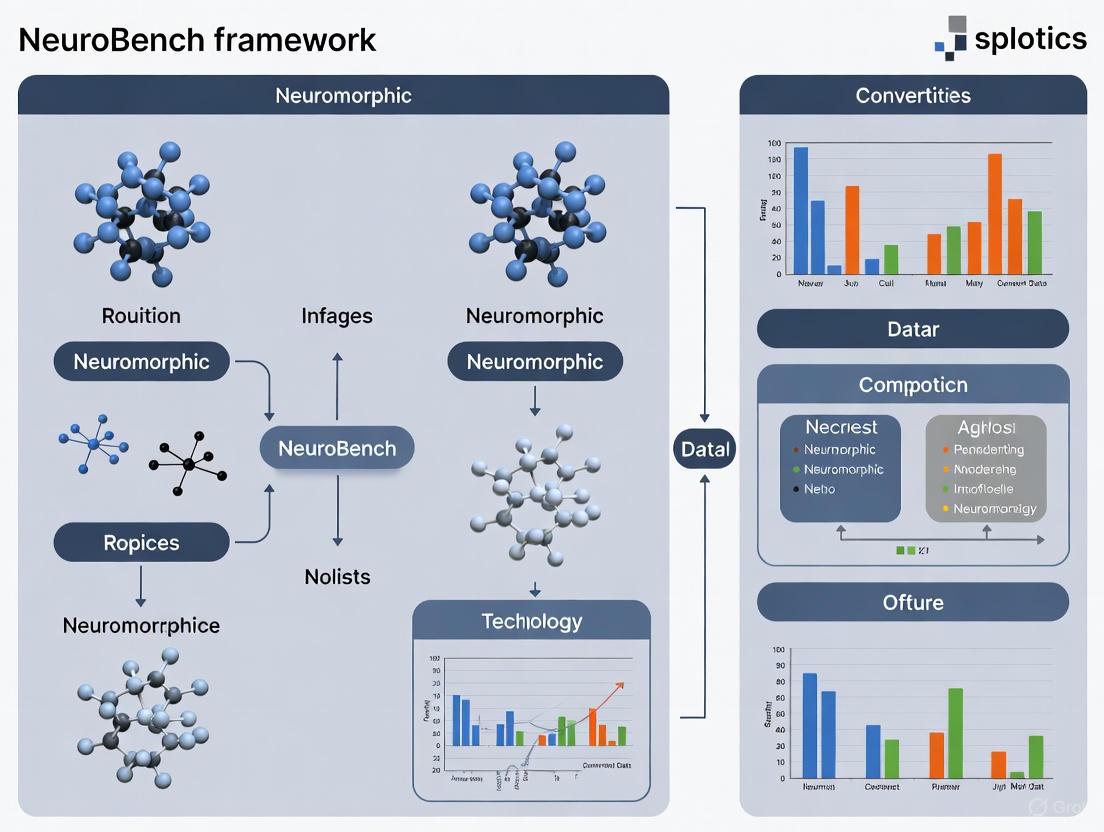
NeuroBench is a standardized, open-source benchmark framework designed to address the critical lack of comparability in the rapidly advancing field of neuromorphic computing.
NeuroBench: The Community-Driven Framework Benchmarking Neuromorphic Computing
Abstract
NeuroBench is a standardized, open-source benchmark framework designed to address the critical lack of comparability in the rapidly advancing field of neuromorphic computing. Developed by a broad collaboration of academic and industry researchers, it provides a common methodology and toolset for the fair evaluation of both neuromorphic algorithms and hardware systems. This article explores NeuroBench's foundational principles, its dual-track methodology for hardware-independent and hardware-dependent evaluation, and its suite of application-specific tasks and metrics. We detail how researchers can utilize NeuroBench for development and optimization, and examine its role in validating performance against conventional approaches. For professionals in biomedical research and drug development, this framework offers a reliable pathway to assess neuromorphic technologies for applications such as neural prosthetics and real-time biosignal analysis.
What is NeuroBench? Addressing the Benchmarking Crisis in Neuromorphic Computing
The Pressing Need for Standardization in Neuromorphic Research
The rapid growth of artificial intelligence (AI) and machine learning has resulted in increasingly complex and large models, with a computation growth rate that exceeds efficiency gains from traditional technology scaling [1]. This looming limit to continued advancements intensifies the urgency for exploring new resource-efficient and scalable computing architectures. Neuromorphic computing has emerged as a promising area to address these challenges by porting computational strategies employed in the brain into engineered computing devices and algorithms [1]. However, the field currently lacks standardized benchmarks, making it difficult to accurately measure technological advancements, compare performance with conventional methods, and identify promising research directions [1] [2].
The absence of standardization poses significant risks to the field's development, including fragmentation with incompatible systems from different vendors, inefficiencies from inconsistent data formats and protocols, and potential security vulnerabilities in sensitive application domains [3]. Prior neuromorphic computing benchmark efforts have not seen widespread adoption due to a lack of inclusive, actionable, and iterative benchmark design and guidelines [4]. This article examines how the NeuroBench framework addresses these critical standardization challenges through a community-driven approach to benchmarking neuromorphic algorithms and systems.
The Standardization Challenge in Neuromorphic Computing
The Diversity of Neuromorphic Approaches
Neuromorphic computing research encompasses a wide spectrum of brain-inspired computing techniques at algorithmic, hardware, and system levels [1]. The field initially referred specifically to approaches emulating the biophysics of the brain by leveraging physical properties of silicon, as proposed by Mead in the 1980s [1]. However, it has since expanded to include diverse approaches:
- Neuromorphic algorithms: Neuroscience-inspired methods that strive toward expanded learning capabilities, such as predictive intelligence, data efficiency, and adaptation, including spiking neural networks (SNNs) and primitives of neuron dynamics, plastic synapses, and heterogeneous network architectures [1].
- Neuromorphic systems: Algorithms deployed to hardware that seek greater energy efficiency, real-time processing capabilities, and resilience compared to conventional systems, utilizing biologically-inspired approaches like analog neuron emulation, event-based computation, non-von-Neumann architectures, and in-memory processing [1].
Critical Standardization Barriers
Multiple challenges hinder standardization efforts in neuromorphic computing. The field's rapid innovation pace threatens to render standards obsolete quickly, while industry fragmentation with competing priorities among vendors and research groups complicates establishing unified standards [3]. Additionally, practitioners face the persistent challenge of balancing flexibility and regulation, where overly rigid standards may stifle innovation while too much flexibility leads to inconsistencies [3]. The field's nascent stage also means fewer large-scale deployments exist to guide standardization efforts, and security concerns persist as non-standardized systems may introduce exploitable vulnerabilities, especially in sensitive domains like healthcare or defense [3].
NeuroBench: A Standardized Framework for Neuromorphic Benchmarking
NeuroBench represents a collaboratively-designed effort from an open community of researchers across industry and academia, aiming to provide a representative structure for standardizing the evaluation of neuromorphic approaches [1] [4]. The framework introduces a common set of tools and systematic methodology for inclusive benchmark measurement, delivering an objective reference framework for quantifying neuromorphic approaches in both hardware-independent (algorithm track) and hardware-dependent (system track) settings [4].
The framework is designed to be community-driven, with open-source tools and resources available on GitHub [5], and is structured to evolve iteratively, incorporating new benchmarks and features to track progress made by the research community [4]. This addresses the challenge of rapid innovation by allowing the framework to adapt as the field advances.
Core Architecture and Components
The NeuroBench framework comprises several integrated components that work together to standardize evaluation. The following diagram illustrates the complete NeuroBench evaluation workflow:
The Dataset component provides standardized data formats, with PyTorch tensors of shape (batch, timesteps, features*) as the expected format, though special cases exist for sequence-to-sequence prediction tasks [6]. Pre-processors handle data preprocessing and accept (data, targets) tuples of PyTorch tensors, returning similarly structured output [6]. The framework supports various Model types that accept data tensors and return predictions, which can be final shapes for target comparison or arbitrary shapes for post-processing [6]. Post-processors accumulate predictions and handle postprocessing, accepting prediction tensors and returning results that should match data targets for comparison [6]. The Metrics system includes both static metrics (computable from the model alone) and workload metrics (requiring model predictions and targets) [6].
Benchmark Tasks and Evaluation Metrics
NeuroBench incorporates a comprehensive suite of benchmark tasks that represent real-world neuromorphic applications. The available benchmarks include:
Table 1: NeuroBench Benchmark Tasks and Applications
| Benchmark Task | Application Domain | Description |
|---|---|---|
| Few-shot Class-incremental Learning (FSCIL) [7] | Continual Learning | Evaluates ability to learn new classes from few examples while retaining previous knowledge |
| Event Camera Object Detection [7] | Computer Vision | Object detection using event-based vision sensors |
| Non-human Primate (NHP) Motor Prediction [7] | Neuroprosthetics | Predicting motor commands from neural activity |
| Chaotic Function Prediction [7] | Time Series Prediction | Forecasting chaotic temporal patterns |
| DVS Gesture Recognition [7] | Human-Computer Interaction | Recognizing gestures from dynamic vision sensor data |
| Google Speech Commands (GSC) Classification [7] | Audio Processing | Keyword classification from audio input |
The evaluation metrics in NeuroBench are systematically organized into multiple categories that collectively provide a comprehensive assessment of neuromorphic solutions:
Table 2: NeuroBench Evaluation Metrics Taxonomy
| Metric Category | Specific Metrics | Evaluation Focus |
|---|---|---|
| Accuracy Metrics [7] | Classification Accuracy | Task performance and correctness |
| Efficiency Metrics [7] [3] | Footprint, Synaptic Operations (Effective MACs/ACs) | Computational and memory efficiency |
| Sparsity Metrics [7] | Connection Sparsity, Activation Sparsity | Biological plausibility and potential hardware efficiency |
These metrics enable direct comparison between different neuromorphic approaches and conventional methods, providing a standardized way to quantify trade-offs between accuracy, efficiency, and biological plausibility.
Implementation and Experimental Protocols
Standardized Evaluation Methodology
The NeuroBench framework implements a rigorous methodology for benchmarking neuromorphic algorithms and systems. The general design flow for using the framework involves: (1) training a network using the train split from a particular dataset; (2) wrapping the network in a NeuroBenchModel; (3) passing the model, evaluation split dataloader, pre-/post-processors, and a list of metrics to the Benchmark and executing run() [7].
The framework's API specifications ensure consistency across evaluations. Data is expected in PyTorch tensor format with shape (batch, timesteps, features), where features can be any number of dimensions [6]. Datasets must output (data, targets) tuples of PyTorch tensors with matching batch dimensions, or 3-tuples with kwargs for metadata in specialized cases like object detection [6]. This standardization enables fair comparison across different models and approaches.
Example Experimental Protocol: Google Speech Commands
A concrete example of the NeuroBench methodology can be seen in the Google Speech Commands (GSC) classification benchmark, which provides demonstrated results for both artificial neural networks (ANNs) and spiking neural networks (SNNs) [7]. The experimental workflow for this benchmark involves:
Data Preparation: The GSC dataset is automatically downloaded and preprocessed. The dataset contains audio recordings of spoken commands for keyword classification.
Model Training: Networks are trained using the training split of the dataset. The example provides separate scripts for ANN and SNN approaches.
Benchmark Execution: The trained network is wrapped in a NeuroBenchModel (either TorchModel or SNNTorchModel depending on the network type). The evaluation is performed using the Benchmark class with appropriate pre-processors, post-processors, and metrics.
Result Calculation: The framework computes a comprehensive set of metrics including footprint, connection sparsity, classification accuracy, activation sparsity, and synaptic operations [7].
The expected results from the demonstration show the characteristic trade-offs between ANN and SNN approaches: while the ANN achieves slightly higher classification accuracy (86.5% vs 85.6%), the SNN demonstrates significantly higher activation sparsity (96.7% vs 38.5%), highlighting potential efficiency advantages for event-based hardware [7].
The Researcher's Toolkit: Essential Components
Implementing standardized neuromorphic research requires specific tools and components. The following table details key elements from the NeuroBench framework:
Table 3: Essential Research Components for Standardized Neuromorphic Research
| Component | Function | Implementation in NeuroBench |
|---|---|---|
| Benchmark Harness [5] | Core evaluation framework | Open-source Python package available via PyPI (pip install neurobench) |
| Data Loaders [7] | Standardized data access | Integrated datasets with consistent formatting and pre-processing |
| Model Wrappers [6] | Unified model interface | NeuroBenchModel base class with specific implementations for PyTorch and SNNtorch |
| Pre-processors [6] | Data preparation and feature extraction | Configurable processing pipelines for spike conversion and data normalization |
| Post-processors [6] | Output interpretation and aggregation | Methods for combining spiking outputs and generating final predictions |
| Metric Calculators [6] | Performance quantification | Comprehensive suite of accuracy, efficiency, and sparsity metrics |
Impact and Future Directions
Advancing Neuromorphic Research Through Standardization
NeuroBench addresses critical standardization challenges in neuromorphic computing by providing a unified framework for evaluation. The framework's community-driven design helps overcome industry fragmentation by bringing together researchers from academia and industry to develop shared understanding of best practices [3]. Its balanced approach to benchmarking, focusing on task-level evaluation with hierarchical metric definitions, allows for flexible implementation while maintaining standardized assessment [3].
The framework's open-source nature and collaborative development model help address intellectual property concerns while encouraging transparency and adoption [5]. By providing objective performance measurement, NeuroBench enables researchers to quantitatively demonstrate advancements in neuromorphic computing, facilitating comparison with conventional approaches and helping identify the most promising research directions [1].
Integration with Broader Standardization Initiatives
NeuroBench complements other standardization efforts in neuromorphic computing, including NIST's work on performance benchmarking and device characterization, IEEE's development of hardware interfaces and software frameworks, and ISO's focus on ethical considerations and data formats [3]. The framework's benchmarking metrics provide a foundation for objective comparisons across different neuromorphic systems and algorithms [3].
The relationship between NeuroBench and other standardization components can be visualized as follows:
Future Development and Community Adoption
NeuroBench is designed as an evolving standard that will expand its benchmarks and features to foster and track progress made by the research community [4]. The framework intends to continually incorporate new tasks and evaluation methodologies as the field advances. Community contribution is actively encouraged through development of new benchmarks, improvements to the harness, and submission of results [5] [7].
The long-term vision for standardization in neuromorphic computing includes achieving interoperability between neuromorphic systems and traditional computing architectures, scalability for large-scale applications, robust security protocols, and ethical deployment frameworks [3]. NeuroBench is positioned to play a key role in realizing this vision by providing the necessary tools and framework for standardized evaluation and collaboration.
The pressing need for standardization in neuromorphic research is effectively addressed by the NeuroBench framework, which provides a comprehensive, community-driven approach to benchmarking neuromorphic algorithms and systems. By offering standardized metrics, evaluation methodologies, and tools, NeuroBench enables objective comparison across different approaches, accelerates research progress, and helps identify the most promising directions for the field. As neuromorphic computing continues to evolve, frameworks like NeuroBench will play an increasingly critical role in ensuring that advancements are measurable, comparable, and translatable to real-world applications across various domains, from edge computing and robotics to healthcare and scientific research.
The rapid growth of artificial intelligence (AI) and machine learning has resulted in increasingly complex and large models, with computation growth rates now exceeding efficiency gains from traditional technology scaling [1]. This escalating computational demand has intensified the urgency for exploring new resource-efficient and scalable computing architectures, positioning neuromorphic computing as a particularly promising solution. By implementing brain-inspired principles, neuromorphic technology aims to unlock key hallmarks of biological intelligence—including exceptional energy efficiency, real-time processing capabilities, and adaptive learning [1]. However, despite nearly a decade of concentrated research and development, the neuromorphic research field has faced a significant impediment: the absence of standardized benchmarks.
This lack of standardized evaluation methods has made it difficult to accurately measure technological advancements, compare performance against conventional approaches, or identify the most promising research directions [1] [4]. Prior benchmarking efforts failed to achieve widespread adoption due to insufficiently inclusive, actionable, and iterative designs [4]. To address this critical gap, the neuromorphic research community initiated a collaborative project to develop NeuroBench—a comprehensive benchmark framework for neuromorphic computing algorithms and systems that represents the first successful community-wide standardization effort in this field [1] [4].
The NeuroBench Initiative: A Community-Driven Approach
Collaborative Origins and Development
NeuroBench stands apart from previous benchmarking attempts through its fundamentally collaborative development model. The initiative brought together an extensive community of researchers from both industry and academia, creating a framework specifically designed to be "collaborative, fair, and representative" [8]. This unprecedented collaboration involved over 100 researchers from more than 50 academic and industrial institutions worldwide, representing a comprehensive cross-section of the neuromorphic research ecosystem [9] [10].
The project began in 2022 as a response to a critical question: How could neuromorphic engineering gain significant traction while still lacking established benchmarks and metrics for fair evaluations, including comparisons against conventional machine learning approaches? [10] The initiative was ignited through the leadership of researchers including Jason Yik, Charlotte Frenkel, and Vijay Janapa Reddi, with key support from Korneel Van den Berghe and many others [10]. The wide range of approaches and design schools in neuromorphic research—while a source of innovation—had previously led to fragmentation that hindered the establishment of common benchmarks [10]. NeuroBreakthroughly addressed this challenge by creating a forum where the community could collectively agree on representative benchmarks.
Addressing the Benchmarking Gap
The core challenge NeuroBench addressed was the rich diversity of techniques employed in neuromorphic research, which had resulted in a lack of clear standards for benchmarking [8]. This absence made it difficult to effectively evaluate the advantages and strengths of neuromorphic methods compared to traditional deep-learning-based approaches [8]. NeuroBench established itself as a community-driven solution with three fundamental pillars:
- Collaborative Design: The framework was developed by the community, for the community, ensuring broad representation across different neuromorphic approaches [8].
- Fair Evaluation: The benchmarks provide objective comparisons between neuromorphic and conventional approaches across multiple application domains [4].
- Representative Tasks: The selected benchmarks cover a wide spectrum of neuromorphic applications, from edge computing to neuroscientific exploration [1] [7].
This inclusive approach has positioned NeuroBench as a unifying force in the field, driving technological progress through standardized evaluation [8].
NeuroBench Technical Framework Architecture
Dual-Track Benchmarking Methodology
NeuroBench introduces a sophisticated dual-track framework that enables comprehensive evaluation of neuromorphic technologies across different maturity levels and implementation strategies [1] [4]. This structured approach allows researchers to quantify neuromorphic advantages in both theoretical and practical contexts.
Table 1: NeuroBench Dual-Track Benchmarking Structure
| Track | Evaluation Focus | Key Metrics | Target Applications |
|---|---|---|---|
| Algorithm Track | Hardware-independent performance [1] | Accuracy, activation sparsity, synaptic operations [7] | Algorithm exploration, model development [1] |
| System Track | Hardware-dependent performance [1] | Energy efficiency, throughput, latency [1] | Hardware deployment, edge computing [1] |
Core Benchmark Tasks and Metrics
The NeuroBench framework includes carefully selected benchmark tasks that represent diverse neuromorphic application domains. These benchmarks are designed to stress-test the unique capabilities of neuromorphic approaches while providing meaningful comparisons with conventional methods.
Table 2: NeuroBench v1.0 Benchmark Tasks and Specifications
| Benchmark Task | Domain | Data Modality | Key Challenge |
|---|---|---|---|
| Keyword Few-shot Class-incremental Learning (FSCIL) [7] | Continual learning | Audio | Adapting to new classes with limited examples |
| Event Camera Object Detection [7] | Computer vision | Event-based data | Processing sparse, asynchronous visual data |
| Non-human Primate Motor Prediction [7] | Neuroscience | Neural signals | Decoding neural activity into motor commands |
| Chaotic Function Prediction [7] | Time series | Numerical data | Predicting complex, chaotic dynamics |
| DVS Gesture Recognition [7] | Gesture recognition | Event-based vision | Recognizing human gestures from event cameras |
| Google Speech Commands Classification [7] | Audio processing | Audio | Keyword spotting from audio commands |
The framework employs a comprehensive set of metrics that capture the unique advantages of neuromorphic approaches. For the algorithm track, these include footprint (model complexity), connection sparsity, classification accuracy, activation sparsity, and synaptic operations (separated into effective MACs and ACs) [7]. This detailed metric selection enables multidimensional comparison between conventional and neuromorphic approaches.
The NeuroBench Harness: Implementation Framework
A key innovation of NeuroBench is the development of an open-source Python package called the "NeuroBench harness" that provides standardized tools for benchmark implementation [11] [7]. This harness allows researchers to consistently run benchmarks and extract comparable metrics across different approaches.
The technical architecture of the NeuroBench harness includes several integrated components [7]:
- Benchmark Definitions: Standardized workload metrics and static metrics
- Datasets: Curated benchmark datasets with consistent preprocessing
- Model Frameworks: Support for popular frameworks like Torch and SNNTorch
- Pre-processing: Tools for data preparation and conversion to spikes
- Post-processors: Methods for combining and interpreting spiking outputs
The design flow for using the framework follows a systematic process: (1) train a network using the train split from a benchmark dataset; (2) wrap the network in a NeuroBenchModel; (3) pass the model, evaluation split dataloader, pre-/post-processors, and metrics to the Benchmark and run the evaluation [7]. This standardized workflow ensures consistent evaluation across different research groups and approaches.
Experimental Protocols and Evaluation Methodologies
Standardized Benchmark Execution
NeuroBench provides detailed experimental protocols to ensure reproducible and comparable results across studies. The following workflow diagram illustrates the standard benchmark execution process:
Diagram 1: NeuroBench Experimental Workflow
A concrete example of this protocol in practice is demonstrated in the Google Speech Commands keyword classification benchmark, which provides baseline results for both artificial neural networks (ANNs) and spiking neural networks (SNNs) [7]. The experimental protocol for this benchmark includes:
- Data Preparation: Download and preprocess the Google Speech Commands dataset
- Model Training: Train either an ANN or SNN using the training split
- Benchmark Setup:
- Wrap the trained model in a
NeuroBenchModel - Load the evaluation split dataloader
- Configure pre-processors and post-processors
- Define the metrics list including footprint, connection sparsity, classification accuracy, activation sparsity, and synaptic operations
- Wrap the trained model in a
- Evaluation: Execute the
benchmark.run()function to compute all metrics - Comparison: Compare results against established baselines
The expected results for this benchmark demonstrate the trade-offs between approaches: while the ANN achieves 86.5% accuracy with higher MAC operations, the SNN achieves 85.6% accuracy with higher activation sparsity (96.7%) and uses AC operations instead of MACs [7].
Baseline Establishment and Performance Comparison
NeuroBench has established comprehensive baselines across both neuromorphic and conventional approaches, enabling meaningful comparison of performance advantages. The baseline results reveal characteristic trade-offs between different approaches:
For the Google Speech Commands benchmark, the ANN baseline demonstrates [7]:
- Footprint: 109,228 parameters
- Classification Accuracy: 86.5%
- Activation Sparsity: 38.5%
- Synaptic Operations: 1,728,071 Effective MACs
In comparison, the SNN baseline shows [7]:
- Footprint: 583,900 parameters
- Classification Accuracy: 85.6%
- Activation Sparsity: 96.7%
- Synaptic Operations: 3,289,834 Effective ACs
These results highlight a key neuromorphic advantage: SNNs achieve significantly higher activation sparsity (96.7% vs 38.5%), which can translate to energy efficiency in specialized hardware, though they currently require more parameters [7].
Implementing NeuroBench benchmarks requires specific tools and resources that collectively form the researcher's toolkit for neuromorphic evaluation.
Table 3: Essential NeuroBench Research Resources
| Resource | Type | Function | Access |
|---|---|---|---|
| NeuroBench Harness | Software Package | Core framework for running benchmarks and extracting metrics [11] [7] | Python Package Index (PyPI): pip install neurobench [7] |
| Benchmark Datasets | Data | Curated datasets for each benchmark task with standardized splits [7] | Through NeuroBench harness and associated repositories [7] |
| Example Scripts | Code | Reference implementations for each benchmark [7] | GitHub repository examples folder [7] |
| Pre-processing Tools | Software | Data transformation and spike conversion utilities [7] | Included in NeuroBench harness [7] |
| Model Wrappers | Software | Adapters for different model types (PyTorch, SNN Torch) [7] | Included in NeuroBench harness [7] |
The NeuroBench harness is designed for easy adoption through multiple pathways. Researchers can install the core package directly from PyPI using pip install neurobench [7]. For development and contribution, the project uses Poetry for dependency management and supports Python ≥3.9 [7]. The open-source nature of the project encourages community extension and development of additional features, programming frameworks, and metrics [7].
Future Directions and Community Impact
Ongoing Development and Expansion
NeuroBench is designed as a living framework that continually expands its benchmarks and features to track progress made by the research community [4]. The current roadmap includes several important enhancements:
- Improved Support for Analog Approaches: Expanding beyond digital neuromorphic systems to include analog and mixed-signal implementations [10]
- Co-design Track: Developing benchmarks that explicitly evaluate algorithm-hardware co-design strategies [10]
- Open Platforms: Creating more accessible benchmarking platforms for broader community participation [10]
- Additional Benchmarks: Continuously adding new benchmark tasks that represent emerging neuromorphic applications
The framework maintains forward compatibility through its modular architecture, allowing new benchmarks, metrics, and evaluation methodologies to be incorporated as the field evolves [4] [7].
Impact on Neuromorphic Research
Since its introduction, NeuroBench has already begun to significantly influence the neuromorphic computing landscape. The framework has been adopted in prominent research contexts, including the IEEE BioCAS 2024 Grand Challenge on Neural Decoding [10]. By providing the first widely-accepted standardization for neuromorphic evaluation, NeuroBench enables:
- Objective Comparison: Direct, quantitative comparison between different neuromorphic approaches and against conventional baselines
- Progress Tracking: Clear measurement of technological advancements over time
- Research Direction Identification: Data-driven identification of the most promising research directions
- Industrial Adoption: Lowered barriers for industry evaluation of neuromorphic technologies
The community-driven nature of NeuroBench ensures that it remains relevant and representative of the diverse approaches within neuromorphic computing, while simultaneously providing the common ground needed to drive the field forward [8] [10].
NeuroBench represents a watershed moment for neuromorphic computing research. By successfully addressing the long-standing lack of standardized benchmarks through an unprecedented collaborative effort across academia and industry, the framework provides the objective reference needed to quantify advances in neuromorphic algorithms and systems [1] [4]. The dual-track approach enables comprehensive evaluation spanning from theoretical algorithm development to practical system implementation, while the open-source tools lower barriers to adoption and participation [11] [7].
As a community-driven initiative, NeuroBench embodies the collective expertise and diverse perspectives of the neuromorphic research field, ensuring that the benchmarks remain fair, representative, and relevant [8]. The establishment of this standardized evaluation framework marks a crucial step toward maturing neuromorphic computing from exploratory research to measurable technological advancement, ultimately accelerating progress toward more efficient and capable AI systems inspired by the computational principles of the brain [1] [4].
The field of neuromorphic computing, which leverages brain-inspired principles to create more efficient and capable computing systems, has experienced significant growth and diversification in recent years [1]. However, this rapid innovation has occurred in the absence of standardized benchmarking methodologies, creating a critical challenge for the research community. Without consistent evaluation standards, it becomes difficult to accurately measure technological progress, compare neuromorphic approaches against conventional methods, or identify the most promising research directions [1] [4]. The NeuroBench framework emerges as a direct response to this challenge, representing a collaborative community effort from researchers across academia and industry to establish fair, reproducible, and representative benchmarks for neuromorphic computing algorithms and systems [8].
NeuroBench aims to provide a common set of tools and a systematic methodology for inclusive benchmark measurement, delivering an objective reference framework for quantifying neuromorphic approaches [1]. The framework is specifically designed to be a collaborative, fair, and representative benchmark suite developed by the community, for the community [8]. This positioning addresses the shortcomings of previous benchmarking attempts that failed to achieve widespread adoption due to insufficiently inclusive, actionable, and iterative design principles [4]. By establishing standardized evaluation practices, NeuroBench enables meaningful comparisons across different neuromorphic approaches and against conventional deep-learning-based methods, thereby accelerating progress in the field [8].
The Critical Need for Standardization in Neuromorphic Computing
The expansion of artificial intelligence and machine learning has led to increasingly complex and large models, with computation growth rates now exceeding the efficiency gains realized through traditional technology scaling [1]. This efficiency crisis is particularly acute for resource-constrained edge devices, intensifying the urgency for exploring new resource-efficient computing architectures [1]. Neuromorphic computing approaches this challenge by porting computational strategies employed in the brain into engineered computing devices, aiming to achieve the scalability, energy efficiency, and real-time capabilities characteristic of biological neural systems [1].
The term "neuromorphic" has evolved significantly since Mead's original conception in the 1980s, which focused on emulating brain biophysics using silicon properties [1]. The field now encompasses a diverse range of brain-inspired techniques at algorithmic, hardware, and system levels [1]. This diversity, while intellectually rich, has created fundamental challenges for comparative assessment:
- Algorithm diversity: Neuromorphic algorithms include spiking neural networks (SNNs), plastic synapses, and heterogeneous network architectures, often evaluated on conventional hardware before deployment to specialized systems [1].
- Hardware heterogeneity: Neuromorphic hardware implements varied biologically-inspired approaches including analog neuron emulation, event-based computation, non-von-Neumann architectures, and in-memory processing [1].
- Application variability: Neuromorphic systems target applications ranging from neuroscientific exploration to low-power edge intelligence and datacenter-scale acceleration [1].
This heterogeneity has historically prevented the emergence of clear standards for benchmarking, hindering effective evaluation of neuromorphic advantages compared to traditional methods [8]. NeuroBench directly addresses this fragmentation by creating a unified evaluation framework that accommodates diversity while enabling fair comparison.
Core Objectives of NeuroBench
Ensuring Fair Comparison Across Paradigms
The first core objective of NeuroBench is to establish a standardized evaluation foundation that enables fair comparison across diverse neuromorphic approaches and with conventional computing methods. The framework achieves this through its dual-track structure, which accommodates both hardware-independent and hardware-dependent evaluation contexts [1] [4]. The algorithm track focuses on hardware-independent assessment of neuromorphic algorithms, allowing researchers to compare algorithmic innovations without the confounding variables introduced by different hardware platforms [1]. This is particularly valuable during early research and development phases where algorithmic exploration typically occurs on conventional CPUs and GPUs. Conversely, the systems track addresses hardware-dependent evaluation, recognizing that the full potential of neuromorphic approaches emerges when algorithms are co-designed with and deployed to specialized hardware [1].
This two-track approach ensures that benchmarks are appropriate to the context and research questions being investigated. For algorithm comparisons, the framework neutralizes hardware variables that could skew results, while for system comparisons, it enables holistic assessment of integrated algorithm-hardware performance. The framework further ensures fairness through its collaborative development process, which engages a broad community of stakeholders to prevent bias toward any particular institutional or commercial approach [8]. This community-driven design guarantees that the benchmark tasks, metrics, and methodologies represent diverse perspectives and use cases, rather than reflecting the priorities of a single organization or research group.
Enabling Research Reproducibility
The second core objective of NeuroBench is to establish the methodological rigor and transparency necessary for reproducible research. The framework provides detailed specifications for benchmark tasks, evaluation metrics, and reporting requirements, ensuring that results can be consistently replicated across different research environments [4]. This commitment to reproducibility is operationalized through the NeuroBench harness, an open-source Python package that standardizes the evaluation process across different research groups and institutions [11]. By providing shared tools and interfaces, the harness reduces implementation variability that often compromises reproducibility in experimental neuromorphic computing research.
The framework's dedication to reproducibility extends to its comprehensive documentation and contribution guidelines, which establish clear standards for experimental methodology [12]. These guidelines include specifications for testing practices, documentation formats, and code quality controls that collectively enhance the reliability and replicability of published results. The framework employs pre-commit hooks and automated testing protocols to ensure that contributions adhere to project standards before integration, maintaining consistency across the benchmark suite [12]. Furthermore, the framework's design as a living benchmark that continually expands its tasks and features ensures that reproducibility standards evolve alongside the field, addressing new research directions and methodologies as they emerge [4].
Guiding Future Research Directions
The third core objective of NeuroBench is to provide actionable insights that guide future research directions and resource allocation in the neuromorphic computing field. By establishing standardized performance baselines across both neuromorphic and conventional approaches, the framework creates a reference point for measuring progress over time [4]. This longitudinal perspective enables the community to identify which research directions are yielding diminishing returns and which are demonstrating accelerating progress, informing strategic decisions about research investments.
The framework's structured evaluation methodology produces comparable performance data across multiple dimensions including accuracy, efficiency, latency, and energy consumption [4]. This multidimensional assessment prevents over-optimization on any single metric and encourages balanced advancement across the various attributes that define useful computing systems. By highlighting performance gaps and trade-offs, the benchmarks help researchers identify the most promising opportunities for breakthrough innovations. The framework's design as an expandable benchmark suite allows it to incorporate new tasks, metrics, and application domains as the field evolves, ensuring its continued relevance for guiding research direction [4].
Table 1: NeuroBench Benchmark Tracks and Characteristics
| Track | Focus | Evaluation Context | Primary Metrics | Target Applications |
|---|---|---|---|---|
| Algorithm Track | Neuromorphic algorithms | Hardware-independent | Accuracy, algorithmic efficiency, learning capabilities | Spiking neural networks, plastic synapses, heterogeneous networks |
| Systems Track | Integrated algorithms and hardware | Hardware-dependent | Energy efficiency, throughput, latency, real-time performance | Edge intelligence, datacenter acceleration, neuroscientific exploration |
Implementation and Methodology
NeuroBench Framework Architecture
The NeuroBench framework implements its core objectives through a structured architecture consisting of benchmark definitions, evaluation tools, and reporting standards. The framework includes four defined algorithm benchmarks in its initial release, with algorithmic complexity metric definitions and baseline results [11]. These benchmarks are designed to represent common tasks and challenges in neuromorphic computing, providing a balanced assessment of capabilities across different application domains. The system track benchmarks are defined but remain under active development, reflecting the greater complexity involved in standardizing hardware evaluation methodologies [11].
A key architectural element is the clear separation between benchmark specifications (the formal definitions of tasks, metrics, and conditions) and benchmark implementations (the concrete software tools for evaluation). This separation allows the framework to maintain stable specification standards while enabling continuous improvement of the tools that support them. The framework employs a modular design that facilitates the addition of new benchmark tasks as the field evolves, with clearly defined interfaces for integrating novel neuromorphic approaches and application domains [4]. This extensibility ensures that the framework remains relevant despite the rapid pace of innovation in neuromorphic computing.
Development Workflow and Contribution Process
The NeuroBench project maintains rigorous development workflows to ensure the quality and consistency of its benchmarking tools and methodologies. The process begins with community discussion of proposed changes or additions, typically initiated through the project's issue tracker [12]. This transparent discussion phase ensures that modifications receive input from diverse stakeholders and align with the framework's overarching goals. Once consensus emerges, contributors implement changes following a standardized workflow involving forking the repository, creating descriptive branches, and developing features with comprehensive testing and documentation [12].
The project enforces code quality through automated pre-commit hooks that run on all contributions, performing formatting checks, linting, and other validations before code can be committed [12]. This automated quality gate maintains consistency across the codebase despite the distributed nature of development. The workflow further requires that all modifications be thoroughly tested using the pytest framework, with tests placed in the designated neurobench/tests directory [12]. The final step involves opening a pull request to merge contributions into the development branch of the main repository, with clear and informative descriptions of the changes made [12]. This structured yet flexible process balances community inclusion with methodological rigor, ensuring that the framework evolves without compromising its reliability.
Benchmark Evaluation Methodology
The NeuroBench evaluation methodology employs a systematic approach to ensure consistent and comparable results across different neuromorphic platforms and algorithms. The process begins with task specification, which clearly defines the input data, expected outputs, and evaluation conditions for each benchmark [4]. This specification includes details on dataset usage, preprocessing requirements, and any data augmentation techniques that should be applied. For the algorithm track, the methodology focuses on hardware-agnostic metrics that isolate algorithmic performance from platform-specific characteristics, while the systems track incorporates hardware-dependent measurements that capture the full system behavior [1].
The actual evaluation is conducted through the NeuroBench harness, which provides standardized interfaces for executing benchmarks and collecting results [11]. This harness automates the process of running multiple trials, aggregating results, and computing the specified metrics, reducing manual intervention and potential human error. The harness supports both software simulations (for algorithm development) and hardware deployment (for system evaluation), with appropriate adaptation to each context. For system benchmarking, the methodology includes precise specifications for measurement techniques and instrumentation requirements to ensure consistent data collection across different hardware platforms. The final output includes comprehensive performance profiles that capture multiple dimensions of system behavior rather than reducing performance to single-number summaries.
Table 2: Essential Research Reagent Solutions in NeuroBench
| Component | Function | Implementation Examples |
|---|---|---|
| Benchmark Harness | Standardized evaluation execution | Python package with unified API for all benchmarks |
| Pre-commit Hooks | Code quality enforcement | Automated formatting, linting, and validation checks |
| Testing Framework | Verification of benchmark implementations | Pytest integration with comprehensive test suites |
| Documentation Tools | Methodology specification and dissemination | Google docstrings format with Sphinx documentation |
| Metric Calculators | Performance quantification | Standardized implementations of evaluation metrics |
Collaborative Development Model
The NeuroBench framework distinguishes itself through its genuinely collaborative development model, which engages researchers from across academia and industry in an open community process [8]. This model directly supports the core objectives of fair comparison and representative benchmarking by ensuring that the framework reflects diverse perspectives rather than being dominated by any single institution or commercial interest. The project maintains transparency through its public repository and open discussion channels, allowing any researcher to contribute to the evolution of the benchmarks [13]. This inclusivity is particularly important for a field as interdisciplinary as neuromorphic computing, where progress depends on collaboration between specialists in neuroscience, computer architecture, algorithm design, and application domains.
The community-driven nature of NeuroBench is evident in its author list, which includes contributors from dozens of institutions including Harvard University, Delft University of Technology, Forschungszentrum Jülich, Intel Labs, and many others [9]. This broad participation ensures that the benchmark tasks represent real-world applications and research challenges rather than artificial or narrowly academic exercises. The framework specifically aims to overcome the limitations of previous benchmarking efforts that failed to achieve widespread adoption due to insufficient community input [4]. By building consensus across the field, NeuroBench creates a common language and evaluation standard that enables more effective collaboration and knowledge transfer between research groups.
Future Directions and Impact
The NeuroBench framework is designed as a living standard that will evolve alongside the neuromorphic computing field [4]. The current version includes established algorithm benchmarks with baseline results, while system track benchmarks remain under active development [11]. This phased rollout reflects a pragmatic approach to benchmark development, prioritizing areas where community consensus is more readily achievable while continuing to work on more challenging evaluation domains. The framework's architecture specifically accommodates future expansion through its modular design and versioning system, allowing the addition of new benchmark tasks, metrics, and application domains as the field progresses.
The long-term impact of NeuroBench extends beyond mere performance comparison to shaping the trajectory of neuromorphic computing research [4]. By establishing standardized evaluation methodologies, the framework enables more meaningful comparison between research results, accelerating the identification of promising approaches. The comprehensive nature of NeuroBench assessments encourages holistic optimization across multiple system attributes rather than narrow focus on isolated metrics. Furthermore, the framework's emphasis on real-world applications and efficiency metrics helps bridge the gap between academic research and practical deployment, potentially accelerating the translation of neuromorphic technologies from laboratory demonstrations to fielded systems [1]. As the framework gains adoption, it will generate increasingly comprehensive data on performance trends and trade-offs, providing valuable insights for guiding future research investments and policy decisions in the computing field.
The field of neuromorphic computing, inspired by the architecture and operation of the brain, has emerged as a promising avenue to enhance the efficiency of machine learning pipelines and advance computing capabilities using brain-inspired principles [1] [14]. This paradigm aims to mimic the brain's exceptional energy efficiency and real-time processing capabilities through novel hardware and algorithms that depart from traditional von Neumann computing architecture [15]. However, the rapid growth of this field has exposed a critical challenge: the lack of standardized benchmarks [1]. Prior to NeuroBench, this absence made it difficult to accurately measure technological advancements, compare performance against conventional methods, and identify promising future research directions [4]. This gap hindered both academic research and industrial adoption, as objective comparisons between different neuromorphic approaches were nearly impossible to achieve in a consistent manner.
The NeuroBench framework represents a collaboratively-designed effort from an open community of researchers across industry and academia to address these challenges [1] [4]. It serves as a benchmark framework specifically designed for neuromorphic algorithms and systems, providing a common set of tools and systematic methodology for inclusive benchmark measurement [16]. By delivering an objective reference framework for quantifying neuromorphic approaches, NeuroBench enables researchers to systematically evaluate both the performance and efficiency of brain-inspired computing technologies [17]. This framework is particularly vital as neuromorphic computing shows increasing promise for enabling AI applications in resource-constrained environments where energy efficiency and low latency are critical requirements [14].
NeuroBench Framework Architecture
Dual-Track Benchmarking Approach
NeuroBench introduces a sophisticated dual-track approach that recognizes the distinct requirements for evaluating algorithmic innovations versus complete system implementations. This architecture enables comprehensive assessment across different stages of neuromorphic technology development, from conceptual algorithms to deployed systems. The framework's structure consists of two complementary tracks:
Hardware-Independent (Algorithm Track): This track focuses on evaluating neuromorphic algorithms in isolation from specific hardware constraints [4]. By running algorithms on conventional hardware such as CPUs and GPUs, researchers can assess fundamental algorithmic advances and drive design requirements for next-generation neuromorphic hardware [1]. This approach allows for direct comparison of algorithmic efficiency without the confounding variables introduced by specialized hardware architectures.
Hardware-Dependent (System Track): This track evaluates complete neuromorphic systems, including both algorithms and the specialized hardware they run on [4]. This holistic approach is essential because neuromorphic systems are composed of algorithms deployed to hardware that seek greater energy efficiency, real-time processing capabilities, and resilience compared to conventional systems [1]. The system track acknowledges that true neuromorphic advantages often emerge from the co-design of algorithms and hardware.
Core Metrics and Evaluation Methodology
NeuroBench employs a comprehensive set of metrics designed to capture the unique characteristics and advantages of neuromorphic computing. These metrics enable multi-dimensional comparison across different approaches and provide a complete picture of performance trade-offs. The framework's evaluation methodology spans multiple critical dimensions:
Table: NeuroBench Core Evaluation Metrics
| Metric Category | Specific Metrics | Description |
|---|---|---|
| Accuracy | Task accuracy, Temporal precision | Performance on target applications and time-sensitive tasks |
| Efficiency | Energy consumption, Latency, Throughput | Resource utilization and processing speed |
| Hardware Utilization | Area efficiency, Memory usage, Computational density | Silicon footprint and resource efficiency |
| Robustness | Noise immunity, Stability under variation | Performance consistency in real-world conditions |
The evaluation process incorporates both quantitative performance metrics and qualitative assessments, with quantitative metrics receiving approximately 70% weighting in overall evaluation [18]. This balanced approach ensures rigorous comparison while accounting for practical implementation factors. For spiking neural networks (SNNs), specific considerations include temporal dynamics, spike-based communication patterns, and event-driven processing efficiency [18]. The benchmarking process is designed to be extensible, allowing for continuous expansion of benchmarks and features to track progress made by the research community [4].
Benchmarking Neuromorphic Algorithms
Algorithmic Scope and Evaluation Criteria
The algorithmic track of NeuroBench encompasses a diverse range of brain-inspired computing approaches, with particular focus on spiking neural networks (SNNs) and related neuromorphic algorithms [1]. SNNs, often referred to as the third generation of neural networks, mimic the discrete spiking behavior of biological neurons and enable asynchronous, event-driven processing [18]. This paradigm offers potential for significant energy savings and real-time processing capabilities, making SNNs particularly attractive for engineering applications requiring both energy efficiency and temporal precision [18]. The algorithmic scope extends beyond SNNs to include various neuroscience-inspired methods that strive toward goals of expanded learning capabilities, such as predictive intelligence, data efficiency, and adaptation [1].
Evaluation of neuromorphic algorithms focuses on their computational properties and performance characteristics independent of specific hardware implementation. Key criteria include computational efficiency, temporal processing capabilities, learning and adaptation mechanisms, and scalability to complex problems. The algorithms are assessed on their ability to leverage neuromorphic principles such as sparse, event-driven computations; temporal coding strategies; and biologically plausible learning rules [15]. For SNNs specifically, evaluation includes their inherent recurrent nature due to memory elements in spiking neurons, making them suitable for real-world sequential tasks [14].
Experimental Protocols and Methodologies
The evaluation of neuromorphic algorithms follows rigorous experimental protocols designed to ensure fair comparison and reproducible results. These methodologies encompass multiple aspects of algorithm performance and behavior:
Training Method Comparison: Algorithms are evaluated across different training approaches including surrogate gradient methods, ANN-to-SNN conversion, and biologically plausible local learning rules [18]. Each method presents distinct trade-offs between accuracy, training efficiency, and biological plausibility that must be systematically assessed.
Temporal Dynamics Analysis: For spiking neural networks, comprehensive evaluation across varying time steps is essential [18]. This analysis captures the fundamental trade-offs between temporal resolution and computational efficiency that characterize SNN performance.
Multi-Modal Task Evaluation: Algorithms are tested across diverse data modalities including static images, text data, and neuromorphic sensor data (e.g., event-based camera outputs) [18]. This multi-modal approach ensures robust assessment of algorithmic capabilities beyond narrow domains.
Noise Immunity Testing: Performance under varying noise conditions is evaluated to assess algorithmic robustness [18]. This testing is particularly important for real-world applications where clean data cannot be guaranteed.
The experimental workflow for algorithm benchmarking follows a structured pipeline from data preparation through performance analysis, with strict controls on hardware configuration and software environment to ensure comparability [18].
Key Algorithmic Benchmarks and Baseline Performance
NeuroBench establishes standardized benchmarks across multiple application domains to enable consistent algorithmic evaluation. These benchmarks span traditional machine learning tasks adapted for neuromorphic implementations as well as tasks specifically designed to leverage neuromorphic advantages:
Table: Representative Algorithm Benchmarks and Performance Ranges
| Benchmark Task | Data Modality | Key Metrics | Performance Range |
|---|---|---|---|
| Gesture Recognition | Event-based vision | Accuracy, Latency | Varies by approach & dataset |
| Keyword Spotting | Audio/Events | Accuracy, Energy per inference | Varies by approach & dataset |
| Image Classification | Static frames | Accuracy, Time steps needed | Varies by approach & dataset |
| Object Detection | Event-based vision | mAP, Processing latency | Varies by approach & dataset |
Performance baselines established through NeuroBench reveal fundamental characteristics of neuromorphic algorithms. Directly trained SNNs often demonstrate advantages in energy efficiency and latency for temporal tasks, while ANN-to-SNN converted models may achieve higher accuracy on static image classification at the cost of increased latency [18]. The framework has documented energy efficiency improvements ranging from 6× to 300× compared to conventional approaches in optimized cases [19].
Benchmarking Neuromorphic Systems
System Components and Architecture Evaluation
Neuromorphic systems benchmarking encompasses the integrated evaluation of complete systems comprising specialized hardware architectures and the algorithms they execute. This holistic approach is critical because neuromorphic systems target a wide range of applications, from neuroscientific exploration to low-power edge intelligence and datacenter-scale acceleration [1]. System benchmarking evaluates multiple architectural approaches including digital neuromorphic chips (e.g., Intel Loihi, IBM TrueNorth, SpiNNaker), analog/mixed-signal designs, and emerging technologies based on memristive devices, spintronic circuits, and photonic processors [15].
The system evaluation examines key architectural features including:
- Event-driven data-flow processing that enables sparse, asynchronous computation [19]
- Near-/in-memory computing architectures that overcome von Neumann bottlenecks [14]
- Parallel processing elements that mimic the brain's distributed computation [15]
- Network-on-chip communication fabrics for efficient inter-neuron connectivity [19]
Each architectural approach presents distinct trade-offs between flexibility, efficiency, and bio-realism. Digital neuromorphic chips offer programmability and reliability but may sacrifice energy efficiency compared to analog approaches. Memristive and emerging technology-based systems promise greater density and energy efficiency but face challenges with device variability and manufacturing consistency [15].
Hardware-Software Co-Design Assessment
A critical aspect of neuromorphic systems benchmarking is the evaluation of hardware-software co-design, where algorithms are optimized for specific hardware characteristics and vice versa. This co-design is essential for realizing the full potential of neuromorphic computing, as demonstrated by specialized techniques such as:
- Spike-grouping methods that process spikes in batches to reduce energy consumption and latency of event-based processing [19]
- Event-driven depth-first convolution that lowers memory requirements and processing latency for CNN inference on neuromorphic processors [19]
- Precision optimization using lower precision data types for weights and neuron states to reduce memory usage [19]
- Mapping efficiency optimization to maximize utilization of fragmented on-chip memory in near-memory processing architectures [19]
These optimizations have demonstrated significant improvements, with reported gains of 6× to 300× in energy efficiency, 3× to 15× in latency reduction, and 3× to 100× in area efficiency compared to unoptimized approaches [19]. The benchmarking process evaluates both the final performance and the efficiency of the co-design process itself.
System-Level Metrics and Performance Baselines
System-level benchmarking employs comprehensive metrics that capture the end-to-end performance of neuromorphic systems deployed in practical scenarios. These metrics extend beyond algorithmic performance to include implementation-specific characteristics:
- Energy Efficiency: Measured as energy per inference or synaptic operations per joule, with digital neuromorphic chips demonstrating 100× to 1000× improvements over conventional processors on suitable tasks [15]
- Latency: Critical for real-time applications, with event-driven systems achieving sub-millisecond response times for sensor processing tasks [19]
- Area Efficiency: Measured as performance per unit silicon area, highlighting the trade-offs between different hardware approaches [19]
- Thermal Characteristics: Particularly important for embedded and edge deployment scenarios
- Scalability: Ability to maintain efficiency as system size increases, evaluated through multi-chip and multi-core configurations
The benchmarking framework also assesses practical deployment considerations including software toolchain maturity, programming model usability, and integration with conventional computing systems. These factors significantly influence the real-world applicability of neuromorphic systems beyond raw performance metrics.
Advanced Methodologies for Specialized Domains
Benchmarking for Robotic Vision Applications
Robotic vision represents a particularly demanding application domain for neuromorphic computing, requiring low-latency processing of dynamic visual information under severe power constraints. NeuroBench addresses these specialized requirements through benchmarks inspired by biological systems such as Drosophila (fruit fly), which achieves remarkable navigation capabilities with approximately 100,000 neurons operating on just a few microwatts of power [14]. The benchmarking approach for this domain emphasizes:
- Integration of specialized sensing using event-based cameras that generate asynchronous, sparse streams of binary events at high temporal resolution (10μs vs 3ms for conventional cameras) with low power consumption (10mW vs 3W) [14]
- Real-time processing capabilities for tasks such as optical flow estimation, depth estimation, and obstacle avoidance in dynamic environments
- System-level performance metrics that combine sensing, processing, and actuation in closed-loop configurations
Vision-based drone navigation (VDN) serves as an exemplary application driver for these benchmarks, requiring holistic scene understanding through underlying perception tasks while operating under severe computational and energy constraints [14]. The benchmarking methodology captures the interplay between event-based sensing, spiking neural network processing, and specialized neuromorphic hardware in achieving biological levels of efficiency and responsiveness.
Framework and Toolchain Evaluation
NeuroBench includes comprehensive evaluation of the software frameworks and toolchains that enable neuromorphic system development. This assessment covers multiple dimensions including:
- Framework Adaptability to different neural models, learning rules, and hardware targets
- Training Efficiency for various learning approaches including supervised, unsupervised, and reinforcement learning
- Hardware Compatibility and deployment workflow efficiency
- Community Engagement and ecosystem maturity [18]
Recent benchmarking of five leading SNN frameworks—SpikingJelly, BrainCog, Sinabs, SNNGrow, and Lava—revealed distinct specialization patterns. SpikingJelly excels in overall performance and energy efficiency, while BrainCog demonstrates robust performance on complex tasks. Sinabs and SNNGrow offer balanced performance in latency and stability, with Lava showing limitations in large-scale dataset adaptability [18]. This framework evaluation provides crucial guidance for researchers selecting development tools for specific application requirements.
Key Research Reagents and Solutions
The advancement of neuromorphic computing research relies on a sophisticated ecosystem of hardware platforms, software frameworks, and datasets. This "research toolkit" enables experimental investigation across the neuromorphic computing stack:
Table: Essential Research Resources for Neuromorphic Computing
| Resource Category | Specific Examples | Function and Purpose |
|---|---|---|
| Neuromorphic Hardware | Intel Loihi, IBM TrueNorth, SpiNNaker | Physical implementation of neuromorphic architectures |
| SNN Frameworks | SpikingJelly, BrainCog, Lava, Sinabs | Software environment for SNN development and training |
| Neuromorphic Sensors | Event-based cameras (DAVIS, Prophesee) | Bio-inspired sensing for sparse, asynchronous data |
| Benchmark Datasets | Neuromorphic MNIST, DVS Gesture, N-Caltech | Standardized data for evaluation and comparison |
| Benchmark Tools | NeuroBench framework | Standardized evaluation metrics and procedures |
Experimental Setup and Configuration Guidelines
To ensure reproducible and comparable results across different research efforts, NeuroBench provides detailed guidelines for experimental setup and configuration. These guidelines cover:
- Hardware Configuration: Standardized computational resources (e.g., AMD EPYC 9754 128-core CPU, RTX 4090D GPU, 60 GB RAM) for fair algorithm comparison [18]
- Software Environment: Consistent software versions (e.g., PyTorch 2.1.0, CUDA 11.8) and dependency management [18]
- Evaluation Protocols: Standardized train/test splits, hyperparameter settings, and evaluation metrics across benchmark tasks
- Reporting Standards: Comprehensive documentation of all experimental parameters and conditions
These standardized configurations enable meaningful comparison across different research efforts while still allowing investigation of specialized optimizations for particular hardware platforms or application domains.
Implementation Workflow and Visual Guide
The NeuroBench benchmarking process follows a structured workflow that ensures comprehensive evaluation while maintaining comparability across different neuromorphic approaches. The following diagram illustrates the key stages and decision points in this process:
Future Directions and Community Impact
Evolving Benchmark Challenges
As neuromorphic computing continues to advance, NeuroBench faces ongoing challenges in maintaining relevant and comprehensive benchmarks. Key areas for future development include:
- Multi-modal integration benchmarks that evaluate systems processing diverse sensor data (vision, audio, tactile) in coordinated frameworks
- Lifelong learning evaluation assessing capabilities for continuous adaptation without catastrophic forgetting of previous knowledge
- Scalability metrics for increasingly large and complex neural architectures approaching brain-scale complexity
- Standardized power measurement methodologies that enable fair comparison across diverse hardware platforms
- Ethical and safety benchmarks for autonomous systems employing neuromorphic intelligence
These evolving challenges reflect the dynamic nature of neuromorphic computing and the need for benchmarks that anticipate future developments rather than simply documenting current capabilities.
Roadmap for Widespread Adoption
The broader impact and adoption of NeuroBench depends on several critical factors that the framework addresses through its community-driven development model:
- Inclusive Design: Collaborative development across industry and academia ensures relevance to diverse research priorities and application domains [1]
- Extensibility: The open-source framework allows community contributions of new benchmarks, metrics, and evaluation methodologies [4]
- Actionable Guidance: Detailed protocols and standardized reporting enable practical implementation rather than theoretical comparison
- Iterative Refinement: Regular updates incorporate community feedback and technological advancements [4]
The ongoing development of NeuroBench represents a crucial enabling technology for the neuromorphic computing field, providing the standardized evaluation framework necessary to accelerate progress from laboratory research to practical deployment across diverse application domains. By establishing common ground for comparison and collaboration, NeuroBench helps transform neuromorphic computing from a collection of isolated advances into a cohesive technological paradigm with clearly demonstrated capabilities and advantages over conventional approaches.
How NeuroBench Works: A Dual-Track Framework for Algorithms and Systems
Neuromorphic computing, which leverages brain-inspired principles to advance computing efficiency and artificial intelligence (AI) capabilities, has emerged as a promising solution to the looming limitations of conventional computing architectures. The rapid growth of AI and machine learning has led to increasingly complex models whose computational demands exceed the efficiency gains predicted by traditional technology scaling laws [1]. Neuromorphic systems, inspired by the biophysics of the brain, aim to reproduce the high-level performance, energy efficiency, and real-time processing capabilities of biological neural systems [1]. However, the field has historically suffered from a critical impediment to progress: the lack of standardized benchmarks.
Prior to initiatives like NeuroBench, the neuromorphic research landscape was fragmented, making it difficult to accurately measure technological advancements, compare performance against conventional methods, or identify the most promising research directions [1] [4]. This absence of common evaluation standards hindered the collaborative development and commercial adoption of neuromorphic technologies. The NeuroBench framework was collaboratively designed by an open community of over 100 researchers from more than 50 academic and industrial institutions to address this precise challenge [9]. It provides a common set of tools and a systematic methodology for benchmarking neuromorphic approaches through a two-track evaluation model that distinguishes between hardware-independent and hardware-dependent assessment [1] [4]. This whitepaper provides an in-depth technical examination of this two-track model, detailing its protocols, metrics, and application within the broader NeuroBench framework for researchers and scientists in neuromorphic computing and related fields.
Foundations of the NeuroBench Framework
NeuroBench is conceived as a community-driven, open-source framework that delivers an objective reference for quantifying neuromorphic approaches. Its development was motivated by the recognition that neuromorphic computing optimizes for different goals—such as energy efficiency, real-time processing, and event-driven computation—than conventional systems, thus necessitating novel benchmarking methods [20]. The framework is designed to be inclusive, actionable, and iterative, allowing for continuous expansion and refinement as the field evolves [4].
The core structure of NeuroBench is built around two complementary tracks, which are summarized in the table below.
Table 1: The NeuroBench Two-Track Evaluation Model
| Feature | Hardware-Independent (Algorithm Track) | Hardware-Dependent (System Track) |
|---|---|---|
| Primary Goal | Evaluate algorithmic innovations and computational principles [1] [4] | Assess performance of full systems integrating algorithms and hardware [1] [4] |
| Focus Area | Model performance, learning capabilities, data efficiency [1] | Energy efficiency, latency, throughput, real-time capabilities [1] |
| Key Metrics | Accuracy, precision, recall, F1-score [21] | Energy consumption, latency, throughput, computational density [1] |
| Execution Environment | Simulation on conventional hardware (CPUs, GPUs) [1] | Deployment on specialized neuromorphic hardware [1] |
| Typical Use Case | Driving design requirements for next-generation hardware [1] | Benchmarking complete solutions for edge intelligence or datacenter acceleration [1] |
This two-track approach allows researchers to dissect the contributions of algorithms and hardware platforms separately, enabling clearer insights into the sources of performance and efficiency gains. The following diagram illustrates the logical relationship and workflow between these two tracks within the NeuroBench framework.
The Hardware-Independent (Algorithm) Track
Core Objectives and Experimental Protocol
The hardware-independent track, often termed the algorithm track, is designed to evaluate the efficacy of neuromorphic algorithms—such as spiking neural networks (SNNs) and other neuroscience-inspired models—divorced from the specific characteristics of any physical hardware platform [1]. The primary goal is to assess intrinsic algorithmic properties like learning capabilities, data efficiency, and adaptability [1]. This track is crucial for driving the design requirements of next-generation neuromorphic hardware by first establishing what algorithms are most promising.
The experimental protocol for this track follows a systematic methodology:
- Algorithm Implementation: The neuromorphic algorithm (e.g., an SNN) is implemented using a software framework that supports neuromorphic modeling, such as the open-source harness provided by NeuroBench [5].
- Dataset and Task Selection: The algorithm is applied to standardized benchmark tasks across various domains like image recognition, audio processing, or neural decoding. NeuroBench has established several such tasks to ensure fair comparisons [22].
- Simulated Execution: The model is executed in a simulated environment on conventional hardware like CPUs or GPUs. This isolation allows for a pure evaluation of the algorithm's computational principles [1].
- Performance Measurement: Quantitative metrics are collected based on the algorithm's output, without measuring physical resource consumption.
Key Evaluation Metrics and Methodologies
The evaluation in this track relies heavily on established quantitative metrics from machine learning, adapted as needed for neuromorphic contexts. The following table catalogs the primary metrics and their significance.
Table 2: Key Quantitative Metrics for the Hardware-Independent Track
| Metric | Computational Formula | Evaluation Purpose |
|---|---|---|
| Accuracy | (TP + TN) / (TP + TN + FP + FN) [21] | Measures the overall proportion of correct predictions. |
| Precision | TP / (TP + FP) [21] | Evaluates the model's ability to avoid false positives. |
| Recall | TP / (TP + FN) [21] | Evaluates the model's ability to identify all relevant instances (avoid false negatives). |
| F1-Score | 2 * (Precision * Recall) / (Precision + Recall) [21] | Provides a harmonic mean of precision and recall, useful for imbalanced datasets. |
| AUC-ROC | Area Under the Receiver Operating Characteristic Curve [21] | Measures the model's capability to distinguish between classes. |
To ensure robustness, evaluation methodologies such as k-fold cross-validation are employed. In this technique, the dataset is randomly partitioned into k equally sized subsets. The model is trained k times, each time using a different subset as the validation set and the remaining k-1 subsets as the training set. This process helps prevent overfitting and provides a more accurate estimate of performance on unseen data [21]. The choice of metrics should be guided by the specific problem domain; for example, precision and recall are often more informative than accuracy in binary classification problems with class imbalance [21].
The Hardware-Dependent (System) Track
Core Objectives and Experimental Protocol
The hardware-dependent track, or the system track, evaluates the performance of complete neuromorphic systems, where algorithms are deployed on specialized brain-inspired hardware [1]. This track is critical for assessing the real-world benefits of neuromorphic computing, such as unparalleled energy efficiency, low latency, and resilience, which arise from the co-design of algorithms and hardware [1] [20].
The experimental protocol for this track is inherently more complex, involving the full stack of computation:
- System Configuration: The neuromorphic algorithm is deployed onto a target neuromorphic hardware platform. This may involve platform-specific compilation and mapping of the neural network onto the hardware's physical fabric.
- Workload Execution: The system executes the benchmark task, which may involve processing real-time, event-based data streams.
- Physical Measurement: Specialized tools are used to measure not only task performance (e.g., accuracy) but also physical quantities like power draw and execution time.
- Data Collection and Analysis: The raw physical measurements are processed to compute the system-level metrics defined below.
Key Evaluation Metrics and Methodologies
The system track employs a distinct set of metrics that reflect the overarching goals of neuromorphic computing. These metrics collectively provide a holistic view of a system's efficiency and capability.
Table 3: Key Quantitative Metrics for the Hardware-Dependent Track
| Metric | Measurement Methodology | Evaluation Purpose |
|---|---|---|
| Energy Consumption | Measured in Joules (J) using power probes or on-chip sensors during task inference [1]. | Quantifies the total energy required to perform a computation, critical for edge and mobile applications. |
| Latency | Measured in milliseconds (ms) or microseconds (μs) from input presentation to output generation. | Assesses real-time processing capability, vital for closed-loop control and interactive applications. |
| Throughput | Measured in frames per second (FPS) or inferences per second (IPS). | Evaluates the rate of data processing, important for high-data-rate scenarios. |
| Computational Density | Throughput or performance per unit power (e.g., FPS/W) [1]. | A composite metric evaluating how efficiently a system uses energy to deliver performance. |
The relationship between the key components of a neuromorphic system and the metrics they most directly influence is complex. The following diagram outlines this logical framework, which is central to the system track's analysis.
The Scientist's Toolkit: Essential Research Reagents and Materials
To conduct rigorous evaluations using the NeuroBench two-track model, researchers rely on a suite of software tools, hardware platforms, and datasets. The following table details these essential "research reagents" and their functions within the experimental workflow.
Table 4: Essential Tools and Platforms for Neuromorphic Benchmarking
| Tool Category | Example | Primary Function in Evaluation |
|---|---|---|
| Benchmarking Harness | NeuroBench Harness [5] | Provides the core software infrastructure for running, measuring, and reporting benchmark results in a standardized way. |
| Simulation Frameworks | OPNET, OMNeT++, NS-3 [21] | Enable hardware-independent algorithm evaluation by simulating network and system behavior on conventional computers. |
| Neuromorphic Hardware | Platforms from partners like SynSense, Intel Labs, imec [9] | Physical systems that execute neuromorphic algorithms for hardware-dependent evaluation of energy, latency, etc. |
| Standardized Datasets | IEEE BioCAS Grand Challenge Neural Decoding data [22] | Provide representative, community-vetted tasks (e.g., classification, prediction) for fair comparison between different approaches. |
| Performance Analysis Tools | Integrated debuggers and statistical analysis features in simulators [21] | Assist in collecting, visualizing, and analyzing performance metrics during and after benchmark execution. |
The NeuroBench framework's two-track evaluation model provides the nuanced and comprehensive approach required to advance the multifaceted field of neuromorphic computing. By cleanly separating the assessment of algorithms from the assessment of integrated systems, it enables researchers to pinpoint innovations, whether they originate from novel computational principles or groundbreaking hardware architectures. The hardware-independent track establishes a baseline for algorithmic efficacy using standardized metrics and cross-validation techniques, while the hardware-dependent track quantifies the real-world advantages of neuromorphic systems in terms of energy, latency, and throughput.
This structured approach, supported by an open-source harness and a collaborative community, directly addresses the historical lack of standardized benchmarks that has impeded progress [1] [4]. As the field evolves, so too will NeuroBench, with planned expansions to better support analog approaches, co-design tracks, and open platforms [22]. For researchers and scientists, adopting this two-track model is not merely a benchmarking exercise but a fundamental practice for guiding the development of next-generation computing systems that are truly efficient, robust, and intelligent.
NeuroBench is a community-driven, open-source benchmark framework collaboratively designed by researchers from across industry and academia to address the critical lack of standardized evaluation in neuromorphic computing [1]. The field of neuromorphic computing, which encompasses brain-inspired algorithms and hardware, shows significant promise for advancing the efficiency and capabilities of AI applications [1] [16]. However, the absence of common benchmarks has made it difficult to accurately measure progress, compare performance against conventional methods, and identify promising research directions [1] [4]. NeuroBench directly addresses this gap by providing a common set of tools and a systematic methodology for inclusive benchmark measurement, establishing an objective reference framework for quantifying neuromorphic approaches in both hardware-independent (algorithm track) and hardware-dependent (system track) settings [1] [4] [9]. This framework is poised to play a vital role in the maturation of neuromorphic computing, which saw a commercial inflection point in 2025 with increased hardware deployments and market projections reaching USD 7.8 billion [23] [24].
The NeuroBench framework is structurally organized into several integrated components that support a comprehensive benchmarking workflow, from data handling to metric computation. The overall architecture and data flow are designed to standardize the evaluation process for neuromorphic computing research.
Figure 1: NeuroBench Architecture and Data Flow
The design flow for using the NeuroBench framework follows a systematic sequence as illustrated in Figure 1 [7]:
- Train a network using the training split from a particular benchmark dataset
- Wrap the trained network in a
NeuroBenchModelinterface to ensure compatibility with the benchmarking harness - Configure the Benchmark by passing the model, evaluation split dataloader, pre-processors, post-processors, and a list of metrics to evaluate
- Execute the benchmark by calling
run()to perform the comprehensive evaluation
This architecture supports both software simulations (algorithm track) and deployments on actual neuromorphic hardware (system track), enabling fair comparisons across different neuromorphic approaches [1] [4].
Datasets and Benchmarks
NeuroBench incorporates a diverse set of benchmark tasks and datasets representing real-world applications where neuromorphic computing shows particular promise. These benchmarks are carefully selected to stress-test the capabilities of neuromorphic algorithms and systems across various domains including vision, audio, control, and prediction tasks.
Table 1: NeuroBench v1.0 Benchmark Tasks and Datasets
| Benchmark Task | Domain | Description | Key Challenge |
|---|---|---|---|
| Keyword Few-shot Class-incremental Learning (FSCIL) [7] | Audio | Incremental learning of new keyword classes with limited examples | Continual learning without catastrophic forgetting |
| Event Camera Object Detection [7] | Vision | Object detection from event-based camera data | Processing sparse, asynchronous visual events |
| Non-human Primate (NHP) Motor Prediction [7] | Biomedical | Predicting motor cortex activity from neural signals | Brain-machine interface control applications |
| Chaotic Function Prediction [7] | Modeling | Predicting the evolution of chaotic dynamical systems | Temporal pattern learning in complex systems |
| DVS Gesture Recognition [7] | Vision | Classifying human gestures from Dynamic Vision Sensor data | Spatiotemporal pattern recognition |
| Google Speech Commands (GSC) Classification [7] | Audio | Keyword spotting from audio commands | Edge-relevant audio processing |
| Neuromorphic Human Activity Recognition (HAR) [7] | Sensor Data | Recognizing human activities from motion sensor data | Time-series analysis of sensor events |
These benchmarks are supported by public datasets and include baseline implementations to help researchers quickly get started with the framework. The selection covers both synthetic tasks (e.g., chaotic function prediction) and real-world applications (e.g., event camera object detection), providing a balanced assessment landscape [7].
Metrics and Evaluation Framework
NeuroBench employs a comprehensive suite of metrics that collectively evaluate multiple dimensions of neuromorphic solutions, moving beyond traditional accuracy measurements to capture characteristics particularly relevant to neuromorphic systems such as efficiency, footprint, and robustness.
Table 2: NeuroBench Metrics Taxonomy
| Metric Category | Specific Metrics | Description | Relevance |
|---|---|---|---|
| Accuracy [7] | Classification Accuracy | Standard task performance measurement | Task capability |
| Efficiency [7] [5] | Activation Sparsity, Synaptic Operations (Effective MACs/ACs) | Computational and activation efficiency | Energy proportionality |
| Footprint [7] [5] | Model Size (parameters), Connection Sparsity | Memory and storage requirements | Hardware constraints |
| Robustness | (Varies by benchmark) | Performance under distribution shifts | Real-world applicability |
The framework categorizes metrics into static metrics (computable without inference, such as model footprint and connection sparsity) and workload metrics (require running the model on data, such as accuracy and activation sparsity) [7]. This distinction allows for comprehensive profiling of both architectural characteristics and runtime performance.
For the system track (hardware-dependent evaluations), NeuroBench extends these metrics to include hardware-specific measurements such as energy consumption, latency, and throughput, enabling direct comparison between conventional hardware and neuromorphic processors like Intel's Loihi 2, which has demonstrated 75× lower latency and 1,000× higher energy efficiency versus NVIDIA Jetson Orin Nano on state-space model workloads [23].
Experimental Protocols and Methodology
Standard Evaluation Workflow
Implementing a rigorous benchmark evaluation using NeuroBench involves a structured experimental protocol. The framework provides a standardized approach to ensure comparable and reproducible results across different neuromorphic solutions.
Figure 2: NeuroBench Experimental Workflow
The detailed methodology consists of the following key phases [7]:
Data Preparation: Download and preprocess the target benchmark dataset using NeuroBench's built-in data loaders and pre-processing functions. For spiking neural networks, this may include conversion of static data into spike trains using encoding techniques.
Model Preparation: Train or load the model to be evaluated. NeuroBench supports various model types including artificial neural networks (ANNs), spiking neural networks (SNNs), and hybrid approaches.
Framework Integration: Wrap the model using the
NeuroBenchModelinterface, which standardizes the inference interface across different model types and ensures compatibility with the benchmark harness.Benchmark Execution: Initialize the
Benchmarkobject with the model, dataloader, pre-processors, post-processors, and metrics, then execute using therun()method.Results Analysis: Collect and interpret the comprehensive metrics output, comparing against baseline results and leaderboard submissions where available.
Example Implementation
The following code illustration demonstrates the core implementation pattern for a NeuroBench benchmark, using the Google Speech Commands dataset as an example [7]:
This standardized approach ensures that all models are evaluated consistently using the same data splits, preprocessing, and metric calculations, enabling fair comparisons across different research efforts.
The Researcher's Toolkit
NeuroBench provides researchers with a comprehensive set of tools and resources that facilitate effective benchmarking and comparison of neuromorphic computing approaches. The framework integrates several essential components that form the core toolkit for neuromorphic research evaluation.
Table 3: Essential NeuroBench Research Toolkit
| Tool/Resource | Type | Function | Access |
|---|---|---|---|
| NeuroBench Python Package [7] | Software Library | Core benchmarking framework and APIs | PyPI: pip install neurobench |
| Example Scripts & Tutorials [7] | Code Examples | Implementation references for common benchmarks | GitHub /examples directory |
| Benchmark Datasets [7] | Data | Standardized datasets for each benchmark task | Automated download via framework |
| Pre-processing Modules [7] | Data Processing | Data transformation and spike encoding | Integrated in package |
| Post-processing Modules [7] | Output Processing | Interpretation of model outputs (e.g., spike decoding) | Integrated in package |
| Metrics Calculator [7] | Evaluation | Comprehensive performance measurement | Integrated in package |
| Leaderboards [7] | Comparison Platform | Performance ranking of benchmark submissions | Online at neurobench.ai |
The toolkit is designed for extensibility, allowing researchers to contribute new benchmarks, metrics, and features following the project's contribution guidelines [7] [5]. This open-source, community-driven approach ensures that NeuroBench can evolve with the rapidly advancing field of neuromorphic computing.
Future Directions and Community Adoption
As neuromorphic computing continues to mature, NeuroBench is positioned to evolve accordingly. The framework is designed as a living project that will expand its benchmarks and features to track progress made by the research community [4]. Industry reports indicate that standardization efforts through initiatives like IEEE P2800 and benchmarking frameworks like NeuroBench are critical to addressing one of the major technical challenges still holding back broader adoption of neuromorphic computing [23].
The community-driven nature of NeuroBench, with contributions from over 100 researchers across industry and academia, including institutions like Harvard University, Delft University of Technology, Intel Labs, and Innatera Nanosystems, ensures that the framework represents a collective consensus on meaningful evaluation methodologies for neuromorphic technologies [1] [9]. As the field progresses toward mass production of neuromorphic MCUs and increased adoption in edge computing applications projected through 2026 and beyond, standardized benchmarking through frameworks like NeuroBench will be essential for guiding research investments and technology development roadmaps [23].
NeuroBench is a comprehensive, community-driven benchmark framework established to address the critical lack of standardized evaluation methods in neuromorphic computing research. As the field rapidly advances with diverse brain-inspired algorithms and hardware systems, NeuroBench provides a common set of tools and systematic methodology for objective performance measurement and comparison [1] [8]. This framework enables researchers to quantify advancements in neuromorphic approaches through two complementary tracks: a hardware-independent algorithm track for evaluating computational models and methods, and a hardware-dependent system track for assessing full system implementations [1] [4]. By establishing representative benchmarks across multiple application domains, NeuroBench aims to drive progress in neuromorphic computing by enabling fair comparison between different approaches and against conventional methods [9] [8].
The development of NeuroBench represents a collaborative effort from an extensive open community of researchers across industry and academia, creating an inclusive and actionable framework that previous benchmarking attempts have lacked [4]. This collaborative design ensures that the benchmark tasks and evaluation metrics remain relevant to real-world applications while accommodating the rapid innovation characteristic of the neuromorphic computing field. The framework is intentionally designed to evolve continually, expanding its benchmarks and features to track and foster progress made by the research community [4].
NeuroBench Benchmark Tasks and Domains
NeuroBench establishes benchmark tasks across several key application domains that represent promising areas for neuromorphic computing applications. These domains leverage the inherent strengths of neuromorphic approaches, including event-driven computation, temporal processing capabilities, and energy-efficient operation. The framework includes both established tasks that enable comparison with conventional methods and emerging tasks that highlight unique neuromorphic advantages [1].
Table 1: NeuroBench Application Domains and Benchmark Tasks
| Application Domain | Benchmark Tasks | Key Neuromorphic Advantages |
|---|---|---|
| Vision & Perception | Event camera object detection, Visual pattern recognition, Dynamic vision processing | Efficient temporal processing, Low latency, High dynamic range |
| Robotics & Control | Real-time sensorimotor control, Embodied AI, Autonomous navigation | Low-power operation, Real-time response, Adaptive learning |
| Edge AI & Smart Environments | Activity classification, Always-on sensing, Anomaly detection | Power efficiency, Resource-constrained operation |
| Healthcare & Biomedical | Brain-computer interfaces, Neural signal processing, Medical monitoring | Bio-compatible signaling, Adaptive processing |
| Auditory Processing | Sound localization, Speech recognition, Acoustic scene analysis | Temporal pattern extraction, Noise robustness |
The selection of these domains and tasks reflects the framework's goal of providing representative benchmarks that drive the field toward practical applications. For example, in edge AI and smart environments, NeuroBench includes benchmarks for on-edge activity classification where neuromorphic models must operate with minimal power consumption and computational resources [25]. Similarly, for vision and perception, the framework incorporates tasks utilizing event-based cameras that naturally align with the event-driven nature of spiking neural networks [1].
Technical Specifications and Evaluation Metrics
NeuroBench employs a comprehensive set of evaluation metrics that capture multiple dimensions of neuromorphic system performance. These metrics are organized into categories that assess both computational efficiency and task performance, providing a holistic view of system capabilities. The framework's metric selection acknowledges that neuromorphic computing often involves trade-offs between different performance aspects, particularly between accuracy and efficiency [1].
Table 2: NeuroBench Evaluation Metrics and Specifications
| Metric Category | Specific Metrics | Measurement Approach |
|---|---|---|
| Correctness Metrics | Accuracy, Precision, Recall, F1-score | Task-specific performance evaluation |
| Complexity Metrics | Footprint, Connection sparsity, Activation sparsity | Model architecture analysis |
| Efficiency Metrics | Synaptic operations, Energy consumption, Memory footprint | Hardware performance profiling |
| Temporal Metrics | Latency, Throughput, Processing speed | Timing measurements under load |
The evaluation methodology employs a structured approach to ensure fair and reproducible comparisons across different neuromorphic platforms and algorithms. For the algorithm track, evaluations focus on computational characteristics independent of specific hardware implementations, while the system track assesses end-to-end performance on physical hardware [1] [4]. This dual approach allows researchers to understand both the inherent capabilities of neuromorphic algorithms and their practical implementation efficiency on various hardware platforms.
Experimental Protocols and Evaluation Workflow
The NeuroBench evaluation process follows a systematic workflow designed to ensure consistent, reproducible benchmarking across different platforms and implementations. The framework provides tools and guidelines for data preparation, model configuration, performance measurement, and result reporting.
Figure 1: NeuroBench Evaluation Workflow showing the systematic process from benchmark initialization to result reporting, including the key metric evaluation phases.
The experimental protocol begins with benchmark initialization where the specific task and evaluation parameters are defined. This is followed by data preparation and preprocessing, where input datasets are formatted according to NeuroBench specifications to ensure consistency across evaluations [5]. For different application domains, this may involve processing event-based sensor data, temporal sequences, or static datasets converted to spiking representations.
The benchmark configuration phase involves setting up the specific neuromorphic model or system to be evaluated, including any model-specific parameters, learning rules, or architectural details. NeuroBench supports various neuromorphic approaches, including spiking neural networks (SNNs), neuromorphic state space models [25], and other brain-inspired algorithms. During benchmark execution, the framework runs the configured model on the specified task while monitoring computational performance and resource utilization.
The metric calculation phase computes the comprehensive set of evaluation metrics defined in Table 2, providing a multi-dimensional assessment of performance. Finally, result reporting generates standardized output formats that enable direct comparison with other neuromorphic approaches and conventional baselines.
The Scientist's Toolkit: Research Reagent Solutions
Implementing NeuroBench benchmarks requires specific tools, platforms, and frameworks that support neuromorphic algorithm development and evaluation. The following research reagent solutions represent essential components for conducting neuromorphic computing research within the NeuroBench framework.
Table 3: Essential Research Tools for Neuromorphic Benchmarking
| Tool Category | Specific Solutions | Function & Application |
|---|---|---|
| Neuromorphic Hardware Platforms | Intel Loihi 2, SpiNNaker 2, Memristive crossbars, Analog neuromorphic chips | Physical implementation of spiking neural networks with event-driven computation [15] |
| Simulation & Development Frameworks | NEST Simulator, SpiNNaker software stack, Loihi toolchain, Brian 2 | Algorithm development, network simulation, and model training without dedicated hardware [3] |
| Data Format Standards | Neurodata Without Borders (NWB), Event-based data formats, Spiking dataset standards | Standardized representation of neural data and event-based inputs for interoperability [3] |
| Model Compression Tools | Quantization libraries, Sparsification tools, Pruning frameworks | Optimization of neuromorphic models for edge deployment with reduced precision and memory footprint [25] |
| Benchmark Harness | NeuroBench evaluation suite, Metric calculators, Result visualization | Standardized evaluation and comparison of different neuromorphic approaches [5] |
The hardware platforms provide the physical implementation basis for neuromorphic computing, with digital neuromorphic chips like Intel Loihi 2 offering flexible programmability and analog/memristive approaches providing potentially higher energy efficiency [15]. Simulation frameworks enable algorithm development and testing without requiring physical neuromorphic hardware, lowering the barrier to entry for researchers. Data format standards ensure interoperability between different tools and platforms, while model compression tools address the specific needs of deploying neuromorphic solutions on resource-constrained edge devices [25].
Implementation Considerations and Methodologies
Successfully implementing NeuroBench benchmarks requires careful consideration of several technical factors that influence performance outcomes. The framework accommodates diverse neuromorphic approaches while ensuring fair comparison through standardized evaluation conditions.
Model Optimization Techniques
Neuromorphic models often employ specialized optimization techniques to enhance efficiency while maintaining performance. Structured sparsity and quantization represent two key methodologies that significantly impact model characteristics and hardware performance [25]. For edge deployment scenarios, researchers have demonstrated 8-bit quantization of neuronal states in neuromorphic models, substantially reducing memory footprint and computational requirements while preserving functionality [25].
The compression of synaptic operations through various optimization techniques enables neuromorphic models to achieve higher computational density and energy efficiency. These optimizations are particularly valuable for resource-constrained edge applications where power consumption and memory limitations are critical constraints [25]. NeuroBench evaluations account for these optimizations through complexity metrics that capture model efficiency characteristics.
Hardware-Software Co-Design
The NeuroBench framework emphasizes the importance of hardware-software co-design in neuromorphic computing, recognizing that algorithms and hardware architectures must be developed synergistically to achieve optimal performance [15]. This co-design approach influences benchmark design through separate algorithm and system tracks that enable evaluation of both computational approaches and their hardware implementations.
The framework supports evaluation across diverse neuromorphic hardware platforms, including digital neuromorphic chips (e.g., Intel Loihi, IBM TrueNorth, SpiNNaker), memristive devices, analog neuromorphic circuits, and emerging technologies based on spintronic or photonic principles [15]. This hardware diversity reflects the ongoing exploration of different approaches to implementing brain-inspired computation with varying trade-offs between flexibility, efficiency, and bio-realism.
Future Directions and Evolving Benchmarks
NeuroBench is designed as a living framework that evolves alongside the neuromorphic computing field. The benchmark tasks and evaluation methodologies will expand to incorporate new application domains, algorithmic advances, and hardware capabilities as they emerge from research developments [4]. This evolutionary approach ensures that the framework remains relevant and continues to drive progress in the field.
Future developments are likely to include more complex tasks requiring continual learning, meta-learning, and compositional reasoning—capabilities where neuromorphic approaches may offer significant advantages over conventional methods [15]. Additionally, as neuromorphic systems scale toward biological complexity levels, benchmarks may incorporate tasks requiring coordination across multiple neural modalities and temporal scales.
The ongoing development of NeuroBench represents a crucial community resource for advancing neuromorphic computing from laboratory demonstrations to practical applications. By providing standardized, representative evaluation methodologies, the framework enables researchers to objectively assess progress, identify promising research directions, and demonstrate the unique capabilities of neuromorphic approaches across diverse application domains [1] [8].
The NeuroBench framework represents a community-driven, standardized approach for benchmarking neuromorphic computing algorithms and systems. Neuromorphic computing, inspired by the neurobiological system, aims to advance computing efficiency and capabilities beyond traditional Von-Neumann architectures, particularly for artificial intelligence (AI) applications [1] [26]. Prior to NeuroBench, the neuromorphic research field suffered from a significant limitation: the lack of standardized benchmarks. This made it difficult to accurately measure technological advancements, compare performance against conventional methods, and identify promising research directions [1] [4]. NeuroBench addresses these shortcomings by providing a common set of tools and a systematic methodology for inclusive benchmark measurement, delivering an objective reference framework for quantifying neuromorphic approaches in both hardware-independent and hardware-dependent settings [1] [9].
The framework is the result of collaborative design from an open community of researchers across industry and academia [4]. It is structured around two primary benchmarking tracks: the algorithm track for hardware-independent evaluation of neuromorphic algorithms, and the system track for hardware-dependent assessment of full neuromorphic systems [1]. This dual-track approach allows researchers to evaluate both the computational characteristics of brain-inspired algorithms in isolation and their performance when deployed on specialized neuromorphic hardware. The project is maintained as an open-source benchmark harness, encouraging community contributions and continual expansion of its benchmarks and features to track progress made by the research community [5].
The complete NeuroBench workflow encompasses everything from initial model preparation to final results analysis. The process is visualized in the following diagram, which outlines the primary stages and decision points researchers will encounter:
Phase 1: Model Development and Preparation
Dataset Selection and Preparation
The first critical step in the NeuroBench workflow involves selecting and preparing appropriate datasets that align with your research objectives. NeuroBench incorporates diverse datasets for various neuromorphic applications, with a particular focus on event-based data and spiking neural network (SNN) compatible formats [27]. When working with event-based vision tasks, datasets might include recordings from dynamic vision sensors (DVS), which capture information as asynchronous events rather than traditional frames [28]. For brain-computer interface applications, the framework supports electroencephalogram (EEG) data, often focusing on Event-Related Potentials (ERPs) distinguished by their high Signal-to-Noise Ratio (SNR) [29].
Data preprocessing typically follows established best practices for handling neuromorphic data [29]. For EEG data, this may include filtering out noise, rejecting artifacts, and downsampling the signal to isolate the purest form of the data for authentication or other purposes [29]. For event-based vision data, preprocessing might involve noise filtering, event coalescing, or formatting the data into appropriate temporal windows for model input. NeuroBench provides tools and guidelines for consistent data preprocessing to ensure fair comparisons across different approaches.
Model Selection and Training
Researchers must then select or develop appropriate models for their target application. The neuromorphic computing field encompasses a wide range of approaches, from spiking neural networks (SNNs) that more closely emulate biological neural processes to conventional artificial neural networks adapted for neuromorphic hardware [1]. The selection of software frameworks for model development is crucial, with numerous open-source options available:
Table: Selected Neuromorphic Software Frameworks
| Framework | Base Platform | Primary Focus | Key Features |
|---|---|---|---|
| snnTorch | PyTorch | Gradient-based SNN training | GPU acceleration, gradient computation [27] |
| Norse | PyTorch | SNN simulation for ML | Machine learning and reinforcement learning focus [27] |
| Brian | Python | SNN simulation | Ease of use, flexibility [27] |
| Lava | Python/C++ | Neuro-inspired applications | Mapping to neuromorphic hardware [27] |
| Rockpool | Python | Building, testing, deploying NN | Multiple backends for SNN simulation [27] |
Model training strategies vary significantly depending on the chosen approach. For SNNs, training may involve surrogate gradient methods, backpropagation through time (BPTT), or biologically plausible learning rules [27]. The training process should be thoroughly validated using appropriate metrics for the target application before proceeding to benchmarking. For classification tasks, this typically involves tracking accuracy, loss, and other relevant performance metrics on a validation set separate from the test set used in final benchmarking.
Phase 2: Benchmark Execution
Track Selection and Configuration
The core innovation of NeuroBench is its dual-track benchmarking approach, which requires researchers to make a fundamental decision about their evaluation strategy based on their research questions:
Table: NeuroBench Benchmark Track Comparison
| Aspect | Algorithm Track | System Track |
|---|---|---|
| Primary Focus | Hardware-independent algorithm characteristics [1] | Hardware-dependent system performance [1] |
| Evaluation Context | Simulated environment or conventional hardware [1] | Actual neuromorphic hardware [1] |
| Key Metrics | Computational efficiency, accuracy, model size [4] | Energy efficiency, latency, throughput [4] |
| Hardware Consideration | Abstracted away | Integral to evaluation |
| Use Case | Algorithm development, comparison of fundamental approaches [1] | System optimization, deployment decisions [1] |
This decision point is critical, as it determines the subsequent configuration parameters, metrics collection, and eventual interpretation of results. The algorithm track allows researchers to evaluate the intrinsic properties of their neuromorphic algorithms without hardware-specific confounding factors, while the system track provides a holistic assessment of performance in realistic deployment scenarios.
Benchmark Implementation
Once the appropriate track has been selected, researchers must configure the benchmark according to their specific requirements. NeuroBench provides a benchmark harness that facilitates this process through standardized interfaces [5]. The configuration involves:
Metric Selection: Choosing appropriate metrics for the target application and track type. NeuroBench supports a comprehensive set of metrics spanning computational efficiency, accuracy, and energy consumption.
Parameter Configuration: Setting benchmark-specific parameters such as time limits, dataset partitions, and evaluation criteria.
Integration: Connecting the trained model with the benchmark harness through standardized interfaces, which may involve model conversion to intermediate representations like the Neuromorphic Intermediate Representation (NIR) [27].
The actual benchmark execution is managed through the NeuroBench harness, which handles the consistent application of metrics and data loading. For the algorithm track, this typically involves running the model on a specified test dataset with controlled computational resources. For the system track, the process includes deployment to target neuromorphic hardware platforms such as Intel's Loihi, BrainScaleS, or others, with careful monitoring of system-level performance indicators [28].
The following diagram illustrates the detailed process of benchmark configuration and execution within the NeuroBench framework:
Phase 3: Results Analysis and Interpretation
Metrics Collection and Analysis
The NeuroBench framework collects comprehensive metrics during benchmark execution, which vary based on the selected track. For both tracks, the framework emphasizes the importance of comparing neuromorphic approaches against conventional baselines to contextualize the results [1] [4].
Table: Core NeuroBench Evaluation Metrics
| Metric Category | Specific Metrics | Relevance |
|---|---|---|
| Accuracy | Task accuracy, F1-score, precision, recall [4] | Fundamental performance assessment |
| Computational Efficiency | Operations per inference, memory footprint [4] | Algorithmic efficiency independent of hardware |
| Energy Efficiency | Energy per inference, power consumption [4] | Critical for edge deployment and scalability |
| Temporal Performance | Latency, throughput, real-time capability [4] | Essential for time-sensitive applications |
| Robustness | Performance across conditions, session variability [29] | Reliability in practical scenarios |
For brainwave-based authentication tasks, additional specific metrics are employed, such as Equal Error Rate (EER) evaluated under different adversary models (known vs. unknown attackers) [29]. Research has shown that performance can degrade significantly (37.6% increase in EER) in more realistic unknown attacker scenarios, highlighting the importance of rigorous evaluation methodologies [29].
Interpretation and Reporting
The final phase involves synthesizing the collected metrics into meaningful insights about the evaluated approach. Researchers should compare their results against established baselines provided by NeuroBench and state-of-the-art approaches from the literature [5]. This comparison should consider the trade-offs between different performance dimensions, such as the balance between accuracy and energy efficiency.
When interpreting results, it is crucial to consider the broader context of neuromorphic computing objectives, which often prioritize efficiency and real-time performance over marginal accuracy improvements [1]. The findings should be reported with sufficient detail to enable reproducibility, including full specification of the benchmark configuration, hardware setup (for system track), and any preprocessing steps applied to the data.
NeuroBench encourages researchers to contribute their benchmark results and methodologies back to the community, fostering the collective advancement of the field [5]. This collaborative approach helps expand the framework's baseline measurements and ensures the ongoing relevance of the benchmark suite as neuromorphic computing continues to evolve.
The Scientist's Toolkit: Essential Research Reagents
The following table details key resources and tools essential for conducting research with the NeuroBench framework:
Table: Essential NeuroBench Research Tools and Resources
| Tool/Resource | Type | Function/Purpose |
|---|---|---|
| NeuroBench Harness | Software Framework | Core benchmark execution and metrics collection [5] |
| NIR (Neuromorphic Intermediate Representation) | Software Tool | Intermediate representation for SNN interoperability [27] |
| snnTorch | Software Framework | PyTorch-based SNN simulation and training [27] |
| Lava | Software Framework | Developing neuro-inspired applications for neuromorphic hardware [27] |
| Tonic | Python Package | Managing and transforming neuromorphic datasets [27] |
| Intel Loihi | Neuromorphic Hardware | Scalable neuromorphic research processor [28] |
| BrainScaleS | Neuromorphic Hardware | Analog neuromorphic system with physical emulation of neurons [27] |
| Dynamic Vision Sensor (DVS) | Neuromorphic Sensor | Event-based vision sensor for real-time visual processing [28] |
| OpenBCI | EEG Hardware | Electrophysiological data acquisition for brain-computer interfaces [28] |
Leveraging NeuroBench for Development and Performance Optimization
The rapid evolution of artificial intelligence (AI) and machine learning (ML) has led to increasingly complex models, yet the growth rate of computational demands surpasses the efficiency gains from traditional technology scaling [1]. This escalating challenge is particularly acute for deploying intelligence on resource-constrained edge devices. Neuromorphic computing has emerged as a promising alternative, drawing inspiration from the brain's exceptional efficiency and computational principles to explore novel, resource-efficient architectures [1]. However, the field's diverse and fragmented nature, encompassing a wide spectrum of brain-inspired algorithms and hardware, has historically obstructed direct comparisons and objective assessment of progress. The primary hurdle has been the lack of standardized benchmarks, making it difficult to quantify advancements, compare performance against conventional methods, and identify the most promising research trajectories [1] [4].
To address this critical gap, the neuromorphic research community has collaboratively developed NeuroBench, a comprehensive benchmark framework for neuromorphic computing algorithms and systems. NeuroBench is the result of a massive open community effort, uniting over 100 researchers from more than 50 academic and industrial institutions [1] [10] [30]. Its core mission is to provide a common set of tools and a systematic methodology for the fair and inclusive evaluation of neuromorphic approaches. The framework is designed to deliver an objective reference for quantifying performance through two primary tracks: a hardware-independent algorithm track for evaluating models and algorithms, and a hardware-dependent system track for assessing full-stack systems [1] [4]. By establishing this standardized foundation, NeuroBench aims to foster and track the progress of the entire neuromorphic research community, guiding the development of next-generation computing paradigms.
NeuroBench's Core Performance Metrics
NeuroBench employs a multi-faceted suite of metrics to provide a holistic evaluation of neuromorphic algorithms and systems. These metrics move beyond a singular focus on task performance to capture the fundamental trade-offs between accuracy, efficiency, and resource utilization that are central to the neuromorphic promise. The framework's evaluation is structured into distinct phases: a Workload Phase that analyzes dynamic performance during inference, and a Static Phase that profiles the model's fixed characteristics [7].
Table 1: Summary of Core NeuroBench Metrics
| Metric Category | Metric Name | Description | Primary Application Track |
|---|---|---|---|
| Accuracy | Classification Accuracy | Standard measure of task performance correctness [7]. | Algorithm & System |
| Efficiency | Synaptic Operations | Counts effective Multiply-Accumulates (MACs) and Accumulates (ACs), measuring computational load [7]. | Algorithm & System |
| Footprint | Model Footprint | Total number of model parameters, indicating memory storage requirements [7]. | Algorithm & System |
| Sparsity | Activation Sparsity | Proportion of zero activations in a given timeframe, promoting event-based efficiency [7]. | Algorithm & System |
| Sparsity | Connection Sparsity | Proportion of zero-weight connections in the model [7]. | Algorithm |
Accuracy
In the context of NeuroBench, accuracy serves as the foundational metric for evaluating task performance. It measures the fundamental capability of a model or system to execute its designated function correctly. For classification tasks, this is quantified as Classification Accuracy, which is the proportion of correctly classified examples from the total evaluated [7]. For example, in the Google Speech Commands (GSC) classification benchmark, baseline Spiking Neural Network (SNN) models have demonstrated a classification accuracy of approximately 85.6%, while baseline Artificial Neural Networks (ANNs) achieve around 86.5% [7]. This metric ensures that the pursuit of efficiency does not come at an unacceptable cost to functional performance, establishing a baseline for meaningful comparison against conventional approaches.
Efficiency
Efficiency is a cornerstone of neuromorphic computing, and NeuroBench quantifies it through the detailed analysis of computational load. The primary metric is Synaptic Operations, which breaks down the computations into their fundamental types. This includes Effective Multiply-Accumulate Operations (MACs), typical of conventional ANN processing, and Effective Accumulate Operations (ACs), which are more representative of the additions often found in spiking neural networks [7]. This granular distinction allows for a fairer comparison between different computational paradigms. The dramatic difference is evident in the GSC benchmark, where an ANN baseline requires about 1.73 million Effective MACs, whereas an SNN baseline uses about 3.29 million Effective ACs and zero MACs, highlighting the shift in computational primitives [7]. Tracking these operations is crucial for estimating energy consumption and computational throughput, as they are directly linked to the time and power required for inference.
Footprint
The Footprint metric, also referred to as model size, is defined as the total number of trainable parameters within a model [7]. This metric is a direct indicator of the memory storage requirement, a critical constraint for edge and embedded devices where memory resources are limited. A smaller footprint generally translates to lower memory usage and potentially faster access times. In the provided GSC benchmark examples, the ANN model has a footprint of 109,228 parameters, while the SNN model has a larger footprint of 583,900 parameters [7]. This comparison provides immediate insight into the relative memory demands of different model architectures for a similar task, guiding developers toward more memory-efficient designs.
Sparsity
Sparsity is a key bio-inspired mechanism leveraged for efficiency in neuromorphic computing, and NeuroBench measures it in two dimensions. Activation Sparsity measures the proportion of zero activations over a given timeframe or for a given input, a characteristic inherent to event-driven spiking neural networks where neurons are typically silent [7]. High activation sparsity, as seen in the GSC SNN benchmark (96.7%), indicates potential for significant energy savings and reduced computation by skipping zero-activations [7]. In contrast, the Connection Sparsity metric measures the proportion of zero-weight (pruned) connections in the model, which reduces the model's memory footprint and the number of computations required during inference [7]. Together, these sparsity metrics help quantify the degree to which a model or system exploits sparse, event-driven computation, which is a central tenet of neuromorphic engineering.
Experimental Protocols and Measurement Methodologies
NeuroBench establishes rigorous, standardized protocols for applying its metrics to ensure consistent and reproducible evaluations across different platforms and models. The framework is implemented as an open-source software harness, providing the necessary tools to execute these methodologies [7].
Benchmark Evaluation Workflow
The general design flow for a NeuroBench evaluation follows a systematic sequence of steps. First, a model is trained using the training split from a NeuroBench-supported dataset, such as Google Speech Commands or DVS Gesture Recognition [7]. The trained network is then wrapped in a NeuroBenchModel interface, which standardizes its interaction with the benchmarking tools. The core evaluation is executed by creating a Benchmark object, to which the model, the evaluation split dataloader, any necessary pre-processors (for data preparation) and post-processors (for interpreting model output), and the target list of metrics are passed. Finally, the run() method is invoked to perform the evaluation and return the comprehensive results [7]. This workflow ensures that all models are assessed under identical conditions, from data handling to metric calculation.
Diagram 1: NeuroBench benchmark evaluation workflow.
Protocol for Metric Computation
The computation of each metric follows a precise definition to ensure consistency.
- Accuracy Measurement: Classification accuracy is calculated by comparing the model's predictions against the ground truth labels from the benchmark's test dataset. Post-processors are used to convert the model's raw output (e.g., spike counts or accumulated potentials) into final predictions [7].
- Synaptic Operations Calculation: The framework dynamically profiles the model during inference on the test data to count the number of synaptic operations. It differentiates between operations that are multiplications followed by an accumulation (MACs) and those that are pure accumulations (ACs), providing a detailed view of the computational load [7].
- Footprint & Static Sparsity Analysis: The model footprint (parameter count) and connection sparsity are typically measured as static properties. The framework analyzes the model's architecture to count the total number of parameters and the percentage of those parameters that are zero [7].
- Activation Sparsity Profiling: Activation sparsity is a dynamic metric measured during inference. The framework monitors the activity of all neurons in the network over the evaluation run to determine the average proportion of activations that are zero for a given input [7].
The Scientist's Toolkit: Research Reagents & Essential Materials
To conduct a valid NeuroBench evaluation, researchers must utilize a standardized set of "research reagents" – the software tools, datasets, and models that form the basis for reproducible experimentation. The following table details these core components and their functions within the NeuroBench ecosystem.
Table 2: Key Research Reagent Solutions for NeuroBench Experiments
| Tool/Resource | Type | Function in Experimentation |
|---|---|---|
| NeuroBench Python Package [7] | Software Harness | The core framework providing the Benchmark class, NeuroBenchModel interface, and built-in metric calculators. |
| Google Speech Commands (GSC) [7] | Benchmark Dataset | A keyword spotting audio dataset used for benchmarking classification accuracy and efficiency. |
| DVS Gesture Recognition [7] | Benchmark Dataset | An event-based camera dataset of human gestures for evaluating performance on neuromorphic vision tasks. |
| NeuroBenchModel Wrapper [7] | Software Interface | Standardizes any trained model (PyTorch, SNN, etc.) to be compatible with the NeuroBench evaluation harness. |
| Pre-processors [7] | Data Pipeline | Handles dataset-specific data preparation and conversion into formats suitable for model input (e.g., converting audio to spikes). |
| Post-processors [7] | Data Pipeline | Converts the model's raw output (e.g., spike trains) into a format suitable for metric computation (e.g., class labels). |
The NeuroBench framework represents a pivotal community-driven response to the critical need for standardized evaluation in neuromorphic computing. By defining and implementing a comprehensive set of key performance metrics—including accuracy, efficiency, footprint, and sparsity—within a rigorous experimental protocol, NeuroBench provides the tools necessary to objectively quantify and compare the advancements in brain-inspired algorithms and systems. The framework's dual-track approach allows for the isolated assessment of algorithmic innovations as well as the end-to-end evaluation of full hardware systems. As the field continues to evolve, the ongoing, collaborative development of NeuroBench will ensure it remains the definitive reference for tracking progress, guiding research direction, and ultimately unlocking the full potential of neuromorphic computing to create a new generation of efficient and capable intelligent systems.
Accessing and Using the NeuroBench Open-Source Framework
The rapid advancement of artificial intelligence (AI) and machine learning (ML) has led to increasingly complex and computationally intensive models. However, the growth rate of model computation now exceeds the efficiency gains from traditional technology scaling, creating a pressing need for more resource-efficient computing architectures [1]. Neuromorphic computing has emerged as a promising solution to these challenges, drawing inspiration from the brain's exceptional efficiency and computational capabilities. This field aims to replicate biological neural systems' energy efficiency, real-time processing, and adaptability through specialized algorithms and hardware [1]. Despite significant research progress, the neuromorphic computing field has historically lacked standardized evaluation methods, making it difficult to objectively measure advancements, compare different approaches, and identify the most promising research directions.
NeuroBench represents a community-driven response to this challenge. It is a comprehensive benchmark framework for neuromorphic computing algorithms and systems, collaboratively designed by researchers across industry and academia [1]. The framework provides a common set of tools and a systematic methodology for inclusive benchmark measurement, delivering an objective reference for quantifying neuromorphic approaches in both hardware-independent (algorithm track) and hardware-dependent (system track) settings [1] [4]. By establishing standardized evaluation practices, NeuroBench aims to accelerate innovation and provide clear directions for future research in neuromorphic computing.
Framework Architecture and Core Components
The NeuroBench framework is structured around several core components that work together to facilitate comprehensive benchmarking. The architecture is designed to be modular, allowing researchers to evaluate various aspects of neuromorphic models and systems systematically.
Core Structural Elements
NeuroBench is organized into a dual-track system addressing both algorithmic and system-level performance. The algorithm track focuses on hardware-independent evaluation of neuromorphic models, while the system track assesses hardware-dependent performance metrics [13]. This dual approach ensures that benchmarks remain relevant across different stages of research and development, from initial algorithm design to final hardware implementation.
The framework's software architecture consists of several interconnected components [7]:
- Benchmarks: Pre-defined tasks and datasets for evaluation
- Datasets: Standardized data loaders and processing utilities
- Models: Wrappers for compatible model architectures
- Pre-processors: Tools for data preparation and spike conversion
- Post-processors: Methods for combining and interpreting spiking outputs
- Metrics: Quantitative measures for model and system performance
Data Handling and Processing Pipeline
NeuroBench establishes strict specifications for data formatting to ensure consistency across evaluations. The framework expects data to be provided as PyTorch tensors with a shape of (batch, timesteps, features*), where features* can represent any number of dimensions [6]. This standardized format enables seamless integration between different components of the benchmarking pipeline.
The data processing workflow involves several stages:
- Data Loading: Datasets must output tuples of
(data, targets)where the first dimension (batch size) matches, or(data, targets, kwargs)for tasks requiring additional metadata [6]. - Pre-processing: PreProcessor components transform input data into formats suitable for neuromorphic models, including conversion to spike trains [6].
- Post-processing: PostProcessor components accumulate model predictions and transform them into formats comparable with target values [6].
For sequence-to-sequence prediction tasks, such as Mackey-Glass chaotic function prediction and Non-human Primate (NHP) Motor Prediction, the framework accommodates specialized data formatting where the dataset is presented as a single time series [num points, 1, features] [6].
Implementation Guide
Installation and Setup
Getting started with NeuroBench requires a Python environment (version ≥3.9) with PyTorch installed. The framework can be easily installed from PyPI using the command [7]:
For development purposes or to access the latest features, researchers can clone the repository from GitHub and use poetry for environment management [7]:
This approach ensures all dependencies are properly managed and the environment remains consistent with deployment requirements.
Core Workflow Implementation
The standard NeuroBench workflow follows a structured process from model training to benchmark evaluation:
- Model Training: Train a network using the training split from a NeuroBench dataset.
- Model Wrapping: Wrap the trained network in a
NeuroBenchModelcompatible wrapper (e.g.,TorchModelorSNNTorchModel). - Benchmark Configuration: Prepare the evaluation split dataloader, pre-processors, post-processors, and metrics.
- Evaluation: Pass all components to the
Benchmarkclass and execute therun()method.
The following code illustrates a complete benchmark implementation:
Benchmark Execution Visualization
The following diagram illustrates the complete NeuroBench evaluation workflow, from data loading through metric computation:
Benchmark Tasks and Evaluation Metrics
Available Benchmarks
NeuroBench v1.0 includes several standardized benchmarks representing diverse application domains for neuromorphic computing [7]:
Table: NeuroBench v1.0 Standard Benchmarks
| Benchmark Name | Application Domain | Task Type | Key Challenges |
|---|---|---|---|
| Keyword Few-shot Class-incremental Learning (FSCIL) | Audio/Speech | Classification | Continuous learning from limited examples |
| Event Camera Object Detection | Computer Vision | Object detection | Processing sparse, asynchronous event streams |
| Non-human Primate (NHP) Motor Prediction | Neuroscience/BMI | Time series prediction | Neural decoding for brain-machine interfaces |
| Chaotic Function Prediction | Mathematics | Time series prediction | Modeling complex, nonlinear dynamics |
In addition to the core v1.0 benchmarks, the framework supports several additional tasks including DVS Gesture Recognition, Google Speech Commands (GSC) Classification, and Neuromorphic Human Activity Recognition (HAR) [7]. This diverse set of benchmarks ensures comprehensive evaluation across different neuromorphic computing applications.
Evaluation Metrics
NeuroBench employs a comprehensive set of metrics categorized into static metrics and workload (data) metrics [6]:
Table: NeuroBench Metric Categories and Examples
| Metric Category | Description | Example Metrics | Evaluation Requirement |
|---|---|---|---|
| Static Metrics | Model characteristics independent of data | - Footprint (parameter count)- Connection Sparsity | Model definition only |
| Workload Metrics | Performance measures during inference | - Classification Accuracy- Activation Sparsity- Synaptic Operations | Model predictions + data targets |
Static metrics are computed from the model architecture alone and include measures such as total footprint (number of parameters) and connection sparsity (percentage of zero-weight connections) [6]. These metrics provide insights into model complexity and efficiency potential.
Workload metrics require running the model on data and comparing predictions with targets. These include task-specific performance measures like classification accuracy, along with neuromorphic-specific efficiency measures like activation sparsity (percentage of zero activations) and synaptic operations (number of multiply-accumulate or accumulate operations) [6]. The framework supports both stateless workload metrics (accumulated via mean) and stateful AccumulatedMetric subclasses for more complex measurements [6].
The Researcher's Toolkit
Implementing and evaluating models with NeuroBench requires several key components that form the essential toolkit for researchers:
Table: Essential NeuroBench Research Components
| Component | Function | Implementation Examples |
|---|---|---|
| Model Wrappers | Interface between models and benchmark harness | TorchModel, SNNTorchModel [6] |
| Pre-processors | Data preparation and spike encoding | Converting audio to spike trains, event data filtering |
| Post-processors | Prediction interpretation and accumulation | Spike rate decoding, output smoothing |
| Data Loaders | Standardized dataset access | NeuroBenchDataset, PyTorch DataLoader [6] |
| Metric Calculators | Performance quantification | Accuracy, ActivationSparsity, Footprint [6] |
Experimental Protocol
To ensure reproducible and comparable results, researchers should follow these standardized experimental protocols:
- Dataset Preparation: Use officially provided dataset splits or follow prescribed data partitioning methods.
- Model Training: Train models using only the designated training splits, following any task-specific constraints.
- Benchmark Configuration: Select appropriate pre-processors and post-processors for the specific benchmark task.
- Metric Selection: Include both task performance metrics (e.g., accuracy) and neuromorphic efficiency metrics (e.g., synaptic operations, sparsity) in evaluations.
- Execution: Run benchmarks using the standardized
Benchmark.run()method with appropriate batch sizes and random seeds for reproducibility.
For sequence-to-sequence prediction tasks, researchers must ensure that shuffle=False is set in the DataLoader to maintain temporal integrity [6].
Model Evaluation Workflow
The following diagram details the data flow and component interactions during model evaluation within the NeuroBench framework:
Extending the Framework
NeuroBench is designed as an extensible platform that welcomes community contributions. Researchers can extend the framework in several ways [7]:
- New Benchmarks: Implement additional benchmark tasks by creating new dataset loaders, pre-processors, and post-processors following the established API specifications.
- Custom Metrics: Develop specialized evaluation metrics by extending the
StaticMetric,WorkloadMetric, orAccumulatedMetricbase classes. - Model Support: Add wrappers for new model types by implementing the
NeuroBenchModelinterface.
All extensions should maintain compatibility with the established NeuroBench API and include appropriate documentation and tests.
Community and Collaboration
NeuroBench represents an ongoing community effort with widespread participation from both academic and industrial researchers [1] [9]. The project maintains several resources to support collaboration and knowledge sharing:
- Official Website (neurobench.ai): Central hub for project information and updates [11].
- GitHub Organization: Hosts the main framework repository and related tools [13].
- Mailing List: Provides updates on framework developments and community events [11].
- Public Leaderboards: Track state-of-the-art performance on various benchmarks [7].
Researchers are encouraged to contribute to the framework, report issues, and participate in community discussions to help shape the future of neuromorphic computing benchmarking.
NeuroBench represents a significant step forward in standardizing the evaluation of neuromorphic computing algorithms and systems. By providing a comprehensive, open-source framework with standardized benchmarks, metrics, and evaluation methodologies, it addresses a critical gap in the research ecosystem. The framework's modular design, dual-track approach, and community-driven development model ensure its relevance and adaptability to evolving research needs.
For researchers entering the field, NeuroBench offers a structured pathway to evaluate contributions against established baselines and state-of-the-art approaches. For the broader neuromorphic computing community, it provides a common foundation for tracking progress and identifying the most promising research directions. As the field continues to evolve, NeuroBench is positioned to serve as a key enabler of reproducible, comparable, and meaningful evaluation of neuromorphic computing advancements.
Interpreting Results to Identify System Bottlenecks and Optimization Targets
The NeuroBench framework represents a community-driven, standardized approach to benchmarking neuromorphic computing algorithms and systems, addressing a critical gap in a rapidly evolving field [1] [4]. As neuromorphic computing leverages brain-inspired principles to advance computing efficiency and artificial intelligence capabilities, understanding and optimizing system performance becomes paramount [1]. These systems, with their event-driven, spatially-expanded architectures that co-locate memory and compute, exhibit fundamentally different performance dynamics compared to conventional accelerators [31]. Traditional performance metrics like aggregate network-wide sparsity and operation counting prove insufficient for neuromorphic architectures, necessitating a more sophisticated approach to bottleneck identification [31].
Performance bottlenecks in neuromorphic systems emerge from the complex interplay between algorithmic characteristics and hardware constraints. The NeuroBench framework establishes a systematic methodology for quantifying neuromorphic approaches in both hardware-independent (algorithm track) and hardware-dependent (system track) settings, providing the foundational tools for comprehensive performance analysis [1] [4]. This guide explores the core principles for interpreting benchmark results to pinpoint system limitations and optimization targets, enabling researchers to extract maximum performance from neuromorphic computing platforms.
NeuroBench Framework Fundamentals
Core Architecture and Measurement Methodology
The NeuroBench framework introduces a common set of tools and systematic methodology for inclusive benchmark measurement, delivering an objective reference framework for quantifying neuromorphic approaches [1] [4]. Its dual-track approach encompasses:
- Hardware-Independent (Algorithm Track): Evaluates algorithmic performance divorced from specific hardware implementations, focusing on fundamental efficiency and capability metrics.
- Hardware-Dependent (System Track): Assesses complete system performance, accounting for the intricate interactions between algorithms and their physical implementations.
The architecture of typical neuromorphic accelerators profiled through NeuroBench consists of an array of neurocores connected via a network-on-chip (NoC) [31]. Each neurocore employs a pipeline structure with three memory components (message in buffer, synaptic weight memory, and neuron state memory), a compute stage, and a message output stage [31]. This spatially-expanded design, where each logical neuron maps to a dedicated physical compute unit, contrasts sharply with conventional accelerators that time-multiplex logical neurons across shared arithmetic units [31].
Key Performance Metrics and Benchmarks
NeuroBench establishes a comprehensive set of metrics for evaluating neuromorphic systems across multiple application domains. The framework is designed to continually expand its benchmarks and features to track progress made by the research community [4]. Critical metrics include:
- Throughput: Measured in processed samples or inferences per second
- Latency: Time from input presentation to output generation
- Energy Efficiency: Computations per unit energy (e.g., synaptic operations per joule)
- Accuracy: Task-specific performance metrics (e.g., classification accuracy)
- Sparsity Utilization: Effectiveness in leveraging activation and weight sparsity
The framework provides baseline performance comparisons across neuromorphic and conventional approaches, establishing reference points for meaningful comparative analysis [4].
Analytical Modeling of Neuromorphic Bottlenecks
Theoretical Performance Bound Analysis
Comprehensive performance modeling reveals that neuromorphic accelerators operate in a regime where on-chip memory access, local compute, and network-on-chip (NoC) communication costs exist within the same order of magnitude [31]. This creates a multi-dimensional performance space where bottlenecks can shift between different system components based on workload characteristics. Analytical modeling provides theoretical insights into how network sparsity and parallelization configurations affect three fundamental bottleneck states:
- Memory-Bound State: Dominated by synaptic weight memory accesses during synaptic operations (synops)
- Compute-Bound State: Limited by neuron activation computation capacity
- Traffic-Bound State: Constrained by inter-core communication bandwidth
The modeling demonstrates that conventional network-wide performance proxies prove insufficient for neuromorphic architectures due to neurocore-level load imbalance; the timestep duration is determined by the slowest neurocore to complete its computation due to barrier synchronization [31]. This necessitates neurocore-aware metrics rather than aggregate statistics for accurate performance prediction.
The Floorline Performance Model
The floorline model serves as an analog to the roofline model for conventional architectures, visually representing performance bounds and bottlenecks in neuromorphic systems [31]. This model synthesizes relationships between workload characteristics and achievable performance, informing optimization strategies based on a workload's position within the model. The floorline model captures how the dominant bottleneck state transitions as workload characteristics change, enabling researchers to identify the most effective optimization approach for specific workload profiles.
Experimental Characterization of Bottleneck States
Profiling Methodology and Platform Selection
Rigorous experimental characterization across multiple neuromorphic platforms validates the theoretical bottleneck model and provides empirical performance boundaries. The profiling methodology involves:
Table 1: Neuromorphic Accelerators for Bottleneck Analysis
| Platform | Architecture Type | Target Applications | Key Characteristics |
|---|---|---|---|
| Brainchip AKD1000 [31] | Digital CMOS | Edge AI | Event-based processing, spatial architecture |
| Synsense Speck [31] | Digital CMOS | Event-camera processing | Low-power, sensor fusion capability |
| Intel Loihi 2 [31] | Digital CMOS | Research applications | Flexible neuron models, on-chip learning |
The experimental protocol involves mapping identical workloads across platforms while systematically varying key parameters including:
- Activation sparsity: Controlling the percentage of zero activations
- Weight sparsity: Manipulating the percentage of zero weights
- Partitioning strategies: Different neuron-to-neurocore mapping approaches
- Network topology: Variations in layer sizes and connectivity patterns
Performance data collection encompasses execution time, power consumption, network-on-chip traffic, and neurocore utilization metrics, providing a comprehensive view of system behavior across the parameter space [31].
Quantitative Bottleneck Characterization
Empirical results reveal distinct performance signatures for each bottleneck state across the tested platforms:
Table 2: Bottleneck State Characteristics and Identification Metrics
| Bottleneck State | Primary Limiting Factor | Identification Signature | Typical Workload Configuration |
|---|---|---|---|
| Memory-Bound [31] | Synaptic weight memory access | High memory bandwidth utilization, compute underutilization | Dense layers, high fan-in/out connections |
| Compute-Bound [31] | Neuron activation computation | High compute unit utilization, memory bandwidth headroom | Complex neuron models, dense activation patterns |
| Traffic-Bound [31] | Network-on-chip communication | High NoC congestion, neurocore idle time | Irregular connectivity, imbalanced partitions |
Measurements demonstrate that memory accesses during synaptic operations typically constitute the dominant workload cost, consistent with prior circuit-level analysis [31]. However, specific workload configurations can trigger transitions to compute-bound or traffic-bound states, necessitating different optimization approaches.
Diagnostic Workflow for Bottleneck Identification
Systematic Analysis Procedure
A structured workflow enables researchers to methodically identify system bottlenecks from NeuroBench results:
Figure 1: Bottleneck Identification Workflow
The diagnostic process begins with comprehensive workload profiling across the metrics outlined in Figure 1. Critical analysis steps include:
- Neurocore Load Imbalance Assessment: Calculating the standard deviation of processing time across neurocores, as the slowest neurocore determines overall throughput due to barrier synchronization [31]
- Memory-Compute Utilization Correlation: Determining whether memory and compute resources are balanced or if one dominates resource consumption
- Sparsity Efficiency Evaluation: Measuring how effectively the architecture leverages both activation and weight sparsity
- Communication Pattern Analysis: Characterizing network-on-chip traffic patterns and identifying hotspots
Bottleneck Signature Recognition
Each bottleneck state exhibits distinctive signatures in performance profiling data:
- Memory-Bound Signature: High synaptic memory bandwidth utilization with compute unit idle time, typically occurring in layers with dense connectivity and limited weight reuse [31]
- Compute-Bound Signature: High arithmetic unit utilization with available memory bandwidth, often encountered with complex neuron models or dense activation patterns [31]
- Traffic-Bound Signature: High network-on-chip congestion with neurocores experiencing idle time waiting for messages, frequently caused by irregular connectivity or imbalanced partitioning [31]
The floorline model serves as the primary diagnostic tool for visualizing a workload's position relative to performance boundaries and identifying the dominant constraint [31].
Optimization Strategies for Bottleneck States
Targeted Optimization Approaches
Once the primary bottleneck is identified, specific optimization strategies apply to each state:
Table 3: Bottleneck-Specific Optimization Techniques
| Bottleneck State | Optimization Strategies | Expected Improvement | Implementation Considerations |
|---|---|---|---|
| Memory-Bound | Weight pruning, quantization, encoding schemes, memory access pattern optimization | 2-4× runtime improvement [31] | May require retraining; balance sparsity with load imbalance |
| Compute-Bound | Neuron model simplification, operator fusion, compute scheduling optimization | 1.5-3× runtime improvement [31] | Potential accuracy trade-offs; platform-specific implementation |
| Traffic-Bound | Connectivity optimization, partitioning balance, traffic reduction techniques | 1.5-2.5× runtime improvement [31] | Network topology constraints; mapping complexity |
Recent research demonstrates that current neuromorphic implementations show limited ability to exploit weight sparsity for convolutional networks, suggesting that CNN weight pruning approaches may require architectural modifications to be fully effective [31].
Integrated Optimization Methodology
A comprehensive two-stage optimization methodology delivers substantial performance improvements:
Stage 1: Sparsity-Aware Training
- Co-optimize network accuracy and sparsity during training
- Leverage regularization techniques to induce structured sparsity patterns compatible with target architecture
- Achieve up to 4.29× runtime and 4.36× energy improvements at iso-accuracy operating points [31]
Stage 2: Architecture-Aware Optimization
- Apply floorline performance model to guide neurocore partitioning and mapping
- Balance computational load across neurocores to minimize synchronization overhead
- Optimize for platform-specific memory hierarchy and network-on-chip characteristics
- Deliver additional gains of up to 1.83× runtime and 1.52× energy improvement [31]
The combined two-stage optimization achieves up to 3.86× runtime and 3.38× energy improvements compared to prior manually-tuned configurations [31].
Research Toolkit for Bottleneck Analysis
Essential Tools and Platforms
Comprehensive bottleneck analysis requires specialized tools and platforms:
Table 4: Research Toolkit for Neuromorphic Bottleneck Analysis
| Tool/Platform | Function | Application in Bottleneck Analysis |
|---|---|---|
| NeuroBench Framework [1] [4] [5] | Benchmarking harness | Standardized performance measurement and comparison |
| Intel Loihi 2 [31] [15] | Research neuromorphic platform | Flexible bottleneck experimentation |
| Brainchip AKD1000 [31] | Edge neuromorphic processor | Real-world bottleneck profiling |
| Synsense Speck [31] | Event-based neuromorphic system | Sensor-driven workload analysis |
| Floorline Model [31] | Performance visualization | Bottleneck identification and optimization guidance |
Experimental Protocols for Bottleneck Characterization
Detailed experimental protocols ensure reproducible bottleneck analysis:
Protocol 1: Memory-Bound State Induction
- Utilize fully-connected layers with high fan-in/fan-out connectivity
- Implement dense weight matrices with limited reuse patterns
- Measure synaptic memory bandwidth utilization versus compute utilization
- Validation metric: Memory utilization >75% with compute utilization <40%
Protocol 2: Compute-Bound State Induction
- Deploy complex neuron models with elaborate activation functions
- Utilize high precision arithmetic operations
- Create dense activation patterns through reduced sparsity
- Validation metric: Compute utilization >80% with memory utilization <50%
Protocol 3: Traffic-Bound State Induction
- Implement irregular connectivity patterns with all-to-all layers
- Create intentionally imbalanced neurocore partitions
- Generate high message volume with limited computation per message
- Validation metric: Neurocore idle time >30% with high NoC congestion
Figure 2: Bottleneck Factor Relationships
Interpreting NeuroBench results to identify system bottlenecks requires understanding the unique architectural characteristics of neuromorphic accelerators and their distinct performance dynamics compared to conventional systems. The floorline model provides an essential framework for visualizing performance bounds and identifying whether a workload is memory-bound, compute-bound, or traffic-bound. Through systematic profiling and targeted optimization strategies informed by this model, researchers can achieve substantial performance improvements—up to 3.86× runtime and 3.38× energy gains in demonstrated cases [31]. As the neuromorphic computing field advances, the NeuroBench framework continues to evolve, providing an essential foundation for objective performance evaluation and bottleneck-driven optimization.
The rapid evolution of artificial intelligence (AI) and machine learning has led to increasingly complex models that push against the limits of traditional computing efficiency gains from Moore's Law [1]. This computational challenge is particularly acute for resource-constrained edge devices, intensifying the need for new resource-efficient and scalable computing architectures [1]. Neuromorphic computing has emerged as a promising approach that implements brain-inspired principles to advance computing efficiency and capabilities [1]. However, the diverse methodologies across neuromorphic research have created a significant obstacle: the lack of standardized benchmarks [8].
The NeuroBench framework represents a collaborative response to this challenge, developed by an open community of researchers across industry and academia [1]. This framework establishes a common set of tools and a systematic methodology for benchmarking neuromorphic computing algorithms and systems [4]. NeuroBench provides an objective reference framework for quantifying neuromorphic approaches through two primary tracks: hardware-independent evaluation of algorithms and hardware-dependent assessment of complete systems [1] [4]. By offering a standardized evaluation methodology, NeuroBench enables accurate measurement of technological advancements, meaningful comparison with conventional methods, and identification of promising research directions [1].
This case study analyzes performance trade-offs in neuromorphic models through the lens of the NeuroBench framework, examining a specific cortical microcircuit model that has emerged as a de facto standard benchmark in the neuromorphic community [32]. We explore how this model enables quantitative comparison of different neuromorphic approaches and what the resulting performance metrics reveal about the trade-offs between speed, accuracy, energy efficiency, and biological fidelity in neuromorphic computing.
NeuroBench Framework Structure and Metrics
Framework Architecture
NeuroBench is structured as a comprehensive benchmarking harness with several interconnected components that work together to provide standardized evaluation [7]. The framework includes:
- Benchmarks: Predefined workload metrics and static metrics for consistent evaluation
- Datasets: Standardized datasets for training and testing
- Model Integration: Framework support for Torch and SNNTorch models
- Pre-processors: Tools for data preparation and conversion to spikes
- Post-processors: Methods for combining spiking outputs from models [7]
This modular architecture allows researchers to evaluate neuromorphic solutions across diverse tasks including keyword few-shot class-incremental learning, event camera object detection, non-human primate motor prediction, and chaotic function prediction [7]. The framework is designed to be extensible, with the intention to continually expand its benchmarks and features to track progress made by the research community [4].
Performance Metrics
NeuroBench employs a comprehensive set of metrics to evaluate different aspects of neuromorphic systems. For the hardware-dependent system track, key metrics include:
- Time to Solution: Measured through the real-time factor (qRTF), defined as the quotient of wall-clock time (Twall) and model time (Tmodel): qRTF = Twall / Tmodel [32]. A real-time factor larger than one indicates the simulation runs slower than wall-clock time, while values smaller than one indicate faster-than-real-time performance.
- Energy to Solution: The total energy consumed during the state-propagation phase with stationary network dynamics [32].
- Footprint: The memory and resource requirements of the model [7].
- Activation Sparsity: The degree of sparsity in neural activations, important for energy efficiency [7].
- Synaptic Operations: The number of effective operations, differentiated between multiply-accumulate (MAC) and accumulate (AC) operations [7].
For algorithm benchmarks, additional metrics include connection sparsity and task-specific accuracy measurements such as classification accuracy [7]. These metrics collectively provide a multidimensional perspective on performance trade-offs.
Table 1: Key Performance Metrics in NeuroBench Evaluations
| Metric Category | Specific Metrics | Description | Significance |
|---|---|---|---|
| Speed | Real-time Factor (qRTF) | Ratio of wall-clock time to model time [32] | Determines real-time capability |
| Energy Efficiency | Energy to Solution | Total energy consumed during computation [32] | Critical for edge deployment |
| Computational Efficiency | Synaptic Operations | Effective MACs/ACs and dense operations [7] | Measures computational workload |
| Resource Utilization | Footprint | Memory and resource requirements [7] | Impacts hardware cost and scalability |
| Sparsity | Activation & Connection Sparsity | Degree of sparsity in activations and connections [7] | Affects energy efficiency and biological plausibility |
Benchmark Tasks
NeuroBench includes several standardized benchmark tasks that represent realistic workloads for neuromorphic systems:
- Google Speech Commands (GSC) Classification: Audio keyword classification task [7]
- DVS Gesture Recognition: Event-based gesture recognition using dynamic vision sensors [7]
- Neuromorphic Human Activity Recognition (HAR): Activity recognition from motion data [7]
- Few-shot Class-incremental Learning (FSCIL): Continual learning with limited examples [7]
- Event Camera Object Detection: Object detection from event-based cameras [7]
- Non-human Primate (NHP) Motor Prediction: Predicting motor cortex activity [7]
These tasks span multiple application domains and difficulty levels, providing a comprehensive assessment framework for neuromorphic approaches.
Case Study: The PD14 Cortical Microcircuit Model
Model Background and Significance
The PD14 model (Potjans and Diesmann, 2014) represents a landmark in computational neuroscience and has emerged as a de facto standard benchmark in neuromorphic computing, despite not being officially designated as such by any standards organization [32]. This model represents all neurons and synapses of the stereotypical cortical microcircuit below 1 mm² of brain surface, containing approximately 100,000 neurons and one billion synapses [32].
The significance of this model stems from its removal of uncertainties about the effects of downscaling on network activity present in earlier models [32]. The model represents four cortical layers with populations of excitatory and inhibitory leaky integrate-and-fire neurons, reproducing fundamental features of brain activity such as asynchronous and irregular spiking at biologically plausible population-specific rates [32]. While the explanatory scope of the model is limited by the simplicity of its components and available data at the time of creation, it has served as a test bed for various neuroscientific investigations and theoretical methods [32].
The computational challenge posed by this model - specifically the frequent updates and communication of a large number of events during state propagation - has sparked what researchers describe as a "constructive community race" in the neuromorphic computing field for ever faster and more energy-efficient simulation [32]. This makes it an ideal case study for analyzing performance trade-offs in neuromorphic models.
Model Architecture and Dynamics
The PD14 model implements a layered cortical microcircuit with four distinct layers, each containing both excitatory and inhibitory neuron populations [32]. The network exhibits asynchronous irregular activity states that mimic those observed in biological cortex, with specific population-specific firing rates that match experimental observations.
The model's connectivity follows a small-world pattern that is prevalent in biological neural systems - characterized by locally dense and globally sparse connections [33]. This connectivity pattern has been shown to increase signal propagation speed, enhance echo-state properties, and allow for more synchronized global networks [33]. In biological brains, dense local connections are attributed to feature extraction functions, while long-range sparse connections may play a significant role in hierarchical organization [33].
Experimental Protocol and Methodology
Benchmark Implementation
The evaluation of the PD14 model across different neuromorphic platforms follows a standardized protocol to ensure fair comparison. The benchmark focuses on the state-propagation phase with stationary network dynamics, excluding network initialization and warm-up time from performance measurements despite their potential consumption of substantial time and energy [32].
The experimental workflow begins with network initialization, where the network is constructed either directly on the simulation system or on a host system and then transferred [32]. This is followed by a warm-up period to allow initial transients to dissipate before beginning the actual measurement phase. The core state-propagation phase then advances the model through a defined period of biological time while measuring key performance metrics.
Evaluation Platforms
The PD14 model has been implemented across diverse neuromorphic platforms, each with distinct architectural approaches:
- SpiNNaker: A large-scale neuromorphic system using digital multicore processors [32]
- NEST: A many-core CPU simulation environment for spiking neural networks [32]
- GeNN: A GPU-accelerated neural network simulation environment [32]
- CsNN & neuroAIx: FPGA-based implementations optimized for neural simulation [32]
- Mosaic: A non-von Neumann systolic architecture using distributed memristors for in-memory computing and routing [33]
Each platform represents different trade-offs between flexibility, energy efficiency, simulation speed, and biological fidelity. The Mosaic architecture, for instance, implements a small-world connectivity pattern through distributed memristor-based crossbars, achieving at least one order of magnitude improvement in routing efficiency compared to other spiking neural network hardware platforms [33].
Accuracy Validation
A critical aspect of the benchmarking methodology is ensuring that simulations maintain sufficient accuracy compared to reference implementations. The statistics of the simulated spike data must be compatible with reference data, preserving fundamental features such as population-specific firing rates and asynchronous irregular activity patterns [32]. This accuracy validation ensures that performance improvements are not achieved at the cost of functional correctness.
Performance Trade-offs Analysis
Quantitative Results Across Platforms
The evaluation of the PD14 model across different neuromorphic platforms reveals significant performance trade-offs. Over a few years, real-time performance was achieved and simulation time and energy per synaptic event dropped by two orders of magnitude [32]. The circuit can now be simulated an order of magnitude faster than real time on some platforms [32].
The Mosaic architecture demonstrates particularly impressive efficiency gains, requiring almost one order of magnitude fewer memory devices than a single crossbar to implement an equivalent network model of 1024 neurons with 4 neurons per Neuron Tile [33]. Furthermore, Mosaic achieves between one and four orders of magnitude reduction in spike-routing energy compared to other neuromorphic hardware platforms [33].
Table 2: Performance Comparison of Neuromorphic Platforms on PD14 Model
| Platform | Technology | Real-time Factor | Energy Efficiency | Memory Efficiency | Key Strengths |
|---|---|---|---|---|---|
| SpiNNaker | Digital Multicore | ~1 (Real-time) [32] | Moderate | Moderate | Scalability, flexibility |
| GeNN | GPU Acceleration | >1 (Faster than real-time) [32] | Good | Good | Acceleration of compute-intensive ops |
| NEST | Many-core CPU | Varies with core count | Moderate | Moderate | Biological accuracy, validation |
| FPGA Implementations | Custom Digital Logic | >1 (Faster than real-time) [32] | Good | Good | Customization, low latency |
| Mosaic | Memristor/CMOS | >1 (Faster than real-time) [33] | Excellent (1-4 orders improvement) [33] | Excellent (~10x reduction) [33] | In-memory computing, routing efficiency |
Analysis of Trade-offs
The performance data reveals several key trade-offs in neuromorphic system design:
Time-Accuracy Trade-off: Platforms optimized for maximum simulation speed may sacrifice certain aspects of biological accuracy or numerical precision. The PD14 model implementations maintain statistical equivalence with reference data, but the level of detail in neuronal dynamics varies across platforms [32].
Energy-Accuracy Trade-off: Higher precision in neuronal dynamics and synaptic processing typically requires more energy. The Mosaic architecture addresses this by leveraging the small-world connectivity inherent in biological systems to minimize long-distance communication costs [33].
Flexibility-Efficiency Trade-off: General-purpose neuromorphic systems like SpiNNaker offer greater flexibility for different network models but typically achieve lower energy efficiency compared to specialized architectures like Mosaic that are optimized for specific connectivity patterns [32] [33].
Memory-Computation Trade-off: Traditional von Neumann architectures separate memory and computation, creating bottlenecks in data movement. Neuromorphic approaches like Mosaic implement in-memory computing, performing computation directly where data is stored [33]. This reduces data movement but requires specialized memory technologies and architectures.
Impact of Small-World Connectivity
The small-world connectivity pattern implemented in the PD14 model and optimized in architectures like Mosaic plays a crucial role in balancing these trade-offs. Biological brains evolved this connectivity pattern to optimize both computation and utilization of the underlying neural substrate [33]. In neuromorphic systems, this pattern offers:
- Enhanced Routing Efficiency: Mosaic achieves at least one order of magnitude higher routing efficiency than other spiking neural network hardware platforms by exploiting locality in connectivity [33]
- Reduced Memory Footprint: For a network of 1024 neurons with 4 neurons per Neuron Tile, Mosaic requires almost one order of magnitude fewer memory devices than a single large crossbar [33]
- Improved Scalability: The distributed nature of small-world implementations avoids the yield and analog non-ideality issues that limit maximum crossbar array sizes [33]
Essential Research Reagents
The development and benchmarking of neuromorphic models like the PD14 circuit requires a suite of specialized tools and platforms. These "research reagents" form the essential toolkit for advancing neuromorphic computing research.
Table 3: Essential Research Reagents for Neuromorphic Computing
| Research Reagent | Type | Function | Example Implementations |
|---|---|---|---|
| Spiking Neural Network Simulators | Software Platform | Simulate SNN dynamics with different trade-offs | NEST [32], GeNN [32] |
| Neuromorphic Hardware Platforms | Physical Hardware | Execute SNNs with high energy efficiency | SpiNNaker [32], Mosaic [33] |
| Benchmark Frameworks | Software Tools | Standardized evaluation and comparison | NeuroBench [7] |
| Reference Models | Model Specifications | Standardized benchmarks for performance comparison | PD14 Cortical Microcircuit [32] |
| Event-Based Datasets | Data Resources | Input data for event-based processing | DVS Gesture, NHP Motor Prediction [7] |
Implementation and Usage
The NeuroBench framework provides a standardized approach for utilizing these research reagents. The typical workflow involves:
- Model Development: Creating or adapting spiking neural network models using frameworks like PyTorch or SNNTorch [7]
- Benchmark Integration: Wrapping the model in a NeuroBenchModel interface and connecting it to appropriate pre-processors and post-processors [7]
- Evaluation: Passing the model, dataloader, and metrics to the Benchmark utility and executing the evaluation [7]
- Comparison: Comparing results against leaderboards and reference implementations [7]
This standardized approach ensures reproducible and comparable results across different research initiatives.
The analysis of performance trade-offs in the PD14 cortical microcircuit model through the NeuroBench framework reveals significant insights into the current state and future trajectory of neuromorphic computing. The dramatic improvements achieved in recent years - with simulation time and energy per synaptic event dropping by two orders of magnitude and real-time performance being not just achieved but surpassed - demonstrate the rapid maturation of neuromorphic technology [32].
The case study highlights that there is no single optimal design point across all performance dimensions. Rather, different architectural approaches make different trade-offs suited to various application scenarios. The Mosaic architecture's focus on small-world connectivity patterns demonstrates how adopting principles from biological neural systems can lead to order-of-magnitude improvements in efficiency for certain classes of problems [33]. Meanwhile, more general-purpose approaches like SpiNNaker offer greater flexibility at the cost of some efficiency [32].
The NeuroBench framework continues to evolve as a collaborative effort, with the goal of providing fair and representative benchmarking that can unify the goals of neuromorphic computing and drive its technological progress [8]. As the field advances, future benchmarks will need to address increasingly complex models and tasks while maintaining the principles of representative, fair, and accessible evaluation established by the current framework.
The performance trade-offs identified in this case study provide valuable guidance for future neuromorphic system design, highlighting the importance of application-targeted optimization and the value of biological inspiration in overcoming the limitations of conventional computing architectures.
Validating Performance: NeuroBench's Role in Comparative Analysis
Establishing Performance Baselines for Neuromorphic and Conventional AI
The rapid expansion of artificial intelligence (AI) has led to increasingly complex and computationally intensive models, creating an urgent need for more efficient computing paradigms. The substantial growth rate of model computation now exceeds efficiency gains from traditional technology scaling, signaling a looming limit to continued advancement with existing techniques [1]. Neuromorphic computing has emerged as a promising approach to these challenges, employing brain-inspired principles to develop more resource-efficient and scalable computing architectures. By porting computational strategies from biological neural systems into engineered computing devices and algorithms, neuromorphic computing aims to unlock key hallmarks of biological intelligence including exceptional energy efficiency, real-time processing, and adaptive learning capabilities [1] [34].
Despite substantial promise, progress in neuromorphic research has been impeded by the absence of standardized benchmarks, making it difficult to quantitatively measure technological advancements, compare performance against conventional methods, or identify the most promising research directions [1] [4]. Prior neuromorphic benchmarking efforts have faced limited adoption due to insufficiently inclusive design, lack of actionable implementation tools, and inability to evolve with the rapidly advancing field. To address these critical gaps, the research community has developed NeuroBench, a collaboratively-designed benchmark framework from an open community of nearly 100 researchers across over 50 institutions in industry and academia [34] [35]. This framework provides a representative structure for standardizing the evaluation of neuromorphic approaches through a common set of tools and systematic methodology for inclusive benchmark measurement.
NeuroBench establishes an objective reference framework for quantifying neuromorphic approaches in both hardware-independent (algorithm track) and hardware-dependent (system track) settings [1]. As a dynamically evolving platform, NeuroBench is designed to continually expand its benchmarks and features to foster and track community progress through workshops, competitions, and a centralized leaderboard, analogous to the well-established MLPerf benchmark framework for machine learning [34]. This article explores how NeuroBench enables the establishment of performance baselines for both neuromorphic and conventional AI approaches, providing researchers with standardized methodologies for fair comparison and technological assessment.
NeuroBench Framework Architecture and Design Principles
Dual-Track Benchmarking Methodology
The NeuroBench framework employs a sophisticated dual-track architecture designed to address the diverse needs of neuromorphic computing research at different development stages. This approach recognizes that meaningful evaluation requires both abstract algorithmic assessment and practical system-level measurement, thus creating complementary pathways for benchmarking innovation.
The algorithm track operates in a hardware-independent setting, focusing on fundamental capabilities and efficiency metrics without the confounding variables of specific hardware implementations. This track enables researchers to evaluate novel neuromorphic algorithms using conventional hardware such as CPUs and GPUs, providing an accessible platform for comparing algorithmic innovations against both conventional and neuromorphic baselines [34]. Performance on this track is quantified through metrics including accuracy, computational footprint, connection sparsity, activation sparsity, and synaptic operations, which collectively capture key advantages of neuromorphic approaches [7]. This hardware-agnostic approach allows for rapid iteration and comparison of algorithmic concepts while establishing design requirements for next-generation neuromorphic hardware.
In contrast, the system track operates in a hardware-dependent setting, evaluating complete neuromorphic systems comprising algorithms deployed on specialized hardware. This track assesses real-world performance characteristics including energy efficiency, throughput, latency, and scalability, which emerge from the interaction between algorithms and their physical implementations [34] [35]. By capturing these system-level properties, the track enables fair comparison between neuromorphic approaches and conventional systems performing equivalent tasks, providing crucial evidence for the practical advantages of neuromorphic computing. This dual-track structure creates a comprehensive evaluation ecosystem that supports both algorithmic innovation and hardware development while enabling direct comparison between neuromorphic and conventional approaches.
Core Design Principles and Community-Driven Approach
NeuroBench incorporates several foundational design principles that address specific challenges in neuromorphic benchmarking. The framework reduces assumptions regarding evaluated solutions, avoiding narrow definitions that might exclude promising approaches [34]. Instead, NeuroBench employs general, task-level benchmarking with hierarchical metric definitions that capture key performance indicators across diverse implementations. This inclusive approach encourages participation from both neuromorphic and non-neuromorphic approaches, enabling direct comparison against conventional methods.
To address the challenge of implementation diversity across numerous neuromorphic frameworks, NeuroBench provides common infrastructure that unites tooling to enable actionable implementation and comparison [34]. The open-source benchmark harness offers standardized interfaces for integrating various neuromorphic frameworks, preprocessing pipelines, and evaluation metrics. This infrastructure substantially lowers the barrier to implementing benchmarks consistently across diverse platforms.
Recognizing the rapid evolution of neuromorphic research, NeuroBench establishes an iterative, community-driven initiative designed to evolve over time, ensuring ongoing relevance through structured versioning and expansion [34]. The framework incorporates governance mechanisms for introducing new benchmarks, metrics, and tasks in response to technological advancements, preventing the ossification that has limited previous benchmarking efforts. This adaptive design ensures that NeuroBench remains representative of the field's progress and priorities as neuromorphic computing matures.
NeuroBench Benchmark Tasks and Datasets
Comprehensive Benchmark Task Suite
NeuroBench includes a diverse suite of benchmark tasks spanning multiple application domains and data modalities, ensuring comprehensive evaluation of neuromorphic capabilities. These tasks are carefully selected to highlight potential advantages of neuromorphic approaches while enabling direct comparison with conventional methods. The table below summarizes the core benchmark tasks included in the NeuroBench framework:
Table 1: NeuroBench Benchmark Tasks and Specifications
| Task Category | Specific Benchmarks | Datasets | Key Metrics |
|---|---|---|---|
| Few-Shot Learning | Few-shot class-incremental learning (FSCIL) | Custom benchmarks [35] | Accuracy, data efficiency, footprint |
| Event-Based Vision | Event camera object detection, DVS gesture recognition | Prophesee, DVS Gesture [7] [35] | Accuracy, latency, energy per inference |
| Motor Prediction | Non-human primate motor prediction | NHP reaching data [7] [35] | Prediction accuracy, temporal alignment |
| Temporal Processing | Chaotic function prediction | Mackey-Glass [7] [35] | Prediction horizon, computational efficiency |
| Audio Processing | Keyword spotting | Google Speech Commands [7] | Accuracy, activation sparsity, synaptic operations |
| Human Activity Recognition | Sensor-based activity recognition | WISDM, Neuromorphic HAR [7] [36] | Accuracy, robustness to noise |
The Few-Shot Class-Incremental Learning (FSCIL) benchmark evaluates capabilities critical for embedded and edge systems that must adapt to new classes with minimal examples while maintaining performance on previously learned categories [7] [35]. This task directly assesses algorithmic capacity for lifelong learning, a key promise of neuromorphic systems inspired by biological intelligence.
Event-based vision benchmarks leverage novel sensor data from neuromorphic cameras that capture visual information as asynchronous events rather than conventional frames [35]. These tasks evaluate temporal processing capabilities and efficiency advantages for real-time applications such as autonomous systems and robotics. The event camera object detection benchmark specifically measures performance on challenging real-world detection tasks using event-based data.
The non-human primate motor prediction benchmark assesses capabilities for closed-loop control and brain-machine interfaces by predicting movement trajectories from neural recording data [35]. This task requires processing complex temporal patterns and generating predictions with minimal latency, highlighting potential neuromorphic advantages for biomedical applications.
For chaotic function prediction, benchmarks employ established chaotic systems like the Mackey-Glass equations to evaluate temporal modeling capabilities and long-horizon prediction accuracy [7] [35]. These tasks test fundamental computational abilities for modeling complex dynamical systems, with applications ranging from forecasting to control.
Complementary Benchmark Initiatives
Beyond the core NeuroBench tasks, complementary benchmarking initiatives have emerged to address specific neuromorphic computing challenges. The Neuromorphic Sequential Arena (NSA) introduces a comprehensive benchmark focusing specifically on temporal processing capabilities, with seven real-world tasks including autonomous localization, human activity recognition, EEG motor imagery, sound source localization, audio-visual lip reading, audio denoising, and automatic speech recognition [36].
Another specialized benchmark conducts comprehensive multimodal evaluation of neuromorphic training frameworks for spiking neural networks, assessing five leading frameworks (SpikingJelly, BrainCog, Sinabs, SNNGrow, and Lava) across diverse datasets including image, text, and neuromorphic event data [18]. This benchmark employs both quantitative metrics (accuracy, latency, energy consumption, noise immunity) and qualitative assessments (framework adaptability, model complexity, neuromorphic features, community engagement) to provide actionable guidance for framework selection and optimization.
Performance Metrics and Evaluation Methodology
Hierarchical Metric Taxonomy
NeuroBench employs a comprehensive hierarchical metric taxonomy that captures multiple dimensions of performance relevant to neuromorphic and conventional AI systems. This multi-faceted approach ensures balanced assessment across different operational requirements and application contexts. The metrics are categorized into fundamental groups that collectively provide a complete picture of system capabilities.
Correctness metrics form the foundation of evaluation, assessing how accurately the system performs its intended function. These include task-specific accuracy measurements such as classification accuracy, object detection precision and recall, prediction error rates, and temporal alignment measures [7] [35]. While necessary, these traditional metrics alone are insufficient for fully characterizing neuromorphic advantages, necessitating complementary efficiency measures.
Efficiency metrics capture computational resource requirements and operational characteristics essential for real-world deployment. These include:
- Footprint: Model size in terms of parameter count and memory requirements
- Connection Sparsity: Proportion of inactive connections in the model
- Activation Sparsity: Proportion of inactive neurons during processing
- Synaptic Operations: Computational load measured as effective multiply-accumulate operations (MACs) or accumulate operations (ACs) [7]
These metrics directly reflect potential advantages of neuromorphic approaches, particularly event-driven processing and sparse activation patterns that can translate to substantial efficiency gains in specialized hardware.
System-level metrics are particularly relevant for the hardware-dependent system track, capturing performance characteristics that emerge from algorithm-hardware co-design:
- Throughput: Processing capacity measured as inferences or samples per second
- Latency: End-to-end delay from input to output
- Energy Efficiency: Power consumption per inference or operation [34] [35]
These metrics enable direct comparison between neuromorphic systems and conventional approaches performing equivalent tasks, providing crucial evidence for practical advantages in real-world applications.
Standardized Evaluation Protocol
NeuroBench establishes rigorous standardized protocols to ensure fair and reproducible comparisons across diverse approaches. The evaluation workflow follows a systematic process that begins with dataset preparation using standardized splits and preprocessing pipelines. Models are then evaluated using the NeuroBench benchmark harness, which automates the application of metrics and ensures consistent measurement across different platforms [7].
For the algorithm track, the standard workflow involves:
- Training networks using the designated train split from benchmark datasets
- Wrapping the trained model in a standardized NeuroBenchModel interface
- Passing the model, evaluation split dataloader, pre-/post-processors, and metrics to the Benchmark harness
- Executing the benchmark and collecting results through the standardized API [7]
This workflow is implemented through an open-source Python package available via PyPI (pip install neurobench), ensuring accessibility and reproducibility [7]. The framework provides example implementations for various benchmarks, establishing baseline patterns that researchers can adapt for their own approaches while maintaining comparability through consistent evaluation methodology.
Table 2: Performance Baselines for NeuroBench Algorithm Track
| Benchmark | Model Type | Accuracy | Footprint (Params) | Activation Sparsity | Synaptic Operations |
|---|---|---|---|---|---|
| Google Speech Commands | ANN | 86.5% | 109,228 | 38.5% | 1.73M MACs |
| Google Speech Commands | SNN | 85.6% | 583,900 | 96.7% | 3.29M ACs |
| DVS Gesture | SNN (Baseline) | ~96% | Varies | >90% | Varies |
| FSCIL | Multiple | Incremental accuracy | Varies | Varies | Varies |
The system track employs complementary evaluation protocols that incorporate hardware-specific measurements including power monitoring, latency profiling, and throughput analysis. These measurements are conducted under standardized operating conditions to ensure fair comparison, with detailed reporting requirements for contextual factors that might influence results [34].
Experimental Protocols and Implementation Guidelines
Algorithm Track Implementation
Implementing benchmarks for the NeuroBench algorithm track requires careful attention to experimental design and measurement consistency. The following protocol outlines the standard methodology for conducting algorithm track evaluations:
Model Training and Preparation: Researchers first train their models using the designated training split of benchmark datasets, following any dataset-specific guidelines provided in the NeuroBench documentation. The trained model is then wrapped in a NeuroBenchModel wrapper, which standardizes the interface for evaluation regardless of the underlying framework or implementation approach [7]. This abstraction is crucial for enabling inclusive participation across diverse neuromorphic and conventional approaches.
Benchmark Execution: The evaluation process is executed through the NeuroBench benchmark harness, which manages the consistent application of metrics across different models. Researchers create a Benchmark object initialized with the model, dataloader for the evaluation split, relevant preprocessors and postprocessors, and the set of metrics to be computed [7]. Calling the run() method executes the full evaluation and returns a dictionary of metric results. This automated process ensures consistent measurement across different approaches and eliminates implementation variability in metric calculation.
Result Validation and Reporting: Following benchmark execution, researchers should validate results against provided baseline implementations to ensure correct setup. The NeuroBench framework includes example scripts for key benchmarks such as Google Speech Commands classification, which provide both implementation reference and expected result ranges [7]. Results should be reported in accordance with NeuroBench reporting guidelines, including essential contextual information about model architecture, training methodology, and any specialized preprocessing.
System Track Methodology
The system track employs distinct experimental protocols designed to capture real-world performance characteristics of complete neuromorphic systems:
Hardware Setup and Configuration: System track evaluations begin with comprehensive documentation of the hardware platform under test, including processor specifications, memory architecture, peripheral interfaces, and any specialized neuromorphic components. The system is configured in a representative operational state, with all non-essential processes disabled to minimize measurement noise [34].
Measurement Instrumentation: Critical to system track evaluation is appropriate measurement instrumentation, particularly for power and latency analysis. Power measurements typically require specialized instrumentation such as precision multimeters or integrated power measurement circuits that can capture dynamic power profiles throughout inference operations [34]. Latency measurements employ high-resolution timers that capture end-to-end processing delays from input presentation to output availability.
Workload Execution and Data Collection: Benchmarks are executed using standardized workloads that represent realistic operational scenarios. Measurements are collected across multiple runs to account for variability, with statistical analysis (mean, standard deviation) applied to account for operational fluctuations [34]. Results should include both aggregate metrics (e.g., average power, throughput) and profiling data that reveals temporal patterns in resource utilization.
Visualization of NeuroBench Framework Architecture
The following diagram illustrates the overall architecture of the NeuroBench benchmarking framework and the relationship between its core components:
Figure 1: NeuroBench Framework Architecture
The following diagram illustrates the standard workflow for implementing and executing NeuroBench benchmarks:
Figure 2: NeuroBench Benchmark Implementation Workflow
The following table details key computational resources, datasets, and software tools essential for implementing NeuroBench benchmarks and conducting rigorous neuromorphic computing research:
Table 3: Essential Research Resources for Neuromorphic Benchmarking
| Resource Category | Specific Tools/Datasets | Purpose and Function |
|---|---|---|
| Neuromorphic Frameworks | SpikingJelly, BrainCog, Sinabs, Lava, SNNGrow | Provide simulation environments, training algorithms, and neuromorphic hardware integration capabilities for spiking neural networks [18] |
| Benchmark Datasets | Google Speech Commands, DVS Gesture, NHP Motor, Mackey-Glass | Standardized datasets for evaluating performance across different neuromorphic tasks and modalities [7] |
| Evaluation Infrastructure | NeuroBench Harness, Metrics Package | Automated benchmark execution and consistent metric computation across diverse approaches [7] |
| Hardware Platforms | CPU/GPU (Reference), Specialized Neuromorphic Chips | Enable both simulation-based algorithm development and hardware-in-the-loop system evaluation [34] |
| Analysis Tools | Power monitors, profilers, visualization libraries | Facilitate detailed performance analysis, power measurement, and result interpretation |
Comparative Analysis of Neuromorphic and Conventional AI Baselines
Performance and Efficiency Tradeoffs
Establishing performance baselines through NeuroBench reveals fundamental tradeoffs between conventional and neuromorphic approaches across different metric dimensions. Conventional deep learning approaches, particularly those based on standard artificial neural networks (ANNs), typically demonstrate strong performance on correctness metrics such as classification accuracy, benefiting from mature training methodologies and optimized implementations [7] [18]. For example, on the Google Speech Commands benchmark, ANN baselines achieve approximately 86.5% accuracy with compact model footprints around 109,000 parameters [7].
Spiking neural networks (SNNs) and other neuromorphic approaches demonstrate distinctive efficiency characteristics, particularly regarding activation patterns and computational demands. On the same Google Speech Commands task, SNN implementations achieve comparable accuracy (85.6%) with significantly higher activation sparsity (96.7% vs. 38.5%) [7]. This sparsity translates to potential energy savings in specialized hardware that can exploit event-driven computation, though SNNs may require larger parameter counts (583,900 vs. 109,228) to achieve similar functionality [7].
The emerging pattern from NeuroBench baselines indicates that neuromorphic approaches currently occupy a distinctive region in the design space characterized by high activation sparsity, event-driven processing, and potential energy efficiency, while conventional approaches maintain advantages in model compactness and training maturity. These tradeoffs highlight the importance of application context in selecting appropriate approaches, with neuromorphic methods showing particular promise for scenarios where energy efficiency, temporal processing, and real-time operation are prioritized.
Framework and Implementation Considerations
Independent benchmarking of neuromorphic training frameworks provides crucial insights for researchers selecting tools for neuromorphic AI development. Comprehensive evaluation of five leading frameworks (SpikingJelly, BrainCog, Sinabs, SNNGrow, and Lava) across diverse tasks reveals distinctive strengths and specialization areas [18].
SpikingJelly demonstrates strong overall performance, particularly in energy efficiency, while BrainCog shows robust performance on complex tasks [18]. Sinabs and SNNGrow offer balanced performance in latency and stability, though SNNGrow shows limitations in advanced training support and neuromorphic features. Lava appears less adaptable to large-scale datasets but provides distinctive architectural approaches [18]. These framework characteristics influence both development efficiency and ultimate performance, making framework selection an important consideration in neuromorphic research.
For conventional AI approaches, established frameworks like PyTorch and TensorFlow provide mature ecosystems with extensive optimization, though they lack specialized support for neuromorphic primitives like spiking neurons and event-based processing [18]. The NeuroBench framework serves as a neutral evaluation platform that enables fair comparison across these diverse implementation ecosystems, controlling for framework-specific optimizations through standardized measurement methodologies.
Future Directions and Community Impact
As neuromorphic computing continues to evolve, NeuroBench is positioned to track and stimulate progress through expanded benchmark coverage, refined metrics, and increased community adoption. Future directions include development of more challenging benchmarks that stress temporal processing, continual learning, and robustness capabilities where neuromorphic approaches potentially excel [34] [36]. There is also ongoing work to enhance the metric taxonomy to better capture characteristics like adaptability, fault tolerance, and computational fairness.
The introduction of specialized benchmarks such as the Neuromorphic Sequential Arena (NSA) addresses the need for more sophisticated temporal processing evaluation, with seven real-world tasks including autonomous localization, human activity recognition, EEG motor imagery, sound source localization, audio-visual lip reading, audio denoising, and automatic speech recognition [36]. These complementary efforts enrich the benchmarking ecosystem and provide more targeted evaluation for specific neuromorphic capabilities.
The long-term impact of standardized benchmarking extends beyond mere performance tracking to influence research direction, resource allocation, and technology adoption decisions. By providing objective evidence of neuromorphic advantages in specific application contexts, NeuroBench enables data-driven decision making for researchers, funding agencies, and industry adopters. The community-driven nature of the framework ensures continued relevance and representativeness, creating a virtuous cycle where benchmark evolution and technological progress mutually reinforce each other.
As the field matures, NeuroBench will play a crucial role in documenting the progression of neuromorphic computing from laboratory curiosity to practical technology, establishing performance baselines that enable fair comparison between emerging neuromorphic approaches and conventional AI methods across a diverse range of application contexts and operational requirements.
The rapid advancement of artificial intelligence (AI) and machine learning (ML) has led to increasingly complex and large models, with computational growth rates now exceeding the efficiency gains from traditional technology scaling [1]. This challenge is particularly acute for resource-constrained edge devices and the expanding Internet of Things (IoT) ecosystem, intensifying the need for new, resource-efficient computing architectures [1]. Neuromorphic computing has emerged as a promising approach to these challenges, drawing inspiration from the brain's exceptional efficiency and real-time processing capabilities [1].
However, the neuromorphic research field has historically suffered from a critical deficiency: the lack of standardized benchmarks. This absence has made it difficult to accurately measure technological progress, compare performance against conventional methods, and identify the most promising research directions [1] [4]. Prior benchmarking efforts saw limited adoption due to insufficiently inclusive, actionable, and iterative designs [4]. To address these shortcomings, the neuromorphic research community has collaboratively developed NeuroBench, a comprehensive benchmark framework for neuromorphic computing algorithms and systems [1].
NeuroBench represents a community-driven effort involving nearly 100 researchers from over 50 institutions across industry and academia [9] [37]. This collaborative design ensures the framework provides a representative structure for standardizing the evaluation of neuromorphic approaches, delivering an objective reference for quantifying progress in both hardware-independent and hardware-dependent settings [1] [4]. As an open and evolving standard, NeuroBench is intended to continually expand its benchmarks and features to foster and track progress made by the research community [4].
The NeuroBench Leaderboard: Structure and Function
Core Architecture and Benchmark Tracks
The NeuroBench framework is structured around two complementary evaluation tracks that address different aspects of neuromorphic computing research and development, providing comprehensive assessment capabilities for the research community. The Algorithm Track serves as a hardware-independent evaluation pathway, focusing on assessing the intrinsic properties and performance of neuromorphic algorithms such as Spiking Neural Networks (SNNs) [1] [4]. This track enables researchers to compare algorithmic innovations without the confounding variables introduced by specific hardware implementations, isolating the capabilities of the algorithms themselves.
Conversely, the System Track provides hardware-dependent evaluation, measuring the performance of full neuromorphic systems where algorithms are deployed on specialized brain-inspired hardware [1] [4]. This track captures critical real-world performance characteristics including energy efficiency, real-time processing capabilities, and computational resilience that emerge from the interaction between algorithms and their hardware substrates. The system track evaluates hardware approaches that leverage analog neuron emulation, event-based computation, non-von-Neumann architectures, and in-memory processing [1].
The NeuroBench leaderboard synthesizes results from both tracks into a unified platform for objective comparison, allowing researchers to identify top-performing approaches across multiple dimensions of performance and efficiency [7]. This dual-track structure acknowledges that neuromorphic computing encompasses both brain-inspired algorithms that strive for expanded learning capabilities like predictive intelligence and data efficiency, as well as physical systems that seek greater energy efficiency and real-time processing compared to conventional computing [1].
The Evaluation Workflow
The NeuroBench evaluation process follows a systematic methodology that ensures consistent, reproducible, and comparable results across different neuromorphic approaches. The following diagram illustrates the core evaluation workflow:
Figure 1: NeuroBench Evaluation Workflow
As illustrated, the evaluation process begins with researchers training their networks using the training split from a NeuroBench dataset [7]. The trained network is then wrapped in a NeuroBenchModel interface, which standardizes the interaction between custom models and the benchmarking framework [7]. Researchers then configure a benchmark by combining this model with the evaluation split dataloader, appropriate pre-processors and post-processors, and the relevant metrics for the task [7].
The actual evaluation is executed through the Benchmark object's run() method, which is part of the open-source NeuroBench harness [11] [7]. This harness is a Python package that provides the core infrastructure for running benchmarks and extracting consistent metrics across different implementations [11] [7]. Finally, the results are submitted to the NeuroBench leaderboard, where they undergo verification before being displayed alongside other approaches, enabling direct and objective comparison [7].
Comprehensive Benchmarking Methodology
Metric Taxonomy and Evaluation Criteria
NeuroBench employs a sophisticated, multi-dimensional metrics taxonomy that captures the diverse performance characteristics of neuromorphic algorithms and systems. This comprehensive approach moves beyond simple accuracy measurements to provide a holistic view of system capabilities and efficiency. The metrics are strategically designed to enable meaningful comparisons between different neuromorphic approaches and against conventional computing baselines [4].
The taxonomy is organized into a hierarchical structure that encompasses correctness, efficiency, and application-specific measurements:
Figure 2: NeuroBench Metrics Taxonomy
Correctness Metrics evaluate how well the system performs its intended function, including measures like classification accuracy and task loss [7]. These are the fundamental indicators of functional performance, answering the question of whether the system can successfully complete its designated task.
Complexity Metrics capture the computational and architectural characteristics of the neuromorphic approach [7]. These include:
- Footprint: The total number of parameters in the model [7]
- Connection Sparsity: The proportion of zero-weight connections, leveraging the sparse connectivity common in neural systems [7]
- Activation Sparsity: The proportion of zero activations, particularly important for event-driven spiking neural networks [7]
- Synaptic Operations: The number of effective multiply-accumulate (MAC) and accumulate (AC) operations, differentiated between dense and sparse computations [7]
Application Metrics assess performance characteristics that matter in real-world deployment scenarios, such as throughput, latency, and energy efficiency [3]. These metrics are particularly crucial for the system track, where hardware-dependent characteristics significantly impact practical utility.
Standardized Benchmark Tasks
NeuroBench v1.0 includes a diverse set of benchmark tasks that represent important application domains for neuromorphic computing. These benchmarks are carefully selected to challenge different capabilities of neuromorphic systems and provide meaningful performance comparisons. The current benchmark suite includes:
Table 1: NeuroBench v1.0 Standardized Benchmark Tasks
| Benchmark Task | Application Domain | Key Challenge | Dataset/Source |
|---|---|---|---|
| Keyword Few-shot Class-incremental Learning (FSCIL) | Audio/Speech Processing | Continual learning from limited examples | Google Speech Commands |
| Event Camera Object Detection | Computer Vision | Processing sparse, asynchronous event streams | Event Camera Dataset |
| Non-human Primate (NHP) Motor Prediction | Brain-Computer Interfaces | Neural decoding from cortical activity | Primate Reaching Dataset |
| Chaotic Function Prediction | Time Series Analysis | Modeling complex dynamical systems | Synthetic chaotic systems |
| DVS Gesture Recognition | Gesture Recognition | Processing dynamic vision sensor data | DVS Gesture Dataset |
| Neuromorphic Human Activity Recognition (HAR) | Activity Recognition | Classifying human activities from sensor data | Activity Recognition Dataset |
These benchmarks are designed to represent real-world tasks that benefit from neuromorphic approaches, particularly those involving temporal dynamics, sparse data, and energy constraints [7]. The selection encompasses multiple modalities including audio, visual, neural, and sensor data, ensuring comprehensive evaluation across different neuromorphic application domains.
The Scientist's Toolkit: Research Reagent Solutions
Implementing and evaluating models against the NeuroBench benchmarks requires familiarity with a core set of tools and frameworks. The following table details the essential "research reagents" - the software components, datasets, and evaluation tools that constitute the standard toolkit for NeuroBench research:
Table 2: Essential Research Reagent Solutions for NeuroBench Implementation
| Tool/Component | Type | Function | Access Method |
|---|---|---|---|
| NeuroBench Harness | Evaluation Framework | Core benchmarking infrastructure; runs evaluations and extracts metrics | Python Package (pip install neurobench) [11] [7] |
NeuroBenchModel |
Software Interface | Wrapper that standardizes model interactions with benchmark harness | Python class in NeuroBench package [7] |
| Pre-processors | Data Processing | Transform raw data into suitable formats for neuromorphic models | Custom implementations per dataset [7] |
| Post-processors | Output Processing | Convert model outputs into final predictions or representations | Custom implementations per task [7] |
| PyTorch / snnTorch | Deep Learning Framework | Model development and training environments | Open-source Python packages [7] |
| Benchmark Datasets | Data Resources | Standardized training and evaluation datasets | Various public sources (included in framework) [7] |
The NeuroBench harness serves as the central coordinating component, providing the infrastructure for consistent evaluation across different models and systems [11] [7]. This open-source Python package is designed for extensibility, allowing the community to contribute new benchmarks, metrics, and features over time [11] [7].
The NeuroBenchModel interface acts as an abstraction layer that enables the benchmark harness to interact with diverse model architectures in a standardized way [7]. This design allows researchers to implement their custom models while ensuring compatibility with the evaluation framework.
Pre-processors and post-processors handle the crucial data transformation steps that prepare inputs for neuromorphic models and interpret their outputs [7]. These components are often task-specific and may include spike encoding strategies, temporal windowing, data normalization, and output decoding mechanisms.
Experimental Protocols and Baseline Methodologies
Standard Evaluation Protocol
The NeuroBench framework implements rigorous experimental protocols to ensure fair and reproducible evaluation across different neuromorphic approaches. The standard evaluation methodology follows a structured process that begins with dataset partitioning into distinct training and evaluation splits, maintaining consistency across all compared approaches [7].
For the training phase, researchers implement their chosen neuromorphic architecture - which may include spiking neural networks, reservoir computing models, or other brain-inspired algorithms - using the designated training split [7]. The training process itself remains flexible to accommodate different learning paradigms, including supervised, unsupervised, and reinforcement learning approaches appropriate for neuromorphic systems.
Once trained, models undergo the formal evaluation process through the NeuroBench harness [7]. The evaluation incorporates all relevant metrics for the specific benchmark task, generating a comprehensive performance profile that encompasses both functional correctness and computational characteristics [7]. This multi-faceted evaluation ensures that approaches are compared across multiple dimensions rather than optimizing for a single metric.
To establish performance baselines, the NeuroBench team has implemented and evaluated representative conventional and neuromorphic models on each benchmark task [4] [7]. For example, on the Google Speech Commands keyword classification benchmark, baseline results demonstrate the characteristic tradeoffs between different approaches:
- Artificial Neural Networks (ANNs) achieved 86.5% classification accuracy with lower memory footprint (109,228 parameters) but minimal activation sparsity (38.5%) [7]
- Spiking Neural Networks (SNNs) achieved comparable accuracy (85.6%) with higher activation sparsity (96.7%) but greater memory requirements (583,900 parameters) [7]
These baselines provide reference points for comparing new approaches and illustrate the typical performance patterns that differentiate neuromorphic methods from conventional deep learning.
System-Level Evaluation Methodology
For system track evaluations, NeuroBench implements additional specialized protocols to characterize hardware-dependent performance. The system evaluation incorporates physical measurement apparatus to capture real energy consumption, latency, and throughput characteristics that emerge from the interaction between algorithms and neuromorphic hardware [3].
Energy efficiency measurements typically employ precision power monitors that sample current draw at high frequencies during benchmark execution, enabling accurate calculation of energy consumption per inference or per synaptic operation [3]. Thermal management and operating conditions are standardized to ensure fair comparisons across different hardware platforms.
Latency measurements capture both peak and sustained performance characteristics, employing high-resolution timers to measure response times from input presentation to output generation [3]. For real-time applications, additional metrics such as worst-case execution time may be measured to assess suitability for time-critical applications.
The system evaluation also includes scalability assessments that measure how performance characteristics change with model size, input complexity, and workload intensity [3]. These assessments help researchers understand the operational limits of different neuromorphic architectures and identify optimal working regions for various application scenarios.
Future Development and Community Adoption
NeuroBench is designed as an evolving standard that will expand and adapt as the neuromorphic computing field progresses. The framework's development roadmap includes adding new benchmark tasks that represent emerging application domains, refining metrics based on community feedback, and enhancing the evaluation harness with additional capabilities [4] [7].
The project maintains strong governance mechanisms through its collaborative structure involving both academic and industry partners [9]. This balanced governance ensures that the framework remains scientifically rigorous while addressing practical considerations for real-world deployment. The open-source nature of the codebase and transparent development process encourage broad community participation and adoption [11] [7].
Community involvement occurs through multiple channels, including mailing lists for discussion and announcements [11], GitHub repositories for code contribution [11] [7], and opportunities to propose and develop new benchmarks [7]. This inclusive approach aims to make NeuroBench a truly representative standard for the entire neuromorphic research community.
As neuromorphic computing continues to mature and find applications in increasingly diverse domains - from edge AI and robotics to medical devices and scientific research - the NeuroBench leaderboard will serve as an essential resource for tracking progress, identifying promising approaches, and directing future research investments. By providing objective, standardized performance evaluations, NeuroBench addresses a critical need in the ecosystem and accelerates the responsible development of brain-inspired computing technologies.
Benchmarking is a critical practice in neuromorphic computing, providing objective metrics to evaluate the performance and efficiency of Spiking Neural Networks (SNNs) against traditional Artificial Neural Networks (ANNs). The field has historically suffered from a lack of standardized evaluation methods, making it difficult to compare technologies and track progress meaningfully [1]. The NeuroBench framework, collaboratively developed by a broad community of researchers from industry and academia, addresses this gap by establishing a common set of tools and a systematic methodology for benchmarking neuromorphic algorithms and systems [1] [4].
This whitepaper presents illustrative benchmark results comparing SNNs and ANNs, contextualized within the NeuroBench framework. We synthesize findings from recent peer-reviewed studies to provide researchers with quantitative performance data, detailed experimental protocols, and an overview of the essential tools required for rigorous neuromorphic research.
The NeuroBench Framework Explained
NeuroBench is designed to deliver an objective reference framework for quantifying neuromorphic approaches through two complementary tracks [4]:
- Algorithm Track: Hardware-independent evaluation focusing on model performance, accuracy, and computational efficiency.
- System Track: Hardware-in-the-loop evaluation measuring real-world performance metrics like energy consumption, latency, and throughput on neuromorphic hardware.
This dual-track approach ensures that benchmarks account for both algorithmic advances and the practical efficiencies gained from specialized neuromorphic hardware [1]. The framework is structured to be inclusive, actionable, and iterative, fostering widespread adoption and continual refinement by the research community [4]. By providing standardized evaluation protocols, NeuroBench aims to accurately measure technological advancements, fairly compare performance against conventional methods, and identify the most promising future research directions [9].
Table: NeuroBench Benchmark Tracks and Key Metrics
| Benchmark Track | Primary Focus | Example Metrics |
|---|---|---|
| Algorithm Track | Hardware-independent model performance | Accuracy, Activation/Sparsity Density, Computational Operations (MACs/ACs) |
| System Track | Hardware-in-the-loop real-world performance | Energy Consumption, Inference Time, Throughput, Resting Power |
The following diagram illustrates the structure and workflow of the NeuroBench framework:
Benchmarking Results: SNNs vs. ANNs
Recent comparative studies demonstrate the distinctive performance characteristics of SNNs and ANNs. The tables below summarize quantitative results from key experiments.
Performance on Event-Based Vision Tasks
A 2025 comparative study on event-based optical flow estimation, conducted on the SENECA neuromorphic processor, provides a direct performance comparison under controlled conditions of similar architecture and activation/spike density (~5%) [38] [39].
Table: ANN vs. SNN Performance on Event-Based Optical Flow [38]
| Metric | ANN | SNN | SNN vs. ANN |
|---|---|---|---|
| Average Inference Time | 71.8 ms | 44.9 ms | 62.5% (reduction) |
| Average Energy Consumption | 1233.0 μJ | 927.0 μJ | 75.2% (reduction) |
| Pixel-wise Activation/Spike Density | 66.5% | 43.5% | 65.4% (relative) |
Key Finding: The SNN consumed significantly less time and energy than its ANN counterpart. The study attributed this higher efficiency primarily to the SNN's lower pixel-wise spike density, which resulted in fewer memory access operations for neuron states—a critical factor in neuromorphic architectures [38].
Robustness Against Adversarial Attacks
Research into the security and reliability of neural networks has revealed that SNNs possess superior robustness against adversarial attacks, which are designed to fool models with maliciously crafted inputs.
Table: Robustness Benchmark on CIFAR-10 Under Adversarial Attack [40]
| Model Type | Encoding / Training Method | Clean Accuracy (%) | Attacked Accuracy (%) |
|---|---|---|---|
| ANN (ReLU) | Standard Training | ~95 | ~40 |
| Converted SNN | RateSynE Encoding | Equivalent to ANN | ~80 |
| Directly Trained SNN | Fusion Encoding | Comparable to ANN | ~80 |
Key Finding: SNNs achieved approximately twice the accuracy of ReLU-based ANNs with the same architecture on attacked datasets [40]. This enhanced robustness stems from SNNs' temporal processing capabilities, which allow them to prioritize task-critical information early in the processing sequence and ignore later perturbations [40]. Furthermore, local learning methods for SNNs (e.g., e-prop, DECOLLE) have been shown to offer greater robustness against gradient-based adversarial attacks compared to global methods like Backpropagation Through Time (BPTT) [41].
Accuracy and Latency in Image Classification
Advances in ANN-to-SNN conversion have dramatically reduced the inference latency required for SNNs to achieve high accuracy, making them competitive with ANNs on complex tasks like ImageNet classification.
Table: ANN-SNN Conversion Performance on ImageNet-1K [42]
| Model | Time Steps (T) | Top-1 Accuracy (%) | Key Innovation |
|---|---|---|---|
| ANN (Source) | N/A | ~74.7 (Baseline) | N/A |
| Converted SNN | 8 | 74.74 | Optimal elimination of unevenness error |
| Converted SNN (Previous Best) | 32-64 | ~74.0 | Trade-off strategies (longer T, complex neurons) |
Key Finding: By developing a framework to quantify and eliminate "unevenness error," researchers achieved lossless ANN-SNN conversion with ultra-low latency. This challenges the prevailing belief that more time-steps always yield better accuracy and demonstrates the existence of an optimal time-step that matches the ANN's quantization characteristics [42].
Detailed Experimental Protocols
To ensure reproducibility and provide a clear technical guide, this section outlines the methodologies from key experiments cited in this review.
This protocol describes the training and evaluation method used for a fair ANN-SNN comparison on optical flow estimation.
- 1. Network Architecture: Use the FireNet architecture, featuring six convolutional layers and two recurrent convolution blocks. Ensure the ANN and SNN versions have identical structures and similar parameter counts.
- 2. Sparsification-Aware Training:
- For ANN: Employ an activation function with a channel-level thresholding mechanism. Use surrogate gradients to make the thresholding operation trainable. Add a regularization term (e.g., L1 loss) to the main objective function to encourage sparse activations.
- For SNN: Use Leaky Integrate-and-Fire (LIF) neurons. Apply the same regularizer to encourage sparse spiking.
- 3. Training Setup: Train the models for 100 epochs on an event-based optical flow dataset (e.g., UZH-FPV). Use the AdamW optimizer.
- 4. Hardware Deployment: Deploy the selected sparse ANN and SNN models on a neuromorphic processor (e.g., SENECA) that can exploit activation/spike sparsity through its event-driven processing mechanism.
- 5. Measurement: Use hardware-in-the-loop experiments to measure average inference time and energy consumption per sample. Analyze activation/spike density and spatial distribution.
The workflow for this protocol is illustrated below:
This protocol describes how to leverage SNN temporal dynamics to improve model robustness.
- 1. Model Selection: Choose an SNN model (can be obtained via ANN-SNN conversion or direct training).
- 2. Encoding Strategy: Move beyond standard Poisson or current encoding. Implement a synchronization-based encoding scheme (e.g., RateSyn):
- RateSynS: Encodes pixel values into spike durations with the same start time. Higher pixel values result in later end times.
- RateSynE: Encodes pixel values into spike durations with the same end time. Higher pixel values result in earlier start times.
- 3. Adversarial Example Generation: Use attack methods like the Fast Gradient Sign Method (FGSM) to generate adversarial examples for the test dataset.
- 4. Training with Fusion: For direct training, use a fusion encoding strategy that balances generalization on natural data with robustness to adversarial data.
- 5. Evaluation with Early Exit: During inference on attacked data, employ an "early exit" decoding mechanism. This allows the network to make a prediction based on early temporal data, ignoring perturbations that appear later in the sequence. Evaluate robustness by comparing accuracy on clean versus attacked datasets.
The Scientist's Toolkit: Research Reagent Solutions
This section details the essential hardware, software, and datasets used in the featured experiments, providing a resource for researchers seeking to replicate or build upon these results.
Table: Essential Tools for Neuromorphic Benchmarking
| Tool Name | Type | Function / Description | Example Use Case |
|---|---|---|---|
| SENECA Neuromorphic Processor | Hardware | An event-driven processor that exploits sparsity in both ANN activations and SNN spikes. | Platform for fair ANN-SNN comparison on optical flow [38]. |
| Speck SoC | Hardware | A fully asynchronous, sensing-computing neuromorphic System-on-Chip with ultra-low resting power (0.42 mW) [43]. | Enables research into dynamic computing and always-on applications. |
| NeuroBench Harness | Software | An open-source Python package for running standardized neuromorphic benchmarks [11]. | Provides reproducible, fair evaluation of algorithms and systems. |
| UZH-FPV Dataset | Dataset | An event-based dataset for optical flow estimation, captured from a first-person-view (FPV) drone [38]. | Training and evaluation for event-based vision tasks. |
| RateSyn Encoding | Algorithm | A synchronization-based input encoding method that maps pixel intensity to spike timing [40]. | Enhancing SNN robustness against adversarial attacks. |
| LIF Neuron Model | Algorithm | The Leaky Integrate-and-Fire neuron model, a foundational building block for SNNs that mimics biological neuronal dynamics [41]. | Used as the core spiking neuron in most featured SNN studies. |
The benchmark results synthesized in this whitepaper illustrate a consistent narrative: while SNNs and ANNs can achieve comparable task accuracy, SNNs consistently demonstrate superior energy efficiency and compelling advantages in robustness, particularly when paired with specialized neuromorphic hardware. The NeuroBench framework provides the essential standardized methodology required to quantify these advances fairly and consistently. As the field matures, widespread adoption of such benchmarks will be crucial for guiding research, enabling meaningful technology comparisons, and ultimately unlocking the full potential of neuromorphic computing for real-world, energy-efficient intelligent systems.
Assessing Real-World Readiness for Biomedical and Clinical Applications
The integration of neuromorphic computing into biomedical and clinical research represents a paradigm shift for applications requiring real-time processing, low power consumption, and adaptive learning capabilities. The NeuroBench framework emerges as a critical tool for objectively evaluating the readiness of neuromorphic algorithms and systems for clinical deployment. This whitepaper examines how NeuroBench's standardized benchmarking methodology provides a rigorous assessment framework for quantifying neuromorphic performance across key biomedical applications including neuroprosthetics, medical imaging, and brain-computer interfaces. We present detailed experimental protocols, performance metrics, and implementation pathways that enable researchers to systematically validate neuromorphic approaches against conventional methods, thereby accelerating the translation of brain-inspired computing from research laboratories to clinical environments.
Neuromorphic computing has demonstrated significant potential for advancing biomedical applications through its brain-inspired principles that enable exceptional computational efficiency, real-time processing capabilities, and adaptive learning [1]. The field encompasses both neuromorphic algorithms—such as spiking neural networks (SNNs) that emulate neural dynamics and plastic synapses—and neuromorphic systems that implement these algorithms on specialized hardware featuring event-based computation and non-von-Neumann architectures [1]. Despite promising results across multiple domains, the transition of neuromorphic technologies from research environments to clinical settings has been hampered by the absence of standardized evaluation methodologies, making it difficult to objectively assess performance, compare approaches, and identify genuine advancements [1] [4].
The NeuroBench framework addresses this critical gap by providing a community-driven, open-source platform for benchmarking neuromorphic computing algorithms and systems through a standardized, reproducible methodology [7] [4]. Developed collaboratively by researchers across industry and academia, NeuroBench establishes a common set of tools and systematic approaches for inclusive benchmark measurement, delivering an objective reference framework for quantifying neuromorphic approaches in both hardware-independent (algorithm track) and hardware-dependent (system track) settings [1] [4]. This dual-track approach enables comprehensive assessment of algorithmic innovations separately from hardware-specific implementations, which is particularly valuable for biomedical applications where both computational efficiency and physical constraints must be considered.
For clinical translation, NeuroBench offers several unique advantages. Its emphasis on standardized metrics allows direct comparison between neuromorphic and conventional approaches, providing evidence-based assessment of whether brain-inspired methods offer tangible benefits for specific medical applications [3]. The framework's focus on metrics beyond pure accuracy—including computational efficiency, energy consumption, and processing speed—aligns perfectly with clinical requirements where real-time operation, power constraints, and integration with existing medical systems are critical considerations [1] [3]. Furthermore, NeuroBench's iterative, community-driven design ensures it can evolve alongside rapidly advancing neuromorphic technologies and emerging clinical applications [4].
NeuroBench Architecture and Evaluation Methodology
Framework Design and Core Components
NeuroBench employs a structured architecture designed to facilitate comprehensive evaluation of neuromorphic approaches through standardized components and workflows. The framework is organized into several interconnected sections, including benchmarks (encompassing workload metrics and static metrics), datasets, and model integration frameworks for popular deep learning libraries like Torch and SNNTorch [7]. This modular design enables researchers to consistently evaluate performance across diverse neuromorphic implementations while maintaining comparability of results.
The core evaluation workflow follows a systematic process that begins with training a network using the training split from a designated dataset, followed by wrapping the trained network in a NeuroBenchModel [7]. The benchmark evaluation then executes by passing the model, evaluation split dataloader, pre-/post-processors, and a comprehensive list of metrics to the Benchmark class and invoking the run() method [7]. This standardized workflow ensures consistent evaluation procedures across different research groups and neuromorphic platforms, which is essential for establishing reproducible benchmarks in biomedical contexts where reliability is paramount.
Evaluation Metrics and Assessment Categories
NeuroBench employs a comprehensive suite of metrics that collectively provide a multidimensional assessment of neuromorphic approaches, which is particularly valuable for biomedical applications where multiple performance characteristics must be balanced. These metrics are categorized into correctness metrics that evaluate functional performance and complexity metrics that assess computational efficiency and resource utilization [3]. This dual focus enables researchers to determine not just whether a neuromorphic solution works accurately, but whether it provides practical advantages over conventional approaches in clinical settings.
The framework's key metrics include classification accuracy for task performance measurement, footprint (model size in parameters), connection sparsity (proportion of zero-weight connections), activation sparsity (proportion of inactive neurons), and synaptic operations (computational workload) [7]. For biomedical applications, these metrics translate directly to clinically relevant parameters: accuracy determines diagnostic reliability, footprint affects integration potential with miniaturized medical devices, sparsity metrics influence power efficiency for implantable systems, and synaptic operations correlate with processing speed for real-time applications [1] [3].
Table 1: NeuroBench Performance Metrics for Biomedical Applications
| Metric Category | Specific Metrics | Clinical Relevance |
|---|---|---|
| Correctness Metrics | Classification Accuracy, Precision, Recall, F1 Score | Diagnostic reliability, therapeutic effectiveness |
| Computational Efficiency | Footprint (parameter count), Synaptic Operations (OPs) | Device size constraints, battery life for portable/wearable medical devices |
| Sparsity Metrics | Connection Sparsity, Activation Sparsity | Power efficiency for implantable systems, thermal management |
| System Performance | Latency, Throughput, Energy Consumption | Real-time processing capabilities for clinical decision support |
Beyond these core metrics, NeuroBench supports domain-specific assessments through its extensible architecture. For neuroprosthetic applications, this might include control latency and movement smoothness metrics; for medical imaging, anomaly detection sensitivity and specificity; and for brain-computer interfaces, information transfer rate and error resilience [1]. This flexibility allows the framework to adapt to the unique requirements of different clinical applications while maintaining standardized evaluation principles that enable cross-domain comparison.
Experimental Protocols for Biomedical Applications
NeuroBench Benchmarks for Clinical Translation
NeuroBench includes several established benchmarks that directly align with biomedical applications, providing standardized evaluation frameworks for assessing neuromorphic approaches in clinically relevant contexts. The current benchmark suite includes Few-shot Class-incremental Learning (FSCIL) for adaptive diagnostic systems, Event Camera Object Detection for medical imaging and surgical applications, Non-human Primate (NHP) Motor Prediction for neuroprosthetics, and Chaotic Function Prediction for physiological signal processing [7]. Additionally, the framework supports DVS Gesture Recognition for surgical motion analysis, Google Speech Commands (GSC) Classification for voice-controlled medical systems, and Neuromorphic Human Activity Recognition (HAR) for patient monitoring [7].
The Non-human Primate (NHP) Motor Prediction benchmark is particularly significant for clinical neuroprosthetic development, as it evaluates the ability of neuromorphic systems to decode neural signals into movement intentions [7]. This benchmark directly supports the development of brain-controlled prosthetic limbs and rehabilitation devices, where real-time processing, low latency, and power efficiency are critical for clinical utility. Similarly, the Event Camera Object Detection benchmark has important applications in minimally invasive surgery, where event-based vision sensors can provide enhanced visualization capabilities with lower computational demands than conventional imaging [1] [7].
Table 2: NeuroBench Benchmarks with Biomedical Applications
| Benchmark | Clinical Application | Evaluation Focus | Dataset Characteristics |
|---|---|---|---|
| Non-human Primate Motor Prediction | Brain-controlled prosthetics, neurorehabilitation | Neural decoding accuracy, prediction latency | Neural spike recordings, movement kinematics |
| Event Camera Object Detection | Surgical robotics, medical imaging | Object recognition accuracy, temporal resolution | Event-based camera data from medical scenarios |
| Few-shot Class-incremental Learning | Adaptive diagnostic systems, personalized medicine | Learning efficiency, catastrophic forgetting prevention | Limited medical data across multiple sessions |
| Chaotic Function Prediction | Physiological signal processing, disease forecasting | Prediction accuracy on non-linear time series | ECG, EEG, respiratory signals |
| DVS Gesture Recognition | Surgical gesture analysis, rehabilitation monitoring | Motion classification accuracy, temporal patterning | Dynamic Vision Sensor (DVS) gesture data |
Implementation Workflow for Biomedical Evaluation
The implementation of NeuroBench evaluation for biomedical applications follows a structured workflow that ensures comprehensive assessment while maintaining methodological consistency. The process begins with data preparation, where clinical or biomedical datasets are formatted according to NeuroBench specifications and appropriate pre-processing techniques are applied to convert raw data into spike trains or other neuromorphic-compatible representations [7]. For neural signal processing applications, this might involve converting EEG or spike recording data into temporal patterns; for medical imaging, transforming conventional images into event-based representations.
Following data preparation, researchers implement and train their neuromorphic models using the designated training splits of biomedical datasets, then wrap the trained models in the NeuroBenchModel interface to ensure compatibility with the benchmarking framework [7]. The evaluation phase executes the benchmark with configured metrics, dataloaders, and any application-specific pre-processors or post-processors required for the biomedical domain. For clinical validation, this process typically includes comparison against conventional non-neuromorphic approaches to establish performance baselines and quantify potential advantages of neuromorphic implementations [1] [4].
The successful implementation of NeuroBench evaluations for biomedical applications requires both computational resources and specialized data processing tools. The framework itself is available as an open-source Python package that can be installed via PyPI (pip install neurobench) [7], providing the core functionality for benchmark execution. For development and extension of the framework, researchers can utilize poetry for environment management after cloning the repository from GitHub [7].
Beyond the core framework, biomedical researchers working with NeuroBench typically employ several specialized tools and platforms. For neural data acquisition and processing, systems like Neurodata Without Borders (NWB) provide standardized formats for storing neurophysiological data, ensuring compatibility with neuromorphic processing platforms [3]. For neuromorphic hardware integration, platforms such as Intel's Loihi with standardized spiking protocols [3] and SynSense's neuromorphic processors [44] offer specialized hardware backends for clinical applications requiring extreme efficiency.
Table 3: Essential Research Tools for Biomedical Neuromorphic Applications
| Tool/Platform | Function | Application in Biomedical Research |
|---|---|---|
| NeuroBench Python Package | Benchmark execution & metric calculation | Standardized evaluation of neuromorphic biomedical algorithms |
| PyTorch/SNNTorch | Model definition and training | Implementation of spiking neural networks for clinical data |
| NEST Simulator | Large-scale neural network simulation | Neuroscientific modeling, brain network simulation |
| SpiNNaker Hardware/Software | Neuromorphic computing platform | Real-time neural signal processing, large-scale network emulation |
| Neurodata Without Borders | Standardized neurophysiology data format | Compatibility between clinical recordings and neuromorphic systems |
| Intel Loihi | Neuromorphic research chip | Low-power medical signal processing, implantable device research |
| DVS Cameras | Event-based vision sensors | Surgical motion capture, medical imaging enhancement |
For researchers new to the framework, NeuroBench provides example implementations including Google Speech Commands classification benchmarks that demonstrate complete workflow from data loading to metric calculation [7]. These examples serve as valuable templates for adapting the framework to biomedical applications, showing both artificial neural network (ANN) and spiking neural network (SNN) implementations with expected results for comparison [7]. The availability of these resources significantly reduces the barrier to entry for clinical researchers seeking to evaluate neuromorphic approaches for their specific applications.
Performance Baselines and Clinical Validation
Established Performance Baselines in Biomedical Domains
NeuroBench has established performance baselines across multiple domains that provide reference points for evaluating neuromorphic approaches in biomedical contexts. In the Google Speech Commands classification benchmark, example implementations demonstrate baseline performance of ANN approaches (86.5% accuracy) versus SNN approaches (85.6% accuracy) while revealing characteristically different efficiency profiles [7]. The SNN implementation shows significantly higher activation sparsity (96.7% versus 38.5% for ANN) [7], indicating potential power efficiency advantages that are particularly valuable for wearable or implantable medical devices.
For motor prediction applications relevant to neuroprosthetics, neuromorphic approaches have demonstrated capabilities for high-velocity prosthetic finger movements using shallow feedforward neural network decoders [45], achieving performance levels suitable for clinical deployment. In human activity recognition using neuromorphic approaches, research has validated the suitability of these methods for on-edge AIoT applications in healthcare monitoring [45], with NeuroBench providing the standardized metrics to quantify advantages over conventional approaches. These benchmarks establish that while pure accuracy metrics may sometimes favor conventional approaches, neuromorphic methods frequently excel in efficiency metrics that are equally important for clinical implementation.
Clinical Translation Pathway Using NeuroBench
The pathway from research validation to clinical deployment using NeuroBench involves systematic progression through multiple evaluation stages. The initial algorithm track evaluation assesses fundamental performance and efficiency using the NeuroBench harness in a hardware-independent setting, establishing whether a neuromorphic approach offers theoretical advantages for a specific biomedical application [1] [4]. Successful performance at this stage justifies progression to system track evaluation, where the algorithm is implemented on target neuromorphic hardware with assessment of real-world performance metrics including power consumption, thermal characteristics, and processing latency [1].
For clinical applications, successful system track evaluation should be followed by domain-specific validation using clinically relevant datasets and performance comparisons against established conventional methods. At this stage, regulatory considerations become increasingly important, with NeuroBench's standardized metrics providing documented evidence of safety and efficacy for regulatory submissions [3]. The final stage involves pilot clinical trials with real-world deployment in clinical environments, where NeuroBench's continuous benchmarking approach supports iterative refinement based on clinical feedback [1] [3].
Future Directions and Development Roadmap
The NeuroBench framework continues to evolve through its community-driven development model, with several planned enhancements specifically relevant to biomedical applications. The ongoing expansion of biomedical-specific benchmarks will address areas such as physiological signal processing, medical image analysis, and real-time therapeutic intervention [4]. Additionally, the development of specialized metrics for clinical applications—including safety-critical performance measures, reliability indices, and failure mode characterization—will further strengthen the framework's utility for medical device validation [3].
The integration of NeuroBench with standardized medical data formats represents another important development direction. Efforts to align with standards such as DICOM for medical imaging and HL7 for clinical data exchange will facilitate more seamless application of neuromorphic computing in healthcare environments [3]. Similarly, collaboration with regulatory bodies to establish NeuroBench as a recognized validation framework for neuromorphic medical devices would significantly accelerate clinical adoption [3].
For researchers interested in contributing to these developments, NeuroBench actively encourages community participation through its open-source model [7] [11]. Opportunities include developing new biomedical benchmarks, optimizing evaluation workflows for clinical data, creating interfaces with medical data standards, and validating approaches across diverse healthcare scenarios. Through these collaborative efforts, NeuroBench aims to establish itself as the definitive framework for assessing the real-world readiness of neuromorphic computing for biomedical and clinical applications, ultimately accelerating the translation of brain-inspired computing from research laboratories to clinical practice.
Conclusion
NeuroBench represents a pivotal community-driven effort to bring standardization and rigor to neuromorphic computing. By providing a unified framework for evaluation, it enables meaningful comparisons, accelerates the development cycle, and helps identify the most promising research directions. The key takeaways are the critical importance of its collaborative design, its comprehensive dual-track methodology, and the actionable insights its metrics provide for optimization. For the future, the continued expansion of NeuroBench's benchmark tasks and its adoption by the wider community will be crucial to fully realizing the potential of neuromorphic computing. In biomedical and clinical research, this framework provides the trusted foundation needed to validate neuromorphic systems for transformative applications, such as next-generation neural implants for motor decoding, real-time diagnostic systems, and adaptive brain-machine interfaces, ensuring these technologies are both high-performing and reliable for clinical use.
References
- 1. The neurobench framework for benchmarking ... [https://www.nature.com/articles/s41467-025-56739-4]
- 2. The neurobench framework for benchmarking ... [https://ui.adsabs.harvard.edu/abs/2023arXiv230404640Y/abstract]
- 3. Neuromorphic Computing Standards & Initiatives [https://neuromorphiccore.ai/standards-and-initiatives/]
- 4. [2304.04640] NeuroBench: A Framework for Benchmarking ... [https://arxiv.org/abs/2304.04640]
- 5. NeuroBench/neurobench: Benchmark harness and ... [https://github.com/NeuroBench/neurobench]
- 6. API Overview — NeuroBench 2.1.0 documentation [https://neurobench.readthedocs.io/en/latest/api.html]
- 7. Introduction — NeuroBench 2.1.0 documentation [https://neurobench.readthedocs.io/]
- 8. NeuroBench: advancing neuromorphic computing through ... [https://www.nist.gov/publications/neurobench-advancing-neuromorphic-computing-through-collaborative-fair-and]
- 9. Neurobench - Benchmarking neuromorphic computing ... [https://www.prophesee.ai/2025/09/11/the-neurobench-framework-for-benchmarking-neuromorphic-computing-algorithms-and-systems/]
- 10. The Neurobench Framework for Benchmarking ... [https://www.tudelft.nl/ewi/cogsys/news/naturecomms25]
- 11. Neurobench: Collaborative, Fair, and Representative ... [https://neurobench.ai/]
- 12. Contribution Guidelines — NeuroBench 2.1.0 documentation [https://neurobench.readthedocs.io/en/latest/contributing.html]
- 13. NeuroBench [https://github.com/neurobench]
- 14. Neuromorphic computing for robotic vision: algorithms to ... [https://www.nature.com/articles/s44172-025-00492-5]
- 15. Neuromorphic Computing 2025: Current SotA [https://humanunsupervised.com/papers/neuromorphic_landscape.html]
- 16. The neurobench framework for benchmarking neuromorphic computing algorithms and systems - PubMed [https://pubmed.ncbi.nlm.nih.gov/39934126/]
- 17. The neurobench framework for benchmarking neuromorphic computing algorithms and systems - TU Delft Research Portal [https://research.tudelft.nl/en/publications/the-neurobench-framework-for-benchmarking-neuromorphic-computing-/]
- 18. A comprehensive multimodal benchmark of neuromorphic ... [https://www.sciencedirect.com/science/article/abs/pii/S0952197625015453]
- 19. Optimizing event-based neural networks on digital ... [https://www.frontiersin.org/journals/neuroscience/articles/10.3389/fnins.2024.1335422/full]
- 20. Advancing Neuromorphic Computing Algorithms and ... [https://openreview.net/forum?id=r3r5M5T6YK]
- 21. Evaluation Models - an overview | ScienceDirect Topics [https://www.sciencedirect.com/topics/computer-science/evaluation-models]
- 22. Benchmarks: The Science of Next-Gen Computing [https://www.linkedin.com/posts/vijay-janapa-reddi-63a6a173_the-neurobench-framework-for-benchmarking-activity-7300154474839298067-V8mT]
- 23. What's new in neuromorphic computing? (July 2025) [https://quickmarketpitch.com/blogs/news/neuromorphic-computing-news]
- 24. Neuromorphic Computing Statistics By Market Size, Usage ... [https://electroiq.com/stats/neuromorphic-computing-statistics/]
- 25. Variable-precision neuromorphic state space model for on- ... [https://www.sciencedirect.com/science/article/pii/S0167739X2500487X]
- 26. Embedded Neuromorphic Computing Systems [https://mcsoc-forum.org/site/index.php/embedded-neuromorphic-computing-systems/]
- 27. Neuromorphic Software Guide [https://open-neuromorphic.org/neuromorphic-computing/software/]
- 28. Resources and Tools - - NeuroPAC [https://www.neuropac.info/resources-and-tools/]
- 29. NeuroBench: An Open-Source Benchmark Framework for ... [https://arxiv.org/html/2402.08656v2]
- 30. Advancing Neuromorphic Algorithms and... | OpenReview Computing [https://openreview.net/forum?id=r3r5M5T6YK¬eId=mP7DhGorQk]
- 31. Modeling and Optimizing Performance Bottlenecks ... [https://arxiv.org/html/2511.21549v1]
- 32. full-density spiking neural network model drives ... [https://arxiv.org/html/2505.21185v3]
- 33. Mosaic: in-memory computing and routing for small-world ... [https://pmc.ncbi.nlm.nih.gov/articles/PMC10761708/]
- 34. A Framework for Benchmarking Neuromorphic Computing ... [https://arxiv.org/html/2304.04640v3]
- 35. (PDF) NeuroBench: Advancing Neuromorphic Computing ... [https://www.academia.edu/118089881/NeuroBench_Advancing_Neuromorphic_Computing_through_Collaborative_Fair_and_Representative_Benchmarking]
- 36. A Benchmark for Neuromorphic Temporal Processing [https://arxiv.org/html/2505.22035v1]
- 37. NeuroBench: A Framework for Benchmarking Neuromorphic ... [https://research.tue.nl/en/publications/neurobench-a-framework-for-benchmarking-neuromorphic-computing-al]
- 38. ANN vs. SNN comparison based on activation sparsification [https://www.sciencedirect.com/science/article/abs/pii/S0893608025003260]
- 39. ANN vs. SNN comparison based on activation sparsification [https://pubmed.ncbi.nlm.nih.gov/40245485/]
- 40. Neuromorphic computing paradigms enhance robustness ... [https://www.nature.com/articles/s41467-025-65197-x]
- 41. Benchmarking Spiking Neural Network Learning Methods ... [https://arxiv.org/html/2402.01782v2]
- 42. Achieving Ultra-Low Latency and Lossless ANN-SNN ... [https://openreview.net/forum?id=9pZhYkf80k]
- 43. Spike-based dynamic computing with asynchronous sensing ... [https://pmc.ncbi.nlm.nih.gov/articles/PMC11127998/]
- 44. The neurobench framework for benchmarking neuromorphic ... [https://research.tue.nl/en/publications/the-neurobench-framework-for-benchmarking-neuromorphic-computing-]
- 45. The neurobench framework for benchmarking ... [https://www.osti.gov/biblio/2584386]