Neural Encoding and Decoding Frameworks: From BCI Foundations to Drug Discovery Applications
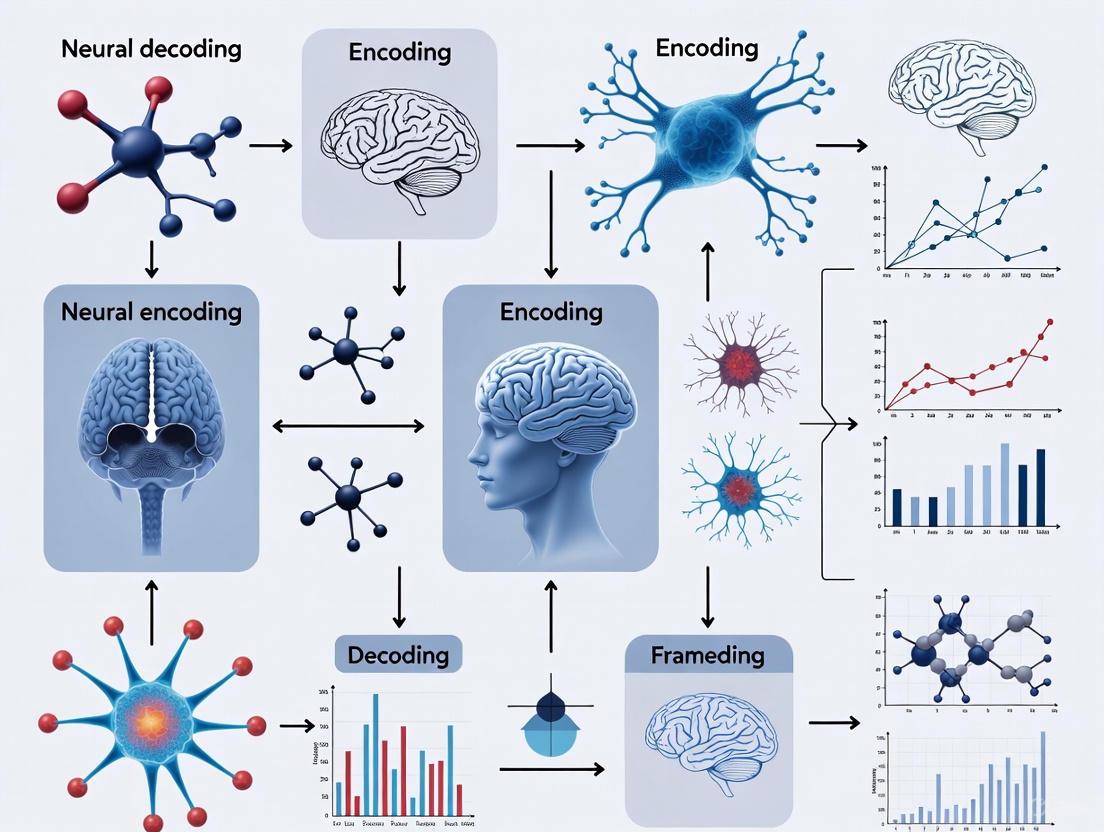
This article provides a comprehensive overview of modern neural encoding and decoding frameworks, exploring their foundational principles, methodological advances, and transformative applications.
Neural Encoding and Decoding Frameworks: From BCI Foundations to Drug Discovery Applications
Abstract
This article provides a comprehensive overview of modern neural encoding and decoding frameworks, exploring their foundational principles, methodological advances, and transformative applications. It details how deep learning and machine learning models are revolutionizing brain-computer interfaces (BCIs) and computational drug discovery. The content systematically addresses core challenges in parameter optimization and model validation, while presenting comparative analyses of traditional versus modern decoding approaches. Designed for researchers, scientists, and drug development professionals, this review synthesizes cutting-edge developments from motor control and speech neuroprosthetics to innovative platforms like Pocket2Drug for ligand binding site prediction, offering practical insights for both neurological therapeutics and pharmaceutical development.
Core Principles of Neural Encoding and Decoding: From Biological Basis to Computational Frameworks
In the field of neuroscience and brain-computer interface (BCI) research, the processes of neural encoding and decoding represent fundamental pillars for understanding how the brain processes information and generates behavior. Neural encoding refers to the mapping from external stimuli or internal cognitive states to neural responses, while neural decoding represents the inverse mapping—from neural activity back to the stimuli or states that produced it [1]. These complementary processes form the core of modern systems neuroscience and have become particularly crucial for developing technologies that interface the brain with external devices, with applications ranging from restoring communication in paralyzed patients to treating neurological disorders [2] [3].
The distinction between encoding and decoding is not merely conceptual but represents fundamentally different mathematical and computational challenges. As formalized through Bayesian statistics, the relationship between these processes is captured by the equation: P(stimulus|response) = P(response|stimulus) × P(stimulus)/P(response) [1]. This framework highlights that decoding requires not only knowledge of the encoding scheme but also prior information about stimulus probabilities and the statistical properties of neural responses.
This technical guide provides a comprehensive overview of the core concepts, mathematical frameworks, experimental methodologies, and practical applications of neural encoding and decoding, with particular emphasis on current research in brain-computer interfaces.
Theoretical Foundations and Mathematical Frameworks
Fundamental Definitions and Relationships
At its core, neural encoding investigates how neurons transform information about stimuli or cognitive states into patterns of neural activity. This is represented by the conditional probability P(response|stimulus)—the probability of observing a particular neural response given a specific stimulus [1]. In contrast, neural decoding addresses the inverse problem: determining the probability that a particular stimulus or state occurred, given the observed neural response, represented by P(stimulus|response) [1].
The relationship between encoding and decoding is not a simple inverse operation. Rather, effective decoding requires integrating the encoding scheme with prior knowledge about the statistical regularities of the environment and the inherent variability of neural responses. This Bayesian perspective has become fundamental to modern neural decoding approaches, particularly in BCI applications where prior knowledge about likely user intentions can significantly improve decoding accuracy [1].
Neural Coding Schemes
The nervous system employs multiple coding schemes to represent information, each with distinct advantages for different types of neural computations:
Table: Primary Neural Coding Schemes in the Central Nervous System
| Coding Scheme | Definition | Key Characteristics | Representative Neural Systems |
|---|---|---|---|
| Rate Coding | Information encoded in firing rate measured over discrete time intervals | • Tuning curves can be Gaussian, monotonic, or inhibitory• Robust to variability in individual spike timing• Simple to decode | • Visual cortex (orientation tuning)• Motor cortex (direction and force)• Head direction cells |
| Temporal Coding | Information encoded in precise timing of spikes relative to stimuli or oscillations | • Can represent information independently of firing rate• Higher theoretical information capacity• Requires precise spike timing measurements | • Inferotemporal cortex (visual patterns)• Locust olfactory system (odor identity) |
| Population Coding | Information distributed across ensembles of neurons | • Reduces ambiguity from single neuron variability• Enables higher-dimensional representations• Built-in redundancy provides robustness | • Motor cortex (movement direction)• Hippocampal place cells |
Rate coding represents the most extensively studied neural coding scheme, characterized by tuning curves that describe how a neuron's firing rate varies with different stimulus features or movement parameters [1]. These tuning curves can take various forms, including Gaussian profiles for visual orientation tuning, monotonic functions for eye position representation, and inhibitory profiles for binocular disparity coding [1].
Temporal coding schemes utilize the precise timing of action potentials to convey information, potentially independently of firing rate. For example, neurons in the inferotemporal cortex show distinct temporal response profiles to different visual patterns, even when overall firing rates are similar [1]. In the locust olfactory system, projection neurons fire phase-locked to oscillatory local field potentials, with the precise timing carrying information about odor identity [1].
Population coding emerges from the collective activity of neural ensembles, where information is represented in a distributed manner across many neurons. This scheme allows downstream structures to decode more precise information than would be possible from any single neuron, as demonstrated by the population vector algorithm for decoding movement direction from motor cortical activity [1].
Experimental Methodologies and Protocols
Brain Signal Acquisition Technologies
The experimental study of neural encoding and decoding relies on technologies capable of recording brain signals at various spatial and temporal scales:
Table: Comparison of Neural Signal Acquisition Modalities for Encoding/Decoding Research
| Modality | Invasiveness | Spatial Resolution | Temporal Resolution | Primary Applications | Key Limitations |
|---|---|---|---|---|---|
| Microelectrode Arrays (MEA) | Fully invasive (implanted in tissue) | Single neurons | Millisecond | Single-unit encoding models, motor decoding | Tissue damage, signal degradation over time |
| Electrocorticography (ECoG) | Semi-invasive (surface of cortex) | ~1 mm (local field potentials) | Millisecond | Speech decoding, motor intention decoding | Limited to cortical surface, requires surgery |
| Electroencephalography (EEG) | Non-invasive | ~1-2 cm | Millisecond | Brain-state monitoring, evoked potentials | Low spatial resolution, poor signal-to-noise ratio |
| functional MRI (fMRI) | Non-invasive | ~1-3 mm | Seconds | Functional mapping, cognitive encoding | Poor temporal resolution, indirect neural measure |
| Magnetoencephalography (MEG) | Non-invasive | ~5-10 mm | Millisecond | Functional connectivity, network dynamics | Expensive, limited availability |
High-density electrode arrays have demonstrated significant advantages for decoding applications. A systematic comparison of standard and high-density ECoG grids found that high-density grids (2 mm diameter, 4 mm spacing) significantly outperformed standard grids (4 mm diameter, 10 mm spacing) in classifying six elementary arm movements, with error rates of 11.9% versus 33.1% respectively [4]. This improvement highlights how increased spatial sampling enhances the resolution of neural representations.
Protocol for Inner Speech Decoding
Recent advances in decoding inner speech (imagined speech without physical articulation) demonstrate the cutting edge of BCI research. The following protocol, adapted from a Stanford University study published in Cell, details the methodology for decoding inner speech from motor cortex activity [5] [6]:
Objective: To decode internally imagined speech from neural signals in the motor cortex for potential communication applications in patients with speech impairments.
Subjects: Four participants with severe speech and motor impairments due to ALS or stroke, implanted with microelectrode arrays in speech-related motor areas.
Neural Signal Acquisition:
- Microelectrode arrays (Utah arrays or similar) surgically implanted in motor cortical areas associated with speech production
- Signals recorded at high sampling rates (typically 2,000 Hz or higher) to capture both spike activity and local field potentials
- Common average referencing applied to reduce noise
Experimental Paradigm:
- Attempted Speech Condition: Participants attempt to physically speak words despite impairment, providing strong neural signals for initial decoder training
- Inner Speech Condition: Participants imagine speaking words without any physical movement
- Sentence Production: Participants imagine speaking whole sentences for real-time decoding evaluation
- Unintentional Speech Detection: Participants perform non-verbal cognitive tasks (sequence recall, counting) to test decoding of unintentional inner speech
Decoder Training and Implementation:
- Feature Extraction: Neural features are extracted from motor cortex activity, focusing on patterns associated with phonemes (the smallest units of speech)
- Machine Learning: Custom algorithms (typically deep learning models) are trained to map neural features to intended words or phonemes
- Vocabulary Sets: Testing with both limited (50-word) and extensive (125,000-word) vocabularies to assess scalability
- Real-time Implementation: Trained decoders run in real-time to provide immediate feedback
Privacy Protection Mechanisms:
- Selective Decoding: Training decoders to distinguish attempted speech from inner speech and silence the latter when appropriate
- Password Protection: Implementing a keyword unlocking system where the decoder only activates when a specific passphrase is imagined
Performance Metrics:
- Word error rates (14-33% for 50-word vocabulary; 26-54% for 125,000-word vocabulary)
- Real-time decoding speed (words per minute)
- Accuracy of privacy protection mechanisms (>98% detection of unlock phrase)
This protocol demonstrates that inner speech evokes robust, decodable patterns in motor cortex, though with weaker signals than attempted speech. The study successfully established proof-of-principle for inner speech decoding while implementing crucial privacy safeguards [5] [6].
Protocol for Multi-DOF Movement Decoding
Decoding complex arm movements requires distinguishing neural patterns associated with different degrees of freedom (DOF). The following protocol details methodology from research comparing standard and high-density ECoG grids for movement decoding [4]:
Objective: To decode six elementary upper extremity movements from ECoG signals and compare performance between standard and high-density electrode grids.
Subjects: Three subjects with standard ECoG grids (4 mm diameter, 10 mm spacing) and three with high-density grids (2 mm diameter, 4 mm spacing) implanted over primary motor cortex.
Movement Set: Participants performed six elementary movements with the arm contralateral to the implant:
- Pincer grasp/release
- Wrist flexion/extension
- Forearm pronation/supination
- Elbow flexion/extension
- Shoulder internal/external rotation
- Shoulder forward flexion/extension
Data Acquisition:
- ECoG signals recorded at 2048 Hz sampling rate
- Movement trajectories measured using electrogoniometers and gyroscopes
- Synchronization of neural and movement data using common pulse train
Signal Processing:
- Frequency Band Separation: Signals decomposed into μ (8-13 Hz), β (13-30 Hz), low-γ (30-50 Hz), and high-γ (80-160 Hz) bands
- Power Calculation: Band-specific power computed for movement detection
- Feature Selection: Contrast index calculated as difference in high-γ power during movement versus idling
Decoder Design:
- State Decoder: Binary classifier to detect presence/absence of movement
- Movement Decoder: Six-class classifier to identify which specific movement was performed
- Cross-validation: Performance evaluation using held-out test data
Performance Metrics:
- Classification error rates for state detection and movement identification
- Statistical comparison between standard and high-density grid performance
- Analysis of movement confusion patterns (which movements are most frequently misclassified)
This study demonstrated significantly lower error rates for high-density grids (2.6% for state decoding, 11.9% for movement decoding) compared to standard grids (8.5% and 33.1% respectively), highlighting the importance of spatial resolution for complex movement decoding [4].
The Scientist's Toolkit: Research Reagent Solutions
Table: Essential Research Materials and Technologies for Neural Encoding/Decoding Studies
| Tool Category | Specific Examples | Function/Application | Key Considerations |
|---|---|---|---|
| Electrode Arrays | Utah Array, Precision Layer 7, HD ECoG Grids | Neural signal acquisition from cortical tissue | Invasiveness, biocompatibility, signal quality, long-term stability |
| Signal Acquisition Systems | Neural signal processors, bioamplifiers, ADC systems | Amplification, filtering, and digitization of neural signals | Channel count, sampling rate, noise floor, input impedance |
| Decoding Algorithms | Deep neural networks, Kalman filters, linear discriminant analysis | Mapping neural signals to intended movements or speech | Computational complexity, training data requirements, generalization |
| Biocompatible Materials | Conductive polymers, carbon nanomaterials, flexible substrates | Interface between electronics and neural tissue | Biostability, mechanical compliance, chronic immune response |
| Neural Signal Simulators | Synthetic neural data generators, biophysical models | Algorithm validation and system testing | Biological realism, parameter tuning, noise modeling |
| Behavioral Task Suites | Custom software for motor tasks, speech paradigms, cognitive assays | Controlled elicitation of neural activity for encoding studies | Task design, timing precision, participant engagement |
Emerging hardware solutions are increasingly important for implementing practical decoding systems. Recent advances in low-power circuit design have enabled the development of specialized chips for BCI applications that can perform real-time decoding with minimal power consumption—a critical requirement for implantable devices [7]. These systems must balance computational complexity against power constraints, with the complexity of signal processing typically dominating power consumption in EEG and ECoG decoding circuits [7].
Flexible neural interfaces represent another significant advancement, with companies like Precision Neuroscience developing thin-film electrode arrays that conform to the cortical surface without penetrating brain tissue. These devices aim to provide high-quality signals with reduced tissue damage compared to penetrating electrodes [8].
Computational Frameworks and Implementation
Mathematical Foundations of Decoding Algorithms
The Bayesian framework provides a principled mathematical foundation for neural decoding, formalizing the relationship between encoding and decoding as:
P(stimulus|response) = P(response|stimulus) × P(stimulus) / P(response)
Where:
- P(stimulus|response) is the posterior probability—the decoder's estimate of the stimulus given neural response
- P(response|stimulus) is the likelihood—the encoding model describing how stimuli evoke neural responses
- P(stimulus) is the prior—expectations about stimuli before observing neural data
- P(response) is the evidence—a normalizing constant ensuring probabilities sum to one [1]
This framework reveals that decoding is not simply the inverse of encoding but requires integrating sensory evidence with prior knowledge. The prior term P(stimulus) embodies the statistical regularities of the environment, while the likelihood P(response|stimulus) captures the noisy relationship between stimuli and neural responses.
Hardware Implementation Considerations
Implementing decoding algorithms in practical BCI systems requires careful consideration of hardware constraints and optimization strategies:
Input Data Rate (IDR) Requirements: The relationship between classification performance and input data rate can be empirically estimated, providing guidelines for sizing new BCI systems. Higher classification accuracy typically requires higher IDR, though with diminishing returns [7].
Power-Channel Tradeoffs: Counterintuitively, increasing the number of recording channels can simultaneously reduce power consumption per channel (through hardware sharing) and increase information transfer rate (by providing more input data). This creates favorable scaling properties for high-channel-count systems [7].
Algorithm-Hardware Co-design: Optimal implementation requires matching algorithm complexity to hardware capabilities. Simpler algorithms like linear discriminant analysis can provide satisfactory performance with significantly lower power consumption than more complex deep learning approaches, making them preferable for implanted applications with strict power constraints [7].
Neural encoding and decoding represent complementary frameworks for understanding how the brain represents information and translating this understanding to practical applications in brain-computer interfaces. The Bayesian formulation of the relationship between encoding and decoding highlights that effective decoding requires integrating sensory evidence with prior knowledge, rather than simply inverting encoding models.
Current research demonstrates increasingly sophisticated applications of these principles, from decoding inner speech for communication restoration to multi-degree-of-freedom movement control for prosthetic devices. These advances are enabled by improvements in neural interface technology, particularly high-density electrode arrays that provide enhanced spatial resolution, and specialized hardware implementations that enable real-time decoding with minimal power consumption.
Future progress will likely come from several directions: improved understanding of neural representations across different brain areas, more sophisticated decoding algorithms that leverage deep learning and other advanced machine learning techniques, and continued development of neural interface hardware with higher channel counts and better biocompatibility. As these technologies mature, they hold the potential to restore communication and mobility to people with severe neurological impairments, while also providing fundamental insights into how the brain represents and processes information.
The brain functions as a sophisticated information processing system, continually encoding incoming sensory data and decoding this information to plan and execute actions. Within the field of brain-computer interface (BCI) research, understanding these fundamental processes is paramount for developing technologies that can restore or replace impaired neurological functions [2]. Neural encoding refers to the transformation of external stimuli (e.g., visual scenes, sounds) into patterns of neural activity, primarily within sensory cortices. Conversely, neural decoding involves interpreting these neural activity patterns to predict stimuli, intentions, or behaviors [9]. Modern BCI systems, particularly bidirectional BCIs (BBCIs), leverage both principles to create closed-loop systems that not only interpret brain signals to control external devices but also provide sensory feedback through neural stimulation, effectively acting as "neural co-processors" for the brain [9]. This whitepaper details the biological mechanisms underlying sensory encoding and motor decoding, framing them within the context of advanced BCI research and development.
The Biological Basis of Sensory Encoding
Sensory encoding begins when specialized receptor organs transduce physical energy (light, sound, pressure) into electrochemical signals. These signals are relayed through thalamic nuclei to primary sensory areas of the neocortex, where feature extraction occurs.
Visual Stimulus Encoding in the Cortex
Recent research utilizing large-scale neuronal recordings has illuminated how intrinsic brain dynamics influence the encoding of visual stimuli. During passive viewing, the brain exhibits widespread, coordinated activity that plays out over multisecond timescales in the form of quasi-periodic spiking cascades [10]. These cascades involve up to 70% of neurons from various cortical and subcortical areas firing in highly structured temporal sequences that recur every 5–10 seconds [10]. The efficacy of visual stimulus encoding is systematically modulated during each cascade cycle, linked to fluctuating arousal states.
Table 1: Key Findings on Visual Stimulus Encoding from Large-Scale Recordings
| Aspect | Experimental Finding | Biological Implication |
|---|---|---|
| Cascade Persistence | Spiking cascades persist during visual stimulation, similar to rest [10] | Self-generated, intrinsic dynamics continuously shape sensory processing. |
| Arousal Modulation | Encoding accuracy is 23.0 ± 8.5% higher during high-arousal states (p = 2.1×10⁻¹⁰) [10] | Arousal level, indexed by pupil size and LFP power, directly determines encoding fidelity. |
| State-Dependent Encoding | High-efficiency encoding occurs during peak arousal, alternating with hippocampal ripples in low arousal [10] | The brain alternates between exteroceptive (sensory) and internal (mnemonic) operational modes. |
| Locomotion Effect | Active locomotion abolishes cascade dynamics, maintaining a high-arousal, high-efficiency state [10] | Active behavior engages a distinct neural regime optimized for sensory processing. |
The brain's internal state, defined by population spiking dynamics, strongly affects visual information encoding. Machine learning decoders (e.g., Support Vector Machines) show that the accuracy of predicting image identity from neuronal spiking activity exhibits a strong and robust linear association (r = 0.975, p = 3×10⁻²¹) with the internal state index [10]. This demonstrates that the brain's intrinsic, arousal-related dynamics fundamentally govern the reliability of sensory representations.
From Perception to Action: The Decoding of Information for Movement
The transformation of sensory representations into motor commands involves a complex network of brain areas, with the primary motor cortex (M1) serving as a critical node for decoding movement intentions.
Decoding Algorithms for Motor Control
State-of-the-art decoding algorithms for intracortical BCIs often employ linear decoders such as the Kalman filter [9]. The Kalman filter is an optimal recursive estimator that uses a series of measurements observed over time, containing statistical noise, to produce estimates of unknown variables. In the context of motor decoding:
- State Vector (xₜ): Typically represents kinematic quantities to be estimated, such as hand position, velocity, and acceleration.
- Measurement Model: Specifies how the kinematic vector xₜ at time t relates linearly (via a matrix B) to the measured neural activity vector yₜ:
yₜ = Bxₜ + mₜ[9]. - Dynamics Model: Specifies how xₜ linearly changes (via matrix A) over time:
xₜ = Axₜ₋₁ + nₜ[9]. - Noise Processes: nₜ and mₜ are zero-mean Gaussian noise processes representing state evolution and measurement uncertainty, respectively.
This framework allows for the continuous estimation of kinematic parameters from neural population activity, enabling real-time control of prosthetic devices.
Table 2: Experimental Protocols in Bidirectional BCI Research
| Study (Subject) | Decoding Method | Neural Signal Source | Encoding / Stimulation Method | Task & Outcome |
|---|---|---|---|---|
| Flesher et al. (Human) [9] | Linear decoder mapping M1 firing rates to movement velocities. | Multi-electrode recordings in M1. | Torque sensor data linearly mapped to pulse train amplitude in S1. | Continuous force matching with a robotic hand; success rate higher with stimulation feedback vs. vision alone. |
| Bouton et al. (Human) [9] | Six SVMs applied to mean wavelet power features. | 96-electrode array in hand area of M1. | Surface FES; stimulation intensity as piecewise linear function of decoder output. | Production of six different wrist and hand motions in a quadriplegic patient. |
| Ajiboye et al. (Human) [9] | Linear decoder (Kalman-like) mapping firing rates to % activation of muscle groups. | Neuronal firing rates and high-frequency LFP power in hand area of M1. | Functional Electrical Stimulation (FES) of arm muscles. | Tetraplegic subject performed multi-joint arm movements with 80-100% accuracy, including drinking coffee. |
| Klaes et al. (Non-Human Primate) [9] | Kalman filter decoding hand position, velocity, acceleration. | M1 recordings. | Intracortical microstimulation (ICMS) in S1 (300 Hz biphasic pulse train). | Match-to-sample task using a virtual arm; success rates of 70->90% (chance: 50%). |
Experimental Methodologies and Workflows
This section details the standard protocols for conducting experiments that investigate sensory encoding and motor decoding.
Protocol for Investigating Arousal-Dependent Sensory Encoding
Objective: To determine how intrinsic brain dynamics and arousal states modulate the encoding fidelity of sensory stimuli.
- Animal Preparation & Recordings: Use transgenic mice (e.g., C57BL/6J) expressing GCaMP6f in cortical neurons. Perform large-scale neuronal recordings using high-density Neuropixels probes targeting 44 brain regions, including visual cortex, hippocampus, and thalamus [10].
- Stimulus Presentation: During periods of passive viewing, present visual stimuli (e.g., natural scenes or drifting gratings) on a monitor for 250 ms, repeated 50 times each in random order [10].
- Behavioral State Monitoring: Simultaneously track locomotion via a rotary encoder and monitor arousal using pupil diameter and local field potential (LFP) power in delta (<4 Hz) and gamma (55-65 Hz) bands [10].
- Data Processing:
- Spike Sorting: Isolate single-unit activity from raw electrophysiological data.
- Cascade Detection: Order neurons by their principal delay profile to identify quasi-periodic spiking cascades [10].
- State Index Calculation: Compute an index summarizing the relative activation level of negative- and positive-delay neuronal subpopulations to define high- and low-arousal brain states [10].
- Encoding Analysis: Train a Support Vector Machine (SVM) decoder with 5-fold cross-validation to predict image identity from population spiking activity. Calculate decoding accuracy separately for trials occurring during high- and low-arousal states to quantify state-dependent encoding fidelity [10].
Protocol for Closed-Loop Bidirectional BCI Control
Objective: To enable a subject to control a prosthetic device or paralyzed limb using decoded motor commands while receiving sensory feedback via intracortical stimulation.
- Decoder Calibration (Open-Loop):
- Kinematic Data Collection: Record neural activity from M1 while the subject (human or non-human primate) observes or performs (via assisted control) specific motor tasks [9].
- Model Fitting: Fit a Kalman filter or linear regression model to map neural features (e.g., firing rates, LFP power) to observed kinematics (position, velocity, grip force) [9].
- Stimulator Calibration:
- Percept Mapping: For each electrode in somatosensory cortex (S1), determine the stimulation parameters (e.g., pulse frequency, amplitude) that elicit a percept on a specific body part (e.g., thumb, index finger) [9].
- Transduction Function: Define a linear function that maps sensor data from the prosthetic (e.g., grip force) to parameters of the stimulation pulse train [9].
- Closed-Loop Operation:
- Neural Recording: Continuously record and process neural signals from M1.
- Real-Time Decoding: Use the calibrated Kalman filter to decode intended kinematics in real-time.
- Device Control: Translate the decoded kinematics into commands for a prosthetic limb or Functional Electrical Stimulation (FES) of muscles [9].
- Sensory Encoding: Based on sensor data from the prosthesis, deliver corresponding intracortical microstimulation to S1 to provide tactile feedback. To manage stimulation artifacts, use an interleaved scheme (e.g., alternating 50 ms recording and 50 ms stimulation windows) [9].
The following diagram illustrates the core workflow and brain areas involved in a bidirectional BCI system.
The Scientist's Toolkit: Essential Research Reagents and Materials
Table 3: Key Research Reagents and Materials for Neural Encoding/Decoding Studies
| Item / Technology | Function / Application | Specific Examples / Properties |
|---|---|---|
| Neuropixels Probes [10] | High-density, large-scale recording of single-unit activity from hundreds of neurons across multiple brain areas simultaneously. | Silicon-based multielectrode arrays; used for capturing spiking cascades and population coding dynamics. |
| GCaMP Calcium Indicators [10] | Genetically encoded sensors for optical monitoring of neuronal activity via fluorescence changes in response to calcium influx. | Used in transgenic mice (e.g., Thy1-GCaMP6f) for large-scale functional imaging of neural populations. |
| Support Vector Machine (SVM) [10] | A supervised machine learning model used for classification tasks, such as decoding stimulus identity from population activity. | Applied to binned spike counts to predict which image was shown to the animal, yielding a measure of encoding accuracy. |
| Kalman Filter [9] | An optimal estimation algorithm for decoding continuous kinematic parameters (e.g., velocity, position) from neural activity. | Used in motor BCIs; models the relationship between neural signals and kinematics with linear Gaussian dynamics. |
| Intracortical Microstimulation (ICMS) [9] | Delivering small electrical currents via implanted microelectrodes to activate or inhibit local neural populations, providing artificial sensory feedback. | Biphasic pulse trains (e.g., 200-400 Hz) delivered to S1 to mimic tactile sensations in bidirectional BCI tasks. |
| Functional Electrical Stimulation (FES) [9] | Electrical stimulation of peripheral nerves or muscles to reanimate paralyzed limbs and restore functional movement. | Surface or implanted electrodes; stimulation intensity modulated by decoded motor commands. |
In brain-computer interface (BCI) research, the mathematical formalization of neural encoding and decoding provides the foundational framework for translating brain signals into actionable commands. Neural encoding refers to the processes by which external stimuli are translated into neural activity, while neural decoding aims to reconstruct these stimuli or the user's intentions from recorded brain signals [11] [12]. This bidirectional relationship forms the core of modern BCI systems, enabling direct communication between the brain and external devices for restoring impaired sensory, motor, and cognitive functions in neurological disorders [2] [13].
The mathematical relationship between encoding and decoding can be conceptualized through Bayesian principles. Formally, if we let (K) represent a vector of neural activity from (N) neurons and (x) represent a stimulus or behavioral variable, the encoding model describes (P(K|x)) - how neural responses depend on the stimulus. Conversely, decoding involves inverting this relationship to estimate (P(x|K)) using Bayes' theorem [12]. This statistical formulation enables researchers to quantify how information is transmitted within the nervous system and develop algorithms that translate neural signals into device commands.
Fundamental Statistical Frameworks for Neural Coding
Core Mathematical Formulations
Neural coding research employs diverse statistical approaches to model the relationship between neural activity and external variables. The foundational encoding model represents the neural response of population (K) to stimulus (x) as:
[ P(K|x) ]
Here, (K) is a vector representing the activity of (N) neurons, with each entry typically representing spike counts in discrete time bins or rate responses [12]. This statistical relationship summarizes how neuronal populations respond to external events and forms the basis for predicting neural activity from known stimuli.
For decoding, the inverse problem is addressed through Bayesian inference:
[ P(x|K) = \frac{P(K|x)P(x)}{P(K)} ]
where (P(x|K)) is the posterior probability of the stimulus given the neural data, (P(K|x)) is the likelihood derived from encoding models, (P(x)) is the prior probability of the stimulus, and (P(K)) serves as a normalizing constant [12]. This Bayesian framework provides a principled approach to decoding that incorporates prior knowledge about the statistical structure of the environment.
Key Encoding Models
Table 1: Comparison of Major Neural Encoding Models
| Model Type | Mathematical Formulation | Key Advantages | Limitations |
|---|---|---|---|
| Linear Regression | (K = Wx + \epsilon) | Simple, interpretable parameters | Limited capacity for nonlinear relationships |
| Generalized Linear Models (GLMs) | (g(E[K]) = Wx + \epsilon) | Handles non-normal response distributions via link functions | Still limited to moderate nonlinearities |
| Artificial Neural Networks (ANNs) | (K = f(Wn...f(W2f(W_1x))) ) | Universal function approximators, captures complex nonlinearities | Less interpretable, requires large datasets |
| Information Theory Models | (I(X;K) = \sum_{x,k} P(x,k) \log \frac{P(x,k)}{P(x)P(k)}) | Model-free, measures predictive accuracy without assuming specific relationships | Computationally intensive for large populations |
Encoding models have evolved from simple linear regression to increasingly sophisticated approaches. Generalized Linear Models (GLMs) extend linear models by incorporating nonlinear link functions to accommodate diverse neural response distributions [12]. More recently, artificial neural networks (ANNs) have emerged as powerful nonlinear encoding models that can capture complex relationships between stimuli and neural responses through their hierarchical, integrative properties [12].
Information-theoretic approaches provide a model-free framework for quantifying how much information neural responses convey about stimuli. The mutual information (I(X;K)) between stimuli (X) and neural responses (K) measures the reduction in uncertainty about the stimulus provided by the neural response [12] [14]. The Kullback-Leibler (KL) divergence offers another information-theoretic measure:
[ I(f,g) = \int f(x) \ln \frac{f(x)}{g(x)} dx ]
which quantifies the information lost when an approximating model (g) is used instead of the true distribution (f) [14]. This formalism is particularly valuable for comparing different encoding models and optimizing their parameters.
Experimental Protocols and Methodologies
Signal Acquisition Modalities
Table 2: Brain Signal Acquisition Methods for Encoding/Decoding Studies
| Method | Spatial Resolution | Temporal Resolution | Invasiveness | Primary Applications |
|---|---|---|---|---|
| Electroencephalography (EEG) | ~10 mm | ~1-100 ms | Non-invasive | Basic research, clinical BCIs for communication |
| Electrocorticography (ECoG) | ~1 mm | ~1-10 ms | Semi-invasive (subdural) | Motor decoding, speech neuroprosthetics |
| Intracortical Microarrays | ~0.05 mm (single neurons) | <1 ms | Fully invasive | High-performance motor control, neural mechanisms |
| Functional MRI (fMRI) | ~1-3 mm | ~1-3 seconds | Non-invasive | Cognitive studies, brain mapping |
| Magnetoencephalography (MEG) | ~5 mm | ~1-100 ms | Non-invasive | Cognitive studies, clinical pre-surgical mapping |
The choice of signal acquisition method significantly impacts the type of encoding and decoding models that can be developed. Non-invasive methods like EEG provide widespread accessibility but suffer from limited spatial resolution and signal-to-noise ratio due to attenuation from intervening tissues [13] [15]. Invasive methods such as intracortical microarrays offer single-neuron resolution but require neurosurgical implantation and face challenges with long-term signal stability [13].
Recent advances have enabled large-scale neuronal recordings that capture the activity of hundreds to thousands of neurons simultaneously, dramatically expanding our understanding of population coding mechanisms [11] [12]. These technological developments have facilitated the shift from studying individual neurons to investigating how information is distributed across neuronal populations.
Motor Decoding Experimental Protocol
A representative experimental protocol for motor decoding involves several key stages. The BCI system must first acquire brain signals, extract relevant features, translate these features into device commands, and provide output to external devices [13]. The following Graphviz diagram illustrates this workflow:
Diagram 1: Motor decoding experimental workflow
In a typical finger movement decoding experiment, subjects perform or imagine finger movements while neural activity is recorded. For ECoG-based approaches, subjects focus on a display and move the respective finger according to visual cues displayed for 2-3 seconds, followed by 2-3 seconds of rest [16]. Each finger is typically moved approximately 30 times across a 10-minute recording session per subject.
Statistical analysis begins with quality checks using box plots to identify outliers and noisy channels in the neural data [16]. Preprocessing algorithms remove artifacts and standardize the signals. The resulting cleaned dataset often exhibits dual polarity and Gaussian distribution properties, guiding the selection of appropriate activation functions (e.g., Tanh) for subsequent neural network models [16].
Speech Decoding Experimental Protocol
Speech neuroprosthetics represent an emerging application of neural decoding. In recent clinical trials, participants with severe motor impairments have electrode arrays implanted in the motor cortex areas controlling speech-related articulators (lips, tongue, larynx) [17]. Participants imagine speaking sentences presented to them while neural activity is recorded.
The system learns patterns of neural activity corresponding to intended speech sounds through supervised learning approaches. When participants imagine speaking, these neural patterns are converted into text on a screen or synthetic speech output [17]. This approach has demonstrated the feasibility of decoding continuous language from neural signals, with recent advances leveraging large language models (LLMs) for improved decoding performance [15].
The Scientist's Toolkit: Essential Research Reagents
Table 3: Key Computational Tools and Algorithms for Neural Decoding
| Tool Category | Specific Methods | Function | Application Examples |
|---|---|---|---|
| Classification Algorithms | Linear Discriminant Analysis (LDA), Support Vector Machines (SVM) | Distinguishes between discrete mental states | EEG-based spellers, movement classification |
| Regression Models | Kalman Filter, Linear Regression | Decodes continuous parameters | Finger trajectories, kinematic parameters |
| Deep Learning Architectures | Convolutional Neural Networks (CNN), Long Short-Term Memory (LSTM), Transformers | Handles complex spatiotemporal patterns | ECoG-based finger decoding, speech reconstruction |
| Dimensionality Reduction | PCA, Gaussian Process Factor Analysis | Redends noise and reveals latent structure | Visualizing neural trajectories, pre-processing |
| Information Theory Metrics | Mutual Information, Kullback-Leibler Divergence | Quantifies information content | Model comparison, neural coding efficiency |
The experimental toolkit for neural encoding and decoding studies includes both hardware components and computational methods. For invasive approaches, microelectrode arrays like the Paradromics device (with thin, stiff platinum-iridium electrodes penetrating the cortical surface) enable recording from individual neurons [17]. Non-invasive approaches typically use multi-channel EEG systems with conductive gels or dry electrodes.
Computational tools range from traditional statistical models to modern deep learning approaches. The Kalman filter remains widely used for decoding continuous kinematic parameters, with both supervised and unsupervised variants [18]. Recent work has explored weakly supervised methods that leverage discovered symmetries between unsupervised decoding positions and ground-truth positions in motor tasks [18].
Deep learning architectures have shown particular promise in handling the complex spatiotemporal patterns in neural data. Convolutional Neural Networks (CNNs) extract features from neural signals, while Long Short-Term Memory (LSTM) networks capture temporal dependencies [16]. Incorporating dropout and regularization techniques makes these models more resilient to noise and variability in neural data [16].
Advanced Mathematical Frameworks
Dynamical Systems Approaches
Neural populations exhibit rich dynamical properties that can be formalized through state-space models:
[ xt = Ax{t-1} + wt ] [ Kt = Cxt + vt ]
where (xt) represents the latent neural state at time (t), (Kt) is the observed neural activity, (A) is the state transition matrix, (C) is the observation matrix, and (wt), (vt) are noise processes [18]. These models capture the temporal evolution of neural population activity and have proven particularly effective for decoding continuous movement parameters.
Recent advances have extended these approaches to incorporate nonlinear dynamics through recurrent neural networks (RNNs) and switching dynamical systems. Multiplicative RNNs allow mappings from neural input to motor output to partially adapt to changes in neural activity sources, addressing the challenge of non-stationarity in chronic neural recordings [18].
Information-Theoretic Foundations
Information theory provides a fundamental framework for quantifying neural coding efficiency. The Kullback-Leibler divergence serves as a crucial measure for comparing encoding models:
[ I(f,g) = \sum_i f(i) \ln \frac{f(i)}{g(i)} ]
where (f) represents the true data distribution and (g) represents an approximating model [14]. This formalism allows researchers to measure information loss when using simplified models and optimize model complexity.
The relationship between encoding and decoding can be understood through the concept of the "neural manifold" - a low-dimensional space in which neural population activity evolves. While sensory information is implicitly encoded in high-dimensional sensory inputs, hierarchical processing in the brain transforms these representations into more explicit formats that are easily decoded by downstream areas [12]. For example, object identity that is non-linearly encoded in retinal activity becomes more linearly decodable in inferotemporal cortex representations [12].
The following Graphviz diagram illustrates this conceptual relationship between encoding and decoding processes:
Diagram 2: Encoding-decoding conceptual framework
Future Directions and Challenges
The mathematical formalization of neural encoding and decoding continues to evolve with several promising research directions. Causal modeling approaches aim to move beyond correlational relationships to infer and test causality in neural circuits [12]. Large language models (LLMs) are increasingly being applied to linguistic neural decoding, leveraging their powerful information understanding and generation capabilities [15].
A significant challenge remains in improving the day-to-day and moment-to-moment reliability of BCI performance to approach the reliability of natural muscle-based function [13]. This requires advances in signal acquisition hardware, validation in long-term real-world studies, and addressing the individual differences in neural signals that currently challenge widespread BCI adoption [2].
The integration of normative models with deep learning approaches presents another promising direction. These models can incorporate structural and functional constraints of neural circuits to develop more biologically plausible decoding algorithms [12]. As recording technologies continue to scale, enabling measurements from increasingly large neuronal populations, our mathematical frameworks must similarly evolve to capture the full complexity of neural computation while remaining interpretable and useful for clinical applications.
The mathematical foundations of neural encoding and decoding will continue to play a crucial role in translating basic neuroscience discoveries into effective clinical interventions for neurological disorders, ultimately restoring communication and motor function for people with severe disabilities.
Brain-Computer Interfaces as a Practical Testbed for Encoding-Decoding Principles
Brain-Computer Interfaces (BCIs) have emerged as a powerful experimental framework for investigating neural encoding and decoding principles. By establishing a direct communication pathway between the brain and external devices, BCIs provide an unparalleled testbed for understanding how neural activity represents information (encoding) and how these representations can be translated into actionable commands (decoding) [2]. This bidirectional communication loop enables researchers to test fundamental hypotheses about neural computation while simultaneously developing practical applications for restoring function in patients with neurological disorders. The core BCI framework implements a closed-loop system where brain signals are acquired, processed to decode user intent, and used to control external devices, potentially including neuromodulation systems that provide feedback to the nervous system [19].
The evolution of BCI technologies has accelerated our understanding of neural coding principles across diverse brain regions and functions. Current BCI systems can be broadly categorized into invasive approaches, which record from intracortical microelectrodes or electrocorticography (ECoG) arrays placed on the cortical surface, and non-invasive approaches that primarily utilize electroencephalography (EEG) [2] [20]. Each modality offers distinct trade-offs between spatial and temporal resolution, signal-to-noise ratio, and practical implementation requirements, making them suitable for different research questions and applications.
Fundamental Encoding-Decoding Principles in BCI
Theoretical Foundations of Neural Coding
The theoretical foundation of BCIs rests on the principle that cognitive processes, motor intentions, and sensory experiences are represented by reproducible patterns of neural activity. These representations exist across multiple spatial and temporal scales, from individual neuron spiking activity to population-level field potentials. Neural encoding refers to the process by which external stimuli or internal states are transformed into these patterned neural responses, while neural decoding aims to reconstruct stimuli or intentions from the observed neural activity [15].
A critical insight from BCI research is that the brain maintains a systematic mapping between intention and neural activation, even in the absence of peripheral execution. For instance, motor imagery—the mental rehearsal of movement without physical execution—evokes patterns of neural activity in motor regions that share similarities with those observed during actual movement execution [2]. This preservation of intentional representations provides the fundamental basis for BCIs designed to restore motor function. Similarly, in the speech domain, both attempted speech and inner speech generate distinguishable patterns of activity in motor cortex regions, enabling the potential decoding of communication intent without overt vocalization [5] [21].
The BCI Closed-Loop Architecture
The canonical BCI system implements a complete closed-loop architecture that continuously cycles through signal acquisition, processing, decoding, and effector control. This architecture provides a practical framework for testing encoding-decoding theories in real-time. The core components include:
- Signal Acquisition: Recording neural signals through invasive or non-invasive methods
- Pre-processing: Enhancing signal quality through filtering and artifact removal
- Feature Extraction: Identifying informative characteristics in the neural signals
- Decoding Algorithm: Translating features into control commands
- Effector Application: Executing commands through external devices
- Feedback: Providing sensory information to the user to complete the control loop
This closed-loop architecture enables iterative refinement of both the decoding algorithms and the user's ability to modulate their neural activity, embodying the principles of neuroplasticity and adaptive control.
Experimental Paradigms and Methodologies
Signal Acquisition Modalities
Table 1: Comparison of BCI Signal Acquisition Modalities
| Modality | Spatial Resolution | Temporal Resolution | Invasiveness | Primary Applications |
|---|---|---|---|---|
| Microelectrode Arrays (MEA) | Single neuron | Millisecond | Invasive (intracortical) | Motor control, speech decoding |
| Electrocorticography (ECoG) | Millimeter | Millisecond | Invasive (cortical surface) | Motor imagery, speech decoding |
| Electroencephalography (EEG) | Centimeter | Millisecond | Non-invasive | Motor imagery, SSVEP, P300 |
| Functional MRI (fMRI) | Millimeter | Seconds | Non-invasive | Brain mapping, connectivity |
| Magnetoencephalography (MEG) | Millimeter | Millisecond | Non-invasive | Cognitive processing studies |
BCI research employs diverse signal acquisition modalities, each with distinct advantages for investigating specific encoding-decoding principles. Invasive approaches using microelectrode arrays (MEAs) implanted directly into brain tissue provide the highest spatial resolution, enabling recording of single-neuron activity [7]. These signals offer exquisite detail about neural coding principles but require substantial surgical intervention. Electrocorticography (ECoG), which places electrode arrays on the cortical surface, provides signals with high temporal resolution and better spatial resolution than non-invasive methods, while reducing the risks associated with penetrating brain tissue [7].
Non-invasive approaches, particularly electroencephalography (EEG), dominate practical BCI applications due to their safety and accessibility. EEG measures electrical activity from the scalp, providing millisecond temporal resolution but limited spatial resolution due to signal smearing through the skull and other tissues [20]. Recent advances in high-density EEG systems have improved spatial resolution, making them increasingly valuable for studying population-level neural coding principles. Functional MRI offers superior spatial resolution for mapping neural representations but suffers from poor temporal resolution due to the slow hemodynamic response, limiting its utility for real-time decoding applications [15].
Major Experimental Protocols
Motor Imagery and Execution Paradigms
Motor-related BCIs typically employ either motor imagery (MI) or motor execution (ME) paradigms. In MI protocols, participants imagine performing specific movements without actual muscle contraction, while ME protocols involve attempted or actual movement. Both approaches evoke modulations in sensorimotor rhythms (e.g., mu and beta rhythms) that can be decoded to control external devices. Standardized experimental designs include cue-based trials where visual or auditory prompts indicate the specific movement to imagine or execute, followed by rest periods. These paradigms have been fundamental for investigating how movement intention is encoded in neural populations and how these representations can be decoded for prosthetic control [2].
The reliability of motor decoding has been demonstrated across multiple studies, with accuracy highly dependent on signal modality and decoding approach. Invasive methods typically achieve higher performance; for instance, MEA-based systems can decode continuous movement parameters with correlation coefficients exceeding 0.7-0.9 in non-human primate studies, while human ECoG studies report classification accuracies of 80-95% for discrete movement directions [7]. Non-invasive EEG-based systems generally achieve lower performance, with typical classification accuracies of 70-85% for binary limb movement classification, though performance varies substantially across individuals and with training [20].
Visual Evoked Potential Paradigms
Visual evoked potential (VEP) paradigms leverage the brain's reliable response to visual stimuli. In code-modulated VEP (c-VEP) approaches, visual stimuli flicker according to specific pseudo-random binary sequences, evoking time-locked brain responses that can be decoded to determine which stimulus the user is attending to [22]. These paradigms provide a highly reliable signal for investigating how predictable sensory inputs are encoded in visual pathways and how these representations can be decoded for communication and control.
Recent research has optimized c-VEP parameters to balance performance and user experience. A systematic investigation of visual stimulus opacity found that semi-transparent stimuli (specifically 50% white and 100% black stimuli) maintained high classification accuracy (99.38%) while significantly reducing visual fatigue compared to traditional high-contrast stimuli (from 6.4 to 3.7 on a 10-point fatigue scale) [22]. This optimization demonstrates how understanding encoding principles (how visual stimuli are represented in neural activity) can lead to improved decoding approaches that enhance both performance and usability.
Inner Speech Decoding Protocols
Inner speech decoding represents a cutting-edge paradigm for investigating linguistic representations without overt articulation. In a landmark study by Kunz et al. (2025), participants with speech impairments due to ALS or stroke either attempted to speak or imagined saying words and sentences while neural activity was recorded from motor cortex using microelectrode arrays [5] [21]. The experimental protocol involved:
- Training Phase: Participants repeatedly produced or imagined a set of words while neural data was collected to train decoding models
- Closed-Loop Testing: Participants imagined speaking sentences while the BCI decoded in real-time
- Unintentional Speech Detection: Participants performed non-verbal tasks (sequence recall, counting) to test whether private inner speech could be decoded
- Privacy Protection Evaluation: Testing methods to prevent decoding of unintentional inner speech
This protocol revealed that attempted and inner speech evoked similar patterns of neural activity, though attempted speech produced stronger signals. The decoding system achieved error rates between 14% and 33% for a 50-word vocabulary and between 26% and 54% for a 125,000-word vocabulary [5]. Participants with severe speech weakness preferred using imagined speech over attempted speech due to lower physical effort, highlighting the practical importance of understanding different encoding strategies for clinical applications.
Advanced Linguistic Decoding Approaches
Beyond inner speech, broader linguistic neural decoding aims to reconstruct language information from brain activity during both perception and production. Experimental paradigms in this domain include:
- Stimulus Recognition: Identifying which linguistic stimulus (word, sentence) a person is processing from evoked brain activity
- Text Stimuli Reconstruction: Decoding words or sentences at the word or sentence level using classifiers, embedding models, and custom network modules
- Brain Recording Translation: Treating brain activity as a "source language" and translating it into understandable text, analogous to machine translation
- Speech Neuroprosthesis: Decoding inner or vocal speech based on human intentions, progressing from phoneme-level recognition to open-vocabulary sentence decoding [15]
These approaches leverage the finding that artificial neural networks, particularly large language models (LLMs), exhibit patterns of functional specialization similar to cortical language networks, enabling more accurate decoding of linguistic representations [15].
Technical Implementation and Performance Metrics
Decoding Algorithms and Architectures
Table 2: Comparison of Neural Decoding Approaches and Performance
| Decoding Approach | Signal Modality | Application Domain | Typical Performance | Computational Demand |
|---|---|---|---|---|
| Deep Learning (CNN, LSTM) | EEG, ECoG, MEA | Motor imagery, speech decoding | High accuracy (80-95%) | High |
| Linear Discriminant Analysis (LDA) | ECoG, MEA | Movement classification, speech | Moderate to high accuracy | Low |
| Canonical Correlation Analysis | EEG | SSVEP classification | High ITR (>100 bits/min) | Moderate |
| Support Vector Machine (SVM) | EEG, ECoG | Motor imagery, P300 | Moderate accuracy (70-85%) | Moderate |
| Convolutional Neural Networks | EEG | Motor imagery, emotion recognition | High accuracy (80-90%) | High |
BCI decoding algorithms range from classical machine learning approaches to sophisticated deep learning architectures. For motor decoding, common approaches include linear discriminant analysis (LDA), support vector machines (SVM), and convolutional neural networks (CNN), which learn the mapping between neural features (e.g., band power, spatial patterns) and movement intentions [7]. For speech decoding, recurrent architectures like long short-term memory (LSTM) networks have proven effective for sequence decoding, while transformer-based models are increasingly used for their contextual processing capabilities [15].
Recent advances have leveraged large language models (LLMs) for linguistic decoding, capitalizing on their powerful information understanding and generation capacities. Studies have demonstrated that representations in these models account for a significant portion of the variance observed in human brain activity during language processing, enabling more accurate reconstruction of perceived or produced language [15]. The scaling laws observed in both brain encoding models and pre-trained LLMs suggest that larger systems with more parameters can better bridge brain activity patterns and human linguistic representations, given sufficient data [15].
Performance Evaluation Metrics
The evaluation of BCI decoding approaches employs diverse metrics tailored to specific applications:
- Classification Accuracy: Percentage of correct classifications for discrete tasks
- Information Transfer Rate (ITR): Bits per minute communicated through the BCI, combining speed and accuracy
- Word Error Rate (WER): Common metric for speech decoding systems, measuring word-level accuracy
- Pearson Correlation Coefficient: Measures similarity between decoded and actual continuous signals
- BLEU/ROUGE Scores: Evaluate semantic similarity for language generation tasks [15]
Hardware implementations introduce additional metrics focused on computational efficiency:
- Power Consumption per Channel (PpC): Critical for implantable and portable systems
- Input Data Rate (IDR): Relationship between data volume and classification performance
- Decoding Latency: Time delay between neural activity and command execution [7]
Counterintuitively, analysis of hardware systems reveals a negative correlation between power consumption per channel and information transfer rate, suggesting that increasing channel count can simultaneously reduce power consumption through hardware sharing and increase ITR by providing more input data [7]. For EEG and ECoG decoding circuits, power consumption is dominated by signal processing complexity rather than data acquisition itself.
Research Reagents and Tools
Table 3: Essential Research Materials for BCI Encoding-Decoding Studies
| Research Tool | Category | Primary Function | Example Applications |
|---|---|---|---|
| Microelectrode Arrays | Hardware | Record single-neuron activity | Motor decoding, speech neuroprosthetics |
| EEG Systems with Active Electrodes | Hardware | Non-invasive neural recording | Motor imagery, visual evoked potentials |
| ECoG Grids | Hardware | Cortical surface recording | Epilepsy monitoring, motor mapping |
| fNIRS Systems | Hardware | Hemodynamic activity measurement | Cognitive studies, clinical monitoring |
| Conductive Polymers/Hydrogels | Material | Improve electrode interface | Signal quality enhancement |
| Carbon Nanomaterials | Material | Enhance electrode performance | Biocompatibility, signal quality |
| Linear Discriminant Analysis | Algorithm | Feature classification | Motor imagery, movement classification |
| Convolutional Neural Networks | Algorithm | Spatial feature extraction | Signal classification, pattern recognition |
| Canonical Correlation Analysis | Algorithm | Multivariate correlation | SSVEP classification |
| Space-Time-Coding Metasurface | Experimental Apparatus | Secure visual stimulation | SSVEP with enhanced security [23] |
The development of advanced biomaterials has been crucial for improving BCI performance and biocompatibility. Conductive polymers and carbon nanomaterials enhance signal quality and biocompatibility at the electrode-tissue interface, addressing one of the key challenges in long-term BCI implementations [2]. Hydrogel-based interfaces show particular promise for creating stable, high-fidelity recording conditions for chronic implants.
For linguistic decoding research, specialized experimental setups integrate multiple technologies. The Brain Space-Time-Coding Metasurface (BSTCM) platform represents an advanced tool that combines visual stimulation for SSVEP-based BCIs with information interaction to the external environment, improving system compactness and reliability while enabling secure communication through harmonic-encrypted beams [23].
Visualization of Core BCI Principles
The Encoding-Decoding Loop in BCI
Inner Speech Decoding Experimental Workflow
Hardware Implementation Trade-offs
Emerging Research Frontiers
The future of BCI as a testbed for encoding-decoding principles lies in several promising directions. First, the integration of large language models continues to enhance linguistic decoding capabilities, with evidence that both model scaling and increased training data improve alignment with neural representations [15]. Second, hardware advancements are progressing toward fully implantable, wireless systems that can record from larger neuronal populations while minimizing power consumption [7]. These systems will enable more naturalistic studies of neural coding principles over extended time periods.
Privacy and security represent critical frontiers for BCI research, particularly as decoding capabilities advance. The demonstration that private inner speech can be decoded raises important ethical considerations [5] [21]. Proposed solutions include training decoders to distinguish between attempted and inner speech, and implementing password-protection systems that only activate decoding when users intentionally "unlock" the system with a specific passphrase [21]. Simultaneously, physical-layer security approaches using technologies like space-time-coding metasurfaces can protect wireless BCI communications from interception [23].
Brain-Computer Interfaces provide an essential practical testbed for investigating neural encoding and decoding principles across domains ranging from motor control to linguistic communication. The closed-loop nature of BCI systems enables rigorous testing of hypotheses about how information is represented in neural activity and how these representations can be reliably decoded to restore communication and control for people with neurological disorders. As BCI technologies continue to advance, they will undoubtedly yield further insights into fundamental neural coding principles while simultaneously delivering transformative clinical applications.
A brain-computer interface (BCI) fundamentally operates by establishing a direct communication pathway between the brain and an external device, bypassing the body's normal peripheral nerves and muscles [24]. Central to this process are the complementary frameworks of neural encoding and neural decoding. Neural encoding describes how external stimuli, intentions, or mental tasks are translated ("written") into specific patterns of neural activity. Conversely, neural decoding refers to the process of interpreting ("reading") these neural activity patterns to identify the original intention or stimulus, thereby enabling control of a BCI [24] [12]. The brain itself can be viewed as a series of cascading encoding and decoding operations, where sensory areas encode stimuli and downstream areas decode these representations into meaningful actions and perceptions [12] [25]. The efficacy of any BCI system is therefore contingent on the reliable detection and interpretation of key neural signals, which vary in their spatial and temporal resolution, invasiveness, and the specific aspects of neural activity they capture [2] [26].
Core Neural Signals and Their Characteristics
Neural signals used in BCI research can be broadly categorized based on the recording technique, which determines their spatial and temporal resolution, level of invasiveness, and the type of information they can decode.
Table 1: Comparison of Key Neural Signals for BCI Decoding
| Signal Type | Spatial Resolution | Temporal Resolution | Invasiveness | Primary Information Carried | Key BCI Applications |
|---|---|---|---|---|---|
| Spike Trains (SUA/MUA) | Single Neuron | Millisecond | Invasive | Discrete action potentials; coding of specific intent or stimulus features [26]. | High-performance prosthetic control, speech decoding [27] [28]. |
| Local Field Potentials (LFP) | Population (µm to mm) | Millisecond to Second | Invasive | Synaptic inputs and outputs of a neuronal population; oscillatory dynamics [24] [26]. | Movement planning, cognitive state monitoring [24]. |
| Electrocorticography (ECoG) | Population (cm) | Millisecond | Semi-Invasive | Cortical surface potentials; high-frequency activity related to motor and speech functions [24] [15]. | Motor control, speech neuroprosthetics, seizure focus localization [2] [15]. |
| Electroencephalography (EEG) | Population (cm) | Millisecond | Non-Invasive | Scalp-recorded voltage fluctuations; event-related potentials and oscillatory rhythms [24] [29]. | P300 speller, SSVEP, motor imagery BCIs [24] [2]. |
| Functional MRI (fMRI) | High (mm) | Second | Non-Invasive | Hemodynamic response (blood flow) correlated with neural activity [24]. | Brain mapping, neurofeedback therapy [2]. |
| Magnetoencephalography (MEG) | Population (cm) | Millisecond | Non-Invasive | Magnetic fields induced by neuronal electrical currents [24]. | Cognitive research, source localization of pathological activity [24]. |
| Functional NIRS (fNIRS) | Low (cm) | Second | Non-Invasive | Hemodynamic response based on optical absorption [24]. | Developing BCIs for daily use, monitoring cognitive load [24]. |
The choice of signal is a critical trade-off. Invasive methods like spike trains and ECoG offer superior signal-to-noise ratio and spatiotemporal resolution, making them suitable for complex decoding tasks such as speech neuroprosthetics [15] [28]. Non-invasive methods like EEG, while less precise, are safer and more practical for wider application, particularly for communication and basic control [24] [2].
Neural Coding Principles and Decoding Methodologies
Foundational Concepts of Neural Coding
Neural coding is the language the brain uses to represent information. Different signals employ distinct coding schemes. At the single-neuron level, information is often encoded in the firing rate (rate coding) or the precise timing of spikes (temporal coding) [12]. At the population level, information is distributed across the coordinated activity of many neurons, forming complex, high-dimensional representations that can be modeled as neural manifolds [12] [25]. The process of decoding involves building mathematical models to invert the encoding process, predicting the stimulus or intent from the observed neural activity [12].
Mathematical Frameworks for Decoding
The mathematical foundation of decoding is based on estimating the probability of a stimulus or intent ( x ) given a observed neural response ( K ), which is a vector representing the activity of N neurons [12]. This can be formulated as:
[P(x \mid K)]
where ( K ) represents features such as spike counts in a time bin or the rate response of each neuron. A wide array of models are used to approximate this relationship:
- Linear Models: Such as linear regression and linear discriminant analysis (LDA), provide a basic framework for predicting neural responses or classifying intents based on a linear relationship with stimulus features [12] [30].
- Generalized Linear Models (GLMs): Extend linear models by accommodating non-normal response distributions and nonlinear link functions, offering more flexibility for neural data [12].
- Machine Learning and Deep Learning Models: Non-linear models like Support Vector Machines (SVM), Convolutional Neural Networks (CNNs), and Recurrent Neural Networks (RNNs) have become powerful tools for decoding complex spatio-temporal patterns in brain signals [15] [29]. Large Language Models (LLMs) are now being leveraged for their powerful contextual understanding in tasks like linguistic neural decoding [15].
- Spiking Neural Networks (SNNs): As the third generation of neural networks, SNNs more closely mimic the brain's operation by processing information in the form of spikes over time. They are particularly suitable for real-time, causal decoding and offer remarkable energy efficiency, making them ideal for implantable BCI devices [29] [27].
Experimental Protocols for Key BCI Paradigms
Motor Imagery (MI) Decoding with EEG
Objective: To decode a user's intention to perform a specific movement (e.g., hand grasping) from non-invasive EEG signals, enabling control of assistive devices [24] [29].
Protocol:
- Participant Preparation: Apply a multi-channel EEG cap according to the 10-20 system. Use conductive gel to ensure electrode impedance is below 5 kΩ.
- Experimental Setup: The participant sits in front of a screen. The protocol involves cued trials of grasp-and-lift movements of a small object [29].
- Data Acquisition:
- Record continuous EEG from scalp electrodes (e.g., 32 channels).
- Simultaneously record electromyography (EMG) from relevant forearm muscles (e.g., Flexor Digitorum, Common Extensor Digitorum) and kinematics from sensors on the wrist, thumb, and index finger to serve as ground truth for movement onset and trajectory [29].
- Signal Processing:
- Feature Extraction & Decoding:
- Envelope the filtered EEG signals and downsample.
- Extract features such as the power in specific frequency bands or the signal amplitude over time.
- Train a decoding model (e.g., a Brain-Inspired Spiking Neural Network - BI-SNN or a SVM) to map the EEG features to the concurrent EMG/kinematic data [29]. The BI-SNN model, for instance, involves encoding signals into spike sequences, mapping them into a 3D reservoir, and using Spike-Time Dependent Plasticity (STDP) for learning [29].
Speech Neuroprosthetics with ECoG
Objective: To decode attempted or imagined speech from intracranial brain signals to restore communication in paralyzed individuals [15] [28].
Protocol:
- Participant Preparation: An ECoG grid or strip is surgically implanted over cortical areas critical for speech, such as the ventral sensorimotor cortex and the superior temporal gyrus [15].
- Experimental Setup: The participant is shown prompts on a screen and asked to attempt to speak the words or imagine speaking them without vocalizing.
- Data Acquisition:
- Record high-density ECoG signals (e.g., hundreds of electrodes) at a high sampling rate (≥1000 Hz) to capture broad spectral activity, including high-gamma activity (70-150 Hz) which is a robust marker of local cortical activation [15].
- Synchronize neural recordings with the presented speech stimuli.
- Signal Processing:
- Preprocess the ECoG data by filtering out line noise and artifacts.
- Compute the temporal-spectral evolution, often by extracting the power of the high-gamma band.
- Feature Extraction & Decoding:
- Align the high-gamma features with the phonemes, syllables, or words of the speech stimulus.
- Train a sequence-to-sequence model, such as a recurrent neural network (RNN) or transformer, to map the neural activity features to a sequence of linguistic units (phonemes or words) [15]. Modern approaches may leverage large language models (LLMs) as a prior to constrain the decoding output to meaningful sentences, significantly improving accuracy [15].
- Evaluate performance using word error rate (WER) or character error rate (CER) [15].
Table 2: Research Reagent Solutions for Neural Decoding Experiments
| Reagent / Material | Function in Experiment | Example Use Case |
|---|---|---|
| Microelectrode Arrays (MEAs) | Records spike trains and LFPs from populations of neurons. High-impedance electrodes can isolate single units [27]. | Implanted in motor cortex for dexterous prosthetic control [27]. |
| ECoG Grids/Strips | Records cortical surface potentials from the subdural space. Provides a balance of resolution and coverage [15]. | Placed over speech cortex for decoding attempted speech [15]. |
| EEG Cap with Ag/AgCl Electrodes | Records scalp potentials non-invasively. Conductive gel ensures low impedance [29]. | Used in motor imagery experiments to detect event-related desynchronization [29]. |
| Genetically Encoded Calcium Indicators (GECIs, e.g., GCaMP) | Fluorescent proteins that signal neural activity via changes in intracellular calcium concentration [30]. | Used in two-photon imaging in animal models to record from large populations of identified neurons at single-cell resolution [30]. |
| Optogenetic Actuators (e.g., Channelrhodopsin) | Light-sensitive ion channels used to stimulate specific neurons with temporal precision [30]. | Causal testing of neural encoding principles by stimulating defined neural populations and observing behavioral outcomes [30]. |
| Synchronized EMG & Kinematics | Provides ground truth data for motor output (muscle activation and movement trajectory) [29]. | Correlated with EEG or ECoG to train decoders for movement prediction [29]. |
Emerging Frontiers and Future Directions
The field of neural decoding is rapidly evolving, driven by several key trends. First, there is a push towards more causal and energy-efficient models. Spiking Neural Networks (SNNs), like the Spikachu framework, offer a promising path forward by providing causal processing suitable for real-time BCI use while consuming orders of magnitude less energy than traditional artificial neural networks (ANNs), making them ideal for implantable devices [27].
Second, scaling laws are becoming evident in neural decoding. Just as in other AI domains, performance in decoding tasks improves with larger models and more training data. This has led to the development of foundation models trained on massive, multi-subject datasets, which can then be efficiently fine-tuned for new subjects or tasks with minimal data, a process known as few-shot transfer [15] [27].
Finally, decoding is moving beyond the motor cortex to tap into high-level cognitive signals. Researchers are successfully decoding internal dialogue (inner speech) and intentions from regions like the posterior parietal cortex, which is associated with planning and reasoning [28]. This, combined with AI-powered analysis, raises important ethical considerations regarding mental privacy and the need for robust data protection laws for neural data [28].
Deep Learning and Machine Learning Methods: Architectures and Cross-Domain Applications
Brain-Computer Interfaces (BCIs) aim to establish a direct communication pathway between the brain and external devices, offering particular promise for restoring motor function in individuals with paralysis. A core component of any BCI is the decoding algorithm that translates recorded neural signals into commands for prosthetic limbs, computer cursors, or other actuators. Traditional machine learning methods, notably the Wiener filter and Kalman filter, have served as foundational tools in this domain due to their interpretability, computational efficiency, and strong theoretical foundations [31] [32] [33]. These algorithms are considered 'interpretable' because they make explicit assumptions about the relationship between neural activity and behavior, often grounded in neuroscientific principles [34] [35].
While modern expressive methods like deep neural networks can achieve high performance, they often function as "black boxes" and require substantial computational resources and training data [32]. In contrast, traditional methods provide a transparent framework for understanding how information is extracted from neural populations. This technical guide examines the core principles, implementations, and performance of Wiener and Kalman filters in motor BCIs, framing them within the broader context of neural decoding and encoding research. We detail experimental protocols, provide quantitative performance comparisons, and visualize the underlying signal processing workflows to provide researchers with a comprehensive resource.
Theoretical Foundations of Wiener and Kalman Filters
The Wiener Filter: Linear Regression for Neural Decoding
The Wiener filter operates as a multi-input, multi-output linear regression model. It establishes a static, linear mapping between a history of neural activity features (inputs) and behavioral variables (outputs), such as hand position or velocity [32] [36]. Its fundamental assumption is that the relationship between neural firing and behavior can be approximated by a linear combination of neural inputs.
The core mathematical formulation involves finding the linear filter that minimizes the mean-squared error (MSE) between the decoded output and the actual behavior. Given a vector of neural features z_t (e.g., binned spike counts or local field potential power features) and a state vector x_t (e.g., kinematic parameters), the Wiener filter estimate is:
x̂_t = W * z_t
where W is a matrix of filter weights learned from training data via linear regression [36].
The Kalman Filter: A Dynamical Systems Approach
The Kalman filter (KF) extends the decoding paradigm by incorporating a model of state dynamics. It treats the decoding problem as one of Bayesian filtering, where the state (e.g., hand position and velocity) evolves over time according to a known dynamical model. The KF is a recursive algorithm that alternates between a prediction step, which uses the state dynamics to forecast the next state, and an update step, which refines this prediction using the latest neural observations [31] [33].
The standard Kalman filter is defined by two core equations:
- State Transition Model (Process Model):
x_t = A * x_{t-1} + w_t, whereAis the state transition matrix andw_tis process noise (assumed to be zero-mean Gaussian). - Observation Model (Tuning Model):
z_t = C * x_t + q_t, whereCis the observation matrix andq_tis measurement noise (also zero-mean Gaussian).
The algorithm recursively produces a minimum mean-square error estimate of the state vector x_t [31]. A common kinematic model for reach decoding assumes that velocity is constant, coupling position and velocity states, which smooths the decoded trajectory and can improve performance over the Wiener filter [31].
The following diagram illustrates the recursive sequence of the Kalman filter's prediction and update steps.
Performance Comparison and Quantitative Analysis
The performance of Wiener and Kalman filters has been extensively evaluated against each other and more recent methods across various BCI tasks and neural signal types. The table below summarizes key quantitative findings from peer-reviewed studies.
Table 1: Quantitative Performance Comparison of Decoding Algorithms
| Decoding Algorithm | Neural Signal | Task / Decoded Variable | Performance Metric & Result | Citation |
|---|---|---|---|---|
| Wiener Filter | Local Field Potentials (LFP) from Subthalamic Nucleus | Gripping Force | Used as a baseline; outperformed by Wiener-Cascade and Dynamic Neural Networks in accuracy. | [36] |
| Kalman Filter (KF) | Cortical Spiking Activity (M1, PMd) | 2D Hand Position & Velocity | Standard for comparison; outperformed by Unscented KF and non-linear methods. | [31] |
| n-th Order Unscented KF | Cortical Spiking Activity (M1, PMd, etc.) | 2D Hand Position & Velocity | Offline Decoding: Significantly better accuracy than KF and Wiener filter.Online, Closed-loop: Monkeys followed targets significantly better. | [31] |
| Regularized KF (RKF) | Local Field Potentials (LFP) from Motor Cortex | Hand Position, Velocity, Force | Outperformed conventional KF, KF with feature selection, PLS, and Ridge Regression. | [33] |
| MINT | Cortical Spiking Activity | Various Motor & Cognitive Tasks | Outperformed other interpretable methods in every comparison. Outperformed expressive ML methods in 37 of 42 comparisons. | [34] [35] |
| Modern ML (Neural Networks, Gradient Boosting) | Cortical Spiking Activity (Motor, Somatosensory, Hippocampus) | Movement, Sensation, Spatial Location | Significantly outperformed traditional approaches (Wiener and Kalman filters). | [32] |
Key Performance Insights
- Linear vs. Non-Linear Tuning: The superior performance of the Unscented Kalman Filter (UKF) highlights a key limitation of standard KF and Wiener filters: their reliance on linear tuning models [31]. The UKF uses a quadratic tuning model, which describes the relationship between neural activity and movement more accurately, leading to significant gains in decoding accuracy for a majority of recorded neurons [31].
- The Challenge of Non-Stationarity: A major challenge for all decoders, including traditional ones, is the instability of neural recordings over time. Performance degrades as the relationship between recorded signals and behavior changes, necessitating frequent recalibration [37].
- Performance vs. Interpretability Trade-off: While modern machine learning methods (neural networks, gradient boosting) generally achieve higher accuracy, traditional filters remain relevant. Their interpretability provides insight into the neural code, and their lower computational complexity is advantageous for real-time systems and implantable hardware [32] [38].
Experimental Protocols and Methodologies
Implementing and testing Wiener and Kalman filters for motor decoding requires a structured pipeline. The workflow below outlines the key stages from data collection to decoder validation.
Data Collection and Preprocessing
- Neural Recordings: Studies typically use intracortical recordings from microelectrode arrays implanted in motor areas (e.g., Primary Motor Cortex (M1), Dorsal Premotor Cortex (PMd)) [31]. Signals can include:
- Behavioral Variables: Simultaneously with neural data, kinematic (e.g., hand position, velocity, acceleration) or kinetic (e.g., grip force) parameters are recorded [31] [33] [36].
- Preprocessing: Neural data is preprocessed to extract spike times or LFP band powers. All signals are aligned and often down-sampled into discrete time bins (e.g., 10-100 ms) [36].
Feature Engineering for Decoding
- For Spiking Activity: The most common feature is the firing rate, calculated as the number of spikes within a time bin for each neuron [38]. A history of firing rates from previous bins can be used as input to capture temporal dynamics.
- For Local Field Potentials (LFP): Features are typically extracted from specific frequency bands linked to motor control (e.g., Beta: 13-30 Hz, Gamma: 55-90 Hz) [36]. Power in these bands is calculated using methods like the Short-Time Fourier Transform (STFT) or wavelet transform over a sliding window [36].
Decoder Training and Validation
- Training Data: A supervised dataset is collected where the subject performs a structured task, such as a center-out reaching task or a gripping task, providing paired neural and behavioral data [31] [33].
- Model Fitting:
- Wiener Filter: The weight matrix
Wis learned using linear regression, often with regularization (e.g., Ridge regression) to prevent overfitting [32] [33]. - Kalman Filter: The model parameters (state transition matrix
A, observation matrixC, and noise covariance matrices) are estimated from the training data, typically via ordinary least squares or regularized methods [31] [33].
- Wiener Filter: The weight matrix
- Validation: Performance is rigorously evaluated using cross-validation (e.g., k-fold) on held-out test data not used for training. Common metrics include Correlation Coefficient (CC) and Signal-to-Noise Ratio (SNR) between the decoded and actual behavior [31].
The Scientist's Toolkit: Essential Research Reagents and Materials
Table 2: Key Materials and Reagents for BCI Decoding Experiments
| Item | Function / Role in Research |
|---|---|
| Microelectrode Arrays (e.g., Utah Array, Micro-drives) | Chronically implanted to record spiking activity and/or LFPs from the cortical surface or depth structures. The primary source of neural data. |
| Multichannel Neural Amplifier & Data Acquisition System | Amplifies, filters, and digitizes raw analog neural signals from electrodes for subsequent processing. |
| Behavioral Apparatus (e.g., Robotic Manipulandum, Joystick, Dynamometer) | Presents motor tasks to the subject (human or non-human primate) and provides ground-truth measurement of kinematic/kinetic variables. |
| Spike Sorting Software (e.g., WaveClus, Kilosort) | Processes raw extracellular recordings to identify and isolate the spiking activity of individual neurons. |
| Signal Processing & Machine Learning Toolboxes (e.g., MATLAB, Python with SciKit-Learn, TensorFlow) | Provides the computational environment for feature extraction, decoder implementation, training, and validation. |
Advanced Filter Variants and Future Directions
Evolution of Traditional Filters
To address the limitations of standard filters, researchers have developed several advanced variants:
- Unscented Kalman Filter (UKF): This variant allows the use of non-linear tuning models (e.g., quadratic) without the heavy computational cost of particle filters. It also incorporates an "n-th order" state that includes a history of recent states, improving prediction and allowing the model to capture neural tuning at multiple time offsets simultaneously [31].
- Regularized Kalman Filter (RKF): This approach improves the estimation of the KF's unknown parameters. It uses Tikhonov regularization for the state transition matrix and a shrinkage estimator for the measurement noise covariance matrix, which is particularly beneficial when dealing with high-dimensional feature spaces [33].
- Wiener-Cascade Model: This model cascades a linear Wiener filter with a static non-linearity (e.g., a polynomial). This simple addition helps capture some of the non-linear relationships in the data while maintaining a relatively simple and interpretable structure [36].
Integration with Modern Neural Geometry Frameworks
A cutting-edge direction involves aligning traditional decoding concepts with modern views of neural population activity. The prevailing perspective is that neural activity resides on a low-dimensional manifold and is governed by latent dynamics [34] [35] [37].
Newer decoders like MINT (Mesh of Idealized Neural Trajectories) abandon the assumption that certain neural dimensions consistently correlate with behavior. Instead, they directly map neural trajectories to behavioral trajectories, embracing a more complex, trajectory-centric view of neural geometry [34] [35]. Similarly, frameworks like NoMAD (Nonlinear Manifold Alignment with Dynamics) use recurrent neural networks to model latent dynamics. They stabilize decoding over long periods by learning a mapping from non-stationary neural data to a consistent dynamical model, eliminating the need for daily recalibration [37]. These approaches demonstrate how the principles of dynamics and state estimation, central to the Kalman filter, are being advanced through more sophisticated models of neural computation.
Wiener and Kalman filters continue to be cornerstone algorithms in the field of motor brain-computer interfaces. Their strengths in computational efficiency, theoretical transparency, and proven real-time performance make them invaluable for both practical applications and as benchmarks for evaluating novel decoding approaches [31] [32] [33]. While expressive machine learning methods often achieve superior accuracy, the interpretability of traditional filters provides crucial insights for scientific discovery [32].
The evolution of these methods—through the incorporation of non-linear tuning (UKF), improved parameter estimation (RKF), and alignment with latent dynamics and manifolds (NoMAD, MINT)—demonstrates a vibrant research trajectory [31] [33] [37]. The future of neural decoding lies not in abandoning these traditional frameworks, but in integrating their core principles with increasingly accurate models of the brain's computational architecture to create high-performance, robust, and clinically viable BCIs.
The integration of advanced deep learning architectures into neural decoding represents a paradigm shift in brain-computer interface (BCI) research and our fundamental understanding of neural computation. Traditional linear methods for decoding neural activity are being superseded by sophisticated artificial neural networks (ANNs)—particularly Convolutional Neural Networks (CNNs) and Recurrent Neural Networks (RNNs)—which offer significant improvements in decoding accuracy and the ability to model complex, large-scale neural populations. These technologies are pushing the boundaries of translational applications, from restoring motor function in paralyzed patients to providing new insights into cognitive processes, thereby fundamentally enhancing the performance and reliability of neural decoding frameworks [32] [12] [28].
In neuroscience, the relationship between the brain and behavior is often conceptualized through the complementary processes of encoding and decoding. Neural encoding refers to the mapping from an external stimulus or an internal cognitive state to neural activity. Mathematically, this is represented as P(K|x), where a neural population K responds to a stimulus or state x [12].
Conversely, neural decoding is the inverse problem: predicting a stimulus, cognitive state, or behavioral output from observed neural activity. This process is crucial for both basic science, where it helps determine what information is present in a neural population, and for engineering applications like BCIs, which convert brain signals into commands for external devices [32] [12].
The advent of large-scale neural recordings (e.g., using Neuropixels probes) and complex behavioral tracking has generated massive, multimodal datasets. This data deluge has rendered traditional decoding methods, such as linear regression and Wiener or Kalman filters, insufficient for capturing the full complexity and non-linearity of the neural code. Modern machine learning, particularly deep learning, has emerged as a powerful tool to overcome these limitations, offering superior predictive performance and the capacity to model the hierarchical and temporal nature of neural computations [39] [32].
Deep Learning Architectures for Neural Decoding
Artificial Neural Networks (ANNs) as Universal Function Approximators
Artificial Neural Networks (ANNs) form the foundation of deep learning approaches. An ANN consists of interconnected nodes (neurons) organized in layers: an input layer, one or more hidden layers, and an output layer. Each connection has an adjustable weight, and each neuron applies a non-linear activation function to its inputs. This structure allows ANNs to learn complex, non-linear relationships between inputs and outputs, earning them the title of "universal function approximators" [40].
In the context of neural decoding, ANNs can be trained to map patterns of neural activity (e.g., spike counts or local field potentials) to relevant outputs such as movement parameters, cognitive states, or sensory stimuli. Their key advantage is automatic feature extraction; they can learn relevant patterns directly from raw or pre-processed neural data, reducing the need for manual feature engineering [32] [40].
Convolutional Neural Networks (CNNs) for Spatial Feature Extraction
CNNs are a specialized class of neural networks designed to process data with a grid-like topology, such as images. Their architecture is based on three core concepts:
- Convolutional Layers: These layers apply a set of learnable filters (or kernels) to the input data. Each filter slides across the input, detecting local features such as edges, shapes, or specific activity patterns.
- Pooling Layers: These layers perform non-linear down-sampling, reducing the spatial dimensions of the feature maps, which provides translational invariance and controls overfitting.
- Fully Connected Layers: In the final stages, these layers integrate the extracted features for final classification or regression tasks [41].
While CNNs are famously applied to image recognition, they are highly effective in neural decoding for tasks involving spatially structured neural data. For instance, they can identify informative spatial patterns across an array of recording electrodes or within brain region maps. CNNs excel at extracting stable spatial features from neural population activity, which can then be used for decoding cognitive or motor variables [41] [39].
Recurrent Neural Networks (RNNs) for Temporal Sequence Processing
RNNs are fundamentally designed for sequential data. Unlike feedforward networks, RNNs contain recurrent connections that form a loop, allowing them to maintain a hidden state or "memory" of previous inputs in the sequence. This architecture makes them ideal for neural time series data, where the temporal context is critical [41] [40] [42].
The basic RNN unit updates its hidden state h_t at each time step based on the current input x_t and the previous hidden state h_{t-1}. This can be abstracted as a function: f_θ: (x_t, h_t) ↦ (y_t, h_{t+1}) [42]. However, simple RNNs suffer from the vanishing gradient problem, which limits their ability to learn long-range dependencies.
This limitation was overcome by more sophisticated gated architectures, primarily the Long Short-Term Memory (LSTM) network and the Gated Recurrent Unit (GRU). LSTMs incorporate a gating mechanism (input, forget, and output gates) to regulate the flow of information, enabling them to retain information over long periods. Bidirectional RNNs (BiRNNs) and Bidirectional LSTMs (Bi-LSTMs) process sequences in both forward and backward directions, allowing the model to contextualize each data point within the entire sequence, which is particularly powerful for decoding [40] [42].
Table 1: Comparison of Key Deep Learning Architectures for Neural Decoding
| Architecture | Core Strength | Typical Neural Data Application | Key Advantage in Decoding |
|---|---|---|---|
| Artificial Neural Network (ANN) | Learning non-linear input-output mappings | Spike counts, trial-averaged responses | Universal function approximation; automatic feature discovery [40] |
| Convolutional Neural Network (CNN) | Spatial feature extraction | Topographic neural maps, electrode array data | Translation-invariant feature detection; hierarchical pattern recognition [41] [39] |
| Recurrent Neural Network (RNN/LSTM) | Temporal sequence modeling | Time series of neural firing, continuous behavior | Captures temporal dependencies and context; models dynamic neural states [41] [42] |
Quantitative Performance Comparison
Empirical studies consistently demonstrate that modern deep learning methods significantly outperform traditional linear approaches to neural decoding. Research comparing various algorithms on datasets from motor cortex, somatosensory cortex, and hippocampus has shown that neural networks and ensemble methods achieve the highest decoding accuracy [32].
The performance gap is especially pronounced when dealing with complex behaviors or large-scale neural populations. For example, a large-scale model called NEDS (Neural Encoding and Decoding at Scale), which uses a multimodal transformer architecture, has set new state-of-the-art benchmarks. When pretrained on data from 73 mice and fine-tuned on 10 held-out animals, NEDS demonstrated superior performance in decoding key task variables like whisker motion, wheel velocity, and choice compared to other models like POYO+ and NDT2 [39].
Furthermore, decoding performance exhibits scaling laws: it meaningfully improves with increases in both the volume of pretraining data and the model's capacity (size and complexity). This finding underscores the potential of building large-scale "foundation models" for the brain using extensive, multi-animal datasets [39].
Table 2: Example Decoding Performance of Modern Machine Learning Methods vs. Traditional Filters
| Decoding Method | Relative Performance | Noted Advantages & Context |
|---|---|---|
| Wiener / Kalman Filter | Baseline (Traditional) | Linear, interpretable, but limited by linear assumptions [32] |
| Gradient Boosting Trees | High | Powerful for structured data; often performs well on decoding tasks [32] |
| Neural Networks (ANNs/CNNs/RNNs) | Highest | Superior accuracy due to ability to model complex, non-linear relationships in neural data [32] |
| Large-Scale Multi-Animal Models (e.g., NEDS) | State-of-the-Art | Demonstrates scaling laws; generalizes well to new subjects after pre-training [39] |
Experimental Protocols and Methodologies
Protocol: Implementing a CNN-RNN Hybrid for Behavioral State Decoding
This protocol outlines the procedure for using a combined CNN-RNN architecture to decode behavioral states from large-scale neural recordings, as inspired by recent large-scale modeling approaches [39].
Data Acquisition and Preprocessing:
- Neural Data: Gather neural spike train or local field potential data from multi-electrode arrays (e.g., Neuropixels). The IBL repeated site dataset, which includes recordings from 83 mice performing a decision-making task, is a canonical example [39].
- Behavioral Labels: Simultaneously record behavioral variables (e.g., wheel velocity, licking, whisker motion, task choices) with high temporal precision.
- Trial Alignment and Binning: Align neural and behavioral data to task events and bin the neural activity into short, consecutive time windows (e.g., 10-50 ms) to create a sequence of population activity vectors.
Model Architecture and Training:
- Input Pipeline: The model takes as input a sequence of these binned population activity vectors.
- Spatial Feature Extraction (CNN): The first module of the network consists of 1D convolutional layers that operate on each time bin. These layers learn to detect spatial patterns of co-activation across the recorded neural population at a single point in time.
- Temporal Integration (RNN): The feature maps output by the CNN for each sequential time bin are then fed into a recurrent layer, typically an LSTM or GRU. This layer integrates the spatial features over time, learning the temporal dynamics that predict behavior.
- Output and Loss Function: The final output layer (e.g., a softmax layer for classification or a linear layer for regression) produces the decoded behavioral variable. The model is trained using backpropagation through time (BPTT) with an appropriate loss function, such as cross-entropy for classification or mean-squared error for continuous variables.
Protocol: Building a Foundational Model for Multi-Subject Neural Decoding
The NEDS framework provides a methodology for creating a single, unified model that performs both encoding and decoding across many subjects [39].
Large-Scale Data Curation: Aggregate datasets from multiple animals (dozens to hundreds) performing the same or similar tasks. Standardize the neural and behavioral data formats across sessions and subjects.
Multi-Task Masked Pretraining:
- Architecture: Use a transformer-based model that can handle both neural and behavioral data streams as separate modalities.
- Objective: The model is trained using a novel multi-task masking strategy. On each training step, random portions of the input are masked. The model is then tasked with predicting:
- Masked neural activity from unmasked neural activity and behavior (within-modality).
- Masked behavior from unmasked behavior and neural activity (within-modality).
- Masked neural activity from behavior (cross-modality; encoding).
- Masked behavior from neural activity (cross-modality; decoding) [39].
- Outcome: This procedure forces the model to learn a deep, bidirectional understanding of the relationship between neural activity and behavior, creating a shared embedding space.
Fine-Tuning and Evaluation:
- The pretrained foundation model can be fine-tuned on data from a new, held-out subject with minimal data, leveraging the shared knowledge acquired during pretraining.
- Performance is evaluated by benchmarking its encoding (predicting neural activity) and decoding (predicting behavior) accuracy against subject-specific models and other large-scale approaches.
The Scientist's Toolkit: Research Reagents & Essential Materials
Table 3: Key Resources for Advanced Neural Decoding Research
| Item / Technology | Function / Application in Neural Decoding |
|---|---|
| Neuropixels Probes | High-density electrophysiology probes for recording spiking activity from hundreds to thousands of neurons simultaneously across multiple brain regions. Essential for generating large-scale datasets [39]. |
| International Brain Laboratory (IBL) Repeated Site Dataset | A standardized, large-scale public dataset featuring Neuropixels recordings from 83 mice performing the same visual decision-making task. Serves as a key benchmark for developing and testing large-scale models [39]. |
| Transformers & Multi-Task Masking | A neural network architecture and training strategy that enables a single model to learn bidirectional mappings (encoding and decoding) between neural activity and behavior by predicting masked portions of the data [39]. |
| Long Short-Term Memory (LSTM) Networks | A type of RNN with gating mechanisms that effectively learns long-range temporal dependencies in sequential neural data, crucial for decoding continuous behaviors [40] [42]. |
| Conductive Polymers & Carbon Nanomaterials | Advanced biomaterials used to improve the signal-to-noise ratio and long-term biocompatibility of invasive recording electrodes, enhancing the quality and stability of neural signals for decoding [2] [43]. |
| Electroencephalography (EEG) Headsets | Non-invasive devices for measuring electrical brain activity from the scalp. AI-enhanced consumer-grade versions are being developed for real-time monitoring of brain states like focus and alertness [28]. |
Future Directions and Ethical Considerations
The field is rapidly moving towards the development of foundation models of the brain—large-scale models pretrained on massive, multi-animal datasets that can be efficiently adapted to new subjects and tasks. The NEDS model is a prime example, demonstrating that such models not only excel at encoding and decoding but also develop emergent properties, such as the ability to identify brain regions from neural recordings without explicit training [39].
A significant frontier involves moving beyond the motor cortex to decode from association areas like the posterior parietal cortex (PPC). Research has shown that the PPC encodes high-level cognitive variables such as intention, motor planning, and even internal dialogue, offering a richer source of signals for BCIs [28].
These powerful advances raise critical ethical questions. The ability to decode preconscious intentions and internal states threatens the privacy and autonomy of individuals. Ethicists warn of a "wild west" in the consumer neurotech space, where neural data could be combined with other personal information and sold, potentially leading to manipulation and discrimination. There is a pressing need for robust legal frameworks and "neurorights" to protect mental privacy in the face of these technologies [28].
The field of computational drug discovery is undergoing a revolutionary transformation, driven by the ability of Graph Neural Networks (GNNs) to natively process and learn from molecular graph structures [44] [45]. Molecules are inherently graph-structured data, where atoms represent nodes and chemical bonds represent edges. GNNs excel at learning rich molecular representations by iteratively exchanging and aggregating node and edge information between neighboring atoms, a process known as message passing [45]. This capability allows GNNs to accurately model complex molecular properties and interactions that are crucial for drug development.
This technical guide examines the application of GNNs in drug discovery, using the Pocket2Drug model as a detailed case study [46]. Furthermore, it frames these advancements within the broader context of neural decoding and encoding frameworks, highlighting the shared computational principles between molecular modeling and brain-computer interface (BCI) research [2] [15]. Both fields rely on sophisticated algorithms to interpret complex, structured biological data—whether molecular structures or neural activity patterns—to generate functional outputs, from novel drug candidates to synthesized speech.
Molecular Representation and GNN Architectures
Unlike traditional molecular representations like SMILES strings or molecular fingerprints, graph notations preserve the complete structural information of a molecule [47] [48]. This has led to the development of specialized GNN architectures for molecular analysis:
- Graph Convolutional Networks (GCNs): Update a node's representation by aggregating feature information from its topological neighbors [45].
- Graph Attention Networks (GATs): Assign differential attention weights to neighbors, allowing the model to focus on more relevant atomic interactions [45].
- Message Passing Neural Networks (MPNNs): Iteratively pass messages containing node and connection information between neighboring nodes to update node representations [45].
Key Application Areas
GNNs have become central to multiple stages of the drug discovery pipeline [45] [48]:
- Molecular Property Prediction: Predicting properties like toxicity, solubility, and binding affinity from molecular structure.
- Drug-Target Interaction Prediction: Forecasting how small molecule drugs interact with protein targets.
- De Novo Drug Design: Generating novel, synthetically accessible molecular structures with desired properties.
The Pocket2Drug Case Study: Target-Based Drug Design
Model Architecture and Experimental Protocol
Pocket2Drug is an encoder-decoder deep neural network designed for target-based drug generation [46]. Its architecture directly conditions molecular generation on the structural features of a target protein's binding pocket.
Datasets and Preprocessing
The model was trained and evaluated using a comprehensive dataset derived from a non-redundant library of 51,677 pockets with bound ligands [46]. The dataset was rigorously processed:
- Redundancy Reduction: Proteins with a Template Modeling (TM)-score ≥0.4 and ligand similarity (3D Tanimoto coefficient) ≥0.7 were excluded.
- Ligand Filtering: Low- and high-complexity compounds with synthetic accessibility (SA) scores ≤1 or ≥6 were removed.
- Data Splitting: The final high-quality dataset of 48,365 pocket-ligand complexes was randomly split into:
- Pocket2Drug-train: 43,529 complexes (90%) for training.
- Pocket2Drug-holo: 4,836 complexes (10%) for testing.
- Specialized Benchmark Sets:
- Pocket2Drug-lowhomol: 433 pockets with ≤0.5 sequence identity to training data, testing generalization.
- Pocket2Drug-apo: 828 ligand-free pockets mapped from holo-structures, testing performance on unbound structures.
Graph Representation of Binding Pockets
The input binding site is represented as a graph where [46]:
- Nodes: Represent all non-hydrogen atoms within the pocket.
- Edges: Connect atom pairs within a spatial cutoff of 4.5 Å.
- Node Features: Include hydrophobicity, charge, binding probability, solvent accessible surface area, sequence entropy, and 3D Cartesian coordinates.
- Edge Attributes: Encode bond multiplicity for covalent bonds and use 0 for non-covalent spatial interactions.
Encoder-Decoder Framework
The Pocket2Drug architecture implements a conditional generation model, learning the probability distribution P(molecule | pocket) [46].
- Encoder: A Graph Neural Network (based on GraphSite) processes the pocket graph to generate a fixed-size graph embedding vector. This vector encapsulates the essential structural and chemical features of the binding site.
- Decoder: A Recurrent Neural Network (RNN) takes the graph embedding as a conditioning input and generates molecular output sequences, typically in SMILES format.
This approach is inspired by image captioning models, where the binding pocket (image) is encoded into a latent representation that guides the decoder to generate a relevant molecule (caption) [46].
Performance Analysis and Key Findings
Comprehensive benchmarking demonstrated Pocket2Drug's effectiveness. The model successfully generated known binders for 80.5% of targets in the testing set, which consisted of data dissimilar from the training set [46]. This indicates a strong ability to generalize to novel protein targets.
Table 1: Pocket2Drug Benchmarking Results on Specialized Datasets
| Dataset Name | Description | Key Performance Result |
|---|---|---|
| Pocket2Drug-holo | Standard test set with bound structures | Served as a baseline for model performance |
| Pocket2Drug-lowhomol | Low homology to training data | Demonstrated high generalization capability (80.5% success rate) |
| Pocket2Drug-apo | Ligand-free (unbound) structures | Validated model's utility with experimentally common apo structures |
Table 2: Core Components of the Pocket2Drug Experimental Framework
| Component | Type/Name | Function in the Protocol |
|---|---|---|
| Dataset Source | Non-redundant pocket library | Provided 51,677 initial protein-ligand complexes for training and evaluation [46]. |
| Redundancy Reduction Tool | TM-align / 3D Tanimoto Coefficient | Ensured structural and ligand diversity in the dataset to prevent model overfitting [46]. |
| Pocket Graph Builder | GraphSite | Converted the 3D structure of a binding pocket into a graph with nodes, edges, and features [46]. |
| Model Architecture | Encoder-Decoder GNN | Learned the mapping from a pocket structure to a probability distribution over potential binding molecules [46]. |
| Decoder Output | SMILES Strings | Generated valid molecular structures as readable string outputs for downstream synthesis analysis [46]. |
The following diagram illustrates the complete Pocket2Drug workflow, from input pocket to generated molecule:
Cross-Disciplinary Alignment: Neural Encoding and Decoding Frameworks
The computational principles underlying Pocket2Drug share a fundamental similarity with frameworks used in brain-computer interface research, particularly in the domain of linguistic neural decoding [15].
The Encoding-Decoding Paradigm
In both fields, a two-stage process is employed to map between complex biological data and functional outputs:
- Neural Encoding (BCI Research): Models how external stimuli (e.g., heard speech) are transformed into neural activity patterns in the brain [15]. This is analogous to the Pocket2Drug Decoder, which learns to map a molecular representation (analogous to a neural pattern) back into a tangible output.
- Neural Decoding (BCI Research): Reconstructs stimuli or intentions from recorded brain activity [15]. This aligns with the Pocket2Drug Encoder, which processes a raw biological structure (the binding pocket) into a latent representation.
Comparative Analysis: Pocket2Drug and Speech Neuroprosthetics
Modern speech BCIs, such as the system developed by Chang et al. that restores natural speech from neural signals, utilize a streaming encoder-decoder architecture [49]. This system translates brain activity into audible speech with minimal delay, using a deep learning model trained on a large dataset of neural recordings from a paralyzed participant attempting to speak [49].
Table 3: Parallels Between Drug Discovery and Neural Decoding Frameworks
| Aspect | Computational Drug Discovery (Pocket2Drug) | Neural Decoding (Speech BCI) |
|---|---|---|
| Input Data | 3D Graph of a Protein Binding Pocket | Neural Signals (ECoG, EEG) from the Brain [49] [6] |
| Encoder Function | Extracts structural/chemical features from the pocket graph [46] | Extracts relevant spatio-temporal features from neural signals [15] |
| Latent Representation | Graph Embedding Vector [46] | Neural Embedding or Feature Vector [15] |
| Decoder Function | Generates a molecule (SMILES) conditioned on the embedding [46] | Generates text or speech conditioned on the neural embedding [49] [15] |
| Primary Goal | Generate a novel binding molecule | Restore communication via decoded speech |
| Key Challenge | Generalizing to novel protein folds | Achieving open-vocabulary, real-time decoding [49] |
The following diagram illustrates this shared encoder-decoder framework across the two disciplines:
The Scientist's Toolkit: Essential Research Reagents
Table 4: Key Research Reagents and Computational Tools
| Item / Resource | Function / Description | Relevance to Field |
|---|---|---|
| Protein Data Bank (PDB) | A database for 3D structural data of proteins and nucleic acids. | Primary source of protein structures for constructing pocket datasets [46]. |
| Graph Neural Networks (GNNs) | A class of deep learning models for graph-structured data. | Core architecture for learning from molecular graphs and protein pockets [46] [45]. |
| Microelectrode Arrays | Implantable grids of electrodes for recording neural signals. | Key hardware in invasive BCI research for capturing high-resolution brain activity [49] [6]. |
| RDKit | Open-source cheminformatics software. | Used to convert SMILES strings into molecular graphs and compute molecular descriptors [47]. |
| PyTorch / TensorFlow | Deep learning frameworks. | Provide the flexible environment for building and training complex GNN and RNN models [46]. |
| SMILES Strings | A line notation for representing molecular structures. | Standard format for molecular input and output in generative models like Pocket2Drug [46] [47]. |
| ECoG / fMRI / EEG | Technologies for recording brain activity. | Provide the neural signal inputs for training and testing neural decoding models [2] [15]. |
Discussion and Future Directions
The integration of GNNs into drug discovery represents a paradigm shift, enabling direct learning from molecular structures and leading to more accurate property prediction and targeted molecule generation [44] [45]. The encoder-decoder architecture, powerfully exemplified by Pocket2Drug, provides a structured framework for conditional generation in biological domains.
Looking forward, key challenges and opportunities exist. For GNNs in drug discovery, these include improving model interpretability (e.g., using methods like GNNExplainer), better handling of 3D molecular conformations, and generating molecules with high synthetic accessibility [47] [48]. In neural decoding, future work focuses on decoding inner speech (imagined speech without movement) with high accuracy while addressing associated privacy concerns, potentially via password-protection systems for BCIs [6].
The synergistic relationship between these fields is likely to grow. Advances in deep learning architectures from one domain can often be adapted to benefit the other. As both computational drug discovery and neural decoding continue to leverage these powerful frameworks, they move closer to achieving their ultimate goals: creating effective therapeutics for disease and restoring communication and mobility to patients with neurological impairments.
Encoder-decoder architectures represent a foundational paradigm in deep learning, designed to transform input data from one modality or form into a corresponding output in another. These architectures operate through two core components: an encoder that processes and compresses the input data into a latent representation, and a decoder that reconstructs this representation into the desired output format. Originally gaining prominence in machine translation, the versatility of this framework has led to its successful adaptation across a diverse range of fields, including computer vision, computational chemistry, and neuroscience.
The core strength of this architecture lies in its ability to learn meaningful intermediate representations (the "bottleneck" or "context vector") that capture the essential features of the input data necessary for generating the correct output. Within the context of neural decoding and encoding frameworks for brain-computer interfaces (BCIs), this paradigm is particularly powerful. It provides a computational model for understanding how the brain might encode sensory information (e.g., an image or a word) into patterns of neural activity, and how these patterns can subsequently be decoded to reconstruct the original stimulus or intent [50]. This review will explore the application of encoder-decoder architectures in two cutting-edge domains: molecular structure generation and neural signal processing for BCIs, highlighting their synergistic potential.
Molecular Structure Generation: From Images to Machine-Readable Representations
A critical application of encoder-decoder architectures in pharmaceutical research is Optical Chemical Structure Recognition (OCSR). This process automates the conversion of molecular images found in patents and scientific literature into standardized, machine-readable textual representations like the International Chemical Identifier (InChI) or SMILES strings [51]. This conversion is vital for accelerating drug discovery, enabling large-scale data mining, and facilitating the digital management of chemical information.
Architectural Framework and Workflows
The standard OCSR pipeline follows a classic encoder-decoder pattern. The input molecular image is first preprocessed, which may involve resizing, normalization, and conversion into a tensor format. The encoder, typically a convolutional neural network (CNN) like ResNet or EfficientNet, or a Vision Transformer (ViT), processes this image to extract salient visual features. These features capture the spatial and structural information of the molecule, including atoms, bonds, and their arrangements [51].
The decoder then takes this high-dimensional feature map and sequentially generates the output string token-by-token. Common decoder architectures include Long Short-Term Memory (LSTM) networks, Gated Recurrent Units (GRU), or Transformer-based decoders. To enhance performance, a soft attention mechanism is often integrated, allowing the decoder to dynamically focus on relevant regions of the input image at each step of the sequence generation [51]. The following diagram illustrates this workflow.
Performance Evaluation of Model Variants
Research has systematically evaluated various pairings of encoders and decoders to identify optimal configurations for OCSR. The table below summarizes the performance of different architectures on a standard dataset, using exact match accuracy as a key metric.
Table 1: Performance of Encoder-Decoder Architectures on OCSR Task (20K Dataset)
| Encoder Architecture | Decoder Architecture | Key Features | Exact Match Accuracy |
|---|---|---|---|
| EfficientNet-B0 [51] | LSTM [51] | Soft attention, teacher forcing | 84.0% [51] |
| ResNet [51] | LSTM [51] | Soft attention, teacher forcing | <84.0% (Comparative) [51] |
| Vision Transformer (ViT) [51] | Transformer [51] | Soft attention, teacher forcing | <84.0% (Comparative) [51] |
| SwinOCSR [52] | BioT5-based [52] | Multimodal fusion | State-of-the-art on L+M-24 & ChEBI-20 [52] |
The combination of EfficientNet-B0 as an encoder with an LSTM decoder has been shown to strike an effective balance between computational efficiency and predictive precision, achieving an exact match accuracy of up to 84.0% on a 20K dataset [51]. This configuration effectively captures the complex spatial hierarchies in molecular images and translates them into accurate sequence-based representations.
Advanced Multimodal Fusion Frameworks
Moving beyond simple image-to-string translation, next-generation models like XMolCap leverage multimodal fusion for advanced molecular captioning. XMolCap integrates multiple molecular representations—including molecular images, SMILES strings, and graph-based structures—within a single encoder-decoder framework built upon a BioT5 backbone [52].
The model uses specialized encoders (SwinOCSR for images, SciBERT for text, and GIN-MoMu for graphs) to extract features from each modality. A stacked multimodal fusion mechanism then combines these complementary features, allowing the model to generate more accurate and comprehensive textual descriptions of molecules. This approach not only achieves state-of-the-art performance on benchmark datasets but also provides explainable, graph-based interpretations that highlight functional groups and property-specific regions of the molecule, which is invaluable for drug development professionals [52].
Neural Decoding in Brain-Computer Interfaces
Encoder-decoder architectures are equally transformative in neuroscience, particularly in linguistic neural decoding for BCIs. The goal here is to decode perceived or intended language from brain activity signals, effectively creating a direct communication pathway between the human brain and external devices [15] [50].
The Neurocognitive Workflow of Language Decoding
The process of language decoding from neural signals mirrors the encoder-decoder paradigm. The human brain acts as the initial encoder, processing external linguistic stimuli (or internal intent for speech) and generating specific, evoked patterns of neural activity [15] [50]. This neural activity, measured by technologies like electroencephalography (EEG) or electrocorticography (ECoG), serves as the input to the computational decoder.
The computational decoder's task is to map these complex, high-dimensional neural signals back into text or speech. This involves sophisticated signal processing and machine learning models that learn the correspondence between neural activation patterns and linguistic units. The following diagram outlines this closed-loop interaction, which is central to BCI research.
Decoding Modalities and Experimental Metrics
Neural decoding can be categorized based on the experimental paradigm and the type of neural signal being decoded.
- Stimulus Recognition: The simplest form, treating decoding as a classification problem to identify which word or phrase from a limited set a subject is perceiving [15].
- Brain Recording Translation: An open-vocabulary task where the decoder generates continuous text or speech from neural signals evoked during natural reading or listening. This is akin to machine translation, treating brain activity as the source language [15].
- Speech Neuroprosthesis: Aims to decode inner speech (imagined speech without articulation) or attempted speech from spontaneous neural activation patterns. This is crucial for restoring communication in patients with paralysis [53] [15].
The performance of these decoding systems is evaluated using metrics adapted from natural language processing and speech processing, as detailed in the table below.
Table 2: Experimental Paradigms and Metrics for Linguistic Neural Decoding
| Decoding Paradigm | Description | Key Evaluation Metrics |
|---|---|---|
| Stimulus Recognition [15] | Classifying perceived linguistic stimuli from a fixed set. | Accuracy [15] |
| Text Reconstruction [15] | Reconstructing perceived or read text from brain activity. | BLEU, ROUGE, BERTScore [15] |
| Inner Speech Decoding [53] | Decoding imagined speech from neural signals without movement. | Word Error Rate (WER), Character Error Rate (CER) [15] |
| Speech Reconstruction [15] | Reconstructing the audio waveform of perceived or produced speech. | Pearson Correlation (PCC), STOI, FFE, MCD [15] |
Recent advances leverage deep learning and large language models (LLMs) to dramatically improve performance. The powerful information understanding and generation capabilities of LLMs allow them to integrate contextual information, which is crucial for disambiguating neural signals and generating fluent, coherent language outputs [15]. Studies have shown that deep learning decoders can achieve up to a 40% improvement in information transfer rates compared to traditional methods, highlighting the transformative impact of these architectures [54].
Synergistic Applications and Future Directions
The convergence of encoder-decoder architectures in molecular science and neural decoding is paving the way for innovative applications. A compelling future direction is the development of closed-loop BCI systems for drug discovery. In such a system, a researcher could visually inspect a molecular structure, and a BCI equipped with a sophisticated encoder-decoder could decode the associated neural patterns to generate the corresponding InChI string or even retrieve similar compounds from a database, streamlining the research workflow.
Furthermore, security-focused BCI systems are emerging. One study demonstrated a secure wireless BCI that fuses steady-state visually evoked potential (SSVEP) coding with space-time-coding metasurfaces. This system uses an encoder-decoder framework to control harmonic-encrypted beams with brain signals, enabling secure communication and device control resistant to eavesdropping [23].
Underpinning these advances are shared computational challenges that drive architectural innovation. Both fields must handle complex, high-dimensional input data (images/neural signals) and output structured sequences (strings of text/tokens). Ongoing research focuses on optimizing these models through techniques like adaptive token reduction—as seen in TinyChemVL, which reduces visual token redundancy in molecular images by 16x—and the development of more efficient and powerful multimodal fusion strategies [55] [52].
The Scientist's Toolkit: Essential Research Reagents and Materials
The experimental protocols and models discussed rely on a suite of specialized software tools, datasets, and algorithms. The following table catalogs key "research reagents" essential for work in this field.
Table 3: Key Research Reagents and Resources for Encoder-Decoder Research
| Resource Name | Type | Primary Function | Relevance to Field |
|---|---|---|---|
| RDKit [51] | Software Library | Chemical informatics and machine learning. | Used in chemical structure curation and validation pipelines [51]. |
| DECIMER [51] | Software Toolkit | Deep learning for chemical image recognition using Transformers. | Provides pre-trained models for OCSR tasks [51]. |
| XMolCap [52] | Software Framework | Explainable molecular captioning via multimodal fusion. | Generates accurate, interpretable molecular descriptions for pharmaceutical applications [52]. |
| VisRxnBench [55] | Benchmark Dataset | Evaluating vision-based reaction recognition and prediction. | Contains 5,000 samples for training and testing reaction-level reasoning in VLMs [55]. |
| Filter Bank Canonical Correlation Analysis (FBCCA) [23] | Algorithm | Classification and recognition of SSVEP signals in BCI. | Used for decoding brain signals elicited by visual stimuli in BCI systems [23]. |
| Task-Related Component Analysis (TRCA) [23] | Algorithm | Enhancing the signal-to-noise ratio of SSVEPs. | Improves the reliability of SSVEP-based brain signal decoding [23]. |
| BioT5 [52] | Pre-trained Language Model | Domain-specific language model for biology and chemistry. | Serves as the backbone encoder-decoder for molecular captioning and representation [52]. |
Speech imagery decoding represents a transformative frontier in brain-computer interface (BCI) technology, enabling direct translation of neural signals into communicative output for individuals with severe motor and speech impairments. This technical guide comprehensively examines the theoretical foundations, computational frameworks, and experimental methodologies underlying modern speech neuroprosthetics. By synthesizing recent advances in neural decoding architectures, signal processing techniques, and biomaterial technologies, this review provides researchers with a structured reference for developing next-generation communication restoration systems. The integration of high-resolution neural interfaces with adaptive machine learning algorithms has demonstrated unprecedented decoding accuracies exceeding 97% in recent clinical implementations, signaling a paradigm shift in assistive neurotechnology. This whitepaper contextualizes these developments within the broader framework of neural decoding and encoding research, highlighting both the substantial progress and remaining challenges in creating fluent, naturalistic communication channels for locked-in populations.
Neural Basis of Speech Imagery
Speech imagery, or "inner speech," refers to the cognitive process of generating language without overt articulation. Recent intracranial recording studies have established that attempted, perceived, and imagined speech share fundamental representations in the motor cortex, creating a viable neural substrate for decoding intentional communication [56] [5]. This parallel representation enables BCIs to interpret speech intention regardless of muscular execution, which is particularly crucial for patients with amyotrophic lateral sclerosis (ALS), brainstem stroke, or other conditions causing complete anarthria.
The dominant neural correlates of speech imagery localize to the left precentral gyrus and ventral sensorimotor cortex, which coordinate articulatory commands even in the absence of movement [57]. High gamma band (70-150 Hz) activity has emerged as a particularly informative signal, exhibiting high spatial specificity and correlation with local neural firing patterns [58]. Micro-electrocorticographic (µECoG) recordings have demonstrated that articulatory neural properties are distinct at millimeter scales, with low inter-electrode correlation (r = 0.1-0.3 at 4mm spacing), necessitating high-density sampling for optimal decoding fidelity [58].
Table: Neural Signals Utilized in Speech Imagery Decoding
| Signal Type | Spatial Resolution | Temporal Resolution | Primary Neural Correlates | Advantages |
|---|---|---|---|---|
| High Gamma (70-150Hz) | High (millimeter scale) | Excellent (~ms) | Local multi-unit activity | High spatial specificity, correlates with firing rates |
| Low Frequency Time Domain | Moderate | Good | Population firing dynamics | Captures broader network dynamics |
| Spiking Activity | Very High (single neuron) | Excellent (~ms) | Individual neuron action potentials | Direct neural coding information |
| Cross-Frequency Coupling | High | Good | Network coordination | Captures hierarchical processing |
A critical discovery in speech motor representation is the existence of a "motor-intent" dimension that differentiates attempted from fully covert inner speech [56]. This distinction enables the development of intentionality-gating mechanisms that can preserve cognitive privacy while maintaining decoding efficacy for intentional communication. The high representational similarity between speech modalities allows transfer learning approaches that leverage stronger attempted speech signals to improve inner speech decoding.
Technical Frameworks and Architectures
Neural Interface Platforms
Speech imagery decoding systems utilize a hierarchy of neural interface platforms spanning non-invasive to fully implanted form factors. Each platform represents distinct trade-offs between signal fidelity, invasiveness, and practical deployment considerations:
Non-invasive EEG Systems: Utilizing 32-64 electrode scalp arrays, these systems achieve approximately 90% accuracy for character-level imagined handwriting decoding with inference latencies of 200-900ms [59]. Advanced artifact rejection techniques including artifact subspace reconstruction (ASR) and independent component analysis (ICA) are essential for maintaining signal-to-noise ratios in ambulatory environments.
Micro-Electrocorticography (µECoG): Featuring 128-256 channel subdural arrays with 1.33-1.72mm inter-electrode spacing, µECoG provides 57× higher spatial resolution and 48% higher signal-to-noise ratio compared to conventional macro-ECoG [58]. This enhanced resolution has demonstrated 35% improvement in phoneme decoding accuracy, critically enabling high-performance speech neuroprosthetics.
Intracortical Microelectrode Arrays: Utah arrays with 256 cortical electrodes implanted in the precentral gyrus provide the highest signal fidelity for speech decoding, recently achieving 97.5% word accuracy with 125,000-word vocabulary in clinical deployment [57]. These systems directly record spiking activity and local field potentials from speech motor cortex.
Computational Architectures for Neural Decoding
Modern speech decoding pipelines implement sophisticated machine learning architectures optimized for sequential neural data:
Recurrent Online Neural Decoding (RONDO): This resource-efficient framework employs dynamic updating schemes with recurrent neural networks (RNNs), including long short-term memory (LSTM) and gated recurrent units (GRU) [60]. RONDO improves decoding accuracy by 35-45% compared to offline learning while operating within real-time constraints of embedded systems, eliminating cloud computing dependencies.
EEdGeNet Hybrid Architecture: Specifically designed for edge deployment, this model integrates temporal convolutional networks (TCN) with multilayer perceptrons (MLP) to process imagined handwriting from EEG signals [59]. The architecture achieves 89.83% character classification accuracy with 914ms latency on NVIDIA Jetson TX2 hardware, reducing to 202ms latency with optimized feature sets.
3DCNN-RNN Hybrid Models: For non-invasive classification of imagined words, this framework transforms EEG signals into sequential topographic maps processed through three-dimensional convolutional neural networks followed by recurrent layers [61]. The approach captures spatiotemporal features across 15 frontal electrodes, achieving 77.8% accuracy for 5-word classification.
Table: Performance Comparison of Speech Decoding Frameworks
| Decoding Framework | Neural Platform | Vocabulary Size | Accuracy | Latency/ Speed | Key Innovation |
|---|---|---|---|---|---|
| UC Davis Speech BCI [57] | Intracortical (256 channels) | 125,000 words | 97.5% | Real-time | Personalized voice reconstruction, continuous adaptation |
| µECoG Phoneme Decoder [58] | µECoG (128-256 ch) | 9 phonemes | 35% improvement vs. macro-ECoG | N/A | High spatial resolution sampling |
| EEdGeNet [59] | EEG (32 channels) | 26 characters | 89.83% | 202-914ms/character | Edge deployment optimization |
| Inner Speech BCI [56] | Intracortical (Utah array) | 50-125,000 words | 86-90% (attempted) 74-81% (inner) | Real-time | Motor-intent differentiation |
| 3DCNN-RNN Hybrid [61] | EEG (64 channels) | 5 words | 77.8% | N/A | Spatiotemporal feature learning |
Experimental Protocols and Methodologies
High-Resolution Neural Recording Protocol
Intraoperative µECoG recording for speech decoding follows a standardized experimental protocol optimized for maximal information yield within clinical time constraints:
Subject Preparation and Array Placement
- Candidate selection: Speech-abled patients undergoing clinically indicated neurosurgical procedures (DBS implantation, tumor resection)
- Array selection: 128-channel (8×16 array; 1.33mm inter-electrode distance) or 256-channel (12×22 array; 1.72mm inter-electrode distance) LCP-TF µECoG arrays
- Surgical placement: Subdural implantation over speech motor cortex (precentral gyrus) identified via preoperative fMRI and intraoperative neuromonitoring
- Impedance verification: In vivo impedance measurement with exclusion threshold of >1 MOhm (typical range: 12.9-81.3 kOhm)
Experimental Task Design
- Speech stimuli: CVC or VCV non-word tokens with fixed phoneme sets (9 phonemes: 4 vowels, 5 consonants)
- Trial structure: Auditory presentation (300-500ms) → repetition period (700-1500ms) → inter-trial interval (1000-1500ms)
- Block design: 52 unique tokens per block with 3 repetitions, total experiment duration ≤15 minutes
- Task performance monitoring: >95% correct repetition rate required for data inclusion
Neural Signal Acquisition and Preprocessing
- Sampling rate: 2000Hz or higher with appropriate anti-aliasing filters
- Reference selection: Common average referencing with bad channel exclusion
- Signal processing: Multi-taper spectral estimation (70-150Hz for high gamma), z-score normalization relative to pre-stimulus baseline
- Artifact rejection: Non-neural signal contamination assessment via microphone cross-correlation analysis
Inner Speech Decoding with Privacy Preservation
The following protocol enables decoding of intentional communication while protecting private inner speech:
Neural Data Collection Paradigm
- Participant cohort: Individuals with speech impairment due to ALS or stroke
- Recording modality: Utah microelectrode arrays in motor cortex
- Speech conditions: Overt attempted speech, inner speech (imagined articulation), and perceived speech
- Task variants: Fixed vocabulary repetition, spontaneous conversation, and cognitive tasks (counting, sequence recall)
Decoder Training and Validation
- Feature engineering: High gamma power time courses combined with low-frequency time-domain features
- Model architecture: Non-linear sequence-to-sequence models with attention mechanisms
- Training approach: Leave-one-block-out cross-validation with hyperparameter optimization
- Performance metrics: Word error rate, character error rate, vocabulary-weighted accuracy
Privacy-Preserving Implementation
- Intentionality gating: Training decoders to distinguish attempted versus inner speech using the "motor-intent" neural dimension
- Keyword activation: Unlocking system only when specific intentionality keywords are detected (>98% detection accuracy)
- Privacy verification: Testing decoder performance on private cognitive tasks (counting, memory recall) to ensure non-decoding
The Scientist's Toolkit: Essential Research Reagents and Materials
Table: Key Research Materials for Speech Imagery Decoding
| Category | Specific Material/Technology | Function/Application | Key Characteristics |
|---|---|---|---|
| Neural Interfaces | Liquid Crystal Polymer Thin-Film µECoG Arrays [58] | High-resolution neural recording | 128-256 channels, 1.33-1.72mm spacing, 200µm electrodes |
| Utah Microelectrode Arrays [57] | Intracortical signal acquisition | 256 electrodes, 1.0-1.5mm length, 400µm spacing | |
| Multi-channel EEG Headcaps [59] | Non-invasive signal acquisition | 32-64 electrodes, international 10-20 placement | |
| Signal Processing | Artifact Subspace Reconstruction (ASR) [59] | Real-time artifact removal | Component-based noise rejection |
| Multi-taper Spectral Analysis [58] | Time-frequency decomposition | High-resolution power spectral estimation | |
| Independent Component Analysis (ICA) | Signal source separation | Blind source separation for noise removal | |
| Computational Frameworks | RONDO Framework [60] | Online adaptive decoding | RNN-based dynamic updating, embedded deployment |
| EEdGeNet Architecture [59] | Edge-based inference | TCN-MLP hybrid, NVIDIA Jetson deployment | |
| 3DCNN-RNN Hybrid Models [61] | Spatiotemporal feature learning | Topographic map processing | |
| Experimental Materials | BCI2020 Dataset [61] | Algorithm validation | 15 subjects, 5 words, 64-channel EEG |
| Custom Speech Corpora [56] | Decoder training | CVC/VCV non-words, phonetically balanced |
Future Directions and Clinical Translation
The accelerating progress in speech imagery decoding points toward several critical research vectors that will define next-generation systems. Miniaturization of embedded processors with specialized neural inference engines will enable fully implantable, closed-loop communication prosthetics with continuous adaptation capabilities [60]. Cross-modality integration of neural signals with other physiological measures (fNIRS, pupillometry) may enhance decoding robustness in real-world environments. Biomaterial advances including conductive polymers, carbon nanomaterials, and hydrogel interfaces promise to improve long-term signal stability and biocompatibility [2].
Clinical translation requires addressing remaining challenges in long-term system reliability, personalized adaptation, and regulatory approval pathways. The remarkable 97.5% accuracy demonstrated in recent clinical trials [57] provides a compelling efficacy benchmark, yet broader accessibility demands reduction in cost and surgical complexity. Hybrid approaches combining high-performance invasive decoding with non-invasive control interfaces may offer pragmatic solutions for diverse patient populations.
The ethical dimension of speech neuroprosthetics necessitates continued attention to cognitive privacy frameworks and user agency preservation. The development of effective "neural firewalls" that prevent decoding of private thoughts while maintaining communication efficacy represents both a technical and ethical imperative [56] [5]. As these technologies approach clinical viability, establishing comprehensive guidelines for informed consent, data ownership, and equitable access will be essential for responsible translation.
In conclusion, speech imagery decoding has transitioned from scientific demonstration to clinical reality within a remarkably short timeframe. The convergence of high-resolution neural interfaces, adaptive machine learning architectures, and biomaterial innovations has created an unprecedented opportunity to restore communication capabilities for severely impaired individuals. Continued interdisciplinary collaboration between neuroscientists, engineers, clinicians, and ethicists will ensure these transformative technologies realize their potential to reconnect isolated individuals with their communities and restore their voice to the world.
Recent advancements in artificial intelligence have catalyzed a paradigm shift in cognitive neuroscience. The emergence of large language models (LLMs) has provided researchers with an unprecedented computational framework for investigating the neural basis of language processing in the human brain. This whitepaper examines how LLM-derived representations align linearly with neural activity during both language comprehension and production. We present quantitative evidence from multiple studies demonstrating that the internal embeddings of transformer-based models successfully predict cortical activity in key brain regions, offering new avenues for developing brain-computer interfaces (BCIs) for treating neurological disorders. The integration of LLM-based decoding frameworks promises to revolutionize our understanding of the brain's linguistic computations and enable more sophisticated neural prosthetics.
The human brain's remarkable capacity for language has long been a subject of intensive research, yet a comprehensive computational understanding of its underlying mechanisms has remained elusive. Traditional psycholinguistic models relying on symbolic representations and syntactic rules have provided valuable insights but failed to fully account for the brain's efficiency in processing natural, everyday language. The recent development of LLMs, trained on massive text corpora using self-supervised objectives like next-word prediction, has introduced a fundamentally different approach to language processing that surprisingly mirrors human capabilities.
LLMs transform linguistic input into high-dimensional embedding spaces that capture rich contextual relationships and statistical regularities inherent in natural language. This whitepaper synthesizes cutting-edge research demonstrating that these artificial representations show remarkable alignment with neural activity patterns in the human brain. Within the broader context of neural decoding and encoding frameworks for BCI research, these findings suggest that LLMs may provide the representational format needed to bridge the gap between cortical activity and linguistic meaning, potentially enabling breakthrough applications in diagnosing and treating neurological diseases affecting communication.
Core Principles of LLM-Brain Alignment
Representational Similarity Between Artificial and Biological Networks
The fundamental hypothesis underpinning this emerging field posits that the human brain projects perceptual inputs via hierarchical computations into a high-dimensional representational space that can be approximated by LLM embeddings. Research utilizing 7T functional magnetic resonance imaging (fMRI) data collected while participants viewed thousands of natural scenes has demonstrated that LLM embeddings of scene captions successfully characterize brain activity evoked by visual stimuli [62].
Through representational similarity analysis (RSA), studies have correlated representational dissimilarity matrices constructed from LLM embeddings of image captions with matrices constructed from brain activity patterns observed while participants viewed the corresponding natural scenes. These analyses reveal that LLM embeddings can predict visually evoked brain responses across higher-level visual areas in the ventral, lateral, and parietal streams [62]. This mapping captures known selectivities of different brain areas and is sufficiently robust that accurate scene captions can be reconstructed from brain activity alone using linear decoding models and dictionary look-up approaches [62].
Temporal Dynamics of Language Processing
The alignment between LLMs and neural processing extends beyond visual representation to encompass the temporal dynamics of language comprehension and production. Intracranial electrode recordings during spontaneous conversations have revealed a remarkable correspondence between the internal representations of speech-to-text models (such as Whisper) and the sequence of neural processing in the brain [63].
Table 1: Temporal Sequence of Neural Alignment with LLM Embeddings During Language Processing
| Processing Phase | Neural Region | LLM Embedding Alignment | Time Course |
|---|---|---|---|
| Speech Comprehension | Superior Temporal Gyrus (STG) | Speech Embeddings | ~200ms post-word onset |
| Broca's Area (IFG) | Language Embeddings | ~500ms post-word onset | |
| Speech Production | Broca's Area (IFG) | Language Embeddings | ~500ms pre-articulation |
| Motor Cortex (MC) | Speech Embeddings | ~200ms pre-articulation | |
| Superior Temporal Gyrus (STG) | Speech Embeddings | Post-articulation |
During speech comprehension, as a listener processes incoming spoken words, neural responses follow a distinct sequence: initially, speech embeddings predict cortical activity in speech areas along the superior temporal gyrus as each word is articulated, followed several hundred milliseconds later by language embeddings predicting activity in Broca's area as the listener decodes meaning [63]. During speech production, a reversed sequence occurs: approximately 500 milliseconds before articulating a word, language embeddings predict cortical activity in Broca's area as the subject prepares what to say, followed by speech embeddings predicting neural activity in the motor cortex as the speaker plans articulatory sequences, and finally, after articulation, speech embeddings predict activity in auditory areas as the speaker monitors their own voice [63].
Quantitative Frameworks for LLM-Based Neural Decoding
Encoding Models: From Brain Activity to LLM Representations
Linear encoding models have demonstrated remarkable success in predicting individual voxel activities from LLM embeddings using cross-validated fractional ridge regression [62]. These models successfully predict variance across large parts of the visual system and generalize across participants, as verified through cross-participant encoding approaches where models trained on one participant successfully predict brain activity in others [62].
Table 2: Performance of LLM-Based Encoding Models Across Visual Regions
| Brain Region | Predictive Accuracy | Comparative Advantage Over Non-Contextual Models |
|---|---|---|
| Early Visual Cortex (EVC) | Moderate | Significant improvement with full captions vs. word lists |
| Ventral Stream | High | Strong alignment with semantic information |
| Parietal Stream | High | Captures spatial relations between objects |
| Lateral Stream | High | Integrates complex contextual information |
The superiority of LLM representations becomes particularly evident when contrasted with non-contextual models. LLM embeddings of full captions show significantly better alignment with brain representations than simpler models based on object category information alone (multi-hot vectors), contextually enriched single-word embeddings (fasttext, GloVe), or even LLM-encoded concatenated lists of category words [62]. This demonstrates that the success of LLM mapping to visual brain data derives substantially from its ability to integrate caption information that goes beyond mere object categories, capturing relationships, context, and semantic nuance.
Decoding Models: From LLM Representations to Language Reconstruction
The reverse process—decoding linguistic information from brain activity—has shown equally promising results. Linear decoding models trained to predict LLM embeddings from fMRI voxel activities have enabled the reconstruction of accurate textual descriptions of visual stimuli viewed by participants [62]. Using a dictionary look-up approach on large corpora of captions (e.g., 3.1 million captions from Google Conceptual Captions), researchers have successfully generated remarkably accurate textual descriptions of stimuli from brain activity patterns alone [62].
This decoding approach leverages the geometric structure of LLM embedding spaces, where semantic relationships are preserved in the relative distances and orientations between points. The discovery that the relation among words in natural language, as captured by the geometry of LLM embedding spaces, is aligned with the geometry of representations induced by the brain in language areas provides a theoretical foundation for these decoding successes [63].
Experimental Protocols and Methodologies
fMRI Studies with Natural Scene Viewing
Protocol Objective: To quantify the alignment between LLM representations of scene descriptions and neural activity evoked by visual scene perception.
Materials and Setup:
- 7T fMRI scanner for high-resolution data acquisition
- Natural Scenes Dataset (NSD) featuring brain responses to thousands of complex natural scenes from the Microsoft Common Objects in Context (COCO) database
- COCO database human-supplied captions for each image
- MPNet or similar transformer-based LLM fine-tuned for sentence-length embeddings
Experimental Procedure:
- Participants view thousands of natural scenes while fMRI data is collected
- Scene captions are projected into the embedding space of the LLM
- Representational Similarity Analysis (RSA) correlates dissimilarity matrices from LLM embeddings with matrices from brain activity patterns
- Linear encoding models are trained using cross-validated fractional ridge regression to predict voxel activities from LLM embeddings
- Linear decoding models are trained to predict LLM embeddings from fMRI voxel activities
- Cross-participant validation is performed by training models on one participant and testing on others
Analysis Metrics:
- RSA correlation coefficients between model and brain RDMs
- Variance explained in voxel activities by encoding models
- Accuracy of scene caption reconstruction from brain activity
Intracranial EEG Studies During Spontaneous Conversation
Protocol Objective: To track the alignment between speech-to-text model embeddings and neural processing during natural speech comprehension and production.
Materials and Setup:
- Intracranial electrodes implanted for clinical monitoring (e.g., epilepsy patients)
- Audio recording equipment for capturing spontaneous conversations
- Whisper or similar speech-to-text model for extracting speech and language embeddings
- High-temporal-resolution neural signal processing pipeline
Experimental Procedure:
- Neural activity is recorded via intracranial electrodes during spontaneous conversations
- For each word heard or spoken, speech embeddings (from model's speech encoder) and word-based language embeddings (from model's decoder) are extracted
- A linear transformation is estimated to predict neural signals from speech-to-text embeddings for each word
- Time-lagged analysis examines prediction accuracy from -2 seconds before to +2 seconds after word onset
- Separate analyses are conducted for speech comprehension and production phases
Analysis Metrics:
- Temporal profile of neural prediction accuracy for different embedding types
- Peak alignment times for speech vs. language embeddings across brain regions
- Statistical significance of cross-correlation between embedding features and neural activity
Diagram 1: Neural Processing Pathways Aligned with LLM Representations
Table 3: Key Research Reagents and Computational Tools for LLM-Based Neural Decoding
| Resource Category | Specific Tools/Platforms | Function in Research | Key Considerations |
|---|---|---|---|
| Neuroimaging Platforms | 7T fMRI, intracranial EEG, MEG | High-resolution spatial and temporal neural data acquisition | Trade-offs between spatial resolution (fMRI) and temporal resolution (EEG) |
| LLM Architectures | MPNet, Whisper, Transformer-based models | Generate contextual embeddings from text or speech input | Model selection based on task (sentence encoding vs. speech processing) |
| Neural Datasets | Natural Scenes Dataset (NSD), Microsoft COCO | Provide paired neural responses and naturalistic stimuli | Data quality, sample size, and ethical use considerations |
| Analysis Frameworks | Representational Similarity Analysis (RSA), Linear Encoding/Decoding Models | Quantify alignment between model and brain representations | Proper cross-validation to prevent overfitting |
| Stimulus Resources | Conceptual Captions, Common Objects in Context (COCO) | Provide rich, naturally occurring visual-linguistic pairs | Coverage of diverse semantic categories and contextual relationships |
Implications for Brain-Computer Interface Development
The alignment between LLM representations and neural activity patterns holds significant promise for advancing brain-computer interface technologies, particularly for restoring communication abilities in patients with neurological disorders. BCI systems can be classified into non-invasive, invasive, and semi-invasive types, each with distinct signal acquisition methods and application scenarios [2]. The integration of LLM-based decoding approaches could enhance all these BCI modalities by providing more naturalistic language decoding capabilities.
Current BCI technology offers new treatment options for neurological diseases by restoring or replacing impaired functions, though challenges remain in understanding neural activity patterns and ensuring long-term safety of biomaterials [2]. LLM-enhanced decoding approaches may help address the challenge of individual differences in neural signals that currently limits widespread BCI adoption [2]. Furthermore, the development of novel biomaterials like conductive polymers and carbon nanomaterials can enhance signal quality and biocompatibility, potentially improving the practical implementation of LLM-based decoding systems [2].
Future Directions and Ethical Considerations
While the alignment between LLMs and neural processing is striking, important differences remain. Unlike the transformer architecture, which processes hundreds to thousands of words simultaneously, the language areas in the human brain appear to analyze language serially, word by word, recurrently, and temporally [63]. Future research should focus on developing innovative, biologically inspired artificial neural networks with improved information processing capabilities by adapting neural architecture, learning protocols, and training data that better match human experiences [63].
Ethical considerations around data protection, informed consent for neural data collection, and the long-term effects of BCI interventions on brain function must be addressed as these technologies develop [2]. Additionally, researchers should consider the potential misuse of increasingly accurate neural decoding technology and establish ethical guidelines for its application.
The accumulated evidence from multiple studies indicates that deep learning models offer a new computational framework for understanding the brain's neural code for processing natural language based on principles of statistical learning, blind optimization, and direct fit to nature [63]. As this field advances, it promises not only to revolutionize our understanding of human cognition but also to enable transformative applications in clinical neuroscience and neurotechnology.
Overcoming Implementation Challenges: Parameter Optimization and System Refinement
Addressing the Parameter Optimization Challenge in Complex Neural Decoding Systems
Neural decoding systems are critical components in modern neuroscience and brain-computer interface (BCI) research, translating recorded neural activity into interpretable signals for communication, control, or scientific insight. These systems typically involve multiple processing stages—from raw signal preprocessing and neuron detection to feature extraction and classification—each with numerous parameters that collectively induce a complex, high-dimensional design space [64]. The parameter optimization challenge arises from the need to navigate this hybrid space containing both continuous parameters (e.g., learning rates, threshold values) and discrete parameters (e.g., algorithm selection, architecture choices) while balancing competing objectives like decoding accuracy and computational efficiency [64]. Manual parameter tuning, which remains conventional in many laboratories, proves extremely time-consuming and often fails to comprehensively explore parameter interactions or achieve optimal trade-offs [64]. This limitation becomes particularly problematic in real-time BCI applications where strict execution time constraints must be reconciled with maximum decoding accuracy [64]. The parameter optimization challenge thus represents a significant bottleneck in developing more powerful and practical neural decoding capabilities for both basic neuroscience research and clinical applications.
The NEDECO Optimization Framework
Core Architecture and Methodology
The NEural DEcoding COnfiguration (NEDECO) framework represents a systematic approach to addressing the parameter optimization challenge in neural decoding systems. NEDECO implements a population-based search strategy that holistically optimizes both algorithmic parameters (related to the decoding algorithms themselves) and dataflow parameters (related to the execution of processing modules on hardware platforms) [64]. This dual consideration is crucial because parameters affecting time-efficiency are often neglected in conventional approaches that focus exclusively on algorithmic performance. The framework operates through iterative, feedback-driven design space exploration, automatically evaluating alternative neural decoding configurations to assess their performance and using this information to derive improved candidate configurations [64].
A key innovation of NEDECO is its generalizable architecture that can incorporate different search strategies rather than being restricted to a single optimization method. The framework has been demonstrated using both Particle Swarm Optimization (PSO) and Genetic Algorithms (GAs), each bringing distinct advantages for navigating the nonlinear design spaces typical of neural decoding systems [64]. PSO employs a randomized search strategy effective for heterogeneous parameter types, while GAs use biologically inspired operators like mutation, crossover, and selection to evolve successive generations of candidate solutions [64]. This flexibility allows researchers to select the search strategy most appropriate for their specific neural decoding problem and parameter landscape.
Multi-Task Masking Strategy for Large-Scale Applications
Recent advances in large-scale neural modeling have introduced sophisticated masking strategies that enable simultaneous optimization for both encoding (predicting neural activity from behavior) and decoding (predicting behavior from neural activity) tasks. The Neural Encoding and Decoding at Scale (NEDS) approach employs a novel multi-task-masking strategy that alternates between neural, behavioral, within-modality, and cross-modality masking during training [39]. This unified framework allows a single model to learn the conditional expectations between neural activity and behavior, creating a seamless translation between these modalities. The approach demonstrates that both encoding and decoding performance scale meaningfully with the amount of pretraining data and model capacity, highlighting the importance of large-scale multi-animal datasets for achieving robust parameter optimization [39].
Table 1: Key Optimization Strategies in Neural Decoding Systems
| Optimization Method | Key Characteristics | Applicable Parameter Types | Advantages |
|---|---|---|---|
| Particle Swarm Optimization (PSO) | Population-based randomized search | Continuous and discrete parameters | Effective for nonlinear design spaces with diverse parameter types [64] |
| Genetic Algorithms (GA) | Bio-inspired operators (mutation, crossover, selection) | Continuous and discrete parameters | Evolves successive generations of candidate solutions [64] |
| Multi-Task Masking (NEDS) | Alternates between neural, behavioral, and cross-modality masking | Neural and behavioral representations | Enables simultaneous encoding and decoding; shows emergent properties [39] |
| Automated Hyperparameter Tuning | Targets subset of parameters | Primarily continuous parameters | Reduces manual tuning effort for specific subsystems [64] |
Figure 1: Workflow of parameter optimization frameworks like NEDECO, showing the iterative process of evaluating and updating parameter configurations using either PSO or GA strategies.
Experimental Protocols and Evaluation Metrics
Benchmarking Methodology
Rigorous evaluation of parameter optimization approaches requires standardized experimental protocols and comprehensive benchmarking. The NEDECO framework has been validated through case studies comparing its performance against manually-optimized parameter configurations for previously published neural decoding systems, including the Neuron Detection and Signal Extraction Platform (NDSEP) and CellSort [64]. In these evaluations, the optimization process typically involves holding out specific animals or sessions from the training data to assess generalization capability. For example, in large-scale approaches like NEDS, models may be pretrained on data from 73 animals and then fine-tuned on data from 10 held-out animals to evaluate cross-animal generalization [39].
The evaluation of optimization performance must account for multiple operational metrics that often exist in a trade-off relationship. For offline neural signal analysis, parameters can typically be optimized to favor high accuracy at the expense of longer running times, whereas real-time applications require maximizing accuracy within strict execution time constraints [64]. The optimization objective function must therefore incorporate both accuracy and efficiency metrics, with their relative weighting determined by the specific application context. Additionally, different neural decoding tasks require specialized evaluation metrics tailored to their specific objectives and output modalities.
Domain-Specific Evaluation Metrics
Table 2: Evaluation Metrics for Neural Decoding Systems Across Applications
| Application Domain | Primary Metrics | Specialized Metrics | Interpretation |
|---|---|---|---|
| Stimuli Recognition | Accuracy [15] | - | Percentage of correctly identified instances from a candidate set [15] |
| Brain Recording Translation | BLEU, ROUGE [15] | BERTScore [15] | Semantic similarity between decoded and reference sequences [15] |
| Speech Reconstruction | PCC, STOI [15] | FFE, MCD [15] | Quality and intelligibility of reconstructed speech [15] |
| Motor Decoding | - | WER, CER, PER [15] | Word, character, or phoneme-level accuracy for intended commands [15] |
| General Performance | Decoding accuracy, Execution time [64] | - | Trade-offs between accuracy and efficiency for target application [64] |
Implementation and Acceleration Strategies
Computational Optimization Techniques
The computational intensity of parameter optimization for neural decoding systems necessitates efficient implementation strategies. NEDECO addresses this challenge through dataflow modeling that enables efficient multi-threaded execution on multicore processors, significantly accelerating the evaluation of candidate parameter configurations [64]. This approach leverages the inherent parallelism in population-based optimization methods, where multiple candidate solutions can be evaluated simultaneously across available computing cores. The acceleration of the optimization process is particularly important because it enables more comprehensive exploration of the parameter space within practical time constraints, potentially leading to higher-quality solutions.
For large-scale neural decoding problems, recent approaches like NEDS employ transformer-based architectures with multimodal tokenization, where each modality (neural activity, behavior) is tokenized independently and processed through a shared transformer [39]. This architecture facilitates scaling to massive multi-animal datasets and enables the model to capture shared information across animals performing similar tasks, which is often neglected in traditional single-animal analyses [39]. The emergence of foundation model approaches in neuroscience further highlights the importance of scalable optimization frameworks that can leverage growing datasets and computational resources.
The Scientist's Toolkit: Research Reagent Solutions
Table 3: Essential Resources for Neural Decoding Research
| Resource Category | Specific Tools/Platforms | Function in Neural Decoding Research |
|---|---|---|
| Software Frameworks | NEDECO [64] | Automated parameter optimization for neural decoding systems |
| Large-Scale Models | NEDS, POYO+, NDT2 [39] | Multi-animal, multimodal modeling of neural-behavioral relationships |
| Neural Data Acquisition | Neuropixels [39] | High-density electrophysiology recordings from multiple brain regions |
| Behavior Tracking | DeepLabCut, SLEAP [39] | Automated pose estimation and behavior quantification from video |
| Benchmark Datasets | IBL Repeated Site Dataset [39] | Standardized dataset with neural recordings from 83 mice performing decision-making task |
Signaling Pathways and System Architecture
The optimization of neural decoding systems operates within a broader context of information flow through neural circuits. In the brain, sensory areas encode stimuli into neural response patterns, while downstream areas decode these representations to drive perception, cognition, and behavior [12]. This process involves continuous encoding and decoding operations across distributed circuits functioning across multiple temporal and spatial scales [12]. Optimization frameworks must account for these complex neural architectures and the transformations that occur along processing hierarchies.
Figure 2: Information flow in neural decoding systems, showing how optimization frameworks adjust parameters based on performance feedback to improve decoding accuracy.
Future Directions and Challenges
The field of parameter optimization for neural decoding systems continues to evolve with several promising research directions. Combining user-centered design principles with algorithmic optimization represents an important frontier, particularly for BCIs where user experience and comfort significantly impact technology adoption [24]. This approach requires expanding optimization objectives beyond traditional accuracy and efficiency metrics to include factors like ease of use, cognitive load, and transparency of mapping between mental tasks and control commands [24].
As neural decoding systems increasingly incorporate advanced artificial intelligence techniques, optimization frameworks must adapt to handle the growing complexity of these models. Large language models (LLMs) and other foundation models are being explored for their potential to improve decoding performance, particularly for linguistic neural decoding tasks [15]. These models introduce new optimization challenges due to their massive parameter spaces and the need for alignment between neural representations and model embeddings. Future optimization frameworks will need to leverage emerging neural network architectures and training strategies while maintaining compatibility with the real-time processing requirements of many BCI applications [2].
The integration of causal modeling approaches represents another promising direction, moving beyond correlational relationships to infer and test causality in neural circuits [12]. Such approaches could enable optimization frameworks to prioritize parameters that influence the fundamental computational mechanisms of neural processing rather than merely improving superficial decoding performance. As the field progresses, the development of more sophisticated optimization strategies will play a crucial role in realizing the full potential of neural decoding systems for both basic neuroscience and clinical applications.
Neural decoding systems are fundamental to modern brain-computer interface (BCI) research and development, serving as critical components for interpreting neural signals into actionable commands or meaningful information. These systems typically involve complex dataflow graphs with numerous parameters, including machine learning hyperparameters and dataflow execution parameters, which collectively create a multidimensional design space requiring sophisticated optimization strategies [64] [65]. The parameter optimization challenge is particularly acute in real-time neural decoding applications, such as precision neuromodulation systems, where brain stimulation must be delivered in a timely manner relative to the current state of brain activity [64]. Traditional manual parameter tuning approaches prove insufficient for navigating these complex design spaces, as researchers can effectively select high-level parameters but struggle to comprehensively explore the impact of and interactions between diverse parameter sets [64] [65].
The emergence of automated parameter optimization frameworks represents a significant advancement in neural decoding research, enabling more efficient exploration of design spaces and improved trade-offs between decoding accuracy and computational efficiency. This technical guide examines the NEural DEcoding COnfiguration (NEDECO) framework and population-based search strategies that have demonstrated substantial improvements over conventional manual parameter optimization approaches [64] [65]. By providing researchers with sophisticated tools for parameter configuration, these frameworks accelerate the development of more effective neural decoding systems for both basic neuroscience research and clinical BCI applications.
The NEDECO Framework: Architecture and Components
Core Framework Design and Principles
The NEDECO framework represents a novel approach to parameter optimization in neural decoding systems, designed to automatically configure both algorithmic and dataflow parameters while jointly considering neural decoding accuracy and execution time [64] [65]. This holistic optimization capability distinguishes NEDECO from previous parameter tuning methods that typically targeted only subsets of parameters or required separate human-driven tuning steps for remaining parameters [64]. The framework implements a general optimization architecture that can incorporate various search strategies, including Particle Swarm Optimization (PSO) and Genetic Algorithms (GAs), providing flexibility for different neural decoding applications and constraints [64] [65].
NEDECO operates through iterative execution and evaluation of alternative neural decoding configurations, using performance feedback to derive new candidate configurations in a population-based search strategy [64]. A key innovation of the framework is its implementation within a dataflow modeling environment, which facilitates retargetability to different neural decoding algorithms and platforms, while enabling acceleration of the optimization process through efficient multi-threaded execution on multicore processors [64] [65]. This acceleration capability is particularly valuable given the computationally intensive nature of parameter optimization, allowing researchers to achieve higher quality solutions within practical time constraints.
Optimization Methodology and Search Strategies
NEDECO employs sophisticated population-based search strategies to navigate the complex, multidimensional parameter spaces characteristic of neural decoding systems. The framework has been demonstrated with two primary search methodologies: Particle Swarm Optimization and Genetic Algorithms [64]. PSO is a randomized search strategy inspired by social behavior of animal flocks, effective for navigating nonlinear design spaces with diverse parameter types [64] [65]. This approach maintains a population of candidate solutions (particles) that move through the search space based on their own experience and the experience of neighboring particles.
Genetic Algorithms provide an alternative biological inspiration, implementing a metaheuristic approach that uses mutation, crossover, and selection operators to evolve successive generations of candidate solutions [64]. Both strategies enable effective exploration of hybrid parameter sets containing both continuous and discrete parameters, a critical capability for comprehensive neural decoding optimization [64] [65]. The framework's flexibility in supporting multiple search algorithms allows researchers to select the most appropriate optimization strategy for their specific neural decoding application and constraints.
Table 1: Key Components of the NEDECO Optimization Framework
| Component | Function | Implementation in NEDECO |
|---|---|---|
| Parameter Space Definition | Defines continuous and discrete parameters to optimize | Hybrid parameter sets encompassing algorithmic and dataflow parameters [64] [65] |
| Search Algorithm | Navigates parameter space to find optimal configurations | Plug-in architecture supporting PSO, GA, and other population-based methods [64] |
| Evaluation Metrics | Assesses performance of parameter configurations | Joint consideration of decoding accuracy and execution time [64] |
| Dataflow Modeling | Enables efficient execution and acceleration | Dataflow graphs facilitating multi-threaded execution on multicore processors [64] [65] |
| Configuration Management | Tracks and manages candidate parameter sets | Iterative feedback-driven design space exploration [64] |
Population-Based Search Strategies for Parameter Optimization
Particle Swarm Optimization (PSO) in Neural Decoding
Particle Swarm Optimization represents a powerful approach for parameter optimization in neural decoding systems, particularly effective for navigating the nonlinear design spaces with diverse parameter types commonly encountered in BCI research [64] [65]. As a population-based, randomized, iterative computation method, PSO maintains a swarm of particles (candidate solutions) that move through the search space, with each particle's movement influenced by its own experience and the experience of neighboring particles [64]. This social behavior metaphor enables effective exploration of complex parameter spaces while balancing exploration and exploitation.
In the context of neural decoding parameter optimization, PSO has demonstrated particular effectiveness for optimizing heterogeneous collections of parameters, including both continuous and discrete variables [64] [65]. The method's ability to handle diverse parameter types makes it well-suited for comprehensive neural decoding optimization, where parameters may include continuous values (e.g., learning rates, threshold values) and discrete selections (e.g., algorithm choices, processing options). The implementation of PSO within dataflow frameworks further enhances its utility by facilitating accelerated evaluation of candidate parameter configurations [64].
Genetic Algorithms and Alternative Optimization Approaches
Genetic Algorithms provide a complementary approach to parameter optimization based on principles of natural selection and genetics [64]. This methodology maintains a population of candidate solutions that evolve through successive generations using selection, crossover, and mutation operations. Selection identifies the fittest solutions to pass to the next generation, crossover combines elements of parent solutions to create offspring, and mutation introduces random changes to maintain diversity [64]. The evolutionary process enables effective exploration of complex parameter spaces and identification of high-performance regions.
While PSO and GAs represent the primary search strategies demonstrated with NEDECO, the framework's plug-in architecture supports integration of additional optimization algorithms as needed for specific neural decoding applications [64]. This flexibility allows researchers to select and implement optimization strategies most appropriate for their particular parameter space characteristics and performance requirements. The framework's fundamental approach of population-based search with iterative evaluation and feedback remains consistent across different algorithm implementations [64].
Table 2: Comparison of Population-Based Search Strategies for Neural Decoding
| Characteristic | Particle Swarm Optimization (PSO) | Genetic Algorithms (GA) |
|---|---|---|
| Inspiration | Social behavior of bird flocking or fish schooling [64] [65] | Biological evolution and natural selection [64] |
| Parameter Representation | Continuous and discrete parameters in multidimensional space [64] | Typically encoded as chromosomes (bit strings or other representations) [64] |
| Search Operators | Velocity and position updates based on individual and social experience [64] | Selection, crossover, and mutation [64] |
| Advantages | Effective for nonlinear spaces with diverse parameter types [64] [65] | Robust exploration of complex spaces; handles multi-modal optimization well [64] |
| Neural Decoding Applications | Optimization of hybrid parameter sets in calcium imaging decoding [64] [65] | Comprehensive parameter optimization across diverse decoding models [64] |
Experimental Validation and Performance Metrics
Case Studies and Benchmark Results
The NEDECO framework has been rigorously evaluated through multiple case studies comparing its performance to manually optimized parameter configurations for previously published neural decoding systems [64] [65]. In these evaluations, researchers applied NEDECO to two significantly different neural decoding tools: the Neuron Detection and Signal Extraction Platform (NDSEP) and CellSort [64] [65]. These tools represent distinct approaches to neural decoding, providing a robust test of the framework's generalizability across different model types and information extraction algorithms.
Experimental results demonstrated that NEDECO-derived parameter settings led to significantly improved neural decoding performance compared to the originally published results using hand-tuned parameters [64] [65]. The framework achieved substantial improvements in both decoding accuracy and time efficiency across both case studies, validating its effectiveness for optimizing strategic trade-offs between these critical performance metrics [64]. These improvements highlight the limitations of manual parameter optimization, which struggles to comprehensively explore complex parameter spaces and identify non-intuitive but high-performance configurations.
Evaluation Metrics and Performance Assessment
Comprehensive evaluation of parameter optimization in neural decoding systems requires multiple performance metrics assessing both functional accuracy and computational efficiency [64] [15]. For functional assessment, decoding accuracy measures how effectively the system interprets neural signals into meaningful information, typically quantified through correlation coefficients, classification accuracy, or reconstruction fidelity [15] [66]. In speech decoding applications, for example, the Pearson Correlation Coefficient (PCC) between original and decoded spectrograms provides a key metric, with recent deep learning approaches achieving PCC values of 0.8 or higher [66].
Computational efficiency metrics focus on the time-efficiency of neural decoding implementations, particularly critical for real-time BCI applications [64]. Execution time measurements assess how quickly the system can process neural signals and generate outputs, with strict constraints for closed-loop neuromodulation applications [64]. Additional metrics include resource utilization, memory requirements, and power consumption, all relevant for practical deployment of neural decoding systems in research or clinical settings [64] [65].
Research Reagents and Computational Tools
Essential Research Reagents for Neural Decoding
Advanced neural decoding research requires specialized tools and platforms for signal acquisition, processing, and interpretation. The following table summarizes key research reagents and computational tools essential for implementing and optimizing neural decoding systems, particularly those utilizing automated parameter tuning frameworks like NEDECO.
Table 3: Essential Research Reagents and Tools for Neural Decoding with Parameter Optimization
| Tool/Reagent | Type | Primary Function | Application in Parameter Optimization |
|---|---|---|---|
| NEDECO Package | Software Framework | Automated parameter optimization for neural decoding systems [64] [65] | Core optimization infrastructure supporting multiple search strategies [64] |
| ECoG Recording Systems | Neural Signal Acquisition | Direct cortical recording with high spatial and temporal resolution [66] | Provides neural data for decoding model training and validation [66] |
| EEG Systems | Non-invasive Neural Recording | Scalp-level recording of electrical brain activity [67] | Source data for non-invasive BCI development and testing [67] |
| fMRI Systems | Functional Neuroimaging | Indirect measurement of neural activity via blood flow [67] | High spatial resolution data for decoding visual or cognitive states [67] |
| Calcium Imaging Data | Optical Neuroimaging | Fluorescence-based detection of neural activity [64] | Input for neuron detection and activity extraction algorithms [64] |
| Deep Learning Frameworks | Computational Tools | Implementation of neural networks for decoding models [15] [66] | Architecture for complex decoding models requiring parameter optimization [66] |
Signal Acquisition Modalities and Their Optimization Considerations
Different neural signal acquisition modalities present distinct parameter optimization challenges and opportunities. Invasive approaches like electrocorticography (ECoG) provide high-quality signals with excellent spatial and temporal resolution but require surgical implantation and present biocompatibility challenges [67] [66]. These high-fidelity signals typically enable more complex decoding models with larger parameter spaces, benefiting significantly from automated optimization approaches like NEDECO [66].
Non-invasive techniques such as electroencephalography (EEG) offer practical advantages for clinical translation but provide lower signal quality with increased susceptibility to environmental noise [67]. The optimization strategies for these modalities must account for the noisier signal characteristics, potentially requiring different parameter configurations or preprocessing approaches [67]. Semi-invasive methods like stereoelectroencephalography (SEEG) strike a balance, providing higher signal quality than non-invasive approaches with lower risks than fully invasive methods [67]. Each modality necessitates tailored parameter optimization strategies to achieve optimal decoding performance.
Implementation Protocols for Neural Decoding Optimization
Framework Configuration and Experimental Setup
Successful implementation of automated parameter optimization requires careful framework configuration and experimental design. The initial phase involves comprehensive parameter space definition, identifying all algorithmic and dataflow parameters that significantly impact system performance [64] [65]. This includes both continuous parameters (e.g., learning rates, threshold values) and discrete parameters (e.g., algorithm selections, processing options), with appropriate value ranges or options specified for each parameter [64]. The parameter space definition should be informed by domain knowledge and preliminary experiments to ensure efficient optimization.
Experimental setup requires appropriate data partitioning into training, validation, and testing sets, with rigorous separation to prevent information leakage and ensure valid performance assessment [66]. For neural decoding applications, this typically involves trial-based partitioning with balanced representation of different conditions or stimulus types [66]. The optimization objective function must be carefully designed to reflect the strategic trade-offs relevant to the specific application, such as the balance between decoding accuracy and execution time for real-time BCI systems [64]. This objective function guides the search process toward practically useful parameter configurations.
Optimization Workflow and Validation Procedures
The core optimization workflow implements iterative evaluation and refinement of candidate parameter configurations using the selected search strategy [64]. For PSO-based optimization, this involves initializing a particle population with random positions and velocities, evaluating each particle's performance, updating personal and global best positions, and adjusting particle velocities and positions for the next iteration [64]. GA-based optimization follows a similar iterative process but uses selection, crossover, and mutation operations to evolve the population [64]. The optimization process continues until convergence criteria are met, such as performance plateaus or maximum iteration counts.
Validation of optimized parameter configurations requires rigorous testing on held-out data not used during the optimization process [66]. This includes both quantitative assessment using standardized metrics and qualitative evaluation where appropriate (e.g., speech quality assessment) [66]. For comprehensive validation, researchers should assess generalization across different data segments, task conditions, and participants where applicable [66]. Additionally, practical considerations like computational resource requirements and real-time performance constraints should be verified for the optimized configurations [64].
Future Directions and Concluding Remarks
The field of automated parameter optimization for neural decoding continues to evolve rapidly, with several promising research directions emerging. Integration of more sophisticated search algorithms, including Bayesian optimization and reinforcement learning approaches, may provide enhanced efficiency in navigating complex parameter spaces [64]. Additionally, the development of transfer learning capabilities could enable knowledge reuse across related neural decoding tasks or participants, reducing the optimization burden for new applications [66].
The expanding applications of neural decoding across motor, visual, and language domains present new optimization challenges and opportunities [12] [66]. Language decoding in particular has seen significant advances with deep learning approaches, including the use of large language models for improved decoding performance [15]. These complex decoding models typically involve extensive parameter spaces that benefit substantially from automated optimization approaches [15] [66]. As neural decoding technologies move toward clinical applications, optimization frameworks must increasingly consider real-time implementation constraints and causal processing requirements [66].
Automated parameter optimization frameworks like NEDECO represent a critical enabling technology for advancing neural decoding research and development. By providing systematic, efficient approaches for configuring complex parameter sets, these tools empower researchers to develop more accurate and practical neural decoding systems for basic neuroscience investigation and clinical BCI applications. The integration of sophisticated population-based search strategies with domain-specific knowledge and constraints will continue to drive improvements in neural decoding performance and translation to real-world applications.
Balancing Accuracy and Computational Efficiency for Real-Time BCI Applications
For brain-computer interfaces (BCIs) to transition from laboratory demonstrations to real-world clinical and consumer applications, they must achieve an optimal balance between two often competing demands: decoding accuracy and computational efficiency. High accuracy ensures reliable system performance and user satisfaction, while computational efficiency enables battery operation, portability, and real-time processing with minimal latency. This technical guide examines the fundamental trade-offs, current optimization strategies, and performance metrics essential for developing practical BCI systems within modern neural decoding and encoding frameworks.
The challenge is particularly pronounced for real-time applications, where processing must occur within strict timing constraints. As BCI technologies advance toward clinical deployment for conditions such as paralysis and stroke rehabilitation, achieving this balance becomes increasingly critical for usability, safety, and widespread adoption [7] [68].
Quantitative Performance Benchmarks in Current BCI Systems
Current literature demonstrates a wide spectrum of performance characteristics across different BCI paradigms and implementation approaches. The table below summarizes key metrics from recent studies, highlighting the relationship between decoding approaches and their computational profiles.
Table 1: Performance Characteristics of Contemporary BCI Approaches
| BCI Paradigm / System | Classification Accuracy (%) | Information Transfer Rate (bits/min) | Number of Channels | Computational Profile |
|---|---|---|---|---|
| EEG-based Individual Finger MI [69] | 80.56 (2-finger), 60.61 (3-finger) | Not reported | Standard EEG montage | Deep learning (EEGNet) with fine-tuning |
| CPX Framework (MI-BCI) [70] | 76.7 ± 1.0 | Not reported | 8 (optimized) | PSO channel selection + XGBoost |
| ODL-BCI (Confusion Detection) [71] | ~4-9% improvement over baselines | Not reported | Not specified | Bayesian-optimized deep learning |
| MSCFormer (MI-BCI) [70] | 82.95 (IV-2a), 88.00 (IV-2b) | Not reported | 22 | Hybrid CNN-Transformer (0.6M parameters) |
| Low-power Decoding Hardware [7] | Application-dependent | Varies by implementation | 16-256 | 0.5-25 μW per channel |
These data reveal several important trends. First, deep learning approaches consistently achieve higher accuracy compared to traditional methods, but often at the cost of increased computational complexity [69] [71]. Second, channel count optimization through methods like Particle Swarm Optimization (PSO) can maintain performance while significantly reducing computational load [70]. Finally, specialized hardware implementations can achieve remarkably low power consumption (microwatts per channel), enabling battery-operated operation [7].
Table 2: Hardware Efficiency Metrics for BCI Decoding Circuits
| Implementation Approach | Power per Channel | Input Data Rate | Technology Node | Key Optimization |
|---|---|---|---|---|
| General-purpose microprocessor [7] | Too high for implantables | Not applicable | Not applicable | Not optimized |
| Custom on-chip decoding [7] | 0.5-25 μW | 0.3-120 kSps | 65-180 nm | Application-specific integrated circuits |
| Analog feature extraction [7] | 0.16-10 μW | 15-32 kSps | 65-180 nm | Mixed-signal processing |
| Neuralink implant [68] | Not reported | High bandwidth | Not specified | Ultra-high electrode count |
Hardware optimization strategies reveal a counterintuitive relationship: increasing channel count can simultaneously reduce power consumption per channel through hardware sharing while potentially increasing information transfer rate by providing more input data [7]. This suggests that system-level optimization, rather than component-level minimization, often yields the most efficient designs.
Methodologies for Optimized Real-Time BCI Implementation
Deep Learning with Efficient Architecture Design
The EEGNet architecture has emerged as a particularly effective deep learning framework for balancing accuracy and efficiency in EEG-based BCIs [69]. This convolutional neural network is specifically optimized for EEG signal characteristics, employing depthwise and separable convolutions to significantly reduce parameter count while maintaining strong discriminative capabilities. The implementation protocol involves:
Data Preprocessing: Raw EEG signals are bandpass-filtered (e.g., 4-40 Hz) and segmented into epochs time-locked to movement imagery or execution events. For individual finger decoding, this typically involves 0.5-2 second windows following visual cues for specific finger movements [69].
Model Architecture Configuration: The EEGNet-8,2 variant (8 temporal filters and 2 spatial filters) provides an optimal balance for motor imagery tasks. The network employs a temporal convolution to learn frequency filters, followed by a depthwise convolution to learn spatial filters, and finally separable convolutions to learn temporal and spatial features combined [69].
Fine-tuning Strategy: Transfer learning is applied by initially training on group data, then fine-tuning with session-specific or subject-specific data. This approach addresses inter-session variability while reducing calibration time [69].
Online Processing: During real-time operation, smoothing techniques such as majority voting over consecutive classifier outputs stabilize control signals, enhancing usability despite slight increases in latency [69].
The CPX Framework: Feature and Channel Optimization
The CFC-PSO-XGBoost (CPX) pipeline demonstrates how algorithmic optimization of feature extraction and channel selection can enhance efficiency without sacrificing accuracy [70]. The methodology proceeds through these stages:
Cross-Frequency Coupling (CFC) Feature Extraction:
- Phase-Amplitude Coupling (PAC) is computed between low-frequency (4-13 Hz) and high-frequency (30-50 Hz) components of spontaneous EEG signals during motor imagery.
- The modulation index is calculated to quantify the strength of phase-amplitude interactions between different frequency bands.
- CFC features are extracted from overlapping time windows (e.g., 2-second windows with 0.5-second steps) to capture dynamic neural interactions.
Particle Swarm Optimization for Channel Selection:
- A swarm of particles is initialized, with each particle representing a potential channel subset.
- The fitness function evaluates classification accuracy using XGBoost with 10-fold cross-validation while penalizing larger channel counts.
- PSO parameters include swarm size (20-50 particles), cognitive and social coefficients (typically 2.0 each), and inertia weight (decreasing from 0.9 to 0.4).
- The algorithm converges on an optimal 8-channel montage, substantially reducing data dimensionality while maintaining discriminative information.
XGBoost Classification:
- The gradient-boosted decision tree model is trained with optimized hyperparameters (learning rate: 0.1, max depth: 6, number of estimators: 100).
- Feature importance scores are computed to interpret the contribution of different CFC features to classification decisions.
This approach achieves 76.7% classification accuracy with only eight EEG channels, demonstrating that strategic feature and channel selection can maintain performance while significantly reducing computational requirements [70].
Hardware-Oriented Algorithm Optimization
For implantable and portable BCI systems, algorithm selection must consider hardware implementation constraints [7]. Efficient approaches include:
Linear Discriminant Analysis (LDA) with Dynamic Network Components: Combining simple classifiers with efficient feature extraction achieves high performance with minimal computational overhead, making it suitable for on-chip implementation [7].
Common Spatial Patterns with Regularization: For motor imagery paradigms, regularized CSP algorithms provide robust performance while reducing sensitivity to noise and artifacts, decreasing the need for computationally intensive preprocessing.
Analog Feature Extraction: Emerging approaches perform feature extraction directly in the analog domain before analog-to-digital conversion, dramatically reducing power consumption by minimizing digital switching activity [7].
Figure 1: Real-Time BCI Processing Workflow with Optimization Points
The Scientist's Toolkit: Research Reagent Solutions
Table 3: Essential Resources for BCI Efficiency-Accuracy Research
| Resource Category | Specific Examples | Function in Research |
|---|---|---|
| Deep Learning Frameworks | EEGNet, FBCNet, MSCFormer | Provide optimized architectures for neural signal decoding with balanced efficiency-accuracy profiles [69] [70] |
| Optimization Algorithms | Particle Swarm Optimization, Bayesian Optimization | Automate parameter tuning and channel selection to maximize performance metrics under computational constraints [71] [70] |
| Feature Extraction Methods | Cross-Frequency Coupling, Common Spatial Patterns, Wavelet Transform | Extract discriminative features from noisy EEG signals to improve decoding accuracy [72] [70] |
| Hardware Platforms | Custom ASICs, FPGA implementations, Low-power microcontrollers | Enable real-time processing with minimal power consumption for portable and implantable applications [7] |
| Benchmark Datasets | BCI Competition IV-2a, "Confused Student EEG", Large Motor Imagery Dataset | Provide standardized data for comparing algorithm performance across studies [71] [70] |
| Performance Metrics | Information Transfer Rate, Balanced Accuracy, Power Consumption | Quantify the efficiency-accuracy trade-off to guide optimization efforts [7] |
Figure 2: CPX Optimization Pipeline for Efficient BCI Control
Achieving an optimal balance between accuracy and computational efficiency remains a fundamental challenge in real-time BCI applications. Current research demonstrates that this balance can be approached through multiple strategies: optimized deep learning architectures that reduce parameter counts, intelligent feature and channel selection that minimizes data dimensionality, and specialized hardware implementations that dramatically lower power consumption. The most successful approaches combine these strategies, leveraging domain-specific knowledge of neural signals while employing systematic optimization techniques. As BCI technologies continue to advance toward clinical and consumer applications, the frameworks and methodologies discussed here provide a roadmap for developing systems that are both highly accurate and computationally feasible for real-world use. Future progress will likely involve closer co-design of algorithms and hardware, adaptive systems that dynamically adjust their computational complexity based on context, and continued refinement of efficient deep learning approaches specifically tailored for neural signal characteristics.
In brain-computer interface (BCI) research, the fidelity of neural decoding and encoding frameworks is fundamentally constrained by the quality of the acquired brain signals. Electroencephalography (EEG) and functional magnetic resonance imaging (fMRI) represent two pivotal non-invasive neuroimaging technologies that enable the interrogation of brain function. However, the neural signals of interest are often obscured by diverse noise sources, making the management of the signal-to-noise ratio (SNR) a critical determinant of system performance [2]. Effective preprocessing pipelines are therefore not merely a preliminary step but an integral component that directly influences the reliability of subsequent neural decoding algorithms and the overall feasibility of BCI applications, from restoring motor function in paralyzed patients to treating neurological diseases [2] [9] [73].
The challenge of intra- and inter-subject variability in neural signals further underscores the need for robust, standardized preprocessing methodologies [73]. This technical guide provides an in-depth examination of data quality and preprocessing strategies for managing SNR in EEG and fMRI data, framed within the context of developing advanced neural decoding and encoding frameworks for BCI research. It synthesizes current methodologies, presents structured comparative analyses, details experimental protocols, and visualizes core workflows to equip researchers with the practical tools necessary to enhance data quality in both clinical and research settings.
Signal-to-Noise Challenges in Neural Data
The acquisition of clean neural data is perpetually challenged by multiple noise sources that can be broadly categorized as physiological, environmental, and instrument-derived. Physiological artifacts constitute a major category of noise, particularly for EEG. These include electrical activity from ocular movements (electro-oculographic artifacts), muscle contractions (electromyographic artifacts), cardiac rhythms (electrocardiographic artifacts), and skin sweat responses. In fMRI, physiological noise arises from cardiac pulsatility, respiratory cycles, and subject motion. Environmental artifacts encompass power line interference (50/60 Hz and its harmonics) in EEG, and radiofrequency interference or magnetic field instabilities in fMRI. Instrument-derived noise includes thermal noise from electrodes and amplifiers in EEG, and coil heating or gradient-induced vibrations in fMRI.
The impact of these noise sources on neural decoding reliability is profound. Noisy data can lead to misestimation of neural activity, directly impairing the performance of decoders that translate brain signals into control commands for prosthetic devices or computers [2] [73]. Furthermore, in the emerging paradigm of bidirectional BCIs, which function as neural co-processors by integrating decoding and encoding in a single system, data quality is paramount for closing the loop effectively [9].
EEG Data Preprocessing for SNR Enhancement
EEG preprocessing involves a series of methodological steps designed to isolate neural signals of interest from contaminating artifacts. The following section outlines a proven, aggregated pipeline suitable for naturalistic research settings, even in the absence of subject-specific anatomical information [74].
Core Preprocessing Workflow
- Data Import and Channel Localization: Raw data from various EEG systems (e.g., .edf, .bdf, .set files) is imported. Standardized electrode coordinates (e.g., from the 10-20 system) are mapped to the data channels.
- Filtering: Band-pass filtering (e.g., 1-40 Hz) is applied to remove slow drifts and high-frequency muscle noise. A notch filter (e.g., 50/60 Hz) may be used to suppress line noise.
- Resampling: Data may be down-sampled to a uniform sampling rate to reduce computational load for subsequent processing steps.
- Bad Channel Detection and Interpolation: Channels with excessive noise, flat signals, or unusually high impedance are automatically identified using statistical metrics (e.g., kurtosis, probability) and interpolated using data from surrounding good channels.
- Data Re-referencing: The data is re-referenced to a common average reference or a robust reference (e.g, REST) to mitigate the influence of a single, potentially noisy reference electrode.
- Artifact Removal: Ocular and cardiac artifacts are removed using techniques like Independent Component Analysis (ICA). ICA decomposes the data into statistically independent components, which are then automatically classified as neural or artifactual. Artifact components are removed before data reconstruction.
Table 1: Quantitative Parameters for an Automatic EEG Preprocessing Pipeline
| Processing Step | Key Parameters & Metrics | Typical Values/Thresholds | Primary Function |
|---|---|---|---|
| Filtering | High-pass, Low-pass, Notch | 1 Hz, 40 Hz, 50/60 Hz | Remove drifts & high-frequency noise |
| Bad Channel Detection | Kurtosis, Probability, Spectrum | >5 Standard Deviations | Identify noisy channels |
| Data Re-referencing | Reference Type | Common Average | Mitigate reference electrode bias |
| Artifact Removal (ICA) | Algorithm, Component Classifier | Infomax ICA, ICLabel | Separate and remove ocular/muscle artifacts |
Source Localization Pipeline
Following sensor-level preprocessing, source localization can be employed to enhance EEG's spatial resolution. The pipeline involves:
- Head Modeling: A forward model is constructed, often using a template head model like the ICBM 2009c Nonlinear Symmetric template and the CerebrA atlas when individual structural MRIs are unavailable [74].
- Source Estimation: The inverse problem is solved using algorithms such as eLORETA (exact Low Resolution Electromagnetic Tomography) to estimate the cortical origins of the recorded scalp potentials [74].
- Validation: The neurophysiological plausibility of the source activations is evaluated, for instance, by comparing resting state with task conditions (e.g., video-watching) and testing for expected activation in posterior visual pathways using permutation testing [74].
The diagram below illustrates the complete, aggregated EEG preprocessing and source localization pipeline.
fMRI Data Preprocessing for SNR Enhancement
fMRI preprocessing aims to mitigate noise while preserving the blood-oxygen-level-dependent (BOLD) signal related to neural activity. The workflow is typically slice- or volume-based and involves both spatial and temporal processing.
Core Preprocessing Workflow
- Slice Timing Correction: Adjusts for the acquisition time differences between slices within a single volume to ensure all data points are temporally aligned.
- Realignment: Estimates and corrects for subject head motion across the time series by aligning all volumes to a reference volume (e.g., the first or the mean). Motion parameters are saved for later use as nuisance regressors.
- Coregistration: Aligns the functional (fMRI) data with the subject's high-resolution anatomical (T1-weighted) image to facilitate precise spatial normalization.
- Spatial Normalization: Warps the individual brain images into a standard stereotaxic space (e.g., MNI or ICBM 152) to enable group-level analysis and comparisons.
- Spatial Smoothing: Applies a Gaussian kernel to the data to increase SNR by reducing high-frequency noise and to accommodate the assumptions of subsequent statistical analyses.
- Nuissance Regression: Removes confounding signals from the BOLD time series using a General Linear Model (GLM). This includes regressing out motion parameters, average signals from white matter and cerebrospinal fluid (to remove physiological noise), and global mean signal (if applicable).
Table 2: Key Preprocessing Steps and Reagents for fMRI Studies
| Processing Step | Key Parameters | Primary Function | Common Software/Tool |
|---|---|---|---|
| Slice Timing Correction | Reference Slice, Interpolation | Correct inter-slice time differences | SPM, FSL, AFNI |
| Realignment | Motion Model (6-param rigid body), Reslicing | Correct for head motion | SPM, FSL, AFNI |
| Coregistration | Cost Function (e.g., Mutual Info) | Align fMRI to structural scan | SPM, FSL, FreeSurfer |
| Spatial Normalization | Template (e.g., MNI), Nonlinear Warp | Standardize brain anatomy | SPM, FSL, ANTs |
| Spatial Smoothing | Gaussian Kernel (FWHM 4-8mm) | Increase SNR & validity of stats | SPM, FSL, AFNI |
| Nuissance Regression | Motion params, WM/CSF signals | Remove non-neural fluctuations | SPM, FSL, CONN |
The following diagram outlines the standard fMRI preprocessing pathway, from raw data to a cleaned BOLD signal ready for statistical analysis.
The Scientist's Toolkit: Research Reagent Solutions
Successful experimentation in BCI research relies on a suite of essential software, hardware, and data resources. The table below details key components of the modern researcher's toolkit for EEG and fMRI data preprocessing and analysis.
Table 3: Essential Research Tools for Neural Data Preprocessing
| Category | Item/Resource | Specific Function | Key Features / Notes |
|---|---|---|---|
| Software & Platforms | EEGLAB / MATLAB | EEG processing environment | Provides a framework for ICA, scripting, and visualization. |
| SPM, FSL, AFNI | fMRI data analysis | Industry-standard packages for fMRI preprocessing and stats. | |
| Python (MNE-Python, NiBabel) | EEG/fMRI analysis library | Open-source alternative for full preprocessing pipeline. | |
| Data Resources | ICBM 2009c Template | Standard brain atlas | Used for head modeling in EEG and normalization in fMRI. |
| CerebrA Atlas | Brain region labeling | Provides anatomical labels for interpreted results. | |
| HBN, COGBCI Datasets | Public EEG datasets | Enable method validation on real, naturalistic data [74]. | |
| Icon & Visual Aid Repositories | Bioicons, Health Icons | Scientific figure creation | Free icons for creating graphical abstracts and diagrams [75]. |
| Phylopic, Smart Servier | Biology/medical drawings | Specialized icons for neuroscience and medical communications [75]. |
Experimental Protocol: Validating an EEG Source Localization Pipeline
This protocol is adapted from a study that evaluated an aggregated EEG preprocessing and source localization pipeline using public datasets to ensure neurophysiological plausibility without subject-specific anatomical information [74].
Objective
To validate that established EEG pre-processing and source localization methods can produce neurophysiologically plausible activation patterns from naturalistic EEG data when using a shared template head model, without subject-specific MRIs or digitized electrode positions.
Materials and Dataset
- EEG Data: Utilize two distinct public datasets to ensure robustness:
- Computational Resources: A computer with MATLAB and/or Python installed, along with EEGLAB and the MNE-Python toolbox.
- Forward Model: The ICBM 2009c Nonlinear Symmetric template brain and the CerebrA atlas for anatomical labeling [74].
Methodological Procedure
- Data Preprocessing: Apply the automatic preprocessing pipeline (as detailed in Section 3.1) to all resting-state and task data from both datasets. Key steps include filtering, bad channel rejection, re-referencing, and ICA-based artifact removal.
- Head Model Creation: Construct a single, shared forward model using the ICBM 2009c template. This model defines the geometric and electrical properties of the head (brain, skull, scalp) for source estimation.
- Source Estimation: For the preprocessed sensor-level data, compute cortical source activations using the eLORETA algorithm within the defined head model.
- Validation Analysis:
- For the HBN dataset, compare the source space amplitudes between the resting state and the video-watching condition.
- For the COGBCI dataset, compare source activations across different levels of cognitive workload.
- Perform whole-brain and region-of-interest analyses based on the CerebrA atlas.
- Statistical Testing: Use non-parametric permutation testing to statistically evaluate the differences in source activation between conditions. This method does not rely on normal distribution assumptions and is robust for neuroimaging data.
Expected Outcome
The validation should reveal statistically significant differences in source activations that align with established neurophysiology: greater activation in posterior visual regions during video-watching compared to rest, and progressive activation increases in prefrontal and parietal regions associated with executive function as cognitive workload intensifies [74]. This outcome would confirm the pipeline's ability to produce plausible results under template-based constraints.
The pursuit of reliable neural decoding and encoding in brain-computer interface research is inextricably linked to the rigorous management of data quality through advanced preprocessing. As BCIs evolve toward more complex bidirectional systems and clinical applications, the demand for standardized, robust, and validated pipelines will only intensify. The methodologies outlined here for EEG and fMRI provide a foundational framework for enhancing signal-to-noise ratio, thereby enabling more accurate interpretation of neural data and fostering the development of BCI technologies that are both powerful and trustworthy. Future work must continue to bridge the gap between experimental validation and practical implementation, ensuring these preprocessing techniques can be effectively deployed in the real-world settings where they are most needed.
The advancement of computational intelligence has catalyzed progress in two seemingly distinct fields: brain-computer interfaces (BCIs) for motor decoding and computational drug discovery. While their applications differ—one aiming to interpret neural signals for device control and rehabilitation, the other seeking to predict molecular interactions—they share fundamental challenges in pattern recognition, signal processing, and optimization. Both fields must extract meaningful signals from high-dimensional, noisy data and build models that generalize well despite limited labeled data and inherent domain shifts [2] [76].
This technical guide examines optimization techniques deployed in these domains, focusing on methodological synergies. For motor decoding, we explore architectures that handle the non-stationary nature of neural signals and adapt to individual subject variations. For drug-target interaction (DTI) prediction, we analyze frameworks that overcome data sparsity and cold-start problems. By presenting standardized experimental protocols, performance comparisons, and resource toolkits, this review provides researchers with a practical framework for implementing and advancing these techniques.
Optimization in Motor Imagery Decoding
Motor imagery (MI) decoding involves classifying neural signals associated with the imagination of movements without physical execution. This capability is fundamental for developing BCIs for motor rehabilitation after neurological injuries such as stroke or spinal cord injury [2] [19].
Core Methodologies and Architectures
Signal Processing and Feature Extraction: Electroencephalography (EEG) signals are inherently non-linear, non-stationary, and low signal-to-noise ratio. The Hilbert-Huang Transform (HHT) has shown superior performance for time-frequency analysis of these signals compared to traditional wavelet-based approaches due to its adaptive signal analysis capabilities [77]. For feature extraction, Permutation Conditional Mutual Information Common Spatial Pattern (PCMICSP) enhances traditional Common Spatial Pattern (CSP) by incorporating mutual information to estimate linear and non-linear correlations in EEG signals. This progressive correction mechanism dynamically adapts features based on signal changes, providing better resolution and noise robustness [77].
Deep Learning Architectures: Domain adaptation (DA) addresses the critical challenge of inter-subject variability in EEG signals. The Multi-source Dynamic Conditional Domain Adaptation Network (MSDCDA) mitigates multi-source domain conflict—where mixing multiple source subject data into a single domain causes negative transfer—through a dynamic residual module that adjusts network parameters based on samples from different domains [78]. This architecture incorporates a multi-channel attention block to focus on task-relevant EEG channels and uses Margin Disparity Discrepancy (MDD) with an auxiliary classifier for conditional distribution alignment between source and target domains [78].
For classification, traditional Backpropagation Neural Networks (BPNNs) suffer from local optima convergence. The Honey Badger Algorithm (HBA) optimizes BPNN weights and thresholds by leveraging chaotic mechanisms and global convergence properties. Chaotic disturbances are introduced to refine solutions, enhancing model accuracy and convergence rate [77].
Source Localization with Deep Learning: Transforming EEG signals from sensor to source space significantly enhances classification accuracy. Techniques like Minimum Norm Estimation (MNE), dipole fitting, and beamforming localize cortical activity before classification with convolutional neural networks (CNNs). One study demonstrated beamforming achieving 99.15% accuracy for motor imagery tasks, dramatically outperforming sensor-domain approaches [79].
Performance Analysis of Motor Decoding Techniques
Table 1: Performance Comparison of Motor Imagery Decoding Methods
| Method | Architecture | Dataset | Key Features | Accuracy |
|---|---|---|---|---|
| HBA-BPNN [77] | Optimized BPNN | EEGMMIDB | HHT preprocessing, PCMICSP features, HBA optimization | 89.82% |
| MSDCDA [78] | Domain Adaptation | BCI Competition IV Dataset IIa | Dynamic residual module, multi-channel attention, MDD metric | 78.55% |
| MSDCDA [78] | Domain Adaptation | BCI Competition IV Dataset IIb | Dynamic residual module, multi-channel attention, MDD metric | 85.08% |
| Source Localization + ResNet [79] | Beamforming + CNN | Motor Imagery | Source space transformation, deep learning classification | 99.15% |
| Sensor Domain [79] | ICA + PSD + TSCR-Net | Motor Execution | Independent Component Analysis, Power Spectral Density | 56.39% |
Experimental Protocol for Motor Imagery Decoding
Dataset Preparation:
- Utilize public datasets like BCI Competition IV Dataset IIa or EEGMMIDB
- Apply band-pass filtering (e.g., 8-30 Hz for mu and beta rhythms)
- Segment trials around stimulus onset (e.g., -0.5s to 4s)
- Apply artifact removal (e.g., ocular, muscular artifacts)
Preprocessing Pipeline:
- Signal Denoising: Apply HHT or band-pass filters
- Spatial Filtering: Implement PCMICSP or CSP for feature extraction
- Data Splitting: Use subject-specific or cross-subject validation schemes
Model Training:
- For MSDCDA: Implement dynamic residual blocks and multi-channel attention mechanisms
- For HBA-BPNN: Initialize BPNN weights using HBA with chaotic disturbances
- Train with adversarial learning for domain adaptation when required
- Use cross-entropy loss for classification tasks
Evaluation Metrics:
- Classification accuracy, Kappa coefficient, F1-score
- Information Transfer Rate (ITR) for BCI applications
- Domain adaptation metrics: transfer gain, negative transfer ratio
Optimization in Drug-Target Interaction Prediction
Predicting drug-target interactions is a critical step in drug discovery and repurposing, with computational methods substantially reducing development time and costs [80] [76].
Advanced Frameworks and Learning Strategies
Self-Supervised Pre-training: The DTIAM framework addresses data limitation challenges through multi-task self-supervised pre-training on large amounts of unlabeled compound and protein data. For drug molecules, it uses molecular graph segmentation and Transformer encoders with three self-supervised tasks: Masked Language Modeling, Molecular Descriptor Prediction, and Molecular Functional Group Prediction [76]. Similarly, for target proteins, it employs Transformer attention maps to learn representations directly from protein sequences through unsupervised language modeling [76].
Unified Prediction Architecture: DTIAM integrates drug and target representations using an automated machine learning framework with multi-layer stacking and bagging techniques. This unified approach enables simultaneous prediction of binary interactions, binding affinities, and mechanisms of action (activation/inhibition) [76].
Handling Cold Start Scenarios: DTIAM demonstrates robust performance in warm start, drug cold start, and target cold start scenarios—critical for practical applications where new drugs or targets with no prior interaction data must be evaluated [76].
Performance Analysis of DTI Prediction Techniques
Table 2: Performance Comparison of Drug-Target Interaction Prediction Methods
| Method | Approach | Key Features | Applications | Performance |
|---|---|---|---|---|
| DTIAM [76] | Self-supervised pre-training + unified prediction | Molecular graph segmentation, protein sequence modeling, multi-task learning | DTI, DTA, MoA prediction | State-of-the-art in warm/cold start scenarios |
| CPI_GNN [76] | Graph Neural Networks | Molecular graph representation | Binary DTI prediction | Baseline performance |
| TransformerCPI [76] | Transformer-based | Attention mechanisms for compounds and proteins | Binary DTI prediction | Baseline performance |
| DeepDTA [76] | Deep Learning | CNN on SMILES strings and protein sequences | Binding affinity prediction | Baseline performance |
| MONN [76] | Multi-objective neural network | Non-covalent interactions as supervision | Binding site capture | Enhanced interpretability |
Experimental Protocol for DTI Prediction
Data Collection and Preparation:
- Collect drug compounds (SMILES strings or molecular graphs)
- Gather target protein sequences (amino acid sequences)
- Obtain interaction data from databases (Ki, Kd, IC50 values for affinities)
- Split data following warm start, drug cold start, and target cold start protocols
Pre-training Phase (for self-supervised methods):
- Drug Pre-training: Process molecular graphs through segmentation and Transformer encoders with self-supervised tasks
- Target Pre-training: Process protein sequences through Transformer attention maps with language modeling objectives
Model Training:
- Integrate drug and target representations using neural networks
- For DTIAM, utilize automated machine learning with multi-layer stacking
- Employ multi-task learning for simultaneous DTI, DTA, and MoA prediction
- Use binary cross-entropy for interaction prediction and mean squared error for affinity prediction
Evaluation Framework:
- AUC-ROC, AUC-PR for binary interaction prediction
- Mean squared error, Pearson correlation for affinity prediction
- Accuracy, F1-score for MoA classification (activation/inhibition)
- Robust evaluation under cold start scenarios
Comparative Analysis and Synergies
Despite their different applications, motor decoding and DTI prediction face analogous computational challenges and have developed convergent solutions.
Shared Optimization Themes:
- Feature Representation Learning: Both fields leverage advanced techniques to extract meaningful representations from raw data—neural signals in BCI and molecular structures in DTI prediction
- Handling Data Limitations: Self-supervised pre-training in DTIAM parallels domain adaptation techniques in motor decoding, both addressing limited labeled data
- Architecture Innovation: Attention mechanisms appear in both domains—for focusing on relevant EEG channels or important molecular substructures
Implementation Synergies: The transformer architectures successful in DTI prediction for capturing contextual relationships in sequences show increasing potential for temporal modeling in neural decoding. Similarly, optimization algorithms like HBA used for BPNN training in motor decoding could potentially enhance model training in drug discovery pipelines.
The Scientist's Toolkit
Table 3: Essential Research Reagents and Resources
| Category | Item | Specification/Function | Applicable Domain |
|---|---|---|---|
| Datasets | BCI Competition IV Datasets | Standardized MI-EEG data for benchmarking | Motor Decoding |
| EEGMMIDB | EEG Motor Movement/Imagery Dataset | Motor Decoding | |
| Yamanishi_08's, Hetionet | Benchmark datasets for DTI prediction | DTI Prediction | |
| Software Tools | HHT | Hilbert-Huang Transform for time-frequency analysis | Motor Decoding |
| PCMICSP | Advanced spatial filtering for feature extraction | Motor Decoding | |
| DTIAM | Unified framework for DTI/DTA/MoA prediction | DTI Prediction | |
| Beamforming | Source localization algorithms | Motor Decoding | |
| Hardware | EEG Systems | Non-invasive neural signal acquisition | Motor Decoding |
| ECoG Arrays | Semi-invasive cortical signal recording | Motor Decoding | |
| MEA | Microelectrode arrays for single-neuron recording | Motor Decoding | |
| Algorithmic Components | HBA | Honey Badger Algorithm for global optimization | Both |
| Dynamic Residual Modules | Mitigating multi-source domain conflicts | Motor Decoding | |
| Self-supervised Pre-training | Learning from unlabeled molecular data | DTI Prediction | |
| Transformer Architectures | Contextual sequence modeling | Both |
Visualized Workflows
Motor Imagery Decoding with Domain Adaptation
Motor Decoding Domain Adaptation Workflow: This diagram illustrates the MSDCDA approach for cross-subject motor imagery classification. Labeled data from multiple source subjects and unlabeled data from a target subject are processed through a shared feature extractor with dynamic residual blocks. Features are classified while an auxiliary classifier with Margin Disparity Discrepancy metric aligns distributions via adversarial training with a gradient reversal layer.
Drug-Target Interaction Prediction Framework
DTI Prediction Multi-Task Framework: This diagram shows the DTIAM framework for drug-target interaction prediction. Molecular graphs and protein sequences undergo self-supervised pre-training to learn representations, which are integrated through an automated machine learning approach with multi-layer stacking to simultaneously predict binary interactions, binding affinities, and mechanisms of action.
This technical guide has systematically examined optimization techniques across motor decoding and drug-target interaction prediction, revealing significant methodological parallels despite their different application domains. The progression in both fields shows a clear trajectory toward architectures that handle data limitations through self-supervised learning and domain adaptation, leverage attention mechanisms for interpretable feature selection, and unify multiple prediction tasks within integrated frameworks.
For researchers implementing these systems, the critical considerations include: (1) selecting appropriate preprocessing techniques for the specific data modality (neural signals vs. molecular structures), (2) implementing domain adaptation or self-supervised pre-training based on labeled data availability, and (3) designing evaluation protocols that reflect real-world scenarios such as cross-subject validation or cold-start prediction. The experimental protocols and resource toolkits provided offer practical starting points for development and benchmarking.
As both fields advance, the cross-pollination of optimization techniques—particularly in attention mechanisms, transformer architectures, and meta-learning approaches—will likely accelerate progress. Future research directions include developing more efficient models for real-time deployment, enhancing model interpretability for clinical and pharmaceutical applications, and creating standardized benchmarks for fair comparison across methodologies.
Benchmarking and Evaluation: Performance Metrics and Comparative Analysis
Neural decoding systems form the computational core of brain-computer interfaces (BCIs), translating acquired neural signals into actionable commands for external devices. As these technologies transition from laboratory research to clinical applications and commercial products, establishing standardized performance benchmarks becomes increasingly critical for comparing systems, guiding development, and ultimately ensuring real-world utility. The current BCI landscape encompasses a diverse ecosystem of technologies, including non-invasive approaches such as electroencephalography (EEG) and functional near-infrared spectroscopy (fNIRS), and invasive methods including intracortical microelectrode arrays and electrocorticography (ECoG) [2]. Each modality presents distinct trade-offs between signal fidelity, invasiveness, and practical implementation. This whitepaper synthesizes current research to define the essential metrics, experimental protocols, and benchmarking standards required to advance neural decoding systems toward reliable clinical application and broader adoption. With the overall BCI market forecast to grow to over $1.6 billion by 2045 [81], standardized evaluation is not merely academic—it is fundamental to responsible innovation and translation.
Key Performance Metrics for Neural Decoding
The performance of neural decoding systems must be evaluated across multiple dimensions, including information throughput, accuracy, temporal characteristics, and practical usability. No single metric provides a comprehensive assessment, necessitating a multi-faceted benchmarking approach.
Information Transfer and Throughput Metrics
Information Transfer Rate (ITR): Measured in bits per second (bps), ITR quantifies the amount of information communicated by the BCI system per unit time. It incorporates both speed and accuracy, providing a fundamental measure of communication bandwidth. Recent advances have demonstrated ITRs exceeding 200 bps in invasive systems with minimal latency [82]. For context, transcribed human speech has an information rate of approximately 40 bps, highlighting the potential for high-performance BCIs to restore natural communication.
Bit Rate: Closely related to ITR, this metric reflects the raw speed of information transfer, typically measured in bits per second. It is particularly relevant for communication BCIs where typing speed or command selection rate directly impacts utility.
Classification Accuracy: For discrete decoding tasks, accuracy represents the percentage of correctly classified intentions or commands against the total attempts. While fundamental, accuracy alone is insufficient as it does not account for speed or interface efficiency.
Table 1: Comparative Performance Metrics Across BCI Modalities
| Metric | Invasive (Intracortical) | Minimally Invasive (ECoG) | Non-Invasive (EEG) |
|---|---|---|---|
| Max ITR (bps) | 200+ [82] | ~50-100 [66] | 5-35 [24] |
| Typical Latency | 11-56 ms [82] | 100-250 ms [66] | 200-500 ms [7] |
| Spatial Resolution | Single neuron (μm) | Millimeter (mm) | Centimeter (cm) |
| Temporal Resolution | Millisecond (ms) | Millisecond (ms) | ~Tens of milliseconds |
| Primary Applications | Speech decoding, motor control | Speech/motor decoding, epilepsy monitoring | Basic control, neurofeedback |
Temporal and Latency Metrics
System Latency: The total delay between neural activity and system output, measured in milliseconds. For real-time applications, latency must be minimized—Paradromics reports 11ms latency at 100 bps and 56ms at 200+ bps [82]. Different applications have varying latency tolerances; conversational speech requires near-instantaneous response, while other applications may tolerate longer delays.
Temporal Resolution: The ability to distinguish neural events over time, particularly critical for decoding rapidly changing signals such as speech or coordinated movement.
Signal Quality and Decoding Accuracy Metrics
Signal-to-Noise Ratio (SNR): Quantifies the purity of the neural signal relative to background noise, directly impacting decoding reliability.
Pearson Correlation Coefficient (PCC): Used particularly for continuous decoding tasks such as speech or movement trajectory reconstruction. Recent ECoG speech decoding frameworks report PCC values of 0.797-0.806 between original and decoded spectrograms [66].
Spatial Resolution: The minimum distance between distinguishable neural sources, ranging from single neurons (micrometers) in invasive approaches to centimeter-scale resolution in non-invasive systems.
Practical Implementation Metrics
Power Consumption: Critical for implantable systems, typically measured in milliwatts per channel (mW/channel). There is an observed negative correlation between power consumption per channel and ITR, suggesting that increasing channel counts can simultaneously reduce per-channel power through hardware sharing while increasing ITR [7].
User Experience Metrics: Including comfort, ease of use, and learnability. These subjective but crucial metrics significantly influence long-term adoption but are often overlooked in technical benchmarks [83].
Stability and Longevity: For implanted systems, this includes both biostability and performance consistency over months or years.
The following diagram illustrates the interrelationship between key metrics in determining overall BCI system performance:
Standardized Benchmarking Frameworks
The development of standardized benchmarking frameworks is essential for objective comparison across different neural decoding systems and methodologies.
The SONIC Benchmarking Framework
Paradromics recently introduced the Standard for Optimizing Neural Interface Capacity (SONIC), a rigorous, open benchmarking standard designed to measure the performance of any BCI system [82]. This framework addresses critical limitations in previous ad hoc evaluation methods:
Controlled Input Sequences: SONIC uses controlled sequences of sounds presented to subjects, with neural activity recorded and decoded to predict which sounds were presented.
Mutual Information Calculation: The benchmark calculates the mutual information between presented and predicted sounds, providing a true measure of information transfer rate.
Latency Accounting: Unlike some benchmarks that sacrifice latency for higher throughput, SONIC accounts for system delay, preventing misleading comparisons.
Preclinical Validation: The framework enables rigorous preclinical testing, accelerating development cycles before costly human trials.
Using this benchmark, Paradromics demonstrated ITRs over 200 bps with minimal delay, substantially exceeding reported performances of other intracortical systems and orders of magnitude beyond endovascular approaches [82].
Online vs. Offline Evaluation Standards
A critical distinction in BCI evaluation lies between offline analysis and online closed-loop testing:
Offline Evaluation: Involves analyzing previously recorded neural data to develop and refine decoding algorithms. While useful for initial development, offline performance often overestimates real-world capability, with studies showing "a large discrepancy between the performance of models built from offline BCI data analyses and the closed-loop performance of online BCI systems" [83].
Online Evaluation: The gold standard for BCI assessment, online testing involves real-time, closed-loop operation where users receive immediate feedback from the system. This approach captures the dynamic interaction between user and system that is essential for practical applications [83].
The iterative process of alternating between offline analysis and online testing has been shown to effectively enhance system performance, driving continued refinement of both algorithms and interfaces.
Application-Specific Benchmarks
Different BCI applications necessitate specialized benchmarking approaches:
Communication BCIs: Focus on metrics such as characters per minute, selection accuracy, and error correction capabilities. The widely-used WebGrid task provides a standardized assessment for typing interfaces.
Motor Restoration Systems: Emphasize trajectory accuracy, completion time for specific tasks, and smoothness of movement. The Fugl-Meyer Assessment for upper extremity motor function provides clinical validation.
Speech Decoding Systems: Utilize correlation coefficients between original and decoded speech parameters, intelligibility measures such as the Short-Time Objective Intelligibility (STOI), and naturalness ratings [66].
Table 2: Experimental Protocols for Neural Decoding Validation
| Protocol | Description | Key Measured Outcomes | Applicable BCI Types |
|---|---|---|---|
| SONIC Benchmark | Controlled auditory stimuli with neural decoding | ITR, latency, accuracy | Invasive, auditory cortex |
| WebGrid Task | Matrix-based character selection | Characters per minute, accuracy | Communication BCIs |
| Motor Imagery Paradigm | Cued movement imagination with feedback | Classification accuracy, ITR, false positive rate | EEG, ECoG, MEA |
| Speech Reproduction | Sentence repetition with decoding | PCC, STOI, word error rate | Speech BCIs |
| Closed-Loop Control | Real-time device operation with neural control | Task completion time, path efficiency, stability | Motor BCIs |
Experimental Protocols and Methodologies
Rigorous experimental design is fundamental to generating comparable, reproducible results across neural decoding studies.
Signal Acquisition Protocols
The choice of acquisition modality drives subsequent experimental design:
Non-Invasive (EEG) Protocols: Standardized electrode placement following the 10-20 international system, specific sampling rates (typically 250-1000 Hz), and careful artifact rejection procedures. Common paradigms include motor imagery, P300 evoked potentials, and steady-state visual evoked potentials (SSVEP) [24].
Invasive (Intracortical) Protocols: High-density microelectrode arrays (such as the Utah Array or Paradromics Connexus) implanted in targeted brain regions. Recent approaches utilize 421-electrode arrays with integrated wireless transmission, enabling unprecedented channel counts [82] [68].
ECoG Protocols: Electrode grids placed directly on the cortical surface, providing higher spatial resolution than EEG without penetrating brain tissue. Recent speech decoding studies using ECoG have achieved remarkable fidelity with both causal and non-causal architectures [66].
Decoding Algorithm Validation
Robust validation of decoding algorithms requires careful experimental design:
Cross-Validation Strategies: Appropriate data splitting between training, validation, and testing sets is essential, with word-level cross-validation particularly important for speech decoding to avoid inflated performance metrics [66].
Causal vs. Non-Causal Processing: For real-time applications, causal processing (using only past and present neural signals) is essential, while non-causal approaches (using future signals) can provide performance upper bounds but have limited practical utility [66].
Longitudinal Stability Assessment: Especially for implanted systems, performance should be evaluated over extended periods (months to years) to assess stability. Paradromics reported consistent performance over 10 months post-implantation [82].
The following diagram illustrates a standardized experimental workflow for neural speech decoding validation:
User-Centered Evaluation
Comprehensive BCI assessment must extend beyond technical metrics to include human factors:
Usability Assessment: Measures effectiveness (accuracy and completeness), efficiency (resources required), and overall satisfaction through standardized questionnaires and task performance [83].
User Satisfaction Metrics: Evaluate comfort, perceived utility, and willingness to continue using the system through instruments such as the Quebec User Evaluation of Satisfaction with assistive Technology (QUEST) [83].
Learning Curve Analysis: Tracks performance improvement over time as users adapt to the BCI system, providing insights into required training periods and intuitive design.
Essential Research Reagents and Tools
Advanced neural decoding research requires specialized tools and platforms across multiple domains:
Table 3: Key Research Reagent Solutions for Neural Decoding
| Tool/Category | Specific Examples | Function/Purpose | Representative Applications |
|---|---|---|---|
| Electrode Arrays | Utah Array, Neuralink, Paradromics Connexus | Neural signal acquisition | High-channel count recording for motor/speech decoding |
| Biomaterials | Conductive polymers, carbon nanomaterials, hydrogels | Interface biocompatibility and signal enhancement | Improving signal-to-noise ratio, reducing foreign body response |
| Decoding Algorithms | ResNet, LSTM, Transformer, Kalman filters | Intent decoding from neural signals | Speech reconstruction, movement trajectory prediction |
| Signal Processing Platforms | Custom ASICs, FPGA implementations | Low-power, real-time signal processing | Implantable BCI systems, portable applications |
| Experimental Paradigms | Motor imagery, SSVEP, P300 speller | Eliciting reproducible neural patterns | BCI calibration, performance benchmarking |
| Validation Frameworks | SONIC benchmark, online closed-loop testing | Standardized performance assessment | Cross-system comparison, preclinical validation |
As neural decoding technologies mature toward clinical application and commercial deployment, establishing comprehensive, standardized performance benchmarks becomes increasingly critical. The most effective benchmarking frameworks integrate multiple dimensions of evaluation—including information throughput, temporal performance, decoding accuracy, and user-centered metrics—within rigorous experimental protocols that emphasize real-world applicability. The recent introduction of standardized benchmarks such as SONIC represents significant progress toward objective cross-platform comparisons. Looking forward, the field must continue to develop application-specific standards that balance technical performance with practical utility, ultimately accelerating the translation of neural decoding research into technologies that meaningfully improve human health and capability. The convergence of advanced biomaterials, high-density electrode arrays, sophisticated decoding algorithms, and standardized evaluation frameworks positions the field to make transformative advances in the coming decade, potentially restoring communication, mobility, and independence to individuals with severe neurological impairments.
In brain-computer interface (BCI) research, the processes of neural decoding (inferring a user's intentions or perceptual experiences from brain signals) and neural encoding (modeling how stimuli generate neural responses) are fundamental [12]. The translation algorithms that perform this function sit at the very heart of BCI systems, directly determining their performance and practical utility [84]. This whitepaper provides a comparative analysis of the two dominant families of translation algorithms: traditional linear methods and modern machine learning approaches, including deep learning. We examine their theoretical foundations, practical performance across various BCI paradigms, and provide experimental protocols and resources to guide researchers in selecting and implementing these algorithms for neural decoding and encoding frameworks.
Theoretical Foundations and Comparative Mechanics
Core Principles of Traditional Linear Methods
Traditional linear methods have long dominated data analysis in BCI research, particularly due to their computational efficiency, interpretability, and reliability with limited datasets [85]. These models assume a straightforward, linear relationship between neural features (input) and the desired output (e.g., a device command or stimulus identification).
Linear Models for Decoding: Techniques like Linear Discriminant Analysis (LDA) and linear Support Vector Machines (SVM) are workhorses for classification tasks, such as distinguishing between different mental states. They operate by finding a linear hyperplane that best separates different classes of neural features in a high-dimensional space [86]. For regression tasks, such as predicting continuous cursor movement, multiple linear regression and its regularized variants are commonly employed to map neural features to continuous outputs [84].
Underlying Assumption: These models are inherently blind to nonlinear patterns in data, relying on the assumption that the most informative relationships in the neural data are linear [85]. Their simplicity is both their greatest strength and their primary limitation.
Core Principles of Modern Machine Learning Approaches
Modern machine learning, particularly deep learning, abandons the constraint of linearity, seeking to automatically learn complex, hierarchical feature representations directly from the data [85] [87]. This "automatic feature engineering" is a significant departure from traditional methods, which often require manual feature crafting.
Representative Architectures: Convolutional Neural Networks (CNNs) excel at identifying spatial or spectral-spatial patterns in neural data, such as topographical maps from multi-channel EEG. Recurrent Neural Networks (RNNs), including Long Short-Term Memory (LSTM) networks, are designed to model temporal dependencies, making them ideal for decoding continuous, time-varying brain signals [88] [53].
Key Advantage: Their ability to model nonlinear interactions allows them to capture more complex brain-state dynamics, which can lead to superior decoding accuracy when sufficient data is available [88] [15].
Performance Analysis and Quantitative Comparison
The relative performance of linear and modern methods is not absolute but is highly dependent on factors such as the BCI paradigm, data modality, and, most critically, the scale of the available dataset.
Table 1: Comparative Performance Across BCI Paradigms
| BCI Paradigm | Traditional Linear Methods | Modern Machine Learning | Key Evidence |
|---|---|---|---|
| SSVEP Classification | Effective, but often lower accuracy than modern methods. SVM with Gaussian kernel shows strong performance [88]. | CNN and RNN models demonstrate superior classification accuracy, outperforming conventional classifiers [88]. | Deep learning techniques "outperformed traditional classification approaches" for SSVEP signals [88]. |
| Motor Imagery / SMR Control | Linear regression is a standard, effective model for continuous cursor control from sensorimotor rhythms [84]. | Support Vector Regression (SVR) with nonlinear kernels can outperform simple linear regression in offline analyses [84]. | In 2D cursor control, "SVM with a radial basis kernel produced somewhat better performance than simple multiple regression" [84]. |
| Emotion Recognition (EEG) | SVM (potentially with kernel trick) performs well, especially when combined with PCA for dimensionality reduction [86]. | Deep learning models (e.g., CNNs, LSTMs) can extract more robust features but require large datasets to avoid overfitting [86]. | "PCA with SVM performed the best" in one study, achieving high F1-scores and recall for emotion classification from EEG [86]. |
| Large-Scale Brain Phenotype Prediction | Linear models show continuous performance improvement as sample sizes grow into the thousands, matching complex models for common phenotypes [85]. | Deep learning models do not show a significant advantage over linear models for predicting phenotypes from structural/functional MRI up to ~10,000 subjects [85]. | "Simple linear models perform on par with more complex, highly parameterized models in age/sex prediction across increasing sample sizes" [85]. |
Table 2: Summary of Algorithmic Characteristics and Suitability
| Characteristic | Traditional Linear Methods | Modern Machine Learning |
|---|---|---|
| Model Interpretability | High; relationships between input features and output are transparent. | Low; often function as "black boxes" with complex, hidden feature transformations. |
| Data Efficiency | High; can produce stable, generalizable models with relatively small datasets (N < 100). | Low; require very large datasets (N >> 1000) to learn complex models without overfitting. |
| Computational Demand | Low; training and execution are typically fast on standard hardware. | High; training deep networks requires significant computational resources (e.g., GPUs). |
| Feature Engineering | Manual feature engineering and selection is often critical for performance. | Automatic feature learning from raw or pre-processed signals reduces manual effort. |
| Handling of Nonlinearity | Poor; cannot capture complex nonlinear relationships without manual feature expansion. | Excellent; designed specifically to discover and model complex nonlinear interactions. |
Experimental Protocols for Neural Decoding
To ensure reproducible and valid comparisons between algorithms, standardized experimental protocols are essential. The following outlines a core methodology for a motor imagery-based decoding task, adaptable to other paradigms.
Protocol: Comparing Algorithms for Motor Imagery Classification
1. Objective: To quantitatively compare the classification accuracy of LDA, SVM, and CNN for distinguishing between left-hand and right-hand motor imagery using EEG.
2. Signal Acquisition & Preprocessing:
- Acquisition: Record 64-channel EEG according to the international 10-10 system, referenced to the right earlobe, with a sampling rate of at least 160 Hz [84].
- Preprocessing:
3. Feature Extraction (for Traditional Models):
- For LDA and SVM, calculate the log-power within specific frequency bands (e.g., 3-Hz bins from 8-24 Hz) over a 400ms sliding window with a 50ms shift [84].
- Features can be extracted from channels over the sensorimotor cortex (e.g., C3, C4, Cz, and surrounding sites).
4. Algorithm Training & Evaluation:
- LDA: Train a model to find the linear combination of features that best separates the two classes.
- SVM: Train both a linear SVM and a nonlinear SVM with a Radial Basis Function (RBF) kernel. Use cross-validation to tune the regularization (C) and kernel (γ) parameters.
- CNN: Design a network that takes the pre-processed EEG epochs (e.g., channels x time points) as input. The architecture should include temporal and spatial convolution layers to learn features directly from the data.
- Evaluation: Use a strict subject-specific, nested cross-validation protocol to train and evaluate all models. The primary performance metric is classification accuracy.
Workflow Visualization
The following diagram illustrates the logical workflow and key decision points for selecting and applying traditional versus modern decoding algorithms, based on the dataset characteristics and research goals.
The following table details essential materials, tools, and software used in neural decoding research.
Table 3: Essential Research Tools for Neural Decoding
| Tool Category | Specific Examples | Function in Research |
|---|---|---|
| Signal Acquisition Hardware | EEG systems (e.g., 64-channel setups), MEG, fMRI, invasive ECoG arrays [2] [84]. | Records raw neural signals from the brain. The choice dictates signal quality, spatial/temporal resolution, and invasiveness. |
| Signal Processing Tools | Laplacian spatial filters, autoregressive spectral models (e.g., Burg algorithm), Bandpass/Notch filters [84]. | Preprocesses raw signals to remove noise, artifacts, and extract relevant signal components (e.g., power in specific bands). |
| Traditional ML Libraries | Scikit-learn (Python), LIBSVM | Provides optimized, standardized implementations of LDA, SVM, logistic regression, and other classical algorithms. |
| Deep Learning Frameworks | TensorFlow, PyTorch, Keras | Offers flexible environments for building, training, and evaluating complex neural network architectures like CNNs and RNNs. |
| Neural Decoding Software | BCI2000, OpenVibe, MNE-Python | Integrated platforms for designing BCI experiments, processing brain signals, and implementing real-time decoding pipelines. |
| Benchmark Datasets | DEAP Dataset (Emotion), MNIST/Fashion-MNIST (Reference), SSVEP datasets, Motor Imagery datasets [85] [86]. | Standardized, publicly available datasets that allow for direct comparison of algorithm performance across different research groups. |
The choice between traditional linear methods and modern machine learning for neural decoding is not a matter of declaring one universally superior. Instead, it requires a careful consideration of the problem constraints. Traditional linear models remain powerful, interpretable, and highly data-efficient tools, often matching the performance of complex models on common phenotypes derived from large-scale brain images and providing a robust baseline [85]. In contrast, modern deep learning methods have demonstrated superior performance in specific tasks like SSVEP classification [88] and offer the potential for end-to-end learning from raw data, but their success is contingent upon access to large-scale datasets and significant computational resources. The future of neural decoding lies not in a dichotomy but in a synergistic integration, leveraging the strengths of both approaches. This may involve using linear models for rapid prototyping and interpretability, deep learning for maximizing performance on large, complex datasets, and hybrid models that combine the transparency of linear components with the power of learned nonlinear features. As BCI technologies evolve towards more naturalistic and intelligent interaction [50], this principled approach to algorithm selection will be critical for both foundational advances and translational applications.
Neural decoding, the process of inferring a subject's sensory experiences, motor intentions, or cognitive states from brain activity, constitutes a foundational element of modern brain-computer interface (BCI) research. The performance of these decoding algorithms directly impacts the efficacy of BCI systems for clinical applications, including motor prosthesis control, communication aids for paralyzed patients, and therapeutic interventions for neurological disorders. Within this context, a diverse array of computational approaches has been deployed, each with distinct theoretical underpinnings and performance characteristics. This review provides a systematic, cross-method evaluation of four pivotal algorithmic families employed in neural decoding: Generalized Linear Models (GLMs), Kalman Filters (KFs), Neural Networks (NNs), and Ensemble Methods. By synthesizing quantitative performance data and detailing experimental protocols, this analysis aims to guide researchers in selecting and implementing appropriate decoding frameworks for specific BCI applications, thereby advancing the reliability and clinical translation of these transformative technologies.
Core Algorithmic Frameworks
- Generalized Linear Models (GLMs): GLMs extend linear regression by allowing for non-normal noise distributions and nonlinear link functions, making them suitable for modeling neural spiking data and other non-Gaussian brain signals. They provide a computationally efficient and interpretable framework for establishing relationships between neural activity and behavioral variables.
- Kalman Filters (KFs): The Kalman Filter is an optimal recursive Bayesian filter for linear dynamic systems with Gaussian noise. In neural decoding, it treats the intended movement (e.g., hand kinematics) as a hidden state that evolves over time, and neural activity as noisy observations of that state. Its strength lies in incorporating temporal dynamics to provide smooth, real-time state estimates. Recent advancements include the Regularized Kalman Filter (RKF), which improves parameter estimation for high-dimensional neural features using Tikhonov regularization and shrinkage estimators for covariance matrices [89] [33].
- Neural Networks (NNs): This category encompasses a range of architectures, from classic Artificial Neural Networks (ANNs) to sophisticated Deep Learning (DL) models. Convolutional Neural Networks (CNNs) excel at extracting spatial features from EEG or fMRI data, Recurrent Neural Networks (RNNs) and Long Short-Term Memory (LSTM) networks model temporal dependencies, and Graph Convolutional Networks (GCNs) capture functional connectivity between brain regions. Variational Autoencoders (VAEs) and Generative Adversarial Networks (GANs) have shown promise in reconstructing complex visual stimuli from brain activity [2] [90].
- Ensemble Methods: These methods combine multiple base models to improve overall predictive performance and robustness. Examples include the Ensemble Support Vector Recurrent Neural Network (E-SVRNN) [91] and the Ensemble Regulated Neighborhood Component Analysis (ERNCA) model, which integrates channel selection with a LightGBM classifier [92]. The core principle is that an aggregation of models often outperforms any single constituent model.
Quantitative Performance Cross-Comparison
The following tables synthesize key performance metrics for the discussed methods as reported across various neural decoding studies.
Table 1: Comparative Performance of Kalman Filter and Machine Learning Assimilation in Water Quality Prediction (Non-BCI Context, Illustrating KF+ML Synergy)
| Model | Performance (R²) for Total Nitrogen (TN) | Performance (R²) for Total Phosphorus (TP) | Performance (R²) for CODMn |
|---|---|---|---|
| LSTM-KF | 0.909 | N/A | N/A |
| RF-KF | 0.886 | N/A | N/A |
| SVR-KF | 0.840 | N/A | N/A |
| XGBoost-KF | 0.797 | N/A | N/A |
| Accuracy Improvement with KF | 6.4%–11.1% | 9.2%–17.6% | 4.3%–12.1% |
Table 2: Decoding Performance of Different Methods on BCI Tasks
| Method | Task / Data | Performance | Key Advantage |
|---|---|---|---|
| Regularized KF (RKF) [89] [33] | Kinematic/kinetic decoding from Local Field Potentials (LFP) in monkey & rat motor cortex | Outperformed conventional KF, KF with feature selection, PLS, and Ridge Regression. | Robustness with high-dimensional features; low computational complexity. |
| E-SVRNN [91] | P300 Speller (BCI Competition II & III datasets) | 100% and 99% accuracy, respectively. High Information Transfer Rate (ITR). | Superior classification accuracy for evoked potentials. |
| ERNCA + LightGBM [92] | Motor Imagery EEG (BCI Competition IIIa & IVa datasets) | 97.22% and 91.62% accuracy, respectively. | Effective channel selection and feature optimization. |
| Cross-Subject DD (CSDD) [93] | Cross-subject Motor Imagery EEG (BCIC IV 2a dataset) | 3.28% performance improvement over existing similar methods. | Enhanced generalization across subjects without individual calibration. |
| ANN-Augmented KF [94] | Dynamic sensor data prediction (e.g., temperature) | 4.41%–11.19% lower RMSE than conventional KF. | Adaptability to dynamic, changing conditions. |
Experimental Protocols for Neural Decoding
Protocol 1: Implementing a Regularized Kalman Filter for Kinematic Decoding
This protocol details the procedure for decoding movement parameters, such as hand position or velocity, from neural signals using an RKF [89] [33].
Neural and Behavioral Data Acquisition:
- Neural Data: Record Local Field Potentials (LFPs) or multi-unit activity from the primary motor cortex (M1) using implanted microelectrode arrays while an animal (e.g., a monkey) performs a motor task (e.g., a center-out reaching task using a manipulandum).
- Behavioral Data: Simultaneously record the kinematic parameters (e.g., hand position, velocity) or kinetic parameters (e.g., grip force) that are to be decoded.
Preprocessing and Feature Extraction:
- Filter the raw neural signals (e.g., LFP) into specific frequency bands of interest (e.g., beta, gamma).
- For each channel, extract features such as the signal power in these bands within a sliding time window.
- Assemble the observation vector
y_tat each time steptfrom these multi-channel neural features.
State-Space Model Formulation:
- State Equation:
x_t = A * x_{t-1} + w_t, wherex_tis the state vector (e.g., 2D hand position and velocity),Ais the state transition matrix, andw_tis the process noise. - Observation Equation:
y_t = C * x_t + q_t, whereCis the observation matrix, andq_tis the measurement noise.
- State Equation:
RKF Parameter Estimation and Training:
- Using a segment of training data, estimate the initial parameters (
A,C, and noise covariance matrices). - Apply Tikhonov Regularization to the regression problem for estimating the state transition matrix
Ato prevent overfitting, especially with high-dimensional features. - Use a Shrinkage Estimator to obtain a well-conditioned estimate of the high-dimensional measurement noise covariance matrix, improving numerical stability.
- Using a segment of training data, estimate the initial parameters (
Testing and Cross-Validation:
- Evaluate the RKF's decoding performance on a held-out test dataset using metrics like Pearson's correlation coefficient or root mean squared error (RMSE) between the decoded and actual kinematic/kinetic parameters.
- Employ cross-validation (e.g., 10-fold) to ensure robust performance assessment.
Protocol 2: Cross-Subject Motor Imagery Decoding with the CSDD Algorithm
This protocol outlines the steps for building a universal BCI model that generalizes across multiple users, addressing a key challenge in BCI usability [93].
Data Collection and Preprocessing:
- Collect motor imagery (MI) EEG data from multiple subjects (e.g., using the BCIC IV 2a dataset or in-house studies). The data typically involves cues for imagining left-hand or right-hand movements.
- Apply standard EEG preprocessing: filtering (e.g., 8-30 Hz for mu and beta rhythms), artifact removal (e.g., using ICA), and epoching.
Subject-Specific Model Training (SSTL-PF):
- For each subject in the training cohort, train a personalized MI decoding model. This often involves a convolutional neural network (CNN) for feature extraction, pre-trained on data from other subjects and fine-tuned on the individual's data.
Transformation to Relation Spectrum (TPM-RS):
- Analyze the internal parameters (e.g., weights) of each personalized model.
- Transform these model parameters into a unified representation called a "relation spectrum" to allow for cross-model comparison.
Common Feature Extraction (ECF-SA):
- Perform statistical analysis across the relation spectrums of all training subjects.
- Identify and extract stable neural features and their representations that are consistent and common across the majority of subjects.
Universal Model Construction (BCSDM-CF):
- Construct a final, cross-subject BCI model based solely on the extracted common features.
- This model is designed to be applied directly to new, unseen subjects without the need for subject-specific calibration or retraining.
The Scientist's Toolkit: Essential Research Reagents and Materials
Table 3: Key Research Reagents and Materials for Neural Decoding Experiments
| Item / Solution | Function / Application in Neural Decoding |
|---|---|
| Electroencephalography (EEG) Systems | Non-invasive recording of electrical brain activity from the scalp; used in Motor Imagery and P300 BCI paradigms [2] [92]. |
| Functional Magnetic Resonance Imaging (fMRI) | Non-invasive neuroimaging with high spatial resolution; decodes perceptual and semantic information via the Blood-Oxygen-Level-Dependent (BOLD) signal [90]. |
| Microelectrode Arrays | Invasive implants for high-fidelity recording of neural signals like Local Field Potentials (LFP) and single/multi-unit activity from specific brain regions (e.g., motor cortex) [89] [33]. |
| Conductive Polymer & Carbon Nanomaterials | Used in electrode coatings to enhance signal-to-noise ratio and biocompatibility in invasive and semi-invasive BCIs [2] [43]. |
| Stimuli Presentation Software | Presents visual (e.g., for P300), auditory, or motor imagery cues in a controlled manner for evoked potential and cognitive state decoding experiments [90] [91]. |
| Public BCI Datasets | Standardized benchmarks (e.g., BCI Competition IIIa, IVa, II, III) for developing and validating new decoding algorithms [91] [93] [92]. |
| Domain Adaptation Algorithms | Computational techniques that reduce the data distribution gap between source and target subjects, improving model generalization (a key component of transfer learning) [93]. |
In computational research, the selection of validation metrics is not merely a technical formality but a fundamental determinant of a technology's real-world applicability and success. Generic evaluation metrics, while useful for broad comparisons, often fail to capture the nuanced requirements of specialized domains, potentially leading to misleading conclusions and ineffective real-world applications. This whitepaper examines domain-specific validation metrics through the lens of two advanced fields: neural decoding for brain-computer interfaces (BCIs) and molecular docking for drug discovery. Both fields have developed sophisticated, tailored validation approaches that address their unique challenges—from interpreting complex neural signals to predicting molecular interactions. The evolution of these specialized metrics reflects a broader paradigm shift in computational science toward validation frameworks that are not just statistically sound but also biologically meaningful and clinically relevant. By understanding these domain-specific approaches, researchers can develop more robust evaluation standards that bridge the gap between computational performance and real-world utility.
Neural Decoding Metrics for Brain-Computer Interfaces
The Challenge of Validating Neural Speech Decoding
Brain-computer interfaces aim to restore communication for individuals with severe neurological deficits by decoding neural signals directly into speech or text. The validation of these systems presents unique challenges that extend beyond conventional classification metrics. Neural signals are inherently noisy, non-stationary, and exhibit significant variability across individuals and even within the same individual over time. Furthermore, the decoded output must not only be accurate but also usable for real-time communication, necessitating metrics that account for latency, stability, and user experience.
Recent advances have demonstrated that neural speech decoding must overcome the "causality constraint" for real-world application. Non-causal models, which use past, present, and future neural signals, often achieve higher accuracy but are unsuitable for real-time communication where future signals are unavailable. Research shows that causal ResNet models can achieve a Pearson correlation coefficient (PCC) of 0.797 compared to 0.806 for non-causal models on the same data—a minimal performance sacrifice for enabling real-time operation [66]. This trade-off highlights the importance of selecting metrics aligned with the practical application constraints.
Specialized Metrics for Neural Decoding Performance
The validation of neural decoding systems employs a multifaceted approach that captures different dimensions of performance:
- Correlation Metrics: Pearson correlation coefficient (PCC) between original and decoded spectrograms quantifies the fidelity of acoustic feature reconstruction, with recent models achieving PCC values exceeding 0.8 [66].
- Intelligibility Metrics: Short-time objective intelligibility (STOI) measures how comprehensible the decoded speech would be to human listeners, with higher values indicating better intelligibility.
- Causal Fidelity: Evaluation of performance degradation when models are restricted to causal operations only, essential for real-time applications.
- Stability Metrics: Long-term performance assessment across extended usage sessions, with co-adaptive systems showing approximately 20% higher accuracy over six-hour sessions [95].
- Cross-Hemisphere Consistency: Performance comparison for decoding from left versus right hemisphere implants, crucial for patients with left hemisphere damage.
Table 1: Performance Metrics for Neural Speech Decoding Architectures
| Model Architecture | Causal PCC | Non-Causal PCC | STOI+ | Real-Time Capable |
|---|---|---|---|---|
| ResNet (Convolutional) | 0.797 | 0.806 | 0.671 | Yes |
| Swin Transformer | 0.798 | 0.792 | 0.673 | Yes |
| LSTM (Recurrent) | 0.753 | 0.769 | 0.641 | Yes |
Addressing Neural Privacy Concerns
As neural decoding technologies advance, particularly in decoding inner speech (imagined speech without articulation), new validation challenges emerge related to cognitive privacy. Researchers have developed specific metrics and safeguards to address these concerns, including:
- Intentionality Discrimination: The ability to distinguish deliberately intended speech from background inner monologue.
- Password Protection Efficacy: Measurement of false acceptance rates for accidental activation, with studies demonstrating effective prevention using imagined passphrases like "as above, so below" [6].
- Signal Leakage Prevention: Quantitative assessment of how effectively systems prevent unintended decoding of private thoughts.
These specialized metrics ensure that neural decoding systems not only perform accurately but also operate ethically and respect users' cognitive privacy—a consideration that would be overlooked by conventional performance metrics alone.
Docking Score Validation in Drug Discovery
The Limitations of Generic Molecular Metrics
In drug discovery, traditional molecular metrics such as quantitative estimate of druglikeness (QED) and penalized logP provide useful but incomplete assessment of compound viability. These metrics focus primarily on physicochemical properties but fail to capture the crucial aspect of target interaction—how a compound actually binds to its biological target. This limitation has driven the development of docking scores as specialized validation metrics that incorporate structural binding information [96].
Molecular docking simulates the physical interaction between a small molecule (ligand) and a protein receptor, predicting both the binding orientation (pose) and an estimated binding affinity (docking score). Unlike simple physicochemical properties, docking scores offer structural interpretability, direct relevance to therapeutic mechanisms, and challenge machine learning models to learn complex 3D features [96]. The dockstring benchmark, for instance, provides a standardized framework for evaluating models using docking scores across 58 medically relevant targets, representing a significant advance over property-based benchmarks [96].
Addressing Challenges in Docking Validation
Despite their advantages, docking scores present unique validation challenges that have necessitated specialized approaches:
- Scoring Function Accuracy: Traditional scoring functions often fail to simulate complex protein-ligand interactions accurately, leading to biases and inaccuracies [97].
- Target Specificity: Performance varies significantly across different protein families, requiring target-specific validation [97].
- Conformational Sampling: Adequate exploration of possible ligand binding orientations remains computationally challenging [98].
- Applicability Domain Definition: Determining the chemical space where docking predictions remain reliable requires specialized domain definitions [99].
To address these challenges, researchers have developed innovative solutions such as Docking Score ML, which uses target-specific machine learning models trained on over 200,000 docked complexes from 155 cancer treatment targets. These models demonstrate clear superiority over conventional docking approaches by leveraging feature fusion techniques and Graph Convolutional Networks (GCN) to improve prediction accuracy [97].
Table 2: Comparison of Docking Evaluation Metrics vs. Traditional Metrics
| Metric Type | Basis of Evaluation | Strengths | Limitations | Primary Use Cases |
|---|---|---|---|---|
| Docking Scores | Predicted binding affinity & pose | Accounts for target interactions; Structurally interpretable | Computationally intensive; Preparation sensitivity | Virtual screening; Lead optimization |
| QED | Physicochemical properties | Fast computation; Drug-likeness estimate | No target interaction data | Initial compound filtering |
| logP | Lipophilicity | Simple to calculate; Absorption prediction | Single property; No structural context | ADMET preliminary screening |
| Synthetic Accessibility | Structural complexity | Practical synthesis assessment | No binding information | Compound prioritization |
Advanced Docking Validation Frameworks
The evolution of docking validation has led to sophisticated frameworks that address the multifaceted nature of drug discovery:
- Multi-Target Profiling: Evaluation against multiple targets simultaneously to assess selectivity and potential off-target effects, as demonstrated in multitarget analysis of drugs like sunitinib [97].
- Pose Prediction Accuracy: Quantitative assessment of the root-mean-square deviation (RMSD) between predicted and experimentally determined binding conformations.
- Energy Estimation Reliability: Correlation between predicted docking scores and experimental binding affinities across diverse target classes.
- Applicability Domain Adherence: Ensuring generated molecules remain within chemically reasonable and synthetically accessible spaces, with studies showing strong influence on drug-likeness of generated compounds [99].
These specialized validation approaches have proven essential for virtual screening success, with studies showing significant improvement over conventional methods when proper domain-specific metrics are employed [97].
Experimental Protocols and Methodologies
Neural Decoding Experimental Framework
The experimental protocol for validating neural speech decoding systems involves a meticulously designed workflow that ensures reproducible and clinically relevant results:
Neural Data Acquisition: Electrocorticographic (ECoG) data is collected from participants with implanted electrodes, typically individuals undergoing treatment for refractory epilepsy. Data is acquired using either low-density (standard clinical grid) or hybrid-density (clinical-research grid) electrodes [66].
Speech Tasks Design: Participants complete five carefully designed speech production tasks: auditory repetition (AR), auditory naming (AN), sentence completion (SC), word reading (WR), and picture naming (PN). These tasks elicit the same set of spoken words across different stimulus modalities, enabling robust model training [66].
Model Training Protocol:
- Speech Auto-encoder Pre-training: Train a speech-to-speech auto-encoder using only speech signals to establish reference speech parameters.
- ECoG Decoder Training: Train the neural decoder using aligned neural and speech data with multi-objective loss combining spectrogram reconstruction and speech parameter guidance.
- Causal Constraints Implementation: For real-time applications, implement temporal causality constraints by restricting model inputs to past and present neural signals only.
- Cross-Validation: Employ participant-specific train-test splits (typically 80-20) with strict separation of evaluation trials [66].
Validation Methodology:
- Calculate PCC between original and decoded spectrograms across frequency bands
- Compute STOI scores for intelligibility assessment
- Perform word error rate analysis on transcribed decoded speech
- Conduct long-term stability tests across extended usage sessions
Neural Speech Decoding Workflow
Molecular Docking Validation Protocol
The experimental framework for validating docking-based virtual screening involves rigorous preparation and standardization to ensure meaningful results:
Target Preparation:
- Retrieve protein structures from validated databases (e.g., Protein Data Bank) with resolution typically better than 2.5Å.
- Add polar hydrogen atoms and optimize protonation states at physiological pH (7.4).
- Convert to PDBQT format using AutoDock Tools, including charge assignment and atom type definition.
- Define binding pocket coordinates based on known ligand binding sites [96].
Ligand Preparation:
- Generate 3D conformations from molecular representations (e.g., SMILES strings).
- Assign proper protonation states using tools like Open Babel.
- Perform energy minimization using force fields (e.g., GAFF).
- Convert to PDBQT format with rotatable bond identification [96].
Docking Execution:
- Implement search algorithms (e.g., Monte Carlo, genetic algorithms) for pose generation.
- Score generated poses using empirical scoring functions (e.g., AutoDock Vina scoring).
- Cluster similar poses and select top representatives based on scoring.
- Execute multiple runs with different random seeds to ensure conformational coverage [98].
Validation Methodology:
- Pose Prediction Accuracy: Calculate RMSD between predicted and crystallographic ligand poses.
- Virtual Screening Performance: Evaluate enrichment factors using known active and decoy compounds.
- Scoring Function Correlation: Assess correlation between docking scores and experimental binding affinities.
- Cross-Target Generalization: Test model performance across diverse protein families.
Molecular Docking Validation Workflow
The Scientist's Toolkit: Essential Research Reagents
Neural Decoding Research Reagents
Table 3: Essential Tools for Neural Decoding Research
| Research Reagent | Function | Specifications | Application Context |
|---|---|---|---|
| Microelectrode Arrays | Neural signal acquisition | High-density grids (e.g., 256 channels); Subdural implantation | ECoG recording from cortical surface |
| Differentiable Speech Synthesizer | Speech parameter to waveform conversion | 18 speech parameters; Voiced/unvoiced separation | Natural-sounding speech reconstruction |
| Memristor Neuromorphic Chips | Energy-efficient neural signal processing | 128K-cell capacity; Analog-digital hybrid | Low-power BCI systems; Co-adaptive decoding |
| Causal ResNet Models | Neural signal to speech parameter mapping | Causal temporal operations; Residual connections | Real-time speech decoding applications |
| ECoG Pre-processing Pipeline | Neural signal conditioning | Bandpass filtering (0.5-300 Hz); Notch filtering (60 Hz) | Artifact removal; Signal quality enhancement |
Molecular Docking Research Reagents
Table 4: Essential Tools for Molecular Docking Research
| Research Reagent | Function | Specifications | Application Context |
|---|---|---|---|
| AutoDock Vina | Molecular docking engine | Empirical scoring function; Broyden-Fletcher-Goldfarb-Shanno optimizer | Protein-ligand binding pose prediction |
| dockstring Package | Standardized docking pipeline | 58 prepared targets; Automated ligand preparation | Benchmarking ML models; Virtual screening |
| Docking Score ML | Target-specific scoring improvement | Graph Convolutional Networks; Feature fusion | Improved virtual screening accuracy |
| Protein Data Bank | Experimental protein structures | >200,000 structures; <2.5Å resolution recommended | Structure-based drug design |
| CHEMBL Database | Bioactivity data | >2 million compounds; >14 million activity records | Training data for ML models; Validation |
The evolution of domain-specific validation metrics in both neural decoding and molecular docking represents a significant maturation in computational biology and biomedical engineering. In both fields, the shift from generic statistical metrics to biologically meaningful, application-aware validation frameworks has been crucial for translating computational advances into real-world impact. Neural decoding research has progressed beyond simple accuracy metrics to incorporate causal constraints, cognitive privacy safeguards, and stability measures—all essential for clinical deployment of BCI technologies. Similarly, drug discovery has embraced docking scores that account for structural interactions and target specificity, moving beyond oversimplified physicochemical properties. The parallel development of these specialized validation approaches underscores a fundamental principle: meaningful evaluation requires deep understanding of domain-specific constraints and requirements. As both fields continue to advance, further refinement of these metrics will be essential—incorporating multi-modal data, addressing individual variability, and ensuring ethical implementation. By learning from these cross-domain insights, researchers can develop more robust validation frameworks that not only measure computational performance but also true biological relevance and therapeutic potential.
In brain-computer interface (BCI) research, generalization testing serves as the critical evaluation metric for assessing whether neural decoding and encoding models can perform robustly outside their training conditions. This capability determines the practical applicability of BCIs in real-world scenarios, where neural signals exhibit natural variations across sessions, subjects, and brain regions. The fundamental challenge in BCI development lies in overcoming the performance discrepancy often observed between offline model validation and online closed-loop operation [83]. Generalization testing systematically addresses this gap by validating models on completely unseen data, ensuring that decoded outputs remain reliable when deployed in clinical or experimental settings.
The importance of generalization has been demonstrated across multiple BCI modalities. In motor decoding, models trained on one session's neural data must maintain performance when applied to subsequent sessions, despite changes in electrode positions, neural population sampling, and brain states [100]. Similarly, speech decoding models require robustness to variations in production rate, intonation, and pitch, even for the same speaker producing identical words [66]. Without rigorous generalization testing, BCI models risk suffering from overfitting to training artifacts rather than learning the underlying neural representations, ultimately limiting their translational potential for therapeutic applications.
Theoretical Foundations of Generalization in Neural Systems
Neural Mechanisms Supporting Generalization
The brain's inherent capacity for generalization stems from multiple complementary neural mechanisms. The complementary learning systems theory posits that the hippocampus rapidly encodes specific events while neocortical regions gradually extract statistical regularities across experiences, forming generalized representations [101]. This division of labor enables both precise recall of individual events and abstraction of general principles that transfer to novel situations.
Memory integration represents another fundamental mechanism, where existing memories reactivate during encoding of overlapping new experiences, creating integrated representations that link elements from distinct events [101]. This integration occurs through hippocampal-medial prefrontal cortex interactions, potentially forming cognitive maps that organize knowledge into structured representations supporting flexible generalization. Alternatively, on-the-fly generalization suggests that separate memory representations can be co-activated at retrieval to compute generalized responses without permanent integration [101]. These neural mechanisms collectively enable the generalization capabilities that BCI systems aim to leverage and emulate.
Conceptual Frameworks for BCI Generalization
In BCI research, generalization operates through several conceptual frameworks. Cross-session generalization addresses maintaining performance across recording sessions, despite changes in recorded neurons due to glial scarring, electrode movement, or neural plasticity [100]. Cross-subject generalization enables knowledge transfer from one subject to another, potentially leveraging shared neural representations while accommodating individual differences [100]. Cross-region generalization involves transferring models across different brain areas, exploiting common computational principles while respecting regional specializations.
The neural coding framework establishes the relationship between BCI paradigms and the brain signals they evoke, defining how user intentions are "written" into detectable neural patterns [24]. Effective generalization requires that these neural codes remain stable across the variations encountered in practical deployment, or that models can adapt to their evolving statistics.
Methodological Framework for Generalization Testing
Experimental Design Principles
Rigorous generalization testing requires carefully designed validation protocols that simulate real-world deployment conditions. Strict separation of training, validation, and test datasets is essential, ensuring that test data remains completely unseen during model development [102]. The temporal separation between training and testing sessions captures realistic variations in neural signals that occur over time, providing a more accurate assessment of practical utility than random data splits from a single recording session.
For cross-subject generalization, the leave-one-subject-out cross-validation approach provides a stringent test by training on multiple subjects and testing on a completely unseen individual [100]. Similarly, leave-one-session-out validation assesses temporal stability by testing on sessions not included in training. These approaches help identify models that capture universal neural principles rather than individual-specific or session-specific artifacts.
Quantitative Metrics for Generalization Assessment
Generalization performance must be evaluated using multiple complementary metrics that capture different aspects of model robustness:
Table 1: Key Metrics for Generalization Assessment
| Metric Category | Specific Metrics | Interpretation in Generalization Context |
|---|---|---|
| Correlation Metrics | Pearson Correlation Coefficient (PCC) | Measures waveform similarity between decoded and actual signals [66] |
| Information Transfer | Information Transfer Rate (ITR) | Quantifies communication bandwidth in bits per unit time [103] |
| Classification Performance | Accuracy, F1-score | Proportion of correctly decoded commands or states [102] |
| Similarity Assessment | Structural Similarity Index | Perceptual similarity between original and reconstructed stimuli [66] |
| Generalization Gap | Performance difference between training and test data | Direct measure of overfitting; smaller gaps indicate better generalization |
Beyond these quantitative metrics, qualitative assessment through user experience evaluations provides crucial insights into practical usability, particularly for assistive BCIs where satisfaction and comfort significantly impact adoption [83].
Current State of Generalization Performance in BCI Research
Motor Decoding Generalization
Motor decoding systems have demonstrated promising generalization capabilities across sessions and subjects. In non-human primate studies, generative models trained on one session can be rapidly adapted to new sessions or even different monkeys using limited additional neural data [100]. These approaches leverage shared neural attributes—such as position, velocity and acceleration tuning curves—that persist across recording conditions despite changes in specific recorded neurons.
For human motor BCIs, generalization performance has been quantified through multiple studies:
Table 2: Generalization Performance in Motor Decoding
| Study Type | Generalization Context | Performance Metric | Result |
|---|---|---|---|
| Non-human Primate Reach | Cross-session | Decoding accuracy | Maintained with limited adaptation data [100] |
| Non-human Primate Reach | Cross-subject | Decoding accuracy | Significant improvement over subject-specific training [100] |
| Human BCI-SRF Training | Novel sequence learning | Accuracy improvement | 350% greater improvement vs. natural finger training [104] |
| Human Motor Imagery | Cross-session | Classification accuracy | Highly variable; depends on adaptation method [83] |
The BCI-actuated supernumerary robotic finger (BCI-SRF) paradigm demonstrates how generalization manifests through enhanced learning capabilities, with trained subjects showing significantly improved performance on novel motor sequences compared to untrained controls [104].
Speech Decoding Generalization
Speech decoding presents unique generalization challenges due to the complex, high-dimensional nature of speech production and the limited availability of paired neural-speech data. State-of-the-art approaches have achieved remarkable generalization performance:
Recent neural speech decoding frameworks utilizing differentiable speech synthesizers and intermediate acoustic parameter representations have demonstrated high correlation scores (PCC > 0.79) between original and decoded speech, even under causal processing constraints necessary for real-time applications [66]. These systems maintain performance across participants with either left or right hemisphere coverage, indicating robust cross-region generalization potential [66].
Critical factors influencing speech decoding generalization include:
- Intermediate representations: Low-dimensional interpretable speech parameters (pitch, formant frequencies) generalize better than raw spectrograms or complex embeddings [66]
- Architecture choices: Causal convolutional models (ResNet) maintain higher generalization performance (PCC = 0.797) compared to recurrent (LSTM) and transformer (Swin) architectures under real-time constraints [66]
- Subject-specific adaptation: Pre-training on speech signals alone, then fine-tuning with limited neural data, significantly improves generalization with scarce paired data [66]
Experimental Protocols for Generalization Testing
Cross-Session Validation Protocol
Objective: To evaluate model stability across recording sessions conducted on different days.
Materials: Neural recording equipment (EEG, ECoG, or intracortical arrays), task presentation system, data storage infrastructure.
Procedure:
- Conduct initial recording session with full behavioral task completion
- Preprocess neural signals (filtering, artifact removal, spike sorting if applicable)
- Extract features (firing rates, LFP power bands, etc.) aligned to task events
- Train decoding model on Session 1 data using cross-validation
- Conduct subsequent recording session(s) days or weeks later using identical task paradigm
- Apply pre-trained model to Session 2 data without retraining
- Quantify performance metrics on Session 2 data
- Optionally, fine-tune model with limited Session 2 data and reassess performance
Analysis: Compare performance metrics between sessions; significant drops indicate poor cross-session generalization. Compute generalization gap as performance difference between training (Session 1) and test (Session 2) data [100] [83].
Cross-Subject Validation Protocol
Objective: To assess model transferability across different individuals.
Materials: Multi-subject dataset with consistent recording methodology and task paradigm.
Procedure:
- Preprocess neural data from multiple subjects using standardized pipeline
- For each subject in dataset:
- Train model on all other subjects (leave-one-subject-out)
- Test on held-out subject without subject-specific training
- Optionally, fine-tune with limited subject-specific data
- Compute average performance across all test subjects
- Compare against subject-specific training performance
Analysis: Identify shared neural features that transfer effectively across subjects versus subject-specific adaptations required for optimal performance [100].
Cross-Region Validation Protocol
Objective: To evaluate decoding model transfer across different brain regions.
Materials: Neural recordings from multiple brain regions during similar tasks.
Procedure:
- Record neural activity from multiple brain regions (e.g., M1, SMA, prefrontal cortex)
- Train region-specific decoding models
- Apply models trained on one region to data from other regions
- Assess performance degradation compared to within-region decoding
- Identify computational invariants that transfer across regions
Analysis: Determine which decoding principles generalize across regions versus those requiring region-specific adaptation [104].
Visualization of Generalization Testing Workflows
Cross-Session Generalization Testing Pipeline
Figure 1: Cross-session generalization testing workflow evaluating model performance on data from separate recording sessions.
Neural Feature Space Generalization
Figure 2: Feature space generalization through domain adaptation techniques that align neural representations across subjects or sessions.
Table 3: Research Reagent Solutions for Generalization Experiments
| Resource Category | Specific Tools/Methods | Function in Generalization Testing |
|---|---|---|
| Generative Models | Spike-train synthesizer [100] | Data augmentation for rare neural patterns to improve model robustness |
| Domain Adaptation | Adversarial domain adaptation [100] | Aligning feature distributions across sessions or subjects |
| Feature Selection | Recursive Feature Elimination [102] | Identifying stable neural features that generalize across conditions |
| Validation Frameworks | Leave-one-subject-out cross-validation [100] | Rigorous assessment of cross-subject generalization |
| Performance Metrics | Information Transfer Rate [103] | Quantifying communication bandwidth in practical deployment |
| Online Evaluation | Closed-loop BCI testing [83] | Assessing real-time generalization beyond offline metrics |
Generalization testing represents the critical bridge between experimental BCI demonstrations and practically useful neural interfaces. The methodologies and metrics outlined in this work provide a systematic framework for quantifying and improving generalization capabilities across sessions, subjects, and brain regions. As BCI technologies advance toward clinical application, rigorous generalization testing will increasingly determine their real-world impact, ensuring that decoding models remain robust against the natural variations inherent in neural signals across time and individuals. Future research directions should focus on developing standardized generalization benchmarks, improving domain adaptation techniques for rapid calibration, and establishing generalization requirements for specific clinical applications.
The pursuit of understanding the brain's functional mechanisms represents a central objective in modern neuroscience. Brain-computer interface (BCI) research leverages neural decoding, a multivariate technique that predicts mental states from recorded brain signals, creating powerful tools for both basic scientific investigation and clinical applications [105]. While increasingly sophisticated machine learning models demonstrate remarkable prediction accuracy, this performance often comes at the cost of interpretability, creating a significant "knowledge extraction gap" between prediction and understanding [105]. This gap is particularly problematic in clinical neuroscience, where understanding the spatio-temporal nature of a cognitive process is as crucial as the prediction itself for diagnosing and treating neurological disorders [2] [105].
The challenge lies in the inherent complexity of neuroimaging data, characterized by high dimensionality, low signal-to-noise ratios (SNR), and substantial correlations between predictors [105]. Furthermore, linear classifiers—frequently employed due to their relative transparency compared to non-linear models—produce weight-based brain maps that remain notoriously difficult to interpret neurophysiologically [105]. As the field advances, there is a growing consensus that merely achieving high decoding accuracy is insufficient; models must also provide causal insights into neural mechanisms to enable truly transformative neurological treatments and deepen our fundamental understanding of brain function [12] [106].
Neural Encoding and Decoding: Foundational Principles
Core Computational Frameworks
Neural information processing can be conceptualized as a series of cascading encoding and decoding operations distributed across specialized brain circuits [12]. In this framework, sensory areas encode stimuli into patterns of neural activity, while downstream areas decode these patterns to build internal models of the environment and guide behavior [12].
- Neural Encoding models how neurons represent information, formally described by the probability ( P(K|x) ) where ( K ) represents the activity of N neurons and ( x ) is a stimulus or event [12]. These models quantify how individual neurons or populations respond to external variables using techniques ranging from generalized linear models (GLMs) to complex artificial neural networks (ANNs) [12].
- Neural Decoding addresses the inverse problem: estimating stimuli or mental states from observed neural activity [12]. From the brain's perspective, higher-level areas continuously decode and transform information from upstream populations to extract behaviorally relevant features [12].
The Progression from Implicit to Explicit Representations
Information becomes increasingly explicit as it flows through processing hierarchies. For instance, while retinal activity implicitly contains all visual information about a specific friend, decoding identity directly from these patterns requires a highly complex, non-linear decoder [12]. In contrast, neurons in the inferotemporal (IT) cortex provide more explicit representations that can be decoded with simpler, sometimes linear, readouts [12]. This progression highlights how neural circuits transform raw sensory data into formats that facilitate straightforward decoding for decision-making and action selection.
Table 1: Mathematical Approaches in Neural Encoding and Decoding
| Model Type | Key Characteristics | Primary Applications | Interpretability |
|---|---|---|---|
| Linear Regression | Linear relationship between stimuli and neural responses [12] | Basic encoding models [12] | High |
| Generalized Linear Models (GLMs) | Accommodates non-normal response distributions via non-linear link functions [12] | Modeling spiking neurons [12] | Medium-High |
| Artificial Neural Networks (ANNs) | Multiple layers of computational neurons; universal function approximators [12] | Non-linear encoding and decoding [12] | Low (Black-box) |
| Bayesian Causal Inference (BCI) | Infers causal structure from sensory evidence and prior knowledge [106] | Temporal binding, sense of agency [106] | Medium |
Current Limitations in Interpretability of Neural Decoders
The Multivariate Brain Mapping Problem
In multivariate brain mapping, learned parameters from decoding algorithms are visualized to identify brain regions engaged in specific cognitive tasks [105]. Interpretability in this context refers to the extent to which experts can reliably derive answers to fundamental neuroscience questions: where, when, and how does a brain region contribute to a cognitive function? [105]. Current linear decoders often fail to provide satisfactory answers because their weight maps do not directly correspond to neurophysiologically meaningful patterns due to the complex correlations in brain data [105].
Quantifying Interpretability: Reproducibility and Representativeness
Formally, the interpretability of multivariate brain maps can be decomposed into two measurable properties: reproducibility and representativeness [105].
- Reproducibility refers to the stability of the estimated brain patterns across different measurements or datasets.
- Representativeness indicates how well these patterns reflect the true underlying neural activity related to the cognitive task.
A significant trade-off exists between a model's generalization performance (prediction accuracy) and the interpretability of its derived brain maps [105]. Selecting models based solely on accuracy often yields solutions that are optimal for prediction but suboptimal for neuroscientific insight [105].
Causal Inference as a Pathway to Mechanistic Understanding
Bayesian Causal Inference in Temporal Perception
Moving beyond correlation to causation is essential for understanding neural mechanisms. Bayesian Causal Inference (BCI) models provide a powerful framework for studying how the brain interprets sensory events, such as in the phenomenon of intentional binding—the subjective compression of time between an action and its outcome [106]. The BCI framework posits that the brain unconsciously infers whether two sensory signals (e.g., a keypress and a tone) share a common cause by integrating sensory evidence with prior beliefs about causal relationships [106]. This inference directly shapes perception, including the sense of agency [106].
The following diagram illustrates the computational workflow of a Bayesian Causal Inference model for temporal perception:
Diagram 1: Bayesian Causal Inference workflow for temporal perception, showing how sensory inputs are integrated with prior beliefs to form perceptual estimates.
Computational Models of Intentional Binding
Legaspi and Toyoizumi's computational model implements BCI to explain intentional binding by introducing a coupling prior (( \mu_{AO} )), which represents the brain's expectation for the interval length between an action and outcome [106]. This model successfully predicts both temporal compression (when the actual interval is longer than the prior) and repulsion (when the actual interval is shorter), providing a unified computational account of how causal beliefs distort time perception [106]. Fitting such models to behavioral data enables researchers to isolate specific parameters contributing to temporal binding, such as an individual's causal belief and temporal prediction expectations [106].
Advanced Methodologies for Enhanced Interpretability and Causal Discovery
Multi-Objective Model Selection
A promising approach to enhancing interpretability involves incorporating it directly into the model selection process. Rather than selecting decoding algorithms based solely on prediction accuracy, a multi-objective criterion that combines generalization performance with interpretability approximations can yield more informative models [105]. This heuristic quantification of interpretability, derived from its reproducibility and representativeness components, provides a quantitative measure to balance predictive power with neuroscientific insight during hyperparameter optimization [105].
Hybrid Regularization Approaches
Another strategy focuses on designing specialized regularization terms that incorporate neurophysiological prior knowledge. Group Lasso and total-variation penalties represent early examples that leverage structural information to produce more interpretable and neurophysiologically plausible models [105]. These methods help address the ill-posed nature of brain decoding problems (where features vastly exceed samples) while steering solutions toward patterns consistent with known brain organization and function.
Table 2: Experimental Protocols for Interpretable Causal Modeling in Neural Decoding
| Experimental Paradigm | Key Manipulations | Data Acquisition | Analysis Approach |
|---|---|---|---|
| Intentional Binding Task [106] | Vary action-outcome intervals (0ms, 250ms, 500ms); compare operant vs. baseline conditions [106] | Libet clock method for timing estimates; behavioral error measurement [106] | Fit computational models (BCI, MLE) to individual data; parameter recovery [106] |
| Inputome Mapping [12] | Anatomical tracing of inputs to specific neuron populations (e.g., VTA dopamine neurons) [12] | Record from upstream neurons; measure "partially computed" signals [12] | Compare neural signals to theoretical computations (e.g., reward prediction errors) [12] |
| Multivariate Hypothesis Testing [105] | Cognitive task manipulation while recording brain activity | MEG/EEG/fMRI during task performance [105] | Linear decoding with multi-objective model selection; spatial reproducibility analysis [105] |
Integrated Experimental-Analytical Workflow
The following diagram outlines a comprehensive workflow that integrates experimental design with analytical approaches to achieve interpretable causal models in neural decoding:
Diagram 2: Integrated workflow combining experimental design, computational modeling, and interpretability assessment for causal neural decoding.
Table 3: Research Reagent Solutions for Neural Decoding Studies
| Resource Category | Specific Examples | Function/Application | Key Considerations |
|---|---|---|---|
| Signal Acquisition Systems | fMRI, EEG, MEG, ECoG, fNIRS [2] [15] | Measure neural activity with varying spatial/temporal resolution [15] | Trade-offs between invasiveness, SNR, and availability [15] |
| Computational Frameworks | GLMs, ANNs, Bayesian Causal Inference, Linear Discriminant Analysis [12] [106] | Implement encoding/decoding models; test causal hypotheses [12] [106] | Model choice balances interpretability and predictive power [105] |
| Biomaterials for Invasive BCIs | Conductive polymers, Carbon nanomaterials, Hydrogels [2] | Enhance signal quality and biocompatibility of implanted electrodes [2] | Long-term safety, stability, and signal fidelity [2] |
| Neuromodulation Tools | Transcranial Magnetic Stimulation (TMS), Intracortical Microstimulation (ICMS) [2] | Causally test decoding predictions through targeted perturbation | Spatial precision and temporal specificity of intervention |
| Behavioral Paradigms | Libet Clock, Intentional Binding Tasks, Motor Imagery Protocols [106] | Quantify perception, agency, and cognitive processes [106] | Robustness, reliability, and sensitivity to individual differences [106] |
The future of impactful BCI research and therapeutic development lies in transcending black-box predictions toward models that are both accurate and interpretable. This requires tightly integrating computational modeling with causal inference frameworks and neurophysiological validation. By adopting multi-objective model selection, developing specialized regularization methods, and implementing causal inference paradigms like Bayesian Causal Inference, researchers can transform neural decoders from mere prediction tools into powerful instruments for uncovering the mechanistic principles of brain function. This approach will ultimately accelerate the development of more effective, personalized treatments for neurological disorders while deepening our fundamental understanding of neural computation.
Conclusion
Neural encoding and decoding frameworks have evolved from basic linear models to sophisticated deep learning architectures, demonstrating remarkable cross-domain applicability from BCIs to computational drug discovery. The integration of modern machine learning methods consistently outperforms traditional approaches, while automated optimization frameworks address critical implementation challenges. Future directions should focus on enhancing model interpretability through explainable AI, developing larger-scale foundational models of brain function, improving real-time decoding for clinical BCIs, and creating more robust validation standards. These advances promise to accelerate both neurological therapeutics—restoring communication and motor function—and pharmaceutical development through platforms like Pocket2Drug, ultimately bridging the gap between neural computation and practical biomedical applications.
References
- 1. Neural Decoding - an overview [https://www.sciencedirect.com/topics/veterinary-science-and-veterinary-medicine/neural-decoding]
- 2. Neural decoding reliability: Breakthroughs and potential of ... [https://www.sciencedirect.com/science/article/pii/S1571064525001265]
- 3. Application and future directions of brain-computer ... [https://www.sciencedirect.com/science/article/pii/S2589238X2500083X]
- 4. Comparison of decoding resolution of standard and high ... [https://pmc.ncbi.nlm.nih.gov/articles/PMC6508958/]
- 5. Decoding inner speech from brain signals [https://www.nih.gov/news-events/nih-research-matters/decoding-inner-speech-brain-signals]
- 6. Study of promising speech-enabling interface offers hope for ... [https://med.stanford.edu/news/all-news/2025/08/brain-computer-interface.html]
- 7. Comparison metrics and power trade-offs for BCI motor ... [https://www.frontiersin.org/journals/human-neuroscience/articles/10.3389/fnhum.2025.1547074/full]
- 8. Designing Brain-Computer Interfaces That Connect Neurons ... [https://magazine.hms.harvard.edu/articles/designing-brain-computer-interfaces-connect-neurons-digital-world]
- 9. Towards Neural Co-Processors for the Brain: Combining ... [https://pmc.ncbi.nlm.nih.gov/articles/PMC6860027/]
- 10. Intrinsic forebrain arousal dynamics governs sensory stimulus ... [https://pmc.ncbi.nlm.nih.gov/articles/PMC10659438/]
- 11. Neural coding: Foundational concepts, statistical ... [https://www.sciencedirect.com/science/article/pii/S0168010225000513]
- 12. Decoding the brain: from neural representations to ... [https://pmc.ncbi.nlm.nih.gov/articles/PMC11637322/]
- 13. Brain-Computer Interfaces in Medicine - PMC - PubMed Central [https://pmc.ncbi.nlm.nih.gov/articles/PMC3497935/]
- 14. The Single Most Important Equation for Brain-Computer ... [https://www.aliannajmaren.com/2014/11/28/the-single-most-important-equation-for-brain-computer-information-interfaces/]
- 15. Progress, challenges and future of linguistic neural ... [https://www.nature.com/articles/s42003-025-08511-z]
- 16. Harnessing the synergy of statistics and deep learning for BCI ... [https://braininformatics.springeropen.com/articles/10.1186/s40708-025-00250-5]
- 17. A brain implant that could rival Neuralink's enters clinical ... [https://www.nature.com/articles/d41586-025-03849-0]
- 18. An Algorithm Board in Neural Decoding [https://arxiv.org/html/2502.12536v1]
- 19. A brain-computer interface roadmap for diagnosing and ... [https://www.the-innovation.org/article/doi/10.59717/j.xinn-inform.2025.100016]
- 20. The history, current state and future possibilities of the non- ... [https://www.sciencedirect.com/science/article/pii/S2590093525000049]
- 21. Scientists develop interface that 'reads' thoughts from speech ... [https://news.stanford.edu/stories/2025/08/study-inner-speech-decoding-device-patients-paralysis]
- 22. Enhancing user experience in c-VEP-based BCI: Effects of ... [https://www.sciencedirect.com/science/article/pii/S1746809425004057]
- 23. Secure wireless communication of brain–computer ... [https://www.nature.com/articles/s41467-025-63326-0]
- 24. Brain-computer interface paradigms and neural coding - PMC [https://pmc.ncbi.nlm.nih.gov/articles/PMC10822902/]
- 25. Decoding the brain: From neural representations to ... [https://www.sciencedirect.com/science/article/pii/S0092867424009802]
- 26. Decoding brain activity as a tool to understand neuronal ... [https://www.frontiersin.org/journals/neuroscience/articles/10.3389/fnins.2022.811736/full]
- 27. A Scalable, Causal, and Energy Efficient Framework for ... [https://arxiv.org/html/2510.20683v1]
- 28. Mind-reading devices can now predict preconscious thoughts [https://www.nature.com/articles/d41586-025-03714-0]
- 29. Brain-inspired spiking neural networks for decoding and ... [https://www.nature.com/articles/s41598-021-81805-4]
- 30. Reveal the mechanism of brain function with fluorescence ... [https://jneuroengrehab.biomedcentral.com/articles/10.1186/s12984-025-01655-3]
- 31. Unscented Kalman Filter for Brain-Machine Interfaces - PMC [https://pmc.ncbi.nlm.nih.gov/articles/PMC2705792/]
- 32. Machine Learning for Neural Decoding - PMC - PubMed Central [https://pmc.ncbi.nlm.nih.gov/articles/PMC7470933/]
- 33. Regularized Kalman filter for brain-computer interfaces ... [https://www.sciencedirect.com/science/article/abs/pii/S0165027020304453]
- 34. An emerging view of neural geometry in motor cortex ... [https://elifesciences.org/reviewed-preprints/89421]
- 35. An emerging view of neural geometry in motor cortex supports ... [https://pmc.ncbi.nlm.nih.gov/articles/PMC11790250/]
- 36. Towards Real-Time, Continuous Decoding of Gripping ... [https://pmc.ncbi.nlm.nih.gov/articles/PMC6044421/]
- 37. Stabilizing brain-computer interfaces through alignment of ... [https://www.nature.com/articles/s41467-025-59652-y]
- 38. A new approach for neural decoding by inspiring of ... [https://www.nature.com/articles/s41598-024-74681-1]
- 39. Neural Encoding and Decoding at Scale [https://arxiv.org/html/2504.08201v3]
- 40. 12 Types of Neural Networks in Deep Learning [https://www.analyticsvidhya.com/blog/2020/02/cnn-vs-rnn-vs-mlp-analyzing-3-types-of-neural-networks-in-deep-learning/]
- 41. CNN vs. RNN: How are they different? | TechTarget [https://www.techtarget.com/searchenterpriseai/feature/CNN-vs-RNN-How-they-differ-and-where-they-overlap]
- 42. Recurrent neural network - Wikipedia [https://en.wikipedia.org/wiki/Recurrent_neural_network]
- 43. Neural decoding reliability: Breakthroughs and potential of ... [https://pubmed.ncbi.nlm.nih.gov/40850267/]
- 44. Graph neural networks driven acceleration in drug discovery [https://www.sciencedirect.com/science/article/pii/S2211383525006884]
- 45. A Survey of Graph Neural Networks for Drug Discovery [https://arxiv.org/html/2509.07887v1]
- 46. Pocket2Drug: An Encoder-Decoder Deep Neural Network ... [https://www.frontiersin.org/journals/pharmacology/articles/10.3389/fphar.2022.837715/full]
- 47. Drug discovery and mechanism prediction with explainable ... [https://www.nature.com/articles/s41598-024-83090-3]
- 48. Recent Developments in GNNs for Drug Discovery [https://arxiv.org/html/2506.01302v1]
- 49. Brain-computer interface restores natural speech after ... [https://www.nih.gov/news-events/nih-research-matters/brain-computer-interface-restores-natural-speech-after-paralysis]
- 50. A Review of Brain–Computer Interface-Based Language ... [https://www.mdpi.com/2076-3417/15/1/392]
- 51. Automated InChI Sequence Generation from Chemical ... [https://wepub.org/index.php/IJCSIT/article/view/5815]
- 52. XMolCap: Advancing Molecular Captioning through ... [https://pubmed.ncbi.nlm.nih.gov/40408217/]
- 53. progress in EEG-based speech imagery brain-computer ... [https://peerj.com/articles/cs-2938/]
- 54. A narrative review of the BCI-AI revolution [https://pubmed.ncbi.nlm.nih.gov/39719191/]
- 55. Advancing Chemical Vision-Language Models via Efficient ... [https://arxiv.org/html/2511.06283v2]
- 56. Inner speech in motor cortex and implications for ... [https://www.sciencedirect.com/science/article/pii/S0092867425006816]
- 57. New brain-computer interface allows man with ALS to ' ... [https://health.ucdavis.edu/news/headlines/new-brain-computer-interface-allows-man-with-als-to-speak-again/2024/08]
- 58. High-resolution neural recordings improve the accuracy of ... [https://www.nature.com/articles/s41467-023-42555-1]
- 59. A low-latency neural inference framework for real-time ... [https://www.nature.com/articles/s41598-025-24972-y]
- 60. An Online Learning Framework for Neural Decoding in ... [https://pubmed.ncbi.nlm.nih.gov/40997041/]
- 61. Decoding Imagined Speech from EEG Data: A Hybrid ... [https://www.mdpi.com/2075-1729/14/11/1501]
- 62. High-level visual representations in the human brain are ... [https://www.nature.com/articles/s42256-025-01072-0]
- 63. Deciphering language processing in the human brain ... [https://research.google/blog/deciphering-language-processing-in-the-human-brain-through-llm-representations/]
- 64. A parameter-optimization framework for neural decoding ... [https://www.frontiersin.org/journals/neuroinformatics/articles/10.3389/fninf.2023.938689/full]
- 65. A parameter-optimization framework for neural decoding ... [https://pmc.ncbi.nlm.nih.gov/articles/PMC9932190/]
- 66. A neural speech decoding framework leveraging deep ... [https://www.nature.com/articles/s42256-024-00824-8]
- 67. Brain–computer interfaces: the innovative key to unlocking ... [https://pmc.ncbi.nlm.nih.gov/articles/PMC11392146/]
- 68. BCIs in 2025: Trials, Progress, and Challenges [https://andersenlab.com/blueprint/bci-challenges-and-opportunities]
- 69. EEG-based brain-computer interface enables real-time ... [https://www.nature.com/articles/s41467-025-61064-x]
- 70. Improving brain-computer interface performance with ... [https://www.sciencedirect.com/science/article/abs/pii/S1350453325001110]
- 71. ODL-BCI: Optimal deep learning model for brain-computer ... [https://www.sciencedirect.com/science/article/pii/S2666459324000064]
- 72. Review of brain encoding and decoding mechanisms for EEG ... [https://pmc.ncbi.nlm.nih.gov/articles/PMC8286913/]
- 73. Editorial: Methods in brain-computer interfaces: 2023 [https://www.frontiersin.org/journals/human-neuroscience/articles/10.3389/fnhum.2025.1647584/full]
- 74. Evaluation of EEG pre-processing and source localization ... [https://www.frontiersin.org/journals/neuroimaging/articles/10.3389/fnimg.2025.1479569/full]
- 75. Ten simple rules for designing graphical abstracts - PMC [https://pmc.ncbi.nlm.nih.gov/articles/PMC10833524/]
- 76. DTIAM: a unified framework for predicting drug-target ... [https://www.nature.com/articles/s41467-025-57828-0]
- 77. Towards decoding motor imagery from EEG signal using ... [https://www.nature.com/articles/s41598-025-05423-0]
- 78. Motor imagery decoding network with multisubject dynamic ... [https://pmc.ncbi.nlm.nih.gov/articles/PMC12356803/]
- 79. Decoding motor execution and motor imagery from EEG ... [https://www.sciencedirect.com/science/article/pii/S266709922500012X]
- 80. Drug-Target Interactions: Prediction Methods and ... [https://pubmed.ncbi.nlm.nih.gov/27829350/]
- 81. Brain Computer Interfaces 2025-2045: Technologies, ... [https://www.idtechex.com/en/research-report/brain-computer-interfaces/1024]
- 82. Think Fast | Setting new standards and new records for ... [https://www.paradromics.com/blog/bci-benchmarking]
- 83. Comprehensive evaluation methods for translating BCI into ... [https://www.frontiersin.org/journals/human-neuroscience/articles/10.3389/fnhum.2024.1429130/full]
- 84. A Comparison of Regression Techniques for a Two- ... [https://pmc.ncbi.nlm.nih.gov/articles/PMC3446205/]
- 85. Different scaling of linear models and deep learning in ... [https://www.nature.com/articles/s41467-020-18037-z]
- 86. A comparative analysis of machine learning methods for ... [https://journalofbigdata.springeropen.com/articles/10.1186/s40537-020-00289-7]
- 87. A review of artificial intelligence for EEG-based brain− ... [https://www.sciopen.com/article/10.26599/BSA.2020.9050017]
- 88. A comparison of deep learning methods and conventional ... [https://www.sciencedirect.com/science/article/abs/pii/B9780323954396000090]
- 89. Regularized Kalman filter for brain-computer interfaces ... [https://pubmed.ncbi.nlm.nih.gov/33290753/]
- 90. fMRI Brain Decoding and Its Applications in Brain–Computer ... [https://pmc.ncbi.nlm.nih.gov/articles/PMC8869956/]
- 91. Ensemble Support Vector Recurrent Neural Network for ... [https://pubmed.ncbi.nlm.nih.gov/34097619/]
- 92. Classification of motor imagery EEG with ensemble RNCA ... [https://www.sciencedirect.com/science/article/abs/pii/S0166432824005011]
- 93. A Cross-Subject Brain-Computer Interface Algorithm [https://arxiv.org/html/2507.05268v1]
- 94. Improving Accuracy of the Kalman Filter Algorithm in ... [https://www.mdpi.com/2073-8994/11/1/94]
- 95. Revolutionary brain - computer ... | ScienceDaily interface decoding [https://www.sciencedaily.com/releases/2025/03/250327142006.htm]
- 96. DOCKSTRING: Easy Molecular Docking Yields Better ... [https://pmc.ncbi.nlm.nih.gov/articles/PMC9364321/]
- 97. Docking Score ML: Target-Specific Machine Learning ... [https://pubmed.ncbi.nlm.nih.gov/38958413/]
- 98. Assessing molecular docking tools: understanding drug ... [https://fjps.springeropen.com/articles/10.1186/s43094-025-00862-y]
- 99. Impact of Applicability Domains to Generative Artificial ... [https://pmc.ncbi.nlm.nih.gov/articles/PMC10308412/]
- 100. Rapid adaptation of brain–computer interfaces to new ... [https://pmc.ncbi.nlm.nih.gov/articles/PMC9114171/]
- 101. How do we generalize? - PMC - PubMed Central [https://pmc.ncbi.nlm.nih.gov/articles/PMC7613724/]
- 102. Machine Learning for BCI: Decoding Brain Signals with ... [https://www.nexstem.ai/blogs/bci-kickstarter-06-machine-learning-for-bci-decoding-brain-signals-with-intelligent-algorithms]
- 103. Comparison metrics and power trade-offs for BCI motor ... [https://pmc.ncbi.nlm.nih.gov/articles/PMC11936894/]
- 104. An fMRI study on the generalization of motor learning after ... [https://www.nature.com/articles/s41539-024-00294-y]
- 105. Interpretability of Multivariate Brain Maps in Linear ... [https://www.frontiersin.org/journals/neuroscience/articles/10.3389/fnins.2016.00619/full]
- 106. Evaluating the Bayesian causal inference model of ... [https://pmc.ncbi.nlm.nih.gov/articles/PMC10844324/]