Mitigating User Fatigue and Drowsiness in Brain-Computer Interfaces: Protocols for Enhanced BCI Reliability and Performance
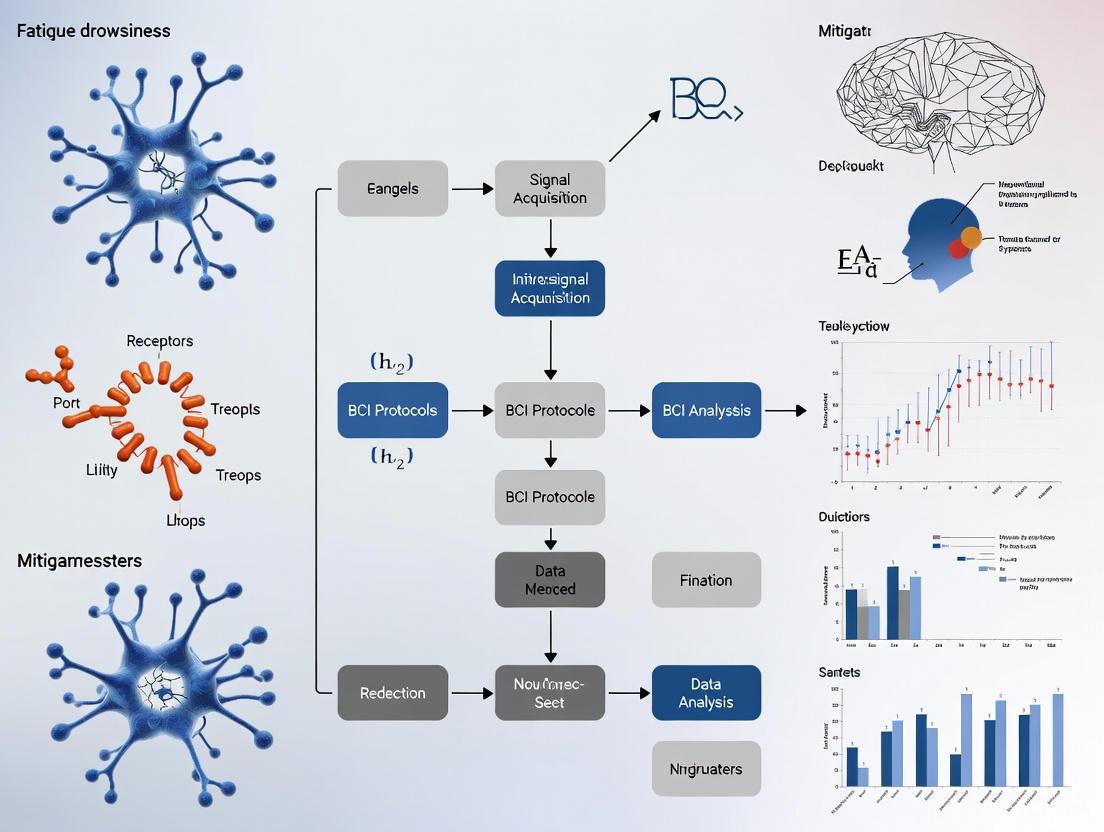
This article provides a comprehensive analysis of fatigue and drowsiness mitigation strategies in Brain-Computer Interface (BCI) systems, tailored for researchers and biomedical professionals.
Mitigating User Fatigue and Drowsiness in Brain-Computer Interfaces: Protocols for Enhanced BCI Reliability and Performance
Abstract
This article provides a comprehensive analysis of fatigue and drowsiness mitigation strategies in Brain-Computer Interface (BCI) systems, tailored for researchers and biomedical professionals. It explores the foundational neurophysiological mechanisms of BCI-induced fatigue, examines advanced methodological approaches for its objective assessment using EEG and machine learning, and details optimization protocols for stimulus design and user interaction. The content further investigates rigorous validation frameworks and comparative analyses of different mitigation techniques, synthesizing key findings to outline future directions for clinical translation and the development of more resilient, user-centric neurotechnologies.
Understanding BCI-Induced Fatigue: From Neural Mechanisms to Performance Impact
Frequently Asked Questions (FAQs) on BCI User Fatigue
What are the primary types of fatigue encountered in BCI protocols? User fatigue in BCI protocols is multifaceted, primarily comprising visual fatigue and mental/cognitive fatigue. Visual fatigue is particularly prevalent in Steady-State Visual Evoked Potential (SSVEP)-based BCIs, where prolonged focus on flickering visual stimuli can cause symptoms like eye strain, headache, and sleepiness [1]. Mental fatigue arises from the sustained cognitive effort required to control the BCI, leading to increased mental workload and reduced concentration [2] [1].
How does user fatigue objectively degrade BCI performance? Fatigue directly and negatively impacts key performance metrics. It reduces the user's ability to maintain attention on visual stimuli, which weakens the SSVEP response and lowers the signal-to-noise ratio (SNR) [1] [3]. This, in turn, leads to a significant deterioration in system performance, including decreased classification accuracy and a drop in the Information Transfer Rate (ITR) [1].
Which BCI paradigms are most susceptible to fatigue? SSVEP-based BCIs are especially prone to inducing visual fatigue due to the constant need to focus on flickering stimuli [1] [3]. However, all BCI paradigms that require sustained mental effort and concentration for device control can lead to measurable mental fatigue, affecting the stability and quality of the neural signals being acquired [2].
What are the most reliable objective methods for measuring fatigue in BCIs? Electroencephalography (EEG) provides highly reliable, objective biomarkers for fatigue. Research shows that fractal dimension analysis, particularly the Petrosian fractal dimension, can classify user fatigue with over 97% accuracy [1]. Additionally, spectral analysis of EEG signals is a standard method, where increases in theta and alpha band power are well-known indicators of growing fatigue [1] [3].
Troubleshooting Guides
Problem 1: Rapid Performance Decline During Extended SSVEP Sessions
Symptoms: A noticeable drop in BCI classification accuracy and ITR after a period of use. Users may report feelings of eye strain or frustration.
Diagnosis and Solutions:
| Step | Action | Rationale & Technical Details |
|---|---|---|
| 1 | Switch to Beta-Range Stimuli | Using visual stimuli in the beta frequency range (14–22 Hz) is proven to minimize fatigue. Studies confirm beta waves are less susceptible to fatigue effects, helping maintain stable EEG patterns and performance [3]. |
| 2 | Implement an Objective Fatigue Monitor | Integrate a real-time fatigue detection model. A Naïve Bayes classifier using Petrosian Fractal Dimension attributes from EEG signals has achieved 97.59% accuracy in classifying alert and fatigue states [1]. |
| 3 | Schedule Mandatory Breaks | Institute short, regular breaks (e.g., 1-3 minutes) between sessions. This simple step is proven to mitigate fatigue buildup and maintain user engagement and signal quality [3]. |
Problem 2: High Variability in User Performance and Fatigue Onset
Symptoms: Significant differences in how quickly users fatigue and how well they control the BCI, a phenomenon sometimes called "BCI illiteracy."
Diagnosis and Solutions:
| Step | Action | Rationale & Technical Details |
|---|---|---|
| 1 | Employ Hybrid BCI Systems | Combine neural signals with other input methods like eye tracking or simple switches. This provides a fallback, reduces cognitive load when the user is tired, and accommodates varying neural signal quality [2]. |
| 2 | Personalize Stimulus Parameters | Calibrate stimulus properties (e.g., frequency, size) and interface layout for individual users. This user-centered design accounts for neurological diversity and optimizes the signal-to-noise ratio for each person [2]. |
| 3 | Utilize Adaptive Interfaces | Design interfaces that adjust their complexity based on real-time performance metrics or fatigue indicators. This helps manage the user's cognitive load, preventing overwhelm during periods of high fatigue [2]. |
Experimental Protocols for Fatigue Assessment & Mitigation
Protocol 1: Quantifying Visual Fatigue in an SSVEP Paradigm
This protocol outlines the methodology for a controlled study to measure the onset and impact of visual fatigue, based on a 2025 study that introduced a 40-class SSVEP speller dataset [3].
Aim: To collect EEG data with minimal fatigue-induced variability for training robust BCI systems. Participants: 40 healthy subjects. Key Research Reagent Solutions:
| Item | Function in the Experiment |
|---|---|
| EEG System (e.g., BioSemi ActiveTwo) | Amplifies and records neural signals at a high sampling rate (1024 Hz). |
| 31 Ag-AgCl Wet Electrodes | Placed on central-to-occipital scalp regions to capture SSVEP signals. |
| 120 Hz Refresh Rate Monitor | Precisely displays flickering visual stimuli without timing drift. |
| Beta-Range Frequencies (14.0–21.8 Hz) | Visual stimuli designed to elicit SSVEPs while minimizing fatigue. |
| Standardized Questionnaires | Collects subjective pre- and post-experiment ratings of mental and physiological state. |
Workflow:
- Setup: Attach EEG electrodes according to the international 10-20 system. Ensure impedance is below 5 kΩ. Position the subject 70 cm from the monitor.
- Baseline Recording: Record 1-minute of resting-state EEG with eyes open and eyes closed.
- SSVEP Task: Present the 40-target speller interface. The task includes six blocks of 40 trials each.
- Single Trial Structure: 1.5s blank screen → 0.5s target cue → 5s flickering period.
- Breaks: Enforce 1-3 minute breaks between each session to mitigate fatigue.
- Post-Experiment: Record another 1-minute of resting-state EEG and administer follow-up questionnaires.
The following diagram illustrates the experimental workflow:
Analysis: Use canonical correlation analysis (CCA) and band power analysis (focusing on alpha/theta increases) to quantify fatigue. Compare pre- and post-experiment measures to confirm that beta-range stimulation minimized fatigue effects [3].
Protocol 2: Real-Time Fatigue Prediction using Machine Learning
This protocol describes a method for implementing a real-time fatigue monitoring system within a BCI setup, based on a 2025 study that used fractal dimension analysis [1].
Aim: To develop a model that can accurately predict user fatigue states during BCI operation for timely intervention. Participants: 26 healthy volunteers. Key Research Reagent Solutions:
| Item | Function in the Experiment |
|---|---|
| EEG Amplifier (e.g., g.USBamp) | Captures and amplifies raw brain signals. |
| Electrode Cap (O1, O2, OZ, FP1, FP2) | Measures SSVEPs (occipital) and artifacts (frontal). |
| Visual Stimuli (6, 8, 10, 12, 15, 18, 20, 25, 30 Hz) | Elicits SSVEP responses at various frequencies. |
| Naïve Bayes Classifier | Machine learning model to classify alert vs. fatigue states. |
| Petrosian Fractal Dimension | A key computed feature serving as a biomarker for fatigue. |
Workflow:
- Signal Acquisition: Record EEG data from occipital channels (O1, O2, OZ) while users focus on flickering visual stimuli.
- Feature Extraction: In real-time, calculate the Petrosian Fractal Dimension from the EEG signals. This metric captures the complexity and self-similarity of the signal, which degrades with fatigue.
- Model Classification: Feed the extracted fractal dimension attributes into a pre-trained Naïve Bayes classifier.
- Fatigue Alert: The model outputs the user's current state (alert or fatigued) with high accuracy (97.59% for Petrosian FD [1]). This can trigger an automatic system notification or initiate a rest period.
The following diagram illustrates the real-time prediction workflow:
Core Concepts: EEG Band Power Changes During Fatigue
Fatigue and drowsiness induce predictable and quantifiable changes in the brain's electrical activity, measurable via electroencephalography (EEG). The table below summarizes the key spectral shifts in the alpha, theta, and beta frequency bands, which serve as primary biomarkers for fatigue detection in research protocols [4] [5] [6].
Table 1: EEG Spectral Band Shifts Associated with Fatigue
| EEG Band | Typical Frequency Range | Alert State Characteristics | Fatigued/Drowsy State Characteristics | Primary Brain Regions Involved |
|---|---|---|---|---|
| Alpha (α) | 8 - 13 Hz | Prominent posterior dominant rhythm (PDR) during eye closure, attenuated by attention [7]. | Significant increase in absolute and relative power, indicating a state of relaxed wakefulness and reduced alertness [4] [6]. | Occipital, Frontal [4] [6] |
| Theta (θ) | 4 - 8 Hz | Low amplitude, transient activity during normal wakefulness; becomes prominent during drowsiness [7]. | Marked increase in power, indicating an early stage of drowsiness and slowed information processing [6]. | Frontal, Occipital [6] |
| Beta (β) | 13 - 30 Hz | Low amplitude activity associated with active, alert cognition; can be enhanced by sedative drugs [7]. | Findings vary; some studies show a decrease, while others note specific increases (e.g., occipital beta) under cognitive strain during fatigue [6]. | Frontal, Central [7] [6] |
These spectral changes form the basis for various fatigue indices. For instance, the (α+θ)/β ratio and the θ/α ratio are commonly used as composite metrics, as they have been shown to increase significantly with mental fatigue [5] [6].
Troubleshooting Guides & FAQs
Troubleshooting Common EEG Artifacts in Fatigue Studies
Effectively identifying and mitigating artifacts is crucial for obtaining clean data and accurate fatigue metrics.
Table 2: Common Artifacts and Mitigation Strategies
| Artifact Type | Appearance in EEG | Proposed Solution |
|---|---|---|
| Ocular (Blink) | High-voltage, diphasic slow waves in frontal channels [7]. | Instruct participant to minimize blinks during task periods; use algorithmic artifact removal (e.g., ICA) during processing. |
| Muscle (EMG) | High-frequency, low-amplitude "noise" from scalp muscles, often frontally dominant [7]. | Ensure the participant is relaxed and the recording environment is calm; proper skin preparation for electrodes to reduce impedance. |
| Electrode "Graysing Out" | Electrode impedance appears persistently high (greyed out in software) despite reapplying the electrode [8]. | 1. Check and re-prep the ground (GND) electrode, as it can affect all channels.2. Try an alternative GND placement (e.g., participant's hand, sternum).3. Rule out hardware issues by testing with a different headbox or amplifier system [8]. |
| Reference Oversaturation | Reference (REF) channel shows persistently high impedance, potentially due to an excessively strong signal [8]. | Place the ground electrode further away (e.g., on the experimenter's hand temporarily) to dissipate excess signal; check for skin products or static [8]. |
Frequently Asked Questions (FAQs)
Q1: My participant lacks a well-defined posterior dominant rhythm (alpha). Can I still measure fatigue?
Yes. While a clear alpha rhythm is common, its absence in some normal individuals does not preclude fatigue assessment. The analysis should then rely more heavily on the dynamics in the theta band (e.g., increased frontal theta) and composite indices like (α+θ)/β, which remain valid even with a less prominent baseline alpha [7] [5].
Q2: How can we differentiate between fatigue-related alpha changes and those from other causes? Fatigue-related alpha increases are typically generalized and persistent over time during a monotonous task. This differs from alpha blocked by an alerting stimulus or the transient "paradoxical alpha" seen upon arousal from sleep. The context of the recording (prolonged task duration, participant behavior) is key to interpretation [7] [4].
Q3: What is the advantage of using a continuous fatigue index over a simple alert/fatigue classification? Fatigue progresses gradually, not in a binary switch. A continuous index (e.g., ranging from 0 to 1) provides a more precise and sensitive measure of this transition. This allows for early detection and the potential for proportional interventions in BCI protocols before performance severely degrades [5].
Q4: Are beta power increases always a sign of alertness? Not necessarily. While beta is often linked to alert cognition, prominent frontal beta can also be induced by certain sedating drugs like benzodiazepines. Furthermore, specific cognitive strains under fatigue (e.g., effortful task performance) can sometimes cause localized beta increases, highlighting the need for multi-band analysis [7] [6].
Detailed Experimental Protocols
To ensure reproducibility and standardization in fatigue research, below are detailed methodologies adapted from key studies.
Protocol 1: Simulated Driving Task for Inducing and Measuring Mental Fatigue
This protocol is designed to induce fatigue through prolonged, monotonous task performance [4].
- Objective: To analyze EEG alpha power changes in partially sleep-deprived participants during a simulated driving task.
- Participant Preparation:
- Recruit healthy adults with valid driving licenses.
- Participants should maintain 18 hours of wakefulness prior to the experiment and refrain from caffeine or stimulants for 12 hours.
- Obtain informed consent and screen for sleep disorders using a tool like the Epworth Sleepiness Scale.
- EEG Setup:
- Use a portable EEG system with at least 16 channels.
- Place electrodes according to the international 10-20 system (key channels: O1, O2, P3, P4, Fz, Cz).
- Set sampling rate to 256 Hz or higher. Include EOG channels for artifact identification.
- Procedure:
- Baseline Recording (5 mins): Record EEG with eyes closed and eyes open.
- Driving Task (approx. 90 mins): Participants drive on a virtual reality simulator on a long, monotonous, and straight road at a constant speed.
- Subjective Measures: Administer a self-assessment scale (e.g., Fatigue Visual Analog Scale, F-VAS) every 10 minutes.
- Behavioral Monitoring: Record the driver's face and behavior via video for later rating by trained observers.
- Data Analysis:
- Pre-process EEG data: apply a 0.5-60 Hz bandpass filter and a 50/60 Hz notch filter.
- Remove artifacts (ocular, muscle) manually or via automated algorithms (e.g., in EEGLAB).
- Segment data into epochs (e.g., 2-second windows).
- Use Fast Fourier Transform (FFT) to compute the power spectral density.
- Extract the absolute and relative power for the alpha band (8-13 Hz).
- Compare the mean alpha power from the initial 10 minutes to the final 10 minutes of driving using a paired t-test. Correlate this with the F-VAS scores.
Protocol 2: Cognitive Testing with EEG in Sleep-Deprived Individuals
This protocol uses a cognitive task to probe the neural correlates of fatigue, suitable for controlled lab studies [6].
- Objective: To explore EEG power changes in theta, alpha, and beta bands in fatigued individuals at rest and during cognitive effort.
- Participant Preparation:
- Recruit participants undergoing extended wakefulness (e.g., post-call doctors).
- Record sleep duration and total time awake.
- Subjectively confirm fatigue state using the Fatigue Assessment Scale (FAS).
- EEG Setup:
- Standard high-density EEG cap arranged per the 10-20 system.
- Record using an average reference montage. Sampling rate at 1 kHz.
- Procedure:
- Pre-Call & Post-Call Sessions: Conduct two recording sessions: one before and one after the period of extended work/sleep deprivation.
- Resting State (3.5 mins): Participants sit with eyes open, looking at a fixed point on a screen.
- Cognitive Task (3.5 mins): Participants immediately perform the Stroop Test, a cognitive interference task, while EEG recording continues.
- Data Analysis:
- Process data to calculate the absolute power (µV²) for theta, alpha, and beta bands.
- Analyze data by brain region (Frontal, Centro-parietal, Occipital).
- Use non-parametric tests (e.g., Wilcoxon Signed-Rank) to compare band power between pre-call (alert) and post-call (fatigued) states, separately for rest and task conditions.
- Calculate fatigue indices:
(α+θ)/βandα/β. - Correlate EEG power changes with Stroop Test performance (accuracy, reaction time).
Conceptual Workflow & Signaling Pathways
The following diagram illustrates the progressive neurophysiological changes and the standard research workflow for detecting fatigue.
The Scientist's Toolkit: Research Reagent Solutions
Table 3: Essential Materials and Tools for EEG Fatigue Research
| Item | Function / Application in Research | Example / Notes |
|---|---|---|
| Research-Grade EEG System | High-fidelity acquisition of brain electrical activity. | g.USBamp amplifier [4], systems from Natus Neuro [8]. Ensure adequate channel count (e.g., 16+). |
| Electrode Caps & Paste | Standardized electrode placement and stable signal conduction. | Ag/AgCl electrodes; 10-20 international system placement; abrasive electrolytic gel for impedance reduction [8] [4]. |
| Visual Stimulation Platform | For SSVEP-based BCI studies or task presentation. | LCD/LED screens for flickering stimuli; software like PsychoPy or Presentation for task control [5]. |
| Driving Simulator Software | Provides a controlled, monotonous environment for fatigue induction. | Custom virtual reality (VR) road sceneries developed in Autodesk 3Ds Max or similar platforms [4]. |
| Data Processing & Analysis Suite | Pre-processing, artifact removal, and feature extraction. | EEGLAB for MATLAB [4], custom scripts for FFT and power band ratio calculation [5]. |
| Artificial Intelligence / Machine Learning Tools | For developing advanced, continuous fatigue indices and classification. | Multilayer Neural Network Regressors [5], Graph Convolutional Autoencoders (GCA) [9]. |
| Subjective Assessment Scales | To collect self-reported fatigue data for validation. | Fatigue Visual Analog Scale (F-VAS) [4], Karolinska Sleepiness Scale (KSS) [4], Fatigue Assessment Scale (FAS) [6]. |
Frequently Asked Questions (FAQs)
Q1: What are the primary causes of visual fatigue in SSVEP-based BCI systems? Visual fatigue in SSVEP paradigms primarily stems from prolonged exposure to conventional, high-contrast, solid-color flickering stimuli. This often leads to symptoms such as drowsiness, headaches, reduced attention, and a subsequent decline in classification performance [10]. The constant intense stimulation of neurons and the requirement for fixed gaze contribute significantly to user discomfort [11] [12].
Q2: Which stimulation frequency ranges are known to minimize visual fatigue? Research indicates that moving away from the traditional alpha band (8-13 Hz) can improve comfort. The following ranges have shown promise:
- Beta Range (14–30 Hz): Stimulation in the beta wave range (e.g., 14–22 Hz) appears less susceptible to visual fatigue and shows more stable EEG power characteristics over time compared to alpha frequencies [3].
- High Frequencies (>30 Hz): Flicker frequencies above 30 Hz (e.g., 30–34 Hz) are relatively less likely to induce visual fatigue than low and medium frequencies [12].
- Low Frequencies (<3 Hz): For specific hybrid paradigms, low-frequency stimulations (e.g., 0.8–2.12 Hz) have been reported to provide a better comfort level than the alpha frequency range [13].
Q3: How can stimulus design be modified to reduce fatigue? Alternative stimulus designs can enhance user comfort without drastically compromising signal strength:
- Textured Stimuli: Replacing solid-colored, high-contrast flickers with low-contrast textured patterns (e.g., "Worms," "Wood Grain," "Voronoi") has been consistently rated as more comfortable by users, especially at lower frequencies [10].
- Motion-Based Paradigms: Using steady-state motion visual evoked potentials (SSMVEP) with moving patterns (e.g., Newton's rings) instead of pure luminance flicker can reduce discomfort. Integrating color contrast into these motion patterns can further enhance the response [11].
- Dynamic Stimuli: Incorporating periodic motion trajectories (e.g., sinusoidal, sawtooth) with controlled speed modulation has been shown to maintain accuracy while significantly reducing cognitive workload [14].
Q4: What objective biomarkers can be used to measure fatigue levels? A continuous fatigue index can be developed using frequency-based biomarkers from EEG signals. The most effective features for quantitative fatigue assessment include:
- Normalized Compensated Power in the theta (θ), alpha (α), and 8–9 Hz frequency bands [5].
- Power spectral density (PSD) comparisons, particularly increases in absolute and relative alpha and theta power [3].
- Changes in the SSVEP signal-to-noise ratio (SNR) or amplitude, which tend to decrease with the onset of fatigue [5] [3].
Q5: What is a hybrid BCI and how can it address "BCI illiteracy"? A hybrid BCI (h-BCI) combines two or more different types of brain or physiological signals. For instance, one study combined Visual Evoked Potentials (VEP) with Pupillary Response (PR), both elicited by the same low-frequency visual stimulus. This approach can improve classification accuracy and reduce the number of "BCI illiterate" users who cannot effectively control a standard BCI, by providing a second, redundant communication channel for the system [13].
Troubleshooting Guides
Problem: Rapid Decline in Classification Accuracy During Prolonged Use
| Potential Cause | Diagnosis Steps | Recommended Solution |
|---|---|---|
| User Fatigue | 1. Administer a subjective comfort questionnaire (e.g., 7-point Likert scale) [10].2. Analyze EEG for fatigue biomarkers: compute power in theta and alpha bands over time; a rising trend indicates fatigue [5]. | 1. Implement frequent, short breaks between sessions [3].2. Switch to a beta-frequency (14-22 Hz) or high-frequency (>30 Hz) stimulation paradigm [3] [12].3. Use a continuous fatigue index to trigger a protocol change or rest period upon detecting fatigue [5]. |
| Stimulus Design | Check if using traditional high-contrast, solid-color flickering stimuli. | 1. Adopt more comfortable textured stimuli [10].2. Transition to a motion-based (SSMVEP) or dynamic stimulus paradigm [11] [14]. |
| Calibration Drift | Compare template-matching algorithm performance (e.g., TRCA, IT-CCA) at the start versus the end of a session. | Implement a reactive hybrid system that switches to an alternative signal (e.g., Pupillary Response) when VEP performance drops, or recalibrate the user-specific template [13]. |
| Potential Cause | Diagnosis Steps | Recommended Solution |
|---|---|---|
| Ineffective Stimulus for User | Test the user's SSVEP response to a range of frequencies and stimulus types (e.g., flicker, motion, texture) in a calibration session. | Personalize the stimulus. Identify the frequency and pattern that elicits the strongest SSVEP response and highest comfort for that specific user [15]. |
| Suboptimal Signal Processing | Evaluate the performance of different classification algorithms (e.g., CCA, FBCCA, TRCA, deep learning models) on the user's offline data. | Use advanced decoding algorithms like extended Task-Discriminant Component Analysis (e-TDCA) to detect intermodulation components, or employ deep learning models (e.g., EEGNet, CNNs) that can learn user-specific features from raw data [11] [12] [16]. |
| Inherent "BCI Illiteracy" | Observe if the user fails to produce a discernible SSVEP across multiple stimulus types. | Implement a hybrid BCI system. Combine SSVEP with another modality like Pupillary Response (PR) to provide a more robust control signal [13]. |
Table 1: Comparison of SSVEP Paradigms for Fatigue Mitigation
| Paradigm Category | Example Parameters | Key Advantage | Reported Accuracy (Avg.) | Reported ITR (Avg.) | User Comfort Feedback |
|---|---|---|---|---|---|
| Beta-Frequency Stimulation [3] | 40 targets, 14.0–21.8 Hz | Minimal fatigue-induced EEG variability | High (Data suited for high classification) | N/A | Reduced subjective fatigue & stable band power |
| High-Frequency Stimulation [12] | 40 targets, 30–34 Hz flicker, 0.4–1.8 Hz scaling | High comfort with high ITR | 94.37% (Online) | 113.47 bits/min | Improved via high-frequency flicker |
| Motion-Color Hybrid (SSMVEP) [11] | Newton's rings with color contrast | Reduced fatigue while enhancing response | 83.81% | N/A | Enhanced, confirmed by subjective reports |
| Low-Frequency Hybrid (VEP+PR) [13] | 12 targets, 0.8–2.12 Hz | High comfort & addresses illiteracy | 94.90% (Supervised) | 64.35 bits/min | More favorable than alpha-range |
| Textured Stimuli [10] | Textures (e.g., Wood Grain) at 9, 14, 33 Hz | Consistently higher comfort ratings | Frequency-dependent | N/A | Consistently rated more comfortable |
| Dynamic Stimuli [14] | 4 targets, motion trajectories | Reduced cognitive workload | ~85% (matching static) | N/A | 22% reduction in cognitive load |
Table 2: Key Biomarkers for Continuous Fatigue Index Estimation [5]
| Biomarker Category | Specific Feature | Correlation with Fatigue |
|---|---|---|
| Most Effective Features | Normalized Compensated Power (Theta, Alpha, 8-9 Hz) | Strong positive correlation |
| Supplementary Features | Compensated Frequency Band Power, Power of filtered signal at stimulation frequencies | Used in effective feature subset |
| Regression Model Performance | Correlation between actual and predicted fatigue index | 97.95% (Training), 84.88% (Test) |
Experimental Protocols for Fatigue Mitigation
Protocol: Implementing a Personalized Stimulus for Enhanced Comfort and Performance
Objective: To identify and deploy the visual stimulus parameters that maximize both the SSVEP response and comfort for an individual user [15].
Workflow: The diagram below illustrates the iterative process for personalizing SSVEP stimuli.
Materials:
- EEG Acquisition System: A system with electrodes placed over the occipital region (e.g., O1, Oz, O2, PO3, POz, PO4) [11] [3].
- Stimulus Presentation Software: Software capable of generating various stimulus types (e.g., textured patterns, motion patterns, solid-color flickers) at different frequencies [10] [15].
- User Feedback Interface: A simple interface (e.g., a 7-point Likert scale) for collecting subjective comfort ratings after each stimulus type [10].
Protocol: Objective Fatigue Monitoring Using a Continuous Fatigue Index
Objective: To quantitatively track a user's fatigue level in real-time using EEG biomarkers, enabling proactive countermeasures [5].
Workflow: The following chart outlines the computational pipeline for deriving a continuous fatigue index.
Materials:
- EEG System: Same as in Protocol 4.1.
- Signal Processing Toolkit: Software (e.g., MATLAB, Python with MNE/Scikit-learn) for extracting power spectral density features.
- Pre-trained Regression Model: A neural network model trained to map the selected EEG features to a continuous fatigue index between 0 (alert) and 1 (fatigued) [5].
The Scientist's Toolkit: Research Reagent Solutions
Table 3: Essential Materials and Tools for SSVEP-BCI Fatigue Research
| Item | Function in Research | Example & Notes |
|---|---|---|
| High-Frequency Monitor | Presents visual stimuli with precise timing and high refresh rates to support high-frequency and complex modulation paradigms. | 120 Hz refresh rate monitor [3]; Essential for presenting high-frequency flicker (>30 Hz) without aliasing. |
| EEG Amplifier & Electrodes | Records brain signals from the scalp. Wet electrodes (Ag/AgCl) are common for high-quality data. | g.USBamp (g.tec) [11] [12]; BioSemi ActiveTwo system [3]; Electrodes placed in occipital region. |
| Stimulus Presentation Software | Creates and controls the timing of visual stimuli, integrating with EEG for event synchronization. | MATLAB with Psychtoolbox [3]; Unity3D game engine [10] [14]; BCI-Essentials package [10]. |
| Advanced Decoding Algorithms | Classifies SSVEP signals from EEG data. Modern methods improve accuracy and robustness. | Filter Bank CCA (FBCCA), Task-Related Component Analysis (TRCA), Deep Learning models (EEGNet, CNN) [11] [16]. |
| Fatigue Biomarker Analysis Scripts | Computes quantitative indices of fatigue from pre-processed EEG data. | Custom scripts for calculating normalized power in theta/alpha bands, SNR, and running regression models [5] [3]. |
Drowsiness and mental fatigue present significant challenges in Brain-Computer Interface (BCI) applications, directly compromising system reliability and performance. When users experience fatigue, measurable changes occur in brain signals, leading to the degradation of both classification accuracy and the critical signal-to-noise ratio (SNR). This deterioration is particularly problematic in real-world BCI deployments, where consistent performance is essential for assistive technologies, neurorehabilitation, and communication systems [17] [1]. The underlying physiological mechanisms involve a complex interplay of reduced attention, synchronization of brain rhythms, and altered hemodynamic responses, all of which can be quantitatively assessed through various neuroimaging techniques [1] [18]. Understanding these impacts is the first step toward developing effective mitigation protocols for BCI research and drug development studies where cognitive state monitoring is crucial.
Quantitative Impact of Drowsiness on BCI Performance
Research consistently demonstrates that drowsiness negatively impacts key BCI performance metrics. The following table summarizes the empirical findings on how fatigue degrades system performance across different BCI paradigms.
Table 1: Quantitative Impact of Drowsiness on BCI Performance Metrics
| Performance Metric | Impact of Drowsiness | Experimental Context | Reference |
|---|---|---|---|
| SSVEP Amplitude | Reduction in amplitude | SSVEP-based BCI with flickering stimuli | [3] |
| SSVEP Signal-to-Noise Ratio (SNR) | Decreased SNR | Prolonged SSVEP experiments | [3] |
| Classification Accuracy | Significant performance decline | SSVEP-based BCI performance | [1] |
| Information Transfer Rate (ITR) | Reduction in ITR | High-frequency SSVEP-BCI | [19] |
| Cognitive Performance | Increased behavioral lapses, longer reaction times | n-back tasks during HD-DOT monitoring | [18] |
Troubleshooting Guide: Identifying and Mitigating Drowsiness
Frequently Asked Questions
FAQ 1: What are the primary electrophysiological markers of drowsiness in EEG signals? Increased power in the delta (1-3 Hz), theta (4-7 Hz), and alpha (8-13 Hz) frequency bands are well-established indicators of developing fatigue. Conversely, a decrease in the complexity of the EEG signal, as measured by entropy or fractal dimensions, also signifies a fatigued state where the brain's information processing capacity is diminished [1] [3]. The Petrosian fractal dimension, in particular, has been validated as a highly sensitive biomarker for fatigue classification, achieving accuracies up to 97.59% in SSVEP-based BCIs [1].
FAQ 2: How does drowsiness specifically affect Motor Imagery (MI)-BCI classification? Drowsiness exacerbates the inherent challenges of MI-BCI, such as the low signal-to-noise ratio and high dimensionality of EEG signals. A fatigued user cannot maintain the focused mental rehearsal of movement, leading to weaker and more variable sensorimotor rhythms (mu and beta bands). This increases the inter-session and inter-trial variability of the EEG features used for classification, thereby reducing the accuracy of algorithms like EEGNet and DeepConvNet [20] [21]. In essence, the neural patterns become less distinct and more challenging for classifiers to decode reliably.
FAQ 3: What experimental design adjustments can reduce visual fatigue in SSVEP paradigms? Two strategies have proven effective. First, using visual stimuli in the beta frequency range (14-22 Hz) instead of the traditional alpha range minimizes fatigue-induced variability and maintains a more stable SNR [3]. Second, modifying the visual properties of the stimuli, such as using a semi-transparent configuration (e.g., 100% black text on a 50% white background), can maintain high classification accuracy (over 99%) while significantly reducing subjective reports of visual fatigue [22].
FAQ 4: Which neuroimaging modalities are most effective for simultaneous workload and fatigue monitoring? While EEG is highly effective for tracking rapid electrophysiological changes, High-Density Diffuse Optical Tomography (HD-DOT), an advanced form of functional near-infrared spectroscopy (fNIRS), provides superior spatial resolution for localizing brain activity associated with cognitive states. HD-DOT enables 3D mapping of hemodynamic responses in the prefrontal cortex and has achieved high classification accuracy (>95%) for fatigue states during cognitively demanding n-back tasks, making it a powerful tool for multifaceted cognitive state assessment [18].
Step-by-Step Diagnostic Protocol
Diagram: A researcher's workflow for diagnosing drowsiness-related performance issues in BCI experiments.
Experimental Protocols for Drowsiness Mitigation
Beta-Range SSVEP Stimulation Protocol
This protocol leverages stimulation in the beta band (14-22 Hz) to minimize fatigue, as this frequency range is less susceptible to fatigue-related power fluctuations compared to the alpha band [3].
Table 2: Key Research Reagents and Materials for Beta-Range SSVEP
| Item Name | Specification/Function | Experimental Purpose |
|---|---|---|
| Visual Stimulator | 120 Hz refresh rate monitor | Presents flickering stimuli with high temporal precision |
| Presentation Software | MATLAB with Psychtoolbox-3 | Precisely controls stimulus timing and sequence |
| EEG Acquisition System | 31-channel Biosemi ActiveTwo system | Records scalp potentials with high sampling rate (1024 Hz) |
| Electrodes | Ag-AgCl wet electrodes | Ensures high-quality signal acquisition with low impedance |
| Stimulus Design | Joint Frequency-Phase Modulation (JFPM) | Creates 40 distinct visual targets for a high-ITR speller |
Methodology:
- Stimulus Setup: Program a visual speller interface with targets flickering at frequencies between 14.0 Hz and 21.8 Hz, incremented by 0.2 Hz. Use a phase difference of 0.5π between adjacent stimuli [3].
- Data Collection: Record EEG from 31 electrodes positioned over central-to-occipital regions according to the international 10-20 system. Include pre- and post-experiment resting-state recordings (eyes-open and eyes-closed) to establish baseline power spectra [3].
- Fatigue Monitoring: Administer subjective fatigue questionnaires before and after the experiment. Objectively monitor fatigue by calculating the power spectral density of occipital EEG, watching for increases in alpha and theta power over time [3].
- Validation: Employ canonical correlation analysis (CCA) and template-based methods like IT-CCA to classify SSVEP responses. The maintained high accuracy across sessions confirms reduced fatigue impact [3].
HD-DOT for Fatigue and Workload Assessment Protocol
This protocol uses HD-DOT to achieve high-resolution 3D mapping of prefrontal cortex activity, allowing for the simultaneous classification of mental workload and fatigue with high accuracy [18].
Methodology:
- Experimental Design: Induce mental fatigue using a blocked design with varying levels of the n-back task (0-back to 3-back). Intersperse these blocks with simple Reaction Time (RT) tasks to behaviorally track fatigue development [18].
- HD-DOT Data Acquisition: Use a wearable HD-DOT device (e.g., LUMO) with a 12-tile prefrontal configuration. Collect data at 735 nm and 850 nm wavelengths to measure concentration changes in oxygenated (HbO) and deoxygenated hemoglobin (HbR) [18].
- Signal Preprocessing: Convert raw light intensity to optical density. Apply a bandpass filter (0.025-0.15 Hz) to remove physiological noise (e.g., heartbeat, respiration). Use short-channel regression to isolate cerebral hemodynamic activity from superficial scalp signals [18].
- Feature Extraction & Classification: Use the preprocessed HbO and HbR time-series as features. Train a Random Forest classifier for subject-specific classification of fatigue states (fatigued vs. non-fatigued) and workload levels (0-back to 3-back) [18].
Diagram: The HD-DOT protocol workflow for assessing mental fatigue and workload.
The Scientist's Toolkit: Essential Research Reagents
Table 3: Key Reagents and Solutions for BCI Fatigue Research
| Category | Specific Tool/Reagent | Research Function |
|---|---|---|
| Signal Acquisition | 64-channel Neuracle EEG system [20] | High-density recording of electrical brain activity. |
| Signal Acquisition | High-Density DOT (HD-DOT) system [18] | 3D mapping of hemodynamic responses in the cortex. |
| Signal Processing | Ensemble EEMD & FastICA [23] | Advanced artifact removal (e.g., EOG) to purify EEG signals. |
| Signal Processing | Wavelet Packet Transform (WPT) & Sample Entropy [23] | Extracts time-frequency and non-linear features from EEG. |
| Feature Extraction | Petrosian Fractal Dimension [1] | Quantifies EEG complexity as a biomarker for fatigue. |
| Classification | EEGNet, DeepConvNet [20] | Deep learning models for robust MI classification. |
| Classification | Support Vector Machine (SVM), Random Forest [23] [18] | Machine learning algorithms for state classification. |
| Visual Stimulation | Beta-band (14-22 Hz) SSVEP Speller [3] | Elicits robust neural responses while minimizing user fatigue. |
Troubleshooting Guide: Res Common Fatigue Measurement Challenges
This guide addresses frequent issues researchers encounter when measuring fatigue in Brain-Computer Interface (BCI) protocols.
Problem 1: Discrepancy Between User Reports and System Performance
- Scenario: A subject in a motor imagery (MI) BCI study consistently reports high fatigue on questionnaires, yet their task performance (e.g., percent valid correct) shows no significant decline.
- Investigation & Solution:
- Investigate Physiological Signals: Analyze electrophysiological data like EEG. Research shows that even when performance is stable, alpha-band power in the sensorimotor area may show an increasing tendency, and event-related desynchronization (ERD) modulation may decrease, indicating underlying mental state changes [24].
- Action: Treat subjective reports as valid indicators of cognitive state. The stability of performance may be due to subjects actively compensating for fatigue. Consider introducing rest periods or task variations based on subjective feedback, as performance may eventually degrade if fatigue accumulates further.
Problem 2: Intrusiveness of Objective Measurement
- Scenario: Frequent administration of subjective questionnaires (e.g., MFI, SSSQ) during an SSVEP-BCI experiment disrupts task flow and immersion.
- Investigation & Solution:
- Implement Objective Biomarkers: Develop a model for continuous, unobtrusive fatigue monitoring using EEG. A 2025 study successfully used the Petrosian fractal dimension (a measure of EEG signal complexity) to classify fatigue and alert states with over 97% accuracy in SSVEP-based BCIs [1].
- Action: Use a limited set of subjective questionnaires pre- and post-session to ground truth the objective measures. During the session, rely on real-time analysis of EEG biomarkers, such as fractal dimensions or spectral power in alpha/theta bands, to assess fatigue without interruption [1].
Problem 3: Conflicting Signals from Different Objective Measures
- Scenario: In a multi-modal fatigue assessment (e.g., using EEG and EOG), the EEG data suggests increasing alertness while the EOG data indicates drowsiness.
- Investigation & Solution:
- Data Fusion: Employ an information fusion algorithm to combine multiple physiological signals. A 2024 review highlights that combining ECG, EEG, and EMG data significantly improves real-time fatigue detection accuracy compared to using a single signal source [25].
- Action: Do not rely on a single metric. Use a weighted fusion model, like the information entropy-CRITIC algorithm used in one visual fatigue study, to objectively combine subjective and objective indicators into a single reliable score [26].
Frequently Asked Questions (FAQs)
Q1: When should I prioritize subjective measures over objective ones? Prioritize subjective measures when your goal is to understand the participant's conscious experience, perceived effort, and comfort. They are crucial for validating objective biomarkers and for assessing aspects of fatigue that may not yet be reflected in performance, such as the increased general fatigue and mental fatigue captured by the Multidimensional Fatigue Inventory (MFI) [24].
Q2: What are the core limitations of subjective fatigue scales? The primary limitations are:
- Response Bias: Participants may discern the study's intent and provide answers they believe the researcher expects [1].
- Impractical for Online Use: They are ill-suited for real-time BCI applications, as it is disruptive to periodically interrupt the user to complete a questionnaire [1].
- Interpretation Variability: Rating scales may be used inconsistently by different participants, and categories like "a glimpse" can be interpreted differently [27].
Q3: Which objective physiological signal is best for fatigue detection? There is no single "best" signal; the choice depends on the fatigue type and context. EEG is highly promising for cognitive fatigue as it directly measures brain activity. For SSVEP-BCI, the Petrosian fractal dimension of the EEG signal is a particularly robust biomarker [1]. However, combining EEG with other signals like ECG (for heart rate variability) or EOG (for eye blinks) through information fusion techniques yields the most accurate and reliable assessment [25].
Q4: How can I design a BCI experiment to minimize visual fatigue? Hardware and software choices significantly impact visual fatigue in paradigms like SSVEP:
- Stimulus Frequency: Higher frequencies (e.g., 15 Hz) are often better tolerated than lower ones (e.g., 7.5 Hz) [26].
- Screen Parameters: Research indicates that for a 15 Hz stimulus, a combination of a 240 Hz refresh rate and 1280 × 720 resolution can provide an optimal visual experience, reducing fatigue [26].
- Rest Periods: Incorporate brief, structured rest periods. Studies have shown that even a 16-minute rest, particularly with eyes closed, can help modulate alpha-band power and aid recovery [24].
Comparison of Fatigue Assessment Measures
The table below summarizes the core characteristics of different fatigue measurement approaches.
Table 1: Comparison of Fatigue Assessment Methodologies
| Measure Type | Specific Tool/Biomarker | Key Strengths | Key Limitations | Best Use Case |
|---|---|---|---|---|
| Subjective | Multidimensional Fatigue Inventory (MFI) [24] | Assesses multiple fatigue dimensions (general, physical, mental) [24] | Susceptible to response bias; not for real-time use [1] | Pre- and post-session validation of cognitive state |
| Subjective | Short Stress State Questionnaire (SSSQ) [24] | Tracks task-induced changes in engagement and distress [24] | Interrupts task flow; relies on introspection [27] | Understanding psychological impact of BCI protocols |
| Objective Physiological | EEG Petrosian Fractal Dimension [1] | High accuracy (~97%); objective, continuous measure of brain signal complexity [1] | Requires specialized equipment and signal processing expertise [1] | Real-time, unobtrusive fatigue prediction in SSVEP-BCI |
| Objective Physiological | EEG Spectral Power (Alpha/Band) [24] | Directly measures brain rhythms linked to relaxation/ fatigue (e.g., increased alpha) [24] | Signal can be contaminated with noise/artifacts [1] | Monitoring general trends in cognitive state during MI-BCI |
| Objective Performance | BCI Performance (ITR, PVC) [24] | Direct measure of task effectiveness; easy to record | Can be stable despite significant subjective fatigue [24] | Primary outcome measure; not a reliable sole indicator of fatigue |
Detailed Experimental Protocols
Protocol 1: Assessing Fatigue in Motor Imagery BCI with Rest Interventions This protocol is designed to investigate how mental states change during intensive MI practice and how different rest conditions affect fatigue and performance [24].
- Subjects: Recruit healthy, right-handed subjects. Exclude those who cannot achieve a baseline performance (e.g., >60% PVC) in a training session.
- EEG Acquisition: Use a 64-channel system following the 10-20 international system. Record in an electromagnetically shielded room. Maintain electrode impedances below 30 kΩ.
- Questionnaires: Administer the Multidimensional Fatigue Inventory (MFI) and Short Stress State Questionnaire (SSSQ) immediately before and after the experimental session.
- Experimental Design:
- Sessions: Each subject completes four sessions on different days (1 training + 3 experimental).
- Task: A standard left vs. right-hand motor imagery task.
- Trials: 400 trials per session, split into two runs of 200 trials.
- Rest Conditions (pseudo-randomized):
- No Rest: Run 2 begins immediately after Run 1.
- Eyes-Open Rest: A 16-minute break with a fixation cross on screen.
- Eyes-Closed Rest: A 16-minute break with an audio stimulus (no visual input).
- Data Analysis:
- Performance: Calculate Percent Valid Correct (PVC) and Information Transfer Rate (ITR) across all trials.
- Subjective: Analyze pre/post changes in MFI and SSSQ scores.
- Electrophysiological: Analyze trends in alpha-band power over the sensorimotor cortex and the modulation level of Event-Related Desynchronization (ERD).
Protocol 2: Objective Fatigue Prediction in SSVEP-BCI using Fractal Dimension This protocol outlines a method for high-accuracy fatigue state classification using ML and EEG complexity analysis [1].
- Subjects: Recruit healthy volunteers.
- EEG Acquisition: Record from occipital (O1, O2, Oz) and frontal (FP1, FP2) sites using a 16-electrode biosignal amplifier. Frontal channels are used for artifact removal. Sampling rate should be at least 512 Hz.
- Stimuli: Present visual stimuli using multiple flickering cues (e.g., 6, 8, 10, 12, 15, 18, 20, 25, and 30 Hz).
- Data Processing & Feature Extraction:
- Preprocessing: Apply a band-pass filter and remove blinking artifacts using frontal channels.
- Feature Extraction: Calculate fractal dimensions from the EEG signals, with a focus on the Petrosian fractal dimension.
- Spectral Analysis: Perform power spectral density analysis concurrently.
- Machine Learning & Classification:
- Use a Naïve Bayes classifier.
- Train the classifier using the extracted fractal dimension attributes to differentiate between "alert" and "fatigued" states.
- Validate the model's accuracy, noting that the highest classification accuracy is often achieved at a specific stimulation frequency (e.g., 15 Hz) [1].
Experimental Workflow and Signaling Pathways
The following diagram illustrates the logical workflow for integrating subjective and objective measures in a BCI fatigue assessment protocol.
Decision Workflow for Integrated Fatigue Assessment
The Scientist's Toolkit: Research Reagent Solutions
Table 2: Essential Materials for BCI Fatigue Research
| Item | Function in Research | Example Application |
|---|---|---|
| Multidimensional Fatigue Inventory (MFI) [24] | A 20-item self-report questionnaire to quantify multiple dimensions of fatigue, including general, physical, and mental fatigue. | Used pre- and post-session to validate subjective fatigue induction in MI-BCI protocols [24]. |
| Short Stress State Questionnaire (SSSQ) [24] | A 24-item questionnaire to assess task-induced changes in engagement, distress, and worry. | Tracks the psychological impact of prolonged BCI operation, complementing MFI data [24]. |
| High-Density EEG System (e.g., 64-channel) [24] | Non-invasively records electrical activity from the scalp. Essential for capturing ERD/ERS in MI-BCI and SSVEP responses. | Acquires raw brain signals for analysis of spectral power and fractal dimensions as objective fatigue biomarkers [24] [1]. |
| Petrosian Fractal Dimension (PFD) [1] | A computational algorithm that quantifies the complexity and self-similarity of a time-series signal like EEG. | Serves as a highly accurate objective biomarker for classifying fatigue vs. alert states in ML models, particularly for SSVEP-BCI [1]. |
| Visual Stimulation Platform (e.g., with Psychophysical Toolbox) [26] | Software to present controlled visual stimuli with precise timing, crucial for SSVEP-based BCI and fatigue studies. | Presents flickering paradigms at specific frequencies (e.g., 7.5 Hz, 15 Hz) to induce and study visual fatigue under different screen parameters [26]. |
| Naïve Bayes Classifier [1] | A machine learning algorithm that uses probability for classification. | Effectively classifies EEG features (like fractal dimension) into fatigue states, achieving high accuracy in experimental settings [1]. |
Advanced Detection and Mitigation: From ML Models to Stimulus Engineering
Frequently Asked Questions (FAQ)
Q1: What makes fractal dimension a better biomarker for fatigue than traditional spectral power metrics? Fractal dimension (FD) quantifies the complexity and self-similarity of EEG signals, providing a unified measure that can capture brain state changes more consistently than individual frequency bands (e.g., alpha, theta), which often show variable patterns across studies [1]. Research on SSVEP-based BCIs demonstrated that the Petrosian fractal dimension achieved 97.59% accuracy in classifying fatigue, outperforming many spectral features [1].
Q2: My fatigue classification accuracy is low. Could the stimulation frequency of my BCI paradigm be the issue? Yes, the choice of stimulation frequency significantly impacts performance. One study found that a Naïve Bayes classifier using fractal dimension attributes achieved its highest accuracy (97.31%) at a 15 Hz visual stimulation frequency, while other frequencies yielded lower results [1]. Always validate biomarker performance across the specific stimulation frequencies used in your experiment.
Q3: Why is there a focus on occipital and frontal EEG channels in SSVEP fatigue studies? Electrode selection is protocol-dependent. In SSVEP-based BCIs, three occipital channels (O1, O2, OZ) are typically used to capture visual evoked potentials directly related to the stimulus, while frontal channels (FP1, FP2) are crucial for identifying and eliminating blinking artifacts that can corrupt EEG signals [1].
Q4: What is the practical significance of using a weighted brain functional network over a binary one for fractal analysis? A 2020 study found that the fractal dimension of weighted brain functional networks was more sensitive to mental fatigue than that of binary networks [28]. Weighted networks retain more information about the strength of functional connections, making them better at detecting the subtle changes in brain dynamics associated with increasing fatigue.
Q5: Are there any standardized documentation practices for BCI fatigue research? While the field is evolving, organizations like IEEE and ISO are developing standards for BCI research documentation aimed at 2025. Currently, best practices include detailed reporting of signal acquisition parameters, preprocessing steps, and feature extraction methods to ensure reproducibility [29].
Troubleshooting Guides
Issue 1: Poor Fatigue Classification Accuracy
Problem: Your ML model fails to reliably distinguish between alert and fatigued states.
Solution: Follow this systematic troubleshooting workflow.
Steps:
- Verify Input Data Quality: Ensure your EEG signals have sufficient signal-to-noise ratio (SNR) and check for excessive artifact contamination. Confirm that the stimulation frequency is appropriate for your task—research indicates 15 Hz may be optimal for SSVEP-based fatigue detection [1].
- Re-evaluate Preprocessing: Review filter settings; a typical bandpass of 0.1-100 Hz is common for EEG, with notch filters at 50/60 Hz to remove line noise [29]. For SSVEP paradigms, ensure proper occipital channel selection and blink artifact removal from frontal channels [1].
- Assess Feature Selection: Compare the performance of fractal dimension measures (Petrosian FD achieved 97.59% accuracy) against traditional spectral features [1]. Consider that FD may provide more consistent results across subjects than individual frequency band powers.
- Optimize Model Parameters: Try the Naïve Bayes classifier, which has demonstrated high performance (97.31% accuracy) with fractal dimension attributes [1]. Adjust convergence criteria and thoroughly cross-validate all parameters.
Issue 2: Inconsistent Fractal Dimension Calculations
Problem: Fractal dimension values vary significantly across algorithm implementations or analysis runs.
Solution: Standardize your FD calculation methodology.
Steps:
- Algorithm Selection: The Higuchi method is widely recognized for its effectiveness in analyzing clinical neurophysiology time series [30]. For brain functional network analysis, a modified greedy coloring algorithm has been used successfully [28].
- Parameter Standardization: Document and consistently apply parameters such as time series length, sampling rate, and the maximum box size (for box-counting methods). Inconsistent parameters are a common source of variation.
- Implementation Validation: Test your implementation on standardized synthetic signals with known fractal properties to ensure correctness. For modified greedy coloring algorithms, note that some may require thousands of repetitions to reduce randomness, though improved versions aim to reduce this computational load [28].
- Signal Quality Re-check: FD calculations are sensitive to signal artifacts. Ensure rigorous preprocessing to remove noise, eye blinks, and muscle artifacts that could distort complexity measures.
Issue 3: Real-Time System Performance Issues
Problem: Your real-time fatigue detection system has high latency or poor performance.
Solution: Optimize for computational efficiency.
Steps:
- Feature Simplification: In a real-time wireless BCI framework for drowsiness detection, using a limited set of highly informative features (e.g., alpha wave power from occipital channels) can maintain performance while reducing computational load [31].
- Algorithm Efficiency: Evaluate the computational complexity of your FD algorithm. The Higuchi method is generally computationally efficient for real-time applications [30].
- Hardware Limitations: Consider the constraints of your signal acquisition hardware. Systems using braincap technology with wireless transmission must balance processing complexity with battery life and transmission reliability [31].
- Update Software: Ensure you're using the latest stable versions of signal processing libraries and toolboxes, as updates often include performance optimizations and bug fixes [32].
Experimental Protocols & Data
Table 1: Quantitative Performance of Fatigue Detection Methods
| Method | Modality | Key Features | Accuracy | Reference |
|---|---|---|---|---|
| Naïve Bayes + Fractal Dimension | SSVEP-EEG | Petrosian FD at 15 Hz | 97.59% | [1] |
| Naïve Bayes + Spectral Features | SSVEP-EEG | Spectral analysis at 15 Hz | 97.31% | [1] |
| CNN-based Visual Detection | Camera | Eye state, yawning detection | 96.54% | [33] |
| Fractal Dimension Analysis | Resting EEG | Alpha1 rhythm, weighted brain network | Significant increase with fatigue | [28] |
| Wireless BCI Framework | Mobile EEG | Alpha wave (8-13 Hz) power | Effective for real-time detection | [31] |
Table 2: Research Reagent Solutions & Essential Materials
| Item | Specifications | Function/Purpose |
|---|---|---|
| EEG Amplifier | g.USBamp (Gtec), 16-channel, 512 Hz sampling | Signal acquisition with sufficient temporal resolution [1] |
| EEG Electrodes | Ag/AgCl sensors, electrode cap | Neural signal capture with impedance < 10 kΩ [1] |
| Visual Stimulator | 9 flickering cues (6, 8, 10, 12, 15, 18, 20, 25, 30 Hz) | SSVEP elicitation for controlled fatigue induction [1] |
| Signal Processing Library | Custom MATLAB/Python with FD algorithms | Implementation of Higuchi or Petrosian fractal dimension [1] [30] |
| Braincap for Mobile EEG | Multichannel cap with wireless transmission | Enables mobile, long-term EEG monitoring for real-world applications [31] |
Detailed Protocol: SSVEP-Based Fatigue Assessment with Fractal Dimensions
Workflow Diagram:
Methodology:
- Participant Preparation: Recruit 26+ healthy volunteers. Control for factors like sleep history, caffeine intake, and medications. Obtain ethical approval and informed consent [1].
- EEG Setup: Position electrodes according to the international 10-20 system, focusing on O1, O2, OZ for SSVEP capture and FP1, FP2 for blink artifact detection. Maintain electrode impedance below 10 kΩ. Use a sampling rate of 512 Hz or higher [1].
- SSVEP Paradigm Execution: Present visual stimuli using nine flickering cues with frequencies of 6, 8, 10, 12, 15, 18, 20, 25, and 30 Hz. Counterbalance presentation order across subjects. Record both task state and resting state EEG [1].
- Signal Preprocessing: Apply a 0.1-100 Hz bandpass filter and 50/60 Hz notch filter to remove line noise. Use frontal channels to identify and remove blink artifacts. For fractal analysis, consider downsampling to 256 Hz if necessary [1] [28].
- Feature Extraction: Calculate Petrosian fractal dimension from occipital channels. Compare with traditional spectral power in alpha (8-13 Hz), theta (4-7 Hz), and beta (13-30 Hz) bands. For network-based approaches, construct binary and weighted brain functional networks using mutual information between EEG channels [1] [28].
- Machine Learning Classification: Implement a Naïve Bayes classifier using fractal dimension attributes. Validate performance through cross-validation. Test different stimulation frequencies to identify the optimal response (research suggests 15 Hz may be most effective) [1].
Leveraging Beta-Range Stimulation (14-22 Hz) for Low-Fatigue SSVEP Spellers
Frequently Asked Questions (FAQs)
Q1: Why is beta-range stimulation (14-22 Hz) recommended for reducing visual fatigue in SSVEP spellers? Prolonged exposure to visual stimuli in SSVEP-based BCIs often induces visual fatigue, which alters EEG patterns and degrades system performance [34] [3]. Research confirms that visual stimulation in the beta range (14-22 Hz) is less susceptible to fatigue effects [34] [3]. Unlike other frequency bands, the beta band exhibits more consistent characteristics; EEG band power analyses show minimal changes in beta activity despite notable increases in alpha power under fatigued conditions [3]. A 40-class SSVEP speller dataset demonstrated that beta-range stimulation effectively minimizes fatigue-induced variability while maintaining high classification accuracy [34] [3].
Q2: What specific experimental evidence supports the effectiveness of beta-range stimuli? A large-scale study involving 40 participants using a 40-target SSVEP speller provided concrete evidence [3]. The study employed stimuli ranging from 14.0 Hz to 21.8 Hz, incremented by 0.2 Hz [3]. The combination of subjective fatigue ratings and objective EEG band power analyses confirmed that beta-range stimulation significantly minimizes fatigue effects [34] [3]. Furthermore, calibration-based algorithms achieved high classification accuracy on this dataset, confirming that beta-range SSVEPs remain robust for BCI control despite prolonged use [3].
Q3: Besides frequency selection, what other stimulus parameters can help reduce visual fatigue? Recent research indicates that adjusting the visual properties of the stimuli themselves can significantly impact user fatigue. A study on c-VEP BCIs found that modifying stimulus opacity substantially reduced visual fatigue [22]. Specifically, using semi-transparent stimuli, particularly a configuration with 100% opacity for black and 50% opacity for white, maintained high accuracy (99.38%) while reducing subjective fatigue ratings from 6.4 (with traditional black/white) to 3.7 on a 10-point scale [22]. This approach also helps integrate BCI systems into lifelike environments with diverse backgrounds [22].
Q4: How can researchers objectively monitor fatigue levels during SSVEP experiments? Beyond subjective questionnaires, objective methods using EEG signals are crucial for real-time fatigue assessment. Machine learning models utilizing fractal dimension analysis have shown high accuracy (97.59%) in classifying fatigue and alert states during SSVEP experiments [1]. Specifically, the Petrosian fractal dimension has been identified as a potential biomarker for fatigue prediction in SSVEP-based BCIs, providing a reliable, objective measure that can be integrated into online systems [1]. Spectral power comparisons, particularly increases in alpha and theta band power, also serve as established indicators of fatigue [3].
Troubleshooting Guides
Issue 1: Declining Classification Performance During Prolonged Sessions
Problem: BCI classification accuracy decreases as the experiment progresses, potentially due to user fatigue affecting signal quality.
Solutions:
- Implement Beta-Range Stimulation: Design your speller paradigm with flickering frequencies strictly within the 14-22 Hz beta range, as this band demonstrates greater stability against fatigue-related fluctuations [34] [3].
- Optimize Stimulus Properties: Reduce contrast by implementing semi-transparent stimuli instead of high-contrast black and white flashes. A configuration of 100% black with 50% white has been shown to maintain accuracy while reducing fatigue [22].
- Incorporate Rest Periods: Structure experiments with scheduled breaks between sessions. The validated 40-class dataset protocol included 1-2 minute breaks between six 5-minute sessions to mitigate cumulative fatigue [3].
- Monitor Fatigue Objectively: Implement real-time fatigue detection using EEG-based metrics like the Petrosian fractal dimension, which can trigger alerts or adaptive adjustments when fatigue thresholds are crossed [1].
Verification Steps:
- Compare performance metrics (accuracy, ITR) between early and late sessions
- Analyze alpha power increases in occipital channels, which correlate with fatigue development [3]
- Collect subjective fatigue ratings using standardized scales (0-10) after each condition [22]
Issue 2: High Inter-Subject Variability in Fatigue Response
Problem: Different participants experience and report varying levels of visual fatigue under identical experimental conditions.
Solutions:
- Standardize Beta Parameters: Use the joint frequency and phase modulation (JFPM) approach with frequencies from 14.0-21.8 Hz (0.2 Hz increments) and 0.5π phase difference between adjacent stimuli, as validated with 40 participants [3].
- Control Display Conditions: Maintain consistent viewing parameters: 70 cm distance from monitor, 1920×1080 resolution, 120 Hz refresh rate, and standardized ambient lighting [3].
- Implement Hybrid Assessment: Combine objective EEG measures (fractal dimension, spectral power) with brief subjective ratings (0-10 scale) to capture both physiological and perceptual fatigue dimensions [22] [1].
- Adapt Stimulus Intensity: For particularly fatigue-sensitive individuals, consider further reducing contrast or implementing intermittent stimulation paradigms rather than continuous flickering.
Verification Steps:
- Analyze the correlation between subjective fatigue reports and objective EEG markers (e.g., alpha power increases, fractal dimension changes)
- Compare fatigue trajectories across demographic factors and previous BCI experience
- Assess within-subject consistency through multiple sessions
Issue 3: Integrating Low-Fatigue BCIs Into Real-World Environments
Problem: Laboratory-optimized parameters don't translate well to practical applications with dynamic backgrounds and environmental variations.
Solutions:
- Adopt Semi-Transparent Stimuli: Use stimuli with reduced opacity (50% white/100% black) to allow better integration with diverse backgrounds while maintaining system performance [22].
- Leverage Large-Scale Datasets: Utilize publicly available beta-range SSVEP datasets (e.g., the 40-subject dataset with 31 channels) to train models that account for real-world variability [34] [3].
- Implement Customizable Interfaces: Allow users to adjust stimulus intensity within the beta range based on personal comfort while maintaining the core frequency parameters.
- Develop Adaptive Systems: Create BCIs that monitor performance metrics and automatically adjust stimulus parameters when fatigue is detected via EEG biomarkers [1].
Verification Steps:
- Test classification accuracy across different background scenarios
- Measure user comfort and fatigue ratings in realistic deployment environments
- Validate system stability over extended use periods (30+ minutes)
Experimental Protocols & Data
Table 1: Beta-Range SSVEP Speller Configuration Specifications
| Parameter | Specification | Evidence/Reference |
|---|---|---|
| Frequency Range | 14.0 - 21.8 Hz | 40-class speller dataset [34] [3] |
| Frequency Increment | 0.2 Hz | Joint frequency and phase modulation [3] |
| Phase Difference | 0.5π between adjacent stimuli | Optimized for 40 targets [3] |
| Stimulus Duration | 5 seconds per trial | Validated protocol [3] |
| Display Refresh Rate | 120 Hz | Required for precise frequency control [3] |
| Number of Targets | 40 (5×8 matrix) | Large-scale validation [3] |
| Viewing Distance | 70 cm from monitor | Standardized across subjects [3] |
Table 2: Fatigue Assessment Methods Comparison
| Method | Implementation | Accuracy/Reliability | Advantages |
|---|---|---|---|
| Subjective Rating | 0-10 scale (none-extreme) | High inter-rater consistency | Quick to administer, directly captures user experience [22] |
| Petrosian Fractal Dimension | EEG complexity analysis | 97.59% classification accuracy | Objective, suitable for real-time implementation [1] |
| Spectral Power Analysis | Alpha/theta band power increases | Established fatigue correlation | Well-validated, easy to compute [3] |
| Hybrid Assessment | Combined subjective + EEG metrics | Comprehensive evaluation | Captures multiple fatigue dimensions [22] [1] |
Table 3: Performance Comparison of Stimulus Parameters
| Stimulus Configuration | Accuracy | Fatigue Rating (0-10) | Application Context |
|---|---|---|---|
| Traditional black/white | 100% | 6.4 (High) | Laboratory baseline [22] |
| 50% white / 100% black | 99.38% | 3.7 (Moderate) | Real-world integration [22] |
| Beta-range (14-22 Hz) | High (calibration-based) | Minimal increase | Extended use applications [34] [3] |
The Scientist's Toolkit: Research Reagent Solutions
Table 4: Essential Materials for Low-Fatigue SSVEP Research
| Item | Function | Implementation Example |
|---|---|---|
| 31-Channel EEG System (Ag-AgCl) | High-quality signal acquisition | BioSemi ActiveTwo system with electrodes from central-to-occipital regions [3] |
| High-Refresh-Rate Monitor (120Hz+) | Precise visual stimulus presentation | 24-inch monitor with 1920×1080 resolution for accurate frequency rendering [3] |
| Psychophysics Toolbox (PTB-3) | Stimulus presentation software | MATLAB-based platform for controlling timing and parameters of visual stimuli [3] |
| Joint Frequency & Phase Modulation | Multi-target SSVEP paradigm | Enables 40 distinct stimuli with minimal interference through optimized frequency/spacing [3] |
| Fractal Dimension Algorithms | Objective fatigue quantification | Petrosian fractal dimension calculation for real-time fatigue classification [1] |
| Canonical Correlation Analysis | SSVEP classification method | Standardized algorithm for target identification with minimal calibration [3] |
Experimental Workflow Diagrams
Diagram 1: Low-Fatigue SSVEP Speller Experimental Setup
Diagram 2: Multi-Method Fatigue Assessment Protocol
Frequently Asked Questions
Q1: Does mental fatigue from prolonged BCI use actually degrade performance? Not necessarily. A study on Motor Imagery (MI)-based BCIs with online feedback found that while subjective reports (questionnaires) showed a significant increase in general and mental fatigue, objective BCI performance metrics like Percent Valid Correct (PVC) and Information Transfer Rate (ITR) across 400 trials showed no significant decline. This suggests that with feedback, users can maintain performance despite feeling fatigued [24].
Q2: What are the most effective types of rest breaks for mitigating fatigue? Research indicates that the type of rest matters. A study comparing 16-minute eyes-closed rest and 16-minute eyes-open rest found physiological differences only in the eyes-closed condition, where alpha-band power showed a distinct increase and subsequent decrease, suggesting a more effective recovery. The eyes-open rest condition did not show significant physiological changes. For short breaks, a divided protocol with brief pauses between trials can also help [24] [35].
Q3: Which BCI paradigms are most susceptible to fatigue? Steady-State Visual Evoked Potential (SSVEP)-based BCIs are particularly prone to inducing visual and mental fatigue due to the intense, repetitive visual stimulation required. This is a major challenge for their real-world application [35]. Motor Imagery (MI)-based BCIs can also induce mental fatigue, but as noted above, performance may be more resilient [24].
Q4: How can I quantitatively measure fatigue in my BCI experiment? Fatigue can be assessed through a multi-method approach:
- Subjective Measures: Standardized questionnaires like the Multidimensional Fatigue Inventory (MFI) and the Short Stress State Questionnaire (SSSQ) [24].
- Objective Physiological Measures:
- EEG: A meta-analysis of SSVEP studies found that fatigue is associated with a significant increase in alpha and theta band power, and a decrease in the signal-to-noise ratio (SNR) and SSVEP amplitude [35].
- fNIRS/HD-DOT: Emerging research uses high-density diffuse optical tomography to achieve high accuracy in classifying fatigue states based on cerebral hemodynamics [18].
Q5: Can the design of the visual stimulus itself reduce fatigue? Yes. For SSVEP-BCIs, research shows that making stimuli more attractive and varied is effective. Using dynamic patterns like zoom motion or Newton's ring motion can reduce fatigue. Furthermore, the color of the visual cue can impact fatigue levels, though the shape and background may have less effect [35].
Fatigue Characteristics Across BCI Paradigms
Table 1: Summarizing key fatigue factors and metrics in BCI research.
| BCI Paradigm | Primary Fatigue Type | Key Quantitative Fatigue Indicators | Effective Mitigation Strategies |
|---|---|---|---|
| Motor Imagery (MI) | Mental Fatigue [24] | • Increased sensorimotor alpha power [24]• Decreasing ERD modulation level [24]• Increased MFI scores (subjective) [24] | • Incorporating eyes-closed rest breaks [24]• Providing real-time performance feedback [24] |
| SSVEP | Visual & Mental Fatigue [35] | • Increased EEG alpha & theta power [35]• Decreased SSVEP amplitude & SNR [35]• Increased (\frac{\alpha+\theta}{\beta}) ratio [35] | • Using dynamic cue patterns (zoom, Newton's ring) [35]• Using attractive and varied stimulus designs [35]• Divided protocols with short breaks [35] |
Experimental Protocols for Fatigue Assessment
Protocol 1: Investigating Rest Conditions in MI-BCI This protocol is designed to test the effect of different rest types on maintaining performance and mitigating fatigue during a prolonged MI-BCI session [24].
- Participants: Recruit healthy subjects. Exclude those who cannot achieve a baseline performance (e.g., >60% PVC) in a training session.
- Session Design:
- Training Session: One session to familiarize subjects with the MI task.
- Experimental Sessions: Three sessions on different days, each with a different rest condition applied in a pseudo-randomized order:
- No Rest: Two runs of 200 trials each are performed consecutively.
- Eyes-Open Rest: A 16-minute rest period with a fixation cross between runs.
- Eyes-Closed Rest: A 16-minute rest period in darkness (audio stimulus can be used) between runs.
- Data Collection:
- Performance: Record Percent Valid Correct (PVC) and Information Transfer Rate (ITR) across all 400 trials.
- Subjective Measures: Administer the MFI and SSSQ questionnaires before and immediately after each session.
- Electrophysiology: Record EEG to analyze trends in alpha-band power and Event-Related Desynchronization (ERD).
Protocol 2: Inducing and Measuring Fatigue with N-Back Tasks This protocol uses a cognitively demanding task to induce mental fatigue and workload simultaneously, suitable for passive BCI studies [18].
- Participants: Recruit healthy participants with normal or corrected vision.
- Procedure:
- Baseline Rest: 2-minute rest.
- Baseline Reaction Time (RT) Task: Participants press a key when a stimulus appears.
- Fatigue Induction (N-Back Task): Participants perform blocks of 0-back, 1-back, 2-back, and 3-back tasks. The increasing difficulty demands more memory and attention, effectively inducing mental fatigue.
- Post-Task RT Task: Repeat the RT task to measure performance change.
- Data Collection:
- Subjective Scores: Use appropriate questionnaires for workload and fatigue.
- Behavioral Data: Record accuracy and reaction time from the n-back and RT tasks.
- Neuroimaging: Use High-Density Diffuse Optical Tomography (HD-DOT) or fNIRS to measure hemodynamic changes in the prefrontal cortex during the tasks.
The Scientist's Toolkit
Table 2: Essential reagents and materials for BCI fatigue research.
| Item | Function in Research |
|---|---|
| Multidimensional Fatigue Inventory (MFI) | A 20-item standardized questionnaire to subjectively gauge general, physical, and mental fatigue levels [24]. |
| Short Stress State Questionnaire (SSSQ) | A 24-item questionnaire to assess task-induced changes in engagement, distress, and worry [24]. |
| High-Density EEG System | To record brain activity with high temporal resolution; essential for analyzing ERD/ERS and frequency band changes (e.g., alpha/theta power) linked to fatigue [24] [35]. |
| HD-DOT/fNIRS System | A wearable neuroimaging technology to measure hemodynamic changes associated with cognitive states like mental workload and fatigue, offering higher spatial resolution than traditional fNIRS [18]. |
| BCI2000 / Timeflux | Open-source software platforms for real-time biosignal acquisition, processing, and feedback control in BCI experiments [24] [36]. |
Experimental Workflow for BCI Fatigue Studies
The Fatigue Mitigation Cycle in BCI Design
Frequently Asked Questions (FAQs)
Q1: How do FBES technologies specifically help in mitigating fatigue and drowsiness in prolonged BCI protocols? FBES (Flexible Brain Electronic Sensors) help mitigate fatigue through superior user comfort and stable signal quality. Their flexible nature and robust biocompatibility enable continuous, long-term monitoring of brain vital signs without causing the discomfort or skin irritation associated with rigid sensors [37]. This stable interface is crucial for detecting subtle physiological correlates of fatigue, such as changes in EEG rhythms, which can be used to trigger countermeasures in a closed-loop system [1].
Q2: What are the primary signal acquisition challenges when using FBES for fatigue research, and how can they be addressed? The primary challenges include signal attenuation caused by the skull, poor sensor-skin coupling, and interference from physiological artifacts [37]. The skull can attenuate electrical signals by 80-90%, with low-frequency waves like Delta and Theta being most affected [37]. To address this:
- Ensure Proper Coupling: Use FBES designed with soft, conformable materials that maintain full contact with the skin, even during movement.
- Employ Advanced Processing: Implement signal processing techniques like adaptive filtering and machine learning models to distinguish fatigue-related brain activity from noise [1].
- Multi-modal Sensing: Consider supplementing EEG with other modalities, such as functional near-infrared spectroscopy (fNIRS), which is less susceptible to electrical interference and provides complementary hemodynamic data [18].
Q3: Which experimental parameters and stimuli are known to induce measurable fatigue in BCI users? Fatigue can be reliably induced and measured using well-established paradigms. Key methods include:
- Sustained Repetitive Tasks: Protocols involving continuous BCI use for 40 minutes or longer effectively induce mental fatigue [38] [18].
- Visual Evoked Potential (VEP) Paradigms: Steady-State VEP (SSVEP) and code-modulated VEP (c-VEP) tasks require intense visual focus on flickering stimuli, which is a known source of visual fatigue [1] [22].
- N-Back Tasks: These working memory tasks (e.g., 0-back to 3-back) are excellent for simultaneously inducing and measuring mental workload and fatigue, especially as task difficulty increases [18].
Q4: How can a researcher objectively quantify fatigue levels in a subject, moving beyond subjective questionnaires? While subjective tools like the Dundee Stress State Questionnaire (DSSQ) are valid, objective physiological measures are better for real-time BCI adaptation [38]. These include:
- EEG Spectral and Fractal Analysis: Machine learning models using Fractal Dimension attributes, particularly the Petrosian fractal dimension, have achieved over 97% accuracy in classifying alert vs. fatigued states during SSVEP tasks [1]. Entropy measures are also used to quantify the decline in brain information processing capacity during fatigue.
- fNIRS Hemodynamic Monitoring: High-Density Diffuse Optical Tomography (HD-DOT) can classify fatigue/non-fatigue states with high accuracy (95.14%) by measuring changes in prefrontal cortex oxygenation [18].
- Heart Rate Variability (HRV): ECG-derived HRV is a well-established correlate of autonomic nervous system activity associated with fatigue [38].
Troubleshooting Guides
Poor Signal-to-Noise Ratio (SNR) from FBES
Problem: Acquired EEG signals are weak, noisy, or unstable, making it difficult to detect fatigue-related patterns.
| Potential Cause | Diagnostic Steps | Recommended Solution |
|---|---|---|
| Poor Sensor-Skin Contact | Check electrode impedance values in the acquisition software. Visually inspect for full contact. | Re-apply the sensor; ensure the skin is clean and slightly abraded. Use a conformable FBES design that fits the scalp curvature [37]. |
| Signal Attenuation by Skull | Observe that low-frequency signals (Delta, Theta) are disproportionately weak. | Acknowledge this physical limitation. Use signal processing (e.g., spatial filters, Common Spatial Pattern) to enhance the signal of interest [37] [39]. |
| Physiological Artifacts | Identify blinks (in frontal channels), muscle activity (EMG), or heart rhythms (ECG) in the signal. | Apply artifact removal algorithms (e.g., blind source separation like ICA) or regression-based methods [1]. |
Rapid User Fatigue Leading to Performance Decline
Problem: Subjects report high levels of visual strain or mental fatigue during VEP-based experiments, leading to a drop in BCI classification accuracy.
| Potential Cause | Diagnostic Steps | Recommended Solution |
|---|---|---|
| High-Contrast Visual Stimuli | Use subjective feedback (e.g., a 0-10 fatigue scale). Monitor for a decline in task accuracy over time. | Modify stimulus properties. Research shows that using semi-transparent stimuli (e.g., 50% white/100% black) can maintain high accuracy (~99%) while significantly reducing visual fatigue scores (from 6.4 to 3.7) [22]. |
| Prolonged, Uninterrupted Tasks | Observe performance metrics and subjective scores degrading after 20-40 minutes of continuous use. | Implement a closed-loop adaptive protocol. Use real-time fatigue detection (via EEG/fNIRS) to trigger short breaks or simplify the task when fatigue is detected [18]. |
| BCI Illiteracy/Inefficiency | Note that 15-30% of users cannot control BCIs effectively, which can be mistaken for or compound fatigue. | Use performance predictors to screen users. Integrate multimodal data to enrich the information provided to the BCI classifier, making it more robust to performance variations [39]. |
Experimental Protocols for Fatigue Assessment
Protocol: Inducing and Measuring Fatigue via SSVEP with EEG/FBES
This protocol is designed to elicit visual and mental fatigue using SSVEPs, which can be objectively measured with EEG and machine learning.
- Objective: To induce controlled fatigue and build a model for classifying alert and fatigued states using FBES-recorded EEG.
- Setup: Use a flexible EEG cap or headband with Ag/AgCl or dry electrodes. Key electrodes are O1, O2, Oz (for SSVEP), and FP1, FP2 (for blink artifacts) [1].
- Stimuli: Present visual stimuli flickering at multiple frequencies (e.g., 6, 8, 10, 12, 15, 18, 20, 25, and 30 Hz) [1].
- Procedure:
- Baseline Recording (5 mins): Record EEG with eyes open/closed at rest.
- SSVEP Task (40+ mins): Participants focus on the flickering stimuli in a repetitive task (e.g., target selection) without extended breaks to induce fatigue.
- Subjective Scoring: Administer a fatigue scale (e.g., 0-10) at regular intervals.
- Data Analysis:
- Feature Extraction: Calculate Fractal Dimensions (e.g., Petrosian, Higuchi) and spectral band power from the occipital EEG signals.
- Model Training: Train a classifier (e.g., Naïve Bayes) using the extracted features to differentiate between alert and fatigued states, as defined by the subjective scores and performance metrics [1].
Protocol: Simultaneous Assessment of Workload & Fatigue via fNIRS-HD
This protocol uses High-Density Diffuse Optical Tomography (HD-DOT) to provide high-resolution 3D imaging of prefrontal cortex activity under varying cognitive load and fatigue.
- Objective: To classify varying levels of mental workload and fatigue simultaneously using HD-DOT.
- Setup: Use a wearable HD-DOT system (e.g., LUMO) configured to cover the prefrontal cortex [18].
- Stimuli: N-back tasks (0-back, 1-back, 2-back, 3-back) to manipulate mental workload, and a prolonged protocol to induce fatigue [18].
- Procedure:
- Baseline Rest (2 mins): Establish a hemodynamic baseline.
- Pre-Task Reaction Time (RT) Task: A simple task to measure baseline psychomotor speed.
- Fatigue Induction (30+ mins): Participants perform multiple blocks of the n-back tasks with increasing difficulty.
- Post-Task RT Task: Re-administer the RT task to measure fatigue-induced performance decline.
- Data Analysis:
- Preprocessing: Convert raw light intensity to oxygenated (HbO) and deoxygenated hemoglobin (HbR) concentrations. Apply bandpass filtering (0.025-0.15 Hz) and short-channel regression to remove superficial artifacts [18].
- Classification: Use machine learning models (e.g., Random Forest, SVM) on the HD-DOT data to achieve multi-class classification of n-back levels and binary classification of fatigue state [18].
The following diagram illustrates the logical workflow and decision points within a BCI system designed for fatigue mitigation.
The Scientist's Toolkit: Research Reagent Solutions
The following table details key hardware, software, and analytical "reagents" essential for conducting research on fatigue and FBES.
| Item Name | Type / Specification | Primary Function in Fatigue Research |
|---|---|---|
| Flexible EEG Headband (e.g., Neeuro Senzeband) | Dry-electrode, wearable headband [38] | Enables portable, long-duration EEG recording for stress and fatigue monitoring in ecologically valid settings with minimal user discomfort. |
| High-Density DOT System (e.g., LUMO) | fNIRS with high-density source-detector configuration [18] | Provides high spatial resolution, 3D imaging of hemodynamic responses in the prefrontal cortex for highly accurate classification of workload and fatigue states. |
| Visual Stimulation Software (e.g., PsychoPy) | Open-source software for experiment design [18] | Presents precise visual paradigms (SSVEP, n-back tasks) to induce cognitive load and fatigue in a controlled and reproducible manner. |
| Petrosian Fractal Dimension | Algorithmic feature for signal analysis [1] | Serves as a highly accurate objective biomarker for classifying cognitive fatigue from EEG signals, with demonstrated accuracy >97%. |
| Random Forest Classifier | Machine learning algorithm [18] | A robust model for classifying complex, high-dimensional neuroimaging data (e.g., HD-DOT) into distinct states of mental workload and fatigue. |
The diagram below outlines the core signal processing and analysis pipeline for converting raw data from FBES into a quantifiable fatigue metric.
Technical Support Center: Troubleshooting and FAQs
This technical support center provides targeted guidance for researchers implementing closed-loop Brain-Computer Interface (BCI) systems designed to monitor and mitigate user fatigue. The following troubleshooting guides and FAQs address common experimental challenges, with protocols framed within a thesis on fatigue and drowsiness mitigation in BCI user protocols.
Foundations of Closed-Loop Fatigue Monitoring
Adaptive, bidirectional closed-loop BCI systems dynamically adjust their parameters based on a user's brain activity, enhancing responsiveness and efficacy [40]. For fatigue mitigation, these systems continuously monitor EEG correlates of cognitive state and provide real-time modulation of stimulation parameters to maintain optimal performance [41]. This continuous feedback mechanism allows for ongoing adaptation, where users can refine their mental strategies while the system concurrently adjusts its parameters in response to neural feedback [40].
Troubleshooting Guide: Common Experimental Challenges
FAQ 1: Why does my closed-loop system fail to detect early signs of visual fatigue in SSVEP paradigms?
Problem: The system does not trigger adaptive responses before performance degradation occurs.
Solution: Implement beta-range (14-22 Hz) visual stimulation instead of traditional alpha-range stimuli.
Experimental Protocol:
- Stimulus Design: Utilize a 40-class SSVEP speller with frequencies from 14.0 Hz to 21.8 Hz, incremented by 0.2 Hz [3].
- Fatigue Assessment: Combine subjective fatigue ratings (0-10 scale) with EEG band power analyses, particularly monitoring alpha power increases in occipital regions [3].
- Validation: Compare CCA coefficients pre- and post-experiment to objectively quantify fatigue-induced signal quality reduction [3].
Supporting Data: Table: Beta-Range Stimulation Efficacy for Fatigue Reduction
| Parameter | Alpha-Range Stimulation | Beta-Range Stimulation | Measurement Method |
|---|---|---|---|
| Fatigue Induction | High | Minimal | Subjective rating (0-10 scale) & alpha power increase [3] |
| Signal Stability | Progressive degradation | Maintained consistency | CCA coefficient reduction over time [3] |
| Classification Accuracy | Significant decline | Maintained high accuracy (>95%) | Template-based classification algorithms [3] |
| Information Transfer Rate | Decreases with fatigue | Stable performance | Bits per minute calculation [3] |
FAQ 2: How can I reduce visual fatigue in c-VEP BCIs without compromising classification accuracy?
Problem: Traditional black and white c-VEP encoding induces excessive visual fatigue, limiting practical application.
Solution: Implement semi-transparent stimuli with optimized opacity settings.
Experimental Protocol:
- Stimulus Parameters: Test multiple opacity and background combinations. A configuration with 100% opacity for black and 50% for white maintains high accuracy (99.38%) while reducing fatigue from 6.4 to 3.7 points on a 10-point scale [22].
- System Setup: Ensure proper monitor calibration for consistent opacity rendering across experimental sessions.
- Data Collection: Record subjective fatigue ratings after each condition alongside performance metrics [22].
Supporting Data: Table: Opacity Optimization for c-VEP Stimuli
| Stimulus Configuration | Classification Accuracy | Visual Fatigue (0-10) | Recommendation |
|---|---|---|---|
| Traditional (100% black/white) | 100% | 6.4 | Not recommended for prolonged use |
| 100% black, 50% white | 99.38% | 3.7 | Optimal balance |
| Other semi-transparent combinations | Variable (95-99%) | 4-5 | Situation-dependent |
FAQ 3: What EEG biomarkers provide the most reliable indicators of working memory fatigue for real-time monitoring?
Problem: Inconsistent detection of cognitive overload and fatigue states during extended BCI sessions.
Solution: Implement multi-dimensional spectral analysis with emphasis on theta and alpha band dynamics.
Experimental Protocol:
- Signal Acquisition: Use 31 central-to-occipital channels with sampling rate ≥1024 Hz [3].
- Feature Extraction: Calculate power spectral density in key frequency bands:
- Classification: Employ linear discriminant analysis or support vector machines trained on WM task data [42].
Closed-Loop Fatigue Monitoring Workflow
FAQ 4: How do I validate that my fatigue mitigation system is working effectively?
Problem: Uncertainty about whether adaptive interventions genuinely improve user experience and performance.
Solution: Implement a multi-modal validation framework combining subjective, behavioral, and physiological measures.
Experimental Protocol:
- Cross-Task Validation: Train system on a visual WM task, then test in a different cognitive domain (e.g., mental arithmetic) [42].
- Neurophenomenological Validation: Provide real-time WM load feedback and ask participants to identify whether feedback was real or sham. Effective systems achieve >80% participant recognition accuracy [42].
- Confounding Factor Control: Design control tests to disentangle effects of attention, arousal, frustration, and motor artifacts from genuine WM load [42].
Essential Research Reagents and Materials
Table: Critical Components for Closed-Loop Fatigue Monitoring Systems
| Component | Specification | Research Function |
|---|---|---|
| EEG Acquisition System | 31+ channels, sampling rate ≥1024 Hz (e.g., BioSemi ActiveTwo) [3] | High-quality signal acquisition for detecting subtle fatigue biomarkers |
| Visual Stimulation Platform | 120Hz refresh rate, MATLAB with Psychophysics Toolbox [3] | Precise control of stimulus timing and parameters for visual-evoked paradigms |
| Stimulus Design Software | Joint frequency and phase modulation (JFPM) implementation [3] | Creation of optimized stimulus sets for balance between performance and fatigue |
| Signal Processing Toolkit | Common Spatial Patterns (CSP), Independent Component Analysis (ICA), Canonical Correlation Analysis (CCA) [40] [3] | Feature extraction and noise reduction for reliable fatigue detection |
| Classification Algorithms | Linear Discriminant Analysis, Support Vector Machines, Neural Networks [41] [42] | Real-time interpretation of EEG biomarkers to detect fatigue states |
| Validation Instruments | Standardized fatigue scales (0-10), cognitive task battery, subjective experience questionnaires [3] [42] | Multi-modal system validation and participant feedback collection |
Experimental Validation Framework for Fatigue Mitigation Systems
Implementation Considerations and Ethical Framework
Successful implementation of closed-loop fatigue monitoring requires attention to both technical and human factors. The bidirectional nature of these systems fosters active engagement and learning, crucial components for effective rehabilitation and long-term BCI use [40]. However, researchers must also consider the ethical implications of neural data commodification and ensure proper informed consent procedures that address potential vulnerabilities related to privacy and long-term safety [43].
The continuous feedback mechanism of closed-loop BCIs allows for ongoing adaptation, where users can refine their mental strategies while the system concurrently adjusts its parameters in response to neural feedback [40]. This dynamic interaction is vital for optimizing outcomes in both research and clinical applications.
Troubleshooting BCI Performance: Strategies for System and Protocol Optimization
Frequently Asked Questions (FAQs)
1. How do visual stimulus parameters typically affect a user's eyestrain? Visual fatigue in BCI systems is directly influenced by stimulus parameters. High-contrast, low-frequency flickering stimuli are major contributors to eye strain, headaches, and visual fatigue. Reducing the amplitude depth (contrast) of stimuli and using higher presentation frequencies have been shown to significantly improve user comfort while maintaining system accuracy [22] [44].
2. Can I reduce stimulus contrast without severely impacting BCI classification accuracy? Yes. Research on c-VEP BCIs demonstrates that using semi-transparent stimuli (e.g., 100% black with 50% white) can maintain high accuracy (over 99%) while cutting visual fatigue scores nearly in half compared to traditional black-and-white stimuli [22]. For SSVEP systems, reducing amplitude depth to 40% can achieve over 90% accuracy while significantly improving user experience [44].
3. Are there alternative stimulus patterns that are less straining than flashing letters? Yes, modifying the visual pattern of the stimulus itself can help. For P300 spellers, research has explored alternatives to flashing letters, such as "face spellers" where characters change to a human face during flashes, or using iconic stimuli instead of letters. These changes can improve performance and potentially reduce visual demands [45].
4. What is the relationship between stimulus frequency and user comfort? There is a strong positive relationship between stimulus frequency and user comfort. Higher frequency stimuli (e.g., 60 Hz) are consistently rated as more comfortable, less tiring, and less visually intrusive than lower frequency stimuli (e.g., 8-15 Hz). However, very high frequencies may present technical challenges and require longer classification times [44].
5. How do visual impairments impact BCI use, and how can parameters be adapted? Many potential BCI users have concomitant visual impairments or eye movement disorders. Difficulties with seeing, focusing on, or distinguishing visual stimuli can lead to poor BCI performance, sometimes mislabeled as "BCI illiteracy." For users with visual deficits, parameters should be adapted by improving contrast, using larger stimuli, or exploring auditory alternatives [45].
Troubleshooting Guides
Problem: Users report severe eyestrain, headaches, or visual fatigue during or after BCI sessions.
| Solution Approach | Implementation Method | Expected Outcome |
|---|---|---|
| Reduce Stimulus Contrast | Lower the amplitude depth of visual stimuli. For SSVEP, try 40-50% of full contrast [44]. For c-VEP, use semi-transparent stimuli (e.g., 100% black, 50% white) [22]. | Drastic reduction in visual fatigue with minimal impact on high classification accuracy. |
| Increase Stimulus Frequency | Use high-frequency stimuli (>20 Hz, ideally towards 60 Hz if technically feasible) for SSVEP paradigms [44]. | Significant improvement in subjective visual comfort and reduced intrusiveness. |
| Modify Stimulus Pattern | Replace simple flashing/intensifying stimuli with alternative patterns like "face spellers" or other meaningful images to reduce stark, repetitive contrasts [45]. | Improved user engagement and potentially reduced visual strain. |
Problem: BCI classification accuracy drops unacceptably after optimizing parameters for comfort.
| Solution Approach | Implementation Method | Expected Outcome |
|---|---|---|
| Hybrid Parameter Sets | Implement a system that allows users to switch between a "High Accuracy" mode (full contrast) and a "Comfort" mode (reduced contrast). | Balances the need for precision with the necessity of prolonged, comfortable use. |
| Optimize Session Duration | Shorten training sessions. Studies indicate that shorter sessions can produce better BCI performance and likely reduce cumulative fatigue [46]. | Prevents performance decay and manages user fatigue over time. |
| System Calibration | Ensure the BCI system is individually calibrated for each user, as neural responses to low-contrast stimuli can vary [44]. | Maximizes accuracy within the chosen comfort-optimized parameter set. |
The following table consolidates key quantitative findings from research on minimizing eyestrain.
Table 1: Effects of Stimulus Parameters on Performance and Fatigue
| Stimulus Parameter | Optimal Value for Comfort | Performance at Optimal Comfort | Comparative Baseline (Traditional) |
|---|---|---|---|
| SSVEP Amplitude Depth [44] | 40% reduction | >90% accuracy | >90% accuracy (at 100% depth, but with high fatigue) |
| c-VEP Opacity [22] | 100% Black / 50% White | 99.38% accuracy | 100% accuracy (100% Black/White, fatigue score: 6.4/10) |
| Stimulus Frequency [44] | 60 Hz | Lower ITR, requires longer epochs | Highest SNR at ~15 Hz, but lowest comfort |
| Subjective Fatigue (c-VEP) [22] | 100% Black / 50% White | Fatigue score: 3.7/10 | Fatigue score: 6.4/10 (100% Black/White) |
Detailed Experimental Protocols
Protocol 1: Evaluating Stimulus Opacity for c-VEP BCIs [22]
- Objective: To assess how varying the opacity of visual stimuli impacts system accuracy and user-reported visual fatigue in a c-VEP-based BCI.
- Stimuli: Multiple combinations of black and white opacities are presented. The traditional method uses 100% opaque black and white.
- Task: Participants use the c-VEP BCI to execute commands. The sequence of different opacity conditions is randomized.
- Measures:
- Performance: Classification accuracy for each condition.
- User Experience: After each condition, users rate their visual fatigue on a scale from 0 (none) to 10 (extreme).
- Key Finding: A configuration with 100% opacity for black and 50% for white maintained near-perfect accuracy (99.38%) while reducing average fatigue scores from 6.4 to 3.7.
Protocol 2: Systematic Evaluation of Frequency and Amplitude Depth for SSVEP BCIs [44]
- Objective: To characterize the effects of RVS frequency and amplitude depth reduction on SSVEP response and user experience.
- Stimuli:
- Experiment 1: Frequencies ranging from 8 to 60 Hz in 2 Hz steps.
- Experiment 2: Amplitude depth reductions (100%, 50%, 40%, 30%, 20%, 10%) applied to low- and high-frequency stimuli.
- Task: Participants focus on specific RVS while EEG is recorded.
- Measures:
- Performance: Signal-to-Noise Ratio (SNR) and classification accuracy using state-of-the-art algorithms.
- User Experience: Subjective ratings of visual comfort, fatigue, and intrusiveness.
- Key Finding: A 40% amplitude depth reduction on low-frequency RVS achieved a optimal balance, maintaining >90% accuracy while significantly improving user experience. High-frequency stimuli were more comfortable but required longer epochs for high accuracy.
The Scientist's Toolkit
Table 2: Essential Research Reagents and Materials
| Item | Function in Research |
|---|---|
| EEG System with Active Electrodes | Records brain activity from the scalp. Crucial for measuring SSVEP, c-VEP, and P300 responses. |
| High-Refresh-Rate Monitor | Accurately presents visual stimuli at high frequencies (e.g., 60 Hz and above) without flicker. |
| Stimulus Presentation Software | Software (e.g., PsychoPy, OpenVibe, Presentation) to precisely design and display flickering patterns, control timing, and opacity. |
| Standardized Self-Report Scales | Questionnaires for collecting quantitative and qualitative data on user experience (fatigue, comfort, usability). |
Experimental Optimization Workflow
The following diagram outlines a logical workflow for optimizing BCI stimulus parameters to mitigate fatigue, based on the cited research.
Frequently Asked Questions (FAQs)
Q1: What is the primary cause of low decoding accuracy in my non-invasive BCI experiments? The primary cause is the inherently low signal-to-noise ratio (SNR) of non-invasive recording techniques like EEG and MEG. Brain signals are attenuated by the skull and surrounding tissues before they reach the sensors. Furthermore, these recordings are frequently contaminated by physiological artifacts (e.g., eye blinks, muscle movement) and environmental noise. Performance is strongly constrained by this low SNR, but it can be drastically improved through signal averaging and advanced deep learning models [47] [48].
Q2: How does user fatigue directly impact signal quality and what are the signs? Fatigue significantly increases noise and artifacts in the signal. As users become tired, they may exhibit increased eye blinks, difficulty maintaining focus, and generalized body movements. A study on c-VEP BCIs found that traditional high-contrast visual stimuli induced high visual fatigue, rated on average 6.4 out of 10 by users. This fatigue can manifest in the EEG signal as increased amplitude in low-frequency bands and a degradation of the target evoked potentials, making them harder to decode [22].
Q3: Our lab uses EEG. What is one simple adjustment we can make to our visual stimuli to reduce fatigue? Research indicates that adjusting the opacity of visual stimuli can significantly reduce visual fatigue while maintaining high accuracy. One tested configuration that achieved 99.38% accuracy while reducing fatigue from 6.4 to 3.7 points used stimuli with 100% opacity for black and 50% opacity for white on the display. This semi-transparent approach reduces the sharp contrast that contributes to eyestrain [22].
Q4: Is MEG better than EEG for mitigating signal attenuation? Yes, MEG generally provides higher signal-to-noise ratios and is less susceptible to attenuation from the skull and scalp compared to EEG. A large-scale study consistently found that decoding performance was significantly higher with MEG than with EEG across multiple datasets. However, MEG systems are far less portable and more expensive than EEG setups, which limits their practical application in some settings [47].
Q5: Beyond averaging, what analytical approach improves word decoding from noisy recordings? Implementing a deep learning pipeline with a contrastive objective and a transformer module to operate at the sentence level has been shown to yield a major improvement. This approach significantly outperforms linear models and other deep learning architectures, as it can leverage context to better decode individual words from noisy M/EEG signals [47].
Troubleshooting Guide
Problem: Low Signal-to-Noise Ratio (SNR)
| Symptom | Possible Cause | Solution |
|---|---|---|
| Low decoding accuracy in single trials | Attenuation of neural signals by skull/scalp [47] [48] | Use test-time averaging over multiple identical trials. Performance increases log-linearly with the number of averaged predictions [47]. |
| Inconsistent results across participants | High inter-subject variability and low SNR | Favor "deep datasets" (few participants, many sessions) over "broad datasets" (many participants, few sessions) during data collection to better characterize individual noise profiles [47]. |
| Persistent low-frequency drift | User fatigue leading to sweat and slow body movements | Implement and visually inspect for artifacts before analysis. Schedule shorter experiment blocks with mandatory breaks to mitigate fatigue. |
Problem: User Fatigue in Visual Paradigms
| Symptom | Possible Cause | Solution |
|---|---|---|
| High user dropout rates or reports of eye strain | High-contrast, flickering visual stimuli (e.g., in c-VEP spellers) [22] | Modify stimulus properties. Adopt semi-transparent stimuli (e.g., 50% white, 100% black) to reduce sharp contrast and visual fatigue while maintaining >99% accuracy [22]. |
| Degradation of evoked potential quality over time | Sustained attention demands and fatigue | Switch from a synchronous to an asynchronous BCI paradigm if applicable, allowing users to initiate commands at their own pace, which can be less demanding [48]. |
| Increased ocular artifacts in EEG | Fatigue-induced excessive blinking | Apply advanced signal processing techniques like Spatial Filtering (e.g., Common Spatial Patterns) or Blind Source Separation (e.g., Independent Component Analysis) to isolate and remove these artifacts [48]. |
Experimental Protocols for Fatigue Mitigation
Protocol 1: Optimizing Visual Stimulus Parameters for c-VEP BCI
This protocol is designed to reduce visual fatigue while maintaining high classification accuracy in code-modulated Visual Evoked Potential (c-VEP) BCIs.
1. Objective: To determine the optimal opacity level for visual stimuli that balances high BCI performance with low visual fatigue. 2. Materials:
- EEG system with cap and electrodes.
- Display screen for visual stimulation.
- Stimulus presentation software.
3. Methodology:
- Participants: Recruit a cohort of healthy participants.
- Stimulus Conditions: Prepare several visual stimulus configurations with different opacity combinations for the "black" and "white" flickering elements. For example:
- Condition A (Traditional): 100% Black / 100% White.
- Condition B: 100% Black / 50% White.
- Condition C: 50% Black / 100% White.
- Condition D: 50% Black / 50% White.
- Procedure:
- Each participant completes multiple sessions, one for each stimulus condition.
- During each session, participants perform a standard c-VEP BCI task (e.g., target selection).
- Data Recording: Record EEG signals from the parieto-occipital cortex.
- Fatigue Assessment: After each condition, participants rate their subjective visual fatigue on a scale from 0 (none) to 10 (extreme). 4. Data Analysis:
- Calculate the classification accuracy for each condition.
- Compare the average fatigue ratings across conditions.
- Statistical Testing: Use non-parametric tests (e.g., Wilcoxon signed-rank) to compare both accuracy and fatigue scores between the traditional condition and the modified opacity conditions. 5. Expected Outcome: A configuration like "100% Black / 50% White" is expected to maintain high accuracy (e.g., >99%) while significantly reducing visual fatigue compared to the traditional setup [22].
Protocol 2: Assessing the Impact of Training Data Volume on Decoding
This protocol outlines how to systematically evaluate how the amount of training data affects decoding performance for language-related tasks.
1. Objective: To establish the relationship between the volume of training data and word decoding accuracy from non-invasive brain recordings. 2. Materials:
- MEG or EEG system.
- Set of language stimuli (written or spoken sentences).
3. Methodology:
- Data Collection: Collect a large dataset from participants who are reading or listening to sentences.
- Incremental Training: Train your decoding pipeline (e.g., a deep learning model with subject layers) on progressively larger subsets of the data. Start with data from a single subject and incrementally add data from more subjects.
- Performance Evaluation: For each training subset, evaluate the model's top-10 accuracy on a held-out test set to decode individual words. 4. Data Analysis:
- Plot the decoding performance (e.g., top-10 accuracy) against the amount of training data (e.g., number of subjects or number of words). 5. Expected Outcome: Decoding performance will increase with the amount of training data, following a roughly log-linear trend without clear signs of diminishing returns, highlighting the scalability of the technique [47].
The Scientist's Toolkit: Essential Research Reagents & Materials
| Item | Function in Research |
|---|---|
| High-Density EEG System | Records electrical brain activity from the scalp with high temporal resolution. Essential for capturing the neural correlates of language processing and fatigue [47] [48]. |
| MEG System | Measures the magnetic fields induced by neural activity. Provides a higher signal-to-noise ratio than EEG and is less affected by the skull, making it valuable for decoding studies [47]. |
| Stimulus Presentation Software | Precisely controls the timing and properties (e.g., opacity, flicker frequency) of visual or auditory stimuli presented to the participant [22]. |
| Deep Learning Pipeline (with Transformer) | A model architecture used to decode words from M/EEG signals. The transformer module allows it to use sentence-level context, significantly boosting performance over linear models [47]. |
| Spatial Filters (e.g., CSP) | Signal processing algorithms applied to multi-channel EEG data to enhance the signal of interest (e.g., evoked potentials) and suppress noise and artifacts, which is crucial for maintaining performance under fatigue [22] [48]. |
| Subject-Specific Layer (in ML Model) | A component in a machine learning model that helps it generalize across different participants by accounting for individual neuroanatomical and physiological differences [47]. |
Experimental Workflow and Signal Pathways
Fatigue Mitigation & Signal Decoding Workflow
The following diagram illustrates the logical workflow for a BCI experiment that incorporates fatigue mitigation strategies and the subsequent signal decoding process.
Frequently Asked Questions (FAQs)
Q1: What is "BCI Illiteracy" and how is it related to cognitive load? BCI illiteracy (or "BCI inefficiency") refers to the phenomenon where 15-30% of users are unable to achieve reliable control of a brain-computer interface, even after extensive training sessions [39]. High cognitive load is a significant contributing factor, as it can overwhelm the user's working memory, preventing them from generating stable, classifiable brain signals. Effectively managing cognitive load through proper training and adaptive interfaces is crucial to overcoming this barrier [49] [50].
Q2: How does user fatigue specifically impact BCI performance? Prolonged use of BCIs, particularly SSVEP-based systems, induces mental fatigue, which directly degrades performance [1] [5]. Fatigue leads to a decrease in user attention and concentration, resulting in a weaker ability to focus on cognitive tasks [1]. In SSVEP-based BCIs, this manifests as reduced amplitude and altered frequency characteristics of the brain's response to visual stimuli, lowering the system's classification accuracy and information transfer rate [1] [5].
Q3: What is a neuroadaptive interface and how can it help? A neuroadaptive interface is a closed-loop system that uses real-time brain signal analysis (e.g., from EEG) to dynamically adjust the interface or task parameters [50]. For example, it can adapt the speed of information presentation during a learning task based on the user's continuously monitored cognitive load. This helps maintain the user within their optimal "Zone of Proximal Development," preventing cognitive overload and underload, thereby creating a more efficient and effective BCI interaction [50].
Q4: Are there objective, physiological markers for cognitive fatigue in BCIs? Yes, research has identified several reliable biomarkers. Frequency-based biomarkers extracted from EEG signals, such as the power in the theta (θ) and alpha (α) bands, as well as ratios like θ/α and (θ+α)/Beta, have been widely used and validated [5]. Furthermore, non-linear measures like fractal dimensions (e.g., the Petrosian fractal dimension) have shown high accuracy (over 97%) in classifying alert and fatigue states in SSVEP-based BCIs, offering a robust method for fatigue prediction [1].
Troubleshooting Guides
Issue: Poor BCI Classification Accuracy During Prolonged Sessions
This issue often indicates the onset of user fatigue, leading to signal degradation.
Investigation and Resolution Protocol:
| Step | Action | Expected Outcome & Measurement |
|---|---|---|
| 1. Check Subjective State | Administer a brief subjective fatigue scale (e.g., Chalder's scale) if the protocol allows for breaks [1]. | A baseline measure of self-reported fatigue. Note that subjective tools are not suitable for real-time, online BCI use [1]. |
| 2. Analyze EEG Biomarkers | Compute real-time frequency biomarkers from the EEG stream, focusing on theta power (often increases with fatigue) and alpha power (can show complex changes) [5]. | A quantitative, objective measure of the user's cognitive state. An increasing trend in these biomarkers suggests building fatigue. |
| 3. Implement a Mitigation Strategy | Based on the biomarkers, trigger an adaptive protocol. This could be a short break, a change in the stimulus paradigm (e.g., reducing flickering frequency), or a simplification of the task [50] [5]. | Stabilization or improvement of the targeted biomarkers (e.g., a decrease in theta power) and a subsequent recovery of classification accuracy. |
Issue: User Inability to Attain Control (BCI Illiteracy)
This is a common challenge where a user fails to establish reliable communication with the BCI system.
Investigation and Resolution Protocol:
| Step | Action | Expected Outcome & Measurement |
|---|---|---|
| 1. Calibrate with Simple Tasks | Begin training with very simple, low-cognitive-load tasks. For an SSVEP-BCI, use a single, highly distinctive flickering target. For a Motor Imagery-BCI, use simple, kinesthetically engaging imagination tasks [50]. | Helps establish a baseline neural response for the user and the system, building initial success and confidence. |
| 2. Monitor Cognitive Load During Training | Use a passive BCI approach to monitor the user's cognitive load in real-time during calibration and training tasks. Look for signs of excessive cognitive overload (e.g., specific patterns in EEG spectral power) [49] [50]. | Identifies if the user's cognitive capacity is being exceeded during initial training, which is a primary cause of failure. |
| 3. Employ Adaptive Training | Dynamically adjust the training task's difficulty based on the user's real-time cognitive load. If load is too high, simplify the task; if too low, increase the challenge slightly to promote learning [50]. | Keeps the user in their optimal learning zone (ZPD), facilitating gradual skill acquisition and preventing frustration or boredom. |
Experimental Protocols & Data
Protocol for Developing a Continuous Fatigue Index
This protocol is based on research aimed at moving beyond simple alert/fatigue classification to a continuous, quantitative measure of fatigue [5].
Objective: To develop a regression model that outputs a continuous fatigue index (e.g., from 0 [alert] to 1 [fatigued]) for an SSVEP-based BCI user.
Methodology:
- Data Collection: Record EEG data from users (e.g., over occipital and frontal regions) while they engage with an SSVEP-BCI paradigm over a prolonged period.
- Feature Extraction: From the EEG signals, calculate a wide array of frequency biomarkers for each epoch (e.g., 4-second windows). This includes power in delta, theta, alpha, and beta bands, as well as various ratios (θ/α, (θ+α)/β) and normalized compensated power [5].
- Feature Selection: Use a feature selection algorithm (e.g., Sequential Forward Selection - SFS) to identify the most effective subset of biomarkers for predicting fatigue.
- Model Training: Train a nonlinear neural network-based regression model using the selected biomarkers to predict the continuous fatigue index.
The workflow is summarized in the following diagram:
Quantitative Biomarkers for Fatigue Assessment
The table below summarizes key biomarkers and their effectiveness as identified in recent studies.
Table 1: Quantitative Biomarkers for BCI Fatigue Assessment
| Biomarker Category | Specific Biomarker | Reported Performance / Correlation | Application Context |
|---|---|---|---|
| Non-Linear | Petrosian Fractal Dimension [1] | 97.59% accuracy for alert/fatigue classification | SSVEP-BCI at 15 Hz stimulation |
| Frequency-Based | Normalized Compensated Power (Theta, Alpha, 8-9 Hz bands) [5] | Identified as highly effective subset | SSVEP-BCI |
| Regression Model | Combined Biomarkers via Neural Network [5] | Correlation: 97.95% (training), 84.88% (test) | Continuous fatigue index for SSVEP-BCI |
The Scientist's Toolkit
Table 2: Essential Research Reagents & Materials
| Item / Technique | Function in BCI Illiteracy & Fatigue Research |
|---|---|
| EEG with Ag/AgCl Electrodes | The primary tool for non-invasively recording brain activity. Electrode placement following the 10-20 system (especially O1, O2, Oz for visual paradigms; FP1, FP2 for artifact control) is standard [1] [50]. |
| SSVEP Visual Stimulator | A device or software to present flickering visual stimuli at specific frequencies (e.g., 6-30 Hz). Used to elicit steady-state responses and to study fatigue induced by prolonged focusing [51] [5]. |
| Machine Learning Classifiers (e.g., Naïve Bayes, SVM, CNN) | Used to classify cognitive states (alert vs. fatigued) from EEG features. Naïve Bayes has shown high accuracy with fractal dimension features [1]. |
| Fractal Dimension Analysis (e.g., Petrosian) | A non-linear method to quantify the complexity of the EEG signal. It serves as a potent biomarker for fatigue prediction, capturing the loss of signal complexity associated with tiredness [1]. |
| Power Spectral Density (PSD) | A fundamental signal processing technique to decompose the EEG signal into its constituent frequency bands (Delta, Theta, Alpha, Beta, Gamma). Changes in band power are core indicators of cognitive state [5]. |
In brain-computer interface (BCI) research, ensuring data quality is paramount, particularly when studying or accounting for user fatigue. Electroencephalography (EEG) signals, which form the basis of many non-invasive BCIs, are recorded in microvolts and are exceptionally susceptible to contamination from various sources of noise, collectively known as artifacts [52]. These unwanted signals can obscure underlying neural activity, compromise data quality, and lead to misinterpretation or even clinical misdiagnosis [52]. The challenge is intensified when users experience fatigue, as this state can alter brain signals and introduce new artifacts, such as increased eye blinks or difficulty maintaining head stability [1] [3]. This guide provides researchers and drug development professionals with targeted techniques for artifact rejection and signal denoising to ensure data integrity in studies involving fatigued users.
Understanding Artifacts: Identification and Impact
An EEG artifact is any recorded signal that does not originate from neural activity [52]. Effective artifact management begins with accurate identification. The table below categorizes common artifacts and their characteristics in the context of fatigue studies.
Table 1: Common EEG Artifacts and Their Signatures in Fatigued Users
| Artifact Type | Origin | Impact on Signal | Fatigue-Related Cause |
|---|---|---|---|
| Ocular (EOG) [52] | Eye blinks and movements | High-amplitude, low-frequency deflections (delta/theta bands) over frontal electrodes | Increased blink rate and duration; difficulty maintaining gaze |
| Muscle (EMG) [52] | Muscle contractions (jaw, neck, face) | High-frequency, broadband noise overlapping beta/gamma bands | Head drooping, jaw clenching, postural shifts due to drowsiness |
| Motion Artifacts [52] | Head or body movements | Large, non-linear noise bursts; baseline shifts | Inability to remain still; sudden jerks from sleepiness |
| Cardiac (ECG) [52] | Heartbeat | Rhythmic waveforms recurring at heart rate | Heart rate variability changes associated with fatigue states |
| Electrode Pop [52] | Sudden change in electrode-skin impedance | Abrupt, high-amplitude transients in a single channel | Excessive head movement or sweating due to discomfort |
| Perspiration [52] | Sweat gland activity | Slow baseline drifts; changes in impedance | Autonomic nervous system response during prolonged tasks |
Fatigue itself manifests in the EEG, which must be distinguished from artifacts. Common neural signatures of fatigue include increases in theta and alpha band power, a decrease in the signal-to-noise ratio (SNR) of task-related responses like Steady-State Visual Evoked Potentials (SSVEPs), and a reduction in EEG complexity, which can be quantified by measures like fractal dimension [1] [3].
Signal Denoising Techniques and Methodologies
A range of techniques exists to isolate clean neural signals from contaminated recordings. The choice of method depends on the artifact type, available data, and computational resources.
Table 2: Comparison of Signal Denoising Techniques
| Technique | Underlying Principle | Best Suited For | Performance Considerations |
|---|---|---|---|
| Independent Component Analysis (ICA) [52] [53] | Blind source separation to statistically isolate neural and artifactual components | Ocular and muscle artifacts; requires multi-channel data | Can struggle with narrow-band signals; may require manual component rejection |
| Phase-Coupling Decomposition (PCD) [53] | Data-driven spatial filtering to remove sources phase-locked to an artifact reference (e.g., audio) | Speech-induced vibration artifacts in intracranial EEG | Successfully denoises while preserving underlying neurophysiology |
| Wavelet-ICA (W-ICA) [54] | Hybrid method combining Wavelet Transform and ICA | Motion artifacts in ECG; effective for non-stationary signals | Shows superior performance in reducing signal distortion [54] |
| Artifact Removal Transformer (ART) [55] | Transformer architecture to capture transient, millisecond-scale EEG dynamics | Multiple, simultaneous artifact types in multichannel EEG | Sets a new benchmark in EEG signal processing; requires extensive training data |
| AnEEG (LSTM-based GAN) [56] | Generative Adversarial Network guided by Long Short-Term Memory layers to generate artifact-free signals | Complex, non-stationary artifacts (e.g., muscle, environmental) | Achieves low NMSE/RMSE and high correlation with ground truth signals [56] |
Experimental Protocol: Spatial Filtering with PCD
For researchers dealing with speech-related artifacts or other noise with a known reference signal, the following methodology, based on the Phase-Coupling Decomposition (PCD) algorithm, is detailed [53].
- Signal Acquisition: Record multichannel iEEG/EEG data alongside a reference signal (e.g., audio recording for speech artifacts, EOG for blink artifacts).
- Preprocessing: Apply standard band-pass filtering as required for the neural features of interest (e.g., 0.5–30 Hz for ERPs, 60–200 Hz for high-gamma).
- Spatial Filtering Setup: Model the recorded brain signals
Xas a linear mixture:X = A * S, whereSrepresents the statistical sources andAis the mixing matrix. - Dimensionality Reduction with SSD: Use SpatioSpectral Decomposition (SSD) to enhance the signal-to-noise ratio around the known artifact frequency (e.g., the fundamental frequency F0 of speech) and reduce data dimensionality.
- Artifact Source Identification with PCO: Apply the Phase-Coupling Optimization (PCO) method to the SSD-enhanced data. This step identifies sources that are phase-locked to the external reference signal.
- Signal Reconstruction: The artifactual components identified by PCO are discarded. The remaining components are projected back to the sensor space using the inverse of the mixing matrix, resulting in a denoised signal.
Experimental Protocol: Fatigue-Resistant BCI Paradigm
To proactively mitigate fatigue and its associated artifacts, researchers can design their BCI paradigms to be less taxing. The following protocol is based on a 40-class SSVEP speller that uses beta-range stimulation to reduce visual fatigue [3].
- Stimulus Design: Employ visual stimuli in the beta frequency range (14–22 Hz). Beta waves are less susceptible to fatigue-induced power changes compared to alpha or theta rhythms.
- Apparatus: Present stimuli on a high-refresh-rate monitor (e.g., 120 Hz) to allow for precise frequency control. Use presentation software like Psychophysics Toolbox.
- Paradigm Structure:
- Organize the experiment into multiple short sessions (e.g., six sessions of ~5 minutes each).
- Within each session, use a cue-based target selection task with a 5-second flickering period per trial.
- Implement mandatory breaks of 1-3 minutes between sessions.
- Data Collection:
- Record EEG from central-to-occipital channels (e.g., 31 electrodes).
- Administer pre- and post-experiment questionnaires to collect subjective fatigue ratings.
- Record pre- and post-experiment resting-state EEG (eyes-open and eyes-closed conditions) for objective fatigue analysis via band power.
The Scientist's Toolkit: Research Reagent Solutions
Table 3: Essential Materials and Tools for BCI Fatigue Studies
| Item | Function/Description | Example Use-Case |
|---|---|---|
| High-Refresh-Rate Monitor [3] | Enables precise presentation of visual stimuli at specific frequencies (e.g., beta range). | SSVEP paradigms with joint frequency and phase modulation (JFPM). |
| Active Electrode Systems [3] | Ag-AgCl wet electrodes (e.g., BioSemi ActiveTwo) provide high-quality signal acquisition with low impedance. | Recording high-fidelity EEG for detecting subtle fatigue-related changes. |
| Multimodal Biosensor Kits [57] | Kits like BITalino for simultaneous recording of ECG, EDA, and EMG. | Objective, multimodal fatigue assessment using models like FatigueNet. |
| Fractal Dimension Metrics [1] | Computational measure of signal complexity (e.g., Petrosian fractal dimension). | A biomarker for fatigue prediction; achieved 97.59% accuracy in an SSVEP-BCI. |
| Canonical Correlation Analysis (CCA) [3] | A statistical method for measuring the strength of relationship between two sets of variables. | Quantifying the strength of the SSVEP response and objectively detecting visual fatigue. |
Frequently Asked Questions (FAQs)
Q1: My BCI system's performance drops significantly during prolonged experiments. Is this due to algorithm failure or user fatigue?
A performance decline is often a hallmark of user fatigue rather than a pure algorithm failure. Fatigue alters the underlying brain signals. To diagnose this:
- Monitor Objective Indicators: Track the power in theta and alpha bands from occipital and frontal channels, as these typically increase with fatigue [3]. A reduction in the Petrosian fractal dimension of the EEG signal can also indicate heightened fatigue with high accuracy [1].
- Use Subjective Measures: Implement brief, periodic questionnaires (e.g., Chalder's fatigue scale) to correlate subjective reports with performance metrics [1]. However, avoid interrupting the BCI task itself.
- Check Control Signals: If your system uses frontal channels (like FP1, FP2) for artifact detection, inspect them for a marked increase in blink and slow-eye-movement artifacts, which are common in drowsy users [52] [1].
Q2: What is the most future-proof technique for denoising EEG data from multiple artifact sources?
Deep learning models, particularly those based on Transformer architectures and Generative Adversarial Networks (GANs), represent the cutting edge. The Artifact Removal Transformer (ART) is designed to holistically address multiple artifact types in multichannel EEG by capturing transient, millisecond-scale dynamics [55]. Similarly, models like AnEEG, which combines GANs with LSTM networks, show promise in generating artifact-free signals while preserving temporal dependencies in the neural data [56]. These data-driven approaches often outperform traditional methods but require extensive, high-quality training datasets.
Q3: How can I design a BCI experiment to minimize fatigue from the outset?
Proactive design is key to mitigating fatigue. Several strategies have proven effective:
- Stimulus Selection: Use visual stimuli in the beta frequency range (14-22 Hz) instead of the traditional alpha range. Beta waves have been shown to be more stable and less affected by fatigue, leading to more consistent EEG data and classification accuracy [3].
- Paradigm Structure: Break the experiment into short, manageable sessions (e.g., 5 minutes) with enforced breaks in between. This prevents fatigue from accumulating and maintains user engagement [3].
- Leverage Hybrid Systems: Consider integrating Mixed Reality (MR) with your BCI. One study found that a code-modulated VEP-based BCI using MR achieved high performance (96.71% accuracy, 27.55 bits/min ITR) with minimal and comparable visual fatigue to a traditional screen setup [58].
Q4: We work with intracranial EEG (iEEG) for speech decoding. How do we handle the unique "speech artifact"?
In iEEG, the participant's own voice can create a mechanical vibration artifact that tracks the fundamental frequency (F0) of their speech, contaminating the high-gamma band crucial for decoding [53]. Traditional re-referencing can worsen this.
- Recommended Technique: Implement a data-driven spatial filtering approach like Phase-Coupling Decomposition (PCD) [53]. This algorithm identifies and removes sources in the signal that are phase-locked to the recorded audio, effectively denoising the recording while preserving the underlying neural activity.
Frequently Asked Questions (FAQs)
Q1: What are the primary causes of device failure in long-term implanted BCIs? The leading causes are the body's adverse reactions to prosthetic materials, which can lead to post-implant degenerative processes. These reactions include tissue scarring (gliosis), chronic immune responses, and device material degradation over time, all of which adversely affect the durability and proper functionality of the medical prostheses [59] [60]. Factors like micromotion-induced gliosis and moisture ingress can also lead to failure [61].
Q2: How can researchers objectively monitor user fatigue during prolonged BCI experiments? Subjective fatigue tools like questionnaires are impractical for online BCI applications. Instead, objective, physiological fatigue indicators are recommended. Electroencephalogram (EEG) signals are highly promising, where specific metrics like the Petrosian fractal dimension can classify fatigue and alert states with high accuracy (e.g., 97.59%) [1]. Spectral analysis of EEG rhythms (e.g., increases in alpha and theta power) also provides reliable, real-time fatigue assessment [1] [62].
Q3: What material innovations are improving the long-term biocompatibility of implantable BCIs? Recent innovations focus on creating softer, more flexible interfaces to minimize immune response. Key developments include:
- Novel Materials: The use of ultrasoft materials like Axoft's "Fleuron," which is 10,000 times softer than traditional polyimide, and flexible substrates like graphene [63] [60].
- Advanced Packaging: Employing flexible interconnects made of liquid crystal polymer (LCP) and hermetic encapsulation using atomic-layer deposition (ALD) stacks of Al2O3 and HfO2 to create a moisture barrier for a 10-year operational lifetime [61].
Q4: What are the security risks for wireless BCI systems, and how can they be mitigated? Wireless transmission of brain signals is vulnerable to theft and attacks, potentially leading to inaccurate control commands and unauthorized privacy breaches [64] [65]. A promising mitigation strategy is deep fusion coding at the physical layer, which combines BCI visual stimulation coding with space-time-coding metasurfaces. This method encrypts information into ciphertexts transmitted via independent harmonic frequency channels, significantly enhancing security [64].
Troubleshooting Guides
Issue: Progressive Decline in Signal-to-Noise Ratio (SNR) Over Time
| Potential Cause | Diagnostic Steps | Recommended Solution |
|---|---|---|
| Tissue Scarring (Gliosis) | Review chronic histology data from animal models; analyze low-frequency noise increase in signals [60]. | Switch to minimally invasive or softer electrode materials (e.g., flexible graphene or polymer-based arrays) to reduce immune response [63] [61]. |
| Material Degradation | Perform electrochemical impedance spectroscopy to check for insulation failure or electrode corrosion. | Specify electrodes with advanced hermetic encapsulation (e.g., ALD layers) to protect against the body's corrosive environment [61]. |
| Amplifier Instability | Conduct bench tests with standardized input signals to isolate the amplifier stage. | Utilize custom ultra-low-noise amplifiers (ULNAs) with chopper stabilization and integrated DC-offset cancellation for chronic stability [61]. |
Issue: User Performance Deterioration During Extended BCI Sessions
| Potential Cause | Diagnostic Steps | Recommended Solution |
|---|---|---|
| Visual Fatigue (in SSVEP/c-VEP BCIs) | Administer eyestrain questionnaires; monitor performance metrics (ITR, accuracy) drop over time [58]. | Implement flicker-free or minimally straining visual stimulus patterns; consider using Mixed Reality (MR) displays, which have shown comparable performance and fatigue levels to traditional screens [58]. |
| Cognitive Fatigue & Drowsiness | Record EEG from frontal/occipital channels and compute fractal dimension or power spectral density in real-time [1] [62]. | Integrate a real-time fatigue detection model (e.g., using a Naïve Bayes classifier with fractal dimension attributes) to trigger breaks or adaptive difficulty adjustments [1]. |
| Poor Classifier Adaptation | Analyze if the user's brain signal patterns have drifted from the initial training set. | Employ adaptive machine learning algorithms that can track and update to changes in the user's neural features over a session [65]. |
Experimental Protocols for Fatigue and Biocompatibility Assessment
Protocol 1: Quantifying Fatigue in SSVEP-Based BCI Experiments
This protocol details a method to objectively assess subject fatigue levels during Steady-State Visual Evoked Potential (SSVEP)-based BCI experiments using fractal dimension and spectral analysis [1].
- Objective: To evaluate the subject's fatigue level in a designed SSVEP-based BCI experiment.
- Equipment:
- EEG system with a minimum of 5 electrodes (O1, O2, OZ, FP1, FP2).
- Visual stimulation unit capable of displaying flickering cues at frequencies from 6 Hz to 30 Hz.
- Stimuli: Nine flickering visual cues with frequencies of 6, 8, 10, 12, 15, 18, 20, 25, and 30 Hz.
- Procedure:
- Setup: Place EEG electrodes according to the 10-20 system. Ensure electrode impedance is below 10 kΩ.
- Recording: Present the flickering stimuli to the volunteer and record EEG data at a sampling rate of 512 Hz.
- Signal Processing: Apply a band-pass filter to the raw EEG data. For SSVEP extraction, use signals from occipital channels (O1, O2, OZ). Use frontal channels (FP1, FP2) for artifact removal.
- Feature Extraction: For each epoch of data, calculate the Petrosian Fractal Dimension (PFD) and perform Spectral Analysis to compute power in standard frequency bands (e.g., alpha, theta).
- Classification: Train a Naïve Bayes classifier using the PFD and spectral features to classify the subject's state as "alert" or "fatigued."
- Expected Outcome: The Petrosian fractal dimension is expected to be a potent biomarker, with studies showing classification accuracy of up to 97.59% at a stimulation frequency of 15 Hz [1].
Protocol 2: Evaluating Long-Term Biocompatibility of Implantable Electrodes
This protocol outlines a framework for assessing the chronic performance and tissue response of BCI implants, based on recent advancements [63] [60] [61].
- Objective: To evaluate the long-term signal stability and biocompatibility of a novel implantable electrode array.
- Equipment:
- Implantable electrode array (e.g., ultrasoft polymer, graphene, or flexible lattice).
- Surgical setup for implantation.
- Wireless neural signal recording system.
- Equipment for histopathological analysis.
- Procedure:
- Implantation: Perform the implantation procedure using minimally invasive surgical techniques where possible.
- In-Vivo Signal Recording: Record neural signals (e.g., single-neuron activity) periodically over an extended period (e.g., one year).
- Metrics:
- Signal Quality: Track signal-to-noise ratio (SNR) and the number of recordable units over time.
- Signal Stability: Assess the long-term stability of recorded signals for decoding commands.
- Histological Analysis: Upon explanation, analyze the brain tissue for signs of gliosis, scarring, and chronic immune response.
- Expected Outcome: Advanced materials like Axoft's Fleuron have demonstrated the ability to track the electrical activity of single neurons for over a year in animal models with reduced tissue scarring, indicating superior long-term biocompatibility and stability [63].
Research Reagent Solutions
Table: Essential Materials for Chronic BCI Research
| Item | Function in Research |
|---|---|
| Graphene-based Electrodes | Provides an ultra-thin, high-strength, and flexible neural interface for high-resolution signal recording, minimizing immune response [63]. |
| Flexible Polymer Arrays (e.g., LCP) | Serves as a substrate for electrodes with a Young's modulus closer to brain tissue, reducing micromotion-induced damage and chronic immune response [61]. |
| Hermetic Encapsulation Stack (Al2O3/HfO2) | Creates a sub-nanometer gas-barrier layer to protect implant electronics from moisture ingress, ensuring long-term functionality (e.g., 10-year lifetime) [61]. |
| Ultra-Low-Noise Amplifier (ULNA) | Integrated into the implant's analog front-end to capture tiny neural signals (~30 µV) with minimal noise, which is crucial for chronic high-fidelity recording [61]. |
| Atomic Layer Deposition (ALD) System | Used to apply the ultra-thin, conformal hermetic encapsulation layers onto implantable devices with precision [61]. |
Experimental Workflow and System Architecture Diagrams
Long-Term BCI Biocompatibility Assessment Workflow
Real-Time Fatigue Mitigation Protocol
Secure Wireless BCI System Architecture
Validating Mitigation Strategies: Comparative Frameworks and Efficacy Metrics
Troubleshooting Guide: Resolving Common Fatigue-Related BCI Experimental Challenges
FAQ: Fatigue in BCI Protocols
Q: What are the most reliable EEG biomarkers for detecting fatigue during BCI experiments? A: Research consistently identifies several key EEG biomarkers for fatigue. Alpha band power (8-13 Hz) shows a significant increase as users become fatigued [66] [35]. Theta band power (4-8 Hz) also increases with fatigue, while the beta rhythm (13-30 Hz), associated with alertness, decreases [35]. For SSVEP-based BCIs specifically, the signal-to-noise ratio (SNR) and SSVEP amplitude both decrease significantly with fatigue [35]. These biomarkers can be quantitatively assessed without relying solely on participant self-reports.
Q: How does the choice of BCI paradigm affect fatigue development? A: Different BCI paradigms impose varying cognitive loads. Research comparing motor imagery and P300 paradigms in children found that both increased self-reported fatigue and EEG alpha band power similarly after approximately 30 minutes of use [66]. However, paradigm design elements significantly influence fatigue. SSVEP studies indicate that attractive and varied visual stimuli, such as zoom motion, Newton's ring motion, and cue patterns, can effectively reduce fatigue [35].
Q: What experimental design considerations help mitigate BCI fatigue? A: Implementing divided protocols with short breaks between trials, rather than continuous task performance, helps reduce monotony and fatigue [35]. Stimulus design is also crucial; while cue color can effectively reduce fatigue, the shape and background of visual stimuli show minimal effect [35]. Ensuring participants are properly rested before experiments and monitoring environmental factors like noise and temperature also helps manage fatigue levels [35].
Q: Is there a correlation between self-reported fatigue and physiological biomarkers? A: Interestingly, research shows a complex relationship. One study found no correlation between self-reported fatigue using visual analog scales and changes in EEG alpha band power [66]. This suggests that both subjective (questionnaires) and objective (EEG biomarkers) measures should be incorporated into BCI fatigue studies to capture different dimensions of the fatigue experience.
Q: How can researchers optimize stimulation protocols to minimize fatigue? A: Meta-analyses of SSVEP-based BCIs recommend designing stimulation protocols that incorporate motion-based cues (zoom, Newton's ring) and carefully selected colors to reduce visual strain [35]. Additionally, varying the stimulus presentation and incorporating engaging content can combat mental fatigue by maintaining user interest and reducing the cognitive load of sustained voluntary attention [35].
Troubleshooting Common Experimental Issues
| Problem | Possible Cause | Solution |
|---|---|---|
| High Participant Dropout | Excessive fatigue from prolonged, monotonous tasks | Implement divided protocols with regular breaks; incorporate varied, engaging stimuli [35] |
| Decreased BCI Performance | Mental fatigue reducing attention | Monitor theta and alpha power increases; consider adaptive paradigms that adjust difficulty based on fatigue biomarkers [35] |
| Inconsistent Fatigue Metrics | Disconnect between subjective and objective measures | Collect both self-report data (e.g., VASF) and EEG biomarkers (alpha power, SNR) for comprehensive assessment [66] [35] |
| Increasing Alpha Band Power | Developing fatigue during session | This is a normal fatigue biomarker; shorten session length or introduce rest periods when alpha power crosses a threshold [66] |
| Visual Fatigue in SSVEP | Intensive, unvaried visual stimulation | Use cues with reduced flicker intensity; incorporate motion patterns and optimal colors; ensure proper viewing distance and lighting [35] |
Quantitative Biomarkers of BCI Fatigue
Table 1: EEG Spectral Changes Associated with Fatigue During BCI Use
| EEG Band | Frequency Range | Change with Fatigue | Functional Correlation |
|---|---|---|---|
| Alpha | 8-13 Hz | Significant Increase [66] [35] | State of relaxed wakefulness, tiredness [35] |
| Theta | 4-8 Hz | Significant Increase [35] | Fatigue, inability to concentrate [35] |
| Beta | 13-30 Hz | Decrease [35] | Alertness, arousal, excitement [35] |
| SSVEP Amplitude | Varies with stimulus | Significant Decrease [35] | Reduced visual processing efficiency |
| Signal-to-Noise Ratio (SNR) | N/A | Significant Decrease [35] | Degraded signal quality |
Table 2: Paradigm-Specific Factors Influencing Fatigue Development
| BCI Paradigm | Fatigue Contributors | Mitigation Strategies | Key Fatigue Biomarkers |
|---|---|---|---|
| SSVEP | Intensive visual stimulation, retinal strain [35] | Motion-based cues, optimized colors, reduced session duration [35] | SSVEP amplitude ↓, SNR ↓, Alpha ↑ [35] |
| P300 | Sustained attention to rare stimuli, concentration load | Variable stimulus presentation, periodic rest breaks [66] | Alpha power ↑, Self-reported fatigue ↑ [66] |
| Motor Imagery | Cognitive load of mental task execution [66] | Shorter calibration periods, adaptive classifiers | Alpha power ↑, Performance variability [66] |
Experimental Protocols for Fatigue Assessment
Protocol 1: Cross-Paradigm Fatigue Comparison This protocol assesses fatigue development across different BCI paradigms using a crossover design [66].
- Participants: Recruit typically-developing individuals or target patient populations. Sample size calculation should be performed a priori (e.g., N=33 required to detect standardized effect size of 0.7, alpha=0.05, power=0.8) [66].
- Session Structure: Participants attend multiple sessions on separate days (minimum 24-hour interval), including:
- Motor Imagery-BCI session: Involves imagined hand squeezes (e.g., left or right hand) with respective calibration periods and visual counting games [66].
- Visual P300-BCI session: Participants attend to one square on a grid during random single flash sequences [66].
- Control session: Video viewing without BCI task demands [66].
- Fatigue Assessment:
- Primary Outcomes: Self-reported fatigue (10-point visual analog scale collected pre-task, post-task, and at 5-minute intervals during task) and EEG alpha band power (integrated power spectral density from 8-12 Hz during resting-state periods pre- and post-task) [66].
- Secondary Measures: Pediatric Motivation Scale, Child-Adapted NASA-Task Load Index, BCI Tolerability Assessment [66].
- EEG Setup: Use a dry electrode EEG headset (e.g., DSI24-C with 19 active electrodes). Sample at 300 Hz, aiming for impedance between 0.1-5MΩ, RMS Noise < 20µV, and baseline DC shift < +/- 5000µV [66].
Protocol 2: SSVEP-Specific Fatigue Quantification This protocol systematically evaluates visual and mental fatigue in SSVEP-based BCI systems [35].
- Stimulus Design: Compare different visual stimulus characteristics:
- Test various motion patterns (zoom motion, Newton's ring motion).
- Evaluate color combinations and cue patterns.
- Assess background and shape variations.
- Experimental Design: Implement both continuous (without breaks) and divided (with inter-trial breaks) protocols to compare fatigue development [35].
- Fatigue Indices: Utilize multiple assessment methods:
- Questionnaires: Standardized fatigue scales administered pre-, during, and post-session.
- EEG Biomarkers: Theta power, alpha power, beta power, and the α+θ/β ratio [35].
- Performance Metrics: Signal-to-noise ratio (SNR) and SSVEP amplitude [35].
- Psychomotor Vigilance Test (PVT): Objective measure of sustained attention [35].
- Meta-Analysis Approach: For comprehensive review, query multiple scientific databases, apply inclusion criteria for studies investigating mental and visual fatigue from visual tasks using EEG, and perform systematic analysis of fatigue indices and stimulation paradigm effects [35].
Research Reagent Solutions
Table 3: Essential Materials for BCI Fatigue Research
| Item | Function/Application | Specification Notes |
|---|---|---|
| Dry Electrode EEG Headset | EEG signal acquisition for fatigue biomarker detection | 19-electrode configuration (e.g., DSI24-C); child-size available for pediatric studies [66] |
| Visual Stimulation Display | Presentation of BCI paradigms | High refresh rate monitor (≥144 Hz) with fast pixel response (1 ms) to ensure precise visual timing [66] |
| AlphaLISA Immunoassay Buffer | Buffer for biochemical assays in related fatigue biomarker studies | Specific buffer (Cat. AL000) for dilution of beads and antibodies; alternatives available for high background (HiBlock AL004) or specific applications (NaCl Buffer AL007) [67] |
| Streptavidin Donor Beads | Component for biochemical detection assays | Light-sensitive; store at 4°C in dark; recommended concentration 40 μg/mL [67] |
| Protein A Acceptor Beads | Paired component for detection assays | Recommended concentration 10 μg/mL; avoid bead combinations that self-associate [67] |
Experimental Workflow and Signaling Pathways
BCI Fatigue Assessment Workflow
Fatigue Biomarker Signaling Pathway
Troubleshooting Guide: Common Classifier Implementation Issues
FAQ: Why is my Naïve Bayes classifier producing poor results on text data from BCI experiments?
Problem: The classifier fails to learn meaningful patterns from brain signal features or text-based reports, resulting in low accuracy.
Solution:
- Cause: Raw text or signal data was used without proper conversion to a numerical format that the algorithm can process.
- Fix: Apply feature extraction techniques before training:
- For text data (e.g., experiment notes, subjective reports): Use TF-IDF or Count Vectorizers to convert text to numerical features [68].
- For EEG/fNIRS signal data: Extract relevant frequency bands or time-domain features before classification.
- Prevention: Always preprocess data and validate feature shapes before model training. For text features, use algorithms specifically designed for this data type, such as Multinomial Naïve Bayes [69] [70].
FAQ: Why does my neural network show incompatible shape errors?
Problem: Model training fails with dimension mismatch errors, particularly when using Keras/TensorFlow.
Solution:
- Cause: The output layer structure does not match the target variable format.
- Fix:
- For binary classification: Use 1 neuron with sigmoid activation and binary crossentropy loss.
- For multi-class classification: Use softmax activation with neurons equal to class count and categorical crossentropy loss [68].
- Verification: Check shapes of both features and labels before training.
FAQ: How should I handle different data types with Naïve Bayes classifiers?
Problem: Performance degradation when using mixed data types (continuous and categorical).
Solution:
- Cause: Using inappropriate Naïve Bayes variant for the data type.
- Fix: Select the correct algorithm variant [69] [70]:
- GaussianNB: For continuous, normally distributed features (e.g., signal amplitudes)
- MultinomialNB: For discrete counts (e.g., word frequencies, feature counts)
- BernoulliNB: For binary/boolean features (e.g., feature presence/absence)
- Advanced Approach: Preprocess different feature types separately and combine, or use ensemble methods.
Experimental Protocols for BCI Fatigue Detection
Objective: Discriminate between alert and drowsy states using functional near-infrared spectroscopy (fNIRS).
Participants: 13 healthy adults (mean age 28.5 ± 4.8 years), sleep-deprived for approximately 10 hours before experimentation.
Experimental Setup:
- Subjects operated a driving simulator in a virtual environment for 30±5 minutes
- fNIRS signals acquired from prefrontal and dorsolateral prefrontal cortex regions
- 28 channels recorded using a continuous-wave imaging system at 1.81 Hz sampling rate
Signal Processing:
- Gaussian filtering applied to remove respiratory, heartbeat, and motion artifacts
- Modified Beer-Lambert law used to convert raw intensity values to oxygenated and deoxygenated hemoglobin concentration changes (ΔHbO and ΔHbR)
Feature Extraction: Eight features tested across three time windows (0-5s, 0-10s, 0-15s):
- Mean ΔHbO, mean ΔHbR, skewness, kurtosis, signal slope, number of peaks, sum of peaks, and signal peak
- Optimal performance achieved with mean oxyhemoglobin, signal peak, and sum of peaks features
Classification: Linear Discriminant Analysis (LDA) yielded best accuracy of 84.9% in right dorsolateral prefrontal cortex using 0-15s time window.
Objective: Assess fatigue levels using steady-state visual evoked potentials (SSVEP) with fractal dimension analysis.
Participants: 26 healthy volunteers undergoing SSVEP-based BCI experiments.
Stimuli Presentation: Nine flickering cues with frequencies of 6, 8, 10, 12, 15, 18, 20, 25, and 30 Hz.
Data Acquisition:
- EEG recorded using 16-electrode gUSBamp biosignal amplifier
- Electrodes positioned according to 10-20 protocol: O1, O2, OZ, FP1, FP2
- Sampling rate: 512 Hz with electrode impedance kept below 10 kΩ
Feature Extraction:
- Fractal Dimension Analysis: Petrosian fractal dimension calculated as primary feature
- Spectral Analysis: Frequency band power distributions analyzed
Classification: Naïve Bayes classifier achieved 97.31% accuracy at 15 Hz stimulation frequency using fractal dimension attributes, with Petrosian fractal dimension specifically reaching 97.59% accuracy.
Objective: Automatically detect cognitive fatigue state using wearable fNIRS devices.
Experimental Procedure:
- Cognitive fatigue induced through digital lessons and standard cognitive tasks (Corsi-Block task and concentration task)
- Multiple physiological signals monitored: ECG, EDA, RIP, EEG, fNIRS, and accelerometer
- Focus on two-channel fNIRS sensor for ecological validity outside laboratory settings
Methodology:
- Specific signal processing techniques applied to address motion artifacts and physiological interference
- Feature selection algorithms employed to identify most relevant fatigue indicators
- User-tuned machine learning models trained for binary classification (cognitive fatigue vs. absence)
Performance: Classification accuracy of 70.91 ± 13.67% achieved with individualized model validation.
Performance Comparison Tables
Table 1: Classifier Accuracy Across BCI Paradigms
| BCI Paradigm | Classification Task | Algorithm | Accuracy | Key Features | Reference |
|---|---|---|---|---|---|
| fNIRS-based | Drowsiness Detection | Linear Discriminant Analysis | 84.9% | Mean oxyhemoglobin, signal peak, sum of peaks | [71] |
| SSVEP-based | Fatigue Prediction | Naïve Bayes | 97.31% | Petrosian fractal dimension | [1] |
| Hybrid fNIRS-EEG | Cognitive Fatigue Detection | User-tuned Machine Learning | 70.91% ± 13.67% | Hemodynamic response, frequency bands | [72] |
| Motor Imagery | Mental State Classification | Deep Learning | Not specified | Sensorimotor rhythms, ERD/ERS patterns | [24] |
| P300-based | Fatigue Monitoring | Not specified | Not specified | Event-related potentials | [73] |
Table 2: Fatigue Biomarkers and Detection Methods
| Biomarker Type | Specific Indicators | Detection Method | Effectiveness | Application Context | |
|---|---|---|---|---|---|
| EEG Spectral Features | Increased alpha/theta power, decreased beta power | Power spectral density analysis | High correlation with fatigue states | Driving fatigue, SSVEP-BCI | [35] [1] |
| fNIRS Hemodynamic | Mean oxyhemoglobin changes | Modified Beer-Lambert law | 83-85% accuracy | Drowsiness detection | [71] |
| Fractal Dimensions | Petrosian fractal dimension | Nonlinear analysis | 97.59% accuracy | SSVEP-based fatigue assessment | [1] |
| Entropy Measures | Multiscale entropy | Information theory analysis | Moderate effectiveness | Mental fatigue evaluation | [35] |
| Self-report Measures | VASF, MFI, SSSQ | Questionnaires | Subjective assessment | Pediatric BCI, general fatigue | [73] [24] |
Experimental Workflow Diagrams
Research Reagent Solutions
Table 3: Essential Materials for BCI-Fatigue Research
| Item | Specification | Function | Example Use Case |
|---|---|---|---|
| fNIRS System | Continuous-wave imaging (e.g., DYNOT) | Measures hemodynamic responses in prefrontal cortex | Drowsiness detection during driving simulation [71] |
| EEG Amplifier | g.USBamp (g.tec) or DSI-24 | Acquires electrical brain activity with multiple electrodes | SSVEP-based fatigue assessment [1] |
| Dry EEG Electrodes | DSI24-C headset (Wearable Sensing) | Child-friendly EEG acquisition without conductive gel | Pediatric BCI fatigue studies [73] |
| Visual Stimulation System | LCD monitor with 144Hz refresh rate | Presents flickering cues for SSVEP elicitation | Fatigue induction and measurement [1] |
| Driving Simulator | City Car Driving software | Provides controlled environment for drowsiness induction | fNIRS-based fatigue research [71] |
| Signal Processing Tools | MATLAB, Python with MNE | Implements filtering, feature extraction algorithms | Preprocessing of EEG/fNIRS data [1] |
Quantitative Comparison of Fatigue in BCI Paradigms
The table below summarizes key fatigue-related characteristics across the three major BCI paradigms, synthesized from current research findings.
Table 1: Fatigue Profile Comparison of BCI Paradigms
| Feature | SSVEP | Motor Imagery (MI) | P300 |
|---|---|---|---|
| Primary Fatigue Type | Visual and Mental Fatigue [74] [35] | Mental Fatigue [66] | Mental Fatigue [66] |
| EEG Biomarkers of Fatigue | ↓ SSVEP Amplitude & SNR [74] [35]↑ Alpha & Theta Power [74] [35]↓ Petrosian Fractal Dimension [1] | ↑ Alpha Band Power [66] | ↑ Alpha Band Power [66] |
| Reported Performance Decline with Fatigue | Significant decrease in SNR and classification accuracy [74] [1] | Variable; not consistently associated with fatigue metrics in all studies [66] | Variable; not consistently associated with fatigue metrics in all studies [66] |
| Key Fatigue Mitigation Strategies | Attractive/cue-varying stimuli, zoom/Newton's ring motion, colored cues [74] [35]ML-based real-time fatigue prediction [1] | Mindfulness & body awareness training [75]iTBS neurostimulation of RDLPFC [76] | Built-in breaks, gamification [66] |
Troubleshooting Guides and FAQs
Frequently Asked Questions
Q1: Our subjects report high visual fatigue in our SSVEP-BCI experiment. What are the most effective stimulus-based solutions?
- A: Evidence indicates that attractiveness and variation are the most effective ways to reduce SSVEP-related fatigue. Consider modifying your visual stimuli to incorporate zoom motion or Newton's ring motion patterns. Furthermore, while the color of the cue can effectively reduce fatigue, research suggests that altering its shape or background does not have a significant effect [74] [35].
Q2: We encounter "BCI inefficiency" where some users cannot achieve control in our MI-BCI system. What interventions can we explore?
- A: BCI inefficiency, where users cannot reliably modulate sensorimotor rhythms, affects 15-30% of users. A promising intervention is neuromodulation. A recent study demonstrated that Intermittent Theta-Burst Stimulation (iTBS) applied to the right dorsolateral prefrontal cortex (RDLPFC) significantly improved MI performance and induced neuroplastic changes in motor networks [76]. Additionally, a structured training protocol integrating mindfulness and physical exercises to enhance body awareness has shown modest improvements in MI proficiency [75].
Q3: How can we objectively monitor the development of fatigue during BCI experiments without interrupting the task with questionnaires?
- A: Electroencephalography (EEG) provides robust objective biomarkers for fatigue. For SSVEP paradigms, a decrease in Signal-to-Noise Ratio (SNR) and SSVEP amplitude are strong indicators [74]. Across paradigms, an increase in alpha (8-13 Hz) and theta (4-8 Hz) band power is a common biomarker [74] [66]. For advanced analysis, fractal dimension metrics, particularly the Petrosian Fractal Dimension, have been used in machine learning models to classify fatigue states with high accuracy (e.g., 97.59%) in SSVEP-based BCIs [1].
Q4: Are there differences in how children experience fatigue with MI and P300 BCIs compared to adults?
- A: Research in pediatric populations shows that children experience increased self-reported fatigue and EEG alpha power after short sessions (约30 minutes) of both MI and P300 BCI use. However, contrary to what might be expected in adults, no significant difference in fatigue development was found between the MI and P300 paradigms in children. Furthermore, performance was not directly correlated with the measured fatigue metrics [66].
Advanced Troubleshooting Guide
Problem: Rapid performance decline in an adaptive MI-BCI system for real-world control. Solution: Implement a hybrid BCI framework that uses Error-Related Potentials (ErrPs) for reinforcement learning. When the BCI misclassifies the user's motor intention, the user's brain spontaneously generates an ErrP. This ErrP signal can be used as an intrinsic feedback reward for a reinforcement learning agent, allowing the system to adapt its classification policy in real-time based on the user's perceived errors, thereby maintaining robustness against fatigue-induced performance decay [77].
Detailed Experimental Protocols
Protocol for Quantifying Fatigue in SSVEP-BCI
This protocol is adapted from a study employing machine learning for fatigue prediction [1].
- Objective: To objectively assess subject fatigue levels during SSVEP-BCI operation using EEG and machine learning.
- Subjects: 26 healthy adults.
- Stimuli: A 3x3 grid of nine flickering visual cues with frequencies of 6, 8, 10, 12, 15, 18, 20, 25, and 30 Hz.
- EEG Acquisition:
- Equipment: 16-channel amplifier with Ag/AgCl electrodes.
- Channels: O1, O2, OZ (for SSVEP), FP1, FP2 (for artifact removal).
- Parameters: Sampling rate 512 Hz, impedance kept below 10 kΩ.
- Reference & Ground: Left earlobe and AFZ, respectively.
- Procedure:
- Pre-experiment resting-state EEG recording (2 minutes, eyes-open).
- Subjects perform multiple SSVEP trials, focusing on designated targets.
- Self-report fatigue scales (e.g., Visual Analog Scale for Fatigue) are administered at intervals.
- Data Analysis:
- Feature Extraction: Calculate Fractal Dimensions (e.g., Petrosian) and Spectral Power (Theta, Alpha, Beta) from preprocessed EEG.
- Model Training: Train a classifier (e.g., Naïve Bayes) using the extracted features to discriminate between alert and fatigued states, as defined by the subjective reports or performance drop.
Protocol for Mitigating Fatigue in MI-BCI with Neurostimulation
This protocol is based on a study using iTBS to improve MI performance [76].
- Objective: To enhance MI-BCI performance and combat "BCI inefficiency" using non-invasive brain stimulation.
- Design: Single-blind, randomized controlled trial (iTBS vs. Sham groups).
- Subjects: 52 healthy, right-handed adults.
- Intervention:
- Target: Right Dorsolateral Prefrontal Cortex (RDLPFC).
- Stimulation: Intermittent Theta-Burst Stimulation (iTBS) protocol (600 pulses over ~3 minutes).
- Assessment Measures:
- Primary: MI-BCI performance (e.g., Motor State Percentage).
- Neurophysiological: EEG to measure µ-rhythm Event-Related Desynchronization (µ-ERD). Functional Near-Infrared Spectroscopy (fNIRS) to measure activation in motor areas.
- Psychometric: Kinesthetic and Visual Imagery Questionnaire (KVIQ-20) for imagery vividness.
- Procedure:
- Pre-intervention assessments (KVIQ-20, baseline MI-BCI task with EEG/fNIRS).
- Application of iTBS or Sham stimulation to the RDLPFC.
- Post-intervention MI-BCI task with EEG/fNIRS monitoring to assess acute neuroplastic changes.
Workflow and Signaling Diagrams
Fatigue Monitoring and Mitigation Workflow in SSVEP-BCI
Fatigue Monitoring Workflow
ErrP-based Adaptive BCI Signaling Pathway
ErrP Adaptive BCI Pathway
The Scientist's Toolkit: Research Reagent Solutions
Table 2: Essential Materials and Tools for BCI Fatigue Research
| Item / Technology | Function in Research | Example Application |
|---|---|---|
| Dry Electrode EEG Systems | Rapid setup EEG acquisition; reduces preparation time, beneficial for frequent fatigue testing. | Fast-setup SSVEP-BCI; system ready in ~38 seconds [78]. |
| High Refresh Rate Monitor | Presents precise, stable visual stimuli for SSVEP and P300 paradigms to minimize artifact-induced fatigue. | Critical for SSVEP-BCI to ensure flicker frequency accuracy [66]. |
| Intermittent Theta-Burst Stimulation (iTBS) | Non-invasive neuromodulation to enhance cortical excitability and improve MI-BCI performance. | Targeted stimulation of RDLPFC to mitigate BCI inefficiency [76]. |
| Functional Near-Infrared Spectroscopy (fNIRS) | Monitors hemodynamic changes in the brain; often combined with EEG for comprehensive fatigue assessment. | Measuring activation in motor areas (PMC, SMA) post-iTBS during MI [76]. |
| Petrosian Fractal Dimension Algorithm | A non-linear metric to quantify EEG signal complexity, serving as an objective biomarker for fatigue. | Classifying alert vs. fatigued states in SSVEP-BCI with >97% accuracy [1]. |
| Reinforcement Learning (RL) Framework | Creates self-adapting BCI systems that use ErrPs as a reward signal to correct errors and maintain performance. | Building hybrid MI-ErrP BCIs that adapt to user's cognitive state [77]. |
A technical support guide for researchers developing robust BCI protocols.
For researchers developing brain-computer interface (BCI) protocols, moving beyond simple classification accuracy is crucial for creating systems that are viable for long-term, real-world use. A comprehensive evaluation framework primarily assesses three domains: Information Transfer Rate (ITR), which measures the speed and accuracy of communication; Long-Term Usability, which refers to the system's practical effectiveness and efficiency over extended periods; and User Comfort, which encompasses the user's physical and mental state, including fatigue and cognitive load [79]. This guide provides troubleshooting advice and methodological frameworks to help you identify and resolve issues in these key areas, with a specific focus on mitigating the fatigue and drowsiness that often compromise BCI studies and clinical applications.
FAQs & Troubleshooting Guides
Q1: Our BCI system's ITR is lower than expected. What are the primary factors we should investigate?
A low Information Transfer Rate (ITR) can stem from issues with either the signal or the user. The following table outlines common culprits and solutions.
| Problem Area | Specific Issue | Troubleshooting Steps |
|---|---|---|
| Signal Quality | Poor Signal-to-Noise Ratio (SNR) [74] | Verify electrode impedance is below 5 kΩ [3]. Check for and mitigate environmental electrical noise and muscle artifacts. |
| Attenuated SSVEP Amplitude [74] | Confirm monitor refresh rate is sufficient for your stimulus frequencies (e.g., 120 Hz) [3]. Ensure stimulus parameters (color, size) are optimal. | |
| Paradigm Design | High Error Rate | Increase the number of repetitions per trial or re-calibrate the classification model. For P300 paradigms, test both Row/Column and Checkerboard flashing formats [80]. |
| User "BCI Illiteracy" [3] | Implement a short screening session. For SSVEP, try beta-band (14-22 Hz) stimulation, which is more robust for some users [3]. | |
| User State | Mental Fatigue [74] | Integrate fatigue detection (see Q3). Schedule mandatory, short breaks to prevent performance decay. |
Q2: How can we effectively evaluate and improve the long-term usability of a BCI protocol for a multi-session study?
Long-term usability is not a single metric but a combination of system performance and user experience over time. Evaluation should be multi-faceted.
| Evaluation Dimension | How to Measure | Target Outcome |
|---|---|---|
| System Effectiveness | Task accuracy and completion rate across sessions [79]. | Consistent, high performance (e.g., >90% accuracy for communication BCIs [80]) over multiple weeks. |
| System Efficiency | ITR, time to complete standard tasks, and setup/calibration time [79]. | Stable or improving ITR with reduced calibration time as the system adapts to the user. |
| User Satisfaction | Standardized questionnaires (e.g., based on Technology Acceptance Model) [81] and structured interviews. | High user ratings on comfort, ease of use, and willingness to use the system regularly [82]. |
Improving Usability:
- Adopt a User-Centered Design: Involve users from the beginning. Tailor mental tasks to be intuitive and map transparently to intended commands (e.g., imagining left hand to move a cursor left) [82] [2].
- Create Hybrid Systems: Combine BCI with other input modalities (e.g., eye tracking, switches) to provide a fallback when neural signals are weak or the user is fatigued [2].
- Simplify Setup: Use ergonomic, comfortable caps and minimize the number of electrodes where possible. Comfort is a key requirement for widespread use [81].
Q3: Our participants report high levels of visual and mental fatigue. What protocols can we implement to mitigate this?
Fatigue is a major challenge, particularly in SSVEP-based BCIs, and can be mitigated through paradigm design and real-time monitoring [74].
| Type of Fatigue | Mitigation Strategy | Implementation Example |
|---|---|---|
| Visual Fatigue | Use beta-band (14-22 Hz) stimuli instead of alpha-band [3]. | Design SSVEP frequencies in the 14-22 Hz range, which is less susceptible to fatigue-induced EEG changes [3]. |
| Incorporate dynamic, "attractive" stimuli [74]. | Replace simple flashing with zoom motion or "Newton's ring" motion patterns [74]. | |
| Mental Fatigue | Design engaging tasks with breaks [74]. | Use a divided protocol with short breaks between trials instead of continuous stimulation [74]. |
| Monitor EEG for fatigue markers. | Track an increase in theta/alpha power and a decrease in the beta/alpha ratio, which are quantitative indicators of fatigue [74]. |
Experimental Workflow for Fatigue Mitigation: The following diagram illustrates a protocol that integrates fatigue assessment and mitigation directly into a BCI experiment workflow.
Q4: When evaluating a BCI with severely disabled populations (like ALS), what special considerations are needed for metric collection?
Successful evaluation in these cohorts requires adapting protocols to the users' physical constraints.
- Ensure Basic Communication: Before starting, establish a reliable and consistent "yes/no" response method with the caregiver [80].
- Prioritize Comfort and Flexibility: Conduct evaluations in the user's home environment. Use their own wheelchair or bed and be flexible with monitor positioning [80].
- Shorter Sessions: Plan shorter evaluation runs (e.g., 60-90 minutes total) and consistently check if the user wishes to continue after each segment [80].
- Monitor Visual Impairments: Be aware that conditions like nystagmus or ptosis are common and can prevent successful use of visual P300 spellers. For these users, auditory BCIs may be necessary [80].
Experimental Protocols for Fatigue-Resilient BCIs
Protocol 1: Quantifying Fatigue via EEG Spectral Analysis
This protocol provides a method to objectively measure user fatigue during BCI operation using EEG band power analysis [74].
1. Objective: To quantitatively assess mental and visual fatigue during a BCI session by monitoring changes in specific EEG frequency bands. 2. Materials:
- EEG system with electrodes positioned over central-to-occipital regions.
- Stimulus presentation software.
3. Procedure:
- Record a 1-2 minute resting-state EEG (eyes open) before the experiment begins [3].
- Throughout the BCI task, continuously record EEG.
- After the final session, record another 1-2 minute resting-state EEG. 4. Data Analysis:
- For the resting-state data, calculate the absolute and relative power in the delta (0.5-4 Hz), theta (4-8 Hz), alpha (8-13 Hz), and beta (13-30 Hz) bands.
- For the task data, compute the same power bands in epochs throughout the session.
- Key Indicators of Fatigue: A significant increase in theta and alpha power, particularly in the occipital region, is a well-established indicator of fatigue. A decrease in the beta/alpha power ratio also suggests mental fatigue [74]. 5. Interpretation: Compare power levels at the start, middle, and end of the experiment. A progressive increase in alpha/theta power correlates with subjective feelings of fatigue and often a decline in BCI performance (e.g., reduced SNR or SSVEP amplitude) [74].
Protocol 2: Implementing a Low-Fatigue SSVEP Speller
This protocol details the setup of a 40-class SSVEP speller specifically designed to minimize visual fatigue through beta-range stimulation [3].
1. Objective: To establish a high-performance SSVEP speller paradigm that minimizes fatigue-induced variability in EEG signals. 2. Materials:
- Monitor with high refresh rate (≥120 Hz).
- EEG system with at least 8 channels (31 recommended for coverage), focused on occipital areas.
- Software for generating joint frequency and phase modulated (JFPM) stimuli.
3. Stimulus Design:
- Frequency Range: Use the beta band (14.0 Hz to 21.8 Hz) [3].
- Increment: Set frequency increments to 0.2 Hz.
- Phase Difference: Use a 0.5π phase difference between adjacent stimuli.
- Pattern: Consider using cue patterns or Newton's ring motion instead of simple on/off flashing to further reduce fatigue [74]. 4. Experimental Workflow: The following diagram outlines the step-by-step procedure for a single participant, integrating subjective and objective fatigue measures.
5. Key Outcomes: This protocol is expected to yield stable SSVEP amplitudes and high classification accuracy across all six blocks, with minimal subjective reports of visual fatigue and correspondingly smaller shifts in EEG band power [3].
The Scientist's Toolkit: Key Research Reagents & Materials
| Item | Function in BCI Research | Application Note |
|---|---|---|
| Wet Electrodes (Ag-AgCl) | High-fidelity EEG signal acquisition from the scalp. | Provide superior signal quality but require gel and impedance checks (<5 kΩ). Ideal for lab-based research [3]. |
| BioSemi ActiveTwo System | A research-grade EEG amplifier. | Known for high sampling rates (e.g., 1024 Hz) and low noise, suitable for capturing precise SSVEP and P300 responses [3]. |
| Psychophysics Toolbox (PTB-3) | A software library for visual stimulus presentation in MATLAB. | Enables precise control of timing and parameters for visual paradigms like SSVEP and P300 spellers [3]. |
| Standardized Questionnaires | Subjective assessment of user state and system acceptance. | Use pre/post-experiment surveys to quantify fatigue, comfort, and satisfaction. Combines subjective and objective data [74] [81] [3]. |
| Canonical Correlation Analysis (CCA) | A statistical method for detecting SSVEP frequencies. | A core algorithm for classifying SSVEP responses. Filter Bank CCA (FBCCA) is a common variant that improves performance [3]. |
FAQ: How can I objectively assess and monitor fatigue in BCI users during experiments?
Fatigue is a critical factor that can degrade BCI performance and confound research results, especially during prolonged sessions with visual stimuli. Subjective questionnaires are impractical for real-time assessment. Instead, employ these objective, EEG-based methods.
Recommended Solution: Implement machine learning classification using Fractal Dimension Analysis, specifically the Petrosian fractal dimension (PFD). This method quantifies the complexity of EEG signals, which decreases as the brain fatigues and neural processing becomes less complex [1].
Experimental Protocol from Research:
- EEG Setup: Record EEG data from occipital (O1, O2, OZ) and frontal (FP1, FP2) channels. Frontal channels help identify and remove blink artifacts [1].
- Stimuli for SSVEP-based BCIs: Use visual flickering cues at multiple frequencies (e.g., 6, 8, 10, 12, 15, 18, 20, 25, and 30 Hz) to elicit Steady-State Visual Evoked Potentials (SSVEPs) [1].
- Data Processing: Calculate the Petrosian Fractal Dimension from the recorded EEG signals.
- ML Classification: Train a Naïve Bayes classifier using the PFD attributes to distinguish between alert and fatigued states. This protocol has achieved 97.59% accuracy in fatigue prediction, particularly at a stimulation frequency of 15 Hz [1].
For a practical toolkit, consider the following key reagent solutions and their functions:
Table: Research Reagent Solutions for Fatigue Assessment
| Research Reagent / Tool | Function in BCI Fatigue Research |
|---|---|
| Petrosian Fractal Dimension (PFD) | Serves as a computational biomarker to objectively quantify the complexity loss in EEG signals due to fatigue [1]. |
| Naïve Bayes Classifier | A machine learning model that uses PFD attributes to accurately classify the user's state as alert or fatigued [1]. |
| SSVEP Visual Stimuli | Flickering visual cues used to evoke a measurable brain response; the quality of this response is impaired by fatigue [1]. |
| Beta-frequency (14-22 Hz) Visual Stimuli | A specific stimulation range shown to minimize visual fatigue and reduce performance degradation in SSVEP-BCIs [3]. |
FAQ: What experimental design choices can minimize visual fatigue in SSVEP-based BCI protocols?
Visual fatigue is a major challenge in SSVEP paradigms, often caused by prolonged exposure to flickering stimuli. It can lead to altered EEG patterns, reduced signal-to-noise ratio (SNR), and overall degraded BCI performance [3].
Recommended Solution: Optimize the fundamental parameters of your visual stimulation. Research indicates that using stimuli in the beta frequency range (14–22 Hz) is less susceptible to the effects of fatigue compared to the traditional alpha range [3].
Experimental Protocol from Research:
- Stimulus Frequency: Design your visual speller or interface using flickering frequencies within the 14.0 Hz to 21.8 Hz range. Increment frequencies by 0.2 Hz with a phase difference of 0.5π between adjacent stimuli [3].
- Paradigm Structure: Implement a cue-based target selection task. Structure the experiment into multiple short blocks (e.g., six blocks of 40 trials each) with mandatory breaks of 1-3 minutes between sessions to counteract fatigue buildup [3].
- Validation: Combine subjective user ratings with objective EEG band power analysis to confirm that beta-range stimulation maintains stable performance and minimizes fatigue-related power changes in the occipital lobe [3].
FAQ: How can I structure a BCI intervention for stroke rehabilitation to maximize engagement and recovery?
Effective BCI interventions for neurological populations like stroke survivors require a structured approach that balances therapeutic intensity with user engagement to mitigate mental fatigue and promote adherence.
Recommended Solution: Adopt a patient-centered, level-based progression framework that integrates Motor Imagery (MI) with Virtual Reality (VR) feedback. This approach harnesses the synergistic effects of these technologies to sustain motivation and optimize cortical activity [83].
Experimental Protocol from Research:
- Patient-Centered Tailoring (R1): Conduct the intervention through an interdisciplinary team. Base all tasks on the user's individualized preferences, needs, and goals, preferably using daily living activities to ensure meaningfulness [83].
- Level-Based Progression (R4): Structure the intervention with distinct, progressing levels. Begin with simple, gross movements in a low-cognitive demand environment. Gradually add complexity through finer movements, increased cognitive load, or more difficult MI tasks [83].
- Sustaining Motivation (R5): Maintain optimal motivation by incorporating task variability, gamification elements, and ensuring that the task demand is adequately matched to the user's current capacity to avoid frustration or boredom [83].
- Sensory Feedback (R6): Effectively harness the multisensorial potential of the system by adequately adjusting visual, haptic, and proprioceptive feedback modalities to the patient's profile and responses [83].
The following diagram illustrates the core workflow of a patient-centered BCI intervention for motor rehabilitation, showing the integration of these key principles.
FAQ: What are the key considerations for patient selection in BCI clinical trials for neurological disorders?
Inappropriate patient selection can lead to trial failure, high dropout rates, or an inability to accurately assess the BCI's efficacy. Selection must extend beyond the primary diagnosis.
Recommended Solution: Implement a comprehensive screening process that evaluates specific clinical traits beyond the core neurological disorder. This ensures participants have the capacity to engage with and benefit from the BCI intervention [83].
Experimental Protocol from Research:
- Core Inclusion/Exclusion: Selection criteria must include an assessment of the specific upper limb or communication impairment targeted by the BCI [83].
- Critical Profiling Factors: The following patient traits must be assessed as they significantly influence intervention outcomes [83]:
- Cognitive and Communication Capacity: Ensure the patient can understand tasks and provide feedback.
- Motor Imagery (MI) Capacity: The ability to vividly imagine movements is crucial for MI-based BCIs.
- Spatial Neglect: This condition can prevent a patient from interacting with parts of the BCI interface.
- Depression: Can severely impact motivation and adherence to the often-intensive training protocol.
FAQ: How is the performance of a BCI system quantitatively evaluated, especially against traditional methods?
When validating a new BCI protocol or technology, it is essential to use standardized, quantitative metrics that allow for direct comparison with existing systems.
Recommended Solution: Report a core set of metrics that capture the system's Accuracy, Speed, and Usability. The table below summarizes key metrics and findings from a recent study comparing a Mixed Reality (MR) BCI to a traditional screen-based BCI [58].
Table: Quantitative BCI Performance Metrics (c-VEP Speller)
| Performance Metric | Definition | Traditional Screen (Reference) | Mixed Reality (MR) BCI | Implication |
|---|---|---|---|---|
| Accuracy | The percentage of correct commands decoded by the BCI. | 95.98% | 96.71% | MR-BCI achieved statistically equivalent, high accuracy [58]. |
| Information Transfer Rate (ITR) | A combined measure of speed and accuracy (bits/min). Higher is better. | 27.10 bits/min | 27.55 bits/min | MR-BCI performance is on par with conventional setups [58]. |
| Visual Fatigue / Eyestrain | Subjectively assessed via questionnaires post-experiment. | Minimal levels reported | Minimal levels reported, comparable to screen | MR does not introduce significant additional visual fatigue, supporting its practicality [58]. |
Experimental Protocol from Research:
- Task: Use a standardized task like a 36-character speller where users select predefined words [58].
- Comparison: Test the new BCI system (e.g., MR-based) alongside a conventional setup in a within-subjects design.
- Measurement: Record the number of correct characters, the time taken, and calculate ITR. Administer usability and eyestrain questionnaires (e.g., System Usability Scale, visual analog scales for fatigue) immediately after each condition [58].
Conclusion
The effective mitigation of fatigue and drowsiness is paramount for the transition of BCI technology from controlled laboratories to real-world clinical and consumer applications. A synthesis of the discussed intents reveals that a multi-pronged approach—integrating beta-range stimulus design, objective monitoring via machine learning models like fractal dimension analysis, and user-centered protocol optimization—is essential for enhancing BCI reliability and user acceptance. Future research must focus on developing standardized, validated fatigue assessment tools, creating fully adaptive closed-loop systems, and conducting large-scale longitudinal studies in target patient populations. For the biomedical field, mastering user fatigue is not merely an engineering challenge but a critical step towards realizing the full therapeutic potential of BCIs for treating neurological disorders, ultimately ensuring these powerful technologies are both effective and sustainable for long-term use.
References
- 1. ML model for fatigue prediction in brain-computer interface ... [https://jeas.springeropen.com/articles/10.1186/s44147-025-00738-1]
- 2. Brain-Computer Interfaces: User-Experience Design ... [https://www.coderio.com/biz-tech/brain-computer-ux-design-principles/]
- 3. A 40-Class SSVEP Speller Dataset: Beta Range ... [https://www.nature.com/articles/s41597-025-06032-2]
- 4. Detecting Driver Mental Fatigue Based on EEG Alpha Power Changes during Simulated Driving - PMC [https://www.ncbi.nlm.nih.gov/pmc/articles/PMC4724743/]
- 5. A continuous fatigue index based on biomarkers for ... [https://www.sciencedirect.com/science/article/abs/pii/S0263224125019578]
- 6. Exploratory study of brain waves and corresponding brain regions of fatigue on‐call doctors using quantitative electroencephalogram - PMC [https://pmc.ncbi.nlm.nih.gov/articles/PMC7176745/]
- 7. The Normal EEG - Electroencephalography (EEG): An Introductory Text and Atlas of Normal and Abnormal Findings in Adults, Children, and Infants - NCBI Bookshelf [https://www.ncbi.nlm.nih.gov/books/NBK390343/]
- 8. EEG Trouble Shooting | Center for ... [https://www.centerforsleepandcognition.com/eeg-trouble-shooting]
- 9. An exploratory analysis of longitudinal artificial intelligence ... [https://www.nature.com/articles/s41598-025-96816-8]
- 10. An investigation into the comfort and neural response of ... [https://www.nature.com/articles/s41598-025-09540-8]
- 11. Improvement of BCI performance with bimodal SSMVEPs [https://www.frontiersin.org/journals/neuroscience/articles/10.3389/fnins.2025.1506104/full]
- 12. High-frequency SSVEP-BCI system for detecting ... [https://www.sciencedirect.com/science/article/abs/pii/S1746809424009261]
- 13. A Hybrid Brain-Computer Interface Based on Visual ... [https://pmc.ncbi.nlm.nih.gov/articles/PMC8850273/]
- 14. Optimization of Dynamic SSVEP Paradigms for Practical ... [https://pmc.ncbi.nlm.nih.gov/articles/PMC12349208/]
- 15. Investigation of Personalized Visual Stimuli via ... [https://pmc.ncbi.nlm.nih.gov/articles/PMC12349513/]
- 16. An Analysis of Deep Learning Models in SSVEP-Based BCI [https://www.mdpi.com/2076-3425/13/3/483]
- 17. Decoding brain signals: A comprehensive review of EEG ... [https://www.sciencedirect.com/science/article/abs/pii/S0010482525012892]
- 18. Simultaneous Mental Fatigue and Mental Workload ... [https://pmc.ncbi.nlm.nih.gov/articles/PMC12270415/]
- 19. High-Frequency SSVEP-BCI With Row-Column Dual ... [https://pubmed.ncbi.nlm.nih.gov/40030472/]
- 20. A multi-day and high-quality EEG dataset for motor imagery ... [https://www.nature.com/articles/s41597-025-04826-y]
- 21. Hierarchical attention enhanced deep learning achieves high ... [https://pmc.ncbi.nlm.nih.gov/articles/PMC12494903/]
- 22. Enhancing user experience in c-VEP-based BCI: Effects of ... [https://www.sciencedirect.com/science/article/pii/S1746809425004057]
- 23. An improved feature extraction algorithm for EEG-based ... [https://www.nature.com/articles/s41598-025-18554-1]
- 24. Exploring Fatigue Effects on Performance Variation of ... [https://pmc.ncbi.nlm.nih.gov/articles/PMC8678598/]
- 25. Fatigue monitoring using wearables and AI [https://www.sciencedirect.com/science/article/pii/S0010482525008121]
- 26. A subjective and objective fusion visual fatigue assessment ... [https://www.nature.com/articles/s41598-024-79401-3]
- 27. The Relation Between Subjective and Objective Measures of ... [https://pmc.ncbi.nlm.nih.gov/articles/PMC11259121/]
- 28. Mental Fatigue Has Great Impact on the Fractal Dimension of ... [https://pmc.ncbi.nlm.nih.gov/articles/PMC7676960/]
- 29. BCI Research Documentation Standards for 2025 [https://editverse.com/bci-research-documentation-standards-for-2025/]
- 30. Fractal dimension and clinical neurophysiology fusion to ... [https://www.sciencedirect.com/science/article/pii/S1566253525000090]
- 31. An application of wireless brain–computer interface for ... [https://www.sciencedirect.com/science/article/abs/pii/S0208521615000595]
- 32. Troubleshooting Tips for Fatigue and Creep Analysis ... [https://www.linkedin.com/advice/0/how-do-you-troubleshoot-resolve-issues-errors]
- 33. Real-Time Fatigue Detection Algorithms Using Machine ... [https://pmc.ncbi.nlm.nih.gov/articles/PMC11644966/]
- 34. Beta Range Stimulation for Low-Fatigue BCI Applications [https://pubmed.ncbi.nlm.nih.gov/41193512/]
- 35. Fatigue factors and fatigue indices in SSVEP-based brain ... [https://www.frontiersin.org/journals/human-neuroscience/articles/10.3389/fnhum.2023.1248474/full]
- 36. An open-source human-in-the-loop BCI research framework [https://pmc.ncbi.nlm.nih.gov/articles/PMC10335802/]
- 37. Flexible brain electronic sensors advance wearable ... [https://www.nature.com/articles/s44385-025-00029-7]
- 38. Wearable EEG-Based Brain–Computer Interface for Stress ... [https://www.mdpi.com/2673-4087/5/4/31]
- 39. NxGenBCI 2025 [https://www.metroxraine.org/nxgenbci]
- 40. Electroencephalogram-based adaptive - closed brain-computer... loop [https://pmc.ncbi.nlm.nih.gov/articles/PMC11449715/]
- 41. Revolutionizing BCI : The Power of Closed - Loop Stimulation [https://www.numberanalytics.com/blog/revolutionizing-bci-closed-loop-stimulation]
- 42. A brain–computer interface for the continuous, real-time ... [https://pmc.ncbi.nlm.nih.gov/articles/PMC7203264/]
- 43. Ethical imperatives in the commercialization of brain- ... [https://pmc.ncbi.nlm.nih.gov/articles/PMC12553070/]
- 44. Improving user experience of SSVEP BCI through low ... [https://www.nature.com/articles/s41598-022-12733-0]
- 45. Human visual skills for brain computer interface use: A tutorial [https://pmc.ncbi.nlm.nih.gov/articles/PMC7529781/]
- 46. Optimizing BCI Rehabilitation Protocols for Stroke [https://arxiv.org/html/2510.08082v1]
- 47. Towards decoding individual words from non-invasive ... [https://www.nature.com/articles/s41467-025-65499-0]
- 48. Current Status, Challenges, and Possible Solutions of EEG ... [https://pmc.ncbi.nlm.nih.gov/articles/PMC7283463/]
- 49. Challenging Cognitive Load Theory: The Role of Educational ... [https://pmc.ncbi.nlm.nih.gov/articles/PMC11852728/]
- 50. Enhancing learning experiences: EEG-based passive BCI ... [https://www.frontiersin.org/journals/human-neuroscience/articles/10.3389/fnhum.2024.1416683/full]
- 51. Brain-computer interface-based assessment of color vision [https://pmc.ncbi.nlm.nih.gov/articles/PMC9094738/]
- 52. EEG Artifacts: Types, Detection, and Removal Techniques ... [https://www.bitbrain.com/blog/eeg-artifacts]
- 53. A supervised data-driven spatial filter denoising method for ... [https://pmc.ncbi.nlm.nih.gov/articles/PMC12290705/]
- 54. Assessment of artifacts reduction and denoising ... [https://www.sciencedirect.com/science/article/abs/pii/S0169260719302871]
- 55. Augmenting brain-computer interfaces with ART: An artifact ... [https://pubmed.ncbi.nlm.nih.gov/40057290/]
- 56. AnEEG: leveraging deep learning for effective artifact ... [https://www.nature.com/articles/s41598-024-75091-z]
- 57. FatigueNet: A hybrid graph neural network and transformer ... [https://pmc.ncbi.nlm.nih.gov/articles/PMC12484740/]
- 58. Toward the integration of mixed reality and brain-computer ... [https://www.sciencedirect.com/science/article/pii/S0208521625000518]
- 59. Biocompatibility Innovation: Home [https://bci-biocompatibility.com/]
- 60. BCIs in 2025: Trials, Progress, and Challenges [https://andersenlab.com/blueprint/bci-challenges-and-opportunities]
- 61. China's State-Backed BCI Blueprint Aims to Overtake ... [https://applyingai.com/2025/09/chinas-state-backed-bci-blueprint-aims-to-overtake-neuralink-by-2027/]
- 62. Multi-body sensor based drowsiness detection using ... [https://www.nature.com/articles/s41598-025-89479-y]
- 63. The top BCI stories of 2025 so far [https://www.massdevice.com/top-bci-stories-2025-so-far/]
- 64. Secure wireless communication of brain–computer ... [https://www.nature.com/articles/s41467-025-63326-0]
- 65. Brain–computer interface: trend, challenges, and threats - PMC [https://pmc.ncbi.nlm.nih.gov/articles/PMC10403483/]
- 66. Fatigue in children using motor imagery and P300 brain- ... [https://pmc.ncbi.nlm.nih.gov/articles/PMC11040843/]
- 67. Alpha Troubleshooting Tables [https://www.revvity.com/ask/alpha-troubleshooting-tables]
- 68. Errors on every single classifier with my data in Python ... [https://stackoverflow.com/questions/69512038/errors-on-every-single-classifier-with-my-data-in-python-naives-bayes-neural-n]
- 69. Naive Bayes Classifiers [https://www.geeksforgeeks.org/machine-learning/naive-bayes-classifiers/]
- 70. Devinterview-io/naive-bayes-interview-questions [https://github.com/Devinterview-io/naive-bayes-interview-questions]
- 71. Passive BCI based on drowsiness detection: an fNIRS study [https://pmc.ncbi.nlm.nih.gov/articles/PMC4605063/]
- 72. Automatic Cognitive Fatigue Detection Using Wearable ... [https://pmc.ncbi.nlm.nih.gov/articles/PMC9183003/]
- 73. Fatigue in children using motor imagery and P300 brain ... [https://jneuroengrehab.biomedcentral.com/articles/10.1186/s12984-024-01349-2]
- 74. Fatigue factors and fatigue indices in SSVEP-based brain-computer interfaces: a systematic review and meta-analysis - PMC [https://pmc.ncbi.nlm.nih.gov/articles/PMC10694510/]
- 75. Motor imagery-based brain-computer interfaces [https://www.frontiersin.org/journals/neuroinformatics/articles/10.3389/fninf.2025.1625279/full]
- 76. iTBS on RDLPFC improves performance of motor imagery [https://jneuroengrehab.biomedcentral.com/articles/10.1186/s12984-025-01688-8]
- 77. Hybrid brain-computer interface using error-related potential ... [https://pmc.ncbi.nlm.nih.gov/articles/PMC12174104/]
- 78. Evaluation of an online SSVEP-BCI with fast system setup [https://www.sciencedirect.com/science/article/pii/S2324242624000299]
- 79. Comprehensive evaluation methods for translating BCI into ... [https://www.frontiersin.org/journals/human-neuroscience/articles/10.3389/fnhum.2024.1429130/full]
- 80. Brain-computer interface (BCI) evaluation in people with ... [https://pmc.ncbi.nlm.nih.gov/articles/PMC4427912/]
- 81. Usability and Acceptance Analysis of Wearable BCI Devices [https://www.mdpi.com/2076-3417/15/7/3512]
- 82. Brain-computer interface paradigms and neural coding - PMC [https://pmc.ncbi.nlm.nih.gov/articles/PMC10822902/]
- 83. Recommendations for Combining Brain-Computer Interface ... [https://pmc.ncbi.nlm.nih.gov/articles/PMC12527325/]