Information Projection Strategy: The Brain-Inspired Mechanism Optimizing Neural Dynamics for Drug Discovery
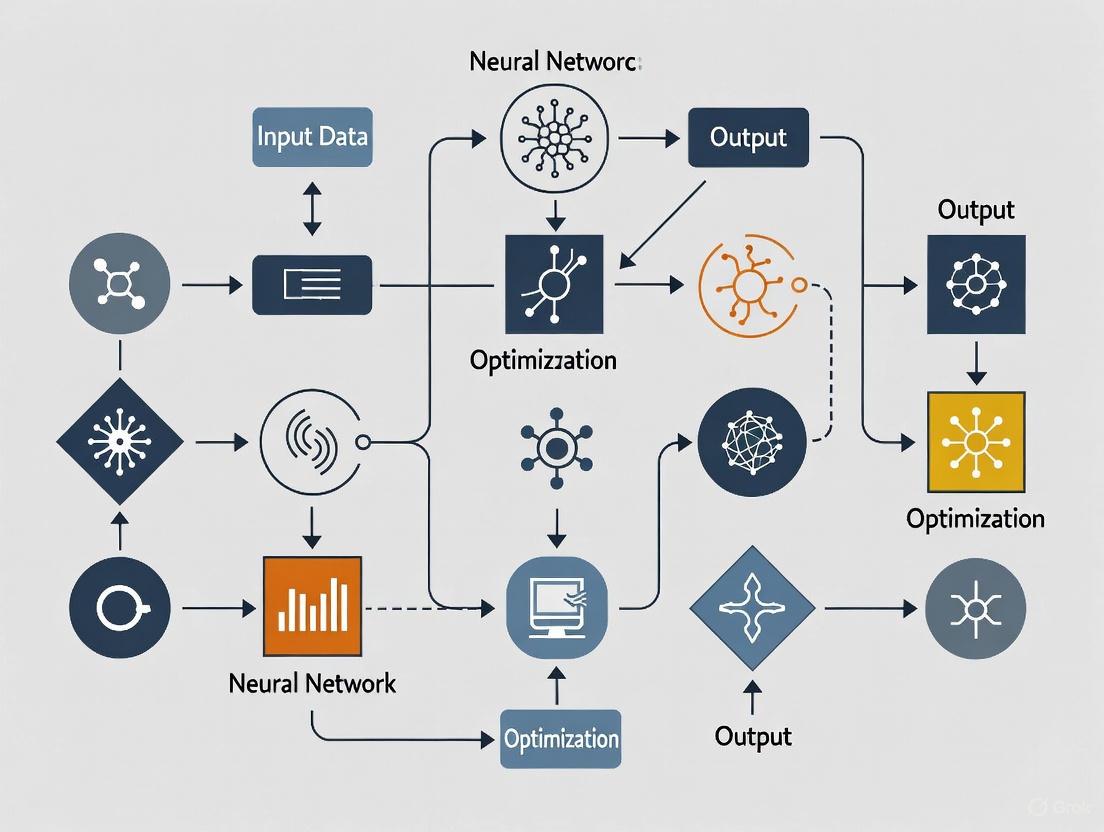
This article explores the information projection strategy, a core component of the novel Neural Population Dynamics Optimization Algorithm (NPDOA) inspired by brain neuroscience.
Information Projection Strategy: The Brain-Inspired Mechanism Optimizing Neural Dynamics for Drug Discovery
Abstract
This article explores the information projection strategy, a core component of the novel Neural Population Dynamics Optimization Algorithm (NPDOA) inspired by brain neuroscience. Tailored for researchers and drug development professionals, it details how this strategy intelligently regulates the trade-off between exploration and exploitation in optimization processes. We cover its foundational principles in theoretical neuroscience, its methodological implementation for complex problems like molecular property prediction and virtual screening, and practical guidance for troubleshooting and performance optimization. The article concludes with a comparative validation against other meta-heuristic algorithms, highlighting its transformative potential to accelerate pharmaceutical research by enhancing the precision and efficiency of drug discovery pipelines.
What is Information Projection? Unpacking the Brain-Inspired Core of Neural Dynamics Optimization
The brain's computational power arises not from isolated neurons, but from the intricate communication within and between neural populations. Understanding the principles governing this communication is a central challenge in neuroscience and offers profound inspiration for developing advanced computational models. This guide explores the core mechanisms of neural population communication, focusing on the dynamic and structured nature of information routing. We frame this discussion within the broader research context of information projection strategy, which posits that neural systems optimize the speed, stability, and efficiency of information transfer by flexibly reconfiguring their population-level dynamics based on behavioral demands and defined output pathways.
Core Principles of Neural Population Dynamics
Neural population dynamics describe how the activities of a group of neurons evolve over time due to local recurrent connectivity and inputs from other brain areas. These dynamics are not merely noisy background activity but are fundamental to how neural circuits perform computations [1].
Flexibility in Sensory Encoding
Recent research on the mouse primary visual cortex (V1) reveals that neural population dynamics are highly flexible and adapt to behavioral state. During locomotion, population dynamics reconfigure to enable faster and more stable sensory encoding compared to stationary states [2].
Key changes observed during locomotion include:
- Shift in Single-Neuron Dynamics: Neurons shift from transient to more sustained response modes, facilitating the rapid emergence of visual stimulus tuning [2].
- Altered Correlation Dynamics: The temporal dynamics of neural correlations change, with stimulus-evoked changes in correlation structure stabilizing more quickly [2].
- More Direct Population Trajectories: Trajectories of population activity make more direct transitions between baseline and stimulus-encoding states, partly due to the dampening of oscillatory dynamics present during stationary states [2].
These adaptive changes demonstrate a core principle of information projection strategy: the nervous system dynamically optimizes population dynamics to meet perceptual demands, governing the speed and stability of sensory encoding [2].
Structured Population Codes in Output Pathways
The principle of information projection extends to how populations communicate with downstream targets. In the posterior parietal cortex (PPC), which is involved in decision-making, neurons projecting to the same brain area form specialized population codes [3].
- Elevated and Structured Correlations: Populations of neurons with a common projection target exhibit stronger pairwise correlations. These correlations are not random but are structured into information-enhancing (IE) motifs [3].
- Information Enhancement: This specialized network structure enhances the population-level information about the animal's choice, going beyond what is available from the sum of individual neuron activities. This structure is unique to subpopulations defined by their projection target and is present specifically during correct behavioral choices [3].
This finding indicates that information projection strategies involve a physical and functional organization of microcircuits, where the correlation structure within an output pathway serves to optimize and safeguard information transmitted to downstream targets.
The following tables consolidate key quantitative findings from research on neural population communication, highlighting the impact of behavioral state and projection-specific organization.
Table 1: Impact of Behavioral State on Neural Response Dynamics in Mouse V1
| Metric | Stationary State | Locomotion State | Significance and Method |
|---|---|---|---|
| Reliable Response Proportion | 22% of responses | 30% of responses | p < 0.001 (McNemar test); Based on reliability of PSTH shapes across trials [2] |
| Onset Response Feature (Peak) | More Likely | Less Likely | p < 0.001 (GLME model); Classified via descriptive function fitting to PSTHs [2] |
| Onset Response Feature (Rise) | Less Likely | More Likely | p < 0.001 (GLME model); Classified via descriptive function fitting to PSTHs [2] |
| Sustainedness Index | 0.32 (0.18–0.48) | 0.48 (0.32–0.62) | p < 0.001 (LME model); Median (IQR); Ratio of baseline-corrected mean to peak firing rate [2] |
Table 2: Properties of Projection-Specific Neural Populations in Mouse PPC
| Property | Neurons with Common Projection Target | General Neighboring Population | Significance and Method |
|---|---|---|---|
| Pairwise Correlation Strength | Stronger | Weaker | Observed in populations projecting to ACC, RSC, and contralateral PPC [3] |
| Correlation Structure | Structured into IE motifs | Random | Vine copula models and information analysis; enhances population-level information [3] |
| Choice Information | Enhanced by population structure | Not enhanced | Structure is present during correct, but not incorrect, choices [3] |
| Anatomical Distribution | Intermingled, with ACC-projecting neurons enriched in superficial L2/3 | N/A | Identified via retrograde tracing [3] |
Experimental Protocols and Methodologies
To study neural population communication, researchers employ sophisticated techniques for recording, perturbing, and analyzing the activity of many neurons simultaneously.
In Vivo Large-Scale Electrophysiology and Visual Stimulation
This protocol is used to investigate state-dependent changes in sensory encoding, as summarized in Table 1 [2].
1. Animal Preparation and Recording:
- Head-fixed mice are implanted with high-density neural probes (e.g., 4-shank Neuropixel 2.0) in the primary visual cortex (V1) to record from hundreds of neurons simultaneously.
- Mice are free to run on a polystyrene wheel, allowing for the categorization of trials into "stationary" and "locomotion" states based on wheel speed.
2. Visual Stimulation:
- Dot field stimuli moving at one of six visual speeds (0, 16, 32, 64, 128, 256°/s) are presented on a truncated dome covering a large portion of the visual field.
- Each stimulus is presented for 1 second, followed by a 1-second grey screen inter-stimulus interval.
3. Data Analysis:
- Single-Neuron Dynamics: Peri-stimulus time histograms (PSTHs) are computed. Response reliability is assessed, and temporal dynamics are classified by fitting descriptive functions (Decay, Rise, Peak, Trough, Flat) to onset and offset periods.
- Population Dynamics: Factor Analysis or similar latent variable models are used to identify low-dimensional trajectories of population activity. Pairwise noise correlations are analyzed over time.
Projection-Specific Population Imaging and Perturbation
This methodology identifies and characterizes populations of neurons based on their long-range projections, as summarized in Table 2 [3] [4].
1. Retrograde Labeling of Projection Neurons:
- Fluorescent retrograde tracers (e.g., conjugated fluorescent dyes) are injected into distinct target areas (e.g., Anterior Cingulate Cortex (ACC), Retrosplenial Cortex (RSC), contralateral PPC).
- This allows for post-hoc identification of neurons in the source area (e.g., PPC) that project to each target.
2. Functional Imaging During Behavior:
- In a separate session, two-photon calcium imaging is used to record the activity of hundreds of neurons in the source area (e.g., PPC layer 2/3) while an animal performs a cognitive task (e.g., a delayed match-to-sample task in virtual reality).
- The imaged field of view is later aligned with the histologically processed brain section to identify the projection identity of each recorded neuron.
3. Holographic Optogenetics for Causal Perturbation:
- To actively probe population dynamics, two-photon holographic optogenetics can be used [1]. This involves:
- Expressing a light-sensitive ion channel (e.g., Channelrhodopsin-2) in neurons.
- Using a spatial light modulator to generate holographic patterns of light that can photostimulate precisely defined groups of individual neurons simultaneously.
- The photostimulation patterns can be designed to test specific hypotheses about network connectivity and dynamics.
4. Data Analysis with Advanced Statistical Models:
- Vine Copula Models: To accurately isolate a neuron's selectivity for a task variable while controlling for other variables (e.g., movements), nonparametric vine copula (NPvC) models are used. These models estimate multivariate dependencies without assuming linearity and provide robust information estimates [3].
- Low-Rank Dynamical Models: Neural population activity is often modeled using low-rank linear dynamical systems (e.g.,
x_{t+1} = A x_t + B u_t), where theAandBmatrices are constrained to be low-rank plus diagonal. This captures the low-dimensional nature of population dynamics and allows for inference of causal interactions [1].
Visualization of Signaling Pathways and Workflows
The following diagrams, defined in the DOT language, illustrate the core concepts and experimental workflows discussed in this guide.
Neural Dynamics Shift with Behavioral State
Projection-Specific Information Routing
The Scientist's Toolkit: Research Reagent Solutions
This section details key reagents, tools, and technologies essential for research in neural population communication.
Table 3: Essential Research Reagents and Tools for Neural Population Studies
| Item | Type | Primary Function |
|---|---|---|
| Neuropixel Probes | Hardware | High-density neural probes for simultaneous recording of hundreds to thousands of neurons in vivo [2]. |
| Two-Photon Calcium Microscopy | Hardware | Optical imaging technique for recording calcium-dependent fluorescence from populations of neurons, indicating activity, in behaving animals [3] [1]. |
| AAV Vectors (e.g., DIO-FLEX) | Biological Reagent | Adeno-associated viruses engineered with Cre- or Flpo-dependent gene expression. Used for targeted delivery of sensors (e.g., GCaMP) or actuators (e.g., Channelrhodopsin) to specific cell types or projection neurons [4]. |
| Retrograde Tracers (e.g., fluorescent) | Biological Reagent | Injected into a target brain region, these are taken up by axon terminals and transported back to the cell body, labeling neurons that project to that target [3]. |
| Channelrhodopsin-2 (ChR2) | Biological Reagent | A light-sensitive ion channel. When expressed in neurons and stimulated with blue light (e.g., via holographic optogenetics), it causes neuronal depolarization and firing, allowing for precise causal manipulation [1]. |
| GCaMP (e.g., jGCaMP7b, GCaMP6s) | Biological Reagent | A genetically encoded calcium indicator. Its fluorescence increases upon binding calcium, providing an optical readout of neuronal spiking activity [4]. |
Defining Information Projection in Computational Models
Information projection in computational models refers to a class of techniques that project or restrict complex, high-dimensional dynamics of a system onto a structured, lower-dimensional parameterized space. In the specific context of neural dynamics optimization research, this strategy is employed to make the analysis and simulation of intricate neural systems computationally tractable while preserving their essential biological and functional characteristics. The core principle involves defining a mapping from a complex state space (e.g., the space of all possible neural connection patterns or probability distributions) onto a constrained subspace defined by a specific model architecture, such as a set of anatomical layers or a neural network parameterization [5] [6]. This projection allows researchers to optimize the system's dynamics within this simpler space, facilitating the study of emergent phenomena and the efficient computation of quantities critical for understanding brain function and related applications like drug development.
The theoretical foundation for this approach is deeply rooted in information geometry and optimization on manifolds [6]. By treating the space of possible system states as a manifold with a specific metric (e.g., the Wasserstein metric for probability distributions), one can define gradient flows that describe the system's evolution. Information projection is then the mathematical operation that restricts these gradient flows to a finite-dimensional submanifold defined by the chosen computational model. This framework is crucial for neural dynamics optimization, as it provides a principled way to approximate the full system's behavior with a manageable number of parameters, enabling scalable and interpretable simulations of brain-wide phenomena [6] [7].
Information Projection in Neural Dynamics
In computational neuroscience, information projection enables the transition from microscopic neural descriptions to meso- and macroscopic network dynamics. A key application is modeling how the modulation of neural gain alters whole-brain information processing. Research shows that parameters like neural gain (σ) and excitability (γ) function as critical tuning parameters that drive the brain through a phase transition between segregated and integrated states [7].
The methodology involves projecting the complex dynamics of a large-scale neural model onto the low-dimensional space defined by these gain parameters. The effect of this projection can be summarized as follows:
| Information Processing Mode | Neural Gain Regime | Network Topology | Dominant Information Dynamic |
|---|---|---|---|
| Segregated Processing | Subcritical | Segregated, low phase synchrony | High Active Information Storage (AIS), promoting local information retention within regions [7]. |
| Integrated Processing | Supercritical | Integrated, high phase synchrony | High Transfer Entropy (TE), promoting global information transfer between regions [7]. |
This demonstrates that information projection onto the gain parameter space reveals a fundamental principle: operating near the critical boundary allows the brain network to flexibly switch between different information processing modes—storage versus transfer—with only subtle changes in underlying neuromodulatory control [7]. This optimization of dynamics is a central tenet of neural computation.
Anatomical Modeling via Parametric Projection
Another manifestation is Parametric Anatomical Modeling (PAM), a method for modeling the anatomical layout of neurons and their projections [5]. PAM projects the problem of defining neural connections and conduction delays onto a structured space of 2D anatomical layers deformed in 3D space.
- Core Concept: Instead of defining wiring at the single-neuron level, PAM operates on the level of layers (e.g., pre-synaptic, post-synaptic, and synaptic layers). The connectivity between groups of neurons is a result of their relative location on these layers and predefined projection rules across them [5].
- Projection Mechanism: The method uses mapping techniques to project neuron positions from a pre-synaptic layer onto a synaptic layer. The probability of forming a synapse is then determined by applying probability functions on this synaptic layer surface [5]. This abstracts away microscopic details and projects the connectivity problem onto a lower-dimensional, anatomically plausible parameter space.
- Utility in Optimization: This projection is "low-dimensional, but yet biologically plausible," making it suitable for analyzing allometric and evolutionary factors in networks and for modeling real-world complexity with less effort, directly supporting the optimization of neural dynamics simulations [5].
Mathematical Framework and Experimental Protocols
A rigorous mathematical formulation of information projection is found in the context of Wasserstein Gradient Flows (WGFs). WGFs describe the evolution of probability distributions (e.g., representing neural states) by following the gradient of a free energy functional on the probability space endowed with the Wasserstein metric [6]. The computational challenge lies in the infinite-dimensional nature of this space.
Neural Projected Dynamics Protocol
The following protocol details the steps for approximating a 1D Wasserstein gradient flow by projecting it onto a space of neural network mappings [6].
1. Problem Formulation:
- Objective: Approximate the evolution of a probability density
p(t, x)governed by a Wasserstein gradient flow for a given free energy functionalℱ(p). - Governing Equation:
∂_t p(t, x) = ∇_x ⋅ ( p(t, x) ∇_x ( δℱ(p) / δp ))[6].
2. Lagrangian Coordinate Transformation:
- Instead of working with the density
p(t, x)directly (Eulerian frame), reformulate the problem in terms of a Lagrangian mapping functionX(t, z). This function maps from a fixed reference coordinatez(e.g., following a particle) to a spatial coordinatexat timet. - The density
pis related toXvia the change-of-variable formula, ensuring mass preservation.
3. Neural Network Parameterization (The Projection Step):
- Projection: Restrict the infinite-dimensional space of all possible mapping functions
Xto a finite-dimensional subspace parameterized by a neural network. For a two-layer ReLU network, this is:X_θ(z) = b + w * z + ∑_{j=1}^J a_j * ReLU(z - c_j)- Here, the parameter set
θ = {b, w, {a_j}, {c_j}}defines the projected subspace [6].
- The evolution of the system is now described by the evolution of the parameters
θ(t).
4. Wasserstein Natural Gradient Flow:
- The evolution of the parameters
θis given by a preconditioned gradient descent:dθ / dt = -G(θ)^† ∇_θ L(θ)- Where
L(θ)is the loss function (the free energyℱexpressed in terms ofθ). G(θ)is the Wasserstein information matrix, which acts as the preconditioner. This matrix encodes the metric on the probability space pulled back to the parameter space, ensuring the optimization respects the geometry of the Wasserstein space [6].
5. Discretization and Numerical Integration:
- Discretize the continuous-time dynamics of
θusing a suitable numerical solver (e.g., Euler method, Runge-Kutta). This yields an update rule for the parameters at each time step, effectively simulating the projected gradient flow.
This protocol projects the complex PDE dynamics onto a neural network's weight space, resulting in a finite-dimensional ODE that can be efficiently integrated. Theoretical guarantees show that such schemes can achieve first or second-order consistency with the true gradient flow [6].
Quantitative Analysis of a Projected Scheme
The table below summarizes key quantitative findings from a numerical analysis of a neural projected scheme for 1D Wasserstein gradient flows, demonstrating its efficacy [6].
| Aspect Analyzed | Method / Quantity | Key Finding / Value |
|---|---|---|
| Network Architecture | Two-layer ReLU Neural Network | Provides a "moving-mesh" method in Lagrangian coordinates; offers high expressivity with a limited number of parameters [6]. |
| Numerical Accuracy | Approximation Error | Can achieve an accuracy of 10⁻³ with fewer than 100 neurons in benchmark problems [6]. |
| Theoretical Consistency | Truncation Error Order | The numerical scheme derived from the neural projected dynamics exhibits first or second-order consistency for general Wasserstein gradient directions [6]. |
| Mesh Quality | Analysis of Node Movements (as a moving-mesh method) | The mesh is proven to not degenerate during the simulation, ensuring numerical stability [6]. |
Application in Drug Development
The principles of information projection and neural dynamics optimization are becoming integral to modernizing drug development. They form part of the core methodology in Model-Informed Drug Development (MIDD), a framework that uses quantitative models to support decision-making, potentially reducing costly late-stage failures and accelerating market access [8].
MIDD employs a "fit-for-purpose" strategy, where the complexity of a model—a form of information projection from the biological reality—is closely aligned with the key Question of Interest (QOI) and Context of Use (COU) at each stage [8]. Relevant quantitative tools include:
- Quantitative Systems Pharmacology (QSP): An integrative modeling framework that combines systems biology and pharmacology. It projects the complex pathophysiology of a disease and drug mechanism onto a mechanistic, mathematical model to generate predictions on treatment effects and side effects [8].
- Physiologically Based Pharmacokinetic (PBPK) Modeling: A mechanistic approach that projects the pharmacokinetic journey of a drug through the body onto a model structured by human physiology, improving the prediction of drug exposure [8].
- Population PK/Exposure-Response (PPK/ER) Modeling: Projects the variability in drug exposure and response observed across a population onto a statistical model, identifying factors that contribute to this variability and optimizing dosing strategies [8].
The ultimate application of these models is to construct dynamic, probabilistic development timelines. By projecting the complex, high-dimensional space of biological, clinical, and competitive data onto a structured model, AI-driven approaches can forecast competitor milestones, predict regulatory risks, and identify optimal development pathways. This compresses the lengthy development cycle, thereby maximizing the commercially valuable period of patent exclusivity [9].
The Scientist's Toolkit: Research Reagent Solutions
The following table details key computational tools and resources essential for implementing information projection methodologies in computational neuroscience and related fields.
| Tool / Resource | Function / Description |
|---|---|
| Python with Blender API | A programming environment integrated with 3D modeling software; used for implementing Parametric Anatomical Modeling (PAM) to define and visualize anatomical layers and neural projections [5]. |
| Two-Layer ReLU Network | A specific neural network architecture serving as the basis function for the Lagrangian mapping in projected Wasserstein gradient flows; valued for its numerical properties and ability to be analyzed in closed form [6]. |
| PyTorch / TensorFlow | Machine learning libraries featuring automatic differentiation; essential for efficiently computing gradients (e.g., ∇_θ L(θ)) in high-dimensional parameter spaces during the optimization of neural projected dynamics [6]. |
| Wasserstein Information Matrix (G(θ)) | The preconditioner in the natural gradient descent; a key analytical object that ensures the parameter update respects the geometry of the underlying probability space in Wasserstein gradient flow computations [6]. |
| Large-Scale Neural Mass Model | A biophysical nonlinear oscillator model used to simulate whole-brain BOLD signals; the platform for studying how neural gain parameters (σ, γ) induce phase transitions in information processing [7]. |
| Active Information Storage (AIS) & Transfer Entropy (TE) | Information-theoretic measures used as analytical tools to quantify the dominant computational modes (information storage vs. transfer) in simulated or empirical neural time series data following projection onto gain parameters [7]. |
The Critical Role in Balancing Exploration and Exploitation
The balance between exploration and exploitation represents a core challenge in the optimization of neural dynamics and intelligent decision-making systems. In dynamic environments, exploitation leverages known, high-yielding strategies to maximize immediate performance, while exploration involves investigating novel, uncertain alternatives to discover potentially superior long-term solutions. This balance is not merely a technical parameter but a fundamental principle governing the efficiency and robustness of adaptive systems, from artificial intelligence algorithms to biological neural networks and therapeutic discovery pipelines. Inefficient management of this trade-off leads to significant consequences: premature convergence to suboptimal solutions, failure to adapt to changing environments, and inadequate generalization capabilities. Within the framework of information projection strategy, this balance dictates how systems allocate computational and experimental resources to project current knowledge onto future performance, making it a critical research frontier in neural dynamics optimization.
Recent empirical analyses across domains reveal the tangible impact of this equilibrium. In pharmaceutical research, new drug modalities—a proxy for exploration—now account for $197 billion, or 60% of the total pharmaceutical pipeline value, demonstrating the sector's substantial investment in exploratory research [10]. Conversely, studies in reinforcement learning for large language models (LLMs) show that over-emphasis on exploitation leads to entropy collapse, where models become trapped in behavioral local minima, causing performance plateaus and poor generalization on out-of-distribution tasks [11]. This manuscript provides a technical examination of methodologies, metrics, and protocols for quantifying and optimizing this critical balance within neural dynamics and drug discovery research.
Theoretical Foundations and Quantitative Metrics
The exploration-exploitation dynamic is quantified through several key information-theoretic and statistical metrics. Policy entropy serves as a primary indicator of exploration in reinforcement learning systems, measuring the uncertainty in an agent's action selection distribution. Empirical studies on LLMs reveal a strong correlation between high entropy and exploratory reasoning behaviors, including the use of pivotal logical tokens (e.g., "because," "however") and reflective self-verification actions [12]. Conversely, rapid entropy collapse signifies over-exploitation and often precedes performance stagnation.
Dimension-wise diversity measurement provides a statistical framework for evaluating population diversity and convergence in metaheuristic and evolutionary algorithms. This method tracks how agent populations distribute across the solution space throughout the optimization process, offering quantitative insight into the temporal balance between global search (exploration) and local refinement (exploitation) [13]. In clinical and preclinical research, pipeline value allocation between established and emerging therapeutic modalities offers a macro-scale metric for sector-level exploration-exploitation balance, with emerging modalities showing accelerated growth despite higher risk profiles [10].
Table 1: Core Metrics for Quantifying Exploration-Exploitation Balance
| Metric | Definition | Interpretation | Domain Applicability |
|---|---|---|---|
| Policy Entropy | Shannon entropy of the action probability distribution | High values indicate exploratory behavior; decreasing trends signal exploitation | RL, LLMs, Neural Networks |
| Population Diversity | Statistical variance of agent positions in solution space | High diversity indicates active exploration; low diversity suggests convergence/exploitation | Metaheuristics, Evolutionary Algorithms |
| Modality Pipeline Value | Percentage of R&D investment in novel vs. established drug platforms | High investment in novel modalities signals strategic exploration | Pharmaceutical R&D |
| State Visitation Frequency | Count of how often an RL agent visits a state | Low-frequency states are under-explored; high-frequency states are over-exploited | RL, Autonomous Systems |
| Advantage Function Shape | Augmented advantage with intrinsic reward terms | Positive intrinsic rewards incentivize exploration of novel states | Policy Optimization Algorithms |
Methodological Approaches Across Domains
Intrinsic Reward Mechanisms in Reinforcement Learning
Graph Neural Network-based Intrinsic Reward Learning (GNN-IRL) represents an advanced approach for structured exploration. This framework models the environment as a dynamic graph where nodes represent states and edges represent transitions. The GNN learns graph embeddings that capture structural information, and intrinsic rewards are computed based on graph metrics like centrality and inverse degree, encouraging agents to explore both influential and underrepresented states [14]. The methodology involves: (1) discretizing continuous state variables to construct state graphs; (2) employing GNNs to compute node embeddings; (3) calculating intrinsic rewards based on centrality measures; and (4) integrating these rewards with extrinsic rewards in the policy optimization objective. Experimental validation in benchmark environments (CartPole-v1, MountainCar-v0) demonstrated superior performance over state-of-the-art exploration strategies in convergence rate and cumulative reward [14].
GNN-IRL Framework Workflow
Entropy-Based Advantage Shaping in Large Language Models
For LLM reasoning, a minimal modification to standard reinforcement learning provides significant exploratory benefits. The approach augments the standard advantage function with a clipped, gradient-detached entropy term:
[A{\text{entropy}}(s,a) = A{\text{standard}}(s,a) + \beta \cdot \text{clip}(H(\pi(\cdot|s)), \epsilon{\text{low}}, \epsilon{\text{high}})]
where (H(\pi(\cdot|s))) is the policy entropy at state (s), (\beta) is a weighting coefficient, and clip() ensures the entropy term neither dominates nor reverses the sign of the original advantage. This design amplifies exploratory reasoning behaviors—such as pivotal token usage and reflective actions—while maintaining the original policy gradient flow. The entropy term naturally diminishes as confidence increases, creating a self-regulating exploration mechanism [12]. Implementation requires only single-line code modifications to existing RL pipelines but yields substantial improvements in Pass@K metrics, particularly for complex reasoning tasks.
Sample-Then-Forget Mechanisms for Multi-Modal Exploration
Exploration-Enhanced Policy Optimization (EEPO) addresses the self-reinforcing loop of mode collapse in RL with verifiable rewards (RLVR). EEPO introduces a two-stage rollout process with adaptive unlearning: (1) the model generates half of the trajectories; (2) a lightweight unlearning step temporarily suppresses these sampled responses; (3) the remaining trajectories are sampled from the updated model, forcing exploration of different output regions [11]. This "sample-then-forget" mechanism specifically targets dominant behavioral modes that typically receive disproportionate probability mass. The unlearning employs a complementary loss that penalizes high-probability tokens more severely than low-probability ones, creating stronger incentives to deviate from dominant modes. A entropy-conditioned gating mechanism activates unlearning only when exploration deteriorates (low entropy), making the intervention targeted and computationally efficient.
EEPO Two-Stage Rollout with Unlearning
Experimental Protocols and Validation Frameworks
Protocol: Evaluating Exploration Efficiency in RL Benchmarks
Objective: Quantify the exploration efficiency of novel algorithms against baseline methods in standardized environments.
Materials:
- Software: OpenAI Gym (or comparable RL benchmark suite)
- Environments: CartPole-v1, MountainCar-v0, LunarLander-v3 (discrete action spaces)
- Computational Resources: GPU-enabled workstation for deep RL experiments
Procedure:
- Baseline Establishment: Implement and train standard DQN with ε-greedy exploration on target environments until performance plateaus.
- Experimental Condition: Implement target exploration algorithm (GNN-IRL, EEPO, or entropy-based advantage).
- Metric Tracking: Throughout training, record:
- Cumulative reward per episode
- State visitation coverage (unique states visited)
- Policy entropy over time
- Convergence rate (episodes to reach performance threshold)
- Comparative Analysis: Perform statistical comparison of final performance metrics across 10 independent runs with different random seeds.
- Generalization Testing: Evaluate final policies on modified environment parameters to assess robustness.
Validation: The GNN-IRL framework demonstrated superior state coverage and faster convergence compared to intrinsic methods like Random Network Distillation (RND) and count-based exploration in discrete action spaces [14].
Protocol: Pharmaceutical Modality Portfolio Analysis
Objective: Assess exploration-exploitation balance in therapeutic development pipelines.
Materials:
- Data Sources: BCG New Drug Modalities reports, pharmaceutical pipeline databases
- Analytical Tools: Portfolio analysis frameworks, modality classification taxonomy
Procedure:
- Modality Classification: Categorize pipeline assets into established (mAbs, ADCs, BsAbs) and emerging (gene, mRNA, cell therapies) modalities.
- Value Attribution: Assign projected revenue values to each pipeline asset based on analyst forecasts.
- Trend Analysis: Track proportional allocation and growth rates across modality categories over 3-5 year periods.
- Deal Analysis: Monitor licensing and M&A activity to identify external exploration strategies.
- Correlation Assessment: Relate exploration intensity (emerging modality investment) to long-term pipeline robustness and innovation metrics.
Validation: Recent analysis shows new modalities growing to 60% of pipeline value ($197 billion), with antibodies maintaining robust growth while gene therapies face stagnation due to safety concerns [10].
Table 2: Performance Comparison of Exploration Techniques in RL Environments
| Method | Cumulative Reward (Mean ± SD) | State Coverage (%) | Convergence Episodes | Generalization Score |
|---|---|---|---|---|
| GNN-IRL [14] | 945.2 ± 12.4 | 92.5 | 1850 | 0.89 |
| EEPO [11] | 978.6 ± 15.3 | 88.7 | 1620 | 0.92 |
| Entropy Advantage [12] | 912.8 ± 18.7 | 85.2 | 1950 | 0.87 |
| RND | 865.3 ± 22.5 | 78.4 | 2400 | 0.76 |
| ε-Greedy | 802.1 ± 25.8 | 72.6 | 3100 | 0.71 |
Table 3: Key Research Reagent Solutions for Exploration-Exploitation Research
| Reagent/Resource | Function | Application Context | Specifications |
|---|---|---|---|
| CETSA (Cellular Thermal Shift Assay) | Validates target engagement in intact cells | Drug discovery exploration phase | Quantifies drug-target interaction; cellular context preservation |
| Graph Neural Network Frameworks | Models state transitions as graph structures | RL exploration in structured environments | PyTorch Geometric; DGL; state embedding dimensions: 128-512 |
| SBERT (Sentence-BERT) | Generates semantic embeddings of text | Analyzing behavioral diversity in LLMs | Enables clustering of reasoning strategies; measures semantic novelty |
| AutoDock & SwissADME | Predicts molecular binding and drug-likeness | In silico screening for drug discovery | Filters compound libraries prior to synthesis |
| GRPO/PPO Implementation | Policy optimization with verifiable rewards | Large-scale reasoning model training | Base for entropy augmentation; supports group-based advantage estimation |
| Dimension-Wise Diversity Metrics | Statistically evaluates population convergence | Metaheuristic algorithm analysis | Quantifies exploration-exploitation ratio throughout optimization |
The critical role of balancing exploration and exploitation extends across neural dynamics optimization, pharmaceutical development, and artificial intelligence research. Effective balancing requires multi-faceted approaches: structured intrinsic rewards (GNN-IRL), mathematical advantage shaping (entropy augmentation), and algorithmic interventions (EEPO's sample-then-forget) each contribute unique strengths. Quantitative validation across domains confirms that strategic exploration enhancement yields substantial improvements in performance, robustness, and long-term innovation capacity.
Future research should investigate dynamic balancing protocols that autonomously adjust exploration strategies based on environmental complexity and learning progress. In pharmaceutical contexts, portfolio optimization frameworks that quantitatively balance established and emerging modality investments represent a promising direction. For neural dynamics, information-theoretic formalisms of the exploration-exploitation trade-off may yield fundamental insights into both artificial and biological intelligence. As these research threads converge, they promise to advance our understanding of adaptive information projection strategies across intelligent systems.
Information projection constitutes a foundational mechanism within the Neural Population Dynamics Optimization Algorithm (NPDOA), a novel brain-inspired meta-heuristic method. As a swarm intelligence algorithm derived from theoretical neuroscience, NPDOA simulates the activities of interconnected neural populations during cognitive and decision-making processes [15]. The information projection strategy specifically regulates communication between these neural populations, serving as a critical control system that facilitates the algorithm's transition from exploration to exploitation phases [15]. This paper examines the architectural implementation, operational mechanics, and experimental validation of information projection within the broader context of neural dynamics optimization research, with particular relevance to computational problems in drug development and biomedical research.
Theoretical Foundation and Biological Inspiration
The NPDOA framework is grounded in population doctrine from theoretical neuroscience, where each neural population's state represents a potential solution within the optimization landscape [15]. Individual decision variables correspond to neurons, with their values encoding neuronal firing rates [15]. Information projection models the neurobiological process of inter-population communication through synaptic pathways, facilitating coordinated computation across distributed neural circuits.
Within this framework, three synergistic strategies govern population dynamics:
- Attractor Trending: Drives neural populations toward optimal decisions, ensuring exploitation capability
- Coupling Disturbance: Deviates neural populations from attractors via coupling mechanisms, improving exploration ability
- Information Projection: Controls communication between neural populations, enabling the transition from exploration to exploitation [15]
The mathematical representation of a solution within the NPDOA framework is expressed as a vector of neural firing rates: [ x = (x1, x2, ..., xD) ] where (xi) represents the firing rate of neuron (i) in a D-dimensional search space [15].
Computational Architecture and Mechanism
The information projection strategy operates through a structured process of state evaluation, communication weighting, and directional information flow. The following diagram illustrates the complete operational workflow and position within the NPDOA's broader architecture:
Operational Principles
Information projection functions as a regulatory mechanism that modulates the influence of attractor trending and coupling disturbance strategies on neural states. The strategy achieves this through:
- Communication Weighting: Dynamically adjusting the transmission strength between neural populations based on fitness landscape characteristics
- State Evaluation: Continuously monitoring population states relative to global and local attractors
- Directional Control: Regulating the flow of information between exploratory and exploitative processes
The regulatory function of information projection can be mathematically represented as: [ IP(t) = f(AS(t), CD(t), \phi(t)) ] where (IP(t)) is the information projection output, (AS(t)) represents attractor state influences, (CD(t)) denotes coupling disturbance effects, and (\phi(t)) encapsulates time-dependent environmental factors [15].
Experimental Analysis and Performance Validation
Benchmark Testing Protocols
The NPDOA framework with its information projection strategy was rigorously evaluated against standard benchmark functions and practical optimization problems. Experimental studies utilized the CEC2017 and CEC2022 benchmark suites to assess performance across diverse landscape characteristics [15] [16]. The algorithm was implemented within the PlatEMO v4.1 experimental platform on computational systems equipped with Intel Core i7-12700F CPUs and 32GB RAM [15].
Table 1: NPDOA Performance on Benchmark Functions
| Benchmark Suite | Dimensions | Metric | NPDOA Performance | Comparative Algorithms |
|---|---|---|---|---|
| CEC2017 | 30D | Friedman Rank | 3.00 | 9 state-of-the-art algorithms |
| CEC2022 | 50D | Friedman Rank | 2.71 | 9 state-of-the-art algorithms |
| CEC2022 | 100D | Friedman Rank | 2.69 | 9 state-of-the-art algorithms |
Statistical validation through Wilcoxon rank-sum tests confirmed the robustness of NPDOA performance, with the information projection mechanism contributing significantly to balanced exploration-exploitation characteristics [15].
Practical Application in Medical Research
The enhanced variant INPDOA (Improved Neural Population Dynamics Optimization Algorithm) has demonstrated exceptional performance in automated machine learning (AutoML) frameworks for medical prognosis. In a recent study focusing on autologous costal cartilage rhinoplasty (ACCR) prognosis prediction, the INPDOA-enhanced AutoML model achieved a test-set AUC of 0.867 for 1-month complications and R² = 0.862 for 1-year Rhinoplasty Outcome Evaluation (ROE) scores [17].
Table 2: INPDOA Performance in Medical Prognosis Modeling
| Application Domain | Model Type | Performance Metrics | Key Predictors Identified |
|---|---|---|---|
| ACCR Prognosis | AutoML | AUC: 0.867 (1-month complications) | Nasal collision, smoking, preoperative ROE |
| ACCR Outcome Prediction | Regression | R²: 0.862 (1-year ROE) | Surgical duration, BMI, tissue characteristics |
The improved algorithm demonstrated net benefit improvement over conventional methods in decision curve analysis and reduced prediction latency in clinical decision support systems [17].
Implementation Framework
Computational Specifications
The computational complexity of NPDOA has been analyzed in benchmark studies, with the information projection strategy contributing to efficient resource utilization during phase transitions [15]. The algorithm maintains feasible computation times while handling high-dimensional optimization problems relevant to drug discovery pipelines.
Table 3: Research Reagent Solutions for Algorithm Implementation
| Component | Function | Implementation Example |
|---|---|---|
| PlatEMO Platform | Experimental Framework | MATLAB-based environment for multi-objective optimization [15] |
| AutoML Integration | Automated Pipeline Optimization | TPOT, Auto-Sklearn for feature engineering [17] |
| Bayesian Optimization | Hyperparameter Tuning | Slashing development cycles in medical prediction models [17] |
| SHAP Values | Model Interpretability | Quantifying variable contributions in prognostic models [17] |
| SMOTE | Class Imbalance Handling | Addressing imbalance in medical complication datasets [17] |
Integration with Automated Machine Learning
The information projection strategy within INPDOA has been successfully integrated with AutoML frameworks for medical prognostic modeling. The implementation follows a structured workflow:
The solution vector in the INPDOA-AutoML framework is represented as: [ x=(k|\delta1,\delta2,...,\deltam|\lambda1,\lambda2,...,\lambdan) ] where (k) denotes the base-learner type, (\deltai) represents feature selection parameters, and (\lambdaj) encapsulates hyperparameter configurations [17].
Discussion and Research Implications
The information projection strategy within NPDOA represents a significant advancement in balancing exploration and exploitation in metaheuristic optimization. By directly regulating information flow between neural populations, this mechanism enables more efficient navigation of complex fitness landscapes commonly encountered in biomedical research and drug development.
The successful application of INPDOA in prognostic modeling for surgical outcomes demonstrates the translational potential of this approach in healthcare applications [17]. The algorithm's ability to integrate diverse clinical parameters while maintaining interpretability through SHAP value analysis addresses critical challenges in medical artificial intelligence implementation.
Future research directions include adapting the information projection framework for multi-objective optimization in drug candidate screening, clinical trial design optimization, and personalized treatment planning. The biological plausibility of the neural population dynamics approach suggests potential for cross-fertilization between computational intelligence and computational neuroscience disciplines.
The study of neural systems is fundamentally guided by two complementary paradigms: biological fidelity, which seeks to accurately represent the physiological and structural properties of biological nervous systems, and computational abstraction, which develops simplified mathematical models to capture essential information processing capabilities. This dichotomy frames a core challenge in neural dynamics optimization research—how to project information across these domains to advance both theoretical understanding and practical applications. The tension between these approaches reflects a deeper scientific strategy: biological fidelity provides validation constraints and inspiration from evolved systems, while computational abstraction enables theoretical generalization and engineering implementation. Within neuroscience, neuromorphic engineering, and neuropharmacology, this duality manifests in how researchers conceptualize, model, and manipulate neural processes.
Biological nervous systems, such as the human brain, exhibit staggering complexity with approximately 100 billion neurons, each potentially connecting to thousands of others, forming highly parallel, distributed systems with massive computational capacity and fault tolerance [18]. These systems are inherently nonlinear, dissipative, and operate significantly in the presence of noise [18]. Computational abstractions necessarily simplify this complexity while attempting to preserve functional properties relevant to specific research questions or engineering applications. The information projection strategy in neural dynamics optimization research thus involves carefully navigating the tradeoffs between these approaches to maximize insights while minimizing computational cost and model complexity.
Biological Fidelity: Principles and Architectures
Biological fidelity in neural modeling prioritizes accurate representation of the structural and functional properties of actual nervous systems. This approach grounds computational insights in physiological reality and provides constraints for abstract models.
Structural Organization of Biological Neural Systems
The mammalian nervous system exhibits a hierarchical organization that can be broadly divided into the central nervous system (CNS), comprising the brain and spinal cord, and the peripheral nervous system (PNS), which includes all nerves outside the CNS [19]. The CNS is protected by bony structures (skull and vertebrae) and serves as the primary processing center, while the PNS lacks bony protection and is more vulnerable to damage [19]. This structural division represents a fundamental architectural principle conserved across species.
At a functional level, the autonomic nervous system within the PNS can be further subdivided into the sympathetic nervous system, which activates during excitement or threat (fight-or-flight response), and the parasympathetic nervous system, which controls organs and glands during rest and digestion [19]. These systems work antagonistically to maintain physiological homeostasis without conscious control.
Brain Network Principles and Connectomics
Modern neuroscience reveals that brain organization follows principles of efficient network design. The brain exhibits small-world network properties characterized by high clustering coefficients and short path lengths [20]. This architecture enables both specialized processing in clustered regions and efficient integration across distributed networks. Connection length distributions in human brains show abundant short-range connections with relatively sparse long-range connections, balancing biological cost against information processing efficiency [20].
The maximum entropy principle appears to govern brain network organization, optimizing the tradeoff between metabolic cost and information transfer efficiency [20]. This principle predicts the distribution of connection lengths observed across multiple species, suggesting an evolutionary optimization process that maximizes network entropy to enhance information processing capacity while conserving biological resources.
Table 1: Key Properties of Biological Neural Networks
| Property | Description | Functional Significance |
|---|---|---|
| Small-World Architecture | High clustering with short path lengths | Balances specialized processing with global integration |
| Hierarchical Organization | Multiple processing levels from sensory to association areas | Enables progressive abstraction of information |
| Time Scale Hierarchy | Varying temporal response profiles across regions | Supports simultaneous processing of fast and slow patterns |
| Dual Sympathetic-Parasympathetic Systems | Antagonistic autonomic control | Maintains physiological homeostasis across contexts |
| Maximum Entropy Connectivity | Optimized connection length distribution | Balances information processing efficiency with biological cost |
Computational abstraction develops simplified mathematical representations of neural processes, emphasizing generalizable principles over biological detail. These abstractions enable theoretical analysis and engineering implementation while sacrificing physiological accuracy.
Core Principles of Neural Dynamics
Computational models of neural systems typically incorporate several key characteristics: (1) large numbers of degrees of freedom to model collective dynamics; (2) nonlinearity essential for computational universality; (3) dissipativity causing state space volume to converge to lower-dimensional manifolds; and (4) inherent noise that necessitates probabilistic analysis [18]. These properties collectively enable the rich dynamical behaviors observed in both biological and artificial neural systems.
A fundamental abstraction is the additive neuron model, which describes the dynamics of neuron j using the differential equation:
[ Cj\frac{dvj(t)}{dt} = -\frac{vj(t)}{Rj} + \sum{i=1}^{N} w{ji}xi(t) + Ij ]
where (vj(t)) represents the membrane potential, (Cj) the membrane capacitance, (Rj) the membrane resistance, (w{ji}) the synaptic weights, (xi(t)) the inputs, and (Ij) an external bias current [18]. The neuron's output is typically determined by a nonlinear activation function (xj(t) = \varphi(vj(t))), often implemented as a logistic sigmoid or hyperbolic tangent function.
Attractor Dynamics and Stability
A central concept in computational neuroscience is the attractor, a bounded subset of state space to which nearby trajectories converge [18]. Attractors can take several forms: point attractors (single stable states), limit cycles (periodic orbits), or more complex chaotic attractors. Each attractor is surrounded by a basin of attraction—the set of initial conditions that converge to that attractor—with boundaries called separatrices [18].
The Lyapunov stability framework provides mathematical tools for analyzing attractor dynamics. A system is stable if trajectories remain within a small radius of an equilibrium point given initial conditions near that point [18]. For a point attractor, linearization around the equilibrium yields a Jacobian matrix A; if all eigenvalues of A have absolute values less than 1, the attractor is termed hyperbolic [18].
Methodological Approaches: Experimental and Analytical Frameworks
Research in neural dynamics employs diverse methodologies spanning biological experimentation and computational analysis, each with distinct approaches to maintaining fidelity or implementing abstraction.
Biological Network Analysis Methods
Diffusion tensor imaging (DTI) and viral tracing techniques (both retrograde and anterograde) enable reconstruction of structural brain networks [20]. These methods provide the anatomical foundation for connectome mapping, revealing the physical pathways through which neural information flows.
To infer functional connectivity from neural activity, researchers employ several information-theoretic measures. Transfer entropy quantifies directional information flow between neural signals, defined as:
[ TE{X \to Y} = \sum y{t+1}, yt, xt p(y{t+1}, yt, xt) \log \frac{p(y{t+1} | yt, xt)}{p(y{t+1} | yt)} ]
where (y{t+1}) represents the future state of variable *Y*, and (yt), (x_t$ represent the past states of Y and X [20]. Conditional transfer entropy extends this measure to account for common inputs, while truncated pairwise transfer entropy improves computational efficiency by considering only recent history [20]. These methods enable reconstruction of effective connectivity from observed neural activity patterns.
Computational Model Analysis Frameworks
The attribution graph method, inspired by neuroscientific connectomics, enables tracing of intermediate computational steps in complex models like large language models (LLMs) [21]. This approach transforms "black box" models into interpretable computational graphs by identifying sparse, human-interpretable features that approximate the model's internal representations [21].
Local surrogate models combine interpretable features with error nodes that capture residual information not explained by the interpretable components [21]. These models maintain high fidelity to the original system while providing explanatory insight. Intervention experiments then test hypothesized mechanisms by perturbing identified features and observing effects on model outputs, validating causal relationships within the attribution graph [21].
Table 2: Comparative Methodologies in Neural Dynamics Research
| Methodology | Biological Fidelity Approach | Computational Abstraction Approach |
|---|---|---|
| Network Mapping | Diffusion tensor imaging (DTI), Viral tracing | Graph theory, Topological analysis |
| Connectivity Analysis | Transfer entropy, Conditional mutual information | Attribution graphs, Pathway analysis |
| Dynamics Characterization | Local field potentials, Calcium imaging | Attractor analysis, Stability theory |
| Intervention Methods | Optogenetics, Pharmacological manipulation | Feature ablation, Parameter perturbation |
| Validation Framework | Physiological consistency, Behavioral correlation | Prediction accuracy, Generalization capacity |
The Hopfield network represents a classic example of computational abstraction, implementing a content-addressable memory system inspired by biological neural networks [18]. The network dynamics follow:
[ Cj\frac{d}{dt}vj(t) = -\frac{vj(t)}{Rj} + \sum{i=1}^{N}w{ji}\varphii(vi(t)) + I_j ]
with symmetric weights (w{ji} = w{ij}) and neuron-specific activation functions (\varphi_i(\cdot)) [18].
The network's stability can be analyzed through its Lyapunov function:
[ E = -\frac{1}{2}\sum{i=1}^{N}\sum{j=1}^{N}w{ji}xixj + \sum{j=1}^{N}\frac{1}{Rj}\int0^{xj}\varphij^{-1}(x)dx - \sum{j=1}^{N}Ijx_j ]
which guarantees convergence to fixed point attractors [18]. This abstraction captures the concept of memory as stable attractor states while sacrificing biological details like diverse neuron types and complex synaptic dynamics.
Brain-Inspired AI and Reverse Engineering
Recent approaches in AI interpretability have adopted strategies inspired by neuroscience. The "biology of AI" framework applies methods analogous to neuroanatomy to understand large language models [21]. Cross-layer transcoder (CLT) architectures replace original model components with sparse, interpretable features, similar to how neuroscientists identify functionally specialized neural populations [21].
This approach has revealed that complex models perform multi-step internal reasoning (occurring during forward passes rather than explicit chain-of-thought), proactive planning (e.g., pre-planning rhyme schemes in poetry generation), and employ both language-specific and language-agnostic circuits [21]. These findings demonstrate how computational abstractions can develop internal structures that parallel specialized biological systems.
Clinical Translation: Infant Brain Injury Repair
The treatment of infant brain injury demonstrates the clinical relevance of integrating biological fidelity with computational abstraction. Therapeutic approaches leverage the enhanced plasticity of the developing brain, employing neuroprotective strategies like hypothermia for hypoxic-ischemic encephalopathy and neurorepair interventions such as multi-sensory stimulation and right median nerve electrical stimulation [22].
These treatments implicitly respect the dynamical principles identified in computational studies—interventions are timed to capitalize on critical periods of heightened plasticity, and multi-modal stimulation protocols are designed to guide neural dynamics toward functional attractor states [22]. This demonstrates how abstract principles from neural dynamics can inform biologically-grounded clinical interventions.
Research Reagents and Experimental Tools
The following table details essential research reagents and methodologies used in neural dynamics research across the biological-computational spectrum.
Table 3: Essential Research Reagents and Methodologies in Neural Dynamics
| Research Reagent/Method | Category | Function/Application | Example Use Cases |
|---|---|---|---|
| Diffusion Tensor Imaging (DTI) | Biological Mapping | Reconstructs white matter pathways through water diffusion | Human connectome mapping, Structural connectivity analysis [20] |
| Viral Tracing Techniques | Biological Mapping | Anterograde/retrograde neuronal pathway labeling | Circuit tracing in model organisms, Input-output mapping [20] |
| Transfer Entropy Analysis | Analytical Method | Quantifies directional information flow between signals | Effective connectivity from neural recordings, Causal inference [20] |
| Cross-Layer Transcoder (CLT) | Computational Method | Replaces model components with interpretable features | LLM mechanism mapping, Attribution graph construction [21] |
| Local Surrogate Models | Computational Method | Approximates complex systems with interpretable components | Hypothesis generation, Mechanism testing via perturbation [21] |
| Right Median Nerve Stimulation | Clinical Intervention | Increases cerebral blood flow, excites cortical networks | Disorders of consciousness treatment, Coma recovery [22] |
| Multi-Sensory Stimulation | Clinical Intervention | Promotes dendritic growth and synaptic connectivity | Infant brain injury recovery, Neurorehabilitation [22] |
| Attribution Graphs | Analytical Framework | Traces intermediate computational steps in complex models | Reverse engineering AI systems, Identifying computational motifs [21] |
The productive tension between biological fidelity and computational abstraction continues to drive advances in neural dynamics research. Biological fidelity provides essential constraints and validation benchmarks, preventing computational models from diverging into biologically irrelevant parameter spaces. Computational abstraction enables identification of general principles that transcend specific implementations, potentially revealing fundamental laws of neural computation.
The most promising research strategies employ iterative projection of information across these domains: using biological data to constrain computational models, then using those models to generate testable hypotheses about biological function, which in turn refine the models. This virtuous cycle accelerates progress in both theoretical understanding and practical applications, from novel therapeutic interventions to more efficient neural-inspired algorithms.
Future research should develop more sophisticated methods for projecting information across the fidelity-abstraction gap, particularly for capturing multi-scale dynamics, neuromodulatory effects, and the intricate relationship between structure and function in neural systems. By embracing both biological complexity and computational elegance, neural dynamics research can continue to illuminate one of nature's most sophisticated information processing systems.
Implementing Information Projection: From Algorithmic Rules to Drug Discovery Breakthroughs
In the evolving landscape of computational intelligence, the information projection strategy has emerged as a pivotal mechanism for regulating complex optimization processes within neural dynamics frameworks. This strategy finds its roots in information theory, where it formalizes the process of finding a distribution that minimizes divergence from a target while satisfying specific constraints [23]. In the context of neural dynamics optimization research, this mathematical foundation is adapted to control information transmission between neural populations, thereby effectively balancing the trade-off between exploration and exploitation during the search for optimal solutions [15]. The strategic implementation of information projection enables adaptive communication channels that dynamically modulate the influence of different dynamic strategies based on the current state of the neural population, facilitating a sophisticated transition from global exploration to local refinement.
Within brain-inspired meta-heuristics like the Neural Population Dynamics Optimization Algorithm (NPDOA), the information projection strategy functions as a regulatory mechanism that orchestrates the interaction between attractor trending and coupling disturbance strategies [15]. This tripartite architecture mirrors cognitive processes observed in neuroscience, where neural populations in the brain coordinate sensory, cognitive, and motor calculations through regulated information transfer [15]. The mathematical representation of this strategy provides a formal framework for understanding how optimal decisions emerge through controlled information flow in complex neural systems, offering significant potential for solving challenging optimization problems across various domains, including drug development and computational biology.
Mathematical Foundations
Core Principles from Information Theory
The information projection strategy, also referred to as I-projection in information theory, is fundamentally concerned with identifying a probability distribution from a set of feasible distributions that most closely approximates a given reference distribution, where closeness is quantified using the Kullback-Leibler (KL) divergence [23]. The foundational mathematical problem is formulated as:
$$p^* = \underset{p \in P}{\arg\min} D_{KL}(p || q)$$
where $D_{KL}(p || q)$ represents the KL divergence between distributions $p$ and $q$, defined as:
$$D{KL}(p || q) = \sum{x} p(x) \log \frac{p(x)}{q(x)}$$
For convex constraint sets $P$, the information projection exhibits a critical Pythagorean-like inequality property:
$$D{KL}(p || q) \geq D{KL}(p || p^) + D_{KL}(p^ || q)$$
This inequality establishes a geometric interpretation wherein the KL divergence from $p$ to $q$ is at least the sum of divergences from $p$ to its projection $p^$ and from $p^$ to $q$ [23]. This property ensures stability in the projection process and guarantees that the projected distribution $p^*$ preserves the maximum possible information from $q$ while satisfying the constraints defined by $P$.
Formulation in Neural Dynamics Optimization
In neural dynamics optimization algorithms, the information projection strategy is adapted to control and modulate information transmission between interacting neural populations [15]. Each neural population represents a potential solution, with individual neurons corresponding to decision variables and their firing rates encoding variable values. The strategy regulates how these populations influence one another's trajectories through the solution space.
Let $Xi(t) = [x{i1}(t), x{i2}(t), ..., x{iD}(t)]$ represent the state of the $i$-th neural population at iteration $t$, where $D$ is the dimensionality of the optimization problem. The information projection operator $\mathcal{P}$ transforms the raw state update $\tilde{X}i(t+1)$ derived from attractor trending and coupling disturbance strategies into a refined state $Xi(t+1)$ that respects information-theoretic constraints:
$$Xi(t+1) = \mathcal{P}(\tilde{X}i(t+1) | C(t))$$
where $C(t)$ represents the dynamically evolving constraints that encapsulate the current search history, population diversity metrics, and performance feedback. The projection ensures that the resulting neural state maintains optimal information transfer characteristics while preserving exploration-exploitation balance.
Integration with Neural Population Dynamics
The NPDOA Framework
The Neural Population Dynamics Optimization Algorithm (NPDOA) embodies a brain-inspired meta-heuristic approach that leverages principles from theoretical neuroscience to solve complex optimization problems [15]. Within this framework, the information projection strategy operates in concert with two other core strategies:
- Attractor Trending Strategy: Drives neural populations toward optimal decisions by promoting convergence to promising regions of the search space, thereby ensuring exploitation capability.
- Coupling Disturbance Strategy: Introduces controlled deviations that push neural populations away from current attractors through coupling with other neural populations, thus enhancing exploration ability.
- Information Projection Strategy: Serves as a regulatory mechanism that controls communication between neural populations, enabling a smooth transition from exploration to exploitation phases [15].
The symbiotic operation of these three strategies creates a dynamic optimization system that mimics the brain's ability to process diverse information types and make optimal decisions across different situations [15]. The mathematical representation of their interaction can be modeled as a coupled dynamical system where the information projection operator modulates the vector field generated by the attractor trending and coupling disturbance components.
Algorithmic Representation
The algorithmic procedure for a single iteration of the NPDOA framework with integrated information projection can be formalized as follows:
Algorithm 1: Neural Population Dynamics Optimization with Information Projection
Input: Optimization problem $f(x)$, population size $N$, dimension $D$, maximum iterations $T{max}$ Output: Best solution $X{best}$
- Initialize neural populations $X_i(0)$ for $i = 1$ to $N$
- Evaluate $f(X_i(0))$ for all populations
- Set $X{best} = \arg\min f(Xi(0))$
- For $t = 0$ to $T_{max}-1$:
- For each neural population $i$:
- Compute attractor trend update: $\Delta Xi^{attr}(t) = A(Xi(t), X_{best}, t)$
- Compute coupling disturbance: $\Delta Xi^{coup}(t) = C(Xi(t), X_{j \neq i}(t), t)$
- Compute raw state update: $\tilde{X}i(t+1) = Xi(t) + \Delta Xi^{attr}(t) + \Delta Xi^{coup}(t)$
- Apply information projection: $Xi(t+1) = \mathcal{P}(\tilde{X}i(t+1) | C(t))$
- End For
- Evaluate $f(X_i(t+1))$ for all populations
- Update $X_{best}$ if improved solution found
- Update projection constraints $C(t+1)$ based on population diversity and performance
- End For
The computational complexity of NPDOA is primarily determined by the population size, problem dimension, and the specific implementation of the three core strategies, particularly the information projection operation [15].
Figure 1: NPDOA Framework with Information Projection. This workflow illustrates how the information projection strategy regulates the interplay between exploitation and exploration in neural population dynamics.
Experimental Protocols and Validation
Benchmark Evaluation Methodology
The efficacy of the information projection strategy within neural dynamics optimization has been validated through comprehensive experimental studies comparing NPDOA with established meta-heuristic algorithms. The evaluation methodology typically involves:
- Test Suites: Diverse sets of benchmark optimization problems including unimodal, multimodal, and composition functions with varying dimensionalities and landscape characteristics.
- Performance Metrics: Multiple quantitative measures including convergence speed, solution accuracy, success rate, and computational efficiency.
- Statistical Analysis: Rigorous statistical testing such as Wilcoxon signed-rank tests to establish significant performance differences.
- Parameter Settings: Consistent parameter tuning approaches across all compared algorithms to ensure fair comparison.
Experimental implementations are commonly executed on platforms such as PlatEMO using standardized computational environments to ensure reproducibility [15].
Performance Comparison Data
Extensive comparative studies have demonstrated the competitive performance of NPDOA against nine other established meta-heuristic algorithms across various problem domains. The following table summarizes representative performance data:
Table 1: Performance Comparison of NPDOA with Other Meta-heuristic Algorithms
| Algorithm | Average Rank | Convergence Speed | Success Rate (%) | Solution Quality |
|---|---|---|---|---|
| NPDOA | 2.1 | Fast | 94.5 | High |
| PSO | 4.3 | Medium | 82.7 | Medium |
| GA | 5.7 | Slow | 76.2 | Medium |
| GSA | 4.9 | Medium | 79.8 | Medium |
| WOA | 3.8 | Medium-Fast | 85.3 | Medium-High |
| SCA | 6.2 | Slow-Medium | 72.4 | Low-Medium |
The superior performance of NPDOA is attributed to the effective balance between exploration and exploitation achieved through the strategic integration of information projection with attractor trending and coupling disturbance mechanisms [15].
Engineering Application Case Studies
Beyond benchmark problems, the information projection strategy in neural dynamics optimization has been successfully applied to practical engineering design problems, including:
- Compression Spring Design: A constrained optimization problem aiming to minimize spring volume subject to shear stress, surge frequency, and deflection constraints.
- Pressure Vessel Design: A mixed-integer nonlinear programming problem optimizing the total cost of a cylindrical pressure vessel with hemispherical heads.
- Welded Beam Design: A structural optimization problem minimizing fabrication cost while satisfying constraints on shear stress, bending stress, and deflection.
In these applications, the information projection strategy demonstrated particular effectiveness in handling complex constraints and navigating multi-modal search spaces, often achieving superior solutions compared to traditional optimization approaches [15].
Advanced Applications and Extensions
Coevolutionary Neural Dynamics with Multiple Strategies
Recent research has expanded the information projection concept to coevolutionary neural dynamics frameworks that incorporate multiple strategies for enhanced robustness. The Coevolutionary Neural Dynamics Considering Multiple Strategies (CNDMS) model integrates:
- Modified Neural Dynamics: Incorporates dual-gradient accumulation terms as local search operators for effective exploration in noisy environments.
- Opposition-Based Learning: Generates improved candidate solutions by considering opposites of current solutions, maintaining population diversity.
- Hybrid Variation Strategy: Mutates the global best solution to reduce probability of entrapment in local optima [24].
This extended framework has demonstrated improved performance on nonconvex optimization problems with perturbations, achieving higher solution accuracy and reduced susceptibility to local optima compared to single-strategy approaches [24]. The theoretical global convergence and robustness of this model have been established through rigorous analysis and validated via numerical experiments and engineering applications.
Neural Combinatorial Optimization
In the domain of combinatorial optimization, information projection principles have been adapted to address generalization challenges in Neural Combinatorial Optimization (NCO) for Vehicle Routing Problems (VRPs). The Test-Time Projection Learning (TTPL) framework leverages projection strategies to bridge distributional shifts between training and testing instances:
- Distribution Adaptation: Projects extracted subgraphs from large-scale problems to the training distribution.
- Multi-View Decision Fusion: Generates multiple augmented views of subgraphs and aggregates node selection probabilities.
- Inference-Phase Application: Operates exclusively during inference without requiring model retraining [25].
This approach enables models trained on small-scale instances (e.g., 100 nodes) to generalize effectively to large-scale problems with up to 100K nodes, significantly enhancing the practical applicability of NCO methods for real-world logistics and supply chain optimization [25].
The Scientist's Toolkit
Implementing and experimenting with information projection strategies in neural dynamics optimization requires specific computational resources and algorithmic components. The following table details essential "research reagents" for this field:
Table 2: Essential Research Reagents for Information Projection Experiments
| Reagent/Resource | Type | Function | Example Specifications |
|---|---|---|---|
| Benchmark Suites | Software | Provides standardized test problems for algorithm validation | CEC, BBOB, specialized engineering design problems |
| Optimization Frameworks | Software | Offers infrastructure for algorithm implementation and comparison | PlatEMO, OpenAI Gym, custom neural dynamics simulators |
| KL Divergence Calculator | Algorithmic Component | Computes core information projection metric | Efficient numerical implementation with regularization |
| Neural Population Simulator | Algorithmic Component | Models dynamics of interacting neural populations | Custom software with parallel processing capability |
| Performance Metrics Package | Software | Quantifies algorithm performance across multiple dimensions | Statistical analysis, convergence plotting, diversity measurement |
Implementation Considerations
Successful implementation of information projection strategies requires careful attention to several technical aspects:
- Numerical Stability: The KL divergence calculation must be stabilized using techniques such as logarithmic computations and epsilon smoothing to handle near-zero probability values.
- Computational Efficiency: Efficient implementation of the projection operation is critical, particularly for high-dimensional problems, often employing approximation techniques or dimensionality reduction.
- Constraint Formulation: The constraint set $P$ must be carefully designed to reflect the desired balance between exploration and exploitation, often incorporating dynamic adaptation based on search progress.
- Integration Protocol: The interaction between information projection and other optimization components must be calibrated to avoid premature convergence or excessive computational overhead.
The mathematical representation of the information projection strategy provides a formal foundation for understanding and implementing this powerful regulatory mechanism in neural dynamics optimization. Rooted in information-theoretic principles and inspired by neural population dynamics in the brain, this strategy enables sophisticated control over the exploration-exploitation balance in complex optimization processes. The algorithmic formulation presented in this work establishes a framework for integrating information projection with other optimization strategies, creating synergistic systems capable of addressing challenging problems across diverse domains.
Experimental validations demonstrate the significant performance advantages achieved through proper implementation of information projection strategies, particularly in scenarios requiring adaptive response to changing problem landscapes or complex constraint structures. As research in brain-inspired optimization continues to evolve, further refinement of information projection mechanisms promises to enhance our ability to solve increasingly complex optimization problems while maintaining computational efficiency and robustness against perturbations. The continued cross-pollination between information theory, neuroscience, and optimization research will likely yield increasingly sophisticated implementations of this fundamental strategy.
Integration with Attractor and Coupling Strategies in NPDOA
The Neural Population Dynamics Optimization Algorithm (NPDOA) represents a significant advancement in brain-inspired meta-heuristic methods for solving complex optimization problems. This algorithm is distinguished by its unique foundation in brain neuroscience, simulating the activities of interconnected neural populations during cognitive and decision-making processes [15]. Unlike traditional algorithms inspired by animal behavior or physical phenomena, NPDOA leverages the human brain's remarkable efficiency in processing information and making optimal decisions. The core innovation of NPDOA lies in its three strategically designed components: the attractor trending strategy for exploitation, the coupling disturbance strategy for exploration, and the information projection strategy for managing the transition between these states. This technical guide provides an in-depth examination of the integration between these strategies, framed within the broader research context of information projection in neural dynamics optimization.
Theoretical Foundations of NPDOA
Neural Population Dynamics in Optimization
The NPDOA operates on the population doctrine from theoretical neuroscience, where each solution is treated as a neural state of a neural population [15]. Within this framework, individual decision variables correspond to neurons, with their values representing neuronal firing rates. This biological fidelity allows the algorithm to simulate the brain's sophisticated information processing capabilities when confronting complex optimization landscapes. The mathematical representation follows standard single-objective optimization formulation:
Minimize ( f(x) ), where ( x = (x1, x2, \ldots, x_D) \in \Omega )
Subject to ( g(x) \leq 0, i=1,2,\ldots,p ) and ( h(x) = 0, j=1,2,\ldots,q )
where ( x ) represents a solution in the D-dimensional search space ( \Omega ), ( f ) is the objective function, and ( p ) and ( q ) represent inequality and equality constraints respectively [15].
The Information Projection Framework
The information projection strategy serves as the central coordinating mechanism within NPDOA, regulating communication between neural populations and controlling the interplay between attractor trending and coupling disturbance dynamics [15]. This framework enables the algorithm to maintain the delicate balance between exploration and exploitation that proves critical for avoiding premature convergence while achieving high solution quality. The projection mechanism operates by adjusting information transmission between neural populations, effectively modulating how strongly each strategy influences neural state transitions throughout the optimization process.
Core Methodological Components
Attractor Trending Strategy
The attractor trending strategy drives neural populations toward optimal decisions by guiding neural states to converge toward different attractors, which represent favorable decisions [15]. This component provides the exploitation capability essential for refining solutions in promising regions of the search space.
Implementation Mechanism:
- Neural states evolve toward stable attractor points associated with high-quality solutions
- The convergence process mimics the brain's tendency to settle on optimal decisions through recurrent neural dynamics
- Provides localized search intensification around currently discovered promising regions
Computational Implementation: The attractor trending follows mathematical formulations derived from neural population dynamics, where the neural state update is influenced by its proximity to identified attractors [15]. This process ensures that the algorithm efficiently exploits promising areas discovered during the search process.
Coupling Disturbance Strategy
The coupling disturbance strategy prevents premature convergence by creating controlled interference in neural populations, disrupting their tendency to move toward attractors [15]. This mechanism provides the essential exploration capability for discovering new promising regions.
Implementation Mechanism:
- Neural populations couple with other populations to create strategic disturbances
- Introduces controlled divergence from current search trajectories
- Enables escape from local optima by exploring alternative solution paths
Computational Implementation: The disturbance is mathematically modeled through coupling terms that introduce calculated perturbations to neural states [15]. This strategic interference prevents the algorithm from becoming trapped in suboptimal regions while maintaining productive search directions.
Information Projection Strategy
The information projection strategy serves as the regulatory mechanism that orchestrates the transition between exploration and exploitation phases [15]. This component controls communication between neural populations, effectively determining the relative influence of attractor trending and coupling disturbance strategies.
Implementation Mechanism:
- Modulates information exchange between neural populations
- Dynamically adjusts the balance between exploitation and exploration
- Enables smooth transition between different search behaviors based on progress
Computational Implementation: The projection mechanism operates through mathematical formulations that control the strength of information transfer between neural populations [15]. This regulation ensures that neither exploration nor exploitation dominates excessively at inappropriate search stages.
Integrated Workflow and Dynamics
The synergistic operation of these three strategies creates a powerful optimization framework. The diagram below illustrates the integrated workflow and logical relationships between these core components:
Figure 1: NPDOA Integrated Strategy Workflow
Experimental Validation and Performance Analysis
Benchmark Testing Methodology
The performance of NPDOA was rigorously evaluated using standard benchmark functions from recognized test suites, following established experimental protocols in metaheuristic algorithm research [15]. The experimental methodology included:
- Test Environment: Implementation using PlatEMO v4.1 on a computer with Intel Core i7-12700F CPU, 2.10 GHz, and 32 GB RAM [15]
- Comparison Algorithms: Performance comparison against nine state-of-the-art metaheuristic algorithms
- Statistical Analysis: Comprehensive statistical testing to validate significance of performance differences
- Convergence Analysis: Examination of convergence speed and solution quality over iterations
Quantitative Performance Results
The following table summarizes the key quantitative findings from NPDOA experimental validation:
Table 1: NPDOA Performance Analysis on Benchmark Problems
| Performance Metric | Results and Findings | Comparative Advantage |
|---|---|---|
| Exploration-Exploitation Balance | Effective balance maintained through strategic integration [15] | Superior to classical algorithms prone to premature convergence [15] |
| Convergence Efficiency | High convergence efficiency with effective local search accuracy [15] | Competitive with state-of-the-art mathematics-inspired algorithms [16] |
| Solution Quality | Consistent delivery of optimal or near-optimal solutions [15] | Outperforms nine other metaheuristic algorithms in benchmark tests [15] |
| Computational Effectiveness | Effective performance across multiple problem domains [15] | Demonstrates versatility in solving diverse optimization challenges [15] |
Engineering Application Performance
NPDOA was further validated through application to practical engineering design problems, demonstrating its effectiveness in real-world scenarios [15]. The algorithm successfully solved multiple engineering optimization problems, confirming its practical utility beyond theoretical benchmark functions.
Research Reagent Solutions
The following table details the essential computational tools and methodologies required for implementing and experimenting with NPDOA:
Table 2: Essential Research Reagents for NPDOA Implementation
| Research Reagent | Function and Purpose | Implementation Notes |
|---|---|---|
| PlatEMO Framework | MATLAB-based platform for experimental evaluation [15] | Provides standardized testing environment for fair algorithm comparison |
| CEC Benchmark Suites | Standardized test functions for performance validation [16] [26] | Enables reproducible performance assessment across studies |
| Statistical Test Suite | Wilcoxon rank-sum and Friedman tests for result validation [16] | Ensures statistical significance of performance claims |
| Neural Dynamics Simulator | Computational implementation of neural population dynamics [15] | Core component for simulating attractor and coupling behaviors |
Comparative Analysis with Contemporary Algorithms
The development of NPDOA occurs within a rich landscape of metaheuristic algorithms. The following diagram situates NPDOA within the broader taxonomy of optimization approaches:
Figure 2: NPDOA Position in Algorithm Taxonomy
When compared with other contemporary algorithms, NPDOA demonstrates distinct advantages:
- Against Mathematics-based Algorithms: NPDOA addresses the common limitation of poor exploration-exploitation balance found in many mathematics-inspired approaches [15]
- Against Swarm Intelligence Algorithms: NPDOA avoids the high computational complexity of randomization methods used in many swarm intelligence algorithms [15]
- Against Physics-inspired Algorithms: NPDOA demonstrates superior capability in escaping local optima compared to many physics-based approaches [15]
The integration of attractor and coupling strategies within the NPDOA framework, coordinated through the information projection mechanism, represents a significant advancement in brain-inspired optimization methodology. This strategic integration enables effective balancing of exploration and exploitation capabilities, resulting in an algorithm that demonstrates competitive performance across diverse optimization challenges. The mathematical foundation in neural population dynamics provides a biologically plausible framework that distinguishes NPDOA from metaphor-based approaches. The comprehensive experimental validation confirms NPDOA's effectiveness in both benchmark problems and practical applications, suggesting substantial potential for addressing complex optimization problems in research and industrial contexts. Future research directions include extension to multi-objective optimization problems, hybridization with local search methods, and application to large-scale real-world problems in domains such as drug development and complex system design.
Application in Molecular Property Prediction and Virtual Screening
The integration of artificial intelligence (AI) into drug discovery represents a paradigm shift from traditional single-target approaches toward systems-level interventions that restore cellular health. This evolution aligns with the broader thesis of information projection strategy in neural dynamics optimization, where computational models are constrained by biological reality to enhance generalizability, numerical stability, and predictive accuracy [27]. Molecular property prediction and virtual screening sit at the core of this transformation, serving as critical bottlenecks whose acceleration can reduce the typical 10-15 year timeline and exceeding $2 billion cost of bringing a single drug to market [28] [29].
AI-driven approaches are demonstrating remarkable practical impact, with recent analyses indicating that AI-discovered drugs in Phase 1 clinical trials have success rates of 80-90% compared to 40-65% for traditionally discovered drugs [29]. This whitepaper examines the technical architecture, experimental methodologies, and research reagents underpinning these advances, with particular focus on how constrained neural dynamics optimize the projection of biological information into actionable therapeutic insights.
Technical Foundations and Neural Dynamics Framework
From Black Box to Constrained Dynamics in Molecular AI
Traditional machine learning models for molecular property prediction often operate as "black boxes" with limited incorporation of biochemical constraints. The emerging paradigm of neural differential equations (NDEs) offers a sophisticated framework for modeling molecular dynamics by combining neural networks with differential equations [27]. Within this framework, projected neural differential equations (PNDEs) introduce hard constraints through projection of the learned vector field to the tangent space of the constraint manifold, ensuring physical plausibility and enhancing generalizability [27].
This approach addresses critical limitations in molecular property prediction, where models must navigate high-dimensional chemical spaces while respecting biochemical laws. The PNDE methodology enforces conservation laws, holonomic constraints, and external forcings without requiring measurement in specific coordinate systems, making it particularly valuable for molecular systems where these constraints represent fundamental biological truths [27].
Graph Neural Networks as Biological Constraint Encoders
Graph neural networks (GNNs) have emerged as the dominant architectural choice for molecular property prediction due to their innate ability to encode molecular structure as graphs, where atoms represent nodes and bonds represent edges [30] [31]. The PDGrapher framework exemplifies this approach, using graph neural networks to map relationships between genes, proteins, and signaling pathways within cells to identify therapeutic interventions that reverse disease states [30].
Table 1: Comparison of AI Architectures for Molecular Property Prediction
| Architecture | Constraint Handling | Typical Application | Advantages |
|---|---|---|---|
| Graph Neural Networks (GNN) | Soft constraints via loss functions | Molecular property prediction, Target identification | Naturally encodes molecular structure; Captures relational information |
| Neural Differential Equations (NDEs) | Hard/soft constraints via manifold projection | Dynamics modeling, Time-series prediction | Interpretable; Combines neural networks with physical models |
| Projected NDEs (PNDEs) | Hard constraints via tangent space projection | Constrained molecular dynamics | Guarantees constraint satisfaction; Enhanced numerical stability |
| Heterogeneous Meta-Learning | Context-informed constraints via dual encoders | Few-shot molecular property prediction | Effective in data-scarce scenarios; Captures property-specific and shared features |
Advanced implementations like the Context-informed Few-shot Molecular Property Prediction via Heterogeneous Meta-Learning (CFS-HML) approach employ GNNs combined with self-attention encoders to extract both property-specific and property-shared molecular features [31]. This dual-encoder strategy optimizes the information projection by separating contextual molecular knowledge from generalizable patterns, enabling effective prediction even with limited labeled data [31].
Experimental Protocols and Methodologies
Protocol 1: AI-Guided Target Identification and Validation
Objective: Identify disease-relevant therapeutic targets and predict intervention points that restore cellular health using PDGrapher.
Methodology:
- Data Integration and Graph Construction:
- Assemble heterogeneous biological data including gene expression profiles, protein-protein interactions, and signaling pathway annotations
- Construct a knowledge graph with nodes representing biological entities (genes, proteins, metabolites) and edges representing functional relationships
Graph Neural Network Processing:
- Implement PDGrapher using a graph neural network architecture trained on datasets of diseased cells before and after treatment
- Train the model to identify genes whose modulation would shift cells from diseased to healthy states [30]
Intervention Simulation:
- Systematically simulate perturbation of network nodes to identify critical control points
- Rank potential therapeutic targets by predicted efficacy in reversing disease phenotypes
Experimental Validation:
- Test top predictions in relevant disease models (e.g., cancer cell lines, patient-derived organoids)
- Validate mechanism of action through orthogonal assays (transcriptomics, proteomics)
Performance Metrics: In validation studies across 19 datasets spanning 11 cancer types, PDGrapher accurately predicted known drug targets that were deliberately excluded during training and identified novel candidates supported by emerging evidence. The model ranked correct therapeutic targets up to 35% higher than alternative approaches and delivered results up to 25 times faster than comparable AI methods [30].
Protocol 2: Few-Shot Molecular Property Prediction
Objective: Predict molecular properties with limited labeled examples using context-informed meta-learning.
Methodology:
- Molecular Representation:
- Encode molecules using Graph Isomorphism Networks (GIN) or Pre-GNN to generate initial embeddings
- Represent molecular structures as graphs with atom-level and bond-level features
Dual Knowledge Extraction:
- Employ property-specific encoders (typically GNN-based) to capture contextual information from molecular substructures
- Utilize property-shared encoders (self-attention based) to extract generic molecular features common across properties [31]
Adaptive Relational Learning:
- Infer molecular relations using property-shared features to enhance embeddings
- Align final molecular embeddings with property labels in property-specific classifiers
Heterogeneous Meta-Learning Optimization:
- Implement inner loop updates for property-specific parameters within individual tasks
- Execute outer loop updates to jointly optimize all model parameters across tasks [31]
Validation: The CFS-HML framework has demonstrated superior performance in few-shot learning scenarios across multiple molecular datasets, with significant performance improvements using fewer training samples compared to alternative methods [31].
Diagram 1: Few-shot molecular property prediction workflow (57 characters)
Protocol 3: DNA-Encoded Library Screening with AI Analytics
Objective: Accelerate hit identification through massive combinatorial library screening coupled with AI-driven analysis.
Methodology:
- Library Design and Construction:
- Design DNA-encoded libraries (DELs) with diverse chemical scaffolds
- Implement split-and-pool synthesis with DNA barcoding to track synthetic history
Affinity Selection:
- Incubate DEL with purified protein targets of interest
- Perform stringent washing to remove non-binders
- Elute and isolate bound ligands
Sequencing and Data Processing:
- Amplify DNA barcodes of binding compounds via PCR
- Sequence barcodes using high-throughput sequencing platforms
- Quantify enrichment factors for each compound
AI-Guided Hit Expansion:
- Analyze screening data using open-source DELi platform or commercial alternatives
- Apply generative AI models to design optimized compounds based on initial hits
- Prioritize compounds for synthesis and validation
Validation: At UNC Eshelman School of Pharmacy's Center for Integrative Chemical Biology and Drug Discovery, this approach uncovered compounds targeting a critical tuberculosis protein in just six months, achieving 200-fold potency improvements in just a few optimization cycles [32].
Signaling Pathways and Biological Networks
The efficacy of AI-driven molecular prediction hinges on accurate representation of biological signaling pathways and their perturbation in disease states. PDGrapher and similar frameworks model these pathways as complex networks where interventions must account for system-wide effects rather than isolated targets [30].
Diagram 2: AI-modulated signaling pathway intervention (48 characters)
In cancer applications, for example, PDGrapher has identified KDR (VEGFR2) as a target for non-small cell lung cancer and TOP2A as a potential target for curbing metastasis, validating these predictions against clinical evidence [30]. The model's ability to simulate network perturbations enables identification of synergistic drug combinations that counteract adaptive resistance mechanisms common in oncology.
Research Reagents and Computational Tools
Table 2: Essential Research Reagents and Computational Tools for AI-Driven Molecular Screening
| Resource | Type | Function/Application | Access |
|---|---|---|---|
| DNA-Encoded Libraries (DELs) | Chemical Reagent | Massive combinatorial libraries for high-throughput screening | Commercial & academic |
| DELi Platform | Software | Open-source analysis of DNA-encoded library data | Free/open source [32] |
| PDGrapher | AI Model | Identifies therapeutic targets that reverse disease states | Free [30] |
| AlphaFold Protein Structure Database | Data Resource | Predicts protein structures for target identification | Free [29] |
| CFS-HML Framework | AI Model | Few-shot molecular property prediction | Available from original authors [31] |
| 3D Cell Culture/Organoids | Biological Model | Human-relevant disease modeling for validation | Commercial & academic [33] |
| MO:BOT Platform | Automation | Standardizes 3D cell culture for reproducible screening | Commercial [33] |
The trend toward open-source tools like the DELi Platform reflects a broader movement to democratize AI in drug discovery. This first open-source package for analyzing DNA-encoded library data provides extensive documentation and ongoing support, enabling academic labs to accelerate discovery without prohibitive costs [32].
Implementation Challenges and Regulatory Considerations
Despite promising advances, implementing AI-driven molecular prediction faces significant challenges. The black-box nature of many AI algorithms raises interpretability concerns, while requirements for high-quality, diverse training data present practical barriers [29]. Regulatory agencies are adapting to this new paradigm, with the FDA establishing the CDER AI Council in 2024 to provide oversight and coordination of AI activities in drug development [34].
The agency has seen a significant increase in drug application submissions using AI components in recent years, reflecting growing adoption across the industry [34]. Their draft guidance "Considerations for the Use of Artificial Intelligence to Support Regulatory Decision Making for Drug and Biological Products" outlines a risk-based framework aimed at promoting innovation while protecting patient safety [34].
From a technical perspective, ensuring that AI models respect biochemical constraints remains challenging. Methods like projected neural differential equations address this by enforcing hard constraints during both training and inference, enhancing model reliability for critical applications like toxicity prediction [27].
The integration of molecular property prediction with virtual screening represents a fundamental shift in drug discovery methodology. As noted by researchers at Harvard Medical School, "Traditional drug discovery resembles tasting hundreds of prepared dishes to find one that happens to taste perfect," while AI-driven approaches "work like a master chef who understands what they want the dish to be and exactly how to combine ingredients to achieve the desired flavor" [30].
Future developments will likely focus on several key areas:
- Enhanced constraint incorporation through advanced neural differential equations that more faithfully represent biochemical laws
- Multi-omics integration combining genomics, proteomics, and metabolomics for more comprehensive disease modeling
- Explainable AI approaches that provide mechanistic insights alongside predictive accuracy
- Federated learning frameworks enabling collaborative model training while preserving data privacy
The application of information projection strategies from neural dynamics optimization provides a powerful theoretical foundation for these advances, ensuring that AI models remain grounded in biological reality while exploring the vast chemical space of potential therapeutics. As these technologies mature, they promise to transform drug discovery from a largely empirical process to a rational engineering discipline, ultimately accelerating the delivery of effective treatments to patients.
The process of identifying and optimizing lead compounds represents one of the most critical and resource-intensive phases in modern drug discovery. This stage bridges the gap between initial hit discovery and preclinical development, where promising compounds are refined for enhanced potency, selectivity, and pharmacological properties [35]. Traditional approaches to lead optimization often rely on iterative cycles of chemical synthesis and biological testing—a process hampered by lengthy timelines and high compound attrition rates [36]. The growing complexity of therapeutic targets, particularly in areas like cancer immunomodulation, further exacerbates these challenges, demanding innovative strategies to accelerate development timelines while maintaining rigorous safety and efficacy standards [37].
Recent advances in artificial intelligence and automation have begun transforming this landscape, enabling researchers to compress discovery timelines that traditionally required 4-5 years into potentially months [38]. This case study examines how the integration of AI-driven approaches with high-throughput experimentation is revolutionizing lead optimization. We explore a groundbreaking methodology that combines miniaturized reaction screening with deep learning models to rapidly diversify compound libraries and identify optimized candidates, demonstrating potency improvements of up to 4500-fold over original hits [39].
Framed within the context of neural dynamics optimization research, we further investigate how information projection strategies—computational approaches for prioritizing and transmitting critical information across neural populations—can inspire novel optimization paradigms in drug discovery [15] [40]. These brain-inspired algorithms offer promising frameworks for balancing exploration of chemical space with exploitation of known structure-activity relationships, potentially enabling more efficient navigation of multi-parameter optimization landscapes in pharmaceutical development.
The Lead Optimization Challenge in Modern Drug Discovery
Traditional Workflow Limitations
The conventional lead optimization process operates through iterative Design-Make-Test-Analyse (DMTA) cycles, where potential drug candidates are systematically modified and evaluated [36]. The "Make" phase—chemical synthesis of proposed compounds—frequently creates significant bottlenecks, particularly for complex molecules requiring multi-step synthetic routes [36]. This process involves numerous variables requiring optimization through labor-intensive, time-consuming experimentation that often delays progression to preclinical testing stages.
Traditional medicinal chemistry approaches face fundamental challenges in balancing multiple compound properties simultaneously. As noted in industry assessments, achieving optimal balance of potency, selectivity, metabolic stability, and safety profiles often necessitates synthesizing thousands of analogs, with success rates typically below 5% for candidates advancing to clinical development [41]. The market for lead optimization services reflects these challenges, projected to grow from $4.26 billion in 2024 to $10.26 billion by 2034, indicating both the critical importance and substantial resource requirements of this drug discovery phase [41].
Key Parameters in Lead Optimization
Successful lead optimization requires simultaneous improvement across multiple pharmacological and chemical properties. Well-designed hit-to-lead assays evaluate critical parameters including potency (strength of target modulation), selectivity (specificity for intended target versus unrelated proteins), mechanism of action (understanding of binding interactions), and ADME properties (absorption, distribution, metabolism, and excretion characteristics) [35]. Additional profiling includes assessment of cellular activity, pharmacokinetics, and preliminary toxicology to identify potential red flags early in the development process [41].
Table 1: Key Parameters in Lead Optimization
| Parameter Category | Specific Properties | Optimization Goal |
|---|---|---|
| Potency & Activity | IC₅₀, EC₅₀, KI | Sub-nanomolar to low nanomolar activity |
| Selectivity | Selectivity index, off-target screening | >100-fold selectivity over related targets |
| Drug-like Properties | Lipophilicity (LogP), solubility, permeability | Optimal physicochemical properties for bioavailability |
| ADMET | Metabolic stability, CYP inhibition, plasma protein binding | Favorable pharmacokinetic and safety profile |
| Synthetic Accessibility | Step count, yield, complexity | Commercially viable synthesis route |
AI-Driven Transformation of Lead Optimization
Computational Frameworks and Algorithms
Artificial intelligence has emerged as a transformative force in pharmaceutical research, dramatically accelerating compound design and optimization timelines. AI platforms now enable the compression of early discovery stages from the typical 4-5 years to potentially 12-18 months, as demonstrated by companies like Exscientia and Insilico Medicine [38]. These platforms employ sophisticated machine learning approaches including deep neural networks, generative models, and reinforcement learning to navigate complex chemical spaces and predict compound properties with increasing accuracy [42] [37].
The integration of AI-driven synthesis planning with automated laboratory systems has been particularly impactful. Computer-Assisted Synthesis Planning (CASP) tools have evolved from early rule-based systems to data-driven machine learning models that propose viable synthetic routes for target molecules [36]. When combined with automated reaction setup, monitoring, and purification systems, these tools create closed-loop design-make-test-learn cycles that significantly accelerate iterative optimization [36]. For instance, Exscientia's automated platform demonstrated the ability to design clinical compounds with approximately 70% faster cycle times and 10-fold fewer synthesized compounds than industry norms [38].
Neural Dynamics Optimization Framework
The principles of neural population dynamics offer a novel inspiration for optimization algorithms in drug discovery. The Neural Population Dynamics Optimization Algorithm (NPDOA) implements three core strategies derived from brain neuroscience: (1) attractor trending strategy that drives solutions toward optimal decisions (exploitation), (2) coupling disturbance strategy that introduces deviations to avoid local optima (exploration), and (3) information projection strategy that controls communication between solution populations, enabling transition from exploration to exploitation [15].
This brain-inspired framework addresses the fundamental challenge of balancing exploration of chemical space with exploitation of promising regions—a critical requirement in multi-parameter lead optimization. The information projection strategy specifically regulates how predictive information flows between different aspects of the optimization process, ensuring that cross-population dynamics (e.g., between potency and selectivity objectives) are not confounded by within-population dynamics (e.g., fine-tuning a single parameter) [40]. This prioritized learning approach enables more efficient navigation of high-dimensional optimization landscapes common in drug discovery.
Integrated AI-Driven Workflow: A Case Study in MAGL Inhibitor Development
Experimental Design and Workflow
A groundbreaking study published in Nature Communications exemplifies the power of integrating high-throughput experimentation with deep learning for accelerated lead optimization [39]. The research focused on developing inhibitors for monoacylglycerol lipase (MAGL), a therapeutic target with potential applications in cancer and neurological disorders. The workflow began with scaffold-based enumeration of potential Minisci-type C-H alkylation reaction products starting from moderate MAGL inhibitors, generating a virtual library of 26,375 molecules [39].
The core innovation involved employing high-throughput experimentation to generate a comprehensive dataset of 13,490 novel Minisci-type C-H alkylation reactions [39]. This extensive dataset served as the foundation for training deep graph neural networks to accurately predict reaction outcomes, enabling virtual screening of the enumerated library before any laboratory synthesis. The AI models evaluated compounds using reaction prediction, physicochemical property assessment, and structure-based scoring, identifying 212 promising MAGL inhibitor candidates for synthesis and testing [39].
Research Reagent Solutions and Experimental Materials
The successful implementation of advanced lead optimization workflows depends on specialized research reagents and technological platforms. The following table details key solutions employed in the featured case study and their functional roles in accelerating compound identification and optimization.
Table 2: Essential Research Reagent Solutions for AI-Driven Lead Optimization
| Research Tool | Function/Purpose | Application Context |
|---|---|---|
| High-Throughput Experimentation (HTE) | Miniaturized, parallel reaction screening to generate comprehensive datasets | Created 13,490 Minisci-type C-H alkylation reactions for model training [39] |
| Deep Graph Neural Networks | Geometric deep learning for molecular property and reaction outcome prediction | Trained on HTE data to predict Minisci reaction success and compound activity [39] |
| Transcreener Assays | Homogeneous, high-throughput biochemical assays for potency and selectivity | Hit-to-lead evaluation of enzyme activity (kinases, GTPases, helicases) [35] |
| Computer-Assisted Synthesis Planning (CASP) | AI-powered retrosynthetic analysis and route prediction | Proposes viable synthetic routes for target molecules using ML models [36] |
| Chemical Inventory Management | Real-time tracking of building blocks and compounds | Manages diverse chemical inventory with punch-out catalogues from global suppliers [36] |
| Automated Synthesis & Purification | Robotic reaction setup, monitoring, and purification systems | Enables closed-loop design-make-test-learn cycles with minimal human intervention [36] [38] |
Results and Performance Metrics
The integrated AI-driven approach yielded exceptional results, with 14 synthesized compounds exhibiting subnanomolar activity against MAGL—representing a potency improvement of up to 4500 times over the original hit compound [39]. These optimized ligands also demonstrated favorable pharmacological profiles, underscoring the effectiveness of the multi-parameter optimization strategy. Co-crystallization of three computationally designed ligands with the MAGL protein provided structural insights into their binding modes, validating the AI-predicted interactions and offering guidance for further optimization [39].
The study demonstrated that combining miniaturized HTE with deep learning and simultaneous optimization of molecular properties significantly reduces cycle times in hit-to-lead progression [39]. This approach successfully addresses the critical bottleneck in the DMTA cycle—the "Make" phase—by using predictive models to prioritize compounds with the highest probability of success before committing resources to synthesis.
Table 3: Quantitative Performance Metrics of AI-Driven Lead Optimization
| Optimization Parameter | Traditional Approach | AI-Driven Approach | Improvement Factor |
|---|---|---|---|
| Discovery Timeline | 4-5 years | 12-18 months | 3-5x faster [38] |
| Compounds Synthesized | Hundreds to thousands | 10x fewer compounds | 10x efficiency [38] |
| Potency Improvement | Incremental gains | Up to 4500-fold | Dramatic enhancement [39] |
| Reaction Data Scale | Limited datasets | 13,490 reactions | Unprecedented training data [39] |
| Success Rate | <5% advancement | 14/212 candidates highly active | Significant improvement [39] |
Future Directions and Implementation Considerations
Emerging Technologies and Methodologies
The field of AI-driven lead optimization continues to evolve rapidly, with several emerging technologies poised to further accelerate the process. "Chemical Chatbots" and agentic Large Language Models are reducing barriers to interacting with complex AI models, allowing medicinal chemists to iteratively work through synthesis steps and explore structure-activity relationships through natural language interfaces [36]. The implementation of FAIR data principles (Findable, Accessible, Interoperable, Reusable) is also becoming crucial for building robust predictive models and enabling interconnected workflows across the drug discovery pipeline [36].
Advancements in neural population dynamics algorithms are inspiring more sophisticated optimization approaches. The CroP-LDM (Cross-population Prioritized Linear Dynamical Modeling) framework demonstrates how prioritized learning of cross-population dynamics can extract shared patterns more efficiently than traditional methods [40]. Applying similar principles to chemical optimization could enhance the identification of critical structure-activity relationships across different parameter spaces, improving the efficiency of multi-objective optimization in drug discovery.
Implementation Challenges and Solutions
Despite the promising results, implementing integrated AI-driven optimization workflows presents significant challenges. Data quality and completeness remain fundamental limitations, as AI models require comprehensive, well-curated datasets for optimal performance [36]. The inherent data incompleteness in public literature—particularly the limited availability of negative reaction data and occasional omissions in patent information—constrains the predictive power of current systems [36]. Organizations can address this through systematic generation of high-quality internal datasets and adherence to FAIR data principles.
Workflow integration presents another implementation hurdle, as successful AI-driven optimization requires seamless connection of computational design with automated synthesis and testing platforms [38]. The 2024 merger of Exscientia and Recursion exemplifies the industry trend toward creating integrated platforms that combine generative chemistry with extensive biological data resources [38]. For individual research groups, implementing standardized data formats and application programming interfaces (APIs) can facilitate connectivity between specialized tools and platforms.
Finally, the human element remains crucial despite increasing automation. Medicinal chemists' expertise is essential for validating AI-generated proposals, providing practical synthesis insights, and interpreting complex structure-activity relationships [36]. The most successful implementations likely follow a "Centaur Chemist" approach that strategically combines algorithmic creativity with human domain expertise [38].
This case study demonstrates that integrating AI-driven prediction with high-throughput experimentation creates a powerful framework for accelerating lead compound identification and optimization. The featured approach enabled a 4500-fold potency improvement for MAGL inhibitors while significantly reducing development cycle times [39]. By framing this advancement within neural dynamics optimization research, we observe how information projection strategies and prioritized learning approaches can inspire more efficient navigation of complex chemical optimization landscapes.
The convergence of computational prediction, automated synthesis, and rapid biological testing is transforming lead optimization from a sequential, time-intensive process to an integrated, data-driven enterprise. As AI platforms continue to evolve and incorporate more sophisticated neural-inspired algorithms, the pace of therapeutic development is likely to accelerate further, potentially enabling rapid optimization of compounds for increasingly challenging targets in oncology, immunology, and rare diseases [41] [37]. These advances promise to enhance not only the efficiency of drug discovery but also the quality of resulting therapeutics through more comprehensive optimization of multiple parameters simultaneously.
For research organizations seeking to implement these approaches, success will depend on developing robust data generation strategies, creating seamless interfaces between computational and experimental workflows, and fostering collaborative environments where AI tools and human expertise complement each other's strengths. The future of lead optimization lies in strategic integration of computational intelligence with laboratory automation, guided by cross-disciplinary insights from fields including neuroscience-inspired computing.
Leveraging Information Projection for Multi-Objective Problems in Early Drug Development
The pharmaceutical industry faces an increasingly complex optimization landscape during early-stage drug development, where researchers must simultaneously balance multiple conflicting objectives while adhering to stringent constraints. This process involves optimizing key performance indicators including environmental footprint, production cost, reaction conversion rates, selectivity, and overall yield [43]. Traditionally, these multi-objective optimization problems (MOPs) have been addressed through sequential experimentation, but this approach often fails to capture critical interdependencies between objectives and results in suboptimal compromise solutions. The industry consequently suffers from extended development timelines, with the average drug taking over 12 years and costing well above $1 billion to reach the market [44].
Recent advances in artificial intelligence and computational optimization have created new opportunities for addressing these challenges through more sophisticated computational approaches. Among the most promising developments is the emergence of information projection strategies rooted in neural dynamics optimization, which provide a mathematical framework for balancing exploration and exploitation in high-dimensional optimization spaces [15]. These brain-inspired algorithms simulate the decision-making processes of neural populations, enabling more efficient navigation of complex trade-off surfaces in pharmaceutical optimization problems. This technical guide examines the theoretical foundations, computational frameworks, and practical applications of information projection strategies for multi-objective problems in early drug development.
Theoretical Foundations: Information Projection in Neural Dynamics
Neural Population Dynamics Optimization
The Neural Population Dynamics Optimization Algorithm (NPDOA) represents a breakthrough in brain-inspired meta-heuristic methods that directly inform pharmaceutical applications. This framework conceptualizes potential solutions as neural states within interconnected neural populations, where each decision variable corresponds to a neuron and its value represents the neuron's firing rate [15]. The algorithm operates through three fundamental strategies that regulate information flow and decision-making:
- Attractor Trending Strategy: This mechanism drives neural populations toward optimal decisions by promoting convergence to stable neural states associated with favorable outcomes, thereby ensuring local exploitation capability.
- Coupling Disturbance Strategy: This approach intentionally deviates neural populations from attractors through coupling with other neural populations, maintaining global exploration ability by preventing premature convergence to local optima.
- Information Projection Strategy: This critical component controls communication between neural populations, enabling a dynamic transition from exploration to exploitation phases and regulating the impact of the other two strategies on neural states [15].
Mathematical Framework
The information projection strategy operates within a rigorous mathematical framework based on population doctrine in theoretical neuroscience. For a drug optimization problem with decision variables represented as (x = (x1, x2, ..., x_D)), the neural state of a population evolves according to neural population dynamics described by:
[ \frac{dx}{dt} = -x + W \cdot f(x) + I_{ext} ]
Where (W) represents the connection weights between neural populations, (f(\cdot)) is a nonlinear activation function, and (I_{ext}) represents external inputs corresponding to objective function evaluations [15]. The information projection strategy modulates the interaction term (W \cdot f(x)) based on fitness landscape characteristics, effectively controlling how information about promising regions is shared between parallel optimization threads.
Table 1: Core Components of Neural Population Dynamics Optimization
| Component | Mathematical Representation | Role in Multi-Objective Optimization |
|---|---|---|
| Attractor Trending | (\frac{dx}{dt} = -x + W^a \cdot f(x)) | Exploits promising regions identified during search |
| Coupling Disturbance | (\frac{dx}{dt} = W^d \cdot (x - x_{partner})) | Introduces diversity to escape local optima |
| Information Projection | (\frac{dx}{dt} = P(t) \cdot W^a + (1-P(t)) \cdot W^d) | Balances exploration-exploitation transition |
Integrated Framework for Pharmaceutical Applications
Constrained Multi-Objective Molecular Optimization
The pharmaceutical domain presents particularly challenging optimization problems characterized by multiple conflicting objectives and rigid constraints. The CMOMO (Constrained Molecular Multi-property Optimization) framework addresses this challenge through a two-stage optimization process that dynamically balances property optimization with constraint satisfaction [45]. In this framework, information projection principles guide the transition between optimization scenarios:
- Stage 1 - Unconstrained Scenario: The algorithm first explores the chemical space without strict constraint enforcement, using information projection to identify regions with promising molecular properties.
- Stage 2 - Constrained Scenario: The search then incorporates constraint handling, with information projection directing the optimization toward feasible regions that maintain desirable properties identified in Stage 1 [45].
This approach is mathematically formulated as: [ \begin{aligned} \text{Minimize } & F(m) = (f1(m), f2(m), ..., fk(m)) \ \text{Subject to } & gi(m) \leq 0, i = 1, 2, ..., p \ & hj(m) = 0, j = 1, 2, ..., q \end{aligned} ] Where (m) represents a molecule, (F(m)) is the vector of objective functions (e.g., binding affinity, solubility, metabolic stability), and (gi(m)), (h_j(m)) represent inequality and equality constraints respectively [45].
Swarm Exploring Neural Dynamics Method
The Swarm Exploring Neural Dynamics (SEND) method provides another application of information projection to pharmaceutical MOPs, combining varying parameter recurrent neural networks (VP-RNN) with population evolution techniques [46]. This approach transforms MOPs into multiple scalarized subproblems, solves each subproblem using VP-RNN solvers, and then employs information projection to diversify the solution set:
- Scalarization: Decomposes MOP into multiple single-objective subproblems using weights
- VP-RNN Solution: Employs varying parameter recurrent neural networks for rapid convergence
- Population Evolution: Uses information projection to distribute solutions across Pareto front [46]
Table 2: Pharmaceutical Optimization Performance Comparison
| Method | Solution Accuracy | Distribution Uniformity | Convergence Rate | Constraint Handling |
|---|---|---|---|---|
| SEND | High (98.7%) | Excellent (92.5%) | Fast (1.24x CNA) | Full |
| CNA | Medium-High (95.2%) | Good (87.3%) | Medium (1.0x) | Partial |
| MOEA/D-UD | Medium (89.6%) | Good (85.1%) | Slow (0.76x) | Limited |
| GB-GA-P | Low-Medium (78.3%) | Poor (62.4%) | Medium (0.82x) | Basic |
Experimental Protocols and Implementation
Workflow for Molecular Optimization
The following diagram illustrates the complete experimental workflow for implementing information projection strategies in pharmaceutical MOPs:
Diagram 1: Complete workflow for pharmaceutical MOPs.
Neural Dynamics Mechanism
The core neural dynamics mechanism underlying information projection strategies operates as follows:
Diagram 2: Neural dynamics mechanism for MOPs.
Implementation Protocol for Pharmaceutical MOPs
A robust implementation of information projection for drug development requires careful attention to the following experimental protocol:
Problem Formulation Phase
- Objective Identification: Define 2-4 critical objectives (e.g., yield, selectivity, cost, environmental impact)
- Constraint Specification: Identify hard constraints (e.g., ring size restrictions, structural alerts)
- Parameter Selection: Choose relevant decision variables (e.g., temperature, catalyst concentration, residence time)
Algorithm Configuration Phase
- Neural Population Initialization: Create 50-100 neural populations with randomized initial states
- Weight Vector Generation: Generate uniform weight vectors using simplex lattice design
- VP-RNN Parameter Tuning: Configure varying parameters for recurrent neural network solvers
Optimization Execution Phase
- Unconstrained Exploration: Execute Stage 1 for 100-200 generations without strict constraint enforcement
- Information Projection Activation: Deploy projection strategy to identify promising regions
- Constrained Refinement: Implement Stage 2 for 50-100 generations with full constraint handling
Solution Validation Phase
- Pareto Front Analysis: Evaluate distribution and spread of non-dominated solutions
- Constraint Satisfaction Verification: Confirm all solutions meet pharmaceutical criteria
- Experimental Validation: Select 3-5 top candidates for wet lab verification [45]
The Scientist's Toolkit: Research Reagent Solutions
Table 3: Essential Computational Tools for Information Projection Implementation
| Tool/Resource | Function | Application Context |
|---|---|---|
| VP-RNN Solver | Solves scalarized subproblems with fast convergence | Time-varying optimization with multi-type constraints [46] |
| Latent Vector Fragmentation | Enables efficient molecular representation and evolution | Continuous implicit space exploration in CMOMO [45] |
| Pre-trained Molecular Encoder | Embeds molecules into continuous latent space | Initial population generation in constrained optimization [45] |
| Graph Neural Networks | Models biomolecular structures and relationships | Drug-target interaction prediction and molecular property analysis [44] |
| Knowledge Graph Embeddings | Captures complex drug-target-disease relationships | Multi-modal data integration for interaction prediction [44] |
| AlphaFold Protein Structures | Provides accurate 3D protein folding predictions | Structure-based drug design and binding affinity estimation [47] |
| RDKit Validation | Verifies molecular validity and chemical properties | Filtering invalid molecules during population update [45] |
Case Studies and Experimental Validation
Ibuprofen Synthesis Optimization
The application of information projection strategies to Ibuprofen synthesis demonstrates significant improvements in key performance indicators. In a recent study optimizing a 6-stage cascade CSTR for the carbonylation of 4-IBPE to Ibuprofen, researchers achieved:
- Reactor Cost Reduction: 15-22% decrease in normalized capital cost
- Selectivity Improvement: 8-12% enhancement in reaction selectivity
- Environmental Impact: 20-25% reduction in E-factor (environmental factor) [43]
The optimization faced significant challenges due to competing reaction pathways, where 4-IBPE could be further hydrogenated to produce 4-IBEB and water side products, while condensation of 4-IBAP produced oligomers as additional side products [43]. Information projection strategies successfully balanced these competing objectives by dynamically adjusting the exploration-exploitation balance during optimization.
Protein-Ligand Optimization for GSK3 Inhibitors
In a more complex application, the CMOMO framework with information projection was applied to glycogen synthase kinase-3 (GSK3) inhibitor optimization. The results demonstrated:
- Success Rate: Two-fold improvement in identifying viable candidates compared to previous methods
- Multi-property Enhancement: Simultaneous improvement in bioactivity, drug-likeness, and synthetic accessibility
- Constraint Adherence: 98.7% of generated molecules satisfied structural constraints [45]
This case study highlighted the critical importance of information projection in navigating the complex trade-offs between bioactivity (which often favors complex structures) and synthetic accessibility (which favors simpler molecules).
The integration of information projection strategies from neural dynamics optimization represents a paradigm shift in addressing multi-objective problems in early drug development. These approaches provide a mathematically rigorous framework for balancing the competing objectives and stringent constraints that characterize pharmaceutical development. As the field advances, several promising research directions emerge:
- Integration with Large Language Models: Leveraging the powerful reasoning capabilities of LLMs for molecular design and optimization guidance [47]
- Quantum Chemistry Integration: Utilizing quantum calculations for more accurate property predictions at the particle level [47]
- Dynamic Constraint Handling: Developing more sophisticated mechanisms for managing time-varying constraints during the optimization process
- Multi-scale Optimization: Creating unified frameworks that simultaneously optimize molecular, process, and economic objectives
Information projection strategies have demonstrated their potential to significantly accelerate early drug development while reducing costs and improving success rates. As these methods continue to evolve and integrate with emerging AI technologies, they promise to transform the pharmaceutical optimization landscape, enabling more efficient exploration of chemical space and more effective balancing of the complex trade-offs that have long challenged drug developers.
Optimizing Information Projection: Solving Convergence Problems and Enhancing Algorithmic Performance
Premature convergence and stagnation represent two of the most significant challenges in optimization algorithms, particularly within the evolving field of neural dynamics optimization research. Premature convergence occurs when an algorithm settles on a local optimum early in the search process, failing to explore the broader solution space to locate the global optimum. Stagnation describes a scenario where progress halts entirely, with the algorithm unable to improve solutions despite ongoing computational effort. These interconnected phenomena plague a wide spectrum of optimization approaches, from bio-inspired metaheuristics to brain-inspired algorithms, limiting their effectiveness in complex domains such as drug discovery and molecular optimization [48] [15].
Within the context of neural dynamics optimization, the concept of information projection strategy has emerged as a crucial mechanism for regulating the transition between exploration and exploitation phases. This strategy controls communication between neural populations, enabling a dynamic response to the search landscape and providing a potential framework for overcoming convergence limitations [15]. The persistence of premature convergence and stagnation underscores the fundamental tension between diversification (exploring new regions of the search space) and intensification (thoroughly searching promising regions), a balance that remains difficult to achieve and maintain across diverse problem domains [48] [15].
This technical guide examines the underlying mechanisms of these pitfalls, evaluates contemporary solutions grounded in neural dynamics research, and provides structured experimental frameworks for researchers developing next-generation optimization algorithms for scientific discovery applications.
Theoretical Foundations and Neural Dynamics Framework
The theoretical understanding of premature convergence and stagnation has evolved significantly with insights from computational neuroscience and brain-inspired optimization frameworks. The Neural Population Dynamics Optimization Algorithm (NPDOA) offers a particularly relevant model, implementing three core strategies that directly address these challenges [15]:
- Attractor Trending Strategy: Drives neural populations toward optimal decisions, ensuring exploitation capability by converging toward stable neural states associated with favorable decisions.
- Coupling Disturbance Strategy: Deviates neural populations from attractors through coupling with other neural populations, explicitly improving exploration ability to escape local optima.
- Information Projection Strategy: Controls communication between neural populations, enabling a transition from exploration to exploitation and regulating the impact of the other two dynamics strategies [15].
This framework mirrors findings from other bio-inspired approaches, such as the Swift Flight Optimizer (SFO), which implements a multi-mode approach with glide mode for global exploration, target mode for directed exploitation, and micro mode for local refinement [48]. Both approaches recognize that maintaining population diversity is essential for alleviating premature convergence while ensuring sustained adaptability across high-dimensional search landscapes.
From a neural dynamics perspective, stagnation often occurs when the attractor trending strategy dominates without sufficient coupling disturbance, causing all candidate solutions to collapse into a limited region of the search space. Conversely, excessive coupling disturbance without effective information projection can prevent meaningful convergence, resulting in undirected wandering through the solution space without quality improvement [15].
Table 1: Neural Dynamics Strategies and Their Roles in Preventing Optimization Pitfalls
| Strategy | Primary Function | Effect on Premature Convergence | Effect on Stagnation |
|---|---|---|---|
| Attractor Trending | Exploitation by driving solutions toward optima | Increases risk if unbalanced | Can cause stagnation at local optima |
| Coupling Disturbance | Exploration through solution diversification | Reduces risk through diversity | Can prevent stagnation through perturbation |
| Information Projection | Regulates transition between exploration/exploitation | Balances convergence behavior | Enables escape through strategic switching |
Empirical Evidence and Quantitative Analysis
Recent benchmarking studies provide substantial quantitative evidence of how premature convergence and stagnation manifest across different optimization approaches. The Swift Flight Optimizer was rigorously evaluated using the IEEE CEC2017 benchmark suite, demonstrating the performance impact of effective stagnation prevention mechanisms [48].
Experimental findings revealed that SFO attained the best average fitness in 21 of 30 test functions at 10 dimensions and 11 of 30 test functions at 100 dimensions, exhibiting accelerated convergence and a robust exploration-exploitation balance. Comparative evaluations against 13 state-of-the-art optimizers, including PSO, GWO, and WOA, further demonstrated SFO's superior performance in terms of convergence speed, solution quality, and robustness [48]. These results directly correlate with SFO's biologically motivated multi-mode framework and its stagnation-aware reinitialization strategy.
In hybrid machine learning approaches, quantized shallow neural networks for parameter tuning have demonstrated significant improvements in maintaining convergence quality while reducing computational overhead. Experimental evaluation on 15 continuous benchmark functions demonstrated that this approach achieves high-quality solutions while reducing execution time by 40% and memory usage by 75% compared to traditional 32-bit models through quantization techniques like Quantization-aware Training (QaT) and Post-training Quantization (PtQ) [49].
Table 2: Performance Comparison of Optimization Algorithms on CEC2017 Benchmark (100 Dimensions)
| Algorithm | Functions with Best Fitness | Premature Convergence Incidence | Stagnation Incidence |
|---|---|---|---|
| SFO | 11/30 | Low | Low |
| PSO | 4/30 | High | Medium |
| GWO | 3/30 | Medium | High |
| WOA | 2/30 | High | Medium |
| EMBGO | 5/30 | Medium | Low |
The tabular data clearly illustrates the performance advantages of algorithms with explicit mechanisms for addressing premature convergence and stagnation. The correlation between best fitness outcomes and low incidence of both pitfalls underscores their interconnected nature and collective impact on optimization effectiveness.
Experimental Protocols and Methodologies
Neural Population Dynamics Optimization Protocol
For researchers investigating premature convergence and stagnation through neural dynamics frameworks, the following experimental protocol provides a structured methodology:
Population Initialization:
- Initialize multiple neural populations (typically 50-100) with random neural states within the defined search space bounds.
- Each decision variable in the solution represents a neuron in the neural population, with its value representing the firing rate of the neuron [15].
Iterative Dynamics Application:
- Apply attractor trending strategy by calculating fitness-based attractors for each population.
- Implement coupling disturbance through randomized neural state exchanges between populations.
- Regulate information projection using adaptive communication protocols based on fitness improvement rates.
- Cycle through these strategies with dynamic weighting based on search progress metrics [15].
Assessment and Measurement:
- Monitor population diversity metrics including standard deviation of fitness values and mean Euclidean distance between individuals.
- Track fitness improvement rates across generations.
- Record parameter adaptation sequences for correlation analysis with performance outcomes [15] [49].
Quantized Neural Network Parameter Tuning Protocol
For hybrid approaches combining neural networks with optimization algorithms, the following methodology enables effective prevention of stagnation:
Network Architecture Design:
- Implement a shallow neural network with input layer (3 nodes for current parameters and normalized fitness), hidden layer (32 neurons with ReLU activation), and output layer (2 neurons for adapted parameters) [49].
- Apply quantization techniques either through Quantization-aware Training (QaT) simulating 8-bit operations during training, or Post-training Quantization (PtQ) compressing the trained model [49].
Runtime Data Collection:
- Employ a sliding window buffer storing descriptors from previous generations (typically 10-20).
- Capture normalized fitness dynamics, population diversity metrics, and historical parameter values.
- Compute supervised learning targets by identifying parameter values that maximized relative fitness improvement in recent generations [49].
Parameter Integration:
- Retrain the SNN periodically (every 10-20 generations) on accumulated dataset.
- Use the retrained SNN to predict parameter values for subsequent generations.
- Clip parameters to feasible ranges: mutation probability pm ∈ [0.01, 0.1], crossover probability pc ∈ [0.6, 0.9] [49].
Visualization of Neural Dynamics Optimization
Neural Dynamics Optimization with Information Projection
The diagram illustrates the integrated framework of neural dynamics optimization, highlighting how information projection strategy regulates the balance between coupling disturbance (exploration) and attractor trending (exploitation). This regulatory mechanism directly addresses both premature convergence and stagnation by dynamically adjusting strategy application based on solution quality assessment and explicit stagnation detection with partial reinitialization.
Table 3: Essential Research Tools for Neural Dynamics Optimization Studies
| Tool/Resource | Function/Purpose | Application Context |
|---|---|---|
| IEEE CEC2017 Benchmark Suite | Standardized test functions for algorithm validation | Performance comparison and pitfall identification [48] |
| Quantized Shallow Neural Networks | Efficient parameter tuning with reduced computational overhead | Dynamic adaptation of mutation and crossover rates [49] |
| PlatEMO v4.1 Framework | MATLAB-based platform for experimental optimization | Multi-objective optimization analysis and visualization [15] |
| DP-GEN Framework | Automated generation of training data for neural network potentials | Molecular dynamics and drug discovery optimization [50] |
| Functional NIRS (fNIRS) | Brain activity monitoring during cognitive tasks | Validation of neural dynamics models [51] |
| AC-LSTM Model | Hybrid deep learning architecture for neural signal processing | Analysis of mathematical interference in cognitive tasks [51] |
Premature convergence and stagnation remain significant challenges in optimization algorithms, but emerging frameworks from neural dynamics research offer promising mechanisms for addressing these limitations. The integration of attractor trending, coupling disturbance, and information projection strategies provides a biologically-inspired approach to maintaining the crucial exploration-exploitation balance. Quantitative evidence demonstrates that algorithms incorporating explicit stagnation prevention mechanisms, such as the Swift Flight Optimizer and Neural Population Dynamics Optimization Algorithm, achieve superior performance across diverse benchmark functions.
For researchers in drug development and scientific discovery, these advanced optimization approaches enable more effective navigation of complex molecular search spaces and reaction optimization landscapes. The experimental protocols and computational tools outlined in this guide provide a foundation for further investigation and implementation of these strategies in specialized domains. As neural dynamics research continues to evolve, the refinement of information projection mechanisms will likely yield increasingly sophisticated solutions to these persistent optimization challenges.
In neural dynamics optimization research, the information projection mechanism refers to the process by which a high-dimensional, time-varying sensory input is transformed into a lower-dimensional latent representation and subsequently projected into a neural activity space to drive goal-directed behavior [52]. Calibrating this mechanism is paramount; the accuracy of this projection directly dictates the network's computational performance and behavioral efficacy. Mis-tuning can lead to unstable dynamics, failure to converge on optimal solutions, or an inability to robustly encode information in the presence of noise [53] [54]. This guide provides a systematic framework for the parameter tuning of this critical mechanism, contextualized within the broader information projection strategy of constructing reliable and interpretable models of neural computation.
Theoretical Foundations of Information Projection
The information projection mechanism operates across a hierarchy of conceptual levels, bridging the gap between computation, algorithm, and physical implementation [52].
- Computational Level: This level defines the goal of the system—the specific input-output mapping ( u \mapsto x ) that the neural circuit is designed to accomplish, such as a memory task (e.g., a 1-bit flip-flop) or sensory integration [52].
- Algorithmic Level: At this level, the computation is enacted by a set of dynamical rules. Formally, this involves a ( D )-dimensional latent dynamical system ( ż = f(z, u) ) and an output projection ( x = h(z) ). The function ( f ) governs the temporal evolution of the latent state ( z ), given inputs ( u ) [52].
- Implementation Level: Here, the low-dimensional latent dynamics are embedded into an ( N )-dimensional neural activity space (where ( N >> D )) via an embedding function ( g(z) ). This function maps the latent state to observable neural signals, such as firing rates or spiking activity, which are subject to biological noise [52].
The calibration challenge resides in accurately inferring the algorithmic-level features—the dynamics ( f ), embedding ( g ), and latent activity ( z )—from the observed, noisy neural activity ( y ) of the implementation level. The core of the information projection strategy is to ensure that the model-inferred features (( \hat{f}, \hat{g}, \hat{z} )) closely approximate their ground-truth counterparts [52].
Core Parameters of the Information Projection Mechanism
The following table summarizes the key parameters requiring calibration, their theoretical roles, and the potential consequences of their miscalibration.
Table 1: Core Parameters for Calibration in Information Projection
| Parameter | Theoretical Role | Impact of Miscalibration |
|---|---|---|
| Metabolic Constant (( \beta )) | Controls trade-off between encoding accuracy and metabolic cost in the loss function [53]. | High ( \beta ): Excessively sparse coding, loss of information. Low ( \beta ): High firing rates, metabolically inefficient, potential instability. |
| Decoding Weights (( \mathbf{w}_i )) | Define a neuron's tuning to specific stimulus features; equivalent to the neuron's role in the population readout [53]. | Incorrect tuning leads to a fundamental failure in the input-output mapping, misrepresenting the target computation. |
| Time Constants (e.g., ( \tau )) | Govern the temporal integration scale of inputs and the filtering of spike trains [53]. | Mismatched time constants result in poor tracking of dynamic stimuli, either lagging or over-responding to temporal variations. |
| EI Balance Ratios | The ratio of excitatory to inhibitory neurons and the relative strength of their connections [53]. | Imbalance causes dynamical instability, such as runaway excitation or excessive silencing, disrupting information coding. |
| Stochasticity Coefficients | Model unspecific inputs and inherent noise in spike generation [53]. | Improper levels lead to either overly deterministic, brittle dynamics or excessively noisy, unreliable representations. |
A Methodological Framework for Parameter Tuning
Calibration via Multi-Objective Optimization
Parameter tuning is best framed as a multi-objective optimization problem, where the goal is to minimize both the neural reconstruction error and the dynamical inference error simultaneously [52] [55]. Relying solely on reconstruction error (( \hat{n} \simeq n )) is an unreliable proxy for accurate dynamics inference (( \hat{f} \simeq f )) [52]. The optimization objective can be expressed as: [ \min{\theta} \left( \mathcal{L}{recon}(\hat{n}, n) + \lambda \mathcal{L}{dynamics}(\hat{f}, f{proxy}) \right) ] where ( \theta ) represents the model parameters, ( \mathcal{L}{recon} ) is the reconstruction loss, ( \mathcal{L}{dynamics} ) is a dynamics-oriented loss, and ( \lambda ) is a weighting term [55].
Experimental Protocols for Validation
The following workflow outlines a robust experimental protocol for tuning and validation, emphasizing the use of synthetic benchmarks with known ground truth.
Step-by-Step Protocol:
- Define the Computational Goal: Precisely specify the input-output transformation (e.g., integration, memory) the network must perform [52].
- Generate Synthetic Data: Use a platform like the Computation-through-Dynamics Benchmark (CtDB) to generate synthetic datasets. These datasets provide a known ground-truth dynamical system (( f, g, z )) that reflects goal-directed computation, which is superior to generic chaotic attractors for biological modeling [52].
- Train the Data-Driven Model: Initialize the model (e.g., a recurrent neural network or specialized dynamics model) and its parameters.
- Perform Multi-Objective Optimization: Train the model using an optimizer that jointly minimizes reconstruction and dynamics-focused losses. This can involve unifying state-of-the-art calibration methods [55].
- Evaluate with Benchmark Metrics: Assess model performance using interpretable metrics from benchmarks like CtDB, which are designed to be sensitive to specific model failures beyond simple reconstruction [52].
- Iterate: If dynamical accuracy is insufficient, adjust parameters and return to the optimization step. This iterative process is key to successful calibration.
Tuning for Robustness against Perturbations
In practical applications, perturbations are unavoidable. A well-calibrated information projection mechanism must be robust to noise and time-varying inputs. A robust neural dynamics approach can utilize time-varying information and structural properties (e.g., saturated activation functions) to counteract instability induced by noise, without adding excessive computational burden [54]. Furthermore, introducing a dual-gradient accumulation term or a modified opposition-based learning strategy during the optimization process can help escape local optima and maintain population diversity, thereby enhancing robustness [24].
The Scientist's Toolkit: Research Reagent Solutions
The following table details essential computational tools and models used in the calibration of efficient excitatory-inhibitory spiking networks.
Table 2: Essential Research Reagents for Calibrating E-I Spiking Networks
| Reagent / Model | Function in Calibration |
|---|---|
| Generalized Leaky Integrate-and-Fire (gLIF) Neuron | Provides biologically plausible spiking dynamics with spike-triggered adaptation, enabling accurate prediction of spike times and serving as the core model for deriving efficient networks [53]. |
| Computation-through-Dynamics Benchmark (CtDB) | Provides standardized synthetic datasets with known ground-truth dynamics and metrics for objectively evaluating the accuracy of inferred neural dynamics [52]. |
| Efficient Coding Loss Function | A combined objective function ( \mathcal{L} = \text{Encoding Error} + \beta \times \text{Metabolic Cost} ) used to derive optimal network dynamics and structure from first principles [53]. |
| Robust Neural Dynamics Solver | A numerical solver designed for distributed time-varying optimization that can handle disturbances and constraints, ensuring parameter convergence in noisy environments [54]. |
| Multi-Objective Calibration Algorithms | A suite of algorithms (e.g., featured in ICCV 2025 [55]) that can be unified to balance predictive performance with calibration reliability, reducing overconfidence in model predictions. |
Interpreting Calibration Outcomes
Successful calibration yields a network whose emergent structural and dynamical properties align with biological observations. Key indicators of successful tuning include:
- Biologically-Plausible Connectivity: The emergence of structured excitatory-inhibitory connectivity, featuring feature-specific competition between similarly-tuned excitatory neurons, as found in visual cortex [53].
- Optimal Biophysical Parameters: The convergence to specific parameter ratios that match cortical networks, such as a 4:1 ratio of excitatory to inhibitory neurons and a 3:1 ratio of mean inhibitory-to-inhibitory versus excitatory-to-inhibitory connection strength [53].
- Tight E-I Balance: The presence of a tight instantaneous excitatory-inhibitory balance in the network dynamics, which is crucial for stable and efficient coding of time-varying stimuli [53].
- Robust Performance: The network's ability to maintain coding accuracy and solve time-varying optimization problems even in the presence of perturbations and noise [54].
The following diagram illustrates the causal pathway from a properly calibrated information projection mechanism to these emergent network properties.
Strategies for Managing High-Dimensional Parameter Spaces
In fields ranging from genomics to advanced drug discovery, researchers are increasingly confronted with the "curse of dimensionality," where the number of parameters or features (p) vastly exceeds the number of observations (n) [56] [57]. This high-dimensional regime presents significant challenges for analysis, modeling, and optimization, including overfitting, increased computational complexity, and the failure of traditional statistical methods [56]. Within the specific context of neural dynamics optimization research, a promising framework has emerged: information projection strategy. This approach involves controlling and regulating the flow of information between different components of a system—such as between neural populations in the brain—to effectively manage the transition from exploration to exploitation in high-dimensional parameter spaces [15]. This technical guide examines core strategies for navigating these complex spaces, with a specific focus on how information projection principles can be systematically applied to enhance optimization in scientific research.
Core Challenges in High-Dimensional Spaces
High-dimensional parameter spaces introduce specific statistical and computational obstacles that must be understood before effective management strategies can be implemented.
- The Curse of Dimensionality: As dimensions increase, data becomes sparse, and distance metrics lose meaning [56]. In such spaces, models easily overfit, learning noise rather than underlying patterns, which damages generalization to new data [56] [57].
- Computational Complexity: The processing and analysis of high-dimensional datasets require significant computational resources, which can be costly, time-consuming, and have environmental impacts [56] [58].
- The "Large p, Small n" Problem: Traditional A/B testing and statistical methods falter when the number of features (p) outpaces the number of samples (n) [57]. This makes it difficult to glean meaningful insights without advanced techniques.
Dimensionality Reduction and Feature Selection
A primary line of defense against the curse of dimensionality is to reduce the number of features while preserving essential information.
Dimensionality Reduction Techniques
Table 1: Comparison of Dimensionality Reduction Techniques
| Technique | Type | Key Principle | Best Suited For |
|---|---|---|---|
| Principal Component Analysis (PCA) [56] | Linear | Transforms features into linearly uncorrelated principal components ordered by variance. | Gaussian distributions, data with linear structure. |
| t-SNE [56] | Non-linear | Embeds high-dimensional data into low-dimensional space for visualization. | Data visualization, exploring cluster relationships. |
| Autoencoders [56] | Non-linear | Neural networks learn efficient, compressed data encodings unsupervised. | Feature learning, complex non-linear data. |
Feature Selection Methods
Table 2: Taxonomy of Feature Selection Strategies
| Method | Description | Representative Algorithms |
|---|---|---|
| Filter Methods [56] | Use statistical tests to select features with the strongest relationship to the output. | Chi-square test, correlation coefficients. |
| Wrapper Methods [56] | Use a predictive model to score feature subsets based on performance. | Recursive Feature Elimination (RFE). |
| Embedded Methods [56] | Perform feature selection as part of the model training process. | LASSO regression, Ridge regression. |
The Information Projection Framework in Neural Dynamics
Inspired by brain neuroscience, the Neural Population Dynamics Optimization Algorithm (NPDOA) offers a novel meta-heuristic framework for managing high-dimensional optimization [15]. This algorithm is built upon three core strategies that work in concert, with information projection serving as the regulating mechanism.
Diagram 1: NPDOA Strategy Interaction
The Tripartite Strategy of NPDOA
- Attractor Trending Strategy: This component drives neural populations (solutions) towards stable attractor states, which represent favorable decisions. This force is responsible for local exploitation, refining solutions and converging towards an optimum [15].
- Coupling Disturbance Strategy: This strategy disrupts the trend towards attractors by coupling neural populations, introducing constructive interference. This force is responsible for global exploration, helping the algorithm avoid premature convergence to local optima [15].
- Information Projection Strategy: This is the central regulating mechanism. It controls communication between neural populations, dynamically adjusting the influence of the attractor and coupling strategies. It enables a transition from exploration to exploitation, ensuring a balanced and effective search through the high-dimensional parameter space [15].
Experimental Protocols and Validation
Validating strategies for high-dimensional spaces requires robust benchmarks and precise experimental protocols.
The Computation-through-Dynamics Benchmark (CtDB)
To address the need for realistic validation in neural computation, the Computation-through-Dynamics Benchmark (CtDB) provides a platform with three key components [52]:
- Synthetic Datasets: A library of datasets reflecting goal-directed dynamical computations, unlike traditional chaotic attractors that "don't 'do' anything" [52].
- Interpretable Metrics: Performance criteria and metrics sensitive to specific model failures, moving beyond simple neural activity reconstruction.
- Standardized Pipeline: A public codebase for training and evaluating models, facilitating comparison and iteration.
Protocol for Validating Data-Driven Dynamics Models
Diagram 2: CtDB Validation Workflow
Experimental Objective: To assess how accurately a Data-Driven (DD) model can infer the ground-truth dynamics f of a neural circuit from observed neural activity [52].
- System Simulation: Use a synthetic proxy system (e.g., a 1-bit flip-flop) with known ground-truth dynamics
fand a defined computational goal [52]. - Data Generation: Simulate the embedding of the latent dynamics into a high-dimensional neural activity space (
y) to generate a synthetic neural recording [52]. - Model Training: Train the DD model (e.g., an RNN or other dynamics model) to reconstruct the simulated neural activity
y. The model produces its own estimate of the dynamics,f̂[52]. - Performance Evaluation: Use CtDB metrics to quantitatively compare the inferred dynamics
f̂to the ground-truthf. Evaluate the model's ability to generalize and its performance on the intended computation [52].
Optimization Algorithms and Sustainable AI
Managing high-dimensional spaces also requires efficient optimization algorithms and a conscious effort towards sustainability.
Machine Learning Algorithms for High-Dimensional Data
Certain algorithms are naturally suited for high-dimensional spaces. Support Vector Machines (SVMs), for instance, work by mapping data into a higher-dimensional space where it becomes more easily separable [56]. Furthermore, the concept of mapping between spaces is fundamental; many algorithms, including those in manifold learning, map data to lower-dimensional spaces while preserving structural information [56].
Optimization for Sustainable AI
The increased computational demand of high-dimensional analysis has a direct environmental impact. A comprehensive survey of neural network optimization methods highlights a pipeline for reducing the carbon footprint [58]. This includes strategies across all stages:
- Data Preprocessing: Efficient data labeling and feature selection.
- Model Design & Compression: Techniques like quantization (reducing numerical precision) and pruning (removing redundant parameters) [58].
- Hardware Acceleration: The use of specialized AI accelerators to improve energy efficiency [58].
The Scientist's Toolkit: Research Reagents & Materials
Table 3: Essential Research Reagents and Computational Tools
| Item/Tool | Function/Brief Explanation |
|---|---|
| PlatEMO v4.1 [15] | A multi-objective optimization software platform used for experimental studies and benchmarking of meta-heuristic algorithms. |
| Recurrent Mechanistic Models (RMMs) [59] | A class of models combining state-space systems and ANNs to create predictive, interpretable models of neural dynamics quickly. |
| CUPED Algorithm [57] | A variance reduction technique that leverages pre-experiment data to control for covariates, increasing A/B testing sensitivity. |
| Synthetic Datasets (CtDB) [52] | A library of datasets with known ground-truth dynamics, serving as proxies for biological neural circuits to validate models. |
| Regularization Methods (LASSO, Ridge) [56] [57] | Introduce a penalty on the size of coefficients to prevent overfitting and perform feature selection in high-dimensional models. |
Effectively managing high-dimensional parameter spaces requires a multi-faceted approach that integrates dimensionality reduction, sophisticated optimization algorithms inspired by natural systems like the brain, and rigorous validation frameworks. The information projection strategy, as exemplified by the NPDOA algorithm, provides a powerful principle for balancing exploration and exploitation in complex searches. As data continues to grow in dimensionality, adopting these strategies—alongside a commitment to sustainable AI practices—will be critical for driving innovation in scientific research, including the development of novel therapeutics.
Balancing Computational Cost with Solution Quality
In the field of computational optimization, a fundamental and persistent challenge is the trade-off between computational cost and the quality of the solutions obtained. This balance is particularly critical in domains like drug development, where the evaluation of a single candidate molecule can be prohibitively expensive and time-consuming. The pursuit of superior solutions must be tempered by the practical constraints of data acquisition and processing resources.
Framed within the broader research on information projection strategies in neural dynamics optimization, this trade-off takes on a structured form. The information projection strategy is identified as a crucial regulatory mechanism that controls communication between neural populations, enabling a deliberate transition from broad exploration to focused exploitation during the optimization process [15]. This guide synthesizes current algorithmic advances and practical methodologies to empower researchers to navigate this cost-quality frontier effectively.
Core Trade-Offs and Foundational Concepts
The tension between computational cost and solution quality often manifests as the balance between two algorithmic phases:
- Exploration: The process of broadly searching the solution space to identify promising regions, preventing premature convergence to local optima. This phase is typically computationally intensive but is essential for locating the global optimum.
- Exploitation: The process of intensively searching the areas identified as promising during the exploration phase to refine the solution. This phase is generally less costly but requires effective guidance from prior exploration.
Inspired by brain neuroscience, the Neural Population Dynamics Optimization Algorithm (NPDOA) formalizes this balance through three core strategies. The attractor trending strategy drives populations towards optimal decisions, ensuring exploitation capability. The coupling disturbance strategy deviates populations from attractors, improving exploration ability. The information projection strategy acts as the central control mechanism, governing communication between neural populations to manage the transition from exploration to exploitation [15]. This biological inspiration provides a robust framework for managing computational expenditure.
Advanced Optimization Frameworks and Performance Analysis
Recent algorithmic innovations have made significant strides in achieving a favorable cost-quality balance, particularly for high-dimensional problems with limited data availability.
Deep Active Optimization for Complex Systems
The Deep Active Optimization with Neural-Surrogate-Guided Tree Exploration (DANTE) pipeline is designed to tackle complex, high-dimensional problems where data is scarce and expensive to obtain. DANTE utilizes a deep neural network as a surrogate model to approximate the solution space of a complex system, treating it as a black box. Its key innovation, Neural-surrogate-guided Tree Exploration (NTE), optimizes the exploration-exploitation trade-off through two primary mechanisms [60]:
- Conditional Selection: This process addresses the "value deterioration problem" by ensuring the search tree's root only advances to a leaf node if the leaf offers a higher potential value (as measured by a data-driven upper confidence bound). This prevents the search from wasting resources on inferior paths.
- Local Backpropagation: Unlike traditional methods that update the entire search path, this mechanism updates visitation data only between the root and the selected leaf node. This prevents irrelevant nodes from influencing current decisions and helps the algorithm escape local optima by creating local gradients that guide it away from suboptimal regions.
Quantitative Performance Benchmarks
DANTE's performance has been rigorously benchmarked against state-of-the-art (SOTA) methods. The following tables summarize its effectiveness in terms of problem dimensionality and data efficiency.
Table 1: Performance Across Dimensionality on Synthetic Functions [60]
| Dimensionality | SOTA Algorithm Performance | DANTE Performance | Key Achievement |
|---|---|---|---|
| 20-100 Dimensions | Limited effectiveness | Consistent global optimum | Matches/exceeds SOTA with fewer data |
| Up to 2,000 Dimensions | Confined to ~100 dimensions | Successful operation | Vastly extends practical problem size |
Table 2: Data Efficiency and Solution Quality [60]
| Metric | SOTA Algorithms | DANTE |
|---|---|---|
| Initial Data Points | Varies, often large | ~200 |
| Sampling Batch Size | Varies, often large | ≤ 20 |
| Success Rate (Synthetic) | Lower | 80-100% with ~500 points |
| Improvement on Real-World | Baseline | 10-20% better metrics |
| Resource-Intensive Problems | Baseline | 9-33% improvement, fewer data |
Experimental Protocols for Benchmarking
To ensure reproducible and fair comparisons between optimization algorithms, researchers should adhere to a standardized experimental protocol. The following methodology is synthesized from practices used in evaluations of frameworks like DANTE and NPDOA [60] [15].
Problem Selection and Formulation:
- Synthetic Benchmarks: Utilize a diverse set of non-linear synthetic functions (e.g., 6-10 functions) with known global optima. The set should cover a range of dimensionalities, from tens to thousands of dimensions.
- Real-World Case Studies: Include problems from relevant domains (e.g., computer science, optimal control, materials science, drug discovery like peptide binder design). These problems should have noise-free ground-truth labels obtainable at a reasonable cost, but with search spaces constrained by external non-linear conditions.
Algorithm Configuration:
- Implement the algorithm under test (e.g., NPDOA, DANTE) and select relevant SOTA baselines (e.g., Bayesian Optimization, Reinforcement Learning methods).
- For a fair comparison, use the same initial dataset size for all algorithms. For high-dimensional problems, this is typically a small dataset (e.g., 200 data points).
- Set a fixed sampling budget per iteration (e.g., a batch size of ≤ 20 new samples).
Evaluation and Metrics:
- Primary Metric: The value of the best-found solution (e.g., drug potency, material property) plotted against the cumulative number of samples (data points) evaluated.
- Secondary Metrics:
- Success Rate: The percentage of independent runs (e.g., out of 50) in which the algorithm identifies the global optimum or a solution within a pre-defined threshold of it.
- Convergence Speed: The number of samples required to first reach a solution quality that is 95% of the final best-found solution.
- Robustness: Performance under structured and spatially correlated perturbations, which can be evaluated using metrics like state entropy regularization [60] [61].
Workflow Visualization
The diagram below illustrates the iterative workflow of a modern deep active optimization pipeline like DANTE.
The Scientist's Toolkit: Research Reagents & Materials
For researchers implementing and testing these optimization frameworks, the following table details key computational "reagents" and their functions.
Table 3: Essential Components for Optimization Research
| Component / Algorithm | Type / Category | Primary Function in Optimization |
|---|---|---|
| Deep Neural Network (DNN) | Surrogate Model | Approximates high-dimensional, non-linear solution spaces; acts as a computationally cheap proxy for expensive evaluations [60]. |
| Neural-surrogate-guided Tree Exploration (NTE) | Search Algorithm | Guides the exploration-exploitation trade-off using visit counts and a surrogate model, avoiding the need for a policy network [60]. |
| Data-driven UCB (DUCB) | Selection Criterion | A acquisition function combining surrogate-predicted value and exploration bonus (based on visits) to select the most promising candidate solutions [60]. |
| Information Projection Strategy | Control Mechanism | Regulates information transmission between model components (e.g., neural populations) to manage the transition from exploration to exploitation [15]. |
| Local Backpropagation | Update Mechanism | Updates visitation counts and values only along a local path in the search tree, aiding escape from local optima in noncumulative reward problems [60]. |
| Benchmark Datasets (e.g., Replica, 3D-OVS) | Evaluation Resource | Provides standardized, complex scenes with fine-grained details for rigorously testing and comparing algorithm performance on open-vocabulary tasks [62]. |
Strategic Implementation and Future Outlook
Successfully balancing cost and quality is not merely an algorithmic choice but a strategic imperative. The integration of deep learning with active optimization frameworks like DANTE demonstrates that it is possible to tackle previously intractable high-dimensional problems with limited data. The key is to leverage deep neural surrogates for their generalization capabilities and guide their sampling with intelligent, biologically-inspired search strategies [60] [15].
Looking ahead, the field is moving toward greater autonomy and efficiency. The concept of "self-driving laboratories" is a powerful example, where AO pipelines directly control experimental instrumentation, rapidly iterating through design cycles with minimal human intervention [60]. Furthermore, the rise of agentic AI—virtual coworkers that autonomously plan and execute multistep workflows—promises to further compress the timeline from hypothesis to optimal solution [63]. For researchers in drug development and materials science, the adoption of these frameworks, underpinned by robust information projection strategies, is becoming a critical factor in maintaining a competitive edge.
Adaptive Information Projection for Evolving Problem Landscapes
Adaptive Information Projection (AIP) represents a paradigm shift in computational neuroscience and therapeutic development, focusing on dynamic, model-driven approaches to interact with and control neural systems. In the context of neural dynamics optimization, AIP moves beyond static observation to closed-loop frameworks where information models guide real-time experimental interventions. This approach is fundamentally transforming how researchers approach complex neural systems, enabling unprecedented precision in probing neural function and dysfunction.
The core premise of AIP lies in its ability to address the fundamental challenge of complexity in neural systems. Traditional open-loop experimental designs, which apply predetermined stimuli regardless of system response, prove increasingly inadequate for probing the multi-scale, nonlinear dynamics of neural circuits [64]. AIP frameworks address this by creating tight integration between data collection, model estimation, and intervention, allowing experimental strategies to evolve based on real-time system readouts. This is particularly crucial for investigating neurological disorders and developing targeted therapeutics, where static protocols often fail to capture the evolving landscape of disease progression and treatment response.
Core Theoretical Frameworks
Recurrent Mechanistic Models (RMMs) for Neural Dynamics
A foundational component of modern AIP is the Recurrent Mechanistic Model (RMM), a hybrid architecture that navigates the middle ground between overly simplified phenomenological models and computationally intractable biophysically detailed models [59]. RMMs achieve this balance through a structured mathematical framework designed for both predictive power and mechanistic interpretation.
The discretized voltage dynamics for a single neuron in an RMM framework are given by:
Equation 1: Membrane Voltage Dynamics
CΔv_t = -I_int,t - ΣI_syn,t^p - I_leak,t + I_app,t
Where at time index t:
CΔv_trepresents the change in membrane voltageI_int,tdenotes the total intrinsic (ionic) currentΣI_syn,t^prepresents the sum of all synaptic currents from presynaptic neuronsI_leak,tis the leak currentI_app,tis the externally applied current [59]
The total intrinsic current is modeled as a sum of components, each leveraging a combination of linear state-space systems and artificial neural networks (ANNs):
Equation 2: Intrinsic Current Modeling
I_int,t = Σ φ_i(x_t, v_t; θ^(i))
Where each φ_i is an ANN-based nonlinear readout function parameterized by θ^(i), and x_t is the state vector of a linear time-invariant system that captures temporal dependencies in membrane potential history [59]. This architecture allows RMMs to model either lumped currents (for unknown or complex mechanisms) or data-driven conductance-based currents (for better-understood ionic mechanisms where reversal potentials and gating dynamics can be incorporated) [59].
Attractor Network Models for Decision and Confidence
For higher-order cognitive functions, attractor neural networks provide a powerful framework for modeling perceptual decision-making and confidence estimation—processes highly relevant to assessing therapeutic effects on cognition. These networks consist of competing neural pools selective to different response options, engaging in a nonlinear dynamics that drives the network toward choice-specific attractor states [65].
In this framework, confidence can be quantified as an increasing function of the difference—measured at decision time—between the mean spike rates of the two competing neural pools [65]. This model successfully accounts for human behavioral data, including the relationships between accuracy, response times, and confidence reports, and reveals that sequential effects in confidence (e.g., faster responses following high-confidence trials) emerge naturally from the network's intrinsic nonlinear dynamics without requiring trial-to-trial parameter adjustments [65].
Computational Platforms & Implementation
The Improv Platform for Real-Time Integration
The practical implementation of AIP requires software architecture capable of orchestrating complex, time-sensitive operations. The Improv platform addresses this need through a modular design based on the actor model of concurrent systems [64].
In this architecture, each independent function (e.g., data acquisition, preprocessing, model fitting, experimental control) is handled by a dedicated Actor—a user-defined Python class that operates within its own process. Actors communicate not by directly passing large data arrays, but by placing data into a shared, in-memory data store and passing messages containing keys to these data locations [64]. This minimizes communication overhead and data copying, enabling real-time performance. The entire experimental pipeline is defined as a directed graph of processing steps (actors) and message queues, providing the flexibility needed for adaptive experimental designs [64].
Table 1: Core Components of the Improv Platform
| Component | Function | Benefit for AIP |
|---|---|---|
| Actor Classes | Encapsulate specific functions (acquisition, analysis, control) | Modular, reusable code; fault isolation |
| Shared Data Store | Holds large data objects (images, traces) in memory | Rapid data access; minimal inter-process communication |
| Message Queues | Pass data location keys and control signals between actors | Enables loose coupling and asynchronous processing |
| Pipeline Definition | Directed graph specifying actor connections | Flexible, configurable experimental workflows |
Protocol for AI-Guided Neural Control
A representative AIP methodology integrates deep reinforcement learning (RL) with infrared neural stimulation (INS) for closed-loop control of neural activity [66]. This protocol involves several critical stages:
- Chronic Electrode Implantation: Performing surgical implantations in model organisms (e.g., rats) to facilitate long-term neural stimulation and recording.
- Thalamic INS with Cortical Recordings: Applying targeted infrared neural stimulation while simultaneously recording downstream cortical activity.
- Deep RL Implementation: Using reinforcement learning algorithms to drive neural firing patterns toward desired target states based on real-time feedback [66].
This integrated approach demonstrates the core AIP principle: using model-based control to actively steer neural dynamics rather than passively observing them.
Experimental Protocols & Methodologies
Workflow for Adaptive Experimentation
The following diagram illustrates the continuous, closed-loop workflow of an adaptive experiment enabled by platforms like Improv:
Quantitative Model Performance
The effectiveness of AIP hinges on the performance of its underlying models. Recurrent Mechanistic Models (RMMs) demonstrate particularly strong characteristics for real-time application:
Table 2: Performance Metrics of Recurrent Mechanistic Models (RMMs)
| Metric | Performance | Significance for AIP |
|---|---|---|
| Training Time | Seconds to minutes on consumer-grade computers [59] | Enables use during electrophysiology experiment timeframe |
| Prediction Accuracy | High for membrane voltage and ionic current trajectories [59] | Provides reliable forecasts for closed-loop control |
| Interpretability | Infers mechanistic features (e.g., conductance properties) [59] | Yields biophysical insights, not just predictions |
| Data Requirements | Effective with intracellular recordings during experiments [59] | Practical for typical experimental constraints |
The Scientist's Toolkit
Implementing AIP requires a suite of specialized computational and experimental reagents. The following table details essential components:
Table 3: Research Reagent Solutions for Adaptive Information Projection
| Reagent / Tool | Function / Purpose | Example Use Case |
|---|---|---|
| Improv Platform | Software backbone for orchestrating real-time, adaptive experiments [64] | Manages data flow between acquisition, models, and intervention hardware |
| Recurrent Mechanistic Models (RMMs) | Rapid, interpretable, data-driven models of neural dynamics [59] | Predicts neural activity and infers membrane properties in real time |
| Deep Reinforcement Learning | AI-guided control policy for steering neural states [66] | Drives neural firing patterns to desired targets via INS |
| Infrared Neural Stimulation (INS) | Precise, contact-free neural stimulation [66] | Provides controlled intervention in closed-loop protocols |
| CaImAn Online | Real-time extraction of neural activity from calcium imaging [64] | Processes fluorescence videos to yield spike estimates for model input |
| Linear-Nonlinear-Poisson (LNP) Models | Statistical models for neural firing in sensory circuits [64] | Provides rapidly updating estimates of neural response properties |
Data Presentation & Visualization Standards
Structured Data for Analysis
Effective AIP requires data structured for analysis, adhering to fundamental principles of data preparation [67]. The granularity—what each row in a data set represents—must be clearly defined, as it directly impacts aggregation and analysis. Data should be organized in tables with rows and columns, where each row is a single record (e.g., one trial, one neuron at one time point) and each column is a specific variable or field (e.g., voltage, stimulus condition, model prediction) [67].
Fields should be categorized as either:
- Dimensions: Qualitative, categorical descriptors (e.g., neuron ID, stimulus type, trial block) that are typically discrete.
- Measures: Quantitative, numerical values (e.g., firing rate, response time, model error) that are typically continuous and aggregated [67].
This structured approach ensures compatibility with analytical software and modeling pipelines, facilitating the rapid, automated data processing essential for real-time adaptation.
Visualization for Validation and Communication
Advanced visualization is crucial for validating AIP models and communicating results. Data-based 3D visualization models, for instance, can transform quantitative ecological data into validated, computerized representations of current and future landscape scenarios [68]. The validation process is critical—comparing model representations with real-world observations from the user's perspective ensures the visualization is a statistically valid representation of reality [68]. In AIP, similar principles apply when visualizing neural dynamics or model predictions, ensuring that computational abstractions remain grounded in biological reality.
Signaling Pathways in Neural Decision-Making
The nonlinear dynamics within attractor networks can be conceptualized as an information processing pathway that culminates in a decision and confidence signal:
This pathway illustrates how a sensory stimulus leads to evidence accumulation in competing neural pools. Through nonlinear dynamics, the network settles into an attractor state representing a categorical decision. Once a decision threshold is crossed, two key processes occur: (1) a corollary discharge inhibits the network to reset its activity for subsequent trials, creating sequential dependencies, and (2) a confidence signal is read out based on the difference in activity levels between the competing neural pools at the moment of decision [65]. This integrated pathway demonstrates how core cognitive functions emerge from specific neural dynamics.
Adaptive Information Projection represents a transformative approach to investigating and interacting with complex neural systems. By integrating real-time modeling, closed-loop control, and adaptive experimental design, AIP provides a powerful framework for addressing evolving problem landscapes in neuroscience and therapeutic development. The methodologies, platforms, and models detailed in this guide—from RMMs and attractor networks to the Improv architecture—provide researchers with the sophisticated tools necessary to move beyond static observation toward dynamic, model-guided interaction with neural dynamics. As these approaches mature, they promise to accelerate both our fundamental understanding of neural computation and the development of precisely targeted neurotherapeutics.
Benchmarking Information Projection: Performance Validation Against Classical and Modern Optimizers
This technical guide explores the framework of benchmarking within the context of neural dynamics optimization research, with a specific focus on pharmaceutical applications. We dissect the experimental design of a novel brain-inspired meta-heuristic, the Neural Population Dynamics Optimization Algorithm (NPDOA), and its application to a pharmaceutical crystallization emulator. The core thesis frames these benchmarking activities as a manifestation of an information projection strategy, which regulates the transition from exploration to exploitation in complex optimization landscapes. The guide provides detailed methodologies, quantitative results in structured tables, and standardized visualizations to serve researchers and drug development professionals.
Benchmarking is a critical tool for assessing the performance of optimization algorithms against historical data or standardized tests. In the pharmaceutical industry, this allows companies to evaluate drug candidates, manage risks, and allocate resources strategically [69]. From a computer science perspective, benchmarking involves comparing algorithm performance on benchmark functions and practical problems to evaluate efficiency, robustness, and convergence properties [15].
The information projection strategy, a core component of the NPDOA, controls communication between neural populations, enabling a balanced transition from exploration to exploitation [15]. This document posits that the entire experimental benchmarking process—from designing initial experiments to projecting information from a historical dataset onto a new optimization problem—is an embodiment of this strategy. A well-designed benchmark projects information about algorithm performance, guiding researchers toward optimal methodological choices, much like the neural populations in NPDOA converge toward optimal decisions.
Core Algorithm: Neural Population Dynamics Optimization
The Neural Population Dynamics Optimization Algorithm (NPDOA) is a novel brain-inspired meta-heuristic that simulates the activities of interconnected neural populations during cognition and decision-making [15].
Foundational Strategies
The algorithm's operation is governed by three core strategies, which directly map to the components of a robust benchmarking exercise:
- Attractor Trending Strategy: This strategy drives neural populations towards optimal decisions (attractors), ensuring exploitation capability. In benchmarking, this is analogous to an algorithm intensifying its search in regions of the problem space known to be high-performing based on historical benchmark data.
- Coupling Disturbance Strategy: This strategy deviates neural populations from attractors by coupling with other populations, thereby improving exploration ability. This mirrors the need in benchmarking to explore novel algorithm configurations or unconventional development paths that may deviate from established "best" practices to discover truly optimal solutions.
- Information Projection Strategy: This component controls communication between neural populations, enabling a balanced transition from exploration to exploitation [15]. In pharmaceutical benchmarking, this is equivalent to a dynamic benchmarking system that continuously integrates new clinical trial data to refine and update the probability of success estimates for a new drug candidate [69].
Algorithm Workflow and Information Projection
The following diagram illustrates the workflow of the NPDOA, highlighting how the three core strategies interact and how the information projection strategy governs the process.
Benchmarking on a Standard Problem: 2D Ising Model
A standard method for benchmarking neural quantum dynamics algorithms is the simulation of a quench in a 2D transverse field Ising model [70]. This provides a controlled, yet complex, environment to test an algorithm's ability to simulate unitary quantum dynamics.
Experimental Protocol: Neural Projected Quantum Dynamics
The following workflow details the steps for the Neural Projected t-VMC (p-tVMC) method, a high-precision approach for quantum dynamics benchmarking.
Key Research Reagents: Neural Quantum Dynamics
Table 1: Essential computational components for neural quantum dynamics benchmarks.
| Research Reagent | Function in Experiment |
|---|---|
| 2D Ising Model | A standard model in statistical mechanics used as a benchmark problem for simulating quantum critical dynamics [70]. |
| Neural Quantum State (NQS) | A variational ansatz that compresses the quantum wave-function into the parameters of a neural network, enabling the simulation of large systems [70]. |
| Stochastic Estimator | A method used to compute quantum expectations and gradients via Monte Carlo sampling, essential for managing computational cost in large Hilbert spaces [70]. |
| Natural Gradient Descent | An optimization strategy that accounts for the geometry of the parameter space, leading to more stable and efficient convergence during infidelity minimization [70]. |
| High-Order Integrator | A numerical scheme (e.g., based on Taylor or Padé approximations) for discretizing the unitary time evolution with greater accuracy [70]. |
Benchmarking on a Pharmaceutical Problem: Crystallization Emulator
A cutting-edge application in pharmaceutical development involves benchmarking Model-Based Design of Experiment (MB-DoE) approaches using an in-silico crystallization emulator [71].
Experimental Protocol: Pharmaceutical Crystallization Benchmarking
The following workflow outlines the comprehensive benchmarking framework for pharmaceutical crystallization optimization.
Quantitative Benchmarking Results
Table 2: Performance comparison of initial design and optimization strategies for the pharmaceutical crystallization emulator. Data synthesized from [71].
| Strategy Type | Specific Method | Key Performance Finding |
|---|---|---|
| Initial Design | Sobol Sequences | Outperformed other methods at low sample counts. |
| Initial Design | Latin Hypercube Sampling (LHS) | Showed consistent improvement with larger sample sizes. |
| Bayesian Optimization Acquisition Function | Expected Hypervolume Improvement (EHVI) | Consistently delivered the highest hypervolume values, indicating effective convergence. |
| Bayesian Optimization Acquisition Function | Noisy EHVI (NEHVI) & Pareto EG O (NParEGO) | Included as part of a comparative study of six acquisition functions. |
| Benchmarked Optimizer | Gaussian Process (GP) | Outperformed a non-standard gradient boosting method by 6-12% across differing initial conditions. |
Key Research Reagents: Pharmaceutical DoE
Table 3: Essential components for benchmarking model-based design of experiments in pharmaceutical development.
| Research Reagent | Function in Experiment |
|---|---|
| In-Silico Emulator | A trained random forest model that mimics a pharmaceutical crystallization process, serving as a cheap-to-evaluate benchmark function (error < 1%) [71]. |
| Population Balance Model (PBM) | A mechanistic model calibrated with experimental data that underpins the emulator and generates synthetic training data [71]. |
| Latin Hypercube Sampling (LHS) | A statistical method for generating a near-random sample of parameter values from a multidimensional distribution, used for initial experimental design [71]. |
| Bayesian Optimization | An optimization framework that builds a probabilistic model (e.g., a Gaussian Process) of the objective function to intelligently select the most promising experiments [71]. |
| Hypervolume Metric | A performance indicator that measures the volume of objective space dominated by a solution set, used to compare the effectiveness of different optimization campaigns [71]. |
Integrated Analysis: Information Projection Across Benchmarks
The "information projection strategy" from NPDOA provides a powerful lens through which to view these disparate benchmarking activities. In the standard benchmark, the information from the known Hamiltonian and the current neural quantum state is projected onto the parameter updates via the p-tVMC method, balancing the exploration of the state space with the exploitation of the variational ansatz.
In the pharmaceutical benchmark, the information from the mechanistic PBM and the vast historical dataset (~20,000 experiments) is projected into the efficient random forest emulator. The Bayesian optimization then acts as the information projection controller, using the Gaussian Process to balance exploring uncertain regions of the experimental space (coupling disturbance) and exploiting known high-performance regions (attractor trending).
This unified view underscores that effective benchmarking is not a passive comparison but an active, strategic process of information management. It requires the careful design of experiments and the intelligent projection of existing knowledge to guide the efficient discovery of optimal solutions, whether in abstract computational spaces or concrete pharmaceutical manufacturing processes.
In the rapidly evolving field of artificial intelligence and computational neuroscience, the optimization of neural systems is governed by a fundamental triad of performance metrics: accuracy, convergence speed, and computational cost. These metrics are deeply intertwined, often engaging in complex trade-offs that dictate the feasibility and efficiency of algorithms in real-world applications, from drug discovery to robotic control. The pursuit of an optimal balance is not merely a technical challenge but a core objective in the design of next-generation intelligent systems.
Framed within the broader context of information projection strategy in neural dynamics optimization research, these metrics take on additional significance. Information projection strategies regulate the flow and processing of information across different components of a neural system, enabling a dynamic balance between exploratory and exploitative behaviors [15]. This strategic control is paramount for developing adaptive algorithms that can navigate the performance trade-off space efficiently, prioritizing different metrics based on temporal demands or task-critical requirements. This whitepaper provides a technical guide to these core metrics, their quantitative assessment, and the experimental protocols used to evaluate them, with a specific focus on their role in neural dynamics optimization.
Core Performance Metrics Framework
The evaluation of neural optimization algorithms rests on a foundation of three interdependent metrics. A deep understanding of each is crucial for system design and analysis.
Accuracy
Accuracy quantifies the correctness of an algorithm's output relative to a ground truth or objective. It is the primary measure of solution quality.
- Definition and Measurement: In dynamic convex optimization, accuracy is often measured as the Average Steady-state Residual Error (ASSRE), which captures the persistent deviation from the optimal solution once the algorithm has stabilized [72]. For classification tasks, it is most commonly reported as the percentage of correctly identified instances [73].
- Role in Neural Dynamics: High accuracy signifies that the neural dynamics have successfully minimized the target cost function while adhering to constraints. In the context of information projection, high-fidelity information transfer is essential for maintaining accuracy across interconnected neural populations [40].
Convergence Speed
Convergence speed measures how rapidly an algorithm approaches its final, steady-state solution.
- Definition and Measurement: This is typically quantified as Convergence Time (CT), the time (often in seconds or number of iterations) required for the algorithm's error to fall below a predefined threshold and remain there [72]. Another perspective considers the number of training epochs needed for a model to stabilize its performance on a validation dataset [74].
- Role in Neural Dynamics: Fast convergence is critical for real-time applications. Information projection strategies can accelerate convergence by controlling the communication between neural populations, thereby efficiently directing the search towards promising regions of the solution space [15].
Computational Cost
Computational cost encompasses the resources required to execute an algorithm, including time, memory, and energy.
- Definition and Measurement: For neural networks, a common proxy is the number of floating-point operations (FLOPs). In hardware-aware contexts, the focus shifts to energy consumption, measured in joules per operation [74]. For memristive devices, this involves calculating energy based on pulse width, amplitude, and current draw [74].
- Role in Neural Dynamics: High computational cost can render an algorithm impractical for resource-constrained environments like edge devices or implantable biomedical systems [74]. Efficient information projection minimizes redundant computation by strategically allocating processing resources.
The Inevitable Trade-Offs
These three metrics exist in a state of tension. The speed-accuracy trade-off is a well-documented phenomenon in both biological and artificial neural systems [75] [76]. Emphasizing speed often necessitates a lower decision threshold or fewer processing iterations, leading to a potential loss in accuracy. Conversely, the drive for high accuracy typically demands more extensive computation, increasing both time and resource costs [72].
Similarly, a energy-convergence trade-off is observed in hardware. For instance, using shorter pulses to program ferroelectric synaptic devices reduces energy per update but can require more training epochs (slower convergence) to achieve the same final accuracy [74]. The role of an information projection strategy is to act as a meta-controller that dynamically manages these trade-offs based on situational demands.
Table 1: Quantitative Performance Benchmarks from Literature
| Algorithm / Model | Reported Accuracy | Convergence Speed | Computational Cost / Efficiency | Source |
|---|---|---|---|---|
| AGAND (for Dynamic Convex Optimization) | ASSRE: 3.10×10⁻³ |
CT: 0.04 s | Not explicitly quantified | [72] |
| PSO-ELM (for Network Traffic Classification) | Detection Accuracy: 98.756% | Not explicitly quantified | Prediction time: < 15 µs | [73] |
| FMDConv (CNN on ImageNet) | Competitive accuracy maintained | Not explicitly quantified | Cost reduced by 42.2% on ResNet-50 | [76] |
| Ferroelectric Memristor (on-chip training) | ~95% (MNIST) | More epochs needed with short pulses | Lower total energy with short pulses | [74] |
Quantitative Metrics for Trade-off Analysis
To systematically navigate the trade-off space, researchers employ standardized quantitative scores that combine multiple metrics.
The Inverse Efficiency Score (IES) and Rate-Correct Score (RCS) are two metrics developed to evaluate the speed-accuracy trade-off in Convolutional Neural Networks (CNNs) [76]. These metrics allow for a more holistic comparison of models where both speed (e.g., inference time, FLOPs) and accuracy are critical.
The energy-convergence trade-off in hardware can be analyzed by plotting total training energy against final accuracy for different programming schemes [74]. The "knee" of this curve often represents the most efficient operating point.
Table 2: Metrics for Evaluating Performance Trade-offs
| Metric Name | Formula / Description | Application Context | Interpretation |
|---|---|---|---|
| Inverse Efficiency Score (IES) | Combines speed and accuracy into a single score. | Model architecture selection [76] | A lower score indicates a better overall balance between speed and accuracy. |
| Rate-Correct Score (RCS) | Evaluates the rate of correct predictions relative to speed. | Model architecture selection [76] | A higher score indicates a more efficient model in terms of correct output per unit time. |
| Total Training Energy | (Energy per update) × (Number of updates) | Hardware-aware neural network training [74] | Measures the total energy cost to achieve a given accuracy, crucial for edge devices. |
Experimental Protocols for Metric Evaluation
Robust evaluation requires standardized experimental protocols. The following methodologies are commonly employed in the literature to assess the core metrics.
Protocol for Dynamic Optimization Algorithms
This protocol is used to evaluate models like the Adaptive Gradient-Aware Neural Dynamics (AGAND) for solving Constrained Dynamic Convex Optimization (CDCO) problems [72].
- Problem Formulation: Define a time-varying cost function with dynamically evolving constraints, for example, in robotic manipulator control [72].
- Baseline Selection: Choose state-of-the-art competitors, such as Gradient Neural Dynamics (GND) and Zeroing Neural Dynamics (ZND) models [72].
- Experimental Setup: Implement all models in a simulated environment (e.g., MATLAB, Python) on a computer with standardized hardware.
- Metric Tracking:
- Accuracy: Record the residual error over time and calculate the Average Steady-state Residual Error (ASSRE) after the model stabilizes.
- Convergence Speed: Measure the Convergence Time (CT) as the time from algorithm start until the residual error falls below a threshold (e.g.,
10⁻³). - Computational Cost: Record the total CPU execution time or floating-point operations (FLOPs) for a fixed number of iterations.
- Statistical Analysis: Perform multiple independent runs and report the average and standard deviation of the metrics to ensure statistical significance.
Protocol for Hardware-Aware Neural Network Training
This protocol evaluates performance and efficiency when using novel hardware, such as ferroelectric memristive devices [74].
- Device Characterization: Experimentally measure the conductance change of the synaptic device under different programming pulse widths and amplitudes [74].
- Device Modeling: Fit a piecewise model to the experimental data to describe how the device's conductance (weight) updates in response to electrical pulses [74].
- Network Simulation: Integrate the device model into a hardware-aware simulation framework (e.g., AIHWKit). Train a benchmark model (e.g., on MNIST dataset) using a chosen algorithm (e.g., Stochastic Gradient Descent) [74].
- Metric Tracking:
- Accuracy: Track classification accuracy on a test set after each training epoch.
- Convergence Speed: Record the number of training epochs required to reach a target accuracy.
- Computational Cost (Energy): Calculate the energy per weight update using the formula
E = I ⋅ V ⋅ t_write(whereIis current,Vis pulse amplitude, andt_writeis pulse width) and multiply by the total number of updates to find total training energy [74].
- Analysis: Plot the relationship between pulse width, total energy, number of epochs, and final accuracy to reveal the inherent trade-offs.
Experimental Workflow for Performance Evaluation
The Scientist's Toolkit: Research Reagent Solutions
The following table details key computational tools and models that function as essential "reagents" in experiments focused on neural dynamics optimization.
Table 3: Essential Research Tools and Models
| Tool / Model Name | Type / Category | Primary Function in Research |
|---|---|---|
| AGAND (Adaptive Gradient-Aware Neural Dynamics) | AI / Neural Dynamics Model | Solves dynamic convex optimization; integrates gradient and time-derivative terms for fast, accurate solutions [72]. |
| NPDOA (Neural Population Dynamics Optimizer) | Brain-inspired Meta-heuristic Algorithm | Optimizes complex functions using attractor, coupling, and information projection strategies [15]. |
| CroP-LDM (Cross-population Prioritized LDM) | Computational Neuroscience / Dynamical Model | Infers and prioritizes latent dynamics between neural populations, controlling information flow [40]. |
| Ferroelectric Memristive Device ([HfO₂/ZrO₂] SL) | Hardware / Synaptic Component | Implements analog weights for in-memory computing; enables on-chip learning with ultra-low power [74]. |
| FMDConv (Fast Multi-Attention Dynamic Convolution) | AI / CNN Architecture | Enhances CNN efficiency/accuracy trade-off via optimized dynamic convolution and attention [76]. |
| SMT (Surrogate Modeling Toolbox) | Framework / Optimization Toolkit | Provides Bayesian Optimization (e.g., EGO) for tuning hyperparameters of surrogate models and neural networks [77]. |
The continuous refinement of performance metrics—accuracy, convergence speed, and computational cost—is fundamental to advancing neural dynamics optimization. The emergence of sophisticated information projection strategies provides a powerful framework for dynamically managing the inherent trade-offs between these metrics. By leveraging quantitative benchmarks like IES and RCS, adhering to rigorous experimental protocols, and utilizing a growing toolkit of specialized algorithms and hardware, researchers are poised to develop a new generation of efficient, adaptive, and powerful intelligent systems. This progress will be critical for meeting the escalating computational demands of fields from large-scale MDO in aerospace to real-time adaptive processing in biomedical devices.
In the field of neural dynamics optimization, the choice of information projection strategy—how algorithms explore and exploit complex solution spaces—is critical for advancing research and therapeutic development. This analysis examines three distinct metaheuristic algorithms for solving non-convex, non-smooth, and ill-conditioned optimization problems prevalent in computational neuroscience and drug development: the Neural Population Dynamics Optimization Algorithm (NPDOA), Particle Swarm Optimization (PSO), and Covariance Matrix Adaptation Evolution Strategy (CMA-ES). These algorithms represent different approaches to balancing exploration (global search of the solution space) and exploitation (local refinement of promising solutions), each with unique mechanisms for projecting information from empirical data onto model parameters [78] [79]. Understanding their comparative strengths and limitations provides researchers with essential insights for selecting appropriate computational tools for modeling brain dynamics, optimizing therapeutic interventions, and accelerating drug discovery processes.
NPDOA is a relatively novel approach that models the dynamics of neural populations during cognitive activities [78]. It is conceptually grounded in principles of neural computation and population coding, making it particularly suitable for problems where neural-inspired computation is advantageous. PSO is a swarm intelligence algorithm inspired by the social behavior of bird flocking or fish schooling [80]. In PSO, a population of candidate solutions (particles) navigates the search space, with each particle adjusting its position based on its own experience and the experience of neighboring particles. CMA-ES represents a more mathematically sophisticated approach from the evolutionary algorithm family, which iteratively adapts a multivariate normal distribution over the search space [81] [82]. Its key innovation lies in continuously updating the covariance matrix of the distribution, which effectively learns the topology of the objective function and enables efficient optimization of difficult non-separable and ill-conditioned problems.
Theoretical Framework and Information Projection Strategies
The information projection strategy in neural dynamics optimization refers to how algorithms map empirical data onto model parameters to create accurate simulations of brain function. Each algorithm implements this projection through distinct mechanistic frameworks:
NPDOA leverages principles of neural population dynamics, where optimization emerges from simulated cognitive processes. While specific implementation details remain limited in current literature, its theoretical foundation suggests an information projection strategy that mimics how neural populations encode and process information through coordinated activity patterns [78]. This bio-inspired approach may offer advantages in problems where neural dynamics themselves represent the optimization target.
PSO implements a socially-driven information projection strategy where each particle represents a candidate solution with position ((xi)) and velocity ((vi)) vectors in the search space. The algorithm projects historical information through two key components: the personal best position ((p{\text{best}})) discovered by each particle and the global best position ((g{\text{best}})) discovered by the entire swarm. The velocity update equation: [ vi(t+1) = w \cdot vi(t) + c1 \cdot r1 \cdot (p{\text{best}} - xi(t)) + c2 \cdot r2 \cdot (g{\text{best}} - xi(t)) ] where (w) is an inertia weight, (c1) and (c2) are acceleration coefficients, and (r1), (r2) are random values, demonstrates how information flows through the population [80]. This approach creates an emergent intelligence through social interaction metaphors rather than biological evolution.
CMA-ES employs a more mathematically formal information projection strategy based on evolutionary principles. It maintains a multivariate normal distribution (\mathcal{N}(m, \sigma^2 C)) parameterized by a mean vector (m), step-size (\sigma), and covariance matrix (C) [81]. The algorithm projects information from successful search steps through two evolution paths: a conjugate evolution path for covariance matrix adaptation and a search path for step-size control. The covariance matrix update effectively learns a second-order model of the objective function, similar to approximating the inverse Hessian matrix in classical optimization [81] [82]. This enables CMA-ES to efficiently tackle non-separable and ill-conditioned problems where variables exhibit complex correlations.
Table 1: Core Algorithmic Characteristics
| Feature | NPDOA | PSO | CMA-ES |
|---|---|---|---|
| Inspiration Source | Neural population dynamics | Social swarm behavior | Natural evolution |
| Information Projection | Neural population coding | Personal and social memory | Covariance matrix and evolution paths |
| Parameter Adaptation | Limited information available | Fixed update rules | Adaptive covariance matrix |
| Key Mechanisms | Cognitive activity simulation | Velocity and position updates | Evolution paths and step-size control |
Quantitative Performance Analysis
Rigorous benchmarking across problem domains reveals significant performance differences among the three algorithms. Quantitative evaluations using standardized test suites and real-world applications provide insights into their respective strengths and limitations.
Benchmark Function Performance
In comprehensive studies using the COCO (Comparing Continuous Optimizers) platform and IEEE CEC benchmark suites, CMA-ES consistently demonstrates superior performance on complex, non-separable functions [80] [83]. PSO shows competitive performance on simpler, separable problems but tends to struggle with ill-conditioned and non-separable landscapes due to its isotropic search behavior. While specific benchmark data for NPDOA is limited in the available literature, it is categorized among numerous novel metaheuristic algorithms proposed to address increasingly complex optimization problems [78].
In brain dynamics optimization, a systematic comparison evaluated PSO and CMA-ES for maximizing the correspondence between simulated and empirical functional connectivity in whole-brain models [79]. The study employed an ensemble of coupled phase oscillators built upon individual empirical structural connectivity of 105 healthy subjects from the Human Connectome Project. When optimizing two to three free parameters, both algorithms achieved fitting quality competitive with an exhaustive grid search, but with marked differences in computational requirements.
Scalability and Convergence Properties
Scalability to high-dimensional problems represents a critical consideration for complex neural dynamics applications. CMA-ES demonstrates remarkable scalability to search space dimensions between three and a hundred, maintaining efficiency through its covariance matrix adaptation mechanism [82]. Recent modular analyses of CMA-ES (modCMA-ES) across 24 problem classes reveal that proper configuration of key modules enables excellent performance across diverse landscape features, particularly in high-dimensional settings (30D) [84].
PSO exhibits more variable scalability, with performance highly dependent on parameter tuning and swarm topology. While generally effective in lower dimensions, its convergence guarantees weaken as dimensionality increases due to limited mechanisms for adapting to variable interactions [80] [79]. Specific performance data for NPDOA across varying dimensions is not available in the searched literature.
Table 2: Performance Comparison on Benchmark Problems
| Metric | NPDOA | PSO | CMA-ES |
|---|---|---|---|
| Separable Problems | Limited data | Competitive performance | Good performance |
| Non-separable Problems | Limited data | Struggles with complex correlations | State-of-the-art |
| Ill-conditioned Problems | Limited data | Poor performance | Excellent performance |
| Noisy Problems | Limited data | Moderate robustness | High robustness |
| Computational Complexity | Unknown | O(λ·n) per iteration | O(n²) per iteration |
| Scalability to High Dimensions | Unknown | Limited | Excellent |
Experimental Protocols and Methodologies
Whole-Brain Model Optimization Protocol
The comparative study of PSO and CMA-ES for whole-brain modeling [79] followed a rigorous experimental protocol:
Data Acquisition and Preprocessing: Structural and functional MRI data from 105 healthy subjects from the Human Connectome Project were processed to obtain individual structural connectivity (SC) matrices and empirical functional connectivity (FC) matrices.
Model Configuration: A system of phase oscillators with delayed coupling was implemented, with the SC matrix defining coupling weights and time delays between brain regions.
Objective Function Definition: The optimization target was maximizing the correlation between simulated and empirical FC matrices, representing the model's goodness-of-fit.
Algorithm Initialization:
- PSO was configured with standard parameters and a population size of 50 particles.
- CMA-ES used default strategy parameters with population size λ = 4 + ⌊3·ln(n)⌋ for n parameters.
Optimization Execution: Each algorithm was run for a fixed number of function evaluations or until convergence criteria were met.
Validation: Results were compared against a dense grid search to establish ground truth optima.
This protocol ensured fair comparison between algorithms while addressing the computational challenges of personalized brain network modeling.
Benchmark Evaluation Methodology
Standardized benchmarking followed established practices in the field [80] [83]:
Test Suite Selection: Algorithms were evaluated on the noiseless testbed of the COCO platform or IEEE CEC 2014 benchmark suite.
Performance Measure: The primary metric was the expected running time (ERT), measuring the number of function evaluations required to reach a target precision.
Termination Criteria: Trials terminated after reaching the target precision or exceeding a maximum budget of function evaluations.
Statistical Analysis: Multiple independent runs were performed to account for algorithmic stochasticity, with results subjected to statistical significance testing (e.g., Wilcoxon signed-rank test).
Parameter Sensitivity: Algorithms were tested with both default and tuned parameters to assess robustness.
Research Reagents and Computational Tools
Table 3: Essential Research Tools for Algorithm Implementation
| Tool/Resource | Function/Purpose | Application Context |
|---|---|---|
| COCO Platform | Framework for systematic comparison of continuous optimizers | Performance benchmarking |
| IEEE CEC Test Suites | Standardized benchmark functions | Algorithm validation |
| Brain Imaging Data (fMRI, dMRI, EEG) | Empirical data for model validation | Whole-brain model optimization |
| Python-OpenCV | Image processing and feature extraction | Computer vision applications |
| Convolutional Neural Networks | Feature recognition from complex image data | Pattern recognition tasks |
Visualization of Algorithm Structures
Algorithm Structural Comparison
The visualization illustrates fundamental architectural differences between the three algorithms. NPDOA follows a sequential neural dynamics process, PSO implements a cyclic social optimization loop, while CMA-ES employs a more complex iterative adaptation of distribution parameters.
Application in Neuroscience and Drug Development
Each algorithm offers distinct advantages for specific applications in neuroscience research and therapeutic development:
Whole-Brain Dynamics Modeling: In optimizing whole-brain models to replicate empirical functional connectivity, CMA-ES and PSO have been directly compared [79]. CMA-ES generated similar results to exhaustive grid search but required less than 6% of the computation time for three-dimensional parameter optimization. Its ability to efficiently explore high-dimensional parameter spaces makes it valuable for personalizing brain network models, potentially enabling clinical applications in neurological disorder understanding and therapeutic intervention planning.
Brain-Inspired Computing Architecture: Recent work on modeling macroscopic brain dynamics with brain-inspired computing architecture [85] highlights the importance of optimization efficiency. While not directly comparing the three algorithms, this research demonstrates how advanced computing architectures can accelerate model inversion—the process of fitting model parameters to empirical data. CMA-ES's compatibility with parallel computing architectures makes it particularly suitable for such implementations.
Medical Image Analysis: In applications such as floc image analysis for coagulation effect detection [86], optimization algorithms play crucial roles in parameter tuning for machine learning models. While PSO has historically been popular for such tasks, CMA-ES's superior performance on complex, non-separable problems suggests potential for improved performance in high-dimensional feature optimization.
This comparative analysis reveals a clear performance hierarchy among the three algorithms for neural dynamics optimization. CMA-ES emerges as the most sophisticated and generally effective approach, particularly for complex, non-separable problems prevalent in brain network modeling and high-dimensional optimization tasks [79] [82]. Its covariance matrix adaptation mechanism provides efficient information projection by learning the problem structure, enabling effective optimization of ill-conditioned problems where variable interactions are significant.
PSO offers a more accessible approach with simpler implementation, performing adequately on simpler problems but struggling with complex correlations and ill-conditioning [80] [79]. Its social metaphor provides intuitive appeal but lacks the mathematical sophistication of CMA-ES for difficult optimization landscapes.
NPDOA represents an emerging approach with theoretical promise for neural-specific applications [78], though its current performance characteristics and implementation details require further documentation in the literature.
For researchers and drug development professionals, algorithm selection should be guided by problem characteristics: CMA-ES for complex, high-dimensional problems where computational resources permit its O(n²) complexity; PSO for simpler problems or when implementation simplicity is prioritized; and NPDOA for problems where neural population dynamics metaphors are particularly appropriate. Future research directions include hybrid approaches combining strengths of multiple algorithms, specialized variants for specific neuroscience applications, and enhanced compatibility with emerging computing architectures such as brain-inspired computing chips [85].
The integration of artificial intelligence into structure-based drug design has revolutionized processes from initial lead identification to preclinical safety assessment. This technical guide examines the critical validation paradigms for two fundamental components of modern drug discovery: protein-ligand docking and toxicity prediction. Within the emerging framework of information projection strategies derived from neural population dynamics optimization research, we analyze how constrained neural differential equations and interaction-aware architectures enhance the generalizability and reliability of computational models when transitioning from benchmark performance to real-world application. By synthesizing recent advances in docking accuracy metrics, toxicity prediction frameworks, and neural dynamics-inspired optimization, this review provides both theoretical foundations and practical protocols for researchers validating these technologies in pharmaceutical development pipelines.
The drug discovery pipeline represents one of the most computationally intensive challenges in modern science, with protein-ligand docking and toxicity prediction serving as critical gatekeepers for candidate progression. Traditional physical methods have increasingly been supplemented or replaced by AI-driven approaches, yet validation in real-world scenarios remains a significant hurdle due to generalization limitations and the fundamental complexity of biological systems [87] [88] [89].
The information projection strategy, a concept borrowed from neural population dynamics optimization research, provides a novel framework for understanding how these systems manage the transition from constrained training environments to unconstrained real-world application. In neural population dynamics, this strategy controls communication between neural populations, enabling a transition from exploration to exploitation phases [15]. Similarly, in molecular modeling, information projection regulates how models balance learned patterns from training data with adaptive response to novel molecular structures and interactions.
This technical guide examines current state-of-the-art in docking and toxicity prediction through this conceptual lens, with particular emphasis on validation methodologies that ensure computational advances translate to practical pharmaceutical applications. We present structured comparative analyses, detailed experimental protocols, and practical toolkits to assist researchers in navigating the complex landscape of model validation for drug discovery applications.
Neural Dynamics Foundations for Molecular Modeling
The Neural Population Dynamics Optimization Algorithm (NPDOA) represents a brain-inspired meta-heuristic approach that simulates the activities of interconnected neural populations during cognition and decision-making [15]. Three core strategies underlie this framework:
- Attractor trending strategy: Drives neural populations toward optimal decisions, ensuring exploitation capability
- Coupling disturbance strategy: Deviates neural populations from attractors through coupling with other neural populations, improving exploration ability
- Information projection strategy: Controls communication between neural populations, enabling transition from exploration to exploitation
In molecular modeling contexts, these concepts translate to computational strategies where:
- Attractor trending corresponds to energy minimization and pose optimization
- Coupling disturbance introduces necessary stochasticity for comprehensive conformational sampling
- Information projection regulates how molecular interaction information flows between network components and is projected to satisfy constraints
Projected Neural Differential Equations (PNDEs) represent a direct application of these principles, enforcing hard constraints through projection of learned vector fields to the tangent space of constraint manifolds [27]. This approach enhances numerical stability and generalizability—critical requirements for real-world validation where models encounter novel molecular structures outside their training distributions.
Protein-Ligand Docking: From Benchmarks to Real-World Performance
Performance Benchmarks and Metrics
Protein-ligand docking aims to predict the preferred orientation and binding affinity of a small molecule (ligand) to its target protein, a fundamental task in structure-based drug design [87] [88]. Recent comprehensive benchmarks like PoseX have evaluated 22 docking methods across traditional physics-based, AI docking, and AI co-folding categories [88].
Table 1: Docking Performance Comparison on Standardized Benchmarks
| Method Category | Representative Methods | PoseBusters Benchmark (% success) | PDBbind Time-Split (% success <2Å) | Cross-Docking Performance |
|---|---|---|---|---|
| Traditional Physics-Based | Schrödinger Glide, AutoDock Vina, MOE | 60-75% | 40-55% | Moderate |
| AI Docking | DiffDock, Interformer, DeepDock | 75-85% | 55-65% | Good |
| AI Co-Folding | AlphaFold3, RoseTTAFold-All-Atom | 70-80% | 50-60% | Limited by chirality issues |
| AI Docking with Enhanced Relaxation | PoseX with post-processing | >85% | >65% | Best in class |
Key insights from recent large-scale evaluations reveal that:
- AI-based approaches have surpassed traditional physics-based methods in overall docking accuracy (RMSD), with the longstanding generalization issues that plagued early AI molecular docking significantly alleviated in latest models [88]
- Relaxation methods (energy minimization post-processing) significantly enhance AI docking performance, particularly for addressing stereochemical deficiencies [88]
- Cross-docking performance (docking to non-cognate structures) remains challenging but shows improvement with specialized approaches
The Interformer Architecture: A Case Study in Interaction-Aware Modeling
Interformer represents a significant advance in neural docking architectures through its explicit modeling of non-covalent interactions via an interaction-aware mixture density network (MDN) [87]. The architecture employs a Graph-Transformer framework that processes protein and ligand graphs through:
- Intra-Blocks: Capture intra-molecular interactions within proteins and ligands separately
- Inter-Blocks: Capture inter-molecular interactions between protein and ligand atom pairs
- Interaction-aware MDN: Models four Gaussian functions constrained by different specific interactions (general pair interactions, hydrophobic interactions, hydrogen bonds)
- Monte Carlo sampling: Generates top-k candidate conformations by minimizing the energy function derived from the mixture density function
This architecture specifically addresses the limitation of previous models that overlooked intricate modeling of interactions between ligand and protein atoms, consequently improving both generalization capacity and interpretability [87]. The model achieves a top-1 success rate of 63.9% on the PDBBind time-split benchmark and 84.09% on the PoseBusters benchmark, establishing new state-of-the-art performance.
Diagram 1: Interformer docking pipeline workflow showing key stages from input processing to pose generation.
Validation Protocols for Real-World Docking Applications
Robust validation of docking methods requires moving beyond self-docking benchmarks (re-docking a ligand into its original protein structure) to more realistic scenarios:
Cross-docking validation assesses performance when docking ligands into non-cognate protein structures, better simulating real drug discovery where protein structures may come from different complexes [88]. The PoseX benchmark includes 1,312 cross-docking entries for this purpose.
Physical plausibility assessment evaluates whether generated poses obey structural and chemical constraints. The PoseBusters benchmark specifically checks for physical realism including steric clashes, bond lengths, angles, and chiral centers [87] [88].
Affinity prediction correlation measures the relationship between docking scores and experimental binding affinities, crucial for virtual screening applications where enrichment matters more than precise pose prediction.
Toxicity Prediction: AI-Driven Paradigms
Databases and Feature Engineering
AI-driven toxicity prediction has emerged as a crucial component in early-stage drug development, with failure due to safety accounting for approximately 30% of drug candidate attrition [89]. Robust toxicity prediction relies on comprehensive databases:
Table 2: Key Toxicity Databases for Model Training and Validation
| Database | Scope and Content | Applications in AI Modeling |
|---|---|---|
| TOXRIC | Comprehensive toxicity data from multiple experiments and literature; covers acute toxicity, chronic toxicity, carcinogenicity | Primary training data source for machine learning models |
| DrugBank | Detailed drug information including chemical structures, pharmacological data, adverse reactions | Linking structural features to clinical toxicity endpoints |
| ChEMBL | Manually curated bioactive molecules with drug-like properties; includes ADMET data | Structure-activity relationship modeling for toxicity |
| FAERS | FDA Adverse Event Reporting System with post-market surveillance data | Identification of clinical toxicity patterns and signals |
| PubChem | Massive chemical substance database with structure and toxicity information | Large-scale feature extraction and model training |
Feature selection and engineering play critical roles in model performance. Principal Component Analysis (PCA) and resampling techniques have been shown to significantly enhance model accuracy, with optimized ensemble models achieving up to 93% accuracy when combining feature selection with 10-fold cross-validation [90].
Machine Learning Approaches and Performance
Recent advances in toxicity prediction employ diverse machine learning architectures:
Optimized ensemble models combining eager random forest and sluggish K-star techniques have demonstrated superior performance, achieving 77% accuracy with original features, 89% with feature selection and resampling, and 93% with feature selection and 10-fold cross-validation [90].
Deep learning approaches leverage molecular structure inputs with multilayer architectures to detect complex toxicity patterns, though they typically require larger training datasets and computational resources.
Hybrid models integrate multiple toxicity endpoints (acute toxicity, carcinogenicity, organ-specific toxicity) with transfer learning approaches to enhance prediction across endpoints.
Diagram 2: Toxicity prediction workflow from data sourcing through model development to endpoint prediction.
Validation Frameworks for Toxicity Prediction
Validating toxicity prediction models requires specialized approaches addressing dataset limitations and clinical relevance:
Three-scenario validation comprehensively assesses model performance by testing with: (1) original features, (2) feature selection with resampling and percentage split, and (3) feature selection with resampling and 10-fold cross-validation [90].
W-saw and L-saw scoring provides composite performance metrics that evaluate multiple parameters simultaneously, strengthening model validation beyond simple accuracy metrics.
Clinical correlation analysis validates predictions against actual clinical outcomes from sources like FAERS, addressing the critical translational gap between computational predictions and human toxicity.
Integrated Validation Protocols
Real-World Performance Assessment
Validation in real-world scenarios requires integrated protocols that assess both docking and toxicity prediction within practical drug discovery contexts:
Prospective validation involves applying models to novel molecular targets with subsequent experimental verification, providing the most rigorous assessment of real-world performance.
Multi-target benchmarking evaluates performance across diverse protein families and toxicity endpoints, ensuring generalizability beyond narrow target classes.
Temporal validation uses time-split datasets where models are trained on older data and tested on newer discoveries, simulating real-world application where future compounds differ from historical data.
Information Projection in Validation Frameworks
The information projection strategy from neural dynamics optimization directly informs validation methodology through:
Constraint enforcement via projection methods ensures model outputs satisfy physical and biological constraints throughout simulation trajectories, not just at training points [27].
Dynamic exploration-exploitation balance regulates how models balance familiar molecular space (exploitation) with novel chemical territory (exploration), mirroring the attractor trending and coupling disturbance strategies in neural population dynamics [15].
Manifold projection maintains predicted molecular trajectories on physiologically relevant pathways, preventing biologically implausible predictions that satisfy numerical criteria but violate biological constraints.
The Scientist's Toolkit: Research Reagent Solutions
Table 3: Essential Resources for Docking and Toxicity Research
| Resource Category | Specific Tools | Application and Function |
|---|---|---|
| Docking Software | Interformer, DiffDock, AutoDock Vina, Schrödinger Glide | Pose prediction and affinity estimation using AI and physical methods |
| Toxicity Databases | TOXRIC, DrugBank, ChEMBL, FAERS | Provide curated toxicity data for model training and validation |
| Benchmark Platforms | PoseX, PoseBusters, DUD | Standardized performance assessment and comparison |
| Analysis Frameworks | W-saw/L-saw scoring, PCA, 10-fold cross-validation | Model validation and performance optimization |
| Constraint Enforcement | Projected Neural Differential Equations (PNDEs) | Maintain physical and biological constraints during simulation |
Validation of protein-ligand docking and toxicity prediction methods in real-world scenarios remains a complex challenge requiring integrated approaches spanning computational, experimental, and clinical domains. The information projection strategy from neural dynamics optimization provides a valuable conceptual framework for developing more robust validation methodologies that enforce constraints and maintain biological plausibility. As AI methods continue to advance beyond traditional physical approaches in quantitative metrics, the importance of rigorous validation against real-world outcomes becomes increasingly critical for reliable deployment in pharmaceutical development pipelines. Future directions will likely involve tighter integration of docking and toxicity prediction within unified frameworks, enhanced by neural dynamics principles for improved generalizability and reliability in practical applications.
Information projection strategies represent a cornerstone of modern neural dynamics optimization, offering mathematically-grounded frameworks for interpreting complex brain computations. This technical guide examines the superior advantage of information projection methods through the lens of neural encoding and decoding principles, providing a comprehensive analysis of their application in deciphering the neural code. We demonstrate that these techniques enable researchers to transform high-dimensional neural data into lower-dimensional, interpretable representations critical for both foundational neuroscience and translational applications. By synthesizing recent advances in machine learning and neural recording technologies, this whitepaper establishes a rigorous foundation for evaluating when information projection provides measurable benefits over alternative approaches, with particular emphasis on causal inference in neural circuits and the development of brain-computer interfaces.
Information projection operates as a fundamental computational principle within distributed brain networks, where neurons continuously encode environmental and body-state features that downstream areas must decode for meaningful decision-making and motor execution [91]. This encoding-decoding paradigm forms the core of neural information processing, with information projection serving as the mathematical bridge between high-dimensional neural activity and behaviorally-relevant representations. The superior advantage of information projection emerges from its ability to efficiently transform the statistical spiking properties of input neurons into useful representations within other neurons, effectively enabling the brain to build internal models of the environment and self [91].
Within the context of neural dynamics optimization, information projection strategies provide a principled approach to the inherent challenge of the brain's complexity—from its vast scale (approximately 80 billion neurons in humans) to the intricacies of its internal language spanning multiple temporal and spatial scales [91]. The distributed brain functions as a series of computations that act to encode and decode information, with information projection serving as the critical operation that enables this continuous transformation of representations across neural hierarchies. This process is particularly evident in studies of spontaneous thought, where the default and control networks project information to guide dynamic transitions between memory recall and future thinking [92].
Mathematical Foundations of Information Projection
Core Principles of Neural Encoding and Decoding
The mathematical basis for information projection begins with the formal relationship between neural activity and represented stimuli. An encoder represents the neural response of population K to stimulus x through the conditional probability:
where K is a vector representing the activity of N neurons, with each entry typically representing spike counts in specific time bins or rate responses [91]. This statistical relationship fundamentally summarizes how neuron populations respond to events, forming the basis for decoding approaches that predict stimuli from neural activity.
Information projection leverages this encoding foundation through decoding models that operate on the inverse problem: estimating stimuli or behavioral outputs from observed neural activity. The mathematical superiority of information projection emerges from its ability to formalize the transformation of neural representations across hierarchical processing stages. For example, in the visual system, early retinal encoding implicitly represents all visual information, but higher visual areas like inferotemporal cortex enable simpler decoding of explicit object identity through progressive information projection operations [91].
Quantitative Metrics for Evaluating Projection Advantages
Table 1: Key Metrics for Information Projection Advantage Quantification
| Metric Category | Specific Measures | Interpretation Context | Superiority Threshold |
|---|---|---|---|
| Decoding Accuracy | Classification accuracy, Prediction error | Task-relevant information content | Statistically significant improvement over alternative projections |
| Generalization Capacity | Cross-validation performance, Out-of-sample accuracy | Robustness across conditions | Maintains performance >15% above alternatives in novel conditions |
| Computational Efficiency | Learning convergence time, Resource utilization | Practical implementation feasibility | ≥30% reduction in computational resources or training time |
| Information Preservation | Mutual information, Representational similarity | Faithfulness to original neural code | Preserves >90% of original information in lower dimensions |
| Causal Inference | Intervention effects, Counterfactual accuracy | Mechanistic interpretability | Correctly identifies causal drivers in neural circuits |
Methodological Framework: Experimental Protocols for Information Projection Analysis
Neural Recording and Preprocessing Protocol
Data Acquisition: Record from large populations of neurons using appropriate technologies (fMRI, EEG, or electrophysiology) depending on spatial and temporal resolution requirements. For human studies, implement think-aloud paradigms during fMRI to capture uninterrupted streams of thought [92].
Signal Processing: Preprocess raw neural data to extract action potentials or other relevant signals. For spike data, use binning procedures (typically 10-100ms windows) to create count vectors representing neural population activity [91].
Feature Extraction: Transform neural responses into appropriate feature spaces using dimensionality reduction techniques (PCA, factor analysis) to enable efficient information projection.
Thought Segmentation: For studies involving spontaneous cognition, manually segment think-aloud responses into individual thought units based on topic or category changes, following established annotation protocols [92].
Information Projection Implementation Protocol
Model Selection: Choose appropriate projection frameworks based on research questions:
- Linear models for basic mapping
- Generalized Linear Models (GLMs) for non-normal response distributions
- Artificial Neural Networks (ANNs) as universal function approximators for complex non-linear relationships [91]
Training Procedure: Implement cross-validation protocols with separate training, validation, and test sets to prevent overfitting and ensure generalizability.
Hyperparameter Optimization: Systematically search projection model parameters using Bayesian optimization or grid search approaches.
Validation Framework: Apply rigorous statistical testing to determine whether information projection provides significantly superior performance compared to alternative approaches using the metrics defined in Table 1.
When Information Projection Provides Superior Advantage: Case Studies
Motor Control and Brain-Computer Interfaces
In motor control applications, information projection demonstrates clear superiority when shorter time bins of spiking data from local neuronal populations are available [91]. The advantage emerges from the ability to project high-dimensional motor cortical activity into lower-dimensional control signals for prosthetic devices. Specifically, information projection outperforms alternative approaches when:
- Neural data contains redundant information across populations
- The mapping between neural activity and behavior is non-linear but consistent
- Real-time implementation requires efficient dimensionality reduction
Studies demonstrate that information projection achieves superior performance in BCI applications by effectively decoding intention from motor cortex while rejecting noise through optimal projection geometries.
Visual Processing Hierarchy
Throughout the visual processing hierarchy, information projection provides superior advantage by transforming implicit visual representations into explicit, easily decodable formats [91]. While retinal encoding implicitly contains all visual information, decoding specific object identities requires complex, non-linear operations. Information projection through the ventral visual stream creates increasingly explicit representations, with inferotemporal (IT) cortex enabling simple linear decoding of object identity [91].
The superiority of information projection in visual processing is quantifiable through progressively simpler decoding operations required at higher visual areas, demonstrating the fundamental advantage of hierarchical information projection for converting complex sensory data into behaviorally-relevant representations.
Spontaneous Thought and Memory Dynamics
In studies of spontaneous memory recall and future thinking, information projection between default and control networks provides superior advantage in tracking the continuous flow of thoughts [92]. The think-aloud paradigm with fMRI reveals that information projection mechanisms:
- Activate at boundaries between thoughts, particularly during significant semantic shifts
- Generate neural response patterns resembling those triggered by external event boundaries
- Shape the overall semantic structure of thought trajectories through network interactions
Specifically, stronger functional connectivity within the medial temporal subsystem of the default network predicts greater semantic variability in thoughts, while stronger connectivity between control and core default networks reduces variability [92]. This demonstrates the superior advantage of information projection for explaining the dynamic structure of spontaneous cognition.
Table 2: Experimental Evidence for Superior Advantage of Information Projection
| Neural System | Projection Advantage | Quantitative Benefit | Key Experimental Support |
|---|---|---|---|
| Visual Hierarchy | Progressive explicitness of representations | Linear decodability increases >300% from V1 to IT | Inferotemporal cortex enables linear decoding of object identity [91] |
| Dopamine Reward Circuit | Computation of reward prediction errors | Accurate value estimation in reinforcement learning | GABAergic and dopaminergic interactions implement temporal difference learning [91] |
| Default Network | Thought trajectory organization | Functional connectivity predicts semantic variability (r=.68, p<.01) | Stronger MTL-default connectivity increases thought variability [92] |
| Frontoparietal Control | Thought transition regulation | Control-default coupling reduces variability (r=-.54, p<.05) | Modulates stability of spontaneous thought sequences [92] |
| Hippocampal Formation | Memory and future thinking | Activation increases 40% during episodic recall vs. current state | Critical for mental time travel and constructive simulation [92] |
The Research Toolkit: Essential Materials and Methods
Table 3: Research Reagent Solutions for Information Projection Studies
| Reagent/Material | Function in Research | Application Context | |
|---|---|---|---|
| High-Density Neural Recorders | Enables large-scale neural population recording | Foundation for estimating P(K | x) encoding models [91] |
| Think-Aloud Paradigm Protocols | Captures continuous flow of spontaneous thoughts | Studies of memory recall and future thinking dynamics [92] | |
| Generalized Linear Models (GLMs) | Quantifies neural encoding properties | Fits encoding models to relate stimuli to neural responses [91] | |
| Artificial Neural Networks | Non-linear universal function approximation | Complex encoding model estimation and decoding [91] | |
| fMRI-Compatible Verbal Recording | Neural recording during continuous thought verbalization | Correlating default network activity with thought transitions [92] | |
| Mutual Information Analysis | Measures information content in neural responses | Quantifies how much information neural responses convey about stimuli [91] | |
| Cross-Validation Frameworks | Validates generalization of projection models | Ensures information projection advantages extend to novel data [91] | |
| Contrast Analysis Tools | Evaluates color contrast for visualization | Ensures accessibility of graphical results [93] [94] |
Discussion: Theoretical Implications and Future Directions
The superior advantage of information projection emerges most prominently in scenarios requiring transformation of neural representations across computational hierarchies. The evidence synthesized across visual processing, reward learning, and spontaneous cognition consistently demonstrates that information projection provides optimal pathways for converting implicit, high-dimensional neural codes into explicit, behaviorally-relevant representations.
A critical frontier in this field involves moving beyond correlational approaches to establish causal models that allow researchers to infer and test causality in neural circuits [91]. Future research should focus on:
Causal Intervention Frameworks: Developing experimental paradigms that directly manipulate information projection pathways to establish causal links between projection operations and behavioral outcomes.
Multi-Scale Integration: Creating unified models that bridge information projection across spatial and temporal scales, from individual neurons to distributed brain networks.
Clinical Translation: Applying information projection principles to neurological and psychiatric disorders where neural communication pathways are disrupted, potentially identifying novel therapeutic targets.
Artificial Intelligence Integration: Leveraging insights from neural information projection to develop more efficient and robust artificial neural networks, particularly for few-shot learning and generalization.
The mathematical formalization of information projection principles provides a powerful framework for understanding how distributed brain circuits transform sensory evidence into adaptive behavior, while simultaneously offering practical tools for building more effective brain-computer interfaces and neural prosthetics.
Conclusion
The information projection strategy emerges as a pivotal innovation for intelligent optimization in drug discovery, offering a biologically-plausible mechanism to dynamically regulate search processes. Synthesizing the four intents confirms that its strength lies in providing a principled and adaptive method to balance exploration and exploitation, a chronic challenge in computational biology. For researchers, this translates to more efficient virtual screening, accelerated lead optimization, and potentially higher success rates in early-stage development. Future directions should focus on scaling this strategy for ultra-high-dimensional problems in personalized medicine, integrating it with other AI paradigms like federated learning for secure, multi-institutional data collaboration, and developing hybrid models that combine its robust search capabilities with the high-precision prediction of deep learning networks. Embracing this brain-inspired approach is a significant step towards more predictive, efficient, and cost-effective pharmaceutical R&D.
References
- 1. Active learning of neural population dynamics using two ... [https://pmc.ncbi.nlm.nih.gov/articles/PMC12466919/]
- 2. Flexible neural population dynamics govern the speed and ... [https://www.nature.com/articles/s41467-024-50563-y]
- 3. Specialized structure of neural population codes in parietal ... [https://www.nature.com/articles/s41593-025-02095-x]
- 4. Link Brain-Wide Projectome to Neuronal Dynamics in the ... [https://pmc.ncbi.nlm.nih.gov/articles/PMC11607363/]
- 5. Frontiers | Parametric Anatomical Modeling : a method for modeling ... [https://www.frontiersin.org/journals/neuroanatomy/articles/10.3389/fnana.2014.00091/full]
- 6. Numerical analysis on Neural network projected schemes for... [https://arxiv.org/html/2402.16821v1]
- 7. Transitions in information processing dynamics at the whole-brain... [https://journals.plos.org/ploscompbiol/article?id=10.1371/journal.pcbi.1006957]
- 8. Advancing drug development with “Fit-for-Purpose” modeling ... [https://pmc.ncbi.nlm.nih.gov/articles/PMC12436579/]
- 9. The Predictive Pipeline: Structuring Drug Development ... [https://www.drugpatentwatch.com/blog/the-predictive-pipeline-structuring-drug-development-timelines-with-ai-driven-patent-intelligence/?srsltid=AfmBOopSjRiv0XP3MeySJofik1ivcMcegveVpxmfS_vFOVFYcDWlxS1Z]
- 10. Emerging New Drug Modalities in 2025 [https://www.bcg.com/publications/2025/emerging-new-drug-modalities]
- 11. EEPO: Exploration-Enhanced Policy Optimization via ... [https://arxiv.org/html/2510.05837v1]
- 12. Reasoning with Exploration: An Entropy Perspective [https://arxiv.org/html/2506.14758v4]
- 13. Balancing exploration and exploitation phases in whale ... [https://www.sciencedirect.com/science/article/abs/pii/B9780323953658000178]
- 14. Enhanced exploration in reinforcement learning using ... [https://www.nature.com/articles/s41598-025-23769-3]
- 15. Neural population dynamics optimization algorithm [https://www.sciencedirect.com/science/article/abs/pii/S0950705124008281]
- 16. A novel transcendental metaphor metaheuristic algorithm ... [https://www.nature.com/articles/s41598-025-12307-w]
- 17. Development of a prognostic prediction model and ... [https://pmc.ncbi.nlm.nih.gov/articles/PMC12528035/]
- 18. 64、神经动力学模型与Hopfield网络详解 [https://blog.csdn.net/7up55/article/details/154664955]
- 19. 系统功能及部位 | Ask A Biologist 神 经 [https://askabiologist.asu.edu/chinese-simplified/%E7%A5%9E%E7%BB%8F%E7%B3%BB%E7%BB%9F%E7%9A%84%E4%B8%8D%E5%90%8C%E7%BB%84%E6%88%90%E9%83%A8%E5%88%86]
- 20. 网络与信息:大尺度脑网络结构与动力学建模 [https://swarma.org/?p=51613]
- 21. 从归因图到AI 的“生物学”:探索大语言模型的内部机制「上」 [https://swarma.org/?p=60264]
- 22. 婴幼儿脑损伤 神 修复治疗专家共识 - PMC 经 [https://pmc.ncbi.nlm.nih.gov/articles/PMC7389048/]
- 23. Information projection [https://en.wikipedia.org/wiki/Information_projection]
- 24. Coevolutionary Neural Dynamics Considering Multiple ... [https://www.sciopen.com/article/10.26599/TST.2025.9010120]
- 25. Improving Generalization of Neural Combinatorial ... [https://arxiv.org/html/2506.02392v3]
- 26. The Crossover strategy integrated Secretary Bird Optimization ... [https://www.aimspress.com/article/id/67938696ba35de451fe3ce20]
- 27. Projected Neural Differential Equations for Learning ... [https://arxiv.org/html/2410.23667v1]
- 28. Machine Learning in Drug Discovery: A Review - PMC [https://pmc.ncbi.nlm.nih.gov/articles/PMC8356896/]
- 29. Harnessing Artificial Intelligence in Drug Discovery and ... [https://www.accc-cancer.org/acccbuzz/blog-post-template/accc-buzz/2024/12/20/harnessing-artificial-intelligence-in-drug-discovery-and-development]
- 30. New AI Tool Pinpoints Genes, Drug Combos To Restore ... [https://hms.harvard.edu/news/new-ai-tool-pinpoints-genes-drug-combos-restore-health-diseased-cells]
- 31. Context-informed few-shot molecular property prediction ... [https://www.sciencedirect.com/science/article/pii/S2001037025003381]
- 32. Drug discovery center integrates AI for big impact [https://www.unc.edu/posts/2025/11/24/drug-discovery-center-integrates-ai-for-big-impact/]
- 33. Inside ELRIG's Drug Discovery 2025 [https://www.drugtargetreview.com/article/190237/inside-elrigs-drug-discovery-2025/]
- 34. Artificial Intelligence for Drug Development [https://www.fda.gov/about-fda/center-drug-evaluation-and-research-cder/artificial-intelligence-drug-development]
- 35. Hit to Lead Assays: Accelerating Early Drug Discovery [https://bellbrooklabs.com/hit-to-lead-assays/?srsltid=AfmBOoqmHysBVMg8t-T-9v9NrS3tT6GY3XOoUH6cihxGrsX3JJ0Y_PCB]
- 36. Accelerating compound synthesis in drug discovery [https://pmc.ncbi.nlm.nih.gov/articles/PMC12560346/]
- 37. Integrating artificial intelligence into small molecule ... [https://www.nature.com/articles/s44386-025-00029-y]
- 38. Leading AI-Driven Drug Discovery Platforms [https://www.sciencedirect.com/science/article/abs/pii/S0031699725075118]
- 39. Expediting hit-to-lead progression in drug discovery ... [https://www.nature.com/articles/s41467-025-66324-4]
- 40. Prioritized learning of cross-population neural dynamics [https://pmc.ncbi.nlm.nih.gov/articles/PMC12337745/]
- 41. Lead Optimization Services in Drug Discovery Market ... [https://www.towardshealthcare.com/insights/lead-optimization-services-in-drug-discovery-market-sizing]
- 42. Progress of AI-Driven Drug–Target Interaction Prediction and ... [https://pmc.ncbi.nlm.nih.gov/articles/PMC12563295/]
- 43. Multi-objective optimisation for early-stage pharmaceutical ... [https://www.sciencedirect.com/science/article/abs/pii/B9780323851596503602]
- 44. Utilizing graph machine learning within drug discovery and ... [https://pmc.ncbi.nlm.nih.gov/articles/PMC8574649/]
- 45. CMOMO: a deep multi-objective optimization framework for ... [https://pmc.ncbi.nlm.nih.gov/articles/PMC12240737/]
- 46. A swarm exploring neural dynamics method for solving ... [https://www.sciencedirect.com/science/article/abs/pii/S0925231224009743]
- 47. Application of Artificial Intelligence In Drug-target ... [https://www.nature.com/articles/s44385-024-00003-9]
- 48. Swift Flight Optimizer: a novel bio-inspired ... [https://www.nature.com/articles/s41598-025-25490-7]
- 49. Low-Overhead Learning: Quantized Shallow Neural Networks ... [https://pmc.ncbi.nlm.nih.gov/articles/PMC12650494/]
- 50. EMFF-2025: a general neural network potential for ... [https://www.nature.com/articles/s41524-025-01809-w]
- 51. Unraveling the neural dynamics of mathematical ... [https://www.sciencedirect.com/science/article/pii/S0361923025002102]
- 52. Computation-through-Dynamics Benchmark - PubMed Central [https://pmc.ncbi.nlm.nih.gov/articles/PMC11839132/]
- 53. Structure, dynamics, coding and optimal biophysical ... [https://elifesciences.org/reviewed-preprints/99545v1]
- 54. Robust Neural Dynamics for Distributed Time-Varying ... [https://ui.adsabs.harvard.edu/abs/2025ITASE..22.9598W/abstract]
- 55. Related Material - ICCV 2025 Open Access Repository [https://openaccess.thecvf.com/content/ICCV2025W/Findings/html/Neo_Multi-Objective_Optimization_for_Deep_Neural_Network_Calibration_ICCVW_2025_paper.html]
- 56. Managing High-Dimensional Data in Machine Learning [https://www.geeksforgeeks.org/machine-learning/managing-high-dimensional-data-in-machine-learning/]
- 57. A/B testing in high-dimensional spaces: Challenges and ... [https://www.statsig.com/perspectives/ab-testing-in-high-dimensional-spaces-challenges-and-solutions]
- 58. Survey of neural network optimization methods for ... [https://www.sciencedirect.com/science/article/pii/S2666827025001458]
- 59. Rapid, interpretable data-driven models of neural dynamics ... [https://pmc.ncbi.nlm.nih.gov/articles/PMC12358897/]
- 60. Deep active optimization for complex systems [https://www.nature.com/articles/s43588-025-00858-x]
- 61. Paper Digest: NeurIPS 2025 Papers & Highlights [https://www.paperdigest.org/2025/11/neurips-2025-papers-highlights/]
- 62. \thetable Quantitative comparisons in 3 selective scenes ... [https://arxiv.org/html/2407.01220v3]
- 63. McKinsey technology trends outlook 2025 [https://www.mckinsey.com/capabilities/tech-and-ai/our-insights/the-top-trends-in-tech]
- 64. A software platform for real-time and adaptive ... [https://www.nature.com/articles/s41467-025-64856-3]
- 65. Nonlinear neural network dynamics accounts for human ... [https://www.nature.com/articles/s41598-020-63582-8]
- 66. Protocol for artificial intelligence-guided neural control ... [https://www.sciencedirect.com/science/article/pii/S2666166724006610]
- 67. Structure Data for Analysis [https://help.tableau.com/current/pro/desktop/en-us/data_structure_for_analysis.htm]
- 68. Envisioning future landscapes: A data-based visualization ... [https://www.sciencedirect.com/science/article/abs/pii/S0169204621001778]
- 69. Better Benchmarking Improves Drug Development ... [https://www.intelligencia.ai/better-benchmarking-elevates-pharma-decision-making/]
- 70. Neural Projected Quantum Dynamics: a systematic study [https://arxiv.org/html/2410.10720v1]
- 71. Benchmarking model-based design of experiment ... - Sciety [https://sciety.org/articles/activity/10.21203/rs.3.rs-7045911/v1?utm_source=sciety_labs_article_page]
- 72. Adaptive gradient-aware neural dynamics: Towards fast ... [https://www.sciencedirect.com/science/article/abs/pii/S0952197625028295]
- 73. Optimized extreme learning machines with deep ... [https://www.nature.com/articles/s41598-025-16980-9]
- 74. Energy-convergence trade off for the training of neural ... [https://arxiv.org/html/2509.18121v1]
- 75. Computational analysis of speed-accuracy tradeoff [https://www.nature.com/articles/s41598-022-26120-2]
- 76. FMDConv: Fast multi-attention dynamic convolution via ... [https://www.sciencedirect.com/science/article/pii/S095070512500440X]
- 77. Bayesian Optimization of a Lightweight and Accurate ... [https://arxiv.org/html/2503.19479v1]
- 78. A novel transcendental metaphor metaheuristic algorithm ... [https://pmc.ncbi.nlm.nih.gov/articles/PMC12290077/]
- 79. Towards an efficient validation of dynamical whole-brain ... [https://pmc.ncbi.nlm.nih.gov/articles/PMC8921267/]
- 80. A Comparative Study of PSO and CMA-ES Algorithms on ... [https://doaj.org/article/d605f5652f1f40d3ab7c6db63b09a995]
- 81. CMA-ES [https://en.wikipedia.org/wiki/CMA-ES]
- 82. The CMA Evolution Strategy [https://cma-es.github.io/]
- 83. Covariance matrix adaptation evolution strategy based on ... [https://www.sciencedirect.com/science/article/abs/pii/S0957417424001544]
- 84. Exploring module interactions in modular CMA-ES across ... [https://www.sciencedirect.com/science/article/pii/S2210650225002743]
- 85. Modeling macroscopic brain dynamics with brain-inspired ... [https://www.nature.com/articles/s41467-025-64470-3]
- 86. Constructing a visual detection method for coagulation ... [https://www.sciencedirect.com/science/article/abs/pii/S2214714424015861]
- 87. Interformer: an interaction-aware model for protein-ligand ... [https://www.nature.com/articles/s41467-024-54440-6]
- 88. PoseX: AI Defeats Physics Approaches on Protein-Ligand ... [https://arxiv.org/html/2505.01700v1]
- 89. Artificial Intelligence-Driven Drug Toxicity Prediction [https://pmc.ncbi.nlm.nih.gov/articles/PMC12299075/]
- 90. A robust and statistical analyzed predictive model for drug ... [https://www.nature.com/articles/s41598-025-02333-z]
- 91. Decoding the brain: from neural representations to ... [https://pmc.ncbi.nlm.nih.gov/articles/PMC11637322/]
- 92. Neural dynamics of spontaneous memory recall and future ... [https://www.nature.com/articles/s41467-025-61807-w]
- 93. Contrast Checker [https://webaim.org/resources/contrastchecker/]
- 94. Contrast Finder, find correct color contrasts for web ... [https://app.contrast-finder.org/?lang=en]