Implementing NeuroBench Algorithm Track: A Complete Guide for Neuromorphic Computing Research
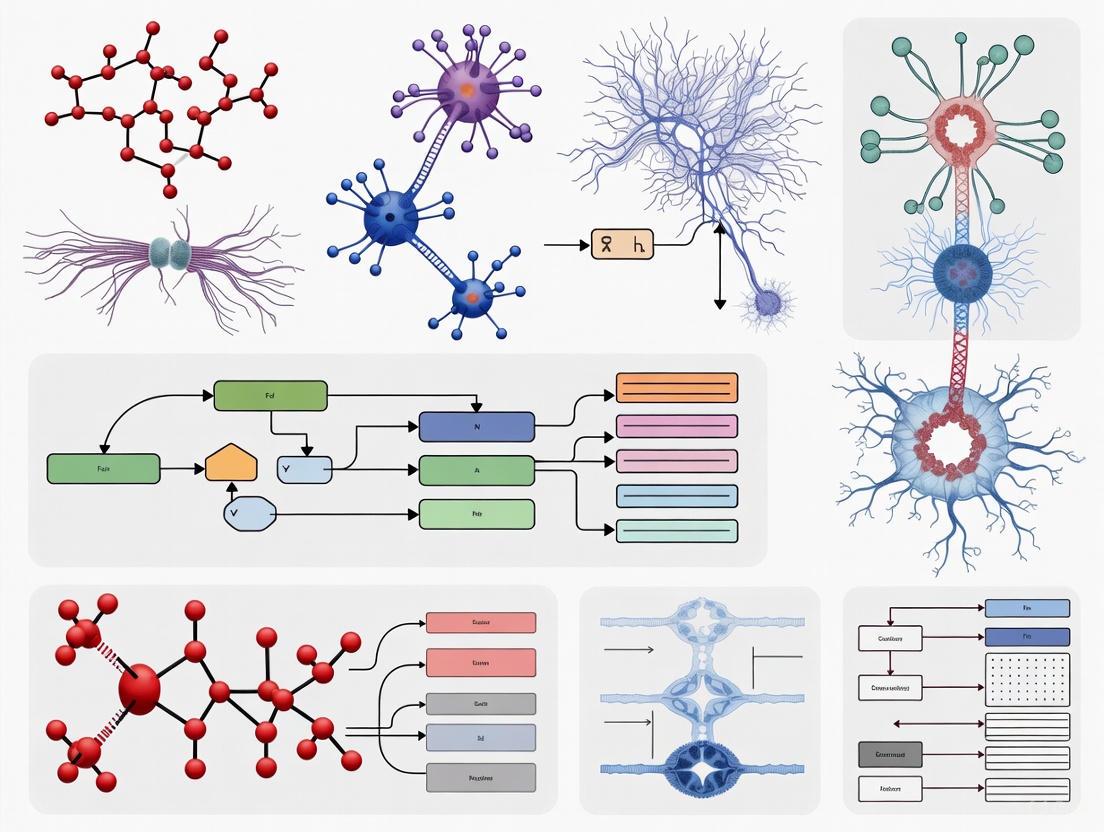
This comprehensive guide provides researchers and scientists with practical knowledge for implementing the NeuroBench algorithm track, a standardized framework for benchmarking neuromorphic computing algorithms.
Implementing NeuroBench Algorithm Track: A Complete Guide for Neuromorphic Computing Research
Abstract
This comprehensive guide provides researchers and scientists with practical knowledge for implementing the NeuroBench algorithm track, a standardized framework for benchmarking neuromorphic computing algorithms. Covering foundational concepts to advanced implementation strategies, it details how to leverage NeuroBench's open-source tools for hardware-independent evaluation of spiking neural networks and brain-inspired algorithms. The article explores the framework's methodology, application across domains, optimization techniques, and comparative analysis approaches to objectively quantify neuromorphic algorithm advancements against conventional methods.
Understanding NeuroBench: The Foundation for Neuromorphic Algorithm Benchmarking
The Benchmarking Gap in Neuromorphic Computing
The rapid advancement of artificial intelligence (AI) and machine learning has led to increasingly complex and large models, with computational growth rates that exceed efficiency gains from traditional technology scaling [1]. This creates a pressing need for new, resource-efficient computing architectures. Neuromorphic computing, which draws inspiration from the brain's computational principles, has emerged as a promising avenue for achieving scalable, energy-efficient, and real-time embodied computation [1] [2].
However, the field faces a significant challenge: the absence of standardized benchmarks. This lack makes it difficult to accurately measure progress, compare performance fairly against conventional methods, and identify promising research directions [1] [3]. Prior efforts to create benchmarks failed to achieve widespread adoption due to designs that were not inclusive, actionable, or iterative [3]. This "benchmarking gap" hinders the coordinated development and objective assessment of neuromorphic technologies.
NeuroBench was conceived as a community-driven solution to this problem. It provides a common framework for evaluating neuromorphic computing algorithms and systems, aiming to deliver an objective reference for quantifying advancements in both hardware-independent and hardware-dependent settings [1] [4].
The NeuroBench Framework: Structure and Core Principles
NeuroBench is a collaboratively designed framework involving researchers from across industry and academia. Its core mission is to provide a representative structure for standardizing the evaluation of neuromorphic approaches [3] [5].
Dual-Track Evaluation Approach
A foundational principle of NeuroBench is its dual-track structure, which ensures comprehensive assessment across different stages of research and development.
- Algorithm Track (Hardware-Independent): This track focuses on evaluating brain-inspired algorithms, such as Spiking Neural Networks (SNNs), in a hardware-agnostic simulated environment [1] [3]. The primary goal is to assess intrinsic algorithmic advancements, such as data efficiency, learning capabilities, and adaptation, before deployment on specialized hardware. This allows researchers to drive design requirements for next-generation neuromorphic systems [1].
- System Track (Hardware-Dependent): This track evaluates full systems where algorithms are deployed on neuromorphic hardware [1] [3]. It aims to measure real-world performance hallmarks, including energy efficiency, latency, and throughput, thereby quantifying the benefits of dedicated neuromorphic hardware that utilizes event-based computation and non-von-Neumann architectures [1].
Collaborative and Evolving Design
NeuroBench is an open, community-driven project. Its design is intended to be inclusive and to continually expand its benchmarks and features to foster and track the progress of the entire research community [3] [6]. This ensures that the framework remains relevant and can adapt to new research breakthroughs.
The following workflow illustrates the end-to-end process for conducting an evaluation using the NeuroBench framework:
NeuroBench in Practice: Metrics, Benchmarks, and Protocols
Comprehensive Performance Metrics
NeuroBench employs a comprehensive set of metrics to ensure a holistic evaluation beyond just task accuracy. These metrics provide a multi-faceted view of a model's performance and efficiency [6].
Table 1: Core Performance Metrics in NeuroBench
| Metric Category | Specific Metric | Description |
|---|---|---|
| Task Performance | Classification Accuracy | Standard accuracy on the given benchmark task [6]. |
| Computational Efficiency | Synaptic Operations | Measures the number of effective Multiply-Accumulate (MAC) and Accumulate (AC) operations [6]. |
| Activation Sparsity | Measures the sparsity of neuronal activations, a key for energy savings in event-driven systems [6]. | |
| Hardware Efficiency | Footprint | Model and synapse memory footprint [6]. |
| Connection Sparsity | Sparsity of synaptic connections in the network [6]. |
Available Benchmarks and Baselines
The framework includes a growing suite of benchmark tasks designed to probe different capabilities of neuromorphic algorithms and systems. The following table summarizes key benchmarks available in NeuroBench.
Table 2: Exemplar NeuroBench Benchmarks and Baseline Performance
| Benchmark Task | Domain | Description | Example Baseline (ANN) | Example Baseline (SNN) |
|---|---|---|---|---|
| Google Speech Commands (GSC) [6] | Audio | Keyword classification from audio data. | Footprint: 109,228Accuracy: 86.5% [6] | Footprint: 583,900Accuracy: 85.6% [6] |
| DVS Gesture Recognition [6] | Vision | Action recognition from event-based camera data. | Under development | Under development |
| Event Camera Object Detection [6] | Vision | Object detection using event-based camera inputs. | Under development | Under development |
| NHP Motor Prediction [6] | Biomedical | Predicting limb movement from neural data. | Under development | Under development |
Implementing NeuroBench research requires a suite of software tools and datasets. The following "Research Reagent Solutions" table details these key components.
Table 3: Key Research Reagent Solutions for NeuroBench Implementation
| Tool / Resource | Type | Function in Research |
|---|---|---|
| NeuroBench Python Package [6] | Software Framework | The core harness for running evaluations, calculating metrics, and ensuring consistent methodology. |
| PyTorch / SNNTorch [6] | Software Framework | Supported machine learning frameworks for building and training models (ANNs and SNNs). |
| Event-Camera Datasets (e.g., DVS Gesture) [6] | Data | Provides biologically plausible, asynchronous input data ideal for testing SNNs. |
| NHP Motor Datasets [6] | Data | Enables benchmarking on real neural decoding tasks, bridging the gap to biomedical applications. |
Detailed Experimental Protocol for the Algorithm Track
This protocol provides a step-by-step guide for evaluating a model on a NeuroBench algorithm benchmark, using the Google Speech Commands (GSC) classification task as an example.
Software Environment Setup
- Create a Python environment (Python ≥ 3.9 is required).
- Install the NeuroBench package via PyPI using the command:
pip install neurobench[6]. Alternatively, for development, clone the GitHub repository and use Poetry:pip install poetryfollowed bypoetry install[6].
Model Training and Preparation
- Dataset Acquisition: The framework will typically automatically download the benchmark dataset (e.g., Google Speech Commands) when the example script is run for the first time [6].
- Model Training: Train your network using the official training split of the dataset. The NeuroBench repository provides example scripts (
benchmark_ann.pyfor ANNs andbenchmark_snn.pyfor SNNs) that demonstrate this process [6]. - Model Wrapping: Wrap your trained model in a
NeuroBenchModelwrapper. This standardizes the interface, ensuring the model can be properly called by the benchmark harness for evaluation [6].
Benchmark Execution and Analysis
- Configure the Benchmark: Instantiate the
Benchmarkclass by passing:- The wrapped
NeuroBenchModel. - A DataLoader for the evaluation split of the data.
- The necessary pre-processors and post-processors (e.g., for converting data to spikes or decoding output spikes).
- The list of metrics to be computed (e.g.,
['Footprint', 'ConnectionSparsity', 'ClassificationAccuracy', 'ActivationSparsity', 'SynapticOperations']) [6].
- The wrapped
- Run the Evaluation: Call the
run()method on the benchmark object. This will perform inference on the test data and compute all specified metrics [6]. - Interpret Results: The
run()method returns a dictionary of results. Compare your results against the published baselines and leaderboards available on the NeuroBench website [5]. This allows you to quantify your model's performance and efficiency against the state of the art.
NeuroBench addresses a critical bottleneck in the field of neuromorphic computing by providing a standardized, community-driven framework for evaluation. Its dual-track approach enables rigorous and comparable assessment of both algorithms and systems, guiding research toward more efficient and capable brain-inspired computing. By adopting NeuroBench, researchers and scientists can contribute to a cohesive and accelerated advancement of neuromorphic technology, ultimately helping to realize its potential for scalable and energy-efficient AI.
The NeuroBench Algorithm Track establishes a standardized framework for the hardware-independent evaluation of neuromorphic computing algorithms. This track is purposefully designed to assess the intrinsic capabilities of brain-inspired algorithms—such as Spiking Neural Networks (SNNs)—separately from the performance characteristics of any specific physical hardware. The primary objective is to enable fair and direct comparison between neuromorphic and conventional approaches (e.g., Artificial Neural Networks), and to identify promising algorithmic directions based on their own merits [1] [7]. By simulating execution on conventional hardware like CPUs and GPUs, researchers can isolate and quantify the advantages stemming from algorithmic innovations, such as novel neuron models, learning rules, or network architectures, thereby driving the design requirements for next-generation neuromorphic hardware [1].
This evaluation is crucial because the neuromorphic research field has historically suffered from a lack of standardized benchmarks, making it difficult to accurately measure progress, compare performance against conventional methods, and identify the most promising research trajectories [7] [3]. NeuroBench addresses the challenges of implementation diversity and rapid research evolution by providing a common, open-source harness that unites disparate tooling and allows for an iterative, community-driven benchmark framework [7].
Core Metrics and Quantitative Benchmarks
The hardware-independent evaluation under NeuroBench employs a comprehensive suite of metrics designed to quantify key performance characteristics of neuromorphic algorithms. These metrics are hierarchically defined to capture multiple facets of performance, from task correctness to computational and biological complexity.
Table 1: Summary of Core NeuroBench Algorithm Track Metrics
| Metric Category | Metric Name | Description | Quantitative Example |
|---|---|---|---|
| Correctness | Classification Accuracy | Proportion of correct predictions in classification tasks. | 86.53% (ANN), 85.63% (SNN) on Google Speech Commands [6] |
| Complexity | Footprint | Total number of model parameters [6]. | 109,228 (ANN), 583,900 (SNN) [6] |
| Connection Sparsity | Proportion of zero-weight connections in the model [6]. | 0.0 (Dense Model) [6] | |
| Activation Sparsity | Proportion of inactive neurons over time or across data [6]. | 38.5% (ANN), 96.7% (SNN) [6] | |
| Synaptic Operations | Count of Multiply-Accumulates (MACs) and Accumulates (ACs) [6]. | ~1.73M Effective MACs (ANN), ~3.29M Effective ACs (SNN) [6] |
Table 2: NeuroBench v1.0 Standard Algorithm Benchmark Tasks
| Benchmark Task | Description | Domain |
|---|---|---|
| Keyword Few-shot Class-incremental Learning (FSCIL) | Combies few-shot learning with incremental class addition, testing adaptive learning [6]. | Audio / Continual Learning |
| Event Camera Object Detection | Object detection using dynamic vision sensor (event camera) data [6]. | Event-Based Vision |
| Non-human Primate (NHP) Motor Prediction | Decodes motor commands from neural activity data [6]. | Neuroprosthetics |
| Chaotic Function Prediction | Predicts the evolution of chaotic dynamical systems [6]. | Time Series Prediction |
| DVS Gesture Recognition | Recognizes human gestures from a Dynamic Vision Sensor [6]. | Event-Based Vision |
| Google Speech Commands (GSC) Classification | Keyword spotting in audio samples [6]. | Audio Processing |
| Neuromorphic Human Activity Recognition (HAR) | Classifies physical activities from sensor data [6]. | Sensor Data Processing |
Detailed Experimental Protocols
General Workflow for Benchmark Evaluation
The following diagram illustrates the standard end-to-end workflow for evaluating an algorithm using the NeuroBench harness.
The evaluation of a model follows a systematic workflow designed for reproducibility and fairness [6]:
- Model Training: Researchers first train their network using the officially designated training split of a NeuroBench benchmark dataset (e.g., Google Speech Commands).
- Model Wrapping: The trained model is then wrapped in a
NeuroBenchModelclass. This abstraction allows the framework to interact with models from different underlying libraries (e.g., PyTorch, SNN Torch) in a consistent manner. - Data Preparation: The evaluation split of the dataset is loaded using a standard DataLoader.
- Configuration: Pre-processors and post-processors are defined. Pre-processors handle tasks like data conversion to spikes, while post-processors combine spiking outputs over time to generate final predictions.
- Execution: The
Benchmarkclass is instantiated with the model, dataloader, processors, and a list of desired metrics. Calling therun()method executes the evaluation and returns the computed metric scores. - Reporting: Results can be submitted to the NeuroBench leaderboards for comparison with other approaches [6].
Protocol for Google Speech Commands Benchmark
The Google Speech Commands (GSC) classification task is a foundational benchmark for keyword spotting. The following protocol provides a detailed methodology for this benchmark.
Research Reagent Solutions:
Table 3: Essential Materials for the GSC Benchmark
| Item Name | Function / Description |
|---|---|
| Google Speech Commands Dataset | A standardized dataset of one-second audio utterances of short commands, used for training and evaluating keyword spotting algorithms [6]. |
| NeuroBench Python Harness | The core open-source software tool that provides the NeuroBenchModel wrapper, Benchmark class, and metric calculators to standardize the evaluation process [6]. |
| PyTorch / SNN Torch | Deep learning frameworks used for building, training, and wrapping models. The NeuroBenchModel interface ensures compatibility across different frameworks [6]. |
| Pre-processors | Data transformation modules that convert raw audio into a suitable format for the model (e.g., spectrograms for ANNs or spike trains for SNNs) [6]. |
| Post-processors | Modules that interpret the model's output. For SNNs, this often involves aggregating spike counts over time to produce a final classification decision [6]. |
Experimental Procedure:
- Data Acquisition and Partitioning: Download the Google Speech Commands dataset. Use the predefined training and evaluation splits as specified in the NeuroBench protocol to ensure comparable results.
- Model Design and Training:
- ANN Baseline: Design a standard non-spiking neural network (e.g., a convolutional network). Train the model using backpropagation and the provided training split.
- SNN Model: Design a spiking neural network. Train the model using a surrogate gradient method or other SNN-compatible learning rule on the same training split.
- Benchmark Execution:
- Wrap both trained models using
NeuroBenchModel. - Prepare the evaluation split dataloader.
- Configure the necessary pre-processors (e.g., for feature extraction) and post-processors.
- Instantiate the
Benchmarkclass with the model, dataloader, processors, and the full list of metrics:Footprint,ConnectionSparsity,ClassificationAccuracy,ActivationSparsity, andSynapticOperations. - Execute the benchmark by calling
run().
- Wrap both trained models using
- Data Analysis and Reporting: Collect the results dictionary. Compare the performance of the ANN and SNN across all metrics, paying particular attention to the trade-offs between accuracy, computational footprint, and activation sparsity. Report findings in the format required for the public leaderboard.
Implementation and Integration
Software Toolchain and Workflow
The practical implementation of the Algorithm Track relies on a specific software toolchain centered around the open-source NeuroBench harness. The following diagram depicts the integration of these components.
Integration into a research workflow is facilitated by the NeuroBench Python package, installable via PyPI (pip install neurobench) [6]. The design flow mandates that after training a network, it must be wrapped in a NeuroBenchModel to present a unified interface. The researcher then provides this wrapped model, along with the evaluation dataloader, any necessary pre-/post-processors, and a list of metrics to the Benchmark runner [6].
Example scripts for benchmarks, such as Google Speech Commands, are provided in the project's examples directory. These scripts demonstrate the complete process, from loading data to printing results, and can be executed from a Poetry-managed virtual environment [6]. The expected outputs for the provided ANN and SNN examples on the GSC task are quantitative results encompassing all core metrics, allowing for immediate comparison [6]. This structured approach ensures that all algorithms are evaluated under identical conditions, making results objectively comparable and fostering reproducible research.
Spiking Neural Networks (SNNs) represent the third generation of neural networks, distinguished by their use of discrete, asynchronous spikes for communication and their incorporation of temporal dynamics to process information [8] [9]. This biological plausibility makes them a cornerstone of neuromorphic computing, a field aiming to replicate the brain's exceptional energy efficiency and computational capabilities in engineered systems [1]. The NeuroBench framework emerges as a community-led initiative to address the lack of standardized benchmarks in this rapidly evolving field [1]. It provides a common methodology for fairly evaluating and comparing the performance of neuromorphic algorithms and systems, both in hardware-independent and hardware-dependent contexts, thus accelerating progress toward viable, brain-inspired artificial intelligence (AI) [1] [4].
Key Terminology and Biological Primitives
Understanding SNNs requires familiarity with both their biological inspirations and their computational models. The table below defines the core terminology.
Table 1: Key Terminology in Spiking Neural Networks
| Term | Biological Inspiration | Computational Model/Function |
|---|---|---|
| Spiking Neuron | Biological neuron that transmits information via action potentials [9]. | The basic computational unit of an SNN. Models include Leaky Integrate-and-Fire (LIF), Izhikevich, and Hodgkin-Huxley [8] [10]. |
| Membrane Potential ((V_m)) | The electrical potential difference across a neuron's cell membrane [9]. | A state variable representing the neuron's internal activation level. Incoming spikes increase or decrease it; it decays over time without input [8]. |
| Spike / Action Potential | A brief, all-or-nothing electrochemical pulse traveling along the axon [9]. | A binary event (1 or 0) transmitted to connected neurons. The primary information carrier in SNNs [8]. |
| Threshold ((V_{th})) | The membrane potential level that must be exceeded to trigger an action potential [9]. | A predefined value. If the membrane potential (Vm > V{th}), the neuron fires a spike and (V_m) is reset [8]. |
| Synapse | The junction between two neurons where neurotransmitters are released [9]. | A connection between two spiking neurons, characterized by a synaptic weight ((w)). The weight defines the strength and sign (excitatory/inhibitory) of the connection [10]. |
| Spike-Timing-Dependent Plasticity (STDP) | Hebbian learning principle: "neurons that fire together, wire together" [10]. | An unsupervised learning rule where the change in synaptic weight depends on the precise timing of pre- and post-synaptic spikes [11] [10]. |
Experimental Protocols for SNN Research
Adhering to standardized experimental protocols is essential for generating reproducible and comparable results, a core principle of the NeuroBench framework [1]. The following sections detail protocols for training and evaluating SNNs.
Protocol: Training a Deep SNN with Time-to-First-Spike Coding
This protocol outlines the procedure for training a high-performance, energy-efficient deep SNN using Time-to-First-Spike (TTFS) coding, based on the methodology achieving less than 0.3 spikes per neuron [12].
1. Objective: To train a deep SNN (e.g., for image classification) that matches the performance of an equivalent traditional Artificial Neural Network (ANN) while minimizing energy consumption through sparse spiking activity.
2. Materials and Dataset:
- Datasets: Standard image datasets: MNIST, Fashion-MNIST, CIFAR-10, CIFAR-100, or PLACES365 [12].
- Software Framework: A deep learning framework with SNN support, such as snnTorch [8] or BrainCog [13].
- Encoding: A TTFS input encoder.
3. Workflow: The end-to-end process for creating and validating a TTFS-SNN is summarized in the following workflow diagram.
4. Detailed Procedures:
- Step 1 - Input Encoding: Convert input data (e.g., pixel intensities) into spike latencies. For an input value (xj^{(0)} \in [0,1]), calculate the spike time as (tj^{(0)} = t{\text{max}}^{(0)} - \tauc \cdot xj^{(0)}), where (\tauc) is a time constant [12].
- Step 2 - Network Initialization: Initialize the SNN parameters. Critical: Use an identity mapping parameterization to ensure stable training dynamics and equivalence to an ANN with Rectified Linear Units (ReLU) [12].
- Step 3 - Forward Pass Simulation: Simulate the network dynamics for a predefined time window ((t{\text{min}}^{(n)}) to (t{\text{max}}^{(n)})). For each neuron (i) in layer (n), integrate inputs using the membrane potential equation: [ \tauc \frac{dVi^{(n)}}{dt} = Ai^{(n)} + \sumj W{ij}^{(n)} H(t - tj^{(n-1)}) ] where (H) is the Heaviside step function. A spike is emitted the moment (V_i^{(n)}) crosses the threshold [12].
- Step 4 - Loss Calculation & Backward Pass: Compute the loss function based on output spike times. Perform backpropagation through time using the exact gradient of the spike-time-based loss, not a surrogate approximation [12].
- Step 5 - Weight Update: Update synaptic weights using a gradient descent optimization algorithm.
- Step 6 - Iteration: Repeat Steps 3-5 until the model converges.
5. Key Measurements:
- Task Performance: Final classification accuracy on the test set [12].
- Energy Efficiency: Average number of spikes per neuron during inference (target: <0.3) [12].
- Training Stability: Monitor for vanishing or exploding gradients during the learning process [12].
Protocol: Evolving a Brain-Inspired Small-World SNN
This protocol describes using neuroevolution to create recurrent SNNs (RSNNs) with brain-inspired topological properties for enhanced efficiency and versatility [14].
1. Objective: To evolve an RSNN, specifically a Liquid State Machine (LSM), that exhibits small-world topology and critical dynamics for efficient multi-task learning.
2. Materials and Dataset:
- Datasets: NMNIST, MNIST, Fashion-MNIST [14].
- Algorithm: Multi-objective Evolutionary Liquid State Machine (ELSM) algorithm [14].
- Software: Brain simulation platforms like NEST [8] or BrainCog [13] can be adapted for evolution.
3. Workflow: The cyclical process of evolving an SNN's architecture is illustrated below.
4. Detailed Procedures:
- Step 1 - Population Initialization: Create an initial population of RSNNs (LSMs) with random connectivity.
- Step 2 - Fitness Evaluation: For each RSNN in the population:
- Task Performance: Measure accuracy on the training tasks (e.g., image classification) [14].
- Structural Fitness: Calculate the small-world coefficient (measuring high clustering and short path length) of the network [14].
- Dynamical Fitness: Assess the network's proximity to a critical state, which is associated with optimal computational capability [14].
- Step 3 - Multi-Objective Selection: Select parent networks for reproduction based on a combination of high task performance, high small-world coefficient, and critical dynamics [14].
- Step 4 - Evolution: Create a new generation of RSNNs by applying crossover and mutation operations to the selected parents. Mutations alter the connectivity pattern.
- Step 5 - Iteration: Repeat Steps 2-4 for multiple generations until a network emerges that satisfies all objectives.
5. Key Measurements:
- Multi-Task Performance: Accuracy across all benchmark tasks (e.g., 97.23% on NMNIST, 98.12% on MNIST) [14].
- Evolved Topology: Presence of hub nodes, short paths, long-tailed degree distributions, and community structures in the final network [14].
- Versatility: The ability of a single evolved model to perform well on multiple different tasks without architectural changes [14].
The Scientist's Toolkit: Essential Research Reagents
The following table catalogs key software and methodological "reagents" required for contemporary SNN research, aligned with the NeuroBench vision.
Table 2: Essential Research Reagents for SNN Implementation
| Category | Item | Function / Application |
|---|---|---|
| Software Frameworks | snnTorch [8] | An open-source Python library for building and gradient-based training of SNNs using PyTorch. |
| BrainCog [13] | A comprehensive platform for brain-inspired AI and simulation, supporting various neurons, learning rules, and cognitive functions. | |
| NEST [8] [15] | A simulator for large-scale, structurally complex SNNs in neuroscience research. | |
| Training Methods | Surrogate Gradient Learning [8] [12] | Enables backpropagation in SNNs by using a differentiable approximation of the spike function in the backward pass. |
| ANN-to-SNN Conversion [12] [13] | Converts a pre-trained ANN to an SNN, preserving performance and enabling low-power deployment. | |
| Encoding Schemes | Time-to-First-Spike (TTFS) [12] | An input encoding where information is represented by the latency of a single spike, enabling ultra-low-power inference. |
| Rate Coding [8] | An input encoding where information is represented by the firing rate of a spike train over a time window. | |
| Learning Rules | Spike-Timing-Dependent Plasticity (STDP) [11] [10] | An unsupervised, biologically plausible local learning rule that updates weights based on pre- and post-synaptic spike timing. |
| Hardware Systems | SpiNNaker [8] [1] | A neuromorphic computing architecture using massive parallelism for large-scale SNN simulation. |
| Loihi [8] [1] | An Intel research chip that implements online learning and adaptive SNNs in silicon. |
Performance Benchmarking and Data Presentation
Quantitative benchmarking is essential for tracking progress. The following tables consolidate key performance metrics from recent literature, providing a reference for evaluating models under the NeuroBench paradigm.
Table 3: Benchmarking SNN Performance on Image Classification Tasks
| Model / Approach | Dataset | Key Metric (Accuracy) | Key Metric (Efficiency) |
|---|---|---|---|
| Deep TTFS SNN [12] | CIFAR-10, CIFAR-100, PLACES365 | Matches equivalent ANN performance | < 0.3 spikes/neuron |
| Evolutionary LSM (ELSM) [14] | NMNIST | 97.23% | Evolved small-world topology for low energy consumption |
| Evolutionary LSM (ELSM) [14] | MNIST | 98.12% | Versatile structure for multiple tasks |
| SNN with COM & Attention [11] | Caltech 101 | Outperforms SOTA by ~20% | Hardware-efficient winner-take-all mechanism |
Table 4: Comparing SNN Software Platforms
| Framework | Primary Focus | Key Strengths | Brain Simulation Support |
|---|---|---|---|
| snnTorch [8] | Deep SNNs, Gradient-based Learning | PyTorch integration, user-friendly | Limited |
| BrainCog [13] | Brain-inspired AI & Simulation | Rich cognitive functions, versatile components | Extensive (Multi-scale) |
| NEST [8] [15] | Large-Scale Neuroscience | Optimized for big structural networks | Extensive |
| Brian 2 [8] [15] | Computational Neuroscience | Flexible and easy-to-use model definition | Moderate |
NeuroBench is a benchmark framework for neuromorphic computing algorithms and systems, collaboratively designed by an open community of researchers across industry and academia [1] [3]. It addresses a critical gap in the neuromorphic research field, which currently lacks standardized benchmarks, making it difficult to accurately measure technological advancements, compare performance with conventional methods, and identify promising future research directions [1]. The framework introduces a common set of tools and a systematic methodology for inclusive benchmark measurement, delivering an objective reference framework for quantifying neuromorphic approaches in both hardware-independent (algorithm track) and hardware-dependent (system track) settings [1] [4].
The rapid growth of artificial intelligence (AI) and machine learning (ML) has resulted in increasingly complex and large models, with computation growth rates exceeding efficiency gains from technology scaling [1]. Neuromorphic computing has emerged as a promising approach to address these challenges by leveraging brain-inspired principles to advance computing efficiency and capabilities of AI applications [1] [3]. NeuroBench aims to provide a representative structure for standardizing the evaluation of these neuromorphic approaches, fostering reproducible and comparable research outcomes.
NeuroBench Framework Architecture
Core Structural Components
The NeuroBench framework is structured around two primary evaluation tracks and a modular software architecture that enables comprehensive benchmarking. The framework's design facilitates both algorithm-level and system-level assessments through standardized components.
Table 1: NeuroBench Framework Components
| Component | Description | Primary Function |
|---|---|---|
| Algorithm Track | Hardware-independent evaluation | Measures algorithmic performance and efficiency |
| System Track | Hardware-dependent evaluation | Assesses full system performance including hardware |
| NeuroBench Harness | Open-source Python package | Executes benchmarks and extracts metrics |
| Pre-processors | Data transformation modules | Convert raw data to spike-compatible formats |
| Post-processors | Output processing modules | Combine and interpret spiking outputs |
| Metrics Package | Standardized evaluation metrics | Quantifies performance across multiple dimensions |
The algorithm track focuses on hardware-independent evaluation, allowing researchers to assess neuromorphic algorithms running on conventional hardware like CPUs and GPUs [1]. This approach drives design requirements for next-generation neuromorphic hardware by first exploring algorithms with readily available computing resources. Conversely, the system track encompasses hardware-dependent evaluation, assessing the performance of neuromorphic systems that comprise algorithms deployed to specialized brain-inspired hardware [1].
The Benchmarking Workflow
The NeuroBench framework implements a systematic workflow for benchmarking neuromorphic computing approaches. This workflow ensures consistent evaluation across different algorithms and systems.
Diagram 1: NeuroBench Benchmarking Workflow
The design flow for using the NeuroBench framework follows a structured process [6]. Researchers first train a network using the training split from a particular dataset. The trained network is then wrapped in a NeuroBenchModel to ensure compatibility with the benchmarking system. The evaluation process involves passing the model, evaluation split dataloader, pre-processors, post-processors, and a list of metrics to the Benchmark class and executing the run() method to obtain comprehensive performance evaluations [6].
NeuroBench Tools and Implementation
NeuroBench Harness and Software Architecture
The NeuroBench harness is an open-source Python package that allows users to easily run benchmarks and extract relevant metrics [5] [6]. This software infrastructure provides the foundational tools for implementing the NeuroBench methodology in practice.
Table 2: NeuroBench Software Components
| Component | Implementation | Usage |
|---|---|---|
| Installation | PyPI package (pip install neurobench) |
Quick deployment and dependency management |
| Development Environment | Poetry-based configuration | Consistent development and deployment environments |
| Model Interface | NeuroBenchModel wrapper |
Standardized model integration |
| Pre-processing | Modular data transformation | Spike conversion and data preparation |
| Post-processing | Output aggregation methods | Interpretation of spiking outputs |
| Metrics Calculator | Comprehensive metrics package | Multi-dimensional performance assessment |
The harness is designed with modularity in mind, containing specific sections for benchmarks (including workload metrics and static metrics), datasets, framework support for Torch and SNNTorch models, pre-processing utilities for data conversion to spikes, and post-processors that handle spiking output combination [6]. This modular architecture enables researchers to extend the framework with new benchmarks, metrics, and processing methods while maintaining compatibility with the core evaluation system.
Research Reagent Solutions
The NeuroBench framework provides essential "research reagents" in the form of software tools and methodological components that enable standardized neuromorphic computing research.
Table 3: Essential NeuroBench Research Reagents
| Research Reagent | Function | Implementation Example |
|---|---|---|
| Standardized Datasets | Provides consistent input data for benchmarking | DVS Gesture, Google Speech Commands |
| Pre-processing Modules | Transforms raw data into spike-compatible formats | Data normalization, spike encoding |
| Model Wrapper | Standardizes model interfaces for evaluation | NeuroBenchModel base class |
| Metrics Calculator | Quantifies performance across multiple dimensions | Accuracy, sparsity, efficiency metrics |
| Benchmark Runner | Executes standardized evaluation pipelines | Benchmark.run() method |
| Data Loaders | Handles dataset loading and partitioning | PyTorch DataLoader compatibility |
These research reagents form the essential toolkit for conducting NeuroBench-compliant research, ensuring that different approaches can be fairly compared using consistent evaluation methodologies, datasets, and metrics [6]. The availability of these standardized components significantly reduces the implementation overhead for researchers while ensuring methodological consistency across the field.
Experimental Protocols and Benchmarking Methodology
Defined Benchmarks and Evaluation Tasks
NeuroBench includes multiple standardized benchmarks that cover diverse application domains relevant to neuromorphic computing. These benchmarks are designed to assess different capabilities of neuromorphic algorithms and systems.
Table 4: NeuroBench v1.0 Benchmark Tasks
| Benchmark Task | Domain | Application Context |
|---|---|---|
| Keyword Few-shot Class-incremental Learning (FSCIL) | Incremental learning | Adaptive learning scenarios |
| Event Camera Object Detection | Computer vision | Event-based visual processing |
| Non-human Primate (NHP) Motor Prediction | Motor neuroscience | Brain-machine interfaces |
| Chaotic Function Prediction | Time series analysis | Forecasting and prediction |
| DVS Gesture Recognition | Event-based vision | Gesture recognition from event cameras |
| Google Speech Commands (GSC) Classification | Audio processing | Keyword spotting |
| Neuromorphic Human Activity Recognition (HAR) | Motion analysis | Activity recognition from sensor data |
These benchmarks are carefully selected to represent common application domains for neuromorphic computing while providing diverse challenges that test different aspects of neuromorphic algorithms and systems [6]. The inclusion of both static and temporal tasks ensures comprehensive evaluation of neuromorphic approaches across different data modalities and processing requirements.
Comprehensive Metrics Framework
NeuroBench employs a multi-dimensional metrics framework that evaluates not only task performance but also computational efficiency and neuromorphic characteristics. This comprehensive approach ensures that benchmarks capture the full spectrum of considerations relevant to neuromorphic computing.
Table 5: NeuroBench Metrics Framework
| Metric Category | Specific Metrics | Evaluation Purpose |
|---|---|---|
| Task Performance | Classification Accuracy | Primary task competency |
| Computational Efficiency | Footprint, Synaptic Operations | Resource utilization |
| Sparsity | Connection Sparsity, Activation Sparsity | Neuromorphic characteristics |
| Energy Efficiency | Effective MACs, Effective ACs | Power and energy consumption |
The metrics framework is designed to balance traditional performance measures (like accuracy) with neuromorphic-specific considerations (like sparsity and energy efficiency) [6]. This dual focus ensures that benchmarks reward approaches that successfully leverage neuromorphic principles to achieve improved efficiency without compromising task performance.
Detailed Experimental Protocol
Implementing a complete NeuroBench evaluation requires following a detailed experimental protocol that ensures reproducible and comparable results. The protocol encompasses data preparation, model development, and systematic evaluation.
Diagram 2: NeuroBench Experimental Protocol
The experimental protocol begins with data preparation, where researchers select an appropriate benchmark dataset and apply the standard data splits and pre-processing procedures defined by NeuroBench [6]. This ensures consistent input data across different evaluations. During model development, researchers design and train their neuromorphic models using the training split, then wrap the trained model using the NeuroBenchModel interface. The evaluation phase involves configuring the benchmark with appropriate metrics, executing the benchmark run, and analyzing the comprehensive results across all measured dimensions.
Implementation Examples and Baseline Results
Practical Implementation Examples
NeuroBench provides concrete implementation examples that demonstrate how to use the framework for specific benchmark tasks. These examples serve as practical starting points for researchers implementing their own NeuroBench evaluations.
For the Google Speech Commands (GSC) keyword classification benchmark, NeuroBench offers both artificial neural network (ANN) and spiking neural network (SNN) implementation examples [6]. The ANN benchmark example produces results including a footprint of 109,228 parameters, connection sparsity of 0.0, classification accuracy of 86.5%, activation sparsity of 38.5%, and synaptic operations measured as 1,728,071 effective MACs [6]. The comparable SNN benchmark shows a different efficiency profile with a footprint of 583,900 parameters, classification accuracy of 85.6%, activation sparsity of 96.7%, and synaptic operations measured as 3,289,834 effective ACs with no MAC operations [6].
These examples highlight the framework's ability to capture meaningful differences between conventional and neuromorphic approaches, particularly in terms of activation sparsity and the types of synaptic operations performed. The higher activation sparsity in the SNN implementation demonstrates a key neuromorphic characteristic that potentially translates to energy efficiency during inference.
Community Adoption and Extension
The NeuroBench framework is designed as a community-driven project that welcomes further development from the neuromorphic research community [6]. The framework maintains contribution guidelines and encourages extensions to features, programming frameworks, metrics, and tasks. This open approach ensures that the benchmark ecosystem evolves alongside the field it aims to measure.
The project is maintained by a collaborative team from industry and academia, with technical contributions from numerous researchers across institutions [6]. This diverse development base helps ensure that the framework addresses the needs of different stakeholders in the neuromorphic computing landscape, from algorithm researchers focused on novel neural models to system engineers developing specialized neuromorphic hardware.
NeuroBench represents a critical step forward for the neuromorphic computing research community by providing a standardized, comprehensive framework for benchmarking algorithms and systems. Through its structured architecture, systematic methodology, and open-source implementation, NeuroBench addresses the pressing need for comparable and reproducible evaluation in this rapidly evolving field. The framework's dual-track approach (algorithm and system), comprehensive metrics, diverse benchmark tasks, and modular software architecture provide researchers with the necessary tools to quantitatively assess and compare neuromorphic approaches while maintaining methodological consistency. As the field continues to advance, NeuroBench is positioned to serve as the foundational benchmarking platform that enables accurate measurement of progress, identification of promising research directions, and fair comparison between different neuromorphic computing approaches.
The field of neuromorphic computing, which aims to advance computing efficiency and capabilities through brain-inspired principles, faces a significant challenge: the absence of fair and widely-adopted objective metrics and benchmarks. This lack of standardization hinders the research community's ability to measure technological advancement, compare novel approaches, and make evidence-based decisions on promising research directions [7]. NeuroBench emerges as a direct response to this challenge, conceived as a benchmark framework for neuromorphic computing algorithms and systems that is collaboratively designed by an open community of researchers across industry and academia [1] [4].
The development model of NeuroBench represents a paradigm shift in neuromorphic computing research. Unlike previous benchmark efforts that saw limited adoption due to insufficiently inclusive, actionable, and iterative designs, NeuroBench was created through a collaboratively-designed effort from nearly 100 co-authors across over 50 institutions in industry and academia [7]. This unprecedented scale of collaboration ensures the framework provides a representative structure for standardizing the evaluation of neuromorphic approaches while balancing the diverse perspectives and needs of both academic research and industrial application.
NeuroBench Framework Architecture
Dual-Track Benchmarking Approach
NeuroBench implements a sophisticated dual-track architecture designed to accommodate the different development stages and evaluation needs within the neuromorphic computing ecosystem. This structure enables comprehensive assessment across the spectrum from algorithmic exploration to deployed systems [7].
Algorithm Track (Hardware-Independent): This track focuses on evaluating neuromorphic algorithms through simulated execution on conventional hardware such as CPUs and GPUs. The primary goal is to drive design requirements for next-generation neuromorphic hardware by exploring neuroscience-inspired methods that strive toward expanded learning capabilities, including predictive intelligence, data efficiency, and adaptation. This track encompasses approaches such as spiking neural networks (SNNs) and primitives of neuron dynamics, plastic synapses, and heterogeneous network architectures [1] [7].
System Track (Hardware-Dependent): This track evaluates complete neuromorphic systems composed of algorithms deployed to specialized hardware. The focus is on assessing real-world performance characteristics including energy efficiency, real-time processing capabilities, and resilience compared to conventional systems. This track encompasses hardware utilizing biologically-inspired approaches such as analog neuron emulation, event-based computation, non-von-Neumann architectures, and in-memory processing [1] [7].
Community Governance and Evolution Model
NeuroBench employs an iterative, community-driven initiative specifically designed to evolve over time, ensuring ongoing representation and relevance to neuromorphic research. This dynamic evolution model addresses the challenge of rapid research innovation in neuromorphic computing that can render existing standards obsolete [7] [16]. The framework is maintained through ongoing collaboration between industry and academic engineers and researchers, with core maintenance handled by researchers from multiple institutions [6]. The project incorporates structured versioning to facilitate productive foundational and evolving performance evaluation, with NeuroBench v1.0 already including four defined algorithm benchmarks, algorithmic complexity metric definitions, and algorithm baseline results [5].
NeuroBench Algorithm Track Protocol
Benchmark Tasks and Specifications
The NeuroBench algorithm track includes several carefully selected benchmark tasks that represent challenging problems where neuromorphic approaches may show particular promise. These benchmarks are designed to stress-test key capabilities of neuromorphic algorithms while enabling direct comparison with conventional approaches.
Table 1: NeuroBench v1.0 Algorithm Benchmark Tasks
| Benchmark Task | Problem Domain | Key Neuromorphic Relevance |
|---|---|---|
| Few-shot Class-incremental Learning (FSCIL) | Continuous learning with limited data | Data efficiency, adaptive learning without catastrophic forgetting |
| Event Camera Object Detection | Processing event-based vision data | Temporal processing, sparse asynchronous computation |
| Non-human Primate (NHP) Motor Prediction | Neural decoding and motor control | Real-time processing, biological signal processing |
| Chaotic Function Prediction | Temporal sequence forecasting | Temporal dynamics, predictive capability |
Additional algorithm benchmarks available in the framework include DVS Gesture Recognition, Google Speech Commands (GSC) Classification, and Neuromorphic Human Activity Recognition (HAR) [6].
Comprehensive Evaluation Metrics
NeuroBench employs a hierarchical metric definition that captures key performance indicators of interest for neuromorphic computing. These metrics are categorized to provide a multidimensional assessment of algorithm performance.
Table 2: NeuroBench Algorithm Track Evaluation Metrics
| Metric Category | Specific Metrics | Definition and Significance |
|---|---|---|
| Correctness Metrics | Classification Accuracy | Task performance accuracy measuring fundamental capability |
| Complexity Metrics | Footprint | Total number of parameters in the network |
| Connection Sparsity | Proportion of zero-valued connections in the network | |
| Activation Sparsity | Proportion of zero activations during inference | |
| Synaptic Operations | Effective MACs (Multiply-Accumulate) and ACs (Accumulate Operations) |
These metrics collectively enable a comprehensive evaluation that captures not only task performance but also computational efficiency and resource utilization characteristics that are particularly relevant for neuromorphic systems [6].
Experimental Implementation Protocols
Algorithm Benchmarking Workflow
The NeuroBench framework provides a standardized workflow for implementing and evaluating algorithms against the benchmark suite. The structured methodology ensures consistent, comparable results across different research efforts.
Data Preparation and Pre-processing
The benchmark workflow begins with data preparation using the standardized datasets incorporated in the NeuroBench framework. The protocol requires:
- Utilizing the official train/test splits provided for each benchmark task to ensure comparability
- Applying appropriate pre-processing techniques to convert raw data into formats suitable for neuromorphic processing
- For non-spiking native data (e.g., Google Speech Commands), implementing spike conversion encoders such as rate coding, temporal coding, or delta modulation
- Ensuring reproducible data loading through the standardized DataLoader interfaces provided by the framework
Model Training and Validation
Researchers implement their neuromorphic models using supported frameworks (primarily PyTorch and SNNTorch), following these protocol requirements:
- Models must be trained exclusively on the designated training split of each benchmark dataset
- Validation using the designated validation split (where available) for hyperparameter tuning and model selection
- Documentation of all training parameters, including learning rates, optimization algorithms, and training epochs
- Implementation of appropriate regularization techniques specific to neuromorphic models, such as activity regularization to encourage sparsity
NeuroBench Model Integration
The trained model must be wrapped in a NeuroBenchModel interface to ensure standardized evaluation:
This wrapping step ensures consistent model behavior across different implementations and provides the framework with necessary hooks for extracting standardized metrics.
Benchmark Execution and Evaluation
The core evaluation phase involves configuring and executing the benchmark using the NeuroBench harness:
The evaluation protocol requires:
- Using the official evaluation split for final metric computation
- Applying standardized pre-processors for consistent input formatting
- Implementing appropriate post-processors for interpreting spiking outputs
- Executing all defined metrics for comprehensive assessment
- Reporting complete results without selective omission
Research Reagent Solutions and Tools
Successful implementation of NeuroBench algorithm benchmarks requires specific computational tools and frameworks. The following table details the essential components of the research toolkit.
Table 3: Essential Research Reagents and Tools for NeuroBench Implementation
| Tool/Category | Specific Implementation | Function in Research Protocol |
|---|---|---|
| Core Framework | NeuroBench Python Package | Primary benchmark harness providing standardized evaluation infrastructure and metric computation |
| Neuromorphic Libraries | SNNTorch | Provides spiking neural network components, neuron models, and surrogate gradient training capabilities |
| Simulation Platforms | PyTorch | Enables hardware-independent algorithm development and testing on conventional computing resources |
| Data Management | Standardized DataLoaders | Ensures consistent data loading, preprocessing, and train/test split application across different research implementations |
| Model Interfaces | NeuroBenchModel Wrapper | Standardizes model integration into the benchmark framework enabling consistent evaluation across diverse implementations |
| Evaluation Components | Pre-processors and Post-processors | Handles input data formatting and output interpretation consistently across different models and tasks |
Community Collaboration Framework
The NeuroBench project embodies a sophisticated collaboration model that enables effective cooperation across institutional boundaries and between academic and industrial researchers. This framework provides multiple pathways for community participation and contribution.
Contribution Pathways and Protocols
The NeuroBench project has established clear pathways for community contribution across different levels of engagement:
Benchmark Implementation and Results Submission: Researchers can implement existing benchmarks and submit results to the public leaderboards, following the standardized evaluation protocols outlined in Section 4. This requires full disclosure of methodology and complete result reporting.
Framework Development and Extension: Contributors can participate in developing the core NeuroBench harness through the GitHub repository, including adding new features, supporting additional neuromorphic frameworks, or optimizing metric computation [6].
New Benchmark Proposal and Development: The community-driven evolution model allows researchers to propose and develop new benchmark tasks through a structured process involving concept papers, prototype implementations, and community review.
Standardization Working Groups: Participants can join specialized working groups focused on specific aspects of neuromorphic benchmarking, such as metric definition, hardware abstraction interfaces, or domain-specific benchmark development.
Governance and Decision-Making Protocols
The collaborative development of NeuroBench operates under a transparent governance model designed to balance inclusivity with technical rigor:
- Technical decisions are made through consensus-building among active contributors, with special weight given to domain experts in relevant subtopics
- The framework maintains a core maintenance team responsible for coordinating contributions and ensuring framework consistency [6]
- Benchmark inclusion follows a evidence-based protocol requiring demonstration of task relevance, evaluation soundness, and community value
- Regular workshops and community meetings provide forums for strategic planning and technical coordination
This governance approach addresses the challenge of industry fragmentation in neuromorphic computing by bringing together competing organizations and research groups to develop shared understanding of best practices [16].
Impact and Future Directions
The NeuroBench collaborative framework represents a significant advancement in neuromorphic computing research methodology. By providing standardized benchmarks and evaluation protocols, it enables direct comparison of different neuromorphic algorithms on common tasks, accelerating progress in areas like event-based vision, auditory processing, and motor control [16]. The community-driven development model ensures that the framework remains relevant and inclusive as the field evolves.
Future development directions for NeuroBench include expansion of benchmark tasks to encompass emerging application domains, refinement of evaluation metrics to better capture neuromorphic advantages, and enhanced support for various neuromorphic hardware platforms. The ongoing collaboration between industry and academic partners through this framework continues to drive the field toward more rigorous, comparable, and impactful research outcomes.
For researchers interested in contributing to or utilizing NeuroBench, the project website (neurobench.ai) provides current information, while the GitHub repository offers the open-source benchmark harness and detailed documentation for implementation [5] [6].
NeuroBench is a community-driven, open-source benchmark framework designed to standardize the evaluation of neuromorphic computing algorithms and systems [5] [1]. Developed through a collaborative effort of nearly 100 researchers across over 50 institutions in academia and industry, it addresses the critical lack of standardized benchmarks in the neuromorphic computing field [3] [17] [7]. The framework provides a common set of tools and a systematic methodology for fair and representative measurement of neuromorphic approaches, enabling researchers to quantify advancements and compare performance against conventional methods effectively [1] [17]. Its dual-track structure supports both hardware-independent algorithm development and hardware-dependent system implementation, fostering comprehensive progress in brain-inspired computing [7].
The following table summarizes the core official resources for accessing and utilizing the NeuroBench framework.
Table 1: Core NeuroBench Resources for Researchers
| Resource Type | Location/Identifier | Primary Function | Key Contents |
|---|---|---|---|
| Official Website | https://neurobench.ai/ | Central project hub and updates | Preprint links, mailing list signup, high-level project information [5]. |
| Documentation | https://neurobench.readthedocs.io/ | Technical reference and user guide | API overview, installation instructions, getting started tutorials, contributing guidelines [6]. |
| Source Code | https://github.com/neurobench | Code access and development | Benchmark harness, baseline results, system benchmark repositories [18]. |
| Academic Preprint | arXiv:2304.04640 [cs.AI] | Conceptual foundation and specifications | Detailed benchmark definitions, metric descriptions, methodology, and baseline results [3]. |
| Peer-Reviewed Publication | Nature Communications 16, 1545 (2025) | Validated academic reference | Peer-reviewed perspective on the framework's design and its role in the field [1]. |
The NeuroBench Framework Structure
The NeuroBench framework is strategically divided into two parallel tracks to cater to different stages of neuromorphic research and development [7].
Algorithm Track
The Algorithm Track is designed for hardware-independent evaluation of brain-inspired algorithms, primarily Spiking Neural Networks (SNNs) [7]. This allows researchers to benchmark the performance and efficiency of their models on conventional hardware (CPUs/GPUs) before deployment on specialized neuromorphic systems. The track emphasizes key neuromorphic metrics such as activation sparsity and synaptic operations [6].
System Track
The System Track focuses on hardware-dependent benchmarking, assessing the performance of algorithms deployed on physical neuromorphic hardware [5] [7]. This track is crucial for measuring real-world gains in areas like energy efficiency, latency, and throughput, which are key promises of neuromorphic computing [1].
Implementation Protocol: Algorithm Track Workflow
The standard workflow for implementing the NeuroBench algorithm track in a research project follows a structured sequence from data preparation to metric analysis, as visualized below.
Step-by-Step Experimental Protocol
- Environment Setup: Install the NeuroBench package via PyPI using the command
pip install neurobench[6]. For development, clone the GitHub repository and usepoetryto manage a consistent virtual environment [6]. - Model and Data Preparation: Train a network using the training split of a NeuroBench-supported dataset. Supported benchmarks include Keyword Few-shot Class-incremental Learning (FSCIL), Event Camera Object Detection, Non-human Primate (NHP) Motor Prediction, and Chaotic Function Prediction, among others [6].
- Framework Integration: Wrap the trained model as a
NeuroBenchModelto ensure compatibility with the benchmark harness. Define any necessary pre-processors (for data conversion to spikes) and post-processors (for decoding spiking outputs) [6]. - Benchmark Execution: Pass the wrapped model, the evaluation split dataloader, pre/post-processors, and a list of desired metrics to the
Benchmarkclass. Execute the evaluation by calling therun()method [6]. - Results Analysis: The
run()method returns a dictionary of results. These metrics can be used for internal analysis or submitted for comparison on the public NeuroBench leaderboards to benchmark against community solutions [6].
Benchmark Tasks and Metrics
NeuroBench provides a suite of tasks and a hierarchical metrics system to ensure comprehensive evaluation of neuromorphic algorithms.
Table 2: Key Benchmark Tasks and Evaluation Metrics in NeuroBench v1.0
| Benchmark Category | Example Tasks | Core Performance Metrics | Core Efficiency Metrics |
|---|---|---|---|
| Classification | Google Speech Commands, DVS Gesture Recognition [6] | Classification Accuracy [6] | Footprint (number of parameters), Activation Sparsity [6] |
| Prediction | Non-human Primate Motor Prediction, Chaotic Function Prediction [6] | Mean Square Error (MSE), Pearson Correlation Coefficient | Synaptic Operations (Effective ACs/MACs) [6] |
| Incremental Learning | Keyword Few-shot Class-incremental Learning (FSCIL) [6] | Few-shot learning accuracy, Forgetting | Connection Sparsity [6] |
| Object Detection | Event Camera Object Detection [6] | Average Precision (AP) | Energy consumption (system track) |
Exemplar Experimental Implementation
The following protocol details a specific benchmark example to illustrate a complete experimental workflow.
Protocol: Google Speech Commands (GSC) Classification Benchmark
Objective: To benchmark the performance and efficiency of an ANN and SNN on the Google Speech Commands keyword classification task using NeuroBench.
Research Reagent Solutions:
Table 3: Essential Materials and Resources for GSC Benchmark
| Item | Function/Description | Source/Availability |
|---|---|---|
| Google Speech Commands Dataset | A dataset of one-second audio utterances of 30 keywords, used for simple keyword classification [6]. | Publicly available; automatically downloaded by the example script. |
NeuroBench Harness (neurobench) |
The core Python package that provides the benchmarking infrastructure, metrics, and model wrapping utilities [5] [6]. | PyPI (pip install neurobench) or GitHub. |
Example Scripts (benchmark_ann.py, benchmark_snn.py) |
Ready-to-run scripts that demonstrate the complete benchmark workflow for ANN and SNN models on the GSC task [6]. | Located in the /examples/gsc/ directory of the NeuroBench GitHub repository. |
| Pre-processors (included in examples) | Convert raw audio data into a format suitable for the model (e.g., feature vectors for ANN, spike trains for SNN) [6]. | Provided within the NeuroBench examples. |
| Post-processors (included in examples) | Decode the model's output (e.g., spike rates) into a final classification decision [6]. | Provided within the NeuroBench examples. |
Procedure:
- Setup: Navigate to the NeuroBench
examples/gscdirectory in a terminal. - Run ANN Baseline: Execute
poetry run python examples/gsc/benchmark_ann.py. This script will download the dataset, run the benchmark on an example Artificial Neural Network (ANN), and print results. - Run SNN Baseline: Execute
poetry run python examples/gsc/benchmark_snn.pyto benchmark an example Spiking Neural Network (SNN) [6]. - Expected Results:
- ANN Results: The script should output metrics similar to:
{'Footprint': 109228, 'ConnectionSparsity': 0.0, 'ClassificationAccuracy': 0.865, 'ActivationSparsity': 0.385, 'SynapticOperations': {'Effective_MACs': 1728071.1, 'Effective_ACs': 0.0, 'Dense': 1880256.0}}[6]. - SNN Results: The script should output metrics similar to:
{'Footprint': 583900, 'ConnectionSparsity': 0.0, 'ClassificationAccuracy': 0.856, 'ActivationSparsity': 0.967, 'SynapticOperations': {'Effective_MACs': 0.0, 'Effective_ACs': 3289834.3, 'Dense': 29030400.0}}[6].
- ANN Results: The script should output metrics similar to:
Interpretation: This exemplar experiment highlights the trade-offs between ANNs and SNNs. While the SNN in this example has a larger parameter Footprint, it achieves significantly higher Activation Sparsity (96.7% vs. 38.5%), a key neuromorphic efficiency metric. Furthermore, the Synaptic Operations are broken down into multiply-accumulate (MAC) for ANNs and accumulate (AC) for SNNs, providing a direct comparison of computational load [6]. This demonstrates how NeuroBench metrics enable quantitative, multi-faceted analysis of model performance.
Hands-On Implementation: Setting Up and Running NeuroBench Evaluations
NeuroBench is a community-driven, open-source framework designed for benchmarking neuromorphic computing algorithms and systems [6]. It provides a standardized methodology and a common set of tools for the fair and representative evaluation of neuromorphic approaches, ranging from spiking neural networks (SNNs) to neuromorphic hardware [1] [5]. For researchers implementing the NeuroBench algorithm track, this harness offers an objective reference framework for quantifying progress in a hardware-independent setting [3]. This guide provides detailed protocols for installing the NeuroBench Python harness and executing initial benchmark experiments.
System Requirements and Installation
This section outlines the prerequisites and the procedure for installing the NeuroBench package.
Prerequisites
Before installation, ensure your system meets the following requirements:
- Python: Version 3.9 or higher is required [6].
- Package Manager:
pipis used for installation from PyPI. For development,poetryis recommended [6]. - Operating System: The framework is designed to be cross-platform (Windows, Linux, macOS).
Installation Methods
You can install the NeuroBench harness via two primary methods.
Installation from PyPI (Recommended for Users)
For most users who simply wish to run benchmarks, install the package directly from the Python Package Index (PyPI) using pip [6].
This command installs the latest stable release of NeuroBench and its core dependencies.
Installation from Source (Recommended for Developers)
For developers interested in contributing to the project or needing access to the latest development version, install directly from the source repository using poetry.
This method is necessary to run the example scripts located in the examples directory [6].
Key Components and Structure
Upon installation, you gain access to the core components of the NeuroBench framework, which are structured as follows [6]:
neurobench.benchmarks: Contains workload metrics and static metrics.neuroblast.datasets: Provides access to neuromorphic benchmark datasets.neuroblast.models: Includes frameworks for Torch and SNNTorch models.- Pre-processors: Tools for data pre-processing and conversion to spikes.
- Post-processors: Methods for combining and interpreting spiking outputs from models.
The NeuroBench Workflow: A Protocol for Algorithmic Benchmarking
The standard workflow for using the NeuroBench framework involves a sequence of steps from model training to metric evaluation. The following diagram illustrates this integrated process.
Step-by-Step Experimental Protocol
Protocol 1: Standard Benchmark Evaluation
- Data Preparation: Obtain the standard benchmark dataset (e.g., Google Speech Commands, DVS Gesture Recognition) [6]. Use the official train/validation/test splits as defined in the NeuroBench benchmarks to ensure comparable results.
- Model Training: Train your network using the training split from the dataset. This can be an Artificial Neural Network (ANN) or a Spiking Neural Network (SNN) implemented in a framework like PyTorch or SNNTorch [6].
- Model Wrapping: Wrap your trained model in a
NeuroBenchModelobject. This provides a standardized interface for the benchmark harness to interact with your model [6]. - Benchmark Setup:
- Prepare the evaluation split dataloader.
- Instantiate the necessary pre-processors and post-processors.
- Select a list of metrics to be evaluated (e.g., footprint, activation sparsity, classification accuracy).
- Benchmark Execution: Pass the wrapped model, dataloader, processors, and metrics list to the
Benchmarkclass and call therun()method [6]. - Results Analysis: The
run()method returns a dictionary of results. Compare these results against the baselines provided on the NeuroBench leaderboards [6].
Exemplary Experimental Protocols
This section provides detailed, reproducible protocols for running baseline benchmarks included in the NeuroBench repository.
Protocol 2: Google Speech Commands (GSC) Classification Benchmark
Objective: To benchmark the performance and efficiency of a model on the Google Speech Commands keyword classification task [6].
Materials:
- Refer to Table 2 for the required research reagents (software components).
Method:
- Navigate to the examples directory:
cd neurobench/examples/gsc/[6]. - Run the ANN benchmark baseline script:
- Run the SNN benchmark baseline script:
- The scripts will automatically download the GSC dataset, execute the full NeuroBench workflow and print the results to the terminal.
Expected Results: The following table summarizes the expected baseline results from the NeuroBench examples [6].
Table 1: Expected Baseline Results for GSC Benchmark
| Metric | ANN Baseline | SNN Baseline |
|---|---|---|
| Footprint | 109,228 | 583,900 |
| Connection Sparsity | 0.0% | 0.0% |
| Classification Accuracy | 86.53% | 85.63% |
| Activation Sparsity | 38.54% | 96.69% |
| Synaptic Operations (Effective MACs) | 1,728,071.17 | 0.0 |
| Synaptic Operations (Effective ACs) | 0.0 | 3,289,834.32 |
Protocol 3: Extending to Other Benchmark Tasks
NeuroBench includes several other benchmarks suitable for different research foci. The methodology remains consistent across tasks, with changes primarily in the dataset and model architecture.
Table 2: Available NeuroBench v1.0 Benchmarks & Reagents
| Benchmark Task | Domain | Key Metrics | Research Reagents (Software) |
|---|---|---|---|
| Keyword Few-shot Class-incremental Learning (FSCIL) | Audio / Continual Learning | Accuracy, Footprint, Forward Transfer | neurobench.datasets, PyTorch Model |
| Event Camera Object Detection | Event-based Vision | mAP, Synaptic Operations, Activation Sparsity | Event-based Dataloader, Pre-processors |
| Non-human Primate (NHP) Motor Prediction | Biomedical / Time-series | Prediction Accuracy, Energy Efficiency | NHP Dataset, Post-processors |
| Chaotic Function Prediction | Dynamical Systems | Prediction Error, Computational Cost | neurobench.benchmarks |
| DVS Gesture Recognition | Neuromorphic Vision | Classification Accuracy, Activation Sparsity | DVS Gesture Dataset, SNNTorch |
Method:
- Identify the benchmark task from the list above.
- Locate the corresponding example script in the
examplesdirectory of the NeuroBench repository. - Follow a protocol similar to Protocol 2, adapting the model architecture and training regimen to the specific task while using the standard NeuroBench evaluation harness.
Metrics and Analysis
NeuroBench evaluates models on a comprehensive set of metrics that go beyond mere task accuracy to capture computational efficiency and biological plausibility. The logical relationship between the model and the full suite of metrics it is evaluated against is shown below.
The metrics are categorized as follows [6]:
- Static Metrics: Measured independently of input data, such as Footprint (total number of parameters) and Connection Sparsity.
- Workload Metrics: Dependent on the input data, such as Classification Accuracy, Activation Sparsity (percentage of zeros in activations), and Synaptic Operations (effective multiply-accumulates for ANNs or accumulate operations for SNNs).
This multi-faceted evaluation is critical for a holistic understanding of a model's performance and its suitability for deployment on resource-constrained neuromorphic hardware. By following the protocols in this guide, researchers can consistently generate results that are directly comparable to those published on the official NeuroBench leaderboards [6].
NeuroBench is a community-driven, open-source benchmark framework specifically designed to evaluate neuromorphic computing algorithms and systems [1] [3]. The framework addresses a critical gap in the neuromorphic research field, which has historically lacked standardized benchmarks for accurately measuring technological advancements, comparing performance with conventional methods, and identifying promising research directions [1]. The algorithm track operates in a hardware-independent setting, focusing on evaluating algorithms based on both performance and computational efficiency metrics [3]. This standardized approach enables direct comparison between neuromorphic and conventional machine learning approaches, providing an objective reference framework for quantifying advancements in brain-inspired computing [1].
Experimental Setup and Installation
Environment Configuration
The NeuroBench framework is distributed as a Python package through PyPI and can be installed with a single command [6]:
For development purposes or customized implementations, researchers can clone the repository directly from GitHub and utilize poetry for maintaining a consistent virtual environment [6] [19]:
This installation approach requires Python ≥3.9 and typically completes within a few minutes [6]. The framework is designed to be compatible with common deep learning libraries, particularly PyTorch and SNNTorch, providing flexibility for researchers working with both artificial and spiking neural networks [6].
Key Research Reagent Solutions
Table 1: Essential Research Components for NeuroBench Implementation
| Component | Type | Function | Implementation Example |
|---|---|---|---|
| NeuroBenchModel | Software Wrapper | Standardizes model interface for benchmarking | Wraps custom PyTorch/SNN models |
| DataLoaders | Data Interface | Provides standardized data loading for benchmarks | Evaluation split dataloader for specific tasks |
| Pre-processors | Data Processor | Handles data transformation and spike conversion | Pre-processing of data, conversion to spikes |
| Post-processors | Output Processor | Combines and interprets model outputs | Methods for combining spiking outputs |
| Metrics | Evaluation Module | Quantifies performance and efficiency | Classification accuracy, synaptic operations |
Core Benchmark Workflow
Comprehensive Workflow Architecture
The NeuroBench benchmark workflow follows a systematic methodology that ensures reproducible and comparable results across different neuromorphic algorithms [1] [3]. The complete process, from dataset preparation to metric extraction, can be visualized through the following workflow:
Dataset Loading and Preparation
NeuroBench provides integrated access to multiple standardized neuromorphic datasets, ensuring consistent evaluation across research efforts [6]. The current framework includes several benchmark tasks:
- Keyword Few-shot Class-incremental Learning (FSCIL): Evaluates continual learning capabilities
- Event Camera Object Detection: Tests performance on event-based vision tasks
- Non-human Primate (NHP) Motor Prediction: Assesses neural decoding performance
- Chaotic Function Prediction: Measures temporal processing capabilities
- DVS Gesture Recognition: Uses dynamic vision sensor data for gesture classification
- Google Speech Commands (GSC) Classification: Tests audio processing capabilities
- Neuromorphic Human Activity Recognition (HAR): Evaluates activity recognition from sensor data [6]
Researchers load datasets using the standardized data loaders provided in the framework, which automatically handle train/test splits and ensure consistent preprocessing across different models [6].
Model Definition and Training
The workflow supports various neuromorphic model architectures, including spiking neural networks (SNNs) and conventional artificial neural networks (ANNs) [1]. Researchers first define their model using their preferred framework (PyTorch or SNNTorch), then train it using the training split of the chosen benchmark dataset [6]. The training process follows standard practices for the specific model type, with the flexibility to incorporate neuromorphic principles such as sparse connectivity, event-based processing, and bio-plausible learning rules [1].
Model Wrapping and Preprocessing
After training, models must be wrapped in the NeuroBenchModel class, which standardizes the interface for benchmarking [6]. This wrapper ensures consistent evaluation across different model architectures and implementations. Additionally, researchers apply appropriate pre-processors for their specific task, which may include data normalization, spike encoding for non-spiking inputs, or temporal windowing for time-series data [6].
Benchmark Execution and Metric Extraction
Benchmark Configuration and Execution
The core evaluation process involves configuring the benchmark with specific parameters and executing the assessment [6]:
This standardized execution process ensures that all models are evaluated under identical conditions, enabling fair comparison across different approaches [6].
Comprehensive Metric Framework
NeuroBench employs a multi-faceted evaluation strategy that captures both task performance and computational efficiency [1] [3]. The metrics are categorized into correctness metrics and computational efficiency metrics, providing a holistic view of model capabilities.
Table 2: NeuroBench Metric Taxonomy and Definitions
| Metric Category | Specific Metric | Definition | Interpretation |
|---|---|---|---|
| Correctness | Classification Accuracy | Percentage of correct predictions | Higher values indicate better task performance |
| Computational Efficiency | Footprint | Number of model parameters | Lower values indicate reduced memory requirements |
| Computational Efficiency | Connection Sparsity | Percentage of zero-valued connections | Higher values indicate more sparse connectivity |
| Computational Efficiency | Activation Sparsity | Percentage of zero activations | Higher values indicate more event-driven processing |
| Computational Efficiency | Synaptic Operations | Effective MACs/ACs during inference | Lower values indicate higher computational efficiency |
Metric Visualization Framework
The relationship between different metric categories and their role in overall model assessment can be visualized through the following taxonomy:
Example Implementation and Results
Practical Benchmark Examples
The NeuroBench framework provides concrete examples that demonstrate the complete workflow from dataset loading to metric extraction [6]. For the Google Speech Commands classification benchmark, the framework includes both ANN and SNN implementation examples:
ANN Benchmark Example [6]:
Expected Results [6]:
- Footprint: 109,228 parameters
- Connection Sparsity: 0.0%
- Classification Accuracy: 86.53%
- Activation Sparsity: 38.54%
- Synaptic Operations: 1,728,071.17 Effective MACs
SNN Benchmark Example [6]:
Expected Results [6]:
- Footprint: 583,900 parameters
- Connection Sparsity: 0.0%
- Classification Accuracy: 85.63%
- Activation Sparsity: 96.69%
- Synaptic Operations: 3,289,834.32 Effective ACs
Results Interpretation and Leaderboard Comparison
After extracting metrics, researchers can compare their results against the public leaderboards maintained by the NeuroBench project [6]. This comparison enables the research community to identify state-of-the-art approaches, track progress over time, and identify promising research directions [1] [3]. The comprehensive metric set allows for nuanced comparisons that consider both performance and efficiency trade-offs, which is particularly important for resource-constrained applications [1].
Advanced Protocols and Methodologies
Custom Benchmark Development
For researchers developing new neuromorphic algorithms or exploring novel applications, NeuroBench provides extensible APIs for creating custom benchmarks [6] [19]. The framework supports adding new datasets, metrics, and processing pipelines while maintaining compatibility with the standardized evaluation methodology [6]. This flexibility ensures that the framework can evolve alongside the rapidly advancing field of neuromorphic computing [1].
Statistical Validation and Reproducibility
To ensure robust and reproducible results, NeuroBench incorporates best practices for statistical validation [3]. The framework supports multiple random seeds, cross-validation strategies where appropriate, and confidence interval reporting for critical metrics [6]. This methodological rigor addresses historical reproducibility challenges in neuromorphic computing research and enables meaningful comparisons across different studies [1] [3].
The NeuroBench framework represents a significant advancement in standardizing the evaluation of neuromorphic computing algorithms [1]. By providing a comprehensive, open-source toolset for benchmark implementation, the project enables systematic comparison across different approaches and accelerates progress in the field [3]. The structured workflow from dataset loading to metric extraction ensures that researchers can focus on algorithmic innovations while maintaining compatibility with community standards [6].
The NeuroBench framework represents a community-driven, standardized approach to evaluating brain-inspired computing algorithms. Its primary goal is to address the critical lack of standardized benchmarks in the neuromorphic computing field, which has made it difficult to accurately measure technological advancements, compare performance against conventional methods, and identify promising research directions [1]. The framework is collaboratively designed by an open community of researchers across industry and academia, providing a common set of tools and a systematic methodology for inclusive benchmark measurement [1] [3].
Within this framework, the algorithm track serves as a hardware-independent evaluation pathway. It focuses on assessing the intrinsic merits of neuromorphic algorithms—such as spiking neural networks (SNNs) and other neuroscience-inspired methods—separately from the hardware they run on [1] [3]. This track enables researchers to quantify advancements in algorithmic design, including improvements in learning capabilities, data efficiency, and computational efficiency, using standardized metrics and datasets. By providing an objective reference framework, the algorithm track helps drive the design requirements for next-generation neuromorphic hardware and accelerates progress toward more efficient and capable artificial intelligence systems [1].
NeuroBench provides a comprehensive suite of benchmark tasks spanning multiple application domains relevant to neuromorphic computing research. These benchmarks are designed to evaluate algorithm performance on tasks where brain-inspired approaches may offer advantages in efficiency, adaptability, or computational characteristics. The following table summarizes the currently supported tasks and their domains.
Table 1: NeuroBench Supported Benchmark Tasks and Domains
| Benchmark Task | Application Domain | Data Modality | Key Objective |
|---|---|---|---|
| Keyword Few-shot Class-incremental Learning (FSCIL) [6] | Continual Learning | Audio | Evaluate adaptability to new classes with limited examples while retaining previous knowledge |
| Event Camera Object Detection [6] | Computer Vision | Event-based Vision | Object detection using bio-inspired event-driven camera data |
| Non-human Primate (NHP) Motor Prediction [6] | Motor Neuroscience / Neuroprosthetics | Neural Signals | Decode neural activity to predict motor commands |
| Chaotic Function Prediction [6] | Time Series Prediction | Numerical Data | Predict the evolution of chaotic dynamical systems |
| DVS Gesture Recognition [6] | Gesture Recognition | Event-based Vision | Recognize human gestures from Dynamic Vision Sensor (DVS) data |
| Google Speech Commands (GSC) Classification [6] | Keyword Spotting | Audio | Classify spoken commands from audio data |
| Neuromorphic Human Activity Recognition (HAR) [6] | Activity Recognition | Event-based Vision / Sensor Data | Recognize human activities from neuromorphic sensor data |
These benchmarks are strategically selected to represent challenging problems where neuromorphic algorithms are likely to demonstrate strengths. The Few-shot Class-incremental Learning (FSCIL) task, for instance, addresses a key challenge in real-world AI deployment: the ability to continuously learn new concepts from limited data without catastrophically forgetting previous knowledge [6]. Similarly, tasks utilizing event-based vision data (such as Event Camera Object Detection and DVS Gesture Recognition) leverage the natural compatibility between bio-inspired sensors and neuromorphic processing algorithms [6].
For motor neuroscience and neuroprosthetics applications, the Non-human Primate Motor Prediction benchmark provides a crucial evaluation platform for algorithms that interface with biological neural systems [6]. This domain is particularly relevant for brain implant technologies and bidirectional brain-computer interfaces, where efficient, low-latency processing of neural signals is essential [20]. The diversity of these benchmarks ensures comprehensive evaluation of neuromorphic algorithms across different dimensions of performance, including accuracy, efficiency, adaptability, and robustness.
Experimental Protocols and Evaluation Methodology
Standard NeuroBench Algorithm Evaluation Workflow
The NeuroBench framework establishes a systematic methodology for evaluating neuromorphic algorithms. The general workflow consists of several standardized phases, from data preparation through metric computation. The following diagram illustrates this end-to-end process for the algorithm track.
Protocol Implementation for Specific Benchmark Tasks
Google Speech Commands Classification Protocol
The Google Speech Commands (GSC) classification benchmark evaluates algorithm performance on audio keyword recognition, a task relevant for edge AI applications. The detailed experimental protocol follows this structure:
Data Preparation Phase:
- Download the Google Speech Commands dataset (v2 or later recommended).
- Apply standard pre-processing: resample audio to 16kHz, normalize amplitude, and extract features (typically Mel-Frequency Cepstral Coefficients - MFCCs).
- Split data according to standard training/validation/test partitions.
- For spiking neural networks, convert processed audio features into spike trains using encoding methods like rate coding, latency coding, or more sophisticated bio-inspired encoders.
Model Training Phase:
- Define network architecture (e.g., spiking convolutional neural network, recurrent SNN, or hybrid approach).
- Train the model using the training split with appropriate techniques:
- For surrogate gradient methods: use backpropagation through time (BPTT) with surrogate gradient functions to overcome the non-differentiability of spike events.
- For ANN-to-SNN conversion: train an equivalent analog neural network then convert to spiking version.
- For bio-inspired learning: employ spike-timing-dependent plasticity (STDP) or reward-modulated learning.
- Validate performance on validation split and adjust hyperparameters accordingly.
Evaluation Phase:
- Wrap the trained model in a
NeuroBenchModelclass to ensure standardized interface. - Create a dataloader for the test split with the same pre-processing as training.
- Define relevant metrics (typically including classification accuracy, activation sparsity, and synaptic operations).
- Instantiate a
Benchmarkobject with the model, dataloader, and metrics. - Execute the benchmark using the
run()method to compute all specified metrics [6].
- Wrap the trained model in a
Event Camera Object Detection Protocol
For event-based vision tasks, the protocol differs significantly due to the unique nature of the data:
Data Preparation:
- Obtain event camera dataset (e.g., Prophesee GEN1 Automotive Detection Dataset).
- Pre-process event streams: apply voxel grid representation, create event histograms over time windows, or use surface of active events.
- Normalize event coordinates and timestamps.
- Split into training and testing sequences while maintaining temporal continuity.
Model Training:
- Implement an event-compatible architecture (e.g., spiking YOLO, recurrent detection networks).
- Train with event-specific data augmentation: random flipping, event dropout, noise injection.
- Utilize loss functions appropriate for object detection (e.g., combined classification and localization loss).
- Optimize for both accuracy and efficiency metrics relevant to edge deployment.
Evaluation:
- Employ standard object detection metrics (mean Average Precision - mAP) alongside neuromorphic-specific metrics (activation sparsity, energy efficiency).
- Ensure proper evaluation on the test split using NeuroBench framework.
- Compare against conventional computer vision approaches and other neuromorphic implementations.
Performance Metrics and Evaluation Criteria
NeuroBench evaluates algorithms using a comprehensive set of metrics that capture both task performance and computational efficiency. These metrics are hierarchically organized into correctness metrics and complexity metrics [16]. The framework's evaluation approach emphasizes fairness and reproducibility across different algorithmic approaches.
Table 2: NeuroBench Evaluation Metrics for Algorithm Track
| Metric Category | Specific Metrics | Description | Relevance to Algorithm Assessment |
|---|---|---|---|
| Correctness Metrics | Classification Accuracy [6] | Percentage of correct predictions | Measures task performance and solution quality |
| Mean Average Precision (mAP) | Average precision across classes (for detection tasks) | Evaluates object detection performance | |
| Prediction Error | Deviation from ground truth (for regression tasks) | Assesses precision in continuous output domains | |
| Complexity Metrics | Footprint [6] | Number of parameters in the model | Indicates model size and memory requirements |
| Connection Sparsity [6] | Percentage of zero-weight connections | Measures network sparsity, important for efficiency | |
| Activation Sparsity [6] | Percentage of inactive neurons during inference | Quantifies temporal sparsity in activation patterns | |
| Synaptic Operations [6] | Number of effective MACs/ACs during inference | Measures computational load, key for energy estimation |
Successful implementation of NeuroBench algorithm research requires familiarity with both computational tools and theoretical frameworks. The following table details the essential "research reagents" for productive experimentation in this domain.
Table 3: Essential Research Reagents for NeuroBench Algorithm Research
| Resource Category | Specific Tools/Frameworks | Purpose and Function | Application Context |
|---|---|---|---|
| Software Frameworks | PyTorch / SNNTorch [6] | Primary deep learning framework with spiking neural network extensions | Model definition, training, and evaluation |
| NeuroBench Python Package [6] | Core benchmarking framework providing standardized evaluation | Wrapping models, running benchmarks, computing metrics | |
| NEST Simulator [16] | Large-scale spiking neural network simulator | Neuroscientific modeling and network simulation | |
| GeNN [21] | GPU-enhanced neural network simulator | Accelerated simulation of spiking networks | |
| Datasets | Google Speech Commands [6] | Audio dataset of spoken words | Keyword spotting and audio classification benchmarks |
| DVS Gesture Dataset [6] | Event-based recording of human gestures | Event-based vision and gesture recognition tasks | |
| Neuromorphic HAR Datasets [6] | Human activity recognition from neuromorphic sensors | Activity recognition and temporal pattern learning | |
| Prophesee Automotive Dataset | Event-based automotive object detection data | Event camera object detection benchmark | |
| Methodological Approaches | Surrogate Gradient Learning [20] | Enables gradient-based training of SNNs through differentiable approximations | Overcoming non-differentiability of spike events |
| ANN-to-SNN Conversion [20] | Method to convert trained analog neural networks to spiking equivalents | Leveraging pre-trained ANNs for efficient SNNs | |
| Spike-Timing-Dependent Plasticity (STDP) [20] | Bio-inspired unsupervised learning rule based on temporal correlations | Unsupervised feature learning and pattern recognition | |
| Evaluation Tools | NeuroBench Benchmark Harness [6] | Standardized testing framework for algorithms | Consistent evaluation across different models |
| Custom Metric Implementations | Domain-specific metric extensions | Tailoring evaluation to specific research questions |
Advanced Configuration and Specialized Applications
Domain-Specific Protocol Adaptations
For specialized research domains, particularly in neuroscience and neuroprosthetics, the standard NeuroBench protocols require specific adaptations:
Neuroscience Drug Development and Clinical Applications: While NeuroBench itself focuses on computational benchmarks, its evaluation framework provides valuable insights for neuroscience drug development and clinical applications. The rigorous standardization approach mirrors methodologies being advocated for neuroscience clinical trials, which seek to reduce failure rates through appropriate outcomes selection and standardized evaluation [22]. For algorithms targeting brain-computer interfaces and neuroprosthetics, the motor prediction benchmarks establish performance baselines that could inform future therapeutic applications [20].
Brain Implant Algorithm Development: For researchers developing algorithms for brain implants, the NeuroBench framework offers a standardized way to evaluate computational efficiency and adaptation capabilities—critical factors for implantable devices with severe power constraints [20]. Key considerations include:
- Ultra-low power operation (emphasizing activation sparsity and synaptic efficiency)
- Real-time processing capabilities (addressed through latency measurements)
- On-device learning and adaptation (evaluated through continual learning benchmarks)
- Robustness to neural signal variability (assessed through motor prediction tasks)
The Non-human Primate Motor Prediction benchmark is particularly relevant for this domain, as it directly addresses the challenge of decoding neural signals to control external devices or provide therapeutic stimulation [6] [20].
Custom Benchmark Development
The NeuroBench framework supports extension to new domains through custom benchmark development. The process involves:
- Task Definition: Identify a meaningful task that leverages potential neuromorphic advantages.
- Dataset Curation: Collect or identify appropriate datasets with proper train/test splits.
- Pre-processing Standardization: Define reproducible data preparation pipelines.
- Metric Selection: Choose relevant correctness and complexity metrics for the domain.
- Integration: Implement the benchmark following NeuroBench architecture patterns.
- Validation: Test the benchmark with baseline algorithms to establish performance ranges.
- Community Contribution: Share the benchmark through NeuroBench's open-source channels [6].
This extensibility ensures that the framework remains relevant as new application domains emerge and provides a pathway for specialized research communities to benefit from standardized evaluation while addressing their specific research questions.
The implementation of robust data processing pipelines is fundamental to advancing neuromorphic computing research. Within the context of the NeuroBench framework, these pipelines are particularly crucial for handling event-based and temporal data, which are inherent to brain-inspired computing paradigms. Neuromorphic computing aims to replicate the brain's approach to information processing, emphasizing energy efficiency, massive parallelism, and collocated memory and processing to overcome limitations of traditional von Neumann architectures [1] [20]. Unlike conventional static data, event-based data is characterized by its asynchronous, sparse nature, where information is encoded in the timing and sequence of events, mirroring the operation of biological neural systems. Temporal data, on the other hand, requires processing that respects time-dependent dynamics and historical context.
The NeuroBench framework provides a standardized methodology for benchmarking neuromorphic algorithms and systems, addressing a critical gap in the research community [1] [4]. For researchers, scientists, and drug development professionals, implementing effective pipelines for these data types is not merely an engineering task but a prerequisite for generating reproducible, comparable, and meaningful results in algorithm development and validation. This document outlines detailed application notes and protocols for constructing such pipelines, ensuring they meet the rigorous demands of neuromorphic research benchmarking via NeuroBench.
NeuroBench Framework and Data Requirements
The NeuroBench framework establishes a common set of tools and a systematic methodology for evaluating neuromorphic approaches. It is designed to quantify performance in both hardware-independent (algorithm-focused) and hardware-dependent (system-focused) settings [1] [4]. A core strength of NeuroBench is its community-driven development, encompassing a wide range of potential neuromorphic applications, from sensory processing to Brain-Machine Interfaces (BMIs) [23].
Data pipelines are the backbone of the NeuroBench algorithm track, as the quality and structure of data directly influence benchmarking outcomes. The framework emphasizes the importance of dynamic, often event-driven data streams that reflect real-world temporal patterns. For instance, benchmarks under development for closed-loop BMI systems highlight the need for pipelines that can handle low-power operation, closed-loop feedback, and continual learning to address non-stationary data [23]. The following table summarizes key data characteristics relevant to NeuroBench benchmarking.
Table 1: Key Data Characteristics for Neuromorphic Benchmarking
| Data Characteristic | Description | Relevance to NeuroBench |
|---|---|---|
| Modality | The source form of the data, e.g., visual, auditory, neural signal. | Determines the pre-processing and feature extraction requirements for a specific benchmark task [1]. |
| Temporal Structure | The time-dependent relationship between data points. | Critical for algorithms that leverage timing information, such as spiking neural networks (SNNs) [1] [20]. |
| Event-Based Encoding | Data represented as a sparse stream of asynchronous events. | Reduces data redundancy and power consumption, a key advantage of neuromorphic systems [1] [24]. |
| Data Volume & Rate | The size and frequency of incoming data. | Influences system design choices, impacting throughput, latency, and memory requirements [1] [25]. |
Pipeline Architecture and Design Principles
Designing a data pipeline for neuromorphic research requires a shift from traditional batch-processing models to an architecture capable of handling continuous, real-time streams. The event-driven pipeline is the most suitable pattern for this domain. Its core principle is processing data immediately as it is generated, minimizing latency and enabling real-time responses—a necessity for closed-loop neuroprosthetic applications [25] [23].
An effective event pipeline for neuromorphic data is distributed and stream-oriented. It decouples the various stages of data processing, allowing for independent scaling and fault tolerance. The primary components include event producers (e.g., neuromorphic sensors, neural signal simulators), event brokers (for message routing and buffering), event consumers (e.g., neuromorphic algorithms for processing), and persistent storage for results and potential replay [25]. This architecture stands in stark contrast to scheduled data pipelines, which operate on fixed intervals and are ill-suited for the asynchronous, real-time demands of neural data.
Table 2: Event Pipeline vs. Scheduled Data Pipeline
| Feature | Event Pipeline | Scheduled Data Pipeline |
|---|---|---|
| Processing Model | Event-driven, continuous. | Batch-oriented, periodic. |
| Latency | Low; near real-time. | High; dependent on schedule. |
| Data Freshness | Immediate. | Stale until next processing window. |
| Resource Usage | Consistent, potentially lower per event. | Bursty during scheduled runs. |
| Use Case Fit | Real-time inference, closed-loop control. | Historical analysis, offline training. |
The design must also carefully balance throughput and latency trade-offs. High-throughput configurations might introduce small delays, which can be unacceptable for time-critical applications like seizure detection or neural stimulation. Furthermore, the pipeline must incorporate robust failure recovery mechanisms, such as retries with exponential backoff and dead-letter queues for undeliverable messages, to ensure data integrity and pipeline reliability [25].
Experimental Protocols for Pipeline Implementation
Protocol 1: Implementing a Basic Event-Driven Processing Pipeline
This protocol details the steps to create a foundational event-driven pipeline suitable for processing temporal data in a NeuroBench algorithm evaluation context, using widely-adopted tools.
Objective: To construct a fault-tolerant pipeline that ingests, processes, and stores event-based data, enabling subsequent analysis and benchmarking.
Materials:
- Apache Kafka (Event Broker)
- Apache Flink (Stream Processing Framework)
- InfluxDB (Time-Series Database)
- Python 3.8+ with required libraries (
pykafka,flink-python)
Methodology:
- Event Broker Cluster Setup:
- Deploy an Apache Kafka cluster with a minimum of three broker nodes for redundancy.
- Create a Kafka topic named
sensor-datawith multiple partitions to parallelize data ingestion and consumption. - Configure the topic's data retention policy based on benchmark replay requirements (e.g., 7 days).
Event Producer Development:
- Develop a Python-based producer application that simulates or interfaces with a data source (e.g., a neuromorphic event-based camera or neural signal generator).
- Serialize data payloads using an efficient format like Avro to minimize network overhead.
- Implement a partitioning strategy in the producer, using a key such as
sensor_id, to ensure ordered processing of events from the same source.
Stream Processing Logic:
- Develop an Apache Flink application that subscribes to the
sensor-dataKafka topic. - Implement data transformation logic within Flink, which may include:
- Filtering: Removing noise or irrelevant events.
- Windowing: Grouping events into time-based (e.g., 1-second) windows for aggregation.
- Feature Extraction: Calculating relevant features (e.g., spike rates, temporal derivatives) from the raw event streams.
- Configure Flink for exactly-once processing semantics to guarantee data accuracy during benchmarking.
- Develop an Apache Flink application that subscribes to the
Results Storage and Serving:
- Route the processed results from Flink to a dedicated Kafka topic,
benchmark-results. - Create a consumer that writes data from
benchmark-resultsinto InfluxDB for time-series storage and analysis. - Expose the stored data via a query API to feed into the NeuroBench evaluation harness.
- Route the processed results from Flink to a dedicated Kafka topic,
Protocol 2: Managing Temporal Change in Neural Data
This protocol addresses the challenge of handling evolving data schemas and content over time, which is critical for long-term neuromorphic studies and continual learning benchmarks.
Objective: To implement a pipeline that captures, processes, and stores data in a way that faithfully preserves its temporal evolution and supports historical queries.
Materials:
- Debezium (Change Data Capture tool)
- Temporal workflow orchestration platform
- A data warehouse (e.g., Snowflake) or lakehouse (e.g., Dremio)
Methodology:
- Change Data Capture (CDC) at Ingestion:
- Use Debezium to capture row-level changes (INSERT, UPDATE, DELETE) directly from the source database of a neural recording system.
- Stream these change events into a dedicated Kafka topic,
cdc-neural-records, creating a durable log of all historical modifications.
Incremental Transformation:
- Instead of recomputing the entire dataset on each run, design pipeline transformations to process only new or changed data.
- In a SQL-based transformation layer, use predicates like
WHERE last_modified > [last_run_timestamp]to process increments. - When using an orchestration tool like Temporal, structure data processing Activities (discrete processing steps) to be idempotent and capable of handling incremental data chunks [26].
Storage with Slowly Changing Dimensions (SCD):
- Apply SCD patterns when storing dimensional data (e.g., experimental parameters, subject metadata).
- For critical dimensions requiring full history, use SCD Type 2, which creates a new record for each change and adds metadata like
effective_dateandis_current_flag[27]. - This allows researchers to reconstruct the state of the data as it was at any point in the past, ensuring the reproducibility of benchmark results.
Visualization of Workflows
To elucidate the logical relationships and data flow in the described protocols, the following diagrams provide a clear visual representation.
Event Processing Pipeline Architecture
Temporal Change Management Pipeline
The Scientist's Toolkit: Research Reagent Solutions
The following table details essential software and hardware "reagents" required to implement the data pipelines described in these protocols for NeuroBench-aligned research.
Table 3: Essential Research Reagents for Neuromorphic Data Pipelines
| Item Name | Type | Function / Application |
|---|---|---|
| Apache Kafka | Event Streaming Platform | Serves as the central, durable event log for decoupling producers and consumers; enables replayability for benchmark experiments [25]. |
| Apache Flink | Stream Processing Framework | Performs stateful, low-latency computations (filtering, windowing, feature extraction) on continuous data streams [25]. |
| Debezium | Change Data Capture Tool | Captures and streams database changes in real-time, forming the basis for managing temporal change [27]. |
| Temporal.io | Workflow Orchestrator | Ensures the reliable and fault-tolerant execution of complex, multi-step data pipeline logic (Workflows and Activities) [26]. |
| InfluxDB | Time-Series Database | Optimized for storing and querying high-frequency temporal data, such as neural firing rates or processed event streams. |
| NeuroBench Harness | Benchmarking Framework | The core evaluation software that interfaces with the pipeline's output to quantify algorithm performance against standard metrics [1] [4]. |
Integrating Custom Spiking Neural Network Models
The NeuroBench framework represents a community-driven, standardized approach for benchmarking neuromorphic computing algorithms and systems [1] [7]. Developed through collaboration among nearly 100 researchers across industry and academia, it addresses the critical lack of standardized benchmarks in neuromorphic computing that has impeded accurate measurement of technological advancements and comparison with conventional methods [7] [3]. For researchers implementing custom Spiking Neural Network (SNN) models, NeuroBench provides an objective reference framework for quantitative evaluation through two distinct tracks: the hardware-independent algorithm track for benchmarking model capabilities, and the hardware-dependent system track for assessing performance on neuromorphic hardware [1] [7].
The framework is specifically designed to overcome three core challenges in neuromorphic benchmarking: (1) lack of a formal definition for what constitutes a "neuromorphic" solution, (2) implementation diversity across different research frameworks, and (3) the rapid evolution of neuromorphic research [7]. For custom SNN development, this translates to an inclusive, actionable, and iterative benchmarking methodology that can adapt to novel approaches while maintaining standardized evaluation criteria. The project maintains an open-source benchmark harness and community resources through its website (neurobench.ai) and GitHub repository to support researcher implementation [1] [19].
NeuroBench Algorithm Track Fundamentals
Scope and Evaluation Philosophy
The NeuroBench algorithm track focuses on hardware-independent evaluation of neuromorphic algorithms, particularly custom SNNs, using a standardized methodology that enables direct comparison with conventional artificial neural networks (ANNs) and other neuromorphic approaches [7]. This track employs a task-level benchmarking approach with hierarchical metric definitions that capture key performance indicators relevant to neuromorphic computing, including accuracy, efficiency, temporal processing capabilities, and adaptability [7].
The evaluation philosophy recognizes that SNNs represent the third generation of neural networks [9], characterized by their use of discrete, temporal spikes for communication, stateful neurons with memory, and event-driven computation. Unlike conventional ANNs that process real-valued activations densely in time and space, SNNs leverage sparse, event-based communication similar to biological neural networks, potentially offering significant energy efficiency advantages especially when deployed on neuromorphic hardware [9] [28].
Supported Domains and Tasks
NeuroBench establishes benchmark tasks across multiple application domains relevant to neuromorphic computing research. The framework includes benchmarks for classical vision and audition tasks, temporal data processing, and closed-loop control scenarios [7]. These include datasets such as the Spiking Heidelberg Digits (SHD) and Spiking Speech Commands (SSC), which provide event-based benchmarks for temporal processing capabilities [28], along with traditional datasets adapted for spiking processing like latency-encoded MNIST and the Yin-Yang dataset [28].
The framework's design allows researchers to evaluate custom SNN models on tasks that highlight potential neuromorphic advantages, including temporal pattern recognition, energy-efficient inference, online learning capabilities, and processing of event-based data streams from neuromorphic sensors [1] [7]. This comprehensive coverage ensures that custom SNNs can be evaluated across diverse scenarios that test their unique capabilities beyond what conventional networks can achieve.
Protocol for Integrating Custom SNN Models
Prerequisite System Setup and Installation
Begin by establishing the required software environment. Install the NeuroBench benchmark harness from the official GitHub repository using:
Clone the repository for access to baseline implementations and examples:
The framework dependencies include Python 3.8+, PyTorch 1.9.0+, and commonly used SNN libraries such as snnTorch, Norse, or SpikingJelly [19] [29]. For custom SNN development, select a primary framework based on your specific requirements: snnTorch for extensive tutorials and ease of use [30], SpikingJelly for CUDA-optimized performance [29], or Norse for models compatible with PyTorch compilation optimizations [29].
Custom Model Implementation Requirements
When developing custom SNN models for NeuroBench evaluation, implement the following core components to ensure compatibility with the benchmarking framework:
- Standardized Interface: Implement a forward pass compatible with NeuroBench's expected input/output formats, handling batch processing of temporal data with dimensions (batch, time, features) or event-based streams [7].
- State Management: Properly manage neuronal states (membrane potentials, recovery variables, etc.) across time steps, ensuring correct reset mechanisms after spike generation [30] [31].
- Gradient Handling: Implement appropriate gradient calculation methods, typically using surrogate gradients for backpropagation through time (BPTT) to overcome the non-differentiability of spike functions [30].
- Configuration Export: Provide serialization methods for model architecture and parameters to enable reproducible benchmarking across different environments.
The following DOT script visualizes the complete integration workflow:
SNN-Specific Implementation Protocols
Neuron Model Implementation
Implement custom neuron models using the recursive representation that unrolls efficiently for backpropagation through time. The fundamental leaky integrate-and-fire (LIF) neuron dynamics can be implemented as:
[U[t+1] = \underbrace{\beta U[t]}\text{decay} + \underbrace{WX[t+1]}\text{input} - \underbrace{R[t]}_\text{reset}]
where (U[t]) represents the membrane potential at time (t), (\beta) is the decay constant, (WX[t+1]) is the input current, and (R[t]) is the reset mechanism [30]. Spike generation follows:
[S[t] = \begin{cases} 1, &\text{if}~U[t] > U_{\rm thr} \ 0, &\text{otherwise}\end{cases}]
where (S[t]) is the output spike and (U_{\rm thr}) is the firing threshold [30].
For PyTorch-based implementations using snnTorch, the neuron model can be instantiated as:
This implementation automatically applies the arctangent surrogate gradient function during backpropagation while using the Heaviside step function during the forward pass [30].
Surrogate Gradient Implementation
Overcome the non-differentiability of spike generation by implementing a surrogate gradient approach. During the forward pass, use the Heaviside step function for spike generation:
During backward pass, substitute the derivative with a smoothed approximation such as the arctangent function:
This approach preserves the sparse, event-driven nature of SNNs during inference while enabling effective gradient-based learning [30].
Delay Learning Implementation (Advanced)
For advanced temporal processing, implement learnable synaptic delays using the EventProp algorithm extension [28]. This method calculates exact gradients with respect to both weights and delays using hybrid forward/backward passes:
- Forward Pass: Solve differential equations for membrane dynamics between spikes
- Backward Pass: Combine continuous adjoint variables with event-based error transmission at spike times
- Gradient Calculation: Accumulate gradients for synaptic weights and delays at pre-synaptic firing events
This approach enables memory-efficient delay learning in recurrent SNNs and has demonstrated superior performance on temporal tasks like SHD and SSC classification [28].
Experimental Workflow and Evaluation Metrics
Comprehensive Benchmarking Procedure
Execute the NeuroBench evaluation through a systematic workflow that ensures reproducible and comparable results. The following DOT script illustrates the complete experimental workflow:
Core Evaluation Metrics
NeuroBench employs a comprehensive set of metrics to evaluate custom SNN models across multiple dimensions of performance. The framework's hierarchical metric definition captures key performance indicators specifically relevant to neuromorphic computing [7].
Table 1: Core Performance Metrics for SNN Evaluation
| Metric Category | Specific Metrics | Definition and Calculation | Target Values |
|---|---|---|---|
| Accuracy Metrics | Classification Accuracy | Percentage of correct predictions on test datasets | >90% on MNIST, >70% on SHD [28] |
| Precision/Recall/F1 | Per-class performance for imbalanced datasets | Dataset-dependent | |
| Efficiency Metrics | Energy Consumption | Estimated operations and memory access costs | Comparison against ANN baselines [9] |
| Computational Efficiency | Operations per spike, memory footprint per parameter | Higher is better | |
| Sparsity Utilization | Percentage of zero activations, event-driven efficiency | >80% spike sparsity [9] | |
| Temporal Processing | Sequential Task Accuracy | Performance on time-series, speech, video datasets | Context-dependent |
| Latency | Processing delay for event-based inference | Lower is better | |
| Robustness Metrics | Noise Resilience | Performance degradation under input noise | <10% drop with 20% noise |
| Stability | Consistent performance across multiple runs | <2% variance |
Advanced Metrics for SNN-Specific Evaluation
Beyond conventional metrics, NeuroBench incorporates measurements specific to spiking neural networks:
- Spike Efficiency: Measures the average number of spikes generated per neuron per time step, with lower values indicating more efficient sparse coding [9].
- Temporal Coding Accuracy: Assesses the model's ability to leverage precise spike timing information for computation, particularly important for latency-encoded inputs [28].
- Learning Plasticity: Evaluates the model's capability for online adaptation and continuous learning, a key neuromorphic advantage [1].
- Hardware Compatibility: Estimates the model's suitability for deployment on neuromorphic processors based on connectivity patterns, memory requirements, and event-driven computation [7].
The Scientist's Toolkit: Research Reagent Solutions
Essential Software Frameworks and Libraries
Selecting appropriate software frameworks is crucial for implementing and evaluating custom SNN models within the NeuroBench ecosystem. The following table details the key research "reagents" – software tools and libraries – essential for productive SNN research.
Table 2: Essential SNN Research Software Tools and Frameworks
| Tool/Framework | Primary Function | Key Characteristics | Integration with NeuroBench |
|---|---|---|---|
| snnTorch [30] | SNN training and simulation | PyTorch integration, extensive tutorials, surrogate gradient methods | High compatibility, detailed implementation examples |
| SpikingJelly [29] | High-performance SNN training | CuPy backend for CUDA acceleration, custom kernels | Strong performance on large-scale benchmarks |
| Norse [29] | Deep learning with SNNs | Functional design, compatible with torch.compile | Good performance when compiled |
| Lava [29] | Neuromorphic framework | Supports Loihi hardware, SLAYER training algorithm | System track compatibility |
| Spyx [29] | JAX-based SNN training | JIT compilation, efficient on TPU/GPU | Emerging support, high performance |
| GeNN/mlGeNN [28] | GPU-accelerated SNN simulation | CUDA code generation, EventProp implementation | Efficient delay learning capabilities |
Specialized Algorithms and Methods
Beyond foundational frameworks, specialized algorithms enhance custom SNN capabilities:
- EventProp Algorithm: Exact gradient calculation for SNNs using hybrid forward/backward passes combining continuous dynamics and event-based processing [28]. Particularly valuable for temporal tasks and delay learning.
- Surrogate Gradient Methods: Various functions (arctangent, sigmoid, fast sigmoid) to approximate derivatives of non-differentiable spike generation during backpropagation [30].
- Delay Learning Mechanisms: Learnable synaptic delays that enhance temporal processing capabilities, implementable through exact gradients (DelGrad) or surrogate methods [28].
- ANN-to-SNN Conversion: Methods to transform trained artificial neural networks to efficient spiking equivalents for rapid deployment [9].
Performance Optimization and Best Practices
Computational Efficiency Optimization
Optimize custom SNN models for performance and efficiency through these evidence-based practices:
- Leverage Framework Strengths: Use SpikingJelly with CuPy backend for large-scale networks (0.26s forward+backward for 16k neuron network) [29]. Employ Norse with torch.compile for medium-scale models with flexibility requirements [29].
- Memory Optimization: Monitor memory usage during BPTT, as requirements scale linearly with sequence length [30]. Use gradient checkpointing for long sequences.
- Precision Selection: Consider mixed-precision training (FP16) where supported, providing ~2x speedup in frameworks like Spyx without significant accuracy loss [29].
- Sparsity Exploitation: Design architectures that maximize spike sparsity (>80%) through proper threshold tuning and regularization to achieve energy efficiency gains [9].
Training Stability and Convergence
Ensure robust training of custom SNNs through these methodological practices:
- Gradient Management: Implement gradient clipping (typical range: 1.0-5.0) to mitigate exploding gradients in deep SNNs trained with BPTT [30].
- Threshold Balancing: Tune firing thresholds to maintain appropriate firing rates (5-50Hz range typically effective) – too low causes excessive spiking, too high creates dead neurons [31].
- Learning Rate Scheduling: Use learning rate schedules adapted to surrogate gradient training, typically with slower decay than equivalent ANNs.
- Regularization Techniques: Apply activity regularization to control spike rates and improve generalization, using L1/L2 penalties on membrane potentials or spike counts.
Model Architecture Selection Guidelines
Select appropriate SNN architectures based on task requirements and constraints:
- Feedforward SNNs: Suitable for static pattern recognition with temporal encoding, easier to train, compatible with ANN-to-SNN conversion [9].
- Recurrent SNNs: Essential for temporal sequence processing, inherently suited for time-series data, but more challenging to train [28].
- Hybrid Architectures: Combine spiking layers with conventional processing for tasks requiring both temporal dynamics and complex feature extraction.
- Delay-Enhanced Networks: Incorporate learnable delays for advanced temporal processing tasks, particularly effective for small networks [28].
Advanced Implementation: Delay Learning Case Study
Protocol for Event-Based Delay Learning
Implement advanced delay learning in custom SNNs using the EventProp extension methodology [28]:
- Network Initialization: Initialize synaptic delays with uniform distribution U(1, dmax) where dmax is the maximum allowed delay.
- Forward Pass Simulation: Simulate network dynamics using hybrid integration, storing spike times and presynaptic history for gradient calculation.
- Adjoint Variable Computation: Compute adjoint variables backward through time using both continuous dynamics and discrete transitions at spike times.
- Gradient Accumulation: Calculate gradients with respect to both weights and delays at presynaptic firing events using the adjoint variables.
- Parameter Update: Simultaneously update weights and delays using standard gradient-based optimization.
This approach has demonstrated 26× faster training and 2× memory reduction compared to surrogate-gradient-based dilated convolutions while maintaining equivalent accuracy [28].
Integration with NeuroBench Evaluation
When submitting delay-enhanced SNNs to NeuroBench, specifically report:
- Temporal Processing Performance: Accuracy on time-sensitive datasets (SHD, SSC) compared to delay-free baselines
- Convergence Behavior: Training stability and speed relative to standard architectures
- Computational Overhead: Memory and processing requirements for delay maintenance and learning
- Ablation Studies: Performance contribution of delay learning versus weight learning components
Documentation should include initial delay distributions, learning rates for delay parameters, and any constraints applied to delay values during training.
Expected Performance Baselines
Reference Performance Metrics
Custom SNN models should target established performance baselines across NeuroBench datasets:
Table 3: Performance Expectations Across Standard Benchmarks
| Dataset | Model Architecture | Target Accuracy | Parameter Count | Key Citation |
|---|---|---|---|---|
| MNIST (latency-encoded) | 3-layer Feedforward SNN | >98% | ~50K | [28] |
| SHD (Spiking Heidelberg Digits) | Recurrent SNN with delays | >70% | ~16K | [28] |
| SSC (Spiking Speech Commands) | Recurrent SNN with delays | >60% | ~16K | [28] |
| Yin-Yang | Feedforward SNN | >95% | ~1K | [28] |
Efficiency Benchmarks
Evaluate computational efficiency against these reference points:
- Speed Performance: Custom CUDA implementations (SpikingJelly) achieve 0.26s for forward+backward passes on 16k neuron networks [29]
- Memory Usage: Compiled models (Norse with torch.compile) demonstrate optimal memory utilization through kernel fusion [29]
- Energy Efficiency: Target >5× improvement over equivalent ANNs for event-based inference with high sparsity [9]
Models exceeding these baselines while maintaining comparable parameter counts and computational requirements represent meaningful advancements in neuromorphic computing. Documentation should clearly indicate hardware configuration, batch sizes, and measurement methodology to enable fair comparison with published results.
The NeuroBench framework establishes a standardized methodology for evaluating neuromorphic computing algorithms and systems, addressing a critical gap in the field where the lack of consistent benchmarks has impeded objective comparison of technological advancements [1] [7]. For researchers implementing the NeuroBench algorithm track, understanding the comprehensive metric taxonomy is essential for properly quantifying performance against conventional approaches and other neuromorphic solutions. NeuroBench employs a multi-faceted evaluation strategy that captures not only task performance accuracy but also computational and energy efficiency characteristics inherent to brain-inspired approaches [7]. This framework is designed to be inclusive of diverse neuromorphic approaches while maintaining rigorous standards for fair comparison, enabling the research community to make evidence-based decisions about which directions show promise for achieving breakthrough efficiency and intelligence.
The metrics within NeuroBench are structured hierarchically to provide a complete picture of algorithm performance. At the foundation are task performance metrics such as classification accuracy that determine functional capability. Building upon this are computational efficiency metrics that capture resource utilization including footprint, sparsity, and synaptic operations. For embodied and real-time applications, temporal performance metrics evaluate latency and throughput characteristics. Finally, robustness and fairness metrics assess reliability under various conditions, ensuring practical applicability [7]. This structured approach enables researchers to comprehensively evaluate their neuromorphic algorithms beyond simple accuracy measurements, capturing the fundamental trade-offs between performance, efficiency, and capability that define advancement in neuromorphic computing.
Metric Taxonomy and Quantitative Profiles
Comprehensive Metric Classification
Table 1: NeuroBench Metric Taxonomy and Specifications
| Metric Category | Specific Metrics | Measurement Units | Evaluation Focus |
|---|---|---|---|
| Task Performance | Classification Accuracy, F1 Score, MAE | %, scale-dependent units | Primary task capability and quality |
| Computational Efficiency | Footprint, Connection Sparsity, Activation Sparsity | # of parameters, %, % | Model size and resource requirements |
| Synaptic Operations | Effective MACs, Effective ACs | # of operations | Computational workload intensity |
| Temporal Performance | Latency, Throughput | milliseconds, samples/second | Real-time processing capability |
| Robustness & Fairness | Adversarial robustness, Domain adaptation | %, % | Reliability under varying conditions |
Baseline Performance Quantification
Experimental results from NeuroBench demonstrations provide concrete baseline values that help contextualize algorithm performance. In Google Speech Commands classification benchmarks, spiking neural networks (SNNs) have achieved 85.6% classification accuracy with 96.7% activation sparsity, while artificial neural networks (ANNs) reached slightly higher accuracy at 86.5% but with significantly lower activation sparsity of 38.5% [6]. This illustrates the characteristic efficiency trade-offs between approaches.
For computational footprint, SNNs demonstrated a parameter count of 583,900 with 0% connection sparsity in the same benchmark, while ANNs required only 109,228 parameters [6]. In terms of synaptic operations, SNNs primarily utilized 3,289,834 Effective ACs (Accumulate Operations) with no MACs (Multiply-Accumulate Operations), whereas ANNs employed 1,728,071 Effective MACs with no ACs [6]. This fundamental distinction in operation types highlights the divergent computational approaches between spiking and conventional networks, with SNNs leveraging event-driven accumulation that potentially offers efficiency advantages for sparse, temporal data processing.
Table 2: Experimental Benchmark Results Comparison
| Metric | Spiking Neural Network | Artificial Neural Network |
|---|---|---|
| Classification Accuracy | 85.6% | 86.5% |
| Footprint (Parameters) | 583,900 | 109,228 |
| Activation Sparsity | 96.7% | 38.5% |
| Connection Sparsity | 0% | 0% |
| Effective MACs | 0 | 1,728,071 |
| Effective ACs | 3,289,834 | 0 |
Experimental Protocols for Metric Computation
Benchmark Execution Workflow
The NeuroBench framework provides standardized protocols for consistent evaluation across different neuromorphic algorithms. The following workflow describes the end-to-end process for computing metrics within the algorithm track:
Protocol Steps and Implementation Details
Network Training: Train the neural network using the training split from a NeuroBench benchmark dataset (e.g., DVS Gesture, Google Speech Commands) following established procedures for the specific algorithm type [6].
Model Wrapping: Encapsulate the trained network in a
NeuroBenchModelwrapper to ensure consistent interface compatibility with the benchmarking harness. This abstraction allows the framework to evaluate diverse model architectures through a standardized API [6] [19].Data Loader Configuration: Prepare the evaluation split dataloader with appropriate pre-processing for the specific task. This includes spike conversion for non-spiking datasets and any domain-specific transformations required by the benchmark specifications [6].
Benchmark Initialization: Create a
Benchmarkobject with the wrapped model, dataloader, pre-processors, post-processors, and a comprehensive list of metrics to evaluate. The framework supports both task-specific and general neuromorphic metrics [6].Execution and Metric Computation: Invoke the
run()method to execute the complete evaluation. The framework automatically computes all specified metrics through standardized measurement hooks integrated throughout the inference process [19].Results Extraction and Validation: Extract the comprehensive metrics dictionary containing all computed measurements. Validate results against expected baseline ranges and document any deviations from standard configurations for reproducible reporting [6].
Advanced Measurement Techniques
Efficiency Metric Computation Methodology
NeuroBench employs sophisticated techniques for measuring computational efficiency that account for the unique characteristics of neuromorphic algorithms. The framework automatically tracks activation sparsity by monitoring the proportion of zero activations during inference, providing insights into the potential for event-driven efficiency [6]. For synaptic operations, NeuroBench distinguishes between effective Multiply-Accumulates (MACs) and Accumulates (ACs), with the latter being particularly relevant for spike-driven processing where multiplications are avoided when inputs are zero [7].
The computation of footprint encompasses all trainable and non-trainable parameters of the model, including neuron state variables in spiking neural networks, providing a comprehensive assessment of model complexity and memory requirements [7]. For connection sparsity, the framework measures the percentage of zero-valued weights, which indicates compression potential and the efficiency of event-based communication. These measurements are performed during inference across the entire evaluation dataset to ensure representative values that capture the algorithm's behavior on diverse inputs.
Temporal and Robustness Assessment
For applications requiring real-time performance, NeuroBench incorporates temporal metrics that evaluate latency and throughput characteristics under various load conditions [7]. The framework also includes methodologies for assessing robustness through controlled perturbations of input data, measuring performance degradation under noise, corruption, or domain shift scenarios. These advanced measurements provide insights into algorithm reliability for practical deployment environments where ideal conditions cannot be guaranteed.
Fairness evaluation examines performance consistency across different subgroups within the data, identifying potential biases in algorithm behavior that could impact equitable deployment [7]. This comprehensive approach to assessment ensures that neuromorphic algorithms are evaluated not just on their peak performance under ideal conditions, but on their real-world applicability across a spectrum of requirements including efficiency, speed, and reliability.
The Scientist's Toolkit
Essential Research Reagent Solutions
Table 3: NeuroBench Research Toolkit Components
| Toolkit Component | Function/Purpose | Implementation Example |
|---|---|---|
| NeuroBench Python Package | Benchmark harness core infrastructure | pip install neurobench [6] |
| PyTorch/SNNTorch Integration | Model framework compatibility | NeuroBenchModel wrapper [6] |
| Pre-processor Modules | Data standardization & spike conversion | Audio, vision, sensor data adapters [6] |
| Post-processor Modules | Output decoding & interpretation | Spike rate decoding, classification aggregation [6] |
| Metric Calculators | Standardized performance quantification | Accuracy, sparsity, operation counters [19] |
| Dataset Loaders | Benchmark data access & management | DVS Gesture, Google Speech Commands [6] |
Experimental Implementation Framework
The NeuroBench ecosystem provides researchers with a complete experimental framework for rigorous algorithm evaluation. The core Python package delivers the fundamental infrastructure through PyPI installation, ensuring accessibility and version consistency across research initiatives [6]. Framework integrations with popular deep learning libraries like PyTorch and SNNTorch through the NeuroBenchModel wrapper enable researchers to evaluate diverse algorithm types within a consistent measurement environment [6] [19].
Specialized pre-processor modules handle domain-specific data transformation tasks, including spike conversion for non-spiking inputs, temporal windowing for time-series data, and sensor-specific normalization for event-based vision datasets [6]. Complementary post-processor modules translate model outputs into interpretable formats, with capabilities such as spike rate decoding for SNNs and temporal aggregation for sequential prediction tasks. Together, these components create a standardized experimental environment that ensures comparable results across different research efforts while maintaining flexibility for algorithm-specific innovations.
Visualization Framework for Metric Relationships
The visualization illustrates the comprehensive metric computation process within NeuroBench, showing how measurement hooks are integrated throughout the inference pipeline. Data statistics are captured at the input stage, providing baseline information about the evaluation dataset. Model-centric metrics including footprint, sparsity, and synaptic operations are extracted directly during model execution, capturing computational characteristics intrinsic to the algorithm's architecture and runtime behavior [6] [19]. Finally, task performance metrics are computed from the processed outputs, measuring functional capability against benchmark-specific ground truth.
This integrated approach ensures that all metrics are computed consistently across different algorithm types and benchmark tasks, enabling fair comparison. The framework's design allows researchers to add custom metric calculators while maintaining compatibility with the standard evaluation protocol, supporting both established measurements and novel evaluation criteria as the field advances [19]. By visualizing these relationships, researchers can better understand how different aspects of algorithm performance interrelate and identify potential trade-offs between accuracy, efficiency, and capability in their neuromorphic implementations.
NeuroBench is a community-driven framework for standardizing the evaluation of neuromorphic computing algorithms and systems, addressing a critical lack of standardized benchmarks in the field [1]. For researchers implementing the NeuroBench algorithm track, proper interpretation of benchmark outputs is essential for accurately measuring technological advancements and comparing performance against conventional methods [17] [3]. The framework provides a structured methodology for quantifying neuromorphic approaches through a comprehensive set of metrics that capture both computational efficiency and task performance characteristics [6].
The NeuroBench harness, an open-source Python package, facilitates the evaluation process by providing standardized tools for running benchmarks and extracting consistent metrics across different neuromorphic approaches [19] [5]. This standardization enables meaningful comparisons between diverse neuromorphic algorithms and systems, helping researchers identify promising directions for future development [1]. The interpretation of these benchmark outputs requires understanding both the individual metrics and their collective implications for real-world deployment scenarios.
Comprehensive Metric Analysis and Interpretation
Structured Metric Tables for Performance Analysis
Table 1: Core Performance Metrics in NeuroBench Algorithm Track
| Metric Category | Specific Metric | Definition | Interpretation Guidance | Ideal Direction |
|---|---|---|---|---|
| Accuracy Metrics | ClassificationAccuracy | Ratio of correct predictions to total samples | Primary indicator of task performance; contextual to application requirements | Higher |
| Efficiency Metrics | ActivationSparsity | Proportion of zero activations in the network | Higher values indicate more event-driven computation; reduces energy consumption | Higher |
| ConnectionSparsity | Proportion of zero-weight connections in the network | Higher values enable memory compression and reduce access energy | Higher | |
| Hardware Footprint | Footprint | Total number of parameters in the network | Lower values reduce memory requirements; critical for edge deployment | Lower |
| Computational Cost | SynapticOperations | Effective MACs/ACs per inference | Measures computational workload; impacts latency and energy consumption | Lower |
Table 2: NeuroBench v1.0 Benchmark Tasks and Baseline Performances
| Benchmark Task | Dataset | Model Type | Accuracy | Activation Sparsity | Synaptic Operations |
|---|---|---|---|---|---|
| Google Speech Commands | Audio commands | ANN | 86.5% | 38.5% | 1,728,071 MACs |
| Google Speech Commands | Audio commands | SNN | 85.6% | 96.7% | 3,289,834 ACs |
| DVS Gesture Recognition | Event-based camera gestures | SNN | Available in leaderboards | Available in leaderboards | Available in leaderboards |
| Event Camera Object Detection | Event-based camera objects | SNN | Available in leaderboards | Available in leaderboards | Available in leaderboards |
Advanced Metric Interpretation Framework
Beyond the fundamental metrics in Table 1, comprehensive analysis requires understanding secondary implications and trade-offs. The Footprint metric directly influences memory bandwidth requirements and cache behavior in hardware deployments [1]. The ConnectionSparsity enables weight compression but may require specialized hardware to exploit efficiently [2]. The SynapticOperations metric differentiates between multiply-accumulate operations (MACs) for artificial neural networks and accumulate operations (ACs) for spiking neural networks, reflecting the fundamental computational differences between these approaches [6].
The relationship between metrics reveals critical design trade-offs. For example, the Google Speech Commands benchmarks demonstrate the characteristic efficiency advantage of SNNs, with the spiking model achieving 96.7% activation sparsity compared to 38.5% for the ANN approach [6]. This high sparsity enables significant energy reduction in event-driven hardware, though potentially at a slight accuracy cost (85.6% vs 86.5%) [6]. Researchers must evaluate these trade-offs within their specific application constraints.
Experimental Protocols for NeuroBench Implementation
Standardized Benchmarking Workflow
The NeuroBench framework establishes a systematic methodology for evaluating neuromorphic algorithms to ensure consistent, comparable results across research efforts [6]. The following protocol details the complete experimental workflow from model preparation to metric interpretation:
Model Training and Preparation
- Train network using the official training split from the NeuroBench dataset
- For spiking neural networks, employ appropriate training methods (surrogate gradient, ANN-to-SNN conversion, or direct training)
- Optimize hyperparameters for the target benchmark task while monitoring for overfitting
Model Wrapping and Configuration
- Wrap the trained model in a
NeuroBenchModelinterface to ensure compatibility with the benchmarking framework - Configure pre-processors for input data transformation and spike encoding where required
- Set up post-processors for decoding spiking outputs into task-specific predictions
- Wrap the trained model in a
Benchmark Execution
- Initialize the
Benchmarkclass with the model, evaluation split dataloader, and pre-/post-processors - Define the metric suite to evaluate, including task performance, efficiency, and hardware footprint metrics
- Execute the benchmark using the
run()method to generate comprehensive performance reports
- Initialize the
Result Analysis and Validation
- Compare results against official NeuroBench baselines and community leaderboards
- Analyze trade-offs between accuracy, efficiency, and computational cost metrics
- Validate findings through statistical significance testing where appropriate
Metric Interrelationship Analysis Protocol
Understanding the complex relationships between different performance metrics requires systematic analysis. The following experimental protocol enables researchers to identify and optimize critical trade-offs in neuromorphic algorithm design:
Accuracy-Efficiency Pareto Analysis
- Generate multiple model variants with different accuracy-efficiency trade-offs
- Plot accuracy versus activation sparsity to identify the Pareto frontier
- Determine the optimal operating point based on application requirements
Hardware-Aware Projection
- Map algorithmic metrics (synaptic operations, footprint) to hardware performance indicators
- Estimate energy consumption using platform-specific conversion factors
- Project latency based on computational throughput of target hardware
Sparsity Utilization Assessment
- Quantify the potential energy savings from activation and connection sparsity
- Evaluate compatibility with target hardware's sparse computation capabilities
- Identify bottlenecks in exploiting sparsity for efficiency gains
Research Reagent Solutions and Essential Materials
Table 3: Essential Research Tools for NeuroBench Algorithm Development
| Tool Category | Specific Tool/Platform | Function | Implementation Role |
|---|---|---|---|
| Software Framework | PyTorch | Deep learning framework | Model definition and training backend |
| snnTorch | Spiking neural network library | SNN implementation and training | |
| NeuroBench Python Package | Benchmark harness | Standardized evaluation and metric calculation | |
| Datasets | Google Speech Commands | Audio classification benchmark | Evaluation of temporal processing capabilities |
| DVS Gesture Recognition | Event-based camera dataset | Testing with neuromorphic sensor data | |
| NHP Motor Prediction | Neural motor cortex recording | Brain-signal processing benchmark | |
| Hardware Targets | CPU/GPU platforms | Algorithm track evaluation | Hardware-independent performance baseline |
| Neuromorphic processors (e.g., Loihi, SpiNNaker) | System track evaluation | Hardware-dependent efficiency assessment | |
| Analysis Tools | NeuroBench Leaderboards | Performance comparison | Community benchmark and progress tracking |
The NeuroBench framework integrates these research tools through a standardized interface that accommodates diverse neuromorphic approaches [19] [6]. The PyTorch and snnTorch integration enables seamless model development while maintaining compatibility with the benchmarking harness [6]. The datasets included in NeuroBench cover multiple modalities including audio, event-based vision, and neurophysiological data, ensuring comprehensive evaluation of neuromorphic algorithms across different application domains [1] [6].
Specialized hardware platforms play a dual role in the NeuroBench ecosystem. For the algorithm track, conventional CPUs and GPUs provide standardized baselines, while neuromorphic processors like SpiNNaker [21] and Loihi enable system-track evaluations that measure real-world efficiency gains [1]. This dual-track approach allows researchers to first develop and optimize algorithms in simulation before progressing to hardware-specific implementations that exploit the full potential of neuromorphic architectures [2] [32].
NeuroBench is a community-driven, open-source benchmark framework designed to evaluate the performance of neuromorphic computing algorithms and systems in a standardized and representative manner [17]. Its core mission is to address the lack of standardized benchmarks in the neuromorphic computing field, which is crucial for accurately measuring technological advancements and comparing performance against conventional methods [1]. The framework is structurally composed of two primary tracks: a hardware-independent algorithm track for evaluating models and algorithms, and a hardware-dependent system track for assessing full system implementations [1] [5]. This dual-track approach ensures comprehensive evaluation across different levels of neuromorphic computing development.
A key design philosophy of NeuroBench is its extensibility, enabling researchers to adapt and expand the framework to meet evolving research needs. The codebase is publicly hosted on GitHub (NeuroBench/neurobench), making it accessible for community contributions [19]. This open collaborative model is fundamental to NeuroBench's development strategy, allowing researchers to extend features, programming frameworks, metrics, and tasks [6]. The framework's inherent flexibility is particularly valuable for specialized research domains—such as neuromorphic applications in drug development and biomedical research—where standard evaluation metrics may not fully capture domain-specific performance requirements. By providing a structured methodology for adding custom metrics, NeuroBench empowers researchers to create more targeted and meaningful evaluations that can drive innovation in their specific fields while maintaining compatibility with the broader benchmarking ecosystem.
NeuroBench Architecture and Core Components
Understanding the NeuroBench architecture is essential before extending it with custom metrics. The framework follows a structured design flow where a trained network is wrapped in a NeuroBenchModel and evaluated using a Benchmark object that takes a model, dataloader, pre/post-processors, and metrics as inputs [6]. This modular architecture separates core components, allowing researchers to modify or extend specific elements without overhauling the entire evaluation pipeline.
The evaluation workflow consists of several interconnected components that process data and models in a sequential manner. The logical flow moves from data preparation through model inference to metric calculation, with each stage providing specific extension points for customization. The framework's organization into distinct sections for benchmarks, datasets, Torch/SNNTorch integration, pre-processing, and post-processing creates a logical separation of concerns that facilitates targeted extensions [6].
Table: Core Components of the NeuroBench Architecture
| Component | Function | Extension Point |
|---|---|---|
| Benchmarks | Define tasks, datasets, and evaluation protocols | Add new application domains |
| Pre-processors | Handle data preparation and spike conversion | Implement domain-specific data transformations |
| NeuroBenchModel | Wraps trained networks for evaluation | Support new model types and frameworks |
| Post-processors | Process spiking outputs for interpretation | Create novel output aggregation methods |
| Metrics | Quantify performance and efficiency | Implement custom evaluation criteria |
Core Metric Categories and Definitions
NeuroBench already defines a comprehensive set of standard metrics that serve as the foundation for evaluation. These metrics are categorized into correctness metrics (task performance) and complexity/efficiency metrics (computational characteristics) [16]. When extending NeuroBench, understanding these existing metrics ensures new custom metrics align with the framework's overall design philosophy.
Table: Standard Metric Categories in NeuroBench
| Metric Category | Examples | Research Purpose |
|---|---|---|
| Task Performance | Classification Accuracy | Measures model effectiveness on primary task |
| Footprint | Parameter count (109,228 in GSC ANN example [6]) | Quantifies model memory requirements |
| Sparsity | Connection Sparsity (0.0 in examples [6]), Activation Sparsity (0.38 in ANN vs 0.97 in SNN [6]) | Measures utilization efficiency |
| Synaptic Operations | Effective MACs (1,728,071 in ANN), Effective ACs (3,289,834 in SNN [6]) | Quantifies computational load |
Diagram: NeuroBench Evaluation Pipeline with Customization Points. The diagram illustrates the sequential flow of model evaluation in NeuroBench, highlighting key extension points (yellow) where researchers can implement custom functionality.
Methodology for Developing Custom Metrics
Protocol for Implementing Custom Metrics
Extending NeuroBench with custom metrics requires a systematic approach that maintains compatibility with the existing framework while addressing specific research needs. The following protocol provides a step-by-step methodology for implementing and integrating new evaluation criteria:
Metric Definition and Requirements Analysis
- Identify Research Gap: Clearly articulate the limitations of existing NeuroBench metrics for your specific application (e.g., drug discovery, biomedical signal processing).
- Define Metric Specifications: Establish quantitative formulation, data requirements, and acceptable value ranges for the new metric.
- Contextual Placement: Determine how the custom metric complements existing standard metrics in NeuroBench's evaluation ecosystem.
Implementation of the Metric Class
- Inheritance Structure: Create a new metric class that inherits from NeuroBench's base metric class to ensure interface compatibility.
- Core Calculation Logic: Implement the
__call__method with efficient computation of the metric value. - Configuration Parameters: Define any tunable parameters as class attributes with appropriate default values.
- Input/Output Specification: Clearly document expected input formats (model outputs, targets) and output value types.
Integration with Benchmark Workflow
- Registration Protocol: Add the custom metric to NeuroBench's registry system for automatic discovery.
- Dependency Management: Identify and include any required external libraries in the project configuration.
- Validation Suite: Develop unit tests that verify correct metric computation across edge cases.
- Documentation: Create usage examples and API documentation following NeuroBench's established patterns.
Validation and Performance Profiling
- Comparative Analysis: Execute the custom metric alongside standard metrics on reference models.
- Runtime Profiling: Measure computational overhead to ensure acceptable evaluation performance.
- Cross-Platform Testing: Verify consistent behavior across different computing environments.
- Community Review: Submit the implementation for peer feedback through NeuroBench's collaboration channels [19].
Specialized Metrics for Drug Development Research
For researchers applying neuromorphic computing to drug development, certain specialized metric categories are particularly valuable. These metrics can capture domain-specific performance characteristics that generic metrics might miss:
Table: Custom Metric Categories for Drug Development Applications
| Metric Category | Research Application | Implementation Considerations |
|---|---|---|
| Molecular Dynamics Acceleration | Quantify speedup in molecular simulation tasks | Compare against conventional CPU/GPU baselines; normalize by energy consumption |
| Binding Affinity Prediction Accuracy | Evaluate precision in drug-target interaction prediction | Incorporate domain-specific evaluation criteria (e.g., RMSD, enrichment factors) |
| Multi-Scale Modeling Efficiency | Assess performance across biological scales (atomic to cellular) | Develop weighted composite scores; account for model fidelity trade-offs |
| Compound Screening Throughput | Measure virtual screening capacity | Factor in both processing speed and recall rates for hit identification |
| Toxicity Prediction Specificity | Evaluate safety profiling performance | Focus on reducing false negatives through specialized loss functions |
Diagram: Integration of Custom Metrics with Standard NeuroBench Framework. The diagram shows how domain-specific custom metrics (yellow) extend and complement the standard metric categories (blue) in NeuroBench, creating a comprehensive evaluation system for specialized applications like drug development.
Experimental Protocols for Metric Validation
Validation Methodology for Custom Evaluation Criteria
Implementing custom metrics requires rigorous validation to ensure they produce scientifically sound and reproducible results. The following experimental protocol outlines a comprehensive approach for validating new metrics within the NeuroBench framework:
Baseline Establishment
- Reference Models: Select a diverse set of 3-5 neuromorphic models with varying architectures (e.g., feedforward SNNs, recurrent spiking networks, convolutional SNNs) to establish performance baselines.
- Control Metrics: Run evaluations using both standard NeuroBench metrics and the proposed custom metrics to create correlative baselines.
- Dataset Curation: Utilize standardized datasets from NeuroBench (e.g., DVS Gesture, Google Speech Commands) supplemented with domain-specific data relevant to the custom metric's purpose [6].
Statistical Validation Protocol
- Sensitivity Analysis: Systematically vary model parameters and architectures while measuring response in custom metrics to establish sensitivity thresholds.
- Discriminatory Power Assessment: Test whether the custom metric can reliably distinguish between models with clinically or scientifically meaningful differences.
- Reproducibility Testing: Execute multiple independent evaluations (n≥5) to calculate coefficient of variation and establish reproducibility bounds.
- Correlation Analysis: Compute correlation coefficients between custom metrics and established benchmarks to validate construct relevance.
Performance and Overhead Measurement
- Computational Efficiency: Profile execution time and memory footprint relative to standard metrics using Python profiling tools.
- Scalability Testing: Evaluate metric performance with increasing dataset sizes and model complexities to identify scaling limitations.
- Integration Overhead: Measure the impact of custom metrics on overall benchmark execution time to ensure practical deployability.
Case Study: Implementing a Drug Discovery-Specific Metric
To illustrate the practical application of these protocols, consider the implementation of "Binding Affinity Prediction Efficiency" for neuromorphic models used in virtual screening:
Experimental Setup
- Reference Models: Standard ANN, converted SNN, and native SNN architectures trained on PDBbind dataset
- Baseline Comparison: Conventional GPU-based molecular docking software (AutoDock Vina)
- Evaluation Framework: NeuroBench algorithm track with extensions for molecular dynamics tasks
Validation Metrics and Thresholds Table: Validation Criteria for Binding Affinity Prediction Efficiency Metric
| Validation Dimension | Target Performance | Measurement Method |
|---|---|---|
| Correlation with Experimental IC₅₀ | Pearson's r > 0.7 | Comparison with laboratory assay data |
| Discrimination of Actives vs Inactives | AUC-ROC > 0.8 | Receiver operating characteristic analysis |
| Speedup vs Conventional Docking | ≥10× acceleration | Execution time comparison normalized by accuracy |
| Energy Efficiency | ≥100× improvement in inferences/Joule | Power consumption measurement during inference |
| Statistical Significance | p-value < 0.01 | Wilcoxon signed-rank test across multiple targets |
Implementation Protocol
- Data Preparation: Pre-process compound libraries into spike-compatible formats using molecular graph encoding
- Model Integration: Wrap trained spiking neural networks as
NeuroBenchModelobjects - Metric Calculation: Implement custom callback that computes binding affinity correlation during inference
- Result Aggregation: Combine domain-specific metrics with standard efficiency metrics from NeuroBench
- Validation Reporting: Generate comprehensive reports comparing against established baselines
Research Reagent Solutions for Neuromorphic Algorithm Development
The successful implementation and extension of NeuroBench for specialized applications requires a suite of software tools and computational resources. These "research reagents" form the essential toolkit for developing, testing, and validating custom metrics in neuromorphic computing research.
Table: Essential Research Reagents for NeuroBench Extension Development
| Reagent Category | Specific Tools/Frameworks | Application in Metric Development |
|---|---|---|
| Core Framework | NeuroBench Python package [19], PyTorch, snnTorch [6] | Provides foundation for model wrapping, evaluation pipelines, and metric integration |
| Specialized Libraries | SpikingJelly, Nengo, Lava (Intel) [33] | Implements spiking neuron models, learning rules, and neuromorphic-specific operations |
| Model Architectures | Pre-trained SNN models, Model zoos from Intel Loihi [34] | Offers reference models for validation and baseline establishment |
| Data Management | NeuroBench datasets (DVS Gesture, GSC, HAR) [6], Custom domain-specific data | Provides standardized data loaders and preprocessing utilities |
| Validation Tools | Statistical testing libraries (SciPy), Visualization (Matplotlib) | Enables rigorous validation and visualization of custom metric performance |
| Hardware Platforms | Intel Loihi [34], SpiNNaker [34], BrainChip Akida [33] | Facilitates hardware-in-the-loop testing and system track validation |
Protocol for Toolchain Configuration and Deployment
Environment Setup
- Install NeuroBench base package via PyPI:
pip install neurobench[6] - Configure neuromorphic framework dependencies (snnTorch, SpikingJelly) for specific model types
- Validate environment with example benchmarks (e.g., Google Speech Commands classification)
- Install NeuroBench base package via PyPI:
Development Workflow Implementation
- Establish continuous integration pipeline for automated testing of custom metrics
- Configure version control protocols specifically for benchmark development
- Implement containerization (Docker) to ensure reproducible evaluation environments
Validation Suite Configuration
- Integrate unit tests for custom metrics with NeuroBench's existing test framework
- Establish performance benchmarking suite to monitor computational overhead
- Implement cross-platform testing across different neuromorphic hardware backends
This comprehensive toolkit enables researchers to extend NeuroBench effectively while maintaining compatibility with the broader neuromorphic computing ecosystem. The availability of standardized reagents facilitates collaborative development and ensures that custom metrics can be fairly compared and validated across different research groups and institutions.
Optimizing Performance and Solving Common Implementation Challenges
Common Installation Issues and Dependency Conflicts
Implementing the NeuroBench algorithm track for neuromorphic computing research requires a stable software environment. However, users frequently encounter installation challenges and dependency conflicts that can hinder research reproducibility and progress. NeuroBench, as a community-driven framework for benchmarking neuromorphic computing algorithms and systems [1], integrates with multiple machine learning libraries and specialized toolkits, creating a complex dependency landscape. This document outlines common issues and provides standardized protocols for establishing a functional NeuroBench research environment, specifically framed within the context of implementing algorithm-track research for applications including scientific and biomedical investigation.
Common Conflict Scenarios and Resolution
Primary Dependency Conflicts
Installation conflicts often arise from incompatible versions between NeuroBench dependencies and other scientific computing packages. The following table summarizes the most frequently encountered issues:
| Conflict Type | Affected Packages | Error Symptoms | Root Cause |
|---|---|---|---|
| NumPy Version Mismatch | neurobench, lightning, torch |
ValueError on import, segmentation faults [35] |
Conflicting version requirements between PyTorch Lightning and other dependencies |
| PyTorch Lightning Interface | lightning, pytorch |
Import errors in torch/_dynamo/__init__.py or ONX exporter [35] |
Internal PyTorch API changes incompatible with installed Lightning version |
| Transformers Dependency | transformers, torch |
ImportError or RequirementCheck failures in dependency_versions_check.py [35] |
Transitive dependency version conflicts |
Quantitative Analysis of Dependencies
The following table provides a quantitative overview of core NeuroBench dependencies. While specific version numbers vary, these represent the package categories requiring careful management:
| Package Category | Representative Packages | Stability Risk | Conflict Probability |
|---|---|---|---|
| Core Framework | torch, numpy, lightning |
High | Critical |
| Neuromorphic Specialized | snntorch, nengo |
Medium | High |
| Data Processing | pandas, scikit-learn |
Low | Medium |
| Benchmark Harness | neurobench core |
High | Low |
Experimental Protocols for Environment Setup
Protocol 1: Conflict-Free Environment Setup
Prerequisites: Python (≥3.9) [6], pip
Create an isolated environment:
Install NeuroBench core:
Validate base installation:
Install complementary libraries sequentially:
Verify full installation using the Google Speech Commands benchmark example [6]:
Expected Outcome: Successful execution with metrics output including
ClassificationAccuracy,Footprint, andSynapticOperations[6].
Protocol 2: Dependency Conflict Resolution
Applicability: Resolving existing environment conflicts, particularly NumPy version issues as documented in GitHub Issue #238 [35].
Diagnose the conflict:
Force dependency re-resolution:
Alternative: Install with constraint files (if provided by NeuroBench project).
Validate resolution by importing packages in sequence:
Protocol 3: Development Environment Setup
For researchers contributing to NeuroBench or requiring latest features:
Clone repository:
Install using Poetry (recommended for development) [6]:
Activate the poetry environment:
Run validation tests:
Expected Outcome: Spiking Neural Network (SNN) benchmark execution with results showing
ActivationSparsityandEffective_ACsmetrics [6].
Visualization of Workflows
Environment Troubleshooting Logic
NeuroBench Algorithm Track Implementation
The Scientist's Toolkit: Research Reagent Solutions
| Research Reagent | Function in Experiment | Implementation Example |
|---|---|---|
| NeuroBenchModel Wrapper | Standardizes model interface for benchmark harness | neurobench_model = NeuroBenchModel(trained_network) |
| Pre-processors | Converts raw data to spike trains or suitable input format | SpikeEncoding, DataNormalization |
| Post-processors | Converts spiking output to interpretable results | Accumulate, AverageFiringRate |
| Metrics Suite | Quantifies performance across multiple dimensions | ClassificationAccuracy, Footprint, ActivationSparsity, SynapticOperations [6] |
| Benchmark Harness | Executes standardized evaluation pipeline | Benchmark(model, dataloader, processors, metrics).run() |
| DataLoaders | Provides standardized access to benchmark datasets | DVSGesture, GoogleSpeechCommands, NHPMotor [6] |
Debugging Model Integration Problems with SNNs
The integration of Spiking Neural Networks (SNNs) into functional systems presents unique debugging challenges that stem from their fundamental operational differences from traditional Artificial Neural Networks (ANNs). Unlike ANNs that process information through continuous-valued activations, SNNs communicate via binary spike events over time, introducing temporal dynamics and event-driven computation that require specialized debugging approaches [36]. The NeuroBench framework emerges as a critical tool in this context, providing a standardized methodology for benchmarking neuromorphic algorithms and systems across both hardware-independent and hardware-dependent settings [1]. This framework establishes common metrics and evaluation protocols that enable researchers to systematically identify and address integration bottlenecks.
The inherent complexity of SNN integration arises from multiple factors: the non-differentiable nature of spike events that complicates gradient-based training, the temporal dependencies between network components, and the hardware-software co-design requirements for optimal performance [36] [37]. When deploying SNNs on neuromorphic hardware such as Intel's Loihi or IBM's TrueNorth, additional challenges emerge concerning the mapping of algorithmic operations to physical substrates and the exploitation of event-driven, sparse computation paradigms [1] [38]. Within this landscape, NeuroBench provides the essential reference framework for quantifying progress and comparing performance across different neuromorphic approaches, creating a structured pathway for diagnosing integration failures.
NeuroBench Framework and Standardized Evaluation
The NeuroBench framework represents a community-developed standard for benchmarking neuromorphic systems, collaboratively designed by researchers across industry and academia to address the field's critical need for reproducible and comparable metrics [1]. This framework introduces a common set of tools and systematic methodology that delivers an objective reference for quantifying neuromorphic approaches, making it particularly valuable for diagnosing integration issues in SNN deployments [1].
NeuroBench operates through two complementary assessment tracks: the Algorithm Track and the System Track. The Algorithm Track evaluates model performance in hardware-independent settings, focusing on metrics like accuracy, latency, and computational efficiency, while the System Track assesses full-stack performance on dedicated neuromorphic hardware, measuring real-world metrics such as energy consumption, throughput, and inference latency [1]. This dual approach enables researchers to isolate whether integration problems originate from algorithmic shortcomings or hardware implementation issues.
For SNN integration debugging, NeuroBench establishes critical evaluation metrics that go beyond conventional accuracy measurements. These include temporal accuracy for time-sensitive applications, energy efficiency per inference, memory footprint, and computational overhead across different time steps [1]. By providing these standardized measurements, the framework creates diagnostic benchmarks that help researchers identify specific failure points when integrating SNNs into larger systems, particularly for biomedical and ubiquitous computing applications where resource constraints are paramount [39] [40].
Common SNN Integration Failure Points and Diagnostic Approaches
Quantitative Analysis of SNN Failure Modes
Table 1: Common SNN Integration Failure Modes and Diagnostic Signatures
| Failure Category | Typical Symptoms | Diagnostic Tools | NeuroBench Metric Impact |
|---|---|---|---|
| Temporal Misalignment | Declining spike timing accuracy, pattern desynchronization | Spike timing analysis, cross-correlation metrics | Reduced temporal accuracy, increased latency |
| Gradient Instability | Training divergence, vanishing/exploding gradients | Gradient flow monitoring, surrogate gradient analysis | Low algorithm track performance |
| Hardware Mapping Inefficiency | Low hardware utilization, excessive energy consumption | Power profiling, resource utilization tracking | Poor system track metrics (energy, throughput) |
| Precision Loss | Output degradation with non-ideal synapses | Signal-to-noise ratio, drift compensation analysis | Accuracy loss under hardware constraints |
Integration failures in SNNs frequently manifest at the interfaces between components, particularly when moving from simulated environments to physical hardware. A prominent failure point emerges in temporal misalignment, where the precise timing relationships between input spikes and output responses become desynchronized. This is especially critical in applications like biomedical signal processing, where SNNs are deployed for processing electromyography (EMG), electrocardiography (ECG), and electroencephalography (EEG) signals [40]. The event-driven nature of these networks means that even minor timing discrepancies can propagate through the system, leading to significant performance degradation.
Another common failure category involves gradient instability during training, resulting from the non-differentiable nature of spike generation. While surrogate gradient methods have emerged as a solution, the integration of these approaches with neuromorphic hardware remains challenging [36] [37]. When deploying trained models on in-memory computing architectures using non-volatile memory crossbars, additional precision loss occurs due to device-specific non-idealities such as conductance drift, read noise, and programming variability [41]. Experimental studies with phase-change memory (PCM) synapses have demonstrated that these non-idealities can reduce spike timing accuracy, with only 85% of spikes falling within a 25ms tolerance window in a 1250ms pattern [41].
Experimental Protocol: SNN Integration Validation
Objective: Systematically validate SNN integration across software simulation and hardware deployment phases to identify and localize failure points.
Materials:
- NeuroBench evaluation suite
- SNN simulation environment (Brian2, NEST, or slayerPytorch)
- Target neuromorphic hardware (e.g., Intel Loihi, IBM TrueNorth) or analog crossbar array
- Spike encoding/decoding utilities
- Performance monitoring tools
Procedure:
- Baseline Establishment: Run the SNN model in a reference simulator to establish performance baselines using NeuroBench metrics.
- Component-wise Integration: Deploy individual network components to target hardware, validating each step:
- Implement input encoding layer
- Deploy synaptic connections and weight mapping
- Integrate neuron dynamics (LIF, ALIF, or other models)
- Implement output decoding mechanism
- Cross-Platform Metric Comparison: Execute identical inference tasks across simulation and hardware platforms, collecting:
- Spike timing precision metrics
- Power consumption profiles
- Memory access patterns
- Computational latency measurements
- Drift Compensation Calibration: For analog implementations, characterize conductance drift and apply compensation techniques such as global scaling to maintain network state integrity over time [41].
- Iterative Refinement: Use differential analysis between simulation and hardware results to identify discrepancies and apply targeted corrections.
Troubleshooting Guidance:
- For temporal misalignment: Implement spike timing calibration routines and adjust temporal encoding parameters.
- For gradient instability: Apply gradient clipping, modify surrogate gradient functions, or adjust learning rates.
- For hardware mapping issues: Optimize resource allocation, adjust parallelism strategies, or modify spike communication protocols.
Case Study: Debugging Biomedical Signal Processing Integration
Experimental Setup and Integration Challenges
A representative case study in SNN integration involves deploying networks for biomedical signal processing applications, particularly for upper limb motion decoding from EMG signals [40]. In this scenario, researchers implemented an SNN using the Spike Response Model (SRM) to decode elbow joint angles from preprocessed surface EMG signals. The integration challenge emerged when moving from software simulation to practical deployment, where the model exhibited degraded prediction accuracy compared to laboratory results.
The experimental setup involved sampling EMG signals from participants who performed elbow flexion and extension under varying load conditions (no load, 1kg load, and 1.5kg load) [40]. The SNN architecture consisted of 3-4 layers that converted analog signals into spike trains through an encoder, processing them according to the SRM dynamics to produce membrane potential as the final output. During integration, the research team encountered three primary failure modes: temporal misalignment between input spikes and processing cycles, precision degradation due to fixed-point quantization on deployment hardware, and unexpected energy consumption patterns that exceeded design constraints.
Debugging Methodology and Resolution
The debugging process employed a structured approach guided by NeuroBench principles, beginning with metric-driven analysis to quantify performance gaps. Researchers implemented differential profiling between simulated and deployed models, measuring spike timing precision, computational latency, and energy consumption across operational scenarios. This analysis revealed that the primary issue stemmed from mismatched temporal dynamics between the spike encoding scheme and the hardware's event processing capabilities.
To resolve these issues, the team implemented several corrective measures:
- Temporal recalibration: Adjusting the time constants of the leaky integrate-and-fire neurons to better match the hardware's temporal resolution.
- Precision adaptation: Implementing a dynamic fixed-point representation for synaptic weights that balanced precision requirements with computational efficiency.
- Event scheduling optimization: Restructuring the spike processing pipeline to minimize congestion during high-activity periods.
The successful resolution demonstrated the value of systematic, metric-driven debugging approaches for SNN integration, highlighting how NeuroBench-defined metrics can guide problem identification and solution verification in complex biomedical applications [40].
Research Reagent Solutions for SNN Integration
Table 2: Essential Research Tools and Platforms for SNN Integration Debugging
| Tool Category | Specific Solutions | Primary Function | Integration Debugging Utility |
|---|---|---|---|
| Simulation Environments | Brian2, NEST, slayerPytorch | Algorithm development and validation | Pre-deployment behavior verification, gradient analysis |
| Neuromorphic Hardware | Intel Loihi, IBM TrueNorth, PCM arrays | Physical deployment platform | Real-world performance profiling, energy measurements |
| Training Frameworks | BindsNET, snnTorch, SLAYER | SNN optimization and learning | Surrogate gradient implementation, loss landscape analysis |
| Monitoring Tools | Spike monitors, power profilers | Runtime behavior observation | Spike timing verification, resource utilization tracking |
| Benchmark Suites | NeuroBench, NMNIST | Standardized performance evaluation | Cross-platform comparison, bottleneck identification |
The debugging of SNN integration problems requires specialized tools and platforms that span the simulation-to-deployment lifecycle. Simulation environments like Brian2 and NEST provide foundational platforms for developing and validating SNN algorithms before hardware deployment [36]. These tools enable researchers to model complex neuron behaviors, with Brian2 offering a Python-based interface for simulating leaky integrate-and-fire models and more sophisticated neuronal dynamics [36]. The debugging process begins in these simulated environments, where initial integration issues can be identified and resolved without the additional complexity of physical hardware constraints.
For hardware-aware debugging, neuromorphic platforms such as Intel's Loihi and IBM's TrueNorth provide the physical substrate for deployment, enabling researchers to profile real-world performance and energy consumption [38]. When working with analog in-memory computing architectures, phase-change memory (PCM) arrays offer parallel computation capabilities through crossbar structures, though they introduce additional debugging challenges related to device non-idealities [41]. Specialized training frameworks including snnTorch and BindsNET support the development of networks with surrogate gradient methods, helping to address the non-differentiability challenges of spike-based learning [36] [37]. These tools collectively form an essential toolkit for diagnosing and resolving the multifaceted integration problems that arise when deploying SNNs in practical applications.
Visualization of SNN Integration Workflows
SNN Integration and Debugging Workflow
This workflow diagram illustrates the iterative process of debugging SNN integration problems, highlighting the critical role of the NeuroBench evaluation framework in identifying performance gaps and guiding corrective actions. The cyclical nature of the process emphasizes that SNN integration typically requires multiple refinement iterations to achieve optimal performance across both algorithmic and hardware dimensions.
SNN-Hardware Co-Debugging Architecture
This architecture diagram visualizes the comprehensive monitoring approach required for effective SNN integration debugging. The performance monitoring component, implementing NeuroBench metrics, maintains bidirectional communication with each stage of the processing pipeline, enabling fine-grained observation and control throughout the network. This architecture is particularly valuable for identifying component-specific failures and understanding how errors propagate through the system.
The integration of Spiking Neural Networks into practical systems presents distinctive debugging challenges that require specialized methodologies and tools. The NeuroBench framework provides an essential foundation for this process, establishing standardized metrics and evaluation protocols that enable researchers to systematically identify, diagnose, and resolve integration bottlenecks. Through structured approaches that combine simulation-based validation with hardware-aware profiling, developers can overcome the temporal misalignment, training instability, and hardware mapping inefficiencies that frequently impede SNN deployment.
Future directions in SNN integration debugging will likely focus on enhanced co-design methodologies that simultaneously optimize algorithmic and hardware components, automated debugging tools that can proactively identify integration issues, and more sophisticated compensation techniques for device-specific non-idealities. As SNN applications expand across biomedical, ubiquitous computing, and edge AI domains, the development of robust, standardized debugging protocols will be critical for translating the theoretical efficiency benefits of neuromorphic computing into practical, deployable systems.
Optimizing Algorithmic Complexity and Computational Efficiency
The escalating computational demands of modern drug discovery are driving the exploration of novel paradigms like neuromorphic computing, which promises to advance computing efficiency and capabilities using brain-inspired principles [1]. The NeuroBench framework provides a standardized, community-driven platform for benchmarking neuromorphic algorithms and systems, addressing a critical gap in the field [1] [3]. For researchers in drug development, this framework enables objective comparison between conventional and neuromorphic approaches, facilitating the identification of optimal strategies for computationally intensive tasks. The algorithmic track of NeuroBench offers a hardware-independent evaluation environment, allowing researchers to assess the fundamental efficiency and correctness of neuromorphic algorithms before deployment on specialized hardware [3] [19].
Within drug discovery, computational efficiency directly impacts research velocity and cost. Traditional structure-based virtual screening of gigascale chemical spaces against protein targets represents a significant bottleneck, often requiring massive computational resources [42]. NeuroBench's systematic methodology establishes a common reference framework for quantifying potential improvements offered by neuromorphic approaches, including spiking neural networks (SNNs) and other brain-inspired algorithms [1]. By providing standardized benchmarks and metrics, NeuroBench enables researchers to make data-driven decisions about implementing neuromorphic computing to streamline key drug discovery workflows, from target identification to lead optimization.
NeuroBench Framework Fundamentals
Core Architecture and Design Principles
NeuroBench employs a dual-track benchmarking approach consisting of algorithm and system tracks [3]. The algorithm track focuses on hardware-independent evaluation of neuromorphic approaches, allowing researchers to assess algorithmic advancements without the confounding variables of specific hardware implementations. The system track evaluates full-stack performance when algorithms are deployed on neuromorphic hardware [1] [4]. This hierarchical design enables comprehensive assessment across different levels of the computational stack, from pure algorithms to complete systems.
The framework incorporates a comprehensive metric taxonomy that spans multiple dimensions of performance [16]. Correctness metrics evaluate functional performance on specific tasks, while computational efficiency metrics capture key advantages of neuromorphic approaches, including footprint (model size and complexity), connection sparsity, activation sparsity, and synaptic operations [16]. This multi-faceted evaluation strategy ensures that benchmarks reflect real-world performance characteristics beyond simple accuracy measurements, capturing the energy efficiency and computational advantages that make neuromorphic approaches particularly promising for large-scale drug discovery applications.
Benchmarking Workflow and Methodology
The NeuroBench workflow follows a systematic process for evaluating neuromorphic algorithms. The framework provides a benchmark harness that standardizes the evaluation process across different approaches [19]. Researchers implement their algorithms according to NeuroBench specifications, then use the harness to execute standardized benchmarks and collect performance metrics. This methodology ensures consistent, reproducible evaluation across different research efforts.
A key innovation in NeuroBench is its community-driven development model, which engages researchers from both academia and industry to ensure the framework remains relevant and comprehensive [1] [3]. The benchmarks are designed to be inclusive, actionable, and iterative, allowing for continuous refinement as the field advances [3]. For drug discovery researchers, this means the framework can adapt to emerging applications and methodologies in computational chemistry and biology, maintaining its utility as both neuromorphic computing and drug discovery techniques evolve.
Quantitative Benchmarking Data
Performance Metrics for Algorithm Evaluation
Table 1: Core NeuroBench Metrics for Algorithm Assessment
| Metric Category | Specific Metrics | Definition | Relevance to Drug Discovery |
|---|---|---|---|
| Correctness | Accuracy, F1-score, AUC | Standard task performance measures | Predicts utility for virtual screening, activity prediction |
| Computational Efficiency | Synaptic Operations | Number of synaptic events during computation | Correlates with energy consumption for large-scale screening |
| Sparsity | Connection Sparsity | Percentage of zero-weight connections in the model | Indicates model compressibility and hardware efficiency |
| Sparsity | Activation Sparsity | Percentage of neurons not firing in given timestep | Impacts dynamic power consumption during sustained computation |
| Model Complexity | Footprint | Model size and parameter count | Affects memory requirements for large chemical libraries |
| Temporal Dynamics | Latency, Throughput | Processing speed and computational throughput | Determines practical screening throughput for billion-compound libraries |
Application-Specific Benchmark Tasks
Table 2: Representative NeuroBench Benchmark Tasks for Drug Discovery
| Benchmark Task | Dataset/Platform | Key Performance Indicators | Drug Discovery Application |
|---|---|---|---|
| Few-Shot Continual Learning | Custom benchmarks | Accuracy, forgetting measures, energy consumption | Adapting to new target classes with limited data |
| Event Camera Object Detection | Neuromorphic datasets | Object detection accuracy, processing latency | High-throughput screening image analysis |
| Pattern Recognition | Spiking datasets | Classification accuracy, temporal alignment | Molecular pattern recognition in complex assays |
| Signal Processing | Temporal signal data | Reconstruction quality, processing delay | Biosignal analysis for toxicity prediction |
Experimental Protocols for NeuroBench Implementation
Protocol 1: Baseline Establishment and Performance Profiling
Objective: Establish performance baselines for conventional drug discovery algorithms to enable comparative assessment with neuromorphic approaches.
Materials and Methods:
- Reference Algorithms: Implement standard machine learning models (Random Forest, CNN, Transformer) as performance references
- Datasets: Utilize standardized molecular datasets (e.g., PDBbind, ChEMBL) for fair comparison
- Evaluation Framework: Configure NeuroBench harness for conventional hardware execution
- Performance Metrics: Measure accuracy, throughput, and computational resource utilization
Procedure:
- Environment Configuration: Initialize Python environment with NeuroBench dependencies (PyTorch/TensorFlow)
- Baseline Implementation: Develop reference implementations of conventional drug discovery algorithms
- Benchmark Execution: Execute standardized drug discovery tasks (e.g., binding affinity prediction, virtual screening)
- Metric Collection: Record accuracy, inference latency, memory consumption, and energy usage
- Profile Analysis: Identify computational bottlenecks and resource-intensive operations
Validation:
- Cross-validate results against published performance benchmarks
- Ensure statistical significance through multiple experimental repetitions
- Document hardware specifications and software versions for reproducibility
Protocol 2: Neuromorphic Algorithm Development and Optimization
Objective: Develop and optimize neuromorphic algorithms for specific drug discovery applications using NeuroBench guidelines.
Materials and Methods:
- Neuromorphic Framework: Select SNN implementation platform (NEST, Brian, BindsNET)
- Network Architecture: Design spiking neural network topology optimized for molecular data
- Learning Rules: Implement appropriate learning algorithms (STDP, surrogate gradient)
- Data Encoding: Develop molecular structure-to-spike train transformation methods
Procedure:
- Data Preprocessing: Convert molecular representations (SMILES, graphs) to temporal spike patterns
- Network Initialization: Configure SNN architecture with neurobiological constraints
- Training Protocol: Implement iterative training with validation-based early stopping
- Performance Evaluation: Execute NeuroBench evaluation harness for comprehensive assessment
- Complexity Optimization: Apply regularization to maximize sparsity and minimize synaptic operations
Validation:
- Verify functional correctness against established conventional approaches
- Quantify improvement in computational efficiency metrics
- Assess generalization across diverse molecular targets and scaffold classes
Protocol 3: Comparative Analysis and Deployment Planning
Objective: Conduct systematic comparison between conventional and neuromorphic approaches to inform deployment decisions.
Materials and Methods:
- Comparative Framework: NeuroBench benchmark harness with standardized metrics
- Statistical Analysis: Appropriate tests for performance differential significance
- Resource Profiling: Computational resource monitoring infrastructure
- Sensitivity Analysis: Methodology for assessing robustness to hyperparameter variations
Procedure:
- Controlled Evaluation: Execute identical drug discovery tasks on conventional and neuromorphic platforms
- Metric Collection: Record comprehensive performance data using NeuroBench standards
- Efficiency Analysis: Compute trade-offs between accuracy, speed, and energy consumption
- Scalability Assessment: Evaluate performance with increasing dataset and model complexity
- Deployment Projection: Estimate real-world performance based on benchmark results
Validation:
- Ensure statistical robustness through appropriate experimental design
- Verify practical significance of observed improvements
- Assess implementation complexity and infrastructure requirements
Visualization of NeuroBench Workflows
Diagram 1: NeuroBench Drug Discovery Evaluation Workflow. This flowchart illustrates the comprehensive process for evaluating and deploying computational algorithms for drug discovery applications using the NeuroBench framework.
The Scientist's Toolkit: Research Reagent Solutions
Table 3: Essential Research Tools for NeuroBench Implementation in Drug Discovery
| Tool/Category | Specific Examples | Function/Purpose | Implementation Notes |
|---|---|---|---|
| Neuromorphic Frameworks | NEST Simulator, SpiNNaker, BindsNET | Simulate spiking neural networks and neuromorphic algorithms | Enable algorithm development before hardware access [16] |
| ML/DL Frameworks | PyTorch 2.1.0, TensorFlow 2.10 | Provide automatic differentiation and conventional baseline implementations | Essential for comparative performance analysis [43] |
| Chemical Informatics | RDKit, Open Babel, ChEMBL | Process molecular structures and bioactivity data | Convert chemical representations to network-compatible formats |
| Benchmark Infrastructure | NeuroBench GitHub Repository | Standardized evaluation harness and baseline implementations | Community-driven development and benchmark execution [19] |
| Data Resources | PDBbind, ZINC20, PubChem | Provide molecular structures and bioactivity data for benchmarking | Enable realistic drug discovery scenario evaluation [42] |
| Optimization Algorithms | AdamW, AdamP, NovelGrad | Train and optimize neural network parameters | Address optimization challenges in complex models [43] |
Addressing Dataset Compatibility and Preprocessing Challenges
Within the framework of NeuroBench algorithm track research, ensuring consistent and reproducible results hinges on overcoming significant dataset compatibility and preprocessing hurdles. The neuromorphic computing field exhibits substantial diversity in data formats, event representations, and processing pipelines, creating fragmentation that impedes direct comparison between different algorithmic approaches [16] [44]. NeuroBench, as a community-driven benchmark framework, addresses these challenges by promoting standardized evaluation methodologies and tools, enabling fair and objective comparison of neuromorphic algorithms independent of underlying hardware [1] [3]. This document outlines the specific compatibility challenges, details standardized preprocessing protocols, and provides a practical toolkit for researchers to effectively implement NeuroBench's algorithm track, thereby enhancing the reliability and collective progress of neuromorphic computing research.
Core Compatibility Challenges in Neuromorphic Research
The nascent state of neuromorphic computing has led to a natural divergence in how data is handled, presenting several key challenges for benchmarking:
- Data Format Fragmentation: Neuromorphic data, particularly from event-based cameras, comes in a variety of proprietary and custom formats. This lack of a universal standard complicates dataset sharing and requires researchers to develop numerous parsers, increasing processing overhead and potential for errors [16] [44]. For instance, event-based localization research faces compatibility issues with downstream methods due to differing dataset formats [44].
- Diversity in Event Representations: The method of converting asynchronous event streams into a processable input can drastically influence algorithm performance. Common representations include event count frames, time surfaces, and reconstructed images, each with its own parameters (e.g., time windows, event counts) that are often implemented inconsistently across studies [44]. Research has shown that the choice of parameters for creating event frames can lead to large variations in performance, making fair comparisons difficult [44].
- Framework and Tooling Diversity: The research community utilizes a wide array of simulation frameworks and software tools, each with different dependencies and programming paradigms. This diversity, while beneficial for exploration, creates portability issues and limits the ease of standardizing benchmark implementations [1] [7].
NeuroBench's Standardized Approach
NeuroBench tackles these challenges through a unified, community-driven framework designed for inclusivity and actionability.
Table 1: Key Features of the NeuroBench Framework
| Feature | Description | Benefit for Compatibility/Preprocessing |
|---|---|---|
| Dual-Track Design | Separates evaluation into hardware-independent (algorithm) and hardware-dependent (system) tracks [3] [7]. | Allows algorithm developers to focus on software and model performance using standardized datasets, decoupled from specific hardware constraints. |
| Common Benchmark Harness | Provides an open-source software tool for running evaluations [19]. | Ensures consistent implementation of benchmarks, metrics, and data loading across different research groups. |
| Task-Level Benchmarking | Defines benchmarks at the level of application tasks (e.g., object detection, few-shot learning) [16]. | Reduces assumptions about the specific neuromorphic solution, allowing for flexible implementation while focusing on core capabilities. |
| Hierarchical Metrics | Employs a structured set of metrics covering correctness, efficiency, and footprint [16]. | Delivers a comprehensive, objective performance profile, facilitating direct comparison between disparate approaches. |
The NeuroBench framework is intentionally iterative and collaborative, allowing it to evolve alongside the field by incorporating new benchmarks, datasets, and metrics through community input [1] [3]. This adaptability ensures its long-term relevance in addressing preprocessing and compatibility challenges.
Experimental Protocols for Dataset Preprocessing
To ensure fair and reproducible evaluations in the NeuroBench algorithm track, adhering to standardized preprocessing protocols is paramount. The following workflow provides a general methodology for preparing event-based vision data, a common data type in neuromorphic research.
Protocol 1: Format Standardization
Objective: To convert raw event data from various proprietary formats into a common, easily accessible format for NeuroBench benchmarking.
Materials:
- Raw dataset files (e.g., in
.aedat,.dat, or other manufacturer-specific formats). - Python environment with essential libraries (see The Scientist's Toolkit).
Methodology:
- Identification: Determine the source format of the raw data and identify an appropriate parser (e.g.,
ceaerfor.aedat4files). - Extraction: Use the parser to extract the core event stream data, which typically consists of tuples of timestamps, x/y coordinates, and polarities.
- Standardization: Save the extracted data into a standardized format. Hierarchical Data Format (HDF5) or simple NumPy arrays (
.npy) are recommended for their efficiency and wide support. The HDF5 file should store the event arrays and any associated metadata (e.g., image dimensions, sensor specifications).
Protocol 2: Event Representation Construction
Objective: To transform the standardized event stream into a tensor representation suitable for input into neuromorphic algorithms, particularly Spiking Neural Networks (SNNs).
Materials:
- Standardized event data from Protocol 1.
Methodology:
- Parameter Selection: Choose a representation type (e.g., event count frame, time surface) and key parameters. Critically, these parameters (like time window Δt or event count N) must be documented and kept consistent for all experiments intended for comparison [44].
- Frame Generation:
- For Event Count Frames: Accumulate events over a fixed time window, Δt. Create a 2D spatial histogram where each pixel's value is the count of events at that location within the window.
- For Constant-Count Frames: Accumulate events until a fixed number of events, N, is reached. This creates frames that adapt temporally to input density.
- Normalization: Normalize the values in the generated frames to a consistent range (e.g., 0 to 1) to ensure stable model training and evaluation.
Protocol 3: Data Partitioning
Objective: To split the processed dataset into training, validation, and test sets in a manner that prevents data leakage and ensures unbiased evaluation.
Materials:
- The complete set of processed data representations from Protocol 2.
Methodology:
- Stratified Splitting: If the task is classification, use stratified splitting to maintain the same class distribution in the training, validation, and test sets. This is crucial for imbalanced datasets.
- Temporal Separation: For data with inherent temporal structure (e.g., event camera recordings from a continuous traverse), ensure that the test set contains entirely separate temporal sequences not seen during training to evaluate temporal generalization [44].
- Final Storage: Save the final splits as separate files or clearly marked subsets within the HDF5 container.
The Scientist's Toolkit
Successful implementation of NeuroBench algorithm research requires a suite of reliable software tools and resources.
Table 2: Essential Research Reagent Solutions
| Tool/Resource | Type | Primary Function in NeuroBench Research |
|---|---|---|
| NeuroBench Harness [19] | Software Framework | The core tool for running, evaluating, and submitting results to the NeuroBench algorithm track. Ensures metric consistency. |
| PyNN [45] | API | A simulator-independent Python API for building spiking neural network models, promoting code portability. |
| Pixi [44] | Package Manager | A cross-platform package manager that simplifies dependency management, ensuring reproducible environments for complex projects like Event-LAB. |
| Event-LAB Framework [44] | Domain-Specific Framework | A unified framework for event-based localization, allowing single-command evaluation of multiple methods and datasets. |
| NEST Simulator [16] | Simulator | A widely used simulator for large-scale networks of spiking neurons, useful for neuroscientific exploration. |
| SpiNNaker Software [16] | Software Toolchain | Tools for mapping neural networks onto the SpiNNaker neuromorphic hardware platform. |
Addressing dataset compatibility and preprocessing is not merely a technical preliminary but a foundational requirement for rigorous and accelerated progress in neuromorphic computing. By adopting the standardized protocols, tools, and the overarching framework provided by NeuroBench, researchers can ensure their work is reproducible, comparable, and contributes meaningfully to the collective advancement of the field. The community-driven nature of initiatives like NeuroBench and Event-LAB provides a clear pathway for overcoming fragmentation, ultimately enabling researchers to focus on algorithmic innovation and discovery.
Performance Tuning Strategies for Spiking Neural Networks
Spiking Neural Networks (SNNs) represent the third generation of neural network models, offering a biologically inspired and event-driven alternative to traditional Artificial Neural Networks (ANNs). Their potential for high energy efficiency and low latency makes them particularly suitable for resource-constrained edge devices and real-time processing applications. However, achieving performance comparable to ANNs while maintaining these efficiency advantages requires sophisticated tuning strategies. This article outlines key performance optimization methodologies for SNNs, framed within the context of the NeuroBench algorithmic benchmarking framework, which provides standardized metrics and evaluation methodologies for the neuromorphic computing community.
Core Performance Tuning Strategies
Learnable Synaptic Delays
Description: Incorporating learnable transmission delays between neurons significantly enhances the temporal processing capabilities of SNNs. Unlike fixed delays, learnable delays allow the network to adaptively adjust the timing of signal propagation, enriching its computational repertoire.
Mechanism and Protocols: The EventProp algorithm, grounded in the adjoint method for hybrid dynamical systems, enables exact gradient calculation with respect to both synaptic weights and delays. The backward pass combines continuous differential equations for adjoint variables with discrete error signal transmission at spike times. Implementation involves:
- Initialization: Start with a population of heterogeneous, suboptimal initial delays.
- Gradient Computation: Use EventProp to compute the exact gradient of the loss function with respect to delays at presynaptic spike times. The gradient for a delay ( \Delta_{ji} ) from neuron ( i ) to neuron ( j ) accumulates based on how a change in delay would shift the post-synaptic potential and affect the post-synaptic neuron's spike time and subsequent loss.
- Parameter Update: Apply gradient-based optimization to adjust delays alongside weights. This approach supports multiple spikes per neuron and can be applied to recurrent architectures, unlike prior methods. It has demonstrated enhanced accuracy on tasks like Yin-Yang, Spiking Heidelberg Digits (SHD), and Spiking Speech Commands, with particular benefit to small networks. This method is also highly efficient, using less than half the memory and being up to 26× faster than surrogate-gradient-based methods using dilated convolutions [28].
Adaptive Inference with Early Cutoff
Description: This strategy reduces inference latency and computational load by allowing the SNN to terminate processing early for input samples it can classify with high confidence before the maximum predefined timestep.
Mechanism and Protocols: Two primary techniques are employed:
- Top-K Cutoff: During inference, the firing rates or membrane potentials of output neurons are monitored. Processing is halted at timestep ( t < T ) if the activation of the top-K candidate classes exceeds a predefined confidence threshold.
- Regularization during Training: A regularizer is added to the loss function to shape the activation distribution, making the network more robust to early decision-making. This mitigates the impact of "worst-case" inputs that typically cause failures in early inference. Implementation Protocol:
- Training: Integrate the proposed regularizer into your standard supervised training loss (e.g., using surrogate gradients or BPTT).
- Inference: For each sample, after each timestep, compute the confidence (e.g., via softmax on output firing rates). If the confidence for the leading class surpasses a threshold, trigger the cutoff. Experiments on CIFAR-10/100 and event-based datasets like DVS128 Gesture showed a reduction of 1.76 to 2.76× in required timesteps with near-zero accuracy loss [46].
Time-to-First-Spike (TTFS) Coding
Description: TTFS is a temporal coding scheme where information is encoded in the precise timing of the first spike emitted by a neuron. This approach is inherently energy-efficient, as it drastically reduces the total number of spikes generated during computation.
Mechanism and Protocols: A key challenge is the unstable learning dynamics caused by a vanishing-or-exploding gradient problem. The following protocol ensures stable training:
- Network Mapping: Use an identity mapping parameterization that guarantees a constant slope of the neuron membrane potential at the firing threshold. This ensures the training trajectory of the TTFS network is equivalent to that of a ReLU ANN.
- Forward Pass: Inputs are encoded as latencies. For an input value ( xj^{(0)} \in [0, 1] ), the spike time is ( tj^{(0)} = t{\text{max}}^{(0)} - \tauc x_j^{(0)} ). Neuron dynamics in hidden layers follow integrate-and-fire dynamics with a defined membrane potential regime [12].
- Gradient Calculation & Weight Update: Utilize exact backpropagation updates derived for spike times to calculate gradients and update network parameters [12]. This protocol has enabled training deep SNNs from scratch on MNIST and Fashion-MNIST, and fine-tuning on CIFAR and PLACES365, achieving identical performance to ANNs with less than 0.3 spikes per neuron [12].
Input Encoding and Neuron Model Selection
Description: The choice of how input data is converted into spikes (encoding) and the internal model of the neuron (neuron model) are fundamental design decisions that create a trade-off between accuracy and energy efficiency.
Mechanism and Protocols:
- Input Encoding: Different encoding schemes are suitable for different data types and goals.
- Direct Encoding: Injects input values directly into the membrane potential of the first layer at the first timestep. It is simple and fast, achieving high accuracy with few timesteps [47].
- Rate Coding: Encodes input values as the firing rate of a Poisson spike train over many timesteps. This is a common and robust method but can be less efficient due to the high number of spikes [47] [48].
- Sigma-Delta Encoding: A differential coding scheme that can achieve high accuracy (e.g., 98.1% on MNIST, 83.0% on CIFAR-10) while remaining energy-conscious [47] [49].
- Color Bit-Plane Encoding: A novel method that decomposes images using different color models (e.g., RGB, HSV) into bit-planes, which are then used as input channels for spike encoding. This can improve accuracy without increasing model size [48].
- Neuron Model:
- Leaky Integrate-and-Fire (LIF): The most common model, offering a balance between biological plausibility and computational efficiency [47].
- Integrate-and-Fire (IF): A simpler model without a leak term, often used in ANN-to-SNN conversion [12].
- Sigma-Delta Neurons: Can be paired with sigma-delta encoding for high performance on accuracy-critical tasks [47].
Table 1: Summary of Key SNN Tuning Strategies and Their Performance Impact
| Tuning Strategy | Key Mechanism | Reported Performance & Efficiency Gains | Best Suited For |
|---|---|---|---|
| Learnable Delays [28] | Adjusts synaptic transmission delays via exact gradient-based learning | >2x memory efficiency, 26x speedup vs surrogate gradients; accuracy boost on SHD/SSC | Temporal processing tasks, recurrent networks |
| Adaptive Inference (Cutoff) [46] | Early termination of inference upon confidence threshold | 1.76-2.76x fewer timesteps on CIFAR-10/100; minimal accuracy loss | Dynamic & event-based vision/audio tasks |
| TTFS Coding [12] | Information encoded in timing of a single (first) spike | <0.3 spikes/neuron; matches ANN accuracy on CIFAR/Places365 | Ultra-low-energy inference on static inputs |
| Sigma-Delta Encoding & Neurons [47] | Differential encoding with matching neuron model | 98.1% (MNIST), 83.0% (CIFAR-10); up to 3x efficiency vs ANN | Accuracy-critical applications with energy constraints |
The NeuroBench Evaluation Framework
The NeuroBench framework provides a standardized, community-developed methodology for benchmarking neuromorphic algorithms and systems. For algorithm development, it emphasizes fair comparison through a hardware-independent track. Key principles for aligning SNN tuning research with NeuroBench include [1] [7]:
- Common Metrics: Evaluation should extend beyond task accuracy to include temporal accuracy, energy efficiency (e.g., synaptic operations), latency, and robustness.
- Standardized Tasks and Datasets: Using benchmark datasets like Spiking Heidelberg Digits (SHD), Spiking Speech Commands, and others endorsed by the community ensures comparability.
- Open and Evolving Benchmarks: The framework is designed to be expanded with new tasks, datasets, and metrics, encouraging continuous innovation and comprehensive evaluation.
Experimental Protocols for Key Strategies
Protocol: Delay Learning with EventProp
Objective: To enhance the temporal processing capability and accuracy of an SNN by optimizing synaptic delays using the EventProp algorithm.
Materials:
- Software: A simulator that supports EventProp, such as the mlGeNN library which is built on the GeNN simulator [28].
- Dataset: A temporal dataset such as the Spiking Heidelberg Digits (SHD) or Spiking Speech Commands.
Procedure:
- Network Initialization: Construct a recurrent or feedforward SNN. Initialize weights and delays (e.g., from a uniform distribution).
- Forward Pass: Simulate the network. Save the spike times of all neurons during the forward pass.
- Gradient Calculation (Backward Pass):
- Use the EventProp algorithm to compute the adjoint variables backward in time.
- At each saved presynaptic spike time, calculate the gradient of the loss with respect to the corresponding delay.
- The gradient for a delay ( \Delta_{ji} ) is proportional to the product of the presynaptic spike trace and the adjoint variable of the postsynaptic neuron's membrane potential at the time of the spike arrival.
- Parameter Update: Update all weights and delays using the calculated gradients via an optimizer like Adam or SGD.
- Validation: Evaluate the trained model on a validation set, comparing accuracy and efficiency against a baseline network without learnable delays.
Protocol: First-Spike Coding for Event-Based Data
Objective: To classify event-based data using the timing of the first spike in the output layer, promoting energy efficiency and leveraging temporal information.
Materials:
- Dataset: An event-based dataset with rich temporal structures, such as DVSGesture or N-TIDIGITS [50].
- Software: An SNN simulator that supports surrogate gradient training (e.g., PyTorch with SLAYER or SpikingJelly).
Procedure:
- Network Setup: Build an SNN architecture (can include convolutional, fully connected, and recurrent layers).
- Forward Pass: Present the event sequence to the network. In the output layer, record the timing of the first spike for each neuron.
- Loss Calculation: Define the loss function based on the first-spike timings. For example, use a loss that encourages the correct class neuron to fire early and incorrect classes to fire late or not at all.
- Error Assignment & Backpropagation:
- Assign the error from the first-spike timings in the output layer back to all spikes in the network. This can be done by propagating the error through a Gaussian window centered on the first-spike time to distribute it to nearby spikes.
- Use a surrogate gradient function (e.g., the SuperSpike method) to approximate the derivative of the spike function and enable backpropagation through the discrete spike trains.
- Mitigating Inactive Neurons: Employ strategies like adding empty sequences to the dataset or using layer-specific parameters to encourage spike activity and prevent neurons from becoming silent [50].
Table 2: Research Reagent Solutions for SNN Performance Tuning
| Reagent / Tool Name | Type | Primary Function in SNN Tuning |
|---|---|---|
| mlGeNN with EventProp [28] | Software Library | Enables efficient, exact gradient-based learning of weights and synaptic delays on GPUs. |
| NeuroBench Framework [1] [7] | Benchmarking Suite | Provides standardized tasks, datasets, and metrics for fair evaluation of neuromorphic algorithms. |
| SHD & SSC Datasets [28] | Dataset | Standard benchmark datasets for spoken digits and commands in spike-train format. |
| Sigma-Delta Neuron Model [47] | Neuron Model | A neuron model that can be paired with matching encoding for high-accuracy, efficient inference. |
Workflow and Pathway Diagrams
SNN Performance Tuning Workflow
The following diagram illustrates the integrated workflow for applying and evaluating the performance tuning strategies discussed in this article, within the context of the NeuroBench framework.
SNN Tuning and Evaluation Workflow
First-Spike Coding Training Logic
This diagram outlines the specific training logic for the First-Spike (FS) coding strategy, detailing the forward and backward passes.
First-Spike Coding Training Logic
Optimizing Spiking Neural Networks requires a co-designed approach that considers input encoding, neuron dynamics, learning rules, and inference policies. Strategies such as learnable delays, adaptive inference, and temporal coding like TTFS can dramatically enhance both the accuracy and energy efficiency of SNNs. The NeuroBench framework provides the essential, standardized foundation for objectively evaluating these advancements. By adopting the protocols and strategies outlined in this article, researchers and engineers can systematically develop high-performance SNN solutions that fully leverage the potential of neuromorphic computing.
Troubleshooting Metric Calculation and Benchmark Execution Errors
NeuroBench is a community-driven framework designed to standardize the evaluation of neuromorphic computing algorithms and systems [1]. Its primary goal is to provide a common set of tools and a systematic methodology for benchmarking brain-inspired computing approaches, enabling direct comparison between different neuromorphic algorithms and conventional methods [3]. The framework addresses a critical gap in the field, where the lack of standardized benchmarks has made it difficult to accurately measure technological advancements and identify promising research directions [1].
The NeuroBench framework operates through two complementary tracks: the hardware-independent algorithm track and the hardware-dependent system track [1] [3]. This document focuses specifically on the algorithm track, which enables researchers to evaluate neuromorphic algorithms—such as spiking neural networks (SNNs) and other neuroscience-inspired methods—simulated on conventional hardware like CPUs and GPUs [1]. This approach facilitates algorithm exploration and drives design requirements for next-generation neuromorphic hardware without requiring access to specialized neuromorphic processors.
NeuroBench Framework Architecture
Understanding the NeuroBench framework architecture is essential for effective troubleshooting. The framework is designed as a benchmark harness that provides a standardized environment for evaluating neuromorphic algorithms against consistent metrics and datasets [19]. This harness ensures that results are reproducible and comparable across different research efforts.
The project is maintained as an open-source repository on GitHub, where researchers can access the latest benchmark definitions, evaluation scripts, and baseline implementations [19]. The framework is collaboratively developed by researchers from both industry and academia, with current maintenance led by Jason Yik, Noah Pacik-Nelson, Korneel Van den Berghe, and Benedetto Leto, along with technical contributions from many others [19].
Key aspects of the framework architecture include:
- Standardized Data Loading: Consistent interfaces for accessing benchmark datasets
- Metric Computation: Unified implementation of evaluation metrics
- Result Aggregation: Systematic compilation of performance results
- Baseline Comparisons: Reference implementations for common algorithm types
The framework is intentionally designed to be extensible, allowing the community to contribute new benchmarks, metrics, and features through a defined contribution process [19]. This open approach ensures the framework evolves alongside the rapidly advancing field of neuromorphic computing.
Common Error Categories and Solutions
When working with the NeuroBench algorithm track, researchers commonly encounter several categories of errors related to metric calculation and benchmark execution. The table below summarizes these error categories, their root causes, and recommended solutions.
Table 1: Common NeuroBench Error Categories and Solutions
| Error Category | Common Symptoms | Root Causes | Recommended Solutions |
|---|---|---|---|
| Environment Configuration | Import errors, missing dependencies, version conflicts | Incompatible library versions, missing system dependencies, incorrect Python environment | Use the provided environment.yml file, verify CUDA/cuDNN versions for GPU support, create fresh virtual environment |
| Data Loading | Dataset download failures, shape mismatches, preprocessing errors | Network connectivity issues, insufficient disk space, corrupted cache, incorrect data formatting | Verify internet connection, clear cache and redownload, check dataset integrity hashes, validate data dimensions |
| Metric Calculation | NaN results, out-of-range values, dimension mismatches | Incorrect model outputs, improper data normalization, implementation bugs in custom metrics | Validate model output shapes, implement gradient checking, add numerical stability terms, test with synthetic data |
| Benchmark Execution | Timeout errors, memory overflow, inconsistent results | Insufficient computational resources, memory leaks, non-deterministic operations | Increase system memory, use data chunking, set random seeds, monitor resource usage during execution |
Environment Configuration Issues
Environment configuration problems represent the most frequent category of errors encountered when setting up NeuroBench. These issues typically manifest as import errors, missing dependencies, or version conflicts between libraries.
Resolution Protocol:
- Create a fresh Python virtual environment to isolate NeuroBench dependencies from system packages
- Install NeuroBench using the provided installation script or following the exact version specifications in the requirements.txt file
- Verify that all system-level dependencies are available, including appropriate CUDA and cuDNN versions for GPU acceleration
- Confirm that the Python environment meets the minimum version requirements specified in the NeuroBench documentation
For recurrent dependency conflicts, the NeuroBench GitHub repository issues page often contains community-reported workarounds and solutions for specific environment configurations [51].
Data Loading and Preprocessing Errors
Data-related errors frequently occur during the initial stages of benchmark execution, particularly when dealing with the diverse datasets used in neuromorphic research.
Troubleshooting Workflow:
Data Loading Troubleshooting Workflow
Resolution Protocol:
- Network Verification: Ensure stable internet connection for dataset downloads
- Cache Management: Clear the NeuroBench cache directory and attempt fresh download
- Integrity Checking: Validate dataset integrity using SHA-256 hashes when available
- Format Validation: Confirm data conforms to expected dimensions and data types
- Preprocessing Pipeline: Execute preprocessing steps in correct sequence with parameter validation
Metric Calculation Anomalies
Metric calculation errors often produce NaN results, out-of-range values, or dimension mismatches. These issues frequently stem from numerical instability in custom implementations or mismatches between model outputs and metric expectations.
Resolution Protocol:
- Output Validation: Verify that model outputs contain valid numerical values within expected ranges
- Gradient Checking: For learning-based metrics, implement gradient checking to identify instability
- Numerical Stability: Add small epsilon terms to denominators and use log-space calculations where appropriate
- Unit Testing: Create comprehensive unit tests for custom metrics with known input-output pairs
- Reference Comparison: Compare results with reference implementations from published papers
Benchmark Execution Failures
Execution failures during benchmark runs can result from resource constraints, memory issues, or non-deterministic operations.
Resolution Protocol:
- Resource Monitoring: Implement resource usage tracking to identify memory leaks or excessive consumption
- Data Chunking: Process large datasets in smaller chunks with periodic cache clearing
- Determinism Configuration: Set random seeds for all stochastic operations and libraries
- Timeout Management: Adjust timeout limits for computationally intensive benchmarks
- Progress Checkpointing: Implement intermediate saving to resume from checkpoints after failures
Experimental Protocols for Benchmark Implementation
Protocol 1: Standardized Algorithm Evaluation
Purpose: To ensure consistent evaluation of neuromorphic algorithms using NeuroBench framework.
Materials:
- NeuroBench benchmark harness [19]
- Supported datasets (as specified by benchmark task)
- Reference implementations for baseline comparison
Methodology:
- Environment Setup
- Create isolated Python environment with NeuroBench dependencies
- Verify framework installation using provided validation script
- Confirm access to required computational resources (CPU/GPU memory)
Benchmark Selection
- Select appropriate benchmark task matching algorithm capabilities
- Download and preprocess designated datasets using NeuroBench utilities
- Verify data integrity through checksum validation
Algorithm Integration
- Implement standardized interface for model inference
- Configure hyperparameters according to benchmark specifications
- Validate input/output dimensions against benchmark requirements
Execution and Metrics Collection
- Execute benchmark using NeuroBench harness
- Collect all specified metrics during inference phase
- Export raw results for subsequent analysis
Validation and Verification
- Compare results with provided baseline implementations
- Verify metric calculations against known test cases
- Document any deviations from standard protocol
Protocol 2: Metric Implementation and Validation
Purpose: To implement and validate custom metrics for NeuroBench evaluation.
Materials:
- NeuroBench metric base classes [19]
- Validation datasets with ground truth annotations
- Reference metric implementations for verification
Methodology:
- Metric Definition
- Define metric mathematical formulation and computational approach
- Identify potential numerical stability concerns and mitigation strategies
- Specify input requirements and output format
Implementation
- Extend NeuroBench metric base class
- Implement forward pass for metric calculation
- Add gradient computation if required for learning applications
Unit Testing
- Create test cases with known input-output pairs
- Verify edge case handling (empty inputs, boundary conditions)
- Test numerical stability with extreme value inputs
Integration Testing
- Validate metric within full NeuroBench pipeline
- Verify compatibility with standard data loaders and models
- Confirm proper resource cleanup after metric computation
Performance Profiling
- Measure computational complexity and memory usage
- Identify and optimize performance bottlenecks
- Verify scaling behavior with dataset size
Research Reagent Solutions
The following table outlines essential computational "reagents" required for successful NeuroBench algorithm track research.
Table 2: Essential Research Reagent Solutions for NeuroBench Implementation
| Reagent | Function | Implementation Examples | Usage Notes |
|---|---|---|---|
| NeuroBench Harness | Benchmark execution framework | Official GitHub repository [19] | Core framework for standardized evaluation |
| Data Loaders | Dataset ingestion and preprocessing | Built-in NeuroBench data loaders | Handles format conversion and batching |
| Metric Calculators | Performance quantification | Accuracy, latency, energy efficiency metrics | Must implement standardized interfaces |
| Baseline Models | Reference implementations | Example SNNs, conventional ML models | Provides performance comparison points |
| Visualization Tools | Result analysis and presentation | Metric plots, comparison charts | Essential for interpreting benchmark results |
Advanced Diagnostic Procedures
Differential Diagnosis of Silent Failures
Silent failures—where benchmarks complete without error but produce invalid results—require systematic diagnostic approaches.
Diagnostic Protocol:
- Result Sanity Checking
- Compare results with theoretical boundaries and baseline expectations
- Verify metric correlations align with established literature
- Test with trivial models to establish performance floors
Implementation Cross-Validation
- Implement alternative calculation methods for key metrics
- Compare results across different implementation approaches
- Identify discrepancies indicating implementation errors
Resource Utilization Analysis
- Profile memory usage patterns throughout execution
- Monitor computational load distribution across operations
- Identify resource contention affecting results
Performance Regression Isolation
When performance regressions occur between algorithm versions, systematic isolation procedures identify root causes.
Regression Isolation Protocol:
- Binary Segmentation
- Test intermediate versions between working and failing commits
- Identify specific commit introducing performance regression
- Analyze changes in introduced functionality
Component Isolation
- Disable specific algorithm components systematically
- Measure performance impact of individual components
- Identify components responsible for regression
Parameter Sensitivity Analysis
- Test performance across hyperparameter ranges
- Identify sensitive parameters affecting results
- Optimize parameter selection for stable performance
Validation and Verification Framework
Result Validation Matrix
Establish comprehensive validation procedures for NeuroBench results.
Table 3: Result Validation Checks and Procedures
| Validation Target | Check Procedure | Acceptance Criteria | Corrective Actions |
|---|---|---|---|
| Metric Values | Compare with baseline implementations | <5% deviation from reference | Verify implementation, check input data |
| Performance Trends | Analyze across multiple runs | Consistent directional trends | Increase sample size, check for outliers |
| Resource Utilization | Profile memory and computation | Within available resources | Implement chunking, optimize operations |
| Reproducibility | Execute multiple independent runs | <2% coefficient of variation | Set random seeds, control environment |
Cross-Platform Verification
Verify consistent behavior across different execution environments.
Verification Protocol:
- Environment Testing
- Execute identical benchmarks across different hardware platforms
- Verify consistent results within acceptable tolerances
- Document platform-specific variations
Precision Validation
- Compare results across different numerical precision settings
- Identify precision-sensitive operations
- Establish minimum precision requirements
Scalability Testing
- Measure performance with varying dataset sizes
- Verify acceptable scaling behavior
- Identify scaling bottlenecks and limitations
Effective troubleshooting of metric calculation and benchmark execution errors in the NeuroBench algorithm track requires systematic approaches to problem identification and resolution. By understanding the framework architecture, implementing standardized experimental protocols, and applying methodical diagnostic procedures, researchers can efficiently resolve issues and generate reliable, reproducible benchmark results. The procedures outlined in this document provide comprehensive guidance for addressing the most common error categories while establishing robust validation practices essential for meaningful neuromorphic computing research.
For research teams implementing the NeuroBench algorithm track, establishing effective community support channels is critical for fostering collaboration, managing feedback, and ensuring the reproducible advancement of neuromorphic computing research. The two primary channels for this engagement are GitHub Issues, a modern, web-based issue-tracking system, and mailing lists, a traditional, email-driven method of communication. This document provides a detailed protocol for researchers and scientists to implement and manage these channels within the context of an open, collaborative scientific project, enabling efficient handling of bug reports, feature requests, and scholarly discourse.
Channel Comparison and Selection Guide
The choice between a GitHub Issue and a mailing list depends on a project's specific collaboration model and audience. The table below summarizes the core characteristics of each channel to guide this decision.
Table 1: Comparative Analysis of Community Support Channels
| Feature | GitHub Issues | Mailing List |
|---|---|---|
| Primary Use Case | Tracking actionable work (bugs, features) within a software project [52] [53]. | Hosting broad discussions, announcements, and community dialogue; serving as a universal reporting endpoint [54] [55]. |
| Workflow Structure | Highly structured with templates, labels, assignees, and project boards [52] [56]. | Linear, thread-based conversation without built-in task management. |
| Accessibility & Discovery | Integrated with code; excellent for technical users; requires web access [53] [57]. | Universal email protocol; lower barrier for non-technical participants; search can be challenging [55]. |
| Information Management | Centralized, searchable, and easy to overview. State (open/closed) is explicit [52]. | Decentralized (in personal inboxes); requires archiving for public record; state is implicit in discussion. |
| Common in Projects | Modern open-source software projects hosted on GitHub [53]. | Large, established projects (e.g., Linux, Git) and academic societies [54] [55]. |
For the NeuroBench algorithm track, a hybrid approach is recommended: use GitHub Issues as the primary channel for tracking specific bug reports and feature requests related to the framework and its benchmarks. Use a mailing list for wider community announcements, general research discussions, and networking among scientists and drug development professionals.
Experimental Protocol: Implementing GitHub Issues for NeuroBench
This protocol details the steps to configure a GitHub repository's issue tracker to effectively manage the lifecycle of research-related tasks, from submission to resolution.
Materials and Reagents
Table 2: Research Reagent Solutions for GitHub Issue Management
| Item Name | Function/Explanation |
|---|---|
| CONTRIBUTING.md File | A document that defines the project's contribution guidelines, instructing users to search for existing issues before submitting new ones [52]. |
| Issue Templates (YAML) | Standardized forms for different report types (e.g., bug, feature request) stored in .github/ISSUE_TEMPLATE/ to ensure complete and specific information [52] [53]. |
| Label System | A colored categorization system for issues. Using prefixes like type: bug and status: needs info helps in filtering and managing issues [52]. |
| Project Board | A GitHub tool for visualizing and prioritizing issues, tracking progress across multiple tasks, and managing team workflows [53] [56]. |
| Automation (GitHub Actions) | Configurable workflows that automatically perform actions, such as labeling new issues or closing them when a linked pull request is merged [56]. |
Procedure
Initial Setup and Templatization
- Navigate to your NeuroBench repository on GitHub. Ensure Issues are enabled in the repository settings.
- Create a
CONTRIBUTING.mdfile in the root of the repository. Clearly state that contributors must search for existing issues before reporting and specify the use of templates [52] [53]. - Using the GitHub template builder, create structured issue templates for "Bug Report" and "Feature Request." For a research tool like NeuroBench, also consider a "Benchmark Proposal" template.
- Customize the bug report template to require key information: NeuroBench version, Python environment, exact command run, and full error traceback [52].
Issue Triage and Management
- Tagging: As new issues are submitted, apply relevant labels (e.g.,
area: dataloader,status: confirmed) to categorize them [52]. - Assignment: A project maintainer should regularly review new, unassigned issues. Assign issues to the appropriate researcher based on their expertise and current workload [52] [53].
- Communication: Use
@mentionsto sparingly draw in other team members for their expertise. Request additional information from the original reporter using the "needs more info" label if required [52].
- Tagging: As new issues are submitted, apply relevant labels (e.g.,
Linking and Resolution
- As work progresses, document all updates in the issue's comment section to maintain transparency [53].
- When committing code that resolves an issue, use keywords like
Closes #15orFixes #22in the pull request description. GitHub will automatically close the referenced issues upon merge [52] [53]. - Ensure every closed issue has a clear closing summary that encapsulates the solution and links to relevant results or documentation [53].
The following workflow diagram visualizes this multi-stage procedure.
Experimental Protocol: Implementing a Mailing List for NeuroBench
This protocol outlines the methodology for setting up and maintaining a mailing list to serve the broader NeuroBench research community.
Materials and Reagents
Table 3: Research Reagent Solutions for Mailing List Management
| Item Name | Function/Explanation |
|---|---|
| Mailing List Software | Platforms like Google Groups, Mailman, or Groups.io that manage subscriptions and archiving [58]. |
| List Address | The dedicated email address (e.g., neurobench-community@list.org) to which messages are sent for distribution. |
| Moderation Tools | Features within the list software to screen messages, manage members, and enforce a code of conduct. |
| Public Archive | A searchable, web-based record of all list conversations, ensuring transparency and serving as a knowledge base [55]. |
Procedure
List Configuration and Launch
- Select a mailing list service. For academic projects, services like Google Groups are common [58].
- Create at least two lists: 1)
neurobench-announcefor moderated, important announcements and 2)neurobench-discussfor open community dialogue. - Configure the "discuss" list to be open for posting by members, and the "announce" list to be restricted to project leads.
- Set up a public archive for both lists to ensure all discussions are accessible and preserved [55].
Community Management and Engagement
- Promote the mailing list addresses in the NeuroBench repository's README, on the project website (neurobench.ai), and in relevant scientific publications [6].
- Encourage professional and respectful dialogue. The list should serve as a space for productive discourse for researchers and practitioners [54].
- Use the announcement list sparingly for major updates, such as new benchmark releases, call for papers, or updates to the framework.
The logical structure of the mailing list ecosystem and its connection to other project elements is shown below.
Benchmark Validation and Comparative Analysis with Conventional AI
For researchers, scientists, and drug development professionals engaging with the NeuroBench framework, establishing clear performance baselines between neuromorphic and conventional computing paradigms is a foundational step. The neuromorphic computing field, promising brain-inspired efficiency and real-time capabilities, has historically been hampered by a lack of standardized benchmarks. The collaborative NeuroBench initiative directly addresses this by providing a common set of tools and a systematic methodology for inclusive benchmark measurement, delivering an objective reference framework for quantifying neuromorphic approaches in both hardware-independent and hardware-dependent settings [1] [4]. This application note provides the essential protocols and data interpretation guidelines for implementing NeuroBench algorithm track research to establish these critical performance baselines.
Quantitative Performance Comparison
The choice between conventional and neuromorphic artificial intelligence (AI) is increasingly dictated by the target application's requirements for energy efficiency, latency, and adaptability. The following tables summarize the core architectural differences and their resultant performance characteristics, providing a reference for interpreting benchmark results.
Table 1: Fundamental Architectural Comparison Between Conventional AI and Neuromorphic AI
| Feature | Conventional AI (ANNs, ML, DL) | Neuromorphic AI (SNNs) |
|---|---|---|
| Computation Type | Synchronous, batch-based [59] | Asynchronous, event-driven [59] |
| Processing Model | Matrix-based operations [59] | Sparse, spike-based computation [59] |
| Learning Approach | Cloud-based, backpropagation [59] | Local learning rules (e.g., STDP) [59] |
| Hardware | GPUs, TPUs, CPUs [59] | Neuromorphic chips (e.g., Intel Loihi, IBM TrueNorth) [59] |
| Information Encoding | Floating-point vectors, dense representations [59] | Binary spikes, sparse temporal codes [59] |
Table 2: Measured Performance Characteristics and Best Use Cases
| Performance Metric | Conventional AI | Neuromorphic AI |
|---|---|---|
| Energy Efficiency | High power consumption [59] | Ultra-low power [59] |
| Latency | Higher latency [59] | Ultra-low latency [59] |
| Real-time Adaptability | Limited; requires retraining [59] | High; continuous online learning [59] |
| Scalability | Cloud-based, high-scale models [59] | Edge AI, embedded systems [59] |
| Best Use Cases | Pattern recognition, NLP, large-scale analytics [59] | Robotics, edge AI, real-time control, brain-machine interfaces [59] |
Experimental Protocols for the NeuroBench Algorithm Track
The NeuroBench framework is designed to ensure fair and representative benchmarking. For the algorithm track, the focus is on hardware-agnostic evaluation of model capabilities.
Protocol: Benchmarking Static Image Classification
Objective: To compare the accuracy and computational efficiency of Spiking Neural Networks (SNNs) against conventional Artificial Neural Networks (ANNs) on standardized image classification tasks like CIFAR-10 or DVS128 Gesture.
Methodology:
- Model Selection & Preparation:
- Conventional ANN Baseline: Select a standard deep learning model (e.g., ResNet-18, VGG). Train the model on the chosen dataset using supervised learning and the backpropagation algorithm.
- SNN Model: Select a comparable SNN architecture. Convert the pre-trained ANN to an SNN or directly train the SNN using surrogate gradient methods to enable backpropagation through the discrete spike events [34].
- NeuroBench Harness Configuration: Utilize the open-source NeuroBench Python package (neurobench.ai) to set up the evaluation harness [5]. Configure the static image data loader and specify the inference mode.
- Metrics Extraction: Execute the benchmark using the NeuroBench harness to collect key metrics. Primary metrics include:
- Accuracy: Top-1 and Top-5 classification accuracy on the test set.
- Computational Efficiency: Total number of synaptic operations (SOPs) required for a single inference. SNNs often demonstrate superior efficiency due to their event-driven, sparse computation [59].
- Energy Estimate: A model-based energy consumption estimate derived from the number and type of operations, highlighting neuromorphic AI's ultra-low power potential [59].
Protocol: Benchmarking Online Continuous Learning
Objective: To evaluate a model's ability to adapt to non-stationary data streams, a key strength of neuromorphic systems, using benchmarks like Sequential CIFAR-100.
Methodology:
- Task Design: The dataset is presented sequentially in multiple stages, with each stage introducing new classes not seen in previous stages. This prevents the model from accessing the entire dataset at once, simulating a continuous data stream.
- Model Configuration:
- Conventional ANN: A standard ANN is typically trained offline on the entire dataset. For this online setting, it may be fine-tuned on new data, which often leads to "catastrophic forgetting" where performance on old classes degrades significantly.
- SNN with Plasticity: An SNN equipped with biologically plausible local learning rules, such as Spike-Timing-Dependent Plasticity (STDP), is used. These rules allow the model to update synaptic weights dynamically based on incoming spikes without a global error signal [34].
- NeuroBench Harness Configuration: Set up the harness for a sequential learning task and configure the metrics for continual learning.
- Metrics Extraction: Run the benchmark and analyze:
- Final Accuracy: Overall accuracy after all stages are completed.
- Catastrophic Forgetting Metric: Measured as the drop in accuracy on the classes from the earliest tasks after learning has concluded. Neuromorphic AI is designed for high real-time adaptability, which should result in lower forgetting [59].
- Forward Transfer: The ability to leverage learned knowledge to improve performance on new, related tasks.
The following workflow diagram illustrates the key steps involved in the NeuroBench algorithm benchmarking process.
The Scientist's Toolkit: Research Reagent Solutions
For researchers embarking on neuromorphic benchmarking, the following tools and platforms are essential components of the experimental setup.
Table 3: Essential Tools and Platforms for Neuromorphic Benchmarking
| Tool / Platform | Type | Function in Research |
|---|---|---|
| NeuroBench Harness [5] | Software Framework | The core open-source Python package for running defined benchmarks and extracting standardized metrics in a consistent and reproducible manner. |
| Intel Loihi 2 [59] [34] | Neuromorphic Hardware | A digital neuromorphic research chip that supports flexible neuron models and on-chip learning, used for hardware-in-the-loop benchmarking in system tracks. |
| IBM TrueNorth [34] | Neuromorphic Hardware | A landmark digital neuromorphic chip known for its ultra-low power consumption, useful for establishing historical baselines and efficiency comparisons. |
| SpiNNaker [34] | Neuromorphic System | A massively parallel computing platform based on ARM cores, designed for large-scale real-time simulations of spiking neural networks. |
| Memristive Crossbars [34] | Emerging Hardware | Analog in-memory computing devices that naturally emulate synaptic arrays, promising tremendous energy efficiency for matrix operations in future systems. |
| Surrogate Gradient Methods [34] | Algorithm | A key training algorithm that enables effective training of SNNs using backpropagation by providing a gradient approximation for the non-differentiable spike function. |
| STDP (Spike-Timing-Dependent Plasticity) [34] | Learning Rule | A biologically plausible, unsupervised local learning rule where synaptic weight is adjusted based on the precise timing of pre- and post-synaptic spikes. |
The NeuroBench framework represents a community-driven effort to address the critical lack of standardized benchmarks in neuromorphic computing research [1]. By establishing a common set of tools and systematic methodology, NeuroBench enables objective quantification of neuromorphic approaches in both hardware-independent (algorithm track) and hardware-dependent (system track) settings [1] [3]. This application note details the implementation of NeuroBench's validation methodology specifically for the algorithm track, providing researchers with protocols to ensure their results are reproducible, comparable, and scientifically rigorous.
The urgency for standardized benchmarking in neuromorphic computing stems from the field's rapid growth and diversity of approaches. Without consistent evaluation criteria, it becomes difficult to accurately measure technological advancements, compare performance with conventional methods, and identify promising research directions [1] [3]. NeuroBench directly addresses these challenges through its collaborative, fair, and representative design principles [17].
NeuroBench Framework Architecture
Core Framework Components
The NeuroBench algorithm track framework is implemented as an open-source Python package that provides a standardized harness for evaluating neuromorphic models [5] [6] [19]. The architecture consists of several integrated components that work together to ensure consistent evaluation.
Table 1: Core Components of the NeuroBench Algorithm Framework
| Component | Description | Function in Validation |
|---|---|---|
| Benchmark Datasets | Pre-defined datasets and tasks [6] | Ensures consistent input data and problem definitions |
| NeuroBenchModel | Standardized model wrapper interface [6] | Provides uniform API for diverse model types |
| Pre-processors | Data transformation and spike conversion modules [6] | Standardizes input preparation across experiments |
| Post-processors | Output processing and aggregation methods [6] | Ensures consistent interpretation of model outputs |
| Metrics | Comprehensive evaluation measurements [6] | Enables multi-faceted model comparison |
Benchmark Tasks
NeuroBench v1.0 includes several standardized benchmark tasks that represent diverse application domains for neuromorphic algorithms [6]:
- Keyword Few-shot Class-incremental Learning (FSCIL): Evaluates continuous learning capabilities with limited examples
- Event Camera Object Detection: Tests performance on event-based vision tasks
- Non-human Primate (NHP) Motor Prediction: Assesses computational neuroscience applications
- Chaotic Function Prediction: Challenges models with complex, nonlinear forecasting problems
Additional benchmarks include DVS Gesture Recognition, Google Speech Commands (GSC) Classification, and Neuromorphic Human Activity Recognition (HAR) [6]. This diversity ensures that evaluations cover a representative range of neuromorphic computing applications.
Validation Metrics and Measurement Methodology
Comprehensive Metric Taxonomy
NeuroBench employs a multi-faceted approach to metric collection, capturing not only task performance but also computational efficiency and biological plausibility aspects [6]. This comprehensive measurement strategy enables researchers to make informed trade-offs based on their specific application requirements.
Table 2: NeuroBench Algorithm Track Metrics Taxonomy
| Metric Category | Specific Metrics | Interpretation Guidance |
|---|---|---|
| Task Performance | Classification Accuracy, F1 Score, Mean Average Precision (mAP) | Higher values indicate better task completion |
| Computational Efficiency | Footprint (parameter count), Synaptic Operations (Effective MACs/ACs) [6] | Lower values indicate higher efficiency |
| Sparsity | Connection Sparsity, Activation Sparsity [6] | Higher values often correlate with efficiency |
| Robustness | Performance under noise, domain shift, quantization | Measures real-world applicability |
The Footprint metric quantifies the total number of trainable and non-trainable parameters in the model, providing insight into model complexity and memory requirements [6]. SynapticOperations capture the computational workload during inference, distinguishing between effective multiply-accumulate operations (EffectiveMACs) and effective accumulate operations (EffectiveACs) to account for different computational patterns in non-spiking and spiking networks [6].
Metric Collection Protocol
The metrics collection process follows a standardized protocol within the NeuroBench harness:
This automated collection ensures consistent measurement implementation across different research efforts, eliminating variations that might arise from manual implementation differences [6].
Experimental Protocols for Benchmark Execution
Standardized Workflow Implementation
The NeuroBench validation methodology follows a rigorous experimental workflow that ensures reproducibility and comparability. The process begins with proper environment setup and proceeds through standardized training, evaluation, and reporting phases.
Figure 1: Standardized experimental workflow for NeuroBench algorithm validation, illustrating the sequential steps from environment setup to results reporting.
Environment Setup Protocol
Installation: Install the NeuroBench package from PyPI using
pip install neurobenchor from source using poetry for development environments [6].Dependency Management: Ensure compatibility with the documented versions of Python (≥3.9) and associated libraries including torch, snntorch, and dataset-specific dependencies [6].
Verification: Run validation scripts to confirm proper installation and functionality using the provided example benchmarks [6].
Model Training and Evaluation Protocol
Dataset Utilization: Utilize only the standard data splits defined by NeuroBench for each benchmark task. For the Google Speech Commands benchmark, this involves using the predefined training and evaluation splits [6].
Model Wrapping: Implement the
NeuroBenchModelinterface for any custom model architecture, ensuring consistent API compliance for evaluation [6].Benchmark Execution: Configure the benchmark with the appropriate dataloader, pre-processors, post-processors, and metrics list, then execute using the
run()method [6].Baseline Comparison: Compare results against the provided baseline implementations for both artificial neural networks (ANNs) and spiking neural networks (SNNs) [6].
Example Benchmark Implementation
The following code illustrates the standardized implementation for the Google Speech Commands benchmark:
This implementation follows the exact pattern demonstrated in the NeuroBench examples, ensuring methodological consistency [6].
Research Reagent Solutions
The NeuroBench framework provides standardized "research reagents" that ensure consistent experimental conditions across different research efforts. These components serve as the essential materials for conducting reproducible neuromorphic computing research.
Table 3: Essential Research Reagents for NeuroBench Validation
| Reagent Category | Specific Solutions | Function in Experimental Protocol |
|---|---|---|
| Software Framework | NeuroBench Python package [6] | Provides standardized evaluation harness and metrics |
| Model Interfaces | NeuroBenchModel wrapper [6] | Ensures consistent model API across architectures |
| Data Loaders | Benchmark-specific data loaders [6] | Delivers consistent dataset splits and formatting |
| Processing Modules | Pre-processors, Post-processors [6] | Standardizes input preparation and output interpretation |
| Evaluation Metrics | Accuracy, Sparsity, Footprint, Synaptic Operations [6] | Provides comprehensive performance assessment |
| Baseline Implementations | ANN and SNN examples [6] | Offers reference points for performance comparison |
Results Interpretation and Reporting Standards
Metric Relationship Analysis
Understanding the relationships and trade-offs between different metrics is essential for proper interpretation of NeuroBench results. The evaluation framework captures multiple dimensions of performance that often involve competing priorities.
Figure 2: Relationship analysis between key NeuroBench metrics, illustrating trade-offs and enhancement relationships that guide results interpretation.
Standardized Reporting Protocol
To ensure complete reproducibility and facilitate comparison across studies, NeuroBench requires comprehensive reporting of experimental conditions and results:
Model Architecture Documentation: Report full architectural details including neuron models, connectivity patterns, learning rules, and parameter counts.
Training Regimen Specification: Document training methodology including dataset splits, preprocessing steps, learning rate schedules, and regularization techniques.
Evaluation Conditions: Specify all experimental conditions under which metrics were collected including batch sizes, temporal dimensions, and any data augmentation.
Complete Results Reporting: Report all relevant metrics from the NeuroBench taxonomy rather than selectively reporting favorable metrics.
Hardware and Software Context: Document the computational environment including processor types, memory capacity, software versions, and framework dependencies.
The NeuroBench validation methodology provides a comprehensive framework for ensuring reproducible and comparable results in neuromorphic computing research. Through its standardized benchmarks, metrics, experimental protocols, and reporting standards, it addresses the critical need for consistent evaluation in this rapidly evolving field. By adopting this methodology, researchers can contribute to a growing body of evidence-based advancements in neuromorphic algorithms while ensuring their work can be fairly compared and built upon by the broader community.
The ongoing development of NeuroBench as a community-driven project ensures that the validation methodology will continue to evolve alongside the field, incorporating new benchmarks, metrics, and evaluation techniques as neuromorphic computing advances [1] [3]. Researchers are encouraged to contribute to this living framework through the NeuroBench community channels [5].
NeuroBench is a community-driven, standardized benchmark framework designed to evaluate neuromorphic computing algorithms and systems. It was created to address a critical gap in the field: the lack of fair and widely-adopted objective metrics makes it difficult to quantify advancements, compare performance against conventional methods, and identify promising research directions [1] [60]. The framework is the result of a collaborative effort from an open community of researchers across industry and academia [4].
The core premise of NeuroBench is that for neuromorphic computing—which promises advances in computational efficiency and capabilities through brain-inspired principles—traditional metrics like classification accuracy are insufficient [60]. A holistic evaluation must account for characteristics where neuromorphic approaches are expected to excel, such as energy efficiency, temporal processing, and performance under resource constraints [1]. Consequently, NeuroBench introduces a common set of tools and a systematic methodology for inclusive benchmark measurement, delivering an objective framework for quantifying neuromorphic approaches [1].
The NeuroBench Algorithm Track: A Hardware-Agnostic Foundation
The NeuroBench framework operates on two parallel tracks. The Algorithm Track provides a hardware-independent evaluation, allowing researchers to benchmark their models without being constrained by the availability or maturity of specific neuromorphic hardware [60]. This agility is vital for the rapid development and comparison of novel neuromorphic algorithms [60]. Evaluations in this track are typically performed on conventional hardware like CPUs and GPUs, focusing on the algorithmic capabilities and efficiency of the models themselves [1] [60].
The workflow for the Algorithm Track is designed for seamless integration into a researcher's development process, centered around an open-source benchmark harness available on GitHub [19].
NeuroBench Algorithm Track Workflow
The following diagram illustrates the step-by-step protocol for implementing and evaluating a model using the NeuroBench Algorithm Track.
The NeuroBench Metrics Taxonomy
NeuroBench's comparative analysis framework is built on a comprehensive taxonomy of metrics that extend far beyond traditional accuracy. These metrics are hierarchically organized to provide a multi-faceted performance profile of any evaluated model [60].
Comprehensive Metrics Taxonomy
The following diagram maps the hierarchical structure of the NeuroBench metrics taxonomy, showing how broad categories are broken down into specific, measurable quantities.
Quantitative Metrics Framework
The taxonomy is operationalized through specific, quantifiable metrics. The table below summarizes the key metrics employed in the NeuroBench framework.
Table 1: NeuroBench Algorithm Track Metrics Framework
| Category | Metric | Description | Quantitative Example |
|---|---|---|---|
| Computational Efficiency | Synaptic Operations | Count of multiply-accumulate (MAC) or accumulate (AC) operations [6] | 'SynapticOperations': {'Effective_MACs': 1728071.17, 'Effective_ACs': 0.0, 'Dense': 1880256.0} [6] |
| Activation Sparsity | Proportion of non-active neurons over time, enabling event-driven computation [6] | 'ActivationSparsity': 0.966 (96.6% sparse) [6] |
|
| Memory & Footprint | Model Footprint | Total number of parameters in the model [6] | 'Footprint': 583900 parameters [6] |
| Connection Sparsity | Proportion of zero-valued parameters in the model [6] | 'ConnectionSparsity': 0.0 (dense connectivity) [6] |
|
| Task Performance | Classification Accuracy | Standard task accuracy (e.g., image classification, gesture recognition) [6] | 'ClassificationAccuracy': 0.856 (85.6%) [6] |
| Temporal Accuracy | Performance on time-series tasks (e.g., motor prediction, chaotic time-series) [60] | Application-specific (e.g., prediction error) | |
| Robustness & Reliability | Noise Robustness | Performance degradation under input noise or perturbations | Measured as accuracy drop (%) from baseline |
| Long-Term Stability | Consistency of performance over extended sequence lengths | Measured as accuracy variation over time |
Detailed Experimental Protocols for Benchmark Tasks
Protocol 1: Event Camera Object Detection
This protocol evaluates a model's ability to process sparse, asynchronous visual data from event-based cameras—a core application for neuromorphic vision [2].
1. Data Preparation and Pre-processing:
- Dataset: Utilize the Event Camera Object Detection dataset specified by NeuroBench [6].
- Input Representation: Work with raw event streams or convert them into structured formats like event histograms or surface of events.
- Pre-processors: Implement the
DataPreprocessorclass to handle event filtering, temporal binning, and normalization. For spatial downsampling, apply theFrameSlicerto manage input dimensions.
2. Model Training and Definition:
- Architecture Selection: Design a spiking neural network (SNN) or hybrid ANN-SNN model suitable for object detection. Consider leveraging the inherent temporal dynamics of event data [2].
- Training Loop: Train the model using the training split of the dataset. SNNs may employ surrogate gradient methods for backpropagation through time, or use converted ANN-to-SNN techniques.
3. NeuroBench Wrapping and Configuration:
- Model Wrapping: Instantiate your trained model and wrap it using
NeuroBenchModelto ensure compatibility with the benchmark harness. - Post-processor: Apply the
DetectionPostProcessorto convert the model's raw outputs (e.g., bounding boxes, class labels) into a standardized evaluation format. - Metrics Selection: Configure the benchmark to include:
DetectionAccuracy(using mAP),ActivationSparsity,SynapticOperations, andFootprint.
4. Evaluation and Analysis:
- Execution: Run the evaluation on the test split using the
Benchmarkclass and therun()method. - Comparison: Submit results to the NeuroBench leaderboard to compare against state-of-the-art neuromorphic and conventional approaches [6].
Protocol 2: Non-Human Primate Motor Prediction
This protocol benchmarks a model's capability for temporal prediction, which is crucial for embedded and robotic applications such as vision-based drone navigation [2].
1. Data Preparation and Pre-processing:
- Dataset: Load the Non-human Primate (NHP) Motor Prediction dataset via the NeuroBench dataloaders.
- Input Formatting: The data consists of neural spike trains and corresponding kinematic outputs. Use the
PreProcessorsto segment the data into sequences of appropriate temporal windows for time-series prediction.
2. Model Training and Definition:
- Architecture: Employ recurrent spiking neural networks (RSNNs) or models with LIF neurons that naturally capture temporal dependencies [2]. The intrinsic memory elements (e.g., membrane potential) make them efficient for sequential tasks compared to LSTMs [2].
- Training: Train the model to predict future motor outputs (e.g., hand position, velocity) from historical neural activity.
3. NeuroBench Wrapping and Configuration:
- Model Wrapping: Wrap the trained predictive model in a
NeuroBenchModel. - Post-processor: Apply a
RegressionPostProcessorfor continuous value prediction tasks. - Metrics Selection: Focus on temporal accuracy metrics (e.g., mean squared error),
ActivationSparsity, andSynapticOperationsto highlight efficiency in temporal processing.
4. Evaluation and Analysis:
- Execution: Run the benchmark on the held-out test sequences.
- Analysis: Compare the model's prediction accuracy and computational efficiency against benchmarks. Analyze the trade-off between performance and energy consumption, a key consideration for edge deployment.
The Scientist's Toolkit: Essential Research Reagents
Successful implementation of NeuroBench algorithm research requires familiarity with a core set of "research reagents"—the software tools, datasets, and hardware interfaces that form the foundation of reproducible neuromorphic research.
Table 2: Essential Research Reagents for NeuroBench Algorithm Track Implementation
| Reagent Category | Specific Tool / Resource | Function & Purpose in Research |
|---|---|---|
| Core Framework | neurobench Python Package [19] |
Provides the benchmark harness, core metrics, and API interfaces for standardized evaluation. |
| Algorithmic Support | snntorch / PyTorch Framework [6] |
Offers frameworks for building, training, and simulating spiking neural networks within a familiar deep learning ecosystem. |
| Benchmark Datasets | Event Camera Object Detection [6] | Evaluates performance on sparse, asynchronous visual data from neuromorphic sensors. |
| Google Speech Commands (GSC) [6] | Benchmarks audio keyword classification using spike-based processing. | |
| DVS Gesture Recognition [6] | Tests temporal pattern recognition from dynamic vision sensor (DVS) data. | |
| NHP Motor Prediction [6] | Challenges models with real neural data for time-series prediction tasks. | |
| Evaluation Assets | Pre-processors (DataPreprocessor) [6] |
Handles dataset-specific loading, spike encoding, and input normalization. |
Post-processors (DetectionPostProcessor, ClassificationPostProcessor) [6] |
Converts model outputs into standardized formats for metric computation. | |
| Performance Metrics | SynapticOperations [6] |
Quantifies computational load, distinguishing between MAC and AC operations. |
ActivationSparsity [6] |
Measures the degree of event-driven sparsity in network activations. | |
Footprint & ConnectionSparsity [6] |
Evaluates model memory requirements and parameter efficiency. |
NeuroBench represents a community-driven, standardized framework for benchmarking neuromorphic computing algorithms and systems, designed to address the critical lack of standardized evaluation metrics in this rapidly evolving field [1]. Developed through collaboration of nearly 100 researchers across over 50 institutions in industry and academia, NeuroBench provides a common set of tools and systematic methodology for fair and inclusive measurement of neuromorphic approaches [7] [3]. The framework establishes two primary evaluation tracks: a hardware-independent algorithm track for assessing brain-inspired algorithms regardless of implementation platform, and a hardware-dependent system track for evaluating full neuromorphic systems including their physical implementations [1] [7]. This dual-track approach enables researchers to quantify both the computational capabilities of neuromorphic algorithms and their efficiency when deployed on specialized hardware.
The pressing need for such benchmarking stems from the substantial growth rate of artificial intelligence (AI) and machine learning (ML) model complexity, which now exceeds efficiency gains from traditional technology scaling [1]. Neuromorphic computing, inspired by the architecture and operation of biological brains, has emerged as a promising approach to enhance computing efficiency, particularly for resource-constrained edge devices [2]. By implementing spiking neural networks (SNNs) and event-driven processing, neuromorphic systems aim to achieve the energy efficiency, low latency, and adaptive capabilities characteristic of biological neural systems [2]. NeuroBench provides the essential tools to objectively measure progress toward these goals across diverse application domains.
NeuroBench Benchmark Tasks and Metrics
Available Benchmark Tasks
NeuroBench v1.0 includes several standardized benchmark tasks representing diverse application domains for the algorithm track [6]:
- Keyword Few-shot Class-incremental Learning (FSCIL): Evaluates capability to learn new classes from limited examples while retaining previous knowledge.
- Event Camera Object Detection: Assesses performance on object detection using event-based camera inputs, which generate asynchronous, sparse visual data.
- Non-human Primate (NHP) Motor Prediction: Tests neural decoding capabilities for predicting motor signals from brain activity data.
- Chaotic Function Prediction: Challenges networks to predict the evolution of chaotic dynamical systems.
- DVS Gesture Recognition: Utilizes event-based Dynamic Vision Sensor (DVS) data for classifying human gestures.
- Google Speech Commands (GSC) Classification: Evaluates audio keyword spotting accuracy and efficiency.
- Neuromorphic Human Activity Recognition (HAR): Assesses performance on classifying human activities from sensor data.
Additional benchmarks continue to be developed through community contributions, with the framework designed for iterative expansion as the field advances [6] [7].
Standardized Evaluation Metrics
NeuroBench employs a comprehensive set of metrics organized hierarchically to capture various aspects of neuromorphic solution performance [6]:
Table 1: NeuroBench Algorithm Track Metrics
| Metric Category | Specific Metrics | Description |
|---|---|---|
| Accuracy | Classification Accuracy | Task performance accuracy on evaluation dataset |
| Efficiency | Synaptic Operations (SynOps) | Effective MACs (Multiply-Accumulate) and ACs (Accumulate Operations) |
| Sparsity | Activation Sparsity | Proportion of zero activations during computation |
| Hardware Footprint | Connection Sparsity | Proportion of zero-weight connections in the model |
| Hardware Footprint | Footprint | Total parameter count of the model |
These metrics enable direct comparison between neuromorphic approaches (such as SNNs) and conventional non-neuromorphic approaches (such as ANNs) on a standardized scale [7]. The framework is implemented through an open-source Python package that provides a standardized harness for evaluating models, ensuring consistent measurement and reporting across different research efforts [6].
Case Studies Across Application Domains
Google Speech Commands Classification
The Google Speech Commands (GSC) benchmark evaluates keyword spotting performance, a crucial capability for edge AI applications [6]. This task involves classifying short audio clips into one of several keyword categories.
Table 2: GSC Benchmark Results for ANN vs. SNN Approaches
| Model Type | Accuracy | Activation Sparsity | Synaptic Operations | Footprint (Params) |
|---|---|---|---|---|
| ANN | 86.5% | 38.5% | 1,728,071 Effective MACs | 109,228 |
| SNN | 85.6% | 96.7% | 3,289,834 Effective ACs | 583,900 |
Experimental Protocol:
- Dataset: The Google Speech Commands dataset consists of one-second audio recordings of 30 different spoken words.
- Pre-processing: Raw audio signals are converted into feature representations suitable for neural network processing (e.g., spectrograms or spike encodings).
- Network Architecture: The benchmark supports both Artificial Neural Networks (ANNs) and Spiking Neural Networks (SNNs) with comparable architectures.
- Training: Models are trained on the training split of the dataset using standard training procedures for each network type.
- Evaluation: The trained model is wrapped in a
NeuroBenchModeland evaluated on the test split using theBenchmarkclass with appropriate pre-processors, post-processors, and metrics [6].
Analysis: While the ANN achieves slightly higher accuracy (86.5% vs. 85.6%), the SNN demonstrates significantly higher activation sparsity (96.7% vs. 38.5%), indicating potential for greater energy efficiency in event-driven hardware. However, the SNN currently requires more parameters and different synaptic operations, highlighting trade-offs between accuracy and efficiency that depend on the target deployment platform [6].
Event Camera Object Detection
Event cameras, inspired by biological vision systems, represent a promising sensor technology for neuromorphic processing [2]. Unlike conventional frame-based cameras that capture full images at fixed intervals, event cameras asynchronously detect per-pixel brightness changes, generating a sparse stream of "events" with high temporal resolution and dynamic range [2]. This sensing paradigm aligns naturally with the event-driven processing of SNNs.
Experimental Protocol:
- Data Acquisition: Event camera data is collected using neuromorphic vision sensors (e.g., DVS128, DAVIS240, or Prophesee sensors).
- Event Representation: Raw event streams are converted into appropriate representations for network input, such as event frames or surface of active events.
- Network Architecture: SNNs with convolutional layers for spatial feature extraction and recurrent connections for temporal processing.
- Training: Supervised learning using labeled object detection datasets captured with event cameras.
- Evaluation: Object detection performance measured using mean Average Precision (mAP) alongside efficiency metrics including synaptic operations and energy consumption.
Key Insights: The sparse, event-driven nature of both the input data and SNN processing creates synergistic efficiency gains. Proper encoding of event streams into spike trains is essential for maintaining the inherent sparsity and temporal information of event camera data [2].
Neuromorphic Human Activity Recognition
Human Activity Recognition (HAR) from sensor data represents another application domain where neuromorphic approaches show promise, particularly for wearable and edge computing applications.
Experimental Protocol:
- Data Collection: Motion sensor data (e.g., from accelerometers and gyroscopes) collected from subjects performing various activities.
- Spike Encoding: Raw sensor readings are converted into spike trains using encoding algorithms such as step-forward encoding or population encoding.
- Network Architecture: Recurrently connected SNNs that can capture temporal patterns in human movement.
- Training: Typically using supervised learning approaches adapted for SNNs, such as surrogate gradient methods.
- Evaluation: Classification accuracy on held-out test data along with comprehensive efficiency metrics.
Implementation Considerations: The temporal dynamics of human movement align well with the time-based processing capabilities of SNNs. The challenge lies in effectively encoding continuous sensor values into spike trains that preserve relevant temporal patterns for activity discrimination.
Experimental Implementation Protocols
NeuroBench Workflow Specification
The NeuroBench framework specifies a standardized workflow for benchmark implementation to ensure consistent evaluation across different models and tasks [6]:
Research Reagent Solutions
Table 3: Essential Components for NeuroBench Algorithm Research
| Component | Function | Implementation Examples |
|---|---|---|
| NeuroBench Python Package | Benchmark harness for standardized evaluation | pip install neurobench [6] |
| Spiking Neural Network Frameworks | Model definition and training | SNNTorch, Nengo, BindsNET |
| Event-Based Datasets | Task-specific benchmarking data | N-Caltech101, DVS Gesture, N-CARS |
| Spike Encoding Methods | Convert conventional data to spikes | Direct encoding, rate encoding, temporal coding |
| Neuromorphic Hardware | Deployment target for system track | Intel Loihi, SpiNNaker, BrainChip Akida |
Detailed Protocol: Algorithm Benchmark Implementation
For researchers implementing NeuroBench algorithm benchmarks, the following detailed protocol ensures proper setup and execution:
Environment Setup:
Model Training:
- Load the training split of the target benchmark dataset
- Implement or select appropriate spike encoding for non-spiking data
- Train the model using standard SNN training techniques (surrogate gradient, ANN-to-SNN conversion, etc.)
- Save the trained model parameters for evaluation
Benchmark Evaluation:
Results Reporting:
- Report all standard NeuroBench metrics for the benchmark
- Compare against baseline results provided in the framework
- Submit to NeuroBench leaderboards for community comparison
Analysis and Future Directions
The case studies presented demonstrate that neuromorphic approaches typically trade off slight reductions in task accuracy for substantial gains in computational efficiency, particularly in activation sparsity and energy consumption. However, these trade-offs vary significantly across application domains, emphasizing the importance of domain-specific benchmarking.
The field continues to evolve rapidly, with several important developments shaping future NeuroBench directions:
Hardware-Software Co-Design: As neuromorphic hardware platforms mature, the interplay between algorithms and their physical implementation becomes increasingly important. NeuroBench's system track aims to address this by evaluating full system performance, including energy efficiency and latency [1] [2].
Advanced Learning Algorithms: Incorporating ongoing research on SNN training methods, including hybrid ANN-SNN approaches and bio-plausible learning rules, will enhance benchmark diversity and relevance [2].
Standardized Cross-Domain Evaluation: NeuroBench provides a foundation for comparing neuromorphic approaches not just within domains but across different application areas, helping identify the most promising directions for neuromorphic computing investment and research.
As the field advances, NeuroBench is positioned to evolve through community contributions, ensuring it remains representative and relevant for quantifying progress in neuromorphic computing [7]. Researchers are encouraged to contribute new benchmarks, metrics, and features to help standardize evaluation practices across the rapidly evolving neuromorphic research landscape.
Within the context of implementing NeuroBench algorithm track research, interpreting competitive advantages is paramount for evaluating the potential of neuromorphic computing solutions. This document details application notes and experimental protocols for assessing two critical, and often intertwined, advantages: energy efficiency and superior temporal processing. The NeuroBench framework provides a standardized methodology for the fair and objective benchmarking of neuromorphic algorithms against conventional approaches, ensuring that claims of superiority are grounded in reproducible and comparable data [1] [3]. These application notes are designed to guide researchers in systematically quantifying these advantages, framing them within established strategic models like the VRIO framework to distinguish between temporary and sustained competitive edges [61].
Theoretical Framework: Competitive Advantage in Neuromorphic Research
The VRIO Framework and Neuromorphic Competitive Advantage
The VRIO framework (Valuable, Rare, Inimitable, Organized) is a powerful lens through which to evaluate a firm's—or a technology's—resources and capabilities for their potential to deliver a competitive advantage [61].
- Valuable: A resource enables a firm to exploit opportunities or neutralize threats. Neuromorphic algorithms that significantly reduce energy consumption while maintaining performance in edge-computing applications are inherently valuable, as they address the looming limitations of conventional AI growth [1].
- Rare: A resource is not widely possessed by competitors. The specialized expertise and unique architectural approaches (e.g., spiking neural networks, event-based computation) required to develop high-performance neuromorphic solutions are currently rare within the broader AI research community [1].
- Inimitable: A resource is costly or difficult for competitors to imitate. The co-design of algorithms with novel, non-von-Neumann hardware architectures can create a synergistic advantage that is legally, technically, or economically challenging for competitors to replicate, potentially leading to a sustained competitive advantage (SCA) [61] [1].
- Organized: The firm is structured to capture the value of the resource. The NeuroBench framework itself, as an organized, community-driven effort, provides the tools and methodology to systematically capture and demonstrate the value of neuromorphic research, turning potential into a measurable advantage [6] [3].
A technology possessing resources that are Valuable and Rare may only yield a Temporary Competitive Advantage (TCA), as competitors can eventually copy the approach. However, if those resources are also Inimitable and the firm is Organized to capture value, a Sustained Competitive Advantage (SCA) can be achieved [61].
Energy Efficiency as a Competitive Driver
Energy efficiency is not merely a technical metric; it is a potent source of competitive advantage. Research indicates that external market pressures, including competition, can be a primary driver for firms to improve their energy efficiency [62]. For neuromorphic computing, which "holds a critical position in the investigation of novel architectures" due to the brain's exemplary energy efficiency, demonstrating superior performance-per-watt is a direct signal of competitive potential in a world facing the escalating computational demands of AI [1].
The NeuroBench framework is a collaboratively designed, open community effort to provide standardized benchmarks for the neuromorphic computing field [1] [3]. The Algorithm Track is specifically designed for hardware-independent evaluation, allowing researchers to benchmark their brain-inspired algorithms on conventional hardware (CPUs, GPUs) before deployment to specialized systems [1]. This facilitates the isolated assessment of algorithmic innovations.
Key Benchmarks in the NeuroBench Algorithm Track [6]
| Benchmark Task | Domain | Key Metric(s) |
|---|---|---|
| Keyword Few-shot Class-incremental Learning (FSCIL) | Audio / Speech | Classification Accuracy |
| Event Camera Object Detection | Computer Vision | Object Detection Accuracy |
| Non-human Primate (NHP) Motor Prediction | Biomedical | Prediction Accuracy / Latency |
| Chaotic Function Prediction | Time-Series Analysis | Prediction Accuracy |
| DVS Gesture Recognition | Event-based Vision | Classification Accuracy |
| Google Speech Commands (GSC) Classification | Audio / Speech | Classification Accuracy |
| Neuromorphic Human Activity Recognition (HAR) | Sensor Data / IoT | Classification Accuracy |
Quantitative Metrics and Data Presentation
A core tenet of NeuroBench is its comprehensive suite of metrics that extend beyond mere task accuracy to capture the hallmarks of neuromorphic computation.
| Metric Category | Specific Metric | Description | Relevance to Competitive Advantage |
|---|---|---|---|
| Footprint | Model Size | Total number of parameters. | Smaller footprints enable deployment on resource-constrained edge devices. |
| Sparsity | Activation Sparsity | Proportion of zero activations in the network. | High sparsity is a proxy for potential energy savings, as less computation is required. |
| Sparsity | Connection Sparsity | Proportion of zero-weight connections. | Reduces memory footprint and computational requirements. |
| Synaptic Operations | Effective ACs/MACs | Number of Accumulate (AC) or Multiply-Accumulate (MAC) operations. | A direct measure of computational cost; lower values indicate higher efficiency. |
| Performance | Task-Accurate Metrics (e.g., Classification Accuracy) | Standard performance metrics for the given task. | Ensures the efficiency gains are not achieved at the cost of unacceptable performance loss. |
Sample Baseline Data from NeuroBench
The following table provides example baseline results for the Google Speech Commands benchmark, illustrating the performance profile of conventional Artificial Neural Networks (ANNs) versus Spiking Neural Networks (SNNs) [6].
| Model Type | Footprint (Params) | Activation Sparsity | Synaptic Operations (Effective) | Classification Accuracy |
|---|---|---|---|---|
| ANN (example) | 109,228 | 38.5% | 1.73M MACs | 86.5% |
| SNN (example) | 583,900 | 96.7% | 3.29M ACs | 85.6% |
Note: This data is for illustrative purposes. The SNN, while larger, exhibits significantly higher activation sparsity and uses ACs instead of MACs, which are typically more energy-efficient operations on neuromorphic hardware [6].
Experimental Protocols
Protocol: Benchmarking Energy Efficiency and Temporal Processing
1. Objective To quantitatively compare the energy efficiency and temporal processing capabilities of a novel neuromorphic algorithm against a established baseline (e.g., a conventional ANN or a prior SNN model) using a relevant NeuroBench benchmark task.
2. Materials and Setup
- Software: NeuroBench Python package installed via
pip install neurobench[6]. - Hardware (Algorithm Track): Standard computing platform (e.g., a specified CPU/GPU) to ensure hardware-independent comparison.
- Dataset: The standard training and testing split for the chosen NeuroBench benchmark (e.g., Google Speech Commands dataset).
- Model: The candidate model and the baseline model for comparison.
3. Procedure
- Step 1: Data Preprocessing. Utilize the pre-processors provided in the
neurobench.datasetsmodule to load and convert data into the appropriate format (e.g., converting audio to spikes for SNNs) [6]. - Step 2: Model Wrapping. Wrap the trained model in a
NeuroBenchModelinterface. This allows the NeuroBench framework to interact with your model during evaluation uniformly. - Step 3: Benchmark Configuration. Create a
Benchmarkobject, providing:- The wrapped model.
- The dataloader for the evaluation dataset split.
- Any required pre-processors or post-processors (e.g., for spike encoding or decoding output).
- The list of target metrics (see Table 2).
- Step 4: Evaluation. Execute the
run()method on theBenchmarkobject. This will run the model on the test data and compute all specified metrics. - Step 5: Data Collection. Record the results for all metrics. The evaluation should be repeated multiple times with different random seeds to ensure statistical significance.
4. Data Analysis
- Competitive Advantage Assessment: Compare the results against the provided NeuroBench baselines and the selected baseline model.
- Temporal Processing Analysis: For tasks like NHP Motor Prediction or Chaotic Function Prediction, analyze time-series plots of the prediction versus ground truth. Calculate metrics like Mean Square Error (MSE) over time to quantify temporal fidelity.
- Efficiency Analysis: Correlate the performance metrics (e.g., accuracy) with the efficiency metrics (e.g., Synaptic Operations, Activation Sparsity). An algorithm that achieves comparable accuracy with significantly fewer operations or higher sparsity demonstrates a clear efficiency advantage.
The Scientist's Toolkit: Key Research Reagents
| Item / Solution | Function in Neuromorphic Research |
|---|---|
| NeuroBench Framework | The core harness for running standardized evaluations; ensures fair and comparable benchmarking [6]. |
| Spiking Neural Network (SNN) Simulators | Software frameworks for simulating the dynamics of SNNs on conventional hardware (e.g., using PyTorch). |
| Event-Based Datasets | Datasets specifically designed for temporal processing, such as those from dynamic vision sensors (DVS) or neurophysiological recordings [6]. |
| VRIO Framework | A strategic analysis tool for qualifying a technological capability as a potential competitive advantage [61]. |
| Pre-processors (e.g., Spike Encoders) | Algorithms that convert traditional data (static images, audio) into event-based or spike trains for neuromorphic models [6]. |
Visualization of Workflows and Relationships
NeuroBench Algorithm Evaluation Workflow
Relating Temporal Processing to Competitive Advantage
Within the framework of NeuroBench research, ensuring that neuromorphic algorithms perform consistently across different computing platforms is a critical challenge. The NeuroBench framework establishes a standardized methodology for benchmarking neuromorphic computing algorithms and systems, addressing the field's lack of standardized benchmarks [1]. This document outlines application notes and experimental protocols for performing rigorous cross-platform performance consistency checks, providing researchers with tools to quantify and compare algorithmic performance fairly in both hardware-independent (algorithm track) and hardware-dependent (system track) settings [3].
Experimental Design and Data Presentation
Key Performance Metrics for Comparison
The following metrics must be collected across all tested platforms to facilitate direct comparison and consistency analysis.
Table 1: Essential Performance Metrics for Cross-Platform Consistency Checks
| Metric Category | Specific Metric | Measurement Unit | Reporting Requirement |
|---|---|---|---|
| Computational Accuracy | Task Accuracy (e.g., classification) | Percentage (%) | Per platform, with standard deviation |
| Precision/Recall | Percentage (%) | Per platform, with standard deviation | |
| F1 Score | Score (0-1) | Per platform, with standard deviation | |
| Execution Performance | Throughput | Samples/Frames per second | Measured at steady state |
| Latency | Milliseconds (ms) | Average and 99th percentile | |
| Energy Consumption | Joules per inference | Measured for identical workloads | |
| Hardware Efficiency | Memory Utilization | Megabytes (MB) | Peak and average usage |
| Processor Utilization | Percentage (%) | For CPU, GPU, or neuromorphic cores | |
| Algorithmic Efficiency | Learning/Convergence Speed | Epochs/Iterations | To reach target accuracy |
| Network Stability | Metric-specific | During extended operation |
NeuroBench Framework Configuration Parameters
Consistent configuration across platforms is fundamental to obtaining valid comparative results.
Table 2: NeuroBench Standardized Configuration Parameters
| Parameter Category | Setting | Hardware-Independent Track | Hardware-Dependent Track |
|---|---|---|---|
| Benchmark Tasks | Datasets (e.g., DVS128, SHD) | Fixed standard datasets | Fixed standard datasets |
| Evaluation Duration | Fixed number of samples/time | Fixed number of samples/time | |
| Data Preprocessing | Input Encoding | Identical across runs | Platform-optimized but documented |
| Data Augmentation | Standardized scheme | Standardized scheme | |
| Model Evaluation | Test/Train Splits | Fixed random seed | Fixed random seed |
| Evaluation Metrics | Defined by NeuroBench | Defined by NeuroBench | |
| Performance Measurement | Timing Methodology | Wall-clock time | Platform-specific counters |
| Power Measurement | Not applicable | Standardized methodology |
Experimental Protocols
Protocol 1: Cross-Platform Performance Consistency Validation
This protocol provides a step-by-step methodology for executing and comparing algorithm performance across multiple platforms.
Objective: To quantify and compare the performance consistency of a neuromorphic algorithm when deployed across different simulation and hardware platforms.
Materials:
- Algorithm implementation (e.g., Spiking Neural Network)
- Target platforms (e.g., CPU, GPU, Neuromorphic Hardware)
- NeuroBench-compatible benchmark tasks
- Data collection and logging infrastructure
Procedure:
- Environment Standardization
- Configure each test platform according to the parameters in Table 2.
- For hardware-dependent tracks, document all platform-specific characteristics including processor type, memory architecture, and any specialized neuromorphic components.
Algorithm Deployment
- Deploy identical algorithm code to all target platforms.
- For platforms requiring code adaptation, document all modifications and utilize NeuroBench's porting guidelines to maintain functional equivalence.
- Initialize all models with identical pre-trained weights or random seeds.
Benchmark Execution
- Execute the standardized NeuroBench benchmark suite on all platforms.
- For real-time systems, ensure benchmarks reflect realistic operational timelines and constraints.
- Log all performance metrics specified in Table 1 at regular intervals throughout execution.
Data Collection
- Collect output data for accuracy and performance analysis.
- Record computational efficiency metrics (throughput, latency, energy).
- Document any platform-specific anomalies or operational characteristics.
Validation & Analysis
- Apply statistical consistency tests (e.g., ANOVA, coefficient of variation) across platforms.
- Identify performance outliers and platform-specific optimizations or degradations.
- Generate comparative performance profiles for cross-platform analysis.
Protocol 2: Reproducibility and Statistical Significance Assessment
Objective: To ensure experimental results are statistically significant and reproducible across multiple experimental runs.
Procedure:
- Execute each benchmark configuration with a minimum of 10 independent runs with different random seeds.
- Calculate mean, standard deviation, and confidence intervals for all performance metrics.
- Perform hypothesis testing to determine if observed performance differences across platforms are statistically significant (p < 0.05).
- Document any environmental factors that may influence reproducibility (temperature, background processes, etc.).
Workflow Visualization
Diagram 1: Cross-platform performance evaluation workflow illustrating the standardized process for comparing algorithm performance across multiple platforms within the NeuroBench framework.
Diagram 2: Performance consistency analysis methodology showing the multi-faceted approach for evaluating cross-platform performance variations.
The Scientist's Toolkit: Research Reagent Solutions
Table 3: Essential Research Tools for NeuroBench Cross-Platform Experiments
| Tool Category | Specific Tool/Platform | Function in Research |
|---|---|---|
| Benchmark Frameworks | NeuroBench Standard Suite | Provides standardized benchmark tasks and evaluation metrics for fair comparison [1] [3] |
| Custom Benchmark Wrapper | Enables integration of proprietary algorithms with NeuroBench infrastructure | |
| Simulation Platforms | CPU/GPU Simulation | Establishes performance baselines in hardware-independent settings [1] |
| Neuromorphic Simulators | Models algorithm behavior on specialized hardware pre-deployment | |
| Hardware Platforms | Commercial Neuromorphic Hardware | Provides real-world performance data for hardware-dependent track [1] |
| Research Prototype Systems | Enables evaluation of emerging neuromorphic architectures | |
| Measurement Tools | Power Monitoring Equipment | Precisely measures energy consumption for efficiency calculations |
| Performance Profilers | Collects detailed timing and resource utilization metrics | |
| Analysis Software | Statistical Analysis Packages | Performs significance testing and consistency validation |
| Data Visualization Tools | Generates comparative performance charts and consistency reports |
Contributing Results to Community Baselines and Benchmark Evolution
NeuroBench is a community-driven benchmark framework established to address the critical lack of standardization in the neuromorphic computing field. It provides a common set of tools and a systematic methodology for evaluating neuromorphic computing algorithms and systems, enabling direct performance comparisons and tracking of technological advancements [1] [3]. The framework is the result of a collaborative effort from an open community of over 100 researchers across more than 50 academic and industrial institutions, designed to be inclusive, actionable, and iterative [4] [63]. Its primary objective is to deliver an objective reference framework for quantifying neuromorphic approaches in both hardware-independent (algorithm track) and hardware-dependent (system track) settings, thus accelerating progress in brain-inspired artificial intelligence [1] [64].
The motivation for NeuroBench stems from the rapid growth of AI and machine learning, which has led to increasingly complex models that challenge the efficiency gains from traditional technology scaling [1]. Neuromorphic computing, inspired by the brain's exceptional efficiency and real-time processing capabilities, offers a promising alternative. However, the absence of standardized benchmarks has made it difficult to measure advancements, compare performance against conventional methods, and identify promising research directions [1] [3]. NeuroBench fills this void by providing a structured approach for the fair evaluation of neuromorphic approaches, ensuring that the field can progress in a cohesive and measurable manner.
NeuroBench Architecture and Benchmark Tracks
Framework Structure and Components
The NeuroBench framework is architecturally designed around several core components that work in concert to facilitate comprehensive benchmarking. The open-source Python harness serves as the central pillar, providing the necessary infrastructure for running evaluations on various benchmarks [6]. This harness is structured into several key sections: benchmarks (which include workload and static metrics), datasets, models (featuring a framework for Torch and SNNTorch models), preprocessors for data preparation and spike conversion, and postprocessors that handle spiking output interpretation [6]. This modular design allows researchers to focus on their specific algorithmic innovations while maintaining standardized evaluation procedures across different implementations.
The framework operates on a clear design flow where researchers first train their network using the training split from a NeuroBench dataset. The trained network is then wrapped in a NeuroBenchModel object, which is subsequently evaluated using the Benchmark class along with the evaluation split dataloader, appropriate pre-processors and post-processors, and a defined list of metrics [6]. This structured workflow ensures consistency in evaluation while allowing sufficient flexibility for diverse algorithmic approaches. The entire framework is maintained as a community-driven project, with active encouragement for external contributions to expand its capabilities and benchmark coverage [6].
Algorithm Track vs. System Track
NeuroBench employs a dual-track benchmarking approach that addresses different aspects of neuromorphic computing research. The Algorithm Track focuses on hardware-independent evaluation, allowing researchers to assess the intrinsic capabilities of neuromorphic algorithms without the confounding variables of specific hardware implementations [1] [3]. This track typically involves simulated execution on conventional hardware like CPUs and GPUs, with the goal of driving design requirements for next-generation neuromorphic hardware by exploring expanded learning capabilities such as predictive intelligence, data efficiency, and adaptation [1].
Conversely, the System Track encompasses hardware-dependent evaluation, where algorithms are deployed to actual neuromorphic hardware systems to measure their performance in realistic scenarios [1] [3]. This track seeks to quantify advantages in energy efficiency, real-time processing capabilities, and resilience compared to conventional systems by leveraging biologically-inspired hardware approaches including analog neuron emulation, event-based computation, non-von-Neumann architectures, and in-memory processing [1]. This dual-track approach ensures comprehensive evaluation across different stages of neuromorphic technology development.
Table: NeuroBench Benchmark Tracks Comparison
| Feature | Algorithm Track | System Track |
|---|---|---|
| Hardware Dependency | Hardware-independent | Hardware-dependent |
| Primary Focus | Algorithmic capabilities and innovation | System-level performance and efficiency |
| Execution Environment | Simulation on conventional hardware (CPUs/GPUs) | Deployment on neuromorphic hardware |
| Key Evaluation Metrics | Correctness metrics (e.g., accuracy), algorithmic complexity | Energy efficiency, latency, throughput, real-time performance |
| Research Goal | Drive requirements for future hardware designs | Validate advantages of neuromorphic systems |
Supported Benchmarks and Tasks
NeuroBench v1.0 includes several established benchmarks that represent diverse application domains for neuromorphic computing. The currently available benchmarks include Keyword Few-shot Class-incremental Learning (FSCIL), Event Camera Object Detection, Non-human Primate (NHP) Motor Prediction, and Chaotic Function Prediction [6]. These core benchmarks are supplemented by additional tasks such as DVS Gesture Recognition, Google Speech Commands (GSC) Classification, and Neuromorphic Human Activity Recognition (HAR) [6]. Each benchmark is designed to challenge different aspects of neuromorphic algorithms and systems, ensuring comprehensive evaluation across multiple dimensions of performance.
The selection of these specific benchmarks reflects the framework's goal of providing representative tasks that capture the unique advantages of neuromorphic approaches. For instance, the Non-human Primate Motor Prediction task, developed by the City University of Hong Kong team, addresses brain-machine interface applications and neural decoding problems [65]. Similarly, event-based vision tasks leverage the temporal dynamics and sparse computation that characterize neuromorphic systems. This diverse benchmark suite enables researchers to demonstrate capabilities across various domains including speech processing, vision, motor control, and time-series prediction.
Table: NeuroBench v1.0 Algorithm Benchmarks
| Benchmark Task | Application Domain | Key Challenges Addressed |
|---|---|---|
| Keyword Few-shot Class-incremental Learning (FSCIL) | Audio/speech processing | Continual learning, data efficiency, adaptation |
| Event Camera Object Detection | Computer vision | Real-time processing, sparse events, temporal dynamics |
| Non-human Primate (NHP) Motor Prediction | Brain-machine interfaces | Neural decoding, prediction accuracy, temporal processing |
| Chaotic Function Prediction | Time-series analysis | Computational modeling, prediction in chaotic systems |
| DVS Gesture Recognition | Gesture recognition | Event-based processing, temporal pattern recognition |
| Google Speech Commands (GSC) Classification | Keyword spotting | Audio processing, classification accuracy, efficiency |
Experimental Protocols and Contribution Workflow
End-to-End Contribution Pathway
The process for contributing to NeuroBench benchmarks follows a structured workflow that ensures consistency and comparability of results. The pathway begins with environment setup using the NeuroBench Python package, which can be installed from PyPI via pip install neurobench or through direct repository cloning for development purposes [6]. Researchers then select an appropriate benchmark task and dataset, followed by model development and training using the training split of the chosen dataset. The subsequent evaluation phase involves wrapping the trained model in a NeuroBenchModel and executing the benchmark with appropriate pre-processors, post-processors, and metrics [6]. Finally, researchers submit their results to the relevant leaderboards and optionally contribute improvements to the framework itself.
This contribution pathway emphasizes reproducibility and fairness through standardized tooling and evaluation methodologies. The use of common datasets, consistent data splits, and predefined metrics ensures that results from different researchers can be meaningfully compared. The framework's design specifically addresses prior shortcomings in neuromorphic benchmarking that limited widespread adoption by creating an inclusive, actionable, and iteratively improved benchmark design [3]. This structured approach enables the community to build upon each other's work systematically, accelerating progress across the entire field.
Diagram 1: NeuroBench Contribution Workflow. This diagram illustrates the end-to-end process for researchers to implement and contribute results to NeuroBench benchmarks, from environment setup through results submission and community contribution.
Model Training and Evaluation Methodology
The model training phase in NeuroBench follows standardized protocols to ensure fair comparison across different approaches. Researchers begin by obtaining the official dataset for their chosen benchmark, such as the Google Speech Commands dataset for keyword classification or event camera datasets for vision tasks [6]. The training process typically involves implementing spiking neural networks (SNNs) or other neuromorphic algorithms using supported frameworks like PyTorch or SNNTorch, with the flexibility to employ various neuron models, learning rules (supervised, unsupervised, or reinforcement learning), and network architectures. Pre-processing of input data into spike trains is handled through standardized modules, ensuring consistent input representation across different models.
Evaluation follows rigorous methodology using the NeuroBench harness. The trained model is encapsulated in a NeuroBenchModel wrapper, which provides a unified interface for inference [6]. Evaluation is then performed on the held-out test split using the Benchmark class, which takes the model, data loaders, and defined metrics as parameters. The execution of the run() method performs comprehensive assessment, calculating all specified metrics automatically [6]. This standardized evaluation process eliminates implementation differences in metric calculation, ensuring that reported results are directly comparable across different research efforts. Example implementations provided in the framework's examples folder, such as benchmark_ann.py and benchmark_snn.py for the Google Speech Commands task, demonstrate this complete workflow from data loading through metric reporting [6].
Metric Computation and Performance Analysis
NeuroBench employs a comprehensive set of metrics that evaluate both functional correctness and computational efficiency. Correctness metrics are task-specific and include measures such as classification accuracy for recognition tasks or prediction error for regression problems [6]. These are complemented by complexity metrics that capture essential characteristics of neuromorphic implementations, including footprint (number of parameters), connection sparsity, activation sparsity, and synaptic operations (differentiated into effective MACs and ACs) [6]. This multi-faceted evaluation approach provides a holistic view of model performance that extends beyond mere accuracy to include efficiency considerations crucial for real-world deployment.
The computation of these metrics is automated within the benchmark harness, ensuring consistent calculation across all submissions. For example, in the Google Speech Commands benchmark, the framework returns a comprehensive results dictionary containing footprint, connection sparsity, classification accuracy, activation sparsity, and detailed synaptic operations [6]. The activation sparsity metric is particularly important for neuromorphic systems as it quantifies the event-driven nature of computation, with higher sparsity generally indicating greater potential for energy efficiency. Similarly, the differentiation between effective MACs (multiply-accumulate operations) and ACs (accumulate operations) provides insight into the computational demands of different approaches, enabling meaningful comparisons between artificial neural networks (ANNs) and spiking neural networks (SNNs) [6].
Benchmark Metrics and Evaluation Criteria
Comprehensive Metric Taxonomy
NeuroBench's evaluation methodology employs a hierarchical taxonomy of metrics that collectively capture the performance characteristics of neuromorphic algorithms and systems. This taxonomy is organized into two primary categories: correctness metrics that measure functional performance on the specific task, and complexity metrics that quantify computational efficiency and resource utilization [16]. Correctness metrics include task-specific measures such as classification accuracy, mean average precision for detection tasks, or prediction error for regression problems. Complexity metrics encompass architectural efficiency measures like footprint (number of parameters), connection sparsity (proportion of zero-weight connections), activation sparsity (proportion of zero activations), and synaptic operations (computational load) [6] [16].
This comprehensive metric approach addresses a critical gap in neuromorphic computing evaluation by moving beyond traditional accuracy-focused assessments to include characteristics essential for efficient implementation. The metrics are carefully designed to align with the promised advantages of neuromorphic computing, including energy efficiency, real-time capability, and adaptability. For instance, activation sparsity directly correlates with potential energy savings in event-driven hardware, while footprint measurements address model size constraints important for edge deployment. This multi-dimensional evaluation ensures that advances in neuromorphic computing are measured across all relevant dimensions of performance, not just functional correctness.
Diagram 2: NeuroBench Metrics Taxonomy. This diagram shows the hierarchical organization of NeuroBench evaluation metrics into correctness and complexity categories, highlighting the multi-dimensional assessment approach.
Quantitative Baseline Results
NeuroBench establishes performance baselines for each benchmark task to provide reference points for evaluating new contributions. These baselines include results from both conventional and neuromorphic approaches, enabling direct comparison between different computational paradigms. For example, in the Google Speech Commands classification task, baseline results demonstrate the performance differences between artificial neural networks (ANNs) and spiking neural networks (SNNs) across multiple metrics [6]. The ANN baseline achieves 86.5% classification accuracy with 109,228 parameters and 1.73 million effective MACs, while the SNN baseline reaches 85.6% accuracy with 583,900 parameters and 3.29 million effective ACs [6].
These quantitative baselines reveal important trade-offs between different approaches and highlight potential advantages of neuromorphic implementations. The SNN baseline for Google Speech Commands demonstrates significantly higher activation sparsity (96.7% vs 38.5% for ANN), indicating greater potential for energy-efficient implementation in event-driven hardware [6]. Similarly, results from other benchmarks provide insights into how neuromorphic approaches address challenges like few-shot learning, real-time processing, and prediction in dynamic environments. These baselines serve as important reference points for the community, helping researchers identify areas where neuromorphic approaches excel and where further innovation is needed to overcome current limitations.
Table: NeuroBench Metric Definitions and Baseline Examples
| Metric | Definition | GSC ANN Baseline | GSC SNN Baseline |
|---|---|---|---|
| Footprint | Total number of trainable parameters | 109,228 | 583,900 |
| Connection Sparsity | Proportion of zero-weight connections | 0.0% | 0.0% |
| Classification Accuracy | Task-specific performance measure | 86.5% | 85.6% |
| Activation Sparsity | Proportion of zero activations during inference | 38.5% | 96.7% |
| Synaptic Operations | Computational operations during inference | 1.73M Effective MACs | 3.29M Effective ACs |
The Scientist's Toolkit: Research Reagent Solutions
Essential Software and Development Tools
The NeuroBench research ecosystem comprises several essential software tools and frameworks that enable the development, training, and evaluation of neuromorphic algorithms. The core NeuroBench Python Package serves as the foundation, providing the benchmark harness, standardized datasets, pre-processing functions, and evaluation metrics [6] [5]. This package is complemented by deep learning frameworks such as PyTorch and specialized neuromorphic libraries like SNNTorch that facilitate the implementation and training of spiking neural networks [6]. These tools collectively provide the necessary infrastructure for developing neuromorphic algorithms that can be fairly evaluated against community-established baselines.
Beyond the core framework, researchers benefit from various supporting tools and platforms. The NeuroBench GitHub Repository hosts the open-source implementation, example code, and contribution guidelines, enabling community-driven development and improvement of the framework [6]. For model evaluation and comparison, the NeuroBench Leaderboards provide a platform for tracking progress across different benchmarks and approaches [6]. Additionally, general-purpose scientific computing libraries like NumPy and SciPy, along with specialized neuromorphic simulators such as NEST Simulator and SpiNNaker tools, complete the software ecosystem [16]. This comprehensive toolkit ensures researchers have access to all necessary resources for advancing the state of the art in neuromorphic computing.
Hardware Platforms and Datasets
The hardware landscape for NeuroBench research spans both conventional computing platforms and specialized neuromorphic systems. For algorithm track development, conventional CPUs and GPUs serve as the primary execution platforms, enabling hardware-independent evaluation of algorithmic innovations [1]. For system track evaluations, various neuromorphic hardware platforms are employed, including Intel's Loihi, SynSense's systems, SpiNNaker, and other brain-inspired chips that implement event-based computation, in-memory processing, and non-von-Neumann architectures [1] [16]. These hardware platforms enable researchers to validate the efficiency advantages of neuromorphic approaches in realistic deployment scenarios.
The dataset collection within NeuroBench is equally critical, providing standardized benchmarks across multiple domains. The framework includes Google Speech Commands for audio classification, DVS Gesture Recognition for event-based vision, Non-human Primate Motor Prediction datasets for neural decoding, and various other datasets tailored to specific benchmarks [6]. These datasets are carefully selected to represent challenging real-world problems that benefit from neuromorphic approaches, particularly those involving temporal dynamics, sparse data, and requirements for low-power execution. The standardization of these datasets ensures consistent evaluation across research efforts and enables meaningful comparison of results.
Table: Essential Research Resources for NeuroBench Implementation
| Resource Category | Specific Tools/Datasets | Primary Function in Research |
|---|---|---|
| Core Software Frameworks | NeuroBench Python Package, PyTorch, SNNTorch | Benchmark harness, model development, training pipelines |
| Specialized Neuromorphic Simulators | NEST Simulator, SpiNNaker Tools | Network simulation, biological plausibility testing |
| Neuromorphic Hardware Platforms | Intel Loihi, SynSense Systems, SpiNNaker | System track evaluation, energy efficiency measurement |
| Standardized Datasets | Google Speech Commands, DVS Gesture, NHP Motor Prediction | Benchmark tasks, performance comparison, method validation |
| Community Resources | NeuroBench GitHub, Leaderboards, Mailing List | Collaboration, results dissemination, framework evolution |
Community Engagement and Benchmark Evolution
Contribution Mechanisms and Community Growth
NeuroBench employs multiple structured mechanisms for community contribution that drive the continued evolution of the framework. Researchers can contribute through technical development of the framework itself by adding new features, optimizing existing code, or fixing issues via the GitHub repository [6]. Benchmark expansion represents another key contribution pathway, where community members can propose and develop new benchmark tasks that address emerging applications or research challenges [6]. Additionally, researchers can contribute reference implementations and baseline results for existing benchmarks, helping to establish stronger performance references and demonstrate novel algorithmic approaches.
The community growth strategy for NeuroBench emphasizes inclusivity and broad participation across academia and industry. The project actively encourages involvement through multiple channels including workshops, tutorials, and dedicated forums for discussion and support [63]. The collaborative nature of the initiative is evidenced by the extensive author list of the foundational paper, representing over 50 institutions worldwide [4] [65]. This diverse participation ensures that the framework remains representative of the broader neuromorphic research community's needs and perspectives. Regular workshops and challenge events, such as the IEEE BioCAS 2024 Grand Challenge on Neural Decoding, further stimulate community engagement while driving progress on specific research problems [63].
Future Development Roadmap
The NeuroBench framework maintains an forward-looking development roadmap that addresses current limitations and expands capabilities to keep pace with evolving research needs. Near-term development priorities include improved support for analog approaches that more closely emulate biological neural systems, addressing the current bias toward digital implementations [63]. The establishment of a co-design track represents another important direction, enabling tighter integration between algorithmic and hardware innovations [63]. Additionally, the framework plans to incorporate open platforms that lower barriers to entry for researchers without access to proprietary neuromorphic hardware systems.
Longer-term evolution of NeuroBench focuses on expanding benchmark coverage to encompass a wider range of neuromorphic computing paradigms and application domains. Future versions will likely include benchmarks for mixed-signal neuromorphic systems, reservoir computing approaches, and neuromorphic sensors such as silicon retinas and cochleas [1]. The framework also aims to address emerging challenges in security, robustness, and ethical deployment of neuromorphic technologies through specialized benchmarks and metrics [16]. This ongoing evolution ensures that NeuroBench remains relevant as the field matures, while maintaining backward compatibility to preserve the integrity of longitudinal progress tracking across the neuromorphic computing landscape.
Conclusion
The NeuroBench algorithm track provides an essential standardized framework that enables rigorous, comparable evaluation of neuromorphic computing algorithms, addressing a critical gap in the field. By implementing this comprehensive benchmarking approach, researchers can objectively quantify advancements in spiking neural networks and brain-inspired algorithms, driving progress toward more efficient and capable AI systems. The future of neuromorphic computing research will be shaped by continued community adoption and development of NeuroBench, leading to more robust evaluation standards, expanded application domains, and clearer pathways for translating neuromorphic advantages into practical biomedical and clinical applications including neural decoding, real-time processing of biological signals, and energy-constrained healthcare devices.
References
- 1. The neurobench framework for benchmarking ... [https://www.nature.com/articles/s41467-025-56739-4]
- 2. Neuromorphic computing for robotic vision: algorithms to ... [https://www.nature.com/articles/s44172-025-00492-5]
- 3. [2304.04640] NeuroBench: A Framework for Benchmarking ... [https://arxiv.org/abs/2304.04640]
- 4. Neurobench - Benchmarking neuromorphic computing ... [https://www.prophesee.ai/2025/09/11/the-neurobench-framework-for-benchmarking-neuromorphic-computing-algorithms-and-systems/]
- 5. Neurobench: Collaborative, Fair, and Representative ... [https://neurobench.ai/]
- 6. Introduction — NeuroBench 2.1.0 documentation [https://neurobench.readthedocs.io/]
- 7. A Framework for Benchmarking Neuromorphic Computing ... [https://arxiv.org/html/2304.04640v3]
- 8. Spiking neural network [https://en.wikipedia.org/wiki/Spiking_neural_network]
- 9. Spiking Neural Networks and Their Applications: A Review [https://pmc.ncbi.nlm.nih.gov/articles/PMC9313413/]
- 10. Spiking Neural Network Architectures | by NeuroCortex.AI [https://medium.com/@neurocortexai/spiking-neural-network-architectures-e6983ff481c2]
- 11. SNN using color-opponent and attention mechanisms for ... [https://www.sciencedirect.com/science/article/pii/S0031320324008215]
- 12. High-performance deep spiking neural networks with 0.3 ... [https://www.nature.com/articles/s41467-024-51110-5]
- 13. BrainCog: A spiking neural network based, brain-inspired ... [https://pmc.ncbi.nlm.nih.gov/articles/PMC10435966/]
- 14. Emergence of brain-inspired small-world spiking neural ... [https://www.sciencedirect.com/science/article/pii/S258900422400066X]
- 15. SNNtrainer3D: Training Spiking Neural Networks Using a ... [https://www.mdpi.com/2076-3417/14/13/5752]
- 16. Neuromorphic Computing Standards & Initiatives [https://neuromorphiccore.ai/standards-and-initiatives/]
- 17. NeuroBench: advancing neuromorphic computing through ... [https://www.nist.gov/publications/neurobench-advancing-neuromorphic-computing-through-collaborative-fair-and]
- 18. NeuroBench [https://github.com/neurobench]
- 19. NeuroBench/neurobench: Benchmark harness and ... [https://github.com/NeuroBench/neurobench]
- 20. Neuromorphic algorithms for brain implants: a review - PMC [https://pmc.ncbi.nlm.nih.gov/articles/PMC12021827/]
- 21. full-density spiking neural network model drives ... [https://arxiv.org/html/2505.21185v3]
- 22. Methods for Neuroscience Drug Development: Guidance ... [https://www.sciencedirect.com/science/article/pii/S0924977X24000440]
- 23. Arindam Basu's Post [https://www.linkedin.com/posts/arindam-basu-34303314_the-neurobench-framework-for-benchmarking-activity-7297901006376341504-iKpG]
- 24. Boosting AI with neuromorphic computing [https://www.nature.com/articles/s43588-025-00770-4]
- 25. Event Pipeline: What It Is and How to Implement It [https://www.sawmills.ai/blog/event-pipeline-what-it-is-and-how-to-implement-it]
- 26. Build a data pipeline with Python [https://learn.temporal.io/tutorials/python/build-a-data-pipeline/]
- 27. Managing Temporal Change in Data Pipelines [https://medium.com/@andymadson/managing-temporal-change-in-data-pipelines-bc2bfaa13174]
- 28. Efficient event-based delay learning in spiking neural ... [https://www.nature.com/articles/s41467-025-65394-8]
- 29. Spiking Neural Network (SNN) Library Benchmarks [https://open-neuromorphic.org/blog/spiking-neural-network-framework-benchmarking/]
- 30. Tutorial 5 - Training Spiking Neural Networks with snntorch [https://snntorch.readthedocs.io/en/latest/tutorials/tutorial_5.html]
- 31. Understand Spiking Neural Network through code ... [https://medium.com/thedeephub/understand-spiking-neural-network-through-code-implementation-8b48fc7f096b]
- 32. Mosaic: in-memory computing and routing for small-world ... [https://pmc.ncbi.nlm.nih.gov/articles/PMC10761708/]
- 33. What's new in neuromorphic computing? (July 2025) [https://quickmarketpitch.com/blogs/news/neuromorphic-computing-news]
- 34. Neuromorphic Computing 2025: Current SotA [https://humanunsupervised.com/papers/neuromorphic_landscape.html]
- 35. Package Dependency and Reproducibility Issue #238 [https://github.com/NeuroBench/neurobench/issues/238]
- 36. Understanding Spiking Neural Networks: A Deep Dive [https://neuralnotes.in/2025/07/06/understanding-spiking-neural-networks-a-deep-dive/]
- 37. BIASNN: a biologically inspired attention mechanism in ... [https://www.nature.com/articles/s41598-025-22430-3]
- 38. Spiking Neural Network (SNN) [https://semiengineering.com/knowledge_centers/artificial-intelligence/neural-networks/spiking-neural-network-snn/]
- 39. The Promise of Spiking Neural Networks for Ubiquitous ... [https://arxiv.org/html/2506.01737v1]
- 40. Exploring the potential of spiking neural networks in ... [https://pmc.ncbi.nlm.nih.gov/articles/PMC11362408/]
- 41. Experimental Demonstration of Supervised Learning in ... [https://www.nature.com/articles/s41598-020-64878-5]
- 42. Computational approaches streamlining drug discovery [https://www.nature.com/articles/s41586-023-05905-z]
- 43. Recent Advances in Optimization Methods for Machine ... [https://www.mdpi.com/2227-7390/13/13/2210]
- 44. Event-LAB: Towards Standardized Evaluation of ... [https://arxiv.org/html/2509.14516v1]
- 45. From Wall Street to Robotics: How Neuromorphic Control Is ... [https://medium.com/@bradleysusser/from-wall-street-to-robotics-how-neuromorphic-control-is-redefining-automation-952690692ba4]
- 46. Optimizing event-driven spiking neural network with ... [https://pmc.ncbi.nlm.nih.gov/articles/PMC11880274/]
- 47. A Practical Tutorial on Spiking Neural Networks [https://www.mdpi.com/2673-4117/6/11/304]
- 48. Improving Spiking Neural Network Accuracy With Color ... [https://arxiv.org/html/2410.08229v1]
- 49. A Practical Tutorial on Spiking Neural Networks [https://www.aaup.edu/about-university/faculty-members/bahgat-waleed-deeb-ayasi/publications/practical-tutorial-spiking]
- 50. First-spike coding promotes accurate and efficient ... [https://www.frontiersin.org/journals/neuroscience/articles/10.3389/fnins.2023.1266003/full]
- 51. Issues · NeuroBench/neurobench [https://github.com/NeuroBench/neurobench/issues]
- 52. Best Practices for Using GitHub Issues [https://rewind.com/blog/best-practices-for-using-github-issues/]
- 53. Mastering GitHub Issues: Best Practices and Pro Tips - Blog [https://gitprotect.io/blog/mastering-github-issues-best-practices-and-pro-tips/]
- 54. Mailing list [https://www.issi-society.org/mailing-list/]
- 55. Why do some big projects, like Git and Debian, only use a ... [https://softwareengineering.stackexchange.com/questions/191961/why-do-some-big-projects-like-git-and-debian-only-use-a-mailing-list-and-not-a]
- 56. Best practices for Projects [https://docs.github.com/en/issues/planning-and-tracking-with-projects/learning-about-projects/best-practices-for-projects]
- 57. GitHub Alternatives Worth Trying in 2025 [https://refine.dev/blog/github-alternatives/]
- 58. Network Email Lists [https://lternet.edu/maillists/]
- 59. Neuromorphic vs. Conventional AI [https://dataengineeracademy.com/blog/neuromorphic-vs-conventional-ai-a-data-engineering-tool-review/]
- 60. A Framework for Benchmarking Neuromorphic Computing ... [https://arxiv.org/html/2304.04640v4]
- 61. Temporary Competitive Advantage Explained (with ... [https://www.competitiveintelligencealliance.io/temporary-competitive-advantage/]
- 62. Energy efficiency, market competition, and quality certification [https://www.sciencedirect.com/science/article/abs/pii/S0301421523001246]
- 63. Charlotte Frenkel's Post [https://www.linkedin.com/posts/cfrenkel_the-neurobench-framework-for-benchmarking-activity-7300092237059706880-iqNM]
- 64. The neurobench framework for benchmarking ... [https://escholarship.org/uc/item/8dh2r027]
- 65. Prof Arindam Basu and PhD Students having Paper Published ... [https://www.ee.cityu.edu.hk/news/2025/02/27]