Gene Therapies vs. RNA-Based Treatments for Neurological Disorders: A Comparative Analysis for Drug Development
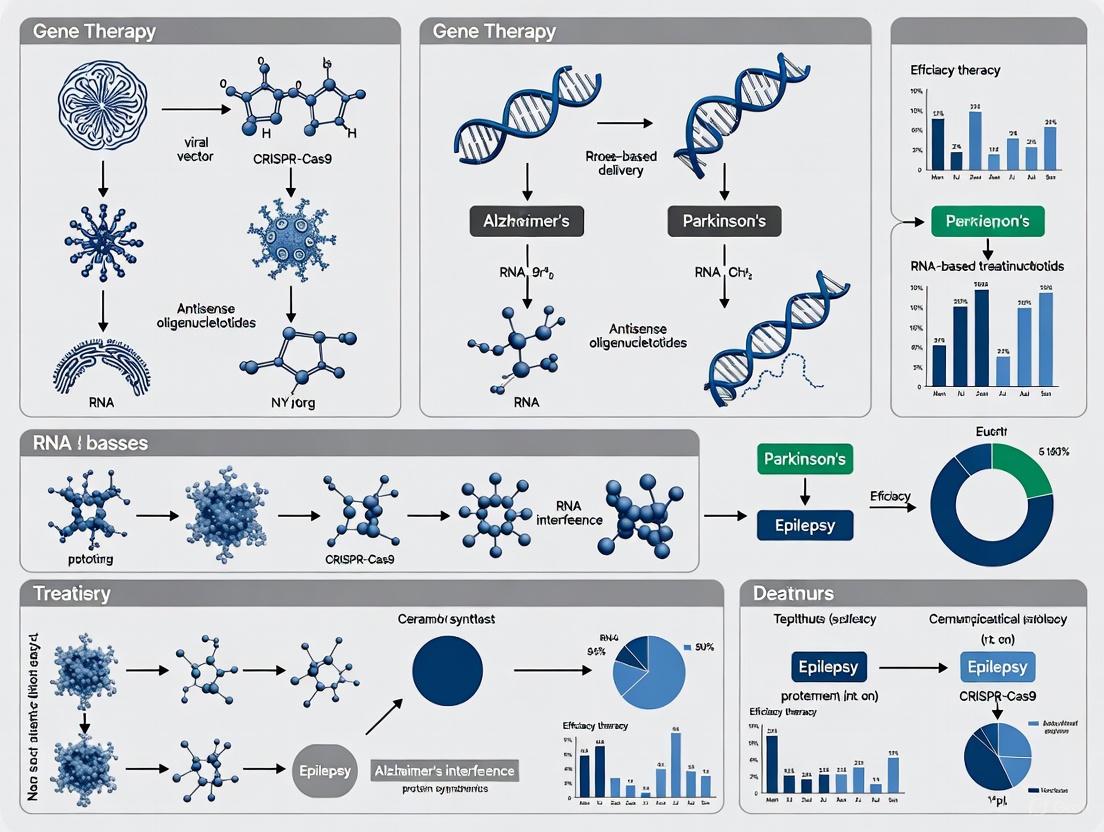
This article provides a comprehensive comparative analysis for researchers and drug development professionals on two revolutionary therapeutic classes for neurological disorders: gene therapies and RNA-based treatments.
Gene Therapies vs. RNA-Based Treatments for Neurological Disorders: A Comparative Analysis for Drug Development
Abstract
This article provides a comprehensive comparative analysis for researchers and drug development professionals on two revolutionary therapeutic classes for neurological disorders: gene therapies and RNA-based treatments. It explores their foundational mechanisms, from gene replacement with viral vectors to precise RNA-level modulation using ASOs and siRNAs. The scope covers key methodological applications across neurodevelopmental and neurodegenerative diseases, critically examines troubleshooting for central nervous system delivery and safety, and offers a direct validation of clinical efficacy, development timelines, and suitability for different genetic pathologies. The synthesis aims to inform strategic therapeutic development and clinical translation in the evolving landscape of neurological treatments.
Core Mechanisms: Defining Gene and RNA-Based Therapeutic Platforms
The advent of molecular therapies has ushered in a new era for treating neurological disorders of genetic origin. Within this therapeutic landscape, two distinct strategies have emerged: gene replacement therapy, which introduces a functional copy of a gene to compensate for a defective one, and transcript modulation therapy, which targets the RNA messengers to alter gene expression without changing the underlying DNA sequence. Gene replacement represents a permanent solution aimed at addressing the root cause of genetic disorders, particularly those involving loss-of-function mutations. In contrast, transcript modulation offers a reversible, tunable approach capable of targeting gain-of-function mutations and splicing defects that are inaccessible to traditional gene replacement. The selection between these paradigms depends on multiple factors including the nature of the genetic defect, target tissue accessibility, and desired duration of therapeutic effect. This review provides a comprehensive comparison of these foundational approaches, examining their mechanisms, applications, and experimental validation within neurological disease research.
Fundamental Mechanisms and Therapeutic Strategies
Gene Replacement: Restoring Function through DNA-Based Approaches
Gene replacement therapy operates on a straightforward principle: delivering a functional copy of a gene to compensate for a mutated, non-functional version. This approach is particularly suited for recessive disorders caused by loss-of-function mutations where simply adding a correct gene copy can restore protein production [1]. The process involves packaging the therapeutic gene into a delivery vector, most commonly adeno-associated viruses (AAVs), which efficiently transport the genetic material to the nucleus of target cells where it remains as an episomal element without integrating into the host genome [2].
The pioneering success of this approach in neurological disorders is exemplified by voretigene neparvovec (Luxturna), an AAV2-mediated gene replacement therapy for Leber congenital amaurosis (LCA) caused by biallelic mutations in RPE65 [2]. This treatment delivers the wild-type cDNA of the RPE65 gene, critical for the visual cycle, and has demonstrated significant improvement in visual function. Similarly, onasemnogene abeparvovec (Zolgensma) delivers a functional copy of the survival motor neuron 1 (SMN1) gene using AAV9 for spinal muscular atrophy (SMA), a devastating neuromuscular disease [2].
Despite its conceptual simplicity, gene replacement faces significant constraints. AAV vectors have a limited packaging capacity of approximately 4.8 kb, excluding larger genes such as ABC4A and MYO7A from this therapeutic approach [2]. Additionally, the need for specific promoters to direct expression to target cell types, potential immune responses against the viral capsid or transgene product, and the irreversibility of treatment present challenges for clinical application [1].
Transcript Modulation: Precision Manipulation at the RNA Level
Transcript modulation encompasses diverse strategies that target RNA molecules to alter gene expression, including antisense oligonucleotides (ASOs), RNA interference (RNAi), and mRNA-based therapies. These approaches operate further downstream in the central dogma, providing nuanced control over gene expression without altering the foundational genetic code [1].
Antisense oligonucleotides (ASOs) are synthetic, short single-stranded DNA or RNA molecules that modulate RNA function through complementary base pairing [1] [2]. They can correct splicing defects, degrade mutant mRNA, or block translation. Their versatility is demonstrated in neurological disorders such as spinal muscular atrophy, where nusinersen (Spinraza), an ASO, modulates the splicing of SMN2 to increase production of functional SMN protein [3].
Therapeutic mRNA represents another transcript modulation strategy, introducing chemically modified mRNA encoding functional proteins into target cells [1]. This approach is particularly valuable for haploinsufficiency disorders, transiently expressing the needed protein without genomic integration. Modifications to the 5' cap, untranslated regions (UTRs), and poly(A) tail enhance mRNA stability and translatability, while incorporating modified nucleotides reduces immune recognition [1].
RNA interference utilizes small interfering RNAs (siRNAs) or short hairpin RNAs (shRNAs) to selectively degrade complementary mRNA sequences, offering potent silencing of genes carrying toxic gain-of-function mutations [3]. This approach is especially relevant for dominantly inherited disorders where suppressing expression of the mutant allele is therapeutic.
Table 1: Key Characteristics of Therapeutic Approaches
| Feature | Gene Replacement | Transcript Modulation |
|---|---|---|
| Molecular Target | DNA | RNA |
| Therapeutic Scope | Primarily loss-of-function mutations | Loss-of-function, gain-of-function, and splicing defects |
| Duration of Effect | Long-lasting to permanent | Transient, requiring repeated administration |
| Delivery Vehicles | AAV, lentivirus | ASOs: chemical modifications; mRNA: LNPs, AAV |
| Packaging Constraints | Limited to ~4.8 kb for AAV | More flexible for large genes |
| Immunogenicity | Immune response against viral capsid | Immune response against nucleic acids |
| Regulatory Precedents | Luxturna, Zolgensma | Spinraza, Formivirsen, Mipomersen |
Experimental Data and Comparative Performance
Efficiency and Precision in Preclinical Models
Direct comparisons of gene editing platforms reveal distinct efficiency and precision profiles. CRISPR-Cas systems demonstrate significant advantages in simplicity and cost-effectiveness over traditional methods like ZFNs and TALENs, with CRISPR requiring only guide RNA redesign versus extensive protein engineering for ZFNs/TALENs [4]. However, quantitative analysis shows that traditional methods may offer superior specificity in certain contexts, with better validation reducing off-target risks [4].
In the realm of transcript modulation, ASOs have demonstrated remarkable precision in correcting splicing defects. For CEP290-associated LCA10, ASO treatment successfully restored normal splicing patterns in preclinical models, leading to functional protein expression [2]. Similarly, mRNA-based therapies have achieved therapeutic protein levels in vivo with reduced immunogenicity through nucleoside modifications, enabling repeated administration where necessary [1].
Delivery and Biodistribution Challenges
Both therapeutic paradigms face significant delivery challenges, particularly for neurological applications where the blood-brain barrier presents a formidable obstacle. Gene replacement therapies predominantly rely on viral vectors, with AAV serotypes selected for their tropism to specific neural cell types [2]. Direct intracranial injection often bypasses the blood-brain barrier, enabling precise targeting of affected brain regions while minimizing systemic exposure [3].
Transcript modulation therapies employ distinct delivery strategies. ASOs can be administered directly into the cerebrospinal fluid, allowing broad distribution throughout the central nervous system [3]. mRNA therapies require protective carriers such as lipid nanoparticles (LNPs) or viral vectors to preserve integrity during trafficking and enhance cellular uptake [1]. Chemical modifications to ASOs, including phosphorothioate backbones and 2'-sugar modifications, significantly improve their stability, pharmacokinetics, and tissue penetration [1].
Table 2: Quantitative Comparison of Editing Platforms
| Feature | CRISPR | ZFNs | TALENs |
|---|---|---|---|
| Precision | Moderate to high; subject to off-target effects | High; better validation reduces risks | High; better validation reduces risks |
| Ease of Use | Simple gRNA design | Requires extensive protein engineering | Challenging to scale due to labor-intensive assembly |
| Cost | Low | High | High |
| Scalability | High; ideal for high-throughput experiments | Limited | Limited |
| Applications | Broad (therapeutics, agriculture, research) | Niche (e.g., stable cell line generation) | Niche (e.g., small-scale precision edits) |
| Delivery Methods | Compatible with viral vectors, nanoparticles | Primarily relies on plasmid vectors | Primarily relies on plasmid vectors |
Experimental Protocols for Therapeutic Validation
Protocol: Validating Gene Replacement Efficacy in vivo
Objective: To evaluate the functional recovery following gene replacement therapy in a murine model of RPE65-associated Leber congenital amaurosis.
Materials:
- RPE65-deficient mice
- AAV2 vectors containing human RPE65 cDNA under control of a specific promoter
- Control AAV2 vectors with scrambled sequence
- Electroretinography (ERG) equipment
- Immunohistochemistry supplies
Methodology:
- Vector Administration: Administer 1µL of AAV2-RPE65 (1×10¹² vg/mL) via subretinal injection to 6-week-old RPE65-/- mice under anesthesia. Control groups receive AAV2-scrambled or sham injection.
- Functional Assessment: At 4, 8, and 12 weeks post-injection, perform ERG under scotopic and photopic conditions to measure retinal function recovery.
- Tissue Analysis: Euthanize animals at 12 weeks, harvest retinal tissues, and process for immunohistochemistry using anti-RPE65 antibodies to confirm protein expression.
- Quantitative PCR: Isolve RNA from retinal tissues and perform qPCR with RPE65-specific primers to quantify transcript levels.
Validation Parameters: Significant improvement in ERG amplitudes in treated versus control groups, with correlation between RPE65 expression levels and functional recovery [2].
Protocol: Assessing Transcript Modulation Using ASOs
Objective: To determine the efficacy of ASOs in correcting splicing defects in CEP290-associated models.
Materials:
- Fibroblasts from patients with CEP290 splicing mutations
- Control fibroblasts from healthy donors
- CEP290-targeting ASOs with 2'-O-methoxyethyl modifications
- Scrambled control oligonucleotides
- RT-PCR reagents
- Western blot equipment
Methodology:
- Cell Culture: Maintain fibroblasts in DMEM with 10% FBS at 37°C in 5% CO₂.
- ASO Transfection: Transfect 100nM of CEP290 ASOs or scrambled controls using lipofectamine 3000 according to manufacturer's protocol.
- RNA Analysis: At 48 hours post-transfection, isolate total RNA and perform RT-PCR using CEP290-flanking primers to visualize splicing patterns.
- Protein Analysis: At 72 hours, lyse cells and perform western blotting with anti-CEP290 antibodies to quantify protein restoration.
- Functional Assay: Assess ciliogenesis and ciliary protein localization via immunofluorescence as CEP290 is essential for ciliary function.
Validation Parameters: Normalization of splicing patterns on gel electrophoresis, increased CEP290 protein expression, and restoration of normal ciliary morphology in ASO-treated versus control cells [2].
Visualization of Therapeutic Mechanisms
Gene Replacement Mechanism
Transcript Modulation Mechanisms
The Scientist's Toolkit: Essential Research Reagents
Table 3: Essential Research Reagents for Gene Therapy Development
| Reagent/Category | Specific Examples | Research Function |
|---|---|---|
| Gene Editing Tools | CRISPR-Cas9, ZFNs, TALENs, Base Editors | Targeted genomic modifications for functional studies |
| Delivery Vectors | AAV serotypes (AAV2, AAV9), Lentivirus, Lipid Nanoparticles | Therapeutic nucleic acid delivery to target cells |
| Transcript Modulators | ASOs, siRNA, shRNA, mRNA | Targeted gene expression regulation without genomic alteration |
| Cell Culture Models | Patient-derived fibroblasts, iPSC-derived neurons, Organoids | Disease modeling and therapeutic screening |
| Analytical Tools | qPCR, Western Blot, RNA-seq, ATAC-seq, Immunofluorescence | Molecular and functional validation of therapeutic effects |
| Animal Models | Genetic knockout mice, Xenograft models, Disease-specific mutants | In vivo efficacy and safety assessment |
Gene replacement and transcript modulation represent complementary rather than competing strategies in the therapeutic landscape for neurological disorders. The choice between these approaches depends fundamentally on the specific genetic alteration, with gene replacement offering durable solutions for loss-of-function disorders and transcript modulation providing flexible targeting of splicing defects and gain-of-function mutations. Emerging technologies such as base editing and prime editing are blurring the historical boundaries between these categories, enabling ever more precise genetic interventions.
Future developments will likely focus on enhancing delivery efficiency, particularly across the blood-brain barrier, reducing immunogenicity concerns, and expanding the range of targetable disorders. The integration of machine learning approaches, as exemplified by foundation models like GET (General Expression Transformer), promises to accelerate therapeutic design by predicting gene expression outcomes from sequence and chromatin accessibility data [5]. As both paradigms continue to mature, combination approaches may offer synergistic benefits, potentially addressing the complex genetics underlying many neurological disorders through multi-faceted intervention strategies.
Adeno-associated virus (AAV) has solidified its position as the premier viral vector for in vivo gene delivery, particularly for challenging targets like the central nervous system (CNS). Its exceptional safety profile, long-term transgene expression, and ability to infect non-dividing cells make it a cornerstone of modern gene therapy. This guide objectively compares AAV against alternative viral vectors and RNA-based therapies, providing structured experimental data and methodologies to inform research and drug development strategies. The analysis is framed within the broader thesis of selecting the optimal gene delivery platform for neurological disorders, a field being reshaped by advanced genetic medicines [6] [7].
The development of viral vectors has been instrumental in translating gene therapy from concept to clinical reality. Among the available options, AAV has emerged as a leader for in vivo applications. AAV is a small, non-pathogenic virus with a single-stranded DNA genome of approximately 4.7 kb, which can be engineered to deliver therapeutic transgenes [8] [9]. Its reputation as a "gold standard" is built on a combination of favorable characteristics: low immunogenicity, long-lasting episomal persistence in non-dividing cells, and the absence of association with any known human disease [9] [7]. The successful approval of AAV-based therapies like Zolgensma (onasemnogene abeparvovec) for spinal muscular atrophy has clinically validated this platform, demonstrating its potential to address profound unmet medical needs in neurological and other rare diseases [6] [8].
Comparative Analysis of Viral Vector Platforms
Selecting the appropriate viral vector requires a careful balance of payload capacity, duration of expression, safety, and immunogenicity. The table below provides a direct comparison of AAV against other commonly used viral vectors.
Table 1: Quantitative and Qualitative Comparison of Major Viral Vector Platforms
| Feature | Adeno-Associated Virus (AAV) | Lentivirus (LV) | Adenovirus (AdV) |
|---|---|---|---|
| Genome Type | Single-stranded DNA | Single-stranded RNA (reverse-transcribing) | Double-stranded DNA |
| Packaging Capacity | ~4.7 kb [8] | ~8 kb [9] | Large, up to ~36 kb [9] |
| Integration Profile | Predominantly episomal; low risk of integration [7] | Integrates into host genome [9] | Non-integrating [9] |
| Duration of Expression | Long-term (years in post-mitotic cells) [7] | Long-term (due to integration) [9] | Transient (weeks to months) [9] |
| Immunogenicity | Low to moderate (capsid and transgene-specific) [9] [7] | Moderate | High; strong innate and adaptive immune response [9] |
| Primary Applications | In vivo gene therapy (CNS, retina, muscle), gene replacement | Ex vivo cell engineering (e.g., CAR-T), hematopoietic stem cells | Vaccines, oncolytic therapy, transient high-level expression [9] |
| Key Safety Considerations | Risk of hepatotoxicity at high systemic doses; pre-existing immunity [7] | Risk of insertional mutagenesis [9] | Inflammatory responses; toxicity from immune activation [9] |
AAV vs. RNA-Based Therapies for Neurological Disorders
The therapeutic strategy for neurological disorders often narrows to a choice between gene therapy (using vectors like AAV) and RNA-based treatments (such as RNA interference, or RNAi). While both aim to correct disease pathology, their mechanisms, capabilities, and limitations differ significantly.
Table 2: Comparison of AAV-Based Gene Therapy and RNAi-Based Therapy
| Aspect | AAV-Based Gene Therapy | RNAi-Based Therapy |
|---|---|---|
| Mechanism of Action | Delivery of a functional gene to enable long-term production of a therapeutic protein (gene augmentation) [6] | Silencing of target genes at the mRNA level by degrading complementary mRNA transcripts (gene knockdown) [10] |
| Therapeutic Effect | Permanent or long-lasting correction (DNA level) [11] | Transient and reversible (mRNA level) [10] |
| Genetic Target | Can address loss-of-function and some gain-of-function diseases [6] | Primarily addresses gain-of-function or overexpressed genes [10] |
| Typical Dosing Regimen | Single or infrequent administration potential [11] | Often requires repeated administrations [10] |
| Specificity & Off-Target Effects | High specificity; off-target effects are a function of promoter choice and delivery. | Historically prone to high off-target effects due to sequence-independent interferon responses and seed-based hybridization [10] |
| Delivery to CNS | Multiple validated routes (intraparenchymal, intrathecal, intravenous with BBB-crossing serotypes) [6] [8] | Requires efficient delivery systems to cross the blood-brain barrier; can be coupled with AAV for sustained expression. |
The diagram below illustrates the fundamental mechanistic differences between AAV gene augmentation, RNAi knockdown, and the more recent CRISPR-Cas knockout, which can also be delivered by AAV.
The Emergence of AAV-CRISPR Synergy
A powerful extension of AAV's utility is its role in delivering clustered regularly interspaced short palindromic repeats (CRISPR)-based gene-editing machinery. This combination allows for permanent gene correction, regulation, or knockout at the DNA level, going beyond traditional gene replacement [7]. CRISPR knockouts are highly effective for complete loss-of-function studies and, unlike RNAi, are not confounded by residual low-level protein expression [10]. A key challenge is the large size of the Cas nuclease, which exceeds AAV's packaging capacity. This is being overcome by innovative dual-vector, intein-split systems, where two co-administered AAVs deliver split parts of the editor that reconstitute inside the target cell [7]. Recent optimized systems have achieved therapeutically relevant editing efficiencies of 42% in the mouse brain [7].
Experimental Protocols and Supporting Data
Key Experimental Workflow for AAV Preclinical Studies
A standard protocol for evaluating an AAV-based gene therapy in a large animal model, as derived from a long-term safety and durability study, involves several critical stages [11].
Detailed Methodology:
- Vector & Dose: The study used an AAV9 vector encoding the canine sulfamidase gene (AAV9-Sgsh) under the control of a CAG promoter. A single, clinically relevant dose of 2 × 10^13 vector genomes (vg) per dog was administered [11].
- Administration: The vector was delivered via intracisterna magna (ICM) injection, a form of intra-cerebrospinal fluid (CSF) delivery, to achieve widespread CNS distribution [11].
- Safety Monitoring: Animals were monitored for 7 years. Periodic analyses included:
- Clinical and neurological evaluations.
- CSF analysis: White blood cell (WBC) count and total protein (TP) levels to monitor for neuroinflammation.
- Blood tests and imaging (MRI and ultrasound) of target organs [11].
- Efficacy/Durability Assessment: Sulfamidase enzyme activity was measured in the CSF over time. Upon terminal sacrifice, brain, spinal cord, and peripheral tissues were analyzed for vector genome persistence, transgene expression, and enzymatic activity [11].
Key Experimental Data from AAV Studies
Table 3: Summary of Key Findings from Preclinical and Clinical AAV Studies
| Study Model / Therapy | Key Parameter | Result / Data Point |
|---|---|---|
| Healthy Beagle Dogs (7-yr study) [11] | CSF Sulfamidase Activity | Detected at therapeutic levels for 7 years post-single AAV9-ICM injection |
| Clinical Safety | No treatment-related adverse events over 7 years; CSF WBC and TP largely within normal ranges | |
| Luxturna (AAV2-RPE65) Phase 3 Trial [8] | Functional Vision Improvement | >100-fold improvement in multi-luminance mobility test (MLMT) at 1 year vs control (p<0.001) |
| SRSD107 (siRNA) Phase 1 Trial [12] | Factor XI Reduction | >93% peak reduction in FXI activity; sustained effect up to 6 months post-single dose |
| AAV-CRISPR Prime Editing (Mouse) [7] | In Vivo Editing Efficiency | Optimized "v3em PE-AAV" achieved 42% prime editing efficiency in the mouse brain |
The Scientist's Toolkit: Essential Research Reagents
Table 4: Key Research Reagent Solutions for AAV-Based Gene Therapy Research
| Reagent / Solution | Function & Application | Examples / Notes |
|---|---|---|
| AAV Serotypes | Determine tissue tropism and transduction efficiency. | AAV9: Crosses BBB, systemic/CNS delivery [6]. AAV2: Local delivery, high neuronal transduction [6]. AAV5: Broad spread within striatum [6]. |
| Promoters | Control cell-type specificity and expression level of the transgene. | Ubiquitous: CAG, CBh [6]. Neuron-specific: hSyn, CaMKIIα [6]. |
| Production Systems | Manufacture high-titer, high-purity AAV vectors for research and clinic. | Triple Transfection (HEK293 cells) [8]. Baculovirus/Sf9 System (insect cells) for scalable production [8]. |
| Genome Engineering Elements | Fine-tune expression and enhance safety. | miRNA Target Sites: Detarget transgene from off-target cells [6]. WPRE: Enhances RNA stability and expression [6]. |
| CRISPR Components | Enable gene editing within the AAV delivery framework. | Guide RNA (gRNA): Targets nuclease. Cas Nucleases: e.g., SpCas9, SaCas9 (smaller size). Intein Systems: For splitting large Cas proteins into two AAVs [7]. |
AAV's well-established safety profile, capacity for long-term gene expression, and versatility through serotype and genome engineering firmly support its status as the gold standard for in vivo gene delivery. While RNA-based therapies like siRNA offer a potent, often reversible means of gene knockdown, AAV-based strategies provide a more durable solution for gene replacement, as evidenced by long-term studies showing sustained transgene expression for over seven years [11]. The ongoing convergence of AAV with revolutionary technologies like CRISPR is further expanding its potential, moving beyond gene augmentation to precise gene editing. For researchers and drug developers targeting neurological disorders, the strategic choice between AAV, other viral vectors, and RNA-based platforms will continue to hinge on the specific genetic pathology, desired duration of effect, and the critical balance between therapeutic potency and safety.
RNA-based therapeutics have revolutionized modern medicine by offering versatile and precise modalities to modulate gene expression for a wide range of diseases, including neurological disorders, genetic conditions, and cancer [13]. This therapeutic class represents a paradigm shift from conventional approaches, moving beyond the limitation of targeting only approximately 0.05% of the human genome that is druggable by small molecules and antibodies [14]. By leveraging the fundamental principles of Watson-Crick base pairing, RNA therapeutics can theoretically target any gene of interest, thereby dramatically expanding the therapeutic landscape [14].
The field has evolved from foundational discoveries—such as the development of antisense oligonucleotides (ASOs) in the late 1970s and the discovery of RNA interference (RNAi) in the 1990s—into a robust therapeutic platform with multiple approved drugs [13]. The successful global deployment of mRNA vaccines during the COVID-19 pandemic further validated RNA as a scalable, adaptable modality capable of rapid response to public health crises [13] [15]. This review provides a comprehensive comparison of major RNA therapeutic modalities—ASOs, siRNA, and mRNA vaccines—within the specific context of neurological disease research, examining their mechanisms, clinical applications, delivery challenges, and experimental considerations.
Comparative Analysis of RNA Therapeutic Modalities
Table 1: Core Characteristics of Major RNA Therapeutic Modalities
| Parameter | ASOs | siRNA | mRNA Therapeutics |
|---|---|---|---|
| Structure | Single-stranded oligonucleotides (12-24 nt) [14] | Double-stranded RNA (20-25 bp) [16] [14] | Single-stranded coding RNA with 5' cap and poly-A tail [15] |
| Primary Mechanism | RNase H1-mediated degradation, splice switching, steric blockade [14] | RISC-mediated cleavage of complementary mRNA [15] [14] | Cellular production of encoded therapeutic proteins [15] |
| Cellular Target | Nucleus & cytoplasm [14] | Cytoplasm [14] | Cytoplasm (ribosomes) [15] |
| Therapeutic Effect | Reduction, restoration, or modification of protein expression [14] | Transient knockout of specific protein production [17] | Transient production of therapeutic proteins/antigens [15] |
| Duration of Effect | Weeks to months (requiring repeated administration) [16] | Several months (long-lasting silencing) [15] | Days (transient expression) [15] |
| Key Modifications | 2'-MOE, PMO, PS backbone, LNA [18] [14] | 2'-OMe, 2'-F modifications [13] | Pseudouridine, 5-methoxyuridine [13] |
| Delivery Platforms | Intrathecal injection, GalNAc conjugation [18] [16] | LNP, GalNAc conjugation [13] [15] | LNP, polymeric nanoparticles [13] [15] |
| Typical Dose Frequency | Quarterly to semi-annually after loading doses [18] | Quarterly to semi-annually [15] | Single or two-dose regimens (vaccines) [13] |
Table 2: Clinically Approved RNA Therapeutics for Neurological and Other Disorders
| Therapeutic (Brand Name) | Modality | Target/Indication | Year Approved | Key Clinical Trial Efficacy Data |
|---|---|---|---|---|
| Nusinersen (Spinraza) [18] | ASO (splice-switching) | SMN2 for spinal muscular atrophy | 2016 [18] | 51% of infants achieved motor milestone response vs. 0% sham-procedure (ENDEAR trial) [13] |
| Patisiran (Onpattro) [17] | siRNA (LNP) | Transthyretin (hATTR amyloidosis) | 2018 [13] [17] | Improved neuropathy scores (APOLLO trial) [13] |
| Eteplirsen (Exondys 51) [18] | ASO (exon skipping) | DMD exon 51 for Duchenne muscular dystrophy | 2016 [18] | Increased dystrophin expression to 0.93% of normal vs. 0.09% baseline (phase 2) [14] |
| Inclisiran (Leqvio) [13] | siRNA (GalNAc) | PCSK9 for hypercholesterolemia | 2021 [13] | LDL-C reduction sustained >18 months (ORION trials) [13] |
| mRNA-1345 [13] | mRNA vaccine (LNP) | RSV for older adults | 2024 (priority review) [13] | Phase III positive results (specific efficacy data pending) [13] |
| Tofersen (Qalsody) [19] | ASO | SOD1 for ALS | 2023 [19] [17] | Reduced SOD1 protein levels by 36% vs. placebo; slowed functional decline [17] |
Molecular Mechanisms and Signaling Pathways
ASOs: Multimodal Mechanisms of Action
ASOs employ diverse mechanisms to modulate gene expression, broadly categorized into occupancy-mediated degradation and occupancy-only (steric blockade) mechanisms [14]. The degradation pathway involves RNase H1-mediated cleavage of the target RNA when bound to a complementary ASO, effectively reducing target protein levels [14]. In contrast, steric blockade mechanisms involve ASOs binding to pre-mRNA to modulate splicing patterns—either promoting exon inclusion (as with nusinersen in SMA) or exon skipping (as with eteplirsen in DMD) without degrading the target RNA [18] [14]. Additional steric blockade mechanisms include translational arrest, alteration of 5' capping or polyadenylation, and modulation of miRNA activity [14].
siRNA and RNA Interference Pathway
Small interfering RNAs (siRNAs) function through the conserved RNA interference (RNAi) pathway. The double-stranded siRNA is loaded into the RNA-induced silencing complex (RISC), where the passenger strand is cleaved by Argonaute 2 (AGO2) protein and discarded [14]. The guide strand then directs RISC to complementary mRNA sequences, leading to AGO2-mediated cleavage and degradation of the target transcript, effectively preventing translation of the encoded protein [15] [14]. This mechanism provides high specificity in gene silencing, making siRNA particularly valuable for targeting dominant gain-of-function mutations in neurological disorders [16].
mRNA Therapeutics: Protein Replacement Paradigm
mRNA therapeutics employ a fundamentally different approach—rather than inhibiting gene expression, they introduce mRNA encoding therapeutic proteins to achieve temporary protein production within host cells [15]. The synthetic mRNA, engineered with modified nucleosides and optimized codons, is translated by cellular ribosomes into functional proteins that can replace deficient enzymes, generate vaccine antigens, or provide therapeutic factors [13] [15]. This platform offers particular promise for monogenic disorders where supplementing a functional protein can ameliorate disease symptoms, though applications in neurological disorders require advanced delivery strategies to cross the blood-brain barrier [19].
Delivery Technologies for Neurological Applications
Effective delivery remains the most significant challenge for RNA therapeutics, particularly for neurological disorders where the blood-brain barrier (BBB) restricts access to the central nervous system [18] [19]. The BBB prevents passive diffusion of RNA molecules, necessitating specialized delivery approaches.
Table 3: Delivery Methods for RNA Therapeutics in Neurological Disorders
| Delivery Method | Mechanism | Advantages | Limitations | Representative Therapeutics |
|---|---|---|---|---|
| Intrathecal Injection [18] | Direct administration into cerebrospinal fluid | Bypasses BBB, achieves high CNS concentrations | Invasive procedure, requires specialized medical care | Nusinersen [18], Tofersen [19] |
| Lipid Nanoparticles (LNP) [13] | Encapsulation for cellular uptake and endosomal escape | Protects RNA, enhances bioavailability, tunable properties | Primarily hepatic tropism, potential immunogenicity | Patisiran [17], mRNA vaccines [13] |
| GalNAc Conjugation [13] | Targets asialoglycoprotein receptor on hepatocytes | Efficient liver delivery, reduced dosing frequency | Limited to hepatic applications | Givosiran, Inclisiran [13] |
| Viral Vectors (AAV) [16] | Viral-mediated gene transfer | Long-lasting expression, efficient transduction | Potential immunogenicity, limited DNA cargo capacity | Onasemnogene abeparvovec (Zolgensma) [16] |
| Peptide Conjugates [18] | Cell-penetrating peptides enhance cellular uptake | Improved tissue penetration, potential for CNS targeting | Optimization required for specificity | Research-stage pPMOs [18] |
Experimental Protocols and Research Toolkit
Standard Protocol for In Vitro RNA Therapeutic Screening
Objective: Evaluate efficacy and specificity of candidate RNA therapeutics in neuronal cell cultures.
Methodology:
- Cell Culture: Maintain relevant neuronal cell lines (e.g., SH-SY5Y, PC12) or primary neurons in appropriate media [19].
- Therapeutic Transfection:
- Control Design:
- Efficacy Assessment (48-72 hours post-transfection):
- Specificity Validation:
In Vivo Protocol for Preclinical Assessment in Neurological Models
Objective: Determine therapeutic efficacy and biodistribution in animal models of neurological disease.
Methodology:
- Animal Models: Utilize established neurological disease models (e.g., SOD1G93A mice for ALS, SMA transgenic mice) [19] [16].
- Dosing Paradigm:
- Biodistribution Analysis:
- Efficacy Endpoints:
- Safety Evaluation:
The Scientist's Toolkit: Essential Research Reagents
Table 4: Key Reagents for RNA Therapeutics Research
| Reagent/Category | Specific Examples | Research Application | Considerations |
|---|---|---|---|
| Chemical Modification Kits [14] | 2'-MOE, 2'-O-Me, LNA, phosphorothioate | Enhance stability, reduce immunogenicity, improve binding affinity | Optimization required for each modality and target |
| Delivery Vehicles [19] | Cationic lipids, polymers, GalNAc conjugates | Enable cellular uptake and endosomal escape | Cell-type specific efficiency; potential cytotoxicity |
| Vector Systems [16] | AAV9, AAV-PHP.eB, lentiviral vectors | In vivo gene delivery with CNS tropism | Immunogenicity concerns; cargo size limitations |
| Analytical Tools [13] | HPLC, mass spectrometry, dynamic light scattering | Quality control of RNA and formulations | Critical for characterizing purity, size, stability |
| Cell-based Assays [14] | Luciferase reporter systems, splice-switching assays | High-throughput screening of candidate molecules | Requires careful design of relevant reporter constructs |
| Animal Models [16] | Transgenic, knock-in, patient-derived xenografts | Preclinical efficacy and safety evaluation | Species-specific differences in RNA processing and immunity |
Comparative Clinical Trial Design Considerations
Table 5: Key Considerations for Clinical Trial Design of RNA Therapeutics
| Trial Phase | Primary Objectives | Key Endpoints | Special Considerations for Neurological Applications |
|---|---|---|---|
| Preclinical | Target engagement, biodistribution, safety profile | Biomarker modulation, tissue distribution, MTD | BBB penetration, neuronal uptake, long-term CNS effects |
| Phase I | Safety, tolerability, pharmacokinetics | Adverse events, dose-limiting toxicities, CSF levels | Route of administration (intrathecal vs. systemic), CSF pharmacokinetics |
| Phase II | Preliminary efficacy, dose optimization | Clinical outcome measures, biomarker correlation | Patient selection based on genetic markers, disease staging |
| Phase III | Confirmatory efficacy, risk-benefit assessment | Primary clinical endpoint, quality of life measures | Novel endpoints for neurodegenerative diseases, long-term follow-up |
The RNA therapeutics landscape represents a rapidly evolving field that has fundamentally expanded our approach to treating neurological diseases. ASOs offer remarkable precision for splice modulation and allele-specific targeting, siRNAs provide potent and durable gene silencing, while mRNA platforms enable protein replacement and vaccination strategies. Each modality presents distinct advantages and limitations that must be carefully considered in the context of specific disease mechanisms and target tissues.
Future developments in RNA therapeutics will likely focus on overcoming the persistent challenge of delivery, particularly to extrahepatic tissues like the CNS [13] [19]. Emerging technologies including circular RNA with enhanced stability, self-amplifying RNA for reduced dosing, and CRISPR-based RNA editing systems promise to further expand the therapeutic arsenal [13] [17]. Additionally, advances in chemical modifications, delivery platforms, and targeting ligands will continue to improve the efficacy, safety, and applicability of RNA medicines.
For researchers and drug development professionals, the current landscape offers unprecedented opportunities to develop treatments for previously undruggable targets. The continued refinement of these platforms, coupled with deeper understanding of disease biology, heralds a new era of precision medicine for neurological disorders and beyond.
The strategic choice between gene therapies and RNA-based treatments for neurological disorders hinges on accurately identifying the underlying molecular disease mechanism. Pathogenic variants can cause disease through two primary mechanisms: loss-of-function (LOF), where a mutation reduces or eliminates the biological activity of a protein, and gain-of-toxic-function (GOF), where a mutation confers new, often deleterious, properties to the protein [20] [21]. This distinction is therapeutically critical, as LOF diseases typically require functional restoration of the affected pathway, while GOF diseases necessitate suppression or neutralization of the toxic protein [20]. This guide provides a structured comparison of these pathological mechanisms and their implications for selecting appropriate therapeutic modalities, focusing on experimental approaches for mechanism identification and the corresponding reagent solutions that enable this research.
Comparative Analysis of Disease Mechanisms
Defining Characteristics and Therapeutic Implications
Table 1: Core Characteristics of LOF and GOF Pathologies
| Feature | Loss-of-Function (LOF) | Gain-of-Toxic-Function (GOF) |
|---|---|---|
| Molecular Consequence | Reduced or abolished protein activity [20] | Ectopic or enhanced protein activity, often with dominant-negative effects [20] |
| Inheritance Pattern | Often recessive (requires both alleles) [21] | Often dominant (single mutant allele sufficient) [21] |
| Ideal Therapeutic Strategy | Gene replacement, protein upregulation [20] [22] | Gene silencing, protein inhibition [20] [22] |
| Exemplary Neurological Disorders | Dravet Syndrome (SCN1A), RPE65-associated retinal dystrophy, Spinal Muscular Atrophy (SMA) [20] [21] [22] | Huntington's disease, some forms of Amyotrophic Lateral Sclerosis (ALS), Retinitis Pigmentosa (p.Pro23His in rhodopsin) [20] [21] |
Prevalence and Mechanistic Heterogeneity
Large-scale phenotypic analyses reveal the widespread nature of these mechanisms. A 2025 study analyzing 2,837 phenotypes across 1,979 Mendelian disease genes found that dominant-negative (DN) and gain-of-function mechanisms account for 48% of phenotypes in dominant genes [21]. Furthermore, the study identified widespread intragenic mechanistic heterogeneity, with 43% of dominant and 49% of mixed-inheritance genes harboring both LOF and non-LOF mechanisms for different phenotypes [21]. This complexity necessitates phenotype-level analysis rather than simple gene-level classification.
Table 2: Prevalence of Molecular Disease Mechanisms (2025 Data)
| Category | Prevalence of LOF | Prevalence of non-LOF (GOF/DN) |
|---|---|---|
| Phenotypes in Dominant Genes | 52% | 48% [21] |
| Genes with Multiple Phenotypes (showing mechanistic heterogeneity) | 43% (Dominant Genes), 49% (Mixed-Inheritance Genes) | [21] |
Experimental Protocols for Mechanism Identification
Structural Bioinformatic Prediction (in silico)
Objective: To predict the molecular mechanism (LOF vs. GOF) of a set of missense variants using protein structural features [21].
- Variant Set Curation: Compile pathogenic missense variants for a gene of interest, ideally associated with a single phenotype, from databases like ClinVar.
- Energetic Impact Calculation ((\Delta\Delta G{rank})): Use a protein stability prediction tool (e.g., FoldX) to compute the change in Gibbs free energy ((\Delta\Delta G)) for each variant. Normalize these values into a rank-based metric ((\Delta\Delta G{rank})) to facilitate cross-protein comparisons [21].
- Spatial Clustering Analysis (EDC): Calculate the Extent of Disease Clustering (EDC) metric. This quantifies the three-dimensional clustering of the submitted variants within the protein structure [21].
- mLOF Score Calculation: Input the (\Delta\Delta G_{rank}) and EDC values into an empirical distribution-based model (e.g., the published Google Colab notebook) to compute a missense LOF (mLOF) likelihood score [21].
- Mechanism Classification: Apply the optimal threshold (mLOF score = 0.508) to classify the variant set as likely LOF (score > 0.508) or non-LOF (score < 0.508), indicative of GOF/DN mechanisms [21].
Functional Validation in Cellular Models
Objective: To experimentally validate the predicted mechanism in a relevant cell model (e.g., iPSC-derived neurons).
- Model Generation: Introduce the patient-derived variant(s) into a control cell line (e.g., via CRISPR-Cas9) or use patient-derived iPSCs differentiated into relevant neuronal cell types [22].
- Gene Dosage Response (Haploinsufficiency Test):
- Transfert cells with a wild-type (WT) gene expression construct. If this rescues the cellular phenotype, it supports an LOF mechanism.
- Transfert cells with siRNA or ASOs targeting the endogenous mutant allele. If this exacerbates the phenotype, it supports an LOF mechanism; if it rescues the phenotype, it supports a GOF mechanism [22].
- Protein Activity Assay: Perform domain-specific functional assays tailored to the protein's known function (e.g., electrophysiology for ion channels, enzymatic assays for kinases, DNA-binding assays for transcription factors).
- Pathway Analysis: Use techniques like RNA sequencing or quantitative phospho-proteomics to assess downstream pathway activity. Widespread, distributed perturbations suggest LOF, while specific, clustered pathway activation suggests GOF [20].
Visualization of Therapeutic Strategies
The following diagram illustrates the logical decision-making process for selecting a therapeutic modality based on the identified genetic pathology, integrating both established and emerging technologies.
The Scientist's Toolkit: Research Reagent Solutions
Table 3: Essential Reagents for Investigating Genetic Pathologies
| Reagent / Tool | Primary Function | Application in LOF/GOF Research |
|---|---|---|
| FoldX | Protein stability prediction from structure [21] | Calculates (\Delta\Delta G) to quantify energetic impact of missense variants; high destabilization suggests LOF. |
| mLOF Score Colab Notebook | Integrates EDC and (\Delta\Delta G_{rank}) [21] | Computes a likelihood score for LOF mechanism from a set of variants; critical for in silico prediction. |
| CRISPR-Cas9 Systems | Precise genome editing [23] | Introduces patient-specific variants into cell lines (for GOF studies) or corrects them (for LOF therapeutic modeling). |
| Adeno-Associated Virus (AAV) Vectors | In vitro and in vivo gene delivery [23] | Delivers functional gene copies for LOF rescue experiments or CRISPR components for mechanistic studies. |
| Antisense Oligonucleotides (ASOs) | Sequence-specific mRNA targeting [22] | Validates mechanism by knocking down mutant transcripts; potential therapeutic for GOF pathologies. |
| Induced Pluripotent Stem Cells (iPSCs) | Patient-derived cellular models [22] | Provides a physiologically relevant human neuronal context for functional validation of LOF/GOF hypotheses. |
The precise distinction between LOF and GOF mechanisms is a foundational step in the rational design of neurological therapies. While LOF pathologies generally call for strategies that restore function, such as gene addition or protein upregulation, GOF pathologies demand approaches that silence or inhibit the toxic gene product [20] [22]. The experimental framework and toolkit presented here provide a roadmap for researchers to characterize these mechanisms definitively. The growing observation of intragenic mechanistic heterogeneity further underscores the necessity of this precise classification, moving beyond gene-level to phenotype-level understanding to enable the development of safe and effective, mechanism-based treatments for genetic neurological disorders [21].
The field of neurogenetics is undergoing a profound transformation, driven by the identification of over 1,700 genes in which pathogenic variants can cause neurogenetic disorders [24]. This expansive genetic landscape represents both a formidable challenge and an unprecedented therapeutic opportunity. Neurological disorders, affecting approximately 15% of the global population, stand as the leading cause of physical and cognitive disabilities worldwide [3]. The traditional classification of these disorders has evolved from purely clinical descriptions to a molecular understanding, distinguishing between monogenic forms with Mendelian inheritance patterns and complex polygenic disorders influenced by multiple genetic and environmental factors [25] [26].
The therapeutic paradigm is shifting accordingly, from symptomatic management to targeting fundamental disease mechanisms. Two leading technological platforms have emerged at the forefront of this revolution: gene therapies, which aim to deliver corrected genetic material, and RNA-based therapeutics, which modulate gene expression at the transcript level. The global rare disease therapeutics market, valued at $154.64 billion in 2024 and projected to reach $495.27 billion by 2033, reflects the massive investment and growth in these modalities, with gene therapy constituting the fastest-growing segment at $28 billion in 2024 [27]. This review provides a comprehensive comparison of these platforms, examining their respective mechanisms, clinical applications, and experimental approaches for neurological disorders.
Comparative Analysis of Therapeutic Platforms
Gene Therapy Approaches
Gene therapy encompasses strategies designed to introduce, modify, or correct genetic material within a patient's cells to treat disease. The primary approaches include gene replacement for loss-of-function mutations and gene editing for precise DNA modification.
Table 1: Gene Therapy Platforms for Neurological Disorders
| Approach | Mechanism | Key Vectors | Representative Targets | Development Stage |
|---|---|---|---|---|
| Gene Replacement | Delivers functional cDNA to compensate for defective genes | AAV, Lentivirus | Friedreich's ataxia (FXN), Parkinson's disease (GDNF), Rett syndrome | Clinical trials & approved therapies (e.g., Zolgensma for SMA) |
| Gene Editing | Uses engineered nucleases to modify DNA sequences | CRISPR-Cas9, Base Editors | ALS (C9orf72), Huntington's disease, Alzheimer's disease | Preclinical and early-phase clinical trials |
| Oncolytic Virotherapy | Uses engineered viruses to selectively replicate in and lyse cancer cells | Modified HSV, Adenovirus | Glioblastoma, other brain tumors | Approved (e.g., T-VEC) and clinical trials |
The adeno-associated virus (AAV) platform dominates neurological gene delivery, with 343 clinical trials ongoing as of January 2025, representing a 34% increase from mid-2022 [28]. These trials primarily target ocular (26%), central nervous system (21%), and liver (18%) tissues, with AAV2 (24%), AAV9 (16%), and AAV8 (13%) being the most frequently used capsids [28]. The field is increasingly adopting engineered capsids, with 39 trials now utilizing 15 unique novel capsids designed to overcome limitations of natural serotypes, such as pre-existing immunity and poor blood-brain barrier (BBB) penetration [28].
Recent clinical milestones underscore the progress in this domain. In 2025, MeiraGTx's AAV gene therapy for Parkinson's disease received Regenerative Medicine Advanced Therapy (RMAT) designation from the FDA, while MavriX Bio gained clearance for a first-in-human Phase 1 study for Angelman syndrome [28]. AviadoBio also dosed the first patients in a gene therapy trial for frontotemporal dementia, representing a pioneering approach for dementia treatment [28].
RNA-Based Therapeutic Platforms
RNA therapeutics encompass a diverse range of modalities that function at the transcript level rather than modifying DNA. These approaches offer transient but tunable regulation of gene expression and can target previously "undruggable" pathways.
Table 2: RNA-Based Therapeutic Platforms for Neurological Disorders
| Modality | Mechanism | Key Delivery Systems | Representative Applications | Development Stage |
|---|---|---|---|---|
| Antisense Oligonucleotides (ASOs) | Single-stranded oligonucleotides that modulate RNA processing, splicing, or degradation | Chemical modifications, intrathecal delivery | Spinal Muscular Atrophy (Nusinersen), Huntington's disease, ALS | Multiple FDA approvals, expanding clinical applications |
| siRNA | Double-stranded RNA that guides sequence-specific mRNA degradation via RISC | Lipid nanoparticles (LNPs), GalNAc conjugates | Transthyretin amyloidosis (Patisiran), ongoing neurology trials | Approved therapies, expanding to neurological indications |
| mRNA Therapeutics | Encodes therapeutic proteins for in vivo production | LNPs, novel delivery systems | Protein replacement, vaccine applications, regenerative medicine | Approved vaccines, neurological applications in development |
RNA-based therapies have gained substantial validation through clinical successes, most notably the 2016 approval of nusinersen for spinal muscular atrophy and the global deployment of mRNA vaccines during the COVID-19 pandemic [29]. These achievements demonstrated that RNA platforms could overcome historical challenges of instability, immunogenicity, and delivery. Technological innovations have been crucial to this progress, including nucleotide modifications that reduce immune activation and improve stability, and advanced delivery systems like lipid nanoparticles (LNPs) that protect RNA payloads and facilitate cellular uptake [29].
The clinical pipeline for RNA therapeutics continues to expand, with promising developments in 2025 including eplontersen for transthyretin amyloidosis and the approval of exa-cel, the first CRISPR-based RNA-guided editing therapy for sickle cell disease [29]. Emerging modalities such as self-amplifying RNAs, circular RNAs with enhanced stability, and RNA-targeting small molecules represent the next frontier of innovation [29].
Experimental Protocols and Methodologies
In Vivo Vector Evaluation Protocol
The assessment of gene therapy vectors in preclinical models follows a standardized workflow to establish safety, biodistribution, and efficacy profiles. The following protocol outlines key steps for evaluating AAV vectors for neurological applications:
Capsid Selection and Engineering: Choose natural serotypes (AAV9, AAVrh.10) with inherent CNS tropism or employ engineered capsids with enhanced BBB penetration capabilities. Engineering approaches include directed evolution based on novel BBB-transducing capsids or rational design incorporating targeting ligands [30] [28].
Vector Construction: Clone the therapeutic expression cassette (typically comprising a promoter, transgene, and polyA signal) into the AAV plasmid backbone. Optimize cassette elements for cell-type-specific expression and durable transgene expression. Self-complementary genomes may be utilized for more rapid onset of expression [28].
Vector Production and Purification: Produce recombinant AAV vectors using triple transfection of HEK293 cells or baculovirus/Sf9 system. Purify via iodixanol gradient ultracentrifugation or chromatography. Determine vector genome titer using digital droplet PCR and confirm purity/identity through SDS-PAGE, ELISA, and endotoxin testing [28].
In Vivo Administration: Administer vectors to appropriate animal models (murine, porcine, non-human primate) via route relevant to clinical translation (intrathecal, intracisternal magna, intraventricular, intra-parenchymal, or intravenous injection). Include vehicle-treated and/or sham surgery control groups [28] [24].
Biodistribution and Engraftment Analysis: At predetermined endpoints, quantify vector genome copies in target (CNS regions) and off-target (peripheral organs) tissues using qPCR. Assess transgene expression via immunohistochemistry, in situ hybridization, and/or Western blot. Evaluate cellular tropism through co-localization studies with neuronal, glial, and other CNS cell markers [30] [28].
Efficacy Assessment: Employ disease-relevant functional and histopathological outcome measures. These may include motor performance (rotarod, gait analysis), cognitive testing (Morris water maze), electrophysiology, survival, and quantification of disease-specific biomarkers or pathological hallmarks [28] [24].
Safety Evaluation: Monitor for acute adverse events. Conduct detailed histopathological analysis of CNS and peripheral tissues. Assess immunogenicity (anti-AAV antibodies, T-cell responses). Evaluate potential germline transmission [28].
This protocol generates comprehensive data packages required for regulatory submissions and clinical trial design, with particular emphasis on establishing a favorable therapeutic index.
RNA Therapeutic Efficacy Assessment
The evaluation of RNA-based therapeutics employs distinct methodologies optimized for transcript-targeting modalities:
Oligonucleotide Design and Synthesis: Design ASO or siRNA sequences with complete complementarity to target RNA. Incorporate chemical modifications (2'-O-methyl, 2'-fluoro, phosphorothioate, morpholino) to enhance nuclease resistance, binding affinity, and pharmacokinetics. For mRNA therapeutics, optimize codon usage, 5' and 3' UTRs, and incorporate modified nucleosides (pseudouridine) to reduce immunogenicity and enhance translational efficiency [29].
Formulation Development: For systemic delivery beyond the liver, develop advanced delivery systems. These include lipid nanoparticles (LNPs) with ionizable lipids, polymer-based nanoparticles, or conjugate strategies (e.g., GalNAc for hepatocyte targeting, peptide conjugates for CNS delivery). Characterize particle size, encapsulation efficiency, and stability [29].
In Vitro Screening: Transfer candidate molecules into relevant cell models (primary neurons, glial cells, iPSC-derived neural cells). Assess mRNA knockdown (for siRNA/ASO) or protein expression (for mRNA) via qRT-PCR, Western blot, and/or immunofluorescence. Evaluate cell viability and innate immune activation (IFN response) [29].
In Vivo Administration in Disease Models: Administer to genetically accurate animal models via clinically relevant routes. For neurological applications, intrathecal or intracerebroventricular delivery is often employed to bypass the BBB. Include mismatch or scrambled sequence controls [29] [3].
Target Engagement and Biomarker Analysis: Quantify reduction of target RNA (siRNA/ASO) or production of encoded protein (mRNA). Measure downstream biomarkers, including disease-specific proteins, metabolites, or functional endpoints [29].
Phenotypic Rescue Assessment: Evaluate therapeutic effect using disease-specific behavioral tests (locomotor, cognitive), electrophysiological measures, survival, and histopathological analysis of disease hallmarks (protein aggregates, neuronal loss, neuroinflammation) [29] [3].
Toxicology and Pharmacokinetics: Assess plasma and tissue half-life. Evaluate potential organ toxicity (liver, kidney, CNS). Monitor for immune activation and off-target transcript effects via transcriptomic analysis [29].
Figure 1: Experimental workflow for evaluating RNA-based therapeutics for neurological disorders, encompassing design, formulation, and comprehensive preclinical testing.
Technological Innovations and Research Reagents
The Scientist's Toolkit: Essential Research Reagents
Advancing neurogenetic therapies requires specialized research tools and reagents designed to overcome the unique challenges of the nervous system. The following table details critical solutions for experimental neuroscience research:
Table 3: Research Reagent Solutions for Neurogenetic Therapy Development
| Research Tool Category | Specific Examples | Function and Application | Key Characteristics |
|---|---|---|---|
| Next-Generation Sequencing | Whole Genome Sequencing (WGS), Whole Exome Sequencing (WES), Long-Read Sequencing (PacBio, Nanopore) | Identifying disease-causing variants, detecting repeat expansions, transcriptome analysis | Long-read technologies resolve structurally complex regions; WES covers coding regions; WGS provides complete genomic picture [25] [26] |
| Advanced Delivery Vectors | Engineered AAV capsids, BBB-penetrant LNPs, Extracellular Vesicles | Overcoming biological barriers, achieving cell-type-specific delivery in CNS | Novel AAV capsids with enhanced tropism; LNPs optimized for extrahepatic delivery; EVs as natural delivery vehicles [30] [28] [24] |
| Disease Modeling Systems | Patient-derived iPSCs, Organoids, Genetically engineered animal models | Pathogenesis studies, target validation, therapeutic screening | Human iPSC-derived neurons recapitulate patient genetics; organoids model tissue complexity; animal models assess systemic effects [24] [26] |
| Gene Editing Tools | CRISPR-Cas9, Base Editors, Prime Editors, Epigenetic Editors | Functional genomics, target validation, therapeutic genome modification | CRISPR enables gene knockout; base editors introduce precise point mutations; epigenetic editors modulate gene expression without DNA cleavage [28] [29] |
| Biodistribution & Expression Reporters | Bioluminescence Imaging, Fluorescent Reporters, bDNA Assays | Tracking vector distribution, quantifying transgene expression, measuring mRNA knockdown | Non-invasive imaging enables longitudinal tracking; sensitive assays quantify nucleic acids without amplification; fluorescent tags visualize expression patterns [28] |
Engineering Solutions for Neurological Delivery
The blood-brain barrier represents the most significant obstacle for delivering neurogenetic therapies. Innovative engineering approaches are being developed to overcome this challenge:
Figure 2: Engineering strategies to overcome the blood-brain barrier, including vector engineering and formulation innovations for enhanced CNS delivery.
For AAV vectors, capsid engineering approaches include directed evolution to select for variants with enhanced CNS tropism from random peptide libraries displayed on capsid surfaces, and rational design incorporating known BBB-targeting motifs [28]. The administration route is equally critical, with direct intrathecal or intracisternal magna delivery often providing superior CNS distribution compared to intravenous administration while reducing peripheral exposure and potential toxicity [28] [24].
For RNA therapeutics, formulation innovations focus on BBB-penetrant lipid nanoparticles with carefully engineered lipid compositions that facilitate transcytosis across brain endothelial cells. Alternative approaches include receptor-targeted conjugates that exploit endogenous transport systems, such as transferrin or insulin receptors, to mediate BBB passage [29]. Engineered extracellular vesicles derived from mesenchymal stem cells or other cellular sources represent an emerging biomimetic delivery platform with inherent biocompatibility and potential for CNS targeting [30].
The neurogenetic landscape, with over 1,700 potential target genes, presents both unprecedented challenges and opportunities. Gene therapies and RNA-based therapeutics offer complementary approaches—the former providing potential permanent correction, the latter enabling tunable and reversible modulation of gene expression. The clinical success of both modalities will depend on continued innovation in delivery technologies, particularly for overcoming the blood-brain barrier and achieving cell-type-specific targeting in the complex environment of the human brain.
Future progress will be accelerated by several converging technological trends. Long-read sequencing technologies are improving the detection of structural variants and repeat expansions in neurogenetic disorders [26]. Artificial intelligence is being leveraged to predict the pathogenicity of variants of uncertain significance and to optimize therapeutic design [29] [27]. Multimodal approaches that combine, for example, gene editing with RNA therapeutics may offer synergistic benefits for addressing complex genetic pathologies.
The translation of these technologies into clinical applications will require ongoing collaboration between academic researchers, industry partners, regulatory agencies, and patient advocacy groups. As the field advances, the development of robust biomarkers and innovative clinical trial designs will be essential for demonstrating efficacy in heterogeneous neurological disorders. With continued progress, gene-targeted therapies promise to transform the management of neurogenetic disorders from symptomatic care to definitive treatments that address underlying disease mechanisms.
Therapeutic Applications and Clinical Translation in Neurology
Antisense oligonucleotides (ASOs) represent a transformative class of RNA-targeted therapeutics that enable precise modulation of gene expression through complementary base pairing with target RNA sequences. The field has evolved significantly since its conceptualization in 1978 by Zamecnik and Stephenson, who first demonstrated that short oligonucleotides could inhibit Rous sarcoma virus replication [31]. Today, ASOs have emerged as promising therapeutic agents for a wide spectrum of monogenic disorders, particularly neurological and neuromuscular diseases, offering distinct advantages over traditional gene therapy approaches, especially for conditions where permanent genomic alteration may be undesirable [32].
The versatility of ASO mechanisms allows researchers to tailor therapeutic strategies to specific molecular pathologies. Current approaches encompass three primary modalities: splice-switching to correct aberrant pre-mRNA splicing, gene silencing to reduce expression of toxic proteins, and targeted upregulation to enhance expression of functional proteins [32]. This mechanistic diversity positions ASOs as a powerful platform for addressing the root causes of genetic disorders at the RNA level, providing a promising alternative to therapies targeting downstream pathological processes [31].
Within the context of neurological disorders, ASOs offer particular promise due to their ability to be delivered directly to the central nervous system via intrathecal administration, effectively bypassing the blood-brain barrier [31] [32]. This review systematically compares the three major ASO modalities, providing experimental data, detailed methodologies, and analytical frameworks to guide researchers in selecting and implementing appropriate ASO strategies for specific research and therapeutic applications.
Comparative Analysis of ASO Modalities
Table 1: Comparative Analysis of Major ASO Modalities
| Modality | Mechanism of Action | Chemical Design | Key Applications | FDA-Approved Examples |
|---|---|---|---|---|
| Splice-Switching | Steric blockade of splicing regulatory elements; redirects splicing outcomes | 2'-O-methyl (2'-O-Me), 2'-O-methoxyethyl (2'-MOE), phosphorodiamidate morpholino (PMO) | Duchenne muscular dystrophy, spinal muscular atrophy, ataxia-telangiectasia | Eteplirsen, golodirsen, nusinersen |
| Silencing (RNase H-dependent) | Activates RNase H-mediated degradation of target RNA | Gapmer design: central DNA flanked by modified nucleotides (e.g., 2'-MOE, LNA) | SOD1-ALS, Huntington's disease, hypercholesterolemia | Tofersen, mipomersen |
| Upregulation | Blocks regulatory elements that inhibit translation (uORFs, miRNA sites) | 2'-O-Me, 2'-MOE, constrained ethyl (cEt) modifications | Dravet syndrome (SCN1A restoration), translational enhancement | BIIB085 (clinical trials) |
Table 2: Experimental Parameters and Efficacy Metrics for ASO Modalities
| Modality | Cellular Localization | Optimal Length (nucleotides) | Key Efficacy Metrics | Therapeutic Index Considerations |
|---|---|---|---|---|
| Splice-Switching | Nucleus | 18-25 | Exon skipping/inclusion efficiency, correction of reading frame, protein restoration | Off-target splicing effects, immune activation (e.g., TLR signaling) |
| Silencing | Nucleus/Cytoplasm | 16-20 | mRNA reduction (%), protein reduction (%), IC50 | Hepatotoxicity, thrombocytopenia, inflammatory responses |
| Upregulation | Cytoplasm | 18-22 | Protein level increase (fold-change), translational efficiency | Off-target protein expression, immune stimulation |
The comparative analysis reveals that each ASO modality possesses distinct mechanistic profiles and application-specific advantages. Splice-switching ASOs function primarily in the nucleus through steric blockade, making them ideal for correcting aberrant splicing patterns in diseases like Duchenne muscular dystrophy (DMD) and spinal muscular atrophy (SMA) [33] [34]. The RNase H-dependent silencing approach employs a gapmer design that activates enzymatic degradation of complementary RNA sequences, providing potent reduction of toxic gene products in conditions like SOD1-associated amyotrophic lateral sclerosis (ALS) [31] [32]. Emerging upregulation strategies represent the most novel approach, utilizing ASOs to block inhibitory regulatory elements in untranslated regions, thereby enhancing translation of target proteins—a promising strategy for haploinsufficiency disorders [32].
Chemical modifications profoundly influence ASO performance across all modalities. First-generation phosphorothioate backbones improve nuclease resistance and protein binding but may increase nonspecific effects [31]. Second-generation modifications (2'-O-methyl, 2'-MOE) and third-generation designs (phosphorodiamidate morpholino, PMO; peptide-conjugated PMO, PPMO) further enhance binding affinity and safety profiles [33]. Recent advances in DMD therapeutics demonstrate how novel conjugations and chemical modifications significantly improve cellular uptake, endosomal escape, and nuclear import, leading to substantially enhanced exon-skipping efficacy compared to first-generation ASOs [33].
Methodologies and Experimental Protocols
Splice-Switching ASO Protocol for Exon Skipping
Objective: To induce targeted exon skipping in the DMD gene for restoration of the reading frame and dystrophin expression.
Materials:
- Phosphorodiamidate morpholino (PMO) ASOs designed to target exon-intron boundaries of exon 51 in the DMD gene
- DMD patient-derived myoblasts or the hDMDdel52/mdx mouse model
- Delivery vehicle (e.g., electroporation for in vitro, intravenous injection for in vivo)
- RNA extraction kit and RT-PCR reagents
- Western blot system for dystrophin detection
- Immunofluorescence staining tools for dystrophin visualization
Procedure:
- ASO Design: Design 18-30 nucleotide PMO ASOs complementary to splice acceptor, donor sites, or exonic splicing enhancer regions of target exon [33].
- In Vitro Transfection: Deliver ASOs to patient-derived myoblasts using electroporation (500-750V/cm, 1-2 pulses, 20ms duration) at concentrations of 100-500nM [33].
- RNA Analysis: 48 hours post-transfection, extract total RNA and perform RT-PCR using primers flanking the target exon. Resolve products by agarose gel electrophoresis to visualize exon-skipped isoforms [33].
- Protein Analysis: 72-96 hours post-transfection, analyze dystrophin restoration by Western blot (4-12% Bis-Tris gel) and immunofluorescence using dystrophin-specific antibodies [33].
- In Vivo Validation: Administer ASOs (320 mg/kg weekly via tail-vein injection) to hDMDdel52/mdx mice for 12 weeks. Analyze muscle samples for dystrophin expression and functional improvement [33].
Troubleshooting: Low skipping efficiency may require optimization of ASO target sequence using bioinformatics tools (e.g., SpliceAI) or increased ASO concentration. Poor cellular uptake may be addressed by conjugation with cell-penetrating peptides [33].
RNase H-Mediated Silencing Protocol
Objective: To achieve allele-specific reduction of mutant huntingtin (HTT) protein in Huntington's disease models.
Materials:
- Gapmer ASOs with central DNA gap (8-10 nucleotides) flanked by 2'-MOE or LNA-modified wings
- Huntington's disease patient-derived fibroblasts or transgenic mouse models
- RNA extraction and qPCR reagents
- Western blot system for HTT detection
- Cell viability assay kits
Procedure:
- Allele-Specific Design: Design gapmers complementary to mutant HTT allele, incorporating mismatch for wild-type discrimination. Optimal length: 16-20 nucleotides with 5-10-5 gapmer design (5 modified nucleotides, 10 DNA nucleotides, 5 modified nucleotides) [31].
- In Vitro Transfection: Transfect patient-derived fibroblasts using lipid nanoparticles (0.1-100nM ASO concentration). Include mismatch control ASOs to assess specificity [31].
- mRNA Quantification: 24 hours post-transfection, extract RNA and perform RT-qPCR using allele-specific TaqMan assays to quantify mutant and wild-type HTT mRNA levels [31].
- Protein Analysis: 72 hours post-transfection, harvest cells for Western blot analysis using EM48 and 2B7 antibodies to detect mutant and total HTT protein, respectively [31].
- Toxicity Assessment: Perform MTT assay 96 hours post-transfection to assess cell viability. Monitor for activation of innate immune responses via cytokine profiling [31].
- In Vivo Validation: Administer ASOs intracerebroventricularly (100-500μg) to transgenic HD mice. Evaluate motor function improvements using rotarod and clasping tests over 4-12 weeks [31].
Troubleshooting: Inadequate allele specificity requires redesign of ASO sequence and positioning of mismatch. Immune activation may be mitigated by optimizing ASO length and chemical modification pattern [31].
Targeted Upregulation Protocol via uORF Blockade
Objective: To enhance translational efficiency of SCN1A mRNA for treatment of Dravet syndrome.
Materials:
- 2'-O-methoxyethyl (2'-MOE) ASOs targeting upstream open reading frames (uORFs) in SCN1A 5'UTR
- SCN1A haploinsufficiency mouse models
- Polysome profiling reagents
- RNA immunoprecipitation (RIP) kit
- Western blot and immunohistochemistry materials
Procedure:
- uORF Mapping: Identify inhibitory uORFs in SCN1A 5'UTR through sequence analysis and functional reporter assays [32].
- ASO Design: Design 20-nucleotide 2'-MOE ASOs complementary to uORF start codons or regulatory regions to sterically block inhibitory elements [32].
- In Vitro Transfection: Transfert neuroblastoma cells or patient-derived neurons with ASOs (50-200nM) using lipid-based transfection.
- Translational Efficiency Assessment: Perform polysome profiling to measure SCN1A mRNA shift to translationally active fractions. Quantify nascent protein synthesis using puromycin incorporation assays [32].
- Protein Quantification: Measure NaV1.1 protein levels by Western blot (3-8% Tris-acetate gel) 72 hours post-transfection. Normalize to GAPDH and calculate fold-increase over controls [32].
- Functional Validation: In SCN1A haploinsufficiency mouse models, administer ASOs intracerebroventricularly (100μg). Monitor seizure frequency using EEG and video monitoring over 4 weeks [32].
Troubleshooting: Limited upregulation may require targeting multiple regulatory elements or optimizing ASO binding accessibility using structural prediction algorithms. Monitor for potential off-target effects on functionally related genes [32].
Signaling Pathways and Molecular Mechanisms
Diagram 1: Molecular Mechanisms of Major ASO Modalities. This pathway illustrates the three primary ASO mechanisms: splice-switching through steric blockade of splicing regulatory elements, gene silencing via RNase H-mediated degradation, and targeted upregulation through blockade of inhibitory elements in untranslated regions.
The molecular pathways governing ASO activity involve sophisticated interactions with cellular machinery that vary by modality. Splice-switching ASOs function through steric hindrance, binding pre-mRNA sequences to physically prevent the recognition of splicing regulatory elements by the spliceosome or splicing factors [34]. For example, in DMD, PMO ASOs targeting exon-intron junctions successfully redirect splicing machinery to exclude mutant exons, restoring the reading frame and enabling production of partially functional dystrophin proteins [33]. The therapeutic effect stems from altered splicing patterns rather than changes to the underlying genetic code, making this approach reversible and tunable.
RNase H-dependent silencing employs a fundamentally different mechanism utilizing a "gapmer" design where a central DNA segment activates RNase H cleavage of the target RNA, while flanking modified nucleotides enhance binding affinity and stability [31]. This approach demonstrates particular utility for dominant disorders where reducing expression of mutant proteins can ameliorate disease phenotypes, as demonstrated by tofersen for SOD1-ALS [35] [32]. The catalytic nature of this mechanism provides potent gene silencing effects, though it requires careful optimization to minimize off-target transcript degradation.
The most recently developed upregulation strategies represent a paradigm shift in ASO functionality, moving beyond suppression to enhancement of gene expression. These ASOs target regulatory elements in untranslated regions, such as upstream open reading frames (uORFs) or microRNA binding sites, that normally suppress translation [32]. By sterically blocking these inhibitory elements, ASOs can enhance translational efficiency without altering mRNA levels. This approach shows exceptional promise for haploinsufficiency disorders like Dravet syndrome, where increasing protein production from the single functional SCN1A allele can compensate for the loss-of-function mutation [32].
The Scientist's Toolkit: Essential Research Reagents
Table 3: Essential Research Reagents for ASO Development and Validation
| Reagent/Category | Specific Examples | Research Application | Key Function in ASO Workflow |
|---|---|---|---|
| Chemical Modification Tools | 2'-O-methyl (2'-O-Me), 2'-O-methoxyethyl (2'-MOE), phosphorodiamidate morpholino (PMO), locked nucleic acid (LNA) | Optimize stability, binding affinity, and cellular uptake | Enhance nuclease resistance, improve target engagement, reduce immunostimulation |
| Delivery Technologies | Lipid nanoparticles (LNPs), GalNAc conjugates, cell-penetrating peptides (CPPs), electroporation systems | Facilitate cellular internalization and subcellular localization | Overcome cellular barriers, enhance tissue-specific delivery, improve endosomal escape |
| Analytical Tools | RT-PCR/splicing assays, RNase H activity assays, polysome profiling, next-generation sequencing | Validate target engagement and mechanistic efficacy | Quantify splicing modifications, confirm RNA degradation, assess translational regulation |
| Cell-Based Models | Patient-derived fibroblasts, iPSC-derived neurons, immortalized cell lines, primary muscle cells | Preclinical efficacy and toxicity screening | Provide human disease-relevant context, assess allele-specific effects, evaluate functional rescue |
| Animal Models | hDMDdel52/mdx mice, SOD1G93A mice, Huntington's disease transgenic mice, non-human primates | In vivo efficacy, biodistribution, and toxicology studies | Evaluate physiological outcomes, determine therapeutic index, assess CNS penetration |
The development and optimization of ASO therapeutics requires specialized reagents and tools designed to address the unique challenges of oligonucleotide-based approaches. Chemical modification platforms form the foundation of ASO design, with each modification offering distinct advantages: 2'-O-methyl and 2'-MOE modifications provide enhanced nuclease resistance and binding affinity, while phosphorodiamidate morpholino oligomers (PMOs) offer complete resistance to nucleases and reduced off-target effects [33] [31]. Recent advances include locked nucleic acid (LNA) modifications that dramatically increase binding affinity and peptide-conjugated PMOs (PPMOs) that significantly improve cellular uptake and biodistribution [33].
Delivery technologies represent perhaps the most critical component of the ASO toolkit, particularly for therapeutic applications. Lipid-based nanoparticles facilitate efficient cellular internalization through endocytic pathways, while ligand conjugates such as GalNAc (N-acetylgalactosamine) enable hepatocyte-specific delivery through asialoglycoprotein receptor-mediated uptake [13]. For neuromuscular applications, peptide conjugates targeting specific muscle cell receptors have demonstrated remarkable improvements in ASO delivery efficiency [33]. In neurological applications, direct intracerebroventricular or intrathecal administration bypasses the blood-brain barrier, enabling broad distribution throughout the central nervous system [31] [32].
Validation methodologies have evolved to address the specific mechanisms of different ASO modalities. Splicing assays utilizing RT-PCR with primers flanking target exons provide quantitative assessment of splice-switching efficiency, while RNase H activity gels confirm the catalytic function of gapmer designs [33] [31]. For upregulation ASOs, polysome profiling enables researchers to distinguish translational from transcriptional effects by measuring the shift of target mRNA to actively translating fractions [32]. Advanced sequencing approaches, particularly long-read RNA sequencing, offer comprehensive assessment of splicing outcomes and off-target effects across the transcriptome.
Clinical Applications and Therapeutic Landscape
The translation of ASO technologies from research tools to approved therapeutics has progressed rapidly across multiple disease domains, with notable successes in neurological and neuromuscular disorders. In Duchenne muscular dystrophy, four exon-skipping ASOs (eteplirsen, golodirsen, viltolarsen, and casimersen) have received FDA approval, demonstrating the clinical viability of splice-switching approaches [33]. These PMO-based therapeutics target specific exons in the dystrophin gene, restoring the reading frame in amenable mutations and producing functional dystrophin protein. Long-term real-world evidence suggests these ASOs delay disease progression with favorable safety profiles, though efficacy remains limited by delivery challenges and modest dystrophin restoration levels [33].
Neurological applications have yielded similarly promising results, with nusinersen representing a landmark achievement as the first therapy to demonstrate significant efficacy in spinal muscular atrophy [34] [31]. By promoting inclusion of exon 7 in the SMN2 gene, nusinersen increases production of functional survival motor neuron protein, dramatically improving motor function and survival in pediatric patients [31]. For amyotrophic lateral sclerosis, the gapmer ASO tofersen has received approval specifically for SOD1-associated ALS, reducing levels of mutant SOD1 protein and slowing functional decline [35] [32]. These successes highlight the potential for ASOs to address previously untreatable neurodegenerative conditions.
The therapeutic landscape continues to expand with innovative approaches for increasingly specific patient populations. Individualized ASO therapies represent perhaps the most personalized application of this technology, with milasen—a custom-designed ASO for a single patient with Batten disease—establishing a precedent for n-of-1 oligonucleotide therapeutics [32]. This approach, targeting a unique splicing mutation in the MFSD8 gene, demonstrates the potential for ultra-rare disease treatment when conventional drug development is impractical. Similarly, ongoing clinical trials investigating upregulation strategies for Dravet syndrome offer promising avenues for haploinsufficiency disorders beyond the reach of traditional ASO mechanisms [32].
Future directions focus on addressing remaining challenges in ASO technology, particularly delivery optimization, durability of effect, and expansion to new tissue targets. Next-generation chemical modifications and conjugation strategies show promise in enhancing blood-brain barrier penetration, cellular uptake, and endosomal escape—critical factors limiting current ASO efficacy [33] [31]. The integration of artificial intelligence in ASO design and patient selection is poised to accelerate development and personalize applications further, potentially expanding the scope of ASO therapeutics to encompass more common neurological conditions [36].
ASO technologies have fundamentally expanded the therapeutic landscape for genetic neurological disorders, offering precise RNA-targeted approaches that complement and in some cases surpass the capabilities of traditional gene therapies. The three major modalities—splice-switching, silencing, and upregulation—provide researchers with a versatile toolkit for addressing diverse molecular pathologies at their source. The continued refinement of chemical modifications, delivery platforms, and validation methodologies will undoubtedly enhance the efficacy, safety, and applicability of ASO-based interventions.
As the field progresses, the integration of personalized medicine approaches with ASO technology holds particular promise for addressing the vast genetic heterogeneity inherent to neurological diseases. The demonstrated success of nusinersen in SMA, tofersen in SOD1-ALS, and the individualized ASO milasen establishes a robust foundation for next-generation developments. By leveraging the comparative frameworks, experimental protocols, and analytical tools presented in this review, researchers can strategically select and implement ASO modalities best suited to their specific therapeutic objectives, ultimately accelerating the development of effective treatments for previously untreatable neurological conditions.
Spinal Muscular Atrophy (SMA) is a rare, autosomal recessive neuromuscular disorder caused by biallelic pathogenic variants in the survival motor neuron 1 (SMN1) gene, located on chromosome 5q. This genetic defect results in insufficient production of SMN protein, which is essential for the survival and function of motor neurons. The irreversible loss of motor neurons leads to progressive muscle weakness, atrophy, and in severe cases, paralysis and death [37] [38] [39]. Disease severity exists on a spectrum, historically classified into types (0-IV), which correlates strongly with the number of copies of the paralogous SMN2 gene. The SMN2 gene produces only about 10-15% of functional SMN protein compared to SMN1, due to a nucleotide substitution that causes most of its transcripts to skip exon 7, yielding a truncated, unstable protein [38]. A higher SMN2 copy number is generally associated with a milder phenotype [38].
The treatment landscape for SMA has been revolutionized over the past decade with the approval of three disease-modifying therapies (DMTs) that target the underlying molecular pathology. These therapies fall into two broad categories: gene replacement therapy (onasemnogene abeparvovec) which delivers a functional copy of the SMN1 gene, and RNA-based therapies (nusinersen and risdiplam) which modulate SMN2 RNA splicing to increase production of functional SMN protein [38] [39]. This guide provides a detailed, data-driven comparison of these transformative treatments, with a specific focus on the recent expansion of SMN1 gene replacement therapy, to inform researchers and drug development professionals in the field of neurological disorders.
Comparative Analysis of Approved SMA Therapies
The table below summarizes the core characteristics, efficacy, and safety data for the three approved SMA DMTs, including the newly approved intrathecal formulation of onasemnogene abeparvovec.
Table 1: Comparison of Approved Disease-Modifying Therapies for Spinal Muscular Atrophy
| Therapy (Brand Name) | Mechanism of Action | Route of Administration | Approved Age Groups | Key Efficacy Data (from Pivotal Trials) | Common Adverse Events |
|---|---|---|---|---|---|
| Onasemnogene abeparvovec (Itvisma) [40] [37] | AAV9-based gene replacement therapy delivering a functional copy of the SMN1 gene. | Single intrathecal injection (independent of patient weight). | Adult and pediatric patients 2 years and older [37]. | Phase III STEER trial (in treatment-naïve): Significant 2.39-point improvement in HFMSE score vs. 0.51-point improvement in sham control (P=0.0074) [41]. | Upper respiratory infections, pyrexia, vomiting; risk of hepatotoxicity and cardiotoxicity [40] [37]. |
| Nusinersen (Spinraza) [42] [39] | Antisense oligonucleotide that modulates SMN2 pre-mRNA splicing to promote exon 7 inclusion. | Intrathecal injection (loading doses followed by maintenance doses every 4 months). | All ages (from neonates to adults). | Data from multiple trials (e.g., ENDEAR, CHERISH) demonstrated significant improvements in motor milestones and event-free survival compared to sham procedure [39]. | Respiratory infections, constipation, headache, post-lumbar puncture syndrome [39]. |
| Risdiplam (Evrysdi) [42] [39] | Small molecule, oral SMN2 splicing modifier that increases production of functional SMN protein. | Once-daily oral solution. | Patients aged 2 months and older. | Data from FIREFISH and SUNFISH trials showed improvements in motor function across infantile-onset and later-onset SMA populations [39]. | Fever, diarrhea, rash, mouth ulcers, joint pain [39]. |
Table 2: Head-to-Head Clinical Trial Outcomes for Motor Function
| Therapy | Trial Name / Phase | Patient Population | Change in HFMSE Score (LS Mean) | Statistical Significance vs. Control |
|---|---|---|---|---|
| Itvisma (intrathecal) | STEER (Phase III) [41] | Treatment-naïve, aged 2-<18 yrs, sitters (Type 2) | +2.39 points (from baseline to 52 weeks) | P = 0.0074 |
| Sham Control | STEER (Phase III) [41] | Treatment-naïve, aged 2-<18 yrs, sitters (Type 2) | +0.51 points (from baseline to 52 weeks) | - |
| Itvisma (intrathecal) | STRENGTH (Phase IIIb) [40] [41] | Patients who discontinued nusinersen or risdiplam, aged 2-<18 yrs | +1.05 points (from baseline to 52 weeks) | Stabilization of motor function observed |
Detailed Experimental Protocols and Methodologies
Preclinical Evaluation of Intrathecal Onasemnogene Abeparvovec
The development of the intrathecal SMN1 gene therapy was underpinned by rigorous preclinical studies. A key study by Ma et al. (2025) provides a representative protocol for the preclinical efficacy and safety evaluation of an AAV9-coSMN1 (codon-optimized SMN1) construct [43].
1. In Vitro Transduction and Protein Analysis:
- Cell Line: HEK293T cells were cultured and transfected with the AAV9-coSMN1 vector.
- Codon Optimization: A codon-optimized hSMN1 expression cassette was designed and cloned into the AAV9 vector to enhance gene expression and increase SMN protein levels.
- Western Blot: Transfected cells were lysed, and proteins were separated by SDS-PAGE, transferred to a membrane, and probed with an anti-SMN antibody to confirm increased SMN protein expression compared to non-codon-optimized controls.
- Immunofluorescence: Cells were fixed, permeabilized, and stained with anti-SMN antibody and a fluorescent secondary antibody. SMN localization and expression levels were visualized and quantified using fluorescence microscopy [43].
2. In Vivo Efficacy in Murine Models:
- Animal Model: The Taiwanese SMA-like mouse model was used.
- Dosing: A single intracerebroventricular (ICV) or intrathecal (IT) injection of AAV9-coSMN1 was administered to neonatal or adult mice.
- Outcome Measures:
- Tail Length: Preservation of tail length, a phenotypic marker of disease severity in this model, was measured over time.
- Motor Neuron Survival: Spinal cords were harvested, sectioned, and stained with Nissl or specific neuronal markers (e.g., ChAT). Motor neurons in the ventral horn were counted.
- Muscle Histopathology: Skeletal muscles (e.g., quadriceps, tibialis anterior) were dissected, frozen, sectioned, and stained with Hematoxylin and Eosin (H&E) to assess myofiber size, necrosis, and central nucleation [43].
3. Biodistribution and Toxicology in Non-Human Primates:
- Animal Model: Cynomolgus monkeys.
- Dosing: A single intrathecal injection of AAV9-coSMN1 at a dose equivalent to the proposed human clinical dose.
- Biodistribution Analysis: At the study endpoint, tissues from the central nervous system (CNS: spinal cord, brain regions) and peripheral organs (liver, heart, skeletal muscle, etc.) were collected. DNA was extracted, and quantitative Polymerase Chain Reaction (qPCR) was performed with primers specific to the transgene to determine vector genome copies per µg of DNA.
- Toxicology: Blood was collected at regular intervals for clinical chemistry analysis (e.g., liver enzymes, creatinine). Tissues were fixed, sectioned, and stained with H&E for histopathological evaluation by a blinded pathologist, with a specific focus on the dorsal root ganglia (DRG) for signs of inflammation or toxicity [43].
Clinical Trial Design for Pivotal Studies
The Phase III STEER trial, which supported the FDA approval of intrathecal onasemnogene abeparvovec, employed a robust, randomized, and sham-controlled design [41].
- Patient Population: 126 treatment-naïve patients with SMA Type 2, aged two to less than 18 years, who were able to sit but had never walked independently.
- Randomization and Blinding: Patients were randomized to receive either a single intrathecal injection of OAV101 IT (n=75) or a sham procedure (n=51). The sham procedure was designed to mimic the administration process without delivering the active treatment to maintain blinding.
- Primary Endpoint: Change from baseline to Week 52 in the total score on the Hammersmith Functional Motor Scale-Expanded (HFMSE). The HFMSE is a validated, SMA-specific assessment of motor function comprising 33 items scored on a 0, 1, or 2 point scale, with a maximum total score of 66 [41].
- Statistical Analysis: The difference in the least-squares (LS) mean change in HFMSE score between the treatment and sham groups was analyzed using a mixed model for repeated measures (MMRM), with a pre-specified alpha level for statistical significance.
Visualizing Mechanisms, Workflows, and Biomarkers
Molecular Mechanism of SMA Therapies
Diagram 1: Mechanism of action of SMA therapies. Gene therapy replaces the defective SMN1 gene, while RNA-based therapies modulate SMN2 splicing to increase functional SMN protein.
Clinical Assessment and Biomarker Workflow
Diagram 2: Clinical decision-making and monitoring workflow, integrating genetic diagnosis with multimodal biomarkers.
The Scientist's Toolkit: Key Research Reagents and Materials
Table 3: Essential Research Reagents for Investigating SMA Therapies
| Reagent / Material | Primary Function in Research | Specific Application Example |
|---|---|---|
| Adeno-Associated Virus 9 (AAV9) | Gene delivery vector. | Intrathecal delivery of the SMN1 transgene in preclinical and clinical studies due to its tropism for the central nervous system [37] [43]. |
| Codon-Optimized SMN1 (coSMN1) | Transgene for therapy. | Enhances SMN protein expression levels in target cells, a key step in maximizing therapeutic efficacy [43]. |
| Anti-SMN Antibody | Protein detection and localization. | Used in Western Blot and Immunofluorescence to confirm and quantify SMN protein expression in vitro and in tissue samples [43]. |
| Taiwanese SMA Mouse Model | Preclinical in vivo model. | Evaluation of therapeutic efficacy through phenotypic rescue (e.g., tail length, motor neuron count, muscle pathology) [43]. |
| Primers for qPCR | Biodistribution analysis. | Quantification of AAV vector genome copies in various tissues (CNS and peripheral organs) following administration [43]. |
| Hammersmith Functional Motor Scale-Expanded (HFMSE) | Clinical outcome assessment. | Gold-standard scale for measuring motor function changes in SMA clinical trials, particularly for Types 2 and 3 [41]. |
| Compound Muscle Action Potential (CMAP) | Neurophysiological biomarker. | Measures the electrical response of a muscle to nerve stimulation, providing an objective measure of motor neuron integrity and predicting treatment response [38]. |
Discussion and Future Directions in SMA Treatment
The approval of intrathecal onasemnogene abeparvovec marks a significant milestone, expanding the reach of one-time gene replacement therapy to a broader population of SMA patients, including older children and adults [40] [37]. The STEER trial data demonstrates statistically significant and clinically meaningful improvements in motor function compared to sham control, offering a new therapeutic paradigm for sitters (Type 2) [41]. Furthermore, data from the STRENGTH study suggests that this gene therapy can stabilize motor function even in patients who have previously been treated with and discontinued RNA-based therapies, addressing a critical unmet need [40] [41].
The choice between gene therapy and RNA-based treatments is increasingly guided by factors such as patient age, disease severity, SMN2 copy number, and treatment history. While all three approved DMTs are transformative, they have distinct profiles. Gene therapy offers the potential for a one-time, durable treatment effect by directly addressing the genetic root cause [37]. In contrast, RNA-based therapies nusinersen and risdiplam require chronic, lifelong administration but have broader age indications and extensive real-world experience [39]. A critical consideration is that profound inter-individual variability in treatment response persists, even among patients with similar baseline characteristics like SMN2 copy number [38]. This underscores the urgent need for robust biomarkers to personalize treatment strategies.
Future research is now exploring several frontiers: optimizing dosing regimens, understanding the potential for combination therapies, and developing SMN-independent strategies that target pathways involved in muscle function and neuromuscular junction integrity [38] [39]. The success of SMA therapies serves as a powerful paradigm for the development of advanced genetic and RNA-targeting treatments for other neurological diseases, demonstrating that direct modulation of neurodegenerative pathways can fundamentally alter disease course.
Neurodevelopmental disorders with a monogenic origin represent a compelling frontier for advanced molecular therapies. Fragile X Syndrome (FXS), Rett Syndrome, and Dravet Syndrome, while distinct in their clinical presentation, share a common paradigm: each is caused by mutations in a single gene that leads to deficient expression of a critical protein in the developing nervous system. FXS, the most common inherited form of intellectual disability and a leading genetic cause of autism, results from the silencing of the FMR1 gene and deficiency of its protein product, FMRP [44]. Rett Syndrome, primarily caused by mutations in the MECP2 gene, leads to a severe neurodevelopmental trajectory characterized by regression [45] [46]. Dravet Syndrome is most frequently caused by haploinsufficiency of the SCN1A gene, resulting in intractable epilepsy and developmental challenges [47].
The shared pathophysiology of protein deficiency has catalyzed the development of two transformative therapeutic strategies: gene therapy, which aims to deliver a functional copy of the gene to produce the therapeutic protein permanently, and RNA-based treatments, which seek to modulate gene expression at the RNA level to restore protein function. This guide provides a systematic, data-driven comparison of these innovative approaches, detailing their mechanisms, experimental support, and current state of clinical development to inform researchers and drug development professionals.
Comparative Analysis of Therapeutic Modalities
The table below summarizes the core characteristics, current status, and key challenges for gene and RNA-based therapies across the three disorders.
Table 1: Overview of Therapeutic Approaches for FXS, Rett Syndrome, and Dravet Syndrome
| Disorder / Target Gene | Therapeutic Approach | Mechanism of Action | Key Challenges | Current Development Stage |
|---|---|---|---|---|
| Fragile X (FMR1) | Gene Therapy (AAV vector) | Delivers functional FMR1 gene to CNS via AAV to produce FMRP [44]. | Risk of FMRP oversupply; uneven brain distribution; need for regulated expression [44]. | Preclinical Research [44] [48] |
| RNA Editing / ASOs | Corrects FMR1 mis-splicing or targets aberrant RNA to restore FMRP synthesis [44] [48]. | Identifying optimal isoforms; ensuring efficient delivery to target neurons [44]. | Preclinical Research [44] [48] | |
| Rett Syndrome (MECP2) | Gene Therapy (AAV vector) | Delivers MECP2 transgene to CNS; platforms (e.g., NGN-401) use regulation tech (EXACT) to control protein levels [45] [49]. | Critical need for dosage control; immune response risks (e.g., HLH) [45] [49]. | Clinical Trials (Phase I/II) [45] [49] |
| Small Molecule (e.g., Vorinostat) | HDAC inhibitor; restores cellular acetylation balance, improving CNS & multi-organ symptoms in preclinical models [46]. | Broad mechanism of action; not a targeted genetic therapy [46]. | Preclinical (identified via AI-driven repurposing) [46] | |
| Dravet Syndrome (SCN1A) | Gene Regulation (e.g., ETX101) | AAV-delivered engineered transcription factor to increase expression of endogenous wild-type SCN1A [47]. | Large size of SCN1A gene prevents direct gene replacement; requires precise targeting to inhibitory neurons [47]. | Approved for human studies (2024) [47] |
| ASO (e.g., Zorevunersen) | TANGO approach; modulates RNA splicing to block "poison exon" and increase productive SCN1A mRNA translation [47] [50]. | Chronic administration likely required (vs. one-time gene therapy) [47]. | Phase 3 Trial Start planned for mid-2025 [50] |
Experimental Data and Protocol Details
Quantitative Outcomes in Preclinical and Clinical Studies
The following table consolidates key efficacy and safety data from recent studies and trials, highlighting the measurable impacts of these therapies.
Table 2: Key Experimental and Clinical Outcomes for Emerging Therapies
| Therapy / Candidate | Model System | Primary Efficacy Outcomes | Safety Findings | Source |
|---|---|---|---|---|
| FXS Gene Therapy (AAV-FMR1) | Mouse Model (FXS) | High delivery efficiency of FMRP via peripheral IV administration with novel AAV [44]. | Highlighted risk of oversupplying FMRP to the brain; toxicity from overexpression [44]. | [44] |
| NGN-401 (Rett Gene Therapy) | Phase I/II Clinical Trial (Human) | Symptom improvement and skill gain in all first four low-dose participants on clinical and caregiver scales [49]. | No severe adverse events in low-dose; One severe immune reaction (HLH) and fatality in high-dose arm; high-dose arm halted [45] [49] | |
| Vorinostat (Rett) | X. laevis & MeCP2-null Mouse Models | Improved neurological, gastrointestinal, and respiratory symptoms; efficacy when dosed post-symptom onset [46]. | Well-tolerated; known safety profile as an FDA-approved drug [46]. | [46] |
| Zorevunersen (Dravet ASO) | Phase 1/2a Clinical Trial & OLE (Human) | 87% median reduction in convulsive seizure frequency at 8 months; improvements in behavior and cognition [50]. | Generally well-tolerated; over 600 doses administered across studies with some patients on treatment >3 years [50]. | [50] |
| AAV-Navβ1 (Dravet-like Gene Therapy) | Scn1b-null Mouse Model (DEE52) | Reduced seizure frequency/severity; eliminated fever-induced seizure susceptibility; extended lifespan [51]. | Effective only with neonatal (Day 2) administration; no effect with juvenile (Day 10) dosing, suggesting narrow therapeutic window [51]. | [51] |
Detailed Experimental Protocols
Protocol 1: Preclinical Efficacy Testing of AAV-Navβ1 in a Dravet Syndrome Mouse Model [51] This protocol is critical for establishing proof-of-concept for gene therapy in a severe developmental and epileptic encephalopathy.
- Animal Model: Scn1b-null mice modeling DEE52, a severe form of Dravet syndrome.
- Therapeutic Agent: AAV-Navβ1, an adeno-associated viral vector encoding the cDNA for the β1 subunit of the voltage-gated sodium channel.
- Delivery Method: Intracerebroventricular (ICV) injection into the cerebral ventricular spaces of neonatal pups on the second day of life. A control group receives a sham injection or remains untreated.
- Outcome Measures:
- Seizure Monitoring: Frequency, duration, and severity of spontaneous seizures are recorded via continuous video-EEG.
- Lifespan Analysis: Survival is tracked and compared to untreated Scn1b-null mice, which typically die within 3 weeks.
- Functional Challenge: Susceptibility to fever-induced seizures is tested.
- Molecular Analysis: Post-mortem brain tissue is analyzed for β1 subunit protein expression and restoration of Scn1a/Nav1.1 levels via Western blot and immunohistochemistry.
- Electrophysiology: Cortical neuron excitability is assessed using patch-clamp recording.
Protocol 2: Clinical Safety and Efficacy Monitoring in a Rett Syndrome Gene Therapy Trial [45] [49] This outlines the framework for early-phase trials of CNS-targeted gene therapies.
- Study Design: Phase I/II, open-label, dose-escalation trial (e.g., Neurogene's trial for NGN-401).
- Participants: Pediatric and/or adolescent patients with Rett syndrome confirmed by MECP2 mutation.
- Intervention: One-time intracerebroventricular (ICV) or intrathecal administration of the AAV9-based gene therapy (e.g., NGN-401) containing a regulated MECP2 transgene.
- Primary Endpoint: Safety and tolerability, assessed by monitoring for:
- Adverse Events (AEs): Particularly serious AEs (SAEs) such as signs of hepatic toxicity or hyperinflammation (e.g., Hemophagocytic Lymphohistiocytosis/HLH).
- Immunogenicity: Monitoring for immune responses to the AAV capsid or the transgene product.
- Secondary Endpoints: Efficacy, assessed through:
- Rett-specific Clinician-Reported Outcomes: e.g., Rett Syndrome Behaviour Questionnaire (RSBQ).
- Clinician and Caregiver Global Impression of Change (CGI-C/CaGI-C).
- Objective Measures: Motor function, communication skills, and seizure frequency [45].
Signaling Pathways and Workflows
Mechanism of RNA-Based Therapy for Dravet Syndrome (Zorevunersen)
The following diagram illustrates the targeted augmentation mechanism of the antisense oligonucleotide zorevunersen (STK-001) for treating Dravet syndrome.
Regulated Gene Therapy Workflow for Rett Syndrome
This diagram outlines the key components and workflow for a regulated gene therapy, such as NGN-401, which is essential for managing MECP2 dosage.
The Scientist's Toolkit: Key Research Reagents and Solutions
The advancement of therapies for neurodevelopmental disorders relies on a suite of sophisticated research tools and biological reagents. The following table details essential components used in the development and testing of the therapies discussed.
Table 3: Essential Research Tools and Reagents for Therapy Development
| Tool / Reagent | Function in Research | Example Use Case |
|---|---|---|
| Adeno-Associated Virus (AAV) Vectors | Delivery vehicle for transgenes or genetic modifiers to the central nervous system [44] [45] [47]. | Intracerebroventricular (ICV) delivery of MECP2 in Rett Syndrome trials (NGN-401) [45] [49]. |
| Antisense Oligonucleotides (ASOs) | Synthetic single-stranded DNA/RNA molecules that modulate RNA splicing, stability, or translation [44] [47]. | Zorevunersen blocks a "poison exon" in SCN1A pre-mRNA to increase productive protein expression in Dravet Syndrome [47] [50]. |
| Engineered Transcription Factors | Artificially designed proteins that bind to specific DNA sequences to upregulate endogenous gene expression [47]. | ETX101 for Dravet Syndrome is designed to increase expression of the wild-type SCN1A allele from the patient's own genome [47]. |
| Transgene Regulation Systems (e.g., EXACT, miRARE) | Technologies co-delivered with the transgene to control the level of therapeutic protein expression and prevent toxicity [45] [49]. | NGN-401 (Rett Syndrome) uses the EXACT platform to mitigate the risk of MECP2 overexpression-related toxicity [45] [49]. |
| Animal Models (e.g., Scn1b-null mice, MeCP2-null mice) | Preclinical in vivo models that recapitulate key genetic and phenotypic aspects of the human disorder for therapeutic testing [51] [46]. | Testing efficacy and therapeutic window of AAV-Navβ1 in Scn1b-null mice [51]. |
| Human Cerebral Organoids | 3D in vitro structures derived from human stem cells that model the complexity of the developing human brain. | Used in FXS research to test ASO-mediated rescue of FMR1 mis-splicing in a human neuronal context [48]. |
The parallel development of gene therapies and RNA-based treatments for FXS, Rett Syndrome, and Dravet Syndrome highlights a pivotal moment in neurotherapeutics. Gene therapy offers the potential of a one-time, curative intervention but is fraught with challenges related to delivery, dosing control, and safety, as starkly evidenced by the immune-mediated fatality in a high-dose Rett trial [45]. RNA-targeted approaches like ASOs and RNA editing, while potentially requiring repeated administration, offer a more tunable and reversible intervention with a potentially superior safety profile [44] [50]. The critical determinant for success across all modalities appears to be the precise regulation of therapeutic protein expression, as the brain is highly sensitive to both deficiency and overexpression of key proteins like FMRP, MeCP2, and Nav1.1 [44] [45]. As these technologies mature, the choice between gene replacement and RNA modulation will be guided by a deepening understanding of disease pathophysiology, patient-specific mutation types, and the continued evolution of delivery and regulatory technologies to ensure both efficacy and safety.
Neurodegenerative diseases represent one of the most challenging frontiers in medical science, with Amyotrophic Lateral Sclerosis (ALS), Huntington's disease (HD), and Alzheimer's disease (AD) constituting particularly devastating disorders. Traditional pharmaceutical approaches have largely focused on symptomatic management with limited impact on disease progression. However, the therapeutic paradigm is shifting toward precision medicine strategies that target the fundamental genetic and molecular drivers of pathogenesis. Within this context, gene therapies and RNA-based treatments have emerged as two distinct yet complementary approaches offering unprecedented opportunities for intervention. Gene therapy typically involves introducing, removing, or changing genetic material within a patient's cells to treat disease, often using viral vectors for delivery. In contrast, RNA-based therapies utilize various forms of nucleic acids to target RNA molecules, regulating gene expression without permanently altering the DNA. This analytical comparison examines the evolving roles of these therapeutic strategies across three neurodegenerative conditions, evaluating their mechanistic foundations, experimental efficacy, and translational potential for researchers and drug development professionals.
Therapeutic Mechanisms: A Technical Comparison
The strategic approaches to confronting neurodegeneration involve distinct yet overlapping biological mechanisms with unique technical considerations. The table below systematically compares the primary therapeutic modalities.
Table 1: Mechanism Comparison of Neurodegenerative Disease Therapies
| Therapeutic Approach | Molecular Mechanism | Key Targets | Delivery Methods | Persistence |
|---|---|---|---|---|
| Gene Therapy | Introduces genetic material to modify cellular function; often uses AAV vectors for sustained expression | ATXN2 (ALS), mutant huntingtin (HD) | AAV vectors, viral delivery | Long-term (potentially permanent) |
| Antisense Oligonucleotides (ASOs) | Single-stranded DNA/RNA analogs that bind target mRNA via Watson-Crick base pairing; modulate splicing or trigger RNase H degradation | SOD1, C9orf72 (ALS), huntingtin (HD), Tau (AD) | Intrathecal injection, lumbar puncture | Transient (requires redosing) |
| RNA Interference (RNAi) | Uses small RNAs (siRNA, miRNA) to guide degradation of complementary mRNA sequences | TDP-43, ATXN2 (ALS) | AAV vectors, lipid nanoparticles | Varies by delivery method |
| MicroRNA Therapeutics | Utilizes or mimics endogenous microRNAs to regulate networks of genes post-transcriptionally | miRNA-126 (ALS) | AAV vectors, exosome delivery | Varies by delivery method |
The dot language code below illustrates the fundamental mechanistic differences between gene therapy and RNA-based approaches in targeting neurodegenerative diseases.
Figure 1: Therapeutic Mechanisms for Neurodegeneration. This diagram illustrates the fundamental mechanistic differences between gene therapy and RNA-based approaches in targeting neurodegenerative diseases.
Disease-Specific Application and Experimental Data
Amyotrophic Lateral Sclerosis (ALS)
ALS therapy development has seen remarkable progress with both gene and RNA-targeting approaches. Promising strategies have emerged targeting specific genetic forms of ALS as well as broader pathological mechanisms.
Table 2: ALS Therapeutic Approaches and Outcomes
| Therapy | Target | Mechanism | Model System | Key Outcomes |
|---|---|---|---|---|
| Tofersen | SOD1 | ASO (RNase H-mediated degradation) | Human clinical trial (NCT02623699) | Reduced CSF SOD1; slowed decline in respiratory function [52] [53] |
| ATXN2-targeting RNAi | ATXN2 | RNA interference (AAV delivery) | Mouse models & human patient neurons | 54% longer survival; reduced neuroinflammation; corrected 450/1300 gene expressions [54] |
| microRNA-126 therapy | TDP-43 | miRNA replacement | Mouse models & human stem cells | Decreased TDP-43 aggregates; halted neuronal degeneration; improved neuromuscular junction function [55] [56] |
| WVE-004 | C9orf72 | ASO | Phase 1b/2a trial (FOCUS-C9) | Trial ongoing; targets hexanucleotide repeat expansion [52] |
The dot language code below illustrates the molecular pathogenesis of ALS and the corresponding therapeutic intervention points.
Figure 2: ALS Pathogenesis and Therapeutic Interventions. This diagram illustrates the molecular pathogenesis of ALS and the corresponding therapeutic intervention points.
Huntington's Disease
HD, caused by a defined genetic mutation, presents a compelling target for genetic and RNA-targeting interventions with the potential for allele-specific silencing.
Table 3: Huntington's Disease Therapeutic Approaches
| Therapy | Target | Mechanism | Model System | Key Outcomes |
|---|---|---|---|---|
| Allele-specific ASOs | mutant HTT | ASO targeting SNP heterozygosity | In vitro models | Selective knockdown of mutant huntingtin; preserved wild-type allele [57] |
| CAG-repeat targeting | expanded CAG | Peptide nucleic acids, locked nucleic acids | Cell culture | Selective knockdown of mutant HTT; more effective with longer repeats [57] |
| TDP-43/m6A pathway | TDP-43/m6A | Modulation of RNA processing | HD mouse models & human brain tissue | Identified disrupted TDP-43 activity and altered m6A RNA modification [58] |
| Gene Therapy | mutant HTT | One-time gene therapy | Human clinical trial | Significantly slowed disease progression [59] |
Recent research has revealed intriguing connections between HD and other neurodegenerative diseases. A 2025 study discovered that TDP-43 pathology, classically associated with ALS and frontotemporal dementia, is present in diseased brains from HD patients [58]. The research showed that in both HD mouse models and human patients, the mislocalization of TDP-43 and alterations in m6A RNA modifications disrupt TDP-43's ability to bind to RNA correctly, leading to abnormal RNA processing and splicing errors [58]. This enhanced understanding highlights their potential as therapeutic targets, which are major areas of research for other neurological disorders [58].
Alzheimer's Disease
While AD therapy has historically focused on amyloid and tau pathologies, RNA-targeted approaches are emerging as promising strategies.
Table 4: Alzheimer's Disease Therapeutic Approaches
| Therapy | Target | Mechanism | Development Stage | Key Challenges |
|---|---|---|---|---|
| Tau-targeting ASOs | Tau protein | Reduce Tau synthesis | Preclinical studies | Need for specific targeting to avoid disruption of normal tau function [60] |
| BACE1-targeting ASOs | BACE1 | Reduce amyloid production | Preclinical studies | Potential side effects from inhibiting normal BACE1 function [60] |
| Antibody therapies | Aβ aggregates | Promote clearance | Clinical trials (some discontinued) | Mixed success: lecanemab/donanemab approved; others discontinued [53] |
The predominant challenge in AD has been the translation of amyloid-targeting therapies into clinical benefits. Although the amyloid hypothesis has dominated AD research for decades, the mixed success of antibody therapies highlights the complexity of the disease. Several antibody drugs including crenezumab, bapineuzumab, solanezumab, gantenerumab, and aducanumab have been discontinued despite substantial investment [53]. This has accelerated interest in alternative targets including RNA-based approaches.
Experimental Protocols and Methodologies
ASO Design and Optimization
The development of effective antisense oligonucleotides follows a rigorous design process:
Target Selection: Identification of accessible target regions on mRNA transcripts, typically focusing on 5' and 3' terminal ends, internal loops, joint sequences, hairpins, and bulges [57]. Computer algorithms analyze mRNA secondary structure folding energy to select target sites with minimal overall free energy [57].
Oligonucleotide Design: Construction of sequences 15-30 nucleotides in length with consideration of motif preferences. Cytosine-rich sequences (CCAC, TCCC, ACTC, GCCA, CTCT) correlate with potent mRNA knockdown, while GGGG, ACTG, AAA, and TAA motifs weaken silencing effects [57]. The binding energy between ASO and target mRNA should be ≥ -8 kcal/mol [57].
Chemical Modification: Implementation of backbone and sugar modifications to enhance stability and binding:
Validation: In vitro testing followed by in vivo assessment in relevant animal models.
RNAi Therapy Development
The protocol for RNAi-based therapeutic development involves:
Target Identification: Selection of genes whose reduction may modify disease progression (e.g., ATXN2 to reduce TDP-43 pathology) [54].
Construct Design: Design of short hairpin RNA (shRNA) or microRNA-adapted shRNA sequences for AAV vector incorporation.
Vector Selection: Engineering of AAV serotypes with tropism for nervous system tissues (e.g., AAV9 for central nervous system delivery) [54].
Delivery Optimization: Administration via cerebrospinal fluid injection (intrathecal or intracerebroventricular) to achieve broad distribution throughout the neuroaxis [54].
Efficacy Assessment: Evaluation of target protein reduction, phenotypic improvement in animal models, and transcriptomic analysis to identify corrected gene expression pathways [54].
miRNA Replacement Therapy
The development of miRNA-based therapies for ALS follows a distinct protocol:
miRNA Identification: Discovery phase using sequencing of vesicles derived from neuromuscular junctions to identify differentially expressed miRNAs [55] [56].
Functional Validation: Testing miRNA effects in cultured human stem cell-derived motor neurons and animal models via:
- Knockdown experiments to confirm pathogenic effects of miRNA deficiency
- Replacement experiments to assess therapeutic potential [56]
Delivery System Development: Engineering of delivery mechanisms for miRNA mimics, potentially utilizing extracellular vesicles for enhanced targeting to neuromuscular junctions [56].
The Scientist's Toolkit: Essential Research Reagents
Table 5: Key Research Reagents for Neurodegenerative Disease Therapy Development
| Reagent Category | Specific Examples | Research Applications | Key Functions |
|---|---|---|---|
| ASO Chemistries | PS-backbone, 2'-MOE, 2'-OMe, LNA, PMO | In vitro and in vivo gene silencing | Enhanced nuclease resistance, improved binding affinity to mRNA targets [57] [53] |
| Delivery Vectors | AAV serotypes (AAV9, AAVrh10), lipid nanoparticles | In vivo delivery of genetic material | Efficient transduction of nervous system cells; crossing of biological barriers [54] [52] |
| Animal Models | SOD1G93A mice, TDP-43 mouse models, HD knock-in mice | Preclinical therapeutic evaluation | Recapitulate key aspects of human disease pathology and progression [54] [52] |
| Cell Models | Patient-derived iPSCs, immortalized cell lines | Mechanistic studies and initial screening | Model patient-specific genetics; enable high-throughput compound screening [55] [56] |
| Molecular Biology Tools | RNase H assays, splicing reporters, RNA sequencing | Mechanism of action studies | Validate target engagement; assess off-target effects; analyze transcriptomic changes [57] [54] |
The strategic confrontation of neurodegeneration through gene and RNA-based therapies represents a paradigm shift in therapeutic development. Each approach presents distinct advantages: gene therapies offer the potential for one-time, durable treatments, while RNA-targeting approaches provide tunable and reversible intervention without permanent genomic modification. The experimental data reveal that target selection remains paramount, with therapies directed against defined genetic drivers (e.g., mutant SOD1 in ALS, expanded CAG repeats in HD) demonstrating the most compelling outcomes to date.
The convergence of research across neurodegenerative diseases is particularly promising, with recent findings revealing shared molecular pathways such as TDP-43 dysregulation [58]. This intersection suggests that therapeutic advances in one disease may inform treatment strategies for others, potentially accelerating the development of effective interventions. As the field progresses, critical challenges remain, including optimization of delivery vehicles, enhancement of biodistribution, minimization of off-target effects, and development of more sophisticated disease biomarkers for clinical trial optimization. For researchers and drug development professionals, the coming years promise an increasingly rich landscape of targeted therapeutics that may ultimately transform the prognosis for these devastating conditions.
The treatment of neurological disorders is undergoing a revolutionary transformation, moving from symptomatic management to targeting the fundamental genetic causes of disease. Two technological approaches have been at the forefront of this paradigm shift: RNA-based therapies and gene therapies. RNA-based therapeutics, including antisense oligonucleotides (ASOs) like nusinersen and small interfering RNA (siRNA) like patisiran, modulate gene expression at the transcript level. In parallel, adeno-associated virus (AAV) vector-mediated gene therapies aim to deliver corrective genes to address the root cause of genetic disorders [1] [61]. The global clinical pipeline reflects this robust growth, with 1,905 ongoing cell and gene therapy clinical trials reported in the first half of 2025 alone, demonstrating significant activity across North America, Europe, and Asia-Pacific regions [28]. This guide provides a comprehensive comparison of these therapeutic modalities, focusing on their clinical milestones, experimental methodologies, and applications in neurological disorders.
RNA-Based Therapeutics
RNA-based therapies function by modulating gene expression at the RNA level, offering a versatile platform for treating neurological disorders caused by genetic defects:
- Antisense Oligonucleotides (ASOs): Single-stranded synthetic DNA/RNA molecules designed to bind complementary target RNA sequences through Watson-Crick base pairing. Their mechanisms include: (1) RNase H-mediated degradation of target mRNA (e.g., mipomersen); (2) splicing modulation to alter pre-mRNA processing (e.g., nusinersen); and (3) translation blockade to inhibit protein synthesis [1].
- Small Interfering RNA (siRNA): Double-stranded RNA molecules that utilize the RNA interference pathway to mediate sequence-specific degradation of complementary mRNA targets, reducing expression of disease-causing proteins (e.g., patisiran) [1].
- Messenger RNA (mRNA) Therapy: Delivery of modified mRNA sequences encoding functional proteins to replace defective or deficient proteins, effectively performing protein replacement therapy without altering the host genome [1].
AAV-Mediated Gene Therapy
AAV vectors are engineered from non-pathogenic viruses to deliver therapeutic genetic material to target cells. Key aspects include:
- Vector Structure: Recombinant AAV (rAAV) possesses an identical capsid structure to wild-type AAV but lacks viral protein-coding sequences, instead containing therapeutic gene expression cassettes flanked by inverted terminal repeats (ITRs) [62] [61].
- Mechanism of Action: rAAV vectors transduce target cells, releasing their genome which is converted to double-stranded DNA, circularized, and maintained as episomal DNA, enabling long-term transgene expression in postmitotic cells like neurons [61].
- Tropism and Serotypes: Different AAV serotypes exhibit distinct tissue tropisms based on their capsid proteins' interactions with cell surface receptors. AAV9 and AAVrh.10 demonstrate strong central nervous system transduction, crossing the blood-brain barrier [62].
The diagram below illustrates the fundamental mechanistic differences between these therapeutic approaches:
Clinical Trial Milestones and Comparative Outcomes
Approved RNA-Based Therapies
Nusinersen (Spinraza): Nusinersen is an ASO approved for spinal muscular atrophy (SMA) that modulates SMN2 pre-mRNA splicing to increase production of functional survival motor neuron (SMN) protein [63] [64]. Clinical trials demonstrated significant milestone achievements:
- ENDEAR Trial: Infants with infantile-onset SMA showed a 47% relative increase in the proportion of motor milestone responders versus sham control (P=0.005) [64].
- CHERISH Trial: In later-onset SMA, 57% of nusinersen-treated patients showed significant improvement in Hammersmith Functional Motor Scale-Expanded scores versus 26% in the control group (P=0.001) [64].
Patisiran (Onpattro): Patisiran is an siRNA therapeutic approved for hereditary transthyretin-mediated amyloidosis that utilizes lipid nanoparticles for delivery to silence mutant and wild-type transthyretin (TTR) mRNA in the liver [62] [1]. Key clinical outcomes:
- APOLLO Trial: Patisiran achieved 81% mean reduction in TTR levels from baseline versus 11.5% for placebo (P<0.001) and improved modified Neuropathy Impairment Score +7 points compared to placebo deterioration of +28.5 points (P<0.001) [1].
Approved and Investigational AAV Therapies
Onasemnogene abeparvovec (Zolgensma): This AAV9-based gene therapy delivers a functional human SMN gene to motor neurons for SMA treatment [63] [64]. Clinical evidence includes:
- STR1VE Trial: 91% of patients achieved independent sitting ≥30 seconds, 59% achieved independent walking, and 100% survived without permanent ventilation at 14 months post-treatment [64].
- SPR1NT Trial: 100% of presymptomatic patients achieved independent sitting and 85% achieved independent walking within normal developmental windows [64].
TSHA-102 (Investigational): An AAV9 gene therapy in clinical development for Rett syndrome, utilizing a novel miRNA-Responsive Auto-Regulatory Element (miRARE) technology to regulate MECP2 expression [65]. Recent milestones:
- Received FDA Breakthrough Therapy designation in 2025 based on REVEAL Phase 1/2 trial data showing 33% response rate with achievement of developmental milestones [65].
- Finalized FDA alignment on pivotal trial protocol with 6-month interim analysis that may expedite BLA submission [65].
Comparative Clinical Outcomes in Spinal Muscular Atrophy
A 2025 comparative effectiveness study provides direct comparison between nusinersen and gene therapy for SMA type 1:
- Respiratory Outcomes: At 2 years post-treatment, 45% of gene therapy patients required nocturnal ventilation versus 80% of nusinersen patients [63].
- Nutritional Support: 9% of gene therapy patients required nutritional support at 2 years versus 50% of nusinersen patients [63].
- Motor Function: Motor outcomes were comparable between groups (mean intrapair difference in CHOP-INTEND score evolution: -1.69 points; P=0.17) [63].
- Composite Outcome: Unsatisfactory clinical response occurred in 25% of gene therapy patients versus 67% of nusinersen patients [63].
Table 1: Comparative Clinical Outcomes in Neurological Disorders
| Therapy | Mechanism | Disease Target | Key Clinical Outcomes | Trial Phase/Status |
|---|---|---|---|---|
| Nusinersen | ASO, SMN2 splicing modulation | Spinal Muscular Atrophy | 57% showed significant motor improvement vs 26% control [64] | Approved (2016) |
| Patisiran | siRNA, TTR gene silencing | hATTR Amyloidosis | 81% reduction in TTR levels; improved neuropathy scores [1] | Approved (2018) |
| Onasemnogene abeparvovec | AAV9-mediated SMN gene delivery | Spinal Muscular Atrophy | 91% achieved independent sitting; 100% survival without permanent ventilation [64] | Approved (2019) |
| TSHA-102 | AAV9 with miRARE technology | Rett Syndrome | 33% response rate in developmental milestones; Breakthrough Therapy designation [65] | Phase 1/2 (2025) |
| BBM-H901 | AAV-delivered factor IX | Hemophilia B | First gene therapy approved in China for hemophilia B [28] | Approved (2025) |
Table 2: Safety and Administration Profiles
| Therapy | Route of Administration | Dosing Frequency | Common Adverse Events | Black Box Warnings |
|---|---|---|---|---|
| Nusinersen | Intrathecal | 4 loading doses, then every 4 months | Respiratory infection, constipation, headache | None |
| Patisiran | Intravenous (LNP-formulated) | Every 3 weeks | Infusion-related reactions, vitamin A deficiency | None |
| Onasemnogene abeparvovec | Intravenous | One-time | Elevated liver enzymes, thrombocytopenia, vomiting | Acute serious liver injury, thrombocytopeni |
| Investigational AAVs | Varies (IV, intrathecal) | One-time (potential re-dosing challenges) | Liver toxicity, immune responses, thrombotic microangiopathy [28] | Under evaluation |
Experimental Design and Methodologies
Clinical Trial Endpoints and Assessment Tools
Clinical trials for neurological therapies utilize standardized, disease-specific endpoints to quantitatively measure therapeutic efficacy:
Motor Function Assessment:
- CHOP-INTEND (Children's Hospital of Philadelphia Infant Test of Neuromuscular Disorders): 16-item scale (0-64 points) evaluating motor skills in infants with SMA [63].
- HINE-2 (Hammersmith Infant Neurological Examination Section 2): Assesses motor milestones including head control, sitting, voluntary grasp, rolling, crawling, standing, and walking [64].
Composite Endpoints:
- Unsatisfactory Clinical Response (UCR): Defined as death, treatment switch due to inadequate response, initiation of nutritional support maintained for ≥31 consecutive days, and/or failure to achieve independent sitting [63].
- Motor Milestone Responders: Patients achieving developmentally appropriate milestones not observed in natural history studies.
Biomarker Analysis in Clinical Trials
Biomarkers provide objective measures of target engagement and treatment response:
- Neurofilament Light Chain (NfL): Marker of axonal injury and neurodegeneration. In the RESPOND trial, NfL levels decreased rapidly from baseline to day 183 following nusinersen treatment in participants with suboptimal response to OA, indicating reduced neuronal damage [64].
- Compound Muscle Action Potential (CMAP): Measures the electrical response of muscle to nerve stimulation, indicating functional motor neuron connectivity. CMAP amplitudes increased following combination therapy in SMA patients [64].
The following diagram illustrates a standardized workflow for assessing AAV gene therapy efficacy in clinical trials:
The Scientist's Toolkit: Essential Research Reagents and Materials
Table 3: Essential Research Reagents for Neurological Therapy Development
| Reagent/Material | Function | Example Applications |
|---|---|---|
| AAV Serotypes (AAV9, AAVrh.10) | Gene delivery vectors with CNS tropism | Preclinical testing of blood-brain barrier penetration [62] |
| Lipid Nanoparticles (LNPs) | Nucleic acid encapsulation and delivery | siRNA delivery (patisiran), mRNA therapeutic formulations [1] |
| HEK293 Cell Line | rAAV vector production | Scalable manufacturing of clinical-grade AAV [61] |
| Neutralizing Antibody Assays | Assessment of pre-existing immunity | Screening patients for AAV clinical trials [62] |
| Modified Nucleotides | Enhanced RNA stability and reduced immunogenicity | Therapeutic mRNA design (N1-methylpseudouridine) [1] |
| Promoter Systems | Tissue-specific transgene expression | CNS-specific promoters (synapsin, CaMKII) for neuronal targeting [61] |
| Immunoassays | Detection of immune responses to therapy | Monitoring cytokine levels and T-cell activation post-AAV administration [28] |
| Animal Models | Preclinical efficacy and safety testing | SMA mouse models, non-human primates for biodistribution [63] |
Emerging Trends and Future Directions
Combination Therapies
Emerging clinical evidence supports the potential of combining therapeutic modalities to enhance efficacy:
- RESPOND Trial (Phase IV): Evaluates nusinersen in children with SMA who had suboptimal clinical status following onasemnogene abeparvovec treatment [64]. Interim results at day 302 showed:
- Mean HINE-2 total score increased by +8.1 points (from 4.9 to 13.0 points)
- 52% of previously non-sitting patients achieved sitting ability
- Mean NfL levels decreased rapidly, indicating reduced neurodegeneration
- No new safety concerns were identified [64]
Next-Generation Vector Engineering
The AAV field is rapidly evolving to address current limitations:
- Engineered Capsids: Development of novel AAV capsids with enhanced tissue specificity and reduced immunogenicity. As of 2025, 39 clinical trials utilize 15 unique engineered capsids, up from 20 trials in 2022 [28].
- Regulatory Elements: Incorporation of miRNA-responsive auto-regulatory elements (e.g., miRARE in TSHA-102) to prevent transgene overexpression and improve safety profiles [65].
- Platform Technologies: FDA granting of 'platform technology designations' for validated viral vectors to streamline development pathways [28].
Safety Considerations and Risk Mitigation
Safety challenges remain a critical focus in therapeutic development:
- AAV-Related Toxicities: Dose-dependent hepatotoxicity observed in 20-90% of patients across trials, thrombotic microangiopathy, and neurotoxicity [28].
- Immunogenicity: Pre-existing neutralizing antibodies against AAV capsids in 40-60% of populations, limiting patient eligibility [62].
- Mitigation Strategies: Prophylactic corticosteroid regimens, optimized dosing strategies, and improved vector designs to enhance safety profiles [28] [66].
The landscape of neurological therapies has expanded dramatically with the advent of RNA-based therapeutics and AAV-mediated gene therapies. While RNA therapies like nusinersen and patisiran offer reversible, titratable modulation of gene expression, AAV therapies provide the potential for one-time, durable correction of genetic defects. Clinical evidence increasingly demonstrates the complementary strengths of these approaches, with combination therapies emerging as a promising strategy for enhanced efficacy. As the field advances, key challenges remain in optimizing delivery, mitigating immune responses, and ensuring long-term safety. The continued evolution of both platforms promises to further transform treatment paradigms for neurological disorders, moving precision medicine closer to realizing its full potential for patients with previously untreatable genetic conditions.
Overcoming Delivery and Safety Hurdles in the CNS
The blood-brain barrier (BBB) represents one of the most significant challenges in developing effective treatments for neurological disorders. This highly selective semipermeable border protects the central nervous system (CNS) from toxins and pathogens but simultaneously restricts the entry of potentially therapeutic agents, including novel gene therapies and RNA-based treatments [67] [68]. To overcome this obstacle, two primary delivery strategies have emerged: systemic administration, which relies on the circulatory system to transport therapeutics throughout the body, and intrathecal (IT) delivery, which involves direct administration into the cerebrospinal fluid (CSF) to bypass the BBB entirely [67]. This guide provides an objective comparison of these approaches, focusing on their performance characteristics, experimental methodologies, and applications in advanced neurological therapies, with particular relevance to researchers developing genetic and RNA-based interventions.
Physiological Barriers to CNS Drug Delivery
The Blood-Brain Barrier (BBB)
The BBB is a complex structure composed of specialized endothelial cells connected by tight junctions that form a continuous cellular barrier [68]. This system effectively prevents more than 98% of small molecules and virtually all biologics from entering the CNS from the bloodstream [68]. The barrier contains efflux transporters that actively remove foreign substances and metabolic enzymes that degrade potential therapeutics, creating a formidable obstacle for drug developers. This limitation has significantly hindered the effective delivery of emerging therapies, particularly large or polar molecules such as antisense oligonucleotides (ASOs), monoclonal antibodies, viral vectors for gene therapy, and stem cells [67].
The Blood-Cerebrospinal Fluid Barrier (BCSFB)
Complementing the BBB, the blood-cerebrospinal fluid barrier (BCSFB) regulates molecular exchange between the bloodstream and cerebrospinal fluid [69]. This barrier is formed primarily by the epithelial cells of the choroid plexus and creates additional challenges for effective central nervous system drug delivery. The BCSFB tightly controls CSF composition, further restricting access to the CNS compartment for systemically administered therapeutics [69].
Table 1: Central Nervous System Barriers and Their Characteristics
| Barrier Type | Anatomical Basis | Primary Function | Permeability Limitations |
|---|---|---|---|
| Blood-Brain Barrier (BBB) | Specialized endothelial cells with tight junctions | Protect brain from toxins, maintain homeostasis | Blocks >98% of small molecules, all biologics |
| Blood-Cerebrospinal Fluid Barrier (BCSFB) | Epithelial cells of choroid plexus | Regulate CSF composition | Restricts molecular exchange between blood and CSF |
| Blood-ARachnoid Barrier | Arachnoid epithelial cells | Separate blood from subarachnoid space | Prevents direct access to CSF from blood vessels |
Intrathecal Delivery: Principles and Applications
Fundamental Principles
Intrathecal administration involves delivering therapeutic agents directly into the cerebrospinal fluid, completely bypassing the BBB [67]. This approach enables therapeutics—particularly large molecules such as biologics, ASOs, and stem cells—to reach target tissues in the CNS at therapeutic concentrations that would be unachievable via systemic administration [67]. The CSF, totaling approximately 150 mL, circulates through the ventricular system and subarachnoid space, undergoing complete turnover approximately four to five times per day via absorption at the arachnoid villi into the venous sinuses [67].
Upon injection into the lumbar subarachnoid space, therapeutics distribute in a rostral direction due to pulsatile CSF flow driven by cardiac and respiratory cycles [67]. The distribution and clearance of drugs within the CSF are influenced by several factors, including drug-related characteristics (molecular size, charge, lipophilicity) and patient-related factors (CSF flow dynamics) [67].
Experimental Models and Methodologies
Large Animal Model Protocol for IT Distribution Studies
Objective: To evaluate the distribution and retention of nanoparticle-based therapeutics following intrathecal administration.
Materials:
- Large animal models (e.g., non-human primates)
- Fluorescent or radiolabeled nanoparticles
- Intrathecal catheter system
- MRI or CT imaging equipment
- CSF sampling ports
Procedure:
- Anesthetize animals and place intrathecal catheters under stereotactic guidance
- Administer nanoparticle formulation via slow bolus injection
- Collect serial CSF samples at predetermined intervals (e.g., 0, 15, 30, 60, 120 minutes, then 6, 12, 24 hours post-injection)
- Perform live imaging at multiple time points to track nanoparticle distribution
- Euthanize animals at endpoint (e.g., 7-28 days) for histological analysis
- Quantify nanoparticle concentration in different CNS regions using appropriate analytical methods
Key Measurements:
- CSF pharmacokinetic parameters (Cmax, Tmax, AUC, half-life)
- Rostrocaudal distribution gradient
- Parenchymal penetration depth
- Clearance rates through glymphatic and perivascular pathways [69]
Therapeutic Applications and Clinical Evidence
Intrathecal delivery has demonstrated significant success in several neurological disorders. The approval of Nusinersen, an ASO administered via intrathecal injection for spinal muscular atrophy (SMA) in 2016, marked the first intrathecal gene-targeted therapy in humans for broad clinical use [67]. More recently, in 2023, the FDA approved tofersen, an intrathecally administered ASO for SOD1-mutant ALS patients [67]. These milestones clearly indicate the potential of IT routes in treating various neurodegenerative diseases (NDDs).
For Alzheimer's disease, several oligonucleotide therapies have advanced to clinical trials. BIIB080, an ASO targeting tau protein, has shown promise in early clinical trials by reducing tau levels in the CSF [70]. Similarly, LY3954068, a tau-targeting siRNA, demonstrated in preclinical studies that a single intrathecal injection could reduce tau protein in key AD brain regions by ≥50% for at least three months [70].
Diagram 1: Intrathecal Delivery Pathway from Administration to Therapeutic Action
Systemic Administration: Strategies and Limitations
Overcoming the BBB Systemically
Systemic administration (oral or intravenous) faces profound challenges in delivering therapeutics to the CNS, with typically only 2-5% of the administered drug reaching the brain [69]. To overcome this limitation, several advanced strategies have been developed:
Receptor-Mediated Transcytosis (RMT): This approach utilizes ligands that bind to receptors expressed on BBB endothelial cells, facilitating transport into the brain parenchyma. Examples include transferrin receptor and insulin receptor-targeting antibodies [68].
Trojan Horse Approaches: Cell-based strategies that use monocytes or macrophages as carriers to transport therapeutics across the BBB [68].
Bispecific Antibody Shuttles: Engineered antibodies with one binding domain targeting a BBB receptor and another targeting the therapeutic target in the CNS [68].
Focused Ultrasound-Mediated BBB Modulation: Temporary disruption of the BBB using ultrasound waves, often in combination with microbubbles, to enable therapeutic entry [68].
Experimental Protocols for Systemic Delivery
Brain-Shuttle Technology Evaluation Protocol
Objective: To assess the efficacy of receptor-mediated transcytosis for enhancing CNS delivery of therapeutic antibodies.
Materials:
- Bispecific antibodies (anti-target × anti-BBB receptor)
- Control antibodies (non-targeting)
- Animal models (transgenic or wild-type)
- BBB in vitro models
- Mass spectrometry equipment
- Immunohistochemistry supplies
Procedure:
- Administer radiolabeled or fluorescently tagged antibodies intravenously
- Collect blood samples at regular intervals (5, 15, 30, 60, 120, 240 minutes)
- Perfuse animals at endpoint to remove intravascular antibodies
- Isolate brains and regionally dissect (cortex, hippocampus, striatum, cerebellum)
- Quantify antibody concentration in brain regions using appropriate methods
- Perform immunohistochemistry to visualize antibody distribution
- Correlate brain concentrations with target engagement biomarkers
Key Measurements:
- Brain-to-plasma ratio
- Antibody exposure in CNS (AUCbrain)
- Target occupancy
- Pharmacodynamic effects [68]
Table 2: Comparison of Systemic Delivery Enhancement Technologies
| Technology | Mechanism | Therapeutic Payload | Efficiency | Limitations |
|---|---|---|---|---|
| Receptor-Mediated Transcytosis | Uses BBB receptor pathways | Antibodies, proteins | 10-50x improvement in brain uptake | Limited receptor capacity, immunogenicity |
| Trojan Horse Cell-Based | Cell carriers migrate across BBB | Nanoparticles, genes | Variable depending on cell type | Complex manufacturing, safety concerns |
| Focused Ultrasound + Microbubbles | Temporary BBB disruption | Any therapeutic | Significant but localized delivery | Invasive, risk of tissue damage |
| Lipid Nanoparticles (LNPs) | Endogenous transport mechanisms | mRNA, siRNA | Moderate improvement | Primarily liver-targeted without modification |
Direct Comparative Analysis: Key Parameters
Pharmacokinetic Profiles
The pharmacokinetic profiles of intrathecal and systemic administration differ dramatically. Intrathecal administration achieves immediate high concentrations in the CSF, with subsequent distribution along the neuraxis [67]. In contrast, systemic administration results in initially high plasma concentrations but limited CNS penetration.
Nanoparticles administered intrathecally exhibit particularly favorable pharmacokinetics, with rapid dispersion throughout the subarachnoid space and retention within the leptomeninges for up to three weeks or more [69]. This extended retention allows for sustained delivery to the CNS. For example, freely administered cytarabine falls below cytotoxic levels within 24 hours of CSF administration, whereas the half-life of liposomal cytarabine in the CSF is 43 hours—significantly longer than the 3.4-hour half-life of freely administered cytarabine [69].
Diagram 2: Comparative Pathways of Systemic vs. Intrathecal Drug Delivery
Quantitative Performance Comparison
Table 3: Direct Comparison of Intrathecal vs. Systemic Administration for CNS Therapeutics
| Parameter | Intrathecal Delivery | Systemic Administration | Experimental Evidence |
|---|---|---|---|
| CNS Bioavailability | Direct access to CSF compartment | Typically 2-5% of administered dose | PMC12467120; PMC12388969 |
| Therapeutic Concentration | Achieves high local concentrations | Limited by BBB permeability | PMC12467120 |
| Distribution Pattern | Rostrocaudal gradient along neuraxis | Heterogeneous, vascular-dependent | PMC12467120; Pharmaceutics17081041 |
| Clearance Half-Life | Extended for nanoparticles (e.g., liposomal cytarabine: 43h) | Typically short for small molecules | Pharmaceutics17081041 |
| Dosing Frequency | Less frequent (weeks to months) | Often daily or weekly | PMC12467120 |
| Systemic Exposure | Minimal, reduced side effects | High, significant off-target effects | PMC12467120; PMC12388969 |
| Therapeutic Modalities | ASOs, gene therapies, antibodies, stem cells | Primarily small molecules, some advanced formats with modification | PMC12467120; Nature Reviews Drug Discovery |
| Invasiveness | High (lumbar puncture or implanted device) | Low (oral or intravenous) | Clinical practice |
| Distribution Uniformity | Variable, can be uneven | Vascular-dependent | PMC12467120 |
Implications for Gene Therapies and RNA-Based Treatments
The choice between intrathecal and systemic administration carries particular significance for gene therapies and RNA-based treatments for neurological disorders. Nucleic acid therapeutics (NATs), including antisense oligonucleotides (ASOs), small interfering RNAs (siRNAs), and mRNA-based approaches, represent promising modalities for treating neurodegenerative diseases but face substantial delivery challenges [71].
For RNA-based therapies, "naked" nucleic acids are efficiently used locally in areas such as the CNS, while carriers or conjugations are needed to access other tissues via systemic administration [71]. Liver targeting using N-acetylgalactosamine (GalNAc) conjugation and lipid nanoparticles (LNPs) represent the most clinically advanced delivery modalities for systemic RNA delivery, but their applicability to the CNS requires additional research [71].
Gene therapies utilizing viral vectors, such as adeno-associated viruses (AAVs), have demonstrated success in treating neurological disorders through both routes. For example, in Hunter syndrome, a genetic disorder that causes neurological decline, gene therapy using modified viral vectors has shown promising results in clinical trials [72]. The success of these approaches depends critically on the delivery method chosen.
Research Reagent Solutions
Table 4: Essential Research Reagents for Blood-Brain Barrier and Intrathecal Delivery Studies
| Reagent/Category | Specific Examples | Research Application | Key Function |
|---|---|---|---|
| BBB In Vitro Models | Brain-like endothelial cells, Transwell systems, Organoids | Barrier permeability studies | Mimic BBB structure and function in controlled settings |
| Tracing Agents | Fluorescent dextrans, Radiolabeled markers, MRI contrast agents | Distribution and clearance studies | Track compound movement across barriers and in CNS |
| Nanoparticle Systems | Polymeric NPs, Liposomes, Lipid Nanoparticles (LNPs) | Drug delivery optimization | Enhance stability, prolong half-life, improve targeting |
| Targeting Ligands | Transferrin receptor antibodies, RVG29 peptide, TfR1 binders | Receptor-mediated transcytosis studies | Facilitate BBB passage via specific receptor systems |
| CSF Sampling Tools | Intrathecal catheters, Microdialysis probes, CSF collection kits | Pharmacokinetic profiling | Monitor drug concentrations in CSF over time |
| Animal Models | Transgenic disease models, Non-human primates | Preclinical efficacy and safety | Evaluate distribution, therapeutic effect, and toxicity |
| Imaging Technologies | MRI, PET, Bioluminescence imaging | Non-invasive tracking | Visualize drug distribution and target engagement in vivo |
The challenge of delivering therapeutics across the blood-brain barrier remains a central problem in developing effective treatments for neurological disorders. Intrathecal delivery and systemic administration represent fundamentally different approaches, each with distinct advantages and limitations. Intrathecal administration offers direct access to the CNS compartment, bypassing the BBB entirely and enabling the delivery of large therapeutic modalities such as ASOs, gene therapies, and antibodies at effective concentrations. This approach is particularly valuable for nucleic acid therapeutics and biologics that cannot cross the BBB efficiently. However, it requires invasive procedures and may produce uneven distribution throughout the CNS.
Systemic administration benefits from non-invasive delivery and potentially more uniform distribution through the cerebral vasculature but achieves significantly lower CNS concentrations due to BBB exclusion. Advanced technologies such as receptor-mediated transcytosis, bispecific antibodies, and focused ultrasound show promise for enhancing systemic delivery but introduce additional complexity.
The choice between these approaches depends on multiple factors, including the properties of the therapeutic agent, the location and accessibility of the target within the CNS, the desired frequency of administration, and the risk-benefit profile for patients. For genetic and RNA-based therapies in particular, continued advances in both intrathecal delivery technologies and systemic enhancement strategies will be essential to realize the full potential of these promising treatment modalities for neurological disorders.
The treatment of neurological disorders represents one of the most formidable challenges in modern therapeutics, primarily due to the presence of the selective blood-brain barrier (BBB). This highly impermeable barrier prevents nearly 99% of small molecules and a significant proportion of biotherapeutics from reaching their intended targets within the brain [73]. The development of innovative delivery platforms is therefore not merely advantageous but essential for translating advances in molecular biology into effective treatments for conditions such as Alzheimer's disease (AD), Parkinson's disease (PD), Huntington's disease (HD), and amyotrophic lateral sclerosis (ALS).
Two technological platforms have emerged as particularly promising for overcoming these challenges: engineered adeno-associated virus (AAV) capsids and sophisticated nanoparticle systems. These approaches represent divergent yet complementary strategies for CNS drug delivery. AAV vectors offer the potential for long-term gene expression through their ability to persist as episomes in post-mitotic neurons, making them ideal for durable gene replacement strategies [7] [62]. Conversely, nanoparticle systems provide versatile platforms for delivering diverse cargo—including small molecules, proteins, and nucleic acids—with capabilities for controlled release and reduced systemic side effects [73] [74].
This review provides a comprehensive comparison of these two innovative delivery platforms, examining their respective mechanisms, experimental validation, and applications within the context of neurological disorder research and therapeutic development.
Engineered AAV Capsids: Precision Viral Vectors
AAV Biology and Engineering Strategies
Adeno-associated viruses are small, non-enveloped viruses with a single-stranded DNA genome of approximately 4.7 kb. The wild-type AAV genome contains inverted terminal repeats (ITRs) flanking rep and cap genes, which are replaced with therapeutic expression cassettes in recombinant vectors (rAAVs) [62]. Natural AAV serotypes exhibit distinct tissue tropisms, but their utility for CNS applications is often limited by suboptimal distribution, inefficient transduction, or pre-existing immunity in human populations.
To address these limitations, researchers have developed multiple engineering strategies:
- Peptide Insertion Libraries: Short peptide sequences are inserted into surface-exposed variable regions of the VP3 capsid protein (typically loop regions), creating vast libraries (≥10^6 variants) that can be screened for enhanced CNS targeting [75].
- Directed Evolution: Sequential rounds of in vivo selection in animal models, including non-human primates (NHPs), identify capsid variants with desired properties such as enhanced BBB penetration, specific cellular tropism, or reduced immunogenicity [75].
- Rational Design: Based on structural knowledge of AAV-receptor interactions, specific mutations are introduced to enhance binding to desired receptors or evade neutralizing antibodies [62].
Key Experimental Models and Validation Data
Recent research has yielded several promising engineered capsids with significant implications for neurological disorders. A notable example comes from an in vivo screening approach in NHPs that identified AAV-DB-3, a capsid variant capable of widespread transduction throughout the basal ganglia and cortical regions following low-dose, low-volume infusion into the globus pallidus [75].
Table 1: Performance Comparison of Engineered AAV Capsids in Neurological Applications
| Capsid/Serotype | Engineering Strategy | Administration Route | Transduction Efficiency | Key Experimental Findings |
|---|---|---|---|---|
| AAV-DB-3 | Peptide insertion library | Intraparenchymal (globus pallidus) | Up to 45% of medium spiny neurons in NHP striatum | Widespread transduction >1 cm from infusion site; robust cortical layer 5/6 projection neuron transduction [75] |
| AAV9 | Natural serotype | Intravenous | Variable, dependent on dose | Crosses BBB but lacks specificity; significant peripheral viral burden [62] |
| AAV5 | Natural serotype | Intraparenchymal (convection-enhanced) | Limited distribution in large brains | Requires multiple injection sites for adequate coverage in human trials [75] |
| AAVrh.10 | Natural serotype | Intravenous or intrathecal | Moderate, broader than AAV9 | Used in clinical trials for neurodegenerative diseases [76] |
The experimental workflow for developing such capsids typically involves multiple stages of screening and validation:
Diagram 1: AAV Capsid Engineering Workflow
This systematic approach has yielded capsids with dramatically improved properties. For instance, AAV-DB-3 demonstrated transduction efficiency two orders of magnitude greater than AAV5 (currently used in clinical trials for Huntington's disease) when validated in NHP models [75]. Furthermore, it maintained its tropism and potency across species—from mice to NHPs—and efficiently transduced human neurons derived from induced pluripotent stem cells (iPSCs), highlighting its translational potential [75].
Nanoparticle Systems: Versatile Non-Viral Carriers
Nanoparticle Classification and Properties
Nanoparticle-based drug delivery systems encompass a diverse array of nanoscale carriers typically ranging from 1-100 nm that can be engineered to encapsulate therapeutic agents and facilitate their passage across the BBB [73] [74]. These systems are broadly categorized based on their material composition and structural properties:
- Lipid-Based Nanoparticles: Including liposomes, solid lipid nanoparticles (SLNs), and nanostructured lipid carriers (NLCs). These biomimetic systems are characterized by their phospholipid bilayer structure, which can simultaneously encapsulate hydrophilic and hydrophobic drugs [74].
- Polymeric Nanoparticles: Biodegradable polymers such as PLGA (poly(lactic-co-glycolic acid)), PEG (polyethylene glycol), and chitosan form nanoparticles with excellent controlled-release properties and biocompatibility [74].
- Inorganic Nanoparticles: This category includes gold nanoparticles (AuNPs), iron oxide nanoparticles, and mesoporous silica nanoparticles, which offer unique properties for theranostic applications (combined therapy and diagnosis) [74].
BBB Penetration Mechanisms and Functionalization
The effectiveness of nanoparticle systems for neurological applications depends largely on their ability to traverse the BBB through various mechanisms:
- Receptor-Mediated Transcytosis (RMT): Nanoparticles surface-functionalized with ligands (e.g., peptides, antibodies, or transferrin) that bind to receptors expressed on brain endothelial cells can hijack endogenous transport systems [73].
- Adsorptive-Mediated Transcytosis (AMT): Cationic nanoparticles interact with negatively charged membrane components, inducing vesicular uptake and transport across the BBB [74].
- Stimuli-Responsive Design: Advanced nanoparticles can be engineered to release their payload in response to specific pathological stimuli such as pH changes, elevated reactive oxygen species (ROS), or enzyme activity in the diseased brain microenvironment [74].
Table 2: Comparison of Nanoparticle Platforms for Neurological Applications
| Nanoparticle Type | Size Range | Key Advantages | Therapeutic Cargo | Representative Application |
|---|---|---|---|---|
| Liposomes | 50-150 nm | High biocompatibility; clinical validation | Small molecules, proteins | Curcumin-loaded SLNs reduced neuroinflammation and improved cognition in AD models [74] |
| PLGA Nanoparticles | 50-200 nm | Controlled release; tunable degradation | siRNA, small molecules, peptides | p16Ink4a-siRNA delivery reprogrammed senescent microglia, enhanced Aβ clearance in AD mice [74] |
| Gold Nanoparticles (AuNPs) | 5-50 nm | Multifunctionalization; optical properties | Peptides, nucleic acids | AuNPs@POM@PEG inhibited >75% Aβ1-42 aggregation and showed excellent BBB permeability [74] |
| Iron Oxide Nanoparticles | 10-100 nm | Theranostic potential (MRI contrast) | Antibodies, drugs | DMSA-coated Fe₃O₄ with anti-Aβ antibodies enabled plaque detection via MRI [74] |
The relationship between nanoparticle properties and their biological behavior can be visualized as follows:
Diagram 2: Nanoparticle Design-Performance Relationship
Comparative Analysis: AAV Capsids vs. Nanoparticle Systems
Technical and Practical Considerations for Therapeutic Development
When selecting a delivery platform for neurological applications, researchers must consider multiple technical parameters that directly impact therapeutic feasibility, efficacy, and safety.
Table 3: Technical Comparison of AAV vs. Nanoparticle Delivery Systems
| Parameter | Engineered AAV Capsids | Nanoparticle Systems |
|---|---|---|
| Payload Capacity | Limited (~4.7 kb); requires creative solutions like split intein systems for larger genes [7] | Highly flexible; can be designed to accommodate various cargo sizes [73] |
| Duration of Effect | Long-term (months to years) due to episomal persistence in neurons [62] | Transient (days to weeks); requires repeated administration for chronic conditions [76] |
| Immunogenicity | Significant concern; pre-existing antibodies in 20-80% of population; cellular immune responses possible [62] | Generally lower; LNP components can trigger immune responses but typically less pronounced than viral vectors [76] |
| Manufacturing Complexity | High; biological production with challenges in scalability and purity [62] | Variable; some platforms (liposomes) have established manufacturing pathways [74] |
| Dosing Flexibility | Typically single administration; re-dosing limited by immune responses [62] | Repeat administration feasible; pharmacokinetics can be modulated through design [76] |
| Tropism/Targeting Specificity | Can be engineered for enhanced CNS targeting but viral biology imposes constraints [75] | Highly engineerable targeting; multiple ligand strategies possible [74] |
| Integration Risk | Low but not zero (0.1-1% of cases); primarily episomal [62] | No risk of genomic integration [76] |
Applications in Neurological Disorder Therapeutics
Both platforms are being leveraged across a spectrum of neurological conditions, with applications reflecting their respective strengths and limitations:
AAV Capsid Applications:
- Gene Replacement Therapy: Delivery of functional copies of defective genes in monogenic disorders (e.g., SOD1 for ALS, huntingtin-lowering strategies for HD) [7] [75].
- Gene Editing: Delivery of CRISPR-Cas systems for precise genome modification, though packaging constraints require sophisticated solutions like split intein systems [7].
- Gene Regulation: Using dCas9 fused to transcriptional activators (CRISPRa) or repressors (CRISPRi) to modulate gene expression without altering DNA sequence [7].
Nanoparticle Applications:
- Protein Aggregation Inhibition: Gold nanoparticles and polymeric systems designed to inhibit amyloid-β or α-synuclein aggregation in AD and PD models [74].
- RNA Therapeutics Delivery: Lipid nanoparticles (LNPs) encapsulating siRNA, ASOs, or mRNA for targeted gene silencing or protein replacement [13].
- Neuroinflammation Modulation: Systems designed to reprogram microglial polarization or deliver anti-inflammatory agents to mitigate neuroinflammation [74].
The Scientist's Toolkit: Essential Research Reagents and Methodologies
Key Research Reagent Solutions
Table 4: Essential Research Reagents for Delivery System Development
| Reagent Category | Specific Examples | Research Application | Key Considerations |
|---|---|---|---|
| AAV Capsid Libraries | Peptide-display libraries (e.g., AAV-DB series) [75] | In vivo selection of CNS-targeting variants | Library diversity, parental serotype, insertion position |
| Nanopolymer Materials | PLGA, PEG, chitosan, PLA [74] | Formulation of polymeric nanoparticles | Biocompatibility, degradation profile, drug release kinetics |
| Lipid Formulations | Cationic lipids, phospholipids, cholesterol [13] | LNP assembly for nucleic acid delivery | Transfection efficiency, cytotoxicity, storage stability |
| Targeting Ligands | CRT peptide, transferrin, anti-transferrin receptor antibodies [74] | Surface functionalization for BBB penetration | Binding affinity, selectivity, potential immunogenicity |
| Reporter Systems | Fluorescent proteins (GFP, mTFP1), luciferase [75] | Vector validation and biodistribution studies | Signal intensity, stability, compatibility with imaging systems |
| Characterization Tools | Dynamic light scattering, ELISA, NGS [74] [75] | Physicochemical characterization and quality control | Sensitivity, reproducibility, throughput |
Critical Experimental Protocols
In Vivo AAV Capsid Selection Protocol (Adapted from [75]):
- Library Preparation: Generate AAV peptide-display library with >10^6 diversity through site-directed insertion in VP3 loop regions.
- In Vivo Screening: Administer library via intraparenchymal injection to target region (e.g., globus pallidus) at low dose (~10^10-10^11 vg) in NHPs.
- Tissue Processing and Recovery: After 2-4 weeks, harvest target brain regions; extract and sequence AAV genomes to identify enriched variants.
- Validation: Package individual candidate capsids with fluorescent reporters; evaluate distribution, tropism, and efficiency in multiple species.
- Therapeutic Testing: Engineer lead candidates with therapeutic transgenes; assess efficacy and safety in disease models.
Nanoparticle Formulation and Evaluation Workflow (Adapted from [74]):
- Nanoparticle Synthesis: Employ methods such as nano-precipitation, emulsion-solvent evaporation, or microfluidics-based assembly.
- Surface Functionalization: Conjugate targeting ligands (e.g., peptides, antibodies) via covalent chemistry or adsorption.
- Physicochemical Characterization: Determine size (DLS), surface charge (zeta potential), morphology (TEM/SEM), and drug loading efficiency.
- In Vitro BBB Modeling: Evaluate penetration using transwell systems with brain endothelial cells (e.g., hCMEC/D3) or microfluidic BBB-on-chip models.
- In Vivo Biodistribution: Track nanoparticle fate using fluorescent labels, radiolabeling, or other imaging modalities in rodent models.
- Therapeutic Efficacy: Assess functional outcomes in disease-relevant animal models using behavioral, biochemical, and histological endpoints.
The parallel development of engineered AAV capsids and nanoparticle delivery systems represents complementary pathways toward solving the fundamental challenge of therapeutic delivery to the CNS. AAV platforms offer the advantage of durable expression, making them particularly suitable for long-term correction of monogenic neurological disorders. In contrast, nanoparticle systems provide unparalleled flexibility in cargo type and dosing regimen, with generally favorable immunogenicity profiles.
Future progress in both fields will likely focus on addressing remaining limitations. For AAV vectors, these include expanding payload capacity, evading pre-existing immunity, and enhancing targeting specificity. For nanoparticle systems, key challenges involve improving brain penetration efficiency, achieving cell-type specificity within the CNS, and scaling up manufacturing processes. The growing understanding of BBB biology, combined with advances in materials science and viral engineering, suggests that both platforms will play increasingly important roles in translating neurological disease research into effective therapies.
As the field evolves, the choice between viral and non-viral delivery platforms will increasingly be guided by the specific requirements of the therapeutic intervention—including the nature of the cargo, desired duration of effect, target cell population, and disease pathophysiology—rather than a priori preference for one platform over the other.
The therapeutic landscape for neurological disorders is undergoing a paradigm shift, moving beyond traditional small molecules toward sophisticated nucleic acid-based interventions. Within this context, RNA-based therapeutics offer a versatile platform for targeting the genetic roots of diseases with unprecedented precision. Unlike gene therapies that permanently alter DNA, RNA therapeutics mediate transient effects, presenting a potentially safer profile for the nervous system. However, the clinical translation of RNA therapeutics for neurological conditions has historically been hampered by two fundamental challenges: the inherent instability of RNA molecules in biological environments and their tendency to provoke unwanted immune responses [13] [77].
The blood-brain barrier and the delicate nature of neural tissue further complicate delivery and amplify safety concerns. Chemical modification of RNA has thus emerged as a foundational strategy to overcome these barriers. By systematically altering the RNA backbone, sugar moiety, or nucleobases, researchers can engineer molecules with enhanced metabolic stability, reduced immunogenicity, and improved potency. This review objectively compares the performance of various chemical modification technologies, providing experimental data and protocols to guide the optimization of RNA therapeutics for a new generation of treatments for neurological diseases.
Key Chemical Modification Strategies and Their Mechanisms
Chemical modifications can be incorporated into different classes of RNA therapeutics, including antisense oligonucleotides (ASOs), small interfering RNAs (siRNAs), and messenger RNA (mRNA). Their effects are governed by alterations to the RNA's physicochemical properties and its interactions with biological proteins.
Table 1: Major RNA Chemical Modifications and Their Properties
| Modification Type | Key Examples | Primary Stability Benefit | Primary Immunogenicity Reduction | Commonly Used In |
|---|---|---|---|---|
| Backbone Modification | Phosphorothioate (PS) | Increased resistance to nucleases | Modulates protein binding; can have mixed effects | ASOs, siRNA |
| Sugar Modification | 2'-O-Methyl (2'-OMe), 2'-Fluoro (2'-F), 2'-O-Methoxyethyl (2'-MOE) | Enhanced resistance to nucleases | Shields from immune sensor recognition (e.g., TLRs) | ASOs, siRNA, mRNA |
| Nucleobase Modification | 5-Methylcytidine (m5C), N1-Methylpseudouridine (m1Ψ) | Can improve translation efficiency | Reduces activation of PKR and OAS | mRNA |
| Biopolymer Conjugation | GalNAc (N-acetylgalactosamine), Polyethylene Glycol (PEG) | Prolongs circulatory half-life | Can alter biodistribution and cellular uptake | siRNA, Aptamers |
The following diagram illustrates how these key modifications protect the RNA molecule from degradation and immune recognition:
Experimental Workflow for Evaluating Modifications
A standardized experimental protocol is essential for the objective comparison of different modification patterns. The following workflow outlines key steps for assessing the stability and immunogenicity of chemically modified RNA candidates.
- Step 1: RNA Synthesis and Purification: Synthesize oligonucleotides or transcribe mRNA incorporating the desired modification pattern (e.g., via in vitro transcription with modified nucleotides). Purify using HPLC or FPLC to remove aberrant transcripts and dsRNA impurities, which are potent immunogens [13] [78].
- Step 2: In Vitro Stability Assay: Incubate the modified RNA in human cerebrospinal fluid (CSF) or serum-supplemented cell culture media at 37°C. Collect aliquots at defined time points (e.g., 0, 1, 2, 4, 8, 24 hours). Analyze RNA integrity using capillary electrophoresis or gel electrophoresis. The half-life is calculated by quantifying the percentage of full-length RNA remaining over time [78].
- Step 3: In Vitro Immunogenicity Profiling: Transfert human neuronal cell lines (e.g., SH-SY5Y) or immune cells (e.g., peripheral blood mononuclear cells - PBMCs) with modified RNA. After 6-24 hours, collect cell culture supernatants and lysates. Measure the secretion of key cytokines (e.g., IFN-α, IFN-β, IL-6, TNF-α) using ELISA and analyze the activation of immune signaling pathways (e.g., phosphorylation of IRF3, NF-κB) via western blot [13] [77].
- Step 4: In Vivo Efficacy and Safety: Administer the lead candidate(s) into an animal model of a neurological disorder (e.g., intracerebroventricular or intrathecal injection in a mouse model of amyotrophic lateral sclerosis). Evaluate therapeutic efficacy (e.g., target gene knockdown, protein restoration, functional recovery) and concurrently assess biomarkers of neuroinflammation and overall safety [28].
Comparative Performance Analysis of Modified RNA Therapeutics
The efficacy of chemical modifications is empirically validated through rigorous preclinical and clinical testing. The data below compares the performance of different modification approaches in key RNA therapeutic modalities.
Table 2: Experimental and Clinical Data Comparison of Modified RNA Therapeutics
| Therapeutic (Modality) | Key Chemical Modifications | Experimental Model | Stability / Pharmacokinetics | Immunogenicity / Safety Readout |
|---|---|---|---|---|
| Tofersen (ASO) | PS, 2'-MOE, 5-methylcytidine, 5-methyluridine | Phase III trial (SOD1-ALS) [78] | N/A (Intrathecal delivery) | Common side effects: pain, fatigue, arthralgia, increased CSF white blood cells [78] |
| Patisiran (siRNA) | 2'-OMe (11 modifications) | Phase III trial (hATTR amyloidosis) [13] | LNP formulation enables sustained effect (dosing every 3 weeks) [78] | Infusion-related reactions; managed with pre-medication [78] |
| N1-methylpseudouridine (mRNA) | N1-methylpseudouridine (m1Ψ) | Preclinical & Clinical (Vaccines) [13] [78] | Enhanced translational efficiency and protein production | Significantly reduced IFN-α secretion and PKR activation compared to unmodified mRNA [13] |
| Vutrisiran (siRNA) | 2'-F, 2'-OMe, PS, GalNAc conjugate | Phase III trial (hATTR amyloidosis) [78] | GalNAc enables targeted delivery; subcutaneous dosing every 3 months | Favorable safety profile; most common AEs: pain and dyspnea [78] |
The Scientist's Toolkit: Essential Reagents for RNA Therapeutic Research
The development and evaluation of chemically modified RNA require a suite of specialized reagents and tools.
Table 3: Key Research Reagent Solutions for RNA Therapeutic Development
| Research Reagent / Tool | Function and Utility | Example Application |
|---|---|---|
| Modified Nucleotides | Building blocks for synthesizing RNA with enhanced properties. | Incorporating 2'-Fluoro-dCTP during siRNA synthesis to increase nuclease resistance [78]. |
| Lipid Nanoparticles (LNPs) | Formulation systems for encapsulating and delivering RNA in vivo. | Packaging siRNA for intravenous administration to hepatocytes (e.g., Patisiran) [13] [77]. |
| GalNAc Conjugation Kit | Chemical linkers for attaching N-acetylgalactosamine to RNA for liver-targeting. | Creating subcutaneously administered siRNA therapeutics (e.g., Vutrisiran) [78]. |
| ELISA Kits (IFN-α/β, etc.) | Quantify cytokine levels in cell culture or biological fluids to assess immunogenicity. | Measuring innate immune activation in PBMC culture supernatants after RNA transfection [77]. |
| In Vitro Transcription Kit | Enzymatic synthesis of long RNA molecules, like mRNA. | Producing codon-optimized mRNA for protein replacement therapy studies [13]. |
The strategic application of chemical modifications is indispensable for unlocking the full therapeutic potential of RNA in treating neurological disorders. Objective comparison of data reveals that while backbone and sugar modifications like PS and 2'-OMe provide a robust foundation for stability, nucleobase modifications such as m1Ψ are particularly effective for mitigating the immune response of mRNA. Conjugates like GalNAc, though primarily for hepatic delivery, exemplify how targeted delivery can dramatically improve pharmacokinetics and dosing frequency.
The future of optimization lies in the rational design of combination strategies, integrating multiple modification types to create synergistic effects. Emerging technologies like RNA editing (e.g., utilizing ADAR enzymes or CRISPR-Cas13) represent a new frontier where these chemical principles will be equally critical [23] [79]. As the field progresses toward highly individualized therapies for neurological conditions, the continued refinement of chemical modification patterns will be paramount to achieving safe, effective, and durable treatments for patients.
The therapeutic landscape for neurological disorders is being reshaped by advanced genetic medicines, primarily categorized into gene therapies and RNA-based treatments. While both aim to correct disease pathophysiology, their safety profiles, mechanisms of action, and manufacturing complexities differ substantially. Gene therapies often utilize viral vectors to deliver DNA for permanent genetic modification, whereas RNA-based therapeutics achieve transient modulation of gene expression at the transcript level. This comparison guide objectively analyzes the safety profiles of these modalities, focusing on three critical challenges: immunogenicity, off-target effects, and manufacturing hurdles. Understanding these distinctions is crucial for researchers and drug development professionals selecting appropriate platforms for specific neurological indications, from inherited disorders like spinal muscular atrophy to complex neurodegenerative diseases such as Alzheimer's and Huntington's.
Table 1: Safety and Manufacturing Profile Comparison Between Gene Therapies and RNA-Based Therapeutics
| Safety Parameter | Gene Therapies | RNA-Based Therapeutics |
|---|---|---|
| Immunogenicity Triggers | Viral capsids, transgenic protein expression [80] | RNA molecules, lipid nanoparticles (LNPs) [29] [77] |
| Primary Immune Concern | Cellular immune response against transduced cells; pre-existing immunity to viral vectors [80] | Immune activation via innate sensors (e.g., TLRs); infusion-related reactions [29] [13] |
| Off-Target Effect Nature | Permanent genomic integration risks (insertional mutagenesis) [80] | Transient, sequence-based hybridization to unintended transcripts [81] [29] |
| Persistence of Effect | Long-lasting or permanent [80] | Transient, requiring re-dosing [29] [77] |
| Re-dosing Potential | Limited due to immune memory against vector [80] | Feasible with monitoring [77] |
| Manufacturing Complexity | High; live viral systems, cell culture, purification [80] | Moderate; in vitro transcription, chemical synthesis [29] [82] |
| Key Delivery Vehicles | Adeno-associated virus (AAV), Lentivirus [80] [83] | Lipid Nanoparticles (LNPs), GalNAc conjugates [29] [77] [13] |
| Scalability Challenges | Achieving high titers and purity; lot consistency [80] | Scaling LNP production; ensuring RNA purity and stability [29] [82] |
Immunogenicity: Innate and Adaptive Immune Responses
Immunogenicity remains a primary safety consideration for both gene and RNA therapies, though the underlying triggers and consequences differ significantly. Gene therapies, particularly those utilizing viral vectors like AAV, can elicit robust innate and adaptive immune responses. The key immunogenic components include the viral capsid proteins and the transgenic protein product. Pre-existing neutralizing antibodies from natural viral exposure can limit efficacy by clearing the vector before it delivers its payload. More concerningly, a cell-mediated immune response against transduced cells can lead to loss of therapeutic efficacy and potential toxicity [80]. This immunogenic barrier often prevents effective re-administration.
RNA-based therapeutics face a distinct immunogenicity profile. Their RNA payload can be recognized by pattern recognition receptors (e.g., Toll-like receptors, RIG-I) as a "danger signal," triggering type I interferon responses and inflammation [29] [77]. This is particularly pronounced for in vitro transcribed (IVT) mRNA. Advances in nucleotide chemistry, such as incorporating modified nucleosides (pseudouridine), have been breakthrough innovations that suppress this innate immune activation without compromising translational efficiency [29] [13]. Furthermore, the delivery vehicles for RNA drugs, especially lipid nanoparticles (LNPs), can contribute to immunogenicity, potentially causing infusion-related reactions [29]. However, unlike gene therapies, the transient nature of RNA therapeutics makes re-dosing more feasible, though it requires careful monitoring of immune responses.
Experimental Protocols for Immunogenicity Assessment
Evaluating immunogenicity requires a multi-faceted approach. For cellular immune responses against gene therapy vectors, an IFN-γ ELISpot assay is standard. Briefly, peripheral blood mononuclear cells (PBMCs) from treated subjects are stimulated with overlapping peptides spanning the viral capsid or transgenic protein. The frequency of antigen-specific T-cells is quantified by counting spot-forming units (SFUs) representing IFN-γ-secreting cells [80].
For humoral immunity, ELISA methods detect anti-drug antibodies (ADAs). For AAV-based gene therapies, plates are coated with purified viral capsids, and patient serum is applied. Binding antibodies are detected with enzyme-conjugated anti-human IgG and a colorimetric substrate. To assess neutralizing antibodies (NAbs), an in vitro transduction inhibition assay is employed. Serially diluted patient serum is incubated with the vector carrying a reporter gene (e.g., luciferase) before applying to permissive cells. NAb titers are inversely correlated with reporter signal intensity [80].
For RNA therapeutics, innate immune activation is measured by quantifying inflammatory cytokines (IFN-α, IFN-β, IL-6, TNF-α) in supernatant via multiplex immunoassays (e.g., Luminex) or ELISA after transfecting primary immune cells or relevant cell lines with the RNA formulation [29] [77].
Off-Target Effects: Specificity and Consequences
Off-target effects present divergent risks based on the therapeutic modality. Gene therapies face the unique risk of insertional mutagenesis, particularly with integrating vectors like lentivirus. Inadvertent integration into proto-oncogenes can disrupt their regulation or activate them, potentially leading to clonal expansion and malignancy. This is a long-term, permanent risk inherent to the DNA-level modification [80]. Non-integrating vectors like AAV predominantly persist as episomes but can rarely integrate at a low frequency, and the sustained expression of the transgene itself could lead to unforeseen biological consequences.
For RNA-based therapeutics, such as ASOs and siRNAs, the primary off-target risk stems from partial sequence complementarity. An siRNA or ASO might hybridize with unintended mRNAs that share partial homology, leading to their degradation or translational inhibition and causing phenotypic changes unrelated to the intended target [81] [29]. The RNAse H1-dependent mechanism of gapmer ASOs and the RISC-mediated silencing by siRNAs are highly efficient but not perfectly specific. Mismatches, particularly in the seed region, can be tolerated, leading to miRNA-like off-target silencing.
Table 2: Experimental Data on Off-Target Effects and Specificity
| Therapeutic Modality | Experimental Model | Specificity Measurement | Reported Outcome | Reference |
|---|---|---|---|---|
| CRISPR-Cas9 (Gene Therapy) | Clinical trial for sickle cell disease and β-thalassemia | Whole-genome sequencing to assess off-target editing | No evidence of off-target editing in examined patients; effective on-target correction. | [13] [83] |
| AAV Gene Therapy | Preclinical and clinical studies | Analysis of vector integration sites (LAM-PCR, NGS) | Low frequency of integration; preference for active genomic regions; ongoing monitoring for clonal dominance. | [80] |
| siRNA (RNAi Therapeutic) | Clinical trial (Patisiran for hATTR) | Transcriptome-wide RNA sequencing (RNA-seq) | Highly specific silencing of mutant and wild-type TTR mRNA; minimal off-target transcript changes. | [29] [13] |
| ASO (Antisense Oligonucleotide) | Preclinical studies | Bioinformatics prediction & experimental validation (e.g., RNA-seq) | Dose-dependent off-target effects observed with some ASO chemistries; mitigated by careful design and chemical modification. | [81] |
Experimental Protocols for Off-Target Analysis
For gene therapies, the gold standard for assessing genomic integration and insertional mutagenesis risk is linear amplification-mediated PCR (LAM-PCR) followed by next-generation sequencing. Genomic DNA is extracted from transduced cells, digested, and linkers are ligated. PCR amplification using vector-specific and linker-specific primers enriches for vector-genome junctions, which are then sequenced to map precise integration sites genome-wide [80].
For RNA therapeutics, transcriptome-wide RNA sequencing (RNA-Seq) is the principal method for identifying off-target effects. Cells or tissues treated with the siRNA or ASO are compared to untreated controls. The resulting cDNA libraries are sequenced, and bioinformatic analysis identifies transcripts that are significantly differentially expressed beyond the intended target. These transcripts are then analyzed for partial sequence complementarity to the therapeutic RNA agent [81] [29]. For early-stage screening, bioinformatic prediction tools are used to scan the transcriptome for sequences with high complementarity, especially in the "seed" region (nucleotides 2-8 of the guide strand), to flag potential off-target candidates for empirical validation.
Manufacturing Hurdles: From Bench to Bedside
The manufacturing complexity and associated challenges represent a significant point of differentiation between these therapeutic classes. Gene therapy manufacturing is inherently complex due to its biological nature. It involves cell culture systems for producing viral vectors (e.g., HEK293 cells), followed by multiple purification and concentration steps to achieve high titers. The process is lengthy and susceptible to variability, making it difficult to ensure batch-to-batch consistency. Maintaining sterility and preventing adventitious agents is paramount. The final products are often unstable, requiring ultra-cold storage conditions, which complicates logistics and distribution [80] [83]. These factors contribute to extremely high costs of goods (COGs), a major barrier to accessibility.
RNA therapeutic manufacturing, while still challenging, offers advantages in scalability and standardization. The core RNA molecule is produced through enzymatic in vitro transcription (IVT), a cell-free process that is more easily controlled and scaled than bioreactor-based viral vector production [29] [77]. Key challenges include ensuring the purity of the RNA product and minimizing immunostimulatory contaminants like double-stranded RNA (dsRNA). The formulation of RNA into delivery systems like lipid nanoparticles (LNPs) adds another layer of complexity. While LNP manufacturing has been streamlined thanks to the mRNA vaccine efforts, scaling up to meet global demand for therapeutics while maintaining consistent particle size, encapsulation efficiency, and stability remains a focus of ongoing process development [29] [82].
The Scientist's Toolkit: Essential Reagents for Safety Assessment
Table 3: Key Research Reagent Solutions for Safety Assessment
| Research Reagent / Tool | Primary Function in Safety Assessment | Example Application |
|---|---|---|
| Human PBMCs (Peripheral Blood Mononuclear Cells) | Ex vivo immunogenicity testing; source of T-cells and antigen-presenting cells. | IFN-γ ELISpot assay to detect capsid-specific T-cell responses [80]. |
| HEK293 TLR Reporter Cell Lines | Quantifying innate immune activation by RNA therapeutics or vector impurities. | Measuring NF-κB activation after exposure to RNA formulations to assess TLR-mediated immunogenicity [29] [77]. |
| Next-Generation Sequencing (NGS) | Comprehensive analysis of off-target effects and vector integration sites. | RNA-Seq for transcriptome-wide off-target discovery; LAM-PCR + NGS for mapping AAV integration sites [81] [80]. |
| Liquid Chromatography-Mass Spectrometry (LC-MS) | Characterization and quality control of RNA molecules and LNP components. | Identifying and quantifying nucleoside modifications in synthetic mRNA; assessing LNP lipid composition and purity [29] [82]. |
| Anti-Human IgG/IgM ELISA Kits | Detection and quantification of anti-drug antibodies (ADAs) in serum/plasma. | Screening for development of humoral immunity against viral capsids or PEGylated lipid nanoparticles [80]. |
The emergence of ultra-precision medicine represents a transformative shift in therapeutic development, specifically addressing the needs of patients with ultra-rare diseases—conditions affecting fewer than 1 in 50,000 people or only a handful of individuals worldwide [84] [85]. While traditional precision medicine has focused on genetically stratified patient groups large enough to generate commercial returns, this has left an estimated 95% of the over 6,000 known rare disorders without approved treatments [84] [85]. Antisense oligonucleotides (ASOs) have emerged as a particularly suitable modality for this challenge due to their modular design, mutation-specific targeting capabilities, and relatively streamlined development timeline of approximately 10-12 months for first-in-human testing [84] [86].
The paradigm of N-of-1 drug development represents the ultimate realization of personalized medicine, creating bespoke therapies for individual patients based on their unique genetic mutations [85]. This approach has been pioneered by nonprofit initiatives like n-Lorem, which has established a framework for developing individualized ASO treatments for patients with ultra-rare conditions, providing these therapies free of charge for life [84]. The ability to target specific RNA sequences makes ASOs uniquely positioned to address the genetic heterogeneity of ultra-rare diseases, where patients may possess distinct, often de novo mutations in the same gene [86] [87].
Within the broader context of neurological disorder research, ASO-based approaches complement rather than compete with gene therapies, each occupying distinct therapeutic niches based on their mechanistic profiles and delivery considerations. While gene therapies typically aim for permanent genetic modification through vectors like AAV, RNA-targeted approaches offer transient but tunable intervention, which may be preferable for certain neurological conditions and patient populations [88] [3].
ASO Mechanisms of Action: A Versatile Toolkit for Genetic Precision
ASOs function through multiple mechanistic principles depending on their chemical modifications and target engagement strategies. The fundamental property underlying all ASO applications is sequence-specific RNA binding through Watson-Crick base pairing, enabling precise targeting of individual transcripts [86]. The principal mechanisms include steric blockade, RNase H-mediated degradation, and translational enhancement, each suited to particular mutation types and disease contexts.
Steric Blockade and Splice-Switching
Splice-switching ASOs (SSOs) represent a particularly powerful application of steric blockade mechanisms. These ASOs bind to pre-mRNA sequences to modulate splicing by physically preventing the binding of splicing factors to regulatory elements [86]. The approved drug nusinersen for spinal muscular atrophy exemplifies this approach, binding to a regulatory sequence in intron 7 of SMN2 pre-mRNA to promote exon 7 inclusion and production of functional SMN protein [86]. This mechanism has been successfully applied to N-of-1 contexts, such as the personalized ASO milasen for Batten disease, designed to bind a cryptic exon recognition sequence caused by a deep intronic pathogenic variant in the MFSD8 gene [86].
RNase H-Mediated Degradation
Gapmer ASOs utilize a different mechanism, employing a central DNA "gap" flanked by chemically modified RNA-like nucleotides that enable recruitment of RNase H to degrade target RNA [86]. This approach is particularly valuable for disorders caused by gain-of-function mutations, such as tofersen for SOD1-associated amyotrophic lateral sclerosis (ALS) [86]. Gapmers can be designed for non-selective or allele-preferential degradation, with the latter exploiting single-nucleotide polymorphisms or mutation sites to selectively target mutant alleles while sparing wild-type function [86].
Targeted Augmentation of Nuclear Gene Output (TANGO)
For loss-of-function mutations, conventional gapmer strategies are insufficient, necessitating alternative approaches to increase functional protein output. The TANGO framework encompasses several strategies to enhance mRNA and protein levels [86]:
- Targeting poison exons: Using splice-switching ASOs to block naturally occurring non-productive splicing events
- Targeting long noncoding RNAs (lncRNAs): Modulating regulatory RNAs that suppress gene expression
- Targeting untranslated region (UTR) elements: Blocking translation-inhibitory elements or miRNA binding sites
Table 1: ASO Mechanisms of Action and Their Therapeutic Applications
| Mechanism | Chemical Design | Primary Effect | Example ASO | Target Condition |
|---|---|---|---|---|
| Splice-Switching | 2'-O-methoxyethyl or morpholino | Modulates pre-mRNA splicing | Nusinersen | Spinal muscular atrophy |
| RNase H Activation | Gapmer design (DNA core with modified flanking regions) | Degrades target RNA | Tofersen | SOD1-ALS |
| Steric Blockade of Translation | Morpholino or 2'-O-modified | Inhibits protein translation | Eteplirsen | Duchenne muscular dystrophy |
| TANGO | Various modified oligonucleotides | Enhances protein production | SCN1A-targeting ASO (Phase 3) | Dravet syndrome |
Comparative Analysis: ASOs Versus Alternative Therapeutic Modalities
When evaluating ASOs against other genetic medicine approaches for neurological disorders, distinct advantages and limitations emerge across multiple dimensions. The comparative profile positions ASOs as particularly suitable for ultra-rare neurological conditions requiring rapid, mutation-specific intervention.
Development Timelines and Costs
The development efficiency of ASOs represents a significant advantage for ultra-rare applications. Traditional small molecule drug development typically requires 10-15 years and costs exceeding $1 billion, while ASOs for N-of-1 applications can be ready for first-in-human testing within 10-12 months [84] [87]. This accelerated timeline stems from modular design principles, well-characterized chemical platforms, and established manufacturing processes that can be rapidly adapted to new sequences [84]. Additionally, ASO manufacturing costs remain relatively low, with 10 grams of ASO sufficient to treat many patients for life [84].
Mutational Targeting Specificity
Unlike gene replacement therapies that typically deliver entire cDNA sequences regardless of the specific mutation, ASOs can be designed to target individual nucleotide changes, making them uniquely suited for disorders where different mutations within the same gene require distinct corrective approaches [86] [87]. This precision enables allele-specific silencing in dominant disorders and splice correction for non-coding variants that would be inaccessible to conventional gene addition strategies [86].
Safety and Transience Profiles
The non-integrating nature of ASOs and their transient activity—typically requiring repeated administration—contrasts with the potential permanence of gene therapy approaches [85] [88]. While this represents a practical limitation for chronic administration, it offers a valuable safety advantage through dose titration and treatment discontinuation if adverse effects occur [86] [85]. This reversibility is particularly valuable in N-of-1 contexts where comprehensive preclinical safety profiling may be limited.
Table 2: Comparative Analysis of Therapeutic Modalities for Neurological Disorders
| Parameter | ASOs | Gene Replacement Therapy | Small Molecules | Gene Editing |
|---|---|---|---|---|
| Development Timeline | 10-12 months (N-of-1) | 3-5 years | 10-15 years | 3-6 years |
| Mutational Specificity | Single-nucleotide resolution | Gene-level resolution | Protein-level resolution | Nucleotide to gene-level resolution |
| Durability of Effect | Weeks to months (requires repeated administration) | Potentially permanent | Hours to days | Potentially permanent |
| Delivery to CNS | Intrathecal administration effective | Intrathecal or direct CNS delivery challenging | Variable blood-brain barrier penetration | Limited delivery options |
| Manufacturing Cost for N-of-1 | Relatively low | Very high | Moderate to high | Very high |
Experimental Framework for ASO Development and Validation
The development pathway for personalized ASOs follows a structured methodology encompassing target identification, ASO design, screening, and preclinical validation. This standardized yet adaptable framework enables rigorous therapeutic development even for single-patient applications.
Target Identification and Validation
The initial phase involves comprehensive genetic characterization to establish a definitive genotype-phenotype relationship, confirming that the identified mutation is causative of the disease [86] [3]. For ultra-rare diseases, this typically requires thorough documentation of the patient's natural history to establish baseline progression metrics and potential biomarkers [89]. Functional validation through patient-derived cell models (e.g., fibroblasts, iPSC-derived neurons) provides critical evidence of target engagement potential and mechanistic plausibility [86].
ASO Design and Screening Pipeline
The ASO design process leverages both sequence-based rules and empirical screening to identify optimal candidates [89] [87]. The workflow integrates computational prediction of target accessibility, minimization of off-target potential through in silico analyses, and high-throughput screening of multiple candidate ASOs in relevant cellular models [86] [89]. n-Lorem's platform utilizes proprietary AI-driven design tools combined with automated screening systems to evaluate dozens of candidate ASOs for functional efficacy and specificity [89].
Preclinical Safety and Toxicology Assessment
Regulatory guidance for individualized ASOs specifies a focused nonclinical safety package including hybridization-dependent off-target assessments (both in silico and in vitro) and core safety tests [84]. A single three-month good laboratory practice (GLP)-compliant toxicity study in a relevant animal model supports first-in-human dosing [84]. This streamlined approach recognizes the practical constraints of N-of-1 development while maintaining critical safety standards.
Regulatory Pathways for N-of-1 ASO Therapies
The regulatory landscape for individualized therapies is evolving, with distinct frameworks emerging across different jurisdictions. These pathways aim to balance patient access with appropriate oversight for highly personalized interventions.
United States Regulatory Framework
The U.S. Food and Drug Administration (FDA) has issued specific draft guidances for ASO Investigational New Drug (IND) applications addressing administrative procedures, chemistry manufacturing controls, and nonclinical safety studies [84] [85]. For N-of-1 applications, the Research IND pathway is typically utilized, requiring submission of Form 1571 and full Institutional Review Board (IRB) review [85]. The regulatory review period generally spans 30 days, though expedited processing is available for cases of extreme clinical urgency [85].
European Regulatory Landscape
In contrast to the U.S. framework, Europe lacks a specific IND application process for N-of-1 therapies [85]. Instead, treatment typically occurs through named-patient programs (NPPs) under Article 5(1) of Directive (EC) 2001/83, which permits physicians to request unauthorized medicines under their direct responsibility [85]. This decentralized approach creates regulatory heterogeneity across member states, prompting initiatives like the Dutch Centre for RNA Therapeutics and the European 1 Mutation 1 Medicine network to facilitate cross-border collaboration and standardization [85].
Ethical and Clinical Trial Design Considerations
N-of-1 paradigms present unique methodological challenges, including the inability to conduct traditional randomized controlled trials and difficulties establishing standardized endpoints for heterogeneous conditions [85]. The field has increasingly embraced natural history-controlled studies and individualized outcome assessments tailored to the patient's specific clinical presentation [89]. These approaches are complemented by rigorous safety monitoring and data collection to support both individual treatment decisions and collective knowledge generation [89].
The Scientist's Toolkit: Essential Reagents and Research Solutions
The experimental workflow for developing personalized ASOs relies on specialized reagents and platform technologies that enable efficient design, screening, and validation.
Table 3: Essential Research Reagents for ASO Development
| Reagent/Category | Specific Examples | Research Function | Application Context |
|---|---|---|---|
| Chemically Modified Oligonucleotides | 2'-O-methoxyethyl, phosphorothioate, morpholino | Enhance stability, cellular uptake, and binding affinity | All ASO mechanism classes |
| Patient-Derived Cellular Models | iPSC-derived neurons, fibroblasts | Provide biologically relevant screening system | Target validation, ASO efficacy testing |
| In Silico Design Tools | AI-based prediction algorithms, homology assessment | Predict optimal target sequences and minimize off-target effects | Initial ASO design phase |
| Transfection Reagents | Lipofectamine, electroporation systems | Enable efficient ASO delivery in vitro | Cellular screening assays |
| Animal Disease Models | Transgenic mice, non-human primates | Assess biodistribution, safety, and preliminary efficacy | Preclinical development |
| Analytical Chemistry Tools | HPLC, mass spectrometry | Characterize ASO purity, identity, and stability | Quality control and manufacturing |
Clinical Translation and Emerging Applications
The clinical implementation of personalized ASOs has demonstrated promising results across a range of neurological disorders, establishing proof-of-concept for the N-of-1 paradigm. n-Lorem's experience—with 75 applications received, 16 accepted, and 7 patient programs initiated—provides preliminary evidence of both feasibility and clinical impact [84] [89]. Emerging data presented at the 2025 Nano-Rare Patient Colloquium indicates that patients with severe, progressive neurological diseases are experiencing meaningful clinical benefit across diverse genetic contexts, disease types, and stages of progression [89].
Unexpected developmental gains observed in pediatric patients with neurodevelopmental disorders challenge traditional assumptions about irreversible developmental delay, suggesting broader potential applications for early intervention [89]. The established safety profile of ASOs administered via intrathecal delivery—even in medically fragile patients—further supports the feasibility of this approach for complex neurological conditions [89] [90].
Future directions include extending ASO applications to additional tissue targets, integrating novel editing technologies, and developing more sophisticated biomarker strategies for treatment response monitoring. The growing understanding of RNA biology continues to reveal new therapeutic opportunities, ensuring that ASO technology will remain at the forefront of ultra-precision medicine for neurological disorders.
Head-to-Head: Validating Efficacy, Permanence, and Clinical Viability
The treatment of neurological disorders is undergoing a revolutionary shift with the advent of two distinct molecular approaches: one-time gene therapy and chronic RNA-based dosing. These strategies represent fundamentally different solutions to the challenge of treating genetic and acquired neurological conditions, each with characteristic profiles of therapeutic permanence, delivery mechanisms, and clinical applicability. Gene therapy aims to achieve a durable, often lifelong therapeutic effect through a single administration by permanently modifying the genetic machinery within target cells [91] [92]. This approach typically utilizes viral vectors, such as adeno-associated viruses (AAVs), to deliver therapeutic DNA that integrates into the host genome or persists as episomal DNA, enabling sustained production of therapeutic proteins [91] [93]. In contrast, RNA-based therapies employ repeated administrations of oligonucleotides or messenger RNA (mRNA) to produce transient therapeutic effects, requiring chronic dosing schedules to maintain efficacy [13] [94]. These therapies function through diverse mechanisms including splicing modulation, RNA interference, or direct protein production, but share the limitation of transient persistence in the cellular environment [93] [13].
The distinction between these approaches is particularly significant in neurological disorders, where the blood-brain barrier (BBB) presents a substantial delivery challenge and affected neurons require long-term therapeutic coverage [91] [94]. Understanding the mechanistic basis, applications, and limitations of each strategy is essential for researchers and drug development professionals working to advance treatments for conditions such as spinal muscular atrophy (SMA), amyotrophic lateral sclerosis (ALS), Alzheimer's disease (AD), and Parkinson's disease (PD).
Mechanisms of Action: Molecular Foundations
Gene Therapy: Pursuing Permanent Correction
Gene therapy strategies for neurological disorders are designed to address the root genetic causes of disease through durable modification of neuronal cells. The most advanced approaches utilize viral vectors engineered for safety and specificity to deliver therapeutic genetic material.
Vector-Mediated Gene Delivery: Adeno-associated viruses (AAVs) have emerged as the predominant vector for neurological applications due to their low pathogenicity, ability to transduce non-dividing cells, and long-term transgene expression [91] [95]. Through capsid engineering and promoter selection, AAVs can be targeted to specific neural cell types, optimizing therapeutic efficacy while minimizing off-target effects [91]. For example, AAV9 has demonstrated efficiency in crossing the blood-brain barrier, enabling less invasive intravenous administration [91] [93]. Lentiviral vectors also play a role, particularly for applications requiring genomic integration and stable transgene expression in dividing cells [91].
Genome Editing for Direct Correction: The emergence of CRISPR-Cas9 and other precision gene-editing platforms has expanded the therapeutic scope beyond gene addition to include direct correction of pathogenic mutations [96] [95]. These systems enable permanent modification of the host genome through mechanisms such as non-homologous end joining (NHEJ) or homology-directed repair (HDR). Base editors and prime editors offer alternative pathways for precise nucleotide conversion without inducing double-strand DNA breaks, potentially enhancing safety profiles for neurological applications [96] [95].
The following diagram illustrates the key mechanisms of action for both therapeutic approaches:
RNA Therapies: Achieving Transient Modulation
RNA-based therapeutics employ transient mechanisms to modulate gene expression without permanently altering the DNA, necessitating chronic dosing schedules to maintain therapeutic effects.
Antisense Oligonucleotides (ASOs): These single-stranded DNA molecules bind to specific RNA sequences through Watson-Crick base pairing, modulating RNA function through various mechanisms [93] [94]. ASOs can alter pre-mRNA splicing (e.g., nusinersen for SMA), promote mRNA degradation, or sterically block ribosomal translation [93] [13]. Their chemical modifications (e.g., phosphorothioate backbones, 2'-O-methoxyethyl) enhance stability and cellular uptake but do not prevent eventual degradation, limiting their duration of action [13] [94].
RNA Interference (RNAi): Small interfering RNAs (siRNAs) and short hairpin RNAs (shRNAs) harness the natural RNAi pathway to achieve targeted gene silencing [93] [94]. These double-stranded RNA molecules load into the RNA-induced silencing complex (RISC), guiding sequence-specific cleavage and degradation of complementary mRNA targets [13]. While potent, the effect is transient due to cytoplasmic dilution during cell division and natural RNA turnover, typically lasting several weeks to a few months [13] [94].
Messenger RNA (mRNA) Therapy: In vitro transcribed mRNA can be delivered to cells to direct transient production of therapeutic proteins [13] [97]. Unlike gene therapy, mRNA does not integrate into the genome and is eventually degraded, with protein production typically lasting days to weeks depending on modifications and delivery systems [97]. Nucleotide modifications (e.g., pseudouridine) and optimized untranslated regions (UTRs) enhance stability and translational efficiency while reducing immunogenicity [13] [97].
Comparative Efficacy and Applications
Quantitative Comparison of Therapeutic Profiles
The table below summarizes key characteristics of gene therapy versus RNA-based therapies for neurological disorders:
| Parameter | Gene Therapy | RNA Therapy |
|---|---|---|
| Therapeutic Duration | Long-lasting (months to years) [91] | Transient (days to months) [13] [94] |
| Dosing Frequency | Typically single administration [92] | Repeated/chronic dosing [13] [94] |
| Onset of Action | Slow (weeks to months) [91] | Relatively rapid (hours to days) [13] |
| Genetic Alteration | Permanent modification (DNA level) [91] [96] | Transient modulation (RNA level) [13] [94] |
| Delivery Vehicles | AAV, Lentivirus, Adenovirus [91] | LNPs, GalNAc conjugates, ASO chemistry [13] [97] |
| Therapeutic Payload | DNA (gene replacement/editing) [91] [96] | RNA (ASO, siRNA, mRNA) [93] [13] |
| Risk of Insertional Mutagenesis | Low (AAV) to moderate (Lentivirus) [91] | None [13] |
| Immunogenicity Concerns | Cellular & humoral immune responses [91] | Mainly inflammatory responses to carriers [97] |
| Manufacturing Complexity | High (viral vector production) [91] | Moderate to high (synthesis & formulation) [13] |
Applications in Neurological Disorders
Both therapeutic strategies have demonstrated success across various neurological conditions, with application selection often influenced by disease pathophysiology, target kinetics, and therapeutic goals.
Spinal Muscular Atrophy (SMA): SMA represents a paradigm where both approaches have achieved clinical success. Onasemnogene abeparvovec (Zolgensma), an AAV9-based gene therapy, delivers a functional copy of the SMN1 gene to motor neurons through a single intravenous infusion, enabling continuous SMN protein production and dramatic improvement in survival and motor function [93]. In contrast, nusinersen (Spinraza), an ASO therapy, modulates SMN2 pre-mRNA splicing to increase functional SMN protein production but requires lifelong intrathecal administration every four months [93] [94]. The gene therapy offers a one-time solution but with higher initial cost and potential immunogenicity concerns, while the ASO provides a reversible, titratable option with chronic administration burden.
Neurodegenerative Diseases: In Alzheimer's disease, RNA-based therapies targeting amyloid-beta (Aβ) and tau pathology are advancing, with ASOs designed to reduce production of toxic protein aggregates through transient modulation of gene expression [94] [95]. For Parkinson's disease, both AAV-based gene therapy delivering glutamic acid decarboxylase (GAD) for enhanced GABA synthesis and RNAi approaches targeting alpha-synuclein accumulation are under investigation [94] [95]. The selection between approaches depends on whether sustained, continuous protein expression (gene therapy) or regulated, dose-titratable protein modulation (RNA therapy) is preferable for the specific pathological process.
Huntington's Disease (HD): This autosomal dominant disorder caused by CAG repeat expansion in the huntingtin (HTT) gene presents a compelling target for allele-specific silencing. ASO approaches have demonstrated ability to reduce mutant HTT protein levels in clinical trials, but require repeated intrathecal administration [94]. Gene editing strategies aiming to permanently inactivate the mutant allele offer potential one-time alternatives but face significant delivery and specificity challenges [96] [95].
Experimental Models and Methodologies
Standardized Protocols for Efficacy Assessment
Robust preclinical evaluation in relevant models is essential for advancing both gene and RNA therapies. The following experimental workflows represent standardized approaches for evaluating these therapeutics in neurological disorders.
Protocol 1: In Vivo Efficacy Testing of AAV Gene Therapy in Mouse Model of SMA
- Animal Model Selection: Utilize SMNΔ7 (Smn−/−; SMN2+/+; SMNΔ7+/+) mice, a validated model of severe SMA [93].
- Vector Preparation: Prepare AAV9-SMN1 vector at appropriate titer (typically ≥1×10^14 vg/kg) in sterile formulation buffer [93].
- Administration: Perform systemic administration via superficial temporal vein injection in postnatal day 1 (P1) pups [93].
- Functional Assessment:
- Conduct righting reflex and hindlimb suspension tests weekly from P7 to P30.
- Perform electrophysiological measurements (compound muscle action potential) at P21 and P60.
- Biomolecular Analysis:
- Quantify SMN protein levels in spinal cord and muscle tissues via Western blot at endpoint.
- Assess motor neuron survival in lumbar spinal cord sections (L1-L3) by Nissl staining and immunohistochemistry.
- Survival Monitoring: Record survival daily with humane endpoint criteria (inability to feed, >20% weight loss).
Protocol 2: Evaluation of ASO Therapy in Large Animal Model
- Model Selection: Non-human primates (cynomolgus macaques) for translational assessment [94].
- Test Article: Chemically modified ASO (e.g., 2'-O-methoxyethyl phosphorothioate) resuspended in artificial cerebrospinal fluid [94].
- Dosing Regimen:
- Intrathecal bolus injection via lumbar puncture.
- Loading dose followed by maintenance doses every 4-8 weeks.
- Cerebrospinal Fluid (CSF) Collection:
- Serial CSF sampling pre-dose and at 24h, 7d, 14d, 28d post-dosing.
- Analyze target protein reduction (e.g., total tau, mutant huntingtin) by ELISA.
- Tissue Analysis:
- Terminal collection of CNS regions (cortex, spinal cord) for ASO quantification (LC-MS) and target engagement assessment (RT-qPCR).
- Histopathological evaluation for inflammatory responses.
The Scientist's Toolkit: Essential Research Reagents
The table below outlines key reagents and their applications in developing and evaluating gene and RNA therapies for neurological disorders:
| Research Tool | Function/Application | Therapeutic Context |
|---|---|---|
| AAV Serotypes (AAV9, AAV-PHP.eB) | Enhanced blood-brain barrier penetration for less invasive systemic administration [91] | Gene Therapy |
| Ionizable Lipid Nanoparticles (LNPs) | Protect and deliver RNA payloads, facilitate endosomal escape [13] [97] | RNA Therapy |
| Phosphorothioate-modified ASOs | Increased nuclease resistance and protein binding for improved tissue distribution [13] [94] | RNA Therapy |
| CRISPR-Cas9 Systems | Precise genome editing for mutation correction or gene disruption [96] [95] | Gene Therapy |
| Self-Complementary AAV (scAAV) | Rapid transgene expression by bypassing second-strand synthesis [91] | Gene Therapy |
| GalNAc Conjugation | Targeted delivery to hepatocytes for disorders with peripheral targets [13] | RNA Therapy |
| Modified Nucleotides (Pseudouridine) | Reduced immunogenicity and enhanced translational efficiency of mRNA [13] [97] | RNA Therapy |
| Capsid Engineering | Directed evolution for enhanced tropism to specific neural cell types [91] | Gene Therapy |
Clinical Translation and Commercial Considerations
The pathway from preclinical development to clinical application presents distinct challenges for each therapeutic modality, influencing their suitability for different neurological indications.
Regulatory and Safety Profiles
Gene Therapy Safety Considerations: The primary safety concerns for gene therapies include immunogenic responses to viral capsids, potential for insertional mutagenesis (particularly with integrating vectors), and off-target effects of gene editing tools [91] [96]. AAV-based therapies face additional challenges related to pre-existing immunity in human populations and dose-limiting toxicities observed at high vector doses [91]. These factors necessitate comprehensive preclinical toxicology studies, including biodistribution assessments and tumorigenicity evaluations [96].
RNA Therapy Safety Considerations: RNA-based therapies primarily raise safety concerns related to off-target effects, inflammatory responses to both the RNA payload and delivery vehicles (e.g., LNPs), and accumulation in non-target tissues [13] [97]. The chronic dosing requirement introduces additional challenges of cumulative toxicity and patient compliance [94]. However, the transient nature of RNA therapies provides a inherent safety advantage, as adverse effects are typically reversible upon discontinuation [13].
Manufacturing and Commercial Viability
The manufacturing complexities and commercial considerations differ substantially between these therapeutic classes:
Gene Therapy Manufacturing: Viral vector production involves complex bioprocessing with challenges in scalability, quality control, and cost-effectiveness [91] [92]. The one-time administration model creates business model challenges despite the potential for transformative outcomes, with current costs for approved therapies exceeding $1 million per dose in some cases [92] [98].
RNA Therapy Manufacturing: RNA synthesis is chemically based and generally more scalable, though formulation (e.g., LNP encapsulation) adds complexity [13] [97]. The chronic dosing regimen creates predictable revenue streams but places burden on healthcare systems and patients for long-term treatment [94]. Cold chain requirements and administration infrastructure (e.g., intrathecal facilities) present additional logistical challenges [13].
The following diagram illustrates the clinical development pathways and key considerations for each approach:
The evolving landscape of neurological therapeutics presents researchers and drug developers with two powerful but distinct approaches: the transformative potential of one-time gene therapy versus the titratable, reversible effects of chronic RNA dosing. The selection between these modalities depends on multiple factors, including disease pathophysiology, therapeutic window, target accessibility, and commercial considerations.
Gene therapy offers the compelling advantage of durable, potentially curative intervention with single administration, particularly valuable for monogenic disorders with severe progression, such as SMA and certain forms of Parkinson's disease [91] [93] [95]. However, this approach faces challenges related to immunogenicity, manufacturing complexity, and high initial costs [91] [92]. RNA-based therapies provide flexibility in dosing, reversible effects, and a generally more favorable safety profile regarding genomic alterations, making them suitable for conditions requiring titratable intervention or where the genetic target may evolve over time [13] [94]. The necessity for chronic administration presents challenges for patient compliance, healthcare systems, and long-term costs [94].
Future developments will likely focus on hybrid approaches and technological advancements that combine the strengths of both strategies. Next-generation vectors with enhanced tissue specificity, regulatable expression systems, and improved gene editing precision will address current limitations of gene therapy [91] [96]. For RNA therapies, advances in delivery technology, enhanced stabilization chemistries, and extended-release formulations may reduce dosing frequency and improve brain penetration [13] [97]. The optimal therapeutic strategy will ultimately be disorder-specific, with some conditions benefiting from the permanence of gene correction while others are better served by the modulatable effects of RNA-based approaches.
The following table provides a high-level comparison of the scalability and development timelines for gene therapy versus RNA-based therapy platforms, highlighting their distinct profiles for research and clinical application.
| Feature | Gene Therapy Platforms | RNA-Based Therapy Platforms |
|---|---|---|
| Typical Development Timeline | 5-10+ years (complex vector engineering and safety profiling) [28] | Months to a few years (enabled by modular platforms) [99] |
| Key Manufacturing Challenge | Viral vector production is a major bottleneck; complex supply chain [100] [101] | Lipid Nanoparticle (LNP) formulation and scalable synthesis [13] |
| Scalability for Mass Production | Challenging and costly; moving toward automation and decentralized models [100] | Highly scalable; demonstrated by global mRNA vaccine production [13] |
| Dosing Regimen | Typically designed as a one-time, curative treatment [100] | Often requires repeat administrations for chronic conditions [1] |
| Exemplar Case & Timeline | AAV-based therapies: Several years from pre-clinical to clinical trials [28] | k-abe base-editing therapy: From diagnosis to dosing in <8 months [99] |
In-Depth Platform Analysis
Gene Therapy Platforms
Gene therapy platforms involve the delivery of genetic material to a patient's cells to correct a defective gene or produce a therapeutic protein. These are often categorized as in vivo (directly administered to the patient) or ex vivo (cells are modified outside the body and then transplanted back).
- Dominant Technology: Viral vectors, particularly Adeno-Associated Viruses (AAVs), are the most common delivery method, accounting for 59% of the platform market [101]. As of 2025, there are 343 active AAV clinical trials, a 34% increase since 2022 [28].
- Primary Challenges: Scalability is severely constrained by the complexity and cost of viral vector manufacturing, which is a recognized single point of failure in the supply chain [100] [101]. Furthermore, safety profiling for these one-time therapies is rigorous and time-consuming, as they carry risks of immunogenicity, hepatotoxicity, and other dose-limiting adverse events [28].
RNA-Based Therapy Platforms
RNA-based therapeutics function by manipulating RNA transcripts to alter protein expression. This class includes messenger RNA (mRNA) for protein replacement, small interfering RNA (siRNA) for gene silencing, and guide RNA (gRNA) for gene editing.
- Dominant Technology: Lipid Nanoparticles (LNPs) have become the industry-standard delivery vehicle for RNA molecules, protecting them from degradation and facilitating cellular uptake [1] [13].
- Primary Advantage: The primary advantage is the modular nature of the platform. The core components—the LNP delivery system and the nucleotide chemistry—can remain constant, while only the coding or guide sequence is swapped to target a new disease [99]. This drastically reduces development timelines.
- Key Consideration: A potential limitation for chronic neurological disorders is the transient nature of the effect, which may necessitate repeated administrations [1].
Experimental Protocols for Platform Assessment
To objectively compare the performance and scalability of these platforms, researchers rely on standardized experimental workflows. Key methodologies are detailed below.
Protocol: In Vitro Potency and Biodistribution for AAV Vectors
This protocol is critical for assessing the efficiency and tissue specificity of gene therapy vectors early in development [28].
- Vector Production: Generate the AAV vector using a mammalian cell line (e.g., HEK293) via triple transfection. Purify using ultracentrifugation or chromatography and titrate via qPCR.
- In Vitro Transduction: Transduce relevant neuronal cell lines (e.g., SH-SY5Y) or primary neurons with a range of vector doses. Include a reporter gene (e.g., GFP) for easy quantification.
- Potency Assay (qRT-PCR): 72 hours post-transduction, extract cellular RNA. Perform qRT-PCR to quantify the expression levels of the transgene and relevant endogenous markers.
- Potency Assay (ELISA/Western Blot): Lyse cells and quantify therapeutic protein production using ELISA or Western Blot.
- In Vivo Biodistribution: Administer the AAV vector to animal models (e.g., mice, non-human primates) via a clinically relevant route (e.g., intrathecal). After a predetermined period, harvest target tissues (CNS, liver, etc.).
- Tissue Analysis: Extract genomic DNA from tissues. Use qPCR with primers specific to the vector genome to quantify vector biodistribution. Correlate with transgene expression in tissues via immunohistochemistry.
Protocol: Formulation and Efficacy Testing of RNA-LNP Therapeutics
This protocol outlines the steps for creating and testing RNA-LNP formulations, which is fundamental to RNA therapeutic development [13].
- RNA Synthesis: Synthesize the therapeutic mRNA or siRNA via in vitro transcription (IVT) for mRNA or chemical synthesis for siRNA. Incorporate modified nucleotides (e.g., N1-methylpseudouridine) to enhance stability and reduce immunogenicity.
- LNP Formulation: Formulate the RNA into LNPs using microfluidics. The standard lipid mix includes an ionizable cationic lipid, phospholipid, cholesterol, and a PEG-lipid. The RNA is encapsulated via a rapid mixing process.
- LNP Characterization: Measure particle size and polydispersity (PDI) using Dynamic Light Scattering (DLS). Determine RNA encapsulation efficiency using a dye-binding assay (e.g., RiboGreen).
- In Vitro Efficacy Testing: Transfer the LNP formulation into relevant cell cultures. Assess knockdown efficiency for siRNAs via qRT-PCR or protein expression for mRNAs via flow cytometry or ELISA.
- In Vivo Efficacy and Expression Kinetics: Administer LNPs to animal models. For neurological targets, this may involve direct CNS delivery routes. Monitor therapeutic output (protein levels, biomarker reduction) over time to determine the peak effect and duration of action.
Diagram Title: Contrasting Development Workflows for Gene vs. RNA Therapies
The Scientist's Toolkit: Essential Research Reagents
Success in developing these advanced therapies relies on a suite of specialized reagents and tools. The table below lists key solutions for research in this field.
| Research Reagent / Solution | Primary Function in R&D |
|---|---|
| AAV Serotypes & Engineered Capsids | Enables tissue-specific targeting (e.g., blood-brain barrier penetration); critical for optimizing delivery and reducing off-target effects in neurology [28]. |
| Ionizable Cationic Lipids | The key component of LNPs that enables efficient encapsulation and cellular delivery of RNA molecules [13]. |
| Modified Nucleotides | Incorporated into therapeutic RNAs to enhance stability, reduce immunogenicity, and improve translational fidelity [1] [13]. |
| CRISPR-Cas Systems & Base Editors | Provides the molecular machinery for precise gene editing. RNA-encoded editors (mRNA + gRNA) are enabling in vivo correction of genetic defects [102] [99]. |
| Specialized Cell Culture Systems | Includes neuronal cell lines, iPSC-derived neurons, and automated bioreactors for scalable ex vivo cell therapy production and testing [100]. |
The therapeutic landscape for neurological disorders is being reshaped by advanced molecular technologies, primarily divided into gene therapies, which target DNA to create permanent or long-lasting changes, and RNA-based treatments, which modulate gene expression at the transcript level for a more transient effect. For researchers and drug development professionals, selecting the appropriate therapeutic platform requires a nuanced understanding of their distinct efficacy and safety profiles. Gene therapies, often utilizing viral vectors like AAVs, offer the potential for a one-time, curative intervention but are accompanied by significant safety considerations related to immunogenicity and irreversible genomic alterations [103]. In contrast, RNA therapeutics, including antisense oligonucleotides (ASOs) and siRNA, provide a dose-tunable and reversible approach with a lower risk of genotoxicity, though they face their own challenges in delivery and durability [104] [13]. This guide objectively compares the clinical performance of these two classes by synthesizing current experimental data, detailing foundational methodologies, and cataloging essential research tools, thereby providing a framework for informed therapeutic development decisions.
Comparative Analysis of Clinical Performance
The table below summarizes the efficacy and safety data of selected gene and RNA-based therapies for neurological disorders, based on current clinical evidence.
Table 1: Clinical Efficacy and Safety Profiles of Gene and RNA-Based Therapies for Neurological Disorders
| Therapeutic (Platform) | Target / Indication | Key Efficacy Findings | Major Safety Findings | Clinical Trial Identifier / Status |
|---|---|---|---|---|
| Onasemnogene abeparvovec (Zolgensma) (Gene Therapy, AAV9) [103] | SMN1 / Spinal Muscular Atrophy | Improved motor milestones and survival in pediatric patients [103]. | Immune-mediated liver toxicity, necessitating corticosteroid prophylaxis [103]. | FDA Approved (2019) |
| Eladocagene exuparvovec (Gene Therapy, AAV) [105] | AADC / AADC Deficiency | Long-term efficacy demonstrated in motor function improvement [105]. | Generally safe in long-term follow-up; safety profile is tied to the AAV vector [105]. | Approved |
| Nusinersen (Spinraza) (RNA-based, ASO) [13] [103] | SMN2 Splicing / Spinal Muscular Atrophy | Improved motor milestones and survival in clinical trials [13] [103]. | N/A | FDA Approved (2016) |
| Tofersen (RNA-based, ASO) [105] | SOD1 / Amyotrophic Lateral Sclerosis | Trial demonstrated target engagement and biomarker reduction [105]. | N/A | NCT02623699 |
| Patisiran (Onpattro) (RNA-based, siRNA, LNP) [13] [103] | Transthyretin (TTR) / hATTR Amyloidosis Polyneuropathy | Improved neuropathy scores in the Phase III APOLLO trial [13] [103]. | N/A | FDA Approved (2018) |
| STK-001 (ASO-22) (RNA-based, ASO) [104] [22] | SCN1A Splicing / Dravet Syndrome | Preclinically increases functional Scn1a mRNA and Nav1.1 protein in a DS mouse model [104] [22]. | N/A | NCT04740476 (Active Trial) |
| Intellia's hATTR Treatment (Gene Editing, CRISPR-Cas9, LNP) [106] | TTR / hATTR Amyloidosis | ~90% sustained reduction in TTR protein levels for over 2 years; functional stabilization/improvement [106]. | Mild or moderate infusion-related reactions; no evidence of off-target editing concerns to date [106]. | Phase III (Active Trial) |
| MECP2-ASO (RNA-based, ASO) [104] [22] | MECP2 / MECP2 Duplication Syndrome | Rescues gene expression and neuronal morphology in patient iPSC-derived neurons; mitigates behavioral deficits in MDS mice [104] [22]. | N/A | Preclinical |
N/A: Specific major safety findings were not detailed in the sourced search results for these therapeutics.
Detailed Experimental Protocols
To facilitate the replication and critical evaluation of the data presented in Table 1, this section outlines the standard experimental methodologies used to generate key efficacy and safety findings for these therapies.
Protocol for Assessing ASO Efficacy in Preclinical Models of Dravet Syndrome
The efficacy of ASOs like STK-001 is typically established through a multi-step process using animal models of disease [104] [22].
- Animal Model Selection: A Dravet syndrome (DS) mouse model with haploinsufficiency of the SCN1A gene is used.
- Therapeutic Administration: The ASO (e.g., STK-001) is administered via intracerebroventricular (ICV) injection into the central nervous system (CNS) of the mouse model to ensure direct delivery to the brain.
- Molecular Efficacy Analysis:
- mRNA Analysis: Brain tissue is harvested post-treatment. Quantitative PCR (qPCR) or RNA sequencing is performed to measure the levels of full-length, productive Scn1a mRNA. STK-001 is designed to modulate splicing to prevent the inclusion of a nonsense-mediated decay (NMD) exon, thereby increasing the amount of functional transcript [104] [22].
- Protein Analysis: Western blotting or immunohistochemistry is used to quantify the level of the Nav1.1 protein, the product of the SCN1A gene, in neuronal tissues.
- Functional Phenotype Assessment: Treated mice are subjected to behavioral assays and electroencephalography (EEG) to assess for a reduction in spontaneous seizures and improved survival, correlating molecular rescue with clinical improvement.
Protocol for In Vivo CRISPR-Cas9 Editing (Lipid Nanoparticle-Delivered)
The protocol for systemic in vivo gene editing, as used in Intellia's hATTR trial, involves the following key steps [106]:
- Component Formulation: The mRNA for the Cas9 protein and a guide RNA (gRNA) targeting the TTR gene are co-encapsulated into biodegradable lipid nanoparticles (LNPs).
- Systemic Administration: The LNP formulation is administered to patients via a single intravenous (IV) infusion. The LNPs naturally traffic to the liver, the primary site of TTR protein production.
- Efficacy Assessment:
- Biomarker Measurement: Serial blood tests are conducted to measure the concentration of the TTR protein in serum. A significant and sustained reduction (e.g., ~90%) serves as the primary efficacy biomarker [106].
- Clinical Endpoints: For hATTR, disease-specific functional and quality-of-life assessments (e.g., neuropathy impairment scores, cardiomyopathy metrics) are tracked to correlate protein reduction with clinical stability or improvement.
- Safety and Off-Target Analysis:
- Immune Monitoring: Patients are monitored for infusion-related reactions and other immune responses.
- Genomic Analysis: Using sequencing techniques (e.g., whole-genome sequencing) on biopsied tissue or circulating DNA to assess the precision of on-target editing and screen for potential off-target edits in the genome.
Therapeutic Mechanism and Workflow Diagrams
The diagrams below illustrate the fundamental mechanisms of action and general development workflows for RNA-based therapeutics and gene therapies.
RNA Therapeutics Core Mechanisms
Gene Therapy vs. RNA Therapy Workflow
The Scientist's Toolkit: Essential Research Reagents
The table below catalogs key reagents and platforms critical for researching and developing gene and RNA-based therapies for neurological disorders.
Table 2: Essential Research Reagents and Platforms for Neurological Therapies
| Reagent / Platform | Function in Research | Example Applications / Notes |
|---|---|---|
| Adeno-Associated Virus (AAV) Vectors [107] [105] | In vivo gene delivery to neurons. | Serotypes like AAV9 and engineered capsids (e.g., targeting human transferrin receptor) show enhanced blood-brain barrier crossing and CNS tropism [107] [105]. |
| Lipid Nanoparticles (LNPs) [13] [105] [106] | Formulation for in vivo delivery of RNA (siRNA, mRNA) or CRISPR machinery. | Protect payload from degradation and enable cellular uptake. Naturally target the liver; novel formulations are being developed for brain delivery [105] [106]. |
| Antisense Oligonucleotides (ASOs) [104] [103] | Chemically synthesized RNAs to bind and modulate target mRNA. | Used for splicing correction (e.g., STK-001, nusinersen) or mRNA degradation. Often chemically modified for stability and delivered intrathecally [104] [103]. |
| CRISPR-Cas Systems [103] [106] | Precision genome editing for DNA (Cas9) or RNA (Cas13). | Enables gene knockout (e.g., TTR in hATTR), gene correction, or RNA editing. Delivery to the CNS remains a primary research focus [103] [106]. |
| Induced Pluripotent Stem Cells (iPSCs) [104] | Patient-derived cells differentiated into neuronal lineages. | Create in vitro disease models (e.g., MECP2 duplication syndrome neurons) for high-throughput therapeutic screening and mechanistic studies [104]. |
| Blood-Brain Barrier (BBB) In Vitro Models [105] | Mimic the human BBB to study drug permeability. | Includes transwell assays with brain endothelial cells and more complex BBB organoids; used to screen LNP and vector designs for CNS delivery [105]. |
The development of treatments for rare diseases has undergone a profound transformation, evolving from a neglected area of research into a dynamic and innovative segment of the pharmaceutical industry. This shift was catalyzed by regulatory frameworks like the Orphan Drug Act of 1983, which established incentives such as tax credits, grants, and market exclusivity to encourage development for small patient populations [108]. The commercial and regulatory pathways pioneered for orphan drugs are now serving as blueprints for advanced therapeutic modalities, including gene therapies and RNA-based treatments, particularly for neurological disorders. The growing importance of this sector is underscored by current trends; in the first half of 2025, orphan drugs constituted 62.5% of novel FDA therapy approvals, a significant increase from 47% in 2024 [109]. This article provides a comparative analysis of the commercial and regulatory landscapes for these therapies, offering researchers, scientists, and drug development professionals a guide to navigating this complex and rapidly advancing field.
Regulatory Pathways for Orphan Products
Navigating the regulatory landscape is a critical component of successful orphan drug development. Agencies like the U.S. Food and Drug Administration (FDA) and the European Medicines Agency (EMA) have established specific designations and pathways to accelerate the development and approval of treatments for rare diseases.
Key Regulatory Designations and Programs
- Orphan Drug Designation (ODD): This is the foundational incentive for rare disease therapy development. In the US, it applies to diseases affecting fewer than 200,000 individuals, while in the EU, the threshold is fewer than 5 in 10,000 people [110]. Benefits include 7 years of market exclusivity in the US and 10 years in the EU, along with tax credits for clinical trials and waived regulatory fees [110].
- FDA Fast Track Designation: Aims to facilitate the development and expedite the review of drugs for serious conditions addressing unmet medical needs. It provides opportunities for frequent FDA meetings and a rolling review of the Biologics License Application (BLA) [110].
- Breakthrough Therapy Designation: Designed for treatments that show substantial improvement over existing options on clinically significant endpoints. It provides intensive FDA guidance throughout development and priority review [110].
- Accelerated Approval Pathway: Allows for approval based on a surrogate endpoint—a laboratory measurement or physical sign that is reasonably likely to predict clinical benefit—rather than a traditional clinical outcome. This is particularly useful for ultra-rare diseases where large, long-term trials are unfeasible. Sponsors must conduct post-marketing studies to verify the anticipated clinical benefit [110].
- PRIME (PRIority MEdicines) – EU: The EMA's program to support drugs that target an unmet medical need. It offers early regulatory engagement and an accelerated assessment of 150 days versus the standard 210 days [110].
- START Pilot Program: The FDA's Support for Clinical Trials Advancing Rare Disease Therapeutics program helps sponsors optimize drug development through frequent FDA guidance and direct communication, particularly supporting study design and patient selection for serious rare diseases [110].
Emerging Regulatory Frameworks: The Rare Disease Evidence Principles
In a significant recent development, the FDA introduced the Rare Disease Evidence Principles (RDEP) to provide greater speed and predictability in reviewing therapies for rare diseases with very small patient populations and significant unmet need [111]. This process acknowledges the inherent challenges of traditional trial designs for these populations. Under RDEP, approval can be based on one adequate and well-controlled study plus robust confirmatory evidence, which may include [111]:
- Strong mechanistic or biomarker evidence
- Evidence from relevant non-clinical models
- Clinical pharmacodynamic data
- Case reports, expanded access data, or natural history studies
Eligibility requires that the investigative therapy address a known genetic defect and target a very small population (generally fewer than 1,000 patients in the US) facing rapid deterioration and for whom no adequate alternative therapies exist [111]. Requests for review under RDEP must be submitted before a pivotal trial begins.
The Role of Real-World Evidence
Real-world evidence (RWE) is increasingly becoming a vital complement to conventional clinical trials, especially for rare neuromuscular disorders where small patient populations heighten outcome uncertainty. A review of EMA and FDA approvals for orphan drugs in neuromuscular diseases from 2015-2025 found that the FDA incorporated RWE in a higher proportion of dossiers and employed a broader range of data sources than the EMA [112]. The most common clinical outcome assessments (COAs) used in these dossiers were patient-reported outcomes (39.1%) and clinician-reported outcomes (34.7%) [112]. This growing integration of RWE is facilitating more efficient and potentially more informative regulatory assessments for rare diseases.
Table 1: Key Regulatory Pathways and Their Features
| Pathway/Designation | Agency | Key Features | Benefits |
|---|---|---|---|
| Orphan Drug Designation (ODD) | FDA & EMA | For diseases affecting <200,000 (US) or <5 in 10,000 (EU) [110] | 7-year (US) / 10-year (EU) market exclusivity, tax credits, fee waivers [110] |
| Fast Track | FDA | For serious conditions with unmet medical needs [110] | Rolling BLA review, frequent FDA meetings [110] |
| Breakthrough Therapy | FDA | Substantial improvement over existing therapies [110] | Intensive FDA guidance, priority review [110] |
| Accelerated Approval | FDA | Based on surrogate endpoint [110] | Earlier approval; confirmatory post-marketing studies required [110] |
| PRIME | EMA | For unmet medical needs [110] | Early regulatory interaction, 150-day accelerated assessment [110] |
| Rare Disease Evidence Principles (RDEP) | FDA | For very small populations (<1,000 in US) with genetic defects [111] | Clear path using one trial + confirmatory evidence (e.g., biomarkers, natural history) [111] |
Figure 1: Strategic Flow of Key Regulatory Pathways. ODD is often the foundational designation, with multiple accelerated pathways available for eligible candidates. RDEP provides a distinct, evidence-flexible route for the smallest populations [110] [111].
Commercial Landscape and Market Access
The commercial environment for orphan drugs is distinct from that of traditional pharmaceuticals, characterized by unique market dynamics, pricing structures, and access considerations.
Market Size and Growth
The US orphan drug market represents a major commercial opportunity, with projections indicating a US$ 190 billion market by 2030 [113]. This growth is fueled by a robust pipeline, with over 850 orphan drugs currently in clinical trials and more than 500 already marketed [113]. The success of drugs like Merck’s Keytruda, which generated nearly US$ 29.4 billion in global revenue in 2024, demonstrates how therapies originating from orphan designations can expand into multiple indications and achieve blockbuster status [113].
Global Launch Sequencing and Market Attractiveness
Analysis of launch patterns across the seven major markets (7MM: US, Japan, Germany, UK, France, Italy, Spain) reveals a clear sequence for orphan drugs. The US is consistently the first market of entry, followed by Japan in second position [114]. This sequence differs from that of non-orphan drugs, where Japan typically ranks fourth, highlighting its specific attractiveness for rare disease treatments [114]. Japan's improved positioning is due to recent reforms, including revised orphan drug designation criteria and new guidelines allowing new drug applications without Japanese clinical data under specific conditions [114].
Health Technology Assessment (HTA) Outcomes
HTA outcomes for orphan drugs, particularly in oncology, vary significantly across markets. An analysis of HTA decisions shows that Japan provided the highest number of HTA decisions for orphan drugs, with 99% being positive [114]. Within the five major European markets (5EU), Germany and Italy reported the highest proportion of positive ratings [114]. The UK, despite offering specialized pathways, issued the highest proportion of negative decisions for orphan drugs across the 5EU, likely driven by strict cost-effectiveness thresholds [114]. France often takes a more conservative stance, with the majority (68%) of its decisions classified as neutral, often due to a lack of comparative data required for higher ratings [114].
Table 2: Commercial Landscape and Market Access in the 7MM
| Market | Launch Sequence (Orphan Drugs) | HTA Tendency for Orphan Drugs | Key Market Features |
|---|---|---|---|
| United States | 1st [114] | Non-binding HTA; favorable regulatory environment [114] | Primary launch market; high pricing potential; accelerated pathways [114] [113] |
| Japan | 2nd [114] | 99% positive HTA outcomes [114] | Attractive orphan incentives; 2024 reforms reduced "drug lag"; premium pricing incentives [114] |
| Germany | 3rd (5EU) [114] | High proportion of positive ratings [114] | Favorable HTA environment for orphan drugs [114] |
| Italy | 4th (5EU) [114] | High proportion of positive ratings [114] | Favorable HTA environment for orphan drugs [114] |
| United Kingdom | 5th (5EU) [114] | High volume of assessments; highest negative proportion in 5EU [114] | Strict cost-effectiveness thresholds; selective highly specialized technology (HST) pathway [114] |
| France | 6th (5EU) [114] | Majority (68%) of decisions are neutral [114] | Conservative due to lack of comparative data for high ASMR ratings [114] |
| Spain | 7th (5EU) [114] | Fewest HTA evaluations; mixture of outcomes [114] | More negative outcomes for orphans (27%) vs. non-orphans (22%) [114] |
Gene Therapies vs. RNA-Based Treatments for Neurological Disorders
Within the orphan drug landscape, gene therapies and RNA-based treatments represent two of the most promising advanced therapeutic modalities for addressing neurological disorders. A comparative analysis reveals distinct mechanisms, regulatory milestones, and commercial considerations.
Gene Therapies are designed to introduce, remove, or alter genetic material within a patient's cells to treat a disease. They can be in vivo (directly administered) or ex vivo (cells modified outside the body). Common vectors include adeno-associated viruses (AAVs), lentiviruses, and non-viral systems. Strategies include [103]:
- Gene Transfer/Replacement: Delivering a functional copy of a gene to compensate for a non-functional one (e.g., onasemnogene abeparvovec for spinal muscular atrophy).
- Gene Editing: Using technologies like CRISPR-Cas9 to make precise modifications to the DNA sequence (e.g., exagamglogene autotemcel for sickle cell disease).
- Gene Silencing: Modifying or suppressing gene function through epigenetic alterations.
RNA-Based Therapeutics function at the ribonucleic acid level and do not alter the patient's DNA. Major categories include [1]:
- Translatable mRNA: For protein replacement therapy, where chemically-modified mRNA is introduced into cells to transiently express a functional protein. This is suitable for diseases caused by haploinsufficiency or loss-of-function.
- Antisense Oligonucleotides (ASOs): Synthetic, short, single-stranded molecules that bind to target RNA sequences via Watson-Crick base-pairing. They can be used for RNA knockdown (e.g., degrading a transcript with a gain-of-function mutation) or splice-switching (e.g., eteplirsen for Duchenne muscular dystrophy, nusinersen for spinal muscular atrophy).
- RNA Interference (RNAi): Utilizing small interfering RNA (siRNA) to degrade specific mRNA molecules (e.g., patisiran for hereditary transthyretin-mediated amyloidosis).
Clinical Pipeline and Landscape
The pipeline for neurological gene therapies is extensive and growing. As of the latest data, there are 832 active gene therapy assets targeting neurological disorders, accounting for 24.7% of all gene therapy programs tracked globally [107]. This highlights the intense focus on applying this technology to central nervous system diseases. The clinical momentum is strong, with recent reports noting 29 new trials and 22 new drug programs in this area [107].
Comparative Analysis: Advantages and Challenges
Table 3: Comparative Analysis: Gene Therapies vs. RNA-Based Treatments
| Parameter | Gene Therapies | RNA-Based Treatments |
|---|---|---|
| Molecular Target | DNA [103] | RNA (mRNA, pre-mRNA) [1] |
| Therapeutic Effect | Potentially permanent or long-lasting [103] | Transient; requires repeated administration [1] |
| Delivery Vehicles | Viral vectors (AAV, Lentivirus), Non-viral methods [103] | Chemical carriers (e.g., lipid nanoparticles), chemical modification for stability [1] |
| Key Mechanisms | Gene replacement, gene editing [103] | Protein replacement, RNA knockdown, splice-switching [1] |
| Major Safety Concerns | Immune response to vector, genotoxicity (insertional mutagenesis) [1] [103] | Immunogenicity, off-target effects [1] |
| Dosing Regimen | Typically single or low-frequency administration [103] | Chronic, repeated administration (e.g., intrathecal injections) [1] |
| Manufacturing | Complex; viral vector production [103] | Synthetic; potentially more scalable [1] |
| Regulatory Examples | Onasemnogene abeparvovec (Zolgensma), Delandistrogene moxeparvovec (Elevidys) [103] | Nusinersen (Spinraza), Eteplirsen (Exondys 51), Patisiran (Onpattro) [1] [103] |
Figure 2: Mechanism of Action Comparison. Gene therapies aim for a durable effect by modifying the genetic code, while RNA-based therapies produce a transient effect by working at the transcript level, necessitating different dosing strategies [1] [103].
Experimental Protocols and Research Tools
Advancing gene and RNA therapies requires specialized experimental protocols and reagents. Below is a protocol for assessing the efficacy of an ASO in a preclinical model of a neurological disorder, reflecting methodologies that contributed to approvals like nusinersen and eteplirsen.
Detailed Protocol: Preclinical Efficacy Testing of an Antisense Oligonucleotide
1. Objective: To evaluate the pharmacokinetics, pharmacodynamics, and functional efficacy of a candidate splice-switching ASO in a murine model of Duchenne Muscular Dystrophy (DMD).
2. Materials and Reagents (The Scientist's Toolkit) Table 4: Essential Research Reagents and Solutions
| Reagent/Solution | Function/Application |
|---|---|
| Chemically Modified ASO | The investigational therapeutic agent; phosphorodiamidate morpholino oligomers (PMOs) are common. Designed to target specific splice sites on the dystrophin pre-mRNA. |
| Control Scrambled ASO | A negative control oligonucleotide with a scrambled sequence that does not target the gene of interest. |
| Animal Model | The mdx mouse, a genetically validated model of DMD that carries a nonsense mutation in the dystrophin gene. |
| RT-PCR Reagents | For reverse transcription polymerase chain reaction to analyze RNA and detect changes in splicing patterns. |
| Western Blot Reagents | For protein analysis, including antibodies against dystrophin and a loading control (e.g., GAPDH). |
| Immunohistochemistry Kits | For visualizing dystrophin protein localization and expression in frozen muscle tissue sections. |
| Behavioral Apparatus | Treadmill for forced exercise or open-field activity chambers to assess functional improvement. |
3. Methodology:
- Animal Groups & Dosing: Age-matched mdx mice are randomly assigned to three groups (n=10-12/group): (1) Treatment Group: Receives the candidate ASO via intravenous or intraperitoneal injection. A common starting dose is 50-100 mg/kg, administered weekly for 8-12 weeks. (2) Vehicle Control Group: Receives an equivalent volume of saline or buffer. (3) Scrambled ASO Control Group: Receives the control oligonucleotide at the same dose and schedule.
- Tissue Collection: 48 hours after the final dose, animals are euthanized. Key tissues (e.g., quadriceps, diaphragm, heart, brain) are harvested. One portion is snap-frozen in liquid nitrogen for molecular analysis (RNA/protein), and another is embedded in Optimal Cutting Temperature (OCT) compound for cryosectioning.
- Molecular Analysis:
- RNA Analysis: Extract total RNA from frozen tissue. Perform RT-PCR using primers flanking the targeted exon. Analyze PCR products by gel electrophoresis to visualize the ratio of correctly spliced to incorrectly spliced transcripts. Quantify the exon skipping efficiency.
- Protein Analysis: Perform western blot on tissue lysates to detect and semi-quantify dystrophin protein levels, normalized to a housekeeping protein. Conduct immunohistochemistry on muscle cryosections to confirm the proper localization of dystrophin at the sarcolemma.
- Functional Assessment: A separate cohort of animals undergoes functional testing before and after the treatment regimen. This can include forced treadmill running to measure time to exhaustion or grip strength tests. Serum is collected post-exercise to measure creatine kinase levels as an indicator of muscle damage.
4. Data Analysis: Compare the treatment group to both control groups using appropriate statistical tests (e.g., one-way ANOVA with post-hoc tests). The primary endpoints are the restoration of dystrophin protein and correction of splicing. Functional improvements in exercise capacity and reduced muscle damage are key secondary endpoints.
The journey from orphan drugs to mainstream applications demonstrates a successful model of regulatory science and commercial strategy evolving in tandem to address profound unmet medical needs. The pathways established by the Orphan Drug Act and subsequent initiatives like the FDA's RDEP have created a viable framework for developing treatments for even the smallest patient populations [111] [108]. This framework is now being stress-tested and refined by the next generation of therapies, particularly gene and RNA-based treatments for complex neurological disorders.
The commercial landscape is robust, with the US leading in initial launches and markets like Japan becoming increasingly attractive, though HTA hurdles remain variable in Europe [114]. The high percentage of orphan drugs among novel FDA approvals signals a lasting shift in pharmaceutical innovation [109]. For researchers and developers, success hinges on an integrated strategy: engaging with regulators early, leveraging flexible evidence generation, and understanding the distinct clinical and commercial profiles of advanced modalities. As these technologies mature, the lessons learned from orphan drugs will undoubtedly continue to inform the development of personalized, transformative medicines for all patients.
The treatment of neurological disorders is undergoing a transformative shift with the advent of advanced genetic medicines. Researchers and drug development professionals now face critical strategic decisions in selecting between two fundamentally different approaches: gene therapies, which aim to permanently modify DNA to address disease at its source, and RNA-based treatments, which temporarily modulate gene expression at the transcriptional level [23]. This guide provides a comprehensive comparison of these modalities, focusing on their molecular mechanisms, experimental methodologies, therapeutic profiles, and applicability across different neurological conditions. The strategic selection between these approaches depends on a multifaceted analysis of the target biology, disease pathophysiology, desired therapeutic duration, and safety considerations [24] [94].
Gene editing and RNA editing technologies represent complementary approaches for precise manipulation of genetic information, intervening in biological systems at the DNA and RNA levels respectively [23]. While gene editing offers the potential for permanent correction through genomic modification, RNA editing provides reversible regulation without genomic integration risks [23]. Understanding the technical specifications, limitations, and appropriate applications of each modality is essential for designing effective therapeutic strategies for neurological conditions ranging from monogenic disorders to complex neurodegenerative diseases.
Molecular Mechanisms and Core Technologies
Gene Therapy Modalities
Gene therapy technologies encompass multiple platforms for permanent genomic modification. The third-generation Clustered Regularly Interspaced Short Palindromic Repeats (CRISPR)/CRISPR-associated (Cas) system has transformed genetic disease treatment with high efficiency, precision, and cost-effectiveness [23]. These systems create targeted double-strand breaks in DNA, harnessing cellular repair mechanisms to mediate gene knockout, insertion, or base substitution [23]. Newer advancements include base editors that enable precise single-base conversions without double-strand breaks and prime editors that offer even greater precision with reduced off-target risks [23] [95].
Gene therapy delivery relies heavily on viral vectors, with adeno-associated viruses (AAVs) being particularly prominent in neurological applications due to their ability to cross the blood-brain barrier, low immunogenicity, and sustained gene expression [95]. AAVs have demonstrated success in clinical studies for disorders including spinal muscular atrophy and Parkinson's disease [95]. Lentiviral vectors provide alternative delivery capabilities with stable integration into the host genome, suitable for long-term expression in dividing and non-dividing cells, though with concerns regarding insertional mutagenesis [95].
RNA-Based Therapeutic Modalities
RNA-based therapeutics function through transient modulation of gene expression without altering the underlying DNA sequence. These platforms include antisense oligonucleotides (ASOs) that bind to mRNA to modify splicing or promote degradation; RNA interference (RNAi) using small interfering RNAs (siRNAs) or short hairpin RNAs (shRNAs) to silence genes; microRNA (miRNA)-based interventions that regulate gene networks; and messenger RNA (mRNA) therapies to introduce functional proteins in cases of genetic deficiency [94]. The REPAIR (RNA Editing for Programmable A to I Replacement) system uses dCas13-ADAR fusion proteins to achieve precise RNA reprogramming in mammalian cells, while LEAPER 2.0 technology leverages endogenous ADAR enzymes with circular RNA delivery to achieve high editing efficiency in vivo [23].
A significant advantage of RNA therapeutics is their reversible and transient regulatory characteristics, which eliminate risks associated with permanent genomic integration [23]. This reversibility provides inherent safety benefits, particularly important for neurological applications where off-target effects could have profound consequences. Additionally, RNA therapies can be designed to engage previously inaccessible targets and offer highly adaptable approaches for treating neurodegenerative diseases [94].
Table 1: Core Technology Comparison Between Gene and RNA-Based Therapies
| Feature | Gene Therapy | RNA-Based Therapy |
|---|---|---|
| Molecular Target | DNA | RNA |
| Genetic Modification | Permanent | Transient/Reversible |
| Major Technologies | CRISPR/Cas9, Base Editors, Prime Editors, ZFNs, TALENs | ASOs, siRNA, mRNA, miRNA, RNA Aptamers |
| Duration of Effect | Long-term to permanent | Temporary (days to months) |
| Therapeutic Outcome | Gene correction, insertion, knockout | Protein expression modulation, splicing correction, gene silencing |
| Key Delivery Systems | AAV, Lentivirus, Non-viral vectors | Lipid Nanoparticles, GalNAc, Viral vectors, Chemical modifications |
Experimental Protocols and Workflows
Gene Therapy Workflow
The development of gene therapies for neurological disorders follows a structured experimental pathway. The process begins with target identification and validation using genomic databases, CRISPR screens, and disease models. Subsequently, guide RNA design optimizes specificity and minimizes off-target effects through computational tools and validation assays [23].
The vector production phase involves plasmid construction, viral vector packaging (typically AAV or lentivirus), and purification. For in vivo studies, administration occurs via direct CNS delivery methods such as intracerebroventricular, intraparenchymal, or intrathecal injection to bypass the blood-brain barrier [24] [95]. Following administration, researchers conduct comprehensive efficacy assessment through molecular analyses (DNA sequencing, protein expression), functional assays (electrophysiology, behavioral tests), and histological examination.
The workflow includes crucial safety evaluation steps: off-target analysis using GUIDE-seq or CIRCLE-seq, immune response monitoring, and long-term follow-up for genotoxicity assessment [115]. For ex vivo approaches, such as hematopoietic stem cell gene therapy, the process involves cell collection from patients, in vitro genetic modification, and reinfusion of corrected cells [115].
Experimental Workflow for Gene Therapy Development
RNA Therapy Workflow
RNA therapeutic development employs a distinct experimental pathway. The process initiates with target selection and sequence design, incorporating chemical modifications (e.g., 2'-O-methyl, phosphorothioate) to enhance stability and reduce immunogenicity [94].
The synthesis and purification phase produces therapeutic RNA molecules followed by comprehensive quality control. Formulation encapsulates RNA in delivery vehicles, most commonly lipid nanoparticles (LNPs) optimized for stability and CNS delivery, with surface modifications to enhance blood-brain barrier penetration [94].
In vivo administration employs similar routes as gene therapies—intrathecal, intracerebroventricular, or intraparenchymal injection—to ensure adequate CNS distribution [94]. Biodistribution and engagement assessment evaluates tissue distribution, target engagement, and protein modulation through molecular techniques.
The phenotypic evaluation phase measures functional outcomes including behavioral improvements, electrophysiological changes, and biomarker modulation. Safety assessment focuses on immune activation monitoring, histopathological examination, and off-target transcript effects [94].
Experimental Workflow for RNA Therapy Development
Comparative Performance Analysis
Therapeutic Applications Across Neurological Disorders
The selection between gene and RNA-based therapies depends significantly on the specific neurological disorder and its underlying pathophysiology. Monogenic disorders with well-characterized causal genes, such as spinal muscular atrophy (SMA), amyotrophic lateral sclerosis (ALS), and Huntington's disease (HD), represent strong candidates for gene therapy approaches [24] [115]. For SMA, gene therapy using AAV vectors to deliver functional SMN1 genes has demonstrated remarkable clinical success, with sustained SMN protein expression and significant improvement in motor function [115].
For complex neurodegenerative disorders involving multiple genetic and environmental factors, such as Alzheimer's disease (AD) and Parkinson's disease (PD), RNA-based therapies offer advantages in targeting specific pathological proteins without permanent genome alteration [94]. RNA therapies targeting amyloid-beta precursor protein (APP) and tau in Alzheimer's models have shown promise in reducing toxic protein accumulation and modifying disease progression [94]. In Parkinson's disease, RNA-based approaches targeting alpha-synuclein aggregation have demonstrated efficacy in preclinical models by reducing Lewy body formation and protecting dopaminergic neurons [94].
Neurogenetic disorders caused by specific mutations represent another application area where modality selection is critical. Disorders with complete loss-of-function mutations may benefit from gene replacement strategies, while those with toxic gain-of-function mechanisms may be better suited for RNA interference approaches that silence mutant alleles [24].
Table 2: Therapeutic Applications by Neurological Disorder Type
| Disorder Category | Representative Conditions | Preferred Modality | Rationale | Clinical Evidence |
|---|---|---|---|---|
| Monogenic Disorders | SMA, ALS, Huntington's | Gene Therapy | Permanent correction of underlying genetic defect | FDA-approved AAV-based therapy for SMA; Clinical trials for HD [115] |
| Complex Neurodegenerative | Alzheimer's, Parkinson's | RNA-Based Therapy | Multi-target approach, reversible action | ASOs against APP/tau in AD; siRNAs against α-synuclein in PD [94] |
| Neurogenetic Syndromes | Rett Syndrome, Fragile X | RNA Therapy (emerging) | Targeted mutation suppression | Preclinical models showing symptom reversal [23] |
| Metabolic Storage | Metachromatic Leukodystrophy | Gene Therapy | Cross-correction mechanism | Lentiviral HSC gene therapy showing clinical benefit [115] |
Quantitative Performance Metrics
Direct comparison of key performance parameters reveals complementary strengths and limitations of each modality. Duration of effect represents a fundamental differentiator: gene therapies using AAV vectors can maintain therapeutic transgene expression for years, potentially providing lifelong benefits from a single administration [23] [115]. In contrast, RNA-based therapies typically require repeated administration, with effects lasting from several weeks to months depending on the platform and chemical modifications [94].
Delivery efficiency to the central nervous system remains challenging for both approaches but varies by platform. AAV-based gene therapies, particularly serotypes AAV9 and AAVrh.10, demonstrate superior CNS penetration with transduction efficiencies of 30-70% in neurons depending on administration route [95]. RNA therapies using optimized lipid nanoparticles achieve lower but still therapeutic delivery efficiencies of 10-30% to target cells [94].
Safety profiles show distinct risk patterns. Gene therapies carry risks of immunogenicity, insertional mutagenesis, and persistent off-target effects, with genotoxicity observed in early retroviral vector trials [115]. RNA therapies primarily face challenges with inflammatory responses, off-target transcript effects, and the need for repeated administration, but avoid permanent genome modification risks [94].
Manufacturing complexity differs substantially between platforms. AAV and lentiviral vector production faces challenges in scalability, quality control, and cost, contributing to high therapeutic prices ($1-2 million per treatment) [115] [116]. RNA therapeutics benefit from more standardized chemical synthesis processes with better scalability and potentially lower costs [94].
Table 3: Quantitative Performance Comparison of Therapeutic Modalities
| Parameter | Gene Therapy | RNA-Based Therapy | Measurement Method |
|---|---|---|---|
| Duration of Effect | 2+ years (potentially permanent) | 2-6 months (transient) | Longitudinal biomarker analysis & clinical endpoints |
| CNS Delivery Efficiency | 30-70% neuron transduction (AAV9) | 10-30% target cell delivery (LNP) | Immunohistochemistry, qPCR, RNA-FISH |
| Time to Effect Onset | 3-6 months (protein turnover) | 24-72 hours | Western blot, ELISA, functional assays |
| Immunogenicity Rate | 20-40% (neutralizing antibodies) | 15-25% (inflammatory responses) | Cytokine assays, antibody titers, clinical monitoring |
| Manufacturing Cost | $100K-$500K/dose (complex biologics) | $10K-$50K/dose (synthesis) | Production process analysis |
| Therapeutic Index | Narrow (dose-dependent toxicity) | Moderate (reversible effects) | Preclinical efficacy vs. toxicity studies |
Research Reagent Solutions Toolkit
Successful implementation of gene and RNA therapy research requires specialized reagents and tools. The following table outlines essential solutions for experimental workflows:
Table 4: Essential Research Reagents for Gene and RNA Therapy Development
| Reagent Category | Specific Products | Function | Application Notes |
|---|---|---|---|
| Viral Vectors | AAV serotypes (AAV9, AAVrh.10), Lentiviral vectors | In vivo gene delivery | AAV9 optimal for CNS penetration; pseudotyping enhances tropism [95] |
| Non-Viral Delivery | Lipid nanoparticles, Polymer-based nanoparticles | RNA/DNA encapsulation and delivery | LNP formulation critical for RNA stability and BBB penetration [94] [95] |
| Gene Editing Tools | CRISPR/Cas9 systems, Base editors, Prime editors | Targeted genomic modification | High-fidelity Cas9 variants reduce off-target effects [23] |
| RNA Platforms | ASOs, siRNA, shRNA, mRNA, miRNA mimics/inhibitors | Transcriptional modulation | Chemical modifications (2'-O-methyl, PS-backbone) enhance stability [94] |
| Delivery Enhancers | BBB-opening peptides, Cell-penetrating peptides, Receptor ligands | Enhanced CNS targeting | Transferrin receptor antibodies improve brain uptake [94] |
| Animal Models | Transgenic models, Humanized mice, NHP models | Preclinical efficacy and safety testing | Species-specific tropism considerations for vector testing [115] |
| Analytical Tools | GUIDE-seq, CIRCLE-seq, RNA-seq, Digital PCR | Off-target analysis, biodistribution, expression quantification | Integration site analysis essential for viral vector safety [115] |
Strategic Selection Framework
Decision Matrix for Modality Selection
Choosing between gene and RNA-based therapies requires systematic evaluation of multiple scientific and clinical parameters. The following strategic framework supports modality selection based on key decision criteria:
Disease Pathophysiology: Monogenic disorders with complete loss-of-function mutations favor gene replacement therapies, while gain-of-function toxic mutations may be better addressed with RNA silencing approaches [24]. Complex disorders involving multiple genetic factors and environmental influences often benefit from RNA-based modalities that can target multiple pathways [94].
Target Biology and Expression Timing: Targets requiring continuous, long-term expression strongly indicate gene therapy approaches [23]. Conversely, targets needing transient modulation—such as during specific disease stages or for seasonal fluctuations—are ideally suited for RNA therapeutics [94].
Delivery Considerations: The accessibility of target cells significantly impacts modality selection. Widespread CNS distribution needs often favor RNA therapies due to better diffusibility, while localized expression requirements may suit gene therapy with targeted administration [24] [94].
Clinical Context: Pediatric disorders with progressive natural histories benefit from the one-time, permanent correction offered by gene therapy [115]. Adult-onset disorders where long-term genetic risks are concerning may be better candidates for RNA-based approaches with reversible effects [94].
Manufacturing and Regulatory Pathways: The development timeline, manufacturing capabilities, and regulatory strategy influence modality selection. RNA platforms typically have shorter development cycles and more straightforward manufacturing, while gene therapies offer one-time treatment benefits despite more complex production [115] [116].
Emerging Trends and Future Directions
The field of neurological genetic medicines continues to evolve rapidly with several emerging trends impacting strategic selection. Advanced delivery systems including novel AAV capsids with enhanced tropism, BBB-penetrant LNPs, and exosome-based delivery are improving CNS targeting for both modalities [95] [117].
Combination approaches leveraging both gene and RNA technologies represent a promising frontier. For example, gene-based delivery of RNA editing machinery (dCas13-ADAR fusions) enables persistent RNA modification without genomic integration [23]. Similarly, gene therapies can be designed to express therapeutic RNAs in response to specific cellular signals.
Safety-optimized platforms including high-fidelity CRISPR systems, self-inactivating vectors, and reduced immunogenicity RNA chemistries are addressing key limitations of both approaches [23] [115]. Base editing and prime editing technologies offer more precise genetic correction with reduced off-target risks [23].
The clinical success of both modalities continues to expand, with the gene therapy market for neurological disorders projected to grow from $3.13 billion in 2024 to $5.76 billion by 2029, indicating increasing translation and adoption [116]. RNA therapeutics are also advancing rapidly, with multiple candidates in late-stage clinical development for conditions including Huntington's disease and amyotrophic lateral sclerosis [94].
The strategic selection between gene therapy and RNA-based approaches requires multidimensional analysis of therapeutic goals, target biology, and practical development considerations. Gene therapies offer transformative potential for permanent correction of monogenic neurological disorders, while RNA-based medicines provide precision modulation of disease pathways with reversible effects and improved safety profiles. The evolving toolkit for both modalities—including advanced vectors, editing technologies, and delivery systems—continues to expand the therapeutic landscape for neurological disorders. Research and development professionals must maintain a comprehensive understanding of both approaches to make informed strategic decisions that maximize therapeutic benefit while managing development risks. As both fields advance, the optimal application of these powerful technologies will increasingly involve context-specific selection and potentially synergistic combinations to address the complex challenges of neurological diseases.
Conclusion
Gene therapies and RNA-based treatments represent complementary, rather than competing, pillars in the future of neurological treatment. Gene therapy offers the potential for a one-time, durable cure for loss-of-function disorders through gene replacement, while RNA therapeutics provide unparalleled versatility for precise, reversible modulation of gene expression to silence toxic mutants or correct splicing defects. The critical path forward hinges on overcoming the persistent challenge of safe and efficient delivery to the central nervous system, with innovations in capsid engineering, nanoparticle delivery, and administration routes being paramount. Future progress will be driven by platform approaches that streamline development, scalable manufacturing solutions to broaden access, and adaptive clinical trial designs that can efficiently validate these transformative therapies for both rare and common neurological diseases.
References
- 1. Recent Advances in RNA Therapy and Its Carriers to Treat the ... [https://pmc.ncbi.nlm.nih.gov/articles/PMC8773368/]
- 2. Gene regulatory and gene editing tools and their applications ... [https://pmc.ncbi.nlm.nih.gov/articles/PMC9630553/]
- 3. Decoding the genetic blueprints of neurological disorders [https://www.frontiersin.org/journals/neurology/articles/10.3389/fneur.2025.1422707/full]
- 4. Comparing Gene Editing Platforms: CRISPR vs. Traditional ... [https://blog.crownbio.com/comparing-gene-editing-platforms-crispr-vs-traditional-methods]
- 5. A foundation model of transcription across human cell types [https://www.nature.com/articles/s41586-024-08391-z]
- 6. AAV Gene Therapy in Neurological Disorders ... [https://www.packgene.com/learning-center/aav-gene-therapy-in-neurological-disorders/]
- 7. Trends and challenges of AAV-delivered gene editing ... - PMC [https://pmc.ncbi.nlm.nih.gov/articles/PMC12341529/]
- 8. In vivo applications and toxicities of AAV-based gene ... [https://ojrd.biomedcentral.com/articles/10.1186/s13023-025-03893-z]
- 9. Viral Vectors Compared: AAV vs. Lentivirus vs. Adenovirus [https://synapse.patsnap.com/article/viral-vectors-compared-aav-vs-lentivirus-vs-adenovirus]
- 10. RNAi vs. CRISPR: Guide to Selecting the Best Gene ... [https://www.synthego.com/blog/rnai-vs-crispr-guide/]
- 11. Seven-year follow-up of durability and safety of AAV CNS ... [https://pmc.ncbi.nlm.nih.gov/articles/PMC8550992/]
- 12. Press Release [https://ir.crisprtx.com/news-releases/news-release-details/crispr-therapeutics-and-sirius-therapeutics-announce-multi]
- 13. Advances in RNA-based therapeutics: current breakthroughs ... [https://pmc.ncbi.nlm.nih.gov/articles/PMC12592931/]
- 14. RNA-based therapeutics: an overview and prospectus [https://www.nature.com/articles/s41419-022-05075-2]
- 15. What are RNA therapeutics? mRNA, siRNA, and ASOs ... [https://www.drugdiscoverynews.com/what-are-rna-therapeutics-mrna-sirna-and-asos-explained-16777]
- 16. Gene specific therapies – the next therapeutic milestone in ... [https://neurolrespract.biomedcentral.com/articles/10.1186/s42466-020-00075-z]
- 17. RNA therapeutics: A comparative guide [https://www.labiotech.eu/in-depth/rna-therapeutics-review/]
- 18. RNA-based therapeutics for neurological diseases - PMC [https://pmc.ncbi.nlm.nih.gov/articles/PMC8786337/]
- 19. Review RNA therapies for CNS diseases [https://www.sciencedirect.com/science/article/abs/pii/S0169409X24001054]
- 20. Loss-of-function genetic diseases and the concept of ... [https://pmc.ncbi.nlm.nih.gov/articles/PMC1936415/]
- 21. Prevalence of loss-of-function, gain-of-function and ... [https://www.nature.com/articles/s41467-025-63234-3]
- 22. RNA-based therapies for neurodevelopmental disorders [https://www.frontiersin.org/journals/molecular-biosciences/articles/10.3389/fmolb.2025.1681647/full]
- 23. Gene and RNA Editing: Revolutionary Approaches to Treating ... [https://pmc.ncbi.nlm.nih.gov/articles/PMC12516091/]
- 24. Gene therapies for neurogenetic disorders [https://www.sciencedirect.com/science/article/pii/S1471491425000152]
- 25. Current genetic landscape for movement disorders [https://www.movementdisorders.org/Podcasts/Current-genetic-landscape-for-movement-disorders--2025-MDS-Congress.htm]
- 26. Unraveling the Genetic Landscape of Neurological Disorders [https://www.mdpi.com/1422-0067/25/4/2320]
- 27. Rare Disease Therapeutics Market to Surpass US$ 495.27 Billion by... [https://finance.yahoo.com/news/rare-disease-therapeutics-market-surpass-150000687.html]
- 28. Advances in Cell and Gene Therapy and the Evolving AAV ... [https://www.packgene.com/learning-center/advances-in-cell-and-gene-therapy-and-the-evolving-aav-landscape-in-2025-h1/]
- 29. Frontiers | Advances in RNA - based therapeutics: current... [https://www.frontiersin.org/journals/genetics/articles/10.3389/fgene.2025.1675209/full]
- 30. In vivo vectorization and delivery systems for gene and... therapies [https://pubs.rsc.org/en/content/articlelanding/2025/nr/d4nr05371k]
- 31. Oligonucleotide-based therapeutics for neurodegenerative ... [https://www.sciencedirect.com/science/article/abs/pii/S0014299925002833]
- 32. Antisense oligonucleotide therapies for monogenic disorders [https://www.degruyterbrill.com/document/doi/10.1515/medgen-2025-2025/html?srsltid=AfmBOoooSNDYrE6OCm9RTJ3Zy_EUIaZ0CLMPOOqDM7rWhnwo8kGItzur]
- 33. Clinical applications of exon-skipping antisense ... [https://www.sciencedirect.com/science/article/pii/S152500162500317X]
- 34. Strategies for programmable manipulation of alternative ... [https://pmc.ncbi.nlm.nih.gov/articles/PMC12333435/]
- 35. Antisense Oligonucleotide Therapy for Amyotrophic Lateral ... [https://pmc.ncbi.nlm.nih.gov/articles/PMC12552015/]
- 36. RNA Targeting Small Molecules Therapeutics Global ... [https://finance.yahoo.com/news/rna-targeting-small-molecules-therapeutics-100900139.html]
- 37. FDA Approves Gene Therapy for Treatment of Spinal ... [https://www.fda.gov/news-events/press-announcements/fda-approves-gene-therapy-treatment-spinal-muscular-atrophy]
- 38. Advancing personalized spinal muscular atrophy care [https://pmc.ncbi.nlm.nih.gov/articles/PMC12405325/]
- 39. Updates of spinal muscular atrophy in advanced therapies [https://www.sciencedirect.com/science/article/pii/S0929664625005625]
- 40. US FDA Approves Gene Replacement Therapy for SMA [https://www.regmednet.com/us-fda-approval-of-a-spinal-muscular-atrophy-gene-replacement-therapy/]
- 41. New Novartis Phase III data demonstrate meaningful ... [https://www.novartis.com/news/media-releases/new-novartis-phase-iii-data-demonstrate-meaningful-efficacy-and-safety-results-intrathecal-onasemnogene-abeparvovec-broad-patient-population-sma]
- 42. Pioneering SMA therapies for all types: survival gains, cost ... [https://pmc.ncbi.nlm.nih.gov/articles/PMC12326838/]
- 43. Preclinical evaluation of AAV9-coSMN1 gene therapy for ... [https://pubmed.ncbi.nlm.nih.gov/40301740/]
- 44. Gene Therapy for Fragile X Syndrome, Challenges, and ... [https://pmc.ncbi.nlm.nih.gov/articles/PMC12597487/]
- 45. A Review of Gene Therapy Clinical Trials [https://reverserett.org/news/articles/a-review-of-gene-therapy-clinical-trials/]
- 46. AI-enabled drug prediction and gene network analysis ... [https://www.nature.com/articles/s43856-025-00975-8]
- 47. Gene Therapy for Dravet Syndrome [https://dravetfoundation.org/dsf-funded-research/gene-therapy-for-dravet-syndrome/]
- 48. Curative Therapies for Fragile X: Advancing Gene and ... [https://www.fraxa.org/curative-therapies-for-fragile-x/]
- 49. Release Details [https://ir.neurogene.com/news-releases/news-release-details/neurogene-announces-positive-regulatory-update-ngn-401-gene]
- 50. Press Release Details [https://investor.stoketherapeutics.com/news-releases/news-release-details/stoke-therapeutics-announces-alignment-global-regulatory]
- 51. Revolutionary gene therapy for severe dravet syndrome ... [https://www.news-medical.net/news/20250218/Gene-therapy-breakthrough-offers-hope-for-severe-Dravet-syndrome-cases.aspx]
- 52. Gene therapy breakthroughs in ALS: a beacon of hope for 20 ... [https://pmc.ncbi.nlm.nih.gov/articles/PMC12001736/]
- 53. Application of antisense oligonucleotide drugs in amyotrophic ... lateral [https://translationalneurodegeneration.biomedcentral.com/articles/10.1186/s40035-025-00466-9]
- 54. Gene therapy may slow loss of motor function in ALS [https://www.pennmedicine.org/news/gene-therapy-may-slow-loss-of-motor-function-in-als]
- 55. RNA-based gene therapy offers new hope for ALS treatment [https://www.ddw-online.com/rna-based-gene-therapy-offers-new-hope-for-als-treatment-39187-202511/]
- 56. RNA-Based Gene Therapy Offers New Hope for ALS Patients [https://tautrust.org/rna-based-gene-therapy-offers-new-hope-for-als-patients/]
- 57. RNA- and DNA- Based Therapies for Huntington's Disease [https://www.ncbi.nlm.nih.gov/books/NBK55988/]
- 58. Potential new therapeutic targets for Huntington ' s disease [https://www.sciencedaily.com/releases/2025/01/250108143440.htm]
- 59. Huntington's disease treated for first time using gene therapy [https://www.nature.com/articles/d41586-025-03139-9]
- 60. New RNA-Based Breakthroughs in Alzheimer's Disease ... [https://pmc.ncbi.nlm.nih.gov/articles/PMC8471423/]
- 61. Adeno-associated virus vector as a platform for gene therapy ... [https://pmc.ncbi.nlm.nih.gov/articles/PMC6927556/]
- 62. Adeno-associated virus as a delivery vector for gene ... [https://www.nature.com/articles/s41392-024-01780-w]
- 63. Comparative Clinical Outcomes of Nusinersen and Gene ... [https://pmc.ncbi.nlm.nih.gov/articles/PMC12508997/]
- 64. Open-label phase IV trial evaluating nusinersen after ... [https://pmc.ncbi.nlm.nih.gov/articles/PMC12618081/]
- 65. Taysha Gene Therapies Reports Third Quarter 2025 ... [https://ir.tayshagtx.com/news-releases/news-release-details/taysha-gene-therapies-reports-third-quarter-2025-financial]
- 66. Is AAV gene therapy at a turning point? [https://www.drugdiscoverynews.com/is-aav-gene-therapy-at-a-turning-point-16755]
- 67. Intrathecal Therapies for Neurodegenerative Diseases [https://pmc.ncbi.nlm.nih.gov/articles/PMC12467120/]
- 68. Overcoming the Blood–Brain Barrier: Advanced Strategies in ... [https://pmc.ncbi.nlm.nih.gov/articles/PMC12388969/]
- 69. Advances in Intrathecal Nanoparticle Delivery: Targeting ... [https://www.mdpi.com/1424-8247/17/8/1070]
- 70. 穿越血脑屏障、以清除斑块为目标!2025年多款新药迎进展 [https://view.inews.qq.com/a/20251125A07K2U00]
- 71. The current and future landscape of RNA-based therapies ... [https://www.nature.com/articles/s43856-025-01166-1]
- 72. 先天患亨特綜合症男孩接受全球首個基因治療,效果讓醫生震驚 [https://www.bbc.com/zhongwen/articles/cewj2v8qd54o/trad]
- 73. Nanoparticles: a new frontier in neurodegenerative ... [https://www.frontiersin.org/journals/medical-technology/articles/10.3389/fmedt.2025.1654003/full]
- 74. Nanotechnology for Neurodegenerative Diseases [https://pmc.ncbi.nlm.nih.gov/articles/PMC12433253/]
- 75. Optimized AAV capsids for basal ganglia diseases show ... [https://www.nature.com/articles/s41467-025-60000-3]
- 76. Advances in Gene Therapy for Rare Diseases - PubMed Central [https://pmc.ncbi.nlm.nih.gov/articles/PMC11765483/]
- 77. Advances in RNA-based cancer therapeutics: pre-clinical and ... [https://molecular-cancer.biomedcentral.com/articles/10.1186/s12943-025-02463-y]
- 78. RNA chemistry and therapeutics - PMC - PubMed Central - NIH [https://pmc.ncbi.nlm.nih.gov/articles/PMC12514552/]
- 79. RNA therapeutic development and manufacturing in 2025 [https://www.europeanpharmaceuticalreview.com/article/240554/the-year-ahead-for-rna-therapeutic-development-and-manufacturing/]
- 80. Gene therapy then and now: A look back at changes in the ... [https://www.sciencedirect.com/science/article/pii/S1525001625001303]
- 81. RNA-Targeting Techniques: A Comparative Analysis of ... [https://pmc.ncbi.nlm.nih.gov/articles/PMC12563179/]
- 82. RNA-based Therapeutics Market Latest Trends Analysis ... [https://www.insightaceanalytic.com/report/global-rna-based-therapeutics-market/1151]
- 83. 100 cell and gene therapy leaders to watch in 2025 [https://www.drugdiscoverytrends.com/100-cell-and-gene-therapy-leaders-to-watch-in-2025/]
- 84. Ultra-precision medicine | Nature Biotechnology [https://www.nature.com/articles/s41587-021-00967-8]
- 85. Toward an Extensible Regulatory Framework for N-of-1 to ... [https://pmc.ncbi.nlm.nih.gov/articles/PMC12018499/]
- 86. Antisense oligonucleotide therapies for monogenic disorders [https://pmc.ncbi.nlm.nih.gov/articles/PMC12268252/]
- 87. Why ASO Technology? [https://www.nlorem.org/why-aso-technology-2/]
- 88. Current trends in gene therapy to treat inherited disorders ... [https://www.sciencedirect.com/science/article/pii/S1525001625002667]
- 89. Nano-rare Patient Colloquium / 2025 – Recap [https://www.nlorem.org/nano-rare-patient-colloquium-2025/]
- 90. Antisense drugs for rare and ultra-rare genetic neurological ... [https://www.sciencedirect.com/science/article/pii/S0896627323004014]
- 91. Progress in gene for therapy - PMC neurological disorders [https://pmc.ncbi.nlm.nih.gov/articles/PMC3908892/]
- 92. The Future of Gene Therapy in Clinical Trials [https://www.allclinicaltrials.com/blog/the-future-of-gene-therapy-in-clinical-trials]
- 93. Treating neuromuscular diseases : unveiling gene ... therapy [https://jbiomedsci.biomedcentral.com/articles/10.1186/s12929-025-01123-z]
- 94. RNA-based therapies for neurodegenerative disease [https://www.sciencedirect.com/science/article/abs/pii/S104474312500020X]
- 95. Recent advances in gene therapy for neurological disorders [https://aujmsr.com/recent-advances-in-gene-therapy-for-neurological-disorders-a-comprehensive-overview/]
- 96. Gene editing therapy as a therapeutic approach for ... [https://journals.plos.org/plosone/article?id=10.1371/journal.pone.0325330]
- 97. mRNA therapeutics beyond vaccines: dosing precision ... [https://pubs.rsc.org/en/content/articlehtml/2026/pm/d5pm00159e]
- 98. Neuroscience Clinical Trials Market boosted by gene therapy [https://www.towardshealthcare.com/insights/neuroscience-clinical-trials-market-sizing]
- 99. How RNA Is Unlocking N-of-1 Cures [https://eclipsebio.com/eblogs/how-k-abe-shows-rnas-potential/]
- 100. Scaling advanced therapies [https://www.deloitte.com/us/en/insights/industry/health-care/cell-and-gene-therapies-growth-innovation.html]
- 101. Gene Therapy Platform Market Size to Hit USD 9.05 Billion ... [https://www.biospace.com/press-releases/gene-therapy-platform-market-size-to-hit-usd-9-05-billion-by-2034-driven-by-advancements-in-crispr-and-personalized-medicine]
- 102. ASGCT 2025: Breakthrough Advances in Gene and Cell ... [https://www.parexel.com/insights/blog/asgct-2025-breakthrough-advances-in-gene-and-cell-therapy]
- 103. DNA- and RNA-directed gene therapies [https://www.medlink.com/articles/dna-and-rna-directed-gene-therapies]
- 104. RNA-based therapies for neurodevelopmental disorders [https://pmc.ncbi.nlm.nih.gov/articles/PMC12615191/]
- 105. Chemical strategies for brain delivery of genomic therapy [https://www.nature.com/articles/s41570-025-00770-y]
- 106. CRISPR Clinical Trials: A 2025 Update [https://innovativegenomics.org/news/crispr-clinical-trials-2025/]
- 107. Gene Therapies for Neurological Diseases Report [https://beacon-intelligence.com/market-reports/gene-therapies-for-neurological-diseases/]
- 108. How to identify new orphan drug market opportunities [https://www.definitivehc.com/blog/identify-orphan-drugs-market-opportunity]
- 109. FDA Orphan Drug Approvals in 2025 [http://clinakos.com/fda-orphan-drug-approvals-in-2025/]
- 110. Regulatory Pathways for Rare Disease Drug Development [https://cromospharma.com/regulatory-pathways-for-rare-disease-drug-development/]
- 111. FDA Advances Rare Disease Drug Development with New ... [https://www.fda.gov/news-events/press-announcements/fda-advances-rare-disease-drug-development-new-evidence-principles]
- 112. Real-World Evidence Supporting Orphan Drugs Approvals ... [https://www.sciencedirect.com/science/article/abs/pii/S1471489225000827]
- 113. Kuick Research Releases Landmark Study On US Orphan ... [https://www.globenewswire.com/news-release/2025/10/31/3178205/0/en/Kuick-Research-Releases-Landmark-Study-On-US-Orphan-Drug-Rare-Disease-Market-Highlighting-Investment-And-Innovation-Opportunities-Through-2030.html]
- 114. Orphan drug landscape in the 7MM: launch patterns, ... [https://www.pharmaceutical-technology.com/analyst-comment/orphan-drug-landscape-7mm/]
- 115. Successes and challenges in clinical gene therapy [https://www.nature.com/articles/s41434-023-00390-5]
- 116. Gene Therapy on Neurological Diseases Market Report 2025 [https://www.researchandmarkets.com/reports/6174402/gene-therapy-on-neurological-diseases-market?srsltid=AfmBOop9d7Fw_lXN_xfMpjQGdXTqU2rof0FcibJmg25zfuzTrWkU5Sxt]
- 117. Cell and gene therapy: Industry predictions for 2025 [https://www.ddw-online.com/cell-and-gene-therapy-industry-predictions-for-2025-33600-202502/]