From Signal to Synapse: Advanced EEG Processing for Next-Generation Brain-Computer Interfaces
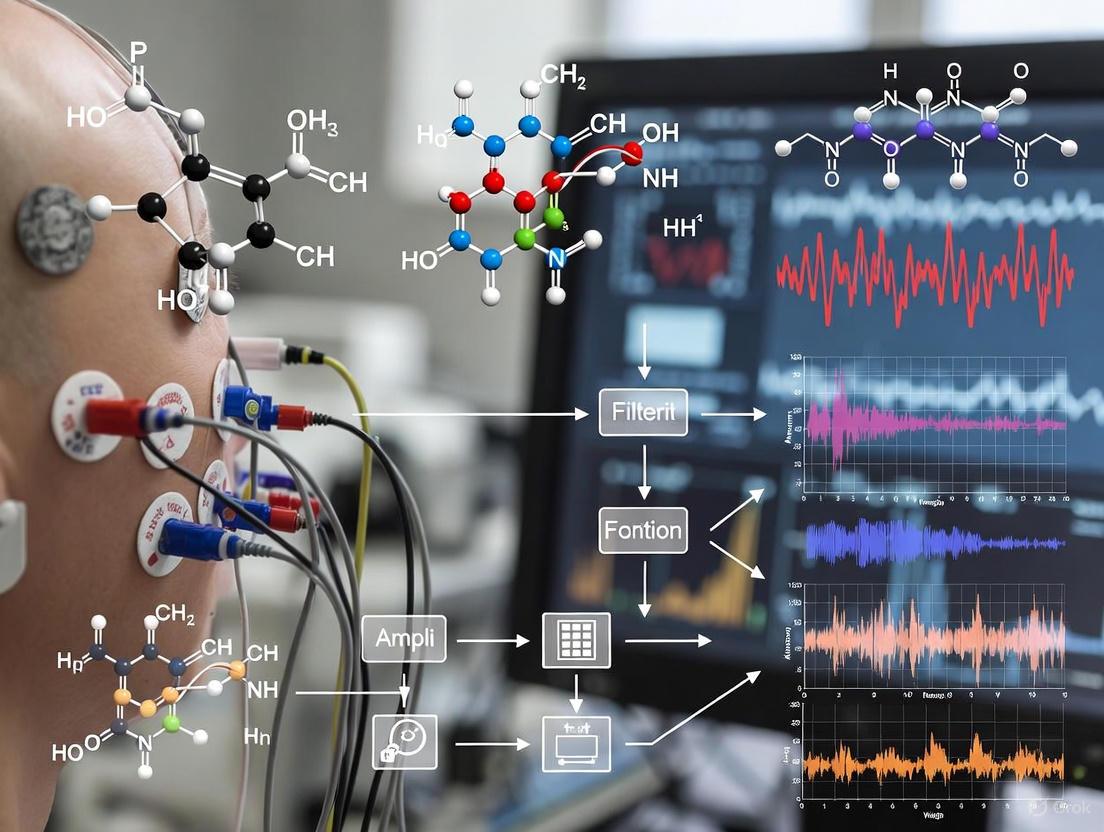
This article provides a comprehensive analysis of the latest methodologies and advancements in electroencephalogram (EEG) signal processing for brain-computer interfaces (BCIs), tailored for researchers and biomedical professionals.
From Signal to Synapse: Advanced EEG Processing for Next-Generation Brain-Computer Interfaces
Abstract
This article provides a comprehensive analysis of the latest methodologies and advancements in electroencephalogram (EEG) signal processing for brain-computer interfaces (BCIs), tailored for researchers and biomedical professionals. It explores the foundational principles of EEG-based BCIs, delves into cutting-edge AI-driven processing techniques and their clinical applications, addresses critical challenges in signal optimization and hardware integration, and evaluates performance through rigorous validation and comparative analysis of emerging technologies. By synthesizing information from recent studies and market analyses, this review serves as a strategic resource for driving innovation in neurotechnology and clinical translation.
Fundamentals of EEG-BCI: From Neural Signals to System Architecture
A Brain-Computer Interface (BCI) establishes a direct communication pathway between the brain's electrical activity and an external device, bypassing conventional neuromuscular channels [1]. Electroencephalography (EEG)-based BCIs, which record neural signals from the scalp, represent the most widely used non-invasive approach due to their high temporal resolution, portability, and relative low cost [2] [3]. The foundational discovery of EEG by Hans Berger in 1924, who first recorded human brain electrical activity, paved the way for this technology [4] [1]. The term "brain-computer interface" was formally coined by Jacques Vidal in 1973, whose pioneering work demonstrated the first application of EEG signals for external control [4] [1]. Subsequent decades saw critical paradigm developments, including the P300 speller (1988), the first EEG-controlled robot (1988), and the refinement of sensorimotor rhythm-based and motor imagery-based BCIs [4]. Modern definitions characterize BCI as a "non-muscular channel" for interaction, reflecting its growing importance in assistive technology, neurorehabilitation, and human-computer interaction [4].
Core Principles of EEG-BCI Systems
A typical EEG-BCI system operates through a structured pipeline consisting of four consecutive stages: signal acquisition, processing (preprocessing and feature extraction), classification, and output with feedback [4] [2]. The system's effectiveness hinges on the interdependent relationship between sophisticated signal acquisition techniques and well-designed BCI paradigms that encode user intentions into distinguishable brain signal patterns [4].
Table 1: Core Components of an EEG-BCI System
| System Component | Primary Function | Key Technologies/Methods |
|---|---|---|
| Signal Acquisition | Records electrical brain activity from the scalp. | EEG electrodes (e.g., Ag-AgCl), amplifiers, Analog-to-Digital Converters (ADC), international 10-20 placement system [3]. |
| Preprocessing | Enhances signal quality by removing noise and artifacts. | Band-pass filtering, Independent Component Analysis (ICA), Wavelet Transform (WT), Canonical Correlation Analysis (CCA) [2] [3]. |
| Feature Extraction | Identifies and isolates discriminative patterns in the EEG signal. | Power Spectral Density (PSD), Common Spatial Patterns (CSP), Riemannian Geometry, Wavelet Transform [5] [2]. |
| Classification | Translates extracted features into device control commands. | Machine Learning (SVM, Random Forest), Deep Learning (CNN, LSTM, Hybrid CNN-LSTM) [5] [6]. |
| Output & Feedback | Executes the command and provides sensory feedback to the user. | Robotic arms, spellers, visual/auditory/haptic feedback displays [4] [7]. |
The following diagram illustrates the sequential workflow and data flow in a standard closed-loop BCI system:
Origins and Types of EEG Signals in BCI
EEG signals originate from the post-synaptic potentials of cortical neurons [3]. When large populations of neurons fire synchronously, the resulting electrical currents can be detected on the scalp. These signals are inherently weak, typically in the microvolt (µV) range, and have limited spatial resolution due to the blurring effect of the skull and other tissues [4] [3]. EEG signals for BCI applications can be broadly categorized into two types:
- Natural (Spontaneous) Signals: These are ongoing, self-regulated brain oscillations not directly triggered by an external stimulus. They are modulated by changes in cognitive or mental state [3].
- Event-Related Potentials (ERPs): These are brain responses that are time-locked to specific sensory, cognitive, or motor events. They are typically embedded within the ongoing EEG activity [3].
Table 2: Primary EEG Rhythms and BCI-Relevant Signals
| Signal Type | Frequency Band | Neurophysiological Origin & Role in BCI |
|---|---|---|
| Delta (δ) | 0.5 - 4 Hz | Associated with deep sleep; less common in active BCI paradigms [3]. |
| Theta (θ) | 4 - 8 Hz | Linked to drowsiness, meditation, and memory processing [3]. |
| Alpha (α) | 8 - 13 Hz | Originates from the occipital lobe during relaxed wakefulness with eyes closed; used in neurofeedback [4] [3]. |
| Beta (β) | 13 - 30 Hz | Associated with active, alert thinking and motor cortex activity; suppressed during motor imagery (Event-Related Desynchronization) [4] [3]. |
| Gamma (γ) | >30 Hz | Involved in higher cognitive processing and sensory integration [3]. |
| Motor Imagery (MI) | Mu (~8-12 Hz) & Beta Rhythms | Induces Event-Related Desynchronization/Synchronization (ERD/ERS) in the sensorimotor cortex during imagined movement without execution [4] [5]. |
| P300 Potential | — | A positive deflection in EEG ~300ms after a rare, task-relevant stimulus; used in evoked potential spellers [4]. |
| Steady-State Visual Evoked Potential (SSVEP) | — | A stable periodic response in the visual cortex elicited by a repetitive visual stimulus (e.g., a flickering light) [8]. |
Major BCI Paradigms and Experimental Protocols
BCI paradigms are theoretical frameworks that define the specific mental tasks or external stimuli used to elicit distinguishable brain signal patterns [4]. Well-designed paradigms are crucial for enhancing the strength and detectability of the user's intention.
Motor Imagery (MI) Paradigm
Motor Imagery involves the mental simulation of a motor action without any physical execution [4] [5] [6]. This mental rehearsal activates neural pathways in the primary motor cortex, premotor cortex, and supplementary motor area, similar to those involved in actual movement, leading to characteristic changes in mu (8-12 Hz) and beta (13-30 Hz) rhythms known as Event-Related Desynchronization (ERD) and Synchronization (ERS) [4]. For example, imagining left-hand movement typically causes ERD in the right motor cortex, and vice versa [4].
Detailed Experimental Protocol (MI):
- Participants: Recruit healthy, right-handed subjects with no history of neurological disorders. Informed consent is mandatory [9] [7].
- Setup & Equipment: Use a multi-channel EEG system (e.g., 64-channel cap following the international 10-20 system) [9]. Ensure proper electrode-scalp contact with conductive gel.
- Paradigm Design: A single trial typically lasts 7-8 seconds [9] [7]:
- Fixation Period (1-2 s): A cross is displayed to focus the subject's attention.
- Cue Presentation (1-1.5 s): A visual or auditory cue indicates the specific MI task (e.g., left hand, right hand, foot) [9].
- Motor Imagery Period (4 s): The subject performs the cued MI task without moving.
- Rest Period (2 s): A blank screen allows the subject to relax before the next trial [9].
- Data Collection: Multiple sessions over different days are recommended to account for inter-session variability. Each session should contain multiple blocks (e.g., 5 blocks) with a sufficient number of trials per class (e.g., 40 trials per block for a 2-class paradigm) [9] [7].
P300 Paradigm
The P300 is an event-related potential characterized by a positive peak in the EEG signal approximately 300 milliseconds after an infrequent or significant stimulus is presented amidst a stream of standard stimuli [4]. This "oddball" paradigm is most famously implemented in the P300 speller, where the user focuses attention on a target character within a matrix of flashing characters. The P300 response is elicited when the desired character flashes, allowing the system to identify the user's choice [4].
Steady-State Visual Evoked Potential (SSVEP) Paradigm
SSVEPs are stable, periodic neural oscillations elicited in the visual cortex when a user gazes at a visual stimulus flickering at a fixed frequency (typically between 6-60 Hz) [8]. The resulting EEG signals show a strong peak at the fundamental frequency of the stimulus (and its harmonics). In an SSVEP-based BCI, users select commands by gazing at different flickering targets, each associated with a unique frequency. This paradigm is known for its high signal-to-noise ratio and high information transfer rate [8].
Detailed Experimental Protocol (SSVEP):
- Stimulus Design: Implement a multi-target visual speller (e.g., a 40-target QWERTY keyboard layout) using a sampled sinusoidal stimulation method on a standard computer monitor with a 60 Hz refresh rate [8].
- Procedure: Instruct participants to focus their gaze on a single target cued at the beginning of each trial. The trial length can vary but is often set to 5 seconds for offline calibration [8].
- Data Recording: Record EEG data from occipital and parietal sites (e.g., O1, O2, Oz, Pz) where SSVEP responses are strongest.
Signal Processing and Classification Methodologies
The raw EEG signal is contaminated with noise and artifacts, making advanced processing essential for reliable BCI operation.
Preprocessing and Feature Extraction
- Preprocessing: The primary goal is to enhance the Signal-to-Noise Ratio (SNR). Standard techniques include:
- Filtering: Applying band-pass filters (e.g., 8-30 Hz for MI) to isolate frequency bands of interest [2] [3].
- Artifact Removal: Using algorithms like Independent Component Analysis (ICA) to separate and remove artifacts from eye blinks, muscle movement, and cardiac activity [2] [3].
- Other Techniques: Downsampling to reduce computational load and normalization [2].
- Feature Extraction: This step transforms the preprocessed signal into discriminative features for classification.
Classification Algorithms
Classification algorithms map the extracted features to specific user intention classes.
Table 3: Classification Algorithms in EEG-BCI
| Algorithm Category | Specific Methods | Reported Performance | Application Context |
|---|---|---|---|
| Traditional Machine Learning | Random Forest (RF), Support Vector Machine (SVM), k-Nearest Neighbors (KNN) | RF achieved 91% accuracy on a PhysioNet MI dataset [5]. | Robust for smaller datasets; widely used for MI and P300. |
| Deep Learning | Convolutional Neural Network (CNN), Long Short-Term Memory (LSTM) | CNN: 88.18% accuracy; LSTM: 16.13% accuracy on same dataset [5]. | Automates feature extraction; requires large datasets. |
| Hybrid Deep Learning | CNN-LSTM | 96.06% accuracy, surpassing individual models [5]. | Captures both spatial (CNN) and temporal (LSTM) features in EEG. |
The following diagram visualizes the complete signal processing and classification pipeline:
The Scientist's Toolkit: Research Reagent Solutions
This section details essential materials, datasets, and software tools crucial for conducting EEG-BCI research.
Table 4: Essential Resources for EEG-BCI Research
| Resource Category | Specific Item/Name | Function and Application |
|---|---|---|
| Public Datasets | "PhysioNet EEG Motor Movement/Imagery Dataset" [5] | A benchmark dataset for developing and validating MI-BCI classification algorithms. |
| "BETA" (Benchmark database Towards BCI Application) [8] | A large-scale SSVEP database with 70 subjects and 40 targets, designed for real-world application testing. | |
| "WBCIC-MI" (World Robot Conference Contest) [9] | A high-quality, multi-day MI dataset from 62 subjects, ideal for studying cross-session variability. | |
| Hardware & Acquisition | "Neuracle" EEG System [9] | Example of a modern, portable wireless EEG system with high signal stability. |
| Ag-AgCl (Silver/Silver Chloride) Electrodes [3] | The most commonly used electrode type for high-fidelity EEG signal acquisition. | |
| Software & Algorithms | "EEGNet", "DeepConvNet" [9] | Established deep learning architectures for EEG decoding, often used as benchmarks. |
| Riemannian Geometry Toolboxes [7] | Software packages for classifying EEG covariance matrices on a Riemannian manifold, offering high accuracy. | |
| Experimental Aids | International 10-20 System [3] | A standardized method for placing EEG electrodes on the scalp to ensure consistency across studies. |
| Sampled Sinusoidal Stimulation Method [8] | A technique for generating precise visual flickers for SSVEP paradigms on standard monitors. |
Current Challenges and Future Directions
Despite significant advances, EEG-BCI technology faces several challenges. Variability in EEG signals across sessions and individuals remains a major obstacle to robust performance [9]. The lack of standardization in protocols, including user training and interface design, hinders reproducibility and comparison between studies [10] [6]. Furthermore, the translation of laboratory prototypes into clinically viable and user-friendly systems requires the development of portable, low-power devices with fewer EEG channels [6].
Future research is increasingly focused on leveraging Artificial Intelligence (AI) to create more adaptive and accurate systems [5] [6]. There is a growing emphasis on multimodal fusion, combining EEG with other signals like fNIRS or EOG to improve robustness [6]. A critical frontier is the development of effective user training protocols, including novel feedback visualization methods that help users learn to modulate their brain activity more effectively [10] [7]. Finally, coordinated efforts to create large, standardized, open-access datasets are essential for accelerating innovation and clinical translation [6] [9].
Comparative Analysis of Invasive vs. Non-Invasive BCI Modalities
Brain-Computer Interfaces (BCIs) represent a revolutionary technology that enables direct communication between the brain and external devices, bypassing conventional neuromuscular pathways [2]. This field has evolved from basic neuroscience research into a rapidly advancing neurotechnology with profound implications for restoring function in patients with neurological deficits and enhancing human-computer interaction [11]. BCIs are broadly categorized into two distinct modalities based on their proximity to neural tissue: invasive systems requiring surgical implantation and non-invasive systems that measure brain activity externally [12] [13].
The fundamental distinction between these modalities lies in their signal acquisition methodologies, which directly determine their spatial resolution, temporal resolution, signal-to-noise ratio (SNR), and potential clinical applications [11] [12]. Invasive BCIs interface directly with cortical tissue or are placed on the cortical surface, capturing high-fidelity neural signals including single-unit activity and local field potentials [14] [12]. Non-invasive approaches, particularly electroencephalography (EEG), measure electrical potentials through the skull and scalp, providing a safer and more accessible alternative albeit with reduced signal resolution [2] [3].
Understanding the technical capabilities, limitations, and appropriate applications of each modality is crucial for researchers, clinicians, and technology developers working in neural engineering. This review provides a comprehensive technical comparison of invasive and non-invasive BCI modalities, with particular emphasis on signal processing pipelines, experimental methodologies, and emerging innovations that are shaping the future of brain-computer interfacing.
Fundamental Technical Specifications
The performance characteristics of invasive and non-invasive BCIs differ significantly across multiple parameters, influencing their suitability for specific applications and research contexts.
Table 1: Comparative Technical Specifications of BCI Modalities
| Parameter | Invasive BCI | Non-Invasive BCI (EEG) |
|---|---|---|
| Spatial Resolution | Micrometer to millimeter scale [12] | Centimeter scale [2] |
| Temporal Resolution | Millisecond (~1 ms) [12] | Millisecond-level [2] |
| Signal-to-Noise Ratio | High [12] | Low to moderate [2] |
| Signal Types Obtained | Action potentials (spikes), Local Field Potentials (LFP) [12] | EEG rhythms (δ, θ, α, β, γ), Event-Related Potentials (ERPs) [3] |
| Typical Electrode Count | 64-1000+ channels [15] | 32-256 channels [3] |
| Key Advantages | High-fidelity signals, precise spatial localization [12] | Safety, accessibility, no surgical risk [2] [13] |
| Primary Limitations | Surgical risk, long-term stability, biocompatibility [2] [12] | Low spatial resolution, vulnerability to artifacts [2] [3] |
| Target Applications | High-precision control, speech decoding, complex device control [11] [14] | Basic communication, neurofeedback, rehabilitation, cognitive monitoring [2] [16] |
Table 2: Signal Acquisition Technologies in BCI Research
| Technology | Interface Type | Recorded Signals | Spatial Resolution | Temporal Resolution |
|---|---|---|---|---|
| Microelectrode Arrays (MEA) | Invasive (intracortical) | Single/multi-unit activity, LFP [12] | Single neuron level [12] | ~1 ms [12] |
| Electrocorticography (ECoG) | Invasive (subdural/epi-dural) | Local field potentials [12] | Millimeter [11] | Millisecond [11] |
| Stereoelectroencephalography (sEEG) | Invasive (depth electrodes) | Local field potentials from deep structures [14] | Millimeter [14] | Millisecond [14] |
| Electroencephalography (EEG) | Non-invasive | Scalp potentials [2] | Centimeter [2] | Millisecond [2] |
| Functional Ultrasound (fUS) | Minimally invasive | Hemodynamic response [11] | ~100 micrometers [11] | ~2-10 Hz [11] |
| Digital Holographic Imaging | Non-invasive | Neural tissue deformation [17] | High (theoretical) [17] | Unknown [17] |
BCI Signal Processing Framework
The core functionality of any BCI system relies on a multi-stage processing pipeline that transforms raw neural signals into actionable commands. While the fundamental stages are similar across modalities, the specific techniques and challenges differ significantly between invasive and non-invasive approaches.
Signal Acquisition and Preprocessing
Invasive BCI Signal Acquisition involves direct measurement of neural activity from cortical tissue or surface. Microelectrode Arrays (MEAs), such as the Utah array, penetrate the cortex to record action potentials from individual neurons or small neuronal populations [12]. Electrocorticography (ECoG) electrodes are placed on the cortical surface (subdural or epidural) to measure local field potentials with higher spatial resolution and broader coverage than MEAs [11]. Stereoelectroencephalography (sEEG) utilizes depth electrodes inserted into deep brain structures to record from specific subcortical regions [14].
Non-Invasive BCI Signal Acquisition primarily utilizes electroencephalography (EEG) with electrodes placed on the scalp according to standardized systems like the 10-20 placement system [3]. EEG records electrical potentials generated by synchronized postsynaptic activity in cortical neurons, attenuated by passage through cerebrospinal fluid, skull, and scalp [2]. Emerging non-invasive technologies include digital holographic imaging, which detects nanometer-scale tissue deformations associated with neural activity [17].
Preprocessing Challenges and Techniques differ significantly between modalities:
Invasive BCI Preprocessing: Focuses on spike sorting to identify activity from individual neurons, common average referencing to reduce common noise, and filtering to isolate specific frequency bands in local field potentials [12]. The primary challenges include signal drift over time and tissue response to implanted electrodes [2].
Non-Invasive BCI Preprocessing: Requires extensive artifact removal to mitigate contamination from ocular movements, muscle activity, cardiac signals, and environmental noise [2] [3]. Standard techniques include:
- Filtering: Digital filters (FIR, IIR) to extract specific frequency bands [2]
- Independent Component Analysis (ICA): Separates mixed signals into statistically independent components for artifact identification [2]
- Canonical Correlation Analysis (CCA): Removes electromyographic interference [2]
- Wavelet Transform: Simultaneously analyzes signals in time and frequency domains for noise identification [2]
Feature Extraction and Decoding Algorithms
Feature Extraction Methods transform preprocessed neural signals into meaningful representations for classification:
Invasive BCI Features: Include firing rates of individual neurons, temporal patterns of spike trains, spectral power in local field potential bands, and cross-channel correlations [12]. These features capture detailed information about movement intention, kinematic parameters, and cognitive states.
Non-Invasive BCI Features: Focus on rhythmic activity in specific frequency bands (delta, theta, alpha, beta, gamma), event-related potentials (P300, N200), and signal complexity measures [3]. Extraction methods include:
- Fast Fourier Transform (FFT): Computes power spectral density but assumes signal stationarity [3]
- Short-Time Fourier Transform (STFT): Provides time-frequency representation with fixed resolution [3]
- Discrete Wavelet Transform (DWT): Offers multi-resolution analysis suitable for non-stationary EEG signals [3]
Decoding Algorithms map extracted features to output commands:
Invasive BCI Decoders: Employ population vector algorithms, optimal linear estimators, Kalman filters, and Bayesian decoders to reconstruct continuous movement parameters with high precision [12]. Recent approaches utilize deep learning models for speech decoding from cortical activity [14].
Non-Invasive BCI Decoders: Use machine learning classifiers including Linear Discriminant Analysis (LDA), Support Vector Machines (SVM), and Common Spatial Patterns (CSP) for discrimination between mental states [2] [16]. Convolutional Neural Networks (CNNs) have shown promising results for EEG-based classification tasks [16].
Experimental Protocols and Methodologies
Protocol for Invasive BCI Motor Control Experiments
Motor control experiments using invasive BCIs typically involve participants with tetraplegia due to spinal cord injury or amyotrophic lateral sclerosis (ALS) [14]. The experimental protocol follows a structured approach:
Surgical Implantation: Participants undergo craniotomy for placement of microelectrode arrays (e.g., Utah array) in hand/arm areas of primary motor cortex or ECoG grids over sensorimotor regions [14] [12]. The implantation target is determined through pre-surgical functional mapping.
Signal Acquisition Setup: Neural signals are amplified, digitized (typically at 30 kHz for spikes and 1-2 kHz for LFPs), and transmitted via percutaneous connectors or wireless systems [12].
Calibration Phase: Participants observe or imagine performing specific movements while neural activity is recorded to establish initial decoding parameters [12]. This phase typically lasts 20-30 minutes.
Closed-Loop Control Training: Participants practice controlling external devices (computer cursors, robotic arms) with real-time visual feedback. Decoder parameters are refined through adaptive algorithms during these sessions [12].
Performance Metrics: Success is evaluated using metrics such as target acquisition time, path efficiency, information transfer rate (bits/min), and completion rates for functional tasks [14].
Recent studies have demonstrated that individuals with paralysis can achieve multidimensional control of robotic arms and computer interfaces with performance approaching able-bodied function [14] [12].
Protocol for Non-Invasive BCI Communication Experiments
Non-invasive BCI communication systems typically utilize EEG-based paradigms with healthy participants or individuals with neuromuscular disorders:
EEG Setup: Electrodes are positioned according to the international 10-20 system, with specific focus on regions relevant to the experimental paradigm (e.g., motor imagery: C3, C4, Cz; P300: Pz, Cz, Fz) [3]. Impedance is kept below 5 kΩ to ensure signal quality.
Experimental Paradigms:
- Motor Imagery (MI): Participants imagine limb movements without physical execution, generating sensorimotor rhythms (mu/beta rhythms) that are classified for device control [16]. Trials typically last 4-8 seconds with rest periods between trials.
- P300 Speller: Rare target stimuli interspersed with frequent non-target stimuli elicit a P300 event-related potential, allowing selection of characters from a matrix [3]. The inter-stimulus interval is typically 125-250 ms.
- Steady-State Visually Evoked Potentials (SSVEP): Visual stimuli flickering at specific frequencies elicit oscillations in visual cortex that can be used for control [2].
Signal Processing Pipeline: Data is filtered (e.g., 8-30 Hz for MI, 0.1-20 Hz for P300), segmented into epochs, and processed with artifact removal algorithms before feature extraction and classification [3].
Validation: Performance is assessed through accuracy, information transfer rate, and bit rate. Cross-validation is employed to ensure generalizability of results [16].
Table 3: Standard Experimental Parameters for BCI Paradigms
| Parameter | Invasive Motor Control | Non-Invasive Motor Imagery | P300 Speller |
|---|---|---|---|
| Participants | Patients with tetraplegia (SCI, ALS) [14] | Healthy volunteers or patients [16] | Healthy volunteers or patients [3] |
| Session Duration | 2-4 hours [14] | 1-2 hours [16] | 1-2 hours [3] |
| Trial Structure | Continuous operation with periodic rest | 4-8 second trials with inter-trial rest [16] | Rapid serial visual presentation [3] |
| Feedback Type | Visual (cursor/robot movement) [12] | Visual (cursor movement, bar graph) [16] | Visual (selected character highlight) [3] |
| Typical Channels | 96-256 recording sites [14] | 16-64 electrodes [16] | 8-32 electrodes [3] |
| Data Sampling Rate | 30 kHz (spikes), 2 kHz (LFP) [12] | 250-1000 Hz [3] | 250-500 Hz [3] |
The Scientist's Toolkit: Essential Research Reagents and Materials
Table 4: Essential Research Materials for BCI Experimentation
| Category | Item | Specification/Function |
|---|---|---|
| Electrodes & Implants | Utah Array | 96-100 microelectrodes for intracortical recording [15] |
| ECoG Grids | Subdural grid electrodes with 32-256 contacts [12] | |
| sEEG Electrodes | Depth electrodes with 8-16 contacts for deep brain recording [14] | |
| Ag/AgCl EEG Electrodes | Scalp electrodes with chloride coating for stable potential [3] | |
| Signal Acquisition | Neural Signal Amplifier | High-input impedance, low-noise amplification [3] |
| Analog-to-Digital Converter | 16-24 bit resolution, sampling rates to 30 kHz [3] | |
| Reference & Ground Electrodes | Essential for common-mode noise rejection [3] | |
| Software & Algorithms | EEGLAB/FieldTrip | MATLAB toolboxes for EEG analysis [11] |
| BCI2000/OpenVibe | General-purpose BCI software platforms [11] | |
| Kalman Filter Decoder | Standard for continuous trajectory decoding in invasive BCIs [12] | |
| Common Spatial Patterns | Feature extraction for motor imagery EEG [16] | |
| Experimental Materials | International 10-20 System Cap | Standardized electrode placement [3] |
| Electrolyte Gel | Reduces impedance at scalp-electrode interface [3] | |
| Visual Stimulation Display | Presents paradigms for P300, SSVEP, neurofeedback [3] |
Emerging Technologies and Future Directions
Innovations in Invasive BCI Technologies
The invasive BCI landscape is rapidly evolving with multiple companies and research institutions developing next-generation interfaces:
Neuralink is developing an ultra-high-bandwidth implantable chip with thousands of micro-electrodes threaded into the cortex by a robotic surgeon [15]. The coin-sized implant, sealed in the skull, aims to record from more neurons than prior devices. As of 2025, the company reported five individuals with severe paralysis using Neuralink to control digital and physical devices with their thoughts [15].
Synchron employs an endovascular approach with the Stentrode device delivered via blood vessels and lodged in the motor cortex's draining vein [15]. This method avoids craniotomy entirely and has enabled patients with paralysis to control computers for texting and communication [15].
Precision Neuroscience is developing an ultra-thin electrode array designed to be placed between the skull and brain with minimal invasion [15]. Their flexible "brain film" conforms to the cortical surface without penetrating brain tissue, potentially offering high-resolution signals with reduced risk [15].
Paradromics specializes in high-channel-count implants (421 electrodes) with integrated wireless transmission, focusing initially on speech restoration for people who cannot talk [15].
Advances in Non-Invasive BCI Technologies
Non-invasive BCI research is addressing fundamental limitations through novel signal detection approaches and enhanced processing algorithms:
Digital Holographic Imaging developed by Johns Hopkins APL represents a breakthrough in non-invasive, high-resolution recording of neural activity [17]. This technique detects nanometer-scale tissue deformations that occur during neural activity, potentially providing a novel signal source that bypasses the limitations of electrical recording through the skull.
Hybrid BCI Systems combine EEG with other modalities such as fNIRS (functional near-infrared spectroscopy) or eye tracking to improve accuracy and robustness [11]. These systems leverage complementary information from different signal types to enhance classification performance.
Advanced Signal Processing utilizing deep learning approaches is increasingly applied to non-invasive BCI data. Convolutional Neural Networks with attention mechanisms (FCNNA) have shown promising results for optimal channel selection and multiclass motor imagery classification [16]. Transfer learning techniques are being developed to address the challenge of inter-subject variability in EEG patterns.
The comparative analysis of invasive and non-invasive BCI modalities reveals a clear trade-off between signal fidelity and practical accessibility. Invasive BCIs provide unparalleled spatial and temporal resolution, enabling complex tasks such as robotic arm control and speech decoding, but require substantial surgical intervention and carry associated risks [14] [12]. Non-invasive approaches, particularly EEG-based systems, offer safety and immediate applicability but face fundamental limitations in signal quality that restrict their precision and range of applications [2] [3].
The future trajectory of BCI technology points toward two parallel development paths: refinement of minimally invasive approaches that balance risk and capability, and fundamental innovations in non-invasive signal detection that may overcome current physical limitations [15] [17]. For researchers and clinicians, selection between modalities must consider the specific application requirements, user population, and practical constraints. As both approaches continue to advance, the gap between invasive and non-invasive performance may narrow, potentially expanding the impact of BCI technologies across medical, communicative, and assistive domains.
A Brain-Computer Interface (BCI) establishes a direct communication pathway between the human brain and an external device [18]. The core of this technology is a processing pipeline that translates raw neural signals into actionable commands. This pipeline is universally comprised of three critical stages: signal acquisition, where brain activity is measured; preprocessing, where the raw signals are cleaned and prepared; and classification, where the cleaned signals are decoded into user intent [18]. As of 2025, BCI technology is transitioning from laboratory research to real-world applications, driven by advancements in non-invasive wearables and sophisticated machine learning [15] [18]. This guide provides an in-depth technical examination of these core components, framed within contemporary EEG signal processing research for an audience of scientists and drug development professionals.
Signal Acquisition
The acquisition phase is the foundational first step, responsible for capturing electrical brain activity. The choice of acquisition modality determines the fidelity, spatial resolution, and overall capability of the BCI system.
Acquisition Modalities
Brain signals can be acquired using either invasive or non-invasive techniques. Electroencephalography (EEG), a non-invasive method, is the most prevalent modality due to its safety, portability, and cost-effectiveness [3] [18]. EEG records voltage fluctuations on the scalp resulting from neuronal activity, typically in the microvolt range (µV) [3]. While its temporal resolution is high, its spatial resolution is limited because the signals are attenuated by the skull and scalp [3]. In contrast, invasive techniques such as Electrocorticography (ECoG), which involves placing electrodes directly on the surface of the brain, provide a vastly superior signal-to-noise ratio (SNR) and spatial resolution [15] [3]. Companies like Neuralink, Paradromics, and Precision Neuroscience are pioneering ultra-high-bandwidth implantable devices that record from thousands of neurons to restore function for patients with severe paralysis [15] [19].
Table 1: Comparison of Primary BCI Acquisition Modalities
| Modality | Invasiveness | Spatial Resolution | Temporal Resolution | Key Applications/Players |
|---|---|---|---|---|
| EEG | Non-invasive | Low (cm) | High (ms) | Motor Imagery, P300 spellers, cognitive monitoring |
| ECoG | Invasive (surface) | High (mm) | High (ms) | Epilepsy focus mapping, high-fidelity control [3] |
| Microelectrode Arrays | Invasive (penetrating) | Very High (µm) | High (ms) | Neuralink, Paradromics, Blackrock Neurotech [15] |
| Endovascular (Stentrode) | Minimally Invasive | Moderate | High | Synchron [15] |
Acquisition Hardware and Standards
In EEG-based systems, the electrical signals are captured via electrodes placed on the scalp according to standardized systems like the international 10–20 placement system to ensure consistency across individuals and sessions [3]. Modern electrodes are typically composed of Ag-AgCl (Silver/Silver Chloride) and can be wet, dry, or foam-based [3]. The weak analog signals (µV) are then passed to an amplifier, which boosts them to a usable level while maintaining signal integrity through high input impedance and low-noise characteristics [3]. Finally, an Analog-to-Digital Converter (ADC) samples the continuous signal at a specific frequency (e.g., 250, 500, or 1000 Hz), quantizes it (e.g., with 16-bit resolution), and encodes it into a digital format for subsequent processing [3].
For research and development, integrated software platforms are essential. Lab Streaming Layer (LSL) has emerged as a critical open-source tool for synchronously recording EEG and other data streams (e.g., event markers, other biosignals) into a unified data file (XDF format) [20]. This is vital for building temporally aligned datasets for model training. Furthermore, toolkits like BCI2000 and its VisualizeBCI2000 extension provide modular frameworks for real-time data acquisition, stimulus presentation, and powerful 3D visualization of brain signals, facilitating both basic research and clinical application development [21].
Signal Preprocessing
Raw EEG signals are notoriously noisy and non-stationary. The preprocessing stage is therefore critical for enhancing the signal-to-noise ratio (SNR) and extracting clean neural data for robust classification.
The Preprocessing Workflow
This stage involves a series of steps designed to remove artifacts and prepare the data for feature extraction. A systematic workflow is essential for reproducible results.
Diagram 1: Core BCI preprocessing workflow.
Detailed Preprocessing Techniques
- Filtering: This is a fundamental step to isolate frequencies of interest. A band-pass filter (e.g., 0.5-40 Hz) is typically applied. A high-pass filter removes low-frequency drifts, while a low-pass filter eliminates high-frequency noise like muscle activity. Research from 2025 shows that higher high-pass filter cutoffs (e.g., 1 Hz over 0.1 Hz) can consistently increase decoding performance, though this must be balanced against potential signal distortion [22].
- Re-referencing: The original EEG signal is measured relative to a single reference electrode (often Cz). Re-referencing transforms the data to a common average or mastoid reference to reduce the bias introduced by the original reference site [22].
- Artifact Removal: This step targets noise from non-brain sources.
- Ocular artifacts (from eye blinks and movements) and muscle artifacts (from jaw clenching) are often an order of magnitude stronger than neural signals [3] [18].
- Independent Component Analysis (ICA) is a widely used method to identify and remove these artifacts [22]. However, a 2025 multiverse analysis cautions that while artifact correction is crucial for interpretability, it can reduce decoding performance if the artifacts are systematically correlated with the task, as the classifier may be inadvertently leveraging the structured noise to make decisions [22].
- Sub-band Extraction: Neural information is encoded in specific frequency bands. Extracting these sub-bands is a key feature engineering step. Common methods include:
- Finite Impulse Response (FIR) / Infinite Impulse Response (IIR) Filters: Offer precise control and are computationally efficient, making them suitable for real-time BCI [3].
- Discrete Wavelet Transform (DWT): Provides an optimal balance between time and frequency resolution for non-stationary signals like EEG and is highly effective for capturing transient features [3] [5].
Table 2: Impact of Preprocessing Choices on Decoding Performance (2025 Study)
| Preprocessing Step | Choice A | Choice B | Impact on Decoding Performance |
|---|---|---|---|
| High-Pass Filter (HPF) | 0.1 Hz Cutoff | 1.0 Hz Cutoff | Higher cutoff increased performance [22] |
| Artifact Correction | ICA & Autoreject | No Correction | Correction generally decreased performance* [22] |
| Baseline Correction | Long Interval | Short/No Interval | Longer interval increased performance (EEGNet) [22] |
| Detrending | Linear Detrending | No Detrending | Increased performance (Time-resolved decoding) [22] |
Note: While artifact correction can lower performance metrics, it is critical for model validity and interpretability, as it prevents the classifier from learning from structured noise rather than the neural signal [22].
Signal Classification
The final stage involves using machine learning models to map the preprocessed EEG signals to specific user intents or commands, such as "move left" or "select letter A."
Traditional and Deep Learning Models
The choice of classifier depends on the BCI paradigm and the nature of the extracted features.
- Traditional Machine Learning (ML) Models: For well-defined features, models like Support Vector Machines (SVM) and Linear Discriminant Analysis (LDA) are commonly used due to their simplicity and computational efficiency [5] [23]. In a 2025 study on motor imagery classification, Random Forest achieved a high accuracy of 91% using traditional feature extraction [5].
- Deep Learning (DL) Models: Deep learning models can automatically learn relevant features from raw or minimally processed data, reducing the need for manual feature engineering.
- Convolutional Neural Networks (CNNs) are adept at extracting spatial features from EEG data arranged in a channel-topography grid [5].
- Long Short-Term Memory (LSTM) Networks excel at modeling the temporal dependencies in time-series EEG data [5].
- Hybrid Models (CNN-LSTM): A 2025 study demonstrated that a hybrid CNN-LSTM model, which leverages the spatial feature extraction of CNNs and the temporal modeling of LSTMs, significantly outperformed individual models, achieving a state-of-the-art accuracy of 96.06% for motor imagery classification [5].
An Advanced Hybrid Classification Pipeline
To achieve the highest accuracy, modern research employs complex pipelines that integrate advanced feature extraction with sophisticated models.
Diagram 2: Advanced hybrid classification pipeline.
This pipeline incorporates several cutting-edge techniques highlighted in 2025 research:
- Advanced Feature Extraction: Beyond simple band power, methods like Wavelet Transform and Riemannian Geometry on covariance matrices are used to capture complex time-frequency and manifold features of brain activity [5].
- Data Augmentation with GANs: To address the challenge of small, high-dimensional EEG datasets, Generative Adversarial Networks (GANs) are employed to generate realistic synthetic EEG data. This balances datasets and improves model generalization [5] [23].
- Hybrid Model Training: The model is first pre-trained on the synthetic data and then fine-tuned on a smaller set of real-world recordings. This hybrid training approach has been shown to improve accuracy and robustness compared to training on real data alone [23].
The Scientist's Toolkit: Essential Research Reagents and Materials
For researchers developing BCI pipelines, a suite of software tools and data resources is indispensable.
Table 3: Essential Research Tools for BCI Development
| Tool/Resource | Type | Primary Function | Relevance to BCI Research |
|---|---|---|---|
| Lab Streaming Layer (LSL) | Software Framework | Synchronized data acquisition from multiple hardware sources [20] | Foundation for building temporally aligned, multi-modal BCI datasets. |
| MNE-Python | Software Library | EEG/MEG data preprocessing, visualization, and analysis [22] | Industry-standard for implementing and testing preprocessing pipelines. |
| BCI2000 / VisualizeBCI2000 | Software Platform | A general-purpose research platform for BCI data acquisition, stimulus presentation, and online analysis [21] | Provides a modular environment for prototyping and real-time system testing. |
| EEGNet | Deep Learning Model | A compact convolutional neural network for EEG-based BCIs [22] | A standard baseline model for comparing classification performance across studies. |
| PhysioNet EEG Dataset | Data Resource | A publicly available dataset containing EEG recordings for motor movement/imagery tasks [5] | A benchmark dataset for training and validating new classification algorithms. |
| GANs for EEG | Methodology | Generation of synthetic EEG data for augmenting training sets [5] [23] | Critical for overcoming the data scarcity problem in deep learning for BCIs. |
The BCI pipeline—comprising acquisition, preprocessing, and classification—forms the technical backbone of modern brain-computer communication. As of 2025, the field is characterized by a convergence of safer, higher-fidelity acquisition hardware and increasingly intelligent, data-driven software algorithms. Key trends shaping current research include the systematic optimization of preprocessing steps for decoding performance, the dominance of hybrid deep learning models like CNN-LSTM for state-of-the-art accuracy, and the use of synthetic data generated by GANs to overcome dataset limitations. For researchers and scientists, mastering the intricate relationships between these components—such as how a preprocessing choice can inadvertently aid or hamper a classifier—is paramount. The ongoing translation of BCIs from controlled labs to real-world clinical and consumer applications will continue to depend on rigorous, reproducible, and innovative advancements across all stages of this critical pipeline.
Electroencephalography (EEG)-based Brain-Computer Interfaces (BCIs) establish a direct communication pathway between the human brain and external devices, translating brain activity into commands without using peripheral nerves or muscles [24]. These systems acquire brain signals, analyze them to extract meaningful features, and translate these features into outputs that accomplish the user's intent. The three most established paradigms in EEG-based BCI research are the P300 event-related potential, Steady-State Visual Evoked Potential (SSVEP), and Motor Imagery (MI) rhythms [25]. Each paradigm leverages distinct neural mechanisms and offers unique advantages and challenges, making them suitable for different applications ranging from communication and control to neurorehabilitation.
EEG signals are characterized by their non-stationary and noisy nature, often with low amplitude, necessitating sophisticated signal processing and pattern recognition techniques for reliable interpretation [24] [6]. The P300, SSVEP, and MI paradigms form the cornerstone of modern BCI research, driving innovations in assistive technologies for individuals with severe motor disabilities and exploring new frontiers in human-computer interaction [26] [24]. This whitepaper provides an in-depth technical analysis of these three major EEG paradigms, detailing their underlying neurophysiological principles, standard experimental protocols, signal processing methodologies, and performance metrics, framed within the broader context of BCI signal processing research.
Core Neurophysiological Principles and Signatures
P300 Event-Related Potential
The P300 is an endogenous event-related potential (ERP) component, meaning its occurrence is tied to cognitive processes rather than the physical attributes of a stimulus. It manifests as a positive deflection in the EEG signal approximately 250 to 400 milliseconds after an infrequent or psychologically significant stimulus is presented [27] [28]. Its amplitude is maximal at parietal–central electrode sites (e.g., Cz, Pz) [27]. The P300 is considered a neural signature of attention and decision-making; its amplitude reflects the allocation of attentional resources, while its latency corresponds to the speed of stimulus evaluation and classification [27]. In high-workload situations, P300 amplitude typically decreases, indicating a reallocation of cognitive resources toward primary task demands [27].
Steady-State Visual Evoked Potential (SSVEP)
SSVEPs are neural responses elicited by a visual stimulus flickering at a constant frequency. When a user focuses attention on such a stimulus, the visual cortex produces oscillatory EEG activity that is phase-locked to the stimulus frequency, often including harmonic components [29] [26]. This response is typically recorded from electrodes over the occipital lobe (O1, O2, Oz). A key advantage of SSVEPs is their high signal-to-noise ratio (SNR). Recent research explores stimulation in the beta frequency range (14–22 Hz) to minimize visual fatigue, a common issue with SSVEP paradigms that use lower frequencies [29].
Motor Imagery (MI) Rhythms
Motor Imagery involves the mental simulation of a movement without any physical execution. This cognitive process activates sensorimotor cortices, modulating specific brain rhythms [30] [6]. The key rhythms are the mu rhythm (8–12 Hz) and the beta rhythm (18–30 Hz). The event-related desynchronization (ERD) is a decrease in the power of these rhythms during motor imagery, associated with cortical activation. Conversely, event-related synchronization (ERS) is a power increase following the imagery [24]. These patterns are central to MI-based BCI control, allowing users to manipulate external devices through imagined movements.
Comparative Analysis of BCI Paradigms
Table 1: Comparative overview of the three major EEG-BCI paradigms.
| Paradigm | Neural Signature & Origin | Primary Electrode Locations | Key Applications | Major Advantages | Major Challenges |
|---|---|---|---|---|---|
| P300 | Positive ERP ~300ms post-stimulus; Endogenous (cognitive) [27] [28]. | Cz, Pz (Parietal-Central) [27] [28]. | Spellers, clinical diagnostics, cognitive workload monitoring [27] [24]. | Minimal user training required [25]. | Requires averaging multiple trials, leading to slower communication speeds; Sensitive to noise and baseline EEG stability [28] [25]. |
| SSVEP | Oscillatory activity at stimulus frequency and harmonics; Exogenous/Endogenous (visual attention) [29] [26]. | O1, Oz, O2 (Occipital) [29] [26]. | High-speed spellers, mind-controlled robots, device control [29] [26]. | High SNR and Information Transfer Rate (ITR); Little training needed [29] [24]. | Can cause visual fatigue; Requires gaze control (for most systems); Risk of seizures in susceptible individuals [29] [25]. |
| Motor Imagery (MI) | ERD/ERS of mu/beta rhythms over sensorimotor cortex; Endogenous (kinesthetic imagination) [30] [24]. | C3, Cz, C4 (Sensorimotor) [30]. | Neurorehabilitation, robotic arm/device control, motor recovery therapy [30] [6]. | Does not require external stimuli; More natural, "self-paced" control [24]. | Requires significant user training; Subject to "BCI illiteracy" (15-30% of users) [30] [25]. |
Table 2: Typical performance metrics for the three paradigms.
| Paradigm | Typical Accuracy (%) | Typical Speed (Information Transfer Rate, ITR) | Number of Commands (Classes) |
|---|---|---|---|
| P300 | ~91.3% (with 5 repetitions) [26] | ~18.8 bits/min [26] | Can be high (e.g., 36 in a speller) [25] |
| SSVEP | Up to 96.7% (with machine learning) [31] | Up to 24.7 bits/min [26] | Can be high (e.g., 40-class systems) [29] |
| Motor Imagery (MI) | Up to 89.82% (with advanced methods) [32] | Varies widely with user proficiency | Typically low (2-4 classes) [6] |
Detailed Experimental Protocols and Methodologies
P300 Speller Protocol
The classic P300 speller, developed by Farwell and Donchin, uses a 6x6 matrix of characters [24]. The user focuses on a target character while rows and columns of the matrix flash in a random sequence. Each flash of the row or column containing the target character serves as a rare, task-relevant stimulus, theoretically eliciting a P300. EEG epochs from -200 ms to 600-800 ms relative to each flash are extracted. Multiple epochs (e.g., 5-15 repetitions) are averaged to enhance the SNR before classification. A critical methodological consideration is baseline correction. Research shows that for rapid, continuous stimuli (e.g., 400 ms intervals), conventional baseline corrections (e.g., using a single time point) may be unstable. Time-range-averaged (e.g., 0-200 ms pre-stimulus) or multi-time-point baseline corrections are more effective for accurate P300 detection [28].
Figure 1: P300 experimental and processing workflow.
SSVEP Speller Protocol
In a typical SSVEP experiment, subjects view multiple visual stimuli (e.g., a 5x8 matrix of flickering boxes), each oscillating at a distinct frequency (e.g., from 14.0 Hz to 21.8 Hz in the beta range) [29]. The experiment is structured in blocks and trials. Each trial begins with a visual cue indicating the target, followed by a sustained flickering period (e.g., 5 seconds). The user must maintain gaze on the target during the flickering. The central challenge is accurately identifying the target frequency from the EEG. While canonical correlation analysis (CCA) is a standard zero-training method, machine learning approaches using features from wavelet decomposition (e.g., Db4) have achieved high accuracy (>96%) even with a single Oz channel [31].
Motor Imagery Classification Protocol
MI experiments involve cue-based trials where users imagine specific movements (e.g., left hand, right hand, feet) for a set duration (e.g., 4-5 seconds) [32] [30]. A major research focus is optimizing feature extraction and classification. The Common Spatial Pattern (CSP) algorithm is a gold-standard technique that maximizes the variance of one class while minimizing it for the other, leading to highly discriminative features [30]. Recent advanced methods involve synergistic preprocessing like the Hilbert-Huang Transform (HHT) for non-stationary signals, followed by feature extraction using methods like Permutation Conditional Mutual Information Common Space Pattern (PCMICSP), and classification with classifiers like Back Propagation Neural Network (BPNN) optimized with bio-inspired algorithms like the Honey Badger Algorithm (HBA), achieving up to 89.82% accuracy [32]. Another significant challenge is reducing the number of electrodes required. Signal prediction methods using Elastic Net regression can estimate full-channel EEG from a few central channels, achieving ~78% accuracy with only 8 channels, which enhances practicality [30].
Figure 2: Motor imagery experimental and processing workflow.
Computational Approaches and Hybrid Systems
Signal Processing and AI Classification
The integration of artificial intelligence is pivotal for advancing all BCI paradigms.
- Motor Imagery: Deep learning models like Convolutional Neural Networks (CNNs) and Long Short-Term Memory (LSTM) networks are increasingly used for end-to-end classification from raw or preprocessed EEG [6]. A recent review found that 85% of studies on lower-limb MI used machine or deep learning classifiers like SVM, CNN, and LSTM [6].
- P300: Traditional methods rely on averaging and linear discriminant analysis, but newer approaches employ CNNs that can learn from single-trial data, reducing the need for extensive averaging and speeding up communication rates [28].
- SSVEP: Beyond CCA, machine learning classifiers such as Support Vector Machine (SVM) and Linear Discriminant Analysis (LDA) applied to extracted frequency features have demonstrated accuracies exceeding 96% [31].
Hybrid BCI Paradigms
Hybrid BCIs combine two or more paradigms to overcome the limitations of a single approach. A common combination is P300 and SSVEP [25]. For instance, a hybrid speller might use flickering stimuli that simultaneously evoke both SSVEP (due to the flicker) and P300 (due to an occasional shape or color change of the target). This dual elicitation can improve classification accuracy and robustness compared to either paradigm alone. One study demonstrated that a hybrid "Shape Changing and Flickering" paradigm achieved a higher SSVEP classification accuracy (90.63%) and a comparable P300 accuracy to a traditional "Flash and Flickering" hybrid paradigm, while being less annoying [25].
The Scientist's Toolkit: Research Reagents & Materials
Table 3: Essential tools and reagents for EEG-BCI research.
| Item | Function & Application | Technical Specifications & Notes |
|---|---|---|
| EEG Amplifier & Acquisition System | Records electrical potentials from the scalp. Fundamental for all EEG research. | Systems from Biosemi, g.tec, etc. Sampling rate ≥ 1024 Hz; 16-bit resolution or higher; Impedance checking capability [29] [24]. |
| Active Electrodes (Wet/Dry) | Sensors that make electrical contact with the scalp to measure brain signals. | Wet Ag/AgCl electrodes (gold standard). Dry electrodes (e.g., g.SAHARA, QUASAR) for faster setup, though may compromise signal quality in some setups [24]. |
| Electrode Caps/Gels | Holds electrodes in standard positions (10-20 system). Gel ensures stable, low-impedance connection. | Caps must accommodate varying head sizes/shapes. Electrode-skin impedance should be kept below 5-10 kΩ for optimal signal quality [30] [24]. |
| Visual Stimulation Display | Presents flickering (SSVEP) or flashing (P300) stimuli to the user. | High refresh rate monitors (≥120 Hz) critical for precise SSVEP frequency control [29]. |
| Stimulus Presentation Software | Controls the timing and sequence of visual/auditory stimuli. | Software like Psychophysics Toolbox (PTB-3) in MATLAB for millisecond-precise control [29]. |
| Signal Processing & BCI Software Platform | Provides environment for real-time data processing, feature extraction, and model training/classification. | Platforms like OpenViBE, BCILAB, or custom scripts in MATLAB/Python [26] [25]. |
| Validation Datasets | Standardized public datasets for developing and benchmarking new algorithms. | e.g., EEGMMIDB (for MI), CHB-MIT (for epilepsy), BCI Competition datasets, and 40-class SSVEP datasets [32] [29] [31]. |
Global Market Trends and Growth Projections in BCI Technology
The global Brain-Computer Interface (BCI) market is experiencing transformative growth, propelled by advancements in neurotechnology and artificial intelligence. Valued at approximately USD 2.40 billion in 2025, the market is projected to reach USD 6.16 billion by 2032, expanding at a compound annual growth rate (CAGR) of 14.4% [33]. This growth is primarily driven by the rising prevalence of neurological disorders, expanding applications beyond healthcare, and a significant trend toward non-invasive solutions. North America currently dominates the market, while the Asia-Pacific region is emerging as the most lucrative growth area [33]. Concurrently, research is yielding remarkable technical breakthroughs, such as hybrid deep learning models achieving over 96% accuracy in EEG signal classification and the demonstration of real-time, non-invasive robotic hand control at the individual finger level [5] [34]. This whitepaper provides an in-depth analysis of these market dynamics and the underlying experimental protocols powering the next generation of BCI technology.
Global Market Size and Projections
The global BCI market demonstrates robust growth across multiple independent analyses, reflecting strong sector-wide confidence.
Table 1: Global BCI Market Size Projections
| Source/Base Year | Market Size (Base Year) | Projected Market Size | Forecast Period | CAGR |
|---|---|---|---|---|
| Coherent Market Insights [33] | USD 2.40 Bn (2025) | USD 6.16 Bn | 2025-2032 | 14.4% |
| Straits Research [35] | USD 2.09 Bn (2024) | USD 8.73 Bn | 2025-2033 | 15.13% |
| Renub Research [36] | USD 158.33 Bn (2024) | USD 181.52 Bn | 2025-2033 | 1.53% |
Note: The significant variance in the Renub Research data suggests a potential difference in market definition or methodology, but the consistent upward trajectory across all reports confirms positive market growth.
Regional Market Analysis
North America, particularly the United States, holds a dominant position in the global BCI landscape, accounting for over 39% of the global market share [33] [35]. The U.S. market alone is projected to grow from USD 617.60 million in 2025 to approximately USD 2,716.30 million by 2034, at a impressive CAGR of 17.90% [37]. This leadership is attributed to advanced healthcare infrastructure, substantial R&D investments, and the presence of key industry players like Neuralink and Synchron [37] [35]. Meanwhile, the Asia-Pacific region is poised to register the fastest growth rate, driven by growing investments in healthcare, a large patient population, and supportive government policies [33] [35].
Market Segmentation and Key Drivers
Table 2: BCI Market Segmentation and Key Characteristics
| Segment | Dominant Sub-category | Market Share & Key Drivers |
|---|---|---|
| Product Type | Non-Invasive BCI | Held the largest market share (60.7% in 2025) due to lower risk, greater comfort, and user accessibility [33]. |
| Application | Healthcare & Rehabilitation | Rehabilitation and restoration segment holds a prominent share; driven by rising neurological disorders [33] [2]. |
| End User | Hospitals | Likely to remain the leading end user of BCI products [33]. |
| Component | Software & Algorithms | Crucial for processing large amounts of neural data, extracting features, and enabling device integration [37]. |
Primary Market Drivers:
- Rising Neurological Disorders: The increasing incidence of conditions like Alzheimer's, epilepsy, and Parkinson's disease (projected to affect 25.2 million people globally by 2050) is a major growth driver [33] [37].
- Technological Advancements: Progress in neuroscience, AI, and signal processing is enhancing BCI capabilities and commercial viability [33] [36].
- Expanding Non-Medical Applications: Growing adoption in gaming, smart home control, and defense sectors is broadening the market base [33] [35] [36].
Technical Foundations and Experimental Protocols
The remarkable market growth is underpinned by significant advancements in EEG signal processing and classification methodologies. The following sections detail core experimental protocols that are pushing the boundaries of BCI performance.
Protocol: Enhanced EEG Classification Using a Hybrid Deep Learning Model
This experiment aimed to enhance Motor Imagery (MI) classification within BCI systems by leveraging a novel hybrid deep learning model [5].
Methodology
- Dataset: The "PhysioNet EEG Motor Movement/Imagery Dataset" was used, which encompasses EEG data from various motor tasks [5].
- Preprocessing & Feature Extraction: A comprehensive pipeline was employed, including normalization, band-pass filtering, and artifact removal. Advanced feature extraction techniques such as Wavelet Transform and Riemannian Geometry were applied to capture critical time-frequency and geometric features [5].
- Data Augmentation: Generative Adversarial Networks (GANs) were introduced to generate synthetic EEG data, helping to balance the dataset and improve model generalization [5].
- Model Architecture: A hybrid CNN-LSTM model was proposed. The Convolutional Neural Network (CNN) component excels at extracting spatial features from EEG data, while the Long Short-Term Memory (LSTM) component captures temporal dependencies [5].
- Comparison Models: Performance was compared against five traditional machine learning classifiers: K-Nearest Neighbors (KNN), Support Vector Classifier (SVC), Logistic Regression (LR), Random Forest (RF), and Naive Bayes (NB), as well as standalone CNN and LSTM models [5].
- Training: The training process was optimized, with each epoch limited to 5 seconds, reaching peak accuracy within 30-50 epochs [5].
The hybrid CNN-LSTM model significantly outperformed all other approaches, achieving an exceptional classification accuracy of 96.06% [5]. Among the traditional classifiers, Random Forest achieved the highest accuracy of 91%, while standalone CNN and LSTM models achieved 88.18% and 16.13%, respectively [5]. This demonstrates the potent synergy of spatial and temporal feature learning for complex EEG signal classification.
Diagram 1: Hybrid CNN-LSTM Model Workflow
Protocol: Real-Time Robotic Hand Control via EEG
This study presented a breakthrough in noninvasive BCI by enabling real-time control of a robotic hand at the individual finger level using Motor Execution (ME) and Motor Imagery (MI) [34].
Methodology
- Participants: 21 able-bodied human participants with previous BCI experience [34].
- Experimental Design: Participants underwent one offline session (for model training and task familiarization) and two online sessions for finger ME and MI tasks. The tasks involved movement or imagination of movements of the thumb, index finger, and pinky of the dominant hand [34].
- Signal Acquisition: EEG signals were recorded using standard scalp EEG.
- Decoding Model: EEGNet-8,2, a compact convolutional neural network optimized for EEG-based BCIs, was implemented for real-time decoding of individual finger movements [34].
- Fine-Tuning: To address inter-session variability, a fine-tuning mechanism was used. A base model trained on offline data was further calibrated using data from the first half of each online session, creating a session-specific model for the second half [34].
- Feedback: Participants received two forms of real-time feedback: visual (on-screen color indication of decoding correctness) and physical (corresponding finger movement on a robotic hand) [34].
- Online Smoothing: A smoothing algorithm was applied to the decoder's continuous outputs to stabilize the control commands sent to the robotic hand [34].
The system demonstrated the feasibility of naturalistic, noninvasive robotic finger control. After training and model fine-tuning, the real-time decoding accuracies achieved were 80.56% for two-finger (binary) MI tasks and 60.61% for three-finger (ternary) MI tasks [34]. Performance significantly improved across online sessions, and fine-tuning was shown to enhance BCI performance by adapting to individual session-specific neural patterns [34].
Diagram 2: Real-Time BCI Control Loop
The Scientist's Toolkit: Essential Research Reagents and Materials
Table 3: Key Research Reagents and Solutions for BCI Experimentation
| Item / Solution | Function / Application | Example / Specification |
|---|---|---|
| EEG Acquisition System | Records electrical brain activity from the scalp. | Includes Ag-AgCl electrodes, amplifiers, Analog-to-Digital Converters (ADC). Sampling rates: 250 Hz, 500 Hz, 1000 Hz [3]. |
| Standardized EEG Datasets | Provides benchmark data for training and validating algorithms. | "PhysioNet EEG Motor Movement/Imagery Dataset" for motor tasks [5]. |
| Preprocessing Algorithms | Removes noise and artifacts to enhance signal quality. | Independent Component Analysis (ICA), Wavelet Transform (WT), Canonical Correlation Analysis (CCA), Band-pass filtering [2] [3]. |
| Feature Extraction Tools | Transforms raw EEG signals into meaningful features for classification. | Wavelet Transform, Riemannian Geometry, Power Spectral Density (PSD), Common Spatial Patterns (CSP) [5] [2]. |
| Deep Learning Models | Serves as the core classification/decoding engine. | EEGNet (for general EEG decoding) [34], Hybrid CNN-LSTM (for spatio-temporal feature learning) [5]. |
| Generative Adversarial Networks (GANs) | Generates synthetic EEG data to augment training datasets and address overfitting. | Used to balance datasets and improve model generalization [5]. |
| Robotic Actuator/Hand | Provides physical embodiment for BCI output and user feedback. | Used in real-time control experiments to demonstrate dexterous application [34]. |
The global BCI technology market is on a trajectory of explosive growth, fueled by clinical needs and technological convergence. The shift toward non-invasive solutions and the expansion into consumer and industrial applications are defining trends. Critically, this market progress is inextricably linked to foundational research advances in EEG signal processing. The development of sophisticated AI models, such as hybrid deep learning architectures and specialized networks like EEGNet, coupled with robust experimental protocols for real-time system control, are overcoming historical challenges of accuracy and dexterity. As these technologies mature and address persistent constraints such as high costs and ethical considerations, BCI is poised to transition from a specialized assistive tool to a mainstream technology with profound implications for human-computer interaction.
AI-Driven Processing and Clinical Translation of EEG Signals
Electroencephalogram (EEG) is a non-invasive, cost-effective method for recording electrical brain activity with high temporal resolution, making it a cornerstone technology for brain-computer interfaces (BCIs), cognitive monitoring, and neurological disorder diagnosis [38] [39]. However, EEG signals are inherently dynamic, non-linear, non-stationary, and exhibit low spatial resolution and amplitude, posing significant challenges for traditional signal processing and machine learning techniques [38] [40] [6]. The advent of deep learning has revolutionized EEG analysis, with Convolutional Neural Networks (CNNs), Long Short-Term Memory (LSTM) networks, and Transformer architectures emerging as particularly powerful tools for decoding complex neural patterns [38] [41]. This technical guide provides an in-depth analysis of these three foundational deep learning architectures within the context of BCI signal processing research, offering researchers and scientists a comprehensive framework for architectural selection, implementation, and optimization.
Core Architectural Foundations and Comparative Analysis
Convolutional Neural Networks (CNNs) for EEG Analysis
CNNs excel at identifying spatially local patterns through their hierarchical structure of convolutional layers, making them particularly well-suited for extracting discriminative features from EEG signals represented as topological maps or time-frequency images [40] [41]. Unlike traditional machine learning approaches that require manual feature engineering, CNNs can automatically learn relevant features directly from raw or minimally processed EEG data [40].
Key Architectural Variations:
- Standard CNNs: Apply single or multiple convolutional layers followed by pooling and fully connected layers for end-to-end EEG classification [40].
- Recurrent Convolutional Neural Networks (R-CNNs): Integrate recurrent connections within convolutional layers to better model temporal dependencies [40].
- Decoder Architectures: Utilize encoder-decoder structures for tasks requiring reconstruction or sequence generation [40].
- Cascade Architectures: Employ multiple specialized CNN modules in sequence for complex feature extraction pipelines [40].
CNNs automatically learn and extract complex features from raw input data, overcoming limitations of predefined band-pass filters that can only capture simple frequency patterns [40]. Their ability to model non-linear relationships makes them particularly valuable for EEG analysis where linear models often fail to capture the complex dynamics of brain activity [40].
Long Short-Term Memory (LSTM) Networks
LSTMs address the vanishing gradient problem of traditional RNNs through gating mechanisms, enabling them to capture long-range temporal dependencies in sequential data like EEG signals [42] [43]. This architecture is particularly valuable for EEG applications where contextual information across extended time periods is crucial for accurate classification.
Core Mechanism: The LSTM unit incorporates three gates (input, forget, output) and a cell state that regulates information flow over time [43]. The input gate controls new information entry into the cell state, the forget gate determines what information to discard, and the output gate regulates the information passed to the next time step [43]. This gated structure enables the network to maintain relevant information over long sequences while discarding irrelevant data.
Bidirectional LSTM (BLSTM) variants process sequences in both forward and backward directions, capturing both past and future context for each time point [43]. Studies have demonstrated BLSTM's effectiveness in cognitive age prediction from EEG, achieving 86% accuracy when distinguishing between young children and adolescents [43].
Transformer Architectures
Transformers utilize self-attention mechanisms to model global dependencies in sequential data without the recurrence constraints of RNNs [38] [44]. The core innovation lies in their ability to compute pairwise relationships between all elements in a sequence simultaneously, enabling parallel processing and capturing long-range contextual information more effectively than recurrent architectures [38].
Key Components:
- Self-Attention Mechanism: Computes attention weights for each token in the sequence based on queries, keys, and values, allowing the model to focus on relevant elements [38].
- Multi-Head Attention: Applies multiple attention mechanisms in parallel to capture different contextual relationships [38].
- Positional Encoding: Injects information about token order using sine and cosine functions since transformers lack inherent recurrence [38].
Vision Transformer (ViT) adaptations have been successfully applied to EEG analysis by treating signal segments as patches, while specialized variants like the Lightweight Convolutional Transformer Neural Network (LCTNN) integrate convolutional layers for local feature extraction alongside attention mechanisms for global dependency modeling [38] [44].
Performance Comparison Across Architectures
Table 1: Comparative performance of deep learning architectures on representative EEG tasks
| Architecture | Application | Dataset | Key Performance Metric | Reference |
|---|---|---|---|---|
| Hybrid CNN-LSTM | Motor Imagery Classification | PhysioNet EEG Motor Movement/Imagery Dataset | 96.06% Accuracy | [5] |
| Random Forest (Traditional ML) | Motor Imagery Classification | PhysioNet EEG Motor Movement/Imagery Dataset | 91.00% Accuracy | [5] |
| CNN Only | Motor Imagery Classification | PhysioNet EEG Motor Movement/Imagery Dataset | 88.18% Accuracy | [5] |
| LSTM Only | Motor Imagery Classification | PhysioNet EEG Motor Movement/Imagery Dataset | 16.13% Accuracy | [5] |
| LSTM | Seizure Prediction | NeuroVista intracranial EEG | Significant improvement over random prediction | [42] |
| BLSTM | Cognitive Age Prediction | Hospital EEG Dataset | 86.0% Accuracy (2-class) | [43] |
| BLSTM | Cognitive Age Prediction | Hospital EEG Dataset | 69.3% Accuracy (3-class) | [43] |
| LCTNN (CNN-Transformer) | Depression Recognition | EEG Depression Datasets | State-of-the-art on most metrics | [44] |
Table 2: Strengths and limitations of each architecture for EEG processing
| Architecture | Strengths | Limitations | Ideal EEG Applications |
|---|---|---|---|
| CNN | Automatic spatial feature extraction, translation invariance, parameter efficiency | Limited temporal context capture, fixed receptive field | Topographic map classification, spatial pattern recognition, spectral analysis |
| LSTM | Long-term temporal dependency modeling, sequential processing, handles variable-length inputs | Sequential processing limits parallelism, vanishing gradients in very long sequences, computationally intensive | Seizure prediction, cognitive state monitoring, sleep stage scoring |
| Transformer | Global context modeling, parallel processing, superior long-range dependency capture | High computational complexity O(L²), requires large datasets, lacks inherent positional awareness | Multichannel EEG analysis, complex pattern recognition across time and space |
Architectural Implementation and Experimental Protocols
EEG-Specific Data Preparation Pipeline
Effective implementation of deep learning architectures for EEG requires specialized data preparation. The following protocol outlines critical steps for ensuring model performance and generalizability:
Signal Acquisition and Preprocessing:
- Data Acquisition: Collect EEG signals according to international 10-20 system placement with appropriate sampling rates (typically 200-1000 Hz) [43].
- Filtering: Apply band-pass filters (e.g., 0.5-40 Hz) to remove high-frequency noise and slow drifts while preserving neural signals of interest [5] [42].
- Artifact Removal: Implement techniques like Independent Component Analysis (ICA) to remove ocular, cardiac, and muscle artifacts [5] [39].
- Normalization: Apply amplitude normalization using z-score or min-max scaling to ensure stable training [42].
- Segmentation: Divide continuous EEG into epochs relevant to the target task (e.g., 0.5-4s windows for motor imagery) [5].
Data Augmentation Strategies:
- Generate synthetic EEG data using Generative Adversarial Networks (GANs) to address limited dataset sizes [5].
- Apply signal transformations including random cropping, time-warping, and adding noise to improve model robustness [38].
The following diagram illustrates a standard experimental workflow for deep learning-based EEG analysis:
CNN Implementation Protocol
Architecture Configuration:
- Input Representation: Format EEG as 2D topographic maps or 3D tensors (channels × time points) [40] [41].
- Convolutional Layers: Implement hierarchical convolutional layers with increasing filter sizes (e.g., 8, 16, 32) and small kernels (3×3) to capture spatial patterns [41].
- Pooling Layers: Insert max-pooling layers (2×2) after convolutional blocks to reduce dimensionality and introduce translation invariance [40].
- Specialized Components: Incorporate depthwise and separable convolutions to model cross-channel dependencies while maintaining parameter efficiency [40].
Training Protocol:
- Utilize Adam optimizer with initial learning rate of 0.001 and batch sizes of 32-64 [40].
- Implement early stopping with patience of 10-15 epochs to prevent overfitting [41].
- Apply strong regularization including dropout (0.3-0.5) and L2 weight decay (1e-4) [40].
LSTM Implementation Protocol
Architecture Configuration:
- Input Sequencing: Format preprocessed EEG as overlapping time windows (e.g., 100-500ms) with 50% overlap [42].
- Bidirectional Architecture: Implement BLSTM layers with 64-256 units per direction to capture both past and future context [43].
- Stacked Layers: Utilize 2-4 LSTM layers with residual connections to enable training of deeper networks [43].
- Attention Mechanism: Incorporate attention layers to weight important time steps and improve interpretability [42].
Training Protocol:
- Use gradient clipping (norm=1.0) to mitigate exploding gradients in deep recurrent networks [42].
- Implement learning rate scheduling with reduction on plateau to refine convergence [43].
- Employ class balancing techniques (e.g., weighted loss, upsampling) for imbalanced clinical datasets [42].
Transformer Implementation Protocol
Architecture Configuration:
- Input Embedding: Project raw EEG signals or extracted features into embedding space using linear transformations or convolutional patches [38] [44].
- Positional Encoding: Inject temporal information using fixed (sine/cosine) or learnable positional encodings [38].
- Transformer Blocks: Implement multi-head self-attention (4-8 heads) with dimension d_model=64-256 followed by position-wise feed-forward networks [38] [44].
- Sparse Attention: Replace canonical self-attention with sparse variants to reduce computational complexity from O(L²) to O(LlogL) for long sequences [44].
EEG-Specific Optimizations:
- Integrate convolutional components in early layers to capture local temporal patterns before applying global attention [44].
- Implement channel modulation to enable interaction between different EEG electrodes [44].
- Utilize attention pooling between transformer layers to reduce sequence length and computational burden [44].
The following diagram illustrates the architecture of a hybrid CNN-Transformer model, which has shown state-of-the-art performance in EEG analysis:
Table 3: Essential research reagents and computational tools for deep learning EEG research
| Category | Item | Specification/Function | Example Applications |
|---|---|---|---|
| Datasets | PhysioNet EEG Motor Movement/Imagery Dataset | Multi-subject EEG during actual/imagined movements | Motor imagery classification benchmark [5] |
| NeuroVista Dataset | Long-term intracranial EEG (0.5-2.1 years) | Seizure prediction development [42] | |
| DEAP/DREAMER | Multimodal dataset with EEG and emotion labels | Emotion recognition research [44] | |
| Software Libraries | Python EEG Processing | MNE-Python, PyEEG, Brainstorm | Signal preprocessing, feature extraction |
| Deep Learning Frameworks | PyTorch, TensorFlow, Keras | Model implementation and training | |
| Specialized EEG-DL | EEGNet, Braindecode, PyTorch-Geometric (for graph EEG) | Reproducible model architectures | |
| Hardware Requirements | Training Systems | GPU clusters (NVIDIA V100/A100), High RAM (32GB+) | Transformer training on large datasets |
| Deployment Systems | Portable GPUs (Jetson series), Low-power CPUs | Real-time BCI applications | |
| Signal Processing Tools | Wavelet Transform | Time-frequency analysis | Feature enhancement for classification [5] |
| Riemannian Geometry | Manifold-based feature extraction | Capturing covariance patterns [5] | |
| Common Spatial Patterns (CSP) | Spatial filtering | Motor imagery feature enhancement [45] |
Future Directions and Research Challenges
Despite significant advances, several challenges persist in applying deep learning architectures to EEG analysis. The variable signal quality, inter-subject variability, and limited dataset sizes continue to hinder model generalizability [6] [39]. Promising research directions include:
Architectural Innovations:
- Hybrid Models: Combining strengths of CNNs (local feature extraction), LSTMs (temporal modeling), and Transformers (global context) in unified architectures [5] [44].
- Lightweight Architectures: Developing efficient models suitable for real-time BCI applications on portable devices [6] [44].
- Cross-Modal Learning: Integrating EEG with complementary modalities (fNIRS, fMRI) for improved accuracy and robustness [6].
Methodological Advances:
- Transfer Learning: Leveraging pre-trained models and domain adaptation techniques to address data scarcity [38] [41].
- Explainable AI: Developing interpretation methods to visualize decision processes and build clinical trust [40] [39].
- Self-Supervised Learning: Utilizing unlabeled data through pretext tasks to learn generalizable representations [38].
Standardization of experimental protocols, validation methodologies, and reporting standards across the research community will be crucial for translating these architectural advances into clinically viable BCI systems [6] [39].
CNNs, LSTMs, and Transformers each offer distinct advantages for EEG signal analysis in BCI research. CNNs excel at extracting spatially local patterns, LSTMs effectively model temporal dependencies, and Transformers capture global contextual relationships. The emerging trend toward hybrid architectures that combine these strengths represents the most promising direction for future research. As these deep learning approaches continue to evolve, they hold significant potential to advance both fundamental neuroscience and clinical applications, ultimately leading to more robust, adaptive, and accessible brain-computer interfaces that can transform neurorehabilitation, communication, and quality of life for individuals with neurological disorders.
Brain-Computer Interfaces (BCIs) establish a direct communication pathway between the human brain and external devices, bypassing conventional neuromuscular channels [39]. This technology holds profound implications for assistive applications, enabling individuals with severe motor impairments resulting from conditions such as amyotrophic lateral sclerosis (ALS), spinal cord injuries, or stroke to control devices and communicate using their neural activity alone [5] [39]. A core application within non-invasive BCIs is the classification of Motor Imagery (MI), the mental simulation of movement without physical execution [5] [6].
The accurate processing and classification of electroencephalography (EEG) signals are paramount for BCI performance. EEG-based systems face significant challenges due to the inherently low amplitude and signal-to-noise ratio of neural data, which is susceptible to artifacts from ocular and muscular movements [39]. This technical guide details the end-to-end signal processing pipeline required to transform raw, noisy EEG signals into reliable control commands, framed within the context of advanced BCI research for scientific and clinical audiences.
BCI Signal Acquisition Modalities
The first stage in the BCI pipeline is the acquisition of neural signals. The choice of acquisition method involves a critical trade-off between invasiveness, spatial resolution, and signal quality [46].
Table 1: Neural Signal Acquisition Modalities in BCI Research
| Method | Invasiveness | Spatial Resolution | Signal-to-Noise Ratio | Primary Use Case |
|---|---|---|---|---|
| Electroencephalography (EEG) | Non-invasive | Low (Centimeters) | Low | Most common non-invasive BCI; high temporal resolution and portability [46] [39] |
| Electrocorticography (ECoG) | Invasive (Surface) | Medium (Millimeters) | Medium | Higher signal fidelity than EEG; used in pre-surgical monitoring and advanced BCI research [46] |
| Microelectrode Arrays | Highly Invasive | High (Micrometers) | Very High | Single-neuron recording; provides the highest resolution for cortical control [46] |
Following acquisition, the raw signal undergoes a multi-stage processing pipeline to extract actionable intent, as visualized below.
Stage 1: Data Pre-processing
The initial stage aims to clean the raw EEG signal by removing noise and artifacts to enhance the signal-to-noise ratio (SNR) for subsequent analysis [5] [39].
Core Pre-processing Techniques
- Amplification and Analog-to-Digital Conversion: Raw brain signals are extremely weak (microvolts range) and must be amplified thousands of times before being converted to discrete digital values at high sampling rates (e.g., 250-10,000 Hz) [46].
- Filtering: Band-pass filters (e.g., 0.1-100 Hz) isolate frequency bands of interest, such as the mu (8-13 Hz) and beta (14-30 Hz) rhythms crucial for motor imagery. Notch filters remove electrical line noise (50/60 Hz) [46] [39].
- Artifact Removal: Ocular and muscle artifacts are removed using techniques like Independent Component Analysis (ICA), which separates statistically independent source signals from the mixed EEG recording [5] [39].
- Spatial Filtering: Methods based on Riemannian Geometry can project signals into a space that enhances discriminability between different mental states [5].
Stage 2: Feature Extraction
Once cleaned, the pre-processed signal is transformed to highlight discriminative features that characterize different user intents (e.g., imagining left vs. right hand movement).
Advanced Feature Extraction Methodologies
- Time-Frequency Analysis: The Wavelet Transform provides a multi-resolution analysis of the signal, capturing both temporal and spectral information simultaneously, which is ideal for non-stationary EEG signals [5].
- Spatio-Spectral Feature Extraction: Riemannian Geometry is used to analyze the covariance matrices of EEG signals, capturing the intrinsic geometric structure of the data manifold and providing robust features for classification [5].
- Dimensionality Reduction: Techniques like Principal Component Analysis (PCA) and t-distributed Stochastic Neighbor Embedding (t-SNE) are employed to reduce the dimensionality of the feature space, mitigating the risk of overfitting and aiding visualization [5].
Stage 3: Classification and Translation to Commands
The final stage involves a classification algorithm that maps the extracted features to specific output classes, which are then translated into device commands.
Performance Comparison of Classification Algorithms
Research evaluating classifiers on the "PhysioNet EEG Motor Movement/Imagery Dataset" demonstrates the performance of various approaches [5].
Table 2: Classifier Performance for Motor Imagery EEG Data
| Classifier Type | Specific Model | Reported Accuracy | Key Characteristics |
|---|---|---|---|
| Traditional Machine Learning | Random Forest (RF) | 91.00% | Highest performer among traditional models [5] |
| k-Nearest Neighbors (KNN) | Information Missing | Simplicity and effectiveness for lower-dimensional features [5] | |
| Support Vector Classifier (SVC) | Information Missing | Effective in high-dimensional spaces [5] | |
| Deep Learning | Convolutional Neural Network (CNN) | 88.18% | Excels at extracting spatial features from EEG data [5] |
| Long Short-Term Memory (LSTM) | 16.13% | Captures temporal dependencies in time-series data [5] | |
| Hybrid Deep Learning | CNN-LSTM (Proposed) | 96.06% | Synergistically combines spatial and temporal feature extraction [5] |
From Classification to Control
The output of the classifier (e.g., "left hand imagery") is translated into a pre-defined command for an external device. This requires a translation algorithm that can operate in real-time with minimal latency. For prosthetic control, a command might trigger a specific motor function, while in a communication speller, it might select a letter on a screen [39]. Post-processing techniques, such as majority voting over a short time window, are often applied to smooth the command output and enhance reliability [39].
The following diagram illustrates the signaling pathway for a Motor Imagery BCI, from cognitive task to device control.
Experimental Protocols and Methodologies
To ensure reproducible and valid results, BCI research requires rigorously designed experimental protocols.
Standardized Motor Imagery Experiment
A typical MI-BCI experiment involves the following steps, often structured according to PRISMA (Preferred Reporting Items for Systematic Reviews and Meta-Analyses) guidelines for systematic reviews in the field [6]:
- Participant Preparation: Application of an EEG cap according to the 10-20 international system. Impedance at each electrode is checked and reduced to below 5-10 kΩ to ensure good signal quality.
- Paradigm Design: Participants are presented with visual cues (e.g., arrows) instructing them to imagine specific motor acts (e.g., left hand, right hand, or foot movement). Each trial consists of a rest period, a cue period, and the motor imagery period, with randomized inter-trial intervals.
- Data Recording: EEG data is recorded continuously throughout the session. The dataset should include a sufficient number of trials per class (e.g., 100+) to allow for robust model training.
- Data Partitioning: Data is partitioned into training and testing sets, often using cross-validation techniques, to provide an unbiased evaluation of the final model.
Protocol for Evaluating a Hybrid CNN-LSTM Model
A cited study achieving 96.06% accuracy provides a template for advanced model evaluation [5]:
- Data: Use a publicly available dataset like the "PhysioNet EEG Motor Movement/Imagery Dataset" to ensure comparability.
- Pre-processing: Apply a band-pass filter (e.g., 4-40 Hz), artifact removal via ICA, and data normalization.
- Data Augmentation: Employ Generative Adversarial Networks (GANs) to generate synthetic EEG data, balancing the dataset and improving model generalization [5].
- Model Training: Implement a hybrid CNN-LSTM architecture. The CNN component extracts spatial features, while the LSTM captures temporal dependencies. Training should be optimized (e.g., limiting epochs to 5 seconds) with peak accuracy typically reached within 30-50 epochs [5].
- Validation: Perform stratified k-fold cross-validation and report metrics like accuracy, kappa coefficient, and F1-score on a held-out test set.
The Scientist's Toolkit: Essential Research Reagents and Materials
This table details key components and their functions in constructing a BCI research platform.
Table 3: Essential Research Materials for BCI Signal Processing
| Item / Solution | Function / Explanation | Example Use in BCI Pipeline |
|---|---|---|
| EEG Acquisition System | Hardware for recording electrical brain activity; includes amplifier, digitizer, and electrode cap. | Foundation for raw data capture; system specifications (e.g., bit resolution, sampling rate) determine data quality [46]. |
| Conductive Electrode Gel | Reduces electrical impedance between the scalp and EEG electrodes. | Critical for obtaining a high-fidelity signal during the acquisition stage by improving electrical contact. |
| Signal Processing Library | Software toolkit (e.g., in Python/MATLAB) for implementing algorithms like FFT, Wavelet Transform, and ICA. | Enables pre-processing and feature extraction in the digital domain [5] [39]. |
| Machine Learning Framework | Software environment (e.g., TensorFlow, PyTorch, scikit-learn) for building and training classifiers. | Used to develop and deploy traditional and deep learning models for the classification stage [5] [6]. |
| Generative Adversarial Network (GAN) | A deep learning model that generates synthetic data to augment limited experimental datasets. | Addresses the challenge of small sample sizes by creating realistic synthetic EEG data to improve classifier generalization [5]. |
| Riemannian Geometry Toolkit | Specialized library for performing covariance matrix analysis and spatial filtering in the Riemannian manifold. | Used for advanced feature extraction that can improve robustness to inter-session and inter-subject variability [5]. |
Clinical Applications in Neurorehabilitation and Assistive Technologies
Electroencephalography (EEG)-based Brain-Computer Interfaces (BCIs) have emerged as transformative tools in neurorehabilitation and assistive technologies, representing a significant advancement in the broader field of BCI signal processing research. These systems translate recorded neural activity into control signals for external devices, creating a direct communication pathway between the brain and computers that bypasses traditional neuromuscular pathways [47] [48]. The non-invasive nature, exceptional temporal resolution, portability, and relative affordability of EEG have positioned it as an ideal modality for exploring dynamic neural recovery processes and guiding personalized rehabilitation strategies [49] [47]. For researchers and drug development professionals, understanding these applications provides crucial insights into neural plasticity mechanisms and potential biomarkers for therapeutic development.
The fundamental value of EEG-based BCIs in clinical applications lies in their ability to interface with the brain's innate neuroplastic capabilities—its ability to reorganize itself following injury from events such as stroke, traumatic brain injury (TBI), or in the context of neurodevelopmental conditions [49]. This technology has evolved from simple diagnostic tools into sophisticated systems that actively participate in the rehabilitation process, providing essential feedback for BCIs, offering biomarkers to guide treatment selection, and serving as direct targets for neuromodulatory therapies [49]. The transition from research laboratories to clinical environments represents a pivotal milestone in biomedical engineering, with implications for patient care and therapeutic development.
Technical Foundations of EEG-Based BCIs
Core System Architecture
A typical BCI system comprises multiple integrated components that work in concert to decode neural signals and translate them into actionable commands. The fundamental architecture consists of three primary components: signal acquisition, signal processing (including feature extraction, classification, and translation), and application interfaces [48] [2]. These components form a cohesive system that can operate in both open-loop and closed-loop configurations, with the latter providing real-time feedback to users—a critical feature for neurorehabilitation applications.
Signal Acquisition: This initial stage involves capturing electrophysiological signals representing specific brain activities using electrodes placed on the scalp (non-invasive) or directly on the cortical surface (invasive) [48] [50]. Non-invasive EEG remains the predominant method for clinical BCI applications due to its safety profile and accessibility, though it presents challenges with signal-to-noise ratio that require sophisticated processing techniques [47] [48].
Signal Processing: Once acquired, EEG signals undergo extensive processing to extract meaningful features. This stage includes critical preprocessing steps to remove artifacts, followed by feature extraction to identify discriminative patterns in the data, classification to recognize patterns corresponding to specific user intents, and translation algorithms that convert classified features into device commands [48] [2].
Application Interfaces: The final component executes commands on external devices such as robotic limbs, communication aids, or functional electrical stimulation systems, creating the tangible therapeutic or assistive outcome for users [48].
Signal Processing Methodologies
The effectiveness of BCI systems in clinical environments depends heavily on advanced signal processing techniques that can handle the noisy, non-stationary nature of EEG signals. Preprocessing typically involves multiple stages including downsampling to reduce computational load, artifact removal to eliminate physiological and non-physiological interference, and feature scaling to normalize data [2].
Multiple sophisticated algorithms have been developed for artifact removal, each with distinct advantages and limitations. Filtering provides a straightforward approach for extracting signals within specific frequency bands but may inadvertently remove useful information. Independent Component Analysis (ICA) separates mixed signals into independent components but requires manual identification of artifactual components. Wavelet Transform (WT) enables simultaneous time-frequency analysis but demands careful selection of basis functions. Canonical Correlation Analysis (CCA) maximizes correlation between multivariate signal sets but assumes linearity in signal mixtures [2].
Table 1: EEG Signal Preprocessing Techniques
| Technique | Primary Function | Advantages | Limitations |
|---|---|---|---|
| Digital Filtering | Extracts signals in specific frequency bands | Simple, efficient computation | May remove useful information along with artifacts |
| Independent Component Analysis (ICA) | Separates mixed signals into independent sources | Processes non-Gaussian signals; doesn't require linear mixing assumption | Time-consuming manual component identification |
| Wavelet Transform (WT) | Simultaneous time-frequency analysis | Captures detailed signal information; good for non-stationary signals | Performance depends on wavelet basis selection |
| Canonical Correlation Analysis (CCA) | Separates artifact components by maximizing correlation | Effective for EMG interference removal | Assumes linear mixture of sources |
Feature extraction methods identify discriminative patterns in EEG signals that correlate with user intent. Common spatial pattern (CSP) algorithms are frequently used for motor imagery tasks, providing optimal spatial filters for projection [51]. Time-domain features (e.g., amplitude or latency of event-related potentials like P300) and frequency-domain features (e.g., sensorimotor rhythms) provide the foundation for classification algorithms that include both traditional machine learning approaches and increasingly sophisticated deep learning models [48] [2].
Clinical Applications in Neurorehabilitation
Stroke Rehabilitation
Stroke represents one of the most promising application domains for EEG-based BCIs, particularly for addressing upper limb motor impairments that affect most survivors. BCIs facilitate rehabilitation through two primary mechanisms: enabling control of assistive devices and promoting neural plasticity through closed-loop feedback systems [51]. Motor imagery (MI)-based paradigms have demonstrated particular efficacy, where patients imagine limb movements without physical execution, activating cortical networks that contribute to functional recovery.
Recent research has yielded valuable datasets specifically focused on acute stroke patients, enabling the development of more targeted algorithms. One such study involving 50 acute stroke patients collected 2,000 hand-grip MI EEG trials using a 29-channel wireless portable system [51]. Patients performed left- and right-hand motor imagery tasks following visual cues while EEG data was recorded at 500 Hz sampling rate. The protocol involved 40 trials, each lasting 8 seconds with instruction, MI, and break stages. This dataset has supported the development of advanced decoding algorithms like the Time Window and Filterbank Discriminant Geodesic Filtering with Minimum Distance to Mean (TWFB + DGFMDM), which achieved 72.21% classification accuracy in distinguishing between left and right motor imagery [51].
The integration of virtual reality (VR) with MI-BCIs has further enhanced stroke rehabilitation outcomes. Systems like the NeuRow BCI-VR combine motor imagery paradigms with immersive virtual environments for post-stroke upper limb rehabilitation, creating engaging therapeutic experiences that promote neural plasticity [52]. Similarly, BCI systems integrated with the Lokomat gait training platform have demonstrated average classification accuracy of 74.4% for gait-related EEG features, contributing significantly to gait recovery in spinal cord injury patients [52].
Spinal Cord Injury and Neurodegenerative Diseases
BCI applications extend to spinal cord injury (SCI) and neurodegenerative conditions like Parkinson's disease (PD), where they primarily function to restore lost communication and motor control capabilities. For individuals with locked-in syndrome resulting from severe SCI or amyotrophic lateral sclerosis (ALS), BCI systems provide critical communication channels through spellers or environmental control systems [2]. These applications typically rely on evoked potentials like P300 or steady-state visual evoked potentials (SSVEPs) that remain intact even in advanced disease stages.
Research in Parkinson's disease has explored BCIs for both monitoring disease progression and managing symptoms. The high temporal resolution of EEG enables detection of subtle changes in brain dynamics related to motor symptoms, providing potential biomarkers for drug development professionals assessing therapeutic efficacy [2]. Closed-loop systems that detect pathological patterns and deliver responsive neuromodulation represent a promising frontier for managing PD symptoms.
Advanced hybrid BCI systems integrate EEG with other neuroimaging modalities like functional near-infrared spectroscopy (fNIRS) or transcranial magnetic stimulation (TMS) to enhance system robustness. For instance, permutation conditional mutual information has been utilized to quantify TMS-evoked cortical connectivity, providing valuable insights for assessing functional brain dynamics in neurodegenerative conditions [52].
Cognitive and Neurodevelopmental Disorders
BCI technology shows increasing promise for addressing cognitive deficits and neurodevelopmental disorders. Neurofeedback-based BCIs enable users to self-regulate cortical rhythms, with applications demonstrated for attention deficit hyperactivity disorder (ADHD) and autism spectrum disorder (ASD) [52]. A comprehensive review of non-invasive BCIs for children with ASD and ADHD found that EEG-based neurofeedback interventions improved behavioral and neurophysiological outcomes in 45.8% of studied cases, despite challenges related to signal processing and individual variability [52].
Novel approaches are exploring the decoding of semantic information for cognitive rehabilitation. Recent datasets capture EEG measurements during perception and imagination tasks across multiple sensory modalities (auditory, visual orthographic, and visual pictorial) for concepts like "penguin," "guitar," and "flower" [53]. This research direction aims to develop BCIs that can interface with higher-level cognitive processes, potentially benefiting individuals with cognitive impairments resulting from neurological conditions.
Assistive Technologies for Daily Living
Communication and Environmental Control
For severely paralyzed individuals with conditions such as advanced ALS or brainstem stroke, BCIs restore basic communication capabilities through spellers and environmental control systems. These applications typically utilize evoked potentials like P300, SSVEP, or motor imagery paradigms to enable letter selection, cursor control, or operation of smart home devices [47] [48]. The translation of laboratory BCI systems to real-world applications represents a critical research direction, with increasing emphasis on device portability, reduced calibration time, and robustness in uncontrolled environments.
Research in SSVEP-based BCIs has optimized stimulus parameters to enhance performance while reducing user discomfort. Studies comparing white, red, and green stimuli at 5, 12, and 30 Hz frequencies found that middle frequencies (12 Hz) provided the best signal-to-noise ratio, with white performing as well as red at 12 Hz and green at 5 Hz [54]. These findings enable the design of more effective and comfortable BCI systems for prolonged use in daily living applications.
Motor Function Replacement and Augmentation
BCI-controlled robotic arms and exoskeletons represent cutting-edge applications for replacing or augmenting motor function. These systems decode movement intentions from EEG signals to control external devices, creating artificial pathways that bypass damaged neural structures. Hybrid brain/neural interfaces that combine EEG with other signals enable autonomous vision-guided whole-arm exoskeleton control to perform activities of daily living (ADLs) [55].
Recent advances in motor imagery decoding have demonstrated sophisticated capabilities such as object weight perception from imagined movements. Using Fourier-based synchro-squeezing transform (FSST) and regularized common spatial patterns, researchers achieved classification accuracies exceeding 90% in differentiating imagined weights, potentially enhancing prosthetic limb control through refined sensory integration [52].
Table 2: Quantitative Performance Metrics of BCI Paradigms in Clinical Applications
| BCI Paradigm | Clinical Application | Performance Metrics | Study Details |
|---|---|---|---|
| Motor Imagery with VNFB | Spinal cord injury gait rehabilitation | 74.4% average classification accuracy | Integrated with Lokomat platform [52] |
| Motor Imagery with FSST | Object weight discrimination | >90% classification accuracy | Fourier-based synchro-squeezing transform [52] |
| TWFB + DGFMDM | Stroke hand motor imagery classification | 72.21% decoding accuracy | Acute stroke patients (n=50) [51] |
| SSVEP with white stimuli | BCI communication | Best SNR at 12 Hz | 42 subjects, compared colors/frequencies [54] |
| Neurofeedback | ASD and ADHD in children | 45.8% showed improved outcomes | Review of multiple studies [52] |
Experimental Protocols and Methodologies
Motor Imagery Protocols for Stroke Rehabilitation
Standardized experimental protocols are essential for generating comparable data across BCI research. A representative protocol for stroke rehabilitation involves:
Participant Preparation: Acute stroke patients (within 1-30 days post-stroke) sit comfortably in a chair with an EEG cap positioned according to the international 10-10 system. The system typically includes 29 EEG recording electrodes and 2 electrooculography (EOG) electrodes, with a reference at CPz and ground at FPz [51]. Impedance should be maintained below 20 kΩ to ensure signal quality.
Baseline Recording: Patients perform eye-open and eye-closed conditions for one minute each to establish baseline brain activity patterns.
Task Structure: The motor imagery experiment consists of 40 trials (20 for each hand), with each trial lasting 8 seconds. The trial structure includes:
- Instruction stage (2 seconds): Visual prompt indicates which hand to imagine moving
- Motor imagery stage (4 seconds): Patients imagine grasping a spherical object while watching a video of the gripping motion
- Break stage (2 seconds): Participants relax before the next trial [51]
Data Acquisition: EEG signals are sampled at 500 Hz with a 24-bit resolution, then processed through baseline removal and bandpass filtering (0.5-40 Hz) to remove artifacts and prepare for feature extraction.
SSVEP Optimization Protocols
Protocols for optimizing SSVEP parameters follow rigorous experimental designs:
Stimulus Presentation: Participants are presented with visual stimuli flashing at different frequencies (e.g., 5, 12, and 30 Hz) representing low, middle, and high frequency bands. Colors tested typically include white, red, and green to determine optimal combinations [54].
Attention Assessment: Attention is measured using standardized tasks like the Conner's Continuous Performance Task version 2 (CPT-II) to investigate potential relationships between attentional capacity and signal-to-noise ratio [54].
Signal Analysis: EEG data is processed using spectral analysis to measure SNR at fundamental frequencies and harmonics. Statistical analysis via ANOVA identifies significant differences between conditions, with correlation analysis determining relationships between attention measures and BCI performance.
Research Reagents and Materials
Table 3: Essential Research Materials for BCI Neurorehabilitation Research
| Item | Specification | Research Function |
|---|---|---|
| EEG Acquisition System | 29+ electrodes, 500+ Hz sampling, 24-bit resolution | Captures neural signals with sufficient spatial and temporal resolution [51] |
| EEG Electrodes | Ag/AgCl semi-dry electrodes with NaCl solution | Ensures stable electrical contact with scalp; reduces impedance [51] |
| Visual Stimulation Setup | LCD/LED screens with precise refresh rate control | Presents visual paradigms (SSVEP, P300) with precise timing [54] |
| Motion Capture System | Integrated with BCI for mobile brain/body imaging | Synchronizes neural activity with movement kinematics [49] |
| Robotic Exoskeleton | BCI-compatible (e.g., Lokomat) | Provides physical assistance and measures movement outcomes [52] |
| Virtual Reality System | Head-mounted displays with BCI integration | Creates immersive environments for neurorehabilitation [52] |
| Transcranial Stimulation | tDCS/tACS systems | Modulates neural excitability to enhance BCI performance [49] |
| Signal Processing Toolboxes | EEGLAB, BCILAB, MNE-Python | Provides standardized algorithms for EEG analysis and BCI implementation [51] |
Future Research Directions
The future of EEG-based BCIs in neurorehabilitation points toward increasingly personalized, adaptive systems. Key research trajectories include the development of closed-loop systems that integrate real-time EEG decoding with responsive therapeutic interventions such as functional electrical stimulation, robotic assistance, or neuromodulation [49]. These systems aim to create positive feedback loops where neural activity triggers assistance that in turn promotes more adaptive plasticity.
Personalization represents another critical direction, acknowledging the significant inter-subject variability in neural signatures and responses to rehabilitation. Machine learning approaches that adapt to individual neurophysiological profiles, potentially informed by multimodal data including genomics, structural imaging, and behavioral assessments, will likely enhance clinical efficacy [49] [52]. Federated learning and transfer learning strategies offer promising approaches for developing personalized models while preserving data privacy.
The expansion of rehabilitation into naturalistic environments through mobile EEG and VR technologies will push BCI applications beyond constrained laboratory settings. This transition requires developing robust algorithms that can function amidst the noise and complexity of real-world environments while maintaining performance reliability [49]. Additionally, the exploration of hybrid BCI systems that combine EEG with other neuroimaging modalities like fNIRS or fMRI may enhance spatial resolution and provide more comprehensive neural information.
For drug development professionals, BCI-derived biomarkers offer promising endpoints for clinical trials, particularly for conditions affecting motor and cognitive function. Quantitative EEG metrics could provide sensitive measures of treatment response, potentially detecting therapeutic effects earlier than conventional clinical assessments. As BCI technology continues to evolve, its integration with pharmaceutical interventions may create powerful combination therapies that simultaneously address neural function from multiple therapeutic angles.
EEG-based BCIs have established themselves as valuable tools in neurorehabilitation and assistive technologies, with demonstrated efficacy across a spectrum of neurological conditions from stroke to neurodegenerative diseases. The continued refinement of signal processing techniques, combined with advances in personalized approaches and real-time adaptive systems, promises to further enhance their clinical impact. For researchers and drug development professionals, these technologies offer both therapeutic modalities and assessment tools that can provide unique insights into brain function and recovery mechanisms. As the field progresses toward more naturalistic applications and closed-loop systems, BCI technology is poised to become an increasingly integral component of comprehensive neurorehabilitation and assistive technology frameworks.
Motor Imagery Decoding for Prosthetic Control and Stroke Recovery
Motor Imagery (MI), the mental rehearsal of a physical action without its actual execution, activates neural substrates that substantially overlap with those involved in motor execution [56]. This parallel forms the foundational principle for non-invasive Brain-Computer Interfaces (BCIs) aimed at restoring motor function in individuals with limb loss or stroke-induced paralysis. The core neurophysiological signature of MI is the modulation of Sensorimotor Rhythms (SMRs)—oscillations in the mu (8-12 Hz) and beta (18-30 Hz) frequency bands recorded over the sensorimotor cortex [24]. The process of motor imagery is characterized by Event-Related Desynchronization (ERD), a decrease in SMR power during the imagined movement, followed by Event-Related Synchronization (ERS), a rebound increase in power after its cessation [57]. For hand motor imagery, this ERD/ERS phenomenon is typically stronger in the hemisphere contralateral to the imagined hand, providing a critical discriminative feature for BCI systems [57].
Recent Advances in Decoding Performance
The field of MI decoding has witnessed remarkable progress, largely driven by advances in machine learning, particularly deep learning. The table below summarizes the performance of various classification approaches as reported in recent, high-impact studies.
Table 1: Classification Accuracies of Recent Motor Imagery Decoding Studies
| Study Reference | Classification Approach | Paradigm/Task | Number of Classes | Reported Accuracy |
|---|---|---|---|---|
| Scientific Reports, 2025 [5] | Hybrid CNN-LSTM | Motor Imagery | Multiple (PhysioNet Dataset) | 96.06% |
| Scientific Reports, 2025 [58] | Hierarchical Attention CNN-LSTM | Motor Imagery | 4 | 97.25% |
| Nature Communications, 2025 [34] | EEGNet with Fine-Tuning | Finger MI & Execution | 2 (Binary) | 80.56% |
| Nature Communications, 2025 [34] | EEGNet with Fine-Tuning | Finger MI & Execution | 3 (Ternary) | 60.61% |
| Frontiers in Neuroinformatics, 2018 [57] | Meta-analysis of Traditional Methods | Motor Imagery | Various | ~52% (Corrected Average) |
These results demonstrate a significant leap in performance compared to traditional methods. The integration of Convolutional Neural Networks (CNNs) for spatial feature extraction and Long Short-Term Memory (LSTM) networks for modeling temporal dynamics, often enhanced by attention mechanisms, has been pivotal [5] [58]. Furthermore, the application of these models to decode individual finger movements marks a critical step towards dexterous prosthetic control [34].
Experimental Protocols and Methodologies
Core Experimental Workflow
A standardized experimental protocol for MI-BCI research involves a sequence of critical steps, from data acquisition to the final output of a control command. The following diagram illustrates this generalized workflow, which underpins many of the cited studies.
Protocol for Real-Time Robotic Finger Control
A specific protocol for achieving individual finger-level control, as demonstrated by [34], involves the following detailed methodology:
- Participants: Able-bodied individuals with prior BCI experience.
- Task Design:
- Motor Imagery (MI): Participants imagine moving individual fingers (thumb, index, pinky) of their dominant hand without any physical movement.
- Movement Execution (ME): Participants physically tap the corresponding finger at 1 Hz.
- Experimental Sessions:
- Offline Session: Used to familiarize participants with the task and to train a subject-specific base decoding model (EEGNet-8,2).
- Online Sessions: Two consecutive sessions where the model is fine-tuned using data from the first half of the session. Real-time feedback is provided via a robotic hand that moves its finger corresponding to the decoded intention.
- Signal Processing & Decoding:
- Acquisition: EEG recorded using a standard cap.
- Pre-processing: Not explicitly detailed, but standard practices include band-pass filtering and artifact removal.
- Classification: A deep learning model (EEGNet-8,2) is used for real-time decoding. The model is fine-tuned within sessions to adapt to inter-session variability.
- Online Smoothing: A majority voting scheme is applied to the classifier's outputs over multiple segments of a trial to stabilize the control signals.
- Performance Metrics: Majority voting accuracy, precision, and recall are calculated for binary (e.g., thumb vs. pinky) and ternary (thumb vs. index vs. pinky) classification paradigms.
The Scientist's Toolkit: Research Reagent Solutions
Table 2: Essential Materials and Tools for MI-BCI Research
| Item Name | Type/ Category | Primary Function in Research | Example Use Case |
|---|---|---|---|
| High-Density EEG System | Hardware | Records electrical brain activity from the scalp with high temporal resolution. | Core data acquisition for MI tasks; electrode placement follows 10-20 system [56] [24]. |
| fNIRS System | Hardware | Measures hemodynamic response (HbO/HbR) in the cortex via near-infrared light. | Used in hybrid EEG-fNIRS setups to improve classification robustness and provide additional commands [56] [59]. |
| g.tec g.SAHARA Dry Electrode | Hardware | Enables EEG recording without conductive gel, offering faster setup and improved comfort. | Facilitates long-term or more user-friendly BCI experiments [24]. |
| Robotic Hand/Prosthetic | Hardware | Provides physical, real-time feedback by executing movements based on decoded signals. | Critical for closed-loop experiments and evaluating real-world application performance [34]. |
| EEGNet (Deep Learning Model) | Software | A compact convolutional neural network designed specifically for EEG-based BCIs. | Used as the base architecture for real-time decoding of fine-grained tasks like individual finger movements [34]. |
| Common Spatial Patterns (CSP) | Algorithm | A signal processing method that optimizes spatial filters for discriminating two classes. | A standard technique for feature extraction in MI-BCI before the rise of deep learning [57] [58]. |
| "PhysioNet EEG Motor Movement/Imagery Dataset" | Data | A publicly available benchmark dataset containing EEG from various motor tasks. | Used for training, benchmarking, and validating new machine learning models [5]. |
Signaling Pathways and System Architecture in Hybrid BCI
Hybrid BCIs that combine multiple neuroimaging modalities or control signals can generate more complex and reliable commands. The following diagram outlines the architecture of a hybrid NIRS-EEG system designed for decoding four movement directions, as investigated by [59].
Emerging Portable and Wearable BCI Systems for Real-World Use
The field of brain-computer interfaces (BCIs) is undergoing a transformative shift from laboratory-bound systems to portable and wearable technologies capable of operating in real-world environments. This evolution is largely driven by advances in neurotechnology and flexible electronics, which enable non-invasive, continuous neural monitoring outside clinical settings [60] [61]. Traditional electroencephalography (EEG) labs face significant limitations including high operational costs, patient discomfort, and incompatibility with real-world monitoring needs, creating an urgent need for more accessible alternatives [60]. Wearable BCIs address these challenges by facilitating ambulatory data collection, expanding access to neurological evaluation in underserved areas, and supporting telemedicine models aligned with modern healthcare delivery trends [60] [62]. These systems are increasingly demonstrating clinical validity across numerous applications, from epilepsy monitoring to neurorehabilitation, marking a significant advancement in how neurological conditions are diagnosed, treated, and managed [60] [62] [6].
Core Technologies Enabling Wearable BCIs
Signal Acquisition Modalities
Electroencephalography (EEG) remains the most widely used non-invasive method for recording electrical brain activity in wearable BCI systems due to its high temporal resolution and relative ease of integration into portable platforms [62] [63]. Recent innovations have focused on overcoming traditional limitations of EEG, including low spatial resolution and susceptibility to environmental noise [62] [6]. Functional near-infrared spectroscopy (fNIRS) has emerged as a complementary modality that measures changes in blood oxygenation and volume in the cortex using near-infrared light, providing alternative insights into brain activity patterns with greater tolerance to movement artifacts than EEG [60] [62]. The integration of photoplethysmography (PPG) further enhances multimodal devices by providing optical measurement of blood volume changes related to brain function, such as heart rate variability, creating a more comprehensive picture of neurophysiological state [60].
Table 1: Comparison of Primary Signal Acquisition Modalities in Wearable BCIs
| Modality | Signal Type | Spatial Resolution | Temporal Resolution | Key Advantages | Primary Limitations |
|---|---|---|---|---|---|
| EEG | Electrical activity | Low (cm) | High (ms) | High temporal resolution, portable systems available | Susceptible to noise, limited depth sensitivity |
| fNIRS | Hemodynamic changes | Moderate (cm) | Low (seconds) | Less movement artifact, measures cortical activation | Limited penetration depth, lower temporal resolution |
| Ear-EEG | Electrical activity | Low (cm) | High (ms) | Discreet, comfortable for long-term use | Limited to temporal lobe signals |
| ECoG | Electrical activity | High (mm) | High (ms) | Better signal quality than EEG | Semi-invasive, requires surgical implantation |
Flexible Brain Electronic Sensors (FBES)
The development of flexible brain electronic sensors represents a breakthrough in wearable BCI technology, addressing fundamental limitations of traditional rigid sensors [61]. FBES feature superior flexibility and robust biocompatibility, which enables continuous monitoring of brain vital signs while minimizing discomfort [61]. These sensors utilize advanced materials and structural innovations to resolve the disparate elastic modulus issues between conventional metals and human tissues, allowing for multidirectional, multidimensional, and multilevel monitoring of physiological signals [61]. Recent implementations include electronic skins, heart monitors, and brain ultrasound patches that conform naturally to the body's contours [61]. Despite these advances, FBES still face technical challenges including poor coupling between sensors and skin, limited anti-interference capabilities of brain patches, instability of continuous working of composite flexible materials, and signal attenuation by the skull, which can reduce electrical signal strength by 80-90% [61].
Dry Electrode and Ear-EEG Systems
Dry electrode technology has revolutionized wearable BCI usability by eliminating the need for skin abrasion, conductive gel application, and trained technicians—processes that are time-consuming and uncomfortable for patients [60]. Modern dry electrode systems such as QUASAR's sensors feature ultra-high impedance amplifiers (>47 GOhms) that handle contact impedances up to 1-2 MOhms, producing signal quality comparable to wet electrodes [60]. The practical advantages are substantial, with setup times averaging just 4.02 minutes compared to 6.36 minutes for wet electrode systems while maintaining acceptable comfort ratings during extended 4-8 hour recordings [60].
Ear-EEG systems represent another significant advancement, allowing discreet, comfortable brain monitoring from within the ear canal [60] [61]. These systems capture EEG signals using either dry or wet electrodes, with recent innovations including user-generic earpieces that eliminate hydrogels while maintaining signal quality comparable to wet electrode systems [60]. The proximity of the ear canal to the central nervous system makes it an effective location for collecting brain signals, with research demonstrating that auricular perception can effectively assist harmonics in the spatial distribution of steady-state visual evoked potentials (SSVEP), achieving up to 95% offline accuracy in BCI classification [61].
Clinical Validation and Performance Metrics
Rigorous scientific validation serves as the cornerstone for clinical adoption of wearable BCI systems, with recent studies demonstrating increasingly robust reliability metrics when compared to gold-standard technologies [60]. In sleep assessment, wearable devices show Cohen's kappa coefficients ranging from 0.21 to 0.53 when compared with polysomnography (PSG), indicating fair to moderate agreement [60]. For neurological monitoring, comprehensive reviews of multiple studies have demonstrated the feasibility and accuracy of wearable-based approaches, confirming that mobile EEG devices can deliver reliable signal quality suitable for both research and clinical protocols [60]. Comparative analyses between wearable and clinical-grade EEG systems have shown moderate to substantial agreement, validating their use in long-term monitoring and diagnostic applications [60].
Table 2: Performance Metrics of Representative Wearable BCI Systems
| Device/System | Primary Application | Key Metrics | Signal Modality | Validation Study Results |
|---|---|---|---|---|
| Muse S (Gen2) | Meditation & sleep | Brain activity, focus metrics | Dry EEG | Consumer wellness application; clinical validation limited |
| Emotiv Insight | Research & wellness | Attention, stress, engagement | 5-channel semi-dry EEG | Used in academic research; precision varies by application |
| OpenBCI Galea | Research & VR/AR | Multimodal: EEG, HR, EDA, EMG, EOG | Hybrid biosensing | Research platform; developer-dependent performance |
| Ear-EEG Systems | Ambulatory monitoring | SSVEP, cognitive state | Ear-EEG | 95% offline SSVEP classification accuracy [61] |
| Flexible FBES | Healthcare monitoring | Continuous neural signals | Flexible EEG | Superior comfort; signal attenuation challenges [61] |
The ASME (Auditory Stream segregation Multiclass ERP) paradigm for auditory BCIs represents another significant advancement, achieving average accuracies of 0.83-0.86 in four-class BCI simulations [64]. This approach utilizes auditory stream segregation, an auditory illusion that enables perception of alternately presented sounds as segregated multiple sound streams, demonstrating the potential for high-performance auditory BCIs that don't depend on visual modalities [64]. These systems are particularly crucial for patients with late-stage ALS who often have unreliable gaze control, offering alternative communication channels [64].
Experimental Protocols and Methodologies
Lower-Limb Motor Imagery Classification
The application of artificial intelligence techniques to EEG signal processing has dramatically improved the classification of lower-limb motor imagery (MI), which is essential for neurorehabilitation applications [6]. A systematic review of 35 studies revealed that 85% applied machine or deep learning classifiers such as Support Vector Machines (SVM), Convolutional Neural Networks (CNN), and Long Short-Term Memory (LSTM) networks [6]. Furthermore, 65% incorporated multimodal fusion strategies, and 50% implemented decomposition algorithms to improve classification accuracy, signal interpretability, and real-time application potential [6].
Standardized protocols for lower-limb MI experiments typically involve:
- Participants: Healthy adults or patients with motor disabilities, seated in a comfortable chair approximately 70cm from a visual cue display.
- Task Design: Repetitive imagination of specific lower-limb movements (e.g., foot dorsiflexion, gait initiation) following visual or auditory cues, with adequate rest periods between trials to prevent fatigue.
- Data Acquisition: Using multichannel EEG systems (portable or research-grade) with sampling rates typically between 250-1000 Hz.
- Signal Processing: Application of bandpass filters (e.g., 0.5-40 Hz), artifact removal techniques (e.g., independent component analysis), and spatial filters (e.g., common spatial pattern).
- Feature Extraction: Time-frequency analysis (e.g., wavelet transforms) or deep learning approaches for automated feature extraction.
- Classification: Implementation of AI algorithms to distinguish between different MI tasks or between MI and rest states.
Visual and Auditory ERP Paradigms
Visual stimulus paradigms have been extensively studied to optimize BCI performance. Research investigating red, green, and blue stimuli at various frequencies (5, 12, and 30 Hz) has demonstrated that middle frequencies (12 Hz) generally produce the best signal-to-noise ratio (SNR) [54]. While red stimuli have traditionally been used for their attention-capturing properties, studies show that white generates comparable SNR at 12 Hz without the potential risk of inducing epileptic seizures associated with red stimuli [54]. These findings have important implications for designing safer, more effective visual BCI systems.
For auditory BCIs, the ASME paradigm has shown particular promise. Experimental protocols typically involve:
- Stimuli Generation: Presentation of multiple auditory streams simultaneously, with each stream representing an oddball sequence containing standard and deviant stimuli.
- Frequency Configuration: Careful selection of stimulus frequencies to ensure perceptual segregation while remaining within the human audible range (20-20,000 Hz).
- Task Instruction: Participants are asked to selectively focus on deviant stimuli in one of the streams while ignoring others.
- ERP Analysis: Recording and analysis of event-related potentials (ERPs) including P300 and N200 components to detect the target of user attention.
- Classification: Using linear discriminant analysis (LDA) or other machine learning algorithms to classify the attended stream based on ERP patterns.
The Scientist's Toolkit: Research Reagent Solutions
Table 3: Essential Research Tools for Wearable BCI Development
| Tool/Category | Specific Examples | Function/Purpose | Research Context |
|---|---|---|---|
| Dry Electrodes | QUASAR sensors, Semi-dry polymer | Signal acquisition without gel | Enables long-term monitoring [60] |
| Flexible Substrates | Electronic skins, conformable patches | Improved skin-contact interface | Enhances comfort & signal stability [61] |
| AI Classification | SVM, CNN, LSTM networks | Pattern recognition in EEG signals | Motor imagery classification [6] |
| Decomposition Algorithms | ICA, PCA, CSP | Artifact removal & feature enhancement | Signal preprocessing [6] |
| Multimodal Fusion | EEG+fNIRS, EEG+PPG | Comprehensive neural monitoring | Enhances decoding accuracy [60] [6] |
| Stimulus Presentation | PsychToolbox, OpenVIBE | Controlled stimulus delivery | ERP/SSVEP paradigm implementation [65] |
| Wireless Systems | Bluetooth, custom protocols | Ambulatory data transmission | Enables real-world monitoring [61] |
Implementation Challenges and Future Directions
Despite significant advances, wearable BCI systems face several implementation challenges that must be addressed for broader clinical adoption. Signal quality remains compromised compared to laboratory systems, particularly due to movement artifacts and environmental interference in real-world settings [63] [61]. The conductivity mismatch between skull and scalp tissue presents a fundamental physical limitation, with skull conductivity (approximately 0.01-0.02 S/m) being significantly lower than scalp conductivity (approximately 0.1-0.3 S/m), resulting in electrical signal attenuation of up to 80-90%, particularly affecting low-frequency signals such as Delta and Theta waves [61].
Future research directions focus on several key areas:
- Hybrid and Multimodal Approaches: Combining multiple signal acquisition modalities (EEG+fNIRS+PPG) to compensate for individual limitations and enhance overall system performance [60] [6].
- Advanced AI and Machine Learning: Developing more sophisticated algorithms that can adapt to individual users and maintain performance across sessions despite signal variability [62] [6].
- Miniaturization and Power Optimization: Creating increasingly portable, low-power devices optimized for fewer EEG channels to enhance practicality for daily use [6].
- Standardized Protocols and Datasets: Establishing common guidelines, open-access datasets, and benchmarking standards to accelerate innovation and clinical translation [63] [6].
- Bidirectional Interfaces: Advancing beyond unidirectional systems to enable interactive communication by sending feedback from devices to the brain, enhancing control and response for advanced applications [62].
Wearable BCI systems represent a paradigm shift in neurotechnology, transitioning brain-computer interfaces from constrained laboratory environments to real-world applications. The convergence of flexible electronics, advanced signal processing, and artificial intelligence has enabled the development of systems capable of reliable neural monitoring outside clinical settings. Current research demonstrates promising results across diverse applications including neurorehabilitation, communication aids for severely motor-impaired individuals, and continuous health monitoring. Despite significant challenges related to signal quality, standardization, and clinical validation, the rapid pace of innovation suggests a future where wearable BCIs will become increasingly sophisticated, accessible, and integrated into mainstream healthcare. Continued interdisciplinary collaboration between materials science, neuroscience, computer engineering, and clinical medicine will be essential to fully realize the potential of these transformative technologies.
Overcoming EEG-BCI Challenges: Noise, Variability, and Data Scarcity
Electroencephalography (EEG) is a vital, non-invasive tool for understanding brain functions, boasting ultra-high temporal resolution and widespread use in clinical and research settings [16]. However, the utility of EEG signals is often compromised by various artifacts—unwanted electrical signals recorded by scalp electrodes that do not originate from cortical neurons [66]. Common artifacts include those from eye movements, blinking, muscular activity, and cardiac rhythms [66]. These contaminants obscure crucial neural information, leading to misinterpretation of brain activity and potentially compromising diagnoses in clinical settings or commands in Brain-Computer Interface (BCI) applications [66] [16]. Consequently, advanced artifact removal constitutes a critical preprocessing step in EEG analysis pipelines, particularly for BCI systems where signal integrity directly impacts performance and reliability [16].
This technical guide provides an in-depth examination of three sophisticated artifact removal techniques—Independent Component Analysis (ICA), Wavelet Transform, and Canonical Correlation Analysis (CCA)—framed within the context of BCI research. We explore their fundamental principles, methodological protocols, comparative performance, and integration strategies to equip researchers and scientists with the knowledge to implement these powerful denoising tools effectively.
Independent Component Analysis (ICA)
Core Principles and Applications
Independent Component Analysis (ICA) is a blind source separation (BSS) technique that decomposes multi-channel EEG signals into statistically independent components [67] [68]. The fundamental hypothesis is that EEG recordings represent a linear mixture of underlying brain and non-brain sources, with artifacts arising from discrete sources like eyes and muscles. ICA identifies these sources by maximizing the statistical independence between components [68]. A quantitative study demonstrated ICA's efficacy in eliminating various artifacts, including electrocardiogram (EKG), eye movements, 50-Hz interference, and muscle artifacts, while preserving the morphology and topography of epileptic spikes with minimal signal distortion [67].
Experimental Protocol and Methodology
Implementing ICA for artifact removal involves a structured workflow, from data preparation to component rejection.
Data Preparation: Before ICA, EEG data should be inspected for bad channels and noisy segments [68]. While the sample dataset in the tutorial was "clean enough," real-world applications require rigorous pre-processing. ICA performs optimally with large amounts of "basically similar and mostly clean data" [68]. For high-density EEG systems (e.g., >32 channels), substantial data volumes are necessary to reliably estimate all components.
Algorithm Selection and Execution: EEGLAB, a popular EEG processing toolbox, supports multiple ICA algorithms [68]:
- Infomax ICA (runica): Default algorithm; suitable for super-Gaussian sources [68].
- Jader (jader): Alternative algorithm for component separation [68].
- FastICA: Requires separate toolbox installation [68].
- SOBI and ACSOBIRO: Suitable for epoch-based data analysis [68].
The Infomax algorithm is commonly employed. During execution, it whitens the data (sphering) and iteratively adjusts a weight matrix to maximize the independence of the output components. The process produces a decomposition where the original data is represented as Data = A * S, with A containing the scalp topographies and S the component time courses [68].
Component Identification and Rejection: The crux of ICA-based artifact removal lies in accurately identifying artifactual components. This involves inspecting:
- Scalp Topography: Artifactual components often exhibit characteristic maps (e.g., frontal dipoles for eye blinks) [68].
- Time Course: Component activations should be scrutinized for artifact patterns (e.g., rhythmic bursts for muscle noise) [68].
- Power Spectrum: The frequency profile can distinguish brain rhythms from artifacts [68].
- ERPIMAGE: For epoched data, this plot reveals event-related dynamics [68].
Once artifacts are identified, the data is reconstructed, excluding the artifactual components. This subtractive approach cleanly removes contaminants without affecting the temporal segments of the original EEG [68].
Table 1: ICA Algorithms and Their Characteristics in EEGLAB
| Algorithm | Key Characteristics | Best Suited For |
|---|---|---|
| Infomax ICA (runica) | Default; identifies super-Gaussian sources; uses logistic transfer function and natural gradient [68]. | General purpose artifact removal [68]. |
| Extended Infomax | Can also detect sub-Gaussian sources; enabled with 'extended', 1 option [68]. |
Data with strong line noise or slow activity [68]. |
| Jader | JADE algorithm; can be efficient for certain data types [68]. | Scenarios where Infomax is slow [68]. |
| FastICA | Requires separate plugin; uses fixed-point iteration for faster convergence [68]. | Large datasets requiring faster computation [68]. |
| SOBI/ACSOBIRO | Exploses temporal correlations; SOBI for continuous, ACSOBIRO for epoched data [68]. | Data where temporal structure is key [68]. |
ICA Workflow Visualization
The following diagram illustrates the sequential steps involved in ICA-based artifact removal for EEG data.
Wavelet Transform
Core Principles and Applications
Wavelet Transform is a powerful time-frequency analysis tool particularly well-suited for non-stationary signals like EEG [66]. Unlike conventional Short-Time Fourier Transform (STFT), which uses a fixed window size, wavelet analysis uses variable-length windows—long windows for low frequencies and short windows for high frequencies. This multi-resolution analysis capability allows for superior localization of transient artifacts in the EEG signal [66]. Wavelet techniques are highly effective for describing time-localized events, making them ideal for identifying and removing muscular artifacts (which appear as high-frequency bursts) and other short-duration contaminants [66] [69].
The fundamental operation involves convolving the EEG signal with a mother wavelet function that is scaled (dilated or compressed) and translated (shifted in time) to generate coefficient maps representing signal energy at different frequencies and time points [66].
Experimental Protocol and Methodology
Wavelet Types and Selection: The choice of mother wavelet is critical and depends on the signal characteristics and target artifacts. Common wavelets used in EEG analysis include:
- Daubechies (dbN): A family of orthogonal wavelets with N vanishing moments; frequently used for epileptic seizure detection and feature extraction [69].
- Morlet: A complex wavelet resembling a sinusoidal wave modulated by a Gaussian; useful for oscillatory activity analysis [66].
- Mexican Hat: The second derivative of a Gaussian function; suitable for general-purpose time-frequency analysis [66].
Decomposition Methods:
- Continuous Wavelet Transform (CWT): Provides a dense time-frequency representation, offering rich information for analysis and visualization. It is computationally more intensive but excellent for detailed analysis [66].
- Discrete Wavelet Transform (DWT): Uses a dyadic decomposition scheme (octave-band filter bank), making it computationally efficient. The signal is progressively passed through high-pass and low-pass filters, producing Approximation (low-frequency) and Detail (high-frequency) coefficients at each level [66].
- Wavelet Packet Decomposition (WPD): A generalization of DWT that further decomposes the detail coefficients, providing a more nuanced and complete tree of time-frequency representations [66].
Artifact Removal Protocol (DWT-based):
- Decomposition: Choose a mother wavelet (e.g., Daubechies 4) and the number of decomposition levels. The levels are chosen so that the corresponding frequency bands encompass the artifact's dominant frequencies [69].
- Thresholding: Identify the detail coefficients associated with artifacts (e.g., high-frequency details for muscle noise) and apply a thresholding function (hard or soft) to these coefficients.
- Reconstruction: Perform the inverse DWT using the original approximation coefficients and the modified detail coefficients to reconstruct the artifact-reduced EEG signal.
Table 2: Wavelet Transform Types and Applications in EEG Analysis
| Transform Type | Key Features | Primary Applications in EEG |
|---|---|---|
| Continuous Wavelet Transform (CWT) | Redundant, highly detailed time-frequency map; uses scaled/translated mother wavelet [66]. | Detailed time-frequency analysis; visualization of transient events [66]. |
| Discrete Wavelet Transform (DWT) | Non-redundant, efficient dyadic decomposition; produces approximation and detail coefficients [66]. | Feature extraction for classification; efficient artifact removal [69]. |
| Wavelet Packet Decomposition (WPD) | Generalizes DWT by decomposing both approximation and detail coefficients [66]. | Advanced feature extraction when fine frequency resolution is needed at high frequencies [66]. |
Canonical Correlation Analysis (CCA)
Core Principles and Applications
Canonical Correlation Analysis (CCA) is a multivariate statistical technique designed to uncover linear relationships between two sets of variables [70]. In the context of EEG artifact removal, CCA is applied as a blind source separation method to identify and remove components that exhibit high temporal correlation with known artifact patterns [71] [72]. CCA finds a pair of linear transformations—one for each set of variables—such that the correlation between the transformed variables (called canonical variates) is maximized [70] [72].
A hybrid approach using CCA has been proposed for denoising EEG signals, where CCA is first employed to eliminate muscular artifacts, followed by a detrended fluctuation analysis (DFA) thresholded Empirical Mode Decomposition (EMD) process to reject ocular artifacts [71]. Furthermore, CCA shows significant promise in multimodal data fusion, such as identifying associations between EEG and fMRI or sMRI data by examining inter-subject covariations, thereby providing a more comprehensive view of brain structure and function [72].
Experimental Protocol and Methodology
CCA for Artifact Removal:
The generative model for CCA posits that the observed EEG data can be decomposed into components whose modulation profiles (across time or subjects) are maximally correlated with artifact references or between channels [72]. The mathematical objective of CCA is to find canonical coefficient vectors u1 and u2 for two datasets Y1 and Y2 (which could be different channel sets or the signal and a reference) that maximize their correlation: ρ = corr(Y1u1, Y2u2) [70]. The solution involves solving a generalized eigenvalue problem derived from the within-set and between-set covariance matrices [70].
Implementation Steps:
- Formulate Datasets: Define two views of the data. This could be multi-channel EEG data split into two sets, or EEG data and a reference signal (e.g., EOG or EMG).
- Compute Covariance Matrices: Calculate the within-set covariance matrices (Σ11, Σ22) and the between-set covariance matrix (Σ12).
- Solve Eigenvalue Problem: The canonical correlates are found by solving the eigenvalue problems:
Σ11⁻¹Σ12Σ22⁻¹Σ21u1 = ρ²u1andΣ22⁻¹Σ21Σ11⁻¹Σ12u2 = ρ²u2[70]. - Identify and Remove Artifacts: Components (canonical variates) with exceptionally high correlation values are likely attributable to widespread artifacts. These components can be projected out from the original signal to achieve cleaning.
Multimodal Fusion with CCA: In fusion applications, CCA decomposes two feature datasets (e.g., EEG features and MRI features) into components and modulation profiles. A pair of components from each modality are linked if their modulation across subjects is highly correlated, thus revealing joint relationships [72]. For example, this method has revealed associations between temporal and motor areas in fMRI and the N2/P3 peaks in EEG during an auditory oddball task [72].
CCA Workflow Visualization
The following diagram illustrates the core computational process of CCA for identifying correlated components, which can then be removed as artifacts.
Comparative Analysis and Hybrid Approaches
Technique Comparison
Each artifact removal technique possesses distinct strengths and limitations, making them suitable for different scenarios in BCI research. The choice of technique often depends on the specific artifact type, available data, and computational constraints.
Table 3: Comparative Analysis of Advanced Artifact Removal Techniques
| Characteristic | Independent Component Analysis (ICA) | Wavelet Transform | Canonical Correlation Analysis (CCA) |
|---|---|---|---|
| Primary Principle | Blind source separation based on statistical independence [67] [68]. | Time-frequency localization using multi-resolution analysis [66]. | Maximizes correlation between two sets of variables [70] [72]. |
| Best For | Ocular, cardiac, and persistent muscle artifacts [67] [68]. | Transient, high-frequency bursts (muscle, electrode pop) [66] [69]. | Muscle artifacts; hybrid approaches; multimodal fusion [71] [72]. |
| Key Advantage | Effectively separates and removes artifacts without discarding data epochs [68]. | Excellent at preserving signal localizations; computationally efficient (DWT) [66]. | Powerful for exploiting correlations with references or between channel sets [71]. |
| Main Limitation | Requires multi-channel data; component identification can be subjective [68]. | Choice of wavelet and threshold can be heuristic [69]. | Requires definition of two variable sets; may remove correlated neural activity [70]. |
| Computational Load | High (iterative process) [68]. | Low to Moderate (especially DWT) [66]. | Moderate (eigenvalue calculation) [70]. |
Hybrid Approaches and Future Directions
Recognizing that no single method is universally superior, researchers are increasingly developing hybrid approaches that combine the strengths of multiple techniques. For instance, one proposed method uses CCA for the initial rejection of muscular artifacts and then employs a wavelet-based technique (DFA-thresholded EMD) for the removal of ocular artifacts [71]. Another promising direction is the fusion of ICA and wavelet analysis, where ICA components can be filtered in the wavelet domain before reconstruction to achieve more precise artifact removal.
The field is also moving towards greater automation and integration of machine learning (ML) and artificial intelligence (AI). Deep learning models are being explored for automated component classification in ICA and optimal parameter selection for wavelet transforms [16]. Furthermore, the development of foundation models for EEG that can generalize across different subjects and cognitive tasks is an active area of research, as highlighted by the 2025 EEG Foundation Challenge [73]. These models, often pre-trained with self-supervised learning on large-scale datasets, aim to learn robust, subject-invariant neural representations that are inherently more resilient to artifacts and noise [73].
Successfully implementing these advanced artifact removal techniques requires a suite of software tools and computational resources.
Table 4: Essential Research Tools for EEG Artifact Removal
| Tool/Resource | Function | Example Platforms/Implementations |
|---|---|---|
| EEG Processing Toolboxes | Provide integrated environments for data import, preprocessing, and implementation of ICA, Wavelet, and CCA methods. | EEGLAB (ICA focus) [68], FieldTrip, MNE-Python |
| ICA Algorithms | Core computational engines for performing ICA decomposition. | Infomax (runica), JADE, FastICA, SOBI [68] |
| Wavelet Toolboxes | Libraries providing functions for CWT, DWT, WPD, and thresholding. | MATLAB Wavelet Toolbox, PyWavelets (Python) |
| CCA Implementations | Functions for performing CCA and its variants (kernel CCA, deep CCA). | MATLAB canoncorr, scikit-learn CCA (Python), specialized neuroimaging toolboxes [70] |
| High-Performance Computing (HPC) | Clusters or cloud resources to handle computational load, especially for large datasets or iterative algorithms like AMICA. | Local compute clusters, cloud computing services (AWS, Google Cloud) |
| Standardized Datasets | Publicly available, annotated EEG data for method development, benchmarking, and validation. | HBN-EEG Dataset [73], BCI Competition datasets |
The integrity of EEG signals is paramount for the advancement of brain-computer interface research and applications. Independent Component Analysis, Wavelet Transform, and Canonical Correlation Analysis represent three powerful, principled approaches for tackling the pervasive challenge of artifact contamination. ICA excels in separating non-brain sources based on statistical independence, Wavelet Transform provides unmatched precision in localizing transient artifacts in time and frequency, and CCA offers a robust framework for leveraging correlations in hybrid and multimodal settings. A comprehensive understanding of these techniques' theoretical foundations, methodological protocols, and relative strengths enables researchers to make informed decisions, develop innovative hybrid solutions, and contribute to the evolving landscape of EEG signal processing, ultimately leading to more reliable and robust BCI systems.
Addressing Inter-Subject and Cross-Session EEG Signal Variability
Electroencephalography (EEG) serves as a fundamental tool in neuroscience and brain-computer interface (BCI) research, providing direct measurement of brain electrical activity with millisecond-level temporal resolution [39] [2]. However, the analysis of EEG signals confronts a substantial challenge: the inherent variability of these signals both between different individuals (inter-subject) and across separate recording sessions with the same individual (cross-session) [74]. This variability stems from multiple sources, including neuroanatomical differences, fluctuating cognitive states, and technical recording conditions, which collectively complicate the development of robust, generalizable BCI systems [39] [74].
Research indicates that across-subject variation in EEG signals significantly outweighs across-block variation within subjects, suggesting that individual differences provide a more substantial source of signal variability than temporal fluctuations in cognitive engagement [74]. This fundamental insight underscores the critical importance of developing specialized signal processing techniques and experimental protocols specifically designed to mitigate these variability challenges. The reliability and performance of EEG-based BCIs in both clinical and research settings depend heavily on effectively addressing these issues [22] [75].
Preprocessing Pipelines for Variability Reduction
Preprocessing constitutes a critical initial step in managing EEG variability, serving to enhance signal quality while preserving neurologically relevant information. Systematic studies demonstrate that specific preprocessing choices significantly influence subsequent decoding performance, with optimal pipelines capable of substantially improving classification accuracy [22] [75].
Filtering and Baseline Correction
Filtering represents one of the most effective preprocessing steps for variability reduction. Research indicates that higher high-pass filter (HPF) cutoffs consistently increase decoding performance across experiments and models, while lower low-pass filter (LPF) cutoffs prove particularly beneficial for time-resolved decoding frameworks [22]. Bandpass filtering combined with baseline correction has been shown to provide the most beneficial preprocessing effects, with these techniques demonstrating particular suitability for online BCI implementation due to their computational efficiency [75].
Table 1: Impact of Preprocessing Steps on Decoding Performance
| Preprocessing Step | Performance Impact | Optimal Configuration | Considerations |
|---|---|---|---|
| High-Pass Filtering | Consistently increases performance [22] | Higher cutoff frequencies (e.g., 1-2 Hz) [22] | Removes slow drifts but may eliminate relevant low-frequency components |
| Low-Pass Filtering | Increases performance for time-resolved decoding [22] | Lower cutoff frequencies (e.g., 30-40 Hz) [22] | Reduces high-frequency muscle and noise artifacts |
| Baseline Correction | Consistently beneficial [22] [75] | Longer time windows [22] | Mitigates cross-session amplitude variability |
| Surface Laplacian | Enhanced with spatial algorithms [75] | Combined with spatial filtering techniques [75] | Improves spatial resolution; reduces volume conduction effects |
| Linear Detrending | Positive effect for most experiments [22] | Application across full trial [22] | Removes linear drifts within trials |
| Artifact Correction | Generally decreases performance [22] | Selective application based on artifact type [22] | Improves interpretability but may remove predictive non-neural signals |
Spatial Filtering and Artifact Removal
The surface Laplacian algorithm has demonstrated particular effectiveness when used alongside algorithms that focus on spatial information, with research showing it can achieve classification results exceeding state-of-the-art feature extraction methods in some cases (92.91% and 88.11% accuracy) [75]. Interestingly, artifact correction steps, including independent component analysis (ICA) and automated rejection methods, generally decrease decoding performance despite improving interpretability, suggesting that some artifacts may contain information systematically associated with class labels [22]. For instance, in experiments where eye movements are predictive of target position, removing ocular artifacts reduces decoding performance [22].
The following workflow diagram illustrates a recommended preprocessing pipeline for addressing EEG variability:
Figure 1: EEG Preprocessing Pipeline for Variability Reduction
Advanced Feature Extraction and Classification Approaches
Domain Adaptation and Transfer Learning
Modern approaches to handling EEG variability increasingly leverage domain adaptation techniques that explicitly address the distribution shifts between subjects and sessions. Riemannian geometry-based approaches have shown particular promise by operating directly on covariance matrices in a space that naturally handles inter-subject differences [5]. These methods align EEG covariance matrices from different subjects or sessions to a common reference framework, effectively reducing variability while preserving discriminative information for classification tasks [5].
Deep Learning Architectures
Hybrid deep learning models that combine convolutional neural networks (CNN) with long short-term memory (LSTM) networks have demonstrated exceptional performance in handling EEG variability, achieving accuracy up to 96.06% in motor imagery classification [5]. These architectures inherently learn invariant representations through their hierarchical structure, with CNNs capturing spatial patterns across electrode arrangements and LSTMs modeling temporal dynamics that persist across sessions [5] [6].
Table 2: Performance Comparison of Classification Approaches
| Classification Method | Reported Accuracy | Strengths | Limitations for Variability |
|---|---|---|---|
| Random Forest | 91.00% [5] | Robust to outliers, handles nonlinear relationships | Limited adaptation to new subjects without retraining |
| CNN-LSTM Hybrid | 96.06% [5] | Learns spatiotemporal features automatically | Requires large datasets, computationally intensive |
| Logistic Regression | Comparable to other traditional methods [5] | Simple, interpretable, fast training | Poor handling of complex nonlinear variability |
| SVM | Varies by dataset [5] | Effective in high-dimensional spaces | Kernel selection critical for cross-session performance |
| EEGNet | Varies by preprocessing [22] | Compact architecture, designed for EEG | Performance highly dependent on preprocessing pipeline |
Experimental Protocols for Variability Assessment
Cross-Subject Validation Framework
Rigorous experimental protocols are essential for proper evaluation of inter-subject variability handling. The following protocol provides a structured approach:
- Dataset Partitioning: Implement leave-one-subject-out cross-validation, where data from N-1 subjects form the training set and the left-out subject comprises the test set [5] [6].
- Session Recording: Collect data across multiple sessions (minimum 2-3) with identical paradigms but separated by days or weeks to capture cross-session variability [74].
- Standardized Preprocessing: Apply consistent preprocessing pipelines across all subjects and sessions, emphasizing the optimal parameters identified in Section 2 [22] [75].
- Feature Alignment: Implement domain adaptation techniques such as Riemannian alignment or transfer component analysis before classification [5].
- Performance Metrics: Report both within-subject (session-to-session) and cross-subject accuracy, with particular attention to the standard deviation across subjects as a variability metric [74].
Inter-Subject Variability Quantification Protocol
To systematically quantify inter-subject variability, researchers can employ the following methodology adapted from recent BCI studies [74]:
- Data Collection: Record EEG from 15+ subjects performing identical cognitive tasks (e.g., motor imagery) with fixed experimental parameters [74].
- Variability Metrics Calculation: Compute both signal strength (mean amplitude) and signal variability (standard deviation, multifractal dimensions) across trials [74].
- Source Separation: Use variance component analysis to partition variability into within-subject and between-subject components [74].
- Behavioral Correlation: Assess relationships between neural variability measures and behavioral performance (e.g., response time, accuracy) [74].
The following diagram illustrates the experimental workflow for assessing and addressing EEG variability:
Figure 2: Experimental Protocol for EEG Variability Assessment
The Scientist's Toolkit: Essential Research Reagents
Table 3: Key Research Materials and Computational Tools
| Tool/Resource | Function | Application in Variability Research |
|---|---|---|
| MNE-Python | Open-source Python package for EEG processing [22] | Implements preprocessing pipelines; enables reproducible variability analysis |
| EEGNet Architecture | Compact convolutional neural network for EEG [22] | Baseline deep learning model for cross-subject generalization studies |
| Riemannian Geometry Library | MATLAB/Python toolbox for covariance-based analysis [5] | Domain adaptation for inter-subject variability reduction |
| AutoReject Package | Automated artifact rejection tool [22] | Handles artifact variability across subjects and sessions |
| IBM Design Color Palette | Accessible color schemes for visualization [76] | Creates accessible figures for variability patterns and results |
| ERP CORE Dataset | Curated EEG dataset with multiple paradigms [22] | Standardized benchmark for variability method evaluation |
| Wavelet Transform Toolbox | Time-frequency analysis utilities [77] | Extracts time-frequency features robust to amplitude variability |
Addressing inter-subject and cross-session EEG variability requires a multifaceted approach combining optimized preprocessing pipelines, advanced feature extraction methods, and rigorous experimental design. The evidence indicates that preprocessing choices—particularly filtering parameters and spatial filtering techniques—significantly influence system performance across subjects [22] [75]. Furthermore, hybrid deep learning architectures and domain adaptation methods have demonstrated remarkable effectiveness in learning invariant representations that generalize across the variability spectrum [5].
Future research directions should focus on developing adaptive systems that continuously calibrate to individual subjects while maintaining robust performance across sessions. The integration of multimodal neuroimaging approaches may provide complementary information to further disentangle the sources of variability. As these techniques mature, they will accelerate the translation of BCI technology from laboratory settings to real-world clinical and consumer applications, ultimately enhancing the reliability and accessibility of brain-computer interfaces across diverse populations.
Transfer Learning and Euclidean Alignment for Enhanced Model Generalization
Electroencephalogram (EEG)-based Brain-Computer Interfaces (BCIs) represent a transformative technology that facilitates direct communication between the human brain and external devices [47]. In both clinical and non-clinical settings, from restoring communication for paralyzed individuals to enhancing user experience in gaming, the potential applications are vast [78] [47]. However, the path to robust and widely applicable BCI systems is fraught with a fundamental challenge: the pronounced individual variability and non-stationarity of EEG signals [79] [80].
The brain's electrical activity, as measured by EEG, is highly complex and unique to each individual. It is influenced by factors such as age, mental state, and anatomy, meaning that the same task can produce distinctly different EEG patterns across different subjects or even in the same subject across different sessions [79]. This variability poses a significant obstacle for machine learning models. A model painstakingly calibrated for one user often performs poorly on another, necessitating a subject-specific calibration process that is both time-consuming and user-unfriendly [81]. This requirement for frequent recalibration forms a major bottleneck hindering the real-world deployment of BCI systems [81] [80].
To overcome this limitation, researchers have turned to Transfer Learning (TL). TL is a machine learning technique that leverages knowledge (such as features or model parameters) learned from one or more source tasks to improve learning in a related target task [79]. In the context of BCIs, this often involves using data from multiple previous subjects or sessions to build a model that can be rapidly adapted to a new subject with minimal calibration data [82]. A particularly powerful and simple technique that has gained prominence for enabling transfer learning is Euclidean Alignment (EA). EA is a pre-processing method that aligns the covariance matrices of EEG trials from different subjects into a common Euclidean space, thereby reducing inter-subject variability and paving the way for more generalized models [81] [83].
This whitepaper provides an in-depth technical guide on the fusion of transfer learning and Euclidean alignment to achieve enhanced model generalization in EEG-based BCI research. It is structured to offer researchers a comprehensive understanding of the core challenges, the theoretical underpinnings of the solution, detailed experimental protocols, and a quantitative evaluation of performance gains.
The Challenge of EEG Variability and the Transfer Learning Solution
The efficacy of BCI models is critically challenged by the inherent characteristics of EEG signals. These challenges can be categorized as follows:
- Individual Differences (Inter-Subject Variability): The brain's functional architecture and its electrical manifestations differ significantly from person to person. Studies involving large cohorts have demonstrated substantial differences in EEG indicators across individuals, making it difficult to apply a pre-trained model to a new subject without significant performance degradation [79].
- Non-Stationarity and Low Signal-to-Noise Ratio (SNR): EEG signals are non-stationary, meaning their statistical properties change over time. They are also characterized by a very low SNR, being easily contaminated by physiological artifacts (e.g., eye blinks, muscle activity) and environmental noise [79] [80]. This makes extracting task-relevant information a complex process.
- Data Scarcity and Insufficient Labeling: Collecting large, high-quality, and fully labeled EEG datasets is a laborious and expensive endeavor. This problem of data scarcity is particularly acute in emerging BCI paradigms and limits the ability to train complex deep learning models from scratch, which typically require vast amounts of data to avoid overfitting [79] [80].
Transfer Learning as a Paradigm Shift
Traditional machine learning models operate under the assumption that training and testing data are drawn from the same distribution. This assumption is routinely violated in practical BCI applications [79]. Transfer learning breaks this paradigm by intentionally leveraging data from related but different distributions (e.g., other subjects) to build a more robust foundation for a new target task.
The advantages of incorporating transfer learning in EEG signal analysis are twofold [79]:
- It matches individual differences: TL algorithms can flexibly adjust a base model to accommodate different individuals and tasks, moving towards subject-independent or minimally-calibrated BCIs [79].
- It reduces data requirements: By relying on knowledge acquired from similar source domains, TL allows a target task to be learned with a much smaller amount of local data, mitigating the problem of data scarcity [79] [80].
Within the TL landscape, various methods exist, including domain adaptation, subspace learning, and algorithms based on Riemannian geometry [79]. Euclidean alignment has emerged as a highly effective and computationally efficient pre-processing step that complements these deeper TL approaches.
Euclidean Alignment: Theory and Workflow
Euclidean Alignment is a domain adaptation technique designed to reduce the distribution discrepancy between EEG data from different subjects or sessions. Its core principle is to transform the covariance matrices of EEG trials from all subjects into a shared, neutral reference space.
Mathematical Foundation
The mathematical procedure for Euclidean Alignment can be described in the following steps [81]:
For a given subject ( s ) with ( Ns ) trials, let ( Xi^s \in \mathbb{R}^{C \times T} ) represent the ( i )-th EEG trial, where ( C ) is the number of channels and ( T ) is the number of time samples.
Compute Individual Covariance Matrices: Calculate the covariance matrix for each trial, typically using the sample covariance: ( Ri^s = \frac{1}{T-1} Xi^s (X_i^s)^\top ).
Calculate Subject-Specific Reference Matrix (( R{ref}^s )): This is a key step. The reference matrix is often defined as the average covariance matrix across all (or a subset of) trials for that subject: ( R{ref}^s = \frac{1}{Ns} \sum{i=1}^{Ns} Ri^s ).
Perform Euclidean Alignment: Align each trial's covariance matrix to the common space by applying the transformation: ( \tilde{X}i^s = (R{ref}^s)^{-1/2} Xi^s ). Here, ( (R{ref}^s)^{-1/2} ) is the inverse square root of the reference matrix, which acts as a whitening transformation based on the subject's own average data.
This transformation effectively rotates the data from each subject such that their covariance structures become more comparable, reducing the domain shift before the data is fed into a classifier or a deep learning model [81].
End-to-End Experimental Workflow
The following diagram illustrates a standardized experimental workflow integrating Euclidean Alignment with deep learning for a BCI classification task, such as motor imagery.
Diagram 1: EEG Transfer Learning with EA Workflow.
Quantitative Performance Evaluation
The integration of Euclidean Alignment with transfer learning models has been empirically validated across multiple BCI paradigms. The table below summarizes key performance metrics reported in recent studies, demonstrating its significant impact.
Table 1: Performance Evaluation of Transfer Learning with Euclidean Alignment
| BCI Paradigm / Task | Dataset | Model Architecture | Key Result without EA | Key Result with EA | Performance Gain & Other Benefits | Source |
|---|---|---|---|---|---|---|
| Motor Imagery (MI) | BCI Competition IV, Dataset 2a & 2b | Multi-source Transfer Learning Fusion (MTLF) | Accuracy (Dataset 2a): ~70% (Baseline) | Accuracy: 73.69% (Dataset 2a)Accuracy: 70.83% (Dataset 2b) | Effectively reduced discrepancy between source and target domains. | [82] |
| General EEG Decoding | Multiple BCI Paradigms (13 assessed) | Deep Learning (Shared model) | Baseline accuracy and convergence not specified. | Improved decoding accuracy by +4.33%; Decreased convergence time by >70%. | Significant improvement in transferability and training efficiency. | [83] |
| EEG-based Authentication | Self-collected (30 subjects) | Pre-trained CNN Models (e.g., AlexNet) | Performance lower with raw/standard features. | Achieved accuracy in range of 99.1% - 99.9%. | Demonstrated high applicability of TL for multi-class authentication. | [80] |
The data unequivocally shows that EA is not tied to a single model type but provides a general-purpose boost. When used with a sophisticated multi-source TL framework for Motor Imagery, it contributed to state-of-the-art classification accuracy [82]. Perhaps even more impressively, a systematic evaluation with deep learning models showed that EA alone could improve decoding performance for a new subject by over 4 percentage points while slashing the convergence time by more than 70%, indicating a much more stable and efficient training process [83].
Detailed Experimental Protocol
This section provides a detailed, step-by-step methodology for replicating a standard experiment evaluating Euclidean Alignment for a motor imagery classification task, based on established practices in the field [83] [82].
Data Acquisition and Preprocessing
- Dataset Selection: Utilize a public benchmark dataset such as BCI Competition IV Dataset 2a, which contains EEG data from 9 subjects performing 4 types of motor imagery (left hand, right hand, feet, tongue). This allows for direct comparison with published results.
- Signal Pre-processing:
- Bandpass Filtering: Apply a filter, e.g., 4-40 Hz, to remove slow drifts and high-frequency noise.
- Artifact Removal: Employ techniques like Independent Component Analysis (ICA) to identify and remove components corresponding to eye blinks and muscle activity [2].
- Segmentation: Extract trials from the continuous EEG data based on the event markers provided with the dataset (e.g., from 0.5s before cue to 4s after cue).
Application of Euclidean Alignment
- Compute Trial Covariance Matrices: For each subject and each trial ( i ), compute the covariance matrix ( R_i ). The covariance matrix should be of dimension ( C \times C ).
- Calculate Reference Matrix: For each subject, calculate the reference matrix ( R{ref} ) as the arithmetic mean of all their trial covariance matrices. ( R{ref} = \frac{1}{N} \sum{i=1}^{N} Ri )
- Align EEG Trials: Transform each original EEG trial ( Xi ) to the aligned trial ( \tilde{X}i ) using: ( \tilde{X}i = R{ref}^{-1/2} Xi ) The aligned trials ( \tilde{X}i ) are now used for all subsequent analysis.
Feature Extraction and Model Training
- Feature Extraction: On the aligned data, extract relevant features. For motor imagery, Common Spatial Patterns (CSP) is a highly effective method for obtaining features that maximize the variance between two classes [82]. The log-variance of the CSP-filtered signals is typically used as the feature vector.
- Model Training with Transfer Learning:
- Source Model Training: Pool the features from the aligned data of ( k-1 ) subjects to form your source domain. Train a classifier (e.g., Linear Discriminant Analysis (LDA) or a shallow neural network) on this pooled data.
- Target Model Adaptation: Use the data from the left-out ( k )-th subject (the target domain) for testing. To simulate a low-data scenario, you may use only a small portion of the target subject's data (e.g., the first 20 trials) to adapt the pre-trained source model via fine-tuning or as a prior.
Evaluation and Analysis
- Performance Metric: Use Classification Accuracy as the primary metric. Report the mean accuracy and standard deviation across all subjects.
- Validation: Perform a leave-one-subject-out (LOSO) cross-validation. This involves iteratively leaving each subject out as the target and using the rest as the source, providing a robust estimate of cross-subject generalization.
- Comparative Analysis: Run an identical pipeline but skip the Euclidean Alignment step. Compare the results with the EA-enabled pipeline to isolate and quantify the benefit of alignment.
The Scientist's Toolkit: Essential Research Reagents
To implement the methodologies described in this whitepaper, researchers will require a combination of software, data, and computational resources. The following table details these essential components.
Table 2: Key Research Reagents and Resources
| Category | Item / Tool | Specification / Purpose | Exemplars / Notes |
|---|---|---|---|
| Software & Libraries | Python | Primary programming language for signal processing and ML. | Core ecosystem: NumPy, SciPy, Scikit-learn. |
| EEG-Specific Toolboxes | Provide built-in functions for EA, CSP, and other BCI algorithms. | MOABB (Mother of All BCI Benchmarks), PyRiemann, MNE-Python. | |
| Deep Learning Frameworks | For building and training custom neural network models. | PyTorch, TensorFlow/Keras. | |
| Datasets | Public BCI Benchmarks | Standardized data for reproducible research and model comparison. | BCI Competition IV (2a, 2b), High-Gamma Dataset. |
| Hardware | EEG Amplifiers & Caps | For acquiring new experimental data or validating models in real-time. | Systems from g.tec, BrainVision, ANT Neuro, or consumer-grade Emotiv. |
| Computational Resources | GPUs | Essential for training deep learning models in a reasonable time frame. | NVIDIA GPUs (e.g., RTX series, V100). Cloud computing platforms (AWS, GCP). |
The fusion of Euclidean Alignment and Transfer Learning addresses a critical impediment in the practical deployment of EEG-based Brain-Computer Interfaces: the curse of inter-subject variability. Empirical evidence consistently demonstrates that this combination yields substantial improvements in model generalization, classification accuracy, and training efficiency when applied to new, unseen subjects [81] [83] [82]. By providing a computationally efficient method to project data from different domains into a commensurate space, EA acts as a powerful enabler for a wide range of subsequent transfer learning techniques, from simple linear classifiers to complex deep neural networks.
The experimental protocol and resources outlined in this whitepaper provide a clear roadmap for researchers to integrate these techniques into their own BCI workflows, thereby accelerating the development of more robust, user-independent systems that require minimal calibration. As the field progresses, future work will likely focus on dynamic and adaptive alignment strategies, the integration of EA with more complex neural architectures, and its application to an even broader spectrum of neurological monitoring and therapeutic interventions.
Strategies for Limited-Channel Systems and Electrode Selection
Electroencephalogram (EEG)-based Brain-Computer Interfaces (BCIs) have transitioned from laboratory settings to portable and clinical applications, creating a pressing need for effective limited-channel systems. While traditional high-density EEG systems with 64-128 electrodes provide comprehensive spatial information, they are impractical for real-world use due to lengthy setup times, user discomfort, and computational complexity [84] [85]. Limited-channel systems address these challenges by leveraging strategic electrode selection and advanced signal processing techniques, enabling practical BCI applications in rehabilitation, communication, and assistive technology [85] [86]. This paradigm shift requires sophisticated approaches to maintain classification performance despite reduced spatial information, framing a critical research frontier in BCI signal processing.
The Technical Challenge of Channel Reduction
Reducing EEG electrodes creates a fundamental trade-off between practical utility and information completeness. Few-channel EEG signals (typically 1-10 electrodes) suffer from limited spatial resolution and data sparsity due to the restricted number of measurement points [84]. This reduction poses significant challenges for achieving satisfactory classification accuracy in BCI tasks.
The core problem is twofold. First, eliminating channels inevitably discards some relevant neural information, potentially removing discriminative spatial patterns essential for classifying different mental states [86]. Second, with fewer channels, the available data becomes sparse, increasing the risk of overfitting in machine learning models, particularly with deep learning approaches that typically require large datasets [84]. This challenge is especially pronounced in motor imagery (MI) BCIs, where the Event-Related Desynchronization/Synchronization (ERD/ERS) phenomena manifest over specific sensorimotor areas [57]. Suboptimal electrode placement may miss these critical neural responses entirely.
Electrode Selection Methodologies
Effective electrode selection strategies are paramount for optimizing limited-channel BCI systems. These methodologies can be categorized into three primary approaches.
Anatomical and Task-Driven Selection
The most straightforward approach involves selecting electrodes based on prior neurophysiological knowledge of brain function. For MI tasks, this typically means concentrating electrodes over the sensorimotor cortex (e.g., positions C3, Cz, and C4 according to the 10-20 international system), which are known to generate ERD/ERS during motor imagery [84] [57]. Similarly, for visual tasks like those involving Steady-State Visual Evoked Potentials (SSVEPs), electrodes are placed over occipital regions (e.g., O1, Oz, O2) [87] [85]. This method ensures coverage of brain areas most likely to generate task-relevant signals.
Data-Driven and Algorithmic Selection
Advanced computational methods identify optimal electrode subsets by analyzing EEG data to find channels that contribute most to classification performance.
- Filter Methods: These methods rank channels based on statistical properties independent of the classifier. The ReliefF algorithm is a prominent example, evaluating the quality of channels by measuring how well their values distinguish between instances that are near to each other [86].
- Wrapper Methods: These approaches utilize the classifier itself to evaluate channel subsets, often leading to higher performance but at greater computational cost. They search through possible channel combinations to find the set that yields the best classification accuracy [86].
- Common Spatial Pattern (CSP) Coefficients: In MI-BCIs, CSP is a powerful feature extraction technique that maximizes the variance between two classes. The coefficients from the CSP filter can be analyzed to determine which channels contribute most significantly to the discrimination, allowing for the selection of the most informative electrodes [86].
Hybrid and Adaptive Selection
Emerging approaches combine multiple strategies to leverage their respective strengths. The multi-scale channel attention selection network based on the Squeeze-and-Excitation (SE) module (SEMSCS) represents a sophisticated deep learning approach that automatically learns to weight the importance of different channels [85]. This method can extract information from both feature-rich and non-feature regions, making it particularly valuable when using portable devices with pre-positioned electrodes that may not align perfectly with optimal neuroanatomical locations.
Table 1: Comparison of Electrode Selection Methodologies
| Methodology | Key Principle | Advantages | Limitations | Representative Performance |
|---|---|---|---|---|
| Anatomical Selection | Places electrodes over brain regions known to be involved in the task (e.g., C3, Cz, C4 for MI). | Simple, fast, based on established neuroscience. | Does not account for individual subject variability. | Foundation for many systems (e.g., BCI Competition IV 2b) [84]. |
| Filter Methods (e.g., ReliefF) | Ranks channels based on statistical measures of feature discrimination. | Computationally efficient, classifier-independent. | May select redundant channels; ignores channel interactions. | Used alongside CSP and classifiers (e.g., k-NN) to reduce from 118 to 10 electrodes [86]. |
| Wrapper Methods | Evaluates channel subsets based on actual classifier performance. | Considers channel interactions; can yield highly optimized sets. | Computationally intensive, especially with many channels. | High accuracy potential but requires significant computation [86]. |
| CSP-Based Selection | Selects channels with the largest weights in the CSP spatial filter. | Directly targets features relevant for MI classification. | Sensitive to noise and outliers in the EEG signal. | Effective for differentiating two-class MI tasks [86]. |
| Attention Mechanisms (e.g., SEMSCS) | Neural network learns to assign importance weights to different channels. | Adaptive, data-driven, can work with non-optimal placements. | Requires sufficient data for training; complex model architecture. | Achieved better classification in portable SSVEP-BCIs with limited channels [85]. |
Signal Processing and Classification Frameworks for Limited Channels
With optimal electrodes selected, specialized signal processing and classification frameworks are required to overcome information limitations. These approaches focus on creating richer feature representations and leveraging transfer learning.
Advanced Feature Representation
The Channel-Dependent Multilayer EEG Time-Frequency Representation (CDML-EEG-TFR) is a novel framework that addresses information sparsity in few-channel systems [84]. This method converts time-domain EEG signals from each channel into two-dimensional time-frequency images using Continuous Wavelet Transform (CWT), which effectively captures the temporal and spectral dynamics of ERD/ERS [84]. These channel-specific time-frequency images are then concatenated along a third dimension, creating a comprehensive representation that incorporates time, frequency, and channel information simultaneously, thereby enriching the data available for classification.
Transfer Learning and Deep Learning Architectures
To combat data scarcity, transfer learning has emerged as a powerful strategy. This approach involves using deep convolutional neural networks (CNNs) with architectures like EfficientNet, pre-trained on large natural image datasets (e.g., ImageNet), and adapting them to process EEG time-frequency representations [84]. The pre-trained weights provide a robust feature extraction foundation that helps the model generalize effectively even with limited EEG training data. In practice, the original classification head of the network is replaced with a new classifier tailored to the BCI task, typically consisting of global average pooling, fully connected layers, and dropout for regularization [84].
Conventional Machine Learning Approaches
Despite the rise of deep learning, conventional machine learning methods remain competitive, particularly when data is extremely limited. Support Vector Machines (SVMs) have been successfully applied in various BCI contexts, including P300 detection, due to their advantage in generalization performance with small datasets [87]. For MI classification, algorithms like Linear Discriminant Analysis (LDA) used in conjunction with CSP features have demonstrated substantial effectiveness, forming the backbone of many successful BCI systems [57].
Diagram 1: Limited-Channel BCI Processing Workflow
Experimental Protocols and Performance Analysis
Standardized Experimental Paradigms
Research in limited-channel BCIs typically employs standardized experimental paradigms and datasets to enable comparable performance assessments across studies.
Motor Imagery Protocols: The BCI Competition IV dataset 2b represents a benchmark for MI research, containing EEG data from nine subjects performing left-hand versus right-hand motor imagery tasks [84]. Data is typically recorded from three electrodes (C3, Cz, C4), bandpass-filtered (0.5-100 Hz), and sampled at 250 Hz [84]. Each trial lasts 8-9 seconds, with the MI cue presented at 3 seconds and the imagery period extending to 7.5 seconds [84].
SSVEP Protocols: SSVEP experiments often employ visual stimuli flickering at different frequencies (e.g., 6.0 Hz and 7.5 Hz) [87]. Participants focus on one target while ignoring others, with the BCI system detecting the attended target through spectral analysis of EEG signals from visual areas [87] [85]. These protocols are particularly suitable for limited-channel systems as SSVEP responses are generally robust and detectable with few electrodes.
Quantitative Performance Comparison
Table 2: Performance of Limited-Channel BCI Systems Across Studies
| BCI Paradigm | Channel Selection Method | Number of Channels | Classification Algorithm | Reported Performance | Reference/Context |
|---|---|---|---|---|---|
| Motor Imagery | Anatomical (C3, Cz, C4) | 3 | EfficientNet with Transfer Learning & CDML-EEG-TFR | 80.21% Accuracy | BCI Competition IV 2b [84] |
| Motor Imagery | CSP-based Selection | 10 | CSP + Naïve Bayes / k-NN | Significant reduction from 118 electrodes while maintaining performance | BCI Competition Dataset IVa [86] |
| SSVEP | Multi-scale Channel Attention (SEMSCS) | Limited occipital channels | SEMSCS Network | ~76% Accuracy | Portable BCI with limited occipital channels [85] |
| SSVEP | Anatomical (occipital) | 1 | Not Specified | 86.58% (simulation), 85.54% (real-world control) | Single-channel SSVEP classification [85] |
| ERP/P300 | Anatomical (Fz, Cz, Pz, etc.) | 10 | SVM | Significant detection for communication | Hybrid P300/SSVEP BCI [87] |
| MI (General Review) | Various | Variable | Multiple Algorithms | Average Accuracy: 51.96% (Corrected) | Meta-analysis of 76 MI-BCI studies [57] |
Factors Influencing Performance
Meta-analyses of MI-BCI studies have revealed several critical factors affecting system performance. The number of channels significantly impacts accuracy, with systems strategically utilizing fewer channels often outperforming those with haphazardly selected additional electrodes [57]. The number of mental imagery tasks also affects performance, with binary classification typically yielding higher accuracy than multi-class scenarios [57]. Furthermore, the choice of spatial filtering technique (e.g., Laplacian filters, CAR) substantially influences outcomes, emphasizing the importance of the signal processing pipeline in compensating for channel reduction [57].
The Scientist's Toolkit: Research Reagent Solutions
Table 3: Essential Tools and Platforms for Limited-Channel BCI Research
| Tool/Category | Specific Examples | Function/Role in Research |
|---|---|---|
| EEG Hardware Platforms | Cognionics HD-72 (dry electrode) [85], Emotiv EPOC+ [85], NuAmps device [87] | Portable EEG signal acquisition with limited channels; enables real-world BCI applications. |
| Signal Processing Platforms | OpenBCI [85], EEGLab [85], OpenViBE [85] | Provide standard toolboxes for EEG data preprocessing, feature extraction, and offline analysis. |
| Robotic Integration Frameworks | Robot Operating System (ROS) [85], Gaitech BCI [85] | Enable seamless integration of BCI systems with external devices and robots for applied research. |
| Classification Libraries | LibSVM [87], Deep Learning Frameworks (for EfficientNet) [84] | Provide implemented algorithms for translating EEG features into BCI commands. |
| Benchmark Datasets | BCI Competition IV Dataset 2b [84], BCI Competition IVa [86] | Standardized data for developing and comparing channel selection and classification methods. |
| Performance Validation Tools | Cross-validation protocols, Statistical tests (χ²) [87], Within-subject & Cross-subject experiments [85] | Ensure the reliability and statistical significance of proposed limited-channel BCI methods. |
Strategic electrode selection and specialized signal processing form the cornerstone of effective limited-channel BCI systems. The field has matured beyond simply using fewer electrodes to developing sophisticated methodologies that optimize every aspect of the signal processing chain. Future research directions include enhancing cross-subject generalization through adaptive learning, integrating multi-modal brain signals to compensate for spatial information loss, and developing more efficient neural architectures specifically designed for the unique characteristics of limited-channel EEG data. As these approaches evolve, they will further democratize BCI technology, moving it from specialized laboratories into real-world clinical and consumer applications.
Mitigating Data Scarcity with Public Datasets and Data Augmentation
Electroencephalography (EEG) serves as a cornerstone for non-invasive Brain-Computer Interface (BCI) research, enabling diverse applications from motor imagery to emotion recognition. However, the development of robust, generalizable deep learning models for EEG signal processing is severely constrained by the data scarcity problem. This challenge stems from high acquisition costs, complex experimental setups, and inherent signal variability across subjects and sessions [88] [89]. This whitepaper provides a technical guide to overcoming data limitations by strategically leveraging public datasets and implementing principled data augmentation frameworks, thereby accelerating innovation in BCI research.
The Critical Role of Public EEG Datasets
Public datasets are indispensable for benchmarking algorithms, training deep learning models, and facilitating reproducible research. They provide a foundational resource that mitigates the immense time and financial costs associated with primary data collection. The table below catalogs key public datasets, highlighting their scope and utility.
Table 1: Catalog of Publicly Available EEG Datasets for BCI Research
| Dataset Name | Paradigm | Subjects | Sessions | Key Characteristics | Potential Use Cases |
|---|---|---|---|---|---|
| WBCIC-MI [9] | Motor Imagery | 62 | 3 per subject | High-quality, 2-class & 3-class tasks; 64 channels; high accuracy (85.32% for 2-class) | Cross-session/subject generalization, deep learning model training |
| Chisco [90] | Imagined Speech | 3 | Multi-day (900+ min/subject) | 20,000+ sentences; 39 semantic categories; high-density EEG | Natural language decoding, imagined speech BCIs |
| BCI Competition IV-2a [91] | Motor Imagery | 9 | 2 per subject | 22 electrodes; 4 classes (left/right hand, feet, tongue); 288 trials/subject/session | Algorithm benchmarking, multi-class MI decoding |
| SEED-VD [89] | Emotion Recognition | 15 | Multiple | 62 channels; video stimuli with emotion labels (happy, sad, neutral, fear) | Multimodal learning, emotion analysis, video-EEG alignment |
| High-Gamma [91] | Motor Execution | 14 | 13 runs/subject | 128 electrodes; ~1000 trials of executed movements; 4 classes | Studying executed vs. imagined movement, high-channel-count models |
| DEAP [91] | Emotion Recognition | 32 | 1 per subject | Music-video stimuli; ratings for arousal, valence, etc.; frontal face video | Affective computing, multi-modal fusion |
Advanced Data Augmentation Frameworks
Data augmentation artificially expands training datasets by generating synthetic samples that preserve the neurophysiological characteristics of real EEG signals. Moving beyond simple transformations like rotation or noise addition, modern approaches are grounded in the electrophysiological properties of EEG.
Neurophysiologically-Informed Augmentation
These techniques explicitly model the composition of EEG signals to generate valid synthetic data.
Background EEG Mixing (BGMix): This method is grounded in the principle that an EEG signal can be decomposed into task-related components and task-irrelevant background neural activity. BGMix generates new samples by replacing the background EEG of one trial with that from another trial of a different class, preserving the task-related label. This approach significantly improved the classification accuracy of four distinct deep learning models by 11.06% to 21.39% on SSVEP datasets [88].
BGTransform: A related framework, BGTransform, operates on a similar neurophysiological dissociation. It systematically perturbs the background EEG component while preserving the task-related signal, enabling controlled variability without distorting class-discriminative features. BGTransform consistently outperformed conventional augmentation methods, achieving accuracy improvements of 2.45% to 17.15% across multiple datasets and model architectures [92].
The following diagram illustrates the core logical workflow shared by these neurophysiologically-informed augmentation strategies.
Generative and Signal-Based Augmentation
For scenarios requiring large-scale data generation or handling specific signal distortions, other powerful techniques have been developed.
Diffusion Model-Based Generation: Frameworks like Video2EEG-SPGN-Diffusion use denoising diffusion probabilistic models (DDPMs) to generate personalized 62-channel EEG signals conditioned on video stimuli. This approach leverages a Self-Play Graph Network (SPGN) to model spatial, spectral, and temporal dependencies, creating a synthetic dataset that can be used for video-EEG alignment and data augmentation while addressing privacy concerns [89].
Time-Domain Concatenation: A novel strategy for biomedical time-series data involves creating augmented variants of a single signal via time warping, cutout, and amplitude jitter. These variants are then concatenated in the time-domain to create a more complex, feature-rich representation. This method, combined with a ResNet-attention architecture, has achieved state-of-the-art performance, including 99.96% accuracy on the UCI Seizure EEG dataset [93].
Experimental Protocols and Performance Validation
Rigorous experimental validation is crucial for establishing the efficacy of any data augmentation method. The following section details standard protocols for evaluating augmentation frameworks.
Protocol for Evaluating Augmentation Strategies
A typical evaluation workflow involves dataset selection, model training under different data regimes, and comprehensive performance benchmarking.
Table 2: Standardized Model Training and Evaluation Protocol
| Protocol Step | Description | Common Parameters & Metrics |
|---|---|---|
| 1. Dataset Splitting | Partition data into training, validation, and test sets, ensuring no data leakage. | 70-15-15 split; subject-independent or session-independent splits for generalization tests. |
| 2. Baseline Training | Train state-of-the-art deep learning models using only the original training data. | Models: EEGNet, DeepConvNet, Transformer-based architectures. Optimizer: Adam. Loss: Cross-Entropy or Focal Loss for imbalance. |
| 3. Augmented Training | Train the same models on the original data augmented with the novel synthetic data. | Apply augmentation online (during training) or offline (expand dataset). |
| 4. Performance Comparison | Evaluate all models on the same held-out test set. Compare key metrics. | Primary Metric: Classification Accuracy. Secondary Metrics: Information Transfer Rate (ITR), F1-Score, Fréchet Inception Distance (FID) for data quality. |
Quantitative Performance of Key Methods
The table below summarizes the documented performance gains achieved by the augmentation methods discussed in this whitepaper, providing a benchmark for researchers.
Table 3: Documented Performance Gains of Featured Augmentation Techniques
| Augmentation Method | EEG Paradigm | Baseline Model(s) | Reported Performance Gain |
|---|---|---|---|
| BGMix [88] | SSVEP | AETF, other DL models | +11.06% to +25.17% in average classification accuracy across two datasets. Highest ITR: 240.03 ± 14.91 bits/min. |
| BGTransform [92] | SSVEP, P300 | Multiple standard models | +2.45% to +17.15% in average classification accuracy across three datasets. Enhanced cross-subject robustness. |
| Time-Domain Concatenation & Focal Loss [93] | Seizure Detection | ResNet with Attention | Accuracy of 99.96% on UCI Seizure dataset, outperforming prior state-of-the-art. |
| Synthetic Data Pre-training [23] | Mixed | Custom CNN | +6.89% accuracy vs. conventional CNN/SVM methods on real EEG data. |
The following diagram outlines the experimental workflow for validating an augmentation method, from data preparation to performance comparison.
The Scientist's Toolkit: Essential Research Reagents
Successful implementation of the strategies outlined in this guide requires a set of essential computational tools and resources. The following table details this "toolkit" for researchers.
Table 4: Essential Research Reagents and Computational Tools
| Tool / Resource | Type | Function in Research | Example/Reference |
|---|---|---|---|
| High-Quality Public Datasets | Data | Provides foundational data for training, benchmarking, and generating synthetic data. | WBCIC-MI [9], Chisco [90] |
| Deep Learning Models | Software/Algorithm | Base architectures for decoding EEG and evaluating augmentation benefits. | EEGNet [9], DeepConvNet [9], Transformer (AETF) [88] |
| Neurophysiological Augmentation Frameworks | Software/Algorithm | Generates synthetic EEG data grounded in neural principles to expand training sets. | BGMix [88], BGTransform [92] |
| Generative Models (e.g., DDPM) | Software/Algorithm | Creates high-fidelity, complex synthetic EEG signals from conditional inputs (e.g., video). | Video2EEG-SPGN-Diffusion [89] |
| Focal Loss Function | Software/Algorithm | Mitigates model bias caused by class imbalance in datasets, improving minority class accuracy. | [93] |
| Graph Neural Networks (GNN) | Software/Algorithm | Models the complex spatial and functional relationships between EEG electrodes. | Self-Play Graph Network (SPGN) [89] |
Benchmarking BCI Performance: Accuracy, Reliability, and Future Trends
Standardized Metrics for Evaluating BCI Classification Accuracy
In brain-computer interface (BCI) research, the translation of electroencephalography (EEG) signals into reliable control commands presents significant challenges due to the low signal-to-noise ratio, high dimensionality, and non-stationary nature of neural data [58]. Standardized evaluation metrics are crucial for objectively assessing algorithmic performance, enabling meaningful cross-study comparisons, and driving the field toward clinically viable applications [6]. For researchers, scientists, and drug development professionals, these metrics provide the quantitative foundation for evaluating therapeutic efficacy, optimizing neurorehabilitation protocols, and validating assistive technologies [94].
This technical guide provides a comprehensive framework for the standardized evaluation of BCI classification systems, with particular emphasis on EEG-based motor imagery paradigms. We synthesize current methodologies, metrics, and experimental protocols to establish rigorous assessment standards that account for both technical performance and practical implementation constraints in clinical and research settings.
Core Metrics for BCI Classification Performance
The performance of BCI classification systems must be evaluated through multiple complementary metrics that capture accuracy, information throughput, and practical utility. The table below summarizes the fundamental quantitative measures essential for standardized reporting.
Table 1: Core Metrics for Evaluating BCI Classification Performance
| Metric | Formula | Interpretation | Typical Range | Advantages |
|---|---|---|---|---|
| Classification Accuracy | ( \frac{\text{Correct Predictions}}{\text{Total Predictions}} \times 100\% ) | Overall correctness of classification | 65-98% [58] | Intuitive, widely applicable |
| Information Transfer Rate (ITR) | ( \text{ITR} = \frac{60}{T} \left[ \log2 N + P \log2 P + (1-P) \log_2 \frac{1-P}{N-1} \right] ) bits/min | Information communication speed | Varies by interface type [95] [96] | Incorporates speed and accuracy |
| False Positive Rate (FPR) | ( \frac{\text{False Positives}}{\text{True Negatives + False Positives}} ) | Probability of false activation | Application-dependent | Critical for safety-critical applications |
| True Positive Rate (TPR/Recall) | ( \frac{\text{True Positives}}{\text{True Positives + False Negatives}} ) | Sensitivity to detect target class | Application-dependent | Important for assistive devices |
| F1-Score | ( 2 \times \frac{\text{Precision} \times \text{Recall}}{\text{Precision} + \text{Recall}} ) | Harmonic mean of precision and recall | 0-1 | Balanced measure for imbalanced datasets |
Beyond these core metrics, the Input Data Rate (IDR) has been identified as an empirically useful metric for sizing new BCI systems, as achieving a given classification rate requires a specific IDR that can be estimated during system design [95]. Interestingly, analysis of hardware systems reveals a negative correlation between power consumption per channel (PpC) and ITR, suggesting that increasing channel count can simultaneously reduce power consumption through hardware sharing while increasing ITR by providing more input data [95].
Experimental Protocols for Metric Validation
Standardized Experimental Design
Rigorous evaluation of BCI classification systems requires carefully controlled experimental protocols. For motor imagery paradigms, which activate neural pathways similar to actual movements [58], studies typically employ cue-based trials where participants imagine specific motor actions without physical execution. The following workflow outlines a standardized experimental process for generating evaluable BCI data:
Diagram 1: BCI Experiment Workflow
Cross-Validation Methodologies
To ensure robust performance estimation, BCI studies should implement structured cross-validation protocols that account for the non-stationary nature of EEG signals:
Stratified K-Fold Cross-Validation: Preserves class distribution across folds to prevent bias in accuracy estimation [58]
Subject-Specific Validation: Models trained and validated within individual subjects to account for inter-subject variability [6]
Inter-Subject Validation: Models trained on multiple subjects and tested on left-out subjects to evaluate generalizability [94]
Session-Wise Splitting: Data split by recording sessions to assess temporal stability [6]
The number of trials significantly impacts reliability; studies achieving high accuracy (e.g., 97.2% on a four-class motor imagery task) typically utilize thousands of trials (e.g., 4,320 trials from 15 participants) to ensure statistical power [58].
Advanced Metrics for Specific Applications
Clinical Application Metrics
In clinical settings such as neurorehabilitation and neurodegenerative disease monitoring, additional metrics are necessary to evaluate practical utility:
Table 2: Specialized Metrics for Clinical BCI Applications
| Application Domain | Critical Metrics | Evaluation Focus | Reference Values |
|---|---|---|---|
| Neurorehabilitation | Response latency, Adherence rate, Clinical outcome measures | Real-time performance, Patient engagement | Varies by specific therapy [94] |
| Assistive Technology | False activation rate, Setup time, Daily usability index | Safety, Practical deployment | <1% false activation rate target [95] |
| Neurodegenerative Disease Monitoring | Longitudinal stability, Sensitivity to cognitive decline | Disease progression tracking | Requires baseline establishment [94] |
| Drug Development | Biomarker sensitivity, Effect size detection, Placebo response differentiation | Therapeutic efficacy assessment | Protocol-specific [94] |
For Alzheimer's disease and related dementias (AD/ADRD) monitoring, BCI closed-loop systems must demonstrate high sensitivity to cognitive state changes while maintaining longitudinal stability for tracking disease progression [94]. These systems increasingly leverage machine learning techniques, including transfer learning, support vector machines, and convolutional neural networks to enhance signal classification and feature extraction for accurate cognitive state monitoring [94].
Implementation Considerations and Trade-offs
Performance Optimization Strategies
Achieving optimal BCI performance requires balancing multiple engineering and algorithmic considerations:
Channel Selection: Implementing algorithms like Fusion Convolutional Neural Networks with Attention blocks (FCNNA) for optimal channel selection can maintain accuracy while reducing system complexity [16]
Hardware Constraints: Balancing classification performance with power consumption is critical, especially for implantable or portable devices [95]
Algorithmic Efficiency: Deep learning approaches such as hierarchical attention-enhanced convolutional-recurrent networks achieve high accuracy (97.24%) but require substantial computational resources [58]
The relationship between system components and performance metrics can be visualized as follows:
Diagram 2: BCI Performance Trade-offs
The Researcher's Toolkit
Successful BCI experimentation requires specific reagents, software, and hardware components:
Table 3: Essential Research Toolkit for BCI Classification Experiments
| Tool Category | Specific Tools/Components | Function/Purpose | Implementation Example |
|---|---|---|---|
| Signal Acquisition | EEG caps with wet/dry electrodes, Amplifiers, Analog-to-digital converters | Neural signal recording | 64-channel systems common for high-density mapping [97] |
| Preprocessing Libraries | EEGLAB, MNE-Python, FieldTrip | Filtering, artifact removal, epoch extraction | Automated artifact removal methods [16] |
| Feature Extraction | Common Spatial Patterns (CSP), Wavelet transforms, Filter Bank CSP | Discriminative pattern identification | FBCSP for motor imagery discrimination [58] |
| Classification Algorithms | SVM, CNN, LSTM, Attention mechanisms [58] | Pattern recognition and classification | Hybrid CNN-LSTM models for spatiotemporal features [58] |
| Validation Frameworks | Scikit-learn, MOABB, Custom cross-validation scripts | Performance evaluation standardization | Stratified k-fold cross-validation [6] |
| Hardware Platforms | NVIDIA Jetson TX2 [16], Custom ASICs [95] | Embedded deployment | Low-power circuit implementations [95] |
Emerging Standards and Future Directions
The BCI research community is progressively moving toward standardized evaluation protocols, though methodological variability remains a significant challenge [6]. Recent systematic reviews highlight that approximately 85% of contemporary studies apply machine or deep learning classifiers, with increasing adoption of multimodal fusion strategies (65%) and decomposition algorithms (50%) to improve classification accuracy, signal interpretability, and real-time application potential [6].
Future standardization efforts should focus on establishing:
- Benchmark Datasets: Publicly available, curated datasets with consistent evaluation protocols [6]
- Reporting Standards: Minimum information guidelines for methodological reporting [94]
- Clinical Validation Frameworks: Standardized protocols for translating algorithmic performance to clinical efficacy [94]
As the field advances toward portable, low-power BCI devices optimized for fewer EEG channels, standardized metrics will play an increasingly critical role in accelerating the translation of research innovations into clinically viable applications that are accessible, adaptable, and suitable for real-world neurorehabilitation contexts [6].
Comparative Analysis of Leading BCI Platforms and Hardware
Brain-Computer Interface (BCI) technology has emerged as a transformative tool in neuroengineering and clinical rehabilitation, establishing a direct communication pathway between the human brain and external devices [2]. The core of this technology relies on accurately acquiring and processing electroencephalogram (EEG) signals to decode user intentions. Current BCI platforms span a spectrum from non-invasive scalp EEG systems to invasive cortical implants, each with distinct trade-offs between signal fidelity, clinical risk, and practical implementation [98]. This review provides a systematic comparison of leading BCI platforms and hardware architectures, with a specific focus on their technical capabilities for EEG signal processing. The analysis is situated within a broader research context aimed at advancing BCI technology for both clinical applications, such as neurorehabilitation for stroke and spinal cord injury, and non-clinical domains including human-computer interaction [19] [2]. As the BCI market evolves—projected to grow from $2.87 billion in 2024 to $15.14 billion by 2035—understanding the technical specifications and performance characteristics of these platforms becomes crucial for researchers developing next-generation systems [19].
Comparative Analysis of Leading BCI Companies and Platforms
The commercial BCI landscape encompasses diverse technological approaches, from fully implanted devices to non-invasive wearable systems. The table below summarizes the key specifications and focus areas of leading BCI platforms.
Table 1: Comparison of Leading Brain-Computer Interface Platforms
| Company/Platform | BCI Type | Key Technology/Device | Primary Applications | Technical Specifications | Development Status |
|---|---|---|---|---|---|
| Neuralink | Invasive | Minimally invasive brain implant "Telepathy" | Restoring neural function, communication for paralysis | Ultra-thin electrode threads implanted into brain | First human implant in 2024; FDA-approved trials [19] |
| Paradromics | Invasive | Connexus Direct Data Interface | Communication restoration (ALS, stroke) | Fully implanted, ~1,600 channels for high-bandwidth processing [19] | First human trial completed [19] |
| Precision Neuroscience | Invasive | Layer 7 Cortical Interface | Neurological conditions, communication, movement rehabilitation | Minimally invasive, sits on brain surface, reversible [19] | Raised $102M in funding (as of 2024) [19] |
| Synchron | Minimally Invasive | Stentrode | Digital device control for paralyzed users | Endovascular implant via blood vessels, no open brain surgery [19] | First to start human trials for permanent BCI in US (FDA-approved) [19] |
| Blackrock Neurotech | Invasive | NeuroPort Array | Communication, robotic control for paralysis, ALS, SCI | High-resolution neural signal capture [19] | >30 human implants; aiming for FDA approval [19] |
| Kernel | Non-invasive | Kernel Flow | Wellness, cognitive function, mental health tracking | Wearable, light-based neuroimaging (fNIRS) [19] | >$100M funding; pilot trials with institutions [19] |
| MindMaze | Non-invasive | Combined BCI with Virtual Reality | Neurorehabilitation (stroke, brain injury) | Medical-grade, real-time brain data processing with VR [19] | Used in hospitals in US and Europe [19] |
Analysis of Platform Architectures
The technical divergence among platforms reflects a fundamental trade-off between signal quality and clinical invasiveness. Invasive systems from companies like Neuralink, Paradromics, and Blackrock Neurotech provide direct access to cortical signals, enabling high-fidelity recording of neural spiking activity and local field potentials. These systems achieve superior spatial resolution and signal-to-noise ratio (SNR) crucial for complex control tasks, such as operating robotic prosthetics or achieving high-typing speeds through thought alone [19] [2]. In contrast, non-invasive platforms like Kernel prioritize safety and accessibility, utilizing technologies such as functional near-infrared spectroscopy (fNIRS) to measure cerebral blood flow, making them suitable for consumer wellness and cognitive monitoring applications [19].
A notable middle ground is occupied by minimally invasive approaches. Synchron's Stentrode, implanted via blood vessels, and Precision Neuroscience's surface-mounted Layer 7 interface demonstrate innovative engineering solutions that reduce surgical risk while maintaining higher signal quality than purely non-invasive systems [19]. These platforms are particularly significant for clinical applications where patient safety and long-term viability are paramount.
BCI Hardware Architectures and Signal Processing Pipelines
Core Signal Processing Workflow
Regardless of the acquisition method, EEG signals undergo a multi-stage processing pipeline to translate raw neural data into actionable commands. The standard workflow consists of sequential stages that enhance signal quality and extract discriminative features.
Diagram 1: BCI Signal Processing Workflow
Signal Acquisition represents the initial data capture using electrodes. Invasive systems acquire signals directly from the cortical surface, while non-invasive systems use scalp electrodes following standardized placement systems like the 10-20 system [3].
Preprocessing aims to improve signal quality by removing noise and artifacts. Common techniques include:
- Filtering: Band-pass filters isolate frequency bands of interest (e.g., mu/beta rhythms for motor imagery) [2] [3].
- Artifact Removal: Algorithms like Independent Component Analysis (ICA), Canonical Correlation Analysis (CCA), and Wavelet Transform effectively separate neural signals from ocular, muscular, and environmental artifacts [2].
- Downsampling: Reduces sampling rate to decrease computational load while preserving essential information [2].
Feature Extraction transforms preprocessed signals into discriminative features. Common approaches include:
- Time-Domain Features: Mean, variance, and higher-order statistical moments [5].
- Frequency-Domain Features: Power Spectral Density (PSD) obtained through Fast Fourier Transform (FFT) [5] [3].
- Time-Frequency Features: Wavelet Transform (WT) and Short-Time Fourier Transform (STFT) capture joint temporal and spectral information [5] [3].
Classification maps extracted features to specific mental commands using machine learning or deep learning algorithms [5] [2].
Control Interface translates classification results into commands for external devices such as prosthetics, wheelchairs, or communication interfaces [2].
Advanced Hardware Architectures for Embedded BCI Systems
Recent research focuses on developing efficient hardware architectures to enable real-time BCI processing in portable, low-power systems. A prominent example is the heterogeneous ARM+FPGA architecture, which optimizes the trade-offs between computational performance and power consumption.
Table 2: Performance Comparison of BCI Hardware Platforms
| Hardware Platform | Classification Accuracy | Processing Delay | Power Consumption | Key Advantages | Limitations |
|---|---|---|---|---|---|
| ARM + FPGA Heterogeneous Architecture [99] | 93.3% (SSVEP) | 0.2 ms per trial | ~1.91 W | High integration, hardware acceleration, balanced performance/power | Development complexity, longer design cycle |
| Personal Computer (PC) [99] | 94.0% (SSVEP) | Higher latency | Typically 65W+ | Maximum processing power, flexible algorithm development | Not portable, high power consumption |
| Microcontroller Unit (MCU) [99] | Lower accuracy with complex algorithms | Long processing time | Low | Simple software development, low cost | Limited resources, struggles with complex algorithms |
| Application-Specific Integrated Circuit (ASIC) [99] | High (application-dependent) | Very low | Optimized for low power | Highest computational efficiency, minimal power | Highest development cost, inflexible once fabricated |
Diagram 2: Heterogeneous BCI Hardware Architecture
This heterogeneous architecture partitions processing tasks according to their computational characteristics. The Processing System (PS) with ARM cores handles control-intensive tasks like system management, data flow control, and accelerator configuration. The Programmable Logic (PL) with FPGA fabric accelerates computationally demanding operations such as digital filtering, Fast Fourier Transform (FFT), and CNN model inference through dedicated hardware engines [99].
Key optimization techniques for hardware deployment include:
- Data Quantization: Reduces precision of network parameters from 32-bit floating point to 8-bit fixed-point, decreasing memory bandwidth and storage requirements [99].
- Layer Fusion: Combines multiple network layers (e.g., convolution and batch normalization) into a single operation to reduce computational overhead [99].
- Data Augmentation: Generates synthetic training data to improve model robustness and classification accuracy [99].
Experimental Protocols and Methodologies
Standardized Experimental Paradigms
BCI research employs standardized experimental protocols to evaluate system performance and facilitate cross-study comparisons. Common paradigms include:
Motor Imagery (MI): Subjects mentally simulate specific motor actions without physical movement. Typical tasks include imagining left hand, right hand, foot, or tongue movements [6] [100]. EEG features used for classification include event-related desynchronization/synchronization (ERD/ERS) in mu (8-12 Hz) and beta (13-30 Hz) rhythms over sensorimotor cortices [6].
Steady-State Visual Evoked Potentials (SSVEP): Subjects focus on visual stimuli flickering at specific frequencies, which evokes oscillatory EEG activity at the same frequency (and harmonics) in visual cortex areas [100] [99]. SSVEP-based BCIs offer high information transfer rates but can cause visual fatigue [100].
Event-Related Potentials (ERP): The P300 ERP component, a positive deflection approximately 300ms after a rare or significant stimulus, is commonly used in matrix speller applications [100].
Detailed Methodology for Motor Imagery Classification
A representative experimental protocol for motor imagery BCI classification involves the following steps:
Participant Preparation: Apply EEG cap according to the 10-20 international system. Prepare skin and add conductive gel for Ag/AgCl electrodes to ensure impedance below 5 kΩ [3].
Data Acquisition: Record EEG signals from channels covering sensorimotor areas (e.g., C3, Cz, C4). Set sampling rate to 250 Hz or higher with appropriate anti-aliasing filters [3].
Experimental Protocol: Present visual cues indicating which motor imagery task to perform. Use randomized trials with rest periods between tasks to prevent fatigue. A typical trial structure includes:
- 2s rest period (baseline)
- 1s visual cue indicating task
- 4s motor imagery period
- 2s rest period [6]
Signal Processing:
- Preprocessing: Apply 4-40 Hz bandpass filter and artifact removal using ICA or regression techniques [2].
- Feature Extraction: Calculate log-variance of bandpass-filtered signals in mu (8-12 Hz) and beta (13-30 Hz) frequency bands [6].
- Classification: Train machine learning classifiers (e.g., SVM, LDA, Random Forest) or deep learning models (e.g., EEGNet, CNN-LSTM hybrids) on extracted features [6] [5].
Performance Evaluation: Use k-fold cross-validation and report accuracy, precision, recall, F1-score, and Cohen's kappa to account for class imbalance [5].
The Scientist's Toolkit: Essential Research Reagents and Materials
Table 3: Essential Research Tools for BCI Signal Processing
| Research Tool | Function/Purpose | Example Applications |
|---|---|---|
| Ag/AgCl Electrodes [3] | High-quality signal acquisition with conductive gel | Standard wet electrode setup for clinical EEG research |
| Dry Foam Electrodes [3] | Quick setup without skin preparation or gel | Rapid-deployment BCIs, consumer applications |
| International 10-20 System [3] | Standardized electrode placement for reproducibility | Consistent EEG montages across studies and subjects |
| Independent Component Analysis (ICA) [2] | Blind source separation for artifact removal | Ocular and muscular artifact identification and removal |
| Wavelet Transform [2] [3] | Time-frequency analysis of non-stationary signals | Feature extraction for motor imagery and seizure detection |
| Riemannian Geometry [5] | Covariance matrix analysis for feature extraction | Motor imagery classification on manifold space |
| EEGNet [99] | Compact CNN architecture for EEG decoding | General-purpose EEG classification with limited data |
| Hybrid CNN-LSTM Models [5] | Spatiotemporal feature learning from EEG | Complex pattern recognition in sequential EEG data |
| Transfer Learning [100] | Leveraging data from other subjects/sessions | Reducing calibration time for new BCI users |
| Data Augmentation [99] | Artificial expansion of training datasets | Improving deep learning model generalization |
Emerging Trends and Research Challenges
The BCI field is rapidly evolving with several prominent research directions:
Algorithm Advancements: Hybrid deep learning models that combine convolutional neural networks (CNNs) for spatial feature extraction and long short-term memory (LSTM) networks for temporal dependencies have demonstrated superior performance, achieving up to 96.06% accuracy in motor imagery classification [5]. Future work will focus on developing more efficient architectures suitable for resource-constrained embedded deployment.
Transfer Learning and Calibration Reduction: Current BCI systems often require lengthy user-specific calibration. Transfer learning approaches that leverage data from multiple subjects or sessions are showing promise in reducing calibration time while maintaining classification performance [100].
Hardware-Software Co-Design: The implementation of optimized neural networks on heterogeneous platforms like ARM+FPGA represents a significant trend toward practical, portable BCI systems [99]. Future architectures will need to balance computational efficiency with flexibility to support various BCI paradigms.
Standardization and Benchmarking: The lack of methodological standardization remains a significant barrier to clinical translation [6]. Coordinated efforts to create standardized datasets and performance metrics are essential for advancing the field.
This comparative analysis of leading BCI platforms and hardware architectures reveals a diverse technological landscape addressing different application requirements. Invasive systems provide the highest signal quality for severe disabilities, while non-invasive systems offer broader accessibility for consumer and clinical applications. The ongoing development of heterogeneous hardware architectures and advanced signal processing algorithms is steadily addressing key challenges in accuracy, portability, and real-time performance. As BCI technology continues to mature, interdisciplinary collaboration between neuroscientists, engineers, and clinicians will be crucial for translating laboratory advances into practical solutions that improve human health and capability.
In brain-computer interface (BCI) research, the choice of validation framework is not merely a methodological detail but a fundamental decision that dictates the real-world applicability and clinical viability of EEG signal processing algorithms. Electroencephalography (EEG) signals exhibit significant variability across individuals due to anatomical, cognitive, and neurophysiological differences, creating a substantial challenge for developing robust emotion recognition and motor imagery systems [101] [102]. Within-subject validation frameworks assess model performance when tested on data from the same individuals used in training, while cross-subject frameworks evaluate generalization to completely new individuals—a critical requirement for practical BCI systems [103]. This technical guide examines these competing validation paradigms within the broader context of BCI research, providing researchers with structured methodologies, performance comparisons, and experimental protocols to inform study design and implementation. The increasing translation of BCI technology from laboratory demonstrations to clinical neurorehabilitation applications makes understanding these frameworks essential for ensuring reliable performance in real-world settings [24].
Core Concepts and Challenges
Within-Subject Validation Frameworks
Within-subject validation approaches train and test models using data from the same individual, typically employing k-fold cross-validation or leave-one-sample-out methodologies where different recording sessions from the same subject are partitioned for training and validation [103]. This approach effectively controls for inter-subject variability by focusing on learning individual-specific patterns in the EEG signals. The primary advantage lies in its typically higher reported classification accuracies, as models can exploit subject-specific neurophysiological signatures without needing to discern invariant features across diverse individuals [101]. However, this framework requires extensive calibration data for each new user and demonstrates limited generalizability, making it impractical for large-scale deployment where collecting substantial subject-specific training data is infeasible [102].
Cross-Subject Validation Frameworks
Cross-subject validation represents a more challenging but clinically relevant paradigm where models are trained on data from multiple subjects and tested on completely unseen individuals. This approach includes several methodological variations:
- Leave-One-Person-Out (LOPO): Models are trained on data from all but one subject and tested on the held-out subject, rotating through all participants [103]. This approach tests generalization across individuals but may use the same stimuli across training and testing.
- Leave-One-Movie-Out (LOMO): Models are tested with a previously unseen stimulus (e.g., a new video) on known users, evaluating generalization to new contexts [103].
- Leave-One-Person-and-Movie-Out (LOPMO): The most rigorous framework tests models on both new users and new stimuli, best reflecting real-world implementation where BCIs encounter novel users and situations [103].
Cross-subject frameworks directly address the "individual differences" problem in EEG patterns, which arise from anatomical, cognitive, and perceptual variations in emotional response [102]. While performance metrics are typically lower than within-subject approaches, successful cross-subject validation demonstrates true model robustness and is essential for scalable BCI systems.
Quantitative Performance Comparison
The choice of validation framework significantly impacts reported performance metrics in BCI research. The table below summarizes typical accuracy ranges across different frameworks and tasks:
Table 1: Performance Comparison Across Validation Frameworks
| Validation Framework | Task Domain | Typical Accuracy Range | Key Challenges |
|---|---|---|---|
| Within-Subject | Motor Imagery | 88-96% [5] | Limited generalizability, requires user-specific calibration |
| Emotion Recognition | 85-95% (estimated) | Subject-specific patterns don't transfer | |
| Cross-Subject (LOPO) | Motor Imagery | 75-85% (estimated) | Inter-subject variability in signal patterns |
| Emotion Recognition | 65-75% [103] | Individual differences in emotional response | |
| Cross-Subject (LOPMO) | Emotion Recognition | 51-66% [103] [102] | Simultaneous novelty in users and contexts |
Performance disparities between frameworks can be substantial. For instance, one study employing advanced contrastive learning for cross-subject emotion recognition achieved 97.70% accuracy on the SEED dataset in within-subject validation, but performance dropped to 51.30-65.98% on other datasets in more rigorous cross-subject evaluations [102]. Similarly, hybrid deep learning models for motor imagery classification reached 96.06% accuracy in within-subject frameworks, but such high performance is rarely maintained in cross-subject scenarios [5]. These discrepancies highlight the critical importance of selecting validation frameworks that align with intended application domains.
Methodologies and Experimental Protocols
Standard Experimental Protocols
Implementing appropriate validation frameworks requires standardized experimental protocols across different BCI paradigms:
Table 2: Standard Experimental Protocols for EEG Validation
| Protocol Component | Motor Imagery Studies | Emotion Recognition Studies |
|---|---|---|
| Stimulus Presentation | Visual cues for imagined movements (e.g., hand, foot) [5] | Video clips, images, or music eliciting specific emotions [103] |
| EEG Acquisition | 64-128 channels, 500-1000 Hz sampling rate [6] | Similar configurations, focus on frontal/temporal regions [102] |
| Data Preprocessing | Bandpass filtering (0.5-60 Hz), artifact removal (ICA) [5] | Similar preprocessing, additional EOG/EMG artifact removal [103] |
| Feature Extraction | Time-frequency analysis, CSP, wavelet transforms [5] [6] | Power spectral density, differential entropy, asymmetry features [103] [102] |
| Validation Splits | Subject-dependent vs. subject-independent partitions [5] | LOPO, LOMO, and LOPO frameworks [103] |
Advanced Cross-Subject Methodologies
To address cross-subject variability, researchers have developed several advanced methodologies:
- Transfer Learning and Domain Adaptation: These techniques adapt models trained on source subjects to target subjects with minimal calibration data, addressing distribution shifts between individuals [101].
- Contrastive Learning Frameworks: Novel approaches like Cross-Subject Contrastive Learning (CSCL) employ emotion and stimulus contrastive losses within hyperbolic space to learn subject-invariant representations [102].
- Multimodal Fusion: Combining EEG with other physiological signals (ECG, GSR) or modalities (facial expressions) can improve robustness to cross-subject variability [103] [6].
- Geometric Deep Learning: Modeling inter-channel relationships using graph neural networks with regularized adversarial training helps handle cross-subject EEG variations [103].
Validation Framework Decision Workflow
The Scientist's Toolkit
Implementing effective validation frameworks requires specific computational tools and methodological approaches:
Table 3: Essential Research Reagents and Computational Tools
| Tool/Category | Specific Examples | Function in Validation Research |
|---|---|---|
| EEG Datasets | AMIGOS [103], SEED, DEAP [102] | Standardized data for benchmarking cross-subject performance |
| Feature Selection Algorithms | Sequential Forward Selection (SFS), Sequential Backward Selection (SBS) [103] | Identify optimal feature subsets to improve generalization |
| Domain Adaptation Methods | Contrastive Learning [102], Adversarial Training [103] | Mitigate cross-subject distribution shifts |
| Classification Models | SVM, Random Forest [5], CNN-LSTM Hybrid [5] [102] | Implement and compare different algorithmic approaches |
| Evaluation Metrics | Accuracy, F1-Score, AUC | Quantify performance across different validation paradigms |
Validation framework selection represents a critical methodological decision that directly determines the real-world applicability and clinical translation potential of EEG-based BCI systems. While within-subject frameworks often yield higher performance metrics, they demonstrate limited utility for scalable deployment. Cross-subject approaches, particularly rigorous frameworks like LOPMO, provide more realistic assessments of model robustness despite typically lower accuracy scores. Future research directions should prioritize developing advanced domain adaptation techniques, standardizing evaluation protocols across studies, and creating more diverse benchmark datasets that better capture population variability. By aligning validation approaches with intended application contexts, BCI researchers can accelerate the translation of laboratory demonstrations to clinically viable technologies that function reliably for diverse users in real-world environments.
The brain-computer interface (BCI) industry represents a rapidly evolving frontier in neurotechnology, establishing a direct communication pathway between the human brain and external devices [104]. This sector has transitioned from fundamental research to commercial application, driven by advancements in signal processing, machine learning, and materials science. The global BCI market is projected to grow significantly from USD 2.41 billion in 2025 to USD 12.11 billion by 2035, representing a compound annual growth rate (CAGR) of 15.8% [105]. This growth is fueled by increasing applications across healthcare, assistive technology, gaming, and consumer electronics, alongside rising incidence of neurological disorders and an aging population [97] [105].
This review examines the current commercial BCI landscape, with particular focus on technologies relevant to electroencephalogram (EEG) signal processing research. It provides a structured analysis of key market players, their technological approaches, and the commercial applications driving innovation. For researchers and drug development professionals, understanding this landscape is crucial for identifying collaboration opportunities, technology licensing prospects, and translational pathways for fundamental research. The analysis specifically frames these commercial developments within the context of EEG signal processing advancements, highlighting how industry applications both influence and are constrained by ongoing signal processing research challenges.
The BCI market can be segmented by product type, component, application, and end-user, each with distinct growth trajectories and technological requirements. Non-invasive BCIs currently dominate the market share, largely due to their accessibility, safety profile, and established applications in healthcare, gaming, and assistive technology [105]. These systems primarily utilize EEG technology, which provides an optimal balance between temporal resolution, cost, and usability for many applications [2]. The hardware component segment currently leads the market and is expected to maintain higher growth rates, driven by innovations in sensors, electrodes, and data acquisition systems that improve effectiveness and accessibility [105].
Table 1: Global BCI Market Segmentation and Projected Growth (2025-2035)
| Segmentation Category | Key Segments | Current Market Share Leader | Projected Highest CAGR Segment |
|---|---|---|---|
| Product Type | Invasive, Non-invasive, Partially-invasive | Non-invasive BCI | - |
| Component | Hardware, Software | Hardware | Hardware |
| Application | Healthcare, Communication & Control, Disabilities Restoration, Entertainment & Gaming, Brain Function Repair, Smart Home Control | Healthcare | Healthcare |
| End-User | Medical, Military, Manufacturing, Others | Medical | Medical |
| Enterprise Size | Large Enterprise, Small & Medium Enterprise (SME) | Large Enterprise | SME |
| Geography | North America, Europe, Asia, Latin America, MENA, Rest of World | North America | Asia |
From a geographical perspective, North America currently holds the majority market share, attributed to its concentration of leading technology firms, substantial research and development investments, and high prevalence of neurodegenerative disorders requiring advanced BCI solutions [105]. However, the Asian market is anticipated to grow at the highest CAGR during the forecast period, fueled by increasing healthcare spending and technological innovations in artificial intelligence and neuroscience within emerging nations such as India, China, and Japan [105].
Analysis of BCI Technologies
BCI technologies are broadly categorized based on their level of invasiveness, which directly correlates with signal quality, spatial resolution, and associated clinical risks.
Non-Invasive BCI Technologies
Non-invasive BCIs record brain signals from the scalp surface without surgical intervention. Electroencephalography (EEG) is the most established and widely used non-invasive technology, valued for its high temporal resolution, portability, and relatively low cost [2] [97]. Recent innovations in dry electrodes are addressing key usability barriers traditionally associated with wet electrodes, such as setup time and discomfort, thereby enhancing their suitability for consumer applications [97]. Other non-invasive modalities include functional Near-Infrared Spectroscopy (fNIRS), which uses light to measure blood oxygenation changes in the brain, and Magnetoencephalography (MEG), which detects the magnetic fields generated by neural activity [97]. While fNIRS offers better resistance to motion artifacts than EEG, and MEG provides superior spatial resolution, both face challenges related to portability and cost that have limited their widespread BCI adoption to date [97].
Invasive and Partially-Invasive BCI Technologies
Invasive BCIs involve implanting electrodes directly into or onto the surface of the brain, providing unparalleled signal quality and spatial resolution. These systems are primarily targeted at individuals with severe neurological conditions, such as spinal cord injuries, ALS, or stroke [106]. The fundamental trade-off revolves around the "butcher ratio" – the number of neurons killed versus the number that can be recorded from – which has been a significant challenge for early technologies like the Utah Array [106].
Table 2: Key Invasive BCI Technologies and Companies
| Company / Technology | Key Technology Features | Primary Application Focus | Development Status (as of 2025) |
|---|---|---|---|
| Neuralink | High-density electrode arrays, custom surgical robot | Communication, motor restoration | Human clinical trials ongoing |
| Blackrock Neurotech | Utah Array-based platforms | Communication, motor control | Acquired by Tether; long-standing human use |
| Synchron | Stentrode, endovascular implant (no open-brain surgery) | Communication, digital device control | FDA clearance for clinical trials; partnered with Apple & Nvidia |
| Paradromics | Connexus BCI, high-data-rate interface | Restoring communication | Expecting clinical trial launch in late 2025 |
| Axoft | Fleuron polymer-based implants (ultrasoft material) | Long-term signal stability, reduced tissue scarring | First-in-human studies completed in 2024 |
Emerging companies are developing next-generation invasive interfaces that prioritize biocompatibility and reduced tissue damage. Axoft, for instance, uses a novel "Fleuron" material that is 10,000 times softer than traditional polyimide, aiming to reduce tissue scarring and enable long-term signal stability [107]. Synchron employs a minimally invasive endovascular approach, threading a stent-based electrode (Stentrode) through blood vessels to avoid open-brain surgery entirely, resulting in a "butcher ratio" of zero [106].
Key Industry Players and Strategic Directions
The BCI industry encompasses a diverse ecosystem of established medical device companies, venture-backed startups, and big technology firms, each pursuing distinct strategic paths.
Leading Invasive BCI Companies
- Neuralink: Founded by Elon Musk, Neuralink has significantly raised the public profile of invasive BCIs. The company develops high-density electrode arrays implanted by a custom-designed surgical robot. Its initial human trials focus on enabling individuals with paralysis to control digital devices [106].
- Synchron: A direct competitor to Neuralink, Synchron differentiates itself through its minimally invasive stent-based approach. Its Stentrode device is implanted via the jugular vein, eliminating the need for craniotomy. The company has achieved significant regulatory milestones, including FDA approval for clinical trials, and has announced high-profile partnerships with Apple and Nvidia to enable users to control Apple devices natively with their thoughts [107] [106].
- Paradromics: Focused on restoring communication for individuals with spinal cord injuries, stroke, or ALS, Paradromics is developing the Connexus BCI system. The company anticipates launching its clinical trial in late 2025 and has appointed recognized leaders in clinical BCI technology as principal investigators [107].
Leading Non-Invasive BCI and Supporting Companies
The non-invasive BCI segment includes players like Emotiv and NeuroSky, which have pioneered the development of consumer-grade EEG headsets for applications in research, wellness, and gaming [105]. The market also features established medical device firms such as Medtronic, Natus Medical, and Nihon Kohden that supply clinical EEG systems and related components [105].
A significant trend is the involvement of major technology corporations. Apple has developed a BCI Human Interface Device (HID) profile, enabling neural interfaces to be recognized as a native input category on its devices [107]. OpenAI is reportedly backing a new BCI venture, Merge Labs, signaling growing interest from AI leaders in creating symbiotic relationships between artificial intelligence and neural interfaces [107] [106].
Experimental Protocols in EEG-Based BCI Research
For researchers, standardized experimental protocols are critical for reproducibility and translational progress. The following workflow outlines a typical protocol for motor imagery (MI)-based BCI experiments, a dominant paradigm in EEG research with direct clinical relevance for neurorehabilitation [5] [6].
Figure 1: Workflow for a typical EEG-based Motor Imagery BCI experiment. Key methodological steps (red text) are based on established practices in the field [5] [2] [6].
Detailed Methodology for a Hybrid Deep Learning BCI Experiment
A cutting-edge protocol demonstrating the integration of deep learning into BCI research involves a hybrid Convolutional Neural Network (CNN) and Long Short-Term Memory (LSTM) model for EEG classification [5]. The detailed methodology is as follows:
- Dataset: Utilize a publicly available benchmark dataset such as the "PhysioNet EEG Motor Movement/Imagery Dataset," which contains EEG recordings from multiple subjects performing various motor tasks, including both actual and imagined movements [5].
- Pre-processing:
- Apply a band-pass filter (e.g., 4-40 Hz) to isolate frequency bands of interest (Mu, Beta).
- Perform artifact removal using techniques like Independent Component Analysis (ICA) to eliminate ocular and muscle artifacts [5] [2].
- Normalize the EEG signals across channels to ensure uniform scaling for model input.
- Feature Extraction:
- Employ advanced feature extraction techniques to capture discriminative information. This includes Wavelet Transform (WT) for time-frequency analysis and Riemannian Geometry to model the intrinsic covariance structure of the EEG signals [5].
- Apply dimensionality reduction methods like Principal Component Analysis (PCA) or t-distributed Stochastic Neighbor Embedding (t-SNE) to manage computational complexity [5].
- Hybrid Model Architecture:
- CNN Component: Design convolutional layers to extract spatially salient features from the preprocessed EEG data. The CNN acts as a spatial feature extractor [5].
- LSTM Component: Feed the spatially features into LSTM layers to model the temporal dependencies and dynamics inherent in the time-series EEG data [5].
- Fusion and Classification: Combine the spatiotemporal features from the CNN and LSTM streams, followed by fully connected layers and a softmax output layer for final classification (e.g., left-hand vs. right-hand motor imagery).
- Training and Validation:
- Use a subject-independent k-fold cross-validation strategy to ensure model generalizability.
- Optimize the training process by limiting each epoch to a short duration (e.g., 5 seconds), with the model typically reaching peak accuracy within 30-50 epochs [5].
- Performance Benchmarking:
- Compare the hybrid model's performance against traditional machine learning classifiers (e.g., Random Forest, SVM) and individual deep learning models (CNN-only, LSTM-only) using metrics such as classification accuracy [5].
This hybrid approach has been reported to achieve exceptional accuracy of 96.06%, significantly surpassing traditional machine learning models and individual deep learning models, highlighting the potential of hybrid deep learning models to advance BCI performance [5].
The Scientist's Toolkit: Key Research Reagents and Materials
Translating BCI research from concept to commercial technology requires a suite of specialized hardware, software, and data resources. The following table details essential components of a modern EEG-based BCI research pipeline.
Table 3: Essential Research Toolkit for EEG-Based BCI Development
| Tool / Material | Category | Specific Examples / Types | Primary Function in BCI Research |
|---|---|---|---|
| EEG Amplifier & Acquisition System | Hardware | Research-grade systems (e.g., from g.tec, Brain Products), wearable headsets (e.g., Emotiv, OpenBCI) | Converts microvolt-level brain signals into digital data for analysis [97]. |
| Electrodes | Hardware | Wet (gel-based) Ag/AgCl electrodes, dry electrodes, multi-channel electrode caps | Sensor interface for measuring electrical potentials on the scalp [97]. |
| Standardized Datasets | Data | PhysioNet MI Dataset, BCI Competition datasets | Provides benchmark data for algorithm development, training, and validation [5]. |
| Signal Processing & ML/DL Libraries | Software | Python (MNE, Scikit-learn, TensorFlow, PyTorch), MATLAB (EEGLAB, BCILAB) | Provides algorithms for preprocessing, feature extraction, and classification [5] [6]. |
| Stimulation & Paradigm Software | Software | PsychToolbox, OpenVibe, Presentation | Presents sensory cues (visual, auditory) to elicit event-related brain potentials [108]. |
| Biocompatible Materials (Invasive R&D) | Material | Graphene (InBrain), Ultrasoft polymers (Axoft's Fleuron) | Provides stable, long-term neural interfaces with minimal immune response [107] [106]. |
The commercial BCI landscape is characterized by dynamic competition between invasive and non-invasive technological paths, each addressing different application spaces and risk-benefit profiles. Invasive companies like Neuralink, Synchron, and Paradromics are pushing the boundaries of signal fidelity and clinical application, while non-invasive approaches benefit from advancements in AI-based signal processing and growing integration with consumer technology platforms. For researchers in EEG signal processing, this commercial activity underscores a critical transition from laboratory research to applied technology. The ongoing innovation in hybrid deep learning models, sophisticated feature extraction techniques, and biocompatible materials highlights the deeply interdisciplinary nature of the field. Future progress will depend on continued synergy between fundamental signal processing research and the engineering challenges of creating safe, effective, and accessible commercial BCI systems.
The field of brain-computer interfaces is undergoing a profound transformation, driven by two interconnected frontiers: the development of high-bandwidth implantable devices and the evolution of sophisticated hybrid systems. These emerging technologies are challenging long-standing assumptions in neuroscience, particularly the traditional trade-off between signal fidelity and procedural invasiveness. For researchers dedicated to advancing EEG signal processing, these developments open new avenues for investigating brain function and developing therapeutic interventions. High-bandwidth implants now provide unprecedented access to neural population dynamics, while hybrid BCI systems leverage multimodal data fusion to create more robust and adaptive interfaces. This technical guide examines the core principles, experimental methodologies, and reagent solutions shaping these frontiers, providing a comprehensive resource for scientists working at the intersection of neural engineering and signal processing.
The significance of these advances is perhaps most evident in their challenge to the historical dichotomy in BCI design. For decades, researchers faced a choice between high-performance penetrating electrodes that risk neural tissue damage and safer surface-based approaches with limited resolution. Recent work demonstrates that this compromise may no longer be necessary. Precision Neuroscience's surface-based system, for instance, has shown that high-resolution brain signals can be captured and used for decoding and stimulation with an array that rests safely on the brain's surface, without penetrating brain tissue [109]. This breakthrough, alongside other innovative approaches, points toward a more practical, scalable path for translating BCI technology from laboratory settings to clinical applications.
High-Bandwidth Implantable Systems: Architectural Advances
Current-Generation High-Bandwidth Platforms
High-bandwidth neural interfaces represent the vanguard of BCI technology, characterized by their dramatically increased electrode counts and miniaturized electronic systems. These platforms enable researchers to sample neural population activity at spatial and temporal scales previously inaccessible, opening new possibilities for decoding complex cognitive processes and motor intentions. The table below summarizes the key specifications of leading high-bandwidth implant platforms currently in development or clinical trials.
Table 1: Comparison of High-Bandwidth BCI Implant Platforms
| Company/Platform | Implantation Method | Electrode Count/ Density | Key Technological Features | Clinical Status (2025) |
|---|---|---|---|---|
| Precision Neuroscience (Layer 7) | Minimally invasive micro-slit technique; array rests on brain surface [109] | 1,024 electrodes per module; 4,000+ electrodes over 8 cm² in studies [109] | Ultra-thin flexible array ("brain film"); designed for safe removal; minimal tissue damage [109] | FDA-cleared for up to 30-day implantation; >50 human patients implanted [109] [15] |
| Neuralink | Penetrating electrodes inserted by robotic surgeon [15] | Thousands of micro-electrodes [15] | Coin-sized implant sealed in skull; wireless data transmission [15] | Five individuals with severe paralysis in human trials [15] |
| Paradromics (Connexus BCI) | Surgical implantation; modular array [15] | 421 electrodes with integrated wireless transmitter [15] | High-speed data transmission; designed for compatibility with standard neurosurgical techniques [15] | First-in-human recording in epilepsy surgery patient; planned clinical trial late 2025 [15] |
| Synchron (Stentrode) | Endovascular delivery via jugular vein [15] | Not specified in results | No open brain surgery; device lodged in cortical draining vein [15] | Four-patient trial completed; patients controlled computers for texting [15] |
| Blackrock Neurotech | Surgical implantation [15] | Not specified in results | Developing Neuralace flexible lattice for less invasive coverage [15] | Expanding trials including in-home tests [15] |
Signal Acquisition and Processing Pipelines
The experimental workflow for high-bandwidth BCI systems follows a structured pipeline that transforms raw neural signals into actionable commands. The diagram below visualizes this end-to-end process, highlighting the critical stages where signal processing interventions enhance data quality and decoding performance.
The signal processing pipeline for high-bandwidth BCIs requires specialized methodologies to handle the immense data volumes while extracting behaviorally relevant neural features. Preprocessing and artifact removal constitute particularly critical stages, as the quality of subsequent decoding depends heavily on effective noise suppression. Recent methodological advances include the application of wavelet transforms (DWT, WPT), which offer superior time-frequency localization compared to traditional Fourier-based methods (FFT, STFT) for non-stationary EEG signals [110] [3]. Finite Impulse Response (FIR) and Infinite Impulse Response (IIR) filters remain fundamental tools for extracting standard EEG sub-bands (δ, θ, α, β, γ), each associated with distinct brain states and functions [3]. For invasive systems, additional processing stages include spike sorting algorithms to resolve action potentials from individual neurons and local field potential analysis to capture population-level dynamics.
Hybrid BCI Systems: Integrating Modalities
Architectural Frameworks for Multimodal Integration
Hybrid BCI systems represent a sophisticated approach that combines multiple neural signal modalities or integrates BCIs with other physiological monitoring technologies. These systems leverage the complementary strengths of different signal types to create more robust, accurate, and versatile interfaces. The table below outlines prominent hybridization strategies and their research applications.
Table 2: Hybrid BCI Architectures and Applications
| Hybridization Strategy | Integrated Technologies | Signal Synergy & Research Advantages | Exemplar Research Implementation |
|---|---|---|---|
| Multi-Modal Neural Recording | ECoG + fMRI + DTI [111] | Combines high temporal resolution (ECoG) with detailed structural/functional mapping (fMRI/DTI) for comprehensive neuroplasticity assessment [111] | ReHand-BCI trial: Assessing corticospinal tract integrity and cortical reorganization post-stroke [111] |
| BCI + Eye Tracking | EEG + Eye Tracking [16] | Reduces BCI illiteracy; enables shared control paradigms; eye tracking provides contextual support for neural commands [16] | Mobile augmented reality interface for individuals with motor impairments; improved task completion [16] |
| BCI + Robotic Feedback | EEG + Robotic Orthosis [111] | Creates closed-loop sensorimotor integration; proprioceptive feedback enhances motor learning and neuroplasticity [111] | ReHand-BCI: Stroke patients control hand orthosis with motor imagery [111] |
| Error Potential Integration | EEG + Conventional BCI [16] | Error-related potentials (ErrP) detected by EEG automatically correct BCI commands; improves accuracy and user adaptation [16] | CNN-based single-trial ErrP detection during stimulation tasks [16] |
| Endovascular + AI | Stentrode + Deep Learning [15] | Minimally invasive implantation with high-performance decoding; AI adapts to individual neural patterns over time [15] | Synchron's Stentrode with ecosystem partnerships (Apple, NVIDIA) [15] |
Experimental Protocol: ReHand-BCI Case Study
The ReHand-BCI randomized controlled trial exemplifies a rigorous methodology for evaluating hybrid BCI systems in clinical research. The study employed a triple-blind design with 30 participants (15 experimental, 15 control) to assess both clinical outcomes and neuroplasticity mechanisms following BCI intervention for stroke rehabilitation [111].
Experimental Workflow:
- Participant Screening & Baseline Assessment: Patients 3-24 months post-stroke with hand paresis received comprehensive baseline evaluations including Fugl-Meyer Assessment for the Upper Extremity (FMA-UE), Action Research Arm Test (ARAT), and multimodal neural assessments (EEG, fMRI, DTI, TMS) [111].
Intervention Protocol: Both groups completed 30 therapy sessions using the ReHand-BCI system:
- Experimental Group: Used active BCI control where motor imagery directly triggered robotic hand orthosis movement.
- Control Group: Received sham-BCI with random orthosis activation independent of motor intent [111].
Neural Signal Acquisition: EEG data collection utilized 16 active electrodes (g.LadyBird) positioned according to the 10-10 system (F3, FC3, C5, C3, C1, CP3, P3, FCz, Cz, F4, FC4, C6, C4, C2, CP4, P4). Signals were amplified (g.USBamp) at 256 Hz sampling rate with 24-bit resolution [111].
Signal Processing Pipeline:
- Motor Imagery Classification: EEG signals during attempted movement were processed to detect event-related desynchronization in sensorimotor rhythms.
- Feature Extraction: Spatial and spectral features were extracted for classification.
- Real-time Control: Processed intent signals triggered proportional opening/closing of robotic orthosis.
Post-intervention Assessment: All baseline measures were repeated immediately after the 30-session intervention to quantify changes in motor function and neural reorganization [111].
The diagram below illustrates the integrated experimental design and signal flow of the ReHand-BCI system:
The Scientist's Toolkit: Essential Research Reagents & Materials
Advancing research in high-bandwidth and hybrid BCI systems requires specialized materials, software, and experimental reagents. The table below catalogues critical components for constructing and evaluating next-generation neural interfaces.
Table 3: Essential Research Reagents and Materials for BCI Development
| Category | Specific Reagent/Component | Research Function & Application | Exemplar Implementation |
|---|---|---|---|
| Electrode Technologies | Ag-AgCl (Silver/Silver Chloride) scalp electrodes [3] | Standard for non-invasive EEG; provides stable electrode-skin contact with low impedance | ReHand-BCI trial: 16 active g.LadyBird electrodes for motor imagery detection [111] |
| Micro-electrode arrays (Utah array) [15] | Penetrating cortical recordings; high signal-to-noise ratio for single-unit activity | Blackrock Neurotech arrays; foundational for invasive BCI research [15] | |
| Flexible surface ECoG arrays [109] | Cortical surface recording without tissue penetration; high spatial resolution | Precision Neuroscience's Layer 7: 1,024 electrodes per postage stamp-sized module [109] | |
| Endovascular electrodes [15] | Minimally invasive recording via blood vessels; balance of safety and signal quality | Synchron Stentrode: deployed in superior sagittal sinus via jugular vein [15] | |
| Signal Processing Tools | FIR/IIR Digital Filters [3] | EEG sub-band extraction (δ,θ,α,β,γ); essential for frequency-domain analysis | Comparative evaluation in EEG preprocessing studies [3] |
| Wavelet Transforms (DWT, WPT) [3] | Time-frequency analysis of non-stationary neural signals; artifact removal | Superior performance for EEG-based drowsiness detection [3] | |
| Convolutional Neural Networks [16] | Feature learning from raw EEG/neural signals; motor imagery classification | Multi-task classification using EEGNet toolbox [16] | |
| Independent Component Analysis [3] | Artifact separation from neural signals; identifies ocular, cardiac interference | Automated Schizophrenia detection from EEG [16] | |
| Experimental Paradigms | Motor Imagery Tasks [111] | Elicit reproducible sensorimotor rhythms for BCI control; assess motor system function | ReHand-BCI: Patients imagine hand movements to trigger robotic orthosis [111] |
| Error Potential Paradigms [16] | Generate ErrP signals when users observe system errors; improves BCI accuracy | Single-trial ErrP detection using CNN architectures [16] | |
| Cognitive Load Assessment [16] | Evaluate attention, working memory through specific EEG signatures | Driver cognitive load classification using SVM [16] | |
| Validation Methodologies | Multimodal Neuroimaging [111] | Correlate BCI signals with structural/functional brain measures | ReHand-BCI: Combined EEG with fMRI, DTI, TMS for validation [111] |
| Clinical Outcome Measures [111] | Quantify functional improvements in target populations | FMA-UE, ARAT for stroke motor recovery assessment [111] |
The frontiers of high-bandwidth implants and hybrid BCI systems represent a paradigm shift in neural engineering, offering unprecedented opportunities to both observe and interface with the human brain. For the research community, these advances create new possibilities for fundamental neuroscience discovery while simultaneously addressing pressing clinical needs. The integration of sophisticated signal processing pipelines with innovative electrode technologies has begun to resolve historical trade-offs between signal quality and procedural safety. Furthermore, hybrid approaches that combine multiple neural recording modalities with complementary technologies promise to create more robust and adaptive brain-computer interfaces.
As these technologies continue to evolve, several critical challenges remain. Scaling electrode densities while managing data bandwidth and power consumption requires continued innovation in microelectronics and wireless communication. Improving the long-term stability of neural interfaces demands novel materials that minimize foreign body response while maintaining signal fidelity. From a clinical perspective, establishing standardized evaluation frameworks and validating these technologies through rigorous randomized controlled trials will be essential for translation from laboratory demonstrations to clinically viable interventions. For researchers in EEG signal processing, these emerging frontiers offer rich opportunities to develop novel algorithms that can extract meaningful information from increasingly complex neural datasets, ultimately advancing both our understanding of brain function and our ability to restore lost neurological capabilities.
Conclusion
The field of EEG-based BCI is progressing at an accelerated pace, driven by sophisticated AI algorithms, improved hardware portability, and a deepening understanding of neural signals. Key takeaways include the critical role of deep learning in decoding complex brain patterns, the successful application of transfer learning to overcome data variability, and the tangible clinical impact in neurorehabilitation and assistive communication. Future directions should prioritize the standardization of validation protocols, the development of more robust and user-friendly wearable systems, and the ethical integration of these technologies into mainstream clinical practice. For researchers and drug development professionals, these advancements open new avenues for targeted neuromodulation therapies, objective neurological assessment tools, and personalized medicine approaches, ultimately bridging the gap between laboratory innovation and patient-centered care.
References
- 1. Brain–computer interface - Wikipedia [https://en.wikipedia.org/wiki/Brain%E2%80%93computer_interface]
- 2. Recent applications of EEG-based brain-computer-interface in the medical field | Military Medical Research | Full Text [https://mmrjournal.biomedcentral.com/articles/10.1186/s40779-025-00598-z]
- 3. Automated EEG Signal Processing: A Comprehensive ... [https://www.sciencedirect.com/science/article/abs/pii/S0165027025002055]
- 4. A Review of Brain-Computer Interface Technologies: Signal Acquisition Methods and Interaction Paradigms [https://arxiv.org/html/2503.16471v1]
- 5. Enhanced EEG signal classification in brain computer ... [https://www.nature.com/articles/s41598-025-07427-2]
- 6. Artificial Intelligence Approaches for EEG Signal Acquisition ... [https://pmc.ncbi.nlm.nih.gov/articles/PMC12390113/]
- 7. An Online Data Visualization Feedback Protocol for Motor ... [https://www.frontiersin.org/journals/human-neuroscience/articles/10.3389/fnhum.2021.625983/full]
- 8. BETA: A Large Benchmark Database Toward SSVEP-BCI ... [https://pmc.ncbi.nlm.nih.gov/articles/PMC7324867/]
- 9. A multi-day and high-quality EEG dataset for motor imagery ... [https://www.nature.com/articles/s41597-025-04826-y]
- 10. Standardization of protocol design for user training in EEG- ... [https://pubmed.ncbi.nlm.nih.gov/33217745/]
- 11. Non-Invasive Brain-Computer Interfaces: State of the Art and ... [https://pmc.ncbi.nlm.nih.gov/articles/PMC11861396/]
- 12. Modulating Brain Activity with Invasive Brain–Computer ... [https://pmc.ncbi.nlm.nih.gov/articles/PMC9856340/]
- 13. How does invasive vs non-invasive BCI compare? [https://synapse.patsnap.com/article/how-does-invasive-vs-non-invasive-bci-compare]
- 14. Invasive Brain–Computer Interface for Communication [https://pmc.ncbi.nlm.nih.gov/articles/PMC12026362/]
- 15. BCIs in 2025: Trials, Progress, and Challenges [https://andersenlab.com/blueprint/bci-challenges-and-opportunities]
- 16. EEG Signal Processing Techniques and Applications—2nd ... [https://www.mdpi.com/1424-8220/25/3/805]
- 17. A New Path to Noninvasive Brain-Computer Interface [https://www.jhuapl.edu/news/news-releases/241114-noninvasive-brain-computer-interface]
- 18. How Brain-Computer Interfaces Work | BCI Guide [2025] [https://arctop.com/deep-dives/how-bci-works-part-1]
- 19. Top 10 Brain-Computer Interface Companies in 2025 [https://www.sphericalinsights.com/blogs/top-10-companies-leading-the-brain-computer-interface-market-in-2025-key-players-statistics-future-trends-2024-2035]
- 20. BCI+ | A complete data processing pipeline using LSL - BCI plus [https://bci.plus/data-processing-with-lsl-bv/]
- 21. VisualizeBCI2000 [https://www.bci2000.org/mediawiki/index.php/VisualizeBCI2000]
- 22. How EEG preprocessing shapes decoding performance [https://www.nature.com/articles/s42003-025-08464-3]
- 23. Enhancing ElectroEncephaloGraphy (EEG) Classification ... [https://nhsjs.com/2025/enhancing-electroencephalography-eeg-classification-in-brain-computer-interfaces-bci-a-hybrid-machine-learning-training-approach-with-synthetic-and-real-world-data/]
- 24. EEG-Based Brain-Computer Interfaces - PMC [https://pmc.ncbi.nlm.nih.gov/articles/PMC5839510/]
- 25. A new hybrid BCI paradigm based on P300 and SSVEP [https://www.sciencedirect.com/science/article/abs/pii/S016502701400209X]
- 26. Comparative Study of SSVEP- and P300-Based Models for ... [https://pmc.ncbi.nlm.nih.gov/articles/PMC4642929/]
- 27. Analysis of P300 Evoked Potentials to Determine Pilot ... [https://pmc.ncbi.nlm.nih.gov/articles/PMC12526825/]
- 28. EEG Baseline Analysis for Effective Extraction of P300 ... [https://www.mdpi.com/1424-8220/25/10/3102]
- 29. A 40-Class SSVEP Speller Dataset: Beta Range ... [https://www.nature.com/articles/s41597-025-06032-2]
- 30. EEG Signal Prediction for Motor Imagery Classification in ... [https://www.mdpi.com/1424-8220/25/7/2259]
- 31. Artificial intelligence based BCI using SSVEP signals with ... [https://pubmed.ncbi.nlm.nih.gov/39973870]
- 32. Towards decoding motor imagery from EEG signal using ... [https://www.nature.com/articles/s41598-025-05423-0]
- 33. Brain Computer Interface Market Poised for Explosive ... [https://finance.yahoo.com/news/brain-computer-interface-market-poised-141800272.html]
- 34. EEG-based brain-computer interface enables real-time ... [https://www.nature.com/articles/s41467-025-61064-x]
- 35. Brain Computer Interfaces Market Size & Outlook, 2025-2033 [https://straitsresearch.com/report/brain-computer-interfaces-market]
- 36. Brain-Computer Interface (BCI) Market Size, Trends & ... [https://www.renub.com/brain-computer-interface-market-p.php]
- 37. US Brain Computer Interface Market Size 2025 to 2034 [https://www.precedenceresearch.com/us-brain-computer-interface-market]
- 38. Transformers in EEG Analysis: A Review of Architectures ... [https://www.mdpi.com/1424-8220/25/5/1293]
- 39. Decoding brain signals: A comprehensive review of EEG ... [https://www.sciencedirect.com/science/article/abs/pii/S0010482525012892]
- 40. Exploring Convolutional Neural Network Architectures for EEG ... [https://pmc.ncbi.nlm.nih.gov/articles/PMC10856895/]
- 41. Convolutional Neural Network-Based EEG Signal Analysis [https://link.springer.com/article/10.1007/s11831-023-09920-1]
- 42. Using Long Short-Term Memory (LSTM) recurrent neural ... [https://pmc.ncbi.nlm.nih.gov/articles/PMC11604808/]
- 43. Application of bi-directional long-short-term memory ... [https://www.nature.com/articles/s41598-023-47606-7]
- 44. A lightweight convolutional transformer neural network for ... [https://www.sciencedirect.com/science/article/abs/pii/S1746809424011704]
- 45. eeyhsong/EEG-Transformer [https://github.com/eeyhsong/EEG-Transformer]
- 46. BCI Research Documentation Standards for 2025 [https://editverse.com/bci-research-documentation-standards-for-2025/]
- 47. Past, Present, and Future of EEG-Based BCI Applications - PMC [https://pmc.ncbi.nlm.nih.gov/articles/PMC9101004/]
- 48. Brain–computer interface: trend, challenges, and threats [https://braininformatics.springeropen.com/articles/10.1186/s40708-023-00199-3]
- 49. Editorial: The Application of EEG in Neurorehabilitation - PMC [https://pmc.ncbi.nlm.nih.gov/articles/PMC12384062/]
- 50. Summary of over Fifty Years with Brain-Computer Interfaces ... [https://pmc.ncbi.nlm.nih.gov/articles/PMC7824107/]
- 51. An EEG motor imagery dataset for brain computer interface ... [https://www.nature.com/articles/s41597-023-02787-8]
- 52. EEG-Based Brain–Computer Interfaces: Pioneering ... [https://www.embs.org/pulse/articles/eeg-based-brain-computer-interfaces-pioneering-frontier-research-in-the-21st-century/]
- 53. EEG-based BCI Dataset of Semantic Concepts for ... [https://www.nature.com/articles/s41597-023-02287-9]
- 54. Evaluating the Effect of Stimuli Color and Frequency on ... [https://pmc.ncbi.nlm.nih.gov/articles/PMC7796402/]
- 55. Editorial: Methods and protocols in Brain-Computer ... [https://www.frontiersin.org/journals/human-neuroscience/articles/10.3389/fnhum.2024.1447973/full]
- 56. Exploring Imagined Movement for Brain–Computer Interface ... [https://pmc.ncbi.nlm.nih.gov/articles/PMC12468679/]
- 57. Most Popular Signal Processing Methods in Motor-Imagery ... [https://www.frontiersin.org/journals/neuroinformatics/articles/10.3389/fninf.2018.00078/full]
- 58. Hierarchical attention enhanced deep learning achieves ... [https://www.nature.com/articles/s41598-025-17922-1]
- 59. Decoding of four movement directions using hybrid NIRS ... [https://pmc.ncbi.nlm.nih.gov/articles/PMC4009438/]
- 60. Why Brain Wearables Are Making Traditional EEG Labs ... [https://globalrph.com/2025/10/why-brain-wearables-are-making-traditional-eeg-labs-obsolete-in-2025/]
- 61. Flexible brain electronic sensors advance wearable ... [https://www.nature.com/articles/s44385-025-00029-7]
- 62. Brain–computer interfaces: the innovative key to unlocking ... [https://pmc.ncbi.nlm.nih.gov/articles/PMC11392146/]
- 63. 2020 International brain–computer interface competition [https://www.frontiersin.org/journals/human-neuroscience/articles/10.3389/fnhum.2022.898300/full]
- 64. Four-class ASME BCI: investigation of the feasibility and ... [https://pmc.ncbi.nlm.nih.gov/articles/PMC11628488/]
- 65. Investigation of Visual Stimulus With Various Colors and ... [https://www.frontiersin.org/journals/computational-neuroscience/articles/10.3389/fncom.2019.00024/full]
- 66. Wavelets for EEG Analysis [https://www.intechopen.com/chapters/74032]
- 67. Independent component analysis as a tool to eliminate ... [https://pubmed.ncbi.nlm.nih.gov/14530738/]
- 68. Independent Component Analysis for artifact removal [https://eeglab.org/tutorials/06_RejectArtifacts/RunICA.html]
- 69. Wavelet Transform for Classification of EEG Signal using ... [https://biomedpharmajournal.org/vol10no4/wavelet-transform-for-classification-of-eeg-signal-using-svm-and-ann/]
- 70. A technical review of canonical correlation analysis for ... [https://pmc.ncbi.nlm.nih.gov/articles/PMC7416047/]
- 71. EEG Artifact Removal Using Canonical Correlation ... [https://www.sciencedirect.com/science/article/pii/S1877050923001849]
- 72. Canonical Correlation Analysis for Feature-Based Fusion of ... [https://pmc.ncbi.nlm.nih.gov/articles/PMC2761661/]
- 73. EEG Challenge (2025) [https://eeg2025.github.io/eeg2025.github.io/]
- 74. EEG variability: Task-driven or subject-driven signal of ... [https://www.sciencedirect.com/science/article/pii/S105381192200163X]
- 75. Effects of Different Preprocessing Pipelines on Motor ... [https://pubmed.ncbi.nlm.nih.gov/40031268/]
- 76. data visualization color palettes [https://carbondesignsystem.com/data-visualization/color-palettes/]
- 77. Methods of EEG Signal Features Extraction Using Linear ... [https://pmc.ncbi.nlm.nih.gov/articles/PMC4045570/]
- 78. How are brain-computer interfaces transforming medicine ... [https://www.insights.onegiantleap.com/blogs/how-are-brain-computer-interfaces-transforming-medicine-in-2025/]
- 79. A review on transfer learning in EEG signal analysis [https://www.sciencedirect.com/science/article/pii/S0925231220314223]
- 80. An evaluation of transfer learning models in EEG-based ... [https://braininformatics.springeropen.com/articles/10.1186/s40708-023-00198-4]
- 81. Revisiting Euclidean Alignment for Transfer Learning in ... [https://arxiv.org/abs/2502.09203]
- 82. Transfer learning with data alignment and optimal transport ... [https://pubmed.ncbi.nlm.nih.gov/38232381/]
- 83. A systematic evaluation of Euclidean alignment with deep ... [https://pubmed.ncbi.nlm.nih.gov/38776898/]
- 84. Channel-Dependent Multilayer EEG Time-Frequency Representations Combined with Transfer Learning-Based Deep CNN Framework for Few-Channel MI EEG Classification - PMC [https://pmc.ncbi.nlm.nih.gov/articles/PMC12189518/]
- 85. Frontiers | A portable EEG signal acquisition system and a limited-electrode channel classification network for SSVEP [https://www.frontiersin.org/journals/neurorobotics/articles/10.3389/fnbot.2024.1502560/full]
- 86. Minimizing electrodes for effective brain computer interface [https://www.sciencedirect.com/science/article/abs/pii/S1746809420303372]
- 87. Brain-computer interface experiments [https://bio-protocol.org/exchange/minidetail?id=6046861&type=30]
- 88. Augmenting Electroencephalogram Transformer for Steady ... [https://pmc.ncbi.nlm.nih.gov/articles/PMC12501431/]
- 89. A Dataset Generation Scheme Based on Video2EEG ... [https://arxiv.org/html/2509.05321v1]
- 90. An EEG-based BCI dataset for decoding of imagined speech [https://www.nature.com/articles/s41597-024-04114-1]
- 91. meagmohit/EEG-Datasets: A list of all public ... [https://github.com/meagmohit/EEG-Datasets]
- 92. BGTransform: a neurophysiologically informed EEG data ... [https://pubmed.ncbi.nlm.nih.gov/41005322/]
- 93. A Novel Data Augmentation Strategy for Robust Deep ... [https://arxiv.org/html/2507.12645v1]
- 94. Advancing Brain-Computer Interface Closed-Loop Systems for ... [https://biomedeng.jmir.org/2025/1/e72218]
- 95. Comparison metrics and power trade-offs for BCI motor ... [https://www.frontiersin.org/journals/human-neuroscience/articles/10.3389/fnhum.2025.1547074/full]
- 96. Toward the integration of mixed reality and brain-computer ... [https://www.sciencedirect.com/science/article/pii/S0208521625000518]
- 97. Brain Computer Interfaces 2025-2045: Technologies, ... [https://www.idtechex.com/en/research-report/brain-computer-interfaces/1024]
- 98. Application and future directions of brain-computer ... [https://www.sciencedirect.com/science/article/pii/S2589238X2500083X]
- 99. A high performance heterogeneous hardware architecture ... [https://pmc.ncbi.nlm.nih.gov/articles/PMC11703782/]
- 100. A Review on Signal Processing Approaches to Reduce ... [https://pmc.ncbi.nlm.nih.gov/articles/PMC8417074/]
- 101. Toward cross-subject and cross-session generalization in ... [https://www.sciencedirect.com/science/article/pii/S0925231224011251]
- 102. Cross-subject EEG signals-based emotion recognition ... [https://www.nature.com/articles/s41598-025-13289-5]
- 103. and Cross-User EEG-Based Emotion Recognition [https://pmc.ncbi.nlm.nih.gov/articles/PMC9737269/]
- 104. Brain–computer interface: trend, challenges, and threats - PMC [https://pmc.ncbi.nlm.nih.gov/articles/PMC10403483/]
- 105. Brain Computer Interface (BCI) Research Report 2025-2035 [https://finance.yahoo.com/news/brain-computer-interface-bci-research-090400037.html]
- 106. The Past, Present And Future Of Brain-Computer Interfaces [https://www.forbes.com/sites/robtoews/2025/10/05/these-are-the-startups-merging-your-brain-with-ai/]
- 107. The top BCI stories of 2025 so far [https://www.massdevice.com/top-bci-stories-2025-so-far/]
- 108. Electroencephalogram based brain-computer interface [https://pmc.ncbi.nlm.nih.gov/articles/PMC10157593/]
- 109. Precision Neuroscience Reports First High - Bandwidth ... - BioSpace [https://www.biospace.com/press-releases/precision-neuroscience-reports-first-high-bandwidth-brain-computer-interface-achieved-without-open-surgery]
- 110. Automated EEG signal processing: A comprehensive ... [https://pubmed.ncbi.nlm.nih.gov/40914440/]
- 111. The ReHand-BCI trial: a randomized controlled trial of a brain ... [https://pmc.ncbi.nlm.nih.gov/articles/PMC12216668/]