EEG Artifacts: A Comprehensive Guide to Types, Characteristics, and Advanced Removal Techniques for Biomedical Research
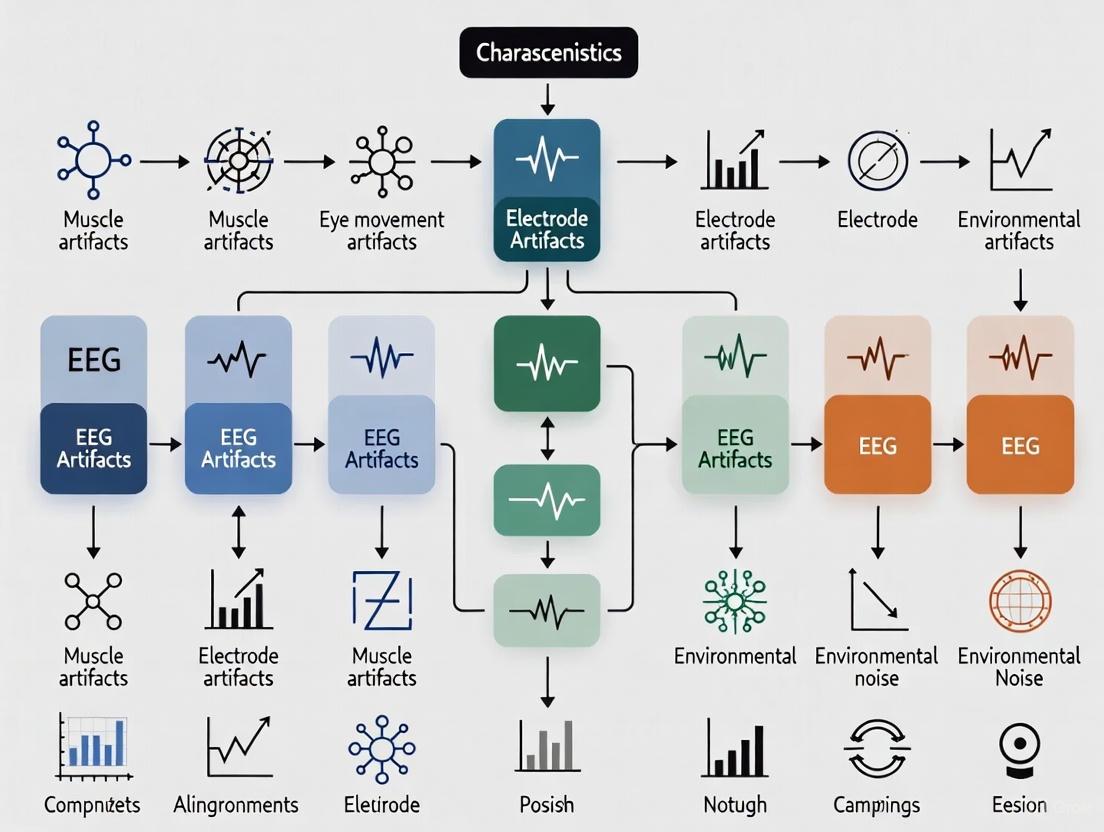
This article provides a detailed overview of electroencephalographic (EEG) artifacts, addressing a critical challenge in neurophysiological research and clinical trials.
EEG Artifacts: A Comprehensive Guide to Types, Characteristics, and Advanced Removal Techniques for Biomedical Research
Abstract
This article provides a detailed overview of electroencephalographic (EEG) artifacts, addressing a critical challenge in neurophysiological research and clinical trials. Tailored for researchers, scientists, and drug development professionals, it systematically explores the origins and characteristics of both physiological and non-physiological artifacts. The scope extends from foundational concepts and identification to advanced methodological removal techniques, including Independent Component Analysis (ICA), regression-based methods, and emerging deep learning approaches. It further offers practical troubleshooting guidance for optimizing data quality and presents a comparative analysis of artifact removal methods, including insights on dry-electrode EEG technology. This resource aims to equip professionals with the knowledge to ensure EEG data integrity, enhance signal-to-noise ratio, and support reliable data interpretation in biomedical and clinical research settings.
What Are EEG Artifacts? Defining and Identifying Common Contaminants
Electroencephalography (EEG) records the brain's electrical activity at the microvolt level, making it exceptionally susceptible to contamination from non-neural sources, collectively known as artifacts [1]. These unwanted signals can originate from both physiological processes (such as eye movements or muscle contractions) and non-physiological sources (including electrical interference or electrode issues) [1]. Because artifacts often exhibit amplitudes orders of magnitude greater than genuine neural signals, they can severely obscure brain activity patterns, potentially leading to data misinterpretation or even clinical misdiagnosis if not properly identified and addressed [1]. The critical challenge lies in the significant spectral and temporal overlap between artifacts and neurophysiological signals of interest, making their management essential for data integrity across research, clinical, and emerging wearable applications [2] [3].
The expansion of EEG into new domains, particularly with the rise of wearable devices using dry electrodes and reduced channel counts, has introduced additional artifact management challenges [3]. These systems operate in uncontrolled environments where movement and environmental interference are common, necessitating robust artifact handling strategies to ensure signal reliability [4] [3]. Furthermore, in specialized applications such as drug development research and neurodegenerative disease monitoring, where EEG is used to detect subtle neuromodulatory effects or disease-specific patterns, artifact contamination can compromise study validity and therapeutic assessments [5] [6].
Classification and Characteristics of EEG Artifacts
EEG artifacts are systematically categorized based on their origin into physiological (originating from the subject's body) and non-physiological (technical or external) sources. Each category exhibits distinct temporal, spectral, and spatial characteristics that can help in their identification [1].
Table 1: Physiological Artifacts and Their Characteristics
| Artifact Type | Origin | Time-Domain Signature | Frequency-Domain Signature | Topographic Distribution |
|---|---|---|---|---|
| Ocular (EOG) | Corneo-retinal dipole, eyelid movement | Sharp, high-amplitude deflections (100-200 µV) | Delta/Theta bands (0.5-8 Hz) | Primarily frontal (Fp1, Fp2) |
| Muscle (EMG) | Skeletal muscle contractions | High-frequency, low-amplitude bursts | Broadband (20-300 Hz), peaks in Beta/Gamma | Focal, near active muscle groups |
| Cardiac (ECG) | Electrical heart activity | Rhythmic, periodic waveforms | Multiple frequency bands | Central, temporal regions |
| Respiration | Chest/head movement during breathing | Slow, rhythmic waveforms | Delta band (0.5-4 Hz) | Diffuse, often anterior |
| Perspiration | Sweat gland activity | Very slow baseline drifts | <0.5 Hz | Diffuse, all electrodes |
Table 2: Non-Physiological Artifacts and Their Characteristics
| Artifact Type | Origin | Time-Domain Signature | Frequency-Domain Signature | Topographic Distribution |
|---|---|---|---|---|
| Electrode Pop | Sudden impedance change | Abrupt, high-amplitude transients | Broadband, non-stationary | Typically single channel |
| Cable Movement | Electromagnetic interference from cable motion | Sudden deflections or rhythmic waveforms | Variable, possible low-frequency peaks | Multiple channels, dependent on affected cables |
| AC Interference | Power line electromagnetic fields | Persistent high-frequency oscillation | Sharp peak at 50/60 Hz | All channels, uniform |
| Incorrect Reference | Poor reference electrode contact | High-amplitude shifts across all channels | Abnormally high power across spectrum | Global, all channels |
The following diagram illustrates the decision process for classifying common EEG artifacts based on their observable characteristics:
Figure 1: EEG Artifact Classification Decision Tree
Impact on Data Integrity and Research Applications
Effects on Data Analysis and Interpretation
Artifacts fundamentally compromise EEG data quality through several mechanisms. Their high amplitude can obscure genuine neural activity, while their spectral content often overlaps with brain rhythms of interest, particularly in the delta (0.5-4 Hz), theta (4-8 Hz), and alpha (8-13 Hz) bands [2]. This overlap is particularly problematic for ocular artifacts, which dominate the 3-15 Hz range – precisely where important cognitive rhythms like theta and alpha reside [2]. The consequences extend to both time-domain analyses (such as event-related potential detection) and frequency-domain analyses (including power spectral density and connectivity measures), potentially invalidating research findings or clinical assessments [1] [2].
In neurodegenerative disease research, where EEG is increasingly used to identify diagnostic biomarkers, artifacts can mimic or mask disease-specific patterns. For instance, in Alzheimer's disease studies, artifact contamination could interfere with the detection of characteristic slowing of background activity or alterations in functional connectivity networks [5]. Similarly, in pharmaco-EEG applications that investigate drug effects on brain activity, artifacts introduced by subject movement or muscle activity may be misinterpreted as drug-induced changes, potentially leading to incorrect conclusions about compound efficacy or safety [6].
Comparative Susceptibility Across Recording Modalities
Recent comparative studies between EEG and magnetoencephalography (MEG) have revealed modality-specific artifact vulnerabilities. MEG generally provides a more spatially focal representation of physiological patterns and is less sensitive to radial sources, while EEG captures broader, radially oriented cortical activity but shows higher susceptibility to ocular, muscle, and movement artifacts [7]. Signal-to-noise ratio (SNR) analysis confirms that MEG planar gradiometers capture the highest total information, followed by magnetometers and then EEG [7]. These differences highlight the importance of selecting appropriate neuroimaging modalities based on the specific research question and anticipated artifact challenges.
The emergence of wearable EEG systems has introduced new artifact profiles characterized by increased motion-related contamination and reduced effectiveness of traditional artifact rejection techniques [3]. The limited channel counts (typically below sixteen) in wearable devices impairs spatial resolution and compromises source separation methods like Independent Component Analysis (ICA) [3]. Furthermore, the use of dry electrodes without conductive gel increases impedance instability during movement, while operation in uncontrolled environments exposes recordings to unpredictable electromagnetic interference [3].
Methodologies for Artifact Detection and Removal
Established Detection Frameworks
Effective artifact management requires sophisticated detection pipelines tailored to specific artifact types and recording contexts. The following diagram illustrates a comprehensive workflow for artifact detection and categorization in EEG data:
Figure 2: Artifact Detection and Categorization Workflow
Quantitative Detection Methodologies
Advanced artifact detection employs both unsupervised and supervised approaches. For ocular artifacts, scalp topography has been identified as the most effective feature when combined with Artificial Neural Network (ANN) classifiers, achieving high accuracy in blink detection [8]. Wavelet transforms are particularly effective for muscular artifacts, capturing their characteristic high-frequency, non-stationary properties [3]. For comprehensive artifact management in multi-channel systems, Independent Component Analysis (ICA) remains a cornerstone technique, though its effectiveness diminishes with low-density wearable arrays [2] [3].
Table 3: Performance Comparison of Artifact Detection Methods
| Method | Best For Artifact Type | Key Features | Reported Accuracy | Limitations |
|---|---|---|---|---|
| Independent Component Analysis (ICA) | Ocular, cardiac | Blind source separation, preserves neural data | High (qualitative) | Requires multiple channels, computationally intensive |
| Artifact Subspace Reconstruction (ASR) | Motion, ocular | Real-time capability, adaptive calibration | 71-89% | Requires clean baseline data |
| Regression-Based Methods | Ocular | Simple implementation, EOG reference | Moderate to high | Requires additional EOG channels |
| Deep Learning (CNN-LSTM) | Muscle, motion | Automatic feature extraction, high adaptability | >85% | Needs large training datasets |
| Wavelet Transform + Thresholding | Muscle, transient | Multi-resolution analysis | 63-87% | Parameter sensitivity |
| Support Vector Machines (SVM) | Multiple types | Works with various features | 75-82% | Dependent on feature engineering |
Machine learning approaches have demonstrated particular promise for specific artifact types. For ocular artifacts, research indicates that Artificial Neural Networks (ANN) combined with scalp topography features achieve superior performance compared to other classifier-feature combinations [8]. For wearable systems, deep learning models such as CNN-LSTM architectures are emerging as robust solutions for muscular and motion artifacts, showing adaptability to real-time applications [1] [3]. These approaches can automatically learn relevant features from raw or minimally processed EEG data, reducing reliance on manual feature engineering.
Removal and Correction Techniques
After detection, multiple strategies exist for addressing artifacts, each with distinct advantages and applications. Artifact removal techniques aim to eliminate contaminated segments or components, while correction methods attempt to preserve underlying neural activity.
Regression-based methods represent traditional approaches that model artifacts as linearly additive components to the EEG signal [2]. The fundamental equation is:
RawEEG(n) = EEG(n) + artifacts(n)
For ocular artifacts specifically, this becomes:
RawEEG_ei(n) = EEG_ei(n) + β_ei × artifacts(n)
where ei represents the i-th electrode and β_ei is the regression weight estimating ocular influence on that channel [2]. These methods typically require reference EOG channels or frontal EEG electrodes to estimate the artifact template.
Independent Component Analysis (ICA) has become the gold standard for high-density EEG systems, particularly for ocular and cardiac artifacts [2]. ICA decomposes the multichannel EEG signal into statistically independent components, allowing identification and removal of artifact-related components before signal reconstruction [2]. The methodology requires:
- Multi-channel EEG data (typically >40 channels for optimal performance)
- Data preprocessing (filtering, bad channel removal)
- ICA decomposition using algorithms like Infomax or FastICA
- Visual or automated component classification
- Removal of artifact-related components
- Signal reconstruction with remaining components
Artifact Subspace Reconstruction (ASR) is an adaptive, window-based technique particularly suited for real-time applications and continuous data [2] [3]. ASR operates by calculating the covariance matrix of a short, clean "calibration" segment, then detecting and removing components in sliding windows that deviate statistically from this calibration. This method is especially effective for non-stationary artifacts like motion and muscle activity [3].
Hybrid approaches that combine multiple techniques are increasingly common, leveraging the strengths of different methodologies. For example, ASR might provide initial cleaning followed by ICA for finer artifact removal, or deep learning models might identify contaminated segments for targeted correction using traditional methods [3].
The Scientist's Toolkit: Research Reagent Solutions
Table 4: Essential Resources for EEG Artifact Research
| Resource Category | Specific Tools/Solutions | Research Application | Key Function |
|---|---|---|---|
| Analysis Toolboxes | EEGLAB, FieldTrip, MNE-Python | General artifact management | Provide implemented algorithms (ICA, ASR, etc.) |
| Public Datasets | OpenNeuro (e.g., ds004504) | Algorithm development/validation | Benchmark artifact detection methods |
| Normative Databases | IQCB-approved normative databases | QEEG analysis | Reference for deviation detection |
| Hardware Solutions | Bitbrain systems, dry electrodes | Wearable EEG research | Mobile data acquisition with artifact challenges |
| Auxiliary Sensors | EOG, EMG, ECG, IMU sensors | Multimodal artifact detection | Provide reference signals for artifact regression |
| Computational Approaches | Topological Deep Learning (TDL) | Advanced pattern recognition | Captures complex artifact morphology [5] |
| Reference Algorithms | Fast Fourier Transform (FFT), PCA | Spectral analysis, dimensionality reduction | Foundation for artifact identification [9] |
Emerging Trends and Future Directions
The field of EEG artifact management is rapidly evolving, driven by advances in computational approaches and the unique requirements of emerging applications. Deep learning techniques are showing remarkable progress in handling complex, overlapping artifacts in real-world recording environments [3]. These methods can learn directly from data, potentially identifying artifact characteristics that might be overlooked by traditional feature engineering approaches [3].
Multimodal integration represents another promising direction, where auxiliary sensors such as inertial measurement units (IMUs), EOG, and EMG provide complementary data streams to improve artifact identification [3]. Despite their potential, such approaches remain underutilized in current research and clinical practice [3].
For pharmacological applications and clinical trials, standardized artifact handling protocols are increasingly important. The International QEEG Certification Board (IQCB) has established technical guidelines requiring minimum 19-electrode setups, specific recording durations (10 minutes eyes-open, 10 minutes eyes-closed), and rigorous visual inspection protocols [9]. Adherence to such standards ensures consistency and reliability in data collection and processing, particularly crucial in multi-center trials [9].
Future developments will likely focus on real-time, adaptive artifact handling capable of addressing the dynamic challenges of wearable EEG in naturalistic environments. Such advances will be essential for realizing the full potential of EEG in ambulatory monitoring, brain-computer interfaces, and real-world neurophenotyping for drug development and neurological care [4] [3].
Electroencephalography (EEG) is a fundamental tool for measuring the brain's electrical activity, but its utility is often compromised by contamination from unwanted signals known as artifacts. These artifacts represent any recorded electrical activity that does not originate from the brain, posing significant challenges for accurate data interpretation and analysis [1]. Because EEG signals typically occur in the microvolt range, they are exceptionally susceptible to contamination from both internal bodily processes and external environmental sources [1]. Failure to properly identify and manage these artifacts can lead to misinterpretation of neural signals, potentially resulting in clinical misdiagnosis or flawed research conclusions [1].
Artifacts are broadly categorized into two distinct groups based on their origin. Physiological artifacts (also called biological or internal artifacts) originate from the patient's own body, including sources such as eye movements, muscle activity, and cardiac rhythms [10] [1]. In contrast, non-physiological artifacts (external or technical artifacts) arise from outside the body, stemming from equipment malfunctions, environmental interference, or improper recording techniques [10] [11]. Understanding the characteristics, origins, and identifying features of these contamination sources is essential for researchers and clinicians working with EEG data across diverse settings, from controlled laboratories to real-world environments.
Physiological Artifacts: Origins and Characteristics
Physiological artifacts constitute a major category of EEG contamination originating from various bodily processes and electrical activities. These artifacts are particularly challenging because they are inherent to the subject and often occur spontaneously during recordings.
Table 1: Characteristics of Common Physiological Artifacts
| Artifact Type | Biological Origin | Typical Causes | Time-Domain Signature | Spectral Characteristics | Topographical Distribution |
|---|---|---|---|---|---|
| Ocular Activity | Corneo-retinal dipole (eye) | Blinks, saccades, lateral gaze | High-amplitude slow deflections [1] | Dominant in delta/theta bands (0.5-8 Hz) [1] | Primarily frontal (Fp1, Fp2) [10] [1] |
| Muscle Activity (EMG) | Muscle fiber contractions | Jaw clenching, talking, swallowing | High-frequency, low-amplitude signals [10] [1] | Broadband noise (20-300 Hz), peaks in beta/gamma [1] | Temporal regions, widespread [10] |
| Cardiac Activity (ECG) | Electrical heart activity | Heartbeat (QRS complex) | Rhythmic sharp transients synchronized with ECG [10] | Overlaps multiple EEG bands [12] | Central, posterior regions; varies with anatomy [10] |
| Glossokinetic | Tongue dipole movement | Speech, chewing, sucking | Delta-range slow waves [10] | Variable, typically delta frequency [10] | Broad field, maximal inferiorly [10] |
| Pulse | Vascular pulsation | Electrode over blood vessel | Slow waves with ECG correlation [10] | Very low frequency | Localized to single electrode [10] |
| Respiration | Chest/head movement | Breathing, especially when recumbent | Slow rhythmic waveforms [10] [1] | Very low frequency (0.1-0.3 Hz) [1] | Anterior regions, varies with position [10] |
| Sweat | Electrolyte changes from sweat glands | Thermoregulation, stress | Very slow baseline drifts [10] [1] | Ultra-slow frequencies (<0.1 Hz) [1] | Widespread, anterior emphasis [13] |
The ocular artifact represents one of the most prevalent physiological contaminants. The eye functions as an electric dipole with the cornea positively charged relative to the retina [1]. When the eye moves or blinks, this dipole shifts, generating an electrical field that spreads across the scalp. This produces high-amplitude deflections particularly prominent over frontal electrodes (Fp1, Fp2), with blinks typically causing symmetric downward deflections and vertical eye movements creating opposite-polarity signals [10]. The amplitude of ocular artifacts can reach 100-200 μV, substantially larger than typical EEG signals [1].
Muscle artifacts (EMG) originate from the electrical activity associated with muscle contractions, particularly from the frontalis, temporalis, and masseter muscles during jaw clenching, talking, or facial movements [10]. These artifacts manifest as high-frequency, low-amplitude signals that often obscure underlying brain activity. In certain movement disorders like essential tremor or Parkinson disease, rhythmic 4-6 Hz sinusoidal EMG artifacts may mimic cerebral activity, complicating diagnosis [10]. Special patterns like the photomyoclonic response may occur during intermittent photic stimulation, characterized by frontally predominant muscle contractions approximately 50-60 milliseconds after each flash [10].
Cardiac artifacts include both ECG and pulse artifacts. The ECG artifact appears as rhythmic sharp transients synchronized with the QRS complex of the cardiac cycle, often more prominent in individuals with short, wide necks and best observed in referential montages using earlobe electrodes [10]. Pulse artifacts occur when an electrode is placed over a pulsating blood vessel, creating slow waves that lag approximately 200-300 milliseconds behind the QRS complex [10]. Both forms can mimic cerebral sharp waves or slow activity, particularly when cerebral abnormalities coexist with prominent cardiac artifacts [10].
Other significant physiological artifacts include glossokinetic artifacts from tongue movements during speech or chewing, which create broad potential fields maximal in inferior regions [10]; respiration artifacts from chest movement or impedance changes during breathing, producing slow rhythmic waveforms [10] [1]; and sweat artifacts resulting from electrolyte changes at the electrode-skin interface, causing very slow baseline drifts that contaminate low-frequency bands [10] [1].
Non-Physiological Artifacts: Origins and Characteristics
Non-physiological artifacts originate from external sources including equipment malfunctions, environmental interference, and technical errors in recording setup. Unlike physiological artifacts, these contaminants are not inherent to the subject and can often be prevented through proper technique and environmental controls.
Table 2: Characteristics of Common Non-Physiological Artifacts
| Artifact Type | Technical Origin | Typical Causes | Time-Domain Signature | Spectral Characteristics | Identification Clues |
|---|---|---|---|---|---|
| Electrode Pop | Sudden impedance change | Loose electrode, dried gel | Abrupt vertical transient, signal out of range [10] [11] [1] | Broadband, non-stationary [1] | Limited to single electrode [10] [11] |
| Cable Movement | Triboelectric effect | Cable friction, conductor motion | Sudden high-amplitude changes [11] [1] | Variable, possible rhythmic peaks [1] | Correlated with movement events [11] |
| Mains Interference | Electromagnetic coupling | AC power lines (50/60 Hz) | Monotonous 50/60 Hz waves [10] [11] [1] | Sharp peak at 50/60 Hz [11] [1] | Persistent throughout recording [11] |
| Bad Channel/Reference | Poor electrode contact | High impedance, improper placement | Non-EEG signals, baseline shifts [11] [1] | Abnormally high power across spectrum [1] | Affects all channels (average reference) [11] |
| Subject Motion | Electrode-skin interface disruption | Head/body movement | Large, non-linear noise bursts [1] | Broadband contamination | Correlated with movement [1] |
| Infusion Pump | Electromagnetic motor activity | IV pump operation | Very brief spiky transients [10] | Non-harmonic frequencies | Temporal correlation with drops [10] |
Electrode pop artifacts occur when an electrode loses stable contact with the scalp, resulting from drying electrolyte gel, physical disturbance of the electrode, or spontaneous impedance changes [10] [11] [1]. This artifact manifests as an abrupt vertical transient that drives the signal out of range, typically limited to a single electrode [10] [11]. The characteristic morphology includes a sudden shift to a new offset value followed by a gradual return to baseline [11]. Sharp transients confined to a single electrode should be considered artifactual until proven otherwise [10].
Cable movement artifacts result from triboelectric noise caused by friction between cable components or motion of conductors within magnetic fields [11]. These artifacts present as sudden, high-amplitude changes in the time domain that may appear rhythmic if cable movement is periodic [11] [1]. In severe cases, these movements can introduce waveforms that mimic cerebral rhythms or eye blinks, potentially leading to misinterpretation [1]. Modern systems employing active shielding and low-noise cable components can significantly reduce these artifacts [11].
Mains interference (50/60 Hz noise) represents one of the most common non-physiological artifacts, originating from power lines and electrical equipment in the recording environment [10] [11] [1]. This artifact appears as frequent, monotonous waves at exactly 50 Hz (Europe) or 60 Hz (North America) [11]. The interference becomes particularly problematic when electrode impedance is high or when proper grounding is compromised [10]. Increasing the display speed to 60 mm/s reveals exactly one cycle per millimeter, facilitating identification [10]. Modern EEG systems employ active shielding and proper grounding to minimize this contamination [11].
Bad channel and reference electrode artifacts occur when a channel (particularly the reference) has poor contact with the scalp or is improperly placed [11] [1]. This results in signals that clearly differ from physiological activity across the entire recording [11]. When using average referencing, one bad channel will negatively influence all channels in the recording, while in common reference montages, the reference electrode quality becomes critically important [11]. Continuous impedance monitoring during setup helps prevent these issues [11].
Additional non-physiological artifacts include subject motion artifacts from gross motor activity disrupting the electrode-skin interface [1]; infusion pump artifacts from medical equipment producing very brief spiky transients correlated with drip rates [10]; and interference from high-frequency radiation from radio, television, or paging systems that can overload EEG amplifiers [10].
Experimental Protocols for Artifact Characterization
Comparative EEG Sensor Validation Protocol
Recent research has established standardized methodologies for validating novel EEG systems against conventional equipment, particularly focusing on artifact characterization:
Objective: To evaluate the efficacy and signal quality of novel wearable EEG sensors compared to conventional scalp-EEG systems, with specific attention to artifact morphology and characteristics [14] [15].
Participant Cohorts: Two distinct cohorts are recruited: (1) patients undergoing routine epilepsy seizure monitoring in clinical settings, and (2) healthy volunteers performing structured tasks to induce common EEG artifacts [14] [15].
Recording Setup: Simultaneous EEG recordings are conducted using both the novel sensor system (e.g., REMI sensor) and a conventional scalp-EEG system. This dual-recording approach enables direct comparison of signal characteristics across platforms [14] [15].
Artifact Induction Protocol: Healthy participants perform standardized tasks to generate specific physiological artifacts:
- Ocular artifacts: Repetitive blinking, vertical and horizontal saccades
- Muscle artifacts: Jaw clenching, forehead muscle contraction, swallowing
- Movement artifacts: Head rotation, cable manipulation, positional changes [14]
Analysis Methods: Comparative time-domain and spectral analyses are conducted between recording modalities. Signal correlation coefficients are calculated across artifact types, with high correlation values (0.86-0.94 reported in recent studies) indicating comparable artifact capture between systems [14] [15]. Usability metrics including comfort ratings are collected through participant questionnaires [14] [15].
Laboratory Versus Community EEG Recording Protocol
With the increasing use of portable EEG systems, standardized protocols have been developed to compare signal quality and artifact profiles across different recording environments:
Objective: To directly compare EEG data quality, including artifact contamination, between traditional laboratory settings and community environments using portable systems [16].
Participant Population: Developmentally diverse populations including young children (6 months to 4 years), with intentional inclusion of participants with varied neurological profiles to ensure real-world applicability [16].
Experimental Design: Within-subjects comparison where each participant completes both laboratory and community EEG sessions within 30 days of each other, controlling for developmental changes [16].
Laboratory Setup: High-density EEG systems (e.g., 129-channel HydroCel Geodesic Sensor Net) installed in soundproofed, electrically shielded rooms with controlled environmental conditions [16].
Community Setup: Portable systems (e.g., 32-channel BrainProducts actiCAP) deployed in home environments or community settings selected by participants, using standardized electrode positions aligned with laboratory systems for comparability [16].
Data Processing: Identical preprocessing pipelines applied to both datasets, including:
- Finite impulse response (FIR) high-pass filtering at 1 Hz
- Spectral power analysis using standardized parameters
- Signal-to-noise ratio (SNR) calculation for 60 Hz line noise
- Data retention rate analysis after artifact rejection [16]
Quality Metrics: Quantitative comparison of noise levels, spectral power measures, and data retention rates across settings, with intraclass correlation coefficients (ICCs) calculated for spectral power across brain regions and frequency bands to assess individual-level consistency [16].
Detection and Removal Methodologies
Conventional Signal Processing Approaches
Traditional artifact management employs a range of signal processing techniques, each with particular strengths for specific artifact types:
Independent Component Analysis (ICA) has emerged as a cornerstone technique for artifact separation, particularly effective for ocular, cardiac, and muscular artifacts [17] [1]. ICA operates by decomposing multichannel EEG data into statistically independent components that can be manually or automatically classified as neural or artifactual. However, ICA's effectiveness diminishes with low-density EEG systems (typically below 16 channels) common in wearable devices, and imperfect component separation can remove neural signals along with artifacts, potentially creating false positive effects [17] [18].
Wavelet Transform methods are widely applied for detecting transient artifacts such as electrode pops, pulse artifacts, and muscle contractions [17]. These techniques decompose signals into time-frequency representations, allowing identification of artifactual components based on their characteristic scales and coefficients. Wavelet approaches are particularly valuable for non-stationary artifacts that traditional frequency-domain filters may miss [17].
Filtering Techniques include:
- Notch filters (50/60 Hz) for mains interference removal [11]
- Band-stop filters for targeting specific artifact frequency ranges
- Adaptive filters that use reference signals (e.g., EOG, ECG) to subtract artifacts from EEG channels [12]
Spectral methods focusing on power spectral density analysis effectively identify artifacts with characteristic frequency signatures, including muscle artifacts (high-frequency broadband), ocular artifacts (low-frequency dominance), and mains interference (sharp 50/60 Hz peaks) [1].
Emerging Approaches and Methodological Considerations
Recent methodological advances address limitations of conventional approaches, particularly for wearable EEG applications:
Targeted Artifact Reduction approaches represent a significant evolution beyond simple component rejection. The RELAX pipeline exemplifies this approach by targeting cleaning specifically to artifact periods of eye movement components and artifact frequencies of muscle components, rather than subtracting entire components [18]. This method has demonstrated effectiveness in reducing artificial inflation of effect sizes and minimizing source localization biases that can result from conventional ICA subtraction [18].
Artifact Subspace Reconstruction (ASR) techniques are increasingly applied for ocular, movement, and instrumental artifacts in wearable EEG [17]. ASR operates by identifying and removing multidimensional artifact components using a sliding-window approach, making it particularly suitable for continuous monitoring applications with persistent artifact contamination.
Deep Learning Approaches are emerging as powerful tools for artifact management, especially for muscular and motion artifacts [17]. Convolutional Neural Network-Long Short-Term Memory (CNN-LSTM) architectures can learn complex spatial-temporal artifact patterns that may elude conventional detection methods [1]. These approaches show particular promise for real-time applications and single-channel configurations common in minimal wearable systems [17].
Auxiliary Sensor Integration, including inertial measurement units (IMUs), electrooculography (EOG), and electrocardiography (ECG), provides reference signals that significantly enhance artifact detection under ecological conditions [17]. Despite their demonstrated potential, such multimodal approaches remain underutilized in current research and clinical practice [17].
Table 3: Research Reagent Solutions for Artifact Management
| Tool Category | Specific Solution | Primary Function | Application Context |
|---|---|---|---|
| Processing Algorithms | Independent Component Analysis (ICA) | Separates mixed signals into independent sources | Ocular, cardiac, muscular artifacts [17] [18] [1] |
| Wavelet Transform | Time-frequency analysis for transient detection | Electrode pop, pulse, muscle artifacts [17] | |
| Artifact Subspace Reconstruction (ASR) | Identifies and removes multidimensional artifacts | Ocular, movement, instrumental artifacts [17] | |
| Software Pipelines | RELAX (EEGLAB plugin) | Targeted artifact reduction minimizing neural signal loss | Eye movement, muscle artifacts; ERP studies [18] |
| EEGLAB | Open-source processing environment with multiple artifact tools | General artifact management across artifact types [16] | |
| Reference Datasets | Public artifact databases | Benchmarking and validation of detection algorithms | Method development and comparison [17] |
| Hardware Solutions | Active electrode systems | Reduces environmental interference and cable artifacts | Portable/wearable EEG in noisy environments [11] [16] |
| Auxiliary sensors (IMU, EOG, ECG) | Provides reference signals for artifact detection | Motion, ocular, cardiac artifact identification [17] | |
| Quality Assessment Metrics | Spectral correlation | Quantifies similarity between systems | Validation studies [14] [15] |
| Signal-to-noise ratio (SNR) | Measures noise contamination level | Recording quality assessment [16] | |
| Data retention rates | Quantifies data loss after artifact rejection | Pipeline performance evaluation [16] |
Effective artifact management requires both specialized software tools and methodological approaches. The RELAX pipeline represents a recent advancement in targeted artifact reduction, available as an EEGLAB plugin that specifically addresses limitations of conventional ICA by applying more precise cleaning to artifact-related components [18]. EEGLAB provides the foundational processing environment with extensive artifact management capabilities, including ICA decomposition, multiple visualization tools, and compatibility with various preprocessing pipelines [16].
For validation and benchmarking, publicly available artifact databases are essential resources that enable standardized comparison of detection and removal algorithms [17]. These datasets typically include carefully annotated examples of various artifact types, allowing researchers to quantitatively evaluate pipeline performance using metrics such as accuracy (reported by 71% of studies), selectivity (63%), and data retention rates [17].
Hardware solutions including active electrode systems with built-in impedance monitoring and noise-shielding technology significantly reduce non-physiological artifacts at the acquisition stage, particularly for portable EEG applications in noisy environments [11] [16]. Auxiliary sensors (IMU, EOG, ECG) provide critical reference signals that enhance artifact detection in real-world conditions, though their potential remains underutilized in current practice [17].
Artifact Management Workflow
The artifact management workflow illustrates the systematic approach required for effective EEG contamination control. The process begins with raw EEG data containing both physiological and non-physiological artifacts, proceeds through detection and removal stages employing various methodological approaches, and culminates in clean EEG data suitable for analysis. This structured pathway emphasizes the importance of artifact categorization in selecting appropriate processing strategies.
Electroencephalography (EEG) is a fundamental tool for non-invasive monitoring of brain activity, but its diagnostic and research utility is severely compromised by physiological artifacts. These unwanted signals, originating from ocular, muscle, cardiac, and sweat gland activity, can obscure genuine neural dynamics and lead to misinterpretation. This in-depth technical guide synthesizes current research to detail the characteristics, underlying biophysical mechanisms, and state-of-the-art removal methodologies for these primary physiological artifacts. Framed within broader research on EEG artifact characteristics, this whitepaper provides researchers and drug development professionals with structured quantitative data, experimental protocols, and analytical workflows essential for ensuring signal fidelity in both clinical and experimental settings.
The electroencephalogram (EEG) records the brain's spontaneous electrical activity, characterized by low-amplitude signals typically measured in microvolts (µV). This low signal-to-noise ratio makes EEG highly susceptible to contamination from various physiological sources [1] [19]. Physiological artifacts are defined as recorded signals that do not originate from neural activity but from other bodily processes [1]. Unlike non-physiological artifacts, these contaminants are generated by the subject's own body, making them particularly challenging to eliminate through instrumental means alone. The presence of these artifacts can mask underlying neural activity, mimic pathological patterns such as epileptiform discharges, and significantly bias the analysis of brain signals, potentially leading to clinical misdiagnosis or flawed research conclusions [1] [19]. The following sections provide a comprehensive examination of the four major categories of physiological artifacts: ocular (EOG), muscle (EMG), cardiac (ECG), and sweat potentials, with detailed methodologies for their identification and removal.
Ocular Artifacts (EOG)
Characteristics and Biophysical Basis
Ocular artifacts primarily arise from eye blinks and movements. The eye functions as an electric dipole due to the charge difference between the cornea (positive) and retina (negative). When the eye moves or the eyelid closes during a blink, this dipole shifts or is modulated, generating an electrical field disturbance that propagates across the scalp [1]. This potential, known as the electrooculogram (EOG), typically reaches 100–200 µV, often an order of magnitude larger than cerebral EEG signals [1].
- Topographical Distribution: Maximum amplitude over frontal electrodes (e.g., Fp1, Fp2), with lateral gaze movements affecting electrodes near the temples [1].
- Temporal Signature: Sharp, high-amplitude deflections in the time domain [1].
- Spectral Signature: Dominant in low frequencies, particularly in the delta (0.5–4 Hz) and theta (4–8 Hz) bands, which can mimic slow-wave cognitive processes [1].
Table 1: Characteristics of Ocular Artifacts
| Feature | Description |
|---|---|
| Origin | Corneo-retinal dipole shift during blinks and eye movements [1] |
| Amplitude | 100–200 µV [1] |
| Main Causes | Blinks, saccades, lateral gaze [1] |
| Affected Electrodes | Frontal (Fp1, Fp2), temporal [1] |
| Time-Domain Effect | High-amplitude, slow deflections [1] |
| Frequency Band | Delta (0.5–4 Hz) and Theta (4–8 Hz) [1] |
Advanced Removal Methodologies and Protocols
While regression-based methods were historically used, Blind Source Separation (BSS) techniques, particularly Independent Component Analysis (ICA), are now standard for ocular artifact removal [19] [20]. A leading-edge approach is the adaptive joint CCA-ICA method (FCCJIA), which combines multiple noise restriction strategies for superior performance [20].
Experimental Protocol: Adaptive Joint CCA-ICA for Ocular Artifact Removal [20]
- Signal Decomposition: Apply Canonical Correlation Analysis (CCA) to the multi-channel EEG data to obtain an initial separation of components.
- Source Separation: Further decompose the CCA-derived components using ICA to improve the separability between neural and artifactual sources.
- Automatic Artifact Identification: Identify components containing ocular artifacts using higher-order statistics (e.g., kurtosis). This step adaptively determines the noisy components without relying on subjective thresholding.
- Component Denoising: Apply Empirical Mode Decomposition (EMD) and wavelet denoising to the identified artifactual components to remove the noise while preserving inherent neural information, rather than simply discarding the entire component.
- Signal Reconstruction: Project the cleaned components back to the sensor space to obtain the artifact-free EEG.
This hybrid method has been validated in both simulation and real EEG applications, showing significant improvement in Signal-to-Noise Ratio (SNR) and performance in downstream tasks like emotion recognition compared to traditional methods like zeroing-ICA or wavelet-ICA [20].
Muscle Artifacts (EMG)
Characteristics and Biophysical Basis
Muscle artifacts, or electromyographic (EMG) signals, are generated by the electrical activity of contracting muscles in the head, face, jaw, and neck. These include activities such as talking, chewing, swallowing, frowning, or clenching the jaw [1] [19]. Since muscle sources are often closer to scalp electrodes than the brain is, they contribute significant energy to the recorded signal.
- Topographical Distribution: Can be widespread or localized, depending on the muscle group active (e.g., temporal muscles affect temporal electrodes).
- Temporal Signature: High-frequency, burst-like noise superimposed on the EEG signal [1].
- Spectral Signature: Broadband noise that dominates the beta (13–30 Hz) and gamma (>30 Hz) ranges, critically overlapping with frequencies associated with cognitive and motor processes [1] [21].
Table 2: Characteristics of Muscle Artifacts
| Feature | Description |
|---|---|
| Origin | Electrical activity from muscle contractions (EMG) [1] |
| Amplitude | Proportional to contraction strength [1] |
| Main Causes | Talking, chewing, swallowing, head tension [1] [19] |
| Affected Electrodes | Widespread, often temporal and frontal [1] |
| Time-Domain Effect | High-frequency, non-stationary bursts [1] [21] |
| Frequency Band | Beta (13–30 Hz) and Gamma (>30 Hz); broad up to 200+ Hz [1] [19] |
Advanced Removal Methodologies and Protocols
Muscle artifacts are particularly challenging due to their broadband nature and statistical properties. Canonical Correlation Analysis (CCA) has been shown to outperform ICA in some cases because it targets sources that are maximally autocorrelated, unlike the less correlated muscle signals [21]. A sophisticated approach that incorporates additional EMG information is the ERASE (EMG Removal by Adding Sources of EMG) algorithm [22].
Experimental Protocol: The ERASE Algorithm [22]
- Reference Signal Acquisition: Record additional channels of real EMG from key muscle sites (e.g., neck, masseter, frontalis) synchronously with the EEG. Alternatively, simulated EMG signals can be used.
- Extended ICA Input: Concatenate the reference EMG channels with the original EEG channels as inputs to the ICA algorithm. This "forces" the pervasive EMG artifact power into a smaller set of Independent Components (ICs).
- Automated IC Rejection: Automatically identify and reject the ICs predominantly containing EMG artifacts. This is based on their high correlation with the reference EMG channels or other statistical features, minimizing user bias.
- Signal Reconstruction: Reconstruct the EEG signal from the remaining, brain-related ICs.
Validation studies show that ERASE removes approximately 75% of EMG artifacts when using real EMG references and 63% with simulated references, outperforming conventional ICA by an average of 26% while preserving movement-related EEG features [22].
Research Reagent Solutions for EMG Artifact Studies
- High-Density EMG Array: A set of electrodes (e.g., 16-128 channels) placed over head and neck muscles to provide statistical information on muscle activity for algorithms like ERASE and adaptive filtering [21] [22].
- Bioamplifiers with Synchronized Sampling: Systems capable of synchronously recording EEG and EMG signals to ensure zero-lag interference removal [21] [22].
- Computational Tools: Software for implementing BSS algorithms (ICA, CCA) and hybrid methods like EEMD-CCA [21] [20].
Cardiac Artifacts (ECG)
Characteristics and Biophysical Basis
Cardiac interference in EEG can manifest in two primary forms: the electrical activity of the heart (ECG) and pulse artifacts (ballistocardiogram) caused by scalp vasculature pulsations [1] [23]. The ECG artifact, particularly the QRS complex, can be volume-conducted to the scalp. The pulse artifact occurs when an electrode is placed over or near an artery, causing a small movement of the electrode with each heartbeat [19] [24].
- Topographical Distribution: ECG artifacts may be visible in all channels using a common reference but are often most prominent in central or neck-adjacent channels (e.g., Cz). Pulse artifacts are typically localized to a single electrode [1] [24].
- Temporal Signature: Rhythmic waveforms recurring at the heart rate (~60-100 beats per minute, or ~1-1.7 Hz) [1].
- Spectral Signature: Overlaps several EEG bands, with a fundamental frequency around 1-2 Hz [1].
Table 3: Characteristics of Cardiac Artifacts
| Feature | Description |
|---|---|
| Origin | Electrical activity of heart (ECG) or blood flow in vessels (Pulse) [1] [23] |
| Amplitude | Variable; depends on electrode location and subject physiology [1] |
| Main Causes | Heartbeats, electrode placement near vessels [1] [19] |
| Affected Electrodes | Central, neck-adjacent, or electrodes over vessels [1] [24] |
| Time-Domain Effect | Rhythmic, stereotyped waveforms [1] |
| Frequency Band | Fundamental ~1-2 Hz (Delta) [1] |
Advanced Removal Methodologies and Protocols
A key advancement in cardiac artifact removal is the development of methods that do not require a separately recorded ECG channel, which is crucial for applications like sports science where movement must be unrestricted. The ARCI (Automatic Removal of Cardiac Interference) method is one such approach [23].
Experimental Protocol: The ARCI Method [23]
- Signal Decomposition: Apply ICA to the multi-channel EEG data to decompose it into Independent Components (ICs).
- Feature Extraction: For each IC, calculate a set of specific features in the time and frequency domains designed to capture the stereotypical characteristics of both electrical cardiac and pulse artifacts.
- Machine Learning Classification: Use a pre-trained classifier (e.g., Support Vector Machine) to automatically label ICs as artifactual or neural based on the extracted features. This model is trained on features known to discriminate cardiac-related components, such as peak frequency, regularity, and correlation with a template heartbeat.
- Component Rejection: Remove the ICs classified as containing cardiac interference.
- Signal Reconstruction: Reconstruct the EEG signal from the remaining components.
ARCI has demonstrated high consistency with expert classifications (accuracy >99%) and reduces cardiac interference by more than 82% in validation studies, effectively handling both ECG and pulse artifacts across different EEG systems [23].
Sweat Artifacts
Characteristics and Biophysical Basis
Sweat artifacts arise from the body's thermoregulatory response. The biological process involves the filling of sweat glands with liquid, which rapidly increases the electrical conductivity of the skin [25]. Furthermore, the composition of sweat (high in sodium chloride and lactic acid) can react with metallic components of EEG electrodes, generating additional electrical potentials [25].
- Topographical Distribution: Often widespread but can be uneven due to the variable distribution of sweat glands across the scalp [25].
- Temporal Signature: Very slow, meandering baseline drifts apparent over long epochs [1] [25].
- Spectral Signature: Contaminates the very low-frequency delta band (<1 Hz) and can cause shifts in the DC level [1].
Table 4: Characteristics of Sweat Artifacts
| Feature | Description |
|---|---|
| Origin | Changes in skin conductivity from sweat glands; electrochemical potentials [25] |
| Amplitude | Can be large, causing significant baseline drift [25] |
| Main Causes | Heat, physical exertion, stress, long recordings [1] [25] |
| Affected Electrodes | Widespread, potentially uneven [25] |
| Time-Domain Effect | Slow, monophasic or polyphasic baseline drifts [1] [25] |
| Frequency Band | Very slow delta (<1 Hz); can appear as DC shift [1] |
Mitigation and Removal Strategies
Sweat artifacts are exceptionally low-frequency, making them difficult to remove with post-processing without distorting genuine EEG signals. Therefore, preventative strategies are paramount.
Experimental and Clinical Mitigation Protocol [25]
- Environmental Control: Maintain a cool recording environment at 68°F–72°F (20°C–22°C). Use air conditioning or fans to control temperature and reduce humidity buildup. This is the most robust mitigation strategy.
- Patient Preparation: Instruct participants to avoid strenuous exercise, caffeine, and alcohol for at least 24 hours prior to the scheduled EEG session.
- Electrode Contact Optimization: Ensure the best possible electrode-skin contact to maintain stable impedance. For traditional wet systems, this may require additional skin preparation and abrasion. Active quick-apply systems should be checked for proper scalp contact for each conductive leg.
- Relaxation Techniques: Encourage the patient to relax and breathe deeply to reduce anxiety-induced sweating.
- Post-Hoc Filtering: If necessary, high-pass filtering at 1 Hz can reduce the appearance of slow drifts in clinical displays, but caution is advised as this can also remove genuine cerebral slow-wave activity [25].
The Shift Towards Advanced and Hybrid Algorithms
The field of EEG artifact removal is moving beyond single-method approaches. Research consistently shows that hybrid methods, which combine the strengths of multiple algorithms, yield superior results. Examples include EEMD-CCA for muscle artifacts [21] and the joint CCA-ICA for ocular artifacts [20]. These methods leverage the complementary strengths of different techniques to improve the separation of neural and artifactual sources.
Furthermore, machine learning and deep learning are establishing new benchmarks for automated artifact detection. For instance, specialized lightweight Convolutional Neural Networks (CNNs) have been developed to detect specific artifact classes (eye movement, muscle, non-physiological) and have been shown to significantly outperform traditional rule-based methods, with F1-score improvements of up to 44.9% [26]. A key finding is that different artifact types require different analytical parameters; for example, optimal detection performance was achieved with 20-second windows for eye movements, 5-second windows for muscle activity, and 1-second windows for non-physiological artifacts [26].
Physiological artifacts represent a pervasive challenge in EEG analysis, each with distinct biophysical origins and signal characteristics. A deep understanding of these properties is the foundation for effective mitigation. While preventative measures during recording are crucial, advanced computational techniques have become indispensable for post-acquisition cleaning. The future of EEG artifact management lies in the continued development of robust, automated, and hybrid algorithms that can be reliably applied across diverse recording environments and participant populations. For researchers in neuroscience and drug development, adhering to rigorous artifact handling protocols is not merely a preprocessing step but a fundamental requirement for ensuring the validity and interpretability of brain signal data.
Within electroencephalography (EEG) research, an artifact is any recorded electrical activity that does not originate from the brain [27] [10]. The ability to identify and mitigate technical artifacts is a cornerstone of data integrity, especially in studies critical to drug development and clinical trials where signal purity can influence findings. Technical artifacts, which arise from the recording equipment or environment, can obscure or mimic neurological signals, leading to erroneous interpretation [11] [28]. This guide provides an in-depth examination of three pervasive technical artifacts: electrode pop, cable movement, and power line interference. We will define their origins, characteristics, and impacts on EEG data, and provide detailed protocols for their removal and prevention, complete with quantitative analyses and practical toolkits for the researcher.
Electrode Pop
Mechanism and Definition
Electrode pop is a sudden, high-amplitude artifact caused by an abrupt change in the impedance at the electrode-skin interface [11] [29]. This typically occurs due to a loose electrode, inadequate skin contact, drying of the electrode gel, or a dirty electrode [29]. The instability creates a sudden shift in the DC offset, which manifests as a sharp transient on the EEG trace [27].
Identifying Characteristics and Impact on Data
This artifact is easily identified by its characteristic morphology: a very steep, nearly vertical upslope followed by a slower exponential decay, often described as a "pop" [27] [10]. Crucially, the artifact is spatially focal, confined to a single electrode or a small group of electrodes sharing the faulty reference, and exhibits no electrical field—meaning the voltage change does not distribute across the scalp as genuine cerebral activity would [27] [29]. The amplitude can be quite large, potentially saturating the amplifier and obliterating the underlying brain signal. In automated analysis or drug efficacy studies, these sharp transients could be misclassified as epileptiform spikes or other pathological discharges, compromising data validity [10].
Table 1: Characteristics of Electrode Pop Artifacts
| Feature | Description |
|---|---|
| Morphology | Sharp, sudden deflection with a steep upslope and slower downslope [27] |
| Spatial Field | Focal; limited to a single electrode with no field distribution [27] [29] |
| Amplitude | Can be very high, often exceeding typical EEG amplitudes [28] |
| Common Causes | Loose electrode, poor skin contact, dried electrolyte, dirty electrode [11] [29] |
Experimental Protocol for Identification and Mitigation
Protocol 1: Identification and Rectification of Electrode Pop
- Real-Time Monitoring: During data acquisition, monitor impedance readings. A fluctuating or high-impedance reading from a specific channel is a primary indicator of risk [11].
- Visual Inspection: Visually inspect the EEG trace for the characteristic steep transient confined to one electrode. In a bipolar montage, the artifact will appear in all chains containing the problematic electrode. In a referential montage, it will be seen in all electrodes referenced to the faulty site [29].
- Physical Inspection & Remediation: Identify the physical electrode causing the artifact. Check for looseness, gel dryness, or dirt. The definitive solution is to re-prep the skin and re-apply the electrode or replace it entirely [29].
- Offline Data Correction: If re-referencing is a viable option for the analysis pipeline and the reference electrode is the source of the pop, re-referencing the entire dataset to a stable electrode can eliminate the artifact [29].
Cable Movement
Mechanism and Definition
Cable movement artifact arises from physical motion of the EEG cables connecting the cap to the amplifier. This motion generates electrical noise through two primary mechanisms: the triboelectric effect, where friction between a cable's internal components generates a static charge [11]; and the motion of the conductor within the Earth's magnetic field, which induces a current [11]. These effects are more pronounced in traditional, non-wireless EEG setups [11].
Identifying Characteristics and Impact on Data
The appearance of cable movement artifact is highly variable, ranging from sudden, high-amplitude, chaotic deflections to rhythmic, oscillatory patterns if the cable is swinging [28]. The rhythmic oscillations can be particularly deceptive as they may overlap with EEG frequencies of interest, such as alpha or theta rhythms [28]. Unlike physiologically plausible brain signals, these artifacts often affect multiple channels in a pattern that correlates with the physical layout of the cables rather than neuroanatomy. They can significantly reduce the signal-to-noise ratio, obscure event-related potentials, and introduce spurious patterns in frequency or connectivity analyses.
Table 2: Characteristics of Cable Movement Artifacts
| Feature | Description |
|---|---|
| Morphology | Variable; chaotic high-amplitude shifts or rhythmic oscillations from cable swing [28] |
| Spatial Field | Often affects multiple channels along the path of the moving cable |
| Frequency | DC shifts to oscillations in the EEG frequency range (e.g., theta/alpha for swinging) [28] |
| Primary Cause | Triboelectric noise and electromagnetic induction from cable motion [11] |
Experimental Protocol for Mitigation
Protocol 2: Minimizing Cable Movement Artifacts
- Cable Securement: Prior to recording, securely tape or clip the EEG cables to the participant's clothing, minimizing free-hanging lengths and reducing swing [28].
- Hardware Selection: Use actively shielded cables, which are designed to minimize capacitive coupling and are less susceptible to motion artifacts in magnetic fields [11].
- Participant Instruction: Instruct participants to minimize head and body movements and to be mindful of the cables. In mobile EEG setups, ensure the amplifier is securely fastened to the participant.
- Offline Processing: For sporadic movement artifacts, manual rejection of contaminated epochs is the most straightforward method. For persistent, rhythmic swing artifacts, band-stop filtering around the specific oscillation frequency can be applied, though this risks removing genuine neural signals [28].
Power Line Interference
Mechanism and Definition
Power line interference (PLI), or mains interference, is a high-frequency, monotonous artifact originating from the ambient electromagnetic fields generated by alternating current in power lines (50 Hz or 60 Hz, depending on the region) and electrical devices [11] [30] [31]. This interference is capacitively coupled into the EEG recording system, often when electrode impedance is high or grounding is inadequate [10].
Identifying Characteristics and Impact on Data
PLI is characterized by a persistent, oscillatory pattern at the fundamental power line frequency (50/60 Hz) and its harmonics (100/120 Hz, 150/180 Hz, etc.) [30] [31]. It appears as a very fast, regular, "comb-like" pattern overlaid on the EEG signal [27]. This artifact can severely compromise the analysis of neural oscillations in the gamma and high-beta ranges and can reduce the clarity of transient evoked potentials. Its stationary and rhythmic nature can sometimes be mistaken for an ictal rhythm in epilepsy monitoring [10].
Table 3: Characteristics of Power Line Interference
| Feature | Description |
|---|---|
| Morphology | High-frequency, sinusoidal, monotonous oscillation [27] [11] |
| Frequency | Fundamental at 50 Hz or 60 Hz, with harmonics [30] [31] |
| Cause | Electromagnetic interference from power lines and electrical equipment [30] [10] |
Experimental Protocol for Removal and Quantitative Comparison of Methods
Removing PLI is a common preprocessing step, and several algorithms exist, each with strengths and weaknesses. The following protocol and table compare the most widely used methods.
Protocol 3: Quantitative Assessment of Power Line Interference Removal Methods
- Data Simulation: Generate a clean, synthetic EEG signal or use a real EEG recording acquired in a shielded room. Add a simulated 50 Hz sinusoidal noise with non-stationary, fluctuating amplitude to mimic real-world conditions [30].
- Method Application: Apply the following removal techniques to the contaminated signal:
- Notch Filter: Apply a zero-phase IIR (Infinite Impulse Response) or FIR (Finite Impulse Response) notch filter centered at 50/60 Hz [30] [31].
- Spectrum Interpolation: Transform the signal to the frequency domain via FFT, interpolate the amplitude at the line noise frequency and its harmonics using neighboring frequency bins, and transform back to the time domain [30].
- Discrete Fourier Transform (DFT) Filter: Fit a sine and cosine at the interference frequency to the signal and subtract the estimated component [30].
- CleanLine: Use a regression-based approach with Slepian multitapers in a sliding window to estimate and subtract the line noise component [30].
- Performance Quantification: Compare the processed signal to the original clean signal using the following metrics:
- Normalized RMS Error: Measures the overall difference in the time domain.
- Signal Distortion: Visually inspect the time-domain waveform for ringing artifacts or smearing, particularly around sharp transients like epileptic spikes or K-complexes [30] [32].
- Spectral Analysis: Examine the power spectrum to confirm attenuation at the target frequency and assess the preservation of adjacent neural frequencies.
Table 4: Quantitative Comparison of Power Line Interference Removal Methods
| Method | Mechanism | Advantages | Disadvantages | Best Use Case |
|---|---|---|---|---|
| Notch Filter [30] [31] | Attenuates a narrow band of frequencies | Simple, fast, widely available in acquisition software | Can cause ringing artifacts & signal distortion in the time domain; removes neural signal in stopband | Initial preprocessing when distortion risk is acceptable |
| Spectrum Interpolation [30] | Interpolates over noise frequency in FFT spectrum | Less time-domain distortion than notch filters; preserves signal integrity | Requires careful implementation | Non-stationary line noise; analysis sensitive to time-domain morphology |
| DFT Filter [30] | Subtracts estimated sinusoidal component | Avoids corruption of frequencies away from the target | Assumes constant noise amplitude; fails with fluctuating noise | Short data segments with stable line noise |
| CleanLine [30] | Adaptive regression in sliding window | Handles slightly non-stationary noise; preserves background spectrum | May fail with highly non-stationary, large-amplitude noise | Continuous recordings with slow drift in noise properties |
The Scientist's Toolkit: Research Reagents & Essential Materials
The following table details key solutions and materials for managing technical artifacts in EEG research.
Table 5: Essential Materials for EEG Artifact Management
| Item | Function & Rationale |
|---|---|
| Abrasive Skin Prep Gel | Reduces impedance by removing dead skin cells and oils, preventing electrode pop [11]. |
| Electrode Adhesive & Stabilizing Sprays | Secures electrodes and leads, minimizing motion artifacts and preventing leads from drying [29]. |
| Active Electrode Systems | Amplifies signal at the electrode source, reducing susceptibility to cable movement and environmental noise [11] [28]. |
| Actively Shielded Cables | Minimizes capacitive coupling and triboelectric noise, crucial for reducing cable movement artifacts [11]. |
| Reference & Ground Electrodes | High-quality application is critical; a faulty reference introduces artifact across all channels [11] [29]. |
| Impedance Checker | Verifies quality of electrode-skin contact (< 5-10 kΩ for active electrodes) before and during recording to prevent pops [11]. |
Visualization of Artifact Management Workflows
The following diagram illustrates the logical decision process for identifying and addressing the three technical artifacts discussed in this guide.
Technical artifacts like electrode pop, cable movement, and power line interference are inherent challenges in EEG research. A systematic approach—combining rigorous recording protocols, knowledgeable visual identification, and judicious application of modern signal processing techniques—is essential for preserving data quality. As EEG expands into more mobile applications and decentralized clinical trials, the principles outlined in this guide will become increasingly critical for ensuring the validity and reliability of neuroscientific and pharmaceutical findings.
Electroencephalography (EEG) provides a non-invasive window into brain dynamics with high temporal resolution, making it invaluable for both clinical diagnostics and neuroscience research [33]. However, the utility of EEG is perpetually challenged by the presence of artifacts—unwanted signals that do not originate from cerebral activity [1]. These artifacts can obscure genuine neural signals, compromise data quality, and in clinical settings, potentially lead to misdiagnosis [1] [19]. The low amplitude of endogenous EEG signals, typically in the microvolt range, renders them particularly susceptible to contamination from both physiological and non-physiological sources [1]. Therefore, the accurate identification of artifacts based on their spectral and topographical signatures constitutes a critical first step in the preprocessing pipeline. This guide provides an in-depth examination of these characteristics, offering researchers and drug development professionals a detailed framework for distinguishing artifacts from bona fide neural activity in both time and frequency domains.
A Primer on EEG Artifacts
An EEG artifact is defined as any recorded signal that is not generated by the brain's neural activity [1]. These artifacts are broadly categorized into two groups based on their origin: physiological (originating from the subject's body) and non-physiological or technical (originating from the environment, equipment, or experimental setup) [1] [28].
The challenge in artifact management stems from the significant overlap in the frequency bands of artifacts and neurophysiologically relevant brain rhythms [19]. For instance, ocular artifacts primarily manifest in the delta and theta bands, which are also crucial for studying cognitive processes and deep sleep [1]. This spectral overlap renders simple filtering techniques insufficient, as they would also remove neural signals of interest. Consequently, identification strategies must leverage a combination of temporal, spectral, and, crucially, spatial (topographical) characteristics to achieve accurate artifact detection [17].
Spectral and Topographical Profiles of Major Artifacts
The following sections detail the defining characteristics of common EEG artifacts. The information is synthesized into tables for direct comparison and reference.
Physiological Artifacts
Physiological artifacts arise from various bodily activities and are often the most pervasive and challenging to remove.
Ocular Artifacts (EOG)
Origin: Ocular artifacts are generated by the corneo-retinal potential dipole. Eye blinks and movements cause a shift in this dipole, creating an electrical field measurable on the scalp [1] [28].
Table 1: Characteristics of Ocular Artifacts
| Characteristic | Eye Blinks | Lateral Eye Movements |
|---|---|---|
| Time-Domain Effect | Slow, high-amplitude deflections (100-200 µV) [1]. Monophasic, positive-going waves over frontal sites [28]. | Box-shaped deflections with opposite polarities over the left and right frontal/temporal regions [28]. |
| Frequency-Domain Effect | Dominant in delta and theta bands (0.5-8 Hz) [1] [28]. | Peaks in delta/theta bands, with effects up to 20 Hz [28]. |
| Topographical Distribution | Maximum amplitude over frontal electrodes (Fp1, Fp2), declining with distance from the eyes [1]. | Most prominent at electrodes near the temples (e.g., F7, F8). The topography shows a horizontal dipole [28]. |
Muscle Artifacts (EMG)
Origin: Muscle contractions, particularly from the head, face, jaw, and neck, generate high-frequency electrical activity known as electromyography (EMG) [1] [34].
Table 2: Characteristics of Muscle Artifacts
| Characteristic | Description |
|---|---|
| Time-Domain Effect | High-frequency, irregular, spike-like activity superimposed on the EEG. Amplitude is proportional to muscle contraction strength [1]. |
| Frequency-Domain Effect | Broadband noise, dominating the beta (13-30 Hz) and gamma (>30 Hz) ranges. It can mask cognitively relevant signals and extend up to 300 Hz [1] [28]. |
| Topographical Distribution | Localized to regions overlying the active muscle groups (e.g., temporal sites for jaw clenching, frontal for frowning). Neck and shoulder tension can affect mastoid electrodes [1] [28]. |
Cardiac Artifacts (ECG & Pulse)
Origin: The heart's electrical activity (ECG) or pulsatile movement of scalp arteries near electrodes (pulse artifact) can contaminate EEG signals [1] [28].
Table 3: Characteristics of Cardiac Artifacts
| Characteristic | Description |
|---|---|
| Time-Domain Effect | Rhythmic, periodic waveforms recurring at the heart rate (~1-1.5 Hz). Pulse artifacts may appear as small, rhythmic spikes [1] [28]. |
| Frequency-Domain Effect | Overlaps with several EEG bands. A spectral peak may be visible at the heart rate frequency [1]. |
| Topographical Distribution | Often observed in central or neck-adjacent channels (e.g., T3, T4). Pulse artifact is often localized to a single electrode placed over a blood vessel [1] [28]. |
Sweat and Respiration Artifacts
Origin: Sweat causes slow changes in electrode-skin impedance, while respiration induces rhythmic body movements [1].
Table 4: Characteristics of Other Physiological Artifacts
| Artifact Type | Time-Domain Effect | Frequency-Domain Effect | Topographical Distribution |
|---|---|---|---|
| Sweat | Very slow baseline drifts (<< 0.5 Hz) lasting for several seconds [1] [28]. | Contaminates the delta band and can impair low-frequency analysis [1]. | Often affects multiple electrodes broadly [28]. |
| Respiration | Slow, rhythmic waveforms synchronized with the breathing rate (e.g., 12-20 cycles per minute) [1]. | Mainly affects low-frequency bands, overlapping with delta rhythms [1]. | Can be widespread, but may be more pronounced in electrodes affected by body movement [1]. |
Non-Physiological (Technical) Artifacts
These artifacts stem from the recording environment, equipment, and setup.
Electrode Pop & Cable Movement
Origin: Electrode pop results from a sudden change in electrode-skin impedance, often due to drying gel or poor contact. Cable movement artifacts are caused by electromagnetic interference from swinging or tugged cables [1] [28].
Table 5: Characteristics of Electrode and Cable Artifacts
| Characteristic | Electrode Pop | Cable Movement |
|---|---|---|
| Time-Domain Effect | Abrupt, high-amplitude, transient spikes that are often isolated to a single channel [1] [28]. | Highly variable; can be sudden deflections, slow drifts, or rhythmic oscillations if the cable swings [1]. |
| Frequency-Domain Effect | Broadband, non-stationary noise that is difficult to characterize [1]. | Can introduce artificial spectral peaks at low frequencies if movement is rhythmic [1]. |
| Topographical Distribution | Strictly localized to the faulty electrode [1]. | May affect a group of channels connected to the same cable or be more widespread [1]. |
Power Line Interference
Origin: Electromagnetic interference from alternating current (AC) power lines at 50 Hz or 60 Hz, depending on the regional power grid [1] [28].
- Time-Domain Effect: Persistent, high-frequency sinusoidal noise superimposed on the EEG signal [1].
- Frequency-Domain Effect: A sharp, narrow spectral peak at exactly 50 Hz or 60 Hz [1].
- Topographical Distribution: Can be present across all channels, though its amplitude may vary. It is often more prominent in environments with poor shielding or grounding [1].
Cap Movement and Vertical Topography (VT)
A particularly insidious artifact, often misinterpreted as a genuine brain signal, is the Vertical Topography (VT). This topography is characterized by a straight line of polarity inversion running vertically from the nasion to the inion, creating a left-right dipole [35] [36]. Recent research using simultaneous EEG/fMRI and phantom measurements has demonstrated that VT is largely an artifact generated by unspecified movements of the EEG cap and its metallic components within magnetic fields, rather than a physiological microstate [35] [36]. Its presence can significantly distort microstate analysis by altering the spatiotemporal parameters of other microstates [35].
Experimental Protocols for Artifact Identification
A systematic approach to artifact identification combines visual inspection with automated algorithms. The following workflow outlines a standard protocol.
Visual Inspection and Spectral Analysis Protocol
Objective: To manually identify obvious and atypical artifacts in the continuous EEG data.
- Data Loading: Import the raw, unfiltered EEG data into a preprocessing software (e.g., EEGLAB, BrainVision Analyzer).
- Browse Continuous Data: Scroll through the data with a display window of 10-20 seconds. Adjust the vertical scale (µV) to visualize both large and small amplitude events.
- Identify Suspect Epochs: Mark epochs containing:
- Sudden, large-amplitude deflections (e.g., spikes from electrode pops or blinks).
- High-frequency, chaotic activity (muscle tension).
- Regular, rhythmic patterns not corresponding to known brain rhythms (pacemaker-like heart artifacts or cable swing).
- Sustained, slow drifts (sweat or movement artifacts).
- Generate Spectrograms: Calculate the power spectral density for each channel. Look for:
- Peaks at 50/60 Hz (line noise).
- Abnormally high power in high-frequency bands (>30 Hz) suggesting EMG.
- Excessive power in very low frequencies (<1 Hz) suggesting drift.
Topographical Mapping and Independent Component Analysis (ICA) Protocol
Objective: To leverage spatial information to isolate and identify the source of artifacts.
- Data Pruning and Filtering: Remove excessively noisy channels and epochs marked in Protocol 4.1. Apply a high-pass filter (e.g., 1 Hz) to reduce slow drifts and a low-pass filter (e.g., 80 Hz) to reduce high-frequency noise, which can improve ICA performance.
- Run ICA: Decompose the pruned and filtered data into independent components (ICs). ICA is a blind source separation technique that statistically isolates sources from the mixed EEG signal [19].
- Component Inspection: For each IC, evaluate its:
- Time Course: Does the waveform resemble a blink, muscle burst, or line noise?
- Power Spectrum: Does the spectral profile match known artifacts (e.g., low-frequency for eyes, broadband for muscle)?
- Topographical Map: Does the scalp distribution show a classic pattern (e.g., frontal for ocular, lateral for muscle, single-electrode for pop, vertical dipole for VT)?
- Classify and Remove Artifactual ICs: Based on the combined evidence, label ICs as artifacts and remove them from the data before reconstructing the signal.
The following table details key hardware, software, and algorithmic tools essential for effective artifact management in EEG research.
Table 6: Research Reagent Solutions for EEG Artifact Management
| Tool / Resource | Function | Example Use-Case |
|---|---|---|
| High-Density EEG Systems | Provide dense spatial sampling (e.g., 256 channels), which is critical for accurate topographical mapping and source separation techniques like ICA [35]. | Essential for microstate analysis and for distinguishing localized artifacts from distributed brain activity. |
| Reference Sensors (EOG, ECG) | Record dedicated physiological signals to be used as a reference for artifact subtraction algorithms (e.g., regression) [19]. | Crucial for accurately identifying and removing cardiac and ocular artifacts, especially in challenging environments. |
| ICA Algorithms | Statistically decompose multi-channel EEG into independent components, allowing for the manual or automatic rejection of artifact-related components [1] [19]. | The cornerstone of modern artifact removal for physiological artifacts like eye blinks and muscle activity. |
| Automated Artifact Subraction (ASR) | A statistical method that identifies and removes high-variance signal components that are atypical compared to a clean baseline of the data [17]. | Highly effective for real-time or batch correction of large, transient artifacts (e.g., movement, spikes) in high-density EEG. |
| Deep Learning Models (e.g., CNN-LSTM) | Neural networks that learn to separate clean EEG from artifacts in an end-to-end manner, using both spatial (CNN) and temporal (LSTM) features [33] [37]. | Emerging tool for removing complex or unknown artifacts from single-channel or multi-channel EEG, showing superior performance in some tasks. |
| Semi-Synthetic Benchmark Datasets | Public datasets (e.g., EEGDenoiseNet) that provide clean EEG, recorded artifacts, and their mixtures, enabling standardized testing of new algorithms [33]. | Vital for developing, training, and benchmarking new artifact removal algorithms in a controlled manner. |
The accurate identification of artifacts through their spectral and topographical characteristics is a foundational skill in EEG research. As this guide has detailed, each major artifact class possesses a distinctive signature across time, frequency, and spatial domains. Mastery of these signatures enables researchers to make informed decisions during data preprocessing, thereby preserving the integrity of the neural signal. The increasing complexity of EEG applications, from mobile brain-computer interfaces to simultaneous EEG/fMRI, necessitates a principled and vigilant approach to artifact management. By adhering to systematic protocols and leveraging the growing toolkit of advanced algorithms, researchers can mitigate the confounding effects of artifacts, ensuring the reliability and interpretability of their findings in both basic neuroscience and applied drug development.
EEG Artifact Removal Methods: From Classical Algorithms to Modern AI
Electroencephalography (EEG) is a fundamental tool in neuroscience research and clinical practice, but its utility is often compromised by various artifacts—unwanted signals that do not originate from neural activity. These artifacts can be categorized as physiological (such as ocular, muscular, and cardiac activities) or non-physiological (including electrode pops, cable movement, and powerline interference) [34] [1]. Effective artifact management is crucial for accurate data interpretation, particularly in applications like brain-computer interfaces and clinical diagnosis [38] [1].
Classical approaches for handling these artifacts primarily include regression-based techniques and Blind Source Separation (BSS). These methods form the foundation of most modern artifact correction pipelines, even with the emergence of deep learning approaches [17]. This technical guide provides an in-depth examination of these core methodologies, their experimental protocols, and their applications within EEG research.
Regression-Based Techniques
Core Principles and Methodology
Regression analysis is one of the earliest and most straightforward methods for removing ocular artifacts from EEG signals. The technique operates on a simple principle: it estimates the propagation of ocular activity from electrooculography (EOG) channels to EEG channels and subtracts this estimated contamination [39]. The fundamental assumption is that the recorded EEG signal is a linear combination of true brain activity and propagated ocular signals.
The mathematical model for regression can be represented as:
( EEG{corrected}(t) = EEG{recorded}(t) - \sum (wi \cdot EOGi(t)) )
where ( w_i ) represents the regression coefficients quantifying how much each EOG channel contributes to the EEG contamination [39]. These coefficients are typically estimated using least-squares methods during a calibration period where both EEG and EOG activities are recorded.
A significant advancement in this approach was the development of frequency-domain regression, which accounts for potential frequency-dependent amplitude and phase characteristics in the transfer of ocular activity to EEG signals [40]. This method applies the regression formula in the frequency domain, allowing for more accurate correction when ocular artifact propagation exhibits phase delays or frequency-specific effects.
Experimental Protocol for Regression Analysis
Implementing regression-based artifact removal requires a systematic experimental approach:
Data Acquisition Setup: Record EEG signals with simultaneous EOG monitoring. A typical setup includes 19 EEG electrodes positioned according to the international 10-20 system (Fp1, Fp2, F3, F4, F7, F8, Fz, C3, C4, Cz, T7, T8, P7, P8, P3, P4, O1, O2) with appropriate referencing [39]. EOG electrodes should be placed to capture both vertical and horizontal eye movements.
Calibration Data Collection: Acquire dedicated data segments for calculating regression coefficients. These segments should contain representative ocular artifacts (blinks, saccades) with minimal other contamination.
Coefficient Calculation:
- For time-domain regression: Calculate regression coefficients ( w_i ) using least-squares estimation between EOG and EEG channels during the calibration period [39].
- For frequency-domain regression: Compute complex regression coefficients ( P(jw) ) in the frequency domain to account for potential phase shifts and frequency-dependent transfer characteristics [40].
Artifact Correction: Apply the calculated coefficients to the entire dataset, subtracting the estimated EOG contamination from each EEG channel.
Validation: Assess correction quality by comparing spectra before and after correction and ensuring physiological EEG activity is preserved [41].
Strengths and Limitations
Regression methods offer computational simplicity and straightforward implementation, making them accessible for various research settings [39]. They have demonstrated robust performance in automated artifact removal pipelines, with some studies finding them more stable than component-based methods [41].
However, a fundamental limitation is the invalid assumption that no correlation exists between neuronal EEG activity and EOG signals [39]. This can lead to over-correction and removal of genuine brain activity, particularly in frontal regions. Additionally, regression methods are vulnerable to bidirectional contamination, where brain potentials affect EOG recordings, further complicating the separation of true artifacts [39].
Blind Source Separation (BSS) Techniques
Core Principles and Methodology
Blind Source Separation, particularly Independent Component Analysis (ICA), represents a more advanced approach to artifact removal that exploits the statistical properties of underlying sources. BSS operates on the principle that multichannel EEG signals are linear mixtures of statistically independent components, including both cerebral and artifactual sources [42].
The BSS model can be represented as:
( X = AS )
where ( X ) is the recorded multichannel EEG data, ( A ) is the mixing matrix, and ( S ) contains the independent sources. The goal is to find a separating matrix ( W ) such that:
( U = WX )
where ( U ) contains estimates of the independent sources [42]. Once separated, artifactual components can be identified and removed before reconstructing the EEG signals without these contaminants.
Different BSS algorithms employ various criteria for establishing independence:
- Infomax ICA: Maximizes the information transfer between input and output [42]
- Second-Order Blind Inference (SOBI): Explores temporal correlations [42]
- Principal Component Analysis (PCA): Identifies components based on variance explained [17] [42]
BSS has proven particularly effective for separating muscle and blink artifacts, though it shows variable performance for saccadic and tracking artifacts [42].
Experimental Protocol for BSS Implementation
A standardized protocol for BSS-based artifact removal includes:
Data Preparation:
Component Separation:
- Select an appropriate BSS algorithm based on artifact type (Infomax for ocular artifacts, SOBI for temporally correlated artifacts) [42]
- Decompose EEG data into independent components (ICs)
Artifact Component Identification:
Component Removal and Reconstruction:
- Set identified artifactual components to zero
- Project remaining components back to sensor space using the inverse of the separating matrix
- For hybrid approaches, apply further processing to artifact components before reconstruction [39]
Validation:
Algorithm Performance and Comparative Effectiveness
BSS techniques have demonstrated significant success in artifact removal, with one recent study reporting an 88% overall artifact removal rate across different artifact types: ocular (81%), cardiac (84%), muscle (98%), and powerline (100%) [38]. This study implemented a fast automatic algorithm based on blind source separation that outperformed state-of-the-art methods in both artifact reduction and computation time.
The effectiveness of BSS varies considerably depending on the artifact type and chosen algorithm. PCA emerges as a strong performer when artifact amplitude exceeds brain signals, while Infomax and SOBI often show better performance for specific lower-amplitude artifacts [42].
Comparative Analysis: Regression vs. BSS
Table 1: Quantitative Comparison of Regression and BSS Methods for EEG Artifact Removal
| Feature | Regression Methods | Blind Source Separation |
|---|---|---|
| Theoretical Basis | Linear transfer between EOG and EEG [39] | Statistical independence of sources [42] |
| Required Input | EEG + EOG channels [39] | Multichannel EEG (typically >16 channels) [17] |
| Computational Load | Low [39] | Moderate to High [38] |
| Handling of Non-Linear Effects | Limited (unless frequency-domain) [40] | Moderate (linear mixture assumed) |
| Typical Ocular Artifact Removal Efficiency | Varies; can be robust [41] | ~81% [38] |
| Neural Signal Preservation | Can remove correlated brain activity [39] | Good with proper component selection [39] |
| Automation Potential | High [41] | Moderate (often requires manual component check) [39] |
| Best Suited Artifact Types | Ocular artifacts [41] | Ocular, muscle, cardiac, powerline [38] |
Hybrid Approaches and Advanced Methodologies
ICA-Regression Fusion
To leverage the strengths of both approaches, researchers have developed hybrid methods that combine ICA and regression. One such framework involves:
- Using ICA to decompose EEG into independent components [39]
- Automatically identifying ocular components using statistical measures (composite multi-scale entropy and kurtosis) [39]
- Removing high-magnitude ocular activities from artifact components using median absolute deviation [39]
- Applying linear regression to further remove residual ocular artifacts from these components [39]
- Reconstructing EEG from all processed components
This approach has demonstrated significantly enhanced performance compared to standalone methods, achieving lower mean square error and higher mutual information between reconstructed and original EEG [39].
Emerging Trends and Wearable EEG Considerations
With the growing adoption of wearable EEG systems featuring dry electrodes and reduced channel counts (<16 channels), classical approaches face new challenges [17]. The reduced spatial resolution impairs the effectiveness of standard BSS techniques like ICA and PCA [17]. Current research focuses on adapting these classical methods for low-density configurations, with wavelet transforms and ICA remaining among the most frequently used techniques, often employing thresholding as a decision rule [17].
A promising direction is the integration of auxiliary sensors (e.g., IMUs for motion detection) with classical signal processing approaches to enhance artifact detection under real-world conditions [17]. Additionally, automated component classification using machine learning represents an important advancement for making BSS methods more accessible to non-experts [8].
The Scientist's Toolkit
Table 2: Essential Research Reagents and Solutions for EEG Artifact Research
| Research Tool | Function/Application | Technical Specifications |
|---|---|---|
| Multichannel EEG System with EOG | Recording primary data and ocular reference signals [39] | ≥16 channels, sampling rate ≥200 Hz, synchronized EOG channels [39] |
| ICA Algorithms (Infomax, SOBI) | Blind source separation of neural and artifactual components [42] | Implementation in EEGLAB, FieldTrip, or custom scripts [42] |
| Regression Analysis Tools | Calculating transfer coefficients between EOG and EEG [39] | Standard statistical packages with least-squares regression capabilities [39] |
| Public EEG Datasets with Artifacts | Method validation and benchmarking [17] | Databases with marked artifacts (e.g., 2035 marked artifacts in one study) [38] |
| Automated Component Classification | Identifying artifactual components without manual inspection [8] | Features: scalp topography, kurtosis, entropy; Classifiers: ANN, SVM [8] |
| Performance Validation Metrics | Quantifying artifact removal effectiveness and signal preservation [17] | Accuracy, selectivity, mean square error, mutual information [17] [39] |
Workflow Diagrams
EEG Artifact Removal Method Workflows
Experimental Protocol for EEG Artifact Research
Regression-based techniques and Blind Source Separation represent foundational approaches for EEG artifact correction, each with distinct strengths and limitations. Regression methods offer simplicity and robustness for specific artifact types like ocular contamination, while BSS provides a more flexible framework for handling diverse artifacts through statistical separation. The emerging trend of hybrid methodologies demonstrates that combining these classical approaches can yield superior results, particularly for challenging artifacts like ocular activities that require precise removal while preserving neural signals [39].
As EEG technology evolves toward wearable, mobile applications with reduced channel counts, adapting these classical methods remains an active research area. The integration of auxiliary sensors and machine learning for automated component classification represents the natural evolution of these proven techniques, ensuring their continued relevance in both clinical and research settings [17] [8].
Electroencephalography (EEG) records microvolt-level electrical signals highly susceptible to contamination from various non-neural sources, known as artifacts. These artifacts can obscure genuine brain activity and compromise data integrity, making their removal essential for accurate analysis [1]. Artifacts are broadly categorized as physiological (originating from the subject's body) or non-physiological (technical or external sources) [1].
Independent Component Analysis (ICA) has become an industry-standard, data-driven method for isolating and removing artifacts from EEG data. ICA operates on the principle of blind source separation, decomposing the recorded multi-channel EEG signals into statistically independent components (ICs) [43] [44] [45]. Each IC has a fixed scalp topography (spatial pattern) and a corresponding time course. Artifactual components, such as those representing blinks or muscle activity, can be identified and removed before reconstructing the cleaned EEG signal [45].
Table: Major EEG Artifact Types and Characteristics
| Artifact Category | Specific Type | Origin | Typical Morphology | Primary Spectral Signature |
|---|---|---|---|---|
| Physiological | Ocular (EOG) | Eye blinks & movements [1] | High-amplitude, slow deflections over frontal channels [1] | Delta/Theta bands (0.5–8 Hz) [1] |
| Muscle (EMG) | Head, jaw, neck muscle contractions [1] | High-frequency, broadband noise [1] | Beta/Gamma bands (>13 Hz) [1] | |
| Cardiac (ECG) | Heartbeat [1] | Rhythmic, spike-like waveforms [1] | Overlaps multiple bands, often ~1 Hz [1] | |
| Non-Physiological | Electrode Pop | Sudden impedance change [1] | Abrupt, high-amplitude transient in a single channel [1] | Broadband, non-stationary [1] |
| Line Noise | AC power interference [1] | Persistent, high-frequency oscillation [1] | Sharp peak at 50/60 Hz [1] | |
| Cable Movement | Electrode cable motion [1] | Slow drifts or sudden shifts [1] | Low-frequency or broadband [1] |
Theoretical Foundations of ICA for EEG
ICA is a linear generative model that assumes the recorded EEG data matrix ( X \in \mathbb{R}^{N \times M} ) (where ( N ) is the number of channels and ( M ) is the number of time points) is a mixture of underlying, statistically independent source signals [43]. The core model is:
[ X = AS ]
Here, ( S ) represents the matrix of independent sources (components), and ( A ) is the mixing matrix that projects these sources to the sensor data. The goal of ICA is to find a demixing matrix ( W ) such that:
[ S = WX ]
where ( S ) contains the estimated independent components [43]. The key statistical assumption is that the sources in ( S ) are non-Gaussian and mutually statistically independent, a stronger condition than being merely uncorrelated (as in Principal Component Analysis) [44].
Several algorithms exist to estimate ( W ), including:
- Infomax: Maximizes the information transfer between input and output [45].
- FastICA: Maximizes non-Gaussianity using negentropy [45].
- Picard: A newer algorithm offering faster convergence and robustness for real EEG data [45].
A Standardized ICA Preprocessing Workflow
A high-quality ICA decomposition depends critically on proper data preprocessing. The following workflow, implemented in toolboxes like EEGLAB, MNE-Python, and FieldTrip, is considered best practice [46] [47] [45].
Step 1: Data Import and Channel Location Setup Import the data and assign standard 3D coordinates to each electrode based on an international system like the 10-20 system. This is critical for visualizing component topographies [47].
Step 2: Filtering
- High-pass filter: Apply a cutoff of 1-2 Hz to remove slow drifts that can reduce the independence of sources and degrade ICA solution quality [45]. However, note that very low-frequency neural activity may also be attenuated.
- Low-pass filter: A cutoff below the Nyquist frequency is typically applied to reduce high-frequency noise.
- Notch filter: Remove line noise (50/60 Hz) and its harmonics [44].
Step 3: Bad Channel Detection and Interpolation Identify channels with excessive noise, flat signals, or poor contact using metrics like kurtosis, probability, or spectral characteristics. These "bad channels" should be removed and interpolated from neighboring good channels before ICA [47].
Step 4: Data Segmentation Decide whether to run ICA on continuous data or segmented epochs. Including data from experimental conditions and relevant inter-trial intervals (e.g., containing blinks) can improve the decomposition of stereotyped artifacts [46].
Step 5: Re-referencing While not always mandatory, re-referencing to the average reference is often recommended to improve ICA results [47].
Step 6: Artifact Rejection Remove severe, non-stereotyped artifacts that ICA cannot model effectively, such as large movement transients, electrode pops, or SQUID jumps (in MEG). This can be done manually via visual inspection or automatically using algorithms like Artifact Subspace Reconstruction (ASR) [46] [47]. Note that recent evidence suggests that for the AMICA algorithm, moderate cleaning (e.g., 5-10 iterations of its built-in sample rejection) is beneficial, but the algorithm is robust even with limited cleaning [43].
ICA Decomposition and Component Identification
Running the ICA Decomposition
Once the data is preprocessed, the ICA algorithm is fitted. Key considerations include:
- Dimensionality Reduction: ICA typically requires reducing the data rank, often via Principal Component Analysis (PCA). The number of components to estimate can be equal to the number of channels or slightly less to exclude noisy dimensions [45].
- Computational Efficiency: For large datasets, downsampling can speed up computation, but this may compromise the resolution of high-frequency artifacts like EMG [46].
Identifying Artifactual Components
After decomposition, the goal is to identify which ICs represent artifacts. This involves inspecting the component's topography, time course, and power spectrum [45].
Table: Signature Features of Common Artifactual Components
| Artifact Type | Spatial Topography (Scalp Map) | Temporal Signature | Spectral Profile |
|---|---|---|---|
| Ocular (Blinks) | Bilateral, frontal focus; strong weight on prefrontal sites (e.g., Fp1, Fp2) [44] | High-amplitude, low-frequency pulses correlated with blinks [45] | Dominant low-frequency power (Delta band) [1] |
| Muscle (EMG) | Lateralized, over temples (T7/T8) or neck; often patchy and asymmetric [45] | High-frequency, irregular bursts of activity [1] | Broadband power with no distinct peaks, increasing with frequency [1] |
| Cardiac (ECG) | Often fronto-central or lateral; can vary with individual head geometry [1] | Sharp, rhythmic peaks occurring at the heart rate [1] | Peaks corresponding to heart rate and harmonics [1] |
| Line Noise | Can be global or localized, depending on the source [1] | Sinusoidal oscillation at 50/60 Hz [1] | Isolated, high-power peak at 50/60 Hz [1] |
Manual inspection is common, but automated tools like ICLabel (in EEGLAB) can classify components into categories (e.g., "Brain," "Eye," "Muscle," "Heart," "Line Noise," "Channel Noise," "Other"), providing a valuable starting point for reviewers [47].
Validating and Applying the ICA Solution
Removing Components and Reconstructing Data
After identifying artifactual components (e.g., components index 0, 1, and 4 in the diagram below), they are projected out of the data. The remaining components are back-projected to the sensor space to create the cleaned dataset [45]. This operation can be described as:
[ X{\text{clean}} = A{\text{brain}} S_{\text{brain}} ]
where ( A{\text{brain}} ) and ( S{\text{brain}} ) are the mixing matrix and source matrix excluding the artifactual components.
Experimental Validation of ICA Best Practices
A recent systematic evaluation of ICA preprocessing on eight open-access datasets with varying motion intensity provides quantitative evidence for best practices [43]. The study varied the intensity of automatic sample rejection within the AMICA algorithm and assessed decomposition quality using metrics like mutual information between components, the proportion of brain components, and residual variance.
Table: Impact of Data Cleaning on ICA Decomposition Quality [43]
| Experimental Condition | Effect on ICA Decomposition Quality | Key Findings |
|---|---|---|
| Movement Intensity | Significant negative impact within individual studies [43] | Decomposition quality decreased with increased participant movement in a given study. |
| Automatic Sample Rejection | Significant positive impact, though smaller than expected [43] | AMICA's built-in sample rejection improved decomposition, but the algorithm was robust even with limited cleaning. |
| Optimal Cleaning Strength | Moderate cleaning is generally sufficient [43] | 5 to 10 iterations of AMICA's sample rejection improved decomposition for most datasets, regardless of motion intensity. |
The Scientist's Toolkit: Essential Research Reagents
Table: Essential Tools and Algorithms for ICA-based EEG Cleaning
| Tool/Algorithm | Function | Implementation Examples |
|---|---|---|
| ICA Algorithms | Core decomposition engine to separate sources [45] | Infomax (EEGLAB default), FastICA, Picard (MNE-Python) [45] |
| Automated Component Classifiers | Provides objective initial classification of components to aid manual rejection [47] | ICLabel (EEGLAB) [47] |
| Artifact Subspace Reconstruction (ASR) | Automated, high-speed method for removing large-amplitude, non-stereotyped artifacts before ICA [47] | Clean Rawdata EEGLAB plugin, MNE-Python |
| Standardized Preprocessing Protocols | Ensures consistent and reproducible data cleaning steps [48] | EEGLAB preprocessing pipeline, FieldTrip tutorial protocols [46] [47] |
| AMICA with Sample Rejection | An advanced ICA algorithm with integrated, model-driven sample rejection for improved decomposition [43] | AMICA plugin for EEGLAB [43] |
Wavelet Transform and Hybrid Methods for Complex Artifact Patterns
Electroencephalography (EEG) remains a cornerstone technique in clinical neurology and neuroscience research due to its non-invasive nature, high temporal resolution, and relatively low cost [49]. However, the utility of EEG is significantly compromised by various artifacts that contaminate the recorded signals. These artifacts can originate from multiple sources, including physiological processes (e.g., ocular movements, muscle activity, cardiac rhythms) and non-physiological interference (e.g., power line noise, electrode malfunctions) [1]. The presence of these artifacts obscures genuine neural activity and can lead to misinterpretation of brain states, particularly in applications such as neurological disorder diagnosis, brain-computer interfaces, and pharmaceutical efficacy studies [50].
Traditional artifact removal techniques, including regression-based methods, blind source separation, and simple filtering approaches, have demonstrated limitations when dealing with complex, non-stationary artifact patterns that overlap with neural signals in both time and frequency domains [51] [52]. The emergence of wavelet transform as a powerful time-frequency analysis tool has revolutionized EEG artifact handling by enabling precise localization of artifact components while preserving underlying neural information [49]. This technical guide explores the integration of wavelet transforms with complementary signal processing techniques to address complex artifact patterns, with particular emphasis on methodologies relevant to research and drug development applications.
Fundamentals of Wavelet Transform in EEG Analysis
Wavelet transform represents a significant advancement over traditional Fourier-based methods for analyzing non-stationary signals like EEG. Unlike Fourier transforms that decompose signals into sine and cosine functions of infinite duration, wavelet transform utilizes limited-duration wavelets (small oscillations) that are well-localized in both time and frequency [49]. This characteristic makes wavelet analysis particularly suited for identifying transient events and localized patterns characteristic of EEG artifacts.
The mathematical foundation of wavelet transform involves convolving the signal with a family of wavelet functions derived from a mother wavelet through scaling (dilation/compression) and translation (shifting) operations [53]. The continuous wavelet transform (CWT) provides a redundant but highly detailed time-frequency representation, while the discrete wavelet transform (DWT) offers a more computationally efficient decomposition through iterative filtering operations [49]. Wavelet packet decomposition (WPD) extends this approach by enabling more flexible partitioning of the frequency domain, making it particularly effective for analyzing complex artifact patterns [51].
Table 1: Wavelet Transform Types and Their Applications in EEG Artifact Handling
| Transform Type | Key Characteristics | Advantages for EEG Analysis | Common Applications |
|---|---|---|---|
| Continuous Wavelet Transform (CWT) | High redundancy, continuous scaling and translation parameters | Excellent time-frequency resolution, ideal for detailed analysis of non-stationary signals | Identification of artifact timing and morphology, visualization of time-frequency patterns [49] |
| Discrete Wavelet Transform (DWT) | Non-redundant, dyadic scaling (powers of 2) | Computational efficiency, multi-resolution analysis capability | Real-time artifact removal, feature extraction for automated detection systems [51] [53] |
| Wavelet Packet Decomposition (WPD) | Adaptive partitioning of frequency space | Finer frequency resolution at high frequencies, flexible time-frequency tiling | Complex artifact separation, muscle and eye movement artifact handling [51] |
The multi-resolution analysis capability of wavelet transforms allows for decomposition of EEG signals into different frequency sub-bands corresponding to standard clinical bands (delta, theta, alpha, beta, gamma), enabling targeted artifact processing within specific frequency ranges [49]. This property is particularly valuable when dealing with artifacts that overlap with neural oscillations of interest, such as ocular artifacts contaminating theta and alpha bands, or muscle artifacts affecting beta and gamma ranges [1].
Hybrid Methodologies Integrating Wavelet Transform
Wavelet-Empirical Mode Decomposition Fusion
The integration of Empirical Mode Decomposition (EMD) with wavelet transform represents a powerful hybrid approach for addressing complex artifact patterns in EEG signals. EMD adaptively decomposes signals into Intrinsic Mode Functions (IMFs) based on their local oscillatory characteristics, making it particularly effective for non-linear and non-stationary biological signals [51]. When combined with wavelet-based thresholding, this hybrid approach achieves superior artifact separation while minimizing neural signal distortion.
A notable implementation of this methodology involves a three-stage process: First, the EEG signal is decomposed into IMFs using EMD. Next, Detrended Fluctuation Analysis (DFA) is applied as a mode selection criterion to identify artifact-dominated IMFs. Finally, Wavelet Packet Decomposition (WPD)-based thresholding is applied to these selected IMFs to extract cleaner neural signals [51]. This EMD-DFA-WPD hybrid has demonstrated remarkable efficacy in depression EEG studies, achieving classification accuracies of 98.51% with Random Forest and 98.10% with Support Vector Machines after artifact removal – significantly higher than conventional methods [51].
Table 2: Performance Metrics of EMD-DFA-WPD Hybrid Method in Depression EEG Studies
| Metric | EMD-DFA Only | EMD-DWT | EMD-DFA-WPD (Proposed) |
|---|---|---|---|
| Signal-to-Noise Ratio (SNR) | Lower values reported | Moderate improvement | Significantly improved [51] |
| Mean Absolute Error (MAE) | Higher values reported | Moderate reduction | Lowest values achieved [51] |
| Random Forest Classification Accuracy | 98.01% | 98.0% | 98.51% [51] |
| SVM Classification Accuracy | 95.81% | 97.21% | 98.10% [51] |
Wavelet-Independent Component Analysis Synthesis
The combination of wavelet transform with Independent Component Analysis (ICA) has emerged as a robust solution for artifact removal, particularly in multi-channel EEG systems. ICA operates by separating mixed signals into statistically independent components, making it effective for isolating artifact sources such as eye blinks, cardiac activity, and muscle movements [52] [38]. However, conventional ICA struggles with artifacts that have similar statistical properties to neural signals or when the number of artifacts exceeds the number of channels.
The wavelet-ICA synthesis addresses these limitations through a multi-stage process: First, wavelet transform is applied to decompose multi-channel EEG signals into different frequency sub-bands. Next, ICA is performed on these wavelet coefficients to separate neural and artifactual components in the transformed domain. Finally, artifact-related components are identified using specialized criteria (e.g., correlation with reference signals, temporal patterns, or spectral characteristics) and removed before signal reconstruction [38]. This approach has demonstrated particular effectiveness for ocular artifact removal, with studies reporting successful correction of 81% of ocular artifacts, 84% of cardiac artifacts, 98% of muscle artifacts, and 100% of powerline artifacts in continuous EEG recordings [38].
Deep Learning-Enhanced Wavelet Approaches
Recent advances in deep learning have introduced novel architectures for artifact handling that incorporate wavelet-based features or preprocessing. Convolutional Neural Networks (CNNs) have demonstrated exceptional performance in detecting specific artifact classes when optimized for appropriate temporal window sizes: 20s for eye movements (ROC AUC 0.975), 5s for muscle activity (Accuracy 93.2%), and 1s for non-physiological artifacts (F1-score 77.4%) [26]. These specialized CNN systems have significantly outperformed traditional rule-based methods, with F1-score improvements ranging from +11.2% to +44.9% [26].
Generative Adversarial Networks (GANs) integrated with Long Short-Term Memory (LSTM) networks represent another frontier in deep learning-based artifact removal. In the proposed AnEEG framework, the generator component processes artifact-contaminated EEG and produces cleaned signals, while the discriminator evaluates how closely these generated signals resemble clean EEG data [50]. This adversarial training process enables the system to learn complex artifact patterns and effectively remove them while preserving neural information. Quantitative assessments of such approaches have demonstrated superior performance compared to wavelet-only methods, with lower Normalized Mean Square Error (NMSE) and Root Mean Square Error (RMSE) values, higher correlation coefficients (CC), and improved Signal-to-Noise Ratio (SNR) and Signal-to-Artifact Ratio (SAR) metrics [50].
Experimental Protocols and Implementation
Standardized Experimental Workflow
Artifact Removal Workflow
Implementation of hybrid wavelet methods requires careful experimental design and parameter optimization. A standardized protocol begins with EEG data acquisition using appropriate electrode placement (typically following the 10-20 international system) and sampling rates (≥250 Hz to capture relevant neural and artifact dynamics) [49]. Preprocessing steps should include bandpass filtering (1-40 Hz) to remove extreme frequency components, notch filtering (50/60 Hz) to eliminate power line interference, and robust scaling to normalize signal amplitudes across channels [26].
For wavelet-based approaches, selection of appropriate mother wavelets is critical. The Morlet wavelet offers excellent time-frequency localization for visualization and analysis, while Daubechies wavelets (particularly db4) provide optimal performance for discrete decomposition applications [49]. The level of decomposition should be determined based on the sampling rate and frequency bands of interest, typically ranging from 5-8 levels for standard clinical EEG.
Validation Metrics and Performance Assessment
Rigorous validation of artifact removal efficacy requires multiple quantitative metrics assessing both artifact reduction and neural signal preservation. Standard evaluation metrics include:
- Signal-to-Noise Ratio (SNR): Measures the relative power of neural signal versus residual noise [51]
- Signal-to-Artifact Ratio (SAR): Quantifies the reduction in specific artifact components [50]
- Root Mean Square Error (RMSE): Assesses the difference between processed signals and ground truth [50]
- Correlation Coefficient (CC): Evaluates the preservation of neural signal morphology [50]
- Mean Absolute Error (MAE): Provides robust measurement of reconstruction accuracy [51]
In clinical validation studies, classification accuracy for target conditions (e.g., depression, schizophrenia, epilepsy) before and after artifact removal provides the most clinically relevant performance measure [51] [53]. For instance, studies have demonstrated that effective artifact removal can improve schizophrenia classification accuracy from EEG data to 97.98% using decision trees with wavelet-based features [53].
Comparative Analysis of Methodologies
Methodology Classification
Table 3: Comparative Analysis of Artifact Removal Techniques for EEG Signals
| Methodology | Optimal Artifact Targets | Advantages | Limitations | Computational Complexity |
|---|---|---|---|---|
| Regression-Based | Ocular artifacts with EOG reference | Simple implementation, preserves signal morphology | Requires reference channels, ineffective for non-linear artifacts | Low [52] |
| ICA/PCA | Multiple concurrent artifacts, ocular and cardiac | Blind separation without reference signals | Requires multiple channels, struggles with similar statistical properties | Medium-High [38] |
| Standard Wavelet | Transient artifacts with distinct spectral signatures | Time-frequency localization, no reference needed | Manual parameter selection, may distort neural signals | Medium [49] |
| Wavelet-EMD Hybrid | Complex, non-stationary artifacts in depression EEG | Adaptive decomposition, handles non-linearity | Mode mixing issues in EMD, complex implementation | High [51] |
| Wavelet-ICA Hybrid | Muscle and ocular artifacts in multi-channel EEG | Combines spatial and spectral separation | Component selection challenge, parameter sensitivity | High [38] |
| Deep Learning | All artifact types with sufficient training data | Automatic feature learning, end-to-end processing | Black box nature, extensive data requirements | Very High (training) Medium (deployment) [26] [50] |
The selection of appropriate artifact handling methodology depends on multiple factors, including the specific artifact types prevalent in the dataset, available channel count, computational resources, and application requirements. For high-density research EEG systems with sufficient channels, wavelet-ICA hybrids offer robust performance for diverse artifact types [38]. In low-channel count scenarios or wearable EEG applications, wavelet-EMD approaches may be preferable due to their adaptability to limited spatial information [51]. Deep learning methods show exceptional promise but require extensive labeled datasets for training, which may limit their current applicability in specialized research contexts [26] [50].
Research Reagent Solutions and Computational Tools
Table 4: Essential Research Materials and Computational Tools for EEG Artifact Research
| Resource Category | Specific Tools/Methods | Function in Research | Implementation Considerations |
|---|---|---|---|
| Reference Datasets | TUH EEG Corpus [26] | Provides standardized, annotated EEG data with artifact labels | Diverse recording conditions, expert annotations (κ > 0.8) [26] |
| Signal Processing Libraries | EEGLAB, MNE-Python | Implement ICA, wavelet transforms, and visualization | Open-source, extensive documentation, community support |
| Wavelet Toolboxes | PyWavelets, MATLAB Wavelet Toolbox | Discrete and continuous wavelet implementation | Predefined mother wavelets, customizable parameters |
| Deep Learning Frameworks | TensorFlow, PyTorch | CNN, GAN, LSTM implementation for artifact handling | GPU acceleration, pre-trained model availability |
| Validation Metrics | SNR, SAR, RMSE, CC [51] [50] | Quantitative performance assessment | Standardized implementation for cross-study comparison |
| Hybrid Algorithm Platforms | Custom MATLAB/Python scripts | Implementation of EMD-DFA-WPD and similar hybrids | Requires integration of multiple signal processing techniques |
The integration of wavelet transforms with complementary signal processing techniques represents a powerful paradigm for addressing complex artifact patterns in EEG research. Hybrid methodologies that combine the time-frequency localization strengths of wavelets with the adaptive decomposition of EMD or the blind source separation capabilities of ICA have demonstrated superior performance compared to individual approaches, particularly for challenging artifacts that overlap with neural signals in both time and frequency domains [51] [38].
As EEG applications expand into wearable monitoring, real-time brain-computer interfaces, and large-scale pharmaceutical trials, the development of robust, automated artifact handling methodologies becomes increasingly critical. Future directions in this field include the refinement of deep learning architectures that incorporate wavelet-based preprocessing [50], the creation of standardized validation frameworks for artifact removal efficacy [17], and the development of artifact-specific processing pipelines optimized for particular research contexts [26]. These advances will enhance the reliability of EEG-based biomarkers in clinical trials and improve the sensitivity of neurophysiological assessments in both research and clinical applications.
Electroencephalography (EEG) provides an essential, non-invasive window into brain dynamics, playing a crucial role in clinical diagnosis, neuroscience research, and brain-computer interfaces. However, the utility of EEG is fundamentally constrained by its vulnerability to various artifacts—unwanted signals that do not originate from neural activity. These artifacts, with amplitudes often dwarfing genuine brain signals, significantly compromise the signal-to-noise ratio (SNR) and can lead to misinterpretation or even clinical misdiagnosis [1]. The brain's electrical signals are measured in microvolts and are profoundly susceptible to contamination from both physiological sources (e.g., ocular, muscular, cardiac activity) and non-physiological sources (e.g., electrode pops, power line interference, cable movement) [1] [54].
Traditional artifact removal techniques, including blind source separation methods like Independent Component Analysis (ICA), adaptive filtering, and wavelet transforms, have provided partial solutions. However, they often rely on linear assumptions, require manual parameter tuning, lack generalizability across diverse recording conditions, and struggle with the nonlinear and dynamic properties of artifacts [55] [17]. The emergence of deep learning (DL) has introduced a paradigm shift, offering models capable of learning complex, nonlinear mappings from noisy to clean EEG signals without depending on stringent statistical assumptions or reference channels [55]. This technical guide explores the core deep learning architectures—Autoencoders, CNN-LSTM models, and the innovative Artifact-Aware Denoising Model (A²DM)—that are setting new benchmarks in the field of EEG artifact removal, framed within the essential context of artifact types and their characteristics.
A Primer on EEG Artifacts: Types and Characteristics
Effective artifact removal begins with accurate identification. EEG artifacts are broadly categorized by their origin, each possessing distinct spatial, temporal, and spectral signatures that deep learning models must learn to discriminate from brain activity [1] [17].
Table 1: Characteristics of Common Physiological EEG Artifacts
| Artifact Type | Origin | Time-Domain Effect | Frequency-Domain Effect | Topographical Distribution |
|---|---|---|---|---|
| Ocular (EOG) | Corneo-retinal potential; eye blinks & movements [1] | Sharp, high-amplitude deflections (up to 100-200 µV) [1] | Dominates delta & theta bands (0.5-8 Hz) [1] | Primarily frontal electrodes (Fp1, Fp2) [1] |
| Muscle (EMG) | Muscle contractions (jaw, neck, face) [1] | High-frequency, broadband noise [1] | Overlaps beta & gamma bands (20-300 Hz) [1] | Temporal and frontal regions [1] |
| Cardiac (ECG) | Electrical activity of the heart [1] | Rhythmic waveforms at heart rate [1] | Overlaps with several EEG bands [1] | Central or neck-adjacent channels [1] |
| Perspiration | Sweat gland activity altering impedance [1] | Very slow baseline drifts [1] | Contaminates delta and theta bands [1] | Widespread, often frontal [1] |
Table 2: Characteristics of Common Non-Physiological EEG Artifacts
| Artifact Type | Origin | Time-Domain Effect | Frequency-Domain Effect | Topographical Distribution |
|---|---|---|---|---|
| Electrode Pop | Sudden change in electrode-skin impedance [1] | Abrupt, high-amplitude transients [1] | Broadband, non-stationary noise [1] | Typically isolated to a single channel [1] |
| Cable Movement | Physical movement of electrode cables [1] | Sudden deflections or rhythmic drift [1] | Artificial spectral peaks at low/mid frequencies [1] | Variable, often affects multiple channels [1] |
| AC Power Line | Electromagnetic interference from AC power [1] | Persistent high-frequency noise [1] | Sharp peak at 50 Hz or 60 Hz [1] | All channels, especially in non-shielded environments [1] |
| Subject Motion | Gross motor activity (head/body movement) [1] | Large, non-linear noise bursts [1] | Broadband noise [1] | Widespread, channel-dependent [1] |
Deep Learning Architectures for EEG Denoising
Deep learning models excel at approximating the complex function ( f\theta ) that maps a noisy EEG signal ( y ) to an estimate of the clean signal ( x ), where ( y = x + z ) and ( z ) represents artifact contamination [55]. The model's parameters ( \theta ) (weights and biases) are optimized by minimizing a loss function, typically the Mean Squared Error (MSE): ( \mathcal{L} = \frac{1}{n} \sum{i=1}^{n} (f\theta(yi) - x_i)^2 ) [55].
Autoencoders and LSTM-Based Architectures
Autoencoders (AEs) are unsupervised models that learn to compress input data into a latent space representation and then reconstruct the output from this representation. This architecture is naturally suited for denoising. The LSTEEG model is a novel LSTM-based autoencoder that leverages Long Short-Term Memory (LSTM) layers to capture long-term, non-linear dependencies in multi-channel EEG sequences [56]. Its workflow involves:
- Encoding: The input multi-channel EEG epoch is compressed into a low-dimensional latent vector by LSTM layers.
- Latent Representation: This vector constitutes a distilled, clean feature set.
- Decoding: The decoder LSTM layers reconstruct a clean EEG epoch from the latent vector [56].
A key innovation of LSTEEG is its use of the reconstruction error from an AE trained only on clean EEG as an anomaly detection metric. Artifactual segments, which deviate from the learned clean data distribution, yield a high reconstruction error, enabling their automated identification [56].
CNN-LSTM Hybrid Models
Hybrid Convolutional Neural Network (CNN) and LSTM models combine the strengths of spatial feature extraction and temporal sequence modeling. CNNs excel at extracting salient, translation-invariant features from the spatial domain (across EEG electrodes) and the spectral domain via time-frequency representations [1] [55]. LSTMs subsequently process these feature sequences to model their temporal dynamics and dependencies, which is crucial for distinguishing artifacts like eye blinks or muscle bursts that have characteristic time courses [54].
This architecture has been successfully deployed not only for denoising but also for direct disease classification from EEG. For instance, a hybrid Temporal Convolutional Network (TCN) and LSTM model achieved 99.7% accuracy in binary classification and 80.34% in multi-class classification of Alzheimer's Disease, Frontotemporal Dementia, and healthy controls using engineered features from denoised EEG [57].
The A²DM: Artifact-Aware Denoising Model
The A²DM framework represents a significant advancement by moving beyond a one-size-fits-all denoising approach. It is a conditional diffusion model that explicitly incorporates artifact type as prior knowledge to guide the denoising process [58].
Its methodology involves:
- Artifact Representation: A pre-trained artifact classification model first analyzes the noisy EEG input and generates an artifact representation vector indicating the type of contamination present.
- Conditional Denoising: This artifact representation is fused as a conditioning signal into a dual-branch denoising network. This network leverages a CNN-Transformer architecture, using the CNN for local feature extraction and the Transformer for capturing global dependencies.
- Frequency-Aware Processing: A frequency enhancement module uses a hard attention mechanism to selectively suppress artifact-specific frequency components based on the artifact representation [58].
This artifact-aware approach allows A²DM to effectively handle the heterogeneous distributions of different artifacts in the time-frequency domain within a single, unified model. Comprehensive experiments show that A²DM outperforms novel CNN models, achieving a notable 12% improvement in the Correlation Coefficient (CC) metric [58].
Experimental Protocols and Performance Benchmarking
Datasets and Training Methodologies
Robust benchmarking of deep learning models requires standardized datasets and rigorous training protocols.
Table 3: Key Datasets for EEG Denoising Research
| Dataset Name | Key Features and Artifacts | Utility in Denoising Research |
|---|---|---|
| Temple University Hospital (TUH) EEG Artifact Corpus [26] | 310 clinical recordings; 158,884 expert annotations for 19 artifact categories (e.g., muscle: 30.4%, eye movement: 23.9%, electrode: 20.1%) [26] | Training and validation of artifact-specific detection and classification models. |
| EEGDenoiseNet [56] [59] | Benchmark dataset with paired clean and noisy EEG segments. Includes synthetic and real artifacts. [56] | Standardized benchmarking of denoising algorithms; provides clean targets for supervised learning. |
| LEMON Dataset [56] | Contains raw and pre-processed, clean EEG data from healthy subjects. | Training autoencoders in an unsupervised manner for anomaly detection and as a source of clean data. |
Specialized CNN Protocol: A study on artifact detection highlights the importance of task-specific modeling. Instead of a single model, researchers developed three distinct, lightweight CNNs, each optimized for a specific artifact class and, crucially, for a unique temporal window size: 20s for eye movements, 5s for muscle activity, and 1s for non-physiological artifacts. This artifact-specific approach significantly outperformed traditional rule-based methods, with F1-score improvements ranging from +11.2% to +44.9% [26].
Diffusion Model Protocol (EEGDfus): The training of EEGDfus involves a forward and reverse process. The forward process gradually adds Gaussian noise to a clean EEG signal over multiple timesteps. The model's dual-branch CNN-Transformer network is then trained to learn the reverse process—predicting and removing the noise—conditioned on the noisy EEG input. This approach effectively addresses the over-smoothing common in other DL methods, generating more refined denoised signals [59].
Quantitative Performance Comparison
Table 4: Performance Comparison of Deep Learning Denoising Models
| Model Architecture | Primary Application | Key Performance Metrics | Reported Advantages |
|---|---|---|---|
| LSTEEG (LSTM Autoencoder) [56] | Artifact detection & correction on LEMON dataset. | High AUC in artifact detection; Low reconstruction error on clean data. | Captures long-term temporal dependencies; enables anomaly detection. |
| Specialized Lightweight CNNs [26] | Detecting eye, muscle, and non-physiological artifacts on TUH Corpus. | ROC AUC: 0.975 (Eye, 20s window); Accuracy: 93.2% (Muscle, 5s window); F1-score: 77.4% (Non-phys, 1s window). | Artifact-specific optimal window sizes; significantly outperforms rule-based methods. |
| A²DM (Conditional Diffusion) [58] | Unified artifact removal on EEGDenoiseNet & SSED. | CC: 0.983 (EOG on EEGDenoiseNet), 0.992 (EOG on SSED). 12% CC improvement over baseline CNN. | Artifact-type guidance prevents over-smoothing; state-of-the-art performance. |
| CNN-LSTM Hybrid [57] | Classification of Dementia from denoised EEG. | Classification accuracy: 99.7% (binary), 80.34% (multi-class). | Effective for downstream tasks after denoising; provides high temporal resolution. |
Table 5: Key Computational Tools and Datasets for EEG Denoising Research
| Tool/Resource | Type | Function in Research |
|---|---|---|
| ICLabel [57] [56] | Software Tool (CNN) | Automates the classification of independent components derived from ICA, aiding in the creation of labeled training data or as a preprocessing step. |
| Artifact Subspace Reconstruction (ASR) [57] | Algorithm | A statistical method for identifying and reconstructing signal segments contaminated by high-amplitude, transient artifacts in multi-channel EEG. |
| TRIPOD+AI / STARD Guidelines [26] | Reporting Framework | Standards for transparent reporting of prediction model development and diagnostic accuracy studies, ensuring reproducibility and rigor. |
| EEGLAB [57] | Software Toolbox | A widely used open-source environment for processing EEG data, featuring implementations of ICA, ASR, and various plotting and analysis tools. |
| TUH EEG Artifact Corpus [26] | Benchmark Dataset | A large, expert-annotated clinical dataset essential for training and validating artifact detection models on real-world data. |
Architectural Workflows and Signaling Pathways
The following diagrams, generated using Graphviz, illustrate the logical workflows and architectural innovations of the key deep learning models discussed.
LSTM Autoencoder (LSTEEG) Workflow
A²DM Conditional Diffusion Process
The rise of deep learning has fundamentally transformed the landscape of EEG artifact management. Models like LSTEEG demonstrate the power of leveraging temporal dependencies for both detection and correction, while hybrid CNN-LSTM architectures effectively fuse spatial and temporal feature extraction. The most significant leap forward is embodied by artifact-aware frameworks like A²DM, which condition the denoising process on the specific type of contamination, thereby enabling precise, targeted removal that preserves underlying neural information [58].
Future research is poised to build upon these foundations. Key directions include the wider adoption of self-supervised learning to mitigate the dependency on large, expertly labeled datasets, the exploration of federated learning to train models on distributed clinical data without compromising privacy, and the development of even more lightweight, efficient models suitable for real-time processing on wearable devices [55] [17]. Furthermore, enhancing the interpretability of these often "black-box" models through Explainable AI (XAI) techniques will be crucial for fostering trust and facilitating their integration into clinical diagnostic workflows [57]. As these computational techniques continue to evolve in close concert with a deep understanding of neurophysiological artifact characteristics, they will unlock the full potential of EEG for both neuroscience and precision medicine.
Electroencephalography (EEG) provides unparalleled temporal resolution for studying brain dynamics, but its utility in both basic research and clinical drug development is critically dependent on data quality. The core challenge stems from the minuscule amplitude of neural signals, typically measured in microvolts, which renders them highly susceptible to contamination from various physiological and technical sources [1]. These artifacts can obscure genuine neural activity, compromise statistical power, and potentially lead to clinical misdiagnosis or erroneous research conclusions [1] [19]. Within the context of a comprehensive thesis on EEG artifacts, this technical guide addresses the crucial transition from theoretical knowledge to practical implementation. It provides researchers and drug development professionals with a detailed framework for constructing effective artifact removal pipelines, using BrainVision Analyzer as a primary tool, to ensure the integrity and reliability of electrophysiological data.
Core Artifact Taxonomy and Impact on Analysis
A thorough understanding of artifact origins and characteristics is a prerequisite for their effective removal. The following table systematizes common artifacts and their impact on the EEG signal.
Table 1: Classification and Characteristics of Major EEG Artifacts
| Category & Artifact | Origin | Time-Domain Signature | Frequency-Domain Signature | Primary Impact on Analysis |
|---|---|---|---|---|
| Physiological Artifacts | ||||
| Ocular (Blink) | Corneo-retinal dipole shift [1] [28] | High-amplitude, slow deflections frontally [1] | Dominant in delta/theta bands [1] [28] | Masks frontal cognitive signals; adds low-frequency noise [28] |
| Muscle (EMG) | Head/neck muscle contractions [1] | High-frequency, non-stationary noise [1] | Broadband, 20-300 Hz, peaks in beta/gamma [1] [28] | Obscures high-frequency neural oscillations (e.g., gamma) [19] |
| Cardiac (ECG/Pulse) | Heart electrical activity or pulse [1] [10] | Rhythmic, sharp transients [1] | Overlaps multiple EEG bands [1] | Can mimic epileptiform activity; introduces rhythmic confounds [28] |
| Sweat/Skin Potential | Changing skin impedance [1] [28] | Very slow baseline drifts [1] [28] | Power <1 Hz [28] | Distorts ERP baseline and low-frequency signals [28] |
| Technical Artifacts | ||||
| Electrode Pop | Sudden impedance change [1] [10] | Abrupt, high-amplitude transient in one channel [1] | Broadband, non-stationary [1] | Can be misinterpreted as a spike or epileptiform discharge [10] |
| Line Noise | AC power interference [1] [28] | Persistent 50/60 Hz oscillation [1] | Sharp peak at 50/60 Hz [1] | Overwhelms genuine brain activity at that frequency [28] |
| Cable Movement | Cable motion altering conductivity [1] | Variable, transient or rhythmic waveforms [1] | Peaks at swing frequency [1] | Can mimic neural oscillations; introduces non-neural variability [1] |
Implementing a Comprehensive Artifact Removal Pipeline in BrainVision Analyzer
A systematic, multi-stage pipeline is essential for effective artifact mitigation. The following workflow and detailed protocols outline this process.
Diagram 1: EEG Artifact Removal Workflow
Stage 1: Data Preparation and Initial Cleaning
This initial stage focuses on preparing the raw data for more advanced processing.
- Step 1: Channel Inspection and Editing: Begin by visually scrolling through the raw data in the
Transformations > Edit Channelstool. Identify and disable channels that are consistently "dead" (flatlined) or irreparably "noisy" (showing continuous, unpatterned high amplitude) [60]. - Step 2: Downsampling and Re-referencing: To reduce computational load for subsequent steps like ICA, apply
Transformations > Change Sampling Rate. A target of 250 Hz is often sufficient for many cognitive ERPs and facilitates faster processing [60]. Subsequently, re-reference the data to a common average or mastoid reference to establish a stable baseline. - Step 3: Data Filtering: Use
Transformations > Data Filtering > IIR Filtersto apply foundational filters [60].
Stage 2: Source-Separation Based Correction using ICA
ICA is a powerful blind source separation technique that statistically isolates artifacts embedded in the data.
- Step 4: Segmentation for ICA: Create segments for ICA computation using
Transformations > Segmentation. To ensure robust component calculation, use long segments (e.g., -1000 ms to 2000 ms around a marker, or even continuous data). Cache the data to a permanent file for stability [60]. - Step 5: ICA Execution and Component Inspection: Run the ICA decomposition from the
Transformationsmenu. Upon completion, use theInverse ICAtool in "Semiautomatic Mode" to visually inspect components. Identify artifact-related components based on their topography and time-course [60]:- Ocular artifacts: Components with strong frontal projections and a topography showing a clear front-to-back polarity reversal [60].
- Muscle artifacts: Components with high-frequency, chaotic activity and topographies focused on temporal regions.
- Cardiac artifacts: Components showing a strict, rhythmic periodicity matching the heart rate.
- Step 6: Inverse ICA and Topographic Interpolation: De-select the identified artifactual components and click "Finish" to reconstruct the data without them via the inverse ICA transformation [60]. Finally, use
Transformations > Topographic Interpolationto reconstruct any channels disabled in Step 1 using a spherical spline algorithm based on the signals from the surrounding good channels [60].
Stage 3: Final Epoch Preparation and Quality Control
The final stage prepares the cleaned, continuous data for statistical analysis or ERP averaging.
- Step 7: Final Segmentation: Segment the cleaned data into epochs time-locked to your experimental events of interest (e.g., -200 ms to 600 ms for early ERPs) using
Transformations > Segmentation[60]. - Step 8: Automated Artifact Rejection: Apply an automated artifact detection routine to these final segments. Standard criteria in the
Artifact Rejectiontransformation include [28]:- Amplitude Threshold: Reject epochs where the voltage exceeds a set threshold (e.g., ±100 µV), effectively removing large blinks or movements.
- Gradient Threshold: Reject epochs with excessively steep voltage changes per millisecond, catching fast spikes and electrode pops.
- Max-Min Difference: Reject epochs with an unphysiological difference between the maximum and minimum voltage within a segment.
- Step 9: Averaging and Export: After artifact rejection, average the accepted segments for each condition to create ERPs. Evaluate the
Operation Infoof the Artifact Rejection node to ensure the percentage of rejected trials is acceptable (e.g., typically <10-15%) [60]. Finally, export the averaged data for statistical analysis.
Advanced and Emerging Methodologies
While the pipeline above is a standard, the field is rapidly advancing, particularly with the rise of mobile EEG and deep learning.
- Handling Movement in Mobile EEG: For dynamic paradigms, ICA-based methods remain the most common for movement artifact removal, though their efficacy depends on movement intensity [61]. The recommendation is to combine software solutions with hardware optimizations (e.g., active electrode systems) to achieve sufficient data quality [61].
- Deep Learning Pipelines: New automated pipelines like APPEAR (Automated Pipeline for EEG Artifact Reduction) integrate AAS/OBS and ICA for comprehensive artifact removal in challenging environments like EEG-fMRI, reducing experimenter bias [62]. Novel deep learning models, such as CLEnet (integrating CNN and LSTM networks) and AnEEG (an LSTM-based GAN), show promise in automatically removing a wide range of artifacts, including unknown types, from multi-channel data with performance rivaling or surpassing traditional methods [33] [50].
Table 2: Key Resources for EEG Artifact Removal Research
| Resource / Solution | Function / Description | Application in Research |
|---|---|---|
| BrainVision Analyzer 2 | A commercial, comprehensive software package for EEG/MEG data analysis. | Provides a GUI-driven environment for implementing the artifact removal pipeline described, including filtering, ICA, and artifact rejection [28] [60]. |
| EEGLAB (MATLAB Toolbox) | An open-source MATLAB toolbox for processing electrophysiological data. | Offers a highly flexible, scriptable environment for ICA and other advanced analyses (e.g., APPEAR is built within EEGLAB) [62]. Facilitates method development and customization. |
| FMRIB Plugin (for EEGLAB) | A specialized EEGLAB plugin for reducing artifacts in simultaneous EEG-fMRI data. | Critical for removing MRI gradient and ballistocardiogram (BCG) artifacts, enabling clean EEG acquisition in the MRI environment [62]. |
| Semi-Synthetic Benchmark Datasets | Public datasets (e.g., EEGdenoiseNet) where clean EEG is artificially contaminated with known artifacts. | Allows for quantitative validation and comparison of new artifact removal algorithms against a known ground truth [33]. |
| actiCAP (Brain Products) | An active electrode system that minimizes cable movement artifacts. | A hardware solution used during data acquisition to reduce technical artifacts at the source, improving initial data quality [28]. |
Implementing a rigorous and systematic artifact removal pipeline is not merely a procedural step but a foundational aspect of ensuring the validity of EEG research and its applications in fields like clinical drug development. The guided workflow for BrainVision Analyzer, encompassing data preparation, ICA-based correction, and stringent quality control, provides a robust framework for mitigating the confounding effects of artifacts. As EEG technology evolves towards more mobile and complex applications, the integration of established methods with emerging, data-driven approaches like deep learning will be crucial for automating artifact removal and further enhancing the reliability of our insights into brain function.
Optimizing EEG Data Quality: Prevention and Problem-Solving Strategies
In electroencephalography (EEG) research, the quality of data analysis is fundamentally determined by the integrity of the signal acquisition process. Artifacts—any recorded signals not originating from neural activity—represent a primary challenge, potentially obscuring genuine brain signals and compromising both research validity and clinical interpretation [1]. While sophisticated post-processing algorithms exist for artifact removal, their efficacy is inherently limited by the quality of the raw recorded data. The most efficient and reliable strategy for managing artifacts is to prevent their introduction during the initial recording setup [63]. This guide details pre-recording best practices, framing them within a broader research context on EEG artifact characteristics. Proper electrode placement, secure cap fitting, and controlled environmental setup are not merely preparatory steps but critical, proactive interventions that minimize the reliance on corrective digital signal processing, thereby preserving the fidelity of the underlying neural data for researchers and drug development professionals.
Understanding the Adversary: A Taxonomy of EEG Artifacts
Effective artifact prevention requires an understanding of their origins and characteristics. Artifacts are broadly categorized as physiological (originating from the subject's body) or non-physiological (technical or environmental) [1] [27]. The following table summarizes common artifacts, their sources, and primary pre-recording mitigation strategies.
Table 1: Common EEG Artifacts and Pre-Recording Mitigation Strategies
| Artifact Type | Origin/Source | Characteristic Signature | Primary Pre-Recording Mitigation |
|---|---|---|---|
| Ocular (EOG) | Eye blinks and movements [1] | Slow, high-amplitude deflections over frontal electrodes [27] | Instruct participant to relax eyes, minimize blinking; use EOG reference electrodes [63] |
| Muscle (EMG) | Head, face, neck muscle contractions [1] | High-frequency, broadband noise [63] | Ensure participant is comfortable and relaxed; instruct to avoid clenching jaw, talking, or swallowing [1] |
| Electrode Pop | Sudden change in electrode-skin impedance [1] | Abrupt, high-amplitude transient in a single channel [27] | Secure electrode cables to prevent tugging; ensure stable electrode-skin contact with adequate conductive gel [1] |
| Power Line Interference | AC power sources (50/60 Hz) [1] | Sharp spectral peak at 50/60 Hz [1] | Use shielded EEG systems and cables; distance the setup from electrical devices; employ a grounded Faraday cage [1] |
| Electrode Displacement | Movement of the EEG cap or individual electrodes [64] | Signal distortion, changed spatial topography [64] | Select a properly sized cap; use a chin/chest strap for stability; ensure a snug fit [65] |
| Sweat | Perspiration from sweat glands [1] | Very slow baseline drifts (< 0.5 Hz) [27] | Control room temperature and humidity; ensure participant is calm to reduce stress-induced sweating [1] |
| Cardiac (ECG) | Electrical activity of the heart [1] | Rhythmic waveform time-locked to the heartbeat [63] | Limited pre-recording control; placement of a separate ECG reference electrode is advised for post-processing [63] |
The Scientist's Toolkit: Essential Equipment for Optimal Setup
The selection of appropriate hardware is a foundational step in artifact prevention. Different research scenarios demand specific equipment configurations to address unique challenges, such as the high-motion environment of wearable EEG or the electromagnetic interference inside MRI scanners [66] [65].
Table 2: Research Reagent Solutions for EEG Recording
| Equipment Category | Specific Examples / Types | Function & Application |
|---|---|---|
| EEG Caps | Integrated Caps (e.g., BrainCap), Modular Caps (e.g., actiCAP) [65] | Provides stable and reproducible electrode placement on the scalp. Integrated caps offer quick setup; modular systems allow for flexible montages [65]. |
| Electrode Types | Passive Ag/AgCl electrodes, Active electrodes [65] | Passive electrodes are versatile; active electrodes incorporate a pre-amplifier at the electrode site to reduce environmental noise [65]. |
| Electrode Gel | Electrolyte gels and pastes | Creates a stable conductive pathway between the scalp and electrode, essential for maintaining low impedance and preventing electrode pop [1]. |
| Abrasive Preparations | Light abrasives or prepping gels | Gently exfoliates the scalp to remove dead skin cells and oils, significantly lowering skin-electrode impedance [1]. |
| Auxiliary Sensors | EOG, ECG, EMG electrodes; Accelerometers (IMUs) [17] | Records non-cerebral physiological signals concurrently with EEG, providing reference channels for advanced artifact removal algorithms [63]. |
| Impedance Checker | Integrated in amplifier or standalone device | Monitors the electrical resistance at each electrode-skin interface in real-time, allowing for immediate correction of poor contacts [1]. |
Experimental Protocols for Optimal Electrode Placement and Cap Fitting
Protocol 1: Anatomical Landmarks and 10-20 System Measurement
The international 10-20 system is the standard for reproducible electrode placement. Its accuracy relies on precise anatomical measurements [64].
- Step 1: Identify Key Landmarks. Palpate and mark the nasion (indentation between forehead and nose) and inion (bony prominence at the back of the skull). Measure the distance between these points over the crown of the head. Mark the preauricular points (depressions in front of the ears) [27].
- Step 2: Establish the Central Coronal Plane. Calculate 50% of the nasion-inion distance from the nasion to locate the Cz (vertex) electrode position. The interaural distance is used for verification; Cz should be at its midpoint.
- Step 3: Define the Electrode Grid. The "10" and "20" refer to the fact that actual electrode positions are 10%, 20%, 20%, 20%, 20%, 10% of the total nasion-inion or interaural distance. For instance, the Fz electrode is 20% of the nasion-inion distance anterior from Cz, and Pz is 20% posterior. Electrodes on the left are assigned odd numbers (e.g., F3, C3), and those on the right even numbers (e.g., F4, C4) [65].
- Step 4: Marking. Use a non-permanent surgical marker to denote key electrode positions before donning the cap, facilitating correct alignment.
Protocol 2: EEG Cap Selection and Fitting Procedure
Incorrect cap fit is a major source of electrode displacement and variability, particularly in cross-session or cross-subject studies [64].
- Step 1: Measure Head Circumference. Use a cloth tape measure around the widest part of the head, approximately over the forehead and occipital lobe. Consult manufacturer sizing charts (e.g., Easycap provides sizes from 20 cm for premature babies to 64 cm for large adults) [65].
- Step 2: Select Cap Type and Cut. Choose a cap that covers the required brain areas (e.g., Subtemporal vs. Subinion types). Select a cap cut (A-Cut for rounder head shapes, common in East Asian populations; C-Cut for more oval head shapes) to ensure optimal electrode contact [65].
- Step 3: Don the Cap. Align the cap's midline with the nasion-inion plane. Ensure the frontal electrodes are positioned correctly above the eyes. Use an adjustable chin strap to secure the cap snugly, preventing slippage. An optional chest strap can be added for long-duration recordings to enhance stability [65].
Protocol 3: Skin Preparation and Impedance Stabilization
High and unstable impedance at the electrode-skin interface is a primary cause of technical artifacts like electrode pop and increased 50/60 Hz noise [1].
- Step 1: Clean the Scalp. Part the hair at each electrode site and clean the scalp with a mild alcohol-abrasive prep. This removes skin oils and dead cells, which are primary sources of high impedance.
- Step 2: Apply Conductive Gel. For passive electrodes, fill the electrode cup with an adequate amount of electrolyte gel. The gel should make firm contact with the prepared scalp. Avoid creating bridges of gel between adjacent electrodes.
- Step 3: Monitor and Stabilize Impedance. Use the amplifier's impedance check function to measure the impedance at each electrode. The target impedance should be below 5 kΩ for modern high-input impedance amplifiers. Re-prep any sites with persistently high impedance until the target is achieved. Allow a few minutes for impedances to stabilize after initial gel application.
The workflow for the entire pre-recording preparation process, from planning to verification, is summarized in the following diagram.
Pre-Recording Setup Workflow
Advanced Considerations for Specific Research Contexts
Simultaneous EEG-fMRI Recordings
The MRI scanner environment presents extreme challenges, including massive gradient artifacts (GA) and ballistocardiogram (BCG) artifacts [66]. Pre-recording setup is crucial:
- Hardware: Use MRI-compatible EEG systems with carbon wire loops or specialized electrodes (e.g., BrainCap MR) that minimize induction currents and are safe for the high-field environment [66] [65].
- Setup: Secure all cables firmly to the subject's body and the scanner bed to prevent movement-induced artifacts from cable sway [66]. Place additional motion sensors (e.g., on the subject's back) to capture motion-related artifacts for post-processing [66].
Wearable and Ambulatory EEG
Wearable EEG systems, often using dry electrodes and fewer channels, are highly susceptible to motion artifacts and have limited options for post-processing source separation [17].
- Electrode Choice: While dry electrodes offer convenience, semi-dry or quick-setup gel electrodes can provide a more stable impedance connection in mobile scenarios [17].
- Auxiliary Sensors: Integrate Inertial Measurement Units (IMUs) to track head movement. This data is critical for detecting and classifying motion artifacts during real-world activities [17].
- Cap Fit: Stability is paramount. A snug fit, aided by chin and chest straps, is even more critical than in lab-based settings to mitigate the constant effects of gross motor activity [65].
The decision-making process for selecting and applying the correct equipment is visualized below.
Equipment Selection Based on Research Context
Rigorous pre-recording practices are the most effective defense against EEG artifacts. As EEG applications expand into drug development, real-world neuroimaging, and personalized medicine, the demand for clean, reliable data intensifies. A methodical approach to electrode placement, cap fitting, and skin preparation, tailored to the specific research context, establishes a foundation of data quality that no post-processing algorithm can fully reconstruct. By investing time and attention in these initial steps, researchers and drug development professionals can significantly enhance the signal-to-noise ratio of their studies, ensuring that subsequent analyses and conclusions are built upon the most accurate representation of neural activity possible.
Electroencephalographic (EEG) data is notoriously susceptible to contamination from various sources, presenting a significant challenge for researchers and clinicians. Because EEG amplitudes are typically in the microvolt range, they exhibit a low signal-to-noise ratio (SNR) and are highly susceptible to various sources of contamination, commonly referred to as artifacts [1]. These unwanted signals can obscure the underlying neural activity and compromise the quality of the data, making artifact detection and removal essential for accurate analysis and reliable applications [1]. In the context of scientific research and drug development, undetected artifacts can introduce uncontrolled variability, reduce statistical power, alter results, and potentially lead to incorrect conclusions about neurophysiological effects or treatment efficacy [28]. This guide provides a systematic framework for diagnosing the source of common EEG artifacts during recording, a critical first step in ensuring data integrity.
Artifacts are broadly classified into two categories based on their origin: physiological artifacts, which originate from the patient's body, and non-physiological (technical) artifacts, which stem from the recording environment, equipment, or setup [1] [13]. The following sections detail the characteristics of these artifacts and provide methodologies for their identification.
Physiological Artifacts: Identification and Characteristics
Physiological artifacts arise from bodily processes unrelated to cerebral cortical activity. Their identification relies on recognizing distinct temporal, spatial, and spectral signatures. [1] [28]
Table 1: Diagnostic Characteristics of Common Physiological Artifacts
| Artifact Type | Primary Topography | Temporal Signature | Spectral Profile | Common Causes |
|---|---|---|---|---|
| Ocular (Blink) | Bilateral, frontally dominant [1] | Slow, high-amplitude deflections (100-200 µV) [1] | Delta/Theta bands (0.5-8 Hz) [1] | Eye blinks [28] |
| Ocular (Movement) | Lateralized (e.g., F7/F8) [28] | Box-shaped deflection with opposite polarity on each side [28] | Delta/Theta bands, effects up to 20 Hz [28] | Saccades, lateral gaze [1] |
| Muscle (EMG) | Bilateral, localized over muscle groups (temporal, frontal) [1] | High-frequency, irregular, "spiky" morphology [1] | Broadband, dominant in Beta/Gamma (>13 Hz) [1] | Jaw clenching, talking, forehead tension [1] |
| Cardiac (ECG/Pulse) | Central, temporal, or neck-adjacent channels [1] | Rhythmic, recurring at heart rate (~60-100 bpm) [1] | Overlaps multiple EEG bands [1] | Heartbeat, pulse near electrodes [28] |
| Sweat | Widespread, often on forehead [1] | Very slow baseline drifts [1] [28] | Very low frequencies (<0.5 Hz) [28] | Heat, stress, physical exertion [1] |
| Respiration | Widespread [1] | Slow, rhythmic waveforms synchronized with breathing (12-20 cycles/min) [1] | Delta band (0.5-4 Hz) [1] | Chest/head movement during breathing [1] |
Experimental Protocol for Validating Ocular Artifact Detection
Machine learning approaches have been quantitatively validated for detecting specific artifacts like eye blinks. The following protocol is based on a comparative study of quantitative EEG features and classifiers [8].
- Objective: To compare the performance of twelve EEG features and five machine learning classifiers for the detection of eye-blink artifacts.
- Dataset: An EEG dataset containing 2958 epochs of eye-blink, non-eye-blink, and eye-blink-like (non-eye-blink) EEG activities.
- Feature Extraction: Twelve different EEG features were computed for each epoch. Experimental results revealed that scalp topography was the most potential among the selected features for detecting eye-blink artifacts [8].
- Classifier Training & Evaluation: Five classifiers were trained and evaluated. Performance was measured using accuracy, precision, recall, and F1-score. The study found that an Artificial Neural Network (ANN) was the best-performing classifier among the five tested [8].
- Outcome: The combination of scalp topography and an ANN classifier performed as the most powerful feature-classifier combination for eye-blink artifact detection [8].
Non-Physiological Artifacts: Identification and Characteristics
Non-physiological artifacts are technical in nature and often indicate issues with the recording setup or environment. Their prompt identification can allow for real-time troubleshooting during a recording session. [1] [28]
Table 2: Diagnostic Characteristics of Common Non-Physiological Artifacts
| Artifact Type | Primary Topography | Temporal Signature | Spectral Profile | Common Causes & Solutions |
|---|---|---|---|---|
| Electrode Pop | Typically a single, isolated channel [1] | Abrupt, high-amplitude transient or spike [1] | Broadband, non-stationary noise [1] | Cause: Sudden impedance change [1]. Solution: Re-prep or replace electrode. |
| Cable Movement | Multiple channels, often in a chain [1] | Highly variable; sudden deflections or rhythmic drift [1] | Can introduce artificial peaks at low frequencies [1] | Cause: Cable swinging/tugging [1]. Solution: Secure cables. |
| Line Noise | All channels, varying intensity [1] | Persistent, high-frequency sinusoidal oscillation [1] | Sharp peak at 50 Hz or 60 Hz [1] | Cause: AC power interference [1]. Solution: Check grounding, use notch filter. |
| Loose Reference | All channels equally affected [1] | Abrupt, high-amplitude shifts across all channels [1] | Abnormally high power across all frequencies [1] | Cause: Poor reference electrode contact [1]. Solution: Check and re-prep reference. |
| Body Movement | Widespread across all channels [1] | Large, slow shifting voltages or non-linear noise bursts [1] | Low-frequency dominance [1] | Cause: Gross motor activity, loose cap [1]. Solution: Instruct participant to remain still. |
Experimental Protocol for Deep Learning-Based Artifact Detection
Recent advances use specialized deep learning models to detect a wider range of artifacts with high accuracy. One study developed convolutional neural networks (CNNs) for this purpose [26].
- Objective: To develop and validate a system of specialized deep lightweight convolutional neural networks (CNNs) to accurately detect specific artifact classes and demonstrate their advantage over traditional rule-based methods.
- Dataset: The Temple University Hospital (TUH) EEG Artifact Corpus, which contains 158,884 expert-annotated artifacts across 19 categories, including muscle (30.4%), eye movement (23.9%), and electrode (20.1%) artifacts [26].
- Preprocessing: Raw data was resampled to 250 Hz, converted to a standardized 22-channel bipolar montage, and bandpass filtered (1-40 Hz). Notch filtering (50/60 Hz) was applied to remove line noise [26].
- Model Design & Training: Three distinct CNN systems were trained, each optimized for a specific artifact type. A key finding was that different artifacts have distinct optimal temporal window lengths for detection: 20 seconds for eye movements, 5 seconds for muscle activity, and 1 second for non-physiological artifacts [26].
- Performance Comparison: The CNN systems significantly outperformed standard rule-based clinical detection methods, with F1-score improvements ranging from +11.2% to +44.9% [26].
The Researcher's Toolkit: Essential Methods for Artifact Management
Managing artifacts effectively requires a combination of established signal processing techniques and modern computational tools.
Table 3: Research Reagent Solutions for Artifact Management
| Tool or Method | Category | Primary Function | Key Consideration |
|---|---|---|---|
| Independent Component Analysis (ICA) [1] [28] | Blind Source Separation | Statistically separates mixed signals into independent sources, allowing for isolation and removal of artifact components like blinks and muscle noise. | Requires multi-channel data; effectiveness can be reduced with low-density EEG systems [17]. |
| Wavelet Transform [17] [50] | Signal Decomposition | Decomposes signals into time-frequency components, enabling the targeted removal of artifactual elements from specific frequency bands. | Effective for non-stationary artifacts; requires selection of appropriate wavelet bases and thresholds. |
| Artifact Subspace Reconstruction (ASR) [17] | Statistical Filtering | An adaptive, window-based method that identifies and removes high-variance components in the data, useful for large-amplitude, transient artifacts. | Particularly well-suited for handling motion and instrumental artifacts in continuous data [17]. |
| Deep Learning (CNN, GAN) [26] [50] | Machine Learning | Uses trained models (e.g., Convolutional Neural Networks, Generative Adversarial Networks) to automatically detect or remove artifacts from raw EEG signals. | Can achieve high accuracy but requires large, annotated datasets for training [26] [50]. |
| Notch Filter [28] | Spectral Filtering | Removes a very narrow frequency band, typically the 50/60 Hz line noise from power mains. | Can distort the signal's phase; modern amplifiers often effectively suppress line noise, making filters sometimes unnecessary [28]. |
Integrated Diagnostic Workflow
A systematic approach is crucial for efficiently diagnosing artifact sources. The following diagram outlines a logical decision pathway for troubleshooting common artifacts based on their observable characteristics.
Artifact Source Diagnosis Workflow: A systematic decision tree for identifying common EEG artifacts based on spatial distribution and signal characteristics.
Accurate diagnosis of artifact sources is a foundational skill in EEG research. By leveraging a structured approach that examines an artifact's spatial distribution, temporal dynamics, and spectral content, researchers can reliably identify the origin of contamination. This guide provides the necessary framework and tools for this critical task. As the field advances, automated methods, particularly specialized deep-learning models, are showing significant promise in providing consistent and accurate artifact detection, surpassing traditional rule-based approaches [26]. Mastering both the fundamental diagnostic principles outlined here and the emerging computational tools will ensure the highest standards of data quality in neuroscience research and clinical drug development.
Electroencephalography (EEG) remains a cornerstone technique for measuring brain activity with millisecond temporal resolution. However, the interpretation of neural signals is universally challenged by the presence of artifacts—recorded signals that do not originate from cerebral neural activity. These artifacts manifest with distinct characteristics across different recording environments, presenting unique challenges for researchers and clinicians. This technical guide examines the specific artifact profiles, challenges, and mitigation strategies in three advanced EEG contexts: mobile EEG, ambulatory recordings, and simultaneous EEG-functional Magnetic Resonance Imaging (fMRI). Understanding these context-specific challenges is crucial for designing robust experiments, selecting appropriate artifact correction pipelines, and ensuring the validity of neuroscientific and clinical conclusions derived from EEG data in these demanding acquisition environments.
Artifact Challenges in Mobile EEG and Ambulatory Recordings
Mobile EEG technology, which includes wearable devices and headsets with dry electrodes, enables brain monitoring in real-world settings, thus increasing the ecological validity of findings [67] [4]. This flexibility, however, comes at the cost of increased exposure to artifacts with specific properties.
Characteristics of the Mobile EEG Environment
The core challenges in mobile EEG stem from the fundamental shift from controlled laboratories to naturalistic environments. Key factors contributing to signal degradation include:
- Uncontrolled Environments: Operation in everyday settings limits the ability to mitigate environmental electromagnetic interference [17].
- Subject Mobility: Permitted and often encouraged participant movement introduces high-intensity motion artifacts not seen in stationary recordings [17].
- Electrode Technology: The widespread use of dry or semi-wet electrodes for rapid setup reduces preparation time but often results in higher and less stable electrode-skin impedance compared to traditional wet electrodes [17] [4]. This can lead to increased sensitivity to motion and poor contact artifacts.
- Reduced Channel Count: Wearable systems typically feature fewer than sixteen channels, which limits spatial resolution and impairs the effectiveness of standard artifact rejection techniques like Independent Component Analysis (ICA) that rely on high-channel counts for effective source separation [17].
Predominant Artifact Types in Mobile Recordings
The following table summarizes the key artifacts and their management challenges specific to mobile and ambulatory EEG.
Table 1: Primary Artifacts in Mobile and Ambulatory EEG Recordings
| Artifact Type | Origin | Impact on Signal | Detection/Removal Challenges |
|---|---|---|---|
| Motion Artifact | Head or body movements disrupting the electrode-skin interface [1]. | Large, non-linear noise bursts that can obscure neural signals [1]. | Highly variable morphology and amplitude; difficult to distinguish from high-amplitude neural signals like epileptic spikes. |
| Muscle Artifact (EMG) | Facial, neck, or jaw muscle contractions during movement or speech [1]. | High-frequency, broadband noise that overlaps with and masks beta (13-30 Hz) and gamma (>30 Hz) neural oscillations [1]. | Pervasive in real-world tasks; spectral overlap makes filtering ineffective without advanced methods. |
| Electrode Pop | Sudden changes in electrode-skin impedance due to movement, drying gel, or cable tugging [1]. | Abrupt, high-amplitude transients, often isolated to a single channel [1]. | Irregular and transient nature challenges automated detection; can be mistaken for epileptiform activity. |
| Ocular Artifact | Eye blinks and movements (corneo-retinal dipole) [1]. | Slow, high-amplitude deflections maximal over frontal electrodes [1]. | Common in awake participants; while well-studied, correction in low-channel counts is less effective. |
Artifact Challenges in Simultaneous EEG-fMRI
Simultaneous EEG-fMRI is a powerful multimodal technique that combines the millisecond temporal resolution of EEG with the high spatial resolution of fMRI. However, recording EEG inside an MRI scanner presents some of the most formidable artifact challenges, where non-neural signals can be several orders of magnitude larger than the brain signals of interest [66] [68].
The Hostile Recording Environment
The MR environment generates unique and massive artifacts due to the complex interplay of strong magnetic and electromagnetic fields with the EEG equipment [69].
- Safety Considerations: The primary safety concern is heating of the EEG electrodes and leads caused by radiofrequency (RF) fields and, to a lesser extent, by switching gradient fields inducing currents in conductive loops [69]. Mitigation strategies include using non-ferrous materials, current-limiting resistors in electrodes, and lead wires made from less conductive materials like carbon fiber [69].
- Impact on fMRI Quality: The presence of EEG equipment inside the scanner can also degrade fMRI quality. EEG components, particularly conductive leads, can disrupt the radiofrequency (B1) field, leading to signal loss and image artifacts [68]. This becomes increasingly problematic at higher magnetic field strengths like 7 Tesla [68].
Predominant Artifact Types in Simultaneous EEG-fMRI
The table below details the four main classes of artifacts that corrupt EEG signals during simultaneous fMRI acquisition.
Table 2: Primary Artifacts in Simultaneous EEG-fMRI Recordings
| Artifact Type | Origin | Impact on EEG Signal | Key Correction Methods |
|---|---|---|---|
| Gradient Artifact (GA) | Time-varying magnetic field gradients used for image encoding [66]. | Very high-amplitude (up to 400 times neural signals), synchronized with the volume acquisition rate [66]. | Average Artifact Subtraction (AAS) [66] [70], model-based approaches, optimal basis sets (OBS) [71]. |
| Ballistocardiogram (BCG) / Pulse Artifact | Head movement and magnetic field changes caused by cardiac-related pulsation of blood and body [66] [70]. | Rhythmic, pulse-synchronized artifact that persists even when fMRI is not active [66]. | AAS, OBS, ICA, and adaptive variants like aOBS [71] [66] [70]. Hybrid methods (e.g., OBS+ICA) show promise [70]. |
| Motion Artifact (MA) | Head movement within the static magnetic field (B0), inducing currents in EEG electrodes [66] [72]. | Large, low-frequency shifts that can mimic slow brain potentials [66]. | Wire loop sensors to characterize motion [72], advanced motion correction algorithms. |
| Environmental Artifact | Interference from power lines, scanner ventilation, and the helium cooling pump vibration [66]. | 50/60 Hz line noise and other periodic or transient noise [66]. | Notch filtering, adaptive filtering, and data-driven approaches like ICA. |
Experimental Protocols for Artifact Mitigation
Rigorous experimental protocols are essential for managing artifacts. Below are detailed methodologies for key experiments cited in the literature.
Protocol for Evaluating BCG Artifact Removal Techniques
A 2025 study systematically evaluated how different BCG removal methods affect EEG signal quality and functional connectivity metrics [70].
- Data Acquisition: Simultaneous EEG-fMRI data was acquired from human participants. EEG was recorded inside the MRI scanner with appropriate safety measures (e.g., current-limiting resistors, carbon-fiber leads).
- Artifact Removal: The recorded EEG data was processed offline using five different pipelines: (1) Average Artifact Subtraction (AAS), (2) Optimal Basis Set (OBS), (3) Independent Component Analysis (ICA), and two hybrid approaches: (4) AAS + ICA and (5) OBS + ICA.
- Performance Evaluation:
- Signal Quality Metrics: The cleaned EEG signals were compared against a "gold standard" (if available) using Mean Squared Error (MSE), Peak Signal-to-Noise Ratio (PSNR), and Structural Similarity Index (SSIM) [70].
- Connectivity Analysis: Functional brain networks were constructed from the cleaned EEG data. Graph theory metrics (Connection Strength, Clustering Coefficient, Global Efficiency) were computed for static and dynamic networks across standard EEG frequency bands (delta, theta, alpha, beta, gamma) [70].
- Key Findings: The study demonstrated that method choice has a profound impact. AAS provided the best signal fidelity, OBS best preserved structural similarity, and ICA was more sensitive to frequency-specific patterns in dynamic network graphs, highlighting that the "best" method depends on the downstream analysis goal [70].
Protocol for Motion Artifact Correction Using Wire Loops
A 2025 study compared the efficacy of two motion artifact (MA) correction algorithms that utilize wire loops [72].
- Setup: Wire loops were attached to the EEG cap to precisely characterize head motion inside the MR scanner. These loops move in the magnetic field, generating a signal that serves as a direct measure of motion.
- Data Generation: EEG data was recorded with known neuronal signals (e.g., evoked potentials) while introducing controlled head movements to create MA-corrupted data.
- Correction and Validation: The two MA correction algorithms used the signal from the wire loops to model and subtract the motion artifact from the corrupted EEG data.
- Performance Assessment: The corrected EEG data was compared to the original, known neuronal signal ("gold standard"). Performance was quantified using metrics like correlation, root mean square (RMS) error, and signal-to-noise ratio (SNR) to assess both the effectiveness of artifact removal and the retention of true neural information [72]. Both algorithms showed comparable performance.
Protocol for Mobile EEG Artifact Management
A systematic review on wearable EEG artifact detection outlines common pipeline structures [17].
- Acquisition Setup: EEG is recorded using a wearable device with dry electrodes and a low channel count (≤16) in a naturalistic or semi-controlled environment where subjects are allowed to move freely.
- Artifact Detection & Identification: The pipeline often involves:
- Wavelet Transforms to detect transient artifacts like electrode pops.
- Independent Component Analysis (ICA) for separating ocular and muscular artifacts, though its performance is limited with low channel counts [17].
- Automatic Surface Reconstruction (ASR)-based pipelines are widely applied for various artifact types.
- Deep Learning Approaches (e.g., CNNs, LSTM networks) are emerging for detecting muscular and motion artifacts, showing promise for real-time application [17] [1].
- Performance Assessment: Algorithm performance is typically assessed using accuracy (when a clean signal is available as reference) and selectivity (the ability to preserve the physiological signal of interest) [17]. The use of auxiliary sensors (e.g., Inertial Measurement Units - IMUs) to enhance detection is noted as promising but currently underutilized [17].
Visualization of Workflows
The following diagrams illustrate standard artifact correction workflows for the discussed EEG contexts.
Mobile EEG Artifact Processing Pipeline
Figure 1: A typical pipeline for mobile EEG, integrating detection and removal phases, often employing wavelet transforms, ICA, and ASR-based methods [17].
Simultaneous EEG-fMRI Artifact Correction Workflow
Figure 2: A sequential processing workflow for removing major artifacts from EEG data recorded inside an MRI scanner [66] [70].
The Scientist's Toolkit: Research Reagents and Materials
Successful experimentation in these challenging contexts requires specialized hardware and software solutions.
Table 3: Essential Research Reagents and Materials for Challenging EEG Contexts
| Item | Function | Context of Use |
|---|---|---|
| Carbon Fiber Lead Wires | Reduces heating risks and minimizes interaction with the MR electromagnetic fields, thereby improving both safety and image quality [69] [68]. | Simultaneous EEG-fMRI |
| Current-Limiting Resistors | Integrated into EEG electrodes to reduce the risk of RF-induced heating and thermal injury to the participant [69]. | Simultaneous EEG-fMRI |
| Reference/Motion Sensors | Additional sensors (e.g., wire loops, ECG, piezoelectric sensors) used to record artifact references independent of brain signals, enabling more effective artifact modeling and subtraction [72] [68]. | Simultaneous EEG-fMRI, Mobile EEG |
| Dry/Semi-Wet Electrodes | Enables rapid setup without skin preparation or conductive gel, facilitating recordings in real-world settings and with subjects uncomfortable with traditional pastes [17] [4]. | Mobile & Ambulatory EEG |
| Low-Latency Artifact Removal Software (e.g., EEG-LLAMAS) | Open-source software platforms designed for real-time removal of BCG artifacts, crucial for neurofeedback and closed-loop paradigms within the MRI environment [71] [70]. | Simultaneous EEG-fMRI |
| Wireless EEG Amplifiers & Smartphone Interfaces | Enables untethered, ambulatory data collection in naturalistic environments, supporting ecological momentary assessment and long-term monitoring [4]. | Mobile & Ambulatory EEG |
Electroencephalography (EEG) remains a cornerstone for studying human neurophysiology and cognition, offering direct access to neuronal activity with millisecond resolution. In clinical trials, EEG serves as a vital tool for studying disease-related phenotypes and the pharmacodynamic effects of potential new therapies. However, conventional wet-electrode EEG systems, which rely on conductive gel, impose significant burdens on clinical trials. These include lengthy application and cleanup times, the need for trained technicians, and potential patient discomfort, which can affect data quality and participant retention.
Dry-electrode EEG technology has emerged as a promising alternative, eliminating the need for conductive gel and potentially reducing setup time and patient burden. Despite these advantages, its integration into clinical trials requires careful evaluation of the critical trade-offs between operational efficiency (speed and comfort) and electrophysiological data quality. This technical guide provides a comprehensive analysis of these factors, offering detailed methodologies and benchmarking data to inform researchers and drug development professionals.
Dry vs. Wet EEG: A Comparative Framework
Understanding the fundamental differences between dry and wet electrode technologies is essential for evaluating their suitability for clinical trials.
Electrode Architecture and Signal Acquisition
- Wet Electrodes: Traditional wet electrodes use Ag/AgCl sensors with conductive gel or paste to establish a stable, low-impedance electrical connection with the scalp. The gel acts as an ion-exchange medium, improving signal quality by reducing noise. However, this requires skin preparation, gel application, and post-recording cleanup.
- Dry Electrodes: Dry electrodes establish direct contact with the scalp through structural designs that bypass the need for gel. Several architectural designs exist:
- Multipin Electrodes: Feature multiple rigid or semi-rigid conductive pins (often metal or polymer-based) that penetrate the hair layer to contact the scalp. Performance and comfort depend on pin length, flexibility, and arrangement [73].
- MEMS Microneedle Electrodes: Utilize micro-fabricated needle arrays that gently penetrate the stratum corneum (the skin's outermost layer) to achieve low impedance. These can be fabricated from silicon, metal, or polymers, often coated with conductive materials like gold or PEDOT:PSS [74] [75].
- Flower Electrodes: A novel design featuring multiple tilted pins in a flower-like, intertwined arrangement. This structure aims to increase the scalp contact area and conformability to head curvature, thereby improving comfort while maintaining signal quality [73].
- Non-Contact Electrodes: Operate capacitively without direct skin contact, but are more susceptible to motion artifacts and environmental noise [74].
High-Level Comparative Workflow
The diagram below illustrates the key procedural and performance differences between wet and dry EEG systems in a clinical trial context.
Quantitative Performance Benchmarking
A critical step in evaluation is quantifying the performance of dry-electrode EEG across key metrics relevant to clinical trials. The following data, synthesized from recent comparative studies, provides a basis for objective assessment.
Table 1: Operational and Performance Metrics of Dry vs. Wet EEG Systems
| Metric | Dry-Electrode EEG | Wet-Electrode EEG | Notes & Context |
|---|---|---|---|
| Setup Time | ~50% faster than wet EEG [76] | Benchmark (up to 70 min [77]) | Speed varies by dry device type [76] |
| Cleanup Time | Significantly faster [76] | Lengthy (gel removal) [76] | Dry systems eliminate gel cleanup |
| Technician Ease of Use | Easier setup & cleanup [76] | More complex setup [76] | Technician preference varies by dry device [76] |
| Participant Comfort | Variable; matches wet EEG at best [76] [73] | Generally high, "most comfortable" [76] | Novel designs (e.g., Flower) improve dry comfort [73] |
| Signal Quality: Resting State | Adequate for quantitative analysis [76] | Gold Standard | Comparable alpha/beta power; higher theta/delta in some dry systems [78] |
| Signal Quality: P300 ERP | Adequately captured [76] [78] | Gold Standard | Comparable latency/amplitude [78] [79] |
| Signal Quality: Low-Freq (<6 Hz) | Notable challenges [76] | Reliable | Higher motion artifact susceptibility [76] [77] |
| Signal Quality: Induced Gamma | Notable challenges [76] | Reliable | Affected by high-frequency noise [76] |
| Faulty Channels | Higher number reported [79] | Fewer faulty channels [79] | In seated conditions |
| Tolerance to Motion | Poor performance during walking [77] | More robust [77] | Dry systems susceptible to motion artifacts |
Table 2: Dry Electrode Performance Across Common Clinical Trial Tasks
| EEG Task/Paradigm | Dry Electrode Performance | Key Considerations for Clinical Trials |
|---|---|---|
| Resting State EEG | Spectral power in Alpha and Beta bands is comparable to wet EEG. Some systems show elevated power in Delta and Theta bands [78] [79]. | Suitable for biomarker studies focusing on alpha/beta band power. Caution advised for low-frequency oscillations. |
| P300 Event-Related Potentials | Latency and amplitude are comparable to wet systems. Spatial topography is well-preserved [76] [78] [79]. | Robust for cognitive assessment tasks (e.g., target detection). Single-trial classification may be slightly inferior [79]. |
| Visual Evoked Potentials (VEP) | P100 component latency and amplitude are comparable to wet electrodes [78]. Global field power and topography show minor differences in some studies [79]. | Reliable for probing early visual processing. |
| Sleep Studies | Limited data in supine position. Newer, more comfortable designs (e.g., Flower electrode) enable recordings in supine position [73]. | Promising for longitudinal monitoring, but device selection is critical for comfort. |
Detailed Experimental Protocols for Validation
To ensure the reliability of dry-electrode EEG data in clinical trials, sponsors should implement standardized validation protocols. The following methodologies are adapted from recent benchmarking studies.
Protocol 1: Comprehensive Signal Quality Assessment
This protocol evaluates the core signal characteristics of an EEG system against a wet-electrode benchmark.
- Participants: Recruit a cohort of 20-30 healthy volunteers. For generalizability, include participants with varying hair types, lengths, and densities [73].
- Equipment:
- Procedure:
- Resting-State Recording: Record 5 minutes of eyes-closed resting EEG and 2 minutes of eyes-open [78] [79]. This assesses baseline noise and intrinsic brain rhythms.
- Event-Related Potentials (ERPs):
- Auditory Oddball Task: Present a sequence of standard (frequent) and target (infrequent, ~20%) tones. Participants respond to targets. Minimum of 30-40 target trials are needed to average a clear P300 component [78] [77].
- Visual Evoked Potentials (VEP): Use a checkerboard or similar pattern-reversal stimulus to elicit the P100 component [78].
- Data Analysis:
- Spectral Analysis: Calculate power spectral density (PSD) for standard frequency bands (Delta, Theta, Alpha, Beta, Gamma) from resting-state data. Compare absolute and relative power between systems [78] [79].
- ERP Analysis: Average epochs time-locked to stimuli. Compare the latency, amplitude, and topographic distribution of key components (e.g., P100, P300) between systems [78] [79].
- Pre-stimulus Noise (PSN): Calculate the standard deviation of the voltage in the 200 ms window preceding each stimulus in the ERP task. This is a direct measure of system noise [77].
Protocol 2: Usability and Participant Burden Assessment
This protocol quantifies the practical operational factors that impact clinical trial efficiency.
- Participants: Same cohort as Protocol 1. Also include the EEG technicians applying the systems.
- Procedure:
- Timing Metrics: Precisely measure and record:
- Comfort and Preference Ratings:
- Participant Questionnaires: Administer standardized comfort ratings (e.g., on a 0-10 scale) after each task and at the end of the session. Track comfort over time [76] [73].
- Technician Questionnaires: Have technicians rate the ease of setup and cleanup (e.g., 0-10 scale) and rank their overall device preference [76].
- Data Analysis:
- Use non-parametric tests (e.g., Kruskal-Wallis) to compare timing and rating scores between systems.
- Report descriptive statistics for preference rankings.
Protocol 3: Motion Artifact Profiling
For trials involving patient movement or ambulation, characterizing motion artifact susceptibility is essential.
- Task: Employ a seated vs. walking paradigm. Participants perform an auditory oddball task while both seated and walking on a treadmill at a comfortable speed (e.g., 1.0 m/s) [77].
- Analysis:
- Epoch Rejection Rate: Calculate the percentage of EEG epochs contaminated by artifacts and rejected before averaging ERPs. Dry systems typically have significantly higher rejection rates during motion [77].
- Signal-to-Noise Ratio (SNR): Compare the SNR of ERPs between seated and walking conditions for each system. A larger drop in SNR indicates poorer motion tolerance [77].
Table 3: Essential Materials and Reagents for Dry-EEG Experimentation
| Item | Function/Description | Example Products/Models |
|---|---|---|
| Dry EEG Systems | Gel-free headsets for rapid EEG acquisition. Designs vary (pin, flower, microneedle). | DSI-24 (Wearable Sensing), Quick-20r (CGX), zEEG (Zeto), waveguard touch (ANT Neuro) [76] [73] |
| Reference Wet EEG System | Gold-standard system for benchmarking dry-electrode signal quality. | Biosemi ActiveTwo, Compumedics Grael Amplifier with QuikCap Neo Net [76] [79] |
| High-Input Impedance Amplifiers | Critical for amplifying low-amplitude signals from high-impedance dry electrodes without signal loss. | eego series (ANT Neuro) [73] |
| Biocompatible Electrode Coatings | Conductive materials coating dry electrodes to ensure stable signal acquisition and user safety. | Ag/AgCl (Silver/Silver Chloride), PEDOT:PSS [75] [73] |
| Standardized Stimulation Software | Software to present visual/auditory stimuli and send synchronization triggers to the EEG amplifier. | eevoke (eemagine) [73] |
| Artifact Detection & Removal Tools | Algorithms (e.g., ICA, CNN) to identify and remove non-neural signals (eye, muscle, motion artifacts). | Independent Component Analysis (ICA), Convolutional Neural Networks (CNN) [1] [80] |
| Validated Participant Questionnaires | Standardized forms to quantitatively assess participant comfort and technician usability. | Custom scales (e.g., 0-10 comfort), preference rankings [76] |
Artifact Characterization and Mitigation in Dry-EEG
A thorough understanding of artifacts is crucial for accurate data interpretation in clinical trials. Dry-EEG systems exhibit a distinct artifact profile compared to wet systems.
Common Artifacts and Their Origins
- Motion Artifacts: This is a primary challenge for dry EEG. Gross head movements can cause large, non-linear signal shifts due to changes in electrode-scalp impedance. Dry systems are more susceptible than wet systems because the gel in wet electrodes provides a stable, buffered contact [1] [77]. During treadmill walking, dry systems can exhibit epoch rejection rates approaching 100% [77].
- Electrode Pop/Skin-Electrode Interface Artifacts: Sudden, high-amplitude transients caused by unstable contact between the dry electrode and the scalp. This can result from hair shifting under the electrode, slight head movements, or drying of a small amount of added water (in semi-dry setups) [1].
- High-Frequency Noise (EMG): Muscle artifacts from jaw clenching, forehead flexing, or neck tension are broadband and particularly problematic as they overlap with the Gamma frequency band, which dry systems already find challenging to capture [76] [1].
- Increased Low-Frequency Power: Some dry systems show elevated power in the Delta and Theta bands during rest [78]. This could be a mixture of very slow motion artifacts, sweat, or instrumental noise, and can be mistaken for genuine brain activity.
Advanced Artifact Removal Techniques
- Convolutional Neural Networks (CNNs): Transfer learning can be applied to adapt CNN models trained on large wet-EEG datasets to classify clean vs. artifact-contaminated segments in (typically smaller) dry-EEG datasets. This approach has achieved accuracies over 90% [80].
- Independent Component Analysis (ICA): A blind source separation technique that can effectively isolate and remove stereotypical artifacts like eye blinks, saccades, and muscle activity. Its effectiveness on motion artifacts can be more limited [1].
- Referencing and Filtering Strategies: Using a robust reference (e.g., mastoids) and appropriate high-pass filtering (e.g., 0.5 Hz) can help mitigate slow drifts without distorting neural signals of interest [1].
Dry-electrode EEG presents a compelling value proposition for clinical trials by significantly reducing setup time and operational burden. However, its adoption is not a simple one-size-fits-all solution. The decision to use dry EEG must be context-dependent, carefully matching the device's capabilities to the trial's specific objectives.
Key recommendations for implementation:
- For trials focusing on resting-state metrics or well-defined ERPs like the P300 in stationary participants, dry EEG is a viable and efficient option.
- For studies where low-frequency oscillations or induced gamma activity are primary endpoints, traditional wet EEG may still be the more appropriate choice.
- Participant comfort is device-specific; novel designs like the Flower electrode show significant promise and should be prioritized for longer recordings or sensitive populations.
- Rigorous site training and pilot testing are essential to manage variability in technician preference and performance.
As dry-electrode technology continues to evolve, addressing current limitations in comfort and motion artifact susceptibility will further solidify its role in modernizing electrophysiological biomarker acquisition in clinical drug development.
Electroencephalography (EEG) is a fundamental tool in neuroscience research and clinical practice, providing unparalleled temporal resolution for observing brain dynamics. However, the intrinsic low amplitude of neural signals, typically measured in microvolts, renders them highly susceptible to contamination from both physiological and non-physiological sources [1]. These artifacts can significantly distort the signal of interest, compromising data integrity and leading to potentially erroneous conclusions in both basic research and applied settings such as drug development [1] [81].
The challenge of ensuring data quality revolves around two core aspects: accurately quantifying the signal-to-noise ratio (SNR) and implementing effective artifact removal strategies. The pursuit of cleaner EEG signals has evolved from traditional manual rejection and simple filtering techniques to sophisticated computational approaches including blind source separation, wavelet transforms, and, most recently, deep learning architectures [17] [26] [33]. This technical guide examines the current landscape of data quality assessment metrics and removal methodologies, providing researchers with a structured framework for evaluating and enhancing EEG signal quality within the broader context of artifact characterization research.
EEG Artifacts: Classification and Characteristics
EEG artifacts are typically categorized by their origin into physiological artifacts (generated by the subject's body) and non-physiological or technical artifacts (originating from external sources or equipment) [1]. Understanding these categories is fundamental to selecting appropriate detection and removal strategies.
Physiological Artifacts
- Ocular Artifacts (EOG): Generated by eye movements and blinks due to the corneo-retinal potential difference. They manifest as high-amplitude, low-frequency deflections (typically 0.5-4 Hz) most prominent over frontal electrodes [1].
- Muscle Artifacts (EMG): Result from contractions of cranial, facial, or neck muscles. These artifacts produce high-frequency, broadband noise (20-300 Hz) that overlaps with and can obscure beta and gamma neural oscillations [1].
- Cardiac Artifacts (ECG): Caused by electrical activity from the heart. They appear as rhythmic waveforms synchronized with the heartbeat, often visible in electrodes close to the neck [1].
- Perspiration and Respiration Artifacts: Sweat can cause slow baseline drifts due to impedance changes, while respiration may introduce slow, rhythmic waveforms synchronized with breathing [1].
Non-Physiological Artifacts
- Electrode Pop: Sudden, high-amplitude transients caused by abrupt changes in electrode-skin impedance, often due to drying electrolyte gel or cable movement [1].
- Power Line Interference: Consistent high-frequency noise at 50 Hz or 60 Hz (depending on regional power grids) from ambient electromagnetic fields [1] [81].
- Cable Movement Artifacts: Irregular signal deflections caused by movement of electrode cables, which can mimic genuine brain activity [1].
Table 1: Characteristics of Major EEG Artifact Types
| Artifact Type | Spectral Domain | Temporal Signature | Spatial Distribution |
|---|---|---|---|
| Ocular (Blink) | Delta/Theta (0.5-8 Hz) | High-amplitude, symmetric slow deflections | Primarily frontal (Fp1, Fp2) |
| Muscle (EMG) | Beta/Gamma (>20 Hz) | High-frequency, non-stationary bursts | Temporal, frontal regions |
| Cardiac (ECG) | Multiple bands | Rhythmic, periodic waveforms | Posterior, neck regions |
| Electrode Pop | Broadband | Abrupt, very high-amplitude spikes | Focal, single channel |
| Power Line | 50/60 Hz peak | Persistent sinusoidal oscillation | Global, all channels |
Diagram 1: EEG Artifact Classification Tree
Signal-to-Noise Ratio (SNR) Fundamentals
Defining SNR in EEG Context
In EEG research, the signal-to-noise ratio represents the ratio of "everything you want to measure in your analysis" to "everything else picked up by the EEG signal" [81]. This definition encompasses both external noise from the environment and biological sources, as well as internal noise from concurrent brain activity unrelated to the process under investigation [81]. The fundamental challenge in EEG is that artifact signals from eye movements, muscle activity, and other sources can be up to 100 times greater than the underlying neural signals of interest [81].
SNR Calculation Methodologies
SNR quantification approaches vary depending on the experimental paradigm and analysis goals:
- Event-Related Potential (ERP) Studies: SNR is typically estimated through repetition and averaging. The underlying assumption is that the neural response to a stimulus remains constant across trials, while noise components are randomly distributed. As trials are averaged, the signal reinforces while noise components tend toward zero [81].
- Ongoing EEG Analysis: For continuous EEG, SNR assessment often involves comparing the power spectral density in frequency bands of interest to adjacent "noise-only" frequency bands or using statistical measures of signal purity.
- Quantitative Metrics: Common SNR calculations include:
- Power Ratio: ( SNR{dB} = 10 \times \log{10}\left(\frac{P{signal}}{P{noise}}\right) )
- Waveform-based: ( SNR = \frac{RMS{signal}}{RMS{noise}} )
After artifact removal, reconstruction quality can be measured by the signal-to-noise ratio of the reconstructed signals, which has been reported to range from 15 dB to 45 dB depending on artifact characteristics and algorithm performance [82].
Artifact Removal Techniques and Performance Metrics
Traditional and Modern Removal Approaches
A diverse array of algorithms has been developed for artifact management, each with distinct strengths and limitations:
- Blind Source Separation (BSS) Methods: Techniques like Independent Component Analysis (ICA) decompose the EEG signal into statistically independent components, allowing for manual or automated identification and removal of artifact-related components before signal reconstruction [81] [17]. These methods are particularly effective for ocular and cardiac artifacts but typically require multi-channel data and may struggle with spatially diffuse artifacts like muscle noise.
- Wavelet Transform: Uses multi-resolution analysis to separate signal components across different frequency bands and temporal scales, effectively targeting transient artifacts with specific morphologies [17].
- Regression-Based Methods: Employ reference signals (e.g., from EOG channels) to estimate and subtract artifact contributions from EEG recordings [83].
- Deep Learning Approaches: Represent the current state-of-the-art, using convolutional neural networks (CNNs), long short-term memory (LSTM) networks, and transformer architectures to learn complex artifact patterns directly from data [26] [84] [33]. These methods can adapt to multiple artifact types without requiring manual intervention or reference channels.
Table 2: Performance Comparison of Artifact Removal Techniques
| Method | Best For Artifact Types | Key Advantages | Reported Performance (Where Available) |
|---|---|---|---|
| Independent Component Analysis (ICA) | Ocular, Cardiac | Preserves neural signals, well-established | Widely used but performance varies [17] |
| Wavelet Transform + ICA | Ocular, Muscular | Enhanced artifact separation | Best for alpha FC reliability [85] |
| CNN-LSTM (CLEnet) | Mixed, Unknown artifacts | End-to-end, multi-channel processing | SNR: 11.50 dB, CC: 0.925 [33] |
| Artifact Removal Transformer (ART) | Multiple, BCG | Captures millisecond-scale dynamics | Surpasses other DL methods [84] |
| Deep Lightweight CNN | Eye, Muscle, Non-physiological | Artifact-specific optimization | F1-score: +11.2% to +44.9% vs rule-based [26] |
Quantitative Metrics for Removal Effectiveness
The performance of artifact removal algorithms is evaluated through multiple quantitative metrics that assess both signal preservation and artifact suppression:
- Signal-to-Noise Ratio (SNR): Measures the ratio of desired signal power to noise power after processing, with higher values indicating better performance [82] [33].
- Correlation Coefficient (CC): Quantifies the morphological similarity between processed signals and ground-truth clean EEG, with values closer to 1.0 indicating better preservation of neural signals [33].
- Root Mean Square Error (RMSE): Assesses the magnitude of difference between processed and clean signals in both temporal (RRMSEt) and frequency (RRMSEf) domains, with lower values preferred [33].
- F1-Score: Used in classification-based detection approaches, balancing precision and recall in identifying artifact-contaminated segments [26].
- Area Under ROC Curve (AUC): Evaluates the detection capability of artifact identification algorithms, with perfect performance achieving 1.0 [26].
Recent studies on specialized deep lightweight CNNs reported ROC AUC values of 0.975 for eye movement artifacts and accuracy of 93.2% for muscle artifacts when optimized with artifact-specific temporal windows (20s for eye, 5s for muscle, 1s for non-physiological) [26].
Experimental Protocols for Method Validation
Benchmarking with Semi-Synthetic and Real Datasets
Rigorous validation of artifact removal pipelines requires carefully designed experimental protocols utilizing both controlled semi-synthetic data and real-world recordings:
- Semi-Synthetic Data Generation: Clean EEG recordings are artificially contaminated with known artifacts (EOG, EMG, ECG) at controlled amplitudes and timing, creating a ground truth for algorithm evaluation [33]. The EEGdenoiseNet dataset provides a standardized benchmark for this purpose [33].
- Real-Data Validation: Algorithms must be tested on genuine artifact-contaminated EEG from target applications (e.g., exergaming, mobile EEG) to assess ecological validity [17] [83].
- Cross-Paradigm Evaluation: Performance should be assessed across diverse experimental contexts, as artifact characteristics vary between resting-state, task-based, and ambulatory recordings [17].
The Temple University Hospital (TUH) EEG Artifact Corpus, containing 158,884 expert-annotated artifacts across 19 categories, represents a valuable resource for training and validation, with muscle (30.4%), eye movement (23.9%), and electrode (20.1%) artifacts being most prevalent [26].
Impact Assessment on Downstream Analyses
Critical validation involves evaluating how artifact removal affects subsequent neuroscientific analyses:
- Functional Connectivity (FC): Studies have shown that pipeline selection significantly impacts FC metrics, with wavelet-enhanced ICA combined with current source density referencing and real magnitude squared coherence providing optimal detection of age-related differences in alpha band connectivity [85].
- Decoding Performance: For multivariate pattern analysis, research indicates that while artifact correction using ICA minimizes confounds, the combination of correction and rejection does not necessarily improve decoding accuracy in ERP paradigms [86]. This suggests that over-aggressive cleaning may remove neurologically relevant information.
Diagram 2: EEG Artifact Management Workflow
Table 3: Key Resources for EEG Artifact Research
| Resource Category | Specific Examples | Research Application |
|---|---|---|
| Public Datasets | TUH EEG Artifact Corpus, EEGdenoiseNet | Algorithm training/benchmarking with expert annotations [26] [33] |
| Software Tools | EEGLAB, FASTER, ART, CLEnet | Implementation of detection/removal pipelines [26] [84] [33] |
| Reference Algorithms | ICA, wICA, MWF, ASR | Baseline methods for performance comparison [17] [85] |
| Deep Learning Frameworks | TensorFlow, PyTorch | Developing custom artifact removal models [26] [84] [33] |
| Validation Metrics | SNR, CC, RMSE, F1-score | Standardized performance quantification [26] [33] |
| Hardware Considerations | Dry/wet electrodes, mobile systems | Addressing wearable EEG challenges [17] |
The field of EEG artifact management has evolved from reliance on manual inspection and simple filtering to sophisticated, automated pipelines leveraging machine learning and deep neural networks. Effective data quality assessment requires multiple complementary metrics that evaluate both noise suppression and signal preservation across temporal, spectral, and spatial domains. As EEG applications expand into mobile, real-world settings including drug development research, artifact handling strategies must adapt to the specific challenges posed by these environments. The continuing development of benchmark datasets, standardized validation metrics, and open-source tools will be crucial for advancing reproducible research and ensuring the reliability of neuroscientific findings in both basic and clinical applications.
Benchmarking Artifact Removal: Performance Validation and Technique Comparison
The proliferation of electroencephalography (EEG) into clinical diagnostics, neuroscience research, and brain-computer interfaces (BCIs) has necessitated the development of robust benchmarking frameworks to ensure data quality, analytical reliability, and cross-study comparability. These frameworks are particularly critical within the context of EEG artifact research, where contamination from both physiological (e.g., eye blinks, muscle activity) and non-physiological sources (e.g., cable movement, power line interference) can obscure genuine neural signals and lead to misinterpretation [1]. The low amplitude of EEG signals, typically in the microvolt range, makes them highly susceptible to such artifacts, which can be orders of magnitude larger than the brain's electrical activity [1]. Establishing community-accepted standards for benchmarking is therefore a foundational step for validating new EEG technologies, signal processing pipelines, and machine learning models, ultimately guiding the field toward more reproducible and trustworthy scientific outcomes [77] [17].
This whitepaper provides an in-depth technical guide to the core components of these benchmarking frameworks. It details the standardized datasets that serve as common ground for evaluation, the performance metrics that quantify signal quality and model efficacy, and the experimental protocols that ensure fair comparisons. Aimed at researchers, scientists, and drug development professionals, this document synthesizes current advancements and established methodologies to support rigorous evaluation in EEG research and development.
Standardized Datasets for Benchmarking
A cornerstone of any benchmarking framework is the availability of standardized, publicly available datasets. These resources allow researchers to evaluate and compare their algorithms and systems against a common baseline, fostering reproducibility and accelerating progress. The recent emergence of large-scale, annotated datasets reflects the community's push toward standardization.
Table 1: Key Standardized EEG Datasets for Benchmarking
| Dataset Name | Primary Purpose/Paradigm | Key Features | Artifact Relevance |
|---|---|---|---|
| TUH EEG Corpus [26] | General clinical EEG; Artifact detection | Large-scale clinical recordings; Expert-annotated artifact labels (e.g., eye, muscle, electrode). | Contains 158,884 annotations across 19 artifact categories, ideal for training and testing detection algorithms. |
| EEG-FM-Bench [87] | Evaluation of Foundation Models | Curated suite of 14 datasets across 10 paradigms (e.g., motor imagery, sleep staging, seizure detection). | Provides diverse, real-world data for testing model robustness to artifact variability across tasks. |
| NeBULA [88] | Upper limb neuromechanics | Simultaneous high-density EEG and EMG; BIDS-formatted; standardized reaching tasks. | Bimodal data is valuable for developing and validating artifact removal techniques, especially for motion and EMG. |
| Longitudinal ERP Dataset [89] | Biometric authentication | ERP recordings over 200 days from 15 participants; rapid serial visual presentation (RSVP) paradigm. | Useful for studying the long-term stability of neural signals and consistency of artifact profiles. |
These datasets are instrumental for benchmarking a wide range of technologies. For instance, the Temple University Hospital (TUH) EEG Corpus has been used to develop and validate specialized deep learning models for detecting specific artifact classes, such as eye movements, muscle activity, and non-physiological artifacts [26]. Similarly, broader initiatives like EEG-FM-Bench and EEG-Bench have been introduced to address the critical lack of standardized evaluation platforms, especially for modern foundation models. These benchmarks aggregate multiple datasets and implement standardized processing pipelines to enable fair comparisons and diagnose model weaknesses across diverse neurological contexts and artifact types [87] [90].
Performance Metrics for Evaluation
Quantitative metrics are essential for objectively assessing the performance of EEG systems, artifact handling pipelines, and analytical models. The selection of metrics depends on the benchmarking goal, whether it is evaluating raw signal quality, the efficacy of artifact removal, or the performance of a classification model.
Signal Quality and Artifact Contamination Metrics
When the goal is to assess the intrinsic quality of the recorded EEG signal, especially in the presence of noise and artifacts, the following metrics are commonly employed:
- Signal-to-Noise Ratio (SNR): This metric quantifies the ratio of the power of the signal of interest (e.g., an Event-Related Potential) to the power of the noise. A higher SNR indicates a cleaner signal. Studies benchmarking mobile EEG systems often calculate SNR from auditory oddball tasks to compare performance across seated and walking conditions [77].
- Pre-stimulus Noise (PSN): PSN measures the noise level in a short time window immediately before a stimulus is presented. Since no evoked neural response is expected in this window, a higher PSN indicates greater contamination from ongoing artifacts, making it a sensitive metric for system performance under motion [77].
- Epoch Rejection Rate: This is the percentage of data segments (epochs) that must be discarded due to excessive artifact contamination beyond a set amplitude threshold (e.g., ±75 µV). A high rejection rate can render data from a system impractical for analysis, particularly in mobile settings [77].
- Variance across Epochs (CVERP): This measures the variability of the ERP waveform across multiple trials. High variance can indicate instability in the signal, often caused by inconsistent artifact contamination, and can reduce the reliability of the averaged ERP [77].
Model Performance Metrics
For evaluating automated artifact detection or diagnostic classification algorithms, standard machine learning metrics are used:
- Accuracy, Sensitivity, Specificity, F1-Score: These metrics evaluate the classification performance of a model. For example, a convolutional neural network (CNN) developed for artifact detection significantly outperformed traditional rule-based methods, with F1-score improvements ranging from +11.2% to +44.9% for different artifact classes [26].
- ROC AUC (Receiver Operating Characteristic Area Under the Curve): This metric provides an aggregate measure of a model's performance across all classification thresholds. The same CNN model achieved a ROC AUC of 0.975 for detecting eye movement artifacts [26].
Table 2: Core Performance Metrics for EEG Benchmarking
| Metric Category | Specific Metric | Definition and Application | Interpretation |
|---|---|---|---|
| Signal Quality | Signal-to-Noise Ratio (SNR) | Ratio of signal power to noise power. | Higher value = cleaner signal. |
| Pre-stimulus Noise (PSN) | Noise level in the window before a stimulus. | Higher value = more baseline contamination. | |
| Epoch Rejection Rate | Percentage of data rejected due to artifacts. | Lower value = more usable data. | |
| Model Performance | F1-Score | Harmonic mean of precision and recall. | Higher value = better detection accuracy (max 1.0). |
| ROC AUC | Measure of separability between classes. | Higher value = better model performance (max 1.0). | |
| Test-Retest Reliability | Consistency of a metric across repeated sessions. | Higher reliability = more robust measurement. |
Experimental Protocols for Benchmarking
Standardized experimental protocols are the final critical piece of a benchmarking framework. They define how data is collected and evaluated, ensuring that results are comparable across different labs and studies.
Protocol for Benchmarking Mobile EEG Systems
A well-established protocol for assessing EEG system performance, particularly under motion, involves an auditory oddball task conducted in multiple conditions [77].
- Task: Participants perform an auditory oddball task, where they respond to infrequent target tones amidst frequent standard tones. This elicits a P300 event-related potential (ERP), which serves as the neural signal of interest.
- Conditions: The task is performed in at least two conditions: a controlled seated rest condition and an ambulatory condition (e.g., walking on a treadmill). This directly tests the system's susceptibility to motion artifacts.
- Data Collection: EEG is recorded from multiple systems simultaneously or across different sessions in a counterbalanced order.
- Analysis: The performance metrics outlined in Section 3.1 (SNR, PSN, Epoch Rejection Rate, CVERP) are calculated from the ERP data for each system and condition. System performance is then compared based on the degradation of these metrics from the seated to the walking condition [77].
Protocol for Benchmarking Foundation Models and Algorithms
For evaluating EEG foundation models or artifact detection algorithms, benchmarks like EEG-FM-Bench employ a structured pipeline [87]:
- Task Curation: A diverse suite of downstream tasks and datasets is selected to challenge the model's generalization across paradigms (e.g., motor imagery, sleep staging, emotion recognition).
- Standardized Preprocessing: A unified data processing pipeline is applied to all datasets to eliminate preprocessing as a source of variability.
- Fine-tuning Strategies: Models are evaluated using different strategies to assess various capabilities:
- Frozen Backbone Fine-tuning: Tests the quality of the pre-trained representations.
- Full-Parameter Single-Task Fine-tuning: Assesses the model's ability to adapt to a specific task.
- Full-Parameter Multi-Task Fine-tuning: Evaluates the model's capacity for knowledge sharing across paradigms [87].
- Evaluation: Model performance is measured using standardized metrics (e.g., accuracy, F1-score) on held-out test sets, allowing for direct comparison between different architectures.
The workflow below visualizes the structured pipeline for benchmarking foundation models.
The Scientist's Toolkit: Research Reagent Solutions
Implementing the described benchmarking frameworks requires a set of essential tools and resources. The following table details key "research reagent solutions" that form the foundation of a robust EEG benchmarking pipeline.
Table 3: Essential Research Reagents for EEG Benchmarking
| Tool / Resource | Type | Function in Benchmarking |
|---|---|---|
| Standardized Datasets (e.g., TUH, NeBULA) | Data | Provide common, annotated ground-truth data for training and fair evaluation of algorithms and models. |
| Open-Source Benchmarking Platforms (e.g., EEG-FM-Bench) | Software Framework | Offer unified codebases with standardized data loaders, pre-processing, and evaluation protocols. |
| Specialized CNN Models (for artifact detection) | Algorithm | Provide state-of-the-art, validated tools for identifying and classifying specific artifact types in EEG data. |
| Auditory Oddball Paradigm | Experimental Task | Serves as a standardized stimulus to elicit a reliable neural response (P300) for signal quality assessment. |
| GREENBEAN Checklist | Reporting Guideline | Ensures comprehensive and transparent reporting of EEG biomarker studies, aiding peer review and replication. |
The establishment of rigorous benchmarking frameworks, comprising standardized datasets, validated performance metrics, and systematic experimental protocols, is paramount for advancing EEG research and its translation into clinical and commercial applications. These frameworks provide the necessary infrastructure to objectively evaluate new technologies—from dry electrode systems to deep learning models—particularly in their handling of the pervasive challenge of artifacts. As the field moves toward more real-world, mobile applications, the adoption of these community-driven standards will be crucial for ensuring data quality, analytical reproducibility, and ultimately, the reliability of scientific and clinical insights derived from EEG.
Electroencephalography (EEG) is a fundamental tool in neuroscience research and clinical practice, providing a non-invasive window into brain dynamics. However, a central challenge in interpreting EEG data is the pervasive presence of artifacts—signals of non-neural origin that contaminate recordings. These artifacts can originate from physiological sources such as eye movements, cardiac activity, and muscle contractions, or from non-physiological sources including electrode interference and subject motion [1]. The amplitude of these artifacts often drastically exceeds that of neural signals, sometimes by an order of magnitude, significantly reducing the signal-to-noise ratio (SNR) and potentially leading to data misinterpretation or clinical misdiagnosis [1] [91]. Consequently, robust and effective artifact removal is a critical preprocessing step in EEG analysis pipelines. This review provides a comparative analysis of four prominent categories of artifact handling techniques: Independent Component Analysis (ICA), Artifact Subspace Reconstruction (ASR), Principal Component Analysis (PCA), and Wavelet-Based Methods, evaluating their underlying principles, efficacy, and suitability for different experimental contexts, including the emerging domain of wearable EEG.
Characteristics and Typology of EEG Artifacts
Effective artifact removal begins with accurate identification. Artifacts exhibit distinct spatial, temporal, and spectral signatures, which can be leveraged for their detection and separation from neural activity [17] [1]. The table below categorizes common EEG artifacts and their characteristic features.
Table 1: Classification and Characteristics of Common EEG Artifacts
| Category | Specific Type | Origin | Time-Domain Signature | Frequency-Domain Signature | Primary Affected Channels |
|---|---|---|---|---|---|
| Physiological | Ocular (Blink) | Corneo-retinal dipole shift | Sharp, high-amplitude deflections | Delta/Theta bands (0.5-8 Hz) | Frontal (Fp1, Fp2) |
| Muscle (EMG) | Muscle contractions | High-frequency, chaotic activity | Broadband, Beta/Gamma (>13 Hz) | Temporal, Frontotemporal | |
| Cardiac (ECG) | Heart electrical activity | Rhythmic, spike-like waveforms | Overlaps multiple bands | Central, sites near neck | |
| Sweat | Sweat gland activity | Very slow baseline drifts | Very low frequencies (Delta) | Widespread | |
| Non-Physiological | Electrode Pop | Sudden impedance change | Abrupt, high-amplitude transient | Broadband, non-stationary | Single channel |
| Cable Movement | Cable motion/displacement | Sudden shifts or rhythmic drifts | Low/Mid-frequency peaks | Variable, channel-specific | |
| AC Power Line | Electromagnetic interference | Persistent 50/60 Hz oscillation | Sharp peak at 50/60 Hz | All channels | |
| Subject Motion | Head/Body movement | Large, non-linear noise bursts | Broadband | Widespread |
Core Methodologies for Artifact Handling
Independent Component Analysis (ICA)
ICA is a blind source separation technique that decomposes multi-channel EEG data into a set of statistically independent components (ICs) [92] [91]. The core assumption is that the recorded EEG signal is a linear mixture of underlying sources, including both neural and artifactual generators. ICA solves for an "unmixing" matrix that transforms the recorded data into components that are maximally independent of each other.
Each IC is characterized by a time-course and a topography (spatial distribution). Artifactual ICs, such as those representing blinks or muscle activity, are identified based on predefined features—for example, blink ICs have a frontal topography and a large, low-frequency time-course deflection—and can be subtracted from the data [91]. A comparative study of ICA algorithms found that FastICA provided the best discrimination between muscle-free and muscle-contaminated EEG in the shortest computation time [92]. However, ICA requires multi-channel data (typically >5 channels) and expert visual inspection or automated tools like SASICA for component classification, which remains a semi-supervised process [91]. While ICA excels at separating physiological artifacts, it is less effective with non-stationary or non-biological artifacts like cable movement [93].
Artifact Subspace Reconstruction (ASR)
ASR is an adaptive, statistical method designed for both online and offline correction of artifacts. It operates by learning the statistical properties of "clean" EEG data from a short calibration period (e.g., 1 minute of resting data) [93]. During processing, ASR continuously performs Principal Component Analysis (PCA) on short, sliding windows of the incoming data (e.g., 500 ms). Components in these windows whose variance exceeds a statistically defined threshold (relative to the calibration data) are considered artifactual and are reconstructed using the clean subspace.
A key advantage of ASR is its ability to handle non-stationary artifacts and its suitability for real-time applications like Brain-Computer Interfaces (BCI) [93]. Its performance can be enhanced using Riemannian geometry (rASR) for processing covariance matrices, which has been shown to improve the correction of eye-blinks and enhance the signal-to-noise ratio of event-related potentials compared to the standard Euclidean-based ASR [93]. Furthermore, recent adaptations have extended ASR to single-channel EEG by first decomposing the signal into multiple components using techniques like Ensemble Empirical Mode Decomposition (EEMD) or Wavelet Transform before applying the ASR logic [94].
Principal Component Analysis (PCA)
PCA is a classical dimensionality reduction technique that transforms the data into a new coordinate system defined by orthogonal principal components (PCs), which are ordered by the amount of variance they explain [95]. In the context of artifact removal, it is assumed that high-amplitude artifacts account for a large portion of the variance in the data and will therefore be captured by the first few PCs.
By removing these high-variance components and reconstructing the signal from the remaining PCs, artifacts can be attenuated [95]. However, the primary limitation of PCA is that its components are merely uncorrelated, not statistically independent. Since neural signals and artifacts often share similar frequency content and are not perfectly orthogonal, PCA often fails to achieve a clean separation, potentially removing neural signals of interest along with the artifact [95]. Consequently, PCA is generally considered less effective for artifact removal than ICA, though it is computationally more efficient. It is often used as a preprocessing step for other methods or in hybrid approaches, such as in conjunction with wavelet transforms [96].
Wavelet-Based Methods
Wavelet-based techniques leverage time-frequency decomposition to separate artifacts from neural signals. Methods like Discrete Wavelet Transform (DWT) and Empirical Wavelet Transform (EWT) project the EEG signal onto a set of basis functions (wavelets) of varying scales and durations, decomposing it into different frequency sub-bands [97] [96].
These sub-bands, or Intrinsic Mode Functions (IMFs), contain signal information at different resolution levels. Artifacts are removed by either:
- Thresholding: Applying statistical thresholds to wavelet coefficients to suppress those likely representing noise [97].
- Variance-based rejection: Identifying and discarding IMFs with variance metrics indicative of artifact contamination [96].
- Regression: Using wavelet-decomposed reference signals (e.g., the GVS artifact signal) to estimate and subtract the artifact contribution in each sub-band [97].
A significant strength of wavelet methods is their applicability to single-channel EEG and their effectiveness in handling non-stationary artifacts, such as those induced by motion or Galvanic Vestibular Stimulation (GVS), where they have been shown to outperform ICA [97] [96]. For instance, one study achieved an average ΔSNR of 28.26 dB for motion artifact removal using an EWT-based approach [96].
Comparative Analysis and Experimental Protocols
The following table synthesizes key performance characteristics of the four methods based on the reviewed literature.
Table 2: Comparative Analysis of EEG Artifact Handling Methods
| Method | Optimal Signal Type | Key Strengths | Key Limitations | Computational Load | Real-Time Capability |
|---|---|---|---|---|---|
| ICA | Multi-channel (>5) | High separation of physiological artifacts (eye, muscle); Well-established. | Requires expert supervision; Poorer for non-biological artifacts; Not for single-channel. | High | Limited (though online variants exist) |
| ASR | Multi-channel (Adaptable to single-channel) | Adaptive; Effective for large, transient artifacts; Good for online/BCI use. | Requires clean calibration data; Performance depends on parameter tuning. | Moderate | Yes |
| PCA | Multi-channel | Computationally efficient; Simple implementation. | Poor separation of neural vs. artifactual signal; Removes neural signal along with artifact. | Low | Possible |
| Wavelet-Based | Single- or Multi-channel | Excellent for non-stationary artifacts; No channel number requirement; High SNR gains reported. | Selection of mother wavelet & threshold parameters is critical; Can be computationally intensive. | Moderate to High | Possible |
Detailed Experimental Protocols
To illustrate the application of these methods, below are detailed protocols from key studies cited in this analysis.
Table 3: Experimental Protocols from Key Studies
| Study Citation | Method Evaluated | EEG Data Details | Artifact Focus | Comparative Metric & Key Finding |
|---|---|---|---|---|
| Dharmaprani et al. [92] | FastICA, Infomax, JADE | Data acquired during neuromuscular paralysis. | EMG Muscle Artifact | Discrimination between paralysis/pre-paralysis ICs: FastICA provided the best discrimination in the shortest time. |
| Kaongoen et al. [94] | ASR + EEMD/WT/SSA | Two open datasets, single-channel EEG. | General Artifacts | Performance vs. ICA: The proposed single-channel ASR outperformed counterpart ICA methods. |
| Netiwit Kaongoen et al. [96] | EWT + PCA vs. EWT + Variance | Public Physionet dataset. | Motion Artifacts | ΔSNR (dB): EWT with variance (28.26 dB) outperformed EWT-PCA and other existing methods. |
| Chang et al. [97] | Wavelet + Regression | 20-electrode system, 9 subjects. Simulated and real GVS artifacts. | GVS Stimulation Artifact | Signal to Artifact Ratio: Proposed wavelet method (-1.625 dB) outperformed ICA, regression, and adaptive filters. |
| B. Barthélemy et al. [93] | Riemannian ASR (rASR) vs. ASR | 24-channel smartphone EEG, 27 subjects (indoors/outdoors). | Eye-blinks, General Artifacts | VEP SNR & Blink Reduction: rASR performed favorably over ASR in blink reduction and improving VEP SNR. |
Methodological Workflows
The following diagrams illustrate the standard workflows for implementing the core artifact handling methods.
ICA-Based Artifact Removal Workflow
Wavelet-Based Artifact Removal Workflow
Table 4: Essential Tools and Datasets for EEG Artifact Research
| Tool / Resource | Type | Primary Function | Example Use Case |
|---|---|---|---|
| EEGLAB | Software Toolbox | Interactive MATLAB environment for EEG processing. | Provides a standard platform for implementing ICA and visualizing components [91]. |
| SASICA Plugin | Software Plugin | Semi-automated selection of Independent Components. | Aids in objective, reproducible identification of artifactual ICs within EEGLAB [91]. |
| clean_rawdata Plugin | Software Plugin | EEGLAB plugin containing the ASR algorithm. | Used for offline or online artifact correction with ASR [93]. |
| Physionet EEG Datasets | Public Data Repository | Curated, publicly available EEG datasets. | Serves as a benchmark for testing and validating new artifact removal algorithms [96]. |
| Dry / Semi-Dry Electrodes | Hardware | EEG electrodes for rapid setup without conductive gel. | Essential for wearable EEG studies, though they introduce specific artifact profiles [17]. |
The comparative analysis of ICA, ASR, PCA, and wavelet-based methods reveals a clear trade-off between methodological complexity, applicability, and performance. ICA remains the gold standard for separating physiological artifacts in multi-channel laboratory EEG, but its requirement for supervision and multi-channel data limits its use in portable systems. ASR and its Riemannian variant offer a powerful, adaptive solution for real-time applications and are being successfully adapted for the challenging domain of single-channel processing. PCA, while computationally efficient, is generally inferior for artifact separation due to its reliance on variance alone. Finally, wavelet-based methods excel in handling non-stationary artifacts and are uniquely suited for single-channel EEG, often achieving superior SNR improvement.
The choice of an optimal artifact handling strategy is therefore not universal but must be guided by the specific research context: the type of artifacts expected, the number of EEG channels available, the computational constraints, and whether processing must occur in real-time. Future directions point towards hybrid approaches that combine the strengths of these methods, increased use of deep learning, and a continued focus on robust, automated pipelines tailored to the unique demands of wearable, in-motion EEG.
Electroencephalography (EEG) is a cornerstone technique for non-invasive monitoring of brain activity, with applications spanning from clinical diagnostics and cognitive neuroscience to brain-computer interfaces (BCIs) [17] [98]. However, a significant hurdle in EEG analysis is the signal's vulnerability to contamination by artifacts—spurious signals that do not originate from neural activity. These artifacts can profoundly distort the EEG recording, potentially leading to misinterpretation of brain signals or reduced efficacy of neurotechnology systems [1] [56].
Artifacts are broadly categorized by their origin. Physiological artifacts arise from the subject's own body and include ocular artifacts (eye blinks and movements), muscle activity (EMG), cardiac activity (ECG), and perspiration [1]. Non-physiological artifacts stem from external sources, such as power line interference, electrode displacement ("pops"), or cable movement [1]. The challenge in removing these artifacts lies in their spectral and temporal overlap with genuine neural signals, making simple filtering techniques often insufficient [98]. The pursuit of robust, automated artifact handling is particularly crucial for the advancement of wearable EEG systems and reliable BCIs, where expert intervention is not feasible [17] [56].
Deep learning has emerged as a powerful tool for tackling the complex, non-linear nature of artifact contamination. This whitepaper provides an in-depth technical guide and performance validation of three advanced deep learning models—A²DM, LSTEEG, and NovelCNN—for EEG artifact detection and correction, framing their evaluation within standardized public benchmarking practices.
Deep Learning Architectures for EEG Artifact Handling
This section details the core architectural principles and methodologies of the featured deep learning models.
LSTEEG: LSTM-based Autoencoder for Temporal Feature Extraction
LSTEEG is a novel architecture that leverages Long Short-Term Memory (LSTM) networks within an autoencoder framework for multi-channel EEG processing [56]. Its design is predicated on capturing the long-term, non-linear dependencies inherent in sequential EEG data.
- Core Architecture: The model utilizes LSTM layers to learn a compressed, low-dimensional latent space representation of clean EEG epochs. This latent space is key to its dual functionality in artifact detection and correction [56].
- Methodology for Artifact Detection: LSTEEG employs an unsupervised anomaly detection approach. The autoencoder is trained exclusively on clean EEG data to minimize the reconstruction error. During inference, contaminated EEG segments, which differ from the learned "clean" distribution, yield a high reconstruction Mean Squared Error (MSE). This MSE serves as a metric for classifying epochs as clean or artifactual [56].
- Methodology for Artifact Correction: For correction, the network is trained in a supervised manner to map artifact-laden EEG signals to their clean counterparts, learning to separate neural activity from noise [56].
NovelCNN: A Hybrid CNN-LSTM for Muscle Artifact Removal
NovelCNN is a specialized architecture designed for the challenging task of removing muscle artifacts (EMG), which are characterized by high-amplitude, broadband noise [99].
- Core Architecture: It is a hybrid convolutional neural network (CNN) and LSTM model. A critical differentiator of its methodology is the incorporation of simultaneously recorded EMG signals from facial and neck muscles as an additional input source [99].
- Methodology: The CNN layers extract spatial and morphological features from the EEG and EMG data, while the LSTM layers capture temporal dependencies. The model is trained end-to-end to denoise the EEG signal. Its performance is uniquely evaluated based on the enhancement of the Signal-to-Noise Ratio (SNR) of Steady-State Visually Evoked Potentials (SSVEPs) after cleaning, ensuring the preservation of critical neural responses [99].
CLEnet: An Advanced Dual-Scale CNN-LSTM with Attention
While A²DM's specific architectural details were not fully available in the searched literature, the benchmarked model CLEnet represents the state-of-the-art in this domain and serves as a robust proxy for discussing advanced architectural principles [98]. CLEnet integrates dual-scale CNN and LSTM, augmented with an improved attention mechanism.
- Core Architecture: CLEnet is a dual-branch network that integrates CNN and LSTM layers, supplemented with a one-dimensional Efficient Multi-Scale Attention mechanism (EMA-1D) [98].
- Methodology:
- Morphological Feature Extraction: The model uses two convolutional kernels of different scales to extract features, with the EMA-1D module helping to capture robust features while preserving temporal information.
- Temporal Feature Extraction: The spatial features are then passed to LSTM layers to model temporal dependencies.
- Reconstruction: Finally, fully connected layers reconstruct the cleaned EEG signal from the fused features [98].
- Key Strength: CLEnet is designed to handle multiple types of artifacts (EMG, EOG, and unknown artifacts) and is effective for multi-channel EEG inputs, addressing a limitation of some earlier models [98].
Table 1: Summary of Deep Learning Model Architectures for EEG Artifact Removal.
| Model | Core Architecture | Primary Target Artifacts | Input Modality | Key Innovation |
|---|---|---|---|---|
| LSTEEG | LSTM-based Autoencoder | General Artifacts (EOG, EMG) | Multi-channel EEG | Unsupervised anomaly detection for artifact identification [56] |
| NovelCNN | Hybrid CNN-LSTM | Muscle Artifacts (EMG) | EEG + Auxiliary EMG | Uses auxiliary EMG reference; SSVEP-SNR validation [99] |
| CLEnet | Dual-Scale CNN-LSTM + Attention | EMG, EOG, & Unknown Artifacts | Multi-channel EEG | EMA-1D attention for multi-scale feature fusion & multi-artifact handling [98] |
Experimental Protocols for Benchmarking
A rigorous and reproducible benchmarking framework is essential for validating model performance. The following protocols are consolidated from the evaluated studies.
Datasets and Preprocessing
A combination of semi-synthetic and real EEG datasets is crucial for comprehensive evaluation.
- Semi-Synthetic Datasets: Models are commonly trained and tested on benchmark datasets like EEGdenoiseNet, where clean EEG signals are artificially contaminated with recorded EOG and EMG artifacts at known SNR levels. This provides a ground truth for quantitative evaluation [98]. Another approach involves adding ECG artifacts from databases like MIT-BIH Arrhythmia Database to clean EEG [98].
- Real EEG Datasets: Performance is further validated on real EEG data collected from subjects performing tasks that induce artifacts (e.g., jaw clenching during SSVEP paradigms [99]) or datasets like LEMON, which contain both clean and raw, artifact-containing segments [56].
- Preprocessing: Standard steps include band-pass filtering (e.g., 0.5-30 Hz [1]) and segmentation of data into epochs. For studies like LSTEEG, a 60/20/20 split for training, validation, and testing is used [56].
Performance Metrics
A multi-faceted assessment using the following metrics ensures a holistic view of model performance.
- Signal-to-Noise Ratio (SNR): Measures the level of desired neural signal relative to noise after processing. An increase indicates effective artifact removal [99] [98].
- Average Correlation Coefficient (CC): Quantifies the temporal similarity between the cleaned signal and the ground-truth clean signal. A higher CC indicates better preservation of the original neural signal [98].
- Relative Root Mean Square Error (RRMSE): Calculated in both temporal (RRMSEt) and frequency (RRMSEf) domains, this metric evaluates the distortion introduced by the cleaning process. Lower values are better [98].
- Area Under the Curve (AUC): For artifact detection tasks, the AUC of the Receiver Operating Characteristic (ROC) curve evaluates the model's ability to discriminate between clean and artifact-laden epochs [56].
The following diagram illustrates the standard experimental workflow for training and evaluating these models.
Comparative Performance Analysis on Public Benchmarks
This section presents a quantitative comparison of the models' performance across standard tasks.
Performance on Mixed Artifact Removal
CLEnet demonstrates superior performance in removing mixed EMG and EOG artifacts, achieving the highest SNR and CC, along with the lowest reconstruction errors.
Table 2: Model Performance on Mixed (EMG + EOG) Artifact Removal. Data adapted from [98].
| Model | SNR (dB) | Correlation Coefficient (CC) | RRMSEt | RRMSEf |
|---|---|---|---|---|
| CLEnet | 11.498 | 0.925 | 0.300 | 0.319 |
| DuoCL | 10.912 | 0.918 | 0.323 | 0.331 |
| NovelCNN | 10.345 | 0.901 | 0.355 | 0.358 |
| 1D-ResCNN | 9.874 | 0.890 | 0.371 | 0.365 |
Performance on Multi-channel and Unknown Artifacts
In the critical task of processing real multi-channel EEG with unknown artifacts, CLEnet again shows advancements, outperforming other models by a significant margin.
Table 3: Model Performance on Multi-channel EEG with Unknown Artifacts. Data adapted from [98].
| Model | SNR (dB) | Correlation Coefficient (CC) | RRMSEt | RRMSEf |
|---|---|---|---|---|
| CLEnet | 9.215 | 0.892 | 0.295 | 0.322 |
| DuoCL | 8.997 | 0.869 | 0.317 | 0.333 |
| NovelCNN | 8.754 | 0.855 | 0.338 | 0.347 |
| 1D-ResCNN | 8.501 | 0.841 | 0.351 | 0.360 |
Specialized Performance and Detection Capabilities
- LSTEEG for Artifact Detection: When trained on clean data from the LEMON dataset, LSTEEG's unsupervised anomaly detection achieved an Area Under the Curve (AUC) of 0.89 on the "LEMON Clean/RawFiltered" dataset, demonstrating strong capability in identifying contaminated epochs without manual labeling [56].
- NovelCNN for SSVEP Preservation: In experiments involving jaw clenching, the hybrid CNN-LSTM approach successfully cleaned the signal and led to a measurable increase in SSVEP SNR, confirming the preservation of neurologically relevant information [99].
Successful experimentation in this field relies on a suite of key resources, from datasets to software.
Table 4: Essential Research Resources for EEG Deep Learning.
| Resource Name | Type | Primary Function in Research |
|---|---|---|
| EEGdenoiseNet [98] | Benchmark Dataset | Provides semi-synthetic EEG with ground truth for training & fair model comparison. |
| LEMON Dataset [56] | Real EEG Dataset | Offers clean and raw EEG for unsupervised training and real-world performance validation. |
| Auxiliary EMG Recordings [99] | Experimental Data | Serves as a reference signal to enhance muscle artifact removal in hybrid models. |
| ICA & ICLabel [56] | Software Tool | Used for preprocessing, creating training targets, and benchmarking against traditional methods. |
| Mean Squared Error (MSE) | Loss Function | The standard objective function for training autoencoders to reconstruct clean EEG [98] [56]. |
Discussion and Future Directions
The benchmarking results indicate that while specialized models like NovelCNN excel in specific tasks (e.g., EMG removal with auxiliary signals), the trend is towards versatile, multi-artifact, multi-channel models like CLEnet. The integration of attention mechanisms and sophisticated hybrid architectures (CNN-LSTM) provides a balanced approach to capturing both spatial and temporal features without disrupting the original signal's characteristics [98].
A significant finding is the utility of unsupervised anomaly detection, as demonstrated by LSTEEG, which offers a path to automating artifact management without the need for extensively labeled data [56]. Furthermore, the move towards evaluating models on their ability to preserve neurophysiologically critical components like SSVEPs represents a shift from mere noise removal to functional signal preservation [99].
Future research directions should focus on:
- Real-Time Processing: Optimizing these complex models for low-latency operation in BCIs and closed-loop systems [99].
- Generalizability: Developing models that are robust across diverse populations, recording setups, and artifact types [17] [98].
- Interpretability: Further exploring the latent spaces of autoencoders to glean new insights into the characteristics of clean and artifactual EEG [56].
- Hybrid Pipelines: Combining the strengths of deep learning with auxiliary sensor data (e.g., IMUs, EOG) to tackle the extreme noise in fully mobile, real-world recordings [17].
In conclusion, the validation of A²DM, LSTEEG, and NovelCNN on public benchmarks underscores the transformative potential of deep learning in solving the persistent challenge of EEG artifacts. This progress is pivotal for enhancing the reliability of EEG in clinical diagnostics, cognitive neuroscience, and the next generation of brain-computer interfaces.
Electroencephalography (EEG) remains a cornerstone technique for measuring brain activity in both clinical and research settings. The core of any EEG system is its electrodes, which act as the transducer between ionic currents in the body and electronic signals in a recording device [100]. For decades, wet electrodes have been the established gold standard, relying on a conductive gel or paste to ensure a high-quality signal [101]. However, the emergence of new applications, particularly in mobile brain-computer interfaces (BCIs) and large-scale clinical trials, has driven the development and adoption of gel-free dry electrodes [102] [76].
The choice between these electrode types involves a critical trade-off between signal quality and practical usability. This trade-off is particularly evident when considering artifact vulnerability—the susceptibility of the recording to distortions from non-neural sources. Artifacts can stem from physiological sources (e.g., eye movements, muscle activity) or technical issues (e.g., electrode movement, poor contact) [103]. Understanding the inherent artifact profiles of wet and dry electrodes is therefore essential for designing robust experiments and interpreting data accurately. This analysis directly informs a broader thesis on EEG artifacts by delineating how the fundamental choice of electrode technology shapes the type and magnitude of noise encountered during signal acquisition.
Fundamental Technological Differences and Their Implications
The distinct performance characteristics of wet and dry electrodes, including their artifact vulnerability, arise from fundamental differences in their design and interface with the skin.
Wet Electrodes: The Conductive Gel Interface
Wet electrodes, typically made of silver/silver-chloride (Ag/AgCl), require a conductive gel or paste that is applied between the electrode disc and the scalp [104] [101]. This gel serves as an electrolytic bridge, facilitating ion exchange and creating a stable, low-impedance connection. The equivalent circuit model for a wet electrode includes elements representing the electrode-electrolyte interface (EEI) and the electrolyte-skin interface (ESI) [101]. This setup is highly effective for achieving excellent signal quality but introduces specific practical drawbacks.
Dry Electrodes: Direct Mechanical Contact
Dry electrodes eliminate the need for conductive gel. They are designed to establish direct contact with the scalp using various materials (e.g., gold, stainless steel) and forms (e.g., pins, bristles, combs) [104] [102]. The equivalent circuit model differs, often featuring a contact impedance in parallel with a capacitance [101]. Without the gel to buffer against movement, this interface is mechanically and electrically less stable, leading to a higher baseline impedance and greater sensitivity to motion-induced artifacts [104] [105]. While this makes them more artifact-prone, it also enables their primary advantage: drastically reduced setup time and improved convenience for the user [76] [105].
The table below summarizes the core advantages and disadvantages of each electrode type, which directly influence their artifact profiles.
Table 1: Fundamental Characteristics of Wet and Dry EEG Electrodes
| Feature | Wet Electrodes | Dry Electrodes |
|---|---|---|
| Conductive Medium | Electrolyte gel or paste [104] [101] | None (direct skin contact) [104] [102] |
| Setup Time | Long (requires skin prep and gel application) [104] [105] | Short (no skin prep or gel required) [76] [105] |
| Baseline Impedance | Low (gel reduces impedance) [104] [101] | High (no gel, higher electrode-skin impedance) [104] [101] |
| Susceptibility to Motion Artifacts | Lower (gel provides adhesion and stability) [105] | Higher (more susceptible to mains interference and movement) [104] [105] |
| Signal Stability Over Time | Unstable (gel dries out, changing impedance) [104] [100] | Stable (no gel to dry out) [103] [105] |
| Participant Comfort | Can cause skin irritation, messy hair [104] [101] | Can be uncomfortable to wear, pressure from pins [76] [104] |
Figure 1: Fundamental differences between wet and dry EEG electrodes and their primary consequences. The interface design directly dictates the artifact profile and practical application of each type.
Comparative Analysis of Data Quality and Artifact Vulnerability
Quantitative comparisons reveal how the theoretical differences between wet and dry electrodes translate into measurable outcomes for data quality and noise.
Signal Quality and Agreement with Gold Standard
Studies consistently show that wet electrodes generally provide slightly superior signal-to-noise ratio (SNR) and are less susceptible to certain artifacts [105]. However, dry electrode technology has advanced significantly. In stationary settings, dry electrodes can perform on par with wet electrodes for recording well-established event-related potentials (ERPs) like the P300 and mismatch negativity (MMN) [76] [106]. Nevertheless, a detailed study found that while dry EEG reliably detected MMN, it underestimated the mean amplitude and peak latency compared to wet EEG, indicating a potentially lower SNR [106]. Furthermore, dry systems can struggle with specific signal aspects, notably showing higher power in very low frequencies (<6 Hz) and challenges in capturing induced gamma activity (40-80 Hz) [76] [106].
Specific Artifact Vulnerabilities
The core vulnerability of dry electrodes lies in their higher and less stable electrode-skin impedance, making them inherently more susceptible to motion artifacts and mains interference [104] [101]. This is a critical limitation for mobile EEG applications where participants are moving. While wet electrodes are not immune to motion, the conductive gel provides a more stable contact that dampens these effects [105]. Conversely, wet electrodes suffer from a time-dependent artifact: as the conductive gel dries, impedance changes, leading to signal drift and increased artifacts over long recordings (e.g., over 5 hours) [104] [105]. Dry electrodes, having no gel, offer superior long-term signal stability in this regard [103].
Table 2: Quantitative Comparison of Dry vs. Wet EEG Performance
| Performance Metric | Wet Electrode Performance | Dry Electrode Performance | Experimental Context |
|---|---|---|---|
| ERP Detection (e.g., P300) | Gold Standard | Adequately captured, on par for many applications [76] [106] | Auditory oddball paradigm [76] [106] |
| MMN Amplitude | Reference amplitude | Underestimated compared to wet [106] | Auditory oddball paradigm [106] |
| Low-Frequency Power (<6 Hz) | Reference power | Higher power than wet electrodes [76] | Resting-state recordings [76] [106] |
| High-Frequency Power (40-80 Hz) | Reference power | Challenges capturing induced activity [76] | Resting-state and task-based [76] |
| Clean vs. Artifact Classification | N/A | CNN algorithm achieved 90.7% accuracy, 89.1% precision, 91.2% recall [103] | 2-second segments, induced artifacts [103] |
| Setup Time (Operational Burden) | Slower (Benchmark in studies) | ~50% faster than standard EEG [76] | Clinical trial emulation [76] |
Methodological Approaches for Artifact Management
The unique artifact profile of dry electrodes has spurred the development of specialized methods for noise management, ranging from hardware solutions to advanced computational algorithms.
Experimental Protocol for Validating Dry Electrode Performance
A typical protocol for comparing wet and dry EEG involves a counterbalanced cross-over design. For example, a study with n=33 healthy participants acquired data from both systems during resting-state and an auditory oddball paradigm [106]. Key steps include:
- EEG Acquisition: Using a standard wet EEG system (e.g., Ag/AgCl electrodes with gel) and a commercial dry electrode system (e.g., multipin dry electrodes) on the same participants [106].
- Task Design: Employing an auditory oddball paradigm with standard and deviant tones to elicit cognitive ERPs like MMN and P300 [106].
- Data Analysis: Comparing systems by analyzing time-domain ERPs (amplitude, latency), time-frequency representations (theta power), and resting-state functional connectivity (using Phase Lag Index and Minimum Spanning Tree analysis) [106].
Leveraging Transfer Learning for Dry Electrode Artifact Detection
A major challenge in developing automated artifact detection for dry EEG is the scarcity of large, annotated dry electrode datasets. Transfer learning has been successfully applied to overcome this. One methodology involves:
- Starting Point: Using a pre-trained 1D Convolutional Neural Network (CNN) that was originally trained for clean vs. artifact classification on a large, open-source wet electrode EEG dataset [103] [80].
- Fine-Tuning: The pre-trained CNN is then fine-tuned on a smaller, purpose-built dry electrode dataset (e.g., 0.40 million 2-second segments from 13 subjects) [103]. During fine-tuning, the last layer is trained from scratch, and the weights of all other layers are updated.
- Algorithm Ensemble: Multiple CNNs (e.g., three), fine-tuned using k-fold cross-validation, are combined into a final classification algorithm where the majority vote determines the classification of a given 2-second EEG segment as "clean" or "artifact" [103]. This approach boosted the test accuracy on unseen dry EEG data from 65.6% (pre-trained model only) to 90.7% [103], demonstrating the power of leveraging knowledge from wet electrode data to solve dry electrode challenges.
Figure 2: Workflow for using transfer learning to create a high-performance artifact detection algorithm for dry EEG data, overcoming the challenge of small datasets.
The Scientist's Toolkit: Key Research Reagents and Materials
Table 3: Essential Materials and Reagents for Comparative EEG Studies
| Item | Function/Description | Example Use Case |
|---|---|---|
| Ag/AgCl Wet Electrodes | Gold-standard electrode providing low-impedance contact via conductive gel [104] [101]. | Baseline measurement for validating dry electrode signal quality [106]. |
| Multipin Dry Electrodes | Dry electrodes with multiple pins to penetrate hair layer and make direct scalp contact [102] [106]. | Mobile EEG applications and studies prioritizing rapid setup [76] [106]. |
| Conductive Gel/Paste | Electrolyte medium that reduces impedance and stabilizes the interface for wet electrodes [104] [101]. | Required for preparing wet electrode systems prior to recording. |
| Auditory Oddball Paradigm | A classic experimental task using frequent "standard" and rare "deviant" tones [106]. | Eliciting ERPs (P300, MMN) to compare cognitive response capture between systems [106]. |
| Pre-trained CNN Model | A neural network pre-trained on a large, annotated dataset (e.g., wet EEG artifacts) [103]. | Transfer learning starting point for developing dry-EEG-specific artifact classifiers [103]. |
The choice between dry and wet EEG electrodes is not a matter of declaring one superior to the other, but rather of matching the technology to the specific research or clinical application. Wet electrodes remain the unequivocal choice for applications where the highest possible signal quality is the paramount concern, and where stationary, lab-based conditions are feasible. Their lower inherent artifact profile, especially concerning motion, makes them robust for precise neurophysiological measurement.
Conversely, dry electrodes represent a transformative technology for scenarios where practical considerations of speed, scalability, and participant comfort are critical. Their value is evident in large-scale clinical trials, long-term monitoring, mobile BCI applications, and ecological momentary assessment. While they present a greater challenge regarding artifact vulnerability, particularly from motion and low-frequency noise, advanced signal processing techniques like deep learning-based artifact detection are rapidly evolving to mitigate these limitations. For the researcher, a deep understanding of the comparative artifact vulnerabilities outlined in this analysis is fundamental to selecting the appropriate electrode technology, designing valid experiments, and implementing effective noise mitigation strategies.
Electroencephalography (EEG) has become an indispensable tool in neuroscience research and clinical practice, providing unparalleled temporal resolution for studying brain dynamics. However, the interpretation of EEG signals is complicated by their inherent susceptibility to various contamination sources, known as artifacts, which can obscure genuine neural activity and compromise data integrity [1]. These artifacts originate from multiple sources, including physiological processes like ocular and muscle activity, as well as non-physiological factors such as electrical interference and electrode issues [17] [1].
The challenge of artifact management is further compounded by the fact that EEG research employs diverse experimental paradigms and analyzes multiple frequency bands, each with unique characteristics and applications. The resting-state paradigm, particularly with eyes closed, has demonstrated superior efficacy in identifying electrophysiological disparities in conditions like bipolar depression [107]. Meanwhile, the beta frequency band has shown exceptional performance in biometric verification applications [108].
This technical guide examines the critical importance of application-specific validation for EEG methodologies, addressing how efficacy varies substantially across different frequency bands and research paradigms. We provide a comprehensive analysis of experimental protocols, quantitative comparisons, and methodological considerations to assist researchers in selecting and validating appropriate EEG approaches for their specific applications.
Experimental Paradigms in EEG Research
Paradigm Classification and Characteristics
EEG research utilizes distinct experimental paradigms tailored to specific research questions and clinical applications. These paradigms elicit different neural responses and are variably susceptible to artifacts, necessitating careful selection based on the study objectives.
Table 1: Comparison of Major EEG Experimental Paradigms
| Paradigm | Description | Primary Applications | Advantages | Limitations |
|---|---|---|---|---|
| Eyes Closed | Resting state with no visual input | Bipolar depression identification [107], biometric verification [108] | Reduces visual system artifacts, enhances alpha rhythm visibility | Subject may experience drowsiness, reduced vigilance |
| Eyes Open | Resting state with visual fixation | Baseline brain activity assessment | Maintains alertness, provides neutral baseline | Introduces visual system activation, eye movement artifacts |
| Free Viewing | Observation of videos or images | Action observation studies, social cognition research [107] | Ecological validity, engages multiple cognitive systems | Complex artifact profiles, difficult to control precisely |
| Event-Related Potentials (ERPs) | Response to specific stimuli | Cognitive processing, sensory evaluation | High temporal precision, direct cognitive correlation | Requires numerous trials, susceptible to noise |
| Intentional Cognitive Tasks | Performance of specific mental activities | Biometrics [108], cognitive assessment | Active engagement, task-specific signatures | Variable performance between subjects, practice effects |
Paradigm-Specific Efficacy Evidence
Recent comparative studies have demonstrated significant variability in paradigm efficacy for specific applications. In bipolar depression recognition, the eyes-closed condition achieved the highest accuracy (79.43%) with Random Forest classification, outperforming both eyes-open and free-viewing paradigms [107]. This paradigm also exhibited the highest number of electrodes significantly correlated with cognitive scales and showed consistent significant differences in Phase Lag Index (PLI) across δ, θ, β, and γ frequency bands [107].
For biometric applications, resting-state paradigms (both eyes open and eyes closed) offer practical advantages due to their simplicity and the high heritability of resting-state EEG features [108]. These paradigms do not require additional specialized hardware or software during acquisition, making them suitable for practical biometric applications.
EEG Frequency Bands and Their Functional Correlates
Spectral Characteristics and Applications
EEG signals are typically decomposed into distinct frequency bands, each associated with specific neural processes and functional correlates. The efficacy of analytical methods varies significantly across these bands, necessitating application-specific validation.
Table 2: EEG Frequency Band Characteristics and Method Efficacy
| Frequency Band | Range (Hz) | Functional Correlates | Artifact Vulnerability | Application Efficacy Evidence |
|---|---|---|---|---|
| Delta (δ) | 0.5-4 | Deep sleep, pathological conditions [107] | High (ocular, sweat, respiration) | Bipolar depression: significant PLI differences [107] |
| Theta (θ) | 4-8 | Drowsiness, meditation, cognitive encoding | High (ocular, sweat, respiration) | Bipolar depression: significant PLI differences [107] |
| Alpha (α) | 8-13 | Relaxed wakefulness, eyes closed | Medium (ocular, cable movement) | Reduced power in initial bipolar episodes vs. controls [107] |
| Beta (β) | 13-30 | Active thinking, focus, motor inhibition | High (muscle activity) | Biometric verification: 91% accuracy single-band [108] |
| Gamma (γ) | >30 | Information integration, cognitive processing | Very high (muscle activity) | Bipolar depression: significant PLI differences [107]; potential marker for cognitive dysfunction in manic phases [107] |
Frequency Band Combinations for Enhanced Performance
Research demonstrates that combining features from multiple frequency bands often enhances performance beyond single-band approaches. In biometric verification, while the beta band alone achieved 91% accuracy in same-session testing, adding spectral features from more frequency bands improved results to 95.7% [108]. Similarly, cross-frequency coupling metrics may provide additional discriminative power for clinical applications, though these approaches require careful artifact management due to the differential susceptibility of various bands to specific artifact types.
The choice of frequency bands for analysis must consider the specific artifacts prevalent in the chosen experimental paradigm. For instance, gamma band analysis is particularly challenging in paradigms involving any muscle tension, as EMG artifacts dominantly affect this frequency range [1].
Artifact Types and Characterization
Physiological Artifacts
Physiological artifacts originate from the participant's body and represent a significant challenge for EEG interpretation across all paradigms and frequency bands.
Table 3: Physiological Artifact Characteristics and Mitigation Strategies
| Artifact Type | Origin | Time-Domain Signature | Frequency-Domain Impact | Effective Mitigation Methods |
|---|---|---|---|---|
| Ocular (EOG) | Corneo-retinal potential [1] | High-amplitude deflections (100-200µV) frontal electrodes [1] | Dominates delta/theta bands [1] | ICA, regression-based removal, visual rejection |
| Muscle (EMG) | Muscle contractions [1] | High-frequency noise | Broadband, dominates beta/gamma [1] | ICA, band-pass filtering, source separation |
| Cardiac (ECG) | Heart electrical activity [1] | Rhythmic waveforms at heart rate | Multiple frequency bands | ECG reference channel, template subtraction |
| Respiration | Chest/head movement [1] | Slow waveforms synced with breathing | Delta/theta bands [1] | High-pass filtering, movement constraints |
| Perspiration | Sweat gland activity [1] | Slow baseline drifts | Delta/theta bands [1] | Proper temperature control, impedance monitoring |
Non-Physiological Artifacts
Non-physiological artifacts stem from technical sources, including equipment and environmental factors, and can profoundly impact signal quality.
Electrode pop artifacts result from sudden impedance changes due to physical contact with sensors, cable motion, or drying electrolyte gel, appearing as abrupt, high-amplitude transients often isolated to a single channel [1]. Cable movement artifacts occur when electrode cables shift during recording, creating electromagnetic interference and impedance changes that can produce rhythmic waveforms mimicking neural oscillations [1].
AC electrical interference from power lines and electrical devices produces persistent high-frequency noise appearing as sharp spectral peaks at 50/60Hz [1]. Incorrect reference placement or poor contact causes abnormal signals across all channels, resulting in abrupt, high-amplitude shifts and non-physiological spectral peaks [1].
Methodological Protocols for Application-Specific Validation
Validation Framework for EEG Biometrics
The following protocol outlines a comprehensive approach for validating EEG biometric verification systems, based on methodologies that have demonstrated efficacy in rigorous testing [108].
Participant Recruitment and Data Collection:
- Recruit a minimum of 29 participants with balanced gender representation
- Conduct 20 EEG sessions per participant over an extended period (43-129 days)
- Utilize resting-state paradigms with eyes open (REO) for practical applicability
- Maintain consistent recording conditions across sessions
- Include additional external participants (23+) for impostor testing
Signal Acquisition Parameters:
- Use standard EEG systems with appropriate channel counts (16 channels recommended)
- Apply band-pass filtering (0.5-30 Hz) to focus on relevant frequency content
- Ensure proper electrode placement according to international 10-20 system
- Maintain impedance levels below 5 kΩ throughout recording
Feature Extraction and Analysis:
- Extract spectral features using Power Spectral Density (PSD) estimation
- Analyze features across standard frequency bands (delta, theta, alpha, beta, gamma)
- Calculate band power in predefined regions of interest
- Employ artifact rejection protocols before feature extraction
Classification and Validation:
- Implement shallow artificial neural networks for verification
- Evaluate impact of hidden neuron count on performance
- Employ two distinct validation scenarios:
- Scenario 1: Training and testing on different parts of same recordings
- Scenario 2: Training and testing on completely separate recording sessions
- Assess performance using accuracy, sensitivity, specificity, and precision metrics
Validation Protocol for Clinical EEG Applications
This protocol details methods for validating EEG biomarkers in clinical populations, specifically for conditions such as bipolar depression [107].
Participant Selection and Clinical Assessment:
- Recruit participants meeting DSM-5 criteria for target disorder (e.g., bipolar depression)
- Include healthy controls matched for age, gender, and education
- Conduct comprehensive neuropsychological testing:
- Hamilton Depression Scale-24 items (HAMD-24)
- Young Mania Rating Scale (YMRS)
- Trail Making Test (TMT) Parts A and B
- Digit Span Test (DST)
- Symbol Digit Modalities Test (SDMT)
- Obtain ethical approval and informed consent
EEG Paradigm Implementation:
- Implement multiple paradigms for comparative assessment:
- Eyes closed (5 minutes minimum)
- Eyes open with fixation (5 minutes minimum)
- Free viewing of action observation videos
- Counterbalance paradigm order across participants
- Ensure consistent instruction delivery
Functional Connectivity Analysis:
- Calculate Phase Lag Index (PLI) for functional connectivity assessment
- Compute PLI values across all standard frequency bands
- Identify connections with significant group differences
- Correlate connectivity features with clinical and neuropsychological measures
Machine Learning Classification:
- Extract comprehensive feature sets including connectivity metrics
- Implement Random Forest classifiers with appropriate cross-validation
- Compare performance across experimental paradigms
- Validate findings using nested cross-validation approaches
The Scientist's Toolkit: Essential Research Reagents and Materials
Table 4: Essential Materials and Analytical Tools for EEG Research
| Category | Item | Specification/Function | Application Notes |
|---|---|---|---|
| Recording Equipment | EEG Amplifier | 16+ channels, dry or wet electrodes, 0.5-30 Hz filter [1] [108] | Wearable systems enable real-world monitoring but may have lower signal quality [17] |
| Electrode Systems | Conductive Gel/Gel-less Electrodes | Maintain impedance <5 kΩ [1] | Gel electrodes provide better contact but require more setup time |
| Reference Sensors | EOG/ECG/EMG Sensors | Monitor physiological artifacts at source [1] | Essential for effective artifact identification and removal |
| Data Processing Tools | Independent Component Analysis (ICA) | Separate neural signals from artifacts [1] | Effectiveness may be limited in low-density EEG systems [17] |
| Spectral Analysis Tools | Power Spectral Density (PSD) | Quantify power in frequency bands [108] | Foundation for many EEG feature extraction approaches |
| Connectivity Metrics | Phase Lag Index (PLI) | Measure functional connectivity [107] | Less affected by volume conduction than other metrics |
| Classification Algorithms | Random Forest | Multivariate pattern classification [107] | Achieved 79.43% accuracy in bipolar depression recognition |
| Validation Frameworks | Cross-validation Schemes | Avoid data leakage in performance estimation [108] | Critical for realistic performance assessment |
The efficacy of EEG methods demonstrates significant variation across frequency bands and research paradigms, necessitating application-specific validation protocols. The eyes-closed paradigm has proven particularly effective for clinical applications such as bipolar depression identification, while resting-state paradigms with eyes open offer practical advantages for biometric verification. The beta frequency band shows prominent discriminative power in biometric applications, though combining features from multiple bands typically enhances performance. Critical to all applications is the implementation of rigorous validation methodologies that account for the specific artifacts and signal characteristics inherent to each paradigm and frequency band. Future methodological developments should prioritize approaches that maintain efficacy across diverse recording sessions and conditions, with particular attention to managing the artifact profiles specific to each application context.
Conclusion
The accurate identification and effective removal of EEG artifacts are paramount for ensuring data integrity in both research and clinical applications. A thorough understanding of artifact characteristics provides the necessary foundation, while a growing methodological toolkit—from established techniques like ICA to innovative deep learning models—offers powerful solutions for diverse scenarios. The choice of removal strategy must be guided by the specific artifact type, research context, and required signal fidelity. Looking forward, the integration of artifact-aware AI models and the maturation of dry-electrode technology hold significant promise for automating preprocessing pipelines and reducing patient burden in clinical trials. For biomedical research, mastering these aspects is not merely a technical necessity but a crucial step toward generating reliable, high-quality data that can robustly inform drug development and our understanding of brain function.
References
- 1. EEG Artifacts: Types, Detection, and Removal Techniques ... [https://www.bitbrain.com/blog/eeg-artifacts]
- 2. Optimizing EEG Signal Integrity: A Comprehensive Guide ... [https://www.mdpi.com/2306-5354/11/10/1018]
- 3. A Systematic Review of Techniques for Artifact Detection ... [https://www.mdpi.com/1424-8220/25/18/5770]
- 4. Why Brain Wearables Are Making Traditional EEG Labs ... [https://globalrph.com/2025/10/why-brain-wearables-are-making-traditional-eeg-labs-obsolete-in-2025/]
- 5. A novel approach integrating topological deep learning from ... [https://pmc.ncbi.nlm.nih.gov/articles/PMC12618875/]
- 6. DSCnet: detection of drug and alcohol addiction ... [https://www.frontiersin.org/journals/neuroscience/articles/10.3389/fnins.2025.1607248/full]
- 7. Qualitative and Quantitative Comparative Analysis of ... [https://pubmed.ncbi.nlm.nih.gov/41042404/]
- 8. Quantitative EEG features and machine learning classifiers ... [https://www.sciencedirect.com/science/article/pii/S2772528622000772]
- 9. Essential 2025 QEEG Guidelines IQCB Technical ... [https://neurofeedback-luxembourg.com/understanding-2025-qeeg-iqcb-technical-requirements-reporting-guidelines-for-effective-neurofeedback/]
- 10. EEG Artifacts: Overview, Physiologic ... [https://emedicine.medscape.com/article/1140247-overview]
- 11. Common non-physiological (external) EEG artifacts - TMSi [https://www.tmsi.artinis.com/blog/common-non-physiological-external-eeg-artifacts]
- 12. An Overview of ECG Artifact Detection in EEG Signals [https://www.organscigroup.com/jcmc/article/view/JCMC-12-322]
- 13. Appendix 4. Common Artifacts During EEG Recording - NCBI [https://www.ncbi.nlm.nih.gov/books/NBK390358/]
- 14. Comparative analysis of signal quality and usability for a ... [https://pubmed.ncbi.nlm.nih.gov/40703849/]
- 15. Comparative analysis of signal quality and usability for a ... [https://www.sciencedirect.com/science/article/pii/S2467981X25000289]
- 16. A direct comparison of laboratory and community EEG ... [https://www.nature.com/articles/s41598-025-03569-5]
- 17. A Systematic Review of Techniques for Artifact Detection ... [https://pmc.ncbi.nlm.nih.gov/articles/PMC12473706/]
- 18. EEG is better when cleaning effectively targets artifacts [https://www.sciencedirect.com/science/article/abs/pii/S1388245725012301]
- 19. Removal of Artifacts from EEG Signals: A Review - PMC [https://pmc.ncbi.nlm.nih.gov/articles/PMC6427454/]
- 20. An adaptive joint CCA-ICA method for ocular artifact ... [https://www.sciencedirect.com/science/article/abs/pii/S0165027023000602]
- 21. Improving EEG Muscle Artifact Removal With an EMG Array [https://pmc.ncbi.nlm.nih.gov/articles/PMC7088455/]
- 22. Electromyogram (EMG) Removal by Adding Sources of ... [https://www.frontiersin.org/journals/neuroscience/articles/10.3389/fnins.2020.597941/full]
- 23. Automatic Removal of Cardiac Interference (ARCI) [https://pmc.ncbi.nlm.nih.gov/articles/PMC6517508/]
- 24. An Overview of ECG Artifact Detection in EEG Signals [https://www.organscigroup.com/articles/JCMC-12-322.php]
- 25. Managing EEG Sweat Artifact | ZETO [https://zeto-inc.com/blog/sweat-artifacts-in-eeg/]
- 26. A Deep Lightweight Convolutional Neural Network for ... [https://www.medrxiv.org/content/10.1101/2025.10.28.25338681v1.full]
- 27. Artifacts [https://www.learningeeg.com/artifacts]
- 28. Getting to know EEG artifacts and how to handle them in ... [https://pressrelease.brainproducts.com/eeg-artifacts-handling-in-analyzer/]
- 29. Electrode that goes pop in the night [https://www.thoracic.org/professionals/clinical-resources/sleep/sleep-fragments/electrode-pop.php]
- 30. Reducing power line noise in EEG and MEG data via ... [https://pmc.ncbi.nlm.nih.gov/articles/PMC6456018/]
- 31. Powerline Interference - an overview | ScienceDirect Topics [https://www.sciencedirect.com/topics/computer-science/powerline-interference]
- 32. Suppressing of Power Line Artifact From ... [https://www.frontiersin.org/journals/neuroscience/articles/10.3389/fnins.2021.780373/full]
- 33. A novel EEG artifact removal algorithm based on an ... [https://www.nature.com/articles/s41598-025-98653-1]
- 34. A Brief Summary of EEG Artifact Handling [https://www.intechopen.com/chapters/77731]
- 35. Vertical Topography in EEG Microstates: Physiology or ... [https://pmc.ncbi.nlm.nih.gov/articles/PMC12321599/]
- 36. Vertical topography in EEG microstates: Physiology or ... [https://www.medrxiv.org/content/10.1101/2024.07.29.24311153v2.full-text]
- 37. DTP-Net: Learning to Reconstruct EEG signals in Time ... [https://arxiv.org/html/2312.09417v2]
- 38. Ongoing EEG artifact correction using blind source ... [https://www.sciencedirect.com/science/article/pii/S1388245723009380]
- 39. Hybrid ICA—Regression: Automatic Identification and ... [https://www.frontiersin.org/journals/human-neuroscience/articles/10.3389/fnhum.2016.00193/full]
- 40. The Removal of the Eye-Movement Artifact From the EEG ... [https://pubmed.ncbi.nlm.nih.gov/6850023/]
- 41. Automated ocular artifact removal: comparing regression ... [https://www.nature.com/articles/npre.2009.3446.1]
- 42. Removal of EEG noise and artifact using blind source ... [https://pubmed.ncbi.nlm.nih.gov/17545826/]
- 43. Optimizing EEG ICA decomposition with data cleaning in ... [https://www.nature.com/articles/s41598-024-64919-3]
- 44. The Power of Independent Component Analysis (ICA) on ... [https://medium.com/data-science/the-power-of-independent-component-analysis-ica-on-real-world-applications-egg-example-48df336a1bd8]
- 45. Repairing artifacts with ICA — MNE 1.8.0 documentation [https://mne.tools/1.8/auto_tutorials/preprocessing/40_artifact_correction_ica.html]
- 46. Cleaning artifacts using ICA [https://www.fieldtriptoolbox.org/tutorial/preproc/ica_artifact_cleaning/]
- 47. A quick tutorial on ICA artifact rejection [https://eeglab.org/tutorials/misc/Quick_Tutorial_on_Rejection.html]
- 48. Protocol for semi-automatic EEG preprocessing ... [https://www.sciencedirect.com/science/article/pii/S2666166725000887]
- 49. Wavelets for EEG Analysis [https://www.intechopen.com/chapters/74032]
- 50. AnEEG: leveraging deep learning for effective artifact ... [https://www.nature.com/articles/s41598-024-75091-z]
- 51. EEG Artifact Removal System for Depression Using a Hybrid ... [https://pmc.ncbi.nlm.nih.gov/articles/PMC8817173/]
- 52. Optimizing EEG Signal Integrity: A Comprehensive Guide ... [https://pmc.ncbi.nlm.nih.gov/articles/PMC11505294/]
- 53. Wavelet transforms for feature engineering in EEG data ... [https://www.sciencedirect.com/science/article/abs/pii/S1746809423002446]
- 54. Deep-EEG: An Optimized and Robust Framework and ... [https://pmc.ncbi.nlm.nih.gov/articles/PMC9954819/]
- 55. A comprehensive review of deep learning models for ... [https://link.springer.com/article/10.1007/s42452-025-07808-2]
- 56. EEG Artifact Detection and Correction with Deep ... [https://arxiv.org/html/2502.08686v1]
- 57. An explainable and efficient deep learning framework for ... [https://www.frontiersin.org/journals/medicine/articles/10.3389/fmed.2025.1590201/full]
- 58. A2DM: Enhancing EEG Artifact Removal by Fusing ... - Apollo [https://www.repository.cam.ac.uk/items/85cbdb2a-8b6a-4467-b536-e11195c9d162]
- 59. EEGDfus: A Conditional Diffusion Model for Fine-Grained ... [https://pubmed.ncbi.nlm.nih.gov/40030273/]
- 60. Data Analysis-BrainVision [https://www.krigolsonlab.com/data-analysis.html]
- 61. Removal of movement-induced EEG artifacts: current state ... [https://pubmed.ncbi.nlm.nih.gov/35147512/]
- 62. Automated pipeline for EEG artifact reduction (APPEAR ... [https://pmc.ncbi.nlm.nih.gov/articles/PMC10696919/]
- 63. TMSi — an Artinis company — Common physiological EEG artifacts [https://www.tmsi.artinis.com/blog/common-physiological-artifacts-in-eeg-signals]
- 64. Adaptive EEG preprocessing to mitigate electrode shift ... [https://www.nature.com/articles/s41598-025-24466-x]
- 65. Easycap EEG Recording Caps: An Overview (2025) [https://pressrelease.brainproducts.com/easycap-cap-overview-2025/]
- 66. Artifact Reduction in Simultaneous EEG-fMRI: A Systematic ... [https://www.frontiersin.org/journals/neurology/articles/10.3389/fneur.2021.622719/full]
- 67. Mobile EEG in research on neurodevelopmental disorders [https://www.sciencedirect.com/science/article/pii/S1878929318302652]
- 68. An optimized framework for simultaneous EEG-fMRI at 7T ... [https://pmc.ncbi.nlm.nih.gov/articles/PMC12587055/]
- 69. Simultaneous EEG-fMRI: What Have We Learned and What ... [https://pmc.ncbi.nlm.nih.gov/articles/PMC8952790/]
- 70. Enhancing Signal and Network Integrity: Evaluating BCG ... [https://www.mdpi.com/1424-8220/25/22/7036]
- 71. EEG-fMRI Artifact Correction Techniques [https://www.nature.com/research-intelligence/nri-topic-summaries/eeg-fmri-artifact-correction-techniques-micro-223984]
- 72. Comparing the efficacy of Wire Loop (WL) methods for EEG ... [https://archive.ismrm.org/2025/1526.html]
- 73. Flower electrodes for comfortable dry electroencephalography [https://pmc.ncbi.nlm.nih.gov/articles/PMC10547758/]
- 74. Recent Advances in Portable Dry Electrode EEG [https://www.mdpi.com/1424-8220/25/16/5215]
- 75. Quantitative Assessment of Signal Quality and Usability ... [https://www.frontiersin.org/journals/neuroscience/articles/10.3389/fnins.2025.1706501/full]
- 76. Benchmarking the utility of dry-electrode ... [https://www.nature.com/articles/s41598-025-18184-7]
- 77. Proposing Metrics for Benchmarking Novel EEG Technologies ... [https://pmc.ncbi.nlm.nih.gov/articles/PMC4861738/]
- 78. Comparison between a wireless dry electrode EEG system ... [https://pmc.ncbi.nlm.nih.gov/articles/PMC7090045/]
- 79. Systematic comparison between a wireless EEG system ... [https://www.sciencedirect.com/science/article/abs/pii/S1053811918307961]
- 80. High performance clean versus artifact dry electrode EEG ... [https://www.sciencedirect.com/science/article/pii/S2467981X23000094]
- 81. Signal to Noise in EEG - NMSBA [https://www.nmsba.com/neuromarketing-companies/neuromarketing-2021/signal-to-noise-in-eeg]
- 82. Detection and removal of stimulation artifacts in ... [https://pubmed.ncbi.nlm.nih.gov/22255989/]
- 83. Electrophysiological Insights in Exergaming ... [https://games.jmir.org/2025/1/e50992]
- 84. Artifact Removal Transformer for Reconstructing Noise ... [https://arxiv.org/abs/2409.07326]
- 85. Estimating sensor-space EEG connectivity [https://www.sciencedirect.com/science/article/pii/S138824572500464X]
- 86. and LDA-based decoding of EEG signals [https://www.sciencedirect.com/science/article/pii/S1053811925003076]
- 87. EEG-FM-Bench: A Comprehensive Benchmark for the ... [https://arxiv.org/html/2508.17742v1]
- 88. An EEG-EMG dataset from a standardized reaching task for ... [https://www.nature.com/articles/s41597-025-05042-4]
- 89. A longitudinal EEG dataset of event-related potential [https://www.nature.com/articles/s41597-025-05378-x]
- 90. A Benchmark for EEG Foundation Models in Clinical... [https://openreview.net/forum?id=MAudehqShe&referrer=%5Bthe%20profile%20of%20Ard%20Kastrati%5D(%2Fprofile%3Fid%3D~Ard_Kastrati1)]
- 91. A practical guide to the selection of independent ... [https://www.sciencedirect.com/science/article/abs/pii/S0165027015000928]
- 92. A comparison of independent component analysis ... [https://pubmed.ncbi.nlm.nih.gov/28268452/]
- 93. A Riemannian Modification of Artifact Subspace ... [https://www.frontiersin.org/journals/human-neuroscience/articles/10.3389/fnhum.2019.00141/full]
- 94. Adapting Artifact Subspace Reconstruction Method for ... [https://pubmed.ncbi.nlm.nih.gov/38083141/]
- 95. Comparison Between Principal Component Analysis and ... [https://pubmed.ncbi.nlm.nih.gov/17476952/]
- 96. An empirical wavelet transform-based approach for motion ... [https://www.sciencedirect.com/science/article/pii/S2772662224000249]
- 97. Wavelet-Based Artifact Identification and Separation ... [https://pmc.ncbi.nlm.nih.gov/articles/PMC3728758/]
- 98. A novel EEG artifact removal algorithm based on an advanced ... [https://pmc.ncbi.nlm.nih.gov/articles/PMC12134218/]
- 99. A Hybrid CNN-LSTM Approach for Muscle Artifact Removal ... [https://www.mdpi.com/2076-3417/15/9/4953]
- 100. A Comparison of Electrodes: Dry, Wet and Soft [https://www.brainaccess.ai/a-comparison-of-electrodes-dry-wet-and-soft/]
- 101. The Feature, Performance, and Prospect of Advanced Electrodes for Electroencephalogram - PMC [https://www.ncbi.nlm.nih.gov/pmc/articles/PMC9855417/]
- 102. Recent Advances in Portable Dry Electrode EEG [https://pmc.ncbi.nlm.nih.gov/articles/PMC12389868/]
- 103. High performance clean versus artifact dry electrode EEG data classification using Convolutional Neural Network transfer learning - PMC [https://pmc.ncbi.nlm.nih.gov/articles/PMC10196906/]
- 104. Types of EEG Electrodes: Gel, Water, and Dry - TMSi [https://www.tmsi.artinis.com/blog/types-of-eeg-electrodes]
- 105. Should I Use Wet Or Dry EEG Electrodes? [5 Things To ... [https://mentalab.com/wet-vs-dry-eeg-electrodes/]
- 106. Frontiers | Comparison of dry and wet electroencephalography for the assessment of cognitive evoked potentials and sensor-level connectivity [https://www.frontiersin.org/journals/neuroscience/articles/10.3389/fnins.2024.1441799/full]
- 107. Evaluating the efficacy of three classical EEG paradigms in the ... [https://pmc.ncbi.nlm.nih.gov/articles/PMC12161117/]
- 108. Impact of EEG Frequency Bands and Data Separation on ... [https://www.mdpi.com/1424-8220/22/15/5529]