Digital Twins in Neuroscience: From Foundational Models to Clinical Breakthroughs
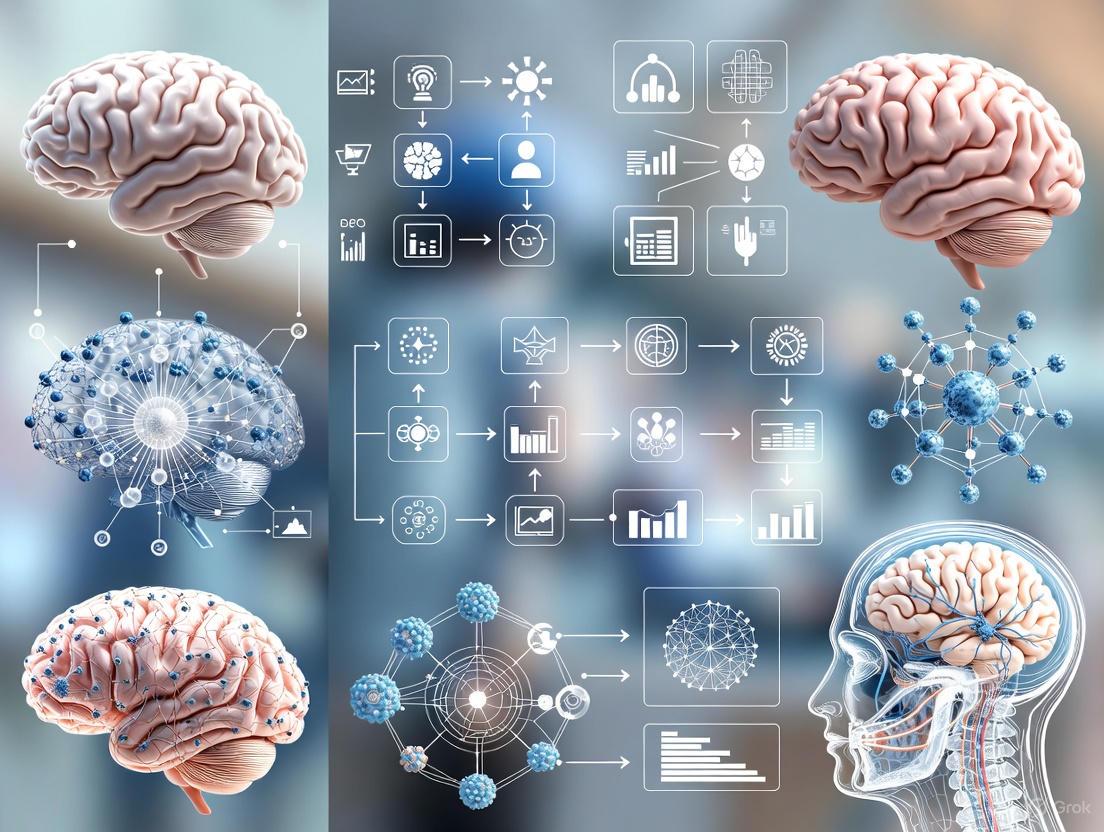
This article provides a comprehensive overview of digital brain models and digital twins, exploring their foundational concepts, methodological development, and transformative applications in neuroscience and drug discovery.
Digital Twins in Neuroscience: From Foundational Models to Clinical Breakthroughs
Abstract
This article provides a comprehensive overview of digital brain models and digital twins, exploring their foundational concepts, methodological development, and transformative applications in neuroscience and drug discovery. Tailored for researchers and drug development professionals, it delves into the creation of AI-driven brain simulations, such as those predicting neuronal activity, and advanced 3D in vitro models like miBrains that incorporate all major brain cell types. The content further addresses critical challenges including model overfitting, data harmonization, and implementation pitfalls, while offering comparative analyses of different modeling approaches. By synthesizing insights from foundational research, practical applications, and validation studies, this article serves as a guide for leveraging digital twins to advance personalized medicine, accelerate therapeutic development, and deepen our understanding of brain function and disease.
What Are Digital Brain Twins? Defining the Next Frontier in Neuroscience
The digital twin (DT) represents a transformative paradigm in computational modeling, characterized by the creation of a dynamic virtual representation of a physical entity that is continuously updated with real-time data to enable analysis, prediction, and optimization [1]. Originally conceptualized in manufacturing and aerospace engineering, this approach has rapidly expanded into biological and medical research, offering unprecedented opportunities for scientific discovery and clinical application. In engineering contexts, digital twins have demonstrated significant value in enabling real-time monitoring, predictive maintenance, and virtual testing of complex systems [2] [3]. The migration of this conceptual framework from engineering to biology represents a fundamental shift in how researchers approach complex biological systems, particularly in neuroscience, where digital twins of brain structures and functions are emerging as powerful tools for both basic research and therapeutic development [4].
The core distinction between digital twins and traditional computational models lies in their dynamic bidirectional relationship with their physical counterparts. While simulations are typically static representations run under specific conditions, digital twins evolve throughout the lifecycle of their physical twins, continuously integrating new data to refine their predictive accuracy [1] [2]. This continuous learning capability, enabled by advances in artificial intelligence (AI), Internet of Things (IoT) technologies, and high-performance computing, allows digital twins to function not merely as representations but as active investigative partners in scientific research [2]. In biological contexts, this paradigm enables researchers to create increasingly accurate virtual representations of complex biological systems, from individual cellular processes to entire organ systems, with profound implications for understanding disease mechanisms and developing targeted interventions.
Core Conceptual Framework
Definition and Key Components
A digital twin is formally defined as a computational model that represents the structure, behavior, and context of a unique physical asset, allowing for thorough study, analysis, and behavior prediction [1]. The conceptual framework introduced by Michael Grieves identifies three fundamental elements: the real space (physical object), the virtual space (digital representation), and the digital thread (bidirectional data flow between real and virtual spaces) [1]. This triad creates a closed-loop system where data from the physical entity informs and updates the digital representation, while insights from the digital representation can guide interventions or modifications in the physical entity.
Digital twins are distinguished from simpler simulations by several defining characteristics. They provide continuous synchronization with their physical counterparts, employ real-time data integration from multiple sources, enable predictive forecasting through computational analytics, and support bidirectional information flow that allows the virtual model to influence the physical system [1] [2]. This dynamic relationship creates a living model that evolves throughout the asset's lifecycle, continuously refining its accuracy and predictive capabilities based on incoming data streams from sensors, experimental measurements, and other monitoring systems.
Hierarchical Applications and Classifications
Digital twin technology can be applied across multiple hierarchical levels, from microscopic components to complex systems of systems. Research by IoT Analytics has identified six distinct hierarchical levels at which digital twins operate [3]:
Table: Hierarchical Levels of Digital Twin Applications
| Level | Scope | Example Application |
|---|---|---|
| Informational | Digital representations of information | Digital operations manual |
| Component | Individual components or parts | Virtual representation of a bearing in a robotic arm |
| Product | Interoperability of components working together | Virtual representation of a complete robotic arm |
| Process | Entire fleets of disparate products working together | Virtual representation of a manufacturing production line |
| System | Multiple processes and workflows | Virtual representation of an entire manufacturing facility |
| Multi-system | Multiple systems working as a unified entity | Virtual representation of integrated manufacturing, supply chain, and traffic systems |
In biological contexts, these hierarchical levels correspond to different scales of biological organization, from molecular and cellular components (component-level) to entire organs (product-level), physiological processes (process-level), and ultimately to whole-organism or even population-level systems [1] [4]. This flexible scaling allows researchers to apply the digital twin framework to biological questions at the appropriate level of complexity, from protein folding dynamics to ecosystem modeling.
Implementation in Biological Systems
Technical Requirements and Infrastructure
The implementation of digital twins in biological research requires a sophisticated technological infrastructure capable of handling the unique challenges of biological data acquisition, processing, and modeling. Unlike engineering systems where sensors can be precisely placed and calibrated, biological systems often require novel approaches to data collection that accommodate the complexity and variability of living organisms [5].
Key technical components for biological digital twins include:
Advanced Sensing Technologies: For biological applications, this includes the Internet of Bio-Nano Things (IoBNT), which utilizes nanoscale sensors for precise microscopic data acquisition and transmission with minimal error rates [5]. These technologies enable real-time monitoring of biological processes at previously inaccessible scales.
Data Integration Frameworks: Biological digital twins require harmonization of multi-modal data sources, including genomic, proteomic, imaging, electrophysiological, and clinical data [4]. This integration demands sophisticated data fusion algorithms and standardized formats for biological information.
Computational Architecture: The implementation relies on distributed computing resources, including cloud and edge computing platforms, that provide the intensive computational power necessary for complex biological simulations [1] [2]. This architecture must support both real-time data processing and resource-intensive predictive modeling.
AI and Machine Learning: Advanced algorithms, including convolutional neural networks (CNNs) and federated learning approaches, enable pattern recognition, model optimization, and knowledge extraction from complex biological datasets while addressing privacy and data security concerns [5].
Development Methodology
The construction of a biological digital twin follows a structured development process consisting of five critical stages [1]:
Planning Stage: Defining the biological application, identifying required data types, determining expected outputs, and creating a conceptual map integrating multi-source data.
Development Stage: Constructing and parameterizing algorithms according to input data, with ongoing validation and uncertainty quantification.
Personalization Stage: Calibrating and contextualizing the model based on the specific biological entity and its environment, establishing continuous feedback loops for performance adjustment.
Testing and Validation: Extensive evaluation under various conditions with ongoing uncertainty quantification against experimental data.
Continuous Learning: Ongoing integration of new data to improve performance and adaptability, distinguishing digital twins from static computational models.
This methodology ensures that biological digital twins remain faithful to their physical counterparts while continuously refining their predictive capabilities through iterative learning from new experimental and clinical data.
Digital Twins in Neuroscience Research
Current Applications and Methodologies
Digital twin technology is advancing neuroscience research by providing dynamic virtual models of brain structure and function. These neural digital twins enable researchers to simulate brain processes, model pathological conditions, and predict treatment outcomes in silico before applying interventions in clinical settings [4]. One prominent example is The Virtual Brain (TVB), a neuroinformatics platform that constructs personalized, mathematical brain models based on biological principles to simulate human-specific cognitive functions at cellular and cortical levels [4].
The creation of neural digital twins typically begins with multi-modal neuroimaging data, particularly magnetic resonance imaging (MRI) techniques [4]:
- Structural MRI: Provides detailed information about brain anatomy and morphology at the voxel level (3D volumetric pixels).
- Functional MRI (fMRI): Measures blood flow related to neural activity, enabling simulation of brain functions and detection of patterns associated with cognitive tasks or disorders.
- Diffusion MRI (dMRI): Traces water molecule movements in brain tissue to map structural connectivity between different brain regions.
These imaging data are integrated with other data sources, including neuropsychological assessments, genomic information, and clinical outcomes, to create comprehensive models that capture the complex relationships between brain structure, function, and behavior [4]. This multi-modal approach allows researchers to simulate how brain regions interact and respond to various stimuli, diseases, or potential interventions in a controlled virtual environment.
Exemplary Implementation: The Mouse Visual Cortex Model
A groundbreaking implementation of digital twin technology in neuroscience comes from Stanford Medicine, where researchers created a digital twin of the mouse visual cortex that predicts neuronal responses to visual stimuli [6]. This model represents a significant advancement as it functions as a foundation model capable of generalizing beyond its training data to predict responses to novel visual inputs.
The experimental protocol for this implementation involved:
- Data Acquisition: Recording brain activity from real mice as they watched action movie clips (e.g., Mad Max) during multiple short viewing sessions, totaling over 900 minutes of neural data from eight mice [6].
- Model Training: Using aggregated neural data to train a core AI model that could then be customized into individual digital twins for specific mice with additional training.
- Validation: Testing the digital twins' ability to predict neural responses to new visual stimuli, including both videos and static images.
- Structural Prediction: Verifying the model's ability to infer anatomical features (cell types and connections) without explicit training on structural data, validated against electron microscope images from the MICrONS project [6].
This implementation demonstrated that digital twins could not only accurately simulate neural activity but also generalize to predict anatomical properties, revealing new insights into brain organization. For instance, the model discovered that neurons preferentially connect with others that respond to the same stimulus feature rather than those that respond to the same spatial location [6]. This finding illustrates how digital twins can generate novel biological insights that might remain elusive through traditional experimental approaches alone.
Technical Implementation Guide
Experimental Workflow for Neural Digital Twins
The creation of a neural digital twin follows a structured workflow that integrates data acquisition, model construction, validation, and application. The following Graphviz diagram illustrates this comprehensive process:
This workflow highlights the iterative nature of digital twin development, where insights from application stages inform refinements to both data integration and model construction processes, creating a continuous improvement cycle.
Research Reagent Solutions
The development and implementation of biological digital twins rely on a suite of specialized research reagents and computational tools that enable data acquisition, model construction, and validation.
Table: Essential Research Reagents and Tools for Biological Digital Twins
| Category | Specific Tools/Reagents | Function in Digital Twin Development |
|---|---|---|
| Data Acquisition | MRI Contrast Agents, IoBNT Nanosensors, EEG/MEG Systems | Enable real-time monitoring and data collection from biological systems at multiple scales [5] [4] |
| Computational Frameworks | The Virtual Brain (TVB), Custom CNN Architectures, Federated Learning Platforms | Provide infrastructure for model construction, simulation, and decentralized learning [5] [4] |
| Data Processing | Image Analysis Software (FSL, Freesurfer), Signal Processing Tools, Data Harmonization Algorithms | Transform raw data into structured inputs for digital twin models [4] |
| Validation Tools | Histological Stains, Electron Microscopy, Behavioral Assays | Provide ground truth data for model validation and refinement [6] |
| Simulation Platforms | High-Performance Computing Clusters, Cloud Computing Services, Neuromorphic Hardware | Enable execution of computationally intensive simulations [1] [2] |
These research reagents and tools form the essential toolkit for creating, validating, and applying digital twins in biological and neuroscience contexts. The selection of specific tools depends on the biological scale, research questions, and available data types for each application.
Quantitative Performance Metrics
The advancement and implementation of digital twin technologies in biological research can be evaluated through specific quantitative metrics that demonstrate their capabilities and limitations.
Table: Performance Metrics of Digital Twin implementations
| Application Domain | Key Performance Metrics | Reported Values | Reference |
|---|---|---|---|
| Mouse Visual Cortex Model | Prediction accuracy for neuronal responses, Generalization capability to novel stimuli, Anatomical prediction accuracy | Highly accurate prediction of responses to new videos and images, Successful inference of anatomical locations and cell types | [6] |
| Bacterial Classification Framework | Multi-class classification accuracy, Bandwidth savings, Data transfer error reduction | 98.7% accuracy across 33 bacteria categories, >99% bandwidth savings, 98% reduction in data transfer errors | [5] |
| IoBNT Integration | Data acquisition precision, Error reduction in biological data transfer | Up to 98% reduction in data transfer errors under worst-case conditions | [5] |
| CNN-FL Framework | Pattern recognition accuracy, Data security enhancement | 98.5% accuracy for insight extraction from images, Enhanced security through federated learning | [5] |
These quantitative metrics demonstrate the substantial advances enabled by digital twin approaches in biological research, particularly in terms of predictive accuracy, computational efficiency, and experimental scalability. The high performance across diverse biological applications underscores the versatility and power of the digital twin paradigm when appropriately implemented with domain-specific adaptations.
Future Perspectives and Challenges
The implementation of digital twins in biology and neuroscience faces several significant challenges that represent active areas of research and development. A primary limitation is the complexity of biological systems, which exhibit nonlinear behaviors and multi-scale interactions that are difficult to fully capture in computational models [2] [4]. This complexity is particularly evident in neuroscience, where the brain's plastic capabilities—both adaptive and maladaptive—present modeling challenges that require ongoing refinement of digital twin architectures [4].
Additional challenges include:
- Data standardization and interoperability: The lack of universal standards for digital twin development complicates collaboration and validation across research groups [2].
- Computational resource requirements: The scale of data processing and model simulation demands significant computational infrastructure [1] [2].
- Ethical and privacy considerations: Particularly for human digital twins, data security and privacy protection require sophisticated solutions such as federated learning approaches [5].
- Model validation and verification: Establishing rigorous validation frameworks for biological digital twins remains challenging due to the complexity of ground truth verification [2].
Despite these challenges, the future trajectory of digital twin technology in biology appears promising. Advances in AI, particularly in foundation models capable of generalizing beyond their training data, are enabling more robust and adaptable biological digital twins [6]. The integration of emerging technologies such as the Internet of Bio-Nano Things (IoBNT) is opening new possibilities for data acquisition at previously inaccessible scales [5]. Furthermore, the development of more sophisticated computational architectures that support real-time data integration and model refinement is continuously expanding the potential applications of digital twins in biological research and therapeutic development.
As these technologies mature, digital twins are poised to become increasingly central to biological discovery and translational medicine, potentially enabling truly personalized therapeutic approaches based on comprehensive virtual representations of individual patients' biological systems. The continued migration of engineering concepts into biological contexts through the digital twin paradigm represents a powerful frontier in computational biology with far-reaching implications for understanding and manipulating complex living systems.
Virtual brain simulations represent a paradigm shift in neuroscience, enabling researchers to move from observational biology to predictive, computational models of brain function. This whitepaper examines the current state of biophysically realistic brain simulations and digital twin technologies, from detailed mouse cortex models to emerging human brain networks. We present quantitative comparisons of simulation capabilities, detailed experimental methodologies for creating and validating digital brain models, and visualization of the core workflows driving this field. The integration of massive biological datasets with supercomputing and artificial intelligence is creating unprecedented opportunities for understanding neural circuits, modeling neurological diseases, and accelerating therapeutic development, ultimately paving the way for a comprehensive understanding of human brain function in health and disease.
Digital brain models span a spectrum of complexity and application, from personalized brain simulations enhanced with individual-specific data to digital twins that continuously evolve with real-world data from a person over time, and ultimately to full brain replicas that aim to capture every aspect of neural structure and function [7]. The fundamental premise uniting these approaches is that understanding the brain requires not only observation but the ability to reconstruct its operational principles in silico.
The field has progressed dramatically through international collaborations and initiatives such as the BRAIN Initiative [8], the Human Brain Project, and EBRAINS [9]. These efforts have established core principles for neuroscience research: pursuing human studies and non-human models in parallel, crossing boundaries in interdisciplinary collaborations, integrating spatial and temporal scales, and establishing platforms for sharing data [8]. The convergence of increased computing power, improved neural mapping technologies, and advanced AI algorithms has now brought the goal of comprehensive brain simulation within reach.
Technical Specifications of Current Virtual Brain Simulations
Current virtual brain simulations vary significantly in scale, biological accuracy, and computational requirements. The table below summarizes quantitative specifications for two landmark achievements in the field: a whole mouse cortex simulation and a cubic millimeter reconstruction of mouse visual cortex.
Table 1: Technical Specifications of Major Virtual Brain Simulations
| Parameter | Whole Mouse Cortex Simulation [10] [11] | MICrONS Cubic Millimeter Reconstruction [12] |
|---|---|---|
| Simulation Scale | 86 interconnected brain regions | Cubic millimeter of mouse visual cortex |
| Neuronal Count | ~10 million neurons | ~200,000 cells digitally reconstructed |
| Synaptic Connections | 26 billion synapses | 523 million synaptic connections pinpointed |
| Axonal Reconstruction | Not specified | ~4 kilometers of axons mapped |
| Data Volume | Not specified | 1.6 petabytes from 95 million electron microscope images |
| Computational Platform | Fugaku supercomputer (158,976 nodes) | Distributed processing across multiple institutions |
| Processing Capability | >400 petaflops (quadrillions of operations/second) | Machine learning-based reconstruction pipelines |
These simulations represent complementary approaches: the whole cortex model emphasizes functional simulation of brain activity across multiple regions, while the MICrONS project focuses on structural connectivity at unprecedented resolution, creating a "wiring diagram" of neural circuits [12].
Core Methodologies and Experimental Protocols
Whole Brain Simulation Workflow
The creation of biophysically realistic whole brain simulations follows a structured pipeline that integrates multimodal data sources with computational modeling. The Fugaku mouse cortex simulation exemplifies this approach [10] [11].
Diagram 1: Whole Brain Simulation Workflow
Biological Data Acquisition
The simulation foundation begins with comprehensive biological data collection. For the Fugaku mouse cortex simulation, researchers at the Allen Institute supplied the virtual brain's blueprint using real data from the Allen Cell Types Database and the Allen Connectivity Atlas [10]. These resources provide detailed information on neuronal morphologies, electrophysiological properties, and connectional architecture across mouse brain regions.
Data Integration and Model Blueprinting
Using the Brain Modeling ToolKit from the Allen Institute, the team translated biological data into a working digital simulation of the cortex [10] [11]. This stage involves:
- Mapping neuronal distributions across 86 cortical regions
- Establishing connection probabilities based on anatomical data
- Configuring synaptic properties and dynamics
- Implementing neuron models with appropriate biophysical properties
Supercomputer Simulation
The Fugaku supercomputer, with its 158,976 nodes capable of over 400 quadrillion operations per second, executed the simulation using a neuron simulator called Neulite that turned mathematical equations into functioning virtual neurons [10]. The simulation captures the actual structure and behavior of brain cells, including dendritic branches, synaptic activations, and electrical signal propagation across membranes.
Model Validation and Refinement
Simulation outputs are compared against empirical measurements of neural activity to ensure biological fidelity. As Dr. Tadashi Yamazaki noted, "God is in the details, so in the biophysically detailed models, I believe" [10], emphasizing the importance of rigorous validation.
Experimental Application
Validated models enable researchers to study disease progression, test therapeutic interventions, and investigate fundamental questions about brain function in a controlled digital environment [10] [11].
Digital Twin Creation Protocol
The MICrONS Project developed a distinct protocol for creating functional digital twins of brain circuits, focusing on correlating structure with function in the mouse visual cortex [6] [12].
Diagram 2: Digital Twin Creation Protocol
Functional Imaging During Visual Stimulation
Researchers at Baylor College of Medicine recorded brain activity from mice as they watched hours of action movie clips (e.g., "Mad Max") [6] [12]. These movies were selected for their dynamic movement, which strongly activates the mouse visual system. Cameras monitored eye movements and behavior during viewing sessions, accumulating over 900 minutes of brain activity recordings from eight mice.
Tissue Processing and Electron Microscopy
The same portion of the visual cortex that was functionally imaged was then processed for ultra-structural analysis. Scientists at the Allen Institute used electron microscopy to capture 95 million high-resolution images of the brain tissue [12], preserving the detailed anatomical context of the functionally characterized neurons.
AI-Assisted 3D Reconstruction
At Princeton University, researchers employed artificial intelligence to digitally reconstruct cells and their connections into a 3D wiring model [12]. Machine learning algorithms were essential for stitching together the electron microscopy slices and tracing neuronal processes through the complex neuropil.
Foundation Model Training
The structural and functional datasets were combined to train foundation models—AI systems that learn the fundamental algorithms of neural processing [6] [13]. These models, analogous to the architecture behind ChatGPT but trained on brain data, can predict neural responses to novel stimuli outside their training distribution.
Digital Twin Validation and Prediction
The resulting digital twins were validated by comparing their predictions against empirical measurements and were used to discover new principles of neural computation, such as how neurons select connection partners based on feature similarity rather than spatial proximity [6].
Table 2: Essential Research Reagents and Resources for Virtual Brain Simulation
| Resource Category | Specific Tools/Platforms | Function and Application |
|---|---|---|
| Data Resources | Allen Cell Types Database [10], Allen Connectivity Atlas [10], MICrONS Dataset [12] | Provide foundational biological data for model construction and validation |
| Simulation Software | Brain Modeling ToolKit [10], Neulite [10], The Virtual Brain [9] | Platforms for constructing and running simulations at various scales |
| Computational Infrastructure | Supercomputer Fugaku [10] [11], EBRAINS [9] | High-performance computing resources for large-scale simulation execution |
| AI/ML Frameworks | Custom Foundation Models [6] [13], Recurrent Neural Networks [14] | Machine learning approaches for data analysis, model training, and prediction |
| Experimental Protocols | MICrONS Experimental Pipeline [12], Digital Twin Creation [6] | Standardized methodologies for generating and validating digital brain models |
Applications in Research and Drug Development
Virtual brain simulations are transitioning from basic research tools to platforms with direct pharmaceutical and clinical applications. These models enable researchers to simulate disease processes and test interventions with unprecedented control and scalability.
Neurological Disorder Modeling
The whole mouse cortex simulation allows researchers to recreate conditions such as Alzheimer's or epilepsy in a virtual environment, tracking how damage propagates through neural circuits and observing the earliest stages of disease progression before symptoms manifest [10] [11]. This capability is particularly valuable for understanding network-level pathologies that emerge from distributed circuit dysfunction rather than isolated cellular abnormalities.
Therapeutic Development and Testing
Digital twins serve as platforms for in silico therapeutic screening, allowing researchers to test millions of potential interventions rapidly and at minimal cost [13]. As Dan Yamins from Stanford University explains, "if you wanted to model the effect of a psychiatric drug, you could ask what does that mean in terms of the way that the brain processes information and make predictions about ex post facto if we had used this drug instead of that drug" [13]. This approach could significantly accelerate the identification of promising therapeutic candidates while reducing animal testing.
Personalized Medicine Approaches
The emerging capability to create patient-specific digital twins promises to revolutionize personalized neurology and psychiatry. Projects like the "Virtual Epileptic Patient" use neuroimaging data to create individualized simulations of epileptic brains [7]. These models can help clinicians identify optimal surgical targets, predict disease progression, and customize therapeutic strategies based on a patient's unique brain architecture and dynamics.
Future Directions and Challenges
The field of virtual brain simulation is advancing toward increasingly comprehensive and biologically accurate models, with several key developments on the horizon.
Scaling to Human Brain Simulations
The most ambitious frontier is the creation of whole human brain simulations. According to researchers at the Allen Institute, "Our long-term goal is to build whole-brain models, eventually even human models, using all the biological details our Institute is uncovering" [10]. However, this goal presents monumental computational challenges—the human brain contains approximately 86 billion neurons and hundreds of trillions of synapses, requiring exascale computing resources and sophisticated model reduction techniques.
Closing the Loop Between Simulation and Experimentation
Future frameworks will strengthen the iterative cycle between simulation and experimentation. As Andreas Tolias notes, "If you build a model of the brain and it's very accurate, that means you can do a lot more experiments. The ones that are the most promising you can then test in the real brain" [6]. This approach maximizes the efficiency of experimental resources while ensuring that models remain grounded in biological reality.
Ethical Considerations in Digital Neuroscience
The development of increasingly sophisticated brain models raises important neuroethical questions regarding neural enhancement, data privacy, and the appropriate use of brain data in law, education, and business [7]. As these technologies advance, establishing guidelines and regulatory frameworks will be essential for ensuring their responsible development and application.
Virtual brain simulations have evolved from conceptual possibilities to powerful research tools that are transforming how we study neural circuits, model disease processes, and develop therapeutic interventions. The integration of massive biological datasets with supercomputing infrastructure and artificial intelligence has enabled the creation of both detailed structural maps and functionally predictive digital twins of brain circuits. As these technologies continue to advance toward comprehensive human brain simulations, they promise to unlock new frontiers in understanding cognition, consciousness, and the biological basis of mental illness, ultimately leading to more effective and personalized treatments for neurological and psychiatric disorders.
The study of the human brain and its disorders has long been hampered by the limitations of existing models. Simple cell cultures lack the complexity of tissue-level interactions, while animal models differ significantly from human biology and raise ethical concerns. The field urgently requires research platforms that embody the architectural and functional complexity of the human brain in an accessible, controllable system. Framed within the broader context of digital brain models and digital twins—computational replicas that simulate brain function—a new class of in-vitro models has emerged to address this need [6] [9]. The Multicellular Integrated Brain (miBrain) represents a transformative advance as the first 3D human brain tissue platform to integrate all six major brain cell types into a single, customizable culture system [15] [16].
Developed by MIT researchers, miBrains are cultured from individual donors' induced pluripotent stem cells (iPSCs), replicating key brain features while enabling large-scale production for research and drug discovery [15]. Unlike earlier organoids or monoculture models, miBrains combine the accessibility of lab cultures with the biological relevance of more complex systems, offering unprecedented opportunities to model disease mechanisms and therapeutic interventions in human tissue [16]. This technical guide examines the architecture, validation, and application of miBrains as sophisticated in-vitro counterparts to digital brain twins.
Technical Architecture and Specifications of miBrains
The miBrain platform achieves its advanced functionality through precise engineering of both its cellular components and the extracellular environment that supports them.
Comprehensive Cellular Composition
A defining feature of miBrains is the incorporation of all six major cell types found in the native human brain, enabling the formation of functional neurovascular units [15] [16]. These units represent the minimal functional tissue module that recapitulates brain physiology. The integrated cell types include:
- Neurons: Responsible for electrical signal conduction and information processing.
- Astrocytes: Provide metabolic support to neurons and regulate neurotransmitter levels.
- Microglia: Serve as the primary immune effector cells in the central nervous system.
- Oligodendrocytes: Produce myelin to insulate neuronal axons.
- Endothelial cells: Form the lining of blood vessels.
- Pericytes: Regulate blood-brain barrier function and capillary flow [15] [16].
Table 1: Major Cell Types in the miBrain Platform
| Cell Type | Primary Function | Role in miBrain Model |
|---|---|---|
| Neurons | Nerve signal conduction | Information processing & network activity |
| Astrocytes | Metabolic support, neurotransmitter regulation | Neuro-glial interactions |
| Microglia | Immune defense | Neuro-inflammatory responses |
| Oligodendrocytes | Myelin production | Axonal insulation & support |
| Endothelial cells | Blood vessel formation | Vascular structure & blood-brain barrier |
| Pericytes | Blood vessel stability | Blood-brain barrier function & regulation |
A critical achievement in miBrain development was determining the optimal balance of these cell types to form functional neurovascular units. Researchers experimentally iterated cell ratios based on debated physiological estimates, which range from 45-75% for oligodendroglia and 19-40% for astrocytes [15]. The resulting composition enables self-assembly into functioning units capable of nerve signal conduction, immune defense, and blood-brain barrier formation [15].
Neuromatrix Hydrogel Scaffold
The extracellular matrix (ECM) provides essential physical and biochemical support for cells in natural tissue. To mimic this environment, the research team developed a specialized hydrogel-based "neuromatrix" composed of a custom blend of:
- Polysaccharides: Providing structural integrity and mechanical support.
- Proteoglycans: Offering binding sites for cell adhesion and signaling.
- Basement membrane peptide mimics (RGD): Facilitating cell-matrix interactions [15] [16].
This synthetic ECM creates a three-dimensional scaffold that promotes the development of functional neurons while supporting the viability and integration of all six major brain cell types [15]. The neuromatrix represents a crucial advancement over previous substrates that failed to sustain such complex cocultures.
Modular Design and Scalability
The miBrain platform employs a highly modular design wherein each cell type is cultured separately before integration [15] [16]. This approach offers distinct advantages:
- Genetic Editing: Individual cell types can be genetically modified before assembly, enabling creation of models with specific disease-associated mutations.
- Precise Control: Researchers can control cellular inputs, genetic backgrounds, and sensors with high precision.
- Experimental Flexibility: The system allows isolation of specific cellular contributions to observed phenotypes.
- Production Scalability: The platform can be produced in quantities supporting large-scale research initiatives [15].
This modularity enables the creation of personalized miBrains from individual patients' iPSCs, paving the way for personalized medicine approaches in neurology [15].
Diagram 1: miBrain fabrication workflow showing modular design.
Validation and Experimental Applications
The utility of the miBrain platform has been demonstrated through rigorous validation experiments and its application to study Alzheimer's disease mechanisms.
Functional Validation of Key Features
Researchers confirmed that miBrains replicate essential characteristics of human brain tissue through multiple functional assessments:
- Blood-Brain Barrier (BBB) Formation: miBrains develop a competent blood-brain barrier capable of gatekeeping which substances enter the brain tissue, including most traditional drugs [15].
- Electrical Activity: The models exhibit nerve signal conduction capabilities, indicating functional neuronal networks [15].
- Immune Competence: Microglia within the miBrains display appropriate immune responsiveness [15].
- Cell-Type Verification: Each cultured cell type was verified to closely recreate naturally occurring brain cells before integration [15].
Alzheimer's Disease Modeling with APOE4 Variant
In a landmark demonstration, researchers utilized miBrains to investigate how the APOE4 gene variant, the strongest genetic risk factor for sporadic Alzheimer's disease, alters cellular interactions to produce pathology [15] [16]. The experimental approach leveraged the modularity of the miBrain system:
Table 2: Experimental Conditions for APOE4 Investigation
| Experimental Group | Astrocyte Genotype | Other Cell Genotypes | Key Findings |
|---|---|---|---|
| Control 1 | APOE3 (neutral) | APOE3 | No amyloid or tau pathology |
| Control 2 | APOE4 | APOE3 | Amyloid & tau accumulation |
| Experimental | APOE4 | APOE4 | Significant amyloid & tau pathology |
| Microglia-Depleted | APOE4 | APOE4 (without microglia) | Greatly reduced phosphorylated tau |
The experimental protocol followed these key steps:
- Model Generation: Created miBrains with APOE4 astrocytes while all other cell types carried the neutral APOE3 variant, isolating the specific contribution of APOE4 astrocytes [15] [16].
- Pathology Assessment: Measured accumulation of Alzheimer's-associated proteins (amyloid and phosphorylated tau) across different experimental conditions [15].
- Microglial Role Investigation: Cultured APOE4 miBrains without microglia to assess their contribution to pathology [15].
- Cross-talk Analysis: Treated miBrains with conditioned media from different cell cultures to identify necessary interactions [15].
This investigation yielded crucial insights into Alzheimer's mechanisms. Researchers discovered that APOE4 astrocytes exhibited immune reactivity associated with Alzheimer's only when in the multicellular miBrain environment, not when cultured alone [15]. Furthermore, the study provided new evidence that molecular cross-talk between microglia and astrocytes is required for phosphorylated tau pathology, as neither cell type alone could trigger the effect [15] [16].
Diagram 2: APOE4 astrocyte and microglia cross-talk drives tau pathology.
The Scientist's Toolkit: Essential Research Reagents
Successful implementation of miBrain technology requires specific reagents and materials to support the complex culture system. The following table details essential components:
Table 3: Essential Research Reagents for miBrain Experiments
| Reagent/Material | Function/Purpose | Technical Specifications |
|---|---|---|
| Induced Pluripotent Stem Cells (iPSCs) | Founding cell population | Patient-derived; can be genetically edited |
| Neuromatrix Hydrogel | 3D structural scaffold | Blend of polysaccharides, proteoglycans, RGD peptide |
| Differentiation Media | Direct cell fate specification | Cell-type specific formulations for each lineage |
| Cellular Staining Markers | Cell identification & tracking | Antibodies for each of the six cell types |
| Gene Editing Tools | Introduction of disease mutations | CRISPR/Cas9 systems for modular genetic modification |
| Electrophysiology Equipment | Functional validation | Multi-electrode arrays for neuronal activity recording |
Future Directions and Integration with Digital Twin Platforms
The miBrain platform represents a significant advancement in vitro modeling, but further refinements are planned to enhance its capabilities. The research team aims to incorporate microfluidics to simulate blood flow through the vascular components and implement single-cell RNA sequencing methods to improve neuronal profiling [15]. These improvements will enable even more sophisticated studies of brain function and disease.
miBrains occupy a complementary position alongside emerging digital brain twin technologies. While projects like the MICrONS initiative focus on creating comprehensive computational models of the mouse brain [6] [12], miBrains provide a living biological platform for validating and informing these digital simulations. Together, these approaches form a powerful ecosystem for understanding brain function and dysfunction.
The modular design and patient-specific origin of miBrains offer transformative potential for personalized medicine in neurology. As senior author Li-Huei Tsai notes, "I'm most excited by the possibility to create individualized miBrains for different individuals. This promises to pave the way for developing personalized medicine" [15] [16]. The platform enables researchers to move beyond generalized disease models to patient-specific representations that account for individual genetic backgrounds and disease manifestations.
The development of Multicellular Integrated Brains represents a paradigm shift in neurological disease modeling and drug discovery. By integrating all major brain cell types into a tunable, scalable platform, miBrains overcome critical limitations of previous model systems while providing unprecedented experimental flexibility. The platform's validated application to Alzheimer's disease research demonstrates its power to uncover novel disease mechanisms involving complex cell-cell interactions.
As the field advances, the convergence of sophisticated in-vitro models like miBrains with computational digital twins promises to accelerate our understanding of the human brain and create new pathways for therapeutic intervention in neurological disorders.
The emergence of digital twin technology represents a transformative pathway for neuroscience research and therapeutic development. A digital twin is a virtual representation of a physical object, system, or process, often updated with real-time data to mirror the life cycle of its physical counterpart [4]. In neuroscience, this approach enables the creation of in-silico brain models that simulate functions, pathology, and the complex relationships between brain network dynamics and cognitive processes [4]. These computational models allow researchers to perform a virtually unlimited number of experiments on simulated neural systems, dramatically accelerating research into how the brain processes information and the fundamental principles of intelligence [6].
The core value of digital twins lies in their ability to generalize beyond their training data, representing a class of foundation models capable of applying learned knowledge to new tasks and novel scenarios [6]. This capability is particularly crucial for modeling the brain's dynamic responses to injury, disease, and therapeutic interventions. By offering a platform for continuous rather than episodic assessment, personalized rather than generic modeling, and preventive rather than reactive strategies, digital twins promise to address longstanding challenges in understanding and treating neurological and psychiatric disorders [17].
Philosophical Foundations: Malabou's Concept of Plasticity
The philosophical framework for understanding neuroplasticity through digital twins finds powerful expression in the work of Catherine Malabou, whose conceptualization of brain plasticity provides a sophisticated theoretical foundation. Malabou emphasizes the brain's dual capacity for both adaptive and destructive plasticity [4]. This philosophical perspective challenges simplistic views of neuroplasticity as invariably beneficial, instead recognizing the brain's inherent potential for both constructive reorganization and pathological transformation.
Malabou's framework reveals plasticity as a fundamental but ambivalent characteristic of neural tissue—the brain possesses the capability to reshape its connections in response to experience, injury, or disease, but these changes can manifest as either adaptive compensation or destructive malfunction. This philosophical distinction is particularly relevant when modeling the impact of pathologies such as brain tumors, where the brain's nonlinear responses encompass both compensatory reorganization and tumor-induced destructive processes [4]. Digital twin technology offers a unique platform for operationalizing Malabou's philosophical concepts, enabling researchers to simulate and predict both the adaptive reconfiguration of neural circuits in response to injury and the potentially destructive plasticity that may undermine recovery.
Table: Key Aspects of Malabou's Plasticity Framework in Digital Twins
| Concept | Theoretical Meaning | Relevance to Digital Twins |
|---|---|---|
| Adaptive Plasticity | Brain's capacity for beneficial reorganization and functional compensation | Models recovery mechanisms and compensatory circuit formation |
| Destructive Plasticity | Brain's potential for pathological transformation and maladaptive change | Simulates disease progression and treatment-resistant pathways |
| Dual Capacity | Inherent ambivalence in neural reorganization processes | Predicts variable outcomes to identical interventions |
| Nonlinear Behavior | Unpredictable, emergent properties of neural systems | Informs model architecture for complex system modeling |
Technical Implementation: Building Digital Twins of the Brain
Data Acquisition and Integration
Constructing effective digital twins requires the integration of multimodal data to create personalized, mathematical, dynamic brain models. The primary data sources include magnetic resonance imaging (MRI) for structural information, functional MRI (fMRI) for dynamic images measuring blood flow related to neural activity, and diffusion MRI (dMRI) for tracing water molecule movements to map structural connectivity between brain regions [4]. These imaging methods are frequently supplemented with neuropsychological scores, quality of life assessments, genomic analyses, and non-invasive brain stimulation findings to create comprehensive virtual representations [4].
In pioneering work by Stanford Medicine researchers, digital twins of the mouse visual cortex were trained on large datasets of brain activity collected as animals watched movie clips. This approach recorded more than 900 minutes of brain activity from eight mice watching action-packed movies, with cameras monitoring their eye movements and behavior [6]. The aggregated data enabled training of a core model that could then be customized into a digital twin of any individual mouse with additional training, demonstrating the importance of large-scale data collection for model accuracy.
Computational Architectures and Modeling Approaches
Digital twins employ sophisticated computational architectures that vary based on the specific clinical or research question. For instance, The Virtual Brain (TVB) software integrates manifold data to construct personalized, mathematical, dynamic brain models based on established biological principles [4]. These models simulate human-specific cognitive functions at cellular and cortical levels, enabling researchers to simulate how brain regions interact and respond to various stimuli, diseases, or potential neurosurgical interventions.
Alternative approaches include recurrent neural networks (RNNs) configured as digital twins of brain circuits supporting cognitive functions like short-term memory. Research has demonstrated that these models can uncover distinct dynamical regimes—such as slow-point manifolds and limit cycles—that sustain memory capabilities [14]. Similarly, RNNs trained for path integration can serve as digital twins of the brain's navigation system, reproducing how grid cells distort their firing fields in response to environmental cues [14].
Table: Digital Twin Technical Specifications Across Applications
| Application | Computational Architecture | Data Requirements | Key Outputs |
|---|---|---|---|
| Mouse Visual Cortex [6] | Foundation AI Model | 900+ minutes of neural recordings during visual stimulation | Prediction of neuronal responses to new images/videos |
| Human Brain Networks [4] | The Virtual Brain (TVB) Platform | Multimodal MRI, neuropsychological assessments | Simulations of brain region interactions to stimuli/disease |
| Short-term Memory [14] | Recurrent Neural Networks (RNNs) | Neural activity during memory tasks | Identification of dynamical regimes supporting memory |
| Spatial Navigation [14] | Dynamic Latent-Variable Models | Neural recordings during navigation tasks | Grid cell representations and path integration mechanisms |
Experimental Protocols and Methodologies
The development of digital twins follows rigorous experimental protocols that bridge computational modeling and empirical validation. In the Stanford mouse visual cortex study, researchers implemented a comprehensive methodology beginning with data collection from real mice as they watched movie clips, specifically selecting action films with substantial movement to strongly activate the murine visual system [6]. The resulting brain activity data was used to train a core model which underwent customization to create individual digital twins through additional training specific to each subject.
Validation protocols involved testing the digital twins' ability to predict neural responses to novel visual stimuli, including both videos and static images never encountered during training [6]. The models were further validated by assessing their capability to infer anatomical features from functional data alone, with predictions subsequently verified against high-resolution electron microscope images from the MICrONS project [6]. This closed-loop approach—where model predictions generate testable hypotheses that are empirically validated—represents a gold standard methodology for digital twin development in neuroscience.
The Scientist's Toolkit: Essential Research Reagents and Technologies
Table: Key Research Reagent Solutions for Digital Twin Development
| Technology/Reagent | Function | Application Example |
|---|---|---|
| Light-Sheet Fluorescence Microscopy (LSFM) [18] | Enables whole organ imaging with single-cell resolution | Creating detailed structural maps of mouse brains for digital twin reference |
| Tissue Clearing Protocols [18] | Renders brain tissue transparent for optimal imaging | Preparing samples for LSFM while preserving endogenous fluorescence |
| Reference Brain Atlases (e.g., AIBS CCFv3) [18] | Provides standardized spatial coordinate framework | Aligning individual brain data to common template for cross-study comparison |
| Multimodal MRI/fMRI/dMRI [4] | Captures structural, functional, and connectivity data | Input for personalized brain models in platforms like The Virtual Brain |
| Recurrent Neural Networks (RNNs) [14] | Models temporal dynamics and memory functions | Digital twins of short-term memory and spatial navigation circuits |
Applications in Drug Development and Disease Modeling
Digital twin technology offers transformative potential for drug development, particularly for neurological and psychiatric disorders that have proven resistant to traditional therapeutic approaches. These virtual models enable in-silico testing of interventions, potentially reducing the high failure rates in late-stage clinical trials for conditions like Alzheimer's, Parkinson's, epilepsy, and depression [19]. By simulating how pathological processes affect neural circuits and predicting how interventions might alter disease trajectories, digital twins can optimize drug discovery and improve clinical trial design through precise simulation of biological systems [19].
In neuro-oncology, digital twins demonstrate particular promise for modeling the impact of brain tumors on both the physical structure and functional integrity of the brain [4]. These models can simulate tumor effects on surrounding tissue, the brain's response through both adaptive and destructive plasticity, and the potential efficacy of proposed treatments. For example, digital twins have revealed precise rules of brain organization, showing how neurons preferentially connect with others that respond to the same stimulus rather than those merely occupying the same spatial region—a discovery with significant implications for understanding how tumors disrupt neural networks [6].
Future Directions and Ethical Considerations
The future development of digital twins in neuroscience points toward increasingly integrated multiscale models that span from molecular and cellular levels to entire brain systems. Researchers plan to extend current modeling into other brain areas and species with more advanced cognitive capabilities, including primates [6]. This expansion will likely incorporate advances in neuromorphic computing—computing architectures inspired by the brain's structure and function—which shows promise for modeling neurological disorders by precisely simulating biological systems affected by conditions like Alzheimer's, Parkinson's, and epilepsy [19].
Significant ethical considerations must guide this development, particularly regarding privacy, data security, and equitable access. The inherently personal nature of brain data necessitates robust safeguards, including federated learning approaches that preserve privacy by keeping data localized while sharing model improvements, dynamic consenting mechanisms that give users ongoing control over their data, and explainable artificial intelligence models that maintain accountability and transparency [17]. Additionally, researchers and policymakers must consider society-level consequences and ensure programmatic inclusivity to guarantee equitable access to these powerful tools across diverse populations [17].
As digital twin technology advances, its integration with philosophical frameworks like Malabou's concept of plasticity provides not only technical capabilities but also conceptual richness for understanding the brain's dual capacity for adaptation and destruction. This integration promises to bridge the gap between theoretical research and clinical practice, potentially revolutionizing how we understand, model, and treat disorders of the brain.
Building and Applying Digital Twins: From Data to Disease Modeling
Digital twins are dynamic, virtual representations of physical entities that are continuously updated with real-time data, enabling simulation, monitoring, and prediction of their real-world counterparts [20]. In neuroscience, this concept has evolved beyond static modeling to create a bidirectional communication framework between a patient and their virtual representation, offering unprecedented predictive capabilities for both experimental and clinical decision-making [21] [22]. The application of digital twins to the brain represents a revolutionary approach for studying neural dynamics, neurodegenerative diseases, and neurodevelopmental disorders like autism spectrum disorder (ASD), while simultaneously accelerating drug discovery and personalized treatment strategies [22] [23].
This technical guide outlines a comprehensive, step-by-step workflow for constructing brain digital twins, framed within the broader context of digital brain models and neuroscience research. We synthesize current methodologies, data requirements, and deployment strategies to provide researchers, scientists, and drug development professionals with a practical framework for implementing this transformative technology. The workflow encompasses three core phases: multi-modal data collection, integrative model development, and deployment for simulation and analysis, with particular emphasis on quantitative data structuring and reproducible experimental protocols.
Phase 1: Multi-Modal Data Collection and Integration
The construction of a high-fidelity brain digital twin requires the aggregation of multi-scale, multi-modal data. The quality and comprehensiveness of this data foundation directly determine the predictive accuracy and utility of the final model. The following table summarizes the essential data types and their specific roles in model construction.
Table 1: Essential Data Types for Brain Digital Twin Construction
| Data Category | Specific Data Types | Role in Model Construction | Example Sources |
|---|---|---|---|
| Neuroimaging | Structural MRI, Diffusion Tensor Imaging (DTI), functional MRI (fMRI) | Reconstructs brain anatomy, neural pathways, and functional connectivity [22]. | Patient scans, public datasets (e.g., Allen Brain Atlas [24]). |
| Electrophysiology | EEG, MEG, single-unit recordings | Captures dynamic neural activity and population-level signaling [6] [22]. | Laboratory recordings, clinical monitoring. |
| Cellular & Molecular | Neuron morphology, cell type, synaptic connectivity, protein expression | Informs biophysical properties of neurons and microcircuitry [6] [24]. | Allen Cell Types Database [24], electron microscopy (e.g., MICrONS project [6]). |
| Genomic & Clinical | Genetic data, behavioral assessments, clinical history | Enables personalization for disease subtypes and predicts clinical trajectory [22]. | Electronic health records, clinical trials. |
Data Harmonization Protocol
A critical challenge in building digital twins from multi-site data is the presence of non-biological variations introduced by differences in scanner vendors, acquisition protocols, and software versions. The following protocol must be applied to ensure data consistency and model generalizability:
- Preprocessing: Utilize image processing methods to normalize raw image data to a predefined intensity range.
- Harmonization: Apply data-driven methods, such as generative AI models (GANs, VAEs, diffusion models), for image-level harmonization. These techniques have demonstrated superior performance in removing site-specific biases compared to traditional methods [21].
- Feature Alignment: For feature-based analyses, employ algorithms that harmonize pre-extracted image features across different cohorts and data sources.
Phase 2: Integrative Model Development and Personalization
With curated data, the next phase involves constructing the computational core of the digital twin. This process moves from creating a general foundational model to personalizing it for a specific individual or experimental subject.
Foundational Model Architecture
The most advanced brain digital twins are built as biophysically realistic simulations. A representative workflow is the FEDE (high FidElity Digital brain modEl) pipeline, which integrates anatomical structure with neural dynamics [22].
Diagram 1: The FEDE pipeline for creating personalized virtual brains.
The FEDE pipeline and similar architectures demonstrate that a core, generalized model can be established by training on large, aggregated datasets. For instance, one study created a foundation model of the mouse visual cortex by training on over 900 minutes of brain activity from multiple mice watching movie clips [6]. This foundational model learns the fundamental principles of neural response to stimuli.
Personalization via Parameter Optimization
The generic foundation model is then tailored into a personalized digital twin. This is achieved by fitting the model to individual-specific data through parameter optimization. The FEDE pipeline, for example, successfully replicated the neural activity of a toddler with ASD by tuning parameters to match the child's recorded brain activity, which allowed the model to predict patient-specific aberrant values of the excitation-to-inhibition ratio, coherent with known ASD pathophysiology [22].
This optimization process often involves state-space models, a class of AI that effectively handles sequential neural data. Recent innovations like the Linear Oscillatory State-Space Model (LinOSS), inspired by neural oscillations, provide stable and computationally efficient predictions over long data sequences, enhancing the dynamic personalization of the twin [25].
Phase 3: Deployment for Simulation and In-Silico Experimentation
A deployed digital twin serves as a platform for in-silico experiments, allowing researchers to perform a virtually unlimited number of interventions and tests that would be infeasible, too slow, or unethical in the physical world [6].
Experimental Workflow for Hypothesis Testing
The following diagram outlines a generalized workflow for using a deployed brain digital twin in a research or clinical context.
Diagram 2: Workflow for in-silico experimentation with a digital twin.
Key Applications and Protocols
- Simulating Disease and Treatment: Digital twins can simulate the progression of diseases like Alzheimer's or epilepsy, allowing researchers to observe in detail how damage spreads through neural networks [24]. In drug development, they can be used to simulate a drug's behavior in the body, predicting efficacy, safety, and optimal dosing before clinical trials [26] [23]. For instance, a mechanistic model was used to simulate the on-target, off-tumor effects of CAR-T cell therapy on glioma, leading to proposed new dosing strategies to mitigate adverse effects [23].
- Discovering Fundamental Principles: Digital twins can reveal new biological insights. One study used a digital twin of the mouse visual cortex to discover that neurons prefer to connect with others that respond to the same stimulus feature (e.g., color) over those that respond to the same location in visual space [6]. This finding provides a more precise rule of brain organization than was previously known.
The following table details key software tools, data resources, and computational platforms essential for building and deploying brain digital twins, as evidenced by recent research.
Table 2: Key Research Reagents and Computational Tools for Brain Digital Twins
| Tool/Resource Name | Type | Function in Workflow | Example Use Case |
|---|---|---|---|
| Allen Cell Types Database [6] [24] | Data Repository | Provides detailed biological data on neuron morphology and electrophysiology. | Informing biophysical properties of neurons in a model. |
| Brain Modeling ToolKit [24] | Software Library | Translates biological data into a working digital simulation. | Core component in building the whole mouse cortex simulation on Fugaku. |
| Supercomputer Fugaku [24] | Computational Platform | Provides massive parallel processing for large-scale, biophysically detailed simulations. | Simulating a mouse cortex with 9 million neurons and 26 billion synapses. |
| LinOSS Model [25] | AI Algorithm | Provides stable and efficient processing of long-sequence neural data for forecasting. | Enhancing the dynamic prediction capabilities of a personalized digital twin. |
| Graph Learning & Neural ODEs [21] | Analytical Framework | Models the brain as a dynamic graph for analyzing connectivity and temporal changes. | Disease diagnosis and biomarker discovery through network analysis. |
| Generative AI (GANs, VAEs) [27] | Modeling Technique | Creates novel, complex data with desired properties; used for data harmonization and model generation. | Powering the generative aspect of digital twins in drug discovery. |
The step-by-step workflow for data collection, modeling, and deployment of brain digital twins represents a paradigm shift in neuroscience research and neuropharmacology. By following a structured pathway from multi-modal data integration through personalized model optimization to in-silico experimentation, researchers can create powerful virtual replicas capable of predicting neural dynamics, disease progression, and therapeutic outcomes. While challenges in data standardization, model validation, and computational scaling remain, the continued convergence of AI, high-performance computing, and experimental neuroscience is rapidly advancing this field from a conceptual framework to a practical tool that promises to deepen our understanding of the brain and accelerate the development of precision treatments for neurological disorders.
The convergence of artificial intelligence (AI) and neuroscience has catalyzed a fundamental shift in how researchers study the brain, moving toward the creation of high-fidelity digital twins. These virtual brain models are AI-based systems trained on massive neural datasets to simulate the structure and function of biological brains with high accuracy. Unlike traditional computational models, foundation models in brain simulation leverage self-supervised learning on diverse, large-scale neural data, enabling them to generalize across tasks, stimuli, and even individual subjects [28] [29]. This approach represents a paradigm shift from hypothesis-driven research to a more comprehensive, data-driven understanding of brain function. The transformative potential of these models lies in their capacity to serve as in-silico testbeds for everything from basic neuroscience research to preclinical drug development, potentially reducing the need for extensive animal studies and accelerating the translation of findings to clinical applications [6] [9].
The concept of digital twins extends beyond mere simulation to encompass personalized brain models that can be continuously updated with new data. In practice, these models function as computational sandboxes where researchers can perform millions of virtual experiments in hours—experiments that would take years to conduct in wet labs [6]. This review examines the technical foundations, current implementations, and future trajectories of AI foundation models in brain simulation, with particular attention to their growing role in building predictive digital twins of neural systems.
Technical Foundations of Neural Foundation Models
Architectural Principles
AI foundation models for brain simulation share common architectural principles with large language models like GPT but are specifically adapted to handle neural data. The core innovation lies in their use of transformer architectures with self-attention mechanisms that can process sequences of neural activity across time and space [30] [31]. These models typically employ a pre-training and fine-tuning paradigm where they first learn general representations of neural coding principles from massive datasets, then adapt to specific tasks or individuals with additional data [29] [32].
A key architectural consideration is how to handle the multi-modal nature of neuroscience data, which may include electrophysiological recordings, calcium imaging, fMRI, and structural connectomics. Successful implementations often use modality-specific encoders that project different data types into a shared latent space, allowing the model to learn unified representations of neural structure and function [28] [32]. For instance, spatial transcriptomics data requires specialized processing to preserve spatial relationships between cells, while temporal neural signals need architectures capable of capturing long-range dependencies [30].
Critical Data Requirements
The performance of neural foundation models is directly correlated with the scale and quality of training data. Current state-of-the-art models require unprecedented data volumes—for example, the digital twin of the mouse visual cortex was trained on over 900 minutes of brain activity recordings from multiple animals watching movie clips [6]. The table below summarizes key data requirements for effective model training:
Table 1: Data Requirements for Neural Foundation Models
| Data Type | Scale Requirements | Key Features | Example Sources |
|---|---|---|---|
| Neural Activity | 100+ hours of recording; 10,000+ neurons | High temporal resolution; Naturalistic stimuli | MICrONS [6], Natural Scenes Dataset [31] |
| Connectomics | Whole-brain wiring diagrams; Synapse-level resolution | Structural connectivity; Cell-type specific | MICrONS project [6], Allen Institute CCF [30] |
| Spatial Transcriptomics | Cell-by-gene matrices; Spatial coordinates | Molecular profiling; Spatial organization | CellTransformer datasets [30] |
| Behavioral Data | Continuous tracking; Multimodal signals | Alignment with neural activity; Task variables | Action movie viewing [6], Natural behavior [32] |
Current Implementations and Methodologies
Digital Twins of the Mouse Visual Cortex
A landmark implementation in this field comes from Stanford Medicine, where researchers created a foundation model of neural activity that serves as a digital twin of the mouse visual cortex [6]. The experimental protocol for developing this model involved several meticulously executed stages:
Data Collection: Eight mice were shown clips from action-packed movies (e.g., "Mad Max") while researchers recorded neural activity using large-scale calcium imaging. This approach capitalized on mice's sensitivity to movement, ensuring strong activation of their visual systems during training.
Model Architecture: The team employed a transformer-based foundation model trained on the aggregated neural data from all animals. This architecture was specifically designed to predict neuronal responses to visual stimuli, with the capacity to generalize beyond the training distribution.
Personalization: The core model could be fine-tuned into individualized digital twins using additional data from specific mice. This process enabled the model to capture individual differences in neural circuitry while maintaining the general principles learned during pre-training.
Validation: The digital twins were validated against both functional and anatomical ground truths. Remarkably, the model trained only on neural activity could predict the anatomical locations, cell types, and connection patterns of thousands of neurons, which were verified using high-resolution electron microscope data from the MICrONS project [6].
This implementation demonstrated exceptional accuracy in predicting neural responses to novel visual stimuli and revealed new insights about neural connectivity rules. Specifically, the model discovered that neurons preferentially connect with others that respond to the same stimulus features rather than those that map to the same spatial location—a finding with significant implications for understanding the brain's computational principles [6].
Table 2: Performance Metrics of Current Neural Foundation Models
| Model/System | Species/Brain Area | Key Capabilities | Validation Approach |
|---|---|---|---|
| Visual Cortex Digital Twin [6] | Mouse primary visual cortex | Predicts responses to new videos; Infers connectivity | Electron microscopy reconstruction; Functional validation |
| CellTransformer [30] | Mouse whole brain | Identifies 1,300 brain regions from cellular data | Alignment with Allen CCF; Expert annotation comparison |
| LLM-Brain Alignment Model [31] | Human visual system | Reconstructs scene captions from brain activity | Text generation from fMRI; Representational similarity analysis |
Whole-Brain Mapping with CellTransformer
Another significant advancement comes from UCSF and the Allen Institute, where researchers developed CellTransformer, an AI model that has generated one of the most detailed maps of the mouse brain to date [30]. The methodology for this approach can be summarized in the following workflow:
Diagram 1: CellTransformer Brain Mapping Workflow
The key innovation of CellTransformer lies in its application of transformer architecture to analyze spatial relationships between cells, analogous to how language models analyze relationships between words in sentences [30]. By learning to predict a cell's molecular features based on its local neighborhood, the model could identify brain regions solely based on cellular composition patterns, without prior anatomical knowledge. This data-driven approach successfully replicated known brain regions while also discovering previously uncharted subregions in poorly understood areas like the midbrain reticular nucleus [30].
The Scientist's Toolkit: Essential Research Reagents
Implementing AI foundation models for brain simulation requires specialized computational tools and data resources. The table below catalogues essential "research reagents" in this emerging field:
Table 3: Essential Research Reagents for Neural Foundation Models
| Resource Type | Specific Examples | Function/Application | Availability |
|---|---|---|---|
| Reference Datasets | MICrONS [6], Natural Scenes Dataset [31], Allen Institute CCF [30] | Model training and validation; Benchmarking | Publicly available with restrictions |
| Model Architectures | Transformer variants [30] [31], Spatial transcriptomics encoders [30] | Core AI infrastructure for different data modalities | Some open-source implementations |
| Training Paradigms | Self-supervised pre-training [29], Cross-subject generalization [32] | Learning methods for foundation models | Published in research literature |
| Validation Frameworks | Electron microscopy reconstructions [6], Expert-curated atlases [30] | Ground-truth verification of model predictions | Varies by institution |
| Computational Infrastructure | EBRAINS [9], High-performance computing clusters [33] | Large-scale simulation and data processing | Research collaborations required |
Future Projections and Research Directions
Timeline for Whole-Brain Simulation
Based on systematic analysis of technological trends in supercomputing, connectomics, and neural activity measurement, researchers have projected feasible timeframes for mammalian whole-brain simulations at cellular resolution [33]. The projections are summarized in the table below:
Table 4: Projected Timeframes for Whole-Brain Simulations
| Species | Brain Complexity | Projected Feasibility | Key Prerequisites |
|---|---|---|---|
| Mouse | ~70 million neurons | Around 2034 [33] | Exascale computing; Complete connectomics |
| Marmoset | ~600 million neurons | Around 2044 [33] | Advanced neural recording; Multi-scale modeling |
| Human | ~86 billion neurons | Likely later than 2044 [33] | Revolutionary computing; Non-invasive recording breakthroughs |
These projections highlight that while mouse-scale simulations may be feasible within a decade, human whole-brain simulation remains a longer-term goal due to fundamental challenges in data acquisition and computational requirements [33] [34].
Clinical Translation and Digital Twins
The clinical translation of neural foundation models is progressing most rapidly in areas where personalized treatment optimization is needed. The EBRAINS research infrastructure is actively developing "The Virtual Brain" platform toward clinical applications, with particular focus on epilepsy, schizophrenia, and multiple sclerosis [9]. The fundamental architecture for clinical digital twin development follows this general pathway:
Diagram 2: Clinical Digital Twin Development Pathway
This approach aims to address fundamental questions in clinical translation: how to personalize digital twins for individual patients, which parameters are most critical for clinical accuracy, and how to democratize access to this technology [9].
AI foundation models represent a transformative approach to brain simulation, enabling the development of digital twins that can predict neural dynamics with increasing accuracy. The technical foundations for these models—centered on transformer architectures and large-scale multimodal training data—have advanced sufficiently to create useful simulations of specific brain systems in model organisms. Current implementations demonstrate remarkable capabilities, from predicting neural responses to novel stimuli to discovering new principles of brain organization.
For researchers and drug development professionals, these technologies offer promising pathways toward more efficient neuroscience research and personalized medicine applications. However, significant challenges remain in scaling these approaches to entire mammalian brains and translating them to clinical practice. The ongoing development of specialized computational tools, reference datasets, and validation frameworks will be essential for realizing the full potential of AI foundation models in brain simulation and digital twin technology.
The pursuit of advanced, human-relevant models for studying complex neurological disorders has led to the development of the Multicellular Integrated Brain (miBrain), a 3D human brain tissue platform engineered from patient-derived induced pluripotent stem cells (iPSCs) [15] [35]. This model emerges within the broader context of digital twin neuroscience, a field that aims to create virtual replicas of biological systems to simulate, predict, and understand disease [9] [6]. While computational digital twins use AI to simulate brain activity, miBrains represent a biological digital twin—a living, patient-specific construct that mirrors the cellular complexity of the human brain [6] [36]. Its capability to integrate all six major brain cell types—neurons, astrocytes, oligodendrocytes, microglia, and vascular cells—into a single, patient-specific model addresses a critical bottleneck in neuroscience research: the lack of physiologically accurate human models that can bridge the gap between oversimplified cell cultures and non-human animal models [15] [36].
Technical Architecture of the miBrain Platform
Core Design and Cellular Composition
The miBrain platform is a feat of bioengineering, designed to overcome the limitations of previous models by incorporating a level of biological complexity previously unattainable in vitro. Its architecture rests on two foundational innovations: a bespoke extracellular scaffold and a precisely balanced cellular recipe.
- The Neuromatrix Scaffold: A critical challenge in 3D tissue engineering is providing a physical structure that supports cell viability and complex tissue organization. The research team developed a hydrogel-based "neuromatrix" that mimics the brain's native extracellular matrix (ECM). This custom blend includes polysaccharides, proteoglycans, and basement membrane components, creating an optimal scaffold that promotes the development of functionally active neurons and the integration of all major brain cell types [15].
- Defined Cellular Ratios: A second, crucial innovation was identifying the specific proportion of each cell type needed to form functional neurovascular units. The researchers developed the six cell types from patient-donated iPSCs and, through experimental iteration, determined a balance that results in self-assembling, functioning units. This precise ratio is essential for recapitulating in vivo-like hallmarks, including neuronal activity, functional connectivity, and a functional blood-brain barrier [15] [35].
Table 1: Key Characteristics of the miBrain Platform
| Feature | Description | Significance |
|---|---|---|
| Cellular Composition | Integrates all six major brain cell types: neurons, astrocytes, oligodendrocytes, microglia, pericytes, and vascular endothelial cells [15] [35] | Enables study of complex cell-to-cell interactions crucial for brain function and disease. |
| Origin | Derived from individual donors' induced pluripotent stem cells (iPSCs) [15] | Facilitates creation of patient-specific models for personalized medicine. |
| Modularity | Cell types are cultured separately before integration [15] | Allows precise genetic editing of individual cell types to model specific genetic risks. |
| Key Structures | Forms functional neurovascular units and a blood-brain barrier (BBB) [15] [35] | Provides a platform for assessing drug permeability and neurovascular dysfunction. |
| Scalability | Can be produced in quantities supporting large-scale research [15] | Makes the platform suitable for high-throughput drug screening and discovery. |
Comparative Advantages Over Existing Models
The miBrain platform is designed to occupy a unique niche between existing biological and computational models, combining their respective advantages while mitigating their weaknesses.
Table 2: miBrains vs. Traditional Biological and Computational Models
| Model Type | Advantages | Limitations | miBrain Advantages |
|---|---|---|---|
| Simple 2D Cultures | - Easy and quick to produce- Suitable for high-throughput screening [15] | - Oversimplified biology- Lack critical multicellular interactions [15] [36] | - Embeds in vivo-like complexity in a scalable system- Retains accessibility for large-scale studies [15] |
| Animal Models | - Embody whole-organism complexity- Model systemic physiology [15] | - Expensive and slow- Often fail to predict human outcomes due to species differences [15] [36] | - Human-based biology- Faster results and more ethically accessible [15] |
| Computational Digital Twins | - Enable millions of simultaneous in silico experiments- Can predict neural responses to new stimuli [6] | - Limited by underlying data and algorithms- "Black box" problem can obscure mechanistic insights [6] [37] | - Provides a living biological system for validating computational predictions and generating new data [15] [6] |
Application: Investigating APOE4 in Alzheimer's Disease
Experimental Methodology
The miBrain platform was deployed to investigate the role of the APOE4 allele, the strongest genetic risk factor for sporadic Alzheimer's disease. The modular design of miBrains was instrumental in this investigation, as it allows for the independent genetic manipulation of each cell type before integration [15]. The following experimental workflow was employed:
- iPSC Derivation and Differentiation: iPSCs from individual donors were differentiated into the six major brain cell types [15] [35].
- Genetic Manipulation: Astrocytes were engineered to carry either the high-risk APOE4 variant or the neutral APOE3 variant.
- Modular Coculture: To isolate the specific contribution of APOE4 astrocytes, researchers created three distinct miBrain configurations:
- Group A (Control): All cell types carried the APOE3 variant.
- Group B (Patient-Specific): All cell types carried the APOE4 variant.
- Group C (Chimeric): Only astrocytes carried the APOE4 variant, while all other cell types carried APOE3 [15].
- Pathological Assessment: The miBrains were analyzed for established Alzheimer's disease pathologies, including the accumulation of amyloid-beta, phosphorylated tau, and markers of astrocytic immune reactivity [15].
Key Findings and Mechanistic Insights
The application of miBrains to the APOE4 question yielded novel, mechanistically detailed insights that were previously inaccessible. Quantitative data from these experiments demonstrated that APOE4 miBrains recapitulated key pathological features of Alzheimer's disease, including amyloid aggregation and tau phosphorylation, which were absent in APOE3 miBrains [15]. Crucially, the chimeric model (Group C) revealed that the presence of APOE4 astrocytes alone was sufficient to drive tau pathology, even in an otherwise APOE3 environment [15].
A deeper investigation into the cellular crosstalk underlying this pathology was conducted. When microglia were omitted from the APOE4 miBrain culture, the production of phosphorylated tau was significantly reduced [15]. Furthermore, dosing APOE4 miBrains with conditioned media from combined astrocyte-microglia cultures boosted tau pathology, while media from either cell type alone did not [15]. This series of experiments provided direct evidence that * molecular cross-talk between APOE4 astrocytes and microglia is a required mechanism for driving tau pathology* in Alzheimer's disease [15].
The Scientist's Toolkit: Essential Research Reagents for miBrain Research
The development and application of the miBrain platform rely on a suite of specialized reagents and tools that enable the recreation of the brain's complex microenvironment.
Table 3: Essential Research Reagents and Materials for miBrain Experiments
| Reagent/Material | Function | Example/Note |
|---|---|---|
| Induced Pluripotent Stem Cells (iPSCs) | The foundational biological starting material, derived from patient donors to enable patient-specific modeling. | Can be sourced from donors with specific genetic backgrounds (e.g., APOE4 carriers) [15] [35]. |
| Hydrogel Neuromatrix | A 3D scaffold that mimics the brain's extracellular matrix, providing structural support and biochemical cues for cell growth and organization. | Custom blend of polysaccharides, proteoglycans, and basement membrane components [15]. |
| Differentiation Media & Kits | Specialized chemical formulations to direct the differentiation of iPSCs into specific neural cell lineages (neurons, astrocytes, oligodendrocytes, microglia, etc.). | Protocols must be optimized for each of the six major brain cell types [15] [35]. |
| Gene Editing Tools | Technologies like CRISPR/Cas9 used to introduce or correct disease-associated mutations in specific cell types before miBrain assembly. | Essential for creating isogenic controls (e.g., APOE3 vs. APOE4) and studying cell-autonomous effects [15]. |
| Immunostaining Assays | Antibody-based detection methods for visualizing and quantifying key proteins and pathological markers within the 3D miBrain structure. | Targets include amyloid-beta, phosphorylated tau, GFAP (astrocytes), and myelin basic protein [15] [35]. |
Future Directions and Integration with Digital Twins
The miBrain platform is not a static technology; its developers plan to incorporate new features to enhance its physiological relevance further. These include leveraging microfluidics to introduce dynamic flow through the vascular network, thereby simulating circulation and enhancing blood-brain barrier function [15]. Additionally, the application of single-cell RNA sequencing will allow for deeper profiling of cell-type-specific responses to genetic and therapeutic perturbations, generating rich, personalized datasets [15].
The true transformative potential of miBrains is realized when they are conceptualized as a living component of the digital twin ecosystem. A biological digital twin like miBrain can be used to generate high-quality, human-specific data that informs and validates computational models [6] [37]. Conversely, insights from AI-based digital twins can generate new hypotheses to test in the biological system [6]. This iterative cycle between living and virtual models promises to accelerate the discovery of disease mechanisms and the development of personalized therapeutics for Alzheimer's disease and other neurological disorders [9]. As the field progresses, the vision is to create individualized miBrains for different patients, paving the way for truly personalized medicine in neurology [15].
The translation of digital brain models from theoretical research to clinical applications represents a paradigm shift in neuroscience and neurotherapeutics. Digital brain twins—personalized, high-resolution computational replicas of an individual's brain—are emerging as powerful tools for understanding and treating complex neurological and psychiatric disorders. These models integrate multiscale data, from genomics and cellular physiology to large-scale brain connectivity, to simulate disease processes and predict individual responses to treatment. Framed within the broader thesis of digital twins in neuroscience research, this whitepaper details the technical foundations and experimental protocols underpinning their application in three challenging clinical areas: epilepsy, schizophrenia, and brain tumors. The convergence of high-performance computing, multimodal artificial intelligence, and biophysically realistic simulations is creating unprecedented opportunities for personalized medicine, moving beyond a one-size-fits-all approach to neurological and psychiatric care [10] [38] [39].
Digital Twins in Epilepsy: Pinpointing the Seizure Onset Zone
Technical Foundations and Workflow
The application of virtual brain twins (VBTs) in epilepsy, particularly for drug-resistant focal epilepsy, focuses on accurately identifying the epileptogenic zone network (EZN)—the brain area responsible for generating seizures. A recent landmark study established a high-resolution personalized workflow that combines anatomical data from magnetic resonance imaging (MRI) with functional recordings from electroencephalography (EEG) and stereo-EEG (SEEG) [40]. The core of this approach utilizes the Epileptor model, a mathematical construct that reproduces how seizures initiate and propagate in an individual patient's brain. The workflow's innovation lies in its ability to simulate stimulation-induced seizures, providing a diagnostic tool even when spontaneous seizures are not captured during clinical monitoring [40].
Table 1: Key Components of the Virtual Brain Twin Workflow for Epilepsy
| Component | Description | Function in Model |
|---|---|---|
| Structural MRI | High-resolution anatomical imaging | Defines brain regions (nodes) and individual anatomy for the 3D mesh |
| Diffusion MRI | Tracks white matter fiber pathways | Maps the connectome (structural connections between nodes) |
| EEG/SEEG | Electrophysiological recording of brain activity | Provides functional data for model personalization and validation |
| Epileptor Model | Mathematical model of seizure dynamics | Simulates seizure initiation, propagation, and termination |
| Bayesian Inference | Statistical parameter optimization | Fine-tunes model parameters to match the individual's recorded brain activity |
Detailed Experimental Protocol for EZN Identification
The following protocol outlines the process for creating a personalized VBT for epilepsy surgery planning:
Data Acquisition and Preprocessing:
- Acquire T1-weighted and T2-weighted MRIs to construct a high-resolution 3D model of the patient's brain.
- Perform diffusion-weighted MRI (dMRI) to reconstruct the structural connectome using tractography algorithms.
- Record simultaneous scalp EEG and stereo-EEG (SEEG) data, ideally capturing both interictal (between seizures) and ictal (seizure) activity.
Model Construction:
- Mesh Generation: Process the structural MRI to create a 3D mesh of the brain cortex and subcortical structures.
- Atlas Parcellation: Register the mesh to a standard brain atlas to define network nodes.
- Connectome Mapping: Use the dMRI data to estimate the strength and location of white matter pathways linking the atlas nodes.
- Neural Mass Model Assignment: Assign a mathematical model (e.g., the Epileptor) to each node to represent the average activity of millions of neurons in that region.
Personalization (Model Inversion):
- Use the recorded EEG/SEEG data to personalize the model. This is achieved through Bayesian inference, an algorithm that samples the probability distributions of key model parameters (e.g., excitability of different nodes) to find the set that best reproduces the patient's actual brain recordings [40].
Stimulation and EZN Localization:
- Apply virtual electrical stimulation to the personalized model, mimicking either invasive SEEG or non-invasive temporal interference (TI) stimulation.
- Analyze the synthetic SEEG and EEG signals generated by the model in response to stimulation to identify the brain areas where seizures are most easily triggered. This pinpoints the EZN on the 3D brain map.
The diagram below illustrates this integrated workflow.
Advancing Schizophrenia Care Through Multimodal Integration
The MIGTrans Model: Integrating Genomics and Neuroimaging
Schizophrenia's complex etiology, involving polygenic risk and widespread brain alterations, demands models that can integrate disparate data types. The Multi-modal Imaging Genomics Transformer (MIGTrans) model addresses this by attentively combining genomic data with structural and functional magnetic resonance imaging (sMRI, fMRI) for improved classification and mechanistic insight [41]. This approach moves beyond simple data concatenation by using a step-wise, structured integration that leverages the strengths of each data modality.
Table 2: Data Modalities and Functions in the MIGTrans Model
| Data Modality | Specific Data Type | Role in Schizophrenia Classification |
|---|---|---|
| Genomic Data | Single Nucleotide Polymorphisms (SNPs) | Identifies heritable genetic risk factors and biological pathways |
| Functional Imaging | Resting-state fMRI (rs-fMRI) | Maps abnormalities in functional connectivity between brain networks |
| Structural Imaging | T1-weighted sMRI | Quantifies morphological differences in gray matter (e.g., cortical thinning) |
Experimental Protocol for MIGTrans-Based Classification
The following protocol details the methodology for implementing the MIGTrans model:
Data Preprocessing and Feature Extraction:
- Genomics: Extract and preprocess genetic data, focusing on single nucleotide polymorphisms (SNPs). Select SNPs associated with schizophrenia from genome-wide association studies (GWAS).
- Functional MRI: Process rs-fMRI data to compute functional connectivity matrices, representing the correlation of activity between numerous brain regions.
- Structural MRI: Process T1-weighted sMRI data to extract brain morphological features, such as cortical thickness, surface area, and subcortical volume.
Step-wise Model Integration:
- Genomic Data Analysis: The model first processes the genetic data to generate a foundational representation of genetic risk.
- Functional Connectivity Analysis: The functional connectivity data is then integrated with the genomic representation. The model uses attention mechanisms to identify which functional connections are most influenced by the genetic background.
- Structural Imaging Analysis: Finally, the structural imaging data is incorporated, allowing the model to link the genetic-functional profile to specific neuroanatomical abnormalities [41].
Model Training and Interpretation:
- Train the model on a dataset containing labeled examples from schizophrenia patients and healthy controls.
- Use the model's integrated attention weights to interpret results. These weights highlight the specific genetic variants, functional connections, and structural features that the model found most discriminative for classification, achieving an accuracy of 86.05% [41]. Key findings include pronounced abnormalities in the frontal and temporal lobes and specific affected brain networks.
The schematic below visualizes this integrative analytical process.
Digital Approaches in Neuro-oncology: From Simulation to Immunotherapy
Leveraging Large-Scale Simulation and Digital Twins
In neuro-oncology, digital models are being applied at multiple scales, from whole-brain networks to the tumor microenvironment. On a grand scale, researchers have harnessed the Fugaku supercomputer to build one of the largest biophysically realistic simulations of a mouse cortex, containing nearly 10 million neurons and 26 billion synapses [10]. This model allows scientists to simulate the spread of damage from diseases like glioblastoma or to understand how seizures, a common comorbidity in brain tumor patients, propagate through neural networks. This "virtual copy" provides a testbed for hypotheses that would be impractical to perform in live animals or humans, accelerating the discovery of novel interventions.
Unveiling the Pre-metastatic Niche: A Digital Twin Insight
For brain metastases, computational modeling has been instrumental in uncovering the role of the pre-metastatic niche. Research integrating real-time multiphoton laser scanning microscopy and computational analysis revealed that tumor cells occluding brain capillaries create hypoxic-ischemic events. This triggers endothelial cells to upregulate Angiopoietin-2 (Ang-2) and Vascular Endothelial Growth Factor (VEGF), creating a microenvironment that promotes the extravasation and seeding of metastatic cells [42]. The digital model predicted that early dual inhibition of Ang-2 and VEGF could significantly reduce cerebral tumor cell load, a strategy validated in subsequent experiments.
Experimental Protocol for Investigating Brain Metastasis
In Vivo Modeling and Data Collection:
- Utilize a murine model where tumor cells are injected intracardially to simulate hematogenous spread.
- Use real-time multiphoton laser scanning microscopy to track individual tumor cells and monitor the microenvironment over time.
Computational Analysis and Hypothesis Generation:
- Analyze imaging data to correlate areas of hypoxic-ischemic alteration with subsequent metastasis formation.
- Measure the spatial and temporal expression of Ang-2, MMP9, and VEGF.
Model Validation via Genetic and Pharmacological Intervention:
- Genetic Gain-of-Function: Use a transgenic, endothelial-specific Ang-2 gain-of-function mouse model to test the hypothesis that increased Ang-2 leads to more numerous and larger metastases.
- Pharmacological Inhibition: Treat mice with an Ang-2 inhibitor (e.g., AMG 386) and/or a VEGF inhibitor (e.g., aflibercept) early in the metastatic process. The digital model's prediction is validated if a significant reduction in brain metastatic load is observed [42].
Table 3: Key Research Reagent Solutions for Digital Brain Model Research
| Reagent / Resource | Type | Function in Research |
|---|---|---|
| Allen Cell Types Database | Open Data Resource | Provides biophysical properties of neurons for building realistic models; used in the Fugaku mouse cortex simulation [10] |
| Allen Connectivity Atlas | Open Data Resource | Offers detailed maps of neural connections, serving as a blueprint for the connectome in large-scale simulations [10] |
| Brain Modeling ToolKit | Open-Source Software | A software framework for building, simulating, and analyzing neural networks at multiple scales [10] |
| EBRAINS Research Infrastructure | Digital Research Platform | Provides an integrated ecosystem of data, atlases, modeling tools, and compute resources for brain research, including The Virtual Brain platform [9] [38] [39] |
| AMG 386 (Ang-2 Inhibitor) | Peptibody / Biologic | Used to inhibit Angiopoietin-2 signaling in experimental models to validate its role in promoting brain metastases [42] |
| Aflibercept (VEGF Trap) | Recombinant Fusion Protein | Binds to and inhibits VEGF, used to test the role of VEGF in establishing the pre-metastatic niche in the brain [42] |
| DOC1021 (Dubodencel) | Dendritic Cell Vaccine | An investigational immunotherapy that uses a patient's own engineered dendritic cells to trigger an immune response against glioblastoma cells [43] |
The clinical frontiers of epilepsy, schizophrenia, and brain tumor research are being radically reshaped by digital brain models and twin technology. These tools enable a shift from reactive, generalized treatment to proactive, personalized medicine. In epilepsy, they guide precise surgical and stimulation therapies. In schizophrenia, they integrate multimodal data for accurate classification and biological insight. In neuro-oncology, they unravel complex tumor-environment interactions and accelerate therapy development from simulation to clinical trial. The ongoing development of these technologies, supported by high-performance computing and open science infrastructures like EBRAINS, promises to deepen our understanding of brain pathophysiology and fundamentally improve patient outcomes across the neuropsychiatric spectrum.
Why Digital Twins Fail: Overcoming Technical and Operational Hurdles
The creation of a digital twin of the brain represents one of the most ambitious frontiers in modern neuroscience. However, a significant gap often exists between a visually compelling 3D model and a truly functional twin that can accurately predict dynamic neural responses. This distinction separates a static anatomical map from a living, responsive simulation. A functional digital twin is defined by its predictive capacity, its ability to generalize beyond its training data, and its foundation in a tight, validated coupling between structural anatomy and physiological function [6] [12]. The illusion of a functional twin is broken when a model fails to replicate the input-output transformations that characterize the living brain. This guide outlines the principles and methodologies for building digital brain twins that are not merely representational but are dynamically predictive, with a focus on applications in scientific discovery and drug development.
Core Principles of a Functional Neural Digital Twin
A functional digital twin transcends a detailed anatomical atlas by embodying several core principles. First, it must be a predictive model, not a descriptive one. Its value is measured by its accuracy in forecasting neural activity in response to novel stimuli [6] [44]. Second, it must be generalizable, capable of operating outside the narrow constraints of its initial training data distribution. This ability to generalize is identified as a seed of intelligence and a critical step toward robust brain simulations [6]. Finally, a functional twin requires the integration of multi-modal data across spatial and temporal scales, seamlessly weaving together information on structure, function, and behavior [12].
The MICrONS project serves as a seminal example of this integration, creating a functional wiring diagram of a cubic millimeter of the mouse visual cortex that links the "what" and "when" of neural firing (function) with the "who" and "where" of synaptic connections (structure) [12]. This integration is what enables the creation of a true digital twin, moving from a beautiful image to a working model.
Table 1: Key Differentiators Between a 3D Model and a Functional Digital Twin
| Feature | 3D Anatomical Model | Functional Digital Twin |
|---|---|---|
| Primary Output | Static structure and connectivity | Dynamic predictions of neural activity |
| Generalization | Limited to seen data types | Predicts responses to novel stimuli [6] |
| Data Foundation | Primarily structural (e.g., EM) | Integrated structure, function, and behavior [12] |
| Validation Method | Anatomical fidelity | Predictive accuracy against held-out physiological data [6] |
| Core Capability | Visualization & mapping | Simulation & hypothesis testing [44] |
Experimental Protocols for Functional Validation
The MICrONS Project Protocol: Integrating Form and Function
The MICrONS project established a landmark protocol for building and validating a functional digital twin of the mouse primary visual cortex (V1). The methodology provides a rigorous template for the field [12].
1. In Vivo Two-Photon Calcium Imaging:
- Objective: To record the functional activity of thousands of neurons in the visual cortex of live mice.
- Stimuli: Mice were shown a variety of naturalistic movie clips, including action-packed segments from films like Mad Max, selected for their high-energy movement that strongly activates the mouse visual system [6] [12].
- Data Output: Time-series data of neural population activity in response to dynamic visual scenes.
2. Large-Scale Electron Microscopy (EM):
- Objective: To map the complete synaptic-level wiring diagram (connectome) of the same cortical volume from which functional data was obtained.
- Process: The imaged brain tissue was sectioned and imaged using high-throughput electron microscopy, generating 95 million high-resolution images [12].
- Data Output: A nanoscale structural map of all neurons and synapses within the cubic millimeter volume.
3. Machine Learning-Driven Reconstruction and Alignment:
- Objective: To reconstruct the 3D neural circuitry from the EM image stack and align the functional imaging data onto this structural map.
- Process: Advanced AI algorithms were used to trace neurons and identify synapses across the vast EM dataset, creating a wiring diagram of 200,000 cells and 523 million synapses [12].
- Integration: The functional activity from the two-photon recordings was mapped onto the corresponding neurons in the connectome, fusing the "conversation" (activity) with the "social network" (wiring) [12].
Protocol for Training a Predictive AI Model
A parallel protocol, detailed by Stanford Medicine, focuses on using the acquired data to build the predictive engine of the digital twin [6] [44].
1. Aggregated Data Training:
- Objective: To train a core AI "foundation model" on a large, aggregated dataset of neural activity.
- Process: Over 900 minutes of brain activity recordings from multiple mice watching movie clips were used to train the model. The large quantity of data was key to the model's subsequent accuracy [6].
2. Model Customization:
- Objective: To create an individualized digital twin for a specific subject.
- Process: The core foundation model was fine-tuned with a smaller amount of additional data from a single mouse, customizing it into a digital twin of that specific animal [6].
3. Validation and Testing:
- Objective: To assess the predictive power and generalizability of the digital twin.
- Process: The twin's predictions of neural responses to entirely new videos and static images were compared against held-out empirical recordings from the biological subject. Furthermore, the model's ability to infer anatomical features (e.g., cell type and location) was validated against the ground-truth EM-derived anatomy [6].
The following diagram illustrates the integrated workflow of these protocols, from data acquisition to the creation of a validated digital twin.
Quantitative Benchmarks and Performance Data
The success of a functional digital twin is quantified against specific, rigorous benchmarks. The following table summarizes key performance data from recent pioneering studies, providing a benchmark for the field.
Table 2: Quantitative Performance of a Functional Digital Twin (Mouse V1)
| Metric | Reported Performance | Significance |
|---|---|---|
| Predictive Accuracy | "Impressive accuracy" in simulating individual mouse neural responses to new videos and images [6]. | Core indicator of functional fidelity; validates the model as a predictive tool. |
| Generalization | Predicts responses to a "wide range of new visual input," beyond training distribution [6]. | Distinguishes a foundation model from a simple fit; enables broader experimental use. |
| Anatomic Inference | Predicts anatomical locations and cell types of thousands of neurons, verified by EM [6]. | Demonstrates deep integration of structure and function within the model. |
| Data Scale for Training | >900 minutes of neural activity from 8 mice watching movies [6]. | Highlights the requirement for large, diverse datasets to achieve high accuracy. |
| Circuit Scale Mapped | ~200,000 cells; ~523 million synapses; 4 km of axons [12]. | Establishes the massive structural foundation required for a tissue-level twin. |
Beyond these technical metrics, a functional digital twin must demonstrate utility in driving scientific discovery. For instance, the MICrONS digital twin was used to uncover a precise rule of neural connectivity: that neurons preferentially connect with others that respond to the same stimulus feature, rather than those that are simply physically nearby [6] [12]. This discovery, which compares to selecting friends based on shared interests rather than proximity, was enabled by the ability to run in silico experiments on the twin that would be extraordinarily difficult to perform in a wet lab.
The Scientist's Toolkit: Essential Research Reagents
Building a functional digital twin requires a suite of specialized "research reagents," both biological and computational. The following table details the key components used in the featured protocols.
Table 3: Essential Reagents and Tools for Digital Twin Neuroscience
| Reagent / Tool | Function / Description | Role in Workflow |
|---|---|---|
| Transgenic Mouse Lines | Genetically engineered mice expressing calcium indicators (e.g., GCaMP) in specific neuronal populations. | Enables in vivo visualization of neural activity via two-photon microscopy [12]. |
| Two-Photon Microscope | A high-resolution fluorescence microscope for imaging living tissue at depth with minimal phototoxicity. | Records functional neural activity in the visual cortex during stimulus presentation [12]. |
| Electron Microscope | A microscope using a beam of electrons to achieve nanoscale resolution of ultrastructural details. | Generates the high-resolution image series for reconstructing the physical connectome [12]. |
| AI Foundation Model | A large-scale artificial neural network (e.g., deep neural network) trained on aggregated neural datasets. | Serves as the core, generalizable engine for predicting neural responses [6] [44]. |
| Visual Stimulus Set | Curated library of naturalistic video clips (e.g., action movies) and static images. | Provides the sensory input to drive and probe the functional state of the visual system [6] [12]. |
The data processing pipeline that transforms these raw materials into a digital twin is a critical piece of infrastructure in itself, as visualized below.
Application in Drug Development and Clinical Trials
The principles of functional digital twins are rapidly extending into human health and therapeutic development, offering a pathway to more efficient and personalized medicine. In this context, a digital twin shifts from a model of a specific brain region to a patient-specific simulation platform that can mimic disease progression and adverse reactions to investigational treatments [45].
A key application is the enhancement of randomized clinical trials (RCTs). Digital twins can generate synthetic control arms, where each real patient in the treatment group is paired with their own digital twin that projects their disease progression under standard care. This approach can reduce the number of patients exposed to placebos, lower trial costs, and shorten timelines [45]. Furthermore, these models enable in silico predictive modeling for safety assessment, integrating genetic, physiological, and environmental factors to simulate individual patient responses and identify potential adverse events before they occur in actual patients [45].
The emerging paradigm of "Big AI" seeks to blend the interpretability and physiological fidelity of physics-based digital twin models with the speed and flexibility of data-driven AI [46]. This hybrid approach is being applied in areas like cardiac safety testing of drugs, where AI is trained on 3D cardiac simulations of drug effects on virtual human populations, thereby accelerating discovery while maintaining scientific rigor [46].
Avoiding the illusion of a functional twin requires a steadfast commitment to predictive validation and multi-modal integration. A photorealistic 3D model of a brain circuit, while valuable for visualization, remains an illusion if it cannot dynamically replicate the input-output functions of its biological counterpart. The path forward, as demonstrated by pioneering projects in mice and emerging applications in human clinical trials, is built on a foundation of large-scale, integrated datasets and AI-driven foundation models that are rigorously tested for their ability to generalize. For researchers and drug development professionals, the functional digital twin represents more than a technological achievement; it is a new paradigm for interrogation and discovery, offering the potential to run millions of virtual experiments, unravel the logic of neural circuits, and ultimately, accelerate the development of safer and more effective neurological therapies.
The development of digital brain models and digital twins in neuroscience represents a paradigm shift in how we understand brain health and disease. These sophisticated computational models rely on high-quality, large-scale data to accurately simulate biological processes and predict individual health outcomes. However, a critical challenge emerges from the pervasive presence of data biases and confounding effects that can compromise model validity and perpetuate healthcare disparities. The integration of heterogeneous datasets—a necessity for creating comprehensive models—introduces significant harmonization challenges that must be systematically addressed [47] [48].
Confounding variables represent extraneous factors that distort the apparent relationship between input data (e.g., neuroimages) and output variables (e.g., diagnostic labels), potentially leading to erroneous conclusions and spurious associations [49]. In digital twin research, where models are increasingly deployed for personalized intervention planning, such biases can have profound consequences, particularly when they disproportionately affect vulnerable populations [50]. For example, if a neuroimaging dataset used to train a digital twin model contains predominantly older individuals with a specific condition and younger healthy controls, the model may learn to associate age-related changes rather than disease-specific biomarkers, fundamentally compromising its predictive accuracy and clinical utility [49].
The artificial intelligence revolution underway in neuroscience further amplifies the urgency of addressing data biases, as AI systems require open, high-quality, well-annotated data on which to operate [47]. This technical guide provides comprehensive methodologies for identifying, mitigating, and preventing data biases through rigorous confounder control and harmonization strategies, with specific application to digital brain model research.
Understanding Data Biases and Confounding Effects
Typology of Biases in Healthcare AI
In healthcare AI and digital modeling, biases manifest in various forms throughout the algorithm development lifecycle. Understanding these categories is essential for implementing targeted mitigation strategies.
Table 1: Classification of Biases in Healthcare AI and Digital Models
| Bias Category | Definition | Impact on Digital Brain Models |
|---|---|---|
| Confounding Bias | Extraneous variables distorting input-output relationships | Models learn spurious associations (e.g., age instead of disease biomarkers) [49] |
| Selection Bias | Systematic differences between selected participants and target population | Reduced external validity and generalizability across populations [50] [48] |
| Implicit Bias | Subconscious attitudes embedded in human decisions | Historical healthcare inequalities replicated in AI systems [50] |
| Systemic Bias | Structural inequities in institutional practices | Underrepresentation of minority groups in training data [50] |
| Measurement Bias | Technical variations in data collection (e.g., scanner effects) | Reduced power to detect true effects of interest [48] |
The Data Harmonization Imperative
Data harmonization is "the practice of reconciling various types, levels, and sources of data in formats that are compatible and comparable" for analysis and decision-making [51]. In digital neuroscience, harmonization enables researchers to pool data from multiple studies, scanners, and protocols to create datasets of sufficient size and diversity for robust model development. This process must address heterogeneity across three key dimensions [51]:
- Syntax: Technical data formats (e.g., JSON, DICOM, CSV) requiring additional processing
- Structure: Conceptual schema defining how variables relate within datasets
- Semantics: Intended meaning of terminology and measurements across studies
The fundamental challenge in digital twin research lies in achieving sufficient harmonization to enable valid pooling and comparison while preserving the granular, individual-level data needed for personalized modeling. Two primary approaches exist: stringent harmonization using identical measures and procedures across studies, and flexible harmonization ensuring datasets are inferentially equivalent though not necessarily identical [51] [48].
Methodological Framework for Data Harmonization
Foundational Principles: FAIR and CDEs
Establishing a robust harmonization framework begins with implementing the FAIR Data Principles—making data Findable, Accessible, Interoperable, and Reusable [47]. FAIR-compliant datasets include not only the experimental data itself but also detailed descriptions of generation methods, study design, experimental conditions, and sample processing metadata. Additionally, FAIR prescribes practices ensuring machine-readability through unique identifiers and structured metadata [47].
A practical method for achieving interoperability is implementing Common Data Elements (CDEs)—standardized questions, allowable values, and metadata definitions that are common across multiple studies [47]. CDEs provide a shared language that enables consistent data collection and integration across research sites and consortia. For digital brain models, domain-specific CDEs might include standardized cognitive assessment measures, neuroimaging acquisition parameters, or biomarker quantification methods.
Table 2: Data Harmonization Techniques and Applications
| Technique | Methodology | Use Case in Digital Neuroscience |
|---|---|---|
| Syntax Harmonization | Conversion to standardized formats (BIDS, NWB) | Enabling multi-modal integration of EEG, fMRI, and MEG data |
| Structural Harmonization | Mapping variables to common schema | Pooling data from cohort studies with different assessment schedules |
| Semantic Harmonization | Ontology alignment (SNOMED, NIFSTD) | Integrating genetic, cellular, and systems-level neuroscience data |
| Prospective Harmonization | Pre-study protocol alignment | Multi-center clinical trials for digital model validation |
| Retrospective Harmonization | Post-hoc data transformation | Leveraging historical datasets for model training |
Experimental Protocol: Retrospective Data Harmonization
For researchers working with existing datasets, the following protocol provides a systematic approach to retrospective harmonization:
Phase 1: Dataset Evaluation and Selection
- Identify potential datasets for inclusion based on research question and variable coverage
- Document key characteristics of each dataset: population demographics, assessment protocols, measurement techniques, and data quality indicators
- Evaluate feasibility of harmonization for critical variables based on documentation quality and methodological similarity
Phase 2: Harmonization Design
- Create a cross-walk mapping variables from source datasets to target CDEs
- Define harmonization rules for transforming source values to target format
- Establish quality control procedures for verifying harmonization accuracy
Phase 3: Implementation and Validation
- Execute harmonization procedures according to predefined rules
- Conduct statistical comparisons between original and harmonized variables
- Perform validity assessments using known relationships and negative controls
This protocol emphasizes the importance of meticulous documentation at each phase to ensure transparency and reproducibility [48]. The Maelstrom Research Guidelines provide comprehensive best practices for implementing such harmonization approaches [48].
Advanced Strategies for Confounder Control
Technical Approaches for Bias Mitigation
Statistical approaches to confounder control can be implemented across three stages of the algorithm development lifecycle: pre-processing, in-processing, and post-processing methods [52]. Each offers distinct advantages for digital brain model development.
Table 3: Bias Mitigation Strategies Across the Algorithm Lifecycle
| Stage | Methods | Advantages | Limitations |
|---|---|---|---|
| Pre-Processing | Resampling, Reweighting, Relabeling | Addresses bias at its source | Requires retraining with modified data [52] |
| In-Processing | Adversarial debiasing, Regularization | Integrates fairness directly into objectives | Computationally intensive [50] [49] |
| Post-Processing | Threshold adjustment, Reject option classification | No retraining needed; applicable to commercial models | May reduce overall accuracy [52] |
Post-processing methods offer particular promise for healthcare settings with limited computational resources, as they adjust model outputs after training is complete without requiring access to underlying data or model retraining [52]. Among these, threshold adjustment has demonstrated significant effectiveness, reducing bias in 8 out of 9 trials across healthcare classification models [52]. This approach operates by applying different decision thresholds to protected subgroups to equalize performance metrics across groups.
Experimental Protocol: Confounder-Free Neural Network (CF-Net)
For digital brain model developers, the Confounder-Free Neural Network (CF-Net) architecture provides an advanced in-processing approach specifically designed for medical applications where confounders intrinsically correlate with both inputs and outcomes [49].
The CF-Net architecture incorporates three key components:
- Feature Extractor (${\mathbb{FE}}$): Learns representations from input data
- Predictor (${\mathbb{P}}$): Maps features to target outcome
- Confounder Predictor (${\mathbb{CP}}$): Quantifies dependency between features and confounder
The innovation of CF-Net lies in its adversarial training scheme, where ${\mathbb{FE}}$ aims to generate features that maximize prediction accuracy while minimizing ${\mathbb{CP}}$'s ability to predict the confounder. Crucially, ${\mathbb{CP}}$ is trained on a y-conditioned cohort (samples with confined y values) to preserve the indirect association between features and confounder mediated by the outcome [49].
CF-Net Implementation Protocol:
- Data Preparation: Partition training data into y-conditioned cohorts based on outcome values
- Model Architecture: Implement ${\mathbb{FE}}$ using convolutional layers for image data or fully connected layers for tabular data
- Adversarial Training: Alternate between optimizing ${\mathbb{P}}$ to predict y from F, and optimizing ${\mathbb{CP}}$ to predict c from F while ${\mathbb{FE}}$ adversarially increases ${\mathbb{CP}}$'s prediction loss
- Validation: Assess model performance on confounder-independent test subsets to verify bias reduction
In application to HIV diagnosis from brain MRIs confounded by age, CF-Net achieved a balanced accuracy of 74.1% compared to 71.6% for a standard ConvNet, with significantly better performance on confounder-independent subsets (74.2% vs. 68.4%) [49].
Table 4: Research Reagent Solutions for Bias Mitigation and Harmonization
| Tool Category | Specific Solutions | Function in Digital Brain Research |
|---|---|---|
| Data Harmonization Platforms | SPARC Dataset Structure, BIDS Standards | Standardizing multi-modal neuroscience data organization [47] |
| Bias Assessment Frameworks | PROBAST, Fairness Metrics Toolkit | Quantifying algorithmic bias across protected attributes [50] |
| Statistical Analysis Tools | R Programming, Python (Pandas, NumPy) | Implementing pre- and post-processing bias mitigation [53] [52] |
| Metadata Standards | 3D-MMS, MNMS, CDEs | Ensuring consistent annotation across datasets [47] |
| Visualization Tools | ChartExpo, Custom Scripts | Identifying bias patterns through exploratory analysis [53] |
Mitigating data biases through rigorous confounder control and harmonization represents an essential prerequisite for developing valid, generalizable, and equitable digital brain models. The strategies outlined in this technical guide—from foundational FAIR principles and CDEs to advanced architectural approaches like CF-Net—provide researchers with a comprehensive framework for addressing biases throughout the data lifecycle. As digital twin technologies increasingly inform clinical decision-making in neuroscience, systematic attention to these methodologies will be crucial for ensuring these advanced models benefit all populations equally, without perpetuating or amplifying existing healthcare disparities. The integration of robust bias mitigation strategies must become standard practice rather than an afterthought in the development of next-generation neural digital twins.
In the pursuit of creating high-fidelity digital brain models and digital twins for neuroscience research, overfitting stands as a fundamental barrier to clinical and translational utility. Overfitting occurs when statistical models mistakenly fit sample-specific noise as if it were signal, leading to inflated effect size estimates and models that fail to generalize beyond their training data [54]. This problem is particularly acute in neuroimaging analyses, where the number of predictors (e.g., voxels, functional connections) is usually far greater than the number of observations (e.g., individuals) [54]. The implications are severe: an overfitted predictive brain model may appear accurate during internal testing yet produce unreliable or misleading predictions when applied to new patient populations, different imaging protocols, or the longitudinal progression of neurological conditions. For drug development professionals relying on these models to identify biomarkers or predict treatment response, overfitting directly compromises decision-making and therapeutic translation.
The concept of overfitting extends beyond technical modeling challenges to reflect a fundamental principle of brain function itself. The "overfitted brain hypothesis" proposes that organisms face a similar challenge of fitting too well to their daily distribution of stimuli, which can impair behavioral generalization [55]. This hypothesis suggests that dreams may have evolved as a biological mechanism to combat neural overfitting by creating corrupted sensory inputs from stochastic activity, thereby rescuing generalizability of perceptual and cognitive abilities [55]. This biological insight provides a valuable framework for understanding how artificial neural networks—and by extension, digital brain models—can achieve robust generalization through carefully designed regularization strategies.
Strategic Framework for Generalization
Preventing overfitting in predictive brain models requires a multi-layered approach spanning data curation, model architecture, validation methodologies, and interpretation techniques. Based on current research, several foundational strategies have emerged as critical for ensuring generalization:
Independent Validation Protocols: A fundamental feature of predictive modeling is that models are trained in one sample and tested in another sample that was not used to build the model [54]. This requires strict separation of training, validation, and testing data throughout the model development pipeline.
Stochastic Regularization: Introducing controlled randomness during training can significantly improve model generalization. In deep neural networks, this is often achieved through noise injections in the form of noisy or corrupted inputs, a technique biologically analogous to the function of dreams in preventing neural overfitting [55].
Dimensionality Alignment: Models must be matched to dataset characteristics and sample sizes. Recent research demonstrates that very small recurrent neural networks (1-4 units) often outperform classical cognitive models and match larger networks in predicting individual choices, while being less prone to overfitting due to their reduced parameter count [56].
Confounder Control: Systematically addressing confounding variables—factors that affect both study variables and differ systematically across individuals—is essential for valid brain-behavior associations [57] [58]. Common confounds in brain modeling include age, sex, head motion, and site effects in multi-site datasets.
Table 1: Quantitative Performance of Regularization Techniques in Brain Age Prediction
| Model Architecture | Training Data | Validation Approach | MAE (Years) | Generalization Note |
|---|---|---|---|---|
| 3D DenseNet-169 [59] | 8,681 research-grade 3D MRI scans | 5-fold cross-validation | 3.68 (test set) | Minimal performance variation across source datasets |
| Same model applied to clinical 2D scans [59] | Interpolated 2D slices from 3D data | Independent test set (N=175) | 2.73 (after bias correction) | Successful domain adaptation to clinical settings |
| Ensemble of 5 models [59] | Same as above | Ensemble prediction | 2.23 | Improved robustness through model averaging |
Experimental Protocols for Robust Validation
Nested Cross-Validation for Model Selection
Proper validation requires rigorous separation of model training, selection, and evaluation phases. Nested cross-validation provides a robust framework for both model selection and performance estimation:
- Data Partitioning: Divide the complete dataset into k outer folds (typically k=5 or k=10)
- Inner Loop: For each outer fold, use k-1 folds for hyperparameter tuning via internal cross-validation
- Model Training: Train the model with optimized hyperparameters on all k-1 outer training folds
- Testing: Evaluate model performance on the held-out outer test fold
- Repetition: Repeat steps 2-4 for all outer folds, ensuring each observation serves as test data once
- Performance Aggregation: Compute final performance metrics by aggregating across all outer test folds
This approach prevents information leakage from the test set into the model selection process, providing a realistic estimate of generalization error [54]. For multi-site datasets, ensure that all data from a single participant or scanning site remains within the same fold to prevent inflated performance estimates.
Combatting Data-Specific Overfitting
Different data modalities require specialized approaches to prevent overfitting:
For EEG-based Brain-Computer Interfaces: Inner speech decoding faces significant challenges with subject-dependent variability and high noise-to-signal ratios [60]. The BruteExtraTree classifier, which relies on moderate stochasticity inherited from its base model (ExtraTreeClassifier), has demonstrated robust performance in both subject-dependent (46.6% accuracy) and subject-independent (32% accuracy) scenarios [60]. This approach introduces randomness during tree construction to create diverse models less likely to overfit to noise.
For Structural MRI Brain Age Prediction: Training models intended for clinical-grade 2D MRI scans can be achieved by using research-grade 3D data processed through a specialized pipeline that slices 3D scans with axial gaps larger than 7mm to mimic clinical 2D scans [59]. This data augmentation strategy creates more diverse training examples, forcing the model to learn robust features rather than protocol-specific artifacts.
Table 2: Performance Comparison of Inner Speech EEG Classification Models
| Model Type | Subject-Dependent Accuracy | Subject-Independent Accuracy | Key Anti-Overfitting Feature |
|---|---|---|---|
| BruteExtraTree (Proposed) [60] | 46.6% | 32.0% | Moderate stochasticity in tree construction |
| Bidirectional LSTM [60] | 36.1% | - | Gating mechanisms and gradient control |
| SVM with Multi-Wavelet [60] | 68.2% (Spanish dataset) | - | Handcrafted feature extraction |
| EEGNet CNN [60] | 34.5% (max) | 29.67% (avg) | Compact architecture with limited parameters |
Visualization of Core Methodological Workflows
Digital Twin Validation Pipeline
Brain Graph Learning Architecture
The Scientist's Toolkit: Essential Research Reagents
Table 3: Essential Computational Tools for Robust Brain Modeling
| Tool/Category | Specific Implementation Examples | Primary Function in Preventing Overfitting |
|---|---|---|
| Cross-Validation Frameworks | Nested CV, Group-KFold (by site/subject) | Provides realistic performance estimates and prevents data leakage |
| Regularization Techniques | Dropout, Weight Decay, Early Stopping, Stochastic Depth | Reduces model complexity and prevents co-adaptation of features |
| Graph Neural Networks | GNNs with message passing [61], Brain Graph Networks | Leverages graph structure for inductive bias and better generalization |
| Data Harmonization | ComBat, Removing Unwanted Variance (RUV), Batch Normalization | Mitigates site and scanner effects that can lead to spurious findings |
| Interpretability Tools | Guided Backpropagation [59], Saliency Maps, SHAP values | Validates that models focus on biologically plausible features |
| Model Architecture | Tiny RNNs (1-4 units) [56], DenseNet-169 [59] | Matches model capacity to data availability and task complexity |
Ensuring generalization in predictive brain models requires meticulous attention to validation protocols, appropriate model architectures, and comprehensive confounding control. The strategies outlined in this technical guide provide a roadmap for developing digital brain models and digital twins that maintain predictive accuracy when applied to new populations, imaging protocols, and clinical contexts. By adopting these rigorous approaches, researchers and drug development professionals can create computational tools that genuinely advance our understanding of brain function and dysfunction, ultimately leading to more effective interventions for neurological and psychiatric disorders. The future of digital brain modeling lies not in maximizing training set performance, but in building systems that generalize robustly across the rich heterogeneity of human neurobiology.
The translation of digital brain models from promising, single-asset pilots to robust, enterprise-wide platforms represents the foremost challenge in modern computational neuroscience. While proof-of-concept studies have demonstrated the transformative potential of digital twins in brain research and drug development, scaling these technologies requires systematic approaches to data integration, model generalization, and computational infrastructure. The core challenge lies in transitioning from bespoke, single-disease models to interoperable platforms that can accelerate discovery across multiple therapeutic areas, patient populations, and research objectives within an organization. This whitepaper examines the technical frameworks, experimental methodologies, and strategic implementation pathways enabling this scalability, with specific focus on applications within neuroscience and neurological drug development.
Foundational Technologies and Pilot Applications
Successful pilot projects have established the foundational principles for digital brain twins, demonstrating their value in specific, constrained research contexts before enterprise scaling. These initial implementations typically focus on well-characterized neural systems or specific disease mechanisms where high-quality data exists.
The MICrONS Project: A Blueprint for Scalable Brain Mapping
The MICrONS Project exemplifies a targeted pilot with scalable methodologies, creating a digital twin of a cubic millimeter of the mouse visual cortex that integrates unprecedented structural and functional detail [12]. This effort digitally reconstructed approximately 200,000 cells, pinpointing more than 523 million synaptic connections from 95 million high-resolution electron microscopy images [12]. The project's significance for scalability lies in its multi-institutional collaboration framework and its use of machine learning pipelines throughout the processing workflow – from image analysis to 3D circuit reconstruction – demonstrating an automated approach that could be applied to other brain regions and conditions [6] [12].
The miBrains Platform: Scalable 3D Human Brain Modeling
MIT's Multicellular Integrated Brains (miBrains) platform represents another scalable approach, integrating all six major brain cell types (neurons, astrocytes, oligodendrocytes, microglia, vascular cells) into a single 3D model derived from induced pluripotent stem cells [15] [36]. The platform's modular design enables scalability through several key features:
- Separate culture of cell populations allows for individual genetic editing before integration, facilitating the creation of numerous disease-specific models from a core platform [15].
- Standardized neuromatrix provides a consistent hydrogel-based extracellular matrix scaffold that supports model reproducibility across batches and research sites [15] [36].
- Defined cell ratio protocols establish precise formulas for combining cell types to form functional neurovascular units, ensuring consistency across experiments and research groups [15].
Table 1: Quantitative Outcomes from Digital Brain Model Pilot Studies
| Project | Scale | Data Volume | Key Outputs | Validation Method |
|---|---|---|---|---|
| MICrONS [12] | 1 mm³ mouse visual cortex | 1.6 petabytes | 523 million synapses mapped; 4km of axons reconstructed | Prediction of neuronal responses to visual stimuli |
| Stanford Digital Twin [6] | Mouse visual cortex | 900+ minutes of neural recording | Predictive model of tens of thousands of neurons | Comparison to physiological recordings from live mice |
| MIT miBrains [15] | 3D in vitro model (< dime size) | N/A | All 6 major human brain cell types with blood-brain barrier | APOE4 Alzheimer's pathology replication |
Technical Framework for Enterprise Scaling
Transitioning from successful pilots to enterprise deployment requires architectural decisions that prioritize interoperability, computational efficiency, and model generalization across multiple use cases.
Data Integration and Standardization Pipelines
Enterprise-scale digital brain modeling necessitates integrating multimodal data sources into cohesive computational frameworks. The most successful approaches implement standardized data schemas that accommodate:
- Multi-omics data (genomics, transcriptomics, proteomics, metabolomics) from brain banks and disease-specific databases like the Alzheimer's Disease Knowledge Portal or SEA-AD [62].
- Neuroimaging data from MRI, PET, and electron microscopy, standardized to common coordinate systems and resolution metrics [12] [62].
- Functional data including electrophysiology recordings, calcium imaging, and clinical assessments using harmonized protocols across research sites [6] [12].
The MICrONS project demonstrated this principle by fusing structural data from electron microscopy with functional recordings of neuronal activity during visual stimulation, creating a unified model where form and function could be directly correlated [12].
Foundation Model Approach for Generalization
A critical advancement enabling scalability is the adoption of foundation model architectures, similar to those powering large language models, but tailored for neurological applications. The Stanford digital twin exemplifies this approach – trained on extensive datasets of mouse visual cortex activity during movie viewing, the model could then generalize to predict neural responses to entirely new visual stimuli beyond its training distribution [6]. This ability to transfer knowledge across contexts reduces the need for retraining models from scratch for each new application.
Diagram 1: Enterprise scaling requires moving from siloed data and models to an integrated foundation model approach that can be specialized for multiple applications.
Methodologies for Experimental Validation
Scalable digital brain models require robust validation frameworks to ensure reliability across expanding use cases. The following experimental protocols provide templates for validating model predictions against biological ground truth.
Protocol: Validating Predictive Digital Twins with Visual Stimuli
Objective: To validate a digital twin's ability to generalize beyond its training data by predicting neural responses to novel stimuli [6].
Materials:
- Animal Model: Laboratory mice (n=8+ recommended)
- Visual Stimuli: Action movie clips (e.g., Mad Max) for training; novel images/videos for testing
- Recording Setup: Two-photon calcium imaging or Neuropixels probes
- Computational Resources: GPU clusters for model training
Procedure:
- Training Data Collection: Present mice with diverse movie clips while recording neural activity from visual cortex using calcium imaging or electrophysiology.
- Model Training: Aggregate data across multiple animals (900+ minutes recommended) to train a core deep learning model.
- Individual Specialization: Fine-tune the core model for individual animals with additional limited data.
- Validation Testing: Present novel visual stimuli not in training set and compare model predictions to actual recorded neural activity.
- Anatomical Validation: For subset of animals, compare model-inferred anatomical features (cell types, connectivity) to ground truth from electron microscopy.
Validation Metrics:
- Prediction accuracy of neuronal firing rates (correlation coefficient between predicted vs. actual)
- Generalization accuracy to stimulus types outside training distribution
- Anatomical prediction accuracy (cell-type identification, connectivity)
Protocol: Disease Modeling with miBrains for Target Validation
Objective: To utilize miBrains platforms to model complex neurological diseases and identify pathological mechanisms [15] [36].
Materials:
- iPSC Lines: From healthy donors and patients with disease-specific genotypes
- Differentiation Kits: For generating all six major brain cell types
- miBrains Neuromatrix: Custom hydrogel scaffold mimicking brain extracellular matrix
- Cell Type Markers: For validation of cellular composition (e.g., GFAP, NeuN, IBA1)
- Functional Assays: ELISA/multiplex for pathological proteins; electrophysiology for neuronal function
Procedure:
- Cell Preparation: Differentiate iPSCs into neurons, astrocytes, oligodendrocytes, microglia, and vascular cells separately.
- Genetic Manipulation: Introduce disease-associated mutations (e.g., APOE4) into specific cell types using CRISPR/Cas9.
- Tissue Assembly: Combine cell types at optimized ratios in neuromatrix to form miBrains.
- Pathological Assessment: Measure accumulation of disease-relevant proteins (e.g., amyloid-β, phosphorylated tau).
- Mechanistic Investigation: Systematically omit specific cell types (e.g., microglia) to determine their contribution to pathology.
- Therapeutic Testing: Apply candidate compounds and measure effects on pathological endpoints.
Validation Metrics:
- Cell-type composition and viability
- Blood-brain barrier integrity (TEER measurement)
- Disease-relevant pathology replication
- Transcriptomic profiling comparison to human brain data
Table 2: Research Reagent Solutions for Scalable Digital Brain Modeling
| Reagent/Technology | Function | Application in Scaling |
|---|---|---|
| Induced Pluripotent Stem Cells (iPSCs) [15] | Patient-specific cell source | Enables personalized models at population scale through biobanking |
| Hydrogel Neuromatrix [15] [36] | Synthetic extracellular matrix | Provides standardized 3D scaffold for reproducible tissue modeling |
| CRISPR/Cas9 Gene Editing [15] | Introduction of disease mutations | Allows systematic investigation of genetic risk factors across models |
| Multi-electrode Arrays | Functional neuronal recording | High-throughput screening of neuronal activity across conditions |
| scRNA/snRNA-seq Platforms [62] | Single-cell transcriptomics | Enables molecular validation across cell types and conditions |
| AI-Based Image Analysis [12] | Automated EM image processing | Accelerates structural data extraction from large-scale imaging |
Implementation Pathways for Enterprise Deployment
Organizations can follow several strategic pathways to scale digital brain twin technologies from single assets to enterprise-wide deployment, each with distinct resource requirements and implementation timelines.
Horizontal Scaling: From Single Brain Region to Multi-Region Networks
The most straightforward scaling pathway involves expanding anatomical coverage, beginning with well-characterized regions like the visual cortex and progressively incorporating additional brain areas to model complex behaviors and diseases.
Implementation Steps:
- Establish Core Competency: Master digital twin development for one well-characterized brain region or circuit.
- Develop Data Standards: Create unified data schemas for new regions based on initial implementation.
- Implement Modular Architecture: Design computational infrastructure to accommodate additional brain regions as interchangeable modules.
- Prioritize Expansion: Sequence regional expansion based on research priorities and data availability.
The Virtual Brain platform, supported by EBRAINS, exemplifies this approach, offering a computational framework for building virtual brain models that can scale from regional to whole-brain simulations [9].
Vertical Scaling: From Descriptive to Predictive and Interventional Models
Advanced deployment extends digital twins beyond descriptive modeling to predictive and ultimately interventional applications, significantly increasing their value across the R&D pipeline.
Implementation Stages:
- Stage 1: Descriptive Models - Replicate observed brain structure and function
- Stage 2: Predictive Models - Forecast disease progression and treatment responses
- Stage 3: Interventional Models - Simulate and optimize therapeutic interventions
Sanofi's implementation of digital twinning for clinical trials demonstrates this vertical scaling, where virtual patient populations are now used to predict drug responses and optimize trial designs before human testing [63].
Diagram 2: Vertical scaling pathway moves from basic biological replication to predictive forecasting and ultimately therapeutic optimization.
Ecosystem Scaling: From Internal Tools to Collaborative Platforms
Maximum impact emerges when digital brain models transition from proprietary internal tools to platforms that support broader scientific collaboration while protecting intellectual property.
Implementation Framework:
- Core Platform: Maintain proprietary elements and competitive advantages internally
- Shared Infrastructure: Leverage community resources like EBRAINS for data standards and computational tools [9]
- Partnership Models: Develop clear frameworks for academic and industry collaboration
- Data Governance: Implement tiered data access protocols to protect sensitive information
The MICrONS project exemplifies ecosystem scaling through its multi-institutional collaboration across the Allen Institute, Baylor College of Medicine, and Princeton University [12].
Quantitative Impact Assessment
Enterprise deployment decisions require clear understanding of expected benefits and resource investments. The following data illustrates the potential impact of scaling digital twin technologies.
Table 3: Impact Metrics for Scaled Digital Brain Model Implementation
| Metric | Pilot Phase | Enterprise Implementation | Evidence/Source |
|---|---|---|---|
| Experiment Throughput | Months per experiment | Hours to days for in silico trials | [45] |
| Patient Recruitment | Limited by geography and rarity | Expanded through synthetic control arms | [45] [63] |
| Trial Duration | Multi-year timelines | Potential reduction by 40-60% with simulation | [45] [64] |
| Model Generalization | Constrained to training data | Foundation models adapt to new stimuli and conditions | [6] |
| Mechanism Elucidation | Single pathways | Multi-cellular, system-level insights (e.g., microglia-astrocyte cross-talk in Alzheimer's) | [15] |
Scalable digital brain models represent a paradigm shift in neuroscience research and neurological drug development. The transition from single-asset pilots to enterprise-wide platforms requires both technical excellence and strategic implementation. Organizations should prioritize:
- Investment in Foundation Models that can generalize across multiple disease areas and research questions, rather than siloed, single-purpose models.
- Development of Standardized Data Pipelines that ensure quality and interoperability across research sites and therapeutic areas.
- Adoption of Modular Experimental Platforms like miBrains that enable reproducible, customizable models for diverse research needs.
- Implementation of Phased Scaling Strategies that deliver incremental value while building toward comprehensive digital twin ecosystems.
As these technologies mature, organizations that successfully implement scalable digital brain platforms will gain significant advantages in target validation, clinical trial efficiency, and ultimately, delivery of transformative therapies for neurological and psychiatric disorders.
Benchmarking Digital Twins: Validation, Performance, and Future-Readiness
In the emerging field of digital neuroscience, the concept of a digital twin—a virtual computational replica of a biological brain—represents a transformative frontier for both research and clinical application [6] [39]. These models range from AI-driven representations of the mouse visual cortex to personalized Virtual Brain Twins (VBTs) of human patients, designed to simulate everything from single neuron responses to whole-brain network dynamics [10] [6] [39]. However, the scientific utility and clinical viability of these digital replicas hinge entirely on one critical process: rigorous validation against biological reality. Without robust, multi-faceted validation frameworks, digital twins remain unvalidated theoretical constructs rather than reliable tools for discovery and medicine.
This technical guide examines the current methodologies, metrics, and experimental protocols for validating digital twin predictions in neuroscience. It addresses the core challenge of ensuring that these complex in-silico models not only replicate existing datasets but can also generalize accurately to new experimental conditions and make testable predictions about biological function [6] [65]. By framing validation as an iterative process of hypothesis testing, we outline a pathway for establishing digital twins as credible, clinically actionable assets in precision medicine.
Validation Frameworks: Core Principles and Quantitative Metrics
Validation in digital twin neuroscience is not a single event but a continuous process of assessing a model's predictive power across different biological scales and conditions. A digital twin is defined as a computer simulation that generates biologically realistic data of a target patient or biological system, functioning as a surrogate for generating hypotheses and testing interventions [66]. The validation process must therefore confirm that these generated data faithfully represent the dynamics and responses of the real-world system.
Core Validation Principles
Effective validation frameworks for digital brain twins rest on several core principles:
Multi-scale Verification: A clinically valid digital twin must operate accurately across spatial and temporal scales, from molecular and cellular processes to regional circuit dynamics and whole-brain network activity [65] [39]. This requires validation data that similarly span these scales.
Dynamic Updating: True digital twins are not static models; they incorporate real-time data from their biological counterparts to continuously refine their predictions and maintain fidelity over time [67] [65]. The validation process must therefore assess both initial accuracy and sustained performance.
Generalization Testing: Beyond reproducing training data, a validated digital twin must demonstrate predictive accuracy for novel conditions and stimuli outside its original training distribution—a key indicator of biological realism rather than mere curve-fitting [6].
Clinical Face Validity: For models intended for therapeutic applications, validation must extend to clinically relevant outcomes and decision support, assessing whether model predictions lead to improved patient results [67].
Quantitative Validation Metrics
The table below summarizes key quantitative metrics for evaluating digital twin predictions across different levels of neural organization:
Table 1: Quantitative Metrics for Validating Digital Twin Predictions
| Biological Scale | Validation Metric | Measurement Approach | Target Performance |
|---|---|---|---|
| Single Neuron | Spike train accuracy | Pearson correlation between predicted and recorded neural activity [6] | >0.8 correlation coefficient [6] |
| Population Coding | Representational similarity | Comparison of neural population response patterns to stimuli [6] | Significant alignment with biological data |
| Network Dynamics | Functional connectivity | Correlation between simulated and empirical fMRI/EEG functional networks [39] | Match empirical topology and dynamics |
| Anatomical Mapping | Cell-type prediction accuracy | Concordance between predicted and anatomically verified cell types [6] | >90% classification accuracy [6] |
| Behavioral Output | Behavioral readout alignment | Comparison of simulated sensorimotor transformations with animal behavior [6] | Statistically indistinguishable from real behavior |
These metrics collectively provide a comprehensive assessment of model fidelity, from microscopic cellular processes to macroscopic network dynamics and behavioral manifestations.
Experimental Protocols for Validation
Validation requires carefully designed experiments that directly compare digital twin predictions with empirical biological measurements. The following protocols represent state-of-the-art approaches drawn from recent implementations in neuroscience digital twins.
Protocol 1: Predictive Validation Against Novel Stimuli
This protocol tests a digital twin's ability to generalize beyond its training data—a crucial indicator of true biological realism rather than overfitting.
- Objective: To validate that a digital twin can accurately predict neural responses to completely novel visual stimuli not encountered during training [6].
- Materials:
- Digital twin of mouse visual cortex
- In vivo electrophysiology setup for recording from mouse visual cortex
- Visual stimulation system
- Set of familiar movie clips (training stimuli)
- Set of novel images and videos (validation stimuli)
- Methodology:
- Train the digital twin on approximately 900 minutes of neural activity recorded from mice watching action movie clips [6].
- Customize the core model to individual mice with additional focused training to create individualized digital twins [6].
- Expose the biological subject to novel visual stimuli while recording ground-truth neural activity.
- Run the same stimuli through the digital twin to generate predicted neural responses.
- Quantify correlation between predicted and actual neural activity at single-neuron and population levels.
- Validation Criteria: Successful prediction requires a correlation coefficient >0.8 between predicted and recorded neural activity for the novel stimuli [6].
Protocol 2: Anatomical Prediction Verification
This protocol validates whether digital twins trained solely on functional data can accurately infer underlying anatomical features—a powerful test of biological embeddedness.
- Objective: To verify that a digital twin can correctly predict the anatomical locations, cell types, and connectivity of neurons based solely on functional recording data [6].
- Materials:
- Digitally twinned mouse visual cortex model
- High-resolution electron microscopy infrastructure for brain mapping
- Neural reconstruction and annotation tools
- Ground-truth connectomic dataset from the MICrONS project [6]
- Methodology:
- Train digital twin exclusively on neural activity data, without exposing it to anatomical information.
- Use the trained model to predict anatomical properties: cell types, spatial locations, and connection partners.
- Compare these predictions against ground-truth anatomical data from electron microscopy reconstructions.
- Quantify prediction accuracy for: (a) neuron cell-type classification, (b) spatial positioning within cortical layers, (c) identification of synaptic partners.
- Validation Criteria: >90% accuracy in predicting anatomically verified cell types and significant enrichment in identifying true synaptic partners compared to chance [6].
Protocol 3: Clinical Intervention Forecasting
This protocol validates digital twins for clinical applications by testing their ability to predict patient-specific responses to therapeutic interventions.
- Objective: To validate that a personalized Virtual Brain Twin can accurately predict individual patient responses to neurosurgical interventions or neuromodulation therapies [39].
- Materials:
- Patient-specific Virtual Brain Twin built from structural MRI, diffusion imaging, and functional data (EEG/MEG/fMRI) [39]
- Bayesian inference tools for model personalization
- Clinical intervention equipment (e.g., TMS, DBS, surgical planning system)
- Pre- and post-intervention neurophysiological monitoring
- Methodology:
- Construct personalized VBT using the individual's structural connectome and functional recordings [39].
- Fine-tune the model using Bayesian inference to adapt it to the patient's physiology and condition.
- Simulate the proposed intervention (e.g., resection cavity, stimulation parameters) in the VBT.
- Generate predictions regarding clinical outcomes (e.g., seizure reduction, symptom improvement) and neurophysiological changes.
- Compare predictions with actual post-intervention clinical and neurophysiological outcomes.
- Validation Criteria: Accurate prediction of clinical outcome (e.g., seizure freedom) and significant correlation between predicted and observed changes in network dynamics [39].
Protocol 4: Multi-scale Biological Consistency Checking
This protocol validates that digital twin predictions remain consistent across biological scales, from molecular to systems levels.
- Objective: To ensure that interventions simulated in a digital twin produce biologically plausible effects across multiple scales of biological organization [65].
- Materials:
- Multi-scale digital twin with components from subcellular to whole-brain levels
- Multi-omics measurement technologies (transcriptomics, proteomics, metabolomics)
- Neurophysiological recording equipment
- Behavioral assessment tools
- Methodology:
- Implement a perturbation in the digital twin (e.g., simulated drug administration, genetic manipulation).
- Record the predicted effects across scales: gene expression, protein interactions, metabolic changes, cellular electrophysiology, network dynamics, behavioral outputs.
- Conduct analogous real-world experiments and multi-scale measurements.
- Compare pattern consistency rather than exact quantitative matches across scales.
- Assess whether cross-scale causal relationships in the digital twin mirror those in biological systems.
- Validation Criteria: Preservation of biologically plausible cross-scale relationships and consistent directionality of effects across biological levels [65].
Technical Implementation: Tools and Reagents
Successful validation of digital twins requires specialized computational tools, experimental infrastructure, and analytical resources. The following table details essential components of the digital twin validation toolkit.
Table 2: Essential Research Reagent Solutions for Digital Twin Validation
| Tool Category | Specific Solution | Function in Validation | Example Implementation |
|---|---|---|---|
| Supercomputing Infrastructure | Fugaku supercomputer | Runs large-scale biophysically realistic simulations for comparison with empirical data [10] | 158,976 nodes capable of >400 quadrillion operations/sec [10] |
| Simulation Software | Brain Modeling Toolkit | Translates biological data into working digital simulations of neural circuits [10] | Allen Institute's platform for building brain simulations |
| Neuron Simulator | Neulite | Turns mathematical equations into simulated neurons that spike and signal like biological neurons [10] | Used in mouse cortex simulation with 10M neurons and 26B synapses [10] |
| Model Personalization | Bayesian Inference Tools | Fine-tunes model parameters to match individual patient's brain dynamics [39] | Personalizes Virtual Brain Twins using patient's functional data |
| Data Integration | IoBNT (Internet of Bio-Nano Things) | Enables precise microscopic data acquisition and transmission with minimal error [5] | Reduces biological data transfer errors by up to 98% [5] |
| Connectivity Mapping | Diffusion MRI & Tractography | Reconstructs structural connectome for building and validating network models [39] | Maps white matter connections for Virtual Brain Twins |
These tools collectively enable the construction, simulation, and empirical validation of digital twins across multiple biological scales and contexts.
Visualization of Validation Workflows
The following diagrams illustrate key experimental and analytical workflows for digital twin validation, created using DOT language with specified color palettes and formatting.
Comprehensive Validation Pipeline for Digital Brain Twins
Diagram 1: Validation Pipeline
Anatomical Prediction Verification Workflow
Diagram 2: Anatomical Verification
Discussion: Challenges and Future Directions
While significant progress has been made in validating digital twins, several formidable challenges remain. A primary concern is the translational gap between digitally predicted outcomes and real-world clinical applications; many current implementations remain confined to research settings rather than routine clinical practice [67]. Additionally, as digital twins increase in complexity, they face the fundamental constraints of biological multiscale modeling, where emergent phenomena arising from nonlinear dynamics may prove impossible to perfectly simulate or predict [65].
Future validation frameworks must address several critical frontiers. First, there is a pressing need for standardized validation protocols that can be consistently applied across different digital twin platforms and biological systems. Second, as these models increasingly inform clinical decision-making, regulatory-grade validation standards must be established that satisfy both scientific rigor and regulatory requirements for clinical implementation [67] [68]. Finally, the field must develop more sophisticated approaches for assessing generalization capacity—the ability of digital twins to make accurate predictions beyond their specific training conditions, which represents the ultimate test of their biological fidelity and clinical utility [6].
The convergence of digital twin technology with advanced AI, increased computational power, and multiscale biological data collection promises to transform neuroscience research and clinical practice. However, this transformation depends fundamentally on establishing robust, reproducible, and biologically grounded validation frameworks that can ensure digital twins faithfully represent the complexity of living neural systems.
The accurate classification of brain tumors from medical imagery represents a critical frontier in computational neuroscience, serving as a foundational element for developing comprehensive digital brain models. As research progresses toward creating full-scale digital twins of pathological brain processes, reliable automated classification provides the essential initial phenotype characterization necessary for initiating more complex simulations. The comparison between traditional Machine Learning (ML) and Deep Learning (DL) approaches for this task reveals fundamental trade-offs in computational efficiency, data requirements, and model interpretability that resonate across digital neuroscience applications. These computational frameworks not only offer diagnostic support but also establish the feature extraction and pattern recognition backbone required for predictive modeling of disease progression within digital twin architectures, such as those being pioneered for simulating glioma growth and treatment response [69].
This technical analysis examines the current landscape of brain tumor classification methodologies, focusing on their performance characteristics, implementation requirements, and suitability for integration into larger-scale computational neuroscience research. By synthesizing evidence from recent comparative studies, we provide a structured framework for researchers to select appropriate classification paradigms based on specific project constraints and objectives within digital brain model development.
Quantitative Performance Comparison
Recent comprehensive studies directly comparing traditional ML and DL approaches reveal nuanced performance characteristics across multiple dimensions. The table below summarizes key quantitative findings from benchmark studies conducted on standardized brain tumor classification tasks.
Table 1: Performance Metrics of ML and DL Models for Brain Tumor Classification
| Model Category | Specific Model | Reported Accuracy | Dataset | Key Strengths | Key Limitations |
|---|---|---|---|---|---|
| Traditional ML | Random Forest | 87.00% [70] | BraTS 2024 | Superior performance with limited data; lower computational demand | Limited feature learning capability |
| Traditional ML | SVM with HOG features | 96.51% (validation) [71] | Figshare (2870 images) | Low computational cost; fast training | Poor cross-domain generalization (80% accuracy) |
| Deep Learning | ResNet18 | 99.77% (mean validation) [71] | Figshare (2870 images) | Excellent cross-domain generalization (95% accuracy) | Higher computational requirements |
| Deep Learning | EfficientNetB0 | 97.00% [72] | Multiple MRI datasets | Balanced architecture efficiency | Requires careful hyperparameter tuning |
| Deep Learning | VGG16 (fine-tuned) | 99.24% [73] | Combined datasets (17,136 images) | High accuracy with diverse data | Computationally intensive architecture |
| Deep Learning | Deep Multiple Fusion Network | 98.36% (validation) [74] | BRATS2021 | Effective multi-class handling | Complex implementation |
| Ensemble Learning | Grid Search Weight Optimization | 99.84% [75] | Figshare CE-MRI | State-of-the-art performance | High computational complexity |
Beyond raw accuracy, studies evaluating prediction certainty found that customized DL architectures like VGG19 with specialized classification layers achieved loss values as low as 0.087 while maintaining 96.95% accuracy, indicating higher confidence predictions particularly valuable for clinical applications [76]. The cross-domain generalization capability represents another critical differentiator, with ResNet18 maintaining 95% accuracy on external datasets compared to SVM+HOG's significant drop to 80% [71].
Experimental Methodologies and Protocols
Traditional Machine Learning Implementation
Traditional ML approaches for brain tumor classification typically follow a structured pipeline with distinct feature engineering and classification stages:
Data Preprocessing Protocol:
- Image quality enhancement using sharpening algorithms and mean filtering [72]
- Resolution standardization to 512×512 pixel digital format [72]
- Data balancing through synthetic data generation or sampling techniques [75]
Feature Extraction Methodology:
- Histogram of Oriented Gradients (HOG) for edge and shape information extraction [71]
- Hybrid feature extraction combining histogram, co-occurrence matrix, wavelet, and spectral features [72]
- Feature optimization using correlation-based methods or PCA to reduce dimensionality [72]
Classification Implementation:
- Application of Random Forest, SVM, or Random Committee classifiers [70] [72]
- Validation using 10-fold cross-validation to ensure robustness [72]
- Performance evaluation using accuracy, precision, recall, and F1-score metrics [76]
Deep Learning Implementation
Deep Learning approaches employ end-to-end learning with integrated feature extraction and classification:
Data Preparation Pipeline:
- Comprehensive data augmentation including random affine transformations, shear (±5°), scaling (95%-105%), rotation (±3°), and horizontal flipping [71]
- Image normalization with mean of 0.5 and standard deviation of 0.5 [71]
- GAN-based synthetic data generation to address class imbalance [74]
Architecture Configurations:
- Transfer learning with pre-trained architectures (ResNet, VGG, EfficientNet) [74] [73]
- Custom classification layers replacing original top layers
- Fine-tuning strategies with progressive unfreezing of layers [73]
Training Protocol:
- Early stopping implementation to prevent overfitting [71]
- Loss function optimization with Adam or SGD optimizers
- Multi-stage training for complex ensembles [75]
Visualizing Methodological Approaches
Figure 1: Comparative analysis workflow illustrating the methodological differences between traditional ML, deep learning, and ensemble approaches for brain tumor classification.
Figure 2: Architecture of an advanced Deep Multiple Fusion Network (DMFN) showing the integration of data augmentation, feature extraction, and multiple classifier fusion for high-accuracy tumor classification.
Table 2: Essential Research Resources for Brain Tumor Classification Experiments
| Resource Category | Specific Resource | Function/Purpose | Key Specifications |
|---|---|---|---|
| Datasets | BraTS 2024 [70] | Benchmarking ML/DL model performance | Multi-institutional, standardized segmentation |
| Datasets | Figshare CE-MRI [75] [71] | Multi-class classification training | 3064 T1-weighted contrast-enhanced images |
| Software Frameworks | TensorFlow/PyTorch | DL model implementation | Support for transfer learning and custom layers |
| Computational Resources | GPU Acceleration | Model training and inference | Essential for deep learning approaches |
| Preprocessing Tools | GAN-based Augmentation [74] | Addressing class imbalance | Synthetic data generation for rare tumor types |
| Feature Extraction | HOG Feature Descriptors [71] | Traditional ML feature engineering | Captures edge and shape information |
| Optimization Algorithms | PCA-PSO Hybrid [74] | Feature selection and optimization | Reduces dimensionality while preserving discriminative features |
| Evaluation Metrics | Certainty-Aware Validation [76] | Prediction reliability assessment | Loss value correlation with confidence |
Implementation Guidelines for Digital Neuroscience Research
The selection between ML and DL approaches for brain tumor classification should be guided by specific research constraints and objectives within digital neuroscience frameworks:
When to Choose Traditional ML:
- Limited computational resources or tight latency constraints
- Small, well-curated datasets with sufficient expert-annotated features
- Requirements for high model interpretability in preliminary research
- Scenarios where cross-domain generalization is not critical
When to Choose Deep Learning:
- Availability of large, diverse datasets (thousands of images)
- Requirements for robust cross-domain generalization
- Complex multi-class classification tasks with subtle feature differences
- Integration into larger digital twin systems requiring high accuracy
Emerging Hybrid Approaches: Recent studies suggest promising hybrid methodologies that combine the feature engineering strengths of traditional ML with the representational power of DL. For instance, Random Committee classifiers with optimized feature selection have achieved 98.61% accuracy while maintaining computational efficiency [72]. Similarly, ensemble approaches with genetic algorithm-based weight optimization demonstrate how strategic combination of multiple models can achieve state-of-the-art performance (99.84% accuracy) [75].
For digital brain model integration, certainty-aware training approaches that minimize loss values while maintaining accuracy provide particularly valuable outputs for downstream simulation components, as they offer confidence metrics alongside classification results [76].
The model selection for brain tumor classification represents a strategic decision with significant implications for downstream digital neuroscience applications. Traditional ML approaches offer computational efficiency and transparency, making them suitable for resource-constrained environments or preliminary investigations. Deep Learning methods deliver superior accuracy and generalization capabilities at the cost of increased computational demands and data requirements. The emerging paradigm of certainty-aware hybrid models points toward the next evolution in computational neuro-oncology, where reliability metrics accompany classification outputs to better inform digital twin initialization and simulation.
As digital brain models increase in complexity and scope, the classification methodologies discussed here will serve as critical input channels for characterizing pathological states, enabling more accurate predictive modeling and personalized treatment planning within comprehensive computational neuroscience frameworks.
The development of effective treatments for brain disorders has been persistently hampered by the limited translatability of existing research models. Traditional two-dimensional (2D) cell cultures lack physiological complexity, while animal models, despite their value, are expensive, slow to yield results, and differ significantly from human biology, often leading to divergent outcomes [15] [77]. The field of digital brain models and digital twins offers a new paradigm, using virtual representations of brain systems to simulate and predict brain function and pathology [78] [6]. However, these computational models require validation against high-fidelity biological data. This whitepaper examines a groundbreaking 3D in-vitro platform, the Multicellular Integrated Brain (miBrain), and establishes it as a new gold standard for biomedical research. By integrating all major human brain cell types into a single, patient-specific model, miBrains effectively close the critical translation gap between basic research and clinical application, operating at the crucial intersection of wet-lab biology and in-silico simulation [15] [77].
What Are miBrains? Defining a New Paradigm
Multicellular Integrated Brains (miBrains) are a revolutionary 3D human brain tissue platform developed by MIT researchers. They represent the first in-vitro system to integrate all six major brain cell types—neurons and the full complement of glial cells—along with a functional vasculature into a single, self-assembling culture [15] [77]. Grown from individual donors' induced pluripotent stem cells (iPSCs), these miniature models, each smaller than a dime, replicate key structural and functional features of human brain tissue. A defining characteristic of miBrains is their highly modular design, which offers researchers precise control over cellular inputs and genetic backgrounds. This allows for the creation of models tailored to replicate specific health and disease states, making them exceptionally suited for personalized disease modeling and drug testing [15]. As noted by Professor Li-Huei Tsai, "The miBrain is the only in vitro system that contains all six major cell types that are present in the human brain" [77]. This complexity is foundational to its role in generating reliable data for building and validating digital brain twins.
Technical Comparison: miBrains vs. Traditional Models
The following tables provide a detailed, data-driven comparison of miBrains against traditional research models, highlighting their technical superiority and practical advantages.
Table 1: Conceptual and Technical Model Comparison
| Feature | Traditional 2D Cell Cultures | Animal Models | miBrain Platform |
|---|---|---|---|
| Cellular Complexity | Limited (1-2 cell types) [15] | High, but non-human biology [15] | All six major human brain cell types [77] |
| Physiological Relevance | Low (unnatural cell morphology) [79] | High for animal, limited for human translation [15] [79] | High (3D structure, functional neurovascular units) [15] [77] |
| Personalization Potential | Very Low | Low | High (derived from patient iPSCs) [15] |
| Genetic Manipulation | Difficult in co-cultures | Complex and time-consuming | Highly modular via gene editing [15] |
| Data Output & Scalability | High throughput, low biological fidelity [15] | Low throughput, high cost [15] | High scalability for complex biology [15] |
| Key Advantage | Simplicity and cost for basic screening | Whole-system biology | Human-relevant, personalized, and complex |
Table 2: Experimental and Practical Considerations
| Parameter | Traditional 2D Cell Cultures | Animal Models | miBrain Platform |
|---|---|---|---|
| Development Timeline | Days to weeks | Months to years | Several weeks [15] |
| Cost per Model | Low | Very High | Moderate (scalable production) [15] |
| Throughput for Drug Screening | Very High | Low | High for complex models [15] |
| Ethical Concerns | Low (cell lines) | Significant (animal use) [79] | Low (patient-derived cells) [79] |
| Predictive Value for Human Outcomes | Low (frequent false positives/negatives) [79] | Variable (often poor translation) [15] [79] | Expected to be high (human cells, 3D environment) |
| Integration with Digital Twins | Limited utility for model validation | Useful but species-specific | High (provides human biological data for in-silico model validation) [78] |
Experimental Deep-Dive: miBrains in Alzheimer's Disease Research
To illustrate the practical application and superiority of the miBrain platform, we detail a foundational experiment investigating the APOE4 gene variant, the strongest genetic risk factor for Alzheimer's disease.
Research Objective and Rationale
The objective was to isolate the specific contribution of APOE4 astrocytes to Alzheimer's pathology. While astrocytes are a primary producer of APOE protein, their role in disease pathogenesis was poorly understood due to the inability of previous models to isolate their effects within a multicellular environment [77]. miBrains were uniquely suited for this because they allow for the co-culture of APOE4 astrocytes with other cell types carrying the benign APOE3 variant, creating a clean experimental system.
Detailed Experimental Protocol
Step 1: miBrain Generation
- Cell Source: Induced pluripotent stem cells (iPSCs) were derived from human donors [77].
- Differentiation: iPSCs were separately differentiated into the six major brain cell types: neurons, astrocytes, microglia, oligodendrocytes, and vascular cells [77].
- Formulation: The separately cultured cell types were combined in a pre-optimized ratio and seeded into a custom hydrogel-based "neuromatrix." This matrix, a blend of polysaccharides, proteoglycans, and basement membrane, mimics the brain's extracellular matrix (ECM), providing a scaffold that promotes 3D self-assembly and functional maturation [77].
Step 2: Experimental Design and Genetic Configuration
Researchers created three distinct miBrain configurations:
- All-APOE3 miBrains: Serves as a healthy control.
- All-APOE4 miBrains: Models a high genetic risk condition.
- Chimeric miBrains (APOE4 astrocytes + APOE3 other cells): Isolates the effect of APOE4 astrocytes.
Step 3: Pathological Phenotyping
- Immunostaining and Biochemical Assays: miBrain tissues were analyzed for the accumulation of Alzheimer's-associated proteins: amyloid-beta and phosphorylated tau (p-tau) [77].
- Cell-type-specific Analysis: Astrocytes were extracted from the miBrain environment and analyzed for markers of immune reactivity.
Step 4: Mechanistic Investigation via Microglia Depletion
To test the role of microglial crosstalk, researchers generated APOE4 miBrains without microglia and measured subsequent p-tau levels. They then administered conditioned media from cultures of microglia alone, astrocytes alone, or microglia-astrocyte co-cultures to determine the combinatorial effect on tau pathology [77].
Key Findings and Workflow
The following diagram illustrates the experimental workflow and the pivotal finding regarding microglia-astrocyte crosstalk.
The Scientist's Toolkit: Essential Reagents for miBrain Research
Table 3: Key Research Reagent Solutions for miBrain Experiments
| Reagent / Material | Function in the Protocol |
|---|---|
| Induced Pluripotent Stem Cells (iPSCs) | The foundational patient-specific raw material for generating all neural cell types. [15] |
| Custom Hydrogel Neuromatrix | A biologically inspired 3D scaffold that mimics the brain's ECM, enabling proper cell assembly and function. [77] |
| Differentiation Media Kits | Specific chemical formulations to direct iPSCs into neurons, astrocytes, microglia, and other CNS lineages. |
| CRISPR-Cas9 Gene Editing Tools | For introducing disease-associated mutations (e.g., APOE4) or reporters into specific cell types before miBrain assembly. [15] |
| Cell Type-Specific Antibodies | For immunostaining and flow cytometry to validate cell composition and isolate specific populations for analysis. |
| Conditioned Media from Cell Cultures | Used to test the effects of secreted factors from specific cell types (e.g., microglia) on miBrain pathology. [77] |
The Future of Brain Modeling: miBrains and Digital Twins
miBrains represent a pivotal advancement not in isolation, but as part of a broader convergence of biological and computational neuroscience. They serve as a critical bridge between in-silico and in-vitro research. Projects like the supercomputer-powered simulation of a mouse cortex by the Allen Institute demonstrate the power of digital twins to model brain-wide phenomena [10]. Similarly, Stanford's AI-based digital twin of the mouse visual cortex can predict neuronal responses to novel stimuli [6]. However, these models require validation against high-fidelity, human-relevant biological data. This is where miBrains excel.
The future of neuroscience and drug discovery lies in a virtuous cycle of validation between these platforms. A miBrain, derived from a patient with epilepsy, can be used to test drug responses in the lab. The data from these experiments can then be used to personalize and refine that patient's Virtual Brain Twin (VBT)—a computational model of their brain network built from MRI and EEG data [39]. This refined VBT can then run millions of simulations to predict long-term outcomes or optimize stimulation protocols, hypotheses which can subsequently be tested in the miBrain platform. This integrated approach moves medicine decisively away from a "one-size-fits-all" model and towards a future of truly personalized, predictive neurology [78] [39].
The limitations of traditional 2D cell cultures and animal models have long been a bottleneck in understanding and treating brain disorders. The miBrain platform, with its integration of all major human brain cell types, patient-specific origin, and modular design, sets a new benchmark for biological relevance and experimental power in in-vitro research. By enabling the precise deconstruction of complex cell-cell interactions in diseases like Alzheimer's, it provides unprecedented mechanistic insights. Furthermore, its role as a biological anchor for the development and validation of digital brain twins creates a powerful, synergistic framework for the future of neuroscience. For researchers and drug developers, adopting the miBrain platform is a critical step towards improving the predictive accuracy of experiments and accelerating the development of effective, personalized therapies.
This technical guide details the integrated validation roadmaps of the EBRAINS digital research infrastructure and The Virtual Brain (TVB) platform for translating digital brain models into clinical applications. The framework is centered on creating and validating Virtual Brain Twins (VBTs) – personalized computational models that simulate an individual's brain network dynamics. EBRAINS provides the comprehensive ecosystem of data, atlases, and computing resources, while TVB contributes the core simulation technology, with TVB-Inverse serving as a critical Bayesian inference tool for model personalization. This synergistic approach enables rigorous, multi-scale validation against clinical data, advancing the field from generic models toward personalized prediction in neurological disorders such as epilepsy, stroke, and glioblastoma. The roadmap prioritizes closing the loop between model prediction and clinical intervention, establishing a new paradigm for precision neurology.
A Virtual Brain Twin (VBT) is a personalized computational model of an individual's brain network, constructed from their structural MRI and diffusion imaging data, and refined using functional data (EEG, MEG, or fMRI) [39]. Unlike generic models, VBTs are designed to be dynamic, digital counterparts of a patient's brain, which can be continuously updated with new clinical measurements. Their primary function in clinical translation is to serve as a safe, virtual environment for testing "what-if" scenarios – simulating the effects of surgical interventions, drug treatments, or stimulation protocols before their application to the patient [39]. This represents a fundamental shift from a "one-size-fits-all" medical approach towards precision healthcare, where treatments are tailored to the unique brain architecture and dynamics of each individual.
The EBRAINS infrastructure provides the essential building blocks and tools for this endeavor, including the multilevel Julich-Brain Atlas with its probabilistic maps of over 200 brain regions, high-performance computing access via the Fenix network, and cloud-based collaborative platforms [80] [81]. The validation of these digital twins against real-world clinical outcomes is the critical path that ensures their predictive reliability and eventual adoption in routine clinical practice.
EBRAINS Validation Roadmap and Tools
The EBRAINS validation roadmap is community-driven, outlined in the strategic position paper "The coming decade of digital brain research" and actively shaped by an open call for its 10-Year Roadmap 2026–2036 [81] [82]. The vision is organized around key areas where digital brain research will have the most significant impact, with validation as a cross-cutting theme.
Core Validation Tools and Services
EBRAINS offers a suite of specialized tools designed for the analysis and validation of computational models against diverse datasets. The core tools include:
- Model Validation Web Service: A dedicated service for validating brain models.
- Elephant (Electrophysiology Analysis Toolkit): A Python library for the statistical analysis of electrophysiological data, enabling direct comparison between simulated and recorded neural activity [83].
- Frites (Framework for Information-Theoretic Analysis): A Python library for information-theoretic analysis and computing network-level statistics, which helps quantify how well a model captures the information flow and functional connectivity observed in real brains [83].
- TVB-Inverse: A pivotal tool for validation and personalization, TVB-Inverse uses Bayesian inference within a Monte Carlo sampling framework to solve the "inverse problem" – estimating the underlying model parameters (such as regional excitability or connectome degradation) that best explain the observed brain activity (e.g., from EEG or MEG) [83] [39]. This process of fitting a model to individual patient data is a fundamental form of validation.
Table 1: Core Validation and Analysis Tools on EBRAINS
| Tool Name | Primary Function | Key Methodology | Application in Validation |
|---|---|---|---|
| TVB-Inverse | Model personalization & causal inference | Bayesian inference, Monte Carlo sampling | Infers patient-specific model parameters from recorded data to create a personalized VBT. |
| Elephant | Electrophysiology data analysis | Statistical analysis (e.g., spike sorting, LFP analysis) | Compares simulated output (e.g., spike trains) with experimental electrophysiology data. |
| Frites | Network-level information analysis | Information-theoretic measures (e.g., mutual information) | Validates functional connectivity and information dynamics in models against empirical observations. |
| Model Validation Service | Benchmarking model performance | Web-based benchmarking | Provides a standardized platform for validating models against benchmark datasets. |
Strategic Roadmap Priorities
The EBRAINS community has identified several interconnected priorities that guide its roadmap, directly influencing validation strategies [81] [82]:
- Ultra-High-Resolution Multiscale Atlases: Expanding and refining the Julich-Brain Atlas to integrate molecular, cellular, and systems-level data, providing a more granular anatomical scaffold against which models can be validated.
- Federated and Secure Data Infrastructures: Enhancing platforms like the Health Informatics Platform (HIP) to enable privacy-compliant analysis of large-scale clinical datasets, which is essential for robust model training and validation across diverse patient populations.
- Digital Twin Development: Explicitly focusing on the "digital twin" approach as a key methodology for both research and clinical innovation, with an emphasis on creating pipelines for their construction and validation [82].
- Neuro-Derived AI and Computing: Leveraging brain-inspired computing systems (e.g., BrainScaleS, SpiNNaker) and supercomputers (e.g., JUPITER) to scale up simulations and validation runs, making the personalization of complex VBTs computationally feasible.
The Virtual Brain (TVB) Clinical Validation Pipeline
TVB operates as a core engine within the EBRAINS ecosystem for constructing whole-brain network models. The clinical validation of a VBT is a multi-stage process that transforms raw patient data into a predictive computational model.
Workflow for Virtual Brain Twin Generation
The generation and validation of a VBT follows a structured workflow that integrates data, modeling, and clinical expertise, culminating in personalized simulation and prediction [39].
The workflow, as illustrated, involves three key technical steps [39]:
- Structural Mapping: Patient T1-weighted and diffusion-weighted MRI (DWI) scans are processed to identify distinct brain regions (nodes) and the white-matter fiber tracts (edges) that connect them, forming the individual's personalized connectome.
- Model Integration: Each node in the connectome is assigned a mathematical representation, typically a Neural Mass Model (NMM), which describes the average electrical activity of a large population of neurons in that region. The connectome defines the coupling strengths and time delays for signal propagation between these NMMs.
- Personalization through Bayesian Inference: This is the critical validation and fitting step, often performed using TVB-Inverse. The patient's functional data (e.g., a resting-state EEG recording) is used as the target. TVB-Inverse performs Bayesian inference, running Monte Carlo simulations to find the most likely set of model parameters (e.g., synaptic gains, conduction speeds) that minimize the discrepancy between the simulated brain dynamics and the patient's empirical recordings [83] [39]. This results in a tuned VBT that reflects the individual's neurophysiology.
Detailed Experimental Protocol for VBT Validation
The following protocol outlines a rigorous methodology for validating a VBT in a clinical research setting, for instance, for pre-surgical planning in epilepsy.
- Aim: To validate a VBT's ability to predict the outcome of a surgical resection in patients with drug-resistant epilepsy.
- Hypothesis: The VBT, personalized to the patient's interictal (between seizures) state, can correctly identify the seizure onset zone (SOZ) and predict the clinical effect of its resection.
Materials and Reagents
Table 2: Essential Research Reagents and Materials for VBT Validation
| Item | Specifications | Function in Protocol |
|---|---|---|
| Structural MRI Data | T1-weighted, 3D, 1 mm³ isotropic resolution or higher. | Provides high-resolution anatomy for defining brain regions and cortical surface. |
| Diffusion MRI Data | DWI, multi-shell acquisition (e.g., b=1000, 2000 s/mm²), 60+ directions. | Reconstructs the white matter connectome via tractography. |
| Electrophysiology Data | Long-term intracranial EEG (iEEG) or high-density scalp EEG. | Serves as the ground truth for model personalization (interictal) and validation (seizure onset). |
| The Virtual Brain Platform | TVB software suite (v. 2.0 or higher) deployed on EBRAINS. | Core platform for building, personalizing, and running simulations. |
| TVB-Inverse Tool | Integrated within the TVB platform on EBRAINS. | Performs Bayesian inference to personalize the model parameters to the patient's iEEG data. |
| High-Performance Computing | Access to EBRAINS Fenix infrastructure. | Provides the computational power required for thousands of Monte Carlo simulations during personalization. |
Methodology
Data Acquisition and Preprocessing:
- Acquire the patient's T1-MRI and dMRI data. Preprocess the T1 data using tools like FreeSurfer on EBRAINS to parcellate the cortex into regions defined by the Julich-Brain Atlas.
- Preprocess the dMRI data to correct for distortions and perform tractography, generating the patient's structural connectome.
- Extract several hours of stable interictal iEEG data from the patient's recordings.
Model Personalization (The Inverse Problem):
- Construct a base whole-brain model in TVB using the patient's connectome.
- Use TVB-Inverse to solve the inverse problem. The tool will run iterative simulations, adjusting parameters like the regional excitability of different nodes to find the set that produces simulated activity best matching the spectral properties and functional connectivity of the patient's interictal iEEG [83].
In-Silico Experimentation (Simulation):
- With the personalized VBT, simulate a virtual intervention: "lesion" the network by removing the nodes and connections corresponding to the clinically hypothesized SOZ.
- Run simulations of the lesioned network and quantify the change in simulated network dynamics (e.g., reduction in simulated hypersynchronization).
Validation Against Clinical Outcome:
- Compare the VBT's prediction (e.g., "resection of region X will abolish seizures") with the actual clinical outcome post-surgery.
- The primary validation metric is the model's accuracy in predicting surgical success (e.g., Engel Class I outcome) versus failure. Secondary metrics include the spatial overlap between the VBT-predicted critical zone and the clinically defined SOZ and the resection cavity.
Clinical Translation and Applications
The roadmap for clinical translation is demonstrated through concrete applications where VBTs are already showing significant promise. A key enabling technology across these applications is the use of Bayesian inference via tools like TVB-Inverse, which allows for the principled personalization of models to individual patient data, moving beyond one-size-fits-all approaches [83] [39].
Table 3: Clinical Applications of Virtual Brain Twins
| Clinical Area | Application & Validation Approach | Key Findings & Validation Metrics |
|---|---|---|
| Epilepsy | The Virtual Epileptic Patient (VEP): Identifies seizure onset zones and tests surgical strategies in-silico [39]. | VBTs can predict the effect of resection or stimulation. Validation is against iEEG-defined SOZ and post-surgical seizure freedom. |
| Glioblastoma | Predicting Tumour Spread & Survival: Modelling how lesions in highly connected network 'hubs' impact severity and survival [80]. | Validation against patient survival data and patterns of tumour recurrence on follow-up MRI. |
| Stroke | Predicting Motor Recovery: Using connectome maps to forecast a patient's potential for recovery and guide rehabilitation [80]. | Validation involves correlating model-predicted recovery potential with actual, measured motor function improvement over time (e.g., using Fugl-Meyer Assessment). |
| Parkinson's Disease | Mapping Disease Progression: Combining brain scans with connectome maps to model the spread of pathological dynamics [80]. | Model predictions of symptom progression are validated against longitudinal clinical assessments of motor and cognitive function. |
The future of clinical translation for EBRAINS and TVB, as outlined in the 10-year roadmap, hinges on several advanced frontiers. A major goal is the move towards closed-loop validation systems, where a VBT is not just a static pre-operative tool but a dynamic entity that is continuously updated with new patient data, allowing it to adapt and refine its predictions throughout a patient's treatment journey. Furthermore, the roadmap emphasizes the need to build multiscale models that can bridge the gap between molecular/cellular pathology and whole-brain dynamics, crucial for understanding diseases like Alzheimer's and for applications in drug development [82]. Finally, a concerted effort is underway to standardize validation protocols and demonstrate efficacy through large-scale, multi-center clinical trials to achieve widespread clinical adoption.
In conclusion, the integrated roadmaps of EBRAINS and The Virtual Brain provide a robust, community-driven framework for the rigorous validation of digital brain models. By leveraging powerful tools like TVB-Inverse for Bayesian personalization and building on a foundation of high-fidelity atlases and computing resources, this ecosystem is making the clinical translation of Virtual Brain Twins a tangible reality. This marks a paradigm shift towards a future of neuroscience and medicine where personalized, predictive digital twins are integral to diagnosis, treatment planning, and the development of novel therapeutic strategies.
Conclusion
Digital twins represent a paradigm shift in neuroscience, merging AI, advanced biosensing, and multiscale modeling to create dynamic, personalized representations of brain function and disease. The synthesis of in-silico simulations, like AI models of the visual cortex, with sophisticated in-vitro models, such as miBrains, provides a powerful, multi-pronged approach to unraveling brain complexity. While challenges in data integration, model validation, and scalability remain, the methodical addressing of these issues paves the way for profound clinical impacts. The future of digital twins lies in their evolution from descriptive tools to predictive, autonomous systems capable of guiding personalized therapeutic strategies, optimizing drug discovery pipelines, and ultimately, delivering on the promise of precision medicine for neurological and psychiatric disorders.
References
- 1. Digital Twins of Biological Systems: A Narrative Review - PMC [https://pmc.ncbi.nlm.nih.gov/articles/PMC11342927/]
- 2. Digital Twins: State of the art theory and practice ... [https://www.sciencedirect.com/science/article/pii/S2452414X22000516]
- 3. How the world's 250 Digital Twins compare? Same, ... [https://iot-analytics.com/how-the-worlds-250-digital-twins-compare/]
- 4. The digital in twin : from theory to tailored therapy - PMC neuroscience [https://pmc.ncbi.nlm.nih.gov/articles/PMC11457707/]
- 5. Revolutionizing biological digital twins: Integrating internet ... [https://www.sciencedirect.com/science/article/pii/S001048252500321X]
- 6. AI models of the brain could serve as ‘ digital ’ in twins research [https://med.stanford.edu/news/all-news/2025/04/digital-twin.html]
- 7. Top 5 Trends in Neuroscience You Need to Know in 2025 [https://www.qmenta.com/blog/top-5-trends-in-neuroscience-you-need-to-know-in-2025]
- 8. BRAIN 2025: A Scientific Vision - BRAIN Initiative - NIH [http://braininitiative.nih.gov/vision/nih-brain-initiative-reports/brain-2025-scientific-vision]
- 9. (2-7 December 2025) Erice 2025 – 10 Years of Modelling ... [https://www.ebrains.eu/news-and-events/erice-2025-10-years-of-modelling-the-brain-digital-twins-and-clinical-frontiers]
- 10. One of world's most detailed virtual brain simulations is ... [https://alleninstitute.org/news/one-of-worlds-most-detailed-virtual-brain-simulations-is-changing-how-we-study-the-brain/]
- 11. Supercomputer creates the most realistic virtual brain ever [https://www.sciencedaily.com/releases/2025/11/251118212037.htm]
- 12. Lab Notes | The digital brain [https://alleninstitute.org/news/the-digital-brain/]
- 13. Building AI simulations of the human brain [https://neuroscience.stanford.edu/news/building-ai-simulations-human-brain]
- 14. Digital Twin: Brains [https://www.ai.ece.ucsb.edu/braintwins]
- 15. MIT researchers invent new human brain model to enable ... [https://news.mit.edu/2025/researchers-invent-human-brain-model-to-enable-disease-research-drug-discovery-1105]
- 16. Brain Model with Key Tissue Types Enables Personalized ... [https://www.insideprecisionmedicine.com/topics/precision-medicine/brain-model-with-key-tissue-types-enables-personalized-disease-and-drug-research/]
- 17. Delivering on the promise of digital twins [https://www.nature.com/articles/s44220-025-00526-z]
- 18. Frontiers | Digital Maps and Virtual Neuroscience: An Emerging... Brain [https://www.frontiersin.org/journals/neuroscience/articles/10.3389/fnins.2022.866884/full]
- 19. Neuromorphic computing for modeling neurological and psychiatric... [https://link.springer.com/article/10.1007/s10462-024-10948-3]
- 20. How Can Digital Twin Services in 2025 Transform Your Real ... [https://www.solulab.com/digital-twin-services-transforming-rwas/]
- 21. Tutorials [https://biomedicalimaging.org/2025/tutorials/]
- 22. Reconstructing whole- brain structure and dynamics using... | medRxiv [https://www.medrxiv.org/content/10.1101/2025.01.06.24319726v1]
- 23. Frontiers | Editorial: Virtual patients and digital in the systems... twins [https://www.frontiersin.org/journals/systems-biology/articles/10.3389/fsysb.2023.1293076/full]
- 24. NewsRelease : One of World's Most Detailed Virtual Brain Simulations... [https://www.uec.ac.jp/eng/news/announcement/2025/20251118_7309.html]
- 25. Novel AI model inspired by neural dynamics from the brain | MIT News [https://news.mit.edu/2025/novel-ai-model-inspired-neural-dynamics-from-brain-0502]
- 26. Using Digital To Improve Twins and Delivery Drug Development [https://www.linkedin.com/pulse/using-digital-twins-improve-drug-development-delivery-adrian-rubstein]
- 27. Generative artificial intelligence empowers digital in twins ... drug [https://pubmed.ncbi.nlm.nih.gov/37887266/]
- 28. Foundation and Large-Scale AI Models in Neuroscience [https://arxiv.org/abs/2510.16658]
- 29. Will AI foundation models transform brain science? [https://www.sciencedirect.com/science/article/pii/S0896627325007524?dgcid=rss_sd_all]
- 30. Scientists create ChatGPT-like AI model for neuroscience ... [https://alleninstitute.org/news/scientists-create-chatgpt-like-ai-model-for-neuroscience-to-build-detailed-mouse-brain-map/]
- 31. High-level visual representations in the human brain are ... [https://www.nature.com/articles/s42256-025-01072-0]
- 32. NeurIPS 2025 Workshop - Foundation Models for the Brain ... [https://brainbodyfm-workshop.github.io/]
- 33. Future projections for mammalian whole-brain simulations ... [https://www.sciencedirect.com/science/article/pii/S016801022400138X]
- 34. [2510.15745] State of Brain Emulation Report 2025 [https://arxiv.org/abs/2510.15745]
- 35. Engineered 3D immuno-glial-neurovascular human miBrain ... [https://pubmed.ncbi.nlm.nih.gov/41105712/]
- 36. 3D brain model enables personalized disease research ... [https://www.drugdiscoverynews.com/3d-brain-model-enables-personalized-disease-research-and-drug-discovery-16745]
- 37. Digital twins for clinical trials: early days, rapid momentum [https://www.clinicaltrialsarena.com/news/oct-dach-2025-digital-twins-clinical-trials/]
- 38. Addressing the Mental Health Crisis with Personalised... - EBRAINS [https://www.ebrains.eu/news-and-events/addressing-the-mental-health-crisis-with-personalised-treatment-the-launch-of-the-virtual-brain-twin-project]
- 39. Personalised Virtual Brain Twins: the Future of ... [https://www.ebrains.eu/news-and-events/personalised-virtual-brain-twins]
- 40. Virtual Brain Twins: A new approach in epilepsy diagnosis ... [https://www.ebrains.eu/news-and-events/virtual-brain-twins-a-new-approach-in-epilepsy-diagnosis-and-treatment]
- 41. Advancing Schizophrenia Diagnosis with MIGTrans Model [https://scisimple.com/en/articles/2025-07-04-advancing-schizophrenia-diagnosis-with-migtrans-model--a9mjgyg]
- 42. Neurooncology: 2025 update - PMC - PubMed Central [https://pmc.ncbi.nlm.nih.gov/articles/PMC11960715/]
- 43. 2025 Impact Report [https://braintumor.org/about-us/our-impact/2025-impact-report/]
- 44. Another Step Toward Digital Twins of the Brain - CDInsights [https://www.clouddatainsights.com/another-step-toward-digital-twins-of-the-brain/]
- 45. Enhancing randomized clinical trials with digital twins [https://www.nature.com/articles/s41540-025-00592-0]
- 46. Digital twins and Big AI: the future of truly individualised ... [https://pmc.ncbi.nlm.nih.gov/articles/PMC12317130/]
- 47. A Guide to Developing Harmonized Research Workflows in ... [https://pmc.ncbi.nlm.nih.gov/articles/PMC12233188/]
- 48. A guide for researchers seeking training in retrospective ... [https://www.frontiersin.org/journals/neuroimaging/articles/10.3389/fnimg.2022.978350/full]
- 49. Training confounder-free deep learning models for medical ... [https://www.nature.com/articles/s41467-020-19784-9]
- 50. Bias recognition and mitigation strategies in artificial ... [https://www.nature.com/articles/s41746-025-01503-7]
- 51. A General Primer for Data Harmonization | Scientific Data [https://www.nature.com/articles/s41597-024-02956-3]
- 52. Post-processing methods for mitigating algorithmic bias in ... [https://bmcdigitalhealth.biomedcentral.com/articles/10.1186/s44247-025-00166-4]
- 53. Top 6 Visualizations for Quantitative Data Analysis Methods [https://chartexpo.com/blog/quantitative-data-analysis-methods]
- 54. Ten simple rules for predictive modeling of individual ... [https://pmc.ncbi.nlm.nih.gov/articles/PMC6521850/]
- 55. The overfitted brain: Dreams evolved to assist generalization [https://www.sciencedirect.com/science/article/pii/S2666389921000647]
- 56. Discovering cognitive strategies with tiny recurrent neural ... [https://www.nature.com/articles/s41586-025-09142-4]
- 57. Overview of Challenges in Brain-based Predictive Modeling [https://pubmed.ncbi.nlm.nih.gov/40946889/]
- 58. Overview of Challenges in Brain-based Predictive Modeling [https://www.sciencedirect.com/science/article/pii/S000632232501460X]
- 59. A novel deep learning-based brain age prediction ... [https://www.nature.com/articles/s41514-025-00260-x]
- 60. Stochasticity as a solution for overfitting—A new model and ... [https://www.frontiersin.org/journals/human-neuroscience/articles/10.3389/fnhum.2025.1484470/full]
- 61. Graph Neural Networks for Brain Graph Learning: A Survey [https://arxiv.org/html/2406.02594v1]
- 62. Utilization of precision medicine digital twins for drug ... [https://pmc.ncbi.nlm.nih.gov/articles/PMC12047495/]
- 63. Digital “Twinning”: Clinical Trials Powered by AI [https://www.sanofi.com/en/magazine/our-science/digital-twinning-clinical-trials-ai]
- 64. Clinical Neuroscience | TFS HealthScience Research Trends 2025 [https://tfscro.com/resources/neuroscience-clinical-research-trends-in-2025/]
- 65. Challenges and opportunities for digital twins in precision ... [https://www.nature.com/articles/s41746-024-01402-3]
- 66. What Is a Digital Twin? Experimental Design for a Data ... [https://pmc.ncbi.nlm.nih.gov/articles/PMC9653941/]
- 67. Digital Twins in Personalized Medicine [https://pmc.ncbi.nlm.nih.gov/articles/PMC12653454/]
- 68. Human Digital Twins in Biopharma — The Future is ... [https://www.pharmasalmanac.com/articles/human-digital-twins-in-biopharma-the-future-is-already-here]
- 69. How Virtual Brain Tumors Are Transforming Cancer Care [https://www.cedars-sinai.org/discoveries/how-virtual-brain-tumors-are-transforming-cancer-care.html]
- 70. Comparative analysis of machine learning techniques on ... [https://pubmed.ncbi.nlm.nih.gov/41030946/]
- 71. JMIR AI - Trade-Off Analysis of Classical Machine Learning and Deep... [https://ai.jmir.org/2025/1/e76344]
- 72. Multi-class brain tumor MRI segmentation and classification ... [https://pmc.ncbi.nlm.nih.gov/articles/PMC12613584/]
- 73. Brain tumor classification using MRI images and deep ... [https://journals.plos.org/plosone/article?id=10.1371/journal.pone.0322624]
- 74. Enhanced brain tumor classification framework using deep ... [https://www.nature.com/articles/s41598-025-19882-y]
- 75. A deep ensemble learning framework for brain tumor ... [https://www.nature.com/articles/s41598-025-03752-8]
- 76. Evaluating certainty of AI models for brain tumour detection [https://www.sciencedirect.com/science/article/abs/pii/S0010482525007267]
- 77. MIT invents human brain model with six major cell types to ... [https://picower.mit.edu/news/mit-invents-human-brain-model-six-major-cell-types-enable-personalized-disease-research-drug]
- 78. The digital twin in neuroscience: from theory to tailored ... [https://www.frontiersin.org/journals/neuroscience/articles/10.3389/fnins.2024.1454856/full]
- 79. Advanced 3D Models of Human Brain Tissue Using Neural ... [https://pmc.ncbi.nlm.nih.gov/articles/PMC10136913/]
- 80. EBRAINS at EAN 2025 connects brain research and ... [https://www.ebrains.eu/news-and-events/mapping-the-brain-like-google-maps-ebrains-at-ean-2025-connects-brain-research-and-clinical-care]
- 81. Call for Contributions to the EBRAINS 10-Year Roadmap ... [https://www.ebrains.eu/news-and-events/call-for-contributions-to-the-ebrains-10-year-roadmap-2026-2036]
- 82. A roadmap for digital neuroscience [https://www.ebrains.eu/news-and-events/a-roadmap-for-digital-neuroscience]
- 83. Validation and inference [https://www.ebrains.eu/validation-and-inference/validation/validation-and-inference/]