Digital Twin Cognition: A Framework for Biomimetic Benchmarking in Neuroscience and Drug Development
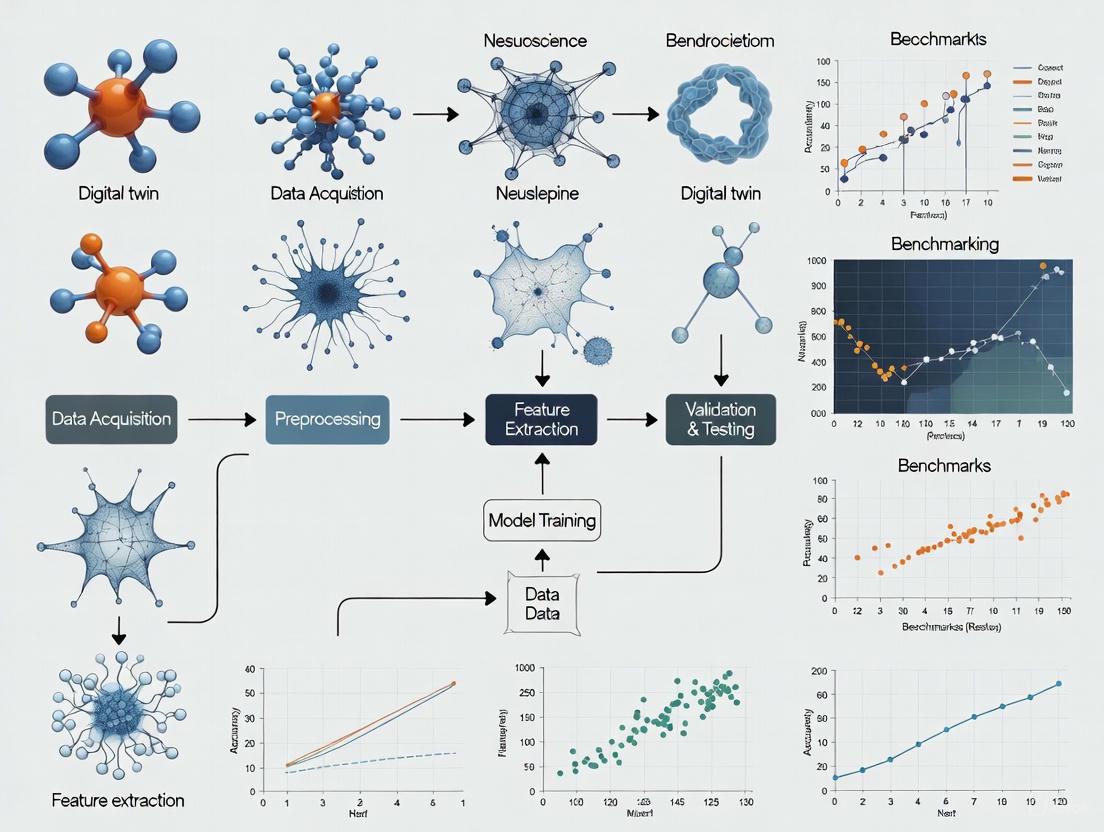
This article explores the transformative potential of digital twin technology for creating biomimetic benchmarks in neuroscience.
Digital Twin Cognition: A Framework for Biomimetic Benchmarking in Neuroscience and Drug Development
Abstract
This article explores the transformative potential of digital twin technology for creating biomimetic benchmarks in neuroscience. It provides researchers and drug development professionals with a comprehensive guide, covering the foundational principles of digital twin cognition, methodologies for integrating AI and multimodal biomarkers, strategies for troubleshooting model limitations, and rigorous validation frameworks. By enabling patient-specific simulation of cognitive processes and disease progression, digital twins offer a powerful in silico platform for accelerating therapeutic discovery, personalizing interventions, and improving the predictive power of neuroscience research.
The Foundation of Digital Twin Cognition: From Industrial Concept to Neuroscientific Benchmark
Digital twin cognition represents a transformative paradigm in neuroscience, shifting from traditional population-averaged approaches to dynamic, personalized modeling of individual brain function and cognitive processes. By creating virtual replicas of an individual's cognitive system that update in real-time, this framework enables unprecedented capabilities for predicting disease progression, optimizing therapeutic interventions, and advancing drug development. This article presents comprehensive application notes and experimental protocols for implementing digital twin technology in neuroscience research, with particular emphasis on benchmarking studies. We synthesize quantitative findings across multiple domains, provide detailed methodological workflows, and establish standardized frameworks for validating digital twin models against neurological and cognitive outcomes. The integration of artificial intelligence with multimodal biomarker data creates a powerful platform for understanding individual variations in brain health and disease, ultimately facilitating precision medicine for neuropsychiatric and neurodegenerative disorders.
Digital twin technology, originally developed for industrial applications, has emerged as a groundbreaking framework for neuroscience research and clinical applications. A digital twin in this context is defined as a virtual representation of an individual's cognitive and neural systems that dynamically updates with real-time data inputs, creating a personalized computational model for simulating, predicting, and optimizing brain health outcomes [1] [2]. This approach marks a fundamental departure from traditional population-based neuroscience by focusing on individual variability in neural circuitry, cognitive processes, and treatment responses.
The theoretical foundation of digital twin cognition rests on integrating multimodal data streams including neuroimaging, genetic profiles, behavioral metrics, and environmental factors to create comprehensive models that mirror the complexity of individual neuropsychological functioning [1]. These models leverage advanced artificial intelligence (AI) architectures, particularly deep learning networks, to identify patterns and relationships that would be impossible to detect with conventional analytical methods. The resulting digital twins serve as personalized experimental platforms for testing hypotheses, simulating interventions, and forecasting disease trajectories without risking harm to actual patients [3] [4].
Research indicates that digital twin frameworks incorporating multimodal data integration substantially outperform single-modality assessments, with successful applications demonstrating earlier detection of neurodegenerative processes, improved treatment personalization, and enhanced patient outcomes [1]. The technology has shown particular promise in conditions such as Alzheimer's disease, multiple sclerosis, and math learning disabilities, where it has provided insights into both neurological mechanisms and potential remediation strategies [3] [5] [1].
Quantitative Landscape of Digital Twin Applications in Neuroscience
Table 1: Performance Metrics of Digital Twin Applications in Neuroscience and Drug Development
| Application Domain | Reported Performance | Data Modalities Integrated | Sample Size (Range) | Key Findings |
|---|---|---|---|---|
| Math Learning Disability Intervention | AI twins required ~2x training but reached equivalent performance [3] | fMRI, behavioral task performance, computational modeling | 45 children (21 with disabilities) | Hyper-excitability in numerical thinking regions causes muddled neural representations [3] |
| Neurodegenerative Disease Detection | Classification accuracy of 75-95% for cognitive impairment [1] | Neuroimaging, genetic profiles, digital phenotyping, behavioral assessment | Median n=127 across studies [1] | Multimodal integration substantially outperforms single-modality assessments [1] |
| Clinical Trial Enhancement | 60% shorter procedure times, 15% absolute increase in acute success rates [4] | Cardiac imaging, electrophysiology, clinical parameters | 112 patients in multicenter RCT [4] | Digital twins enable more efficient trials with smaller, more diverse cohorts [4] |
| Drug Toxicity Prediction | Accurate prediction of hepatotoxicity in metabolic syndrome [6] | Molecular pathways, physiological parameters, drug properties | Preclinical models + in silico simulation | Virtual liver model reproduces normal function, disease evolution, and treatment impact [6] |
| Digital Biomarker Validation | High-accuracy claims (85-95%) in homogeneous cohorts [1] | Wearable sensors, speech patterns, gait analysis, typing dynamics | Variable (small to large-scale) | Real-world performance in diverse settings likely 10-15% lower than reported [1] |
Table 2: Technical Specifications for Digital Twin Implementation in Neuroscience Research
| Component | Technical Requirements | Data Processing Methods | Validation Approaches | Implementation Challenges |
|---|---|---|---|---|
| Data Acquisition | Multimodal integration: neuroimaging, genetics, behavior, clinical metrics [1] | Federated learning for privacy preservation, continuous data streaming [1] [2] | Cross-validation against clinical outcomes, benchmarking to population norms [7] [1] | Data standardization, interoperability across platforms [1] [8] |
| Computational Modeling | Deep learning architectures (CNNs, RNNs, transformers), biomechanical simulations [1] [6] | Automated feature extraction, temporal pattern recognition, reinforcement learning [1] [9] | Explainable AI techniques (SHAP), sensitivity analysis, prospective validation [1] [4] | Algorithmic bias, overfitting with small datasets, computational demands [1] |
| Personalization Framework | Individual-specific parameter tuning, dynamic updating mechanisms [3] [1] | Adjustment of neural excitability parameters, reinforcement learning algorithms [3] [9] | Individual outcome prediction accuracy, comparison to non-personalized models [3] [1] | Model generalizability, requirement for extensive individual data [1] |
| Clinical Translation | Regulatory compliance, ethical approval, clinician-friendly interfaces [4] | Integration with electronic health records, clinician decision support systems [4] | Randomized controlled trials, real-world evidence generation [4] | Regulatory pathways, reimbursement models, workflow integration [1] [4] |
Experimental Protocols for Digital Twin Implementation in Neuroscience
Protocol 1: fMRI-Based Digital Twin Creation for Cognitive Processing Assessment
Background: This protocol details the creation of digital twins from functional magnetic resonance imaging (fMRI) data to model individual differences in cognitive processing, based on methodologies pioneered by Stanford University for investigating math learning disabilities [3].
Materials and Equipment:
- 3T fMRI scanner with standard head coils
- Cognitive task presentation system (e.g., E-Prime, PsychoPy)
- High-performance computing cluster with GPU acceleration
- AI modeling software (Python with TensorFlow/PyTorch, specialized neural network architectures)
- Behavioral response recording apparatus (fMRI-compatible button boxes)
Procedure:
- Participant Screening and Preparation:
- Recruit participants representing target populations (e.g., typically developing and cognitively impaired individuals)
- Obtain informed consent following institutional ethics board approval
- Conduct preliminary assessment to characterize cognitive profile and ensure task comprehension
fMRI Data Acquisition During Cognitive Task Performance:
- Administer domain-specific cognitive tasks (e.g., math problems for numerical cognition assessment)
- Acquire T1-weighted structural images (1mm isotropic resolution)
- Collect task-based fMRI data (TR=2000ms, TE=30ms, voxel size=3mm isotropic) during cognitive task performance
- Implement appropriate experimental design (block or event-related) with counterbalanced conditions
Behavioral and Neural Data Preprocessing:
- Process fMRI data using standard pipelines (FSL, SPM, or AFNI): realignment, normalization, smoothing
- Extract behavioral measures: accuracy, reaction time, learning curves
- Identify task-activated regions through general linear model analysis
Digital Twin Model Construction:
- Train personalized deep neural networks to mimic individual brain activation patterns during task performance
- Adjust neural excitability parameters to match observed activation levels in key cognitive regions
- Validate model by comparing simulated to actual task performance and brain activation patterns
In Silico Intervention Testing:
- Use validated digital twins to simulate responses to potential interventions
- Test different training regimens by adjusting model parameters and observing outcomes
- Identify optimal intervention strategies for subsequent real-world validation
Validation Metrics:
- Correspondence between simulated and actual task performance (accuracy >85%)
- Spatial similarity between simulated and actual brain activation patterns (Dice coefficient >0.7)
- Predictive accuracy for intervention outcomes (compared to subsequent empirical testing)
Protocol 2: Normative Modeling for Cerebellar Growth Chart Development
Background: This protocol establishes normative growth charts for brain structures, specifically the cerebellum, to enable individual-level assessment of developmental trajectories, based on population-level imaging studies [7].
Materials and Equipment:
- 3T MRI scanner with high-resolution structural imaging capabilities
- Automated cerebellar segmentation tools (e.g., CERES, SUIT)
- Normative modeling computational framework (Python with specialized libraries)
- Large-scale longitudinal neuroimaging dataset (n>1000) with age representation across developmental period
Procedure:
- Population-Level Data Collection and Processing:
- Acquire T1-weighted structural MRI scans from representative population cohort
- Process images through automated cerebellar segmentation pipeline
- Extract morphometric measures (volume, gray matter density, surface area) for cerebellar subregions
- Ensure quality control through visual inspection and automated quality metrics
Normative Model Construction:
- Apply normative modeling approach to characterize population distributions of cerebellar measures
- Establish growth trajectories for each cerebellar subregion across target age range (e.g., 6-17 years)
- Model both anatomical and functional subregions based on established cerebellar parcellations
- Account for effects of sex, socioeconomic status, and other relevant covariates
Individual-Level Deviation Quantification:
- Calculate centile scores or z-scores for individual participants relative to normative model
- Identify regions of significant deviation from population expectations
- Correlate individual deviation patterns with cognitive and behavioral measures
Longitudinal Trajectory Analysis:
- Track intra-individual changes over time relative to population trends
- Identify developmental trajectories associated with specific outcomes (e.g., neurodevelopmental disorders)
- Validate models by testing prediction accuracy for future time points
Validation Metrics:
- Model fit statistics (R², root mean square error) for normative models
- Accuracy in identifying known clinical cases (sensitivity, specificity)
- Predictive validity for future cognitive outcomes or developmental trajectories
Visualization Frameworks for Digital Twin Cognition
Digital Twin Creation and Implementation Workflow
Neural Circuitry of Social Comparison as Digital Twin Validation Framework
Table 3: Essential Research Resources for Digital Twin Neuroscience
| Resource Category | Specific Tools/Platforms | Primary Function | Implementation Considerations |
|---|---|---|---|
| Data Repositories | NIAGADS [5], AD Knowledge Portal [5], ADNI [5] | Genomic, neuroimaging, and clinical data access for model training | Data standardization, privacy protection, interoperability |
| Computational Frameworks | Deep learning architectures (CNNs, RNNs, Transformers) [1] | Pattern recognition in high-dimensional neural data | Computational resources, expertise requirements, interpretability |
| Biomarker Validation Tools | SHAP (SHapley Additive exPlanations) [4], normative modeling [7] | Model interpretation and validation against population norms | Integration with existing analytics pipelines |
| Digital Phenotyping Platforms | Wearable sensors, smartphone apps, voice analysis tools [1] | Continuous, real-world data collection for dynamic model updating | Participant burden, data privacy, signal processing |
| Clinical Translation Systems | Electronic health record interfaces, clinician dashboards [4] | Integration of digital twins into clinical workflow | Regulatory compliance, user experience, workflow disruption |
Digital twin cognition represents a paradigm shift in neuroscience that transcends traditional population-based approaches to enable truly personalized assessment, prediction, and intervention in brain health and disease. The frameworks, protocols, and resources presented herein provide a comprehensive foundation for implementing digital twin technology in neuroscience research, with particular relevance for benchmarking studies and therapeutic development.
The quantitative evidence synthesized across multiple domains demonstrates that digital twin approaches can enhance disease detection, personalize interventions, streamline clinical trials, and accelerate drug development. However, significant challenges remain in standardization, validation, ethical implementation, and equitable access. Future research must focus on large-scale, multi-site validation studies; development of robust ethical frameworks; and creation of standardized protocols to ensure reproducibility and generalizability across diverse populations.
As digital twin technology continues to evolve, its integration with emerging AI capabilities and expanding multimodal data sources promises to further refine our understanding of individual neurocognitive functioning and transform approaches to promoting brain health across the lifespan.
The Evolution from Industrial Digital Twins to Biomimetic Brain Models
The digital twin concept, originating in industrial manufacturing for real-time monitoring and predictive maintenance of physical assets, has undergone a transformative evolution into healthcare, culminating in the development of biomimetic brain models. This transition represents a shift from engineering simple mechanical systems to creating dynamic, personalized virtual representations of the most complex biological system known—the human brain [1] [10]. Unlike their industrial predecessors, biomimetic brain models are not static replicas; they are dynamic, data-driven constructs that continuously update with multimodal patient data to simulate, predict, and optimize brain function and treatment responses in silico [1] [11].
This evolution is driven by convergence of artificial intelligence (AI), multimodality data integration, and advanced computational frameworks. The core principle involves creating personalized virtual brains that mimic both the structure and function of an individual's brain, enabling researchers and clinicians to test hypotheses and interventions in a virtual environment before applying them in reality [10] [11]. Framed within digital twin creation for neuroscience benchmarking, these models establish new paradigms for validating research methodologies, comparing therapeutic outcomes, and personalizing neurology and psychiatry treatments [1].
From Factory Floor to Human Brain: Tracing the Conceptual Evolution
The journey of digital twin technology from industrial to neuroscientific applications reveals a pattern of conceptual adaptation and technical innovation. The table below summarizes the key transitions across domains.
Table 1: Evolution of Digital Twin Concepts from Industry to Neuroscience
| Feature | Industrial Digital Twins | Biomimetic Brain Models |
|---|---|---|
| Primary Objective | Predictive maintenance, performance optimization [10] | Understanding brain function, personalized therapy, disease progression modeling [1] [10] |
| Physical Entity | Machines, manufacturing processes, supply chains [10] | Human brain, neural circuits, cognitive processes [1] [10] |
| Key Enabling Technologies | Internet of Things (IoT), sensors, cloud computing [10] | AI/Machine Learning, multimodal MRI, large language models (LLMs), wearable sensors [1] [11] |
| Data Sources | Operational telemetry, performance logs [10] | Neuroimaging (MRI, fMRI, dMRI), genetic profiles, clinical assessments, digital phenotyping [1] [10] |
| Core Challenge | System complexity, real-time data integration [10] | Immense biological complexity, neuroplasticity, data privacy, ethical considerations [1] [10] [11] |
The translation to neuroscience was enabled by key technological advancements. The integration of large language models (LLMs) revolutionized processing of diverse health information, while cloud computing provided necessary infrastructure for large-scale neuroimaging and sensor data. Furthermore, advanced machine learning algorithms, particularly deep neural networks, enabled extraction of meaningful patterns from high-dimensional, multimodal datasets [1].
Core Components and Data Requirements for Biomimetic Brain Models
Constructing a biomimetic brain digital twin requires systematic integration of multi-scale and multi-modal data. The architecture is designed to mirror the biological principles and dynamic nature of the brain.
Table 2: Essential Components of a Biomimetic Brain Digital Twin
| Component | Description | Example Data Sources & Technologies |
|---|---|---|
| Structural Foundation | Replicates the physical anatomy and connectivity of the brain. | Magnetic Resonance Imaging (MRI), Diffusion MRI (dMRI) for structural connectivity [10]. |
| Functional Dynamics | Simulates brain activity and network interactions. | Functional MRI (fMRI), EEG, MEG; simulated with platforms like The Virtual Brain (TVB) [10]. |
| Biomarker Integration | Integrates measurable indicators of physiological or pathological processes. | AI-driven digital biomarkers from wearables, speech patterns, gait analysis; genetic profiles [1]. |
| Computational Engine | The AI core that processes data, runs simulations, and generates predictions. | Deep Learning architectures (CNNs, RNNs), traditional ML algorithms, phenotype-ranking algorithms [1] [12]. |
| Biomimetic Feedback Loop | The mechanism for continuous model updating and refinement. | Real-time data streams from wearable sensors, smartphone apps, and updated clinical assessments [1] [11]. |
A critical advancement is the move from single-modality to multimodal integration. Approaches combining neuroimaging, physiological, behavioral, and digital phenotyping data have substantially outperformed single-modality assessments, creating more holistic and accurate models [1]. Deep learning architectures show superior pattern recognition for such complex data, though challenges in interpretability remain [1].
Application Notes: Protocols for Neuroscience Research and Drug Development
Protocol 1: Creating a Personalized Digital Twin for Neurodegenerative Disease Progression Modeling
Objective: To develop a patient-specific digital twin for predicting individual trajectories in Alzheimer's disease and related dementias.
Workflow Overview: The process involves sequential stages from data acquisition to clinical validation, forming a continuous cycle of refinement.
Materials and Reagents:
- Medical Imaging Data: 3T or 7T MRI scanner (structural T1-weighted, DTI for connectivity) [10] [11]
- Neuropsychological Batteries: Standardized cognitive assessments (e.g., MoCA, MMSE) [1]
- Genetic Analysis Kit: DNA sequencing tools for APOE and other risk allele identification [1]
- Computational Platform: High-performance computing cluster with The Virtual Brain (TVB) software installed [10]
- Data Integration Framework: Custom scripts for data harmonization and multimodal fusion [10]
Procedure Details:
- Data Acquisition: Collect multi-modal baseline data. Acquire high-resolution structural MRI (3T minimum, 7T preferred) and diffusion-weighted imaging (DWI). Perform comprehensive neuropsychological testing covering memory, executive function, and processing speed. Collect blood or saliva samples for genetic analysis of known risk markers [1] [10].
- Biomarker Extraction: Process MRI data using pipelines for cortical thickness, hippocampal volumetry, and white matter integrity. Derive structural connectomes from DWI using tractography. Extract digital biomarkers from passive data streams, such as speech patterns from voice recordings, typing dynamics on smartphones, or gait metrics from wearable sensors [1].
- Model Personalization: Implement a base whole-brain model using The Virtual Brain (TVB) platform. Personalize the model by importing the individual's structural connectome. Adjust regional model parameters to fit the individual's empirical neuropsychological test scores and extracted biomarker data [10].
- Simulation and Prediction: Run in-silico simulations of neural mass models over the personalized connectome. Project disease progression by introducing pathology-specific perturbations (e.g., simulated amyloid accumulation). Systematically test and compare virtual responses to different therapeutic interventions [1] [11].
- Validation and Refinement: Compare model predictions with actual clinical follow-up data at 6, 12, and 18 months. Quantify accuracy and refine model parameters using discrepancy between predicted and observed outcomes, closing the feedback loop [1].
Protocol 2: Integrating Digital Twins into Clinical Trials for Drug Development
Objective: To enhance randomized clinical trial (RCT) design and execution using digital twins for synthetic control arms and adverse event prediction.
Workflow Overview: This protocol creates a parallel virtual trial environment to optimize real-world clinical trials.
Materials and Reagents:
- Real-World Data Sources: Access to historical control datasets, disease registries, and electronic health records (EHR) [4]
- Generative AI Models: Deep generative models (e.g., GANs, VAEs) for creating synthetic patient profiles [4]
- Predictive Analytics Tools: SHapley Additive exPlanations (SHAP) for model interpretability [4]
- Clinical Trial Management System: Integrated platform for managing both real and virtual trial data [4]
Procedure Details:
- Virtual Cohort Generation: Train deep generative models on aggregated data from historical clinical trials, disease registries, and real-world evidence studies. Generate a synthetic cohort that matches the demographic, clinical, and genetic distribution of the target real-world population for the trial [4].
- Synthetic Control Arm Creation: For each real patient enrolled in the experimental arm of the physical trial, create a matched digital twin. Simulate the natural disease progression and standard care outcomes for these digital twins to form a synthetic control arm, reducing the number of patients requiring placebo treatment [4].
- In-Silico Intervention and Safety Screening: Administer the virtual investigational drug to the digital twin cohort. Simulate the drug's mechanism of action and predict efficacy metrics. Run safety screenings by integrating individual genetic and physiological data to predict patient-specific adverse events and optimal dosing [4].
- Trial Optimization: Use the digital twin platform to run thousands of simulated trial iterations. Optimize key trial parameters, including sample size, power calculations, inclusion/exclusion criteria, and primary endpoint selection based on in-silico findings [4].
- Real-World Trial Augmentation: Launch the physical clinical trial informed by the in-silico simulations. Use digital twin predictions to monitor real participants for expected efficacy signals and predicted adverse events, enabling proactive patient management [4].
The Scientist's Toolkit: Essential Research Reagent Solutions
Successful implementation of biomimetic brain models requires a suite of specialized computational and data resources.
Table 3: Essential Research Reagents for Biomimetic Brain Digital Twins
| Tool/Reagent | Function | Specifications & Use Cases |
|---|---|---|
| The Virtual Brain (TVB) | Open-source neuroinformatics platform for constructing personalized whole-brain models. | Simulates neural activity based on individual connectome data; used for epilepsy and brain tumor modeling [10]. |
| Phenotype-Ranking Algorithms | AI-driven tools to prioritize clinically relevant features from complex, non-normalized data. | Applies real-world reasoning to identify "dark data"; used in variant analysis for endometriosis studies [12]. |
| Ultra-High Field MRI | Provides foundational structural and functional data with unprecedented resolution. | 7T to 11.7T scanners for sub-millimeter resolution; crucial for detailed connectome generation [11]. |
| Multimodal Data Fusion Framework | Software pipeline for integrating disparate data types into a unified model. | Harmonizes neuroimaging, genetic, clinical, and digital biomarker data; essential for holistic twin creation [1] [10]. |
| Generative AI Models | Creates synthetic patient cohorts for augmenting training data and clinical trial design. | Deep generative models (GANs/VAEs) create virtual populations that reflect real-world variability [4]. |
The evolution from industrial digital twins to biomimetic brain models marks a frontier in neuroscience research and therapeutic development. These models offer a powerful new paradigm for benchmarking research methodologies, enabling direct comparison of different analytical approaches within a standardized, personalized in-silico environment. Furthermore, they accelerate drug development by enabling virtual clinical trials and providing a platform for personalized therapeutic testing [4].
Future development must address significant challenges, including model interpretability, protection of data privacy given the sensitive nature of brain data, and mitigation of algorithmic bias to ensure these technologies benefit diverse populations [1] [11]. As stressed in foundational reports, fostering interdisciplinary collaboration between neuroscientists, computational modelers, and clinicians is paramount [10] [13]. By continuing to refine these protocols and tools, the neuroscience community can leverage digital twin technology to unlock deeper understanding of the brain and usher in an era of truly personalized neurological and psychiatric medicine.
Application Notes: Core Concepts and Methodologies
Virtual Patients in Drug Development
Virtual patients are computer-generated simulations that mimic the clinical characteristics of real patients, used within in silico studies to predict drug effects without initial human or animal testing [14]. These models address significant challenges in traditional drug development, including prolonged timelines (averaging 10 years from patenting to FDA approval), high costs (exceeding $2.87 billion per new drug), and high failure rates (approximately 90% of active agents fail to reach the market) [14]. Virtual patient cohorts are particularly valuable for studying rare diseases and specific subpopulations where patient recruitment is challenging [14].
Table 1: Methodologies for Generating Virtual Patient Cohorts
| Method | Key Advantages | Key Limitations | Primary Applications in Neuroscience |
|---|---|---|---|
| Agent-Based Modeling (ABM) [14] | Models individual patient interactions; useful for complex behaviors and outcomes. | High computational resource requirements; limited scalability for very large populations. | Simulating tumor progression and effects of combination therapies in neuro-oncology [14]. |
| AI & Machine Learning [14] | Analyzes large datasets for patterns; enhances simulation accuracy; creates synthetic datasets for rare diseases. | "Black box" problem reduces trust/interpretability; risks of bias in training data; high computational demand. | Predicting amyloid-beta PET status and detecting cognitive impairment in Alzheimer's disease research [15] [1]. |
| Digital Twins [14] [1] | Real-time simulations updated with clinical data; enables high temporal resolution for testing interventions. | High dependency on quality real-time data; expensive and computationally intensive to maintain. | Creating patient-specific brain models to predict disease progression and test interventions in neurodegenerative diseases [1] [16]. |
| Biosimulation & Statistical Methods [14] | Cost-effective for small-scale data modeling; uses established models (e.g., Monte Carlo simulations, regression analysis). | Can oversimplify complex systems, reducing generalizability; limited by model assumptions and accuracy. | Predicting patient responses to drug dosages using regression analysis or estimating variability via bootstrapping [14]. |
In Silico Clinical Trials
In silico clinical trials use computer simulations and/or real-world data to model treatments and trial outcomes, enhancing subsequent trial design, improving patient selection, and reducing the risk of unsuccessful trials [17]. A key application is the use of digital twins as virtual control arms [16]. For every patient enrolled in a trial, a digital twin models the patient's expected outcomes under standard of care. This provides a probabilistic, patient-level prediction that refines the estimate of the treatment effect, increasing statistical power [16]. This approach can reduce the required number of participants in a trial or serve as a comparator in early-phase or open-label studies where a traditional control arm is not feasible [16].
Personalized Cognitive Health Models
The convergence of digital twin technology, artificial intelligence, and multimodal biomarkers enables the creation of dynamic, personalized virtual models of individual cognitive systems [1]. These digital twin cognition models facilitate continuous monitoring, predictive modeling, and precision interventions, representing a paradigm shift from population-based to truly personalized medicine [1]. These systems integrate diverse data modalities—including neuroimaging, genetic information, lifestyle factors, and real-time behavioral metrics—to create holistic models of cognitive function for understanding heterogeneous cognitive disorders and developing personalized interventions [1]. Research presented at AAIC 2025 demonstrates the use of multi-modal AI models combining digital cognitive assessments with blood-based biomarkers to predict amyloid-beta PET status in Alzheimer's disease, showcasing the practical application of this approach for streamlining clinical trial recruitment [15].
Experimental Protocols
Protocol: Creating a Virtual Patient Cohort for a Neurodegenerative Disease Study
This protocol outlines a methodology for generating a virtual patient cohort to simulate a clinical trial for an Alzheimer's disease therapeutic.
I. Objective To generate a cohort of virtual patients (digital twins) with mild cognitive impairment (MCI) for in silico testing of a novel therapeutic intervention, thereby reducing the required sample size for a subsequent human clinical trial.
II. Materials and Data Requirements
- Real-World Data Source: A pre-existing, high-quality dataset from a longitudinal observational study (e.g., ADNI - Alzheimer's Disease Neuroimaging Initiative).
- Key Baseline Variables: Age, sex, genetic profiles (e.g., APOE ε4 status), standardized neuropsychological test scores (e.g., MMSE, CDR), and biomarker data (e.g., amyloid-beta levels, hippocampal volume from MRI) [1].
- Outcome Variables: Longitudinal data on cognitive test scores and/or biomarker progression over a defined period (e.g., 24 months).
- Computational Environment: High-performance computing (HPC) resources or cloud computing infrastructure capable of running complex machine learning models [14].
III. Step-by-Step Procedure
Data Curation and Preprocessing:
- Perform data cleaning, handle missing values using appropriate imputation techniques, and normalize continuous variables.
- Split the dataset into a training set (e.g., 80%) for model development and a hold-out test set (e.g., 20%) for final validation.
Model Selection and Training:
- Select a machine learning algorithm suited for time-series prediction. Gradient Boosting Machines (e.g., XGBoost) or Recurrent Neural Networks (RNNs) are often effective for this task [1].
- Train the model on the training set to predict the trajectory of the primary outcome (e.g., MMSE score decline) based on the baseline variables.
- Validate model performance on the test set using metrics like Mean Absolute Error (MAE) and R-squared for accuracy.
Virtual Patient Generation:
- To create a new virtual patient, define a vector of baseline characteristics.
- Use the trained model to generate a probabilistic prediction of the patient's disease trajectory over the desired trial duration. This predicted trajectory, including its uncertainty, constitutes the "digital twin" [16].
- Repeat this process, varying the baseline characteristics within plausible clinical ranges, to generate a full cohort of virtual patients that reflect the diversity of the target population.
Simulation and Analysis:
- Assign the virtual cohort to "control" (simulated standard of care) and "treatment" (simulated novel therapeutic) arms. For the treatment arm, apply a predefined treatment effect model to the predicted control trajectories.
- Run the simulation multiple times (Monte Carlo simulations) to account for uncertainty and obtain a distribution of possible trial outcomes.
- Analyze the simulated data to estimate the treatment effect and statistical power, informing the design of the subsequent human trial.
Protocol: Multi-Modal Cognitive Assessment for Digital Twin Validation
This protocol details a procedure for collecting multi-modal data to build and validate a digital twin for cognitive health benchmarking.
I. Objective To acquire a comprehensive dataset integrating digital cognitive tasks, voice analytics, and simplified biomarker data to create and validate a personalized digital twin model for tracking cognitive decline.
II. Materials
- Digital Cognitive Assessment Platform: A validated tool such as the Linus Health DCR (Digital Clock and Recall) [15].
- Voice Recording Equipment: A high-quality microphone integrated into a tablet or laptop.
- Data Management System: A secure database for storing and processing protected health information (PHI).
III. Step-by-Step Procedure
Participant Setup and Consent:
- Obtain informed consent. Explain the multi-modal nature of the data collection.
- Ensure the testing environment is quiet and free from distractions.
Multi-Modal Data Acquisition:
- Digital Cognitive Task Administration:
- Instruct the participant to complete the Digital Clock and Recall (DCR) test and the Digital Trail Making Test-Part B (dTMT-B) on the platform [15].
- The platform automatically captures not only the final score (accuracy) but also process metrics such as drawing speed, hesitation time, and pen pressure for the clock-drawing task, and sequence errors and connection speed for the dTMT-B [15].
- Voice Recording:
- During the recall portion of the DCR, record the participant's voice while they recall the items from the clock drawing.
- Extract acoustic features from the audio recording, including speech rate, pitch variation, and pause frequency, which can serve as digital biomarkers of cognitive function [15] [1].
- Biomarker & Demographic Data Integration:
- Collect basic demographic data (age, sex, years of education).
- If available, integrate results from blood-based biomarkers (e.g., plasma p-tau181) known to be associated with Alzheimer's pathology [15].
- Digital Cognitive Task Administration:
Data Integration and Model Building:
- Compile all extracted features (traditional scores, process metrics, acoustic features, demographics, and biomarkers) into a unified feature vector for each participant.
- Use a machine learning model (e.g., a multi-modal AI model based on ensemble methods) to integrate these diverse data streams. The model's output is a probabilistic prediction of cognitive status (e.g., Amyloid-beta PET positivity or clinical impairment diagnosis), forming the core of the dynamic digital twin [15] [1].
Validation:
- Validate the digital twin's predictions against ground truth measures, such as clinical diagnosis or amyloid PET status, reporting performance metrics like Area Under the Curve (AUC), sensitivity, and specificity.
The Scientist's Toolkit: Research Reagent Solutions
Table 2: Essential Materials and Tools for Digital Twin Research in Neuroscience
| Item / Solution | Function / Application | Example Use Case |
|---|---|---|
| Digital Cognitive Assessment Platform [15] | Captures not only test accuracy but also rich process metrics (e.g., drawing kinematics, hesitation) that are sensitive digital biomarkers of early cognitive change. | Linus Health's DCR is used to streamline pre-screening for Alzheimer's disease trials by concurrently detecting cognitive impairment and predicting amyloid-beta status [15]. |
| Neuropixels Probes [18] | High-density silicon probes for large-scale, simultaneous recording of neuronal electrophysiological activity in animal models, providing foundational data for circuit-level models. | Recording from hundreds to thousands of neurons in awake, behaving animals to understand population dynamics relevant to neurological disorders [18]. |
| Open Neurophysiology Data Repositories [18] | Platforms like DANDI archive provide shared, standardized datasets for model training, validation, and benchmarking, addressing the challenge of data scarcity. | Using shared electrocorticography (ECoG) or EEG datasets to train and test a digital twin model's ability to predict seizure activity or cognitive load. |
| AI/ML Modeling Frameworks [14] [1] | Software libraries (e.g., TensorFlow, PyTorch, scikit-learn) for developing the predictive algorithms that power digital twins, from traditional ML to deep learning. | Creating a gradient boosting model to predict individual patient trajectories in a clinical trial simulation, or a deep learning model for analyzing neuroimaging data. |
| High-Performance Computing (HPC) / Cloud [14] | Provides the essential computational resources for generating virtual patient cohorts, running complex biosimulations, and training large AI models. | Running thousands of Monte Carlo simulations for an in silico trial within a feasible timeframe, which would be prohibitive on standard workstations [14]. |
The traditional 'one-target' approach, which has long been the cornerstone of neuroscience research and drug development, is increasingly revealing its limitations in addressing the profound complexity of the nervous system. This reductionist methodology, focusing on isolated molecular targets or single pathways, fails to capture the multi-scale, dynamic interactions that characterize brain function and dysfunction. The brain's intrinsic complexity arises from interactions across molecular, cellular, circuit, and systems levels, creating emergent properties that cannot be understood by studying individual components in isolation [1] [19].
The escalating global burden of neurodegenerative diseases and mental health disorders underscores the urgency of moving beyond these constrained methodologies. Alzheimer's disease alone affects millions globally, with prevalence expected to triple by 2050, while traditional diagnostic methods often fail to capture subtle, early-stage changes that precede clinical symptoms [1]. The field now recognizes that neurological diseases typically involve complex interactions among multiple genetic, environmental, and physiological factors that cannot be adequately addressed through single-target interventions [20].
Digital twin technology represents a paradigm shift from this reductionist approach to a holistic, systems-level framework. Originally developed for industrial applications, digital twins are dynamic virtual representations of physical entities that enable real-time monitoring, simulation, and prediction [21] [22]. In neuroscience, digital twin cognition creates personalized virtual models of individual cognitive systems, allowing researchers and clinicians to integrate multimodal data and explore complex interactions across biological scales [1]. This approach marks a fundamental transition from population-based averages to truly personalized medicine, acknowledging and addressing the multi-factorial nature of neurological health and disease.
Quantitative Evidence: Demonstrating the Superiority of Integrated Approaches
Empirical evidence increasingly demonstrates the superior capability of multi-scale, integrated approaches compared to traditional single-target methods. The following table summarizes key performance metrics achieved through digital twin implementations across various neurological applications:
Table 1: Performance Metrics of Digital Twin Applications in Neuroscience
| Application Area | Key Metric | Performance Achievement | Traditional Approach Comparison |
|---|---|---|---|
| Neurodegenerative Disease Prediction | Prediction Accuracy | 97.95% accuracy for Parkinson's disease early identification [22] | Conventional methods often fail to detect early stages [1] |
| Brain Tumor Management | Feature Recognition Accuracy | 92.52% accuracy with improved segmentation metrics [22] | Limited by qualitative radiological assessment |
| Multiple sclerosis (MS) Modeling | Early Detection Capability | Revealed brain tissue loss begins 5-6 years before clinical symptom onset [22] | Typically diagnosed after symptom manifestation |
| Cognitive Assessment | Predictive Capability | Multimodal integration substantially outperformed single-modality assessments [1] | Single-modality assessments show limited predictive value |
| Radiotherapy Planning | Optimization Capability | 16.7% radiation dose reduction while maintaining equivalent outcomes [22] | Standard dosing protocols applied uniformly |
Analysis of these implementations reveals that frameworks integrating neuroimaging, physiological, behavioral, and digital phenotyping data consistently outperform single-modality assessments. However, critical examination of the literature indicates that high-accuracy claims (85-95%) predominantly derive from small, homogeneous cohorts with limited external validation. Real-world performance in diverse clinical settings likely ranges 10-15% lower, emphasizing the need for large-scale, multi-site validation studies before clinical deployment [1].
Deep learning architectures have demonstrated particular promise for automated feature extraction from complex data sources, though their high parameter complexity raises significant overfitting concerns when applied to the small datasets typical in neuropsychological research (median n = 127), potentially leading to poor generalizability despite high validation accuracies [1]. This underscores the necessity of robust validation frameworks when implementing these advanced approaches.
Experimental Protocols for Digital Twin Implementation in Neuroscience
Protocol 1: Multimodal Data Integration for Neurodegenerative Disease Modeling
Purpose: To create a comprehensive digital twin framework for early detection and progression modeling of neurodegenerative diseases by integrating multimodal data sources.
Materials and Reagents: Table 2: Research Reagent Solutions for Digital Twin Creation
| Item | Function | Specifications |
|---|---|---|
| High-resolution MRI sequences | Structural and functional brain mapping | 3T minimum, with DTI and fMRI capabilities |
| Wearable sensor array | Continuous physiological monitoring | ECG, EEG, activity tracking, sleep monitoring |
| Genotyping platform | Genetic risk profiling | Whole-genome or targeted neurodegenerative disease panels |
| CSF analysis kit | Biomarker quantification | Aβ42, tau, p-tau measurements |
| Digital phenotyping application | Behavioral and cognitive monitoring | Smartphone-based assessment of motor, cognitive function |
Procedure:
- Data Acquisition Phase: Collect multimodal data at baseline and pre-specified intervals (e.g., 3, 6, 12 months)
- Perform structural and functional MRI using standardized protocols
- Implement continuous monitoring via wearable sensors (minimum 14-day continuous recording)
- Obtain genetic material for sequencing and analysis
- Conduct cerebrospinal fluid analysis following established protocols
- Deploy digital phenotyping application for daily cognitive and motor assessment
Data Integration and Processing:
- Preprocess imaging data using standardized pipelines (e.g., FSL, Freesurfer)
- Extract features from sensor data using signal processing techniques
- Implement quality control measures for all data modalities
- Apply batch effect correction and normalization across data types
Model Training and Validation:
- Partition data into training (70%), validation (15%), and test (15%) sets
- Train ensemble models incorporating deep learning architectures and traditional machine learning
- Validate model performance using k-fold cross-validation
- Test generalizability on external cohorts when available
Implementation and Updating:
- Deploy model for continuous updating with new patient data
- Establish thresholds for clinical alerts and interventions
- Implement model explainability features for clinical interpretability
Troubleshooting Tips:
- Address missing data through multiple imputation techniques
- Manage computational demands through cloud computing infrastructure
- Mitigate overfitting through regularization and cross-validation
- Ensure data privacy through appropriate de-identification and encryption
Protocol 2: Personalized Therapeutic Optimization for Neurological Disorders
Purpose: To utilize digital twin technology for optimizing therapeutic interventions in individual patients with neurological disorders.
Materials and Reagents:
- Patient-specific computational model
- Real-time physiological monitoring system
- Electronic health record integration platform
- Simulation environment for treatment testing
- Clinical outcome assessment tools
Procedure:
- Baseline Model Creation:
- Develop patient-specific computational model incorporating individual neuroanatomy, physiology, and genetics
- Integrate historical treatment response data where available
- Calibrate model parameters to match individual's current state
Intervention Simulation:
- Test multiple treatment scenarios in the digital twin environment
- Simulate drug responses at varying dosages and combinations
- Model non-pharmacological interventions (e.g., neurostimulation, rehabilitation)
- Predict potential adverse effects and interactions
Clinical Implementation:
- Select optimal intervention based on simulation results
- Implement chosen intervention in actual patient
- Monitor real-world response through continuous data collection
Iterative Refinement:
- Update digital twin with observed treatment response data
- Refine model parameters to improve accuracy
- Adjust treatment plan based on updated predictions
Validation Measures:
- Compare predicted versus observed treatment responses
- Assess clinical outcomes against matched controls
- Evaluate cost-effectiveness and resource utilization
- Measure patient-reported outcomes and quality of life
Visualization Framework: Mapping the Digital Twin Workflow
The following diagrams illustrate the key workflows and conceptual frameworks for digital twin implementation in neuroscience research.
Digital Twin Architecture for Neuroscience Applications
Digital Twin Architecture for Neuroscience
Contrasting Traditional vs. Digital Twin Approaches
Traditional vs Digital Twin Approaches
Implementation Challenges and Future Directions
Despite their significant promise, digital twin implementations in neuroscience face substantial challenges that must be addressed for widespread clinical adoption. A comprehensive scoping review revealed that only 18 of 149 included studies (12.08%) fully met the established criteria for digital twins, which require personalization, dynamic updating, and predictive capability to inform clinical decision-making [23]. This indicates a significant gap between the conceptual ideal of digital twins and current implementation capabilities.
The field also grapples with standardization issues, as a universal consensus on digital twin definitions and components remains elusive. This lack of standardized frameworks makes it difficult to compare implementations, share lessons, and jointly advance the methodology [21]. Additional challenges include algorithm interpretability, population generalizability, integration with existing healthcare systems, data privacy concerns, and validation across diverse populations [1] [21].
Technical implementation barriers are equally significant. The integration of real-time data flows between physical and digital systems presents both computational and practical challenges, particularly for human applications where implantable IoT devices are not always feasible [23]. Furthermore, the verification, validation, and uncertainty quantification (VVUQ) critical for establishing model trustworthiness are rarely implemented, with only two studies in the comprehensive review mentioning VVUQ processes [23].
Future development must focus on creating robust validation frameworks, addressing ethical considerations around data privacy and algorithmic bias, and improving the interpretability of AI-driven models to build clinical trust [1]. As digital twin technology matures alongside advancements in artificial intelligence, Internet of Things, and computing infrastructure, it holds the potential to fundamentally transform our approach to neuroscience research and clinical practice, ultimately enabling truly personalized, predictive, and preventive neurological care.
Digital twin technology is poised to revolutionize target identification and preclinical prediction in neuroscience. A digital twin is a dynamic, virtual replica of a biological entity—from molecular pathways to whole organ systems—that is continuously updated with real-time data [24]. In neuroscience, this approach addresses a critical bottleneck: the traditional difficulty in observing and experimenting on the living brain. Recent research demonstrates this potential, such as the creation of a digital twin for the mouse visual cortex that can accurately predict neuronal responses to new visual stimuli [25]. These models function as foundation models for biology, capable of learning from large datasets and generalizing to new scenarios outside their training distribution, much like large language models in artificial intelligence [25]. For drug development professionals, this technology offers a transformative tool for enhancing the predictivity of preclinical research, potentially reducing late-stage failures in neurological drug development by providing unprecedented insights into brain function and disease mechanisms.
Application Notes: Current State and Quantitative Benchmarks
Key Applications in Neuroscience and Drug Discovery
Digital twin technology enables several groundbreaking applications in neuroscience research and drug development:
In Silico Target Validation: Researchers can use digital twins to simulate disease mechanisms and identify potential therapeutic targets by modeling biological processes involved in neurological disorders [4]. This approach provides a powerful complement to traditional wet-lab experiments for prioritizing targets with higher predicted efficacy.
Virtual Clinical Trial Simulation: Digital twins can generate synthetic patient cohorts that mirror real-world population diversity, allowing researchers to model clinical trials, optimize dosing regimens, and improve trial success rates before enrolling human participants [4] [26]. The SyncTwin framework has demonstrated the ability to reproduce randomized controlled trial findings using only observational data, creating viable synthetic control arms [26].
Personalized Treatment Optimization: By creating virtual replicas of individual patients, digital twins can simulate responses to different therapies, enabling truly personalized treatment plans based on a patient's unique genetic profile, clinical history, and disease characteristics [27] [24]. This is particularly valuable for neurological conditions with high interpatient variability.
Enhanced Preclinical Predictivity: Digital twins of brain systems allow for unprecedented exploration of neurobiological mechanisms, potentially bridging the gap between animal models and human patients. For example, digital twins of the mouse visual cortex have revealed new insights into how neurons form connections, showing that they preferentially connect with neurons that respond to the same stimulus rather than those in the same spatial location [25].
Performance Benchmarks and Validation
Table 1: Experimental Validation of Digital Twin Models in Neuroscience
| Model/Platform | Experimental Context | Key Performance Metrics | Validation Method |
|---|---|---|---|
| Mouse Visual Cortex DT [25] | Prediction of neuronal responses to visual stimuli | Accurate prediction of responses to new videos and images; Inference of anatomical features | Comparison against electrophysiological recordings; Verification with electron microscopy |
| SyncTwin [26] | Treatment effect estimation from observational data | Reproduced findings of randomized controlled trial; Generated accurate synthetic controls | Comparison with gold-standard RCT outcomes; Pre-treatment trajectory matching |
| Cardiac DT Platform [4] | Ventricular tachycardia ablation planning | 60% shorter procedure time; 15% increase in acute success rates | Multicenter RCT (inEurHeart trial, n=112) |
| AI Virtual Assistant [4] | Type 2 diabetes management in older adults | HbA1c reduction of 0.48%; Improved self-care adherence | 12-week RCT (n=112) |
Experimental Protocols
Protocol 1: Creating a Foundation Digital Twin of Neural Circuits
This protocol outlines the methodology for creating a biologically-grounded digital twin of neural circuits, based on the approach used to model the mouse visual cortex [25].
Data Acquisition and Preprocessing
Step 1: Experimental Data Collection
- Obtain ethical approval for animal studies following institutional guidelines.
- Prepare subjects (e.g., C57BL/6 mice) for in vivo electrophysiology using standard surgical procedures.
- Present visual stimuli: Show action-packed movie clips (e.g., Mad Max) to ideally approximate natural vision. Mice primarily perceive movement rather than details due to their low-resolution vision [25].
- Record neural activity: Use appropriate electrophysiological techniques (e.g., Neuropixels probes) to capture activity from thousands of neurons simultaneously in the visual cortex during stimulus presentation.
- Monitor behavior: Track eye movements and behavioral responses throughout recording sessions.
- Aggregate data: Collect over 900 minutes of brain activity recordings across multiple subjects (e.g., 8 mice) to ensure sufficient training data [25].
Step 2: Data Management and FAIR Principles Implementation
- Implement unique identifiers: Assign globally unique and persistent identifiers to all key entities (subjects, experiments, reagents) [28].
- Create rich metadata: Accompany each identifier with detailed metadata (dates, experimenter, subject details including species/strain, age, weight) [28].
- Store data in centralized, accessible locations under lab-wide accounts to prevent data scattering [28].
- Adopt community standards: Use standardized formats like NeuroData Without Borders (NWB) for neurophysiology data or Brain Imaging Data Structure (BIDS) for imaging data [28].
- Ensure proper documentation: Create "Read me" files for each dataset with notes and information for reuse [28].
Model Training and Customization
Step 3: Core Model Development
- Architecture selection: Implement a foundation model architecture capable of generalization beyond training distribution [25].
- Training process: Use aggregated neural recording data to train the core model to predict neural responses to visual stimuli.
- Validation: Hold out specific stimulus types or subjects for testing generalization capability.
Step 4: Individual Twin Customization
- Transfer learning: Fine-tune the core model with additional subject-specific data to create individualized digital twins.
- Validation: Compare twin predictions against held-out neural recordings from the same subject.
Protocol 2: Implementing Hybrid Digital Twin (HDTwin) Architecture
This protocol details the implementation of a Hybrid Digital Twin, which combines mechanistic models with data-driven neural networks for enhanced flexibility and performance in data-scarce settings [26].
Hybrid Model Framework
Step 1: Mechanistic Component Design
- Identify known biological principles: Incorporate established mathematical models of neural dynamics, such as Hodgkin-Huxley equations for neuronal firing or neurotransmitter receptor dynamics.
- Define system constraints: Implement biophysical constraints that reflect known limitations of biological systems.
- Parameterize models: Allow key parameters to be adjustable based on individual subject data.
Step 2: Data-Driven Component Integration
- Architecture selection: Implement neural network components (e.g., LSTMs, transformers) to capture complex, data-driven patterns not fully explained by mechanistic models.
- Hybrid integration: Design interfaces between mechanistic and data-driven components to allow information exchange.
- Modular design: Create evolvable architecture that can be extended as new information emerges [26].
Model Optimization and Validation
Step 3: Evolutionary Optimization with HDTwinGen
- Implement HDTwinGen: Use evolutionary algorithms with large language models to automatically propose, evaluate, and optimize hybrid models [26].
- Evaluation metrics: Define fitness functions based on prediction accuracy, biological plausibility, and generalizability.
- Iterative refinement: Generate and refine model specifications through multiple generations of evolutionary optimization.
Step 4: Contextual Adaptation with CALM-DT
- Framework implementation: Reframe digital twinning as an in-context learning problem using LLMs as adaptive engines [26].
- Encoder design: Implement fine-tuned encoders that retrieve relevant samples and contextualize them for the LLM.
- Real-time adaptation: Enable the twin to integrate new variables and knowledge sources at inference time without retraining.
Table 2: Research Reagent Solutions for Digital Twin Implementation
| Reagent/Resource | Function | Example Sources/Platforms |
|---|---|---|
| Neurophysiology Data | Training and validation data for model development | CRCNS, DANDI, OpenNeuro [29] [30] |
| Single-Cell RNA-seq Data | Profiling molecular mechanisms across cell types | Gawel et al. methodologies [27] |
| Protein-Protein Interaction Networks | Template for mapping disease-associated genes | Public PPI databases [27] |
| Common Coordinate Frameworks | Spatial registration of brain data | Allen Institute CCF, Waxholm Space [28] |
| FAIR Data Management Tools | Ensuring findable, accessible, interoperable, reusable data | INCF Standards, BIDS, NWB [28] |
| Computational Platforms | High-performance processing of large datasets | AWS, Google Cloud, institutional clusters [30] |
Signaling Pathways and Biological Mechanisms
Digital twins in neuroscience enable unprecedented exploration of complex signaling pathways and their perturbations in disease states. The technology facilitates mapping of multi-scale biological processes, from molecular interactions to system-level neural dynamics.
Network Analysis for Target Identification
Digital twins leverage network medicine approaches to identify critical nodes in disease-relevant signaling pathways:
Module-Based Target Discovery: Protein-protein interaction networks serve as templates for mapping disease-associated genes, which tend to co-localize and form modules containing genes most important for pathogenesis, diagnostics, and therapeutics [27]. Digital twins enhance this approach by simulating how perturbations to these modules affect system-level outcomes.
Multilayer Integration: Digital twins can integrate multiple types of molecular data (e.g., mRNAs, proteins, genetic variants) by mapping them onto interaction networks to form multilayer modules [27]. This enables more comprehensive modeling of complex neurological diseases.
Centrality-Based Prioritization: Network tools identify the most interconnected nodes, which tend to be most important for network integrity and function. Digital twins can simulate interventions on these central nodes to predict therapeutic efficacy and potential side effects [27].
Discussion and Future Perspectives
Digital twin technology represents a paradigm shift in neuroscience research and drug development. By creating dynamic, virtual replicas of biological systems, researchers can explore mechanisms and interventions in ways previously impossible with traditional experimental approaches alone. The core promise of this technology lies in its ability to enhance target identification through sophisticated network analysis, improve translation between model systems and humans via more biologically-grounded simulations, and increase preclinical predictivity through comprehensive in silico testing.
Future development should focus on several key areas: First, expanding the biological scope of digital twins to encompass multi-organ interactions and systemic effects of neurological interventions. Second, improving the integration of real-world data streams from wearables and digital biomarkers to enable continuous model refinement. Third, addressing ethical considerations around model transparency, data privacy, and appropriate use of synthetic patient data [4]. Finally, establishing standardized validation frameworks will be crucial for regulatory acceptance and clinical adoption.
As these technologies mature, digital twins are poised to become indispensable tools in the neuroscientist's toolkit, potentially reducing the time and cost of drug development while increasing the success rate of neurological therapies. The integration of digital twins with emerging technologies like AI-driven experimental design and high-throughput validation platforms will further accelerate their impact on neuroscience research and therapeutic development.
Building the Digital Brain: Methodologies for AI-Driven Biomarker Integration and Model Creation
The creation of a high-fidelity digital twin in neuroscience represents a paradigm shift from traditional, siloed research approaches to a dynamic, holistic methodology. A digital twin is defined as a virtual representation of a physical entity, updated with real-time data to enable simulation, monitoring, and prediction [31]. For neuroscience benchmarking research, this involves constructing a comprehensive virtual model of an individual's neural system that integrates multi-modal data streams, including neuroimaging, genetics, physiology, and digital phenotypes [1] [22]. This integrated approach enables researchers and drug development professionals to simulate disease progression, predict treatment outcomes, and test therapeutic interventions in a risk-free, in-silico environment, thereby accelerating the translation of discoveries from the bench to the clinic [32] [33].
Foundational Concepts and Data Modalities
The development of a neuroscientific digital twin relies on the convergence of several core data types, each providing a unique and complementary perspective on brain structure and function. The synergy between these modalities is critical for creating a holistic model.
Table 1: Core Data Modalities for a Neuroscience Digital Twin
| Data Modality | Description | Key Technologies | Contribution to Digital Twin |
|---|---|---|---|
| Neuroimaging | Provides structural, functional, and connective information about the brain. | MRI, fMRI, DTI, PET, SPECT, EEG, MEG [34] [35] | Serves as the structural scaffold and functional map of the digital brain; tracks changes over time. |
| Genetics | Offers insights into inherent predispositions and molecular pathways. | Genome-Wide Association Studies (GWAS), Whole Genome Sequencing, Transcriptomics [31] [22] | Informs the model about individual susceptibility to disorders and potential drug targets. |
| Physiology | Captures real-time, continuous biometric data. | Wearables, implantable sensors, clinical lab tests (e.g., hormone levels, inflammatory markers) [35] [36] | Provides a dynamic stream of data on the body's internal state; enables real-time calibration of the twin. |
| Digital Phenotypes | Quantifies behavior, cognition, and lifestyle through digital means. | Smartphone apps, keyboard dynamics, voice analysis, passive sensing [1] [31] | Offers ecologically valid, continuous data on real-world functioning and symptom expression. |
The integration of these modalities is facilitated by advanced machine learning (ML) and deep learning (DL) techniques. ML models are particularly adept at identifying complex, non-linear patterns across these high-dimensional datasets [1] [35]. For instance, random forests and support vector machines have been used to achieve high accuracy in classifying cognitive status based on multimodal data, while deep learning architectures like Convolutional Neural Networks (CNNs) excel at processing neuroimaging data for feature extraction and segmentation [1] [34]. The emerging application of Generative AI can further enhance digital twins by creating plausible future health scenarios or generating synthetic data to augment limited datasets [36].
Application Notes and Experimental Protocols
Application Note 1: Multimodal Integration for Neurodegenerative Disease Profiling
Objective: To create a dynamic digital twin for predicting the progression from Mild Cognitive Impairment (MCI) to Alzheimer's Disease (AD) by fusing longitudinal neuroimaging, genetic risk scores, and digital phenotyping.
Background: Neurodegenerative diseases like AD are characterized by progressive brain network disruptions. Studies show that altered functional connectivity in the Default Mode Network (DMN) and structural white matter damage, detectable via DTI, are linked to specific gut microbiota alterations and genetic profiles, highlighting the interconnected nature of these systems [35]. Digital twin cognition systems have demonstrated the ability to model this progression, with some physics-based models achieving high accuracy in simulating the spread of misfolded proteins across the brain [1] [22].
Quantitative Data Summary:
Table 2: Performance Metrics of AI Models in Neurological Digital Twins
| Model/Application | Reported Accuracy/Performance | Data Modalities Used | Clinical Context |
|---|---|---|---|
| Parkinson's Disease DT | 97.95% prediction accuracy [22] | Remote digital phenotyping, physiological sensors | Early identification from remote locations |
| Brain Tumor Radiotherapy | 92.52% feature recognition accuracy; 16.7% radiation dose reduction [22] | Structural MRI, treatment parameters | Personalized radiotherapy planning for high-grade gliomas |
| Multimodal ML (Neuro+Genetic) | 75-95% classification accuracy (MCI/AD vs. HC) [1] | Neuroimaging, genetics, digital biomarkers | Differentiating cognitive impairment from healthy controls (HC) |
| Cardio Twin | 85.77% classification accuracy, 95.53% precision [22] | Real-time ECG, physiological data | Real-time electrocardiogram monitoring |
Experimental Protocol:
Participant Recruitment & Baseline Assessment:
- Recruit a cohort of individuals with a diagnosis of MCI.
- Obtain informed consent as per IRB and regulatory guidelines for digital twin-based research [32].
- Conduct a comprehensive baseline assessment:
- Neuroimaging: Acquire high-resolution T1-weighted MRI, resting-state fMRI (rs-fMRI), and DTI on a 3T scanner.
- Genetics: Collect blood or saliva samples for genotyping, focusing on established AD risk alleles (e.g., APOE ε4).
- Digital Phenotyping: Deploy a smartphone application configured to passively monitor cognition-relevant behaviors (e.g., sleep patterns, typing speed, social engagement frequency, geolocation variability) [1].
Data Preprocessing and Feature Extraction:
- Neuroimaging:
- Process structural MRI using FreeSurfer to extract cortical thickness and hippocampal volume.
- Process rs-fMRI data to compute functional connectivity matrices, with a focus on the DMN.
- Process DTI data using FSL to derive fractional anisotropy (FA) and mean diffusivity (MD) maps of major white matter tracts.
- Genetics: Calculate a polygenic risk score (PRS) for AD.
- Digital Phenotypes: Extract summary features (e.g., mean, variance) from each passive data stream over a two-week period.
- Neuroimaging:
Model Training and Digital Twin Creation:
- Implement a multimodal deep learning architecture (e.g., a hybrid CNN-Transformer model).
- The CNN branch processes neuroimaging features.
- The Transformer branch integrates sequential digital phenotyping data and static genetic information.
- Train the model on a large, longitudinal dataset (e.g., ADNI) to predict the probability of conversion from MCI to AD within a 3-year window.
- For each new participant, instantiate a personalized digital twin by initializing the model with their baseline data.
- Implement a multimodal deep learning architecture (e.g., a hybrid CNN-Transformer model).
Longitudinal Validation and Model Refinement:
- Update the digital twin every 6 months with new neuroimaging and continuous digital phenotyping data.
- Validate model predictions against clinical assessments of conversion to AD.
- Use techniques like SHapley Additive exPlanations (SHAP) to interpret the model's predictions and identify the most influential data modalities for that individual's trajectory [32] [1].
Diagram 1: Neurodegenerative disease profiling workflow.
Application Note 2: Investigating the Gut-Brain Axis in Neuropsychiatric Disorders
Objective: To utilize a digital twin framework for elucidating the mechanisms of the Gut-Brain Axis (GBA) in Major Depressive Disorder (MDD) and to simulate the effects of microbiome-targeted interventions.
Background: The GBA is a bidirectional communication network where gut microbiota influences brain function through immunological, endocrine, and neural pathways [35]. Dysbiosis (microbial imbalance) has been linked to neuroinflammation and altered brain connectivity in regions like the prefrontal cortex and salience network, which are implicated in MDD [35]. Machine learning applied to multimodal data can uncover hidden patterns in these complex relationships, identifying potential microbial biomarkers for depression.
Experimental Protocol:
Cohort Stratification and Deep Phenotyping:
- Recruit participants with MDD and matched healthy controls.
- Collect at baseline:
- Stool Samples: For 16S rRNA sequencing to profile gut microbiome composition (e.g., relative abundance of Faecalibacterium, Roseburia, and Proteobacteria).
- Neuroimaging: rsfMRI to assess functional connectivity of networks relevant to mood (e.g., salience network, prefrontal-hippocampal circuitry).
- Blood Samples: To measure inflammatory markers (e.g., CRP, IL-6) and microbial metabolites like short-chain fatty acids (SCFAs).
- Clinical & Digital Phenotypes: Standardized depression rating scales (e.g., HAM-D) and passive smartphone data on activity and social communication.
Data Fusion and Causal Pathway Modeling:
- Employ unsupervised ML (e.g., clustering) to identify distinct subtypes of MDD based on integrated microbiome-neuroimaging profiles.
- Build a predictive model using random forests or graph neural networks to relate microbial features (e.g., SCFA levels) to brain connectivity patterns and symptom severity.
- The digital twin is configured to represent these inferred causal pathways, for instance, modeling how a reduction in butyrate-producing bacteria might lead to increased neuroinflammation and disrupted connectivity in the prefrontal cortex [35].
In-Silico Intervention and Target Discovery:
- Use the calibrated digital twins to run simulations:
- Intervention Simulation: Virtually administer a probiotic regimen (e.g., increasing Faecalibacterium levels) and observe the predicted changes in inflammatory markers and brain network connectivity.
- Target Identification: Perform in-silico knock-outs or enhancements of specific microbial taxa to identify those with the largest predicted effect on clinical outcomes.
- Use the calibrated digital twins to run simulations:
Validation in Preclinical Models:
- The most promising targets from the digital twin simulations can be validated using AI-enhanced organ-on-a-chip (OoC) platforms that model the human gut-brain interface, adhering to the 3Rs (Replace, Reduce, Refine) principles in research [33].
Diagram 2: Gut-brain axis research workflow.
The Scientist's Toolkit: Research Reagent Solutions
The following table details essential tools and platforms for implementing the described digital twin protocols.
Table 3: Essential Research Reagents and Platforms for Neuroscience Digital Twins
| Category | Item/Platform | Function in Protocol |
|---|---|---|
| Neuroimaging Analysis | FreeSurfer, FSL, SPM, ANTs | Processing structural, functional, and diffusion MRI data; brain parcellation, connectivity analysis, and tissue segmentation [34]. |
| AI/ML Frameworks | TensorFlow, PyTorch, Scikit-learn | Building and training multimodal deep learning models, random forests, and other algorithms for data fusion and prediction [1] [35]. |
| Data Integration & Visualization | BRAPH, Brainstorm, In-house pipelines | Integrating multimodal data (imaging, genetics, clinical) into a unified framework for network analysis and visualization. |
| Digital Phenotyping | Beiwe, Apple ResearchKit, Empatica E4 | Open-source and commercial platforms for passive and active remote data collection from smartphones and wearables [1] [36]. |
| Biomarker Assays | 16S rRNA Sequencing, ELISA Kits, LC-MS | Profiling gut microbiome composition, quantifying inflammatory markers (e.g., CRP, IL-6), and measuring metabolite levels (e.g., SCFAs) [35]. |
| Computational Infrastructure | High-Performance Computing (HPC) Clusters, Cloud Platforms (AWS, GCP) | Providing the necessary computational power for large-scale simulations, model training, and storage of high-dimensional data [31] [22]. |
| In-Silico Validation | Organ-on-a-Chip (OoC) Platforms | Physically validating predictions from digital twins in human-relevant, microphysiological systems, reducing animal testing [33]. |
Generative AI and Deep Learning Architectures for Synthetic Virtual Patient Generation
The creation of synthetic virtual patients represents a paradigm shift in neuroscience and drug development research. By leveraging generative artificial intelligence (AI) and deep learning architectures, researchers can create detailed, privacy-preserving digital representations of patients that mimic real-world populations. These synthetic cohorts are particularly valuable for neuroscience benchmarking research, where data scarcity, privacy concerns, and population diversity present significant challenges to robust study design and validation. Within the broader context of digital twin creation, synthetic virtual patients serve as indispensable in silico proxies for simulating disease progression, treatment response, and clinical trial outcomes while overcoming the limitations of traditional data collection methods [4] [37].
The integration of these technologies addresses critical bottlenecks in biomedical research. Digital twins—dynamic, virtual representations of physical entities—can transform randomized clinical trials by improving ethical standards, including safety, informed consent, equity, and data privacy [4]. Furthermore, generative AI models enable the creation of synthetic data that replicates the statistical properties of real patient data without containing sensitive information, thereby facilitating data sharing and collaboration while ensuring compliance with stringent privacy regulations like GDPR and HIPAA [37]. This approach is particularly transformative for rare disease research and neuroscience, where small, geographically dispersed patient populations and fragmented data across institutions have traditionally impeded progress [37].
Generative AI Architectures for Synthetic Patient Data
Multiple generative AI architectures have emerged as particularly effective for creating different types of synthetic medical data. Each offers distinct advantages for specific data modalities relevant to neuroscience digital twin creation.
Table 1: Generative AI Architectures for Synthetic Health Data
| Architecture | Primary Data Modalities | Key Advantages | Neuroscience Applications |
|---|---|---|---|
| Generative Adversarial Networks (GANs) | Medical time series (EEG, ECG), medical images (MRI, CT), tabular data | High-quality, realistic data generation; proven success with physiological signals | Brain MRI synthesis, EEG pattern generation, neuroimaging data augmentation [38] [39] |
| Variational Autoencoders (VAEs) | Longitudinal data, medical images, bio-signals | Probabilistic framework; stable training; less computational cost than GANs | Modeling disease progression trajectories, cognitive decline patterns [37] [39] |
| Diffusion Models | Medical images, time series data | State-of-the-art image quality; excellent mode coverage | High-resolution neuroimaging synthesis, fMRI data generation [38] [39] |
| Large Language Models (LLMs) | Clinical text, medical notes, longitudinal data | Superior natural language capabilities; contextual understanding | Synthetic clinical narratives, medical history generation [38] [39] |
| Probabilistic Models (Bayesian Networks, Markov Chains) | Longitudinal data, tabular data | Interpretability; handling of missing data; incorporation of domain knowledge | Disease progression modeling, treatment outcome prediction [37] [39] |
Architecture-Specific Implementations
Generative Adversarial Networks (GANs) operate through a competitive framework where two neural networks—a generator and a discriminator—are trained simultaneously. The generator creates synthetic samples from random noise, while the discriminator attempts to distinguish between real and synthetic samples. This adversarial process continues until the generator produces samples indistinguishable from real data [37]. Specific GAN variants have been developed for different data types: Deep Convolutional GANs (DCGANs) for image data, Conditional GANs (cGANs) for generating data with specific characteristics, Tabular GANs (TGANs) for electronic health record data, and TimeGANs for time-series data [37].
Variational Autoencoders (VAEs) utilize an encoder-decoder structure where the encoder compresses input data into a latent probability distribution, and the decoder reconstructs data from samples of this distribution. This probabilistic approach enables the generation of diverse synthetic samples while providing a measure of uncertainty [37]. Conditional VAEs (CVAEs) can generate data conditioned on specific patient characteristics, making them particularly valuable for creating targeted virtual patient cohorts for neuroscience research [37].
Recent advances have demonstrated the effectiveness of these approaches in real-world research settings. For instance, a 2025 study on multiple sclerosis utilized AI-based generative models trained on a sub-cohort of 1,666 patients with tabularized MRI data to generate a synthetic dataset of 4,878 patients, achieving high fidelity (97%) and privacy preservation [40].
Validation Frameworks for Synthetic Virtual Patients
Robust validation is essential to ensure synthetic virtual patients accurately represent real-world populations while preserving privacy. The Synthetic vAlidation FramEwork (SAFE) provides a comprehensive approach to evaluating synthetic datasets across three critical dimensions: fidelity, utility, and privacy [40].
Table 2: Synthetic Data Validation Metrics and Standards
| Validation Dimension | Key Metrics | Optimal Values | Interpretation |
|---|---|---|---|
| Fidelity | Clinical Synthetic Fidelity (CSF) | ≥90% (optimal: 97%) | Statistical similarity between real and synthetic distributions [40] |
| Privacy | Nearest Neighbor Distance Ratio (NNDR) | 0.60–0.85 | Balance between privacy protection and data utility [40] |
| Utility | Treatment effect consistency, Predictive performance | Comparable to real data | Synthetic data enables similar research conclusions as real data [40] |
| Re-identification Risk | Identity disclosure metrics | <0.09 risk | Acceptable threshold for privacy preservation [39] |
The validation process should assess whether synthetic virtual patients maintain complex inter-variable relationships present in the original data. For neuroscience applications, this includes preserving correlations between neuroimaging biomarkers, cognitive assessments, genetic factors, and clinical outcomes [1]. Additionally, domain expert validation is crucial for verifying that synthetically generated neurological patterns, disease trajectories, and treatment responses align with clinical knowledge and biological plausibility [37] [1].
Application Notes for Neuroscience Digital Twin Research
Framework for AI-Generated Digital Twins in Clinical Trials
Implementing synthetic virtual patients within neuroscience research follows a structured framework encompassing data collection, virtual cohort simulation, and predictive modeling [4]:
Data Collection and Generation of Virtual Patients: Comprehensive patient data—including clinical information, symptoms, biomarkers, neuroimaging data, genetic profiles, and lifestyle factors—is gathered from trial participants and augmented with historical control datasets. AI models then generate synthetic patient profiles that accurately capture real-world population variability [4].
Simulation of Virtual Cohorts: AI models create synthetic controls that replace or reduce real-world placebo groups, with each real participant paired with a digital twin whose progression is projected under standard care. This approach provides comparator data without exposing additional patients to placebos, while virtual treatment groups are generated by adding expected biological effects of investigational drugs inferred from preclinical data [4].
Predictive Modeling and Optimization: AI-generated digital twins undergo continuous refinement through predictive modeling techniques. AI-driven adaptive trial designs leverage virtual cohorts to optimize key parameters including dosing regimens, sample sizes, and power calculations, with rigorous validation against real-world clinical trial data [4].
Enhancing Clinical Trial Efficacy with Digital Twins
Digital twin technology significantly enhances neuroscience clinical trials through multiple mechanisms:
Improved Efficiency and Safety: Digital twins improve trial efficiency by generating precise forecasts of individual patient responses to interventions, enabling more focused clinical studies. They enhance safety assessments by leveraging comprehensive patient data to predict potential adverse events and individual treatment responses before human exposure [4].
Sample Size Optimization and Generalization: By simulating virtual patients that accurately reflect real-world diversity, digital twins help identify minimum participant numbers needed for reliable results, reducing recruitment burdens, shortening trial durations, and lowering costs while improving generalizability of findings to broader patient populations [4].
Accelerated Drug Development: Across the drug development pipeline—from early-stage discovery and preclinical testing to clinical trial simulation and post-market surveillance—digital twins create highly detailed virtual models that simulate how new drugs interact with different biological systems, streamlining development while mitigating ethical concerns [4].
Experimental Protocols
Protocol 1: Generation of Synthetic Virtual Patients for Neurodegenerative Disease Research
Objective: Create a synthetic cohort of virtual patients with Alzheimer's disease phenotypes for benchmarking predictive models of disease progression.
Materials and Reagents:
- Real-world dataset: Multimodal data from neurodegenerative disease registries (e.g., ADNI, AIRA)
- Computational resources: High-performance computing cluster with GPU acceleration
- Software frameworks: PyTorch or TensorFlow for deep learning implementation
- Data standardization tools: BIDS (Brain Imaging Data Structure) validators, NWB (NeuroData Without Borders) converters
Procedure:
- Data Curation and Preprocessing (Duration: 2-3 weeks)
- Collect multimodal data including structural MRI, cognitive scores, genetic markers, and clinical demographics
- Apply BIDS standardization to neuroimaging data and convert to NWB format for electrophysiology data
- Implement rigorous de-identification procedures including removal of all protected health information
- Partition data into training (70%), validation (15%), and test (15%) sets
Model Selection and Training (Duration: 1-2 weeks)
- Select appropriate generative architecture based on data modalities (e.g., GANs for imaging, VAEs for longitudinal data)
- Implement architecture using appropriate variants (e.g., DCGAN for neuroimages, TimeGAN for cognitive scores)
- Train models using adversarial training for GANs or evidence lower bound optimization for VAEs
- Monitor training stability using Fréchet Inception Distance for images and distribution metrics for clinical variables
Synthetic Data Generation (Duration: 2-3 days)
- Generate synthetic virtual patients by sampling from trained model's latent space
- Apply conditional generation to create specific patient subgroups (e.g., by disease stage, genetic risk)
- Ensure synthetic cohort size exceeds original data by 3-5x for augmented analysis power
Validation and Quality Control (Duration: 1 week)
- Assess fidelity using Clinical Synthetic Fidelity score comparing real and synthetic distributions
- Evaluate privacy protection using Nearest Neighbor Distance Ratio metric
- Verify utility through downstream prediction tasks on synthetic versus real data
- Conduct domain expert review to ensure clinical plausibility of synthetic cases
Troubleshooting:
- For mode collapse in GANs: Implement Wasserstein GAN with gradient penalty or switch to VAE architectures
- For privacy concerns: Add differential privacy constraints during training or use fully synthetic approaches
- For poor fidelity: Increase model capacity, augment training data, or implement progressive growing techniques
Protocol 2: In Silico Clinical Trial for Neuroscience Therapeutics
Objective: Simulate a randomized controlled trial for a novel neurotherapeutic using synthetic virtual patients to optimize trial design and predict outcomes.
Materials and Reagents:
- Generative AI platform: CTAB-GAN+ for tabular data, StyleGAN2 for neuroimaging data
- Simulation environment: Custom Python-based clinical trial simulator
- Validation framework: SAFE (Synthetic vAlidation FramEwork) implementation
- Statistical analysis tools: R or Python with specialized packages for causal inference
Procedure:
- Virtual Cohort Development (Duration: 3-4 weeks)
- Generate comprehensive synthetic population with relevant neurological characteristics
- Incorporate appropriate disease prevalence, comorbidities, and demographic distributions
- Validate cohort against real-world epidemiology data and natural history studies
Treatment Effect Modeling (Duration: 2-3 weeks)
- Implement disease progression models based on known pathophysiology
- Parameterize treatment effects from preclinical studies and early clinical data
- Model adverse event profiles based on mechanism of action and compound characteristics
Trial Simulation (Duration: 1-2 weeks)
- Randomize synthetic patients to investigational treatment and control arms
- Simulate patient journeys through trial protocol with appropriate visit schedules
- Model dropouts, protocol deviations, and missing data based on historical patterns
- Execute multiple trial replicates (n=1000+) to assess operating characteristics
Outcome Analysis and Optimization (Duration: 1 week)
- Analyze primary and secondary endpoints across trial simulations
- Optimize trial parameters including sample size, inclusion criteria, and endpoint selection
- Identify potential subgroups with enhanced treatment response
- Estimate probability of trial success under various scenarios
Validation Steps:
- Compare simulated trial results with historical trial data for similar compounds
- Conduct sensitivity analyses on key assumptions and model parameters
- Validate predictive accuracy through comparison with subsequent real trial results when available
Visualization of Workflows
Synthetic Virtual Patient Generation Workflow
In Silico Clinical Trial Simulation Workflow
The Scientist's Toolkit: Research Reagent Solutions
Table 3: Essential Research Tools for Synthetic Virtual Patient Generation
| Tool/Category | Specific Examples | Function | Implementation Considerations |
|---|---|---|---|
| Generative AI Frameworks | PyTorch, TensorFlow, MONAI | Provide building blocks for implementing GANs, VAEs, diffusion models | GPU acceleration essential for training efficiency; MONAI offers medical imaging-specific extensions |
| Neuroscience Data Standards | BIDS (Brain Imaging Data Structure), NWB (NeuroData Without Borders) | Standardize data organization for interoperability and reproducibility | BIDS validators ensure compliance; NWB enables cross-species electrophysiology data sharing |
| Synthetic Data Validation Tools | SAFE (Synthetic vAlidation FramEwork), Synthetic Data Vault | Quantify fidelity, utility, and privacy protection of synthetic data | SAFE provides comprehensive metrics; requires integration with custom validation pipelines |
| Clinical Trial Simulation Platforms | Trial simulators (R-based, Python-based), Digital twin platforms | Enable in silico clinical trials using synthetic cohorts | Custom development often required; must incorporate disease-specific progression models |
| Privacy Preservation Technologies | Differential privacy, Federated learning, Homomorphic encryption | Protect patient privacy during model training and data generation | Differential privacy provides mathematical privacy guarantees but may reduce data utility |
| Computational Infrastructure | GPU clusters, Cloud computing (AWS, GCP, Azure), High-performance computing | Provide computational resources for training large generative models | Cloud platforms offer scalable solutions; on-premise clusters provide data control |
Implementation Considerations for Neuroscience Applications
Successful implementation of generative AI for synthetic virtual patient generation in neuroscience requires careful attention to several domain-specific considerations:
Data Quality and Multimodal Integration: Neuroscience digital twins typically incorporate diverse data modalities including neuroimaging (structural and functional MRI, DTI), electrophysiology (EEG, MEG), genetic markers, cognitive assessments, and clinical phenotypes. Effective integration requires addressing missing data, modality-specific preprocessing, and temporal alignment across data streams [28] [1]. Implementation of FAIR principles (Findable, Accessible, Interoperable, Reusable) is essential for ensuring data quality and reproducibility [28].
Ethical and Regulatory Compliance: The sensitive nature of neural data necessitates rigorous privacy protection. The Council of Europe's draft guidelines on data protection in neuroscience emphasize that neural data "may reveal deeply intimate insights into an individual's identity, thoughts, emotions and preferences" and therefore requires heightened protection [41]. Researchers must implement appropriate consent mechanisms, data anonymization techniques, and privacy-preserving technologies such as differential privacy and federated learning [37] [41].
Model Selection and Validation: Different generative architectures offer distinct advantages for specific neuroscience applications. GANs typically excel at neuroimage synthesis, while VAEs may be preferable for modeling disease progression trajectories, and transformer-based architectures show promise for clinical text generation [38] [39]. Validation must extend beyond statistical similarity to include clinical plausibility, biological fidelity, and utility for downstream tasks specific to neuroscience research questions [40] [1].
By addressing these considerations and leveraging the protocols and frameworks outlined in this document, researchers can harness generative AI to create high-quality synthetic virtual patients that accelerate neuroscience discovery and therapeutic development while maintaining rigorous ethical and scientific standards.
Application Notes
Core Concept and Rationale
Dynamic benchmarking transforms the assessment of neurodegenerative diseases from static, cross-sectional evaluations to a continuous, predictive process. By integrating multimodal biomarkers and computational modeling, this approach creates individual disease trajectories, enabling proactive intervention. This paradigm is particularly critical for Mild Cognitive Impairment (MCI), a stage where therapeutic interventions may be most effective. Research demonstrates that biomarker levels show the strongest association with more advanced phases of cognitive decline, making the MCI stage ideal for biomarker testing and early therapeutic strategies [42]. The creation of these benchmarks allows for precise stratification of dementia risk at the MCI stage in community settings.
Quantitative Biomarker Profiles for Progression Risk
Longitudinal population-based studies provide robust quantitative data on biomarker associations with clinical progression across cognitive stages. The following table summarizes key blood biomarkers and their association with transitions from MCI to dementia based on a 16-year cohort study.
Table 1: Blood Biomarker Associations with MCI to Dementia Progression
| Biomarker | Hazard Ratio (All-Cause Dementia) | Hazard Ratio (AD Dementia) | Association with MCI Reversion |
|---|---|---|---|
| p-tau217 | 1.74 (CI: 1.38-2.19) | 2.11 (CI: 1.61-2.76) | Not Significant |
| Neurofilament Light (NfL) | 1.84 (CI: 1.43-2.36) | 2.34 (CI: 1.77-3.11) | Reduced Reversion |
| GFAP | 1.67 (CI: 1.31-2.12) | 1.99 (CI: 1.51-2.62) | Reduced Reversion |
| p-tau181 | 1.53 (CI: 1.21-1.93) | 1.75 (CI: 1.33-2.29) | Not Significant (after adjustment) |
| Amyloid-β42/40 Ratio | 0.75 (CI: 0.60-0.93) | 0.69 (CI: 0.53-0.89) | Not Significant |
Biomarker combinations provide enhanced predictive value. Individuals with elevated levels of p-tau217, NfL, and GFAP simultaneously had more than twice the hazard of progressing to all-cause dementia (HR: 2.22, CI: 1.50-3.28) and nearly four times the hazard for AD dementia (HR: 3.71, CI: 2.22-6.20) compared to those with no elevated biomarkers [42].
Temporal Dynamics of Multimodal Biomarkers
Different biomarkers exhibit distinct temporal predictive patterns, offering complementary prognostic information throughout disease progression. The following table integrates findings from multiple studies on time-sensitive biomarker performance.
Table 2: Time-Sensitive Biomarker Performance Characteristics
| Biomarker Category | Specific Biomarker | Short-Term Predictive Value (<3 years) | Long-Term Predictive Value (>5 years) | Key Associations |
|---|---|---|---|---|
| Neurophysiological | MEG Alpha Power | High | Declines | Short-term risk prediction |
| Proteinopathy | Neocortical Aβ PET | Moderate | High | Increasingly predictive over time |
| Proteinopathy | Plasma p-tau217 | High | High | Consistent risk factor |
| Proteinopathy | Plasma Aβ42/40 | Moderate | High | Higher progression risk |
| Structural | Hippocampal Volume | Not Significant | Not Significant | Limited predictive value in preclinical stages |
Research indicates that elevated alpha power measured by magnetoencephalography (MEG) predicts short-term risk, but its predictive value weakens over time, whereas high neocortical amyloid burden becomes increasingly predictive with longer follow-up [43]. This temporal dynamic supports a multimodal, time-sensitive framework for individualized risk prediction in preclinical Alzheimer's disease.
Experimental Protocols
Digital Twin Creation Pipeline for Disease Simulation
Digital Twin Model Workflow
The Digital Alzheimer's Disease Diagnosis (DADD) model creates personalized digital twins from non-invasive recordings [44]. The protocol begins with participant recruitment following established criteria for subjective cognitive decline (SCD), MCI, and healthy controls. For EEG acquisition, 64-channel systems following the extended 10/20 system collect signals at 512 Hz sampling rate with electrode impedances maintained at 7-10 kΩ. Preprocessing includes band-pass filtering (1-45 Hz), noisy channel removal, average re-referencing, and Independent Component Analysis for artifact removal [44].
Event-Related Potentials (ERPs) are extracted from specific time windows: P1/N1 components (50-150 ms) from occipital channels during encoding processing, and P2 components (300-500 ms) from central channels during decision processing. The DADD model incorporates well-documented disease mechanisms to reconstruct personalized neurodegeneration patterns from these EEG recordings, creating individual digital twins that simulate synaptic and connectivity degeneration mechanisms [44].
Machine Learning Neuropathology Workflow
Digital Neuropathology Protocol
This protocol enables large-scale quantification of neurofibrillary tangle (NFT) pathology from whole-slide images (WSIs) [45]. Tissue sections from key regions (posterior hippocampus, amygdala, temporal cortex, occipital cortex) are immunohistochemically stained for tau using antibodies (PHF-1, AT8, CP13, or pan-tau). Slides are digitized using scanners such as Aperio AT2 at 0.25 microns per pixel resolution.
For annotation, experts identify early-stage NFT formations (Pre-NFTs) and mature intracellular NFTs (iNFTs). The YOLO (You Only Look Once) machine learning model is trained on these annotations to detect NFT pathology at scale [45]. The model-assisted labeling approach enhances dataset robustness and efficiency. Case-level features extracted from NFT distributions predict Braak NFT stages comparable to expert human raters, enabling high-throughput neuropathological analysis essential for validating digital twin predictions.
K-Operator Framework for Modeling Neurodegeneration
K-Operator Computational Protocol
The K-operator formalism models brain network damage as a physics-inspired mathematical operator acting on the brain connectome [46]. The protocol begins with constructing brain connectivity matrices from resting-state functional MRI (rs-fMRI) data, representing pairwise statistical dependencies between brain regions as correlation matrices.
The K-operator is applied using two computational techniques: Hadamard (element-wise) product for connection-specific damage interpretation, and standard matrix product for cumulative damage assessment [46]. Eigenvalue and eigenvector analysis characterizes the symmetry and properties between different computational methods. The operator's capacity to distinguish between synthetic brain dynamics (null, increasing, decreasing, varying models) is evaluated, enabling tracking of functional deterioration patterns in specific brain regions throughout disease progression.
The Scientist's Toolkit: Research Reagent Solutions
Table 3: Essential Research Materials and Digital Tools
| Category | Item/Technology | Specification/Function | Application in Protocol |
|---|---|---|---|
| Biomarker Assays | Plasma p-tau217 | Phosphorylated tau quantification at threonine 217 | Core proteinopathy biomarker for progression risk |
| Biomarker Assays | Plasma Aβ42/40 Ratio | Amyloid beta species ratio | Early pathological change detection |
| Biomarker Assays | Neurofilament Light (NfL) | Neuronal injury marker | Neuroaxonal damage quantification |
| Biomarker Assays | GFAP | Glial fibrillary acidic protein, astrocyte activation | Neuroinflammation assessment |
| Digital Pathology | Whole Slide Scanners (Aperio AT2) | High-resolution slide digitization (0.25μm/pixel) | NFT quantification and Braak staging |
| Digital Pathology | YOLO Models | Real-time object detection for NFTs | Automated neuropathology feature detection |
| Computational Modeling | DADD Model | Digital Alzheimer's Disease Diagnosis | Digital twin creation from non-invasive recordings |
| Computational Modeling | K-operator Framework | Physics-inspired connectivity damage modeling | Disease progression simulation in brain networks |
| Neurophysiology | 64-channel EEG Systems | High-density electrophysiological recording | Functional brain activity assessment |
| Neurophysiology | MEG Systems | Magnetoencephalography for alpha power | Neurophysiological dynamics in preclinical stages |
| Data Analysis | Leaspy DPM | Disease progression modeling | Individualized disease timeline estimation |
| Data Analysis | RPDPM | Robust parametric disease progression model | Resilient to missing data (up to 40%) |
The biomarker assays form the foundation for quantitative progression assessment, with plasma p-tau217 and Aβ42/40 ratio representing core Alzheimer's disease pathologies [42] [43]. Neurofilament Light and GFAP provide complementary information on neuronal injury and astrocyte activation respectively. Digital pathology tools enable automated, quantitative analysis of neurofibrillary tangle pathology at scales not accessible through routine human assessment [45].
Computational modeling approaches including the DADD model and K-operator framework provide the mathematical foundation for creating personalized digital twins and simulating disease progression [44] [46]. Neurophysiological tools like EEG and MEG capture functional brain dynamics that offer stage-dependent prognostic information complementary to proteinopathy measures. Disease progression models such as Leaspy and RPDPM integrate these multimodal data streams to generate individualized disease timelines, with Leaspy showing superior diagnostic accuracy (AUC: 0.96) and RPDPM demonstrating exceptional robustness to missing data [47].
Application Notes: Digital Twins in Clinical Trial Design and Dosing Optimization
The integration of digital twins—dynamic, virtual representations of physical systems—into drug development is transforming the paradigm of clinical trials from a static, population-based approach to a dynamic, patient-centric one [32] [23]. Framed within neuroscience benchmarking research, this technology enables the creation of in-silico counterparts for individual patients, facilitating high-fidelity simulations of disease progression and treatment response [1]. This application is particularly valuable for neurological disorders, which often exhibit significant inter-patient variability and involve complex, hard-to-measure biomarkers.
Digital twins enhance clinical trials through several core mechanisms. They can act as synthetic control arms, where each patient receiving the investigational treatment is paired with their own digital twin simulating the expected outcome under a control or standard-of-care condition [32] [16]. This design reduces the number of patients required for a control group, addresses recruitment challenges, and provides a precise, patient-specific counterfactual. Furthermore, digital twins enable in-silico clinical trials (ISCT), allowing for the thorough testing of trial designs, dosing regimens, and patient recruitment strategies before a single real patient is enrolled [32] [48]. In the context of model-informed precision dosing (MIPD), digital twins leverage pharmacokinetic/pharmacodynamic (PK/PD) modeling to predict individual patient responses to drugs, optimizing dosing for efficacy and safety, a critical consideration for drugs with narrow therapeutic windows often used in neurology [49] [50].
Table 1: Key Benefits of Digital Twins in Drug Development
| Application Area | Key Benefit | Impact on Drug Development |
|---|---|---|
| Clinical Trial Design | Enables synthetic control arms [32] [16] | Reduces required sample size by up to 50%, lowers costs, accelerates timelines [32] |
| Trial Simulation | Permits in-silico testing of protocols [48] | Optimizes trial parameters (e.g., power, sample size), identifies potential failures early |
| Dosing Optimization | Facilitates model-informed precision dosing (MIPD) [50] | Maximizes therapeutic effect, minimizes adverse events for narrow-therapeutic-index drugs [49] |
| Safety Assessment | Predicts patient-specific adverse events [32] | Improves patient safety by enabling preemptive protocol adjustments |
Quantitative Outcomes and Efficacy Data
Evidence from early adopters demonstrates the tangible impact of digital twin technology. A multicenter randomized controlled trial on ventricular tachycardia ablation, guided by a cardiac digital twin, reported a 60% reduction in procedure times and a 15% absolute increase in acute success rates [32]. In metabolic disease, a trial involving older adults with type 2 diabetes showed that an AI-virtual assistant platform led to a 0.48% reduction in HbA1c and improved mental distress scores [32]. Beyond clinical outcomes, the economic and operational benefits are significant. Industry analyses indicate that each month of slowed enrollment can add roughly $500,000 in extra trial costs and unrealized revenue, a cost that digital twins help mitigate by streamlining recruitment and design [32].
Table 2: Quantitative Outcomes from Digital Twin Applications
| Metric | Reported Outcome | Context / Study |
|---|---|---|
| Procedure Time | 60% reduction | AI-guided VT ablation using cardiac digital twin [32] |
| Acute Success Rate | 15% absolute increase | AI-guided VT ablation using cardiac digital twin [32] |
| Glycemic Control | 0.48% HbA1c reduction | RCT of AI-virtual assistant for type 2 diabetes [32] |
| Trial Cost Impact | ~$500,000/month saved | Cost of slowed enrollment avoided through efficient design [32] |
| Dosing Prediction | 75.1% success rate | PKPD model for warfarin MIPD achieved target therapeutic range [50] |
Experimental Protocols
Protocol 1: Creating a Digital Twin for a Synthetic Control Arm
Objective: To generate a patient-specific digital twin that simulates the natural disease progression under standard of care, for use as a comparator in a randomized clinical trial.
Materials: Historical control datasets (from previous clinical trials, disease registries), real-world evidence (RWE) studies, baseline multi-modal patient data (clinical, imaging, genetic, biomarker, lifestyle).
Methodology:
- Data Collection and Curation: Aggregate and harmonize historical control data and RWE. For the specific patient, collect comprehensive baseline data prior to randomization.
- Model Training: Employ deep generative models or other AI techniques on the historical datasets to create a model that can generate synthetic patient profiles replicating the structure of real-world populations [32]. The model must learn the relationships between patient covariates and the longitudinal trajectory of key disease endpoints.
- Twin Generation: For each enrolled patient, input their baseline data into the trained model. The model generates a probabilistic projection of the patient's outcome trajectory over the trial period, assuming they received the control treatment [16].
- Validation: Rigorously validate the digital twin framework against held-out historical data to ensure its predictions accurately reflect real-world outcomes. This includes verification, validation, and uncertainty quantification (VVUQ) as emphasized by the National Academies of Sciences, Engineering, and Medicine (NASEM) [23].
Implementation: In a trial, patients are randomized to either the investigational treatment or standard of care. Those in the treatment arm are paired with their digital twin. The treatment effect is estimated by comparing the actual outcomes of the treated patients to the simulated outcomes of their digital twins [32] [16].
Protocol 2: A Framework for Simulating MIPD Clinical Trials
Objective: To establish a simulation framework for evaluating and comparing different Model-Informed Precision Dosing (MIPD) approaches, such as PKPD modeling and reinforcement learning, in a cost- and time-efficient manner [50].
Materials: A clinical trial (CT) simulation model, which includes a mechanistic PKPD model, a population model, an inter-occasion variability (IOV) model, an execution model, and a measurement model [50].
Methodology:
- Define the Clinical Trial Model: This model serves as the "virtual ground truth" to emulate a real clinical setting.
- Mechanistic Model: A PKPD model describing the drug's time-course and effect.
- Population Model: Introduces inter-individual variability (IIV) in model parameters.
- Inter-Occasion Model: Introduces within-individual variability over time.
- Execution Model: Simulates deviations from the nominal dosing and monitoring schedules.
- Measurement Model: Adds noise to the observed outcomes [50].
- Generate Virtual Patient Cohort: Simulate a large cohort of virtual patients using the CT model, each with unique, time-varying parameters.
- Test MIPD Methods: Apply different MIPD methods (e.g., PKPD modeling, neural network regression, deep reinforcement learning) to the virtual cohort. Each method uses the "collected" data to individualize dosing regimens for the virtual patients.
- Evaluate Performance: Compare the success of each MIPD method by analyzing the percentage of virtual patients who achieve the target therapeutic outcome (e.g., time in therapeutic range) [50].
MIPD Simulation Framework
The Scientist's Toolkit: Research Reagent Solutions
Table 3: Essential Tools for Digital Twin Research in Neuroscience
| Tool / Reagent | Function | Application in Neuroscience |
|---|---|---|
| Nonlinear Mixed-Effects (NLME) Modeling Software | Fits PKPD models to population data, quantifying IIV and IOV [50]. | Essential for building the pharmacological foundation of digital twins for CNS drugs. |
| Deep Generative Models | Creates synthetic patient profiles that replicate the structure of real-world populations [32]. | Generates virtual cohorts for in-silico trials of neurodegenerative disease treatments. |
| AI-Driven Biomarker Discovery Platforms | Identifies and validates digital biomarkers from multimodal data (neuroimaging, wearables) [1]. | Discovers novel cognitive and motor biomarkers for Parkinson's or Alzheimer's disease. |
| Clinical Trial Simulation Platforms (e.g., FACTS) | Provides an environment for stress-testing adaptive trial designs via simulation [48]. | Optimizes complex, adaptive platform trials for multiple sclerosis or ALS. |
| Large Language Models (LLMs) & Cognitive Architectures | Processes unstructured clinical notes and creates sophisticated cognitive models [1] [51]. | Integrates diverse data sources to create comprehensive cognitive digital twins. |
Visualization of the Digital Twin Ecosystem in Clinical Trials
The following diagram illustrates the dynamic, bidirectional flow of information that defines a true human digital twin within a clinical trial ecosystem, connecting the physical patient, their virtual model, and the clinical research team.
Digital Twin Clinical Trial Ecosystem
Application Note: Personalized Cancer Care Digital Twins
Background and Significance
Digital twin technology represents a transformative approach in oncology, creating dynamic virtual replicas of individual patients' tumors and physiological systems. These computational models integrate real-time clinical, genomic, and imaging data to simulate disease progression and treatment responses, enabling truly personalized therapeutic strategies [52]. The fundamental value proposition lies in their ability to forecast individual patient outcomes under various treatment scenarios before implementing them in clinical practice, thereby minimizing exposure to ineffective therapies and reducing unnecessary side effects [52] [53].
Current implementations demonstrate that oncology digital twins can optimize radiation regimens for high-grade gliomas, fine-tuning doses to maximize tumor control while minimizing damage to healthy brain tissue [52]. Similarly, advanced twins simulate responses across multiple treatment modalities—including immunotherapy, chemotherapy, and radiation—enabling clinicians to develop bespoke treatment plans that improve outcomes while reducing adverse effects [52]. Beyond direct patient care, this technology is revolutionizing clinical trial design through simulated patient populations that streamline trial selection and protocol optimization [52] [4].
Quantitative Outcomes in Oncology Digital Twins
Table 1: Performance Metrics of Digital Twin Applications in Oncology
| Application Area | Key Metric | Performance Value | Clinical Impact |
|---|---|---|---|
| Radiotherapy Planning | Radiation dose reduction | 16.7% reduction | Equivalent tumor control with significantly reduced toxicity [22] |
| High-Grade Glioma Treatment | Precision optimization | Individualized dosing | Maximized tumor control, minimized collateral damage [52] |
| Clinical Trial Design | Time and cost savings | Substantial reduction | Accelerated therapeutic development [52] [4] |
| Liver Tumor Management | Forecasting accuracy | Sub-millisecond response predictions | Enhanced precision in ablation therapies [22] |
Experimental Protocol: Developing Oncology Digital Twins
Objective: Create a patient-specific digital twin for optimizing personalized cancer treatment strategies.
Materials and Equipment:
- High-resolution medical imaging systems (MRI, CT, PET-CT)
- Genomic sequencing platforms
- Electronic Health Record (EHR) integration capability
- High-performance computing infrastructure
- Multi-scale computational modeling software
Methodology:
Step 1: Comprehensive Data Acquisition
- Collect multi-omics data including whole exome sequencing, transcriptomics, and proteomics from tumor biopsies
- Acquire longitudinal radiological imaging (MRI, CT, PET-CT) at defined intervals
- Extract clinical parameters from EHRs: laboratory values, vital signs, treatment history
- Implement continuous physiological monitoring through wearable devices where appropriate
- Document social determinants of health and lifestyle factors [52] [22]
Step 2: Data Integration and Model Initialization
- Develop a computational framework integrating diverse data types through structured data pipelines
- Implement physics-based models of tumor growth and response dynamics
- Incorporate systems biology models of key signaling pathways relevant to the specific cancer type
- Initialize parameters using patient-specific measurements to create the foundational digital twin [52] [53]
Step 3: Model Calibration and Validation
- Calibrate model parameters using historical patient data and treatment responses
- Employ Bayesian inference methods to quantify uncertainty in model predictions
- Validate model predictions against observed clinical outcomes using holdback datasets
- Establish quantitative accuracy metrics for each predictive component [52] [22]
Step 4: Treatment Simulation and Optimization
- Simulate response to multiple therapeutic regimens: chemotherapy, immunotherapy, targeted therapy, radiation
- Run in silico clinical trials comparing standard-of-care with investigational approaches
- Optimize drug dosing schedules and combination therapies based on simulated efficacy and toxicity
- Generate personalized treatment recommendations with associated confidence intervals [52] [4]
Step 5: Continuous Learning and Model Refinement
- Establish real-time data assimilation from clinical monitoring to update the digital twin
- Implement machine learning algorithms to continuously improve model accuracy
- Adjust predictions based on observed treatment responses and disease progression
- Maintain an evolving digital representation throughout the patient's cancer journey [52] [53]
Research Reagent Solutions for Oncology Digital Twins
Table 2: Essential Research reagents for Oncology Digital Twin Development
| Reagent Category | Specific Examples | Function in Digital Twin Development |
|---|---|---|
| Genomic Sequencing Kits | Whole exome sequencing, RNA-seq protocols | Characterize tumor mutational landscape and gene expression profiles [52] |
| Medical Imaging Contrast Agents | Gadolinium-based MRI contrast, FDG for PET-CT | Enhance tumor visualization and boundary delineation [52] [22] |
| Computational Modeling Platforms | Finite element analysis, pharmacokinetic/pharmacodynamic modeling | Simulate tumor growth and treatment response dynamics [52] [54] |
| Data Integration Frameworks | OMOP Common Data Model, FHIR standards | Harmonize diverse data sources for coherent model development [22] |
| Biospecimen Collection Systems | Liquid biopsy kits, tissue preservation solutions | Enable longitudinal monitoring of tumor evolution [52] |
Application Note: Neurodegenerative Disease Modeling
Background and Significance
Digital twin technology has emerged as a powerful paradigm for modeling the complex progression of neurodegenerative diseases, creating patient-specific computational representations of brain structure and function. These models integrate multimodal data streams to simulate disease trajectories, enabling early detection, personalized intervention, and accelerated therapeutic development [1]. By creating virtual replicas of an individual's brain, researchers can conduct risk-free experimentation and simulate interventions across timescales that would be impractical in clinical settings [55].
The technology has demonstrated remarkable capabilities in predicting disease progression, with some frameworks achieving 97.95% accuracy in Parkinson's disease identification from remote monitoring data [22]. For Alzheimer's disease and related disorders, digital twins can detect progressive brain tissue loss 5-6 years before clinical symptom onset, creating a critical window for early intervention [22]. Furthermore, physics-based models integrating the Fisher-Kolmogorov equation with anisotropic diffusion have successfully simulated the spread of misfolded proteins across neural networks, capturing both spatial and temporal aspects of neurodegenerative disease progression [22].
Quantitative Outcomes in Neurodegenerative Digital Twins
Table 3: Performance Metrics of Digital Twins in Neurodegenerative Disease Modeling
| Application Area | Key Metric | Performance Value | Clinical Impact |
|---|---|---|---|
| Parkinson's Disease Detection | Prediction accuracy | 97.95% | Earlier identification from remote locations [22] |
| Multiple Sclerosis Modeling | Early detection capability | 5-6 years before symptom onset | Intervention before irreversible damage [22] |
| Alzheimer's Disease Classification | Diagnostic accuracy | 85-95% (research settings) | Earlier and more precise diagnosis [1] |
| Brain Tumor Radiotherapy | Feature recognition accuracy | 92.52% | Improved segmentation for treatment planning [22] |
Experimental Protocol: Developing Neurodegenerative Disease Digital Twins
Objective: Construct a patient-specific digital twin for predicting neurodegenerative disease progression and evaluating therapeutic interventions.
Materials and Equipment:
- Multimodal neuroimaging systems (structural/functional MRI, PET, DTI)
- Mobile health monitoring platforms and wearable sensors
- Genotyping and molecular profiling capabilities
- High-performance computing resources with GPU acceleration
- Computational modeling software for neural systems
Methodology:
Step 1: Multimodal Data Acquisition
- Acquire high-resolution structural MRI to delineate brain anatomy and detect atrophy patterns
- Perform functional MRI to map neural network connectivity and activation patterns
- Conduct diffusion tensor imaging to visualize white matter integrity and structural connectivity
- Collect genomic data through whole genome sequencing with emphasis on neurodegenerative risk alleles
- Implement digital phenotyping through smartphone-based cognitive assessments and wearable sensors
- Gather comprehensive clinical assessments including standardized cognitive batteries [22] [1]
Step 2: Multi-scale Model Integration
- Develop a hierarchical modeling framework spanning molecular, cellular, network, and systems levels
- Implement biochemical models of protein misfolding and aggregation dynamics
- Construct neural circuit models based on individual connectome data from neuroimaging
- Incorporate fluid dynamics models of cerebrospinal fluid and glymphatic clearance
- Integrate models of neurovascular coupling and blood-brain barrier function [55] [1]
Step 3: Model Personalization and Validation
- Calibrate model parameters using longitudinal patient data where available
- Employ machine learning approaches to identify individual-specific disease signatures
- Validate model predictions against clinical progression metrics using cross-validation techniques
- Establish uncertainty quantification for all predictive outputs [1]
Step 4: Therapeutic Simulation and Intervention Planning
- Simulate response to pharmacological interventions targeting specific pathogenic mechanisms
- Model effects of lifestyle interventions including exercise, cognitive training, and dietary modifications
- Test brain stimulation protocols (TMS, tDCS) through biophysical modeling of electric field distributions
- Optimize combination therapies through in silico clinical trials [1]
Step 5: Continuous Monitoring and Model Evolution
- Implement passive monitoring through digital biomarkers derived from daily activities
- Regularly update the digital twin with new clinical assessments and imaging data
- Refine predictive accuracy through continuous comparison of predictions with observed outcomes
- Adapt intervention strategies based on updated model projections [22] [1]
Research Reagent Solutions for Neurodegenerative Digital Twins
Table 4: Essential Research reagents for Neurodegenerative Digital Twin Development
| Reagent Category | Specific Examples | Function in Digital Twin Development |
|---|---|---|
| Neuroimaging Tracers | Amyloid-PET, Tau-PET ligands, fMRI contrast agents | Visualize and quantify pathological protein accumulation and functional connectivity [1] |
| Genomic Analysis Platforms | SNP microarrays, whole genome sequencing kits | Identify genetic risk factors and enable polygenic risk scoring [1] |
| Digital Biomarker Tools | Smartphone cognitive tests, wearable movement sensors | Capture real-world functional data for model personalization [22] [1] |
| Computational Neuroimaging Tools | FreeSurfer, FSL, SPM software packages | Extract quantitative features from neuroimaging data for model parameterization [55] [1] |
| Cerebrospinal Fluid Assays | Aβ42, p-tau, NFL measurement kits | Provide molecular correlates for model validation [1] |
Application Note: Cardiac Digital Twin Platforms
Background and Significance
Cardiac digital twins have emerged as one of the most clinically advanced applications of virtual patient modeling, with demonstrated efficacy in guiding therapeutic decisions and improving patient outcomes. These sophisticated computational replicas of individual patients' hearts integrate anatomical, electrophysiological, and hemodynamic data to simulate cardiac function under various conditions and interventions [22] [56]. The technology has progressed from research concept to clinical application, with randomized controlled trials now validating its utility in managing complex cardiac conditions.
In a landmark clinical trial (CUVIA-PRR) involving 304 patients with persistent atrial fibrillation, digital twin-guided ablation significantly improved arrhythmia-free survival compared to standard pulmonary vein isolation alone (77.9% vs. 59.5% at 18 months) without increasing procedure time or complications [56]. This represents a substantial clinical advancement, demonstrating that patient-specific simulation can directly enhance therapeutic efficacy. Beyond electrophysiological applications, cardiac digital twins have shown remarkable accuracy in hemodynamic monitoring, with some frameworks achieving error rates between 0.0002%–0.004% for simulating hundreds of heartbeats [22].
Quantitative Outcomes in Cardiac Digital Twins
Table 5: Performance Metrics of Cardiac Digital Twin Platforms
| Application Area | Key Metric | Performance Value | Clinical Impact |
|---|---|---|---|
| Atrial Fibrillation Ablation | Arrhythmia-free survival | 77.9% (DT-guided) vs. 59.5% (standard) | Significant improvement in therapeutic outcomes [56] |
| Ventricular Tachycardia Ablation | Procedure efficiency | 60% shorter procedure time | Reduced resource utilization and patient risk [4] |
| Hemodynamic Monitoring | Simulation accuracy | 0.0002%–0.004% error rate | Precise assessment of cardiac function [22] |
| ECG Classification | Algorithm performance | 85.77% accuracy, 95.53% precision | Enhanced diagnostic capability [22] |
| Drug Safety Assessment | Predictive concordance | High concordance with clinical observations | Improved medication safety profiling [22] |
Experimental Protocol: Developing Cardiac Digital Twins
Objective: Create a patient-specific cardiac digital twin for guiding intervention planning and predicting treatment outcomes in structural and arrhythmic heart disease.
Materials and Equipment:
- Cardiac MRI with late gadolinium enhancement capability
- Electroanatomical mapping systems (e.g., CARTO, EnSite)
- CT angiography for coronary and cardiac anatomy
- Invasive hemodynamic monitoring equipment
- High-performance computing resources for computational fluid dynamics
Methodology:
Step 1: Comprehensive Cardiac Phenotyping
- Perform cardiac MRI with tissue characterization to assess myocardial structure, function, and fibrosis
- Acquire cardiac CT angiography for detailed anatomical modeling of chambers, valves, and coronaries
- Conduct electroanatomical mapping to characterize electrical propagation patterns and substrate abnormalities
- Implement non-invasive electrical assessment through high-resolution ECG and Holter monitoring
- Measure invasive hemodynamics when available for model calibration [22] [56]
Step 2: Multi-physics Model Construction
- Develop anatomical model from medical imaging including chamber geometry, wall thickness, and valve structures
- Incorporate myocardial tissue properties including fibrosis, scar, and border zones from late gadolinium enhancement MRI
- Implement electrophysiological model personalized to patient-specific action potential characteristics and conduction properties
- Develop mechanical model of cardiac contraction and relaxation dynamics
- Create hemodynamic model of blood flow including valve function and circulatory interactions [22] [56]
Step 3: Model Personalization and Validation
- Calibrate electrophysiological parameters using patient-specific ECG and mapping data
- Adjust mechanical properties to match measured ejection fraction and strain patterns
- Tune hemodynamic parameters to align with measured pressures and flow velocities
- Validate model predictions against observed clinical responses using separate verification datasets [56]
Step 4: Intervention Planning and Simulation
- Simulate catheter ablation strategies for arrhythmias, identifying optimal targets for intervention
- Model device implantation (pacemakers, defibrillators) and optimize lead placement
- Test pharmacological interventions and predict pro-arrhythmic potential
- Simulate structural interventions (valve repair/replacement, septal ablation) and predict hemodynamic consequences [22] [56]
Step 5: Clinical Integration and Continuous Refinement
- Integrate model outputs with clinical navigation systems for procedure guidance
- Update model parameters based on intraprocedural mapping and measurements
- Incorporate long-term monitoring data to track disease progression and model fidelity
- Refine predictive algorithms through continuous comparison of predictions with outcomes [56]
Research Reagent Solutions for Cardiac Digital Twins
Table 6: Essential Research reagents for Cardiac Digital Twin Development
| Reagent Category | Specific Examples | Function in Digital Twin Development |
|---|---|---|
| Cardiac Imaging Contrast Agents | Gadolinium-based contrast, iodinated contrast for CT | Enhance tissue characterization and chamber delineation [56] |
| Electroanatomical Mapping Systems | CARTO, EnSite navigation systems | Provide high-resolution electrical and anatomical data for model personalization [56] |
| Computational Modeling Software | Finite element analysis, computational fluid dynamics platforms | Simulate cardiac electrophysiology, mechanics, and hemodynamics [22] [56] |
| Wearable Cardiac Monitors | Patch ECG monitors, smartwatch-based rhythm recorders | Provide longitudinal data for model validation and updating [22] |
| Signal Processing Tools | ECG analysis algorithms, heart rate variability software | Extract features from electrical signals for model parameterization [22] |
Navigating Implementation Challenges: Data, Bias, and Generalizability in Neuroscientific Twins
The creation of digital twins for neuroscience benchmarking research represents a paradigm shift in how we study the brain and develop therapeutic interventions. However, the reliability of these sophisticated models is fundamentally constrained by the quality and availability of the underlying neural data. Current research reveals that even advanced deep learning architectures face significant overfitting concerns when applied to the small, homogeneous datasets typical in neuropsychological research (median n = 127), potentially leading to poor generalizability despite high validation accuracies [1]. This data quality crisis is further exacerbated by the proliferation of studies that inaccurately describe their models as "digital twins" while lacking essential capabilities—a recent scoping review found that only 12.08% of healthcare digital twin studies met the full National Academies of Sciences, Engineering, and Medicine (NASEM) criteria for dynamic updating, predictive capability, and clinical decision support [23]. For neuroscientists and drug development professionals working toward reproducible benchmarking research, confronting these data limitations is not merely a technical prerequisite but an essential scientific imperative that determines whether digital twin technologies will translate from theoretical promise to practical impact.
Current Landscape: Data Challenges in Neural Digital Twins
Quantitative Assessment of Model Performance and Data Gaps
Table 1: Digital Twin Performance Metrics and Data Limitations
| Performance Metric | Reported Range | Real-World Performance | Primary Data Limitations |
|---|---|---|---|
| Classification Accuracy | 75-95% [1] | 10-15% lower in diverse clinical settings [1] | Small, homogeneous cohorts (median n=127) [1] |
| NASEM Criteria Adherence | 12.08% of HDT studies [23] | N/A | 37.58% personalized but not dynamically updated [23] |
| Multimodal Integration | Substantially outperforms single-modality [1] | Limited by data heterogeneity | Standardization challenges across data types [18] |
| Data Volume Management | Terabytes (TBs) per dataset [18] | Repository scaling challenges | Need for guidelines on raw vs. pre-processed data [57] |
The performance metrics in Table 1 reveal significant discrepancies between reported capabilities and real-world applicability. High-accuracy claims (85-95%) predominantly derive from limited validation environments, with real-world performance in diverse clinical settings likely ranging 10-15% lower [1]. This performance gap directly correlates with fundamental data limitations, including small cohort sizes and insufficient population diversity. The comprehensive analysis of Human Digital Twins (HDTs) in healthcare further quantifies this implementation challenge, with only 18 of 149 included studies (12.08%) fully meeting the NASEM digital twin criteria that require personalization, dynamic updating, and predictive capability [23]. This indicates that the majority of so-called "digital twins" in the literature are more accurately classified as digital models (no automatic data exchange) or digital shadows (one-way data flow) rather than true bidirectional digital twins [23].
Data Typology and Characterization for Neural Digital Twins
Table 2: Neural Data Types and Characterization for Digital Twin Applications
| Data Type | Spatial Resolution | Temporal Resolution | Key Quality Metrics | Digital Twin Applications |
|---|---|---|---|---|
| Neuropixels NXT | Single-neuron [18] | Milliseconds [18] | Signal-to-noise ratio, electrode stability [57] | Large-scale neural population dynamics [18] |
| Multi-thousand channel ECoG | High-density neural mapping [57] | Milliseconds [57] | Electrode density, spatial coverage [57] | Cortical circuit mapping and functional connectivity [57] |
| Ultra-high field MRI (11.7T) | Submillimeter (0.2mm in-plane) [11] | Minutes (4-min acquisition) [11] | Magnetic field homogeneity, contrast-to-noise | Microstructural mapping and connectomics [11] |
| Optical voltage imaging | Subcellular [57] | Milliseconds [57] | Voltage sensitivity, temporal precision | Within-neuron dynamics and input-output relationships [57] |
| Behavioral & Digital Phenotyping | Variable | Continuous | Ecological validity, sampling density | Linking neural activity to behavior and cognition [1] |
The data typology presented in Table 2 illustrates both the remarkable advances in neurotechnological capabilities and the subsequent data management challenges. Modern neurophysiology tools like Neuropixels silicon probes and multi-thousand channel electrocorticography (ECoG) grids enable unprecedented recording capabilities, but simultaneously generate datasets comprising terabytes (TB) of raw data [18]. This creates significant challenges for data sharing, storage, and long-term preservation, particularly when considering the trade-offs between storing raw versus pre-processed data [57]. For digital twin applications, this data richness presents both opportunity and burden, as the value of dynamic updating and predictive modeling depends on both the volume and veracity of these complex data streams.
Experimental Protocols for Data Quality Assessment
Protocol 1: Multimodal Data Integration Framework
Objective: Establish a standardized methodology for integrating multimodal neural data streams to create comprehensive digital twin inputs while maintaining data quality and provenance.
Materials:
- Neurodata Without Borders (NWB) standardized data format [57]
- DANDI Archive for data storage and dissemination [18]
- NeuroConv conversion tools [57]
- Cloud-based data access infrastructure [57]
- Multimodal data sources (neuroimaging, physiological, behavioral, digital phenotyping) [1]
Procedure:
- Data Acquisition and Annotation: Collect raw data from multiple modalities including neuroimaging (e.g., 11.7T MRI [11]), electrophysiology (e.g., Neuropixels [18]), and behavioral monitoring. Implement comprehensive metadata annotation following NWB standards at the time of acquisition [57].
- Quality Control Pipeline: Apply modality-specific quality metrics:
- For electrophysiology: verify signal-to-noise ratios > 3:1 and electrode impedance stability [57]
- For MRI: assess motion artifacts, signal-to-noise ratio, and contrast-to-noise ratio
- For behavioral data: validate temporal alignment with neural recordings
- Data Conversion and Standardization: Utilize NeuroConv tools to convert proprietary data formats to NWB standard format, preserving all metadata and quality metrics [57].
- Data Repository Integration: Upload standardized datasets to DANDI Archive with complete documentation of acquisition parameters, preprocessing steps, and quality control metrics [18].
- Cross-Modal Validation: Implement correlation analysis between simultaneous recording modalities to identify potential data inconsistencies or temporal misalignment.
- Provenance Tracking: Maintain comprehensive records of all data transformations, processing steps, and quality assessments using standardized provenance tracking frameworks.
Validation: Cross-verify integrated data streams against ground truth measurements where available. Implement negative controls to identify potential integration artifacts.
Figure 1: Multimodal Data Integration Workflow for Digital Twin Applications
Protocol 2: Verification, Validation, and Uncertainty Quantification (VVUQ)
Objective: Implement comprehensive VVUQ procedures for digital twin models in neuroscience to ensure reliability and quantify predictive uncertainty.
Materials:
- Reference datasets with ground truth measurements
- Computational resources for model testing
- Statistical analysis software (Python, R, or MATLAB)
- Uncertainty quantification frameworks (e.g., Monte Carlo methods, Bayesian inference)
Procedure:
- Verification (Code Correctness):
- Implement unit tests for all model components
- Conduct convergence testing for numerical algorithms
- Verify boundary condition handling
- Perform code-review with domain experts
Validation (Model Accuracy):
- Compare model predictions against independent experimental data
- Utilize stratified cross-validation with demographic and clinical variables
- Assess generalizability across different populations and conditions
- Implement temporal validation using longitudinal data where available
Uncertainty Quantification:
- Apply probabilistic modeling techniques to quantify parameter uncertainty
- Implement sensitivity analysis to identify dominant uncertainty sources
- Utilize ensemble modeling approaches to capture structural uncertainties
- Quantify epistemic and aleatoric uncertainty components separately
Documentation and Reporting:
- Document all VVUQ procedures and results comprehensively
- Report model limitations and failure modes transparently
- Provide uncertainty intervals for all predictive outputs
Quality Metrics:
- Statistical measures of model-prediction agreement (R², RMSE, AUC)
- Calibration metrics for probabilistic predictions
- Generalization error across population subgroups
- Computational performance benchmarks
Table 3: Essential Research Reagents and Computational Tools for Neural Digital Twins
| Tool/Resource | Type | Function | Implementation Considerations |
|---|---|---|---|
| Neurodata Without Borders (NWB) | Data Standard [57] | Unified data format for neurophysiology; enables data sharing and interoperability | Requires conversion from proprietary formats; learning curve for new users [57] |
| DANDI Archive | Data Repository [18] | Cloud-based platform for sharing and storing standardized neurophysiology data | Scaling challenges with increasing data volumes; curation requirements [18] |
| NeuroConv | Data Conversion Tool [57] | Simplifies conversion of diverse data formats to NWB standard | Dependency on format-specific converters; ongoing maintenance needed [57] |
| Neuropixels NXT | Recording Hardware [18] | High-density silicon probes for large-scale neural recording in awake animals | Data volume management; specialized surgical implantation required [18] |
| Multi-thousand channel ECoG | Recording Hardware [57] | Dense electrode grids for high-resolution cortical mapping | Clinical placement constraints; signal processing complexity [57] |
| Iseult 11.7T MRI | Imaging Hardware [11] | Ultra-high field MRI for submillimeter resolution brain imaging | Limited availability; technical expertise requirements; cost [11] |
The tools and resources outlined in Table 3 represent the current state-of-the-art in neural data acquisition, management, and standardization. The Neurodata Without Borders (NWB) ecosystem has emerged as a particularly critical resource, providing a robust, multidisciplinary framework for organizing diverse datatypes—from neural activity recordings to experimental metadata—into a single, hierarchical format [57]. This standardization enables the data interoperability essential for building reliable digital twins, while companion tools like NeuroConv lower implementation barriers by simplifying the conversion of proprietary data into the NWB format [57]. For benchmarking research specifically, this toolkit enables the consistent data quality assessment and cross-study validation necessary to advance the field beyond isolated demonstrations toward cumulative scientific progress.
Implementation Framework: From Data to Predictive Digital Twins
The transition from static models to dynamically predictive digital twins requires both technical infrastructure and methodological rigor. The NASEM definition emphasizes that a true digital twin must be "personalized, dynamically updated, and have predictive capabilities to inform clinical decision-making" [23]. For neuroscience applications, this necessitates frameworks that can integrate across spatial and temporal scales while maintaining scientific validity.
Figure 2: Digital Twin Closed-Loop Framework for Neuroscience Applications
The framework illustrated in Figure 2 highlights the essential bidirectional data flow that distinguishes true digital twins from simpler computational models. This closed-loop system enables continuous refinement of both the virtual model and physical interventions, creating a learning healthcare system specifically for neurological applications. However, maintaining data quality throughout this iterative process presents distinctive challenges, including potential error propagation, dataset shift over time, and the need for continuous validation against ground truth measurements [23]. For drug development professionals, this framework offers the potential for in silico trials and therapeutic optimization, while for basic researchers, it provides a platform for testing mechanistic hypotheses about neural function across scales.
The development of reliable digital twins for neuroscience benchmarking research demands nothing less than a fundamental reorientation toward data quality, standardization, and transparency. The protocols and frameworks presented here provide concrete methodologies for addressing the current limitations in data availability, heterogeneity, and validation. By adopting standardized data formats like NWB, implementing comprehensive VVUQ procedures, and utilizing the growing ecosystem of neuroinformatics tools, researchers can transform digital twins from provocative concept to practical research tool. The ultimate success of this endeavor will be measured not by the sophistication of individual models, but by their collective ability to generate reproducible, clinically meaningful insights into brain function and dysfunction. For drug development professionals and neuroscientists alike, this data-centric foundation offers the surest path toward digital twins that genuinely accelerate discovery and therapeutic innovation.
Mitigating Algorithmic Bias and Ensuring Equity in Digital Twin Cognition
Application Notes: Principles for Equitable Digital Twin Frameworks
Foundational Concepts and Definitions
Digital Twin Cognition refers to the creation of dynamic, personalized virtual models of an individual's cognitive system that are updated with real-time data to mirror the life cycle of their physical counterpart [2] [58]. These computational frameworks enable simulation, comprehensive analysis, and predictions about cognitive states, functioning as interactive tools for experimentation and discovery in neuroscience [10]. Within the context of neuroscience benchmarking research, digital twins serve as virtual representations of brain functions and pathology, offering an in-silico approach to studying the brain and illustrating complex relationships between brain network dynamics and cognitive functions [58].
Algorithmic bias in this context occurs when predictive models powering digital twins produce systematically prejudiced results that lead to unfair outcomes for specific demographic groups [59]. This bias manifests when model performance varies meaningfully across sociodemographic classes like race, ethnicity, sex, language, or insurance status, potentially exacerbating systemic healthcare disparities [60]. The "bias in, bias out" paradigm is particularly concerning for digital twin development, where biases in training data or algorithmic design become embedded in the virtual representations used for clinical decision-making [61].
Key Bias Vulnerabilities in Digital Twin Systems
Digital twin cognition systems exhibit several critical vulnerability points for algorithmic bias. Training data bias arises from neuroimaging datasets that overrepresent specific populations, leading to models that perform poorly on underrepresented groups [61] [59]. Feature selection bias occurs when chosen input variables correlate with protected characteristics, even when those characteristics aren't explicitly included in the model [59]. Representation bias manifests when digital twin frameworks are developed using homogeneous populations that don't reflect the diversity of intended clinical applications [1].
The integration of multimodal data streams – including neuroimaging, genomic analyses, physiological signals, and behavioral metrics – introduces additional complexity for bias mitigation [1]. Inconsistent data quality across collection modalities or demographic groups can create compounded biases that are difficult to detect and correct. Furthermore, the dynamic nature of digital twins, which are continuously updated with real-time data, presents challenges for maintaining consistent fairness metrics over time as both the physical counterpart and virtual model evolve [58] [10].
Table 1: Digital Twin Data Modalities and Associated Bias Risks
| Data Modality | Bias Risk Level | Common Bias Types | Impact on Model Equity |
|---|---|---|---|
| Structural Neuroimaging (MRI) | Medium | Representation bias, Measurement bias | Variable anatomical segmentation accuracy across ethnicities |
| Functional Neuroimaging (fMRI) | High | Sampling bias, Historical bias | Differing activation pattern interpretation across populations |
| Wearable Sensor Data | High | Selection bias, Measurement bias | Variable signal quality across skin tones and body types |
| Digital Phenotyping (Speech/Behavior) | Very High | Cultural bias, Annotation bias | Cultural variations misclassified as pathological signals |
| Genomic Data | Medium | Representation bias, Ancestry bias | Limited diversity in reference panels creates interpretation gaps |
| Clinical Assessments | Medium | Evaluation bias, Cultural bias | Norms developed on limited populations misclassify diverse patients |
Experimental Protocols for Bias Assessment and Mitigation
Protocol 1: Pre-Processing Bias Audit for Digital Twin Data
Purpose: To identify and quantify biases in source datasets before digital twin model development.
Materials and Equipment:
- Multimodal data streams (neuroimaging, physiological, behavioral, clinical)
- Data processing pipelines (The Virtual Brain software, FSL, FreeSurfer)
- Bias assessment tools (Aequitas, Fairlearn, IBM AI Fairness 360)
- Computing infrastructure with sufficient capacity for large-scale data analysis
Procedure:
- Dataset Characterization: Document demographic composition across protected attributes (race, ethnicity, sex, age, socioeconomic status, geographic location) for all data sources.
- Representation Analysis: Calculate representation disparities using statistical measures (Chi-square tests, proportion differences) to identify significantly underrepresented groups.
- Feature Fairness Audit: Analyze input variables for proxies to protected attributes using correlation analysis and mutual information scores.
- Data Quality Assessment: Evaluate data completeness, measurement consistency, and technical quality across demographic subgroups.
- Bias Metric Calculation: Quantify disparities using statistical parity difference, disparate impact ratios, and conditional demographic disparity.
Quality Control: Establish data collection protocols with explicit diversity targets. Implement automated bias detection checks at data ingestion points. Maintain detailed documentation of data provenance and transformation steps.
Workflow: Data Preprocessing and Bias Audit
Protocol 2: Post-Processing Bias Mitigation via Threshold Adjustment
Purpose: To reduce algorithmic bias in already-trained digital twin models by adjusting classification thresholds for different demographic subgroups.
Rationale: Post-processing methods do not require retraining models or access to underlying training data, making them particularly suitable for healthcare systems using commercial digital twin platforms [62] [60]. Threshold adjustment has demonstrated significant promise in healthcare applications, reducing bias in 8 out of 9 trials in recent studies [62].
Materials and Equipment:
- Trained digital twin prediction model
- Validation dataset with demographic annotations
- Performance metrics calculator (Python, R, or specialized fairness toolkits)
- Threshold optimization algorithms
Procedure:
- Baseline Performance Establishment:
- Calculate overall model performance using standard metrics (AUROC, accuracy, F1-score)
- Subdivide validation set by protected attributes (race, ethnicity, sex, etc.)
- Compute subgroup-specific performance metrics (false negative rates, false positive rates)
Bias Identification:
- Select fairness metrics based on clinical context (Equal Opportunity Difference, Demographic Parity, Predictive Value Parity)
- Calculate fairness metrics across all subgroups
- Flag subgroups with absolute Equal Opportunity Difference >5 percentage points as biased [60]
Threshold Optimization:
- For each subgroup, identify the classification threshold that minimizes the selected fairness metric
- Apply constraints to maintain overall accuracy reduction <10% and alert rate change <20% [60]
- Validate optimized thresholds on a hold-out test set
Implementation:
- Deploy subgroup-specific thresholds in the digital twin prediction pipeline
- Monitor performance drift and recalibrate thresholds periodically
- Document threshold differences and clinical justification
Quality Control: Maintain overall model performance above clinically acceptable thresholds. Ensure threshold differences don't create new forms of discrimination. Document all threshold adjustments for regulatory compliance.
Table 2: Performance Comparison of Bias Mitigation Techniques in Healthcare AI
| Mitigation Method | Bias Reduction Effectiveness | Accuracy Impact | Computational Demand | Implementation Complexity |
|---|---|---|---|---|
| Threshold Adjustment | High (8/9 trials showed reduction) [62] | Low loss (<10% reduction) [60] | Low | Low |
| Reject Option Classification | Moderate (5/8 trials showed reduction) [62] | Variable | Medium | Medium |
| Calibration | Moderate (4/8 trials showed reduction) [62] | Low loss | Medium | Medium |
| Adversarial Debiasing | High | Moderate loss | High | High |
| Reweighting | Moderate | Low loss | Medium | Medium |
Protocol 3: Longitudinal Bias Monitoring Framework
Purpose: To continuously monitor digital twin performance for emergent biases throughout the model lifecycle.
Materials and Equipment:
- Production digital twin system with logging capabilities
- Real-time performance monitoring dashboard
- Automated bias detection algorithms
- Version control system for model and data artifacts
Procedure:
- Performance Baseline Establishment: Document expected performance ranges across all demographic subgroups during initial validation.
- Continuous Metric Tracking: Implement automated calculation of fairness metrics (Equal Opportunity Difference, Demographic Parity) on all predictions.
- Drift Detection: Monitor for significant changes in subgroup performance using statistical process control charts.
- Trigger Investigation: Establish thresholds for performance degradation that trigger bias investigation.
- Model Recalibration: Implement scheduled and triggered model updates to address detected biases.
Quality Control: Maintain audit trails of all model predictions and performance metrics. Establish clear escalation protocols for bias detection. Regular review by multidisciplinary oversight team.
The Scientist's Toolkit: Essential Research Reagents and Solutions
Table 3: Essential Tools for Bias-Aware Digital Twin Development
| Tool/Resource | Function | Application Context | Access Method |
|---|---|---|---|
| The Virtual Brain (TVB) | Personalized, mathematical, dynamic brain modeling | Simulating brain region interactions and responses to stimuli or interventions [58] [10] | Open-source software platform |
| Aequitas | Bias and fairness audit toolkit | Comprehensive assessment of model fairness across demographic subgroups [60] | Python library, open-source |
| IBM AI Fairness 360 | Comprehensive bias detection and mitigation | Evaluating and mitigating bias throughout AI lifecycle [59] | Python library, open-source |
| Fairlearn | Algorithmic fairness assessment | Calculating fairness metrics and implementing mitigation strategies [61] | Python library, open-source |
| PROBAST (Prediction model Risk Of Bias ASsessment Tool) | Structured bias assessment framework | Critical evaluation of prediction model study design [61] | Structured questionnaire |
| Convention 108+ Guidelines | Neural data protection framework | Ensuring ethical handling of sensitive neural data [41] | Council of Europe policy document |
Workflow: Bias Mitigation and Monitoring
Integrated Equity Framework for Digital Twin Benchmarking
Comprehensive Bias Assessment Protocol
Purpose: To provide a standardized methodology for evaluating algorithmic bias throughout the digital twin development lifecycle, specifically designed for neuroscience benchmarking research.
Materials and Equipment:
- Diverse reference datasets with comprehensive demographic annotations
- Fairness assessment computational tools (Aequitas, Fairlearn, IBM AIF360)
- High-performance computing resources for large-scale model validation
- Clinical validation frameworks with diverse participant recruitment
Procedure:
- Pre-development Phase:
- Conduct power analysis to ensure sufficient representation of minority subgroups
- Establish fairness constraints and target performance thresholds
- Document inclusion criteria for diverse data collection
Development Phase:
- Implement continuous bias monitoring during model training
- Validate intermediate models on holdout demographic subgroups
- Apply regularization techniques to prevent overfitting to majority patterns
Validation Phase:
- Execute comprehensive subgroup analysis across protected attributes
- Test model performance on external datasets from different populations
- Assess fairness-accuracy tradeoffs using multi-criteria optimization
Deployment Phase:
- Implement real-time bias detection in production systems
- Establish protocols for addressing performance disparities
- Maintain version control for model updates with fairness documentation
Quality Control: Independent fairness auditing by multidisciplinary teams. Transparent documentation of all design choices affecting equity. Regular recalibration using diverse data streams.
Ethical Implementation Guidelines
Digital twin cognition systems require specialized ethical considerations due to their use of neural data, which falls under special categories of data requiring strengthened protection [41]. Key implementation guidelines include:
Mental Privacy Protection: Implement robust safeguards for the most intimate part of human privacy, including thoughts, emotions, and cognitive states [41].
Dynamic Consent Mechanisms: Develop ongoing consent processes that allow individuals to maintain control over their neural data throughout the digital twin lifecycle.
Algorithmic Transparency: Employ explainable AI techniques to ensure clinicians can understand and trust digital twin recommendations, particularly for high-stakes clinical decisions.
Equitable Access Planning: Proactively address barriers to implementation in safety-net healthcare settings to prevent worsening of existing health disparities [60].
These protocols provide a comprehensive framework for neuroscience researchers and drug development professionals to mitigate algorithmic bias while advancing digital twin cognition for benchmarking research. The integration of rigorous bias assessment throughout the digital twin lifecycle ensures that these transformative technologies develop in an equitable and socially responsible manner.
The creation of digital twins for neuroscience research represents a paradigm shift, allowing for the sophisticated modeling of brain data and neurological systems. However, this powerful approach is critically threatened by overfitting, a phenomenon where a highly predictive model fits the training data perfectly but fails to generalize to new, unseen data [63]. In the context of medical research and digital twin development, the implications of overfitting are profound: they can result in the publication of erroneous immunological or neurological markers that appear highly predictive in a specific study but collapse when applied to novel datasets or patient populations [63]. This discrepancy between high-accuracy claims and real-world generalizability represents a significant replicability crisis in computational neuroscience.
The problem is particularly acute because digital twins, by their nature, are virtual representations that use real-time data to accurately reflect their physical counterparts' behavior [64]. When these models are overfitted, their predictive insights and simulations become unreliable, potentially derailing drug development pipelines and neuroscientific discovery. The danger is compounded by the fact that overfitting can occur despite commonly used precautions like cross-validation, a problem so pervasive it has been termed 'overhyping' when it involves the adjustment of analysis hyperparameters to improve results for a specific dataset [65].
Quantifying the Overfitting Problem
The table below summarizes key quantitative evidence of overfitting across different domains, illustrating the stark contrast between training performance and real-world generalizability.
Table 1: Documented Instances of Overfitting in Predictive Modeling
| Domain/Study | Training Performance | Validation/Test Performance | Cause of Overfitting |
|---|---|---|---|
| Immunology (Vaccine Response Prediction) [63] | Near-perfect training AUROC with complex model (tree depth=6) | Significantly worse validation AUROC | Excessive model complexity (high tree depth in XGBoost) |
| COVID-19 Case Forecasting [63] | Superior performance of non-linear model during training | Linear model outperformed non-linear on test data | Use of overly intricate model architecture |
| Brain Data Classification (Simulated) [65] | High classification accuracy on training data | Poor performance on out-of-sample data | Hyperparameter optimization after observing outcomes ("overhyping") |
The challenge is fundamentally rooted in the bias-variance tradeoff [63]. As model complexity increases—whether through a greater number of features (such as analytes in immunological studies) or more intricate model architectures—the model's bias decreases, potentially reducing training error. However, this simultaneously increases model variance, making the fitted model highly sensitive to the specific training data and thus less generalizable. An excessively complex model begins to fit the noise in the training data rather than the underlying signal, leading to the overfitting phenomenon [63].
Table 2: Impact of Model Complexity in a Vaccine Response Study [63]
| Model Complexity (XGBoost Tree Depth) | Training AUROC (Average) | Validation AUROC (Average) | Generalization Gap |
|---|---|---|---|
| 1 (Simpler) | High | Higher | Smaller |
| 6 (More Complex) | Near-perfect (~1.0) | Lower | Larger |
Experimental Protocols for Detection and Prevention
Robust experimental design is paramount for detecting and preventing overfitting in digital twin creation for neuroscience. The following protocols provide a methodological framework to safeguard research integrity.
Protocol 1: Nested Cross-Validation for Model Evaluation
Purpose: To provide an unbiased estimate of model generalizability while simultaneously optimizing hyperparameters. Materials: Dataset (e.g., fMRI, EEG, MEG data), computing environment, machine learning library (e.g., scikit-learn). Procedure:
- Outer Loop (Evaluation): Split the entire dataset into K-folds (e.g., K=5 or 10). For each fold:
- Designate one fold as the validation set and the remaining K-1 folds as the development set.
- Inner Loop (Hyperparameter Tuning): On the development set, perform another K-fold cross-validation to train models with different hyperparameter combinations (e.g., regularization strength, tree depth, number of features).
- Select the hyperparameter set that yields the best average performance across the inner-loop folds.
- Final Evaluation: Train a final model on the entire development set using the optimal hyperparameters. Evaluate this model on the held-out outer validation fold.
- Iterate and Aggregate: Repeat steps 1-3 for each fold in the outer loop. The final model performance is the average across all outer validation folds, providing a robust estimate of generalizability [65] [63].
Protocol 2: Regularization for Complexity Control
Purpose: To explicitly penalize model complexity during training to prevent overfitting. Materials: Design matrix (features), response vector (e.g., cognitive state, disease status), optimization software. Procedure:
- Define Loss Function: For a linear model with coefficients
β, a regularized loss function takes the form:Lλ(β) = Loss(β) + λJ(β), whereLoss(β)is the standard loss (e.g., mean-squared error),J(β)is the penalty term, andλcontrols the penalty strength [63]. - Select Penalty Term:
- Lasso (L1) Regularization:
J(β) = Σ|βj|. Encourages sparsity by driving some coefficients to exactly zero, effectively performing feature selection [63]. - Ridge (L2) Regularization:
J(β) = Σβj². Shrinks coefficients towards zero but rarely eliminates them, handling correlated features well [63]. - Elastic Net: A convex combination of L1 and L2 penalties. Balances feature selection and coefficient shrinkage, useful when features are highly correlated [63].
- Lasso (L1) Regularization:
- Optimize Regularization Strength: Use cross-validation (see Protocol 1) to tune the hyperparameter
λto a value that minimizes validation error.
Protocol 3: Data Diversity and Blind Analysis
Purpose: To ensure models capture generalizable signals rather than dataset-specific artifacts. Materials: Multiple datasets from different sources (e.g., independent cohorts, labs), or a single large dataset with inherent diversity. Procedure:
- Harness Data Diversity: Actively seek and incorporate data from diverse populations, experimental conditions, and measurement devices during training. This builds inherent robustness into the model [63].
- Implement a Lock Box: Before analysis begins, randomly select and sequester a portion of the data (e.g., 15-20%) as a final, untouched validation set. All model development and tuning must use only the remaining data [65].
- Conduct Blind Analysis: During the model development and hyperparameter optimization phase, the analyst should work without access to the dependent variable of interest on the test data or the lock box data. This prevents conscious or unconscious tuning to the final result [65].
- Final Validation: The final model, once completely specified and trained on all non-lock-box data, is evaluated once on the lock box data to obtain an unbiased performance estimate.
Visualizing Workflows and Relationships
The following diagrams, generated with Graphviz, illustrate the core concepts and methodologies for managing overfitting.
The Model Generalization Workflow
The Bias-Variance Tradeoff
Digital Twin Data Integrity Loop
The Scientist's Toolkit: Research Reagent Solutions
This section details essential computational and methodological "reagents" for constructing robust, generalizable digital twins in neuroscience.
Table 3: Essential Reagents for Mitigating Overfitting
| Research Reagent | Function/Benefit | Implementation Example |
|---|---|---|
| Nested Cross-Validation | Provides an unbiased estimate of model performance on unseen data by separating hyperparameter tuning from final model evaluation. | Use scikit-learn GridSearchCV or RandomizedSearchCV with an outer loop for final model assessment [65] [63]. |
| L1 (Lasso) Regularization | Performs automatic feature selection by driving less important feature coefficients to zero, simplifying the model and reducing variance. | Apply the Lasso estimator in scikit-learn; critical for high-dimensional data (e.g., transcriptomics, voxel-based fMRI) [63]. |
| L2 (Ridge) Regularization | Shrinks all feature coefficients towards zero but not exactly to zero, effectively handling multicollinearity among predictors. | Use the Ridge estimator in scikit-learn; suitable when most features are expected to have a small, non-zero effect [63]. |
| Elastic Net Regularization | Combines L1 and L2 penalties, encouraging sparsity while handling correlated features better than Lasso alone. | Implement via ElasticNet in scikit-learn; ideal for immunological and neural datasets with correlated markers [63]. |
| Blind Analysis & Lock Box | Prevents conscious or unconscious over-optimization ("overhyping") by hiding the final test set until analysis is complete. | Randomly sequester 15-20% of data before any exploratory analysis begins; final model is evaluated only once on this lock box [65]. |
| Early Stopping | A form of implicit regularization that halts the training process (e.g., in boosting/neural networks) before the model starts to overfit the training data. | Monitor validation loss during training and stop when it plateaus or begins to increase (e.g., using early_stopping_rounds in XGBoost) [63]. |
Addressing Ethical and Data Privacy Concerns in Personalized Health Models
The development of personalized health models, particularly digital twins for neuroscience, represents a frontier in medical research and therapeutic development. These sophisticated virtual representations of individual patients or specific biological systems leverage artificial intelligence (AI) and multimodal data integration to predict disease progression, optimize treatment strategies, and accelerate drug discovery [10] [66]. However, their creation and utilization introduce significant ethical and data privacy challenges that researchers must systematically address. Within neuroscience benchmarking research, where digital twins model highly sensitive brain data and cognitive processes, these concerns become particularly acute, demanding robust frameworks that balance scientific innovation with fundamental rights protection [10] [67]. This document provides application notes and experimental protocols to guide researchers in navigating this complex landscape while maintaining ethical integrity and regulatory compliance.
Foundational Ethical Principles and Implementation Frameworks
The ethical development of personalized health models rests on established principles that require specific operationalization within neuroscience digital twin research.
Table 1: Core Ethical Principles and Their Implementation in Digital Twin Neuroscience
| Ethical Principle | Definition | Implementation in Research Protocols |
|---|---|---|
| Autonomy | Respect for individuals' right to make informed decisions about their data and its uses | Implement dynamic consent platforms that allow ongoing participant control; ensure withdrawal mechanisms include model deletion [68] |
| Beneficence | Obligation to maximize benefits and well-being | Design models to prioritize clinical utility and patient outcomes; establish benefit-sharing frameworks for commercial applications [69] |
| Non-maleficence | Duty to avoid causing harm | Conduct rigorous bias testing across demographic groups; implement security protocols against data breaches and malicious use [69] [66] |
| Justice | Fair distribution of benefits and burdens across populations | Ensure diverse recruitment in training datasets; audit algorithms for discriminatory outputs [69] [70] |
| Transparency | Clarity about how systems function and decisions are made | Develop explainable AI approaches; document data provenance and model limitations [69] [66] |
| Accountability | Clear assignment of responsibility for system outcomes | Establish chains of responsibility for model errors; define liability frameworks for adverse events [69] |
Experimental Protocol: Ethical Framework Implementation
Purpose: To systematically integrate ethical principles throughout the digital twin lifecycle.
Materials: Ethics checklist, bias assessment toolkit, diverse dataset validation framework, stakeholder engagement platform.
Procedure:
- Pre-modeling Phase: Conduct ethical impact assessment during study design; establish diverse participant recruitment targets (>30% representation from historically underrepresented populations) [70]; develop comprehensive informed consent protocols with specific digital twin provisions.
- Data Collection Phase: Implement privacy-by-design architectures; anonymize data using advanced techniques (k-anonymity, l-diversity); document data provenance using standardized metadata schemas.
- Model Development Phase: Perform regular bias audits using statistical parity metrics and equalized odds assessments; incorporate fairness constraints directly into optimization algorithms [69].
- Validation Phase: Conduct transparency assessments with domain experts; validate clinical utility across diverse subpopulations; document performance limitations explicitly.
- Deployment Phase: Establish ongoing monitoring for model drift and emergent ethical concerns; maintain mechanisms for model updates and participant re-consent for major use case expansions.
Data Privacy Protection Protocols
Privacy protection in personalized health models requires multilayered approaches that address both technical and governance challenges, particularly with sensitive neural and cognitive data.
Table 2: Quantitative Comparison of Privacy-Enhancing Technologies for Digital Twin Research
| Technology | Privacy Protection Level | Data Utility Impact | Computational Overhead | Implementation Complexity |
|---|---|---|---|---|
| Federated Learning | High (raw data remains local) | Minimal (<5% accuracy reduction reported) | Moderate (requires edge computing) | High (needs distributed system expertise) [67] |
| Differential Privacy | Very High (provable mathematical guarantees) | Moderate (adds controlled noise) | Low | Moderate (requires privacy budget management) [67] |
| Homomorphic Encryption | Maximum (data encrypted during processing) | Significant (limits complex operations) | Very High (100-1000x slower) | Very High (specialized expertise required) |
| Synthetic Data Generation | High (no real patient data in final model) | Variable (depends on generation quality) | High (during generation phase) | Moderate to High [4] |
| Secure Multi-Party Computation | High (data divided among parties) | Minimal | High (communication intensive) | Very High |
Experimental Protocol: Federated Learning Implementation for Multi-Institutional Digital Twin Research
Purpose: To enable collaborative model development without sharing raw patient data across institutions.
Materials: Distributed computing framework (e.g., TensorFlow Federated, PySyft), secure aggregation server, participating institutional review boards, data standardization protocols.
Procedure:
- System Setup: Install federated learning framework across participating institutions; establish secure communication channels; define model architecture and hyperparameters centrally.
- Local Training: Each institution trains model on local data for predetermined epochs (typically 1-5 per round); compute model updates (gradients) without exporting raw data.
- Secure Aggregation: Transmit encrypted model updates to aggregation server; apply secure aggregation protocols to combine updates while preserving individual institutional privacy.
- Global Model Update: Aggregate weighted average of model updates; distribute improved global model back to participating institutions.
- Validation: Periodically evaluate global model performance on held-out validation sets; monitor for performance disparities across institutions.
- Privacy Assurance: Conduct regular privacy audits; implement differential privacy during aggregation if additional protection required.
Validation Metrics: Model accuracy across institutions (target >85% consistency), privacy loss measurements (ε < 1.0 for strong differential privacy), communication efficiency (rounds to convergence).
Regulatory Compliance and Governance Frameworks
The global regulatory landscape for AI in healthcare and digital twins is rapidly evolving, requiring researchers to maintain vigilant compliance monitoring.
Table 3: International Regulatory Requirements for Digital Twin Health Research
| Jurisdiction | Governing Bodies | Key Requirements | Compliance Protocols |
|---|---|---|---|
| European Union | European Data Protection Board, National Authorities | EU AI Act compliance (high-risk classification), GDPR adherence, transparency requirements [71] | Data protection impact assessments, explainability documentation, human oversight mechanisms |
| United States | FDA, Office for Civil Rights (HIPAA) | Premarket approval for medical devices, HIPAA compliance, algorithmic bias assessment [71] | 510(k) or De Novo classification pathways, security risk assessments, diversity validation |
| United Kingdom | MHRA, Information Commissioner's Office | UK GDPR compliance, AI as a Medical Device regulations, accountability principles [71] | Quality management systems, performance metrics documentation, post-market surveillance |
| China | National Medical Products Administration, National Health Commission | AI-assisted (not autonomous) classification, local data storage requirements, strict validation [71] | Human-in-the-loop protocols, domestic clinical validation, cybersecurity certifications |
Experimental Protocol: Regulatory Compliance Documentation
Purpose: To systematically document compliance throughout the digital twin development lifecycle.
Materials: Regulatory tracking system, documentation templates, audit protocols, compliance checklist.
Procedure:
- Pre-development Phase: Classify digital twin according to relevant regulatory frameworks; document intended use and claims; establish quality management system.
- Data Governance: Document data provenance and acquisition methods; establish data retention and deletion policies; implement access controls and audit trails.
- Model Development: Maintain detailed records of architecture decisions, training methodologies, and validation results; document fairness assessments and mitigation strategies.
- Validation Phase: Conduct rigorous performance validation across diverse populations; document clinical utility assessments; establish change control procedures.
- Post-deployment: Implement continuous monitoring for performance degradation and emergent risks; maintain adverse event reporting systems; plan for periodic recertification.
The Scientist's Toolkit: Essential Research Reagents and Solutions
Table 4: Key Research Reagent Solutions for Ethical Digital Twin Development
| Reagent/Solution | Function | Implementation Example | Ethical Considerations |
|---|---|---|---|
| Federated Learning Frameworks (TensorFlow Federated, PySyft) | Enables collaborative training without data sharing | Multi-institutional digital twin development for rare neurological disorders [67] | Requires standardized protocols to ensure consistent implementation across sites |
| Differential Privacy Libraries (TensorFlow Privacy, OpenDP) | Provides mathematical privacy guarantees | Adding calibrated noise to gradient updates during model training [67] | Privacy-utility tradeoff requires careful tuning for specific applications |
| Synthetic Data Generation Tools (Synthea, Mostly AI) | Creates realistic but artificial datasets for initial development | Generating preliminary digital twin models before accessing real patient data [4] | Must validate that synthetic data preserves relevant biological relationships |
| Explainable AI Toolkits (SHAP, LIME) | Provides interpretability for model decisions | Identifying which biomarkers drive digital twin predictions in neurodegenerative disease [4] [66] | Interpretability methods must be validated for specific model architectures |
| Bias Detection Frameworks (AI Fairness 360, Fairlearn) | Identifies discriminatory patterns in models and data | Auditing digital twin performance across racial, ethnic, and socioeconomic groups [69] [70] | Requires careful definition of sensitive attributes and fairness metrics |
| Blockchain-Based Consent Management Systems | Provides immutable audit trail for participant consent | Managing dynamic consent for longitudinal neuroscience digital twin studies [68] | Must integrate with existing clinical systems while maintaining usability |
The development of personalized health models, particularly digital twins for neuroscience research, demands rigorous attention to ethical and data privacy concerns throughout the research lifecycle. By implementing the structured protocols, governance frameworks, and technical solutions outlined in these application notes, researchers can advance the field while maintaining essential safeguards for individual rights and social equity. The dynamic nature of both digital twin technologies and regulatory landscapes requires ongoing vigilance, adaptive frameworks, and multidisciplinary collaboration to ensure that these powerful tools develop responsibly and ethically.
Application Note: Computational Resource Optimization
Efficient management of computational resources is fundamental for integrating advanced AI models and Digital Twin (DT) technologies into clinical workflows. The following table summarizes key quantitative findings from real-world healthcare DT implementations, highlighting their computational performance and resource requirements. [22]
Table 1: Performance Metrics of Digital Twin Implementations in Healthcare
| Application Domain | Key Performance Metric | Reported Value | Computational Note |
|---|---|---|---|
| Cardiac Hemodynamic Monitoring | Simulation Error Rate (for hundreds of heartbeats) | 0.0002% – 0.004% [22] | High-fidelity real-time simulation |
| Cardiac Electrocardiogram (ECG) Classification | Accuracy / Precision | 85.77% / 95.53% [22] | Real-time monitoring architecture |
| Brain Tumor Feature Recognition & Segmentation | Feature Recognition Accuracy | 92.52% [22] | Hybrid S3VM and improved AlexNet CNN |
| Chest X-Ray Classification (Lung-DT framework) | Accuracy / Precision | 96.8% / 92% [22] | YOLOv8 neural networks |
| Lung Cancer Clinical Variable Forecast | R² Score | 0.98 [22] | DT-GPT model |
| Neurodegenerative Disease Prediction | Prediction Accuracy | 97.95% [22] | Remote prediction capability |
| Post-Ablation Arrhythmia Recurrence | Recurrence Rate (Model-Guided vs. Standard) | 40.9% vs. 54.1% [22] | Patient-specific cardiac DT |
Strategic Optimization Approaches
- Infrastructure and Data Quality: Modernize data ecosystems and prioritize clean, validated data inputs to support AI accuracy and efficiency. Investing in robust data infrastructure is a prerequisite for optimal computational performance. [72]
- Workflow-Specific Resource Allocation: Implement a tiered computational strategy. For instance, the Longitudinal Hemodynamic Mapping Framework (LHMF) for cardiovascular DTs achieves ultra-low error rates by allocating resources specifically for complex, multi-beat simulations, rather than employing a one-size-fits-all approach. [22]
- Interoperability for Efficiency: Utilize standard APIs and Fast Healthcare Interoperability Resources (FHIR) protocols to build connectors between AI models and Electronic Health Record (EHR) systems. This reduces the computational overhead associated with data wrangling and ensures seamless data flow. [73]
Protocol for AI Model Implementation and Updates
This protocol provides a structured, three-phase roadmap for the integration and lifecycle management of AI models in clinical workflows, from initial validation to post-deployment monitoring and updates. [73]
Diagram 1: AI Model Implementation Roadmap
Phase 1: Pre-Implementation
Objective: Ensure the model is technically ready, ethically sound, and aligned with clinical workflows before deployment. [73]
Step 1.1: Local Model Performance Validation
- Conduct retrospective evaluation using local data from the deployment site to assess generalizability and mitigate dataset shift.
- Determine operating characteristics and decision thresholds based on the specific clinical use case.
- Example: For a sepsis prediction model, validate its performance against local patient demographics and sepsis incidence rates.
Step 1.2: Data and Infrastructure Mapping
- Collaborate with Information Technology Services (ITS) to map the entire data flow.
- Establish connectors (e.g., via FHIR APIs) to enable bidirectional data exchange between the EHR and the model.
- Define where the model will be hosted and the required inference frequency.
Step 1.3: Model Integration and Stakeholder Alignment
- Apply the "five rights" of clinical decision support: deliver the right information, to the right person, in the right format, through the right channel, at the right time. [73]
- Adopt a user-centered design approach by involving front-line clinicians from the first day of design. [72]
- Engage patient advisory councils for feedback on user-friendliness and potential impact.
Phase 2: Peri-Implementation
Objective: Manage the initial deployment through careful piloting and establish metrics for success. [73]
Step 2.1: Define and Instrument Success Metrics
- Define success not by model accuracy, but by its impact on clinical or operational outcomes.
- Examples: For a sepsis shock prediction algorithm, the primary success metric could be mortality reduction. For an administrative tool, use metrics like "Pajama Time" (time spent on EHR after hours) to measure reduction in clerical burden. [73]
- Ensure the data pipeline is in place to capture these metrics.
Step 2.2: Silent Validation and Pilot Study
- Silent Validation: Run the model in the live environment but hide outputs from end-users. Compare its performance in production against the retrospective evaluation to ensure stability. [73]
- Initial Pilot: Deploy the model to a small, defined subset of the intended population. Use this phase to assess training materials, user interface, communication plans, and the integration of any "effector arm" (e.g., a Best Practice Advisory).
Phase 3: Post-Implementation
Objective: Continuously monitor model performance and impact, initiating updates or interventions as needed. [73]
Step 3.1: Continuous Monitoring and Surveillance
- Implement a logging system to track model inputs, outputs, and interactions with clinicians.
- Proactively monitor for "dataset shift" and "model drift" caused by changes in disease patterns, public health policies, or medical practices.
- Example: A COVID-19 risk prediction model trained during the initial pandemic wave may fail during a new variant wave or when testing policies change, requiring immediate retraining. [73]
Step 3.2: Algorithmic Bias Audit and Solution Performance
- Regularly evaluate model performance across different demographic groups (e.g., race, gender, age) to identify potential disparate performance. [73]
- Monitor the distribution of favorable outcomes (e.g., interventions, resources) triggered by the model to ensure equitable delivery of care.
- Use frameworks like the "AI safety checklist" or the "Medical Algorithmic Audit" to systematically investigate failures and create feedback loops between end-users, developers, and the ITS team. [73]
Step 3.3: Model Updating, Retraining, and Decommissioning
- Establish clear triggers and protocols for model retraining based on performance degradation or significant clinical environment changes.
- Note that model adjustments post-deployment can have unintended consequences and should be performed carefully, informed by comprehensive logs. [73]
- Have a decommissioning plan for when a model is no longer accurate or clinically useful.
The Scientist's Toolkit
The following reagents, software, and data resources are essential for developing and validating computational models for clinical workflows, particularly in a neuroscience-focused DT environment.
Table 2: Essential Research Reagents and Resources
| Item Name | Type | Primary Function |
|---|---|---|
| FHIR (Fast Healthcare Interoperability Resources) | Data Standard | Enables standardized exchange of healthcare data between EHRs and external applications via APIs. [73] |
| Electronic Health Record (EHR) Audit Logs | Data Source | Provides timestamped records of user interactions with the EHR system for workflow analysis and efficiency measurement. [74] |
| PROBAST (Prediction model Risk Of Bias ASsessment Tool) | Software Tool | Assesses the risk of bias and applicability of diagnostic and prognostic prediction model studies. [73] |
| Patient Advisory Council | Human Resource | Provides patient perspective on AI tool design, ensuring user-friendliness and assessing impact on care. [73] |
| Computational Ethnography Tools | Analytical Method | Analyzes digital records (e.g., app usage logs) to identify workflow trends and bottlenecks without manual observation. [74] |
| Neuromorphic Computing Platforms (e.g., Loihi, Akida) | Hardware | Provides brain-inspired, energy-efficient hardware for real-time, event-driven processing in applications like adaptive anomaly detection. [75] |
| CRCNS (Collaborative Research in Computational Neuroscience) Data Sharing Repository | Data Resource | Provides shared datasets and resources to accelerate understanding of nervous system function and computational strategies. [76] |
Protocol for Workflow Assessment and Automation
This protocol outlines a method to analyze existing clinical workflows and implement targeted automation, which is critical for freeing up computational and human resources for DT operations.
Diagram 2: Clinical Workflow Automation Protocol
Step 1: Comprehensive Workflow Assessment
- Time-Motion Studies: Have trained observers follow clinicians to record the duration of all activities, from patient care to charting and waiting for systems. [74]
- EHR Audit Log Analysis: Use digital logs to objectively measure workflow efficiency, identify delays, and spot underused resources. [74]
- Staff Interviews and Surveys: Gather qualitative insights from all roles (nurses, physicians, administrative staff) to uncover hidden pain points and workarounds. [74]
Step 2: Goal Definition
- Set clear, measurable objectives for automation, such as reclaiming 2-4 hours of productive time daily or reducing specific administrative costs. [74]
Step 3: Technology Selection and Integration
- Robotic Process Automation (RPA): Deploy for high-volume, repetitive administrative tasks like billing, coding, and appointment reminders. Over 35% of healthcare organizations have adopted RPA for these functions. [77]
- Artificial Intelligence (AI):
- Use Natural Language Processing (NLP) for automated generation of clinical notes and discharge summaries. [77]
- Apply Predictive Analytics to flag patients at risk for readmission or optimize staff scheduling. [72] [77]
- Implement Agentic AI, which can assess context, reprioritize tasks, and trigger follow-up actions autonomously, moving beyond rule-based automation. [74]
Step 4: Implementation and Monitoring
- Run a pilot with a small group of real users and iterate based on their feedback.
- Monitor Key Performance Indicators (KPIs) including time saved per task, reduction in errors, and staff satisfaction scores to fine-tune and demonstrate return on investment. [74]
Ensuring Reliability: VVUQ Frameworks and Cross-Domain Comparative Analysis for Digital Twins
The Critical Role of Verification, Validation, and Uncertainty Quantification
In the development of digital twins for neuroscience, Verification, Validation, and Uncertainty Quantification (VVUQ) form an essential framework for ensuring model reliability, predictive accuracy, and clinical trustworthiness. Digital twins are defined as "a set of virtual information constructs that mimics the structure, context, and behavior of a natural, engineered, or social system, is dynamically updated with data from its physical counterpart, has a predictive capability, and informs decisions that realize value" [78] [79]. The bidirectional interaction between the virtual and physical is central to this definition, distinguishing digital twins from traditional simulation models [79]. Within neuroscience, this approach enables the creation of personalized brain models that simulate functions and pathologies, offering an in-silico method for studying complex relationships between brain network dynamics and cognitive functions [10].
The critical importance of VVUQ stems from the high-consequence nature of decisions in personalized medicine. Uncertainty quantification plays a particularly vital role by establishing trust in models and enabling risk estimation for robust decision-making [80]. As noted in the National Academies of Sciences, Engineering, and Medicine (NASEM) report, VVUQ is essential for building trust in the use of digital twins for risk-critical applications, with specific methodologies needing development for healthcare applications [78]. When paired with proper VVUQ processes, digital twins become powerful tools to simulate interventions and inform treatment decisions at the point of delivery [78].
Foundational VVUQ Concepts and Definitions
Core Components of VVUQ
Verification is the process of ensuring that software or a system of software components performs as expected through code solution verification. It answers the question: "Are we building the system right?" This includes software quality engineering practices and solution verification that assesses the convergence of mathematical model discretization [78].
Validation tests models for their applicability and helps understand the scenarios where model predictions can be trusted. It addresses the question: "Are we building the right system?" Validation assesses how accurately model predictions represent the real world [78].
Uncertainty Quantification (UQ) refers to the formal process of tracking uncertainties throughout model calibration, simulation, and prediction. These uncertainties can be epistemic (stemming from incomplete knowledge) or aleatoric (resulting from natural variabilities not captured by the model) [78]. UQ enables the prescription of confidence bounds that demonstrate the degree of confidence one should have in predictions [78].
The Digital Twin Ecosystem in Neuroscience
Digital twins in neuroscience extend beyond simple replication of brain processes; they involve abstraction and simplification of complex neural activity to create operational models [10]. These models integrate multi-modal data including neuroimaging, genomic analyses, neuropsychological scores, and clinical outcomes to create personalized, dynamic brain models [1] [10]. The Virtual Brain (TVB) software exemplifies this approach, integrating manifold data to construct personalized mathematical models based on established biological principles [10].
Table 1: VVUQ Terminology in Digital Twin Neuroscience
| Term | Definition | Application in Neuroscience Digital Twins |
|---|---|---|
| Verification | Ensuring computational models correctly solve intended mathematical formulations [78] | Code verification for neural mass models, solution verification for PDE discretizations in brain simulation [78] |
| Validation | Testing model applicability and accuracy against real-world observations [78] | Comparing simulated brain dynamics with empirical fMRI, EEG, or behavioral data [1] |
| Uncertainty Quantification | Formal process of tracking and quantifying uncertainties in models and predictions [78] | Accounting for measurement noise in neuroimaging, model inadequacy in neural connectivity estimates [80] |
| Physical Counterpart | The natural, engineered, or social system being twinned [79] | Individual patient's brain, neural circuits, or specific neuropathology (e.g., brain tumors) [10] |
| Virtual Representation | Computational model or set of coupled models representing the physical counterpart [79] | Personalised brain models incorporating MRI data, neural mass models, and connectivity matrices [10] |
| Bidirectional Interaction | Dynamic, data-driven feedback loop between physical and virtual systems [79] | Continuous updating of brain models with real-time sensor data or longitudinal clinical assessments [1] |
VVUQ Application Protocols for Neuroscience Digital Twins
Protocol 1: Verification of Computational Brain Models
Objective: To ensure computational models and algorithms correctly solve the intended mathematical formulations for brain dynamics.
Materials and Methods:
- High-performance computing infrastructure
- Benchmark problems with known analytical solutions
- Software quality engineering (SQE) tools
- Code coverage analysis tools
- Mesh convergence testing frameworks
Procedure:
- Code Verification: Implement continuous integration testing for neural simulation code. Verify that algorithms for solving neural mass models or partial differential equations (PDEs) are free of implementation errors [78].
- Solution Verification: For PDE-based models of brain activity (e.g., reaction-diffusion models for tumor growth), perform mesh refinement studies to quantify numerical errors [80]. Ensure spatial and temporal discretization errors are below acceptable thresholds.
- Software Quality Engineering: Apply SQE practices to ensure robustness of digital twin software architecture, particularly for large-scale brain simulations that may run on parallel computing systems [78].
- Benchmark Comparison: Compare simulation results against established benchmark problems in computational neuroscience with known analytical solutions or community-agreed reference solutions.
Acceptance Criteria: Numerical errors from discretization are quantified and below 5% of key quantities of interest; code passes all unit tests; benchmark simulations reproduce reference results within established tolerances.
Protocol 2: Validation Against Clinical Neuroscience Data
Objective: To establish that digital twin predictions accurately represent real-world brain physiology and pathology across relevant clinical scenarios.
Materials and Methods:
- Multi-modal patient data (structural MRI, functional MRI, diffusion MRI, EEG, clinical assessments)
- Validation metrics specific to neurological quantities of interest
- Statistical analysis tools for comparing predictions with observations
- Cross-validation frameworks
Procedure:
- Validation Metric Definition: Define quantitative metrics for comparison based on clinical relevance, such as tumor size prediction error, neural activity patterns, or cognitive performance measures [10] [80].
- Multi-modal Data Integration: Incorporate diverse data sources including neuroimaging, physiological monitoring, and behavioral assessments to create comprehensive validation datasets [1].
- Prospective Validation: Generate predictions using the digital twin before collecting future observational data, then compare predictions with actual outcomes.
- Domain-specific Validation: For epilepsy models, validate prediction of seizure foci; for tumor models, validate spatiotemporal growth predictions; for neurodegenerative diseases, validate trajectory of cognitive decline [1] [80].
- Temporal Validation: Establish re-validation schedules accounting for the dynamic nature of digital twins that continuously update with new patient data [78].
Acceptance Criteria: Predictions fall within predefined clinical acceptable bounds; statistical measures show significant correlation between predictions and observations (e.g., R² > 0.7, p < 0.05); model demonstrates utility for intended clinical decision-making context.
Protocol 3: Uncertainty Quantification in Predictive Modeling
Objective: To quantify and communicate uncertainties in digital twin predictions to support risk-informed clinical decision-making.
Materials and Methods:
- Bayesian inference frameworks
- Markov Chain Monte Carlo (MCMC) or variational inference algorithms
- Sensitivity analysis tools
- Uncertainty propagation methods
Procedure:
- Uncertainty Source Identification: Catalog sources of uncertainty including measurement noise (neuroimaging artifacts), model inadequacy (missing biological processes), parameter uncertainty (unknown patient-specific parameters), and computational errors [80].
- Bayesian Calibration: For tumor growth models, solve statistical inverse problems to estimate spatially varying parameters (diffusion, proliferation rates) from longitudinal imaging data while quantifying uncertainty in these estimates [80].
- Uncertainty Propagation: Propagate parameter uncertainties through models to generate prediction intervals around quantities of interest such as future tumor size or treatment response.
- Sensitivity Analysis: Perform global sensitivity analysis to identify which parameters contribute most to predictive uncertainty, guiding targeted data collection to reduce overall uncertainty.
- Confound Quantification: Account for confounding factors including comorbidities, medications, and technical variations in data acquisition protocols.
Acceptance Criteria: All major uncertainty sources are quantified; prediction intervals are well-calibrated (e.g., 95% prediction intervals contain approximately 95% of future observations); uncertainty estimates are clinically interpretable and actionable.
Quantitative Framework for VVUQ Assessment
A robust VVUQ framework requires quantitative metrics for assessing digital twin performance across verification, validation, and uncertainty quantification dimensions.
Table 2: Quantitative VVUQ Metrics for Neuroscience Digital Twins
| Category | Metric | Target Value | Application Example |
|---|---|---|---|
| Verification | Numerical error (vs. analytical solution) | < 5% | PDE models of electrical signal propagation in neurons [78] |
| Verification | Code coverage | > 90% | Software testing for brain simulation codebases [78] |
| Verification | Mesh convergence ratio | > 1.8 | Finite element models of brain tumor growth [80] |
| Validation | Prediction accuracy (disease progression) | R² > 0.7 | Tumor size prediction at future time points [80] |
| Validation | Spatial overlap (Dice coefficient) | > 0.6 | Tumor location and extent compared to imaging [80] |
| Validation | Specificity/Sensitivity | > 85% | Classification of pathological vs. healthy brain states [1] |
| Uncertainty Quantification | Prediction interval coverage | 90-95% | Empirical coverage of 95% prediction intervals [80] |
| Uncertainty Quantification | Parameter uncertainty reduction | > 50% | Reduction in posterior vs. prior parameter uncertainty [80] |
| Uncertainty Quantification | Computational cost for UQ | < 24 hours | Time for Bayesian calibration on HPC systems [80] |
Visualization of VVUQ Workflows
Diagram 1: VVUQ Workflow for Neuroscience Digital Twins - This diagram illustrates the integrated workflow for Verification, Validation, and Uncertainty Quantification in neuroscience digital twin development, highlighting the iterative nature of model refinement.
Diagram 2: Bidirectional Information Flow in Digital Twins - This diagram shows the continuous feedback loop between the physical patient and virtual digital twin, with VVUQ processes ensuring reliability throughout the lifecycle.
Research Reagent Solutions for Digital Twin Neuroscience
Table 3: Essential Research Tools and Frameworks for Neuroscience Digital Twins
| Category | Tool/Resource | Function | Application in VVUQ |
|---|---|---|---|
| Modeling & Simulation | The Virtual Brain (TVB) | Personalised brain network modelling | Validation against empirical fMRI/EEG data [10] |
| Image Processing | Medical Image Registration | Aligning longitudinal neuroimaging data | Creating patient-specific computational geometry [80] |
| Uncertainty Quantification | Bayesian Inference Tools | Statistical inverse problem solution | Quantifying parameter and prediction uncertainties [80] |
| Computational Framework | Finite Element Methods | Solving PDEs on complex geometries | Simulation of tumor growth and electrical activity [80] |
| Data Assimilation | Data Assimilation Algorithms | Integrating models with observational data | Dynamic updating of digital twin with patient data [79] |
| Verification | Code Verification Suites | Testing numerical implementation | Ensuring correct solution of mathematical models [78] |
| Validation Metrics | Spatial Analysis Tools | Quantifying prediction accuracy | Measuring overlap between simulated and observed pathology [80] |
Implementation Considerations and Challenges
Computational and Methodological Challenges
Implementing comprehensive VVUQ for neuroscience digital twins presents several significant challenges. The computational complexity of characterizing posterior distributions with expensive, nonlinear forward models remains a key hurdle, particularly for high-dimensional parameter spaces in personalized brain models [80]. Model inadequacy presents another challenge, as biological complexity often exceeds what can be captured by computationally tractable models, creating systematic errors that must be accounted for in uncertainty quantification [80].
The dynamic nature of digital twins necessitates novel approaches to temporal validation. Unlike traditional models that are validated once, digital twins continuously update with new data, requiring ongoing validation throughout their lifecycle [78]. Furthermore, data scarcity in clinical neuroscience settings—where longitudinal data may be sparse and noisy—amplifies uncertainties and complicates validation [80].
Domain-Specific Considerations for Neuroscience
In neuroscience applications, VVUQ must account for the extraordinary complexity and individual variability of human brain structure and function. Multi-scale modeling challenges arise from the need to connect molecular, cellular, circuit, and systems-level phenomena within a unified VVUQ framework [10]. Brain plasticity introduces time-varying dynamics that complicate verification and validation, as the system being modeled changes in response to both pathology and interventions [10].
Ethical considerations are particularly important in neuroscience digital twins, where model predictions might influence high-stakes decisions about neurological treatments. Transparent uncertainty quantification becomes essential for ethical implementation, ensuring that clinicians understand the limitations and confidence levels associated with digital twin predictions [1].
For researchers and drug development professionals, establishing trust in computational models is paramount. In the context of neuroscience digital twin creation for benchmarking research, this trust is built upon two foundational pillars: robust validation metrics that quantify model performance and accurate confidence bounds that communicate the precision of estimates. A digital twin in neuroscience is a digital representation of neural circuitry that integrates anatomical and physiological data to form a consistent model for further investigation [81]. The Potjans-Diesmann (PD14) model, representing the circuitry under 1 mm² of early sensory cortex, exemplifies this approach—serving as a widely accepted benchmark for correctness and performance in computational neuroscience [81]. Such models become credible research tools only when their performance is thoroughly validated and their uncertainties are properly quantified, enabling researchers to build upon them with confidence.
Core Validation Metrics for Clinical Decision Support
Accuracy and Performance Metrics
Evaluating clinical decision support algorithms requires a suite of metrics that provide a comprehensive view of model performance, especially when healthcare resources are limited. No single metric provides a complete picture; instead, researchers must select complementary metrics that address specific clinical contexts and potential trade-offs [82].
Table 1: Core Validation Metrics for Clinical Decision Support Algorithms
| Metric Category | Specific Metrics | Clinical Interpretation | Use Case Context |
|---|---|---|---|
| Classification Performance | False Positive Rate (FPR) | Proportion of actual negatives incorrectly flagged as high-risk | Resource allocation when interventions are costly |
| False Negative Rate (FNR) | Proportion of actual positives missed by the model | Critical when missing severe events has major consequences | |
| False Omission Rate (FOR) | Probability that a patient labeled low-risk will actually experience the event | Determining which patients can safely forego intervention | |
| Discriminatory Power | Area Under ROC Curve (AUC) | Overall ability to distinguish between positive and negative cases | General model assessment across all thresholds |
| Precision-Recall Curve | Performance in imbalanced datasets where positives are rare | Suicide risk prediction where events are uncommon | |
| Calibration | Calibration-Reliability Curve | Agreement between predicted probabilities and actual outcomes | Assessing trustworthiness of individual risk scores |
Beyond traditional metrics, novel visualization approaches like 'per true positive bars' can enhance interpretability for stakeholders by illustrating how many false positives and false negatives occur for each true positive identified across different risk thresholds [82]. This becomes particularly important when predicting severe adverse events like overdose or suicidal events, where the trade-off between false positives and false negatives must be carefully weighed based on clinical context and resource constraints.
Hypothesis Quality Assessment Metrics
For digital twin models in neuroscience, the quality of the underlying scientific hypotheses driving research requires systematic assessment. Validated metrics and instruments provide structured criteria to evaluate research hypotheses before significant resource investment [83] [84].
Table 2: Metrics for Evaluating Clinical Research Hypothesis Quality
| Evaluation Dimension | Subitems Assessed | Scale Type | Gateway Application |
|---|---|---|---|
| Validity | Clinical validity, Scientific validity | 5-point Likert | Required in brief version |
| Significance | Addressing medical needs, Impact on field, Target population impact, Cost-benefit | 5-point Likert | Required in brief version |
| Feasibility | Needed costs, Required time, Scope of work | 5-point Likert | Required in brief version |
| Novelty | Leads to innovation, New methodologies, Alters previous findings | 5-point Likert | Comprehensive version only |
| Clinical Relevance | Impact on practice, Medical knowledge, Health policy | 5-point Likert | Comprehensive version only |
| Ethicality | No ethical concerns, "Trade my place" test | Binary option | Comprehensive version only |
| Testability | Testable in ideal setting, Adequate patient numbers | 5-point Likert | Comprehensive version only |
The brief version of the evaluation instrument focuses on three essential dimensions (validity, significance, and feasibility) containing 12 total subitems, while the comprehensive version expands to include novelty, clinical relevance, potential benefits and risks, ethicality, testability, clarity, and interestingness—totaling 39 subitems [83] [84]. These metrics allow clinical researchers to prioritize research ideas systematically and objectively, and can also serve as quality assessment tools during peer review processes for manuscripts and grant proposals.
Confidence Intervals and Statistical Inference
Calculation and Interpretation of Confidence Bounds
Confidence intervals (CIs) provide a range of values that likely contain the true population parameter, offering crucial information about the precision of sample statistics and the magnitude of effects. The general formula for calculating CIs takes the form: CI = Point estimate ± Margin of error, where the margin of error is the product of a critical value derived from the standard normal curve and the standard error of the point estimate [85].
For a mean, the calculation uses the formula: Sample mean ± z value × (Standard deviation/√n), where the z value depends on the desired confidence level (1.96 for 95% CI). For proportions, the formula becomes: p ± z value × √[p(1-p)/n]. When sample sizes are small (typically n < 30) and population standard deviation is unknown, the t distribution with (n-1) degrees of freedom should be used instead of the z value [85].
Table 3: Critical Values for Common Confidence Levels
| Confidence Level | Critical (z) Value | Application Context |
|---|---|---|
| 90% | 1.64 | Preliminary studies where less certainty is acceptable |
| 95% | 1.96 | Standard for most clinical research |
| 99% | 2.58 | High-stakes decisions requiring greater certainty |
| 99.9% | 3.29 | Exceptional cases requiring maximal certainty |
The width of a confidence interval is influenced by three factors: the desired confidence level (higher confidence produces wider intervals), the sample size (larger samples produce narrower intervals), and the variability in the sample (more variability produces wider intervals) [85]. For neuroscience digital twin models, narrow confidence intervals indicate more reliable parameter estimates, which is essential for building accurate computational representations of neural circuits.
Clinical Interpretation Beyond P-values
While p-values indicate whether a statistically significant difference exists, confidence intervals provide essential information about the magnitude and clinical importance of effects. A p-value represents the probability that the observed result—or one more extreme—would occur by random chance if the null hypothesis were true [86]. However, p-values lack vital information on the magnitude of effects, which is crucial for clinical decision-making [86].
The shift in interpretive focus should move from binary classification of "significant" vs. "not significant" based solely on p-values, toward critical judgment of clinical relevance using effect sizes and their confidence intervals [86]. For example, a mean difference in visual acuity of 8 letters (95% CI: 6 to 10) suggests the best estimate of the difference is 8 letters, with 95% certainty that the true value lies between 6 and 10 letters [86]. When the clinical value of a treatment effect remains meaningful across both ends of the confidence interval, practitioners can have enhanced certainty that the intervention will benefit patients.
Application Notes and Protocols
Experimental Protocol for Model Validation
Protocol Title: Comprehensive Validation of Clinical Decision Support Algorithms for Resource-Constrained Environments
Purpose: To systematically evaluate the accuracy and fairness of predictive models that identify patients for interventions when healthcare resources are limited.
Materials and Equipment:
- Dataset with sufficient sample size (N > 100,000 recommended for rare outcomes)
- Computational environment capable of running machine learning models (Python, R, or equivalent)
- Validation framework implementing metrics from Table 1
- Subgroup definitions for fairness analysis (e.g., age groups, racial/ethnic categories)
Procedure:
- Data Preparation: Partition data into training, validation, and test sets using temporal split or cross-validation appropriate to the clinical context.
- Model Training: Develop predictive model using appropriate algorithms for clinical outcomes (e.g., logistic regression, ensemble methods, neural networks).
- Threshold Selection: Define risk thresholds based on resource constraints (e.g., top 0.5%, 1.0%, 5.0% of patients).
- Metric Calculation: Compute comprehensive validation metrics from Table 1 across the entire population and within subgroups.
- Fairness Assessment: Evaluate algorithmic fairness by comparing metric performance across predefined subgroups.
- Visualization: Create 'per true positive bars' and other informative visualizations to communicate trade-offs.
- Sensitivity Analysis: Conduct robustness checks by varying assumptions and risk thresholds.
Interpretation Guidelines:
- Prioritize false negative rate minimization for predicting severe adverse events with grave consequences
- Consider resource constraints when interpreting false positive rates
- Use subgroup analysis to identify potential health disparities in model performance
- Select operating thresholds that balance clinical priorities, resource limitations, and equity considerations
Protocol for Confidence Bound Estimation
Protocol Title: Calculation and Interpretation of Confidence Bounds for Clinical Effect Estimates
Purpose: To accurately estimate and interpret confidence intervals for clinical parameters and treatment effects in digital twin research and clinical studies.
Materials and Equipment:
- Dataset with complete outcome measures
- Statistical software (R, Python, SPSS, or equivalent)
- Pre-specified analysis plan defining primary and secondary outcomes
Procedure:
- Effect Size Calculation: Compute appropriate effect measures (mean differences, risk ratios, odds ratios) for primary outcomes.
- Standard Error Estimation: Calculate standard errors using formulas appropriate to the study design and outcome type.
- Critical Value Selection: Choose z-values or t-values based on desired confidence level and sample size (refer to Table 3).
- Interval Calculation: Apply the general formula: CI = Point estimate ± (Critical value × Standard error).
- Visualization: Create forest plots or other visualizations to display effect sizes with confidence intervals across multiple outcomes or subgroups.
- Clinical Contextualization: Compare confidence interval bounds to minimally important difference (MID) values when available.
Interpretation Guidelines:
- If a 95% CI for a mean difference excludes 0, it is equivalent to p < 0.05 in significance testing
- The entire range of the CI represents plausible values for the true effect size
- When CI bounds are both above the MID, the effect is definitively clinically important
- When CI bounds are both below the MID, the effect is definitively not clinically important
- When CI spans the MID, uncertainty remains about clinical importance
The Scientist's Toolkit: Research Reagent Solutions
Table 4: Essential Research Reagents and Computational Tools for Digital Twin Validation
| Tool/Reagent | Function | Application in Neuroscience Digital Twins |
|---|---|---|
| PyNN | Simulator-independent network specification language | Implementing reproducible neural circuit models [81] |
| Open Source Brain Platform | Collaborative model sharing and curation | FAIR (Findable, Accessible, Interoperable, Reusable) model dissemination [81] |
| NEST Simulator | Large-scale spiking neural network simulations | Simulating cortical microcircuits like PD14 model [81] |
| Hypothesis Evaluation Instrument | Systematic assessment of research hypothesis quality | Prioritizing research ideas for digital twin development [83] |
| Confidence Interval Calculators | Statistical precision estimation | Quantifying uncertainty in model parameters and predictions [85] |
| 'Per True Positive Bars' Visualization | Intuitive representation of prediction trade-offs | Communicating model performance to diverse stakeholders [82] |
| ROC/Precision-Recall Analysis | Discriminatory performance assessment | Evaluating predictive accuracy for clinical outcomes [82] |
| Subgroup Fairness Metrics | Bias detection across population segments | Ensuring equitable performance of clinical algorithms [82] |
Implementation in Neuroscience Digital Twin Research
The validation metrics and confidence bounds framework finds critical application in digital twin creation for neuroscience benchmarking research. The PD14 model exemplifies how a well-validated computational representation can advance an entire field. This model of early sensory cortex, comprising approximately 77,000 neurons connected via about 300 million synapses, has served as a building block for more complex brain models, a testbed for validating mean-field analyses of network dynamics, and a key benchmark for neuromorphic systems [81].
The credibility of such digital twins hinges on comprehensive validation and uncertainty quantification. For neuroscience applications, this involves verifying that the model not only reproduces specific neural dynamics but also provides accurate confidence bounds on its predictions. The re-usability of the PD14 model across 52 peer-reviewed studies demonstrates how robust validation establishes trust within the research community, enabling a model to become a shared benchmark that drives both computational neuroscience and technology development [81].
When creating digital twins for neuroscience research, practitioners should implement the validation protocols outlined in this document, with particular attention to metrics relevant to their specific research questions. For models aiming to predict neural dynamics, false negative rates might be prioritized to ensure detection of rare but important neural events. For models informing resource allocation in neuropharmacology, fairness across subgroups becomes critical to ensure equitable application of research insights. In all cases, confidence bounds provide essential information about the precision of model predictions, guiding appropriate application in downstream research and drug development.
In the evolving field of computational neuroscience, the creation of high-fidelity digital twins—virtual representations of brain systems—has emerged as a pivotal research tool [10]. These complex models rely on advanced machine learning (ML) techniques to simulate, analyze, and predict neural dynamics. The fundamental choice between traditional machine learning and deep learning (DL) frameworks directly impacts the accuracy, interpretability, and clinical applicability of these neuroscientific digital twins [10] [87]. This analysis provides a structured comparison of ML and DL performance, offering clear protocols for their application in neuroscience benchmarking and drug development research. We contextualize this within the innovative framework of data-driven network neuroscience [88], which leverages brain networks as graphs to uncover patterns underlying neurodegenerative conditions such as Alzheimer's, Parkinson's, and Autism.
Performance & Characteristics Comparison
The selection between traditional machine learning and deep learning is not a matter of superior technology, but of contextual fitness, dictated by data characteristics, computational resources, and project goals [89] [90].
Table 1: Core Comparative Analysis of ML and DL
| Characteristic | Traditional Machine Learning | Deep Learning |
|---|---|---|
| Data Requirements | Effective on smaller, structured datasets (hundreds to thousands of examples) [89] [90] | Requires large-scale, unstructured datasets (millions of examples) to avoid overfitting [89] [90] |
| Feature Engineering | Relies on manual feature engineering and domain expertise for preprocessing [89] [90] | Learns hierarchical feature representations automatically from raw data [89] [90] |
| Interpretability | High; models like decision trees and regression are often transparent and explainable [89] [90] | Low; typically a "black-box," though methods like DUNL aim for interpretability [91] |
| Computational Cost | Lower; can train on standard CPUs, faster training cycles [89] [90] | High; typically requires GPUs/TPUs, more energy, and infrastructure [89] [90] |
| Ideal Data Type | Structured, tabular data [90] | Unstructured data (images, text, audio) [89] [90] |
Table 2: Quantitative Performance Benchmarks
| Domain / Task | Typical Traditional ML Model | Typical Deep Learning Model | Performance Notes |
|---|---|---|---|
| Tabular Data | Gradient Boosted Trees (XGBoost) [90] | Fully Connected Neural Network | ML often outperforms DL in accuracy and cost-efficiency on structured data [90] |
| Image Recognition | Support Vector Machine (SVM) with manual features | Convolutional Neural Network (CNN) [89] [90] | DL excels with complex, high-dimensional image data [89] |
| Sequential Data (e.g., fMRI time-series) | Linear Dynamical System | Recurrent Neural Network (RNN/LSTM) [89] or DUNL [91] | DL models like DUNL can decompose complex neural signals [91] |
| Neural Population Analysis | Generalized Linear Model (GLM) | Transformer or Variational Autoencoder (VAE) [92] | DL leads in capturing complex, non-linear neural dynamics [93] [92] |
Experimental Protocols for Neuroscience Applications
Protocol 1: Benchmarking Models on Neural Latents
Objective: To evaluate the ability of ML and DL models to predict the firing rates of a neural population based on its own past activity and/or external stimuli, a key task for dynamic digital twin models [92].
- Data Acquisition: Utilize publicly available large-scale neural spiking datasets from platforms like the Neural Latents Benchmark (NLB) [92]. These datasets span multiple brain areas and behavioral tasks.
- Data Preprocessing:
- Apply standard preprocessing: binning spike trains (e.g., 5-20ms bins), smoothing, and z-scoring firing rates.
- Split data into training, validation, and test sets, ensuring the test set contains held-out trials or conditions.
- Model Training & Benchmarking:
- Traditional ML Baseline: Train a Linear Dynamical System (LDS) or a Regularized Linear Regression model to map from past population activity to future activity.
- Deep Learning Model: Train a Recurrent Neural Network (RNN), LSTM, or a specialized model like the Deconvolutional Unrolled Neural Learning (DUNL) framework [91]. DUNL is particularly designed for interpretability and performance on limited neuroscience data.
- Evaluation Metric: The primary metric is the coefficient of determination (R²), also known as the co-smoothing metric on the NLB leaderboard [92].
- Analysis & Interpretation:
- Compare the R² scores of all models on the held-out test set.
- For the best-performing model, analyze the learned latent space or features. In the case of DUNL, inspect the decomposed "kernels" to understand what stimuli or events drive neural responses [91].
Protocol 2: Predicting Clinical Phenotypes from Brain Networks
Objective: To classify or predict neurodegenerative conditions (e.g., Alzheimer's) from structural or functional brain networks derived from MRI data, a critical step for diagnostic digital twins [88].
- Brain Network Construction:
- Start with anatomical and functional MRI (fMRI) images from curated collections, such as those provided by [88].
- Use domain-specific preprocessing pipelines to parcellate the brain into regions and construct a connectivity matrix for each subject. This matrix represents the brain network, where nodes are regions and edges are connection strengths [88].
- Feature Engineering (for Traditional ML):
- For traditional ML, extract graph-theoretic features from each brain network (e.g., degree distribution, clustering coefficient, betweenness centrality, global efficiency).
- The resulting feature vector for each subject is used for subsequent model training.
- Model Training & Evaluation:
- Traditional ML: Train a Random Forest or Support Vector Machine (SVM) classifier on the graph-theoretic feature vectors.
- Deep Learning: Employ a Graph Neural Network (GNN) that operates directly on the graph-structured brain network data [90]. The GNN learns to propagate and transform information across the network's nodes and edges.
- Use a cross-validated classification accuracy and Area Under the Curve (AUC) to evaluate and compare model performance.
- Validation: Perform statistical testing to ensure performance differences are significant. Use permutation tests or confidence intervals derived from bootstrapping.
The Scientist's Toolkit: Research Reagent Solutions
Table 3: Essential Tools for ML/DL Neuroscience Research
| Research Reagent / Tool | Function / Application | Relevance to Digital Twin Creation |
|---|---|---|
| The Virtual Brain (TVB) | A neuroinformatics platform for constructing and simulating personalized brain network models [10]. | Core platform for building large-scale digital twins of brain dynamics; integrates multimodal data for simulation of interventions [10]. |
| Deconvolutional Unrolled Neural Learning (DUNL) | A deep learning framework that decomposes neural time series into interpretable components ("kernels") [91]. | Enhances interpretability of digital twin predictions by identifying fundamental neural response patterns to stimuli [91]. |
| Neural Latents Benchmark (NLB) | A standardized benchmark suite for evaluating latent variable models on neural population data [92]. | Provides a critical benchmarking ground for validating the dynamical models at the heart of digital twins [92]. |
| Brain Network Datasets [88] | Preprocessed functional brain network data from thousands of subjects, across multiple brain conditions. | Provides the essential, high-quality input data required for training and validating diagnostic and predictive digital twin models [88]. |
| DeepLabCut | A toolbox for markerless pose estimation of user-defined body parts using deep learning [93]. | Allows for automated, high-throughput analysis of animal behavior, linking neural activity in a digital twin to behavioral outputs [93]. |
Workflow Visualization for Digital Twin Creation
The following diagram outlines a generalized, iterative workflow for creating and refining a neuroscience digital twin, integrating both ML and DL approaches at different stages.
The integration of machine learning into neuroscience, particularly for digital twin creation, represents a paradigm shift toward more predictive and personalized medicine [10]. Traditional ML offers a robust, interpretable, and efficient toolkit for tasks involving structured data and well-defined features, making it suitable for initial prototyping and when data is limited. In contrast, deep learning excels at managing the complexity and high dimensionality of unstructured neural data, automatically learning hierarchical representations that can power more accurate and dynamic digital twin simulations [89] [90]. The emerging trend is not to choose one over the other, but to leverage them synergistically—using traditional ML for its transparency on key tasks and DL for its raw power on complex pattern recognition. Frameworks like DUNL [91] and benchmarks like NLB [92] are paving the way for more interpretable and rigorously evaluated models, which is essential for translating digital twin research into reliable clinical tools for drug development and therapeutic intervention.
The transition of predictive models from homogeneous research cohorts to diverse clinical settings presents a significant challenge in computational neuroscience and precision medicine. Model performance often deteriorates due to population heterogeneity, encompassing demographic variations, differences in data acquisition protocols, and spectrum of disease severity. This application note examines the critical factors affecting model transportability and provides standardized protocols for benchmarking predictive accuracy across homogeneous and diverse cohorts. Within the context of digital twin development for neuroscience, we outline methodological frameworks for evaluating model robustness, with particular emphasis on integrating neuroimaging data, clinical variables, and computational approaches that enhance generalizability. The protocols support the creation of more reliable digital twins and predictive models that maintain accuracy across real-world clinical populations.
Predictive models in neuroscience, particularly those leveraging neuroimaging data such as functional and structural connectivity, demonstrate variable performance when validated across different populations. Models developed on homogeneous cohorts often exhibit optimistic performance metrics during internal validation but face significant performance decay when applied to more diverse clinical populations or unseen data sources [94]. This transportability challenge stems from population heterogeneity—variations in demographic factors, clinical characteristics, and data acquisition protocols that introduce confounding effects not accounted for during model development [94] [95].
The emergence of digital twin technology in neuroscience offers promising approaches to this challenge by creating virtual representations of brain systems that can simulate disease dynamics and treatment responses across diverse patient profiles [10] [4]. However, the accuracy of these digital representations depends heavily on the diversity and quality of the data used in their development. This creates an imperative for systematic benchmarking frameworks that can quantify and improve model robustness across the spectrum of population diversity encountered in clinical practice.
Quantitative Benchmarking: Comparing Performance Across Cohorts
Performance Metrics in Homogeneous vs. Diverse Settings
Table 1: Comparative performance metrics for predictive models across cohort types
| Model Type | Cohort Characteristics | Internal AUROC | External AUROC | Performance Decay | Calibration Shift |
|---|---|---|---|---|---|
| Linear Model (Diarrhea) | Single-source claims data | 0.610 | 0.587 | 0.023 | Moderate |
| Large Logistic Regression (Insomnia) | Multi-source EHR data | 0.685 | 0.663 | 0.022 | Mild |
| XGBoost (Seizure) | Harmonized multi-database | 0.751 | 0.702 | 0.049 | Significant |
| Connectome-based (Fluid Intelligence) | Multi-site neuroimaging | 0.720 | 0.641 | 0.079 | Not reported |
| Ensemble (Fracture) | Federated learning across 5 databases | 0.692 | 0.681 | 0.011 | Minimal |
Empirical evidence demonstrates consistent performance degradation when models transition from homogeneous development cohorts to diverse validation settings. The benchmarking data reveals an average AUROC decay of 0.036 when models are applied externally, with connectome-based models showing the most significant performance drop (0.079) [96] [94]. This pattern highlights the generalizability gap that plagues many predictive algorithms in neuroscience and healthcare.
Calibration metrics often show even more significant deterioration than discrimination measures, indicating that predicted probabilities become less reliable when models encounter populations with different prevalence rates or case mixes [96]. Ensemble approaches that strategically combine models across diverse databases demonstrate the most consistent performance, with federated learning ensembles showing only 0.011 AUROC decay on average [97].
Impact of Population Diversity Factors on Model Performance
Table 2: Effect of specific diversity dimensions on model transportability
| Diversity Dimension | Impact on Performance | Most Affected Model Types | Mitigation Strategies |
|---|---|---|---|
| Age Distribution | High impact: AUROC decay up to 0.05 | Neurodevelopmental disorder classifiers | Age-stratified validation |
| Acquisition Site/Scanner | Medium-High impact: Performance variation up to 15% | Connectome-based predictive models | ComBat harmonization, multi-site training |
| Sex Distribution | Medium impact: Performance differences up to 8% | Behavioral trait prediction | Sex-balanced sampling |
| Socioeconomic Status | Underestimated impact: Limited data | Cognitive performance models | Explicit covariate adjustment |
| Disease Severity Spectrum | High impact: AUROC differences up to 0.07 | Clinical diagnostic classifiers | Spectrum-aware sampling |
Population diversity exerts multifaceted effects on predictive accuracy, with certain dimensions posing greater challenges than others. Age distribution variations represent one of the most significant factors, particularly for neurodevelopmental and neurodegenerative disorder models [94]. Similarly, acquisition site differences in multisite neuroimaging studies introduce substantial heterogeneity that affects connectome-based predictive modeling [94] [98].
The default mode network has been identified as particularly vulnerable to population heterogeneity effects, showing instability in extracted brain patterns across diverse cohorts [94]. This neuroanatomical specificity highlights the importance of regional analysis when benchmarking model transportability in neuroscience applications.
Experimental Protocols for Benchmarking Predictive Accuracy
Protocol 1: Cross-Database Validation for Model Transportability
Purpose: To evaluate predictive model performance across diverse healthcare databases and estimate real-world generalizability.
Materials and Reagents:
- Multiple observational healthcare databases (minimum of 3 recommended)
- OHDSI OMOP-CDM standardized data structure
- PatientLevelPrediction framework (R package)
- Statistical software (R or Python with scikit-learn)
Procedure:
- Database Selection and Harmonization:
- Select at least 3 databases with varying patient populations (e.g., claims data, EHR from different health systems)
- Map all data to OMOP-CDM version 5 or later to ensure consistent feature definitions
- Define identical prediction problems across databases (target population, outcome, time-at-risk)
Model Development:
- Train separate models within each database using consistent feature sets and algorithms
- Apply regularized regression (lasso, ridge, elastic net) to handle high-dimensional features
- Implement internal validation using 100-fold bootstrap validation within each database
Transportability Assessment:
- Apply each database-specific model to all other databases (leave-one-database-out approach)
- Calculate performance metrics (AUROC, calibration intercept/slope, Brier score) in each external validation
- Compare internal versus external performance to quantify transportability
Ensemble Development:
- Develop fusion ensembles that combine predictions from multiple database-specific models
- Implement stacking ensembles using external database predictions as features
- Evaluate ensemble performance in held-out databases
Expected Outcomes: This protocol typically reveals 0.02-0.08 AUROC decay in external validation versus internal performance. Fusion ensembles generally show 0.01-0.03 better external discrimination compared to single-database models, though calibration often requires adjustment in new settings [97] [96].
Protocol 2: Propensity Score Stratification for Diversity Quantification
Purpose: To quantify and stratify population diversity using propensity scores as a composite confound index, enabling systematic assessment of diversity's impact on predictive accuracy.
Materials and Reagents:
- Neuroimaging dataset with clinical diagnoses (e.g., ABIDE, HBN)
- Non-imaging covariates (age, sex, acquisition site)
- Propensity score modeling software (R with MatchIt or Python with sklearn)
- Connectome-based Predictive Modeling toolbox (GenCPM)
Procedure:
- Covariate Selection and Propensity Score Estimation:
- Select key non-imaging covariates (age, sex, acquisition site) that contribute to population diversity
- Estimate propensity scores using logistic regression to create a composite diversity index
- Validate propensity score balance using standardized mean differences (<0.1 indicates good balance)
Diversity Stratification:
- Stratify the cohort into quintiles based on propensity scores
- Assess covariate balance across strata to confirm effective diversity segmentation
Stratified Performance Evaluation:
- Train predictive models (e.g., connectome-based classifiers for ASD vs controls) within diversity strata
- Evaluate cross-strata performance to identify diversity-related performance patterns
- Conduct leave-one-site-out validation to assess acquisition site effects
Pattern Stability Analysis:
- Extract feature importance maps from models trained on different diversity strata
- Identify brain regions with stable versus unstable feature importance across strata
- Quantify pattern stability using intraclass correlation coefficients
Expected Outcomes: This protocol typically identifies the default mode network as showing high pattern instability across diversity strata. Performance decay of 10-25% is commonly observed when models trained in low-diversity strata are applied to high-diversity strata [94].
Protocol 3: Digital Twin Validation for Clinical Trial Generalization
Purpose: To leverage digital twin technology for assessing predictive model performance across synthetic patient populations that reflect real-world diversity.
Materials and Reagents:
- Source dataset for digital twin creation (neuroimaging, clinical, genetic data)
- The Virtual Brain (TVB) simulation platform or equivalent
- Multi-modal data integration framework (structural MRI, fMRI, dMRI, clinical scores)
- Synthetic data generation algorithms (GANs, variational autoencoders)
Procedure:
- Digital Twin Cohort Development:
- Create patient-specific computational models from multi-modal medical data
- Generate synthetic patient cohorts that reflect real-world population diversity
- Validate synthetic cohorts against hold-out real patient data
In Silico Clinical Trial Implementation:
- Implement predictive models within the digital twin framework
- Simulate intervention effects across the synthetic population
- Run virtual treatment arms to assess model performance across subgroups
Model Validation:
- Test predictive algorithms on digital twin cohorts with varying diversity characteristics
- Identify patient subgroups where model performance deteriorates
- Optimize model parameters to improve generalizability across the synthetic population
Real-World Validation:
- Apply optimized models to real clinical datasets
- Compare performance in real-world data versus digital twin predictions
- Refine digital twin parameters based on discrepancies
Expected Outcomes: Digital twin approaches can reduce sample size requirements by 30-50% while maintaining statistical power for detecting treatment effects. Models validated using digital twins typically show 15-30% better generalizability to real-world settings compared to standard development approaches [10] [4].
Visualization: Workflow Diagrams for Benchmarking Protocols
Diagram 1: Comprehensive workflow for benchmarking predictive accuracy across multiple protocols, showing integration between traditional validation approaches and emerging digital twin methodologies.
The Scientist's Toolkit: Essential Research Reagents and Solutions
Table 3: Key computational tools and frameworks for benchmarking predictive models
| Tool/Platform | Primary Function | Application in Benchmarking | Access |
|---|---|---|---|
| OHDSI OMOP-CDM | Data standardization across disparate healthcare databases | Enables consistent feature definition for cross-database validation | Open source |
| GenCPM Toolbox | Generalized Connectome-based Predictive Modeling | Extends CPM to binary, categorical & time-to-event outcomes with covariate integration | R package (GitHub) |
| The Virtual Brain (TVB) | Whole-brain simulation platform | Digital twin creation for in silico clinical trials | Open source |
| improv | Real-time experimental platform | Adaptive experimental designs for model validation | Python API |
| PatientLevelPrediction | Prognostic model development | Standardized framework for patient-level prediction across databases | OHDSI R package |
| CaImAn | Calcium imaging analysis | Real-time neural activity extraction for adaptive experiments | Python library |
The computational tools outlined in Table 3 represent essential infrastructure for rigorous benchmarking of predictive models. The OHDSI OMOP-CDM provides a crucial standardization layer that enables meaningful cross-database validation by ensuring consistent feature definitions across disparate healthcare data sources [97] [96]. Similarly, the GenCPM Toolbox addresses significant limitations in traditional connectome-based predictive modeling by accommodating diverse outcome types and explicitly incorporating non-imaging covariates that affect model generalizability [98].
For digital twin development, The Virtual Brain (TVB) platform offers a robust framework for creating personalized brain models that simulate disease dynamics and treatment responses across diverse patient profiles [10]. Complementarily, the improv platform enables real-time integration of modeling with experimental control, facilitating adaptive designs that can efficiently test model predictions during data collection [99].
Benchmarking predictive accuracy across homogeneous and diverse cohorts reveals critical limitations in current model development paradigms. Performance decay during external validation represents a fundamental challenge that requires systematic approaches to quantify and address population heterogeneity. The protocols outlined here provide structured methodologies for assessing model transportability, with particular relevance to digital twin development in neuroscience.
Future efforts should prioritize the development of standardized benchmark datasets that reflect real-world diversity across multiple dimensions [95]. Additionally, ensemble methods and digital twin technologies show significant promise for improving model robustness, though they require careful validation in clinical settings. As predictive models increasingly inform clinical decision-making, rigorous benchmarking across diverse populations becomes not merely methodological refinement but an ethical imperative for equitable healthcare applications.
The development of digital twins in neuroscience can be significantly accelerated by adopting and adapting established frameworks from engineering disciplines such as manufacturing and aerospace. These fields possess mature, standardized approaches for creating dynamic virtual representations of physical systems. Manufacturing, in particular, has pioneered the development of standards like ISO 23247, which provides a generic framework for creating digital twins that can be instantiated for specific use cases [100]. Similarly, aerospace engineering has demonstrated the successful adaptation of these manufacturing frameworks to complex, safety-critical systems, including applications for on-orbit collision avoidance and space-based debris detection [101]. This cross-domain transfer of knowledge offers neuroscience research a structured pathway to overcome implementation challenges and avoid redundant development efforts.
The core value proposition of this approach lies in leveraging proven conceptual architectures while modifying their components to address the unique complexities of neural systems. Unlike engineered systems, the brain presents additional challenges including nonlinear plasticity, multi-scale dynamics, and individual variability. However, the fundamental principles of digital twinning—creating synchronized virtual representations that enable prediction, optimization, and insight—remain consistent across domains. By systematically mapping neurological requirements to established engineering frameworks, researchers can build more robust, validated, and clinically actionable digital brain models.
Foundational Frameworks from Manufacturing and Aerospace
Core Manufacturing Frameworks
The manufacturing sector has developed comprehensive digital twin frameworks characterized by standardized architectures and clear classification systems. The ISO 23247 Digital Twin Manufacturing Framework represents a foundational standard, providing guidelines for analyzing modeling requirements, defining scope and objectives, and establishing reference architectures that can be instantiated for specific use cases [100]. This framework emphasizes fit-for-purpose digital representations rather than exhaustive replications, recognizing that effective twins need only collect data relevant to their specific application scope.
Manufacturing frameworks typically categorize digital twins across several dimensions:
- Application Viewpoint: Distinguishes between product, process, and system-level twins, each with different fidelity requirements and temporal integration patterns [100].
- Maturity Levels: Range from static models to fully interactive systems with bidirectional data flow [102] [103].
- Temporal Integration: Spans from offline (periodically updated) to near real-time synchronization [100] [103].
Simio's manufacturing digital twin ecosystem exemplifies a practical implementation, structuring twins into four complementary types: Resource (individual equipment), Process (specific manufacturing sequences), System (entire factories), and Supply Chain (network-wide operations) [103]. This hierarchical approach enables both focused optimization and system-wide coordination, a pattern directly transferable to neuroscience applications ranging from single neuron modeling to whole-brain network dynamics.
Aerospace Adaptations and Extensions
The aerospace sector has demonstrated the successful adaptation of manufacturing frameworks to domains with stringent safety requirements and complex physical environments. Research from the National Institute of Standards and Technology (NIST) has confirmed that the ISO 23247 standard, originally developed for manufacturing, can be effectively adapted for aerospace applications including on-orbit collision avoidance and space-based debris detection [101]. This adaptation process involves mapping domain-specific components while preserving the core architectural principles of the manufacturing framework.
Aerospace applications have further advanced digital twin technology through emphasis on cross-validation methodologies, where digital twins are operated alongside physical test rigs to minimize performance gaps between virtual and physical counterparts [104]. The sector has also pioneered the integration of artificial intelligence for predictive analytics, using machine learning to forecast component life expectancy and system failures based on digital twin simulations [104]. These advancements offer valuable paradigms for neuroscience applications requiring validation against biological ground truth and predictive modeling of disease progression.
Table 1: Digital Twin Maturity Levels Across Domains
| Maturity Level | Manufacturing Characteristics | Aerospace Characteristics | Neuroscience Adaptation Potential |
|---|---|---|---|
| Static Model | Digital copy with limited functionality [103] | CAD models of components [104] | Anatomical brain atlases from MRI data |
| Digital Shadow | One-way data flow from physical to digital [103] | Sensor data streaming to virtual aircraft models | Continuous monitoring of neural activity via EEG/fMRI |
| Bidirectional Twin | Full data exchange between physical and digital [103] | Real-time flight parameter adjustments [104] | Closed-loop neuromodulation systems |
Quantitative Framework Comparison
The systematic comparison of digital twin frameworks across domains reveals both universal principles and domain-specific adaptations. Manufacturing frameworks provide the most structured approaches, with clearly defined reference architectures and standardized interfaces, while aerospace demonstrates how these frameworks can be extended for high-reliability applications with complex physics-based modeling requirements.
Table 2: Cross-Domain Framework Element Comparison
| Framework Dimension | Manufacturing Implementation | Aerospace Implementation | Neuroscience Requirements |
|---|---|---|---|
| Primary Standards | ISO 23247 [100] | Adaptations of ISO 23247 [101] | Domain-specific standards needed |
| Temporal Synchronization | Near real-time to offline [100] | Real-time with hardware-in-the-loop [104] | Variable timescales (milliseconds to days) |
| Data Integration Approach | IoT, MES, ERP systems [103] | Flight sensors, maintenance logs [104] | Multi-modal neural data fusion |
| Validation Methodology | Physical test rig comparison [104] | Flight testing certification | Ground truth biological validation |
| Key Performance Metrics | Equipment efficiency, throughput [100] | Safety, reliability, performance [104] | Predictive accuracy, clinical utility |
The comparative analysis reveals that manufacturing digital twins prioritize operational efficiency and cost reduction, with documented savings of up to 30% in operational costs and 50% reduction in time-to-market [103]. Aerospace applications emphasize risk mitigation and safety assurance, investing in high-fidelity physics-based modeling to avoid catastrophic failures. For neuroscience, the relevant metrics would likely include predictive accuracy for disease progression, clinical utility for treatment planning, and explanatory power for basic research questions.
Adapted Protocols for Neuroscience Applications
Protocol 1: ISO 23247-Based Framework for Neurodegenerative Disease Modeling
This protocol adapts the manufacturing ISO 23247 standard for creating digital twins of brain networks in neurodegenerative diseases, enabling predictive modeling of disease progression and treatment response.
Materials and Reagents
- Structural MRI Data: Provides high-resolution anatomical reference for constructing the digital twin's physical structure [58] [10].
- Functional MRI (fMRI) Data: Captures blood-oxygen-level-dependent (BOLD) signals reflecting neural activity dynamics [58] [10].
- Diffusion MRI (dMRI) Data: Enables reconstruction of structural connectivity between brain regions [58] [10].
- Neuropsychological Assessment Scores: Provides behavioral and cognitive metrics for model validation [1] [10].
- The Virtual Brain (TVB) Platform: Open-source simulation platform for constructing personalized brain network models [58] [10].
Experimental Workflow
- Scope Definition: Define the specific use case (e.g., prediction of Alzheimer's progression from MCI) and determine the appropriate spatial and temporal resolutions [100].
- Data Acquisition and Harmonization: Collect multi-modal neuroimaging data and implement preprocessing pipelines to address variability across acquisition platforms [10].
- Model Component Selection: Choose appropriate neural mass models that balance biological plausibility with computational efficiency based on the specific research question [58].
- Parameter Fitting: Use Bayesian inference or similar approaches to personalize model parameters to individual patient data [1].
- Validation and Verification: Compare model predictions against longitudinal clinical outcomes and perform sensitivity analyses to identify critical parameters [58].
- Clinical Integration: Implement a "glass box" approach with transparent visualization to build clinical trust and facilitate interpretation [103].
Protocol 2: Aerospace-Inspired Predictive Digital Twin for Brain Tumors
This protocol adapts aerospace validation methodologies and predictive maintenance approaches for creating digital twins of brain tumor patients, enabling prediction of tumor progression and optimization of surgical interventions.
Materials and Reagents
- Multi-Parametric MRI Data: Includes T1, T2, FLAIR, and contrast-enhanced sequences for comprehensive tumor characterization [58] [10].
- Diffusion Tensor Imaging (DTI): Maps white matter tract integrity and displacement near tumor boundaries [58] [10].
- Intraoperative Monitoring Data: Provides real-time validation during surgical procedures for model calibration [58].
- Genomic and Proteomic Profiles: Characterizes tumor molecular subtypes for biologically grounded growth models [1].
- High-Performance Computing (HPC) Infrastructure: Enables complex multi-scale simulations with clinically relevant turnaround times.
Experimental Workflow
- Digital Twin Creation: Construct patient-specific brain model incorporating tumor mass effect on surrounding tissue using mechanical models adapted from aerospace composite material deformation simulations [104].
- Cross-Validation: Employ aerospace-style "physical-digital twin" comparison by running the digital twin in parallel with actual patient monitoring, using intraoperative data for continuous calibration [104].
- Growth Trajectory Modeling: Implement physics-informed neural networks to simulate tumor proliferation and infiltration patterns based on aerospace gas turbine performance prediction methodologies [104].
- Plasticity Integration: Incorporate models of both adaptive and maladaptive neural plasticity using concepts from Catherine Malabou's philosophical framework [58] [10].
- Surgical Planning Optimization: Test multiple resection approaches in the digital twin to predict functional outcomes and optimize surgical strategy while preserving critical networks.
- Risk Assessment: Adapt aerospace failure mode analysis to quantify uncertainty in predictions and identify high-risk surgical maneuvers.
The Scientist's Toolkit: Research Reagent Solutions
Table 3: Essential Research Reagents for Neuroscience Digital Twins
| Research Reagent | Function | Domain Inspiration |
|---|---|---|
| The Virtual Brain (TVB) Platform | Open-source platform for constructing personalized brain network models [58] [10] | Manufacturing System Digital Twins [103] |
| Multi-Modal Data Fusion Algorithms | Integrates structural, functional, and clinical data into unified model [1] [10] | Aerospace Sensor Fusion [104] |
| Physics-Informed Neural Networks | Constrains AI predictions with known biological principles [104] | Aerospace Physical Simulation AI [104] |
| Bayesian Inference Frameworks | Personalizes model parameters to individual patient data [1] | Manufacturing Parameter Calibration [100] |
| ISO 23247-Compliant Reference Architecture | Provides standardized framework for twin development [100] [101] | Manufacturing Standardization [100] |
| Cross-Validation Pipelines | Verifies model predictions against biological ground truth [104] | Aerospace Physical-Digital Comparison [104] |
Implementation Workflow for Cross-Domain Framework Transfer
The successful adaptation of engineering frameworks to neuroscience requires a systematic workflow that preserves validated elements while modifying components to address biological complexity.
This implementation workflow begins with Framework Selection, identifying source frameworks like ISO 23247 that have demonstrated cross-domain applicability [100] [101]. The subsequent Requirement Mapping phase translates engineering requirements to their neuroscience equivalents, such as replacing mechanical failure modes with disease progression pathways. During Component Adaptation, core architectural elements are preserved while domain-specific components are modified or replaced to address biological complexity [58]. The Validation Strategy establishes metrics that maintain engineering rigor while incorporating clinical relevance, and finally, Iterative Refinement incorporates feedback from both research and clinical applications to continuously improve the framework [10].
This structured approach to cross-domain framework transfer enables neuroscience to leverage decades of digital twin development from engineering disciplines while addressing the unique challenges of modeling complex biological systems. By building on these established foundations, researchers can accelerate the development of clinically valuable digital brain twins for both basic neuroscience and therapeutic applications.
Conclusion
Digital twin cognition establishes a new frontier for benchmarking in neuroscience, moving the field toward truly personalized, predictive medicine. The synthesis of foundational principles, advanced AI methodologies, rigorous troubleshooting, and robust VVUQ frameworks is essential for building trustworthy and clinically applicable models. Future directions must focus on large-scale, multi-site validation studies to close the performance gap between controlled research and diverse clinical settings. The ongoing development of standardized, ethical, and interoperable platforms will be crucial for realizing the full potential of digital twins to accelerate drug discovery, enable early disease detection, and deliver optimized, personalized therapeutic interventions for neurological disorders.
References
- 1. Digital Twin Cognition: AI-Biomarker Integration in Biomimetic ... [https://pmc.ncbi.nlm.nih.gov/articles/PMC12561581/]
- 2. Delivering on the promise of digital twins [https://www.nature.com/articles/s44220-025-00526-z]
- 3. Digital Twins Offer Insights into Brains Struggling with Math [https://hai.stanford.edu/news/digital-twins-offer-insights-into-brains-struggling-with-math-and-hope-for-students]
- 4. Enhancing randomized clinical trials with digital twins [https://www.nature.com/articles/s41540-025-00592-0]
- 5. Utilization of precision medicine digital for twins discovery in... drug [https://pmc.ncbi.nlm.nih.gov/articles/PMC12047495/]
- 6. for Digital Discovery and Twin —The Virtual Liver Drug Development [https://link.springer.com/article/10.1007/s41745-020-00185-2]
- 7. Population imaging cerebellar growth for personalized ... [https://pmc.ncbi.nlm.nih.gov/articles/PMC10948383/]
- 8. Using Digital To Improve Twins and Delivery Drug Development [https://www.linkedin.com/pulse/using-digital-twins-improve-drug-development-delivery-adrian-rubstein]
- 9. Social comparison in the brain: A coordinate‐based meta‐ ... [https://pmc.ncbi.nlm.nih.gov/articles/PMC6866367/]
- 10. The digital twin in neuroscience: from theory to tailored therapy [https://pmc.ncbi.nlm.nih.gov/articles/PMC11457707/]
- 11. Top 5 Trends in Neuroscience You Need to Know in 2025 [https://www.qmenta.com/blog/top-5-trends-in-neuroscience-you-need-to-know-in-2025]
- 12. The Application of Knowledge Engineering via the Use of a ... [https://www.sciencedirect.com/science/article/pii/S152515782400062X]
- 13. Neuroscience and Society Audience Page [https://dana.org/neuroscience-and-society-why-it-matters/]
- 14. Virtual Patients in Clinical Trials for Drug Development [https://pmc.ncbi.nlm.nih.gov/articles/PMC12228009/]
- 15. Linus Health Showcases Digital Breakthroughs | Brain Health [https://linushealth.com/press-releases/linus-health-showcases-digital-breakthroughs-to-advance-early-detection-and-personalization-in-brain-health-at-aaic-2025]
- 16. The Power of Digital Twins in Predicting Outcomes for ... [https://www.appliedclinicaltrialsonline.com/view/power-digital-twins-predicting-outcomes-clinical-trials]
- 17. The concept of virtual clinical trials: A game changer in ... [https://www.sciencedirect.com/science/article/pii/S0167814025052685]
- 18. Open Data In Neurophysiology: Advancements, Solutions ... [https://www.eneuro.org/content/12/11/ENEURO.0486-24.2025]
- 19. The state of neuroscience in 2025: An overview [https://www.thetransmitter.org/neuroscience/the-state-of-neuroscience-in-2025-an-overview/]
- 20. Neuroscience Clinical Research Trends 2025 [https://tfscro.com/resources/neuroscience-clinical-research-trends-in-2025/]
- 21. Digital Twins: State of the art theory and practice ... [https://www.sciencedirect.com/science/article/pii/S2452414X22000516]
- 22. Digital twins in healthcare: a comprehensive review and ... [https://www.frontiersin.org/journals/digital-health/articles/10.3389/fdgth.2025.1633539/full]
- 23. A scoping review of human digital twins in healthcare ... [https://www.nature.com/articles/s41746-025-01910-w]
- 24. Digital twin for personalized medicine development - PMC - NIH [https://pmc.ncbi.nlm.nih.gov/articles/PMC12369496/]
- 25. AI models of the brain could serve as 'digital twins' in research [https://med.stanford.edu/news/all-news/2025/04/digital-twin.html]
- 26. Understanding Digital Twins [https://www.vanderschaar-lab.com/understanding-digital-twins/]
- 27. Digital twins to personalize medicine - PMC - PubMed Central [https://pmc.ncbi.nlm.nih.gov/articles/PMC6938608/]
- 28. Psychology and Neuroscience - Data Management for Research [https://guides.library.cmu.edu/researchdatamanagement/FAIR_psychneuro]
- 29. Databases, Atlases, Protocols, & Open Access Resources [https://fordham.libguides.com/neuroscience/databases]
- 30. A protocol for working with open-source neuroimaging ... [https://pmc.ncbi.nlm.nih.gov/articles/PMC8749295/]
- 31. Digital twins for health: a scoping review [https://www.nature.com/articles/s41746-024-01073-0]
- 32. Enhancing randomized clinical trials with digital twins - PMC [https://pmc.ncbi.nlm.nih.gov/articles/PMC12494699/]
- 33. Artificial intelligence in preclinical research: enhancing ... [https://www.sciencedirect.com/science/article/pii/S135964462500073X]
- 34. Data fusion of medical imaging in neurological disorders [https://www.degruyterbrill.com/document/doi/10.1515/revneuro-2025-0062/html?srsltid=AfmBOoqB2zYvZY-uzVyblCLlgeEByO2SzHK-qima115YodbeG2W835gq]
- 35. Decoding the gut–brain axis: toward AI-driven integration ... [https://link.springer.com/article/10.1007/s00371-025-04000-w]
- 36. Digital Twins in the Healthcare Industry [https://www.delveinsight.com/blog/digital-twin-technology-challenges-and-applications]
- 37. Synthetic data generation: a privacy-preserving approach to accelerate rare disease research - PMC [https://pmc.ncbi.nlm.nih.gov/articles/PMC11958975/]
- 38. Generative AI in clinical (2020–2025): a mini-review of ... - PMC [https://pmc.ncbi.nlm.nih.gov/articles/PMC12620437/]
- 39. A review on generative AI models for synthetic medical text, time series, and longitudinal data | npj Digital Medicine [https://www.nature.com/articles/s41746-024-01409-w]
- 40. Validation of Generative AI Techniques for Synthetic Data ... [https://www.medrxiv.org/content/10.1101/2025.11.13.25340076v1]
- 41. Draft Guidelines on Data - https: //rm. coe. int [https://rm.coe.int/t-pd-2025-1-draft-guidelines-neuroscience-after-plenary-2025-september/4880287a0c]
- 42. Blood biomarkers of Alzheimer's disease and progression ... [https://www.nature.com/articles/s41467-025-66728-2]
- 43. Prediction of mild cognitive impairment progression using ... [https://www.medrxiv.org/content/10.1101/2025.09.20.25336240v1.full-text]
- 44. Digital twins and non-invasive recordings enable early ... [https://pmc.ncbi.nlm.nih.gov/articles/PMC12125947/]
- 45. Toward a generalizable machine learning workflow for ... [https://actaneurocomms.biomedcentral.com/articles/10.1186/s40478-023-01691-x]
- 46. K-operator for Modelling Neurodegeneration: Simulations, ... [https://link.springer.com/article/10.1007/s10916-025-02244-6]
- 47. Benchmarking parametric models of disease progression ... [https://www.sciencedirect.com/science/article/pii/S0169260725005784]
- 48. Clinical Trial Simulation and the Art of Adaptive Design ... [https://www.berryconsultants.com/resource/clinical-trial-simulation-and-the-art-of-adaptive-design-optimization]
- 49. Pharmacokinetic Modeling & Simulation to Optimize ... [https://premier-research.com/perspectives/increasing-clinical-trial-success-pharmacokinetic-modeling-simulation-to-optimize-dosing-regimens/]
- 50. Simulating clinical trials for model-informed precision dosing [https://pmc.ncbi.nlm.nih.gov/articles/PMC10621790/]
- 51. A Mega-Study of Digital Twins Reveals Strengths ... [https://arxiv.org/html/2509.19088v3]
- 52. Exploring the Potential of Digital Twins in Cancer Treatment [https://pmc.ncbi.nlm.nih.gov/articles/PMC12111985/]
- 53. Digital Twins for Cancer—Not If, But When, How, and Why? [https://www.cancer.gov/about-nci/organization/cbiit/news-events/blog/2025/digital-twins-cancer-not-if-when-how-and-why]
- 54. Digital twin assisted surgery, concept, opportunities, and ... [https://pmc.ncbi.nlm.nih.gov/articles/PMC11736137/]
- 55. Another Step Toward Digital Twins of the Brain - CDInsights [https://www.clouddatainsights.com/another-step-toward-digital-twins-of-the-brain/]
- 56. Digital twin technology helps reduce the recurrence ... [https://www.escardio.org/The-ESC/Press-Office/Press-releases/Digital-twin-technology-helps-reduce-the-recurrence-of-atrial-arrhythmias-after-catheter-ablation-for-persistent-atrial-fibrillation]
- 57. Open Data In Neurophysiology: Advancements, Solutions ... [https://pmc.ncbi.nlm.nih.gov/articles/PMC11247910/]
- 58. The digital twin in neuroscience: from theory to tailored ... [https://www.frontiersin.org/journals/neuroscience/articles/10.3389/fnins.2024.1454856/full]
- 59. Bias in AI | Examples, Causes & Mitigation Strategies 2025 [https://kodexolabs.com/bias-in-ai/]
- 60. Identifying and mitigating algorithmic bias in the safety net [https://www.nature.com/articles/s41746-025-01732-w]
- 61. Bias recognition and mitigation strategies in artificial ... [https://pmc.ncbi.nlm.nih.gov/articles/PMC11897215/]
- 62. Post-processing methods for mitigating algorithmic bias in ... [https://bmcdigitalhealth.biomedcentral.com/articles/10.1186/s44247-025-00166-4]
- 63. Predictive overfitting in immunological applications: Pitfalls ... [https://pmc.ncbi.nlm.nih.gov/articles/PMC10498807/]
- 64. What Is a Digital Twin? | IBM [https://www.ibm.com/think/topics/digital-twin]
- 65. I tried a bunch of things: The dangers of unexpected ... [https://www.sciencedirect.com/science/article/abs/pii/S0149763420305868]
- 66. Digital Twin Cognition: AI-Biomarker Integration in ... [https://www.mdpi.com/2313-7673/10/10/640]
- 67. Frontiers | Editorial: Protecting privacy in neuroimaging analysis... [https://www.frontiersin.org/journals/neuroinformatics/articles/10.3389/fninf.2024.1543121/full]
- 68. The 2025 Guide to Ethical Standards in Personalized ... [https://www.laboratoriosrubio.com/en/ethical-personalized-medicine/]
- 69. Ethical and legal considerations in healthcare AI [https://pmc.ncbi.nlm.nih.gov/articles/PMC12076083/]
- 70. A Quantitative Framework for Measuring Personalized ... [https://pmc.ncbi.nlm.nih.gov/articles/PMC8000405/]
- 71. AI in healthcare: legal and ethical considerations at the ... [https://www.aoshearman.com/en/insights/ao-shearman-on-life-sciences/ai-in-healthcare-legal-and-ethical-considerations-at-the-new-frontier]
- 72. AI-powered Health Care: Optimizing Clinical Workflows ... [https://www.aha.org/ai-powered-health-care-optimizing-clinical-workflows-and-elevating-patient-experience]
- 73. Implementing AI Models in Clinical Workflows: A Roadmap [https://pmc.ncbi.nlm.nih.gov/articles/PMC11666800/]
- 74. Clinical Workflow Automation for Healthcare Providers [https://binariks.com/blog/clinical-workflow-automation-optimization/]
- 75. Towards the neuromorphic Cyber-Twin: an architecture ... - PMC [https://pmc.ncbi.nlm.nih.gov/articles/PMC12623207/]
- 76. NSF 24-510: Collaborative Research in Computational ... [https://www.nsf.gov/funding/opportunities/crcns-collaborative-research-computational-neuroscience/nsf24-510/solicitation]
- 77. Why 2025 is the Year for Healthcare Workflow Automation [https://csicompanies.com/why-2025-is-the-year-healthcare-finally-gets-workflow-automation-right/]
- 78. Survey and perspective on verification, validation, and uncertainty quantification of digital twins for precision medicine | npj Digital Medicine [https://www.nature.com/articles/s41746-025-01447-y]
- 79. The Digital Twin Landscape - Foundational Research Gaps and Future Directions for Digital Twins - NCBI Bookshelf [https://www.ncbi.nlm.nih.gov/books/NBK605499/]
- 80. Predictive Digital Twins with Quantified Uncertainty for Patient ... [https://pmc.ncbi.nlm.nih.gov/articles/PMC12132268/]
- 81. Building on models—a perspective for computational ... [https://pmc.ncbi.nlm.nih.gov/articles/PMC12597029/]
- 82. Evaluating accuracy and fairness of clinical decision ... [https://www.sciencedirect.com/science/article/abs/pii/S1532046424000820]
- 83. Development, validation, and usage of metrics to evaluate ... [https://pmc.ncbi.nlm.nih.gov/articles/PMC9882446/]
- 84. Development, validation, and usage of metrics to evaluate ... [https://www.medrxiv.org/content/10.1101/2023.01.17.23284666v2]
- 85. Using the confidence interval confidently - PMC [https://pmc.ncbi.nlm.nih.gov/articles/PMC5723800/]
- 86. The clinician's guide to p values, confidence intervals, and ... [https://www.nature.com/articles/s41433-021-01863-w]
- 87. Machine learning and artificial intelligence in neuroscience [https://www.sciencedirect.com/science/article/pii/S0889159123003380]
- 88. Data-Driven Network Neuroscience: On Data Collection ... [https://proceedings.neurips.cc/paper_files/paper/2023/hash/44e3a3115ca26e5127851acd0cedd0d9-Abstract-Datasets_and_Benchmarks.html]
- 89. Deep Learning vs Machine Learning: Key Differences [https://ischool.syracuse.edu/deep-learning-vs-machine-learning/]
- 90. Deep Learning vs Machine Learning: Key Differences [https://labelyourdata.com/articles/deep-learning-vs-machine-learning]
- 91. Study Introduces Innovative Method to Decode Complex ... [https://kempnerinstitute.harvard.edu/news/study-introduces-innovative-method-to-decode-complex-neural-data/]
- 92. Neural Latents Benchmark | A Benchmark for Models of ... [https://neurallatents.github.io/]
- 93. Machine learning | Nature Neuroscience [https://www.nature.com/subjects/machine-learning/neuro]
- 94. Population heterogeneity in clinical cohorts affects the ... [https://pmc.ncbi.nlm.nih.gov/articles/PMC9094526/]
- 95. Recommendations for the creation of benchmark datasets for ... [https://insightsimaging.springeropen.com/articles/10.1186/s13244-024-01833-2]
- 96. Extensive benchmarking of a method that estimates ... [https://pmc.ncbi.nlm.nih.gov/articles/PMC11772677/]
- 97. Learning patient-level prediction models across multiple ... [https://bmcmedinformdecismak.biomedcentral.com/articles/10.1186/s12911-022-01879-6]
- 98. GenCPM: a toolbox for generalized connectome-based ... [https://www.frontiersin.org/journals/neuroscience/articles/10.3389/fnins.2025.1627497/full]
- 99. A software platform for real-time and adaptive ... [https://www.nature.com/articles/s41467-025-64856-3]
- 100. Framework for a Digital Twin in Manufacturing: Scope and ... [https://pmc.ncbi.nlm.nih.gov/articles/PMC7431924/]
- 101. Adaptation of ISO 23247 to Aerospace Digital Twin ... [https://www.nist.gov/publications/adaptation-iso-23247-aerospace-digital-twin-applications-orbit-collision-avoidance-and]
- 102. Digital twins in manufacturing: A unified conceptual ... [https://www.sciencedirect.com/science/article/pii/S1367578825000458]
- 103. Digital Twin Manufacturing: Applications, Benefits, and ... [https://www.simio.com/digital-twin-manufacturing-applications-benefits-and-industry-insights/]
- 104. How digital twins are transforming aerospace development ... [https://www.aerospacetestinginternational.com/features/how-digital-twins-are-transforming-aerospace-development-and-testing.html]