Consumer-Grade vs. Research EEG Equipment: A Data-Driven Guide for Clinical and Research Professionals
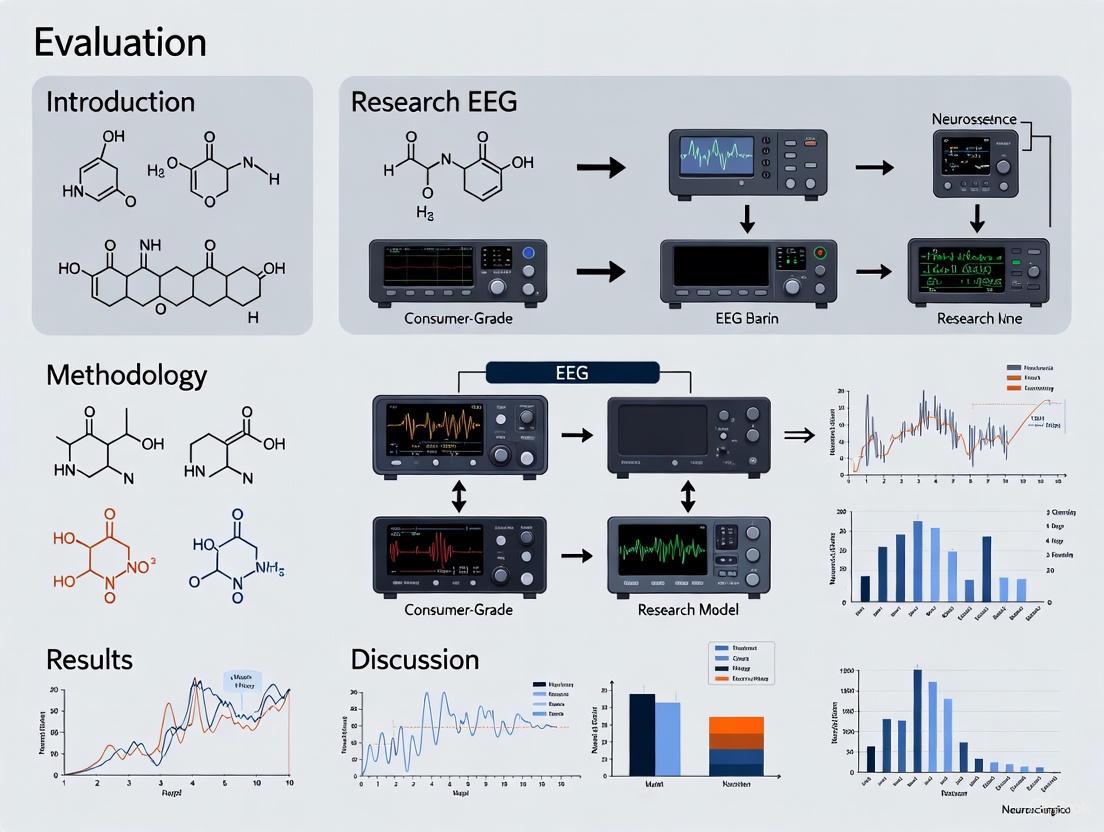
This article provides a comprehensive evaluation of consumer-grade and research-grade EEG equipment, tailored for researchers, scientists, and drug development professionals.
Consumer-Grade vs. Research EEG Equipment: A Data-Driven Guide for Clinical and Research Professionals
Abstract
This article provides a comprehensive evaluation of consumer-grade and research-grade EEG equipment, tailored for researchers, scientists, and drug development professionals. It establishes the foundational technical distinctions between device classes, explores their methodological applications across clinical trials, BCI, and neuromarketing, and offers practical guidance for troubleshooting signal quality and optimizing setup. A critical synthesis of recent validation studies and comparative performance metrics is presented to empower informed, evidence-based device selection for specific research and clinical objectives.
Defining the Divide: Core Technologies and Market Landscape of Modern EEG Systems
Electroencephalography (EEG) provides a non-invasive window into brain activity with millisecond temporal resolution, making it invaluable for both clinical and research applications [1]. The landscape of EEG technology is broadly divided into consumer-grade devices, optimized for cost and usability, and research-grade systems, engineered for data quality and precision. For researchers, scientists, and drug development professionals, selecting the appropriate equipment hinges on a fundamental understanding of three core technical specifications: channel count, sampling rate, and resolution. These specifications directly determine the spatial detail, temporal fidelity, and subtlety of neural signals that can be captured, thereby shaping the validity and scope of research findings. This guide provides an objective comparison of these specifications across device categories, supported by experimental data to inform equipment selection.
Core Technical Specifications Explained
The following table defines the key specifications and their practical impact on research applications.
Table 1: Fundamental EEG Technical Specifications and Their Research Implications
| Specification | Technical Definition | Impact on Data & Research | Consumer-Grade Typical Range | Research-Grade Typical Range |
|---|---|---|---|---|
| Channel Count | Number of electrode sensors recording data simultaneously. | Determines spatial resolution and the ability to localize brain activity. Higher counts allow for better source localization and connectivity analysis [2] [3]. | 4 - 14 channels [2] [4] | 32 - 256+ channels [2] [5] [6] |
| Sampling Rate | The number of times per second (Hertz, Hz) the signal from each channel is recorded. | Determines temporal resolution. Must be high enough to accurately capture the fastest neural oscillations of interest (e.g., gamma waves) and event-related potentials [2] [4]. | 128 - 256 Hz [2] [4] | 250 - 1000+ Hz [2] [6] |
| Resolution | The precision of each measurement, determined by the analog-to-digital converter (ADC), measured in bits. | Determines the ability to detect subtle signal variations. Higher resolution allows for the discrimination of microvolt-level changes in brain activity [2] [4]. | 12 - 14 bits [2] | 16 - 24 bits [2] [6] |
The relationship between these specifications and the resulting EEG data quality can be visualized as a pathway from technical acquisition to research outcome.
Figure 1: The signaling pathway from core technical specifications to research outcomes.
Objective Comparison of EEG Equipment
Side-by-Side Specification Comparison
The market offers a spectrum of devices, from flexible open-source platforms to commercial clinical-grade systems. The table below provides a quantitative comparison of representative devices.
Table 2: Technical Specification Comparison of Select EEG Devices
| Device Category | Example Device | Channels (EEG) | Sampling Rate | Resolution | Electrode Type |
|---|---|---|---|---|---|
| Low-Cost Consumer | Emotiv Insight [2] [4] | 5 | 128 Hz | N/S | Dry |
| Mid-Range Consumer/Pro | Emotiv EPOC X [2] [4] | 14 | 128 / 256 Hz (Pro) | 14 bits | Saline (Semi-dry) |
| Research & Open-Source | OpenBCI Cyton (+Daisy) [2] | 16 | 125 Hz per channel (16ch) | 24 bits | Wet/Dry (modular) |
| Research & Open-Source | FreeEEG32 [2] | 32 | 250 - 1000 Hz | 24 bits | Wet (DIY assembly) |
| High-Density Research | Emotiv Flex Series [4] [5] | 32 | 256 Hz | N/S | Gel or Saline |
| Laboratory Grade | actiCHamp Plus [7] | Up to 160 | Up to 100 kHz (aggregate) | N/S | Active or Passive |
Experimental Data: Benchmarking Performance in Real-World Scenarios
Specification tables alone are insufficient; performance must be validated through controlled experiments.
Experiment 1: Benchmarking Dry-Electrode EEG for Clinical Trials
A 2025 study benchmarked dry-electrode EEG systems against a standard wet-EEG system in a clinical trial setting [8].
- Objective: To determine if dry-EEG can reduce patient and site burden while maintaining data quality for biomarker purposes.
Methods:
- Participants: n=32 healthy volunteers.
- Devices: Three dry-EEG systems (DSI-24, Quick-20R, zEEG) vs. a standard wet-EEG (Compumedics QuikCap with Grael amplifier).
- Protocol: Two recording days per participant, employing resting-state EEG and event-related potential (ERP) tasks like the P300.
- Metrics: Setup/clean-up time, technician ease-of-use ratings, participant comfort, and quantitative EEG measures (power spectra, ERP amplitude).
Key Findings:
- Efficiency: All dry-EEG systems significantly reduced setup and clean-up time compared to wet-EEG (p<0.001), with the fastest device cutting setup time in half [8].
- Data Quality: Dry-EEG performed on par with standard EEG for resting-state quantitative EEG and the P300 ERP, confirming its utility for these specific clinical trial applications [8].
- Limitations: The study noted challenges for dry electrodes in capturing very low-frequency activity (<6 Hz) and induced gamma activity (40-80 Hz), indicating that the choice of device must be carefully matched to the neurophysiological signals of interest [8].
Experiment 2: The Effect of Channel Count on Motor Imagery Classification
A 2025 pilot study directly investigated the impact of electrode numbers on the performance of a brain-computer interface (BCI) using motor imagery [3].
- Objective: To explore the effect of EEG channel count on classification accuracy in a source-level motor imagery task.
Methods:
- Data: Publicly available BCI Competition III Dataset IVa, originally recorded with 118 channels.
- Channel Configurations: Data were synthetically sub-sampled to mimic 19, 30, 61, and the full 118 channels.
- Processing & Analysis: Signals were filtered (8-13 Hz mu band), and cortical source activity was computed via inverse modeling. Common Spatial Patterns (CSP) were used for feature extraction, and a Support Vector Machine (SVM) was used for classification of right-hand vs. right-foot motor imagery.
Key Findings:
- Classification Accuracy:
- 19 channels: 83.63%
- 30 channels: 84.70%
- 61 channels: 84.73%
- 118 channels: 83.95%
- Interpretation: While 19 channels underperformed, the best results were achieved with 61 channels, not 118. This demonstrates that more channels are not always better and that an optimal number exists for a given task, beyond which computational cost increases without a corresponding performance benefit and may even introduce noise [3].
- Classification Accuracy:
The workflow for this experiment is outlined below.
Figure 2: Experimental workflow for motor imagery channel count study [3].
The Scientist's Toolkit: Essential Research Reagents and Materials
Beyond the amplifier and headset, successful EEG research relies on a suite of supporting materials and software solutions.
Table 3: Essential Reagents and Software for EEG Research
| Item | Function/Application | Consumer vs. Research Context |
|---|---|---|
| Conductive Gel (Paste) | Improves electrical conductivity for wet electrode systems, reduces impedance. | Critical for research-grade wet systems (e.g., BrainCap, actiCAP). Not used with consumer dry systems. |
| Saline Solution / Saline Pads | Hydrates semi-dry electrodes (e.g., Emotiv EPOC X). Less conductive than gel but easier setup. | Common in consumer/pro-sumer devices balancing signal quality and convenience [2] [5]. |
| Abrasive Prep Gel / Skin Prep | Gently exfoliates the scalp to lower skin-electrode impedance. | Used in high-fidelity research to maximize signal quality, especially for ERPs and frequency analysis. |
| Electrode Cream / Paste | Used with passive electrode systems to secure electrodes and maintain conductivity in high-density caps. | A staple of traditional laboratory EEG, often used with BrainAmp and similar systems [7]. |
| Lab Streaming Layer (LSL) | An open-source platform for unified, synchronized data collection from multiple devices (EEG, eye-tracker, etc.) [7]. | An increasingly standard tool in research labs for multimodal study design, compatible with many consumer and research systems. |
| BrainVision Analyzer / EEGLAB / Python (MNE, BrainFlow) | Software for advanced signal processing, artifact correction, and statistical analysis of EEG data. | Essential for research-grade analysis. BrainFlow, for instance, is designed to work with open-source platforms like OpenBCI [2]. |
| actiCAP ControlBox II | An adapter that allows the use of active electrodes with amplifiers designed for passive systems (e.g., BrainAmp) [7]. | A bridging tool that enhances the flexibility of a research lab's existing infrastructure. |
The choice between consumer and research-grade EEG equipment is not a matter of which is universally better, but which is optimal for a specific research question, methodological constraints, and budget. The experimental data shows that while consumer-grade dry systems have matured significantly—offering compelling advantages in speed and participant comfort for tasks like P300 and resting-state analysis [8]—they may still be inadequate for research requiring precise source localization or the capture of high-frequency neural activity. Conversely, high-density research systems provide the spatial and signal detail necessary for advanced applications like BCI and connectivity analysis, albeit with increased cost and procedural complexity [3].
Ultimately, researchers must adopt a goal-oriented approach:
- For large-scale, real-world studies where ease of use and participant turnover are paramount, modern consumer-grade headsets (14-32 channels) are a viable option.
- For hypothesis-driven laboratory research demanding the highest signal fidelity, source modeling, and comprehensive brain coverage, research-grade systems (64+ channels) remain the gold standard.
- A hybrid methodology, as suggested by some researchers, involves using a high-density system to identify critical brain regions for a specific task, followed by longitudinal monitoring with a low-density system targeting only those regions, offering an optimal balance of detail and practicality [6]. By grounding the decision in core specifications and empirical evidence, researchers can strategically invest in the technology that will most effectively power their scientific discovery.
Electroencephalography (EEG) technology has evolved significantly, offering researchers and clinicians a choice between traditional wet electrodes, modern dry electrodes, and emerging semi-dry (water-based) electrodes. This guide provides an objective comparison of these technologies, focusing on their performance characteristics, experimental validation, and suitability for different research scenarios. Understanding the trade-offs between signal quality, setup time, and practical handling is crucial for selecting the appropriate tool in both consumer-grade and research-grade EEG equipment.
Table 1: Core Characteristics and Performance Comparison of EEG Electrode Types
| Feature | Wet (Gel) Electrodes | Dry Electrodes | Semi-Dry/Water-Based Electrodes |
|---|---|---|---|
| Electrolytic Substance | Conductive gel or paste [9] [10] | None [9] [10] | Water or saline solution [9] [10] |
| Setup Time | Long (requires skin prep and gel application) [9] | Short (no skin prep) [9] | Short (no skin prep) [9] |
| Signal Quality & SNR | High signal-to-noise ratio (SNR); stable recordings [9] [10] | Lower SNR; higher impedance; more prone to motion artifacts [9] | Better SNR and stability than dry electrodes [9] |
| Skin Preparation | Often requires abrasion [9] [10] | Not required [9] | Not required [9] |
| Comfort & Clean-up | Uncomfortable setup and clean-up; gel residue [9] [10] | Comfortable to wear; minimal clean-up [9] [11] | Comfortable; cleaner than wet electrodes [9] |
| Typical Application Context | Gold standard for clinical and high-density research [9] [10] | Real-world, mobile settings; rapid tests [9] [10] | Exploratory research; longer mobile recordings [9] [10] |
Detailed Performance Metrics from Validation Studies
Signal Quality in Resting-State and Task-Based Paradigms
Validation studies consistently show that while dry electrodes perform well for many applications, wet electrodes remain the benchmark for signal quality.
- Resting-State Spectral Power: A 2020 study comparing a 19-channel dry EEG system to a conventional wet system found no significant difference in absolute alpha and beta power during rest. However, the dry system recorded slightly higher power in the theta and delta bands, a finding attributed to its higher electrode-skin impedance [12].
- Event-Related Potentials (ERPs): The same study found that key ERP components, such as the P100 of the Visual Evoked Potential (VEP) and the P3, showed no statistically significant differences in latency or amplitude between the dry and wet systems. The spatial distributions of these components were also comparable, demonstrating the dry system's capability for clinical ERP applications [12].
- Mismatch Negativity (MMN): A 2024 study highlighted that dry EEG could reliably detect the MMN, an ERP component critical for investigating neuropsychiatric disorders. However, the dry system underestimated the MMN mean amplitude, peak latency, and associated theta power compared to the wet system, indicating a lower signal-to-noise ratio [13].
Practical Handling and Subject Comfort
Practical considerations are a major differentiator between these systems, impacting study design and participant acceptance.
- Setup Time and Convenience: Application of a full wet EEG cap is a time-consuming process requiring trained technicians for skin abrasion and gel application [9]. In contrast, dry and semi-dry electrodes can be set up in minutes without specialized skills, making them ideal for rapid deployments and studies with limited technical support [9] [11].
- Subject Preference: In a study with both healthy volunteers and neurological patients, the majority of subjects reported a preference for the dry electrode headset over the conventional wet system [12].
- Long-Term Stability: The conductive gel used in wet electrodes can dry out over extended recordings (e.g., beyond 3-4 hours), degrading signal quality unless periodically refilled [9] [10]. Dry electrodes do not have this issue, while semi-dry electrodes may require remoistening but are more stable than pure dry electrodes for longer sessions [9].
Table 2: Comparative Experimental Data from Key Validation Studies
| Study / Parameter | Wet Electrode Performance | Dry/Semi-Dry Electrode Performance | Research Context |
|---|---|---|---|
| Hinrichs et al., 2020 [12] | Reference standard | No significant difference in VEP P100 & P3 ERP latency/amplitude (p > 0.10) | Clinical ERP (16 patients, 16 healthy) |
| Front. Neurosci., 2024 [13] | Reliable MMN detection | Underestimation of MMN amplitude & theta power; reliable detection despite lower SNR | Task-related EEG (33 healthy) |
| Hinrichs et al., 2020 [12] | Reference spectral power | Comparable alpha/beta power; Higher theta/delta power (p = 0.0004) | Resting-state EEG |
| TMSi Blog, 2024 [9] | High-density mapping possible | Suitable for mobile, at-home testing | Application scope |
Experimental Protocols for System Comparison
For researchers aiming to validate or compare EEG systems, the following methodological frameworks, derived from published studies, provide a robust foundation.
Protocol 1: Comprehensive Clinical Signal Comparison
This protocol is designed for a rigorous, within-subject comparison of dry and wet EEG systems, focusing on both resting-state and evoked activity [12].
- Study Design: A randomized, counterbalanced cross-over study where each participant undergoes two recording sessions on different days, one with each EEG system.
- Participants: Include both healthy volunteers and relevant patient cohorts (e.g., individuals with subjective memory impairment) to assess performance across populations.
- Recording Paradigms:
- Resting-State EEG: Record 5 minutes of eyes-closed rsEEG.
- Event-Related Potentials (ERPs): Implement tasks such as:
- A visual oddball paradigm to elicit the P3 component.
- A visual evoked potential (VEP) protocol to capture the P100 component.
- Data Analysis:
- Quantitative EEG (qEEG): Calculate absolute power in standard frequency bands (delta, theta, alpha, beta) from the rsEEG.
- ERP Analysis: Measure the latency and amplitude of key components (e.g., P100, P3).
- Blinded Visual Evaluation: Have experienced neurologists, blinded to the system used, qualitatively assess rsEEG traces for clinical acceptability.
- Subjective Feedback: Collect participant reports on comfort and system preference.
Protocol 2: Task-Related and Connectivity Validation
This protocol focuses on higher-order cognitive tasks and functional connectivity, which are increasingly relevant for neuropsychiatric research [13].
- Study Design: A counterbalanced cross-over study with a single recording session incorporating both systems.
- Participants: Healthy adults.
- Recording Paradigms:
- Auditory Oddball Paradigm: Use a paradigm with standard (e.g., 1000 Hz) and deviant (e.g., 500/1500 Hz) tones to elicit Mismatch Negativity (MMN). Theta power associated with the MMN should be analyzed in the time-frequency domain.
- Resting-State for Connectivity: Record at least 5 minutes of rsEEG.
- Data Analysis:
- Time-Frequency Representations: Analyze task-related theta power.
- Functional Connectivity: Compute measures such as the Phase Lag Index (PLI) and use graph theory approaches like Minimum Spanning Tree (MST) to derive network metrics (e.g., MST diameter).
Research Reagent Solutions: Essential Materials for EEG Research
Table 3: Key Materials and Equipment for EEG Research
| Item | Function/Description | Example Use-Case |
|---|---|---|
| Multipin Dry Electrodes | Dry electrodes with multiple conductive pins designed to penetrate the hair layer for better scalp contact [13]. | Validation studies comparing dry to wet EEG systems [13]. |
| Ag/AgCl Wet Electrodes | Silver/Silver-Chloride electrodes; the gold standard for wet EEG systems, offering high signal quality [9]. | Clinical and high-fidelity research applications [9] [12]. |
| Water-Based Sponge Electrodes | Semi-dry electrodes that use porous sponges dampened with tap or saline water to create conduction [10]. | Long-term or mobile studies where gel is impractical but better signal than dry electrodes is needed [9]. |
| High-Input Impedance Amplifiers | Amplifiers designed to handle the high electrode-skin impedance typical of dry electrodes, preventing signal attenuation [12]. | An essential component of any dry EEG system to ensure viable signal quality [12] [11]. |
| Auditory Oddball Paradigm | A classic experimental task using a sequence of standard and deviant tones to elicit ERPs like MMN and P300 [13]. | Investigating pre-attentive auditory processing and higher cognitive functions [13]. |
Decision Workflow and Technical Diagrams
The following diagram illustrates the decision-making process for selecting an appropriate EEG electrode technology based on research objectives and practical constraints.
EEG Electrode Technology Selection Workflow
The relationship between key signal quality metrics and the different electrode technologies can be visualized as follows, based on aggregated findings from validation studies.
Key Signal Quality Metrics for EEG Electrode Types
The choice between wet, dry, and semi-dry EEG systems is not a matter of identifying a universally superior technology, but rather of selecting the right tool for the specific research context. Wet electrodes remain the undisputed gold standard for applications where signal fidelity is paramount and resource-intensive setup is acceptable. Dry electrodes offer unparalleled advantages in mobility, speed, and comfort, enabling research in real-world settings and rapid screening, albeit with a trade-off in signal-to-noise ratio that can be mitigated by advanced amplifiers. Semi-dry electrodes represent a promising middle ground, combining better signal stability than dry electrodes with the practical benefits of a gel-free setup.
For the research and drug development community, this evolving landscape means that high-quality EEG is no longer confined to the controlled laboratory. The validation of dry and semi-dry systems for clinical endpoints supports their use in larger-scale trials and decentralized studies, potentially accelerating biomarker discovery and therapeutic evaluation.
The global market for consumer electroencephalogram (EEG) devices has witnessed substantial growth, driven by technological advancements and increasing awareness of mental health monitoring. Valued at approximately USD 1.2 billion in 2024, the market is projected to expand at a compound annual growth rate (CAGR) of 12.5% from 2026 to 2033, reaching an estimated USD 3.46 billion by 2033 [14]. Parallel estimates indicate the consumer-level EEG device market growing from USD 750 million in 2023 to nearly USD 1.6 billion by 2032, at a CAGR of 9% [15]. This growth is fueled by the proliferation of wearable EEG technology, which enables brain activity monitoring outside traditional laboratory settings for applications in healthcare, research, and consumer electronics [15] [16].
Unlike research-grade systems that require gel-based electrodes, trained technicians, and controlled environments, consumer-grade devices typically use dry-electrode technology and wireless connectivity, making them accessible to non-specialists [17] [16]. While this accessibility opens new avenues for large-scale and long-term studies, it also raises critical questions about signal quality and data reliability compared to research-grade equipment, necessitating rigorous validation [17] [16].
Market Leaders and Device Comparison
The consumer EEG device market features several key players offering products with varying specifications tailored to different applications and user needs. The competitive landscape includes established companies and emerging startups focusing on innovation and strategic partnerships [14].
Table 1: Key Manufacturers in the Consumer EEG Device Market [18] [14]
| Company | Notable Product(s) | Primary Target Segment |
|---|---|---|
| Emotiv Inc. | EPOC X, MN8 EEG Earbuds, Insight | Research, BCI Development, Wellness |
| InteraXon Inc. (Muse) | Muse 2, Muse S (Athena) | Meditation, Wellness, Research |
| NeuroSky | Mindwave Mobile 2 | Education, Entertainment, Entry-level BCI |
| OpenBCI | Cyton Board | DIY Research, Advanced BCI Development |
| Wearable Sensing | DSI-VR300 | Research, VR/AR Integration |
| Neurosity | Crown | Productivity, Focus Tracking |
| Laxtha | Neuronicle FX2 | Wellness, Basic Biometric Monitoring |
Table 2: Technical Specifications of Selected Consumer EEG Devices [17] [19] [20]
| Device | Sampling Rate | Number of EEG Channels | Resolution | Key Features |
|---|---|---|---|---|
| Mindwave Mobile 2 | 512 Hz | 1 | 12-bit | Single-channel, TGAM1 module, attention/meditation indices [17] |
| Muse 2 / Muse S | 256 Hz | 4 | 12-bit | Dry electrodes at TP9, AF7, AF8, TP10; includes PPG, accelerometer [17] [20] |
| Muse S (Athena) | - | 4 (EEG) + fNIRS | - | Combines EEG and fNIRS for a more comprehensive picture [20] |
| Emotiv EPOC X | 128 Hz | 14 | 14-bit | High-density sensor array for research and advanced BCI [19] |
| OpenBCI Cyton Board | 250 Hz | 8 | 24-bit | Based on ADS1299 chip; requires assembly with headset/electrodes [17] |
| Neurosity Crown | - | 8 | - | Focus on productivity and flow state tracking [19] [20] |
| DSI-VR300 | 300 Hz | 7 | 16-bit | Active dry electrodes, compatible with VR glasses [17] |
Primary Use-Cases and Applications
Consumer EEG devices have diversified beyond niche applications into several core domains.
Table 3: Primary Use-Cases for Consumer EEG Devices [21] [19] [15]
| Application Domain | Specific Uses | Example Devices |
|---|---|---|
| Mental Wellness & Stress Management | Meditation feedback, stress tracking, anxiety management, mental health monitoring | Muse Headbands, Emotiv Insight, FocusCalm [21] [19] |
| Focus & Productivity Enhancement | Neurofeedback for concentration, cognitive workload monitoring, focus optimization in workplaces | Neurosity Crown, Neurable, Emotiv MN8 [21] [20] |
| Gaming & Entertainment | Adaptive gameplay based on player engagement, frustration, or excitement; immersive VR/AR experiences | Emotiv EPOC X, DSI-VR300 [21] |
| Education & Learning Optimization | Identifying optimal focus periods for studying, tailoring learning experiences to cognitive states | NeuroSky Mindwave, various headbands [21] |
| Research & BCI Development | Academic neuroscience, cognitive science, DIY biohacking, brain-computer interface prototyping | OpenBCI Cyton, Emotiv EPOC X, devices with SDK access [17] [19] |
| Sports & Fitness Performance | Cognitive training for athletes, optimizing mental states for peak performance, brain endurance tracking | FocusCalm, Muse [20] [15] |
Evaluating Performance: Consumer-Grade vs. Research-Grade EEG
A critical consideration for researchers is how consumer devices perform against clinical or research-grade systems. Recent studies provide quantitative comparisons of signal quality.
Experimental Protocol: EEG Phantom and Spectral Response
One study devised an EEG phantom method to quantitatively evaluate systems by reproducing µV-level amplitude EEG signals, allowing comparison against a known source signal [17].
Methodology Overview [17]:
- Apparatus: A waveform generator and voltage divider circuit using conductive rubber instead of a realistic head model.
- Signal Reproduction: Reproduced EEG signals from pre-existing datasets were delivered to the input of various devices.
- Evaluation Metrics: Devices were evaluated based on spectral responses, temporal patterns of event-related potentials (ERP) like P300, and spectral patterns of resting-state EEG.
- Tested Devices: Four consumer-grade wireless systems (Mindwave Mobile 2, Muse 2, Neuronicle FX2, Cyton Board) were compared against a research-grade system (DSI-VR300).
Key Findings [17]:
- Limited Bandwidth: Consumer-grade devices demonstrated a more limited bandwidth compared to the research-grade device.
- ERP Distortion: While late ERP components (e.g., P300) were detectable, the overall ERP temporal pattern was often distorted. Only one consumer device showed an ERP pattern comparable to the research-grade system.
- Alpha Rhythm: The activation of the alpha rhythm was observable in all consumer devices, indicating utility for basic rhythmic analysis.
{{stringified_svg}}
Experimental Protocol: Resting-State Spectral Characteristics
Another study directly compared the spectral characteristics of resting-state brain activity recorded from healthy volunteers using three consumer-grade devices (PSBD Headband Pro, PSBD Headphones Lite, Muse S Gen 2) against a research-grade Brain Products (BP) amplifier with mirroring montages [16].
Methodology Overview [16]:
- Participants: 19 healthy volunteers with no neurological history.
- Protocol: Recordings were obtained under eyes-closed and eyes-open conditions for 3 minutes each.
- Data Acquisition: Consumer device recordings were followed by BP amplifier recordings with montages mirroring the consumer devices.
- Signal Quality Control: For BP, impedance was kept below 30 kOhm; for PSBD devices, below 300 kOhm; for Muse, software indicators were kept "green."
- Data Analysis: Preprocessing included filtration (0.5-40 Hz FIR filter). Analysis focused on spectral power in delta, theta, alpha, beta, and gamma bands, and the alpha suppression (Berger's effect).
Key Findings [16]:
- Higher Low-Frequency Power: All consumer devices exhibited higher mean power in low-frequency bands, a known characteristic of dry-electrode technology.
- Variable Device Performance:
- PSBD Headband showed the most precise match with the research-grade BP amplifier.
- PSBD Headphones displayed moderate correspondence but had signal quality issues in central electrodes.
- Muse S Gen 2 demonstrated the poorest signal quality and lowest alignment with BP, indicating high susceptibility to artifacts.
Table 4: Summary of Key Experimental Findings: Consumer vs. Research-Grade EEG
| Performance Metric | Research-Grade (e.g., BP, DSI-VR300) | High-Performing Consumer (e.g., PSBD Headband) | Typical Consumer (e.g., Muse S Gen 2) |
|---|---|---|---|
| Signal Bandwidth | Wide, full bandwidth [17] | Limited compared to research-grade [17] | Limited compared to research-grade [17] |
| ERP Fidelity | High-fidelity temporal patterns [17] | Distorted overall pattern, though P300 detectable [17] | Poorest signal quality and alignment [16] |
| Alpha Rhythm Detection | Yes [17] | Observable, matches research-grade closely [17] [16] | Observable, but with low alignment to research-grade [17] [16] |
| Spectral Power Alignment | Gold Standard | Closest match to research-grade [16] | Poor alignment, higher low-frequency power [16] |
{{stringified_svg}}
The Scientist's Toolkit: Key Research Reagents and Materials
For researchers aiming to validate or utilize consumer EEG devices, specific tools and methodologies are essential.
Table 5: Essential Research Toolkit for Consumer EEG Validation & Application
| Tool / Material | Function in Research | Example Use-Case |
|---|---|---|
| EEG Phantom | Provides a known, reproducible µV-level signal for quantitative device comparison and validation independent of human subject variability [17]. | Comparing spectral response and signal fidelity of different consumer devices against a research-grade gold standard [17]. |
| Research-Grade Amplifier | Serves as the gold-standard reference device in validation studies (e.g., Brain Products ActiChamp Plus) [16]. | Recording brain activity with high-fidelity simultaneously or with mirroring montages to compare against consumer device outputs [16]. |
| Dry-Electrode Systems | Enable easy-setup, wireless EEG recording; multi-pin designs often provide more stable contact than flat sensors [16]. | Conducting long-term, real-world brain monitoring studies outside the laboratory setting [17] [16]. |
| Software Development Kit (SDK) | Provides API access to raw or processed EEG data from the consumer device, enabling custom analysis and application development [22] [19]. | Building custom brain-computer interface (BCI) applications or exporting data for independent signal processing [19] [20]. |
| Signal Processing Pipelines | Open-source software tools (e.g., MNE Python, EEGLAB) used for preprocessing, filtering, and analyzing raw EEG data [16]. | Performing standardized spectral analysis, artifact removal, and statistical comparison of EEG signals across devices [16]. |
Consumer-grade EEG devices offer an unprecedented opportunity to bring brain activity monitoring into real-world settings across diverse fields like wellness, productivity, and gaming. For researchers, their utility is highly application-dependent. They are suitable for studies where basic brain rhythm detection (e.g., alpha waves) is sufficient, or for exploratory research requiring ecological validity and larger sample sizes. However, for investigations demanding high-fidelity signal acquisition, precise temporal resolution of ERPs, or clinical-grade accuracy, traditional research-grade systems remain the indispensable standard. The choice between consumer and research-grade equipment should be guided by a clear understanding of the trade-offs between signal quality, cost, accessibility, and the specific neuroscientific questions being addressed.
The global electroencephalography (EEG) devices market is experiencing significant transformation and growth, projected to expand from USD 1.52 billion in 2025 to approximately USD 3.65 billion by 2034, advancing at a compound annual growth rate (CAGR) of 10.24% [23]. This expansion is primarily fueled by the increasing global prevalence of neurological disorders and technological innovations that are making EEG technology more accessible and versatile [23]. The market's evolution is particularly relevant for researchers, scientists, and drug development professionals who must navigate the growing distinction between consumer-grade and research-grade EEG equipment. Understanding the capabilities, limitations, and appropriate applications of each device category has become essential for conducting valid and reproducible neuroscience research.
This guide provides a comprehensive comparison between consumer and research EEG equipment, focusing on the technical specifications, performance metrics, and experimental protocols that matter most to scientific professionals. We examine the key drivers propelling the EEG market forward, analyze the data quality and reliability differences between device categories, and provide evidence-based recommendations for equipment selection across various research scenarios.
Current Market Landscape and Projections
The EEG devices market is characterized by diverse product segments and strong regional variations. North America currently dominates the market with a 36% share as of 2024, while the Asia-Pacific region is expected to grow at the fastest rate during the forecast period [23]. This growth distribution reflects regional healthcare infrastructure capabilities, research funding availability, and prevalence of neurological disorders.
Table 1: Global EEG Devices Market Size Projections from Multiple Sources
| Source | Base Year Value | Projected Year Value | CAGR | Time Period |
|---|---|---|---|---|
| Precedence Research | USD 1.52 billion (2025) | USD 3.65 billion (2034) | 10.24% | 2025-2034 [23] |
| Transparency Market Research | USD 1.7 billion (2023) | USD 4.7 billion (2034) | 9.6% | 2024-2034 [24] |
| Zion Market Research | USD 1.67 billion (2024) | USD 5.26 billion (2034) | 11.1% | 2025-2034 [25] |
| Persistence Market Research | USD 1,414.8 million (2025) | USD 2,301.8 million (2032) | 7.2% | 2025-2032 [26] |
Variations in market size projections across different research firms stem from differing methodologies, segment definitions, and geographic coverage. However, all sources indicate robust growth exceeding 7% CAGR, significantly outpacing many other medical device segments.
Primary Market Drivers and Trends
Several interconnected factors are propelling the growth and transformation of the EEG devices market:
Increasing Neurological Disorder Prevalence: Conditions like epilepsy, Alzheimer's disease, Parkinson's disease, and sleep disorders are rising globally, creating demand for diagnostic tools [23]. For instance, over 50 million people worldwide are affected by epilepsy alone [23], while approximately 6.7 million Americans live with Alzheimer's [26].
Technological Advancements: The development of portable and wearable EEG systems, integration of artificial intelligence for data analysis, and improvements in signal processing algorithms are expanding EEG applications [23]. AI-powered EEG tools can detect abnormalities, seizure patterns, or cognitive anomalies in real-time with greater precision than traditional interpretation methods [23].
Expansion into Non-Clinical Applications: Beyond traditional medical diagnostics, EEG devices are increasingly used in cognitive neuroscience, psychology research, neuromarketing, brain-computer interfaces, and human performance monitoring [23] [27]. This diversification creates new markets and applications for EEG technology.
Telemedicine and Remote Monitoring: The push for decentralized healthcare has increased demand for portable EEG systems with wireless connectivity, enabling remote patient monitoring and reducing the need for hospital visits [23] [27].
Consumer vs. Research EEG Equipment: A Technical Comparison
Key Performance Differentiators
Research and clinical applications demand higher specifications across several technical parameters compared to consumer-grade devices. Understanding these differences is crucial for selecting appropriate equipment for specific research objectives.
Table 2: Technical Comparison of Medical vs. Consumer EEG Systems
| Parameter | Medical/Research Grade EEG | Consumer Grade EEG | Research Implications |
|---|---|---|---|
| Typical Channels | 32-channel (27.4% market share) [26], 21-channel, up to 128+ [28] | 1-2 channels (e.g., Muse, Mindwave) [29] | Higher channel counts enable better spatial resolution and source localization |
| Electrode Type | Wet electrodes with electrolyte gel [29] | Dry electrodes [29] | Wet electrodes provide better signal quality but longer setup time |
| Sampling Rate | 256 Hz (B-Alert), 500 Hz (Enobio) [29] | 220 Hz (Muse), 512 Hz (Mindwave) [29] | Higher sampling rates capture more subtle neural dynamics |
| Signal Quality Check | Impedance check and signal quality verification [29] | Basic signal quality check without impedance monitoring [29] | Medical systems offer clearer advantages in data quality and reliability [29] |
| Setup Time | 20-25 minutes [29] | 3-5 minutes [29] | Consumer systems offer convenience but sacrifice signal quality |
| Artifact Resistance | Less prone to eye blink and muscle movement artifacts [29] | More susceptible to frontal region artifacts [29] | Consumer systems require more sophisticated artifact removal algorithms |
| Regulatory Status | FDA-cleared, CE medically certified [29] | Consumer electronics classification | Medical-grade devices meet regulatory requirements for clinical research |
Quantitative Performance Comparison
A 2017 study directly compared medical-grade and consumer wireless EEG systems, providing empirical data on performance differences [29]. The research evaluated two medical-grade systems (B-Alert X24 and Enobio 20) against two consumer systems (Muse and Mindwave) across five healthy participants during two study visits approximately one week apart.
The study found that while EEG data could be successfully collected from all systems, the medical-grade systems demonstrated clear advantages in data quality and test-retest reliability [29]. Specifically, the B-Alert, Enobio, and Mindwave systems showed similar Fp1 power spectra, while the Muse system displayed a broadband increase in power spectra and the highest relative variation across test-retest acquisitions [29]. This higher variability in consumer systems compromises their reliability for longitudinal studies and clinical trials where consistent measurement is essential.
Diagram: Experimental workflow for comparing EEG system performance, based on a study that evaluated medical-grade and consumer systems [29]
Experimental Protocols and Methodologies
Standardized Testing Protocols for EEG Validation
For researchers conducting EEG validation studies, implementing standardized protocols is essential for generating comparable and reproducible results. The following methodology adapted from the comparative study of EEG systems provides a robust framework [29]:
Participant Selection: Recruit healthy participants (typically 5 or more) with screening for factors known to affect EEG signals (neurological history, medication use, lifestyle factors like caffeine and alcohol consumption) [29].
Experimental Conditions: Collect resting-state EEG during both eyes-open (with visual fixation on a cross symbol) and eyes-closed conditions, typically 5 minutes each [29].
System Comparison: Test multiple systems in the same participants during the same session, with consistent order of administration across subjects.
Signal Analysis: Focus on common electrodes across all systems (typically Fp1 as the only shared electrode in multi-system comparisons). Calculate Power Spectral Density (PSD) using Welch's modified periodogram method with Hamming window tapering.
Reliability Assessment: Conduct test-retest evaluations with repeated measurements across separate visits (typically 1 week apart) to assess consistency.
Advanced Signal Processing Techniques
Research-grade applications often require sophisticated signal processing to extract meaningful neural information. Recent advances in EEG analysis include:
Artifact Removal Methodologies: A 2025 study proposed an innovative approach combining Ensemble Empirical Mode Decomposition (EEMD) with Fast Independent Component Analysis (FastICA) to effectively filter out electrooculography (EOG) artifacts [30]. This hybrid method addresses the susceptibility of raw EEG signals to ocular interference, producing cleaner signals for analysis.
Feature Extraction Algorithms: To overcome limitations of single-method feature extraction, researchers have developed integrated approaches combining Wavelet Packet Transform (WPT) and Sample Entropy (SampEn) [30]. This strategy extracts both time-frequency features and nonlinear characteristics from EEG signals, creating comprehensive feature vectors that improve classification accuracy for states like driving fatigue.
Diagram: Advanced EEG signal processing workflow for artifact removal and feature extraction [30]
The Scientist's Toolkit: Essential Research Reagent Solutions
Table 3: Essential Materials and Solutions for EEG Research
| Item | Function/Application | Research Context |
|---|---|---|
| Electrode Conductive Gel | Improves electrical contact between scalp and electrodes, reduces impedance | Essential for medical/research-grade EEG systems using wet electrodes [29] [31] |
| Electrode Caps with Standardized Montages | Precise electrode positioning according to international 10-20 system | Critical for reproducible research across subjects and studies [29] |
| Impedance Check Solution | Verifies electrode-scalp contact quality (typically <5-10 kΩ for research) | Standard feature in medical-grade systems; lacking in consumer devices [29] |
| Artifact Removal Algorithms | Software tools for identifying and removing ocular, muscle, and line noise | Particularly important for consumer EEG with higher artifact susceptibility [29] [30] |
| Signal Quality Verification Tools | Automated or manual assessment of signal integrity | Included in medical systems; limited implementation in consumer devices [29] |
Research Applications and Case Studies
Domain-Specific Implementation Examples
EEG technology serves diverse research applications, each with distinct equipment requirements:
Clinical Neuroscience Research: Studies investigating neurological disorders such as epilepsy, Alzheimer's disease, or stroke recovery typically require high-density, research-grade EEG systems. For example, a 2025 study on upper limb rehabilitation collected EEG data under six different rehabilitation paradigms using comprehensive EEG systems to compare neural mechanisms across interventions [31]. Such investigations demand the spatial resolution and signal quality offered by medical-grade equipment.
Cognitive and Psychological Research: Studies examining cognitive workload, attention, or emotional states may successfully utilize consumer-grade devices in certain scenarios. For instance, research on driver cognitive workload has effectively employed EEG to analyze brain activity patterns under different cognitive demands [32]. The balance between practical constraints and data requirements determines appropriate device selection.
Brain-Computer Interface Development: The growing BCI field utilizes both consumer and research-grade equipment, depending on application complexity. Simple BCI applications may function adequately with consumer devices, while advanced BCI systems for communication or rehabilitation typically require research-grade equipment with higher channel counts and better signal quality [31].
Emerging Research Initiatives
The EEG research landscape continues to evolve with several significant initiatives:
The 2025 EEG Foundation Challenge: This NeurIPS 2025 competition aims to advance EEG decoding by addressing cross-task transfer learning and subject-invariant representation [28]. Using the HBN-EEG dataset with over 3,000 participants across six cognitive tasks, this challenge highlights the movement toward more generalized and robust EEG analysis methods that could potentially reduce dependency on specialized equipment through advanced computational approaches [28].
Multi-Paradigm Dataset Development: Recent efforts focus on creating comprehensive EEG datasets that capture multiple experimental paradigms from the same subjects. The 2025 upper limb rehabilitation EEG dataset includes six rehabilitation paradigms (motor execution, motor imagery, VR-based motor imagery, mirror therapy, etc.) from 28 healthy subjects, enabling direct comparison of neural signatures across different intervention approaches [31].
The growing EEG market offers researchers an expanding array of equipment options, from consumer-grade devices to sophisticated medical systems. Selection between these alternatives requires careful consideration of research objectives, methodological requirements, and practical constraints.
Research-grade EEG systems provide superior data quality, reliability, and analytical capabilities essential for clinical studies, pharmacological research, and investigations requiring precise spatial localization of neural activity [29]. The higher channel counts, wet electrode technology, and impedance monitoring capabilities of these systems justify their greater cost and setup complexity for many scientific applications.
Consumer-grade EEG devices offer practical advantages for preliminary investigations, educational applications, and studies prioritizing ecological validity over signal precision [29]. Their affordability and ease of use make them valuable tools for specific research scenarios, though researchers must account for their limitations in signal quality and reliability.
As computational methods advance, including sophisticated artifact removal algorithms and machine learning approaches [30], the performance gap between consumer and research equipment may narrow. However, fundamental differences in hardware capabilities will continue to make equipment selection a critical decision point in EEG research design. Researchers should match their equipment choices to specific study requirements while remaining informed about technological developments in this rapidly evolving field.
Matching Tool to Task: Application-Based Selection for Research and Clinical Trials
Consumer-grade electroencephalography (EEG) devices have emerged as accessible tools for neuroscientific research, offering a cost-effective alternative to traditional research-grade systems. These devices are characterized by their portable designs, dry-electrode technology, wireless connectivity, and significantly lower cost, making them particularly suitable for applications beyond controlled laboratory settings [33] [16]. The growing interest in these devices is evidenced by a substantial body of research, with one comprehensive scoping review identifying 916 studies that utilized consumer-grade EEG, with Emotiv devices being the most prevalent (67.69%), followed by NeuroSky MindWave (24.56%), OpenBCI, interaXon Muse, and MyndPlay Mindband [34]. This review objectively compares the performance capabilities and limitations of consumer-grade EEG devices against research-grade systems across three primary application domains: brain-computer interfaces (BCI), neurofeedback, and exploratory research, with a specific focus on providing experimental data to guide researchers and drug development professionals in selecting appropriate tools for their investigative needs.
Technical Performance Comparison: Consumer-Grade vs. Research-Grade EEG
Understanding the technical capabilities and limitations of consumer-grade EEG devices is fundamental to determining their appropriate application in research contexts. The following comparative analysis synthesizes findings from multiple validation studies to provide a clear overview of how these devices perform against clinical and research standards.
Table 1: Technical Performance Comparison of Consumer vs. Research-Grade EEG Devices
| Performance Metric | Research-Grade Systems | High-Performing Consumer Devices | Lower-Performing Consumer Devices |
|---|---|---|---|
| Signal Quality (vs. Gold Standard) | Gold Standard | Moderate to substantial agreement for specific frequencies [8] | Poor alignment, especially in low frequencies [16] |
| Resting-State Alpha Rhythm | Full detection of Berger's effect (alpha suppression with eyes open) | Detectable in all devices [17] [16] | Detectable but with quantitative inaccuracies [16] |
| Event-Related Potentials (P300) | Robust detection | Late components detectable but overall temporal pattern may be distorted [17] | Significant distortion of temporal patterns [17] |
| Low-Frequency Activity (<6 Hz) | Accurate capture | Notable challenges for dry-electrode systems [8] | Poor performance [8] |
| High-Frequency Gamma (40-80 Hz) | Accurate capture | Notable challenges for dry-electrode systems [8] | Poor performance [8] |
| Setup Time | 20-30 minutes (including skin prep) | ~4 minutes for dry electrodes [35] | Varies by device design [8] |
Table 2: Device-Specific Spectral Characteristics from Recent Validation Studies
| Device Name | Spectral Alignment with Research-Grade (Brain Products) | Key Strengths | Key Limitations |
|---|---|---|---|
| PSBD Headband Pro | Closest match among tested consumer devices [16] | Multi-pin dry electrodes for stable contact [16] | Higher impedance than wet systems [16] |
| PSBD Headphones Lite | Moderate correspondence [16] | Headphone form factor for convenience | Signal quality issues in central electrodes [16] |
| Muse S Gen 2 | Poorest signal quality with extremely low alignment [16] | Wide adoption, available validation data | Flat electrodes with higher susceptibility to artifacts [16] |
| Emotiv EPOC | Most commonly used in research (67.69% of studies) [34] | High channel count for consumer device | Requires saline application, bulkier design [36] |
| NeuroSky MindWave | Single-channel limitations but useful for specific applications [36] | Simple setup, low cost | Limited spatial resolution [34] [36] |
The technical validation evidence indicates that while consumer-grade EEG devices cannot fully replace research-grade systems for all applications, they provide adequate signal quality for specific research domains, particularly when high temporal resolution is more critical than precise spatial localization or absolute amplitude accuracy.
Optimal Application 1: Brain-Computer Interfaces (BCI)
Brain-Computer Interfaces represent one of the most prominent applications for consumer-grade EEG devices, comprising the largest usage domain identified in the scoping review [34]. The practical requirements of BCI systems, including real-time processing, portability, and user comfort, align well with the inherent strengths of consumer EEG technology.
Experimental Evidence and Performance Metrics
Recent validation studies have employed rigorous methodologies to assess BCI capabilities. One approach used an EEG phantom method that reproduced µV-level amplitude EEG signals to evaluate devices based on spectral responses, temporal patterns of event-related potentials (ERP), and spectral patterns of resting-state EEG [17]. This controlled methodology revealed that while consumer-grade devices generally had limited bandwidth compared to research-grade equipment, late ERP components such as P300 were detectable, though the overall ERP temporal pattern was often distorted [17]. Another study focusing on auditory and visually driven task-related brain activity found that dry-electrode EEG performed adequately for P300 evoked activity, making it suitable for BCI spelling applications and other evoked potential paradigms [8].
The following diagram illustrates a typical experimental workflow for validating and implementing consumer-grade EEG in BCI applications:
BCI Signal Processing Pathways
Effective implementation of consumer-grade EEG for BCI applications requires sophisticated signal processing to overcome the inherent limitations of these devices. The signal pathway involves multiple stages of processing to transform raw EEG signals into reliable control commands.
Optimal Application 2: Neurofeedback Training
Neurofeedback represents a significant application domain where consumer-grade EEG devices have demonstrated particular utility, especially in contexts where ecological validity and accessibility outweigh the need for maximum signal precision.
Experimental Protocols and Outcomes
Neurofeedback training using consumer EEG has been validated across multiple populations and cognitive domains. One rigorous investigation involved a pre-post intervention study with elderly participants using a single-channel Neurosky headset for brain exercise games [36]. The methodology involved:
- Participants: 35 elderly individuals screened with Thai Mental State Examination and Montreal Cognitive Assessment
- Protocol: 20 training sessions with five different neurofeedback-based brain training games
- Assessment: Cambridge Neuropsychological Test Automated Battery (CANTAB) and 16-channel EEG pre- and post-training
- Results: Significant improvements in visual memory (delayed matching to sample percent correct, p=.04), attention (median latency, p=.009), and visual recognition (spatial working memory between errors, p=.03)
- Physiological Correlate: Increased upper alpha activity in resting state (open-eyed) measured from the occipital area (p=.04) [36]
This study demonstrates that even single-channel consumer EEG can effectively drive neurofeedback protocols that produce measurable cognitive and physiological changes, though it's worth noting that outcome assessments were performed with more comprehensive testing methods.
Neurofeedback System Architecture
Consumer-grade neurofeedback systems integrate hardware, signal processing, and user interface components to create closed-loop training environments. The system architecture typically follows this configuration:
Optimal Application 3: Exploratory Research and Drug Development
In exploratory research settings and particularly in drug development, consumer-grade EEG devices offer compelling advantages for longitudinal monitoring, large-scale screening, and ecological momentary assessment that would be cost-prohibitive with research-grade systems.
Applications in Clinical Trials and Biomarker Development
EEG data paired with machine learning is increasingly informing drug development processes, particularly for neurological and psychiatric conditions. In epilepsy drug trials, for instance, EEG can detect up to 150 subclinical seizures compared to just 10 typically reported in patient diaries, providing a more sensitive metric of treatment efficacy [37]. This enhanced sensitivity is crucial for determining drug effects in conditions like epilepsy, sleep disorders, and neurodegenerative diseases such as Alzheimer's [37].
A comprehensive 2025 benchmarking study evaluated dry-electrode EEG for clinical trial applications, employing a methodology that closely emulated real-world trial conditions [8]:
- Devices Tested: DSI-24 (Wearable Sensing), Quick-20R (CGX), zEEG (Zeto) vs. standard EEG (Compumedics)
- Participants: 32 healthy volunteers assessed at a clinical testing site with trained personnel
- Protocol: Resting state recordings plus auditory and visual tasks relevant to biomarker development
- Operational Metrics: Set-up time, clean-up time, technician ease of use, participant comfort
- Results: Dry-electrode devices significantly reduced set-up time (fastest device required half the time of standard EEG) and were easier to clean, though participant comfort was highest for standard EEG [8]
Table 3: Operational Efficiency in Clinical Trial Settings
| Device Type | Average Set-up Time | Average Clean-up Time | Technician Ease of Set-up (0-10) | Participant Comfort (0-10) |
|---|---|---|---|---|
| Standard EEG (Research-Grade) | Baseline (Longest) | Baseline (Longest) | 7 | Highest |
| DSI-24 | Fastest | Fastest | 9 | Moderate |
| Quick-20R | Faster | Fastest | 7 | Moderate |
| zEEG | Faster | Fastest | 7 | Moderate |
Methodological Considerations for Exploratory Research
When deploying consumer-grade EEG in exploratory research, particularly for drug development, several methodological considerations emerge:
Frequency Band Limitations: Dry-electrode systems show notable challenges with very low-frequency (<6 Hz) and high-frequency gamma (40-80 Hz) activity, suggesting careful biomarker selection is necessary [8]
Artifact Vulnerability: The simplified hardware of consumer devices increases susceptibility to movement artifacts and environmental noise, necessitating robust preprocessing pipelines including filtering, independent component analysis (ICA), and wavelet transforms [38]
Scalability vs. Precision Trade-off: The primary advantage of consumer devices lies in their ability to facilitate larger sample sizes and more naturalistic testing environments, albeit with some sacrifice in signal precision [35] [37]
The Researcher's Toolkit: Essential Solutions for Consumer-Grade EEG Research
Successful implementation of consumer-grade EEG in research requires careful selection of tools and methodologies. The following table outlines key "research reagent solutions" – essential materials and approaches used in the field.
Table 4: Essential Research Reagent Solutions for Consumer-Grade EEG Studies
| Solution Category | Specific Examples | Function/Purpose | Considerations for Consumer Devices |
|---|---|---|---|
| Signal Acquisition Platforms | Emotiv EPOC, NeuroSky MindWave, InteraXon Muse, OpenBCI | Raw EEG data collection with varying channel counts and spatial coverage | Selection depends on balance between channel count, convenience, and cost [34] |
| Artifact Removal Algorithms | Independent Component Analysis (ICA), Canonical Correlation Analysis (CCA), Wavelet Transform (WT) | Identification and removal of biological and non-biological artifacts | Critical for consumer devices with higher artifact susceptibility [38] |
| Signal Processing Tools | Digital Filtering (Bandpass, Notch), Spectral Analysis, Time-Frequency Decomposition | Extraction of meaningful neural features from raw signals | Required to overcome limited hardware capabilities of consumer devices [38] |
| Validation Methodologies | EEG Phantom Tests, Simultaneous Recordings with Research-Grade Systems, Test-Retest Reliability | Verification of signal quality and measurement consistency | Particularly important when using consumer devices for clinical applications [17] [8] |
| Experimental Paradigms | Resting State EEG, P300 Oddball Tasks, SSVEP, Neurofeedback Protocols | Standardized approaches to elicit specific neural responses | Enable comparison across studies despite device limitations [17] [36] |
Based on the comprehensive comparison of performance data across multiple studies, consumer-grade EEG devices demonstrate optimal utility in specific research contexts while remaining unsuitable for others. The following strategic guidelines emerge:
Recommended Applications: Consumer-grade EEG is most appropriate for BCI implementations, neurofeedback protocols, exploratory research requiring ecological validity, large-scale screening, and longitudinal monitoring where traditional EEG would be cost-prohibitive [34] [36] [8].
Limited Applications: These devices show significant limitations for research requiring precise low-frequency (<6 Hz) or high-frequency gamma (40-80 Hz) measurements, studies demanding exact amplitude quantification, and clinical applications where diagnostic decisions depend on subtle waveform characteristics [16] [8].
Implementation Best Practices: Successful deployment requires robust signal processing pipelines, validation against research-grade systems for specific intended applications, careful participant instruction to minimize artifacts, and appropriate statistical approaches that account for increased signal variability [39] [38].
The evolving evidence base suggests that consumer-grade EEG devices represent not merely inferior substitutes for research-grade systems, but rather specialized tools that enable novel research approaches through their unique combination of accessibility, practicality, and sufficient signal quality for targeted applications.
In neuroscience research and clinical drug development, the choice of electroencephalogram (EEG) equipment is a critical decision that directly impacts data quality, regulatory acceptance, and scientific validity. Research-grade EEG systems represent the gold standard for clinical and investigative applications, characterized by high channel counts, superior signal integrity, and compliance with regulatory requirements. In contrast, consumer-grade brain-computer interface (BCI) devices offer affordability, portability, and ease of use but come with significant technical and methodological limitations. This guide provides an objective comparison of these systems, focusing on their appropriate applications in contexts where data quality affects regulatory decisions, patient safety, and scientific conclusions, such in clinical endpoints for drug trials and advanced neuroscience research.
Technical Comparison: Research-Grade vs. Consumer-Grade EEG
The fundamental differences between research-grade and consumer-grade EEG systems can be categorized across several technical dimensions, which collectively determine their suitability for specific research and clinical applications.
Table 1: Key Technical Specifications and System Capabilities
| Feature | Research-Grade EEG | Consumer-Grade BCI |
|---|---|---|
| Primary Use Case | Clinical diagnosis, regulated drug trials, advanced research [40] [41] | Neuromarketing, neurofeedback, entertainment, preliminary research [42] [43] |
| Typical Channel Count | 16 to 256+ channels [40] | 1 to 14 channels (typically 1-4) [43] |
| Sampling Rate | 256 Hz to 1000+ Hz; ≥256 Hz required for diagnosis [40] [41] | 128 Hz to 512 Hz [43] |
| Electrode Type & Setup | Wet electrodes (Ag/AgCl); requires skin prep and impedance checks [40] [17] | Dry electrodes; quick setup, no skin prep [17] [43] |
| Signal Quality & Resolution | High; 16-bit to 24-bit AD converters; excellent signal-to-noise ratio [40] [17] | Variable to limited; 12-bit to 16-bit resolution [17] [43] |
| Regulatory Compliance | Designed for compliance with FDA, EMA, and clinical standards [44] [41] | Not intended for regulated clinical research [17] |
| Key Advantages | Signal fidelity, data integrity, regulatory acceptance, comprehensive spatial coverage [45] [41] | Cost-effectiveness, portability, minimal setup time, accessibility [42] [43] |
Experimental Performance Data in Research Applications
Direct comparative studies and performance evaluations provide empirical evidence of the capabilities and limitations of each system type. The data below summarize key findings from controlled experiments.
Predictive Accuracy in Neuromarketing
A 2025 study directly compared a research-grade EEG device with a consumer-grade BCI device for predicting consumer preference using a machine learning framework. The goal was binary classification of Purchase Intention (PI) and Affective Attitude (AA) based on EEG signals recorded while participants viewed marketing stimuli [42].
Table 2: Classification Accuracy in a Neuromarketing Task [42]
| Device Type | Purchase Intention (PI) Prediction Accuracy | Affective Attitude (AA) Prediction Accuracy |
|---|---|---|
| Research-Grade EEG | 80.71% | 82.07% |
| Consumer-Grade BCI | 78.31% | 81.23% |
The results demonstrate that while consumer-grade devices can achieve respectable accuracy in certain applied tasks, research-grade systems consistently provide a measurable performance advantage, which can be critical for precise experimental outcomes.
Signal Quality and Fidelity Assessment
A 2024 study employed an EEG phantom to quantitatively evaluate the signal quality of four consumer-grade wireless systems against a research-grade device. The phantom method reproduces µV-level amplitude EEG signals, allowing for comparison with a known source signal [17].
Key findings from this controlled assessment include:
- Limited Bandwidth: Consumer-grade devices exhibited a more limited bandwidth compared to the research-grade device [17].
- ERP Distortion: While late event-related potential (ERP) components like the P300 were detectable, the overall temporal pattern of ERPs was often distorted in consumer-grade devices [17].
- Alpha Rhythm Detection: The activation of the alpha rhythm (8-13 Hz) was observable in all consumer-grade devices tested, indicating their capability to detect strong, dominant oscillatory patterns [17].
This study highlights a critical distinction: consumer-grade devices can be adequate for detecting large-scale neural phenomena (e.g., alpha waves), but they struggle with the fidelity required for precise waveform analysis, such as ERPs, which are crucial for many cognitive and clinical neuroscientific investigations.
Experimental Protocols for System Evaluation
To ensure valid and reproducible results, researchers must adhere to rigorous experimental methodologies. The following protocols are adapted from the cited comparative studies.
Protocol 1: Phantom-Based Signal Quality Evaluation
This methodology provides an objective benchmark by using a known source signal, eliminating biological variability [17].
- Apparatus: An EEG phantom consisting of a waveform generator and a voltage divider circuit to reproduce microvolt-level signals identical to real EEG data.
- Device Setup: Connect the output of the phantom to the input of all EEG systems under test (both research-grade and consumer-grade) simultaneously or in a highly controlled sequential manner.
- Signal Presentation: Present known EEG waveforms, including pre-recorded ERP traces (e.g., P300) and oscillatory patterns (e.g., alpha rhythms).
- Data Analysis: For each device, calculate the following and compare against the source signal:
- Spectral Response: Analyze the power spectral density across frequencies.
- Temporal Fidelity: Calculate cross-correlation or root mean square error (RMSE) for ERP waveforms.
- Amplitude Accuracy: Measure the deviation of recorded signal amplitude from the source signal.
Figure 1: Workflow for objective EEG signal quality assessment using a phantom.
Protocol 2: Within-Subject Biological Validation
This protocol evaluates system performance in a real-world research scenario with human participants.
- Participants: Recruit a cohort of subjects representative of the target population.
- Experimental Design: Employ a within-subjects design where each participant is tested on both the research-grade and consumer-grade systems, in counterbalanced order.
- Paradigm: Implement standardized tasks known to elicit specific neural responses:
- Data Recording: Record data simultaneously if possible, or in separate sessions with minimal delay.
- Key Outcome Measures:
- Signal-to-Noise Ratio (SNR): Compare the SNR for ERPs after averaging.
- Spectral Power Accuracy: Compare the relative power in standard frequency bands (delta, theta, alpha, beta, gamma).
- Topographic Accuracy: Assess the ability to reconstruct known neurophysiological topographies (e.g., alpha anterior-posterior gradient) [40].
- Classification Performance: In machine learning applications, compare the accuracy of models trained on data from each system for tasks like preference prediction [42].
Critical Considerations for Clinical Endpoints and Drug Trials
The use of EEG in clinical trials for drug development, particularly for central nervous system (CNS) disorders, imposes the highest standards of data quality and regulatory compliance.
Regulatory and Endpoint Considerations
In drug development, clinical endpoints are measures that directly reflect how a patient feels, functions, or survives and are used to demonstrate the clinical benefit of an intervention [44].
- Regulatory Scrutiny: Endpoints used in orphan drug development must be valid, reliable, and measure a clinically meaningful benefit [44]. Research-grade data is essential for regulatory acceptance by agencies like the FDA and EMA, as it ensures confidence in outcomes and reduces the risk of delays or failed submissions [45].
- Endpoint Development: For rare diseases, existing endpoints are often not validated. Sponsors must either select a primary endpoint in agreement with regulators or go through a formal qualification process (e.g., FDA's COA Qualification Program), for which research-grade data is foundational [44].
- The Role of Natural History: In rare neurological disease trials, natural history studies are crucial for grounding trial design and establishing disease progression baselines. High-quality, research-grade data is necessary to build these foundational datasets and to create valid external control arms when randomized controls are not feasible [46].
Data Quality and Methodological Rigor
Compromised data quality in clinical trials can lead to inaccurate conclusions, require trial repetition, and ultimately delay therapies from reaching patients [45]. Beyond the device itself, proper methodology is critical.
- Data Partitioning in EEG Analysis: A 2025 study on deep learning with EEG data demonstrated that improper data partitioning (e.g., using sample-based instead of subject-based cross-validation) leads to highly overestimated performance claims. This underscores the need for rigorous, subject-independent validation methods, which is best practice in clinical research [47].
- Digital Biomarkers: The field is increasingly using digital biomarkers from EEG and other sources as endpoints. Moving these from exploratory tools to validated, impactful endpoints requires data of the highest integrity, typically achievable only with research-grade systems [48].
Figure 2: Regulatory pathways for developing endpoints for clinical trials.
The Scientist's Toolkit: Essential Research Reagent Solutions
Selecting the appropriate tools is fundamental to experimental success. The following table details key components and their functions in a typical EEG research setup.
Table 3: Essential Materials for EEG Research
| Item | Function & Importance | Typical Examples/Notes |
|---|---|---|
| Research-Grade Amplifier & Data Acquisition System | Amplifies microvolt-level brain signals; high common-mode rejection ratio (CMRR) cancels noise; high-resolution ADC (16-24 bit) preserves signal integrity. | Systems from companies like g.tec, Brain Products, Biosemi. Often includes integrated hardware filters [40] [17]. |
| High-Density Electrode Cap/Custom Montage | Holds electrodes in standardized positions (10-20/10-10 system); allows for capturing complex brain topographies and source localization. | 64-channel to 256-channel caps; material and design affect comfort and impedance [40]. |
| Ag/AgCl Electrodes & Conductive Gel/Paste | Silver/Silver-Chloride electrodes provide stable electrode-skin interface; electrolyte gel/paste reduces impedance and stabilizes the signal. | Ten20 conductive paste is common. Wet electrodes require skin preparation [40] [41]. |
| Impedance Checker | Measures resistance at electrode-skin interface; low and balanced impedances (<10 kΩ) are critical for high-quality data and low noise. | Built into many research systems or a separate device [40] [41]. |
| Electroencephalography Phantom | Provides a known, reproducible electrical signal for validating system performance, calibrating devices, and comparative testing. | Custom-built using waveform generators and voltage dividers to replicate µV-level signals [17]. |
| Stimulus Presentation Software | Precisely presents visual/auditory stimuli and marks event timestamps in EEG data; millisecond precision is required for ERP studies. | Presentation, E-Prime, Psychtoolbox (MATLAB). |
| Preprocessing & Analysis Pipeline | Tools for filtering, artifact removal, epoching, and analyzing EEG data (time-frequency, ERP, connectivity). | EEGLAB, MNE-Python, FieldTrip, Brainstorm, custom scripts. |
The decision between research-grade and consumer-grade EEG systems is not a matter of superiority in all contexts, but rather of appropriate application.
- Consumer-grade BCIs are viable for applications where cost, portability, and setup speed are prioritized over absolute signal fidelity. They are suitable for pilot studies, proof-of-concept BCI applications, strong oscillatory rhythm detection (e.g., alpha), and educational demonstrations [42] [17] [43].
- Research-grade EEG systems are non-negotiable for clinical trials, regulatory submissions, diagnostic applications, and any research where the conclusions depend on precise waveform morphology, topographical mapping, or the detection of subtle neural signals. Their rigorous specifications ensure data integrity, which is the foundation of scientific and regulatory confidence [44] [45] [41].
Researchers and sponsors must align their equipment choice with their ultimate goals. For research that aims to inform clinical practice, influence regulatory pathways, or contribute to high-stakes scientific understanding, investment in research-grade systems is not merely a technical detail—it is a fundamental requirement for generating reliable and actionable evidence.
Electroencephalography (EEG) has undergone a revolutionary transformation, shifting from bulky, stationary equipment confined to clinical settings to compact, wearable devices enabling brain monitoring in natural environments. This paradigm shift is reshaping neurological research and practice, offering unprecedented opportunities for remote monitoring and real-world studies. Portable EEG technology now spans a spectrum from consumer-grade wellness headbands to research-grade systems capable of capturing high-fidelity neural data outside traditional laboratories [49] [35]. This evolution addresses critical limitations of traditional EEG systems, including high operational costs, limited accessibility, and artificial recording environments that fail to capture brain function under real-life conditions [35]. The growing integration of advanced signal processing, machine learning algorithms, and user-centered design has positioned portable EEG as a disruptive innovation with transformative potential for neuroscience research, clinical diagnostics, and therapeutic applications [35] [50]. This guide provides a comprehensive comparison of portable EEG technologies, their performance validation, and methodological considerations for researchers and drug development professionals navigating this rapidly advancing field.
Comparative Analysis of Portable EEG Technologies
Device Categories and Specifications
Portable EEG systems can be categorized based on their design, target applications, and technical capabilities. The table below provides a structured comparison of major devices and their characteristics.
Table 1: Comparison of Portable and Wearable EEG Devices
| Device Name | Category | Key Applications | Channel Count | Key Features | Best For |
|---|---|---|---|---|---|
| Muse S (Gen 2) | Consumer Wellness | Meditation, sleep tracking, stress management | 7 | Soft headband, real-time feedback, iOS/Android app | Lifestyle brain tracking, wellness research |
| Emotiv Insight | Prosumer | Brain training, cognitive research, wellness | 5 | Semi-dry polymer sensors, sleek wireless design | Academic research, personal biofeedback |
| OpenBCI Galea | Research Platform | VR/AR integration, biometric research | Multimodal (EEG + other biosignals) | Combines EEG, HR, EDA, EMG, EOG | Multimodal research, developers |
| 40 Years of Zen | Neurofeedback | Advanced meditation, cognitive enhancement | Not specified | Intensive neurofeedback training | High-performance neurofeedback |
| NeuroSky MindWave Mobile 2 | Entry-level | Education, entertainment, beginner BCI | 1 | Low-cost, easy interface, attention/relaxation monitoring | Students, hobbyists, proof-of-concept studies |
| Dreem Headband | Research & Consumer | Sleep staging and analysis | 6 (Fpz, F7, F8, O1, O2) | Headband with multiple EEG electrodes, dry sensors | Sleep research, longitudinal monitoring |
| REMI Sensor | Clinical Wearable | Extended-duration epilepsy monitoring | Limited coverage | Wireless, comfortable, high patient acceptance | Ambulatory seizure detection, at-home monitoring |
Performance Metrics and Validation
Independent validation studies have established performance benchmarks for portable EEG devices across various applications. The following table summarizes key performance metrics based on recent research.
Table 2: Performance Validation of Portable EEG Devices
| Application Domain | Validation Metric | Performance Range | Reference Standard | Key Findings |
|---|---|---|---|---|
| Sleep Staging | Cohen's Kappa (κ) | 0.68 ± 0.10 | Polysomnography (PSG) | Substantial agreement with PSG across 43 validation studies [51] |
| Sleep Staging (N1 stage) | Sensitivity | Variable, lower than other stages | Polysomnography (PSG) | N1 poses significant classification challenges [51] |
| Sleep Staging (N3 stage) | Sensitivity | Highest reliability | Polysomnography (PSG) | Most reliably detected sleep stage [51] |
| Depression Classification | Accuracy | >90% in recent trials | Clinical diagnosis (PHQ-9) | LSTM models achieving high accuracy [50] |
| Lab vs. Home Recording | Data Quality | Comparable | Laboratory EEG | Portable EEG maintains data quality comparable to laboratory systems [52] |
| Signal Quality | Spectral Correlation | 0.86 to 0.94 | Conventional scalp-EEG | REMI sensor showed strong agreement in artifact and seizure characteristics [53] |
Technical Foundations and Methodological Considerations
Core Technologies in Modern Brain Wearables
The advancement of portable EEG rests on several technological innovations that enable high-quality recording outside controlled environments:
Dry Electrode Systems: Modern dry electrodes eliminate the need for skin preparation and conductive gels, with ultra-high impedance amplifiers (>47 GOhms) that handle contact impedances up to 1-2 MOhms, producing signal quality comparable to wet electrodes [35]. Setup time averages just 4.02 minutes compared to 6.36 minutes for wet electrode systems, enhancing practicality for extended monitoring [35].
Ear-EEG Platforms: Emerging ear-EEG systems capture signals from within the ear canal using dry or wet electrodes, offering discreet, comfortable monitoring suitable for long-term use [35]. These systems employ active electrode technology with high input impedance (13 TΩ) to minimize noise despite higher electrode-skin impedance [35].
Multimodal Integration: Many advanced platforms now combine EEG with complementary biosensing modalities. Functional near-infrared spectroscopy (fNIRS) measures changes in blood oxygenation, while photoplethysmography (PPG) provides physiological markers related to brain function, creating a more comprehensive picture of neurophysiological state [35].
Smartphone Connectivity and Cloud Analytics: Consumer brain wearables leverage smartphone integration for data collection, processing, and visualization. Modern EEG wearables offer extended battery life and improved connectivity via Bluetooth and Wi-Fi, enhancing practicality for longer usage periods and mobility [35].
Experimental Design and Protocol Considerations
Designing studies with portable EEG requires careful consideration of several methodological factors:
Environmental Context: Portable EEG enables recordings in naturalistic settings including homes, schools, and workplaces. Studies show that despite differences in equipment and setting, EEG data quality, noise levels, and spectral power measures remain highly consistent between laboratory and community environments at the group level [52].
Participant Diversity and Inclusion: Community-based EEG collection improves accessibility for families facing transportation challenges, inflexible work schedules, or caregiving responsibilities, which disproportionately affect under-resourced and racially/ethnically diverse communities [52].
Session Duration and Timing: For many applications, short recording sessions (e.g., 5 minutes of continuous EEG under task-free conditions) provide sufficient data while accommodating participant comfort, particularly in developmental populations [52].
Data Quality Assurance: Impedance thresholds below 100 kΩ are achievable with portable systems and maintain data quality comparable to laboratory standards. Active setup time (electrode placement and impedance checks) can be maintained under 10 minutes for efficient data collection [52].
Research Applications and Validation Studies
Clinical and Translational Applications
Portable EEG devices are demonstrating significant utility across diverse clinical and research domains:
Depression Screening and Monitoring: Portable EEG shows promising classification accuracy when integrated with machine learning algorithms for detecting depression. Alterations in neural oscillations associated with core depressive symptoms including anhedonia, excessive guilt, and persistent low mood can be identified through specific EEG biomarkers such as frontal alpha asymmetry and connectivity measures [50]. Long short-term memory (LSTM) models have achieved >90% accuracy in recent trials, highlighting the potential for objective biomarker-based screening [50].
Sleep Monitoring and Staging: Wearable EEG devices (wEEGs) show moderate to substantial agreement with polysomnography (PSG) for sleep staging, with an overall Cohen's Kappa of 0.68±0.10 and accuracy of 0.78±0.07 across 43 validation studies [51]. Performance varies across sleep stages, with N3 (deep sleep) being most reliably detected, while N1 poses significant classification challenges [51].
Epilepsy Monitoring and Seizure Detection: Wearable EEG systems enable extended-duration monitoring for epilepsy patients outside clinical settings. The REMI sensor, a wireless wearable EEG device, demonstrates strong agreement with conventional scalp-EEG in capturing signal characteristics of physiological artifacts and electrographic seizures, with spectral correlation ranging from 0.86 to 0.94 [53]. Importantly, 69% of participants rated the sensors as comfortable to wear, supporting their utility for extended monitoring [53].
Educational and Cognitive Research: Recent studies demonstrate the feasibility of using dry EEG systems in real-world educational settings during online learning. Personalized neurofeedback based on individual attention levels significantly increased students' attention following attention drops, while aggregate neurofeedback yielded no positive impact [54].
Signal Processing and Analytical Approaches
The analysis of portable EEG data employs diverse feature extraction and classification methods:
Feature Extraction Techniques: Multiple feature domains show utility for EEG analysis, including autoregressive models, power spectral density, wavelet transform, coherence features, and Shannon entropy [55]. For motor imagery tasks in both healthy participants and patients with disorders of consciousness, coherences and power spectra showed the best classification accuracies [56].
Deep Learning Architectures: Systematic comparisons of deep learning methods reveal that temporal convolutional networks (TCN) can outperform recurrent architectures on complex EEG classification tasks, yielding up to 8.61% accuracy improvement in some datasets [57]. Attention mechanisms substantially improve classification results of RNNs, with LSTM architectures with attention performing best on less complex tasks [57].
Validation Methodologies: Appropriate validation approaches include cross-validation, proper train-test splits, and repeated experiments with stability metrics. However, a significant gap remains between laboratory validation and real-world clinical deployment, with few studies involving real-time comparisons between portable EEG-derived predictions and clinical diagnoses in undifferentiated patient populations [50].
Table 3: Essential Research Reagents and Solutions for Portable EEG Studies
| Resource Category | Specific Examples | Function/Application | Considerations for Selection |
|---|---|---|---|
| EEG Hardware Platforms | Dreem Headband, REMI Sensor, Emotiv Insight, Muse S | Signal acquisition for specific research contexts (sleep, epilepsy, cognition, wellness) | Channel count, electrode type, form factor, sampling rate, compatibility with analysis software |
| Electrode Technologies | Dry polymer sensors, Active electrodes, Wet electrodes | Capturing electrical brain activity with varying comfort and signal quality | Setup time, comfort for extended use, signal stability, need for skin preparation |
| Data Processing Tools | EEGLAB, BrainVision Analyzer, Custom MATLAB/Python scripts | Preprocessing, artifact removal, feature extraction | Compatibility with device output, processing efficiency, available plugins/extensions |
| Machine Learning Libraries | TensorFlow, PyTorch, scikit-learn | Developing custom classification models for specific research questions | Support for time-series analysis, pre-trained models for transfer learning |
| Validation Tools | Quality Assessment of Diagnostic Accuracy Studies-2, Oxford Centre for Evidence-Based Medicine framework | Assessing study quality and evidence level | Domain-specific adaptation, inter-rater reliability |
| Statistical Analysis Tools | G*Power, R, Python statsmodels | Power analysis, statistical testing, result validation | Appropriate metrics for imbalanced datasets (e.g., MCC instead of accuracy) |
Decision Framework for Device Selection
The following diagram illustrates a systematic approach for researchers to select appropriate portable EEG technologies based on their specific study requirements:
Portable EEG Technology Selection Framework
Portable and wearable EEG technologies represent a significant advancement in neuroimaging, enabling researchers to overcome traditional limitations of laboratory-based systems. The evidence demonstrates that these devices can provide data quality comparable to traditional systems while offering superior accessibility, participant comfort, and ecological validity [52]. Performance validation across multiple domains—from sleep staging to depression detection—shows promising results, though method-specific limitations remain [50] [51].
Future developments in portable EEG will likely focus on enhancing signal quality through better electrode technologies, expanding multimodal integration, and refining analytical approaches using deep learning and personalized modeling [57] [54]. Additionally, addressing current challenges related to clinical validation, standardization, and data security will be essential for widespread adoption in research and clinical practice [50]. As these technologies continue to evolve, they hold the potential to transform not only how we study brain function but also how we diagnose and treat neurological and psychiatric conditions across diverse populations and real-world contexts.
Maximizing Data Fidelity: A Practical Guide to EEG Setup and Signal Quality
Electroencephalography (EEG) has become one of the most popular neuroscientific tools for academics and medical professionals due to its non-invasiveness, ease-of-use, and excellent temporal resolution [34] [43]. The emergence of consumer-grade EEG devices has further increased accessibility, allowing those with limited funding to collect neurophysiological data [34]. These compact, wireless devices have streamlined setup procedures, making them particularly attractive to novice researchers or those looking to collect data outside traditional laboratory settings [43]. However, the landscape of available devices is varied, with significant differences in signal quality, reliability, and appropriate applications between consumer and research-grade systems [29] [16].
This guide provides an objective comparison of EEG equipment performance and outlines five essential considerations for establishing an optimal EEG setup. Framed within the broader context of evaluating consumer-grade versus research-grade EEG equipment, we synthesize current evidence to help researchers, scientists, and drug development professionals make informed decisions based on their specific research requirements, budget constraints, and data quality needs.
Essential #1: Selecting Appropriate EEG Equipment
The fundamental choice in EEG research lies between consumer-grade and research-grade systems, each with distinct advantages and limitations. Understanding these differences is crucial for selecting equipment appropriate for your research goals.
Consumer-Grade EEG Devices: These devices have enabled research across diverse fields including brain-computer interfaces (BCIs), experimental research, signal processing, validation, and clinical applications [34]. A comprehensive scoping review identified Emotiv devices as the most frequently used in research (67.69%), followed by NeuroSky MindWave (24.56%), with OpenBCI, interaXon Muse, and MyndPlay collectively accounting for 7.75% of usage [34] [43]. These devices typically feature dry electrodes, wireless operation, and significantly lower costs than research-grade systems.
Research-Grade EEG Systems: Medical-grade systems such as B-Alert and Enobio offer clear advantages in data quality, reliability, and depth of analysis [29]. These systems typically use wet electrodes with gel or saline solutions to improve conductivity, provide impedance checking capabilities, and follow standardized international 10-20 montages with higher channel counts [29]. The setup time is longer (20-25 minutes versus 3-5 minutes for consumer systems), but the resulting data quality is superior [29].
Table 1: Comparison of Representative EEG Devices
| Device | Type | Channels | Sampling Rate | Electrode Type | Key Applications |
|---|---|---|---|---|---|
| Emotiv EPOC/EPOC+ | Consumer | 14 | 128/256 Hz | Wet | BCI, Experimental Research, Neurofeedback [34] [43] |
| NeuroSky MindWave | Consumer | 1 | 512 Hz | Dry | Attention/Meditatiοn Monitoring, Basic BCI [34] [29] |
| InteraXon Muse | Consumer | 4 | 256 Hz | Dry | Meditatiοn, Neurofeedback, Basic Research [34] [16] |
| OpenBCI | Consumer | 4-16 (configurable) | Variable | Dry/Wet (configurable) | Custom BCI, Research Prototypes [34] |
| B-Alert X24 | Research | 20 | 256 Hz | Wet | Clinical Research, Cognitive Studies [29] |
| Enobio 20 | Research | 20 | 500 Hz | Wet | Clinical Trials, Scientific Research [29] |
| Brain Products ActiChamp Plus | Research | 32-160 | Multiple rates | Wet | High-Quality Research, Clinical Applications [16] |
Essential #2: Implementing Rigorous Experimental Protocols
Proper experimental design and rigorous protocols are fundamental for collecting clean EEG data. The step-by-step protocol published by Farrens et al. (2019) provides an extremely detailed account of procedures for recording EEG data, emphasizing that millions of methodological details impact data quality [58]. Key considerations include:
Participant Preparation and Screening: Researchers should screen participants for factors that might affect EEG signals, such as history of neurological or psychiatric disorders, medications, and lifestyle factors like alcohol and caffeine consumption [29] [59]. Proper participant preparation includes cleaning the scalp to reduce impedance, which can be achieved with alcohol wipes in areas that will have electrode contact [60].
Standardized Data Collection Procedures: For resting-state EEG, standardized conditions should include both eyes open (with visual fixation) and eyes closed conditions, typically 5 minutes each [29]. Task-related paradigms should include clear instructions, practice sessions, and consistent timing across participants [39]. The environment should be controlled for temperature, as this can substantially impact statistical power [58].
Team Structure and Training: For large-scale studies, establishing three specialized teams enhances quality: (1) data collection team responsible for acquiring data; (2) data preprocessing team performing basic EEG preprocessing; and (3) supervisory team overseeing quality control, troubleshooting, and training [39]. This structure ensures consistent implementation of experimental protocols.
Essential #3: Ensuring Proper Electrode Placement and Signal Conduction
Correct electrode placement and optimal signal conduction are critical for obtaining high-quality EEG recordings. The international 10-20 system remains the standard for electrode placement, providing a consistent framework across studies and laboratories [60].
Electrode Placement Considerations: For consumer-grade devices with limited channels, understanding the specific brain regions covered by the electrode configuration is essential. For example, Muse electrodes are located at AF7, AF8, TP9, and TP10 positions, providing frontal and temporal coverage [16], while PSBD Headband covers T3, T4, O1, and O2 positions, offering temporal and occipital coverage [16]. Research-grade systems typically follow complete 10-20 or 10-10 systems for comprehensive coverage.
Optimizing Electrical Conduction: The choice between wet and dry electrodes represents a trade-off between signal quality and convenience. Wet electrodes with conductive gel provide superior signal quality but require more setup time and expertise [60]. Dry electrodes offer quicker setup and greater comfort for participants but typically yield higher impedance and greater susceptibility to artifacts [16]. Semi-dry electrodes provide an intermediate solution. For wet electrode systems, impedance should be kept below 30 kOhm [16], while dry electrode systems may maintain higher impedance levels (below 300 kOhm for PSBD devices) [16].
Reference and Ground Electrodes: Proper configuration of reference and ground electrodes is essential. Different systems use different reference schemes (e.g., mastoids, ear clips, forehead locations), which can affect signal interpretation [29]. Consistency in reference placement across participants is crucial for valid comparisons.
Essential #4: Managing Data Quality and Artifact Reduction
Maintaining data quality throughout the collection process requires proactive monitoring and artifact management strategies. Consumer-grade systems are more prone to artifact due to eye blinks and muscle movement, particularly in the frontal region [29].
Proactive Quality Control: Regular quality control assessments should be conducted by the supervisory team, especially during the initial phases of data collection [39]. This includes visual inspection of raw EEG signals for obvious artifacts, monitoring impedance values throughout the recording session, and documenting any remarkable events that occur during recording.
Artifact Reduction Strategies: Artifact reduction begins during data collection through proper instruction to participants (e.g., minimizing eye blinks and muscle movement during critical periods) and comfortable seating arrangements to reduce movement [60]. Environmental controls should include minimizing electrical interference and ensuring proper grounding of equipment.
Signal Quality Validation: Comparative studies have quantified differences in signal quality between device types. In one study, Muse demonstrated a broadband increase in power spectra and the highest relative variation across test-retest acquisitions [29]. Another recent study found PSBD Headband matched research-grade Brain Products systems most precisely, while Muse demonstrated the poorest signal quality with extremely low alignment [16].
Table 2: Quantitative EEG Signal Comparison Across Devices
| Device | Power Spectral Density Correspondence | Test-Retest Reliability | Common Artifacts | Optimal Applications |
|---|---|---|---|---|
| Medical Grade (B-Alert, Enobio) | High correspondence to expected patterns [29] | High reliability across sessions [29] | Minor biological artifacts | Clinical trials, rigorous research [29] |
| PSBD Headband | Closest match to research-grade systems [16] | Moderate to high reliability [16] | Movement artifacts, dry electrode noise | Mobile EEG, field research [16] |
| PSBD Headphones | Moderate correspondence to research-grade [16] | Moderate reliability [16] | Electrode displacement, muscle artifacts | Ecological studies, long-term monitoring [16] |
| Muse | Poor alignment with research-grade systems [16] | Highest test-retest variability [29] [16] | Frontal artifacts (eye blinks, muscle) | Meditation training, basic neurofeedback [16] |
| Mindwave | Similar power spectra to medical grade [29] | Moderate reliability [29] | Limited channel constraints | Educational applications, simple BCI [29] |
Essential #5: Implementing Appropriate Data Processing and Analysis
The final essential component involves appropriate processing and analysis of EEG data to extract meaningful insights while acknowledging the limitations of the recording equipment.
Preprocessing Pipelines: Standard preprocessing typically includes filtering (e.g., 0.5-40 Hz bandpass filter), artifact removal, and segmentation [16]. For large-scale studies, developing standardized preprocessing protocols that can be implemented by a team of research assistants improves efficiency and consistency [39].
Spectral Analysis: For consumer-grade devices frequently used in cognitive state monitoring, spectral analysis of EEG rhythms recorded during resting state is commonly employed [16]. Key metrics include power in standard frequency bands (delta, theta, alpha, beta, gamma) and characteristic patterns like Berger's effect (suppression of alpha rhythm power when eyes are open) [16].
Validation Against Research-Grade Systems: When using consumer-grade devices, validating findings against research-grade systems strengthens conclusions. Recent studies have compared spectral characteristics, with results showing all consumer devices exhibit higher mean power in low-frequency bands, characteristic of dry-electrode technology [16]. The alignment with research-grade systems varies significantly between devices, from close matching (PSBD Headband) to poor alignment (Muse) [16].
The Scientist's Toolkit: Essential Research Reagents and Materials
Table 3: Essential Materials for EEG Research
| Item | Function | Considerations |
|---|---|---|
| EEG Cap/Headset | Holds electrodes in standardized positions | Choose channel count based on research needs; consider wet vs. dry electrodes [29] [60] |
| Conductive Gel/Saline | Improves skin-electrode conductivity | Required for wet electrode systems; improves signal quality but increases setup time [60] |
| Abrasive Prep Gel | Reduces skin impedance | Gently abrades stratum corneum; improves signal quality for wet electrodes [58] |
| Alcohol Wipes | Cleans skin surface | Reduces oils and debris; improves electrode contact [60] |
| Impedance Checker | Measures electrode-skin impedance | Essential for research-grade systems; target <30 kOhm [29] [16] |
| Amplifier | Amplifies microvolt-level brain signals | Integrated in consumer devices; separate unit for research systems [60] |
| Data Acquisition Software | Records and stores EEG data | Varies by system; ensure compatibility with analysis pipelines [39] |
| Artifact Processing Tools | Identifies and removes non-neural signals | Crucial for consumer-grade devices more prone to artifacts [29] [60] |
Selecting and implementing an optimal EEG setup requires careful consideration of equipment capabilities, experimental protocols, and analytical approaches. Consumer-grade EEG devices offer unprecedented accessibility and have enabled research across diverse domains, particularly brain-computer interfaces and experimental research [34]. However, evidence consistently shows that medical-grade systems provide superior data quality, reliability, and depth of analysis [29] [16].
The choice between consumer and research-grade equipment should be guided by specific research questions, methodological requirements, and resources. Consumer devices show promise for applications where mobility, cost, and ease of use are prioritized over absolute signal fidelity [16]. Research-grade systems remain essential for clinical applications and studies requiring the highest standards of signal quality and reliability [29] [61]. By implementing the five essentials outlined in this guide—appropriate equipment selection, rigorous protocols, proper electrode placement, quality management, and appropriate analysis—researchers can optimize their EEG setups to yield valid, reproducible findings that advance our understanding of brain function.
Electroencephalogram (EEG) signals are notoriously susceptible to contamination from various extracerebral sources, presenting a significant challenge in both clinical and research settings. These unwanted signals, known as artifacts, can obscure crucial neural information and potentially lead to misinterpretation of brain activity [62] [63]. The imperative for robust artifact mitigation strategies is further amplified in the evolving landscape of EEG research, which increasingly utilizes consumer-grade equipment alongside traditional research-grade systems. While consumer-grade EEG offers advantages in cost and portability, research-grade systems typically provide superior signal quality, higher electrode counts, and better built-in noise rejection capabilities, making artifact management a primary differentiator in equipment selection [64] [65].
Artifacts originate from multiple sources: physiological artifacts arise from the subject's own body (e.g., ocular movements, muscle activity, cardiac rhythm), whereas technical artifacts stem from the equipment or environment (e.g., line noise, cable movement) [66]. The amplitude of physiological artifacts often dwarfs genuine brain activity; for instance, ocular blinks can produce signals in the hundreds of microvolts, compared to background EEG activity typically measuring just tens of microvolts [63]. This contamination is not merely a matter of amplitude but also of spectral overlap, where artifact frequencies often coincide with neurologically relevant bands, complicating simple filtering approaches [62] [67]. Effective artifact handling is therefore not an optional preprocessing step but a fundamental requirement for ensuring the validity and reliability of EEG data, particularly in applications like drug development where precise measurements of neurophysiological change are paramount.
Characterizing Common EEG Artifacts
A systematic approach to artifact mitigation begins with accurate identification. The most common and disruptive physiological artifacts can be categorized into three primary groups: ocular, muscle, and movement-related noise, each with distinct signatures in the EEG data.
Ocular Artifacts
Ocular artifacts are primarily generated by the corneo-retinal dipole—the positive charge of the cornea relative to the negatively charged retina [68] [63]. Eye blinks produce high-amplitude, slow, positive waveforms that are maximal in the frontal and pre-frontal electrodes, with a characteristic field that diminishes sharply and does not propagate to posterior regions [68] [66]. In contrast, lateral eye movements create a box-shaped deflection with opposing polarities visible in the F7 and F8 electrodes; when the eyes move to the right, F8 becomes more positive (upward deflection) while F7 becomes more negative (downward deflection) [68]. The spectral content of ocular artifacts predominantly falls within the delta and theta bands (3-15 Hz), creating significant overlap with the frequencies of key neurophysiological signals [67].
Muscle Artifacts
Muscle artifacts, or electromyogenic (EMG) noise, result from the contraction of head, face, jaw, and neck muscles [62] [66]. Activities such as talking, chewing, clenching the jaw, or tensing the neck produce high-frequency, low-amplitude activity that can be broadly distributed across the scalp via volume conduction [62] [63]. The spectral profile of EMG is broad, ranging from 0 Hz to over 200 Hz, with significant power that can overwhelm the entire EEG spectrum, including the high-beta and gamma bands crucial for studying cognitive processes [62] [69]. This artifact is particularly challenging because it lacks a stereotypical waveform and exhibits substantial spatial and temporal variability, making it difficult to isolate and remove without affecting neural signals [62].
Movement and Other Artifacts
Movement artifacts arise from physical displacement of the EEG cap or electrodes, often due to gross body movements or a loose-fitting cap [64] [66]. This can manifest as large, slow drifts or sudden, high-amplitude shifts in the signal baseline, potentially saturating the amplifiers [66]. Other common artifacts include cardiac artifacts, which appear as waveform complexes time-locked to the heartbeat, often more prominent on the left-side electrodes [62] [68], and pulse artifacts, which are rhythmic, low-amplitude oscillations caused by an electrode placed over a pulsating blood vessel [68] [66]. Electrode "pop" is another technical artifact, characterized by a sudden, steep voltage change at a single electrode caused by unstable electrode-skin contact [68] [66].
Table 1: Summary of Common EEG Artifacts and Their Characteristics
| Artifact Type | Main Sources | Typical Waveform/Morphology | Spectral Profile | Maximal Electrode Location |
|---|---|---|---|---|
| Ocular Blink | Eye blinks (Bell's Phenomenon) | High-amplitude, slow, positive wave [68] [66] | Delta/Theta (3-15 Hz) [67] | Frontal/Pre-frontal (Fp1, Fp2) [63] |
| Lateral Eye Movement | Saccadic eye movements | Box-shaped deflection, opposite polarity at F7/F8 [68] [66] | Delta/Theta, up to 20 Hz [66] | Anterior Temporal (F7, F8) [68] |
| Muscle (EMG) | Jaw clenching, talking, forehead tension | High-frequency, low-amplitude "spiky" activity [63] [66] | Broad spectrum (0->200 Hz) [62] [69] | Widespread, especially temporal [66] |
| Movement | Head/body movement, loose cap | Slow drifts or large, irregular shifts [64] [66] | Very low frequencies (<1 Hz) [66] | Global across all channels [66] |
| Cardiac | Heart electrical activity (ECG) | Complexes time-locked to heartbeat [62] [68] | ~1.2 Hz (Pulse) [62] | Left-side electrodes [68] |
Quantitative Comparison of Artifact Removal Method Performance
Selecting an optimal artifact removal strategy requires a clear understanding of the performance characteristics of different algorithms. Research has quantitatively evaluated these methods using metrics like Signal-to-Noise Ratio (SNR) improvement and Root Mean Square Error (RMSE), with performance varying significantly by artifact type and method.
Ocular Artifact Removal
For ocular artifacts, Blind Source Separation (BSS) methods, particularly Independent Component Analysis (ICA), are widely regarded as the standard approach, especially for high-density EEG systems (e.g., >40 channels) [67]. However, newer hybrid methods are demonstrating superior performance. A recent adaptive joint CCA-ICA method (FCCJIA) was shown to outperform traditional techniques in both simulation and real EEG data, achieving an average SNR improvement of 18.45 dB and an RMSE of 0.138 in environments with mixed ocular and outlier noise, significantly better than standalone ICA or CCA [70]. Regression-based methods, while simpler, often introduce signal distortion, particularly when reference EOG channels are themselves noisy [62] [70].
Muscle Artifact Removal
Muscle artifact removal remains particularly challenging due to the broad spectral overlap with neural signals. Canonical Correlation Analysis (CCA) has shown better performance for removing muscle activity from temporal and frontalis muscles compared to ICA, as muscle signals are typically less autocorrelated than brain signals [69]. Incorporating EMG arrays as reference signals can substantially enhance performance. One study demonstrated that integrating an EMG array with the EEMD-CCA algorithm produced significant gains, with performance improving as the number of EMG channels increased from 2 to 16, after which it plateaued [69]. This hybrid approach effectively addresses the limitation of underdetermined BSS problems when the number of muscular sources exceeds EEG channels.
Generalized and Multi-Artifact Approaches
Methods designed for broader artifact types show varying efficacy. Artifact Subspace Reconstruction (ASR), an online component-based method, effectively removes transient or large-amplitude artifacts by detecting statistical anomalies in multi-channel data [64]. For movement artifacts, which often necessitate simple rejection, a multimodal approach combining EEG with a frontal camera and gyroscope has achieved high detection accuracy. One study using EEG features with a support vector machine (SVM) classifier reported a head movement detection error rate of approximately 3.22% [65].
Table 2: Performance Comparison of Advanced Artifact Removal Methods
| Method | Primary Artifact Target | Key Metric & Performance | Key Advantage | Notable Limitation |
|---|---|---|---|---|
| Adaptive Joint CCA-ICA (FCCJIA) [70] | Ocular | SNR Improvement: 18.45 dB; RMSE: 0.138 [70] | Adaptively identifies noise components; preserves neural signals [70] | Complex computational pipeline [70] |
| EEMD-CCA with EMG Array [69] | Muscle | Performance plateaus with 16 EMG channels [69] | Incorporates statistical artifact information; handles underdetermined BSS [69] | Requires synchronous recording of multiple EMG channels [69] |
| Artifact Subspace Reconstruction (ASR) [64] | Generalized, Transient Artifacts | Capable of real-time operation [64] | Online, statistical anomaly detection in multi-channel data [64] | May require calibration data [64] |
| EEG + Frontal Camera (SVM) [65] | Head Movement | Detection Error Rate: ~3.22% [65] | High detection accuracy for movement epochs [65] | Does not correct artifact, only identifies for rejection [65] |
| Regression-Based (Time-Domain) [62] [67] | Ocular | Similar performance to frequency-domain regression [62] | Simple implementation [62] | Can cause signal distortion; requires reference EOG [62] [70] |
Experimental Protocols and Workflow for Artifact Mitigation
Implementing successful artifact management requires a structured methodology, from experimental design to data processing. The following workflow and protocols outline a comprehensive approach.
A Generalized Experimental Workflow for EEG Artifact Handling
The diagram below illustrates a standard pipeline for handling artifacts in EEG research, integrating both preventative measures and post-processing corrections.
Detailed Methodological Protocols
Protocol 1: Adaptive Joint CCA-ICA for Ocular Artifact Removal [70] This hybrid protocol is designed for high-performance ocular artifact removal without relying on external reference channels.
- Signal Decomposition: Apply Canonical Correlation Analysis (CCA) to the multi-channel EEG data to separate components based on their correlation structure.
- Source Separation: Further decompose the CCA-derived components using Independent Component Analysis (ICA) to enhance the separation between neural and artifactual sources.
- Automatic Artifact Identification: Use higher-order statistics (e.g., kurtosis) to automatically identify components containing ocular artifacts, eliminating the need for subjective manual selection.
- Component Correction: Apply Empirical Mode Decomposition (EMD) and wavelet denoising to the identified artifact components to remove the noise while preserving the underlying neural signal, rather than complete component rejection.
- Signal Reconstruction: Project the corrected components back to the sensor space to obtain the clean EEG.
Protocol 2: EMG Array-Enhanced Muscle Artifact Removal [69] This protocol leverages external EMG recordings to improve the removal of muscle noise.
- Multi-modal Setup: Record EEG simultaneously with an array of EMG electrodes (recommended: at least 16) placed over relevant muscle groups (e.g., temporalis, frontalis, neck).
- Single-Channel Decomposition: For each EEG channel, apply Ensemble Empirical Mode Decomposition (EEMD) to break down the signal into multiple Intrinsic Mode Functions (IMFs).
- Blind Source Separation: Apply CCA to the matrix of IMFs to separate sources, effectively isolating artifact-dominated components.
- Adaptive Filtering: Filter each artifact-related component using a Recursive Least Squares (RLS) adaptive filter, with the synchronized EMG array signals serving as the noise reference.
- Signal Reconstruction: Reconstruct the clean EEG signal by applying the inverse EEMD to the filtered components.
Protocol 3: Multi-Modal Movement Artifact Detection [65] This protocol focuses on identifying periods of head movement for subsequent epoch rejection or correction.
- Synchronized Acquisition: Record EEG simultaneously with a frontal viewing camera (and/or a gyroscope/accelerometer) to capture head movements.
- Feature Extraction:
- From EEG: Extract normalized spectral magnitudes from key frequency bands (e.g., 3-15 Hz, 15-30 Hz) using Fourier Transform.
- From Video: Extract motion features from the image sequence, such as pixel difference, edge pixel difference, and motion vectors.
- Feature Fusion and Reduction: Combine the EEG and video features into a single feature vector. Apply Linear Discriminant Analysis (LDA) to reduce the dimensionality of the combined feature set.
- Classification: Use a Support Vector Machine (SVM) classifier on the reduced features to automatically detect epochs containing head movement artifacts.
The Scientist's Toolkit: Essential Reagents and Materials
Successful execution of the aforementioned protocols requires a suite of specialized software, hardware, and analytical tools. The following table details key solutions that constitute the essential toolkit for researchers specializing in EEG artifact mitigation.
Table 3: Key Research Reagent Solutions for EEG Artifact Mitigation
| Tool/Solution Name | Category/Type | Primary Function in Artifact Mitigation | Example Use Case |
|---|---|---|---|
| EEGLab [64] [63] | Software Toolbox | Interactive MATLAB toolbox for processing EEG data; implements ICA, ASR, and other algorithms. | Decomposing EEG data to identify and remove ocular and muscle artifact components. |
| Independent Component Analysis (ICA) [62] [64] | Algorithm | Blind source separation technique that decomposes multi-channel EEG into independent components for artifact identification. | Isulating and subtracting blink, eye movement, and persistent muscle artifacts from the signal. |
| Canonical Correlation Analysis (CCA) [70] [69] | Algorithm | Blind source separation method that finds components with maximal autocorrelation, effective for muscle artifacts. | Separating muscle artifacts (less autocorrelated) from brain signals (more autocorrelated). |
| Electrooculogram (EOG) Channels [62] [67] | Hardware/Reference Signal | Electrodes placed near the eyes to specifically record eye movements and blinks. | Providing a reference signal for regression-based or CCA-based removal of ocular artifacts. |
| EMG Electrode Array [69] | Hardware/Reference Signal | A set of electrodes placed on facial/neck muscles to record muscle activity. | Serving as a noise reference for adaptive filtering to remove muscle artifacts from EEG. |
| Artifact Subspace Reconstruction (ASR) [64] [67] | Algorithm/Software | Statistical, component-based method for real-time detection and removal of large-amplitude or transient artifacts. | Cleaning continuous EEG data in real-time during acquisition or as a preprocessing step offline. |
| Frontal Viewing Camera [65] | Hardware/Reference Signal | A camera mounted to record the participant's face and head position. | Providing visual data to detect and epoch head movements that cause motion artifacts. |
The integrity of EEG data is fundamentally dependent on the effective mitigation of ocular, muscle, and movement artifacts. As this guide illustrates, a one-size-fits-all approach is insufficient; instead, researchers must select strategies based on the specific artifact profile of their study. The choice between consumer-grade and research-grade EEG systems should be informed by the inherent artifact handling capabilities of the hardware, with research-grade systems offering distinct advantages for applications requiring high-fidelity data. The field is moving toward automated, hybrid methods (e.g., joint CCA-ICA) and multi-modal approaches (e.g., EEG-EMG array) that leverage statistical information from reference channels to achieve superior artifact removal with minimal loss of neural signal. For researchers in demanding fields like drug development, adopting these advanced, quantitatively validated protocols is essential for generating the robust and reliable data needed to draw meaningful conclusions about brain function and therapeutic efficacy.
Electroencephalography (EEG) has served as a cornerstone of human neuroscience for a century, providing direct access to neuronal activity with millisecond resolution [8]. Traditional research-grade EEG systems rely on gel-based (wet) electrodes that require conductive paste and complex skin preparation, creating significant barriers for rapid deployment and repeated measurements [71] [72]. The emergence of dry-electrode EEG technology promises to overcome these limitations by eliminating conductive gel, substantially reducing setup time, and enabling brain activity monitoring outside controlled laboratory settings [34] [52].
This comparison guide examines the fundamental compromise inherent in dry-EEG systems: balancing improved usability against potential signal quality limitations. For researchers, scientists, and drug development professionals considering dry-EEG for clinical trials or basic research, understanding this balance is crucial for selecting appropriate technology that matches specific research contexts and measurement requirements [8]. We synthesize evidence from recent validation studies to provide objective performance comparisons and methodological guidance for implementing dry-EEG systems across diverse research scenarios.
Dry vs. Wet EEG: A Comparative Performance Analysis
Operational Efficiency and User Experience
Dry-electrode EEG systems demonstrate clear advantages in setup speed and operational efficiency compared to traditional wet-EEG systems, which is particularly valuable in clinical trials where minimizing patient and site burden is paramount [8].
Table 1: Preparation and Clean-up Time Comparison Across EEG Systems
| EEG System Type | Average Setup Time | Average Clean-up Time | Technical Ease of Setup (0-10) | Technical Ease of Clean-up (0-10) |
|---|---|---|---|---|
| Standard Wet EEG | Baseline (100%) | Baseline (100%) | 7 | 5 |
| Dry-EEG (DSI-24) | 50% faster | Significantly faster | 9 | 9 |
| Dry-EEG (Quick-20r) | Significantly faster | Significantly faster | 7 | 9 |
| Dry-EEG (zEEG) | Significantly faster | Significantly faster | 7 | 9 |
A comprehensive 2025 clinical trial benchmarking study found all dry-electrode devices were significantly faster to set up and clean than standard wet-EEG, with the fastest device requiring half the setup time [8]. Technicians reported dry-EEG systems were substantially easier to clean, though ease of setup ratings varied more widely across devices.
Participant Comfort and Acceptance
Participant comfort directly impacts data quality through reduced movement artifacts and longer compliance, particularly in extended recordings or challenging populations.
Table 2: Participant Comfort Ratings Across EEG Modalities
| EEG Modality | Comfort Rating (0-10 scale) | Key Comfort Considerations | Temporal Comfort Trend |
|---|---|---|---|
| Standard Wet EEG | Highest (reference) | Gel irritation, lengthy setup, hair washing | Stable |
| Best-Performing Dry-EEG | Matched standard EEG | Pressure from electrode pins, cap fit | Declining over session |
| Lower-Performing Dry-EEG | Below standard EEG | Excessive pressure, discomfort from rigid components | Markedly declining |
Standard wet-EEG emerged as the most comfortable option, which dry-EEG could at best match but not exceed [8]. Comfort with dry-EEG systems typically declined during recording sessions, potentially impacting data quality in longer experiments.
Signal Quality and Reliability
The core trade-off for improved usability comes in signal quality considerations, which vary significantly across measurement domains and dry-EEG technologies.
Table 3: Signal Quality Comparison Across EEG Measurement Domains
| Measurement Domain | Dry-EEG Performance | Research-Grade Concordance | Notable Limitations |
|---|---|---|---|
| Resting State Quantitative EEG | Adequate to High | High correlation in alpha/beta bands [16] | Elevated low-frequency power [16] |
| Individual Alpha Peak Frequency (iAPF) | Equivalent to wet-EEG [71] | No significant difference (F(1,12)=1.670, p=0.221) [71] | Suitable for sports science applications |
| P300 Evoked Potentials | Adequately captured [8] | Comparable morphology and timing | Slightly reduced amplitude in some systems |
| Low-Frequency Activity (<6 Hz) | Notable challenges [8] | Poor concordance with wet-EEG | Theta/delta band reliability concerns |
| Induced Gamma Activity (40-80 Hz) | Notable challenges [8] | Inconsistent detection | Muscle artifact contamination |
| Visual Colour Decoding | Not specifically tested | Requires high signal quality [73] | Limited evidence for dry-EEG application |
Dry-EEG systems exhibit particular strengths for resting-state analyses and established neural markers like iAPF, making them suitable for sports science, fatigue monitoring, and cognitive state assessment [71] [72]. However, low-frequency and gamma-band measurements remain challenging, potentially limiting applications requiring these bandwidths.
Experimental Protocols and Methodologies
Standardized Validation Approaches
Recent dry-EEG validation studies have employed rigorous methodologies to enable fair comparisons across systems:
Simultaneous Recording Protocols: Multiple studies [53] [8] have implemented simultaneous recordings with dry-EEG and conventional wet-EEG systems in both healthy volunteers and patient populations. This approach allows direct comparison of signal characteristics for common neural events (e.g., epileptic seizures, artifacts) and quantitative metrics including temporal dynamics, spectral correlation (ranging from 0.86 to 0.94 in one study [53]), and time-frequency representations.
Cross-Setting Comparisons: Studies have compared laboratory versus community recordings using portable EEG systems [52], assessing data retention rates, noise levels, and spectral power measures across environments. These analyses demonstrate that portable EEG maintains data quality comparable to laboratory systems, supporting their use in ecological settings.
Task Batteries with Clinical Relevance: Comprehensive evaluations [8] employ standardized task batteries relevant to clinical trials, including:
- Resting-state recordings (eyes open, eyes closed)
- Auditory and visual oddball paradigms (P300)
- Cognitive tasks engaging specific neural networks
- Artifact provocation tasks (eye blinks, head movements)
Key Methodological Considerations
Impedance Management: While wet-EEG systems typically maintain impedances below 30 kΩ [16], dry-EEG systems may operate effectively at higher impedances (up to 300 kΩ for some systems [16]), though direct impedance measurement is not always available in consumer-grade devices.
Artifact Handling: Dry-EEG systems demonstrate higher susceptibility to movement artifacts and eye blinks, particularly in consumer-grade devices with limited channels and frontal placements [74]. Advanced preprocessing pipelines with artifact detection and removal are essential.
Channel Reliability: One sports science study reported dry electrode channel reliability of 66±19% during physical exercise compared to 85±9% for wet-EEG, improving to 91±10% during rest [71]. Higher channel count dry-EEG systems (64-channel) maintain sufficient working electrodes for robust analysis despite reduced reliability.
Decision Framework for EEG Selection
The choice between dry and wet EEG technologies involves balancing multiple factors across operational, participant, and signal quality domains. The following diagram illustrates the key decision pathways for researchers selecting EEG systems:
The Signal Quality Relationship
The fundamental compromise in dry-EEG technology can be visualized as a triangular relationship between three competing factors:
Research Reagent Solutions: Essential Materials for Dry-EEG Research
Table 4: Essential Materials and Methodological Components for Dry-EEG Research
| Component Category | Specific Examples | Research Function | Implementation Considerations |
|---|---|---|---|
| Dry-EEG Systems | DSI-24, Quick-20R, zEEG, PSBD Headband, Muse S | Mobile brain activity acquisition | Selection based on channel count, electrode design, and software compatibility |
| Reference Wet-EEG | Brain Products ActiChamp, Compumedics Grael, EGI HydroCel | Signal quality benchmarking | Essential for validation studies; provides gold-standard comparison |
| Experimental Paradigms | Resting state, Oddball tasks, Cognitive assessment | Standardized neural engagement | Enables cross-study comparisons; should match clinical/research goals |
| Validation Metrics | Spectral correlation, Test-retest reliability, Data retention rates | Quantitative performance assessment | Critical for establishing device reliability; should include multiple metrics |
| Signal Processing Tools | EEGLAB, MNE-Python, Custom MATLAB scripts | Artifact handling and feature extraction | Dry-EEG often requires enhanced artifact removal pipelines |
| Participant Assessment | Comfort ratings, Usability questionnaires, Acceptance measures | User experience quantification | Particularly important for clinical trial applications |
Dry-EEG technology presents a compelling alternative to traditional wet-EEG systems, particularly for studies prioritizing rapid deployment, ecological validity, and reduced operational burden. The technology demonstrates adequate to excellent performance for many research applications, including resting-state analyses, P300 measurements, and individual alpha peak frequency tracking.
However, the dry-EEG compromise involves careful trade-offs. Researchers must balance significantly improved usability against specific signal quality limitations, particularly for low-frequency and gamma-band activities. Medical-grade dry-EEG systems generally provide the most favorable balance, while consumer-grade devices show wider performance variability.
Future directions for the field include developing standardized validation frameworks, enhancing artifact rejection algorithms specifically for dry-EEG, and establishing application-specific guidelines for device selection. As technology advances, the performance gap between dry and wet EEG continues to narrow, promising even more compelling options for researchers conducting clinical trials and basic neuroscience investigations in real-world settings.
Ensuring Proper Electrode Placement and Impedance Control for High-Quality Data
A critical challenge in electroencephalography (EEG) research is balancing the high signal quality of traditional laboratory equipment with the scalability and accessibility of modern consumer-grade systems. For researchers and drug development professionals, the integrity of neural data hinges on two fundamental technical factors: consistent electrode placement and effective impedance control. This guide objectively compares consumer and research-grade EEG equipment by examining experimental data on how they manage these challenges to ensure high-quality data.
Consumer vs. Research EEG: A Technical Comparison
The core distinction between consumer and research-grade EEG equipment lies in their architectural choices, which create a inherent trade-off between data quality and practicality.
Table 1: System-Level Architecture Comparison
| Feature | Research-Grade Systems | Consumer-Grade Systems |
|---|---|---|
| Primary Goal | Maximize data quality and signal fidelity for publication and clinical use [17]. | Balance acceptable signal quality with user-friendliness, comfort, and cost [72] [75]. |
| Typical Electrode Type | Wet (gel-based) electrodes [72]. | Dry contact electrodes [17] [72] or ear-EEG systems [35]. |
| Impedance Control | Conductive gel ensures stable, low impedance (< 10 kΩ) but requires skin prep and cleaning [72]. | Structural design (e.g., microsprings, microneedles) minimizes impedance without gel; typically higher than wet systems [17] [72]. |
| Setup & Portability | Complex, time-consuming setup (≥10 min); confined to lab settings [35] [52]. | Rapid setup (~4 min); suitable for home and field studies [35] [76]. |
| Key Limitation | Lacks ecological validity; not suited for real-world monitoring [35]. | Generally lower bandwidth and greater susceptibility to noise from motion and variable contact [17]. |
Experimental Data on Performance and Data Quality
Independent evaluations using standardized methodologies reveal how these architectural differences translate into measurable performance outcomes.
EEG Phantom Testing One robust evaluation method uses an "EEG phantom" that reproduces known, microvolt-level EEG signals, allowing for direct comparison of how different devices acquire the same signal [17].
Table 2: Signal Quality Assessment via Phantom Testing [17]
| Device (Type) | Key Finding on Signal Quality | Implications for Researchers |
|---|---|---|
| DSI-VR300 (Research-grade) | Serves as a benchmark device. | Baseline for high-fidelity signal acquisition. |
| Muse 2 (Consumer) | Demonstrated an ERP (P300) temporal pattern comparable to the research-grade device. | Suitable for experiments relying on late ERP components. |
| Mindwave2, Neuronicle FX2 (Consumer) | Overall ERP temporal pattern was distorted. | Limited utility for time-locked potential studies; may be more suited for spectral analysis. |
| All Consumer Devices | Showed limited bandwidth compared to the research-grade device. | May fail to capture the full spectral range of neural activity. |
Field Data Quality Assessment Large-scale field studies demonstrate that with proper protocols, high-quality data can be captured outside the lab. One program in India and Tanzania collected EEG data from 7,933 participants in diverse field settings. The data quality, computed using standard metrics (PREP and FASTER), was comparable to benchmark datasets from controlled lab conditions, and was achieved at a cost of under $50 per participant [76].
Direct Lab vs. Community Recording Comparison A 2025 study directly compared lab and community EEG recordings in young children. It found that with portable systems, data retention rates, noise levels, and spectral power measures were highly consistent with lab-based recordings at the group level. This confirms that portable EEG can maintain neural signal integrity in challenging, real-world populations [52].
Protocols for Mitigating Technical Challenges
The following experimental protocols and technological advancements are critical for managing the primary sources of error in EEG data acquisition.
Protocol for Managing Electrode Shift
Challenge: Even minor misalignments in electrode placement between sessions can significantly reduce the accuracy of EEG-based classification models. This is a major issue for the reliability of longitudinal studies and Brain-Computer Interface (BCI) systems [77].
Solution: Adaptive Channel Mixing Layer (ACML) The ACML is a plug-and-play preprocessing module for deep learning models that dynamically compensates for electrode misplacement.
- Methodology: The ACML applies a linear transformation to the input EEG signals using a trainable mixing weight matrix. This generates a set of "channel-mixed" signals that re-weight the importance of each channel based on learned spatial dependencies, effectively compensating for the shift [77].
- Experimental Validation: The method was tested on motor imagery datasets. When integrated into various neural network models, the ACML consistently improved classification accuracy (up to 1.4%) and kappa scores (up to 0.018), demonstrating enhanced robustness against electrode shift variability [77].
Protocol for Ensuring Signal Quality via Preprocessing
Challenge: The choice of preprocessing steps can dramatically influence the decodability of EEG signals. Optimizing this pipeline is essential for extracting valid neural features, especially from noisier consumer-grade data [78].
Solution: Systematic Multiverse Analysis A 2025 study performed a systematic "multiverse" analysis, testing how various preprocessing steps affect decoding performance across seven different EEG experiments [78].
- Key Findings:
- Filtering: Higher high-pass filter cutoffs consistently increased decoding performance.
- Artifact Correction: Steps like Independent Component Analysis (ICA) often decreased decoding performance because classifiers can learn to exploit the structured noise (e.g., eye movements) that is systematically related to the task condition.
- Recommendation: Researchers must carefully select preprocessing steps to avoid models that are driven by artifacts rather than neural signals, which sacrifices interpretability [78].
The Scientist's Toolkit: Research Reagent Solutions
Table 3: Essential Materials and Analytical Tools for EEG Research
| Item | Function in Research | Example / Specification |
|---|---|---|
| Dry Electrode Architectures | Enable gel-free acquisition; key for user-friendly, long-term monitoring [72]. | MEMS microneedle arrays, rigid microneedles on flexible substrates [72]. |
| EEG Phantom | Provides a ground-truth signal for objective device validation and comparison [17]. | Custom setup with waveform generator and voltage divider circuit to replicate µV-level EEG signals [17]. |
| Active Electrodes | Amplify the signal directly at the source, improving the signal-to-noise ratio in portable systems [52]. | Integrated into caps (e.g., BrainProducts actiCAP) with built-in preamplifiers [52]. |
| Structured Teamwork & Automated QA | Enables high-throughput, high-quality data collection in large-scale field studies [76]. | Daily automated analysis and feedback on data quality metrics (e.g., via PREP pipeline) [76]. |
| Adaptive Channel Mixing Layer (ACML) | A software tool to mitigate the negative impact of electrode shift on classification models [77]. | A plug-and-play neural network module that learns to re-weight input channels [77]. |
Signaling Pathways and Workflows
The workflow for ensuring data quality involves managing error sources at the point of acquisition and during subsequent analysis.
For researchers, the choice between consumer and research-grade EEG equipment is no longer a simple binary. Evidence shows that consumer-grade devices can achieve lab-comparable data quality for specific paradigms, especially when modern preprocessing techniques like ACML are applied to overcome inherent limitations like electrode shift [77] [52]. The decisive factor is aligning the device's technical specifications with the research question. Research-grade systems remain indispensable for studies requiring the highest signal fidelity and full spectral bandwidth [17]. However, for large-scale longitudinal studies, neurodevelopmental research in naturalistic settings, or projects where accessibility and cost are primary concerns, consumer-grade devices, backed by rigorous protocols and advanced analytics, have become a scientifically valid and powerful tool [76] [52]. The future lies in leveraging the strengths of each system within a unified framework for brain research.
Evidence-Based Evaluation: Validating Consumer-Grade EEG Against Gold Standards
The emergence of dry-electrode and consumer-grade electroencephalography (EEG) systems presents researchers and clinicians with a critical question: How do these technologies compare to established equipment in terms of signal quality and measurement reliability? This guide synthesizes findings from recent direct-comparison studies to provide an evidence-based framework for evaluating EEG technologies across research and clinical applications. With the EEG market expanding to include everything from high-density research systems to limited-channel consumer devices, understanding their performance characteristics becomes essential for appropriate technology selection [79] [29].
This comparison is particularly relevant for clinical trials, where minimizing patient and site burden must be balanced against data quality requirements [80] [8]. Similarly, the growing interest in real-world neuroimaging and longitudinal monitoring demands technologies that can deliver reliable measurements outside controlled laboratory environments [81]. This guide objectively examines performance metrics across EEG systems, providing structured comparisons of signal characteristics, reliability indices, and practical operational factors.
Methodological Approaches in EEG Comparison Studies
Standardized Clinical Trial Protocols
Recent benchmarking studies have adopted methodologies designed to mirror real-world research conditions. One comprehensive investigation compared three dry-electrode EEG devices (DSI-24, Quick-20R, zEEG) against a standard wet EEG system (Compumedics) using procedures typical for clinical trials [80] [8]. The study employed a repeated-measures design with 32 healthy participants completing two separate recording days, allowing for both within-device and between-device comparisons.
The experimental protocol included resting-state recordings and tasks with biomarker relevance for early clinical trials (Phase 1 & 2), such as auditory and visually driven task-related brain activity [8]. To ensure ecological validity, all experiments were performed at a clinical testing site routinely used for drug development, with data acquisition conducted by staff experienced in clinical trials [8]. This approach provides insights into how these systems perform under realistic operational conditions rather than optimized laboratory environments.
Test-Retest Reliability Paradigms
Reliability assessment requires specialized experimental designs that measure consistency across multiple sessions. One study investigated the test-retest reliability of a dry-electrode EEG headset during dynamic virtual reality exergaming (VRex) [81]. Ten amateur combat sports participants completed identical experimental sessions 24 hours apart, with EEG measurements obtained before, during, and after a standardized boxing focus ball VRex session.
The analysis focused on intraclass correlation coefficients (ICCs) for power spectral density values across frequency bands, with particular attention to alpha band activity due to its established relationship with cognitive processing [81]. This design allowed researchers to quantify how movement and real-world tasks affect measurement stability in dry-electrode systems—a critical consideration for applications outside traditional laboratory settings.
Spectral Characteristics Comparison
For comparing consumer-grade and research-grade systems, studies often employ mirroring montages to enable direct spectral comparison. One validation study recorded resting-state brain activity in healthy volunteers using three consumer-grade EEG devices (PSBD Headband Pro, PSBD Headphones Lite, Muse S Gen 2) alongside a research-grade Brain Products amplifier with matching electrode placements [16].
The experimental protocol included eyes-closed and eyes-open conditions to capture characteristic spectral patterns like Berger's effect (alpha rhythm suppression with eye opening) [16]. This approach allows researchers to quantify how closely consumer devices replicate the spectral profiles obtained from research-grade systems across different frequency bands.
Table 1: Key Experimental Protocols in EEG Comparison Studies
| Study Focus | Design | Participants | EEG Systems Compared | Primary Metrics |
|---|---|---|---|---|
| Clinical trial applications [8] | Repeated measures, two recording days | 32 healthy volunteers | 3 dry-electrode vs. standard wet EEG | Setup time, comfort, signal quality across tasks |
| Test-retest reliability [81] | Test-retest, 24-hour interval | 10 amateur combat sports athletes | Dry-electrode EEG during VR tasks | ICCs for power spectral density |
| Spectral characteristics [16] | Within-subject comparison | 19 healthy volunteers | 3 consumer-grade vs. research-grade EEG | Power spectral density, Berger's effect |
| Medical vs. consumer systems [29] | Cross-sectional, two visits | 5 healthy volunteers | 2 medical-grade vs. 2 consumer systems | Power spectra, test-retest variability |
Diagram 1: Experimental workflow for EEG comparison studies, showing the sequential process from study design through data collection, analysis, and final performance comparison.
Quantitative Performance Comparison
Operational Efficiency and User Experience
Dry-electrode EEG systems demonstrate significant advantages in operational efficiency compared to traditional wet EEG systems. In direct comparisons, all dry-electrode devices showed substantially faster setup and cleanup times than standard EEG systems [8].
Table 2: Operational Efficiency of Dry-Electrode vs. Standard EEG Systems
| Device Type | Setup Time (minutes) | Cleanup Time (minutes) | Ease of Setup (0-10) | Ease of Cleanup (0-10) | Participant Comfort (0-10) |
|---|---|---|---|---|---|
| Standard EEG | 23.57 (21.46-25.81) | 16.59 (14.99-18.21) | 6.65 (6.28-7.03) | 5.24 (4.87-5.65) | 8.22 (8.02-8.41) |
| DSI-24 | 10.98 (9.19-13.46) | 3.60 (3.05-4.21) | 8.66 (8.38-8.93) | 9.06 (8.66-9.35) | 7.86 (7.66-8.06) |
| Quick-20r | 17.42 (15.04-20.01) | 4.24 (3.55-5.03) | 6.44 (5.85-6.98) | 8.86 (8.63-9.09) | 5.98 (5.67-6.29) |
| zEEG | 15.48 (13.04-17.98) | 3.82 (3.17-4.46) | 6.87 (6.32-7.43) | 8.67 (8.37-8.96) | 4.88 (4.54-5.18) |
Data presented as mean (95% confidence interval). Adapted from [8].
The fastest dry-electrode device (DSI-24) required less than half the setup time of standard EEG and was rated significantly easier to setup and clean [8]. However, participant comfort ratings varied substantially across dry-electrode devices, with only one system (DSI-24) approaching the comfort levels of standard EEG [8]. This suggests that technical improvements in dry-electrode systems have not uniformly addressed wearability and comfort concerns.
Signal Quality Across Frequency Bands
The quantitative performance of dry-electrode EEG varies significantly across different frequency bands and applications. While dry-electrode systems perform comparably to standard EEG for some applications, they face specific challenges in certain frequency ranges [80] [8].
Table 3: Signal Quality Performance Across Frequency Bands and Applications
| EEG Application | Dry-Electrode Performance | Notable Challenges | Research-Grade Comparison |
|---|---|---|---|
| Resting State EEG | Adequately captured | Minor deviations in low frequencies | High agreement for quantitative metrics |
| P300 Evoked Activity | Good performance | Slightly reduced amplitude | Moderate to substantial agreement |
| Low Frequency Activity (<6 Hz) | Notable challenges | Signal instability | Poor agreement, requires validation |
| Induced Gamma Activity (40-80 Hz) | Significant challenges | Low signal-to-noise ratio | Limited reliability for dry systems |
| Sleep Staging | Cohen's kappa: 0.21-0.53 vs. PSG | Fair to moderate agreement | Lower than clinical standards |
Data synthesized from [35] [80] [8].
Dry-electrode systems adequately capture quantitative resting state EEG and P300 evoked activity, making them suitable for many clinical trial applications [8]. However, they present notable challenges for low-frequency activity (<6 Hz) and induced gamma activity (40-80 Hz), limiting their utility for applications dependent on these signal aspects [8].
Test-Retest Reliability Metrics
Test-retest reliability is a critical metric for determining whether EEG systems can deliver consistent measurements across multiple sessions. Recent studies have quantified this reliability across different technologies and experimental conditions.
Table 4: Test-Retest Reliability of Dry-Electrode EEG Systems
| Experimental Condition | Frequency Band | ICC Range | Reliability Interpretation | Key Findings |
|---|---|---|---|---|
| Virtual Reality Exergaming [81] | Alpha Band | 0.393-0.636 | Poor-to-good | Higher reliability in posterior regions |
| All Task Conditions [81] | 4-30 Hz Range | 0.208-0.858 | Poor-to-excellent | Variable by electrode location |
| Resting State [29] | Broadband | High variation | Consumer systems more variable | Medical systems show superior reliability |
| Consumer vs. Medical [29] | FP1 Channel | Muse highest variation | Lowest reliability | Medical systems offer clear reliability advantages |
Dry-electrode EEG systems demonstrate variable reliability during dynamic tasks, with intraclass correlation coefficients (ICCs) ranging from poor-to-excellent across different measurement conditions [81]. During virtual reality exergaming, reliability across active task intervals ranged from poor-to-good (ICCs: 0.393-0.636), with higher reliability observed in the alpha band compared to other frequency ranges [81].
Consumer systems generally show higher test-retest variability compared to medical-grade systems. One study found Muse exhibited a broadband increase in power spectra and the highest relative variation across test-retest acquisitions compared to medical-grade systems [29]. Consumer systems were also more prone to artifacts from eye blinks and muscle movement in the frontal region [29].
Consumer-Grade vs. Research-Grade EEG Systems
Spectral Characteristics Comparison
Direct comparisons of spectral characteristics reveal significant differences between consumer-grade and research-grade EEG systems. One comprehensive study evaluated three consumer devices (PSBD Headband Pro, PSBD Headphones Lite, Muse S Gen 2) against a research-grade Brain Products amplifier with mirroring montages [16].
The PSBD Headband most closely matched the research-grade system, while Muse demonstrated the poorest signal quality with extremely low alignment [16]. All consumer devices exhibited higher mean power in low-frequency bands, which is characteristic of dry-electrode technology [16]. The PSBD Headphones displayed moderate correspondence with the research-grade system but showed signal quality issues in the central group of electrodes [16].
These findings highlight that consumer-grade systems cannot be assumed to provide research-grade data quality, and validation against established systems is necessary for specific research applications.
Artifact Susceptibility and Signal Stability
Consumer EEG systems are generally more susceptible to artifacts and signal instability compared to medical-grade systems. Studies consistently show that consumer systems with dry electrodes are more prone to artifacts due to eye blinks and muscle movement in the frontal region [29]. This is particularly problematic for applications requiring stable frontal measurements, such as studies of cognitive control or emotional processing.
Medical systems offer clear advantages in data quality, reliability, and depth of analysis over consumer systems, though they require slightly more application time [29]. The ability to monitor impedance in real-time with medical systems provides quality control that is typically absent in consumer devices, contributing to more reliable data collection [29].
Diagram 2: Decision pathway for EEG technology selection, highlighting key factors including application requirements, recording environment, participant population, and frequency band needs.
Table 5: Key Research Reagents and Solutions for EEG Comparison Studies
| Resource Category | Specific Examples | Function/Purpose | Considerations |
|---|---|---|---|
| Reference EEG Systems | Compumedics Grael Amplifier, Brain Products ActiChamp | Gold-standard reference for comparison | High channel count, established reliability |
| Dry-Electrode Test Systems | DSI-24, Quick-20R, zEEG | Evaluation of dry-electrode performance | Variable comfort and signal quality |
| Consumer-Grade Systems | Muse, Mindwave, PSBD devices | Assessment of consumer technology capabilities | Limited channels, higher artifact susceptibility |
| Experimental Paradigms | Resting state, P300 tasks, VR exergaming | Standardized assessment of system performance | Task selection affects quality metrics |
| Analysis Tools | MATLAB, MNE Python, EEGLAB | Signal processing and metric calculation | Open-source vs. proprietary solutions |
| Reliability Metrics | Intraclass Correlation Coefficients (ICCs), Power Spectral Density | Quantification of measurement consistency | Requires repeated measures design |
| Spectral Analysis Tools | Welch's periodogram, Fourier transforms | Frequency domain characterization | Standardized parameters enable comparison |
Direct comparison studies reveal a complex landscape for EEG technology selection, with clear trade-offs between operational efficiency and data quality. Dry-electrode systems offer substantial advantages in setup speed and ease of use, making them particularly valuable for clinical trials and applications requiring repeated measurements [80] [8]. However, they face specific challenges in certain frequency ranges, particularly low-frequency activity (<6 Hz) and induced gamma activity (40-80 Hz) [8].
Consumer-grade systems generally underperform medical-grade systems in signal quality and test-retest reliability, though some devices show reasonable correspondence with research-grade systems for specific applications [16] [29]. The variability in performance across different dry-electrode devices highlights the importance of device-specific validation rather than general assumptions about technology categories.
These findings support a context-dependent approach to EEG technology selection, where the choice between traditional, dry-electrode, and consumer systems should be guided by specific research requirements, particularly the need for specific frequency band capture, reliability standards, and operational constraints.
Electroencephalography (EEG) is a vital tool in neuroscience and clinical diagnostics, providing non-invasive, millisecond-precise measurement of brain activity. The emergence of consumer-grade EEG systems and their potential application in research and drug development necessitates rigorous, standardized methods for evaluating their performance against research-grade equipment. Phantom-based testing provides an objective, controlled, and reproducible framework for this quantitative comparison. By using phantoms—physical models that simulate the electrical properties of the human head—researchers can isolate device performance from biological variability, enabling direct assessment of signal fidelity, spectral response, and event-related potential (ERP) accuracy. This guide details the experimental methodologies and presents comparative data for evaluating EEG systems, providing researchers and drug development professionals with evidence for informed equipment selection.
Core Technologies in Phantom-Based EEG Validation
Anatomical Head Phantoms
Anatomically accurate head phantoms are designed to replicate the conductive properties of human head tissues. These phantoms are fabricated using conductive composite materials that mimic the electrical impedance of the scalp, skull, and brain parenchyma [82]. A key innovation in this domain is the integration of dipole antennas within the phantom's structure. These internal dipoles generate calibrated, realistic electric scalp potential patterns, providing a known ground-truth signal against which EEG systems can be benchmarked [82]. This design is particularly valuable for testing performance in environments with high levels of electromagnetic or mechanical noise, challenges often encountered with wearable EEG systems outside shielded laboratory settings.
3D-Printed Conductive Phantoms
Additive manufacturing has democratized phantom fabrication, making standardized testing platforms more accessible. A significant advancement is the development of a two-component design comprising a conductive upper section and a non-conductive base [83]. The conductive element is typically fabricated from conductive polylactate acid (PLA) filament, which provides consistent electrical properties suitable for electrode testing. This approach achieves an 85% cost reduction (approximately £48 vs. £300–£500 for commercial units) and reduces fabrication time from weeks to under 48 hours [83]. These phantoms facilitate systematic evaluation of electrode performance, signal quality assessment, and multi-channel system validation without human subject involvement, thereby accelerating development cycles for new EEG technologies.
Saline and Hydrogel Phantoms
Simpler phantom designs utilize ionic solutions and gels to create a conductive medium. Saline phantoms use water with dissolved ionic compounds like NaCl or KCl to achieve target conductivity values, such as 0.17% NaCl producing 0.332 S/m conductivity [83]. While cost-effective and rapidly prepared, they suffer from limited durability, evaporation, and an inability to model the mechanical properties of the electrode-scalp interface. Gelatin and hydrogel-based phantoms, formulated from materials like agar, polyacrylamide, or polyvinyl alcohol combined with electrolytes, offer a middle ground [83]. They provide more tissue-like mechanical properties, enabling more realistic modeling of the electrode-scalp interface compared to saline solutions, though they often have limited shelf-lives (1–4 weeks) due to dehydration and microbial growth.
Quantitative Comparison of EEG System Performance
Experimental Protocol for System Comparison
A direct comparison of EEG systems should follow a standardized protocol to ensure validity. A representative study design involves [29]:
- Participants: Multiple healthy subjects participating in two study visits approximately one week apart to assess test-retest reliability.
- Systems Tested: A selection of medical-grade and consumer-grade systems. For example, medical-grade systems such as the B-Alert X24 (20 channels, wet electrodes) and Enobio 20 (20 channels, wet electrodes), alongside consumer systems like the Muse (2 channels, dry electrodes) and Mindwave (1 channel, dry electrodes) [29].
- Data Acquisition: Resting-state EEG is acquired during both eyes-open (visual fixation on a cross) and eyes-closed conditions, typically for five minutes each. All data should be sampled at a standard rate (e.g., 256 Hz or higher) with impedance checks performed for medical-grade systems [29].
- Signal Analysis: Quantitative analysis focuses on power spectral density (PSD) calculated using Welch's modified periodogram method. Test-retest reliability is quantified as the ratio of Visit 1 to Visit 2 PSD for corresponding electrodes, with a focus on common channels like Fp1 [29].
Spectral Response and Signal Quality
The spectral characteristics of an EEG signal are fundamental to most neuroscientific and clinical applications. The table below summarizes quantitative findings from a controlled comparison of medical and consumer EEG systems.
Table 1: Quantitative Comparison of Medical vs. Consumer EEG Systems [29]
| EEG System | Type | Channels | Electrode Type | Setup Time (min) | Fp1 Power Spectrum | Test-Retest Reliability |
|---|---|---|---|---|---|---|
| B-Alert X24 | Medical | 20 | Wet | 20-25 | Similar to other medical systems | High |
| Enobio 20 | Medical | 20 | Wet | 20-25 | Similar to other medical systems | High |
| Mindwave | Consumer | 1 | Dry | 3 | Similar to medical systems | Moderate |
| Muse | Consumer | 2 | Dry | 5 | Broadband increase in power | Lowest relative variation |
Key Findings: Medical-grade systems offer superior data quality and reliability, albeit with longer setup times. Consumer systems like the Muse headset may exhibit a broadband increase in power spectra, potentially indicating higher intrinsic noise or different signal processing pipelines [29]. Furthermore, consumer systems are more prone to artifacts from eye blinks and muscle movement in the frontal region, a significant consideration for protocols that are not task-free [29].
Environmental Robustness: Lab vs. Community Settings
Portable EEG systems are increasingly used in community settings, making it critical to assess their performance outside the laboratory. A recent study directly compared lab-based (129-channel HydroCel Geodesic Sensor Net) and community-based (32-channel BrainVision actiCAP) EEG recordings in children under four years old [52].
Table 2: Comparison of Lab-Based and Community-Based EEG Recordings [52]
| Metric | Lab-Based EEG | Community-Based EEG | Consistency |
|---|---|---|---|
| Data Retention Rates | High | High | Highly Consistent |
| Noise Levels | Low | Low | Highly Consistent |
| Spectral Power Measures | Standard | Standard | Highly Consistent at group level |
| Delta Power in Parietal Regions | Standard | Standard | Lower individual-level consistency (ICC) |
| Setup Time | Standard | Under 10 minutes (active setup) | N/A |
Key Findings: At the group level, portable EEG systems maintained data quality and neural signal integrity comparable to laboratory systems, with highly consistent spectral power measures, noise levels, and data retention rates [52]. However, intraclass correlation coefficients (ICCs) revealed that certain individual-level features, such as delta power in parietal regions, showed lower consistency across settings, suggesting that some neural metrics may be more sensitive to contextual or developmental factors [52]. This underscores the importance of phantom testing to deconflate device performance from environmental and biological noise.
Evaluating Event-Related Potential (ERP) Fidelity
The Challenge of Motion Artifacts
ERPs, which reflect brain responses to specific sensory, cognitive, or motor events, are highly susceptible to contamination from motion artifacts. This is a particular challenge for consumer-grade devices used in naturalistic settings or for studies involving locomotion. Head motion during whole-body movements produces artifacts that can obscure genuine neural signals and reduce the quality of data decomposition techniques like independent component analysis (ICA) [84].
Motion Artifact Removal Algorithms
Advanced signal processing algorithms are essential for recovering ERP signals from noisy data. Two prominent approaches are:
- Artifact Subspace Reconstruction (ASR): A statistical method that uses a sliding-window principal component analysis (PCA) to identify and remove high-variance components in continuous EEG data that exceed a user-defined threshold (a "k" value). A higher k value (e.g., 20-30) is less aggressive, while a lower value leads to more extensive data cleaning [84].
- iCanClean: An algorithm that leverages canonical correlation analysis (CCA) to identify and subtract noise subspaces from the EEG signal. It can use signals from dedicated noise sensors (dual-layer) or create "pseudo-reference" noise signals from the EEG data itself (e.g., by notch-filtering below 3 Hz). Its performance is based on a user-selected correlation criterion (R²) [84].
Protocol for Evaluating ERP Recovery
The efficacy of artifact removal methods can be tested with a dynamic flanker task adapted for locomotion [84]:
- Task Design: Participants perform a flanker task (responding to a central arrow while ignoring flanking arrows) both while standing static and while jogging overground.
- Data Processing: EEG data from the dynamic condition is processed using different artifact removal pipelines (e.g., ASR with k=20, iCanClean with R²=0.65).
- Evaluation Metrics:
- ICA Dipolarity: The number of brain-independent components with a dipolar topography, indicating clean decomposition.
- Spectral Power: Reduction in power at the gait frequency and its harmonics.
- ERP Components: Successful recovery of stimulus-locked ERP components, such as the P300, and the expected "congruency effect" (greater P300 amplitude for incongruent vs. congruent flankers) that is present in the static condition [84].
Key Findings: Preprocessing with either iCanClean (using pseudo-reference signals) or ASR leads to the recovery of more dipolar brain independent components, significantly reduces power at the gait frequency, and produces ERP components similar in latency to those identified in the static flanker task [84]. iCanClean has been shown to be somewhat more effective than ASR in reproducing EEG that closely resembles ground-truth signals and can capture the expected P300 congruency effect during running [84].
The diagram below illustrates the workflow for evaluating ERP fidelity in the presence of motion artifacts.
The Scientist's Toolkit: Essential Research Reagents and Materials
The following table details key materials and solutions essential for conducting phantom-based EEG validation experiments.
Table 3: Essential Research Reagents and Materials for Phantom-Based EEG Testing
| Item | Function/Description | Key Characteristics |
|---|---|---|
| Conductive PLA Filament | Primary material for 3D-printing the conductive structure of a head phantom [83]. | Provides consistent electrical properties; enables rapid, low-cost fabrication of custom phantom geometries. |
| NIST Database Reference Materials | Provides ground-truth mass attenuation coefficients for calculating expected/ideal material properties in simulation and phantom design [85]. | Foundational standard for ensuring physical and electrical accuracy of phantom models. |
| Spectral CT Phantom | A specialized phantom containing various tissue-equivalent and iodine inserts; used for cross-modal validation and quantitative imaging assessment [85]. | Enables quantification of measurement errors (e.g., in density, atomic number) against known expected values. |
| Dual-Layer / Pseudo-Reference Noise Sensors | Critical for advanced motion artifact removal algorithms like iCanClean. Mechanically coupled sensors capture only motion noise, which is then subtracted from the scalp EEG signal [84]. | Can be physical "dual-layer" sensors or algorithmically created "pseudo-reference" signals from the raw EEG data. |
| Standardized Electrolyte Solutions (e.g., 0.17% NaCl) | Used in saline-based phantoms to create a conductive medium with a specific conductivity (e.g., 0.332 S/m) that mimics biological tissues [83]. | Simple and cost-effective; allows for precise adjustment of electrical properties. |
| Hydrogel Formulations (e.g., Agarose, Polyacrylamide) | Create gel-based phantoms that offer more tissue-like mechanical properties compared to saline, enabling better modeling of the electrode-skin interface [83]. | Improved mechanical realism; typically have shorter shelf-lives than solid phantoms. |
Phantom-based testing provides an indispensable, objective framework for the quantitative evaluation of EEG systems. Direct comparisons reveal that while consumer-grade devices offer advantages in cost, portability, and setup time, medical-grade systems consistently deliver superior signal quality, reliability, and channel count. The critical trade-off between accessibility and data fidelity must be carefully weighed based on research objectives. For group-level studies in naturalistic settings, consumer devices show promise, particularly when paired with advanced artifact removal tools like iCanClean. However, for clinical trials or research requiring high-precision, individual-level spectral or ERP analysis, medical-grade systems remain the gold standard. As both phantom technology and EEG hardware continue to evolve, these standardized evaluation protocols will ensure that methodological rigor keeps pace with innovation, ultimately strengthening the validity and impact of neuroscientific and clinical findings.
Comparative Analysis of Consumer-Grade and Research-Grade EEG Systems
Electroencephalography (EEG) has expanded beyond laboratory settings with the advent of consumer-grade, dry-electrode devices. While these systems offer advantages in accessibility and ease of use, researchers and clinical trial professionals must understand their inherent limitations in signal fidelity and artifact vulnerability compared to research-grade equipment. This guide provides an objective comparison of performance characteristics, drawing upon recent validation studies to inform equipment selection for scientific and drug development applications.
Performance Comparison: Consumer-Grade vs. Research-Grade EEG
Table 1: Documented Spectral Band Performance Across EEG Device Types
| Device / Study | Delta/Theta ( < 8 Hz) | Alpha (8-12 Hz) | Beta (13-30 Hz) | Gamma ( >30 Hz) | Key Findings |
|---|---|---|---|---|---|
| PSBD Headband [86] [16] | Good sensitivity; replicates eyes-open/closed modulations [86] | Strong performance; reliable Berger's effect [86] [16] | Moderate to Good | Not Reported | Best alignment with research-grade systems (BP, NVX) among consumer devices tested [86] [16] |
| PSBD Headphones [86] [16] | Prone to low-frequency artifacts [86] | Moderate; shows alpha modulation [86] | Strong alignment with NVX [86] | Not Reported | Signal quality issues in central electrodes; moderate correspondence with BP [16] |
| Muse Headband [86] [29] [74] | Poor signal quality [16] | Captures spectral peak, but low test-retest reliability [86] [29] | Broadband increase in power spectra [29] [74] | Not Reported | Poorest signal quality and lowest alignment with research-grade BP [16]; high test-retest variability [29] [74] |
| General Dry-EEG (2025 Benchmark) [8] | Notable challenges in low-frequency activity (<6 Hz) [8] | Adequately captured [8] | Adequately captured [8] | Challenges with induced gamma activity (40-80 Hz) [8] | Quantitative resting-state EEG and P300 were adequately captured by dry-electrode EEG [8] |
| Research-Grade (NVX/BP) [86] [16] | High-Fidelity | High-Fidelity | High-Fidelity; performs well capturing high-frequency oscillations [86] | High-Fidelity | Benchmark for signal quality across all frequency bands [86] [16] |
Table 2: Artifact Proneness and Practical Operational Characteristics
| Device Type | Common Artifact Sources | Typical Set-up Time | Operator Ease (0-10 scale) | Participant Comfort |
|---|---|---|---|---|
| Consumer Dry-Electrode [86] [8] [87] | High susceptibility to ocular, muscle, and movement artifacts [87]; more prone to low-frequency artifacts [86] | ~5-15 minutes [86] [8] | 7-9 (Variable across devices) [8] | Matches standard EEG at best; declining trend over time [8] |
| Research Gel-Based [86] [8] | Standard susceptibility, but better signal-to-noise ratio enables more effective artifact removal [86] | ~20-25 minutes [29] [8] | 7 (Benchmark) [8] | Overall most comfortable [8] |
Experimental Protocols for Device Validation
Standard experimental protocols for validating consumer EEG devices involve resting-state paradigms and comparison with research-grade systems.
Key Methodological Steps
- Participant Preparation: Participants are typically healthy adults instructed to avoid caffeine, alcohol, and certain hair products prior to testing to minimize confounding noise [86] [16].
- Device Setup & Montage: The consumer device and a research-grade system (e.g., Brain Products ActiChamp, NVX) are set up with mirroring electrode montages for direct comparison. Impedance is kept below pre-defined thresholds (e.g., <30 kΩ for research-grade, <300 kΩ for dry-electrode systems) [86] [16].
- Data Acquisition: Resting-state EEG is recorded under standard conditions:
- Signal Processing & Analysis:
- Preprocessing: Data is filtered (e.g., 0.5-40 Hz FIR filter) and often resampled to a common frequency [86] [16].
- Spectral Analysis: Power Spectral Density (PSD) is computed using Welch's method (e.g., 2-second Hanning windows with 50% overlap). Power is then averaged within standard frequency bands (delta, theta, alpha, beta, gamma) and often converted to decibels (dB) [86] [16].
- Quality Metrics: Key validation metrics include:
- Alpha Modulation: The power increase in the alpha band from EO to EC, a fundamental physiological benchmark [86].
- Spectral Correspondence: Correlation of spectral power in each band with the research-grade system [86] [16].
- Test-Retest Reliability: Consistency of spectral measures across multiple recording sessions [29] [74].
Consumer dry-electrode systems are inherently more susceptible to specific artifacts and have technical constraints that impact data quality.
Primary Technical Limitations
- Higher Electrode-Skin Impedance: Dry electrodes do not use conductive gel, leading to higher and more variable impedance at the scalp interface. This increases vulnerability to environmental noise (e.g., 50/60 Hz line noise) and motion artifacts [87] [16].
- Limited Channel Count and Montage: Consumer devices typically have few electrodes (often 4-6) in fixed positions, restricting spatial analysis and the ability to use advanced artifact removal techniques like ICA, which benefit from high-density recordings [29] [88].
- Hardware Design Trade-offs: Miniaturization and cost-saving components can result in lower dynamic range and higher internal noise compared to research amplifiers, constraining the ability to record very small or very large amplitude signals accurately [8].
The Scientist's Toolkit: Key Research Reagents and Materials
Table 3: Essential Materials and Analytical Tools for EEG Device Validation
| Item Category | Specific Examples | Function in Validation Research |
|---|---|---|
| Research-Grade EEG Systems | Brain Products ActiChamp Plus, NVX EEG System, Compumedics Grael amplifier | Serves as the gold-standard benchmark for comparing signal quality from consumer-grade devices [86] [8] [16]. |
| Consumer-Grade EEG Devices | PSBD Headband/Headphones, Muse S (Gen 2), DSI-24, CGX Quick-20R | Devices Under Test (DUT); their performance is quantitatively and qualitatively evaluated against the research-grade benchmark [86] [8] [16]. |
| Conductive Gel & Abrasives | Electrolytic gel, skin preparation gel (e.g., NuPrep) | Used with research-grade wet electrode systems to achieve low impedance (<50 kΩ), ensuring optimal signal quality for the benchmark [86] [29]. |
| Analysis Software & Libraries | MNE Python, EEGLAB (MATLAB), custom scripts in Python/MATLAB | Provides standardized pipelines for data preprocessing, spectral analysis, statistical comparison, and artifact rejection, ensuring reproducible results [86] [16]. |
| Experimental Control Software | Presentation, PsychoPy, E-Prime | Prescribes the experimental paradigm precisely (e.g., timing for eyes-open/closed blocks) and synchronizes triggers across all EEG recording systems [86] [29]. |
Consumer-grade dry-EEG devices present a trade-off between operational convenience and electrophysiological data quality. Validation studies consistently show that while these devices can adequately capture certain neural signatures like resting-state alpha rhythms, they suffer from documented bandwidth constraints—particularly in low delta and high gamma frequencies—and are inherently more prone to artifacts than research-grade systems. The choice to use a consumer device must be guided by a careful match between its validated capabilities and the specific research or clinical trial context.
Electroencephalography (EEG) is a fundamental tool for measuring brain activity in both clinical and research settings. While research-grade and clinical systems like polysomnography (PSG) represent the gold standard, the last decade has seen a proliferation of consumer-grade EEG devices [34] [43]. These devices are compact, wireless, and more affordable, making them attractive for applications ranging from brain-computer interfaces (BCIs) to experimental research and neurofeedback [34]. However, their utility in scientific and clinical contexts depends entirely on the clinical validation of their data quality and agreement with established medical-grade systems. This guide objectively compares the performance of several consumer-grade EEG devices against research-grade equipment, providing researchers and professionals with the experimental data necessary for informed decision-making.
Comparative Analysis of Consumer-Grade vs. Research-Grade EEG Systems
Table 1: Key Consumer-Grade EEG Devices and Their Research Prevalence
| Device Name | Prevalence in Reviewed Studies | Key Specifications | Primary Research Applications |
|---|---|---|---|
| Emotiv (EPOC/+) [34] [43] | 67.69% | 14 channels, 128/256 Hz sampling rate | Brain-Computer Interfaces (BCI), Experimental Research |
| NeuroSky MindWave [34] [43] | 24.56% | Single-channel, Dry sensor | Education Research, Simple BCI |
| OpenBCI (Cyton/Ganglion) [34] [43] | Part of collective 7.75% | Highly customizable (4-16 channels) | BCI Development, Signal Processing |
| interaXon Muse [34] [89] [43] | Part of collective 7.75% | 4 channels (AF7, AF8, TP9, TP10), 256 Hz | Meditation & Neurofeedback, Experimental Research |
| MyndPlay Mindband [34] [43] | Part of collective 7.75% | Information in search results is limited | Brain-Computer Interfaces |
Table 2: Quantitative Validation of Consumer-Grade EEG Signal Quality
| Device Validated | Reference Standard | Key Metric: Alignment with Reference | Experimental Context |
|---|---|---|---|
| PSBD Headband Pro [89] | Brain Products ActiChamp Plus | Closest alignment in spectral characteristics [89] | Resting-state brain activity in healthy volunteers (N=19) |
| PSBD Headphones Lite [89] | Brain Products ActiChamp Plus | Moderate correspondence; signal quality issues in central electrodes [89] | Resting-state brain activity in healthy volunteers (N=19) |
| Muse S Gen 2 [89] | Brain Products ActiChamp Plus | Poorest signal quality and extremely low alignment [89] | Resting-state brain activity in healthy volunteers (N=19) |
| Type 3 Portable Monitor (Nox-T3) [90] | In-lab Polysomnography (PSG) | REI vs. AHI: Mean difference of -5.09 events/hour (Limits of agreement: -18.67 to 8.49) [90] | Overnight sleep study in polio survivors (N=48) |
| Wireless Patch-Based PSG (Onera) [91] | Traditional Polysomnography | Average Cohen's kappa for sleep staging: 0.62 ± 0.13 [91] | Multicenter sleep study in 206 participants with suspected sleep disorders |
Detailed Experimental Protocols for Key Validation Studies
Protocol for Spectral Validation of Wearable EEG Devices
A 2024 study directly compared the spectral characteristics of three consumer-grade EEG devices against a research-grade Brain Products (BP) amplifier [89].
- Objective: To validate and compare the spectral signal quality of low-density wearable EEG systems (PSBD Headband Pro, PSBD Headphones Lite, Muse S Gen 2) against the state-of-the-art research-grade BP amplifier with mirroring montages [89].
- Participants: 19 healthy volunteers (9 females, mean age 24 ± 10.3) with no history of neurological or psychiatric conditions [89].
- Pre-Study Controls: Participants were instructed to have at least 8 hours of sleep, refrain from alcohol, avoid coffee/energy drinks on the morning of the experiment, and not use hair conditioners or forehead cosmetics [89].
- Data Acquisition: EEG was recorded using all four devices in two mirroring montages to ensure comparable electrode positions. The research-grade BP system used gel-based electrodes with impedance kept below 30 kOhm. The consumer-grade devices used dry electrodes, with impedance for PSBD devices kept below 300 kOhm [89].
- Procedure: Participants underwent resting-state EEG recordings. The total recording time included eyes-open and eyes-closed conditions to capture fundamental neural rhythms like Berger's effect (alpha suppression when eyes are open) [89].
- Signal Processing: The analysis focused on spectral power within standard frequency bands: delta, theta, alpha, beta, and gamma. The mean power in these bands was compared between each consumer device and the BP reference system [89].
This methodology provides a framework for objectively quantifying the fidelity of consumer-grade EEG devices in capturing foundational brain rhythms. The following diagram illustrates the core workflow of this validation protocol.
Protocol for Validating Portable Sleep Monitoring Systems
Validation of devices for sleep monitoring requires a different approach, focusing on all-night recording and comparison to comprehensive PSG.
- Objective: To evaluate the agreement of a Type 3 Portable Monitor (PM) with in-laboratory polysomnography (PSG) for diagnosing obstructive sleep apnea (OSA) in a cohort of polio survivors [90].
- Participants: 48 community-living polio survivors (39 men, 9 women, average age 54.4 ± 5.3 years) referred for OSA evaluation [90].
- Study Design: Simultaneous in-lab PSG, Type 3 PM (Nox-T3), and Type 4 PM (Pulsox-300i) recordings were performed during a single overnight session [90].
- PSG and PM Setup: Full PSG channels were recorded according to American Academy of Sleep Medicine (AASM) standards, including EEG, EOG, chin EMG, airflow, respiratory effort, and pulse oximetry. The Type 3 PM recorded nasal pressure airflow, thoracic/abdominal movement, snoring, body position, pulse rate, and oxygen saturation. The nasal pressure signal was split between the PSG and PM systems [90].
- Blinded Scoring: PSG recordings were scored by a certified technologist using AASM criteria to generate the Apnea-Hypopnea Index (AHI). PM recordings were scored by a technologist blinded to the PSG results to generate the Respiratory Event Index (REI). The agreement between AHI (events per hour of sleep) and REI (events per hour of total analysis time) was analyzed [90].
The Scientist's Toolkit: Essential Research Reagents and Materials
Table 3: Key Materials and Reagents for EEG and PSG Validation Studies
| Item Name | Function/Application | Technical Notes |
|---|---|---|
| Research-Grade EEG Amplifier (e.g., Brain Products ActiChamp Plus) [89] | Gold-standard reference device for validating consumer-grade EEG systems; provides high-fidelity, multi-channel neural data. | Uses gel-based wet electrodes for low impedance (<30 kOhm); requires technician expertise for setup [89]. |
| Electrodes (Gel-Based/Wet) [89] [92] | Sensor for capturing electrical brain activity in research-grade systems; ensures stable signal and low impedance. | Gold or silver/silver chloride (Ag/AgCl) are common; electrolyte gel improves conductivity [89]. |
| Electrodes (Dry) [89] | Sensor for consumer-grade wearable EEG; allows for rapid setup without skin preparation or gel. | Higher impedance and more prone to motion artifacts; designs include multi-pin (e.g., PSBD) or flat conductive ink (e.g., Muse) [89]. |
| Type 3 Portable Monitor (e.g., Nox-T3) [90] | Ambulatory device for diagnosing sleep-disordered breathing; measures limited cardiopulmonary parameters. | Records airflow, effort, oxygen saturation, heart rate; used for unattended home sleep studies [90]. |
| Pulse Oximeter (e.g., Pulsox-300i) [90] | Type 4 portable monitor that measures blood oxygen saturation and pulse rate. | Used for calculating the Oxygen Desaturation Index (ODI), a key metric for screening sleep apnea [90]. |
| Electrode Adhesive (Conductive Paste/Gel) [93] | Ensures stable contact between electrode and scalp; reduces impedance for a clean signal. | Critical for long-duration PSG studies; can cause minor skin irritation in some patients [93]. |
| AASM Scoring Manual [91] [90] [92] | Defines the standardized rules, terminology, and technical specifications for scoring sleep studies. | Essential for ensuring consistent, reliable scoring of PSG and PM data across technologists and sites [91]. |
The data acquisition and analysis workflow for a device validation study involves a multi-stage process, from participant preparation to final statistical comparison, as shown below.
The landscape of consumer-grade neural devices is diverse, with significant variability in performance and clinical agreement. Emotiv devices are the most prevalent in research, but prevalence does not equate to validity [34] [43]. Recent validation studies show that some specialized devices like the PSBD Headband Pro can achieve close alignment with research-grade systems in spectral analysis, while others, like the Muse S Gen 2, may demonstrate poor signal quality in the same rigorous tests [89]. In sleep medicine, Type 3 portable monitors and emerging wireless patch systems show high agreement with PSG for essential metrics like the AHI, making them viable for specific diagnostic purposes [91] [90]. Researchers and clinicians must base device selection on robust, independently validated performance data relevant to their specific application, rather than market presence or consumer features.
Conclusion
The choice between consumer-grade and research-grade EEG equipment is not a matter of superiority but of application-specific suitability. Consumer-grade devices offer unparalleled accessibility, lower cost, and user-friendliness for exploratory research, BCI development, and remote monitoring, albeit with documented compromises in signal fidelity, bandwidth, and reliability. Research-grade systems remain indispensable for clinical trials requiring regulatory endpoints, advanced neuroscientific discovery, and high-stakes diagnostics. Future directions point toward the increasing integration of AI for data analysis, the consolidation of hardware vendors, and the growing role of hybrid, multimodal systems that combine EEG with fNIRS and PPG. For researchers and clinicians, a nuanced understanding of this landscape is crucial for selecting the right tool to validly, reliably, and efficiently answer their scientific questions.
References
- 1. Electroencephalography [https://en.wikipedia.org/wiki/Electroencephalography]
- 2. Creative Neurotechnology - Choosing Your EEG in 2025 [https://cinvitro.linalopes.info/posts/creative-neurotechnology-choosing-your-eeg-in-2025/]
- 3. Effect of EEG Electrode Numbers on Source Estimation in ... [https://pmc.ncbi.nlm.nih.gov/articles/PMC12293138/]
- 4. EEG Headset for Research: The Ultimate Buyer's Guide [https://www.emotiv.com/blogs/news/eeg-headset-for-research?srsltid=AfmBOorxobFm2hTy3hHgA0vk4fBJC62gcJTzT0i-fZpvPTwaVgKOpAS4]
- 5. 32 Channel Wireless EEG Headset: A Complete Guide [https://www.emotiv.com/blogs/news/32-channel-wireless-eeg-headset-guide?srsltid=AfmBOoof1Y3j54qAbC3EAej_1ULrif2NrmBfB9HlNtXbHks2GfpR-bQp]
- 6. How to use low-density EEG [Get more with less] [https://mentalab.com/how-to-use-low-density-eeg/]
- 7. How to decide which EEG amplifier best fits your research [https://pressrelease.brainproducts.com/choosing-your-amplifier/]
- 8. Benchmarking the utility of dry-electrode ... [https://www.nature.com/articles/s41598-025-18184-7]
- 9. Types of EEG Electrodes: Gel, Water, and Dry - TMSi [https://www.tmsi.artinis.com/blog/types-of-eeg-electrodes]
- 10. The Wet-EEG Cap: Semi-Dry, Saline & Gel ... [https://www.bitbrain.com/blog/wet-eeg-cap]
- 11. Comparison of Dry Electrode EEG System with ... [https://zeto-inc.com/blog/comparison-of-dry-electrode-eeg-system-with-conventional-eeg-system/]
- 12. Comparison between a wireless dry electrode EEG system ... [https://www.nature.com/articles/s41598-020-62154-0]
- 13. Comparison of dry and wet electroencephalography for the ... [https://pmc.ncbi.nlm.nih.gov/articles/PMC11576458/]
- 14. world consumer eeg device market By Type, By Application ... [https://www.marketsizeandtrends.com/report/world-consumer-eeg-device-market/?utm_source=Pulse-Oct-A5&utm_medium=202]
- 15. Consumer Level EEG Device Market Report [https://dataintelo.com/report/consumer-level-eeg-device-market]
- 16. Comparison of EEG Signal Spectral Characteristics ... [https://www.mdpi.com/1424-8220/24/24/8108]
- 17. Evaluation of consumer-grade wireless EEG systems for ... [https://pmc.ncbi.nlm.nih.gov/articles/PMC11502727/]
- 18. Consumer EEG Device Market Report 2025 [https://www.prof-research.com/Consumer-EEG-Device-Market]
- 19. The Best Home EEG Devices: A Detailed Comparison [https://www.emotiv.com/blogs/news/best-home-eeg-device?srsltid=AfmBOop8PQK05_P0evY-2Cj-644Q7RU6c3Y1Ipgdku-88_QbBUWyxhsQ]
- 20. Top 7 brain training devices 2025: Muse, Mendi & more [https://choosemuse.com/blogs/news/top-brain-training-devices-2025?srsltid=AfmBOool00qeovcFXZ0Hb5E1l-VGt_H1063n582bm7mlplpaw6H2YJ0h]
- 21. Top 5 Uses of Consumer Grade EEG Devices in 2025 | Int [https://www.linkedin.com/pulse/consumer-grade-eeg-device-real-world-5-uses-uj1yc]
- 22. Why Consumer EEG Embedded Hardware Is the Next Big ... [https://arctop.com/deep-dives/consumer-eeg-hardware]
- 23. Electroencephalography Devices Market Size 2025 to 2034 [https://www.precedenceresearch.com/electroencephalography-devices-market]
- 24. Electroencephalography (EEG) Devices Market to Expand ... [https://finance.yahoo.com/news/electroencephalography-eeg-devices-market-expand-152800969.html]
- 25. Electroencephalography Devices Market Size, Growth ... [https://www.zionmarketresearch.com/report/electroencephalography-devices-market]
- 26. EEG Devices Market Size, Trends & Industry Statistics, 2032 [https://www.persistencemarketresearch.com/market-research/eeg-devices-market.asp]
- 27. Electroencephalography Devices Market Size, Trends ... [https://www.databridgemarketresearch.com/reports/global-electroencephalography-devices-market?srsltid=AfmBOooe8h-raH5vSXR8nj1IHd2J3x05-2KfKZacpfaKWfi_NLEsR3ur]
- 28. EEG Challenge (2025) [https://eeg2025.github.io/eeg2025.github.io/]
- 29. Comparison of Medical and Consumer Wireless EEG ... [https://pmc.ncbi.nlm.nih.gov/articles/PMC5540902/]
- 30. An improved feature extraction algorithm for EEG-based ... [https://www.nature.com/articles/s41598-025-18554-1]
- 31. A multi-paradigm EEG dataset for studying upper limb ... [https://www.nature.com/articles/s41597-025-06147-6]
- 32. Using electroencephalography to analyse drivers' different ... [https://pmc.ncbi.nlm.nih.gov/articles/PMC10164949/]
- 33. Consumer-Grade Electroencephalogram and Functional ... [https://www.mdpi.com/1424-8220/23/20/8482]
- 34. A scoping review on the use of consumer-grade EEG devices ... [https://pmc.ncbi.nlm.nih.gov/articles/PMC10917334/]
- 35. Why Brain Wearables Are Making Traditional EEG Labs ... [https://globalrph.com/2025/10/why-brain-wearables-are-making-traditional-eeg-labs-obsolete-in-2025/]
- 36. Brain Exercising Games With Consumer-Grade Single ... [https://games.jmir.org/2021/2/e26872/]
- 37. How EEG data and machine learning can inform drug ... [https://www.drugdiscoverytrends.com/how-eeg-data-and-machine-learning-can-inform-drug-development/]
- 38. Recent applications of EEG-based brain-computer-interface in ... [https://mmrjournal.biomedcentral.com/articles/10.1186/s40779-025-00598-z]
- 39. Managing EEG studies: How to prepare and what to do once ... [https://pmc.ncbi.nlm.nih.gov/articles/PMC11276027/]
- 40. An Exploration of Different EEG Setups - PMC - PubMed Central [https://pmc.ncbi.nlm.nih.gov/articles/PMC10426816/]
- 41. Technical aspects of EEG [https://www.medlink.com/articles/technical-aspects-of-eeg]
- 42. Systematic comparison between a research-grade EEG ... [https://link.springer.com/article/10.1007/s11042-025-20812-3]
- 43. A scoping review on the use of consumer-grade EEG devices ... [https://journals.plos.org/plosone/article?id=10.1371/journal.pone.0291186]
- 44. Clinician- and Patient-reported Endpoints in CNS Orphan ... [https://pmc.ncbi.nlm.nih.gov/articles/PMC8794479/]
- 45. Why research-grade data matters in clinical trials [https://genome.wustl.edu/why-research-grade-data-matters-in-clinical-trials/]
- 46. Smarter Trial Designs for Rare Neurological Disease Trials [https://tfscro.com/resources/rare-neurological-disease-trials-smarter-design-with-natural-history-external-controls-and-real-world-evidence/]
- 47. The role of data partitioning on the performance of EEG ... [https://www.sciencedirect.com/science/article/pii/S001048252500959X]
- 48. The Value of Digital Biomarkers in Neuroscience Clinical ... [https://clario.com/resources/events/progressing-beyond-exploratory-endpoints-the-value-of-digital-biomarkers-in-neuroscience-clinical-studies/]
- 49. Top 5 EEG Devices of 2025 [https://ajprotech.com/blog/articles/top-10-eeg-devices-of-2025.html]
- 50. Portable electroencephalography in early detection of ... [https://pmc.ncbi.nlm.nih.gov/articles/PMC12362709/]
- 51. Evaluating the performance of wearable EEG sleep ... [https://www.nature.com/articles/s44385-025-00034-w]
- 52. A direct comparison of laboratory and community EEG ... [https://www.nature.com/articles/s41598-025-03569-5]
- 53. Comparative analysis of signal quality and usability for a ... [https://www.sciencedirect.com/science/article/pii/S2467981X25000289]
- 54. Real-time and personalized dry EEG neurofeedback ... [https://www.sciencedirect.com/science/article/abs/pii/S0925231225027171]
- 55. Self-Relative Evaluation Framework for EEG-Based ... [https://pmc.ncbi.nlm.nih.gov/articles/PMC8002517/]
- 56. Comparison of EEG-Features and Classification Methods for ... [https://journals.plos.org/plosone/article?id=10.1371/journal.pone.0080479]
- 57. A systematic comparison of deep learning methods for ... [https://pmc.ncbi.nlm.nih.gov/articles/PMC9995756/]
- 58. Step-by-Step Protocols for Collecting Clean EEG Data [https://erpinfo.org/blog/2019/12/12/eeg-recording-protocol]
- 59. A multi-day and high-quality EEG dataset for motor imagery ... [https://www.nature.com/articles/s41597-025-04826-y]
- 60. 5 Essentials for an Optimal EEG Equipment Setup [https://imotions.com/blog/learning/best-practice/essentials-eeg-equipment-setup/?srsltid=AfmBOootZcajy12nBmi48ezVYjwmOrQIKjpDZv9VhAxApuV-AJAfMCg5]
- 61. How to Choose the Right EEG Equipment for a Hospital [https://www.neurotecheeg.com/news-resources/how-to-choose-the-right-eeg-equipment-for-a-hospital/45471]
- 62. Removal of Artifacts from EEG Signals: A Review - PMC [https://pmc.ncbi.nlm.nih.gov/articles/PMC6427454/]
- 63. Common physiological EEG artifacts - TMSi [https://www.tmsi.artinis.com/blog/common-physiological-artifacts-in-eeg-signals]
- 64. How To Reduce Noise In EEG Recordings [11 Solutions] [https://mentalab.com/reduce-noise-in-eeg-recordings/]
- 65. Noise Reduction in Brainwaves by Using Both EEG ... [https://pmc.ncbi.nlm.nih.gov/articles/PMC3690055/]
- 66. Getting to know EEG artifacts and how to handle them in ... [https://pressrelease.brainproducts.com/eeg-artifacts-handling-in-analyzer/]
- 67. Optimizing EEG Signal Integrity: A Comprehensive Guide ... [https://pmc.ncbi.nlm.nih.gov/articles/PMC11505294/]
- 68. Artifacts [https://www.learningeeg.com/artifacts]
- 69. Improving EEG Muscle Artifact Removal With an EMG Array [https://pmc.ncbi.nlm.nih.gov/articles/PMC7088455/]
- 70. An adaptive joint CCA-ICA method for ocular artifact ... [https://www.sciencedirect.com/science/article/abs/pii/S0165027023000602]
- 71. Dry EEG in Sports Sciences: A Fast and Reliable Tool to ... [https://pmc.ncbi.nlm.nih.gov/articles/PMC6763587/]
- 72. Recent Advances in Portable Dry Electrode EEG [https://www.mdpi.com/1424-8220/25/16/5215]
- 73. Decoding visual colour from scalp electroencephalography ... [https://pmc.ncbi.nlm.nih.gov/articles/PMC8285579/]
- 74. Comparison of Medical and Consumer Wireless EEG ... [https://www.frontiersin.org/journals/human-neuroscience/articles/10.3389/fnhum.2017.00398/full]
- 75. The Best Home EEG Devices: A Detailed Comparison [https://www.emotiv.com/blogs/news/best-home-eeg-device?srsltid=AfmBOoq9UvZ3Ot53Ijh_kvPDZenbuxeWPKy5O60nAi1Yfcr0vNkBTfl0]
- 76. EEG Data Quality in Large-Scale Field Studies in India and ... [https://www.eneuro.org/content/12/7/ENEURO.0006-25.2025]
- 77. Adaptive EEG preprocessing to mitigate electrode shift ... [https://www.nature.com/articles/s41598-025-24466-x]
- 78. How EEG preprocessing shapes decoding performance [https://www.nature.com/articles/s42003-025-08464-3]
- 79. EEG at the Edge: Signals, Selves, and Systems [https://www.scientificarchives.com/article/eeg-at-the-edge-signals-selves-and-systems]
- 80. Benchmarking the utility of dry-electrode ... - PubMed Central [https://pmc.ncbi.nlm.nih.gov/articles/PMC12480468/]
- 81. The Feasibility and Test‐Retest Reliability of Wireless Dry ... [https://pmc.ncbi.nlm.nih.gov/articles/PMC12034225/]
- 82. Creation of a Human Head Phantom for Testing ... [https://ui.adsabs.harvard.edu/abs/2012ITBE...59.2628C/abstract]
- 83. A Cost-Effective 3D-Printed Conductive Phantom for EEG ... [https://pmc.ncbi.nlm.nih.gov/articles/PMC12390400/]
- 84. A Comparison of Approaches for Motion Artifact Removal ... [https://www.mdpi.com/1424-8220/25/15/4810]
- 85. Phantom-based quantification of the spectral accuracy in dual ... [https://pmc.ncbi.nlm.nih.gov/articles/PMC9929380/]
- 86. Frontiers | Resting-state EEG recorded with gel-based vs. consumer ... [https://www.frontiersin.org/journals/neuroscience/articles/10.3389/fnins.2024.1326139/full]
- 87. : Types, Detection, and Removal Techniques Bitbrain EEG Artifacts [https://www.bitbrain.com/blog/eeg-artifacts]
- 88. Wireless EEG: A survey of systems and studies [https://www.sciencedirect.com/science/article/pii/S1053811922008953]
- 89. Comparison of EEG Signal Spectral Characteristics Obtained ... [https://pmc.ncbi.nlm.nih.gov/articles/PMC11679099/]
- 90. Validation of a portable monitor compared with ... [https://pmc.ncbi.nlm.nih.gov/articles/PMC10203206/]
- 91. of a wireless patch-based Clinical system validation polysomnography [https://pubmed.ncbi.nlm.nih.gov/39773950/]
- 92. Clinician-Focused Overview and Developments in ... [https://pmc.ncbi.nlm.nih.gov/articles/PMC7683038/]
- 93. Polysomnography (sleep study) [https://www.mayoclinic.org/tests-procedures/polysomnography/about/pac-20394877]