Brain-Computer Interfaces in 2025: A Research Review on Neural Prosthetics, Clinical Trials, and Future Directions
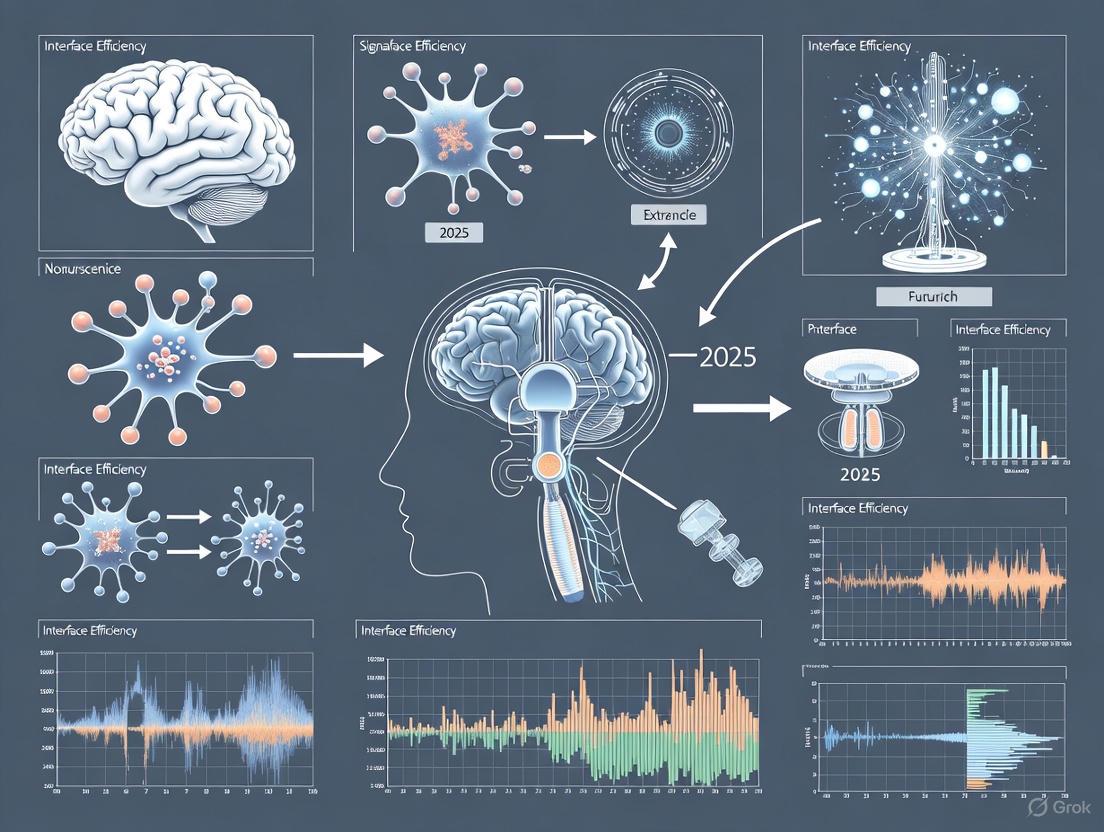
This article provides a comprehensive analysis of the brain-computer interface (BCI) landscape in 2025, tailored for researchers, scientists, and drug development professionals.
Brain-Computer Interfaces in 2025: A Research Review on Neural Prosthetics, Clinical Trials, and Future Directions
Abstract
This article provides a comprehensive analysis of the brain-computer interface (BCI) landscape in 2025, tailored for researchers, scientists, and drug development professionals. It examines the foundational principles of modern BCI systems, explores cutting-edge methodological advances in speech restoration and motor control, addresses critical troubleshooting challenges in biocompatibility and data privacy, and offers a comparative validation of emerging platforms and clinical trials shaping the field. The review synthesizes progress from recent human trials and technological innovations, highlighting their implications for the future of biomedical research and clinical neurotechnology.
Core Principles and the Modern BCI Landscape: From Basic Neuroscience to Commercial Platforms
Brain-Computer Interfaces (BCIs) represent a transformative technology that establishes a direct communication pathway between the brain and external devices [1]. The fundamental principle underpinning BCI operation is the detection and interpretation of the brain's electrical signals, followed by their translation into commands for controlling external hardware or software systems [2]. The evolution of BCI technology has progressed through several distinct phases: the Academic Exploration Phase, the Scientific Validation Phase, and the current Experimental Application Phase [1]. As of 2025, the field stands at the cusp of clinical commercialization, with companies like Synchron, Neuralink, and Paradromics advancing toward regulatory approval [3]. This technical guide examines the core neuroscience principles of electrical signaling and neural decoding that form the foundation of modern BCI systems, with particular emphasis on recent breakthroughs that define the current research landscape.
Fundamental Neural Signaling Mechanisms
Cellular Basis of Neural Electrical Activity
The operational foundation of all BCI systems rests upon the brain's inherent use of electricity for information processing [4]. The human brain contains approximately 86 billion neurons, each connecting to thousands of other neurons, forming complex networks with over 100 trillion total connections [4]. At the most fundamental level, neuronal communication occurs through binary electrical events—either a neuron fires (propagating an electrical charge to neighboring neurons) or it does not [4].
This binary signaling mechanism parallels the operational logic of digital computers, though with vastly different architectural principles. When a neuron fires, it generates a detectable electrical signal of approximately one billionth of an amp and one-tenth of a volt [4]. These electrical events also produce secondary physical phenomena, including tiny magnetic fields (due to electromagnetism) and localized changes in blood flow, both of which can be measured and analyzed to infer neural activity [4].
Signal Types and Characteristics in BCI Applications
Different BCI methodologies leverage various aspects of this neural electrical activity, each with distinct advantages and limitations for signal acquisition and interpretation.
Table: Neural Signal Types and Characteristics in BCI Applications
| Signal Type | Origin | Temporal Resolution | Spatial Resolution | Primary Use Cases |
|---|---|---|---|---|
| Action Potentials (Spikes) | Firing of individual neurons | Very High (milliseconds) | Very High (single neurons) | High-precision motor control, detailed neural mapping |
| Local Field Potentials (LFP) | Integrated activity of neuronal populations | High (tens of milliseconds) | Moderate (cortical columns) | Movement intention detection, brain state monitoring |
| Electrocorticography (ECoG) | Cortical surface potentials | High | Good (cortical regions) | Epilepsy monitoring, speech decoding |
| Electroencephalography (EEG) | Scalp-recorded cortical activity | Moderate | Poor | Non-invasive BCIs, brain state monitoring |
Neural Signal Acquisition Modalities
Invasive Recording Techniques
Invasive BCI approaches involve implanting electrodes directly into or onto brain tissue, providing the highest signal quality and spatial resolution for decoding neural signals [1] [4]. These systems typically use microelectrode arrays that directly detect electrical activity from individual neurons or small neuronal populations [4]. The signals recorded include action potentials (spikes) from individual neurons and local field potentials (LFP) from neuronal populations [2].
Recent advances in invasive BCIs have focused on improving biocompatibility and long-term signal stability. For instance, Axoft's Fleuron material, which is 10,000 times softer than traditional polyimide materials, has demonstrated reduced tissue scarring and maintained signal stability for over a year in animal models [5]. Similarly, InBrain Neuroelectronics has developed graphene-based electrodes that offer ultra-high signal resolution while leveraging exceptional mechanical properties and biocompatibility [5].
Non-Invasive Recording Techniques
Non-invasive BCIs measure brain activity from outside the skull, eliminating surgical risks but typically providing lower signal resolution [1]. Electroencephalography (EEG) represents the most established non-invasive approach, measuring electrical activity via scalp electrodes [2]. Other non-invasive modalities include magnetoencephalography (MEG), which detects magnetic fields generated by neuronal activity, and functional near-infrared spectroscopy (fNIRS), which measures hemodynamic responses correlated with neural activity [1] [2].
Recent innovations in artificial intelligence have significantly enhanced the capabilities of non-invasive systems. As noted by Ramses Alcaide, CEO of Neurable, "We've made it so that EEG doesn't suck as much as it used to. Now, it can be used in real-life environments, essentially" [6]. AI algorithms can extract meaningful patterns from the noisy signals characteristic of non-invasive recording, enabling more reliable decoding of mental commands [6].
Table: Comparison of BCI Signal Acquisition Modalities
| Modality | Invasiveness | Spatial Resolution | Temporal Resolution | Key Advantages | Major Limitations |
|---|---|---|---|---|---|
| Microelectrode Arrays | Invasive | Very High (microns) | Very High (ms) | Records individual neurons | Surgical risk, tissue response |
| ECoG | Semi-invasive | High (mm) | High (ms) | Good balance of resolution and safety | Limited brain access, requires surgery |
| EEG | Non-invasive | Low (cm) | Moderate (ms) | Safe, portable, low-cost | Poor spatial resolution, noisy signals |
| MEG | Non-invasive | Moderate (mm) | High (ms) | Excellent temporal resolution | Expensive, not portable |
| fNIRS | Non-invasive | Moderate (cm) | Low (seconds) | Less motion artifact | Indirect measure, slow response |
Neural Decoding Methodologies
Signal Processing and Feature Extraction
The transformation of raw neural signals into actionable commands requires sophisticated processing pipelines comprising three critical stages: signal processing, feature extraction, and pattern classification [2]. Signal processing begins with preprocessing to enhance signal-to-noise ratio, typically employing spectral and spatial filtering techniques [2]. This step must also address artifacts (non-neural contaminants) and nonstationarities (changes in signal characteristics across sessions) [2].
Feature extraction traditionally relied on knowledge of human electrophysiology, but modern approaches increasingly leverage computational methods to automatically identify relevant features without a priori assumptions [2]. Common features extracted from neural signals include:
- Spectral Features: Power in specific frequency bands (e.g., mu, beta, gamma rhythms)
- Temporal Features: Event-related potentials (ERPs) and their latencies
- Spatial Features: Topographic patterns of activation across electrode arrays
Classification and Decoding Algorithms
With feature vectors computed from training data, classifiers or decoders are trained to recognize brain states associated with specific control commands [2]. The BCI field has employed an extensive range of classification approaches, from simple linear discriminant analysis to complex deep neural networks [2]. The optimal algorithm selection depends on the specific application: for neurorehabilitation where users must learn to modulate brain activity, simple linear classifiers may suffice, while complex applications like wheelchair control require more sophisticated, adaptive algorithms to minimize errors [2].
Recent advances in AI have dramatically improved decoding capabilities, particularly for challenging applications like speech decoding. As Frank Willett's team at Stanford demonstrated, machine learning algorithms can be trained to recognize repeatable patterns of neural activity associated with phonemes—the smallest units of speech—which are then stitched into sentences [7].
Experimental Protocols in Modern BCI Research
Inner Speech Decoding Protocol
A landmark 2025 study published in Cell by researchers at Stanford Medicine detailed a breakthrough protocol for decoding inner speech from patients with severe speech and motor impairments [8] [7]. The experimental methodology proceeded as follows:
Participant Selection: Four participants with impaired speech due to ALS or stroke were implanted with microelectrode arrays in the motor cortex regions controlling speech [8] [7].
Signal Acquisition: Microelectrode arrays (smaller than a pea) were surgically implanted on the brain's surface to record neural activity patterns [7].
Task Paradigm: Participants either attempted to speak or imagined saying a set of words, allowing comparison between attempted and inner speech conditions [8].
Decoder Training: Machine learning algorithms were trained to recognize neural patterns associated with each phoneme using the attempted speech data [7].
Real-time Testing: Participants imagined speaking whole sentences while the BCI decoded the sentences in real time with error rates between 14% and 33% for a 50-word vocabulary [8].
This protocol revealed that inner speech evokes similar but smaller neural patterns compared to attempted speech, enabling decoding while requiring less physical effort from users [8] [7].
Preconscious Intention Decoding Protocol
Research at the California Institute of Technology under Richard Andersen has developed protocols for decoding preconscious intentions by recording from the posterior parietal cortex, a region associated with reasoning, attention, and planning [6]. The methodology includes:
Dual-Implant Approach: Arrays implanted in both motor cortex and posterior parietal cortex [6].
Pre-movement Decoding: Capturing planning signals hundreds of milliseconds before conscious movement attempts [6].
Cognitive State Tracking: Decoding higher-level cognitive processes like decision-making in card games [6].
This approach demonstrates BCIs' potential to access earlier stages of intention formation, beyond mere motor execution [6].
The Scientist's Toolkit: Research Reagent Solutions
Table: Essential Research Materials for Advanced BCI Experiments
| Research Tool | Specifications | Function in BCI Research | Example Implementation |
|---|---|---|---|
| Microelectrode Arrays | Utah Array: 100 rigid needles, 1mm length; Fleuron material: 10,000x softer than polyimide | Records electrical activity from neuronal populations; Axoft's Fleuron material reduces tissue scarring | Neuralink N1 Chip; Blackrock Neurotech arrays [4] [5] |
| Graphene-Based Electrodes | 2D carbon lattice, stronger than steel, thinner than human hair | Ultra-high signal resolution for decoding therapy-specific biomarkers | InBrain Neuroelectronics neural platform [5] |
| BCI Decoding Algorithms | Machine learning trained on neural data; P300, ERD/ERS, SSVEP paradigms | Translates neural signals into device commands; Stanford's phoneme-based speech decoder | Stanford inner speech decoder (50-word vocabulary, 14-33% error rate) [8] [2] [7] |
| Functional Electrical Stimulation (FES) | Electrical current applied to peripheral nerves | Activates muscles for functional movements in rehabilitation | BCI-FES systems for post-stroke upper limb recovery [9] |
| AI Signal Enhancement | Deep neural networks for noisy signal processing | Extracts meaningful patterns from suboptimal recordings (e.g., EEG) | Neurable headphone-based EEG processing [6] |
Advanced Neural Decoding Pathways
The neural decoding pathway for inner speech illustrates the sophisticated signal processing pipeline required to transform neural activity into communicative output. This pathway begins with speech intention in preconscious brain regions, progresses through motor cortex activation where detectable neural patterns are generated, and culminates in microelectrode array recording of these patterns [8] [7]. Machine learning algorithms then decode phonemic elements from these neural signals and assemble them into complete sentences, ultimately producing synthetic speech output that restores communication capability [7].
The fundamental neuroscience underpinning brain-computer interfaces has advanced dramatically, progressing from basic understanding of electrical signaling to sophisticated decoding of complex cognitive processes like inner speech and preconscious intention. The convergence of improved neural interfaces (both invasive and non-invasive), advanced signal processing algorithms, and machine learning has transformed BCI from experimental demonstrations to clinically relevant applications with the potential to restore communication and mobility for people with severe neurological impairments [8] [6] [7].
As BCI technology continues to evolve, future research directions will likely focus on improving the biocompatibility and long-term stability of implanted devices, enhancing decoding algorithms through more sophisticated AI approaches, and expanding beyond motor cortex to access higher-level cognitive signals from regions like the posterior parietal cortex [5] [6]. These advances will further blur the boundaries between biological and artificial intelligence, ultimately fulfilling the promise of BCIs to restore function and independence for people with neurological disabilities.
Brain-Computer Interface (BCI) technology represents a direct communication pathway between the brain and an external device [10]. As of 2025, this field stands at the cusp of a massive technological paradigm shift, promising to transform human civilization and define how human intelligence integrates with artificial intelligence in a world of powerful AI [4]. A fundamental schism lies at the heart of BCI technology: the division between invasive and non-invasive methods. This divide fundamentally represents a tradeoff between the unparalleled signal quality offered by direct neural contact and the superior accessibility and safety of external systems [4]. Understanding this tradeoff is crucial for researchers, scientists, and drug development professionals navigating the future of neurotechnology. This whitepaper provides an in-depth technical analysis of this core divide, framing it within the context of 2025 research trends, and details the experimental methodologies shaping the next generation of neural interfaces.
Technical Foundations of BCI Signal Acquisition
At its core, a BCI is a system that measures central nervous system activity and converts it into an artificial output [11]. This process replaces or restores natural central nervous system outputs that have been disrupted by injury or disease. The fundamental pipeline involves signal acquisition, processing and decoding, output into a command, and a feedback loop to the user [11].
The human brain contains roughly 86 billion neurons, which communicate via electrical signals—the same force that powers conventional electronics [4]. When a neuron fires, it generates a tiny but detectable electrical signal (about a billionth of an amp and a tenth of a volt) and an associated magnetic field [4]. It is these physical phenomena that BCI sensors are designed to detect and interpret. The choice of sensor technology and its placement relative to the brain tissue creates the foundational tradeoff between signal quality and accessibility.
Table 1: Neural Signal Acquisition Modalities in BCI Research
| Signal Modality | Spatial Resolution | Temporal Resolution | Invasiveness | Primary Technology Examples |
|---|---|---|---|---|
| Single-Unit Recording | Single Neuron (Microns) | Excellent (Milliseconds) | Invasive (Intracortical) | Utah Array, Neuralink's N1, Paradromics Connexus |
| Local Field Potentials (LFP) | Columnar (100s of Microns) | Excellent (Milliseconds) | Invasive (Intracortical) | Utah Array, Custom Microelectrodes |
| Electrocorticography (ECoG) | Mesoscale (Millimeters) | Good (Milliseconds) | Minimally Invasive (Subdural) | Precision Neuroscience's Layer 7 |
| Electroencephalography (EEG) | Macroscale (Centimeters) | Good (Milliseconds) | Non-Invasive | CGX, OpenBCI, Medical-grade EEG Systems |
| Magnetoencephalography (MEG) | Macroscale (Centimeters) | Excellent (Milliseconds) | Non-Invasive | Whole-Head MEG Systems |
| Functional Near-Infrared Spectroscopy (fNIRS) | Macroscale (Centimeters) | Poor (Seconds) | Non-Invasive | Wearable fNIRS Headsets |
The following diagram illustrates the core decision workflow and technological tradeoffs between invasive and non-invasive BCI approaches.
The Invasive BCI Pathway: Pursuing High-Fidelity Signals
Invasive BCI approaches involve placing electronics inside the skull, directly in or on the brain tissue, which requires neurosurgery [4]. The primary advantage is superior signal quality: by positioning electrodes in direct contact with neurons, these systems can record the firing of individual neurons or small neural ensembles, providing a high-bandwidth stream of neural data [4] [11]. This high fidelity is essential for complex applications like decoding attempted speech or enabling fine motor control of prosthetics.
Key Methodologies and Experimental Protocols
1. Intracortical Microelectrode Arrays: This methodology involves implanting tiny electrode arrays directly into the cerebral cortex to record action potentials from individual neurons.
- Representative Devices: The Utah Array (Blackrock Neurotech) is a bed of 100 rigid, needle-like electrodes [4]. Neuralink's N1 Implant uses 64 flexible polymer threads, each with 16 recording sites [11] [12]. Paradromics' Connexus BCI employs a modular array with 421 electrodes designed for ultra-fast data transmission [5] [11].
- Surgical Protocol: Implantation typically requires a craniotomy, a surgical procedure that involves removing a section of the skull [4]. For the N1 implant, a proprietary robotic system is used to thread the flexible electrodes into the cortex, avoiding surface vasculature [11]. The Paradromics device is designed to be implanted using surgical techniques familiar to neurosurgeons to facilitate broader adoption [11].
- Signal Processing Workflow: The raw neural signal is amplified, filtered (typically 300-5000 Hz for action potentials), and digitized by a miniature processor sealed within the skull unit. Spike sorting algorithms then classify the activity of individual neurons from the recorded waveforms. These sorted spike trains are the input for decoding algorithms (e.g., Kalman filters, neural networks) that map neural activity to intended output commands.
2. Endovascular Stent Electrodes: This approach offers a less invasive alternative for signal acquisition within the brain.
- Representative Device: Synchron's Stentrode is a BCI device integrated into a stent-like mesh [4] [11].
- Surgical Protocol: The device is delivered via a catheter through the jugular vein and lodged within the superior sagittal sinus, a major vein adjacent to the motor cortex [4] [11]. This procedure is analogous to implanting a coronary stent and does not require open-brain surgery.
- Signal Processing Workflow: The Stentrode records local field potentials (LFPs) and electrocorticography (ECoG)-like signals through the blood vessel wall. These signals represent the aggregate activity of thousands of neurons. The signals are transmitted wirelessly to an external receiver for processing by machine learning algorithms that decode the user's intent, for instance, to control a computer cursor [11].
3. Cortical Surface Electrodes (ECoG): This methodology places electrode arrays on the surface of the brain, beneath the skull but not penetrating the tissue.
- Representative Devices: Precision Neuroscience's Layer 7 device is an ultra-thin, flexible electrode array that conforms to the cortical surface [11].
- Surgical Protocol: The array is designed to be inserted through a small, slit-like opening in the dura mater (the brain's protective lining) [11]. This minimizes invasiveness compared to intracortical implants.
- Signal Processing Workflow: ECoG arrays record electrical signals from the surface of the cortex, providing a mesoscale view of neural activity with higher spatial resolution and signal-to-noise ratio than non-invasive EEG, but without the single-neuron resolution of intracortical arrays. These signals are effective for decoding movement intentions and speech.
Table 2: Comparative Analysis of Leading Invasive BCI Platforms in 2025
| Company / Platform | Key Technology | Implantation Method | Neural Signal Target | Primary Application Focus | Clinical Trial Status (2025) |
|---|---|---|---|---|---|
| Neuralink | 1024-electrode flexible threads | Robotic-assisted craniotomy | Single-Unit Activity, LFP | Communication, Motor Control | Ongoing human trials [11] |
| Paradromics | 421-electrode modular array | Craniotomy (surgeon-led) | Single-Unit Activity, LFP | Speech Decoding | FDA approval for first long-term trial [12] |
| Synchron | Stent-based electrode array (Stentrode) | Endovascular (via jugular vein) | ECoG-like Field Potentials | Communication, Computer Control | Clinical trials; partnered with Apple, Nvidia [4] [5] |
| Precision Neuroscience | Thin-film cortical surface array (Layer 7) | Minimally invasive dural slit | ECoG | Communication | FDA 510(k) clearance for up to 30 days [11] |
| Blackrock Neurotech | Utah Array, Neuralace lattice | Craniotomy | Single-Unit Activity, LFP | Communication, Motor Control | Years of human research; focus on in-home use [11] |
The Non-Invasive BCI Pathway: Prioritizing Accessibility
Non-invasive BCIs do not require any medical procedure and rely on sensors placed on the scalp to detect brain signals [4]. These systems are inherently safer and more accessible, which has led to their dominance in the current market, accounting for approximately 76.5% of the BCI market revenue in 2024 [13]. The primary tradeoff is signal quality: the skull and other tissues act as a strong low-pass filter, smearing and attenuating the electrical signals generated by the brain [4].
Key Methodologies and Experimental Protocols
1. Electroencephalography (EEG): This is the oldest and most widely used non-invasive brain signal acquisition technology [4].
- Representative Systems: A wide range from research-grade systems (e.g., from ANT Neuro, g.tec) to emerging consumer and prosumer headsets (e.g., from OpenBCI, CGX).
- Experimental Protocol: Electrodes are placed on the scalp according to a standardized international system (e.g., 10-20 system) using conductive gel or saline to reduce impedance. Participants are often instructed to perform specific mental tasks (e.g., motor imagery, visual attention) or are presented with sensory stimuli (e.g., flashing lights) to evoke measurable brain responses.
- Signal Processing Workflow: The continuous EEG signal is heavily pre-processed to remove artifacts from eye movements, muscle activity, and line noise. Features are then extracted, which can include event-related potentials (ERPs), changes in oscillatory power in specific frequency bands (e.g., sensorimotor rhythm), or functional connectivity patterns. These features are fed into classifiers (e.g., Linear Discriminant Analysis, Support Vector Machines) or regression models to determine the user's intent.
2. Functional Near-Infrared Spectroscopy (fNIRS): This modality measures brain activity by detecting changes in blood oxygenation, a correlate of neural activity.
- Experimental Protocol: Sources and detectors of near-infrared light are placed on the scalp. The scattered light that returns to the detectors provides information on the concentration of oxygenated and deoxygenated hemoglobin in the underlying cortex.
- Signal Processing Workflow: The fNIRS signal is slow, reflecting the hemodynamic response, which occurs over seconds. After filtering for physiological noise (e.g., heart rate, respiration), changes in oxyhemoglobin concentration are calculated and used as features for decoding cognitive or motor states.
A recent meta-analysis of nine studies involving 109 Spinal Cord Injury (SCI) patients found that non-invasive BCI interventions had a statistically significant, positive impact on motor function (SMD=0.72), sensory function (SMD=0.95), and activities of daily living (SMD=0.85) compared to control groups [14]. This underscores the therapeutic potential of accessible BCI technology.
The Research Toolkit: Essential Materials and Reagents
The following table details key research reagents and materials essential for conducting BCI research, as derived from featured experiments and commercial platforms.
Table 3: Research Reagent Solutions for BCI Development
| Item / Solution | Function / Description | Example Use-Case / Vendor |
|---|---|---|
| Microelectrode Arrays | Records neural activity at the cellular level. The fundamental sensor for invasive BCIs. | Utah Array (Blackrock Neurotech); Flexible Threads (Neuralink); Modular Arrays (Paradromics) [4] [11] [12] |
| Graphene-Based Electrodes | Provides ultra-high signal resolution using a strong, thin, two-dimensional carbon material. | InBrain Neuroelectronics' neural platform for decoding therapy-specific biomarkers [5] |
| Fleuron Material | A novel, ultrasoft polymer (10,000x softer than polyimide) for improved biocompatibility. | Axoft's implantable BCI, designed to reduce tissue scarring and enable long-term signal stability [5] |
| Electroencephalography (EEG) Caps/Headsets | Non-invasive acquisition of scalp potentials. | Research-grade systems from g.tec, ANT Neuro; Consumer/prosumer systems from OpenBCI, CGX [15] [10] |
| Machine Learning Decoding Software | Algorithms that translate raw neural signals into actionable commands. | Custom algorithms (e.g., Kalman filters, deep neural networks) for speech decoding [7] or kinematic parameter extraction [11]. |
| Biocompatible Encapsulants | Electrically insulating, biologically inert materials that protect implanted electronics from the body. | Parylene-C, Silicone Elastomers; critical for long-term stability and safety of chronic implants [4] [11]. |
| Functional Electrical Stimulation (FES) Systems | Effector system that uses electrical currents to activate nerves to restore lost function. | Used in closed-loop BCI systems for stroke or SCI rehabilitation to trigger muscle movements [14] [16]. |
Quantitative Data and Market Outlook
The global BCI market is experiencing significant growth, driven by rising demand in healthcare and rehabilitation. Market research from 2025 projects the global BCI market to reach USD $1.27 billion in 2025 and grow to $2.11 billion by 2030, representing a compound annual growth rate (CAGR) of over 10% [13]. An alternative assessment estimates the market will grow from USD $2.41 billion in 2025 to USD $12.11 billion by 2035, at a CAGR of 15.8% [15]. The broader neurotechnology sector is expected to expand from $15.77 billion in 2025 to nearly $30 billion by 2030 [13].
Table 4: BCI Market Forecast and Segmentation (2025-2035)
| Market Segment | 2025 Market Share & Value | 2035 Projection & Growth | Key Drivers |
|---|---|---|---|
| Overall BCI Market | Est. $2.41 Billion [15] | $12.11 Billion (15.8% CAGR) [15] | Rising neurological disorders, aging populations, AI/ML advancements [15] |
| By Product: Non-Invasive BCI | Majority share (76.5% of 2024 market) [13] | Sustained dominance in near-term | Accessibility, safety, lower cost, diverse applications in healthcare and gaming [13] [15] |
| By Product: Invasive BCI | Minority share, but high R&D focus | Higher growth potential long-term | Superior signal quality for complex applications (e.g., speech restoration) [4] [15] |
| By Application: Healthcare | Dominant application segment [15] | High CAGR during forecast period | Treatment of paralysis, stroke, Parkinson's, epilepsy [16] [15] |
| By End-User: Medical | Dominant end-user segment [15] | High CAGR during forecast period | Clinical adoption for rehabilitation and assistive technologies [15] |
| By Region: North America | Majority market share [15] | Leading, but lower growth rate | Concentration of leading tech firms, high R&D investment [15] |
| By Region: Asia | Smaller share than North America | Highest projected CAGR [15] | Increasing healthcare spending, technological innovation in AI and neuroscience [15] |
The divide between invasive and non-invasive BCIs remains the central paradigm of the field in 2025. Invasive methods, pursued by companies like Neuralink, Paradromics, and Precision, offer the high-fidelity signals necessary for restoring complex functions like natural speech and dexterous movement, but at the cost of surgery and associated risks [4] [12] [7]. Non-invasive methods, championed by a broader ecosystem of medical and consumer tech companies, provide unparalleled accessibility for rehabilitation, basic communication, and cognitive monitoring, but are limited by signal resolution [14] [13] [10].
The future of BCI research lies not in one pathway dominating the other, but in the continued innovation and specialization of both. The convergence of advanced materials science (e.g., graphene, ultrasoft polymers), sophisticated AI-powered decoding algorithms, and novel surgical approaches is steadily pushing the boundaries of what is possible, blurring the lines of the traditional tradeoff [5] [16]. For researchers and clinicians, the choice between invasive and non-invasive interfaces will continue to be a calculated decision based on the specific application, weighing the critical need for signal quality against the imperative for safety and accessibility.
Brain-Computer Interfaces (BCIs) represent a revolutionary frontier in neurotechnology, establishing a direct communication pathway between the brain and external devices [17]. In 2025, the field is characterized by rapid advancement from academic research toward tangible clinical applications and commercial products. This evolution is particularly evident in the race to develop medical devices that restore function to individuals with severe neurological disabilities, such as paralysis and speech impairments. The core technological challenge involves balancing the invasiveness of the implantation procedure with the fidelity and bandwidth of the neural signal captured, creating distinct technological pathways among leading companies [18].
The convergence of advanced materials science, miniaturized electronics, and sophisticated artificial intelligence (AI) for neural decoding is accelerating progress across the industry. These technologies are enabling systems to translate brain activity into digital commands for communication, environmental control, and movement with increasing speed and accuracy. This overview details the technical specifications, clinical progress, and strategic approaches of four pivotal companies—Neuralink, Synchron, Blackrock Neurotech, and Paradromics—whose work is defining the present and future of BCI technology for researchers and drug development professionals.
Company and Platform Profiles
Neuralink
Neuralink, founded by Elon Musk, is developing the N1 Implant, a fully integrated device designed for a "plug-and-play" user experience. The company's approach centers on high-density electrode arrays and a fully automated surgical robot. The N1 is a coin-sized device that is implanted flush with the skull, featuring 1,024 electrodes distributed across 64 ultra-thin, flexible "threads" to record neural activity [19]. A key differentiator is the proprietary R1 surgical robot, which functions like a sewing machine to autonomously insert these electrode threads into the brain tissue, a process the company aims to make a one-click procedure [19]. The primary clinical application targeted is the restoration of "digital freedom"—allowing paralyzed individuals to control cursors, type, and browse the web through thought alone [19]. In 2025, Neuralink is actively conducting human feasibility studies and is also developing Blindsight, a separate cortical visual prosthesis system that has received FDA Breakthrough Device designation [19].
Synchron
Synchron has taken a distinct, less invasive approach with its Stentrode device. Rather than requiring a craniotomy, the Stentrode is implanted via a catheter-based procedure through the jugular vein, where it is then deployed in the motor cortex, resting against the blood vessel wall [18]. This endovascular strategy mitigates some of the risks associated with open-brain surgery and preserves the blood-brain barrier. The current first-generation device features 16 electrodes [18]. While this offers a lower channel count than competing intracortical devices, it has successfully enabled severely paralyzed patients to control personal devices for communication and daily tasks. Synchron is leveraging a recent $200 million Series D financing to accelerate pivotal trials and prepare for the commercial launch of its Stentrode BCI system, while simultaneously developing a next-generation, transcatheter high-channel whole-brain interface [18].
Blackrock Neurotech
With a history spanning over two decades, Blackrock Neurotech is a veteran in the BCI space. Its technology is the most validated in human studies, underpinning nearly all BCIs implanted in humans to date [20]. The core of its platform is the Utah Array (also known as the NeuroPort Electrode), a rigid, microelectrode array that has been the workhorse of intracortical research since 2004 [20]. Blackrock provides a complete ecosystem of products, including implantable electrodes, hardware, and software, which have been used in over 2,000 published studies and have accumulated over 30,000 collective days of implantation in humans [21] [20]. The company is now transitioning its extensive research platform into the clinical market with the MoveAgain BCI system, which received FDA Breakthrough Designation in 2021 [21] [20]. This system has demonstrated remarkable capabilities, enabling patients to control prosthetic limbs, type at speeds up to 90 characters per minute, and decode speech at rates of up to 62 words per minute [21].
Paradromics
Paradromics is focused on achieving an unprecedented rate of information transfer with its fully implantable Connexus BCI [22]. The company's design is highly scalable, supporting over 1,600 intracortical channels by linking up to four individual implants, each smaller than a dime [23]. The Connexus BCI uses micro-electrodes, each thinner than a human hair, to capture activity from individual neurons [22]. Signals are transmitted to a compact receiver implanted in the chest, which then wirelessly sends data to an external computer for AI-powered decoding. In late 2025, Paradromics received FDA approval for its Connect-One Early Feasibility Study, the first IDE approval for speech restoration with a fully implantable BCI [22]. The study will evaluate the system's ability to restore speech and enable computer control. Pre-clinical models have demonstrated an industry-leading data rate of over 200 bits per second [22].
Table 1: Core Technology Comparison of Leading BCI Platforms
| Feature | Neuralink | Synchron | Blackrock Neurotech | Paradromics |
|---|---|---|---|---|
| Primary Device | N1 Implant | Stentrode | Utah Array / MoveAgain | Connexus BCI |
| Implantation Method | Craniotomy with R1 robot | Endovascular (via jugular vein) | Craniotomy | Craniotomy |
| Key Material(s) | Flexible polymer threads | Nitinol (stent material) | Biocompatible rigid array | Platinum-iridium, Titanium |
| Channel Count | 1,024 electrodes [19] | 16 electrodes [18] | 96 channels per array (standard) [24] | 1,600+ channels (scalable) [23] |
| Signal Target | Single neurons & ensembles | Cortical local field potentials | Single neurons & ensembles | Single neurons |
| Data Transmission | Wireless | Wireless | Wired (research systems) | Wireless |
Performance Metrics and Clinical Status
As of late 2025, the BCI landscape is marked by a mix of extensive historical validation and promising new clinical entries. Performance is most commonly measured in bits per second, a standard metric for information transfer rate that quantifies the speed and accuracy of communication.
Blackrock Neurotech holds the record for the longest and most extensive human use, with its technology being implanted in humans for over 19 years and accumulating more than 30,000 collective days of research [21] [20]. Its systems have demonstrated clinical-grade performance, enabling typing at 90 characters per minute and decoding speech from brain signals at 62 words per minute [21].
Neuralink, though more recent to human trials, has reported significant performance from its first participant, Noland Arbaugh. The company claims he achieved a cursor control speed of over 9 bits per second using the Webgrid test, which reportedly doubles the previous BCI record and approaches the median able-bodied user's performance of around 10 bits per second [19]. However, the company has also publicly shared challenges, including the retraction of many electrode threads after implantation, necessitating software fixes to maintain performance [19].
Paradromics has released pre-clinical data demonstrating a formidable information transfer rate of over 200 bits per second [22]. This high data rate is a core part of its value proposition for restoring complex communication like speech. The company's Connect-One clinical study, approved to begin in late 2025, will initially enroll two participants to evaluate long-term safety and efficacy for speech restoration and computer control [22].
Synchron' Stentrode has demonstrated sufficient functionality to allow paralyzed users to control digital devices for daily tasks [18]. While specific bits-per-second metrics are not highlighted in the available data, the company's recent $200 million funding round is aimed at generating the pivotal clinical trial data needed for a commercial launch [18].
Table 2: Clinical Status and Reported Performance (2025)
| Company | Clinical Stage | Reported Performance | Key Applications in Trial |
|---|---|---|---|
| Neuralink | Early Feasibility Study (3+ patients) [19] | >9 bits per second (cursor control) [19] | Computer control, robotic arm, digital freedom [19] |
| Synchron | Preparing Pivotal Trials [18] | Enables digital device control [18] | Hands-free control of personal devices |
| Blackrock Neurotech | MoveAgain FDA Breakthrough Designation (2021) [20] | 90 char/min typing, 62 words/min speech decoding [21] | Motor control, communication, sensory restoration [20] |
| Paradromics | FDA IDE Approved for Connect-One EFS (2025) [22] | >200 bits per second (pre-clinical) [22] | Speech restoration, computer control [22] |
Technical and Experimental Methodologies
Core BCI Workflow and Signaling Pathway
The fundamental operation of an implanted BCI follows a consistent signal chain, from neural firing to device output. The following diagram illustrates this core pathway and the experimental workflow for a typical BCI study.
The Scientist's Toolkit: Essential Research Reagents and Materials
For researchers building and testing BCI systems, the core technological components form a critical toolkit. These materials enable the recording, processing, and interpretation of neural signals.
Table 3: Key Research Reagent Solutions in BCI Development
| Research Tool | Function | Example/Supplier |
|---|---|---|
| Microelectrode Array | Records neural electrical activity from multiple single neurons or populations. | Utah Array (Blackrock) [20], Neuralink's Threads [19] |
| Neurophysiology System | Amplifies, filters, and digitizes analog neural signals from electrodes. | Cerebus System (Blackrock) [24] |
| Neural Signal Processor | Handles real-time data processing and initial feature extraction from high-bandwidth inputs. | NeuroSnap (Blackrock) [24] |
| Stimulation IC | Generates precise electrical pulses for neurostimulation applications. | CereStim (Blackrock) [24] |
| Data Acquisition Software | Provides a software suite for visualizing, recording, and analyzing neural data streams. | Central Software Suite (Blackrock) [24], Noldus EthoVision XT [24] |
| Surgical Robot | Enables precise, automated implantation of fragile electrode arrays into brain tissue. | R1 Robot (Neuralink) [19] |
Experimental Protocol for a BCI Feasibility Study
A typical early feasibility study for a BCI, such as those conducted by Neuralink and Paradromics, follows a rigorous protocol to establish safety and initial efficacy [22] [19]. The methodology can be broken down into key phases:
- Participant Selection and Screening: The study enrolls a small number of participants (e.g., 1-5) with specific severe neurological deficits, such as paralysis or loss of speech. Key eligibility criteria include stable medical status, the absence of certain co-morbidities, and proximity to a clinical site with advanced neurosurgical and BCI programming expertise [22] [19].
- Surgical Implantation: The BCI device is surgically implanted. This involves a craniotomy for intracortical devices (Neuralink, Blackrock, Paradromics) or an endovascular procedure for Synchron's Stentrode [18]. For Neuralink, this step utilizes the R1 robot for thread insertion [19].
- Post-Surgical Recovery and Signal Stabilization: A recovery period follows the surgery. Researchers then monitor the implanted electrodes for signal quality and stability over days to weeks. This phase is critical for assessing the initial safety profile and the integrity of the implant.
- BCI Calibration and Model Training: The participant engages in structured calibration tasks. For a motor BCI, this might involve watching a cursor move on a screen while imagining the movement that would cause it, or attempting to speak for a speech BCI. This data is used to train the initial decoding algorithm that maps neural features to intended outputs [19]. Neuralink has reported that this recalibration can take up to 45 minutes and is a focus of software improvement efforts [19].
- Closed-Loop Performance Testing: The participant uses the BCI in real-time to perform standardized tasks. Common tasks include the "Webgrid" test for cursor control (measuring bits per second) [19], typing tasks using a virtual keyboard, or, for speech BCIs, attempting to articulate words whose neural patterns are then decoded.
- Long-Term Monitoring and Model Adaptation: Performance and safety are monitored over an extended period (months to years). A critical part of the methodology is the continuous adaptation of the decoding model to compensate for neural signal drift or changes at the electrode-tissue interface [19].
The BCI landscape in 2025 is dynamic and multifaceted, with each key player employing a distinct strategy that involves trade-offs between invasiveness, data bandwidth, and clinical deployability. Neuralink is pushing a high-channel, integrated consumer-facing platform, while Synchron prioritizes a less invasive surgical approach. Blackrock Neurotech leverages its decades of validated, robust research tools to transition into the clinical market, and Paradromics focuses on achieving the highest possible data rate for complex applications like speech restoration.
The convergence of these technologies with advanced AI and machine learning is a dominant trend, crucial for decoding the massive datasets generated by these high-channel-count devices [17] [25]. Furthermore, the field is expanding beyond motor and communication restoration to explore applications in sensory restoration (e.g., Blindsight) [19] and the treatment of neuropsychiatric disorders [17]. As these platforms mature, the focus will increasingly shift toward conducting larger-scale pivotal trials, securing regulatory approvals, and establishing scalable commercial manufacturing and surgical procedures. The work of these four companies not only highlights the current state of the art but also sets the stage for a future where BCIs transition from extraordinary experiments to standardized medical therapies.
The evolution of implantable brain-computer interface (BCI) technology represents a fundamental progression from rigid, penetrating electrodes to sophisticated, high-density grid systems that are revolutionizing neuroscience research and therapeutic development. This technological transition is occurring within the broader context of 2025 BCI research, which aims to achieve unprecedented neural recording and stimulation capabilities for treating neurological disorders and advancing fundamental brain science. The Utah Array, developed in the 1980s and first implanted in humans in the 1990s, established the foundational architecture for cortical interfaces with its bed of 100 rigid silicon needles, each containing an electrode at its tip [4]. For over two decades, this platform remained the gold standard for invasive BCI research, accumulating over 20,000 peer-reviewed citations and deployment in more than 1,000 laboratories worldwide [26].
Contemporary research has highlighted significant limitations in first-generation technology, particularly what is vividly termed the "butcher ratio" – the number of neurons killed relative to the number that can be recorded from [4]. The Utah Array demonstrates a particularly unfavorable ratio, destroying hundreds or thousands of neurons for every one neuron it records from, due to its rigid, penetrating design that triggers immune responses, scarring, and inflammation [4]. These limitations have catalyzed the development of next-generation high-density electrode grids that leverage advanced materials science, microfabrication techniques, and minimally invasive surgical approaches to overcome the tradeoffs between signal quality and tissue damage.
The emerging generation of neural interfaces is characterized by increased channel counts, enhanced signal-to-noise ratios, flexible conformal designs, and minimally invasive deployment strategies. These advances are critically important for drug development professionals and basic researchers who require stable, high-fidelity neural data over extended time periods to assess therapeutic efficacy and understand neural network dynamics. This technical guide examines the evolution of implant technology from its origins to the current state-of-the-art, with particular emphasis on the technical specifications, experimental methodologies, and research applications that are defining the future of brain-computer interfaces in 2025.
Historical Foundation: The Utah Array and Its Technical Specifications
The Utah Array emerged as the first commercially viable intracortical interface, establishing a technological paradigm that would dominate BCI research for decades. Manufactured by Blackrock Neurotech, the array features a 4mm × 4mm footprint with 100-128 silicon microneedles extending to depths of 0.5-1.5mm, enabling both recording and stimulation capabilities [26]. The standard configuration incorporates 96 electrodes per array, with multi-array systems supporting up to 1024 channels, providing researchers with unprecedented access to neural population dynamics [26].
From a materials perspective, the array utilizes biocompatible substrates with platinum or sputtered iridium oxide film (SIROF) electrode coatings, yielding impedance ranges of 20-800 kΩ for platinum and 1-80 kΩ for SIROF variants [26]. This materials selection balances electrochemical performance with biostability, though the rigid silicon construction presents long-term compatibility challenges with brain tissue, which has a mechanical modulus several orders of magnitude lower than silicon.
The surgical implantation of Utah Arrays requires a craniotomy procedure, where a section of the skull is removed to allow direct insertion of the array into cortical tissue using a specialized pneumatic insertion tool [26]. This invasive approach, while effective for establishing stable neural connections, inevitably causes vascular damage, inflammatory responses, and glial scarring that degrade signal quality over time. Despite these limitations, the Utah Array enabled foundational demonstrations of BCI capabilities, including direct neural control of computer cursors, robotic limbs, and communication interfaces for paralyzed patients [4].
Table 1: Technical Specifications of the Utah Array
| Parameter | Specification | Research Significance |
|---|---|---|
| Electrode Pitch | 400 μm | Determines spatial resolution for neural population recording |
| Channel Count | 16-1024 (multi-array) | Limits simultaneous neuron monitoring capacity |
| Electrode Length | 0.5-1.5 mm (research); 1.0-1.5 mm (clinical) | Depth penetration into cortical layers |
| Impedance Range | Platinum: 20-800 kΩ; SIROF: 1-80 kΩ | Impacts signal-to-noise ratio and stimulation efficiency |
| Array Dimensions | 4mm × 4mm standard; customizable from 2-12mm | Cortical coverage area and tissue displacement |
| Connector Types | CerePort 128/256, Omnetics variants | Interface stability and channel count limitations |
| Metalization | Platinum, Sputtered Iridium Oxide (SIROF) | Biocompatibility and charge injection capacity |
The research applications of Utah Array technology have spanned multiple domains, including motor neuroprosthetics, sensory restoration, cognitive research, and the study of neurological disorders such as epilepsy and Parkinson's disease [26]. Its high signal-to-noise ratio and single-neuron resolution enabled critical advances in understanding neural coding principles and developing decoding algorithms for BCI control. However, the fundamental limitations of the platform have driven the field toward more advanced solutions that address the key challenges of chronic stability, tissue compatibility, and scaling to higher channel counts.
Technical Evolution: Toward High-Density Electrode Grids
The transition from rigid, penetrating electrodes to high-density surface and flexible depth arrays represents a paradigm shift in neural interface design. Contemporary high-density microelectrode arrays (HD-MEAs) leverage innovations in microfabrication, materials science, and integrated electronics to overcome the limitations of first-generation systems [27]. These advances include the development of flexible substrate materials that minimize mechanical mismatch with brain tissue, increased electrode densities that enable unprecedented spatial sampling, and integrated electronics that solve the "connectivity problem" associated with high-channel-count systems [27].
Flexible High-Density Microelectrode Arrays (FHD-MEAs)
Recent advances in flexible high-density microelectrode arrays (FHD-MEAs) have revolutionized brain-computer interfaces by providing high spatial resolution, mechanical compliance, and long-term biocompatibility [28]. These systems address the shortcomings of conventional rigid BCIs, which include poor spatial resolution, micro-motion-induced instability, electrochemical degradation, wiring bottlenecks, off-target activation, and charge injection hazards [28]. The mechanical compliance of FHD-MEAs enables conformal contact with cortical surfaces without causing significant tissue damage or inflammatory responses, thereby supporting chronic recording stability.
Modern FHD-MEA systems achieve remarkable densities, with one recent planar HD-MEA device featuring a sensing area of 5.51 × 5.91 mm² accommodating 236,880 electrodes with only 0.25 μm spacing between neighboring electrodes [27]. This represents approximately an order of magnitude increase in density compared to the Utah Array and enables simultaneous readout of 33,840 channels at 70 kHz sampling rates [27]. Such density allows researchers to monitor neural activity across multiple spatial scales – from subcellular compartments and individual neurons to entire functional networks – with unprecedented resolution.
Micro-Electrocorticography (μECoG) Arrays
Surface-based μECoG arrays represent a particularly promising approach for high-density neural interfacing that avoids tissue penetration entirely. A recently demonstrated system incorporates a 1,024-channel thin-film microelectrode array designed for minimally invasive surgical delivery without requiring craniotomy [29]. This array configuration includes 977 recording electrodes at 50 μm diameter, 42 stimulation electrodes at 380 μm diameter, and 5 reference electrodes at 500 μm diameter, with a uniform inter-electrode pitch of 400 μm [29].
The manufacturing yield for these high-density arrays exceeds 91%, with electrode impedance showing predictable dependence on surface area – ranging from an average of 802 ± 30 kΩ for 20 μm electrodes to 8.25 ± 0.65 kΩ for 380 μm electrodes [29]. These arrays maintain stable impedance characteristics after implantation, confirming their robustness for chronic applications. The spatial scaling properties of μECoG have been systematically characterized, demonstrating that decoding accuracy improves as a function of both coverage area and spatial density, highlighting the value of high-density designs for extracting maximal information from the cortical surface [29].
Table 2: Comparison of Traditional and High-Density Electrode Arrays
| Feature | Utah Array (Traditional) | High-Density μECoG (Advanced) |
|---|---|---|
| Electrode Density | ~100 electrodes/16mm² | >1000 electrodes/16mm² |
| Material Properties | Rigid silicon | Flexible polymers (polyimide, parylene) |
| Surgical Approach | Craniotomy with direct insertion | Cranial micro-slit or endovascular |
| Tissue Damage | Significant (unfavorable "butcher ratio") | Minimal (atraumatic) |
| Chronic Stability | Limited by glial scarring | Enhanced by mechanical compliance |
| Spatial Resolution | Limited by 400μm pitch | Superior (<100μm pitch achievable) |
| Scalability | Limited by wiring bottlenecks | CMOS integration enables massive scaling |
| Recording Specificity | Single-unit and multi-unit activity | Multi-scale (LFP, multi-unit, single-unit) |
CMU Array and 3D Nanoprinting Innovations
The CMU Array represents another significant advancement in high-density neural interfaces, utilizing Aerosol Jet 3D printing to create ultra-high-density microelectrode arrays with customizable geometries [30]. This manufacturing approach enables three-dimensional electrode configurations that can be tailored to specific experimental or clinical requirements, overcoming the two-dimensional limitations of both Utah and Michigan arrays [30]. The additive manufacturing process provides exceptional design freedom, allowing researchers to optimize electrode placement for specific brain regions or research questions.
The density achieved by the CMU Array is approximately one order of magnitude greater than the Utah Array, significantly enhancing spatial sampling capability [30]. This increased density, combined with the ability to create three-dimensional electrode configurations, enables more comprehensive monitoring of neural network activity and more precise targeting of specific cortical layers or functional domains. The customization capability is particularly valuable for drug development applications, where precise targeting of affected brain regions can enhance the detection of therapeutic effects.
Experimental Methodologies and Surgical Protocols
The advancement of neural interface technology has been accompanied by the development of increasingly sophisticated experimental methodologies and minimally invasive surgical protocols. These approaches aim to maximize data quality while minimizing tissue damage, thereby supporting both acute research applications and chronic implantation scenarios.
Minimally Invasive Surgical Techniques
Modern high-density electrode arrays leverage innovative surgical approaches that represent significant departures from traditional craniotomy procedures. The "cranial micro-slit" technique uses precision sagittal saw blades to make 500-900μm-wide incisions in the skull at approach angles approximately tangential to the cortical surface [29]. This method facilitates subdural insertion of thin-film arrays without requiring burr holes or craniotomy, significantly reducing surgical trauma and recovery time.
Validation studies of this technique have demonstrated its feasibility and safety, with 22 cranial micro-slit insertions performed in 8 Göttingen minipigs and additional procedures in 23 fresh cadaveric human heads [29]. The entire surgical procedure, from initial skin incision to endoscope-guided array placement and final securing, can be completed in under 20 minutes, making it practical for clinical translation [29]. This represents a significant improvement over traditional craniotomy-based approaches, which are more invasive and time-consuming.
Endovascular implantation represents another minimally invasive approach, exemplified by Synchron's Stentrode device, which is inserted into a blood vessel via the jugular vein and guided to the cerebral vasculature adjacent to the brain [4] [31]. This method entirely avoids penetrating brain tissue, resulting in a "butcher ratio" of zero, though it may provide more limited neural access compared to direct cortical interfaces [4]. The procedure is similar to coronary stent implantation, one of the most common medical procedures worldwide, potentially enhancing its translational feasibility [4].
Neural Recording and Stimulation Protocols
Modern high-density arrays support sophisticated experimental protocols for both neural recording and stimulation. Recording capabilities typically span multiple spatial and temporal scales, from local field potentials (LFPs) reflecting population-level activity to action potentials from individual neurons [29] [27]. The high channel counts enable comprehensive mapping of neural dynamics across cortical regions, supporting advanced decoding approaches for brain-computer interfaces and systems neuroscience research.
Stimulation protocols leverage the dense electrode spacing to achieve focal neuromodulation at sub-millimeter scales, enabling precise interrogation of neural circuits [29]. The combination of recording and stimulation capabilities within the same array facilitates closed-loop experiments, where neural activity is recorded, processed, and used to trigger specific stimulation patterns in real time. This capability is particularly valuable for therapeutic applications such as responsive neurostimulation for epilepsy and movement disorders.
Systematic characterization of array performance includes quantification of signal-to-noise ratio, noise floor, electrode impedance, and stimulation efficiency [29]. These metrics ensure that arrays meet the requirements for specific research applications, whether focused on basic neuroscience, drug screening, or clinical translation. Standardized testing protocols enable direct comparison between different array technologies and facilitate technology transfer between research groups.
Safety and Biocompatibility Assessment
Rigorous safety assessment is essential for both research and clinical translation of neural interface technologies. Formal implantation studies typically evaluate both subacute (7-day) and chronic (42-day) responses to device implantation, with comprehensive histological analysis performed by independent, board-certified neuropathologists [29]. Standard assessments include evaluation of glial activation, neuronal survival, blood-brain barrier integrity, and device encapsulation.
Flexible arrays typically demonstrate superior biocompatibility compared to rigid devices, generating reduced glial scarring and inflammatory responses [28] [29]. This enhanced compatibility supports chronic implantation scenarios, enabling long-term studies of neural plasticity, disease progression, and therapeutic interventions. The development of increasingly biocompatible materials and device designs continues to extend the functional lifetime of neural implants.
The Research Toolkit: Essential Materials and Methodologies
The successful implementation of high-density electrode array technology requires a comprehensive research toolkit comprising specialized materials, instrumentation, and analytical approaches. This toolkit enables researchers to maximize the potential of these advanced neural interfaces across diverse applications.
Table 3: Research Reagent Solutions for High-Density Array Experiments
| Category | Specific Solutions | Research Function |
|---|---|---|
| Array Platforms | Utah Array, μECoG Arrays, CMU Array, Custom HD-MEAs | Neural signal acquisition and stimulation platform |
| Interface Electronics | CerePort connectors, Omnetics, Custom headstages | Signal conditioning, amplification, and digitization |
| Surgical Tools | Pneumatic inserters, Cranial micro-slit tools, Endoscopic guidance systems | Minimally invasive array implantation |
| Biocompatible Materials | Parylene-C, Polyimide, SIROF coating, Platinum iridium | Device insulation, structural support, electrode coating |
| Neural Signal Processing | Spike sorting algorithms, LFP analysis tools, Machine learning decoders | Extraction of biologically meaningful signals from raw data |
| Validation Assays | Immunohistochemistry, Electrophysiological mapping, Behavioral tasks | Verification of array performance and biological effects |
The research workflow for high-density array experiments typically begins with careful selection of the appropriate array technology based on specific research questions. Factors to consider include target brain regions, spatial and temporal resolution requirements, chronic implantation needs, and compatibility with other experimental modalities such as imaging or behavioral analysis. Custom array designs may be necessary for specialized applications, leveraging technologies such as 3D nanoprinting to create application-specific geometries [30].
Signal acquisition systems for high-density arrays must support massive data throughput, with modern systems capable of handling hundreds to thousands of simultaneous channels at sampling rates up to 70 kHz [27]. The integration of amplification, filtering, and digitization electronics directly onto the array substrate helps minimize noise and artifact, preserving signal fidelity despite the challenging recording environment. Advanced data processing approaches, including machine learning and deep neural networks, are increasingly employed to extract meaningful information from the complex multivariate data generated by these systems [25] [27].
Validation methodologies are essential for confirming that high-density arrays are functioning as intended and producing biologically meaningful data. These typically include correlation with established techniques such as intracortical recordings, histological verification of electrode placement, behavioral correlation of neural signals, and demonstration of therapeutic efficacy in disease models [29] [27]. For drug development applications, particularly important validation approaches include dose-response characterization of known compounds, demonstration of specific electrophysiological signatures, and correlation with established biomarkers of disease states or therapeutic effects.
Future Directions and Research Applications
The evolution of neural interface technology continues at an accelerating pace, driven by advances in materials science, electronics, artificial intelligence, and neuroscience. Several emerging trends are particularly noteworthy for researchers and drug development professionals planning long-term research programs.
Integration with Artificial Intelligence
Artificial intelligence is playing an increasingly important role in BCI technology, with deep learning models enabling advanced pattern recognition in neural signals, real-time noise filtering, prediction of user intentions, and adaptive interface customization [25]. AI approaches are particularly valuable for handling the massive datasets generated by high-density arrays, extracting meaningful signals from noisy recordings, and identifying complex patterns in neural population activity that may be difficult to detect using traditional analytical methods.
The combination of AI with high-density neural interfaces is enabling new research capabilities, including closed-loop stimulation based on real-time decoding of brain states, identification of novel neural biomarkers for neurological diseases, and personalized adaptation of interface parameters to individual users [25]. These capabilities are particularly valuable for therapeutic applications, where they can enhance the precision and efficacy of neural stimulation approaches.
Quantum Computing and Advanced Data Processing
Quantum computing represents an emerging frontier in neurotechnology, with potential applications in high-fidelity neural network simulations, rapid analysis of large-scale neural datasets, and secure brain-to-device data transmission [25]. While still in early stages of development, quantum-enhanced neural computing may eventually accelerate AI training processes, particularly for complex, dynamic environments like the human brain [25].
Companies including IBM Quantum are already developing scalable systems that support secure AI inference and high-throughput data analysis, with applications in medical neuroscience and behavioral research [25]. The integration of quantum computing approaches with high-density neural interfaces may eventually enable entirely new research capabilities, though practical implementation remains several years in the future.
Emerging Research and Clinical Applications
High-density electrode arrays are enabling new research approaches across multiple domains of neuroscience and therapeutic development. In basic neuroscience, they facilitate detailed mapping of neural circuits, investigation of population coding principles, and study of network dynamics across multiple spatial and temporal scales [29] [27]. For drug development, they provide robust platforms for screening compound effects on neural activity, identifying electrophysiological biomarkers of disease states, and evaluating therapeutic mechanisms of action.
Clinical applications are advancing rapidly, with several companies including Neuralink, Synchron, and Precision Neuroscience conducting human trials of BCI technology for conditions including paralysis, ALS, and spinal cord injury [31] [32] [3]. The minimally invasive nature of next-generation arrays supports broader clinical translation, potentially expanding treatment options for neurological disorders that have proven refractory to conventional therapies.
The future evolution of neural interface technology will likely focus on further increasing channel counts, enhancing biocompatibility for lifelong implantation, developing wireless and fully implantable systems, and integrating with other modalities such as optical stimulation and neurotransmitter sensing. These advances will continue to expand the research capabilities available to neuroscientists and drug development professionals, enabling increasingly sophisticated investigations of brain function and dysfunction.
The evolution from the Utah Array to contemporary high-density electrode grids represents a transformative period in neural interface technology, marked by significant advances in electrode density, material science, surgical approaches, and data processing capabilities. This progression has fundamentally altered the tradeoffs between signal quality and tissue damage, enabling researchers to access unprecedented amounts of neural data while minimizing adverse biological responses.
For researchers and drug development professionals, these technological advances translate to enhanced experimental capabilities, including more precise monitoring of neural circuit dynamics, more accurate assessment of therapeutic effects on brain activity, and more effective interfaces for restoring neurological function. The continued development of high-density neural interfaces promises to further accelerate progress in understanding brain function and developing effective treatments for neurological disorders.
As the field progresses toward increasingly sophisticated and minimally invasive interfaces, researchers must maintain focus on rigorous validation, biological safety, and translational feasibility. By leveraging the capabilities of modern high-density electrode arrays while respecting their limitations, the neuroscience and drug development communities can maximize the research and clinical impact of these revolutionary technologies.
Methodological Breakthroughs and Clinical Applications: Restoring Speech and Mobility
Speech neuroprosthetics represent a revolutionary frontier in brain-computer interface (BCI) technology, establishing direct communication pathways between the human brain and external devices to restore communication abilities to individuals with paralysis and speech impairments. This field stands at the intersection of neuroscience, engineering, and clinical medicine, offering transformative potential for conditions such as amyotrophic lateral sclerosis (ALS), brainstem stroke, and other neurological disorders that disrupt speech pathways. The evolution from decoding attempted speech to intercepting inner speech marks a fundamental paradigm shift in how we conceptualize human-machine communication. By 2025, this progression is poised to redefine therapeutic approaches for severe communication disorders, moving beyond motor execution to capture the very essence of thought itself [4] [1].
The significance of this technological advancement cannot be overstated for the estimated 5 million people worldwide suffering from aphasia and other speech disabilities resulting from neurological conditions. Traditional augmentative and alternative communication devices often rely on residual motor function, which may be absent in completely locked-in patients. Speech neuroprosthetics bypass these limitations by directly interfacing with neural representations of speech, offering hope for restoring natural communication channels. The field has progressed from early systems that decoded auditory representations of speech to current technologies that tap into articulatory motor representations, achieving unprecedented decoding accuracies and speeds that begin to approach natural conversation rates [1] [33].
Research in 2025 is characterized by several converging trends: the miniaturization of implantable hardware, sophisticated machine learning algorithms for neural decoding, and a deeper understanding of the neural representations underlying speech production. These advances are supported by interdisciplinary collaborations across academia, industry, and clinical settings, with prominent contributions from institutions including Stanford University, the BrainGate consortium, and companies like Neuralink and Synchron. The integration of artificial intelligence has been particularly transformative, enabling real-time adaptation to neural signal non-stationarities and personalized decoding approaches that account for individual neurophysiological differences [4] [25].
Neural Foundations of Speech Production
Cortical Representation of Speech
Speech production involves a complex network of brain regions, with the motor cortex playing a central role in articulatory movements. The ventral region of area 6v (ventral premotor cortex) has been identified as particularly crucial for speech neuroprosthetics, containing rich information about orofacial movements, phonemes, and words. Intracortical recordings reveal that this region exhibits robust tuning to all categories of speech-related movements, with neural activity that is highly separable between different articulatory gestures. Research demonstrates that a simple naive Bayes classifier applied to just one second of neural population activity from area 6v can decode among 33 orofacial movements with 92% accuracy, 39 phonemes with 62% accuracy, and 50 words with 94% accuracy [33].
The organization of speech articulators in the motor cortex appears to be spatially intermixed at the single-neuron level, with representations of jaw, larynx, lips, and tongue movements interwoven within small cortical regions. This intermixed organization has important implications for neuroprosthetics: even limited cortical coverage can capture comprehensive information about speech production. Studies have found that all major speech articulators are clearly represented within 3.2 × 3.2 mm² microelectrode arrays, suggesting that speech representation is sufficiently redundant and distributed to support accurate decoding from focal implantation sites. This organization persists years after paralysis, indicating remarkable stability of the fundamental neural code for speech despite disuse [33].
Distinguishing Attempted and Inner Speech
The differentiation between attempted speech and inner speech represents a critical dimension in speech neuroprosthetics. Attempted speech involves the actual effort to execute articulatory movements, engaging the motor cortex with strong signals that are readily detectable by implanted electrodes. In contrast, inner speech (also called inner monologue or self-talk) refers to the imagination of speech in one's mind—encompassing the mental simulation of speech sounds or the feeling of speaking without any actual muscle activation [7].
Neurophysiologically, these two forms of speech production share similar patterns of neural activity in motor regions but differ significantly in signal strength and characteristics. Research from Stanford University reveals that attempted and inner speech evoke similar patterns of neural activity in the motor cortex, but attempted speech generates stronger signals on average. This differential intensity allows decoders to distinguish between the two states, enabling the development of intention-based switching mechanisms in neuroprosthetic systems [8]. The preference for inner speech decoding among patients with severe paralysis stems from its lower physical effort and reduced fatigue compared to attempted speech, particularly for individuals with partial paralysis who may produce unintentional vocalizations or struggle with breath control during attempted speech [7].
Quantitative Performance Metrics in Speech Decoding
Performance Benchmarks for Speech Neuroprosthetics
Table 1: Performance Comparison of Speech Decoding Approaches
| Decoding Approach | Vocabulary Size | Word Error Rate | Decoding Speed | Study/System |
|---|---|---|---|---|
| Attempted Speech | 50 words | 9.1% | 62 words per minute | Nature (2023) [33] |
| Attempted Speech | 125,000 words | 23.8% | 62 words per minute | Nature (2023) [33] |
| Inner Speech | 50 words | 11.2% | Not specified | Cell (2025) [8] |
| Inner Speech | 125,000 words | 24.7% - 54% | Not specified | Cell (2025) [8] [34] |
| Silent Speech (Mouthing) | 50 words | 11.2% | 62 words per minute | Nature (2023) [33] |
| Silent Speech (Mouthing) | 125,000 words | 24.7% | 62 words per minute | Nature (2023) [33] |
Recent advances have dramatically improved the performance of speech neuroprosthetics. State-of-the-art systems now achieve word error rates as low as 9.1% for limited vocabularies and 23.8% for large vocabularies encompassing 125,000 words—approaching practical utility for real-world communication. Perhaps more impressively, decoding speeds have reached 62 words per minute, which is 3.4 times faster than previous records and begins to approach the pace of natural conversation (approximately 160 words per minute) [33].
The transition to inner speech decoding introduces additional complexity but offers significant benefits for user experience. Research published in 2025 demonstrates that inner speech can be decoded with up to 74% accuracy from a 125,000-word vocabulary, representing a groundbreaking proof of concept for capturing purely internal speech processes [34]. Error rates for inner speech decoding typically range between 14% and 33% for 50-word vocabularies and between 26% and 54% for large vocabularies, indicating that while challenging, inner speech decoding is increasingly feasible [8].
Factors Influencing Decoding Performance
Table 2: Impact of Technical Factors on Decoding Accuracy
| Factor | Impact on Performance | Optimization Approach |
|---|---|---|
| Implant Location | Ventral premotor cortex (area 6v) provides superior decoding compared to Broca's area (area 44) | Targeted implantation in ventral 6v region |
| Signal Type | Spiking activity enables higher resolution than local field potentials | Intracortical microelectrode arrays |
| Training Data | Performance improves with larger datasets (10,850+ sentences) | Cumulative training across multiple sessions |
| Language Modeling | Statistical language models reduce word error rates by ~6% | Integration of n-gram and neural language models |
| Neural Non-stationarity | Signal drift over time reduces accuracy | Daily recalibration and adaptive algorithms |
Multiple technical factors influence the performance of speech neuroprosthetics. The location of implanted electrodes proves critical, with ventral premotor cortex (area 6v) providing substantially more discriminative information than traditional language areas like Broca's area (area 44), which shows minimal speech production-related activity in recent studies [33]. The type of neural signal used for decoding also significantly impacts performance, with spiking activity from intracortical microelectrode arrays enabling higher spatial and temporal resolution compared to less invasive approaches such as electrocorticography (ECoG) or electroencephalography (EEG) [1].
The volume and diversity of training data directly correlate with decoding accuracy. State-of-the-art systems utilize progressively expanding datasets that accumulate across multiple sessions, with one study incorporating 10,850 sentences total by its final day of training [33]. Language modeling provides another crucial enhancement, with statistical models of English word sequences reducing word error rates by approximately 6% absolute in large-vocabulary decoding tasks. Perhaps the most persistent challenge involves neural non-stationarity—the tendency of neural signals to drift over time due to biological and technical factors. This necessitates regular recalibration and the development of adaptive algorithms that maintain performance across days and weeks [33].
Experimental Protocols and Methodologies
Core Experimental Workflow for Speech Decoding
The following diagram illustrates the comprehensive workflow for decoding speech from neural signals, encompassing both data acquisition and processing stages:
Participant Selection and Surgical Protocols
Research in speech neuroprosthetics typically focuses on individuals with severe speech impairments resulting from conditions such as amyotrophic lateral sclerosis (ALS) or brainstem stroke. These participants retain cognitive capacity for language but lack the motor control necessary for intelligible speech. The seminal Nature 2023 study, for example, involved a participant with bulbar-onset ALS who retained some limited orofacial movement and vocalization ability but could not produce intelligible speech [33].
Surgical implantation follows strict ethical and clinical protocols. Microelectrode arrays are typically placed in speech-relevant regions of the motor cortex, with locations determined using advanced neuroimaging techniques such as the Human Connectome Project multimodal cortical parcellation procedure. In successful implementations, two microelectrode arrays (each smaller than a pea) are implanted in area 6v (ventral premotor cortex)—a region identified as critical for speech articulation. Each array contains multiple microelectrodes that record spiking activity from individual neurons, providing the high-resolution signals necessary for decoding complex articulatory patterns [33].
Data Collection Paradigms
Data collection for speech neuroprosthetics involves structured experimental sessions where participants attempt to speak or imagine speaking words and sentences in response to visual cues. A standard protocol presents sentences displayed on a computer monitor, with cues indicating when to begin speaking and what sentence to produce. Training datasets typically comprise 260-480 sentences per session, selected from standardized corpora such as the switchboard corpus of spoken English [33].
For inner speech studies, participants are instructed to imagine saying words without any actual movement or vocalization—focusing either on the sounds of speech or the feeling of speaking. Comparative conditions include attempted speech with vocalization, attempted silent speech (mouthing), and rest periods. Each trial includes an instructed delay period where the participant prepares to speak, followed by a "go" cue that triggers both speech production and neural decoding. This design enables researchers to capture both preparation and execution phases of speech production [7] [8].
Neural Decoding Architectures
Modern speech neuroprosthetics employ sophisticated recurrent neural network (RNN) decoders that process neural signals to estimate phoneme probabilities at each time step (typically 80 ms intervals). These RNNs are trained using customized machine learning methods adapted from automatic speech recognition but optimized for the unique challenges of neural data. Critical adaptations include implementing unique input layers for each recording day to account for across-day changes in neural activity, and rolling feature adaptation to compensate for within-day signal non-stationarities [33].
The decoding process operates in two stages: first, the RNN generates probabilities for each phoneme based on neural activity; second, these probabilities are integrated with a statistical language model that incorporates knowledge of English word and phrase probabilities. This combined approach leverages both neural evidence and linguistic constraints to infer the most probable word sequences. The system operates in real time, with decoded words appearing on a screen as the participant attempts to speak, providing immediate feedback, and enabling interactive communication [33].
The Scientist's Toolkit: Essential Research Reagents and Materials
Core Experimental Materials
Table 3: Essential Research Materials for Speech Neuroprosthetics
| Category | Specific Examples | Research Function |
|---|---|---|
| Recording Hardware | Intracortical microelectrode arrays (Blackrock Neurotech, Paradromics) | Capture high-resolution neural signals from motor cortex |
| Signal Processing | Custom digital signal processing pipelines, bandpass filters | Extract neural features and remove noise from recordings |
| Computational Framework | Recurrent Neural Networks (RNNs), Naive Bayes classifiers | Translate neural signals into speech components |
| Language Models | N-gram models, Neural language models | Constrain decoding output to linguistically plausible sequences |
| Validation Tools | Word error rate metrics, Phoneme confusion matrices | Quantify decoding performance and error patterns |
The development of speech neuroprosthetics relies on specialized hardware and computational tools. Intracortical microelectrode arrays serve as the primary interface for capturing high-resolution neural signals, with commercial systems from companies like Blackrock Neurotech providing the necessary electrode density and signal quality for decoding articulatory features. These arrays typically contain multiple microelectrodes capable of recording spiking activity from individual neurons, enabling the detection of fine-grained patterns associated with speech production [4] [33].
Computational frameworks represent another critical component, with custom machine learning pipelines developed specifically for the challenges of neural decoding. These include recurrent neural network architectures optimized for sequence processing, adaptive algorithms that compensate for neural non-stationarities, and specialized training procedures that accumulate data across multiple sessions while preventing catastrophic interference. Language models ranging from simple n-gram models to sophisticated neural language models provide essential linguistic constraints that improve decoding accuracy, particularly for large-vocabulary decoding [33].
Validation methodologies have evolved to provide comprehensive assessment of decoding performance. Standard metrics include word error rates calculated on held-out test sentences, phoneme error rates that evaluate the acoustic-to-articulatory mapping, and temporal analyses that measure decoding latency. Additional specialized analyses examine confusion patterns between phonemes to identify systematic errors and guide algorithm improvements [33].
Privacy and Ethical Considerations in Speech Decoding
Addressing Accidental Thought Decoding
The ability to decode inner speech raises important privacy concerns regarding the potential for exposing thoughts not intended for communication. Research confirms that speech BCIs can indeed decode private inner speech, such as sequences recalled from memory or numbers counted mentally, highlighting the risk of accidental disclosure [8]. This challenge represents a significant ethical consideration for next-generation neuroprosthetics, necessitating robust safeguards to protect mental privacy.
Research teams have developed two primary strategies to prevent unintended decoding of private thoughts. For current-generation BCIs designed to decode attempted speech, training protocols can teach the decoder to distinguish between attempted and inner speech, effectively silencing output during purely internal monologue. For next-generation systems intended to decode inner speech directly, password protection systems have been demonstrated that prevent any inner speech from being decoded unless the user first imagines a specific passphrase (e.g., "as above, so below") [7]. This approach achieved greater than 98% recognition accuracy for the password phrase, providing a reliable gating mechanism for intentional communication [8].
The following diagram illustrates these privacy protection mechanisms:
Regulatory and Ethical Frameworks
Speech neuroprosthetics operate within stringent regulatory frameworks that govern their development and deployment. Currently, implanted BCIs remain in early research phases with limited human trials—approximately 50 people worldwide have had a BCI implanted for speech restoration purposes [35]. These devices are subject to oversight by multiple agencies including the FDA and institutional review boards, which enforce rigorous ethical standards for patient safety and informed consent [7].
The ethical considerations extend beyond privacy to encompass data security, long-term effects of implants, and equitable access to technology. As the field progresses toward wider clinical application, researchers emphasize the importance of proactive ethical guidelines that address potential misuse while preserving patient autonomy. The development of quantum encryption methods for neural data transmission represents one approach to enhancing security in future systems [25].
Future Directions and Research Challenges
Emerging Technological Frontiers
The future of speech neuroprosthetics is being shaped by several converging technological trends. Hardware miniaturization and wireless connectivity represent immediate priorities, with multiple companies developing fully implantable, wireless systems that could significantly improve usability and reduce infection risk. These advances are expected to become available within the next few years, potentially expanding the candidate pool for speech restoration beyond current research participants [7].
Artificial intelligence continues to drive performance improvements, particularly through architectures that better handle neural non-stationarities and require less frequent recalibration. Research explores unsupervised adaptation methods that track changing neural dynamics without explicit daily retraining, which would substantially reduce the burden on users and caregivers [33]. The integration of quantum computing represents another frontier, with potential applications in secure data transmission and accelerated training of complex decoding models [25].
Beyond motor cortex, researchers are investigating additional brain regions that might enhance decoding accuracy, particularly for inner speech. Areas traditionally associated with language processing and auditory feedback may contain complementary information that could be fused with motor signals to create more robust decoding systems. The exploration of these distributed networks represents a promising direction for improving the naturalness and reliability of decoded speech [7].
Clinical Translation Pathways
The path to widespread clinical adoption of speech neuroprosthetics faces several significant challenges. Current systems require specialized technical expertise for operation and maintenance, limiting their use outside research settings. Simplifying user interfaces and developing automated calibration procedures represent active areas of development aimed at creating practical systems for daily use [33].
Long-term device stability and safety present additional hurdles. While current implants have demonstrated functionality over several years, ensuring decades of reliable operation requires advances in materials science and electrode design. The development of less invasive approaches, such as endovascular implants that access the brain through blood vessels, offers potential pathways to reducing surgical risks while maintaining high signal quality [4].
Ultimately, the measure of success for speech neuroprosthetics will be their integration into the daily lives of people with communication disabilities. This requires not only technical excellence but also attention to user-centered design, affordability, and accessibility. As the technology matures, the focus will shift from laboratory demonstrations to real-world implementation, with the goal of restoring natural, effortless communication to those who have lost it.
The field of motor restoration is undergoing a fundamental transformation, moving from unidirectional control systems to closed-loop bidirectional interfaces that restore both motor control and sensory feedback. By 2025, research has demonstrated that effective motor restoration requires not only interpreting motor commands from the brain or peripheral nerves but also providing somatosensory feedback to create a natural, intuitive user experience. This bidirectional communication enables the nervous system to unconsciously adjust motor commands based on sensory input, forming a critical foundation for sophisticated prosthetic control [36]. The convergence of advanced neural interfaces, machine learning algorithms, and biomimetic stimulation paradigms has created unprecedented opportunities for restoring motor function in individuals with paralysis, limb loss, or neurological disorders. This technical guide examines the core principles, experimental methodologies, and current implementations of bidirectional systems that are defining the future of brain-computer interfaces (BCIs) in motor restoration.
Core Principles of Bidirectional Interfaces
System Architecture and Information Flow
Bidirectional neuroprosthetic systems establish a continuous loop between the user's nervous system and a robotic limb or computer interface. This loop consists of afferent pathways (carrying sensory information from the prosthesis to the nervous system) and efferent pathways (carrying motor commands from the nervous system to the prosthesis). The complete system integrates multiple technological components: neural signal acquisition hardware, decoding algorithms that translate neural activity into control commands, actuation systems that execute movements, sensor arrays that capture tactile and proprioceptive information, and stimulation systems that encode this sensory data into neural signals [37] [11].
Research in 2025 indicates that the most effective systems employ biomimetic encoding strategies that attempt to replicate the natural coding principles of the somatosensory system. These strategies consider both the spatial organization of neural projections (somatotopy) and the temporal patterns of neural activation that convey information about contact events, pressure, texture, and joint position [36]. The feedback loop must operate with minimal latency (typically <100ms) to enable seamless integration into motor control processes, as delayed feedback can significantly degrade performance and user acceptance.
The Critical Role of Sensory Feedback in Motor Control
The neuroscientific foundation for bidirectional interfaces stems from understanding how the nervous system uses sensory information during motor tasks. In intact biological systems, sensorimotor integration enables continuous adjustment of motor commands based on sensory inputs, allowing for precise control of grip force, object manipulation, and movement trajectory. Without sensory feedback, prosthetic users must rely heavily on visual attention, resulting in clumsy, cognitively demanding control [36].
Studies have demonstrated that the neural feedback response to error serves as a teaching signal for the motor system. When an error occurs during movement, sensory feedback generates corrective motor commands that the nervous system can then learn to anticipate and execute predictively on subsequent attempts [38]. This principle explains why bidirectional interfaces yield not only immediate functional improvements but also long-term adaptation and skill acquisition. Research with able-bodied subjects has shown that the learning response in muscles is consistently a scaled version of the error-feedback response, shifted approximately 125ms earlier in time, indicating that the feedback system provides a template for predictive motor control [38].
Quantitative Analysis of Bidirectional Feedback Approaches
Table 1: Comparison of Sensory Feedback Paradigms in Prosthetic Grasping
| Feedback Paradigm | Grip-Load Force Delay (ms) | Load Phase Duration (ms) | Trial Duration (s) | Key Characteristics | Optimal Use Cases |
|---|---|---|---|---|---|
| No Feedback | 226 ± 347 | 460 ± 450 | 2.61 ± 0.91 | Reliance on visual cues only | Simple tasks with predictable objects |
| Discrete Only | 230 ± 215 | 540 ± 675 | 2.53 ± 0.70 | Event-based stimulation (touch/release) | Tasks requiring clear contact confirmation |
| Continuous Only | 368 ± 344 | 520 ± 470 | 2.42 ± 0.68 | Force-proportional stimulation | Fine force modulation tasks |
| Hybrid | 176 ± 122 | 320 ± 170 | 2.19 ± 0.49 | Combines event-based and continuous coding | Complex tasks under uncertainty |
Table 2: Performance Metrics of Current Bidirectional Neuroprosthetic Systems
| System/Interface | Neural Channels | Control DOFs | Stimulation Paradigms | Key Performance Metrics | Implementation Status |
|---|---|---|---|---|---|
| iSens Wireless System | 64 (16×4 C-FINEs) + TIM electrodes | 3 DOF | Simultaneous sensory stimulation & recording | Stable >2 years in human trials; enables control of virtual hand and sensorized prosthesis | First-in-human validation complete [39] |
| Neuromusculoskeletal (e-OPRA) | Multiple epimysial + spiral cuff electrodes | Proportional speed control | Hybrid discrete/continuous sensory encoding | 22% reduction in grip-load delay vs. no feedback | 3 transhumeral amputee subjects [36] |
| Robot-Assisted Training | EMG + force sensors | N/A | Visual, force, visual-force feedback | BPT-visual increased muscle activation by 40% vs. UPT-visual | 18 able-bodied subjects [40] |
Implementation Architectures and Methodologies
Fully Implanted Wireless Bidirectional Systems
The iSens system represents a significant advancement in fully implanted bidirectional interfaces, eliminating percutaneous leads that have historically posed infection risks and maintenance burdens. This system employs Composite Flat Interface Nerve Electrodes (C-FINEs) placed on peripheral nerves for stimulation and Tetra Intramuscular (TIM) electrodes for recording myoelectric signals [39]. The system uses wireless communication for both power delivery and data transmission, enabling simultaneous sensory stimulation and motor recording without external connections penetrating the skin.
In implementation, the iSens system has demonstrated the ability to provide chronically stable interfaces for over two years in human participants. The system architecture allows for real-time prosthetic control while delivering somatosensory feedback, creating a truly closed-loop system. One participant successfully commanded a virtual hand and sensorized prosthesis in 3 degrees-of-freedom while receiving simultaneous sensory stimulation, though interestingly, the restored sensation did not significantly improve initial trials of prosthetic controller performance. However, the participant reported that sensation was helpful for functional tasks, suggesting potential benefits for real-world use beyond laboratory metrics [39].
Robot-Assisted Training with Multimodal Feedback
Robot-assisted systems provide another approach to implementing bidirectional interfaces, particularly for rehabilitation following neurological injury. These systems employ multiple feedback modalities - including visual, force, and combined visual-force feedback - to enhance motor learning and recovery [40]. The BULRR (Bilateral Upper Limb Rehabilitation Robot) system has demonstrated that different training strategies significantly impact muscle activation and performance metrics.
Key findings from recent research indicate that bilateral passive training (BPT) with visual feedback significantly increases muscle activation levels (0.63 ± 0.26) compared to unilateral passive training (UPT) with visual feedback (0.24 ± 0.05) [40]. Additionally, unilateral active training (UAT) with single-modality feedback enables higher tracking error (22.5 ± 3.40mm) and active participation (0.78 ± 0.12) compared to UAT with multi-modality visual-force feedback. These results suggest that feedback complexity must be carefully matched to training objectives, as simpler feedback modalities may sometimes enhance engagement and learning compared to more complex multimodal approaches.
Control System Architectures for Stability and Performance
Advanced control architectures are essential for maintaining system stability while maximizing performance. The Youla-REN (Robust Equilibrium Network) parameterization represents a significant advancement in neural feedback control, enabling stable-by-design nonlinear policies for learning-based control [41]. This approach combines the Youla-Kučera parameterization with robust neural networks to create unconstrained policy searches that always ensure closed-loop stability.
The Youla-REN architecture introduces a "reaction to surprises" framework where a neural network responds to differences between actual measurements and observer predictions. This approach automatically guarantees closed-loop stability without restricting network gain and provides a non-conservative parameterization that covers all stabilizing controllers for certain system classes [41]. For motor restoration applications, this means controllers can be trained using reinforcement learning and other data-driven methods while maintaining guaranteed stability, even when generalizing to unseen data or operating under uncertainty.
Experimental Protocols and Assessment Methodologies
Pick and Lift Test (PLT) for Motor Coordination Assessment
The Pick and Lift Test (PLT) has emerged as a standard methodology for evaluating grasping coordination under both certain and uncertain conditions [36]. The experimental protocol involves:
Instrumented Object: An object equipped with force sensors to measure grip force (normal force) and load force (vertical force) at 200Hz sampling rate.
Task Design: Participants perform a series of grasp, lift, hold, and release maneuvers with the instrumented object.
Condition Variations:
- Certainty condition: Object weight remains constant (200g) across trials
- Uncertainty condition: Object weight unexpectedly changes between trials (200g, 300g, 400g)
Feedback Paradigms: Testing occurs under multiple sensory feedback conditions:
- No supplementary feedback (control)
- Discrete event-driven feedback (touch/release events)
- Continuous force-proportional feedback
- Hybrid discrete-continuous feedback
Key Metrics:
- Temporal delay between grip and load forces at lift-off
- Maximum grip force applied
- Load phase duration
- Trial completion time
- Force coordination metrics
Error-Clamp Paradigm for Neural Feedback Analysis
The error-clamp paradigm provides a methodology for dissecting the relationship between error feedback and motor learning [38]. This approach involves:
Trial Structure: Sequences of error-clamp trials (which constrain movement to a predetermined path) interspersed with perturbation trials (which introduce force fields to generate movement errors).
EMG Recording: Electromyography signals are recorded from multiple arm muscles (biceps, triceps, deltoid, pectoralis) at 1000Hz sampling rate.
Signal Analysis:
- Feedback Response: Difference in EMG between perturbation trials and preceding error-clamp trials
- Learning Response: Difference in EMG between subsequent error-clamp trials
Quantitative Comparison: Cross-correlation analysis between feedback and learning responses to determine temporal relationships and scaling factors.
This methodology has revealed that learned motor commands represent a scaled version of feedback-generated commands, shifted approximately 125ms earlier in time, providing direct evidence that the feedback system serves as a teacher for the predictive control system [38].
The Scientist's Toolkit: Essential Research Reagents and Materials
Table 3: Research Reagent Solutions for Bidirectional Interface Development
| Component Category | Specific Products/Technologies | Function in Research | Key Characteristics |
|---|---|---|---|
| Neural Recording Electrodes | Tetra Intramuscular (TIM) Electrodes | High-fidelity myoelectric signal acquisition | Stable chronic recording; selective muscle activation detection [39] |
| Utah Array (Blackrock Neurotech) | Cortical signal recording | High-channel count intracortical recording [11] | |
| Neural Stimulation Electrodes | Composite Flat Interface Nerve Electrodes (C-FINEs) | Peripheral nerve stimulation | Extraneural placement; somatotopic stimulation [39] |
| Stentrode (Synchron) | Endovascular cortical recording | Minimally invasive placement via blood vessels [11] | |
| Control Systems | Youla-REN Parameterization | Stable neural feedback control | Guaranteed closed-loop stability for nonlinear systems [41] |
| Recurrent Equilibrium Networks (RENs) | Neural network control policies | Direct parameterization of contracting systems [41] | |
| Signal Processing | Delsys Trigno EMG System | Multi-modal biosignal acquisition | Synchronized EMG, accelerometry, and other signals [40] |
| Experimental Platforms | Bilateral Upper Limb Rehabilitation Robot (BULRR) | Robot-assisted training studies | Unilateral and bilateral training modes [40] |
| Planar Robotic Arm Systems | Motor control perturbation studies | Precise force field application [38] |
Bidirectional interfaces for motor restoration have evolved from conceptual demonstrations to clinically viable systems with proven benefits for prosthetic control and rehabilitation. The integration of afferent feedback pathways has demonstrated quantifiable improvements in motor coordination, particularly under conditions of uncertainty where users cannot rely solely on visual cues. Current research priorities include enhancing the biomimetic properties of sensory feedback, developing more robust and stable neural interfaces, and creating control systems that can adapt to individual users over extended periods.
The translation of these technologies from laboratory settings to real-world implementation faces several challenges, including the need for chronic stability in neural interfaces, reduction of cognitive load associated with system use, and development of standardized assessment protocols for comparing different approaches. As these technical challenges are addressed, bidirectional interfaces are poised to transform rehabilitation for individuals with limb loss, spinal cord injury, and neurological disorders, ultimately restoring not just movement but the rich sensory experience that enables truly natural interaction with the world.
The evolution of brain-computer interfaces (BCIs) is increasingly defined by innovations in surgical and implantation techniques. While traditional invasive BCIs require open-brain surgery, novel approaches—such as endovascular stents and mini-craniotomy implants—aim to reduce surgical risks, improve accessibility, and maintain high-fidelity neural signal quality. These methods address critical trade-offs between invasiveness and performance, positioning BCIs for broader clinical adoption. Framed within the future of BCI research in 2025, this whitepaper synthesizes current advancements, experimental protocols, and quantitative comparisons to guide researchers and drug development professionals.
Current Technological Landscape
Minimally invasive BCI techniques prioritize safety and scalability while striving to achieve signal resolution comparable to fully invasive systems. The following approaches are central to this paradigm:
Endovascular Stent Electrodes
- Principle: A stent-based electrode array (e.g., Synchron's Stentrode) is delivered via the jugular vein to the superior sagittal sinus, adjacent to the motor cortex. Signals are recorded through the blood vessel wall, avoiding brain tissue penetration [4] [11].
- Advantages:
- No craniotomy required; implantation resembles a coronary stent procedure.
- Minimal immune response and scarring compared to parenchymal implants [4].
- Limitations: Signal bandwidth may be lower than that of direct cortical interfaces due to vascular barriers [42].
Mini-Craniotomy and Thin-Film Implants
- Precision Neuroscience's Layer 7: A flexible electrode array inserted through a subdural slit (<1 mm) conforms to the cortical surface. This electrocorticography (ECoG) method records surface-level neural activity without penetrating tissue [11].
- Neuralink's N1 Implant: Involves a coin-sized device placed via a mini-craniotomy, with ultrafine electrodes threaded into the cortex. Robotic assistance ensures precision [43].
Fully Percutaneous Systems
- Electroencephalography (EEG) and Functional Near-Infrared Spectroscopy (fNIRS): Non-invasive systems use scalp sensors but suffer from limited spatial resolution and sensitivity to motion artifacts [44] [42].
Table 1: Comparison of BCI Implantation Approaches
| Technique | Invasiveness | Key Features | Signal Quality | Clinical Status |
|---|---|---|---|---|
| Endovascular Stent | Minimally | Implanted via blood vessels; no brain penetration | Moderate | FDA-cleared for trials [11] |
| Thin-Film ECoG | Semi-invasive | Flexible array under dura; high-channel coverage | High | FDA 510(k) clearance [11] |
| Cortical Penetrating | Fully invasive | Microelectrodes in cortex; robotic implantation | Very High | Human trials (Neuralink) [43] |
| Non-Invasive (EEG) | Non-invasive | Scalp sensors; portable designs | Low | Commercial use [44] |
Experimental Protocols for Preclinical and Clinical Studies
Endovascular Stentrode Implantation (Synchron Protocol)
Objective: To deploy and validate a stent-based BCI in humans with paralysis. Methodology:
- Access: Catheter insertion via the jugular vein under fluoroscopic guidance.
- Navigation: The stentrode is guided to the superior sagittal sinus.
- Deployment: Self-expanding stent electrodes anchor against the vessel wall.
- Signal Acquisition: Neural data are wirelessly transmitted to an external decoder.
- Validation: Patients perform intended movements (e.g., limb motion) while algorithms correlate signals with digital commands [11] [42].
Outcomes: In a four-patient trial, participants achieved text messaging and device control with no serious adverse events at 12 months [11].
Thin-Film ECoG Implantation (Precision Neuroscience Protocol)
Objective: To assess the safety and efficacy of the Layer 7 array in restoring communication. Methodology:
- Craniotomy: A <1 mm slit is created in the dura.
- Array Insertion: The film is advanced subdurally to cover the cortical surface.
- Signal Recording: ECoG signals are decoded for speech or motor tasks.
- Endpoint Analysis: Functional improvement (e.g., communication speed) and safety (e.g., tissue response) are evaluated [11].
Outcomes: The device received FDA 510(k) clearance for short-term (<30 days) use [11].
Quantitative Data and Performance Metrics
Table 2: Key Performance Metrics of Minimally Invasive BCIs (2025 Data)
| Parameter | Endovascular (Synchron) | Thin-Film ECoG (Precision) | Cortical Penetrating (Neuralink) |
|---|---|---|---|
| Number of Electrodes | 16–64 | 1,024–2,048 | 3,072+ |
| Data Bandwidth (Mbps) | 0.5–1 | 2–5 | 10+ |
| Implantation Time (hrs) | ~2 | ~1 | ~4 |
| Clinical Trial Phase | Feasibility | Early feasibility | Pivotal |
| Key Application | Communication control | Speech decoding | Motor control, vision restoration |
Data compiled from company disclosures and peer-reviewed studies [4] [11] [43].
Signaling Pathways and Workflow Diagrams
Endovascular BCI Signal Acquisition Pathway
Title: Endovascular BCI Signal Pathway
Comparative Implantation Workflow
Title: BCI Implantation Workflow Comparison
The Scientist's Toolkit: Research Reagent Solutions
Table 3: Essential Reagents and Materials for BCI Development
| Reagent/Material | Function | Example Use Case |
|---|---|---|
| Flexible Neural Arrays | High-density cortical recording; conforms to brain surface | Precision Neuroscience's Layer 7 [11] |
| Stentrode Electrodes | Endovascular signal acquisition; biocompatible metallurgy | Synchron's Stentrode [4] [11] |
| Biocompatible Polymers | Insulating materials (e.g., parylene-C) for chronic implantation | Neuralink's electrode insulation [43] |
| Deep Learning Algorithms | Real-time neural decoding of motor intent or speech | Speech BCI (e.g., 99% accuracy models) [11] |
| Wireless Transmitters | Secure, low-latency data transmission from implant to external device | Neuralink's N1 telemetry [43] |
Future Directions and Challenges
- Hybrid Approaches: Combining endovascular access with thin-film electrodes to enhance signal resolution [42].
- AI-Driven Decoding: Adaptive algorithms for personalized BCI control [11] [44].
- Regulatory Hurdles: FDA oversight for chronic implants and data privacy standards [43].
- Ethical Considerations: Informed consent for vulnerable populations and neural data ownership [43].
Minimally invasive BCI techniques represent a paradigm shift in neurotechnology, balancing surgical safety with high-performance signal acquisition. Endovascular and thin-film approaches, supported by robust experimental protocols and AI integration, are poised to expand the clinical applicability of BCIs. For researchers, focusing on biocompatible materials, signal decoding algorithms, and standardized implantation workflows will be critical to advancing the field beyond 2025.
The Role of AI and Machine Learning in Enhancing Signal Translation and Decoding Accuracy
Brain-Computer Interfaces (BCIs) represent one of the most transformative technological frontiers, establishing a direct communication pathway between the brain and external devices [17]. At the heart of modern BCI systems lies artificial intelligence (AI), which serves as the critical engine for interpreting the brain's complex electrical signals. The year 2025 has witnessed remarkable advances in AI-driven neural decoding, particularly for restoring communication to individuals with severe paralysis and neurological disorders [25]. These systems are evolving from assistive technologies into sophisticated platforms capable of decoding inner speech and enabling naturalistic communication at unprecedented speeds and accuracy levels [45] [46]. This technical review examines the current state of AI and machine learning in enhancing signal translation and decoding accuracy within BCI systems, with particular focus on the architectural frameworks, algorithmic innovations, and experimental validations driving the field forward.
Neural Signal Acquisition and Preprocessing
Signal Acquisition Modalities
BCI systems rely on diverse sensor technologies to capture neural signals, each with distinct advantages and limitations for signal translation. These modalities fundamentally shape the preprocessing requirements and ultimately determine the performance ceiling for AI-driven decoding algorithms.
Table: Neural Signal Acquisition Modalities in BCI Systems
| Modality | Spatial Resolution | Temporal Resolution | Invasiveness | Primary Applications |
|---|---|---|---|---|
| Microelectrode Arrays (e.g., Utah Array) | High (single neuron) | High (milliseconds) | Invasive (craniotomy) | Motor control, speech decoding [4] [7] |
| Electrocorticography (ECoG) | High (millimeters) | High (milliseconds) | Invasive (surface implants) | Speech decoding, motor commands [46] |
| Electroencephalography (EEG) | Low (centimeters) | High (milliseconds) | Non-invasive | Cognitive monitoring, basic control [4] [47] |
| Functional Near-Infrared Spectroscopy (fNIRS) | Moderate | Low (seconds) | Non-invasive | Cognitive monitoring, hemodynamic response [4] |
| Stentrode (Synchron) | Moderate | High | Minimally invasive (via blood vessels) | Communication, basic device control [4] [3] |
AI-Enhanced Signal Processing
The raw signals acquired through these modalities present significant challenges including low signal-to-noise ratio, non-stationarity, and individual variability. AI approaches have revolutionized preprocessing pipelines through:
- Adaptive filtering algorithms that dynamically remove noise while preserving neural signatures of interest [25]
- Deep learning-based artifact removal that discriminates neural signals from muscle movement, cardiac rhythms, and environmental interference [47]
- Transfer learning frameworks that enable models trained on one individual to be efficiently adapted to new users with minimal calibration [46]
- Real-time signal enhancement that amplifies weaker neural patterns associated with cognitive processes like inner speech [45]
These AI-driven preprocessing steps have proven particularly valuable for decoding inner speech signals, which demonstrate similar patterns to attempted speech but with significantly weaker magnitude, necessitating sophisticated amplification and filtering approaches [45] [7].
AI Architectures for Neural Decoding
Machine Learning Approaches
Modern BCI systems employ a hierarchy of machine learning approaches to transform preprocessed neural signals into interpretable commands and communications.
Table: AI Architectures for Neural Signal Decoding
| AI Architecture | Application | Key Advantages | Performance Metrics |
|---|---|---|---|
| Recurrent Neural Networks (RNNs) with LSTM | Continuous speech decoding [46] | Models temporal dependencies in neural data | Enables near-real-time speech synthesis ( 74% accuracy) [45] [46] |
| Convolutional Neural Networks (CNNs) | Pattern recognition in motor cortex signals [25] | Spatial feature extraction from multi-electrode arrays | Identifies phoneme-level representations [7] |
| Transformer-based Models | Large vocabulary speech decoding [45] | Handles complex context and syntax | Decodes from 125,000+ word vocabulary [45] |
| Hybrid Deep Learning Models | Cross-modality adaptation [46] | Generalizes across different recording modalities | Maintains accuracy across ECoG, MEA, and sEMG [46] |
| Reinforcement Learning | Adaptive BCI control [25] | Continuously improves with user feedback | Increases bit rates over prolonged use |
Inner Speech Decoding Architecture
A notable breakthrough in 2025 has been the successful decoding of inner speech (imagined speech without physical articulation). The architecture for this capability involves a sophisticated pipeline:
- Neural Feature Extraction: Microelectrode arrays in the motor cortex capture activity patterns during imagined speech [45] [7]
- Temporal Modeling: RNNs process the sequential nature of neural activity associated with language construction
- Intent Classification: AI models distinguish between actual communication intent versus private thoughts [7]
- Privacy Preservation: Password-protection mechanisms (e.g., "chitty chitty bang bang") prevent unintended decoding of private inner speech [45] [48]
- Speech Synthesis: Translated phonemes are converted to audio output using text-to-speech models, sometimes incorporating the user's pre-injury voice [46]
This architecture has demonstrated the ability to decode imagined sentences with up to 74% accuracy using a vocabulary of over 125,000 words [45].
Experimental Protocols and Methodologies
Inner Speech Decoding Protocol
Recent groundbreaking research from Stanford University provides a representative experimental protocol for inner speech decoding [45] [7]:
Participants: Four individuals with severe speech and motor impairments (ALS or brainstem stroke) [45] [7]
Hardware Setup:
- Microelectrode arrays (Blackrock Neurotech) implanted in speech-related regions of the motor cortex [7]
- Arrays contain multiple electrodes, each smaller than a pea [7]
- Signals transmitted via cable to computing systems for real-time processing [7]
Experimental Procedure:
- Participants were presented with visual prompts of words or sentences
- They were instructed to either attempt to speak or imagine speaking the prompts
- Neural activity was recorded during both conditions across multiple trials
- Data were segmented and labeled according to phonemic content
AI Training Protocol:
- Supervised Learning: Neural data paired with intended speech content
- Pattern Recognition: Machine learning models trained to recognize repeatable patterns of neural activity associated with each phoneme [7]
- Sequence Modeling: RNNs learned to stitch phonemes into complete sentences
- Validation: Models tested on held-out data not used during training
Privacy Safeguard Implementation:
- Password System: Users think of a specific phrase ("chitty chitty bang bang") to activate decoding [45] [48]
- Intent Discrimination: AI trained to distinguish between deliberate communication attempts and general inner monologue [7]
- Selective Attention: Systems designed to ignore neural patterns not specifically intended for communication
This protocol yielded two significant outcomes: the ability to decode inner speech with up to 74% accuracy, and a password-based activation system that recognized the unlock phrase with 98.75% accuracy while preventing unintended decoding of private thoughts [45] [48].
Real-Time Speech Streaming Protocol
Concurrently, researchers at UC Berkeley and UCSF developed a protocol for real-time speech synthesis [46]:
Participant: "Ann," a individual with severe paralysis affecting speech
Hardware:
- High-density electrode arrays recording neural activity from the brain surface [46]
- Alternative configurations tested including microelectrode arrays (MEAs) and non-invasive sensors (sEMG) [46]
Procedure:
- Participant viewed phrase prompts on a screen (e.g., "Hey, how are you?")
- She silently attempted to speak the sentences without vocalization
- Neural data were streamed continuously to processing algorithms
- A pretrained text-to-speech model generated audio output using the participant's pre-injury voice when available [46]
AI Implementation:
- Streaming Architecture: Algorithm processed neural data in continuous chunks rather than discrete trials
- Intent Detection: Speech detection methods identified neural signals indicating speech attempt initiation
- Latency Optimization: System generated audible output within 1 second of speech attempt detection [46]
- Generalization Testing: Model evaluated on rare words not included in training data (NATO phonetic alphabet)
This approach demonstrated that intelligible speech could be streamed from brain activity in near-real-time while maintaining high decoding accuracy, representing a significant improvement over previous systems that had approximately 8-second latency for sentence decoding [46].
Research Reagent Solutions
The advancement of AI-enhanced BCI systems relies on specialized hardware and software components that function as essential "research reagents" in this domain.
Table: Essential Research Reagents for AI-Enhanced BCI Systems
| Component | Function | Examples |
|---|---|---|
| Microelectrode Arrays | Neural signal acquisition from cortical surface [7] | Blackrock Neurotech arrays, Neuralink N1 chip [4] [3] |
| Surgical Robotics Systems | Precision implantation of neural interfaces | Neuralink's surgical robot [4] |
| Neural Signal Processors | Real-time signal preprocessing and feature extraction | Custom FPGA and ASIC solutions [46] |
| AI Training Frameworks | Model development and optimization | TensorFlow, PyTorch adapted for neural data [25] |
| Brain Data Repositories | Benchmark datasets for algorithm training | BrainGate2 consortium data [7] |
| Biocompatible Materials | Neural interface encapsulation and insulation | Flexible polymer-based substrates [17] |
Signaling Pathways and System Workflows
The complete workflow for AI-enhanced neural signal decoding involves multiple stages from signal acquisition to output generation. The following diagram illustrates this complex process:
Future Directions and Challenges
The integration of AI and machine learning in BCI systems continues to evolve rapidly, with several promising research trajectories emerging in 2025:
Emerging Technological Frontiers
Quantum Computing Integration: Quantum-enhanced neural computing is showing potential for accelerating AI training processes, particularly for complex, dynamic brain environments [25]. Quantum systems may enable high-fidelity simulations of neural networks and secure encrypted brain-to-device data transmission.
Cross-Modality Generalization: Recent demonstrations that the same AI algorithms can work across different recording modalities (ECoG, MEA, sEMG) suggest a future where BCI systems become more universal and adaptable to individual patient needs [46].
Networked BCIs: Early experiments in multi-brain communication are exploring how users connected via synchronized BCIs might engage in shared cognition, potentially enhancing group problem-solving capabilities [25].
Ethical Considerations and Privacy Protection
As BCI technologies advance toward decoding inner speech and cognitive states, ethical considerations become increasingly critical:
Cognitive Liberty: The right to self-determination over our brains and mental experiences is emerging as a fundamental ethical principle [47]. This encompasses both the right to use neurotechnologies and the right to be free from interference with mental privacy.
Privacy-Preserving Architectures: The development of password-protected decoding systems represents an important step toward protecting users' mental privacy [45] [7]. Future systems will need to implement increasingly sophisticated authorization mechanisms.
Regulatory Frameworks: Implanted BCIs are subject to federal regulations and oversight to uphold medical ethics standards [7], but these frameworks will need to evolve as the technology advances toward broader applications.
The integration of artificial intelligence and machine learning has fundamentally transformed the capabilities of brain-computer interfaces, particularly in the domain of neural signal translation and decoding accuracy. The year 2025 has witnessed remarkable breakthroughs, including the decoding of inner speech with 74% accuracy and the development of real-time streaming speech neuroprostheses. These advances have been enabled by sophisticated AI architectures that combine advanced signal processing, temporal pattern recognition, and privacy-preserving mechanisms. As the field progresses, the convergence of AI with emerging technologies like quantum computing and the continued refinement of neural interfaces promises to further enhance the fidelity, speed, and applicability of BCI systems. However, these technological advances must be accompanied by robust ethical frameworks that protect cognitive liberty and mental privacy, ensuring that these powerful tools serve to empower rather than exploit users.
Technical and Ethical Hurdles: Addressing Biocompatibility, Privacy, and Data Security
The successful clinical translation of Brain-Computer Interfaces (BCIs) from laboratory demonstrations to commercially viable medical devices hinges on overcoming a fundamental challenge: achieving long-term biocompatibility. While signal fidelity and decoding algorithms have advanced dramatically, the foreign body response (FBR) remains a significant barrier to chronic BCI implantation [49]. The biological interface between implanted device and brain tissue determines not only device longevity and performance stability but also patient safety. This whitepaper examines the core biocompatibility challenges—specifically scarring, immune activation, and the quantifiable neural damage captured by the "butcher ratio"—within the context of 2025 BCI research. A comprehensive understanding of these factors is essential for researchers and development professionals aiming to create next-generation neural interfaces that are both high-performance and biologically tolerant.
Sustained innate immune activation and chronic inflammation are common features observed around chronically implanted neural devices [50]. This response begins immediately upon implantation, with protein adsorption to the device surface (biofouling), followed by activation of the host's immune system [49]. Microglia and astrocytes are recruited to the implantation site, initiating a cascade that can lead to glial scar formation. This scar acts as an insulating layer, progressively degrading the quality of recorded neural signals and reducing the efficacy of stimulation [4]. For tissue-engineered implants, the immune reaction in both the short and long term remains a critical and poorly understood hurdle, highlighting the need for sophisticated preclinical immunogenicity assessment [49].
The 'Butcher Ratio': Quantifying the Trade-Off Between Access and Damage
A pivotal concept for evaluating the inherent invasiveness of a BCI is the "butcher ratio"—a term coined to describe the ratio of the number of neurons killed by the BCI implantation procedure relative to the number of neurons that the device can stably record from [4]. This metric powerfully quantifies the central trade-off in BCI design: the need for intimate neural access versus the tissue damage caused by achieving it.
Traditional invasive BCIs, such as those based on the Utah array, demonstrate an unfavorable butcher ratio. The Utah array, a bed of approximately 100 rigid needles, is implanted via craniotomy and pushed directly into brain tissue [4]. This approach causes significant mechanical trauma, piercing through and killing hundreds or thousands of neurons for every single neuron it can stably record from [4]. This substantial damage activates the innate immune system, contributing to the encapsulation of the device in a glial scar and the eventual decline of signal quality.
In response, the BCI field is developing innovative approaches to minimize the butcher ratio:
- Minimally Invasive Endovascular Approach: Companies like Synchron have developed a BCI device (Stentrode) that is inserted into a blood vessel and guided to the brain, where it rests in a major vein adjacent to the brain tissue [4]. This method avoids penetrating neural tissue entirely, resulting in a butcher ratio of zero and significantly reducing the initial immune trigger [4].
- Advanced Materials and Form Factors: Research focuses on flexible, ultrafine neural interfaces that mimic the mechanical properties of native brain tissue, reducing mechanical mismatch and chronic inflammation [17]. The goal is to minimize the initial injury and the ensuing FBR, thereby improving the long-term stability of the butcher ratio.
Quantitative Analysis of BCI Biocompatibility and Performance
The following tables synthesize key quantitative data and methodologies relevant to the preclinical assessment of BCI biocompatibility, providing a reference for research and development.
Table 1: Comparative Analysis of BCI Platform Biocompatibility and Performance (2025)
| BCI Platform / Feature | Utah Array | Neuralink N1 | Synchron Stentrode |
|---|---|---|---|
| Implantation Method | Craniotomy; direct tissue penetration [4] | Craniotomy; robotic implantation of flexible threads [4] | Endovascular; delivered via blood vessel [4] |
| Key Biocompatibility Metric | High "Butcher Ratio" [4] | Improved "Butcher Ratio" (theoretical) | "Butcher Ratio" of Zero [4] |
| Primary Immune Risk | Significant tissue trauma; scarring & inflammation [4] | Reduced initial trauma; chronic FBR remains a concern | Thromboembolism; vessel wall inflammation [4] |
| Regulatory Status (as of 2025) | Used in historic human trials [4] | PRIME Trial active (Jan 2024) [3] | FDA Breakthrough Device; clinical trials [3] [6] |
| Recorded Neuron Count | ~100s [4] | ~1,000s (from N1 chip) [4] | Lower than direct brain interfaces [4] |
Table 2: Core Preclinical Assays for BCI Immunogenicity Assessment
| Assay Type | Target of Analysis | Key Readout Parameters | Relevance to BCI Biocompatibility |
|---|---|---|---|
| Hemocompatibility [51] | Erythrocyte integrity | Hemolysis % (<2% is benchmark) [51] | Critical for endovascular BCIs (e.g., Stentrode); ensures no blood cell damage |
| Cytotoxicity [51] | Cell viability (e.g., fibroblasts) | Cell death %, metabolic activity | Screens for leachable toxins from device materials |
| Macrophage Adhesion & Activation [51] [49] | Innate immune response (Macrophages) | Cell count, morphology (M1 pro-inflammatory vs. M2 anti-inflammatory) | Predicts chronic FBR and scarring potential; key to long-term signal stability |
| Protein Adsorption [51] | Biofouling potential | Quantity and identity of adsorbed proteins (e.g., fibrinogen) | Initial event driving the entire immune response cascade |
Experimental Protocols for Assessing the Foreign Body Response
A robust preclinical assessment of a BCI candidate's immunogenicity requires a multi-faceted experimental approach. Below are detailed methodologies for key assays.
Macrophage Adhesion and Phenotype Screening
Objective: To quantify and characterize the innate immune response to a BCI material surface by assessing macrophage adhesion and polarization states [51] [49].
Materials:
- Test Materials: Sterile discs of the BCI material (e.g., polymer coating, electrode metal).
- Cells: Immortalized macrophage cell line (e.g., RAW 264.7) or primary bone marrow-derived macrophages (BMDMs).
- Culture Reagents: Complete cell culture medium (e.g., DMEM + 10% FBS + 1% Pen/Strep), cell dissociation buffer.
- Staining Reagents: Phalloidin (for F-actin), DAPI (for nuclei), antibodies for immunofluorescence (e.g., CD86 for M1, CD206 for M2 phenotype).
- Equipment: Confocal microscope, flow cytometer, tissue culture incubator.
Protocol:
- Material Preparation: Place material discs in a 24-well plate. Sterilize via UV irradiation or ethanol immersion followed by PBS rinsing.
- Cell Seeding: Seed macrophages onto the material surfaces at a density of 50,000 cells/cm² in complete medium. Incubate for 24-48 hours at 37°C, 5% CO₂.
- Cell Fixation and Staining: Aspirate medium. Rinse with PBS and fix cells with 4% paraformaldehyde for 15 minutes. Permeabilize with 0.1% Triton X-100, then stain with Phalloidin and DAPI according to manufacturer protocols. For phenotype analysis, perform immunofluorescence staining with M1/M2 markers.
- Imaging and Analysis: Image using a confocal microscope. Quantify the number of adherent cells per field of view and assess cell morphology (e.g., spread, rounded). Analyze the fluorescence intensity of M1/M2 markers to determine the polarization state of the macrophages on the test material versus a control surface [51] [49].
In Vitro Hemocompatibility Testing
Objective: To evaluate the potential of a BCI material to damage red blood cells, a critical safety test, especially for endovascular devices [51].
Materials:
- Test Material Extracts: Prepare by incubating the material in saline or PBS at 37°C for 24 hours (surface area to volume ratio as per ISO 10993-4).
- Blood Sample: Fresh human whole blood with anticoagulant (e.g., sodium citrate).
- Reagents: Normal saline (negative control), distilled water (positive control).
- Equipment: Centrifuge, spectrophotometer, 37°C water bath.
Protocol:
- Erythrocyte Suspension: Centrifuge whole blood, remove plasma and buffy coat. Wash the pelleted erythrocytes three times with normal saline. Prepare a 2% (v/v) erythrocyte suspension in saline.
- Incubation: Combine the test material extract, positive control, and negative control with the erythrocyte suspension in separate tubes. Incubate for 3 hours at 37°C with gentle agitation.
- Centrifugation and Measurement: Centrifuge all tubes. Transfer the supernatant to a new tube and measure its absorbance at 540 nm using a spectrophotometer.
- Calculation: Calculate the percentage hemolysis using the formula:
- Hemolysis (%) = [(Absorbance of Test - Absorbance of Negative Control) / (Absorbance of Positive Control - Absorbance of Negative Control)] x 100 A hemolysis value of less than 2% is considered non-hemolytic, a key benchmark for biocompatibility [51].
Visualizing the Host Immune Response to Implanted BCIs
The following diagram illustrates the sequential biological events that occur following BCI implantation, leading to the critical outcomes of signal degradation or stable integration.
The Scientist's Toolkit: Essential Reagents for BCI Biocompatibility Research
Table 3: Key Research Reagent Solutions for BCI Immunogenicity Studies
| Reagent / Material | Function in Research | Specific Application Example |
|---|---|---|
| Primary Microglia & Astrocytes | To model the brain's innate immune response in vitro. | Isolated from rodent brains to study glial activation and cytokine release in response to BCI material extracts [49]. |
| RAW 264.7 Cell Line | A standard macrophage model for high-throughput screening of material-induced inflammation. | Used in adhesion and phenotype assays to quickly gauge the pro-inflammatory potential of new coating materials [51]. |
| Cytokine ELISA Kits (e.g., TNF-α, IL-1β, IL-10) | To quantitatively measure the inflammatory or anti-inflammatory response elicited by a material. | Analyzing supernatant from macrophage-BCI material co-cultures to profile the immune response [49]. |
| Fluorescent Cell Stains (Phalloidin, DAPI) | To visualize cell adhesion, spreading, and nuclei on material surfaces. | Confocal microscopy imaging to quantify macrophage density and morphology on polymer films [51]. |
| Antibodies for Flow Cytometry (CD86, CD206) | To identify and quantify macrophage polarization states (M1 vs. M2). | Phenotyping macrophages that have interacted with a BCI material to determine if the response is pro-inflammatory (M1) or healing (M2) [49]. |
The future of clinically successful BCIs is inextricably linked to solving the biocompatibility challenge. In 2025, the field is moving beyond simply recording neural signals and is actively engineering solutions to ensure devices can coexist with the brain for decades. The concept of the "butcher ratio" provides a powerful framework for this endeavor, forcing a quantitative assessment of the damage caused for neural access gained. The research trajectory is clear: the next generation of BCIs will need to leverage advanced biocompatible materials, minimally invasive surgical approaches, and potentially active anti-inflammatory strategies to modulate the host immune response [17] [4]. For researchers and drug development professionals, a deep integration of immunology and neuroengineering principles is no longer optional but fundamental to building the safe, effective, and long-lasting brain-computer interfaces of the future.
Neural data, the information generated by measuring the activity of an individual's central or peripheral nervous systems, represents the most sensitive category of health information ever accessible to technology [52] [53]. As brain-computer interface (BCI) technologies advance at an unprecedented pace, the ability to decode mental health conditions, emotional states, cognitive patterns, and even thought processes from neural signals has created urgent privacy challenges that existing regulatory frameworks are poorly equipped to handle [52] [54]. The global BCI market, valued at approximately $2.4-$2.87 billion in 2024-2025, is projected to grow at a compound annual growth rate (CAGR) of 14.2%-16.32% to reach $12.11-$15.14 billion by 2035 [55] [56] [32]. This rapid commercialization, particularly of non-invasive consumer neurotechnology, is occurring in what researchers have characterized as an "essentially unregulated consumer marketplace" [54]. This whitepaper provides researchers and drug development professionals with a technical framework for navigating the complex landscape of neural data privacy, offering experimental protocols, analytical methodologies, and regulatory compliance strategies essential for responsible innovation in this emerging field.
Neural Data Generation in BCI Systems
BCI Technology Landscape
Brain-computer interfaces encompass a spectrum of technologies that facilitate direct communication between the human brain and external devices [55]. These systems can be broadly categorized by their level of invasiveness and their underlying measurement principles, each with distinct advantages and limitations for research and clinical applications.
Table 1: BCI Technology Classification by Invasiveness and Measurement Principle
| Technology Type | Spatial Resolution | Temporal Resolution | Primary Applications | Key Limitations |
|---|---|---|---|---|
| Invasive BCI (e.g., intracortical electrodes) | High (single-neuron level) | High (millisecond) | Motor restoration, communication for paralysis [57] | Requires neurosurgery, tissue response, signal stability [57] |
| Partially Invasive BCI (e.g., ECoG) | Medium (local field potentials) | High (millisecond) | Epilepsy monitoring, basic motor control [57] | Reduced spatial resolution vs. invasive, surgical implantation needed [57] |
| Non-Invasive BCI (EEG, fNIRS, MEG) | Low (EEG) to Medium (MEG) | High (EEG, MEG) to Low (fNIRS) | Research, neurofeedback, gaming, wellness [55] [57] | Signal noise, limited spatial resolution, vulnerability to artifacts [57] |
The technological diversity in BCI approaches reflects a fundamental trade-off between signal quality and practical implementation constraints. Invasive systems, such as Neuralink's "Telepathy" and Blackrock Neurotech's NeuroPort Array, provide unparalleled signal fidelity by placing electrodes in direct contact with neural tissue, enabling tasks such as thought-to-text communication at speeds up to 90 characters per minute [32]. In contrast, non-invasive systems like Kernel's Flow headset leverage optical techniques to measure cerebral blood flow, sacrificing some signal precision for greater accessibility and consumer safety [32].
Neural Signal Acquisition and Processing
The generation of neural data follows a structured pipeline from signal acquisition through interpretation. Understanding this pipeline is essential for identifying privacy vulnerabilities and implementing appropriate safeguards.
Neural Data Generation and Processing Pipeline
The neural data processing workflow begins with signal acquisition using specialized hardware. Electroencephalography (EEG) systems typically employ electrode arrays with 32-256 channels to capture electrical potentials on the scalp surface, while functional near-infrared spectroscopy (fNIRS) uses optodes to measure hemodynamic responses through light absorption characteristics [57]. Invasive systems like the NeuroPort Array may contain hundreds of microelectrodes recording local field potentials and action potentials directly from cortical tissue [32].
Signal preprocessing addresses numerous technical challenges including environmental noise (50/60 Hz line noise), physiological artifacts (eye blinks, muscle activity), and signal drift. Common methodologies include:
- Bandpass filtering (0.5-40 Hz for EEG, 0.01-0.5 Hz for fNIRS)
- Independent component analysis for artifact removal
- Common average referencing to reduce systemic noise
- Signal normalization and standardization
Feature extraction transforms preprocessed signals into meaningful neural representations. For EEG data, this typically involves computing band power in standard frequency bands (delta: 1-4 Hz, theta: 4-8 Hz, alpha: 8-13 Hz, beta: 13-30 Hz, gamma: 30-80 Hz) [57]. More advanced features may include functional connectivity metrics, graph-theoretical network properties, or time-frequency representations.
The final neural decoding stage employs machine learning algorithms to map neural features to intended outputs or cognitive states. Common approaches include:
- Support vector machines for classification tasks
- Deep learning networks (CNNs, RNNs) for complex pattern recognition
- Linear discriminant analysis for motor imagery decoding
- Reinforcement learning for adaptive BCI control
Regulatory Framework and Compliance Protocols
Current Regulatory Landscape
The regulatory environment for neural data is characterized by a rapidly evolving patchwork of state-level protections with significant variation in definitions and requirements.
Table 2: U.S. State Neural Data Privacy Laws (as of 2025)
| State | Law | Definition of Neural Data | Key Requirements | Effective Date |
|---|---|---|---|---|
| Colorado | HB 24-1058 | Information generated by measuring activity of central or peripheral nervous systems, processable by device [52] [58] | Opt-in consent for collection/use; applies only when used for identification [52] [58] | August 7, 2024 [58] |
| California | SB 1223 (CCPA amendment) | Information generated by measuring activity of central or peripheral nervous systems; excludes inferred data [52] [58] | Limited opt-out right for certain uses; broader consumer definition includes employees [52] [58] | January 1, 2025 [58] |
| Montana | SB 163 | Information generated by measuring activity of central or peripheral nervous systems; excludes downstream physical effects [58] [59] | Multiple express consent requirements; restrictions on insurance/employer disclosure [59] | October 1, 2025 [58] |
| Connecticut | SB 1295 | Information generated by measuring activity of central nervous system only [58] | Opt-in consent before processing; data impact assessments [52] [58] | July 1, 2026 [58] |
At the federal level, the proposed Management of Individuals' Neural Data Act (MIND Act) would direct the Federal Trade Commission to study neural data processing and identify regulatory gaps, potentially establishing a blueprint for comprehensive federal legislation [53]. Significantly, the MIND Act adopts a broad definition of neural data that includes information from both the central and peripheral nervous systems, acknowledging that physiological measurements like heart rate variability and eye-tracking patterns can reveal mental states comparable to direct neural measurements [53] [60].
Compliance Experimental Protocol
Researchers must implement standardized protocols for neural data handling that address both technical and ethical dimensions. The following experimental protocol provides a framework for compliant neural data management:
Protocol: Neural Data Privacy Impact Assessment (DPIA)
Objective: Systematically identify and mitigate privacy risks throughout the neural data lifecycle.
Materials:
- Secure computing environment with encrypted storage (AES-256)
- Data anonymization toolkit (k-anonymity implementation)
- Consent management platform with revocation capability
- Audit logging system with immutable records
Methodology:
- Data Classification: Categorize neural data according to sensitivity levels based on inference potential:
- High-sensitivity: Data capable of revealing mental health conditions, emotional states, or cognitive patterns [52]
- Medium-sensitivity: Data with limited inference capability but identifiable to individual
- Low-sensitivity: Aggregated or fully anonymized data with minimal re-identification risk
Consent Verification: Implement multi-layered consent capture ensuring:
- Initial express consent specifying collection scope and use limitations [59]
- Separate express consent for third-party data transfers, including recipient identification [59]
- Informed express consent for research use, particularly when involving AI/ML processing [53]
- Clear revocation mechanisms without penalty to participants
Data Minimization Implementation: Apply technical constraints including:
- Collection limited to signals strictly necessary for research objectives
- Automatic deletion protocols when original collection purpose is accomplished [52]
- Aggregation where individual-level data is not required for analysis
Security Controls: Deploy comprehensive protection measures including:
- End-to-end encryption for data in transit and at rest
- Access controls with multi-factor authentication and principle of least privilege
- Regular penetration testing and vulnerability assessments
- Geographic storage restrictions when mandated (e.g., Montana's prohibition on storage in adversary nations) [59]
Validation: Conduct regular privacy audits assessing compliance with all applicable state regulations, with particular attention to definitional variations across jurisdictions.
Research Reagent Solutions for Neural Data Privacy
The experimental study of neural data privacy requires specialized tools and methodologies. The following reagents and solutions represent essential components for establishing a compliant research infrastructure.
Table 3: Essential Research Reagents and Solutions for Neural Data Privacy
| Reagent/Solution | Function | Technical Specifications | Implementation Example |
|---|---|---|---|
| Differential Privacy Framework | Adds mathematical noise to query results to prevent re-identification | ε-differential privacy with privacy budget (ε) ≤ 1.0 | Adding calibrated noise to neural feature vectors while preserving population-level statistics |
| Homomorphic Encryption Library | Enables computation on encrypted data without decryption | Fully homomorphic encryption (FHE) supporting addition and multiplication operations | Secure neural signal processing while data remains encrypted in cloud environments |
| Federated Learning Platform | Trains machine learning models across decentralized devices without data sharing | Multi-party computation with secure aggregation | Developing BCI classification models using data from multiple institutions without centralizing neural datasets |
| k-Anonymity Implementation | Generalizes and suppresses data to ensure individuals cannot be distinguished within a group | k ≥ 5 with generalization hierarchies for neural metadata | Publishing research datasets where each neural recording is indistinguishable from at least 4 others |
| Secure Multi-Party Computation (MPC) | Enables joint computation on private inputs from multiple parties | Garbled circuits or secret sharing schemes | Cross-institutional analysis of neural data without exposing individual participant information |
| Synthetic Data Generation | Creates artificial datasets that preserve statistical properties without real individual data | Generative adversarial networks (GANs) or variational autoencoders (VAEs) | Creating training datasets for BCI algorithms without using actual human neural recordings |
Emerging Challenges and Research Directions
Technical and Regulatory Gaps
The rapid evolution of neurotechnology has revealed significant challenges in current privacy frameworks. A fundamental issue concerns the very definition of "neural data." While some states like Connecticut limit protections to central nervous system data, others like Colorado include peripheral nervous system measurements, creating regulatory inconsistency that complicates multi-state research [58]. Furthermore, the distinction between neural and non-neural data is increasingly blurred as AI systems can infer mental states from various biometric signals, including heart rate variability, eye-tracking, and facial expressions [53] [60].
The limitations of existing health data regulations present another significant challenge. HIPAA protections only apply to neural data when received or created by covered entities like health plans and healthcare providers, leaving consumer neurotechnology largely unregulated [52]. This gap is particularly concerning given findings from the Neurorights Foundation that nearly 60% of consumer neurotechnology companies provide no information about how neural data is handled [54].
Proposed Research Framework
Future research should prioritize developing technology-agnostic privacy frameworks that focus on protecting against harmful inferences regardless of data source [60]. This approach requires:
Technology-Agnostic Mental Privacy Protection Framework
Inference Sensitivity Classification: Develop quantitative metrics for categorizing mental state inferences based on their potential for harm, including:
- Privacy impact scores based on inference specificity and sensitivity
- Contextual vulnerability indices accounting for usage environments (employment, healthcare, education)
- Manipulation risk assessment for inferences that could enable behavioral influence
Cross-Modal Validation Studies: Establish rigorous experimental protocols to determine inference equivalence across neural and non-neural data sources, including:
- Statistical power analyses for detecting comparable inference accuracy
- Standardized benchmarking datasets with paired neural and non-neural recordings
- Vulnerability testing for re-identification attacks across modalities
Proportional Protection Mechanisms: Implement technical safeguards calibrated to inference sensitivity rather than data type, including:
- Differential privacy guarantees tailored to specific inference risks
- Use-case specific encryption requirements based on potential harm
- Context-aware consent interfaces that communicate actual privacy risks
This framework acknowledges that the ultimate regulatory goal should be protecting individuals from harmful inferences about their mental states, regardless of the technical means used to generate those inferences [60].
The protection of neural data represents one of the most pressing privacy challenges in modern biomedical research. As BCIs transition from medical applications to consumer markets, researchers must implement robust privacy safeguards that address both current regulatory requirements and emerging ethical concerns. The technical protocols and analytical frameworks presented in this whitepaper provide a foundation for responsible neural data management, emphasizing the need for technology-agnostic approaches that focus on preventing harmful inferences rather than regulating specific data categories. By adopting these methodologies, researchers can contribute to a privacy-preserving ecosystem that enables scientific innovation while protecting the most intimate dimensions of human experience. The continued development of international standards, such as those being explored through UNESCO's global recommendations and the NeuroTrust Index initiative, will be essential for establishing consistent protections across jurisdictions while maintaining the collaborative nature of scientific progress [60].
Brain-Computer Interface (BCI) technology has achieved a significant breakthrough: the ability to decode inner speech, also known as internal monologue, from neural signals [7]. Unlike attempted speech, which involves trying to form words physically, inner speech represents the pure imagination of speech sounds and feelings without any muscular movement [7]. While this advancement promises to restore natural communication for people with paralysis caused by conditions like ALS, stroke, or spinal cord injury, it introduces a fundamental privacy concern: the potential for unintended decoding of private thoughts [7] [61].
The core of this vulnerability lies in the neural correlates of speech imagination. Research led by Dr. Frank Willett at Stanford University has demonstrated that inner speech evokes "a similar, but smaller, version of the activity patterns evoked by attempted speech" in the motor cortex [7]. This biological foundation means that as BCIs become more sensitive, they might decode thoughts users never intended to share—a phenomenon researchers term "leaking" [7]. This technical whitepaper, framed within 2025 BCI research trends, analyzes the mechanisms behind this privacy risk and details experimentally validated mitigation strategies, focusing on a novel password-protection system for thought-based communication.
Neural Mechanisms and the Decoding Challenge
The Neurophysiological Basis of Inner Speech
Inner speech decoding relies on detecting and interpreting specific electrical patterns generated by the brain. BCIs typically use microelectrode arrays, smaller than a pea, surgically implanted on the surface of the brain's motor cortex [7]. These arrays record activity from populations of neurons. When a person imagines speech, neurons communicate via electrical impulses, creating tiny but detectable voltage fluctuations [4]. The key challenge is that these patterns for inner speech are subtler than those for attempted speech, requiring more sensitive decoding algorithms [7].
Advanced machine learning models, particularly deep learning networks, are trained to recognize repeatable neural patterns associated with the smallest units of speech, or phonemes [7]. These models must distinguish task-relevant neural signals from background noise and unrelated cognitive processes. The models then stitch the decoded phonemes into complete words and sentences [7]. This process involves complex pattern recognition in high-dimensional neural data.
Experimental Evidence of Unintended Decoding
In ongoing research, scientists have observed that initial decoding models sometimes translated thoughts participants did not intend to share [61]. This phenomenon occurred because the BCI system identified neural patterns associated with inner speech even when users were not actively attempting to communicate. One study participant with ALS, Casey Harrell, contributed to experiments where the team discovered their models could sometimes generate output from spontaneous, unspoken thoughts [61]. This provided direct evidence that without specific safeguards, BCIs could potentially violate mental privacy by decoding thoughts not deliberately directed toward the interface.
Table: Key Characteristics of Speech-Related Neural Signals
| Signal Type | Neural Pattern Intensity | Primary Brain Regions | Privacy Risk Level |
|---|---|---|---|
| Attempted Speech | Strong, clear patterns | Motor cortex | Low (Intentional) |
| Inner Speech | Weaker, similar patterns | Motor cortex, language areas | High (Potential for leakage) |
| Spontaneous Thought | Highly variable, diffuse | Multiple cortical networks | Critical (Unintended decoding) |
Technical Solutions for Mitigating Unintended Decoding
Password-Protected Inner Speech Activation
The Stanford team developed and validated an innovative solution using a mental password system to create a deliberate activation gate for the BCI [62] [7]. The system requires users to imagine a specific, uncommon passphrase to toggle the decoding system on and off, ensuring only intentional communication is translated.
Experimental Protocol and Methodology:
- Password Selection: Researchers used the phrase "Chitty Chitty Bang Bang" – an uncommon sequence unlikely to appear in casual inner dialogue [61]. The unusual nature of the phrase creates a distinct neural signature that the BCI can reliably recognize without false triggers.
- Training Paradigm: Participants were trained to imagine this passphrase both before and after the message they wished to communicate. The BCI's machine learning algorithm was specifically trained to recognize the unique neural pattern associated with this password.
- Activation Mechanism: When the system detects the "start" password pattern, it activates the decoding algorithm for subsequent neural signals. After detecting the "stop" password pattern, it deactivates, ignoring all inner speech until the next start command [61].
- Performance Metrics: In experimental trials, this method achieved a 98.75% success rate in preventing unintended inner speech from being decoded, effectively creating an "on/off" switch for thought decoding [61].
Cognitive Workflow Diagram:
Selective Attention Filtering for Attempted Speech BCIs
For current-generation BCIs designed primarily to decode attempted speech movements, the research team developed an alternative approach: training the algorithms to actively ignore inner speech patterns [7]. This method leverages differential neural signatures between attempted and imagined speech.
Methodological Implementation:
- Dual-Task Training Data Collection: Researchers collected neural data while participants engaged in two distinct tasks: (1) physically attempting to speak despite paralysis, and (2) purely imagining speech without any muscular engagement.
- Contrastive Learning: Machine learning models were trained to maximize accuracy for attempted speech while minimizing responsiveness to inner speech patterns. This creates a filter that selectively attenuates the weaker inner speech signals.
- Feature Discrimination: The algorithm identifies and weights neural features most strongly associated with physical speech attempts, such as those involving broader motor planning networks, while downweighting features predominant in pure imagination.
Complementary Technical and Policy Safeguards
Beyond core algorithmic solutions, comprehensive BCI privacy protection requires additional technical and policy frameworks:
Table: Multi-Layered Safeguards Against Unintended Decoding
| Safeguard Category | Specific Mechanism | Implementation Level | Privacy Benefit |
|---|---|---|---|
| Technical Controls | On/Off Device Controls | Hardware/Software | Gives users physical control over data collection [63] |
| End-to-End Encryption | Data Transmission | Protects neurodata in transit and at rest [63] | |
| Policy Frameworks | Ethical Review Boards | Organizational | Provides oversight for privacy implications [63] |
| Multi-Stakeholder Engagement | Development Process | Incorporates diverse perspectives, including marginalized communities [63] |
Research Reagents and Experimental Toolkit
Successful implementation of these mitigation strategies requires specific research tools and methodologies. The following table details essential components used in the featured Stanford experiments:
Table: Essential Research Tools for Inner Speech BCI Studies
| Research Tool | Technical Specifications | Experimental Function | Key characteristic |
|---|---|---|---|
| Microelectrode Arrays | Implantable, <1cm² surface area, multiple contact points | Records neural activity directly from cortical surface [7] | Enables high-resolution signal capture from motor cortex |
| Machine Learning Framework | Custom neural networks trained on phoneme units | Decodes neural patterns into linguistic elements [7] | Uses phonemes as fundamental decoding units |
| Password Verification Algorithm | Binary classification model for specific neural patterns | Detects presence of password phrase in neural data [61] | Achieved 98.75% activation accuracy |
| Neural Data Processing Pipeline | Real-time signal processing + feature extraction | Filters, amplifies, and extracts features from raw neural data [7] | Handles noisy electrophysiological signals |
Future Research Directions and Implementation Challenges
While password protection shows immediate promise, several research challenges remain critical for future development:
Hardware Advancements for Improved Signal Quality
Future BCI systems will require fully implantable, wireless hardware to increase reliability and ease of use [7]. Current systems using external cables limit practical application and patient mobility. Multiple companies are working on these hardware solutions, expected to become available within the next few years [7]. Improved electrode materials, such as Axoft's Fleuron polymer (reportedly 10,000 times softer than polyimide) aim to reduce tissue scarring and improve long-term signal stability [5]. Similarly, InBrain Neuroelectronics is developing graphene-based electrodes that offer ultra-high signal resolution due to graphene's exceptional electrical and mechanical properties [5].
Exploration of Additional Brain Regions
Current inner speech decoding primarily focuses on the motor cortex. However, researchers are exploring brain regions outside the motor cortex that might contain higher-fidelity information about imagined speech [7]. These include:
- Traditional language areas (e.g., Broca's area, Wernicke's area) which may provide more precise linguistic information
- Auditory processing regions that activate when people "hear" their inner voice
- Higher-order cognitive networks involved in conscious thought processes
Standardization and Ethical Framework Development
As BCI technology advances toward clinical application, standardized protocols and ethical frameworks will be essential. Future work must establish:
- Neurodata privacy standards for handling and storing sensitive brain data [63]
- Regulatory pathways for devices incorporating privacy-protection features
- Interoperability standards to ensure privacy features work across different BCI platforms
- Informed consent protocols specifically addressing the unique aspects of neural data collection
The development of password-protected inner speech decoding represents a significant milestone in responsible BCI innovation. By addressing the critical privacy challenge of unintended thought decoding, researchers have demonstrated that functional communication and cognitive privacy need not be mutually exclusive goals. The experimental success of the mental password system, achieving 98.75% effectiveness in preventing unintended decoding, provides a robust foundation for future BCI systems designed to restore communication for people with severe paralysis [61].
As BCI technology continues its rapid advancement in 2025, with increasing involvement from both academic institutions and commercial entities, these privacy-protecting frameworks will be essential for maintaining public trust and ensuring ethical deployment. The solutions outlined in this whitepaper—from algorithmic filtering to activation passwords—provide a multi-layered approach to one of the most challenging aspects of inner speech interfaces. Through continued refinement of these techniques and exploration of new brain regions for signal acquisition, the next generation of BCIs promises to deliver both unprecedented communication capabilities and fundamental protections for the privacy of human thought.
The Breakthrough Devices Program is a voluntary U.S. Food and Drug Administration (FDA) initiative designed to accelerate the development and review of medical devices that offer more effective treatment or diagnosis of life-threatening or irreversibly debilitating diseases [64]. For brain-computer interface (BCI) technologies, which represent a transformative frontier in neurotechnology, this pathway provides a critical route to commercialization. By 2025, BCIs have transitioned from experimental research to advanced clinical trials, with companies like Synchron, Neuralink, and Precision Neuroscience leveraging the Breakthrough Designation to expedite regulatory approval [11] [3]. This guide details the regulatory strategy, experimental protocols, and technical frameworks essential for BCI researchers and developers to navigate this pathway successfully.
The FDA Breakthrough Devices Program: Eligibility and Benefits
Eligibility Criteria
To qualify for Breakthrough Designation, a device must meet two core criteria [64]:
- It must provide more effective treatment or diagnosis of a life-threatening or irreversibly debilitating disease or condition.
- It must fulfill at least one of the following sub-criteria:
- Represents breakthrough technology.
- No approved/cleared alternatives exist.
- Offers significant advantages over existing alternatives.
- Device availability is in the best interest of patients.
BCIs targeting conditions like ALS, paralysis, or spinal cord injuries inherently meet these criteria due to their potential to restore communication or mobility [11] [3].
Program Benefits
- Prioritized Review: Expedited assessment of premarket submissions (e.g., PMA, 510(k), De Novo) [64].
- Interactive Feedback: Sprint discussions and clinical protocol agreements with FDA experts [64].
- Rolling Submissions: Staged submission of data to streamline review [65].
Quantitative Impact of Breakthrough Designation
Table 1: FDA Breakthrough Device Program Statistics (as of June 30, 2025) [64]
| Metric | Value |
|---|---|
| Total Breakthrough Designations Granted | 1,176 |
| CDRH Grantions | 1,157 |
| CBER Grantions | 19 |
| Marketing Authorizations Granted | 160 |
Regulatory Pathways for BCI Commercialization
BCIs are typically classified as Class III devices due to their invasiveness and high risk, requiring Premarket Approval (PMA) [66]. Alternative routes include:
- De Novo Classification: For novel, moderate-to-low-risk devices without predicates.
- 510(k) Clearance: If substantial equivalence to a predicate device is demonstrated.
Table 2: Global Regulatory Pathways for Neural-Interface Devices [66]
| Region | Authority | Classification | Key Requirements |
|---|---|---|---|
| United States | FDA | Class III | PMA, Clinical trials under IDE |
| Europe | EU MDR | Class IIb/III | Notified Body assessment, ISO 13485 compliance |
| Japan | PMDA | Class III | Local clinical testing |
| Canada | Health Canada | Class IV | Safety and effectiveness evidence |
BCI Technology and Experimental Protocols
Core BCI Components and Workflow
BCIs operate through a closed-loop system: Signal Acquisition → Processing → Output [11] [67]. The diagram below illustrates this workflow:
Title: BCI System Workflow
Experimental Protocol for BCI Signal Validation
Objective: Validate the accuracy of a BCI in decoding neural signals for communication. Methodology:
- Participant Cohort: Recruit patients with severe paralysis (e.g., ALS or spinal cord injury) [11].
- Implantation: Surgically implant microelectrode arrays (e.g., Utah Array) or use minimally invasive devices (e.g., Stentrode) [11] [3].
- Data Collection: Record neural activity during attempted speech or motor tasks.
- Signal Processing:
- Output Generation: Translate decoded signals into commands for external devices (e.g., text displays or robotic limbs) [67].
- Validation Metrics: Assess accuracy, latency, and safety over ≥12 months [11].
The Scientist's Toolkit: Essential Research Reagents and Materials
Table 3: Key Reagents and Materials for BCI Development
| Item | Function | Example Use Case |
|---|---|---|
| Microelectrode Arrays | Record neural signals from the cortex. | Utah Array (Blackrock Neurotech) [11] |
| Biocompatible Substrates | Ensure long-term stability and reduce tissue scarring. | Fleuron material (Axoft) [5] |
| Graphene-Based Electrodes | Provide high-resolution signal acquisition. | InBrain Neuroelectronics platform [5] |
| EEG Systems | Non-invasively acquire brain signals for preliminary testing. | Research-grade EEG headsets [67] |
| Signal Processing Software | Decode neural data using machine learning algorithms. | Custom Python/MATLAB toolkits [67] |
| Implantable Transmitters | Wirelessly transmit neural data to external devices. | Connexus BCI (Paradromics) [11] |
Integration with Broader BCI Trends and Future Outlook
The BCI landscape in 2025 is characterized by:
- Clinical Trials Expansion: Over 90 active trials targeting communication, mobility, and stroke rehabilitation [11].
- Tech Industry Collaboration: Examples include Synchron's integration with Apple's BCI Human Interface Device protocol [5].
- Market Growth: Projected global BCI market of $320 billion, driven by applications in healthcare and beyond [3].
Regulatory success hinges on early engagement with the FDA, robust clinical data, and adherence to ethical standards for neural data privacy [66]. The Breakthrough Designation aligns with these trends by providing a structured yet flexible pathway for innovative BCIs to reach patients rapidly.
For BCI developers, the FDA Breakthrough Devices Program offers a strategic avenue to navigate regulatory complexities while accelerating time-to-market. By combining rigorous clinical validation with proactive regulatory planning, researchers can translate groundbreaking neurotechnology into commercially viable solutions that address unmet medical needs. As BCIs evolve, a deep understanding of this pathway will be indispensable for shaping the future of brain-computer interfaces.
Comparative Analysis and Clinical Validation: Weighing Evidence from Active Trials
Brain-Computer Interfaces (BCIs) represent a revolutionary frontier in neurotechnology, establishing a direct communication pathway between the brain and external devices [17]. As of 2025, the field is transitioning from laboratory research to clinical trials and early commercial applications, with several platforms vying for dominance [11] [3]. The core thesis of contemporary BCI research is to develop systems that can reliably decode neural signals for medical applications, such as restoring communication and mobility, while minimizing risks to users [17]. The performance and safety of these systems are fundamentally governed by three interdependent parameters: electrode density, which influences the resolution of neural signal recording; data bandwidth, which determines the volume and speed of information transfer; and surgical risk, which encompasses the procedural invasiveness and long-term biocompatibility of the implant [4]. This whitepaper provides a technical comparison of leading BCI platforms, detailing their specifications, underlying experimental methodologies, and the critical trade-offs that define their current and potential future applications in research and medicine.
Comparative Analysis of Major BCI Platforms
The landscape of invasive BCI platforms is diverse, with companies employing distinct engineering philosophies that result in significant differences in their technical specifications and risk profiles. The table below provides a quantitative comparison of the key parameters for leading platforms.
Table 1: Technical Specifications and Surgical Risks of Major BCI Platforms
| Company/ Platform | Implantation Method | Approx. Electrode Count | Estimated Data Bandwidth | Key Surgical Risks & Biocompatibility |
|---|---|---|---|---|
| Neuralink | Craniotomy; robotic insertion of flexible threads [11] [4] | Thousands of micro-electrodes [11] | High (aims for ultra-high bandwidth) [11] | Invasive brain surgery; long-term biocompatibility of fine threads under evaluation [4] |
| Synchron (Stentrode) | Endovascular (via jugular vein); no brain incision [11] | Not explicitly specified | Not explicitly specified | Minimally invasive; avoids brain tissue damage; lower signal fidelity than intracortical devices [11] [4] |
| Blackrock Neurotech | Craniotomy; implantation of Utah array [4] | 100 electrodes (Utah Array) [4] | Not explicitly specified | Invasive brain surgery; immune response, scarring, inflammation; poor "butcher ratio" [4] |
| Paradromics (Connexus) | Craniotomy [11] | 421 electrodes [11] | Ultra-fast data transmission [11] | Invasive brain surgery; uses familiar surgical techniques [11] |
| Precision Neuroscience (Layer 7) | Mini-craniotomy; thin film placed on brain surface [11] | Not explicitly specified | Not explicitly specified | Less invasive than intracortical approaches; does not pierce brain tissue [11] |
The data reveals a clear trade-off between signal fidelity and procedural invasiveness. Platforms like Neuralink and Paradromics pursue high electrode counts and bandwidth through intracortical approaches, which require craniotomy and carry associated surgical risks [11] [4]. In contrast, Synchron's Stentrode and Precision Neuroscience's Layer 7 array offer less invasive alternatives by leveraging endovascular or epi-cortical placement, thereby reducing surgical risk but potentially compromising on the resolution and strength of the neural signals that can be captured [11] [4]. Blackrock's Utah array represents an older, well-understood technology with a known poor "butcher ratio"—a term referring to the high number of neurons damaged relative to the number that can be recorded from [4].
Experimental Protocols for BCI Evaluation
The advancement of BCI platforms from concept to clinical application is grounded in rigorous experimental protocols. These methodologies validate both the safety and functionality of the devices. The following workflows outline standard procedures for evaluating invasive BCIs in clinical trials and for assessing a platform's key performance metrics.
Diagram 1: Clinical Trial Workflow for Invasive BCIs
The clinical evaluation of BCIs follows a structured pathway, as shown in Diagram 1. It begins with Patient Selection, typically focusing on individuals with severe neurological conditions such as quadriplegia or ALS [11]. Following eligibility confirmation, Pre-operative Imaging (MRI/CT) is used to precisely plan the implantation trajectory [11]. The Surgical Implantation phase is platform-specific, ranging from craniotomies for intracortical arrays to endovascular procedures for stent-based devices [11] [4]. After a Post-operative Recovery period, the Neural Signal Acquisition and system calibration phase begins, where the device records brain activity and decoders are trained to translate the user's neural activity into intended commands [11]. Participants then engage in Task-Based Training, such as controlling a computer cursor or a text speller [11]. Throughout the trial, Performance Metrics like accuracy, information transfer rate (bitrate), and latency are quantitatively analyzed [68]. Concurrently, Long-term Safety Monitoring tracks adverse events, device stability, and biological responses, with all data compiled for Regulatory Review by bodies like the FDA [69] [3].
Diagram 2: Key Performance Metric Evaluation
The technical performance and safety of each BCI platform are validated through specific experimental protocols targeting the core metrics of electrode density, data bandwidth, and surgical risk, as visualized in Diagram 2.
- Evaluating Electrode Density and Scalability: This is assessed not just by the raw electrode count, but by the stable functional yield over time. Methods include post-mortem histological analysis of brain tissue to assess neuronal loss and glial scarring (the "butcher ratio") [4], and long-term in-vivo tracking of the number of electrodes that record usable neural signals.
- Evaluating Data Bandwidth: Functional bandwidth is typically measured via closed-loop BCI tasks. A common protocol involves a typing task, where the information transfer rate (ITR) in bits per second is calculated based on the speed and accuracy of character selection [68]. Additionally, the system's raw technical capacity is tested by its ability to stably stream and process the full data load from all channels simultaneously.
- Evaluating Surgical Risk and Biocompatibility: This involves a suite of medical monitoring protocols. These include post-operative imaging (MRI/CT) to confirm device placement and detect bleeding or swelling [11], regular blood tests to monitor for systemic inflammation, and analysis of explanted devices (when available) to assess fibrous encapsulation and chronic tissue response [4] [70].
Signaling Pathways in BCI Data Processing
The transformation of a user's intent into a device command involves a sophisticated, multi-stage processing pipeline. This pipeline must handle the flow of data from the brain to the external device and, in closed-loop systems, back to the user. The following diagram and workflow detail this critical process.
Diagram 3: BCI Closed-Loop Signal Processing Pathway
The BCI operation is a closed-loop system, as depicted in Diagram 3. The process begins with Signal Acquisition, where electrodes (intracortical, epi-cortical, or endovascular) capture the electrical signals generated by firing neurons [11] [4]. The fidelity of this stage is directly influenced by the platform's electrode density and proximity to neural tissue. Next, the raw signals undergo Signal Processing, which includes amplification and filtering to remove noise (e.g., from muscle activity or environmental interference) [11]. In the Feature Extraction stage, algorithms isolate informative components from the processed signal, such as the firing rates of individual neurons or the power of specific frequency bands in local field potentials. These features are then passed to the Decoding stage, where sophisticated machine learning models (e.g., Kalman filters, deep neural networks) map the complex neural patterns to a intended output, such as the desired direction for a cursor or a specific word for a speech prosthesis [11] [17]. The decoded command is executed in the Output/Application stage, controlling an external device. Finally, Sensory Feedback is critical: the user sees the cursor move or hears the synthesized speech, allowing them to adjust their mental strategy to improve performance, thereby completing the feedback loop [11] [68].
The Scientist's Toolkit: Research Reagent Solutions
The development and testing of advanced BCI systems rely on a suite of specialized materials and reagents. These components are essential for ensuring device functionality, biocompatibility, and for conducting rigorous experimental validation. The following table catalogs key resources for researchers in the field.
Table 2: Essential Research Reagents and Materials for BCI Development
| Research Reagent / Material | Function in BCI R&D |
|---|---|
| Flexible Neural Interfaces (e.g., Neuralink's threads, Precision's Layer 7) [11] | Conform to brain tissue, minimize micromotions, reduce immune response and scarring compared to rigid arrays. |
| Utah Array (Blackrock Neurotech) [4] | A well-established, rigid microelectrode array used as a benchmark in preclinical and clinical BCI research for decades. |
| Organic Semiconducting Polymers (e.g., from MIT's Circulatronics) [71] | Used in microscopic, wireless bioelectronics for improved biocompatibility and flexible device integration. |
| Monocytes (Immune Cells) (e.g., from MIT's Circulatronics) [71] | Engineered to bond with electronic devices, acting as a biological camouflage to cross the blood-brain barrier non-invasively for targeted implantation. |
| Near-Infrared Light Transmitter (e.g., from MIT's Circulatronics) [71] | Provides wireless power and enables electrical stimulation of microscopic, self-implanted electronic devices deep inside the brain. |
| Advanced Decoding Algorithms (AI/Deep Learning) [11] [17] | Critical software tools for interpreting neural signals with high accuracy, enabling complex outputs like speech decoding or fluid motor control. |
Future Outlook and Synthesis
The future of BCI research is poised at a critical juncture. The prevailing trade-off between high-performance (requiring invasiveness) and safety (achieved through minimal invasiveness) is being challenged by emerging technologies. Platforms like MIT's "circulatronics" propose a paradigm where microscopic, cell-guided electronics can self-implant without surgery, potentially offering high precision without the risks of major neurosurgery [71]. Furthermore, the integration of artificial intelligence is proving to be a powerful force multiplier, improving the accuracy of neural decoders and enabling more naturalistic control schemes [17].
Synthesis of the current data suggests that there is no single optimal platform for all applications. The choice depends heavily on the target clinical or research outcome. For applications demanding the highest bandwidth, such as restoring naturalistic speech or dexterous movement, high-density intracortical platforms may be worth their associated surgical risks. For restoring basic communication or environmental control, less invasive platforms offer a compelling risk-benefit profile. As the field progresses toward a potential commercialization horizon around 2030 [3], the focus will inevitably expand to address critical challenges of cybersecurity, long-term reliability, and the development of robust ethical and regulatory frameworks to ensure patient safety and privacy [69].
The year 2025 represents a pivotal inflection point for brain-computer interface (BCI) technology, marking its transition from laboratory research to validated clinical intervention. As numerous human trials advance beyond feasibility stages, the field is generating its first robust dataset of clinical safety and efficacy endpoints. This technical analysis examines the current landscape of ongoing BCI clinical studies, with particular focus on their methodological frameworks, quantitative outcomes, and implications for the future trajectory of neurotechnology development. The convergence of advanced neural decoding algorithms, minimally invasive surgical techniques, and targeted therapeutic applications has created unprecedented opportunities to address severe neurological conditions, fundamentally reshaping rehabilitation paradigms and therapeutic interventions for treatment-resistant disorders [72] [11].
Methodological Frameworks in Contemporary BCI Trials
Core BCI Architecture and Signal Processing
Modern BCI systems operate through a sophisticated, multi-stage pipeline that converts neural activity into actionable commands. The fundamental architecture remains consistent across most clinical applications, comprising four critical stages [72] [73]:
Signal Acquisition: Neural activity is captured via either invasive or non-invasive methods. Invasive techniques involve surgical implantation of microelectrode arrays (e.g., Utah arrays, neural lace, or stent-electrodes) directly onto or into brain tissue, providing high spatial and temporal resolution of neural signals. Non-invasive approaches typically use electroencephalography (EEG) caps with electrodes placed on the scalp, offering greater safety and accessibility albeit with reduced signal fidelity [72] [11].
Signal Processing and Feature Extraction: Acquired neural signals are typically contaminated with noise and artifacts. Advanced preprocessing algorithms filter these signals to remove interference from muscle movement, electrical sources, and other biological signals. Subsequently, feature extraction techniques identify specific neural patterns correlated with motor intention, cognitive states, or speech processes [72] [73].
Translation Algorithms: Machine learning and deep learning models decode the extracted neural features into executable commands. These algorithms are often trained on individual patient data to recognize unique neural signatures, converting patterns of brain activity into control signals for external devices [72] [73] [11].
Device Output and Feedback: The translated commands control external assistive devices such as robotic limbs, communication interfaces, or neurostimulation systems. Crucially, the system provides real-time feedback (visual, auditory, or haptic) to the user, creating a closed-loop system that enables adaptive learning and performance optimization [72] [73].
Clinical Trial Design Considerations
BCI trials incorporate specialized design elements to address unique technological and clinical challenges:
- Primary Endpoints: Current trials prioritize both safety and efficacy metrics. Safety endpoints typically focus on the incidence of serious adverse events (SAEs), including surgical complications, infection risk, device failure, and tissue response. Efficacy endpoints are condition-specific but commonly include standardized functional assessment scales, accuracy metrics for communication systems, and quality of life measures [74] [75] [76].
- Adaptive Protocols: Many trials employ adaptive designs that permit protocol modifications based on interim data analyses, allowing for optimization of signal processing parameters and user training regimens without compromising trial integrity [11].
- Control Group Methodologies: Designing appropriate controls presents unique challenges in BCI research. Some trials use crossover designs where participants serve as their own controls, while others employ active control groups receiving standard-of-care therapies. Sham stimulation or blinded assessment endpoints help mitigate placebo effects, particularly in psychiatric applications [74] [76].
The following diagram illustrates the standardized workflow implemented across most contemporary BCI clinical studies:
Quantitative Safety and Efficacy Outcomes from Active Trials
Motor Restoration and Rehabilitation
Stroke Rehabilitation: A comprehensive umbrella review of systematic reviews and meta-analyses (covering 18 studies through October 2024) demonstrated that BCI-combined therapy significantly improves upper limb motor function in stroke patients, particularly during the subacute phase [74] [76]. The evidence quality was rated as moderate, providing reliable clinical guidance. Key outcomes included statistically significant improvements on the Fugl-Meyer Assessment (FMA) for upper extremities and the Modified Barthel Index (MBI) for activities of daily living [74] [76]. The technology demonstrates particular benefit for patients with severe hemiplegia who show limited response to conventional therapy [76]. Safety profiles have been generally favorable, with most adverse events being mild and transient [74].
Spinal Cord Injury and Paralysis: Multiple trials are investigating BCI systems for restoring mobility and control following severe spinal cord injury. A notable first-in-human invasive BCI implant in Shanghai enabled a patient who had lost all four limbs to play chess and racing games using mental commands alone [72]. These systems typically bypass damaged neural pathways by detecting motor intention signals and translating them into commands for robotic exoskeletons, prosthetic limbs, or computer interfaces [72]. Early results demonstrate promising restoration of interactive control, though sample sizes remain limited.
Table 1: Efficacy Outcomes from Motor Restoration Trials
| Condition | Trial/Company | Primary Efficacy Endpoint | Reported Outcome | Safety Profile |
|---|---|---|---|---|
| Stroke | Multiple trials meta-analysis [74] [76] | Fugl-Meyer Assessment (Upper Limb) | Significant improvement, especially in subacute phase | Favorable, with mostly mild adverse events |
| Chronic Stroke | Randomized controlled trial [72] | Upper-limb function | Measurable improvement in motor function and neuroplasticity | Good safety demonstrated |
| Spinal Cord Injury | Shanghai clinical trial [72] | Digital environment interaction | Successful control of chess and racing games | Stable implant operation reported |
| Severe Paralysis | Neuralink (2025) [11] | Digital device control | Five patients controlling devices with thoughts | No serious adverse events publicly reported |
Communication and Speech Restoration
The restoration of communication capabilities represents one of the most advanced applications of BCI technology. Several companies have developed high-bandwidth invasive systems focused specifically on speech decoding:
Neuralink: Initiated clinical trials for speech restoration in patients with speech impairments due to stroke or ALS. The technology aims to convert "thoughts" into text with minimal delay, potentially bypassing traditional communication barriers for completely locked-in patients [72].
Paradromics: Received FDA approval in November 2025 for a clinical trial evaluating their BCI for speech restoration. The study will assess the device's safety and efficacy in providing communication capabilities via text or synthesized speech to individuals with paralysis [77]. The company's Connexus BCI utilizes a high-channel-count implant (421 electrodes) specifically designed for ultra-fast data transmission necessary for speech decoding [11].
Early experimental results have demonstrated promising decoding accuracy. One study reported an experimental brain-computer implant enabled a stroke survivor who lost speech 18 years prior to speak again in real time by decoding imagined speech into fluent sentences [72]. This suggests the potential for speech restoration even long after the initial injury.
Psychiatric and Cognitive Applications
Treatment-Resistant Depression: Inner Cosmos is pioneering a psychiatric BCI application with their minimally invasive neurostimulatory device. Interim 36-month data from an FDA-approved early feasibility study involving three patients with treatment-resistant depression (TRD) shows promising results [75]. All patients surpassed their previous best outcomes with Transcranial Magnetic Stimulation (TMS), with Patient 2 achieving an 83% improvement from baseline and maintaining remission for over a year despite significant life stressors [75]. No serious adverse events have been reported to date in this ongoing trial [75].
The therapeutic approach involves a minimally invasive device embedded in the skull that transmits neurostimulation, effectively creating a "TMS to-go" treatment that can be administered at home while psychiatrists monitor patients remotely and update treatments wirelessly [75]. This addresses significant compliance issues associated with conventional TMS, which requires repeated clinic visits.
Table 2: Psychiatric BCI Trial Outcomes
| Company/Institution | Condition | Study Phase | Efficacy Results | Safety Results |
|---|---|---|---|---|
| Inner Cosmos [75] | Treatment-Resistant Depression | Early Feasibility (3 patients) | Patient 1: 41% improvement from baseline (27% gain over TMS)Patient 2: 83% improvement (60% gain over TMS)Patient 3: 54% improvement (21% gain over TMS) | No serious adverse events (SAEs) reported over 36 patient-months |
| Forest Neurotech [72] | Depression/Epilepsy/OCD | NHS trial | Exploring ultrasound for mood modulation | Investigating less invasive methods |
Technical and Regulatory Landscape
Key Research Reagents and Technological Solutions
The advancement of BCI clinical trials depends on specialized research reagents and technological components. The following table details essential materials and their functions in contemporary BCI research:
Table 3: Essential Research Reagents and Materials in BCI Trials
| Research Reagent/Component | Function in BCI Research | Example Implementation |
|---|---|---|
| Microelectrode Arrays (Utah Array) | Neural signal acquisition with high spatial resolution | Blackrock Neurotech; chronic neural recording [11] |
| Endovascular Stent-Electrode Array | Minimally invasive signal acquisition through blood vessels | Synchron Stentrode [11] |
| Flexible Polymer Electrodes | Cortical surface recording with reduced tissue damage | Precision Neuroscience Layer 7 [72] [11] |
| High-Channel-Count Implants | Ultra-fast data transmission for complex decoding | Paradromics Connexus BCI (421 electrodes) [11] |
| EEG Cap Systems with Dry Electrodes | Non-invasive signal acquisition for broader applications | Various academic and commercial systems [73] |
| Deep Learning Decoding Algorithms | Translation of neural signals to intended commands | Speech decoding, motor control [73] [11] |
| Neurofeedback Software Platforms | Real-time signal processing and user feedback | Rehabilitation protocols, cognitive training [72] [73] |
Regulatory Progress and Market Outlook
The regulatory landscape for BCIs evolved significantly in 2025, with the FDA granting 510(k) clearance to Precision Neuroscience's Layer 7-T Cortical Interface in August 2025 [72]. This minimally invasive device, featuring 1,024 electrodes implanted through a sub-1mm micro-slit, represents an important milestone in commercializing high-resolution brain interfaces for clinical applications [72].
The addressable market for BCIs in healthcare is substantial, with an estimated 5.4 million people in the United States alone living with paralysis that impairs computer use or communication [11]. Global market projections reflect strong growth expectations, with estimates ranging from $4.5 billion by 2029 (14.2% CAGR) to particularly optimistic assessments from financial institutions [11] [78].
The following diagram illustrates the interconnected factors driving BCI development and adoption:
Clinical trial milestones achieved in 5 demonstrate meaningful progress toward establishing BCI technology as a validated therapeutic intervention. The accumulating safety and efficacy data across multiple application domains—including motor rehabilitation, communication restoration, and psychiatric treatment—provide compelling evidence that BCIs can address significant unmet medical needs. The field has matured beyond proof-of-concept demonstrations to generate robust clinical evidence, with moderate-quality systematic reviews now supporting the use of BCI for specific conditions such as post-stroke motor rehabilitation.
Nevertheless, important limitations persist. Evidence for improving speech function, lower limb motor recovery, and long-term outcomes remains insufficient [74] [76]. Larger multicenter trials with extended follow-up periods are needed to establish durability of treatment effects and refine patient selection criteria. As the technology advances, ethical considerations around data privacy, safety, and equitable access will require ongoing attention [79].
The convergence of specialized neural interfaces, sophisticated decoding algorithms, and targeted clinical applications positions BCI technology to potentially redefine treatment paradigms for neurological and psychiatric disorders. Continued rigorous clinical evaluation, transparent reporting of outcomes, and multidisciplinary collaboration will be essential to translate current milestones into routine clinical practice.
Brain-computer interfaces (BCIs) for speech decoding represent a revolutionary class of neurotechnology aimed at restoring natural communication for individuals with severe speech and motor impairments. As of 2025, this field is transitioning from foundational research toward scalable, real-world applications, driven by significant advances in neural recording hardware, machine learning algorithms, and a clearer understanding of speech-related neural signals [25] [3]. The core mission of speech BCIs is to translate neural activity associated with speech intention into actionable digital output, such as text or synthetic speech, thereby providing a vital communication channel for patients with conditions like amyotrophic lateral sclerosis (ALS) or brainstem stroke [80] [8].
Benchmarking the performance of these systems is paramount for guiding research, enabling objective comparisons between different technological approaches, and ultimately ensuring that these devices meet the practical needs of end-users. Two metrics are of principal importance: Speech Decoding Accuracy, which measures the correctness of the translated output, and Communication Speed, which quantifies the rate of information transfer [81]. This whitepaper synthesizes the most current data and methodologies in the field, providing researchers with a technical guide to the state-of-the-art in speech neuroprosthetics.
Performance Benchmarking Data
The performance of speech BCIs can be evaluated along two primary axes: the accuracy of the decoded output and the speed of communication. The following tables consolidate quantitative data from recent pioneering studies and commercial systems, highlighting the current landscape and the trade-offs involved.
Table 1: Speech Decoding Accuracy Benchmarks (2025)
| Study / System | Neural Signal Source | Speech Paradigm | Vocabulary Size | Reported Accuracy |
|---|---|---|---|---|
| Stanford Inner Speech BCI [80] [8] | Motor Cortex (Intracortical Arrays) | Inner Speech (Imagined) | 50 words | 67% - 86% (Error Rate: 14% - 33%) |
| Stanford Inner Speech BCI [80] [8] | Motor Cortex (Intracortical Arrays) | Inner Speech (Imagined) | 125,000 words | 46% - 74% (Error Rate: 26% - 54%) |
| HD-ECoG Speech Study [82] | Sensorimotor Cortex (HD-ECoG) | Overt & Mimed Production | 7 Syllables | High (False positives during perception identified) |
Table 2: Communication Speed Benchmarks
| System / Benchmark | Information Transfer Rate (ITR) | Latency | Experimental Context |
|---|---|---|---|
| Paradromics Connexus BCI [81] | > 200 bits per second (bps) | 56 ms | Preclinical (SONIC benchmark in sheep) |
| Paradromics Connexus BCI [81] | > 100 bps | 11 ms | Preclinical (SONIC benchmark in sheep) |
| Human Speech (for comparison) [81] | ~40 bps | N/A | Natural speech transcription |
| Neuralink & Academic Utah Arrays (Representative) [81] | < 10 bps | Variable (higher latency) | Human clinical trials |
Analysis of Benchmarking Data:
The data reveals a clear trade-off between vocabulary complexity and decoding accuracy. The Stanford inner speech BCI demonstrates the feasibility of decoding a large vocabulary directly from neural activity, though with increased error rates as the vocabulary expands [80] [8]. This highlights a critical challenge in the field: scaling to large, unconstrained vocabularies without sacrificing performance.
In terms of speed, the Information Transfer Rate (ITR), measured in bits per second (bps), is a crucial metric as it encapsulates both speed and accuracy. Paradromics' preclinical data, achieving over 200 bps, suggests that hardware is advancing to a point where it can theoretically surpass the information rate of natural human speech (~40 bps) [81]. Furthermore, latency is a critical but often under-reported metric. Low latency (e.g., the 11 ms demonstrated by Paradromics) is essential for fluid, conversational interaction, as high delays can make a system unusable [81].
A significant challenge in benchmarking is the lack of a universal standard. In response, companies like Paradromics have proposed the SONIC (Standard for Optimizing Neural Interface Capacity) benchmark, an application-agnostic engineering test designed to provide a rigorous and transparent measure of a BCI's core capacity, independent of any specific end-user application [81].
Experimental Protocols and Methodologies
Achieving the performance benchmarks outlined above relies on rigorous and sophisticated experimental protocols. The following section details the key methodologies employed in state-of-the-art speech BCI research.
Participant Recruitment and Surgical Implantation
The foremost clinical trials, such as BrainGate2, typically involve a small number of participants with severe speech and motor impairments resulting from conditions like ALS or brainstem stroke [80] [83]. These individuals are implanted with microelectrode arrays, which are surgically placed on the surface layer of the brain's motor cortex—a key region for planning and executing speech movements [80] [7]. The specific hardware used includes Utah arrays or the Paradromics Connexus BCI, which are designed to record high-fidelity neural signals [80] [81].
Data Collection and Task Design
Researchers collect neural data while participants engage in structured language tasks. The protocols typically involve three key conditions:
- Attempted Speech: The participant actively tries to speak words or sentences, even if no sound is produced due to paralysis [80].
- Inner Speech (Imagined Speech): The participant silently imagines saying words or sentences without any associated muscle movement [80] [83].
- Perception Task: The participant listens to or watches speech stimuli without producing any speech themselves. This is a critical control condition for identifying false positives, as the sensorimotor cortex is also activated during speech perception [82].
During these tasks, participants are cued to verbalize or imagine a set of words, syllables, or full sentences. The neural activity patterns corresponding to these linguistic units are recorded for subsequent analysis [80] [82].
Signal Processing and Machine Learning Decoding
The core of a speech BCI is the decoding algorithm, which translates raw neural signals into language. The standard workflow is as follows:
- Neural Feature Extraction: The raw electrophysiological signals are processed to extract meaningful features, such as neural spiking rates or local field potentials.
- Phoneme-Level Decoding: Rather than decoding whole words directly, advanced systems use machine learning models (e.g., recurrent neural networks) to first decode phonemes—the smallest units of speech (e.g., the sounds /d/, /o/, /g/ in "dog") [80].
- Sentence Construction: The decoded sequence of phonemes is then stitched together and mapped onto words and sentences using language models, which provide statistical constraints to improve accuracy (e.g., predicting that "the dog" is more likely than "the log") [80].
The following diagram illustrates this complex decoding workflow and the critical issue of false positives.
Diagram: The core speech BCI decoding workflow highlights the translation of neural signals into text or speech. A key challenge is the potential for false positives, as brain activity from simply listening to speech (Perception) can be misinterpreted as an attempt to speak. Modern systems implement privacy safeguards to mitigate this risk [80] [82].
Addressing the False Positive Challenge
A critical methodological advance in 2025 research is the proactive handling of false positives. As identified in specialized studies, speech perception can inadvertently activate the sensorimotor cortex, leading a BCI decoder to produce output when the user is merely listening [82]. To combat this, researchers have developed and tested two primary strategies:
- Intent-Based Gating: For BCIs designed to decode attempted speech, the decoder can be explicitly trained to distinguish between brain signals from attempted speech and those from inner speech or perception, effectively "ignoring" the latter to prevent accidental decoding [80] [8].
- Password-Protected Inner Speech: For next-generation BCIs intended to decode inner speech directly, a password-lock system can be implemented. The BCI remains inactive until the user internally "speaks" a rare, predefined passphrase (e.g., "chittychittybangbang" or "as above, so below"), unlocking the system for subsequent communication. This approach has demonstrated unlocking accuracy of over 98% [80] [7] [83].
The Scientist's Toolkit: Key Research Reagents & Materials
The advancement of speech BCIs relies on a suite of sophisticated hardware and software tools. The table below details the essential components and their functions in a typical research setup.
Table 3: Essential Materials and Reagents for Speech BCI Research
| Item Name / Category | Function / Description | Example Use Case in Research |
|---|---|---|
| Microelectrode Arrays | Surgically implanted devices that record neural activity from the surface or within the brain cortex. | Utah Array (Blackrock) [80], Paradromics Connexus BCI [81], Neuralink N1 [31]. |
| High-Density ECoG Grids | Subdural electrode grids used for high-resolution cortical surface recording, often in epilepsy patients. | Mapping speech production and perception in the sensorimotor cortex [82]. |
| Neural Signal Amplifier & Digitizer | Hardware that amplifies and converts analog microvolt-level brain signals into digital data for processing. | Part of the clinical setup for real-time neural data acquisition [80]. |
| Machine Learning Software Stack | Custom algorithms and software for decoding neural signals into phonemes and words. | Recurrent neural networks (RNNs) for sequence decoding of attempted and inner speech [80] [83]. |
| Cued Speech Presentation Software | Preserves experimental control by delivering standardized auditory or visual speech cues to participants. | Software like Presentation is used to cue participants to attempt or imagine speaking specific syllables or words [82]. |
The field of speech decoding BCIs is demonstrating rapid progress, moving from decoding attempted speech to the more challenging and comfortable paradigm of inner speech. Current systems have established a strong proof-of-concept, achieving information transfer rates that begin to approach and even theoretically exceed natural speech, while also implementing crucial safeguards for user privacy and intention [80] [81].
The future trajectory of this technology will be shaped by several key developments. Improved hardware, including fully implantable, wireless systems from companies like Paradromics and Neuralink, will enhance reliability and ease of use [80] [3]. To complement these hardware advances, the establishment of rigorous, open benchmarking standards like SONIC will be vital for objectively comparing performance and driving innovation across the industry [81]. Finally, exploring novel neural signal sources beyond the motor cortex, such as regions associated with language processing (e.g., Wernicke's area) or hearing, may provide richer signals for decoding imagined speech [80] [7]. The convergence of AI, quantum computing for data analysis, and advanced biocompatible materials promises to further accelerate the development of BCIs, moving them from research labs to transformative clinical applications [25].
Independent Validation and the Need for Academic Scrutiny in a Commercializing Field
The field of brain-computer interfaces (BCIs) is undergoing a rapid transformation from an academic discipline to a commercial enterprise. By 2025, the global BCI market is projected to reach $2.41 billion, with forecasts predicting growth to $12.11 billion by 2035 at a compound annual growth rate of 15.8% [84]. This commercial expansion is fueled by venture capital investments exceeding $650 million for leading companies like Neuralink and significant funding for competitors including Paradromics and Synchron [11] [32]. While this influx of resources has accelerated technological development, it has concurrently created a pressing need for robust independent validation and academic scrutiny to ensure scientific rigor, patient safety, and public trust.
The commercial BCI landscape is characterized by a diverse array of technological approaches, ranging from minimally invasive endovascular devices to cortical surface implants and intracortical electrodes. Companies such as Neuralink, Synchron, Blackrock Neurotech, Paradromics, and Precision Neuroscience are currently conducting human trials with devices that have received the FDA's Breakthrough Device designation [11] [3]. This designation accelerates the development and review process for devices intended to treat serious conditions, yet the proprietary nature of these technologies often limits independent evaluation of their performance claims. The convergence of artificial intelligence with neural data processing has yielded remarkable advances, including speech BCIs that infer words from brain activity with 99% accuracy and latencies below 0.25 seconds—feats considered unattainable just a decade ago [11]. However, these performance metrics are typically reported by the companies themselves, highlighting the critical need for independent verification through peer-reviewed methodologies.
The Validation Gap: Commercial Claims Versus Scientific Scrutiny
The Transparency Deficit in Commercial BCI Development
The transition from academic to commercial research models has created significant gaps in transparency and validation. Commercial entities operate under proprietary constraints that often limit public disclosure of methods, data, and negative results. This stands in stark contrast to academic science, where peer review and method disclosure are fundamental tenets. A 2025 survey of community perspectives on BCIs revealed that 65% of respondents were unaware of BCIs prior to the survey, and 98% had never used them, indicating a significant public knowledge gap that increases reliance on commercial messaging [85]. Furthermore, the same study identified prevalent ethical concerns regarding implantation risks (98% of respondents) and costs (92%), underscoring the necessity of independent safety and efficacy data.
The scientific publishing industry itself faces challenges that impact its ability to serve as an effective validation mechanism. Federal officials have raised concerns about research fraud, paper mills, insufficient peer review, and high subscription costs that limit access to scientific knowledge [86]. Jayanta Bhattacharya, Director of the National Institutes of Health, noted that the "publish or perish" culture "favors the promotion of only favorable results, and replication work is little valued or rewarded" [86]. These systemic issues within academic publishing complicate the establishment of reliable validation frameworks for commercial BCI technologies.
Disparities in Performance Reporting
A comparative analysis of performance claims across major BCI companies reveals significant variation in reporting standards and metrics:
Table 1: Comparative Performance Claims of Leading BCI Companies
| Company | Technology Approach | Reported Performance Metrics | Independent Verification Status |
|---|---|---|---|
| Neuralink | Intracortical microelectrode array | Five patients with severe paralysis controlling digital/physical devices with thoughts [11] | Limited independent peer-reviewed publications |
| Synchron | Endovascular stent electrode | Patients with paralysis controlling computers for texting; no serious adverse events at 12 months [11] | Early feasibility studies published in peer-reviewed journals |
| Blackrock Neurotech | Utah array & Neuralace | Paralyzed patients typing 90 characters per minute via thought [32] | Multiple academic collaborations and peer-reviewed publications |
| Paradromics | High-channel-count cortical interface | Up to 1,600 channels for neural signal processing [11] [32] | First-in-human recording completed with University of Michigan partnership [11] |
| Precision Neuroscience | Cortical surface interface ("brain film") | FDA clearance for up to 30-day implantation [11] | Early pilot studies; limited independent validation |
The disparities in reporting standards extend to safety profiles and long-term performance data. For instance, Blackrock Neurotech reports having the longest-serving BCI patient, who has maintained an implant for over nine years, demonstrating remarkable durability [3]. In contrast, newer entrants to the field lack comparable long-term data, making comprehensive risk-benefit assessments challenging for the clinical and research communities.
Methodological Framework for Independent BCI Validation
Standardized Performance Assessment Protocols
Independent validation of commercial BCI technologies requires standardized assessment protocols that enable direct comparison across platforms and replication of results. The following experimental framework provides a foundation for comprehensive evaluation:
Information Transfer Rate (ITR) Assessment Protocol
- Objective: Quantify the communication speed and accuracy of BCI systems using standardized tasks
- Apparatus: Clinical-grade EEG/ECoG recording systems with synchronized stimulus presentation
- Participants: Minimum of 5 participants per BCI system, including both able-bodied and target population (e.g., individuals with paralysis)
- Task Design:
- Visual cue-based selection task with 4, 8, and 16 targets
- Randomized target presentation with balanced probability
- Inter-trial interval of 2-3 seconds to prevent cognitive fatigue
- Data Collection:
- Continuous neural recording at sampling rate ≥1 kHz
- Simultaneous video recording for behavioral correlation
- Subjective user experience measures after each session
- Analysis Metrics:
- Bit rate calculation using standard ITR formula
- Classification accuracy across trial blocks
- Learning curves over multiple sessions
- Statistical comparison against chance performance
This protocol can be adapted for various BCI paradigms, including motor imagery, visual P300, and auditory evoked potentials, with appropriate modifications to stimulus parameters and timing.
Neural Signal Fidelity Validation Protocol
- Objective: Evaluate the quality and stability of neural recordings across time and across subjects
- Apparatus: Commercial BCI system + reference clinical recording system
- Signal Quality Metrics:
- Signal-to-noise ratio (SNR) for characteristic neural signatures
- Spike sorting accuracy and stability
- Local field potential correlation with reference system
- Chronic recording stability over 1, 3, 6, and 12-month intervals
- Experimental Paradigm:
- Controlled motor tasks (finger tapping, imagined movement)
- Auditory oddball paradigm for evoked responses
- Resting-state recording for background neural activity
- Validation Approach:
- Simultaneous recording with reference clinical system
- Blind analysis by independent signal processing experts
- Cross-validation of decoding algorithms
Research Reagent Solutions for BCI Validation
Independent validation of BCI technologies requires specialized tools and methodologies. The following table outlines essential research reagents and their applications in BCI verification studies:
Table 2: Essential Research Reagents for BCI Validation Studies
| Research Reagent | Function | Example Applications | Validation Role |
|---|---|---|---|
| Utah Array | Intracortical multi-electrode recording | Provides reference standard for neural signal quality [4] | Benchmarking new technologies against established platforms |
| Dry EEG Electrodes | Non-invasive neural recording without conductive gel | Mobile brain monitoring for ecological validity assessment [57] | Testing usability and signal stability in real-world conditions |
| fNIRS Systems | Functional near-infrared spectroscopy for hemodynamic monitoring | Measures blood flow changes correlated with neural activity [84] [57] | Cross-modal validation of BCI task engagement |
| MR-Compatible EEG | Simultaneous EEG-fMRI recording | Correlates electrical and hemodynamic brain activity [84] | Ground truth validation of source localization |
| Phantom Head Systems | Simulated neural signals with known parameters | Testing signal acquisition fidelity without human subjects [57] | Objective performance benchmarking across systems |
| Biocompatibility Assays | Assessment of tissue response to implants | Histological analysis of tissue integration and scarring [4] | Safety validation for chronic implantation |
These research reagents enable standardized, objective evaluation of commercial BCI systems beyond company-provided metrics, addressing concerns about the "butcher ratio"—the number of neurons killed relative to the number recorded from—which varies significantly across invasive approaches [4].
Institutional Frameworks for Enhanced Validation
Academic-Industry Partnerships with Validation Mandates
Structured collaboration between academic institutions and commercial entities can provide independent validation while protecting intellectual property. The partnership between Paradromics and the University of Michigan for first-in-human recording exemplifies this model [11]. Such partnerships should include:
- Pre-registered analysis plans with pre-specified primary endpoints
- Independent data management and statistical analysis
- Publication rights regardless of outcome
- Data sharing agreements for validation studies
- Multi-site replication protocols
Academic centers can establish BCI Core Facilities equipped to conduct standardized validation studies across multiple commercial platforms. These facilities would maintain consistent testing environments, standardized protocols, and expert personnel not affiliated with specific companies.
Regulatory Science Initiatives for BCI Evaluation
Regulatory agencies play a crucial role in establishing validation standards. The FDA's Breakthrough Device Program has accelerated BCI development, but complementary initiatives are needed to ensure rigorous evaluation [3]. Recommended regulatory science initiatives include:
- Standardized performance benchmarks for specific BCI categories
- Objective criteria for substantial equivalence determinations
- Post-market surveillance protocols for long-term safety and performance
- Real-world evidence frameworks for continuous benefit-risk assessment
Public-private partnerships can develop consensus standards through organizations like the International Brain Initiative, which brings together researchers, clinicians, engineers, and ethicists to establish best practices for neural technology validation.
Visualizing the BCI Validation Ecosystem
The following diagram illustrates the comprehensive framework for independent BCI validation, highlighting the key stakeholders, processes, and outputs necessary for rigorous evaluation:
BCI Validation Workflow - This diagram outlines the ecosystem for independent BCI validation, showing how commercial systems undergo standardized testing to generate verified performance and safety data.
The validation process relies on specialized signal processing and analysis techniques, as visualized in the following workflow:
BCI Signal Processing Validation - This diagram illustrates the signal processing pipeline for BCI validation, showing the transformation from raw neural data to validated output commands.
As BCI technology advances toward broader clinical application and potential consumer use, independent validation becomes increasingly critical for scientific integrity, patient safety, and public trust. The current commercialization wave presents both challenges and opportunities for establishing robust validation frameworks. By implementing standardized assessment protocols, fostering academic-industry partnerships with validation mandates, and developing regulatory science initiatives specifically for neural interfaces, the field can balance innovation with rigorous evaluation.
The future of BCI research depends on creating a culture that values independent replication and transparent reporting alongside technological advancement. Such an approach will ensure that commercial development aligns with scientific standards and societal values, ultimately accelerating the translation of BCIs from laboratory demonstrations to clinically validated solutions that improve human health and capability. As BCIs approach commercial viability—with estimates suggesting market launch as early as 2030—the establishment of these validation frameworks cannot be delayed without risking credibility, patient welfare, and public acceptance of this transformative technology [3].
Conclusion
The BCI field in 2025 stands at a pivotal juncture, marked by rapid translation from laboratory research to human clinical trials. Foundational research has firmly established the viability of decoding complex intentions like inner speech, while methodological advances are delivering unprecedented restoration of communication for individuals with paralysis. However, the path forward is fraught with significant challenges in biocompatibility, long-term device stability, and the urgent need for robust ethical frameworks to govern neural data. The comparative landscape shows a diversification of technological approaches, from fully intracortical to endovascular implants, each with distinct trade-offs. For biomedical researchers and clinicians, the immediate future necessitates a collaborative focus on improving signal longevity, developing standardized performance benchmarks, and conducting large-scale trials to validate the safety and real-world efficacy of these transformative neurotechnologies. The convergence of advanced AI with high-fidelity neural interfaces promises not only to restore lost function but also to open entirely new frontiers in understanding and interfacing with the human brain.
References
- 1. Brain–computer interfaces: the innovative key to unlocking ... [https://pmc.ncbi.nlm.nih.gov/articles/PMC11392146/]
- 2. What is BCI? An introduction to brain-computer interface ... [https://www.bitbrain.com/blog/brain-computer-interface-using-eeg-signals]
- 3. Brain-computer interfaces are closer than you think [https://www.clinicaltrialsarena.com/analyst-comment/brain-computer-interfaces-closer/]
- 4. The Past, Present And Future Of Brain-Computer Interfaces [https://www.forbes.com/sites/robtoews/2025/10/05/these-are-the-startups-merging-your-brain-with-ai/]
- 5. The top BCI stories of 2025 so far [https://www.massdevice.com/top-bci-stories-2025-so-far/]
- 6. Mind-reading devices can now predict preconscious thoughts [https://www.nature.com/articles/d41586-025-03714-0]
- 7. Study of promising speech-enabling interface offers hope for ... [https://med.stanford.edu/news/all-news/2025/08/brain-computer-interface.html]
- 8. Decoding inner speech from brain signals [https://www.nih.gov/news-events/nih-research-matters/decoding-inner-speech-brain-signals]
- 9. Advances in brain-computer interface controlled functional ... [https://www.sciencedirect.com/science/article/pii/S0361923025001662]
- 10. Brain Computer Interfaces: Beyond the Headlines [https://www.linkedin.com/pulse/brain-computer-interfaces-beyond-headlines-what-you-alvin-chan-phd-klm3c]
- 11. BCIs in : Trials, Progress, and Challenges [https://andersenlab.com/blueprint/bci-challenges-and-opportunities]
- 12. A brain implant that could rival Neuralink's enters clinical ... [https://www.nature.com/articles/d41586-025-03849-0]
- 13. Mind and machine: The state of neurotech in 2025 [https://www.insights.onegiantleap.com/blogs/mind-and-machine-the-state-of-neurotech-in-2025/]
- 14. The impact of non-invasive brain-computer interface ... [https://pmc.ncbi.nlm.nih.gov/articles/PMC12642192/]
- 15. Brain Computer Interface ( BCI ) Research Report 2025 -2035: EEG... [https://finance.yahoo.com/news/brain-computer-interface-bci-research-090400037.html]
- 16. Bridging Minds and Machines: The Latest Developments in... [https://www.linkedin.com/pulse/bridging-minds-machines-latest-developments-interfaces-kotha-zqiac]
- 17. Application and future directions of brain-computer ... [https://www.sciencedirect.com/science/article/pii/S2589238X2500083X]
- 18. Synchron raises $200M to prepare for brain computer ... [https://www.medtechdive.com/news/synchron-funding-bci-200m/804977/]
- 19. What to expect from Neuralink in 2025 [https://www.technologyreview.com/2025/01/16/1110017/what-to-expect-from-neuralink-in-2025/]
- 20. Our Tech [https://blackrockneurotech.com/our-tech/]
- 21. Blackrock Neurotech | Empowered by Thought [https://blackrockneurotech.com/]
- 22. Paradromics Receives FDA Approval for the Connect-One ... [https://www.paradromics.com/news/paradromics-receives-fda-approval-for-the-connect-one-clinical-study-with-the-connexus-brain-computer-interface]
- 23. Paradromics [https://www.paradromics.com/]
- 24. Our Research Products [https://blackrockneurotech.com/products/]
- 25. The Future of Brain-Computer Interfaces: AI and Quantum ... [https://www.neuroba.com/post/the-future-of-brain-computer-interfaces-ai-and-quantum-tech-leading-the-way]
- 26. Utah Array, Electrodes | Products [https://blackrockneurotech.com/products/utah-array/]
- 27. Advances in large-scale electrophysiology with high-density ... [https://pmc.ncbi.nlm.nih.gov/articles/PMC12394932/]
- 28. Advances in flexible high-density microelectrode arrays for ... [https://www.sciencedirect.com/science/article/pii/S0956566325009790]
- 29. Minimally invasive implantation of scalable high-density ... [https://www.nature.com/articles/s41551-025-01501-w]
- 30. Researchers Nanoprint Electrodes for Customized ... [https://www.cmu.edu/bio/news/2022/1005_brain-arrays.html]
- 31. Brain-computer interfaces face a critical test [https://www.technologyreview.com/2025/04/01/1114009/brain-computer-interfaces-10-breakthrough-technologies-2025/]
- 32. Top 10 Brain-Computer Interface Companies in 2025 [https://www.sphericalinsights.com/blogs/top-10-companies-leading-the-brain-computer-interface-market-in-2025-key-players-statistics-future-trends-2024-2035]
- 33. A high-performance speech neuroprosthesis [https://www.nature.com/articles/s41586-023-06377-x]
- 34. Can a computer turn our internal monologue into speech? [https://www.statnews.com/2025/08/14/can-a-computer-turn-our-internal-monologue-into-speech/]
- 35. A New Path to Noninvasive Brain-Computer Interface [https://www.jhuapl.edu/news/news-releases/241114-noninvasive-brain-computer-interface]
- 36. Neural feedback strategies to improve grasping ... [https://www.nature.com/articles/s41598-020-67985-5]
- 37. The Global Brain-Computer Interfaces Market 2025-2035 [https://www.futuremarketsinc.com/the-global-brain-computer-interfaces-market-2025-2035/]
- 38. The Neural Feedback Response to Error As a Teaching ... [https://pmc.ncbi.nlm.nih.gov/articles/PMC4846676/]
- 39. First-in-human implementation of a bidirectional ... [https://jneuroengrehab.biomedcentral.com/articles/10.1186/s12984-025-01613-z]
- 40. Effective unilateral/bilateral robot-assisted training for upper ... [https://pmc.ncbi.nlm.nih.gov/articles/PMC12213764/]
- 41. Stable-by-Design Neural Feedback Control and the Youla ... [https://arxiv.org/html/2506.01226v1]
- 42. The Promise and Challenges of Brain–Computer Interfaces [https://www.technologynetworks.com/informatics/articles/the-promise-and-challenges-of-braincomputer-interfaces-397268]
- 43. Neuralink's brain-computer interfaces: medical innovations ... [https://www.frontiersin.org/journals/human-dynamics/articles/10.3389/fhumd.2025.1553905/full]
- 44. Non-Invasive Brain-Computer Interfaces: State of the Art and ... [https://pubmed.ncbi.nlm.nih.gov/39186407/]
- 45. "Mind-Reading" Tech Decodes Inner Speech With Up to 74 ... [https://neurosciencenews.com/bci-inner-speech-decoding-29574/]
- 46. Brain-to-voice neuroprosthesis restores naturalistic speech [https://engineering.berkeley.edu/news/2025/03/brain-to-voice-neuroprosthesis-restores-naturalistic-speech/]
- 47. Can AI Read Your Mind? The Rise of Brain-Computer ... [https://www.simplyneuroscience.org/post/can-ai-read-your-mind-the-rise-of-brain-computer-interfaces]
- 48. Successfully Deciphering the Thoughts of Speechless People [https://mindmatters.ai/2025/08/successfully-deciphering-the-thoughts-of-speechless-people/]
- 49. Models of immunogenicity in preclinical assessment of ... [https://www.sciencedirect.com/science/article/pii/S1742706121003597]
- 50. Biofilm-Innate Immune Interface: Contribution to Chronic ... [https://www.frontiersin.org/journals/immunology/articles/10.3389/fimmu.2021.648554/full]
- 51. The Determination of the Biocompatibility of New ... [https://pmc.ncbi.nlm.nih.gov/articles/PMC10891942/]
- 52. Neural Data Privacy Regulation: What Laws Exist and ... [https://www.arnoldporter.com/en/perspectives/advisories/2025/07/neural-data-privacy-regulation]
- 53. U.S. Senators Propose "MIND Act" to Study and ... [https://www.dwt.com/blogs/privacy--security-law-blog/2025/10/senate-mind-act-neural-data-ftc-regulation]
- 54. Legislation Regulating Neural Data Picks Up Steam [https://www.lexisnexis.com/community/amp-insights/112/legislation-regulating-neural-data-picks-up-steam]
- 55. Brain Computer Interface (BCI) Research Report 2025-2035 [https://uk.finance.yahoo.com/news/brain-computer-interface-bci-research-090400435.html]
- 56. Brain-Computer Interface: Global Markets [https://www.bccresearch.com/pressroom/ias/brain-computer-interface:-global-markets?srsltid=AfmBOoomNDjcMP5VaUobLAqz5V0iiZXoZWE5lC8nosnE65WbrJsnbRQt]
- 57. Brain Computer Interfaces 2025-2045: Technologies, ... [https://www.idtechex.com/en/research-report/brain-computer-interfaces/1024]
- 58. Defining “Neural Data” in U.S. State Privacy Laws [https://fpf.org/blog/the-neural-data-goldilocks-problem-defining-neural-data-in-u-s-state-privacy-laws/]
- 59. Montana on the Brain: A Bold Step for Neural Privacy [https://www.cooley.com/news/insight/2025/2025-04-22-montana-on-the-brain-a-bold-step-for-neural-privacy]
- 60. Beyond neural data: Protecting privacy across technologies [https://www.weforum.org/stories/2025/10/beyond-neural-data-a-technology-neutral-approach-to-privacy/]
- 61. Scientists develop BCI tech to decode inner speech—with ... [https://www.optimistdaily.com/2025/08/scientists-develop-bci-tech-to-decode-inner-speech-with-a-brain-powered-privacy-password/]
- 62. A mind-reading brain implant that comes with password ... [https://www.nature.com/articles/d41586-025-02589-5]
- 63. BCI Technical and Policy Recommendations to Mitigate ... [https://fpf.org/blog/bci-technical-and-policy-recommendations-to-mitigate-privacy-risks/]
- 64. Breakthrough Devices Program [https://www.fda.gov/medical-devices/how-study-and-market-your-device/breakthrough-devices-program]
- 65. What Is an FDA Breakthrough Therapy Designation? [https://www.precisionformedicine.com/blog/what-is-an-fda-breakthrough-therapy-designation]
- 66. Regulatory Pathways for Neural-Interface Devices - MediGear [https://medigear.uk/blog/what-are-the-regulatory-pathways-for-neural-interface-devices]
- 67. Brain–computer interface: trend, challenges, and threats - PMC [https://pmc.ncbi.nlm.nih.gov/articles/PMC10403483/]
- 68. The speed of human thought, and its implications for brain- ... [https://www.paradromics.com/blog/the-speed-of-human-thought-and-its-implications-for-brain-computer-interfaces]
- 69. Study offers measures for safeguarding brain implants [https://news.yale.edu/2025/07/23/study-offers-measures-safeguarding-brain-implants]
- 70. Complications and Hardware Failure Following Synthetic ... [https://pubmed.ncbi.nlm.nih.gov/40681156/]
- 71. New therapeutic brain implants could defy the need for ... [https://news.mit.edu/2025/new-therapeutic-brain-implants-defy-surgery-need-1105]
- 72. Brain-Computer Interface (BCI) in Healthcare [https://www.delveinsight.com/blog/brain-computer-interface-bci-in-healthcare]
- 73. A Comprehensive Survey of Brain–Computer Interface ... [https://pmc.ncbi.nlm.nih.gov/articles/PMC12180781/]
- 74. Efficacy and safety of brain–computer interface for stroke ... [https://pmc.ncbi.nlm.nih.gov/articles/PMC11922947/]
- 75. Clinical Study Update | Q2 2025 [https://innercosmos.ai/2025/05/13/clinical-study-update-q2-2025/]
- 76. Efficacy and safety of brain–computer interface for stroke ... [https://www.frontiersin.org/journals/human-neuroscience/articles/10.3389/fnhum.2025.1525293/full]
- 77. FDA approves Paradromics' brain-computer interface trial for ... [https://www.statnews.com/2025/11/20/fda-approves-paradromics-bci-trial-for-speech-restoration/]
- 78. Brain-Computer Interface: Global Markets [https://www.bccresearch.com/pressroom/ias/brain-computer-interface:-global-markets?srsltid=AfmBOook84cCEbMC4xjg0N8hbB7x68VRO3F2L15DYjvVE5cewKR62Pkv]
- 79. Public Perception of the Brain-Computer Interface Based on a ... [https://formative.jmir.org/2025/1/e60859]
- 80. Scientists develop interface that 'reads' thoughts from speech ... [https://news.stanford.edu/stories/2025/08/study-inner-speech-decoding-device-patients-paralysis]
- 81. Think Fast | Setting new standards and new records for ... [https://www.paradromics.com/blog/bci-benchmarking]
- 82. speech perception can falsely activate a brain-computer ... [https://pmc.ncbi.nlm.nih.gov/articles/PMC12362870/]
- 83. Brain-Computer Interface Lets Users Communicate Using ... [https://www.the-scientist.com/brain-computer-interface-lets-users-communicate-using-thoughts-73275]
- 84. Brain Computer Interface (BCI) Research Report 2025-2035: [https://www.globenewswire.com/news-release/2025/10/01/3159276/0/en/Brain-Computer-Interface-BCI-Research-Report-2025-2035-EEG-MEG-and-fMRI-Integration-Enhances-Neural-Signal-Detection-and-Drives-Global-Growth.html]
- 85. Community perspectives regarding brain-computer interfaces [https://pmc.ncbi.nlm.nih.gov/articles/PMC11798465/]
- 86. Scientific Publishing Industry Faces Federal Scrutiny [https://www.insidehighered.com/news/government/science-research-policy/2025/10/02/scientific-publishing-industry-faces-federal]