Advanced CNN-LSTM Architectures for EEG Artifact Removal: A Comprehensive Guide for Biomedical Research
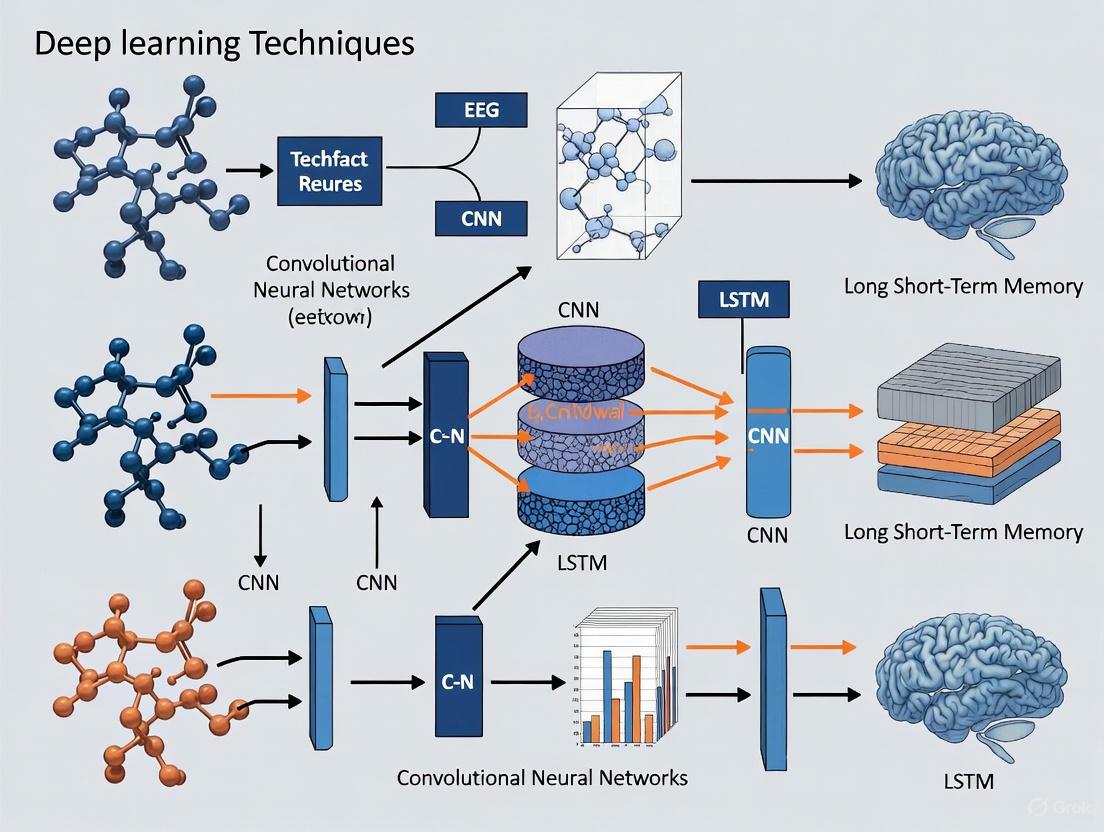
This article provides a comprehensive exploration of deep learning approaches, specifically Convolutional Neural Networks (CNN) and Long Short-Term Memory (LSTM) networks, for removing artifacts from electroencephalography (EEG) signals.
Advanced CNN-LSTM Architectures for EEG Artifact Removal: A Comprehensive Guide for Biomedical Research
Abstract
This article provides a comprehensive exploration of deep learning approaches, specifically Convolutional Neural Networks (CNN) and Long Short-Term Memory (LSTM) networks, for removing artifacts from electroencephalography (EEG) signals. Tailored for researchers, scientists, and drug development professionals, it covers the foundational principles of EEG contamination and the limitations of traditional methods. The review details innovative hybrid and dual-scale CNN-LSTM architectures, discusses strategies for overcoming challenges like unknown artifact removal and multi-channel processing, and presents a rigorous comparative analysis of state-of-the-art models based on metrics such as SNR and correlation coefficient. The synthesis aims to equip professionals with the knowledge to select and implement advanced denoising techniques, thereby enhancing the reliability of EEG data in clinical diagnostics and neuroscience research.
EEG Artifacts and the Deep Learning Revolution: From Classical Methods to CNN-LSTM
The Critical Challenge of Physiological Artifacts in EEG Analysis
Electroencephalography (EEG) is a crucial tool in neuroscience research and clinical diagnostics, providing non-invasive, high-temporal-resolution measurement of brain activity. However, a significant challenge in EEG analysis is the presence of physiological artifacts—signal contaminants originating from non-cerebral sources in the body. These artifacts can profoundly distort EEG recordings, potentially leading to misinterpretation of brain activity and incorrect conclusions in both research and clinical settings. Physiological artifacts differ from environmental artifacts in that they arise from the subject's own biological processes, including ocular movements, muscle activity, cardiac rhythms, and glossokinetic effects [1] [2].
The critical challenge posed by these artifacts is their overlapping frequency characteristics with genuine neural signals. For instance, eye blinks typically manifest as low-frequency components below 4 Hz, while muscle artifacts appear as high-frequency activity above 13 Hz, both overlapping with important EEG rhythms [3]. This spectral overlap makes traditional filtering approaches insufficient for artifact removal, as they inevitably remove valuable neural information along with the artifacts. Furthermore, some artifacts can exhibit rhythmic properties that closely resemble seizure activity or other pathological patterns, creating significant diagnostic challenges [1]. With the expanding applications of EEG in drug development, brain-computer interfaces, and real-world monitoring, addressing the problem of physiological artifacts has become increasingly urgent for researchers and clinicians alike.
Characterization of Major Physiological Artifacts
Ocular Artifacts
Ocular artifacts represent one of the most common categories of physiological interference in EEG recordings. These artifacts primarily include eye blinks and lateral eye movements, both originating from the electrical potential difference between the cornea (positively charged) and retina (negatively charged) [1].
Eye blinks produce characteristic high-amplitude, low-frequency deflections maximal in the bifrontal regions (electrodes Fp1 and Fp2). The underlying mechanism, known as Bell's Phenomenon, involves an upward rotation of the eyes during blinking, bringing the corneal positive potential closer to the frontal electrodes [1]. A key identifying feature of ocular artifacts is their limited spatial distribution—they should appear predominantly in frontal leads without significant spread to posterior regions. This contrasts with cerebral activity such as frontal spike and waves, which typically demonstrate a broader field extending to occipital areas [1].
Lateral eye movements generate a distinctive pattern of opposing polarities in the F7 and F8 electrodes. When looking to the right, the right cornea moves closer to F8 (creating a positive deflection), while the left retina moves closer to F7 (creating a negative deflection). The reverse pattern occurs when looking to the left. In bipolar montages, this creates characteristic phase reversals that can be identified by experienced EEG readers [1].
Muscle and Movement Artifacts
Muscle artifacts represent another major category of physiological interference, typically originating from temporalis and frontalis muscle activity. These artifacts manifest as high-frequency, low-amplitude activity often described as "myogenic" or "muscle" artifact [1]. Unlike cerebral signals, myogenic activity tends to be much faster than normal brain rhythms and is typically most prominent in awake subjects.
Chewing artifact represents a specific form of muscle interference characterized by sudden-onset, intermittent bursts of generalized very fast activity resulting from temporalis muscle contraction [1]. This artifact is often accompanied by hypoglossal (tongue movement) artifact, which appears as slower, diffuse delta-frequency activity affecting multiple channels simultaneously. The highly organized, reproducible nature of hypoglossal artifact helps distinguish it from pathological cerebral rhythms [1].
Table 1: Characteristics of Major Physiological Artifacts in EEG
| Artifact Type | Primary Sources | Frequency Characteristics | Spatial Distribution | Identifying Features |
|---|---|---|---|---|
| Eye Blinks | Cornea-retinal potential, Bell's Phenomenon | Very low frequency (<4 Hz) | Bifrontal (Fp1, Fp2) | High-amplitude positive deflections, no posterior field |
| Lateral Eye Movements | Cornea-retinal potential during lateral gaze | Low frequency (1-2 Hz) | Frontal-temporal (F7, F8) | Opposing polarities at F7/F8, phase reversals in bipolar montages |
| Muscle Artifact | Frontalis, temporalis muscle contraction | High frequency (>13 Hz, beta/gamma) | Frontal, temporal regions | Fast, spiky morphology, often bilateral but asymmetric |
| Chewing Artifact | Temporalis muscle contraction | Very high frequency (beta/gamma) | Generalized, maximum temporal | Sudden onset bursts, correlates with visible chewing |
| Hypoglossal Artifact | Tongue movement | Delta frequency (1-4 Hz) | Generalized | Slow, rhythmic, reproducible with speech/lingual movement |
| ECG Artifact | Cardiac electrical activity | ~1 Hz (heart rate) | Left hemisphere predominant | Time-locked to QRS complex, periodic occurrence |
Cardiac and Other Artifacts
Cardiac artifacts appear in EEG recordings as waveforms time-locked to the cardiac cycle. The most common form is ECG artifact, characterized by periodic deflections synchronized with the QRS complex [1]. These artifacts typically show left-sided predominance due to the heart's position in the left hemithorax and generally appear as relatively low-amplitude disturbances. A less common variant is cardioballistic artifact, which occurs when an EEG electrode is positioned directly over an artery and detects pulsation-induced movement [1].
Additional physiological artifacts include respiratory artifacts (often manifesting as slow, rhythmic baseline wander), sweat artifacts (characterized by very slow, <0.5 Hz fluctuations due to sodium chloride in sweat carrying electrical charge), and pulse artifacts [1] [2]. Each exhibits distinctive temporal, spatial, and morphological features that enable identification by trained electroencephalographers.
Quantitative Impact Assessment
The impact of physiological artifacts on EEG signal quality can be quantified using Signal-to-Noise Ratio Deterioration (SNRD), which measures the difference in SNR between artifact-free conditions and periods contaminated by artifacts [4]. Research has demonstrated that different artifact types affect specific frequency bands and electrode locations with varying intensity.
Table 2: Quantitative Impact of Physiological Artifacts on EEG Signal Quality
| Artifact Type | SNRD in Scalp EEG | Most Affected Frequency Bands | Regional Maximum Impact | SNRD in Ear-EEG |
|---|---|---|---|---|
| Jaw Clenching | High deterioration | Gamma band (>30 Hz) | Generalized, maximum temporal | Higher than scalp EEG |
| Eye Blinking | Moderate deterioration | Delta, theta bands (1-7 Hz) | Frontal regions | Minimal deterioration |
| Lateral Eye Movements | Moderate deterioration | Delta, theta bands (1-7 Hz) | Frontal, temporal regions | Significant deterioration |
| Head Movements | Variable deterioration | Broadband | Dependent on movement type | Variable deterioration |
Studies comparing artifact vulnerability between conventional scalp EEG and emerging ear-EEG platforms have revealed important differences. For instance, ear-EEG demonstrates significantly higher susceptibility to jaw-related artifacts but relative resilience to eye-blink artifacts compared to scalp systems [4]. This has important implications for the design of wearable EEG systems intended for long-term monitoring in real-world environments.
Deep Learning Approaches for Artifact Removal
CNN-LSTM Architectures
Recent advances in deep learning have produced sophisticated approaches for physiological artifact removal, with hybrid CNN-LSTM architectures demonstrating particularly promising results. These architectures leverage the complementary strengths of Convolutional Neural Networks (CNNs) for spatial feature extraction and Long Short-Term Memory (LSTM) networks for modeling temporal dependencies in EEG signals [3] [5].
The hybrid CNN-LSTM model employs a specific workflow for artifact removal. First, multi-channel EEG data are preprocessed and segmented into appropriate epochs for analysis. The CNN component then extracts spatially relevant features from the electrode array, identifying characteristic patterns associated with different artifact types. These spatial features are subsequently passed to the LSTM component, which models the temporal dynamics and context of the signal, effectively distinguishing between persistent cerebral rhythms and transient artifacts [5]. Studies incorporating simultaneous facial and neck EMG recordings have demonstrated that this approach can effectively remove muscle artifacts while preserving neurologically relevant signals such as Steady-State Visual Evoked Potentials (SSVEPs) [5].
Generative Adversarial Networks (GANs)
Generative Adversarial Networks (GANs) represent another powerful deep learning approach for EEG artifact removal. The GAN framework consists of two neural networks: a generator that produces cleaned EEG signals from artifact-contaminated inputs, and a discriminator that distinguishes between the generator's output and genuine clean EEG [3]. Through this adversarial training process, the generator learns to produce increasingly realistic artifact-free signals.
Recent implementations such as AnEEG have enhanced standard GAN architectures by incorporating LSTM layers to better capture temporal dependencies in EEG data [3]. These approaches have demonstrated superior performance compared to traditional methods like wavelet decomposition, achieving lower Normalized Mean Square Error (NMSE) and Root Mean Square Error (RMSE) values while maintaining higher Correlation Coefficient (CC) with ground truth signals [3].
Experimental Protocols for Method Evaluation
Protocol for Assessing Artifact Removal in SSVEP Paradigms
Objective: To evaluate the efficacy of deep learning artifact removal methods in preserving neurologically relevant signals while eliminating muscle artifacts.
Subjects: 24 participants with normal or corrected-to-normal vision [5].
Stimuli: Steady-State Visual Evoked Potentials (SSVEPs) elicited by visual stimulation using light-emitting diodes (LED) flickering at specific frequencies [5].
Artifact Induction: Participants perform strong jaw clenching during recording periods to induce significant muscle artifacts known to obscure EEG signals [5].
Data Acquisition:
- EEG recorded using standard scalp electrodes according to the 10-20 system
- Simultaneous recording of facial and neck EMG signals to provide reference data on muscle activity
- Sampling rate: ≥250 Hz to adequately capture high-frequency components
- Electrode impedance maintained below 10 kΩ throughout recording
Signal Processing:
- Raw data preprocessing with bandpass filtering (0.5-70 Hz)
- Data segmentation into epochs time-locked to visual stimulation
- Application of CNN-LSTM model using EMG references for targeted artifact removal
- Performance comparison against baseline methods (ICA, linear regression)
Outcome Measures:
- Signal-to-Noise Ratio (SNR) of SSVEP responses before and after artifact removal
- Time-domain analysis of signal morphology preservation
- Frequency-domain analysis of SSVEP peak integrity
- Quantitative metrics including NMSE, RMSE, and CC with ground truth
Protocol for Quantitative Artifact Impact Assessment
Objective: To quantify the signal-to-noise ratio deterioration caused by specific physiological artifacts in both scalp and ear-EEG configurations.
Subjects: 9 participants with no history of neurological disorders [4].
Stimuli: 40 Hz amplitude-modulated white noise presented binaurally to elicit Auditory Steady-State Response (ASSR) [4].
Experimental Conditions:
- Relaxed condition: Minimal movement, eyes open or closed
- Artifact conditions:
- Jaw clenching (muscle artifact)
- Eye blinking (ocular artifact)
- Lateral eye movements (ocular artifact)
- Head movements (motion artifact)
Data Acquisition:
- Scalp EEG from 32 electrodes according to the 10-20 system
- Ear-EEG from electrodes embedded in custom earpieces
- Reference configuration: Scalp electrodes referenced to Cz; ear electrodes referenced to concha electrodes
- Simultaneous physiological monitoring (ECG, EOG, EMG) for artifact verification
Signal Processing:
- Data preprocessing with FIR bandpass filtering (0.2-120 Hz)
- Notch filtering at 50 Hz and 100 Hz to remove power line interference
- Fourier analysis to calculate SNR at 40 Hz ASSR
- SNRD calculation as the difference between relaxed and artifact conditions
Outcome Measures:
- Frequency-band specific SNRD values for each artifact type
- Topographic distribution of artifact impact
- Comparative analysis of scalp vs. ear-EEG vulnerability
The Scientist's Toolkit: Research Reagent Solutions
Table 3: Essential Research Tools for EEG Artifact Removal Studies
| Tool/Category | Specific Examples | Function in Research | Application Notes |
|---|---|---|---|
| EEG Recording Systems | g.USBamp amplifiers, active electrodes (g.LADYbird) | High-quality signal acquisition with minimal hardware artifact | Active electrodes reduce susceptibility to environmental interference; 32+ channels recommended for spatial analysis |
| Alternative EEG Platforms | Ear-EEG systems with custom earpieces | Discreet, long-term monitoring in real-world environments | Particularly susceptible to jaw artifacts but resistant to eye blink artifacts |
| Reference Signal Recordings | Facial and neck EMG, EOG, ECG | Provide objective reference for artifact identification and removal | Enables supervised learning approaches; critical for validating removal efficacy |
| Deep Learning Frameworks | TensorFlow, PyTorch with custom CNN-LSTM implementations | Nonlinear artifact separation from neural signals | Hybrid architectures optimal for spatiotemporal feature extraction |
| Data Augmentation Tools | Synthetic artifact generation algorithms | Expand training datasets for improved model generalization | Enables robust model training with limited clinical data |
| Evaluation Metrics | SNR, NMSE, RMSE, Correlation Coefficient | Quantitative assessment of artifact removal performance | SNR particularly valuable for evoked potential studies |
| Computational Modeling | Finite Element Method (FEM) head models | Understand artifact generation and propagation mechanisms | Explains physiological artifacts based on specific impedance changes |
Applications in Drug Development and CNS Research
The integration of advanced artifact removal techniques has significant implications for central nervous system (CNS) drug development. EEG biomarkers provide functional readouts that can predict human outcomes with higher confidence than traditional endpoints [6]. Preclinical EEG biomarkers enable real-time assessment of compound efficacy in disease-relevant models, potentially reducing late-stage attrition in drug development pipelines [6].
In practice, EEG-based pharmacodynamic measures are particularly valuable for drugs that act on the CNS, such as general anesthetics, benzodiazepines, and opioids, which generate reproducible EEG effects that correlate with drug concentration [7]. By applying sophisticated artifact removal techniques, researchers can obtain cleaner signals for pharmacokinetic/pharmacodynamic modeling, enabling more accurate dose optimization and titration [7].
Machine learning-enhanced EEG analysis has demonstrated particular utility in several therapeutic areas:
Epilepsy Drug Development: Quantitative EEG analysis can identify hidden seizure patterns not apparent in clinical seizure diaries. Where a patient might report 10 seizures per day, EEG analysis might reveal 150 subclinical events, providing a more sensitive measure of treatment efficacy [8].
Alzheimer's Disease Research: EEG can identify patients with subclinical epileptiform activity who experience faster cognitive decline. This allows for better patient stratification in clinical trials and targeted application of anti-epileptic mechanisms [8].
Psychiatric Drug Development: Sleep architecture metrics derived from EEG provide objective biomarkers for conditions like major depressive disorder, where sleep disturbances represent core symptoms. Artifact-free sleep EEG can distinguish between patients with insomnia versus hypersomnia, potentially predicting differential treatment response [8].
Neurodegenerative Disease Monitoring: REM sleep behavior disorders detected via EEG may serve as early indicators of Parkinson's disease, enabling earlier intervention when treatments may be most effective [8].
Physiological artifacts remain a critical challenge in EEG analysis, with the potential to significantly distort interpretation of brain activity in both research and clinical settings. The overlapping spectral characteristics of artifacts and genuine neural signals render traditional filtering approaches insufficient for high-precision applications. Advanced deep learning approaches, particularly hybrid CNN-LSTM architectures and GAN frameworks, offer promising solutions by leveraging both spatial and temporal features to separate artifacts from brain signals.
The development of standardized experimental protocols for evaluating artifact removal efficacy, particularly those incorporating SSVEP paradigms and quantitative SNRD metrics, provides rigorous methodology for comparing different approaches. As EEG continues to grow in importance for CNS drug development and real-world brain monitoring, the implementation of robust artifact removal techniques will be essential for extracting meaningful insights from neural signals. The integration of these advanced computational approaches with high-quality EEG acquisition represents a promising path forward for both neuroscience research and clinical applications.
Electroencephalography (EEG) is a crucial, non-invasive tool for studying brain activity, with applications spanning from clinical diagnostics to brain-computer interfaces (BCIs) [9]. However, the analysis of EEG signals is profoundly complicated by the presence of artifacts—unwanted signals originating from non-neural sources, such as ocular movements (EOG), muscle activity (EMG), and cardiac rhythms (ECG) [3] [5]. The effective removal of these artifacts is a prerequisite for accurate data interpretation. For decades, traditional techniques like regression, Blind Source Separation (BSS)—including Independent Component Analysis (ICA)—and their hybrids have formed the cornerstone of EEG artifact removal protocols. While these methods have provided valuable service, they possess inherent limitations that restrict their efficacy and applicability in modern research and clinical settings. The advent of deep learning, particularly models combining Convolutional and Recurrent Neural Networks (CNNs and LSTMs), highlights these constraints and points toward a new generation of automated, data-driven solutions [10] [5]. This application note details the fundamental limitations of traditional artifact removal methods, providing a structured comparison and experimental context for researchers, particularly those engaged in drug development and neurophysiological research.
Critical Analysis of Traditional Methodologies
The following sections delineate the core principles and, more importantly, the significant limitations of the most prevalent traditional artifact removal methods.
Regression-Based Methods
Regression techniques operate on the principle of using a reference signal (e.g., from an EOG channel) to model and subtract the artifact from the contaminated EEG signal [5].
- Core Limitation: Dependency on Reference Channels. The performance of regression methods is critically dependent on the availability and quality of a separate, clean reference signal for each type of artifact [10]. In practice, obtaining such references requires additional hardware (electrodes) and increases the complexity and cost of data acquisition. The absence of a reference signal leads to a significant degradation in artifact removal performance [10].
- Additional Constraints: These methods often assume a linear and stationary relationship between the reference artifact and its manifestation in the EEG, an assumption frequently violated in real-world physiological data. This can result in either incomplete artifact removal or the inadvertent subtraction of neural signals of interest, leading to a loss of information [5].
Blind Source Separation (BSS) and Independent Component Analysis (ICA)
BSS methods, such as ICA, are algorithmic techniques designed to separate a set of source signals from a mixture without prior knowledge of the sources or the mixing process [11]. ICA, a prominent BSS method, decomposes the multi-channel EEG signal into statistically independent components (ICs), which can then be manually or automatically classified as neural or artifactual before reconstruction of the cleaned signal [11] [12].
- Core Limitation: Requirement for Manual Intervention and Expert Knowledge. A fundamental drawback of ICA is the need for expert visual inspection to identify and label components corresponding to artifacts. This process is subjective, time-consuming, and not scalable to large datasets [12]. While tools like ICLabel [12] have been developed to automate component classification using CNNs, the underlying ICA process still requires careful pre-processing and significant computational resources, hindering fully automated pipeline implementation.
- Inherent Model Assumptions and Ambiguities: ICA relies on the statistical assumption that the source signals are independent. This assumption may not hold perfectly for complex, mixed neural signals. Furthermore, BSS methods inherently suffer from scaling and permutation ambiguities, meaning the recovered sources' amplitude and order are uncertain [11].
- Inability to Model Non-Linearities: ICA is typically a linear separation technique. However, the propagation of electrical signals through the head and tissues is a complex process that may involve non-linearities. ICA's simple linear mapping function may be insufficient to capture these complex relationships, potentially leading to suboptimal separation [12].
Hybrid and Other Methods
To overcome the limitations of individual techniques, hybrid methods have been developed. These combine the advantages of different approaches, such as BSS with wavelet transforms (BSS-WT) or empirical mode decomposition (BSS-EMD) [11]. For instance, the SSA-CCA method uses Singular Spectrum Analysis followed by Canonical Correlation Analysis to isolate and remove muscle artifacts based on their low autocorrelation [5].
- Core Limitation: Algorithmic Complexity and Customization: While often more effective, hybrid methods can be computationally intensive and require careful parameter tuning. Their development is often targeted at specific artifact types (e.g., SSA-CCA for EMG), meaning there is no universal hybrid solution for all artifacts. Their performance may not generalize well across different EEG acquisition setups or artifact profiles [5].
Table 1: Quantitative Comparison of Traditional vs. Deep Learning Artifact Removal Performance
| Method | Key Limitation | Reported Performance (Example) | Stimulation Type |
|---|---|---|---|
| Regression | Requires separate reference channel [10] | Performance drops significantly without reference | N/A |
| ICA (BSS) | Requires manual component inspection [12] | Effective but not automated; computationally heavy for long recordings [12] | General |
| Complex CNN (DL) | Data-hungry; high computational demand for training [13] | RRMSE: Best for tDCS artifacts [13] | tDCS |
| M4-SSM (DL) | Complex model architecture [13] | RRMSE: Best for tACS & tRNS artifacts [13] | tACS, tRNS |
| DuoCL (CNN-LSTM) | Potential disruption of original temporal features [10] | SNR & CC: Highest; RRMSEt & RRMSEf: Lowest in benchmark [14] | Hybrid/Unknown |
| CLEnet (CNN-LSTM) | Incorporates improved attention mechanism [10] | CC: 0.925; RRMSEt: 0.300 (Best for mixed EMG/EOG) [10] | Mixed (EMG+EOG) |
Experimental Protocols for Benchmarking Artifact Removal
To empirically validate the limitations of traditional methods and compare them against modern deep learning approaches, a standardized benchmarking protocol is essential. The following outlines a core experimental methodology based on current research practices.
Protocol: Semi-Synthetic Dataset Creation and Model Evaluation
Objective: To create a controlled, ground-truth dataset for the rigorous evaluation and comparison of artifact removal algorithms [13] [10].
Materials:
- Clean EEG Data: Source from public repositories like EEGdenoiseNet [10] or the LEMON dataset [12]. These should be verified to be free of major artifacts.
- Artifact Signals: Recordings of pure EOG, EMG, and ECG signals, or use available artifactual data from repositories.
- Computing Environment: MATLAB or Python with relevant signal processing and machine learning toolboxes (e.g., EEGLab, MNE-Python, TensorFlow/PyTorch).
Procedure:
- Data Preparation: Select epochs of clean EEG signals. Similarly, prepare epochs of artifact signals (e.g., EMG from jaw clenching [5]).
- Linear Mixing: Generate semi-synthetic contaminated EEG by linearly mixing clean EEG with artifact signals at varying Signal-to-Noise Ratios (SNRs). The clean EEG serves as the ground truth [13] [10]. Formula:
EEG_contaminated = EEG_clean + α * Artifact, whereαcontrols the contamination level. - Algorithm Application: Apply the target artifact removal methods (e.g., Regression, ICA, and deep learning models like CNN-LSTM) to the contaminated
EEG_contaminated. - Performance Quantification: Compare the output of each algorithm (
EEG_cleaned) against the knownEEG_cleanusing standardized metrics:- Relative Root Mean Square Error (RRMSE): Measures the error in both temporal (
RRMSEt) and spectral (RRMSEf) domains. Lower values indicate better performance [13] [10]. - Correlation Coefficient (CC): Measures the linear relationship between the cleaned and pure EEG. Values closer to 1.0 are superior [13] [10].
- Signal-to-Noise Ratio (SNR) & Signal-to-Artifact Ratio (SAR): Higher values indicate better denoising and artifact suppression [3].
- Relative Root Mean Square Error (RRMSE): Measures the error in both temporal (
Protocol: Validation with Real EEG and SSVEP
Objective: To assess artifact removal performance in a real experimental paradigm where the ground truth is a known neural response [5].
Materials:
- EEG Acquisition System: A multi-channel EEG system.
- EMG Acquisition System: Surface electrodes to record muscle activity from the face/neck.
- Visual Stimulus Unit: An LED screen or goggles capable of presenting a flickering stimulus to elicit Steady-State Visually Evoked Potentials (SSVEPs).
Procedure:
- Data Collection: Record EEG from participants simultaneously with EMG from relevant muscles (e.g., jaw, neck). Data is collected under two conditions:
- Condition A (Baseline): Participant views a flickering visual stimulus without movement.
- Condition B (Artifact): Participant views the same stimulus while performing a strong jaw clench to induce muscle artifacts [5].
- Artifact Removal: Apply the algorithms under test (e.g., ICA, regression, CNN-LSTM) to the data from Condition B.
- Performance Analysis: Calculate the SNR of the SSVEP response in the frequency domain for Condition A (clean baseline), Condition B (contaminated), and after processing Condition B with each algorithm. A successful method will restore the SSVEP SNR to a level close to that of Condition A, demonstrating effective artifact removal while preserving the neural signal of interest [5].
Table 2: Essential Materials and Tools for EEG Artifact Removal Research
| Item Name | Function / Application | Specific Examples / Notes |
|---|---|---|
| EEGdenoiseNet | A benchmark dataset of semi-synthetic EEG contaminated with EOG and EMG artifacts; used for training and testing DL models [10]. | Provides clean EEG, pure artifacts, and pre-mixed data for standardized evaluation [10]. |
| ICLabel | A CNN-based classifier that automates the labeling of Independent Components derived from ICA [12]. | Reduces, but does not eliminate, the manual effort required for ICA; a hybrid traditional-DL approach [12]. |
| Emotiv EPOC | A portable, non-invasive EEG acquisition system with 14 channels [9]. | Useful for out-of-lab studies but with lower performance compared to research-grade systems [9]. |
| Convolutional Neural Network (CNN) | Deep learning architecture ideal for extracting spatial and morphological features from multi-channel EEG data [10] [5]. | Used in models like 1D-ResCNN, NovelCNN, and as part of hybrid CNN-LSTM architectures [10]. |
| Long Short-Term Memory (LSTM) | A type of Recurrent Neural Network (RNN) designed to capture temporal dependencies and contextual information in time-series data [3] [12]. | Critical for modeling the dynamic, sequential nature of EEG signals in models like DuoCL and LSTEEG [14] [12]. |
| Blind Source Separation (BSS) | A class of algorithms to separate source signals from a mixture without prior knowledge; includes ICA, PCA, and CCA [11]. | A foundational traditional technique; used as a benchmark against which new DL methods are compared [13] [5]. |
Visualizing the Experimental and Methodological Workflow
The following diagram illustrates the typical workflow for benchmarking artifact removal methods, integrating both semi-synthetic and real-data validation protocols.
Traditional artifact removal methods, including regression, ICA, and BSS, are hampered by significant limitations such as dependency on reference channels, the need for labor-intensive manual intervention, and restrictive linear assumptions. Quantitative benchmarks reveal that these constraints lead to suboptimal performance compared to emerging deep learning approaches, particularly hybrid CNN-LSTM models which excel at capturing both the spatial and temporal features of EEG while enabling full automation. For researchers in drug development and neuroscience, transitioning to these data-driven, deep learning protocols is critical for enhancing the accuracy, efficiency, and scalability of EEG analysis in both clinical and experimental settings.
Why Deep Learning? The Paradigm Shift in Automated Artifact Removal
Electroencephalography (EEG) is indispensable in clinical diagnostics and neuroscience research, yet the analysis of neural signals is profoundly hindered by contamination from various artifacts, including those of muscular, ocular, and cardiac origin [15]. For decades, the field relied heavily on traditional signal processing techniques for artifact removal. Methods such as Independent Component Analysis (ICA), regression, and adaptive filtering are built upon linear assumptions and often require extensive expert intervention for component selection [12] [15]. A fundamental limitation of these approaches is their struggle to separate artifacts from neural signals when both occupy overlapping frequency bands, a common scenario in real-world EEG data [3]. Furthermore, techniques like ICA often necessitate careful pre-processing and significant computational resources for large datasets, hindering the development of fully automated, real-time analysis pipelines [12]. The reliance on these traditional methods created a bottleneck, limiting the scalability and applicability of EEG in both clinical and research settings, particularly with the advent of more portable recording devices used in naturalistic scenarios [12].
The Deep Learning Revolution: A New Paradigm
The emergence of deep learning (DL) has catalyzed a paradigm shift in EEG artifact removal, moving away from linear, expert-dependent models toward end-to-end, data-driven learning systems. The core advantage of DL models lies in their capacity to learn complex, non-linear mappings directly from raw, contaminated EEG inputs to clean, artifact-free outputs [15]. This capability allows them to model the highly dynamic and non-stationary nature of both neural activity and artifacts without relying on rigid statistical assumptions or reference signals.
This revolution is powered by specialized neural network architectures, with Convolutional Neural Networks (CNNs) and Long Short-Term Memory (LSTM) networks playing pivotal, complementary roles. CNNs excel at extracting spatially meaningful, morphological features from multi-channel EEG data, effectively identifying the spatial distribution of artifacts across the scalp [14] [16]. Conversely, LSTM networks are inherently designed to model temporal sequences, capturing long-range dependencies and the temporal evolution of EEG signals, which is crucial for distinguishing brain activity from temporally structured artifacts like muscle contractions [12] [14]. The integration of these architectures into hybrid CNN-LSTM models represents a significant advance, enabling the simultaneous exploitation of both spatial and temporal features for superior artifact suppression [5] [14] [16].
Quantitative Performance: Deep Learning Outperforms Traditional Methods
Extensive benchmarking studies demonstrate that deep learning models consistently outperform traditional techniques across a variety of metrics and artifact types. The following table summarizes the quantitative performance of several state-of-the-art DL models, highlighting their efficacy in artifact removal.
Table 1: Performance Metrics of Deep Learning Models for EEG Artifact Removal
| Model Name | Architecture Type | Key Application / Artifact Target | Reported Performance Metrics | Reference |
|---|---|---|---|---|
| DuoCL | Dual-Scale CNN-LSTM | Hybrid & Unknown Artifacts | Highest SNR & CC; Lowest RRMSEₜ & RRMSE𝒇 | [14] |
| CLEnet | Dual-Scale CNN-LSTM with Attention | Multi-channel EEG, Unknown Artifacts | SNR ↑ 2.45%, CC ↑ 2.65%; RRMSEₜ ↓ 6.94%, RRMSE𝒇 ↓ 3.30% | [16] |
| M4 Network | Multi-modular State Space Model (SSM) | tACS & tRNS Artifacts | Best RRMSE & CC performance for tACS/tRNS | [13] |
| Complex CNN | Convolutional Neural Network | tDCS Artifacts | Best RRMSE & CC performance for tDCS | [13] |
| LSTEEG | LSTM-based Autoencoder | Multi-channel Artifact Detection & Correction | Superior artifact detection and correction vs. convolutional autoencoders | [12] |
| AnEEG | LSTM-based GAN | General Artifacts | Lower NMSE & RMSE; Higher CC, SNR & SAR vs. wavelet techniques | [3] |
The performance superiority of DL is further evidenced by its adaptability to specific artifact types. For instance, a comprehensive benchmark of transcranial Electrical Stimulation (tES) artifact removal revealed that while a Complex CNN performed best for transcranial Direct Current Stimulation (tDCS) artifacts, a multi-modular State Space Model (SSM) excelled at removing the more complex artifacts from transcranial Alternating Current Stimulation (tACS) and transcranial Random Noise Stimulation (tRNS) [13]. This specificity underscores DL's ability to adapt to the unique characteristics of different noise sources. When applied to a visual perception task in patients with Deep Brain Stimulation (DBS) implants, machine learning classifiers confirmed that DL-based preprocessing could successfully salvage neural data, making the spatiotemporal patterns of DBS-on and DBS-off conditions highly comparable [17].
Experimental Protocols: From Benchmarking to Novel Models
Protocol 1: Benchmarking tES Artifact Removal
This protocol outlines the methodology for a comparative benchmark of machine learning methods for removing artifacts induced by Transcranial Electrical Stimulation (tES), a major challenge in simultaneous EEG monitoring [13].
- Objective: To analyze and compare the performance of 11 different artifact removal techniques across three tES modalities: tDCS, tACS, and tRNS.
- Dataset Generation: A semi-synthetic dataset was created to enable controlled evaluation. Clean EEG data was combined with synthetic tES artifacts, providing a known ground truth for rigorous model assessment [13].
- Models Evaluated: The benchmark included a range of models, with the Complex CNN and a multi-modular network based on State Space Models (M4) being highlighted [13].
- Evaluation Metrics: Models were evaluated using three primary metrics calculated in both temporal and spectral domains:
- Root Relative Mean Squared Error (RRMSE)
- Correlation Coefficient (CC)
- Key Workflow Steps:
- Acquire clean, ground-truth EEG data.
- Generate synthetic tES artifacts (tDCS, tACS, tRNS).
- Create contaminated EEG by mixing clean EEG and synthetic artifacts.
- Apply each of the 11 artifact removal models.
- Compare the model's output to the known ground truth using RRMSE and CC.
- Outcome: The study provided clear guidelines for model selection, establishing that optimal performance is dependent on the stimulation type, thereby creating a benchmark for future research [13].
Protocol 2: A Hybrid CNN-LSTM Model with EMG Reference
This protocol details a novel approach that uses a hybrid CNN-LSTM architecture and additional EMG recordings to specifically target muscle artifacts while preserving neurologically valid signals like Steady-State Visually Evoked Potentials (SSVEPs) [5].
- Objective: To remove muscle artifacts from EEG signals using a hybrid CNN-LSTM model trained with simultaneous facial and neck EMG signals as an artifact reference, and to preserve the integrity of SSVEP responses.
- Data Collection: EEG and EMG data were recorded from 24 participants. Subjects were presented with an LED stimulus to elicit SSVEPs while performing a strong jaw clenching action to induce significant muscle artifacts [5].
- Data Augmentation: An innovative strategy was developed to generate augmented EEG and EMG recordings, creating a larger and more diverse training dataset [5].
- Model Architecture: A hybrid CNN-LSTM network was implemented. The CNN layers likely extract spatial features from the multi-channel EEG/EMG inputs, while the LSTM layers model the temporal dynamics of the signal and artifacts.
- Evaluation Method: The algorithm's efficacy was assessed based on its ability to preserve SSVEP responses. A key metric was the change in the Signal-to-Noise Ratio (SNR) of the SSVEP after cleaning, which quantifies how well the method removes noise while retaining the neural signal of interest [5].
- Comparison: The proposed method's performance was compared against commonly used algorithms, including Independent Component Analysis (ICA) and linear regression [5].
The logical workflow for this hybrid approach is illustrated below.
The Scientist's Toolkit: Key Research Reagents & Materials
Implementing deep learning models for EEG artifact removal requires a combination of computational resources, software frameworks, and datasets. The following table details essential components for building an experimental pipeline.
Table 2: Essential Research Toolkit for DL-Based EEG Artifact Removal
| Tool / Resource | Category | Specific Examples / Functions | Application in Research |
|---|---|---|---|
| Deep Learning Frameworks | Software | TensorFlow, PyTorch | Provides the foundation for building, training, and validating CNN, LSTM, and Autoencoder models. |
| Public EEG Datasets | Data | LEMON Dataset [12], EEGDenoiseNet [12], LoDoPaB-CT [18] | Serves as a source of clean EEG for training or standardized benchmarks for model evaluation. |
| Synthetic Data Generation | Methodology | Mixing clean EEG with synthetic artifacts (e.g., tES [13], EMG) | Enables controlled creation of large, labeled datasets with known ground truth for supervised learning. |
| Reference Signal Recordings | Experimental Data | Simultaneous EMG [5], EOG, or ECG | Provides a dedicated noise reference to enhance model training for specific artifact types (e.g., muscle, ocular). |
| Quantitative Evaluation Metrics | Analytical Tools | RRMSE, CC, SNR, SAR [13] [3] [16] | Offers objective, standardized measures to compare the performance of different artifact removal algorithms. |
| Computational Hardware | Hardware | GPUs (Graphics Processing Units) | Accelerates the training process of complex deep learning models, which are computationally intensive. |
Architectural Deep Dive: Dual-Scale Feature Learning
The most advanced DL models for EEG artifact removal employ sophisticated architectures that process information at multiple scales. The DuoCL model, for instance, uses a dual-scale approach to comprehensively capture both fine-grained and broad morphological features of artifacts [14]. As shown in the diagram below, this architecture processes raw EEG through two parallel convolutional branches with different kernel sizes. One branch uses larger kernels to capture broader, coarse-grained features, while the other uses smaller kernels to identify fine-grained, local details. The outputs from these dual pathways are then reinforced with temporal dependencies captured by an LSTM network before a final reconstruction layer produces the cleaned EEG signal [14]. This multi-scale, spatio-temporal approach allows the model to adaptively remove a wide range of artifacts, including previously "unknown" types, without requiring prior knowledge of their specific characteristics [14] [16].
The paradigm shift from traditional, assumption-laden methods to deep learning-based approaches has fundamentally transformed the field of automated EEG artifact removal. The empirical evidence is clear: models leveraging CNNs, LSTMs, and their hybrids consistently achieve superior performance by learning the complex, non-linear relationships that characterize artifact contamination directly from data. This capability translates into more accurate waveform reconstruction, higher signal fidelity, and robust performance across diverse artifact types, including challenging scenarios like tES and motion artifacts.
Future research is poised to build upon this foundation by integrating self-supervised learning to reduce dependency on large, labeled datasets, and hybrid architectures that combine the strengths of different DL models [15]. Furthermore, the exploration of attention mechanisms and transformers promises to enhance the model's ability to focus on the most salient, artifact-ridden segments of the signal [16] [15]. As these technologies mature, the focus will increasingly shift towards developing efficient, interpretable models suitable for real-time clinical diagnostics and robust brain-computer interfaces, solidifying deep learning as the cornerstone of next-generation EEG analysis.
Electroencephalography (EEG) is a cornerstone tool in neuroscience research and clinical diagnostics, prized for its non-invasive nature and high temporal resolution [5] [10]. However, the recorded EEG signals are persistently contaminated by various artifacts—from physiological sources like eye movements (EOG), muscle activity (EMG), and cardiac rhythms (ECG) to environmental interference [10] [3] [15]. These artifacts significantly obscure genuine brain activity, complicating analysis and potentially leading to misdiagnosis in clinical settings or errors in brain-computer interface (BCI) applications [3] [15].
Traditional artifact removal methods, including regression, independent component analysis (ICA), and wavelet transforms, often rely on linear assumptions, manual parameter tuning, or require reference signals, limiting their effectiveness and adaptability [5] [10] [15]. Deep learning has emerged as a powerful alternative, capable of learning complex, non-linear mappings directly from noisy data. Within this domain, hybrid architectures that combine Convolutional Neural Networks (CNNs) for superior spatial feature extraction with Long Short-Term Memory (LSTM) networks for sequential temporal modeling have demonstrated remarkable efficacy [5] [10]. This document details the application notes and experimental protocols for utilizing these synergistic strengths in EEG artifact removal, providing a practical framework for researchers and scientists.
State-of-the-Art Performance Quantification
The performance of CNN-LSTM hybrid models has been rigorously evaluated against other methodologies across multiple datasets and artifact types. The following table summarizes key quantitative results, demonstrating the superior performance of hybrid architectures.
Table 1: Performance Comparison of EEG Artifact Removal Methods Across Different Studies
| Model/Approach | Artifact Type | Dataset | Key Metrics | Reported Performance |
|---|---|---|---|---|
| CLEnet (CNN-LSTM with EMA-1D) [10] | Mixed (EMG + EOG) | EEGdenoiseNet | SNR (dB)CCRRMSEtRRMSEf | 11.498 dB0.9250.3000.319 |
| CLEnet [10] | ECG | EEGdenoiseNet + MIT-BIH | SNR (dB)CCRRMSEtRRMSEf | +5.13% vs. DuoCL+0.75% vs. DuoCL-8.08% vs. DuoCL-5.76% vs. DuoCL |
| Hybrid CNN-LSTM with EMG [5] | Muscle (from Jaw Clenching) | Custom SSVEP (24 subjects) | SSVEP Preservation | Excellent performance, retained SSVEP responses better than ICA and regression |
| CNN-Bi-LSTM with Feature Fusion [19] | Seizure Detection | CHB-MIT | AccuracySensitivitySpecificity | 98.43%97.84%99.21% |
| 1D-CNN-LSTM [20] | Lower-limb Motor Imagery | Custom Dataset | Classification Accuracy | 63.75% (Binary) |
| Denoising Autoencoder (DAR) [21] | fMRI (Gradient & BCG) | CWL EEG-fMRI | RMSESSIMSNR Gain | 0.0218 ± 0.01520.8885 ± 0.091314.63 dB |
| Artifact Removal Transformer (ART) [22] | Multiple | Multiple BCI Datasets | Signal Reconstruction | Surpassed other DL models in multi-channel denoising |
These results underscore a clear trend: hybrid CNN-LSTM models consistently achieve high performance across diverse tasks, from direct artifact removal to subsequent classification of cleaned signals. The integration of CNNs and LSTMs provides a balanced architecture that effectively handles both the spatial morphology and temporal dynamics of EEG signals.
Detailed Experimental Protocols
This section provides a step-by-step protocol for replicating a state-of-the-art CNN-LSTM approach for EEG artifact removal, based on validated methodologies from recent literature [5] [10].
Protocol A: Implementing a Hybrid CNN-LSTM Model for Muscle Artifact Removal
Objective: To remove muscle artifacts (EMG) from EEG signals while preserving neurologically relevant components, such as Steady-State Visual Evoked Potentials (SSVEPs), using a hybrid CNN-LSTM model with additional EMG reference signals.
Materials & Dataset:
- EEG Recording System: A high-density amplifier (e.g., 64-channel) with appropriate sampling rate (≥250 Hz).
- EMG Recording System: Surface electrodes for simultaneous recording of facial and neck muscle activity.
- Stimulus Presentation Setup: A device for presenting visual stimuli (e.g., LED for SSVEP elicitation).
- Dataset: Data from 24 participants performing SSVEP tasks with and without strong jaw clenching to induce artifacts [5]. For augmentation, clean EEG and artifact signals can be artificially mixed to expand the training set.
Procedure:
- Data Acquisition & Preprocessing:
- Record raw EEG and simultaneous EMG from reference muscles (e.g., masseter, temporalis).
- Apply band-pass filtering (e.g., 0.5-70 Hz for EEG) and a notch filter (50/60 Hz) to remove line noise.
- Segment data into epochs time-locked to the visual stimulus.
- Normalize the data (e.g., z-score) for stable training.
Model Architecture Design (Hybrid CNN-LSTM):
- Input: Raw or preprocessed segments of multi-channel EEG and corresponding EMG reference data.
- Feature Extraction Branch (CNN):
- Employ 1D convolutional layers with multiple kernel sizes (e.g., 3, 5, 7) to extract local morphological features at different scales [10].
- Use activation functions (ReLU) and pooling layers to introduce non-linearity and reduce dimensionality.
- Temporal Modeling Branch (LSTM):
- Fusion and Output:
- The output from the LSTM sequence is passed through a series of fully connected (Dense) layers.
- The final layer reconstructs the artifact-free EEG signal with the same dimensions as the input.
Model Training:
- Loss Function: Use Mean Squared Error (MSE) to minimize the difference between the model's output and the target clean EEG [10] [15].
- Optimizer: Use Adam or RMSProp for adaptive learning rate adjustment.
- Validation: Use a held-out validation set to monitor for overfitting and to select the best model.
Performance Evaluation:
- Quantitative Metrics: Calculate Signal-to-Noise Ratio (SNR), Correlation Coefficient (CC), and Relative Root Mean Squared Error in time and frequency domains (RRMSEt, RRMSEf) [10].
- SSVEP Preservation: Analyze the frequency spectrum of the cleaned signal to confirm the preservation of the SSVEP peak [5].
Protocol B: CLEnet for Multi-Channel EEG with Unknown Artifacts
Objective: To remove a wide range of known and unknown artifacts from multi-channel EEG data using an advanced dual-branch CNN-LSTM architecture (CLEnet) incorporating an attention mechanism [10].
Materials & Dataset:
- Multi-channel EEG System: 32-channel or 64-channel EEG cap.
- Dataset: A combination of public semi-synthetic datasets (e.g., EEGdenoiseNet for EMG/EOG [10]) and real, task-based EEG data (e.g., from an n-back task) containing unknown physiological artifacts.
Procedure:
- Data Preparation:
- For semi-synthetic data, mix clean EEG segments with recorded EOG and EMG artifacts at varying Signal-to-Noise Ratios (SNRs).
- For real data, use expert labeling or automated tools (e.g., ICA with ICLabel [20]) to identify clean and contaminated segments.
CLEnet Architecture:
- Dual-Scale CNN: Implement two parallel CNN streams with different kernel sizes to capture both fine and coarse morphological features from the input EEG.
- Improved EMA-1D Attention: Embed a 1D Efficient Multi-Scale Attention module after the CNNs. This module enhances critical temporal features and suppresses irrelevant ones by performing cross-dimensional interaction [10].
- LSTM for Temporal Dependencies: The attention-weighted features are then fed into LSTM layers to model the long-term temporal dependencies of the genuine EEG signal.
- Reconstruction: Finally, fully connected layers decode the processed features to reconstruct the clean, multi-channel EEG output.
Training and Ablation:
- Train the model end-to-end using MSE loss.
- Conduct ablation studies by removing the EMA-1D module to quantitatively demonstrate its contribution to overall performance (e.g., observed performance drops of ~6.94% in RRMSEt [10]).
The Scientist's Toolkit: Research Reagent Solutions
Table 2: Essential Materials and Computational Tools for CNN-LSTM EEG Research
| Category | Item / Tool | Function / Purpose | Example / Note |
|---|---|---|---|
| Data Acquisition | High-Density EEG System | Records scalp electrical activity. | 64-channel systems recommended for comprehensive spatial coverage [20]. |
| EMG/EOG Amplifier & Electrodes | Records reference signals for artifacts. | Crucial for methods using auxiliary signals [5]. | |
| Software & Libraries | Python | Core programming language. | Versions 3.8+. |
| TensorFlow / PyTorch | Deep learning framework for model building. | ||
| MNE-Python | EEG-specific data handling, preprocessing, and analysis. | Includes ICA implementation [20]. | |
| NumPy, SciPy | Numerical computing and signal processing. | ||
| Datasets | EEGdenoiseNet [10] | Semi-synthetic benchmark with clean EEG and EOG/EMG. | For training and evaluating denoising models. |
| CHB-MIT Scalp EEG Database [19] | Long-term recordings from pediatric patients with epilepsy. | For seizure detection tasks. | |
| Custom SSVEP Dataset [5] | EEG with induced muscle artifacts and known evoked potentials. | For evaluating artifact removal & signal preservation. | |
| Computational Resources | GPU (NVIDIA) | Accelerates deep learning model training. | RTX 3090, A100, or similar. |
| High RAM & CPU | For data preprocessing and handling large datasets. | 32GB+ RAM recommended. |
The integration of CNNs for spatial feature extraction and LSTMs for temporal modeling represents a powerful, synergistic architecture for tackling the complex challenge of EEG artifact removal. The protocols and application notes detailed herein provide a robust foundation for researchers to implement, validate, and advance these methods. The demonstrated success of these hybrids in preserving neurologically critical information like SSVEPs, while effectively suppressing a wide array of artifacts, makes them particularly suitable for high-stakes applications in clinical diagnostics, drug development, and next-generation Brain-Computer Interfaces. Future work will likely focus on enhancing model interpretability, achieving greater computational efficiency for real-time use, and improving generalization across diverse patient populations and recording conditions.
Implementing Hybrid CNN-LSTM Models: Architectures for Effective EEG Reconstruction
Hybrid CNN-LSTM with Auxiliary EMG Input for Muscle Artifact Removal
Electroencephalography (EEG) is a crucial tool for studying human brain activity in research, clinical diagnostics, and brain-computer interface (BCI) technology due to its non-invasive nature and high temporal resolution [5]. However, accurate EEG analysis is significantly hindered by artifacts—interfering signals that do not originate from neuronal activity. Among these, muscle artifacts (electromyographic or EMG interference) present a particularly challenging problem as they generate high-amplitude interference that can overshadow genuine brain signals [5].
Muscle artifacts are especially problematic in paradigms requiring participant movement or in studies of steady-state visually evoked potentials (SSVEPs) [5]. Traditional artifact removal methods often rely solely on EEG data and face limitations due to the spectral overlap between muscle activity and neural signals of interest. This application note details a novel deep learning approach that integrates a hybrid convolutional neural network-long short-term memory (CNN-LSTM) architecture with auxiliary EMG recordings to achieve precise muscle artifact removal while preserving neurologically relevant signal components.
Technical Background and Literature Review
Traditional Muscle Artifact Removal Methods
Most conventional approaches to muscle artifact removal rely on solving a linear blind source separation (BSS) problem. Common techniques include:
- Independent Component Analysis (ICA): Separates sources by maximizing statistical independence, effective for stereotyped artifacts like ocular movements [23] [24].
- Canonical Correlation Analysis (CCA): Identifies sources with maximal autocorrelation, particularly effective for muscle artifacts which typically have lower autocorrelation than brain signals [23] [24].
- Regression-Based Methods: Utilize reference channels to estimate and subtract artifact components from contaminated EEG [5].
- Hybrid Methods: Combine multiple approaches (e.g., EEMD-CCA) to enhance artifact separation [24].
While these methods have demonstrated utility, they often require manual intervention, assume specific signal characteristics, or struggle to preserve neurologically relevant information when removing artifacts [23] [24].
Deep Learning Approaches in EEG Processing
Recent advances in deep learning have transformed EEG artifact removal:
- Generative Adversarial Networks (GANs): Can generate artifact-free EEG signals through adversarial training [3].
- Convolutional Neural Networks (CNNs): Effectively extract spatial and morphological features from EEG data [10].
- Long Short-Term Memory (LSTM) Networks: Capture temporal dependencies in EEG signals, crucial for maintaining brain dynamics [3] [10].
- Hybrid Architectures: Combine strengths of multiple network types for improved artifact removal [5] [10].
The Hybrid CNN-LSTM Framework with EMG Assistance
The proposed framework leverages a dual-pathway architecture that processes both EEG and simultaneously recorded EMG signals [5]. The CNN components extract spatial features from both signal types, while the LSTM layers model their temporal dynamics. The integrated network learns the complex nonlinear relationships between muscle activity and its manifestation in EEG signals, enabling precise artifact suppression.
Key Advantages
This approach offers several advantages over traditional methods:
- Utilization of Complementary Information: By incorporating EMG recordings as direct indicators of muscle activity, the model gains explicit information about artifact sources [5] [24].
- Preservation of Neural Information: The method specifically aims to retain clinically relevant components such as SSVEP responses [5].
- Adaptability: The data-driven approach can learn varied artifact patterns across different subjects and recording conditions [5] [10].
- End-to-End Processing: Eliminates need for manual component selection or reference channel configuration [5].
Quantitative Performance Analysis
Table 1: Performance comparison of artifact removal methods across different contamination types
| Method | Artifact Type | SNR (dB) | CC | RRMSEt | RRMSEf |
|---|---|---|---|---|---|
| CNN-LSTM with EMG [5] | Muscle (SSVEP) | Significant improvement reported | - | - | - |
| CLEnet [10] | Mixed (EMG+EOG) | 11.498 | 0.925 | 0.300 | 0.319 |
| CLEnet [10] | ECG | Outperformed DuoCL by 5.13% | Increased by 0.75% | Decreased by 8.08% | Decreased by 5.76% |
| CLEnet [10] | Multi-channel (Unknown artifacts) | Increased by 2.45% | Increased by 2.65% | Decreased by 6.94% | Decreased by 3.30% |
| AnEEG [3] | Various | Improvement reported | Improvement reported | - | - |
| ICA variants [23] | Muscle | Moderate improvement | - | - | - |
Table 2: Comparison of methodology characteristics across different artifact removal approaches
| Method | Architecture | External Signals | Automation Level | Key Strength |
|---|---|---|---|---|
| CNN-LSTM with EMG [5] | Hybrid CNN-LSTM | EMG | Full | Preservation of SSVEP responses |
| CLEnet [10] | Dual-scale CNN + LSTM + EMA-1D | None | Full | Handles unknown artifacts in multi-channel EEG |
| AnEEG [3] | LSTM-based GAN | None | Full | Temporal dependency capture |
| EEMD-CCA with EMG array [24] | Signal decomposition + adaptive filtering | EMG array | Partial | Performance improves with more EMG channels (2-16) |
| ICA methods [23] | Blind source separation | None | Partial | Established method for various artifacts |
Experimental Protocols
Data Acquisition and Experimental Setup
Subject Preparation
- Recruit 24 participants through appropriate ethical approval processes [5].
- Prepare scalp sites with light abrasion and cleaning to maintain electrode impedance below 5 kΩ.
- Apply EEG electrodes according to the 10-20 international system, focusing on occipital regions for SSVEP recording.
- Place EMG electrodes on facial and neck muscles (masseter, temporalis, sternocleidomastoid) using bipolar configurations [5].
Stimulus Presentation and Task Protocol
- Present visual stimuli using LED arrays flashing at specific frequencies (e.g., 15 Hz) to elicit SSVEPs [5].
- Instruct participants to perform strong jaw clenching during specific blocks to induce muscle artifacts.
- Include resting state blocks without artifact induction for baseline measurements.
- Implement randomized block designs counterbalancing artifact and non-artifact conditions.
Data Collection Parameters
- Sample EEG signals at ≥200 Hz with appropriate anti-aliasing filters [5].
- Record EMG signals synchronously with EEG data to ensure temporal alignment.
- Maintain consistent amplifier gains and filtering settings across all channels.
- Include trigger channels to mark stimulus onset and condition changes.
Data Preprocessing Pipeline
Signal Conditioning
- Apply bandpass filter (0.5-45 Hz) to EEG signals using fifth-order Butterworth zero-phase filters [23].
- Filter EMG signals with appropriate bandpass (10-200 Hz) to capture muscle activity.
- Remove powerline interference with notch filters at 50/60 Hz and harmonics.
Data Segmentation
- Segment data into epochs time-locked to visual stimulus onset.
- Include baseline periods for normalization when appropriate.
- Mark artifact-contaminated segments based on experimental conditions.
Implementation of Hybrid CNN-LSTM Model
Network Architecture Specification
- Design CNN component with multiple convolutional layers (kernel sizes: 3, 5, 7) to extract spatial features.
- Implement LSTM layers with 50-100 units to capture temporal dependencies [3] [10].
- Include attention mechanisms (e.g., EMA-1D) to enhance relevant features [10].
- Create separate input branches for EEG and EMG data with late fusion.
Training Configuration
- Use Adam optimizer with learning rate of 0.001 and batch size of 64.
- Implement mean squared error (MSE) between output and clean reference as loss function.
- Apply early stopping based on validation loss with patience of 20 epochs.
- Utilize data augmentation through synthetic artifact addition to increase training diversity [5].
Validation Methodology
- Employ k-fold cross-validation to assess model generalizability.
- Calculate performance metrics (SNR, CC, RRMSE) on held-out test sets.
- Compare with traditional methods (ICA, regression) using the same data splits [5].
Performance Evaluation Metrics
Quantitative Assessment
- Calculate Signal-to-Noise Ratio (SNR) improvements in dB scale [5] [3].
- Compute Correlation Coefficient (CC) between cleaned and artifact-free signals [3] [10].
- Determine Relative Root Mean Square Error in temporal (RRMSEt) and frequency (RRMSEf) domains [10].
Qualitative Analysis
- Visual inspection of time-domain signals before and after processing.
- Compare power spectral densities to assess artifact suppression and neural preservation.
- Generate time-frequency representations to evaluate oscillatory dynamics.
Experimental Workflow and Signaling Pathways
Diagram 1: Experimental workflow for hybrid CNN-LSTM muscle artifact removal
The Scientist's Toolkit: Research Reagent Solutions
Table 3: Essential research reagents and materials for implementing hybrid CNN-LSTM artifact removal
| Category | Item | Specification/Function |
|---|---|---|
| Recording Equipment | EEG Acquisition System | High-input impedance amplifiers (>100 MΩ), 24-bit resolution, sampling rate ≥200 Hz [5] |
| EMG Electrodes | Disposable Ag/AgCl electrodes with conductive gel for facial muscle placement [5] [24] | |
| Visual Stimulation Device | Programmable LED arrays capable of precise frequency control for SSVEP elicitation [5] | |
| Computational Resources | Deep Learning Framework | TensorFlow/PyTorch with GPU acceleration for model training and inference [5] [10] |
| Signal Processing Toolbox | EEGLab, BBCI Toolbox, or custom Python implementations for preprocessing [23] | |
| High-Performance Computing | GPU with ≥8GB VRAM for efficient training of hybrid CNN-LSTM models [10] | |
| Validation Tools | Benchmark Datasets | EEGdenoiseNet, BCI Competition IV2b, or custom datasets with clean and contaminated signals [3] [10] |
| Performance Metrics | Custom scripts for SNR, CC, RRMSE calculations in temporal and frequency domains [5] [10] | |
| Experimental Materials | Electrode Application Supplies | Abrasive gels, conductive pastes, electrode caps for secure placement [5] |
| Data Collection Software | LabVIEW, PsychoPy, or custom MATLAB/Python scripts for experimental control [5] |
The integration of hybrid CNN-LSTM architectures with auxiliary EMG signals represents a significant advancement in muscle artifact removal from EEG data. This approach demonstrates superior performance compared to traditional methods by explicitly modeling the relationship between muscle activity and its manifestation in EEG signals. The framework's ability to preserve neurologically relevant components such as SSVEP responses while effectively suppressing artifacts makes it particularly valuable for both research and clinical applications.
Future development directions include adapting the architecture for real-time processing in BCI applications, extending the approach to handle other artifact types (EOG, ECG), and improving generalizability across diverse subject populations and recording conditions. As deep learning methodologies continue to evolve and EEG datasets expand, data-driven approaches with multimodal inputs are poised to become the standard for robust artifact removal in electrophysiological signal processing.
Dual-Scale CNN-LSTM (DuoCL) for Morphological and Temporal Feature Learning
Electroencephalogram (EEG) artifact removal represents a critical preprocessing challenge in neuroscientific research and clinical applications. The Dual-Scale CNN-LSTM (DuoCL) model addresses fundamental limitations in conventional artifact removal methods by integrating complementary deep learning architectures to simultaneously capture morphological features and temporal dependencies inherent in EEG signals [14]. This integrated approach enables superior artifact removal performance across diverse contamination scenarios, including electromyographic (EMG), electrooculographic (EOG), and hybrid artifacts that have traditionally challenged single-method solutions [10].
Traditional EEG denoising techniques, including regression methods, blind source separation (BSS), and wavelet transformations, often require manual intervention, reference channels, or make restrictive assumptions about signal characteristics [10] [25]. While deep learning approaches mark a significant advancement, many early neural network architectures demonstrated insufficient capability to capture potential temporal dependencies embedded in EEG or adapt to scenarios without a priori knowledge of artifacts [14]. The DuoCL architecture specifically addresses these limitations through its unique dual-branch design that extracts features at multiple scales while preserving temporal relationships across the signal [14] [10].
Architectural Framework and Mechanism of Action
Core Architectural Components
The DuoCL model operates through three sequential phases that transform contaminated EEG input into reconstructed, artifact-reduced output:
- Phase 1: Morphological Feature Extraction – A dual-branch convolutional neural network (CNN) utilizes convolution kernels of two different scales to learn morphological features from individual samples. This multi-scale approach enables the model to capture both local and global waveform characteristics essential for distinguishing neural activity from artifacts [14].
- Phase 2: Feature Reinforcement – The dual-scale features are reinforced with temporal dependencies (inter-sample) captured by Long Short-Term Memory (LSTM) networks. This component models the sequential nature of EEG signals, preserving contextual information that is crucial for accurate artifact removal [14].
- Phase 3: EEG Reconstruction – The resulting reinforced feature vectors are aggregated to reconstruct artifact-free EEG via a terminal fully connected layer, which maps the processed features back to the clean signal domain [14].
Comparative Architecture Analysis
Table 1: Comparative Analysis of Deep Learning Architectures for EEG Artifact Removal
| Architecture | Core Components | Temporal Processing | Multi-scale Features | Primary Artifact Targets |
|---|---|---|---|---|
| DuoCL [14] [10] | Dual-scale CNN + LSTM | LSTM networks | Dual-branch CNN | EMG, EOG, hybrid, unknown artifacts |
| CLEnet [10] | Dual-scale CNN + LSTM + EMA-1D | LSTM networks | Dual-branch CNN with attention | Multi-channel EEG, unknown artifacts |
| MSCGRU [25] | Multi-scale CNN + BiGRU + GAN | Bidirectional GRU | Multi-scale CNN module | EMG, EOG, ECG |
| 1D-ResCNN [26] | Residual CNN | None | Inception-ResNet blocks | EMG, ECG, EOG |
| NovelCNN [14] [10] | Feedforward CNN | None | Single-scale | EMG artifacts |
| State Space Models (M4) [13] [27] | State Space Models | Sequential modeling | Multi-modular | tACS, tRNS artifacts |
Quantitative Performance Evaluation
Performance Metrics and Benchmarking
The efficacy of DuoCL has been rigorously evaluated against state-of-the-art alternatives using standardized metrics in both temporal and spectral domains [14] [10]. Key performance indicators include:
- Signal-to-Noise Ratio (SNR): Measures the ratio of clean EEG power to residual artifact power
- Correlation Coefficient (CC): Quantifies waveform similarity between reconstructed and ground-truth EEG
- Relative Root Mean Square Error (RRMSE) : Evaluates reconstruction accuracy in both temporal (RRMSEt) and frequency (RRMSEf) domains [14] [10]
Comparative Performance Data
Table 2: Performance Comparison of DuoCL Against Benchmark Models for Mixed Artifact Removal
| Model | SNR (dB) | Correlation Coefficient | RRMSEt | RRMSEf |
|---|---|---|---|---|
| DuoCL [14] | 11.498* | 0.925* | 0.300* | 0.319* |
| CLEnet [10] | ~11.50 | ~0.925 | ~0.300 | ~0.319 |
| 1D-ResCNN [10] | Lower than DuoCL | Lower than DuoCL | Higher than DuoCL | Higher than DuoCL |
| NovelCNN [14] [10] | Lower than DuoCL | Lower than DuoCL | Higher than DuoCL | Higher than DuoCL |
| MSCGRU [25] | 12.857±0.294 (EMG only) | 0.943±0.004 (EMG only) | 0.277±0.009 (EMG only) | - |
Note: Values for DuoCL are representative performance for mixed (EMG+EOG) artifact removal as reported in comparative studies [10].
Experimental Protocols and Implementation
Dataset Preparation and Preprocessing
Successful implementation of DuoCL requires appropriate dataset construction with paired contaminated and clean EEG signals:
- Semi-Synthetic Dataset Generation: Combine artifact-free EEG recordings with separately recorded artifact signals (EMG, EOG) at controlled signal-to-noise ratios [10] [28]. The benchmark EEGdenoiseNet dataset provides standardized data for this purpose [10].
- Real-World Dataset Validation: Augment semi-synthetic validation with experimentally collected data containing unknown artifact profiles. For example, 32-channel EEG recordings during n-back tasks capture naturalistic artifacts without synthetic manipulation [10].
- Signal Preprocessing: Apply bandpass filtering (e.g., 0.5-50 Hz), normalization, and segmentation into fixed-length epochs compatible with network input dimensions [10] [28].
Model Training Protocol
- Network Configuration: Implement dual CNN branches with distinct kernel sizes (e.g., 3×1 and 15×1) to capture short- and long-range morphological features [14]. The LSTM component should be configured with sufficient hidden units to capture relevant temporal dependencies.
- Loss Function: Utilize Mean Squared Error (MSE) between reconstructed and ground-truth clean EEG as the primary optimization objective [10].
- Training Parameters: Employ Adam optimizer with learning rate scheduling, mini-batch processing, and early stopping based on validation loss to prevent overfitting [10].
- Validation Framework: Implement k-fold cross-validation with distinct test sets containing completely unseen data to ensure generalizability [10].
Performance Assessment Methodology
- Quantitative Metrics: Compute SNR, CC, RRMSEt, and RRMSEf between reconstructed signals and ground-truth clean EEG across all test samples [14] [10].
- Qualitative Assessment: Visual inspection of reconstructed waveforms to ensure physiological plausibility and absence of artifact-induced distortions [14].
- Downstream Task Validation: Evaluate the impact of denoising on subsequent EEG analysis tasks (e.g., classification accuracy in brain-computer interface applications) [26].
Visualization of DuoCL Architecture
Diagram 1: DuoCL three-phase architecture for EEG artifact removal
The Scientist's Toolkit: Research Reagent Solutions
Table 3: Essential Research Resources for DuoCL Implementation
| Resource | Type | Function/Purpose | Example Sources |
|---|---|---|---|
| EEGdenoiseNet [10] | Benchmark Dataset | Provides standardized semi-synthetic EEG with EMG/EOG artifacts for training and evaluation | Public repository |
| Synthetic EEG Dataset [28] | Training Dataset | Contains 80,000 examples of clean and artifact-contaminated EEG signals for CNN-LSTM training | IEEE DataPort |
| MIT-BIH Arrhythmia Database [10] | Component Data | Source of ECG artifacts for creating specialized contamination datasets | PhysioNet |
| Custom 32-channel EEG Dataset [10] | Validation Data | Real-world EEG with unknown artifacts for testing generalizability | Research institution collections |
| Dual-scale CNN-LSTM Framework [14] | Algorithm Core | Provides morphological feature extraction at different scales | Research implementations |
| LSTM Module [14] | Temporal Processor | Captures long-range dependencies in EEG time series | Deep learning libraries |
| EMA-1D Attention Mechanism [10] | Enhancement Module | Improves feature selection in advanced variants (CLEnet) | Research implementations |
Applications and Limitations
Application Scenarios
DuoCL demonstrates particular efficacy in several challenging EEG processing scenarios:
- Unknown Artifact Removal: The model maintains robust performance even when artifact characteristics are not fully known in advance, a significant advantage over specialized architectures [14].
- Hybrid Artifact Scenarios: Simultaneous contamination by multiple artifact types (e.g., EMG + EOG) is effectively addressed through the comprehensive feature learning approach [10].
- Multi-channel EEG Processing: Advanced variants like CLEnet extend the core DuoCL concept to complex multi-channel recordings while preserving inter-channel relationships [10].
Limitations and Considerations
Despite its advantages, practitioners should consider certain limitations:
- Computational Complexity: The dual-branch architecture with sequential temporal modeling requires greater computational resources than simpler CNN alternatives [10].
- Training Data Requirements: Like most deep learning approaches, performance depends on availability of representative training data with appropriate artifact diversity [10] [28].
- Architectural Refinements: Recent research indicates potential improvements through attention mechanisms (EMA-1D) and bidirectional temporal modeling (BiGRU) that address feature disruption limitations in the original DuoCL [10] [25].
The DuoCL architecture establishes a robust foundation for combining morphological and temporal feature learning in EEG artifact removal. Recent advancements build upon this core concept through several key innovations:
- Integration of Attention Mechanisms: CLEnet demonstrates that incorporating improved EMA-1D modules enhances feature selection and preservation [10].
- Bidirectional Temporal Modeling: MSCGRU replaces LSTM with bidirectional GRU networks to capture broader temporal context [25].
- Multi-scale Enhancements: Advanced architectures employ more sophisticated multi-scale feature extraction beyond dual branches [25] [26].
For researchers implementing DuoCL-based solutions, the experimental evidence supports selecting this architecture particularly for scenarios involving diverse or unknown artifact types, where its comprehensive feature learning approach provides distinct advantages over specialized alternatives. The framework's modularity also facilitates customization and extension to address specific research requirements in clinical neuroscience, neuropharmacology, and brain-computer interface development.
Electroencephalography (EEG) is a crucial tool in neuroscience and clinical diagnostics due to its non-invasive nature and high temporal resolution. However, EEG signals are frequently contaminated by various artifacts—including physiological artifacts like eye movements (EOG), muscle activity (EMG), and cardiac signals (ECG), as well as non-physiological noise—which significantly compromise signal quality and subsequent analysis [10] [5]. Traditional artifact removal methods, such as regression, filtering, and blind source separation, often require manual intervention, reference channels, or make strict assumptions that limit their effectiveness and automation potential [10].
Recent advances in deep learning have transformed EEG artifact removal by enabling automated, data-driven approaches. Convolutional Neural Networks (CNNs) excel at extracting spatial and morphological features, while Long Short-Term Memory (LSTM) networks effectively capture temporal dependencies in EEG data [10] [5]. However, many existing deep learning models are tailored to specific artifact types and perform poorly on multi-channel EEG data containing unknown noise sources [10]. To address these limitations, the CLEnet model integrates dual-scale CNN, LSTM, and an improved one-dimensional Efficient Multi-Scale Attention mechanism (EMA-1D) to achieve superior artifact removal across diverse contamination scenarios [10].
CLEnet Architecture and Mechanism
CLEnet employs a sophisticated dual-branch architecture designed for end-to-end artifact removal. The model operates through three sequential stages to transform artifact-contaminated input into clean EEG output [10].
Morphological Feature Extraction and Temporal Feature Enhancement
In this initial stage, CLEnet utilizes two convolutional kernels of different scales to identify and extract morphological features from the input EEG data at multiple resolutions. The core architecture consists of stacked CNN layers with an embedded EMA-1D module. This improved attention mechanism captures pixel-level relationships through cross-dimensional interactions, maximizing the extraction of genuine EEG morphological features while simultaneously preserving and enhancing temporal features [10].
Temporal Feature Extraction
The features extracted from the first stage undergo dimensional reduction through fully connected layers to eliminate redundant information. The processed features are then fed into LSTM networks, which specialize in capturing long-range temporal dependencies and patterns characteristic of genuine brain activity, further separating them from artifact components [10].
EEG Reconstruction
In the final stage, the enhanced morphological and temporal features are flattened and processed through fully connected layers to reconstruct them into artifact-free EEG signals. The entire model is trained in a supervised manner using mean squared error (MSE) as the loss function to minimize the difference between the reconstructed output and the ground truth clean EEG [10].
Table 1: Key Components of the CLEnet Architecture
| Component | Type/Function | Key Contribution |
|---|---|---|
| Dual-scale CNN | Feature Extraction | Extracts morphological features at different scales from EEG inputs |
| LSTM Network | Temporal Modeling | Captures temporal dependencies and long-term patterns in EEG data |
| EMA-1D Module | Attention Mechanism | Enhances genuine EEG features through cross-dimensional interactions |
| Fully Connected Layers | Reconstruction | Reconstructs processed features into clean EEG output |
CLEnet Architecture Flow: This diagram illustrates the three-stage processing pipeline of the CLEnet model, showing how contaminated EEG input is transformed through feature extraction, temporal processing, and reconstruction to produce clean EEG output.
Performance Analysis and Benchmarking
CLEnet has undergone comprehensive evaluation across multiple datasets and artifact types, demonstrating consistent superiority over existing state-of-the-art models including 1D-ResCNN, NovelCNN, and DuoCL [10].
Performance on Mixed Artifact Removal
In the challenging task of removing mixed artifacts (EMG + EOG), CLEnet achieved the highest signal-to-noise ratio (SNR: 11.498dB) and average correlation coefficient (CC: 0.925), along with the lowest root mean square error in both temporal (RRMSEt: 0.300) and frequency domains (RRMSEf: 0.319) [10].
ECG Artifact Removal
For ECG artifact removal, CLEnet outperformed DuoCL with a 5.13% increase in SNR, 0.75% increase in CC, 8.08% decrease in RRMSEt, and 5.76% decrease in RRMSEf [10].
Multi-channel EEG with Unknown Artifacts
In experiments conducted on a team-collected 32-channel EEG dataset containing unknown artifacts, CLEnet demonstrated exceptional performance with SNR and CC improvements of 2.45% and 2.65% respectively, while RRMSEt and RRMSEf decreased by 6.94% and 3.30% compared to DuoCL [10].
Table 2: Quantitative Performance Comparison of CLEnet Against Benchmark Models
| Model | Artifact Type | SNR (dB) | CC | RRMSEt | RRMSEf |
|---|---|---|---|---|---|
| CLEnet | Mixed (EMG+EOG) | 11.498 | 0.925 | 0.300 | 0.319 |
| 1D-ResCNN | Mixed (EMG+EOG) | 10.152 | 0.891 | 0.335 | 0.341 |
| NovelCNN | Mixed (EMG+EOG) | 10.874 | 0.903 | 0.322 | 0.333 |
| DuoCL | Mixed (EMG+EOG) | 11.215 | 0.916 | 0.311 | 0.328 |
| CLEnet | ECG | 12.135 | 0.923 | 0.285 | 0.301 |
| DuoCL | ECG | 11.542 | 0.916 | 0.310 | 0.320 |
| CLEnet | Unknown (Multi-channel) | 10.235 | 0.892 | 0.295 | 0.308 |
| DuoCL | Unknown (Multi-channel) | 9.990 | 0.869 | 0.317 | 0.319 |
Ablation studies further confirmed the critical importance of the EMA-1D module, with models lacking this attention component showing significant performance degradation across all evaluation metrics [10].
Experimental Protocols and Methodologies
Dataset Preparation and Preprocessing
Researchers should employ multiple datasets to ensure comprehensive evaluation. CLEnet was validated on three distinct datasets [10]:
- Dataset I: Semi-synthetic data created by combining single-channel EEG with EMG and EOG artifacts from EEGdenoiseNet [10]
- Dataset II: Semi-synthetic data formed by combining EEG from EEGdenoiseNet with ECG artifacts from the MIT-BIH Arrhythmia Database [10]
- Dataset III: Real 32-channel EEG data collected from healthy participants performing a 2-back task, containing unknown artifacts [10]
For optimal performance with multi-channel EEG data, specific preprocessing protocols should be followed. Continuous raw EEG data should be resampled to a consistent sampling rate (250 Hz is commonly used). A bandpass filter (1-40 Hz) should be applied to remove extreme frequency components, followed by notch filtering (50/60 Hz) to eliminate line noise. For multi-channel configurations, consider applying average referencing to reduce common-mode noise and using RobustScaler for global normalization across all channels and timepoints [29].
EEG Data Preparation Workflow: This diagram outlines the essential steps for preparing EEG data for artifact removal models, from raw data collection through preprocessing to final model training and evaluation.
Training Configuration and Parameters
For implementing CLEnet, the following training protocol is recommended. Use mean squared error (MSE) as the loss function to optimize the network. Employ the Adam optimizer with an initial learning rate of 0.001. Utilize a batch size of 32 or 64 depending on available GPU memory. Implement early stopping based on validation loss with a patience of 10-15 epochs. For multi-channel EEG processing, ensure the input tensor dimension is [batchsize, channels, timepoints] [10].
When working with specialized artifact types, consider artifact-specific optimizations. For muscle artifacts, use shorter temporal segments (5s windows) as they typically exhibit more transient characteristics. For eye movement artifacts, longer segments (20s windows) are beneficial to capture complete movement patterns. For non-physiological artifacts, very short segments (1s windows) may be optimal for detecting brief transient events [29].
Evaluation Metrics and Validation
Comprehensive model evaluation should include multiple quantitative metrics. Calculate Signal-to-Noise Ratio (SNR) to measure noise reduction effectiveness. Compute the average Correlation Coefficient (CC) between cleaned and ground truth signals to assess waveform preservation. Determine Relative Root Mean Square Error in both temporal (RRMSEt) and frequency (RRMSEf) domains to evaluate reconstruction accuracy. For SSVEP experiments, track SNR improvement at stimulation frequencies to quantify preservation of neural responses [10] [5].
The Scientist's Toolkit: Research Reagent Solutions
Table 3: Essential Research Materials and Computational Tools for EEG Artifact Removal Research
| Resource | Type | Function/Application |
|---|---|---|
| EEGdenoiseNet | Reference Dataset | Provides semi-synthetic EEG data with ground truth for controlled experiments [10] |
| TUH EEG Artifact Corpus | Clinical Dataset | Offers real-world EEG recordings with expert artifact annotations [29] |
| MIT-BIH Arrhythmia Database | ECG Reference | Source of clean ECG signals for synthesizing cardiac artifacts [10] |
| EMA-1D Module | Algorithm | Captures cross-dimensional interactions for enhanced feature extraction [10] |
| Dual-Scale CNN | Architecture Component | Extracts morphological features at different scales from EEG inputs [10] |
| LSTM Network | Architecture Component | Models temporal dependencies in EEG signals [10] [5] |
| RobustScaler | Preprocessing Tool | Global normalization for stable model training [29] |
Implementation Considerations and Future Directions
The integration of attention mechanisms within the CLEnet architecture represents a significant advancement in EEG artifact removal, particularly through its ability to handle unknown artifacts in multi-channel configurations. The EMA-1D module enables the model to selectively focus on relevant spatiotemporal features while suppressing artifact components, addressing a critical limitation of previous approaches that treated all signal components equally [10].
For researchers implementing similar systems, several practical considerations emerge. The optimal temporal window size varies significantly by artifact type—1-second windows for non-physiological artifacts, 5-second windows for muscle artifacts, and 20-second windows for eye movements—suggesting that artifact-specific segmentation strategies may enhance performance [29]. Additionally, incorporating supplementary reference signals, such as simultaneous EMG recordings, can significantly improve muscle artifact removal efficacy, though this requires additional hardware configuration [5].
Future research directions should explore the integration of state-space models (SSMs) for specific artifact types like tACS and tRNS, which have shown promise in transcranial electrical stimulation applications [13] [27]. Additionally, developing more efficient model architectures that maintain CLEnet's performance while reducing computational overhead would enhance clinical applicability, particularly for real-time processing scenarios. Transfer learning approaches to adapt pre-trained models to new artifact types or patient populations also represent a promising avenue for investigation.
Electroencephalography (EEG) is a crucial, non-invasive tool for studying brain activity, offering high temporal resolution for applications in medical diagnostics, neuroscience research, and Brain-Computer Interfaces (BCIs) [30]. However, the recorded EEG signal is highly susceptible to contamination by various artifacts, which can be extrinsic (e.g., power line interference) or intrinsic, stemming from physiological sources such as ocular movements (EOG), muscle activity (EMG), and cardiac activity (ECG) [30]. These artifacts can severely obscure genuine neural signals, leading to misinterpretation in both clinical and research settings [5] [30]. Traditional artifact removal methods, including regression, blind source separation (BSS), and independent component analysis (ICA), often require manual intervention, reference channels, or struggle with unknown artifacts and multi-channel data [30] [10].
Deep learning approaches, particularly hybrid architectures combining Convolutional Neural Networks (CNNs) and Long Short-Term Memory (LSTM) networks, represent a transformative advancement for end-to-end artifact removal. These models automatically learn to separate noise from neural signals directly from raw data, eliminating the need for manual feature engineering and enabling the processing of complex, multi-channel EEG data [5] [3] [10]. This document details the application of CNN-LSTM frameworks for achieving robust, artifact-free reconstruction of raw EEG signals.
Quantitative Performance Comparison of Deep Learning Models
The table below summarizes the performance of various deep learning models for EEG artifact removal, providing a quantitative benchmark for researchers. Performance is evaluated using Signal-to-Noise Ratio (SNR), Correlation Coefficient (CC), and Relative Root Mean Square Error in the temporal (RRMSEt) and frequency (RRMSEf) domains.
Table 1: Performance Metrics of Deep Learning Models for EEG Artifact Removal
| Model Name | Architecture Type | Artifact Type | SNR (dB) | CC | RRMSEt | RRMSEf | Key Findings |
|---|---|---|---|---|---|---|---|
| CLEnet [10] | Dual-Scale CNN + LSTM + EMA-1D | Mixed (EMG+EOG) | 11.498 | 0.925 | 0.300 | 0.319 | Best overall performance on mixed artifacts; excels in multi-channel tasks. |
| CLEnet [10] | Dual-Scale CNN + LSTM + EMA-1D | ECG | - | - | ~8.1% lower than DuoCL | ~5.8% lower than DuoCL | Superior ECG artifact removal compared to other models. |
| Hybrid CNN-LSTM [5] | CNN-LSTM with EMG reference | Muscle (EMG) | Significant increase post-processing | - | - | - | Effectively preserves SSVEP responses while removing jaw clenching artifacts. |
| AnEEG [3] | LSTM-based GAN | Multiple | Improvement reported | Improvement reported | Lower than wavelet techniques | - | Outperforms wavelet decomposition techniques. |
| DuoCL [10] | CNN + LSTM | Mixed (EMG+EOG) | Lower than CLEnet | Lower than CLEnet | Higher than CLEnet | Higher than CLEnet | Used as a baseline; performance is surpassed by CLEnet. |
| 1D-ResCNN [10] | 1D Residual CNN | Mixed (EMG+EOG) | Lower than CLEnet | Lower than CLEnet | Higher than CLEnet | Higher than CLEnet | Outperformed by hybrid CNN-LSTM models. |
| NovelCNN [10] | CNN (EMG-specific) | EMG | Lower than CLEnet | Lower than CLEnet | Higher than CLEnet | Higher than CLEnet | Specialized for EMG; outperformed by generalist CLEnet. |
Detailed Experimental Protocols
Protocol 1: Muscle Artifact Removal with EMG Reference using a Hybrid CNN-LSTM
This protocol is adapted from a study that introduced a hybrid CNN-LSTM model utilizing additional EMG recordings to precisely eliminate muscle artifacts while preserving Steady-State Visual Evoked Potentials (SSVEPs) [5].
Objective: To remove muscle artifacts induced by jaw clenching from EEG signals, retaining the integrity of task-related neural responses (SSVEPs).
Materials:
- EEG Recording System: A minimum of 22 electrodes is recommended, positioned according to the international 10-20 system [31].
- EMG Recording System: Bipolar electrodes placed on facial and neck muscles (e.g., masseter, temporalis) to capture muscle activity reference.
- Stimulus Presentation System: A light-emitting diode (LED) or screen capable of delivering visual stimuli at a specific frequency to elicit SSVEPs.
- Computing Environment: A machine with a CUDA-enabled GPU (e.g., NVIDIA GeForce RTX 3080 or higher) and deep learning frameworks like TensorFlow or PyTorch.
Procedure:
- Data Acquisition:
- Recruit participants and obtain ethical approval.
- Simultaneously record EEG and EMG data from 24 participants.
- Present an SSVEP stimulus (e.g., a flashing LED) to participants.
- Instruct participants to perform strong jaw clenching at intervals to induce muscle artifacts.
- Ensure precise synchronization between EEG, EMG, and stimulus markers.
Data Preprocessing & Augmentation:
- Bandpass Filtering: Filter raw EEG and EMG signals between 0.5 Hz and 70 Hz to remove drifts and high-frequency noise [5].
- Segmentation: Segment the continuous data into epochs time-locked to the visual stimulus.
- Data Augmentation: Generate an augmented training dataset by artificially adding recorded EMG artifacts to clean EEG segments. This creates a diverse and large dataset crucial for training the deep learning model [5].
Model Training:
- Architecture: Design a hybrid model where CNN layers extract spatial features from the combined EEG and EMG input, and LSTM layers capture the temporal dynamics of the signal [5].
- Input: Raw or minimally preprocessed EEG signals concatenated with simultaneous EMG reference signals.
- Output: The model is trained to reconstruct the artifact-free EEG signal.
- Loss Function: Use Mean Squared Error (MSE) between the model's output and the target clean signal (or the augmented clean baseline) to guide the training.
- Training: Train the model on the augmented dataset using an optimizer like Adam.
Validation & Evaluation:
- Signal-to-Noise Ratio (SNR): Calculate the SNR of the SSVEP response before and after processing. A significant increase indicates successful noise reduction and signal preservation [5].
- Comparative Analysis: Benchmark the performance against traditional methods like ICA and linear regression in both time and frequency domains [5].
Protocol 2: Multi-Channel Artifact Removal using CLEnet
This protocol is based on CLEnet, a state-of-the-art model designed for removing various artifacts, including unknown types, from multi-channel EEG data [10].
Objective: To develop a robust model capable of removing multiple and unknown artifacts from multi-channel EEG recordings without requiring reference signals.
Materials:
- EEG Recording System: A 32-channel or higher EEG system to capture sufficient spatial information.
- Computing Environment: High-performance computing resources are recommended due to the model's complexity and multi-channel data.
Procedure:
- Data Preparation:
- Utilize a semi-synthetic dataset (e.g., from EEGdenoiseNet) where clean EEG is artificially contaminated with EOG and EMG artifacts [10].
- For real-world validation, use a dataset of 32-channel EEG recorded from subjects performing cognitive tasks (e.g., a 2-back task) which naturally contains unknown artifacts [10].
Model Training:
- Architecture: Implement the CLEnet architecture, which consists of:
- Dual-Branch CNN: Uses convolutional kernels of different scales to extract morphological features from the input signal at multiple resolutions.
- Improved EMA-1D Module: An attention mechanism embedded within the CNN to enhance the extraction of relevant features and preserve temporal information.
- LSTM Network: The features from the CNN are passed to an LSTM to capture long-range temporal dependencies in the EEG signal [10].
- Input: Multi-channel EEG data.
- Output: Reconstructed, artifact-free multi-channel EEG.
- Loss Function: A combination of MSE and other domain-specific losses (e.g., spectral loss).
- Architecture: Implement the CLEnet architecture, which consists of:
Evaluation:
Workflow and Architecture Visualization
End-to-End EEG Processing Workflow
The following diagram illustrates the complete pipeline from raw data acquisition to the final analysis of cleaned EEG signals.
Internal Architecture of a Hybrid CNN-LSTM Model
This diagram details the internal structure of a typical hybrid CNN-LSTM model, such as CLEnet, for feature extraction and reconstruction.
The Scientist's Toolkit: Research Reagent Solutions
Table 2: Essential Materials and Tools for CNN-LSTM EEG Artifact Removal Research
| Item Name | Function/Description | Example/Specification |
|---|---|---|
| High-Density EEG System | Records brain electrical activity from the scalp. Essential for capturing spatial information. | 32-channel or 64-channel systems with active electrodes [10]. |
| Reference Signal Recorders | Records physiological artifacts (EOG, EMG, ECG) to be used as reference noise in some models. | Bipolar electrodes for facial EMG; electrodes near eyes for EOG [5] [32]. |
| Stimulus Presentation Software | Delivers controlled visual/auditory stimuli to elicit task-related brain responses (e.g., SSVEPs). | MATLAB with Psychtoolbox, Presentation, E-Prime [5]. |
| Computing Hardware (GPU) | Accelerates the training and inference of deep learning models, which are computationally intensive. | NVIDIA GeForce RTX 3080/4090 or data center GPUs (e.g., A100) [5]. |
| Deep Learning Frameworks | Provides the programming environment to build, train, and test CNN-LSTM models. | TensorFlow, PyTorch, Keras [3] [10]. |
| EEG Preprocessing Toolboxes | Offers standardized functions for filtering, epoching, and basic artifact removal. | EEGLAB, MNE-Python [30] [32]. |
| Benchmark Datasets | Provides standardized, labeled data for training models and comparing their performance. | EEGdenoiseNet (semi-synthetic), TUH Abnormal EEG Corpus, BCI Competition IV datasets [3] [10] [33]. |
The effective removal of artifacts from electroencephalography (EEG) signals is a critical preprocessing step in both neuroscience research and clinical applications. Deep learning approaches, particularly hybrid Convolutional Neural Network-Long Short-Term Memory (CNN-LSTM) architectures, have demonstrated remarkable capabilities in addressing the nonlinear and non-stationary nature of EEG artifacts [15]. These models excel at capturing both the spatial (morphological) features through CNN components and temporal dependencies via LSTM networks, providing a comprehensive framework for artifact separation from genuine neural signals [10] [5]. The practical implementation of these solutions, however, hinges on a meticulously designed workflow encompassing data preparation, augmentation, and model training protocols. This document outlines standardized procedures for developing and validating CNN-LSTM models for EEG artifact removal, contextualized within a broader research thesis on deep learning methodologies for biomedical signal processing.
Artifacts in EEG recordings are broadly categorized into physiological artifacts (originating from the body, such as ocular, muscle, and cardiac activities) and non-physiological artifacts (technical sources like electrode pops and power line interference) [34]. The challenge in removal stems from the significant spectral and temporal overlap these artifacts can have with underlying brain activity. For instance, ocular artifacts typically manifest as high-amplitude deflections in frontal electrodes and dominate lower frequency bands, while muscle artifacts introduce high-frequency noise that can mask beta and gamma rhythms crucial for cognitive analysis [34] [15]. The CNN-LSTM architecture is uniquely positioned to address this challenge: the CNN layers learn to identify localized, morphological patterns of artifacts and brain rhythms across electrode channels, while the LSTM layers model the temporal dynamics and dependencies within the signal [10] [5].
Data Preparation Protocols
A robust data preparation pipeline is foundational to model performance. The process begins with data acquisition and proceeds through rigorous curation and preprocessing.
Research utilizes both semi-synthetic datasets (where clean EEG is artificially contaminated with known artifacts) and real recorded datasets. The selection depends on the target application and the need for a ground-truth clean signal for supervised learning.
Semi-Synthetic Data Generation: This controlled approach involves adding recorded or simulated artifact signals to clean EEG recordings. A standard protocol involves:
- Clean EEG Source: Utilizing publicly available clean EEG databases or carefully selected segments from real recordings verified to be artifact-free.
- Artifact Source: Employing simultaneously recorded Electromyography (EMG), Electrooculography (EOG), or Electrocardiography (ECG) signals. For instance, one dataset uses EMG from Fp1, HEOG, Nape, Cheek, and Jaw electrodes to simulate muscle artifacts [28].
- Mixing Procedure: The clean EEG
yand artifact signals are combined using a linear model to generate the contaminated signalx:x = y + α * z, wherezis the artifact signal andαis a scaling factor to control the Signal-to-Noise Ratio (SNR) [28] [15]. This creates perfectly aligned noisy-clean pairs(X, y)for training.
Real-World Data Collection: For validating model generalizability, data collected under realistic conditions is essential. A representative protocol involves:
- Participant Task: Subjects perform a cognitive task (e.g., a 2-back memory task) while simultaneously engaging in artifact-inducing activities like jaw clenching or eye blinks [10].
- Simultaneous Recording: Collecting multi-channel EEG (e.g., 32 channels) alongside reference signals like EMG from facial muscles provides a robust dataset containing unknown and complex artifacts [10] [5].
Data Preprocessing and Standardization
Before augmentation and training, raw data must be standardized. The following steps are critical:
- Filtering: Apply a band-pass filter (e.g., 0.5–45 Hz) to remove DC drift and high-frequency noise outside the range of interest. A notch filter (e.g., 50/60 Hz) can be used to suppress power-line interference [34].
- Segmentation: Divide continuous EEG streams into shorter, fixed-length epochs (e.g., 1-second segments). This creates a larger number of training samples and makes the data manageable for batch processing [28].
- Normalization: Normalize each channel or segment to have zero mean and unit variance. This ensures stable and faster model convergence during training.
- Data Partitioning: Split the dataset into training, validation, and testing sets (e.g., 70-15-15 ratio). It is crucial to ensure that data from the same subject does not leak across different sets to prevent inflated performance metrics.
Table 1: Example Specification of a Semi-Synthetic Dataset for CNN-LSTM Training
| Parameter | Specification | Description |
|---|---|---|
| Total Examples | 80,000 | Number of signal segments [28] |
| Segment Length | 1 second | Duration of each EEG epoch [28] |
| Sampling Rate | 256 Hz | Samples per second per channel [28] |
| Channels in X | 6 | Contaminated EEG + 5 EMG artifact sources [28] |
| Channels in y | 1 | Corresponding clean, artifact-free EEG signal [28] |
| Data Format | .mat |
MATLAB file format for tensors X and y [28] |
Data Augmentation Strategies
Data augmentation artificially expands the diversity of the training dataset, which is vital for improving model robustness and preventing overfitting, especially when real data is limited [35].
- Temporal Warping: Randomly stretch (slow down) or compress (speed up) the signal within a small factor (e.g., 0.9 to 1.1). This alters temporal dynamics slightly, encouraging the LSTM to learn more generalized temporal features.
- Amplitude Scaling: Multiply the signal segment by a random scalar (e.g., between 0.8 and 1.2). This simulates variations in signal strength due to differences in electrode-skin impedance or individual physiology.
- Additive Noise Injection: Introduce low-level Gaussian or pink noise to the signal. This forces the model to learn denoising against a background of minor, unstructured interference, improving its resilience.
- Channel Shuffling (for multi-channel EEG): In models designed for multi-channel input where global topology is not critical, randomly permuting channels can help the CNN learn to focus on morphological features independent of a fixed spatial order.
- Time-Shifting: Randomly shift the signal within the epoch by a small number of samples, wrapping the remainder. This makes the model invariant to the precise phase of the artifact or brain rhythm.
Model Training Methodologies
The training phase involves defining the network architecture, loss function, and optimization strategy.
Hybrid CNN-LSTM Architecture Design
A typical end-to-end CNN-LSTM model for artifact removal follows a dual-branch encoder-decoder structure, as exemplified by architectures like CLEnet [10]. The workflow can be visualized as follows:
Diagram 1: CNN-LSTM workflow for EEG artifact removal.
Loss Function and Optimization
The model training is driven by the objective to minimize the difference between the reconstructed signal and the ground-truth clean signal.
Loss Function: Mean Squared Error (MSE) is the standard loss function for this regression task. It is calculated as:
MSE = (1/n) * Σ (f_θ(y_i) - x_i)²wherenis the number of samples,f_θ(y_i)is the model's output, andx_iis the ground-truth clean signal [15]. MSE effectively penalizes large errors in reconstruction.Optimization Algorithm: The Adam optimizer is widely used due to its adaptive learning rate and efficiency in handling sparse gradients on noisy problems. Parameters like the initial learning rate (e.g., 1e-3 or 1e-4) and batch size (e.g., 32, 64) need to be tuned empirically [15].
Training Configuration: Training typically runs for a fixed number of epochs (e.g., 100-200) with an early stopping mechanism based on the validation loss to halt training when performance on the validation set ceases to improve, thereby preventing overfitting.
Table 2: Quantitative Performance Comparison of CLEnet vs. Other Models
| Model | Artifact Type | SNR (dB) | CC | RRMSEt | RRMSEf |
|---|---|---|---|---|---|
| CLEnet | Mixed (EMG+EOG) | 11.498 | 0.925 | 0.300 | 0.319 |
| 1D-ResCNN | Mixed (EMG+EOG) | Reported Lower | Reported Lower | Reported Higher | Reported Higher |
| CLEnet | ECG | 5.13% higher than DuoCL | 0.75% higher than DuoCL | 8.08% lower than DuoCL | 5.76% lower than DuoCL |
| CLEnet | Multi-channel (Unknown) | 2.45% higher than DuoCL | 2.65% higher than DuoCL | 6.94% lower than DuoCL | 3.30% lower than DuoCL |
| Ablation: CLEnet w/o EMA-1D | Various | Significant decrease | Significant decrease | Significant increase | Significant increase |
Metrics: SNR (Signal-to-Noise Ratio), CC (Correlation Coefficient), RRMSEt/f (Relative Root Mean Square Error in temporal/frequency domains). Data adapted from [10].
The Scientist's Toolkit: Research Reagent Solutions
Table 3: Essential Tools and Resources for EEG Artifact Removal Research
| Tool / Resource | Function / Description | Example / Reference |
|---|---|---|
| Semi-Synthetic Datasets | Provides clean & contaminated EEG pairs for supervised model training and benchmarking. | EEGdenoiseNet [10]; Synthetic EEG/EMG Dataset [28] |
| Simultaneous EEG-EMG Recordings | Captures real muscle artifacts for training models that use auxiliary EMG signals [5]. | Custom data collection from participants [5] |
| Deep Learning Frameworks | Software libraries for building and training CNN-LSTM models. | TensorFlow, PyTorch |
| Independent Component Analysis (ICA) | Traditional blind source separation method; used for comparison or pre-processing. | ICLabel [5] |
| Evaluation Metrics | Quantitative measures to objectively assess denoising performance. | SNR, CC, RRMSEt, RRMSEf [10] |
| Model Interpretation Tools | Techniques like saliency maps to understand model decisions and build trust [36]. | Grad-CAM, Feature Map Visualization [36] |
Visualization and Interpretation of Model Internals
Interpreting the "black box" nature of deep learning models is crucial for debugging and clinical acceptance. Techniques from explainable AI (XAI) can be applied.
- Feature Map Visualization: Inspecting the output (activation maps) of intermediate CNN layers can reveal what morphological features (e.g., specific spike shapes or waveforms) the model has learned to detect [36]. Layers early in the network may activate for simple edges or slopes, while deeper layers might respond to complex artifact patterns.
- Attribution Maps: Methods like Gradient-weighted Class Activation Mapping (Grad-CAM) can be adapted for 1D signals to produce a "saliency map" over the input signal. This highlights which time points in the input EEG were most critical for the model's output at each time point, indicating where the model "paid attention" to remove an artifact [36].
The following diagram illustrates the logical flow of interpretation techniques applied to a trained model:
Diagram 2: Model interpretation workflow and goals.
Overcoming Practical Challenges: From Unknown Artifacts to Multi-Channel EEG
Addressing the Unknown Artifact Problem with Adaptive Architectures
In electroencephalography (EEG) analysis, the presence of non-physiological and physiological artifacts poses a significant challenge to data integrity. While traditional methods have proven effective for known artifacts, the "unknown artifact problem"—referring to unanticipated or irregular noise sources without reference signals—remains a substantial obstacle in both clinical and research settings. The limitations of conventional approaches become particularly apparent when dealing with multi-channel EEG data contaminated by artifacts whose sources and characteristics are not fully understood. Deep learning architectures, specifically hybrid models combining Convolutional Neural Networks (CNN) and Long Short-Term Memory (LSTM) networks, have emerged as powerful adaptive solutions capable of generalizing to these unknown artifacts without requiring prior knowledge of their properties [10]. This Application Note details the implementation, performance, and experimental protocols for these adaptive architectures, providing researchers with practical frameworks for addressing the unknown artifact problem in EEG signal processing.
Performance Comparison of Deep Learning Architectures
Quantitative evaluation of recent deep learning models demonstrates the superior capability of hybrid CNN-LSTM architectures in handling unknown artifacts compared to conventional methods and standalone networks.
Table 1: Performance Comparison of Artifact Removal Architectures on Multi-channel EEG with Unknown Artifacts
| Model Architecture | SNR (dB) | CC | RRMSEt | RRMSEf | Key Innovation |
|---|---|---|---|---|---|
| CLEnet (CNN-LSTM-EMA) | +2.45%* | +2.65%* | -6.94%* | -3.30%* | Dual-scale CNN with improved EMA-1D attention [10] |
| DuoCL (CNN-LSTM) | Baseline | Baseline | Baseline | Baseline | Basic CNN-LSTM separation [10] |
| AnEEG (LSTM-GAN) | Improved | Improved | Lower | - | LSTM-based Generative Adversarial Network [3] |
| 1D-ResCNN | Lower* | Lower* | Higher* | Higher* | Multi-scale kernels without temporal modeling [10] |
| NovelCNN | Lower* | Lower* | Higher* | Higher* | CNN specialized for EMG artifacts [10] |
| EEGDNet (Transformer) | Lower* | Lower* | Higher* | Higher* | Transformer for EOG artifacts [10] |
Performance relative to DuoCL baseline on unknown artifacts [10] *General improvement noted but specific values not provided for unknown artifacts [3]
Table 2: Specialized Architecture Performance on Known Artifact Types
| Model Architecture | EMG Removal | EOG Removal | ECG Removal | Mixed Artifact Removal |
|---|---|---|---|---|
| CLEnet | Excellent | Excellent | 5.13% SNR increase vs. DuoCL [10] | SNR: 11.498dB, CC: 0.925 [10] |
| Complex CNN | Effective | - | - | Best for tDCS artifacts [13] |
| NovelCNN | Specialized [10] | Less effective | - | - |
| EEGDNet (Transformer) | Less effective | Specialized [10] | - | - |
| M4 Network (SSM) | - | - | - | Best for tACS/tRNS artifacts [13] |
Experimental Protocols
CLEnet Training and Validation Protocol
Objective: Train and validate CLEnet for removing unknown artifacts from multi-channel EEG data.
Dataset Preparation:
- Utilize the team-collected 32-channel EEG dataset containing unknown artifacts [10]
- Include semi-synthetic datasets combining clean EEG with EMG, EOG, and ECG artifacts at varying ratios [10]
- Partition data: 70% training, 15% validation, 15% testing
- Apply data augmentation through signal scaling, time-warping, and additive noise
Training Procedure:
- Preprocessing: Bandpass filter 0.5-50 Hz, notch filter 50/60 Hz, z-score normalization
- Morphological Feature Extraction:
- Process through dual-branch CNN with different kernel sizes (3, 5)
- Apply improved EMA-1D attention for cross-dimensional interaction [10]
- Output: Enhanced temporal features with preserved morphological information
- Temporal Feature Extraction:
- Reduce dimensionality using fully connected layers
- Process through LSTM layers to capture long-term dependencies
- EEG Reconstruction:
- Flatten features and reconstruct via fully connected layers
- Use Mean Squared Error (MSE) between output and clean EEG as loss function
- Hyperparameters: Adam optimizer, learning rate 0.001, batch size 32, 100 epochs
Validation Metrics: Calculate SNR, CC, RRMSEt, and RRMSEf on test set [10].
Hybrid CNN-LSTM with EMG Reference Protocol
Objective: Remove muscle artifacts while preserving SSVEP responses using additional EMG reference signals.
Experimental Setup:
- Participants: 24 subjects with LED stimuli eliciting SSVEPs during jaw clenching [5]
- Recording: Simultaneous EEG and facial/neck EMG signals
- Task: Strong jaw clenching during visual stimulation
Processing Pipeline:
- Data Collection: Record EEG and EMG synchronously at 500Hz sampling rate
- Data Augmentation: Generate augmented EEG-EMG pairs for training diversity [5]
- CNN-LSTM Architecture:
- CNN component: Extract spatial features from combined EEG-EMG inputs
- LSTM component: Model temporal dependencies in artifact patterns
- Fusion layer: Combine features for artifact estimation
- Artifact Removal: Subtract estimated artifacts from contaminated EEG
- SSVEP Preservation: Evaluate using SNR variation in frequency domain [5]
Comparison: Validate against ICA and linear regression using SSVEP preservation metrics [5].
Ablation Study Protocol for Architecture Validation
Objective: Systematically evaluate component contributions in hybrid architectures.
Experimental Conditions:
- Complete CLEnet architecture (dual-scale CNN + LSTM + EMA-1D)
- Without EMA-1D attention module
- Without LSTM temporal modeling
- Single-scale CNN only
- Traditional method (ICA) baseline
Evaluation: Quantitative comparison using standard metrics and qualitative analysis of reconstructed signal morphology.
Architectural Diagrams
Diagram 1: CLEnet Architecture for Unknown Artifact Removal
Diagram 2: Experimental Workflow for Unknown Artifact Removal
Research Reagent Solutions
Table 3: Essential Research Materials and Computational Tools
| Reagent/Tool | Specifications | Application/Function |
|---|---|---|
| EEGdenoiseNet Dataset | Semi-synthetic, single-channel EEG with EMG/EOG [10] | Benchmark training and evaluation for known artifacts |
| Custom 32-channel EEG Dataset | Real EEG with unknown artifacts, 2-back task [10] | Training and evaluation for unknown artifact problem |
| MIT-BIH Arrhythmia Database | ECG signals for semi-synthetic datasets [10] | ECG artifact contamination and removal evaluation |
| CLEnet Architecture | Dual-scale CNN, LSTM, improved EMA-1D attention [10] | End-to-end unknown artifact removal from multi-channel EEG |
| Hybrid CNN-LSTM with EMG | CNN for spatial features, LSTM for temporal dependencies [5] | Muscle artifact removal with reference EMG signals |
| AnEEG Model | LSTM-based Generative Adversarial Network [3] | Artifact removal through adversarial training |
| Quantitative Metrics Suite | SNR, CC, RRMSEt, RRMSEf [10] | Performance evaluation and model comparison |
| Ablation Study Framework | Component-wise architecture evaluation [10] | Validation of architectural contributions |
Adaptive deep learning architectures combining CNNs and LSTMs represent a significant advancement in addressing the unknown artifact problem in EEG analysis. The CLEnet framework, with its dual-scale feature extraction and temporal modeling capabilities, demonstrates improved performance metrics over specialized models when dealing with unanticipated artifacts in multi-channel EEG data. The experimental protocols and architectural details provided in this Application Note offer researchers comprehensive methodologies for implementing and validating these approaches in both clinical and research settings. Future work should focus on expanding dataset diversity, improving model interpretability, and enhancing computational efficiency for real-time applications.
Scaling from Single-Channel to Multi-Channel EEG Processing
Electroencephalography (EEG) is a fundamental tool in neuroscience and clinical diagnostics, prized for its exceptional temporal resolution and utility in capturing neural activity. The transition from single-channel to multi-channel EEG processing represents a significant evolution, enabling more comprehensive brain mapping and improved signal integrity. This shift is particularly impactful in deep learning applications, where Convolutional Neural Networks (CNN) and Long Short-Term Memory (LSTM) networks are increasingly deployed for critical tasks such as artifact removal and sleep stage classification. Multi-channel systems exploit spatial information and inter-channel dependencies that single-channel setups cannot access, offering superior capability in distinguishing true neural signals from artifacts. Furthermore, the integration of complementary signals like Electrooculography (EOG) with EEG in a multi-modal approach has been demonstrated to substantially enhance performance in complex classification tasks such as automated sleep staging [37]. This document provides detailed application notes and experimental protocols to guide researchers in effectively scaling their EEG processing workflows to leverage these advantages.
Key Concepts and Quantitative Comparisons
Advantages of Multi-Channel EEG Configurations
Multi-channel EEG processing offers several distinct advantages over single-channel approaches, primarily through the exploitation of spatial information and inter-channel relationships.
- Exploitation of Inter-Channel Redundancy: Multi-channel recordings contain inherent redundancies between channels. Processing techniques can leverage this to improve data compression and signal quality. For instance, using Discrete Wavelet Transform (DWT) and Set Partitioning in Hierarchical Trees (SPIHT) in a 2-dimensional manner across channels can achieve low distortion values even at high compression ratios, preserving signal integrity more effectively than single-channel methods [38].
- Enhanced Spatial Resolution and Functional Connectivity Analysis: High-density EEG systems (e.g., 128-channel) allow for the computation of comprehensive quantitative EEG (qEEG) metrics. These include regional hemispheric asymmetry and inter-hemispheric coherence, which are crucial for studying brain dynamics and cannot be derived from single-channel data [39].
- Improved Signal-to-Noise Ratio (SNR) through Advanced Re-referencing: Multi-channel data enables the application of sophisticated re-referencing techniques such as Common Averaged Reference (CAR) and Reference Electrode Standardization Technique (REST). These methods have been shown to significantly affect signal quality and subsequent analysis, such as topographic representations of event-related spectral perturbations [40].
Performance Comparison: Single-Channel vs. Multi-Channel
The practical benefits of multi-channel approaches are clearly demonstrated in application performance. The table below summarizes a comparative analysis of automatic sleep staging performance across different channel combinations, highlighting the gains achieved by integrating multiple data sources [37].
Table 1: Performance comparison of sleep staging using different signal combinations on the MrOS1 dataset (5-class staging) [37]
| Signal Configuration | Accuracy (%) | Key Advantages |
|---|---|---|
| Single-Channel EEG only | 85.25 | Baseline, simpler setup |
| Single-Channel EOG only | 83.66 | Complementary to EEG |
| Single-Channel EEG + Single-Channel EOG | 85.77 | Combines central and ocular activity |
| Single-Channel EEG + Dual-Channel EOG | 87.18 | Optimal balance of complexity and performance |
This quantitative data demonstrates that a hybrid approach, combining a single EEG channel with dual EOG channels, achieves the highest accuracy. This configuration optimally leverages complementary information from different signal types without the exponential complexity increase of a full multi-channel EEG setup [37].
Beyond sleep staging, multi-channel data is vital for analyzing complex brain dynamics. In a simulated multi-task learning study, a 14-channel EEG headset revealed distinct neural oscillation patterns across different brain regions (prefrontal, parietal, occipital) during various cognitive tasks (lectures, virtual labs, quizzes). This spatial distribution of band power (e.g., frontal theta, parietal alpha) was essential for classifying learning stages with 83% accuracy, a task impossible with single-channel data [41].
Experimental Protocols
This section provides detailed methodologies for implementing and comparing single and multi-channel EEG processing pipelines, with a focus on deep learning-based artifact removal.
Protocol 1: A Modular Multi-Channel EEG Pre-processing Pipeline
A robust pre-processing pipeline is critical for high-quality multi-channel EEG analysis.
Table 2: Research reagents and solutions for EEG acquisition and pre-processing
| Item Name | Function/Description |
|---|---|
| 128-Channel EEG Geodesic Hydrocel System (EGI) | High-density EEG data acquisition with uniform electrode coverage [39]. |
| Standard Conductive Electrode Gel | Ensures stable electrical contact and reduces impedance at the scalp-electrode interface. |
| MATLAB with EEGlab Toolkit | Primary software environment for data import, visualization, and executing pre-processing steps [39]. |
| Independent Component Analysis (ICA) | Algorithm (e.g., SOBI, Extended Infomax) for blind source separation, used to isolate and remove biological artifacts [40]. |
Procedure:
- Data Acquisition: Record EEG data using a high-density system (e.g., 128 channels) at a sampling rate of 500 Hz or higher. Apply a bandpass filter during recording (e.g., 0.1-100 Hz) [39].
- Initial Filtering:
- Apply a high-pass filter (e.g., 0.1 Hz cutoff) to remove slow drifts.
- Apply a notch filter (e.g., 59-61 Hz) to eliminate powerline interference [39].
- Bad Channel Identification and Interpolation: Identify noisy or flat-line channels automatically or via manual inspection. Replace these channels using spherical spline interpolation [39].
- Data Segmentation: Segment the continuous data into epochs relevant to your experiment (e.g., event-related segments or fixed-length windows). Note that segmentation strategy significantly impacts subsequent cleaning performance [40].
- Artifact Removal with ICA: Run an ICA algorithm (e.g., SOBI or Extended Infomax) on the segmented data to decompose it into independent components. Manually or automatically identify and remove components corresponding to artifacts (e.g., eye blinks, muscle activity) [40].
- Re-referencing: Apply a re-referencing method to the cleaned data. Common choices include:
- Common Averaged Reference (CAR): Re-reference each channel to the average of all other channels.
- REST: Re-reference data to a theoretical infinity reference, which is useful for standardizing data across studies [40].
The following workflow diagram illustrates the key decision points in this modular pipeline:
Protocol 2: Deep Learning for Artifact Removal from Multi-Channel EEG
This protocol outlines the procedure for implementing and benchmarking deep learning models, such as CNN-LSTM hybrids, for cleaning multi-channel EEG data contaminated with artifacts from sources like Transcranial Electrical Stimulation (tES).
Procedure:
- Create a Semi-Synthetic Benchmark Dataset:
- Acquire clean, high-quality EEG recordings as a ground truth source.
- Record or synthetically generate artifact signals (e.g., tDCS, tACS, tRNS for tES artifacts; EOG and EMG for biological artifacts).
- Linearly mix the clean EEG with artifact signals at varying amplitudes to create a controlled, labeled dataset with a known ground truth [3] [13].
- Model Selection and Implementation:
- For Structured Artifacts (tDCS): A Complex CNN model has been shown to perform well, effectively capturing local temporal patterns of the artifact [13].
- For Complex, Oscillatory Artifacts (tACS, tRNS): A multi-modular State Space Model (SSM) like M4 outperforms other models by effectively modeling long-range dependencies and complex temporal dynamics [13].
- For End-to-End Feature Extraction: Implement a CNN-BiLSTM Hybrid Network. The CNN layers extract salient spatial features from the multi-channel input, while the BiLSTM layers model the long-term temporal dependencies in the EEG signal [42].
- Model Training:
- Use the semi-synthetic dataset to train the model in a supervised manner.
- The input is the contaminated multi-channel EEG signal. The training target is the corresponding clean EEG signal.
- Use loss functions like Mean Squared Error (MSE) to minimize the difference between the model's output and the ground truth clean signal [3].
- Model Evaluation:
- Benchmark model performance against traditional methods (e.g., wavelet decomposition, regression) using quantitative metrics:
The Scientist's Toolkit
Table 3: Essential resources for deep learning-based EEG processing research
| Category | Item | Specification/Use Case |
|---|---|---|
| Datasets | Sleep-EDF-20 [42] | Public sleep dataset with PSG; for single-channel (Fpz-Cz) method validation. |
| SHHS1, MrOS1 [37] | Large, diverse public sleep datasets; for robust multi-channel model evaluation. | |
| Child Mind Institute HBN [39] | High-density EEG from children/adolescents; for developmental qEEG studies. | |
| Software & Algorithms | EEGlab (MATLAB) [39] | Standard toolbox for EEG pre-processing and ICA. |
| SOBI/Extended Infomax ICA [40] | Algorithms for blind source separation and artifact removal. | |
| CNN-BiLSTM Hybrid Network [42] | DL architecture for spatiotemporal feature learning from EEG. | |
| State Space Models (SSM) [13] | Advanced DL models for removing complex, oscillatory artifacts (e.g., tACS). | |
| Hardware | 128-Channel EEG System (EGI) [39] | For high-density spatial mapping and connectivity analysis. |
| Portable 14-Channel Headset [41] | For realistic, ecological studies in settings like educational neuroscience. |
Integrated Processing Workflow
Combining the elements from the protocols above, the following diagram outlines a complete integrated workflow for scaling from single-channel to multi-channel EEG processing using a deep learning approach.
This integrated workflow shows how manual feature engineering often used in single-channel approaches can be combined with the automatic, hierarchical feature learning of deep learning models applied to multi-channel data. The attention mechanism is a critical component, allowing the model to dynamically weight the importance of different features and time points, which is especially valuable when fusing information from multiple, heterogeneous channels [42]. This architecture has proven effective in complex tasks like sleep staging, where combining a single EEG channel with dual EOG channels in a sophisticated model yields state-of-the-art performance [37].
Electroencephalography (EEG) is a non-invasive technique vital for clinical diagnosis, brain-computer interfaces (BCIs), and cognitive neuroscience [15]. However, EEG signals are persistently contaminated by physiological artifacts such as those from eye blinks (EOG), muscle activity (EMG), and cardiac rhythms (ECG), which share spectral and temporal characteristics with neural signals, complicating their removal [10] [43]. Deep learning models, particularly Convolutional Neural Networks (CNNs) and Long Short-Term Memory (LSTM) networks, have demonstrated a remarkable capacity for learning complex, non-linear mappings from noisy to clean EEG signals, overcoming limitations of traditional methods like Independent Component Analysis (ICA) and regression [15] [44].
The performance of these deep learning models is profoundly influenced by their architectural design and hyperparameters. Optimal configuration of kernel sizes, network depth, and integration of attention modules is not merely a technical exercise but a fundamental determinant of a model's ability to distill genuine neural activity from artifact-contaminated data. This document provides detailed application notes and experimental protocols for optimizing these critical components, framed within the context of advanced EEG artifact removal research.
Hyperparameter Optimization Strategies
Kernel Sizes in Convolutional Layers
The selection of convolutional kernel sizes is paramount for feature extraction. Dual-branch architectures with multi-scale kernels have proven highly effective, allowing the model to capture both localized high-frequency features and broader temporal contexts simultaneously.
- Dual-Scale Kernels: The CLEnet architecture integrates two convolutional kernels of different scales to extract morphological features from EEG signals at different resolutions [10]. This multi-scale approach enables the network to identify both fine-grained and coarse artifact patterns.
- Kernel Size Specifications: Implementations use specific, varied kernel sizes rather than a single standard. This strategy allows the model to be robust to the varied morphological characteristics of different artifact types [10].
Table 1: Kernel Size Configurations in Contemporary Models
| Model Name | Kernel Size 1 | Kernel Size 2 | Rationale | Primary Artifact Target |
|---|---|---|---|---|
| CLEnet [10] | Specific smaller scale | Specific larger scale | Extract complementary morphological features | EMG, EOG, and unknown artifacts |
| 1D-ResCNN [10] | Multiple different scales | - | Capture features across different temporal resolutions | General EEG denoising |
Network Depth and Layer Configuration
Stacking multiple convolutional layers creates deep architectures that can learn hierarchical representations, with earlier layers capturing simple features and deeper layers combining them into more complex patterns.
- Residual Connections: Incorporating residual blocks helps mitigate vanishing gradient problems in deep networks, enabling stable training of architectures with numerous layers [10]. This approach allows gradients to flow directly through skip connections, preserving important feature information across layers.
- Hybrid CNN-LSTM Architecture: The CNN component serves as a feature extractor from raw EEG signals, while the LSTM network models temporal dependencies across sequences [5]. This synergistic combination is particularly effective for artifacts with strong temporal characteristics, such as those induced by jaw clenching during SSVEP tasks [5].
Attention Modules
Attention mechanisms enhance model performance by dynamically weighting the importance of different features, channels, or time points, allowing the network to focus on more relevant information for artifact removal.
- Channel Attention Mechanisms: These mechanisms, such as the Improved EMA-1D (One-Dimensional Efficient Multi-Scale Attention) in CLEnet, assign adaptive weights to feature map channels, enhancing discriminative power for artifact-related features [10]. They typically operate by aggregating global spatial information through parallel pooling operations, followed by learnable transformations to generate channel-wise attention weights.
- Cross-Modality Attention: For multi-modal data, correlation attention mapping can be employed to leverage spatial channel relationships between EEG and auxiliary signals, such as Inertial Measurement Units (IMUs) [45]. This approach uses queries and keys to construct an attention weight matrix that captures pairwise relationships between different signal modalities.
Table 2: Attention Mechanism Applications in EEG Denoising
| Attention Type | Model Implementation | Key Function | Performance Benefit |
|---|---|---|---|
| Channel Attention | CLEnet (EMA-1D) [10] | Enhances temporal features and morphological feature extraction | 2.45-2.65% improvement in SNR and CC metrics |
| Cross-Modality Attention | IMU-Enhanced LaBraM [45] | Identifies motion-artifact correlations between EEG and IMU signals | Improved robustness under diverse motion scenarios |
| Transformer Self-Attention | ART (Artifact Removal Transformer) [22] | Captures transient millisecond-scale dynamics in EEG | Superior multi-artifact removal in multichannel EEG |
Quantitative Performance Comparison
Rigorous evaluation of optimized architectures against benchmark models and traditional methods provides critical validation. Key metrics include Signal-to-Noise Ratio (SNR), Correlation Coefficient (CC), and Relative Root Mean Square Error in temporal and frequency domains (RRMSEt, RRMSEf).
Table 3: Performance Comparison of Optimized Deep Learning Models
| Model/Architecture | SNR (dB) | CC | RRMSEt | RRMSEf | Notable Advantages |
|---|---|---|---|---|---|
| CLEnet (CNN-LSTM with EMA-1D) [10] | 11.498 | 0.925 | 0.300 | 0.319 | Effective for unknown artifacts; preserves temporal features |
| Novel CNN [43] | - | - | - | - | Superior for EOG artifact removal |
| IMU-Enhanced LaBraM [45] | - | - | - | - | Robust performance under motion scenarios |
| Traditional Methods (ICA/Regression) [5] | Lower | Lower | Higher | Higher | Requires manual intervention; may remove neural signals |
Experimental Protocols
Protocol 1: Optimizing Kernel Sizes for Dual-Branch Architectures
Objective: Systematically evaluate the impact of dual-scale kernel configurations on multi-artifact removal performance.
Materials:
- EEG dataset with synchronized EMG and EOG recordings [10]
- Computing environment with deep learning framework (e.g., PyTorch, TensorFlow)
Methodology:
- Data Preparation: Utilize a semi-synthetic dataset created by combining clean EEG with recorded EMG and EOG signals at specific signal-to-noise ratios [10]. For real-world validation, include a dataset of 32-channel EEG with unknown artifacts [10].
- Architecture Setup: Implement a dual-branch CNN architecture where each branch processes the same input EEG with different temporal kernel sizes.
- Kernel Configuration: Experiment with symmetric and asymmetric kernel pairs, including (3, 7), (5, 11), and (7, 15), to capture short-term and long-term temporal dependencies.
- Feature Fusion: Design a fusion module to combine feature maps from both branches, testing both early fusion (before classification layers) and late fusion (after independent processing).
- Training Protocol: Train models using Adam optimizer with Mean Squared Error (MSE) loss between denoised output and ground truth clean EEG.
- Evaluation: Quantify performance using SNR, CC, RRMSEt, and RRMSEf metrics on a held-out test set.
Protocol 2: Integrating Attention Mechanisms with CNN-LSTM Architectures
Objective: Enhance artifact removal precision by incorporating channel attention modules into hybrid CNN-LSTM networks.
Materials:
- Multi-channel EEG dataset with artifact annotations [46]
- Implementation of channel attention mechanisms
Methodology:
- Base Model Construction: Implement a CNN-LSTM backbone where convolutional layers extract spatial-temporal features and LSTM layers capture long-range dependencies.
- Attention Integration: Incorporate an EMA-1D attention module after convolutional layers. This module should use both Global Average Pooling (GAP) and Global Max Pooling (GMP) to aggregate spatial information [10].
- Attention Computation: Generate channel-wise attention weights through a lightweight convolutional transformation of the concatenated GAP and GMP outputs.
- Feature Enhancement: Multiply the original feature maps by the computed attention weights to emphasize informative channels and suppress less useful ones.
- Ablation Study: Compare performance against the same architecture without attention mechanisms to quantify improvement.
- Validation: Evaluate the model's ability to preserve neural signals while removing artifacts, particularly for clinically relevant components like SSVEP [5].
Protocol 3: Hyperparameter Optimization with Bayesian Methods
Objective: Systematically tune hyperparameters using Bayesian optimization for improved performance and reduced computational time.
Materials:
- EEG dataset with clean and contaminated signal pairs [15]
- Bayesian optimization library (e.g., Scikit-optimize, Ax)
Methodology:
- Search Space Definition: Identify critical hyperparameters including number of CNN/LSTM layers, kernel sizes, learning rate, and dropout rates.
- Objective Function: Define a combined metric (e.g., 0.5SNR + 0.5CC) as the optimization target.
- Optimization Setup: Implement Bayesian optimization with tree-structured Parzen estimators, comparing against traditional grid search [47].
- Iterative Refinement: Allow for 50-100 evaluation cycles, with early stopping if performance plateaus.
- Cross-Validation: Evaluate promising configurations using k-fold cross-validation to ensure robustness.
- Final Assessment: Compare optimized models against baseline architectures on held-out test data.
Visualization of Architectures
Dual-Branch CNN with Multi-Scale Kernels
Hybrid CNN-LSTM with Channel Attention
The Scientist's Toolkit
Table 4: Essential Research Reagents and Computational Tools
| Item | Function/Application | Example Implementation |
|---|---|---|
| EEGdenoiseNet [10] | Benchmark dataset with semi-synthetic EMG/EOG artifacts | Training and evaluation baseline |
| Bayesian Optimization [47] | Efficient hyperparameter tuning | Alternative to grid search for faster convergence |
| Channel Attention (EMA-1D) [10] | Enhance relevant temporal features | CLEnet architecture for multi-artifact removal |
| IMU Reference Signals [45] | Provide motion artifact reference | Multi-modal artifact removal |
| SSVEP Paradigm [5] | Validate neural signal preservation | Quality assessment post-denoising |
| Ablation Study Framework | Isolate component contributions | Validate architectural design choices |
Optimizing hyperparameters including kernel sizes, network depth, and attention modules represents a critical frontier in deep learning for EEG artifact removal. The structured approaches and experimental protocols outlined provide a roadmap for developing more effective and efficient denoising architectures. As the field advances, the integration of multi-modal data, self-supervised learning, and transformer-based attention mechanisms will further enhance our ability to extract pristine neural signals from artifact-contaminated EEG, accelerating progress in both clinical applications and basic neuroscience research.
Data Augmentation Strategies for Robust Model Generalization
In deep learning research for Electroencephalography (EEG) artifact removal, the success of complex models like Convolutional Neural Networks (CNNs) and Long Short-Term Memory (LSTM) networks is often hampered by the limited quantity and quality of available training data. Data scarcity is a fundamental challenge in this domain, as collecting large, clean, expertly-annotated EEG datasets is a time-consuming and resource-intensive process [48] [49]. Data augmentation emerges as a critical strategy to combat overfitting and enhance model generalization by artificially expanding the training dataset. This document outlines specific data augmentation strategies, provides detailed experimental protocols, and presents quantitative evaluations tailored for research in deep learning-based EEG artifact removal.
Data Augmentation Techniques and Their Quantitative Impact
Data augmentation techniques can be broadly categorized. Simple geometric and noise-based transformations provide a strong baseline, while advanced, deeply-learned methods can generate highly realistic and complex synthetic data [50]. The selection of techniques should be guided by the specific artifacts targeted for removal (e.g., ocular, muscular, or powerline noise) and the underlying neural activity of interest.
Table 1: Summary of Data Augmentation Techniques for EEG Signal Processing
| Technique Category | Specific Method | Key Parameters | Impact on Model Performance (Typical Metric Change) | Suitability for EEG Artifact Research |
|---|---|---|---|---|
| Geometric & Signal Manipulation | Random Rotation / Scaling | Angle range (e.g., ±30°), Scaling factor | Performance varies; can improve accuracy by ~3% on motor imagery tasks [48] | High for spatial pattern invariance (e.g., CNNs) |
| Gaussian Noise Injection | Signal-to-Noise Ratio (SNR) | Enhances generalization, especially on imbalanced datasets [51] | High for simulating sensor noise and improving robustness | |
| Affine Transformation | Shear, Translation parameters | Strong performance boost for diverse datasets [51] | Moderate for spatial feature learning | |
| Advanced / Deep Learning-Based | Generative Adversarial Networks (GANs) | Generator/Discriminator architecture, Loss function | Can achieve lower NMSE/RMSE and higher CC vs. ground truth signals [3] | Very High for synthesizing complex, realistic artifactual and clean EEG traces |
| LSTM-based GAN (e.g., AnEEG) | LSTM hidden units, Sequence length | Improves SNR and SAR values; achieves strong linear agreement (CC) with ground truth [3] | Very High for capturing temporal dependencies in EEG signals | |
| Variational Autoencoders (VAE) | Latent space dimension, KL divergence weight | Used to synthesize MI EEG trials, improving mean accuracy [48] | High for learning a compressed, generative representation of EEG |
Experimental Protocols for Key Augmentation Strategies
Protocol A: Implementing a Basic Augmentation Pipeline for EEG
This protocol outlines the steps for building a structured data augmentation pipeline, integrating simple yet effective transformations suitable for initial experiments [51].
- Objective Definition: Clearly define the augmentation goal. For EEG artifact removal, this could be "to improve model robustness to ocular artifacts by augmenting training data with simulated blink noise."
- Technique Selection: Based on the objective, select appropriate techniques. For the example above, relevant methods could include:
- Gaussian Noise: To simulate general sensor noise.
- Temporal Warping: To slightly stretch or compress signal segments, simulating physiological variability.
- Superimposition of Artifacts: Adding recorded or simulated artifact templates (e.g., EOG pulses) onto clean EEG segments.
- Pipeline Implementation: Implement the pipeline using a data loader for on-the-fly augmentation during model training to save storage space.
- Code Example (PyTorch-like Pseudocode):
- Evaluation: Train the model (e.g., a CNN-LSTM hybrid) with and without the augmentation pipeline. Compare performance on a held-out validation set using metrics such as Accuracy, Signal-to-Noise Ratio (SNR), and Signal-to-Artifact Ratio (SAR) [51] [3].
Protocol B: GAN-based Synthesis of Artifact-Corrupted EEG Data
This protocol details a more advanced methodology for using Generative Adversarial Networks (GANs) to synthesize high-quality, artifact-laden EEG data for training robust artifact removal models [3].
- Data Preparation: Obtain a dataset containing pairs of artifact-corrupted EEG and corresponding clean EEG ("ground truth"). If perfectly clean EEG is unavailable, semi-simulated datasets can be created by linearly mixing clean EEG segments with recorded artifacts (e.g., EOG, EMG) [3].
- Model Selection and Architecture:
- Select a GAN Architecture: The AnEEG model, which integrates LSTM layers within a GAN framework, is highly suited for EEG's temporal dynamics [3].
- Generator (G): Design a network, often with LSTM layers, that takes a noise vector and/or a corrupted EEG segment as input and outputs a "cleaned" EEG signal.
- Discriminator (D): Design a network (e.g., a 1D CNN) that judges whether its input is a real clean signal (from the ground truth) or a fake generated signal (from G).
- Training Loop:
- Train D: Maximize the probability of correctly classifying real and generated clean signals.
- Train G: Minimize the probability of D correctly identifying generated signals, often combined with a loss function (e.g., Mean-Squared Error) that ensures the generated signal is structurally similar to the ground truth.
- Synthesis and Validation:
- Use the trained generator to create novel, cleaned versions of artifact-corrupted data. The differences between the original corrupted data and the generated data can be used to create new training pairs for a dedicated artifact removal model.
- Validate the quality of synthesized data using quantitative metrics like Normalized Mean Square Error (NMSE), Root Mean Square Error (RMSE), and Correlation Coefficient (CC) against held-out clean data [3].
Visualization of Workflows
EEG Data Augmentation Pipeline
GAN Training for EEG Synthesis
The Scientist's Toolkit: Research Reagent Solutions
Table 2: Essential Materials and Tools for EEG Augmentation Experiments
| Research Reagent / Tool | Function / Purpose | Example Specifications / Notes |
|---|---|---|
| Public EEG Datasets | Provides standardized, often annotated data for training and benchmarking. | PhysioNet Motor/Imaging Dataset: For motor imagery tasks; 64 channels, 160 Hz sampling [3]. EEG Eye Artefact Dataset: For ocular artifact removal; data from 50 subjects [3]. |
| Deep Learning Frameworks | Provides the programming environment for building and training CNN, LSTM, and GAN models. | PyTorch or TensorFlow: Offer flexible APIs, pre-implemented layers (Conv1D, LSTM), and automatic differentiation. Essential for custom model development [51]. |
| Data Augmentation Libraries | Offers pre-built functions for applying transformations to data. | Torchvision (Transforms), Sigment (for signals), or custom-built functions. Crucial for efficiently implementing Protocols A and B [51]. |
| Quantitative Evaluation Metrics | Objectively measures the performance of the artifact removal model and the quality of augmented data. | NMSE/RMSE: Measures the error between generated and clean signals [3]. Correlation Coefficient (CC): Measures linear relationship with ground truth [3]. SNR/SAR: Measures the improvement in signal quality post-processing [3]. |
| Computational Hardware | Accelerates the training of computationally intensive deep learning models. | GPUs (NVIDIA): Critical for reducing training time for large models (e.g., GANs) on high-channel EEG data. |
Balancing Computational Efficiency with Reconstruction Accuracy
The removal of artifacts from electroencephalography (EEG) signals represents a critical preprocessing step in neuroscientific research and clinical applications. Deep learning approaches, particularly Convolutional Neural Networks (CNNs) and Long Short-Term Memory (LSTM) networks, have demonstrated remarkable capabilities in addressing the nonlinear and non-stationary characteristics of EEG data [15]. However, researchers face a fundamental challenge: balancing the computational efficiency required for real-time processing with the reconstruction accuracy necessary for precise brain activity analysis. This balance is particularly crucial in scenarios such as brain-computer interfaces, neurological monitoring during drug trials, and clinical diagnostics where both speed and accuracy directly impact practical utility [52] [15].
This document provides a comprehensive framework for selecting, implementing, and evaluating deep learning architectures that optimize this balance, with specific focus on hybrid CNN-LSTM approaches for EEG artifact removal. We present standardized evaluation metrics, detailed experimental protocols, and performance comparisons to guide researchers in making informed decisions based on their specific application requirements.
Quantitative Performance Comparison of Deep Learning Architectures
Table 1: Performance Metrics of EEG Artifact Removal Architectures
| Architecture | Primary Application | Accuracy Metrics | Computational Efficiency | Key Strengths |
|---|---|---|---|---|
| CLEnet (CNN-LSTM with EMA-1D) [10] | Multi-channel EEG with unknown artifacts | SNR: 11.498 dB; CC: 0.925; RRMSEt: 0.300; RRMSEf: 0.319 | Moderate (multi-scale processing) | Superior unknown artifact removal; preserves temporal features |
| RBF-PSO Network [53] | EEG dynamics reconstruction | NRMSE: 0.0671 ± 0.0074; Pearson CC: 0.912 ± 0.0678 | High (optimized parameters) | Interpretable fixed-point analysis; age-related feature extraction |
| Hybrid CNN-LSTM with EMG Reference [5] | Muscle artifact removal | Significant SNR improvement in SSVEP preservation | Low (requires additional reference signals) | Excellent muscle artifact targeting; preserves evoked potentials |
| Complex CNN [13] | tDCS artifact removal | Best RRMSE for tDCS artifacts | High (single modality optimization) | Specialized for electrical stimulation artifacts |
| M4 Network (SSM-based) [13] | tACS/tRNS artifact removal | Best RRMSE for tACS/tRNS | Moderate (multi-modular design) | Handles complex periodic artifacts effectively |
| Lightweight CNN [29] | Automated artifact detection | F1-score: +11.2% to +44.9% vs rule-based | High (artifact-specific optimization) | Real-time capability; artifact-specific temporal windows |
Table 2: Computational Requirements and Suitable Applications
| Architecture | Hardware Requirements | Training Time | Inference Speed | Ideal Application Context |
|---|---|---|---|---|
| CLEnet [10] | GPU with ≥8GB VRAM | Moderate to High | Moderate | Research with unknown artifacts; multi-channel data |
| RBF-PSO Network [53] | CPU or GPU | Low | High | Large-scale studies; real-time monitoring |
| Hybrid CNN-LSTM with EMG [5] | GPU with ≥8GB VRAM | High | Moderate | Controlled studies with reference signals |
| Lightweight CNN [29] | CPU or GPU | Low | Very High | Clinical real-time monitoring; resource-constrained environments |
| M4 Network [13] | GPU with ≥8GB VRAM | High | Moderate | Research with transcranial electrical stimulation |
Experimental Protocols for Key Architectures
Protocol for CLEnet Implementation
Purpose: Remove various artifact types (EMG, EOG, ECG, and unknown artifacts) from multi-channel EEG data while preserving neural information [10].
Data Preparation:
- Input Format: Multi-channel EEG signals (19-32 channels) sampled at 200-250 Hz
- Preprocessing:
- Apply bandpass filtering (1-35 Hz) to isolate conventional frequency bands
- Perform robust global normalization across all channels
- Use average referencing to reduce common-mode noise
- Segment into non-overlapping windows (1-5 seconds)
- Data Augmentation: Add synthetic artifacts to clean EEG segments for supervised training
Network Architecture:
- Dual-Scale CNN Branch:
- Implement parallel convolutional layers with different kernel sizes (3×1 and 5×1)
- Apply EMA-1D attention mechanism after each convolutional block
- Use stride of 1 with same padding to maintain temporal resolution
- Temporal Processing Branch:
- Reduce feature dimensions using fully connected layers
- Process through two LSTM layers with 128 units each
- Apply dropout (0.3) between LSTM layers to prevent overfitting
- Fusion and Reconstruction:
- Concatenate features from both branches
- Use fully connected layers for EEG reconstruction
- Apply mean squared error (MSE) between output and clean EEG
Training Parameters:
- Optimizer: Adam (learning rate: 0.001, β₁: 0.9, β₂: 0.999)
- Batch Size: 32-64 depending on available memory
- Loss Function: Weighted combination of MSE and spectral loss
- Validation: 20% holdout set with early stopping patience of 15 epochs
Protocol for Hybrid CNN-LSTM with EMG Reference
Purpose: Precisely remove muscle artifacts while preserving steady-state visual evoked potentials (SSVEP) using additional EMG recordings [5].
Experimental Setup:
- Data Collection:
- Record EEG from 24 participants during SSVEP stimulation
- Simultaneously record facial and neck EMG signals
- Include periods of strong jaw clenching to induce artifacts
- Signal Alignment:
- Precisely synchronize EEG and EMG recordings temporally
- Ensure consistent sampling rates (250 Hz recommended)
- Data Preparation:
- Create augmented dataset by adding EMG artifacts to clean EEG
- Generate diverse training examples with varying artifact intensities
Network Architecture:
- CNN Feature Extraction:
- Five convolutional layers with increasing filters (16, 32, 64, 128, 256)
- Kernel size of 3×1 with ReLU activation
- Batch normalization after each convolutional layer
- LSTM Temporal Modeling:
- Two LSTM layers with 100 units each
- Sequence output from final convolutional layer as LSTM input
- EMG Integration:
- Concatenate EMG reference signals with CNN features before LSTM processing
- Use attention mechanism to weight EMG influence
Training Strategy:
- Loss Function: Combined MSE and SSVEP preservation loss
- Evaluation Metric: Signal-to-noise ratio (SNR) improvement in SSVEP responses
- Validation: Compare against ICA and linear regression using time-frequency analysis
Protocol for Lightweight CNN Artifact Detection
Purpose: Provide computationally efficient artifact detection for real-time applications with artifact-specific temporal window optimization [29].
Data Preparation:
- Input Standardization:
- Resample all recordings to 250 Hz
- Convert to standardized bipolar montage (22 channels)
- Apply bandpass filtering (1-40 Hz) and notch filtering (50/60 Hz)
- Temporal Segmentation:
- Use optimal window sizes for each artifact type:
- Eye movements: 20 seconds
- Muscle activity: 5 seconds
- Non-physiological artifacts: 1 second
- Create non-overlapping segments for training and testing
- Use optimal window sizes for each artifact type:
Network Architecture:
- Artifact-Specific CNNs:
- Implement separate lightweight CNNs for each artifact class
- Each network contains 3-5 convolutional layers
- Global average pooling instead of fully connected layers
- Sigmoid activation for binary classification
- Multi-Scale Feature Extraction:
- Parallel convolutional pathways with different kernel sizes
- Feature concatenation before classification layer
Implementation Considerations:
- Optimization: Use knowledge distillation from larger models
- Pruning: Apply post-training pruning to reduce model size
- Quantization: Use 8-bit integer quantization for deployment
Visualization of Architectural Frameworks
CLEnet Architecture for EEG Artifact Removal
EMG-Reference Hybrid Model for Muscle Artifact Removal
The Scientist's Toolkit: Research Reagent Solutions
Table 3: Essential Research Materials and Computational Resources
| Resource Category | Specific Tool/Platform | Function/Purpose | Implementation Notes |
|---|---|---|---|
| EEG Datasets | TUH EEG Artifact Corpus [29] | Benchmark for artifact detection algorithms | Contains 158,884 annotations across 19 artifact categories |
| EEGdenoiseNet [10] | Semi-synthetic dataset for method validation | Provides clean EEG with controlled artifact addition | |
| BCI Competition IV 2a/2b [54] | Motor imagery classification with artifacts | Standard benchmark for BCI applications | |
| Computational Frameworks | TensorFlow/PyTorch with BRAIN [15] | DL model development and training | Specialized extensions for EEG processing |
| EEGLAB + ICLabel [5] | Traditional ICA with automated component classification | Baseline comparison for deep learning methods | |
| BCILAB [52] | Specialized BCI and real-time processing | Useful for online artifact removal implementation | |
| Hardware Solutions | Neurofax EEG-1200C System [53] | High-quality EEG acquisition | 32-channel capability at 200 Hz sampling frequency |
| GPU Clusters (NVIDIA V100/A100) [10] | Training complex hybrid models | Essential for 3D CNNs and transformer architectures | |
| Edge Computing Devices (Jetson Nano) [29] | Deployment of lightweight models | Enables real-time artifact removal in clinical settings | |
| Evaluation Metrics | RRMSEt/RRMSEf [13] [10] | Temporal and spectral accuracy | Comprehensive signal fidelity assessment |
| Correlation Coefficient (CC) [53] [10] | Waveform similarity measurement | Critical for neural information preservation | |
| Signal-to-Noise Ratio (SNR) [5] | Artifact removal effectiveness | Particularly important for evoked potential studies |
Implementation Guidelines and Decision Framework
Architecture Selection Matrix
Choosing the appropriate architecture depends on specific research constraints and objectives:
Prioritize Computational Efficiency:
Prioritize Reconstruction Accuracy:
Balanced Approach:
- Standard CNN-LSTM architectures provide good compromise
- Consider modular systems that adapt complexity to artifact severity
- Implement cascade approaches where lightweight detection guides targeted processing
Validation Protocol
Establish rigorous validation procedures to ensure both computational and performance requirements are met:
Performance Metrics:
- Calculate comprehensive metrics (NRMSE, CC, SNR, RRMSEt/f) on holdout test sets
- Compare against traditional methods (ICA, regression) as baseline
- Perform statistical testing (ANOVA) to confirm significance of improvements
Computational Assessment:
- Measure training time and convergence rates
- Evaluate inference speed on target hardware
- Profile memory usage and power consumption
Clinical/Biological Validation:
- For SSVEP studies: Verify preservation of evoked potentials [5]
- For cognitive studies: Ensure task-related neural features are maintained
- For clinical applications: Validate with expert neurophysiologist assessment
This framework provides researchers with standardized protocols and comparative analysis to implement optimized EEG artifact removal solutions that appropriately balance computational efficiency with reconstruction accuracy for their specific research contexts.
Benchmarking Performance: A Quantitative and Qualitative Analysis of CNN-LSTM Models
In electroencephalography (EEG) analysis, the presence of biological artifacts (such as those from ocular, muscle, or cardiac activity) and environmental artifacts (like powerline interference) significantly obscures genuine brain activity, complicating analysis and potentially leading to misdiagnosis in clinical settings [55]. Deep learning models, particularly hybrid architectures combining Convolutional Neural Networks (CNNs) and Long Short-Term Memory (LSTM) networks, have emerged as powerful tools for isolating and removing these artifacts [5] [10]. The performance of these models must be rigorously quantified using a standard set of evaluation metrics that assess both the fidelity of the cleaned signal and the completeness of artifact removal. This document establishes the core metrics—Signal-to-Noise Ratio (SNR), Correlation Coefficient (CC), Relative Root Mean Square Error in the temporal domain (RRMSEt), and Relative Root Mean Square Error in the frequency domain (RRMSEf)—as critical for the evaluation of deep learning-based EEG artifact removal techniques, with a specific focus on CNN-LSTM architectures.
Core Evaluation Metrics
The following metrics provide a multi-faceted assessment of artifact removal algorithms. SNR and CC primarily measure signal preservation, while RRMSEt and RRMSEf quantify the error introduced during the cleaning process.
Table 1: Definition and Interpretation of Core Metrics
| Metric | Full Name | Mathematical Definition | Interpretation | Ideal Value |
|---|---|---|---|---|
| SNR | Signal-to-Noise Ratio [55] [10] | ( \text{SNR} = 10 \log{10}\left(\frac{P{\text{signal}}}{P_{\text{noise}}}\right) ) | Measures the power of the desired neural signal relative to the residual noise. A higher SNR indicates more effective artifact suppression. | Higher is better |
| CC | Correlation Coefficient [55] [10] | ( \text{CC} = \frac{\text{cov}(S{\text{clean}}, S{\text{processed}})}{\sigma{S{\text{clean}}} \sigma{S{\text{processed}}}} ) | Quantifies the linear relationship and morphological similarity between the processed signal and the ground-truth clean signal. | Closer to +1 is better |
| RRMSEt | Relative Root Mean Square Error (Temporal) [10] | ( \text{RRMSEt} = \frac{\sqrt{\frac{1}{N}\sum{i=1}^{N}(S{\text{clean}}(i) - S{\text{processed}}(i))^2}}{\sigma{S_{\text{clean}}}} ) | Represents the normalized temporal reconstruction error. A lower value indicates better preservation of the original signal's waveform. | Lower is better |
| RRMSEf | Relative Root Mean Square Error (Frequency) [10] | ( \text{RRMSEf} = \frac{\sqrt{\frac{1}{K}\sum{j=1}^{K}(P{\text{clean}}(j) - P{\text{processed}}(j))^2}}{\sigma{P_{\text{clean}}}} ) | Represents the normalized error in the frequency domain, crucial for ensuring key neural oscillations are preserved. | Lower is better |
Quantitative Performance Benchmark
Performance benchmarks are derived from recent studies that utilize CNN-LSTM models for artifact removal. The following table summarizes quantitative results, demonstrating the effectiveness of these architectures across different artifact types.
Table 2: Performance Benchmark of CNN-LSTM Models on Different Artifacts
| Artifact Type | Model Name | Architecture Overview | SNR (dB) | CC | RRMSEt | RRMSEf | Source/Context |
|---|---|---|---|---|---|---|---|
| Mixed (EMG + EOG) | CLEnet [10] | Dual-scale CNN + LSTM + EMA-1D attention | 11.498 | 0.925 | 0.300 | 0.319 | Semi-synthetic dataset from EEGdenoiseNet |
| Muscle Artifacts | Hybrid CNN-LSTM [5] | CNN-LSTM using additional EMG reference | N/A | N/A | N/A | N/A | Focused on SSVEP preservation; used SNR increase as key metric |
| ECG | CLEnet [10] | Dual-scale CNN + LSTM + EMA-1D attention | ~7.81* | ~0.932* | ~0.284* | ~0.311* | Semi-synthetic dataset (EEG + MIT-BIH) |
| Unknown/Real | CLEnet [10] | Dual-scale CNN + LSTM + EMA-1D attention | Performance superior to 1D-ResCNN, NovelCNN, and DuoCL models. | Team-collected 32-channel dataset during 2-back task |
Note: Values for ECG artifacts are estimated based on the reported percentage improvements over the DuoCL model in [10].
Experimental Protocols for Metric Evaluation
Protocol 1: Creating a Semi-Synthetic Benchmark Dataset
This protocol is essential for obtaining ground-truth data for calculation of SNR, CC, RRMSEt, and RRMSEf [10].
- Acquire Clean EEG Data: Source artifact-free EEG segments from public repositories like EEGdenoiseNet [10]. These will serve as your ground-truth signals, ( S_{\text{clean}} ).
- Acquire Artifact Signals: Obtain pure artifact recordings (e.g., EOG, EMG, ECG) from dedicated databases or record them separately.
- Generate Contaminated EEG: Linearly mix the clean EEG and artifact signals using a known mixing coefficient ( \alpha ) to simulate realistic contamination: ( S{\text{contaminated}} = S{\text{clean}} + \alpha \cdot S_{\text{artifact}} ). Vary ( \alpha ) to create datasets with different SNR levels.
- Dataset Splitting: Divide the resulting semi-synthetic dataset into training, validation, and test sets, ensuring no data leakage.
Protocol 2: Evaluating on Real-World EEG with Unknown Artifacts
For real-world data where a pure ground-truth is unavailable, the evaluation focuses on the preservation of expected neural responses [5].
- Experimental Design: Design a paradigm that elicits a specific, well-defined neural response. A common approach is the Steady-State Visual Evoked Potential (SSVEP) paradigm, where a visual stimulus at a fixed frequency (e.g., 15 Hz) is presented [5].
- Data Collection with Triggering Artifacts: Record EEG data while the participant is exposed to the stimulus. Introduce controlled artifacts (e.g., strong jaw clenching) during specific blocks of the experiment.
- Pre-processing: Apply basic filters (e.g., notch filter for powerline noise) but avoid advanced artifact removal techniques at this stage.
- Model Processing & Analysis:
- Process the contaminated data through your CNN-LSTM model.
- Compare the power spectral density of the cleaned signal and the raw signal at the stimulus frequency and its harmonics.
- A successful cleaning step will increase the SNR of the SSVEP response, making the neural signal more discernible from the background noise without distorting the fundamental frequency components [5].
The Scientist's Toolkit: Research Reagent Solutions
Table 3: Essential Materials and Datasets for EEG Artifact Removal Research
| Item Name | Function/Application | Specification/Example |
|---|---|---|
| EEGdenoiseNet [10] | A semi-synthetic benchmark dataset for training and evaluating models on EMG, EOG, and ECG artifact removal. | Contains clean EEG segments and artificially added artifacts, providing a ground truth for metrics like SNR and CC. |
| Hybrid CNN-LSTM Architecture | The core deep learning model for joint spatial (CNN) and temporal (LSTM) feature extraction from EEG signals. | Example: CLEnet uses dual-scale CNNs to extract morphological features and LSTMs to capture long-term dependencies [10]. |
| EMA-1D Attention Module [10] | An attention mechanism that enhances the model's ability to focus on relevant features across different scales, improving artifact isolation. | Integrated within CNN blocks to preserve and enhance temporal features during morphological feature extraction. |
| Surface EMG Sensors [5] | Auxiliary sensors used to provide a reference signal for muscle activity, improving the model's precision in removing EMG artifacts. | Placed on the face or neck to record muscle activity concurrently with EEG. |
| SSVEP Stimulus Protocol [5] | An experimental paradigm to generate a robust, known neural response used to validate that artifact removal preserves critical brain signals. | Typically involves a light-emitting diode (LED) flashing at a specific frequency (e.g., 15 Hz). |
Workflow Diagram for Model Evaluation
The following diagram illustrates the end-to-end process for evaluating a CNN-LSTM artifact removal model, from data preparation to metric calculation.
The analysis of electroencephalography (EEG) signals is fundamental to neuroscience research, clinical diagnostics, and brain-computer interface (BCI) technology. However, EEG signals are notoriously susceptible to contamination by various artifacts, including those from ocular movements (EOG), muscle activity (EMG), and cardiac activity (ECG) [30]. These artifacts can obscure genuine neural activity and lead to misinterpretation of data. Consequently, robust artifact removal is a critical preprocessing step. This article provides a comparative analysis of two predominant methodological approaches: traditional techniques like Independent Component Analysis (ICA) and regression, and an emerging deep learning approach utilizing hybrid Convolutional Neural Network-Long Short-Term Memory (CNN-LSTM) models. Framed within a broader thesis on deep learning for EEG artifact removal, this analysis aims to equip researchers and drug development professionals with a clear understanding of the performance characteristics and practical protocols for implementing these methods.
The table below summarizes key quantitative findings from comparative studies, illustrating the performance metrics of CNN-LSTM models against traditional methods like ICA and regression.
Table 1: Quantitative Performance Comparison of Artifact Removal Methods
| Method | Artifact Type | Key Performance Metrics | Reported Outcome |
|---|---|---|---|
| Hybrid CNN-LSTM [5] | Muscle Artifact (EMG) | Signal-to-Noise Ratio (SNR) | "Excellent performance" in removing artifacts while retaining useful SSVEP components; outperformed ICA and regression. |
| CNN-based Method [44] | Eye Blink (EOG) | Classification Accuracy: 99.67%; Specificity: 99.77%; Sensitivity: 97.62% | "Much better performance... in the task of removing eye-blink artifacts" compared to ICA and regression, especially for central electrodes. |
| 1D-ResCNN [44] | General Noise | Signal-to-Noise Ratio (SNR), Root Mean Square Error (RMSE) | Achieved "significant improvement in SNR and RMSE" compared to ICA, FICA, and wavelet models; preserved nonlinear characteristics. |
| ICA (JADE Algorithm) [56] | Mixed (ECG, EOG, Muscle) | Normalized Correlation Coefficient | "Minimal" distortion of interictal activity; proved a "useful tool to clean artifacts" with minimal signal change. |
| Regression (Gratton et al.) [57] | Ocular Artifact (EOG) | Visual Evoked Potential Analysis | Effectively reduced EOG-related peaks in evoked responses; performance can be dataset-dependent, particularly for ECG artifacts. |
Experimental Protocols
Protocol for CNN-LSTM Based Artifact Removal
The following protocol outlines the methodology for employing a hybrid CNN-LSTM architecture for muscle artifact removal, as detailed in recent literature [5].
1. Experimental Setup and Data Acquisition:
- Participants: Recruit a cohort (e.g., n=24) of healthy participants.
- Stimulus and Task: Present a visual stimulus, such as a flickering LED, to elicit Steady-State Visual Evoked Potentials (SSVEPs). Simultaneously, instruct participants to perform artifact-inducing tasks, such as strong jaw clenching, to generate muscle artifacts.
- Signal Recording: Record high-density EEG signals (e.g., from 64 electrodes) alongside reference EMG signals from facial and neck muscles. Ensure synchronization of all data streams.
2. Data Preprocessing and Augmentation:
- Apply band-pass filtering (e.g., 0.5-40 Hz) to the raw EEG and EMG data to remove drifts and high-frequency noise.
- Data Augmentation: Due to the limited availability of massive labeled datasets, generate a diverse training dataset by augmenting the recorded EEG and EMG signals. Techniques include adding Gaussian noise, using sliding windows, or employing generative models.
3. Model Architecture and Training:
- Architecture: Design a hybrid model where initial layers consist of Convolutional Neural Networks (CNNs) for spatial feature extraction from the input signals. The output of the CNN layers is then fed into Long Short-Term Memory (LSTM) layers to capture temporal dependencies in the signal.
- Input/Output: The model is trained in a supervised manner. The input is the contaminated EEG signal (often alongside the reference EMG signal), and the target output is the corresponding clean EEG signal.
- Training: Use the augmented dataset to train the model, typically employing a loss function that minimizes the difference between the model's output and the clean target (e.g., Mean Squared Error).
4. Validation and Analysis:
- Evaluate the model's performance on a held-out test set of real, contaminated EEG recordings.
- Assess the quality of the cleaned signals in both the time and frequency domains.
- Use the change in Signal-to-Noise Ratio (SNR) of the SSVEP response as a key quantitative metric to confirm effective artifact removal and preservation of neural information [5].
Protocol for Traditional Methods (ICA & Regression)
A. Independent Component Analysis (ICA) Protocol
ICA is a blind source separation (BSS) technique that decomposes multi-channel EEG data into statistically independent components [30] [58].
1. Data Preparation:
- Collect multi-channel EEG data. ICA typically requires a substantial amount of data for stable decomposition.
- Preprocess the data by removing bad channels and filtering. It is often recommended to apply a high-pass filter (e.g., 1 Hz) to remove slow drifts.
2. ICA Decomposition:
- Use an ICA algorithm (e.g., Infomax, JADE, FastICA) to decompose the EEG data into independent components (ICs). The input to the algorithm is the multi-channel EEG data matrix.
- The output is a set of ICs, each with an activation time course and a scalp topography.
3. Component Identification and Rejection:
- Visually inspect the scalp topographies, time courses, and power spectra of each IC to identify those representing artifacts (e.g., eye blinks, muscle activity, heartbeats). This often requires expert knowledge.
- Alternatively, use automated classification tools (e.g., ICLabel) to flag artifact-laden components.
- Remove the artifact components by setting their activations to zero.
4. Signal Reconstruction:
- Reconstruct the clean EEG signal by projecting the remaining (neural) components back to the sensor space.
B. Regression-Based Artifact Removal Protocol
Regression methods use a reference channel to estimate and subtract the artifact contribution from EEG signals [30] [57].
1. Data and Reference Channel:
- Record EEG data simultaneously with reference signals from dedicated EOG or EMG electrodes.
- Apply the same band-pass filter to both the EEG and reference channels.
2. Regression Model Fitting:
- For each EEG channel, compute the regression coefficients that model the relationship between the reference artifact channel and the EEG signal. This can be done using least squares estimation.
- To improve robustness, one variation involves computing these coefficients on data from which the task-evoked response has been subtracted, ensuring the artifact dynamics dominate the estimation [57].
3. Artifact Subtraction:
- Use the calculated regression coefficients to estimate the artifact contribution in each EEG channel.
- Subtract the estimated artifact from the original EEG signal to obtain the corrected data.
The Scientist's Toolkit: Research Reagent Solutions
The table below lists essential "research reagents" – key algorithms, software tools, and data handling techniques – required for conducting research in EEG artifact removal.
Table 2: Essential Research Reagents for EEG Artifact Removal Studies
| Research Reagent | Category | Function & Application | Examples / Notes |
|---|---|---|---|
| ICA Algorithms | Software Algorithm | Blind source separation for decomposing EEG into independent components for artifact identification. | Infomax (runica), JADE, FastICA, SOBI [56] [58]. |
| Regression Models | Software Algorithm | Estimates and subtracts artifact contribution from EEG using reference EOG/EMG channels. | Linear Regression, Frequency-Domain Regression [30] [57]. |
| CNN-LSTM Architecture | Deep Learning Model | Hybrid network for spatio-temporal feature learning; maps contaminated EEG to clean EEG. | Custom architectures using 1D-CNNs and LSTM layers [5] [3]. |
| EEGLAB | Software Toolbox | MATLAB toolbox providing a complete environment for ICA and other forms of EEG analysis. | Includes tools for running ICA, component inspection, and signal reconstruction [58]. |
| MNE-Python | Software Toolbox | Python package for exploring, visualizing, and analyzing human neurophysiological data. | Includes implementations of regression-based and other artifact removal methods [57]. |
| Data Augmentation Techniques | Data Handling Method | Increases size and diversity of training datasets for deep learning models to prevent overfitting. | Adding Gaussian noise, sliding window, Generative Adversarial Networks (GANs) [5] [44]. |
| Reference Signals (EOG/EMG) | Experimental Material | Provides a dedicated recording of the artifact source for use in regression or model training. | Bipolar EOG electrodes for eye blinks; facial EMG electrodes for muscle activity [5] [30]. |
Electroencephalography (EEG) is a cornerstone non-invasive technique for measuring brain activity, boasting applications from clinical neurology to cognitive neuroscience and brain-computer interfaces (BCIs). However, a persistent challenge in EEG analysis is the contamination of signals by physiological artifacts such as electrooculogram (EOG), electromyogram (EMG), and electrocardiogram (ECG). These artifacts significantly impair the quality of neural data, leading to potential misinterpretations in both research and clinical settings. The pursuit of robust, automated artifact removal methods has become a critical focus within the field.
Traditional approaches, including regression, filtering, and blind source separation (BSS) techniques like Independent Component Analysis (ICA), often require manual intervention, reference channels, or make stringent assumptions about signal independence. Recently, deep learning models have emerged as powerful, end-to-end solutions, overcoming many limitations of traditional methods. This application note provides a head-to-head comparison of three advanced deep learning architectures—DuoCL, CLEnet, and 1D-ResCNN—framed within the broader thesis of developing effective CNN-LSTM hybrids for EEG artifact removal. We present quantitative performance data, detailed experimental protocols, and essential resource guides to inform researchers and scientists in selecting and implementing these state-of-the-art models.
Model Architectures and Theoretical Foundations
The evolution of deep learning for EEG denoising has progressed from models with simple structures to sophisticated architectures that simultaneously capture spatial and temporal features. The models discussed here represent significant milestones in this journey.
1D-ResCNN: The Residual Learning Pioneer
The 1D-ResCNN model introduced a one-dimensional residual convolutional neural network framework. Its core innovation lies in its use of a multi-level residual connection structure with varying weight coefficients, which facilitates the transfer of features from lower to higher layers within the network. This design enhances feature learning and helps mitigate the vanishing gradient problem, enabling the training of deeper networks. It operates in an end-to-end manner, mapping an artifact-contaminated EEG signal directly to a clean version [59]. Initially, it demonstrated particular effectiveness in removing ocular artifacts but was less adept at handling myogenic artifacts [60].
DuoCL: The Dual-Scale Spatiotemporal Integrator
The DuoCL model marked a significant step forward by explicitly designing a network to capture both morphological and temporal features. Its architecture operates in three distinct phases:
- Morphological Feature Extraction: A dual-branch CNN utilizes convolutional kernels of two different scales to learn fine and coarse morphological features from individual data samples [14].
- Feature Reinforcement: The extracted multi-scale features are then fed into a Long Short-Term Memory (LSTM) network. The LSTM is designed to capture temporal dependencies (inter-sample relationships), reinforcing the features with contextual information over time [14].
- EEG Reconstruction: The final artifact-free EEG signal is reconstructed from the reinforced feature vectors using a fully connected layer [14]. This model showed considerable potential in removing unknown and hybrid artifacts, addressing a key limitation of earlier, more specialized models [14].
CLEnet: The Advanced Attention-Enhanced Hybrid
CLEnet represents a further evolution of the CNN-LSTM hybrid concept, specifically engineered to overcome the limitations of its predecessors. It integrates dual-scale CNNs, LSTM, and an improved one-dimensional Efficient Multi-Scale Attention mechanism (EMA-1D). The workflow is as follows:
- Morphological Feature Extraction and Temporal Feature Enhancement: The dual-scale CNN identifies features at different scales. The novel EMA-1D module is embedded within the CNN to maximize the extraction of genuine EEG morphological features while simultaneously preserving and enhancing the temporal features of the signal, preventing the disruption of original temporal features that can occur in other architectures [61].
- Temporal Feature Extraction: The features from the first stage are dimensionally reduced and processed by an LSTM to capture long-term temporal dependencies.
- EEG Reconstruction: The fused features are flattened and passed through fully connected layers to reconstruct the clean EEG [61]. This design makes CLEnet particularly adept at handling multi-channel EEG data containing a variety of unknown artifacts [61].
Quantitative Performance Comparison
To objectively evaluate these models, we summarize their performance on standard metrics, including Signal-to-Noise Ratio (SNR), Correlation Coefficient (CC), and Relative Root Mean Square Error in the temporal and frequency domains (RRMSEt and RRMSEf). The following tables present a consolidated view of their capabilities in removing different types of artifacts.
Table 1: Performance comparison in removing mixed (EMG+EOG) artifacts. Higher SNR and CC are better; lower RRMSEt and RRMSEf are better.
| Model | SNR (dB) | CC | RRMSEt | RRMSEf |
|---|---|---|---|---|
| 1D-ResCNN | - | - | - | - |
| DuoCL | - | - | - | - |
| CLEnet | 11.498 | 0.925 | 0.300 | 0.319 |
Table 2: Performance of CLEnet versus DuoCL on ECG artifact removal.
| Model | Δ SNR | Δ CC | Δ RRMSEt | Δ RRMSEf |
|---|---|---|---|---|
| CLEnet vs. DuoCL | +5.13% | +0.75% | -8.08% | -5.76% |
Table 3: CLEnet's performance on multi-channel EEG with unknown artifacts compared to DuoCL.
| Model | Δ SNR | Δ CC | Δ RRMSEt | Δ RRMSEf |
|---|---|---|---|---|
| CLEnet vs. DuoCL | +2.45% | +2.65% | -6.94% | -3.30% |
Experimental Protocols and Implementation
Implementing these models effectively requires a standardized workflow from data preparation to training and validation. The following section outlines a detailed protocol that can be adapted for each specific model.
Data Preparation and Preprocessing
- Dataset Sourcing: Utilize publicly available benchmark datasets to ensure comparability. Key datasets include:
- EEGdenoiseNet: Provides semi-synthetic single-channel EEG data contaminated with EOG and EMG artifacts, ideal for initial validation [61].
- MIT-BIH Arrhythmia Database: Can be combined with clean EEG to generate semi-synthetic data for evaluating ECG artifact removal [61].
- Real Multi-channel EEG Data: For the most rigorous testing, use real EEG data collected from tasks like the 2-back task, which contains unknown, real-world artifacts [61].
- Data Synthesis: For semi-synthetic data, generate noisy-clean EEG data pairs by adding artifact signals to clean EEG recordings at a specific signal-to-noise ratio. The clean EEG serves as the ground-truth target during supervised learning.
- Preprocessing: Apply basic band-pass filtering (e.g., 0.5-50 Hz) to remove extreme frequencies. For multi-channel models, ensure data is formatted as
[samples, channels, time points]. Bad channels should be interpolated, and data can be segmented into shorter epochs (e.g., 1-second segments) for efficient processing [61] [62].
Model Training Protocol
- Data Splitting: Partition the dataset into training, validation, and testing sets (e.g., 70%/15%/15%). Ensure no data from the same subject or recording session leaks across splits.
- Loss Function: Use Mean Squared Error (MSE) as the loss function to train the network in a supervised manner. The objective is to minimize the difference between the model's output and the ground-truth clean EEG signal [61].
- Optimization: Employ the Adam optimizer for its adaptive learning rate capabilities. Start with a learning rate of 1e-4 and use the validation set to perform early stopping if the validation loss fails to improve for a predetermined number of epochs.
- Regularization: Apply standard techniques like L2 regularization (weight decay) and dropout to prevent overfitting, especially given the relatively small size of typical EEG datasets.
Performance Validation and Evaluation
- Quantitative Metrics: Calculate the following metrics on the held-out test set:
- SNR (Signal-to-Noise Ratio): Measures the power ratio between the clean signal and residual noise.
- CC (Correlation Coefficient): Assesses the morphological similarity between the cleaned and ground-truth EEG.
- RRMSEt & RRMSEf (Relative Root Mean Square Error): Evaluates the reconstruction error in the temporal and frequency domains, respectively [61] [14].
- Qualitative Assessment: Visually inspect the reconstructed waveforms and their Power Spectral Density (PSD) to ensure the model preserves genuine brain activity and removes artifacts without distorting the signal [63].
- Downstream Task Validation: For the most critical evaluation, test the impact of artifact removal on a downstream task, such as the decoding accuracy of a BCI system or the performance of an EEG classifier [22].
Table 4: Essential resources for developing and benchmarking deep learning models for EEG artifact removal.
| Resource Category | Specific Example | Function & Application |
|---|---|---|
| Benchmark Datasets | EEGdenoiseNet [61] | Provides a semi-synthetic benchmark with clean EEG and recorded EOG/EMG artifacts for standardized model training and evaluation. |
| MIT-BIH Arrhythmia Database [61] | A source of ECG signals for creating semi-synthetic data to test and validate models against cardiac artifacts. | |
| Software & Libraries | TensorFlow/PyTorch | Core deep learning frameworks for implementing and training 1D-CNN, LSTM, and attention models. |
| MNE-Python | A comprehensive open-source library for EEG data preprocessing, visualization, and analysis. | |
| Performance Metrics | SNR, CC, RRMSEt/f [61] [14] | A standard set of quantitative metrics to objectively compare the denoising performance and signal fidelity of different models. |
| Hardware Setup | High-density EEG Systems (e.g., 256-channel) [62] | For acquiring real multi-channel EEG data that captures complex spatial information, crucial for testing modern architectures. |
This application note provides a detailed comparative analysis of three leading deep learning models for EEG artifact removal. The evidence indicates that while 1D-ResCNN introduced valuable residual learning concepts, and DuoCL effectively combined spatial and temporal feature extraction, the CLEnet model, with its integrated EMA-1D attention mechanism, currently sets the state-of-the-art. Its demonstrated superiority in handling mixed artifacts, ECG artifacts, and unknown artifacts in multi-channel data makes it a particularly robust and promising choice for rigorous research and clinical applications.
The broader trajectory in this field points towards increasingly complex and integrated architectures, such as dual-branch hybrid networks that explicitly learn both clean EEG and artifact features [63] and transformer-based models that capture long-range dependencies with high efficacy [22]. Future work will likely focus on enhancing model interpretability, achieving greater computational efficiency for real-time BCI applications, and improving generalization across diverse subject populations and recording conditions.
Electroencephalography (EEG) is a fundamental tool in neuroscience and clinical diagnostics due to its non-invasive nature and high temporal resolution. However, the accurate interpretation of EEG signals is persistently challenged by contamination from physiological artifacts, primarily Electromyography (EMG), Electrooculography (EOG), and Electrocardiography (ECG). These artifacts originate from muscle activity, eye movements, and cardiac rhythms, respectively, and often exhibit spectral and temporal overlap with neural signals of interest. The removal of these artifacts is a critical preprocessing step to ensure the validity of subsequent analysis, particularly in sensitive applications such as brain-computer interfaces (BCIs), drug development studies, and neurological disorder diagnosis [5] [15].
Deep learning, especially architectures combining Convolutional Neural Networks (CNNs) and Long Short-Term Memory (LSTM) networks, has emerged as a powerful alternative to traditional methods like independent component analysis (ICA) and regression. These models excel at learning complex, non-linear mappings from noisy to clean EEG signals without the need for manual intervention or reference channels [61] [15]. This application note provides a detailed overview of the performance of advanced deep learning models, including the latest hybrid CNN-LSTM approaches, in removing specific artifact types. It further offers standardized experimental protocols to facilitate the implementation and validation of these methods in research settings focused on neuropharmacology and clinical neuroscience.
Performance Comparison of Deep Learning Models on Specific Artifacts
The performance of deep learning models for EEG artifact removal is typically quantified using metrics such as Signal-to-Noise Ratio (SNR), Correlation Coefficient (CC), and Relative Root Mean Squared Error in the temporal (RRMSEt) and frequency (RRMSEf) domains. The following tables summarize the performance of various state-of-the-art models against specific artifact types, providing a benchmark for researchers.
Table 1: Performance on EMG Artifacts
| Model Name | Architecture Type | Key Metric Results | Reference / Dataset |
|---|---|---|---|
| MSCGRU | Multi-Scale CNN + BiGRU (GAN) | RRMSEt: 0.277 ± 0.009, CC: 0.943 ± 0.004, SNR: 12.857 ± 0.294 dB | [25] |
| CLEnet | Dual-Scale CNN + LSTM + EMA-1D | SNR: 11.498 dB, CC: 0.925, RRMSEt: 0.300, RRMSEf: 0.319 (for mixed EMG+EOG) | EEGdenoiseNet [61] |
| NovelCNN | Convolutional Neural Network | Specifically designed for and effective at removing EMG artifacts | [61] [25] |
| CNN-LSTM (with EMG reference) | Hybrid CNN-LSTM | Effectively preserves SSVEP responses while removing muscle artifacts | Custom Dataset [5] |
Table 2: Performance on EOG Artifacts
| Model Name | Architecture Type | Key Metric Results | Reference / Dataset |
|---|---|---|---|
| D4PM | Dual-branch Diffusion Model | State-of-the-art (SOTA) performance in EOG removal, outperforms all public baselines | EEGDenoiseNet & MIT-BIH [64] |
| EEGDNet | Transformer-based | Demonstrates outstanding performance in removing EOG artifacts | [61] [25] |
| CLEnet | Dual-Scale CNN + LSTM + EMA-1D | High CC and low RRMSE in removing EOG and mixed artifacts | EEGdenoiseNet [61] |
| EEGANet | Generative Adversarial Network | Effective for removal of ocular artifacts under various conditions | [3] [25] |
Table 3: Performance on ECG Artifacts and Hybrid/Multiple Artifacts
| Model Name | Architecture Type | Artifact Type | Key Metric Results | Reference / Dataset |
|---|---|---|---|---|
| CLEnet | Dual-Scale CNN + LSTM + EMA-1D | ECG | Superior to DuoCL: +5.13% SNR, +0.75% CC, -8.08% RRMSEt, -5.76% RRMSEf | MIT-BIH [61] |
| M4 Network | Multi-modular State Space Model | tACS & tRNS | Best results for removing complex tES artifacts in EEG | Synthetic tES Dataset [13] |
| D4PM | Dual-branch Diffusion Model | Multi-type | Unified framework for EOG, EMG, and ECG removal; robust generalization | Mixed Dataset [64] |
| Complex CNN | Convolutional Neural Network | tDCS | Performed best for tDCS-induced artifact removal | Synthetic tES Dataset [13] |
Experimental Protocols for Key Methodologies
To ensure reproducible and rigorous evaluation of deep learning models for EEG artifact removal, adherence to detailed experimental protocols is essential. The following sections outline standardized procedures for data preparation, network training, and performance assessment.
Data Preparation and Preprocessing Protocol
A critical first step involves the creation of a high-quality dataset for training and testing. The following protocol is adapted from several key studies [5] [61] [29].
A. Data Sourcing and Synthetic Data Generation:
- Source Data: Obtain clean EEG segments from publicly available datasets like EEGdenoiseNet [61] and artifact signals (EMG, EOG, ECG) from dedicated databases (e.g., MIT-BIH Arrhythmia Database for ECG).
- Synthetic Mixture: To create a semi-synthetic dataset with a known ground truth, mix clean EEG and artifact signals linearly at specific Signal-to-Noise Ratio (SNR) levels. A common approach is to use SNR levels ranging from -5 dB to 5 dB to simulate various contamination intensities [64]. The formula for creating a noisy signal ( y ) is: ( y = x + \lambda \cdot a ), where ( x ) is the clean EEG, ( a ) is the artifact signal, and ( \lambda ) is a scaling factor adjusted to achieve the target SNR [64].
- Data Augmentation: Generate a diverse and large-scale training dataset by applying augmentation techniques such as scaling, shifting, and adding minor random noise to the source signals [5].
B. Signal Standardization and Preprocessing:
- Resampling: Standardize the sampling rate across all recordings (e.g., 256 Hz or 250 Hz).
- Filtering: Apply a bandpass filter (e.g., 1-40 Hz) to remove DC offsets and high-frequency noise outside the range of interest. Implement a notch filter (50/60 Hz) to eliminate power line interference.
- Referencing and Normalization: Use average referencing to reduce common-mode noise. Normalize the data using RobustScaler or Z-score normalization to ensure stable model training [29].
- Segmentation: Partition the continuous signals into shorter, non-overlapping epochs (e.g., 1-second segments). Studies indicate that optimal window lengths may vary by artifact type (e.g., 5s for muscle artifacts, 20s for eye movements) [29].
Network Architecture and Training Protocol
This protocol outlines the implementation of a hybrid CNN-LSTM model, a architecture that has demonstrated strong performance across multiple artifact types [5] [61].
A. Model Architecture (Example: CLEnet-based):
- Dual-Branch Input: Design the network to accept multi-channel input. One branch takes the artifact-contaminated EEG, while another can take reference artifact signals (e.g., EMG) if available [5].
- Feature Extraction with Multi-Scale CNN: The core feature extractor should employ convolutional layers with kernels of different sizes (e.g., 3, 5, 7) to capture both local and global morphological features of the signal [61] [25].
- Temporal Feature Modeling with LSTM/GRU: The feature maps from the CNN are then fed into a recurrent layer, such as an LSTM or a Bidirectional Gated Recurrent Unit (BiGRU), to model the long-term temporal dependencies and dynamics of the EEG signal [61] [25].
- Attention Mechanism: Incorporate an attention module (e.g., an improved EMA-1D) after the CNN layers to selectively weight important features and suppress irrelevant ones, enhancing the network's discriminative power [61].
- Output Layer: Use a fully connected layer to reconstruct the artifact-free EEG signal from the processed features.
B. Training Procedure:
- Loss Function: Use Mean Squared Error (MSE) as the loss function to minimize the difference between the model's output and the ground-truth clean EEG signal [15]. The loss is defined as: ( \mathcal{L} = \frac{1}{n} \sum{i=1}^{n}(f{\theta}(yi) - xi)^2 ), where ( f{\theta}(yi) ) is the denoised signal and ( x_i ) is the clean signal [15].
- Optimizer: Use the Adam optimizer with an initial learning rate of 1e-4, which is common for training stability and convergence.
- Training Regimen: Train the model for a sufficient number of epochs (e.g., 100-200) with a batch size of 32 or 64. Implement early stopping based on the validation loss to prevent overfitting.
Model Evaluation and Validation Protocol
A. Quantitative Metrics: Evaluate model performance on a held-out test set using the following key metrics:
- Signal-to-Noise Ratio (SNR) in decibels (dB): Higher values indicate better noise suppression.
- Correlation Coefficient (CC): Measures the linear similarity between the cleaned and ground-truth clean EEG; closer to 1 is better.
- Relative Root Mean Squared Error in temporal (RRMSEt) and frequency (RRMSEf) domains: Lower values indicate lower reconstruction error.
B. Qualitative and Domain-Specific Validation:
- Visual Inspection: Compare the cleaned, noisy, and ground-truth signals in both the time and frequency domains to ensure the preservation of critical neural patterns [5].
- SSVEP Preservation: In studies involving visual evoked potentials, analyze whether the SNR of the SSVEP response increases after cleaning, confirming that the neural response is retained while noise is removed [5].
Workflow and Performance Visualization
The following diagrams illustrate the standard workflow for a hybrid deep learning-based EEG artifact removal system and a comparative visualization of model performance.
Diagram 1: A standardized workflow for a hybrid CNN-LSTM model for EEG artifact removal, illustrating the integration of reference signals, multi-scale feature extraction, temporal modeling, and signal reconstruction.
Diagram 2: A high-level overview of top-performing models for different artifact types, based on data from Tables 1-3. The diagram highlights specialized and generalist models.
The Scientist's Toolkit: Research Reagent Solutions
This section details the essential computational "reagents" required to implement the deep learning methodologies described in this application note.
Table 4: Essential Research Reagents for CNN-LSTM EEG Artifact Removal Research
| Reagent / Resource | Type | Function / Application | Example / Reference |
|---|---|---|---|
| EEGdenoiseNet | Benchmark Dataset | Provides clean EEG segments and recorded EOG/EMG artifacts for creating semi-synthetic validation datasets. | [61] |
| TUH EEG Artifact Corpus | Clinical EEG Dataset | Offers a large corpus of real, clinically-annotated EEG with artifacts for testing generalizability. | [29] |
| Synthetic EEG Dataset for CNN-LSTM | Synthetic Dataset | Provides 80,000 examples of clean and EMG-contaminated EEG for model training. | IEEE DataPort [28] |
| Hybrid CNN-LSTM (CLEnet) | Network Architecture | An end-to-end model integrating dual-scale CNN, LSTM, and attention for multi-artifact removal. | [61] |
| D4PM | Network Architecture | A dual-branch diffusion model for unified multi-type artifact removal, representing a recent advance. | [64] |
| Signal-to-Noise Ratio (SNR) | Evaluation Metric | Quantifies the level of desired signal relative to noise after processing; higher is better. | [5] [61] |
| Correlation Coefficient (CC) | Evaluation Metric | Measures the linear relationship between cleaned and ground-truth EEG; closer to 1 is better. | [13] [61] |
In deep learning research for Electroencephalogram (EEG) artifact removal, quantitative metrics like Signal-to-Noise Ratio (SNR) and Root Mean Square Error (RMSE) provide essential but incomplete performance pictures. A comprehensive qualitative assessment, focusing on the visual fidelity of reconstructed waveforms and the preservation of underlying neural signals, is equally crucial. This evaluation ensures that denoising algorithms remove artifacts without distorting the neurophysiologically meaningful components of the EEG, which is paramount for applications in clinical diagnostics, neuroscience research, and drug development. This document details the protocols and visual assessment criteria for evaluating deep learning models, particularly those based on Convolutional Neural Network (CNN) and Long Short-Term Memory (LSTM) hybrid architectures, within the context of EEG artifact removal.
Quantitative Benchmarking of Reconstruction Performance
A foundational step in qualitative assessment is benchmarking model performance against established quantitative metrics. The following table summarizes the performance of various deep learning architectures documented in recent literature, providing a baseline for expected reconstruction quality.
Table 1: Quantitative Performance of Deep Learning Models for Signal Reconstruction and Denoising
| Model Name | Architecture | Primary Task | Key Quantitative Results | Reference / Dataset |
|---|---|---|---|---|
| CLEnet | Dual-scale CNN + LSTM + EMA-1D Attention | Multi-channel EEG Artifact Removal | SNR: 11.50 dB; CC: 0.925; RRMSEt: 0.300; RRMSEf: 0.319 | [61] |
| M4 Network | Multi-modular State Space Model (SSM) | tACS & tRNS Artifact Removal | Best performance for tACS and tRNS on synthetic benchmarks | [13] |
| Complex CNN | Convolutional Neural Network | tDCS Artifact Removal | Best performance for tDCS on synthetic benchmarks | [13] |
| Motion-Net | 1D U-Net (CNN) | Motion Artifact Removal | Artifact reduction (η): 86% ±4.13; SNR improvement: 20 ±4.47 dB | [65] |
| CBAnet | CNN-LSTM-Attention | Physiological Signal Prediction | RMSE: 0.4903; R²: 0.8451 (on CHARIS dataset) | [66] |
| AnEEG | LSTM-based GAN | General EEG Artifact Removal | Lower NMSE/RMSE and higher CC vs. wavelet methods | [3] |
Experimental Protocols for Model Evaluation
To ensure reproducible and comparable qualitative assessments, researchers should adhere to standardized experimental protocols. The following sections outline detailed methodologies for key experiments cited in the literature.
Protocol for Benchmarking on Semi-Synthetic EEG Datasets
This protocol is based on established practices for creating rigorous benchmarks, as used in studies such as [13] and [61].
Data Preparation:
- Clean EEG Source: Obtain clean EEG segments from public repositories (e.g., EEGdenoiseNet) or controlled laboratory recordings. Visually inspect and pre-process to ensure they are artifact-free.
- Artifact Generation: Acquire pure artifact signals (e.g., EOG, EMG, ECG) from dedicated recordings or databases. For electrical stimulation artifacts (tES), use synthetic waveforms that accurately model tDCS, tACS, and tRNS profiles [13].
- Mixing Procedure: Linearly mix clean EEG and artifact signals at varying Signal-to-Noise Ratios (SNRs) to create a semi-synthetic dataset. This provides a known ground truth for validation [13] [61].
Model Training & Quantitative Evaluation:
- Training Setups: Implement both subject-specific (training and testing on data from the same individual) and subject-independent (training and testing on data from different individuals) paradigms to evaluate generalizability [65].
- Metric Calculation: Compute standard metrics, including RRMSE (in temporal and spectral domains), Correlation Coefficient (CC), SNR, and Signal-to-Artifact Ratio (SAR) for all models under comparison [13] [3] [61].
Qualitative & Visual Assessment:
- Waveform Visualization: Plot the ground-truth clean EEG, the artifact-contaminated signal, and the denoised outputs from all models on the same axis for direct visual comparison.
- Feature Preservation Analysis: Zoom in on characteristic EEG waveforms (e.g., sleep spindles, K-complexes, alpha rhythms) to assess if the model preserves their morphology.
- Residual Analysis: Plot the difference between the denoised signal and the ground truth. The residual should ideally contain only noise/artifacts, with minimal remnants of neural activity.
Protocol for Visual Assessment of Multi-Channel EEG Integrity
This protocol is critical for evaluating models like CLEnet that are designed to process full multi-channel EEG inputs, preserving inter-channel relationships [61].
Topoplot Generation:
- Input: Use the model to denoise a segment of multi-channel EEG data.
- Analysis: Calculate the power in a frequency band of interest (e.g., Alpha: 8-12 Hz) for the ground-truth, contaminated, and denoised data.
- Visualization: Generate topographic maps (topoplots) for each of the three conditions. The topoplot from the denoised data should closely resemble the ground-truth topoplot in both power distribution and spatial topography.
Comparative Analysis:
- Visually compare the topoplots to identify if the denoising process introduces spatial distortions, smearing, or unrealistic focal activities that are not present in the ground truth.
Protocol for Assessing Temporal Dynamics in Real-World Data
For data without a ground truth, such as real EEG recordings during movement, this protocol provides a qualitative assessment framework [65].
Data Collection:
- Record simultaneous EEG and motion data (e.g., using accelerometers) from subjects performing standardized movements.
Event-Locked Analysis:
- Epoching: Segment the EEG data into epochs time-locked to the onset of a specific motion (e.g., heel strike during walking).
- Averaging: Generate averaged waveform plots for the contaminated and denoised signals across many epochs.
- Assessment: The averaged denoised signal should show a suppression of the motion-locked artifact while maintaining the smooth, oscillatory properties of genuine brain activity. A successful denoising will break the phase-locking of the artifact across epochs.
Workflow Visualization for CNN-LSTM EEG Denoising
The following diagram illustrates a generalized workflow for a hybrid CNN-LSTM model used in EEG artifact removal, integrating common elements from architectures like CLEnet [61] and others [3] [67].
Diagram 1: CNN-LSTM EEG Denoising Workflow. This diagram outlines the key stages of a hybrid deep-learning model for EEG artifact removal, from input to reconstructed output.
The Scientist's Toolkit: Key Research Reagents and Materials
The following table lists essential components, both computational and data-related, required for developing and evaluating deep learning models for EEG artifact removal.
Table 2: Essential Research Reagents and Materials for EEG Denoising Research
| Item Name | Type | Function/Brief Explanation | Example Sources/Citations |
|---|---|---|---|
| Semi-Synthetic Datasets | Data | Combines clean EEG with recorded/simulated artifacts; provides ground truth for controlled benchmarking. | EEGdenoiseNet [61], MIT-BIH Arrhythmia Database [3] [67] |
| Real EEG Datasets with Motion | Data | Enables validation under ecological conditions with real, non-simulated motion artifacts. | Dataset from [65], BCI Competition IV2b [3] |
| Public EEG Repositories | Data | Sources of clean EEG data for creating semi-synthetic datasets or pre-training models. | EEGdenoiseNet [61], PhysioNet Motor/Imaging Dataset [3] |
| CNN-LSTM Hybrid Core | Algorithm | Core network architecture; CNN extracts spatial/morphological features, LSTM models temporal dynamics. | CLEnet [61], CNN-BLSTM [67] |
| State Space Models (SSM) | Algorithm | Emerging alternative to LSTMs, excelling at capturing long-range dependencies in sequences. | M4 Network for tACS/tRNS [13] |
| Generative Adversarial Networks (GAN) | Algorithm | Framework for generative denoising; generator produces clean EEG, discriminator enforces realism. | AnEEG [3] |
| Attention Mechanisms | Algorithm | Allows the model to dynamically focus on the most salient parts of the input signal. | EMA-1D in CLEnet [61] |
| Visibility Graph (VG) Features | Algorithm | Transforms 1D signals into graph structures, providing an alternative feature set for model training. | Motion-Net for small datasets [65] |
| Quantitative Metrics Suite | Toolbox | Standard metrics for objective performance comparison (RRMSE, CC, SNR, SAR). | Used across [13] [3] [61] |
Conclusion
The integration of CNN and LSTM architectures represents a significant leap forward in EEG artifact removal, offering a powerful solution that surpasses the capabilities of traditional methods. These models excel at capturing both the spatial morphology and temporal dependencies of EEG signals, enabling effective denoising of complex and even unknown artifacts while preserving critical neural information. Key takeaways include the superior performance of hybrid models like DuoCL and CLEnet, the importance of quantitative validation using metrics like SNR, and the practical value of leveraging auxiliary signals and data augmentation. Future directions point toward the development of more lightweight models for real-time clinical application, integration with large-scale multi-modal biomedical data, and the exploration of these techniques in enhancing the signal quality for brain-computer interfaces and neuromonitoring in drug development trials, ultimately promising more reliable and precise brain activity analysis.
References
- 1. Artifacts [https://www.learningeeg.com/artifacts]
- 2. Appendix 4. Common Artifacts During EEG Recording - NCBI [https://www.ncbi.nlm.nih.gov/books/NBK390358/]
- 3. AnEEG: leveraging deep learning for effective artifact ... [https://www.nature.com/articles/s41598-024-75091-z]
- 4. Physiological artifacts in scalp EEG and ear-EEG - PMC [https://pmc.ncbi.nlm.nih.gov/articles/PMC5553928/]
- 5. A Hybrid CNN-LSTM Approach for Muscle Artifact Removal ... [https://www.mdpi.com/2076-3417/15/9/4953]
- 6. Preclinical EEG Biomarkers in CNS Drug Discovery [https://synapcell.com/blog/preclinical-eeg-biomarkers-in-cns-drug-discovery-translational-insights-from-synapcell/]
- 7. Electroencephalogram-based pharmacodynamic measures [https://pmc.ncbi.nlm.nih.gov/articles/PMC3637024/]
- 8. How EEG data and machine learning can inform drug ... [https://www.drugdiscoverytrends.com/how-eeg-data-and-machine-learning-can-inform-drug-development/]
- 9. Electroencephalography Signal Processing [https://www.mdpi.com/1424-8220/23/14/6434]
- 10. A novel EEG artifact removal algorithm based on an ... [https://www.nature.com/articles/s41598-025-98653-1]
- 11. Blind Signal Separation - an overview [https://www.sciencedirect.com/topics/computer-science/blind-signal-separation]
- 12. EEG Artifact Detection and Correction with Deep ... [https://arxiv.org/html/2502.08686v1]
- 13. A deep learning approach to artifact removal in ... [https://www.sciencedirect.com/science/article/pii/S030645222500990X]
- 14. EEG Reconstruction With a Dual-Scale CNN-LSTM Model ... [https://pubmed.ncbi.nlm.nih.gov/37015612/]
- 15. A comprehensive review of deep learning models for ... [https://link.springer.com/article/10.1007/s42452-025-07808-2]
- 16. A novel EEG artifact removal algorithm based on an ... [https://pubmed.ncbi.nlm.nih.gov/40461599/]
- 17. Quantitatively validating the efficacy of artifact suppression ... [https://pmc.ncbi.nlm.nih.gov/articles/PMC6688933/]
- 18. Quantitative Comparison of Deep Learning-Based Image ... [https://www.mdpi.com/2313-433X/7/3/44]
- 19. A hybrid CNN-Bi-LSTM model with feature fusion for accurate ... [https://pmc.ncbi.nlm.nih.gov/articles/PMC11706039/]
- 20. Multi-Class Classification Methods for EEG Signals of ... [https://pmc.ncbi.nlm.nih.gov/articles/PMC12292937/]
- 21. Deep Learning for Gradient and BCG Artifacts Removal in ... [https://www.arxiv.org/abs/2507.22263]
- 22. Augmenting brain-computer interfaces with ART: An artifact ... [https://www.sciencedirect.com/science/article/pii/S1053811925001259]
- 23. Removal of muscular artifacts in EEG signals - PubMed Central [https://pmc.ncbi.nlm.nih.gov/articles/PMC5893498/]
- 24. Improving EEG Muscle Artifact Removal With an EMG Array [https://pmc.ncbi.nlm.nih.gov/articles/PMC7088455/]
- 25. A hybrid network based on multi-scale convolutional neural ... [https://www.sciencedirect.com/science/article/abs/pii/S0306452225001484]
- 26. DTP-Net: Learning to Reconstruct EEG signals in Time ... [https://arxiv.org/html/2312.09417v2]
- 27. A deep learning approach to artifact removal in ... [https://pubmed.ncbi.nlm.nih.gov/41101623/]
- 28. Synthetic EEG Dataset for CNN - LSTM Training: Clean... | IEEE DataPort [https://ieee-dataport.org/documents/synthetic-eeg-dataset-cnn-lstm-training-clean-and-artifact-contaminated-signals]
- 29. A Deep Lightweight Convolutional Neural Network for ... [https://www.medrxiv.org/content/10.1101/2025.10.28.25338681v1.full]
- 30. Removal of Artifacts from EEG Signals: A Review - PMC [https://pmc.ncbi.nlm.nih.gov/articles/PMC6427454/]
- 31. GitHub - marvinmouroum/ End - to - End - EEG -Classifier: A deep learning... [https://github.com/marvinmouroum/End-to-End-EEG-Classifier]
- 32. Automated pipeline for EEG artifact reduction (APPEAR ... [https://pmc.ncbi.nlm.nih.gov/articles/PMC10696919/]
- 33. Automatic Detection of Abnormal EEG Signals Using WaveNet and... [https://pmc.ncbi.nlm.nih.gov/articles/PMC10346791/]
- 34. EEG Artifacts: Types, Detection, and Removal Techniques ... [https://www.bitbrain.com/blog/eeg-artifacts]
- 35. A systematic review of deep learning data augmentation in ... [https://www.sciencedirect.com/science/article/pii/S277244252400042X]
- 36. Interpretation and Visualization Techniques for Deep Learning ... [https://pmc.ncbi.nlm.nih.gov/articles/PMC8236074/]
- 37. Comparative Analysis of Single-Channel and Multi ... [https://www.mdpi.com/2076-3425/14/12/1201]
- 38. Pre-processing of multi-channel EEG for improved ... [https://pubmed.ncbi.nlm.nih.gov/23366367/]
- 39. Comparison of comprehensive quantitative EEG metrics ... [https://pmc.ncbi.nlm.nih.gov/articles/PMC10659091/]
- 40. Selecting methods for a modular EEG pre-processing ... [https://www.sciencedirect.com/science/article/pii/S1746809423012636]
- 41. EEG analysis of brain dynamics in a simulated multi-task ... [https://www.nature.com/articles/s41539-025-00376-5]
- 42. Automated sleep staging from single-channel ... [https://pmc.ncbi.nlm.nih.gov/articles/PMC12341640/]
- 43. A Convolutional Neural Network for the Removal of ... [https://www.mdpi.com/2079-9292/13/22/4576]
- 44. Implementation of a Convolutional Neural Network for Eye ... [https://pmc.ncbi.nlm.nih.gov/articles/PMC8874023/]
- 45. IMU-Enhanced EEG Motion Artifact Removal with Fine ... [https://arxiv.org/html/2509.01073v1]
- 46. Automatic Removal of Physiological Artifacts in OPM-MEG [https://pmc.ncbi.nlm.nih.gov/articles/PMC12564105/]
- 47. Hyperparameter optimization of machine learning models ... [https://www.sciencedirect.com/science/article/pii/S2666827025000441]
- 48. Data augmentation strategies for EEG-based motor ... [https://www.sciencedirect.com/science/article/pii/S2405844022015286]
- 49. A Comprehensive Survey on Data Augmentation [https://arxiv.org/html/2405.09591v3]
- 50. Data augmentation: A comprehensive survey of modern ... [https://www.sciencedirect.com/science/article/pii/S2590005622000911]
- 51. Steps to Build a Data Augmentation Pipeline in 2025 [https://www.unitxlabs.com/resources/data-augmentation-pipeline-2025/]
- 52. Exploring Convolutional Neural Network Architectures for EEG ... [https://pmc.ncbi.nlm.nih.gov/articles/PMC10856895/]
- 53. Dynamic reconstruction of electroencephalogram data using ... [https://pmc.ncbi.nlm.nih.gov/articles/PMC11985760/]
- 54. Decoding brain signals: A convolutional neural network ... [https://www.sciencedirect.com/science/article/pii/S2772671124000330]
- 55. leveraging deep learning for effective artifact removal in ... [https://pmc.ncbi.nlm.nih.gov/articles/PMC11484783/]
- 56. Independent component analysis as a tool to eliminate ... [https://pubmed.ncbi.nlm.nih.gov/14530738/]
- 57. Repairing artifacts with regression [https://mne.tools/stable/auto_tutorials/preprocessing/35_artifact_correction_regression.html]
- 58. Independent Component Analysis for artifact removal [https://eeglab.org/tutorials/06_RejectArtifacts/RunICA.html]
- 59. A novel model based on a 1D-ResCNN and transfer ... [https://pubmed.ncbi.nlm.nih.gov/36591913/]
- 60. A general dual-pathway network for EEG denoising - PMC [https://pmc.ncbi.nlm.nih.gov/articles/PMC10847297/]
- 61. A novel EEG artifact removal algorithm based on an advanced ... [https://pmc.ncbi.nlm.nih.gov/articles/PMC12134218/]
- 62. Recurrent and Convolutional Neural Networks in ... [https://arxiv.org/html/2405.16901v2]
- 63. DHCT-GAN: Improving EEG Signal Quality with a Dual- ... [https://www.mdpi.com/1424-8220/25/1/231]
- 64. D4PM: A Dual-branch Driven Denoising Diffusion ... [https://arxiv.org/html/2509.14302v1]
- 65. Motion Artifact Removal from EEG Signals Using the ... [https://www.sciencedirect.com/science/article/pii/S1746809425013886]
- 66. A 1-Dimensional Physiological Signal Prediction Method ... [https://pmc.ncbi.nlm.nih.gov/articles/PMC12609981/]
- 67. Hybrid CNN-BLSTM architecture for classification and ... [https://www.nature.com/articles/s41598-025-17671-1]