The Brain's Symphony: How a Self-Tuning Neurostimulator is Revolutionizing Neuromodulation
A breakthrough in adaptive neurostimulation technology enables real-time dialogue with the brain, offering new hope for neurological disorders.
The Delicate Art of Brain Communication
Imagine an orchestra where the musicians occasionally fall out of sync, creating disruptive noise instead of harmonious music. For millions of people living with neurological conditions like epilepsy, Parkinson's disease, or depression, this is what happens inside their brains—neural circuits falling into pathological rhythms that disrupt normal function. For decades, scientists have sought ways to gently retune these faulty orchestras without causing further disruption. The challenge has been immense: how do you listen to the brain's subtle whispers while simultaneously delivering corrective signals, without each interfering with the other?
Enter a remarkable piece of engineering: the Adaptively Clock-Boosted Auto-Ranging Responsive Neurostimulator. This advanced technology represents a paradigm shift in how we interact with the brain's complex electrical language.
Unlike conventional approaches that either listen or stimulate but struggle to do both effectively, this innovative system operates as both a sophisticated eavesdropper and a precise conductor of neural activity. By automatically adjusting its own capabilities in real-time, it opens new frontiers in treating some of medicine's most challenging neurological disorders 1 2 .
Bidirectional Communication
The system both listens to neural activity and delivers precisely timed stimulation, creating a true dialogue with the brain.
Real-Time Adaptation
Automatically adjusts its processing capabilities to handle the dynamic nature of brain signals and stimulation artifacts.
The Genius of Conversation: How Adaptive Neurostimulation Works
The Problem with Traditional Approaches
Traditional deep brain stimulation (DBS) systems, much like a metronome that ticks at a constant rhythm regardless of the musician's needs, deliver electrical pulses at predetermined intervals. While helpful for conditions like Parkinson's disease, this "open-loop" approach cannot respond to the brain's changing states. It's like having a conversation where one person talks continuously without listening for responses—eventually, the communication breaks down 4 .
This limitation becomes particularly problematic when dealing with conditions like epilepsy, where pathological brain activity occurs unpredictably. Constant stimulation not only drains precious battery power but may also cause unwanted side effects by stimulating neural regions when unnecessary. The brain's dynamic nature demands an equally dynamic interface 4 .

The Clock-Boosting Breakthrough
The adaptively clock-boosted neurostimulator introduces a revolutionary "conversational" approach to neuromodulation. At its core are two brilliant innovations:
Adaptive Clock-Boosting
When the system detects massive stimulation artifacts (the "echo" from its own electrical impulses), it temporarily increases its processing speed by over 10 times. This "clock-boosting" allows it to recover from saturation within 100 microseconds—far faster than conventional systems. Once the artifact passes, it returns to normal operation, conserving power while maintaining precision 1 .
Auto-Ranging Capability
The system automatically adjusts its input range like a camera adjusting its exposure to capture both dark and bright areas in a single scene. This allows it to handle the tremendous difference between tiny neural signals (measured in microvolts) and massive stimulation artifacts (thousands of times larger) without losing information or becoming overwhelmed 1 2 .
This combination enables the system to perform closed-loop neuromodulation—listening to the brain's activity, detecting pathological patterns, and responding with precisely timed stimulation to restore normal rhythm. It's the difference between a continuous monologue and an attentive dialogue with the brain 2 4 .
Putting Technology to the Test: A Groundbreaking Experiment
Methodology: Validating the System
To prove the system's capabilities, researchers conducted rigorous experiments, both on the bench and in living systems. The methodology followed these critical steps:
Platform Development
Engineers created a 64-channel CMOS neural interface processor that could simultaneously record neural signals and deliver electrical stimulation. The chip was designed with specialized circuits for artifact rejection and rapid recovery 1 2 .
Stimulation Challenge
The system was exposed to Temporally Interfering Stimulation (TIS), an emerging non-invasive neuromodulation technique that generates particularly challenging high-frequency artifacts that would overwhelm conventional systems 1 .
Performance Metrics
Researchers measured three key parameters: (1) recovery time (how quickly the system could resume recording after stimulation), (2) power efficiency during normal operation, and (3) signal fidelity (how accurately it could reconstruct neural signals despite the interference) 1 .
In Vivo Validation
Finally, the system was tested in anesthetized mice with electrodes placed on the brain's surface to record local field potentials—the same signals that would be monitored in human patients undergoing treatment for epilepsy or other conditions 1 .
Key Performance Metrics Compared to Conventional Systems
| Parameter | Conventional System | New Neurostimulator | Improvement |
|---|---|---|---|
| Recovery Time from Saturation | Several milliseconds | ~100 microseconds | ~30x faster |
| Power Efficiency Factor | Baseline | 10.6 | 10.6x better |
| Noise Efficiency Factor | Baseline | 2.98 | ~3x better |
| Input Impedance | < 50 MΩ | > 250 MΩ | 5x higher |
Results and Analysis: A Clear Advancement
The experimental results demonstrated dramatic improvements over existing technology. When confronted with massive stimulation artifacts, the system successfully employed its clock-boosting mechanism to recover within 100 microseconds—approximately 30 times faster than conventional systems. This rapid recovery ensured that minimal neural data was lost during the transition between stimulation and recording phases 1 .
Perhaps even more impressively, the system achieved these speed benefits without sacrificing power efficiency. By returning to normal clock speeds after handling artifacts, it maintained exceptional power efficiency, achieving a 10.6× power efficiency factor and 2.98× noise efficiency factor compared to traditional designs 1 .
Most importantly, in vivo recordings from anesthetized mice confirmed the system's ability to resolve clean local field potentials from both surface and epidural electrodes, even in the presence of ongoing stimulation. This demonstrated that the theoretical benefits translated to practical performance in biological environments 1 .
Experimental Results from In Vivo Testing
| Measurement Type | Signal Quality | Stimulation Interference | Stability |
|---|---|---|---|
| Surface Recordings | Clear theta/gamma oscillations | Minimal artifact contamination | Stable over 2-hour session |
| Epidural Recordings | Well-defined epileptiform spikes | Rapid recovery post-stimulation | Consistent across trials |
| Deep Brain Signals | Resolvable despite stimulation | Effectively suppressed | Maintained fidelity |
Performance Comparison: Recovery Time
The Scientist's Toolkit: Building Blocks of a Neurostimulation Revolution
Creating such a sophisticated neural interface requires specialized components and materials, each serving a specific function in the delicate dance of reading and writing neural information.
Essential Research Reagent Solutions and Materials
| Component/Material | Function | Specifics |
|---|---|---|
| CMOS Neural-ADC | Converts analog brain signals to digital data | 64-channel design with delta-spectrum shaping |
| DC-Coupled Chopped Front-End | Handles tiny neural signals without distortion | Maintains input impedance >250 MΩ |
| Nitinol Electrodes | Biocompatible interfaces with neural tissue | Super-elastic properties for long-term stability 8 |
| Ultrafast Laser Systems | Precision cutting of electrode materials | Enables intricate features for specialized electrodes 8 |
| Polyimide Substrates | Insulating material for miniature electrodes | Excellent biocompatibility and electrical insulation 8 |
| Closed-Loop Algorithm | Brain-state classification software | Real-time detection of pathological patterns |
The materials science behind these components is as crucial as the electronics. For instance, Nitinol—a nickel-titanium alloy—provides extraordinary super-elasticity that allows electrodes to withstand repeated mechanical stress without fatigue, making it ideal for long-term implants. Similarly, polyimide substrates offer exceptional thermal stability and electrical insulation in increasingly miniature neural interfaces 8 .

The integration of these physical components with sophisticated algorithms creates a system that can not only detect seizure onset but also deliver precisely timed stimulation to prevent its clinical manifestation—a capability that could transform treatment for medication-resistant epilepsy patients 2 4 .
Beyond the Lab: The Future of Personalized Neuromodulation
The implications of this technology extend far beyond the laboratory bench. The adaptively clock-boosted auto-ranging architecture represents a fundamental enabling platform for next-generation neuromodulation therapies.
By providing a bidirectional channel to the brain that can both listen and speak the brain's language, it opens possibilities for treating conditions that have eluded effective therapies.
Epilepsy
A system that can detect seizure precursors and deliver preemptive stimulation, potentially eliminating breakthrough seizures.
Parkinson's
Stimulation that adapts to tremor severity throughout the day, providing personalized symptom control.
Mental Health
Personalized stimulation patterns based on individual neural signatures of depression and OCD symptom severity.
Perhaps most excitingly, this technology platform enables exploration of entirely new neuromodulation approaches like temporally interfering stimulation (TIS)—a non-invasive technique that uses interfering electric fields to stimulate deep brain structures without affecting superficial regions. Previously, such techniques generated stimulation artifacts that would overwhelm conventional recording systems, making closed-loop control impossible. The clock-boosted auto-ranging architecture solves this fundamental challenge 1 3 .
As research progresses, we're moving toward a future where neuromodulation devices will be as personalized and adaptive as the neural circuits they aim to support. The adaptively clock-boosted auto-ranging neurostimulator represents a critical step toward brain-interfacing technology that respects the complexity and dynamism of the human brain—working with its natural rhythms rather than against them, and offering new hope where traditional approaches have fallen short.
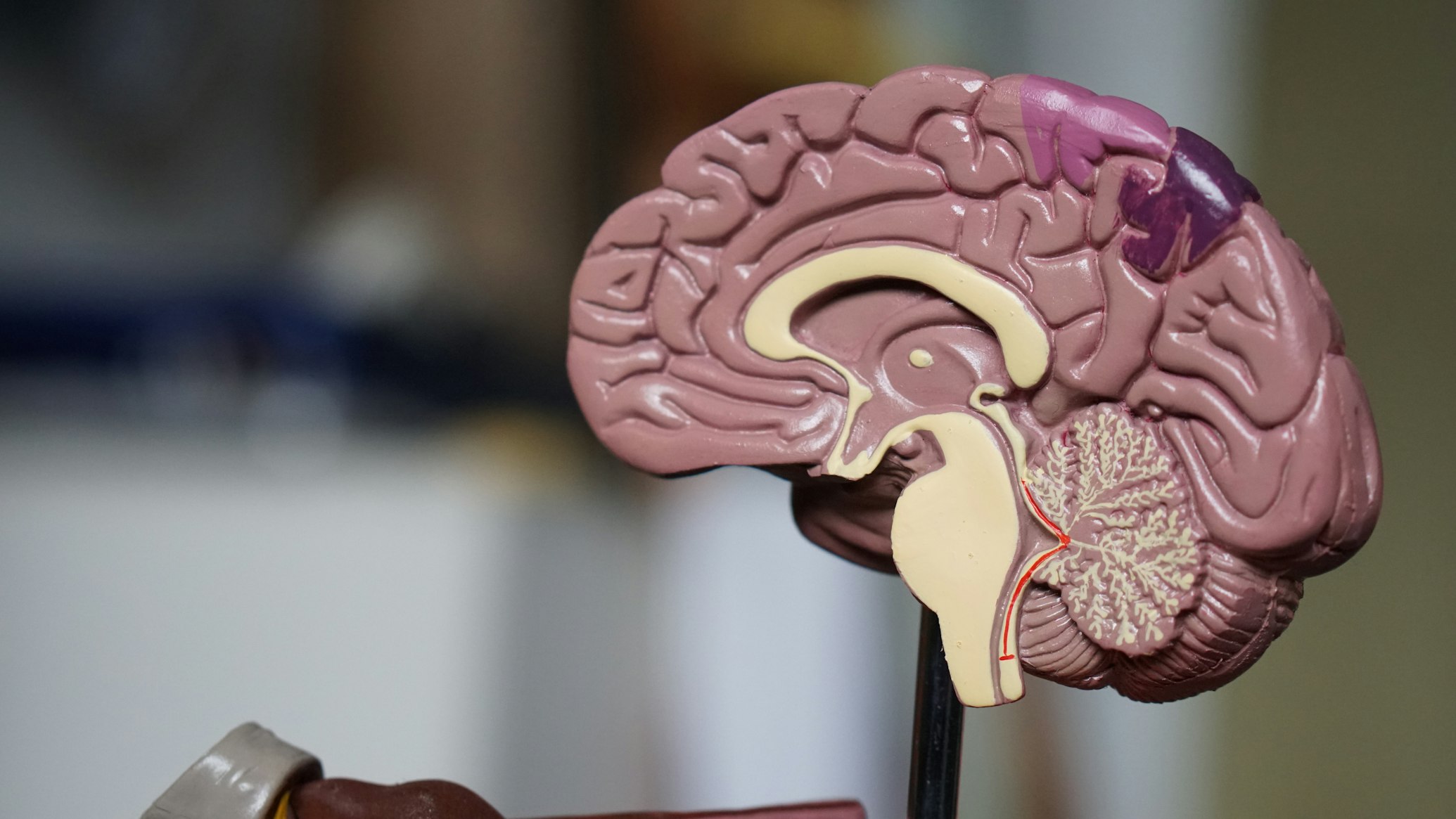
The era of truly conversational brain-computer interfaces has arrived
With it comes the promise of more effective, responsive, and personalized treatments for some of humanity's most challenging neurological conditions.