Comparative Efficacy of Brain Stimulation Techniques: A Comprehensive Evidence Review for Research and Development
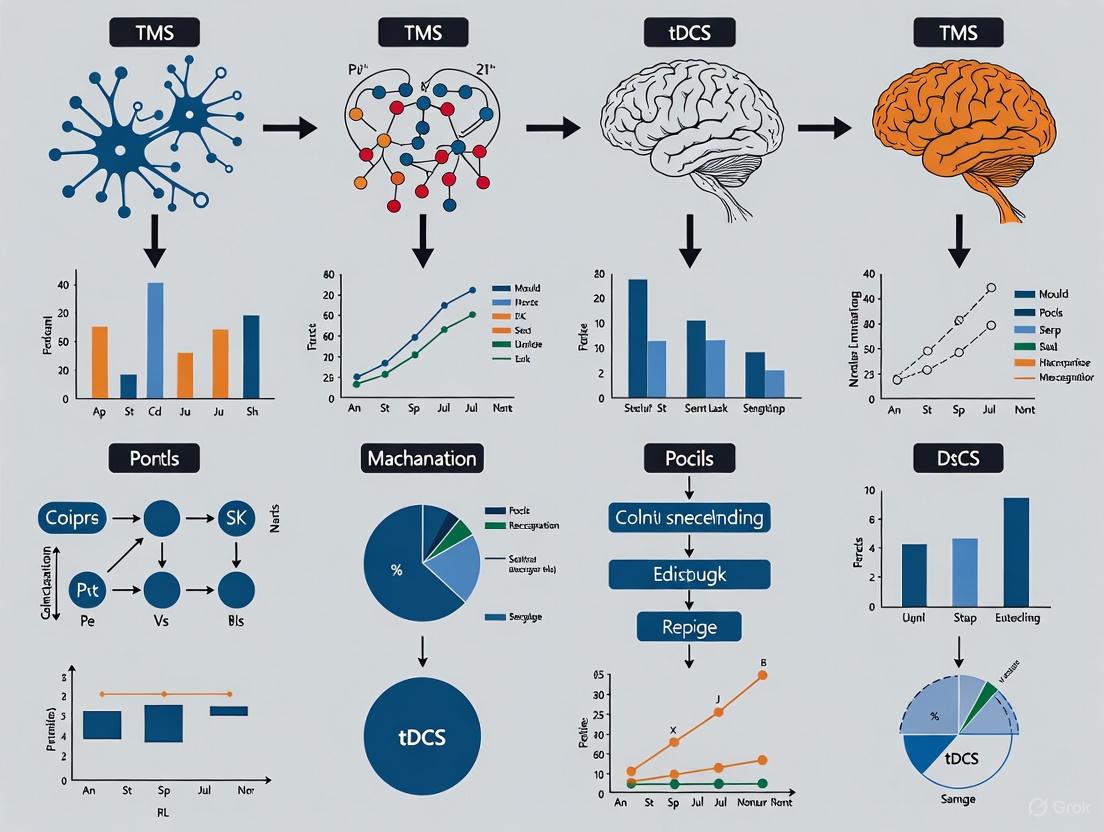
This article systematically evaluates the efficacy of established and emerging brain stimulation techniques across neurological and psychiatric disorders.
Comparative Efficacy of Brain Stimulation Techniques: A Comprehensive Evidence Review for Research and Development
Abstract
This article systematically evaluates the efficacy of established and emerging brain stimulation techniques across neurological and psychiatric disorders. Drawing from recent network meta-analyses and systematic reviews, we compare repetitive transcranial magnetic stimulation (rTMS), transcranial direct current stimulation (tDCS), deep brain stimulation (DBS), electroconvulsive therapy (ECT), and novel modalities. For researchers and drug development professionals, we provide critical analysis of methodological considerations, optimization strategies, and comparative effectiveness evidence to inform future research directions and clinical translation in brain stimulation therapeutics.
Foundational Principles and Spectrum of Brain Stimulation Technologies
Defining Non-Invasive versus Invasive Brain Stimulation Paradigms
Brain stimulation techniques represent a cornerstone of modern neuromodulation, offering powerful interventions for neurological and psychiatric disorders. These methodologies are fundamentally categorized into two distinct paradigms based on their mode of intervention: non-invasive brain stimulation (NIBS) and invasive brain stimulation. The distinction is critical for researchers, clinicians, and drug development professionals, as it dictates the underlying mechanisms, risk profiles, therapeutic applications, and requisite experimental protocols. Non-invasive techniques, such as transcranial Direct Current Stimulation (tDCS) and transcranial Magnetic Stimulation (TMS), modulate neural activity through the intact skull without surgical intervention [1] [2]. Conversely, invasive techniques, including Deep Brain Stimulation (DBS) and Cortical Stimulation, require surgical implantation of electrodes directly into or on the surface of the brain tissue to deliver electrical impulses [3]. This guide provides a structured, evidence-based comparison of these paradigms, framing their efficacy, mechanisms, and applications within the context of therapeutic development.
Comparative Efficacy and Clinical Applications
The efficacy of brain stimulation techniques is highly dependent on the disorder being treated. The following table summarizes the standardized effect sizes (Standardized Mean Difference, SMD) for core symptoms across different conditions, based on a comprehensive umbrella review of meta-analyses that included 108,377 patients [3].
Table 1: Comparative Efficacy of Brain Stimulation Therapies Across Disorders
| Disorder Category | Example Conditions | Stimulation Paradigm | Reported Effect Size (SMD) on Core Symptoms |
|---|---|---|---|
| Psychiatric Disorders | Depression, OCD, PTSD | NIBS (rTMS, tDCS) | 0.60 (95% CI: 0.49, 0.71) |
| Movement Disorders | Parkinson's Disease, Pain, Fibromyalgia | NIBS & Invasive (e.g., DBS) | 0.56 (95% CI: 0.42, 0.69) |
| Cognitive Disorders | Alzheimer's Disease, Post-Stroke Cognitive Deficit | Primarily NIBS | 0.46 (95% CI: 0.32, 0.61) |
| Neurodevelopmental | ADHD (Inattention) | NIBS (tDCS, tACS) | Favorable trends, though often not statistically significant [1] |
Specific NIBS techniques show distinct efficacy profiles for particular cognitive domains. A network meta-analysis focusing on Attention-Deficit/Hyperactivity Disorder (ADHD) revealed that while no NIBS intervention significantly improved inhibitory control compared to sham, specific protocols enhanced other functions [1]. For instance, anodal tDCS over the left dorsolateral prefrontal cortex (DLPFC) coupled with cathodal tDCS over the right DLPFC significantly improved working memory (SMD = 0.95, 95% CI: 0.05–1.84). Furthermore, cognitive flexibility was significantly improved by anodal tDCS over the left DLPFC with cathodal tDCS over the right supraorbital area (SMD = -0.76, 95% CI: -1.31 to -0.21) [1].
Fundamental Mechanisms and Signaling Pathways
The biological mechanisms of action differ significantly between non-invasive and invasive paradigms, primarily due to the spatial precision and intensity of the stimulation.
Non-Invasive Brain Stimulation (NIBS): Techniques like tDCS work by applying a weak electrical current (typically 1-2 mA) to the scalp, creating a subthreshold electric field within the brain that modulates the resting membrane potential of neurons. This does not directly elicit action potentials but rather increases (anodal stimulation) or decreases (cathodal stimulation) the likelihood of neuronal firing in response to other inputs [2]. The after-effects are believed to involve synaptic plasticity mechanisms, such as Long-Term Potentiation (LTP) and Long-Term Depression (LTD), akin to the processes underlying learning and memory. Repetitive TMS (rTMS) induces intracranial currents strong enough to directly depolarize neurons, with effects on local and network-level brain activity that outlast the stimulation period.
Invasive Brain Stimulation: Invasive techniques like DBS deliver high-frequency electrical stimulation (typically >100 Hz) directly to deep brain structures. The mechanisms are complex and may involve a "functional lesion" that blocks pathological neural activity, the release of neurochemicals, and the disruption of abnormal oscillatory activity in dysfunctional brain networks. The signaling is direct and focal, allowing for precise targeting of subcortical circuits inaccessible to NIBS.
The following diagram illustrates the logical relationship and fundamental differences between these two paradigms.
Experimental Protocols and Methodologies
The experimental setup and parameters are paradigm-specific. Below is a detailed protocol for a common NIBS technique and a generalized protocol for an invasive approach.
Example Protocol: Transcranial Direct Current Stimulation (tDCS) for Motor Performance
This protocol is adapted from a randomized controlled crossover study comparing tDCS and transcranial Random Noise Stimulation (tRNS) [4].
- Objective: To assess the effects of tDCS over the primary motor cortex (M1) on the performance of a sequential reaching motor task.
- Design: Single-blind, counterbalanced crossover trial.
- Participants: 30 healthy individuals (15 female, 15 male).
- Stimulation Conditions:
- Active tDCS: 10 minutes of stimulation at 1.0 mA.
- Active tRNS: 10 minutes of high-frequency stimulation (101-640 Hz) at 1.0 mA.
- Sham Stimulation: Identical setup with brief current ramp-up/ramp-down to mimic sensation.
- Electrode Montage:
- Anode: Placed over C4 (contralateral motor cortex for the dominant hand according to the international 10-20 EEG system).
- Cathode: Placed over the contralateral orbit (supraorbital area).
- Task: Participants performed a sequential reaching motor task on a digital tablet. Key metrics included movement time, reaction time, and peak velocity.
- Timing: The motor task was performed before, during, and immediately after the stimulation.
- Key Findings: No statistically significant differences were found between the three stimulation conditions in this study. However, within-condition analysis showed improvements in movement time and peak velocity following tRNS only [4].
Generalized Protocol: Deep Brain Stimulation (DBS) for Movement Disorders
- Objective: To implant a DBS system and optimize stimulation parameters to alleviate symptoms of a movement disorder (e.g., Parkinson's tremor).
- Pre-Surgical Phase:
- Patient Selection: Rigorous clinical and neuropsychological evaluation to confirm diagnosis and suitability for surgery.
- Target Identification: High-resolution MRI is used to identify the surgical target (e.g., Subthalamic Nucleus - STN, Globus Pallidus interna - GPi).
- Surgical Phase:
- Frame-Based/Stereotactic Navigation: A stereotactic head frame or frameless system is used for precise guidance.
- Electrode Implantation: Macroelectrodes are inserted into the target area. Microelectrode recording (MER) is often used to map the neurophysiological signature of the target nucleus and its surroundings.
- Test Stimulation: Intraoperative test stimulation is performed to assess therapeutic benefit and rule out side effects.
- Pulse Generator Implantation: The electrode is connected to an extension wire tunneled subcutaneously to an implantable pulse generator (IPG) placed in the chest wall.
- Post-Surgical Phase:
- Programming: Begins after a recovery period. Systematic testing of electrode contacts, voltage, pulse width, and frequency to find the optimal therapeutic window.
- Long-Term Management: Regular follow-ups for parameter adjustment and battery management.
The workflow for a typical DBS procedure is outlined below.
The Scientist's Toolkit: Key Research Reagents and Materials
Table 2: Essential Materials for Brain Stimulation Research
| Item | Function/Description | Example Use Case |
|---|---|---|
| tDCS Device | A portable, battery-operated device that delivers a constant, low-intensity direct current. Typically features at least two electrodes (anode and cathode) in saline-soaked sponges. | Delivering transcranial direct current stimulation in clinical or research settings for cognitive or motor modulation [1] [4]. |
| TMS Coil | An electromagnetic coil placed against the scalp that generates rapidly changing magnetic fields, inducing electric currents in the underlying cortex. Figure-of-eight coils allow for more focal stimulation. | Applying repetitive TMS (rTMS) for the treatment of major depressive disorder or mapping motor cortical outputs. |
| High-Definition tDCS (HD-tDCS) | A variant of tDCS that uses an array of smaller, ring electrodes to achieve more focused and targeted brain stimulation compared to conventional sponge electrodes. | Investigating more precise modulation of cortical regions, as seen in protocols for ADHD [1]. |
| Neuronavigation System | A frameless stereotactic system that uses infrared cameras and co-registration of individual MRI data to track the position of a TMS coil or tDCS electrode on the scalp in real-time, ensuring accurate targeting. | Ensuring precise and reproducible placement of stimulation equipment over the target brain region (e.g., DLPFC) across multiple sessions. |
| Deep Brain Stimulation (DBS) System | A fully implantable system comprising a pulse generator (IPG), a quadripolar (4-contact) lead, and an extension cable. The IPG can be programmed externally via a wireless controller. | Chronic therapeutic stimulation of deep brain structures for Parkinson's disease, essential tremor, and dystonia [3]. |
| Microelectrode Recording (MER) System | A system used during DBS surgery involving fine microelectrodes to record single-neuron activity. This provides real-time neurophysiological confirmation of the target structure (e.g., STN). | Differentiating subcortical nuclei during DBS implantation surgery to verify optimal lead placement. |
| Sham Stimulation Setup | A critical control condition that replicates the sensory experience of active stimulation (e.g., initial itching/tingling) without delivering significant current to the brain. | Serving as a placebo control in double-blind randomized controlled trials (RCTs) to isolate the specific neurophysiological effects of stimulation [1] [4]. |
| Behavioral/Cognitive Task Software | Software (e.g., E-Prime, PsychoPy) to administer and record standardized cognitive or motor tasks (e.g., Go/No-Go, Sequential Reaching Task) that quantify the outcome of stimulation. | Assessing changes in cognitive domains like inhibitory control, working memory, and motor performance in response to stimulation [1] [4]. |
| Bis(4-tert-butylphenyl)iodonium triflate | Bis(4-tert-butylphenyl)iodonium triflate, CAS:84563-54-2, MF:C21H26F3IO3S, MW:542.4 g/mol | Chemical Reagent |
| L-Arginylglycine | Glycine, N-L-arginyl-|High-Purity Research Peptide | Explore the high-purity Glycine, N-L-arginyl- dipeptide for metabolic and biochemical research. For Research Use Only. Not for human consumption. |
Discussion and Future Directions
The choice between non-invasive and invasive brain stimulation paradigms involves a critical trade-off between efficacy, risk, and accessibility. NIBS offers a favorable safety profile and accessibility, making it suitable for broader patient populations and cognitive enhancement research [1] [2]. However, its effects are generally more variable and modest compared to invasive techniques. In contrast, invasive stimulation like DBS provides robust, targeted, and titratable therapy for severe, treatment-resistant conditions but carries the inherent risks of brain surgery and is limited to specialized centers.
Future development in the NIBS field is increasingly focused on improving usability and adoption through human-centered design, which prioritizes the needs of end-users (clinicians and patients) to create more intuitive and accessible devices [2]. Furthermore, the integration of NIBS with other modalities, such as EEG-triggered stimulation, pharmacological agents, and behavioral therapy, represents a promising frontier for enhancing treatment efficacy [2]. For both paradigms, the move towards personalized, biomarker-driven stimulation protocols and the application of closed-loop systems that adapt stimulation in real-time based on neural activity will likely define the next generation of therapeutic brain stimulation.
Brain stimulation techniques have emerged as powerful tools for treating neurological and psychiatric disorders and for probing brain function. Among these, techniques leveraging electromagnetic induction and direct current modulation represent two fundamental mechanistic principles. This guide provides an objective comparison of these approaches, focusing on their underlying mechanisms, physiological effects, and efficacy, framed within a broader thesis on brain stimulation techniques. The content is structured to assist researchers, scientists, and drug development professionals in selecting and optimizing stimulation protocols for specific experimental or therapeutic goals.
Fundamental Principles and Mechanisms
Electromagnetic Induction-Based Stimulation
Techniques such as Transcranial Magnetic Stimulation (TMS) and the novel Transcranial Magneto-Acoustic Electrical Stimulation (TMAES) operate on the principle of electromagnetic induction, discovered by Michael Faraday [5] [6] [7]. This principle states that a changing magnetic field can induce an electric current in a conductive medium, such as brain tissue [5] [7].
- Faraday's Law of Induction: The induced electromotive force (EMF) in a circuit is proportional to the rate of change of magnetic flux through the circuit. Mathematically, this is represented as ( \varepsilon = -N \frac{\Delta \Phi}{\Delta t} ), where ( \varepsilon ) is the EMF, ( N ) is the number of turns in a coil, and ( \frac{\Delta \Phi}{\Delta t} ) is the rate of change of magnetic flux [5] [7].
- Lenz's Law: The direction of the induced current is such that it will oppose the change in magnetic flux that produced it, a consequence of the conservation of energy [5] [7].
- Induced Current Characteristics: The strength of the induced current depends on the rate of change of the magnetic field, the strength of the magnetic field, and the number of turns in the induction coil [6] [7]. In TMS, a brief, high-intensity current is passed through a coil placed on the scalp, generating a rapidly changing magnetic field that penetrates the skull without obstruction and induces a secondary, localized electric current in the brain [6].
Direct Current Modulation
Techniques like transcranial Direct Current Stimulation (tDCS) utilize direct current to modulate neural activity. Unlike electromagnetic induction, tDCS does not induce action potentials but rather modifies the resting membrane potential of neurons [8].
- Subthreshold Polarization: tDCS delivers a weak direct current (typically 1-2 mA) to the scalp via surface electrodes. This current generates a steady electric field in the brain that causes a subthreshold shift in neuronal membrane potential [8]. The polarity of the stimulation determines the direction of this shift: anodal stimulation typically depolarizes neurons, making them more likely to fire, while cathodal stimulation hyperpolarizes them, reducing their excitability [9] [8].
- Neurovascular Effects: Beyond neuronal membranes, tDCS effects involve the entire neurovascular unit, including astrocytes, oligodendrocytes, microglia, and the blood-brain barrier. It can induce coordinated molecular changes in gene expression related to inflammation, neurogenesis, calcium signaling, and synaptic plasticity [8].
- Non-Linearity of Effects: The effects of tDCS are not always linear or proportional to dose. For example, increasing stimulation duration or intensity can sometimes lead to paradoxical effects, such as inhibition instead of facilitation, highlighting the complexity of its mechanism [9].
Comparative Performance Analysis
The table below summarizes the core characteristics and performance data of the two stimulation principles.
Table 1: Fundamental Characteristics and Performance Comparison
| Feature | Electromagnetic Induction (e.g., TMS, TMAES) | Direct Current Modulation (e.g., tDCS) |
|---|---|---|
| Fundamental Principle | Faraday's Law of Induction: time-varying magnetic fields induce electric currents [5] [6] [7] | Subthreshold polarization of neuronal membranes via a steady electric field [8] |
| Stimulation Waveform | Pulsed, time-varying (rapidly changing) | Constant (direct current) |
| Primary Physiological Target | Direct depolarization of axons, preferential effects on long-range projections [10] [6] | Resting membrane potential, neurovascular unit, synaptic plasticity mechanisms [8] |
| Spatial Resolution | Moderate (conventional TMS) to High (multi-target TMAES: ~5.1 mm focal point size) [11] | Low (diffuse electric field) [11] [9] |
| Stimulation Depth | Can reach deep brain regions (e.g., TMAES at 50 mm) [11] | Primarily cortical; depth is limited by current spread [11] |
| Typical Use Case | Diagnostic neurophysiology, treatment of major depression, multi-target deep brain stimulation [11] [6] [3] | Cognitive enhancement, motor rehabilitation, chronic pain management [9] [3] |
Table 2: Efficacy Data from Clinical and Experimental Studies
| Disorder / Application | Electromagnetic Induction (Effect Size SMD [95% CI]) | Direct Current Modulation (Effect Size SMD [95% CI]) | Notes |
|---|---|---|---|
| Depression | Moderate to High Efficacy [6] [3] | Moderate Efficacy (Pooled SMD: 0.60 [0.49, 0.71]) [3] | rTMS is an FDA-approved treatment for depression [6]. |
| Parkinson's Disease | Improved motor scores, reduction in tremor and dyskinesias [6] | Data included in broader movement disorders pool (SMD: 0.56 [0.42, 0.69]) [3] | TMS can modulate corticospinal excitability in PD patients [6]. |
| Chronic Pain | Effective for pain management [3] | Effective for pain and fibromyalgia (SMD: 0.60 [0.49, 0.71]) [3] | Both show significant effects, with tDCS data from the psychiatric disorders pool [3]. |
| Post-Stroke Motor Recovery | Effective for motor recovery [3] | Effective for post-stroke motor recovery [3] | A key application area for both techniques [3]. |
| Multi-Target Stimulation | Feasible and more effective than single-target (TMAES) [11] | Less feasible due to poor focus; often employs non-synchronous stimulation [11] | Multi-target TMS/TMAES can directly regulate deep brain regions [11]. |
Experimental Protocols and Methodologies
Protocol for Multi-Target Transcranial Magneto-Acoustic Electrical Stimulation (TMAES)
This novel protocol combines ultrasound and static magnetic fields to achieve precise multi-target electrical stimulation via the magneto-acoustic coupling effect [11].
- Principle: Conductive particles in tissue vibrate under ultrasonic excitation. When a static magnetic field is applied perpendicular to the vibration, particles experience a Lorentz force, causing charge separation and inducing an internal electric field at the ultrasound focus [11].
- Setup:
- Phased Array Ultrasound Transducers: Generate focused ultrasound pressure waves within the brain. The focal point can be steered by adjusting the phase and amplitude of each transducer element.
- Static Magnetic Field Coils: Create a uniform, high-strength static magnetic field (e.g., 0.5 T to 3 T) oriented perpendicular to the propagation direction of the ultrasound.
- Subject Positioning: The subject's head is placed at the intersection of the ultrasound focus and the magnetic field.
- Stimulation Procedure:
- Target Localization: Define the 3D coordinates of the desired stimulation targets based on neuroimaging.
- Beamforming: Calculate and apply the specific phase delays to the ultrasound phased array to simultaneously focus acoustic energy on multiple targets.
- Stimulation Delivery: Emit pulsed ultrasound (e.g., frequency 500 kHz, pulse repetition frequency 1 kHz) while the static magnetic field is active. The induced electric field is confined to the ultrasound focal zones.
- Parameter Control: The location and intensity of stimulation are controlled by adjusting the ultrasound focus and the strength of the static magnetic field [11].
Protocol for Transcranial Direct Current Stimulation (tDCS)
A standard protocol for applying tDCS in a research or clinical setting involves careful control of multiple parameters to ensure safety and replicability [9] [8].
- Setup:
- Electrode Configuration (Montage): Two or more conductive rubber electrodes (typically 25-35 cm²) housed in saline-soaked sponges are placed on the scalp. The anode is positioned over the target region, and the cathode is placed over a contralateral or extracephalic site.
- Stimulation Device: A battery-driven, constant-current stimulator that delivers a precise, low-intensity current.
- Stimulation Procedure:
- Parameter Setting:
- Intensity: Usually 1-2 mA.
- Duration: Typically 20-30 minutes for offline stimulation.
- Current Density: Ranges from 0.029 to 0.08 mA/cm² to minimize skin irritation and ensure safety.
- Ram-Up/Down: The current is gradually ramped up to the target intensity over 15-30 seconds at the beginning and ramped down at the end to minimize transient phosphene sensations.
- Timing: Online stimulation is applied during a cognitive or motor task to directly modulate ongoing neural activity. Offline stimulation is applied before task performance, relying on after-effects believed to be driven by mechanisms like long-term potentiation [9].
- Parameter Setting:
- Control Condition: A credible sham stimulation is used, where the current is ramped up and down briefly but not sustained, mimicking the initial sensation without producing significant neuromodulation [9].
Signaling Pathways and Workflows
The following diagrams illustrate the core mechanisms and experimental workflows for the two stimulation principles.
Neural Response to Stimulation Modalities
Multi-Target TMAES Experimental Workflow
The Scientist's Toolkit: Essential Research Reagents and Materials
Table 3: Key Research Reagents and Materials for Brain Stimulation Studies
| Item | Function/Purpose | Representative Use Case |
|---|---|---|
| Finite Element Modeling (FEM) Software | To create subject-specific models of current flow and electric field distribution in the brain for protocol optimization and analysis [10]. | Predicting electric field strength and focality in tDCS and TMS studies; personalizing electrode montages [10]. |
| Phased Array Ultrasound Transducer | To generate and spatially focus ultrasound pressure waves for targeted mechanical stimulation or for inducing electric fields in TMAES [11]. | Achieving precise, multi-target electrical stimulation in novel TMAES protocols [11]. |
| Static Magnetic Field Coils | To generate a high-strength, uniform static magnetic field necessary for the magneto-acoustic coupling effect in TMAES [11]. | Providing the static magnetic field (B) in TMAES, which interacts with particle velocity to induce an electric field [11]. |
| High-Definition Electrodes | Smaller, gel-based electrodes used to replace conventional sponge electrodes for improved focality of tDCS [9] [10]. | Implementing high-definition tDCS (HD-tDCS) to produce more focal electric fields in the cortex [9]. |
| Saline Solution (0.9% NaCl) | Serves as the conductive medium for tDCS sponge electrodes to ensure good electrical contact with the scalp and minimize skin irritation [9]. | Standard preparation of electrodes for conventional tDCS in both research and clinical applications. |
| Muscimol (GABA_A Agonist) | A pharmacological agent used for reversible inactivation of neural activity in a specific brain region to validate mechanisms of action [10]. | Differentiating local neural activity from long-range projection signals in electrophysiology studies [10]. |
| 5-Hydroxy-2-methylbenzenesulfonic acid | 5-Hydroxy-2-methylbenzenesulfonic Acid|High-Purity RUO | |
| 2-(3-Methylisoxazol-5-yl)acetic acid | 2-(3-Methylisoxazol-5-yl)acetic Acid |
Brain stimulation therapies have emerged as powerful tools for treating neurological and psychiatric disorders, particularly for patients who do not respond adequately to conventional pharmacotherapy. These techniques span a broad spectrum of invasiveness, mechanism of action, and clinical applications. On one end, non-invasive approaches such as repetitive Transcranial Magnetic Stimulation (rTMS) and transcranial Direct Current Stimulation (tDCS) modulate cortical excitability through external stimulation. On the opposite end, invasive interventions like Deep Brain Stimulation (DBS) require surgical implantation of electrodes to target deep brain structures, while Electroconvulsive Therapy (ECT) induces controlled therapeutic seizures. Understanding the relative efficacy, technical parameters, and appropriate applications of these interventions is crucial for researchers, clinicians, and drug development professionals working to advance treatment options for complex neuropsychiatric conditions. This guide provides a comprehensive, evidence-based comparison of these established brain stimulation techniques, synthesizing recent meta-analyses and clinical trials to inform research design and clinical translation.
Comparative Efficacy Across Disorders
Quantitative Efficacy Metrics
Table 1: Comparative Efficacy of Brain Stimulation Techniques for Major Psychiatric Disorders
| Technique | Primary Disorders | Effect Size (SMD/OR) | Key Efficacy Findings | Clinical Context |
|---|---|---|---|---|
| Bilateral ECT | Late-Life Depression (LLD) | SMD: 1.14 (95% CI: 0.07-2.21) [12] | Highest efficacy ranking in network meta-analysis | Particularly effective for severe, treatment-resistant cases |
| Mixed ECT | Late-Life Depression (LLD) | SMD: 1.12 (95% CI: -0.09-2.33) [12] | Comparable to bilateral ECT | Flexible electrode placement approaches |
| High-frequency rTMS (20Hz) | Late-Life Depression (LLD) | SMD: 1.47 (95% CI: 0.35-2.59) [12] | Notable effect size surpassing some ECT protocols | Non-invasive alternative with strong evidence base |
| dTMS | Treatment-Resistant Depression (TRD) | Similar efficacy to rTMS [13] | No significant differences in symptom remission | Targets deeper structures; significantly more expensive than rTMS |
| Low-frequency rTMS | Anxiety Disorders, OCD, PTSD | High acceptability (OR) [14] | Considered most promising option for anxiety spectrum | Favorable side effect profile |
| tDCS | Late-Life Depression (LLD) | Modest improvements [12] | More modest than ECT/rTMS | Potential for home-based protocols |
| DBS | Parkinson's Disease | Sustained 5-year benefits [15] | Improved motor symptoms, reduced medication needs | Shift from last resort to moderate disease stages |
| aDBS | Parkinson's Disease | Comparable to cDBS [16] | Real-time adjustment reduces dyskinesias | Closed-loop system responsive to neural biomarkers |
Table 2: Efficacy of Non-Invasive Brain Stimulation for ADHD Cognitive Domains
| Technique | Target | Cognitive Domain | Effect Size (SMD) | Statistical Significance |
|---|---|---|---|---|
| Dual-tDCS | Left DLFPC (+), right supraorbital (-) | Cognitive Flexibility | SMD: -0.76 (95% CI: -1.31 to -0.21) [1] | Statistically significant |
| Dual-tDCS | Left DLFPC (+), right DLPFC (-) | Working Memory | SMD: 0.95 (95% CI: 0.05-1.84) [1] | Statistically significant |
| a-tDCS | Right inferior frontal cortex (+), right supraorbital (-) | Working Memory | SMD: 0.86 (95% CI: 0.28-1.45) [1] | Statistically significant |
| HD-tDCS | Vertex | Inhibitory Control | SMD: -1.04 (95% CI: -2.09 to 0.00) [1] | Approaches significance |
| Dual-tDCS | Left DLFPC (+), right supraorbital (-) | Inhibitory Control | SMD: -0.87 (95% CI: -1.80 to -0.07) [1] | Approaches significance |
Disorder-Specific Applications
The efficacy of brain stimulation techniques varies substantially across diagnostic categories, necessitating disorder-specific application. For late-life depression, a network meta-analysis of 17 studies (1,056 participants) found all brain stimulation interventions superior to sham, with bilateral ECT and high-frequency rTMS demonstrating the strongest effects [12]. In treatment-resistant depression, both rTMS and dTMS show similar efficacy, though cost considerations may favor rTMS in resource-limited settings [13]. Real-world evidence for TMS shows impressive outcomes, with improvement in up to 83% of patients and full remission in over half [17].
For anxiety disorders, OCD, and PTSD, a network meta-analysis of 41 trials (1,333 patients) found several BSTs superior to controls, with low-frequency rTMS emerging as the most promising option when considering both efficacy and acceptability [14]. DBS also demonstrated efficacy but involves greater invasiveness.
In neurological conditions, DBS has shown remarkable long-term benefits for Parkinson's disease, with a recent multi-center trial demonstrating sustained improvements in motor symptoms, reduced medication needs, and enhanced quality of life over five years [15]. For cerebral palsy in children, NIBS techniques (tDCS and rTMS) have demonstrated safety and efficacy for improving mobility and gait parameters, though effects on balance remain inconclusive [18].
Emerging research indicates that individualized targeting approaches may enhance outcomes. A network meta-analysis found that PET-guided targeting demonstrated significant superiority compared to both sham and group-based targets (MD = -0.744; 95% CI: -1.450 to -0.037; p = 0.039), while structural MRI provides a practical alternative for anatomical targeting [19].
Experimental Protocols and Methodologies
Network Meta-Analysis Framework
Recent comparative evidence for brain stimulation techniques largely derives from network meta-analyses (NMAs), which enable simultaneous comparison of multiple interventions across randomized controlled trials. The standard methodology involves:
Literature Search and Selection: Comprehensive systematic searches across major databases (PubMed, Embase, Web of Science, Cochrane, PsycINFO, ClinicalTrials.gov) using structured search strategies with no initial date restrictions up to the current analysis period (typically April 2024-May 2025) [12] [19] [1]. Inclusion criteria focus on randomized controlled trials (RCTs) with active or sham stimulation controls in human populations with specific diagnoses.
Data Extraction and Quality Assessment: Independent extraction of study characteristics (sample size, participant demographics, stimulation parameters, outcome measures) and assessment of risk of bias using Cochrane tools [1]. Standardized mean differences (SMDs) with 95% confidence intervals are computed for continuous outcomes, such as changes in depression severity scales or cognitive function tests [12].
Statistical Synthesis: Bayesian or frequentist network meta-analyses models estimate relative treatment effects and rankings, with surface under the cumulative ranking (SUCRA) values indicating the probability of each treatment being among the most effective [19]. Statistical models evaluate heterogeneity and consistency assumptions, with sensitivity analyses to test robustness [14].
Stimulation Parameters and Protocols
Table 3: Standard Protocol Parameters by Stimulation Technique
| Technique | Common Parameters | Session Duration | Treatment Course | Target Localization |
|---|---|---|---|---|
| rTMS | Frequency: 1-20 Hz; Intensity: 100-120% motor threshold [12] | 20-40 minutes | 5 sessions/week for 4-6 weeks [17] | MRI-guided neuronavigation to DLPFC |
| dTMS | H-coil design for deeper penetration [13] | Similar to rTMS | Similar to rTMS | Broader field covering deeper limbic structures |
| tDCS | 1-2 mA; electrode size 25-35 cm² [1] [20] | 20-30 minutes | Variable (often daily for several weeks) | F3/F4 positioning per EEG 10-20 system |
| ECT | Pulse width: 0.25-1.0 ms; Frequency: 20-100 Hz; Individualized seizure threshold [12] | Brief procedure under anesthesia | 2-3 sessions/week for 6-12 sessions | Bifrontotemporal or right unilateral placement |
| DBS | Frequency: 130-185 Hz; Pulse width: 60-450 μs; Amplitude: 1-10 V [15] [16] | Continuous stimulation | Permanent implantation with periodic programming | Surgical targeting of subthalamic nucleus or globus pallidus interna |
Adaptive Deep Brain Stimulation Protocol
The recent ADAPT-PD trial demonstrated a novel methodology for adaptive DBS in Parkinson's disease:
Participant Selection: Enrolled patients previously stable on continuous DBS and medication but experiencing bothersome dyskinesias or symptom fluctuations [16].
System Configuration: Utilized commercially available closed-loop DBS system (Medtronic's Percept PC) capable of recording neural biomarkers and adjusting stimulation in real time [16].
Stimulation Modes: Compared single-threshold (upper limit only) versus dual-threshold (upper and lower limits) adaptive stimulation programmed using personalized neural physiomarkers [16].
Outcome Assessment: Primary endpoint was at least 50% symptom-control "on" time, with safety monitoring for stimulation-related adverse effects throughout the setup and adjustment period [16].
Research Reagent Solutions
Table 4: Essential Research Materials and Methodological Components
| Resource | Function/Application | Specific Examples |
|---|---|---|
| Stimulation Equipment | Delivery of precise neuromodulation protocols | rTMS: MagPro, MagVenture; tDCS: Soterix, NeuroConn; DBS: Medtronic, Boston Scientific systems |
| Neuronavigation Systems | Precise target localization for stimulation | MRI-guided systems (Brainsight, Localite) using individual structural MRI or standardized coordinates |
| Assessment Tools | Standardized outcome measurement | HAM-D, MADRS (depression); UPDRS (Parkinson's); Go/No-Go, Stroop (cognitive) |
| Computational Modeling | Electric field prediction and dose individualization | SIMNIBS, ROAST for tDCS; finite element method models for TMS and DBS |
| Biomarker Platforms | Target identification and treatment personalization | PET, resting-state fMRI, EEG biomarkers for circuit engagement |
| Data Analysis Packages | Statistical synthesis of trial data | R packages (netmeta, gemtc) for network meta-analysis; MATLAB for signal processing |
Signaling Pathways and Experimental Workflows
Diagram 1: Clinical Decision Pathway and Mechanism of Action - This diagram illustrates the clinical decision workflow for selecting brain stimulation therapies and their primary mechanisms of action, highlighting the transition from pharmacotherapy to neuromodulation approaches.
Diagram 2: Research Methodology and Parameter Optimization - This workflow outlines the systematic research methodology for comparing brain stimulation techniques and the process for optimizing stimulation parameters based on individual characteristics and biomarkers.
The field of neuromodulation is rapidly evolving with the emergence of advanced non-invasive brain stimulation (NIBS) techniques capable of targeting deep brain structures with unprecedented precision. While established methods like transcranial magnetic stimulation (TMS) and transcranial direct current stimulation (tDCS) have demonstrated utility for cortical targets, their effectiveness for deep brain regions remains limited due to physical constraints of electromagnetic fields [21]. This comparison guide examines three promising next-generation NIBS modalities—temporal interference stimulation (TIS), magnetic seizure therapy (MST), and transcranial focused ultrasound (tFUS)—that aim to overcome these limitations by leveraging novel biophysical principles for deep brain neuromodulation. The objective analysis presented here synthesizes current evidence regarding the mechanisms, efficacy, and technical specifications of these emerging technologies to inform research applications and therapeutic development.
Technical Specifications and Comparative Analysis
The table below summarizes the fundamental technical parameters, mechanisms of action, and target engagement characteristics of the three NIBS modalities, highlighting their distinct approaches to deep brain neuromodulation.
Table 1: Technical Specifications and Target Engagement Profiles of Emerging NIBS Modalities
| Parameter | Temporal Interference (TIS) | Magnetic Seizure Therapy (MST) | Transcranial Focused Ultrasound (tFUS) |
|---|---|---|---|
| Physical Principle | Interference of multiple high-frequency electric fields [21] | High-intensity magnetic fields inducing controlled seizures [22] | Acoustic pressure waves [23] |
| Stimulation Mechanism | Low-frequency envelope modulation from high-frequency carriers (e.g., 2kHz & 2.01kHz) [24] | Neuronal depolarization via time-varying magnetic fields [22] | Acoustomechanical and thermal effects on neural tissue [23] |
| Spatial Precision | Millimetric precision in deep targets [21] | Moderate (focal seizure initiation) [22] | 1-5 mm resolution [23] |
| Penetration Depth | Deep brain structures (theoretically unrestricted) [24] | Cortical and immediate subcortical regions [22] | Deep brain structures (reaching thalamic nuclei) [25] |
| Neural Effects | Modulation of neural activity in deep targets [21] | Generalized seizure activity under anesthesia [22] | Bidirectional modulation (excitatory/inhibitory) [23] |
| Focal Volume | Target-dependent, potentially customizable | Diffuse cortical activation | 3 mm³ demonstrated in human LGN [25] |
| Key Advantage | Non-invasive deep targeting without surgery [24] | Enhanced cognitive safety profile vs. ECT [22] | Combines deep penetration with high spatial resolution [23] |
Experimental Efficacy and Clinical Outcomes
Therapeutic Efficacy Across Conditions
Controlled studies and clinical trials have begun to establish preliminary efficacy profiles for these emerging modalities in various neurological and psychiatric conditions, though the evidence base remains at different stages of maturity for each approach.
Table 2: Demonstrated Efficacy and Clinical Applications Across NIBS Modalities
| Condition | Temporal Interference (TIS) | Magnetic Seizure Therapy (MST) | Transcranial Focused Ultrasound (tFUS) |
|---|---|---|---|
| Major Depression | Preclinical investigation stage [21] | Significant antidepressant efficacy comparable to ECT with superior cognitive safety [22] | Investigated for network modulation [23] |
| Epilepsy/Seizures | Potential application suggested [21] | Not applicable (seizure induction) | Suppresses acute seizure activity in animal models [26] |
| Neurodegenerative Disorders | Proposed for Parkinson's, Alzheimer's [24] | Limited evidence | Promising for Alzheimer's, Parkinson's [23] |
| Cognitive Enhancement | Theoretical potential for deep targets | Limited evidence for post-treatment cognition | Working memory, cognitive flexibility modulation [23] |
| Motor Disorders | Potential for basal ganglia targets [21] | Limited evidence | Investigated for Parkinson's motor symptoms [23] |
| Sensory Processing | Not reported | Not reported | Modulates visual processing via LGN stimulation [25] |
| Evidence Level | Preclinical models [24] | Randomized controlled trials (human) [22] | Human trials and animal models [23] [25] |
Cognitive Safety Profiles
A critical differentiator among NIBS modalities is their cognitive side effect profile, particularly relevant for therapies requiring repeated administrations:
- MST demonstrates significantly superior cognitive outcomes compared to electroconvulsive therapy (ECT), with preserved verbal fluency, executive function, and verbal memory retention, and only minimal reduction in autobiographical memory consistency [22].
- tFUS exhibits favorable safety within established parameter guidelines, with no significant cognitive adverse effects reported in human trials, though long-term effects require further elucidation [23].
- TIS cognitive effects remain uncharacterized in human studies, though the non-invasive nature and focused targeting suggest a potentially favorable profile [21].
Experimental Protocols and Methodologies
Protocol Specifications
Each modality employs distinct stimulation protocols tailored to its mechanism of action and therapeutic objectives:
Table 3: Experimental Protocol Specifications for Key Studies
| Protocol Component | Temporal Interference (TIS) | Magnetic Seizure Therapy (MST) | Transcranial Focused Ultrasound (tFUS) |
|---|---|---|---|
| Stimulation Parameters | 2 kHz + 2.01 kHz carriers generating 10 Hz envelope [24] | 100 Hz frequency, 100% stimulation intensity [22] | 555 kHz frequency, theta-burst pattern [25] |
| Session Duration | Not standardized (preclinical) | Acute treatment course (multiple sessions) [22] | 30-second to 5-hour protocols (context-dependent) [25] [26] |
| Target Engagement Verification | Computational modeling [21] | Seizure generalization monitoring [22] | Real-time fMRI confirmation of network modulation [25] |
| Anesthesia Requirement | No | Yes (for seizure induction) [22] | No |
| Concurrent Monitoring | Electrophysiology in animals [24] | EEG for seizure characteristics [22] | fMRI for network effects [25] |
| Key Experimental Controls | Sham stimulation with single high-frequency field [24] | Comparison to ECT treatment [22] | Off-target stimulation, sham conditions [25] |
Representative Experimental Workflows
The following diagrams illustrate standardized experimental workflows for evaluating each neuromodulation technique in research settings, highlighting critical steps from preparation to outcome assessment.
Neural Modulation Mechanisms
Each technique employs distinct biophysical mechanisms to modulate neural activity, as illustrated in the following diagram of their pathways from energy delivery to physiological effects.
Successful implementation of these emerging NIBS modalities requires specialized equipment, software, and methodological approaches tailored to each technology's unique requirements.
Table 4: Essential Research Tools and Resources for Emerging NIBS Modalities
| Resource Category | Temporal Interference (TIS) | Magnetic Seizure Therapy (MST) | Transcranial Focused Ultrasound (tFUS) |
|---|---|---|---|
| Core Hardware | Multi-channel stimulator with independent current sources [24] | Modified TMS device with high-output capabilities [22] | 256-element hemispherical transducer array [25] |
| Targeting/Planning Software | Electric field modeling software (e.g., COMETS) [21] | Stereotactic neuronavigation systems [22] | k-Plan acoustic modeling with CT integration [25] |
| Monitoring Equipment | EEG systems with high impedance tolerance [24] | Comprehensive EEG monitoring for seizure characterization [22] | Simultaneous fMRI for real-time BOLD feedback [25] |
| Positioning Systems | Standard EEG caps with additional electrode mounts [21] | Ergonomic TMS coil holders with stabilization [22] | Custom stereotactic face/neck mask with 3D printing [25] |
| Safety Monitoring | Current density and temperature monitoring [24] | Anesthesia depth monitoring, emergency medication [22] | Mechanical index (MI) tracking, thermal dose monitoring [23] |
| Key Computational Tools | Finite element method (FEM) for electric field prediction [21] | Seizure detection algorithms, ERP analysis [22] | Acoustic aberration correction algorithms [25] |
The emerging NIBS modalities of temporal interference, magnetic seizure therapy, and transcranial focused ultrasound represent distinct approaches to overcoming the depth-precision trade-off that has limited conventional non-invasive brain stimulation techniques. Each technology offers unique advantages: TIS provides a novel electrical approach for deep targeting without surgical intervention, MST demonstrates a favorable cognitive safety profile for treatment-resistant depression, and tFUS delivers unparalleled spatial precision for deep brain structures with bidirectional neuromodulatory capability. While all three modalities show significant promise for both basic neuroscience research and therapeutic applications, their evidence bases remain at different stages of maturity, with MST having the most established human trial results and TIS primarily supported by preclinical studies. Future research directions include systematic parameter optimization, development of standardized protocols, and comprehensive safety assessments to fully realize the potential of these transformative technologies for understanding and treating neurological and psychiatric disorders.
Brain stimulation techniques are transformative tools in neuroscience, capable of modulating neural circuitry to alleviate symptoms of neurological and psychiatric disorders. Their therapeutic efficacy is grounded in three core neurophysiological processes: cortical excitability, the balance between neural excitation and inhibition; synaptic plasticity, the activity-dependent strengthening or weakening of synaptic connections over time; and network modulation, the large-scale reorganization of distributed neural circuits. These mechanisms are interdependent, where changes in local excitability can propagate through neural networks via synaptic plasticity, ultimately resulting in sustained functional improvements. Understanding these principles is paramount for researchers and drug development professionals aiming to optimize existing therapies or develop novel interventions.
Classical non-invasive techniques like Transcranial Magnetic Stimulation (TMS) and Transcranial Direct Current Stimulation (tDCS), as well as invasive approaches like Deep Brain Stimulation (DBS), each engage these mechanisms differently. Their distinct spatial resolutions, cellular specificities, and temporal dynamics lead to varied neurophysiological outcomes and clinical applications. This guide provides a systematic, data-driven comparison of these techniques, focusing on their differential modulation of cortical excitability, synaptic plasticity, and brain network dynamics, to inform preclinical research and therapeutic development.
Comparative Efficacy: Quantitative Data Synthesis
The following tables synthesize quantitative data on the neurophysiological and clinical effects of major brain stimulation techniques, drawing from recent clinical trials and meta-analyses.
Table 1: Neurophysiological Effects on Cortical Excitability and Synaptic Plasticity
| Technique | Spatial Resolution | Cortical Excitability Change | Evidence for Synaptic Plasticity | Key Measured Parameters |
|---|---|---|---|---|
| DBS (GPi target) | ~1-3 mm [27] | Increased excitatory drive in motor thalamus [28] | Increased membrane capacitance; Altered PSC frequency & amplitude [28] | ↓ Interspike Intervals (ISI); ↑ PSC Frequency [28] |
| rTMS | ~1-2 cm [27] | Modulates cortical inhibition/facilitation | LTP/LTD-like plasticity; Modulated by coil geometry & frequency [13] | Motor Evoked Potential (MEP); Cortical Silent Period (CSP) |
| dTMS | ~2-3 cm [27] | Targets deeper cortical layers | Similar to rTMS but engages deeper limbic circuits [13] | HDRS Score (Response: 75%; Remission: 58.3%) [29] |
| tDCS | ~1-2 cm [27] | Anodal ↑ excitability; Cathodal ↓ excitability | Modulates LTP/LTD via NMDA receptors & BDNF [30] | EEG Alpha Modulation Index (η²=0.24); Pressure Pain Threshold (η²=0.22) [30] |
| iTBS | ~1-2 cm [27] | Rapidly induces facilitatory effects | Mimics natural theta rhythms to induce LTP [17] | Non-inferior to standard rTMS protocols [31] [17] |
Table 2: Clinical Efficacy and Network Modulation in Psychiatric Disorders
| Technique | Primary Clinical Indication | Network Modulation Evidence | Reported Efficacy (vs. Sham/Control) | Safety and Adverse Event Profile |
|---|---|---|---|---|
| DBS | Parkinson's, OCD, Epilepsy [27] | Disrupts pathological oscillatory activity in cortico-thalamo-cortical loops [28] | Established efficacy for movement disorders [27] | Surgical risks (hemorrhage, infection); Hardware-related complications [27] |
| rTMS/dTMS | Treatment-Resistant Depression (TRD) [13] | Modulates Default Mode Network & prefrontal-limbic connectivity [31] | Cohen's d = 0.40 (BDep) [31]; Response: 46.81%, Remission: 28.25% (TRD) [13] | Low seizure risk; Scalp discomfort; Headache [17] |
| tDCS (for ADHD) | Attention-Deficit/Hyperactivity Disorder [1] | Improves cognitive network function (DLPFC-targeted) [1] | Working Memory: SMD = 0.95; Cognitive Flexibility: SMD = -0.76 [1] | Mild tingling, itching, transient headache [1] |
| iTBS | Major Depressive Disorder [17] | Rapidly modulates orbitofrontal-hippocampal pathways [27] | Non-inferior to standard rTMS; Up to 83% response in real-world settings [17] | Comparable safety to rTMS [17] |
Experimental Protocols and Methodologies
Deep Brain Stimulation (DBS) in a Dystonia Model
Objective: To investigate the network-wide effects of long-term globus pallidus interna (GPi) DBS on synaptic activity in the cortico-thalamo-cortical motor loop in a dtsz hamster model of generalized dystonia [28].
Methodology:
- Animal Model: dtsz hamsters, a validated model of generalized dystonia, were used. Subjects were divided into DBS-treated and sham-treated groups.
- DBS Protocol: Chronic stimulation was applied to the GPi. Specific stimulation parameters were tailored to the model for therapeutic efficacy.
- Electrophysiology: After the stimulation period, whole-cell patch-clamp recordings were performed on motor thalamic and motor cortical (M1) neurons in brain slices.
- Synaptic Analysis: Spontaneous postsynaptic currents (PSCs) were recorded and pharmacologically characterized to isolate excitatory and inhibitory components. Analysis included interspike intervals (ISI), PSC frequencies and amplitudes, and discharge rates of spontaneous and evoked action potentials.
- Oscillatory Analysis: The power and coherence of oscillatory patterns were assessed to evaluate alterations in network activity within the cortico-thalamo-cortical loops [28].
Non-Invasive Brain Stimulation (NIBS) for ADHD
Objective: To compare the efficacy of various NIBS techniques for improving cognitive functions and core symptoms in patients with Attention-Deficit/Hyperactivity Disorder (ADHD) via a Bayesian network meta-analysis [1].
Methodology:
- Search Strategy: A systematic literature search was conducted across seven electronic databases (e.g., PubMed, Embase, Cochrane CENTRAL) from inception to May 2025.
- Eligibility Criteria: Included studies were randomized controlled trials (RCTs) involving participants with an ADHD diagnosis, comparing active NIBS (e.g., tDCS, rTMS, tACS) against a sham control or another active NIBS intervention.
- Outcomes: Primary outcomes were changes in cognitive domains and core symptoms, measured by standardized tests.
- Data Synthesis: A network meta-analysis was performed to pool standardized mean differences (SMDs) for the outcomes, allowing for direct and indirect comparisons between different NIBS protocols [1].
tDCS for Craniofacial Myofascial Pain
Objective: To examine the effects of tDCS combined with multimodal rehabilitation on pain, motor performance, and psychosocial outcomes in patients with temporomandibular dysfunction (TMD), and to explore associated neurophysiological mechanisms [30].
Methodology:
- Trial Design: A randomized, assessor-blinded controlled trial with two parallel arms.
- Participants & Intervention: Participants with craniofacial myofascial pain were randomized to receive either active tDCS plus a standardized therapeutic exercise program or sham tDCS plus the same exercise program.
- tDCS Protocol: The active tDCS was applied with parameters designed to modulate cortical excitability.
- Assessments: Primary outcomes were EEG Alpha Modulation Index (AMI), Pressure Pain Threshold (PPT), and Jaw Functional Limitation Scale (JFLS). Secondary outcomes included disability indices and patient global impression of change. Assessments occurred at baseline, post-intervention (8 weeks), and at 3- and 6-month follow-ups.
- Statistical Analysis: Data were analyzed using repeated-measures ANOVA with intention-to-treat principles [30].
Signaling Pathways and Experimental Workflows
Diagram 1: Key neurophysiological pathways and outcomes of brain stimulation techniques.
Diagram 2: Experimental workflows for key studies on DBS, tDCS, and rTMS.
The Scientist's Toolkit: Research Reagent Solutions
Table 3: Essential Reagents and Equipment for Brain Stimulation Research
| Tool / Reagent | Primary Function | Example Application / Notes |
|---|---|---|
| Whole-Cell Patch-Clamp Setup | Measures postsynaptic currents (PSC), membrane properties, and action potentials. | Critical for quantifying synaptic plasticity mechanisms ex vivo, as in DBS studies [28]. |
| EEG with Alpha Modulation Index (AMI) | Quantifies changes in cortical excitability and oscillatory dynamics. | Used as a neurophysiological biomarker for tDCS efficacy in pain studies (η²=0.24) [30]. |
| Deep Brain Stimulation Electrodes | Precisely delivers electrical stimulation to deep brain nuclei. | Used in animal models and patients for targeting structures like the GPi or subthalamic nucleus [28] [27]. |
| TMS/rTMS/dTMS Coils | Generates focused magnetic fields to induce electric currents in cortical tissue. | H-coil design enables dTMS to reach deeper limbic structures [29] [13]. |
| tDCS/tACS Device | Delivers low-intensity, constant or alternating current to modulate cortical excitability. | Enables sham-controlled studies; parameters (e.g., 1.5-2.0 mA) are key for efficacy [1] [30]. |
| High-Definition tDCS (HD-tDCS) | Provides more focal stimulation than conventional tDCS via multi-electrode arrays. | Improves spatial precision for targeting specific cortical regions like the DLPFC [1]. |
| Theta Burst Stimulation (TBS) Protocol | Delivers patterned, high-frequency stimulation in bursts to mimic natural theta rhythms. | iTBS is a time-efficient (3-minute) protocol non-inferior to standard rTMS [31] [17]. |
| Behavioral/Cognitive Tasks | Assesses functional outcomes of stimulation (e.g., working memory, pain threshold). | Includes Go/No-Go, Stop-Signal Task for ADHD [1]; Pressure Pain Threshold (PPT) for pain [30]. |
| 1-Methylimidazole-4-acetaldehyde | 1-Methylimidazole-4-acetaldehyde|CAS 19639-03-3 | 1-Methylimidazole-4-acetaldehyde is a key metabolite for research in histidine metabolism. This product is For Research Use Only (RUO). Not for personal, veterinary, or household use. |
| 4-Methoxy-2,3,5-trimethylpyridine | 4-Methoxy-2,3,5-trimethylpyridine, CAS:109371-19-9, MF:C9H13NO, MW:151.21 g/mol | Chemical Reagent |
The comparative analysis of brain stimulation techniques reveals a trade-off between their spatial precision, depth of penetration, and engagement of specific neurophysiological mechanisms. Invasive DBS directly modulates deep subcortical structures and drives network-wide synaptic plasticity, as evidenced by altered PSC dynamics and membrane properties in the cortico-thalamo-cortical loop [28]. Non-invasive techniques like TMS and tDCS primarily influence cortical excitability but can also induce sustained neuroplastic changes and modulate distributed networks, leading to significant clinical improvements in depression, ADHD, and chronic pain [1] [30] [31].
Future research will focus on enhancing the precision of these techniques. Emerging genetics-based (optogenetics, chemogenetics), materials-based (photothermal, nanomaterial), and physics-based (temporal interference, focused ultrasound) methods promise superior cell-type specificity and spatial resolution [27]. The trend towards personalized, biomarker-guided protocols is already evident, with EEG and neuroimaging being used to identify patients most likely to respond to TMS [17]. For drug development, understanding the synergy between neuromodulation and pharmacotherapy—particularly drugs that influence neuroplasticity—represents a promising frontier for creating more effective, multi-mechanism treatments for complex neurological and psychiatric disorders.
Methodological Implementation and Disorder-Specific Applications
The efficacy of non-invasive brain stimulation (NIBS) is profoundly influenced by the precise configuration of its stimulation parameters. Optimizing frequency, intensity, duration, and overall dosage is critical for translating neuromodulation into reliable, effective treatments for neurological and psychiatric disorders. Research demonstrates that moving beyond a "one-size-fits-all" approach to personalized parameter selection can significantly enhance clinical outcomes, with studies showing that personalized protocols can improve sustained attention performance by up to 69% in responsive individuals [32]. This guide provides a comparative analysis of parameter optimization strategies across major brain stimulation techniques, synthesizing current evidence to inform researchers and development professionals.
The fundamental challenge in parameter optimization lies in the complex, often non-linear relationships between stimulation parameters and physiological effects. Parameters such as current intensity exhibit inverted U-shaped effects, where sub-threshold and supra-threshold values yield suboptimal outcomes [32]. Furthermore, inter-parameter interactions mean that adjusting one parameter often necessitates recalibration of others. Individual anatomical and neurophysiological differences introduce additional variability, requiring personalized approaches for maximal efficacy [33] [32]. Understanding these dynamics is essential for designing effective stimulation protocols across different patient populations and clinical applications.
Comparative Efficacy of Stimulation Protocols
Protocol Efficacy in Stroke Rehabilitation
A Bayesian network meta-analysis comparing repetitive transcranial magnetic stimulation (rTMS) and transcranial direct current stimulation (tDCS) protocols for early stroke motor recovery found distinct efficacy patterns. The analysis evaluated outcomes including upper extremity motor function (FMA-UE), lower extremity motor function (FMA-LE), activities of daily living (mBI), and neurological function (NIHSS) both immediately post-intervention and at 3-month follow-up [34].
Table 1: Protocol Efficacy Rankings for Early Stroke Rehabilitation
| Stimulation Protocol | Upper Limb Function (SUCRA%) | Lower Limb Function (SUCRA%) | ADL (SUCRA%) | Neurological Function (SUCRA%) |
|---|---|---|---|---|
| Bilateral rTMS (BL-rTMS) | 92.8% (Post)95.4% (3-month) | - | 100% (Post)85.6% (3-month) | 99.7% (Post)97.05% (3-month) |
| Low-Frequency rTMS (LF-rTMS) | - | 67.7% | - | - |
| Dual-tDCS | 78.2% | - | 54.8% | - |
| 5 Hz rTMS | 58.1% | 52.5% | 31.6% | 28.3% |
| iTBS | 25.4% | 53.3% | 25.3% | 25.3% |
SUCRA (Surface Under the Cumulative Ranking Curve) values indicate the probability of a protocol being the best for each outcome. Higher values represent greater efficacy [34].
Bilateral rTMS emerged as the optimal protocol for comprehensive stroke rehabilitation, demonstrating superior and sustained benefits across multiple functional domains. The analysis also highlighted the excellent safety profile of several protocols, with LF-rTMS, 5 Hz-rTMS, and iTBS all showing 0% adverse event rates [34].
Protocol Efficacy in Attention-Deficit/Hyperactivity Disorder (ADHD)
For cognitive rehabilitation in ADHD, specific tDCS montages have shown targeted benefits across different cognitive domains, though outcomes vary significantly by parameter configuration.
Table 2: tDCS Protocol Efficacy for ADHD Cognitive Symptoms
| Stimulation Target | Current Intensity | Inhibitory Control (SMD) | Working Memory (SMD) | Cognitive Flexibility (SMD) |
|---|---|---|---|---|
| Left DLPFC + Right Supraorbital | 1.5 mA | -0.87 [-1.80 to -0.07] | - | -0.76 [-1.31 to -0.21] |
| Left DLPFC + Right DLPFC | - | - | 0.95 [0.05 to 1.84] | - |
| Right IFC + Right Supraorbital | - | - | 0.86 [0.28 to 1.45] | - |
| High-Definition tDCS (Vertex) | 0.25 mA | -1.04 [-2.09 to 0.00] | - | - |
SMD (Standardized Mean Difference) with 95% confidence intervals. Negative values indicate improvement for inhibitory control and cognitive flexibility; positive values indicate improvement for working memory [1].
The analysis revealed that dual-tDCS protocols generally outperformed single-electrode montages, with targeted benefits depending on electrode placement. No NIBS interventions significantly improved hypersensitivity or impulsivity compared to sham controls, highlighting the domain-specific nature of stimulation efficacy [1].
Protocol Efficacy in Late-Life Depression (LLD)
For treatment-resistant depression in older adults, brain stimulation techniques show varying efficacy levels compared to sham stimulation.
Table 3: Protocol Efficacy for Late-Life Depression
| Stimulation Technique | Protocol Details | Effect Size vs. Sham (SMD) | Relative Ranking |
|---|---|---|---|
| Electroconvulsive Therapy (ECT) | Bilateral | 1.14 [0.07 to 2.21] | 1st |
| Electroconvulsive Therapy (ECT) | Mixed | 1.12 [-0.09 to 2.33] | 2nd |
| rTMS | High-Frequency (20 Hz) | 1.47 [0.35 to 2.59] | 3rd |
| rTMS | Lower-Frequency | 0.72 [0.15 to 1.29] | 4th |
| tDCS | Standard Protocol | 0.58 [0.10 to 1.06] | 5th |
SMD (Standardized Mean Difference) with 95% confidence intervals. Higher values indicate greater improvement in depression severity [12].
While high-frequency rTMS showed the largest effect size, ECT protocols ranked highest overall when considering efficacy, evidence quality, and clinical acceptance. The choice between techniques should consider availability, tolerability, and patient preference alongside efficacy [12].
Key Experimental Protocols and Methodologies
Accelerated rTMS Protocol for Major Depressive Disorder
The 5×5 accelerated rTMS protocol represents an innovative approach to reducing treatment duration while maintaining efficacy. This protocol administers five stimulation sessions daily for five consecutive days, totaling 25 sessions comparable to conventional 6-week regimens [35].
Stimulation Parameters:
- Session Frequency: 5 daily sessions with 45-minute inter-session intervals
- Treatment Duration: 5 consecutive days (25 total sessions)
- Stimulation Protocols:
- Prolonged intermittent Theta Burst Stimulation (piTBS): 1800 pulses/session
- Individualized Resonant Frequency (RF) rTMS: 3000 pulses/session at patient-specific frequency (6-17 Hz)
- Target: Left dorsolateral prefrontal cortex (L-DLPFC)
- Intensity: 120% of resting motor threshold (rMT)
- Assessment: PHQ-9 and IDS-SR scales at baseline, during treatment, and post-treatment
This protocol demonstrated comparable efficacy to conventional once-daily rTMS, with no statistically significant differences in depression symptom improvement (p = .07). Response patterns revealed a median split, with the top 50% of responders showing 69% improvement while the bottom half showed only 8% improvement immediately after treatment, though the latter group showed significant improvement (36%) at 2-4 week follow-up [35].
Cerebellar tDCS Protocol for Post-Stroke Aphasia
Cathodal tDCS targeting the right cerebellum represents an innovative approach for modulating language networks in post-stroke aphasia recovery.
Stimulation Parameters:
- Stimulation Type: Cathodal tDCS
- Target: Right cerebellum (right posterior lobule)
- Electrode Montage: 5×7 cm electrode over right cerebellar hemisphere, reference electrode over right buccinator muscle
- Session Parameters: 20-minute sessions once daily for 10 consecutive days
- Current Intensity: 2 mA
- Concurrent Therapy: Standardized naming therapy during stimulation
- Assessment: Chinese Standard Aphasia Scale (CRRCAE) and fNIRS for functional connectivity
This protocol demonstrated significant language score improvements (P < 0.05) accompanied by functional connectivity changes measured via fNIRS, including decreased right-hemisphere connectivity and increased left-hemisphere language area connectivity [36].
AI-Optimized tRNS Protocol for Sustained Attention
Personalized Bayesian Optimization (pBO) represents a cutting-edge approach to parameter personalization using artificial intelligence to individualize stimulation parameters.
Stimulation Parameters:
- Stimulation Type: High-frequency tRNS (transcranial random noise stimulation)
- Target: Bilateral prefrontal cortex (optimized for sustained attention)
- Optimization Variables:
- Baseline cognitive performance (A' sensitivity index)
- Head circumference (anatomical proxy)
- Current intensity (personalized "sweet spot")
- Algorithm: Personalized Bayesian Optimization (pBO)
- Setting: Home-based neurostimulation with remote monitoring
Experimental Workflow:
This AI-driven approach identified an inverted U-shaped relationship between current intensity and baseline performance, enabling precise personalization. The system determined that higher current intensities were required with increased head circumference, following a similar non-linear pattern. In validation trials, pBO-tRNS significantly outperformed both sham and one-size-fits-all tRNS (β = 0.76, SE = 0.29, p = 0.015) particularly for low baseline performers [32].
Defining and Quantifying Stimulation Dosage
Standardized terminology is essential for comparing dose-response relationships across studies. Based on pharmacological principles adapted to neurorehabilitation, the field has established consensus definitions for key dosing parameters [33].
Dosage Terminology:
- Intensity: The amount of physical or mental work put forth by the patient during a particular movement or series of movements, exercise, or activity during a therapy session
- Dose: Includes both the intensity and the length of a single intervention session
- Dosage: Defines the distribution of therapy over time, including frequency (sessions per week) and total intervention length (number of weeks)
- Total Dose: The cumulative amount of therapy, calculated by combining dose and dosage parameters, often reported as total time spent in therapy
Table 4: Dosage Parameter Definitions in Neurostimulation Research
| Term | Definition | Components | Measurement Units |
|---|---|---|---|
| Intensity | Amount of mental work during therapy session | Task difficulty, cognitive load | Session-specific metrics |
| Dose | Amount per single session | Intensity + Session duration | Combined metrics/time |
| Dosage | Temporal distribution | Frequency + Intervention length | Sessions/week × Weeks |
| Total Dose | Cumulative intervention | Dose × Dosage | Total hours/minutes |
Reporting quality for these parameters remains suboptimal in randomized controlled trials, with proper reporting of "when and how much" ranging between 31-100% and adherence reporting ranging between 8-94% across neurorehabilitation trials [33]. Improved reporting is essential for advancing dose-response understanding in brain stimulation.
Research Reagent Solutions and Essential Materials
Table 5: Essential Research Materials for Stimulation Parameter Studies
| Item | Function | Application Examples |
|---|---|---|
| MagPro X100/R100 TMS Device | Delivers repetitive TMS pulses | rTMS, iTBS protocols [35] |
| tDCS/tRNS Multichannel Stimulator | Delivers controlled direct current/random noise | tDCS, tRNS, tACS protocols [1] [32] |
| fNIRS System | Measures cortical activation via hemodynamics | Functional connectivity assessment [36] |
| EEG/TMS-EEG Integration | Measures electrophysiological responses | Resonant frequency mapping [35] [37] |
| Bayesian Optimization Algorithm | Personalizes stimulation parameters | AI-driven parameter selection [32] |
| 3D Neuronavigation | Precise stimulation targeting | MRI-guided coil/electrode placement [35] |
| Clinical Rating Scales | Standardized outcome assessment | PHQ-9, CRRCAE, FMA, NIHSS [36] [35] [34] |
Signaling Pathways and Neural Mechanisms
The therapeutic effects of optimized brain stimulation parameters operate through specific neural pathways that vary by technique and target. For cerebellar tDCS in aphasia recovery, the mechanism involves modulation of cerebello-thalamo-cortical pathways [36].
Cerebellar tDCS Pathway:
For DBS in Parkinson's disease, parameter optimization targets pathological network dynamics in the basal ganglia-thalamocortical circuit. The mechanism involves suppression of aberrant beta oscillations (13-35 Hz) through regular high-frequency stimulation (130-185 Hz) of either the subthalamic nucleus (STN) or internal globus pallidus (GPi) [38].
DBS Mechanism in Parkinson's Disease:
Optimizing stimulation parameters requires moving beyond standardized protocols toward personalized approaches that account for individual neuroanatomy, baseline performance, and specific clinical objectives. Evidence consistently demonstrates that parameter personalization using computational modeling, AI-driven optimization, and individual biomarker guidance significantly enhances treatment outcomes across neurological and psychiatric conditions.
Future parameter optimization research should prioritize several key areas: developing more sophisticated personalization algorithms that integrate multiple data modalities (anatomic, neurophysiologic, genetic), establishing standardized dosing terminology to improve cross-study comparisons, validating optimization approaches in real-world settings, and identifying predictive biomarkers of treatment response. As optimization methodologies advance, brain stimulation is poised to transition from a one-size-fits-all intervention to a truly personalized therapeutic approach with enhanced efficacy and reduced variability across individuals.
Target engagement in the human brain requires precise navigation and localization of specific cortical regions, a foundational principle in modern neuromodulation. The cerebral cortex, the brain's outer layer of neural tissue, is not a uniform structure but is organized into distinct areas with specialized functions, such as attention, perception, thought, memory, and language [39]. The largest site of neural integration in the central nervous system, the cortex is broadly partitioned into lobes—including the frontal, parietal, temporal, and occipital lobes—each contributing to different cognitive and motor processes [39]. Effective brain stimulation techniques, whether non-invasive or invasive, depend on the accurate engagement of these targeted cortical or subcortical areas to modulate neural activity for research and therapeutic purposes [40] [41].
The concept of cortical localization was robustly demonstrated in a seminal 1985 study which showed that pure mental activity, or thinking, increases regional cerebral blood flow (rCBF) in specific, task-dependent cortical areas [42]. This study confirmed that cognitive tasks like serial subtraction, internal recitation of a jingle, and mental navigation activate distinct networks in the superior prefrontal, angular, midtemporal, and visual association cortices [42]. Such findings underscore that successful target engagement is not merely about reaching a general brain area but about selectively modulating specific neural circuits. This guide provides a comparative analysis of the techniques that enable this precision, detailing their operational principles, experimental protocols, and efficacy based on current research, to serve as a resource for scientists and drug development professionals evaluating neuromodulation technologies.
Comparison of Brain Stimulation Techniques
Brain stimulation methods can be broadly categorized into non-invasive brain stimulation (NIBS) and invasive brain stimulation (IBS). The following table provides a structured comparison of the primary techniques used in research and clinical practice, highlighting their key characteristics.
Table 1: Comparison of Primary Brain Stimulation Techniques
| Technique | Category | Stimulation Type | Key Mechanism of Action | Primary Cortical Targets | Typical Use Cases |
|---|---|---|---|---|---|
| Transcranial Direct Current Stimulation (tDCS) [40] [43] | Non-Invasive (NIBS) | Electrical (Constant low-current) | Modulates cortical excitability by altering neuronal resting membrane potentials [43]. | Prefrontal cortex, Primary motor cortex (M1) [43]. | Motor rehabilitation in stroke, cognitive enhancement, depression research [40] [43]. |
| Transcranial Alternating Current Stimulation (tACS) [43] | Non-Invasive (NIBS) | Electrical (Oscillatory, e.g., 140 Hz) | Entrains neural oscillations at specific frequencies to modulate cortical excitability [43]. | Primary motor cortex (M1) [43]. | Research on brain rhythms, cognitive function, and motor recovery [43]. |
| Transcranial Random Noise Stimulation (tRNS) [43] | Non-Invasive (NIBS) | Electrical (Random frequency) | Increases cortical excitability, potentially via stochastic resonance, enhancing signal detection [43]. | Primary motor cortex (M1) [43]. | Motor function improvement in stroke, potentially offering greater efficacy than tDCS/tACS [43]. |
| Transcranial Magnetic Stimulation (TMS) [40] [41] | Non-Invasive (NIBS) | Magnetic (Focused pulses) | Induces electrical currents in the brain via a time-varying magnetic field, depolarizing neurons [40]. | Prefrontal cortex (for depression), Motor cortex. | Major depressive disorder, motor mapping, probing brain connectivity [40]. |
| Deep Brain Stimulation (DBS) [40] [41] | Invasive (IBS) | Electrical (High-frequency) | Surgical implantation of electrodes to deliver electrical stimulation to deep subcortical structures [40]. | Subthalamic nucleus, Globus pallidus interna, Thalamus. | Severe, medication-resistant Parkinson's disease motor symptoms [40]. |
Experimental Protocols for Technique Comparison
A direct comparison of the efficacy of different transcranial electrical stimulation (tES) methods requires a controlled experimental protocol. The following workflow and detailed methodology outline a study designed to quantitatively compare tDCS, tACS, and tRNS for increasing cortical excitability.
Detailed Experimental Methodology
The following protocol is adapted from a 2016 study that directly compared tDCS, tACS, and tRNS using the same subject population and stimulation parameters [43].
- Subjects: Fifteen healthy adults, with handedness assessed via the Edinburgh Handedness Inventory. Subjects must be free of neurological or psychiatric disorders and not taking medications that affect cortical excitability [43].
- Study Design: A within-subjects, counterbalanced design is employed. Each subject participates in four separate experimental sessions (tDCS, tACS, tRNS, and Sham) with a washout period of at least three days between sessions to avoid carryover effects [43].
- Stimulation Parameters:
- Device: DC-STIMULATOR PLUS.
- Electrodes: Saline-soaked surface sponge electrodes (35 cm²).
- Electrode Montage: The active electrode is positioned over the left primary motor cortex (M1), precisely targeted at the "hot spot" of the right first dorsal interosseous (FDI) muscle. The reference electrode is placed over the contralateral orbit [43].
- Stimulation Intensity: 1.0 mA for all active conditions.
- Stimulation Duration: 10 minutes for all active conditions, with a 10-second fade-in/fade-out.
- Waveforms:
- tDCS: Constant direct current (anodal).
- tACS: Sinusoidal alternating current at a frequency of 140 Hz.
- tRNS: Random noise stimulation with a frequency spectrum from 0.1 Hz to 640 Hz.
- Sham Stimulation: For the sham condition, the tDCS is turned on for only 30 seconds to mimic the initial sensation of real stimulation without producing significant neurophysiological effects [43].
- Outcome Measurement - Motor Evoked Potentials (MEPs):
- Technique: Single-pulse Transcranial Magnetic Stimulation (TMS) is used to probe cortical excitability.
- TMS Setup: A figure-of-eight coil connected to a Magstim stimulator is positioned over the left M1. The optimal site for eliciting MEPs in the right FDI muscle is identified and tracked using neuromavigation based on individual MRI scans [43].
- TMS Intensity: The stimulus intensity is set to elicit baseline MEPs with an average peak-to-peak amplitude of 1 mV.
- MEP Recording: Surface electromyography (EMG) electrodes are placed on the right FDI muscle. Signals are amplified, filtered, and digitized for offline analysis [43].
- Measurement Timeline: Twelve MEPs are recorded at rest at each time point: before stimulation (Pre), and immediately after (Post 0), 5 min (Post 5), 10 min (Post 10), and 20 min (Post 20) after the cessation of stimulation. The mean MEP amplitude (excluding max and min values) is calculated for each time point [43].
- Data Analysis: The mean MEP amplitudes at each post-stimulation time point are compared to the pre-stimulation baseline and to the sham condition using appropriate statistical tests (e.g., repeated-measures ANOVA) to determine the significance and duration of the excitability changes induced by each technique.
Comparative Efficacy Data and Key Findings
The experimental protocol described above yields quantitative data on the relative efficacy of different tES techniques. The following table summarizes hypothetical MEP increase data based on the findings of the comparative study [43], illustrating how results can be structured for clear interpretation.
Table 2: Comparative Efficacy of tES Techniques on Cortical Excitability (Motor Evoked Potential Increase)
| Stimulation Technique | Mean MEP Increase vs. Pre (%) | Significance vs. Pre (p <) | Mean MEP Increase vs. Sham (%) | Significance vs. Sham (p <) | Duration of Significant Effect (Post-stimulation) |
|---|---|---|---|---|---|
| tRNS (1.0 mA) | ~50% | 0.05 | ~45% | 0.05 | Up to 60 minutes (all time points) [43] |
| tACS (1.0 mA, 140 Hz) | ~35% | 0.05 | ~30% | 0.05 | Up to 20 minutes [43] |
| tDCS (1.0 mA, Anodal) | ~25% | 0.05 | ~15% | Not Significant | Up to 10 minutes [43] |
| Sham | <5% | Not Significant | - | - | No significant effect [43] |
Key Findings:
- tRNS Superiority: Transcranial Random Noise Stimulation (tRNS) emerged as the most effective technique, producing the largest and most consistent increase in cortical excitability, which remained significant for the entire 60-minute measurement period [43].
- Efficacy of Alternating Currents: Both tRNS and tACS (an alternating current method) resulted in significant excitability increases compared to the sham condition, whereas tDCS did not show a statistically significant effect over sham in this particular study [43].
- Inter-individual Variability: The study also noted a significant positive correlation between the individual stimulation effects of tRNS and tACS, suggesting that individuals who respond well to one alternating current technique may also respond well to the other [43].
The Scientist's Toolkit: Essential Research Reagents and Materials
Conducting rigorous research on target engagement and cortical localization requires a standardized set of laboratory tools and materials. The following table details key items essential for the experimental protocols discussed.
Table 3: Essential Research Reagents and Materials for Stimulation Studies
| Item | Specification / Example | Primary Function in Research |
|---|---|---|
| tES Stimulator | DC-STIMULATOR PLUS (NeuroConn GmbH) [43] | Precisely generates and delivers transcranial electrical currents (tDCS, tACS, tRNS) with controlled intensity, duration, and waveform. |
| TMS Stimulator | Magstim 200 Magnetic Stimulator with figure-of-eight coil [43] | Applies focused magnetic pulses to the scalp to non-invasively depolarize neurons and probe cortical excitability via MEPs. |
| Electromyography (EMG) System | Amplifier (e.g., A-DL-720-140), A/D Converter (e.g., Power Lab), Analysis Software (e.g., LabChart) [43] | Records and analyzes muscle activity in response to TMS, specifically measuring the amplitude of Motor Evoked Potentials (MEPs) as a proxy for corticospinal excitability. |
| Neuromavigation System | Visor2 TMS Neuronavigation with individual MRI [43] | Uses subject-specific anatomical MRI scans to precisely target and maintain the position of TMS or tES electrodes over the intended cortical region (e.g., M1 "hot spot"). |
| Surface Electrodes | Saline-soaked sponge electrodes (e.g., 5 cm x 7 cm, 35 cm²) [43] | Used for tES to conduct electrical current from the stimulator to the scalp with a defined surface area, minimizing discomfort and skin irritation. |
| MRI System | 1.5-T or 3-T MRI Scanner [43] | Acquires high-resolution T1-weighted anatomical brain images for individual subject analysis and integration with neuromavigation systems for precise target localization. |
| Procyanidin B-5 3,3'-di-O-gallate | Procyanidin B-5 3,3'-di-O-gallate|CAS 106533-60-2 | |
| Sodium (R)-thiazolidine-4-carboxylate | Sodium (R)-Thiazolidine-4-carboxylate|CAS 100208-30-8 | Sodium (R)-thiazolidine-4-carboxylate is a chiral building block for neuroprotective and anticancer research. This product is For Research Use Only. Not for human or veterinary use. |
Major Depressive Disorder (MDD) is a pervasive mental health challenge, and a significant subset of patients develop treatment-resistant depression (TRD), defined by an inadequate response to at least two adequate antidepressant trials [13]. For these individuals, neuromodulation techniques targeting the dorsolateral prefrontal cortex (DLPFC) have become a cornerstone of therapeutic intervention. The DLPFC is a high-level cortical hub involved in cognitive control, uncertainty management, and emotional regulation, making it a prime target for brain stimulation therapies [44]. This guide provides an objective comparison of the efficacy, protocols, and mechanisms of different DLPFC-targeting brain stimulation technologies, focusing on their application in TRD within the broader context of neuromodulation research.
Techniques for DLPFC Stimulation in TRD: A Comparative Analysis
Transcranial Magnetic Stimulation (TMS) and its variants represent the most widely adopted non-invasive methods for DLPFC stimulation. The following table summarizes the key characteristics and comparative efficacy of these techniques, based on recent clinical evidence.
Table 1: Comparison of DLPFC-Targeting Non-Invasive Stimulation Techniques for TRD
| Technique | Key Mechanism | FDA Status for TRD | Efficacy Data (Response/Remission) | Key Advantages | Key Limitations |
|---|---|---|---|---|---|
| rTMS (Repetitive TMS) | Uses pulsed magnetic fields to induce electrical currents in superficial cortical areas [13]. | FDA-approved [13] | Similar efficacy to dTMS; considered a viable option, particularly in resource-limited settings [13]. | Non-invasive; established safety profile; wide clinical availability. | Primarily stimulates superficial cortical regions [13]. |
| dTMS (Deep TMS) | Uses a specialized H-coil to stimulate deeper and broader brain regions [13]. | FDA-cleared [13] | Similar efficacy to rTMS in symptom remission for TRD [13]. | Ability to modulate deeper brain structures; potentially broader network effects. | Significantly more expensive than rTMS [13]. |
| Sequential Bilateral (SBL) rTMS | Applies different frequencies (e.g., 1 Hz right, 20 Hz left) to both DLPFCs in a single session. | N/A | A full course (36 sessions) is a common protocol, though a subset of patients remains unresponsive [45]. | Targets both hemispheres; aims to rebalance prefrontal asymmetry. | Requires longer treatment sessions; non-response persists in some patients [45]. |
| Right Lateral Orbitofrontal Cortex (R-LOFC) TMS | Low-frequency (1 Hz) stimulation targeting a different prefrontal region (R-LOFC). | N/A | In SBL-DLPFC non-responders: 27.8% response rate, 16.7% remission rate after 36 sessions [45]. | Effective rescue therapy for DLPFC non-responders; suggests a distinct therapeutic mechanism [45]. | Less established protocol; requires further validation in randomized trials [45]. |
For context with invasive techniques, a recent open-label trial of Deep Brain Stimulation (DBS)—which involves surgical implantation of electrodes—targeting the bed nucleus of the stria terminalis (BNST) and nucleus accumbens showed significant improvements in 50% of TRD patients (13 out of 26), with 35% (9 patients) achieving remission [46]. This highlights the ongoing exploration of both invasive and non-invasive strategies for TRD.
Experimental Protocols and Workflows
Understanding the precise methodologies used in clinical studies is crucial for interpreting data and designing future research.
Protocol for Switching from DLPFC to R-LOFC TMS
This protocol is designed for patients who do not respond to conventional DLPFC stimulation [45].
- Initial DLPFC Course: Patients first undergo a full course of sequential bilateral (SBL) DLPFC-TMS. A typical protocol involves 36 sessions with the following parameters:
- Right DLPFC: 1 Hz frequency, 60 seconds on/30 seconds off, 360 pulses per session, at 120% of the resting motor threshold (RMT).
- Left DLPFC: 20 Hz frequency, 2 seconds on/4 seconds off, 1200 pulses per session, at 120% RMT.
- Assessment: Treatment response is assessed using standardized scales like the PHQ-9. Patients failing to achieve response or remission after the initial course are considered for the switch.
- R-LOFC Course: Non-responders then complete a subsequent full course of 36 sessions targeting the right lateral orbitofrontal cortex (R-LOFC).
- Stimulation Parameters: 1 Hz frequency, 60 seconds on/30 seconds off, 360 pulses per session.
- Outcome Measurement: PHQ-9 scores are tracked throughout both treatment courses. A sharp drop in symptoms following the switch to R-LOFC stimulation is interpreted as a causal effect and a distinctive therapeutic mechanism [45].
Biomarker Identification for DBS Response
This workflow outlines the procedure used in a recent DBS study to identify predictive neural biomarkers [46].
- Patient Recruitment: 26 participants with documented TRD are recruited.
- Surgical Implantation: DBS electrodes are implanted bilaterally in two deep brain targets: the BNST and the nucleus accumbens.
- Brain Signal Recording: Local field potentials (LFPs) are recorded directly from the DBS electrodes in the BNST, and scalp EEG is recorded simultaneously.
- Signal Analysis: Researchers analyze the recorded brain activity, focusing on specific frequency bands. Theta frequency activity (4-8 Hz) in the BNST is identified as clinically significant.
- Correlation with Symptoms:
- Baseline BNST theta activity is correlated with depression and anxiety severity.
- Theta activity coherence between the BNST and the prefrontal cortex is calculated.
- Identification of Predictive Biomarkers: The study finds that patients with lower baseline BNST theta activity and greater theta-frequency coherence between the BNST and prefrontal cortex prior to surgery have better clinical outcomes at 3, 6, and 12 months [46].
The following diagram visualizes this experimental and therapeutic workflow for DBS in TRD.
The Scientist's Toolkit: Research Reagent Solutions
This section details key technologies and materials essential for conducting research in this field.
Table 2: Essential Research Tools for DLPFC and TRD Investigation
| Tool / Technology | Primary Function in Research | Specific Example / Application |
|---|---|---|
| TMS / rTMS Apparatus | Non-invasive induction of electric currents in the DLPFC for therapeutic testing and mechanistic studies. | Standard tool for administering FDA-approved protocols for TRD; used in comparative efficacy studies against dTMS [13]. |
| dTMS H-Coil | Enables non-invasive stimulation of deeper brain structures connected to the DLPFC. | Used in clinical trials to investigate the efficacy of stimulating broader neural networks in TRD [13]. |
| Deep Brain Stimulation (DBS) System | Invasive neuromodulation for recording and stimulating deep brain targets in severe TRD. | Medtronic's Percept PC with BrainSense technology allows for sensing and adaptive stimulation (aDBS), used in clinical trials for TRD [47] [48]. |
| Electrophysiology Recording (LFP/EEG) | Capturing neural signals to identify disease biomarkers and therapy mechanisms. | Used to identify theta activity (4-8 Hz) in the BNST as a predictive biomarker for DBS response in TRD [46]. |
| Clinical Outcome Scales | Quantifying treatment efficacy and symptom severity in a standardized manner. | The Patient Health Questionnaire (PHQ-9) is routinely used to measure response and remission in TMS and DBS trials [45]. |
| 3-(4-Phenylphenyl)propanoic acid | 3-(4-Phenylphenyl)propanoic Acid | High Purity | High-purity 3-(4-Phenylphenyl)propanoic Acid for materials science & medicinal chemistry research. For Research Use Only. Not for human or veterinary use. |
| 2-Hydroxy-3-methyl-6-isopropylbenzaldehyde | 2-Hydroxy-3-methyl-6-isopropylbenzaldehyde|178-23-2 | 2-Hydroxy-3-methyl-6-isopropylbenzaldehyde (CAS 1665-99-2) is a key building block for organic synthesis. This product is for research use only and is not intended for human or veterinary use. |
Signaling Pathways and Neural Mechanisms of Action
The therapeutic effects of DLPFC stimulation are mediated through complex neural networks and pathways. The DLPFC acts as a high-level hub, integrating processes related to uncertainty management, movement facilitation, and cardiovascular control [44]. Its stimulation influences a widespread network, including connections with the subgenual cingulate cortex, which is critical for mood regulation [44].
Simultaneously, research into deeper targets like the BNST reveals specific electrophysiological biomarkers. Theta frequency activity (4–8 Hz) in the BNST has been shown to correlate with depression and anxiety severity. Successful neuromodulation, via either non-invasive TMS of the DLPFC or invasive DBS of the BNST, is associated with the normalization of aberrant activity in these distributed circuits, which involves restoring synaptic balance and network synchronization.
The following diagram illustrates the key neural pathways and biomarkers involved in TRD and its treatment.
The landscape of brain stimulation for TRD is evolving beyond a one-size-fits-all approach. While the DLPFC remains a critical and effective target, evidenced by the robust efficacy of both rTMS and dTMS, a significant minority of patients do not respond [13] [45]. The emergence of rescue therapies like R-LOFC TMS and the identification of predictive electrophysiological biomarkers, such as BNST theta activity, herald a new era of personalized neuromodulation [46] [45]. Future research must focus on refining patient selection through biomarkers, optimizing stimulation parameters through closed-loop adaptive systems, and clarifying the distinct neural mechanisms underpinning different stimulation targets to improve outcomes for all individuals with TRD.
The growing prevalence of cognitive disorders has accelerated research into non-pharmacological interventions, with non-invasive brain stimulation (NIBS) emerging as a promising therapeutic approach. These techniques modulate cortical excitability and induce neuroplasticity to counteract cognitive decline and enhance brain function. The two most extensively researched NIBS techniques are repetitive Transcranial Magnetic Stimulation (rTMS) and transcranial Direct Current Stimulation (tDCS), which differ fundamentally in their mechanisms of action and application protocols.
rTMS uses strong, focused magnetic fields to generate electrical currents in targeted brain regions, capable of either enhancing or inhibiting neural activity depending on stimulation frequency. High-frequency rTMS (≥10 Hz) promotes long-term potentiation (LTP)-like plasticity, while low-frequency rTMS (≤1 Hz) induces long-term depression (LTD)-like effects [49] [50]. In contrast, tDCS delivers low-intensity electrical currents via scalp electrodes to modulate neuronal membrane polarization, with anodal stimulation typically increasing cortical excitability and cathodal stimulation decreasing it [51] [52]. This review systematically compares the efficacy of these techniques across Alzheimer's disease (AD), mild cognitive impairment (MCI), and attention-deficit/hyperactivity disorder (ADHD), focusing on objective cognitive outcomes, optimal stimulation parameters, and underlying neurobiological mechanisms.
Efficacy Comparison Across Conditions
Quantitative Outcomes in Alzheimer's Disease and MCI
Table 1: Cognitive Outcomes of rTMS in Alzheimer's Disease and MCI
| Cognitive Domain | Assessment Tool | Effect Size (SMD/MD) | 95% CI | P-value | Stimulation Parameters |
|---|---|---|---|---|---|
| Global Cognition (AD) | MMSE | SMD = 0.27 | 0.14-0.41 | <0.0001 | Multi-target: DLPFC, parietal, language areas [49] [50] |
| Global Cognition (MCI/AD) | MMSE | SMD = 0.80 | 0.26-1.33 | 0.003 | Various protocols [53] |
| Global Cognition (MCI/AD) | MoCA | SMD = 0.85 | 0.26-1.44 | 0.005 | Various protocols [53] |
| Global Cognition (MCI/AD) | ADAS-Cog | SMD = -0.96 | -1.32- -0.60 | <0.001 | Various protocols [53] |
| Language | Specific language tests | SMD = 1.64 | 1.22-2.06 | <0.001 | Multi-target including Wernicke's/Broca's areas [51] |
| Executive Function | Executive function tests | SMD = 1.64 | 0.18-0.83 | <0.001 | DLPFC stimulation [51] |
Table 2: Cognitive Outcomes of tDCS in Alzheimer's Disease and MCI
| Cognitive Domain | Assessment Tool | Effect Size (SMD) | 95% CI | P-value | Stimulation Parameters |
|---|---|---|---|---|---|
| Global Cognition (Post-treatment) | MMSE | SMD = 0.51 | 0.15-0.87 | 0.005 | Temporal lobe placement, ≤0.06 mA/cm² [52] |
| Global Cognition (Follow-up) | MMSE | SMD = 2.29 | 1.03-3.55 | 0.0003 | Session duration >20 min [52] |
| Memory | Memory tests | SMD = 0.60 | 0.32-0.89 | <0.001 | Left temporal area (T3) [54] [51] |
| Executive Function | Executive function tests | SMD = 0.39 | 0.08-0.71 | 0.01 | Left DLPFC stimulation [51] |
Research demonstrates that both rTMS and tDCS significantly improve cognitive function in AD and MCI populations, though with distinct efficacy profiles. rTMS shows broad-spectrum benefits across global cognition, language, and executive function, with particularly large effect sizes when multi-target approaches are employed [53] [51]. The durability of these effects is evidenced by sustained improvements in global cognition at follow-up assessments [51].
tDCS shows robust effects on memory enhancement, particularly episodic memory, with studies reporting significant improvements lasting at least four weeks post-intervention [54]. Optimal tDCS outcomes occur with specific parameters: current densities ≤0.06 mA/cm², session durations exceeding 20 minutes, and temporal lobe electrode placement [52]. Individuals with AD may show greater responsiveness to tDCS than those with MCI or other dementias [52].
ADHD: An Emerging Application
Table 3: Evidence for Cognitive Enhancement in ADHD
| Aspect | Current Evidence | Research Status | Potential Mechanisms |
|---|---|---|---|
| ADHD as Dementia Risk | 4/7 studies show association [55] | Limited evidence | Shared Wnt/mTOR pathway dysregulation [56] |
| Direct Cognitive Enhancement | Insufficient interventional data | Preliminary stage | Dopaminergic regulation, network connectivity [56] |
| Methylphenidate Effects | Some cognitive improvement in MCI [56] | Indirect evidence | Wnt/mTOR pathway modulation [56] |
The application of NIBS for cognitive enhancement in ADHD remains emergent compared to the established literature for AD and MCI. Current evidence primarily establishes ADHD as a potential risk factor for subsequent neurodegenerative conditions, with 4 out of 7 epidemiological studies demonstrating an association between ADHD and later development of dementia [55]. The mechanism linking these conditions may involve shared pathway dysregulation in the Wnt/mTOR signaling cascade, which regulates neurodevelopment, plasticity, and survival [56].
While direct evidence for rTMS or tDCS in ADHD-related cognitive enhancement is limited, studies of methylphenidate (a first-line ADHD treatment) show cognitive benefits in MCI populations, suggesting potential mechanistic overlap [56]. This indirect evidence supports further investigation of NIBS for ADHD-related cognitive symptoms, particularly given the theoretical foundation for targeting networks governing attention and executive function.
Experimental Protocols and Methodologies
rTMS Protocol for Alzheimer's Disease
Stimulation Parameters:
- Target: Multi-regional approach encompassing bilateral dorsolateral prefrontal cortex (DLPFC), parietal lobes, Wernicke's area, and Broca's area [49] [50]
- Frequency: High-frequency rTMS (≥10 Hz) for excitatory effects [49]
- Intensity: Typically 90-110% of motor threshold [49]
- Session Duration: 20-30 minutes per session
- Treatment Course: 10-15 sessions over 2-3 weeks [52]
Methodological Considerations: Neuronavigation-guided rTMS is increasingly employed to optimize stimulation precision using individualized neuroimaging data, overcoming limitations of the traditional 10-20 EEG-based targeting approach [49] [50]. This enhanced targeting is particularly relevant for AD populations, where brain atrophy may alter standard anatomical relationships.
Cognitive Co-intervention: Many protocols integrate rTMS with simultaneous cognitive training, leveraging the principle of stimulation during neural engagement to enhance synaptic plasticity and strengthen targeted cognitive networks [49].
tDCS Protocol for Mild Cognitive Impairment
Stimulation Parameters:
- Electrode Montage: Anode positioned over left temporal area (T3) according to international 10-20 EEG system; cathode placed contralaterally on right shoulder deltoid muscle [54]
- Current Intensity: 2.0 mA with current density ≤0.06 mA/cm² [54] [52]
- Session Duration: 20 minutes daily [54]
- Treatment Course: 10 sessions over two weeks (5 sessions/week) [54] [57]
Methodological Considerations: Electrode placement is critical, with the temporal lobe emerging as a key target for episodic memory enhancement in MCI [54]. The 7 cm × 5 cm electrode size ensures adequate field distribution while maintaining focal stimulation [54].
Outcome Assessment: Comprehensive evaluation includes neuropsychological testing (MoCA, Wechsler Memory Scale) and neurophysiological measures (event-related potential P300 amplitude and latency) at multiple timepoints: pre-treatment, 5 days post-treatment, and 4 weeks post-treatment to assess sustainability of effects [54].
Brain Stimulation Mechanism: Targeted stimulation modulates network connectivity and synaptic plasticity to improve cognition.
Signaling Pathways and Neurobiological Mechanisms
Shared Molecular Pathways in Neurodegeneration and Neurodevelopment
Wnt/mTOR Pathway: This pathway is implicated in both neurodevelopmental disorders like ADHD and neurodegenerative conditions like Alzheimer's disease, representing a potential common mechanistic target for interventions.
The Wnt/mTOR signaling pathway represents a crucial intersection point between neurodevelopmental disorders like ADHD and neurodegenerative conditions like Alzheimer's disease [56]. This pathway regulates fundamental processes including neuronal maturation, synaptic plasticity, and cellular survival throughout the lifespan. Dysregulation of this pathway manifests differently across conditions: in ADHD, it may contribute to delayed neuronal maturation, while in AD, it associates with impaired protein clearance and accelerated neurodegeneration [56].
rTMS and tDCS may exert their therapeutic effects by modulating this pathway, potentially restoring balance to these critical signaling cascades. The shared pathway involvement suggests a mechanistic basis for the potential efficacy of NIBS across seemingly disparate conditions, though disorder-specific adaptations are necessary to account for differing pathophysiological contexts.
Network-Level Effects and Functional Connectivity
Both rTMS and tDCS demonstrate significant effects on large-scale brain networks that are disrupted across cognitive disorders. In Alzheimer's disease, the default mode network (DMN), executive control network (ECN), and salience network (SN) show characteristic disruption patterns that correlate with cognitive decline [49] [50]. rTMS applied to the DLPFC modulates ECN connectivity, while parietal stimulation influences DMN integrity [49].
tDCS produces similar network-level effects, with studies demonstrating enhanced intra-network connectivity within the SN and strengthened inter-network connectivity between the CEN and SN following left DLPFC stimulation [57]. These changes in functional connectivity correlate with cognitive improvements, suggesting that NIBS works not merely by stimulating isolated regions, but by modulating distributed network dynamics that support complex cognitive functions.
The Scientist's Toolkit: Research Reagent Solutions
Table 4: Essential Research Materials and Their Applications
| Research Tool | Function/Application | Specific Examples/Parameters |
|---|---|---|
| Neuronavigation Systems | Precision targeting for rTMS | MRI-guided individualization; Overcomes 10-20 system limitations [49] |
| ERP P300 Assessment | Neurophysiological outcome measure | Objective biomarker of cognitive processing; Amplitude increases post-tDCS [54] |
| IS300 Intelligent Stimulator | tDCS delivery for clinical trials | 2.0 mA current; 7×5 cm electrodes; Programmable protocols [54] |
| MRI-Compatible tDCS | Simultaneous stimulation-fMRI | YDS-301N stimulator; Enables connectivity assessment during stimulation [57] |
| Flutemetamol PET | Amyloid-beta deposition quantification | Patient stratification; Treatment response biomarker [57] |
| MoCA/MMSE/ADAS-Cog | Cognitive outcome assessment | Standardized efficacy measures; Global and domain-specific cognition [53] [54] |
| 7-Bromo-4-methoxy-5-nitroindoline | 7-Bromo-4-methoxy-5-nitroindoline|CAS 1427503-13-6 | 7-Bromo-4-methoxy-5-nitroindoline (CAS 1427503-13-6) is a chemical building block for research. This product is For Research Use Only. Not for human or veterinary use. |
| Ethyl chloro(methylthio)acetate | Ethyl chloro(methylthio)acetate, CAS:56078-31-0, MF:C5H9ClO2S, MW:168.64 g/mol | Chemical Reagent |
Comparative Analysis and Clinical Implications
When comparing rTMS and tDCS for cognitive enhancement, several distinguishing factors emerge. rTMS offers deeper penetration and more focal stimulation, potentially explaining its broader effects across cognitive domains, particularly for language and executive functions [51]. However, tDCS provides advantages in cost-effectiveness, portability, and suitability for home-based applications, making it potentially more accessible for long-term maintenance therapy [52].
The safety profiles of both techniques are generally favorable. A systematic review of 143 studies involving 5,800 participants reported only four seizure events across all studies, with three deemed unrelated to TMS and the fourth resolving with coil repositioning [53]. tDCS demonstrates similarly benign adverse effect profiles, primarily limited to transient tingling or itching at electrode sites [52].
Critical individual factors influence treatment response, including APOE ε4 carrier status, BDNF Val66Met polymorphism, sex, and specific patterns of amyloid-beta deposition [57]. These moderating variables highlight the necessity of personalized protocols rather than one-size-fits-all approaches to neuromodulation.
Future Research Directions
While current evidence supports the efficacy of NIBS for cognitive enhancement in AD and MCI, several research gaps remain. For ADHD, the field requires direct interventional studies examining cognitive outcomes following rTMS or tDCS. Across all conditions, optimal parameter combinations (including frequency, intensity, session duration, and total treatment course) need further refinement through dose-finding studies.
The integration of NIBS with pharmacological interventions represents another promising direction, particularly given emerging evidence that brain stimulation may enhance delivery or efficacy of disease-modifying therapies [58]. Finally, the development of reliable biomarkers to predict individual treatment response will be crucial for advancing personalized application of these techniques in clinical practice.
Brain stimulation techniques have emerged as promising therapeutic options for psychiatric disorders, particularly for patients who do not respond adequately to conventional pharmacotherapy and psychotherapy. This guide provides a systematic comparison of the efficacy, experimental protocols, and clinical applications of various brain stimulation modalities across anxiety disorders, obsessive-compulsive disorder (OCD), and post-traumatic stress disorder (PTSD). The evaluation is framed within the context of advancing precision psychiatry, where understanding the relative performance of these techniques is crucial for both clinical practice and future therapeutic development.
The evidence presented draws from recent network meta-analyses, randomized controlled trials, and clinical guidelines to offer a comprehensive perspective on how these techniques target the dysfunctional neural circuits underlying these conditions. The focus extends beyond mere symptom reduction to encompass acceptability, durability of response, and the growing role of personalization in treatment selection.
Comparative Efficacy of Brain Stimulation Techniques
Table 1: Efficacy and Acceptability of Brain Stimulation Techniques Across Disorders [59] [14]
| Technique | Mechanism of Action | Primary Disorders with Evidence | Efficacy vs. Sham/Control | Acceptability | Key Brain Targets |
|---|---|---|---|---|---|
| Deep Brain Stimulation (DBS) | Invasive, chronic high-frequency electrical stimulation of subcortical structures [59]. | OCD (treatment-resistant) [60] [61], Anxiety disorders [59]. | ~35-60% symptom reduction on Y-BOCS in OCD; superior to sham in anxiety meta-analysis [59] [61]. | Requires surgical intervention; risk of infection, epilepsy [59]. | BNST, VC/VS, NAc, STN [61] [62]. |
| Electroconvulsive Therapy (ECT) | Induction of generalized seizures via electrical currents [59]. | Severe, treatment-resistant cases (all categories) [59]. | Superior efficacy compared to sham [59] [14]. | High acceptability per meta-analysis [14]. | Generalized network modulation. |
| Repetitive Transcranial Magnetic Stimulation (rTMS) | Non-invasive; magnetic pulses induce electrical currents in cortical neurons [59] [63]. | PTSD [64], OCD (specific protocols) [60] [61], Anxiety disorders [59]. | FDA-approved for OCD; significant symptom reduction in PTSD and anxiety disorders [59] [61] [64]. | High acceptability; mild side effects (scalp discomfort) [14] [61]. | DLPFC (right-sided for PTSD, left for depression) [64], SMA, mPFC/ACC [61]. |
| Theta-Burst Stimulation (TBS) | A form of rTMS with condensed, patterned pulses [63]. | Under investigation for OCD and depression [61]. | Promising, requires further validation for OCD [61]. | Generally well-tolerated [61]. | DLPFC [63]. |
| Transcranial Direct Current Stimulation (tDCS) | Non-invasive; low-intensity electrical current modulates cortical excitability [59] [61]. | Social Anxiety Disorder (SAD) [65], OCD [61], PTSD [59]. | Modest efficacy; superior to sham in meta-analysis; combined with CBT shows promise in SAD [59] [14] [65]. | High acceptability; minimal side effects (tingling, redness) [61] [65]. | DLPFC (anodal for excitation), pre-SMA, OFC (cathodal for inhibition) [61] [65]. |
Table 2: Hierarchy of Efficacy from Network Meta-Analysis of Anxiety, OCD, and PTSD [59] [14]
| Rank | Intervention | Key Findings and Disorder-Specific Notes |
|---|---|---|
| 1 | Low-Frequency rTMS (lf-rTMS) | Considered the most promising option for anxiety disorders, OCD, and PTSD with high efficacy and acceptability [59] [14]. |
| 2 | Deep Brain Stimulation (DBS) | Shows high efficacy, but invasiveness and risk profile limit its use to severe, treatment-resistant cases [59] [14]. |
| 3 | Electroconvulsive Therapy (ECT) | Highly effective, particularly in severe, treatment-resistant settings, with high acceptability [59] [14]. |
| 4 | High-Frequency rTMS (hf-rTMS) | Effective and highly acceptable; specific protocols are FDA-approved for OCD [59] [14] [61]. |
| 5 | Cathodal tDCS | Demonstrates efficacy in meta-analysis, often applied to hyperactive regions like the OFC [59] [14]. |
| 6 | Anodal tDCS | Shows efficacy, typically used to stimulate hypoactive regions like the left DLPFC [59] [14]. |
Detailed Experimental Protocols and Methodologies
Protocol for rTMS in PTSD
A standardized protocol for applying rTMS in PTSD involves stimulating the right dorsolateral prefrontal cortex (DLPFC), based on its role in emotional regulation and fear extinction [64].
- Stimulation Parameters: Treatment typically consists of 10 daily sessions over two weeks. Both low-frequency (1 Hz, inhibitory) and high-frequency (10 Hz, excitatory) protocols have been used, though right-sided stimulation is more common for PTSD [64].
- Blinding and Controls: The protocol is double-blind and sham-controlled. Sham stimulation mimics the sound and sensation of active rTMS without delivering a significant magnetic field, ensuring participant blinding [64].
- Outcome Measures: Primary efficacy is assessed using the Five Facet Mindfulness Questionnaire (FFMQ) and other clinician-administered PTSD scales. Assessments occur at baseline, post-treatment, and at three-month follow-up to evaluate the durability of response. Studies show a potential delayed onset of benefits, with significant improvements sometimes observed at the three-month follow-up [64].
Protocol for Combined tDCS and CBT in Social Anxiety Disorder (SAD)
Research indicates that combining neuromodulation with psychotherapy may yield superior outcomes. A representative study investigated intensified tDCS alongside CBT for SAD with comorbid depression [65].
- tDCS Protocol: An "intensified" protocol is used, with twice-daily 20-minute sessions (with a 20-minute interval) for 5 consecutive days. The anodal electrode is placed over the left DLPFC (F3) to enhance cortical excitability, and the cathode is placed over the medial prefrontal cortex (Fpz). A current intensity of 2 mA is typical [65].
- CBT Protocol: The psychotherapy component consists of individual CBT based on exposure techniques, delivered twice a week for a total of 12-20 sessions [65].
- Study Design: This is a single-blind, randomized, sham-controlled trial. Participants are assigned to one of three groups:
CBT + active tDCS,active tDCS alone, orCBT + sham tDCS. Outcomes are measured using the Liebowitz Social Anxiety Scale (LSAS), Beck's Depression Inventory (BDI), and quality of life scales at baseline, post-intervention, and 3-month follow-up [65]. - Key Finding: The combined
CBT + active tDCSintervention showed superior efficacy in reducing the primary fear symptoms of SAD compared toCBT + sham tDCS, highlighting a synergistic effect [65].
Protocol for Personalized DBS Target Identification in OCD
Overcoming the variability in DBS outcomes requires personalized target identification. A novel invasive brain mapping paradigm has been developed for severe, treatment-refractory OCD [62].
- Invasive Mapping: Twelve stereoelectroencephalography (sEEG) electrodes are implanted bilaterally across key nodes of the cortico-striato-thalamo-cortical (CSTC) circuit, including the orbitofrontal cortex (OFC), anterior cingulate cortex (ACC), and ventral capsule (VC) [62].
- Stimulation Mapping Process:
- Phase 1 (Safety Testing): Brief stimulation trains are applied to various contacts to rule out adverse effects.
- Phase 2 (Preliminary Efficacy): 5-minute stimulation trains are delivered at safe contacts to identify sites that acutely improve self-reported OCD symptoms.
- Phase 3 (Blinded Verification): Top candidate sites are tested using a 20-minute randomized, double-blind, sham-controlled stimulation paradigm to confirm efficacy [62].
- Biomarker Identification: Intracranial EEG recordings are analyzed to identify electrophysiological biomarkers correlated with OCD symptom severity, such as high-frequency activity (HFA) in the OFC and ACC. Successful therapeutic stimulation is defined by its ability to suppress these symptom-associated biomarkers [62].
- Outcome: This approach identified two personalized targets within the right ventral capsule that suppressed pathological network activity and led to a rapid therapeutic response when chronically stimulated [62].
Signaling Pathways and Experimental Workflows
The Scientist's Toolkit: Research Reagent Solutions
Table 3: Essential Materials and Tools for Brain Stimulation Research
| Item | Function in Research | Example Application |
|---|---|---|
| Structured Clinical Interviews (SCID-I/II) | Standardized diagnostic tool to ensure participant eligibility and homogeneity in clinical trials. | Used to diagnose primary SAD and exclude comorbid personality disorders in the tDCS+CBT trial [65]. |
| Liebowitz Social Anxiety Scale (LSAS) | Clinician-administered scale to assess the severity of social anxiety fear and avoidance symptoms. | Primary outcome measure in the tDCS trial for SAD; a score >55 indicated moderate to severe SAD [65]. |
| Yale-Brown Obsessive Compulsive Scale (Y-BOCS) | Gold-standard scale for assessing OCD symptom severity in clinical trials. | Used to quantify symptom reduction (35-60%) in DBS studies for treatment-resistant OCD [61] [62]. |
| Five Facet Mindfulness Questionnaire (FFMQ) | Self-report questionnaire that measures multiple components of mindfulness. | Used as an outcome measure in an rTMS study for PTSD, showing significant improvement at 3-month follow-up [64]. |
| Sham Stimulation Coils/Electrodes | Critical control apparatus that mimics the sensory experience of active stimulation (sound, skin sensation) without delivering therapeutic neurostimulation. | Ensures blinding in randomized controlled trials (RCTs) for both rTMS and tDCS studies [64] [65]. |
| Neuroimaging (fMRI, DTI) | Used for target localization, understanding circuit pathophysiology, and analyzing treatment-induced neuroplasticity. | Diffusion Tensor Imaging (DTI) tractography identified the anterior thalamic radiation as a key pathway modulated by effective DBS [62]. |
| Stereoelectroencephalography (sEEG) | Invasive recording and stimulation technique using depth electrodes to map neural activity and identify personalized therapeutic targets. | Core component of the personalized DBS protocol for mapping the CSTC network and identifying symptom-associated biomarkers in OCD [62]. |
| Electric Field Modeling Software | Computational tools to model and visualize the electric field distribution in the brain generated by tDCS or TMS, aiding in protocol optimization. | Recommended for future tDCS studies to standardize and personalize stimulation dosage and improve reproducibility [61]. |
| 4-(2-Fluorobenzyloxy)benzyl bromide | 4-(2-Fluorobenzyloxy)benzyl Bromide|RUO | 4-(2-Fluorobenzyloxy)benzyl bromide is a synthetic intermediate for research use only (RUO). Explore its applications in developing bioactive molecules. |
| 2-(1-Methylcyclobutyl)acetaldehyde | 2-(1-Methylcyclobutyl)acetaldehyde | 2-(1-Methylcyclobutyl)acetaldehyde (CAS 1849285-72-8) is a chemical building block for research. This product is For Research Use Only. Not for human or veterinary use. |
Challenges, Limitations, and Protocol Optimization Strategies
The efficacy of non-invasive brain stimulation (NIBS) is not uniform across individuals. Significant inter-individual variability in response to techniques like transcranial Direct Current Stimulation (tDCS) and repetitive Transcranial Magnetic Stimulation (rTMS) presents a major challenge in both research and clinical application. This guide objectively compares how different NIBS protocols account for this heterogeneity and quantifies their differential efficacy, providing a framework for selecting and optimizing brain stimulation strategies.
Experimental Protocols: Methodologies for Investigating Variability
Understanding the experimental designs used to probe inter-individual differences is crucial for interpreting the data.
Network Meta-Analysis (NMA) for Protocol Comparison: To compare multiple NIBS interventions simultaneously, even without direct head-to-head trials, researchers employ Bayesian Network Meta-Analysis. This methodology synthesizes data from multiple randomized controlled trials (RCTs). Key steps include [34] [1]:
- Systematic Literature Search: Databases such as MEDLINE, Embase, and Cochrane Library are searched for RCTs based on predefined PICOS (Population, Intervention, Comparison, Outcome, Study design) criteria.
- Risk of Bias Assessment: Included studies are evaluated using tools like Cochrane RoB 2.0 to ensure quality.
- Statistical Synthesis and Ranking: The Markov Chain Monte Carlo method is used for simulation. Interventions are ranked using the Surface Under the Cumulative Ranking Curve (SUCRA), which estimates the probability of a treatment being the best for a given outcome.
Investigating Neuromarkers of Response: Studies on inter-individual variability often use a cross-over design where participants receive both active and sham stimulation. Baseline assessments are critical and include [66]:
- Resting-State fMRI: Collected prior to intervention to calculate both static Functional Connectivity (rs-sFC) and dynamic Functional Connectivity (rs-dFC). Rs-dFC analyzes temporal variability in connectivity, identifying recurring brain network states (e.g., using a sliding window approach and k-means clustering) [66].
- Genetic and Anatomical Analysis: DNA samples may be taken for genotyping (e.g., BDNF Val66Met), and structural MRI (sMRI) is used to model individual anatomical factors like skull thickness and scalp-to-cortex distance, which influence current flow in tDCS [67].
- Behavioral and Cognitive Testing: Baseline performance on tasks targeting specific cognitive or motor domains is measured. Participants then undergo NIBS (e.g., bifrontal tDCS) combined with a cognitive or motor training task. Post-intervention, the behavioral measures are repeated to calculate the magnitude of change, which is then correlated with the baseline neuromarkers [66].
Comparative Efficacy Data: Accounting for Heterogeneity
The following tables summarize quantitative findings from recent meta-analyses on the efficacy of different NIBS protocols, with rankings that help control for average group variability.
Table 1: Efficacy of rTMS and tDCS Protocols in Early Stroke Recovery (NMA Results) [34] This analysis evaluated interventions initiated within one month of stroke onset.
| Intervention Protocol | Primary Motor Function (Upper Limb) SUCRA Score | Activities of Daily Living (ADL) SUCRA Score | Neurological Function (NIHSS) SUCRA Score | Key Findings |
|---|---|---|---|---|
| Bilateral rTMS (BL-rTMS) | 92.8% (1st) | 100% (1st) | 99.7% (1st) | Most effective for upper limb function, ADL, and overall neurological recovery. Long-term efficacy sustained at 3 months. |
| Low-Frequency rTMS (LF-rTMS) | Not the highest rank | Not the highest rank | Not the highest rank | Most effective for lower extremity motor function (SUCRA: 67.7%). Exhibited a good safety profile (0% adverse events). |
| iTBS (Intermittent TBS) | Not the highest rank | Not the highest rank | Not the highest rank | Exhibited a good safety profile (0% adverse events). |
| 5 Hz rTMS (HF-rTMS) | Not the highest rank | Not the highest rank | Not the highest rank | Exhibited a good safety profile (0% adverse events). |
| Dual-tDCS | Not the highest rank | Not the highest rank | Not the highest rank | More effective than other tDCS protocols for motor function in early stroke. |
Table 2: Efficacy of tDCS Protocols for Cognitive Domains in ADHD (NMA Results) [1] This analysis compared the effects of various tDCS montages on specific cognitive deficits.
| tDCS Protocol (Anode Cathode) | Cognitive Domain | Standardized Mean Difference (SMD) vs. Sham | Key Findings |
|---|---|---|---|
| Left DLPFC Right Supraorbital | Cognitive Flexibility | SMD: -0.76 (95% CI: -1.31, -0.21) | Only protocol showing a statistically significant benefit for cognitive flexibility. |
| Left DLPFC Right DLPFC | Working Memory | SMD: 0.95 (95% CI: 0.05, 1.84) | Associated with significant improvements in working memory. |
| Right IFC Right Supraorbital | Working Memory | SMD: 0.86 (95% CI: 0.28, 1.45) | Also showed significant benefit for working memory. |
| Various NIBS | Inhibitory Control | Not statistically significant | No NIBS intervention significantly improved inhibitory control versus sham. |
Diagram: Factors Driving Inter-individual Variability in tDCS Response
The following diagram maps the key factors contributing to inter-individual variability in tDCS outcomes and their interactions, based on the reviewed literature [67] [66].
Diagram 1: A model of key factors and their pathways leading to variable tDCS response.
The Scientist's Toolkit: Essential Reagents and Materials
This table details key resources and methodologies used in the featured research on NIBS variability.
Table 3: Key Research Reagents and Solutions for NIBS Variability Studies
| Item Name | Function / Relevance in Research |
|---|---|
| TMS Machine (e.g., MagPro, MagVenture) | Delivers repetitive TMS (rTMS) pulses. Used in protocols like LF-rTMS, HF-rTMS, and iTBS to modulate cortical excitability [34] [68]. |
| tDCS Device (e.g., DC-Stimulator, Soterix) | Delivers low-intensity direct current via scalp electrodes. Enables investigation of montages like dual-tDCS and HD-tDCS [34] [1]. |
| Structural MRI (sMRI) | Provides high-resolution anatomical data. Used to create individual head models for calculating electric field distribution in tDCS, accounting for anatomical variability [67]. |
| Resting-State fMRI (rs-fMRI) | Measures spontaneous brain activity. Analyzed for static (rs-sFC) and dynamic (rs-dFC) functional connectivity, which serve as potential baseline predictors of NIBS response [66]. |
| BDNF Genotyping Kit | Identifies the BDNF Val66Met polymorphism. This genetic factor is a stable trait known to influence synaptic plasticity and response to NIBS [67] [66]. |
| Fugl-Meyer Assessment (FMA) | A standardized scale for assessing motor recovery. A primary outcome measure in stroke rehabilitation trials to quantify motor function improvement [34]. |
| Go/No-Go & N-back Tasks | Computerized cognitive tests. Used to assess domains like inhibitory control and working memory in ADHD and other cognitive NIBS studies [1]. |
| hydride;zinc | hydride;zinc, CAS:13981-87-8, MF:HZn-, MW:66.4 g/mol |
The field of therapeutic brain stimulation is undergoing a fundamental transformation, moving away from standardized, one-size-fits-all protocols toward personalized approaches that account for individual neurobiology and dynamic brain states. This evolution is driven by the recognized limitations of conventional methods, where variable individual responses and inconsistent therapeutic outcomes have constrained clinical efficacy [69]. Protocol personalization encompasses two complementary frontiers: biomarker-guided stimulation, which uses individual neural signatures to optimize treatment targets and parameters, and state-dependent stimulation, which dynamically adjusts intervention timing to align with transient brain states [70] [71]. This guide provides a comparative analysis of these innovative frameworks, examining their experimental foundations, methodological requirements, and relative performance against standardized neuromodulation protocols for researchers and drug development professionals engaged in therapeutic innovation.
The imperative for personalization stems from growing evidence that static stimulation approaches yield suboptimal outcomes across neuropsychiatric disorders. Network meta-analyses reveal that while individualized neuromodulation targets generally show a trend toward superior efficacy compared to standardized targets, these advantages vary significantly by disorder and biomarker modality [69]. Similarly, the state-dependent nature of neural responses to transcranial magnetic stimulation (TMS) significantly influences measurement reliability and clinical applicability [70]. This analytical comparison examines the experimental evidence, technical requirements, and performance metrics of personalized neuromodulation approaches, providing a foundational resource for research and development in precision psychiatry and neurology.
Comparative Efficacy of Personalized Neuromodulation Approaches
Quantitative Outcomes Across Disorders
Table 1: Comparative Efficacy of Biomarker-Guided vs. Standardized Neuromodulation
| Disorder | Stimulation Approach | Biomarker Modality | Effect Size vs. Sham (SMD) | Clinical Outcome Measure |
|---|---|---|---|---|
| Depression | Individualized TMS | fMRI-guided | 0.72 [69] | HAMD reduction |
| Depression | Standardized TMS | F5 (EEG) position | 0.68 [69] | HAMD reduction |
| Schizophrenia | Individualized TMS | EEG-guided | 0.65 [69] | AHRS reduction |
| Cocaine Use Disorder | Individualized rTMS | fMRI connectivity | 45-97% variance explained [72] | Craving reduction (CCQ/VAS) |
| ADHD | dual-tDCS (L-DLPFC+R-DLPFC) | Not specified | 0.95 [1] | Working memory improvement |
| Chronic Pain | Closed-loop TENS | EEG-fNIRS-fMRI | Pending trials | Pain intensity scales |
Table 2: State-Dependent TMS-EEG Approaches and Performance Characteristics
| Stimulation Approach | Temporal Precision | Neural Feedback Source | Key Performance Advantage | Technical Complexity |
|---|---|---|---|---|
| EEG-blind TMS | Not applicable | None | Standardized delivery | Low |
| EEG-informed TMS | Pre-session optimization | Offline EEG readouts | Manual parameter tuning | Moderate |
| EEG-triggered TMS | Millisecond precision | Oscillatory phase prediction | Synchronization with brain states | High |
| Closed-loop TMS | Real-time adaptation | Multi-input EEG/EMG feedback | Dynamic parameter adjustment | Very high |
Network meta-analyses of non-invasive brain stimulation (NIBS) for psychiatric disorders indicate that although individualized targeting strategies generally rank highest in efficacy comparisons, their superiority over standardized approaches often fails to reach statistical significance in direct comparisons [69]. However, specific applications demonstrate notable exceptions; for instance, in Cocaine Use Disorder (CUD), functional connectivity biomarkers from resting-state fMRI can explain 45-97% of variance in craving reduction following repetitive TMS (rTMS), substantially outperforming predictions based solely on clinical assessments [72].
For cognitive enhancement in Attention-Deficit/Hyperactivity Disorder (ADHD), specific dual-site tDCS protocols demonstrate domain-specific benefits: anodal tDCS over the left DLPFC plus cathodal tDCS over the right DLPFC significantly improves working memory (SMD = 0.95), while the same anode position with cathodal stimulation over the right supraorbital area enhances cognitive flexibility (SMD = -0.76) [1]. However, meta-analytic evidence indicates that no NIBS intervention significantly improves core ADHD symptoms of inattention or hyperactivity/impulsivity compared to sham stimulation, highlighting the limited efficacy of both standardized and personalized approaches for these primary outcomes [1] [73].
State-Dependent Protocol Efficacy
The temporal dimension of personalization through state-dependent stimulation demonstrates distinct electrophysiological advantages. Closed-loop TMS systems that synchronize stimulation with specific oscillatory phases using real-time EEG feedback enable superior target engagement compared to open-loop approaches [70] [71]. In depression treatment, EEG-synchronized TMS protocols demonstrate that clinical outcomes correlate significantly with state-dependent modulation of functional connectivity between the left dorsolateral prefrontal cortex (L-DLPFC) and subgenual anterior cingulate cortex (sgACC) [74]. This approach aligns stimulation with prefrontal alpha oscillation phases, potentially enhancing limbic network modulation through more precise timing [74].
Advanced brain-state decoding approaches that integrate multimodal neuroimaging (fMRI, EEG, fNIRS) with machine learning can predict individual responses to neuromodulation, creating opportunities for pre-treatment stratification and real-time parameter optimization [75]. Experimental evidence suggests that adaptive closed-loop systems consistently outperform static stimulation protocols across efficacy, specificity, and scalability metrics, particularly for dynamic conditions like chronic pain [75].
Experimental Protocols and Methodological Approaches
Biomarker-Guided Stimulation Protocols
fMRI Connectivity-Guided rTMS for Cocaine Use Disorder
- Participant Selection: Adults (18-50 years) with CUD diagnosis, high cocaine consumption for ≥1 year [72]
- Biomarker Assessment: Acquire resting-state fMRI (3T scanner, gradient recalled EPI sequence) at baseline, 2 weeks, 3 months, and 6 months [72]
- Target Identification: Calculate seed-based functional connectivity from left DLPFC and anterior cingulate cortex (ACC) using pre-treatment rsfMRI; identify hypoconnected regions within executive control network [72]
- Stimulation Protocol: Apply 5-Hz rTMS (50 trains at 100% motor threshold) to personalized left DLPFC target using figure-eight coil; 2 daily sessions for 2 weeks (acute phase), then twice weekly for 3-6 months (maintenance) [72]
- Outcome Measurement: Administer Cocaine Craving Questionnaire (CCQ-Now) and Visual Analogue Scale (VAS) for craving; correlate connectivity changes with clinical improvement [72]
Multimodal Imaging for TENS Personalization in Chronic Pain
- Neuroimaging Integration: Combine fMRI (spatial resolution), EEG (temporal sensitivity), and fNIRS (ecological validity) to characterize pain-related brain network dynamics [75]
- Feature Extraction: Apply convolutional neural networks to fMRI/fNIRS data for spatial pattern identification; recurrent neural networks to EEG for dynamic oscillatory analysis [75]
- Response Prediction: Train machine learning classifiers (support vector machines, ensemble methods) on multimodal features to stratify responders versus non-responders [75]
- Adaptive Protocol: Implement reinforcement learning to continuously optimize stimulation parameters (amplitude, frequency, timing) based on real-time EEG/fNIRS feedback [75]
State-Dependent Stimulation Protocols
EEG-Triggered TMS for Depression
- EEG Acquisition: Record prefrontal alpha oscillations using TMS-compatible EEG systems with adequate artifact suppression [70] [71]
- State Detection: Apply feedforward algorithms to decode ongoing oscillatory phase in real-time; identify optimal phase windows for stimulation [71]
- Stimulation Timing: Trigger TMS pulses at predetermined alpha phase angles (e.g., trough) to enhance synaptic plasticity effects [70] [74]
- Outcome Validation: Measure TMS-evoked potentials (TEPs) and functional connectivity changes between L-DLPFC and sgACC; correlate with depression symptom improvement (HAMD, MADRS) [74]
Closed-Loop TMS Implementation Framework
- System Architecture: Multi-input, multi-output platform integrating real-time EEG/EMG feedback with TMS parameter control [71]
- Adaptive Control: Dynamically adjust stimulation intensity, frequency, and location based on continuously updated electrophysiological readouts [71]
- Validation Metrics: Compare evoked response variability, target engagement precision, and clinical outcomes against open-loop protocols [70] [71]
Visualization of Workflows and System Architectures
State-Dependent TMS-EEG Implementation Framework
Biomarker-Guided Personalization Pipeline
Table 3: Essential Resources for Protocol Personalization Research
| Resource Category | Specific Tools/Platforms | Research Application | Technical Considerations |
|---|---|---|---|
| Neuroimaging Platforms | 3T fMRI with EEG compatibility, TMS-compatible EEG systems, fNIRS portables | Biomarker identification, target engagement verification | Artifact suppression, temporal synchronization |
| Neuromodulation Devices | Navigated TMS systems, deep TMS (dTMS), high-definition tDCS, closed-loop platforms | Precision stimulation delivery, state-dependent protocols | Coil positioning accuracy, real-time triggering capability |
| Computational Tools | Real-time EEG processing (BrainVision, EEGLAB), connectivity analysis (CONN, FSL), machine learning (Python, TensorFlow) | Brain state decoding, predictive modeling | Processing latency, algorithm transparency |
| Methodological Frameworks | Neuronavigation systems, individual head models, electric field simulations | Target personalization, dose optimization | MRI-CT co-registration accuracy, model validation |
| Clinical Assessment Tools | HAMD, MADRS (depression); CCQ, VAS (craving); SNAP-IV (ADHD); standardized cognitive batteries | Outcome measurement, efficacy validation | Rater blinding, objective performance metrics |
The comparative analysis of personalized neuromodulation approaches reveals a field in transition, where biomarker-guided and state-dependent protocols demonstrate theoretical superiority but face significant translational challenges. While biomarker-guided approaches show promising predictive power in specific applications like CUD, their general advantage over standardized methods remains statistically modest across disorders [72] [69]. Similarly, state-dependent methods offer enhanced electrophysiological precision but require complex technical infrastructure and standardized artifact handling methodologies [70] [71].
Future development should prioritize multimodal integration, combining structural, functional, and electrophysiological biomarkers to create comprehensive personalization frameworks [75]. Additionally, adaptive closed-loop systems that dynamically adjust both stimulation targets and timing parameters based on real-time neural feedback represent the most promising direction for next-generation neuromodulation [71] [75]. For researchers and drug development professionals, strategic investment in validated biomarker platforms and standardized state-sensing technologies will be essential to advance personalized neuromodulation from proof-of-concept demonstrations to clinically viable precision therapies.
The successful translation of these approaches will require coordinated development across multiple domains: refinement of brain-state decoding algorithms, validation of connectivity-based biomarkers across diverse patient populations, and creation of commercially viable platforms that integrate personalization capabilities without prohibitive complexity or cost. As these technical and methodological challenges are addressed, protocol personalization represents the most promising pathway to enhance the efficacy, reliability, and clinical impact of therapeutic brain stimulation across the spectrum of neuropsychiatric disorders.
Non-invasive brain stimulation (NIBS) techniques, primarily Transcranial Magnetic Stimulation (TMS) and transcranial Direct Current Stimulation (tDCS), represent a growing frontier in treating neurological and psychiatric conditions. While researched as monotherapies, combining NIBS with pharmacotherapy or behavioral interventions may leverage synergistic, state-dependent effects to enhance therapeutic outcomes. This guide objectively compares the efficacy of these combination strategies against standard alternatives, presenting quantitative data and methodological details to inform research and development.
Comparative Efficacy of NIBS Combination Strategies
The tables below synthesize quantitative findings from meta-analyses and systematic reviews on different NIBS combination approaches.
Table 1: Efficacy of NIBS Combined with Pharmacotherapy
| Condition | Combination Protocol | Comparator | Primary Outcome Measure | Effect Size & Key Findings | Source |
|---|---|---|---|---|---|
| Major Depressive Disorder (MDD) | rTMS + Psychostimulants (e.g., Modafinil) | rTMS + other medications | Clinical Outcomes | Greater clinical outcomes vs. other medication combinations [76] | |
| MDD | rTMS + Atomoxetine | rTMS or Atomoxetine monotherapy | Clinical Outcomes | Significant clinical advantages vs. both monotherapies [76] | |
| Schizophrenia | rTMS + Clozapine | Clozapine monotherapy | Symptom Reduction | Improved efficacy in clozapine-resistant patients [76] | |
| Treatment-Resistant Depression | deep TMS + SSRIs | deep TMS alone | Clinical Outcomes | No improved clinical outcomes vs. deep TMS alone [76] | |
| Obsessive-Compulsive Disorder (OCD) | Deep Brain Stimulation (DBS) + Pharmacotherapy | Pharmacotherapy alone | Medication count, Y-BOCS Score | Fewer medications trialed; 1/5 patients was a responder on Y-BOCS [77] |
Table 2: Efficacy of NIBS Combined with Psychosocial & Cognitive Interventions
| Condition | Combination Protocol | Comparator | Primary Outcome Measure | Effect Size & Key Findings | Source |
|---|---|---|---|---|---|
| Moderate to Severe Depression | NIBS (tDCS/rTMS) + Psychosocial Therapy | Sham NIBS + Therapy, NIBS alone, or Therapy alone | Depressive Symptoms | SMD = -0.46, 95% CI (-0.90, -0.02); Positive effect vs. controls; Greater effect than NIBS alone (SMD = -0.84, 95% CI (-1.25, -0.42)) [78] | |
| Minimal to Mild Depression | NIBS (tDCS/rTMS) + Psychosocial Therapy | Various Controls | Depressive Symptoms | SMD = -0.12, 95% CI (-0.42, 0.18); No significant improvement [78] | |
| Nicotine Use Disorder | cue-reactive deep TMS (Insula/PFC) + Smoking Cues | Sham TMS + Cues | Cigarette Consumption, Nicotine Dependence | Significantly lower consumption and dependence [76] | |
| Alcohol Use Disorder (AUD) | tDCS (DLPFC) + Attentional Bias Training | Sham tDCS + Training | Attentional Bias, Reactivity | Preliminary evidence of reduced reactivity [76] | |
| Stuttering | NIBS (esp. tDCS) + Speech Therapy | Sham NIBS | Stuttering Severity/Frequency | Most substantial improvements from combined therapy [20] |
Table 3: Efficacy of Multi-Site vs. Single-Site NIBS for Post-Stroke Cognitive Impairment (PSCI)
| Outcome Measure | Multi-Site NIBS vs. Single-Site NIBS (Mean Difference) | Statistical Significance | Source |
|---|---|---|---|
| Global Cognition (MoCA) | MD = 1.84, 95% CI (1.21, 2.48) | p < 0.00001 | [79] |
| Visuospatial Ability (CDT) | MD = 1.65, 95% CI (0.77, 2.53) | p = 0.0003 | [79] |
| Executive Function (TMT) | MD = 4.20, 95% CI (2.71, 5.69) | p < 0.00001 | [79] |
| Attention/Working Memory (DST forward) | MD = 0.94, 95% CI (-1.11, 2.98) | p = 0.37 (Not Significant) | [79] |
| Activities of Daily Living (MBI) | MD = 3.71, 95% CI (-4.77, 12.20) | p = 0.39 (Not Significant) | [79] |
Detailed Experimental Protocols
Protocol: NIBS Combined with Psychosocial Intervention for Depression
This protocol is based on the meta-analysis by [78].
- Study Design: Randomized, sham-controlled trial.
- Participants: Adults (≥18 years) with moderate to severe depressive symptoms, as determined by standardized clinical scales.
- Intervention Group:
- NIBS Protocol: Active rTMS or tDCS. A common rTMS protocol involves high-frequency (e.g., 10 Hz) stimulation over the left dorsolateral prefrontal cortex (DLPFC). For tDCS, a typical protocol uses anodal stimulation over the left DLPFC and cathodal over the right supraorbital area, with a current intensity of 2 mA for 20-30 minutes.
- Psychosocial Intervention: Concurrent cognitive-behavioral therapy (CBT) or other evidence-based psychosocial therapy conducted in individual or group formats. The therapy is administered in close temporal proximity to the NIBS session.
- Control Groups:
- Control 1: Sham NIBS + identical psychosocial intervention.
- Control 2: Active NIBS alone.
- Control 3: Psychosocial intervention alone.
- Outcome Measures: The primary outcome is the change in depressive symptoms from baseline to post-treatment, measured using clinician-administered or self-report scales.
- Key Findings: The combination therapy showed a medium, statistically significant effect (SMD = -0.46) in alleviating depression in moderate-to-severe cases, with a large and significant advantage over NIBS alone (SMD = -0.84) [78].
Protocol: Multi-Site NIBS for Post-Stroke Cognitive Impairment (PSCI)
This protocol is synthesized from the meta-analysis by [79].
- Study Design: Multi-center, randomized controlled trial (RCT).
- Participants: Patients diagnosed with cognitive impairment following a stroke.
- Intervention Group (MS-NIBS):
- Technique: Utilizes multiple stimulation modalities, such as sequential or synchronous TMS and tDCS.
- Targets: Simultaneously or sequentially targets multiple nodes of the cognitive network. Example targets include the left DLPFC, right DLPFC, and parietal regions.
- Example Protocol: Applying 10 Hz rTMS to the frontal cortex and cathodal tDCS to the contralateral motor cortex [79].
- Control Group (SS-NIBS):
- Technique: Uses the same NIBS modality (e.g., TMS or tDCS) but stimulates only a single, predefined brain region (e.g., left DLPFC).
- Outcome Measures:
- Primary: Change in global cognitive function, measured by the Montreal Cognitive Assessment (MoCA).
- Secondary: Domain-specific tests for attention (Digit Span Test), visuospatial function (Clock Drawing Test), executive function (Trail Making Test), and activities of daily living (Modified Barthel Index).
- Key Findings: MS-NIBS was statistically superior to SS-NIBS in improving global cognition (MoCA), with a mean difference of 1.84 points [79].
Conceptual Workflow of a Combined NIBS Intervention
The following diagram illustrates the logical workflow and key decision points for designing a combined NIBS intervention for a neuropsychiatric disorder.
The Scientist's Toolkit: Key Research Reagents & Materials
Table 4: Essential Materials for NIBS Combination Research
| Item | Category | Function & Application in Research | Example/Note |
|---|---|---|---|
| TMS Device | Core Equipment | Applies pulsed magnetic fields to induce neuronal activity; used for modulating cortical excitability in disorders like depression. | Devices capable of repetitive TMS (rTMS) or deep TMS. |
| tDCS Device | Core Equipment | Delivers weak, constant direct current to modulate cortical excitability; used for its portability and potential for at-home use. | Devices with active/sham capability for blinding. |
| Neuronavigation System | Localization Tool | Uses individual's MRI data to precisely target specific brain regions (e.g., DLPFC), reducing inter-individual variability. | EEG-based F5 method is a common standardized alternative [69]. |
| Structural/Functional MRI | Imaging & Targeting | Provides individual anatomical (sMRI) and functional (fMRI, resting-state) data for personalized target identification. | Used in individualized NIBS protocols [69]. |
| Sham Stimulation Coils/Electrodes | Experimental Control | Critical for double-blind, sham-controlled trials. Mimics sensory aspects of real stimulation without neural effects. | |
| Standardized Psychotherapy Manuals | Behavioral Intervention | Ensures consistency and fidelity in the delivery of combined psychosocial interventions (e.g., CBT, IPT). | |
| Clinical Rating Scales | Assessment Tool | Quantifies treatment efficacy and symptom severity. | HAMD/MADRS for depression [69], Y-BOCS for OCD [77], MoCA for cognition [79]. |
| Polysomnography (PSG) Equipment | Specialized Assessment | Objective measure of sleep architecture; used in NIBS studies for insomnia [80]. |
Brain stimulation techniques have become cornerstone interventions for a range of neurological and psychiatric disorders refractory to pharmacotherapy. For researchers and drug development professionals, a critical understanding of their distinct safety and tolerability profiles is paramount for informed therapeutic development, risk-benefit analysis, and the design of ethical clinical trials. This guide provides a systematic, evidence-based comparison of the side effects, contraindications, and risk management strategies for major brain stimulation modalities, framing this analysis within the broader context of efficacy comparison research. The techniques examined include non-invasive brain stimulation (NIBS) methods, such as Transcranial Magnetic Stimulation (TMS) and transcranial Direct Current Stimulation (tDCS), and invasive procedures, namely Deep Brain Stimulation (DBS) and Vagus Nerve Stimulation (VNS). By synthesizing quantitative safety data and experimental protocols, this review aims to serve as a foundational resource for optimizing treatment selection and guiding future research directions in neuromodulation.
Comparative Safety and Tolerability of Brain Stimulation Techniques
The safety profile of a brain stimulation technique is intrinsically linked to its degree of invasiveness. The following table provides a consolidated overview of the common and serious adverse effects associated with each modality, offering a direct, high-level comparison essential for initial risk assessment.
Table 1: Comparative Overview of Common and Serious Adverse Effects
| Technique | Common Side Effects (≥5%) | Serious Adverse Events (Incidence) |
|---|---|---|
| TMS / rTMS | Headache, scalp discomfort/pain, muscle twitching, transient hearing changes, lightheadedness [81] [82] [83]. | Seizure (Very rare: <0.01% per session, <3% for epilepsy patients) [82] [83]. |
| tDCS | Scalp redness, itching, tingling under electrodes; mild fatigue [1]. | Skin burns (rare, often from protocol deviation), induction of mania in bipolar disorder (case reports) [1]. |
| DBS | Hardware-related discomfort; transient confusion/post-operative cognitive slowing; stimulation-induced paresthesia, muscle tightness, speech/balance problems [84] [85]. | Intracerebral hemorrhage (1.1-1.7%), ischemic stroke (0.4%), infection (1.7-3%), lead migration/malfunction (1.4-2.6%) [84] [85]. |
| VNS | Voice alteration/hoarseness, cough, shortness of breath, neck/throat pain, trouble swallowing (often stimulation-cycle dependent) [86] [87] [88]. | Vocal cord paralysis (rare), infection (~3%), cardiac arrest/sudden death (rate not higher than in severe epilepsy population) [86] [88]. |
Non-Invasive Brain Stimulation (NIBS)
Transcranial Magnetic Stimulation (TMS / rTMS)
TMS boasts an excellent safety profile, with the most common side effects being mild and transient. Scalp discomfort and headache are the most frequent, occurring in over a third of patients during the initial sessions but typically diminishing with subsequent treatments [81] [83]. These effects are attributed to the peripheral stimulation of scalp musculature and the trigeminal nerve. The most serious known risk is the induction of a seizure, though the incidence is exceptionally low, estimated at less than 0.01% per session and less than 3% for patients with epilepsy [82] [83]. A large industry-sponsored pivotal trial with approximately 300 patients reported no seizures, deaths, or suicides, and no adverse effects on cognition [81]. Risk mitigation is achieved through rigorous patient screening (e.g., personal or family history of epilepsy, medications that lower seizure threshold), individualized dose determination via motor threshold measurement, and continuous visual monitoring by trained operators [81] [82].
Transcranial Direct Current Stimulation (tDCS)
As a weak electrical current applied via scalp electrodes, tDCS is generally well-tolerated. The most reported side effects are localized, transient skin reactions under the electrodes, such as redness, itching, and tingling [1]. The risk of serious adverse events like skin burns is rare and often linked to protocol deviations rather than the stimulation itself. A systematic review of tDCS for ADHD found no serious adverse events reported across included studies, underscoring its favorable safety margin in research settings [1]. Contraindications are primarily related to the presence of metallic implants in the head or skull defects, which could distort current flow.
Invasive Brain Stimulation
Deep Brain Stimulation (DBS)
DBS carries risks associated with both the surgical implantation procedure and the long-term presence of hardware. A large study of 728 patients receiving 1333 DBS electrodes reported a 1.1% rate of symptomatic intracerebral hemorrhage and a 1.7% rate of infection [85]. Post-operative side effects can include confusion or temporary worsening of cognitive functions. Stimulation itself can cause reversible side effects such as paresthesia, muscle tightness, and speech or balance difficulties, which are often manageable by adjusting stimulation parameters [84]. Long-term hardware-related complications, such as lead fracture or malfunction, occur in a small but significant percentage of patients (e.g., 2.6% experienced loss of effect in one study) and may require surgical revision [85]. The risk-benefit calculus, therefore, necessitates that DBS be reserved for severe, medication-refractory conditions.
Vagus Nerve Stimulation (VNS)
The side effect profile for VNS is dominated by stimulation-related effects due to the proximity of the implanted electrode to branches of the vagus nerve innervating the larynx and pharynx. Consequently, voice hoarseness, cough, and dyspnea are very common, especially during the stimulation cycle, but these effects often diminish over time or can be mitigated by parameter adjustment [86] [87] [88]. Surgical risks include infection (in approximately 3% of cases) and rare instances of vocal cord paralysis [88]. Unlike many psychotropic medications, VNS is not associated with negative cognitive side effects, which is a significant benefit for patients [88]. It is crucial to note that VNS is contraindicated for patients with a history of bilateral or left cervical vagotomy.
Quantitative Safety Data and Risk Management
For research and clinical trial design, a more granular understanding of complication rates and structured risk management is required. The following table synthesizes key quantitative data and mitigation strategies.
Table 2: Complication Incidence and Risk Management Protocols
| Technique | Complication | Reported Incidence | Primary Risk Management Strategies |
|---|---|---|---|
| TMS/rTMS | Seizure | < 0.01% per session [82] | Screen for seizure risk factors; determine motor threshold; staff seizure response training [81]. |
| Headache/Scalp Discomfort | ~30-40% of patients [81] [83] | Use of over-the-counter analgesics; coil repositioning; acclimatization over sessions [83]. | |
| Hearing Changes | Uncommon [82] | Mandatory use of ear protection for patient and operator [81]. | |
| DBS | Symptomatic ICH | 1.1% - 1.7% [85] | Sophisticated surgical planning with MRI/CT; experienced surgical team [84] [85]. |
| Infection | 1.7% - 3% [85] [88] | Perioperative antibiotics; sterile surgical technique [85]. | |
| Lead Migration/Malfunction | 1.4% - 2.6% [85] | Secure surgical fixation of leads and IPG [85]. | |
| VNS | Infection | ~3% [88] | Perioperative antibiotics; sterile surgical technique [86]. |
| Voice Alteration / Hoarseness | Very Common [86] [87] | Stimulation parameter adjustment; often improves over time [86] [88]. |
Experimental Protocols for Safety Assessment
The data presented in Tables 1 and 2 are derived from rigorous clinical trials and large-scale cohort studies that employ standardized methodologies to ensure consistent safety reporting.
- TMS/rTMS Safety Monitoring: The pivotal trials that led to FDA approval for major depressive disorder established the standard protocol. These are typically randomized, sham-controlled, double-blind studies. Safety assessments are conducted at every treatment session, where operators record the incidence and severity of common side effects like headache and scalp pain. The risk of seizure is managed by adhering to international safety guidelines, which include excluding patients with a personal history of epilepsy or other known risk factors (e.g., brain injury, stroke), determining the individual's resting motor threshold (RMT) to calibrate stimulus intensity, and applying stimulus trains within safe parameters. Operators are trained in seizure first-response, and facilities are equipped with emergency protocols [81] [82].
- DBS Surgical Complication Tracking: Large retrospective reviews, such as the analysis of 728 patients by a single surgeon, provide robust incidence data [85]. The methodology involves cross-referencing manufacturer implantation records with detailed surgical and clinical charts to identify intraoperative (e.g., seizure, hemorrhage), perioperative (e.g., infection, confusion), and long-term (e.g., hardware failure, loss of effect) adverse events. Risk management is embedded in the surgical protocol: preoperative brain imaging (MRI/CT) for precise trajectory planning, use of microelectrode recording for target validation, and the administration of perioperative antibiotics to prevent infection [84] [85].
- VNS Side Effect Profiling: Safety data for VNS is collected in prospective, long-term open-label trials, often as extension studies following a pivotal double-blind phase. Side effects are systematically recorded through patient reports and clinical interviews at regular follow-up visits. The stimulation-dependent nature of common side effects like hoarseness and cough is confirmed by having patients report symptoms in relation to the stimulator's "on" cycle. Management involves initial programming at sub-therapeutic levels with gradual up-titration to allow for patient acclimatization and parameter fine-tuning to minimize tolerability issues without sacrificing efficacy [86] [88].
Methodological and Safety Workflows
The following diagram illustrates the standard safety assessment and management workflow for a brain stimulation therapy, from patient selection to long-term monitoring, integrating the protocols described above.
Diagram 1: Generalized Safety Workflow for Brain Stimulation Therapies
The Scientist's Toolkit: Key Research Reagents and Materials
For researchers designing preclinical and clinical studies in brain stimulation, a standard set of "reagents" and tools is essential. The following table details key items central to the field.
Table 3: Essential Research Materials for Brain Stimulation Studies
| Item | Primary Function in Research |
|---|---|
| TMS Coil (e.g., Figure-of-Eight, H-Coil) | Generates the focal magnetic field for neural stimulation. The coil geometry determines the depth and focality of stimulation [82]. |
| tDCS Stimulator & Electrodes | Delivers controlled, low-intensity direct current to the scalp via anode and cathode electrodes to modulate cortical excitability [1] [40]. |
| DBS Lead & Implantable Pulse Generator (IPG) | The lead is implanted in deep brain targets to deliver electrical pulses, controlled by the subcutaneous IPG, for chronic neuromodulation [84] [85]. |
| VNS Pulse Generator & Bipolar Lead | The implantable device delivers programmed electrical signals to the vagus nerve via a bipolar lead wrapped around it [86] [87]. |
| Neuronavigation System | Uses MRI/CT co-registration to guide precise, individualized coil or electrode placement for TMS/tDCS, enhancing targeting accuracy and reproducibility [83]. |
| Motor Threshold Protocol | A standardized TMS method to determine the minimal stimulus intensity required to elicit a motor evoked potential, used for calibrating and individualizing dosage [81] [82]. |
| Adverse Event (AE) Logging Form | A standardized case report form (CRF) for systematically capturing, grading, and reporting all adverse events during a clinical trial. |
The safety and tolerability profiles of brain stimulation techniques form a spectrum directly correlated with their invasiveness. Non-invasive methods like TMS and tDCS present excellent safety profiles, dominated by mild, transient side effects, making them suitable for broader clinical and research applications. In contrast, invasive techniques like DBS and VNS offer potent therapeutic options for severe, treatment-resistant disorders but carry significant risks associated with surgery and chronic hardware implantation. For the research and drug development community, this comparative analysis underscores that technique selection must be guided by a meticulous risk-benefit analysis tailored to the target population and disorder severity. Future research must continue to refine safety protocols, develop more predictive biomarkers of individual risk, and create next-generation devices with improved safety margins, thereby expanding the therapeutic potential of neuromodulation.
For researchers and drug development professionals, selecting an appropriate brain stimulation technique requires a critical understanding of its core technical capabilities and limitations. The efficacy of any neuromodulation approach is fundamentally constrained by three pivotal technical parameters: focality (the spatial precision of stimulation), depth penetration (the ability to reach subcortical structures), and session logistics (the practical implementation framework). These parameters determine not only the scientific validity of experimental outcomes but also the translational potential for therapeutic applications. This guide provides a data-driven comparison of contemporary brain stimulation technologies, evaluating their performance against these critical barriers to inform experimental design and technology selection in both basic and clinical research settings.
Quantitative Technical Comparison of Brain Stimulation Modalities
The following table synthesizes performance metrics across major brain stimulation techniques, based on recent experimental findings and technical specifications. These data provide a foundation for objective comparison of each modality's capabilities and limitations.
Table 1: Technical Performance Metrics of Brain Stimulation Modalities
| Technique | Spatial Focality (Focal Volume) | Effective Depth Penetration | Session Duration | Positioning/Setup Time | Key Technical Limitations |
|---|---|---|---|---|---|
| TUS (Advanced System) | 3 mm³ (-3 dB focal volume) [25] | Deep brain structures (e.g., thalamic nuclei) [25] | Variable (protocol-dependent) | High (requires stereotactic mask & treatment planning) [25] | Skull attenuation effects; requires CT for planning [25] |
| tDCS (Conventional) | Diffuse (several cm²) [25] | Primarily cortical [25] | 20-30 min (typical session) [1] | Low (simple electrode placement) | Poor spatial precision; current shunting through scalp [25] |
| HD-tDCS | Improved over conventional tDCS but still limited [1] | Primarily cortical [1] | 20-30 min (typical session) [1] | Moderate (multiple precise electrode placements) | Limited depth penetration [1] |
| TMS | ~1-2 cm² (cortical surfaces only) [25] | Superficial (primarily cortical) [25] | 15-45 min (protocol-dependent) | Moderate (neuronavigation possible) | Rapid field decay with distance; cannot target deep structures [25] |
| DBS | Highly focal (mm scale at electrode tip) [89] | Unlimited (direct implantation) | Continuous (chronic implantation) | Very high (surgical procedure) | Invasive; surgical risks; limited to severe disorders [89] [25] |
Experimental Protocols and Methodologies
Advanced Transcranial Ultrasound Stimulation (TUS)
Recent research demonstrates that advanced TUS systems can achieve unprecedented focality for deep brain targets through sophisticated engineering approaches.
System Configuration and Targeting Protocol
The protocol for high-precision TUS involves multiple stages of individualized planning and execution:
- Transducer Array: Utilize a 256-element sparse array within a semi-ellipsoidal helmet operating at 555 kHz [25].
- Subject Positioning: Employ a custom-designed stereotactic face and neck mask fabricated using 3D printing and casting techniques, engaging specific anatomical landmarks (nasofrontal angle, zygomatic bones, occipital bone) to achieve mean target positioning accuracy of 1.50 ± 0.70 mm [25].
- Treatment Planning: Implement full-wave acoustic modeling (k-Plan software) incorporating participant-specific skull and brain properties derived from low-dose CT scans to compute driving parameters for each transducer element [25].
- Real-time Monitoring: Conduct simultaneous fMRI to verify target engagement and monitor network-level effects, with synchronization setup to interleave ultrasound and MR acquisitions [25].
- Stimulation Parameters: Apply theta-burst TUS protocols (e.g., 40-second stimulation blocks) to produce robust neuromodulatory effects lasting at least 40 minutes post-stimulation [25].
Experimental Workflow Visualization
The following diagram illustrates the comprehensive experimental workflow for advanced TUS studies, from individual anatomy to outcome verification:
Transcranial Direct Current Stimulation (tDCS)
tDCS protocols vary significantly based on target cognitive functions and clinical populations, with specific electrode configurations yielding distinct outcomes.
Protocol for Working Memory Enhancement in ADHD
- Electrode Configuration: Anodal tDCS over left DLPFC (F3 according to 10-20 system) plus cathodal tDCS over right DLPFC (F4) [1].
- Stimulation Parameters: 1.5-2.0 mA current intensity, 20-30 minute session duration [1].
- Session Frequency: Typically daily sessions for 1-4 weeks depending on study design [1].
- Control Condition: Sham stimulation with ramped-up/ramped-down current to mimic active sensation [1].
- Outcome Measures: Digit span-backward test accuracy, Go/No-Go task performance, and standardized ADHD rating scales (e.g., SNAP-IV) [1].
Protocol for Cognitive Flexibility in ADHD
- Electrode Configuration: Anodal tDCS over left DLPFC plus cathodal tDCS over right supraorbital area [1].
- Stimulation Parameters: 1.5 mA current intensity, 20-30 minute sessions [1].
- Outcome Measures: Wisconsin Card Sorting Test perseverative errors, Trail Making Test performance [1].
Technical Trade-Off Analysis: Depth versus Focality
The fundamental relationship between depth penetration and spatial focality represents a core consideration in brain stimulation technique selection. The following diagram visualizes this critical trade-off and positions current technologies within this parameter space:
Session Logistics and Practical Implementation
Practical implementation factors significantly influence the feasibility, scalability, and potential translation of brain stimulation techniques. The following table compares key logistical considerations across modalities.
Table 2: Session Logistics and Implementation Requirements
| Technique | Operator Skill Requirements | Subject Preparation Time | Hardware Portability | Regulatory Status | Subject Tolerance |
|---|---|---|---|---|---|
| TUS (Advanced System) | High (requires technical expertise in acoustics and neuroimaging) [25] | High (CT scan, mask fabrication, treatment planning) [25] | Low (fixed MRI-compatible system) [25] | Research use only [25] | Generally good with proper setup [25] |
| tDCS | Low to moderate (training in electrode placement essential) [1] | Low (5-10 minutes for electrode placement) [1] | High (portable devices available) [1] | Mostly research; some clinical approvals [89] | Generally good (mild tingling common) [1] |
| TMS | Moderate to high (neuronavigation training beneficial) | Moderate (10-15 minutes for coil positioning) | Moderate (mobile systems available) | FDA-cleared for depression, migraine [89] | Good (tolerable with ear protection) |
| DBS | Very high (surgical expertise required) [89] | Very high (surgical procedure) [89] | Very low (implanted pulse generator) [89] | FDA-approved for movement disorders, OCD [89] | Invasive procedure with surgical risks [89] |
The Scientist's Toolkit: Essential Research Reagents and Equipment
Successful implementation of brain stimulation research requires specific technical resources and methodological considerations. The following table details essential components of the brain stimulation research toolkit.
Table 3: Research Toolkit for Brain Stimulation Studies
| Item | Function/Purpose | Technical Considerations |
|---|---|---|
| Stereotactic Positioning System | Precise head-transducer alignment for TUS [25] | Custom 3D-printed mask engaging nasofrontal angle, zygomatic bones, and occipital bone; achieves <2mm positioning accuracy [25] |
| Computational Modeling Software | Acoustic/electrical field simulation and treatment planning [25] | k-Plan or equivalent; incorporates individual skull properties from CT for predicting stimulation fields [25] |
| Sham Stimulation Capability | Participant blinding and control condition implementation [1] | For tDCS: ramped current mimicking active sensation; for TUS: acoustic shielding or subthreshold energy [1] |
| Multimodal Neuroimaging Integration | Target identification and outcome verification [25] | Simultaneous fMRI for TUS; neuronavigation with MRI for TMS; individual anatomy for electrode/coil placement [25] |
| Standardized Behavioral Assessments | Quantifying functional outcomes and cognitive effects [1] | NIH Toolbox, FMA-UE for motor function; digit span, Go/No-Go for working memory/inhibition [1] [90] |
| Adverse Effects Monitoring System | Safety profiling and tolerability assessment | Structured questionnaires for itching, tingling, headache; systematic documentation of unintended effects |
The selection of brain stimulation techniques involves navigating fundamental trade-offs between focality, depth penetration, and practical implementation logistics. Advanced TUS systems represent a significant breakthrough in achieving high focality for deep brain targets, but require sophisticated infrastructure and expertise [25]. Conventional tDCS offers practical advantages for cortical modulation but suffers from limited spatial precision [1] [25]. TMS provides excellent cortical focality but cannot reach subcortical structures [25]. Ultimately, technique selection must align with specific research questions, target neuroanatomy, and available resources. Future directions will likely focus on closed-loop systems that integrate real-time neural activity monitoring with adaptive stimulation parameters, potentially overcoming current limitations through intelligent, responsive neuromodulation paradigms.
Evidence Synthesis, Comparative Efficacy, and Acceptability Analysis
Network meta-analysis (NMA) has emerged as a powerful statistical methodology that extends traditional pairwise meta-analysis by enabling simultaneous comparison of multiple interventions, even those that have never been directly compared in head-to-head trials [91]. By integrating both direct and indirect evidence, NMA allows for the estimation of relative treatment effects across a network of interventions and provides hierarchical rankings of their efficacy [91]. This approach has become increasingly valuable in evidence-based medicine, particularly for comparing brain stimulation techniques where numerous interventions exist and direct comparisons are often limited. This guide systematically examines hierarchical efficacy rankings derived from NMAs across various neurological and psychiatric conditions, providing researchers with structured data, methodological insights, and analytical frameworks to inform future study design and clinical translation.
Fundamental Principles of Network Meta-Analysis
Conceptual Framework and Key Terminology
Network meta-analysis functions by connecting interventions through a network of direct and indirect comparisons [91]. The foundational element is the network diagram, where nodes represent interventions and connecting lines represent direct comparisons available from randomized controlled trials [91]. The methodology relies on several key assumptions, including transitivity (that studies comparing different sets of interventions are sufficiently similar in important clinical and methodological characteristics) and consistency (that direct and indirect evidence are in agreement) [91].
NMA enables the estimation of three types of comparisons: (1) direct comparisons from head-to-head trials, (2) indirect comparisons using a common comparator, and (3) mixed treatment comparisons that combine both direct and indirect evidence [91]. This comprehensive approach allows researchers to establish efficacy hierarchies across all available interventions for a specific condition, even when limited direct evidence exists.
Ranking Methodologies in NMA
Treatment hierarchies in NMA are typically generated using ranking metrics that consider both the size and uncertainty of estimated treatment effects [92]. The most common approaches include:
- SUCRA (Surface Under the Cumulative Ranking Curve): Values range from 0% to 100%, with higher values indicating a higher likelihood of being among the most effective treatments [92]
- P-scores: The frequentist analogue to SUCRA, similarly interpreted with higher values indicating better performance [92]
- Mean ranks: The average rank position of each treatment across multiple simulations [92]
Recent methodological advances have introduced metrics like POTH (Precision of Treatment Hierarchy) to quantify the certainty in treatment hierarchies derived from SUCRA or P-scores, addressing a critical limitation in traditional ranking interpretation [92].
Table 1: Key Statistical Metrics Used in Network Meta-Analysis Ranking
| Metric | Interpretation | Range | Advantages |
|---|---|---|---|
| SUCRA | Probability a treatment is among the best | 0-100% | Considers both effect size and uncertainty |
| P-score | Frequentist equivalent of SUCRA | 0-100% | Easily calculated in frequentist framework |
| Mean Rank | Average ranking position | 1-N treatments | Intuitive interpretation |
| POTH | Certainty in the treatment hierarchy | 0-1 | Quantifies precision of rankings |
Hierarchical Efficacy Rankings by Clinical Domain
Upper Limb Motor Rehabilitation Post-Stroke
A recent systematic review and NMA compared the efficacy of brain-computer interface-based functional electrical stimulation (BCI-FES), transcranial direct current stimulation (tDCS), functional electrical stimulation (FES), conventional therapy (CT), and their combination on upper limb functional recovery after stroke [90]. The analysis included 13 studies with 777 subjects and used Fugl-Meyer Assessment for Upper Extremity (FMA-UE) scores as the primary outcome measure [90].
Table 2: Efficacy Hierarchy for Upper Limb Rehabilitation Post-Stroke
| Intervention | SUCRA Value | Mean Difference vs. CT (95% CI) | Ranking Position |
|---|---|---|---|
| BCI-FES + tDCS | 98.9 | 9.26 (1.24, 17.28)* | 1 |
| BCI-FES | 73.4 | 6.01 (2.19, 9.83)* | 2 |
| tDCS | 33.3 | 0.48 (-2.72, 3.68) | 3 |
| FES | 32.4 | 2.16 (-0.94, 5.26) | 4 |
| Conventional Therapy | 12.0 | Reference | 5 |
*Statistically significant versus conventional therapy
Direct meta-analysis showed BCI-FES significantly outperformed conventional therapy (MD = 6.01, 95% CI: 2.19 to 9.83), FES (MD = 3.85, 95% CI: 2.17 to 5.53), and tDCS (MD = 6.53, 95% CI: 5.57 to 7.48) [90]. The combination of BCI-FES with tDCS demonstrated the highest probability of being the most effective intervention, suggesting potential synergistic effects through multimodal promotion of neuroplasticity [90].
Cognitive Interventions in Mild Cognitive Impairment
An NMA comparing non-invasive brain stimulation (NIBS) techniques for cognitive function in patients with mild cognitive impairment (MCI) included 19 randomized controlled trials with 599 subjects [93]. The analysis evaluated various NIBS protocols targeting global cognitive function and specific cognitive domains.
Table 3: Efficacy Hierarchy for Global Cognitive Function in MCI
| Intervention | Standardized Mean Difference vs. Sham (95% CI) | SUCRA Value | Ranking Position |
|---|---|---|---|
| rTMS over Bilateral DLPFC | 1.52 (0.49, 2.56)* | 92.5 | 1 |
| rTMS over Left DLPFC | 1.25 (0.57, 1.93)* | 85.3 | 2 |
| Other rTMS Protocols | 0.82 (0.15, 1.49)* | 68.7 | 3 |
| tDCS | 0.61 (-0.05, 1.27) | 55.2 | 4 |
| Sham Stimulation | Reference | 15.2 | 5 |
*Statistically significant versus sham stimulation
The analysis revealed that repetitive transcranial magnetic stimulation over the bilateral dorsolateral prefrontal cortex (rTMS-F3F4) showed the strongest improvement in global cognitive function (SMD = 1.52, 95% CI: 0.49 to 2.56), followed by rTMS over the left dorsolateral prefrontal cortex (rTMS-F3; SMD = 1.25, 95% CI: 0.57 to 1.93) [93]. Additionally, rTMS-F3F4 demonstrated significant efficacy in language function (SMD = 0.96, 95% CI: 0.20 to 1.72), though no statistically significant differences were found among other cognitive domains [93].
Treatment-Resistant Depression Interventions
Multiple NMAs have evaluated brain stimulation techniques for depressive disorders, with particular focus on treatment-resistant cases. For major depressive disorder, a comprehensive NMA compared deep brain stimulation (DBS) targets, analyzing 22 trials (15 sham-controlled) [94].
Table 4: Efficacy Hierarchy for Deep Brain Stimulation Targets in TRD
| DBS Target | Responder Rate | Remission Rate | Ranking Position |
|---|---|---|---|
| Medial Forebrain Bundle | 86% | 52% | 1 |
| Subcallosal Cingulate Gyrus | 62% | 45% | 2 |
| Ventral Capsule/Ventral Striatum | 58% | 41% | 3 |
| Anterior Limb of Internal Capsule | 55% | 38% | 4 |
Stimulation of the medial forebrain bundle (MFB) was associated with the greatest reduction in depressive symptoms and highest responder rate (86%) compared to stimulation of the subcallosal cingulate gyrus (SCG) and ventral capsule/ventral striatum (VC/VS) [94]. The rostral extension of the prefrontal cortex was associated with the highest remission rate (60%), though this did not reach statistical significance compared to other targets [94].
For late-life depression, an NMA of 17 studies with 1,056 participants compared nine brain stimulation treatments [12]. Bilateral electroconvulsive therapy (ECT; SMD = 1.14, 95% CI: 0.07-2.21) and mixed ECT (SMD = 1.12, 95% CI: -0.09-2.33) showed the highest efficacy, while high-frequency repetitive transcranial magnetic stimulation (20Hz) also demonstrated notable effects (SMD = 1.47, 95% CI: 0.35-2.59) [12].
Attention-Deficit/Hyperactivity Disorder Interventions
An NMA of non-invasive brain stimulation for ADHD included 37 randomized controlled trials with 1,615 participants, evaluating effects on cognitive functions and core symptoms [1]. The analysis revealed domain-specific efficacy patterns rather than a universal hierarchy.
For working memory, anodal tDCS over the left DLPFC plus cathodal tDCS over the right DLPFC (SMD = 0.95, 95% CI: 0.05-1.84) and anodal tDCS over the right inferior frontal cortex plus cathodal tDCS over the right supraorbital area (SMD = 0.86, 95% CI: 0.28-1.45) showed significant improvements compared to sham stimulation [1]. For cognitive flexibility, only anodal tDCS over the left DLPFC plus cathodal tDCS over the right supraorbital area demonstrated statistically significant benefit (SMD = -0.76, 95% CI: -1.31 to -0.21) [1].
Notably, none of the NIBS interventions significantly improved inhibitory control compared to sham controls, highlighting the domain-specific nature of neuromodulation effects in ADHD [1].
Methodological Considerations in NMA
Experimental Protocols and Data Synthesis
Network meta-analyses follow rigorous methodological protocols to ensure validity and reliability. The standard approach includes:
Systematic Literature Search: Comprehensive searching across multiple electronic databases (e.g., PubMed, EMBASE, Cochrane Central Register of Controlled Trials) with predefined search strategies incorporating controlled vocabulary and free-text terms [90]
Study Selection: Implementation of standardized screening processes using PICOS framework (Participants, Interventions, Comparators, Outcomes, Study design) with predefined inclusion/exclusion criteria [90]
Data Extraction: Independent extraction by multiple reviewers of study characteristics, patient demographics, intervention details, and outcome measures [1]
Risk of Bias Assessment: Evaluation of study quality using tools such as Cochrane Risk of Bias tool [1]
Statistical Synthesis:
- Bayesian framework using Markov chain Monte Carlo methods
- Frequentist approach using netmeta package in R
- Assessment of heterogeneity and inconsistency
- Sensitivity analyses to test robustness of findings [90]
Quantifying Certainty in Treatment Hierarchies
Traditional ranking metrics like SUCRA and P-scores have limitations in communicating the precision of treatment hierarchies [92]. The novel POTH (Precision of Treatment Hierarchy) metric addresses this gap by quantifying the certainty in producing a treatment hierarchy, providing a single interpretable value between 0 and 1 [92].
POTH connects three statistical quantities: (1) the variance of the SUCRA values, (2) the variance of the mean rank of each treatment, and (3) the average variance of the distribution of individual ranks for each treatment [92]. This metric can also be adapted to subsets of treatments, such as quantifying the certainty in the hierarchy of the top three treatments [92].
Visualization Approaches for Complex Networks
As NMA evolves to address increasingly complex interventions, specialized visualization techniques have been developed to represent multicomponent interventions. Component network meta-analysis (CNMA) decomposes interventions into individual components and estimates their additive and interactive effects [95].
Novel visualization approaches include:
- CNMA-UpSet plots: Present arm-level data suitable for networks with large numbers of components
- CNMA heat maps: Inform decisions about which pairwise interactions to consider
- CNMA-circle plots: Visualize combinations of components that differ between trial arms [95]
These visualizations overcome limitations of traditional network diagrams in expressing complex data structures with numerous components and potential combinations [95].
The Scientist's Toolkit: Essential Research Reagent Solutions
Table 5: Key Methodological Tools for Network Meta-Analysis
| Tool Category | Specific Solutions | Function | Representative Examples |
|---|---|---|---|
| Statistical Software | R packages (gemtc, netmeta) | Perform Bayesian and frequentist NMA | gemtc package for Bayesian analysis [90] |
| Quality Assessment | Cochrane Risk of Bias Tool 2.0 | Evaluate methodological quality of included studies | Domain-based evaluation for randomization, deviations, missing data, measurement, selective reporting [1] |
| Ranking Metrics | SUCRA, P-scores, POTH | Generate and evaluate treatment hierarchies | SUCRA values for probability of being best treatment [92] |
| Visualization Tools | Network diagrams, CNMA-specific plots | Represent evidence networks and results | CNMA-UpSet plots, heat maps, circle plots [95] |
| Registration Platforms | PROSPERO, INPLASY | Preregister study protocols | PROSPERO registration for systematic reviews [93] |
Technical Workflow and Signaling Pathways
The conceptual framework and analytical workflow for generating efficacy hierarchies through network meta-analysis can be visualized through the following signaling pathway:
Diagram 1: Network Meta-Analysis Workflow for Efficacy Hierarchy Generation
Network meta-analysis provides a powerful framework for generating hierarchical efficacy rankings across brain stimulation techniques, enabling evidence-based decision-making in both research and clinical settings. The findings presented in this guide demonstrate consistent patterns across neurological and psychiatric conditions:
Multimodal approaches combining different neuromodulation techniques (e.g., BCI-FES + tDCS) generally demonstrate superior efficacy compared to individual interventions, suggesting synergistic effects through complementary mechanisms of action [90]
Target specificity significantly influences outcomes, with precise anatomical targeting (e.g., bilateral DLPFC for cognitive function, medial forebrain bundle for depression) yielding enhanced therapeutic effects [93] [94]
Domain-specific efficacy hierarchies emphasize the importance of matching intervention protocols to specific symptom targets, particularly in heterogeneous conditions like ADHD [1]
Methodological advances in quantifying hierarchy certainty (POTH) and visualizing complex intervention networks (CNMA plots) are enhancing the precision and interpretability of NMA findings [92] [95]
Future research should prioritize direct head-to-head comparisons of highest-ranked interventions, standardization of stimulation protocols, individualized parameter optimization, and long-term follow-up studies to validate the translational potential of these efficacy hierarchies. As NMA methodologies continue to evolve, they will play an increasingly vital role in guiding evidence-based selection of optimal brain stimulation techniques across diverse clinical populations.
Brain stimulation therapies (BSTs) represent a rapidly advancing frontier in the treatment of neurological and psychiatric conditions. The comparative efficacy of these techniques across different disorders is of paramount importance for researchers, scientists, and drug development professionals seeking to optimize therapeutic outcomes and allocate resources efficiently. This guide provides an objective, data-driven comparison of brain stimulation performance for major depressive disorder (MDD), anxiety-related disorders, attention-deficit/hyperactivity disorder (ADHD), and cognitive disorders, contextualized within the broader thesis of efficacy comparison research. We synthesize evidence from recent meta-analyses and randomized controlled trials (RCTs) to delineate disorder-specific response patterns, enabling informed decision-making for both clinical practice and future research directions.
Comparative Efficacy of Brain Stimulation Therapies
Table 1: Overall Efficacy of Brain Stimulation Therapies for Major Disorder Categories
| Disorder Category | Standardized Mean Difference (SMD) | 95% Confidence Interval | Heterogeneity (I²) |
|---|---|---|---|
| All Disorders (Pooled) | 0.56 | 0.49, 0.64 | 70% |
| Psychiatric Disorders | 0.60 | 0.49, 0.71 | 66% |
| Movement Disorders | 0.56 | 0.42, 0.69 | 79% |
| Cognitive Disorders | 0.46 | 0.32, 0.61 | 48% |
Source: Umbrella review of 198 meta-analyses (N=108,377 patients) [3]
A comprehensive umbrella review of meta-analyses demonstrates that BSTs have a moderate, significant effect on core symptoms across psychiatric, movement, and cognitive disorders (SMD = 0.56) [3]. Subgroup analyses reveal that psychiatric disorders, as a category, show the highest mean effect size, while cognitive disorders show a low-to-moderate effect. The persistence of therapeutic benefits is supported by follow-up data, which show an SMD of 0.44 for follow-ups ≤1 month and a larger SMD of 0.69 for follow-ups exceeding one month, suggesting that benefits may not only be maintained but potentially enhanced over time [3].
Table 2: Disorder-Specific Efficacy of Brain Stimulation Therapies
| Disorder | Therapeutic Efficacy Findings | Key Interventions Supported by Evidence |
|---|---|---|
| Major Depressive Disorder (MDD) | Significant symptom reduction with technology-enhanced measurement-based care (eMBC). eMBC led to significantly higher PHQ-9 reduction rates vs. standard MBC. | Transcranial Magnetic Stimulation (TMS), Transcranial Direct Current Stimulation (tDCS), Enhanced Measurement-Based Care (eMBC) [96] [3] |
| Anxiety-Related Disorders | Small but significant placebo-controlled effects for CBT on target disorder symptoms (Hedges’ g = 0.24). Effects are smaller when comparing only PTSD studies (Hedges’ g = 0.14). | Cognitive Behavioral Therapy (CBT), Transcranial Magnetic Stimulation (TMS) [97] [3] |
| ADHD | Dual-tDCS protocols show domain-specific cognitive improvements. NIBS interventions generally did not significantly improve inhibitory control vs. sham. | Dual-site tDCS (e.g., anodal left DLPFC/cathodal right DLPFC for working memory), Cognitive Behavioral Therapy (CBT) [1] [98] |
| Cognitive Disorders | A moderate overall effect size (SMD=0.46) is observed for BSTs in treating core symptoms of cognitive disorders. | Various Non-Invasive Brain Stimulation (NIBS) techniques [3] |
| Other High-Response Conditions | BSTs show better therapeutic effects for PTSD, OCD, pain, fibromyalgia, and post-stroke motor recovery. | Various BSTs [3] |
Experimental Protocols and Methodologies
Protocol for Non-Invasive Brain Stimulation (NIBS) in ADHD
A systematic review and network meta-analysis of 37 RCTs (N=1,615 participants) provides high-quality evidence for the application of various NIBS techniques in ADHD [1]. The methodology can be summarized as follows:
- Participant Selection: Participants with a formal diagnosis of ADHD based on standardized criteria.
- Intervention & Control: Active NIBS intervention (e.g., tDCS, rTMS, tACS) compared to a sham stimulation control. Sham stimulation mimics the sensory experience of active stimulation without delivering clinically significant current.
- Outcome Measures: Primary outcomes were assessed using standardized tests of cognitive function and core symptoms, including:
- Inhibitory Control: Go/No-Go task, Flanker task, Stop Signal Task.
- Working Memory: Digit Span-backward test.
- Cognitive Flexibility: Wisconsin Card Sorting Test, Trail Making Test.
- Inattention: Continuous Performance Task (CPT), Adult ADHD Self-Report Scale (ASRS).
- Hyperactivity/Impulsivity: ASRS, SNAP-IV rating scale.
- Data Synthesis: A Bayesian network meta-analysis was conducted to pool standardized mean differences (SMDs), allowing for direct and indirect comparisons between different NIBS techniques.
Protocol for Enhanced Measurement-Based Care (eMBC) in Major Depressive Disorder
A pilot cluster randomized controlled trial investigated the efficacy of eMBC for MDD, highlighting a modern digital health approach [96].
- Design: A multicenter cluster RCT where different mental health centers were randomized to different intervention arms.
- Participants: 160 outpatients diagnosed with MDD (ICD-10 criteria), aged 18-65, possessing a smartphone.
- Intervention Groups:
- eMBC Group (n=100): Used a WeChat mini-program ("Easy to Recover") to complete self-rated scales (PHQ-9, GAD-7, FIBSER, SDS) regularly. The program provided graphical feedback and unlocked cognitive-behavioral therapy (CBT)-based self-management lessons.
- Standard MBC Group (n=60): Completed the same set of scales on paper during outpatient visits.
- Outcome Measures: The primary outcome was the reduction rate in PHQ-9 scores, assessed at baseline, 2-month, 4-month, and 6-month follow-ups. Secondary outcomes included quality of life (QOL-6) and anxiety (GAD-7) scores.
- Statistical Analysis: Data were analyzed using SPSS, comparing reduction rates and correlations between usage frequency and outcomes.
Protocol for Cognitive Behavioral Therapy (CBT) for Anxiety-Related Disorders
A meta-analysis of randomized placebo-controlled trials provides a rigorous assessment of CBT's efficacy [97].
- Search Strategy: Systematic search of PubMed, PsycINFO, and Web of Science for studies published from 2017 to 2022.
- Inclusion Criteria:
- RCTs with participants (ages 18-65) meeting DSM criteria for an anxiety-related disorder (e.g., GAD, PTSD, SAD).
- Comparison between CBT and a placebo control (pill or psychological, such as non-directive supportive therapy).
- Assessment of anxiety symptom severity using validated instruments pre- and post-treatment.
- Data Extraction and Synthesis: Two independent researchers extracted data. Effect sizes (Hedges' g) were calculated for differences between CBT and placebo at post-treatment. A random effects model with the Hartung-Knapp-Sidik-Jonkman adjustment was used for pooling results.
Signaling Pathways and Experimental Workflows
Neural Pathways of Combined Pharmacotherapy and Psychotherapy in ADHD
Figure 1: This diagram illustrates the proposed complementary neural mechanisms of combined treatment in ADHD. Pharmacotherapy exerts a "bottom-up" effect by increasing synaptic concentrations of dopamine (DA) and norepinephrine (NE) in the limbic system, which in turn influences prefrontal activity. Psychotherapy, like CBT, exerts a "top-down" effect by engaging the dorsolateral prefrontal cortex (dlPFC) to regulate cognitive processes and behavior, which subsequently modulates limbic activity. These simultaneous pathways may lead to synergistic symptom improvement [98].
Experimental Workflow for a Brain Stimulation Network Meta-Analysis
Figure 2: This workflow outlines the standard methodology for conducting a network meta-analysis of brain stimulation therapies, as employed in recent high-quality reviews [1] [3]. The process begins with a comprehensive systematic search across multiple databases, followed by rigorous screening using established guidelines like PRISMA. Data from included randomized controlled trials (RCTs) are extracted, outcomes are categorized, and a Bayesian network meta-analysis is performed to compare multiple interventions simultaneously and generate efficacy rankings.
The Scientist's Toolkit: Research Reagent Solutions
Table 3: Essential Materials and Tools for Brain Stimulation Research
| Item / Solution | Function / Application in Research |
|---|---|
| Sham Stimulation Devices | Serves as the critical placebo control in RCTs. Mimics the sensory experience (e.g., tingling, sound) of active stimulation without delivering clinically significant current, enabling blinding and controlling for non-specific effects. |
| WeChat Mini-Program / Digital MBC Platforms | Digital health platforms (e.g., "Easy to Recover") used to implement enhanced Measurement-Based Care (eMBC). They facilitate remote patient self-assessment, data collection, graphical feedback, and delivery of adjunctive interventions like CBT-based lessons. |
| Standardized Cognitive Task Batteries | A set of validated computerized or paper-and-pencil tests used to objectively measure specific cognitive domains. Examples include the Go/No-Go task (inhibitory control), Digit Span (working memory), and the Wisconsin Card Sorting Test (cognitive flexibility). |
| Polygenic Risk Scores (PRS) | A statistical tool derived from genome-wide association studies (GWAS) used in research to estimate an individual's genetic liability for a disorder. It helps explore shared genetic factors between comorbid conditions, such as ADHD and depression. |
| Conners' Rating Scales (CPRS/CAARS) | Well-established, validated psychometric questionnaires for assessing ADHD symptoms in children/adults. They are used for diagnostic confirmation, symptom severity tracking, and measuring treatment outcomes in clinical trials. |
| Patient Health Questionnaire-9 (PHQ-9) | A brief, reliable self-report instrument that measures the severity of depressive symptoms. It is the gold standard for tracking depression outcomes in MBC and clinical trials. |
| Transcranial Direct Current Stimulation (tDCS) | A non-invasive brain stimulation technique that uses a low-intensity constant current to modulate cortical excitability. Various electrode montages (e.g., anodal left DLPFC) are tested for improving cognitive and clinical symptoms in different disorders. |
Within the broader context of comparing brain stimulation techniques, understanding treatment acceptability and tolerability is paramount for clinical implementation and research development. Acceptability, typically measured through dropout rates, indicates patient willingness to continue treatment, while tolerability, reflected in adverse event profiles, characterizes the burden of side effects. These factors directly impact treatment adherence, trial integrity, and real-world feasibility. This guide systematically compares these parameters across major neurostimulation modalities—both invasive and non-invasive—synthesizing current evidence to inform researcher decisions and clinical trial design.
Table 1: Drop-out Rates Across Brain Stimulation Modalities
| Stimulation Technique | Primary Indication(s) | Drop-out Rate | Key Predictors of Drop-out |
|---|---|---|---|
| TMS [99] | Treatment-Resistant Depression | 22.7% (<42 years), 16.3% (≥42 years) | Younger age, severe depression (PHQ-9 >24) |
| Non-invasive VNS [100] | Trigeminal Autonomic Cephalalgias | Discontinuation in 59/108 patients over long-term follow-up | Perceived lack of effectiveness over time |
| tDCS/HD-tDCS [101] | Mixed (Research Settings) | Uncommon, not quantitatively specified | Not reported |
| TENS [102] | Diabetic Neuropathy | No significant difference vs. control | Not reported |
| aDBS [103] | Parkinson's Disease | Low, specific rate not provided | Previously stable on conventional DBS |
Table 2: Adverse Event Profiles Across Stimulation Techniques
| Technique | Most Common Adverse Events | Serious/Severe Adverse Events | Notes on Tolerability |
|---|---|---|---|
| TMS [104] | Headache, scalp discomfort, nausea, dizziness | Seizures (rare: 7/100,000 sessions) | Generally well-tolerated; psychological side effects (nocebo) underexplored |
| HD-tDCS [101] | Tingling, itching, burning (mild/transient) | Rare | Well-tolerated even at 2-3 mA; multi-session protocols do not increase AEs |
| Non-invasive VNS [100] | Mild AEs in 23/108 patients | No serious treatment-related AEs | Useful as preventive treatment for TACs |
| DBS (for ET) [105] | Dysarthria (higher with VIM vs. PSA target) | Not specified | PSA target associated with lower dysarthria risk |
| DBS (Awake vs. Asleep) [106] | 30-day complication rates: 2.3% (asleep) vs 0.7% (awake) | No significant difference | Readmission, reoperation rates comparable |
| aDBS [103] | Stimulation-related AEs during setup (resolved) | No serious device AEs in long-term follow-up | Tolerable, effective, and safe in long-term PD use |
Detailed Methodologies of Key Studies
Network Meta-Analysis on Non-Invasive Stimulation for Diabetic Neuropathy
Objective: To evaluate the comparative efficacy and acceptability of various non-invasive brain and nerve stimulation interventions for diabetic neuropathy pain [102].
Search Strategy and Eligibility Criteria: Researchers conducted a systematic search of electronic databases for randomized controlled trials (RCTs) from inception to September 6, 2024. Included studies were RCTs involving patients with diabetic neuropathy that compared any form of non-invasive brain or nerve stimulation against control conditions or other active interventions.
Data Extraction and Synthesis: Two reviewers independently extracted data. The primary outcome was change in pain severity, while key secondary outcomes included sleep disturbance and dropout rates (as a measure of acceptability). A frequentist-based network meta-analysis (NMA) was performed, allowing for direct and indirect comparisons between interventions. Effect sizes were calculated using standardized mean differences (SMD) for continuous outcomes and odds ratios (OR) for dichotomous outcomes, both with 95% confidence intervals.
Interventions Analyzed: The NMA included 15 RCTs with 1,139 participants and evaluated 10 interventions: a control group, four non-invasive brain stimulation methods, and five non-invasive nerve stimulation methods, including Transcutaneous Electrical Nerve Stimulation (TENS).
Acceptability/Tolerability Assessment: Dropout rates from each study were pooled to assess acceptability. All-cause mortality was also examined. The analysis found no significant differences in dropout rates between any intervention and the control group, indicating comparable acceptability.
Predictors of TMS Dropout in Veterans with Depression
Objective: To identify demographic and clinical predictors of treatment dropout in veterans receiving Transcranial Magnetic Stimulation (TMS) for treatment-resistant depression (TRD) [99].
Study Design and Participants: This study analyzed data from the Veterans Affairs' nationwide TMS program, comprising n=1,588 veterans with TRD. TMS treatment typically involved approximately 30 daily sessions.
Data Collection and Measures: Key variables included age and baseline depression severity measured by the Patient Health Questionnaire-9 (PHQ-9). The primary outcome was dropout, defined as not completing the prescribed TMS treatment course.
Statistical Analysis: Researchers used receiver operating characteristic (ROC) analysis to identify optimal cut-off points for age and PHQ-9 scores that predicted dropout sensitivity and specificity. Chi-square tests were used to compare dropout rates between groups defined by these cut-offs.
Post-Hoc Analysis: For a subset of participants who provided a reason for dropout, the reasons were categorized (e.g., "personal reasons") to understand the primary drivers of discontinuation.
Long-Term Tolerability of Adaptive DBS in Parkinson's Disease
Objective: To determine the long-term tolerability, efficacy, and safety of at-home adaptive Deep Brain Stimulation in patients with Parkinson's disease (PD) who were previously stable on conventional continuous DBS [103].
Trial Design: This was an international, open-label, prospective, pivotal trial. Participants were enrolled from December 2020 to July 2022. After an initial single-blind crossover phase comparing two aDBS modes, participants could enter a 10-month long-term follow-up phase using their selected aDBS mode.
Participants: The study included 68 participants with PD (mean age 62.2 years) who were previously stable on continuous DBS and medication.
Interventions: Two modes of aDBS—single-threshold and dual-threshold—were tested. The system automatically adjusted stimulation amplitude based on sensed neural signals.
Safety and Tolerability Assessment: The primary endpoint was a composite of efficacy and tolerability. Safety was rigorously assessed by characterizing all adverse events, stimulation-related adverse events, serious adverse events, and device deficiencies throughout the long-term follow-up period. The resolution of stimulation-related AEs was specifically noted.
Signaling Pathways and Experimental Workflows
Diagram 1: Pathways for Tolerability Assessment and Dropout Decisions. This workflow illustrates the progression from stimulation application to tolerability outcomes and the multiple factors influencing patient dropout, highlighting key risk modifiers.
The Scientist's Toolkit: Research Reagent Solutions
Table 3: Essential Materials and Methodologies for Brain Stimulation Research
| Item/Technique | Primary Function in Research | Example Application in Cited Studies |
|---|---|---|
| Network Meta-Analysis (NMA) | Enables comparative efficacy & acceptability ranking across multiple interventions using direct & indirect evidence. | Comparing 10 non-invasive stimulation techniques for diabetic neuropathy [102]. |
| Standardized AE Questionnaires | Systematically capture and grade the severity, frequency, and causality of adverse events across studies. | Documenting tingling, itching, burning for HD-tDCS tolerability [101]. |
| Propensity Score Matching | Reduces selection bias in non-randomized studies (e.g., asleep vs. awake DBS) by creating comparable groups. | Comparing 30-day adverse events between asleep and awake DBS cohorts [106]. |
| ROC Analysis | Identifies optimal clinical cut-off points for continuous variables (e.g., PHQ-9 scores) to predict outcomes like dropout. | Determining that veterans ≥42 with PHQ-9 >24 had higher TMS dropout [99]. |
| Patient-Reported Outcome Measures | Assesses the patient's perspective on symptom burden, quality of life, and functional improvement. | Using motor diaries to assess "on-time" without troublesome dyskinesia in aDBS trial [103]. |
| Sham/Control Stimulation Devices | Provides blinding control in RCTs to isolate the specific effects of active stimulation from placebo/nocebo effects. | HD-tDCS studies reporting no significant AE differences between active and sham groups [101]. |
The pursuit of effective interventions for cognitive enhancement represents a central focus in modern neuroscience. Among the most investigated approaches are non-invasive brain stimulation (NIBS) techniques, which aim to modulate neural activity to improve cognitive functions. These techniques, including transcranial direct current stimulation (tDCS) and repetitive transcranial magnetic stimulation (rTMS), offer promising alternatives to pharmacological treatments, particularly for populations experiencing cognitive deficits associated with neurological and neurodevelopmental disorders. Understanding the differential effects of these interventions on specific cognitive domains—memory, executive function, and attention—is crucial for developing targeted therapeutic protocols. This review systematically compares the efficacy of various NIBS protocols in enhancing these distinct cognitive domains, synthesizing evidence from recent clinical trials and meta-analyses to guide researchers and clinicians in optimizing intervention strategies.
Comparative Efficacy Across Cognitive Domains
Quantitative Synthesis of Cognitive Outcomes
Table 1: Differential Effects of NIBS Protocols on Cognitive Domains
| Cognitive Domain | Most Effective Protocol | Standardized Mean Difference (SMD) vs. Sham | Alternative Protocols Tested | Key Brain Targets |
|---|---|---|---|---|
| Working Memory | Anodal tDCS over left DLPFC + Cathodal over right DLPFC [107] | SMD = 0.95 (0.05 - 1.84) [107] | Anodal tDCS over rIFC + Cathodal over right supraorbital area (SMD=0.86) [107] | Dorsolateral Prefrontal Cortex (DLPFC), right Inferior Frontal Cortex (rIFC) [107] |
| Cognitive Flexibility | Anodal tDCS over left DLPFC + Cathodal over right supraorbital area [107] | SMD = -0.76 (-1.31 to -0.21) [107] | Not specified | Left DLPFC, right supraorbital area [107] |
| Inhibitory Control | High-Definition anodal tDCS over vertex 0.25 mA [107] | SMD = -1.04 (-2.09 to 0.00) [107] | Anodal tDCS over left DLPFC + Cathodal over right supraorbital area 1.5mA (SMD=-0.87) [107] | Vertex [107] |
| Global Cognition (in Overlap Syndrome) | Not applicable (Impaired in COPD/OSA overlap) | Significantly lower vs. OSA alone [108] | Not applicable | Not applicable |
| Memory (in Overlap Syndrome) | Not applicable (Impaired in COPD/OSA overlap) | Significantly lower vs. OSA alone [108] | Not applicable | Not applicable |
The comparative efficacy data reveal a clear pattern of domain-specific effectiveness. Working memory shows the most robust response to neuromodulation, particularly with dual-site tDCS protocols targeting prefrontal regions [107]. The significant effect size (SMD = 0.95) for anodal tDCS over the left DLPFC combined with cathodal stimulation over the right DLPFC underscores the importance of bilateral prefrontal modulation for this cognitive domain. Cognitive flexibility and inhibitory control also demonstrate meaningful improvements with specific protocols, though with somewhat smaller effect sizes [107].
In contrast, conditions characterized by compounded neurological insults, such as COPD/OSA overlap syndrome, present with more profound cognitive deficits that appear less responsive to current NIBS approaches. These patients exhibit significantly greater impairment in memory and global cognition compared to those with OSA alone [108], highlighting the challenge of addressing cognitive decline in complex medical conditions.
Comparative Performance Against Active Controls
Table 2: Relative Efficacy of NIBS Modalities for Cognitive Enhancement
| NIBS Technique | Working Memory | Cognitive Flexibility | Inhibitory Control | Attention | Clinical Populations Studied |
|---|---|---|---|---|---|
| Dual-Site tDCS | +++ [107] | +++ [107] | ++ [107] | + [73] | ADHD, Depression, TBI [107] [109] [110] |
| High-Definition tDCS | ++ [111] | + [111] | +++ [107] | ++ [111] | Depression, Healthy Controls [111] [110] |
| rTMS | + [112] [109] | + [109] | + [73] | + [109] | Migraine, Depression, TBI [112] [109] [110] |
| tACS | + [111] | Not reported | + [107] | ++ [107] | ADHD, Healthy Controls [107] [111] |
| tRNS | + [73] | Not reported | + [73] | + [73] | ADHD [73] |
Efficacy Key: +++ = Strong evidence; ++ = Moderate evidence; + = Limited evidence
When comparing NIBS modalities, dual-site tDCS emerges as the most consistently effective approach across multiple cognitive domains, particularly for working memory and cognitive flexibility [107]. High-definition tDCS shows specialized efficacy for inhibitory control, possibly due to its more focal stimulation pattern [107] [111]. The conventional rTMS protocols demonstrate more limited cognitive benefits across domains, though they show value for mood regulation in conditions like depression and migraine [112] [110].
Notably, none of the NIBS interventions have demonstrated significant improvements in hyperactivity/impulsivity symptoms in ADHD populations, and effects on inattention have been inconsistent across studies [73]. This suggests that certain core symptoms of neurodevelopmental disorders may be less amenable to current NIBS protocols than specific cognitive functions like working memory.
Experimental Protocols and Methodologies
Protocol Specifications for Cognitive Enhancement
Table 3: Detailed Methodologies for Key NIBS Cognitive Protocols
| Protocol Component | Working Memory Protocol [107] | Cognitive Flexibility Protocol [107] | Inhibitory Control Protocol [107] | Depression with Cognitive Deficits Protocol [110] |
|---|---|---|---|---|
| Stimulation Type | Dual-site tDCS [107] | Dual-site tDCS [107] | High-Definition tDCS [107] | rTMS / HD-tDCS [110] |
| Electrode Placement | Anode: Left DLPFC; Cathode: Right DLPFC [107] | Anode: Left DLPFC; Cathode: Right supraorbital area [107] | Anode: Vertex (HD-tDCS) [107] | Left DLPFC (F3 position) [110] |
| Stimulation Parameters | Not specified | 1.5 mA [107] | 0.25 mA [107] | rTMS: 10 Hz, 70% MT, 600 pulses/session [110] |
| Session Duration & Frequency | Not specified | Not specified | Not specified | 12-20 sessions over 4 weeks [110] |
| Primary Outcome Measures | Digit Span backward accuracy [107] | Wisconsin Card Sorting Test, Trail Making Test [107] | Go/No-Go task, Stop Signal Task, Stroop task [107] | HAM-D, working memory, attention, executive function tests [110] |
| Key Cognitive Findings | Significant improvement vs. sham [107] | Significant improvement vs. sham [107] | Significant improvement vs. sham [107] | Improved working memory, attention, executive function [110] |
The methodological analysis reveals several critical factors for optimizing cognitive outcomes. First, targeting specific neural networks through precise electrode placement appears essential for domain-specific effects. The consistent engagement of the DLPFC across successful protocols underscores its central role in higher cognitive functions [107] [110]. Second, current intensity and stimulation parameters must be carefully calibrated, with lower intensities (0.25 mA) proving effective for inhibitory control via high-definition tDCS, while higher intensities (1.5 mA) are employed for cognitive flexibility protocols [107].
Treatment duration emerges as another crucial factor, with protocols demonstrating cognitive benefits typically employing multiple sessions over several weeks [110]. This suggests that cumulative neuroplastic changes, rather than acute modulation, may underlie sustained cognitive enhancement. Finally, the choice of outcome measures must align with the targeted cognitive domain, with standardized neuropsychological tests providing more reliable evidence of efficacy than subjective reports [107].
Signaling Pathways and Neural Mechanisms
The following diagram illustrates the proposed neural mechanisms through which NIBS induces cognitive enhancement, based on current neurophysiological understanding:
This mechanistic model illustrates how NIBS interventions primarily target prefrontal regions, particularly the dorsolateral prefrontal cortex (DLPFC), initiating a cascade of neurophysiological changes. The stimulation modulates neurotransmitter systems, particularly enhancing glutamate-mediated excitation and reducing GABAergic inhibition, which promotes neuronal plasticity [111]. Simultaneously, NIBS improves synchronization within and between critical brain networks, including the default mode network and executive control network [113]. These acute changes culminate in neuroplastic adaptations, including long-term potentiation (LTP) and brain-derived neurotrophic factor (BDNF) mediated synaptic strengthening, which ultimately support enhancement across specific cognitive domains [111].
The Scientist's Toolkit: Research Reagent Solutions
Table 4: Essential Materials and Methods for NIBS Cognitive Research
| Research Tool Category | Specific Tools & Reagents | Research Function | Representative Applications in Literature |
|---|---|---|---|
| Stimulation Equipment | MagStim Rapid TMS device [112], ActivaTek tDCS device [112], High-Definition tDCS systems [111] | Generate controlled electromagnetic fields or currents for neuromodulation | Depression therapy [110], Migraine treatment [112], ADHD cognitive enhancement [107] |
| Neuroimaging Integration | Real-time fMRI [111], Functional NIRS [110], EEG monitoring systems [111] | Target verification, neural effect monitoring, closed-loop system control | Precision-targeted tDCS [111], Prefrontal cortex activity monitoring [110] |
| Cognitive Assessment | Digit Span Test [107], Trail Making Test [108] [107], Wisconsin Card Sorting Test [107], Stroop Test [108] [113] | Quantify domain-specific cognitive changes pre/post intervention | Working memory assessment [107], Executive function evaluation [107], Cognitive flexibility measurement [107] |
| Physiological Monitoring | Polysomnography [108], Actigraphy, Pulse Oximetry [108] | Monitor sleep architecture, physical activity, oxygenation | OSA/COPD studies [108], Sleep-related cognitive consolidation [111] |
| Computational Modeling | SIMNIBS, ROAST, BrainStorm | Electric field modeling, dose calculation, individual targeting | Individualized current flow modeling [111] |
The research toolkit for NIBS cognitive studies requires integration across multiple technological domains. Stimulation equipment must provide precise parameter control with adequate safety monitoring, while neuroimaging tools enable target verification and mechanistic investigation [111] [110]. Cognitive assessment batteries must be carefully selected to align with specific domains of interest, with standardized tests providing comparability across studies [107].
Emerging approaches include closed-loop systems that adjust stimulation parameters based on real-time neural activity feedback [111]. These systems typically combine EEG monitoring with stimulation capabilities, allowing for precision targeting of brain states conducive to learning and memory formation. Computational modeling tools further enhance precision by enabling patient-specific electric field simulations to optimize current flow patterns [111].
The evidence synthesized in this review supports the domain-specific efficacy of non-invasive brain stimulation for cognitive enhancement. Working memory demonstrates the most consistent improvements, particularly with dual-site tDCS protocols engaging bilateral prefrontal regions. Cognitive flexibility and inhibitory control also show meaningful response to targeted stimulation, though with more modest effect sizes. In contrast, attention and complex cognitive deficits in multi-morbidity populations appear less responsive to current NIBS approaches.
Future research directions should prioritize several key areas: first, optimizing stimulation parameters through closed-loop systems that adapt to real-time neural activity; second, identifying biomarkers that predict individual response variability; and third, developing integrated protocols that combine NIBS with cognitive training or pharmacological interventions for synergistic effects. As the field advances, carefully designed studies with standardized outcome measures will be essential to establish clinical efficacy and translate these promising techniques into validated cognitive enhancement protocols.
The evaluation of methodological quality and risk of bias constitutes a foundational element in interpreting evidence for non-invasive brain stimulation (NIBS) techniques. As the field of neuromodulation expands rapidly, with techniques like transcranial direct current stimulation (tDCS) and transcranial magnetic stimulation (TMS) being investigated for conditions from major depression to attention-deficit/hyperactivity disorder (ADHD), rigorous assessment of evidence quality becomes paramount for researchers, clinicians, and drug development professionals [1] [27]. Quality assessment serves as the critical filter through which primary research must pass before its findings can be reliably incorporated into evidence syntheses or clinical guidance.
The fundamental importance of this process stems from the inherent vulnerability of systematic reviews and meta-analyses to bias in their constituent studies. As the Harvard Medical School Library guide on systematic reviews emphasizes, "even a well-conducted systematic review can produce misleading results if it doesn't conduct this important step" of quality assessment [114]. Since systematic reviews rely exclusively on data from other studies, the resulting evidence is "only as good as, or as free from bias as, the included studies" [114]. This dependency creates an methodological imperative for thorough quality appraisal at the individual study level before synthesis and interpretation.
This review provides a comprehensive framework for assessing methodological quality and grading evidence within brain stimulation research, utilizing contemporary examples from recent literature and established assessment tools. We present structured comparisons of quantitative findings, detailed experimental methodologies, and visual representations of assessment workflows to equip researchers with practical tools for critical evidence evaluation.
Established Methodological Quality Assessment Tools
A diverse array of validated tools exists for methodological quality assessment, each designed for specific study designs and with varying approaches to bias evaluation. The selection of an appropriate tool represents the first critical decision in the quality assessment process.
Table 1: Key Methodological Quality Assessment Tools for Medical Studies
| Tool Name | Primary Application | Domain-Based | Scoring/Judgment Approach | Key Features |
|---|---|---|---|---|
| Cochrane RoB 2.0 | Randomized Controlled Trials | Yes | Judgment (Low/High/Some concerns) | Current gold standard for RCTs; covers randomization, deviations, missing data, outcome measurement, selective reporting [115] |
| ROBINS-I | Non-randomized Studies | Yes | Judgment (Low/Moderate/Serious/Critical) | Assesses bias in non-randomized studies of interventions [115] |
| SYRCLE's RoB | Animal Intervention Studies | Yes | Judgment (High/Unclear/Low) | Adapted from Cochrane tool for animal studies [115] |
| PEDro Scale | RCTs in Physiotherapy | No | Scale (0-10 points) | 11-item scale designed for rehabilitation research [115] |
| JBI Checklists | Various Study Designs | No | Varies by checklist | Suite of critical appraisal tools for different study designs [115] [114] |
| CASP Checklists | Various Study Designs | No | Checklist approach | Series of checklists for different study designs including RCTs [115] [114] |
| NIH Quality Assessment Tools | Various Study Designs | No | Varies by tool | Series of tools for different study designs from National Institutes of Health [115] |
The evolution of these tools reflects an increasing sophistication in bias assessment. For randomized controlled trials (RCTs)—considered the gold standard for interventional research—the Cochrane Risk of Bias 2.0 tool (RoB 2.0) has emerged as the most rigorously developed and widely recommended instrument [115]. This tool evaluates five core domains of potential bias: (1) the randomization process, (2) deviations from intended interventions, (3) missing outcome data, (4) outcome measurement, and (5) selection of reported results [115]. Unlike earlier scale-based approaches that generated numerical scores, RoB 2.0 requires domain-level judgments of "low risk," "some concerns," or "high risk" of bias, culminating in an overall risk of bias judgment for each study.
For non-randomized studies, which are common in early therapeutic development, the Risk Of Bias In Non-randomised Studies - of Interventions (ROBINS-I) tool provides a parallel framework specifically designed to evaluate studies where randomization is not used or is not feasible [115]. This tool is particularly relevant for brain stimulation research where sham-controlled trials may raise ethical concerns or face practical limitations in certain populations.
The fundamental purpose of these assessment tools is to systematically identify flaws that could "understate or overstate the true effect of an intervention" [114]. Common issues include inadequate blinding (potentially allowing participants to discover their assignment to treatment or control conditions), selective reporting (publishing only favorable results), problems with randomization, and missing outcome data [114]. Each of these biases can significantly distort evidence synthesis if not properly accounted for in systematic reviews and meta-analyses.
Current Evidence Landscape: NIBS for ADHD Case Example
Recent research on non-invasive brain stimulation for attention-deficit/hyperactivity disorder (ADHD) provides an instructive case study for applying methodological quality assessment. A 2025 network meta-analysis published in Frontiers in Neurology synthesized evidence from 37 randomized controlled trials encompassing 1,615 participants, comparing various NIBS interventions for cognitive functions and core ADHD symptoms [1] [116].
Table 2: Efficacy Outcomes for NIBS Techniques in ADHD from Network Meta-Analysis
| NIBS Technique | Stimulation Target | Inhibitory Control SMD (95% CI) | Working Memory SMD (95% CI) | Cognitive Flexibility SMD (95% CI) | Inattention SMD (95% CI) |
|---|---|---|---|---|---|
| Dual-tDCS | Anodal left DLPFC + Cathodal right supraorbital area | -0.87 (-1.80 to -0.07)* | Not significant | -0.76 (-1.31 to -0.21)* | Not significant |
| Dual-tDCS | Anodal left DLPFC + Cathodal right DLPFC | Not significant | 0.95 (0.05 to 1.84)* | Not significant | Not significant |
| a-tDCS | Anodal right inferior frontal cortex + Cathodal right supraorbital | Not significant | 0.86 (0.28 to 1.45)* | Not significant | Not significant |
| tACS | 10 Hz stimulation | Not significant | Not significant | Not significant | -2.35 (-5.00 to 0.30) |
| TPS | Transcranial pulse stimulation | Not significant | Not significant | Not significant | -2.62 (-6.35 to 1.12) |
| HD-tDCS | Anodal vertex 0.25 mA | -1.04 (-2.09 to 0.00) | Not significant | Not significant | Not significant |
*Statistically significant compared to sham stimulation; SMD: Standardized Mean Difference; CI: Confidence Interval
The network meta-analysis represents a methodological advance over conventional pairwise meta-analyses by enabling simultaneous comparison of multiple interventions, even those that have not been directly compared in head-to-head trials [1]. This approach employed Bayesian statistical methods to pool standardized mean differences (SMDs) for changes in cognitive functions and core symptoms, providing comparative efficacy estimates across the NIBS spectrum [1] [116].
Despite this methodological sophistication, the findings highlight the limitations of current evidence. The analysis concluded that "none of the NIBS interventions significantly improved inhibitory control compared to sham controls" when compared directly to sham stimulation, though some significant differences emerged between active interventions [1]. Similarly, for core ADHD symptoms of inattention and hyperactivity/impulsivity, no NIBS interventions demonstrated statistically significant improvements over sham controls, despite favorable point estimates for some techniques [1] [116].
Methodological Critique of Current Evidence
A critical appraisal published on the ADHD Evidence Project blog raised important methodological concerns about this same network meta-analysis, noting that despite the apparently positive conclusions in the abstract, closer inspection revealed that "the results do not suggest that any of these methods significantly improve ADHD symptoms" [73]. The critique identified several methodological limitations:
First, the authors "did not specify the number of randomized controlled trials nor the number of participants included in each arm of the network meta-analysis," creating transparency issues and potentially limiting the interpretability of the findings [73]. Second, while the team stated they "checked for potential small study effects and publication bias by conducting comparison-adjusted funnel plots," they did not share their findings from these assessments, making it difficult to evaluate potential publication bias [73]. Third, the authors "did not provide information on outcome variation (heterogeneity) among the RCTs," a critical factor in interpreting meta-analytic results [73].
These methodological concerns exemplify the importance of rigorous quality assessment in evidence synthesis. When key methodological details are omitted or when assessments for bias are mentioned but not reported, the reliability of the conclusions becomes uncertain. This case illustrates how even technically advanced statistical approaches like network meta-analysis cannot compensate for fundamental methodological limitations in primary studies or incomplete reporting of bias assessments.
Experimental Protocols and Methodological Frameworks
Network Meta-Analysis Methodology
The 2025 network meta-analysis on NIBS for ADHD followed established methodological standards for systematic reviews, adhering to Preferred Reporting Items for Systematic Reviews and Meta-Analyses (PRISMA) guidelines and registering their protocol in PROSPERO (CRD42025641242) [1]. The study implemented a comprehensive search strategy across multiple electronic databases including PubMed, Embase, Web of Science, the Cochrane Central Register of Controlled Trials, and Chinese databases without language restrictions [1].
Eligibility criteria required: (1) participants with a formal ADHD diagnosis; (2) investigation of NIBS interventions; (3) comparison with sham stimulation or placebo; (4) assessment using standardized cognitive or symptom measures; and (5) randomized controlled trial design [1]. The researchers specifically excluded non-ADHD populations, non-NIBS interventions, inappropriate control groups, studies with incomplete data, and non-peer-reviewed publications [1].
For data extraction and quality assessment, independent investigators dual-screened records, extracted data using standardized forms, and assessed risk of bias using the Cochrane risk of bias tool version 2 [1]. This tool evaluates five bias domains: randomization process, deviation from intended intervention, missing outcome data, outcome measurement, and selection of reported results [1]. The statistical analysis employed Bayesian network meta-analyses to pool standardized mean differences for changes in cognitive functions and core symptoms [1].
Addressing Baseline Performance Methodological Challenges
Research on NIBS effects must contend with significant methodological challenges related to baseline performance assessment. A 2022 perspective article in Frontiers in Human Neuroscience highlighted crucial methodological issues when testing associations between baseline performance and NIBS effects [117].
A common but methodologically problematic approach—termed the "correlation approach"—involves correlating the magnitude of stimulation effects (performance in active condition minus performance in baseline/sham condition) with baseline performance levels [117]. This method introduces "mathematical coupling," creating artifactual correlations because the baseline value contributes to both variables being correlated [117]. Through mathematical demonstration and simulation, researchers have shown that this approach produces spurious negative correlations even when no true relationship exists [117].
Similarly, the "categorization approach"—splitting subjects into high and low performers based on median baseline performance—introduces regression to the mean effects, particularly when baseline measurement contains error [117]. Appropriate methodological alternatives include using an independent baseline measure not mathematically coupled with the change score, or implementing controlled experimental designs that manipulate baseline state rather than relying on correlational approaches [117].
Research Workflow and Signaling Pathways
The following diagram illustrates the standardized methodological quality assessment workflow for systematic reviews in brain stimulation research, integrating multiple assessment tools and decision points.
Quality Assessment Workflow for Brain Stimulation Research
Methodological Considerations in Evidence Interpretation
Beyond standardized assessment tools, several methodological considerations specifically impact the interpretation of brain stimulation research. The 2025 network meta-analysis on NIBS for ADHD exemplifies how outcome selection influences conclusions. While the abstract highlighted that "dual-tDCS and a-tDCS may be considered among the preferred NIBS interventions for improving cognitive function," closer examination revealed that these benefits were restricted to specific cognitive domains (working memory and cognitive flexibility) rather than core ADHD symptoms [1] [116] [73].
Individual response variability represents another critical methodological challenge. A 2025 network meta-analysis on individualized NIBS targets in psychiatric disorders found that while personalized approaches showed a trend toward superiority over standardized targets, these differences did not reach statistical significance [69]. This analysis of 35 studies including 1,651 patients revealed that "the comparative effectiveness of different targets varied across psychiatric disorders," highlighting the context-dependent nature of optimal stimulation parameters [69].
Technological limitations also constrain methodological quality in NIBS research. Classical neuromodulation techniques like TMS and tDCS "lack the fine-scale specificity required for precise control of specific neuronal subtypes or neural circuits" compared to emerging genetics-based approaches like optogenetics [27]. The trade-offs between spatial resolution, temporal resolution, cell-type specificity, biosafety, depth of stimulation, and clinical feasibility create inherent methodological constraints that influence the validity and generalizability of findings [27].
Table 3: Essential Methodological Resources for Quality Assessment in Brain Stimulation Research
| Resource Category | Specific Tools/Resources | Primary Function | Access Point |
|---|---|---|---|
| Critical Assessment Tools | Cochrane RoB 2.0, ROBINS-I, SYRCLE RoB | Standardized risk of bias assessment for different study designs | Cochrane Collaboration (riskofbias.info) [115] |
| Reporting Guidelines | PRISMA, CONSORT | Ensuring complete and transparent research reporting | EQUATOR Network (equator-network.org) |
| Methodological Repositories | OSF Quality Assessment Tool Repository | Comprehensive collection of assessment tools for various designs | Open Science Framework [114] |
| Protocol Registration | PROSPERO, ClinicalTrials.gov | Prospective registration of systematic reviews and trials | NIHR, NIH [1] [118] |
| Statistical Support Tools | R, Python meta-analysis packages | Implementing advanced meta-analytic techniques including NMA | Comprehensive R Archive Network |
| Evidence Synthesis Platforms | Cochrane Systematic Review software, GRADEpro | Developing systematic reviews and evidence grading | Cochrane Collaborative |
These methodological resources provide the foundation for rigorous quality assessment and evidence grading. The Cochrane Risk of Bias tools, particularly RoB 2.0 for randomized trials and ROBINS-I for non-randomized studies, represent the current methodological standard for bias assessment [115]. Protocol registration through platforms like PROSPERO—as implemented in the 2025 NIBS for ADHD meta-analysis [1]—represents a crucial safeguard against selective reporting and methodological flexibility.
The Grading of Recommendations, Assessment, Development and Evaluations (GRADE) framework, while not explicitly mentioned in the search results, provides the methodological foundation for moving from quality assessment of individual studies to overall evidence grading across a body of literature. This approach considers not only risk of bias but also imprecision, inconsistency, indirectness, and publication bias to determine overall confidence in effect estimates.
The current landscape of methodological quality assessment in brain stimulation research reflects both sophisticated methodological frameworks and persistent implementation challenges. Established tools like Cochrane RoB 2.0 and ROBINS-I provide validated approaches for bias assessment, yet consistent application and transparent reporting remain inconsistent, as evidenced by the 2025 NIBS for ADHD network meta-analysis [1] [73].
Future methodological development should focus on several key areas: First, standardized application of quality assessment tools across brain stimulation research, with particular attention to domain-based judgments rather than simplified numerical scores. Second, enhanced transparency in reporting quality assessment results, including detailed documentation of judgments for each domain. Third, methodological development specifically addressing the unique challenges of brain stimulation research, including accurate sham controls, individualization approaches, and accounting for baseline performance effects [117] [69].
The emergence of novel neuromodulation techniques—including genetics-based, materials-based, and physics-based approaches—will create new methodological challenges for quality assessment as these technologies transition from basic research to clinical applications [27] [11]. These advanced techniques offer improved spatial resolution and cell-type specificity but introduce new considerations for safety assessment, blinding, and appropriate control conditions [27].
Ultimately, rigorous methodological quality assessment serves as the foundation for evidence-based progress in brain stimulation research. By systematically identifying and addressing potential biases, the field can prioritize the most promising therapeutic approaches while avoiding dead ends created by methodological artifacts. For researchers, clinicians, and drug development professionals, sophisticated understanding of these assessment frameworks represents an essential competency for interpreting the rapidly expanding literature on neuromodulation techniques.
Conclusion
The evidence confirms that brain stimulation techniques represent a transformative therapeutic domain with differential efficacy across neurological and psychiatric conditions. rTMS demonstrates robust evidence for depression, while specific tDCS protocols show promise for cognitive enhancement in ADHD and MCI. Critical challenges remain, including protocol standardization, personalization approaches, and understanding long-term effects. Future directions should prioritize optimized stimulation parameters, biomarker-guided individualization, novel target engagement, and combination strategies. For researchers and drug development professionals, these findings highlight the imperative for rigorous randomized trials, mechanistic studies, and the development of next-generation stimulation technologies to advance this rapidly evolving field.
References
- 1. Comparative efficacy of non-invasive brain stimulation for ... [https://www.frontiersin.org/journals/neurology/articles/10.3389/fneur.2025.1650154/full]
- 2. Accelerating the development of non-invasive brain ... [https://pmc.ncbi.nlm.nih.gov/articles/PMC10983014/]
- 3. Efficacy of brain stimulation therapies across psychiatric ... [https://www.sciencedirect.com/science/article/pii/S2589537024006254]
- 4. Comparing the effect of transcranial random noise ... [https://pubmed.ncbi.nlm.nih.gov/40860327/]
- 5. 20.3 Electromagnetic Induction - Physics [https://openstax.org/books/physics/pages/20-3-electromagnetic-induction]
- 6. Mechanisms and therapeutic applications of ... [https://pmc.ncbi.nlm.nih.gov/articles/PMC4562205/]
- 7. What is Electromagnetic Induction? (Faraday's Law) [https://www.simscale.com/docs/simwiki/electromagnetics/what-is-electromagnetic-induction/]
- 8. Understanding the effects of transcranial direct current ... [https://www.frontiersin.org/journals/neuroscience/articles/10.3389/fnins.2025.1667100/full]
- 9. Optimising transcranial direct current stimulation application ... [https://pmc.ncbi.nlm.nih.gov/articles/PMC12460327/]
- 10. Brain stimulation preferentially influences long-range projections [https://pmc.ncbi.nlm.nih.gov/articles/PMC12412651/]
- 11. The simulation and experimental validation of a novel ... [https://www.nature.com/articles/s41598-024-61571-9]
- 12. 46. COMPARING THE EFFICACY OF BRAIN ... [https://www.sciencedirect.com/science/article/pii/S1064748125001587]
- 13. Comparison of therapeutic efficacy in depression between ... [https://pmc.ncbi.nlm.nih.gov/articles/PMC12479554/]
- 14. Efficacy and acceptability of brain stimulation for anxiety ... [https://pubmed.ncbi.nlm.nih.gov/39477076/]
- 15. UF-led study shows deep brain stimulation benefits for ... [https://ufhealth.org/news/2025/uf-led-study-shows-deep-brain-stimulation-benefits-for-parkinsons-patients]
- 16. Trial: Adaptive DBS Is Tolerable, Effective and Safe - Consult QD [https://consultqd.clevelandclinic.org/trial-adaptive-dbs-is-tolerable-effective-and-safe]
- 17. A New Consensus on Transcranial Magnetic Stimulation (TMS) [https://med.uth.edu/psychiatry/2025/04/21/a-new-consensus-on-transcranial-magnetic-stimulation-tms/]
- 18. Safety and effectiveness of non-invasive brain stimulation ... [https://pubmed.ncbi.nlm.nih.gov/40383797/]
- 19. Efficacy of individualized noninvasive brain stimulation ... [https://pubmed.ncbi.nlm.nih.gov/41033274/]
- 20. Efficacy of Noninvasive Brain Stimulation Techniques in ... [https://pubmed.ncbi.nlm.nih.gov/40100765/]
- 21. Advances in the application of temporal interference ... [https://www.frontiersin.org/journals/human-neuroscience/articles/10.3389/fnhum.2025.1536906/full]
- 22. Comparing the Neurocognitive Effects of Right Unilateral ... [https://utsouthwestern.elsevierpure.com/en/publications/comparing-the-neurocognitive-effects-of-right-unilateral-ultra-br/]
- 23. A panoramic review of transcranial focused ultrasound ... [https://pmc.ncbi.nlm.nih.gov/articles/PMC12570825/]
- 24. Advances in the application of temporal interference stimulation [https://pmc.ncbi.nlm.nih.gov/articles/PMC12162641/]
- 25. Ultrasound system for precise neuromodulation of human ... [https://www.nature.com/articles/s41467-025-63020-1]
- 26. Ultrasound stimulation inhibits recurrent seizures and ... [https://www.sciencedirect.com/science/article/abs/pii/S1525505015001535]
- 27. Emerging techniques for precision neuromodulation [https://www.the-innovation.org/article/doi/10.59717/j.xinn-life.2025.100150]
- 28. Network-wide modulation of synaptic plasticity and spike ... [https://www.sciencedirect.com/science/article/pii/S0969996125002530]
- 29. Safety and efficacy of Deep TMS for adolescent depression ... [https://www.sciencedirect.com/science/article/pii/S016517812500215X]
- 30. Modulating cortical excitability through transcranial direct ... [https://pmc.ncbi.nlm.nih.gov/articles/PMC12557570/]
- 31. Efficacy, effectiveness and safety of transcranial magnetic ... [https://www.sciencedirect.com/science/article/pii/S2667174325001727]
- 32. Personalized home based neurostimulation via AI ... [https://www.nature.com/articles/s41746-025-01744-6]
- 33. Defining, quantifying, and reporting intensity, dose, and ... [https://pmc.ncbi.nlm.nih.gov/articles/PMC10457006/]
- 34. Comparison of the efficacy of different protocols of repetitive ... [https://pmc.ncbi.nlm.nih.gov/articles/PMC12084249/]
- 35. Efficacy of 5×5 accelerated versus conventional repetitive ... [https://pmc.ncbi.nlm.nih.gov/articles/PMC12393489/]
- 36. Efficacy of cerebellar cathodal transcranial direct current ... [https://pmc.ncbi.nlm.nih.gov/articles/PMC12550330/]
- 37. Resting-State Electroencephalographic Signatures Predict ... [https://pubmed.ncbi.nlm.nih.gov/40030555/]
- 38. Systems Approaches to Optimizing Deep Brain Stimulation ... [https://pmc.ncbi.nlm.nih.gov/articles/PMC6148418/]
- 39. Cerebral cortex [https://en.wikipedia.org/wiki/Cerebral_cortex]
- 40. Brain Stimulation Techniques in Research and Clinical ... [https://pmc.ncbi.nlm.nih.gov/articles/PMC11763832/]
- 41. Neuromodulation techniques – From non-invasive brain ... [https://www.sciencedirect.com/science/article/pii/S1878747924000163]
- 42. Localization of cortical areas activated by thinking [https://pubmed.ncbi.nlm.nih.gov/3998807/]
- 43. Comparison of Three Non-Invasive Transcranial Electrical ... [https://www.frontiersin.org/journals/human-neuroscience/articles/10.3389/fnhum.2016.00668/full]
- 44. The Dorsolateral Prefrontal Cortex: A High-level Hub ... - PMC [https://pmc.ncbi.nlm.nih.gov/articles/PMC12272092/]
- 45. Clinical effectiveness of switching to right lateral ... [https://www.sciencedirect.com/science/article/pii/S3050529125001060]
- 46. Deep brain stimulation for treatment-resistant severe ... [https://www.news-medical.net/news/20251118/Deep-brain-stimulation-for-treatment-resistant-severe-depression-shows-positive-results.aspx]
- 47. Medtronic BrainSenseâ„¢ Adaptive Deep Brain Stimulation ... [https://news.medtronic.com/2025-10-09-Medtronic-BrainSense-TM-Adaptive-Deep-Brain-Stimulation-named-a-2025-TIME-Best-Inventions]
- 48. Best practices for clinical trials of deep brain stimulation for ... [https://pmc.ncbi.nlm.nih.gov/articles/PMC12041084/]
- 49. Comparative efficacy of rTMS on different targets in ... [https://pmc.ncbi.nlm.nih.gov/articles/PMC12056745/]
- 50. Comparative efficacy of rTMS on different targets in ... [https://www.frontiersin.org/journals/aging-neuroscience/articles/10.3389/fnagi.2025.1536573/full]
- 51. Efficacy of non-invasive brain stimulation interventions on ... [https://jneuroengrehab.biomedcentral.com/articles/10.1186/s12984-025-01566-3]
- 52. A systematic review and meta-analysis of the impact of ... [https://alzres.biomedcentral.com/articles/10.1186/s13195-025-01677-y]
- 53. Efficacy and Safety of Transcranial Magnetic Stimulation on ... [https://pmc.ncbi.nlm.nih.gov/articles/PMC11306417/]
- 54. The Effect and Mechanism of Transcranial Direct Current ... [https://pmc.ncbi.nlm.nih.gov/articles/PMC8891804/]
- 55. Risk of neurodegenerative disease or dementia in adults ... [https://www.frontiersin.org/journals/psychiatry/articles/10.3389/fpsyt.2023.1158546/full]
- 56. From attention-deficit hyperactivity disorder to sporadic ... [https://pmc.ncbi.nlm.nih.gov/articles/PMC9978448/]
- 57. role of individual factors associated to AD [https://www.frontiersin.org/journals/psychiatry/articles/10.3389/fpsyt.2024.1428535/full]
- 58. Machine learning applications in vascular neuroimaging for ... [https://alzres.biomedcentral.com/articles/10.1186/s13195-025-01815-6]
- 59. Efficacy and acceptability of brain stimulation for anxiety ... [https://www.sciencedirect.com/science/article/abs/pii/S0165032724017683]
- 60. A guideline-based perspective on neurostimulation in ... [https://pubmed.ncbi.nlm.nih.gov/41138314/]
- 61. Emerging neuromodulation techniques for treatment ... [https://www.news-medical.net/news/20251028/Emerging-neuromodulation-techniques-for-treatment-resistant-obsessive-compulsive-disorder.aspx]
- 62. Invasive brain mapping identifies personalized therapeutic ... [https://www.nature.com/articles/s41398-025-03690-z]
- 63. Brain Stimulation for Psychiatric Disorders - PubMed Central [https://pmc.ncbi.nlm.nih.gov/articles/PMC11853060/]
- 64. Brain stimulation enhances dispositional mindfulness in PTSD [https://pmc.ncbi.nlm.nih.gov/articles/PMC12069409/]
- 65. Efficacy of CBT, intensified tDCS and their combination ... - PMC [https://pmc.ncbi.nlm.nih.gov/articles/PMC12042325/]
- 66. Inter-individual differences in baseline dynamic functional ... [https://www.nature.com/articles/s41598-022-25016-5]
- 67. Inter-Individual Variability in tDCS Effects: A Narrative Review ... [https://pmc.ncbi.nlm.nih.gov/articles/PMC9139102/]
- 68. The Brain Stimulation Lab at MUSC [https://medicine.musc.edu/departments/psychiatry/divisions-and-programs/divisions/brain-stimulation-lab]
- 69. Efficacy of individualized noninvasive brain stimulation ... [https://www.sciencedirect.com/science/article/abs/pii/S0022395625005527]
- 70. State-Dependent Transcranial Magnetic Stimulation ... [https://pmc.ncbi.nlm.nih.gov/articles/PMC12293497/]
- 71. EEG-informed TMS from manual probing to closed-loop ... [https://www.sciencedirect.com/science/article/pii/S1053811925005464?dgcid=rss_sd_all]
- 72. Brain connectomics markers for response prediction to ... [https://www.nature.com/articles/s41598-025-99113-6]
- 73. Meta-analysis of Non-invasive Brain Stimulation Finds ... [https://www.adhdevidence.org/blog/meta-analysis-of-non-invasive-brain-stimulation-finds-limited-evidence-of-efficacy]
- 74. TMS-induced modulation of brain networks and its ... [https://www.sciencedirect.com/science/article/pii/S1935861X25003596]
- 75. AI-Driven Multimodal Brain-State Decoding for Personalized ... [https://pmc.ncbi.nlm.nih.gov/articles/PMC12467613/]
- 76. Better Together? Coupling Pharmacotherapies and ... [https://www.frontiersin.org/journals/neuroscience/articles/10.3389/fnins.2019.01385/full]
- 77. Assessing the Pharmacotherapy and Clinical Outcomes ... [https://pubmed.ncbi.nlm.nih.gov/39518688/]
- 78. Non-invasive brain stimulation combined with psychosocial ... [https://bmcpsychiatry.biomedcentral.com/articles/10.1186/s12888-022-03843-0]
- 79. Effects of multi-site non-invasive brain stimulation on cognitive ... [https://pmc.ncbi.nlm.nih.gov/articles/PMC12256478/]
- 80. Effectiveness of non-invasive brain stimulation in improving ... [https://sleep.biomedcentral.com/articles/10.1186/s41606-025-00137-8]
- 81. Sarah H. Lisanby: Transcranial Magnetic Stimulation ... [https://www.nimh.nih.gov/news/media/2020/sarah-h-lisanby-transcranial-magnetic-stimulation-safety-and-risk]
- 82. Repetitive Transcranial Magnetic Stimulation - StatPearls - NCBI [https://www.ncbi.nlm.nih.gov/books/NBK568715/]
- 83. Side Effects of TMS: Do the Benefits Outweigh the Risks? [https://www.cognitivefxusa.com/blog/side-effects-of-tms-benefits-vs-risks]
- 84. Deep brain stimulation [https://www.mayoclinic.org/tests-procedures/deep-brain-stimulation/about/pac-20384562]
- 85. Risks of common complications in deep brain stimulation ... [https://pubmed.ncbi.nlm.nih.gov/24236657/]
- 86. Vagus Nerve Stimulation (VNS): What It Is, Uses & Side ... [https://my.clevelandclinic.org/health/treatments/17598-vagus-nerve-stimulation]
- 87. Vagus nerve stimulation [https://www.mayoclinic.org/tests-procedures/vagus-nerve-stimulation/about/pac-20384565]
- 88. Vagus nerve stimulation, side effects, and long-term safety [https://pubmed.ncbi.nlm.nih.gov/11709646/]
- 89. Brain stimulation: a therapeutic approach for the treatment of neurological disorders - PubMed [https://pubmed.ncbi.nlm.nih.gov/34859593/]
- 90. Frontiers | Efficacy of brain–computer interface with functional electrical stimulation, transcranial direct current stimulation, and conventional therapy on upper limb recovery after stroke: a systematic review and network meta-analysis [https://www.frontiersin.org/journals/neurology/articles/10.3389/fneur.2025.1643536/full]
- 91. Network meta-analysis: a technique to gather evidence ... [https://pmc.ncbi.nlm.nih.gov/articles/PMC5386629/]
- 92. A Metric for Quantifying Certainty in Treatment Hierarchies ... [https://pmc.ncbi.nlm.nih.gov/articles/PMC12181804/]
- 93. Comparative efficacy of non-invasive brain stimulation on ... [https://pubmed.ncbi.nlm.nih.gov/39303877/]
- 94. Deep brain for treatment-resistant major... | CoLab stimulation [https://colab.ws/articles/10.3171%2F2025.4.jns242393]
- 95. Data visualisation approaches for component network meta ... [https://bmcmedresmethodol.biomedcentral.com/articles/10.1186/s12874-023-02026-z]
- 96. Comparison of the Efficacy Between Standard ... [https://pmc.ncbi.nlm.nih.gov/articles/PMC11296504/]
- 97. Efficacy of Cognitive Behavioral Therapy for Anxiety- ... [https://pmc.ncbi.nlm.nih.gov/articles/PMC9834105/]
- 98. A comparison of efficacy between cognitive behavioral ... [https://www.sciencedirect.com/science/article/abs/pii/S0165178119307437]
- 99. Predictors of dropout from TMS for treatment resistant ... [https://www.sciencedirect.com/science/article/pii/S3050529125000017]
- 100. 11-year experience of non-invasive vagus nerve stimulation [https://pubmed.ncbi.nlm.nih.gov/40888687/]
- 101. A Review on the Reporting and Assessment of Adverse ... [https://www.frontiersin.org/journals/human-neuroscience/articles/10.3389/fnhum.2025.1682771/full]
- 102. The comparative evidence of efficacy of non-invasive brain ... [https://pubmed.ncbi.nlm.nih.gov/40253366/]
- 103. Long-Term Personalized Adaptive Deep Brain Stimulation ... [https://pubmed.ncbi.nlm.nih.gov/40982287/]
- 104. Monitoring adverse effects in TMS: From controlled trials to ... [https://pubmed.ncbi.nlm.nih.gov/41076757/]
- 105. Comparative efficacy of PSA and VIM deep brain ... [https://pubmed.ncbi.nlm.nih.gov/41160184/]
- 106. Short-term 30-day adverse events following awake versus ... [https://www.sciencedirect.com/science/article/pii/S2772529425002127]
- 107. Comparative efficacy of non-invasive brain stimulation for ... [https://pmc.ncbi.nlm.nih.gov/articles/PMC12527846/]
- 108. Cognitive outcomes in chronic obstructive pulmonary disease ... [https://pmc.ncbi.nlm.nih.gov/articles/PMC12402042/]
- 109. The Effect of Non-Invasive Brain Stimulation (NIBS) on ... [https://pubmed.ncbi.nlm.nih.gov/33807188/]
- 110. Comparison of the efficacy of high-definition transcranial ... [https://www.sciencedirect.com/science/article/pii/S2324242625000129]
- 111. Reviewing 2025's Most Promising Cognitive Enhancement ... [https://ericker.com/blog/cognitive-enhancement-research.html]
- 112. The Efficacy of Repetitive Transcranial Magnetic Stimulation ... [https://pmc.ncbi.nlm.nih.gov/articles/PMC10958735/]
- 113. Functional MRI Correlates of Stroop N-Back Test Underpin ... [https://pubmed.ncbi.nlm.nih.gov/35864765/]
- 114. Quality Assessment Risk of Bias - Systematic Reviews [https://library.hmsom.edu/SystematicReviews/Risk_Bias]
- 115. Methodological quality (risk of bias) assessment tools for ... [https://mmrjournal.biomedcentral.com/articles/10.1186/s40779-020-00238-8]
- 116. Comparative efficacy of non-invasive brain stimulation for ... [https://pubmed.ncbi.nlm.nih.gov/41111957/]
- 117. How to Test the Association Between Baseline ... [https://pmc.ncbi.nlm.nih.gov/articles/PMC9265211/]
- 118. Effects of different non-invasive brain stimulation ... [https://www.sciencedirect.com/science/article/abs/pii/S0022395625005977]