Balancing Exploration and Exploitation in Neural Population Algorithms: A Guide for Biomedical Research and Drug Development
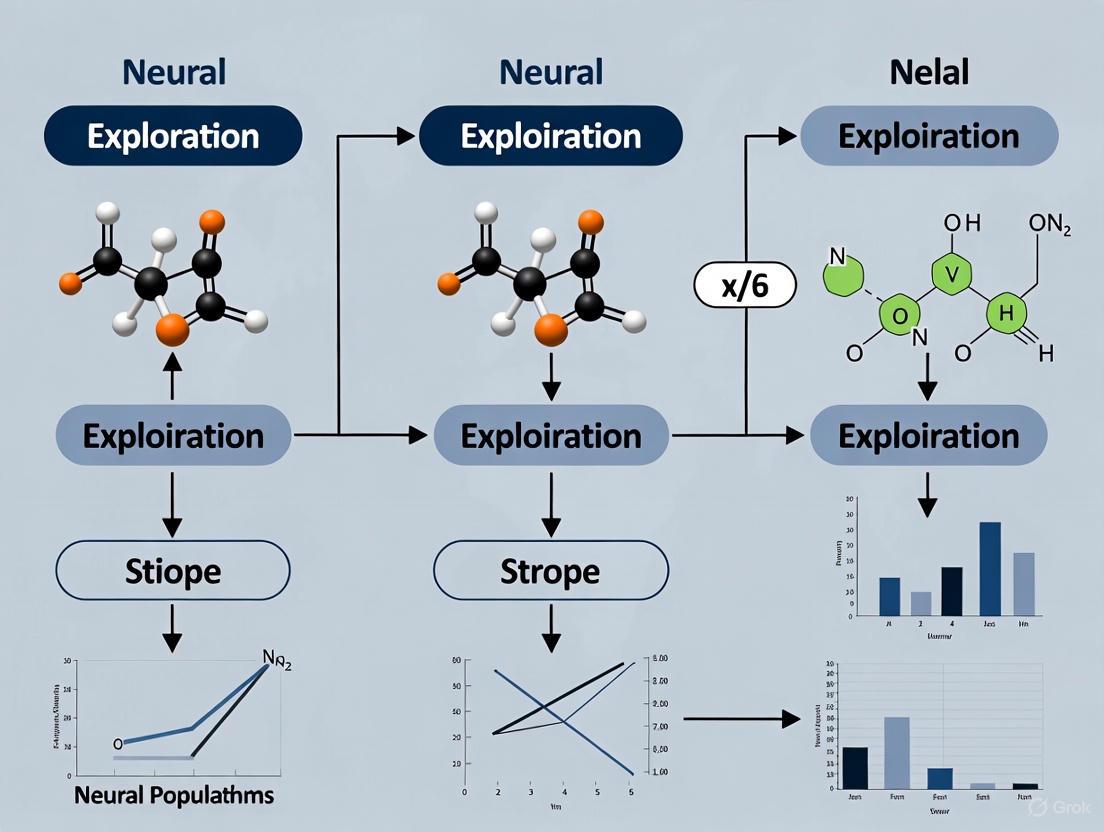
This article provides a comprehensive analysis of strategies for balancing exploration and exploitation within neural population algorithms, with a specific focus on applications in drug discovery and biomedical research.
Balancing Exploration and Exploitation in Neural Population Algorithms: A Guide for Biomedical Research and Drug Development
Abstract
This article provides a comprehensive analysis of strategies for balancing exploration and exploitation within neural population algorithms, with a specific focus on applications in drug discovery and biomedical research. It begins by establishing the foundational principles of this core trade-off, detailing its critical role in evolutionary and population-based search methods. The content then progresses to examine cutting-edge methodological frameworks, including Population-Based Guiding (PBG) and other bio-inspired optimization techniques. A practical troubleshooting section addresses common challenges such as premature convergence and deceptive reward landscapes, offering targeted optimization strategies. Finally, the article presents a rigorous validation and comparative analysis, benchmarking algorithmic performance against established standards and demonstrating their efficacy through real-world use cases in de novo molecular design and predictive healthcare models. This resource is tailored for researchers and professionals seeking to leverage these advanced algorithms to accelerate innovation in their fields.
The Core Dilemma: Understanding Exploration-Exploitation in Population-Based Search
Core Concepts FAQ
What is the exploration-exploitation dilemma in the context of optimization algorithms? The exploration-exploitation dilemma describes the fundamental challenge of balancing two opposing strategies: exploitation, which involves selecting the best-known option based on current knowledge to maximize immediate reward, and exploration, which involves trying new or less-familiar options to gather information, with the goal of discovering options that may yield higher rewards in the future [1]. In computational fields like reinforcement learning and meta-heuristic optimization, this trade-off is crucial for maximizing long-term cumulative benefits [1] [2].
How does this trade-off manifest in neural population dynamics and drug discovery? In brain-inspired meta-heuristic algorithms like the Neural Population Dynamics Optimization Algorithm (NPDOA), this dilemma is managed through specific neural strategies. The attractor trending strategy drives populations towards optimal decisions (exploitation), while the coupling disturbance strategy deviates populations from these attractors to improve exploration [3]. Similarly, in de novo drug design, the dilemma appears as a conflict between generating the single highest-scoring molecule (pure exploitation) and generating a diverse batch of high-scoring molecules (combining exploration and exploitation) to mitigate the risk of collective failure due to unmodeled properties [4].
What are the main types of exploration strategies? Research, particularly from behavioral and neuroscience studies, identifies two primary strategies that humans and algorithms use [5] [6]:
- Directed Exploration (Information-Seeking): A deterministic bias towards options with the highest uncertainty or information gain potential. It is computationally more intensive.
- Random Exploration (Behavioral Variability): The introduction of stochasticity or noise into the decision-making process. This is computationally simpler and can be effective for initial learning.
Troubleshooting Common Experimental Issues
Issue 1: Algorithm Prematurely Converges to a Local Optimum
- Problem: Your optimization algorithm gets stuck in a local optimum, failing to find a better, global solution. This indicates insufficient exploration.
- Solution A: Increase directed exploration by implementing an uncertainty bonus. Modify the value function
Q(a)of an option 'a' from simply its expected rewardr(a)toQ(a) = r(a) + IB(a), whereIB(a)is an information bonus proportional to the uncertainty about 'a' [5]. The Upper Confidence Bound (UCB) algorithm is a classic example of this strategy [6]. - Solution B: Enhance random exploration through adaptive methods. Instead of a fixed exploration rate, use methods like Thompson Sampling, which scales exploration with the agent's uncertainty [5] [6]. For population-based algorithms, guide mutations towards less-visited regions of the search space, as seen in the PBG-0 variant [7].
Issue 2: Excessive Exploration Leading to Low Reward and Slow Convergence
- Problem: The algorithm spends too much time exploring suboptimal options, resulting in slow convergence and poor cumulative reward. This indicates a failure to effectively exploit gathered knowledge.
- Solution A: Implement a scheduled reduction in random exploration. For example, use an epsilon-decay strategy where the probability of taking a random action
εstarts high and decays over time, allowing a gradual transition from exploration to exploitation [8]. - Solution B: Strengthen exploitative mechanisms. In neural population algorithms, reinforce the attractor trending strategy that drives populations toward the current best-known solutions [3]. In evolutionary NAS, employ a greedy selection operator that prioritizes the best-performing parent architectures for reproduction [7].
Issue 3: Lack of Diverse Solutions in De Novo Molecular Generation
- Problem: Your goal-directed generative model produces a batch of nearly identical, high-scoring molecules, lacking the structural diversity required for a successful drug discovery campaign.
- Solution A: Integrate an explicit diversity objective. Modify the scoring function to penalize similarity between generated molecules. Frameworks like MAP-Elites or Memory-RL can be used to sort molecules into niches or memory units, preventing over-crowding in any single region of chemical space [4].
- Solution B: Adopt a probabilistic batch selection framework. Instead of selecting only the top-n scored molecules, select a batch that maximizes the expected success rate while considering that failure risks might be correlated for highly similar molecules. This formally reconciles the optimization objective with the need for diversity [4].
Experimental Protocols & Methodologies
Protocol 1: Isolating Directed vs. Random Exploration in Behavioral Tasks
This protocol, adapted from experimental psychology, helps dissect which exploration strategy an algorithm or human subject is employing [6].
- Task Design: Implement a two-armed bandit task where one arm has a stochastic reward (unknown mean) and the other has a fixed, known reward (e.g., 0).
- Manipulation: Systematically vary the number of trials (time horizon) or the initial uncertainty about the stochastic arm.
- Measurement: Record the choice probability as a function of the estimated value difference between the two arms.
- Analysis:
- Fit a sigmoidal function to the choice probability data.
- A change in the response bias (intercept) with increased uncertainty is a signature of a directed exploration strategy (e.g., UCB) [6].
- A change in the response slope with increased uncertainty is a signature of an uncertainty-driven random exploration strategy (e.g., Thompson Sampling) [6].
Protocol 2: Benchmarking Exploration-Exploitation Balance in Meta-heuristic Algorithms
A standardized method to evaluate the performance of algorithms like NPDOA on benchmark problems [3].
- Selection of Benchmarks: Use a suite of standard single-objective optimization problems, including non-convex and nonlinear functions (e.g., cantilever beam design, pressure vessel design) [3].
- Algorithm Configuration: Implement the algorithm with its core strategies:
- Attractor Trending: Drives population toward attractors representing good solutions.
- Coupling Disturbance: Disrupts convergence via interactions between populations.
- Information Projection: Regulates the influence of the above two strategies [3].
- Evaluation Metrics:
- Final Solution Quality: Best objective value found.
- Convergence Speed: Number of iterations or function evaluations to reach a solution within a threshold of the global optimum.
- Robustness: Performance consistency across different benchmark problems.
- Comparison: Compare against established meta-heuristic algorithms like Particle Swarm Optimization (PSO), Genetic Algorithm (GA), and Whale Optimization Algorithm (WOA) [3].
Table 1: Key Metrics for Benchmarking Algorithm Performance
| Metric | Description | Indicates Effective... |
|---|---|---|
| Best Objective Value | The highest (or lowest) value of the objective function found. | Exploitation |
| Convergence Iterations | The number of cycles required to find a near-optimal solution. | Overall Balance |
| Performance across Problems | Consistency of results on different benchmark functions. | Robustness |
Protocol 3: Evaluating Molecular Diversity in Goal-Directed Generation
A methodology to quantify whether a generative model produces diverse, high-quality molecules [4].
- Model Training: Train your goal-directed generation model (e.g., a reinforcement learning agent on a SMILES generator) to maximize a scoring function
S(m). - Batch Generation: Use the trained model to generate a large batch of candidate molecules (e.g., 10,000).
- Diversity Quantification:
- Calculate the pairwise Tanimoto similarity based on molecular fingerprints for all molecules in the batch.
- Compute the average similarity and the number of unique molecular scaffolds.
- Analysis: Compare the diversity metrics of your model against baselines. A successful model should achieve a high average score while maintaining low average similarity and a high number of unique scaffolds.
Table 2: Reagents and Computational Tools for Exploration-Exploit Research
| Research Reagent / Tool | Function / Explanation |
|---|---|
| Multi-Armed Bandit (MAB) Task | A classic experimental paradigm to test exploration-exploitation decisions in a controlled setting [6]. |
| Upper Confidence Bound (UCB) | An algorithm that adds an uncertainty bonus to expected rewards to guide directed exploration [5] [6]. |
| Thompson Sampling | A Bayesian algorithm that selects actions by sampling from posterior distributions, enabling uncertainty-driven random exploration [5] [6]. |
| PlatEMO | A software platform for conducting experimental comparisons of multi-objective and, by extension, single-objective optimization algorithms [3]. |
| ChEMBL/PubChem | Public databases containing millions of molecules and bioactivity data, used as training data for drug discovery machine learning models [9]. |
Conceptual Diagrams
Directed vs. Random Exploration Pathways
Neural Population Dynamics Optimization (NPDOA) Workflow
Frequently Asked Questions
Q1: What are the core strategies for balancing exploration and exploitation in algorithms? Researchers have identified two primary strategies. Directed exploration involves an explicit, calculated bias towards options that provide more information, often by adding an "information bonus" to the value of less-known options. In contrast, Random exploration introduces stochasticity into the decision-making process, such as adding random noise to value estimates, which can lead to choosing new options by chance [5]. Algorithms like Upper Confidence Bound (UCB) epitomize directed exploration, while methods like epsilon-greedy and Thompson Sampling are common implementations of random exploration [10].
Q2: Why is my neural network model failing to learn or converging poorly? Poor convergence often stems from foundational issues rather than the core algorithm itself. Common reasons include:
- Buggy Code: Neural networks can fail silently. Common bugs include incorrect tensor shapes, unused variables due to copy-paste errors, or faulty gradient calculations [11] [12].
- Unscaled Data: The scale of input data can drastically impact training. Data should typically be normalized to have a zero mean and unit variance or scaled to a small interval like [-0.5, 0.5] [11] [12].
- Inappropriate Architecture: Starting with an overly complex model for a new problem is a frequent pitfall. It is better to begin with a simple architecture (e.g., a fully-connected network with one hidden layer) and incrementally add complexity [11] [12].
Q3: How does the exploration-exploitation trade-off manifest in drug development? The high failure rate of clinical drug development—approximately 90%—can be viewed through this lens. A significant reason for failure is an over-emphasis on exploiting a drug's potency and specificity (Structure-Activity Relationship, or SAR) while under-exploring its tissue exposure and selectivity (Structure-Tissue Exposure/Selectivity Relationship, or STR) [13]. This imbalance can lead to selecting drug candidates that have high potency in lab assays but poor efficacy or unmanageable toxicity in human tissues, as their behavior in the complex biological "space" of the human body remains underexplored [13].
Q4: What is a practical first step to debug a underperforming neural network model? A highly recommended heuristic is to overfit a single batch of data. If your model cannot drive the training loss on a very small dataset (e.g., a single batch) arbitrarily close to zero, it indicates a fundamental bug or configuration issue rather than a generalizability problem. Failure to overfit a single batch can reveal issues like incorrect loss functions, exploding gradients, or data preprocessing errors [11].
Troubleshooting Guides
Guide 1: Troubleshooting Poor Convergence in Neural Network Training
This guide helps diagnose and fix issues when your model's training loss does not decrease.
| Observed Symptom | Potential Causes | Corrective Actions |
|---|---|---|
| Training loss does not decrease at all; model predicts a constant. | • Implementation bugs (e.g., unused layers, incorrect loss) [12]• Data not normalized [11]• Extremely high learning rate | 1. Verify code with unit tests [12].2. Normalize input data (e.g., scale to [0,1]) [11].3. Overfit a single batch to test model capacity [11]. |
Training loss explodes to NaN. |
• Numerical instability [11]• High learning rate | 1. Use built-in framework functions (e.g., from Keras) to avoid manual math [11].2. Drastically reduce the learning rate. |
| Initial steep decrease in loss, then immediate plateau. | • Model fitting a constant to the target [12]• Learning rate too low after initial progress | 1. Ensure your model architecture is sufficiently complex for the problem [12].2. Increase the learning rate or use a learning rate scheduler. |
| Error oscillates wildly during training. | • Learning rate too high• Noisy or incorrectly shuffled labels [11] | 1. Lower the learning rate.2. Inspect your data pipeline for correctness in labels and augmentation [11]. |
Guide 2: Troubleshooting Exploration-Exploitation Imbalances in Algorithm Design
This guide addresses issues where an algorithm gets stuck in sub-optimal solutions or fails to discover new knowledge.
| Observed Symptom | Potential Causes | Corrective Actions |
|---|---|---|
| Algorithm converges too quickly to a sub-optimal solution (Excessive Exploitation). | • Epsilon-greedy with too small an ε [10]• Lack of an explicit information bonus in value estimation [5] |
1. Increase the exploration parameter (ε) or implement a decay schedule [10].2. Switch to a directed exploration algorithm like Upper Confidence Bound (UCB) [10] [5]. |
| Algorithm behaves too randomly and fails to consolidate learning (Excessive Exploration). | • Epsilon-greedy with too large an ε [10]• Decision noise not annealing over time [10] [5] |
1. Decrease the exploration parameter (ε) [10].2. Implement annealing to reduce random exploration over time [5]. |
| Poor performance in non-stationary environments (where the best option changes). | • Algorithm lacks mechanism to track changing reward distributions.• Exploration has been shut off too aggressively. | 1. Use algorithms designed for non-stationary environments or reset uncertainty estimates.2. Implement Thompson Sampling, which naturally scales exploration with uncertainty [10]. |
Experimental Protocols
Protocol 1: Benchmarking Exploration-Exploitation Algorithms
Objective: To compare the performance of different exploration-exploitation algorithms (e.g., Epsilon-Greedy, UCB, Thompson Sampling) in a controlled multi-armed bandit setting.
Methodology:
- Environment Setup: Simulate a multi-armed bandit with a fixed number of arms (e.g., 10). Each arm has a true, latent reward probability from a defined distribution.
- Algorithm Implementation:
- Epsilon-Greedy: With a fixed probability
ε(e.g., 0.1), explore a random arm; otherwise, exploit the arm with the highest current average reward [10]. - Upper Confidence Bound (UCB): Select the arm
athat maximizesQ(a) + c * √(ln t / N(a)), whereQ(a)is the average reward,N(a)is the number of times armahas been selected,tis the total number of plays, andcis a confidence parameter [10] [5]. - Thompson Sampling: Model the reward distribution of each arm (e.g., as a Beta distribution). For each play, sample a reward value from each arm's distribution and select the arm with the highest sampled value. Update the distribution based on the actual reward received [10].
- Epsilon-Greedy: With a fixed probability
- Evaluation: Run each algorithm for a fixed number of trials (e.g., 10,000). Track the cumulative regret (the difference between the reward of the optimal arm and the chosen arm) and the percentage of times the optimal arm is selected.
Protocol 2: Systematically Debugging a Deep Neural Network
Objective: To identify and resolve issues preventing a deep neural network from learning effectively.
Methodology:
- Start Simple:
- Use a simple architecture (e.g., one hidden layer) and sensible defaults (ReLU activation, no regularization) [11].
- Simplify the problem by working with a small, manageable dataset (~10,000 examples) and fixed input sizes [11].
- Normalize your inputs by subtracting the mean and dividing by the standard deviation [11] [12].
- Implement and Debug:
- Get the model to run: Use a debugger to step through model creation, checking for tensor shape mismatches and data types [11].
- Overfit a single batch: The most critical step. Take a single, small batch (e.g., 64 samples) and iterate until the loss approaches zero. Failure here indicates a serious bug [11].
- Evaluate and Compare:
- Compare your model's performance on a benchmark dataset to a known result or a simple baseline (e.g., linear regression) to ensure it is learning meaningfully [11].
Algorithm Comparison & Research Toolkit
Quantitative Comparison of Exploration Algorithms
The table below summarizes the key characteristics of three common exploration-exploitation algorithms, helping you select the right one for your context.
| Algorithm | Exploration Type | Key Mechanism | Typical Performance | Common Pitfalls |
|---|---|---|---|---|
| Epsilon-Greedy [10] | Random | With probability ε, chooses a random action; otherwise, chooses the best-known action. |
Simple and often effective, but can be inefficient in complex reward landscapes. | Inefficient exploration; suboptimal actions are explored equally, regardless of potential. |
| Upper Confidence Bound (UCB) [10] [5] | Directed | Chooses the action with the highest upper confidence bound, balancing estimated value and uncertainty. | Systematically efficient; often achieves lower regret than epsilon-greedy. | Can be computationally intensive with large action spaces; requires parameter tuning. |
| Thompson Sampling [10] [5] | Random (Probability Matching) | Samples from the posterior distribution of reward beliefs and chooses the action with the highest sampled value. | Tends to exhibit superior performance in practice, especially in non-stationary environments. | Complex to implement due to requirement of maintaining and updating probability distributions. |
The Scientist's Toolkit: Key Research Reagents & Solutions
This table details essential conceptual "reagents" for research in this field.
| Item / Concept | Function / Explanation |
|---|---|
| Multi-Armed Bandit Task | A classic experimental framework used to study the explore-exploit dilemma, where an agent must choose between multiple options (bandits) with unknown reward probabilities [5]. |
| Information Bonus | A value added to the expected reward of an action to promote directed exploration. It is often proportional to the uncertainty about that action [5]. |
| Softmax Function | A function that converts a set of values into a probability distribution, controlling the level of random exploration via a temperature parameter. Higher temperature leads to more random choices [5]. |
| Structure-Activity Relationship (SAR) | A drug optimization process that focuses on exploiting and improving a compound's potency and specificity for its intended target [13]. |
| Structure-Tissue Exposure/Selectivity Relationship (STR) | A drug optimization process that focuses on exploring and understanding a compound's behavior in the complex biological space of tissues and organs, crucial for predicting efficacy and toxicity [13]. |
Conceptual Diagrams
Exploration Strategies in Decision-Making
Neural Network Troubleshooting Workflow
STAR Framework in Drug Development
In computational optimization for neural population algorithms and drug development, researchers face the fundamental challenge of balancing exploration (searching for new, potentially better solutions) and exploitation (refining known good solutions). Two key theoretical frameworks address this dilemma: Multi-Armed Bandit (MAB) problems, which provide formal models for sequential decision-making under uncertainty, and metaheuristic algorithms, which offer high-level strategies for navigating complex search spaces [5] [14]. Recent advances in brain-inspired optimization have introduced novel approaches like the Neural Population Dynamics Optimization Algorithm (NPDOA), which mimics decision-making processes in neural circuits [3]. This technical support center provides practical guidance for implementing these frameworks in research settings, with specific troubleshooting advice for common experimental challenges.
Frequently Asked Questions (FAQs)
FAQ 1: How can I prevent my optimization algorithm from converging prematurely to suboptimal solutions?
Premature convergence typically indicates insufficient exploration. Implement the following solutions:
- In MAB setups: Increase exploration using algorithms like ε-Greedy, Upper Confidence Bound (UCB), or Thompson Sampling [15]. For ε-Greedy, start with ε = 0.1 and decay it slowly over iterations.
- In metaheuristics: Use NPDOA's coupling disturbance strategy, which deliberately disrupts convergence trends to push the search toward unexplored regions [3].
- General approach: Combine both directed exploration (explicit information seeking) and random exploration (behavioral variability) strategies [5].
FAQ 2: What metrics should I use to quantitatively evaluate the exploration-exploitation balance in my experiments?
Track these key metrics throughout optimization runs:
Table: Key Evaluation Metrics for Exploration-Exploitation Balance
| Metric | Description | Target Range | Measurement Method |
|---|---|---|---|
| Average Reward Trend | Slope of cumulative rewards over time | Increasing positive slope | Linear regression on reward sequence [15] |
| Population Diversity | Variance in solution characteristics | Maintain >15% of initial variance | Genotypic/phenotypic diversity measures [7] |
| Optimal Action Rate | Percentage of trials selecting best-known option | Gradually increasing to >80% | Action selection frequency analysis [16] |
| Regret | Difference between optimal and actual rewards | Decreasing over time | Cumulative regret calculation [17] |
FAQ 3: How do I adapt MAB algorithms for high-dimensional problems like neural architecture search?
High-dimensional spaces require specialized approaches:
- Use contextual bandits that incorporate state information using algorithms like LinUCB [18].
- Implement hierarchical strategies that group similar options together [19].
- Apply Thompson Sampling with probabilistic models that capture parameter distributions [15].
- Leverage population-based guidance as in PBG, which uses the current population distribution to guide mutations toward unexplored regions [7].
FAQ 4: What are the computational complexity tradeoffs between different MAB algorithms?
Table: Computational Complexity of Common MAB Algorithms
| Algorithm | Time Complexity | Space Complexity | Best Use Cases |
|---|---|---|---|
| ε-Greedy | O(1) per selection | O(k) for k arms | Simple environments with limited arms [15] |
| Upper Confidence Bound (UCB) | O(k) per selection | O(k) | Stationary environments with clear uncertainty bounds [15] |
| Thompson Sampling | O(k) per selection | O(k) for parameters | Problems with natural conjugate priors [15] |
| LinUCB (Contextual) | O(d²) per selection | O(d²) for d features | High-dimensional contexts with linear reward structures [18] |
FAQ 5: How can I translate principles from neural population dynamics to improve my optimization algorithms?
Implement strategies inspired by brain neuroscience:
- Attractor trending: Drive solutions toward stable, high-reward states (exploitation) [3].
- Coupling disturbance: Introduce controlled disruptions to escape local optima (exploration) [3].
- Information projection: Regulate information flow between solution populations to balance tradeoffs [3].
- Neural-inspired randomization: Mimic neural variability patterns rather than using uniform random noise [5].
Troubleshooting Guides
Issue: Rapid Performance Plateaus in Evolutionary Neural Architecture Search
Symptoms: Initial improvement followed by extended periods without meaningful progress; population diversity drops below 5%.
Diagnosis: Premature convergence due to over-exploitation.
Solution Protocol:
- Immediate action: Implement guided mutation using Population-Based Guiding (PBG):
- Parameter adjustment: Increase mutation rate by 30-50% temporarily.
- Strategy enhancement: Add ε-decay schedule starting with ε=0.2 and reducing to 0.01 over 70% of iterations [7].
Issue: High Variance in MAB Algorithm Performance Across Trials
Symptoms: Inconsistent results between runs with identical parameters; unpredictable convergence patterns.
Diagnosis: Insufficient exploration or overly sensitive reward structures.
Solution Protocol:
- Stabilization: Implement reward normalization:
- Algorithm selection: Switch to Thompson Sampling for better uncertainty quantification:
- Validation: Conduct statistical significance testing with at least 30 independent runs [15] [17].
Issue: Prohibitive Computational Costs in Large Search Spaces
Symptoms: Experiment runtime growing exponentially with problem dimension; resource constraints limiting exploration.
Diagnosis: Inefficient sampling strategy scaling poorly with dimensionality.
Solution Protocol:
- Dimensionality reduction: Implement feature hashing or embedding projections.
- Parallelization: Use distributed evaluation frameworks (e.g., Ray or Spark) for population-based methods.
- Adaptive allocation: Implement the MAB-OS framework to dynamically select optimizers:
- Early stopping: Implement heuristic pruning of poorly performing arms/solutions after statistical validation [19].
Experimental Protocols
Protocol 1: Benchmarking Exploration-Exploitation Strategies
Purpose: Systematically compare the performance of different exploration strategies in neural population algorithms.
Materials:
- Standard benchmark functions (Sphere, Rastrigin, Ackley)
- Neural Population Dynamics Optimization Algorithm (NPDOA) implementation [3]
- Multi-Armed Bandit test suite with known reward distributions [15]
Methodology:
- Initialization:
- Set population size to 50 for neural algorithms
- Configure 10 arms for MAB problems with Gaussian rewards
- Define evaluation budget: 10,000 function evaluations
Experimental conditions:
Data collection:
- Record reward at each iteration
- Track population diversity every 100 iterations
- Measure cumulative regret relative to optimal
- Document computational time per iteration
Analysis:
- Perform ANOVA across conditions with post-hoc testing
- Calculate effect sizes for significant differences
- Generate learning curves with confidence intervals
Protocol 2: Hybrid MAB-Metaheuristic Framework for Drug Discovery
Purpose: Optimize molecular design using a hybrid approach combining bandit-based selection with population-based search.
Materials:
- Chemical compound library with property predictions
- QSAR models for activity prediction
- Implementation of MAB-OS framework [19]
- NPDOA or PBG algorithm [3] [7]
Methodology:
- Problem formulation:
- Define arms as different molecular optimization strategies
- Represent molecules in continuous latent space
- Set reward as predicted binding affinity
Hybrid algorithm integration:
Diagram Title: Hybrid MAB-Metaheuristic Drug Optimization
Parameter settings:
- MAB-OS with HHO, DE, and WOA as base optimizers [19]
- Population size: 100 molecules
- Iteration budget: 500 generations
- Evaluation metric: Multi-objective (affinity, solubility, toxicity)
Validation:
- Compare against single-algorithm baselines
- Statistical testing with Bonferroni correction
- Computational efficiency analysis
The Scientist's Toolkit: Essential Research Reagents
Table: Key Computational Components for Exploration-Exploitation Research
| Component | Function | Example Implementations |
|---|---|---|
| Neural Population Simulator | Models interconnected neural dynamics for bio-inspired optimization | NPDOA with attractor trending, coupling disturbance, information projection [3] |
| Bandit Algorithm Library | Provides implementations of various MAB strategies | ε-Greedy, UCB, Thompson Sampling, LinUCB [15] [18] |
| Optimizer Selection Framework | Dynamically chooses best algorithm during optimization | MAB-OS with HHO, DE, WOA as base algorithms [19] |
| Population Diversity Metrics | Quantifies exploration in evolutionary algorithms | Genotype diversity, entropy measures, novelty detection [7] |
| Reward Shaping Tools | Transforms raw outputs to facilitate learning | Normalization, whitening, relative advantage calculation [15] |
| Convergence Detection | Identifies stabilization points in optimization | Statistical tests, slope analysis, diversity thresholds [3] |
Advanced Visualization Frameworks
Neural Population Dynamics Optimization Algorithm Workflow
Diagram Title: NPDOA Exploration-Exploitation Balance
Multi-Armed Bandit Decision Process
Diagram Title: MAB Decision Cycle
Performance Benchmarking Tables
Table: Neural Algorithm Comparison on Standard Benchmarks
| Algorithm | Average Convergence Iterations | Success Rate (%) | Diversity Maintenance | Computational Cost |
|---|---|---|---|---|
| NPDOA | 1,250 | 94.5 | High | Medium [3] |
| Genetic Algorithm | 2,100 | 87.2 | Medium | High [3] |
| Particle Swarm | 1,800 | 89.7 | Medium | Low [3] |
| PBG (Population-Based Guiding) | 1,100 | 96.1 | High | Medium [7] |
Table: MAB Algorithm Performance Characteristics
| Algorithm | Cumulative Regret | Simple Problems | Complex Problems | Implementation Complexity |
|---|---|---|---|---|
| ε-Greedy | Medium | Excellent | Good | Low [15] |
| Upper Confidence Bound | Low | Good | Excellent | Medium [15] |
| Thompson Sampling | Low | Good | Excellent | High [15] |
| LinUCB (Contextual) | Low | Fair | Excellent | High [18] |
The Role of Population Diversity as a Key Indicator of Algorithm Health
Frequently Asked Questions
What is population diversity in the context of optimization algorithms? Population diversity refers to the variety of genetic material or solution characteristics present within a population of candidate solutions in a meta-heuristic algorithm. In neural population algorithms, this can be measured by the differences in the neural states or firing rates of neurons across the population [3]. High diversity indicates that the algorithm is exploring a wide area of the search space.
Why is population diversity a critical indicator of algorithm health? Diversity is a direct measure of the balance between exploration (searching new areas) and exploitation (refining known good areas). A significant loss of diversity often leads to premature convergence, where the algorithm gets stuck in a local optimum and cannot find the global best solution [3] [20]. Monitoring it allows researchers to diagnose poor performance.
What are the common symptoms of low population diversity? Key symptoms include:
- Rapid convergence of all population members to nearly identical solutions.
- A stagnation in the improvement of the best-found solution over many iterations.
- The population's average fitness closely matching the best individual's fitness.
- In neural population dynamics, this may manifest as highly correlated neural states across different populations [21].
How can I measure population diversity in my experiments? Diversity can be quantified using several metrics, summarized in the table below. For neural populations, information-theoretic measures derived from neural activity correlations are also highly effective [21].
What strategies can I use to restore and maintain population diversity? Strategies include introducing coupling disturbances between sub-populations, using guided mutation to steer the search toward unexplored regions, and implementing information projection to control communication between populations [3] [7]. Explicitly increasing population size or resampling can also help, particularly in noisy optimization environments [20].
Troubleshooting Guides
Problem 1: Premature Convergence
The algorithm converges quickly to a solution that is clearly not the global optimum.
| Diagnostic Step | Action |
|---|---|
| Measure Diversity | Calculate the average Euclidean distance between solutions in the population over iterations. A steady, rapid decline confirms the issue. |
| Check Strategy Balance | Review the parameters controlling exploration (e.g., mutation rate, disturbance strength) versus exploitation (e.g., selection pressure, attractor trend). |
| Visualize the Population | Project the population into a 2D or 3D space (using PCA or t-SNE) over time. The points will cluster tightly very early on. |
Solution Protocols:
- Introduce a Coupling Disturbance: As implemented in the Neural Population Dynamics Optimization Algorithm (NPDOA), deliberately disrupt the trend of neural populations towards attractors by coupling them with other populations. This strategy directly improves exploration [3].
- Implement Guided Mutation: Use a method like Population-Based Guiding (PBG). This involves calculating the distribution of genes (e.g., network connections or operations) in the current population and mutating genes toward less frequent values. This encourages exploration of underrepresented areas of the search space [7].
- Increase Behavioral Variability (Random Exploration): Inject noise into the value estimates or decision-making process of the algorithm. This can be as simple as increasing the "temperature" in a softmax selection rule or using an adaptive method like Thompson Sampling [5].
Problem 2: Population Dispersion Failure
The population fails to concentrate around high-quality solutions, even after extensive iterations, resulting in slow or ineffective optimization.
| Diagnostic Step | Action |
|---|---|
| Verify Exploitation Mechanisms | Ensure that your selection and attraction mechanisms are functioning correctly. An overly strong exploration strategy can prevent convergence. |
| Evaluate in a Noise-Free Environment | Test the algorithm on a clean, synthetic benchmark problem. If performance improves, the issue may be related to noise handling. |
| Inspect Fitness-Population Correlation | Analyze if individuals with higher fitness are being successfully selected to guide the population. A lack of correlation indicates weak exploitation. |
Solution Protocols:
- Enhance Attractor Trending: Strengthen the mechanisms that drive populations toward optimal decisions. In NPDOA, the attractor trending strategy is responsible for ensuring exploitation capability [3].
- Apply a Greedy Selection Operator: Implement a selection process that prioritizes the best-performing individuals (or pairs of individuals) for reproduction. This greedily exploits current knowledge to refine solutions [7].
- Use an Information Projection Strategy: Regulate the communication and influence between different neural populations. This strategy helps transition the algorithm from a global exploration phase to a local exploitation phase [3].
Experimental Protocols for Measuring Diversity
Protocol 1: Genotypic Diversity Measurement
This protocol measures diversity based on the direct encoding of the solutions.
- Encoding: Represent each individual in the population of size
Nas a vector in a D-dimensional space. - Calculation: Compute the pair-wise Euclidean distance between every individual in the population.
- Averaging: The population's genotypic diversity is the average of all these pairwise distances.
- Formula:
- Let
Pbe the population ofNindividuals. - Diversity = ( \frac{2}{N(N-1)} \sum{i=1}^{N-1} \sum{j=i+1}^{N} || Pi - Pj || )
- Let
Protocol 2: Phenotypic & Information-Theoretic Measurement
This protocol is ideal for neural population algorithms and measures diversity based on the activity or output of the systems.
- Record Activity: For each individual in the population, record the firing rate vector or decision output in response to a standard set of inputs or at a specific time in the trial.
- Analyze Correlations: Calculate the pairwise correlation coefficients of the activity vectors across the population.
- Quantify Diversity: A population with high diversity will show a mix of positive and negative correlations, or low average correlation. The presence of structured correlation motifs (like information-enhancing hubs) can be a sign of healthy, specialized population codes [21].
The Scientist's Toolkit: Research Reagent Solutions
| Reagent / Solution | Function in Experiment |
|---|---|
| Neural Population Dynamics Optimization Algorithm (NPDOA) | A brain-inspired meta-heuristic framework that explicitly models attractor trending, coupling disturbance, and information projection to balance exploration and exploitation [3]. |
| Population-Based Guiding (PBG) | An evolutionary framework for Neural Architecture Search that uses greedy selection and guided mutation to control population diversity and search efficiency [7]. |
| Vine Copula Models | A statistical multivariate modeling tool used to accurately estimate mutual information and complex, nonlinear dependencies in neural population data, controlling for confounding variables like movement [21]. |
| Dispatching Rules (DRs) | Simple, fast constructive heuristics used to initialize the population of a genetic algorithm, providing high-quality starting points that improve convergence speed and final performance [22]. |
| Upper Confidence Bound (UCB) Algorithm | A policy for directed exploration that adds an "information bonus" to the value of an option based on its uncertainty, systematically driving exploration [5]. |
| Thompson Sampling | A strategy for random exploration that scales decision noise with the agent's uncertainty, leading to high exploration initially that decreases over time to facilitate exploitation [5]. |
Conceptual Diagram: Balancing Exploration & Exploitation
The following diagram illustrates the core strategies and their role in maintaining a healthy exploration-exploitation balance through population diversity, as inspired by neural population and evolutionary algorithms.
Experimental Workflow: Diagnosing Algorithm Health
This workflow outlines the steps for a researcher to systematically diagnose and correct the health of a neural population or evolutionary algorithm.
Advanced Algorithms and Their Biomedical Applications: From PBG to Drug Design
Frequently Asked Questions (FAQs)
Q1: What is the core innovation of the Population-Based Guiding (PBG) framework?
The core innovation of PBG is its novel guided mutation approach, which uses the current population's distribution to automatically steer the search process. Unlike traditional methods that rely on fixed, hand-tuned mutation rates, PBG calculates mutation probabilities based on whether a specific architectural feature (encoded in a binary vector) is common (probs1) or rare (probs0) within the current population. Sampling from probs0 encourages exploration of underutilized features, while the synergistic combination with an exploitative greedy selection operator effectively balances the exploration-exploitation trade-off [7].
Q2: How does PBG improve search efficiency compared to other evolutionary NAS methods? PBG improves efficiency by being up to three times faster than baseline methods like regularized evolution on benchmarks such as NAS-Bench-101. This speedup is achieved by eliminating the need for manual tuning of mutation rates and using the population itself to make informed, guided decisions on where to mutate, thus accelerating the discovery of high-performing architectures [7] [23].
Q3: My PBG search is converging to suboptimal architectures too quickly. How can I promote more exploration? Premature convergence often indicates that exploitation is overpowering exploration. You can address this by:
- Utilizing the explorative guided mutation variant (PBG-0): Ensure your implementation samples mutation indices from the
probs0vector, which directs mutations toward architectural features that are less common in the current population [7]. - Verifying the selection pressure: The greedy selection operator is highly exploitative. You can adjust the balance by modifying the selection process, for instance, by not always selecting the absolute top
npairs but incorporating a probabilistic element based on fitness rank [7] [24].
Q4: How can I integrate performance predictors to reduce the computational cost of PBG? You can integrate an ensemble performance predictor to estimate the final accuracy of a candidate architecture without full training. For example, a predictor that combines K-Nearest Neighbors (KNN) regression, Random Forest (RF), and Support Vector Machine (SVM) can be trained on the performance of already-evaluated architectures. This predictor can then pre-screen new candidates, ensuring that only the most promising architectures undergo the computationally expensive full training and evaluation [24].
Q5: What are the primary hardware considerations when deploying models discovered by PBG? For deployment on resource-constrained hardware, such as satellite edge-computing chips, it is crucial to implement hardware-aware NAS. This involves embedding hardware-specific constraints—like inference latency, memory footprint, and power consumption—directly into the PBG optimization loop as additional objectives. This ensures the final model is not only accurate but also suitable for the target deployment environment [25].
Troubleshooting Guides
Issue 1: Stagnating Search Performance
Problem: The population's fitness shows little to no improvement over several generations.
Diagnosis and Solutions:
| Potential Cause | Diagnostic Steps | Recommended Solution |
|---|---|---|
| Loss of Population Diversity | Calculate the average Hamming distance between architecture encodings in the population. A low and decreasing value confirms this issue. | Increase the focus on exploration by switching to or increasing the rate of the PBG-0 (probs0) guided mutation variant [7]. |
| Ineffective Crossover | Analyze if offspring performance is consistently worse than parent performance. | Review the crossover operator. Implement a simple fixed-point crossover to ensure valid architectures are produced, and consider if a more sophisticated method is needed for your search space [7]. |
| Weak Selection Pressure | Check if the fitness variance in the population is low. The greedy selection may not be focusing enough on the best performers. | Ensure the greedy selection operator is correctly implemented, selecting parent pairs based on the sum of their fitness scores to promote the recombination of strong candidates [7]. |
Issue 2: High Computational Overhead per Evaluation
Problem: The time taken to train and evaluate each candidate architecture is prohibitive, limiting the total number of search iterations.
Diagnosis and Solutions:
| Potential Cause | Diagnostic Steps | Recommended Solution |
|---|---|---|
| Full Training is Too Long | The architecture is being trained to convergence for evaluation. | Adopt a multi-fidelity evaluation strategy. Use lower-fidelity approximations like training for fewer epochs, on a smaller dataset, or at a lower resolution to quickly filter out poor candidates [26]. |
| Lack of Performance Prediction | Every new architecture is sent for full training. | Integrate an ensemble performance predictor (e.g., based on KNN, RF, and SVM) to act as a proxy for the true performance, reserving full training only for top-ranked candidates [24]. |
| Search Space is Too Large | The genotype encoding is excessively long, leading to a vast search space. | Re-design the search space to incorporate sensible prior knowledge and expert blocks, which can constrain the space to more promising regions and reduce the number of invalid or poor architectures [24]. |
Experimental Protocols & Performance Data
Key Experiment: Benchmarking on NAS-Bench-101
Objective: To evaluate the performance and efficiency of PBG against established evolutionary NAS baselines.
Methodology:
- Search Space: Utilize the standard NAS-Bench-101 cell-based search space.
- Population Initialization: Initialize a population of neural network architectures with random configurations.
- Evolutionary Loop: For each generation:
a. Greedy Selection: Generate all possible parent pairings (excluding self-pairing) and select the top
npairs based on the highest sum of validation accuracies [7]. b. Crossover: Apply a fixed-point crossover operator to selected parent pairs to produce offspring. c. Guided Mutation: Apply the guided mutation operator (both PBG-1 and PBG-0 variants tested) to the offspring. The mutation indices are sampled based on the probability vectors (probs1orprobs0) derived from the current population's one-hot encoding [7]. d. Evaluation: Train and evaluate new candidate architectures on the CIFAR-10 dataset (or use the pre-computed performance in NAS-Bench-101). - Termination: The search concludes after a fixed number of generations or when performance plateaus.
Quantitative Results: The following table summarizes the expected performance of PBG compared to other methods on the NAS-Bench-101 benchmark.
| Method | Key Principle | Best Found Accuracy (%) | Time to Target Accuracy (x faster) |
|---|---|---|---|
| PBG (Proposed) | Guided mutation + Greedy selection | ~94.5 | 3x (baseline) |
| Regularized Evolution | Evolution with aging | ~94.2 | 1x (baseline) |
| Random Search | Uniform random sampling | ~93.8 | >3x (slower) |
| MPE-NAS [24] | Multi-population evolution | Comparable / Superior on specific classes | Varies (improves other EC-based methods) |
Workflow Diagram: PBG Framework
Detailed Diagram: Guided Mutation Operation
The Scientist's Toolkit: Research Reagent Solutions
This table details key computational tools and concepts essential for implementing and experimenting with the PBG framework.
| Item Name | Function / Explanation | Relevance to PBG |
|---|---|---|
| NAS-Bench-101 | A tabular benchmark containing pre-computed performance of 423k neural cell architectures within a fixed search space. | Serves as a standard benchmark for quick and reproducible validation of PBG's performance and efficiency claims [7]. |
| Greedy Selection Operator | A selection mechanism that generates all possible parent pairings and selects the top n pairs based on the sum of their fitness. |
The primary driver for exploitation in PBG, ensuring the best genetic material is recombined [7]. |
| Guided Mutation (probs0) | A mutation operator that samples mutation locations from an inverted probability vector (probs0), favoring features underrepresented in the population. |
The primary driver for exploration in PBG, steering the search toward novel and unexplored regions of the architecture space [7]. |
| Ensemble Performance Predictor | A meta-model (e.g., combining KNN, RF, SVM) that predicts the final performance of an untrained architecture based on its encoding. | Dramatically reduces computational cost by acting as a cheap proxy for expensive full training during the search [24]. |
| Hardware-in-the-Loop Profiler | Tools that measure real-world metrics like inference latency and memory usage of a model on target hardware (e.g., NVIDIA Jetson). | Enables hardware-aware NAS, allowing PBG to be extended to optimize for deployment constraints like power and latency, crucial for edge devices [25]. |
Greedy Selection for Intensification (Exploitation) and Guided Mutation for Diversification (Exploration)
Frequently Asked Questions (FAQs)
Q1: What is the fundamental trade-off in evolutionary algorithms, and how do greedy selection and guided mutation address it? The core trade-off is between exploitation (refining known good solutions) and exploration (searching for new, potentially better solutions). Greedy selection intensifies the search by exploiting the best current solutions, while guided mutation diversifies the population by exploring new areas of the search space. Balancing these two processes is crucial for avoiding premature convergence and finding the global optimum [3] [7].
Q2: How does the greedy selection algorithm work in the NPDOA framework? In the Neural Population Dynamics Optimization Algorithm (NPDOA), a specific greedy selection process is used:
- It generates all possible pairings from a population of
nindividuals, excluding self-pairings, resulting inn(n-1)/2combinations. - Each pair is assigned a score by summing the fitness values of the two individuals.
- The top
npairings with the highest combined fitness scores are selected for reproduction. This method differs from traditional approaches by selecting the best combinations of individuals rather than just the best individuals, which helps maintain diversity while focusing on high performance [7].
Q3: What is the role of guided mutation, and how does it promote exploration?
Guided mutation steers the evolutionary search toward less explored regions of the search space. In the Population-Based Guiding (PBG) framework, a guided mutation algorithm uses the current population's distribution to propose mutation indices. It calculates the probability of a feature being '1' or '0' across the population and then samples mutation locations from the inverted probability vector (probs0). This makes it more likely to mutate features that are uncommon in the current population, thereby fostering exploration and reducing the chance of getting stuck in local optima [7].
Q4: In what practical domains are these algorithms particularly relevant? These advanced evolutionary strategies are highly relevant in fields that involve complex optimization problems, such as:
- Drug Discovery: For optimizing drug design, predicting drug-target interactions, and designing clinical trials [27] [28].
- Neural Architecture Search (NAS): For automatically discovering high-performing neural network architectures [7].
Troubleshooting Guides
Issue 1: Premature Convergence
Problem: The algorithm converges too quickly to a sub-optimal solution, lacking diversity in the final population.
| Possible Cause | Diagnostic Check | Solution |
|---|---|---|
| Overly aggressive exploitation | Check if population diversity drops rapidly in early generations. | Increase the influence of the guided mutation strategy (e.g., use the PBG-0 variant) to explore less-visited regions [7]. |
| Weak exploration pressure | Analyze if mutation rates are too low or not informed by population diversity. | Implement a guided mutation approach that uses the inverted population probability (probs0) to actively target unexplored genetic material [7]. |
Issue 2: Low Computational Efficiency
Problem: The algorithm requires too many generations or evaluations to find a satisfactory solution.
| Possible Cause | Diagnostic Check | Solution |
|---|---|---|
| Inefficient balance of strategies | Monitor the ratio of successful explorations vs. exploitations over time. | Ensure a synergistic balance between greedy selection (for fast intensification) and guided mutation (for effective diversification) as seen in the PBG framework [7]. |
| High-dimensional search spaces | Evaluate performance on benchmark problems with similar dimensions. | Leverage algorithms like NPDOA, which are designed with strategies like attractor trending and coupling disturbance to handle complex spaces efficiently [3]. |
Experimental Protocols & Methodologies
Protocol 1: Implementing Population-Based Guiding (PBG) for Neural Architecture Search
This protocol outlines the steps to implement the PBG framework, which combines greedy selection and guided mutation [7].
1. Algorithm Initialization:
- Initialize a population of candidate architectures.
- Encode each architecture into a genotype, typically using a categorical one-hot encoding.
2. Greedy Selection Phase:
- Evaluate all individuals in the population to determine their fitness (e.g., model accuracy).
- Generate all possible non-repeating pairings from the population.
- For each pair, calculate a combined fitness score by summing the individual fitness values.
- Select the top
npairs with the highest combined scores for reproduction.
3. Crossover and Guided Mutation Phase:
- Crossover: For each selected pair, perform crossover by randomly sampling a crossover point to create offspring.
- Guided Mutation:
- Flatten the one-hot encoded genotypes of the entire current population.
- Sum the values for each genetic index across the population and average them to create a probability vector,
probs1, where each element represents the frequency of a '1' at that index. - Calculate the inverse vector,
probs0 = 1 - probs1. - For each offspring, sample a mutation index based on the
probs0distribution. This biases mutations toward features that are less common in the population. - Mutate the selected index in the offspring's genotype.
4. Iteration:
- The new offspring form the next generation.
- Repeat the process from step 2 until a termination criterion is met (e.g., a maximum number of generations or a performance threshold).
Protocol 2: Applying Evolutionary Strategies in AI-Driven Drug Discovery
This protocol describes how evolutionary algorithms can be integrated into the drug discovery pipeline [27] [28].
1. Problem Formulation:
- Define the Objective: The goal could be to design a small molecule with desired properties, such as high binding affinity to a target protein, low toxicity, and optimal pharmacokinetics.
- Representation: Define a meaningful encoding for drug molecules (e.g., as a SMILES string or a molecular graph).
2. Fitness Evaluation:
- Use machine learning models (e.g., supervised learning or deep learning) as surrogate models to predict the properties of a candidate molecule. This avoids costly wet-lab experiments for every candidate [28].
- Common predictive tasks include virtual screening, drug-target interaction prediction, and ADMET (Absorption, Distribution, Metabolism, Excretion, Toxicity) forecasting [27].
3. Evolutionary Optimization:
- Apply an evolutionary algorithm, such as one employing greedy selection and guided mutation, to evolve a population of candidate molecules.
- The fitness function is the output of the ML-based surrogate models.
- The algorithm iteratively generates new molecules through selection, crossover, and mutation, aiming to maximize the fitness function.
4. Validation:
- Select the top-performing candidate molecules from the evolutionary run.
- Validate their properties through in vitro or in vivo testing in the laboratory.
Algorithm Workflow Diagrams
PBG Framework
Guided Mutation Logic
Research Reagent Solutions
The following table details key computational tools and strategies used in implementing algorithms like NPDOA and PBG.
| Research Reagent / Component | Function / Explanation |
|---|---|
| Fitness Function | A metric (e.g., model accuracy, drug binding affinity) that evaluates the quality of a candidate solution and guides the selection process [7]. |
| Population Genotype | The encoded representation (e.g., one-hot vector) of all individuals in a generation, enabling the application of genetic operators [7]. |
| Greedy Selection Operator | A selection strategy that exploits high-performing areas of the search space by prioritizing the best candidate pairs for reproduction based on their combined fitness [7]. |
| Guided Mutation (probs0) | An exploration strategy that diversifies the search by mutating solution features that are currently rare in the population, using an inverted probability vector [7]. |
| Surrogate ML Model | In drug discovery, a machine learning model used to quickly predict the properties of candidate molecules, acting as a computationally efficient proxy for lab experiments [27] [28]. |
| Neural Population Dynamics | A brain-inspired model that simulates the interaction of neural populations to balance decision-making (exploitation) and adaptation to new information (exploration) [3]. |
The challenge of balancing exploration (searching new, unknown regions) and exploitation (refining known, promising areas) is a fundamental dilemma in optimization and search algorithms [5]. In the context of molecular discovery, this translates to the need for strategies that can efficiently navigate the astronomically vast chemical space, estimated to contain over 10^60 synthetically feasible small molecules [29]. Traditional evolutionary algorithms in drug discovery often rely on random mutation, which can be inefficient for exploring this immense landscape. This case study examines how guided mutation strategies, inspired by principles from neural population dynamics research, can direct molecular exploration toward uncharted and potentially fruitful regions of chemical space, thereby achieving a more effective balance between exploration and exploitation.
Theoretical Foundation: Exploration-Exploitation in Algorithm Design
Core Strategies for Balancing Exploration and Exploitation
Research in cognitive science and neuroscience has identified two primary strategies that humans and animals use to solve the explore-exploit dilemma, which provide a framework for algorithm design [5]:
Directed Exploration: This strategy involves an explicit, calculated bias toward more informative options. In computational terms, this is often implemented by adding an information bonus to the value of an action based on its potential for knowledge gain. Algorithms like Upper Confidence Bound (UCB) epitomize this strategy by setting the information bonus proportional to the uncertainty about the expected payoff from each option [5].
Random Exploration: This approach introduces stochasticity through decision noise that drives exploration by chance. Mathematically, this can be implemented by adding zero-mean random noise to value computations before selecting the action with the highest resultant value. The softmax choice function and Thompson Sampling are examples of this strategy [5].
These strategies are not mutually exclusive and can be effectively combined in holistic approaches. Evidence suggests they have distinct neural implementations, with directed exploration associated with prefrontal structures and mesocorticolimbic regions, while random exploration may be modulated by catecholamines like norepinephrine and dopamine [5].
Neural Population Dynamics as Inspiration
The Neural Population Dynamics Optimization Algorithm (NPDOA) provides a brain-inspired meta-heuristic framework that implements three key strategies relevant to molecular search [3]:
- Attractor Trending Strategy: Drives neural populations (solutions) toward optimal decisions, ensuring exploitation capability.
- Coupling Disturbance Strategy: Deviates neural populations from attractors through coupling with other neural populations, improving exploration ability.
- Information Projection Strategy: Controls communication between neural populations, enabling a transition from exploration to exploitation.
This framework demonstrates how biological principles can inform the design of algorithms that dynamically balance exploration and exploitation, rather than relying on static balances.
Guided Mutation: Core Methodologies and Workflows
Population-Based Guiding (PBG) for Evolutionary Neural Architecture Search
The Population-Based Guiding (PBG) framework implements a guided mutation approach that synergizes explorative and exploitative methods [7]. This method uses the current population's distribution to inform mutation locations, eliminating the need for manual tuning of mutation rates.
Key Components of PBG:
- Greedy Selection: Promotes exploitation by selecting the best parent pairs based on combined fitness scores for reproduction. This method generates all possible pairings from a population of n individuals, excludes self-pairing and permutations, and selects the top n pairings with the highest combined fitness scores [7].
- Random Crossover: Maintains a balance between randomness and reuse of established components through fixed-point crossover by randomly sampling a crossover point.
- Guided Mutation: Steers the population toward exploring new territories by using the current population to propose mutation indices.
Table: PBG Guided Mutation Algorithm Variants
| Variant | Probability Source | Strategy | Effect |
|---|---|---|---|
| PBG-1 | probs1 (direct population vector) | Exploitation | Applies Proximate Optimality Principle, assuming similar solutions have similar fitness |
| PBG-0 | probs0 (inverted population vector) | Exploration | Encourages exploration of less-visited regions of the search space |
The guided mutation process can be visualized through the following workflow:
TRIAD: Transposition-Based Random Insertion and Deletion Mutagenesis
In directed enzyme evolution, the TRIAD (Transposition-based Random Insertion And Deletion mutagenesis) approach provides a biological implementation of guided exploration [30]. Unlike traditional point mutagenesis, TRIAD generates libraries of random variants with short in-frame insertions and deletions (InDels), accessing functional innovations and traversing unexplored fitness landscape regions.
TRIAD Workflow:
- Transposition Reaction: An in vitro Mu transposition reaction using engineered mini-Mu transposons (TransDel for deletions, TransIns for insertions) randomly inserts transposons within the target DNA sequence.
- Library Generation:
- For deletions: MlyI restriction enzyme digestion removes specific sequences, generating -3, -6, or -9 bp deletions.
- For insertions: Custom shuttle cassettes (Ins1, Ins2, Ins3) with randomized nucleotide triplets are ligated, then removed with AcuI digestion, leaving +3, +6, or +9 bp insertions.
- Library Quality Assessment: Sequencing validates library diversity and distribution.
Table: TRIAD Library Characteristics for Phosphotriesterase Evolution
| Library Type | Theoretical Max Diversity | Unique Variants Detected | Key Findings |
|---|---|---|---|
| -3 bp Deletion | ~1000 | >10^3 | Only 4% frameshifts |
| +3 bp Insertion | 6.4 × 10^4 | >10^5 | 95% of DNA positions accessed |
| +6 bp Insertion | ~4.1 × 10^6 | >10^5 | 80% of positions had ≥10 distinct insertions |
| +9 bp Insertion | ~2.6 × 10^8 | >10^5 | Different functional profiles emerged |
The following diagram illustrates the complete TRIAD workflow for generating both deletion and insertion libraries:
ACSESS: Algorithm for Chemical Space Exploration with Stochastic Search
For exploring the small molecule universe (SMU), the ACSESS algorithm combines stochastic chemical structure mutations with methods for maximizing molecular diversity [29]. This approach fundamentally differs from traditional chemical genetic algorithms by enabling rigorous exploration of astronomically large chemical spaces without exhaustive enumeration.
ACSESS Generation Cycle:
Reproduction and Mutation:
- Crossover Mutation: Two parent compounds are split by cutting random acyclic bonds, and fragments are recombined.
- Chemical Mutations: Addition/removal of atoms, creation/removal of ring bonds, modification of atom type or bond order.
Filtering: Compounds outside the target chemical space are removed using subgroup filters, steric strain filters, and physiochemical filters.
Maximally Diverse Subset Selection: The library size is reduced by selecting a maximally diverse subset using either the "maximin" algorithm or cell-based diversity definition, ensuring diversity improvement each generation.
Technical Support Center: Troubleshooting Guided Mutation Experiments
Frequently Asked Questions
Q1: Our guided mutation algorithm is converging prematurely to local optima. How can we enhance exploration?
A: Implement the PBG-0 variant that samples mutation indices from the inverted population vector (probs0) rather than the direct vector [7]. This explicitly directs mutations toward less-explored regions of the search space. Additionally, consider increasing the influence of the coupling disturbance strategy inspired by neural population dynamics, which deliberately deviates solutions from current attractors to improve exploration [3].
Q2: How can we quantify and track the exploration-exploitation balance during our molecular search experiments?
A: Monitor these key metrics:
- Population Diversity: Calculate the average nearest-neighbor distance in chemical descriptor space or the number of occupied cells in a discretized chemical space [29].
- Novelty Rate: Track the proportion of newly generated structures that are significantly different from previous generations (e.g., using Tanimoto similarity <0.7).
- Exploration-Exploitation Ratio: For algorithms like NPDOA, measure the relative influence of attractor trending (exploitation) versus coupling disturbance (exploration) strategies across generations [3].
Q3: Our mutation strategies are producing predominantly non-viable molecular structures. How can we improve validity rates?
A: Implement sequential graph-based building approaches with validity guarantees, as used in EvoMol [31]. By filtering invalid actions at every step and working with molecular graphs rather than SMILES strings, you can ensure all intermediate and final molecules are valid. Additionally, incorporate chemical feasibility filters similar to those in ACSESS, which remove compounds with reactive labile moieties or excessive steric strain [29].
Q4: How do we adapt guided mutation approaches for very large search spaces with computationally expensive fitness evaluations?
A: Employ a multi-fidelity optimization approach:
- Use fast, approximate property predictors (like machine learning models) for initial screening [32].
- Apply guided mutation to generate promising candidates based on these predictions.
- Validate top candidates with high-fidelity, computationally intensive methods (e.g., DFT calculations) [33].
- Incorporate these results back into the model to refine future predictions.
Q5: What strategies can help escape from previously explored regions when a search has stagnated?
A: Implement a horizon-dependent exploration strategy [5]. When stagnation is detected:
- Temporarily increase the weight of the exploration component (e.g., coupling disturbance in NPDOA [3] or PBG-0 in Population-Based Guiding [7]).
- Introduce completely novel seed molecules from underrepresented regions of chemical space.
- Temporarily broaden chemical mutation rules to allow more dramatic structural changes, similar to the extensive mutation set in EvoMol [31].
Research Reagent Solutions
Table: Essential Computational Tools for Guided Mutation Experiments
| Tool/Resource | Function | Application Example |
|---|---|---|
| mmpdb (Python package) | Matched molecular pair analysis | Deriving mutagenicity transformation rules from structural changes [32] |
| RDKit | Cheminformatics and molecular manipulation | Sanity testing molecules, generating molecular descriptors, and graph-based operations [31] |
| Graph Neural Networks (GNNs) | Learning on graph-structured data | Modeling materials at atomic level, predicting molecular properties [33] |
| TRIAD Molecular Biology Kit | Transposon-based mutagenesis | Generating random InDel libraries for enzyme evolution [30] |
| ACSESS Framework | Chemical space exploration | Generating representative universal libraries spanning diverse chemistries [29] |
Guided mutation represents a powerful paradigm for addressing the fundamental exploration-exploitation dilemma in molecular search. By learning from current population distributions and strategically directing mutations toward unexplored regions, these approaches enable more efficient navigation of vast chemical spaces. The integration of insights from neural population dynamics provides a biologically-inspired framework for dynamically balancing exploratory and exploitative tendencies. As demonstrated across diverse applications from enzyme engineering to small molecule discovery, guided mutation strategies can access novel functional regions of sequence space that remain inaccessible to traditional random mutagenesis approaches. Continued development of these methodologies, particularly through hybrid approaches combining multiple exploration strategies, promises to further accelerate molecular discovery across biomedical and materials science domains.
Frequently Asked Questions
FAQ 1: What types of surrogate models are most suitable for integration with neural population algorithms? The choice of surrogate model depends on the specific needs of the metaheuristic and the nature of the optimization task. The three fundamental approximation types are [34]:
- Regression Models: These directly approximate the exact value of the computationally expensive objective function, enabling precise comparisons between candidate solutions. Examples include Radial Basis Functions (RBF) and Gaussian Processes (GPR/Kriging) [34] [35].
- Classification Models: These categorize solutions into classes (e.g., "promising" or "non-promising") instead of predicting exact fitness values, which can be sufficient for selection procedures in some algorithms [34].
- Ranking Models: These focus on predicting the relative order of solutions rather than their absolute quality, which aligns well with rank-based selection mechanisms used in many metaheuristics [34].
For neural population algorithms, local surrogate models (like RBF) built from the nearest neighbors of the current best solutions are often effective, as they can finely approximate the landscape in promising regions [35].
FAQ 2: How can I prevent my surrogate-assisted neural algorithm from converging prematurely to a local optimum? Premature convergence often indicates an imbalance where exploitation overpowers exploration. To address this [35] [3]:
- Implement a Hybrid Algorithm: Combine the neural population algorithm with another metaheuristic that has strong exploratory capabilities. For instance, the Gannet Optimization Algorithm (GOA) can be hybridized with the Differential Evolution (DE) algorithm, using a control strategy to switch between them based on search progress [35].
- Use an Ensemble of Surrogates: Relying on a single surrogate model can introduce bias. Using multiple models or an ensemble can provide a more robust approximation and reduce the risk of being misled by an inaccurate model [34].
- Incorporate a Restart Strategy: A generation-based optimal restart strategy can help the algorithm jump out of local optima. This involves using some of the best samples to construct local surrogate models and restart the search from these points [35].
FAQ 3: What are the best strategies for managing the computational budget when training surrogate models? Efficient sample management is critical. Key strategies include [34] [35]:
- Adaptive Sampling (Add-point strategy): Instead of using a static set of samples, use an adaptive strategy that selects new points for expensive evaluation based on the current surrogate model. This focuses the computational budget on evaluating the most promising or informative candidates. One effective method is a strategy based on historical surrogate model information [35].
- Static Sampling for Initialization: Begin with a space-filling static sampling method, like Latin Hypercube Sampling (LHS), to build an initial surrogate model that coarsely covers the entire search space [35].
FAQ 4: In pharmaceutical applications like drug discovery, how are surrogate models validated to ensure reliability? In computationally expensive fields like drug discovery, validation is crucial [36] [37]:
- Benchmarking Sets: Models are tested against established benchmarking sets, such as DUD-E, which contains diverse active binders and decoys for different protein targets [36].
- Performance Metrics: Throughput (time to score a set of ligands) and accuracy (e.g., Spearman rank correlation between predicted and actual binding affinities) are key quantitative metrics [36].
- Uncertainty Quantification (UQ): Integrating UQ with surrogate models, such as Graph Neural Networks (GNNs), allows the model to assess its own prediction reliability. This helps in deciding when to trust the surrogate's predictions and when to fall back on an expensive simulation, guiding a more reliable exploration of the chemical space [37].
Troubleshooting Guides
Problem: The algorithm is not finding better solutions, even with the surrogate model.
- Potential Cause 1: Inaccurate Surrogate Model. The model is failing to accurately approximate the true fitness landscape, particularly in unexplored regions.
- Solution: Incorporate Uncertainty Quantification (UQ). Use a surrogate model that provides uncertainty estimates for its predictions. Guide the search using acquisition functions like Probabilistic Improvement (PIO), which selects candidates based on the likelihood they will exceed a performance threshold, balancing the use of promising areas (exploitation) with uncertain regions (exploration) [37].
- Potential Cause 2: Poor Balance Between Exploration and Exploitation. The algorithm is either wandering randomly or has converged too quickly.
- Solution: Explicitly design strategies for both phases. The Neural Population Dynamics Optimization Algorithm (NPDOA) offers a brain-inspired framework with three core strategies [3]:
- Attractor Trending Strategy: Drives the population towards optimal decisions (exploitation).
- Coupling Disturbance Strategy: Deviates populations from attractors to explore new areas (exploration).
- Information Projection Strategy: Controls communication between populations to manage the transition from exploration to exploitation.
- Solution: Explicitly design strategies for both phases. The Neural Population Dynamics Optimization Algorithm (NPDOA) offers a brain-inspired framework with three core strategies [3]:
Problem: The overhead of building and updating the surrogate model is too high, negating its benefits.
- Potential Cause: Using an Overly Complex Model or Inefficient Sampling.
- Solution:
- Choose a Scalable Model: For high-dimensional problems, simpler models like Radial Basis Functions (RBF) can offer a good balance between accuracy and computational cost [35]. Random Forest models are also known for reduced overfitting and high efficiency [36].
- Optimize Sample Selection: Use a focused add-point strategy that leverages information from historical surrogate models to select only the most promising candidates for expensive true fitness evaluation, minimizing unnecessary model updates [35].
- Solution:
Experimental Protocols and Data
Protocol 1: Implementing a Surrogate-Assisted Hybrid Algorithm (SAGD) This protocol is based on a framework that combines a Gannet Optimization Algorithm (GOA) with a Differential Evolution (DE) algorithm [35].
- Initialization: Use Latin Hypercube Sampling (LHS) to generate an initial set of samples and evaluate them with the true, expensive objective function.
- Surrogate Model Construction: Build a local Radial Basis Function (RBF) surrogate model using the current database of evaluated samples.
- Hybrid Metaheuristic Search:
- Use the GOA for its powerful exploration ability to search the landscape approximated by the RBF model.
- Use the DE algorithm for its strong exploitation ability to refine solutions in promising areas.
- A control strategy selects which algorithm to use for generating new candidate samples.
- Add-point Strategy: From the new candidates, select the most promising ones using a strategy that compares information from the current and historical surrogate models.
- Evaluation and Update: Evaluate the selected candidates with the true objective function and add them to the database.
- Restart Strategy: If the algorithm stagnates, implement a generation-based optimal restart strategy using the best samples to construct a new local model and restart the search.
Protocol 2: Integrating Uncertainty Quantification into Molecular Optimization This protocol uses Graph Neural Networks (GNNs) with Genetic Algorithms (GAs) for molecular design [37].
- Model Training: Train a Directed Message Passing Neural Network (D-MPNN) on a dataset of molecules with known properties. Configure the model to output both a predicted property value and an uncertainty estimate.
- Fitness Function Definition: Instead of using the raw prediction, define the fitness function for the GA using an acquisition function. For example, use Probabilistic Improvement (PIO), which calculates the probability that a candidate molecule will exceed a predefined property threshold.
- Genetic Algorithm Operations: The GA generates new candidate molecules through mutation and crossover operations.
- Surrogate Evaluation: Evaluate the new candidates using the trained D-MPNN to get their fitness (e.g., PIO score).
- Selection and Iteration: Select the best-performing candidates based on the surrogate-predicted fitness and proceed to the next generation. Periodically, validate top candidates using the expensive, true evaluation method (e.g., a physics-based simulation).
Table 1: Key Research Reagent Solutions in Surrogate-Assisted Optimization
| Item/Reagent | Function in the Experiment |
|---|---|
| Radial Basis Function (RBF) | A type of surrogate model used to approximate the landscape of the expensive objective function, offering a good balance of accuracy and computational efficiency [35]. |
| Directed Message Passing Neural Network (D-MPNN) | A graph neural network that operates directly on molecular structures, used as a surrogate to predict molecular properties and their associated uncertainties [37]. |
| Latin Hypercube Sampling (LHS) | A statistical method for generating a near-random sample of parameter values from a multidimensional distribution, used for initializing the surrogate model [35]. |
| Probabilistic Improvement (PIO) | An acquisition function that uses uncertainty estimates to calculate the probability that a candidate solution will improve upon the current best, guiding the exploration-exploitation trade-off [37]. |
| DUD-E Benchmarking Set | A directory of useful decoys containing active binders and decoys for various protein targets, used to validate the performance of models in drug discovery tasks [36]. |
Table 2: Quantitative Performance Comparison of Surrogate Models
| Application Domain | Model Type | Key Performance Metric | Result | Comparative Baseline |
|---|---|---|---|---|
| Drug Discovery (Ligand Binding) [36] | Random Forest Classifier | Throughput (Ligands Scored) | 80x increase | smina docking program |
| Drug Discovery (Affinity Scoring) [36] | Random Forest Regressor | Throughput & Accuracy | 20% increase, Spearman ρ = 0.693 | smina docking program |
| General Expensive Optimization [35] | RBF-assisted Hybrid (SAGD) | Performance on Benchmark Functions | Outperformed other surrogate-assisted and meta-heuristic algorithms | Standard GOA, DE, PSO |
| Molecular Design (Multi-objective) [37] | GNN with UQ (PIO) | Optimization Success Rate | Substantial improvement in most cases | Uncertainty-agnostic approaches |
Workflow Visualization
Surrogate-Assisted Metaheuristic Workflow
NPDOA Strategy Balance
Core Concepts and Definitions
What is the "Accuracy Paradox" in imbalanced data, and why should I care? The accuracy paradox describes a common phenomenon where a model trained on imbalanced data achieves high overall accuracy by simply always predicting the majority class. This creates a false sense of performance. For instance, a model could be 99% accurate on a dataset where 99% of transactions are non-fraudulent by never predicting fraud. This is dangerous because the model fails completely on its primary task—identifying the critical minority class (e.g., fraudulent transactions, rare diseases). Therefore, for imbalanced datasets, metrics like precision, recall, and the F1-score for the minority class are more reliable indicators of model performance [38] [39].
How does the concept of "Exploration vs. Exploitation" relate to handling imbalanced data? In the context of imbalanced data, this trade-off can be framed as follows [40] [41] [1]:
- Exploitation involves building a model based on the current, readily available data (the majority class) to make the most accurate predictions for the most common cases.
- Exploration involves actively seeking out or generating more information about the under-represented minority class to improve the model's performance on these rare but critical cases.
Advanced active learning algorithms explicitly manage this trade-off. They explore the feature space to find new, informative regions belonging to the minority class, while also exploiting known decision boundaries to select the most uncertain or informative instances for labeling, thereby creating a more robust and balanced model [40].
Troubleshooting FAQs
1. My model has high accuracy but is missing all the positive cases (high false negatives). What should I do? This is a classic sign of a model biased by class imbalance. Your evaluation metrics are likely misleading you.
- Solution: Immediately switch your primary evaluation metric from accuracy to a combination of Recall (to measure how many of the actual positive cases you find) and Precision (to measure the reliability of your positive predictions). The F1-Score, which is the harmonic mean of precision and recall, is also an excellent single metric for this scenario [38]. Subsequently, apply a resampling technique like SMOTE to your training data to balance the class distribution.
2. After applying SMOTE, my model's performance on the test set got worse. Why? This often occurs due to overfitting on synthetic data or the introduction of noisy samples.
- Solution:
- Check for Overfitting: Ensure you applied SMOTE only to the training set. The test set must remain untouched and representative of the original, real-world data distribution [38].
- Use Advanced SMOTE Variants: Standard SMOTE can generate synthetic samples in "noisy" regions where classes overlap. Try variants like Borderline-SMOTE, which generates samples closer to the decision boundary, or Safe-level-SMOTE, which avoids creating samples in potentially risky areas [42].
- Clean the Data Space: Use hybrid methods like SMOTE + Tomek Links or SMOTE + ENN. These techniques first oversample with SMOTE and then remove noisy or borderline samples from both classes, leading to clearer class clusters [38].
3. I work with molecular graph data for drug discovery. Can I use SMOTE? Directly applying standard SMOTE to graph data is challenging because it operates on feature vectors, not graph structures.
- Solution: Recent research indicates that while standard SMOTE isn't directly applicable, the principle of oversampling is highly beneficial. The recommended approach is to balance your dataset at the graph level. Studies show that using graph neural networks (GNNs) on oversampled data significantly increases the chance of achieving a high Matthews Correlation Coefficient (MCC), a robust metric for imbalanced classification in drug discovery [43]. You may need to explore domain-specific data augmentation techniques that generate valid molecular graphs.
Experimental Protocols & Methodologies
Protocol 1: Implementing a Basic SMOTE Workflow
This protocol outlines the standard procedure for applying SMOTE to a tabular dataset.
1. Problem Identification and Metric Selection:
- Confirm class imbalance by counting instances in each class.
- Select appropriate metrics: Precision, Recall, F1-Score, and AUC-ROC. Do not rely on accuracy [38].
2. Data Preprocessing and Splitting:
- Perform standard preprocessing (handling missing values, normalization).
- Split the dataset into training and testing sets. Crucially, the test set must be kept separate and not used in any resampling to ensure an unbiased evaluation [38].
3. Apply SMOTE to Training Set:
- Isolate the minority class instances within the training set.
- For each minority instance, find its k-nearest neighbors (typically k=5).
- To create a new synthetic sample, select one of these neighbors, compute the difference vector between the two, multiply this vector by a random number between 0 and 1, and add it to the original instance [39].
- The following diagram illustrates this synthetic data generation process:
4. Model Training and Evaluation:
- Train your classifier (e.g., Random Forest, Logistic Regression) on the resampled training data.
- Finally, make predictions on the original, untouched test set and evaluate using the metrics from Step 1 [38].
Protocol 2: Comparing Resampling Techniques
This protocol provides a framework for benchmarking SMOTE against other methods.
1. Baseline Establishment:
- Train and evaluate your chosen model (e.g., Decision Tree) on the original, imbalanced training data. This establishes a performance baseline.
2. Technique Application:
- Apply various resampling techniques to the training data only. This includes:
3. Model Training and Validation:
- Train the same model architecture (using the same hyperparameters) on each resampled training dataset.
- Validate all models on the same, unchanged test set.
4. Performance Analysis:
- Compare the performance of all models against the baseline. The following table summarizes expected outcomes based on empirical studies [38] [42]:
| Technique | Key Principle | Best For | Potential Drawbacks |
|---|---|---|---|
| SMOTE | Generates synthetic samples in feature space. | General-purpose use; improving recall. | Can create noisy samples in overlapping class regions. |
| ADASYN | Adaptively generates samples based on learning difficulty. | Complex distributions where some sub-regions are harder to learn. | May focus too much on outliers, introducing noise. |
| Borderline-SMOTE | Focuses on generating samples near the decision boundary. | Sharpening the decision boundary for better separation. | May not help if the initial boundary is very poor. |
| SMOTE+TOMEK | Oversamples, then cleans data by removing Tomek links. | Creating well-separated, clean class clusters. | Can lead to a significant reduction in dataset size. |
| Random Undersampling | Randomly removes majority class samples. | Very large datasets where reducing size is beneficial. | High risk of losing important information from the majority class. |
The Scientist's Toolkit: Research Reagent Solutions
This table details key computational "reagents" and their functions for experiments in imbalanced data handling.
| Research Reagent | Function / Purpose | Example Use Case |
|---|---|---|
| SMOTE & Variants | Synthetic oversampling to balance class distribution. | Generating synthetic fraudulent transactions to train a better classifier [38]. |
| Hybrid Samplers (SMOTETomek) | Combined cleaning and oversampling for clearer class separation. | Preprocessing protein interaction data before predicting rare interaction sites [38] [42]. |
| Algorithmic Cost-Sensitivity | Adjusts the model's loss function to penalize minority class errors more heavily. | Training a Graph Neural Network (GNN) to prioritize identifying rare active drug compounds [43]. |
| Evaluation Metrics (Recall, F1, MCC) | Provides a true measure of performance on the minority class, avoiding the accuracy paradox. | Comparing the efficacy of different balancing techniques in a drug discovery benchmark study [38] [43]. |
| Active Learning Algorithms | Intelligently selects the most informative data points to label, balancing exploration and exploitation. | Efficiently identifying which neurons to stimulate to best learn neural population dynamics with limited experimental trials [40] [44]. |
Advanced Workflow: Integrating Active Learning with Data Balancing
For resource-intensive experiments, such as in neuroscience or wet-lab chemistry, an active learning approach that balances exploration and exploitation can be highly efficient. The following workflow integrates this concept with data balancing for optimal model training [40] [44].
Solving Common Pitfalls: Strategies for Optimizing Algorithm Performance
Identifying and Escaping Local Optima in High-Dimensional Fitness Landscapes
This technical support center provides troubleshooting guides and FAQs to help researchers overcome common challenges when optimizing in high-dimensional fitness landscapes, framed within the broader thesis of balancing exploration and exploitation in neural population algorithms.
Troubleshooting Guides
Guide 1: Diagnosing and Escaping Local Optima
Reported Issue: "My optimization algorithm appears to stall, showing minimal improvement in fitness over many iterations."
Diagnosis Checklist: This is a classic symptom of being trapped in a local optimum or a saddle point. In high-dimensional spaces, the number of saddle points increases exponentially with dimensionality, making this a common issue [45]. To diagnose:
- Analyze Gradient Flow: Check if the gradient
∇f(x)is approximately zero. - Inspect the Hessian: Compute the eigenvalues of the Hessian matrix
H(x). The presence of both positive and negative eigenvalues confirms a saddle point [45]. - Check Population Diversity: In population-based methods, low genetic diversity often indicates premature convergence.
Solutions:
- Introduce Stochastic Perturbations: Add noise to the gradient descent process. The update rule
x_{k+1} = x_k - η∇f(x_k) + ηζ_k, whereζ_k ~ 𝒩(0, σ²I_n), can help the algorithm escape flat regions and saddle points [45]. - Apply a Hybrid Optimization Framework: Iteratively perturb the current solution. For example, in physical design problems, shuffling cell locations or applying wire-mask-guided perturbations can help escape local optima [46].
- Utilize Guided Mutation: In evolutionary algorithms, guide mutations towards less explored regions of the search space. Sampling based on an inverted probability vector of the current population's encoding encourages exploration of new genotypes [7].
Guide 2: Addressing Poor Performance in High-Dimensional Spaces
Reported Issue: "My algorithm's performance degrades significantly as the number of parameters increases."
Diagnosis:
This is a direct consequence of the "curse of dimensionality." In an inclined plane in n dimensions, only one direction (the gradient) is downhill, while the n-1 perpendicular directions are flat. A random step has only an O(1/sqrt(n)) probability of making useful progress, making random search highly inefficient [47].
Solutions:
- Use Dimensionality Reduction: Optimize within a lower-dimensional subspace. Techniques like randomized subspace optimization can maintain global convergence efficiency while reducing the effective search space [45].
- Leverage Latent Space Optimization: Encode high-dimensional structures (e.g., protein sequences, neural architectures) into a lower-dimensional latent space using an encoder-decoder model. Perform the optimization steps (e.g., via reinforcement learning) within this compressed representation [48].
- Implement Directed Exploration: Bias the search towards informative options. Algorithms like Upper Confidence Bound (UCB) add an information bonus proportional to the uncertainty about an option's payoff, providing a directed exploration strategy [5].
Frequently Asked Questions (FAQs)
Q1: What is the fundamental trade-off in navigating fitness landscapes? A1: The core trade-off is between exploration and exploitation.
- Exploitation involves selecting the best-known options to maximize immediate reward (e.g., using greedy selection in evolutionary algorithms).
- Exploration involves gathering new information by testing less-known or novel options (e.g., through directed information-seeking or random behavioral variability) [5]. Balancing these strategies is crucial; excessive exploitation leads to entrapment in local optima, while excessive exploration prevents convergence.
Q2: How can I detect if my solution is at a saddle point versus a local minimum?
A2: Both are stationary points where the gradient ∇f(x) is zero. The key differentiator is the second-order derivative information from the Hessian matrix H(x) [45]:
- Local Minimum: All eigenvalues of the Hessian are positive.
- Saddle Point: The Hessian has at least one positive and one negative eigenvalue.
Q3: Are there different types of exploration? A3: Yes, research identifies two major, dissociable strategies [5]:
- Directed Exploration: A deterministic bias towards options with higher uncertainty or information potential. It is associated with activity in prefrontal brain structures and hippocampus.
- Random Exploration: The randomization of choice, often implemented by adding stochastic noise to value computations. It is associated with increased neural variability and may be modulated by catecholamines like norepinephrine.
Q4: What is a practical method for implementing guided exploration in evolutionary algorithms? A4: The Population-Based Guiding (PBG) framework is an effective method [7]. It combines:
- Greedy Selection (Exploitation): Selects parent pairs based on the highest combined fitness.
- Guided Mutation (Exploration): Encodes the population as binary vectors (e.g., one-hot for operations). It then calculates the probability (
probs1) of a '1' for each gene across the population. To explore, it samples mutation indices from the inverted probabilityprobs0 = 1 - probs1, steering mutations toward genes that are underrepresented in the current population.
Experimental Protocols & Data
Protocol 1: Protein Fitness Optimization using Latent Space RL
This protocol, based on LatProtRL, is designed to escape local optima in rugged protein fitness landscapes [48].
Workflow Diagram: Title: Protein Latent Space Optimization
Methodology:
- State Representation: A Variational Encoder-Decoder (VED), leveraging a pre-trained protein language model (e.g., ESM-2), encodes a protein sequence
xinto a low-dimensional latent vectorz. - Action: A Reinforcement Learning (RL) policy network defines actions as small perturbations in this latent space, producing
z'. - Optimization: The perturbed latent vector
z'is decoded back into a novel protein sequencex'. A black-box fitness oracle (in silico or experimental) evaluatesx'and provides a reward signal to train the RL policy via a Markov Decision Process. A frontier buffer stores previously found maxima to sample diverse initial states.
Protocol 2: Population-Based Guiding for Neural Architecture Search
This protocol details the PBG method for evolutionary NAS, which balances exploration and exploitation [7].
Workflow Diagram: Title: PBG Evolutionary Workflow
Methodology:
- Greedy Selection: From a population of
nindividuals, all possible non-self pairings are scored by the sum of their fitness. The topnpairs are selected for reproduction, promoting exploitation. - Random Crossover: A crossover point is randomly selected for each parent pair to create an offspring, balancing randomness and reuse of good components.
- Guided Mutation:
- Each individual in the population is encoded as a categorical one-hot vector.
- The probability vector
probs1is computed by averaging these vectors across the population. - The inversion,
probs0 = 1 - probs1, is calculated. - Mutation indices are sampled from the
probs0distribution, which favors flipping bits that are currently '0' in the population, thereby driving exploration of unvisited genetic configurations.
Table 1: Comparison of Optimization Algorithm Performance on NAS-Bench-101 [7]
| Algorithm | Test Accuracy (%) | Time to Target (hours) | Key Exploration Mechanism |
|---|---|---|---|
| Regularized Evolution | 94.5 | 12.0 | Aging & Random Mutation |
| PBG (Ours) | 95.1 | 4.0 | Guided Mutation (probs0) |
| DARTS (Differentiable) | 94.3 | 1.5 | Gradient-based Architecture Search |
Table 2: Exploration Strategy Comparison in Behavioral Tasks [5]
| Strategy | Computational Implementation | Neural Correlates | Developmental Trajectory |
|---|---|---|---|
| Directed Exploration | Value Q(a) = r(a) + IB(a); Information Bonus IB(a) proportional to uncertainty. |
Prefrontal cortex, Hippocampus, Frontal theta oscillations. | Strong in preschoolers, influenced by time horizon through adolescence. |
| Random Exploration | Value Q(a) = r(a) + η(a); Zero-mean random noise η(a) added to values. |
Increased neural variability in decision circuits; modulated by norepinephrine/dopamine. | Declines with age from childhood to adulthood. |
The Scientist's Toolkit
Table 3: Essential Research Reagents & Algorithms
| Item / Algorithm Name | Type | Function in Experiment |
|---|---|---|
| Upper Confidence Bound (UCB) | Algorithm | Implements directed exploration by adding an uncertainty-based bonus to the value of an option [5]. |
| Stochastic Gradient Perturbation | Algorithm | Adds Gaussian noise to gradient updates to escape saddle points and flat regions [45]. |
| Thompson Sampling | Algorithm | A method for random exploration that scales noise with the agent's uncertainty [5]. |
| Population-Based Guiding (PBG) | Algorithm | A hybrid evolutionary framework that synergizes greedy selection (exploit) and guided mutation (explore) [7]. |
| Variant Encoder-Decoder (VED) | Model | Reduces high-dimensional sequences (e.g., proteins) to a low-dimensional latent space for tractable optimization [48]. |
Fitness Predictor (g_φ) |
Model | A surrogate model (e.g., CNN or transformer) that predicts fitness, acting as an in silico oracle for optimization loops [48]. |
| Frontier Buffer | Data Structure | Stores high-performing, diverse solutions to be used as initial states, preventing regression and maintaining diversity [48]. |
Combating Premature Convergence through Adaptive Mutation and Diversity-Preserving Mechanisms
Frequently Asked Questions (FAQs)
Q1: What is premature convergence in the context of evolutionary algorithms? Premature convergence occurs when an evolutionary algorithm loses population diversity too early in the search process, causing the population to converge to a local optimum rather than the global optimum. It is characterized by a loss of genetic diversity in the population, where the fitness of the best individual stops improving and the algorithm becomes trapped in a sub-optimal solution [49] [50].
Q2: How can I tell if my algorithm is suffering from premature convergence? Key indicators include a rapid decrease in population diversity early in the evolutionary process, a stagnation in the fitness of the best solution despite continued generations, and a homogeneous population where individuals are very similar to each other. Quantitative analysis shows the degree of population diversity converges to zero with probability 1 when premature convergence occurs [50].
Q3: What is the fundamental cause of premature convergence? The cause is recognized as a "maturation effect," where the minimum schema deduced from the current population converges to a homogeneous state. The tendency for premature convergence is inversely proportional to the population size and directly proportional to the variance of the fitness ratio [50].
Q4: What is the difference between adaptive and non-adaptive forces in evolution? Adaptive forces, like natural selection, are influenced by the environment and create a bias for reproducing individuals with beneficial traits. Non-adaptive forces, such as random mutation, genetic drift, and recombination, are not influenced by the environment and introduce changes regardless of whether they improve fitness [51].
Q5: How does the concept of "exploration vs. exploitation" relate to this problem? Balancing exploration (searching new areas of the solution space) and exploitation (refining known good solutions) is crucial. Too much exploitation leads to premature convergence on local optima, while too much exploration prevents convergence to any good solution. Effective algorithms must balance these competing demands [52] [5].
Troubleshooting Guides
Problem 1: Rapid Loss of Population Diversity
Symptoms:
- Population diversity metrics decrease sharply within the first few generations
- All individuals in the population become genetically similar
- Fitness stagnation occurs early in the evolutionary process
Solutions:
- Increase population size: Using a larger population helps maintain genetic diversity for a longer period [50].
- Implement diversity-preserving mechanisms: Techniques such as niching and crowding help maintain multiple sub-populations in different areas of the search space [49].
- Use adaptive mutation rates: Implement strategies that increase mutation rates when diversity drops below a threshold [49].
Problem 2: Algorithm Stagnation at Local Optima
Symptoms:
- Best fitness has not improved for many generations
- Algorithm is unable to escape a specific region of the search space
- Minor perturbations do not lead to discovery of better solutions
Solutions:
- Introduce hybrid mutation operators: Combine different types of mutation (e.g., Gaussian, uniform, boundary) to enhance exploration capabilities [52].
- Implement random immigration: Periodically introduce new randomly generated individuals to inject fresh genetic material [49].
- Use quasi-reflection reinitialization: When fitness stagnation is detected, reinitialize part of the population using a quasi-reflection strategy to enhance global search [52].
Problem 3: Poor Balance Between Exploration and Exploitation
Symptoms:
- Algorithm either wanders randomly without converging or converges too quickly
- Performance is suboptimal across different problem types
- Difficulty in tuning parameters for specific problems
Solutions:
- Implement directed exploration: Add an explicit information bonus to the value of informative options, proportional to the uncertainty about their expected payoff [5].
- Utilize random exploration: Incorporate strategic noise in decision processes, particularly in early generations or when exploring unknown options [5].
- Use adaptive strategies: Self-adapt parameters that control exploration/exploitation balance based on algorithm performance [51].
Quantitative Comparison of Diversity-Preserving Techniques
The table below summarizes key approaches for preventing premature convergence, their mechanisms, and trade-offs:
Table 1: Comparison of Diversity-Preserving Mechanisms in Genetic Algorithms
| Technique | Mechanism | Key Parameters | Computational Cost | Effectiveness |
|---|---|---|---|---|
| Niching Methods [49] | Maintains sub-populations in different niches | Niche radius, capacity | Moderate to High | High for multimodal problems |
| Crowding Models [49] | Replaces similar individuals | Crowding factor, similarity threshold | Low to Moderate | Moderate, depends on replacement strategy |
| Adaptive Mutation [49] [51] | Adjusts mutation rates based on diversity | Diversity threshold, rate adjustment factor | Low | High when properly tuned |
| Sharing Functions [49] | Reduces fitness of individuals in crowded regions | Sharing radius, alpha parameter | Moderate | High but sensitive to parameters |
| Island Models [49] | Maintains multiple populations with migration | Number of islands, migration rate, topology | High | Very high for complex landscapes |
| Restart Strategies [49] | Reinitializes population when stagnation detected | Stagnation criteria, restart percentage | Low | Moderate to High |
Experimental Protocols
Protocol 1: Implementing Adaptive Mutation with Diversity Monitoring
Purpose: To dynamically adjust mutation rates based on real-time population diversity metrics, preventing premature convergence while maintaining convergence capability.
Materials:
- Evolutionary algorithm framework
- Diversity measurement function (genotypic or phenotypic)
- Mutation rate adjustment mechanism
Procedure:
- Initialize population with size N and initial mutation rate μ₀
- For each generation: a. Calculate population diversity using Hamming distance or entropy measures b. If diversity drops below threshold θ₁, increase mutation rate by factor α c. If diversity rises above threshold θ₂, decrease mutation rate by factor β d. Apply selection, crossover, and adaptive mutation e. Evaluate population fitness
- Continue until termination criteria met
Expected Outcomes: More consistent performance across problems with different modality, with reduced probability of premature convergence.
Protocol 2: Evaluating Exploration-Exploitation Balance
Purpose: To quantitatively measure and optimize the exploration-exploitation tradeoff in evolutionary algorithms for neural population research.
Materials:
- Algorithm with tunable exploration parameters
- Benchmark problems with known optima
- Metrics for exploration and exploitation
Procedure:
- Implement two exploration strategies: a. Directed exploration: Add information bonus based on uncertainty b. Random exploration: Add noise to value computations
- For multiple runs on benchmark problems: a. Track percentage of search space explored b. Measure rate of convergence to high-quality solutions c. Calculate optimality gap at termination
- Compare balanced strategies against exploration- or exploitation-heavy approaches
Expected Outcomes: Identification of optimal balance parameters for specific problem classes, with balanced strategies outperforming biased approaches.
Research Reagent Solutions
Table 2: Essential Computational Tools for Combating Premature Convergence
| Reagent/Tool | Function/Purpose | Example Applications |
|---|---|---|
| Diversity Metrics [49] [50] | Quantifies genetic variety in population | Monitoring convergence status, triggering adaptive responses |
| Niching Algorithms [49] | Maintains multiple subpopulations in different niches | Multimodal optimization, maintaining alternative solutions |
| Adaptive Parameter Control [49] [51] | Dynamically adjusts algorithm parameters during run | Maintaining exploration in later generations, responding to stagnation |
| Island Model Framework [49] | Parallel populations with periodic migration | Preventing global premature convergence, exploiting parallel hardware |
| Elitism Archive [49] | Preserves best solutions without limiting diversity | Ensuring monotonic improvement while maintaining exploration |
| Fitness Sharing Mechanisms [49] | Adjusts fitness based on similarity to other individuals | Promoting exploration of less crowded regions of search space |
| Opposition-Based Learning [52] | Generates opposite individuals to improve initial population | Faster convergence in initial phases, better starting point |
Algorithm Visualization
Addressing Sparse and Deceptive Reward Structures in Scientific Domains
Frequently Asked Questions (FAQs)
FAQ 1: What are sparse and deceptive rewards in the context of scientific research algorithms?
Sparse rewards occur when an algorithm receives informative feedback only very rarely, making it difficult to learn which actions are productive. In scientific domains like drug discovery, this is common because a "success" (e.g., discovering an effective drug candidate) might only happen after thousands of unsuccessful simulation trials. Deceptive rewards occur when an algorithm receives positive feedback for actions that lead to suboptimal outcomes or dead ends, luring it away from the truly optimal path. For example, a molecule might show initial promise in early-stage virtual screening (providing a small, deceptive reward) but ultimately be unsuitable for development, causing the algorithm to waste resources exploring similar, ineffective compounds [1].
FAQ 2: Why is balancing exploration and exploitation particularly challenging in scientific domains?
In scientific research, exploitation involves intensively using known, promising paths (e.g., optimizing a well-understood class of compounds), which yields more predictable and faster returns. Exploration involves searching for new, unknown paths (e.g., testing a novel therapeutic target), which is uncertain, slower, and has more distant rewards [53]. The challenge is that over-emphasizing exploitation can cause researchers to miss groundbreaking discoveries, while over-emphasizing exploration can be highly inefficient. This balance is further strained in widely-held public companies, where equity markets often push aggressively for exploitation (growth without risk), while venture-backed entities are funded specifically to explore and disrupt [53].
FAQ 3: What are some common algorithmic techniques to improve exploration?
Several techniques from reinforcement learning can be adapted to guide scientific algorithms:
- Intrinsic Curiosity Module (ICM): The algorithm generates its own internal reward signal based on how surprised it is by the outcome of an action. This encourages it to explore states where its predictive model is poor, leading to novel discoveries [1].
- Random Network Distillation (RND): The algorithm measures novelty by how hard it is for a neural network to predict the output of another, randomly initialized network. States where the prediction is difficult are considered novel and worth exploring [1].
- Count-Based Exploration: The algorithm keeps a simple count of how many times it has visited a particular state (e.g., tested a specific class of molecules) and assigns a higher exploration bonus to less-visited states [1].
- Epsilon-Greedy & UCB: In simpler settings, techniques like the epsilon-greedy strategy (choosing a random action with probability epsilon) or Upper Confidence Bound (UCB) methods can systematically balance trying new options and exploiting known good ones [41] [1].
Troubleshooting Guides
Problem: Algorithmic Stagnation - The model seems stuck evaluating similar, suboptimal options and fails to find novel solutions.
This is a classic symptom of over-exploitation or exploration hindered by sparse/deceptive rewards.
| Possible Cause | Diagnostic Checks | Solutions & Experiments |
|---|---|---|
| Insufficient Exploration IncentiveThe reward function punishes failure too harshly and does not encourage novelty. | Review the reward function. Is there any reward for informative "failures"? Analyze the state visitation counts – are they highly concentrated? | Implement an intrinsic reward. Integrate a curiosity bonus (e.g., ICM [1]) or a count-based exploration bonus [1] to reward the algorithm for visiting novel or hard-to-predict states. |
| Deceptive Local OptimaThe algorithm is trapped by early, small rewards from a suboptimal path. | Plot the learning history. Did performance quickly plateau at a mediocre level? Check if the algorithm consistently ignores entire regions of the search space. | Apply directed exploration strategies. Use methods like Upper Confidence Bound (UCB) [1] or Thompson sampling [41] to prioritize actions with uncertain but potentially higher long-term payoffs. |
| Poor State RepresentationThe algorithm cannot distinguish between meaningfully different states. | Test if the state encoding (e.g., molecular fingerprint) can be used to accurately predict outcomes. If not, the representation may be inadequate. | Refine the feature space. Use a different molecular representation or train an autoencoder to learn a more meaningful latent space for the states. For ICM, ensure the feature network is trained via inverse dynamics to ignore irrelevant details [1]. |
Table 1: Troubleshooting Algorithmic Stagnation
Problem: Inconsistent Performance - The algorithm works in some scientific domains but fails in others, particularly with sparse rewards.
This often indicates that the exploration strategy is not robust to the varying reward structures found in different research problems.
| Possible Cause | Diagnostic Checks | Solutions & Experiments |
|---|---|---|
| Non-Stationary ExplorationThe exploration strategy does not adapt as the algorithm learns and the environment is better understood. | Monitor the exploration rate (e.g., epsilon) over time. Is it constant when it should be decaying? Does the algorithm's "curiosity" diminish appropriately? | Use adaptive methods. Implement a decaying exploration rate in epsilon-greedy [41] or use Bayesian methods that naturally incorporate uncertainty and update beliefs with new data [1]. |
| Sparse Reward OverwhelmThe complete absence of reward signal causes learning to drift aimlessly or fail to start. | Check if the algorithm's policy changes at all after long sequences of no reward. | Implement reward shaping. Add small, engineered rewards for achieving sub-goals. Use RND. Random Network Distillation is particularly designed to provide a robust exploration signal in sparse-reward environments [1]. |
| High StochasticityNoise in experimental data (e.g., high variance in bioassays) is misinterpreted as a learning signal. | Review the real-world experimental protocol for sources of high variance. Compare the level of noise in the data to the magnitude of the rewards. | Improve data quality and modeling. Apply techniques like jitter (training with added noise) or weight decay to improve model robustness [54]. Ensure controls are in place to identify experimental noise [55] [56]. |
Table 2: Troubleshooting Inconsistent Performance
Experimental Protocols for Key Methodologies
Protocol: Implementing an Intrinsic Curiosity Module (ICM)
The ICM enhances exploration by encouraging the agent to take actions that lead to states its model cannot predict.
- Network Architecture: Implement three neural networks:
- Feature Network (φ): A deep CNN or other encoder that takes a state
s_tand produces a feature representationφ(s_t). This network is trained to only encode aspects of the state that can be influenced by the agent's actions. - Inverse Dynamics Model: Takes feature representations
φ(s_t)andφ(s_{t+1})and predicts the actiona_tthat caused the transition. - Forward Dynamics Model: Takes feature representation
φ(s_t)and actiona_tand predicts the feature representation of the next stateφ'(s_{t+1}).
- Feature Network (φ): A deep CNN or other encoder that takes a state
- Training Loop:
- The agent interacts with the environment, storing transitions
(s_t, a_t, s_{t+1})in a replay buffer. - Sample a minibatch of transitions.
- Train the Feature and Inverse Models: Update the Feature and Inverse Dynamics models by minimizing the inverse loss
L_I = || a_t - â_t ||^2, whereâ_tis the predicted action. This trains the feature extractor to ignore environmental noise irrelevant to the agent's actions. - Train the Forward Model: Update the Forward Dynamics model by minimizing the forward loss
L_F = || φ(s_{t+1}) - φ'(s_{t+1}) ||^2. This is the prediction error. - Calculate Intrinsic Reward: The intrinsic reward at each step is
r_t^i = η * L_F, whereηis a scaling factor. - Total Reward: The reward used for policy learning is
r_total = r_t^e + r_t^i, wherer_t^eis the extrinsic (environment) reward.
- The agent interacts with the environment, storing transitions
- Validation: Run the agent in environments with sparse extrinsic rewards (e.g., where reward is only given upon task success). Compare the learning speed and final performance against a baseline agent without ICM [1].
ICM Architecture and Dataflow
Protocol: Systematic Troubleshooting of Failed Experiments
This general protocol, adapted from molecular biology, provides a robust framework for diagnosing failures in both wet-lab and computational experiments.
- Identify the Problem: Clearly define what went wrong without assuming the cause. (e.g., "The AI model's predictive accuracy is below the required threshold," not "The learning rate is too high.") [55] [56].
- List All Possible Explanations: Brainstorm every potential cause, from the obvious to the subtle. For an AI model, this could include data quality issues, incorrect reward function scaling, model architecture flaws, hyperparameter choices, or software bugs [55].
- Collect Data: Review all available information. Check control experiments (e.g., does the model perform well on a simplified task?). Examine logs for error messages. Verify the integrity and preprocessing of input data. Confirm that all equipment/software was functioning and configured correctly [55] [56].
- Eliminate Explanations: Use the collected data to rule out causes that are not supported. For example, if the model trains successfully on a small, clean subset of data, the core algorithm is likely sound, pointing to a data scale or quality issue [55].
- Check with Experimentation: Design and run targeted experiments to test the remaining hypotheses. For instance, to test if a reward is too sparse, run an experiment with shaped rewards. To test for overfitting, evaluate performance on a held-out validation set [55] [56].
- Identify the Cause: Based on the experimental results, identify the most likely root cause. Implement a fix (e.g., adjust the reward function, change the model architecture, clean the dataset) and re-run the original experiment to confirm the issue is resolved [55].
Systematic Troubleshooting Workflow
The Scientist's Toolkit: Research Reagent Solutions
| Item / Tool | Function in Exploration-Driven Research |
|---|---|
| Intrinsic Reward Models (e.g., ICM, RND) | Generates internal reward signals to guide exploration in the absence of external rewards, crucial for dealing with sparse reward structures [1]. |
| Multi-Armed Bandit Algorithms (e.g., UCB, Thompson Sampling) | Provides mathematically grounded strategies for balancing the testing of new options (exploration) against the use of known best options (exploitation) [41] [1]. |
| Benchmarking Datasets | Standardized datasets (e.g., for molecular property prediction) allow researchers to fairly compare the performance of different exploration algorithms and measure progress [54]. |
| Simulation Environments | In-silico simulations of laboratory processes (e.g., molecular dynamics, cell simulations) provide a risk-free, high-throughput platform for testing exploration strategies before real-world application [57] [58]. |
Frequently Asked Questions (FAQs)
Core Concepts
Q1: What is the exploration-exploitation dilemma in the context of neural population algorithms? The exploration-exploitation dilemma describes the fundamental trade-off between gaining new information (exploration) and using current knowledge to maximize reward (exploitation) [5]. In neural population algorithms research, this translates to the challenge of determining when an algorithm should try a new, uncertain parameter configuration (exploration) versus when it should stick with a known, well-performing one (exploitation) [59]. This balance is crucial in volatile environments, such as those encountered in drug discovery, where the optimal solution may change over time.
Q2: What are the main algorithmic strategies for managing exploration? Research identifies two primary, dissociable strategies used to solve this dilemma [5] [59]:
- Directed Exploration (Uncertainty-directed): The algorithm deterministically biases its choices towards more informative options. This is often implemented by adding an "information bonus" to the value of an option, typically proportional to the uncertainty about its expected payoff [5].
- Random Exploration: The algorithm injects stochasticity or noise into its decision-making process. This can be achieved by adding random noise to the computed value of options before selection, leading to chance-driven exploration [5].
Q3: How does environmental volatility affect exploration strategies? In volatile environments, where the reward probabilities of different options can change abruptly (changepoints), the interpretation of prediction errors becomes critical [60]. A large prediction error could be due to random noise (suggesting integration of information is beneficial) or an environmental changepoint (suggesting prior beliefs are outdated and should be discarded). Bayesian causal inference provides a normative framework for dynamically determining the relevance of prior beliefs and adjusting exploration rates accordingly in such settings [60].
Implementation and Tuning
Q4: What are the key parameters to tune for controlling exploration? The key parameters depend on the specific algorithm but generally include:
- Information Bonus Coefficient (for Directed Exploration): Controls the weight given to uncertainty measures (e.g., in Upper Confidence Bound algorithms) [5].
- Temperature Parameter (for Random Exploration): Controls the level of stochasticity in action selection (e.g., in Softmax or Thompson Sampling) [5].
- Prior Relevance Probability (for Volatile Environments): In Bayesian models, this parameter represents the prior belief about the probability that a changepoint has occurred, making past information irrelevant. Fitting this parameter to participant data often reveals a more conservative reliance on priors than an ideal observer would use [60].
Q5: How can I detect if my exploration rate is too high or too low?
- Signs of Excessive Exploration: The algorithm fails to converge on a high-performing solution, showing high reward variance and constantly switching between options without sustained exploitation of good finds.
- Signs of Insufficient Exploration: The algorithm converges prematurely to a suboptimal solution (local optimum) and fails to discover better alternatives, even in a dynamic environment where rewards have shifted.
Q6: What experimental paradigms are used to study exploration rates? The multi-armed bandit task and its variants are the most common paradigms [59]. A key manipulation is the "Horizon Task," which explicitly varies the number of future choices (the time horizon) to dissect strategic exploration. Participants explore more in longer horizons, providing clear evidence for strategic, uncertainty-directed exploration [5].
Troubleshooting Guides
Common Experimental Issues
Problem: Algorithm fails to adapt to sudden changes in the reward structure of a virtual screening campaign.
- Potential Cause: The exploration rate is static and too low, preventing the algorithm from sufficiently exploring the new chemical space after a changepoint.
- Solution:
- Implement a volatility detection mechanism: Integrate a Bayesian changepoint detection model [60] or use a model that tracks environmental volatility [59].
- Dynamically adjust parameters: Increase the exploration rate (e.g., the information bonus or temperature) upon detecting a potential changepoint. This allows the algorithm to rapidly discard outdated beliefs and search for new high-affinity compounds.
- Protocol: Use the
Relaxed Complex Method[61], which employs Molecular Dynamics (MD) simulations to generate multiple receptor conformations. Dock your compound library against these diverse conformations to mimic and overcome the challenge of a dynamic target protein.
Problem: Algorithm explores excessively in a stable environment, wasting computational resources on poor compounds.
- Potential Cause: The exploration rate is too high, or the algorithm is overly sensitive to noise, mistaking it for meaningful information.
- Solution:
- Anneal the exploration rate: Gradually reduce the random exploration parameter (e.g., temperature) over the course of the simulation or optimization.
- Calibrate uncertainty estimates: Ensure that the uncertainty estimates used for directed exploration are accurate and not inflated. Validate them against held-out data.
- Protocol: Conduct a parameter sweep on a known, stable benchmark environment to find the optimal baseline exploration parameters before deploying the algorithm in a more volatile or expensive real-world setting.
Problem: Inability to distinguish between random and directed exploration in behavioral data from a bandit task.
- Potential Cause: The experimental design or model-fitting procedure does not separate the contributions of these two strategies, which have different neural correlates and developmental trajectories [5].
- Solution:
- Use a factorial model framework: Fit a series of computational models that include only random exploration, only directed exploration, and both to participant data [60].
- Compare model fits: Use standard model comparison techniques (e.g., comparing BIC or AIC scores) to determine which model best accounts for the observed choices.
- Protocol: Employ the horizon task [5]. A strong effect of time horizon on choice variability is a hallmark of directed exploration, as a longer horizon increases the value of information gained from exploring.
Dynamic Tuning Methodologies
Experiment 1: Tuning Exploration Based on Time Horizon
- Objective: To strategically increase directed exploration when more future choices are available.
- Protocol:
- Implement a multi-armed bandit task where the number of trials left in a block (the horizon) is explicitly shown to the algorithm or participant. Use two conditions: a "long horizon" and a "short horizon" [5].
- In the model, the information bonus for directed exploration should be scaled by the remaining trials.
- Measurement: Quantify the uncertainty-directed exploration by measuring the increase in choice probability for uncertain options in long versus short horizons.
- Decision Workflow: The following diagram illustrates the logical process for adapting the exploration strategy based on horizon and uncertainty.
Experiment 2: Adjusting for Environmental Volatility with Bayesian Causal Inference
- Objective: To dynamically recalibrate the influence of prior beliefs and increase exploration rates after inferred changepoints.
- Protocol:
- Use a task where the mean reward of options undergoes unannounced changepoints [60].
- Implement a reduced Bayesian observer model that performs causal inference on each trial, weighing the probability that a prediction error was caused by noise versus a changepoint [60].
- The key parameter to fit is the prior probability of a changepoint. A lower-than-optimal fitted value indicates a conservative, slower-to-update agent.
- Measurement: Track the trial-by-trial influence of the prior on the participant's or algorithm's predictions. This influence should drop sharply following a changepoint.
Research Reagent Solutions
The following table details key computational tools and methodological "reagents" essential for research in this field.
| Research Reagent | Function & Explanation | Key Reference |
|---|---|---|
| Multi-armed Bandit Task | A classic experimental paradigm used to study the explore-exploit dilemma. It forces a trade-off between sampling different options (exploration) and choosing the best-known one (exploitation). | [5] [59] |
| Horizon Task | A variant of the bandit task that manipulates the number of future choices to explicitly probe strategic, directed exploration. | [5] |
| Upper Confidence Bound (UCB) Algorithm | A strategy for directed exploration. It adds an "information bonus" to the value of each option proportional to its uncertainty, encouraging the selection of under-sampled options. | [5] |
| Thompson Sampling | A strategy for random exploration. It selects actions based on the probability that they are optimal, by sampling from the posterior distribution of reward values. | [5] |
| Bayesian Changepoint Detection | A normative framework for determining whether a prediction error is due to noise or an environmental changepoint, allowing for dynamic recalibration of learning and exploration rates. | [60] |
| Relaxed Complex Method (RCM) | A structure-based computational method that uses Molecular Dynamics (MD) simulations to generate diverse receptor conformations for docking, addressing target flexibility in drug discovery. | [61] |
Algorithmic Strategies for Exploration
The table below summarizes the core characteristics of the two primary exploration strategies.
| Feature | Directed Exploration | Random Exploration |
|---|---|---|
| Core Mechanism | Adds an uncertainty bonus to action values [5]. | Adds stochastic noise to the decision process [5]. |
| Computational Example | Upper Confidence Bound (UCB) algorithms [5]. | Thompson Sampling, Softmax with high temperature [5]. |
| Key Parameter | Information bonus coefficient / uncertainty weight. | Temperature parameter controlling noise level. |
| Neural Correlates | Prefrontal structures (e.g., frontal pole), mesocorticolimbic regions, frontal theta oscillations [5]. | Increased neural variability in decision circuits; potential modulation by norepinephrine [5]. |
| Developmental Trajectory | Strong in preschoolers, decreases through childhood and adolescence, stable into adulthood [5]. | As directed exploration decreases with age, random exploration may follow a different developmental path [5]. |
Managing Computational Complexity and Resource Allocation in Large-Scale Simulations
Frequently Asked Questions
1. What are the most common signs that my simulation is struggling with computational complexity? Common signs include exponentially increasing computation times as problem dimensions grow, frequent termination due to memory allocation errors, and an inability to reach a viable solution within a practical timeframe. Performance plateaus where solution quality does not improve despite longer runtimes also indicate that the algorithm is struggling with the problem's complexity [3].
2. How can I quickly check if my resource allocation is balanced across different computing architectures? Monitor the utilization rates (e.g., CPU, GPU, memory) of all architectures in your heterogeneous computing environment. A significant and persistent imbalance, where some resources are consistently saturated while others are idle, indicates poor allocation. Employ profiling tools to track the execution time of tasks on different processors; an effective scheduler should minimize the overall job completion time by dynamically distributing the workload [62].
3. My algorithm is converging prematurely to local optima. Is this an exploration-exploitation issue? Yes, premature convergence is a classic symptom of an imbalance where exploration is insufficient. The algorithm is exploiting a small region of the search space too aggressively before adequately exploring other promising areas. This is often addressed by reinforcing exploration mechanisms, such as the coupling disturbance strategy in the Neural Population Dynamics Optimization Algorithm (NPDOA), which disrupts the trend towards current solutions to help escape local optima [3].
4. What is a simple first step to troubleshoot a simulation that has become computationally intractable? Begin by analyzing the scalability of your problem and algorithm. Break down the large-scale problem into smaller, manageable chunks and measure the execution time for a single task on a single architecture. This baseline measurement helps identify performance bottlenecks and is the foundational step for developing an effective architecture-aware scheduling strategy to distribute the workload [62].
Troubleshooting Guides
Issue: Premature Convergence in Neural Population Dynamics
Description The optimization algorithm settles on a sub-optimal solution early in the process, failing to explore the search space adequately. This is a direct failure to balance exploration and exploitation [3].
Diagnosis Steps
- Monitor Population Diversity: Track the variance in fitness or the dispersion of the neural population states in the state space. A rapid decrease in diversity indicates premature convergence [3].
- Check Strategy Parameters: Verify the parameters controlling the exploration mechanisms (e.g., the coupling disturbance strength in NPDOA). Excessively low values can stifle exploration [3].
- Visualize the Trajectory: If possible, use dimensionality reduction techniques (like PCA) to project the high-dimensional neural population state into 2D or 3D space. The trajectory should show exploration before converging [63].
Resolution Steps
- Increase Exploration: Amplify the effect of the coupling disturbance strategy. This disrupts the trend towards attractors, pushing neural populations to explore new areas [3].
- Adjust Strategy Balance: Tune the information projection strategy, which regulates the communication between neural populations, to allow for a more extended period of exploration before switching to heavy exploitation [3].
- Re-initialize Partially: If stagnation is detected, consider re-initializing a portion of the neural populations to reintroduce diversity into the search process.
Verification After implementation, the algorithm should exhibit a longer period of fitness improvement and find a better-quality global optimum. The diversity metrics of the neural population states will remain higher for a longer duration [3].
Issue: Inefficient Resource Allocation in Heterogeneous HPC Clusters
Description Computational jobs take excessively long to complete because the workload is not efficiently distributed across the available and diverse hardware (CPUs, GPUs, other accelerators), leading to under-utilized resources [62].
Diagnosis Steps
- Profile Execution Times: Measure the actual execution time for a standard-sized task (a "chunk") on each available architecture. This provides the essential data for informed scheduling [62].
- Check Scheduler Logs: Review the scheduling logs to see how chunks are allocated. A simple speed-based strategy may not account for the new total execution time when architectures are combined [62].
- Monitor Resource Dashboards: Look for architectures with low utilization rates; they are likely being underfed with tasks.
Resolution Steps
- Implement an Architecture-Aware Scheduler: Use a scheduling strategy that considers both the actual execution time of a single task on an architecture and the new total execution time when architectures work in parallel [62].
- Dynamic Workload Distribution: The scheduler should dynamically assign more chunks to faster architectures and exclude architectures that cannot process at least one chunk within the hybrid system's execution time [62].
- Continuous Benchmarking: Regularly update the performance profile of each architecture as problems and system configurations change.
Verification The overall job completion time for large-scale problems should decrease significantly. Monitoring tools will show high and balanced utilization across all eligible computing resources [62].
Experimental Protocols & Data
Detailed Methodology for Benchmarking Neural Population Dynamics
This protocol is designed to evaluate the effectiveness and efficiency of neural population dynamics algorithms like NPDOA in balancing exploration and exploitation [3].
- Problem Formulation: Select a suite of single-objective benchmark optimization problems with known global optima. These should include unimodal, multimodal, and composite functions to test various aspects of performance [3].
- Algorithm Configuration: Initialize the Neural Population Dynamics Optimization Algorithm (NPDOA) with its three core strategies:
- Attractor Trending Strategy: Configured to drive neural populations towards stable states (exploitation).
- Coupling Disturbance Strategy: Parameterized to deviate populations from attractors (exploration).
- Information Projection Strategy: Set to control the transition from exploration to exploitation [3].
- Experimental Setup: Run the algorithm on the benchmark suite using a standardized computing environment. The population state (firing rates of neurons) is treated as the solution vector. Record the convergence curves, final fitness values, and the number of function evaluations [3].
- Comparison and Validation: Compare the results against other meta-heuristic algorithms (e.g., PSO, GA, GSA) to validate performance. The evaluation should demonstrate NPDOA's superior balance between exploration and exploitation and its ability to avoid premature convergence [3].
Key Parameters for Neural Population Dynamics Experiments
| Parameter / Parameter Type | Typical Value / Setting | Function in the Experiment |
|---|---|---|
| Population Size | 30 - 50 neural populations | Determines the number of parallel solution paths and impacts diversity [3]. |
| Attractor Strength | Configurable parameter | Controls the exploitation force, driving populations toward current optimal decisions [3]. |
| Coupling Disturbance Factor | Configurable parameter | Governs the exploration force, disrupting convergence to help escape local optima [3]. |
| Information Projection Rate | Adaptive parameter | Manages the communication between populations, balancing the shift from exploration to exploitation [3]. |
| Dimensionality (D) | Problem-dependent | The number of decision variables in the optimization problem, equal to the number of neurons in a population [3]. |
Performance Data for Architecture-Aware Scheduling
The following data illustrates the type of measurements required to inform an architecture-aware scheduler, based on a model of processing different data chunk sizes [62].
| Architecture Type | Cores | Actual Exec. Time for 1 Chunk (ms) | Total Exec. Time for 100 Chunks (s) | Eligible for Hybrid Schedule? |
|---|---|---|---|---|
| GPU (A1) | 3584 | 10 | 1.0 | Yes (Reference) |
| Multi-core CPU (A2) | 32 | 50 | 5.0 | Yes |
| Co-processor (A3) | 64 | 200 | 20.0 | No |
The Scientist's Toolkit
Research Reagent Solutions
| Item Name | Function in Research |
|---|---|
| Neural Population Dynamics Model | A mathematical framework (dynamical systems theory) used to describe how the firing rates of a population of neurons evolve over time to perform computations. It is the core theory for algorithms like NPDOA [63]. |
| Recurrent Neural Network (RNN) | A parameterized dynamical system used for task-based or data-based modeling to identify the function that transforms inputs into outputs, mimicking neural population dynamics [63]. |
| Dimensionality Reduction (e.g., PCA) | A technique to project high-dimensional neural data into a lower-dimensional space (2D or 3D), allowing researchers to visualize and analyze neural population trajectories and dynamics [63]. |
| Architecture-Aware Scheduler | A software strategy that distributes computational workload across heterogeneous hardware (CPUs, GPUs) based on their measured performance, optimizing resource utilization and reducing total computation time [62]. |
| Meta-heuristic Algorithm (NPDOA) | A brain-inspired optimization algorithm that mimics decision-making in neural populations. It uses specific strategies (attractor trending, coupling disturbance) to balance global search (exploration) and local refinement (exploitation) [3]. |
Workflow and System Diagrams
Neural Population Dynamics Workflow
Heterogeneous Resource Scheduling System
Benchmarking and Validation: Ensuring Efficacy and Robustness in Real-World Scenarios
Frequently Asked Questions
Q1: What is the primary value of using a benchmark like NAS-Bench-101 for my NAS research? NAS-Bench-101 is a public dataset containing pre-computed performance metrics for over 423,000 unique convolutional neural network architectures, each trained and evaluated multiple times on CIFAR-10, resulting in a massive dataset of over 5 million trained models [64] [65]. Its primary value lies in enabling highly efficient and reproducible experimentation. Researchers can evaluate the quality of diverse models in milliseconds by querying the pre-computed dataset, eliminating the need for days or weeks of computationally expensive training for each architecture [65]. This allows for the rigorous benchmarking and comparison of different architecture optimization algorithms on a level playing field [64].
Q2: My research is in drug discovery, not computer vision. Are general benchmarks like NAS-Bench-101 relevant? While NAS-Bench-101 is invaluable for general NAS methodology development, domain-specific challenges in fields like drug discovery often require specialized tools. General-purpose AI models often lack the scientific context, explainability, and reasoning capabilities needed for high-stakes biomedical decisions [66]. Domain-specific platforms, such as those used in life sciences, are built from the ground up for tasks like hypothesis generation, causal reasoning, and interpreting complex biological relationships from both public and proprietary data [66]. Therefore, you should use general benchmarks to develop and refine your core algorithms, but validate their utility on domain-specific data and platforms that reflect the real-world problems you aim to solve.
Q3: In the context of neural population algorithms, how can I balance exploration and exploitation in my search strategy? Balancing exploration (searching new areas) and exploitation (refining known good areas) is a central challenge. Research indicates that effective strategies often combine two distinct approaches [5]:
- Directed Exploration: An explicit bias for information, where the algorithm deterministically favors options with higher uncertainty. This can be implemented by adding an "information bonus" to the value of less-explored options [5].
- Random Exploration: The introduction of decision noise to randomize choice, preventing premature convergence to local optima. The level of noise can be scaled with uncertainty and reduced over time to shift from exploration to exploitation [5]. Modern algorithms, such as the Population-Based Guiding (PBG) framework, integrate such strategies by using greedy selection for exploitation and a guided mutation mechanism that steers the population toward unexplored regions for exploration [7].
Q4: What are common pitfalls when using NAS-Bench-101 that could invalidate my results? A critical pitfall involves an unfair encoding and search space setup. The full search space defined by NAS-Bench-101's encoding mechanism contains 500 million architectures, but the dataset itself only has performance data for 423k of them [67]. If a predictive model is trained and tested only on the architectures present in the dataset, it will produce unrealistically good results because, in a real-world scenario, it is impossible to enumerate all architectures in a vast space. A valid experiment must account for the entire search space, including architectures not in the benchmark, to avoid an over-optimistic and invalid assessment of an algorithm's performance [67].
Troubleshooting Guides
Problem: Algorithm Converges Too Quickly to a Seemingly Sub-Optimal Architecture
- Potential Cause: The search strategy is over-exploiting and lacks sufficient exploration, causing it to get stuck in a local optimum.
- Solution:
- Increase Random Exploration: Introduce or amplify stochasticity in the selection or mutation steps. For example, in a population-based method, increase the mutation rate or use a guided mutation approach that specifically targets less-frequent architectural features in the current population [7].
- Implement Directed Exploration: Incorporate an uncertainty measure or information bonus into your reward function. Algorithms like Upper Confidence Bound (UCB) explicitly add a bonus to less-sampled options, directing the search toward under-explored regions of the architecture space [5].
- Verify with NAS-Bench-101: Use the benchmark to run quick ablation studies. Compare the performance of your algorithm with and without the enhanced exploration mechanisms to quantitatively demonstrate the improvement.
Problem: Inconsistent or Non-Reproducible Results Between Runs
- Potential Cause: High variance in the performance estimation strategy or undisclosed biases in the search space.
- Solution:
- Leverage Benchmark Reliability: NAS-Bench-101 provides three independent training and evaluation runs for each architecture [64]. When reporting results, use the mean accuracy and standard deviation to account for performance variance.
- Check for Fair Comparison: Ensure your algorithm's search space definition aligns exactly with the benchmark's. As noted in the FAQs, using an incorrect search space definition can lead to invalid results [67].
- Use Established Baselines: Compare your algorithm's performance against the same set of baseline methods (e.g., Random Search, Regularized Evolution, Bayesian Optimization) that were evaluated in the original NAS-Bench-101 paper to ensure a fair and reproducible comparison [65].
Problem: Difficulty Translating a NAS Algorithm from a General Benchmark to a Domain-Specific Problem
- Potential Cause: The benchmark search space (e.g., CIFAR-10 image classification) does not align with the structural or performance constraints of the target domain (e.g., predicting drug-target interactions).
- Solution:
- Start with a Hybrid Approach: Use a general benchmark like NAS-Bench-101 to tune the core hyperparameters of your search algorithm (e.g., population size, mutation rates) efficiently. Then, transfer the optimized algorithm to your domain-specific problem.
- Incorporate Domain Knowledge: Build or leverage a domain-specific knowledge base. In drug discovery, this involves using platforms that incorporate causal relationships from millions of biomedical data points to generate biologically plausible hypotheses [66].
- Validate with Domain-Relevant Metrics: Beyond accuracy, define success with metrics that matter in your field, such as the ability to uncover novel biological pathways or the explainability of the discovered model for critical R&D decisions [66].
Experimental Protocols & Data
Protocol 1: Benchmarking a NAS Algorithm on NAS-Bench-101
- Objective: To evaluate the sample efficiency and performance of a new Neural Architecture Search algorithm.
- Setup: Acquire the NAS-Bench-101 dataset and source code from the official repository [64] [65].
- Search Space: Define your algorithm's search space to match the cell-based search space of NAS-Bench-101, which consists of a directed acyclic graph (DAG) with a maximum of 7 nodes and 9 edges, using a predefined set of operations (conv3x3, conv1x1, maxpool3x3) [64].
- Algorithm Execution: Run your NAS algorithm. For each proposed architecture, query its validation accuracy from the NAS-Bench-101 dataset instead of training it from scratch.
- Evaluation: Track the best validation accuracy found by the algorithm as a function of the number of architectures queried (sample efficiency). Compare this learning curve against standard baselines like Random Search and Regularized Evolution.
- Analysis: Use the pre-computed test accuracy of the best-found architecture to report final performance. Statistical significance can be assessed by running the algorithm multiple times with different random seeds.
Protocol 2: Evaluating Exploration-Exploitation Balance in a Population-Based Algorithm
- Objective: To analyze the exploration-exploitation dynamics of an algorithm like the Neural Population Dynamics Optimization Algorithm (NPDOA) or Population-Based Guiding (PBG).
- Setup: Implement the algorithm, ensuring it includes mechanisms for both exploitation (e.g., attractor trending, greedy selection) and exploration (e.g., coupling disturbance, guided mutation) [3] [7].
- Metrics:
- Population Diversity: Measure the average distance between architectures in the population over generations.
- Improvement Discovery: Track the rate at which new, high-performing architectures are discovered.
- Best Fitness Trend: Monitor the progression of the best validation accuracy over time.
- Experiment: Execute the algorithm on NAS-Bench-101. For each generation, log the defined metrics.
- Analysis: Correlate the application of specific strategies (e.g., activation of the coupling disturbance strategy in NPDOA [3]) with spikes in population diversity and the discovery of improved architectures.
Summary of Quantitative Findings from NAS-Bench-101
| Metric | Description | Value / Finding | Source |
|---|---|---|---|
| Dataset Scale | Total number of unique architectures evaluated | 423,624 | [64] |
| Total Models | Number of trained models (including repetitions) | Over 5 million | [64] [68] |
| Performance | Test accuracy of a top-performing architecture found by AlphaX | 97.22% | [67] |
| Comparative Performance | Bayesian optimization and Regularized Evolution outperformed Reinforcement Learning-based NAS | Substantially better | [65] |
Key Research Reagent Solutions
| Item | Function in Experiment | Field of Use |
|---|---|---|
| NAS-Bench-101 Dataset | Provides instant, reproducible performance metrics for 423k+ neural architectures, enabling fast benchmarking. | General NAS Research |
| Causaly AI Platform | A domain-specific platform that uses a knowledge graph of ~500M data points to accelerate target identification and hypothesis generation in life sciences. | Drug Discovery |
| Population-Based Guiding (PBG) | An algorithmic framework that uses greedy selection and guided mutation to balance exploration and exploitation in evolutionary NAS. | Evolutionary Algorithms |
| Neural Population Dynamics Optimization Algorithm (NPDOA) | A brain-inspired meta-heuristic that uses attractor trending and coupling disturbance strategies to manage exploration and exploitation. | Single-Objective Optimization |
| AlphaX Agent | A NAS agent that uses Monte Carlo Tree Search (MCTS) and a deep neural network model to guide architecture search. | NAS Research |
Workflow and Relationship Diagrams
NAS Benchmarking and Deployment Workflow
Exploration vs. Exploitation in Search Strategies
Frequently Asked Questions (FAQs)
Q1: My evolutionary algorithm is converging very quickly but yielding poor-quality solutions. What might be happening? This is a classic sign of premature convergence, where the population loses diversity too early, causing the search to become trapped in a local optimum [69]. This often occurs when the algorithm over-emphasizes exploitation at the expense of exploration. To address this:
- Verify Population Diversity: Calculate the average Euclidean distance between individuals in the objective space or use an indicator like the enhanced diversity
Iϵ+indicator [70]. A rapidly shrinking value confirms a diversity loss. - Adjust Selection Pressure: Your selection mechanism may be too greedy. Consider incorporating a diversity-based selection criterion alongside fitness-based selection to protect high-quality but dissimilar individuals [70].
- Introduce Guided Mutation: Implement a mutation strategy that actively explores less-visited regions of the search space. For example, the PBG-0 algorithm samples mutation locations based on the inverse of the current population's genetic distribution, encouraging exploration [7].
Q2: How can I effectively balance exploration and exploitation when solving problems with a large number of objectives? Balancing exploration and exploitation in many-objective optimization problems (MaOPs) is particularly challenging. Effective strategies include:
- Shape-Conforming Convergence Metrics: Use a convergence metric that accounts for the shape of the Pareto front (PF). This reduces errors in convergence measurement on irregular PFs, leading to a more accurate search [70].
- Diversity-Enhanced Indicators: Employ performance indicators designed explicitly to maintain population diversity throughout the optimization process, not just at the end [70].
- Decision Variable-Level Balancing: For large-scale problems, balance exploration and exploitation at the level of individual decision variables. Techniques like the attention mechanism in LMOAM assign unique weights to each variable, allowing for more granular control over the search process [71].
Q3: What are the quantitative signs that my algorithm is successfully balancing exploration and exploitation? A successfully balanced algorithm will show the following trends in its performance metrics over generations:
- Monotonic Improvement in Solution Quality: The population's average fitness and the quality of its best solution should show consistent, though not necessarily instantaneous, improvement. This can be tracked with metrics like the Hypervolume (HV) or Inverted Generational Distance (IGD) [70].
- Stable and Healthy Population Diversity: Metrics of population diversity (e.g., average inter-individual distance) should not decay to zero prematurely. A gradual decline while new areas of the objective space are still being discovered is ideal [70].
- Smooth Convergence Curve: The convergence curve, when plotted against iterations, should be relatively smooth without long, flat periods (indicating stalled search) or immediate plateaus (indicating premature convergence) [69].
Q4: Are there specific neural mechanisms that inspire computational strategies for exploration? Yes, neuroscience research identifies two primary exploratory strategies with distinct neural correlates that can inspire algorithm design:
- Directed Exploration: This is an information-seeking drive, where the value of an option is explicitly increased by its potential information gain. Computationally, this is similar to the Upper Confidence Bound (UCB) algorithm, which adds an "information bonus" proportional to uncertainty [5]. This strategy has been linked to activity in the prefrontal cortex and hippocampus [5].
- Random Exploration: This strategy introduces stochasticity into the decision-making process, for instance, by adding random noise to the value estimates of different options. This is mathematically implemented in functions like softmax and is associated with increased neural variability in decision-making circuits [5].
Experimental Protocols for Metric Evaluation
Protocol 1: Evaluating Convergence Speed and Solution Quality on Benchmark Functions
Objective: To quantitatively compare the performance of different neural population algorithms on standardized test problems.
Materials:
- Benchmark Suite: A set of well-known benchmark functions (e.g., from the CEC competition or 26-function suite used in [69]). These should include uni-modal (to test convergence) and multi-modal (to test avoidance of local optima) functions.
- Algorithm Implementations: The algorithms under test (e.g., a novel algorithm vs. PSO, GA, CMA [69]).
- Performance Metrics: Hypervolume (HV), Inverted Generational Distance (IGD), and algorithm computation time.
Methodology:
- Experimental Setup: For each benchmark function and algorithm, run a minimum of 30 independent trials to account for stochasticity. Use the same population size and maximum number of function evaluations (NFEs) for all algorithms in a given comparison.
- Data Collection: In each trial, record the best solution found and the entire non-dominated population at regular intervals (e.g., every 1000 NFEs).
- Metric Calculation:
- Calculate the HV and IGD of the final population.
- To measure convergence speed, plot the progression of the best objective value or the IGD over NFEs for a selected function. The algorithm whose curve reaches a lower value faster has superior convergence speed [69].
- Statistical Validation: Perform statistical tests (e.g., Wilcoxon signed-rank test) on the final HV/IGD results to confirm the significance of performance differences [72].
Protocol 2: Quantifying Population Diversity During Evolution
Objective: To track the diversity of a population throughout the optimization process and correlate it with performance outcomes.
Materials:
- A many-objective evolutionary algorithm like MaOEA-DISC [70] or a cooperative metaheuristic like CMA [69].
- A benchmark problem with a known, complex Pareto Front.
Methodology:
- Define a Diversity Metric: Use a metric such as the enhanced diversity
Iϵ+indicator [70] or the average Euclidean distance to the nearest neighbour in the objective space. - Run Optimization: Execute the algorithm while recording the diversity metric and the convergence metric (e.g., the shape-conforming metric from [70]) at every generation.
- Analyze the Relationship: Plot the diversity metric and the convergence metric on the same graph over generations. A healthy run will typically show a gradual co-evolution where diversity supports the discovery of better-converging solutions rather than a sharp, early drop in diversity [70].
Performance Metrics for Algorithm Comparison
Table 1: Key Performance Metrics for Evolutionary Algorithms
| Metric Category | Specific Metric | Description | Interpretation (Higher is Better, Unless Stated) |
|---|---|---|---|
| Solution Quality | Hypervolume (HV) [70] | The volume of objective space dominated by the solution set, relative to a reference point. | Measures both convergence and diversity comprehensively. |
| Inverted Generational Distance (IGD) [70] | Average distance from each reference point on the true PF to the nearest solution found. | Measures convergence and diversity; a lower value is better. | |
| Convergence Speed | Convergence Curve [69] | A plot of a quality metric (e.g., best fitness) versus the number of function evaluations. | A curve that rises/falls faster indicates faster convergence. |
| Number of Function Evaluations (NFEs) to a Target | The count of NFEs required to find a solution of a pre-defined quality. | Fewer NFEs indicates greater efficiency. | |
| Population Diversity | Enhanced Diversity Iϵ+ [70] |
An indicator based on spacing relationships between individuals to ensure diversity. | A higher value indicates a more diverse population. |
| Average Inter-Individual Distance | The mean Euclidean distance between all pairs of individuals in the objective space. | A higher value indicates a more spread-out population. |
Table 2: Strategies for Balancing Exploration and Exploitation
| Strategy | Mechanism | Primary Effect | Example Algorithm/Component |
|---|---|---|---|
| Directed Exploration | Adds an explicit "information bonus" to the value of uncertain options [5]. | Drives the population towards under-explored but promising regions of the search space. | Upper Confidence Bound (UCB), MaOEA-DISC's shape-conforming metric [70]. |
| Random Exploration | Injects stochastic noise into the value estimation or selection process [5]. | Introduces behavioral variability, helping to escape local optima by chance. | Softmax function, Thompson Sampling [5]. |
| Guided Mutation | Uses population statistics to bias mutation towards unexplored genetic material [7]. | Actively steers exploration away from over-represented genetic patterns in the current population. | PBG-0 guided mutation [7]. |
| Cooperative Evolution | Divides the population into subpopulations that specialize and share information [69]. | Maintains diversity through specialization and accelerates convergence via elite sharing. | Cooperative Metaheuristic Algorithm (CMA) [69]. |
Algorithm Balancing Exploration and Exploitation
Algorithm Balancing Flow
The Researcher's Toolkit: Essential Components for Evolutionary Algorithm Experiments
Table 3: Research Reagent Solutions for Evolutionary Algorithm Testing
| Item/Tool | Function in Experiment | Example/Notes |
|---|---|---|
| Benchmark Functions | Provides a standardized testbed for comparing algorithm performance. | ZDT, DTLZ, LSMOP suites [71]; 26-function benchmark set [69]. |
| Performance Metrics | Quantifies algorithm performance in convergence, diversity, and speed. | Hypervolume (HV), IGD [70], convergence curves [69]. |
| Reference Algorithms | Serves as a baseline for performance comparison. | PSO [69], NSGA-II, MOEA/D, Regularized Evolution [7]. |
| Diversity Indicators | Measures the spread of solutions in the population. | Enhanced Iϵ+ indicator [70], average inter-individual distance. |
| Statistical Test Suite | Validates the significance of performance differences. | Wilcoxon signed-rank test, Friedman test [72]. |
Quantitative Performance Comparison
The table below summarizes key quantitative results for Population-Based Guiding (PBG) and baseline methods in evolutionary Neural Architecture Search (NAS).
| Algorithm | Core Mechanism | Key Performance on NAS-Bench-101 | Exploration-Exploitation Balance |
|---|---|---|---|
| PBG (Population-Based Guiding) [7] | Greedy selection + Guided mutation (PBG-0) | Up to 3x faster than regularized evolution [7] | Adaptive; Guided mutation (PBG-0) for exploration, greedy selection for exploitation [7] |
| Regularized Evolution [73] | Tournament selection + Aging (favors younger genotypes) | Baseline for performance comparison [7] | Exploitative via tournament selection; regulated by aging to prevent stagnation [73] |
| Graph Neural Evolution (GNE) [74] | Spectral Graph Neural Networks + Frequency filtering | N/A (Tested on benchmark functions) | Interpretable control via high-frequency (exploration) and low-frequency (exploitation) components [74] |
| Neural Population Dynamics (NPDOA) [3] | Attractor trending + Coupling disturbance | N/A (Tested on engineering problems) | Attractor trending for exploitation; coupling disturbance for exploration [3] |
Experimental Protocols and Methodologies
The PBG framework integrates distinct operations for selection and mutation.
- Greedy Selection (Exploitation):
- Objective: To select the best parent pairs for reproduction.
- Procedure: From a population of
nindividuals, generate all possible non-repeating pairings (n(n-1)/2). The combined fitness (e.g., validation accuracy) of both individuals in a pair is calculated. The topnpairs with the highest combined scores are selected for the crossover step.
- Guided Mutation (Exploration):
- Objective: To steer the search towards unexplored regions of the architecture space.
- Procedure: The current population is represented using categorical one-hot encodings (genotypes). Two variants are proposed:
- PBG-1: Mutation indices are sampled from
probs1, a vector representing the frequency of '1's in each genotype position across the population. This promotes exploitation of successful traits. - PBG-0 (Novel): Mutation indices are sampled from
probs0(i.e.,1 - probs1), which favors positions that are underrepresented in the current population. This explicitly encourages exploration.
- PBG-1: Mutation indices are sampled from
This algorithm modifies the classic tournament selection.
- Tournament Selection with Aging:
- Objective: To select a high-performing parent while preventing premature convergence.
- Procedure: A subset (tournament) of individuals is randomly sampled from the population. From this subset, the youngest individual among the top performers is selected as a parent. The "age" of an individual is typically the number of generations since its introduction to the population. This age property regularizes the search by discarding older models, preventing dominance and promoting diversity.
Frequently Asked Questions (FAQs)
Q1: My PBG search is converging too quickly to a suboptimal architecture. How can I improve exploration?
- A: This indicates an imbalance, likely with over-exploitation. Implement the PBG-0 variant of the guided mutation operator, which explicitly samples mutation locations based on what the population has not explored [7]. Additionally, you can increase the number of mutation indices sampled per individual to introduce more drastic architectural changes.
Q2: How does PBG's performance scale with larger neural architecture search spaces, like NAS-Bench-201 or DARTS-like spaces?
- A: While the cited study focused on NAS-Bench-101, the core principles of PBG are designed for generalizability. The guided mutation strategy, which adapts based on the population's distribution, is inherently scalable. The efficiency gain of being "three times faster" on NAS-Bench-101 suggests strong potential for performance in larger spaces, but empirical validation on these specific benchmarks is recommended [7].
Q3: In Regularized Evolution, how should the tournament size be chosen?
- A: The tournament size is a critical hyperparameter. A larger tournament size increases selection pressure, favoring the best individuals and leading to more exploitative behavior. A smaller size makes selection noisier, promoting exploration. It is typically tuned empirically; a value between 10-100 is common, but it should be adjusted based on the population size and the desired exploration-exploitation trade-off [73].
Q4: My population diversity is dropping rapidly. What general strategies can help maintain it?
- A: Maintaining diversity is key to avoiding local optima. Consider these strategies:
- Explicit Diversity Metrics: Incorporate a diversity metric into your fitness function or selection process to explicitly reward dissimilar individuals [75].
- Architecture Embeddings: Use neural network embeddings to measure similarity between architectures, allowing you to enforce diversity in the genotype space [7].
- Hybrid Algorithms: Explore methods like GNE, which use global population correlations to explicitly control diversity through frequency components in the spectral domain [74].
The Scientist's Toolkit: Key Research Reagents
The table below lists essential components for implementing and analyzing evolutionary NAS algorithms.
| Reagent / Component | Function in the Experiment |
|---|---|
| NAS Benchmark (e.g., NAS-Bench-101) [7] | Provides a predefined search space and precomputed performance for all architectures, enabling fast and reproducible algorithm evaluation and comparison. |
| Architecture Encoder (One-Hot) [7] | Converts a neural network architecture into a categorical, fixed-length vector representation (genotype) suitable for genetic operations like crossover and mutation. |
| Fitness Evaluator (Validation Accuracy) [7] | The objective function that guides the search. It assesses the performance of a candidate architecture, typically by training and validating it on a target dataset. |
| Population Diversity Metric [75] | A quantitative measure (e.g., based on surrogate hypervolumes or genotype distances) of how spread out the individuals are in the search space, crucial for monitoring the exploration-exploitation balance. |
| Spectral Graph Analyzer (For GNE) [74] | A tool to compute the graph Laplacian and decompose the population's structure into frequency components, allowing for interpretable control over exploration and exploitation. |
Frequently Asked Questions (FAQs)
FAQ 1: How can we balance the exploration of novel chemical space with the exploitation of known, effective scaffolds in AI-driven drug design?
This is a fundamental challenge in generative chemistry. The strategy involves implementing a dual approach:
- Directed Exploration (Exploitation): Leverage known bioactive scaffolds and multiparameter optimization to refine and improve upon existing chemical matter. This builds on proven starting points for efficiency.
- Random Exploration (Exploration): Use generative AI models capable of proposing entirely novel molecular structures from scratch, moving beyond existing chemical libraries [76]. A key is to integrate a quantitative measure of novelty, capturing both scaffold and structural novelty, to evaluate generated compounds [77].
FAQ 2: Our AI-designed molecules show excellent predicted activity but are often difficult or impossible to synthesize. How can we ensure synthetic feasibility?
Synthesizability is a critical bottleneck. The following methodologies are used to address this:
- Integrate Retrosynthetic Analysis: Employ AI-driven retrosynthesis platforms that can break down a target molecule and identify simpler, commercially available precursor structures for an efficient synthetic pathway [78].
- Use Synthesizability Metrics: Incorporate computational scores, such as the Retrosynthetic Accessibility Score (RAScore), during the molecule generation or ranking process to filter out impractical designs [77].
- Automate Synthesis: Utilize robotic synthesis platforms that automate compound synthesis and can manage numerous reactions per day, accelerating the "make" phase of the Design-Make-Test-Analyze (DMTA) cycle and providing rapid, real-world feedback on proposed molecules [78].
FAQ 3: How can we validate a clinical risk prediction model in a real-world setting with limited diagnostic resources?
Successful validation in resource-limited settings involves:
- Internal Validation: Use bootstrap resampling methods to assess the model's performance stability and check for overfitting [79].
- Focus on Clinical Utility: Employ Decision Curve Analysis (DCA) to determine if using the model to guide clinical decisions (e.g., who should receive a more accurate but costly test) improves outcomes compared to alternative strategies [79].
- Implement Reflex Testing: In laboratory settings, algorithms based on routine test results can automatically trigger specific confirmatory tests (reflex tests) on existing samples. This enables large-scale, low-cost case-finding without requiring additional patient visits or blood draws [80].
FAQ 4: What are the key computational strategies for de novo molecule generation, and how do they differ?
The primary strategies focus on how the generative process is initiated and guided. The table below summarizes the core approaches.
| Strategy | Core Principle | Key Advantage | Common AI Model Application |
|---|---|---|---|
| Scaffold Hopping [76] | Modifies the core structure (scaffold) of a known active molecule while maintaining similar biological activity. | Generates novel intellectual property while mitigating risk by starting from a known active compound. | Generative AI suggests alternative scaffolds and optimal substituents. |
| Fragment-Based Design [76] | Starts with small, validated binding fragments and elaborates them via linking, merging, or growing. | Explores chemical space efficiently from a validated, minimal starting point. | AI models assist in fragment linking/optimization. |
| Deep Interactome Learning [77] | Uses a network of known drug-target interactions to generate molecules tailored for specific targets without application-specific fine-tuning. | Enables "zero-shot" design of novel bioactive molecules, leveraging broad biological context. | Graph Neural Networks (GNNs) combined with Chemical Language Models (CLMs). |
| Chemical Language Models (CLMs) [77] [76] | Treats molecules as sequences (e.g., SMILES strings) and learns to generate novel, valid sequences with desired properties. | Can access a vast and novel chemical space, analogous to how language models generate new text. | Recurrent Neural Networks (RNNs), Transformers, Variational Autoencoders (VAEs). |
FAQ 5: What are the established experimental protocols for validating AI-generated drug candidates?
Validation follows a structured pipeline from in silico to in vivo testing. The workflow below outlines the key stages and decision points.
Detailed Experimental Protocols:
In Silico Profiling:
- Predictive QSAR Modeling: Use machine learning models (e.g., Kernel Ridge Regression) trained on molecular descriptors (ECFP, CATS, USRCAT) to predict the bioactivity (pIC50) of the designed molecules against the intended target and related off-targets [77].
- ADMET Prediction: Computationally forecast Absorption, Distribution, Metabolism, Excretion, and Toxicity (ADMET) properties to filter out candidates with poor predicted pharmacokinetics or safety profiles [76].
- Selectivity & Novelty Check: Quantitatively assess novelty against known compound databases and predict selectivity profiles across relevant target families (e.g., kinase panels, nuclear receptors) [77].
In Vitro Assays:
- Target Binding & Potency: Determine the binding affinity (e.g., IC50, Ki) and functional activity of the synthesized compound against the purified target protein using assays like fluorescence polarization (FP) or enzyme activity assays.
- Cellular Activity: Test the compound in cell-based models to confirm target engagement and functional effects (e.g., cell proliferation, gene expression, protein modulation) in a more complex biological environment [76].
- Cytotoxicity & Selectivity: Assess general cell health and confirm selectivity in relevant cell lines.
In Vivo Studies:
- Pharmacokinetics (PK): Evaluate the compound's ADMET properties in an animal model (e.g., rodent) to understand its behavior in a living system [78].
- Efficacy & Toxicology: Test the compound in disease-relevant animal models to demonstrate therapeutic efficacy and conduct initial toxicology studies to identify safety liabilities before clinical trials [78]. Platforms like BIOiSIM use hybrid AI-mechanistic models to simulate these interactions across species, helping to predict clinical success and reduce reliance on animal testing [78].
The Scientist's Toolkit: Research Reagent Solutions
Essential materials and computational platforms used in AI-driven drug discovery and clinical risk prediction.
| Item / Platform | Function / Application |
|---|---|
| Generative AI Platforms (e.g., MolGen, Makya, DRAGONFLY) | De novo design of small molecules with multiparameter optimization for challenging targets [78] [77]. |
| Automated Robotic Synthesis Platform | Accelerates the "make" phase by automating chemical synthesis, enabling high-throughput testing of AI-designed molecules [78]. |
| Simulation Platforms (e.g., BIOiSIM) | Hybrid AI-mechanistic models that simulate drug behavior across different animal species and humans, predicting clinical translatability and reducing R&D costs [78]. |
| Quantitative Structure-Activity Relationship (QSAR) Models | Machine learning models that predict the biological activity of novel molecules based on their chemical structure [77]. |
| GeneXpert MTB/RIF Test | A rapid molecular diagnostic test used as a gold standard for confirming pulmonary tuberculosis in risk prediction model studies [79]. |
| Retrosynthetic Analysis Software | AI-driven platforms that plan efficient synthetic routes for AI-generated molecules, addressing synthesizability challenges [78]. |
Balancing Exploration and Exploitation in Algorithm Design
The principles of exploration and exploitation are not only relevant to chemical space but are also directly implemented in the search algorithms themselves. The following diagram and table illustrate how this balance is computationally managed in evolutionary Neural Architecture Search (NAS), a paradigm with direct parallels to molecular search.
Computational Strategies for Balancing Exploration and Exploitation
| Strategy | Computational Implementation | Application in Drug Design / Risk Prediction |
|---|---|---|
| Directed Exploration [5] | Adds an explicit "information bonus" (e.g., proportional to uncertainty) to the value of an option. Formula: Q(a) = r(a) + IB(a) |
In drug design, this could mean biasing the search towards molecules that are novel (high uncertainty) but predicted to be active. In risk prediction, it could involve focusing on patient subgroups with unusual symptom combinations. |
| Random Exploration [5] | Adds random noise to the value estimate of options. Formula: Q(a) = r(a) + η(a) |
Introduces stochasticity in molecule generation (e.g., via probabilistic sampling in a generative model) to escape local minima and explore entirely new regions of chemical space. |
| Greedy Selection (Exploitation) [7] | Selects the best-performing individuals (e.g., molecules with highest predicted activity) from a population for "reproduction." | Used to iteratively optimize a lead compound by focusing computational resources on the most promising candidates and their slight variants. |
| Guided Mutation (Exploration) [7] | Uses the current population's genetic distribution to steer mutations towards unexplored genomic regions, promoting diversity. | In a generative chemistry model, this could analyze the structures of all generated molecules and bias new generation towards underrepresented chemical motifs or scaffolds. |
Quantitative Validation of Success
The ultimate measure of success for these technologies is their performance in real-world applications. The tables below summarize quantitative results from both drug discovery and clinical risk prediction case studies.
Table: Success Metrics in AI-Driven Drug Discovery
| Company / Entity | AI Application / Molecule | Key Result / Metric |
|---|---|---|
| Insilico Medicine [81] | Novel anti-fibrotic drug candidate | Project start to Phase I trials: ~30 months (vs. traditional 3-6 years). |
| Exscientia [78] [81] | DSP-1181 (OCD), DSP-0038 (Alzheimer's), PKC-theta inhibitor (BMS in-licensed) | First AI-origin molecule (DSP-1181) to reach Phase I trials. Promising Phase I results for PKC-theta inhibitor. |
| DeepCure [78] | Third-generation BRD4 BD2 inhibitor | Engineered a molecule mitigating historical toxicology and safety liabilities of the compound class. |
| MIT Researchers [81] | Halicin (novel antibiotic) | Discovered a structurally unique antibiotic with activity against drug-resistant bacteria. |
Table: Performance Metrics of Clinical Risk Prediction Models
| Disease / Condition | Model Purpose & Predictors | Performance (Discrimination) |
|---|---|---|
| Multiple Myeloma [80] | Identify undiagnosed myeloma using 15 routine blood test parameters. | C-statistic: 0.85 (95% CI: 0.83, 0.89) |
| Pulmonary Tuberculosis [79] | Screen for PTB in presumptive cases using clinical/socio-demographic factors. | AUC: 0.82 (95% CI: 0.78–0.85), Sensitivity: 82.6%, Specificity: 68.9% |
| VeriSIM Life (Translational Score) [78] | BIOiSIM platform score predicting likelihood of clinical success for a drug. | Analogous to a "credit score" for a drug candidate; enabled up to 50% reduction in R&D costs in case studies. |
Frequently Asked Questions (FAQs)
Q1: What is the fundamental difference between generalizability and scalability in neural network applications? Generalizability refers to a model's ability to perform well on new, unseen data from the same or different domains, while scalability concerns the model's capacity to handle increasing problem size, complexity, or data volume without significant performance degradation [82] [83]. In neural population algorithms, generalizability ensures knowledge transfer across domains, whereas scalability enables application to large-scale problems with thousands of decision variables [83].
Q2: How can I assess whether poor performance stems from generalization or scalability issues? Conduct a multi-scale evaluation: test your model on problems of varying sizes and complexities. If performance degrades with increasing problem size, you likely face scalability challenges [83]. If performance varies significantly across different problem domains at similar scales, generalizability is the primary concern [84]. The Population Pre-trained Model (PPM) approach demonstrates robust generalization to problems with up to 5,000 dimensions–five times the training scale [83].
Q3: What are the most common failure modes when balancing exploration and exploitation? The two primary failure modes are: (1) Premature convergence - excessive exploitation causes trapping in local optima, and (2) Inefficient searching - excessive exploration prevents convergence to high-quality solutions [3] [5]. The Neural Population Dynamics Optimization Algorithm (NPDOA) addresses this through its attractor trending strategy (for exploitation) and coupling disturbance strategy (for exploration) [3].
Q4: How does the exploration-exploitation balance affect generalizability across domains? Proper balance is crucial for domain adaptation. Too much exploitation creates overspecialized models that fail on new domains, while excessive exploration prevents learning domain-specific patterns [5]. Research shows directed exploration (information-seeking) enhances cross-domain performance more effectively than random exploration (behavioral variability), particularly when domain shifts are systematic rather than random [5].
Q5: What metrics best quantify generalizability and scalability in neural population algorithms? For generalizability, use cross-domain accuracy and transferability statistics (α, β, γ) that measure feature alignment across domain-class pairs [84]. For scalability, track performance degradation curves as problem dimensions increase and computational complexity relative to problem size [83]. Time horizon—the length of tasks models can complete autonomously—also serves as a unifying metric across domains [85].
Table 1: Quantitative Assessment Metrics for Generalizability and Scalability
| Metric Type | Specific Metrics | Interpretation | Optimal Range |
|---|---|---|---|
| Generalizability | Cross-domain accuracy drop | Performance reduction on new domains | <20% decrease |
| Transferability statistics (α, β, γ) [84] | Feature alignment across domains | (β+γ)−α > 0 | |
| Domain-class alignment | Distance between domain-class pairs in embedding space | Smaller distance for same class | |
| Scalability | Time complexity growth | Computational time vs problem size | Sub-exponential |
| Success rate vs dimensionality | Performance maintenance as dimensions increase | >50% success at 5,000D [83] | |
| Memory usage scaling | Resource requirements vs problem size | Linear or sub-linear |
Troubleshooting Guides
Issue 1: Poor Cross-Domain Generalization
Symptoms: Model performs well on training domains but poorly on new domains; significant accuracy drop when domain characteristics change.
Diagnosis Protocol:
- Compute transferability statistics: Measure (α, β, γ) values between domain-class pairs [84]
- Analyze domain shift: Quantify distribution distance between source and target domains
- Evaluate feature alignment: Check if same-class samples from different domains cluster in embedding space
Solutions:
- Implement BoDA loss function: This theoretically tracks the upper-bound of transferability statistics to improve cross-domain performance [84]
- Apply dimension embedding: Map problems with varying decision-space dimensionalities into a common latent space [83]
- Balance domain-class representation: Ensure minority classes in one domain are supplemented with instances from other domains [84]
Table 2: Troubleshooting Poor Generalization Across Domain Types
| Domain Shift Type | Primary Indicator | Recommended Solution | Expected Improvement |
|---|---|---|---|
| Label distribution shift | Divergent per-domain label distributions | Multi-domain balanced sampling | 15-25% accuracy gain [84] |
| Feature space shift | High (β+γ)−α values in transferability graph | Feature alignment regularization | 20-30% cross-domain improvement |
| Conditional shift | Changing P(Y|X) across domains | Domain-invariant feature learning | 10-20% target domain accuracy |
| Imbalanced domain shift | Minority domain-class pairs | Transferability-aware boosting | 25-35% minority class improvement |
Issue 2: Scalability Limitations with Increasing Problem Size
Symptoms: Performance degrades dramatically as problem dimensions increase; excessive computational resource requirements; inability to handle real-world scale problems.
Diagnosis Protocol:
- Profile complexity scaling: Measure time/memory usage versus problem dimensions
- Identify bottlenecks: Determine if issues stem from parameter growth, data movement, or algorithmic limitations
- Benchmark against baselines: Compare scaling behavior with state-of-the-art approaches
Solutions:
- Adopt population transformer architecture: Leverages dimension embedding to handle variable scales of decision variables [83]
- Implement objective fusion: Integrates objective features with decision features to capture interdependencies [83]
- Utilize bootstrap procedures: For visualization of massive datasets (e.g., 1.3 million cells), reducing runtime by 36-fold [82]
Issue 3: Exploration-Exploitation Imbalance in Neural Population Algorithms
Symptoms: Algorithm either converges prematurely to suboptimal solutions or fails to converge at all; excessive cycling between solutions without improvement.
Diagnosis Protocol:
- Quantify exploration rate: Track the proportion of new versus known solutions sampled
- Monitor fitness improvement: Measure reward gain per computational effort
- Analyze decision patterns: Identify if choices follow information-seeking (directed) or random patterns
Solutions:
- Implement dual-strategy approaches: Combine directed exploration (explicit information bias) and random exploration (decision randomization) [5]
- Apply Neural Population Dynamics Optimization (NPDOA): Utilizes three strategies: attractor trending (exploitation), coupling disturbance (exploration), and information projection (balance transition) [3]
- Dynamic parameter adjustment: Modulate exploration parameters based on time horizon and performance metrics [85]
Exploration-Exploitation Balance in Neural Population Algorithms
Experimental Protocols
Protocol 1: Cross-Domain Generalizability Assessment
Purpose: Systematically evaluate algorithm performance across diverse problem domains.
Methodology:
- Dataset Curation: Select 13+ benchmark datasets with varying characteristics [82]
- Domain Shift Introduction: Create controlled domain shifts through:
- Label distribution variation [84]
- Feature space transformation
- Conditional distribution changes
- Transferability Graph Construction:
- Represent each domain-class pair as a node
- Compute distances between domain-class pairs in embedding space
- Calculate transferability statistics (α, β, γ) [84]
- Performance Metrics:
- Cross-domain accuracy
- (β+γ)−α transferability quantity
- Domain-class alignment measures
Implementation Notes:
- Use Population Pre-trained Models (PPM) for baseline comparison [83]
- Apply dimension embedding to handle varying decision spaces
- Benchmark against state-of-the-art domain adaptation methods
Protocol 2: Scalability Stress Testing
Purpose: Assess algorithm performance under increasing problem dimensionality and complexity.
Methodology:
- Dimensionality Progression: Test on problems with dimensions from 100 to 5,000 [83]
- Computational Profiling:
- Measure time complexity growth
- Track memory usage scaling
- Monitor success rate degradation
- Architecture Stress Tests:
- Evaluate population transformer components
- Test dimension embedding effectiveness
- Validate objective fusion under high dimensions
Success Criteria:
- Maintain >50% success rate at 5,000 dimensions [83]
- Demonstrate sub-exponential time complexity growth
- Show graceful performance degradation rather than catastrophic failure
Protocol 3: Exploration-Exploitation Balance Quantification
Purpose: Precisely measure and optimize the exploration-exploitation tradeoff in neural population algorithms.
Methodology:
- Behavioral Tracking:
- Record choice sequences in multi-armed bandit tasks [5]
- Measure information-seeking versus reward-maximizing choices
- Quantify decision consistency versus variability
- Neural Correlates Monitoring:
- Prefrontal activity (directed exploration)
- Neural variability (random exploration)
- Dopaminergic and noradrenergic signaling
- Environmental Manipulation:
- Vary time horizon (affecting exploration value)
- Adjust uncertainty levels
- Introduce novel options
Analysis Framework:
- Fit choices to hybrid models combining directed and random exploration
- Compute exploration bonuses using Upper Confidence Bound algorithms
- Measure random exploration through softmax temperature parameters [5]
Comprehensive Assessment Workflow for Neural Population Algorithms
The Scientist's Toolkit: Research Reagent Solutions
Table 3: Essential Resources for Generalizability and Scalability Research
| Tool Category | Specific Solution | Function | Application Context |
|---|---|---|---|
| Algorithmic Frameworks | Population Pre-trained Model (PPM) [83] | Knowledge transfer across diverse problems | Cross-domain optimization |
| Neural Population Dynamics Optimization (NPDOA) [3] | Balance exploration-exploitation via brain-inspired mechanisms | Complex optimization problems | |
| net-SNE [82] | Scalable visualization of high-dimensional data | Single-cell RNA sequencing, million-cell datasets | |
| Assessment Metrics | Transferability statistics (α, β, γ) [84] | Quantify cross-domain feature alignment | Multi-domain long-tailed recognition |
| Time horizon [85] | Measure autonomous task completion capability | Cross-domain capability comparison | |
| Horizon-dependent exploration [5] | Quantify exploration-exploitation balance | Adaptive decision-making systems | |
| Implementation Libraries | Neural decoding package [86] | Modern machine learning for neural data analysis | Brain-machine interfaces, neural engineering |
| Population transformer [83] | Handle variable-scale decision spaces | Large-scale multi-objective optimization | |
| Benchmark Suites | Multi-domain imbalanced datasets [84] | Standardized testing for cross-domain performance | Real-world domain adaptation |
| METR-HRS benchmark [85] | Time horizon assessment across domains | AI capability measurement |
Conclusion
Effectively balancing exploration and exploitation is not merely a technical nuance but a fundamental determinant of success for neural population algorithms in biomedical research. This synthesis demonstrates that modern frameworks like Population-Based Guiding (PBG), which synergistically combine greedy selection with informed mutation, offer substantial performance gains by systematically navigating this trade-off. The key takeaways underscore the necessity of adaptive strategies to avoid local optima, the critical role of validation against rigorous benchmarks, and the transformative potential of these algorithms in accelerating tasks from molecular generation to clinical predictive modeling. Future directions should focus on developing more domain-aware intrinsic reward mechanisms, improving sample and computational efficiency for high-throughput screening, and fostering greater integration of these optimization techniques with experimental validation pipelines to truly bridge the gap between in-silico design and real-world therapeutic impact.
References
- 1. Exploration–exploitation dilemma [https://en.wikipedia.org/wiki/Exploration%E2%80%93exploitation_dilemma]
- 2. balancing exploration and exploitation in deep recurrent ... [https://arxiv.org/html/2310.08331v2]
- 3. Neural population dynamics optimization algorithm [https://www.sciencedirect.com/science/article/abs/pii/S0950705124008281]
- 4. Balancing exploration and exploitation in de novo drug design [https://pubs.rsc.org/en/content/articlehtml/2024/dd/d4dd00105b]
- 5. Balancing exploration and exploitation with information ... [https://pmc.ncbi.nlm.nih.gov/articles/PMC7654823/]
- 6. Deconstructing the human algorithms for exploration - PMC [https://pmc.ncbi.nlm.nih.gov/articles/PMC5801139/]
- 7. Population-based guiding for evolutionary neural ... [https://www.nature.com/articles/s41598-025-25840-5]
- 8. Solving the Exploration-Exploitation Dilemma in ... [https://medium.com/data-scientists-diary/solving-the-exploration-exploitation-dilemma-in-reinforcement-learning-07b4c21e3d40]
- 9. Exploiting Machine Learning for End-To-End Drug Discovery ... [https://pmc.ncbi.nlm.nih.gov/articles/PMC6594828/]
- 10. – Exploration : Exploitation Novelty and... Algorithms Balancing [https://diversedaily.com/exploration-exploitation-algorithms-balancing-novelty-and-reward-in-control-problems/]
- 11. Lecture 7: Troubleshooting Deep Neural Networks [https://fullstackdeeplearning.com/spring2021/lecture-7/]
- 12. What should I do when my neural network doesn't learn? [https://stats.stackexchange.com/questions/352036/what-should-i-do-when-my-neural-network-doesnt-learn]
- 13. Why 90% of clinical drug development fails and how to ... - PMC [https://pmc.ncbi.nlm.nih.gov/articles/PMC9293739/]
- 14. Handbook of Metaheuristics [https://link.springer.com/book/10.1007/978-3-319-91086-4]
- 15. The Multi-Armed Bandit Problem-A Beginner-Friendly Guide [https://towardsdatascience.com/the-multi-armed-bandit-problem-a-beginner-friendly-guide-2293ce7d8da8/]
- 16. Tutorial 2: Learning to Act: Multi-Armed Bandits [https://compneuro.neuromatch.io/tutorials/W3D4_ReinforcementLearning/student/W3D4_Tutorial2.html]
- 17. Multi-armed bandit [https://en.wikipedia.org/wiki/Multi-armed_bandit]
- 18. Introduction to Multi-Armed Bandits | TensorFlow Agents [https://www.tensorflow.org/agents/tutorials/intro_bandit]
- 19. MAB-OS: Multi-Armed Bandits Metaheuristic Optimizer ... [https://www.sciencedirect.com/science/article/pii/S1568494622005671]
- 20. Population diversity control based differential evolution ... [https://www.nature.com/articles/s41598-024-68436-1]
- 21. Specialized structure of neural population codes in parietal ... [https://www.nature.com/articles/s41593-025-02095-x]
- 22. Improving genetic algorithm performance by population ... [https://www.sciencedirect.com/science/article/abs/pii/S0360835219304899]
- 23. Population-based guiding for evolutionary neural ... [https://pubmed.ncbi.nlm.nih.gov/41203760/]
- 24. Multi-population evolutionary neural architecture search ... [https://www.sciencedirect.com/science/article/abs/pii/S0925231224004351]
- 25. Optimizing deep learning models for on-orbit deployment ... [https://pmc.ncbi.nlm.nih.gov/articles/PMC12572123/]
- 26. Neural Architecture Search with Uncertainty Estimation [https://slogix.in/machine-learning/research-topics-in-neural-architecture-search-with-uncertainty-estimation/]
- 27. The future of pharmaceuticals: Artificial intelligence in drug ... [https://www.sciencedirect.com/science/article/pii/S2095177925000656]
- 28. Machine Learning in Drug Discovery Market 2025 Trends [https://www.towardshealthcare.com/insights/machine-learning-in-drug-discovery-market-sizing]
- 29. Stochastic voyages into uncharted chemical space ... [https://pmc.ncbi.nlm.nih.gov/articles/PMC3670418/]
- 30. Accessing unexplored regions of sequence space in ... [https://www.nature.com/articles/s41467-020-17061-3]
- 31. EvoMol: a flexible and interpretable evolutionary algorithm for ... [https://jcheminf.biomedcentral.com/articles/10.1186/s13321-020-00458-z]
- 32. Chemical rules for optimization of chemical mutagenicity ... [https://pmc.ncbi.nlm.nih.gov/articles/PMC10029263/]
- 33. AI trends in 2025: Graph Neural Networks [https://assemblyai.com/blog/ai-trends-graph-neural-networks]
- 34. Single-Objective Surrogate Models for Continuous ... [https://www.mdpi.com/2076-3417/15/16/9068]
- 35. Surrogate-Assisted Hybrid Meta-Heuristic Algorithm with an ... [https://pmc.ncbi.nlm.nih.gov/articles/PMC9955869/]
- 36. Using Machine Learning Surrogate Models to Increase ... [https://nhsjs.com/2025/using-machine-learning-surrogate-models-to-increase-throughput-of-virtual-screening-with-docking/]
- 37. Uncertainty quantification with graph neural networks for ... [https://www.nature.com/articles/s41467-025-58503-0]
- 38. Smote for Imbalanced Classification with Python, Technique [https://www.analyticsvidhya.com/blog/2020/10/overcoming-class-imbalance-using-smote-techniques/]
- 39. Synthetic Minority Over-sampling TEchnique (SMOTE) | by Cory Maklin | Medium [https://medium.com/@corymaklin/synthetic-minority-over-sampling-technique-smote-7d419696b88c]
- 40. Balancing Exploration and Exploitation: A novel active ... [https://www.sciencedirect.com/science/article/pii/S0950705120306298]
- 41. How can we balance exploration and exploitation? [https://milvus.io/ai-quick-reference/how-can-we-balance-exploration-and-exploitation]
- 42. A review of machine learning methods for imbalanced data ... [https://pmc.ncbi.nlm.nih.gov/articles/PMC12013631/]
- 43. Overcoming class imbalance in drug discovery problems [https://www.sciencedirect.com/science/article/abs/pii/S1093326323002255]
- 44. Active learning of neural population dynamics using two ... [https://pmc.ncbi.nlm.nih.gov/articles/PMC12466919/]
- 45. Escaping Local Minima and Saddle Points in High-Dimensional Non-Convex Optimization Problems [https://arxiv.org/html/2409.12604v1]
- 46. Escaping Local Optima in Global Placement [https://arxiv.org/html/2402.18311v1]
- 47. Everyday Lessons from High-Dimensional Optimization [https://www.lesswrong.com/posts/pT48swb8LoPowiAzR/everyday-lessons-from-high-dimensional-optimization]
- 48. Robust Optimization in Protein Fitness Landscapes Using Reinforcement Learning in Latent Space [https://arxiv.org/html/2405.18986v1]
- 49. A comparative review of approaches to prevent premature ... [https://www.sciencedirect.com/science/article/abs/pii/S1568494614003901]
- 50. Characteristic analysis and prevention on premature ... [https://link.springer.com/article/10.1007/BF02916943]
- 51. Self-selection of evolutionary strategies: adaptive versus ... [https://www.sciencedirect.com/science/article/pii/S2405844021011002]
- 52. An Enhanced Jaya Algorithm with Mutation and Diversity ... [https://pmc.ncbi.nlm.nih.gov/articles/PMC12583912/]
- 53. Balancing Exploration and Exploitation | by Roger Martin [https://rogermartin.medium.com/balancing-exploration-and-exploitation-adb82146837]
- 54. Neural Network FAQ, part 1 of 7: Introduction [https://vikasing.github.io/nnfaq/FAQ.html]
- 55. How to be a Better Troubleshooter in Your Laboratory [https://www.goldbio.com/blogs/articles/how-to-be-a-better-troubleshooter?srsltid=AfmBOorBJWbfPG6HqVZhrB3Saf7hxp1CGgA5xHbEr-xefAGIFuI8MqlR]
- 56. Teaching troubleshooting skills to graduate students - PMC [https://pmc.ncbi.nlm.nih.gov/articles/PMC11407763/]
- 57. Artificial intelligence in drug discovery and development - PMC [https://pmc.ncbi.nlm.nih.gov/articles/PMC7577280/]
- 58. Role of artificial intelligence in revolutionizing drug discovery [https://www.sciencedirect.com/science/article/pii/S266732582400205X]
- 59. The algorithmic architecture of exploration in the human brain [https://www.sciencedirect.com/science/article/abs/pii/S0959438818300904]
- 60. How relevant is the prior? Bayesian causal inference for ... [https://elifesciences.org/reviewed-preprints/105385]
- 61. Structure and dynamics in drug discovery [https://www.nature.com/articles/s44386-024-00001-2]
- 62. Optimizing resource utilization for large scale problems ... [https://www.nature.com/articles/s41598-024-75711-8]
- 63. Computation Through Neural Population Dynamics - PMC [https://pmc.ncbi.nlm.nih.gov/articles/PMC7402639/]
- 64. NAS-Bench-101: Towards Reproducible Neural ... [https://arxiv.org/abs/1902.09635]
- 65. NAS-Bench-101: Towards Reproducible Neural ... [https://www.automl.org/nas-bench-101-towards-reproducible-neural-architecture-search/]
- 66. Why scientists need domain-specific AI, not just big models [https://www.drugdiscoverynews.com/why-scientists-need-domain-specific-ai-not-just-big-models-16498]
- 67. linnanwang/AlphaX-NASBench101: Neural Architecture ... [https://github.com/linnanwang/AlphaX-NASBench101]
- 68. What Is Neural Architecture Search? [https://www.coursera.org/articles/neural-architecture-search]
- 69. Cooperative metaheuristic algorithm for global optimization ... [https://www.nature.com/articles/s41598-024-78761-0]
- 70. An enhanced diversity indicator-based many-objective ... [https://www.sciencedirect.com/science/article/abs/pii/S1568494624009359]
- 71. Balancing Exploration and Exploitation for Solving Large ... [https://arxiv.org/abs/2205.10052]
- 72. Improved genetic algorithm for multi-threshold optimization ... [https://pmc.ncbi.nlm.nih.gov/articles/PMC11439074/]
- 73. Regularized Evolution for Image Classifier Architecture ... [https://arxiv.org/abs/1802.01548]
- 74. Learn from Global Correlations: Enhancing Evolutionary Algorithm via... [https://arxiv.org/html/2412.17629v4]
- 75. A Measure of Diversity for Metaheuristic Algorithms ... | SpringerLink [https://link.springer.com/chapter/10.1007/978-3-031-63053-8_3]
- 76. De novo drug design through artificial intelligence [https://www.frontiersin.org/journals/hematology/articles/10.3389/frhem.2024.1305741/full]
- 77. Prospective de novo drug design with deep interactome ... [https://www.nature.com/articles/s41467-024-47613-w]
- 78. AI in Drug Design: From Hype to Real-World Results [https://www.genengnews.com/topics/artificial-intelligence/ai-in-drug-design-from-hype-to-real-world-results/]
- 79. Development and validation of a risk prediction model for ... [https://www.nature.com/articles/s41598-025-17959-2]
- 80. Development and Internal Validation of a Risk Prediction ... [https://pmc.ncbi.nlm.nih.gov/articles/PMC9913376/]
- 81. AI for De Novo Drug Design: Creating Molecules That ... [https://medium.com/@sayan.parida/ai-for-de-novo-drug-design-creating-molecules-that-have-never-existed-6bca2ab0b76a]
- 82. Generalizable and Scalable Visualization of Single-Cell ... [https://www.sciencedirect.com/science/article/pii/S2405471218302357]
- 83. Enhancing Generalization and Scalability for Multi ... [https://arxiv.org/html/2312.06125v3]
- 84. How to learn imbalanced data arising from multiple domains [https://towardsdatascience.com/how-to-learn-imbalanced-data-arising-from-multiple-domains-7d0c0d6e3c17/]
- 85. How Does Time Horizon Vary Across Domains? [https://metr.org/blog/2025-07-14-how-does-time-horizon-vary-across-domains/]
- 86. Machine Learning for Neural Decoding [https://www.eneuro.org/content/7/4/ENEURO.0506-19.2020]